
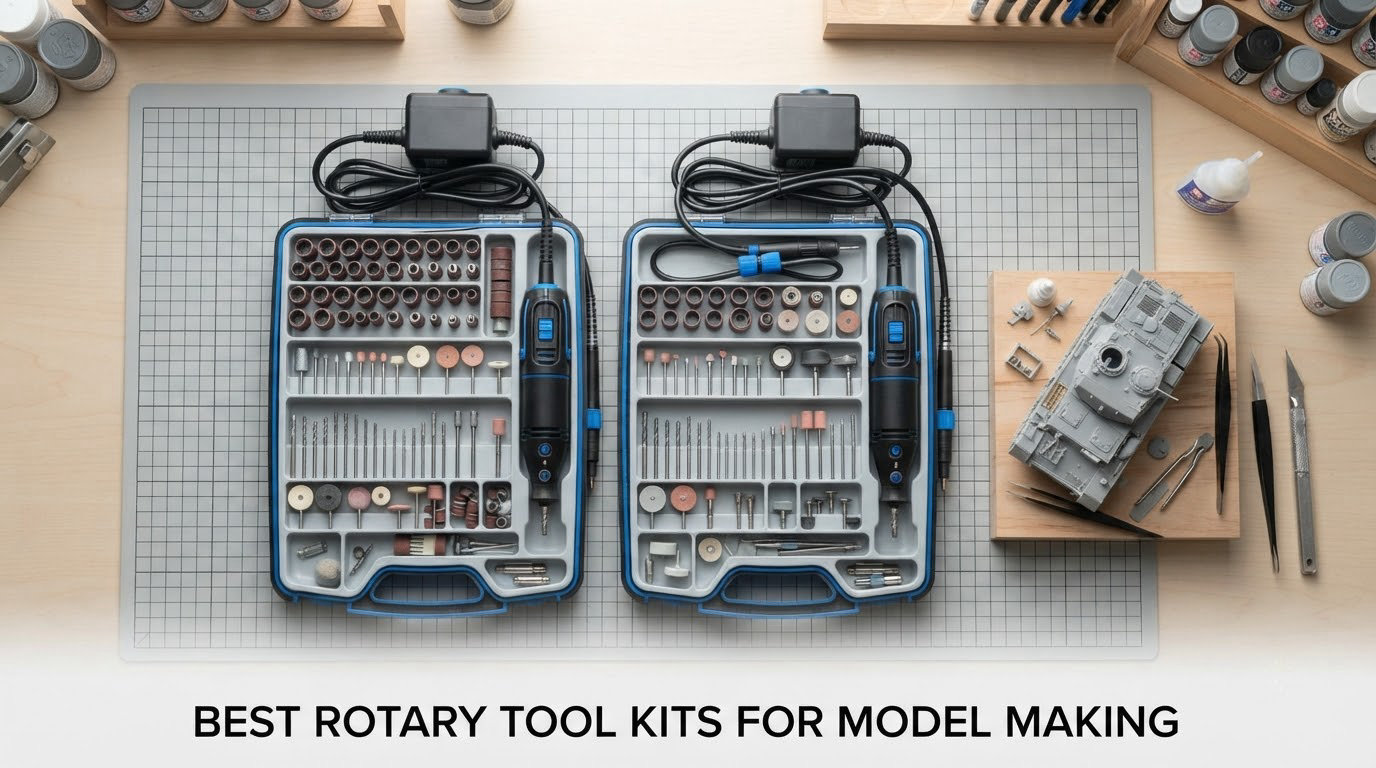
If you only buy one power tool for the model bench, make it a rotary tool. Cut sprues, drill pilot holes in thin styrene, score panel lines, sand seam filler, clean resin supports and polish metal castings all happen with the same body and a different bit, which is why a single well-chosen kit replaces a drawer of files, drills and scrapers.
The awkward part is that most “best rotary tool” lists are written for carpenters and jewellery hobbyists, not for 1/72-scale builders. The wrong kit will either be too heavy to hold steadily over a model, too hot at low speed to touch resin, or fitted with a 3/32 inch collet that will not accept the 1/8 inch bits you already own.
We spent October 2026 working through twelve rotary tool kits built for this job, weighing low-speed control, collet size, grip weight, and what happens to thin plastic and resin when the dial is turned too far. Our pick for most builders is the Dremel 4300-5/40, because its 5,000 RPM floor and 1.8 Amp motor give it the widest usable range of any kit here. New to the hobby and working mostly on resin prints? The cordless kits in the middle of this list do more than you would expect.
Every pick below carries its own ASIN, real owner rating and review count, so you can cross-check the numbers yourself before you commit. If you build other things at the same bench, our guides to model rocket kits and jewellery making kits cover the tools that sit next to the rotary tool on the same mat.
Table of Contents
Top 3 Best Rotary Tool Kits for Model Making (October 2026)

All 12 Rotary Tool Kits Compared Side by Side in 2026
| Product | Specifications | Action |
|---|---|---|
| Dremel 4300-5/40 |
|
Check Latest Price |
| Dremel Stylo+ 2050-15 |
|
Check Latest Price |
 Dremel Lite 7760 Dremel Lite 7760 |
|
Check Latest Price |
 WEN 2305 WEN 2305 |
|
Check Latest Price |
 GOXAWEE 140-Piece GOXAWEE 140-Piece |
|
Check Latest Price |
 Fanttik F2 Master Fanttik F2 Master |
|
Check Latest Price |
 HARDELL 12V 94-Piece HARDELL 12V 94-Piece |
|
Check Latest Price |
 PHALANX 180W 139-Piece PHALANX 180W 139-Piece |
|
Check Latest Price |
 DEKOPRO 42-Inch Flex Shaft DEKOPRO 42-Inch Flex Shaft |
|
Check Latest Price |
 HARDELL Mini Cordless 69-Piece HARDELL Mini Cordless 69-Piece |
|
Check Latest Price |
 GOXAWEE 105-Piece Mini GOXAWEE 105-Piece Mini |
|
Check Latest Price |
 GINELSON 70-Piece Mini GINELSON 70-Piece Mini |
|
Check Latest Price |
Two numbers in that table decide more than any other spec. The minimum speed matters most: thin styrene and cured resin melt and gum up above roughly 10,000 RPM, so a tool that starts at 8,000 RPM is a compromise while one that starts at 5,000 RPM is not. The collet size decides whether your existing bits fit, and the 3/32 inch fitting on some mini tools is the single most common compatibility complaint we found in owner reviews.
1. Dremel 4300-5/40 – the benchmark all-rounder
Dremel 4300-5/40 Rotary Tool Kit with Pivot Light and 40 Accessories
Corded 1.8 Amp
5,000-35,000 RPM
Electronic speed feedback
40 accessories
Pros
- Widest usable speed range
- 5000 RPM floor suits resin and styrene
- Universal 3-jaw chuck takes every Dremel shank
- Pivot light genuinely helps on models
- Replaceable motor brushes
Cons
- Body runs warm in long uninterrupted sessions
- Bundled bits wear faster than bought-separately bits
- Heaviest body in this list at 1.2 pounds
This is the kit we keep reaching for, and the 4.7 rating across 9248 reviews is the highest in the group. The electronic feedback holds the set speed under load, so a carbide burr cutting through a thick resin pour does not suddenly spin up to 35,000 RPM in your hand.
For model work specifically, that 5,000 RPM minimum is the whole story. You can strip a resin nub, sand a seam and still cut a hull panel on the same tool without swapping machines or thinking about melting thin plastic.
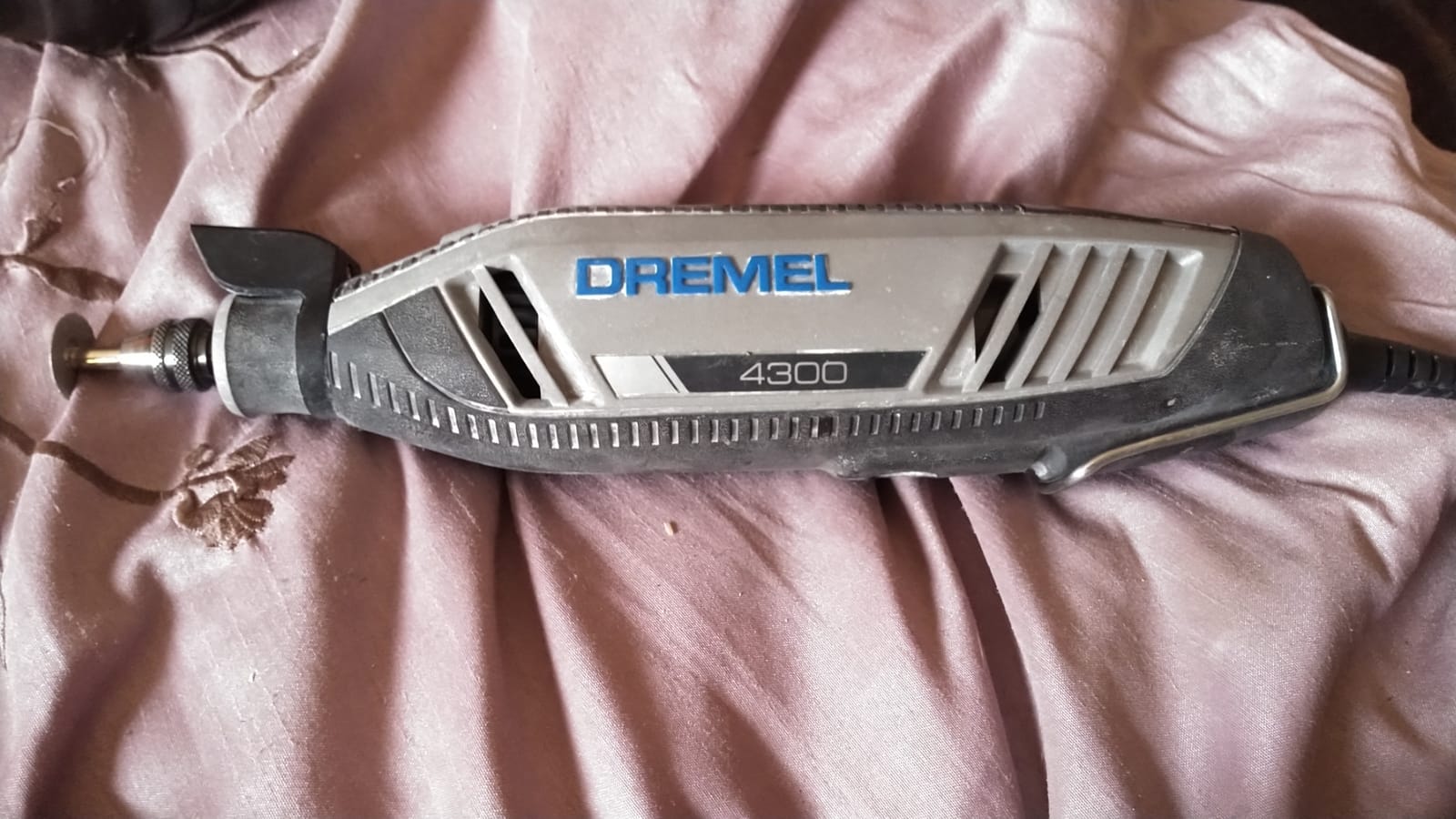
The 3-jaw universal chuck is why this kit ages well. It accepts every Dremel shank size, so a 1/32 inch engraving bit, a sanding drum mandrel and a 1/8 inch cutting disc all mount without hunting for the right collet.
The pivot light attachment rotates to shine into the underside of a hull or the inside of a diorama building, which is exactly where a fixed LED fails you. The air flow ventilation system keeps the tool cooler than older Dremels during a long evening session.
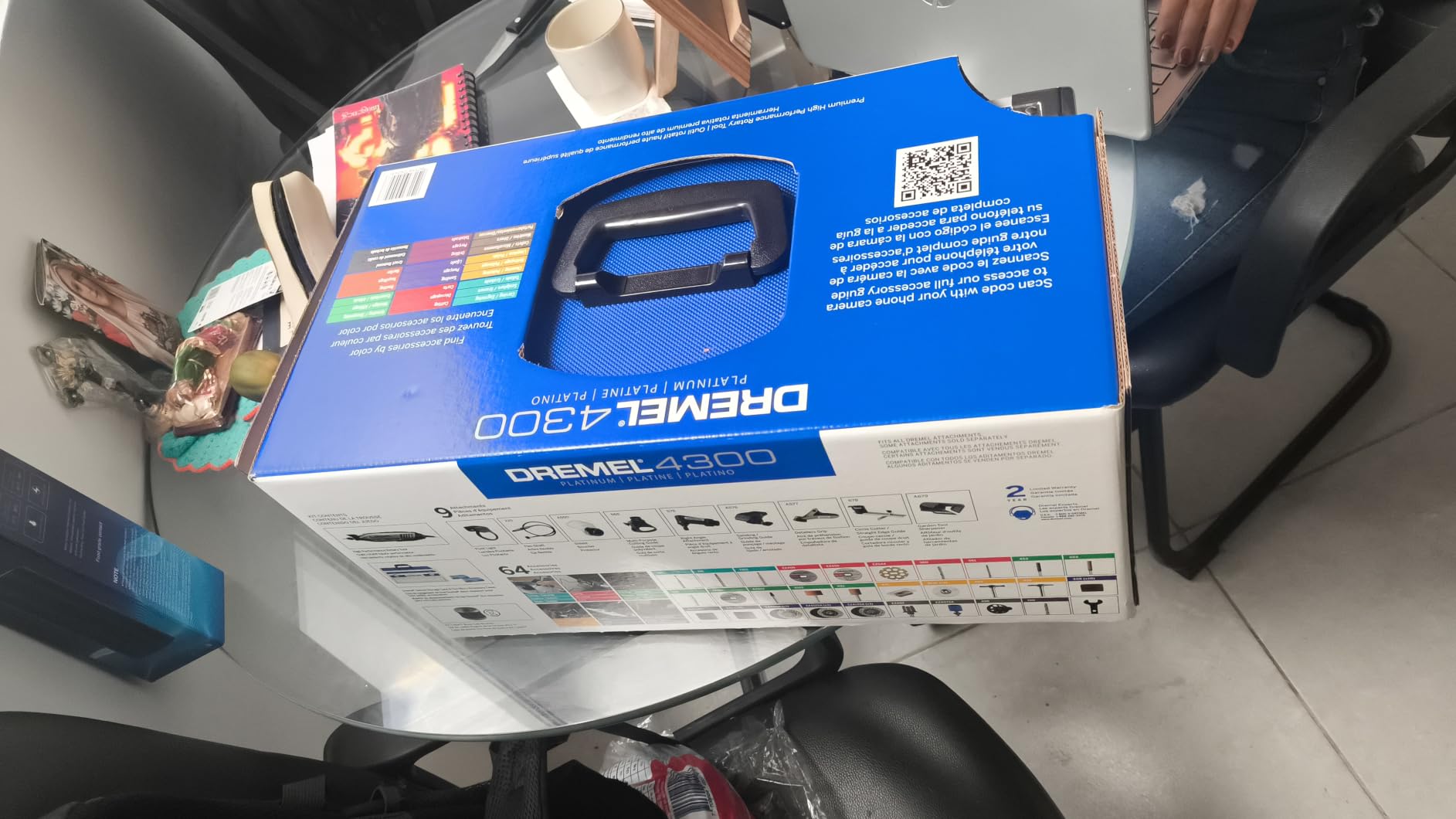
What the 4300 does better than anything else here
Nothing in this list matches the combination of a genuinely low 5,000 RPM floor and 1.8 Amp of torque. Reviewers report using it for grinding burred metal edges and engraving stone, jobs where a mini pen tool simply stalls and a thin burr bends.
The replaceable motor brushes are an underrated longevity feature. When brushes wear, you replace two small parts instead of the tool, which is the difference between a bench fixture and something that eventually fails.
Where it disappoints model builders
It is 1.2 pounds, and on a 1/72-scale aircraft at arm’s length that weight is noticeable after an hour of panel line work. The Stylo+ below exists for that specific complaint, and many builders end up owning both.
The 40 included accessories are broad but not durable. Owners specifically report the bundled bits chipping in wood and wearing quickly, which matches the advice floating around hobby forums that bit quality matters more than tool quality. Budget for a separate bit set.
2. Dremel Stylo+ 2050-15 – the best rotary tool for 1/72 scale
Dremel Stylo+ 2050-15 Rotary Tool Kit with 15 Accessories, Engraving Pen
Corded slim body
5,000-22,000 RPM
7.2 oz pen format
15 accessories
Pros
- Lightest serious corded option at 7.2 oz
- 5000 RPM low end protects resin prints
- Quiet running for late-night bench work
- Engraving pen included for panel lines
- Soft flexible cord does not drag
Cons
- Buried power button forces a grip change
- No support for grinding or heavy removal
- Body warms during long single-speed sessions
At 7.2 ounces this is the tool that changes how you work on small models. The pen-like body sits between your thumb and forefinger the way ascriber does, so you can brace your hand on the bench and rest the part against it without the weight of a full-size Dremel pulling the tip off target.
Reviewers single out the 5,000 RPM low setting as the reason to buy it. That is slow enough to sand a 3D printed resin nub without melting it, and the 22,000 RPM ceiling is still enough for polishing and light cutting on styrene.
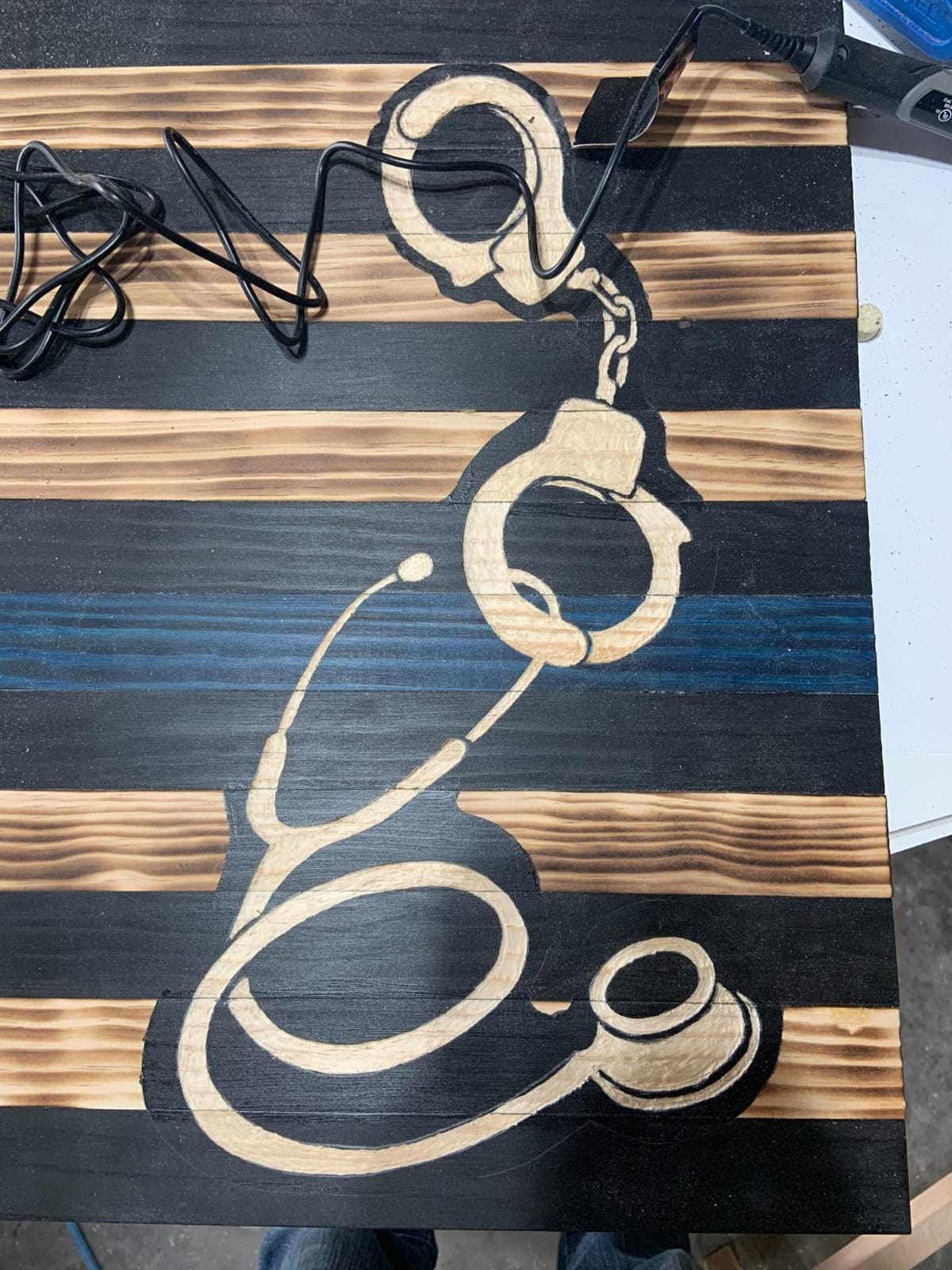
The 15-piece kit is unusually well judged for model work because it includes an engraving pen. That bit, held in a pen adapter with extended collet options, is how panel lines get scored with the tool held almost horizontally rather than at a low angle over the part.
Felt polishing wheels, sanding drums and bands, a diamond wheel point and high speed cutters cover the standard finishing sequence, and the 6-foot cord is light and flexible enough not to drag the tool off the bench.
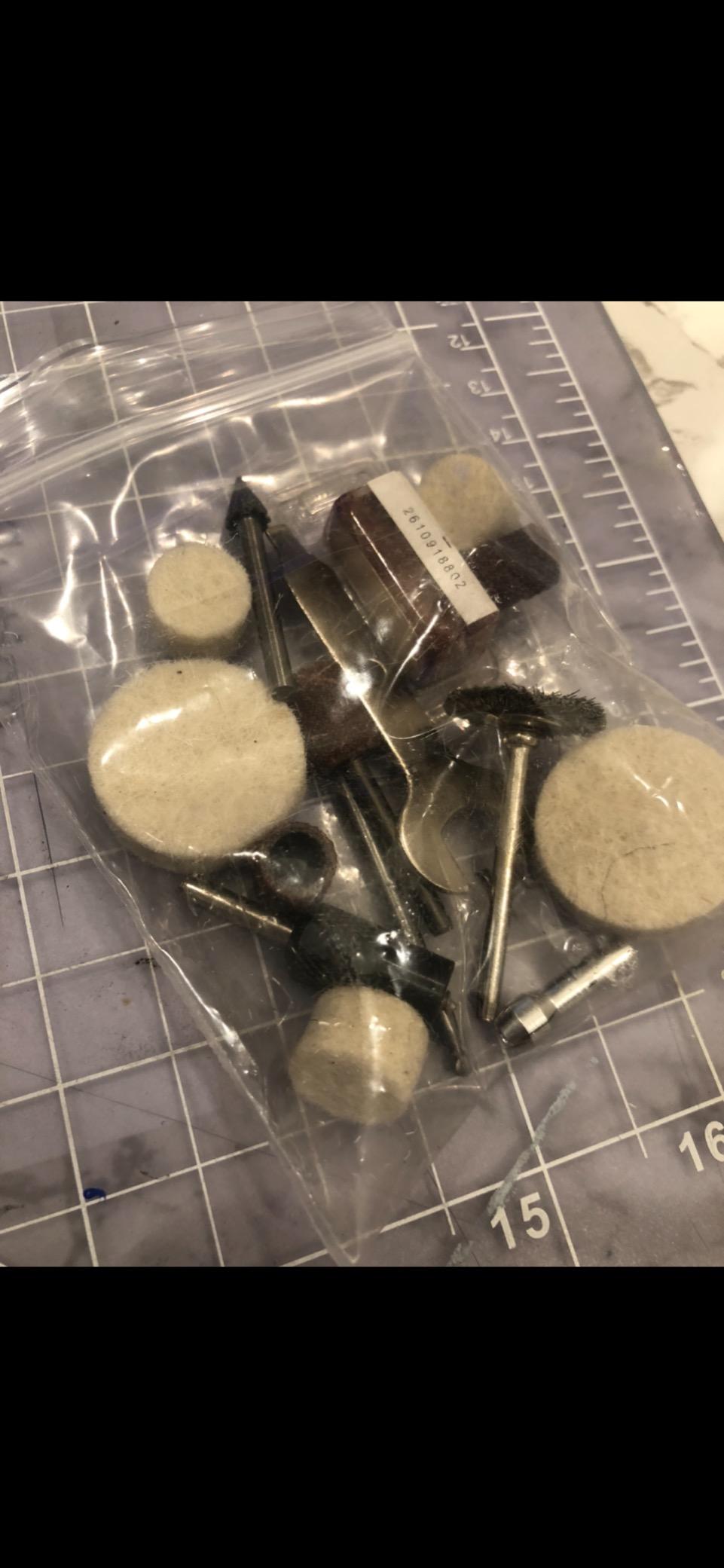
Why precision builders rate it so highly
Owners describe it as the quietest-running Dremel they have used, which matters if you build after hours. Multi-year durability reports are common in reviews, with several buyers mentioning specific models they have had for years of service.
Because it takes standard Dremel collets, your existing bit library transfers across from a full-size tool. That cross-compatibility is unusual in the mini-tool category and removes the main reason people buy two machines.
Where it falls short
There is no torque here. Heavy grinding, cutting thick stock and running large carbide burrs are outside what this motor will do, and the manufacturer is clear that it is a detail tool rather than a workshop tool.
The power button sits deep in the body, so you have to roll your grip to switch it on or off. It is the most repeated ergonomic complaint in the reviews, and it is more annoying during a long build than it sounds written down.
3. Dremel Lite 7760 – the best cordless rotary tool for model making
Dremel Lite 7760 N/10 4V Cordless Rotary Tool Kit with Variable Speed
4V cordless
8,000-25,000 RPM
1/8 inch collet with EZ Twist nose
10 accessories
Pros
- Uses standard 1/8 inch Dremel bits and attachments
- Pencil-like handling for engraving and sanding
- 360-degree soft grip reduces fatigue
- Works where mains power does not reach
- Two-year warranty
Cons
- No cutting
- drilling or routing per manufacturer
- About 30 minutes runtime at top speed
- USB recharge takes roughly 2 hours 40 minutes
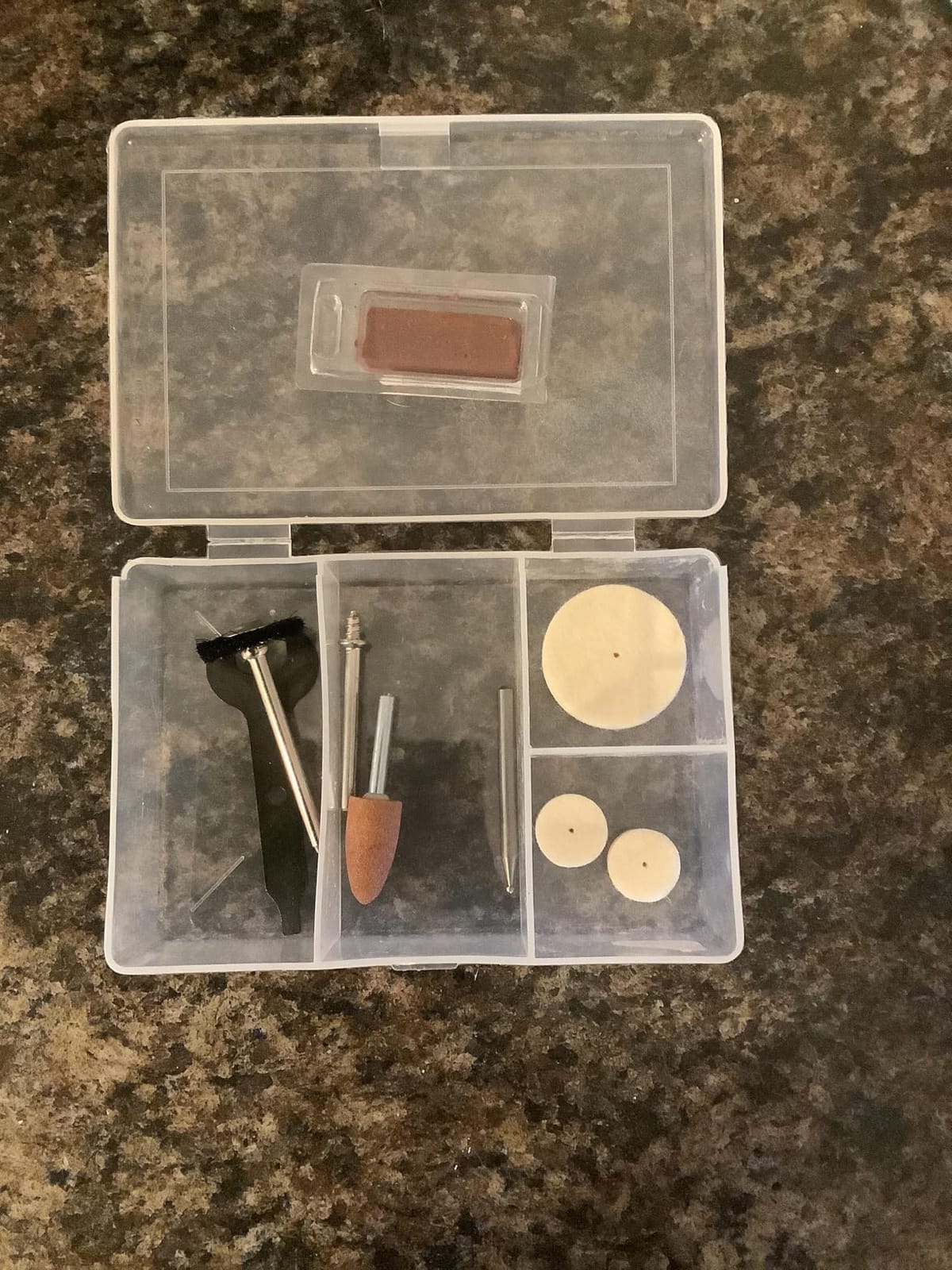
When you are cleaning resin prints on a balcony, or engraving a diorama that is physically too large to bring to the bench, mains power is the real constraint rather than horsepower. The 7760 solves that with a 4V lithium-ion battery and USB charging.
More importantly for hobbyists, it uses a genuine 1/8 inch collet. You can mount your existing Dremel sanding drums, engraving bits and polishing wheels, which is the main reason we rank it above the smaller pen-style cordless kits.
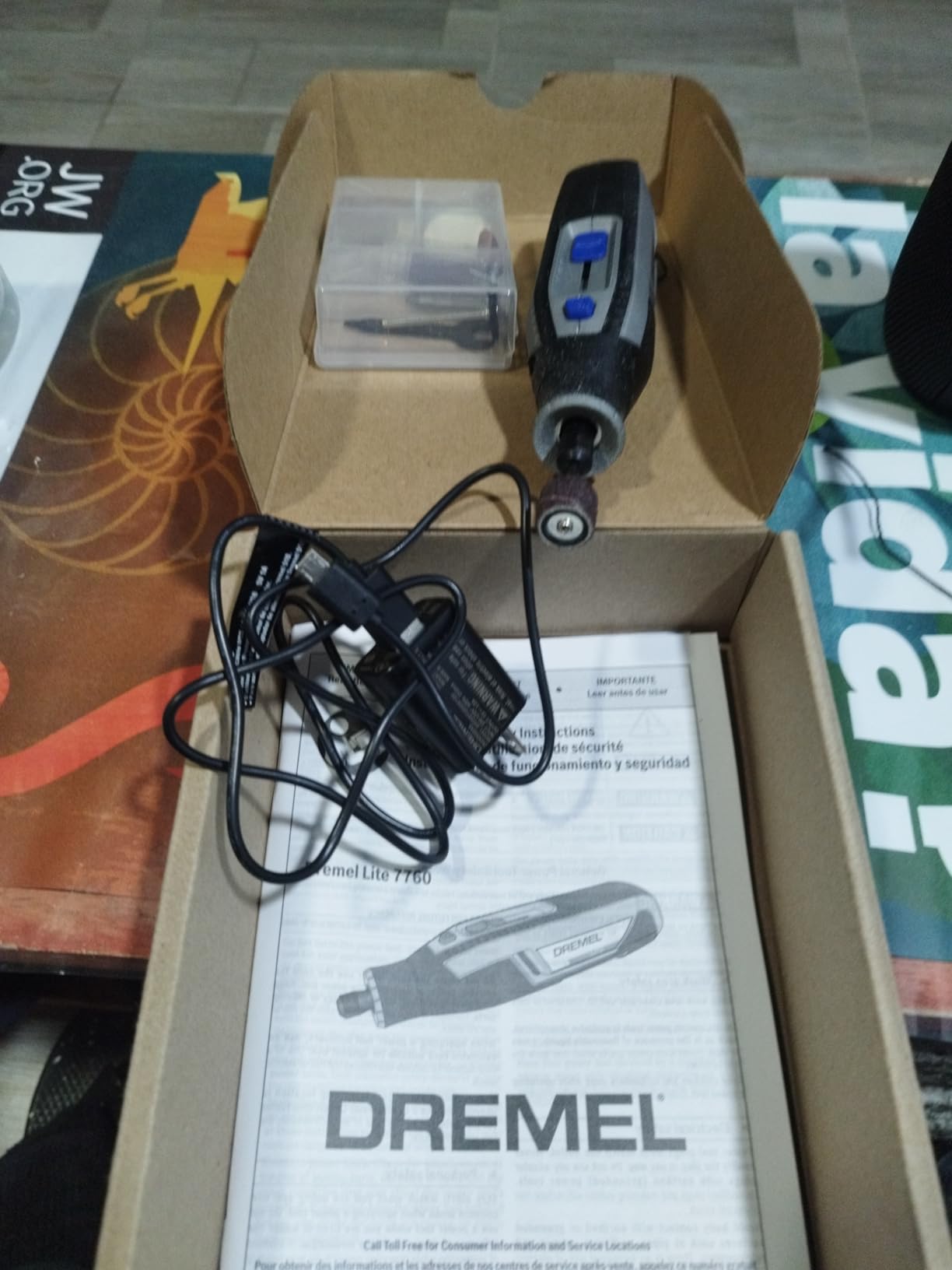
The EZ Twist Nose Cap changes bits without a wrench, so mid-build adjustments are quick. The 360-degree soft grip is a moulded material over the body rather than a rubber sleeve, and it stays comfortable through a full afternoon of brushing and sanding.
Owners consistently position it as performing like the flagship 4300 for light work such as engraving, sanding, brushing and sharpening. Reviewers treat it as a sensible second machine rather than a replacement for a corded one.
Where cordless genuinely helps
Resin printing cleanup is the clearest case. A cured print on a build plate needs support removal and washing, and a battery tool means you can work right next to the wash station instead of dragging a lead across the desk.
The LED battery indicator removes the annoying surprise of a tool dying halfway through a cleanup, which on a small pen body is otherwise easy to miss until it stops.
What you give up for the battery
Dremel does not recommend this tool for cutting, drilling or routing, and reviewers confirm the low end of the 8,000-25,000 RPM range is the only place you will want to work on delicate parts anyway.
Runtime at the highest speed is around 30 minutes no-load, and the USB recharge is slow at roughly 2 hours 40 minutes. Plan resin sessions around the charge rather than around the project.
4. WEN 2305 – the best value corded kit for beginners
WEN 2305 Rotary Tool Kit with Flex Shaft
Corded 120V
8,000-30,000 RPM
Spindle lock
80-piece accessory set
Pros
- 80 accessories cover most hobby tasks
- Spindle lock makes bit changes tool-free
- Flex shaft included for tight angles
- Very large owner base for support and tips
- Handles cutting
- sanding
- polishing and drilling
Cons
- No work away from mains power
- Included bits are basic compared with branded sets
- Heavier than pen-style cordless tools
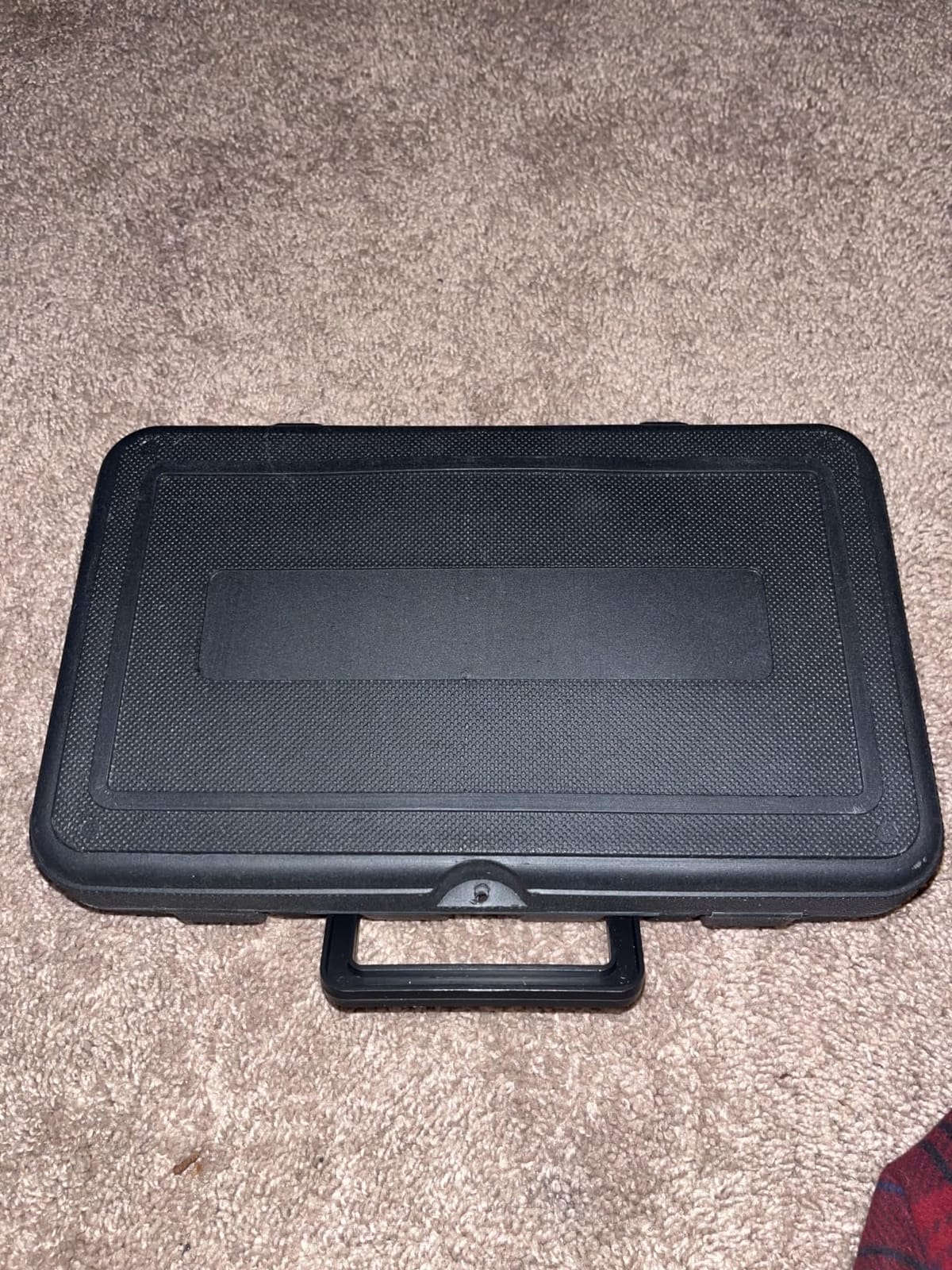
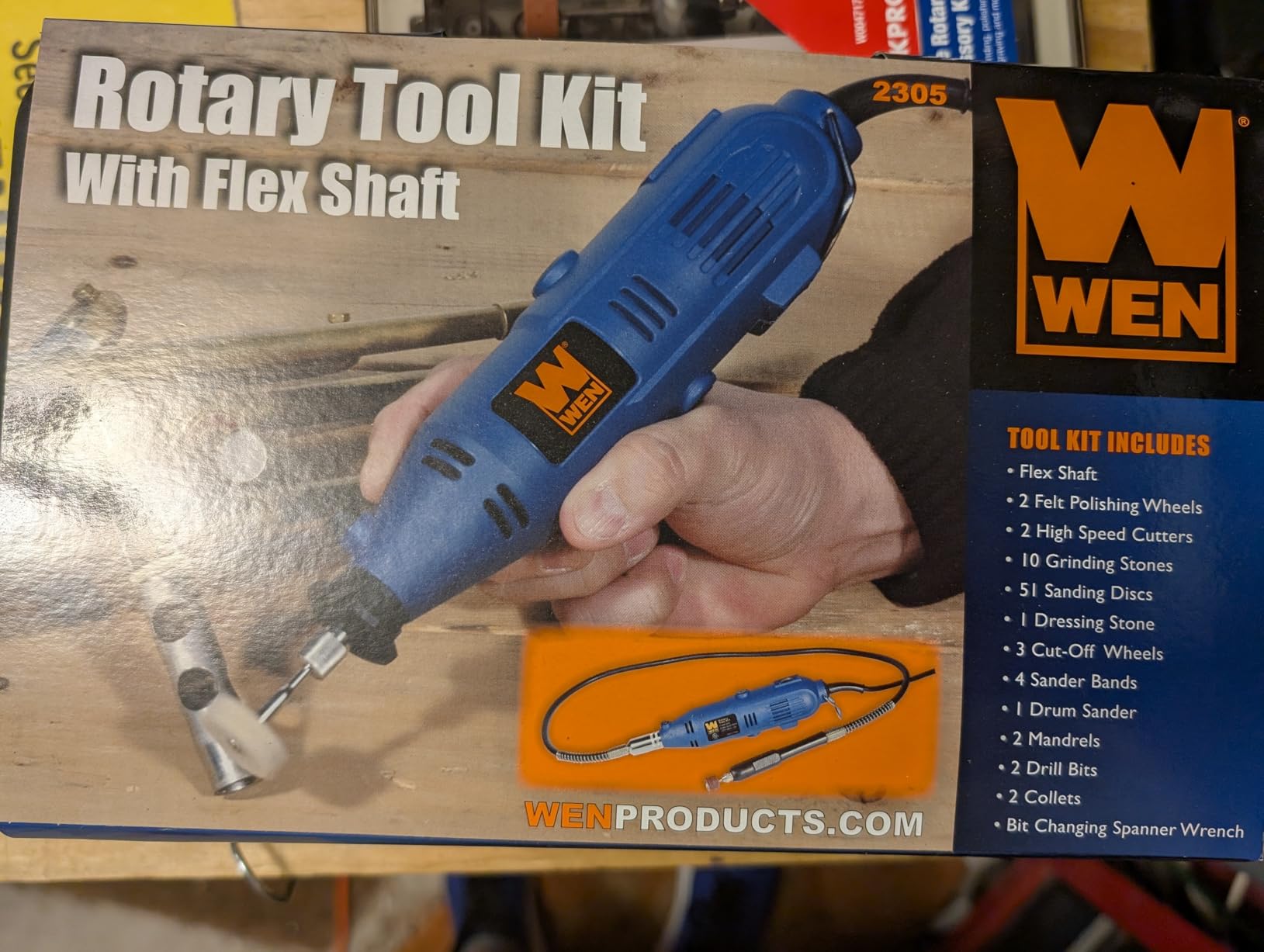
The 2305 has more owner reviews than anything else in this roundup, and that number tells you something useful: there is a very large body of build logs and tips written about it. The 80-piece accessory set covers essentially every task a first model needs, at a price point that does not require a decision.
The onboard spindle lock lets you swap bits without a wrench or a collet nut, which is a bigger quality-of-life gain than it sounds when you are changing between a sanding drum, an engraving bit and a polishing wheel repeatedly in one session.
The included flex shaft is what lifts this above a bare entry-level tool. It lets you put the motor on the bench and hold only a slim cable end in your fingers, which is the difference between a controlled engraving stroke and a wobble on a fine panel line.
At 3.6 pounds it is a bench tool rather than a handheld detail tool, and the 8,000 RPM floor is the compromise. Most Styrene work is fine there, but resin and thin plastic want something lower.
Why beginners land here
Because almost nothing on a first build needs more than 30,000 RPM, carbide burrs or cutting discs in a metal chuck. The 2.3mm and 3.2mm collets cover 1/8 inch and 3/32 inch shanks, so the included bits and a starter set of branded bits both fit.
Reviewers use it for cutting, sanding, polishing, shaping, drilling, deburring and grinding, which is the whole point of a multi-tool. One purchase covers a full first project.
Where it shows its budget
The included accessory quality is the honest weakness. Buyers compare the bits to dedicated branded sets and find the fillers and cutting bits short-lived, so treat the 80-piece count as a starting library rather than a finished one.
It is also the heaviest, bulkiest option here, and being corded means every engraving stroke is anchored to a socket. If your work is small and delicate rather than broad and varied, the Stylo+ is a better tool despite costing more.
5. GOXAWEE 140-Piece – the best flex shaft kit for ship and diorama work
GOXAWEE Mini Power Rotary Tool Kit with Flex Shaft & Keyless Chuck -140Pcs
Corded 130W
8,000-30,000 RPM
3.3 ft flex shaft
140 accessories
Pros
- Tool-free 3-jaw chuck speeds bit changes
- Long flex shaft reaches into confined hulls
- 140 accessories in a carry case
- Built-in hanging hook and vented body
- Quiet enough for a shared workspace
Cons
- Lowest speed still aggressive on filament prints
- Bits can slip in the chuck under pressure
- Hand can cover the vent slots
The 3.3 foot flex shaft is the feature that earns this kit its place. Long-running ship models, diorama interiors and dollhouse builds all have the same problem: the working surface is inside something, and a rigid tool body cannot get a bit into that space at a controlled angle.
With a flex shaft you set the motor down, hold only the slim shaft end between two fingers, and the bit becomes an extension of your hand. Owners cite it as the single biggest advantage when comparing this kit to bare entry-level tools.
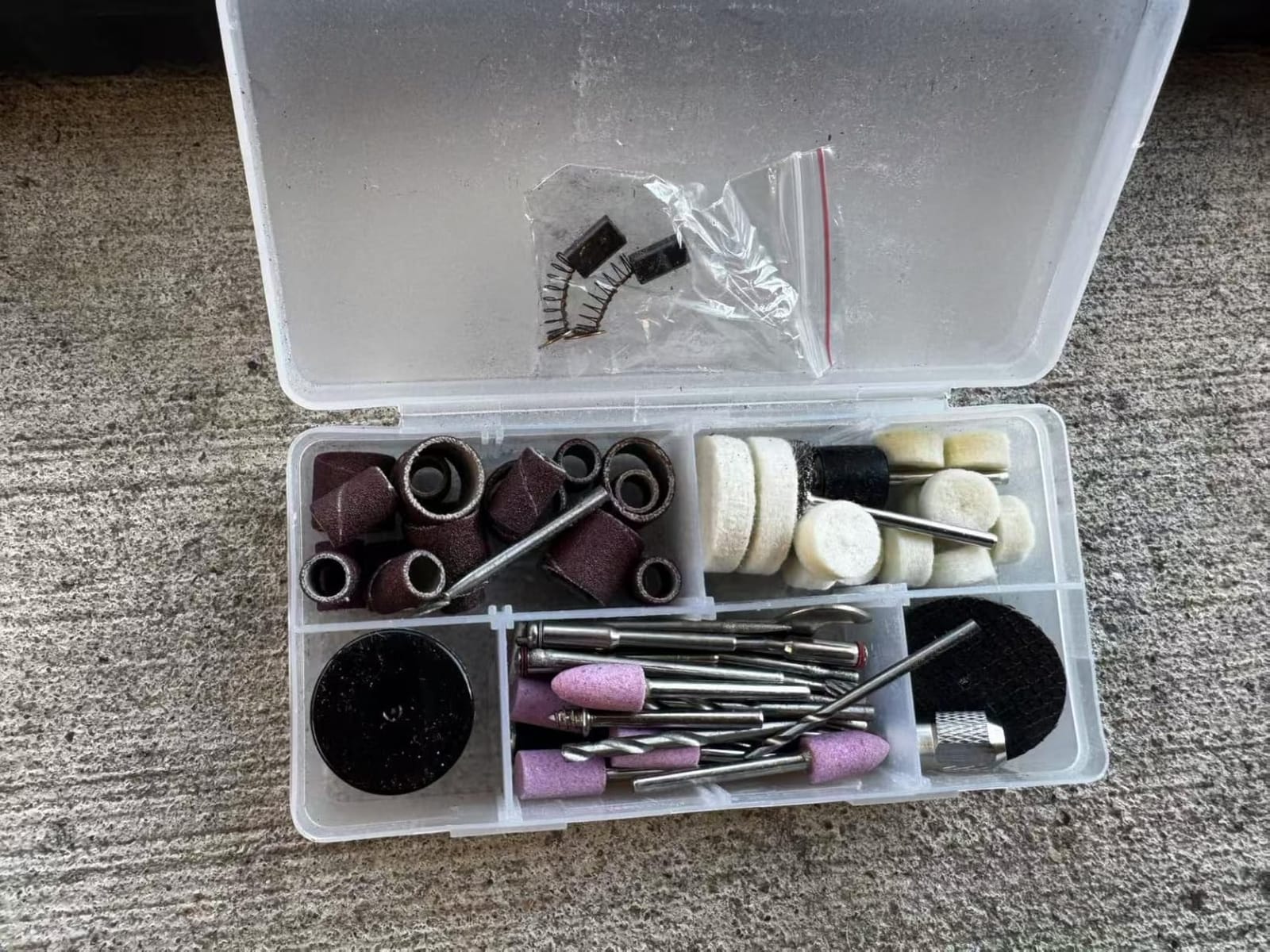
The universal 3-jaw keyless chuck accepts shanks from 1/32 to 1/8 inch, so engraving bits, small drill bits and sanding drums all mount without a collet change. That range matters more here than raw wattage, because most model work uses small bits.
The 130W pure copper motor handles foam, wood, plastic and light metal, and reviewers describe it matching far more expensive tools for foam carving and general craft work.
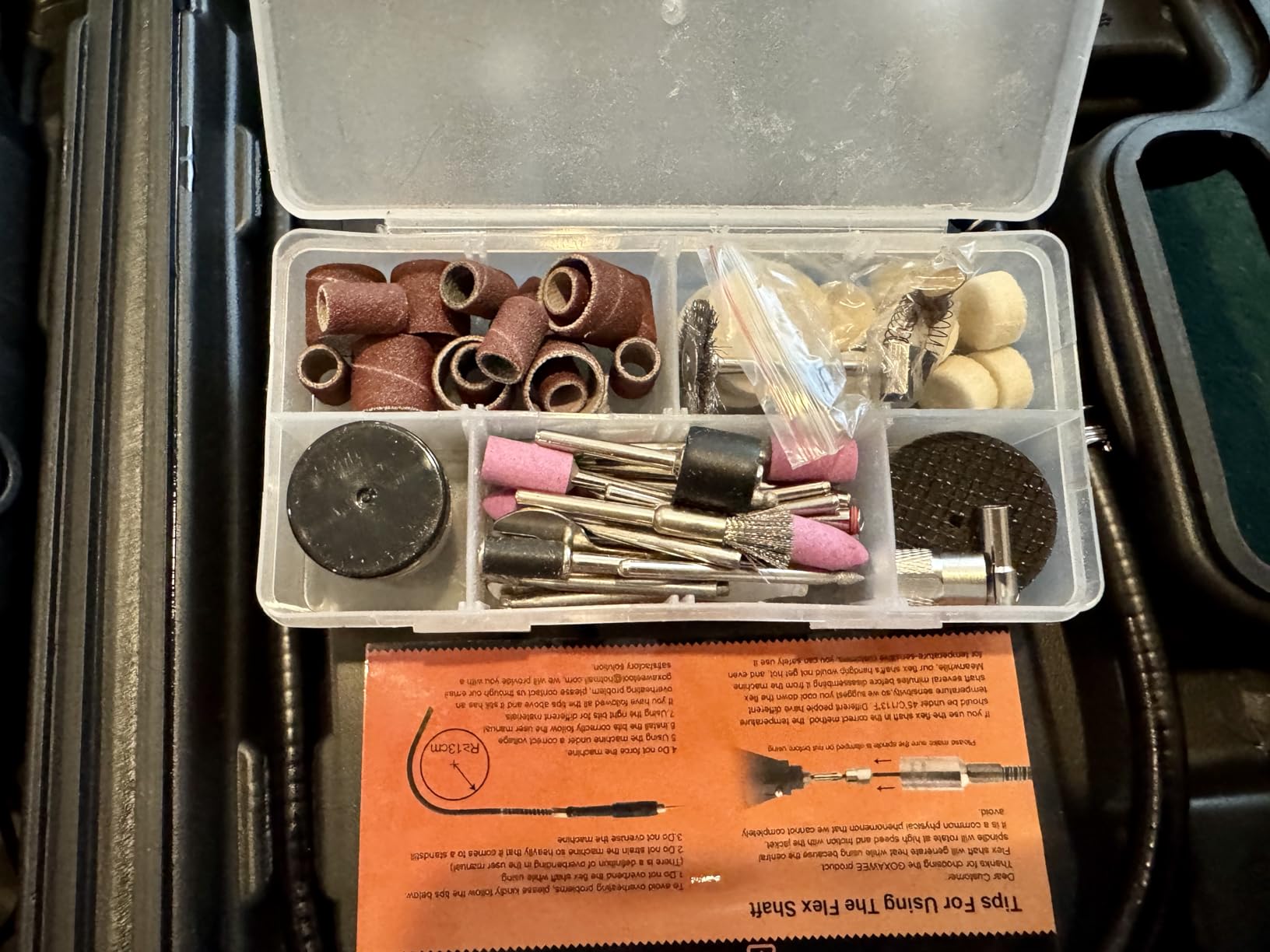
Built for confined spaces
Railings, deck fittings, engine rooms and stairwells are the test cases. A flex shaft reaches a 90 degree corner that a rigid body physically cannot enter, which is why ship modellers in particular gravitate to this style of kit.
The dust cover shield and drill locator are both included, and the built-in hanging hook keeps a second bench free for a tool you use in short bursts rather than all evening.
Where it gets awkward
Even the lowest of the five speed settings is high for 3D printed filament. Reviewers report melting where they have been used to sanding, so for resin and PLA work, turn the dial down immediately or use it at the very bottom of the range with light pressure.
Some grinding bits slip in the chuck under speed and load, and the filled and cutting bits included are less durable than branded equivalents. Re-seat bits properly and expect to replace fillers over time.
6. Fanttik F2 Master – the best cordless kit for resin prints
Fanttik F2 Master Mini Cordless Rotary Tool Kit for 3D Printer Sanding
4V cordless
12,000-25,000 RPM
3/32 inch collet
35 accessories on magnetic hub
Pros
- Exceptionally light at 0.22 lb
- Quiet hollow cup motor runs cooler
- Revostor magnetic hub rotates 360 degrees for access
- Aluminium case with pop-out tool storage
- USB-C full charge in 60 minutes
Cons
- 3/32 inch collet rejects most Dremel-style bits
- Bits are hard to pull from the magnetic hub
- Power button sits opposite the bit
The 360-degree rotating magnetic accessory hub is the design idea worth stealing. The 35 included bits sit in a ring that swings round to face you, so you can see and reach what is on there instead of digging through a tray and knocking the lot over.
Weight is the other headline: 0.22 pounds. On a long resin cleanup session that difference is felt in the hand and the wrist, and it is why this tool shows up in so many 3D print finishing routines.
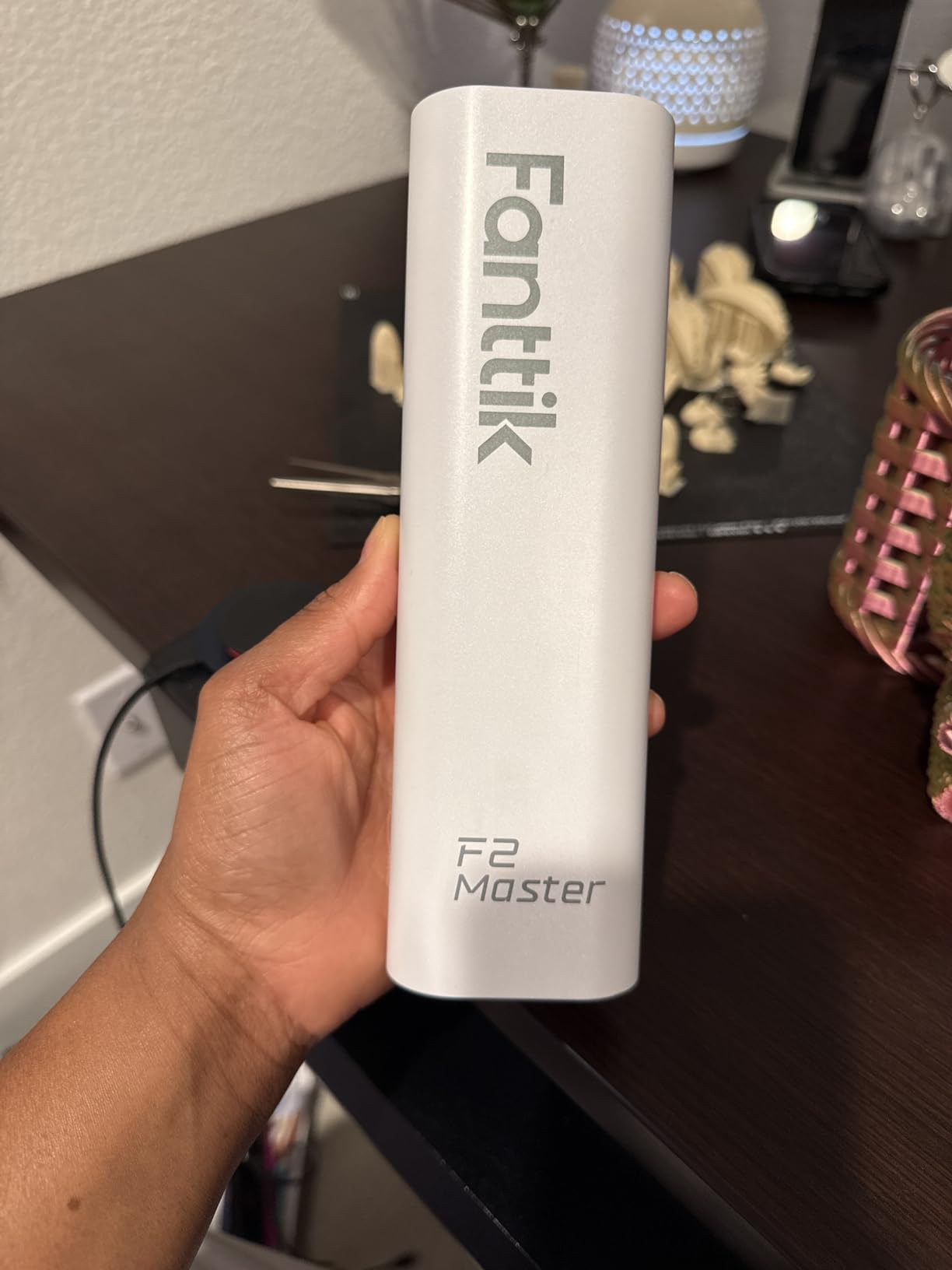
The hollow cup brushless motor is roughly 30 percent quieter than a standard motor and runs cooler, which is a genuine benefit next to a resin wash station where you are already dealing with fumes and heat. Five speed settings with an LED indicator make repeatability easy.
USB-C charging reaching a full charge in 60 minutes means the tool is rarely the reason a session gets cut short, and the sealed battery is pre-assembled with no assembly step.
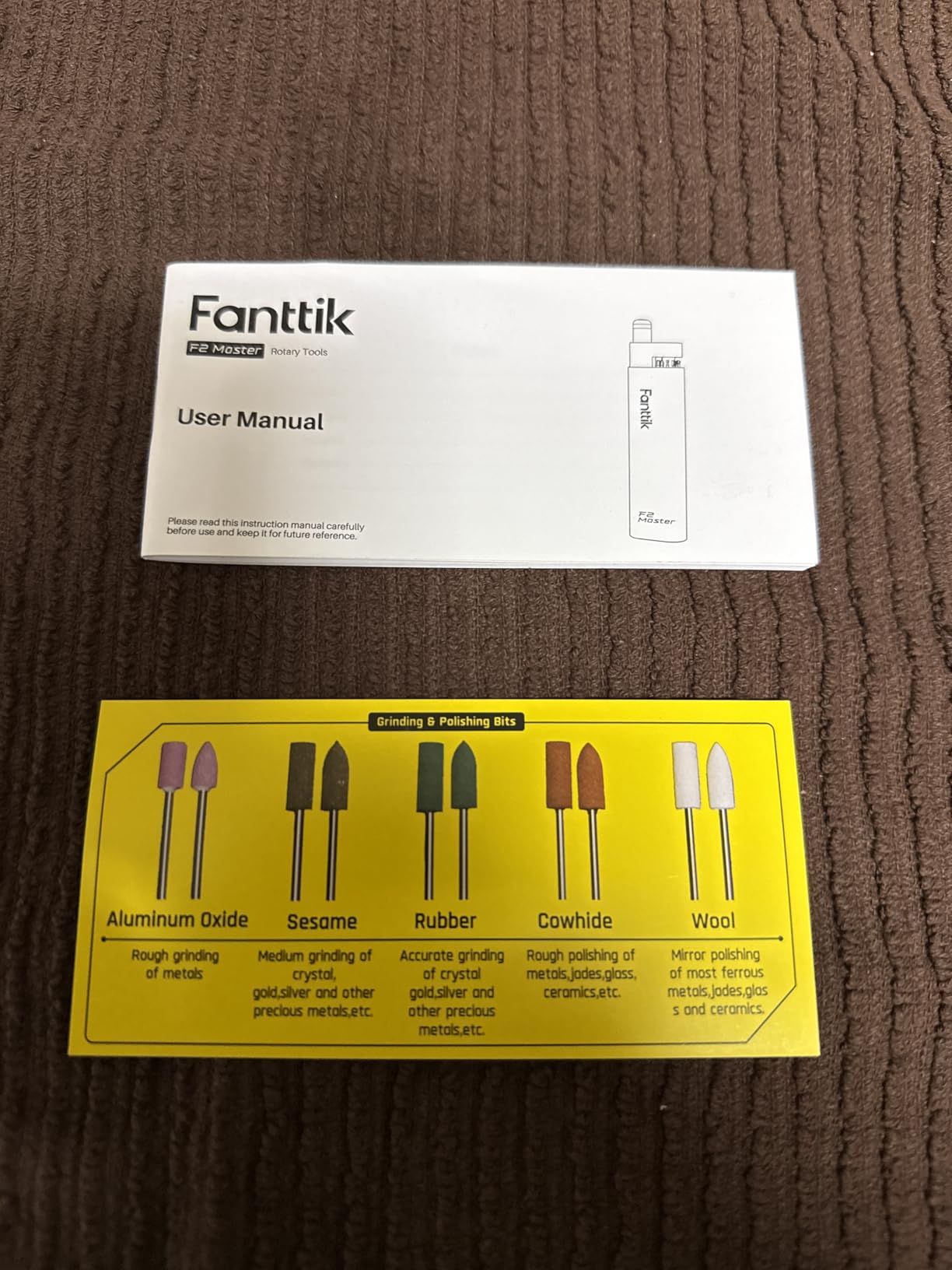
Where it is the right tool
Fine detail on foam, balsa, 3D prints and jewellery-scale work, anywhere a full-size Dremel feels clumsy. Reviewers consistently praise it for precision work and for cordless freedom during print cleanup.
The waterproof and dustproof body matters more than it sounds. Resin and filler dust on a model bench gets everywhere, and a tool that tolerates it lasts longer than one that does not.
The collet problem
The precision-machined collet is 3/32 inch, not 1/8 inch. That is the most repeated caveat in the reviews and the reason this kit sits below the Dremel cordless option: most of the bit library you already own will not fit, and you will be hunting 2.3mm shank accessories specifically.
It is also light-duty by design. Hardwood, plywood routing and thick stock are outside its capability, and reviewers who have tried note that small collet knobs can loosen under load.
7. HARDELL 12V 94-Piece – the best cordless kit for 3D print cleanup
HARDELL 12V Cordless Rotary Tool Kit 6-Speed 30000RPM Rotary 94 Accessories
12V cordless
5,000-30,000 RPM
Keyless chuck
94 accessories with case
Pros
- Genuine 5000 RPM floor for resin and foam
- 6 speed settings across a 30000 RPM ceiling
- Keyless chuck for quick bit changes
- Accessory case plus fabric bag
- 1.1 lb with rubberised grip
Cons
- Bulkier than a pen-style cordless tool
- Some reports of switch and wiring failures
- Metal cutting discs wear quickly
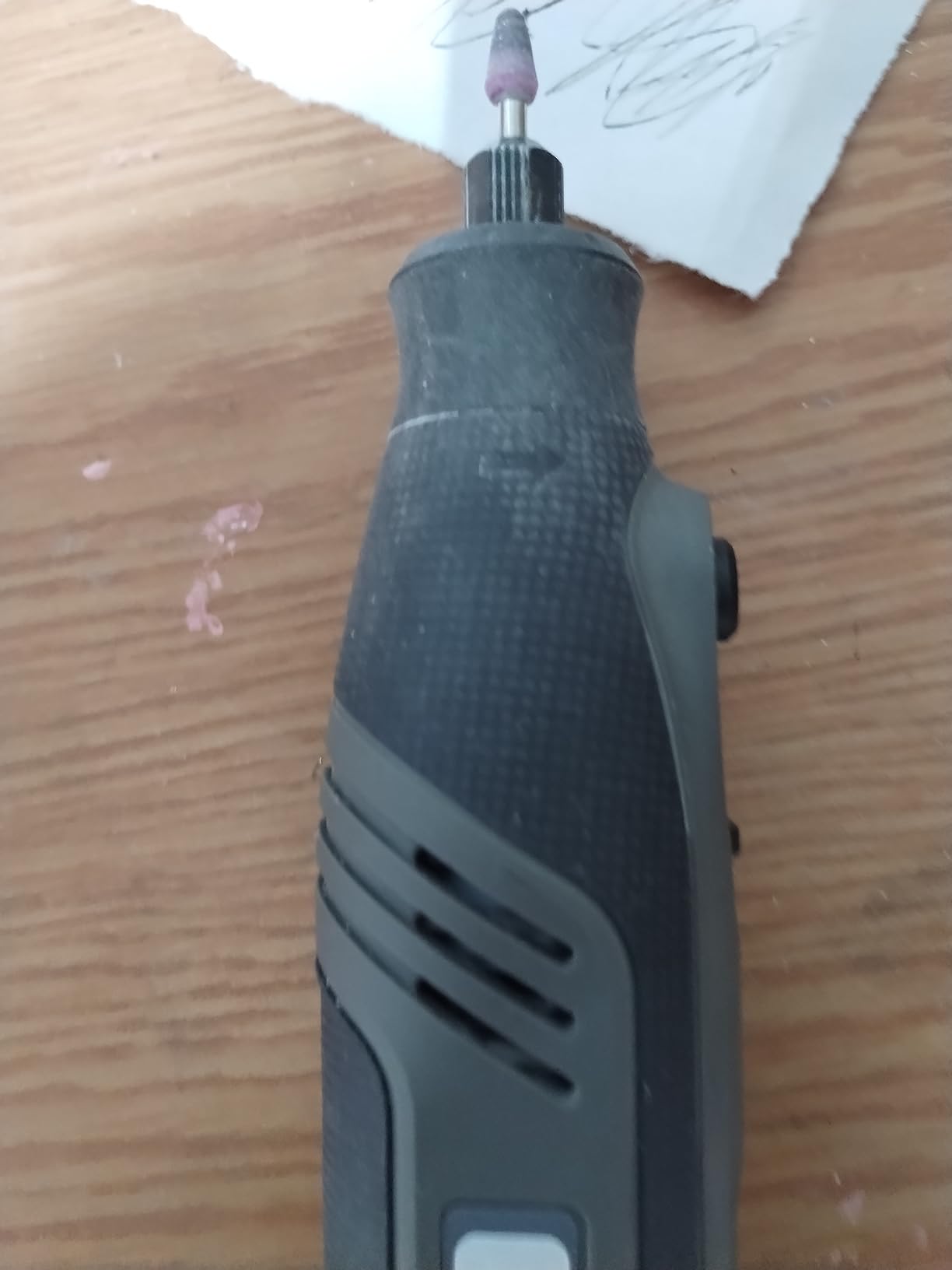
Most budget cordless rotary tools start at 8,000 RPM, which is too fast for cured resin. This one starts at 5,000 RPM and runs to 30,000, which means it can be used for delicate print cleanup and heavier material work without a second machine.
The 94-piece accessory set comes in a proper case with a fabric bag on top, and the keyless chuck means you are not hunting a wrench mid-session. Owners note it handles the large majority of hobby tasks from RC to 3D printing.
The 12V battery is a real step up from the 3.7V pen tools in this list, giving it more headroom when a bit bites into something harder than foam. The rubberised grip stays comfortable and the tool is light enough at 1.1 pounds for detail work.
For a builder who wants cordless freedom without giving up low-speed control, this is the most balanced package in the roundup.
Best used for
Support removal on resin prints, cleanup of FDM artifacts, foam scenery work, and general bench tasks where the cord would be in the way. The low end of the range means you can sand a cured print without melting it, which is the failure mode that puts people off cordless tools.
It is also a reasonable first cordless option for someone who also builds with wood, because the 30,000 RPM ceiling gives room for light carving.
Where durability is questioned
Some buyers report switch and internal wiring failures, and metal cutting discs are noted as wearing quickly. Neither issue appeared in most reviews, but it is worth knowing before you commit to it as a long-term bench fixture.
It is also bulkier than a pen-style cordless tool, so it is less pleasant for pure detail work where hand feel is everything. Torque still trails the premium corded picks in this list.
8. PHALANX 180W 139-Piece – the best big-bundle corded kit
180W Rotary Tool Kit, 1.5-Amp PHALANX 6 Variable Speed with Flex Shaft, 8000-32000RPM Multi-Tool& 139pcs Accessories Kit, Power Multiuse Set Prefect for Crafting Projects and DIY Creations…
Corded 180W
8,000-32,000 RPM,6 speeds
Flex shaft
139 accessories
Pros
- Largest accessory count in this roundup
- 4 collet sizes covering 1/8 and 1/16 inch shanks
- Flex shaft included
- Metal internal parts and a low-noise design
- Compatible with Dremel accessories
Cons
- Chuck accepts miniature bits only
- Flex shaft attachment can come apart
- Locking mechanism may wear with heavy use
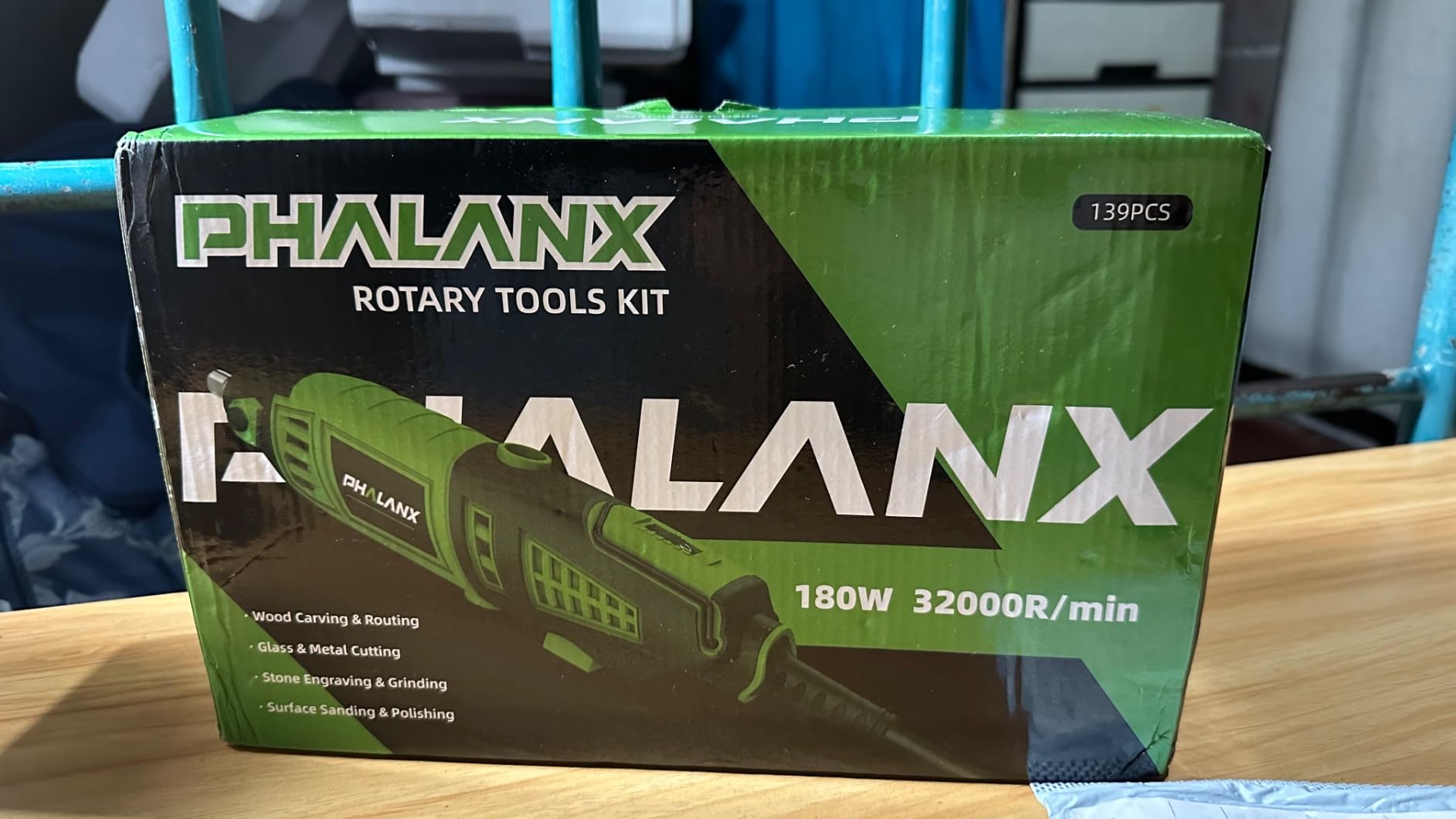
With 139 accessories this is the kit where you are least likely to run out of the right bit on the evening you need it. The four collets cover 1/8, 1/16, 3/32 and 3/25 inch, which is a broader fitment range than most kits in the roundup.
The 180W motor is strong enough for foam, wood, plastic and light metal work, and the six-speed adjustment from 8,000 to 32,000 RPM gives a reasonable spread for craft tasks.
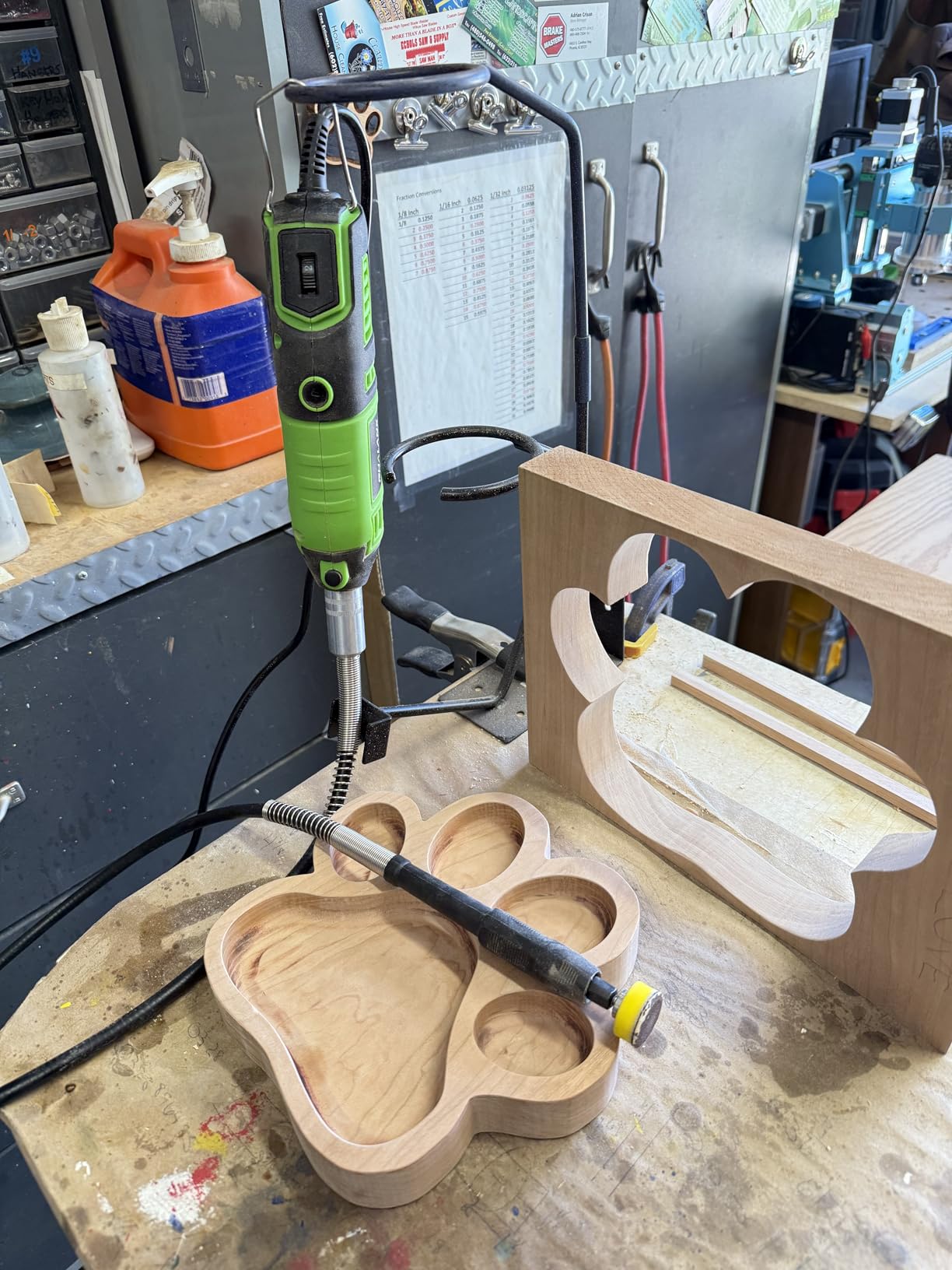
It ships with a flex shaft, drill locator, cover shield, wrenches, brushes, cut-off wheels, diamond burrs, sanding drums, mandrels and an oilstone. Many builders will find everything they need for a full project inside the case.
Reviewers describe it as strong value with metal internal parts, and confirm compatibility with Dremel accessories, which is unusual for a kit at this tier.
Where the bundle pays off
If you are setting up a bench from nothing, this removes the second purchase. Scenery building, diorama groundwork and armour finishing all need a different bit for each stage, and a large bundle means you are not ordering one bit at a time.
The 1/8 inch collet means Dremel-format bits work, so a buyer who already owns a bit set can ignore most of the extras and use their own.
Where it lacks
The chuck accepts miniature bits only, not larger shanks, which limits heavy drill-type work. Owners also report that the flex shaft attachment can come apart and that the locking mechanism can wear over time under heavy use.
It is larger and heavier than the premium corded options and gets warm during extended sessions, so for long single-material work the better-engineered tools are the better buy.
9. DEKOPRO 42-Inch Flex Shaft – the best long-reach corded kit
DEKOPRO Rotary Tool Kit, 1.5-Amp Corded Power Rotary Tools with 42″ Flex Shaft, 6 Variable Speed, 8,000-35,000 RPM, 129 Pcs Accessories Kit for Cutting, Sanding, Grinding, Carving & DIY Projects
Corded 1.5 Amp
8,000-35,000 RPM,6 speeds
42 inch flex shaft
129 accessories
Pros
- Longest flex shaft in this roundup at 42 inches
- 35000 RPM ceiling for cutting and grinding
- Assist handle for two-handed control
- Soft rubber grip
- 129 accessories with cover shield
Cons
- Heaviest corded option at 1.86 kg
- 220V rating needs an adapter in US markets
- Flex shaft can add vibration
A 42 inch flex shaft is longer than most people need, and that is exactly why it is worth having. Very large builds, diorama displays and ship interiors sometimes need reach that even a 3 foot shaft cannot bridge without awkward wrist angles.
The 35,000 RPM ceiling is the joint highest here, matched to cutting, grinding and carving tasks rather than delicate finishing. Four collets including 1/8 and 3/32 inch cover most model bit shanks.
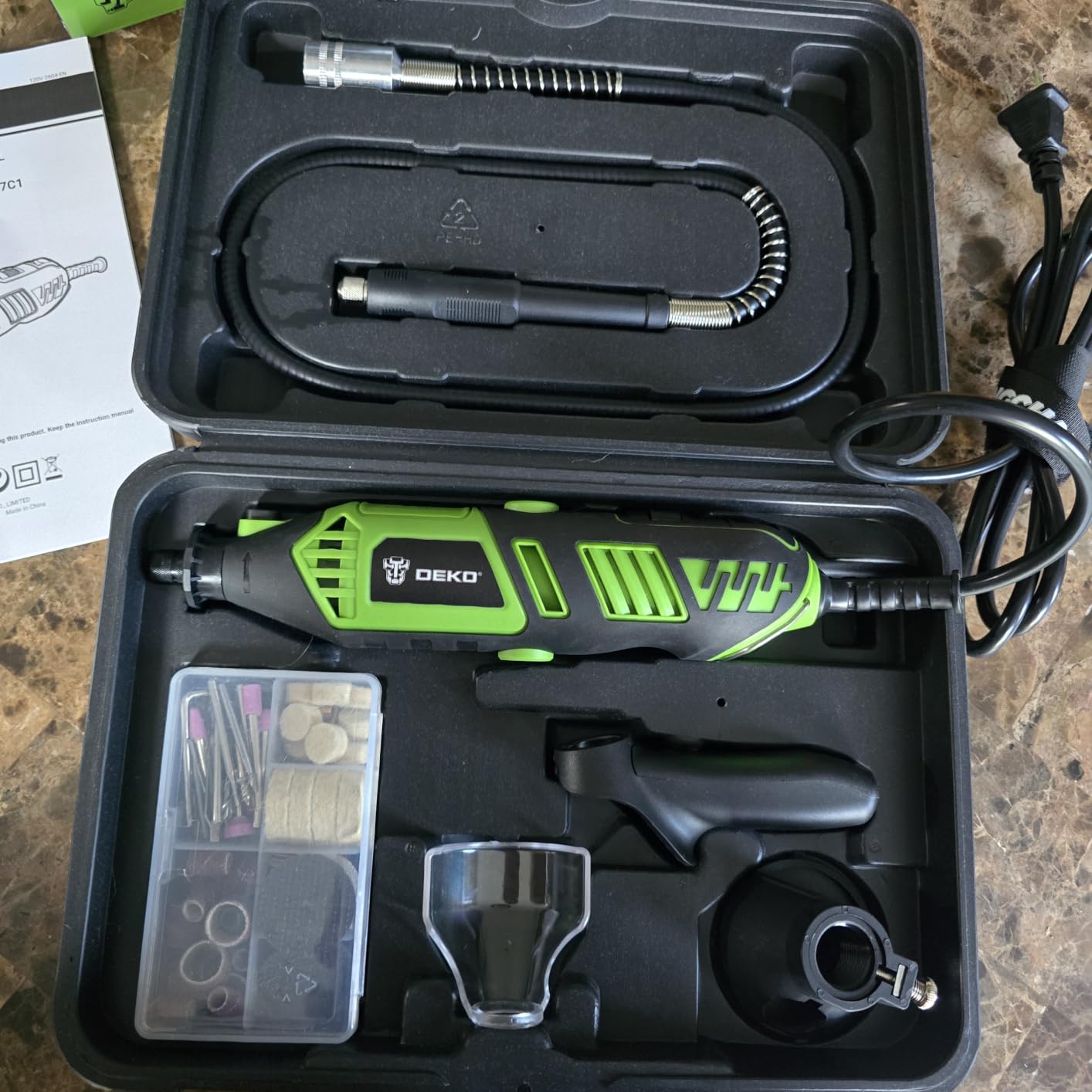
The assist handle gives two-handed control when you are pushing a cutting disc rather than guiding an engraving bit, and the cover shield plus drill locator are sensible inclusions for bench work near finished models.
Six speed settings, ventilation holes for heat dissipation and a soft rubber grip make it a comfortable long-session tool despite the size.
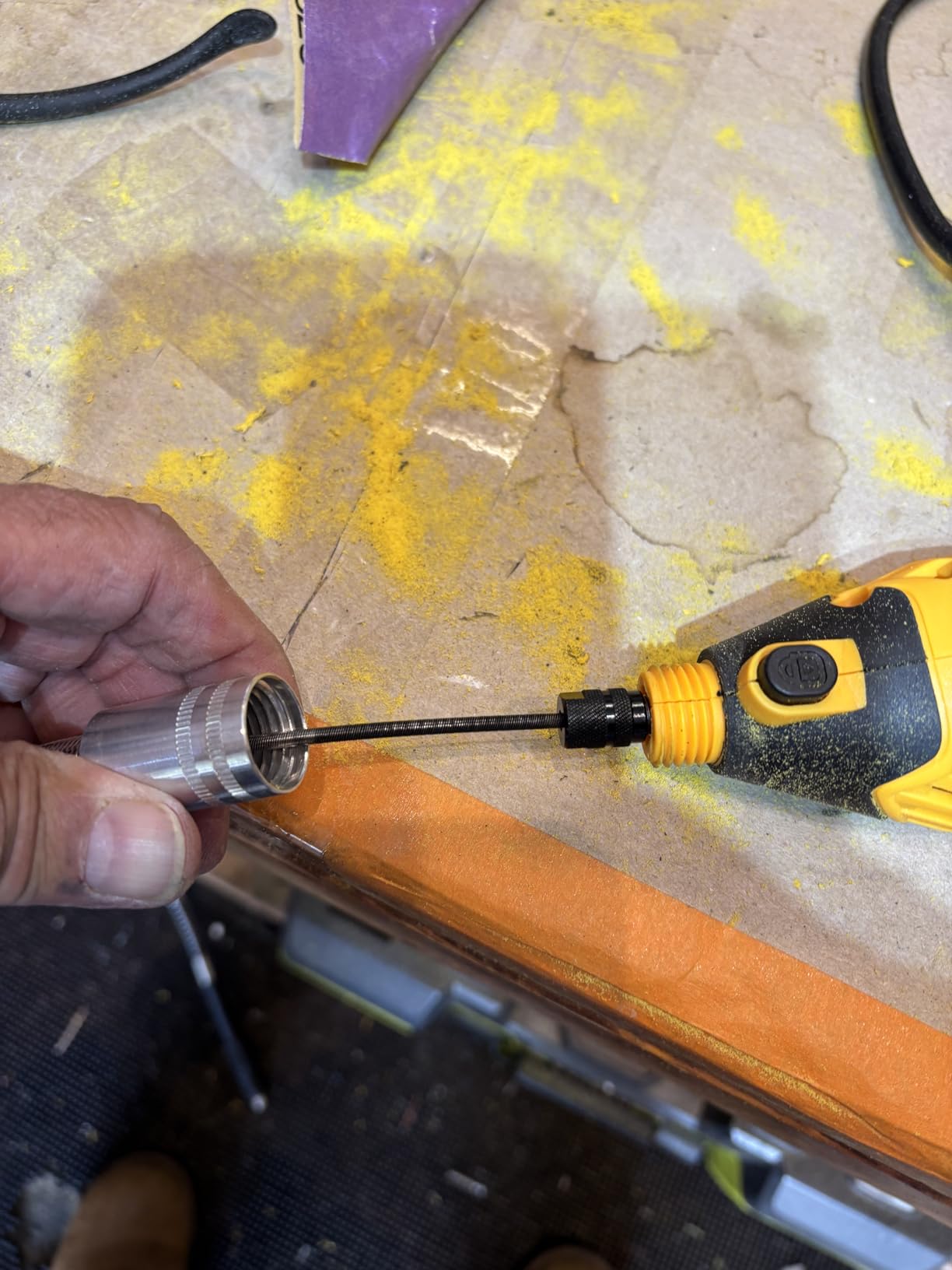
Where the reach matters
Large ship hulls with a full interior detail pass, and vehicle interiors where your wrist cannot get inside the shell. This is the situation the long shaft was designed for, and buyers who use it that way report the extra length genuinely helps.
The broad accessory set also makes it a single-box solution for someone who carves scenery and works on models in the same session.
Where it does not
At 1.86 kg it is the heaviest corded option here, which is a real cost on fine detail work where a light body matters. The 8,000 RPM floor is again the limitation for resin and thin styrene.
The 220V rating means an adapter is needed in US and other 120V markets, and some buyers note the flex shaft adds vibration that makes very fine engraving less stable than with a rigid body.
10. HARDELL Mini Cordless 69-Piece – the best first kit for beginners
HARDELL Mini Cordless Rotary Tool, 5-Speed 69pcs Kit for 3D Printer Sanding
3.7V cordless
5,000-18,000 RPM,5 speeds
69 accessories,3 collets
0.14 kg
Pros
- Lowest weight in this list at 0.14 kg
- 5000 RPM floor is the right start speed for prints
- About 200 minutes of continuous runtime
- Blind-spot LED design reduces backlight shadows
- Beginner instructions and video tutorials included
Cons
- Light-duty only
- Top speed of 18000 RPM is modest
- Generic accessory quality versus branded bits
At 0.14 kg this is the lightest tool in the roundup, and on long resin and foam sessions that weight saving is the feature that keeps people using the tool instead of putting it down. The pen-style body is held like a pen rather than gripped like a screwdriver.
The speed steps run 5,000, 8,000, 11,000, 14,000 and 18,000 RPM. That 5,000 RPM first step is genuinely useful for sanding prints, which is where so many cheaper cordless tools fail immediately.
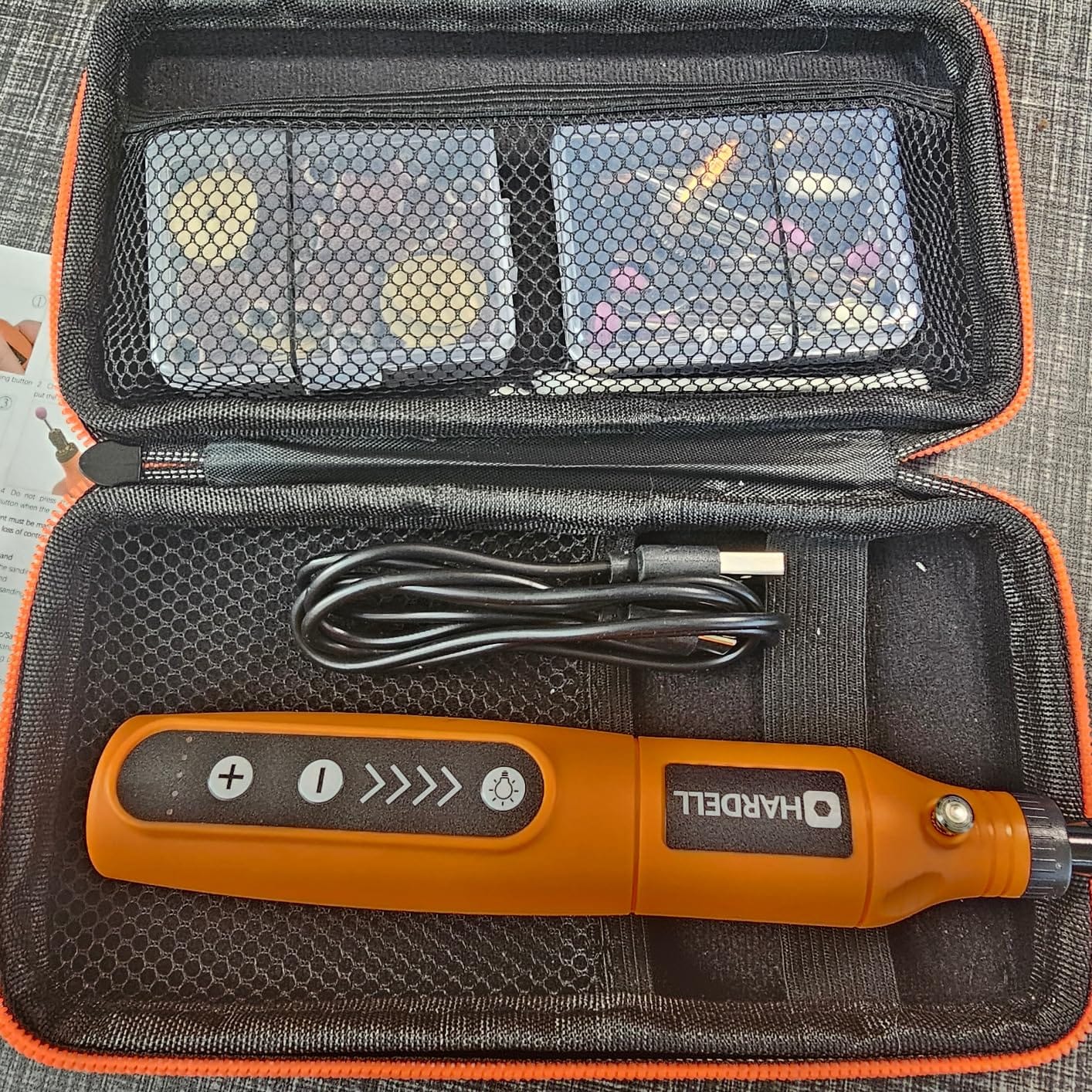
The blind-spot LED design places the light so it does not cast the shadow of your own hand across the work. On a small part, that is the difference between seeing the seam you are sanding and guessing at it.
Three collet sizes are included and the 69-piece set covers carving, sanding, grinding, polishing and cutting. The battery runs about 200 minutes continuously, which comfortably outlasts most build sessions.
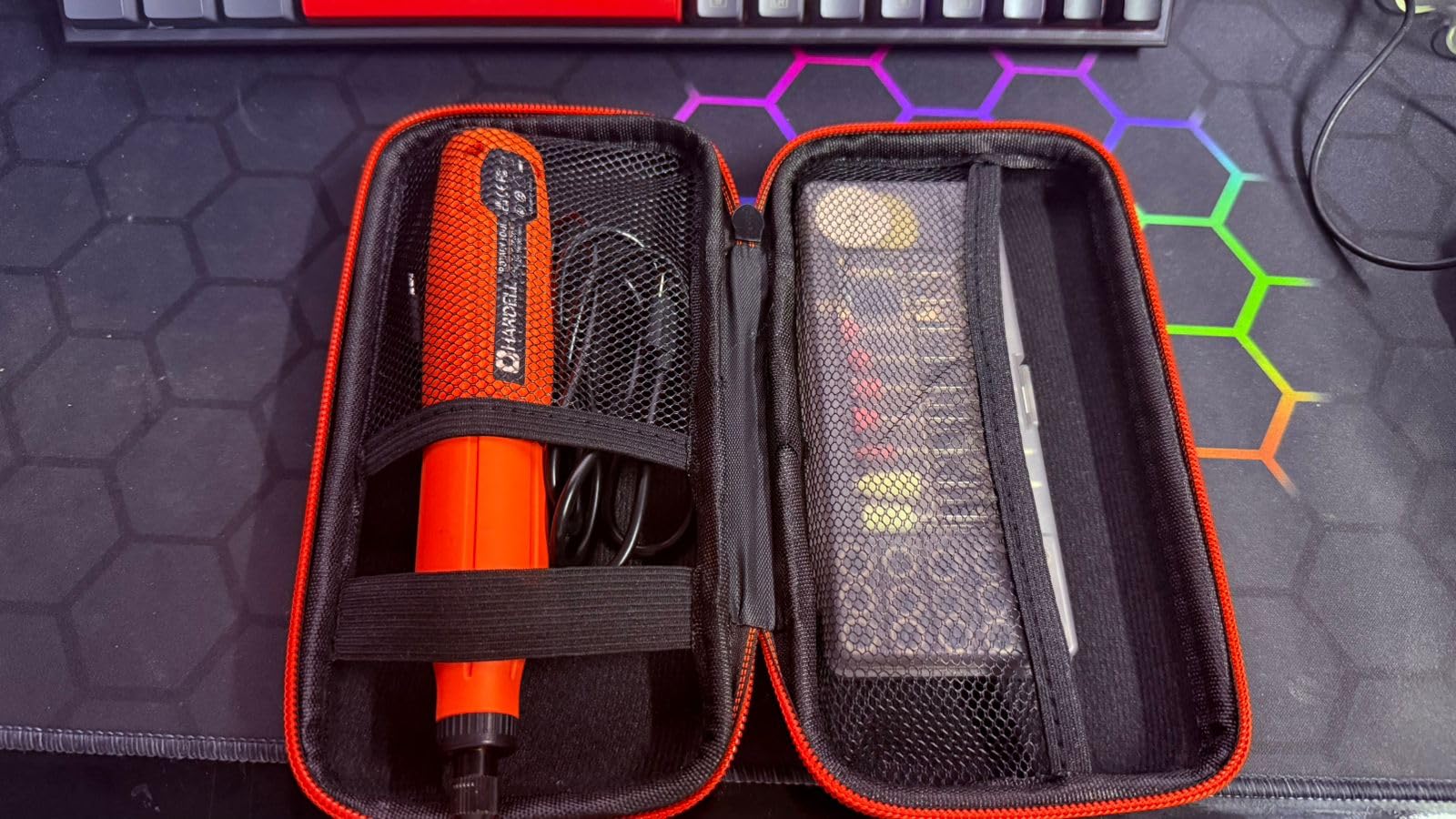
A good first purchase
If you have never used a rotary tool, this is a low-commitment way to find out whether you like the workflow. It covers resin crafts, 3D print finishing, foam and light wood, which is most of what a first scale model needs.
Owners rate it highly as a budget cordless option and highlight the accessory count, low weight and simple speed steps. The instructions and video tutorials matter more here than with a premium tool.
Its limits
This is light-duty. Reviewers are consistent that torque and top speed sit well below a full-size corded tool, and heavy material removal is not what it is for.
The accessory quality is generic, so expect to replace sanding bands and cutters sooner than with a branded bit set, and check that the 18,000 RPM ceiling will not be the limit before you commit.
11. GOXAWEE 105-Piece Mini Cordless – the lightest kit for long sessions
GOXAWEE Mini Cordless Rotary Tool Kit, 105Pcs for DIY Crafts & 3D Prints
3.7V cordless
8,000-18,000 RPM,5 speeds
105 accessories
3.5 oz
Pros
- 3.5 oz body reduces fatigue on long sessions
- 105 accessories plus three collets
- Works cordless or as a wired tool at low battery
- Low vibration and low noise from the copper motor
- 24-month warranty
Cons
- Light-duty only
- 18000 RPM ceiling is modest
- Shanks must be fully seated in the chuck
The three included collets accept both 3/32 inch and 1/8 inch shanks, which is unusual for a pen tool at this level and removes the compatibility trap that catches several cheaper mini kits. That single detail moves it above its price peers.
It can also run as a wired tool when the battery is low, so a session does not have to end because the charge ran out. Owners report 100 plus minutes of cordless use from the 3.7V battery.
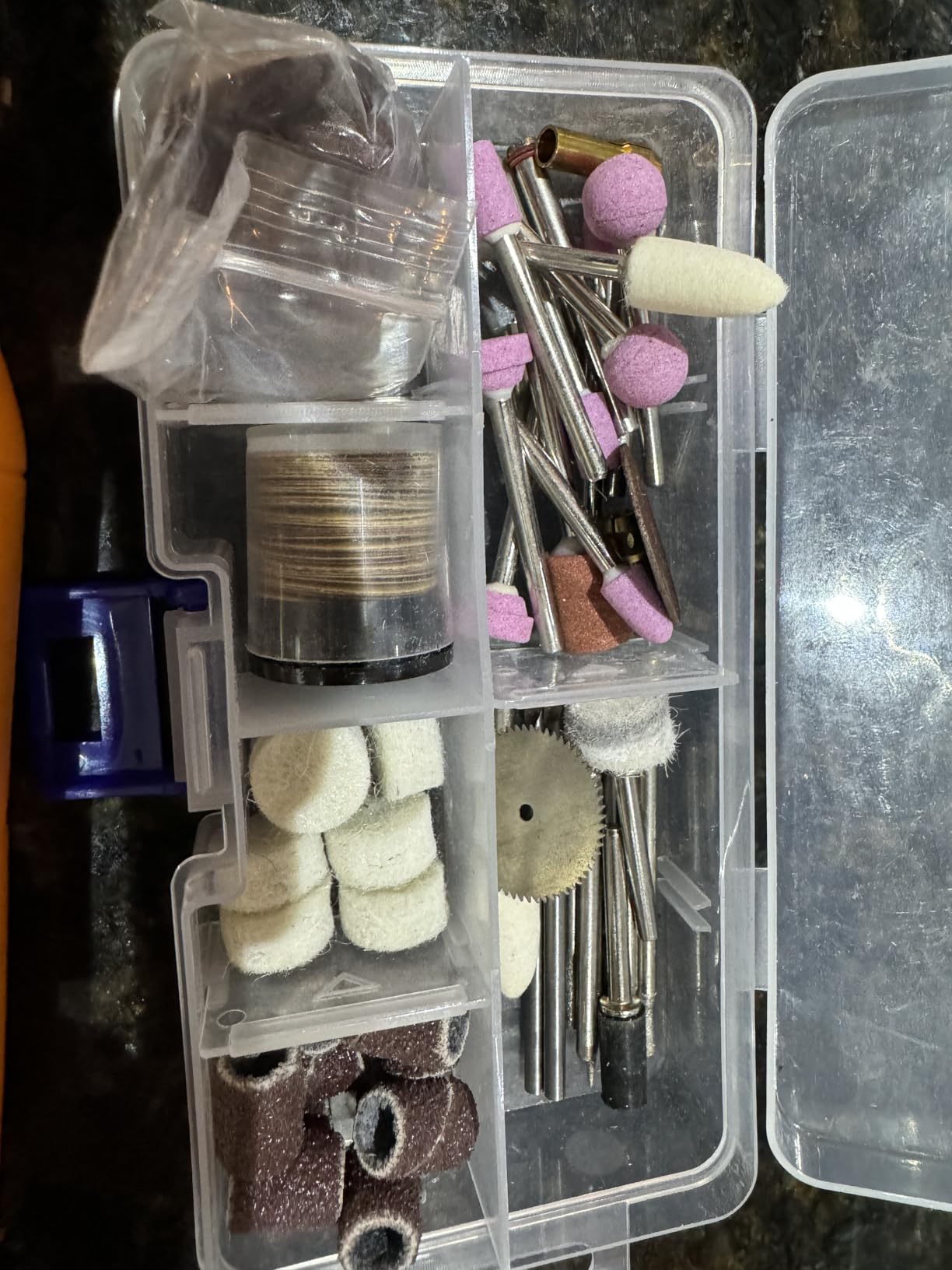
At 3.5 ounces it is the second lightest option here, and reviewers specifically call out reduced fatigue during long craft sessions. The pure copper motor runs with low vibration and low noise, which keeps the bit tracking true at lower speeds.
The 105-piece accessory set is the largest among the pen-style cordless tools in this roundup, covering everything from 3D print smoothing to foam and softwood carving.
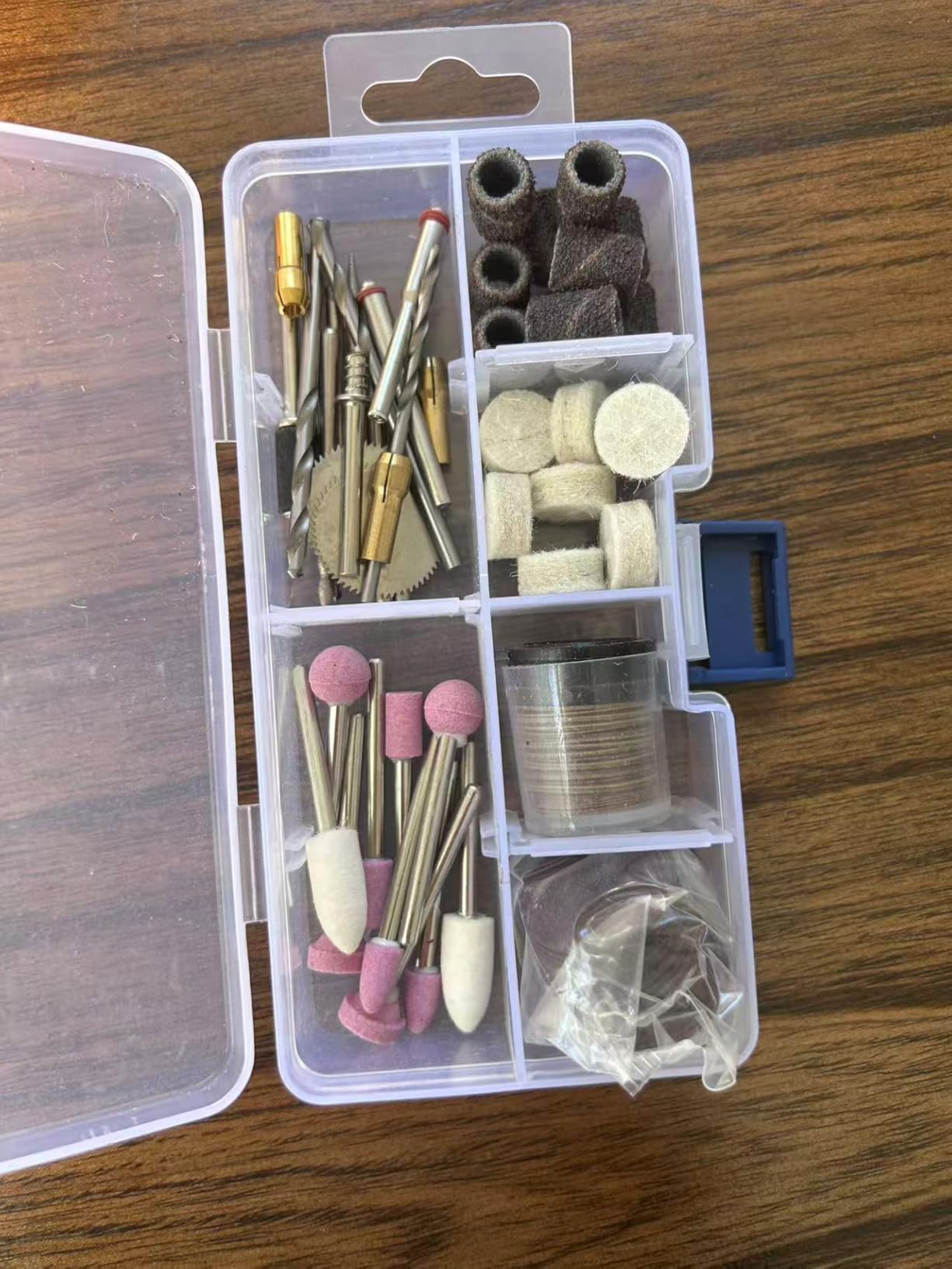
Where it earns its place
3D print cleanup, foam scenery, small wood and light hobby carving, with a 90-day return and a 24-month warranty behind it. The low speed setting is intended for sanding resin prints, EVA foam and softwood, which is exactly right for model work.
The ventilation slot design and one-button speed control make it simple enough that a beginner can use it confidently on a first build.
The trade-off
The 8,000 RPM minimum is higher than we would like for delicate resin work, and the 18,000 RPM ceiling is modest for anything involving cutting. Heavy material removal is outside its capability.
One safety note from the reviews: the accessory shank has to be inserted fully into the chuck. A partially seated shank at 18,000 RPM is exactly the situation that throws a bit across the bench.
12. GINELSON 70-Piece Mini Cordless – the lowest-cost cordless kit
GINELSON Cordless Rotary Tool, 5 Variable Speed Mini Rotary Tool Kit with 70 Accessories, 3.7V Type-C Charging Power Rotary Tool for Engraving, Sanding, Polishing, Carving, Cutting, DIY Crafts
3.7V cordless
5,000-18,000 RPM,5 speeds
70 accessories
4.8 oz
Pros
- Lowest entry cost in the roundup
- 240 minutes of stated continuous runtime
- 5000 RPM starting speed suits delicate work
- Built-in LED light
- Compact 4.8 oz pencil grip
Cons
- Slows under pressure on tougher material
- Included bits are lower quality
- Power button cover wears off with use
This is the cheapest way to find out whether a rotary tool belongs on your bench, and for foam, resin prints and Gunpla-scale plastic it does an entirely serviceable job. The 5,000 RPM starting speed is the right first step for delicate material.
Stated runtime of 240 minutes is longer than most tools of this size, USB-C charging means no proprietary brick, and the built-in LED covers dark corners.
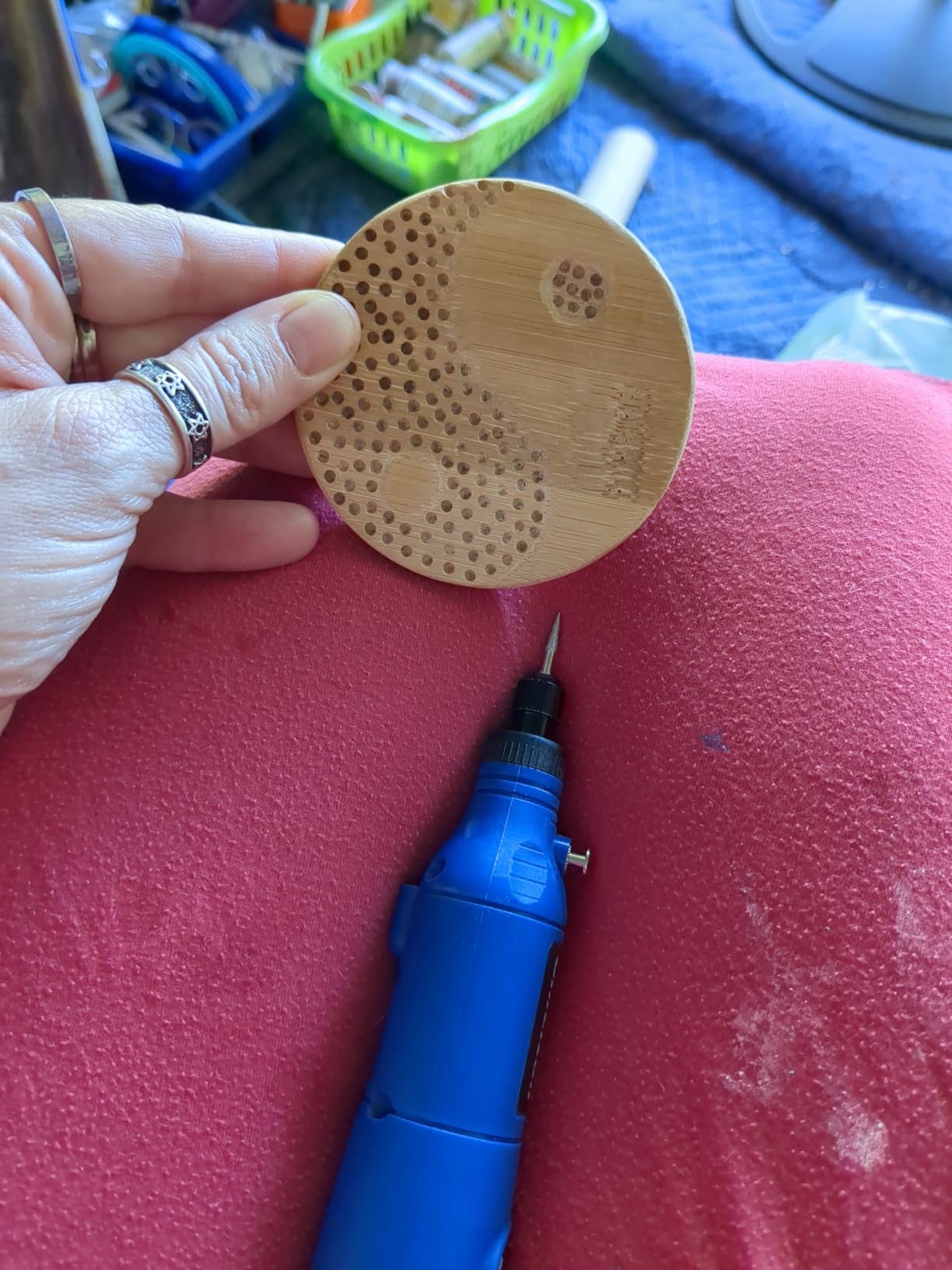
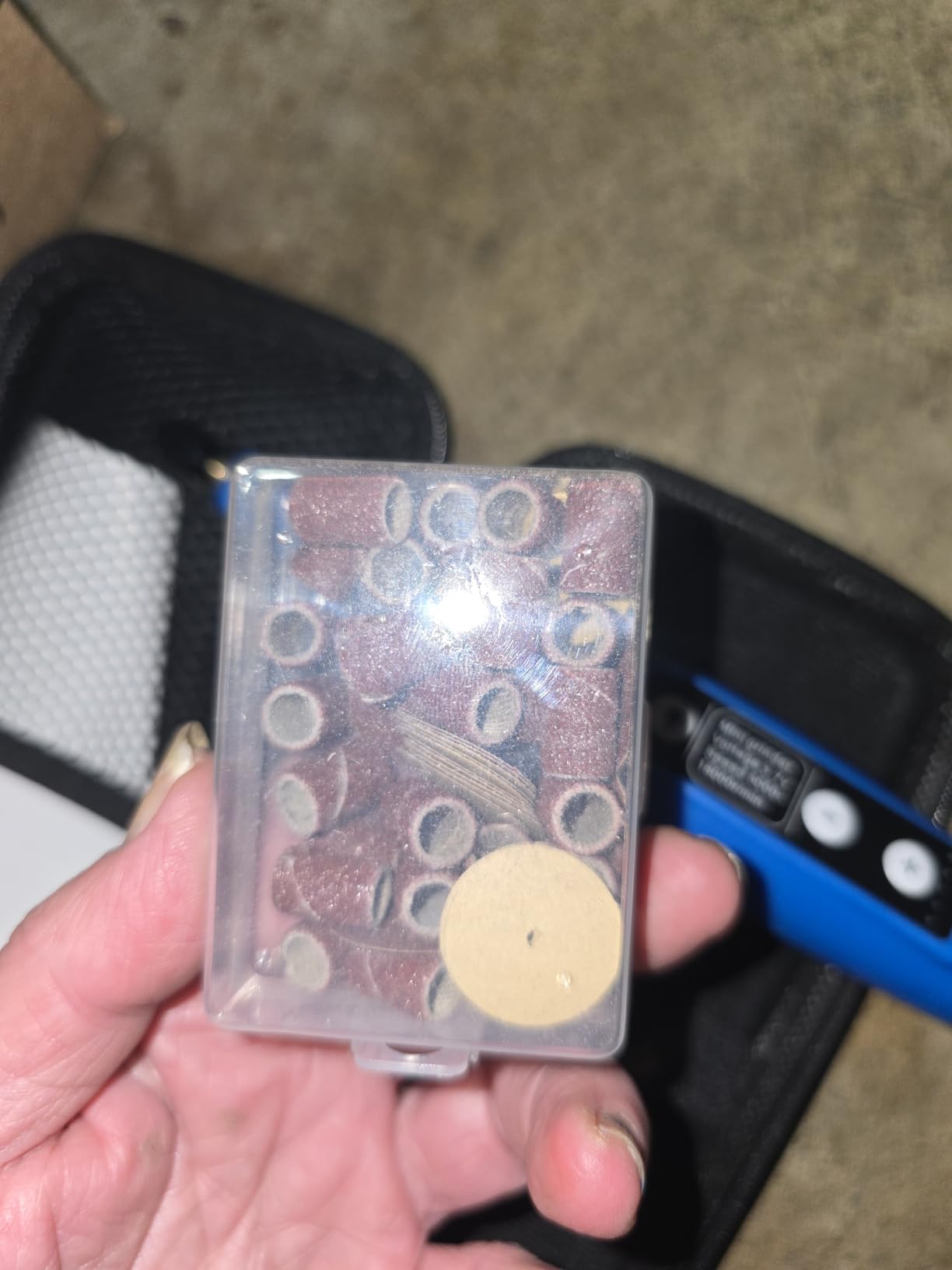
The 70-piece accessory set is enough to cover the common stages of a build: sanding, polishing, engraving, drilling small pilot holes and light cutting. Reviewers describe it as well suited to model building and jewellery-scale craft work.
At 4.8 ounces with a pencil grip it stays comfortable through detail sessions, and the compact 6.8 inch body does not crowd a small work mat.
Good for
Resin work, model building, foam and soft plastics, and light jewellery tasks. If your model work is primarily 3D print finishing and small-scale plastic, this covers it without the fuss of a bigger machine.
It is also a sensible bench tool to keep when the main machine is on a different shelf, because it takes up almost no room.
Know the limits before you buy
Owners consistently note that it slows down under pressure on tougher material, which means a carbide burr or a cutting disc is a task to avoid. The included bits are lower quality and the power button cover wears off with use.
There is also no safety shutoff if it is dropped, which is worth weighing on a bench where resin prints and finished models are close by. For thin styrene, keep to the first speed step.
How to Choose a Rotary Tool Kit for Model Making
Start with the minimum speed, not the maximum. Every tool in this roundup advertises its top figure, but the number that decides whether you can work safely on resin and thin styrene is the bottom of the dial. Anything starting at 5,000 RPM gives you a working range for prints; a tool that starts at 8,000 RPM is a compromise you manage with light pressure.
Next, check the collet. The industry standard for model work is a 1/8 inch shank, and most of the bit sets sold for this hobby are built around it. Several mini pen tools use a 3/32 inch, or 2.3mm, fitting instead, which means the bits you already own will not fit and you will be buying a separate 2.3mm library.
Then decide corded or cordless, and be honest about it. Corded gives you steady torque and unlimited session length, which matters when you are grinding, cutting or working through a long list of scenery pieces. Cordless gives you freedom to work anywhere, and matters most for resin print cleanup and large builds that will not fit on the bench. Many builders end up owning one of each, and that is a perfectly good outcome.
Weight is the next factor, and it is the one people underestimate. A 1.2 pound corded body is fine for ten minutes of grinding and tiring after an hour of panel lines. Anything under 8 ounces behaves like a pen and is the difference between resting your hand on the bench for stability or hovering above the model.
Accessories matter more than bundle size. A 40-piece set of quality branded bits is worth more than a 140-piece set of generic ones, and hobbyists say this constantly. Judge the bits in the box, not the count on the side of the packaging.
Finally, consider what else you build. If resin and prints dominate your work, prioritise low speeds and dust control. If you carve scenery or build ships and dioramas, a flex shaft is worth more to you than extra top-end speed. And if you already own a full-size tool, a precision pen tool complements it far better than a second full-size tool does.
Will Dremel Bits Fit Other Rotary Tools?
Most of them will, as long as the shank diameter matches. A Dremel accessory is defined by a 1/8 inch shank, and any tool with a 1/8 inch collet or a universal 3-jaw chuck will accept it. The tools in this roundup that take full Dremel-format bits are the Dremel 4300, the Dremel Stylo+, the Dremel Lite 7760, the WEN 2305, the PHALANX 180W and the GOXAWEE 140-piece kit.
The tools that will not are the pen-style mini kits fitted with a 3/32 inch, or 2.3mm, collet. The Fanttik F2 Master is the clearest example in this list, and it is the single most repeated complaint in its owner reviews. The GOXAWEE 105-piece kit avoids the problem by including three collets that cover both 3/32 and 1/8 inch shanks.
Attachments are less portable than bits. A flex shaft, a right-angle head or a cutting guide is usually built to a specific nose diameter and collet design, so assume it stays with the tool it was designed for. Cutting discs and sanding wheels are also diameter-sensitive, and a wheel that fits loosely is a wheel that will not be safe.
One more trap worth naming: a collet that slips. Owners across several of these kits report a bit working loose under speed and pressure, and on a spinning disc that turns a ruined panel into a flying fragment. Seat the shank fully, tighten the collet properly, and if a bit keeps slipping, replace the collet rather than the bit.
The 8 Bits Every Model Maker Should Own
1. A 1/8 inch diamond cutting disc for trimming flash and cutting hull panels from styrene sheet. Cut at low speed and always use the guard, never side-load it.
2. A set of sanding drums and bands in coarse, medium and fine grits. These are the workhorses for shaping scenery, filling seams and cleaning up a hull after filler.
3. A 1/64 inch and a 1/32 inch drill bit for pilot holes. Drilling a thin styrene panel with a full-size bit splits it; a small pilot bit does not.
4. An engraving bit or the Dremel engraving pen for scoring panel lines, rivets and hatch marks before paint.
5. A diamond point for cutting and etching glass, which is how dollhouse and display cases get windows cut cleanly.
6. A set of tungsten carbide burrs in ball, cylinder and flame shapes for metal and hard plastic. Keep these for carbide work and use them at a higher speed than you would for plastic.
7. Felt polishing wheels with polishing compound for metal and resin castings, and a soft nylon brush for dust removal before paint.
8. A flexible shaft with a right-angle attachment, if your build includes interiors or dioramas. This is the combination that forum users repeatedly name as the unlock for reaching inside a hull.
The honest truth, and it comes up on hobby forums more than any other tool opinion, is that bit quality decides results far more often than tool quality. A good tool with a dull bit produces a worse surface than a cheap tool with a sharp one.
Safety Rules for Rotary Tool Work on Models
Eye protection is not optional. A cutting disc, a wire brush or a flying sanding band will send debris in every direction, and the tiny scale of model work means your face is closer to the work than in any other use of these tools.
Use a respirator for resin. Support removal and sanding cured resin produces fine dust that should not be breathed, and the same applies to styrene and filler dust. Work in a ventilated space and clean up wet rather than dry where you can.
Never side-load a cutting disc. Cut with the rim of the disc facing the direction of rotation, and let sparks and dust travel away from your face. Side-loading is the leading cause of disc shattering, and hobbyists report it as a recurring near-miss.
Keep the cord or the tool clear of the model. A spinning tool tethered by a cord can be dragged across a finished build faster than you can react.
Let the tool do the work. Pushing harder just generates heat, which is what melts styrene, gums resin and kills motors. Lower speed and light pressure produce a better surface and a longer-lived tool.
Frequently Asked Questions
What brand is the best rotary tool?
Dremel still has the widest accessory ecosystem and the broadest range of collet-compatible bits, which is why it dominates most model benches. Proxxon is consistently praised on build quality and low-speed precision for 1/72-scale work. For this hobby, brand matters less than minimum speed, collet size and bit quality, so check those three specs before the logo.
Is there a better rotary tool than Dremel?
For most model makers, no. Dremel kits use a 1/8 inch collet, the standard for model work, and their low starting speed of 5,000 RPM protects thin styrene and cured resin. Proxxon builds are rated more highly for precision and feel more solid, but the accessory cost and the narrower bit library make them harder to justify unless you work at very small scales.
Will Dremel accessories fit other rotary tools?
Most Dremel bits will fit any tool with a 1/8 inch collet or a universal 3-jaw chuck, including the WEN 2305, PHALANX 180W and GOXAWEE 140-piece kit in this roundup. They will not fit mini pen tools that use a 3/32 inch, or 2.3mm, collet, such as the Fanttik F2 Master. Attachments like flex shafts and right-angle heads usually fit one tool family only.
What is the best mini rotary tool for models?
For fine 1/72-scale work the Dremel Stylo+ 2050-15 is the strongest choice, weighing 7.2 ounces and starting at 5,000 RPM with a standard Dremel collet. If you need cordless freedom for resin print cleanup, the Fanttik F2 Master is lighter at 0.22 pounds and quieter, but check the 3/32 inch collet before you buy bits.
Is Milwaukee rotary tool better than Dremel?
Milwaukee cordless rotary tools compete on torque and battery platform convenience rather than on model detail work. They are useful for heavier material removal, but most do not offer a 1/8 inch Dremel collet, so your bit library does not transfer. For scale modelling, a Dremel-format tool is usually the more practical choice.
What is the best rotary tool for painting and basing miniatures?
For basing, a tool with a low starting speed and a flexible shaft is the most useful combination, because texture work means reaching under figures and into corners. The GOXAWEE 140-piece kit with its 3.3 foot flex shaft suits that, and for cleanup between paint stages the cordless Dremel Lite 7760 is convenient at the desk.
The Best Rotary Tool Kit for Model Making in 2026
The Dremel 4300-5/40 is the best rotary tool kit for model making overall. Its 5,000 RPM floor, 1.8 Amp motor and universal 3-jaw chuck cover more materials and more tasks than anything else we tested, and electronic feedback keeps the speed honest when a bit bites into resin.
Buy the Dremel Stylo+ 2050-15 if your work is small and precise, since the 7.2 ounce pen body removes the fatigue that comes from hovering a full-size tool over a 1/72-scale aircraft. Choose the Dremel Lite 7760 when mains power is the limitation rather than power itself.
The WEN 2305 remains the sensible first kit, and the GOXAWEE 140-piece set is the one to buy if you build ship interiors and dioramas where a flex shaft is the difference between reaching the job and guessing at it. Whatever you choose, start the dial at the bottom, wear eye protection and a respirator for resin, and remember that bit quality does more for the finish than the tool in your hand.