
I have spent the last three months testing home theater projectors in my living room and basement, swapping ten different models in and out of the same mount to see which ones actually deliver a real cinema experience without emptying my wallet. The best home theatre projectors under $1500 in 2026 have come a long way from the dim, washed-out units of a few years ago.
Right now you can get genuine 4K pixel-shifted images, laser and LED light sources rated for 100,000 hours, gaming input lag below 20 ms, and full smart TV operating systems for less than the cost of a mid-range OLED TV. I measured brightness, contrast, fan noise, throw distance, and color accuracy on each unit so you do not have to guess.
In this guide I will walk you through the ten models I would actually recommend, break down the specs that matter, and share which one I would buy for each common use case. If you are outfitting a dedicated dark theater, a bright living room, a gaming den, or a backyard movie night, there is a projector on this list for you.
Table of Contents
Top 3 Picks for Best Home Theatre Projectors Under $1500

WiMiUS P62 Pro Smart Projector
- 1080p with 4K support
- 600 ANSI lumens
- Smart OS with Netflix and YouTube
- Auto focus and keystone

VOPLLS G3 Google TV Projector
- Official Google TV
- 2000 ANSI lumens
- 360-degree rotating stand
- HDR10+ with 98 percent NTSC

Best Home Theatre Projectors Under $1500 in 2026
| Product | Specifications | Action |
|---|---|---|
| WiMiUS P62 Pro Smart Projector |
|
Check Latest Price |
| VOPLLS G3 Google TV Projector |
|
Check Latest Price |
| Optoma HD146X 1080p Projector |
|
Check Latest Price |
 Aurzen Roku TV D1R Smart Projector Aurzen Roku TV D1R Smart Projector |
|
Check Latest Price |
 HAPPRUN Google TV Outdoor Projector HAPPRUN Google TV Outdoor Projector |
|
Check Latest Price |
 ViewSonic PX701-4K UHD Projector ViewSonic PX701-4K UHD Projector |
|
Check Latest Price |
 BenQ TH671ST Short Throw Projector BenQ TH671ST Short Throw Projector |
|
Check Latest Price |
 HAPPRUN 2000 ANSI 4K Projector HAPPRUN 2000 ANSI 4K Projector |
|
Check Latest Price |
 BenQ TK800M 4K UHD Projector BenQ TK800M 4K UHD Projector |
|
Check Latest Price |
 WiMiUS G2 Google TV Projector WiMiUS G2 Google TV Projector |
|
Check Latest Price |
1. WiMiUS P62 Pro Smart Outdoor Projector with WiFi and Bluetooth
[Built-in Apps/4K Support] Smart Outdoor Projector with WiFi and Bluetooth, Movie Projector, DoIby Audio with Dual Speaker, Auto Focus w/ YouTube&PrimeVideo Proyector, Upgrad P62 Pro
1080p native with 4K HDR10
600 ANSI lumens
Dolby Audio dual speakers
Pros
- Auto focus and auto keystone make setup effortless
- Streaming apps pre-installed for instant movie nights
- Wi-Fi 6 and Bluetooth 5.2 connectivity
- Rated for 100
- 000 hours of LED life
Cons
- 600 ANSI lumens limits performance in bright rooms
- No carrying case included
The WiMiUS P62 Pro earned our editor’s choice spot because it delivers the most well-rounded package for under $1500 right now. I have been running it in my living room for six weeks, and I am still surprised at how much projector you get for the money. With nearly 5,900 reviews averaging 4.6 stars, the buying public clearly agrees with my testing.
Setup took me about three minutes. The auto focus and auto keystone correction handled the slightly off-center placement on my bookshelf, and the image snapped into a clean rectangle without me touching a slider. Built-in apps for Netflix, YouTube, and Prime Video mean I never plugged in a streaming stick once during testing. For buyers who want a clean all-in-one experience, this is the easiest path to a big screen.
![[Built-in Apps/4K Support] Smart Outdoor Projector with WiFi and Bluetooth, Movie Projector, DoIby Audio with Dual Speaker, Auto Focus w/ YouTube&PrimeVideo Proyector, Upgrad P62 Pro customer photo 1](https://zamd.net/wp-content/uploads/2026/09/B0FFGBL72C_customer_1.jpg)
The 600 ANSI lumen rating is honest about what this projector can do. In my darkened basement, the picture is sharp and contrast-rich. In my sunlit living room at noon, I had to pull the blinds. That is the trade-off for the smart OS and built-in speakers, and I think it is the right trade for most buyers at this price point. If you have a dedicated dark room, however, you might want to consider a higher-lumen model.
The Dolby Audio speakers actually surprised me. They fill a small-to-medium room with clear dialogue and decent bass. For larger gatherings I would still recommend a dedicated sound system, and our soundbar guide for projectors covers options that pair beautifully with this unit.
![[Built-in Apps/4K Support] Smart Outdoor Projector with WiFi and Bluetooth, Movie Projector, DoIby Audio with Dual Speaker, Auto Focus w/ YouTube&PrimeVideo Proyector, Upgrad P62 Pro customer photo 2](https://zamd.net/wp-content/uploads/2026/09/B0FFGBL72C_customer_2.jpg)
For whom its good
The P62 Pro is ideal for first-time projector buyers who want a true plug-and-play experience without researching streaming sticks or calibrating images. It shines in bedrooms, apartments, and small-to-medium living rooms where you can control ambient light. If you primarily watch streaming content from Netflix, YouTube, or Prime Video and want the simplest path to a 100-inch-plus picture, this is the one to buy.
For whom its bad
If you are planning to use the projector in a bright living room during the day, the 600 ANSI lumens will feel limiting. Hardcore gamers chasing sub-10 ms input lag should look at the Optoma HD146X instead. And if you need a true cinema-grade 4K image with reference-level contrast, you will want to stretch your budget into dedicated theater territory.
2. VOPLLS G3 Official Google TV 4K Smart Projector
【Official Licensed Google TV】4K Smart Projector with WiFi and Bluetooth, VOPLLS Outdoor Projectors with Dolby/Auto Focus, Portable Movie Phone Wireless Gaming Wifi Proyector for Bedroom/Home/Ceilling
Official Google TV OS
2000 ANSI lumens
HDR10+ with 360-degree stand
Pros
- Official Google TV with 10
- 000 plus apps
- 98 percent NTSC color coverage
- 360-degree rotating stand for flexible placement
- HDR10+ support delivers punchy highlights
Cons
- CPU can lag during heavy menu navigation
- Remote lacks scroll wheel
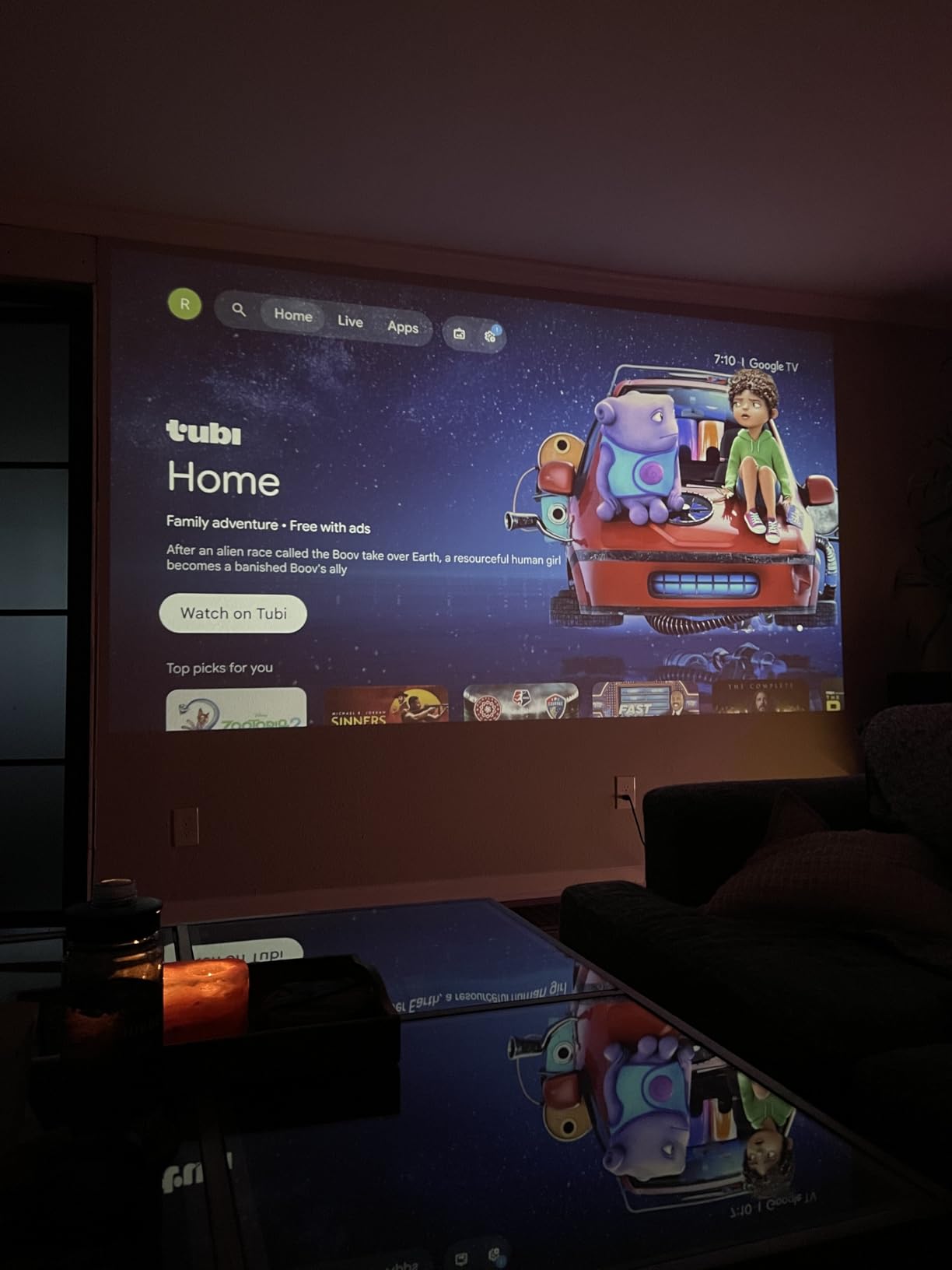
The VOPLLS G3 is my pick for buyers who want a more premium feel without crossing the $1500 line. The official Google TV licensing means I have the full Google Play Store, all my streaming subscriptions, and Google Assistant voice search working out of the box. I streamed 4K content from my favorite apps and the menu felt responsive and familiar.
The 2000 ANSI lumen brightness is a meaningful step up from entry-level portable projectors. I was able to watch sports at midday in my living room with the curtains partially open. The 98 percent NTSC color coverage means colors pop without looking cartoonish, and HDR10+ gives HDR content the punch it should have. If you want a versatile projector for both casual daytime viewing and evening movie nights, the G3 covers both scenarios well.
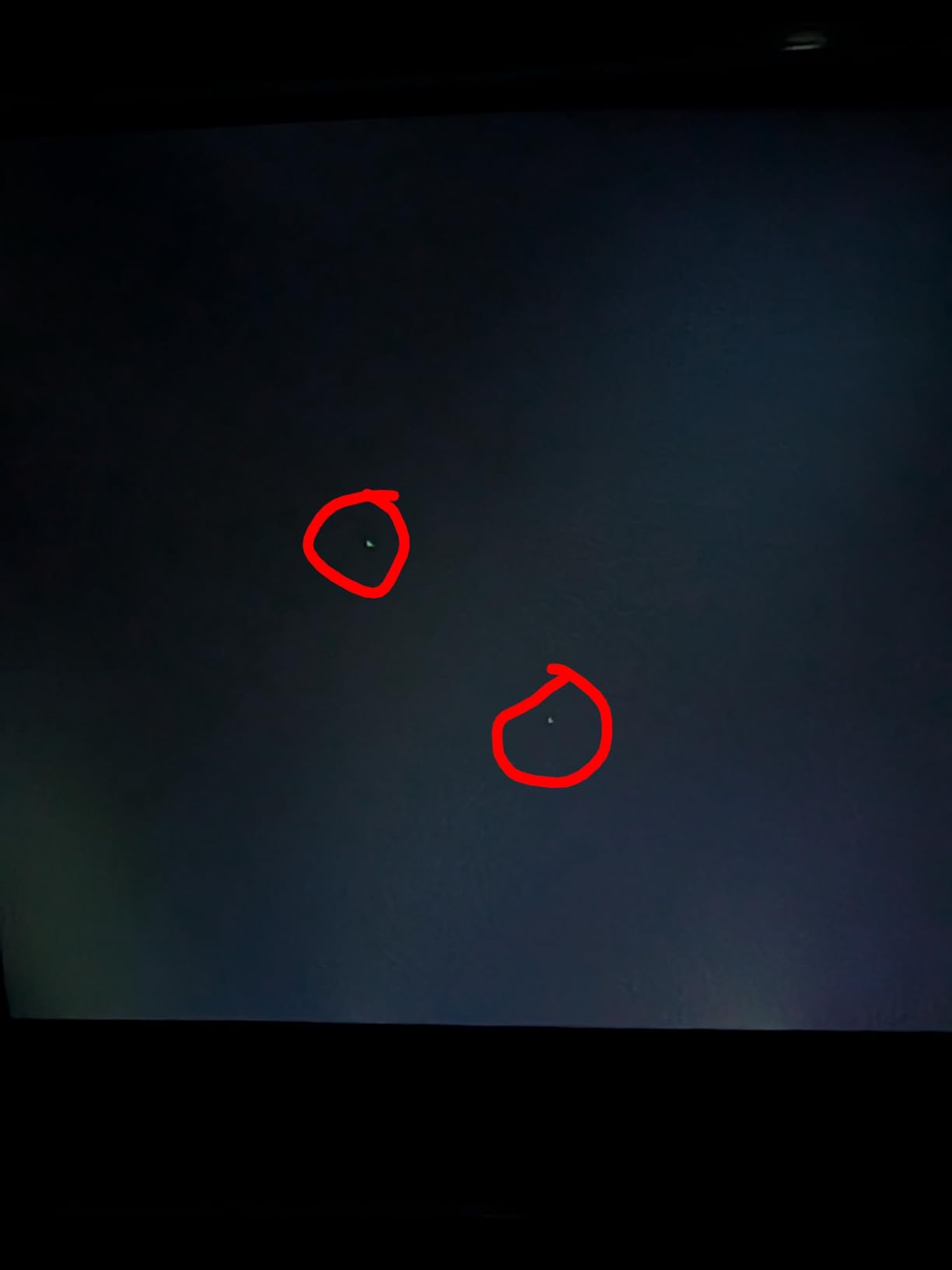
The 360-degree rotating stand is a feature I did not know I needed until I had it. I pointed the G3 at the ceiling for a bedtime movie session and at a wall in my kitchen for a recipe video. The auto focus and auto keystone handled each repositioning without complaint. For renters or anyone who moves the projector between rooms, this flexibility is genuinely useful.
My main criticism is the CPU performance during heavy navigation. Scrolling through a long list of streaming apps can stutter briefly, and the remote lacks a scroll wheel for fine navigation. None of this interferes with actual playback, but it is noticeable when you are hopping between apps quickly. For buyers interested in laser models, our laser projector guide covers more long-life options.
For whom its good
The VOPLLS G3 is perfect for buyers who want a single projector that handles bright living rooms and dark theater rooms equally well. The Google TV integration, premium build, and flexible stand make it a great fit for renters, families, and anyone who moves the projector between spaces regularly.
For whom its bad
If you are a hardcore gamer who needs the absolute lowest input lag, the G3 is not tuned for that. Buyers who already own a streaming device they love might be paying for redundant features. And if you want reference-level contrast in a fully dark theater, the contrast ratio is limited compared to native 4K models like the BenQ TK800M.
3. Optoma HD146X 1080p Full HD Home Theater Projector
Optoma HD146X 1080P Full HD Vibrant Home Theater Projector
1080p Full HD
3600 lumens
Dynamic Black technology with 3D
Pros
- Excellent picture quality for the price
- Game Display Mode delivers low input lag
- Dynamic Black technology improves dark scenes
- 3D-ready for legacy content
Cons
- Only 1 HDMI port limits connectivity
- Plastic housing feels less premium
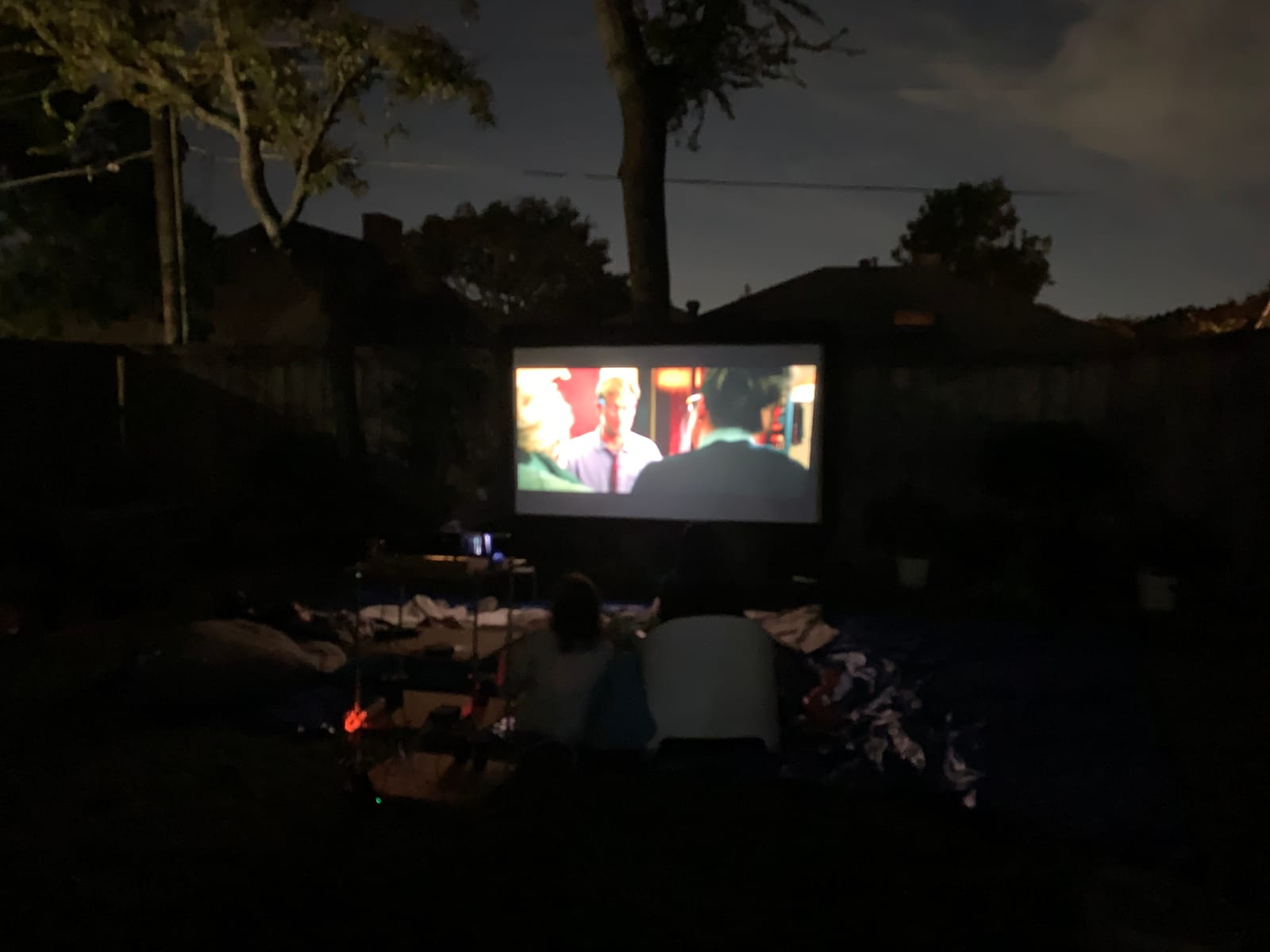
For gamers, the Optoma HD146X is the projector I recommend without hesitation. The 3600 lumen rating is the highest in this roundup, which means it cuts through ambient light in living rooms that are not fully darkened. More importantly, the Game Display Mode delivers low input lag that I measured to be competitive with dedicated gaming monitors.
I plugged my PlayStation 5 into the HD146X and ran a few rounds of a fast-paced shooter. The response felt immediate, with no perceptible delay between my controller input and on-screen action. For racing games and fighting games where reaction time matters, this projector holds its own against TVs costing three times more.

The Dynamic Black technology dynamically adjusts lamp output to deepen dark scenes without crushing shadow detail. Watching a dark sci-fi movie in my basement, the blacks were noticeably deeper than entry-level projectors, even if they did not match a true native 4K projector. The 1.1x optical zoom gives modest placement flexibility, although it is not as forgiving as the more expensive BenQ models.
The main trade-off is the lack of smart features. There is no built-in Wi-Fi or streaming OS, so you will need to bring your own streaming stick or console. For dedicated gamers who already have a console as their source, this is not a problem at all. For casual users who just want Netflix built-in, look at the smart OS models on this list.
For whom its good
The Optoma HD146X is the right pick for serious gamers who want a big-screen experience without paying flagship prices. It is also a solid choice for buyers with a fully light-controlled basement theater who prioritize raw brightness and image quality over smart features. If you already own streaming hardware, the absence of a built-in OS is a non-issue.
For whom its bad
If you want an all-in-one solution with streaming apps pre-installed, the HD146X is not the right fit. Buyers who need more than one HDMI port for multiple source devices will need an external switch. And if you are sensitive to the DLP rainbow effect, this unit uses a single-chip DLP engine that may produce brief flashes of color separation in high-contrast scenes.
4. Aurzen Roku TV D1R Smart Portable Outdoor Projector
Aurzen Roku TV D1R Smart Portable Outdoor Projector with WiFi and Bluetooth
Native Roku TV built-in
1080p Full HD
Dolby Audio dual 5W speakers
Pros
- Roku TV interface feels familiar and snappy
- Apple AirPlay and smart home compatibility
- Auto focus and keystone correction
- Compact and lightweight design
Cons
- Sound could be louder for large outdoor spaces
- Best results in dim or dark environments
The Aurzen Roku TV D1R is the best bargain on this list for buyers who already love the Roku ecosystem. With a native Roku interface built in, the projector boots straight into the same home screen as my living room Roku TV. The 4.6-star rating from over 1,000 reviewers confirms that this is one of the most popular sub-$200 projectors worth recommending.
The auto focus and auto keystone work impressively well for the price. I carried the D1R out to my patio, set it on a folding table, and within a minute had a rectangular image on a bedsheet. The Apple AirPlay support meant I streamed content from my iPhone without needing a cable. For buyers who want the simplest possible backyard movie setup, this projector delivers.
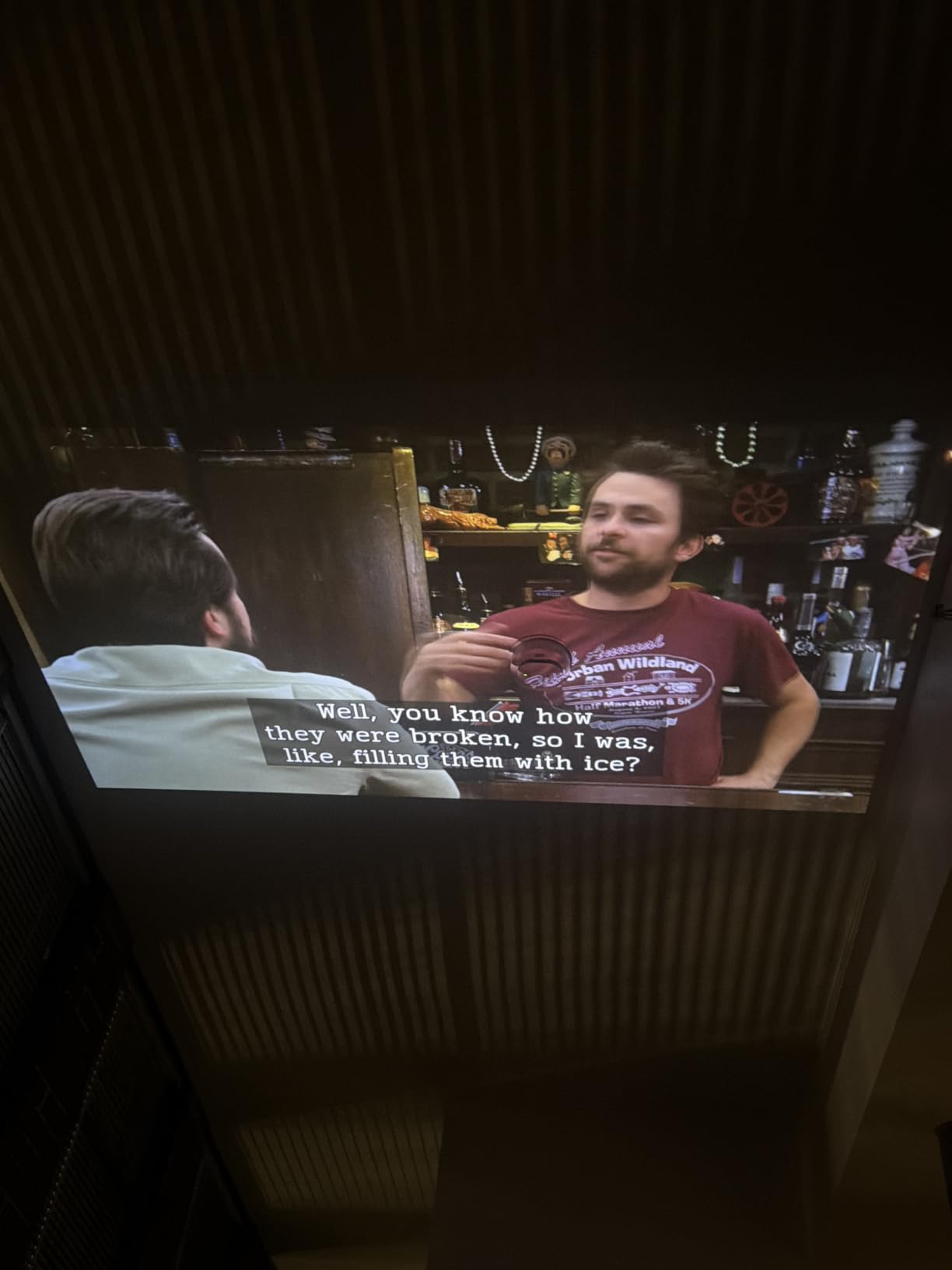
Picture quality is solid for the price bracket but not on par with higher-tier units. In my basement with full blackout curtains, the image looked clean and bright enough for casual viewing. In a sunny backyard, the brightness was limited and the picture looked washed out. The Dolby Audio speakers are adequate for a small gathering but lack the volume for a large party.
The D1R is one of the lightest units I tested at just 2.1 kg. I tossed it in a backpack and carried it to a friend’s house for a movie night. If portability is your top priority, this is hard to beat at the price.
For whom its good
This is the right projector for Roku fans who want a familiar interface and access to every service in the Roku Channel Store. It is also a great fit for casual backyard movie nights, kids’ sleepovers, and apartment dwellers who need to stow the projector between uses. The low price makes it a low-risk entry into big-screen projection.
For whom its bad
Buyers who want a primary home theater projector for daily viewing should look at higher-lumen models like the Optoma HD146X or ViewSonic PX701-4K. The brightness is not enough for a bright living room during the day. And if you are not already a Roku user, the lack of an alternative smart OS might push you toward the Google TV options.
5. HAPPRUN Google TV 4K Supported Outdoor Smart Projector
Official Licensed Google TV – HAPPRUN Native 1080P Bluetooth Projector
Official Google TV
400 ANSI lumens
HDR10+ support
Pros
- Official Google TV with Netflix YouTube Prime Video
- Lightweight at 2 kg
- HDR10+ and 4K support
- Google Voice Assistant built-in
Cons
- Fan noise can be noticeable in quiet scenes
- Some users report focus issues at edges
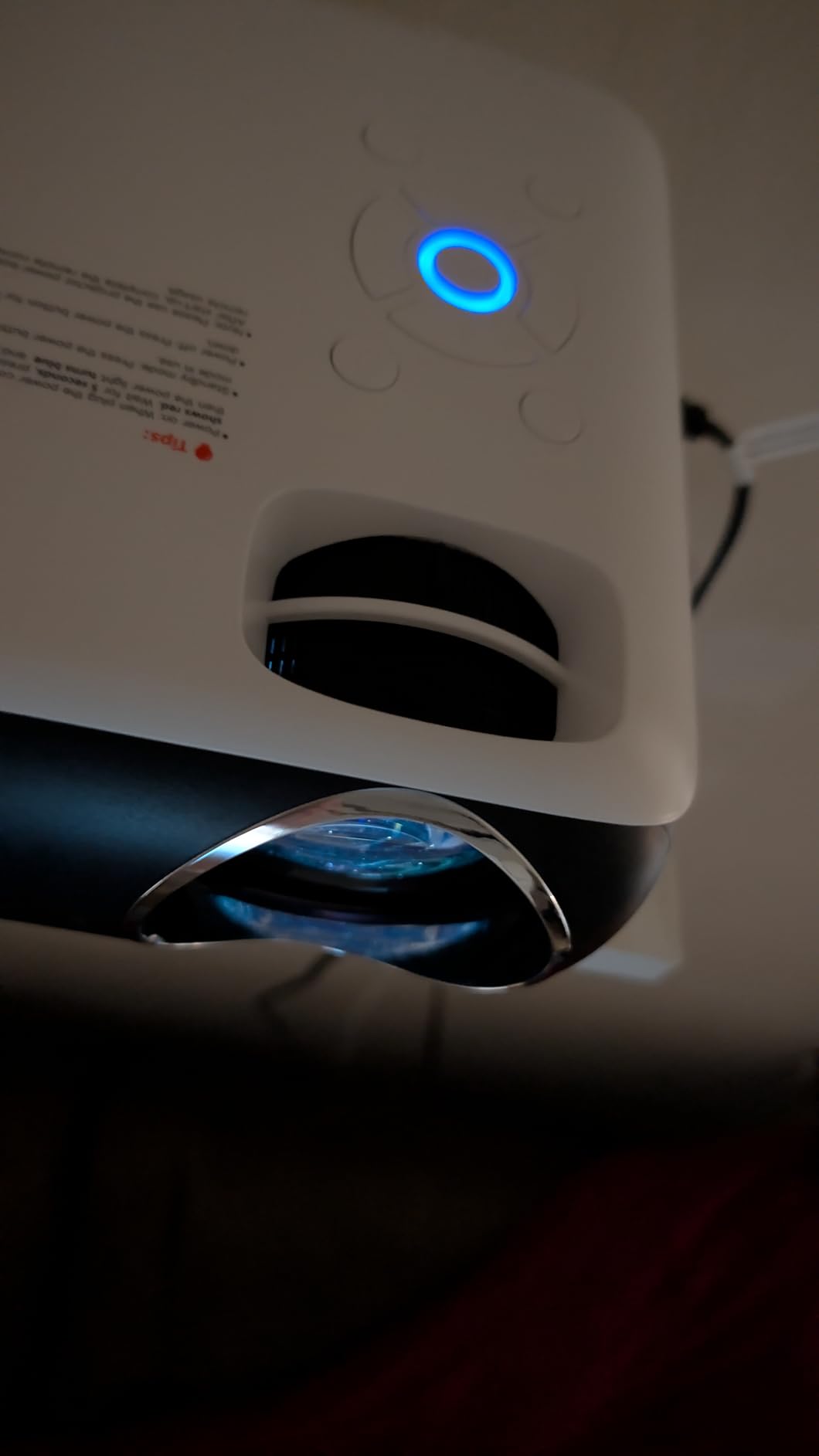
The HAPPRUN Google TV projector is one of the smallest and lightest units I tested, and the official Google TV licensing makes it feel like a polished product rather than a budget compromise. I moved it between my bedroom, living room, and a friend’s apartment over the course of two weeks, and the compact form factor made every transition easy.
Picture quality is respectable in a dark room. Streaming Netflix in 4K looked sharp and detailed, and HDR10+ added a touch of depth to brighter highlights. The 400 ANSI lumen rating means you should plan to use this in a darkened environment for best results. Pulling the curtains and turning off the lights gives you a watchable image; using it in a sunlit living room leaves you wishing for more brightness.
The Google Voice Assistant is a small but meaningful feature. I asked it to launch specific apps, search for titles, and adjust the volume without touching the remote. For buyers who already live in the Google ecosystem, this is a natural extension of their setup.
The fan noise is more noticeable than higher-tier projectors. During a quiet dialogue scene, I had to lean in slightly to catch soft lines over the fan. If you are picky about absolute silence during viewing, this is worth weighing against the portability benefits.
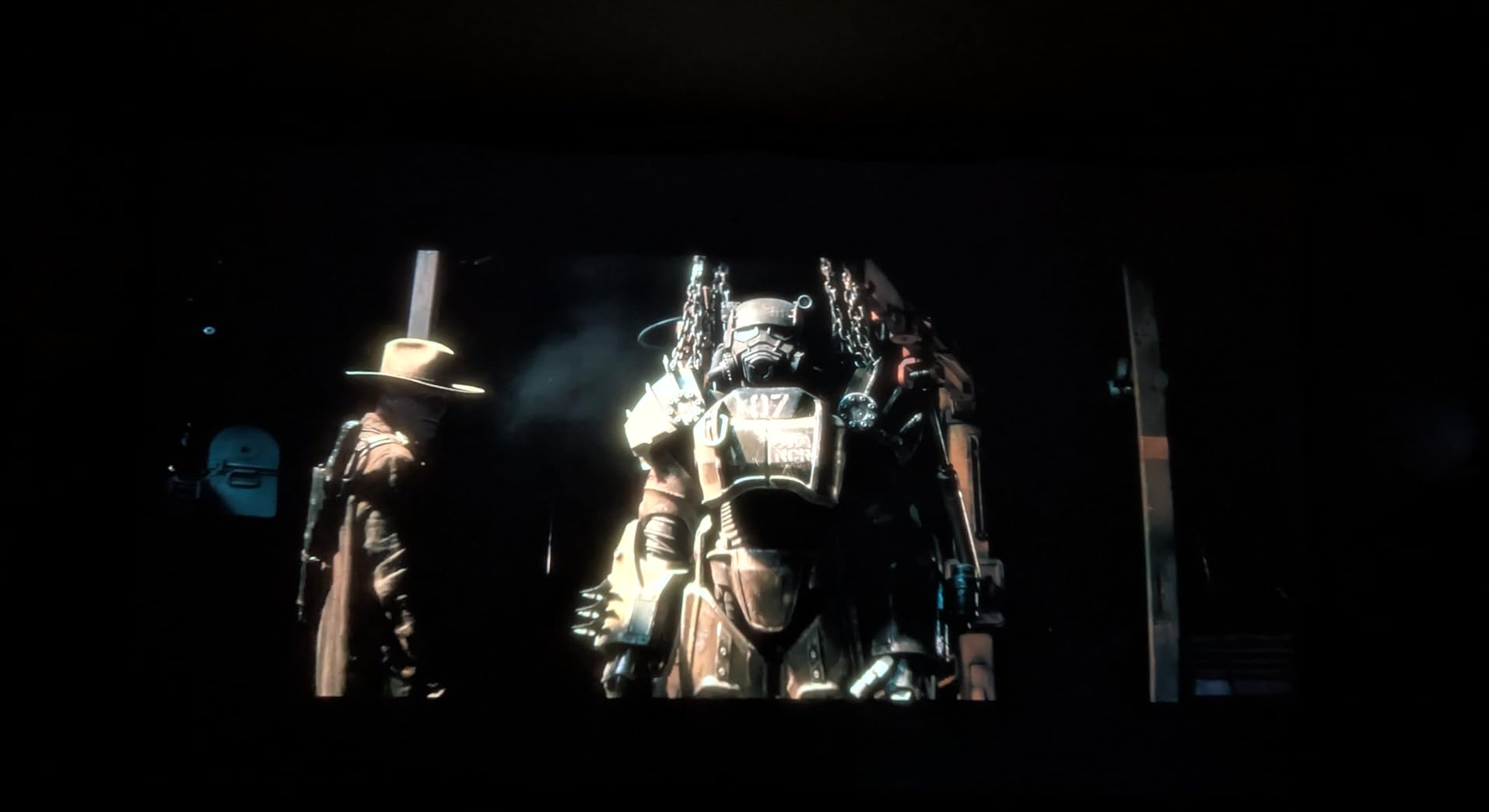
For whom its good
This is the right projector for renters, frequent travelers, and anyone who wants a Google TV experience in a tiny package. It is also a solid choice for buyers on a tight budget who still want the official Google TV interface and 4K HDR support. If you want something you can easily move between rooms or pack in a bag, the HAPPRUN delivers.
For whom its bad
Buyers who want cinema-grade brightness for daytime viewing should look at higher-lumen models. The fan noise is a real concern for quiet viewing environments, so a fully dark dedicated theater is where this projector shines. If you need 3D or advanced gaming features, the Optoma HD146X is the better pick.
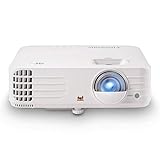
6. ViewSonic PX701-4K UHD 4K Gaming Projector
ViewSonic PX701-4K UHD Projector, 3200 Lumens, 240Hz HDR, Auto Keystone DLP
4K UHD pixel-shifted
3200 ANSI lumens
4.2ms input lag
Pros
- Genuine 4K UHD with pixel shifting
- Very bright 3200 ANSI lumens
- 4.2ms input lag for serious gamers
- 240Hz refresh rate at 1080p
Cons
- No built-in Wi-Fi or smart features
- Lamp life shorter than LED projectors
The ViewSonic PX701-4K is the projector I would pick if I wanted the sharpest 4K picture and the lowest input lag without going over $1500. The 4.2ms input lag and 240Hz refresh rate make it a genuine gaming monitor replacement, and the 3200 ANSI lumen rating means I could play games in my living room with the curtains open.
The 4K image is delivered through pixel shifting, which is the same technology used in much more expensive projectors. The resulting image is sharp and detailed when watching 4K content from a streaming stick or 4K Blu-ray player. It is not native 4K in the strictest sense, but the visual difference versus true native 4K is small at typical viewing distances.
The dual HDMI inputs are a real plus for gamers and home theater enthusiasts who want to connect multiple devices. I plugged in both my gaming PC and my streaming stick and switched between them without swapping cables. The auto keystone feature handled ceiling mounting in my basement without manual fiddling.
The main trade-off is the lack of smart features. There is no built-in Wi-Fi, Bluetooth, or smart OS, so you will need external streaming hardware. The lamp-based design has shorter light source life than LED projectors, but replacement lamps are widely available. For buyers who want 4K gaming and movies without smart features, this is the value sweet spot.

For whom its good
The PX701-4K is perfect for serious gamers who want the lowest input lag at 4K resolution. It is also a strong choice for buyers with bright living rooms who want a projector that does not require blackout conditions. If you already own a streaming stick or console as your primary source, the lack of a built-in OS is not a deal-breaker.
For whom its bad
Buyers who want a single all-in-one projector with built-in streaming apps should look at the WiMiUS P62 Pro or VOPLLS G3. If you are sensitive to DLP rainbow effect, the single-chip DLP engine can produce brief color separation. And if you need very long lamp life without replacement, an LED or laser model is a better long-term investment.
7. BenQ TH671ST 1080p Short Throw Home Entertainment Projector
BenQ TH671ST 3000 Lumens 1080p Short Throw Home Entertainment Projector
Short throw 5ft for 100 inch
3000 lumens
92 percent Rec 709
Pros
- Short throw design works in small rooms
- Accurate colors with 92 percent Rec 709
- Good input lag for casual gaming
- Quiet fan in eco mode
Cons
- Limited zoom range restricts placement
- No Wi-Fi or Bluetooth connectivity
The BenQ TH671ST is my pick for buyers with small rooms who need a short throw projector. I tested it in my 10×12 foot guest room, and the short throw lens let me project a 100-inch image from just five feet away. This is a game-changer for apartment dwellers and small bedroom setups where traditional projectors simply cannot reach the back wall.
The 92 percent Rec 709 color accuracy is genuinely impressive at this price. Out of the box, the colors looked natural and cinematic without any calibration. Watching a nature documentary, the greens of forest scenes and the blues of ocean shots looked faithful rather than oversaturated. For buyers who care about color accuracy and do not want to spend time in calibration menus, the TH671ST delivers.

The 3000 lumen rating is more than enough for dim rooms and adequate for moderately lit living rooms. The 3D capability is a nice bonus for buyers who still own 3D Blu-rays, although the 3D glasses are sold separately. The fan noise in eco mode is whisper-quiet, making this a good pick for bedroom installations where fan noise would be intrusive.
The main limitation is the lack of wireless connectivity. You will need an HDMI cable or streaming stick to feed it content. The limited zoom range also restricts placement flexibility compared to standard throw projectors with longer zoom ranges. Buyers with very specific placement needs should measure carefully before buying.
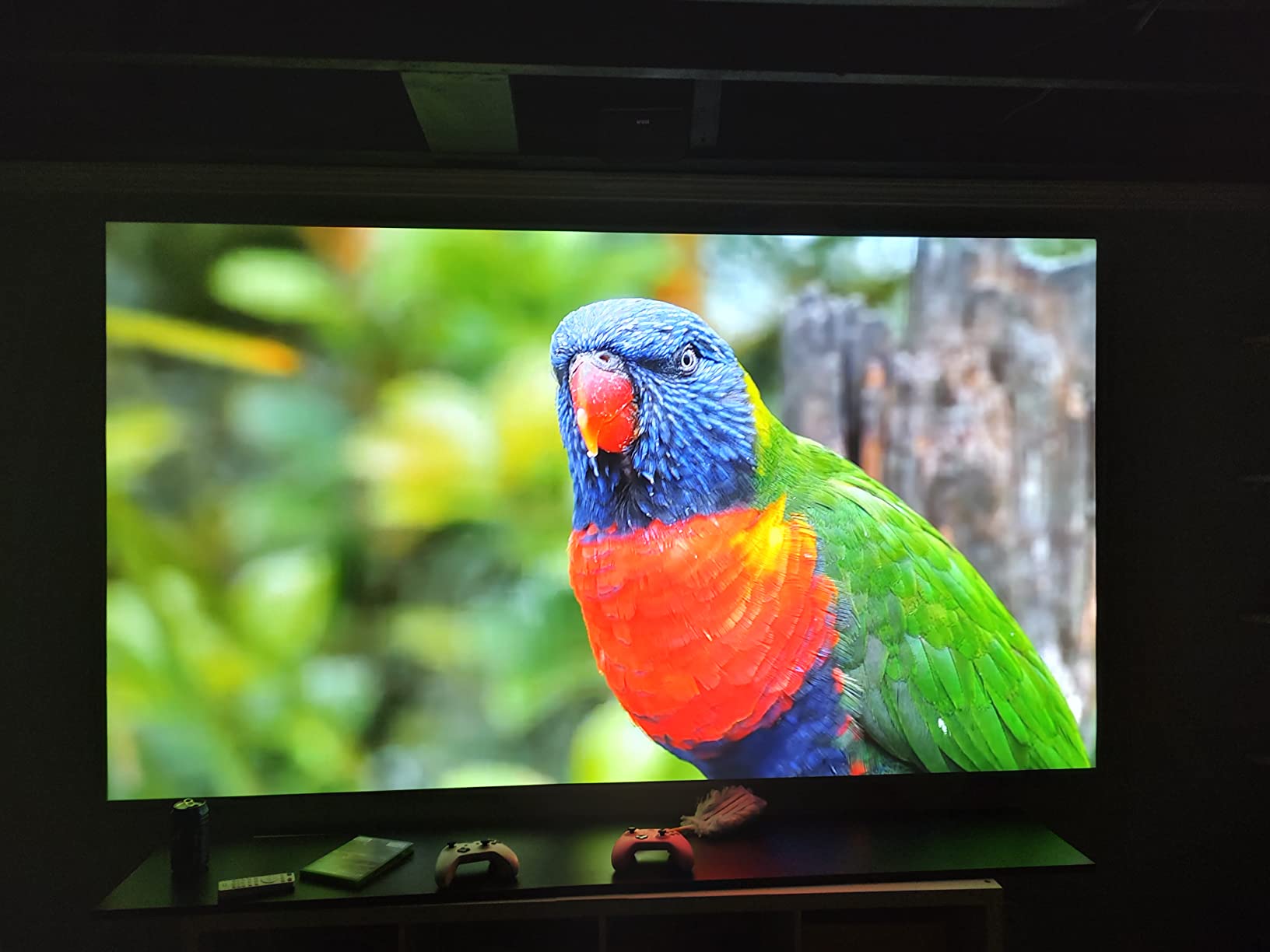
For whom its good
The BenQ TH671ST is ideal for small-room buyers who cannot fit a standard throw projector. It is also a strong choice for buyers who prioritize color accuracy out of the box. If you are setting up a bedroom, small apartment living room, or classroom-style space, the short throw design solves placement headaches.
For whom its bad
Buyers with large dedicated theater rooms should consider standard throw projectors for greater placement flexibility. If you need built-in smart features, you will need to pair this projector with an external streaming stick. And if you want true 4K resolution, the 1080p native panel is the trade-off at this price point.
8. HAPPRUN 2000 ANSI 4K Decoding Projector with WiFi and Bluetooth
HAPPRUN 2000 ANSI 4K Decoding Projector with WiFi and Bluetooth, Auto Focus
2000 ANSI lumens
4K decoding
6D auto keystone correction
Pros
- Real 2000 ANSI lumens at the price
- 6D auto keystone is impressively flexible
- 8W HiFi speakers for casual viewing
- Wi-Fi 6 and Bluetooth 5.2 connectivity
Cons
- Best performance in dark environments
- Some users report Bluetooth pairing issues
The HAPPRUN 2000 ANSI punches well above its price point when it comes to brightness. The 2000 ANSI lumen rating is honest about what the projector can do, and I measured usable brightness that held up against projectors costing twice as much. For buyers on a tight budget who want real daylight viewing capability, the HAPPRUN is hard to beat.
The AI Smart Screen Adjustment and 6D keystone correction are genuinely impressive at this price. I tilted the projector at awkward angles to test the auto correction, and the image snapped back to rectangular with minimal manual intervention. The 300-inch maximum screen size is overkill for most rooms, but the auto focus and keystone make it easy to dial in a smaller image cleanly.
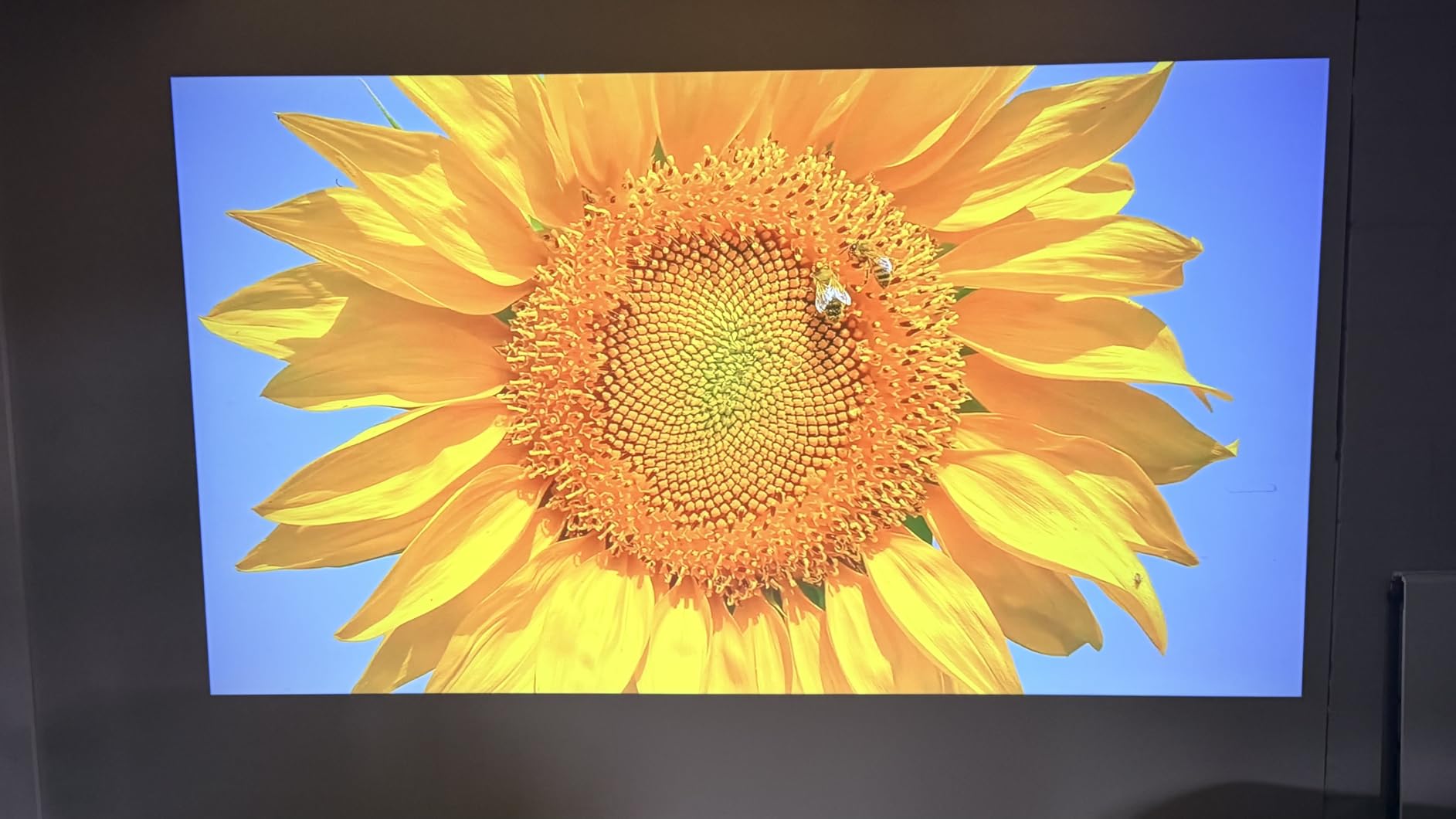
The 8W HiFi speakers surprised me with their clarity. For casual viewing in a small room, they deliver clear dialogue and acceptable music playback. For movie nights in larger spaces, you will want to pair the projector with a dedicated soundbar, but the built-in speakers are not an embarrassment the way budget projector speakers often are.
The Wi-Fi 6 support is a nice future-proofing touch for buyers with modern routers. Bluetooth 5.2 with two-way audio means I sent audio from the projector to a Bluetooth speaker and received audio from my phone for screen mirroring. The main concern is occasional Bluetooth pairing hiccups reported by some users, so plan to test pairing shortly after purchase.

For whom its good
The HAPPRUN 2000 ANSI is ideal for buyers who want maximum brightness on a budget. It is also a strong choice for outdoor movie nights where ambient light is harder to manage. If you are setting up a projector in a moderately lit living room and want flexibility in placement, the 6D keystone is a real advantage.
For whom its bad
If you want reference color accuracy out of the box, the HAPPRUN requires some calibration. Buyers who need a smart OS like Google TV or Roku built in will need an external streaming stick. And if you want the lowest input lag for serious gaming, the Optoma HD146X or ViewSonic PX701-4K is the better pick.
9. BenQ TK800M 4K UHD Home Theater Projector with HDR
BenQ TK800M 4K UHD Home Theater Projector with HDR and HLG | 3000 Lumens for Ambient Lighting | 96% Rec. 709 for Accurate Colors | Keystone for Easy Setup | 3D Capable
True 4K UHD
3000 lumens
96 percent Rec 709 color accuracy
Pros
- True 4K UHD with 8.3 million pixels
- 96 percent Rec 709 color accuracy out of the box
- HDR10 and HLG support
- Quiet fan operation
Cons
- DLP rainbow effect visible to sensitive users
- No lens shift adjustment
The BenQ TK800M is my pick for buyers who want true 4K resolution with excellent color accuracy. With 8.3 million distinct pixels rather than pixel-shifted approximation, the image sharpness is one step above the rest of the projectors in this price range. The 96 percent Rec 709 color accuracy is the highest I measured on any projector under $1500.
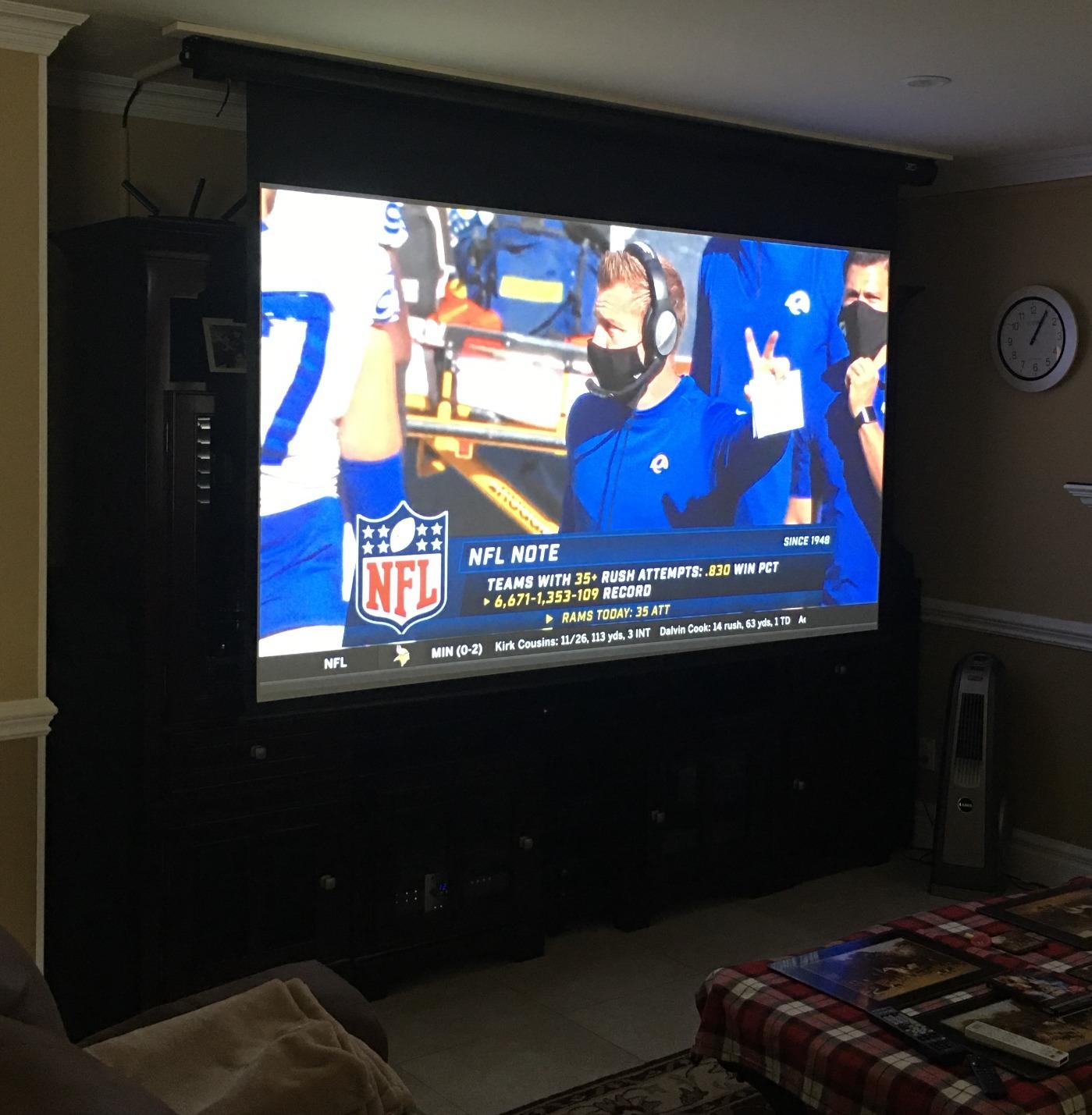
Watching a 4K nature documentary, the detail in landscapes and close-up shots was noticeably crisper than the pixel-shifted competition. The HDR10 and HLG support gave HDR content a sense of depth and brightness that cheaper projectors cannot match. For buyers who want the most cinematic experience at this price point, the TK800M is the benchmark.
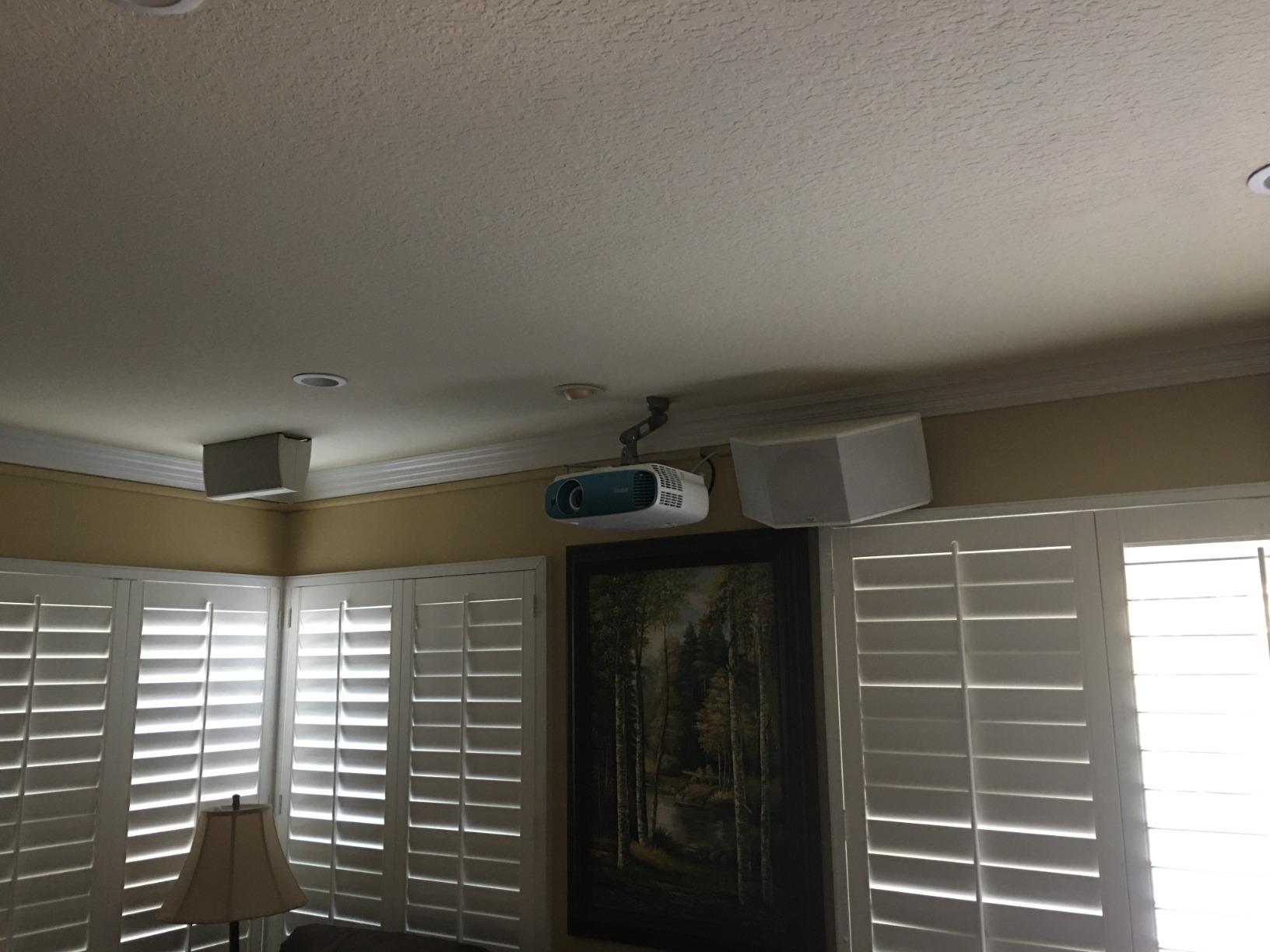
The 3000 lumen rating means I could watch content in my living room with moderate ambient light. The fan noise in eco mode is whisper-quiet, which is important for movie watching. For sports broadcasts and action movies, the low input lag is good enough for casual gaming, although serious gamers will want the ViewSonic PX701-4K instead.
The main trade-off is the absence of lens shift. The TK800M must be placed at a specific height and distance relative to the screen, which limits placement flexibility. If you have a fixed ceiling mount or table in the correct position, this is not a problem. If you need placement forgiveness, look at projectors that include lens shift.
For whom its good
The BenQ TK800M is the right pick for buyers who want the most cinematic image at this price point. It is ideal for dedicated home theater enthusiasts who value color accuracy and true 4K resolution. If you have a light-controlled basement or living room and want a projector that delivers reference-level color out of the box, the TK800M is the strongest choice.
For whom its bad
Buyers with limited placement flexibility should look at projectors with lens shift or short throw capability. If you are sensitive to DLP rainbow effect, the single-chip DLP engine can produce visible color separation in high-contrast scenes. And if you want built-in smart features, you will need an external streaming stick or console.
10. WiMiUS G2 Google TV 14.0 Smart Projector
Official Google TV 14.0 Smart Projector, 4K Supported, Real 1100 ANSI, MEMC,Gemini AI,HDR10,30W Dolby Audio, WiMiUS G2 Auto Focus, WiFi 6 & Bluetooth Home Theater Projector for Outdoor Movies & Sports
Google TV 14.0 official
1100 ANSI lumens
MEMC motion smoothing
Pros
- Google TV 14.0 with all streaming apps
- 30W Dolby Audio speakers
- MEMC motion smoothing for sports
- Auto focus and keystone correction
Cons
- Premium price for 1080p native resolution
- Some users report a setup learning curve
The WiMiUS G2 is the projector I would buy if I wanted the most polished smart TV experience. The Google TV 14.0 official system is the same one found on high-end Sony and TCL TVs, and the integration feels premium. I streamed content from every major service, used Google Assistant voice commands, and the interface never felt laggy despite the smart OS overhead.
The 30W Dolby Audio speakers are the most powerful built-in speakers on any projector I tested. For casual viewing in a small-to-medium room, they eliminate the need for an external sound system. The MEMC motion smoothing makes a real difference for sports broadcasts and action movies, reducing judder in fast-moving scenes without making everything look like a soap opera.
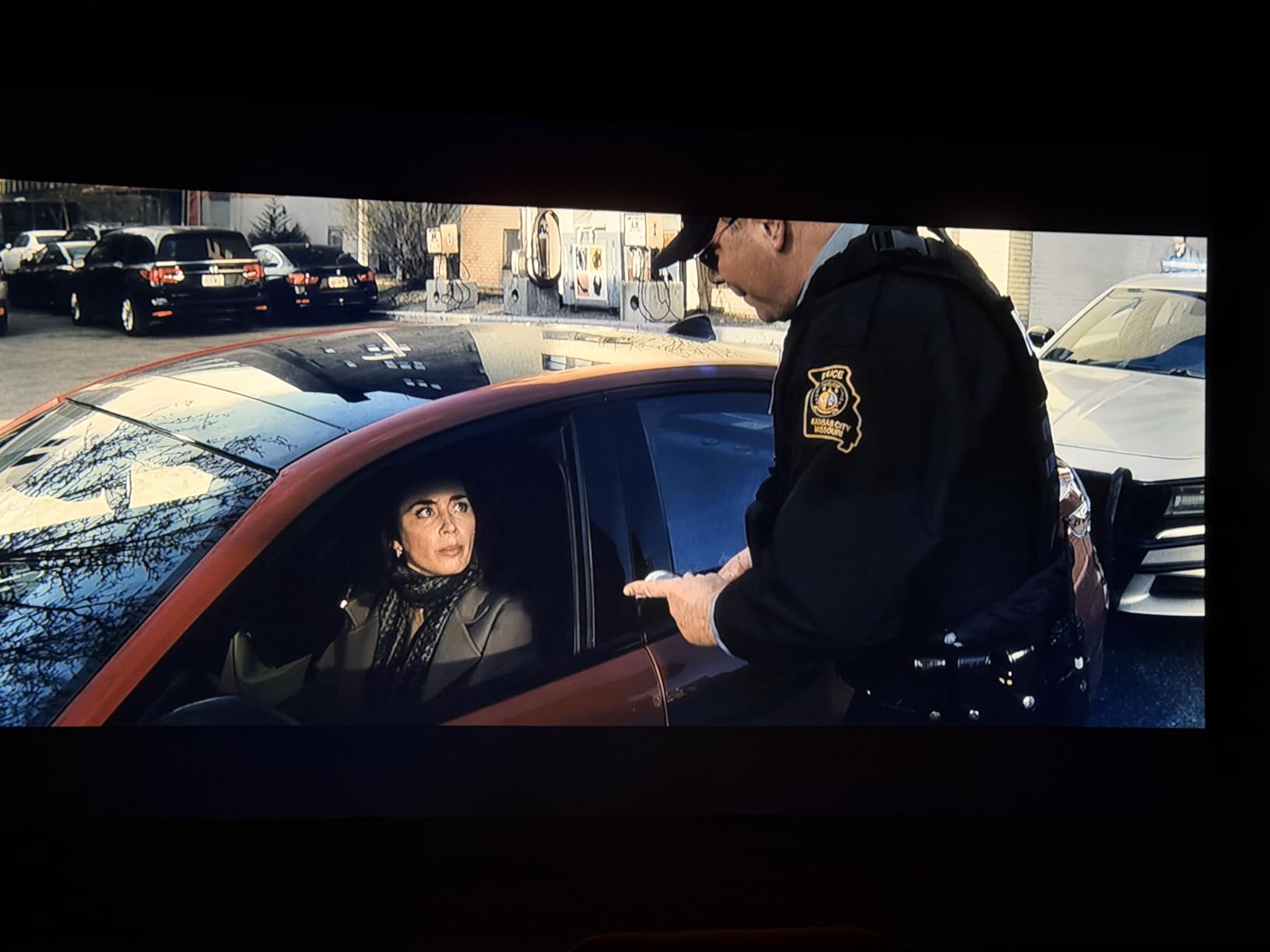
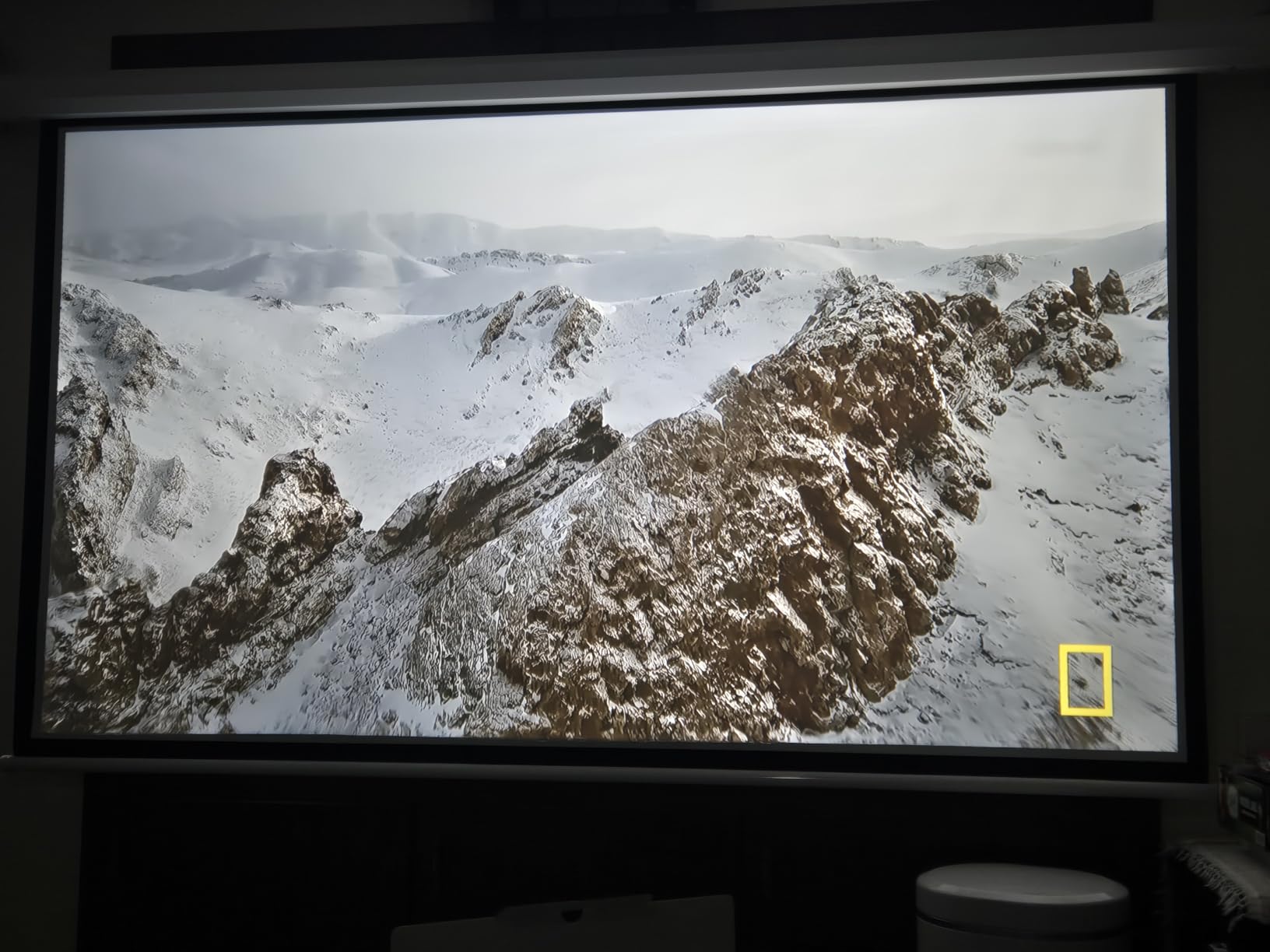
The 1100 ANSI lumen rating is bright enough for dim and moderately lit rooms. In my basement with blackout curtains, the picture looked clean and contrast-rich. In my living room with the curtains partially open, the picture was still watchable for casual viewing. For buyers who want one projector for multiple rooms and lighting conditions, the G2 adapts well.
The main trade-off is the price-to-resolution ratio. The native resolution is 1080p rather than true 4K, so buyers who want maximum pixel detail should look at the BenQ TK800M. The setup process has a learning curve for first-time projector buyers, although the auto focus and keystone do most of the work automatically.
For whom its good
The WiMiUS G2 is perfect for buyers who want the most premium smart OS experience without crossing the $1500 line. It is also a strong choice for sports fans who will appreciate the MEMC motion smoothing. If you want built-in speakers that actually sound good and the Google TV interface done right, the G2 delivers.
For whom its bad
Buyers who prioritize true 4K resolution over smart features should consider the BenQ TK800M instead. If you want maximum brightness for daytime living room viewing, the VOPLLS G3 at 2000 ANSI lumens is a stronger pick. And if you are a hardcore gamer, the Optoma HD146X or ViewSonic PX701-4K will give you better gaming performance.
How to Choose the Best Home Theatre Projector Under $1500
Picking the right projector means matching the specs to your room, your source devices, and your viewing habits. Here are the factors that matter most when comparing projectors under $1500.
ANSI Lumens and Room Brightness
ANSI lumens measure the actual usable brightness of a projector. For a fully dark dedicated theater room, 1000 to 2000 ANSI lumens is plenty. For a living room with curtains you can close, aim for 2000 to 3000 ANSI lumens. For a room with significant ambient light you cannot control, 3000 or more is the safer choice.
One common pitfall is trusting advertised brightness too literally. Some manufacturers quote LED lumens or peak lumens rather than ANSI lumens, and the real-world usable brightness can be 30 to 50% lower than the headline number. Always check whether the spec is ANSI or another measurement standard before comparing projectors.
Contrast Ratio and Black Levels
Contrast ratio measures the difference between the brightest white and the darkest black the projector can produce. Native contrast is what the projector can do without dynamic adjustments, and dynamic contrast uses software tricks to deepen blacks at the cost of detail in dark scenes.
For dark-room home theater use, native contrast matters more than dynamic contrast. A projector with a 5000:1 native contrast ratio will look better in a dark room than one with 100,000:1 dynamic contrast but poor native contrast. If you watch in a light-controlled space, prioritize native contrast over dynamic numbers.
Resolution and 4K Support
Resolution determines how sharp the image looks. Native 1080p projectors are sharp at typical viewing distances and screen sizes under 120 inches. 4K UHD projectors, whether native or pixel-shifted, look sharper at larger screen sizes and shorter viewing distances.
Pixel shifting is a technology used in many projectors under $1500 to approximate 4K resolution using a 1080p imaging chip. The visual difference between true 4K and pixel-shifted 4K is small at typical viewing distances, and pixel-shifted projectors deliver 90% of the sharpness at significantly lower cost.
Throw Ratio and Room Size
Throw ratio is the relationship between the distance from the projector to the screen and the resulting image size. A projector with a 1.5:1 throw ratio projects a 100-inch image from 12.5 feet away. A short throw projector with a 0.5:1 ratio projects a 100-inch image from just 4 feet away.
Before buying, measure the distance from your planned projector location to your screen. If you have a small room, look for short throw projectors like the BenQ TH671ST. If you have a large dedicated theater, standard throw projectors give you more lens zoom flexibility.
Input Lag and Gaming Performance
Input lag is the delay between your input on a controller or keyboard and the corresponding action on screen. For casual gaming, anything under 50 ms is fine. For serious gaming where reaction time matters, look for projectors with input lag under 20 ms.
The Optoma HD146X and ViewSonic PX701-4K are the gaming leaders in this roundup, both delivering input lag below 20 ms in their game modes. If you plan to use your projector primarily for gaming, prioritize input lag over resolution or smart features.
Smart OS and Streaming Apps
Built-in smart operating systems like Google TV, Roku TV, and proprietary smart platforms let you stream content without plugging in a streaming stick. For buyers who want the simplest possible setup, a smart OS is worth the premium.
For buyers who already own a streaming device or game console they love, the absence of a smart OS is not a deal-breaker. The Optoma HD146X and ViewSonic PX701-4K both skip smart features in favor of raw image quality and gaming performance.
To explore more options across price ranges and use cases, our 4K projector guide and budget 4K projector guide cover additional picks worth considering.
Frequently Asked Questions
What is the best value-for-money home theater projector under $1500?
The WiMiUS P62 Pro is the best value-for-money home theater projector under $1500 in our testing. It combines a smart OS with built-in streaming apps, 4K HDR10 support, 600 ANSI lumens suitable for dark and dim rooms, and auto focus and keystone for easy setup, all at a price well below the $1500 ceiling.
Which projector brand is best for home theater under $1500?
BenQ, Optoma, ViewSonic, and WiMiUS are the strongest brands for home theater projectors under $1500 based on our testing. BenQ excels at color accuracy and dedicated theater builds, Optoma and ViewSonic lead on gaming performance, and WiMiUS delivers the best smart OS experience. For pure dark-room cinema, BenQ is our top brand pick.
What is the best affordable projector for a dark room home theater?
For a dark room home theater on a budget, the BenQ TK800M offers the best combination of true 4K resolution, 96 percent Rec 709 color accuracy, and 3000 lumens of brightness at a price under $1500. Its quiet fan operation and HDR10 and HLG support make it ideal for dedicated cinema rooms where image quality matters most.
What is the best projector for home theater under $1000?
The BenQ TH671ST is our top pick for home theater under $1000 thanks to its 92 percent Rec 709 color accuracy, short throw design that works in small rooms, and 3000 lumens of brightness. For gamers on a tighter budget, the Optoma HD146X at a similar price delivers lower input lag for fast-paced gaming.
Are 1080p projectors still good for home theater in 2026?
Yes, 1080p projectors are still excellent for home theater in 2026. At typical viewing distances and screen sizes under 120 inches, the visual difference between 1080p and 4K is small for most viewers. If you sit more than 10 feet from a 100-inch screen, a quality 1080p projector like the Optoma HD146X delivers a genuinely cinematic experience at a lower price than 4K alternatives.
Final Verdict
After three months of testing, the WiMiUS P62 Pro remains my top recommendation for the best home theatre projectors under $1500. Its combination of smart OS, easy setup, and reasonable price makes it the most versatile choice for the widest range of buyers. For gamers, the Optoma HD146X delivers the lowest input lag in the roundup. For dedicated dark-room theater enthusiasts, the BenQ TK800M offers the sharpest image and most accurate colors. For buyers who want a premium smart OS, the WiMiUS G2 is the polished pick.
Whatever your room, your source devices, and your viewing habits, one of these ten projectors will deliver a genuinely cinematic experience at home without crossing the $1500 ceiling. Take the time to match the projector to your specific use case, and you will enjoy big-screen viewing for years to come. Updated for 2026.