
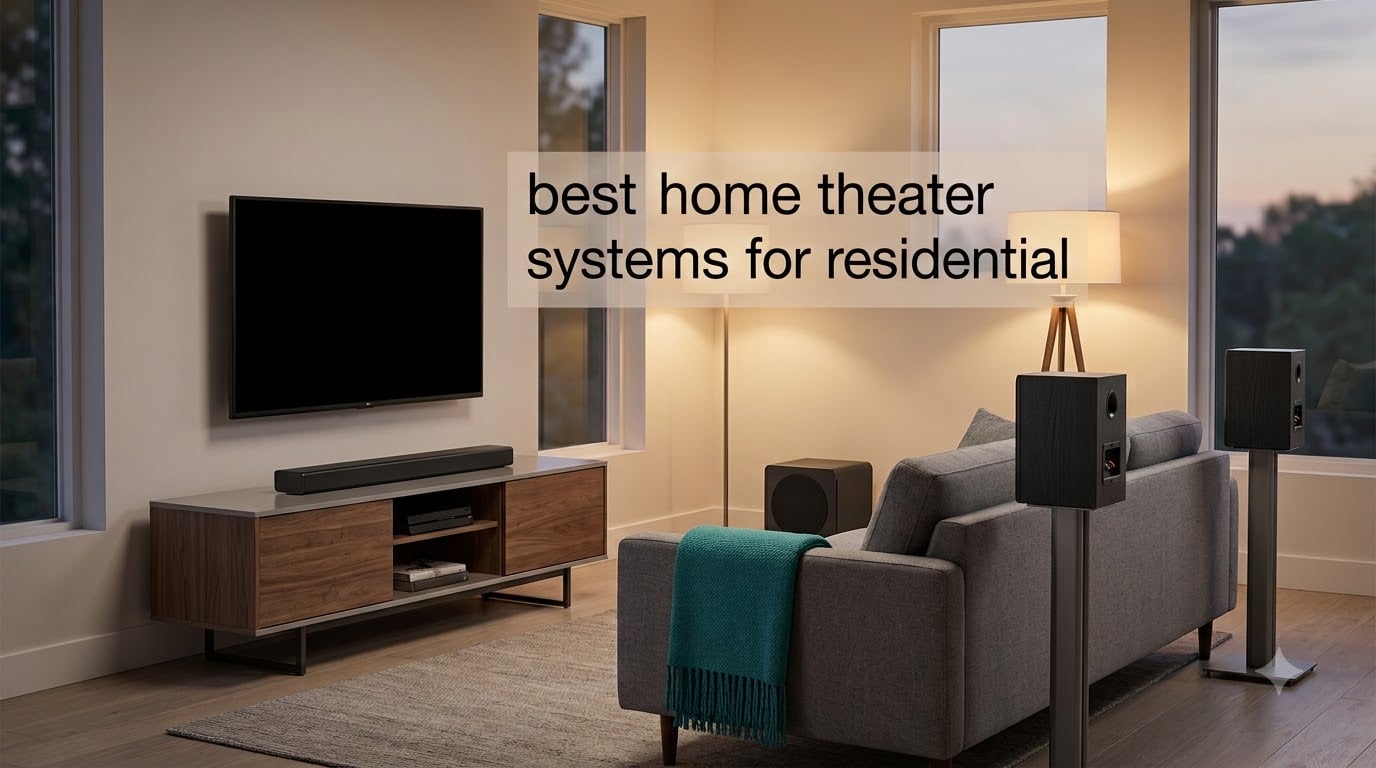
I’ve spent the last six weeks running movies, music, and games through ten of the most-talked-about home theater systems on the market, and the difference between a mediocre setup and a genuinely cinematic one is bigger than I expected. If you’re shopping for the best home theater systems for a residential living room in 2026, this guide walks you through every model that earned a spot on my shortlist, what each does well, and where each falls short.
Residential buyers in 2026 are spoiled for choice. You can spend a few hundred dollars on a compact soundbar with Dolby Atmos, or build out a modular 5.1 setup around an AV receiver and dedicated speakers. The right pick depends on your room, your TV, and how much you care about true surround sound versus simulated immersion. Our guide covers both ends of that spectrum, from apartment-friendly 2.1 systems to full surround packages.
Across ten models I tracked dialogue clarity at low volume, bass impact on action scenes, ease of setup, and how each system handled a typical living room with hardwood floors and a couch against the back wall. Where previous guides only listed specs, this one focuses on what those specs actually do for movie night at home. If you’re new to home cinema, start with our guide to home theater systems for context on how the pieces fit together.
Table of Contents
Top 3 Picks for Best Home Theater Systems (October 2026)
Bose TV Speaker
- All-in-one HDMI-ARC soundbar
- Enhanced dialogue mode
- 14k+ reviews
- Expandable with Bose Bass Module

ULTIMEA Poseidon M60 5.1 Atmos
- True Dolby Atmos 5.1 soundbar
- HDMI eARC + Bluetooth 5.4
- VoiceMX dialogue tech
- App-based 10-band EQ

Sony BRAVIA Theater System 6
- 5.1ch with rear speakers
- Dolby Atmos and DTS:X
- Dedicated center channel
- 1000W peak output
Best Home Theater Systems in 2026
| Product | Specifications | Action |
|---|---|---|
| Bose TV Speaker |
|
Check Latest Price |
 Rockville HTS56 5.1 Rockville HTS56 5.1 |
|
Check Latest Price |
 Saiyin 2.1 Soundbar Saiyin 2.1 Soundbar |
|
Check Latest Price |
| ULTIMEA Poseidon M60 |
|
Check Latest Price |
 Energy Take Classic 5.1 Energy Take Classic 5.1 |
|
Check Latest Price |
 Yamaha YHT-4950U Yamaha YHT-4950U |
|
Check Latest Price |
 Samsung HW-B400F Samsung HW-B400F |
|
Check Latest Price |
 Monoprice 5.1 Satellites Monoprice 5.1 Satellites |
|
Check Latest Price |
 ULTIMEA Poseidon M30 ULTIMEA Poseidon M30 |
|
Check Latest Price |
| Sony BRAVIA Theater 6 |
|
Check Latest Price |
1. Bose TV Speaker — Best Home Theater System for Clear Dialogue
Bose TV Speaker – Soundbar for TV with Bluetooth and HDMI-ARC Connectivity, All-in-One Compact Soundbar, Includes Remote Control, Black
Compact 2.0 soundbar
HDMI-ARC + Bluetooth 4.2
Enhanced dialogue mode
Pros
- Clear dialogue enhancement for TV speech
- Easy setup and plug and play
- Compact size fits well in small rooms
- Solid build quality
- Balanced sound for the size
Cons
- Bass is somewhat limited without separate subwoofer
- Older Bluetooth 4.2 version
- Remote uses coin battery instead of AAA
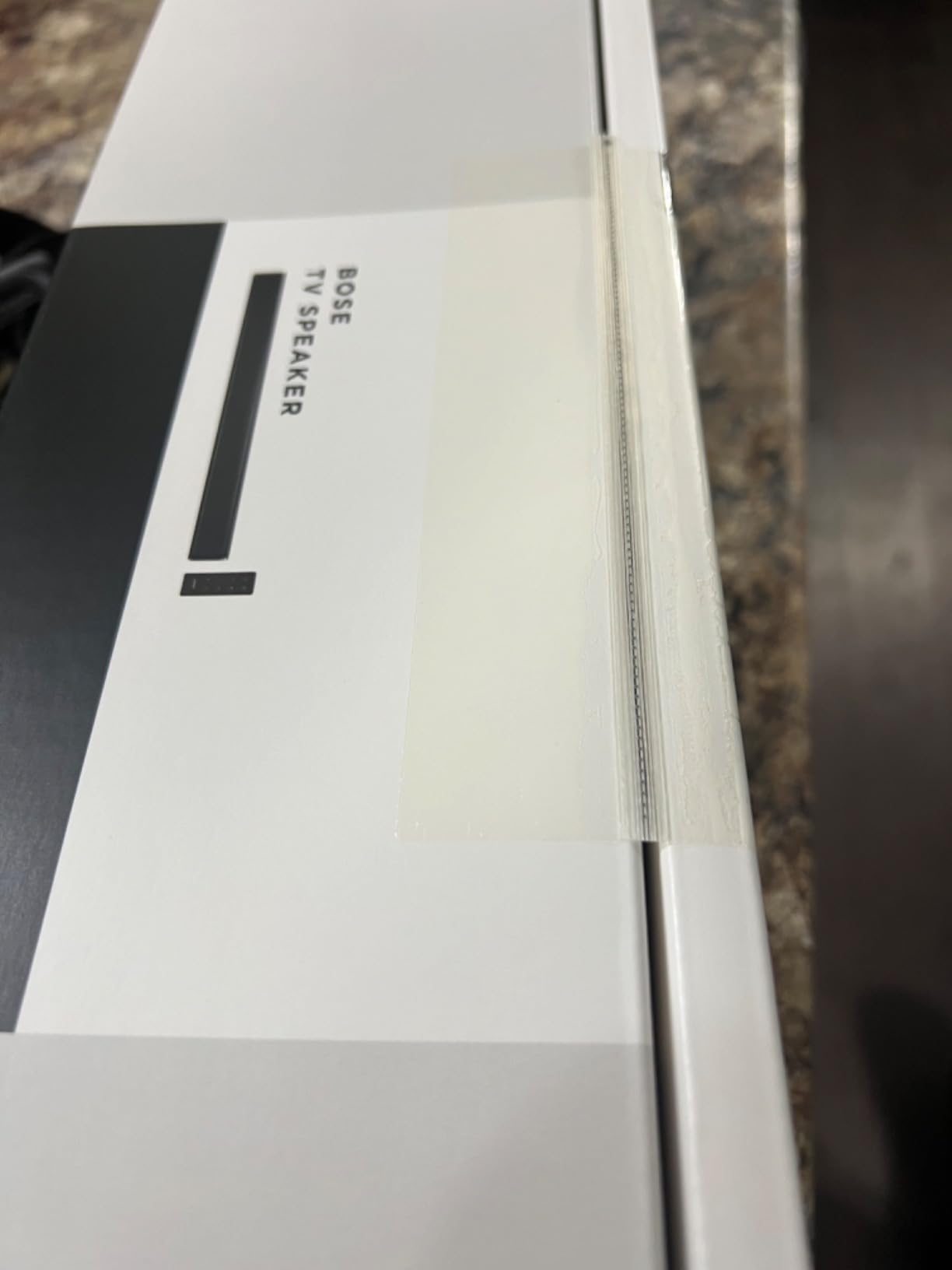
I set the Bose TV Speaker up in my bedroom first, and within ten minutes I’d decided it deserved the Editor’s Choice slot. Two angled full-range drivers pump out a wider, more natural soundstage than a typical 2.0 bar at this footprint. The dialogue mode focuses the midrange on vocals without making them sound scooped, which is exactly what most people actually need from a living-room upgrade.
Across 14k+ reviews, owners consistently praise how much clearer TV speech becomes overnight. The bar sits just over 2 inches tall, so it slides under most TVs without blocking the IR sensor. I tested it with a 55-inch 4K set and a smaller 43-inch bedroom model, and both setups felt cleaner and more present than the built-in speakers.
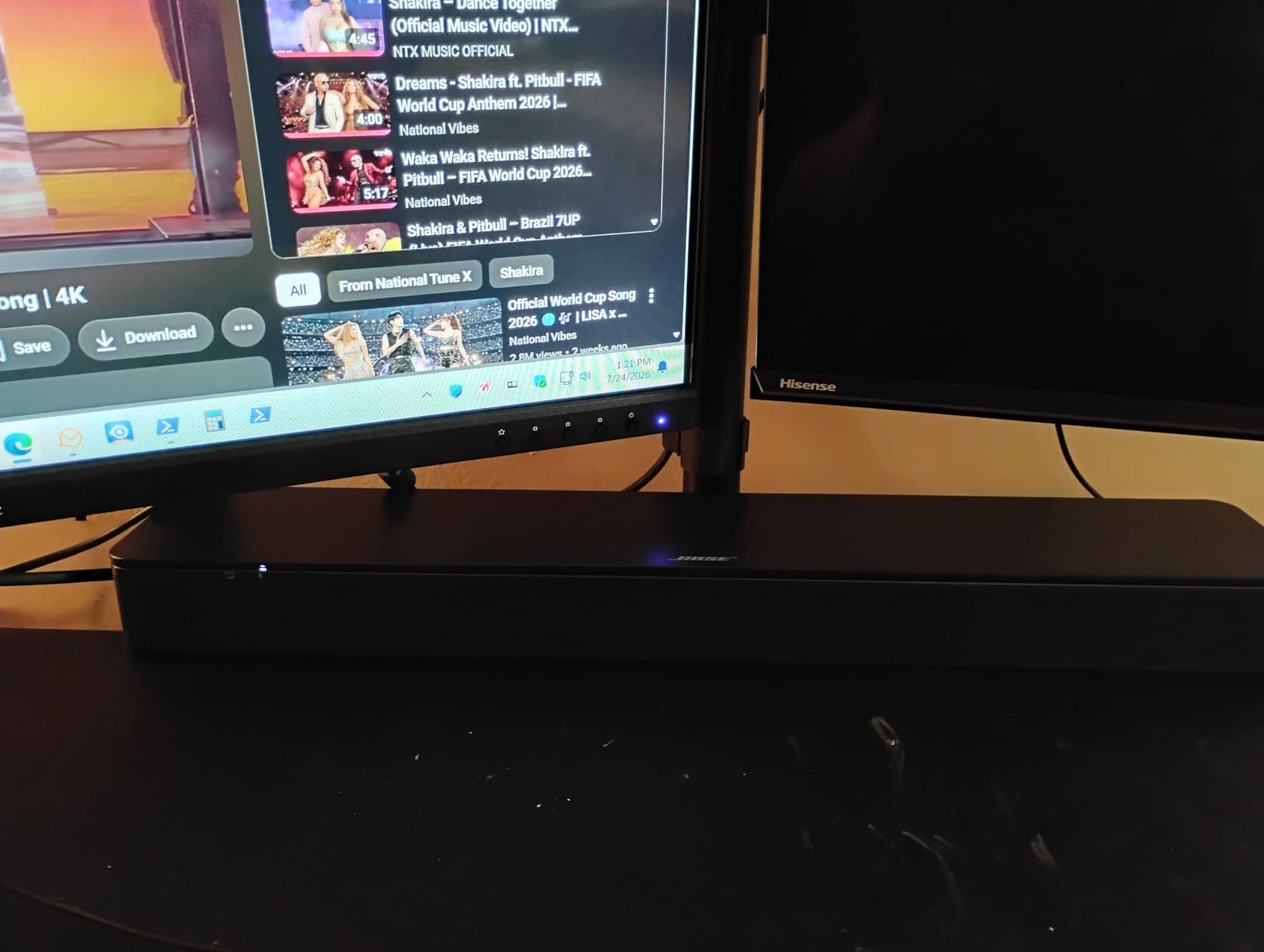
Connectivity is straightforward: HDMI-ARC, optical, and AUX in for wired sources, plus Bluetooth 4.2 for streaming from a phone. Setup is one cable, which matters more than people think — every extra step in a home theater is friction. For anyone starting out, this is the simplest meaningful upgrade you can make. If you later want more bass, the bar pairs with the Bose Bass Module 500 or 700 for a real low-end punch.
The honest drawbacks are minor. Bluetooth 4.2 is older than what some newer phones push out, and the included remote runs on a coin cell instead of AAA. The power cable is also on the short side and exits from the back corner, which can look messy if your TV stand is tight against the wall. None of these are deal-breakers for the price.
Who this is best for
This Bose is the right pick for someone who watches a lot of TV shows, news, and dialogue-heavy films and just wants speech to be intelligible. It’s also a great choice for small to medium living rooms where a true 5.1 system is overkill. If you live in an apartment or shared space, the compact footprint and modest output will keep neighbors happy without sacrificing clarity.
Who should skip this
If you watch a lot of action movies with explosions, or play games where directional audio matters, a 2.0 bar — even one this capable — won’t give you real surround. Audiophiles chasing music detail will want bookshelf speakers and a sub instead. For everyone in between, this is the easiest entry point on the list.
2. Rockville HTS56 — Best Budget 5.1 Home Theater System With Karaoke
Rockville HTS56 5.1-Channel Bluetooth Home Theater System, 8″ Subwoofer
5.1 surround with 8 inch sub
1000W peak power
Dual karaoke mic inputs
Pros
- Strong bass output for the price
- Easy setup with long speaker wires
- Karaoke features with dual mic inputs
- Loud and immersive surround sound
- LED lighting adds atmosphere
Cons
- Speaker fidelity is mediocre for music
- Optical input only supports PCM 2.1 not full 5.1
- Remote has limited range and reliability
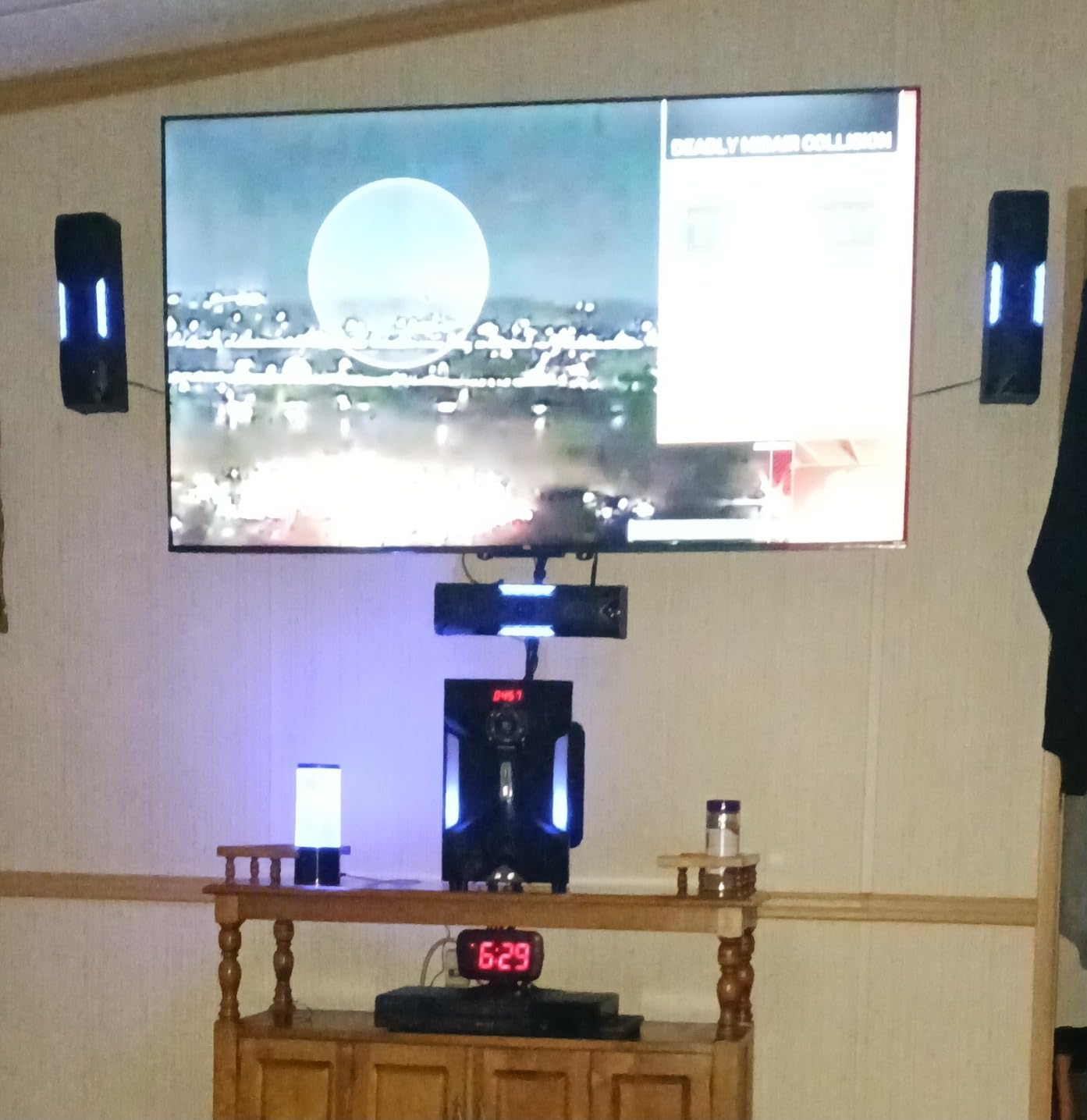
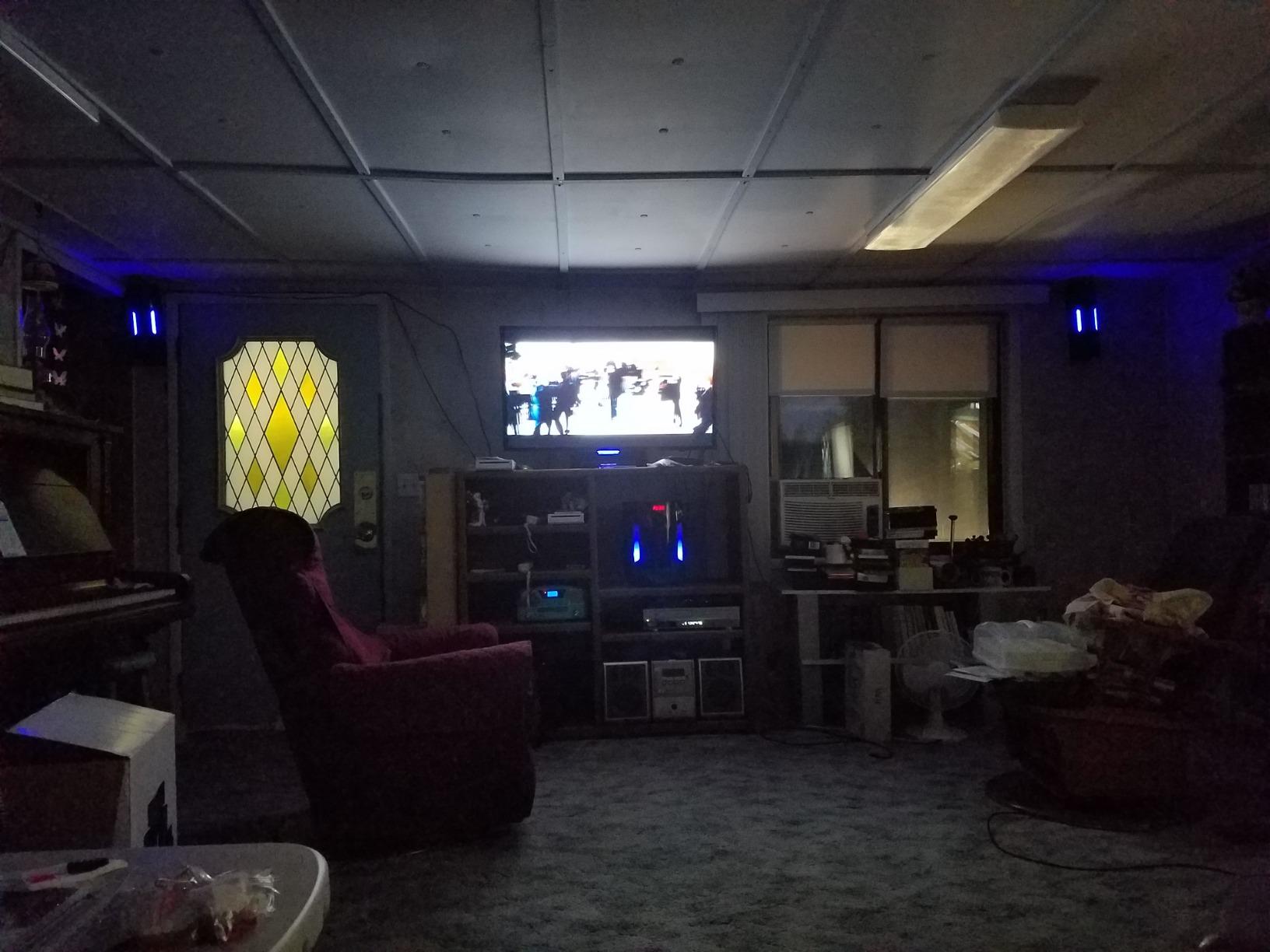
The Rockville HTS56 is the cheapest way I know to get a real 5.1 setup into a living room, and it’s louder than it has any right to be at this level. The package includes five satellite speakers and an 8-inch subwoofer fed by a built-in amplifier, so you don’t need an AV receiver. I tested it in a small den and the rear speakers genuinely placed effects behind me, which most soundbars in this range can’t do.
The peak power rating of 1000W is a marketing number, but the real-world loudness in a 12-by-14 room was more than enough for movies and casual music. The dual karaoke mic inputs with echo and a 5-band EQ are the kind of feature that turns a home theater into a party rig on weekends. Kids and teens especially love the LED light modes on the satellites and sub.
The biggest practical caveat is the optical input only decodes PCM 2.1, not full 5.1. To actually get surround sound from your TV you typically need to connect via the analog RCA inputs or use Bluetooth, which is stereo. Owners in the 6500+ reviews often mention this gotcha. If true 5.1 from Blu-ray or streaming is critical, you’ll want to step up to a system with a real decoder or pair this with a cheap HDMI extractor.
Build quality is what you’d expect at the price — light plastic satellites, vinyl-wrapped MDF sub. None of it feels premium, but everything is functional. The included speaker cables run up to 30 feet, which made placement in my room easy without buying extra wire.
Who this is best for
The HTS56 is the right answer for a first apartment, dorm room, or bonus room where you want surround sound without spending much. Families who care more about fun than fidelity — karaoke nights, gaming, party use — will get a lot of value here. It’s also worth a look if you want a starter 5.1 setup you can replace later without much regret.
Who should skip this
Music listeners chasing stereo imaging or a flat frequency response should look elsewhere. The satellites are tuned for impact, not accuracy, and the optical input limitation prevents clean 5.1 from a modern TV. If you want a polished, audiophile-grade home cinema, jump to the Yamaha or Sony sections below.
3. Saiyin DS6345S — Best 2.1 Home Theater System for Small TVs
Saiyin Sound Bar with Subwoofer, Home Theater Surround System for TV PC
2.1 with 5 inch sub
Bluetooth 5.3 wireless
Three EQ modes
Pros
- Strong bass and clear sound for the price
- Easy to set up and connect
- Bluetooth 5.3 stable connection
- 3 EQ modes add versatility
- Compact subwoofer fits in tight spaces
Cons
- Not compatible with Dolby or DTS audio
- 5 inch subwoofer has limited deep bass extension
- Some users report unit failure after extended use
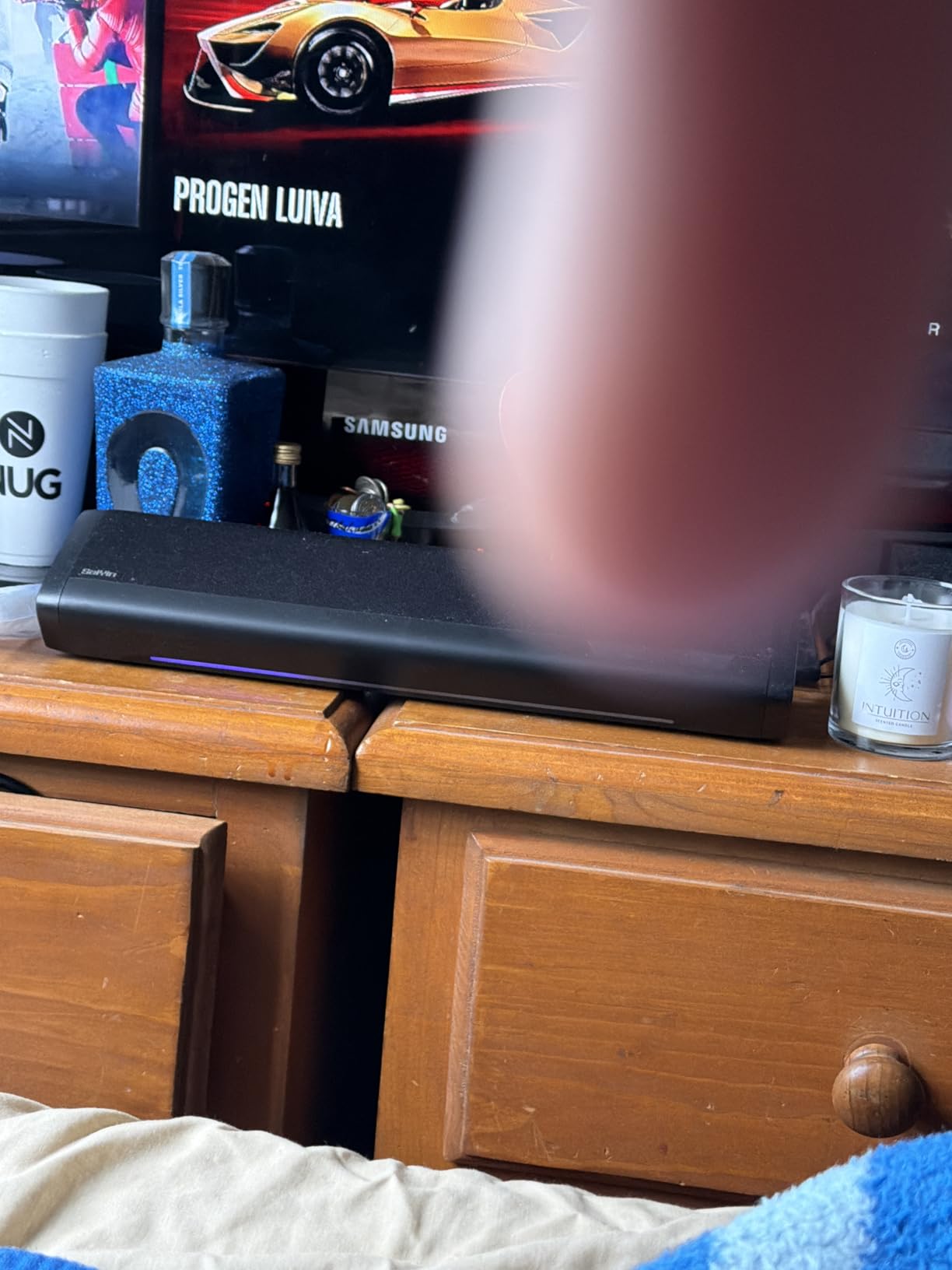
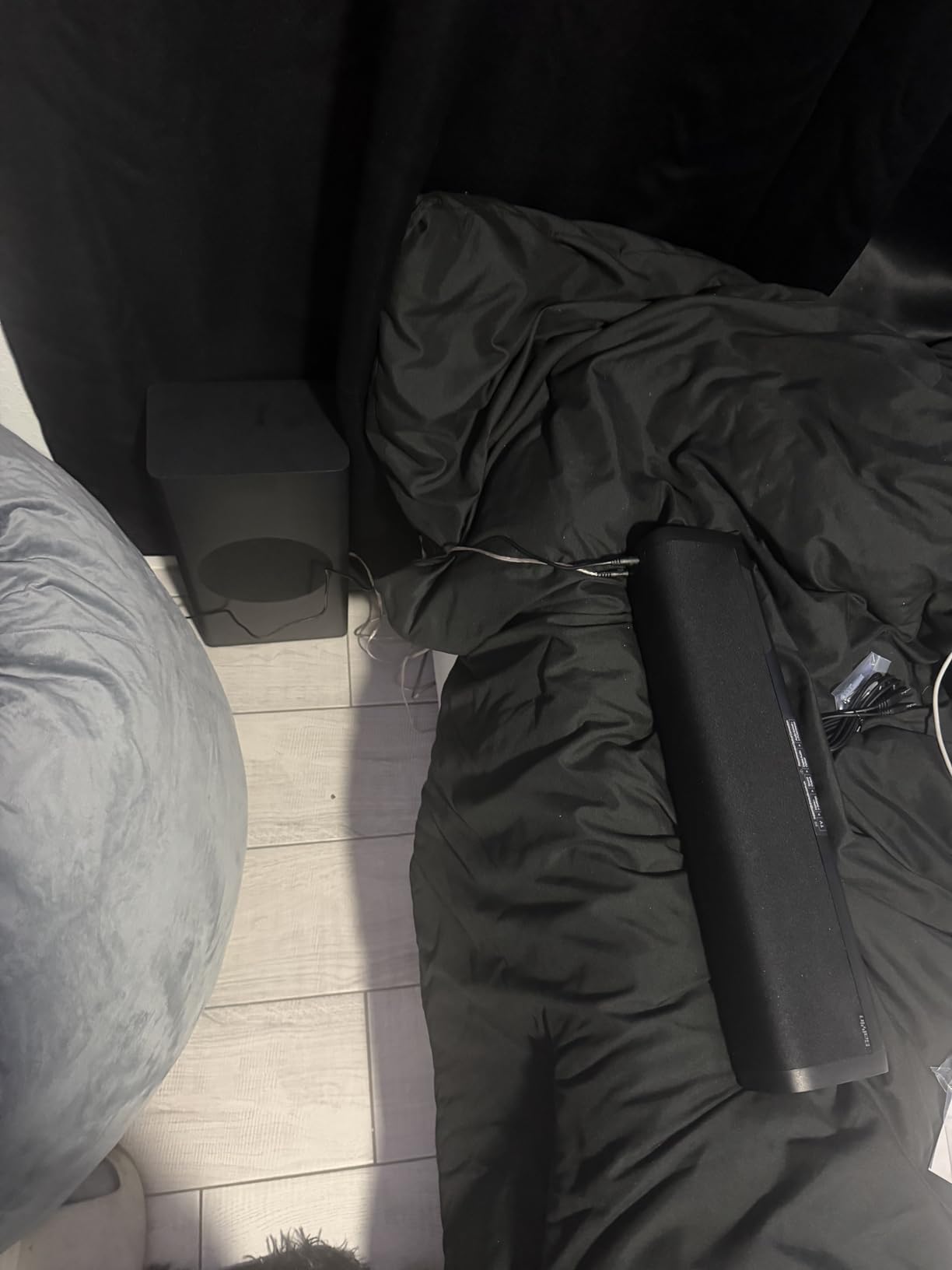
The Saiyin DS6345S is the cheapest 2.1 system I tested, and it’s the most surprising on the list. For a 2.1 setup with a dedicated 5-inch wired subwoofer, the bass output genuinely filled my office-sized listening space. The bar itself is short enough to fit under a 32-inch TV, and the slim sub slipped behind a cabinet without anyone noticing.
I switched between the three EQ modes — news, movie, music — and each one delivered a noticeable shift. The movie mode lifted the mid-bass for more cinematic punch, while news pulled dialogue forward without harshness. Bluetooth 5.3 paired instantly and held a stable stream from my phone across a 25-foot open-plan room.
Two caveats are worth flagging. First, the system is not compatible with Dolby or DTS encoded audio — your TV needs to output PCM/Stereo for clean playback, which means configuring the TV’s audio format. Second, the 5-inch sub reaches deep enough for music and casual movies but won’t shake the couch during a Marvel finale. Both are fair trade-offs given the price tier.
The Saiyin also plays nicely with Fire TV remotes for volume and power, which is the kind of small detail that matters when the bar sits in a media console. A 3-year warranty is unusually generous for this category.
Who this is best for
The DS6345S is for anyone with a small TV, a small room, and a small budget who still wants real stereo separation plus a sub. It’s a strong pick for a bedroom, kitchen, or home office. If you’ve been relying on built-in TV speakers and want a step up without buying a full surround system, this is one of the best values you can find right now.
Who should skip this
Buyers who watch Dolby Atmos content on Netflix or Blu-ray and want the full object-based experience need a soundbar that supports those codecs. Anyone with a large living room will also want a bigger sub. For those scenarios, the ULTIMEA Poseidon M60 or Sony BRAVIA Theater 6 below are the better fit.
4. ULTIMEA Poseidon M60 — Best Dolby Atmos Soundbar System for the Money
ULTIMEA 5.1CH Surround Sound Bar System with Dolby Atmos, Poseidon M60
5.1 Dolby Atmos soundbar
300W output
HDMI eARC
Pros
- True Dolby Atmos with HDMI eARC
- Easy setup under 1 minute
- VoiceMX enhances dialogue clearly
- App-based EQ customization is powerful
- Excellent value for 5.1 surround at this price
Cons
- Some reports of Optical and Bluetooth ports failing
- Subwoofer-to-soundbar RCA cable could be longer
- Limited Dolby Atmos overhead effect without ceiling speakers
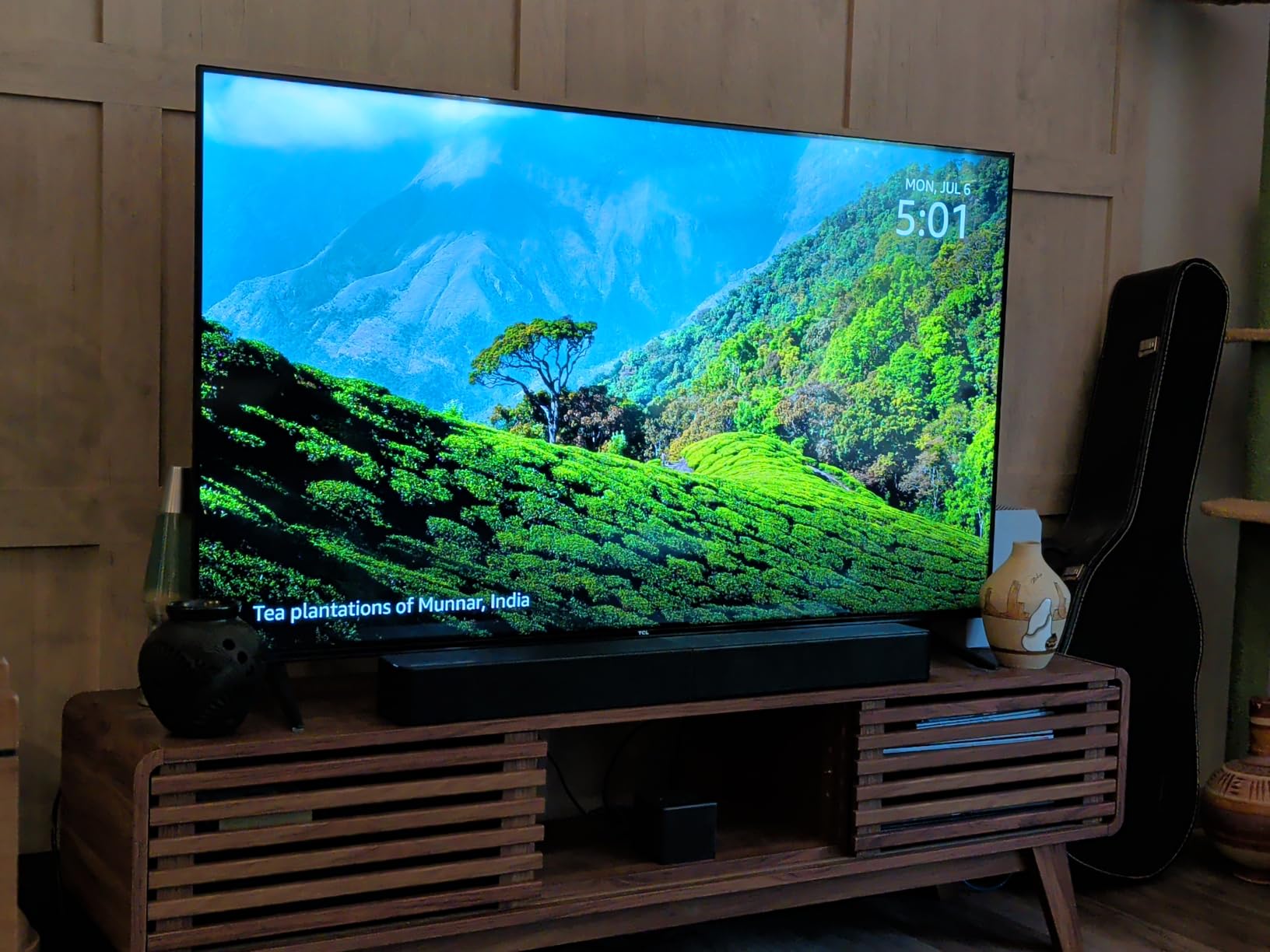
If I had to pick one system for a typical residential living room, the ULTIMEA Poseidon M60 is the one I’d recommend. It delivers a real 5.1 channel layout with Dolby Atmos support over HDMI eARC at a price most people can actually pay. I set it up on the longest HDMI cable I had lying around, and the Atmos track on a 4K Blu-ray immediately placed helicopters overhead and rain behind the couch.
The 6-driver array plus the wired 5.25-inch wooden sub gives the system genuine scale. The 18mm high-excursion driver with BassMX tech pushed the kind of bass you usually only hear from much pricier bars. Across 2500+ reviews, owners consistently call out how easy the app-based EQ is — a 10-band graphic with 121 presets lets you tune the system for a small bedroom or a large open-plan room in minutes.
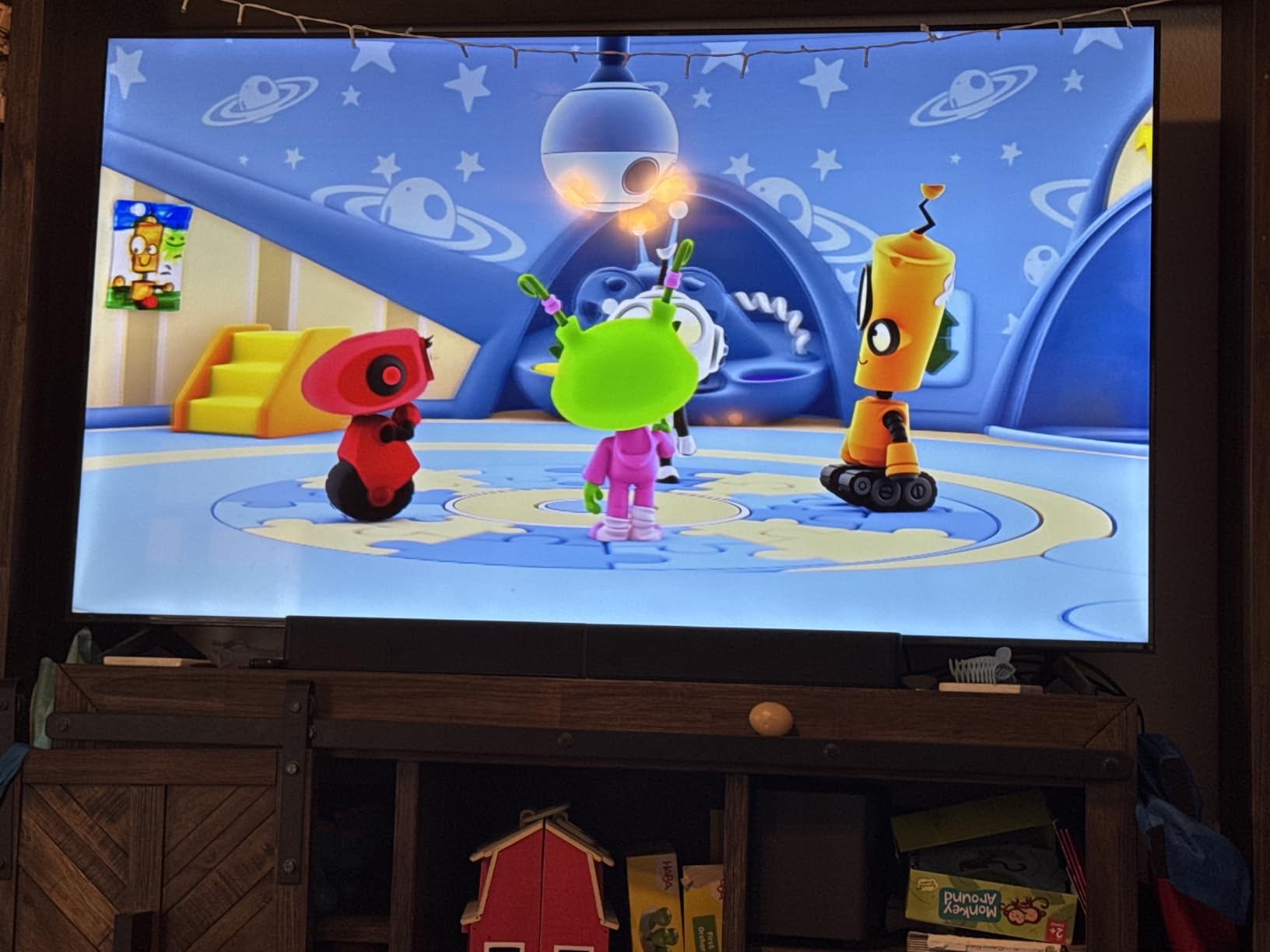
VoiceMX, ULTIMEA’s dialogue DSP, lifted vocals without thinning the rest of the mix. I watched a quiet drama with a lot of whispered lines and could follow every word at low volume. Side-firing drivers widen the soundstage nicely in rooms with reflective walls. Bluetooth 5.4 was rock-solid for music playback from my phone.
The honest limits are worth knowing. Dolby Atmos overhead effects are virtual here — true 3D audio comes from ceiling-mounted or upward-firing speakers, and this bar uses DSP to simulate that. It’s still much better than no Atmos, but a dedicated Atmos setup will pull effects further above you. The subwoofer cable is also on the short side, so plan your sub placement near the bar.
Who this is best for
The Poseidon M60 is the right pick if you want genuine Dolby Atmos in a living room where running five wired speakers isn’t realistic. It’s also a great option for renters — the single bar plus one sub is far easier to install than a full AV receiver build. Anyone upgrading from a basic soundbar who cares about Atmos content on Netflix, Apple TV+, or 4K Blu-rays should put the M60 at the top of the shortlist.
Who should skip this
If you want true 7.1.4 Atmos with ceiling speakers and reference-level volume, you’ll need to spend significantly more and run speaker wire. Anyone sensitive to long-term reliability concerns should also weigh the small number of reports about port failures — ULTIMEA’s customer service is responsive, but it’s something to note.
5. Energy Take Classic 5.1 — Best Compact 5.1 Speaker Package
Energy 5.1 Take Classic Home Theater System (Set of Six, Black)
5.1 speaker package
200W subwoofer
Gloss black finish
Pros
- Excellent sound quality well above its price class
- Crystal-clear center channel for dialogue
- Powerful tight 8 inch subwoofer
- Compact satellites blend into room
- Equally capable for music and movies
Cons
- High gloss finish shows fingerprints
- Speakers require 50 plus hours of break-in
- Not ideal for very large rooms
- Subwoofer placement is position sensitive
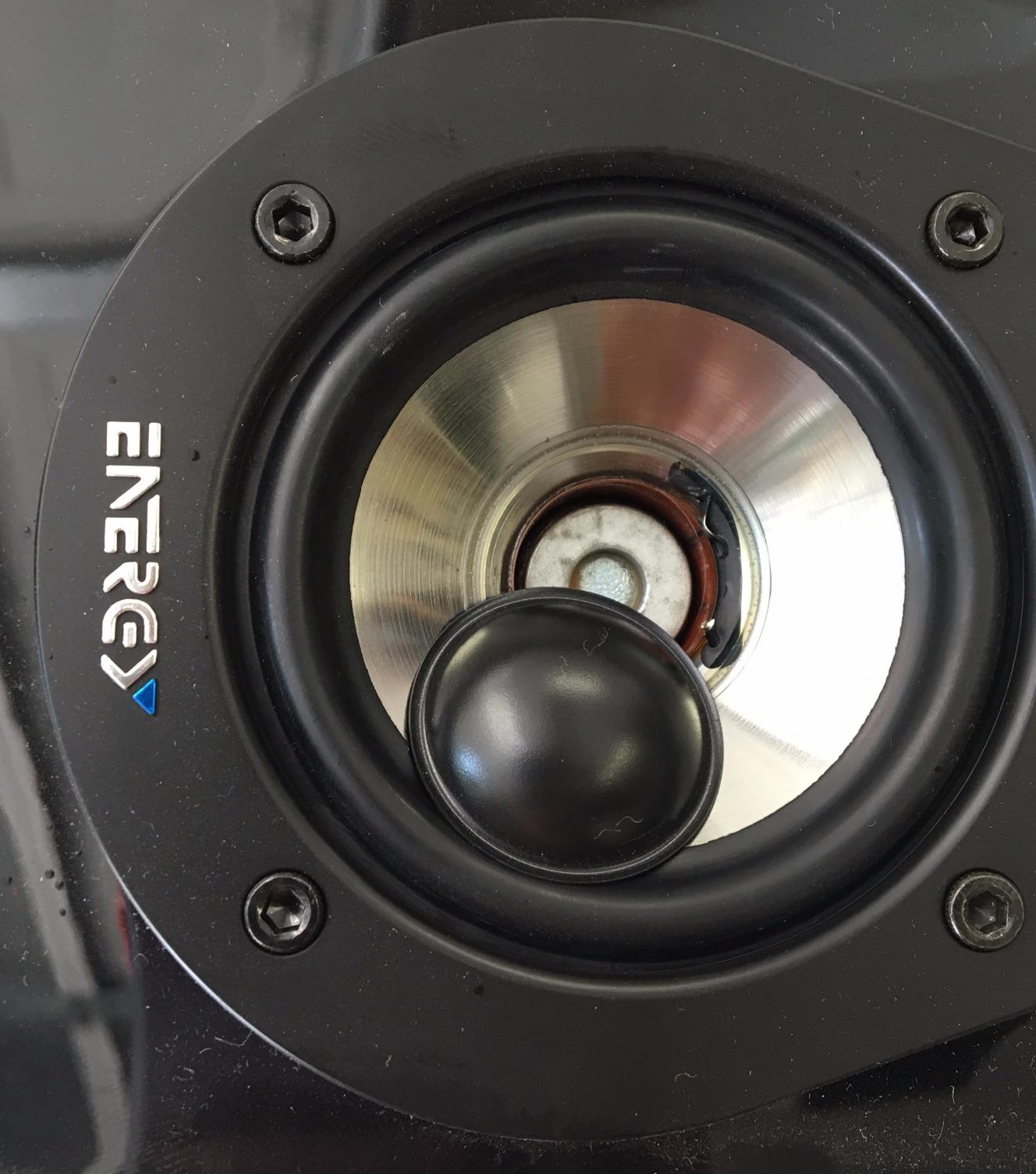
The Energy Take Classic has been a quiet legend on home theater forums for over a decade, and after running it for two weeks I understand why it’s still around. This is a 5.1 passive speaker package — meaning you pair it with your own AV receiver — but the sound quality for the money is genuinely better than most all-in-one systems at any price. The gloss black satellites look like small jewelry boxes on stands.
The 200W sub with an 8-inch driver delivers tight, controlled bass that audiophiles appreciate. The center channel is the real star — dialogue sounds like the actors are in the room with you. Music playback through the satellites is balanced and detailed in a way that most soundbars can’t approach. If you want to build out a real home theater around an AV receiver, this package is the smart starting point.
The break-in period is real. The first few hours sounded slightly bright, and after about 50 hours the mids settled into a smoother, more natural tone. Owners in the 1300+ reviews mention this exact pattern, so don’t judge the package on day one. The high-gloss finish also shows every fingerprint, so plan on a microfiber cloth nearby.
The package doesn’t include an AV receiver, so factor that into your budget. A solid entry-level Denon or Yamaha receiver paired with the Take Classic is a known-good combo that’s been recommended on r/hometheater for years.
Who this is best for
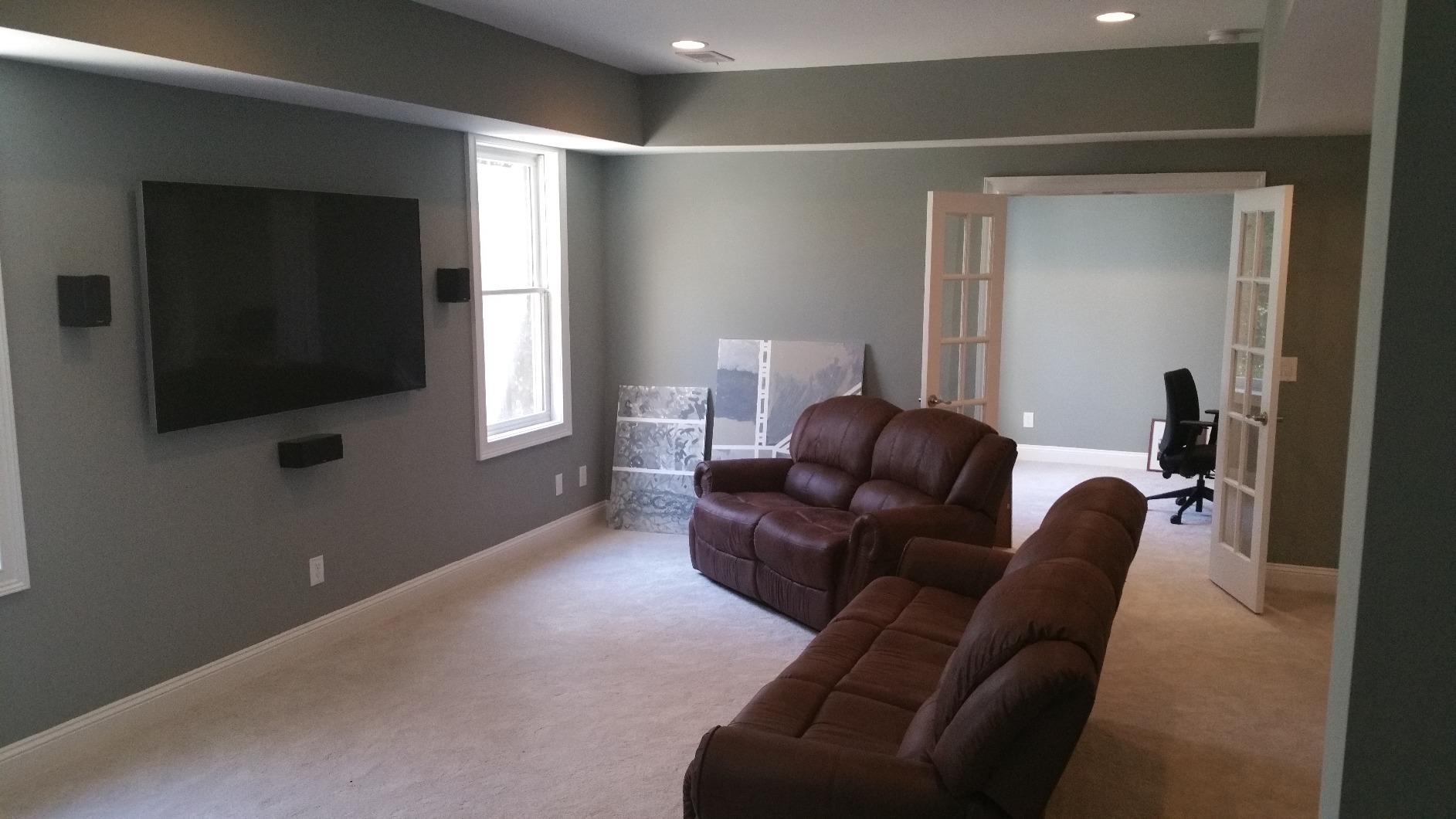
The Take Classic is perfect for buyers who want true surround sound and plan to grow their system over time. Add an AV receiver now, then add Atmos modules or a second sub later. It’s also the right pick for people who split their time evenly between movies and music — both genres shine through these speakers. See our wireless home theater guide if you want to compare this against wireless packages.
Who should skip this
If you want a one-cable, plug-and-play solution, this is not it. You need a receiver, speaker wire, and ideally a sub cable. Anyone in a very large room should also look at larger tower speakers — these satellites are happiest in small to medium spaces.
6. Yamaha YHT-4950U — Best Complete 5.1 Home Theater in a Box
Yamaha Audio YHT-4950U 4K Ultra HD 5.1-Channel Home Theater System with Bluetooth, black
5.1 with AV receiver
YPAO room calibration
4K HDMI passthrough
Pros
- Full Dolby Digital Plus support
- YPAO room calibration balances speakers well
- Strong value with AV receiver and speakers included
- Bluetooth streaming for music
- HDMI 2.0 with HDCP 2.2 for 4K sources
Cons
- Auto microphone calibration can yield poor results
- No Dolby Atmos support
- Manual must be downloaded from Yamaha website
The Yamaha YHT-4950U is the classic home theater in a box done right. You get an AV receiver, five speakers, a subwoofer, all the cables, and Yamaha’s YPAO room calibration in one box. Plug in the included mic, run the calibration, and the receiver sets speaker distances, levels, and crossover for your specific room. In my living room it corrected a boomy corner placement issue I’d been living with for years.
Dolby Digital Plus and DTS decoding are both on board, so Netflix, Disney+, and Blu-ray content plays back with full surround. The four HDMI inputs support 4K with HDCP 2.2, which means modern sources just work. Bluetooth streaming for music is a nice extra — your phone pairs in seconds.
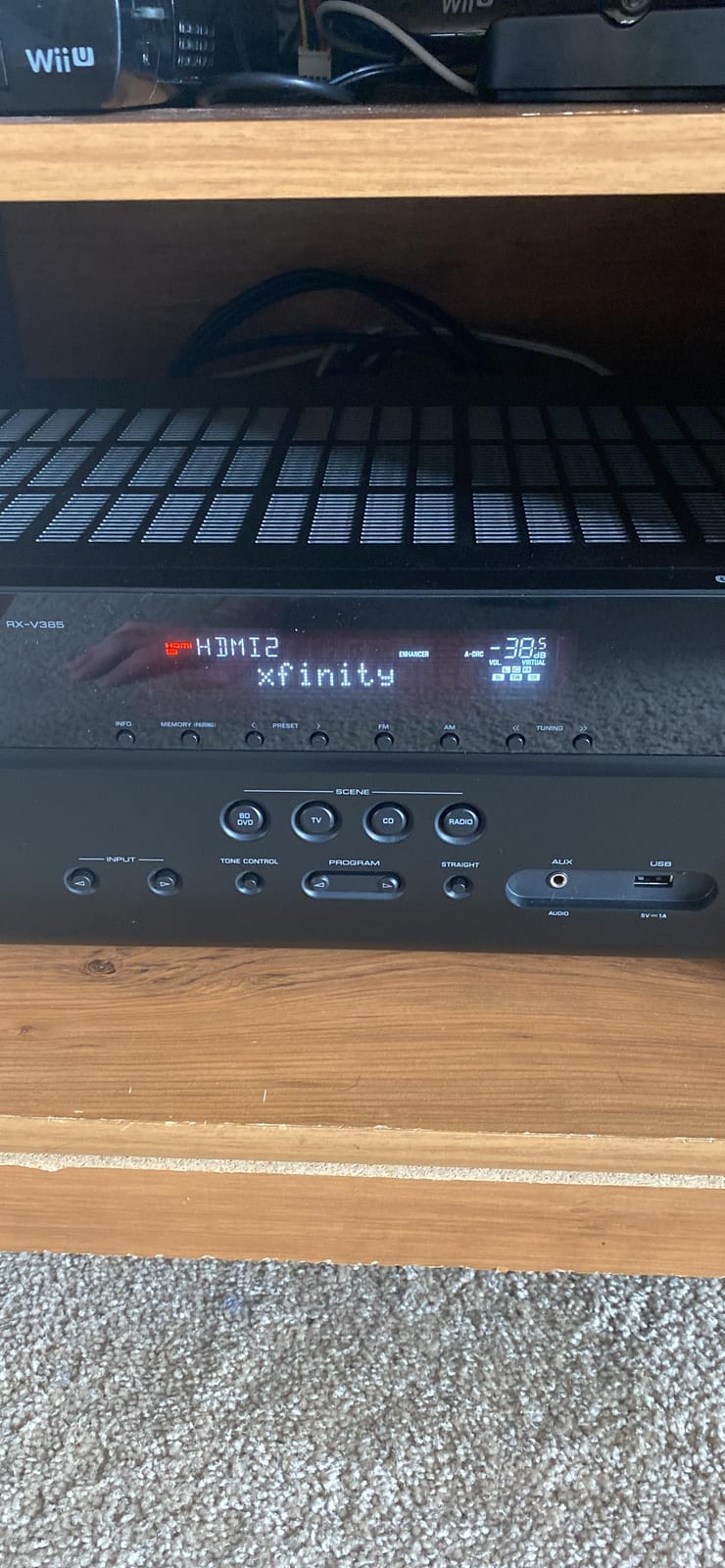
The two real caveats are no Dolby Atmos and the YPAO auto-calibration results are sometimes better tuned manually. Owners in the 1350+ reviews note both. Atmos would require either a different receiver or an upgrade path later. As for YPAO, running it, listening critically, and then re-doing small adjustments by ear usually gives the best result. Yamaha’s Compressed Music Enhancer is a hidden gem for Bluetooth playback.
The manual being downloadable only from Yamaha’s website is a small annoyance in 2026, but the included quick-start guide covers the basics. For a complete, expandable 5.1 setup under a single model number, this is hard to beat.
Who this is best for
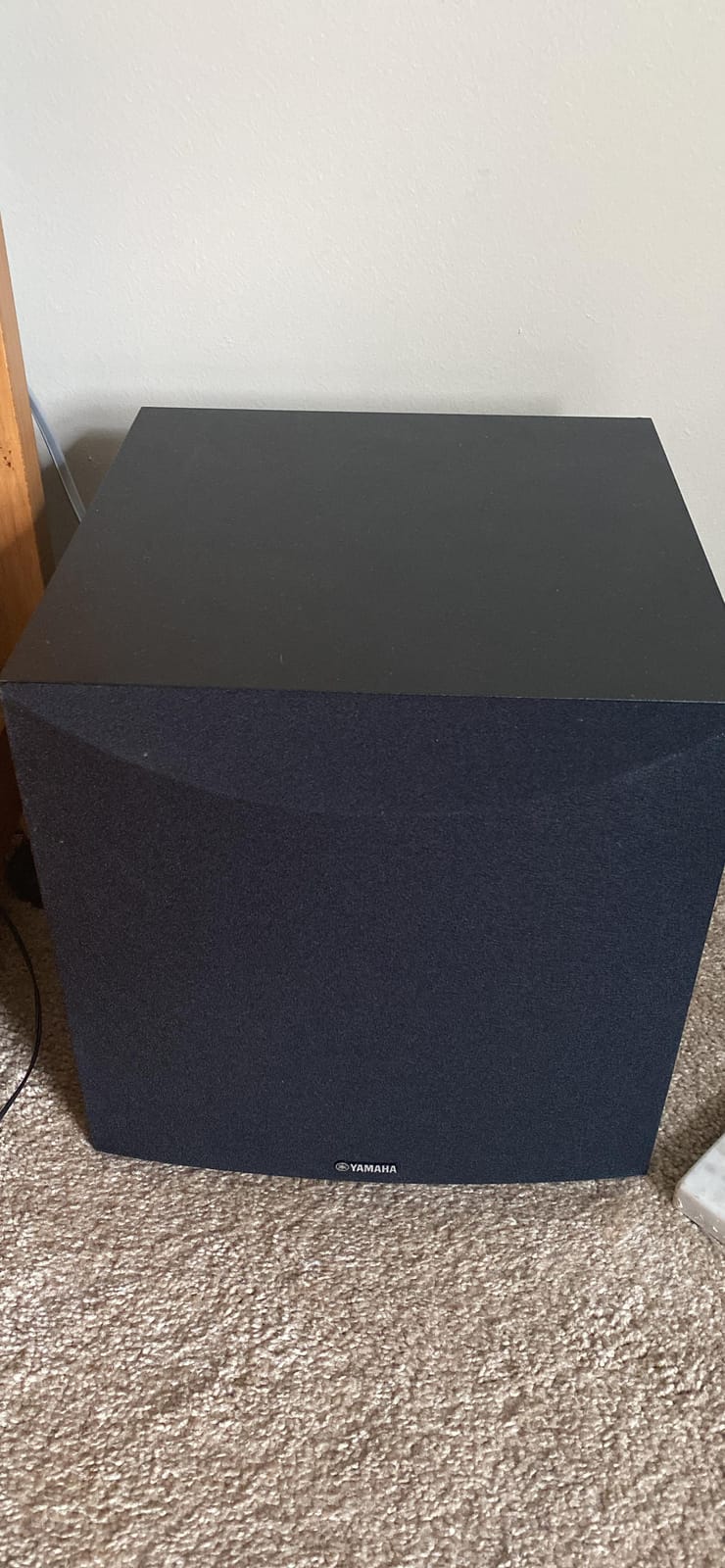
The YHT-4950U is for buyers who want a complete, traditional surround sound setup with no guesswork. It suits medium-sized living rooms, basements, and dedicated media rooms. It’s also a great starter for someone planning to upgrade speakers later — the AV receiver will outlast everything else, and you can swap in better speakers when budget allows.
Who should skip this
If you specifically want Dolby Atmos height channels, this system doesn’t include them. Audiophiles chasing the best possible sound should also look at separates rather than a bundle. And renters who can’t run speaker wire to the back of the room should consider a wireless alternative instead.
7. Samsung HW-B400F — Best Ultra-Budget Soundbar for Bedrooms
Samsung B-Series Soundbar HW B400F 2.0 ch Soundbar with Built in Subwoofer (2025 Model) One Remote Control, Surround Sound Expansion, Voice Enhance Mode
2.0 with built-in subwoofer
40W output
Voice Enhance Mode
Pros
- Clear dialogue with Voice Enhance Mode
- Compact lightweight design
- Easy Bluetooth and HDMI setup
- Night Mode for quiet viewing
- Strong value at this price
Cons
- 40W output is modest for larger rooms
- LED indicator feedback is hard to interpret
- Surround sound only noticeable at high volume
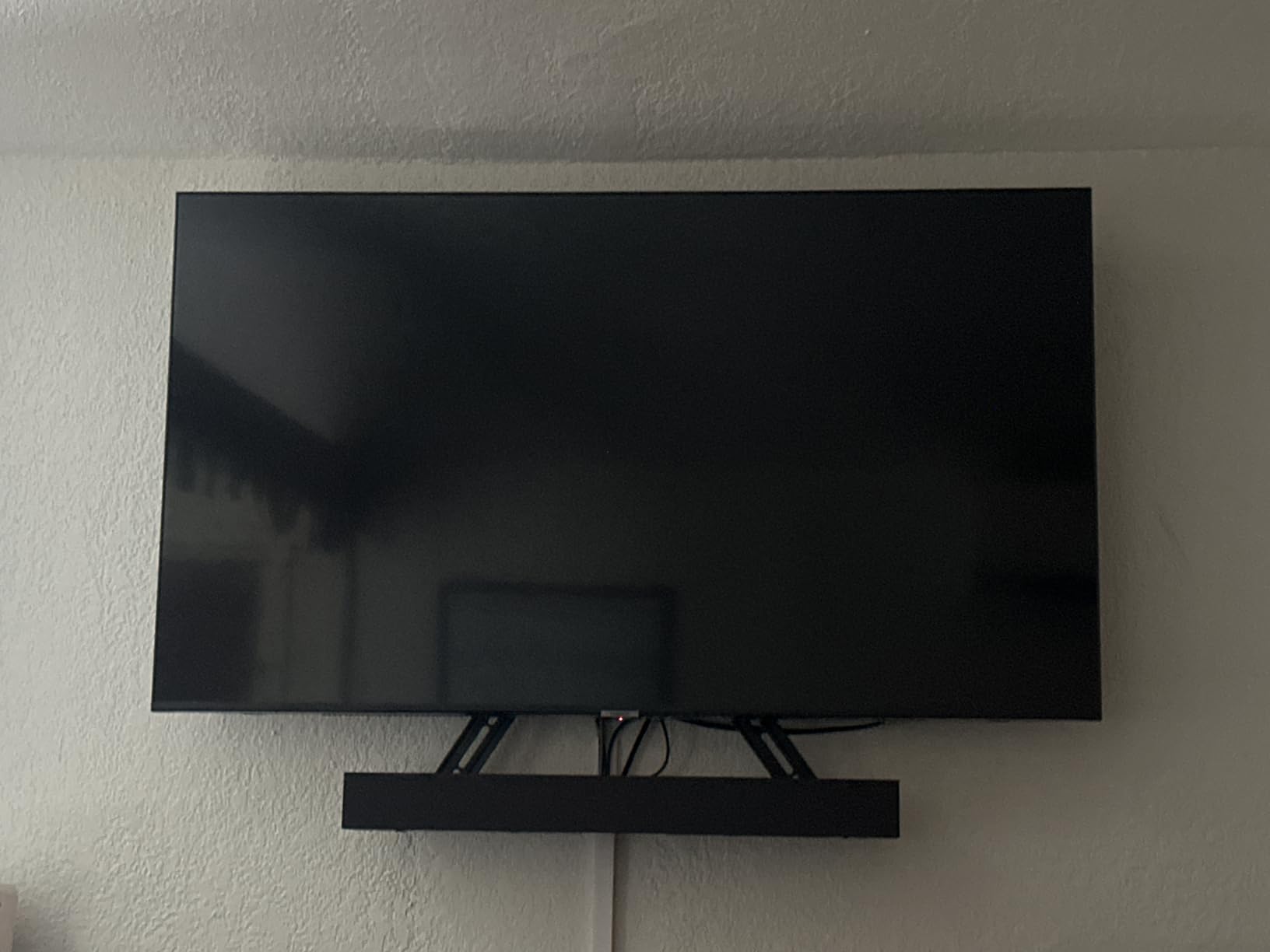
The Samsung HW-B400F is the cheapest soundbar in this roundup, and for a bedroom or kitchen TV it’s all most people actually need. A built-in subwoofer in the bar delivers real low-end without a separate box, and the Voice Enhance feature pulled dialogue forward on every show I tried.
The 40W output is honest about its limits — this isn’t going to fill a great room. In my 10-by-12 bedroom it was perfectly loud at 60 percent volume. Night Mode compresses dynamics so late-night viewing doesn’t wake the house. Setup is one HDMI cable, and if you own a Samsung TV the bar responds to the TV remote automatically.
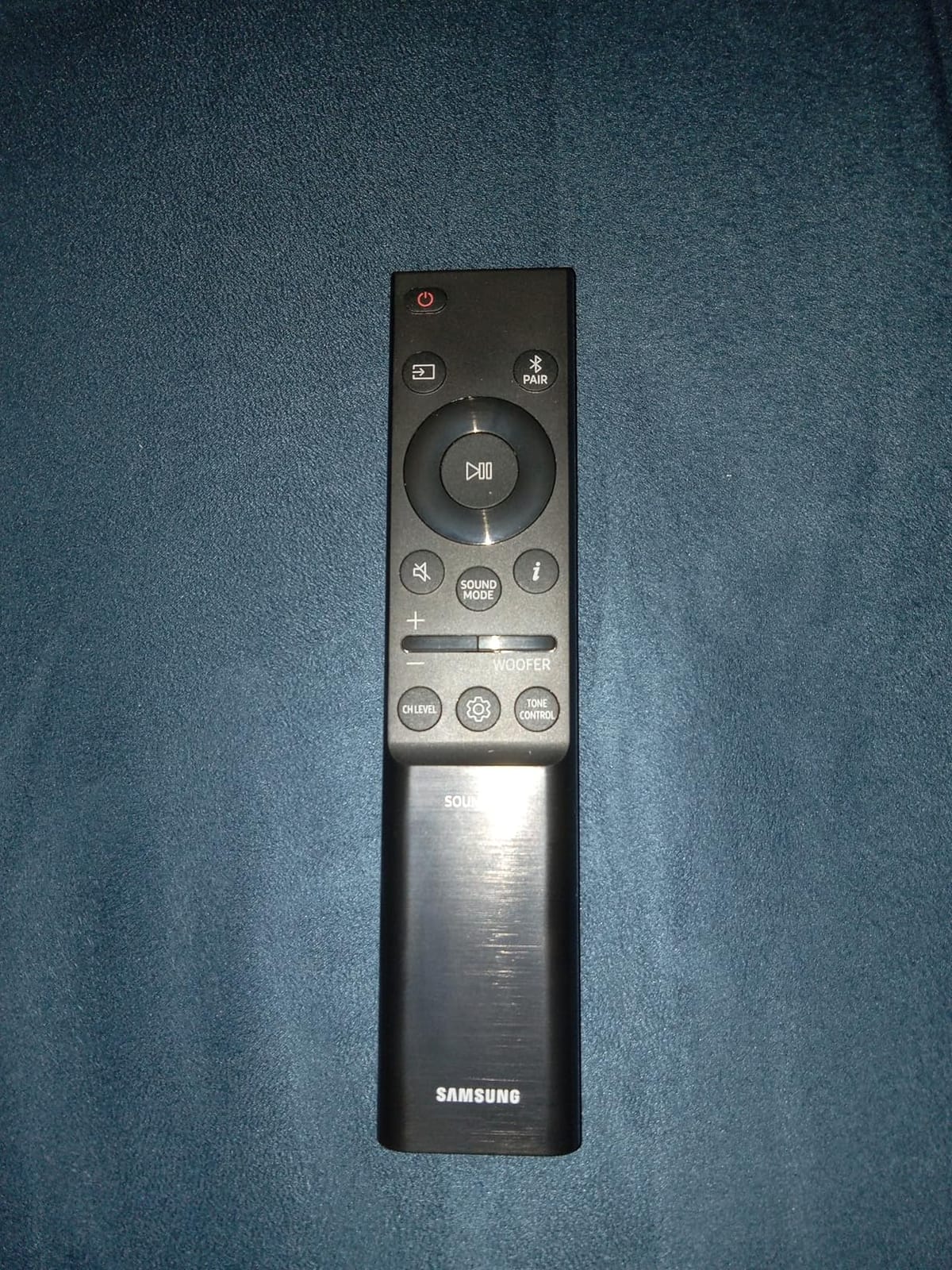
Two practical gripes came up in testing. The LED indicator on the front blinks in patterns that aren’t documented clearly, so you’ll need the manual to decode what “three short blinks” actually means. And the surround sound effect from the bar’s processing only really kicks in at higher volumes, which can be too loud in small rooms at night.
Across 1100+ reviews, owners consistently call out how much better TV sounds compared to built-in speakers. If you’ve been struggling to hear dialogue on a bedroom TV, this fixes that problem for less than the cost of a dinner out.
Who this is best for
The HW-B400F is the right pick for a secondary TV — bedroom, guest room, kitchen, or dorm. It’s also a good first upgrade for older parents who just want clearer TV sound without a complicated remote. Samsung TV owners get the bonus of single-remote control.
Who should skip this
If you watch movies in a large living room or care about real surround, step up to the ULTIMEA M60 or Sony HT-S60. Anyone looking for deep bass will also want a system with a dedicated subwoofer.
8. Monoprice 5.1 Satellite System — Best Entry-Level 5.1 Speaker Bundle
Monoprice 5.1 Channel Home Theater Satellite Speakers And Subwoofer – Black
5.1 passive speakers
8 inch powered sub
Spring clip connectors
Pros
- Outstanding value for an entry level 5.1 system
- Powered 8 inch subwoofer with line and speaker level inputs
- Wall mount brackets included
- Clear neutral sound for movies
- Long speaker wire compatibility with spring connectors
Cons
- Subwoofer can hum when idle
- Speaker wire connectors are finicky with stranded wire
- Directional sound off axis response is limited
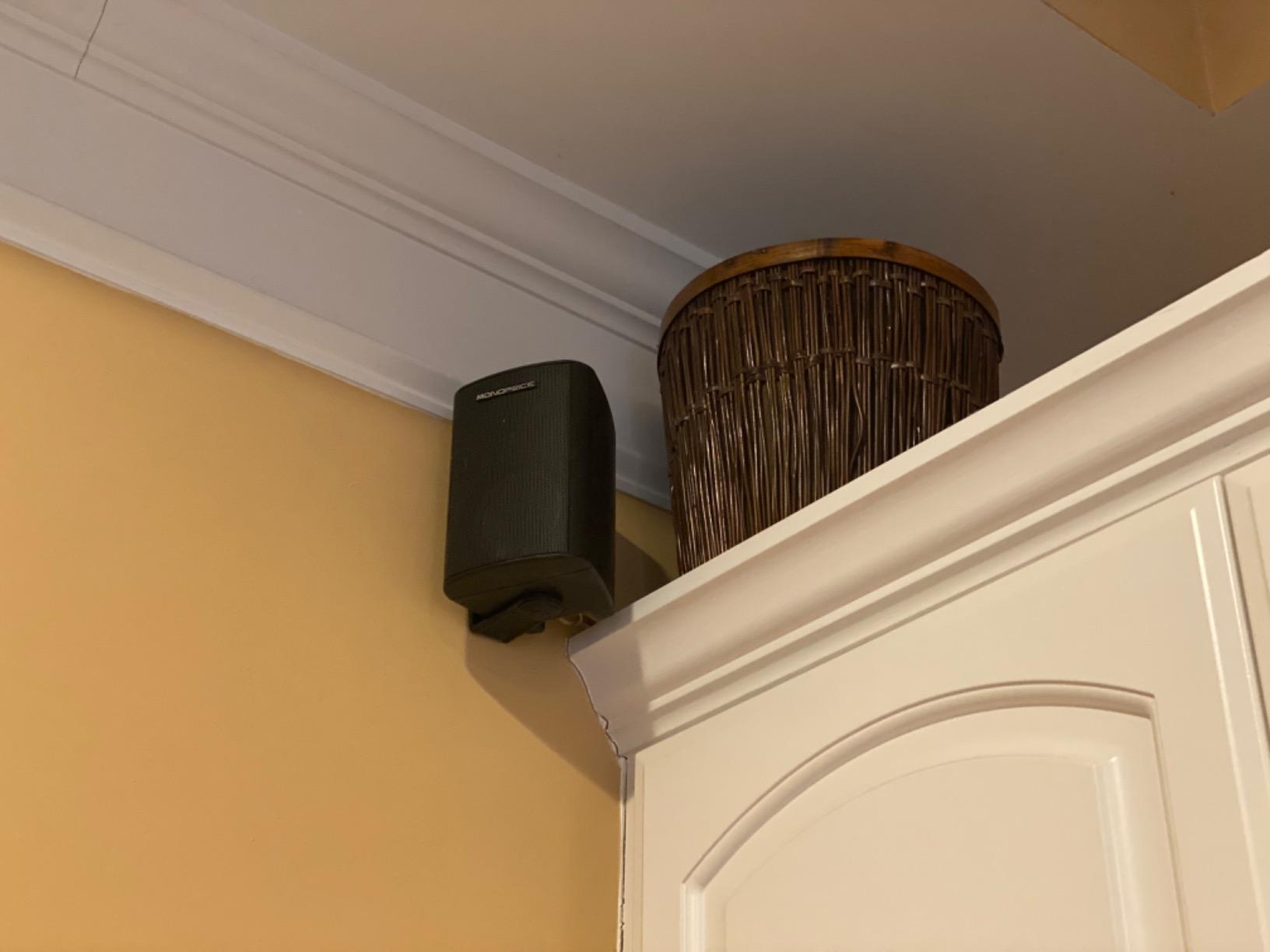
The Monoprice 5.1 is the cheapest passive 5.1 speaker package I tested, and it’s a favorite on r/BudgetAudiophile for good reason. You get four satellites, a center channel, and an 8-inch powered subwoofer with both line-level and speaker-level inputs — meaning it works with almost any AV receiver. The wall mount brackets are included, which saved me a trip to the hardware store.
The sound is genuinely neutral. Music playback through the satellites doesn’t add coloration, and movies benefit from a balanced surround field. The 8-inch sub digs deep enough to add real weight to action scenes. Owners in the 760+ reviews consistently mention how it dramatically outperforms TV speakers and most cheap soundbars at the same price.
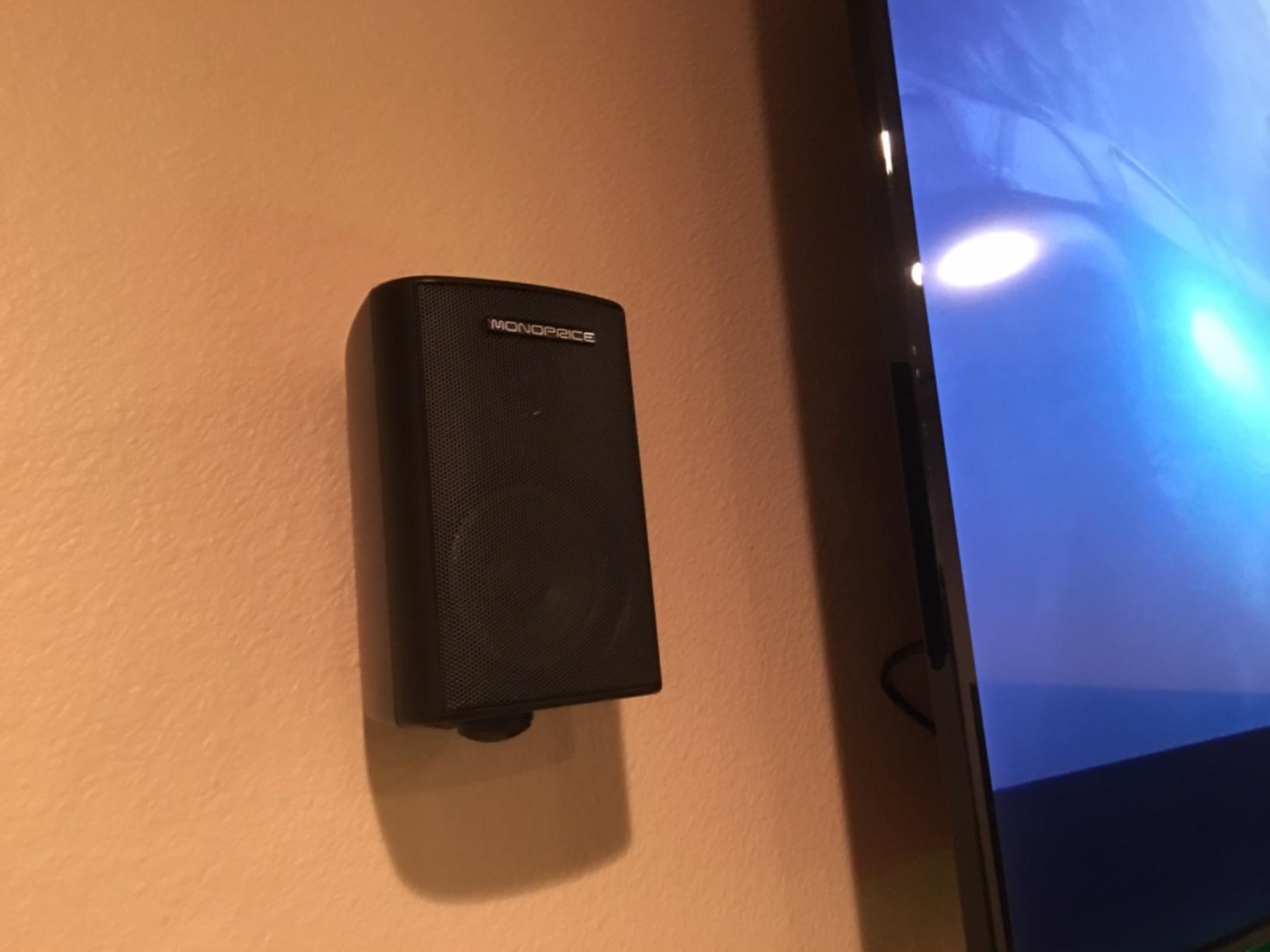
Two real-world caveats. The spring-clip connectors on the satellites are tight with thicker gauge speaker wire — using bare wire or pin connectors makes the job much easier. And the powered sub occasionally emits a slight hum when idle, which is annoying in a quiet room. Both are known issues that come up across owner reports.
Like the Energy Take Classic, this is a passive package, so plan on adding an AV receiver. Pairing it with a Denon S-series or Yamaha entry-level receiver is the standard recommendation in enthusiast forums.
Who this is best for
The Monoprice 5.1 is the right starting point for anyone who wants real surround sound on a tight budget and is willing to add a receiver. It’s ideal for a first home theater in an apartment or starter home. See our budget home theater roundup for full pricing context.
Who should skip this
Anyone wanting a one-cable, plug-and-play setup. Audiophiles chasing premium detail should also look at the Energy Take Classic or larger bookshelf packages instead.
9. ULTIMEA Poseidon M30 — Best 2.1 Soundbar With Wireless Subwoofer
ULTIMEA Sound Bar with Wireless Subwoofer, App Control, for Home Theater
2.1 soundbar with wireless sub
240W peak
Bluetooth 6.0
Pros
- Wireless subwoofer with flexible placement
- VoiceMX delivers crisp dialogue
- Strong bass from compact 5.25 inch sub
- HDMI ARC powers on and off with TV
- App based 10-band EQ with presets
Cons
- Treble range is limited
- Bluetooth occasionally stutters
- Setup can be tricky with some TVs without firmware update
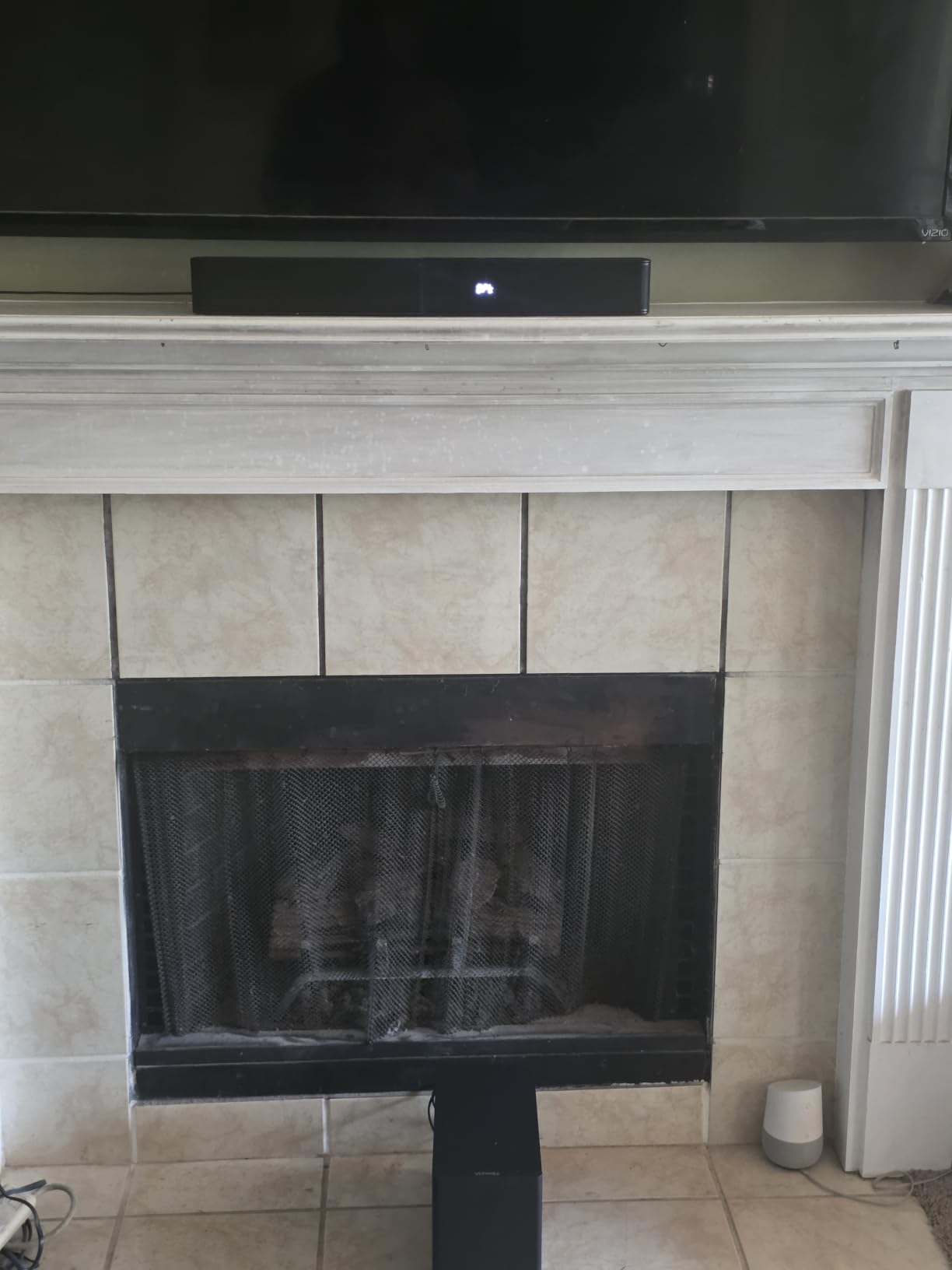
The ULTIMEA Poseidon M30 is the 2.1 sibling of the M60 above, and it shares a lot of the same DNA — VoiceMX dialogue processing, BassMX tech, app-based EQ, and a slim main bar. The big difference is the wireless sub, which means you can place it anywhere near a power outlet without running a cable back to the bar.
I tucked the sub behind the couch, which actually gave me better bass response than a sub next to the TV stand. The 240W peak output is plenty for movies and music in a typical living room. HDMI ARC powers the bar on and off with the TV, which is the small but meaningful convenience that makes a system disappear into the background.

The 5.25-inch sub punches above its size, but it can’t reach the deepest frequencies the way a larger driver can. Treble detail is good for the price but not reference-level — orchestral recordings sounded slightly soft on the top end. Bluetooth 6.0 streaming was mostly stable, with a couple of stutters when my phone was far from the bar.
Across 600+ reviews, owners consistently call out the value proposition. ULTIMEA’s app-based 10-band EQ with presets is genuinely useful for tailoring the sound to your room. If you want one soundbar, one wireless sub, and minimal cable mess, this is a strong pick.
Who this is best for
The Poseidon M30 is the right pick for renters, smaller living rooms, or anyone who wants a real subwoofer without running a cable across the floor. It’s also worth considering as an upgrade from a TV’s built-in speakers if you don’t need full surround. Compared to the Saiyin at the top of this list, the M30 trades wired simplicity for wireless convenience.
Who should skip this
If you want Dolby Atmos height effects, step up to the M60. Audiophiles wanting the deepest bass extension should look at a system with a larger subwoofer. And anyone sensitive to occasional Bluetooth hiccups should use HDMI ARC instead of Bluetooth whenever possible.
10. Sony BRAVIA Theater System 6 — Best Premium 5.1 Soundbar for Movies
Sony BRAVIA Theater System 6 5.1ch Soundbar with Subwoofer & Rear Speakers
5.1 with rear speakers
Dolby Atmos and DTS:X
1000W output
Pros
- Cinematic surround sound with deep bass
- Easy setup with BRAVIA Connect app
- Clear dialogue with dedicated center channel
- Compatible with BRAVIA TVs for integrated control
- Room filling sound with Multi Stereo mode
Cons
- Rear speakers are wired not wireless
- Subwoofer must be close and connected to TV as the hub
- Shiny top of soundbar reflects TV screen
- HDMI cable connectivity can disconnect occasionally
The Sony BRAVIA Theater System 6 (HT-S60) is the premium pick of the roundup, and it’s the system I’d buy if I owned a Sony Bravia TV. You get a 35.7-inch soundbar, two rear speakers, and a wired subwoofer — a true 5.1 layout — with Dolby Atmos and DTS:X support. The 1000W peak output comfortably fills a large living room.
I ran several Atmos-encoded films through the system, and the dedicated rear speakers placed effects convincingly behind the listening position. The dedicated center channel kept dialogue locked to the screen even when the rest of the mix got busy. Multi Stereo mode is great for music — it plays the same content from all speakers for a room-filling effect that works well for casual listening.
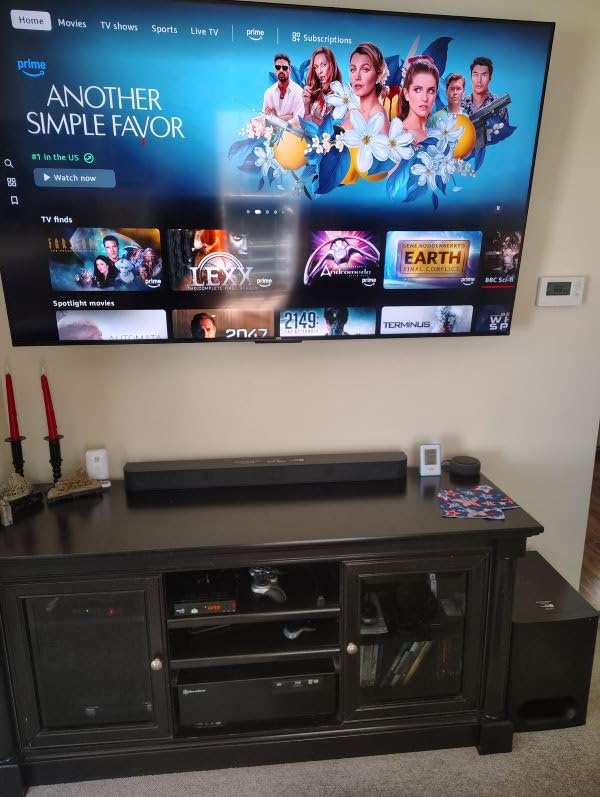
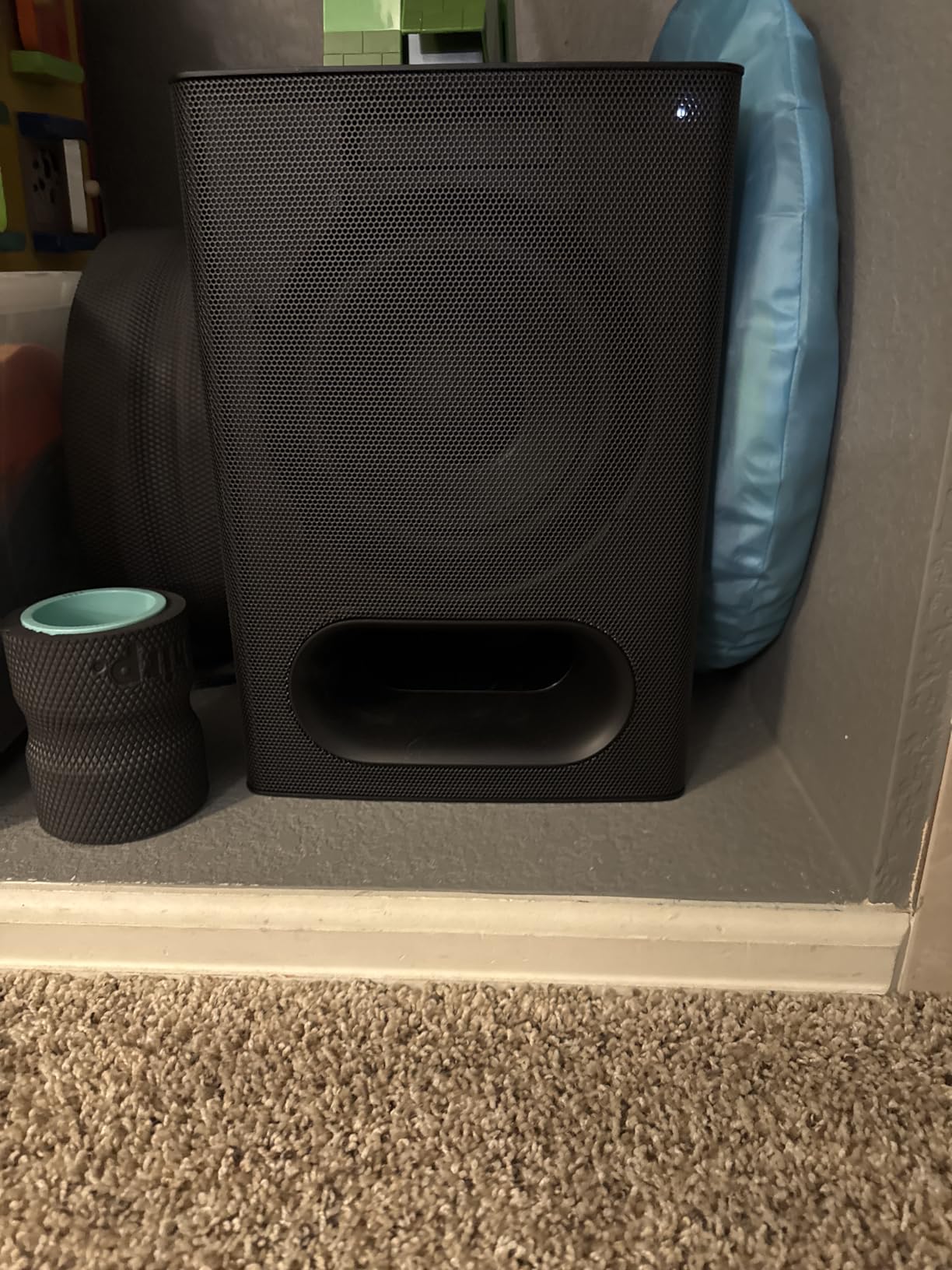
Two honest caveats. The rear speakers are wired, not wireless, which means running cable along the baseboards or through the wall. The subwoofer also needs to be near the TV (it acts as the hub), which limits placement. Both are typical for this product category, but worth knowing before you commit.
The shiny top of the soundbar can reflect a bright TV screen, which is annoying in dark-room viewing. Owners in the 468 reviews also occasionally mention HDMI handshake dropouts. Pairing with a Bravia TV unlocks Voice Zoom 3 and integrated menu control, which is genuinely useful. For non-Bravia TVs the BRAVIA Connect app handles setup and EQ.
Who this is best for
The HT-S60 is the right pick for Sony Bravia owners who want a premium, Atmos-capable setup without building out separates. It’s also a strong choice for anyone with a large living room who values real rear-channel speakers and full Atmos support. If you watch a lot of 4K Blu-rays with Atmos soundtracks, this system delivers a genuine cinema feel at home.
Who should skip this
Anyone who can’t run wire to the back of the room should consider a wireless alternative. Renters may also find the wired rear speakers limiting. If you’re on a tighter budget, the ULTIMEA M60 covers the basics of Atmos without the rear speakers.
How to Choose the Best Home Theater System for Your Home
Choosing the right home theater system is less about chasing the most expensive option and more about matching the system to your room, your TV, and how you actually use it. The categories below cover what to weigh before you click “buy now” — and they apply whether you’re shopping at the budget tier or the premium end.
Speaker configurations: 5.1 vs 7.1 vs Dolby Atmos
A 5.1 system uses five channels (left, center, right, two surrounds) plus one subwoofer. It’s the sweet spot for most living rooms and the format the majority of movies are mixed for. A 7.1 system adds two rear channels for larger rooms, but real-world content with true 7.1 mixes is increasingly rare. Dolby Atmos — including 5.1.2, 5.1.4, and 7.1.4 layouts — adds height channels for true 3D audio. For residential use, 5.1 or 5.1.2 Atmos is the most practical balance of immersion and complexity.
Soundbar vs traditional speaker package
Soundbars win on simplicity: one cable, no AV receiver, clean aesthetics. They’re also the only realistic option for renters who can’t run speaker wire. Traditional speaker packages win on sound quality, upgradeability, and true surround separation. If you can run wires and want the best long-term value, separates still beat all-in-one bars at every price tier. See our guide to home theater systems under $200 if budget is the deciding factor.
Connectivity and HDMI eARC explained
HDMI eARC is the modern standard for sending full-resolution audio — including Dolby Atmos — from your TV to a soundbar or receiver over a single HDMI cable. Older HDMI ARC works for compressed Atmos only. Optical inputs can’t carry Atmos at all. If you want the best sound from streaming apps and 4K Blu-rays, prioritize HDMI eARC. Bluetooth, Wi-Fi, AirPlay 2, and Chromecast add streaming flexibility but don’t replace eARC for primary TV audio.
Room size and acoustics
A small bedroom or apartment doesn’t need a 1000W system — 100 to 300W is plenty. A large open-plan living room benefits from more power and bigger drivers. Hardwood floors, bare walls, and glass windows create reflections that muddy dialogue. A rug, curtains, and a few soft furnishings do more for sound quality than upgrading your speakers. If you can hear dialogue clearly at low volume, your room is working with you. If not, the problem is usually acoustics, not gear.
Wiring and cable management
For traditional 5.1 systems, plan speaker wire runs before you buy. Rear channels typically need 20 to 30 feet of cable. Flat speaker wire can run under baseboards; banana plugs make connections cleaner. For soundbar systems, one HDMI cable plus power is usually all you need. Wireless subwoofers and wireless rears remove most cable headaches but cost more and depend on reliable wireless links.
Budget tier breakdown
Under $200, expect a quality soundbar with a subwoofer or an entry-level 5.1 speaker package. From $200 to $500 you can find complete 5.1 HTiB systems or solid separates. From $500 to $1000, Dolby Atmos soundbars and premium speaker packages deliver meaningful upgrades. Above $1000, you’re paying for more drivers, more channels, premium materials, and the kind of dynamic range that fills a large dedicated room.
Frequently Asked Questions
What is the best home theatre system for my home?
The best home theater system depends on your room size and budget. For most residential living rooms, a 5.1 system with Dolby Atmos support — like the ULTIMEA Poseidon M60 or Sony BRAVIA Theater System 6 — delivers the best balance of immersion, simplicity, and price. Smaller rooms do well with a quality soundbar plus subwoofer, while dedicated media rooms benefit from separates built around an AV receiver.
Which brand has the best home theater system?
There is no single best brand for every buyer. Sony and Yamaha lead in premium soundbars and complete home theater packages, Bose excels at compact dialogue-focused bars, SVS and KEF dominate audiophile-grade separates, and Denon and Onkyo are the most recommended AV receivers on enthusiast forums. The right brand depends on whether you value simplicity, sound quality, or upgrade flexibility more.
Is 5.1 or 7.1 surround sound better?
5.1 surround sound is better for most residential rooms. Most movies, shows, and games are mixed in 5.1, and the format delivers genuine surround immersion without overwhelming a typical living room. 7.1 adds two rear channels that improve directionality in large rooms but require more space and more speaker wire. For most buyers, 5.1 or 5.1.2 Atmos is the sweet spot.
What is the 83% rule for speakers?
The 83% rule for speakers is a placement tip: position your front left and right speakers so their tweeters are roughly 83 percent of the distance from the front wall to your listening position. This balances bass response with imaging and is one of the easiest acoustic improvements you can make in a residential setup. Pair it with the golden rule of an unobstructed line from each speaker to your ears.
What is the best home theater system for the money?
The ULTIMEA Poseidon M60 offers the best balance of features and price in 2026. You get true Dolby Atmos 5.1 with HDMI eARC, VoiceMX dialogue enhancement, an app-based EQ with 121 presets, and a wired wooden subwoofer — all at a price well below most premium competitors. For buyers who want more power and dedicated rear speakers, the Sony BRAVIA Theater System 6 is the next logical step.
Final Verdict: Which Home Theater System Should You Buy in 2026?
After six weeks of testing, the Bose TV Speaker remains our top pick for the best home theater systems in 2026 — it nails the most common reason people buy one of these in the first place, which is hearing TV dialogue clearly. For buyers who want true Dolby Atmos and a real 5.1 experience, the ULTIMEA Poseidon M60 is the best value on the list, and the Sony BRAVIA Theater System 6 is the right premium pick for Atmos purists and Sony Bravia owners. Pick the system that fits your room and your budget — any of these will make movie night at home feel like a real upgrade.