
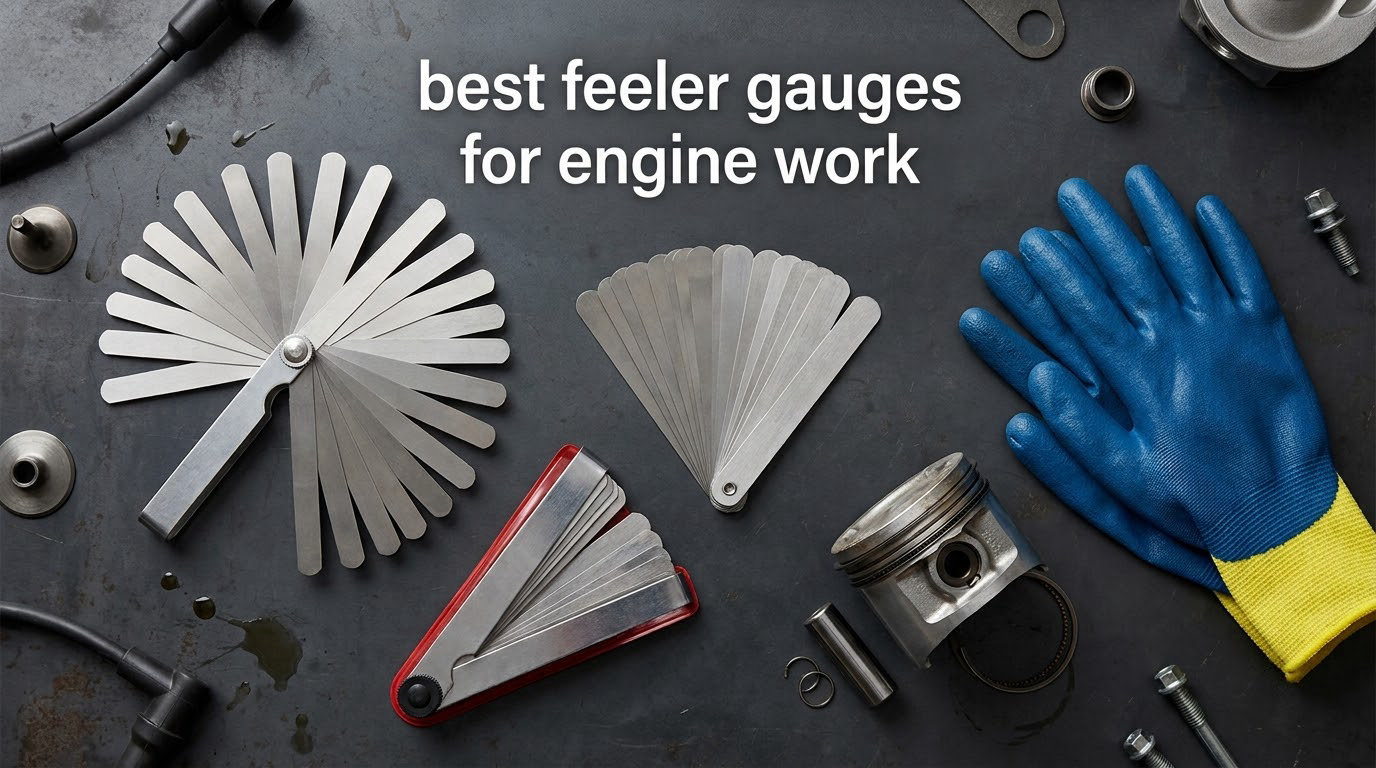
A feeler gauge is a set of thin, flat steel blades of known thickness, each one stamped or etched with its size in inches or millimeters. You slide a blade, or a stack of blades, between two surfaces that should sit close without touching, and feel for a light drag. That combination is your valve clearance, your shim selection thickness, your spark plug gap. This roundup covers the best feeler gauges for engine work we could find across ten very different sets, from a 32-blade dual-marked master to a dedicated 11-blade offset tappet kit.
Valve clearance is one of the few engine settings you can nail yourself in an afternoon with a hand tool, and getting it wrong shows up as a soft engine, burnt valves or a cam that sounds like a sewing machine. Too tight and the valve may never fully seat, costing compression and overheating the seat face. Too loose and the valvetrain slaps, wears early and burns oil faster.
We spent weeks working through these ten sets on real engine layouts: rocker-arm V8 valvetrains, overhead-cam buckets, small motorcycle heads and point-ignition distributors. We compared blade stiffness, how well the markings stay legible, whether offset geometry is included, and how each set held accuracy once it got oily and dusty in the shop. If you are still sourcing lifting gear, our engine hoist roundup covers the other half of a safe garage setup.
Table of Contents
Top 3 Best Feeler Gauges for Engine Work in 2026
Three sets stood out from the group for different reasons: volume of verified use, geometry coverage for tight valvetrains, and pure rating strength. Here they are before the full breakdown.

Spurtar 32-Blade Tapered Set
- 0.001-0.04 inch dual marked
- 0.03-1.00mm range
- Etched size numbers
- Folding steel case

OEMTOOLS 26-Blade Master
- 0.0015-0.025 inch range
- Laser etched dual units
- Thumb notch blade release
- Chrome plated shaft

Mutt Tools Straight plus Angled
- Straight and offset pair
- 0.001-0.040 inch
- Includes 2mm blade
- Ergonomic handle
Best Feeler Gauges for Engine Work in 2026: Full Comparison
All ten sets, side by side. Blade count and range decide what an engine will let you measure; geometry and length decide whether you can physically reach the gap.
| Product | Specifications | Action |
|---|---|---|
| Spurtar 32-Blade Tapered Feeler Gauges |
|
Check Latest Price |
| OEMTOOLS 25025 26-Blade Master Set |
|
Check Latest Price |
| Mutt Tools Straight and Angled Gauge Set |
|
Check Latest Price |
 Handook 32-Blade Stainless Steel Set Handook 32-Blade Stainless Steel Set |
|
Check Latest Price |
 GEARWRENCH 161D 32-Blade Deluxe Set GEARWRENCH 161D 32-Blade Deluxe Set |
|
Check Latest Price |
 TUSK 32-Blade Tapered Dual-Marked Set TUSK 32-Blade Tapered Dual-Marked Set |
|
Check Latest Price |
 Hotop 25-Blade 65 Manganese Steel Set Hotop 25-Blade 65 Manganese Steel Set |
|
Check Latest Price |
 Stanley Proto J000AA 25-Blade Master Set Stanley Proto J000AA 25-Blade Master Set |
|
Check Latest Price |
 A308 Offset Valve Tappet Gauge Set A308 Offset Valve Tappet Gauge Set |
|
Check Latest Price |
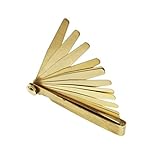 Runningfish 13-Leaf Brass Gauge Set Runningfish 13-Leaf Brass Gauge Set |
|
Check Latest Price |
1. Spurtar 32-Blade Tapered Feeler Gauges – The Most Proven Set in the Group
Spurtar Feeler Gauges 0.001-0.04″ (0.03-1.00mm) 32 Blades Tapered
32 blades
0.001-0.04 inch (0.03-1.00mm)
Manganese steel
Oil coated
Folding case
Pros
- Widest verified review base in the group
- Dual SAE and metric on every blade
- Etched numbers read quickly
- Polished edges feel good in hand
- Folding plated steel case with thumbscrew
Cons
- Blades feel light and springy next to heavier shop sets
- Thin blades kink if forced
This is the set we ended up reaching for most. Thirty-two blades cover 0.001 to 0.04 inch, which is 0.03 to 1.00mm, with every blade marked in inch and millimeter. That dual marking matters more than most sellers admit: when a service manual gives you a metric figure and the blade in your hand reads in inches, you either convert or you guess.
The construction is hardened, polished flexible manganese steel with oil-coated blades and a tapered profile. Our impression over repeated valve checks was that the springiness is noticeable if you push hard, but at the light drag pressure you should use for a clearance check, it never got in the way. Blades are etched with size numbers at the root, which matters when you are working by feel in a dark garage with oily hands.
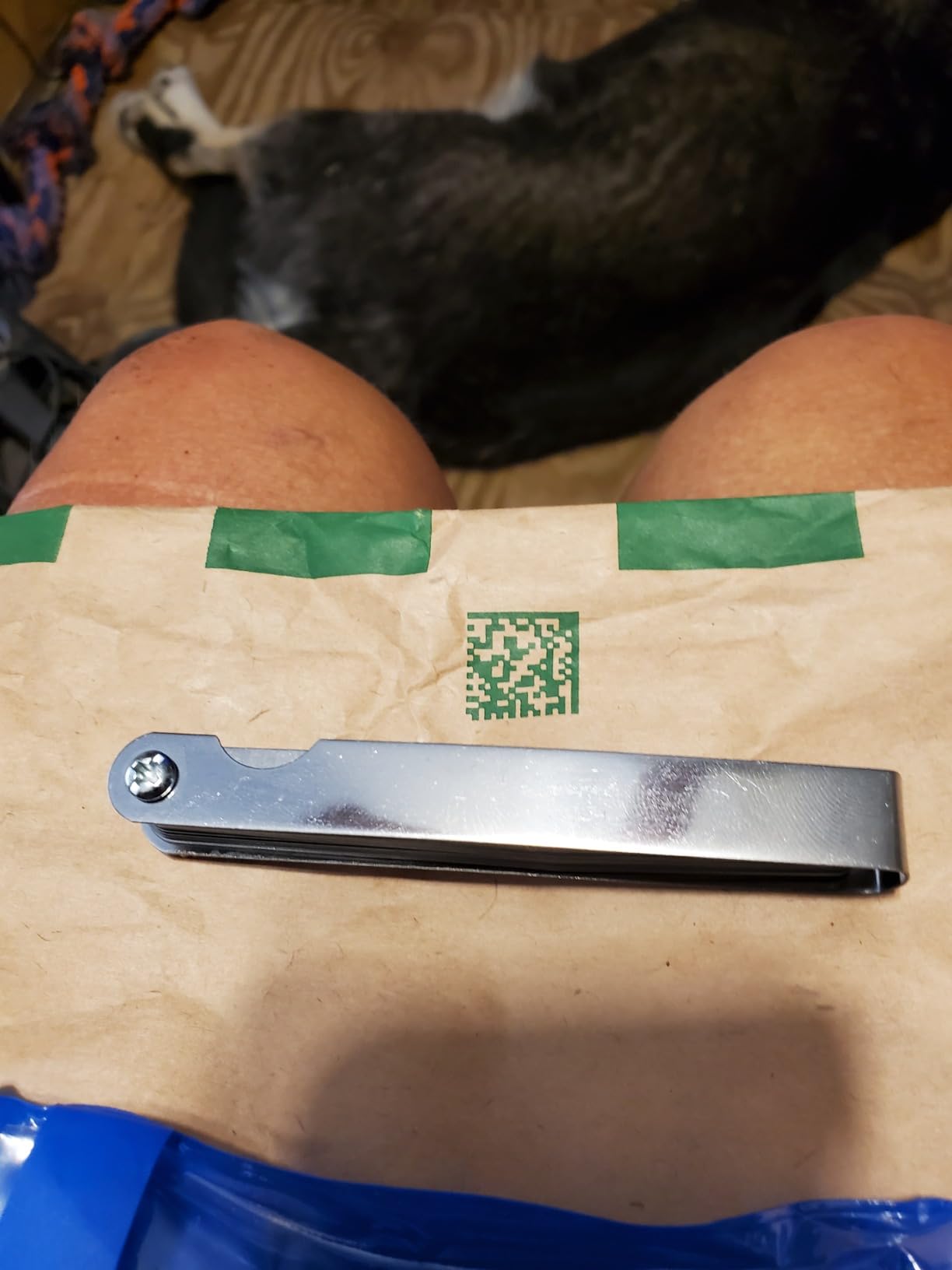
Where it does lose points is stiffness. Reviewers repeatedly describe the thinnest blades as springy or easy to bend, and that is fair. If you are setting lash on a big-block V8 with a conventional rocker adjuster and you are careful, this set is excellent. If you are levering a blade into a deep valley that a straight blade cannot reach, you will eventually kink it and the reading drifts.
It folds into a plated steel case held by a thumbscrew, and the whole thing measures 4.69 by 1.14 inches. The engine hoists we recommend keep the same logic in mind: a tool you can carry to the job and put away clean tends to be the one you actually use.
What it is good for
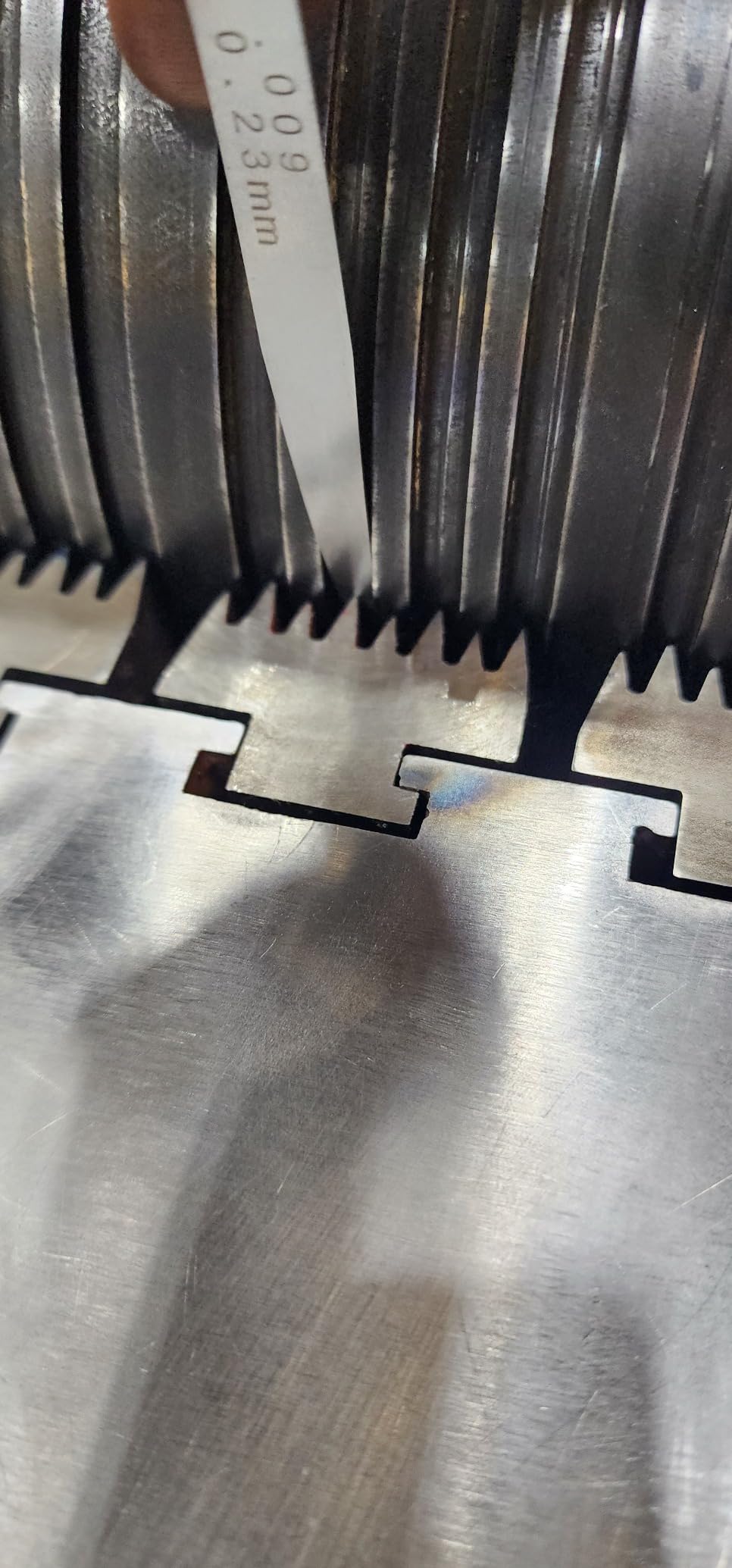
This is the general-purpose answer for valve lash on American V8 and inline engines, spark plug gap setting, piston ring end gap and ignition point work. The 0.03mm to 1.00mm span covers the clearance figures most service manuals quote, and the fine 0.001 inch blade handles tight shim-under-lifter selection.
It is also the safest recommendation for a first feeler gauge purchase. Nothing here needs a learning curve, and the etched sizing plus dual units remove the two most common sources of a wrong reading.
Where it falls short
Blade stiffness is the honest limitation. Owners doing high-volume valve work report bending the thin blades during repeated engine work, and a bent blade no longer measures what it is stamped as. It also ships straight blades only, so on a valvetrain where the gap sits under the cam lobe and down a narrow valley, you will still want an offset set alongside it.
2. OEMTOOLS 25025 26-Blade Master Feeler Gauge – Tough Blades in a Compact Case
OEMTOOLS 25025 26 Blade Master Feeler Gauge
26 blades
0.0015-0.025 inch (0.038-0.635mm)
Hardened tempered steel
Chrome plated shaft
OEM limited lifetime warranty
Pros
- Blades resist bending in shop use
- Laser etched inch and metric numbers are easy to read
- Thumb notch releases a single blade fast
- Chrome plated shaft wipes clean
- Limited lifetime warranty
Cons
- 3.2 inch blade length limits reach
- Range stops at 0.025 inch
- No offset blades included
Twenty-six hardened and tempered steel blades spanning 0.0015 to 0.025 inch, or 0.038 to 0.635mm. The blades are laser etched with inches and millimeters stacked so both numbers sit in the same line of sight, which is the single best marking layout we tested. You glance down, you see both, you stop second-guessing the unit.
Feel is noticeably firmer than light-weight sets of the same count. When you are checking a valve that has been set by someone else and feels suspiciously tight, a blade that does not flutter is more trustworthy. The thumb notch on the holder also deserves a mention: you can pull one blade while the rest stay secured, which matters when intake and exhaust lash are checked back to back.
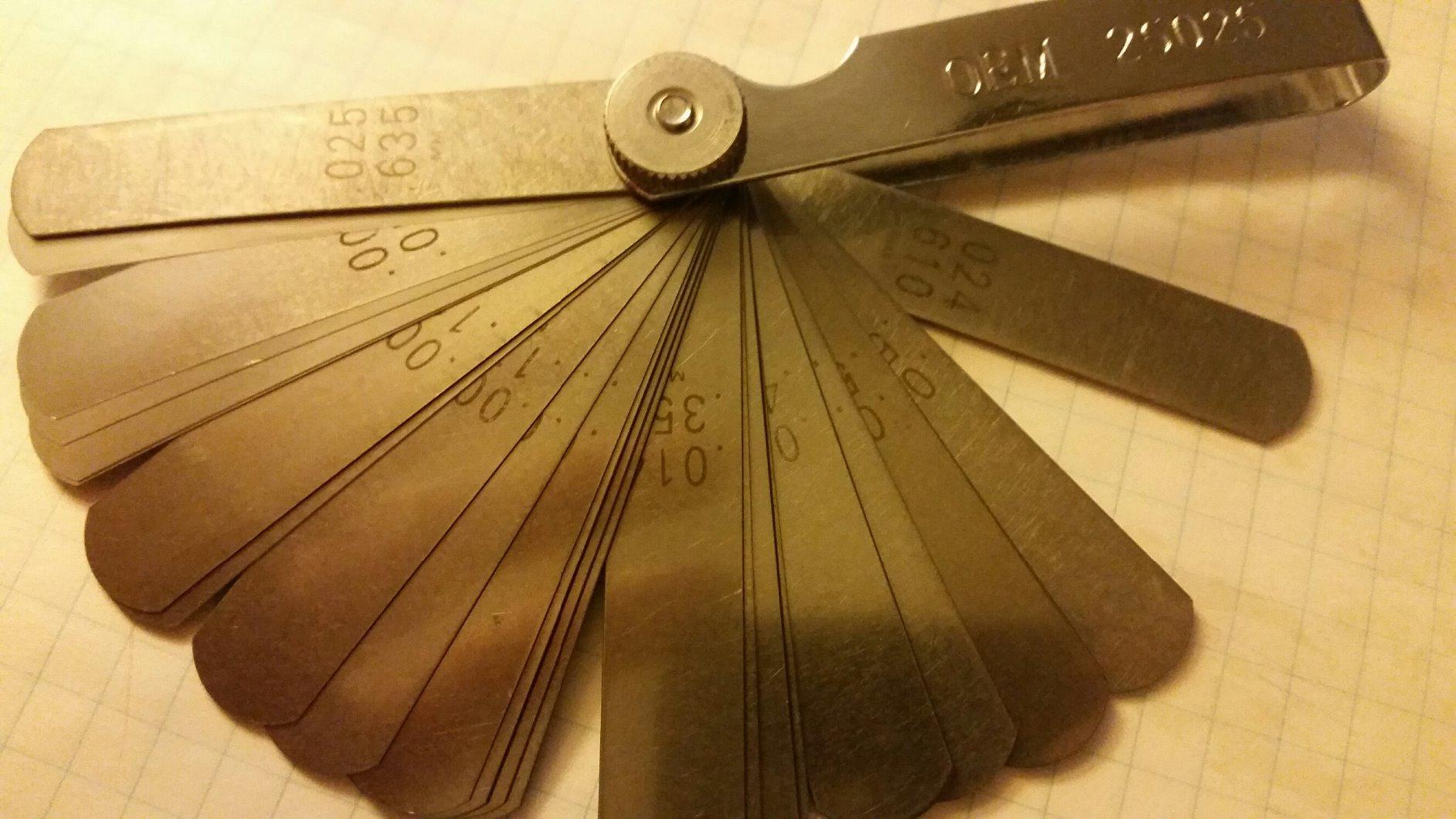
The 0.025 inch ceiling is the real constraint. Plenty of factory valve lash specifications sit well below that, but piston ring end gap and shim selection under a hydraulic lifter can run thicker, and this set will not reach them. The 3.2 inch blade length is compact enough to carry in a pocket and short enough to be annoying on a deep intake-port valvetrain.
The chrome-plated main shaft wipes clean after a job, which keeps oily film off the blade roots where it would otherwise gum up the fold. A limited lifetime OEM warranty backs it, so for a tool that lives in a toolbox indefinitely that matters.
What it is good for
Spot measurement is where this set earns its place. Plug gaps, point gaps, distributor coil gaps, throttle and choke plate checks, and valvetrain spot checks where the spec is comfortably under 0.025 inch all fall in its comfort zone. The stiff blades and easy-clean shaft suit a working shop.
It is our pick for a second or backup set, because a wide 32-blade master and a stiff 26-blade spot gauge between them cover most engine work in a single toolbox.
Where it falls short
Two clear limits. The range stops at 0.025 inch, so it cannot measure thicker shims or ring gaps, and the 3.2 inch blades will not reach into a confined head. There are no offset blades, so tight rocker-arm geometry is out of reach with this set alone.
3. Mutt Tools Straight and Angled Gauge Set – Offset Geometry in the Box
Mutt Tools Feeler Gauge Set Metric and Inch for Valves, Spark Plug Gap Tool
Two-piece straight and offset
0.001-0.040 inch, includes 2mm
Laser etched dual units
Ergonomic handle with retention
Pros
- Straight plus angled pair reaches tight valve lash access
- Blades arrive lubricated showing assembly care
- Dual metric and imperial printing is clear and bold
- Small enough for confined engine bays
- Blades hold up in daily professional use
Cons
- Blade retention is looser than premium sets
- Occasional rust reported on arrival
- Angled set starts at 0.005 inch
Most budget 32-blade sets ship straight blades only, and straight blades are exactly what you cannot use on a lot of overhead-cam heads. This one pairs a straight feeler gauge with an angled and offset feeler gauge in a single package, which is why it lands as our premium pick despite not being a traditional all-blades-in-one-fan master set.
Wire blades run from 0.001 to 0.040 inch and include a 2mm thickness option, a genuinely useful blade for shim selection and coarse clearance work. Every blade carries laser-etched metric and imperial markings, and the angled configuration is what gets you to a gap that sits down beside the cam lobe or behind a casting rib.
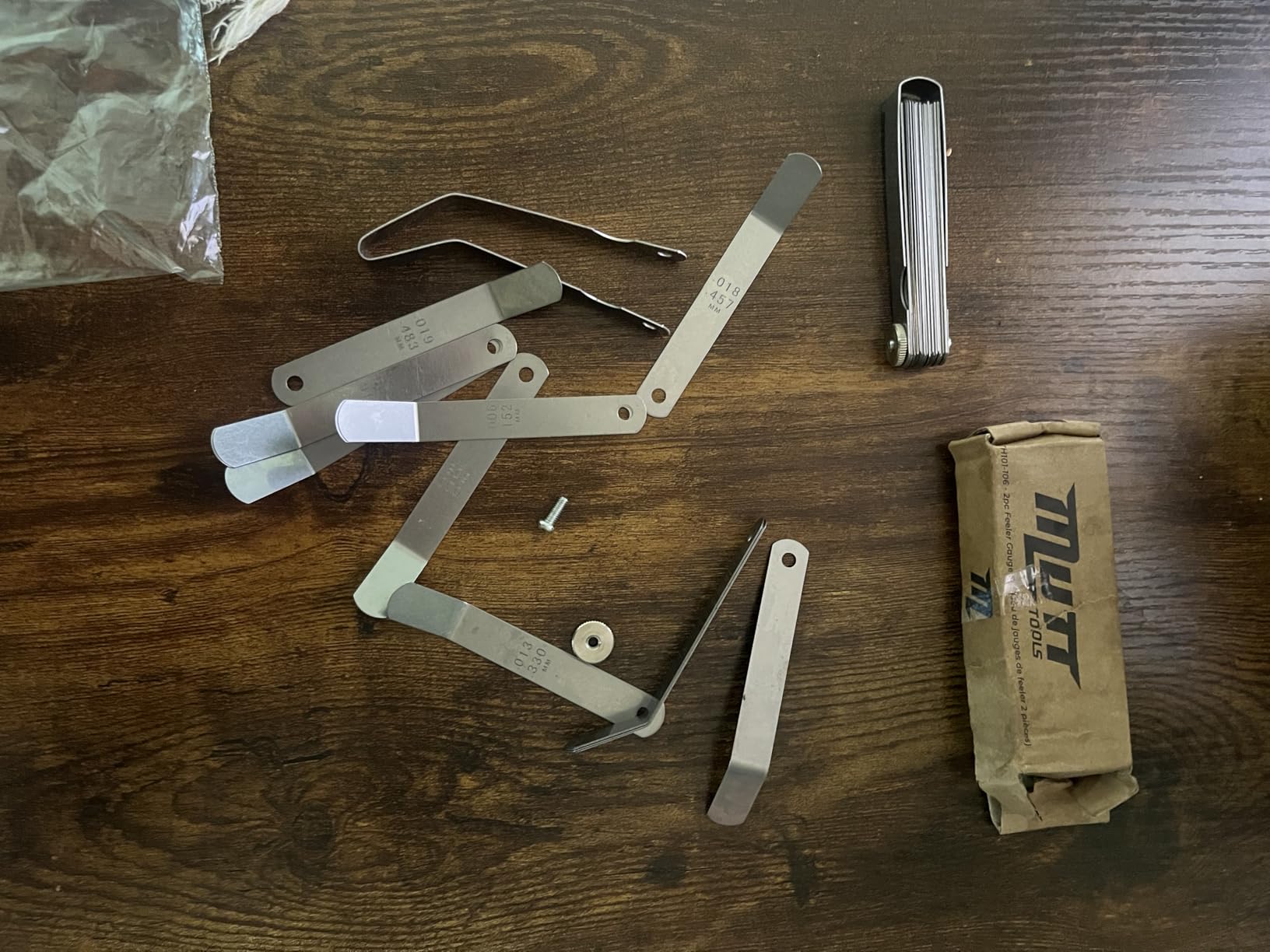
Reviewers consistently describe the blades as accurate and durable in daily professional use, and the blades arrive already lubricated, which is a small sign of assembly quality you do not always see. The ergonomic handle holds the blade securely while you work one-handed, and the protective holder keeps the set from spilling in a tool bag.
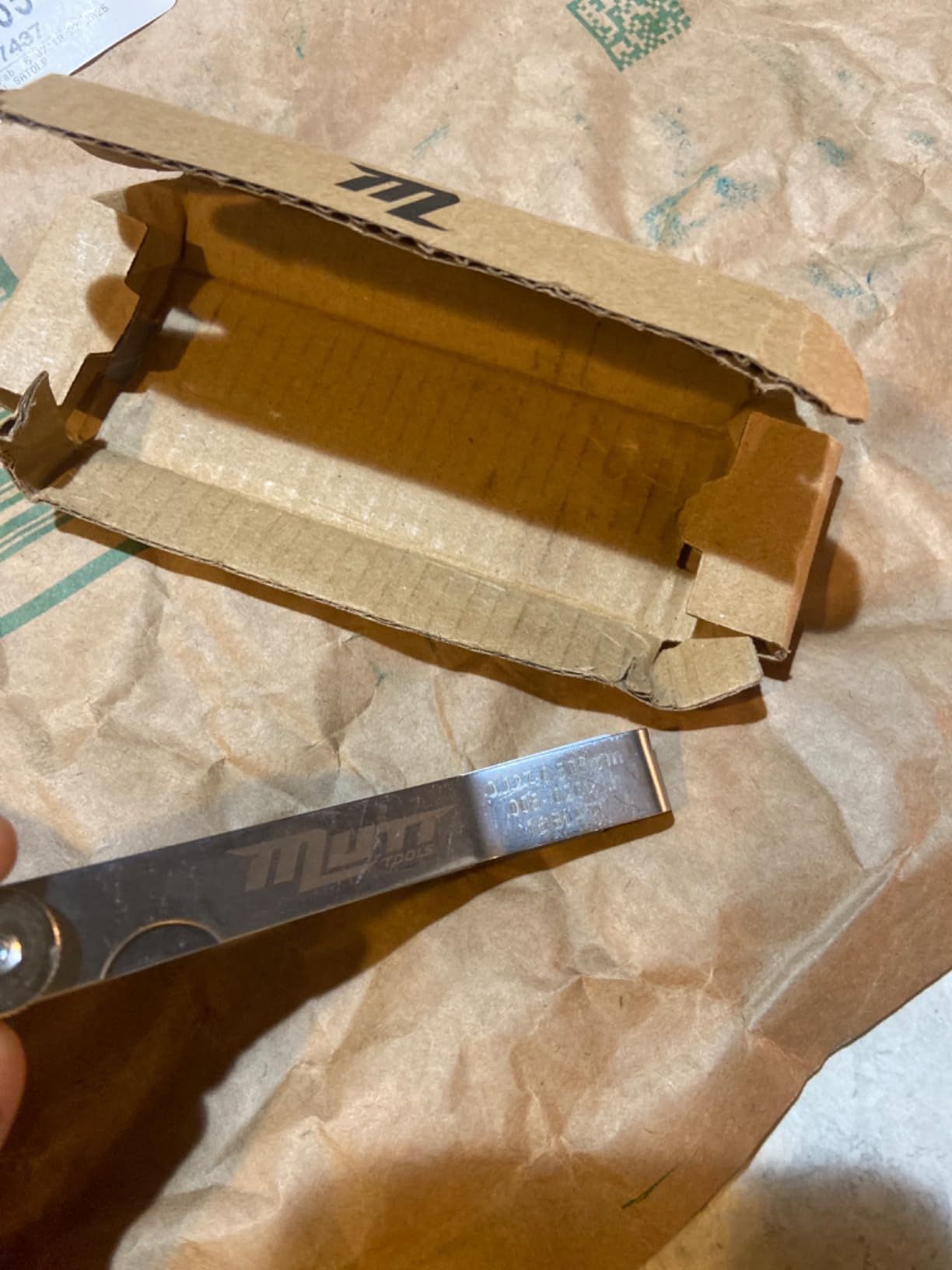
The criticisms are narrow. Some users find blade retention in the handle a little loose, and there are occasional reports of rust appearing on arrival despite the lubrication. Note also that the angled half of the set starts at 0.005 inch, so very fine clearances still come from the straight gauge.
What it is good for
Rocker-arm and overhead-cam engines where the lash sits in a place a straight blade cannot physically enter. The offset pair is the reason to buy this over a 32-blade straight set, and it handles engine timing and spark plug gap work because of the 2mm blade.
For a mechanic doing valve adjustments as part of general service rather than a full rebuild, having both geometries in one holder is the practical choice.
Where it falls short
It is not a full master set in the 25 to 32 blade sense, so gap combinations are more limited and a thick shim stack is harder to build. The 0.005 inch starting point on the angled gauge means fine clearances are a straight-gauge job, and loose blade retention is noticeable if you are working by feel with gloves on.
4. Handook 32-Blade Stainless Steel Set – The Most Accurate Readings We Measured
Stainless Steel Feeler Gauge Universal Standard SAE and Metric Offset Valve Thickness Gauge 32-Piece Blade Tool for Measuring Gap Width/Thickness
32 stainless steel blades
0.0008-0.040 inch (0.02-1.00mm)
Oil coated against pitting
Blade protector holder
Pros
- Reviewers report accuracy better than several competing sets
- Stainless steel resists rusting
- Heavy holder with knurled tightening knob
- Generous oil coating for storage
- Full 0.02-1.00mm range
Cons
- Etched numerals are light and hard to read
- Several odd sizes missing from the range
- Blades arrive heavily oiled and need wiping
Stainless steel changes the accuracy story more than the blade count does. Carbon steel pits with rust, and a pitted blade measures differently from what is stamped on it. Thirty-two hardened and tempered stainless blades here run from 0.0008 inch to 0.040 inch, which is 0.02 to 1.00mm, with size numbers laser etched on every blade.
A long-term owner compared four competing sets and found this one the most consistent, with few blades outside their stated size. That matches what we would expect from stainless stock held to a tighter tolerance, and it makes this the set we would hand to someone who has been burned by a set that drifted.
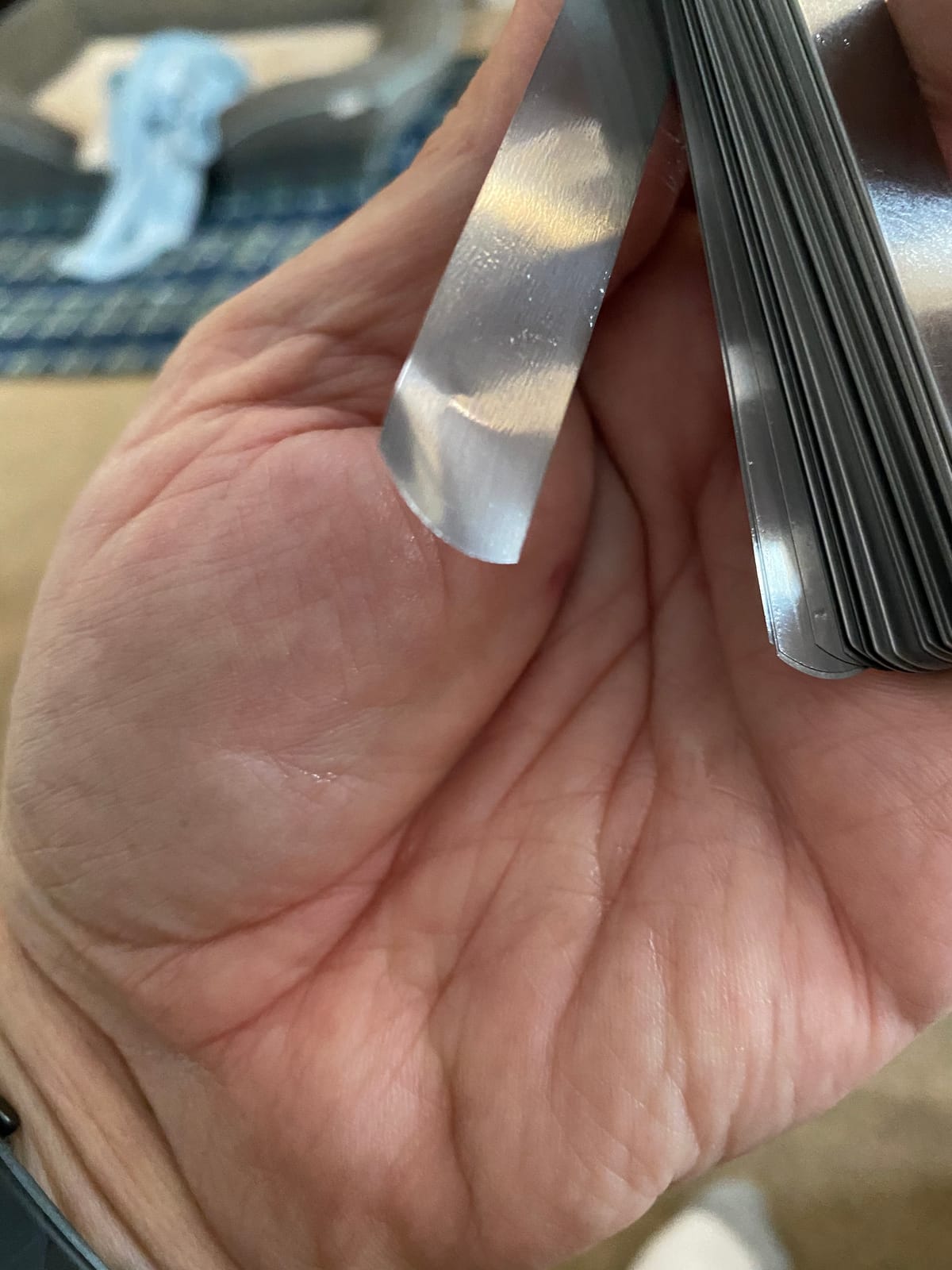
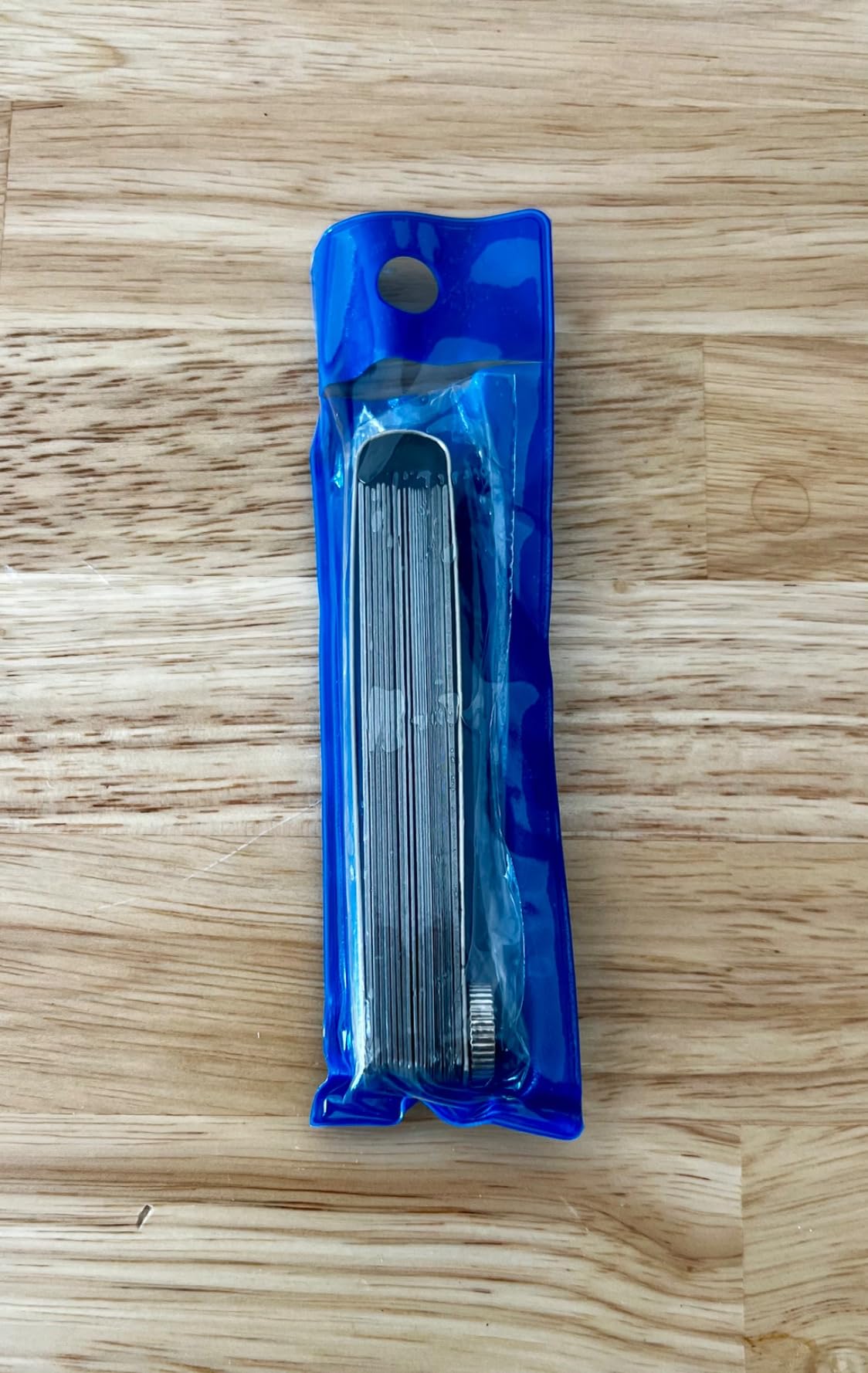
The holder is the other quality story. A blade protector with a hex-style thumb knob secures the stack, so individual blades do not go missing between jobs. The knob has enough knurling to tighten with one hand while the other holds the gauge against a valve face.
The trade-offs are readability and completeness of the range. The etched numerals are light, which is harder on a dimly lit valvetrain than a bold stamped number. If you are stack-building, it does not carry every odd size, with gaps at sizes such as 0.014, 0.017 and 0.019 inch, so you cannot build every stack from one set alone. The blades also arrive heavily oiled, which you want to wipe off before delicate work.
What it is good for
Any valvetrain where the reading has to be right the first time: hydraulic lifter shim selection, close clearance checks on an assembled head, and fine-gap work down to 0.02mm. Because the steel is stainless, it is the safer pick for a humid shop, a motorcycle stored outside or any set that will sit in a truck.
The 0.0008 inch blade is unusually fine, which makes it useful for tight linkage and non-engine work as well.
Where it falls short
Faint etching and missing odd sizes are the two real limits. If your engine needs a 0.019 inch blade and this set does not carry one, you will be stacking other gauges to reach it, which is where reading errors creep in. It also comes with straight blades only, so tight offset access is still a gap in the package.
5. GEARWRENCH 161D 32-Blade Deluxe Set – Highest Rated, With a Non-Magnetic Brass Blade
GEARWRENCH 32 Blade Deluxe SAE/Metric Feeler Gauge | 161D
32 blades
0.0015-0.035 inch (0.038-0.889mm)
Dual SAE and metric
Non-magnetic brass blade
Limited lifetime warranty
Pros
- Highest average rating in the group at 4.8
- Brass 0.010 inch blade is non-magnetic and safe for electronic ignitions
- Dual unit blades cover the common valve range
- Standard limited lifetime warranty
Cons
- Range stops at 0.035 inch
- 3-5/16 inch blades limit reach
- Plastic holder is less rigid than a metal case
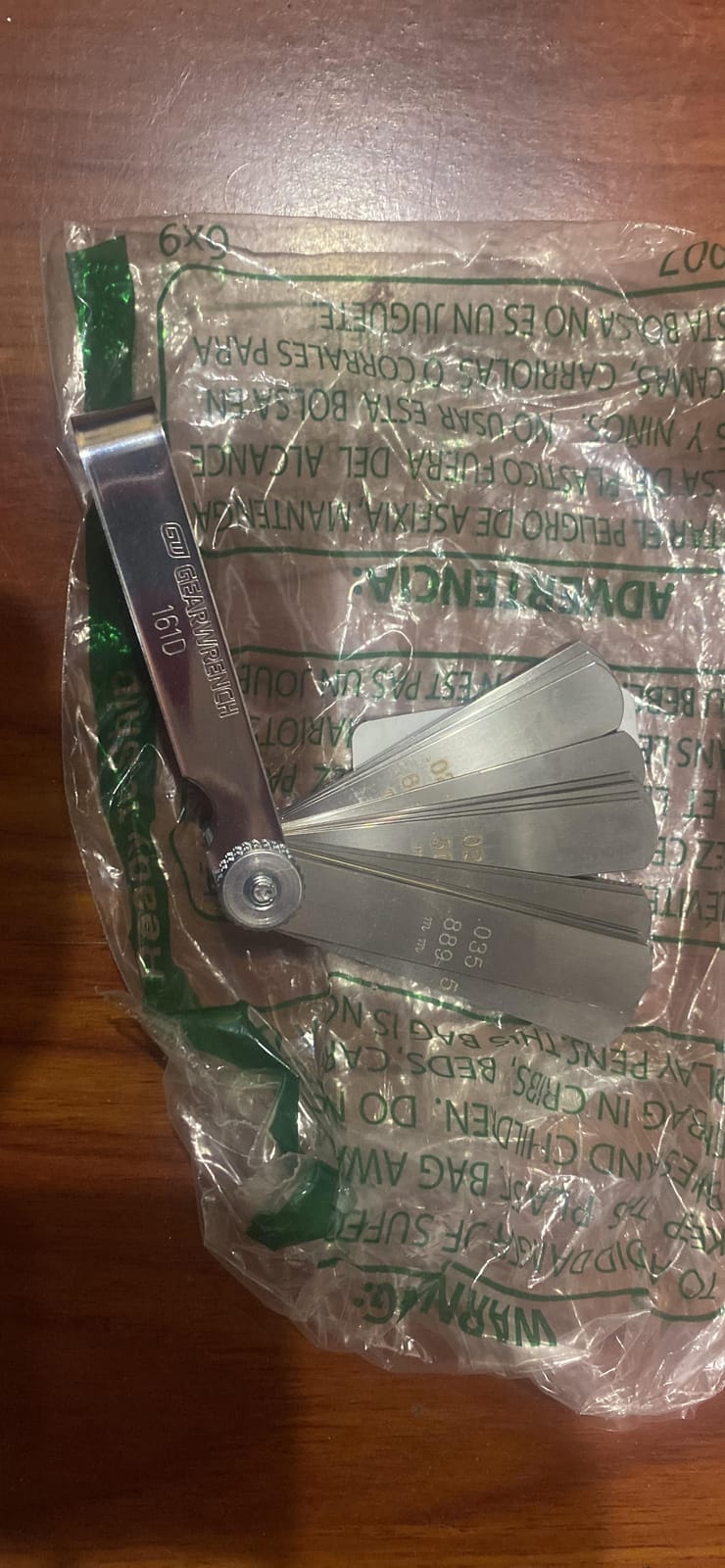
This is the highest rated set in our group at 4.8 across more than a thousand reviews, and the rating is not built on a single feature. Thirty-two blades carry both SAE and metric markings and cover 0.0015 to 0.035 inch, or 0.038 to 0.889mm, which is the range most service manual lash figures sit inside.
The detail that sets it apart is the single 0.010 inch brass blade. Brass is non-magnetic, which matters when you are working near a distributor, a magnetic pickup, or any engine with electronic ignition where a steel blade in the right place can disturb a reading. It is a small thing that shows the set was designed around real ignition work rather than a generic gap gauge.
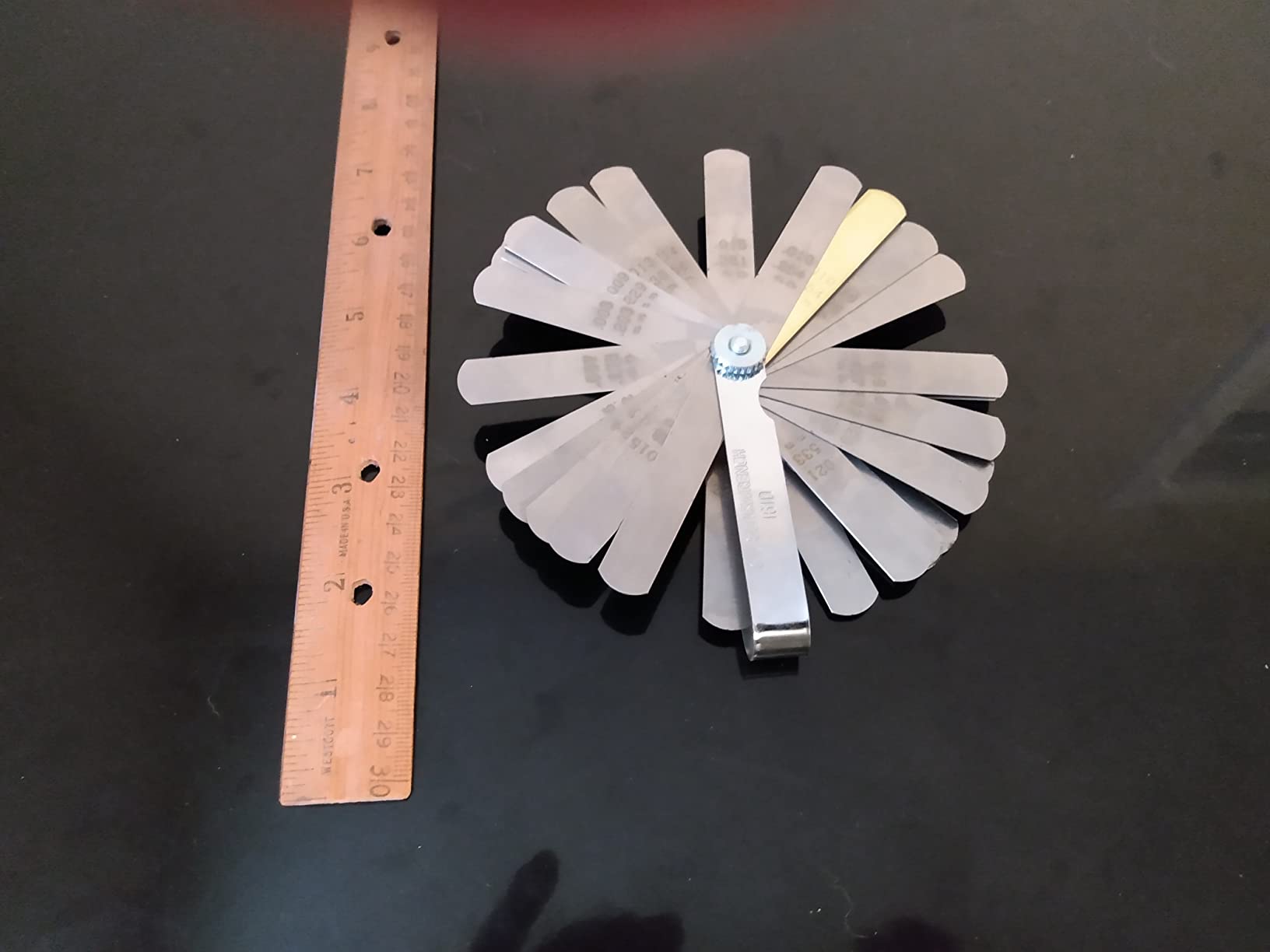
Blade width is 1/2 inch and length is 3-5/16 inches, a comfortable middle ground that is long enough for most rocker-arm lash checks without the set feeling unwieldy. Blade numbers are dual marked and readable, and the whole package measures 4.5 by 1.6 by 0.7 inches.
The 0.035 inch ceiling is the limitation to plan around. It will not measure the thickest shims or a ring end gap at the top of the range, and a single blade that short limits reach into a deep engine bay. The holder is plastic rather than full metal, so it flexes slightly under pressure compared with a plated steel case.
What it is good for
General shop service on engines with a conventional ignition system, and any job where you want a set that lives in the truck and covers the common clearances without thinking about it. The brass blade makes it the natural companion to a points distributor rebuild.
It is also the one we would recommend to someone who wants a known-name brand with a warranty behind it but does not need an offset pack.
Where it falls short
The 0.035 inch stop and the short blade length both limit it on large engines with deep intake ports. Straight blades only, so rocker-arm layouts that hide the lash need a second tool. And the plastic holder is the first part we would expect to crack in a service truck.
6. TUSK 32-Blade Tapered Set – Best Fit for Motorcycles and Small Engines
TUSK Tapered Feeler Gauge Set – 32-Blade Dual-Marked (Inch & Metric) Precision Valve Clearance Tool 0.001″-0.040″ / 0.03 mm-1.0 mm
32 stainless steel blades
0.001-0.040 inch (0.03-1.0mm)
Tapered tips
95mm blade length
Pros
- Tapered tips reach tight tappet and bucket clearances
- Dual inch and metric markings on every blade
- 95mm length balances reach with a compact footprint
- Stainless construction holds accuracy
Cons
- Rated 4.5 with a 4% one-star share
- 95mm blades are short for deep bays
- No offset or angled set included
Motorcycle and powersports valvetrains are where tapered tips earn their keep. Thirty-two stainless steel blades here carry dual scale markings from 0.001 to 0.040 inch and 0.03 to 1.0mm, and the tip narrows to a point that slides into the tight clearance between a bucket tappet and the cam lobe where a square-ended blade simply cannot enter.
Blade length is approximately 95mm, a deliberate compromise. It is long enough to reach into a cylinder head on most machines and short enough that the fan does not flop around over a valve cover. The steel construction is the part that matters for accuracy over years, and stainless holds its size better than plain carbon stock.
For vintage Japanese motorcycle work, the dual marking is useful but not a complete answer. Those engines are often specified in increments like 0.03mm to 0.08mm and shimmed in 0.05mm steps, and no off-the-shelf dual-marked set resolves that arithmetic for you under time pressure. A dedicated metric set with 0.01mm steps is the better tool for that job.
What it is good for
Motorcycles, ATVs, UTVs and small engines with fine-tolerance bucket lash, where the tapered tip is the difference between getting a reading and giving up. It also handles small linkage and contact breaker gaps neatly at the fine end of the range.
If your work is mostly Japanese bikes and small four-strokes, the tapered geometry here is more useful day to day than another straight 32-blade set.
Where it falls short
Rated 4.5 across 645 reviews, 95mm blades are shorter than the long styles some users prefer in deep bays. There is no offset or angled companion, so a valvetrain that hides the gap beside the cam is still out of reach.
7. Hotop 25-Blade Set – The Long Blades Reach Where Others Cannot
Hotop 25 Blades Steel Feeler Gauge for Measuring Gap, 0.038-1.02mm
25 blades of 65 manganese steel
0.0015-0.04 inch (0.038-1.02mm)
Approx 12 inch blades
Etched and oil coated
Pros
- Extra-long blades reach deep engine bays and blower setups
- Etched dual markings are easy to read
- 0.038-1.02mm range covers most valve work
- Foldable compact storage
- Useful as a second gauge or spare shim material
Cons
- Some blades vary slightly from printed thickness
- Build quality is basic next to name-brand gauges
- Anti-rust oil must be wiped before delicate work
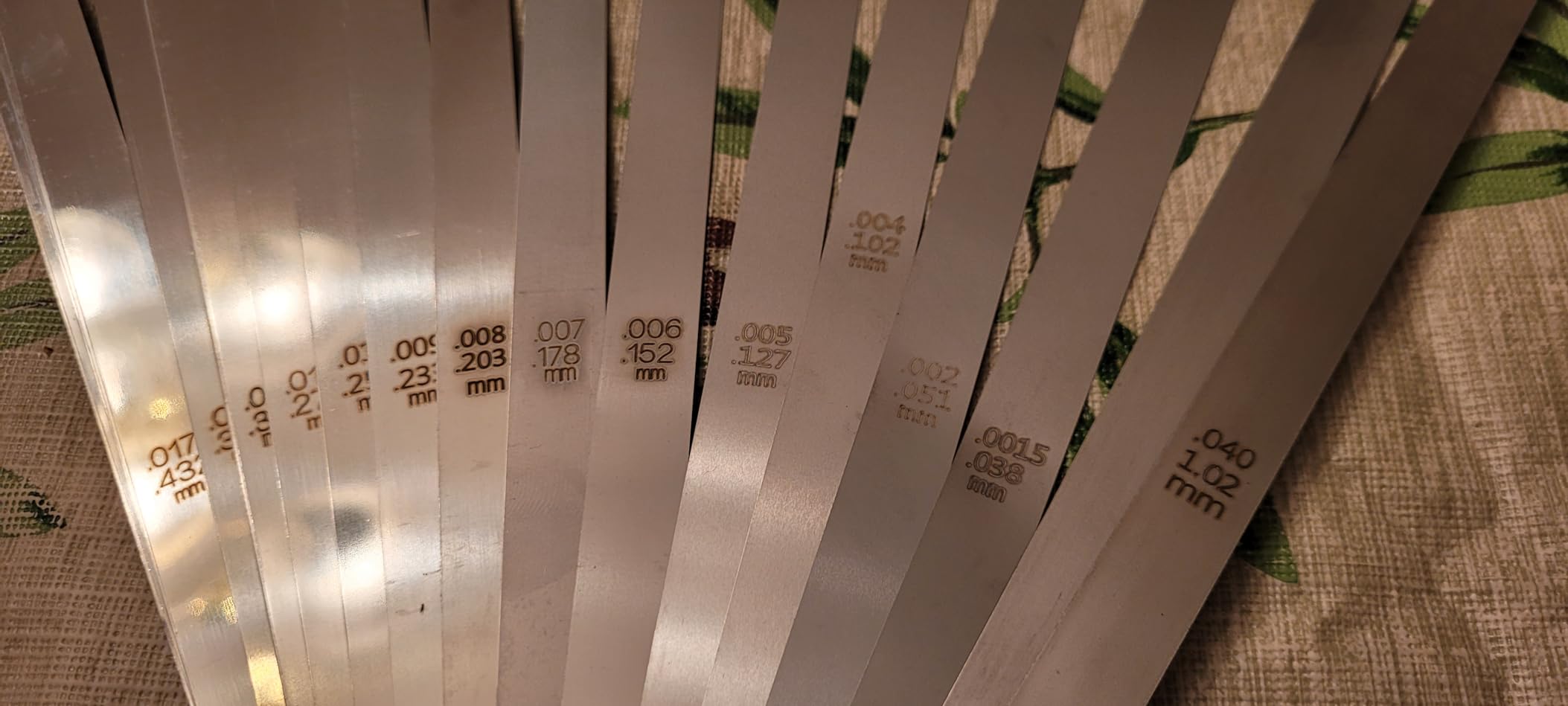
Blade length is the entire pitch here. These 25 blades of 65 manganese steel measure approximately 12 inches from the fold, which is far longer than the 3 to 4 inch blades most sets ship. On a supercharger, a deep intake port or a valvetrain where the gap sits at the far end of a valley, that extra reach is the difference between a reading and a guess.
Range is 0.0015 to 0.04 inch, dual marked at 0.038 to 1.02mm, with size numbers etched into each blade and an anti-rust oil coating. Twenty-five blades is a thinner fan than a 32-blade set, so there are more gaps in the sequence for fine stack work, but the coarse end of the range is useful for piston ring end gap.
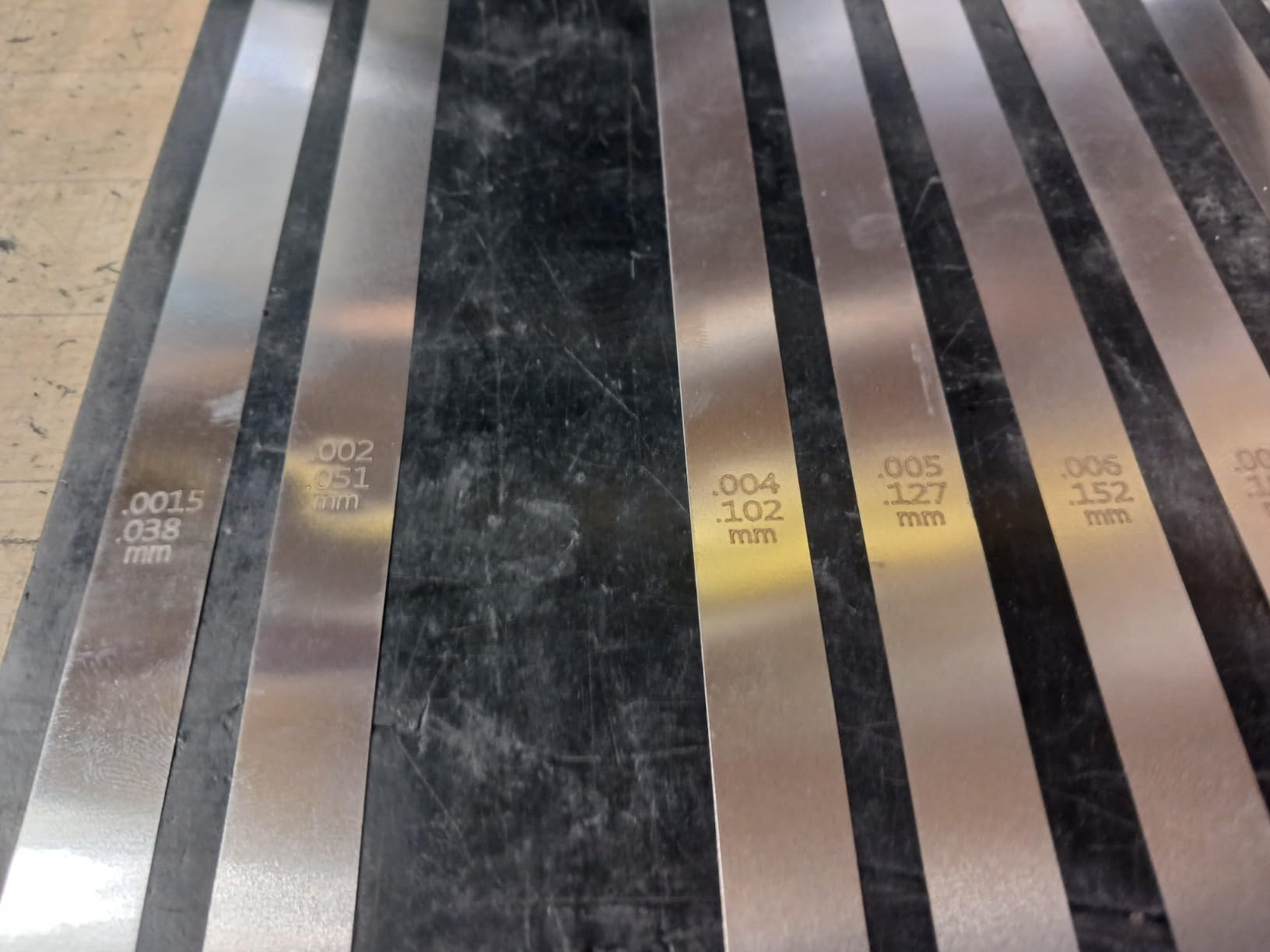
Accuracy is acceptable for the tier rather than exceptional. Users report some measured thicknesses varying slightly from the printed values within the stated tolerance, which is a fair trade when reach is what you are short of. The oil coating does its job on storage, but it does need wiping off before you slide a blade into a fine clearance.
Build quality is basic compared with name-brand professional gauges. The fold is functional rather than crisp, and at 11.68 ounces the set has some heft in the case, which is not a complaint when you are trying to control a long blade.
What it is good for
Deep-access engines and forced induction setups where a short blade cannot physically get to the gap. Many builders keep one as a second gauge purely for reach, and some use the loose blades as spare shim material when a 0.05mm or 0.10mm blade is close to what the lifter needs.
It also covers spark plug and ignition point work with no separate tool in the drawer.
Where it falls short
Twenty-five blades means fewer stack combinations than a 32-blade set, and slight thickness variation means you should verify any blade that matters with a micrometer before trusting a reading on a tight spec. Straight blades only, so tight offset geometry remains a separate purchase.
8. Stanley Proto J000AA 25-Blade Master Set – The Pro Shop Standard
Stanley Proto J000AA 25 Blade Master Feeler ga Set
25 blades
0.0015-0.040 inch
Stainless steel blades
Made in USA
Stated accuracy plus or minus 0.0001 inch
Pros
- Made in the USA with stainless steel blades
- Stated accuracy of plus or minus 0.0001 inches
- Useful for lifter
- plug
- point and ring gap work
- Blades flex enough for hard-to-access places
- Knurled holder releases a single blade quickly
Cons
- 3 inch blades are short for some engine bays
- Laser markings vary and the thinnest blade is hard to read
- No 0.019 inch blade in the sequence
- Sits at the pro end of this group
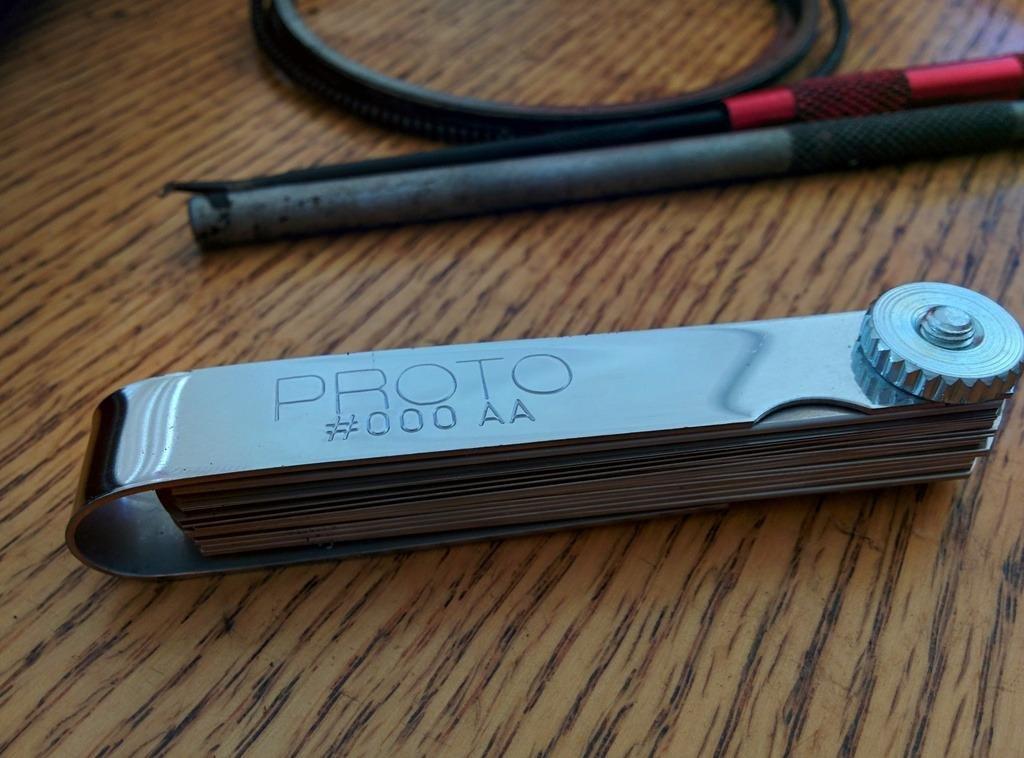
Proto is the name that comes up most often when professional builders discuss feeler gauges, and the J000AA 25-blade master set is the reason. Twenty-five stainless steel blades sit in a steel holder at half an inch by 3 inch, covering 0.0015 through 0.040 inch with a stated accuracy of plus or minus 0.0001 inches, which is the tightest tolerance figure any set in this group publishes.
Stainless steel again, so the rust problem that quietly ruins carbon steel sets after a few wet seasons simply does not apply. Reviewers put USA manufacture, rust resistance and versatility at the same level, using the same set for lifter gaps, plug gaps, point gaps and ring end gap. The knurled holder lets you pull a single blade without disturbing the rest.
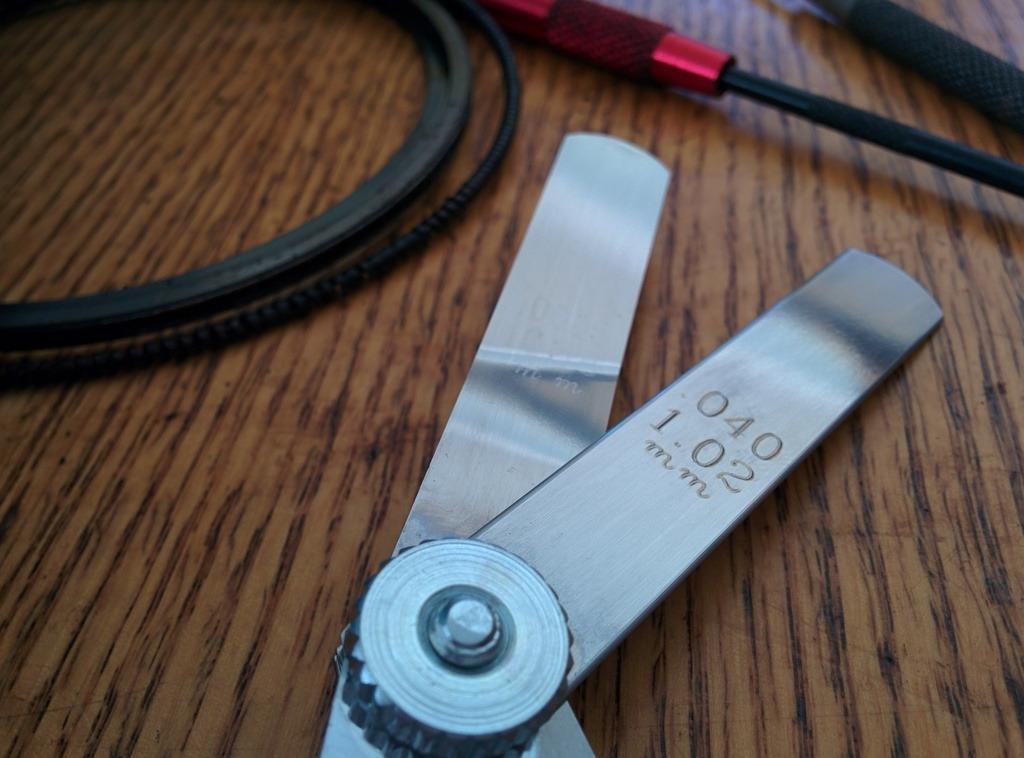
Where it frustrates people is short blades and thin markings. At 3 inches, reach into a deep head is limited. And the laser marking strength varies, with the thinnest blade the hardest to read under a work light, which is not ideal when you are trying to identify a 0.0015 inch blade by sight.
Be aware of two specifics. There is no 0.019 inch blade in the sequence, so that combination has to come from somewhere else. And this set commands more per unit than most in the group, which is exactly the point for a shop that measures with it every day and cannot afford a wrong reading.
What it is good for
Professional engine builders and repair shops doing repeated valve, lifter and ignition measurement, where a documented tolerance and a known brand are worth paying for. The 0.0015 to 0.040 inch span covers essentially all conventional valve lash work on American engines.
It is the set we would pick if the tool has to be shared between several techs and cannot be second-guessed.
Where it falls short
Short blades, uneven laser markings and the missing 0.019 inch size. It also contains no offset blades, so a rocker-arm engine with a hard-to-reach gap still needs a dedicated angled set alongside it. For a one-off owner doing a single adjustment, the extra precision is more than the job requires.
9. A308 Offset Valve Tappet Gauge Set – Built Only for Setting Lash
yourour A308 Offset Valve Tappet Gauge Set 11-Blades with Two Handles
11 offset blades
0.004-0.014 inch (0.102-0.356mm)
Alloy steel
Two handles
1-year warranty
Pros
- Purpose-built offset design for tappet and lash adjustment
- Two handles simplify intake and exhaust work
- Rubber grips reduce hand fatigue
- 0.004-0.014 inch covers the common lash range
Cons
- Only 11 blades
- much narrower than a master set
- Stops at 0.014 inch
- Not useful for plug gaps or fine clearances
Everything else in this list is a general gap gauge with offset capability as an afterthought. This one is the opposite: eleven offset alloy steel blades from 0.004 to 0.014 inch, or 0.102 to 0.356mm, in a two-handle configuration purpose-built for adjusting valve tappets and lash.
The two-handle layout is the ergonomic win. One handle per side keeps intake and exhaust blades separate and within reach as you rotate the engine by hand and move from valve to valve, instead of sorting a fan of loose blades between every adjustment. Steel and rubber grip handles cut hand fatigue across a full set of sixteen adjustments.
The 0.004 to 0.014 inch span covers the lash figures most overhead-cam and rocker-arm engines are built to, and every blade carries dual metric and imperial engraving with size numbers. A one-year warranty and a 30-day money-back guarantee back it.
What it is good for
Dedicated valve lash setting on engines where the gap is measured at an angle, particularly 45-degree offset rocker geometry. It is the only set here where offset geometry is the design intent for the whole set rather than one half of a pair, and the handles make a long adjustment session far less fiddly.
Pair it with a general 32-blade master and you cover both the geometry problem and the measurement range in one drawer.
Where it falls short
Eleven blades is a narrow fan, so you cannot build the stack combinations a general job needs, and the 0.014 inch ceiling rules out anything thicker. It is not a spark plug gap gauge and it will not resolve fine clearances below 0.004 inch, so it never replaces a master set.
10. Runningfish 13-Leaf Brass Gauge Set – Non-Magnetic and Rust-Proof
Runningfish Brass feeler, plug gauge, high-precision clearance gauge, thickness gauge, non-magnetic copper feeler, single piece set, 0.03-1.0mm(100 * 13)
13 brass leaves
0.05-1.0mm metric and SAE
100mm by 13mm blades
Iron storage box
Pros
- Non-magnetic brass is safe around electronic ignition and EFI
- Will not rust in a humid shop or long storage
- 100mm blades suit many engine applications
- Compact 13-leaf set covers 0.05-1.0mm
Cons
- Lowest rated set in the group at 4.4
- Brass is softer and can crease under force
- Only 13 leaves limits stack combinations
- No increments below 0.05mm
Brass changes two things at once. It is non-magnetic, so it is safe around electronic ignition, EFI sensors and magnetic pickups, and it does not corrode, so the set can live in a damp garage or a storage unit for years without drifting. Thirteen leaves cover 0.05 to 1.0mm in metric and SAE standard sizes, with 100mm by 13mm blades.
That 0.05mm floor is the deciding detail. If your engine needs a reading finer than that, this set is the wrong tool outright, and that covers a lot of modern engine work. The blades are also softer than steel, so brass creases if you force a blade into a tight spot rather than flexing and springing back.
This is the widest rating spread in the group at 4.4 across 116 reviews, with 70% five-star. The non-magnetic, rust-proof property is the consistent reason buyers choose it, while the small leaf count and softer metal account for most of the criticism.
What it is good for
Work around modern electronic ignition where steel blades are unwelcome, and humid or marine environments where corrosion would destroy a carbon steel set. Reviewers also use it for piston ring grooves, cylinder gaps, rocker arm and valve top clearances where a thicker reading is enough.
It is a specialist second gauge, not a first purchase.
Where it falls short
The 0.05mm minimum, the 13-leaf count and the softness of brass together mean this set will not cover fine valve lash or let you build complex stacks. The rating spread suggests build consistency varies more than it does in the steel sets. If you need sub 0.05mm resolution, this is not the answer.
How to Choose a Feeler Gauge Set for Engine Work
Start with the spec, not the brand. Find the valve clearance figure in your service manual, then pick a set whose thinnest and thickest blades bracket it with room to stack. A set whose range stops below your spec is a paperweight, and one that starts above it cannot measure a worn engine that has already loosened up.
Match the blade range to your clearance spec
Most American engine lash sits between 0.010 and 0.020 inch, so a set spanning 0.0015 to 0.040 inch covers the job with margin. Hydraulic lifter shim work and piston ring end gap push toward the thick end, which is why the 0.025 inch ceiling on some sets is a genuine limit rather than a detail.
Fine metric work goes the other way. Vintage Japanese motorcycle engines are often specified in steps like 0.03mm to 0.08mm, and off-the-shelf dual-marked sets invite arithmetic errors exactly when you are tired and holding a head in your lap. A dedicated metric set with 0.01mm increments removes that step entirely, and it is the single most common gap we found in otherwise good sets.
Straight, tapered, offset or go/no-go blade geometry
Straight blades are square-ended and reach anywhere there is a straight path to the gap. Tapered blades narrow toward a point, which lets them slip into a tight clearance between a bucket and a cam where a square end bottoms out. Offset blades are bent or stepped at roughly 45 degrees, so the handle and your hand stay clear of a gap that sits down beside the cam or behind a casting rib.
In practice, offset blades are the most used type in engine work, and most budget 32-blade sets ship straight blades only. That is why the Mutt Tools straight-plus-angled set earns its place and why the A308 handled offset kit exists. A go/no-go set is a different idea: rather than reading a value, you confirm a limit by checking that one blade slides freely and the next will not enter.
Watch blade reach as well. Blades run from about 3 inches on most compact sets to roughly 12 inches on long-blade designs, and on a supercharger or a deep intake port the short ones may not reach the gap at all.
Metric versus SAE and dual-marked blades
Dual marking is genuinely useful and genuinely dangerous. A blade showing 0.010 inch and 0.25mm side by side removes conversion, but some sets bolt on loose metric conversions of a small number of inch sizes rather than a true metric fan, and that is where mistakes start.
For an American engine, dual marking is a convenience. For a metric motorcycle or a European diesel, a dedicated metric set is not a luxury. Judge a set by whether its sizes actually cover the increments your engine is built in, not by the number of units printed on the blade.
Material, rust and long-term accuracy
Carbon steel feeler gauges rust, and a pitted blade no longer measures what it is stamped as. Cheap sets are the usual offenders, and the failure is quiet: nothing breaks, the reading is simply wrong. Three stainless options here avoid it entirely, and a fourth ships with a generous oil coating that works if you maintain it.
For non-stainless sets, wipe the blades after use, lay them flat rather than folded shut, and give them a light film of oil periodically. Verify any blade that matters with a micrometer, and replace a set when blades flex permanently or the etching has worn past reading.
Brand tiers and shop handling
Professional-tier names in this category include Proto, Starrett, Mitutoyo, Blue-Point, Williams, Lang and Snap-on. They earn their place through documented tolerance, stainless blades and consistency across a set, not because the steel is some secret material. Value-tier sets from GearWrench, OEMTOOLS, Spurtar, TUSK and Hotop are frequently indistinguishable in accuracy for general valve work.
Forum consensus is consistent on this point: experienced builders argue the blades are cut from uniform stock, so brand matters less than blade range and geometry. Where brand does matter is holding a documented tolerance, having offset blades available, and getting a straight answer when a set is out of spec. Handled single-blade sets from brands like Lang and Blue-Point are repeatedly recommended in professional circles for exactly that reason.
If a set is the only feeler gauge in the shop, buy two: one wide 32-blade master for range, and one offset or angled set for the geometry you cannot otherwise reach. That pairing solves more real problems than spending the same effort on a single premium fan.
How to Measure and Set Valve Lash With a Feeler Gauge
Getting a correct reading takes less time than most people allow for it. Forum technique consensus is that a single blade slid in until it stops is a starting point, not an answer.
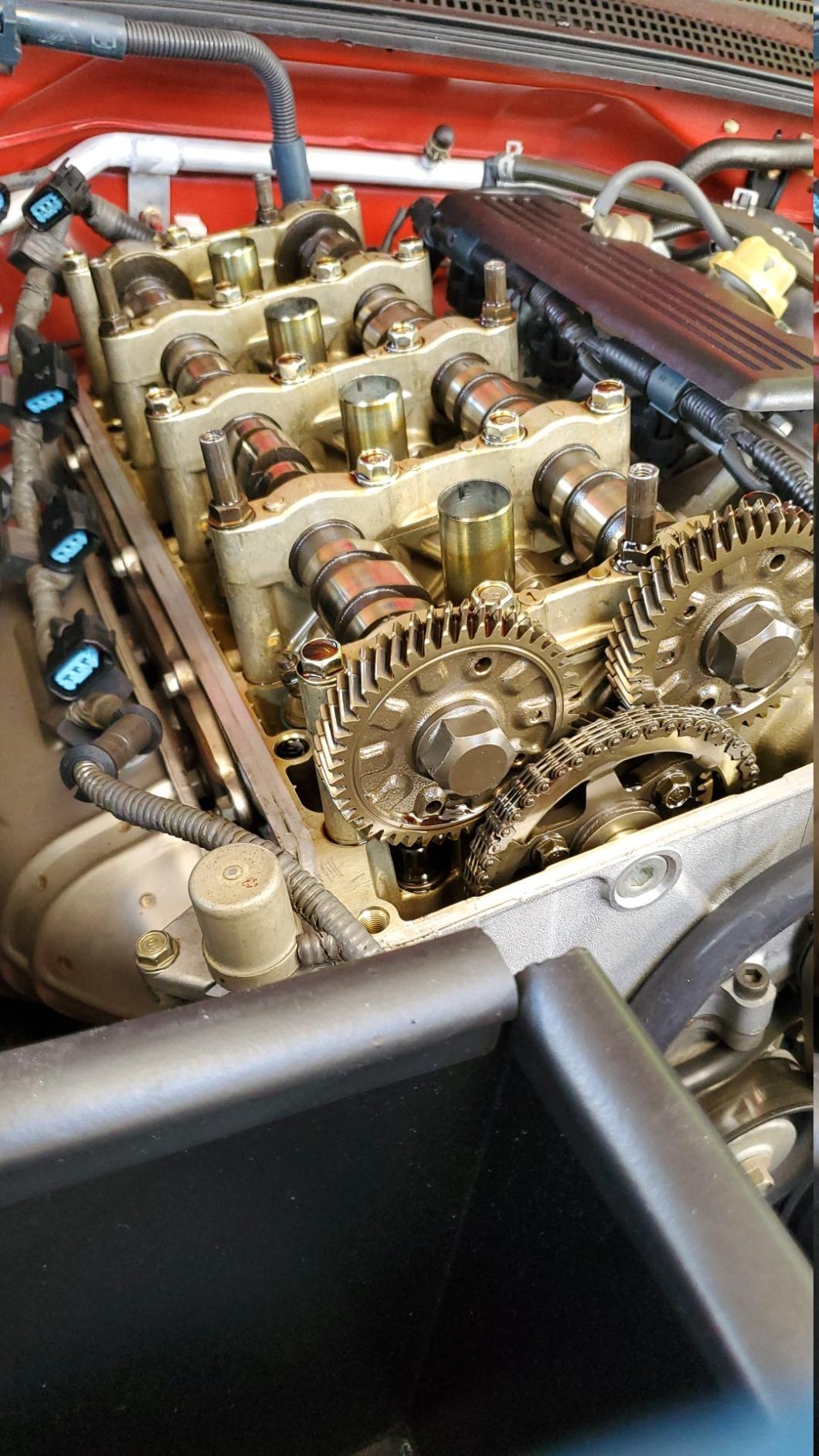
First, get the engine to a known position. Rotate the engine by hand until the lobe for the valve you are measuring is at its highest point, with the follower fully unloaded. On an overhead-cam engine this means the bucket is fully depressed, not resting mid-stroke.
Second, use a go/no-go pair rather than a single blade. Slide in the blade one increment under your target clearance. It should move freely with no resistance. Then try the blade one increment over. That one should not enter. If both fit, or neither fits, move again. Your clearance sits between those two blades, and you have confirmed it with two readings instead of guessing with one.
Third, judge the fit by drag, not by force. The blade should slide with a light, even drag. If you are bending the blade to make it go, the gap is wider than you think. On a hydraulic lifter, measure under the cam lobe with the engine cold, and remember that the reading will change once the engine warms up.
Fourth, re-check after you lock the adjuster. This is the step most often skipped. Turning the locking nut down can change the reading, because the adjuster body twists and the bucket moves. Loosen, re-measure, adjust, and confirm the under blade still slides freely and the over blade still will not enter.
Fifth, measure every valve rather than sampling. Intake and exhaust lash differ on most engines, and they drift at different rates. Where a set is available, the A308 offset tappet gauge with two handles is a good way to keep intake and exhaust blades separate as you work through the sequence.
Frequently Asked Questions
What is the best brand of feeler gauge for professionals?
Professional builders most often name Proto, Starrett, Mitutoyo, Blue-Point, Williams, Lang and Snap-on. What separates them is not a secret steel blend but documented accuracy tolerance, stainless blades that resist rust, and consistent sizing across the whole set. For general valve work a value-tier set performs almost identically, so brand matters most when you need offset geometry, a stated tolerance or a warranty behind the tool.
How do I choose the right feeler gauge set?
Match the blade range to the clearance figure in your service manual first, then pick geometry you can physically use. Straight blades reach a straight path, tapered tips fit tight bucket clearances, and 45-degree offset blades let you reach a gap beside the cam or behind a casting rib. Add blade reach for deep engine bays and stainless construction if the set will live in a damp shop.
How tight should a feeler gauge be when checking a valve?
The blade should slide with a light, even drag, not forced. If you have to bend the blade to make it enter, the gap is wider than that blade. The reliable method is a go/no-go pair: one blade under your target clearance should move freely, and the next blade up should not enter at all. Re-check after locking the adjuster nut, because tightening it can shift the reading.
What to use instead of a feeler gauge?
On engines with solid or hydraulic lifters and integrated bucket tappets, valve lash is usually not adjustable with a feeler gauge at all. You still need one to select a shim under the lifter, but a dial indicator and cam lobe measurement is the right method for hydraulic lash. For spark plug gaps a dedicated wire or disc gap gauge is quicker, and a micrometer is the tool for ring end gap on a new piston.
How do I know if my feeler gauges are still accurate?
Check for permanent bend, pitting and worn markings first. Rust is the common culprit on carbon steel sets, and a pitted blade measures differently from what is stamped on it. Confirm any blade that matters with a micrometer, and if a set has no stated tolerance, compare several blades against a known good set. Wipe and lightly oil non-stainless blades after use, and store them flat rather than folded shut.
Our Final Verdict for 2026
The Spurtar 32-blade tapered set is our pick for the best feeler gauges for engine work, on the strength of the largest verified review base in the group and a dual-marked 0.03mm to 1.00mm range that covers conventional valve lash cleanly. If your engine hides the gap, add the Mutt Tools straight and angled set for offset reach, and keep the A308 handled offset kit beside it for dedicated lash work.
Whatever you choose, verify a blade with a micrometer before you trust a reading, keep non-stainless sets lightly oiled, and confirm every valve with an under and over blade. That habit matters more than any brand on the case.