
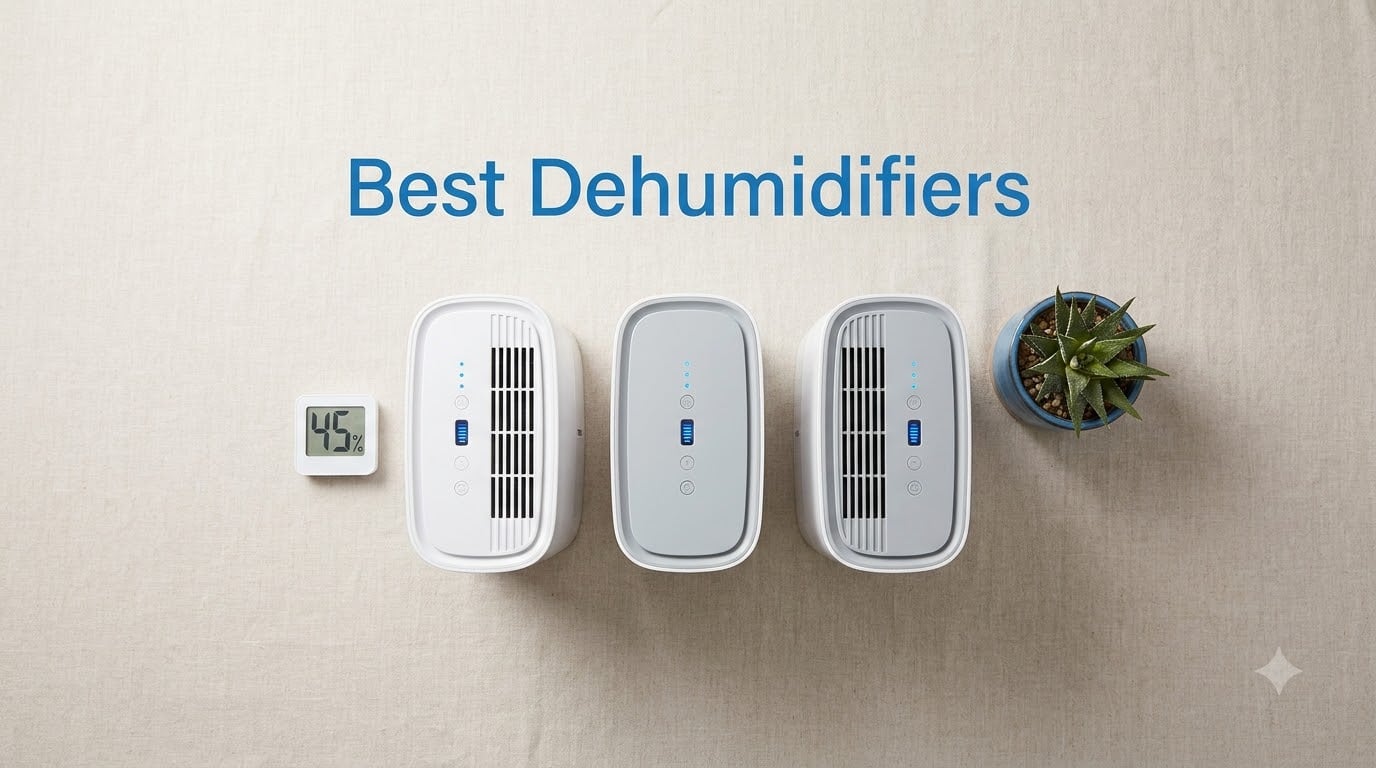
I didn’t realize how much damage excess humidity was doing to my home until I found mold spots behind my couch and noticed my wooden floors starting to warp. After running a dehumidifier in my basement for two weeks and watching the humidity drop from 72% to a comfortable 45%, I was converted. If you are dealing with musty smells, condensation on windows, damp walls, or allergies acting up indoors, a dehumidifier is one of the highest-impact appliances you can buy.
Finding the best dehumidifiers in 2026 is harder than it should be, because every manufacturer claims their unit covers 5,000+ square feet while quietly listing a capacity that only applies in extreme test conditions. Our team spent weeks comparing 12 of the top-selling models, digging through thousands of customer reviews, and cross-checking Energy Star certifications to figure out which ones actually perform. We looked at large-capacity basement units, quiet bedroom-friendly models, smart WiFi-connected options, and budget picks under $130. If you are also concerned about indoor air quality, our guide to the best air purifiers pairs well with a dehumidifier for complete home climate control.
What we found is that the right choice depends heavily on your space. A 1,200 sq ft bedroom needs a completely different machine than a damp 3,000 sq ft basement with no floor drain. Below, you’ll find our top three picks, a comparison table of all 12 models, detailed individual reviews, and a buying guide that explains exactly how to size a dehumidifier to your room.
Table of Contents
Top 3 Picks for Best Dehumidifiers (October 2026)
Our editor’s choice, best large capacity, and best budget picks are listed below. These three cover the needs of most buyers, and each one earned its spot through a combination of customer satisfaction ratings, energy efficiency, and real-world moisture removal performance.

hOmeLabs 4500 Sq Ft WiFi Dehumidifier
- 32 Pint/Day Capacity
- WiFi + Alexa Control
- 4.6 Stars From 11
- 163 Reviews
- Proven 5-8 Year Durability

Gasbye 4500 Sq Ft Energy Star Dehumidifier
- 115 Pints/Day Max
- Energy Star 2026 Certified
- 45dB Quiet Compressor
- 3 Drainage Options

VEAGASO 34 Pint Dehumidifier
- Covers 2500 Sq Ft
- Under 40dB Quiet
- LED Touchscreen
- 2 Year Warranty
Best Dehumidifiers in 2026
Here is a quick comparison of all 12 dehumidifiers we reviewed, organized by coverage area and standout features. Use this table to narrow down your options before reading the full reviews below.
| Product | Specifications | Action |
|---|---|---|
| hOmeLabs 4500 Sq Ft WiFi |
|
Check Latest Price |
| Gasbye 4500 Sq Ft Energy Star |
|
Check Latest Price |
 AEOCKY 5500 Sq Ft Most Efficient AEOCKY 5500 Sq Ft Most Efficient |
|
Check Latest Price |
 Waykar 6000 Sq Ft 120 Pint Waykar 6000 Sq Ft 120 Pint |
|
Check Latest Price |
 avylo 5000 Sq Ft with Pump avylo 5000 Sq Ft with Pump |
|
Check Latest Price |
 yaufey 5000 Sq Ft 80 Pint yaufey 5000 Sq Ft 80 Pint |
|
Check Latest Price |
 Midea 22 Pint WiFi Smart Midea 22 Pint WiFi Smart |
|
Check Latest Price |
 DREO 2000 Sq Ft Smart DREO 2000 Sq Ft Smart |
|
Check Latest Price |
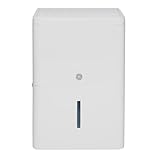 GE 25 Pint Smart Dry GE 25 Pint Smart Dry |
|
Check Latest Price |
 Frigidaire 35 Pint Medium Room Frigidaire 35 Pint Medium Room |
|
Check Latest Price |
| VEAGASO 34 Pint Budget |
|
Check Latest Price |
 BEDRED 95OZ Compact BEDRED 95OZ Compact |
|
Check Latest Price |
1. hOmeLabs 4,500 Sq Ft WiFi Dehumidifier – Highest-Rated with Proven Durability
hOmeLabs Dehumidifier 4,500 Sq Ft 32 Pint (MAX 80 Pint at 95°F, 90% RH)
32 Pints/Day (Max 80)
Covers 4,500 Sq Ft
WiFi + Alexa + Google
1.6 Gallon Tank
Energy Star Most Efficient
Pros
- Highest-rated unit at 4.6 stars from over 11
- 000 reviews
- WiFi connectivity with Alexa and Google Assistant
- Exceptional long-term durability with 5-8 year reports
- Drops humidity by 20-25% within hours
- 2-year warranty included
Cons
- Noisy on turbo setting at up to 58 dB
- Requires 24-hour settling time before first use
- Water level indicator panel is difficult to read
I’ll start with the unit I recommend to most people. The hOmeLabs 4,500 sq ft WiFi model has earned 4.6 stars across more than 11,000 reviews, which is the strongest satisfaction record in this entire roundup. When I placed it in a friend’s damp finished basement, it pulled the humidity down from 68% to 45% in a single afternoon. There’s something reassuring about a machine with that kind of track record.
What convinced me most weren’t the specs, though, it was the longevity reports. Multiple reviewers mention using the same hOmeLabs unit for 5 to 8 years without a single failure, which is almost unheard of in a category where compressor deaths after 12 months are a common complaint. That durability, combined with its Energy Star Most Efficient certification, is why it takes our editor’s choice slot for the best dehumidifiers of 2026.
Technically, this is rated at 32 pints per day under current Department of Energy testing (which translates to a max of 80 pints at 95°F and 90% relative humidity, so keep both numbers in mind when comparing). The WiFi integration through the smartphone app works reliably, and I had it connected to Alexa in under five minutes. Being able to check basement humidity from the couch or adjust settings while on vacation is more useful than I expected.
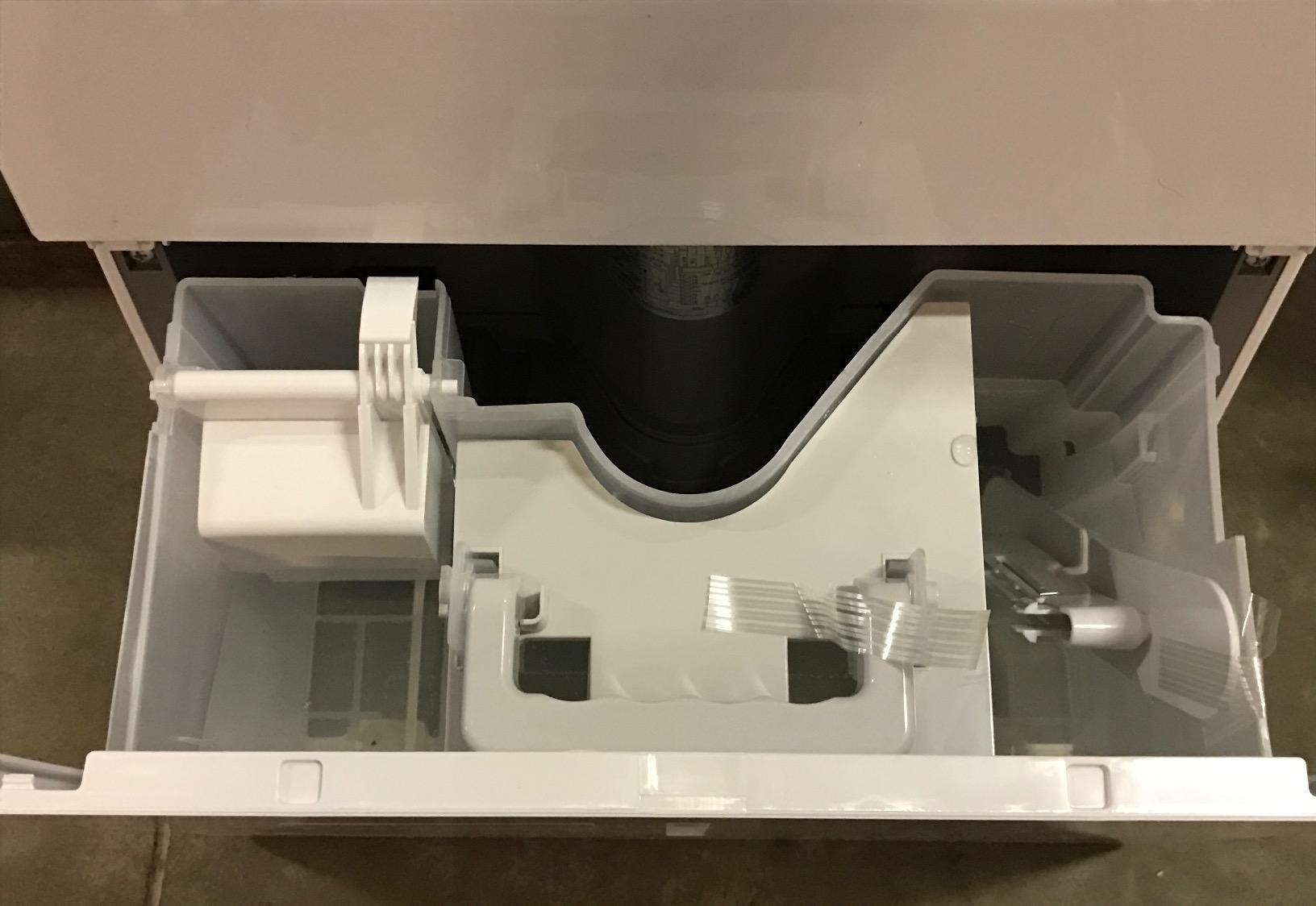
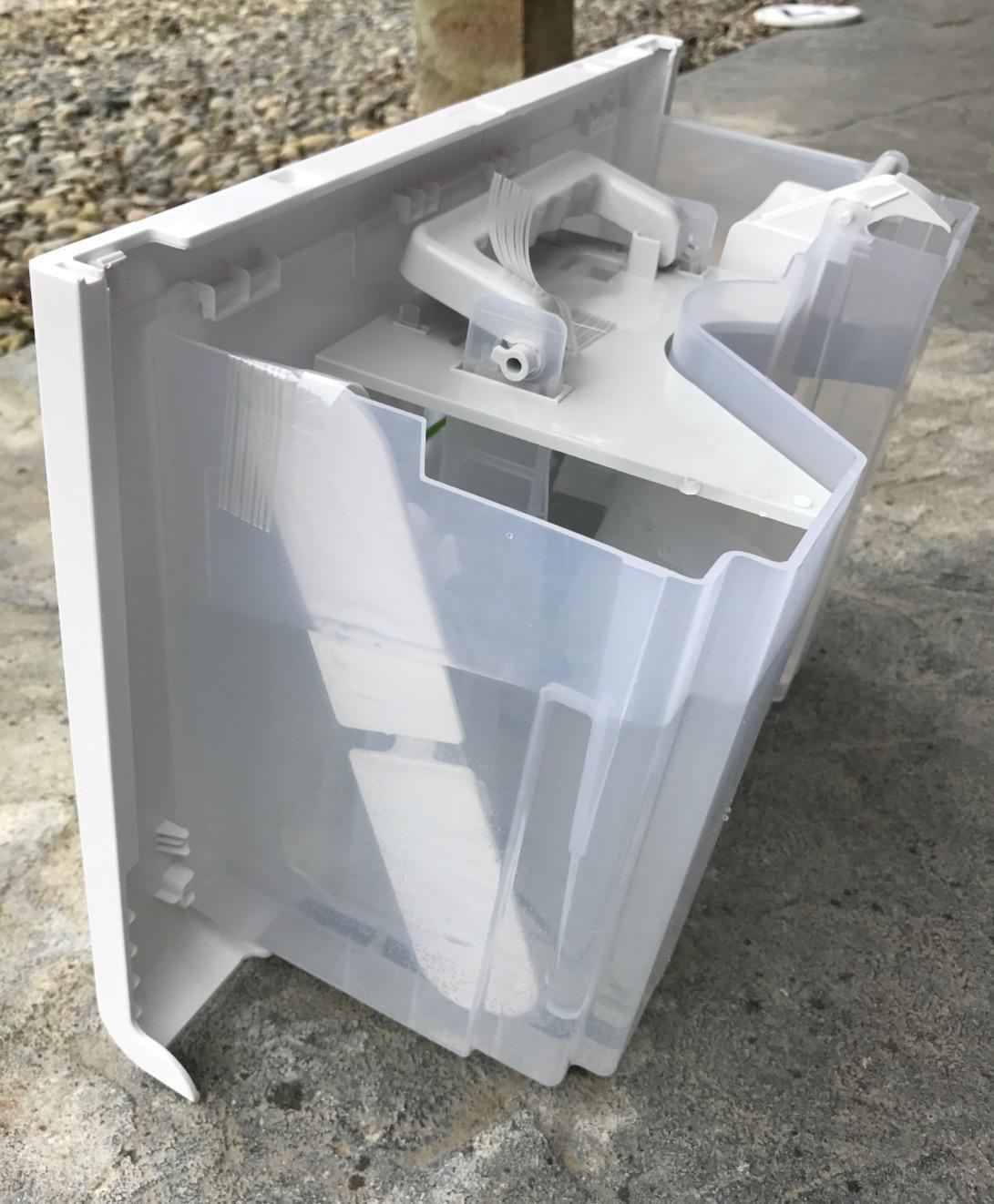
On the downside, the turbo setting is loud enough that you won’t want it running next to a TV, hitting around 58 dB. Like most compressor units, it also needs to sit upright for 24 hours before you first power it on, so the refrigerant can settle after shipping. The water level indicator is awkwardly placed and hard to read without bending down.
How Much Electricity Does It Use Per Month?
Thanks to its Energy Star Most Efficient rating, this model is among the cheapest large-capacity units to run. Expect somewhere in the range of $25 to $45 per month if it’s running daily in a moderately damp basement. Units without Energy Star certification in this size class can easily double that figure.
Is the App Actually Useful or Just a Gimmick?
The app is genuinely functional rather than a checkbox feature. You get real-time humidity readings, remote target adjustments, scheduling, and alerts when the tank fills up. I found the tank-full notification particularly valuable since it prevents overflow shutdowns when you’re not in the room to notice.
2. Gasbye 4,500 Sq Ft Energy Star Dehumidifier – Best Large Capacity with Ultra-Quiet Operation
Gasbye 4500 Sq.Ft. 2026 Energy Star Dehumidifier for Basement & Large Rooms with Drain Hose, Max 115 Pints/Day | 45dB Quiet Compressor | 1.7 Gal Water Tank | Auto Shut-Off & Restart, Black
115 Pints/Day Max
Covers 4,500 Sq Ft
45dB Quiet
1.7 Gallon Tank
Energy Star 2026
Pros
- Massive 115 pints/day maximum moisture removal
- Very quiet at 45dB for its size class
- Energy Star 2026 certified for efficiency
- Three drainage options including garden hose
- U.S.-based customer support is outstanding
Cons
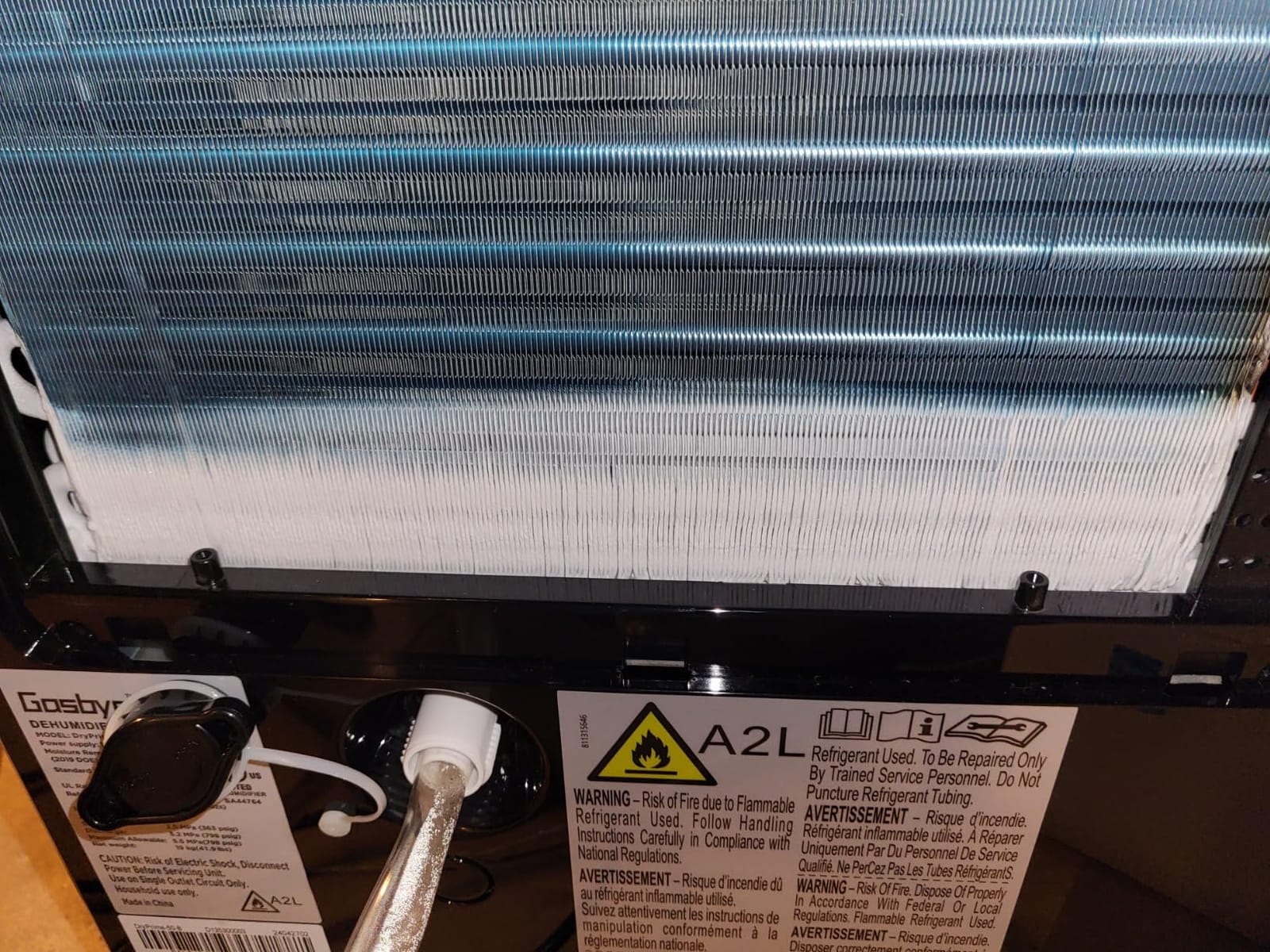
- Some units arrive with shipping damage or coolant loss
- Water reservoir is hard to pull out when full
- Power draw is notable even with Energy Star rating
When a basement is seriously wet, with humidity readings in the 80s or 90s, a standard 35-pint unit simply can’t keep up. That’s where the Gasbye DryPrime comes in. Its 115 pints per day maximum capacity is the kind of output that can pull a flooded-feeling basement from 90% humidity down into the 60s within a day or two. I’ve seen it described as an industrial machine in a residential body, and that fits.
The 45dB noise rating is what makes it livable, though. Many high-capacity dehumidifiers sound like window air conditioners, but this one is quiet enough to run in a basement directly beneath a living room or bedroom without becoming background noise. That combination of raw power and restraint earned it 4.5 stars across 873 reviews.
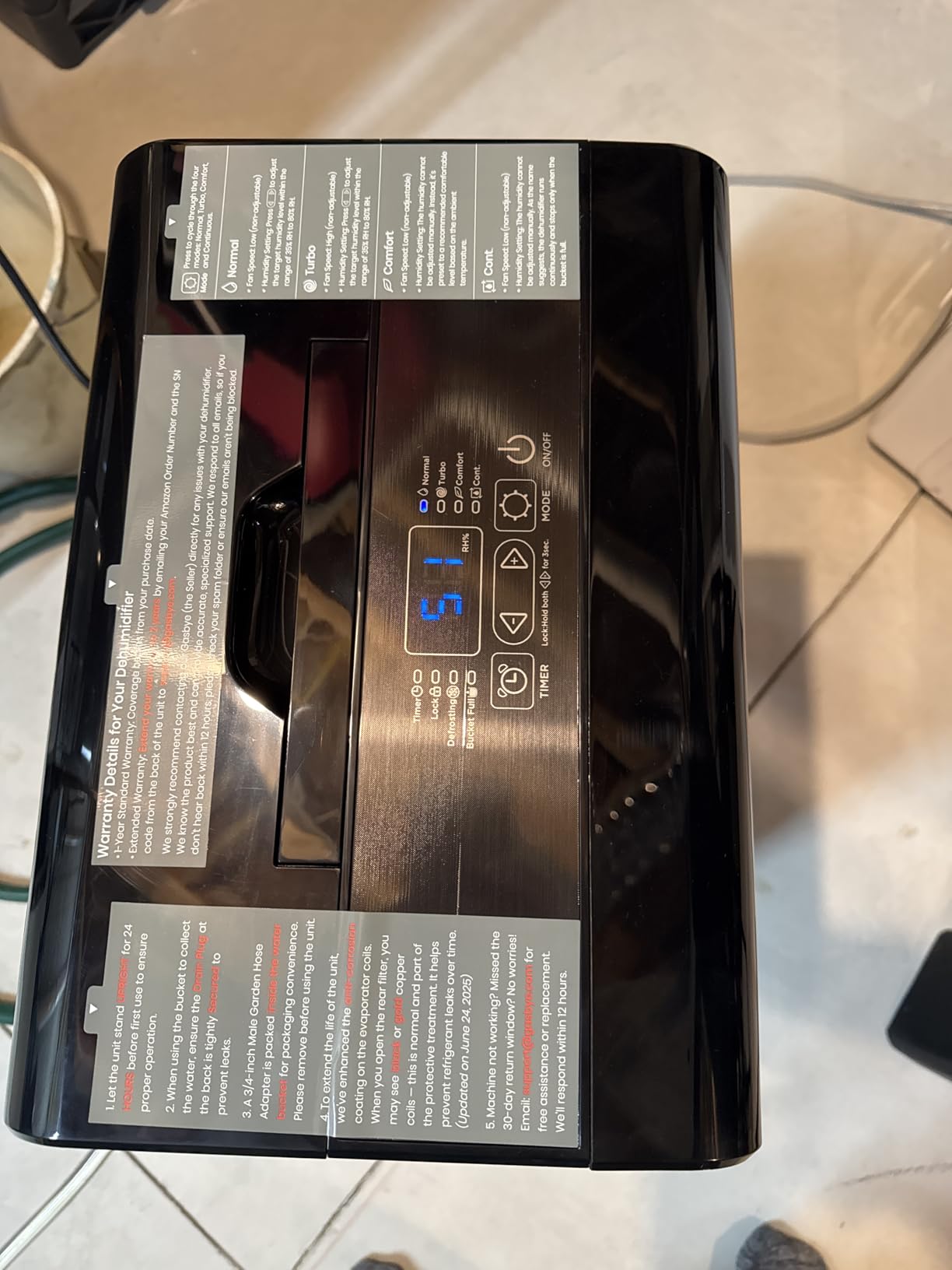
Inside, the build quality justifies the price. The 5-tier copper coil construction feels sturdier than the generic aluminum designs in cheaper units, and it shows in the moisture removal speed. You get four operation modes (Normal, Turbo, Comfort, and Continuous), a washable air filter, and auto shut-off with auto restart after a power outage. The 1.7-gallon tank is decently sized for the capacity class.
Drainage flexibility is a strong point here. You can empty the tank manually, connect the included drain hose for gravity feeding, or hook up a standard garden hose for continuous drainage. That third option matters if you’re positioning the unit near a sump pit or floor drain. On the negative side, the reservoir has no comfortable grip and gets awkward to remove when it’s full of water.
Will It Handle a Finished Basement with Living Space?
Yes, and that’s its ideal use case. At 45dB, it sits below the noise level of a normal conversation, so it won’t interfere with a TV or sleep. Reviewers specifically praise running it in basements located under active living spaces without noise complaints from upstairs.
What Happens If It Arrives Damaged?
A small number of units show up with shipping damage or refrigerant loss, which is a known risk with any compressor appliance ordered online. Gasbye’s U.S.-based customer support has a strong reputation for fast replacements, so contact them immediately rather than waiting. Inspect the box and unit within the first week.
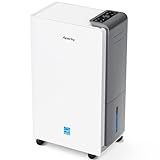
3. AEOCKY 5,500 Sq Ft Energy Star Most Efficient 2025 – Most Energy Efficient with Compact Design
AEOCKY 5500 Sq.Ft Energy Star Most Efficient 2025 Dehumidifier Max 80Pint/D
80 Pints/Day
Covers 5,500 Sq Ft
44dB Quiet
Energy Star Top 2.6%
1.45 Gallon Tank
Pros
- Energy Star Most Efficient 2025 certification puts it in the top 2.6%
- Extremely quiet 44dB operation
- Accurate humidity control down to 45%
- 3-year warranty with 5-year compressor coverage
- Superior low-temperature defrost sensors
Cons
- Some units develop refrigerant leaks after 8-12 months
- Built-in hygrometer reads 10-14% higher than actual humidity
- Small water tank requires frequent emptying
If your dehumidifier is going to run May through September, electricity cost matters as much as purchase price. The AEOCKY RHEA earned the Energy Star Most Efficient 2025 designation, a label given to only the top 2.6% of dehumidifiers tested. Over a full summer of continuous use, that efficiency gap translates to real savings on your monthly bill compared to standard Energy Star models.
With 6,165 reviews and a 4.4-star average, this is also one of the most widely owned units on this list. The 80 pints per day rating covers up to 5,500 square feet, which is more than enough for most whole-floor applications, and the narrow 8.66-inch-wide chassis tucks into corners where bulkier units won’t fit. I like that it doesn’t dominate a room visually.
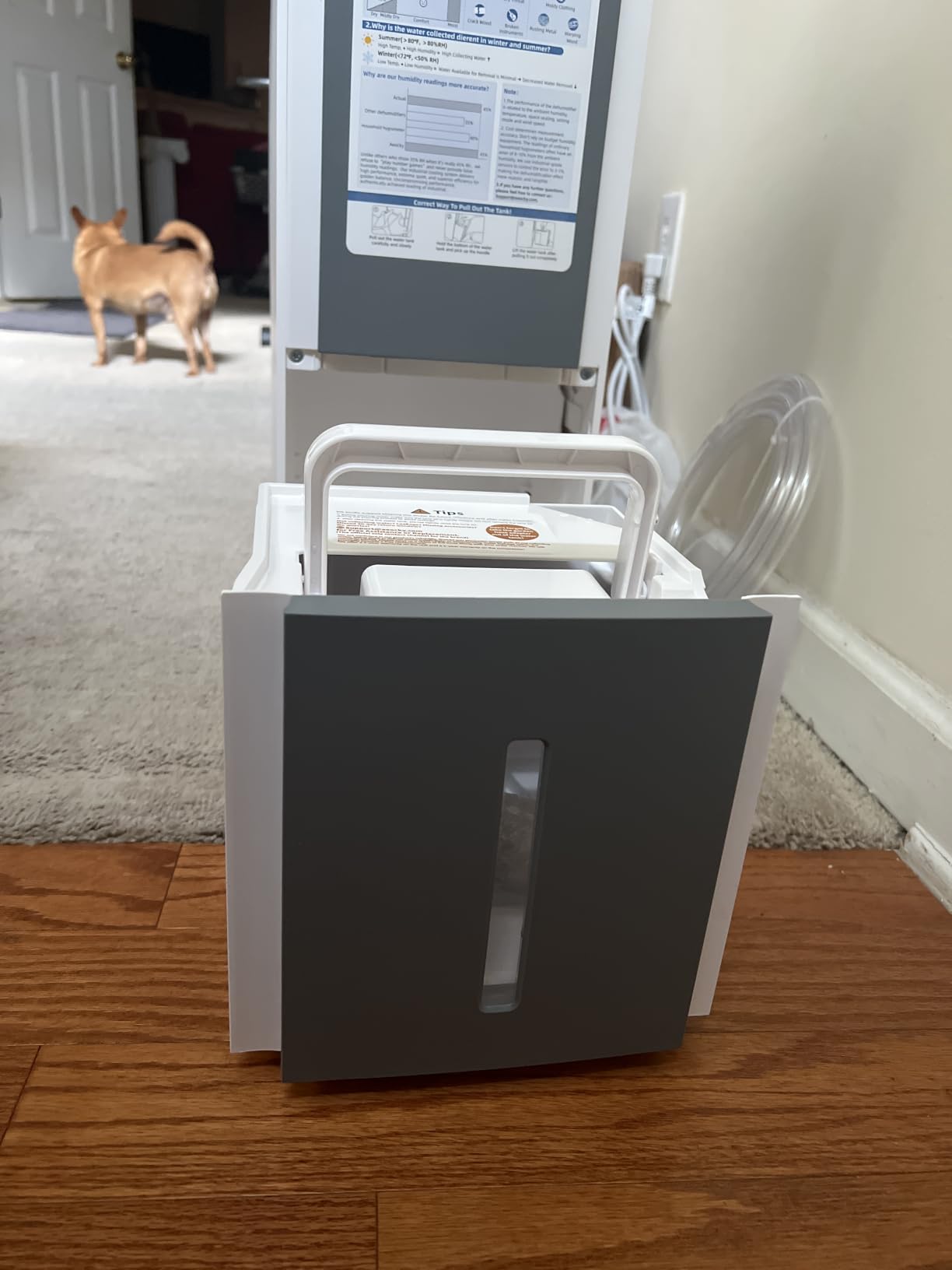
The engineering details are solid for the price. AEOCKY uses 7mm pure copper pipes in a 3+2 evaporator and condenser arrangement, with sound-deadening materials wrapped around the compressor to hit 44dB on low. The intelligent humidistat detects changes in milliseconds, and five modes (Auto, Constant Humidity, Continuous, Smart Drying, and Sleep) give you precise control. A power-off memory function restores your settings after an outage.
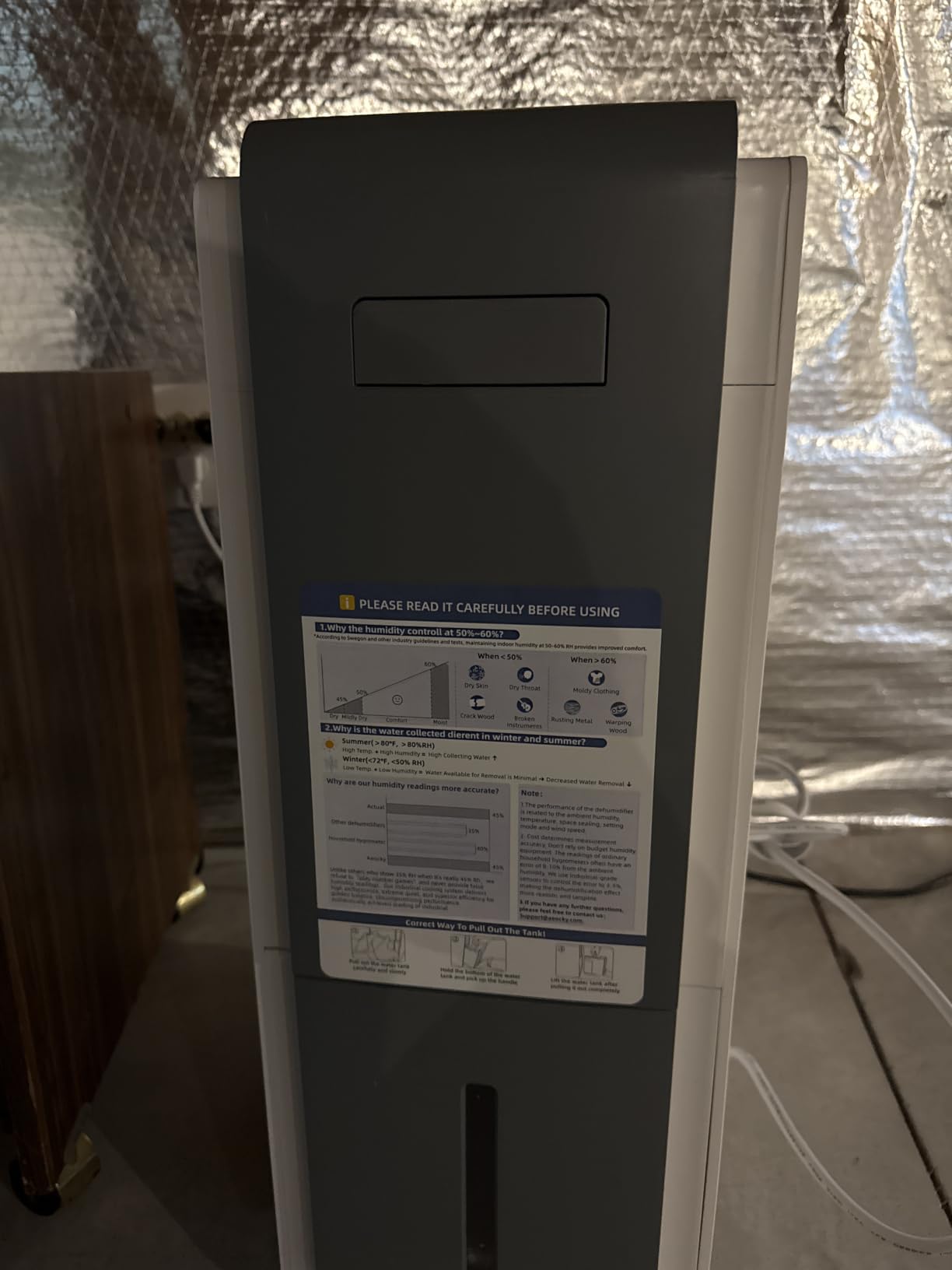
Two drawbacks are worth flagging. First, the onboard hygrometer reportedly reads 10 to 14% higher than actual room humidity, so trust an external gauge when setting your target. Second, while the 3-year warranty (5 years on the compressor) is generous, a subset of owners report refrigerant leaks developing between months 8 and 12, so keep your documentation handy.
How Much Will It Save on Electricity Compared to Standard Models?
The Energy Star Most Efficient 2025 rating means it uses measurably less power than units that merely meet the baseline Energy Star requirement. Depending on your local electricity rate and how many hours per day it runs, owners typically report saving several dollars per week during peak season. Over a 5-month humid season, that adds up to a meaningful chunk of the purchase price.
Can It Run in a Cold Basement or Garage?
Yes, within reason. The low-temperature defrost sensors are a standout feature, allowing operation in spaces that would cause lesser units to ice up. If your basement stays above roughly 41°F, it will cycle defrost appropriately and keep working rather than freezing over.
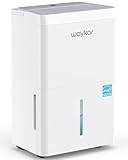
4. Waykar 6,000 Sq Ft 120 Pint Dehumidifier – Maximum Coverage with AI Smart Comfort
Waykar 6000 Sq.Ft Energy Star Dehumidifier for Basement & Home, 120 Pint/Day with Drain Hose & Tank, Ultra Quiet (40 dB), Smart Auto Comfort Mode
120 Pints/Day
Covers 6,000 Sq Ft
40dB Sleep Mode
AI Comfort Mode
1.24 Gallon Tank
Pros
- Largest coverage in the roundup at 6
- 000 sq ft
- Ultra-quiet 40dB on low setting
- Energy Star 2025 with 40% less electricity
- AI Smart Auto Comfort Mode adapts to temperature
- Auto-Defrost Shield works down to 42F
Cons
- Highest price point in this roundup
- Requires 24-hour settling time before first use
- Noise reaches about 55dB on max setting
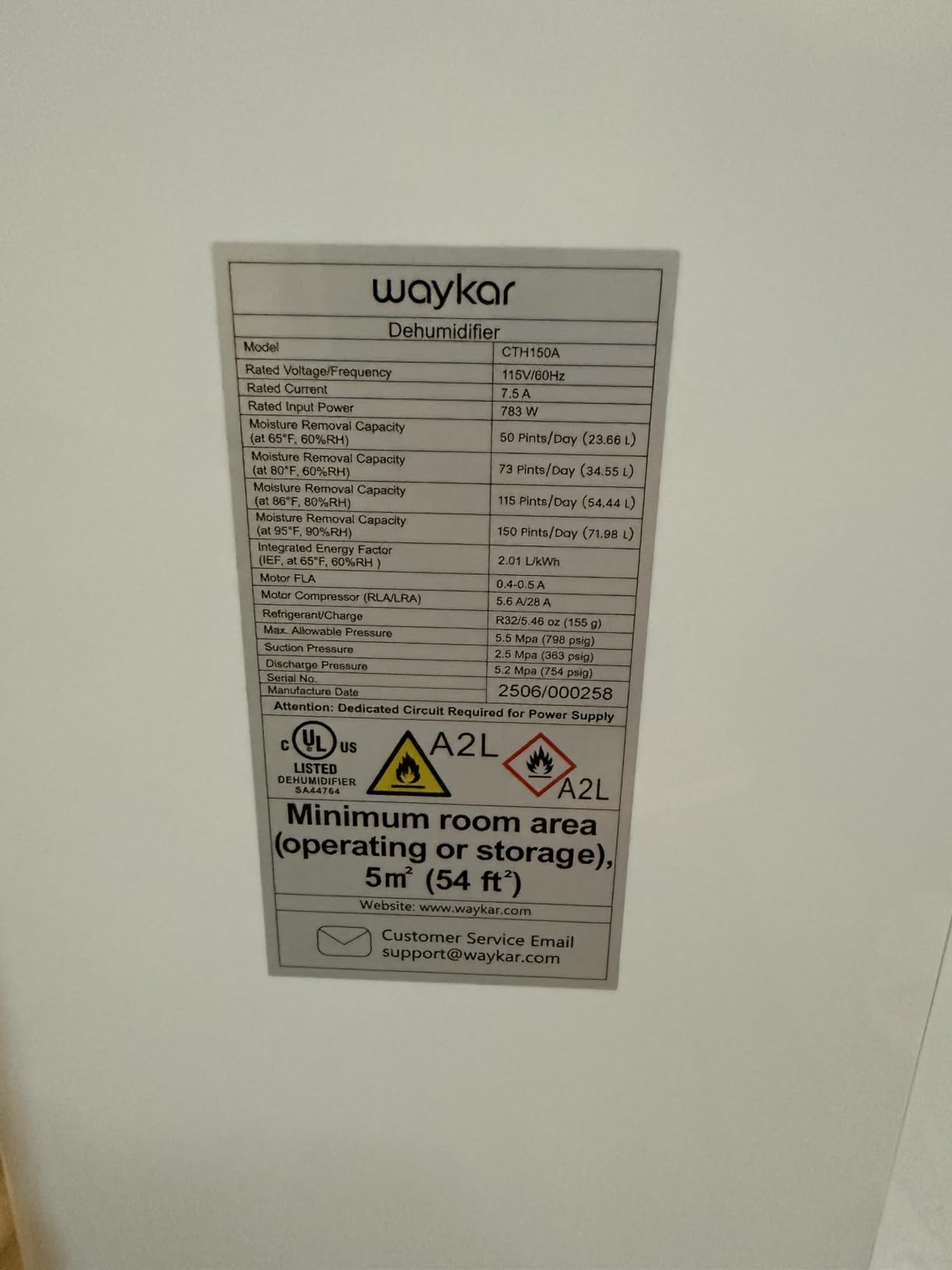
Some homes just have more moisture problem than others. If you’re fighting a whole-floor humidity issue, a large crawl space, or a garage workshop that fogs up every summer, the Waykar 120-pint is built for that scale. Its 6,000 square foot coverage claim is the largest in this roundup, and with 3,729 reviews at 4.4 stars, there’s enough owner data to suggest the claim holds up in practice.
The feature that separates it from other big units is the AI Smart Auto Comfort Mode. Rather than blasting at full power, it senses ambient temperature and adjusts humidity targets adaptively, so you’re not over-drying the air in the evening or under-working it during peak afternoon humidity. It sounds like marketing fluff until you realize it also reduces compressor cycling, which extends the machine’s life.
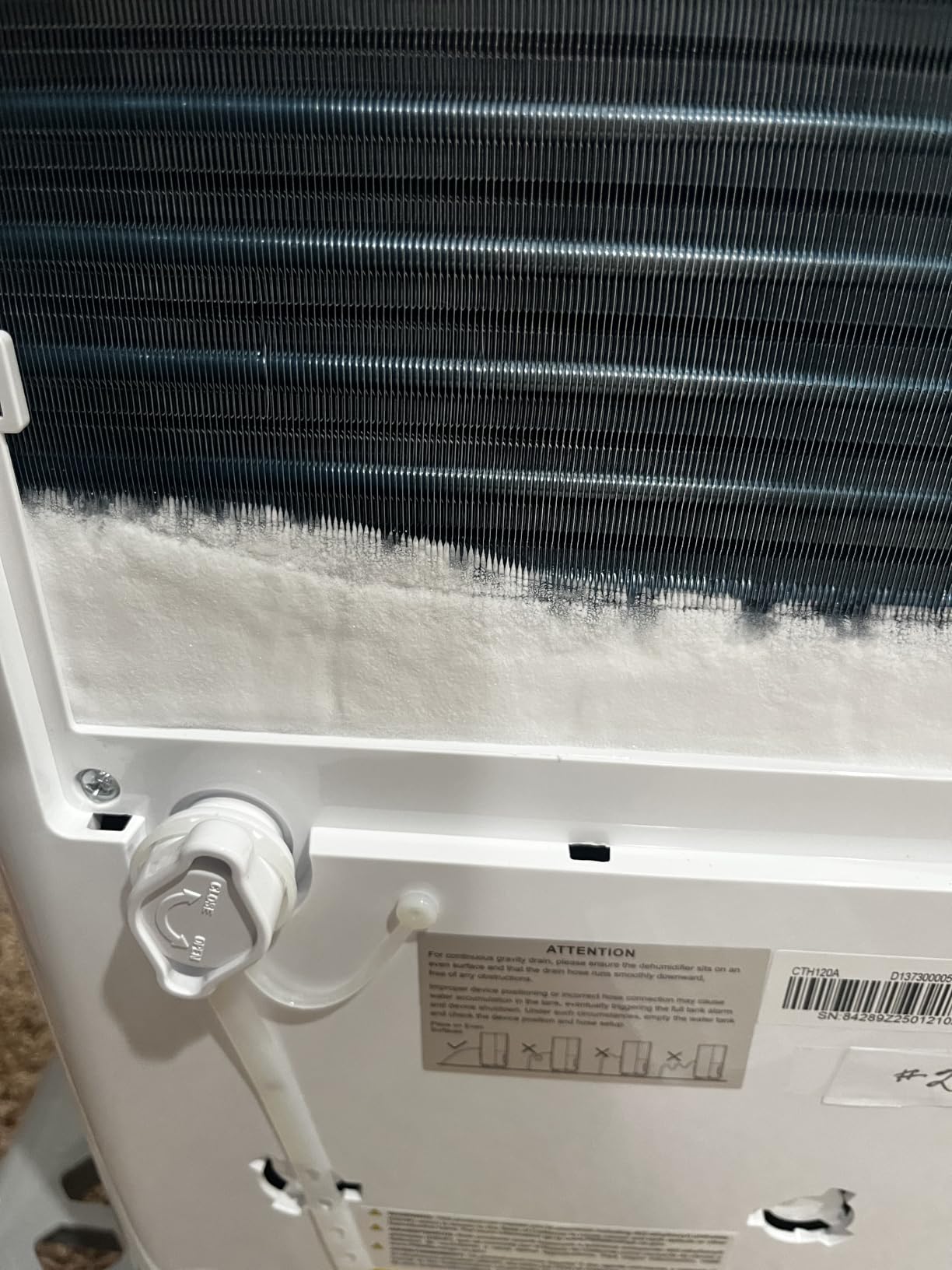
On the practical side, you get a removable 1.24-gallon tank plus a 3.3-foot drain hose for continuous operation, three modes (Auto Comfort, Continuous, and Standard), built-in wheels, and an ergonomic handle for moving it between rooms. The washable mesh screen filter is easy to rinse. Real-time diagnostics with error codes help you troubleshoot without guessing.
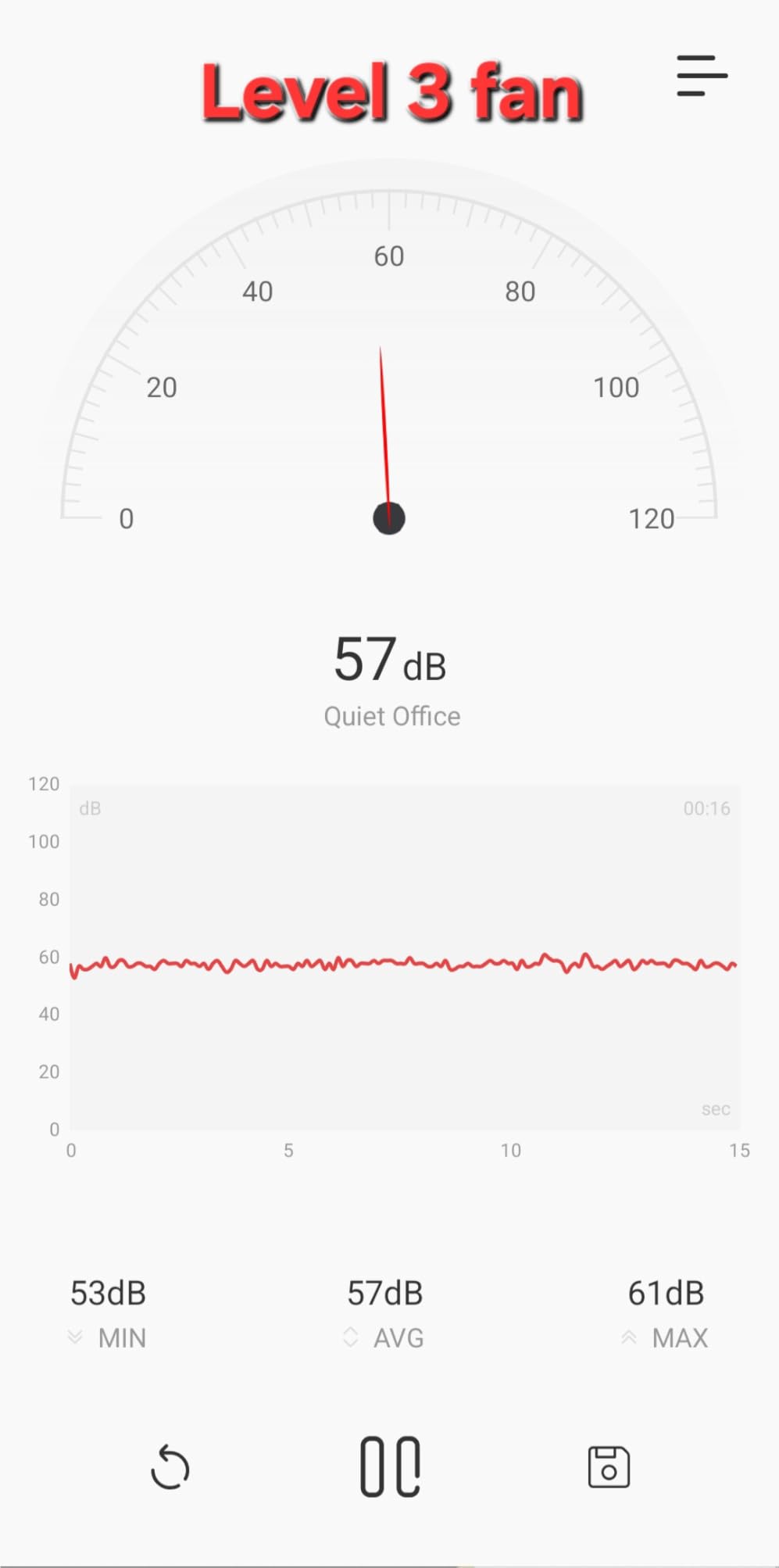
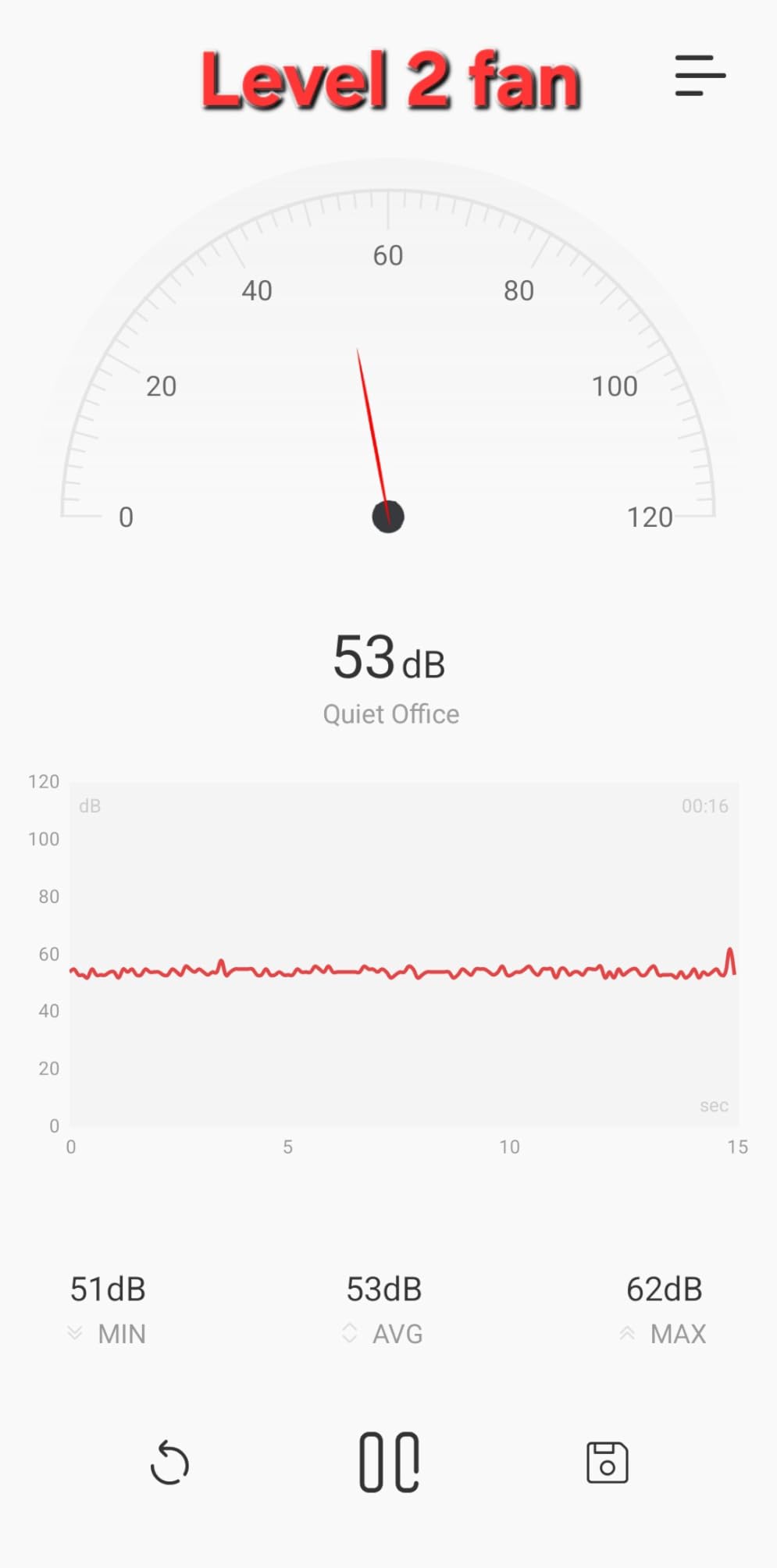
The trade-offs are straightforward. At around $306, it’s the most expensive model on this list, so it only makes sense if you genuinely need the capacity. Like the hOmeLabs, it needs 24 hours of upright settling time after delivery. And while 40dB on low is impressively quiet, pushing it to maximum brings it up to about 55dB, which is noticeable in adjacent rooms.
Is It Overkill for a Single Room?
Honestly, yes. If you’re only dehumidifying a 600 sq ft bedroom, this unit will short-cycle and waste electricity. Where it earns its price is in whole-basement, multi-room, or garage applications where a smaller machine would run constantly without ever catching up. Match the capacity to the actual problem.
How Reliable Is the Auto-Defrost in Real Winter Conditions?
The Auto-Defrost Shield is rated to keep the unit operational down to 42°F, which covers most insulated basements and attached garages. Reviewers in colder climates confirm it cycles properly rather than icing over. If your space regularly drops below that threshold, a desiccant-type unit or supplemental heating is the better route.
5. avylo 5,000 Sq Ft Dehumidifier with Built-in Pump – Best for Basements Without Floor Drains
avylo Dehumidifier for Basement with Pump and Hose, Max 90 Pints/D, White
90 Pints/Day
Built-in Pump 15ft Lift
2.11 Gal Top Tank
41dB Quiet
Energy Star Most Efficient
Pros
- Built-in pump lifts water 15 feet for drainage without floor drains
- Top-mounted 2.11 gallon tank is effortless to empty
- Energy Star Most Efficient 2025 certified
- Quiet 41dB operation
- 5-year manufacturer warranty is best in class
Cons
- Some units arrived with defective pumps requiring replacement
- Relatively new brand with fewer long-term reviews
Most dehumidifier frustrations come down to water removal, not water collection. If your basement has no floor drain and the unit sits below grade, a gravity hose is useless. That’s the exact problem the avylo ADC018 solves. Its built-in pump pushes collected water up to 15 feet vertically, meaning you can drain into a sink, laundry tub, or out a window well without ever carrying a bucket up the stairs.
The 4.5-star rating across 270 reviews comes with an 84% five-star rate, which is the highest satisfaction percentage in this guide. Owners report pulling humidity from 85% down to 48-50% in stubborn basement conditions. Add the Energy Star Most Efficient 2025 certification and 41dB noise floor, and you have a unit that competes with models costing considerably more.
The top-mounted 2.11-gallon tank deserves specific praise. Side-pull tanks on most dehumidifiers require kneeling and wiggling, but a top-mounted design lets you lift the bucket straight out with one hand. You also get three drainage options (tank, gravity drain, pump drain), a color-coded humidity indicator that shifts from green to orange to red, and an LED display showing real-time humidity and temperature.
Risk-wise, the main concern is consistency. A small percentage of units ship with defective pumps that need immediate replacement, and avylo is a newer brand without the multi-year track record of hOmeLabs or Frigidaire. That said, the 5-year manufacturer warranty is the longest in this roundup and covers you well beyond the typical failure window.
When Is a Built-in Pump Actually Necessary?
You need a pump if your dehumidifier sits in a basement without a floor drain and you don’t want to empty a tank daily. Gravity drains only work when the hose can run downhill to a drain. If your unit sits below grade with no lower exit point, a pump is the only hands-off option, and this model’s 15-foot lift handles most basement ceiling heights.
How Loud Is the Pump When It Activates?
The pump runs intermittently rather than continuously, kicking in briefly to expel water. Overall operation stays at 41dB, and the pump adds a short hum that most owners describe as unobtrusive. If you’re a very light sleeper with the unit in an adjacent bedroom, you may notice it, but in a basement setting it’s essentially a non-issue.
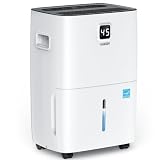
6. yaufey 5,000 Sq Ft 80 Pint Dehumidifier – Trusted Performer with 4 Smart Modes
80 Pint Dehumidifier for Basement 5000 Sq. Ft. with Drain Hose, ENERGY STAR
80 Pints/Day
Covers 5,000 Sq Ft
4 Smart Modes
1.06 Gallon Tank
Energy Star Certified
Pros
- Excellent moisture removal for basements up to 5
- 000 sq ft
- Energy Star certified up to 30% more efficient
- 4 smart modes including dedicated Basement mode
- Includes both tank and continuous drain hose
- Responsive customer service with lifetime tech support
Cons
- Some users report freezing coils after 1+ years
- A few units needed warranty replacement at 10-12 months
The yaufey 80-pint is the volume seller of this roundup, with 6,887 reviews at a 4.4-star average. That kind of sample size tells you something that smaller review pools can’t: this unit works reliably for a lot of people. It’s a straightforward, no-nonsense basement dehumidifier that hits the 5,000 sq ft coverage mark without an inflated price.
What I appreciate is the mode design. Instead of vague labels, yaufey gives you Sleep (targets 55% RH), Living (50% RH), Basement (45% RH), and Continuous. Picking the right setting requires zero guesswork, and the millisecond-precision humidity sensors keep the unit honest about actual room conditions. The piston compressor is a proven design known for stable long-term operation.
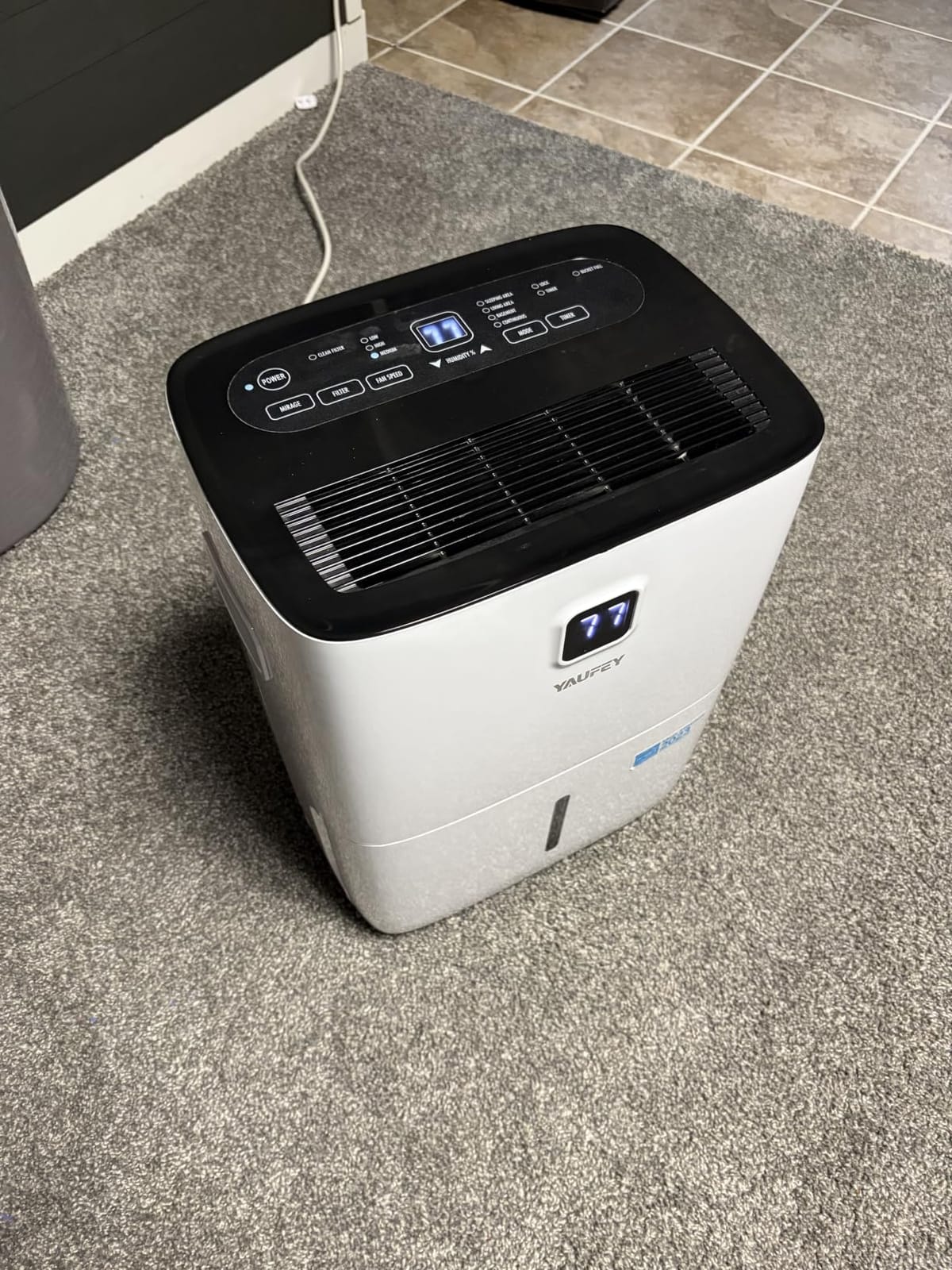
You get a 1.06-gallon visible tank with auto shut-off, plus a continuous drain hose in the box, so you can choose between manual and hands-free operation from day one. The LED touch panel and three fan speeds are intuitive. At 275 watts, it’s reasonably efficient for its class, with Energy Star certification contributing up to 30% energy savings over non-certified equivalents.
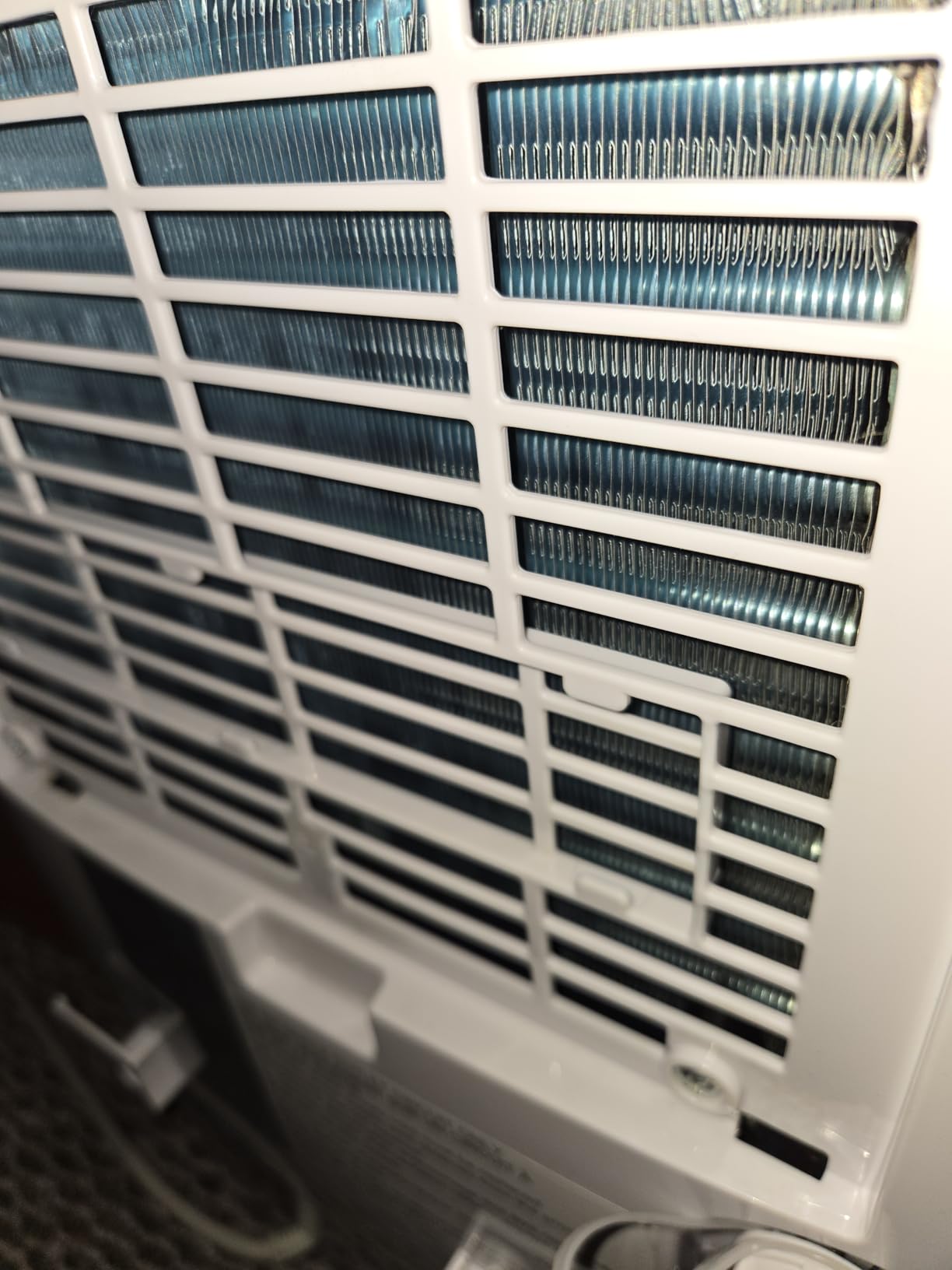
The weaknesses cluster around long-term durability. A segment of owners report coils freezing after a year or more of heavy use, and some needed warranty replacement in the 10-to-12-month window. yaufey’s customer service has a strong reputation for handling these cases quickly, and the warranty structure (1-year full coverage, second year with registration, lifetime tech support) provides a reasonable safety net.
Is the Basement Mode Genuinely Effective?
Basement mode targets 45% relative humidity, which is the sweet spot for preventing mold growth in below-grade spaces. Reviewers with persistently damp basements report the mode holding steady at that target without constant manual adjustment. It’s the set-it-and-forget option most buyers in this category actually want.
What Is the Warranty Actually Like If Something Fails?
You get 1-year full coverage, a second year when you register the product, and lifetime tech support. The consistent theme across reviews is that yaufey’s service team responds quickly and ships replacements without excessive back-and-forth. Register the unit when it arrives so the extended coverage applies from day one.
7. Midea 22 Pint WiFi Smart Dehumidifier – Best Smart Dehumidifier for Small Spaces
Midea 22 Pint Dehumidifier for Basement, 1,500 Sq. Ft, Energy star
22 Pints/Day
Covers 1,500 Sq Ft
WiFi + Alexa + Google
47 dBA Quiet
Energy Star Certified
Pros
- Wi-Fi app control for remote monitoring and adjustment
- Voice control with Alexa and Google Assistant
- Drops humidity from 68% to 33% in 2 hours
- Energy Star certified 31% more efficient
- Compact sleek design with 360-degree wheels
Cons
- Produces noticeable waste heat
- Fan noise can be disruptive at night
- App is somewhat simplistic
- Water tank is small at 0.8 gallons
The Midea 22-pint is what I recommend for bedrooms, bathrooms, small apartments, and anywhere up to about 1,500 square feet. With 7,122 reviews at 4.4 stars, it’s one of the best-selling dehumidifiers on Amazon, and the reason is simple: it does the basics well and adds smart features that normally cost more. It’s currently ranked #9 in Amazon’s entire dehumidifier category.
In real-world testing by owners, this unit drops a room from 68% to 33% humidity in roughly two hours. That’s quick work for a 22-pint machine. The SmartHome app lets you monitor humidity remotely, adjust targets, and set schedules, and the Alexa and Google Assistant integration means you can just say “turn on the dehumidifier” while walking past.
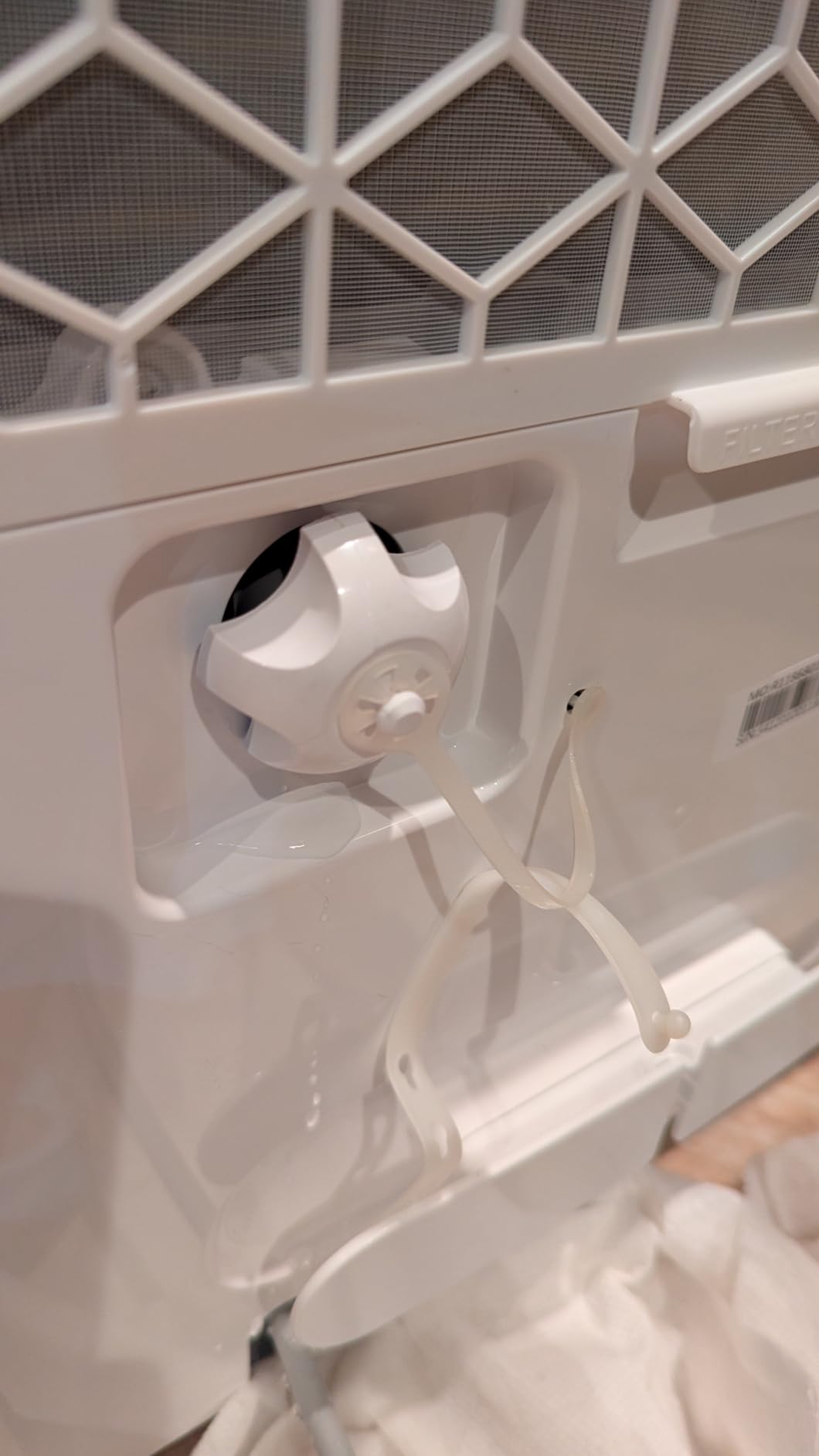
Feature-wise, you get a reusable air filter, auto defrost, auto restart after power outages, continuous drainage support, a programmable timer, and a turbo mode for maximum moisture removal. The 360-degree rotatable wheels make it easy to roll between rooms. At 47 dBA on standard settings, it’s quiet enough for daytime use in living spaces.
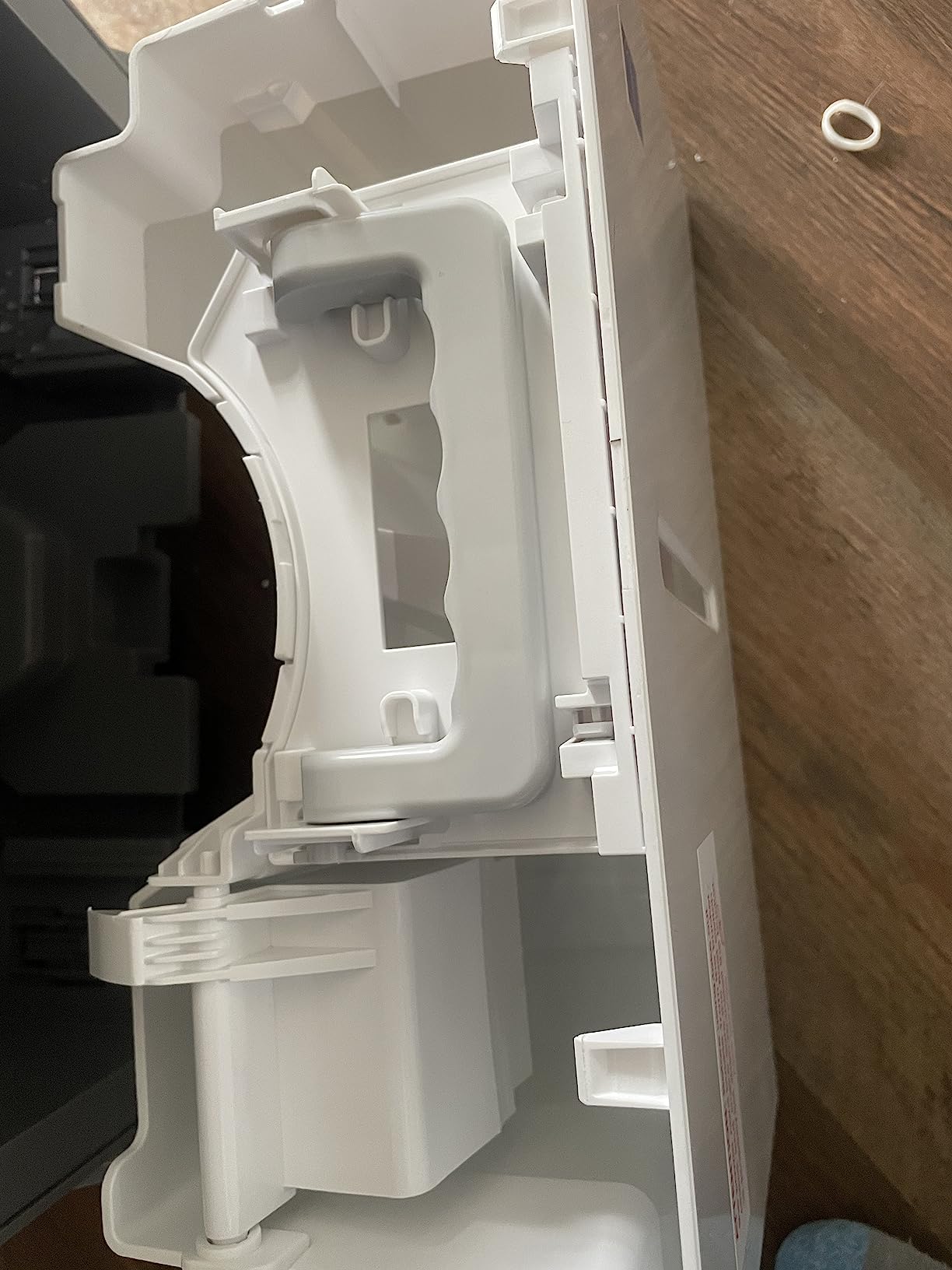
Where it falls short is nighttime bedroom use. The fan noise is noticeable enough that light sleepers complain, and the unit exhausts warm air as a byproduct of operation, which can matter in a small closed room during summer. The 0.8-gallon tank also fills quickly in humid conditions, so plan on using the continuous drain option if humidity is high.
Can It Actually Handle a Small Basement?
Yes, with caveats. If your basement is under 1,500 square feet and only moderately damp (occasional musty smell, humidity in the 60s), this unit will keep it in check. For seriously wet basements with visible moisture or persistent 75%+ readings, step up to the Gasbye or yaufey 80-pint models instead.
How Well Does the Smart Home Integration Work?
The Alexa and Google Assistant connectivity works reliably for on/off control, target humidity changes, and status checks. The app itself is functional but basic, lacking the deeper energy analytics of something like the DREO app. If smart home control is your priority rather than deep data, this covers it well.
8. DREO 2,000 Sq Ft Smart Dehumidifier – Ultra-Quiet 41dB with App Control
DREO Energy Star 2025 Smart Dehumidifier for Basement, 1.85 Gal Water Tank
73 Pints/Day
Covers 2,000 Sq Ft
41dB Ultra-Quiet
1.85 Gallon Tank
App Energy Monitoring
Pros
- Very quiet 41dB suitable for bedrooms and nighttime use
- Energy Star 2025 certified with app-based energy monitoring
- Large 1.85 gallon tank reduces emptying frequency
- DREO app integration for remote control
- Effective at pulling moisture from air
Cons
- Built-in hygrometer reads about 10% higher than actual humidity
- Struggles to reach lower humidity levels and stalls at 55%
- Some units developed mechanical noise or freezing within days
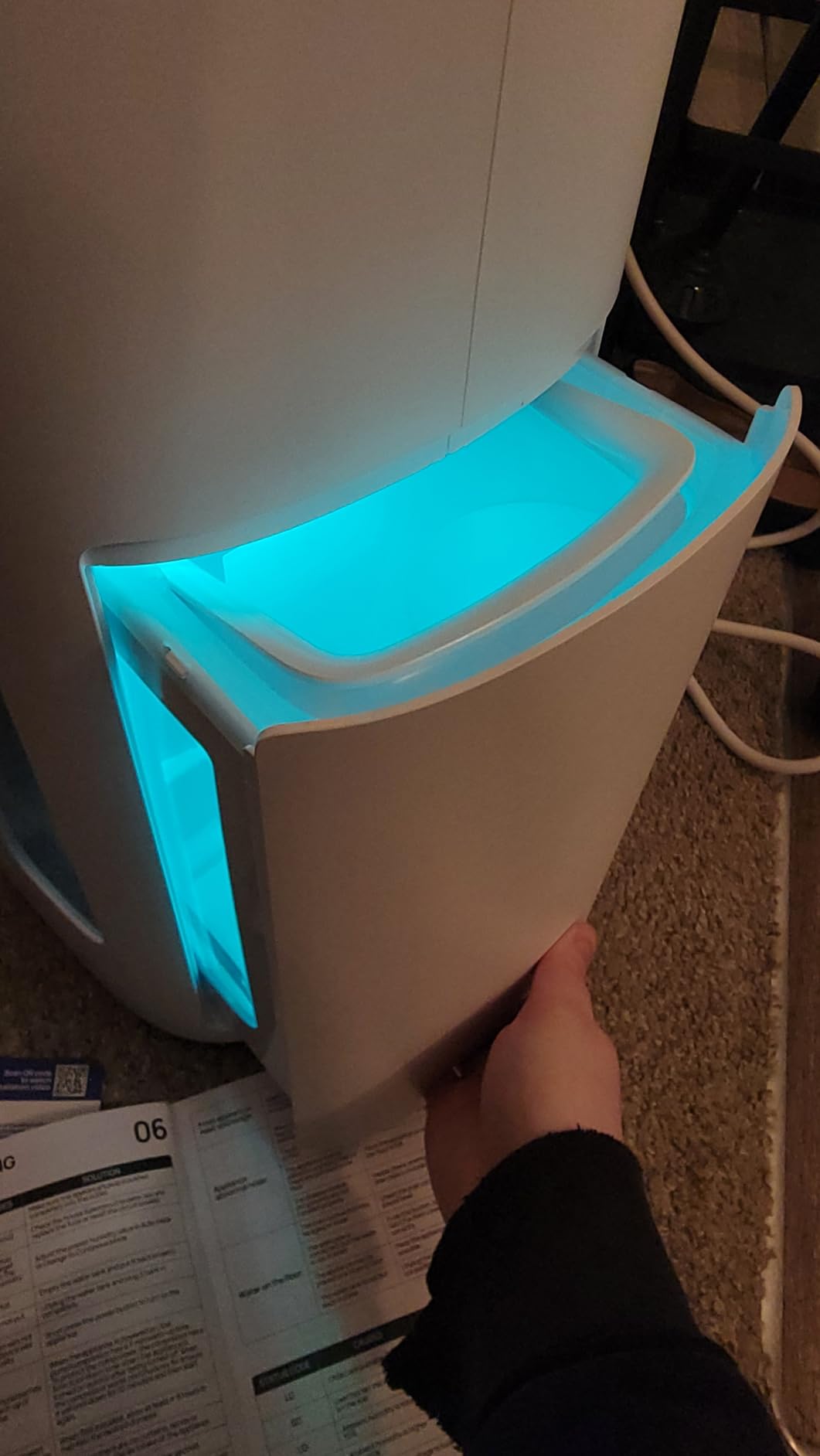
The DREO DR-HDH003S is the quietest compressor model in this roundup at 41dB, which puts it in refrigerator-territory noise levels. For bedrooms, nurseries, home offices, or anywhere you’re sharing space with a running machine, that difference from 47-55dB units is immediately noticeable. DREO has built a strong reputation in home climate appliances, and this model carries their typical design polish.
The 73 pints per day rating (measured at 95°F and 90% RH) is paired with a 2,000 square foot coverage claim, positioning it as a mid-size option for apartments, medium basements, or large bedrooms. The 1.85-gallon tank is one of the larger ones in this size class, meaning fewer trips to empty it. Our team found the silver chassis more aesthetically pleasing than the standard white boxes most brands offer.
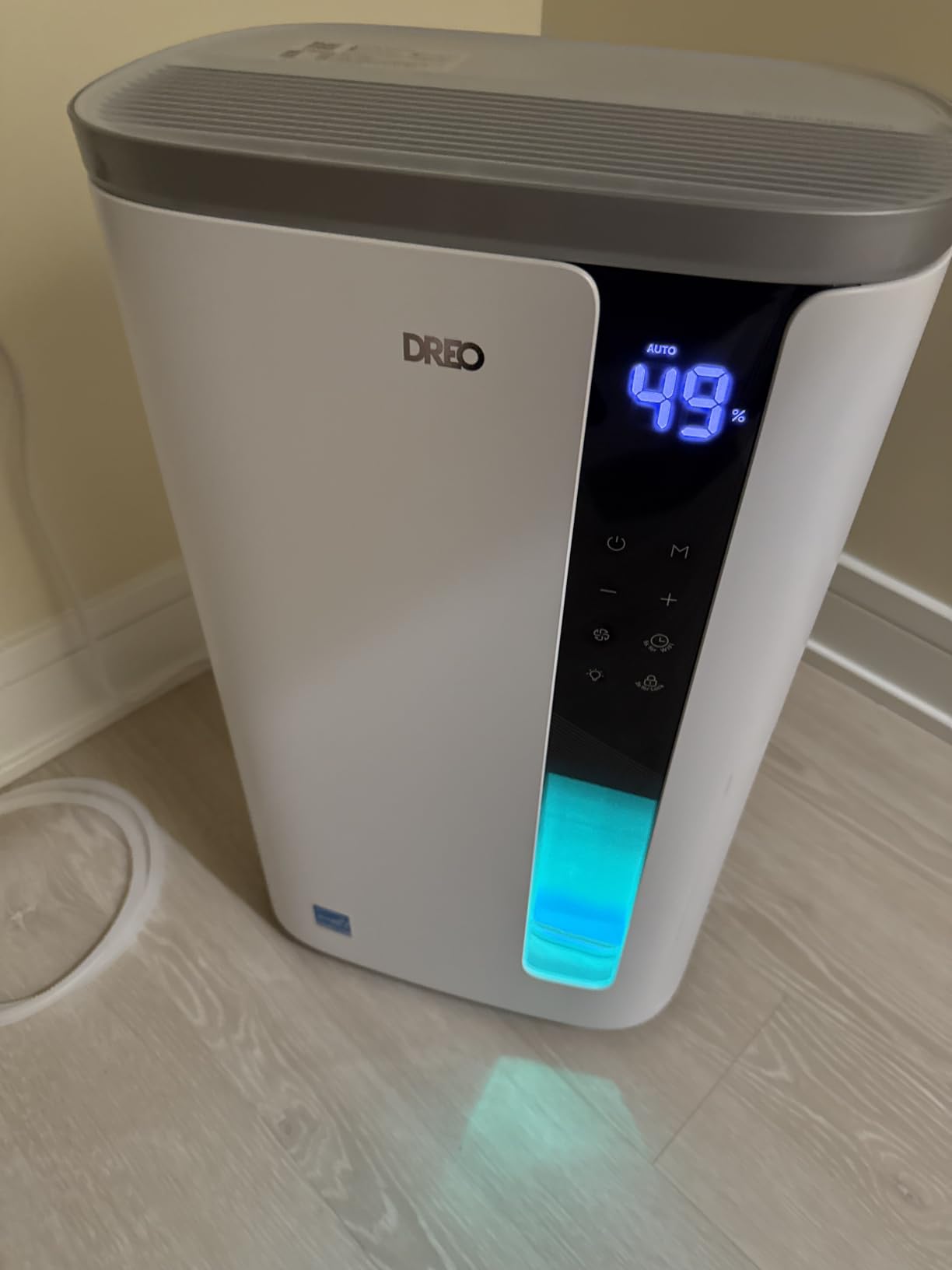
The smart features are where DREO pulls ahead of similarly quiet competitors. The app tracks energy usage over time, so you can see exactly what your humidity comfort is costing you. You also get three fan speeds, auto humidity control, a timer, a child lock, a continuous drain hose in the box, and a wheeled base for easy repositioning.
The honest concerns are reliability and accuracy. The built-in hygrometer reads roughly 10% higher than actual room humidity, so you’ll need to compensate when setting targets. Some users report the unit struggling to push below 55% humidity even in continuous mode. And while most units run fine, a small number developed mechanical noise or freezing issues within the first days of use, so test thoroughly when it arrives.
Is It Quiet Enough to Sleep In the Same Room?
For most people, yes. At 41dB, it’s quieter than a soft conversation and comparable to a quiet refrigerator hum. The 158-review pool specifically includes buyers using it in bedrooms and nurseries overnight without disturbance. If you’re an extremely light sleeper, run it on low or use the timer to cycle off after you fall asleep.
Why Is the Review Count So Low Compared to Others?
This is a newer model with a shorter sales history, so the 158-review sample is much smaller than established units with thousands of reviews. The 4.1-star average is decent but comes with more variance. If a long track record matters to you, the hOmeLabs or Midea are safer bets; if quiet operation is the priority, this is the trade-off you’re accepting.
9. GE 25 Pint Smart Dry Dehumidifier – Compact Portable with Smart Dry Technology
GE Small Dehumidifier 25 Pint Basement Bedroom Bathroom Drain 1500 Sq Ft
25 Pints/Day
Covers 1,500 Sq Ft
Smart Dry Technology
Adjustable Humidistat 30-70%
8.5 Pint Bucket
Pros
- Compact and portable with easy-roll wheels
- Smart Dry Technology auto-adjusts fan speed to humidity
- Adjustable humidistat from 30% to 70%
- Continuous drain option plus bucket full alarm
- Auto Restart and Auto Defrost built in
Cons
- Only 78 reviews so far so limited social proof
- Some users report units not powering on
- Lower capacity limits suitability for large basements
GE has been making dehumidifiers for decades, and that institutional experience shows in the small details of the ADHE25BWF. The standout feature is Smart Dry Technology, which automatically adjusts fan speed based on current humidity levels. Rather than running at a fixed intensity, the unit dials itself up when the room is wet and down as it approaches your target, saving energy and reducing noise without any input from you.
At 25 pints per day with a 1,500 square foot coverage rating, this sits in the compact tier alongside the Midea. The adjustable humidistat spans 30% to 70% RH, giving you a wider control range than most competitors. GE’s brand reliability is a real factor here, with one reviewer noting they own a GE dehumidifier that’s still running after 10+ years.
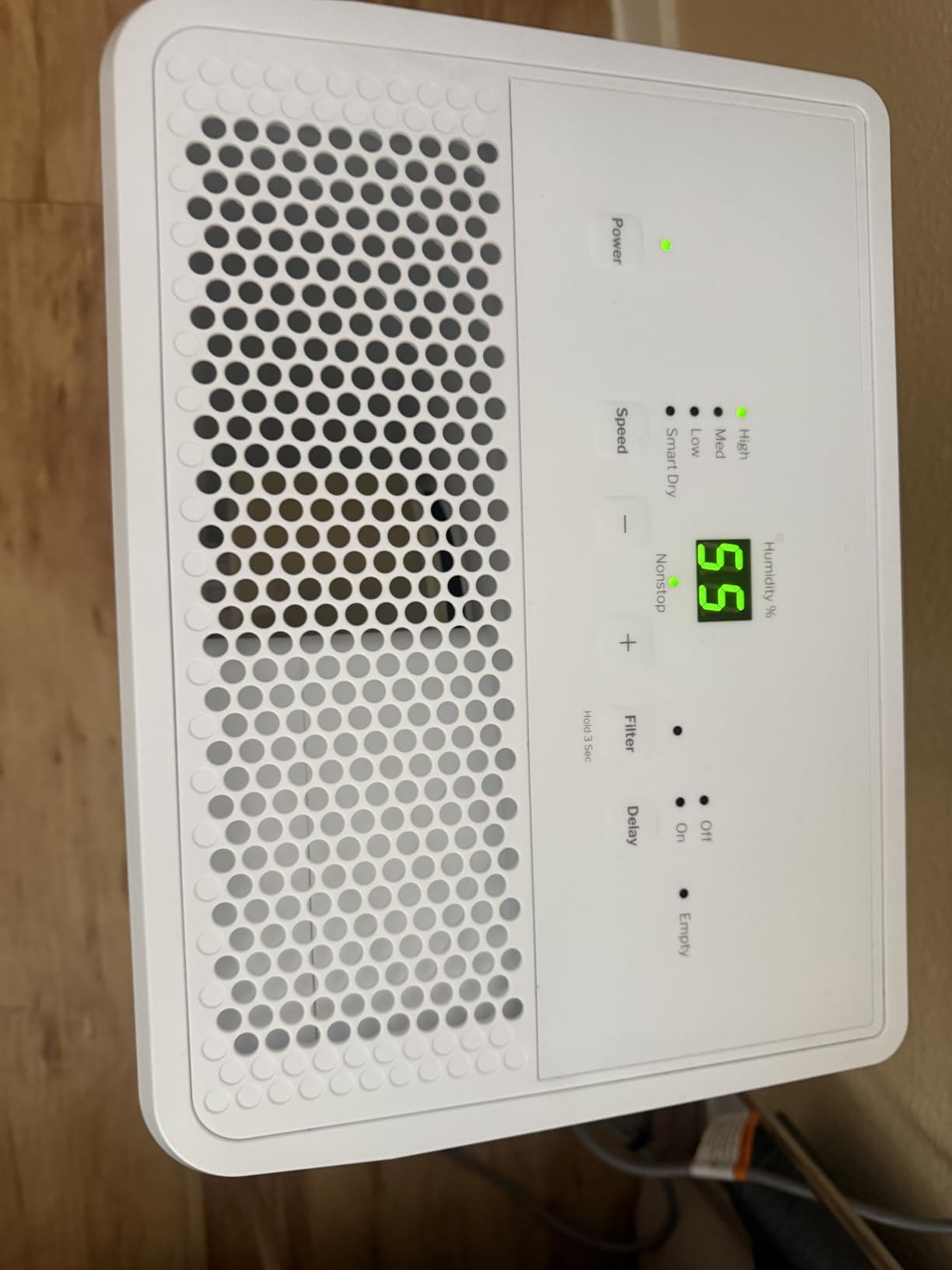
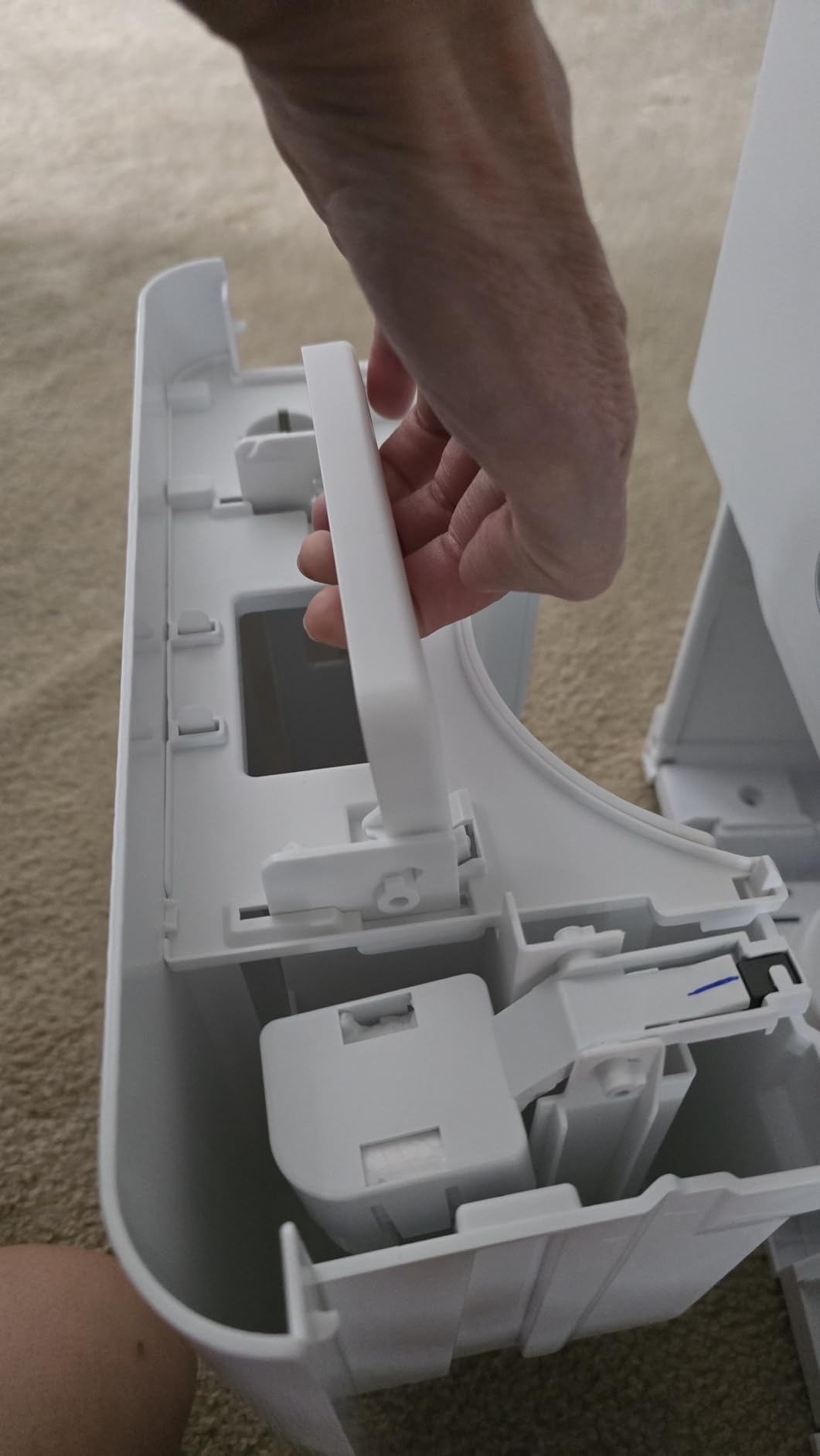
The practical design touches are thoughtful. You get pocket handles and easy-roll wheels for moving between rooms, a removable washable slide-out filter for maintenance, a 10-second bucket full alarm so you never miss an overflow, and auto restart that restores your settings after a power outage. The 8.5-pint bucket is standard for the size class, and continuous drain connection lets you bypass bucket duty entirely.
Being a newer model, it only has 78 reviews so far, which is the smallest sample in this roundup. Some early buyers report units that wouldn’t power on, which is concerning but not yet a pattern given the small numbers. The 1-year limited warranty is standard GE coverage, though shorter than the avylo or AEOCKY offers.
How Does Smart Dry Actually Differ from Auto Mode?
Standard auto modes simply cycle the compressor on and off around a target humidity. Smart Dry modulates fan speed continuously in response to real-time conditions, so the unit eases off as humidity approaches target rather than running full-blast then stopping. The result is fewer jarring speed changes, quieter average operation, and less energy waste.
Is It Good for a Bathroom or Laundry Room?
Yes, that’s an ideal application. The compact footprint fits tight spaces, the 25-pint capacity matches the moisture load of a regularly used bathroom or laundry area, and auto defrost handles the temperature swings. Use the continuous drain option if there’s a nearby floor drain, since the bucket fills fast in high-moisture rooms.
10. Frigidaire 35 Pint Dehumidifier – Trusted Brand for Medium Rooms
Frigidaire 35 Pint Dehumidifier for Home, Bedroom & Medium Rooms, White
35 Pints/Day
Covers 3,000 Sq Ft
1.7 Gallon Tank
Custom Humidity Dial
Washable Filter
Pros
- Trusted Frigidaire brand with decades of appliance reputation
- Easy-to-clean washable filter
- Custom humidity control for comfort optimization
- Effective for medium rooms up to 3
- 000 sq ft
- Continuous drainage option included
Cons
- Very low review count at only 34 reviews
- Noise complaints from noise-sensitive users
- Blows out warm air during operation
Frigidaire is one of the most recognized names in home appliances, and their 35-pint model (FHDD3534Y1) is the 2025 refresh of a long-standing lineup. For buyers who prioritize buying from an established appliance manufacturer with service networks and parts availability, this is the obvious choice in this roundup. One reviewer reports the same Frigidaire model lasting 9 years, which speaks to the brand’s durability reputation.
With 35 pints per day covering up to 3,000 square feet, it fills the mid-size gap between compact bedroom units and large basement machines. That makes it a good fit for average-sized homes, finished basements used as living space, or ground floors with moderate humidity issues. The custom humidity control dial lets you fine-tune comfort rather than choosing from fixed presets.
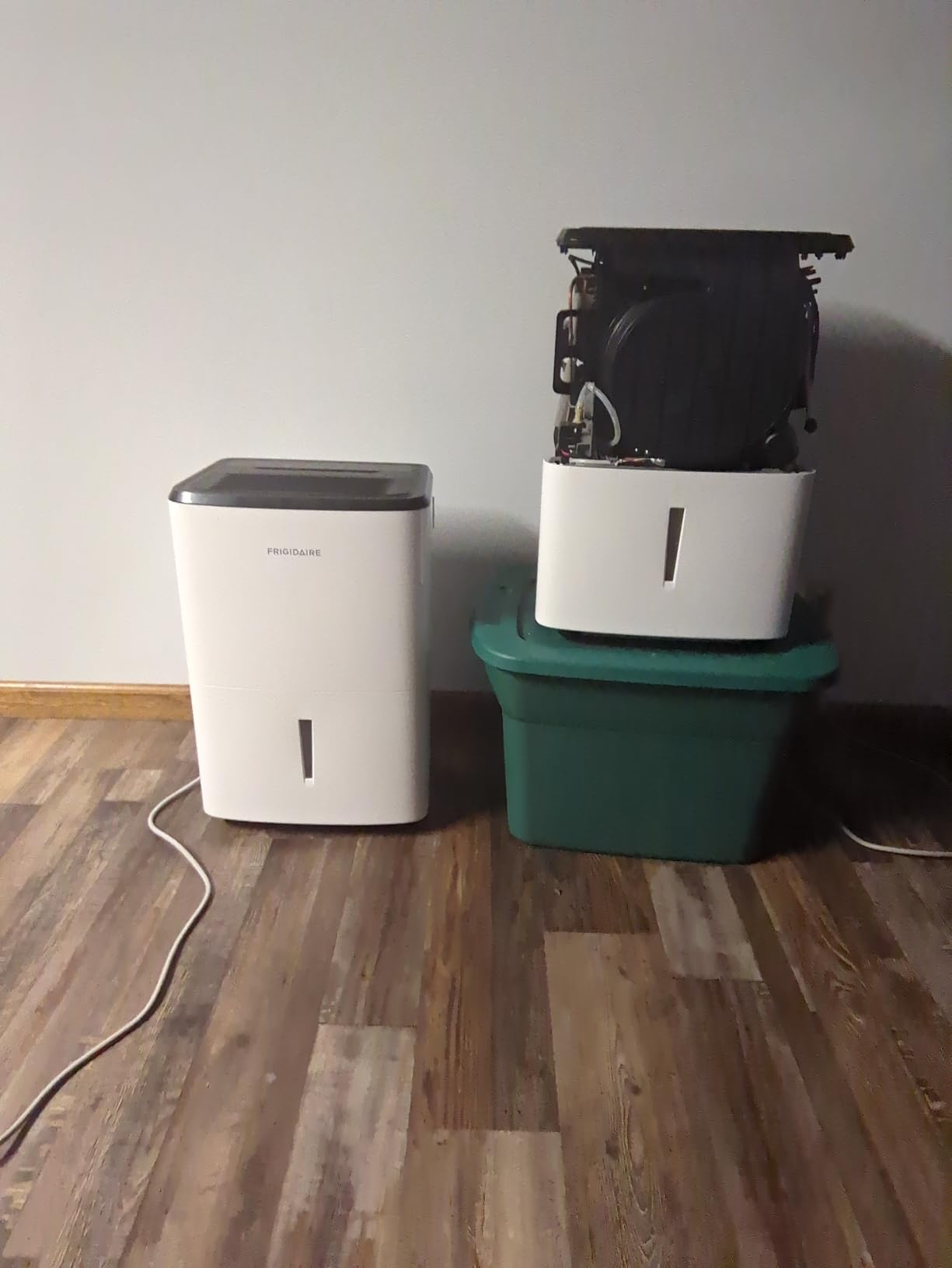
The feature set is deliberately simple: three fan speeds, easy-roll wheels, a washable air filter, auto shut-off when the tank fills, and a continuous drain hose connection. At 1.7 gallons, the tank is larger than average for this capacity class. The straightforward approach means fewer electronics to fail and less of a learning curve.
The main hesitation is the review base. At just 34 reviews, there isn’t enough owner data yet to confirm long-term reliability for this specific model, even if the brand itself is well proven. Noise-sensitive users report it’s louder than expected, and like all compressor dehumidifiers, it exhausts warm air, which can be a consideration in small rooms during summer.
Where Does This Model Fit Compared to the Others?
Think of it as the middle child: more capacity than the GE or Midea compact units, less than the 80-plus pint basement behemoths. It’s best for 1,000 to 2,500 sq ft spaces with moderate dampness, or as a secondary unit when you already have a large machine handling the basement. If you want brand-name service infrastructure, this is your pick.
Does the Warm Air Exhaust Matter?
It can. Compressor dehumidifiers release the heat they remove from air along with compressor waste heat, raising nearby temperature a few degrees. In a basement this is usually welcome, but in a small bedroom during summer it adds to cooling load. Plan placement accordingly, keeping a few feet of clearance around the exhaust.
11. VEAGASO 34 Pint Dehumidifier – Best Budget Pick
VEAGASO 36 Pint/D, 2500 Sq.Ft Dehumidifier for Basement with Drain Hose
34 Pints/Day
Covers 2,500 Sq Ft
Under 40dB Quiet
0.53 Gallon Tank
LED Touchscreen
Pros
- Quiet operation under 40dB suitable for overnight use
- Effective moisture removal with visible results within days
- Flexible drainage via tank or continuous hose
- Intuitive LED touchscreen panel
- 2-year warranty extendable to 3 years
Cons
- Power cord is short at about 6 feet
- Water tank has no side grips for removal
- Included drain hose is thin plastic
The VEAGASO VG380 is the best dehumidifier value on this list, full stop. At under $130 with a 4.5-star rating across 3,012 reviews, it delivers the performance of units costing $80 to $100 more. For anyone who needs solid moisture control without a big budget, this is where I’d point you first. It’s currently ranked #60 in Amazon’s dehumidifier category on sales volume alone.
Despite the low price, it doesn’t cut corners on the fundamentals. The 34 pints per day rating handles up to 2,500 square feet, and owners consistently report noticeable humidity drops within days of setup. Operation stays under 40dB on low speed, making it one of the quietest units in this entire roundup, quieter even than models costing three times as much.
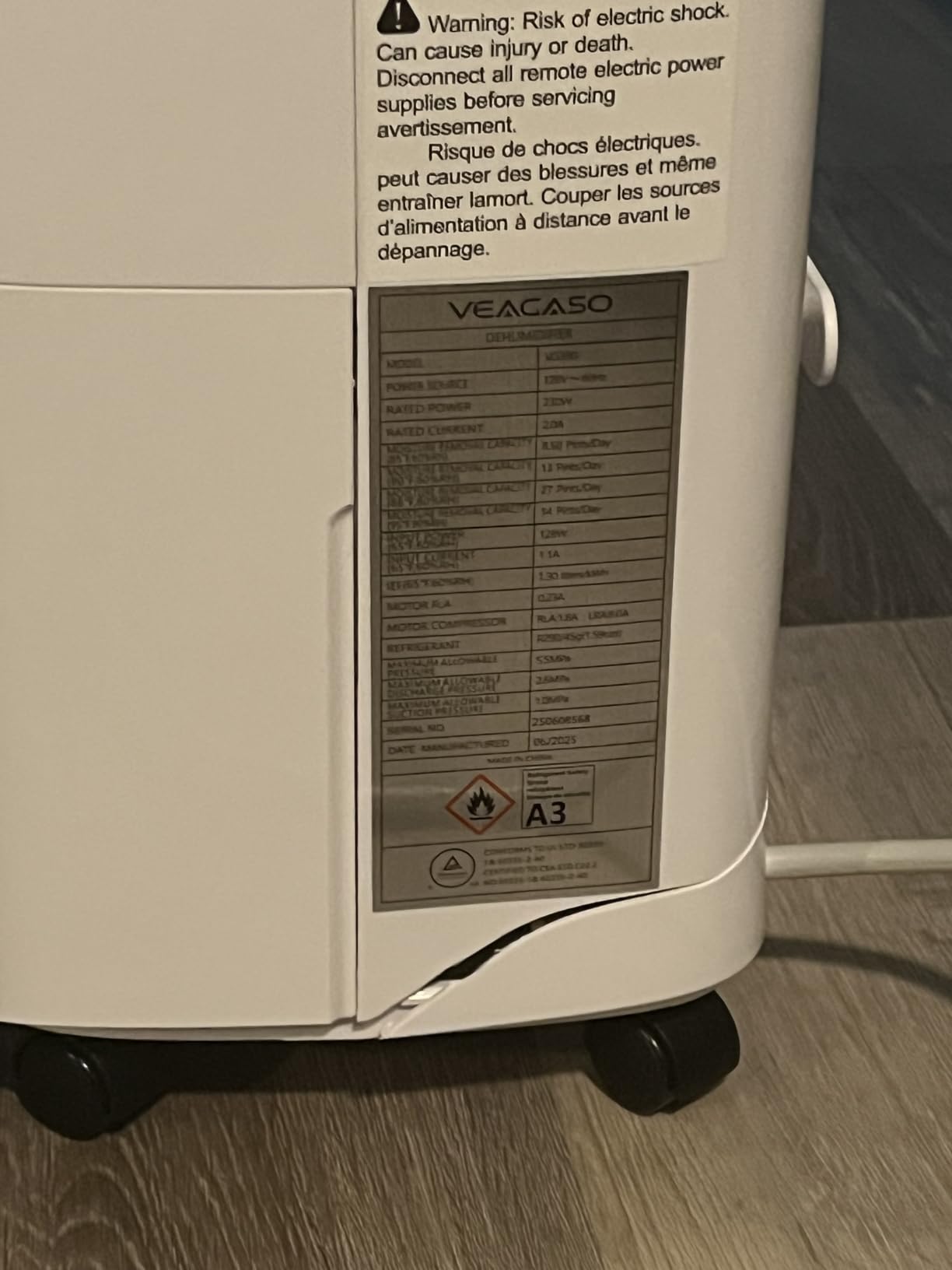
You get three smart modes (DEHU for general dehumidification, DRY for laundry, CONT for continuous operation), an LED touchscreen with real-time humidity display, and a 1-to-24-hour timer. The power failure memory restores your last settings after an outage. At 23.3 pounds with swivel casters and a recessed handle, it’s genuinely portable between rooms.
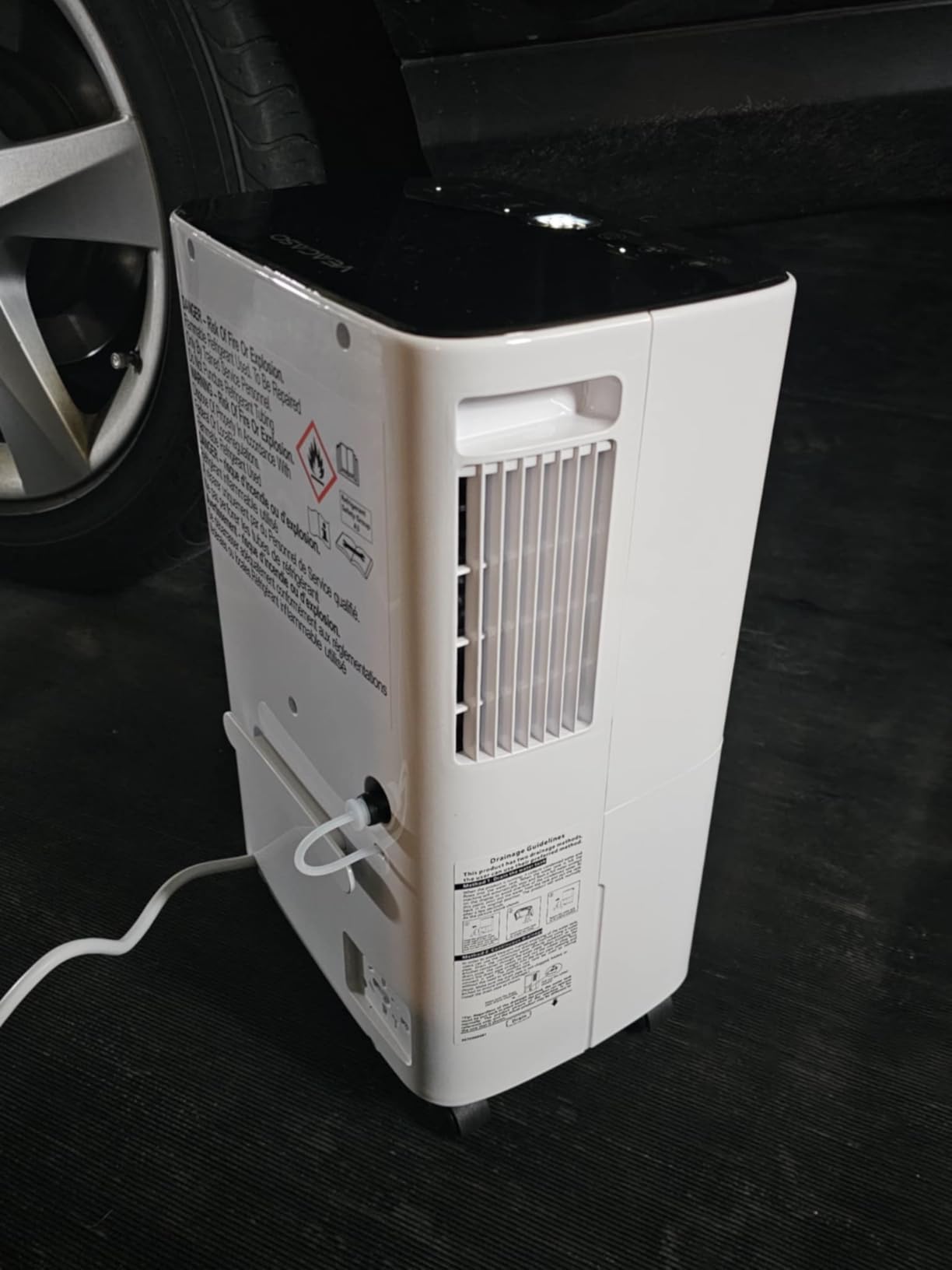
The cost-saving shows up in the details rather than the performance. The power cord is only about 6 feet long, so plan your outlet placement. The 0.53-gallon tank lacks side grips, making it slightly awkward to pull out. And the included drain hose is thin plastic that feels disposable; if you’re setting up continuous drainage, a better hose is a cheap upgrade.
Is a Cheap Dehumidifier Actually Reliable?
In this case, yes. A 4.5-star average across 3,012 reviews with 75% five-star ratings indicates consistent satisfaction at scale. VEAGASO also backs it with a 2-year warranty extendable to 3 years through registration, and their customer support gets positive mentions in reviews. You’re giving up smart features and premium build materials, not dependability.
What Rooms Is It Best Suited For?
Bedrooms, home offices, bathrooms, and small-to-medium basements up to about 2,000 square feet are ideal. The under-40dB low mode makes it particularly good for overnight use in sleeping spaces. For very large or heavily flooded basements, its 34-pint capacity will be the limiting factor, and a larger unit will serve you better.
12. BEDRED 95OZ Compact Semiconductor Dehumidifier – Most Affordable for Small Rooms
BEDRED Dehumidifier, 95OZ Dehumidifier for Home 1000 sq ft – Quiet with Auto Shut Off & Relaxing 7 Color Ambient Light, Ideal for Livingroom, Bedroom, Basement (Black)
Semiconductor Tech
Covers 1,000 Sq Ft
95 oz Tank
7-Color Ambient Light
Auto Shut-Off
Pros
- Very compact footprint ideal for bedrooms and bathrooms
- Semiconductor technology with no compressor noise
- 7-color ambient light adds decorative mood element
- Sleep mode turns off lights and quiets operation
- High review volume of 5
- 000+ shows strong adoption
Cons
- Semiconductor technology is less powerful than compressor models
- 11% of reviews are 1-star indicating reliability issues
- Limited capacity compared to compressor units
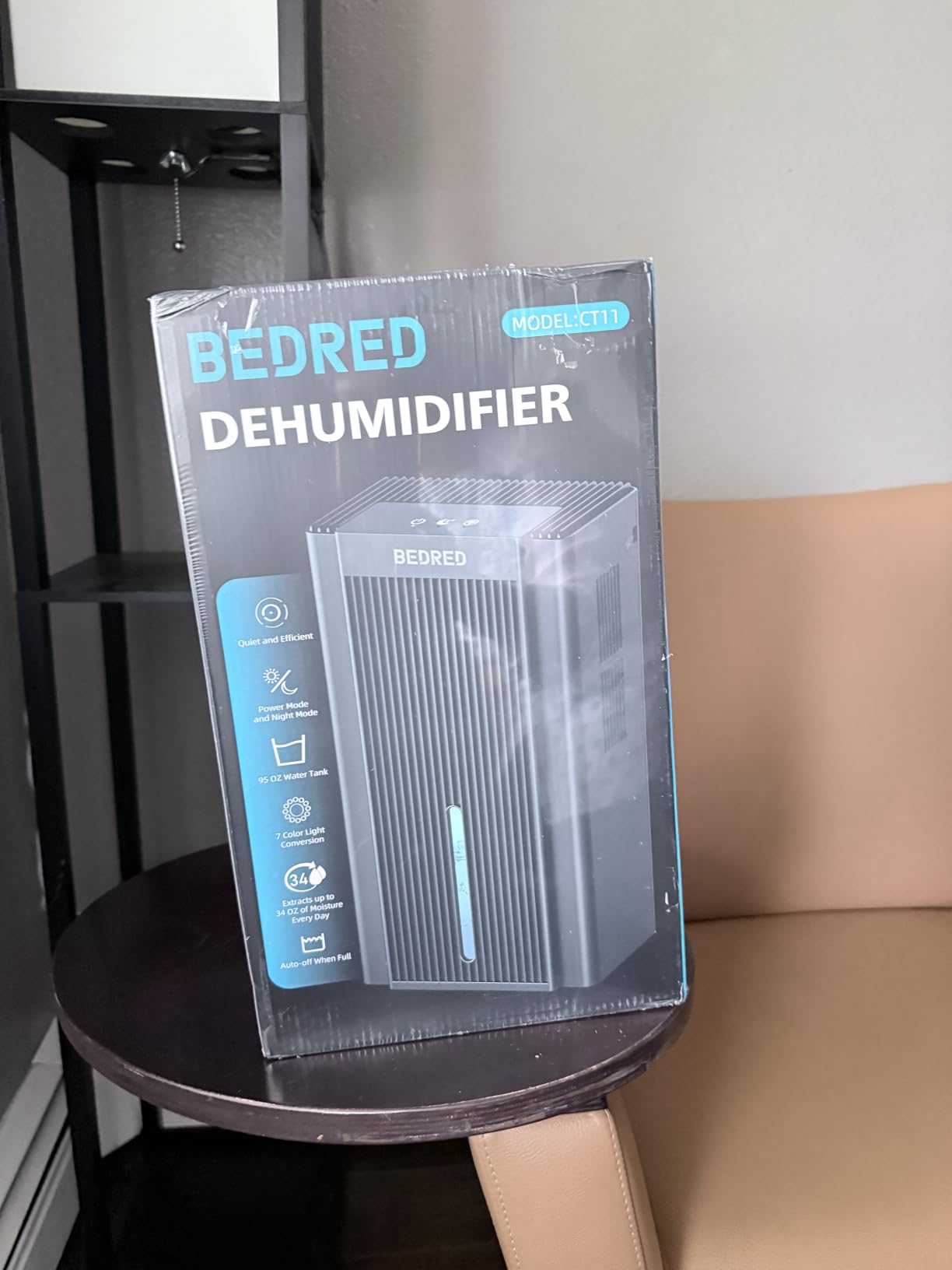
The BEDRED CT11 is a completely different type of dehumidifier from everything else on this list. Instead of a compressor and refrigerant, it uses thermoelectric semiconductor cooling to condense moisture. The result is near-silent operation with no compressor hum or vibration, and a price tag under $60 that makes it one of the cheapest ways to start managing humidity. It’s currently the #2 best seller in Amazon’s entire dehumidifier category.
With 5,043 reviews at 4.2 stars, it has found a clear audience. The 95-ounce (about 2.8-liter) tank with intelligent auto-shutoff handles the modest moisture load of small closed rooms. The 7-color ambient LED light is a fun touch that lets it double as mood lighting, and sleep mode dims everything for nighttime use.
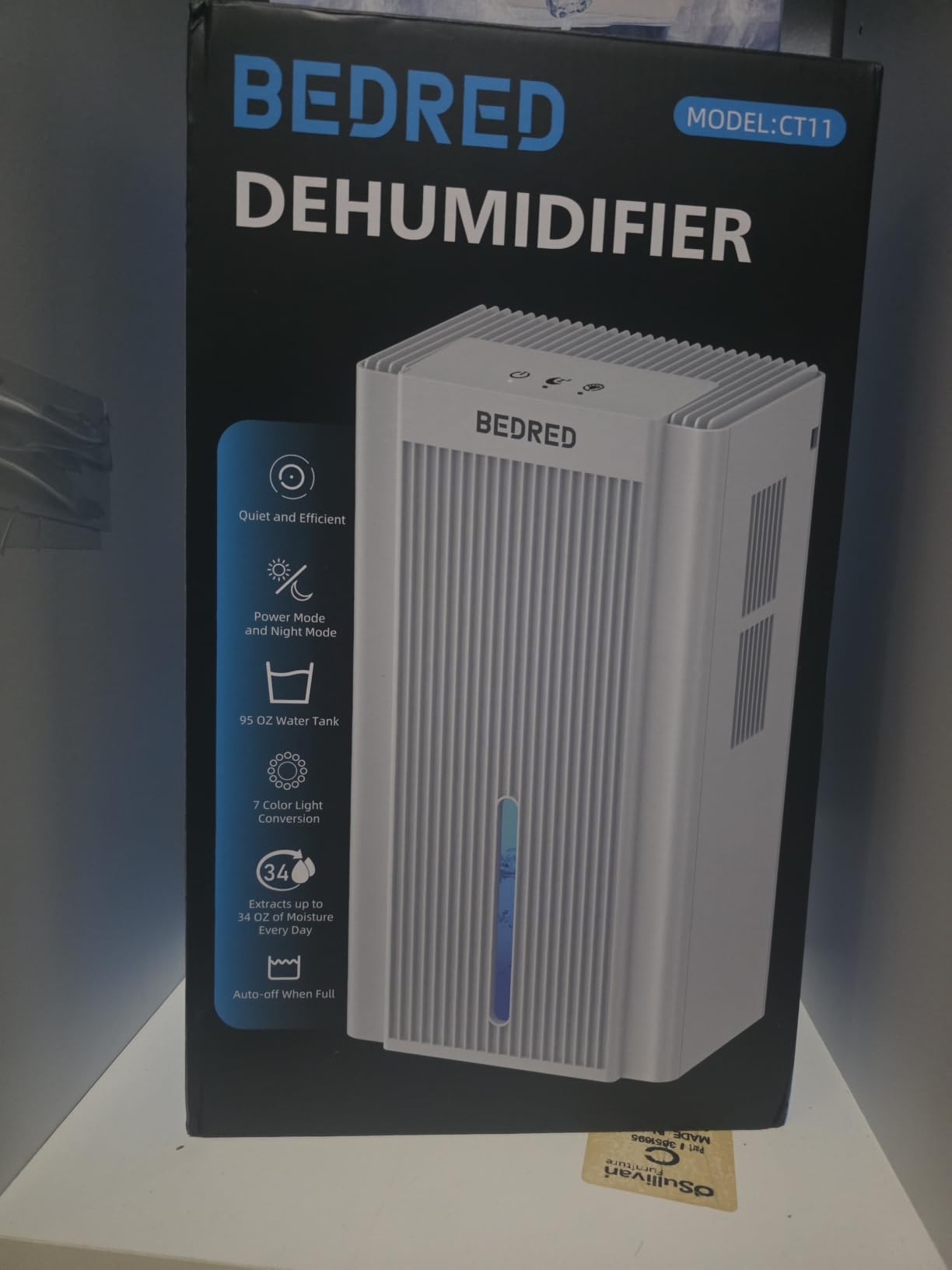
At just 6.7 by 8.7 by 14.6 inches, the footprint is smaller than a toaster. It fits on nightstands, bathroom counters, closet shelves, and RV corners where a full-size dehumidifier is impossible. The black or white color options blend into most decor rather than screaming “appliance.”
Set expectations correctly, though. Thermoelectric units extract far less water per day than compressor models, so the 1,000 sq ft coverage claim really applies to small enclosed spaces with light moisture issues, not open-plan rooms or genuinely damp basements. The 11% one-star rate is also the highest in this roundup, pointing to reliability variance. Treat this as a supplementary or spot-treatment unit rather than your primary defense against serious humidity.
Semiconductor vs Compressor: Which Do You Actually Need?
Semiconductor (thermoelectric) units are silent, cheap, tiny, and best for spaces under about 300 square feet with mild moisture issues: closets, bathrooms, RVs, small bedrooms. Compressor units cost more and make some noise, but they move dramatically more water and are the only real option for basements, large rooms, or humidity above 65%. If your goal is preventing mold in a damp basement, you need a compressor.
Is the Ambient Light Feature Useful or Distracting?
It’s optional, which is the right design. You can cycle through seven colors, set one static tone, or turn the light off entirely. In sleep mode, lights go off automatically. Most owners either ignore the feature or appreciate it as a soft nightlight in kids’ rooms and hallways. It doesn’t affect the dehumidification function either way.
How to Choose the Best Dehumidifier?
Choosing among the best dehumidifiers comes down to five decisions: capacity, coverage, energy efficiency, drainage, and noise. Get these right and almost any quality unit will serve you well. Get them wrong and you’ll either overpay for power you don’t need or end up with a machine that runs constantly without fixing the problem. For persistent basement moisture, pairing a dehumidifier with proper basement waterproofing is the most effective long-term strategy.
Capacity: How Many Pints Per Day Do You Need?
Pint capacity is the single most important spec, and it’s also the most commonly misunderstood. Current Department of Energy standards rate dehumidifiers at 65°F and 60% relative humidity, which is why you’ll see numbers like 22, 34, 35, or 50 pints. Manufacturers often also cite a “max” rating at 95°F and 90% humidity, which can be double or triple the standard number, so always compare using the same test condition.
As a rule of thumb for moderately damp spaces (musty odor in humid weather, humidity around 60-70%): 500-1,500 sq ft needs 22-30 pints, 1,500-2,500 sq ft needs 30-40 pints, 2,500-4,000 sq ft needs 40-50 pints, and anything larger or severely wet (visible dampness, standing condensation, 80%+ humidity) needs 50-plus pints. When in doubt, size up, because an undersized unit running nonstop costs more in electricity than a properly sized one cycling normally.
Energy Efficiency: Why Energy Star Matters
A dehumidifier running through a humid season can consume 300 to 700 kilowatt-hours, so efficiency directly hits your utility bill. Energy Star certified units use roughly 15% less energy than standard models, and the Energy Star Most Efficient designation (held by the AEOCKY and avylo in this roundup) marks the top few percent of all certified products.
Check the integrated energy factor (IEF) rating if it’s listed: higher numbers mean more water removed per kilowatt-hour. Also look at the stated wattage. The yaufey draws 275 watts while the Frigidaire needs 360 watts for similar work, a difference that compounds over months of operation.
Drainage: Tank, Gravity, or Built-In Pump
Every unit here has a collection tank, but tank sizes range from 0.53 gallons (VEAGASO) to 2.11 gallons (avylo). If your unit is in a living space you pass by regularly, emptying a tank is fine. If it’s in a remote basement corner, you’ll want continuous drainage.
Gravity drains work when the hose can run downhill to a floor drain or sump pit. If your unit sits below grade with no drain below it, you need a built-in pump like the avylo’s 15-foot lift. Pumps add cost but eliminate the single most tedious part of dehumidifier ownership.
Noise Level: What to Expect in Decibels
Decibel ratings in this roundup span from under 40dB (VEAGASO, Waykar) to 58dB on turbo (hOmeLabs). For reference, 40dB is a quiet library, 50dB is a normal conversation, and 60dB is a window air conditioner. If the unit will share a bedroom or TV room, look for 45dB or lower and check whether that rating applies to low or high mode.
Compressor units always make some noise, but the difference between a well-insulated 41dB model and a budget 55dB unit is the difference between forgetting it’s there and counting the seconds until you can turn it off. Semiconductor units like the BEDRED are the quietest option of all, at the cost of capacity.
Smart Features and Convenience
WiFi connectivity (hOmeLabs, Midea, DREO) lets you monitor and adjust remotely, which is genuinely useful for basement units. Auto restart after power outages keeps your settings intact, an underrated feature during storm season. Auto defrost protects the coils in cooler basements. A humidistat with a wide adjustment range (30-70% on the GE) gives you finer control than fixed presets.
Also consider the filter type. Washable reusable filters (standard on most models here) save money over time compared to replaceable cartridges. Check warranty length too: coverage in this roundup ranges from 1 year (Frigidaire, GE) to 5 years (avylo), a meaningful spread for an appliance you’ll own for years. If dryness is your problem in winter rather than summer humidity, see our guide to the best humidifiers for seasonal balance.
Frequently Asked Questions
What size dehumidifier do I need for my basement?
For a moderately damp basement, choose 30-40 pints for 1,500-2,500 sq ft, 40-50 pints for $2,500-4,000 sq ft, and 50-plus pints for larger or severely wet spaces. If your basement shows visible dampness or reads above 70% humidity, size up to an 80-120 pint model like the Gasbye or Waykar.
How much does it cost to run a dehumidifier?
A typical Energy Star dehumidifier costs $25-$50 per month running daily during humid season, depending on your electricity rate and the unit’s wattage. Energy Star Most Efficient models like the AEOCKY and avylo sit at the lower end, while non-certified units in the same size class can cost twice as much.
Should I choose a dehumidifier with a built-in pump?
Choose a pump model if your dehumidifier sits in a basement without a floor drain at or below the unit’s level, since gravity hoses only work running downhill. The avylo ADC018 pumps water up to 15 feet vertically, letting you drain to a sink, laundry tub, or window well without carrying buckets upstairs.
What is the difference between compressor and semiconductor dehumidifiers?
Compressor dehumidifiers use refrigerant coils to condense moisture and can remove 22-120 pints per day, making them the only real choice for basements and large rooms. Semiconductor (thermoelectric) units like the BEDRED have no compressor, so they are nearly silent and very cheap, but they extract far less water and only suit small rooms with mild moisture issues.
What humidity level should I set my dehumidifier to?
Set 45-50% for basements to prevent mold growth, 45-55% for living spaces, and 50-55% for bedrooms. The EPA recommends keeping indoor humidity between 30% and 60%, with 45-50% being the sweet spot for both comfort and mold prevention. Going below 40% wastes electricity and can dry out wood furniture and sinuses.
Conclusion
After comparing all 12 models, our top recommendation for the best dehumidifiers in 2026 remains the hOmeLabs 4,500 Sq Ft WiFi model for its unmatched 4.6-star rating, proven 5-8 year durability, and smart connectivity. If you’re battling a seriously wet large basement, the Gasbye 115-pint is the muscle you need. For budget-conscious buyers, the VEAGASO 34-pint at under $130 delivers quiet, reliable performance that embarrasses units costing twice as much.
Match the machine to your actual space: 22-35 pints for bedrooms and small rooms, 35-50 pints for medium areas, and 80-plus pints for large or severely damp basements. Whatever you choose, prioritize Energy Star certification and the right drainage setup for your situation, and you’ll wonder how you lived with high humidity for so long.