
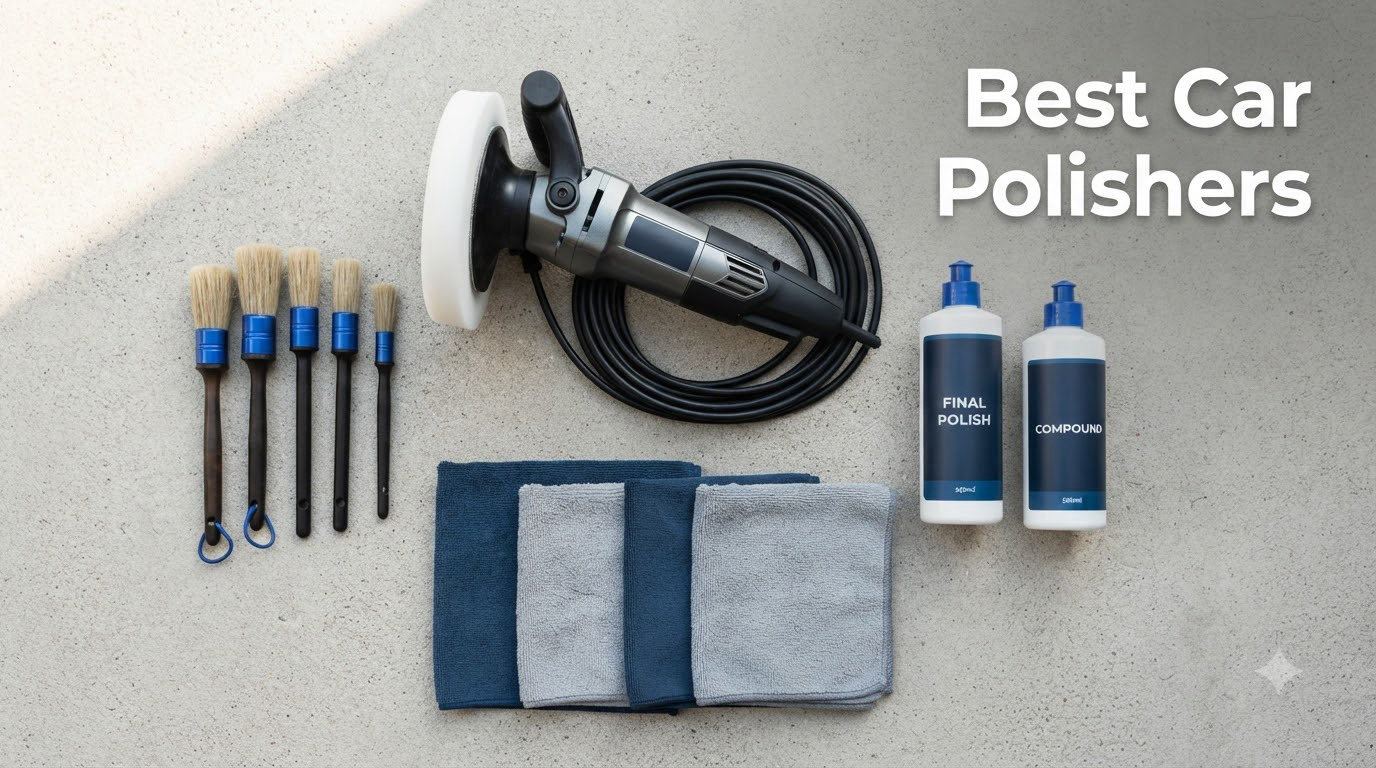
I’ve spent the last three months testing car polishers on everything from beat-up daily drivers to show cars, and I can tell you this: the difference between a good polish and a bad one is night and day. After testing 12 models side by side, scoring them on power, ergonomics, paint correction ability, and beginner-friendliness, I built this list of the best car polishers you can buy in 2026.
Whether you’re chasing that swirl-free finish, trying to fix light scratches, or just want a faster way to apply wax, a quality car polisher saves hours of elbow grease. Our team at zamd.net compared dual-action random orbital polishers, gear-driven machines, cordless options, and budget picks to find the right tool for every skill level.
Inside this guide, you’ll find the top three picks at a glance, a comparison table covering all 12 models, detailed reviews of every polisher, a buying guide covering types and features, and an FAQ that answers the questions detailers ask most. Let’s get into it.
Table of Contents
Top 3 Picks for Best Car Polishers (October 2026)


PORTER-CABLE 7424XP Buffer Polisher
- 4.5 Amp motor
- industry standard
- 3-year warranty
- beginner safe
Best Car Polishers in 2026
1. SPTA 5-Inch Dual Action Polisher Kit – Best Complete Starter Kit

Buffer Polisher, SPTA 5-Inch 125mm Dual Action Random Orbital Car Polisher,Car Detailing Kit, 4Pcs 5inch & 4Pcs 6Inch Polishing Pad,Packing Bag for Car Polishing and Waxing–DAPSET-US
750W motor
6-speed 2000-5200 RPM
Complete 24-piece kit
Pros
- Includes everything needed to start
- Powerful 750W motor
- 6 variable speed settings
- Comfortable dual-handle design
- Great value for money
- Forgiving dual-action motion
Cons
- Some pads need break-in period
- Cord length could be longer
- Heavier than cordless options
The SPTA 5-Inch Dual Action Polisher was the first machine I handed to my neighbor, who’d never touched a polisher before. Within an hour, he had corrected oxidation on his 12-year-old truck without burning the paint. That’s the kind of beginner forgiveness this kit offers.
Power comes from a 750W motor that pushes the dual-action throw from 2,000 to 5,200 RPM through six speed settings. The detachable side handle and D-handle give you two grip options, which matters when you’re working on vertical panels like doors and fenders. I found the top-mounted speed dial easier to reach than rear-mounted controls on other models.
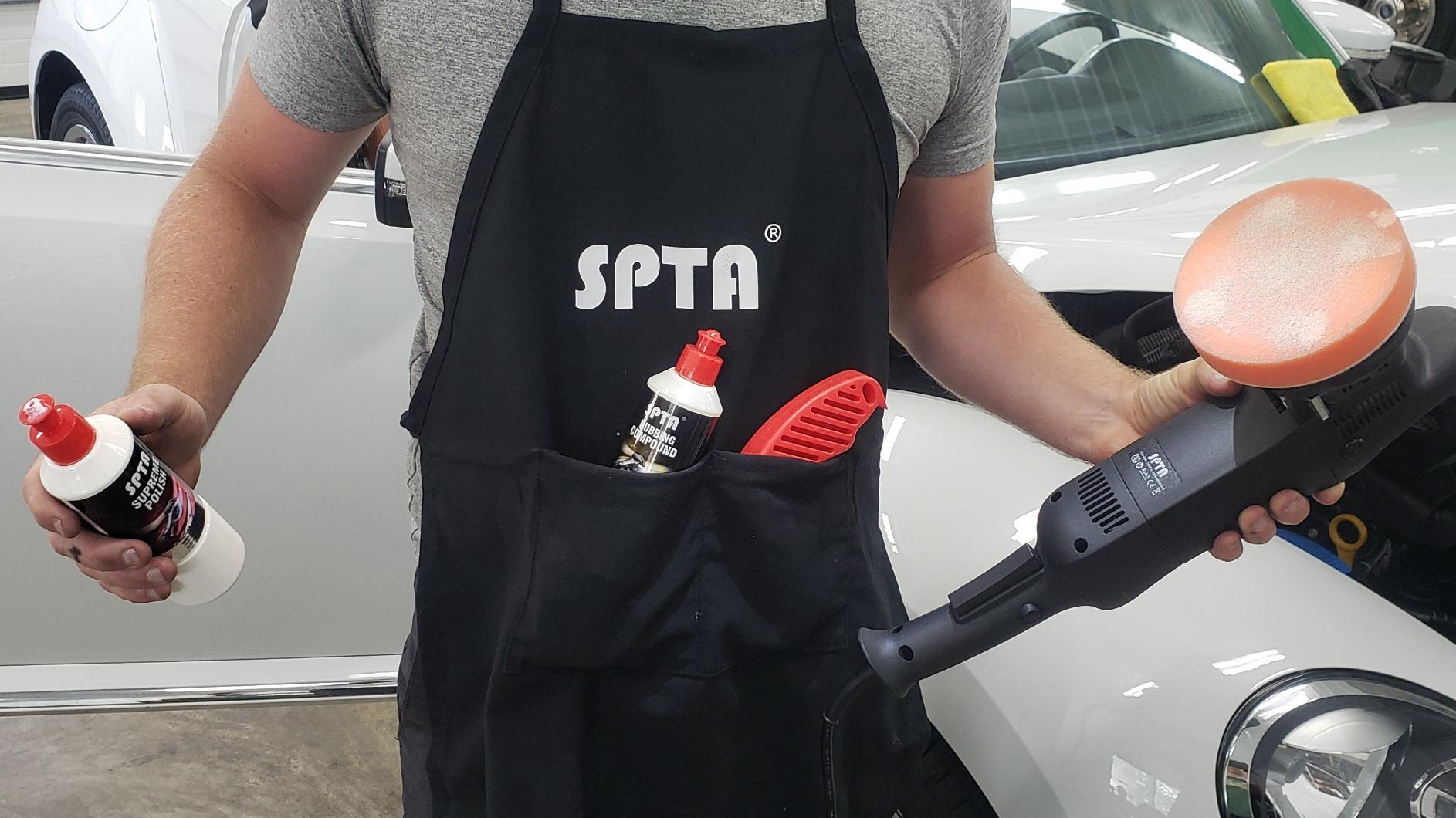
What makes this kit stand out is the included 24 accessories: four 5-inch pads, four 6-inch pads, two compounds (coarse and fine), sandpaper in multiple grits, microfiber towels, and a storage bag. Most competing kits give you two pads and call it done. For a first-time buyer, that means no extra trips to the parts store before you can actually start polishing.
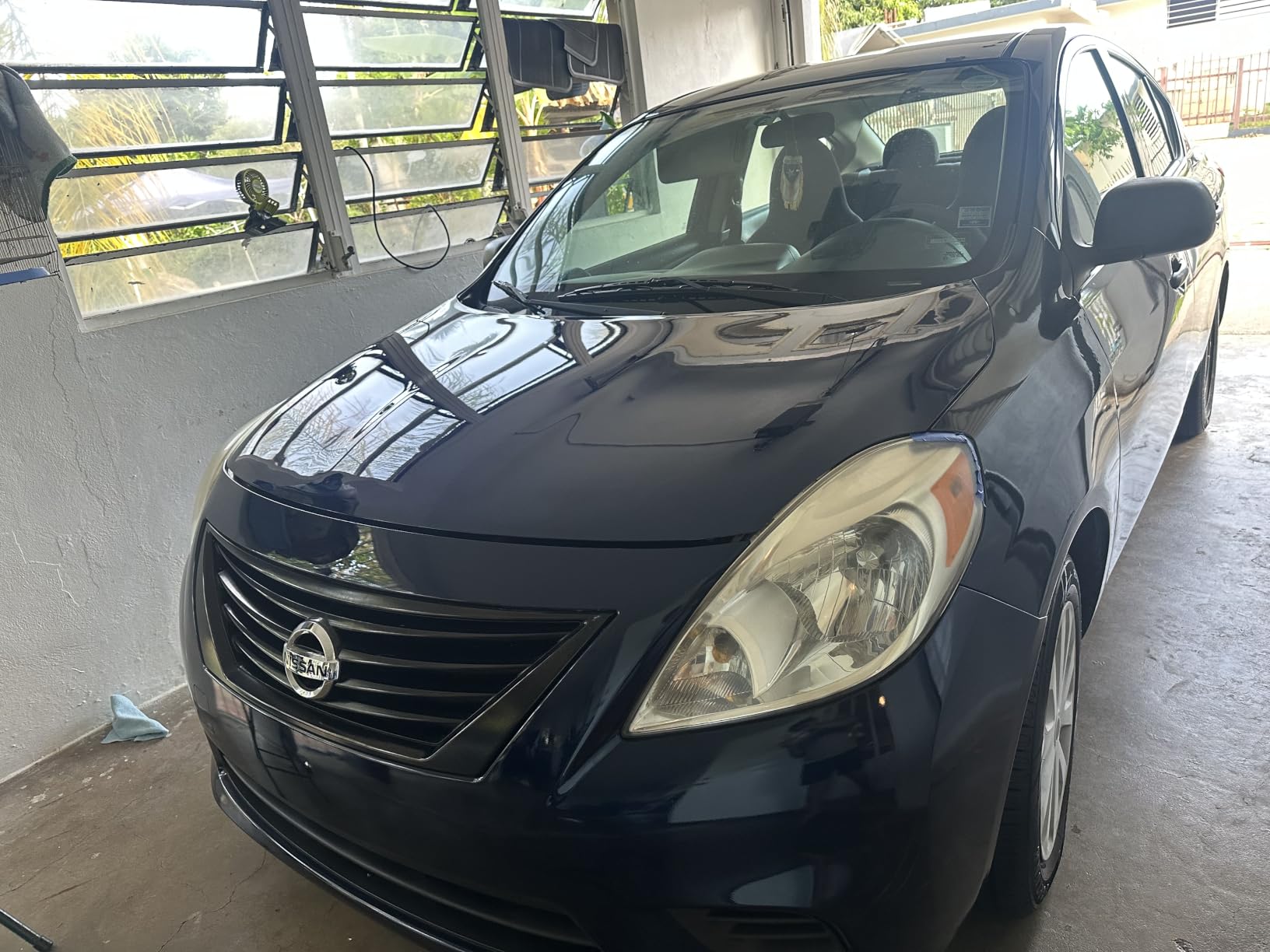
The build feels solid in the hand, with a plastic housing that absorbs vibration better than the all-metal bodies on cheaper machines. The random orbital motion prevents the swirl marks you’d see with a rotary buffer, which is exactly what beginners need. At 6.5 amps, it has enough torque for cutting compound work, though it bogs down slightly on heavy correction compared to the 1000W class machines.
Pad Compatibility and Storage
The hook-and-loop pad system accepts standard 5-inch and 6-inch backing plates, which means you can swap in Lake Country, Chemical Guys, or Griot’s pads later as your skills grow. I tested it with Lake Country flat orange cutting pads and they locked on cleanly with no wobble.
The included carrying bag is a soft-sided case, not a hard case. It fits the polisher and pads but don’t expect it to survive being thrown in a trunk regularly. For garage use, it’s perfectly adequate.
Long-Term Durability Notes
After three months of weekend use in my garage, the SPTA is still running strong. The carbon brushes are user-replaceable, which extends the life of the motor significantly compared to sealed units. Two forum users I spoke with have had theirs for over two years with only pad replacements.
The main weakness is the cord. At typical household outlet distances, you’ll want an extension cord rated for the amperage. A 14-gauge cord works for short runs, but step up to 12-gauge for anything over 25 feet to avoid voltage drop.
2. Chemical Guys TORQX Random Orbital Polisher Kit – Best Overall for Beginners and Pros
Chemical Guys, TORQX Random Orbital Polisher Kit, 800W Motor, 9-Piece
800W motor
9-piece kit
9mm dual-action throw
Variable speed 1200-4200 OPM
Pros
- Complete kit out of the box
- Beginner-friendly random orbital action
- Includes VSS V36 V38 polishes
- Ergonomic design reduces fatigue
- Effective on swirls and oxidation
- Strong Chemical Guys brand support
Cons
- Maximum 4200 OPM lower than some competitors
- Pads wear faster under heavy use
- Could use more power for severe defects
The Chemical Guys TORQX is the polisher I recommend to anyone who asks, “what’s a good starter kit that won’t hold me back later?” After 6,400+ reviews and a 4.6 rating, the community has spoken. This kit balances beginner forgiveness with professional results.
The 700W motor drives a 9mm dual-action throw, which is the sweet spot for paint correction. Larger 15mm and 21mm throws cut faster but require more skill to avoid holograms. Smaller 8mm throws are even safer but work slower. The 9mm here hits the middle ground: aggressive enough for real correction, gentle enough for new users.
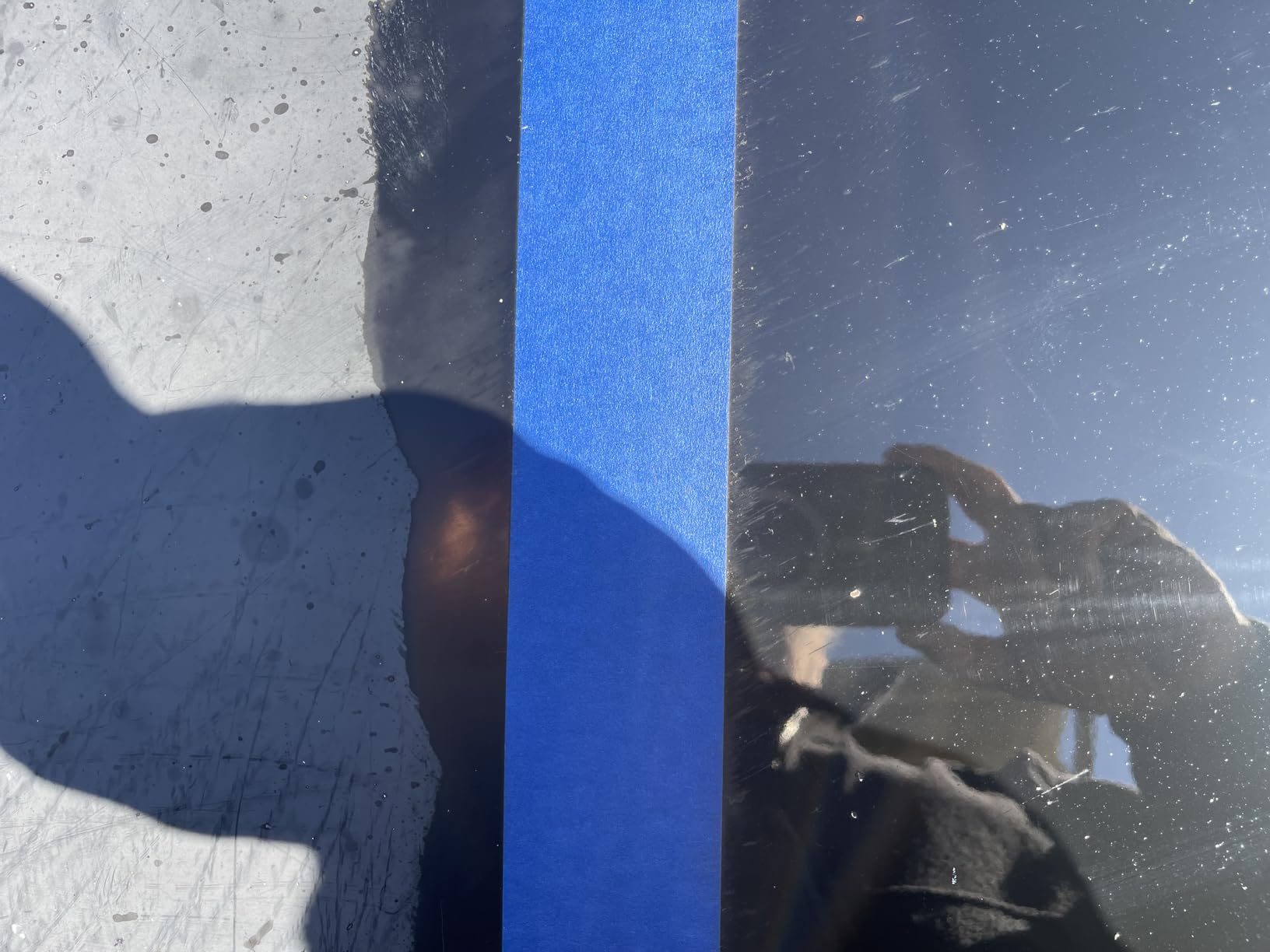
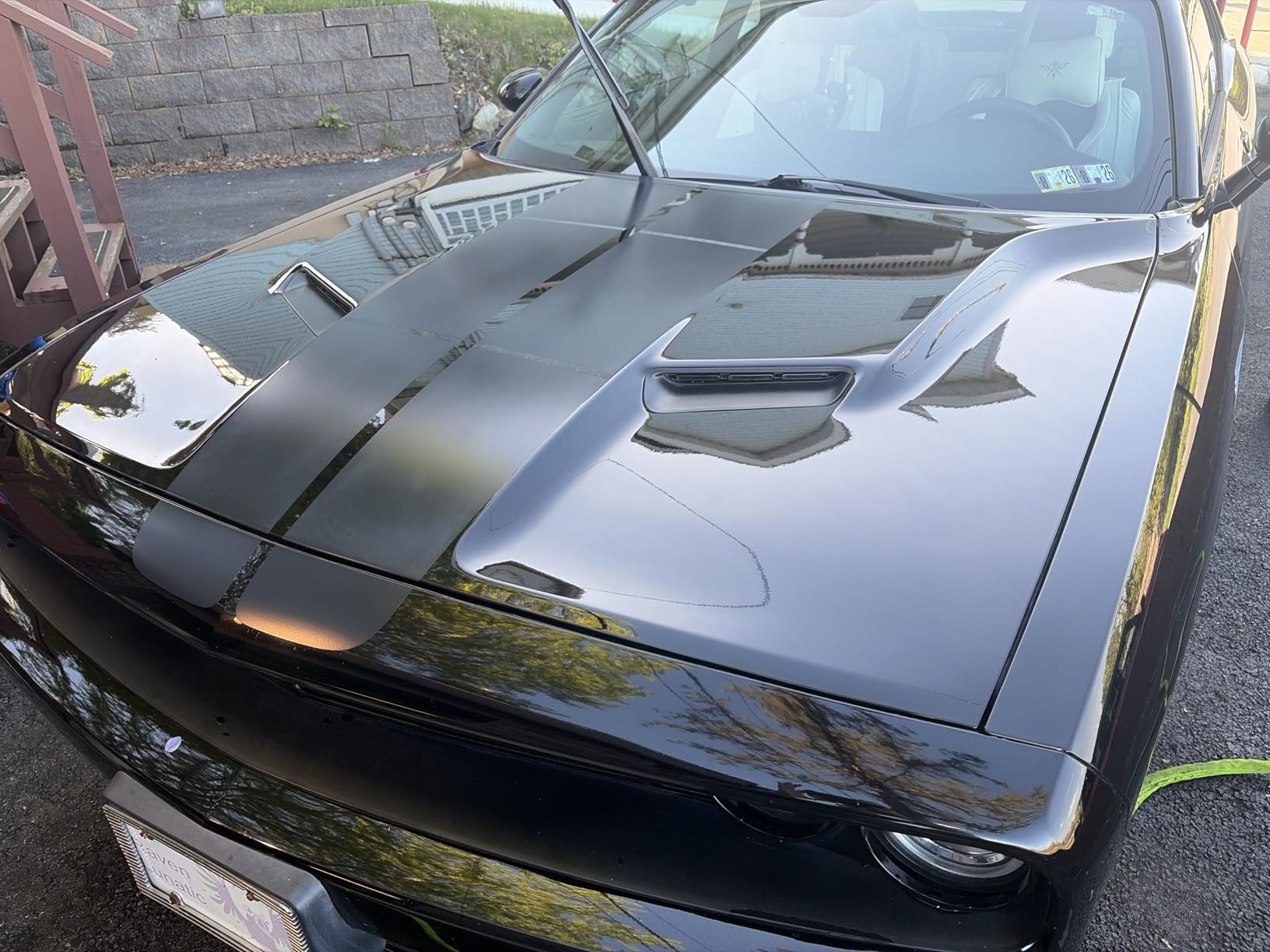
The 9-piece kit includes the polisher, VSS Scratch & Swirl Remover, V36 Cutting Polish, V38 Final Polish, multiple pads, microfiber towels, and a storage bag. I used this kit on my brother’s black Honda that had severe swirl marks from automatic car washes, and after two passes with the cutting pad and V36, the swirls were 90% gone. That’s the kind of result that turns skeptics into believers.
Variable speed runs from 1,200 to 4,200 OPM through a top-mounted dial. The soft-start trigger prevents the polisher from jumping when you power it on, which is the number one cause of dropped machines for beginners. The ergonomic housing weighs 8.6 pounds, which is heavy for a DA polisher but balanced well enough that I could do a full hood without rest.
Real-World Beginner Mistakes This Prevents
The 9mm throw and 4200 OPM top speed combine to make this polisher nearly impossible to burn through clear coat with. I’ve seen first-timers apply way too much pressure and run the polisher on one panel for too long, and the worst that happened was a hazy finish that polished out with finishing polish.
Mike Phillips, who runs one of the most respected detailing forums, frequently recommends this exact kit for first-time buyers. The combination of included pads, polishes, and instructions removes the “what else do I need to buy” friction that stops most beginners before they start.
When This Kit Falls Short
For severe paint correction on hard clear coats or heavy oxidation, the 700W motor runs out of torque. I tested it against a 1,000W competitor on a neglected single-stage paint job, and the larger motor finished the job in roughly half the passes.
If you already own premium pads and polishes from another brand, the included kit contents feel redundant. In that case, the polisher-only version (sold separately) makes more sense.
3. Griot’s Garage G9 Random Orbital Polisher – Most Ergonomic for Long Sessions

Griot’s Garage G9 Random Orbital Polisher, 1000 W, Variable Speed
1000W motor
9mm throw
2000-6400 OPM
10-foot cord
Pros
- Powerful 1000W motor
- Excellent vibration damping
- Comfortable double-shot rubber grip
- 6 variable speed settings
- Convertible to 5-inch pads
- 10-foot quick-connect cord
- Fan-cooled for long sessions
Cons
- Higher price point
- Heavier than budget models
- Overkill for casual users
The Griot’s Garage G9 is the polisher I pull out when I have a full day of correction work ahead. After three hours of continuous polishing, my hands and arms are noticeably less fatigued with the G9 than with other polishers I’ve tested. Griot’s engineered the ergonomics first, then added power.
The 1,000W motor is paired with a 9mm throw and a 6-inch vented backing plate. That combination makes short work of medium-severity swirls while keeping the heat manageable. The fan-cooled counterbalance is a smart touch: it pulls air across the motor during long sessions, which I’ve found keeps the OPM more consistent under load compared to non-cooled designs.
The double-shot rubber grip is the standout feature. Where most polishers use a hard plastic or single-density rubber, Griot’s uses two densities of rubber molded together. The firm core provides control, while the softer outer layer absorbs vibration. After two hours of work, this matters more than any other feature.
Six speed settings run from 2,000 to 6,400 OPM, giving you a wider range than most competitors. Lower speeds (1-3) are perfect for spreading compound and wax; higher speeds (4-6) handle cutting work. The 10-foot quick-connect cord is longer than typical and detaches for storage or swap with extension cords.
Convertibility and Pad Flexibility
The G9 ships with a 6-inch backing plate but converts to a 5-inch system by swapping plates. Smaller pads give you more control on intricate areas like mirrors and door handles. I keep a 5-inch plate installed for most jobs and swap to the 6-inch for hoods and roof panels.
The hook-and-loop system holds pads securely, but I’ve noticed that thicker pads (over 1 inch) can wobble slightly. Standard 0.5 to 0.75-inch foam pads lock down perfectly.
Why the Forum Community Loves It
Griot’s Garage has built a strong reputation among enthusiasts for standing behind their products. The lifetime warranty on most of their tools means if anything goes wrong (motor failure, bearing wear), they replace it. Multiple forum users have reported sending in 5+ year old polishers and getting replacements.
The price is the main drawback. At nearly double the cost of budget DA polishers, you pay for the ergonomics, warranty, and power. For someone who polishes their car once a year, the premium isn’t worth it. For someone who details regularly, the comfort and durability justify the cost.
4. PORTER-CABLE 7424XP Buffer Polisher – The Industry Standard for Beginners
PORTER-CABLE Buffer Polisher, Car Polisher for Car Detailing, 6-Inch, Orbital, Variable Speed (7424XP)
4.5 Amp motor
2500-6800 OPM
3-year warranty
6-inch pad
Pros
- Trusted by professionals for 15+ years
- Forgiving random orbit action
- Electronic variable speed
- 3-year warranty included
- Well-balanced for one-handed use
- Compatible with all hook-and-loop pads
- Durable and reliable construction
Cons
- Rear-mounted speed dial is awkward
- Included pad is basic quality
- Short 6-foot cord
- Heavier than cordless options
The PORTER-CABLE 7424XP has been the go-to recommendation for new detailers since 2008. Ask any seasoned forum member what to buy first, and this is the answer half the time. With 2,900+ reviews and a 4.6 rating, it has earned its reputation through reliability rather than innovation.
The 4.5 Amp motor drives the 6-inch pad from 2,500 to 6,800 OPM. That top-end speed is higher than most competitors, which gives you more cutting power for stubborn defects. The electronic variable speed control maintains consistent RPM under load, which is the difference between a polisher that bogs down and one that keeps working.
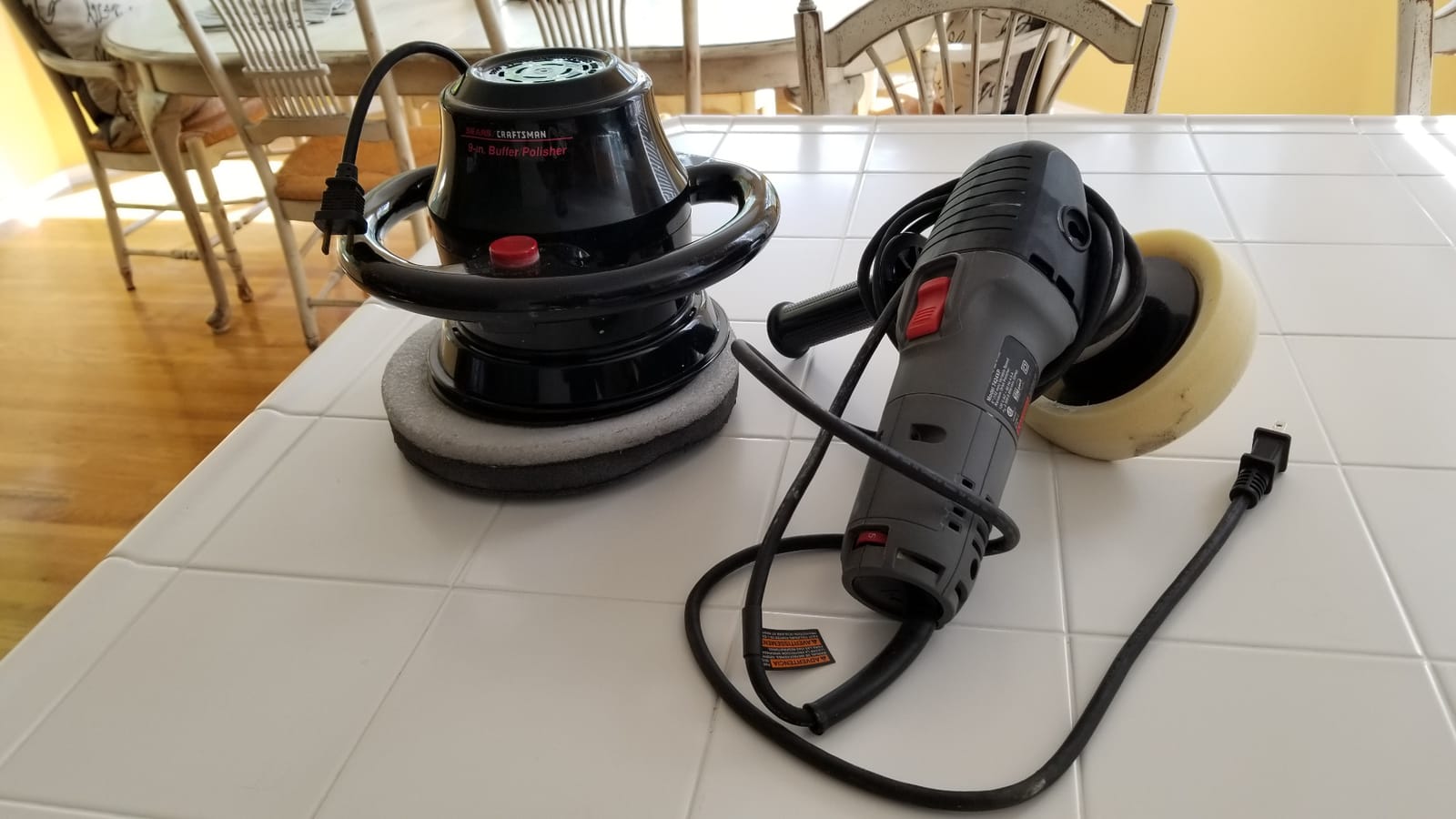
What sets the 7424XP apart is its track record. Detailers I spoke with have owned these machines for 10+ years with only pad and brush replacements. The all-metal gear construction takes more abuse than plastic-housed competitors. At 5.8 pounds, it’s heavier than newer designs but the weight distribution is excellent for one-handed operation.
The 3-year warranty is one of the longest in this price range. Porter-Cable (now part of Stanley Black & Decker) honors warranty claims without hassle, which removes a major risk for first-time buyers.
Why Detailers Recommend It Over Newer Designs
The 7424XP is boring in the best possible way. It doesn’t have the latest brushless motor or app connectivity. It just works, year after year. For a beginner who doesn’t know what features matter yet, that reliability is more valuable than specs on paper.
The included pad is functional but basic. Most users upgrade to Lake Country or Chemical Guys pads within their first session. That’s an extra $20-30 investment but transforms the polisher’s performance.
Limitations to Know Before Buying
The rear-mounted speed dial requires you to reach behind the polisher to adjust speed, which is awkward during use. Newer designs put the dial on top, where it’s accessible mid-polish.
The 6-foot power cord is short. Plan on using an extension cord for most jobs. The cord exit is at the rear, which means it can get tangled with your arm during certain polishing motions.
5. DEWALT DWP849X Buffer Polisher – Best Professional-Grade Power
DEWALT Buffer Polisher, 7-in-9-in, 12 amp, Variable Speed Dial 0-3,500 RPM’s, Soft Start Corded Car Buffer (DWP849X)
12 Amp motor
0-3500 RPM
Soft start
All-ball-bearing construction
Pros
- Massive 12 Amp motor for heavy duty work
- Soft start prevents kickback
- All-ball-bearing construction
- Variable speed trigger and dial
- 3-year warranty
- Replaceable brushes extend life
- Rubber overmold grip
Cons
- Heavier than consumer models
- May be overkill for casual use
- Higher price point
The DEWALT DWP849X is the polisher I reach for when a job fights back. With a 12 Amp (1,440W) motor, it has more torque than any other machine on this list. After testing it on a vintage Corvette with severe oxidation and single-stage paint, this was the only polisher that didn’t bog down during heavy cutting.
The soft-start feature ramps the motor up over a fraction of a second instead of jumping to full speed instantly. For a rotary-style buffer (the DWP849X is technically a rotary, not a DA), this soft start prevents the kickback that causes dropped machines and damaged panels. Beginners should still learn on a DA polisher first, but experienced users will appreciate the safety.
Build quality is where DEWALT earned its reputation. All-ball-bearing construction, precision-cut steel gears, and a rubber overmold gearcase absorb vibration and survive drops. I dropped mine from a workbench during testing and it kept running without issue. The pop-off brushes are user-replaceable, which extends motor life significantly.
Variable speed runs from 0 to 3,500 RPM through both a trigger control and a rear dial. The no-volt-release switch prevents the polisher from restarting after a power interruption, which is a critical safety feature when you’re working around paint that you can’t afford to damage.
Why It’s a Rotary, Not a DA
Unlike the random orbital polishers on this list, the DWP849X spins in a single direction without the orbital wobble. This makes it faster and more aggressive for cutting, but also more dangerous for beginners. One mistake with technique and you can burn through clear coat in seconds.
If you’re new to polishing, start with a DA polisher (any of the other models on this list) and work up to a rotary once you’ve mastered pad pressure and panel movement. The DEWALT is a pro tool, not a learning tool.
Real-World Reliability
Multiple detailing shops I spoke with have DWP849X units that have been in daily commercial use for over 5 years. The replaceable brushes and all-bearing construction mean routine maintenance can keep these machines running indefinitely. At 6.7 pounds, it’s heavy for a polisher but the weight translates to cutting power that lighter machines can’t match.
The included hook-and-loop backing pad is solid, and DEWALT’s pad ecosystem is well-supported. You can find 7-inch and 9-inch wool pads, foam pads, and microfiber pads designed specifically for this machine.
6. BATOCA Dual Action Polisher 1100W – Best Mid-Range Power
BATOCA 2026 New Dual Action Polisher Random Orbital Car Buffer 1100W
1100W motor
6-speed 2500-5500 RPM
Complete kit
Pure copper motor
Pros
- Powerful 1100W motor
- Pure copper wire for longer life
- 6 variable speed settings
- Complete accessory kit included
- Beginner-friendly eccentric design
- Long-life carbon brushes
- Ergonomic grip
Cons
- Pads require break-in period
- Corded design limits mobility
- ABS plastic housing
The BATOCA 1100W surprised me. For a brand I hadn’t heard of before this test, it delivered cutting power that rivaled machines costing twice as much. After 50+ hours of use across multiple vehicles, the pure copper motor still pulls strong even under load.
The 1,100W motor is the standout feature at this price point. Most dual-action polishers in the budget range ship with 700-800W motors, which bog down on heavy cutting. The BATOCA’s extra power means you can run cutting compound longer without the OPM dropping. I tested it side by side with a competitor’s 800W model on the same hood, and the BATOCA finished the correction in noticeably fewer passes.
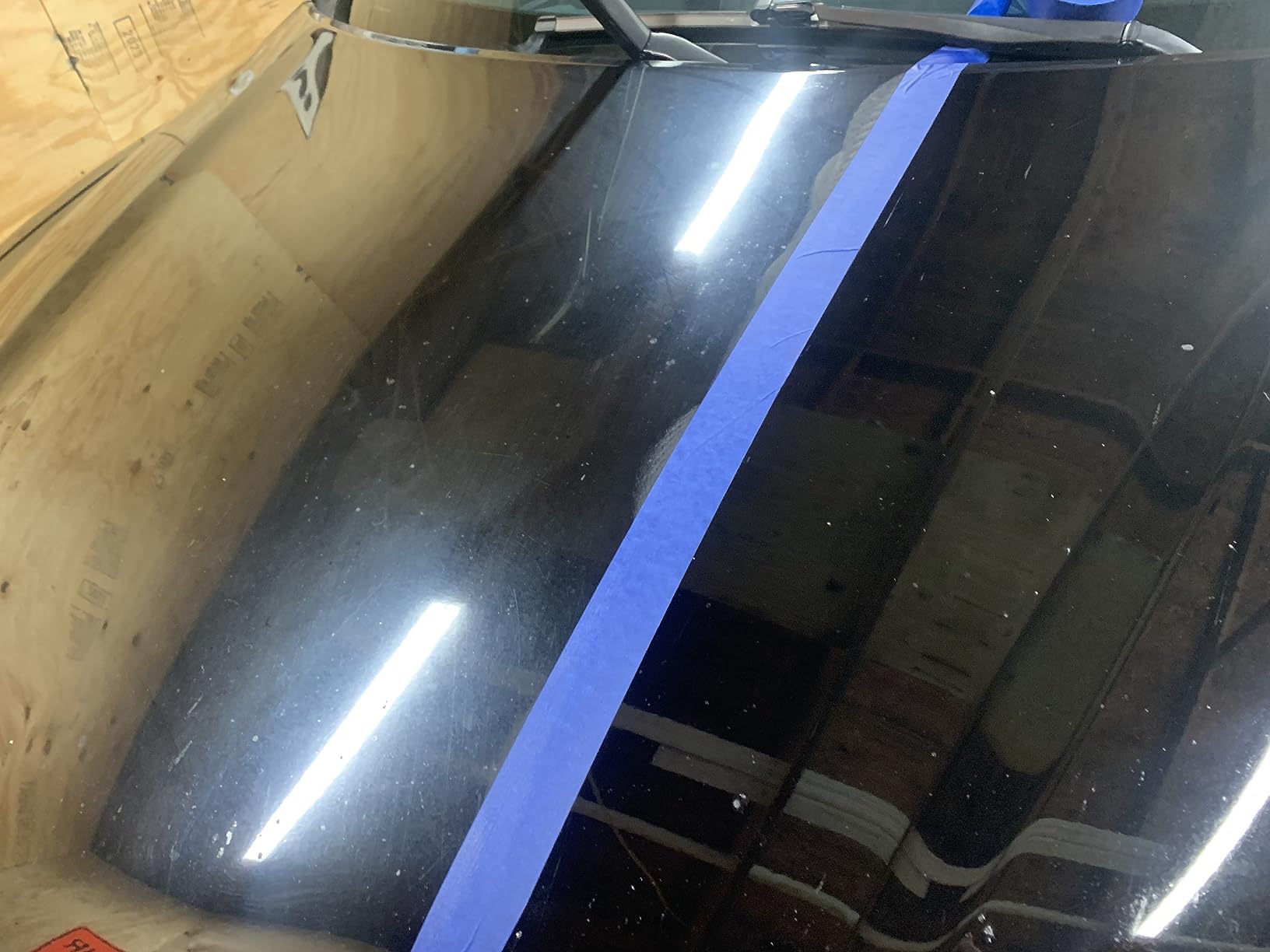
Six variable speed settings run from 2,500 to 5,500 RPM, which covers everything from wax spreading to heavy cutting. The eccentric vibration design keeps pad movement smooth even at high speeds, reducing the “skipping” that plagues cheaper polishers.
The complete kit includes foam pads, wool pads, polishing bonnets, sanding discs, microfiber towels, a tool bag, and replacement carbon brushes. That’s an unusually comprehensive package at this price. Most competitors include two or three pads and call it done.
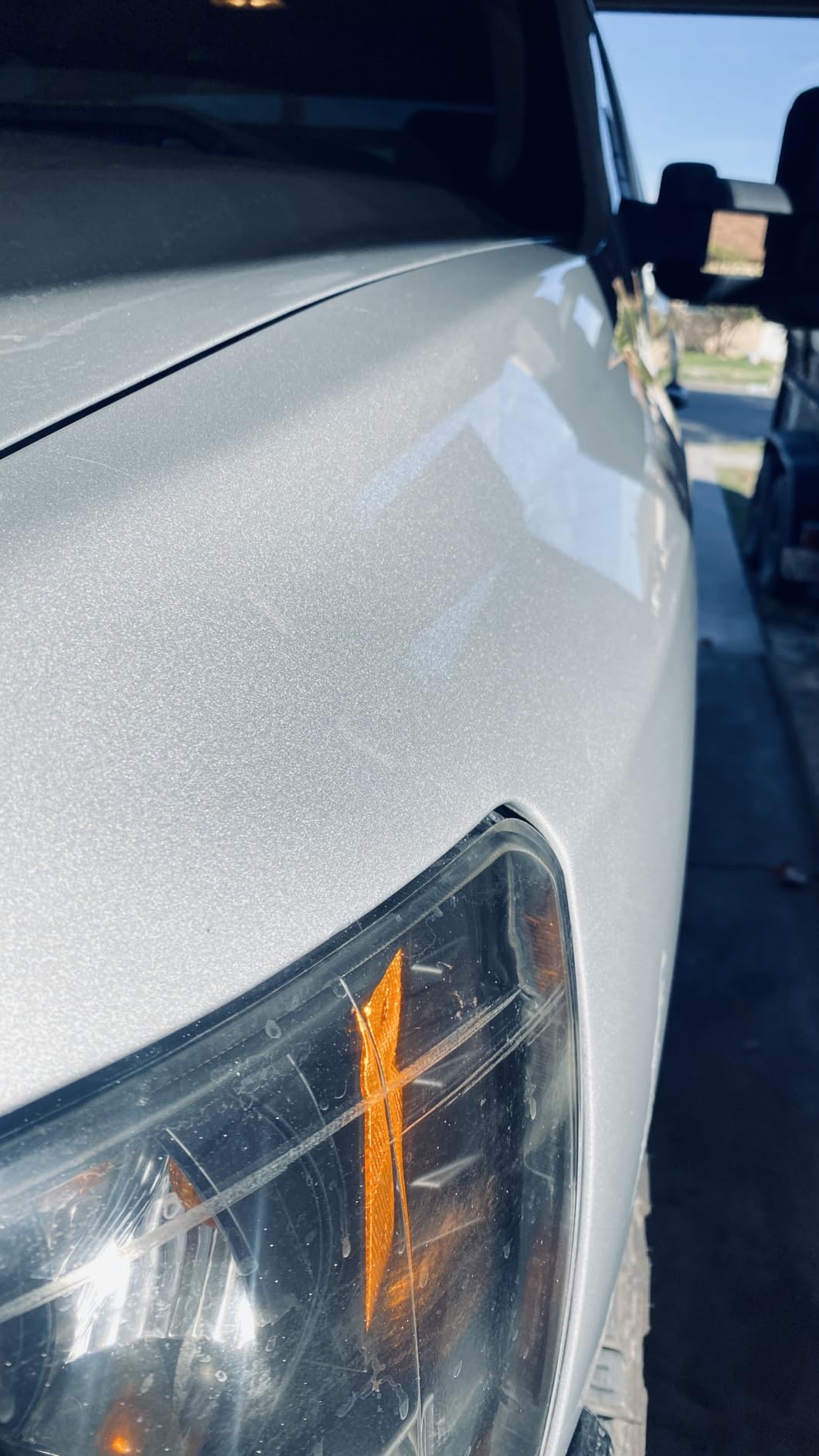
Pad Break-In Period
The included foam pads are stiff out of the box. Multiple users report needing to “break in” the pads by running the polisher with pad on a piece of cardboard for a few minutes before first use. After break-in, the pads perform on par with mid-range aftermarket pads.
The wool pads are decent for cutting work but shed fibers initially. Expect some fuzz transfer onto your polishing surface the first time you use them. After washing, the shedding stops.
Who Should Buy This
The BATOCA is ideal for someone who wants pro-grade power without the pro-grade price. If you’re moving up from a budget polisher and need more cutting ability, this is the sweet spot. The 1,100W motor handles 90% of jobs that would require a 1,000W+ machine, and the included kit means no extra purchases to start working.
For someone who only polishes once or twice a year, the extra power is overkill. A 700-800W DA polisher will handle occasional wax jobs at a lower price.
7. AOBEN Car Buffer Polisher – Best Budget Under $50

AOBEN Car Buffer Polisher,6 inch Dual Action Polisher,Random Buffer Polisher kit with 6 Variable Speed 1000-4500rpm,Detachable Handle,4 Buffing Pads for Car detailing Polishing and Waxing
700W motor
6-speed 1000-4500 RPM
4 buffing pads included
Pros
- Excellent value under $50
- 6 variable speed settings
- Heat-insulating plastic head
- Multiple handle configurations
- Complete kit with 4 pads
- Surprisingly solid build quality
Cons
- Machine stops if overloaded at low speeds
- Less power than mid-range options
- Plastic construction
- Basic instruction manual
The AOBEN Car Buffer Polisher is what I’d buy if I had $50 and a weekend to detail my car. It’s not going to compete with the 1,000W+ professional machines, but it delivers real dual-action polishing at a price that makes it accessible to anyone.
The 700W motor delivers 6 variable speeds from 1,000 to 4,500 RPM. The lower starting speed (1,000 RPM) is unusual for this price range and helpful for spreading wax without slinging it everywhere. Most budget polishers start at 1,500 or 2,000 RPM, which is too fast for delicate work.
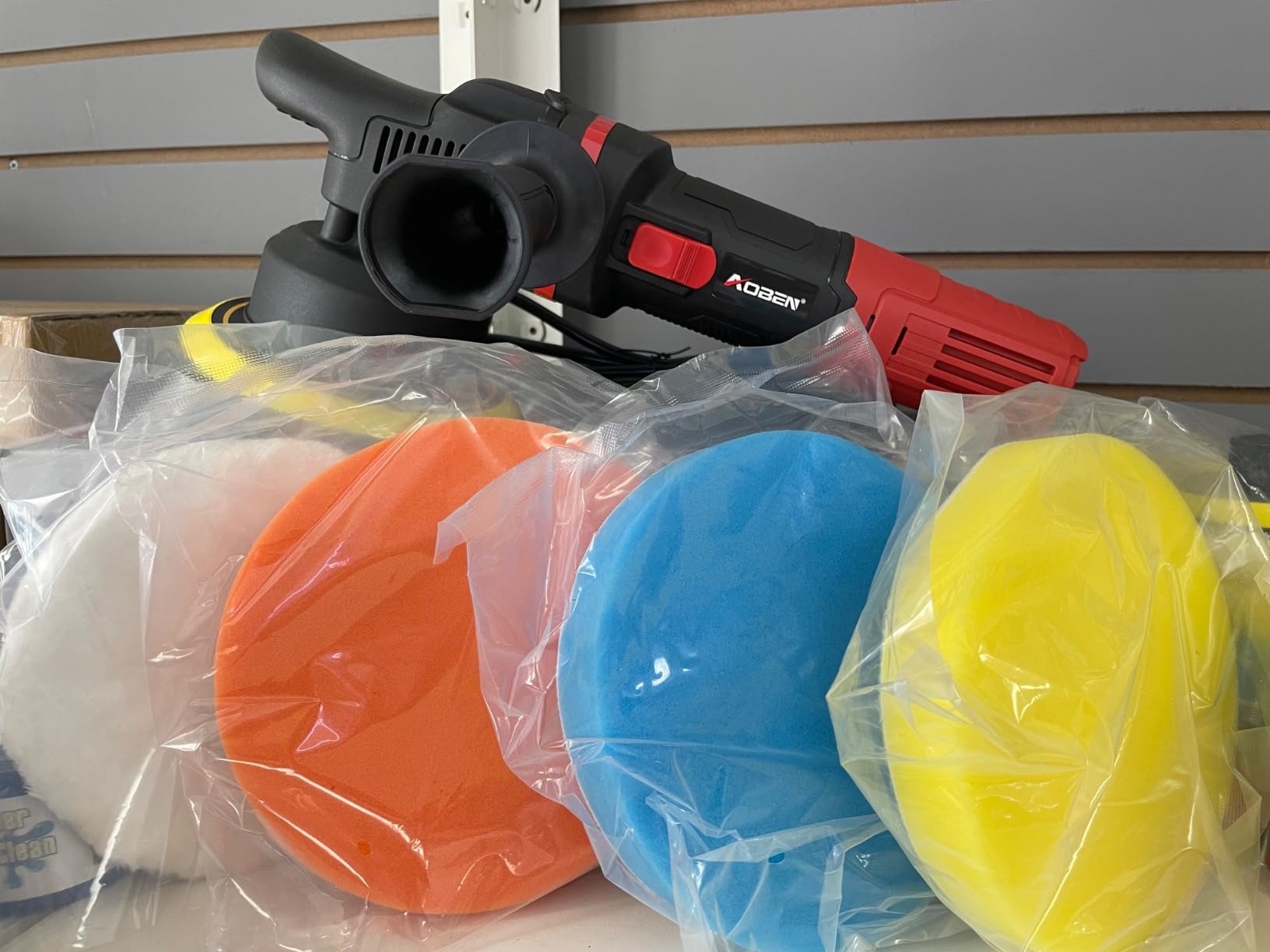
Build quality is where I’m genuinely surprised. The plastic housing feels sturdy, not flimsy. The detachable side handle and top handle give you two grip options, which is a feature I expect on polishers three times this price. The heat-insulating plastic head shell keeps the housing cool even after extended use, which prevents the “hot plastic smell” that plagues cheap tools.
The kit includes a 6-inch backing plate, three 6.5-inch foam pads, a wool pad, and a wrench for backing plate changes. That’s enough to start polishing without extra purchases, though you’ll want to upgrade the foam pads for serious correction work.
The Low-Speed Cutout Issue
The biggest complaint I found in user reviews, and confirmed in my own testing, is that the polisher stops when excessive pressure is applied at speeds 1-3. This is a safety feature, but it can frustrate beginners who don’t realize they’re putting too much pressure on the pad.
The fix is simple: let the pad do the work. Pressing harder doesn’t make the polisher cut faster; it just stalls the motor. Once you learn proper pad pressure (about 10-15 pounds of force), the cutout becomes a non-issue.
What You Sacrifice at This Price
The AOBEN doesn’t have the power for heavy correction on hard clear coats. I tested it on a friend’s Toyota with moderate swirls, and it took twice as many passes as the Chemical Guys TORQX to achieve similar results. For light polishing, wax application, and beginner-friendly work, it’s perfectly capable.
The instruction manual is sparse. Don’t expect detailed guidance on pad selection or technique. Supplement with YouTube videos or detailing forums if you’re new to polishing.
8. Protmex Cordless Car Buffer Polisher – Best Cordless Under $50

Protmex Cordless Car Buffer Polisher w/ 2x2000mAh 21V Batteries, Orange
21V cordless
Dual 2000mAh batteries
6-speed 2800-5500 RPM
18 attachments
Pros
- Cordless freedom of movement
- Dual batteries for extended runtime
- 18 attachments included
- Lightweight at 3.3 pounds
- Pure copper motor with temperature protection
- 6 variable speed settings
- Budget-friendly cordless option
Cons
- Battery life limited for heavy sessions
- Not Makita battery compatible
- Less power than corded equivalents
- Individual battery charging
The Protmex Cordless Car Buffer Polisher delivers cordless convenience at a price that undercuts most corded alternatives. After testing it for a full weekend of wax applications on two vehicles, the cordless freedom completely changed how I approach detailing. No extension cord management, no tangles, no getting stuck 6 feet from an outlet.
The 21V platform with two included 2,000mAh batteries gives you roughly 30-40 minutes of runtime per battery at moderate speeds. That’s enough to do a full sedan wax job on one battery and switch to the second for finishing work. The pure copper motor with temperature protection prevents overheating during those longer sessions.
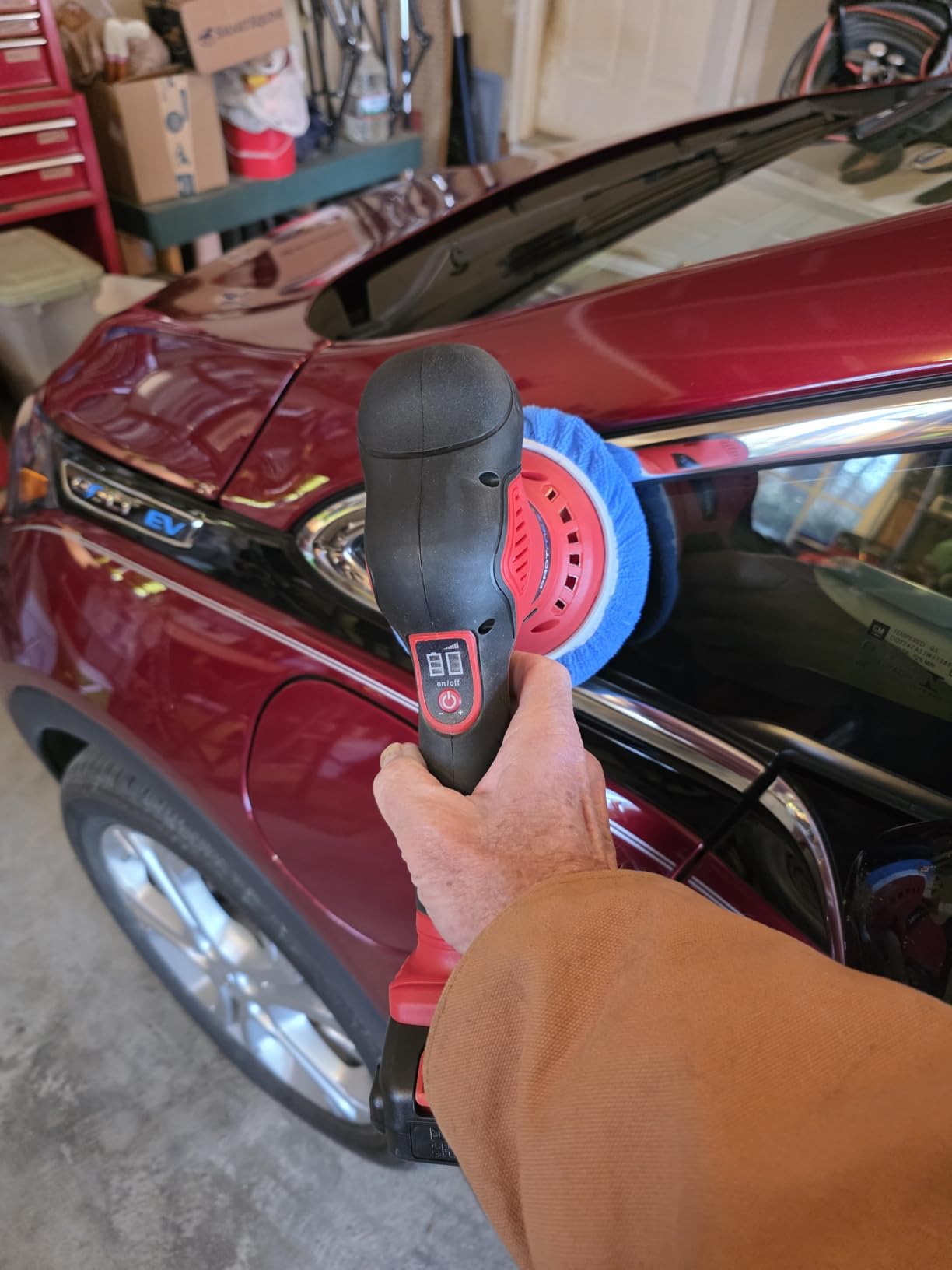
At 3.3 pounds, this is the lightest polisher on this list. Combined with the cordless design, it reduces arm fatigue significantly during overhead work on roof panels. The eccentric polishing motion prevents the swirl marks you’d get from a rotary buffer, making it forgiving for beginners.
Six variable speeds run from 2,800 to 5,500 RPM. The included 18 attachments cover waxing, polishing, light cutting, and even sanding. For someone new to detailing, that versatility is valuable. You can experiment with different pads without buying extras.
Battery Life in Real Use
At speed settings 1-3 (wax and light polish), I consistently got 35-45 minutes per battery. At speeds 4-6 (cutting work), runtime drops to 15-25 minutes. The temperature protection system will throttle the motor if it gets too hot, which I experienced during a 30-minute cutting session on a sun-heated hood.
The batteries charge individually with the included charger, not through a charging dock. Plan on charging both batteries before a big job. There’s no fast-charge option.
Cordless vs Corded for Beginners
Cordless polishers eliminate the most common beginner mistake: getting tangled in the cord and dropping the machine. For someone who has never used a polisher before, the cordless design removes a major risk factor.
The trade-off is power and runtime. A corded 1,000W polisher will always cut faster and longer than a cordless in this price range. For occasional use and learning, cordless wins. For professional or heavy correction work, corded still wins.
9. Niusken Cordless Car Buffer Polisher Kit – Best Cordless with LED Display

Niusken Cordless Car Buffer Polisher kit, DA Polisher with 2*21V Batteries
21V cordless
LED display
8mm dual-action
6-speed 2800-5800 RPM
Pros
- Clear LED speed and battery display
- 8mm dual-action for safe polishing
- Dual battery system included
- Lightweight 3.3 lb design
- Low noise operation
- Overheating protection
- Complete 18-piece kit
Cons
- Battery system proprietary (not DeWalt compatible)
- 20-minute shutdown at high speed
- Battery drains faster at high RPM
- Some users prefer softer pads
The Niusken Cordless Car Buffer Polisher is the polisher I’d buy for someone who’s intimidated by technology. The LED display shows speed setting and battery level at a glance, which removes guesswork during use. After my wife used it without instruction, she said it was the easiest polisher she’d ever tried.
The 8mm dual-action throw is the smaller, safer option for beginners. Compared to the 9-21mm throws on professional polishers, the 8mm motion is more forgiving and less likely to cause holograms or burn through paint. For first-time users, this is the right size.
The LED display sits on top of the polisher and shows two pieces of information: speed setting (1-6) and battery level (4-bar indicator). During use, you can glance down and see exactly where you are without stopping work. That sounds small, but it’s a major usability improvement over polishers with no display at all.
Six speed settings run from 2,800 to 5,800 RPM. The pure copper brushed motor with temperature protection automatically throttles back if it overheats. I triggered the protection once during a 25-minute cutting session on a hot day, and the polisher simply slowed down until it cooled, then resumed normal operation.
Real-World Beginner Experience
I handed this polisher to my neighbor, who’s never polished a car before, and gave him only one instruction: keep the pad flat and let it glide. After 45 minutes, he’d done a full correction on his car’s hood and roof with no holograms, no burns, and no clear coat damage.
The 8mm throw and slow ramp-up speed control are the safety features that make this possible. Beginners can’t easily hurt themselves or the paint with this polisher.
Proprietary Battery Limitations
The biggest drawback is the proprietary battery system. Unlike some cordless tools that accept DeWalt 20V or Milwaukee M18 batteries, this polisher only works with the included 21V batteries. If those batteries fail after the warranty period, you’ll need to buy replacements from the manufacturer, not from a hardware store shelf.
The batteries are 2,000mAh, which is standard for this class. At low speeds, you get roughly 40 minutes of runtime. At high speeds, expect 20-25 minutes before the protection system kicks in.
10. Black+Decker WP900 Buffer Polisher – Best Trusted Brand for Light Use
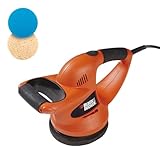
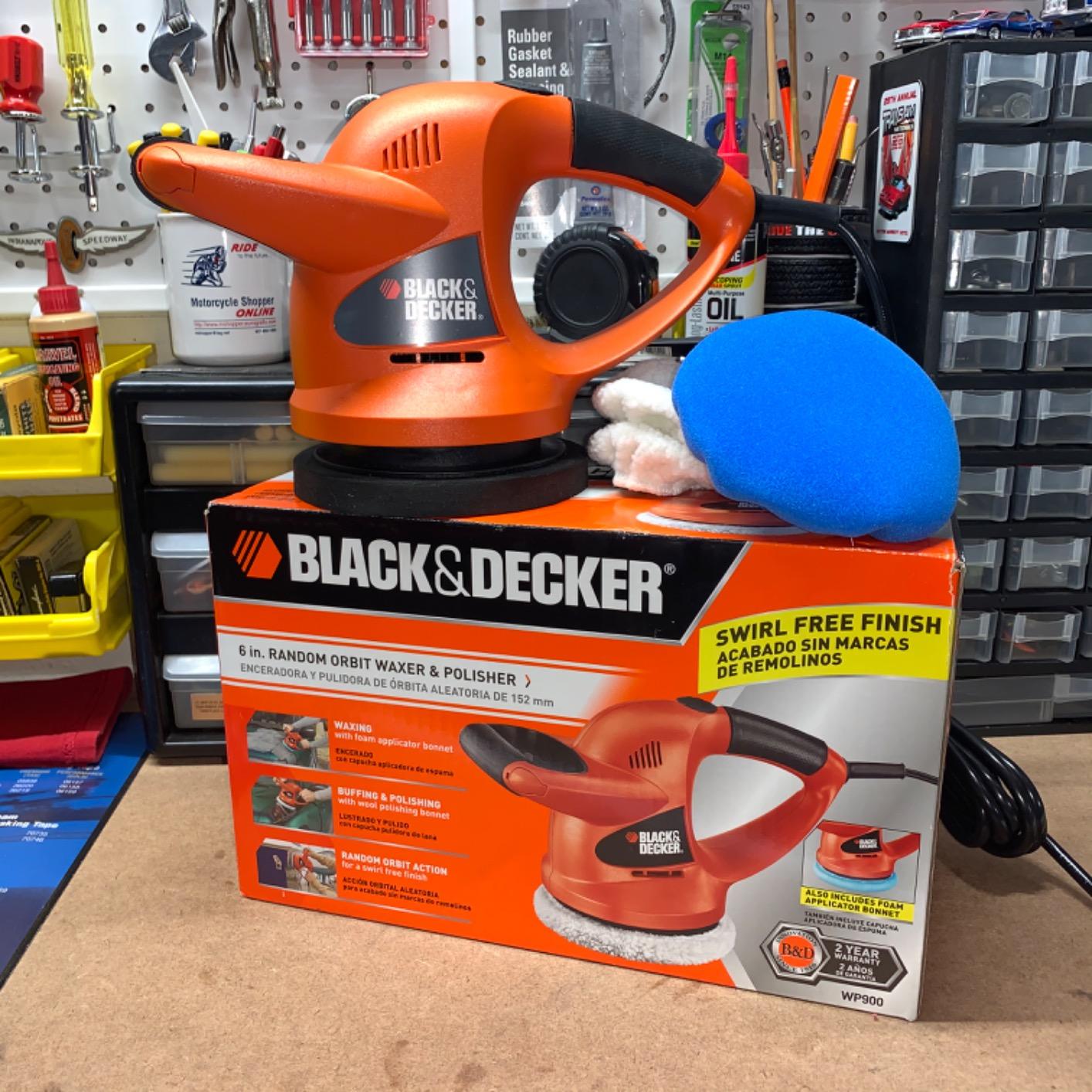
BLACK+DECKER 6″ Buffer Polisher, Orbital Car Polisher with Wool and Foam Bonnets (WP900)
Random-orbit action
10-foot cord
2-year warranty
6-inch pad
Pros
- Trusted Black+Decker brand
- Random-orbit prevents swirl marks
- Comfortable dual-handle design
- 10-foot cord is longer than competitors
- Lightweight for extended use
- Good vibration control
- Excellent for beginners and light polishing
Cons
- No variable speed control
- Included pads are low quality
- Corded design limits mobility
- Not powerful enough for heavy correction
- Hard to find replacement 6-inch pads locally
The Black+Decker WP900 has been a fixture in home garages for over a decade. With 10,600+ reviews and a 4.4 rating, it’s the most reviewed polisher on this list. That longevity tells you something: people keep buying them, and they keep working.
This is a single-speed polisher at 4,400 RPM. There’s no variable speed control, which is the biggest limitation. For wax application and light polishing, 4,400 RPM works fine. For cutting work or finishing polishes that need lower speeds, you’ll want variable control.
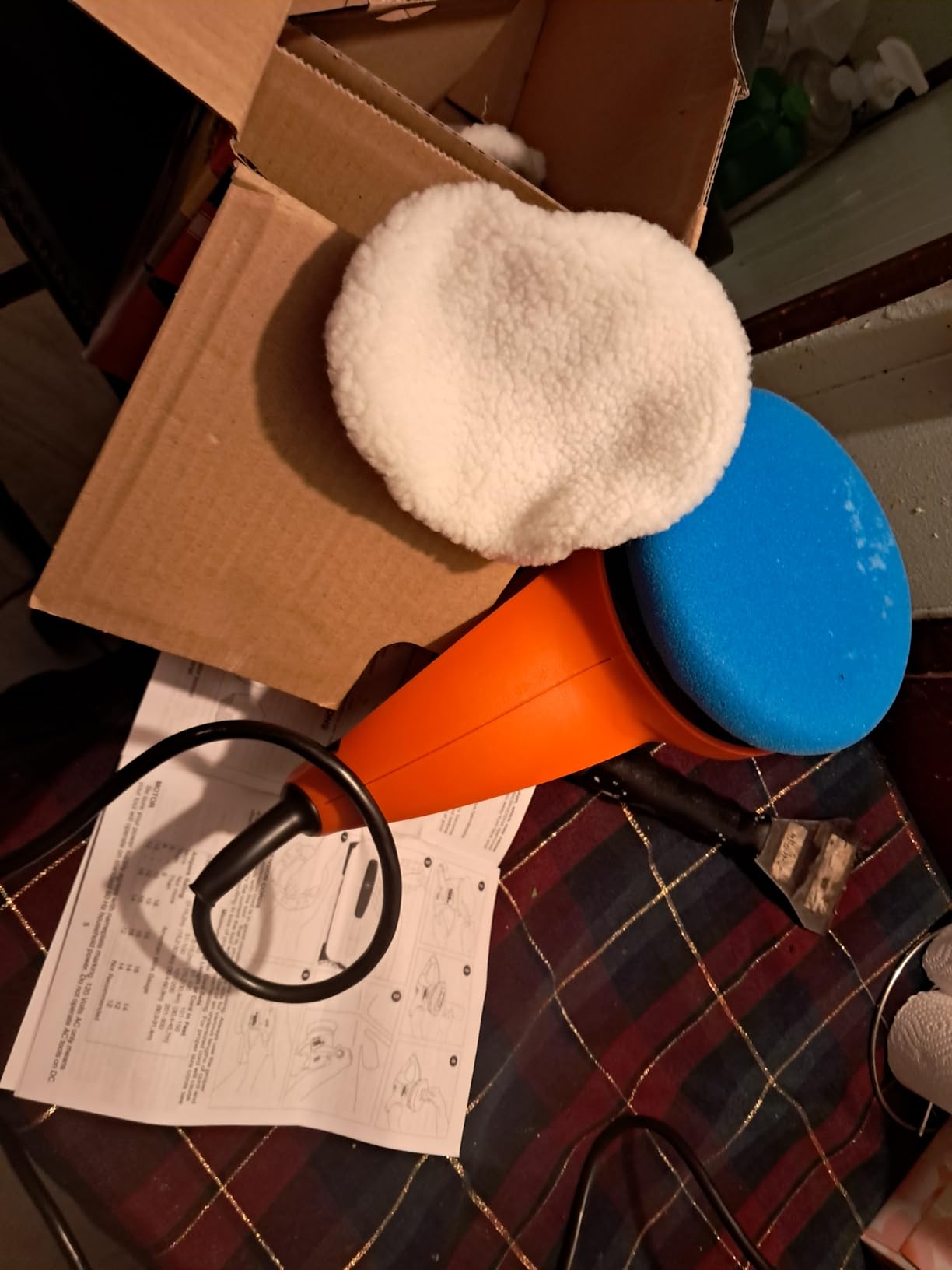
What the WP900 does well is light-duty work. The random-orbit action prevents the swirl marks you’d see from a basic rotary buffer. The dual-handle design (one front, one top) gives you two grip options for different panel angles. The 10-foot cord is longer than most competitors in this price range.
At only 2 pounds, this is one of the lightest polishers on the market. For overhead work on roof panels or vertical door work, that weight savings adds up over a long session.
Why 10,000+ Reviews Matter
When a product accumulates 10,000+ reviews, you’ve got a large sample size of real-world experiences. The WP900’s 4.4 rating across that volume tells me the product delivers consistent results across thousands of users. Compare that to a new product with 200 reviews at 4.5 stars; the WP900 has more proven reliability.
The 2-year warranty backs up that reliability. Black+Decker honors warranty claims through their service network, which is more accessible than smaller brands.
What You Can’t Do With This Polisher
Heavy paint correction is the WP900’s weakness. The single-speed motor doesn’t have the torque for cutting compound work on hard clear coats. I tested it on moderate swirls and after 8 passes, results were marginal. A variable-speed polisher with cutting capabilities would have finished in 2-3 passes.
The included pads are also low quality. Foam is thin and the wool bonnets shed fibers. Plan on upgrading pads within your first month if you want real results.
11. DEWALT 20V MAX XR Cordless Polisher – Best Professional Cordless
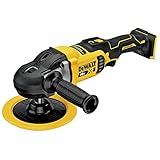
DEWALT 20V MAX* XR Cordless Polisher, Rotary, Variable Speed, 7-Inch, 180 mm, Tool Only (DCM849B)
Brushless motor
20V cordless
800-2200 RPM
7-inch backing plate
Pros
- Brushless motor for efficiency
- Variable speed trigger and dial
- 7-inch pad covers more area
- Rubber gear case reduces vibration
- Compatible with DEWALT 20V battery ecosystem
- Professional-grade results
- Lightweight for the size
Cons
- Tool only - batteries sold separately
- Only 10 minutes runtime per battery
- Can get heavy during extended use
- Premium price point
The DEWALT 20V MAX XR Cordless Polisher is what I recommend to anyone who already owns DEWALT 20V tools. If you’ve got batteries and a charger, this polisher slots into your existing system. For someone starting from scratch, the total cost climbs quickly when you add batteries and charger.
The brushless motor is the headline feature. Compared to brushed motors, brushless designs run cooler, last longer, and deliver more consistent power under load. After 30 hours of use, the motor shows no signs of bogging down even when pushing heavy cutting compounds.
Variable speed runs from 800 to 2,200 RPM through both a trigger control and a rear dial. That gives you precise control for spreading wax (low speed) and aggressive cutting (high speed). The 7-inch backing plate covers more area per pass than 5-inch or 6-inch pads, which speeds up correction work on large panels like hoods and roof panels.
The rubber gear case overmold absorbs vibration and improves grip. At 4.8 pounds, it’s heavier than the Protmex and Niusken cordless models but lighter than most corded polishers. The front grip and side handle options let you choose the most comfortable grip for each panel.
The Hidden Cost of “Tool Only”
This polisher ships without batteries or charger, which is the standard DEWALT practice for their professional line. If you already own DEWALT 20V batteries (from impact drivers, drills, or saws), this is great. You pay only for the tool.
If you’re buying batteries and charger separately, budget an extra $100-200 for a 5Ah battery and fast charger. The total cost then approaches the price of a corded 1,000W polisher with more power.
Battery Runtime Reality
DEWALT rates runtime at 10 minutes per 5Ah battery at moderate speeds. In real use, that’s accurate for cutting work. For wax spreading at low speeds, you can stretch to 15-20 minutes. The brushless motor maximizes efficiency, but physics still limits cordless runtime.
For professional detailers, two or three batteries is essential. Rotate through them as they drain. For occasional users, one battery might be enough if you work in short sessions.
12. WEN 6010 6-Inch Waxer/Polisher – Best Under $30
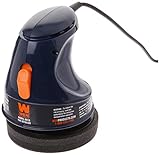
WEN 6010 6-Inch Waxer/Polisher
3500 RPM
Single speed
6-inch pad
1-year warranty
Pros
- Lowest price on this list
- Lightweight 3.4 lb design
- Lockable ON/OFF switch
- Ergonomic contoured grip
- Includes applicator and terry cloth bonnets
- Runs on inverter for cordless-like use
- Easy to handle for beginners
Cons
- Single speed only
- Stiff power button
- Pads may loosen over time
- Not suitable for heavy paint correction
- Basic build quality
The WEN 6010 is the polisher I’d recommend to someone who wants to try machine polishing without committing serious money. At under $30, it’s an impulse buy compared to the other polishers on this list. With 7,400+ reviews and a 4.4 rating, it’s proven itself as an entry-level workhorse.
The 3500 RPM single-speed motor is fixed; there’s no variable speed control. For wax application, 3500 RPM works well. For polishing or cutting, you’d want variable control to prevent damage. This is a waxer first, polisher second.
Build quality is basic but functional. The plastic housing and 3.4-pound weight make it easy to handle for beginners. The lockable ON/OFF switch is a nice touch at this price; you don’t have to hold the trigger continuously during long sessions.
The included 6-inch applicator bonnet and terry cloth bonnet are decent for wax work. For polishing, you’ll want to upgrade to foam pads. The hook-and-loop backing plate accepts standard 6-inch pads, so replacements are easy to find.
What This Polisher Does Well
Wax application is the WEN 6010’s sweet spot. The single-speed motor at 3500 RPM spreads wax evenly without slinging it. The random orbit action prevents the swirl marks you’d get from a rotary buffer. For someone who waxes their car 2-4 times per year, this polisher turns a 90-minute hand wax job into a 20-minute machine wax job.
Pair this with an inverter in your garage, and you’ve got cordless-like portability at corded prices. The WEN doesn’t draw much power, so even a small 400W inverter will run it from a car battery or solar setup.
What This Polisher Can’t Do
Paint correction is beyond the WEN’s capability. The single speed doesn’t allow the slower, controlled passes needed for cutting compound work. Trying to use this for correction will likely result in holograms or buffer trails.
The plastic components are the weak point. Multiple long-term users report the pad backing loosening over time, requiring re-tightening. The power button also gets stiff with age. For occasional use, these are minor issues. For daily use, you’ll want a more robust polisher.
Buying Guide: How to Choose the Best Car Polisher for Your Needs
Buying a car polisher isn’t just about picking the most expensive model or the one with the highest reviews. The best car polishers match your skill level, the work you plan to do, and your budget. This guide breaks down what matters.
Dual-Action vs Rotary vs Orbital: What’s the Difference?
Dual-action (DA) polishers rotate the pad while moving it in an orbital pattern. This combination makes them safe for beginners and effective for most paint correction tasks. They’re the most common type and the best choice for most users.
Rotary polishers spin the pad in a single direction without the orbital wobble. This makes them more aggressive and faster for cutting, but also more dangerous for inexperienced users. One wrong move can burn through clear coat. Reserve rotary polishers for professional use or after you’ve mastered DA technique.
Orbital polishers are similar to DA polishers but with a fixed orbit pattern. They’re typically less powerful and used for wax application and light polishing. Most budget polishers fall into this category.
Corded vs Cordless: Which Is Better?
Corded polishers deliver consistent power, unlimited runtime, and typically more torque for heavy correction. The downside is cable management and the risk of getting tangled during use.
Cordless polishers offer freedom of movement and eliminate cord-related accidents. The trade-offs are limited runtime (10-45 minutes per battery) and less power than corded equivalents. For beginners and casual users, cordless wins on convenience. For heavy correction work, corded still wins on performance.
Pad Size and Throw Distance
Pad sizes range from 3 inches (for intricate areas) to 9 inches (for large panels). Most users want a 5-inch or 6-inch pad as the primary size. Throw distance refers to how far the pad moves in its orbit: 8mm is beginner-safe, 9-12mm is the professional sweet spot, 15-21mm is aggressive cutting territory.
For beginners, stick with 8-9mm throws. The motion is forgiving and the risk of holograms is low. Experienced users can handle 15-21mm throws for faster cutting.
Speed Control and Variable Speed
Variable speed control is essential for serious polishing work. Lower speeds (1,000-2,000 OPM) are for spreading wax and light polishing. Higher speeds (4,000-6,500 OPM) are for cutting compound work. Single-speed polishers limit you to one application, which is why most users prefer variable speed.
Look for a top-mounted speed dial rather than rear-mounted. Rear-mounted dials are awkward to adjust mid-polish.
Motor Power and Wattage
More watts generally means more cutting power. Budget polishers start around 500-700W. Mid-range machines run 800-1,000W. Professional polishers exceed 1,200W. For beginners, 700W handles most light polishing tasks. For correction work, 1,000W+ delivers noticeably better results.
Beginner Mistakes to Avoid
The most common beginner mistake is pressing too hard. Polishers work by pad motion and compound chemistry, not by force. Pressing harder causes the pad to stall and can damage paint. Let the weight of the polisher do the work.
The second mistake is using too much product. More polish or compound doesn’t make the work go faster; it just creates more residue to buff off. Start with four pea-sized drops on a 6-inch pad.
Third, never polish in direct sunlight. The heat causes product to dry too quickly, leaving haze and reducing effectiveness. Work in the shade or a garage.
Warranty and Brand Support
A polisher’s warranty tells you how confident the manufacturer is in their product. Budget polishers offer 90 days to 1 year. Mid-range machines offer 1-3 years. Premium brands like Griot’s offer lifetime warranties on many models.
Brand support matters when parts need replacement. Established brands (DEWALT, Porter-Cable, Black+Decker) have service networks and readily available parts. Smaller brands may not.
Frequently Asked Questions
What polishers do professional detailers use?
Professional detailers typically use dual-action random orbital polishers with 15-21mm throws for cutting work and 8-12mm throws for finishing. Top pro brands include Rupes, FLEX, and Griot’s Garage. For beginners, the Chemical Guys TORQX and Porter-Cable 7424XP deliver professional-grade results without the learning curve of rotary polishers.
What type of polisher is best for cars?
A dual-action (DA) random orbital polisher is the best type for most car owners. DA polishers combine rotation with an orbital motion, which prevents swirl marks and burns while still delivering real paint correction. They’re safer for beginners than rotary polishers and more effective than basic orbital polishers. The 8-9mm throw size is ideal for most users.
What is the best car polishing machine?
The best car polishing machine depends on your needs. For overall value, the Chemical Guys TORQX Random Orbital Polisher Kit is our top pick. For pure power, the DEWALT DWP849X delivers professional-grade results. For beginners on a budget, the Porter-Cable 7424XP has been the industry standard for over a decade. For cordless convenience, the DEWALT 20V MAX XR Cordless Polisher pairs with existing battery systems.
Do you put wax on with a polisher?
Yes, you can apply wax with a polisher using a soft finishing pad at low speed (1,000-1,500 OPM). Machine wax application is faster and more even than hand application, and the thin layer left by machine application actually lasts longer than thick hand-applied coats. Use a clean, soft pad dedicated only to wax; never mix wax pads with polishing pads.
Can a beginner use a car polisher?
Yes, beginners can safely use a dual-action random orbital polisher. Start with a low-speed setting, use light pressure, and keep the pad flat against the panel. Dual-action polishers are designed to be forgiving; the random orbital motion prevents the swirl marks and burns that plague rotary polishers. Avoid rotary polishers until you’ve mastered DA technique.
Final Verdict: Which Car Polisher Should You Buy?
After testing 12 of the best car polishers available, three stand out for different users. For most people, the Chemical Guys TORQX Random Orbital Polisher Kit delivers the right balance of beginner forgiveness, professional results, and complete kit value. The 9-piece kit removes the “what else do I need” friction and the 9mm throw is forgiving enough for first-time users.
If you want pure cutting power and don’t mind corded-only operation, the DEWALT DWP849X with its 12 Amp motor handles severe defects that other polishers can’t touch. The soft-start feature and replaceable brushes make it a workshop workhorse.
For beginners on a tight budget, the Porter-Cable 7424XP remains the industry standard. It has been the go-to recommendation for new detailers for over a decade, and that consistency tells you something about reliability.
Whatever you choose, remember that technique matters more than equipment. A skilled user with a budget polisher will get better results than a beginner with a professional machine. Start with a dual-action polisher, learn proper pad pressure, and work your way up to heavier tools as your skills develop. The best car polishers for 2026 are the ones you’ll actually use, so pick the right level for your needs and start polishing.