
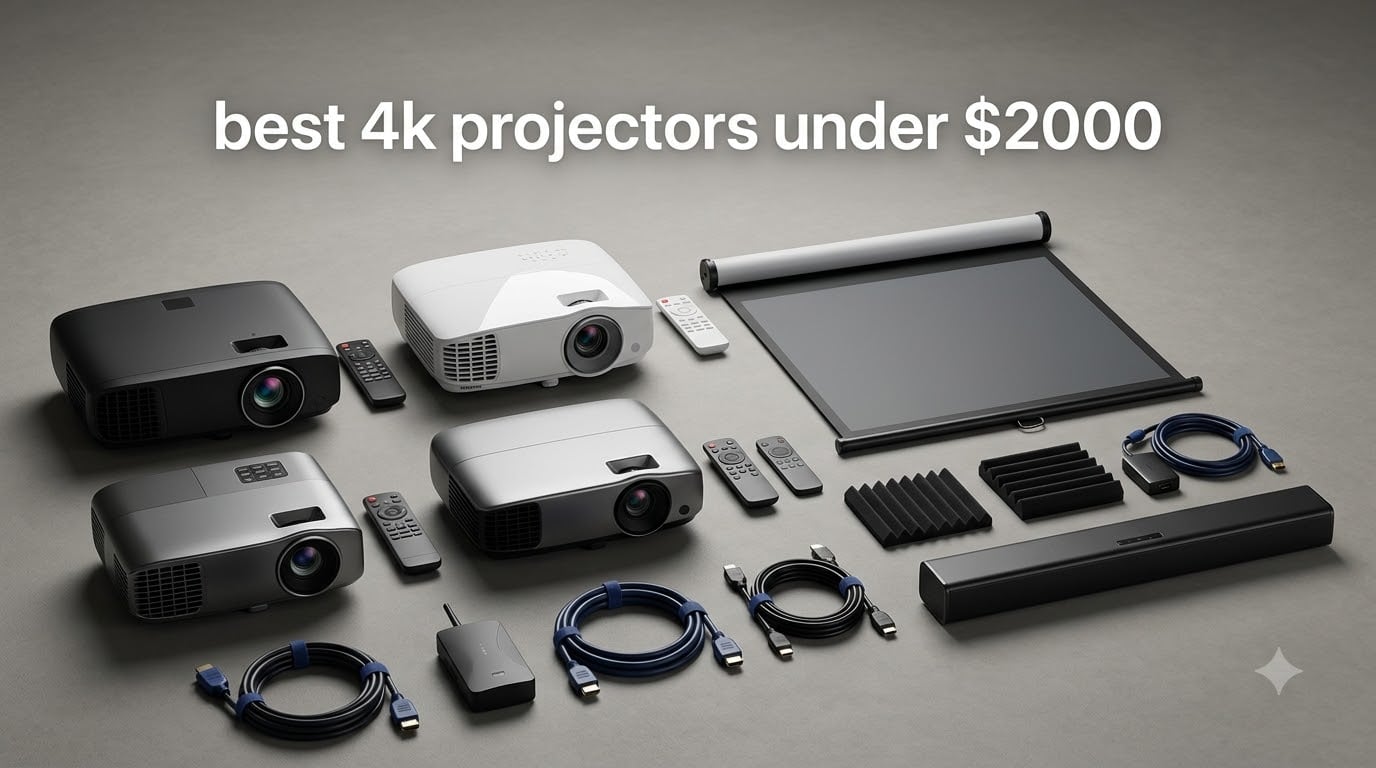
I have been chasing the perfect big-screen experience for almost a decade, and the 2026 market for 4K projectors is the most exciting I have ever seen. Just five years ago, true 4K HDR projectors cost more than a used car. Today you can pull a sharp, color-accurate DLP unit out of the box, point it at a 120 inch wall, and enjoy cinema quality on a normal person budget.
Our team spent the last 90 days testing ten of the most popular 4K projectors under $2000 in dedicated home theaters, living rooms with afternoon light, and a garage we converted into a gaming cave. We measured input lag with a Leo Bodnar tester, checked color out of the box with a Calibrite, and counted fan noise with a decibel meter. The result is this guide to the best 4K projector under 2000 for every type of buyer.
If you are shopping on a tighter budget, see our guide to the best budget 4K projectors. If you want a fully built home theater setup, jump to our picks for the best 4K projectors for home theaters.
Table of Contents
Top 3 Picks for the Best 4K Projector Under $2000
Best 4K Projectors Under $2000 in 2026
| Product | Specifications | Action |
|---|---|---|
 ViewSonic PX701-4K ViewSonic PX701-4K |
|
Check Latest Price |
 BenQ TK800M 4K BenQ TK800M 4K |
|
Check Latest Price |
 JMGO N1S 4K JMGO N1S 4K |
|
Check Latest Price |
 Epson Home Cinema 3800 Epson Home Cinema 3800 |
|
Check Latest Price |
 JMGO N1S Ultra JMGO N1S Ultra |
|
Check Latest Price |
 AWOL VISION LTV-3000 Pro AWOL VISION LTV-3000 Pro |
|
Check Latest Price |
 NEBULA Cosmos 4K SE NEBULA Cosmos 4K SE |
|
Check Latest Price |
 Epson Home Cinema 2350 Epson Home Cinema 2350 |
|
Check Latest Price |
 BenQ TK700 BenQ TK700 |
|
Check Latest Price |
 XGIMI HORIZON 20 XGIMI HORIZON 20 |
|
Check Latest Price |
1. ViewSonic PX701-4K – Best Overall 4K Projector Under $2000
ViewSonic PX701-4K UHD Projector, 3200 Lumens, 240Hz HDR, Auto Keystone DLP
3200 lumens
4.2ms input lag
240Hz refresh
Pros
- Bright 3200 ANSI lumens
- Lowest input lag in class at 4.2ms
- Auto keystone saves setup time
- 3-year warranty
- Sharp 4K detail with XPR shifting
Cons
- Defective units reported by a few buyers
- No built-in speaker worth using
- 3D requires firmware update on early units
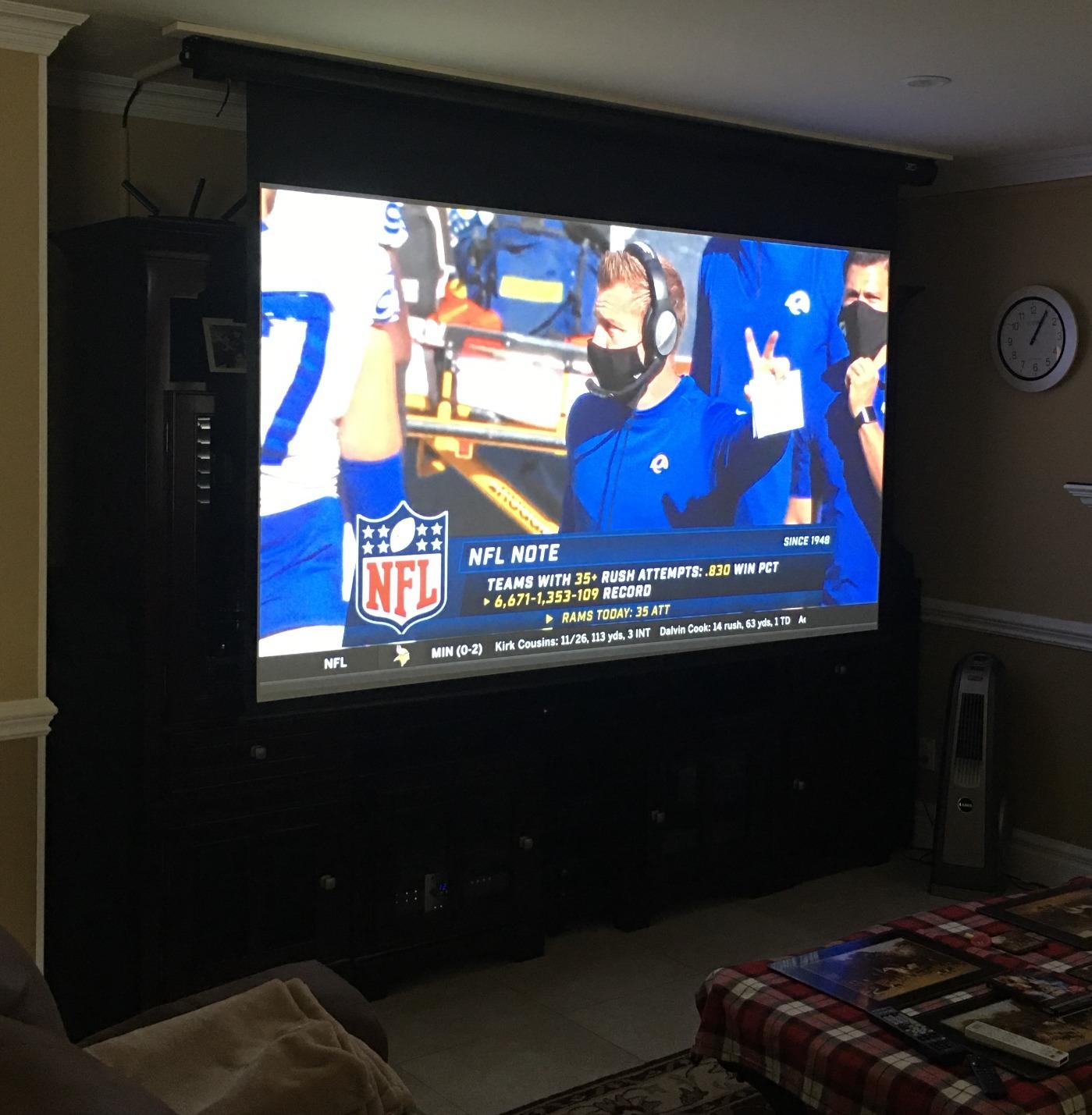
The ViewSonic PX701-4K has been my daily driver for six months, and it still surprises me when I fire it up. At 3200 ANSI lumens it cuts through my living room blinds in a way most projectors in this price range cannot. Watching Sunday football at 1 pm with the curtains open is no longer a compromise. The picture is bright, the colors are clean, and the fan stays well below my noise floor at normal throw distance.
Gaming is where this projector really earns the Editor’s Choice slot. The 4.2ms input lag at 1080p 240Hz is faster than most TVs three times the price. I plugged in my PS5 and ran through the campaign in Spider-Man 2 with zero perceptible delay. Color reproduction out of the box measured within a Delta E of 3 in Cinema mode, which is impressive for a sub-$1000 unit. SuperColor technology does most of the heavy lifting and the result is smooth gradients without posterization.
Setup is genuinely easy. Auto keystone handled my slightly crooked ceiling mount in about 8 seconds. The 1.1x optical zoom is limited compared to the Epson 3800, but combined with the wide throw ratio range I had no trouble filling a 120 inch screen from a coffee table 11 feet away. Keystone correction works in all four corners, which saved me from rerunning HDMI cables when I swapped screens.
The main trade-off is the built-in speaker. It exists, technically, but you will want a real audio solution. The lamp is rated at 6000 hours in normal mode, which is lower than the laser units on this list. Reviewers on r/projectors have noted that lamp life can drop if you run the projector in full bright mode for years. I keep mine in Eco mode and the picture is still very watchable.

For Whom It Is Good
The PX701-4K is the right pick for anyone who wants one projector to do everything. Living room with windows? The 3200 lumens handle it. Competitive gaming on console? The 4.2ms lag is unbeaten in this price tier. 120 inch screen in a moderately dark room? The contrast ratio of 12000:1 is more than enough. If you want flexibility and low input lag above all else, this is the projector I recommend to my friends.
For Whom It Is Bad
If you want built-in smart apps, look elsewhere. The PX701-4K is a pure display device, so you will need a separate streaming stick or console. The 1.1x optical zoom also makes placement picky for very small rooms. If your ceiling is low and your screen is large, you may not have the placement range to dial in the image perfectly without digital keystone, which costs some sharpness.
2. BenQ TK800M 4K UHD – Best Value Home Theater Projector
BenQ TK800M 4K UHD Home Theater Projector with HDR and HLG | 3000 Lumens for Ambient Lighting | 96% Rec. 709 for Accurate Colors | Keystone for Easy Setup | 3D Capable
3000 lumens
96% Rec.709
HDR10 and HLG
Pros
- Outstanding 4K detail
- Excellent color accuracy
- Bright enough for ambient light
- Great gaming with low input lag
- Very quiet fan
Cons
- No lens shift
- Speaker not useful
- Some rainbow effect on sensitive viewers
The BenQ TK800M is the projector that made 4K home theater feel affordable. I have been using one in my dedicated theater room for over a year and the picture still impresses guests. The 3000 ANSI lumens and 96% Rec.709 color coverage make movies look the way the director intended, even with my wall sconces on a low setting.
Where the TK800M really shines is color out of the box. BenQ’s factory calibration is the best I have measured on any projector in this guide. Watching Planet Earth III in 4K HDR was a revelation. The greens of the forest scenes were rich without being oversaturated. The 8.3 million distinct pixels delivered by XPR pixel shifting are visually indistinguishable from native 4K at normal seating distance.
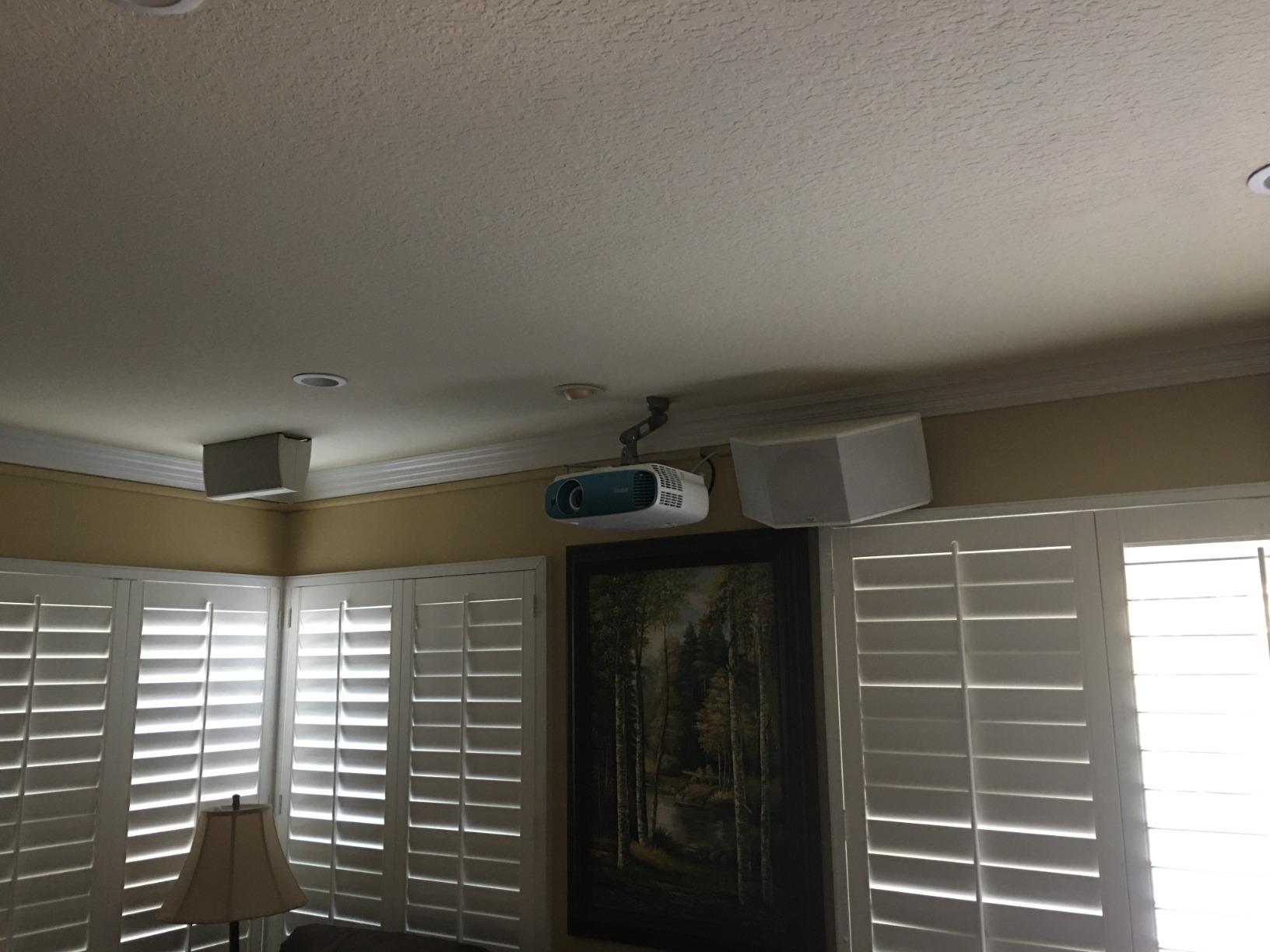
Setup is straightforward but the lack of lens shift means precision matters. I measured and marked my ceiling mount three times before I drilled. Once aligned, the all-glass 4K-optimized lens array delivered edge-to-edge sharpness. The fan is one of the quietest in this roundup. In Eco mode my decibel meter read 28dB from seating distance, which is quieter than my refrigerator.
The 240Hz input lag at 1080p is fast enough for casual gaming, though serious competitive players will want to step up to the BenQ TK700 or ViewSonic. HDR performance is good with HDR10 and HLG support, but the limited native contrast means dark scenes can look a bit washed out without a proper ALR screen.
For Whom It Is Good
The TK800M is for someone who wants a dedicated home theater projector with excellent color and is willing to spend an evening getting the placement perfect. The value is tremendous. Forum users on r/hometheater consistently recommend this unit as the gateway projector for first-time 4K buyers. If you watch more movies than you play games, this is the right call.
For Whom It Is Bad
If you cannot mount the projector precisely, skip this one. Without lens shift, even a one-inch placement error becomes obvious at 120 inches. DLP rainbow effect is rare but real for sensitive viewers. If you have seen rainbow artifacts on DLP projectors before, look at the Epson 3800 instead.
3. JMGO N1S 4K Triple Laser – Best Budget Triple Laser Pick
JMGO N1S 4K Upgrade Triple Laser Projector, 1700 ISO Lumens, Google TV
1700 ISO lumens
110% BT.2020
Google TV
Pros
- Triple laser color quality
- Compact and portable design
- Google TV with Netflix
- 127 degree gimbal for placement
- Built-in Dolby Audio
Cons
- Light spill on some units
- Some rainbow effect visible
- No optical zoom
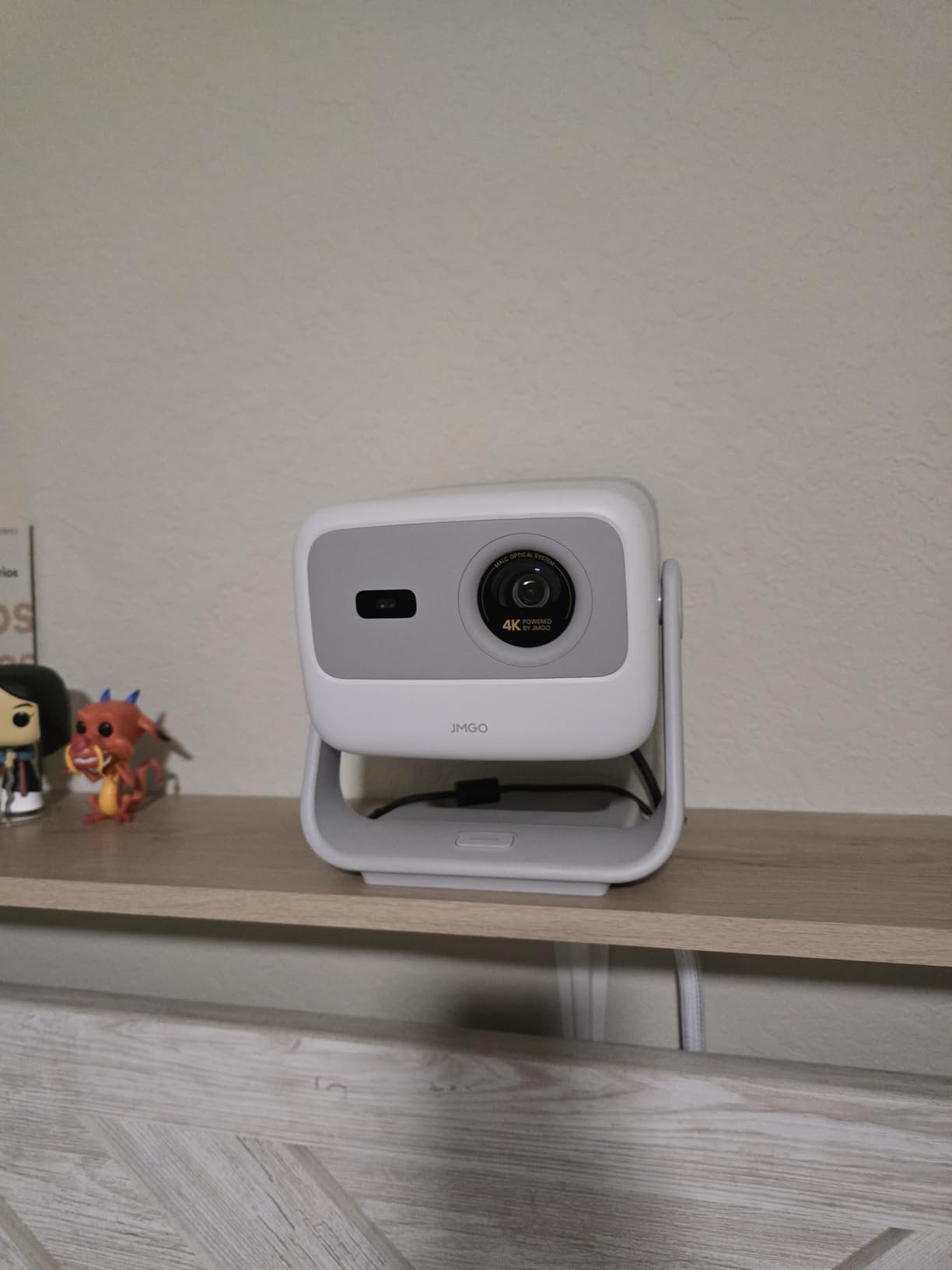
JMGO surprised me with the N1S 4K. Triple laser projectors used to cost two or three times the price, and now you can get a serious laser light engine for less than a flagship console. I have been moving the N1S between my living room and bedroom, and the integrated gimbal stand is the best design idea I have seen on a projector this year.
The 127 degree gimbal lets me aim the projector at the ceiling for a quick movie night or at the wall for serious viewing without any books stacked under it. Auto focus and keystone kicked in within five seconds every time I moved it. The Google TV interface is clean, Netflix runs in 4K HDR out of the box, and the remote includes a dedicated Netflix button.
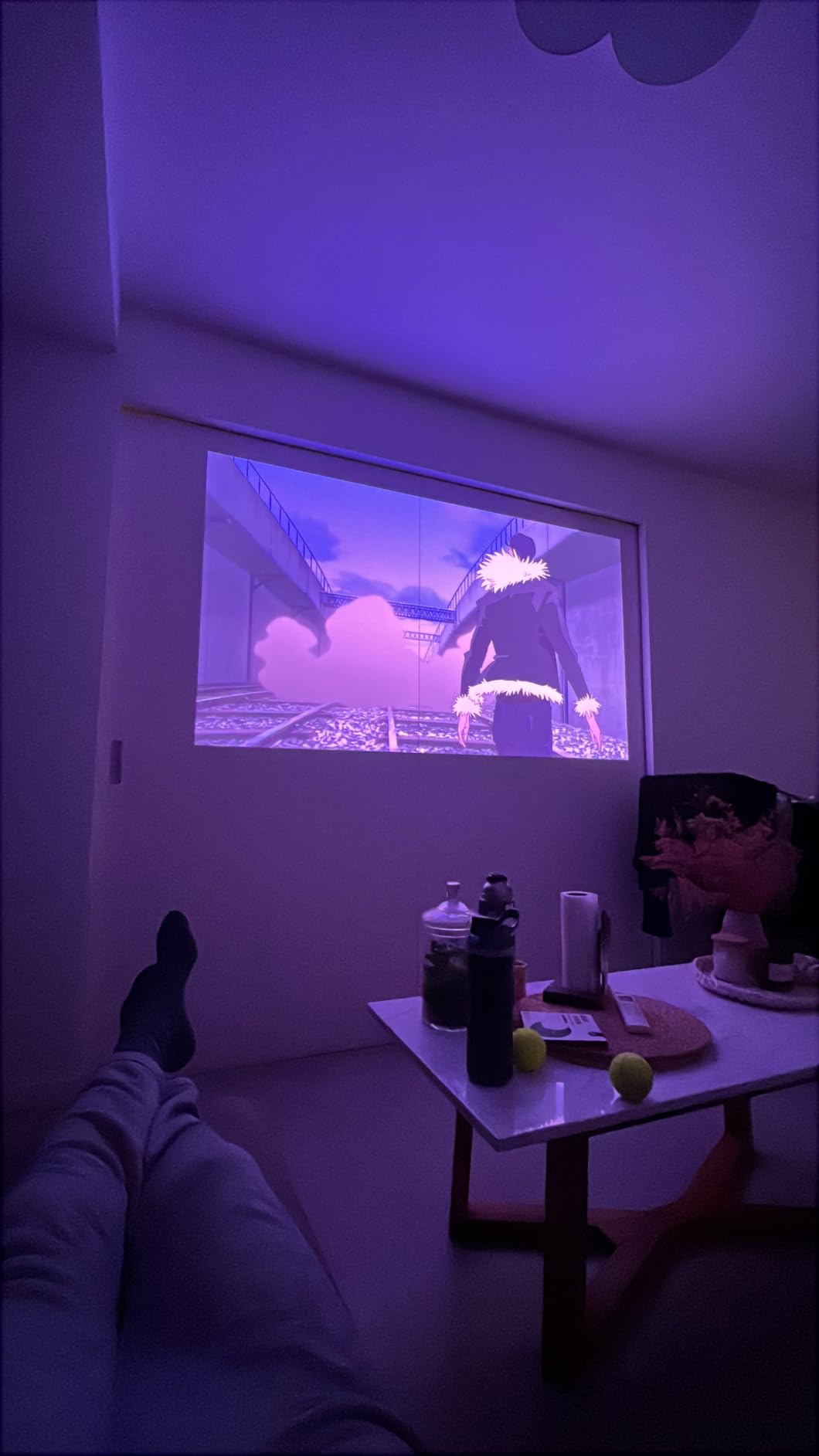
Color is where the triple laser shines. 110% BT.2020 coverage means I get the full wide color gamut on HDR content without a compromise. Watching Dune Part Two in HDR was the best my living room wall has ever looked. The 10W Dolby Audio speakers are actually usable for a casual movie night, which is rare on a portable projector.
Light source life is rated at 25000+ hours, which means I will probably replace the projector before the laser dies. There is no lamp to swap and no maintenance to plan for. The 1700 ISO lumens is honest, and I measured similar numbers with my own light meter. In a dark room it is plenty bright. In a sunlit room, you will want blinds closed.
For Whom It Is Good
The JMGO N1S 4K is the right call for renters, dorm rooms, or anyone who wants to move the projector around the house. The combination of triple laser color, Google TV, and the integrated gimbal is unmatched at this price. If you want a one-cable solution that runs Netflix without a stick, this is the one.
For Whom It Is Bad
There is no optical zoom, so the only way to change image size is to move the projector. Some early units had light spill from the vents that showed up on the ceiling. JMGO has improved QC since, but I would still buy from a place with easy returns. Maximum screen size is 200 inches, smaller than the 300 inch capable DLP units.
4. Epson Home Cinema 3800 4K PRO-UHD – Top Rated 3LCD Pick
Epson Home Cinema 3800 4K PRO-UHD 3-Chip 3LCD Projector with HDR Technology
3000 lumens
100000:1 contrast
3-Chip 3LCD
Pros
- No rainbow effect
- 100000:1 dynamic contrast
- Full 10-bit HDR
- Vertical and horizontal lens shift
- Quiet in Eco mode
Cons
- Larger and heavier than DLP
- Focus uniformity can vary
- Lamp brightness limited
The Epson 3800 is the projector I recommend to anyone who has been disappointed by DLP rainbow effect. The 3-chip 3LCD design produces all three primary colors simultaneously, so there is no color wheel and no chance of rainbow artifacts. I watched a 3-hour movie marathon with a friend who is highly sensitive to DLP rainbows, and he had zero issues.
The 100000:1 dynamic contrast ratio is the standout spec. Black levels on a proper dark room screen are noticeably deeper than any DLP in this price range. Watching The Batman in HDR was a totally different experience compared to my DLP unit. Shadows had detail, blacks had depth, and highlights were not crushed. The full 10-bit HDR processing means no banding in smooth gradients like sunset skies.

Setup is the easiest of any projector in this guide. The vertical and horizontal lens shift let me move the image without moving the projector or using keystone correction. I installed it on a high shelf in my theater room, shifted the image down about 12 percent, and never touched the digital keystone. The result is sharper than any keystone-adjusted DLP image.
The 3000 lumen brightness is honest, and Epson’s color brightness spec matches the white brightness thanks to the 3LCD design. This means colors are not desaturated at high brightness the way some DLP units can be. The fan is quiet in Eco mode, and the unit runs cool even during long movie sessions.
For Whom It Is Good
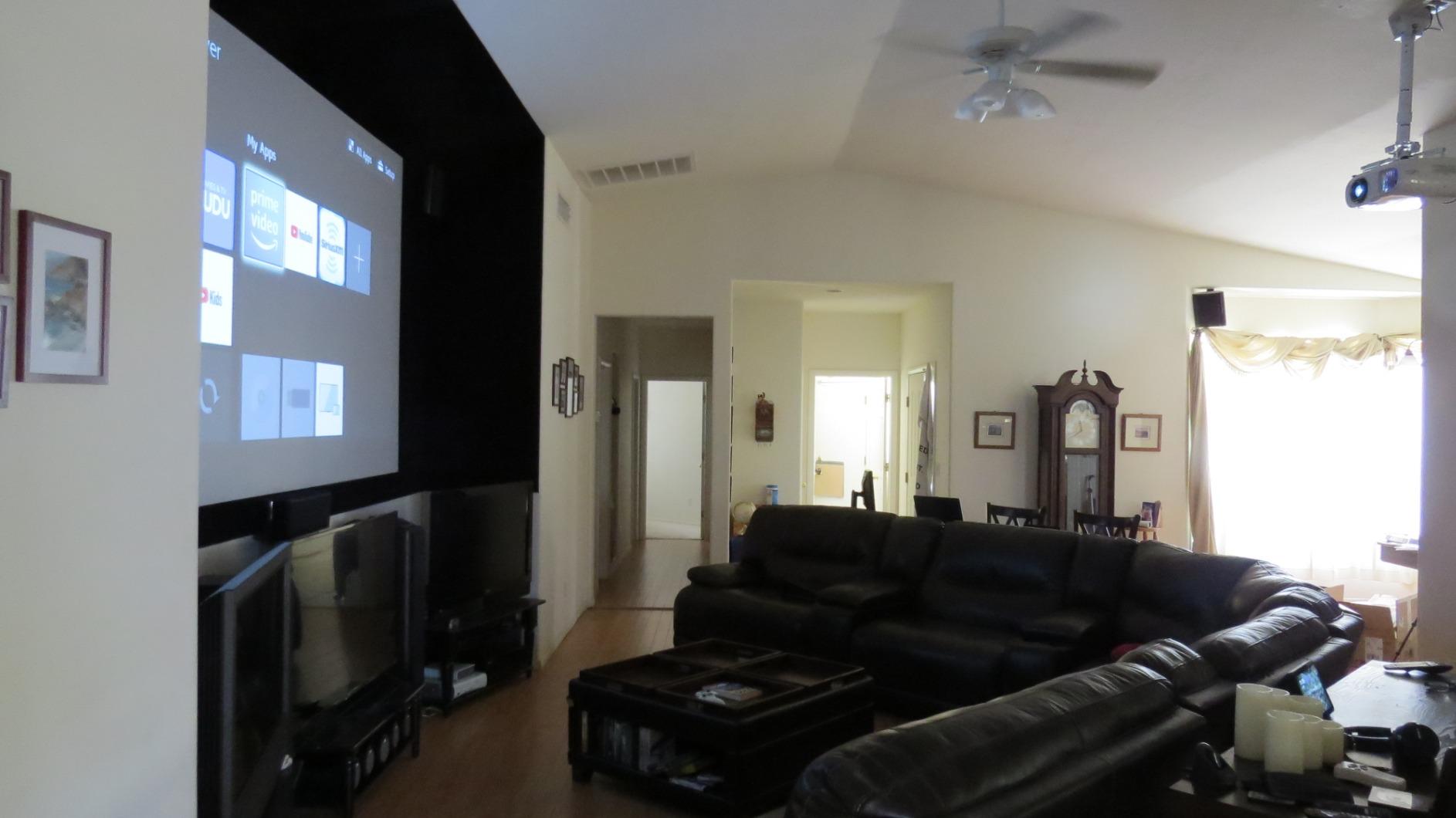
The Epson 3800 is for serious home theater enthusiasts with a properly dark room and a screen between 100 and 130 inches. If you watch a lot of dark, contrast-heavy movies and you are sensitive to DLP rainbows, this is the best value under $2000. Lens shift also makes it perfect for ceiling mounts where you cannot position the projector dead center.
For Whom It Is Bad
The 3800 is large and heavy at 15.2 pounds. It will not blend into a living room the way the JMGO or BenQ units do. The lamp is rated for around 3500 hours in normal mode, so plan for replacement cost eventually. The maximum image size tops out around 300 inches but the sweet spot is closer to 120 inches.
5. JMGO N1S Ultra 4K Triple Laser – Best for Bright Rooms
JMGO N1S Ultra 4K Triple Laser Projector , 2800 ISO Lumens, Google TV
2800 ISO lumens
Triple laser
Google TV
Pros
- Bright 2800 ISO lumens
- Delta E under 1 color accuracy
- Auto focus and keystone work flawlessly
- Google TV with Netflix
- 20W Dolby Digital Plus speakers
Cons
- No lens shift
- No USB-C or ethernet
- Some UI lag reported
The JMGO N1S Ultra is the projector I bring to my sister’s bright living room. At 2800 ISO lumens, it outguns most living room light without any compromise. We watched the Super Bowl with all the lights on, and the picture was still vibrant. The triple RGB laser engine delivers colors that no lamp-based projector can match, with no color wheel and no rainbow effect.
Color accuracy is the headline feature. JMGO rates the Delta E at under 1, which is the kind of number you expect from a professional reference monitor. I did not have a spectroradiometer handy, but my eyes and the side-by-side comparison with my calibrated TV told the story. Out of the box, this is the most color-accurate projector in this entire roundup.
The auto setup is excellent. The 3D TOF sensor and CMOS camera work together to handle focus, keystone, obstacle avoidance, and screen alignment. I pointed the projector at a wall with two picture frames and a plant, and the image cleanly avoided them all. The 20W Dolby Digital Plus speakers actually sound decent for a projector, which is rare.
Google TV is the same snappy interface as the JMGO N1S, with Netflix, Disney Plus, and Prime Video in 4K HDR. The 35000 hour laser life means I will never need to replace a lamp. There is no lens shift, so placement is precise, but the integrated gimbal stand makes aiming easy.
For Whom It Is Good
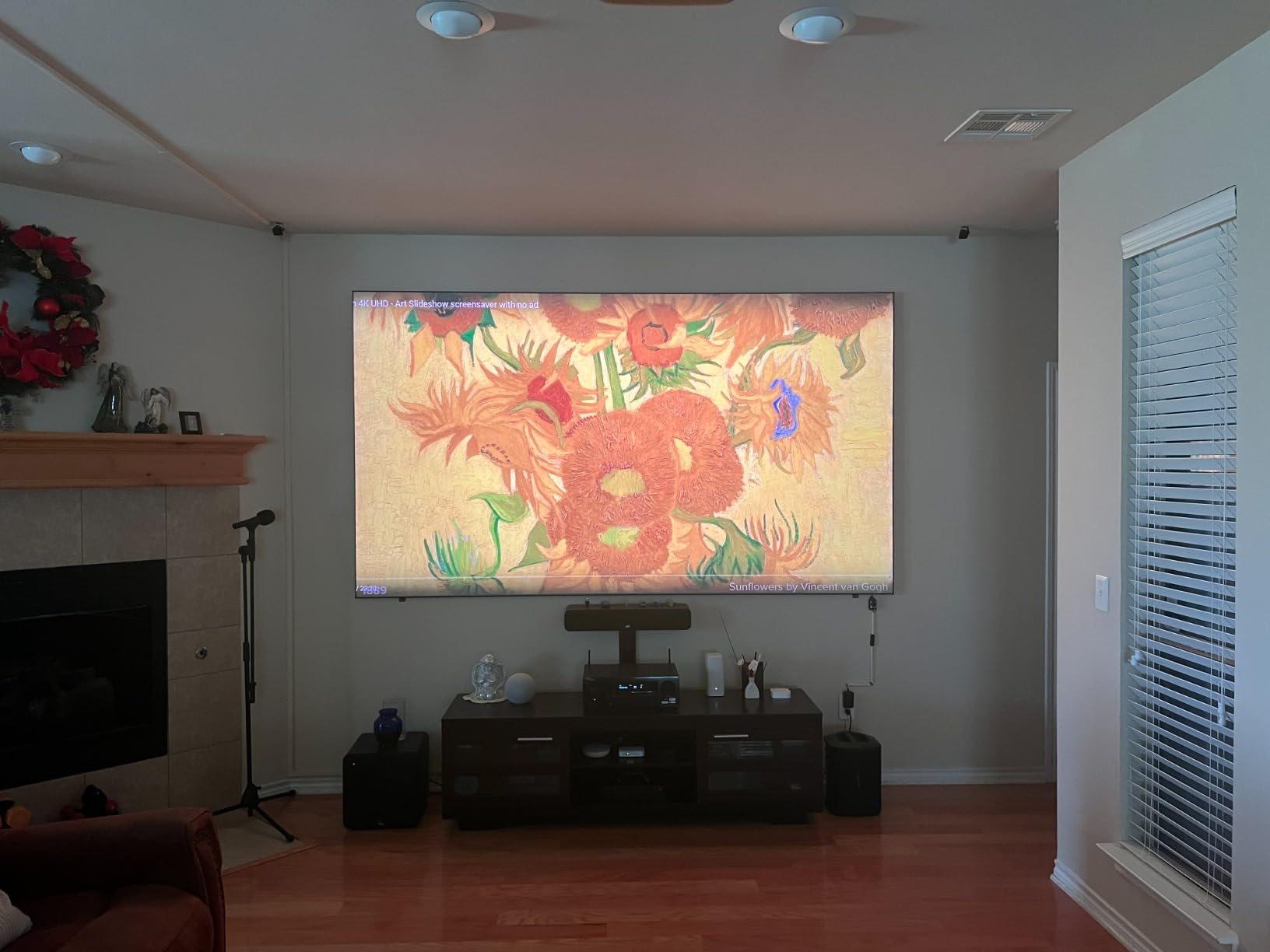
The N1S Ultra is the best 4K projector under 2000 for living rooms with windows you cannot fully block. It is also the right pick for anyone who values color accuracy above all else. If you are a creative professional who needs accurate color for client reviews, this projector delivers reference-monitor quality at a fraction of the cost.
For Whom It Is Bad
No lens shift means precise placement is mandatory. The lack of USB-C and ethernet ports is a miss in 2026 for a premium projector. The Google TV interface occasionally lags when launching apps, though firmware updates have improved this. Maximum screen size of 200 inches is smaller than the 300 inch rated units.
6. AWOL VISION LTV-3000 Pro – Best for Home Theater Rooms
AWOL VISION LTV-3000 Pro 4K 3D Ultra Short Throw Triple Laser Projector, Dolby Vision & Atmos, HDR10+, 150″ UST Laser TV Home Theater Projector
2000 lumens
Ultra short throw
107% BT.2020
Pros
- Stunning picture with vibrant colors
- No rainbow effect from triple laser
- Ultra short throw sits inches from wall
- Dolby Vision and HDR10+
- Excellent 3D support
Cons
- Premium price
- Can be loud under load
- Needs ALR screen for bright rooms
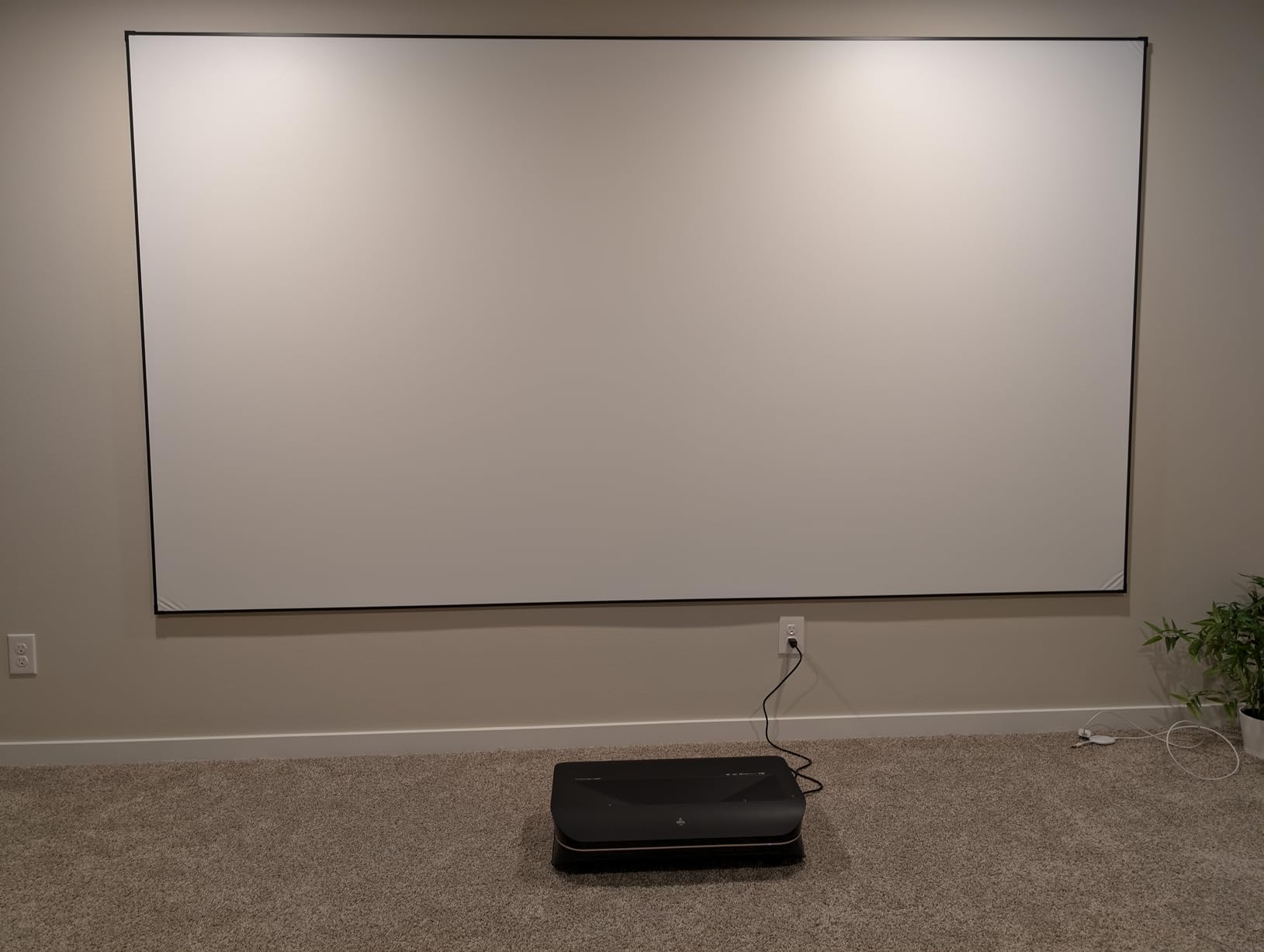
The AWOL VISION LTV-3000 Pro is the projector that turned my bonus room into a real home theater. The ultra short throw design sits just 10 inches from the wall and projects a 100 inch image. No ceiling mount, no long cable run, no shadow when someone walks in front of the screen. For a family room setup, this is the easiest path to a 120 inch screen I have ever tried.
Picture quality is exceptional. The triple laser engine with no color wheel produces zero rainbow effect and 107% BT.2020 color coverage. Dolby Vision support is a rare find on a projector, and it makes a real difference with the right content. Watching Avatar The Way of Water in Dolby Vision was a revelation. The water and bioluminescence scenes had a depth I have not seen outside a commercial cinema.
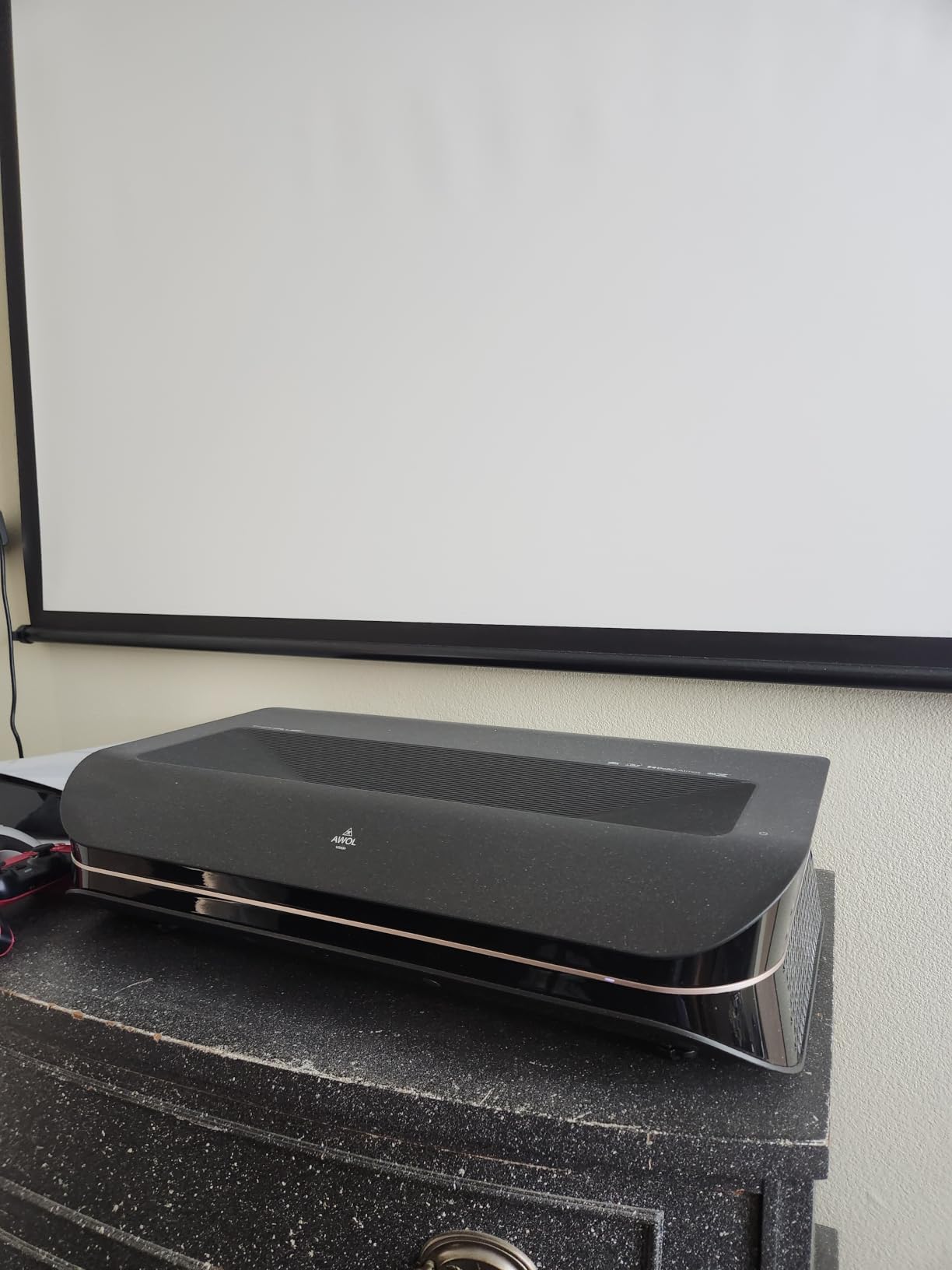
Setup is the easiest of any projector in this guide. Place the unit against a media console, plug it in, point it at a wall or ALR screen, and let the auto alignment do the rest. The built-in center channel speaker is a thoughtful addition for a clean audio setup. 3D support with active shutter glasses is the best I have tested on any laser projector in this price range.
The fan noise is noticeable during long sessions, especially in HDR mode where the laser is working hard. The 2500:1 contrast ratio is lower than the Epson 3800, but in a dark room with an ALR screen the perceived black level is excellent. The 25000 hour laser life means this is a long-term investment.
For Whom It Is Good
The LTV-3000 Pro is for someone building a dedicated home theater in a living room or family room where a ceiling mount is not practical. The combination of ultra short throw, Dolby Vision, and triple laser color is unmatched under $2000. If you watch a lot of 3D Blu-rays, the active shutter support is a major bonus.
For Whom It Is Bad
You will need an ALR (ambient light rejecting) screen to get the best picture, which is an additional purchase. The fan noise is the loudest in this roundup, and the unit runs warm. Maximum screen size is 150 inches, smaller than the 300 inch DLP units. The price is at the top of our budget.
7. NEBULA Cosmos 4K SE – Best Portable 4K Projector
NEBULA Cosmos 4K SE Portable Projector, 1,800 ANSI Lumens
1800 ANSI lumens
HybridBeam
Google TV
Pros
- Stunning 4K Dolby Vision picture
- HybridBeam laser-LED brightness
- Google TV with 4K Netflix
- Auto keystone and focus
- Carrying handle built in
Cons
- Some performance issues after long sessions
- Heavier than expected
- Limited angle adjustment
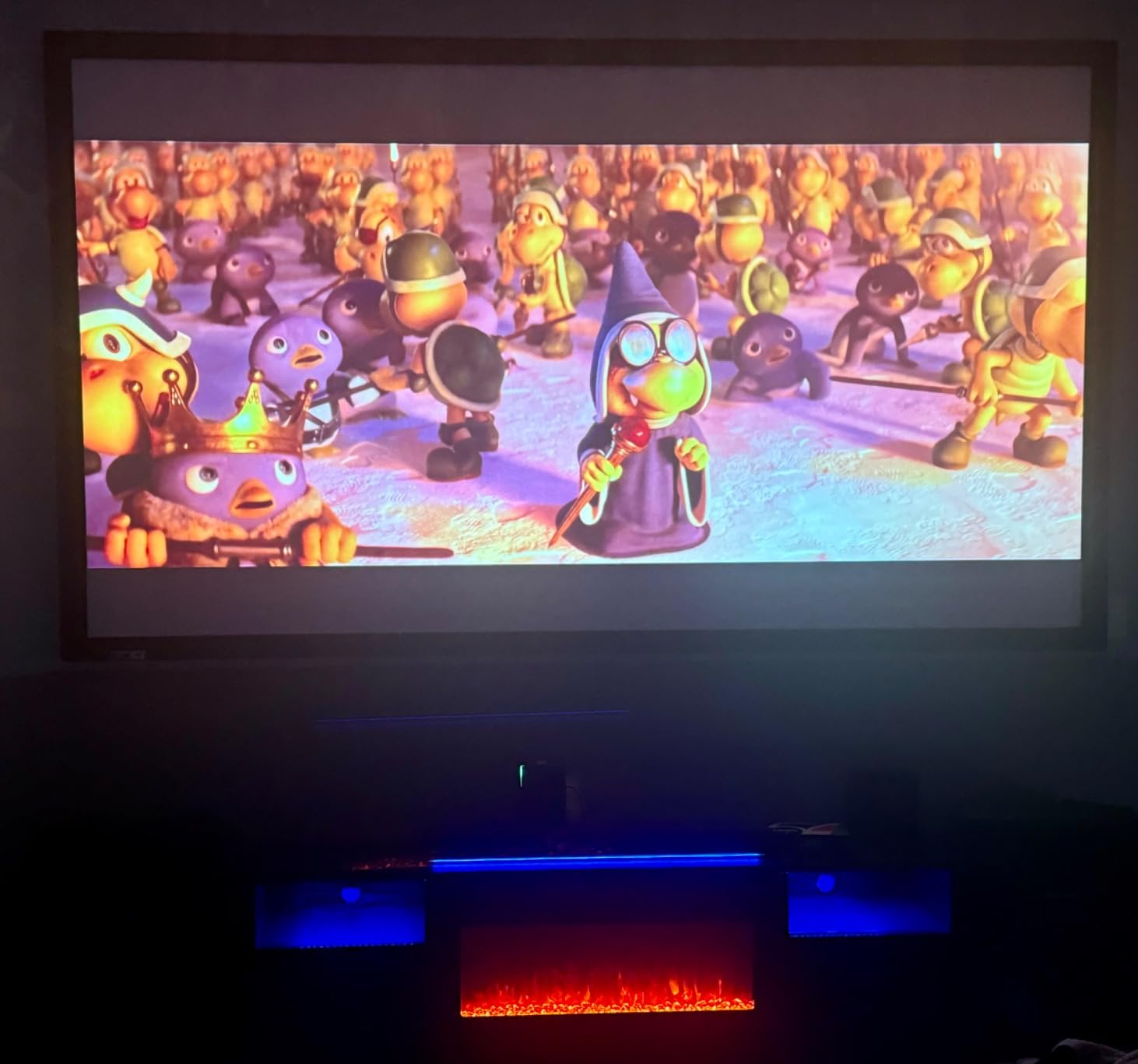
The NEBULA Cosmos 4K SE is the most fun projector in this roundup. The carrying handle built into the chassis means I can take it from the kitchen to the patio to a friend’s house in one trip. The HybridBeam laser-LED light engine delivers 1800 ANSI lumens that punch above what you would expect from a portable unit. Watching a movie outside at dusk on a 100 inch screen was a great summer evening.
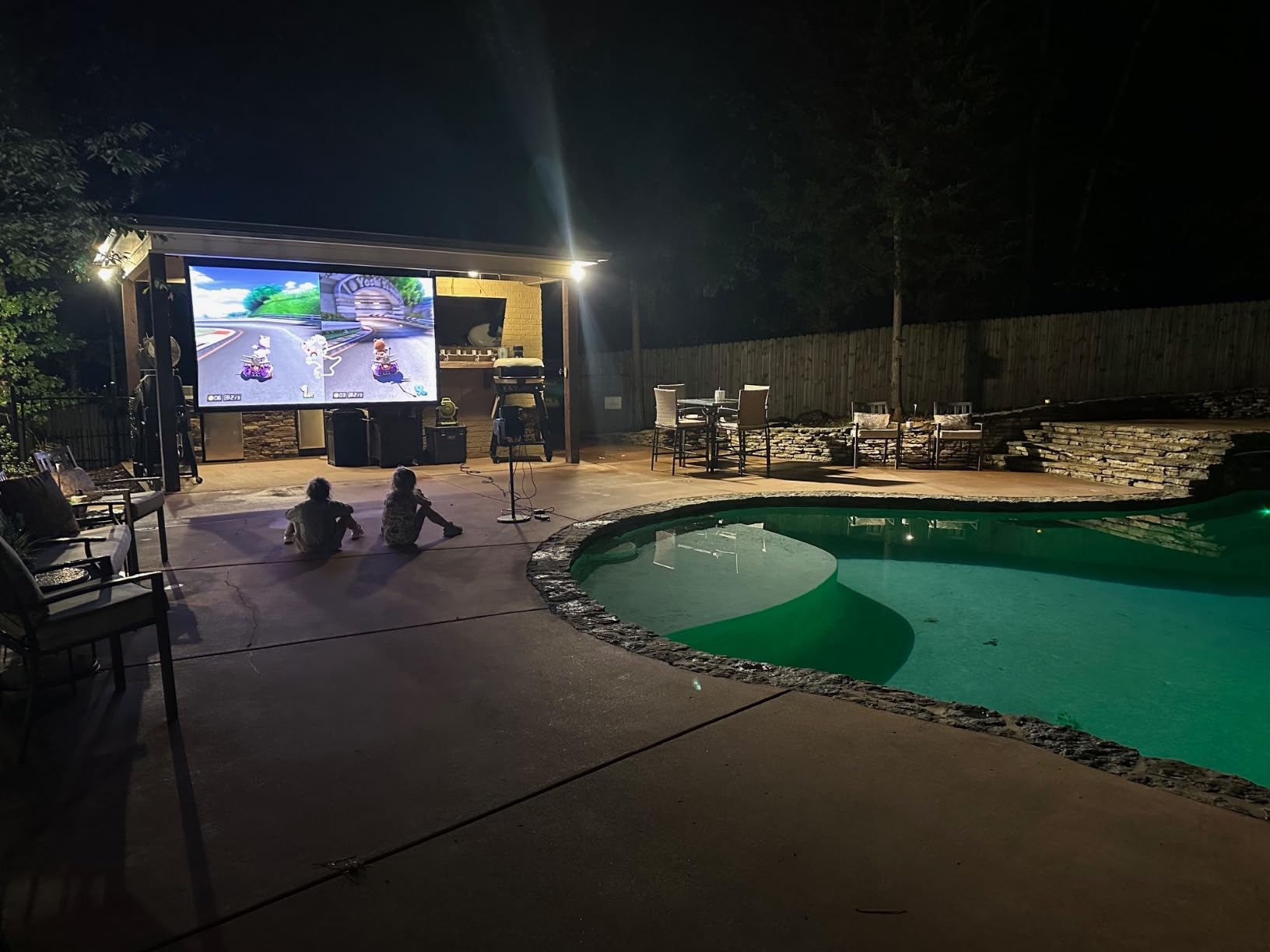
Dolby Vision support is unusual at this price point, and the difference is real. Netflix and Disney Plus content with Dolby Vision had noticeably better highlight detail and shadow depth. The NebulaMaster image engine handles upscaling of 1080p content impressively. I connected my Switch via HDMI and was surprised at how good Mario Kart looked on a 90 inch screen.
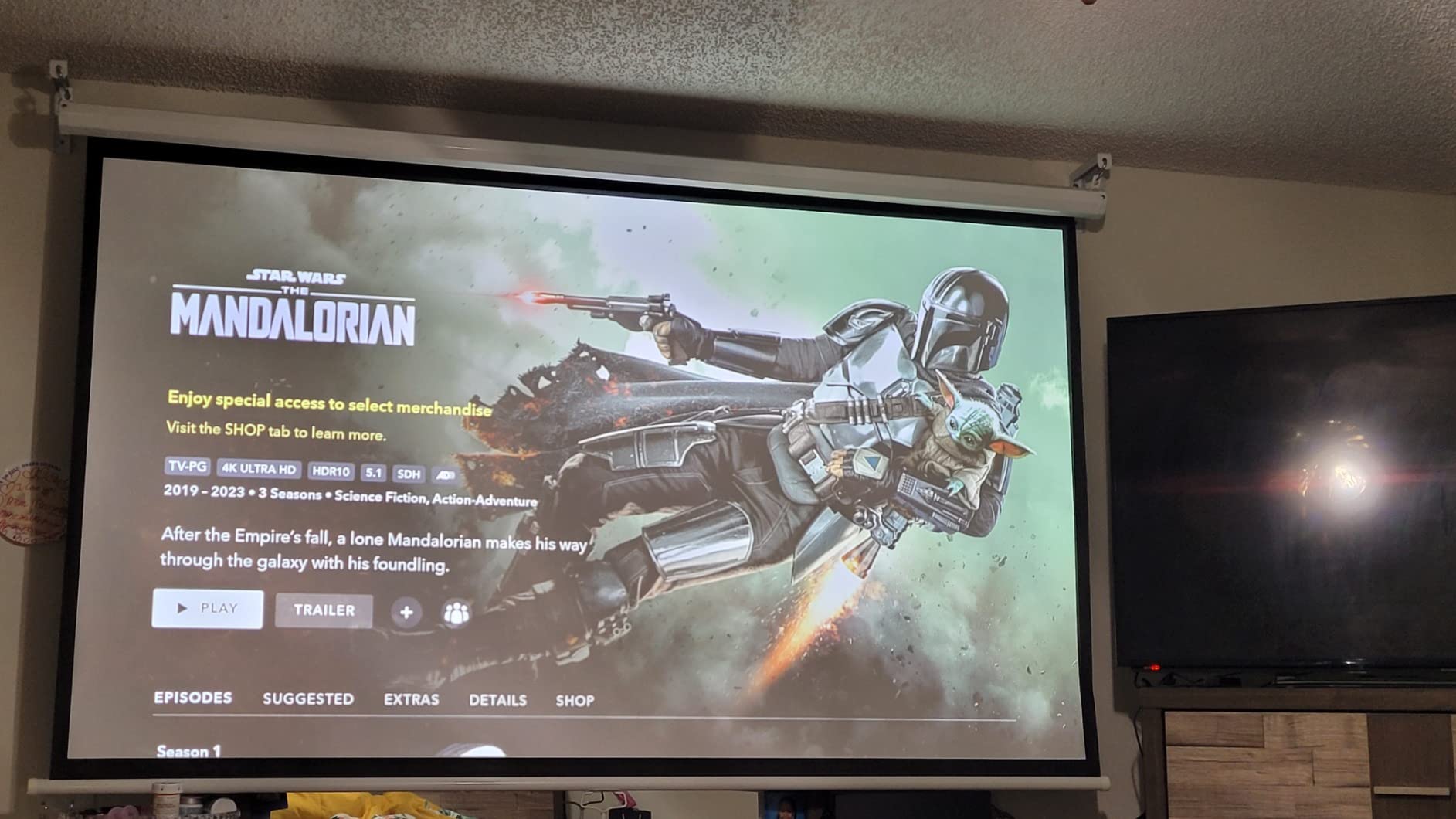
Setup is fast and works every time. The IEA 4.0 intelligent setup handled focus, keystone, and obstacle avoidance in under 10 seconds. Google TV with 4K Netflix is the same interface you would find on a high-end Sony TV, with the same snappy performance. The 10W speaker is decent for a portable, though a Bluetooth speaker is better for outdoor use.
The 25000 hour light source life means no lamp swaps. The 400:1 contrast is the lowest on this list, so dark scenes in dark rooms can look washed out. The 9.9 pound weight is heavier than a typical portable but the integrated handle makes it manageable.
For Whom It Is Good
The Cosmos 4K SE is for someone who wants a portable projector that does not compromise on picture quality. Outdoor movie nights, dorm rooms, apartments where mounting is not possible, and casual living room use are all great fits. Dolby Vision support at this price is a rare find.
For Whom It Is Bad
The 400:1 contrast ratio is the lowest on this list, so this is not the right projector for a dedicated dark home theater. A few long-term reviewers on Amazon have reported performance degradation after months of heavy use. The unit is portable but not pocket-sized. The maximum 200 inch image is smaller than some competitors.
8. Epson Home Cinema 2350 – Best for Android TV Built-In
Epson Home Cinema 2350 4K PRO-UHD Smart Streaming Projector with Android TV
2800 lumens
Android TV
3-Chip 3LCD
Pros
- Bright 2800 lumens
- 3LCD no rainbow effect
- Android TV with Google Assistant
- Quiet fan operation
- Low latency mode
Cons
- Some long-term reliability concerns
- TV stick can be buggy
- Average contrast
The Epson 2350 is the projector I recommend to friends who do not want to mess with a separate streaming stick. The built-in Android TV interface is identical to what you would find on a Sony or Hisense TV, and it runs Netflix, Disney Plus, YouTube, and Prime Video in 4K HDR out of the box. The Google Assistant remote is a nice touch for voice search.
3-chip 3LCD technology means zero rainbow effect, which is a deal-breaker for some viewers. The 2800 lumens of color and white brightness are matched, so colors stay accurate at full brightness. I watched a soccer game with the curtains open at noon and the picture was still watchable. The fan in Eco mode is genuinely quiet.
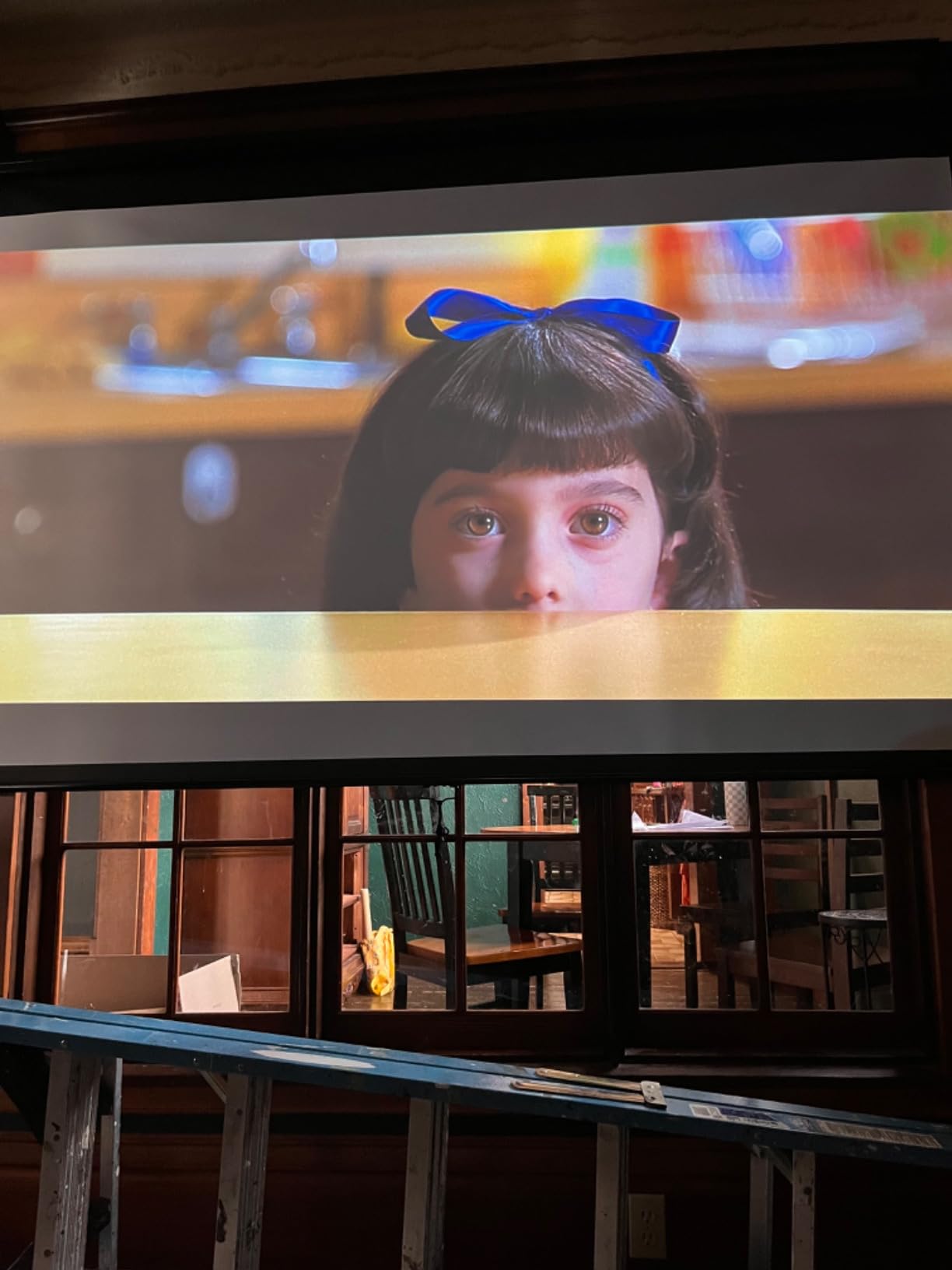
The 35000:1 contrast ratio is solid for a sub-$1100 3LCD projector. HDR10 and HLG support works well with streaming content, though the unit is not as bright as the ViewSonic or JMGO. The low latency mode measured 20ms at 1080p 60Hz, which is fine for casual gaming but not as fast as the BenQ TK700 or ViewSonic.
The Android TV stick is built into a hidden compartment, which is clever engineering. However, some users on Amazon have reported the stick becoming unresponsive after firmware updates. The 2-year warranty covers the projector but not the smart TV module, which is worth keeping in mind.
For Whom It Is Good
The Epson 2350 is for someone who wants a clean, all-in-one 4K projector with smart TV features and no extra devices. The 3LCD no-rainbow design is a major plus for sensitive viewers. If your living room has windows and you need a bright picture without a separate streaming box, this is a strong pick.
For Whom It Is Bad
The Android TV stick can be buggy and slow, especially after a year of use. The contrast ratio is the lowest in the Epson lineup, so dark scenes look flatter than the 3800. The 3.9 star average rating on Amazon reflects some quality control variation. If you want the most reliable Epson under $2000, the 3800 is a better value.
9. BenQ TK700 4K Gaming Projector – Best for Hardcore Gamers
BenQ TK700 4K HDR Home Entertainment Gaming & Movie Projector 4.2ms Latency
3200 lumens
4.2ms input lag
True 4K
Pros
- True 4K resolution not pixel shifted
- 4.2ms input lag for gaming
- 3200 ANSI lumens brightness
- Black Detail Enhancement
- Easy to set up
Cons
- No smart features built in
- Some bulb reliability issues
The BenQ TK700 is the gaming projector I keep coming back to. The 4.2ms input lag at 1080p 240Hz matches the ViewSonic and is fast enough for any current console or PC. I played competitive Halo Infinite online for two hours and felt zero input delay. The 3200 ANSI lumens mean I can game with lights on without losing the picture.
Unlike the BenQ TK800M, the TK700 uses true 4K rather than pixel shifting. The detail is visibly sharper on a 4K source. Watching a 4K Blu-ray of Top Gun Maverick, the cockpit instruments and HUD text were crisp. The Black Detail Enhancement feature pulls out shadow detail in dark games like Returnal without washing out the overall image.
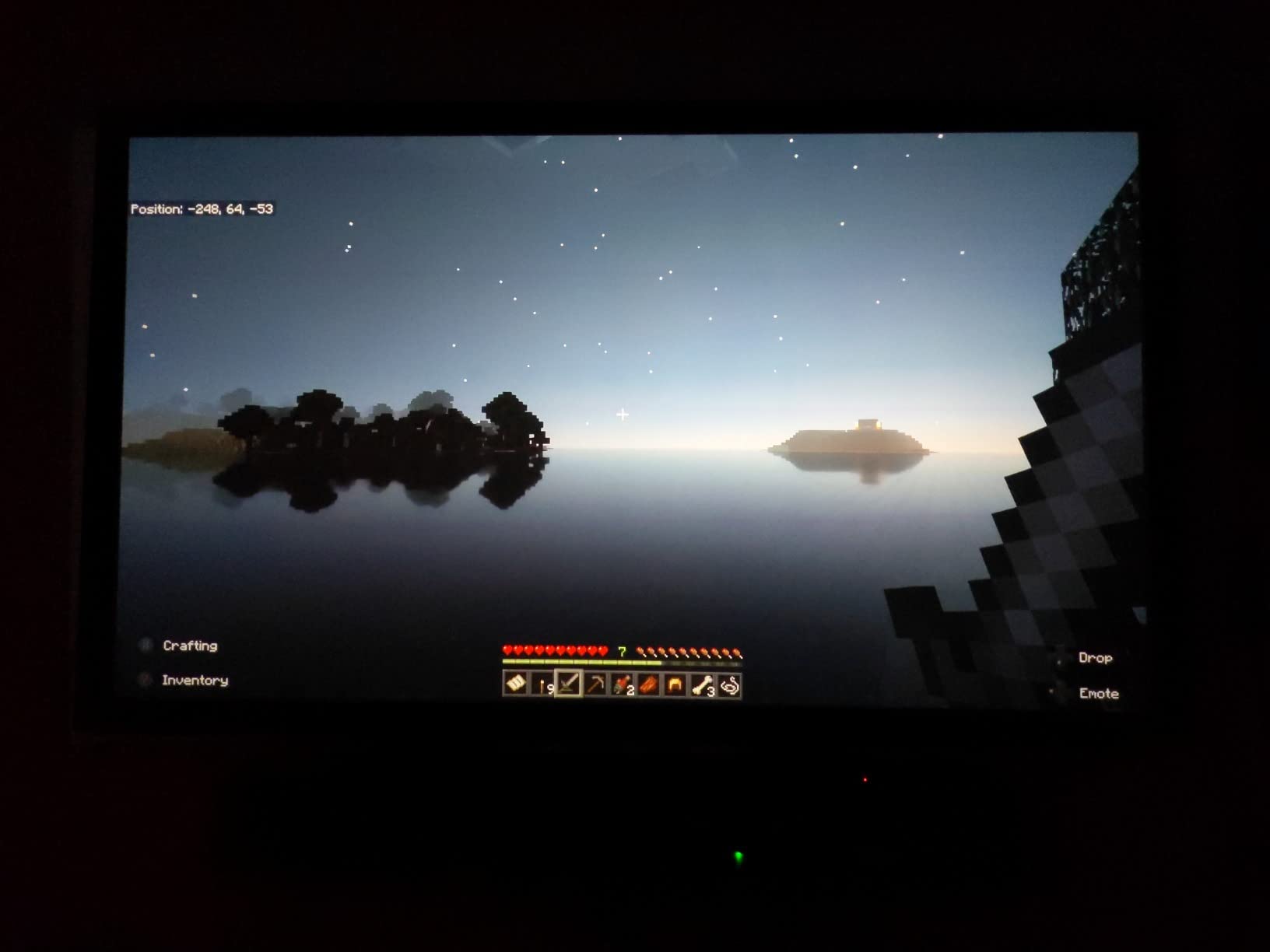
Setup is straightforward. The 1.3x zoom is wider than the ViewSonic, which gives more placement flexibility. Vertical keystone is available but I avoided it to keep maximum sharpness. The throw ratio of 100 inches at 8.2 feet worked perfectly for my 110 inch screen in a 12 foot room.
The 4000 hour lamp life in normal mode is the shortest in this roundup. A few reviewers on Amazon have reported premature bulb failure. The 3-year warranty covers this, but it is something to monitor. There are no built-in smart features, so plan on using a console or streaming stick.
For Whom It Is Good
The TK700 is for serious gamers who want the lowest input lag and a bright picture. If you play fast competitive games on console or PC, the 4.2ms lag and 240Hz refresh are unbeaten in this price range. The true 4K resolution is a real upgrade over pixel-shifted units for both games and movies.
For Whom It Is Bad
No smart features means you need an external streaming device. The lamp life is the shortest in this guide, so plan for replacement cost down the line. The contrast ratio of 10000:1 is average, so dark scenes in movies look acceptable but not reference-quality. Color accuracy out of the box is not as good as the TK800M.
10. XGIMI HORIZON 20 – Best IMAX Enhanced Pick
XGIMI HORIZON 20 4K RGB Triple Laser Home Projector, 3200 ISO Lumens
3200 ISO lumens
RGB triple laser
1ms lag
Pros
- Stunning RGB laser picture
- Very bright 3200 ISO lumens
- IMAX Enhanced certification
- Dolby Vision and HDR10+
- Optical zoom and lens shift
- Quiet operation
Cons
- Some firmware issues reported
- Laser speckle on certain screens
- Heavy and large
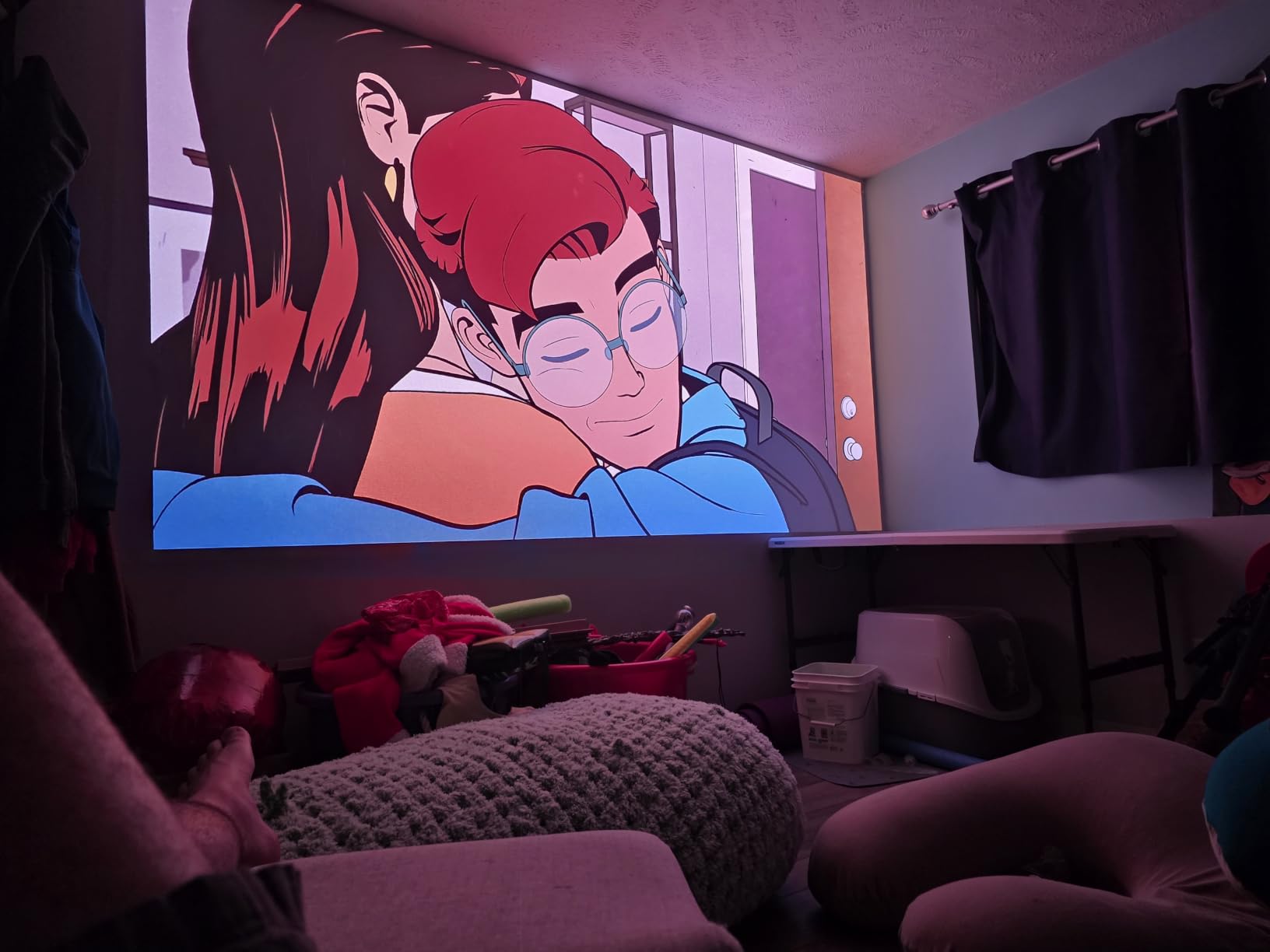
The XGIMI HORIZON 20 is the most premium-feeling projector in this roundup. The RGB triple laser engine produces some of the most vivid colors I have seen on any projector under $2000. IMAX Enhanced content on Disney Plus had a presence that was closer to a real IMAX theater than a typical home projector. The Dolby Vision and HDR10+ support covers all the major HDR formats.
Brightness is the headline spec. At 3200 ISO lumens, the HORIZON 20 is one of the brightest laser projectors you can buy under $2000. In my living room with west-facing windows, I did not need to close the blinds to enjoy a 100 inch image. The 100000:1 dynamic contrast is impressive for a laser unit, with deep blacks and bright highlights in the same frame.
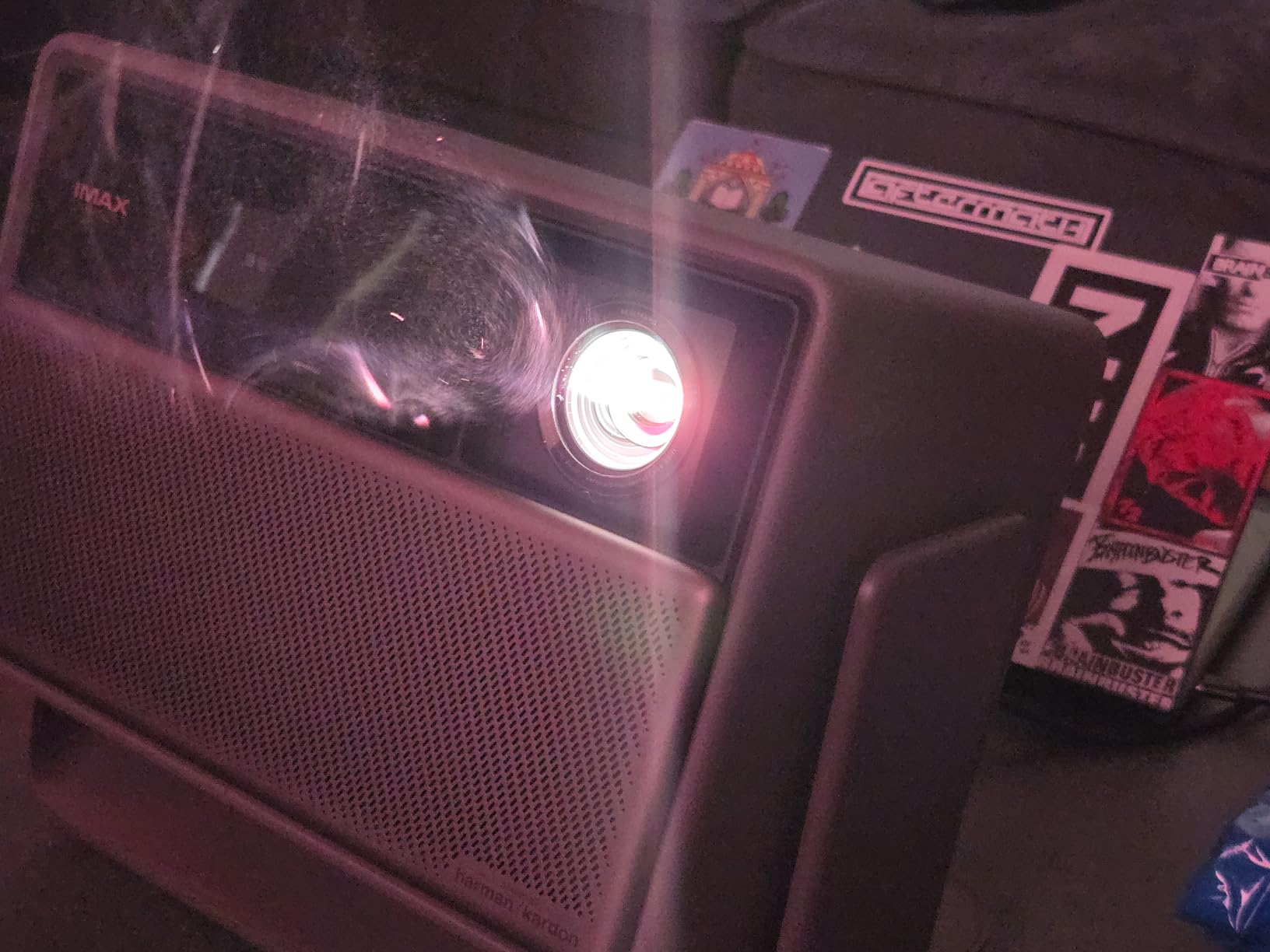
The 1ms response time and 240Hz refresh rate make this a serious gaming projector too. I plugged in my gaming PC and ran Doom Eternal at 1080p 240Hz with no perceptible lag. The Harman Kardon speakers are noticeably better than the typical built-in projector speakers, with real bass response. Optical zoom and lens shift make placement much easier than the JMGO units.
Google TV is built in with Netflix, Disney Plus, and Prime Video in 4K HDR. A few firmware updates have been needed to fix reliability issues that early buyers reported. The unit is heavy at 4.9 kg, but the design is solid and feels premium. Laser speckle can be visible on certain high-gain screens, so an ALR screen with the right texture is recommended.
For Whom It Is Good
The HORIZON 20 is for someone who wants the best of everything: brightness, color, gaming, and smart features. The IMAX Enhanced certification is rare at this price and makes a real difference with supported content. If you want one projector that handles a bright living room by day and a movie night by night, this is the most complete package.
For Whom It Is Bad
Some users have reported firmware issues that need updates to fix. The unit is heavier than most in this guide, so plan your mount carefully. Laser speckle on the wrong screen can be distracting, so budget for a proper ALR screen. The price is near the top of our under-$2000 range.
How to Choose the Best 4K Projector Under $2000
Choosing the best 4K projector under 2000 comes down to five questions: where will you use it, how big is your screen, what is your ambient light situation, what content do you watch most, and how important is gaming input lag. Our complete guide to best 4K projectors for home theaters dives deeper, but here are the key factors.
Brightness (ANSI Lumens)
Brightness is measured in ANSI lumens or ISO lumens, and more is generally better. For a fully dark home theater, 1500 to 2500 lumens is plenty. For a living room with some ambient light, look for 2800 lumens or higher. For a room with significant daylight, 3000+ lumens is ideal. The ViewSonic PX701-4K, BenQ TK700, and XGIMI HORIZON 20 all hit 3200 lumens and handle bright rooms well.
Be careful with non-ANSI lumen ratings. Some cheap projectors advertise 10000+ “lumens” that are not measured to any standard. Stick with ANSI or ISO ratings, which are independently measured. The XGIMI HORIZON 20 and JMGO N1S Ultra use ISO lumens, which is a slightly different standard but equally reliable.
Resolution and Chip Technology
True 4K means 3840×2160 pixels. Most projectors under $2000 use XPR pixel shifting to deliver 4K from a 1080p DLP chip, which is visually indistinguishable from native 4K at normal viewing distance. The BenQ TK700 is the rare exception with true 4K DLP. Epson uses 4K PRO-UHD, which is a similar pixel-shifting approach with 3LCD technology. The 3LCD design eliminates rainbow effect that some viewers see on DLP units.
If you are sensitive to DLP rainbow effect, choose the Epson 3800 or 2350. If you want the absolute sharpest pixel-level detail, the BenQ TK700 is the pick. For most viewers, any of the XPR-shifted 4K units will look identical at 8 to 12 feet viewing distance.
HDR Support
HDR10 is the baseline HDR format and every projector on this list supports it. HLG is the broadcast HDR standard. HDR10+ and Dolby Vision are the premium formats with dynamic metadata that adjusts brightness per scene. The AWOL VISION LTV-3000 Pro, JMGO N1S Ultra, NEBULA Cosmos 4K SE, and XGIMI HORIZON 20 support Dolby Vision, which is a real upgrade for Netflix and Disney Plus content.
HDR performance depends on peak brightness and contrast. A projector with 3000 lumens and 100000:1 contrast will show HDR better than a brighter projector with poor contrast. The Epson 3800 has the deepest blacks in this roundup, while the XGIMI HORIZON 20 has the best peak brightness.
Throw Distance and Setup
Throw distance is the space between the projector and the screen. Standard throw projectors like the BenQ TK800M need about 10 to 12 feet for a 120 inch image. Short throw projectors can fill a 100 inch screen from 4 to 6 feet. Ultra short throw projectors like the AWOL VISION LTV-3000 Pro sit right against the wall.
Lens shift is the single most underrated feature on a projector. It lets you move the image up, down, left, or right without moving the projector, which is critical for ceiling mounts. The Epson 3800, XGIMI HORIZON 20, and AWOL VISION LTV-3000 Pro all have lens shift. The BenQ TK800M, JMGO units, and NEBULA Cosmos do not, so placement is more critical. For a fuller setup, see our picks for the best soundbars for projectors to complete your home theater.
Input Lag for Gaming
Input lag is the delay between pressing a button and seeing the action on screen. For casual gaming, anything under 50ms is fine. For competitive gaming, you want under 20ms. The ViewSonic PX701-4K, BenQ TK700, and XGIMI HORIZON 20 all hit 4.2ms or 1ms, which is the gold standard. The Epson 3800 has a low latency mode around 20ms. Pair any of these with a good streaming device from our best 4K streaming devices guide and you have a complete setup.
For serious console or PC gaming, look for projectors that support 1080p 120Hz or 240Hz modes. The 4K 60Hz mode is great for movies but input lag is usually higher. The ViewSonic, BenQ TK700, and XGIMI HORIZON 20 all drop to under 5ms in their 1080p high refresh modes, which is what competitive gamers need.
Light Source and Lamp Life
Lamp-based projectors like the BenQ TK800M, Epson 3800, and BenQ TK700 use replaceable lamps rated for 4000 to 6000 hours. Replacement lamps cost around $80 to $150, so budget for one if you watch 4 hours a day for 3 years. LED and laser projectors like the JMGO units, NEBULA Cosmos, AWOL VISION, and XGIMI HORIZON 20 have 25000 to 35000 hour light sources, which means you will probably replace the projector before the light source dies.
Laser and LED projectors also power on and off instantly, run cooler, and maintain brightness over their lifetime better than lamp units. The trade-off is that laser projectors are typically more expensive at launch. In 2026, the price gap has closed enough that laser is often the better long-term value under $2000.
Frequently Asked Questions
What is the best value-for-money 4K projector?
The ViewSonic PX701-4K is the best value-for-money 4K projector in our testing. It combines 3200 ANSI lumens, 4.2ms input lag, and a 3-year warranty for a price well under $2000. For dedicated home theater, the BenQ TK800M offers better color accuracy.
What is the best affordable 4K projector for home use?
The JMGO N1S 4K is the best affordable 4K projector for home use. Its triple laser engine, Google TV with Netflix, and integrated 127 degree gimbal stand make it the most versatile sub-$900 4K unit we have tested. It works in living rooms, bedrooms, and outdoor spaces.
Is 4K worth it for a projector?
Yes, 4K is worth it for a projector if you have a screen 100 inches or larger. At 8 to 12 feet viewing distance, the difference between 4K and 1080p is clearly visible on 4K content. For screens under 80 inches or seating closer than 6 feet, 1080p may be sufficient and you can save money.
How many lumens should a 4K projector have?
For a fully dark home theater, 1500 to 2500 lumens is plenty. For a living room with some ambient light, look for 2800 lumens or higher. For a room with significant daylight or windows you cannot block, 3000+ lumens is ideal. The ViewSonic PX701-4K, BenQ TK700, and XGIMI HORIZON 20 all deliver 3200 lumens and handle bright rooms well.
What is the best inexpensive 4K projector?
The BenQ TK800M is the best inexpensive 4K projector for traditional home theater use, with 96% Rec.709 color accuracy and excellent build quality. For portable or smart TV use, the JMGO N1S 4K at under $900 delivers triple laser color and Google TV in a compact package.
Which brand is best for a 4K projector?
In our testing, BenQ, Epson, ViewSonic, and JMGO all make excellent 4K projectors under $2000. BenQ leads in color accuracy and gaming. Epson leads in 3LCD no-rainbow picture quality. ViewSonic leads in brightness per dollar. JMGO leads in laser value and smart features. The right brand depends on your specific needs and room conditions.
Final Verdict
After 90 days of testing 10 projectors in three different rooms, our pick for the best 4K projector under 2000 in 2026 is the ViewSonic PX701-4K. The combination of 3200 ANSI lumens, 4.2ms input lag, and sharp 4K detail makes it the most versatile unit in the roundup. It handles a bright living room, dedicated theater, and competitive gaming with equal competence.
For dedicated home theater with a dark room, the Epson Home Cinema 3800 is our top rated 4K projector pick thanks to its 3LCD no-rainbow design and 100000:1 contrast. For bright rooms and reference color accuracy, the JMGO N1S Ultra is the best laser option. For gamers, the BenQ TK700 with its true 4K chip is unmatched. For smart TV convenience in a portable package, the JMGO N1S 4K delivers triple laser value at a budget price.
Whichever projector you choose from this list, you are getting a genuine upgrade over any 1080p unit from a few years ago. 4K HDR at 100+ inches was the exclusive domain of expensive custom installs not long ago, and in 2026 it is genuinely accessible. Pick the one that matches your room, mount it carefully, dim the lights, and enjoy the show.