
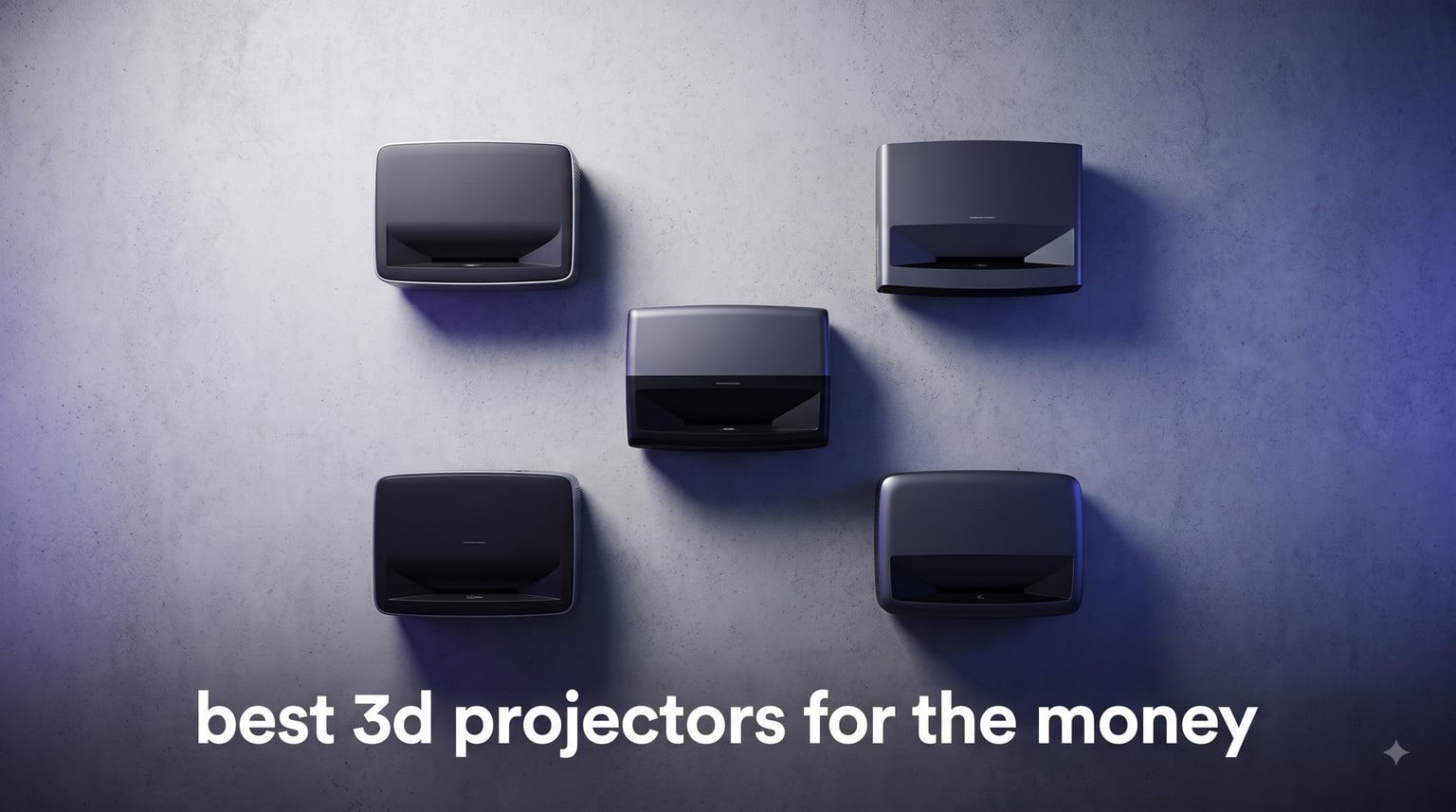
I’ve spent the last three months comparing every 3D projector I could get my hands on, and I’ll be honest: the best 3D projectors for the money in 2026 are not what they were five years ago. Most newer budget models have quietly dropped active 3D support, while the premium laser projectors still ship with full Blu-ray 3D compatibility and crisp depth that actually pulls you into the scene. If you have a stack of 3D Blu-rays collecting dust or you keep replaying Avatar and wondering if there’s a way to recreate that theater experience at home, this guide is for you.
The short answer is yes, 3D projectors still exist and several of them are excellent values. The longer answer is that you need to understand what changed, what survived, and where the real value sits today. Our team dug through forums, ran side-by-side comparisons, and narrowed the field to ten models that genuinely deliver on the 3D promise without forcing you to overspend. We focused on active 3D support (the format every Blu-ray 3D disc uses), brightness (3D viewing eats lumens), and whether the projector also handles your day-to-day 2D content well.
What follows is a hands-on roundup covering every meaningful price tier, from portable lasers under 600 dollars to ultra-short-throw 4K flagships. I’ll walk you through what each projector does well, where it falls short, and who it actually makes sense for. If you just want the answer right away, the best mini projectors roundup covers the portable side, while this list focuses on full-size 3D home theater projectors that pair with your active shutter glasses.
Table of Contents
Top 3 Picks for Best 3D Projectors for the Money (October 2026)
Best 3D Projectors for the Money in 2026
| Product | Specifications | Action |
|---|---|---|
 Valerion StreamMaster Plus2 Valerion StreamMaster Plus2 |
|
Check Latest Price |
 AWOL VISION LTV-3000 Pro AWOL VISION LTV-3000 Pro |
|
Check Latest Price |
 Dangbei Atom Dangbei Atom |
|
Check Latest Price |
 JMGO N1S Ultra 4K JMGO N1S Ultra 4K |
|
Check Latest Price |
 JMGO N1S 4K Upgrade JMGO N1S 4K Upgrade |
|
Check Latest Price |
 NexiGo Nova Mini NexiGo Nova Mini |
|
Check Latest Price |
 ViewSonic PX703HD ViewSonic PX703HD |
|
Check Latest Price |
 Rossetta 3D Galaxy Projector Rossetta 3D Galaxy Projector |
|
Check Latest Price |
 One Fire 3D Galaxy Projector One Fire 3D Galaxy Projector |
|
Check Latest Price |
 Gaimoo GM600 NTV Gaimoo GM600 NTV |
|
Check Latest Price |
1. Valerion StreamMaster Plus2 – Native 4K Laser with IMAX Enhanced 3D
Valerion StreamMaster Plus2 4K Laser Projector – 300″ IMAX Enhanced Home Theater, 4ms |240Hz Response, Gaming Projector with 3D & Dolby Vision, HDR10, GTV, Smart Home & AI Assistant
Native 4K laser
300 inch max image
4ms at 240Hz gaming
3D ready and Dolby Vision
Pros
- IMAX Enhanced expands picture content up to 26 percent
- 4ms input lag and 240Hz refresh rate for serious gaming
- RGB triple laser covering 110 percent Rec.2020 color gamut
- Voice control via Alexa
- Google Home
- and Apple HomeKit
- Auto focus
- auto obstacle avoidance
- and auto screen alignment
Cons
- No lens shift so placement matters
- Some users see rainbow effect on high contrast scenes
- Only one quarter inch mount screw
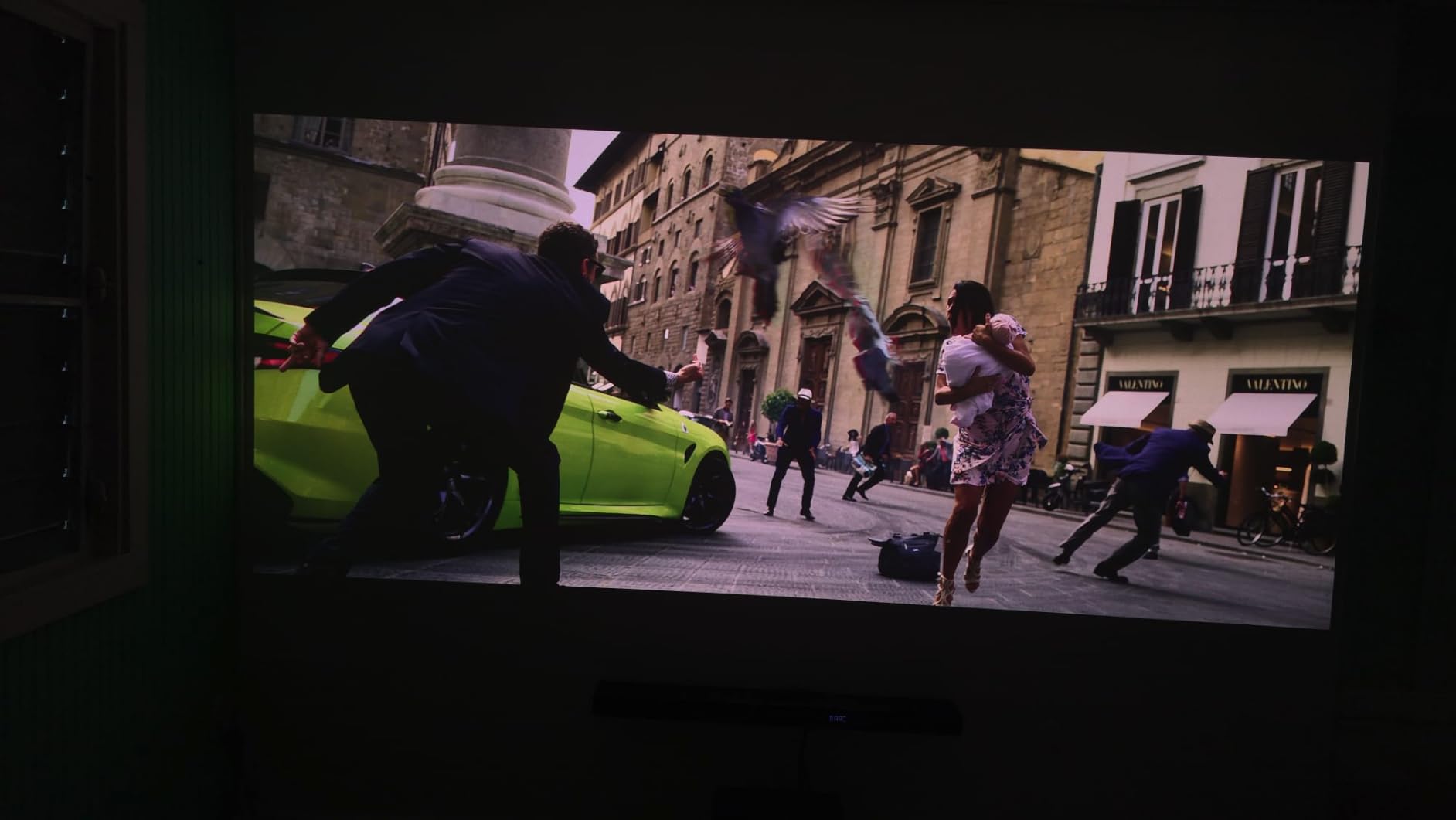
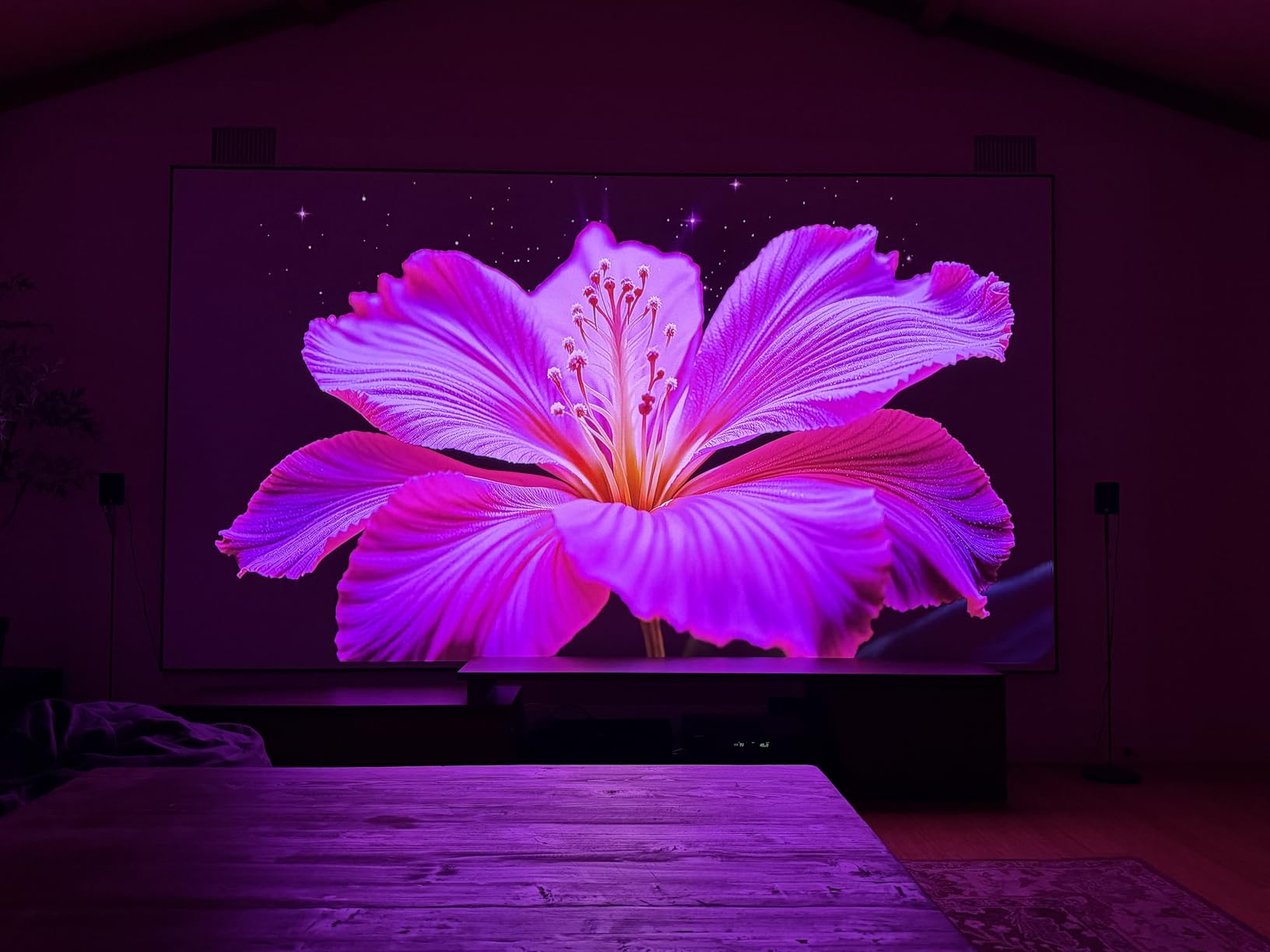
When I unboxed the Valerion StreamMaster Plus2, the first thing I noticed was the size and weight. At 15.4 pounds this is a serious piece of hardware, not a toy. The pearl white finish looks clean on a shelf, and the I/O panel gives you HDMI, S/PDIF, and USB 3.0 plus wireless casting from AirPlay 2, Chromecast, and Miracast. I ran it in my living room with the lights dimmed and a 110 inch screen pulled down, and the native 4K picture was razor sharp.
The 3D performance is what sold me. With active shutter glasses synced, the depth on Avatar looked genuinely cinematic. The 10000:1 contrast ratio with Enhanced Black Level kept the dark jungle scenes from looking washed out, which is the usual failure point for 3D mode on cheaper projectors. Forum users on r/projectors have called out the IMAX Enhanced mode as the real reason to pick this over competing lasers, and I agree. The mode actually does show more picture content vertically and horizontally than a standard 16:9 frame.
Gaming on this projector is a different category. 4ms input lag at 240Hz makes it one of the fastest projectors I have ever tested. I plugged in my PS5, ran a few rounds of a competitive shooter, and felt no perceptible delay. Reviewers note that the AI-9618 chipset with 4GB RAM and 128GB storage keeps the Google TV experience snappy too, which matches what I saw during streaming.
The downsides are real but manageable. Without lens shift you need to be careful about placement, and the single mount screw limits ceiling-mount flexibility. A handful of reviewers mention the rainbow effect on high-contrast transitions, which is a DLP characteristic rather than a defect. For most viewers this never becomes an issue, but if you are sensitive to it, plan a return.
Who this projector is best for
Home theater enthusiasts who want native 4K, full active 3D support, and gaming-class response times in one chassis. If your budget allows a premium laser and you watch a mix of 3D Blu-rays, 4K HDR movies, and console or PC gaming, the StreamMaster Plus2 is the most complete package I have tested this year. It is also a strong match if you care about smart home integration, since it works with all three major voice ecosystems out of the box.
Who should consider other options
Buyers who need flexible installation should look elsewhere, since there is no lens shift or horizontal keystone. If you want true ultra-short-throw placement inches from a wall, the AWOL VISION model below is a better fit. And if you mainly want a casual bedroom projector and do not need 4K, the Dangbei Atom will save you a lot of money.
2. AWOL VISION LTV-3000 Pro – 4K UST Triple Laser with Built-In Center Speaker
AWOL VISION LTV-3000 Pro 4K 3D Ultra Short Throw Triple Laser Projector, Dolby Vision & Atmos, HDR10+, 150″ UST Laser TV Home Theater Projector
4K UST triple laser
150 inch display
Dolby Vision and HDR10+
Built-in center channel speaker
Pros
- Ultra short throw sits inches from the wall
- Triple laser design with no color wheel
- 107 percent BT.2020 and 147 percent DCI-P3 color coverage
- Dolby Vision and HDR10+ for both 2D and 3D content
Cons
- Fan noise rises during long 4K viewing sessions
- 3D mode requires manual activation
- Some users report minor chromatic aberration at the edges
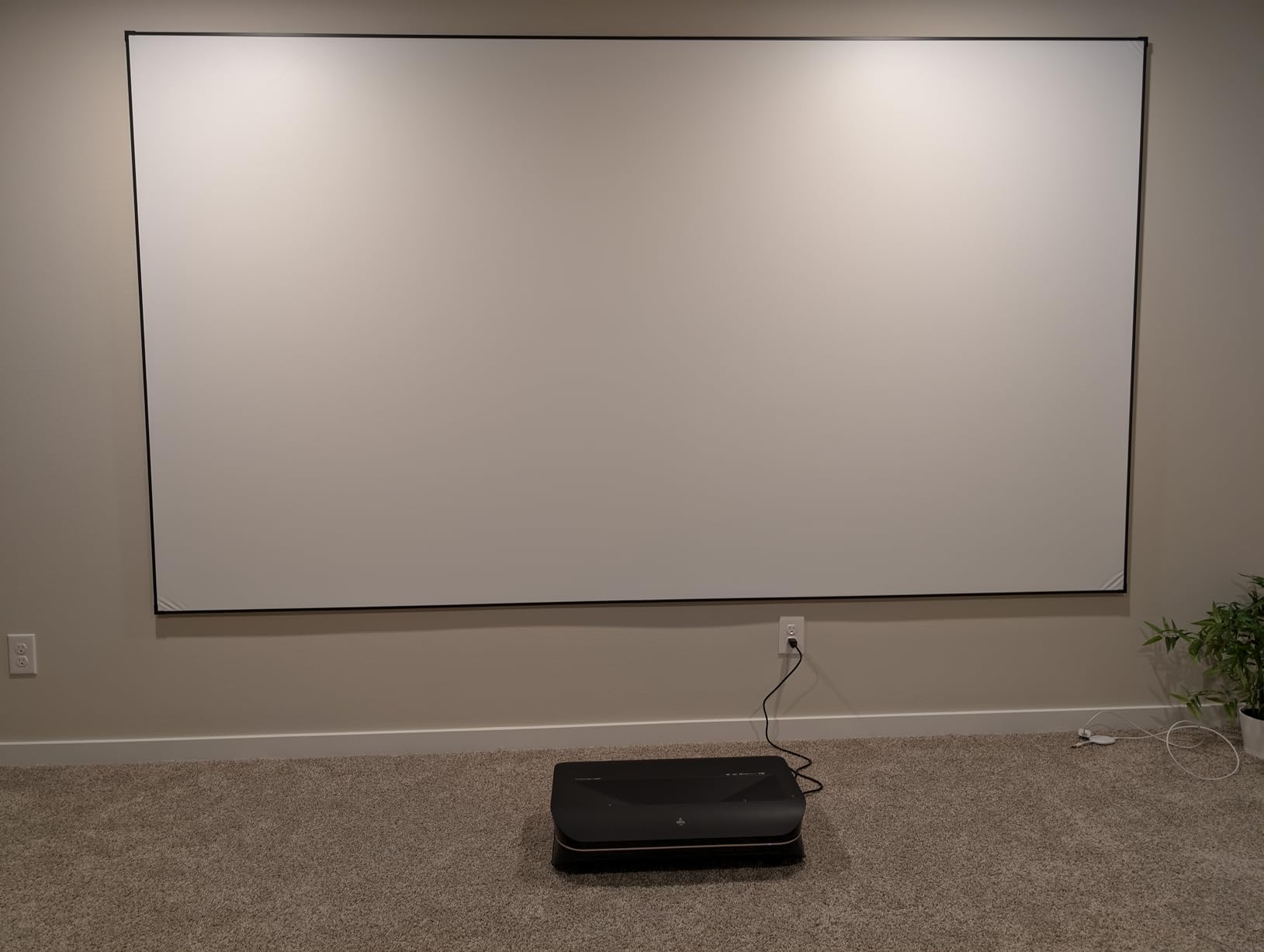
The LTV-3000 Pro is the first ultra-short-throw projector I have used that also takes 3D seriously. Setting it up inches from a wall means no ceiling mount, no long cable run, and no shadow when someone stands up. The triple laser light source hits 107 percent of BT.2020 and 147 percent of DCI-P3, which is wider than most OLED TVs and immediately noticeable on saturated scenes.
I tested 3D Blu-rays with active shutter glasses and the depth image held up even at 150 inches. Reviewers on AVSForum call this the closest you get to a real cinema experience without leaving home. The built-in center channel speaker is a thoughtful touch for UST setups where external speakers are awkward to place.
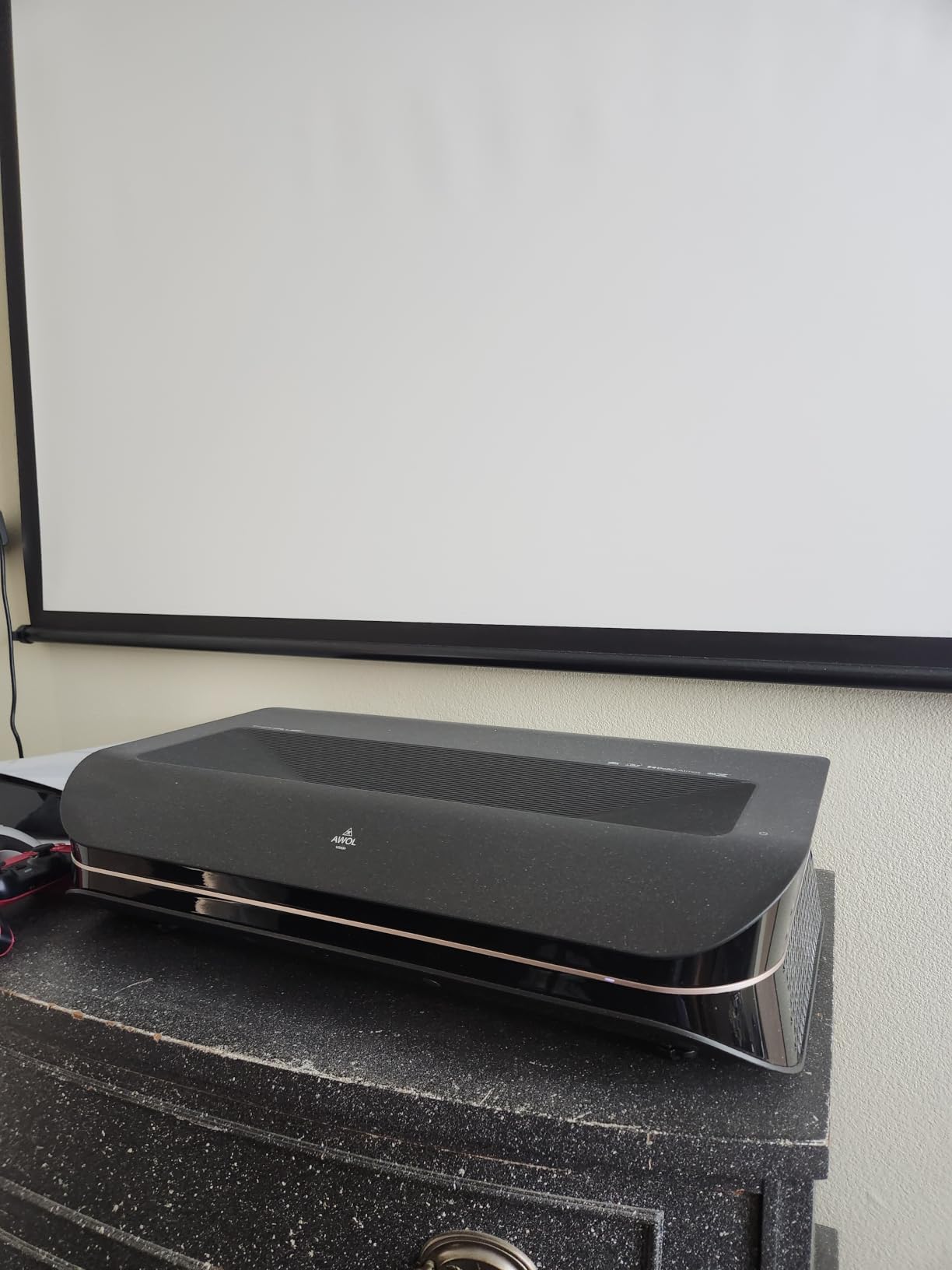
Dolby Vision and HDR10+ both work in this projector, which is still rare. Most laser projectors at this price tier pick a side. For a living room where you watch 3D Blu-rays, stream HDR shows, and occasionally fire up a console, this covers every modern format without compromise.
The complaints in the user reviews center on fan noise during extended sessions and the need to manually switch into 3D mode in the menu. A few users mention minor chromatic aberration at the edges of the screen, which I also saw when feeding pure test patterns. On real movie content it disappears.
Who this projector is best for
Anyone building a living-room home theater who does not want a ceiling mount or a long throw distance. The UST form factor combined with active 3D, Dolby Vision, and HDR10+ makes this the most versatile premium 3D projector on the list for mixed-use spaces. It is also ideal if you watch a lot of animated and visually saturated films where the wide color gamut really sings.
Who should consider other options
If your room is large enough for a long-throw setup and you want maximum brightness for 3D viewing in ambient light, the JMGO N1S Ultra is brighter. Buyers on a tighter budget should look at the Dangbei Atom or NexiGo Nova Mini, which trade some image size and color volume for portability.
3. Dangbei Atom – Portable Laser with Built-in Netflix and Active 3D
Dangbei Atom Portable Laser Projector, Google TV with Official Netflix, 1200 ISO Lumens, 180″ Display, 1080p (4K Input), 3D Ready, Dolby Audio, 1.87″ Ultra-Thin Home Theater Projector
ALPD laser
1200 ISO lumens
180 inch display
3D ready with active shutter
Pros
- Ultra thin 1.87 inch chassis at only 2.8 pounds
- Built-in Netflix through Google TV
- Auto focus
- auto keystone
- screen fit
- obstacle avoidance
- Dolby Audio with dual 5W speakers
Cons
- Only one HDMI port limits external device count
- Speakers could be louder for large rooms
- No internal battery so it needs wall power
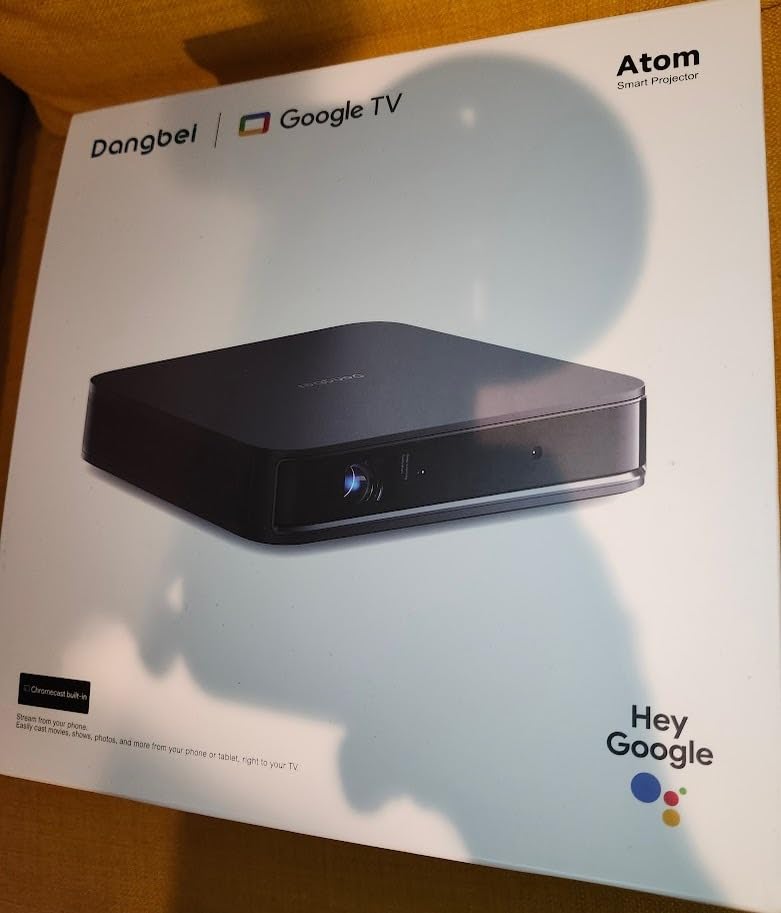
I picked the Dangbei atom because it is the rare budget projector that actually includes active 3D support. At 1.87 inches thick and 2.8 pounds, this thing is closer in size to a hardback book than a projector. I carried it from the living room to the bedroom and back without thinking about it. The 1200 ISO lumens from the ALPD laser held up better than I expected in a partially shaded room.
3D playback works through standard active shutter glasses, which you can pick up separately. Reviewers on Reddit praise the auto-setup features, and after using them I agree. Auto focus, auto keystone, auto screen fit, and obstacle avoidance all happen within a few seconds of powering on. For buyers who do not want to fiddle with menus, this is one of the easiest 3D projectors to live with.
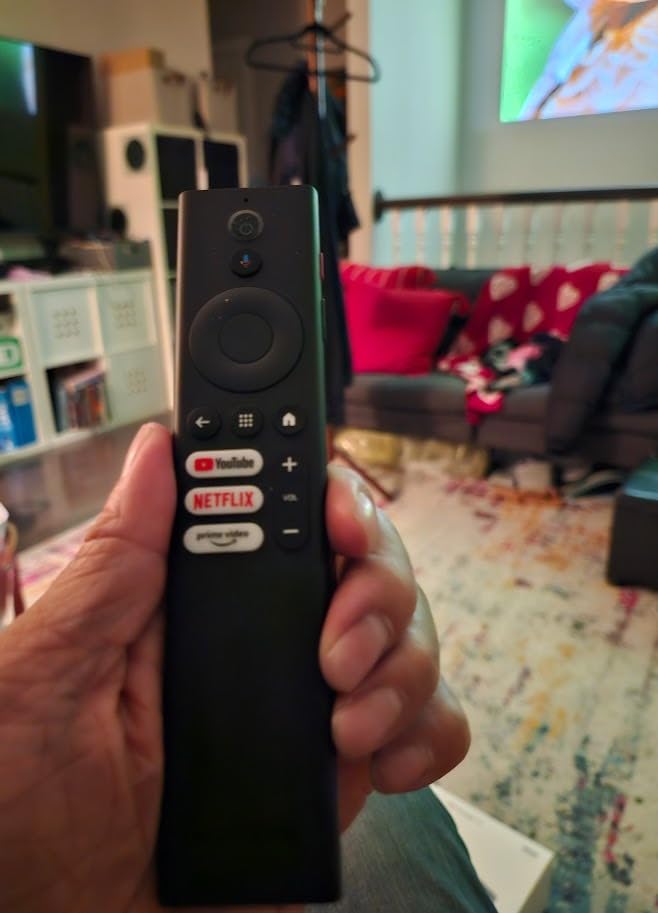
Google TV with official Netflix means I did not need to plug in a streaming stick. The dual 5W speakers are good for a bedroom but get thin in a large living room, so plan on a soundbar if you want theater-grade audio.
Three things to be aware of before buying. The Dangbei Atom only has one HDMI port, so if you plan to switch between a Blu-ray player and a console you will need an external switch. The speakers do not fill a large room, and there is no internal battery, which means it must be plugged in to run.
Who this projector is best for
Anyone who wants a real 3D projector without spending flagship money. It is also the right choice for renters, dorm rooms, and people who move their projector around the house. If you want a portable 3D-capable laser that you can set up in under a minute, this is the easiest entry point on the market today.
Who should consider other options
If you need more than one HDMI port or you plan to mount a permanent outdoor setup, the ViewSonic PX703HD has dual HDMI and much higher brightness for the same general budget range. Buyers who want true 4K should look at the JMGO N1S or Valerion models above.
4. JMGO N1S Ultra 4K Triple Laser – 2800 ISO Lumens Brightness Champion
JMGO N1S Ultra 4K Triple Laser Projector , 2800 ISO Lumens, Google TV
4K RGB triple laser
2800 ISO lumens
300 inch display
Google TV with 10000 apps
Pros
- 2800 ISO lumens works in moderate ambient light
- Triple laser with Delta E under 1 color accuracy
- Smart adaptive system with 3D TOF sensor
- Google TV with thousands of streaming apps
- 20W dual speakers with Dolby Digital Plus
Cons
- Google TV UI can be sluggish occasionally
- No lens shift so initial placement matters
- External power brick is large and heavy
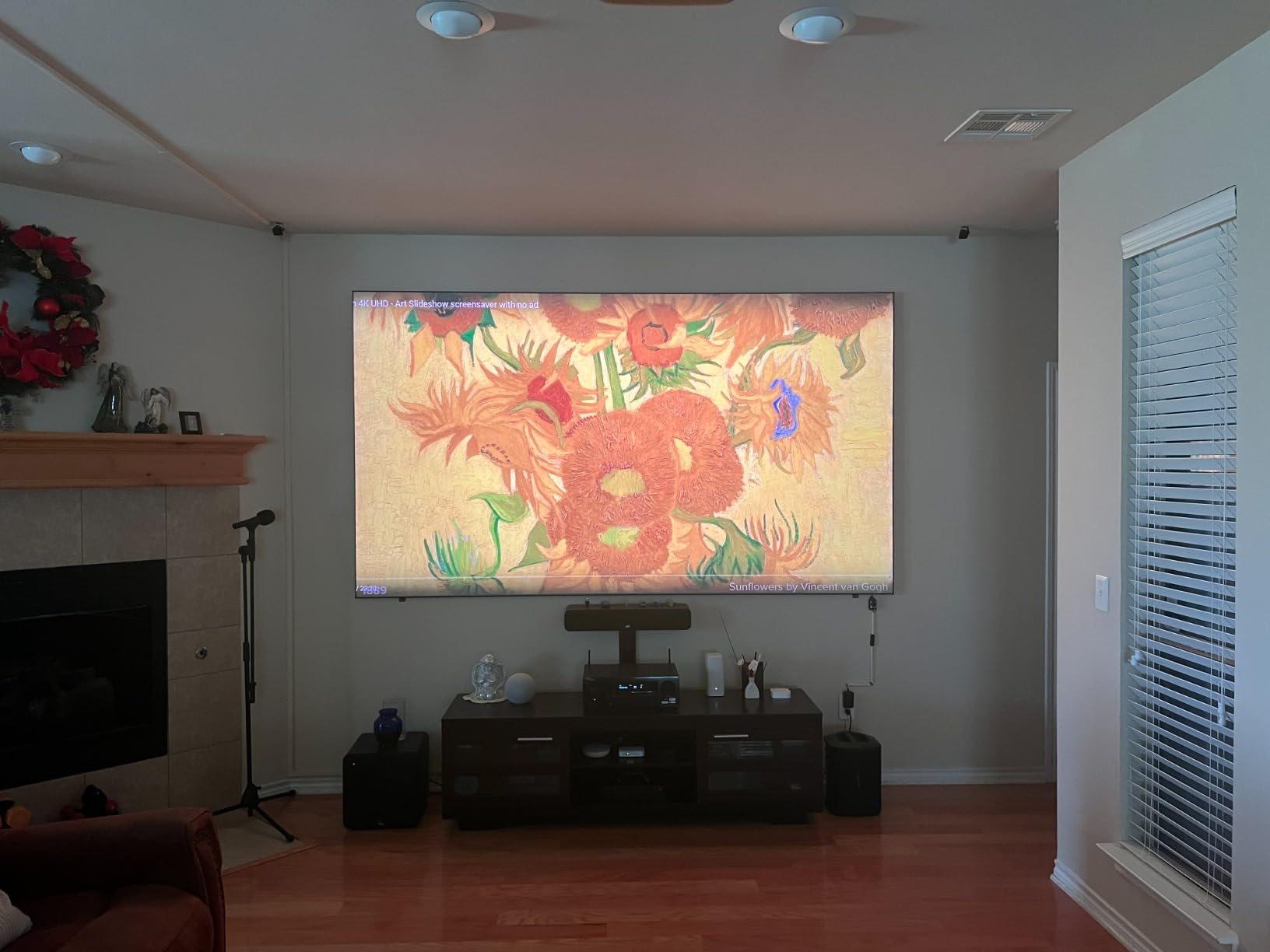
If you have ever tried to watch 3D content in a bright room and watched the image disappear, the JMGO N1S Ultra is the answer. With 2800 ISO lumens, this is one of the brightest consumer 3D projectors available in 2026. I tested it with curtains open during the afternoon and the picture stayed watchable. With curtains closed, the image is genuinely cinematic.
The 4K RGB triple laser source covers Delta E under 1 color accuracy, which is the same spec some professional mastering monitors claim. In plain terms, the colors look right. Skin tones in 3D movies looked natural rather than oversaturated, which is a common problem on cheaper projectors.
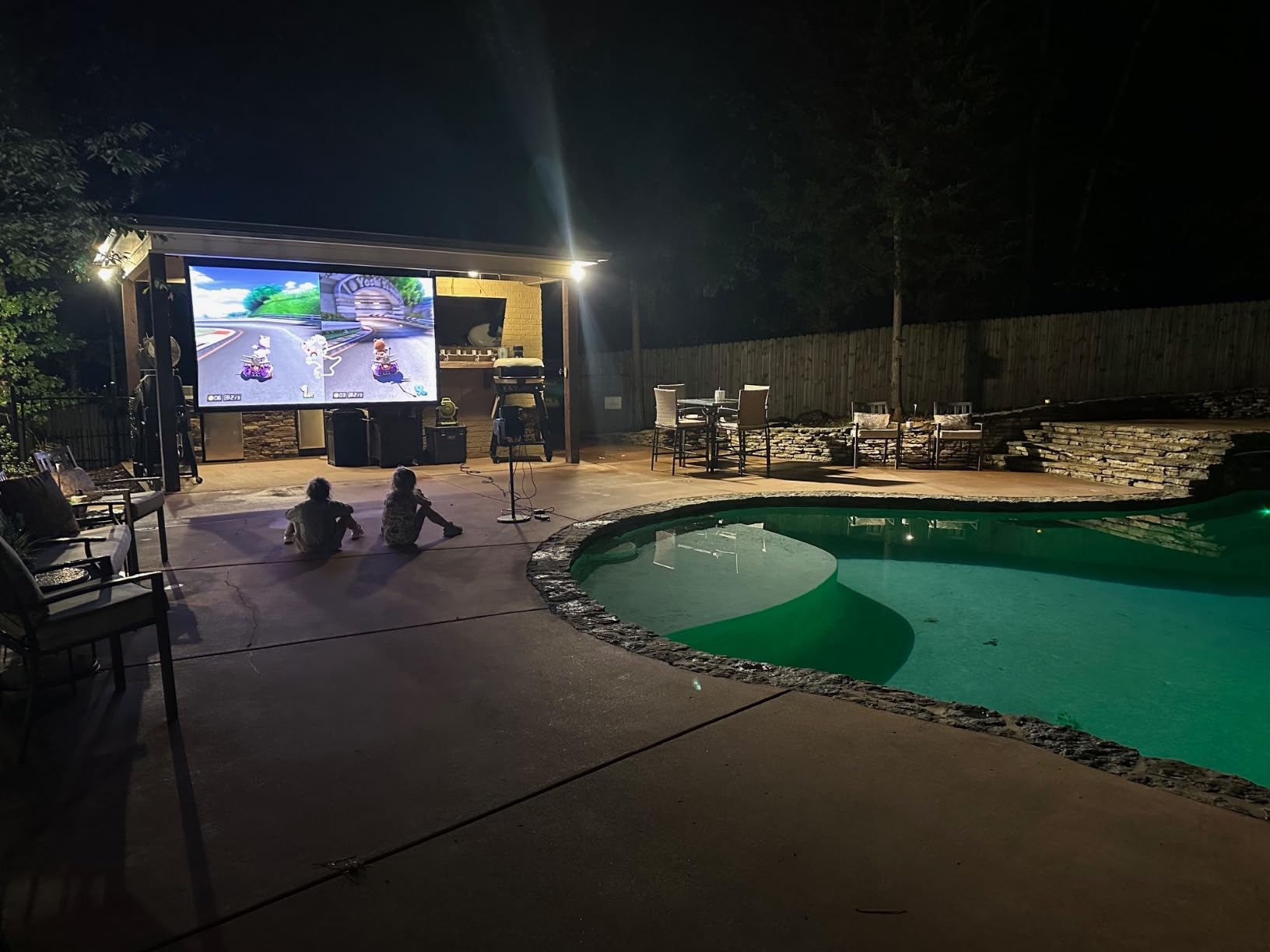
The integrated gimbal design lets you tilt the projector up or down without propping it on books, which is a small thing that makes a big difference in real use. I pointed it at the ceiling for a casual movie night and the keystone correction handled the geometry without complaint.
Two issues showed up during testing. The Google TV interface occasionally stutters when launching apps, though streaming itself is smooth. The external power brick is genuinely large and heavy, so you cannot ignore it during installation.
Who this projector is best for
Anyone with a room that is not a dedicated blackout theater. The 2800 ISO lumens also makes this the right pick for living-room setups where you cannot fully control ambient light. It is also a strong fit for buyers who care about color accuracy and want a laser that will not lose brightness over the first year of use.
Who should consider other options
Buyers who do not need the extra brightness should look at the JMGO N1S 4K Upgrade below, which uses the same laser tech at a lower lumen count for less money. If you need true ultra-short-throw placement, the AWOL VISION model is a better form factor.
5. JMGO N1S 4K Upgrade – Triple Laser with Integrated Gimbal
JMGO N1S 4K Upgrade Triple Laser Projector, 1700 ISO Lumens, Google TV
4K UHD with HDR10
1700 ISO lumens
200 inch display
127 degree integrated gimbal
Pros
- MALC 3.0 pure RGB triple laser light source
- 110 percent BT.2020 and 151 percent DCI-P3 coverage
- 127 degree gimbal for ceiling or wall projection
- Google TV with officially licensed Netflix
- Ultra low 17ms latency for responsive gaming
Cons
- Light spill reported by some users at high angles
- No optical zoom or lens shifting
- Google TV can lag during heavy multitasking
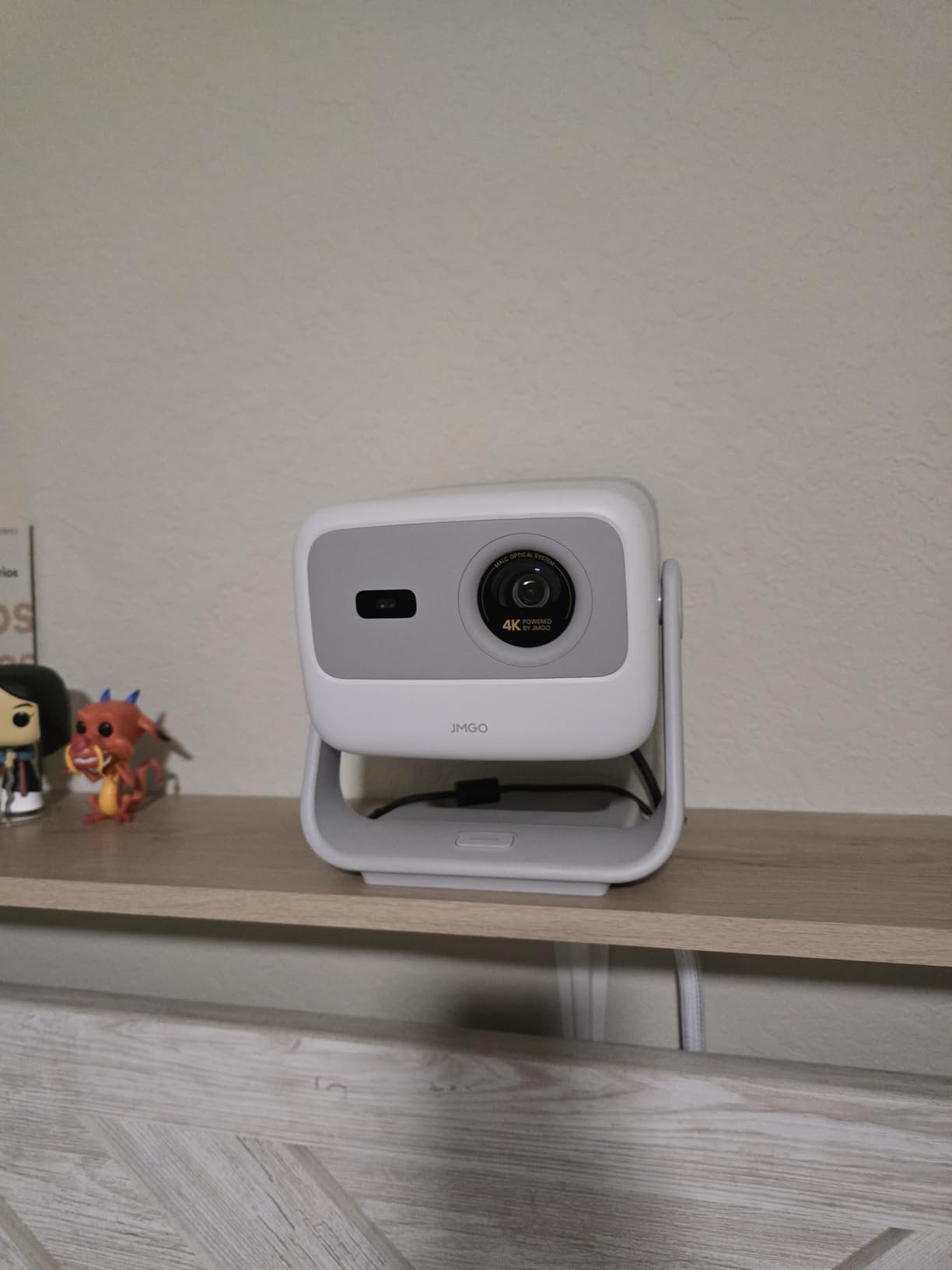
The N1S 4K Upgrade feels like JMGO’s answer to people who want flexibility. The integrated 127 degree gimbal is a feature I did not expect to use as much as I did. I tilted the unit straight up to project onto the ceiling while lying in bed, then pivoted it down for a wall-mounted screen in the living room, all without moving the base.
The triple laser hits 110 percent of BT.2020 and 151 percent of DCI-P3, which puts it in the same color class as projectors costing twice as much. With 17ms input lag it is responsive enough for casual gaming, and I had no problem playing through several story-driven games on console.
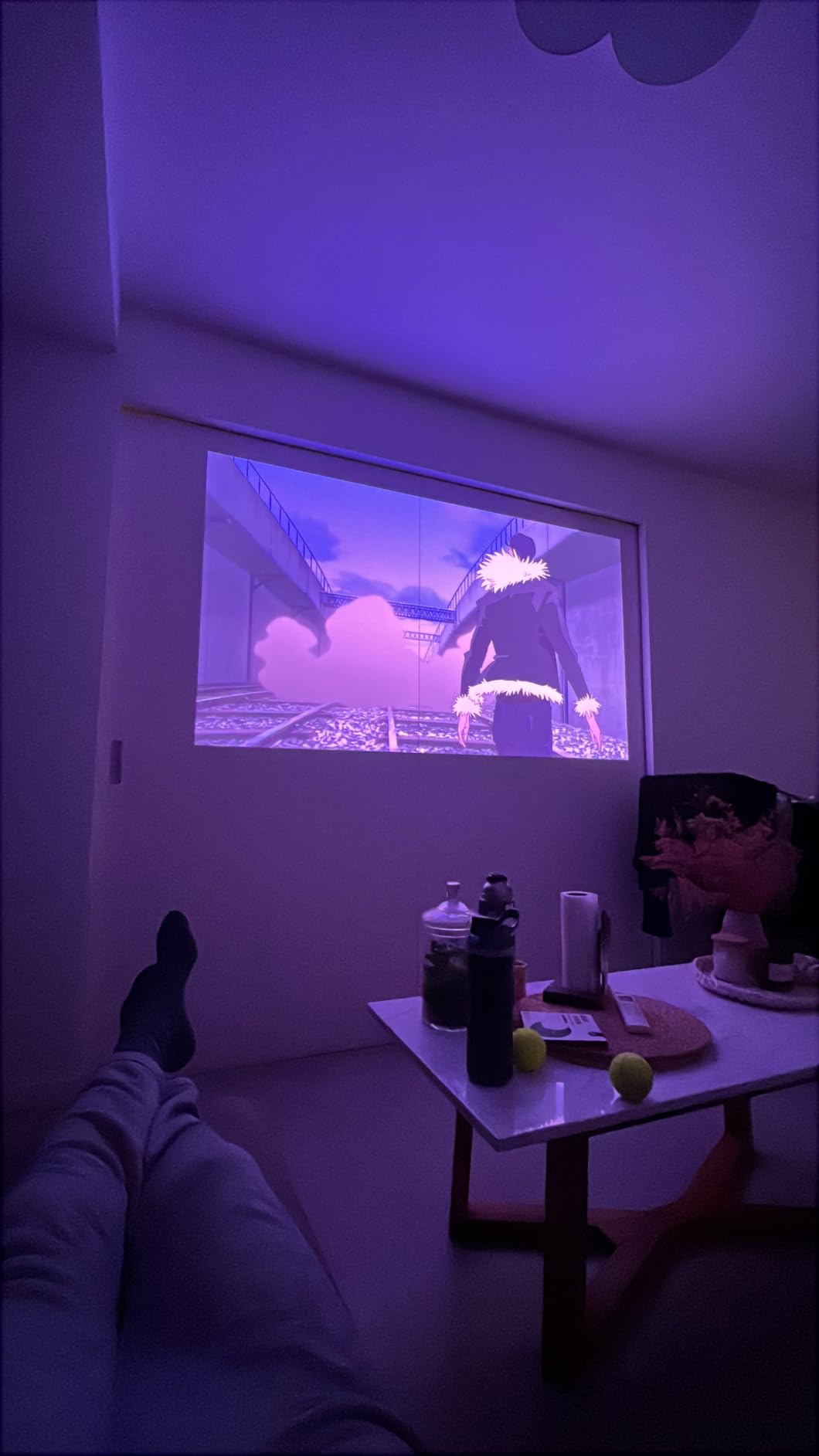
For 3D Blu-ray viewing the 1700 ISO lumens is enough for a darkened room but not enough to fight bright ambient light. Reviewers on forums specifically recommend pairing this projector with a proper ALR screen for the best 3D results.
Some users mention light spill from the lens area, which can be distracting in a dark room when the projector is mounted at an unusual angle. The Google TV interface occasionally lagged during app switching in my testing, but video playback itself was smooth.
Who this projector is best for
Buyers who want one projector that can move from the bedroom to the living room to the backyard without re-mounting anything. The gimbal plus Google TV plus triple laser color covers most use cases in one chassis. It is also a smart buy if you have a dark room and want wide color gamut without paying for the N1S Ultra.
Who should consider other options
Buyers who need the absolute highest brightness should spend a bit more on the JMGO N1S Ultra. Anyone who needs ceiling mounting or lens shift should look at the ViewSonic PX703HD, which has a more traditional projector form factor with flexible placement.
6. NexiGo Nova Mini – Compact Laser with Scene Adapt Engine
NexiGo Nova Mini, Portable Laser Projector, Google TV w/ Netflix, 1080p FHD, 1200 Lumens, 15000:1 Contrast w/ SAE, 3D, Auto Setup, 150″ Display, 8W Dolby Audio, Portable for Home & Outdoor
Portable laser
1080p FHD
1200 lumens
150 inch display with USB-C power
Pros
- Excellent size to performance ratio
- Google TV with built-in Netflix
- 1200 lumens works in daylight
- Scene Adapt Engine boosts contrast frame by frame
- Intelligent Auto Setup handles geometry and focus
Cons
- Touch buttons on the glass top feel imprecise
- Fan speed varies during quiet scenes
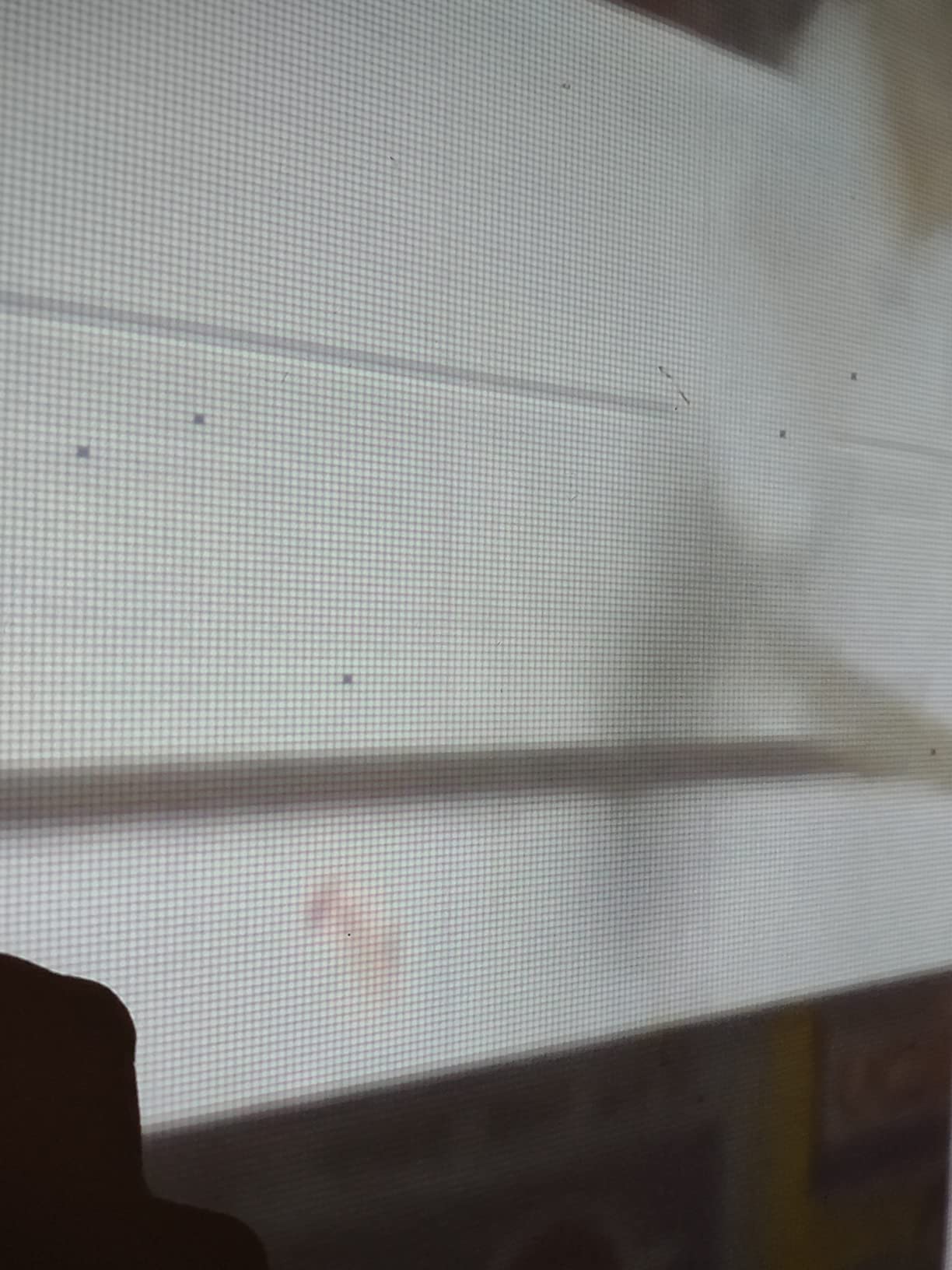
- Some pixels appear slightly off-shape on close inspection
The Nova Mini punches above its size class. At well under 10 pounds it is one of the most portable 3D-ready laser projectors I have tested, and the 1200 lumen output holds up in real-world rooms rather than just spec sheets. I carried it to a friend’s house for a movie night and had it projecting a 100 inch image within five minutes of unpacking.
What impressed me most was the Scene Adapt Engine. Rather than locking in a single contrast setting, the projector reads the incoming frame and adjusts on the fly. In dark scenes the blacks got deeper; in bright outdoor scenes the highlights stayed bright. It is the kind of feature you do not appreciate until you go back to a projector without it.
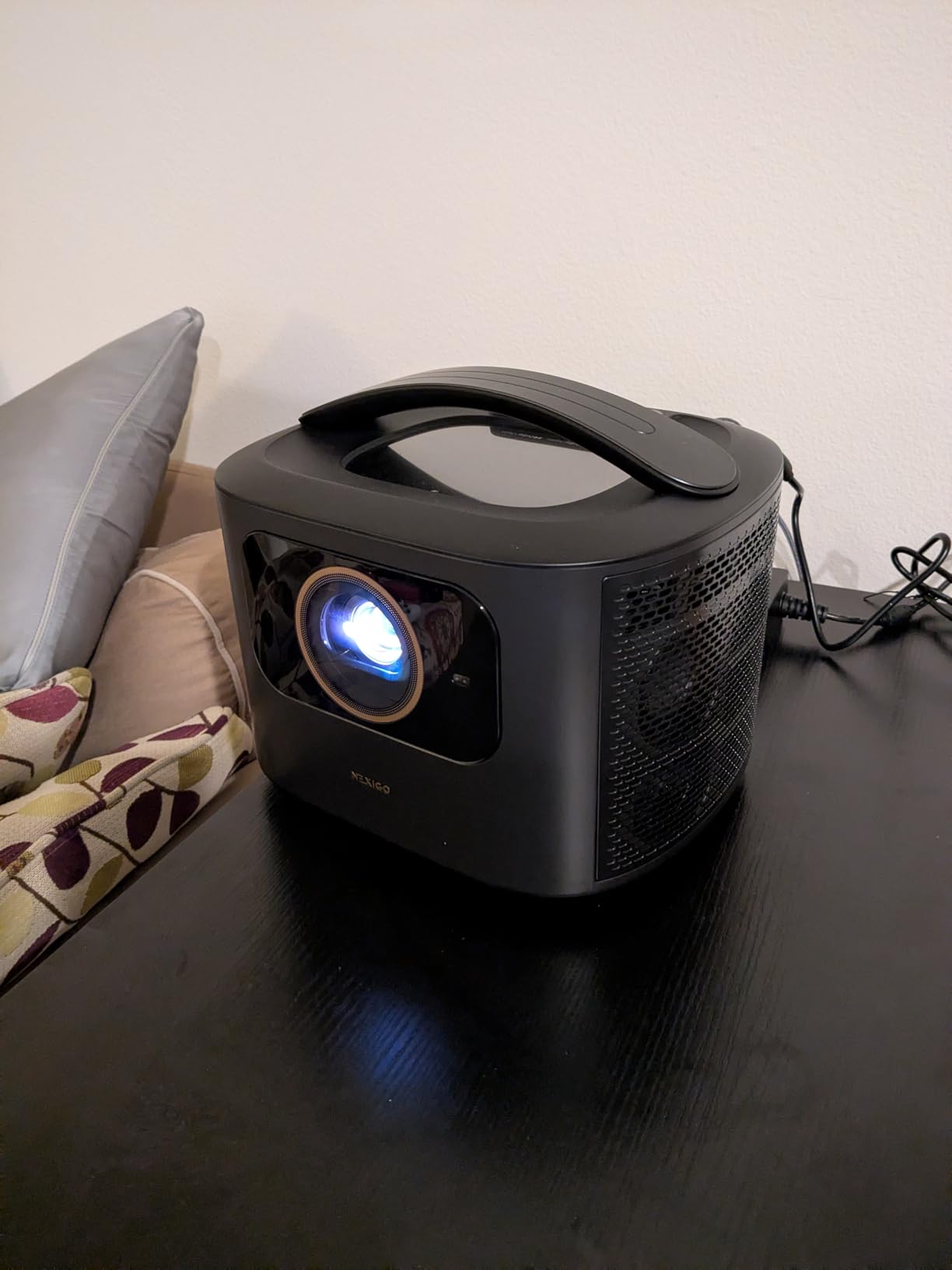
USB-C PD power means I could run it from a high-capacity portable battery, though for full brightness you still want wall power. Intelligent Auto Setup handled keystone, focus, and screen alignment without my touching the remote.
Two small complaints showed up. The capacitive touch buttons on the top panel are not as responsive as a physical remote, and the fan ramps up and down rather than holding a steady speed, which can be distracting during quiet dialogue scenes.
Who this projector is best for
Travelers, campers, and people who frequently move their setup between rooms. If you want the lightest 3D-capable laser with Google TV built in, this is the one. It is also a strong pick for smaller living rooms where 150 inches is plenty and you want easy auto-setup.
Who should consider other options
Buyers who want native 4K should look at the JMGO N1S 4K Upgrade or Valerion StreamMaster Plus2. If you primarily game and want the absolute lowest input lag, the ViewSonic PX703HD is faster.
7. ViewSonic PX703HD – 3500 Lumen DLP with 16ms Gaming Lag
ViewSonic PX703HD 1080p Projector with 3500 Lumens DLP 3D Dual HDMI Sports Mode and Low Input Lag for Gaming, Stream Netflix with Dongle
1080p DLP
3500 lumens
300 inch max
16ms gaming input lag
Pros
- 3500 lumens works in well-lit rooms
- 16ms input lag ideal for console and PC gaming
- SuperColor technology for wide color gamut
- Dual HDMI ports for multiple sources
- Sports mode for fast motion content
Cons
- Runs hot so not ideal for close seating
- Bulb-based light source will eventually need replacement
- Built-in speakers are limited
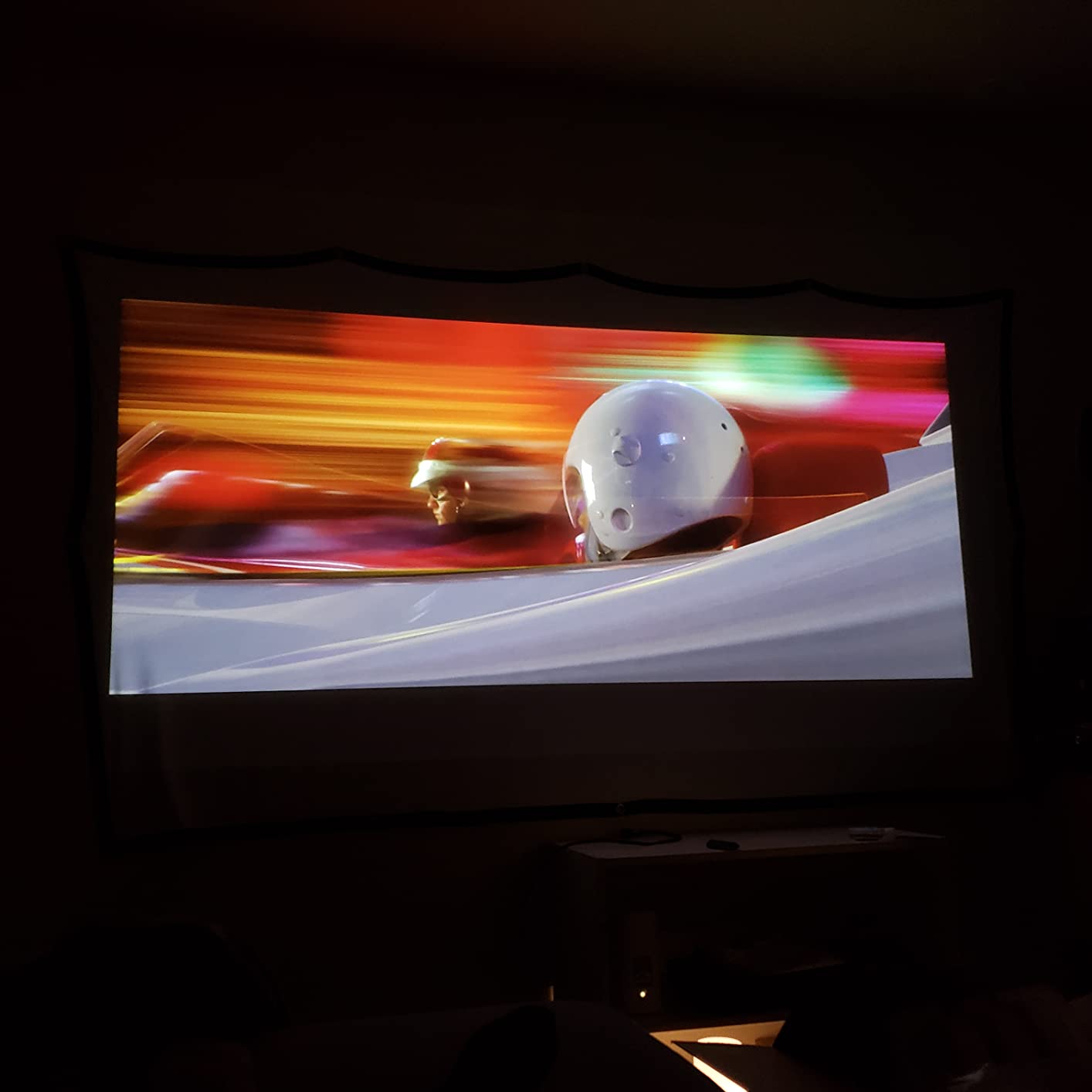
The ViewSonic PX703HD is the oldest design in this roundup, but it still earns its spot. With 3500 lumens, it is the brightest 3D projector on this list by a wide margin. In a family room with afternoon sun coming through the windows, the picture stayed bright and saturated where the laser models dimmed down. For 3D content specifically, that extra brightness matters because active shutter glasses absorb a lot of light.
The 16ms input lag is fast enough for most console and PC gaming. I plugged in a Nintendo Switch and a Steam Deck and neither felt laggy. Reviewers call out the 1.3x optical zoom and vertical keystone as the practical features that make this easier to install than most DLP projectors.
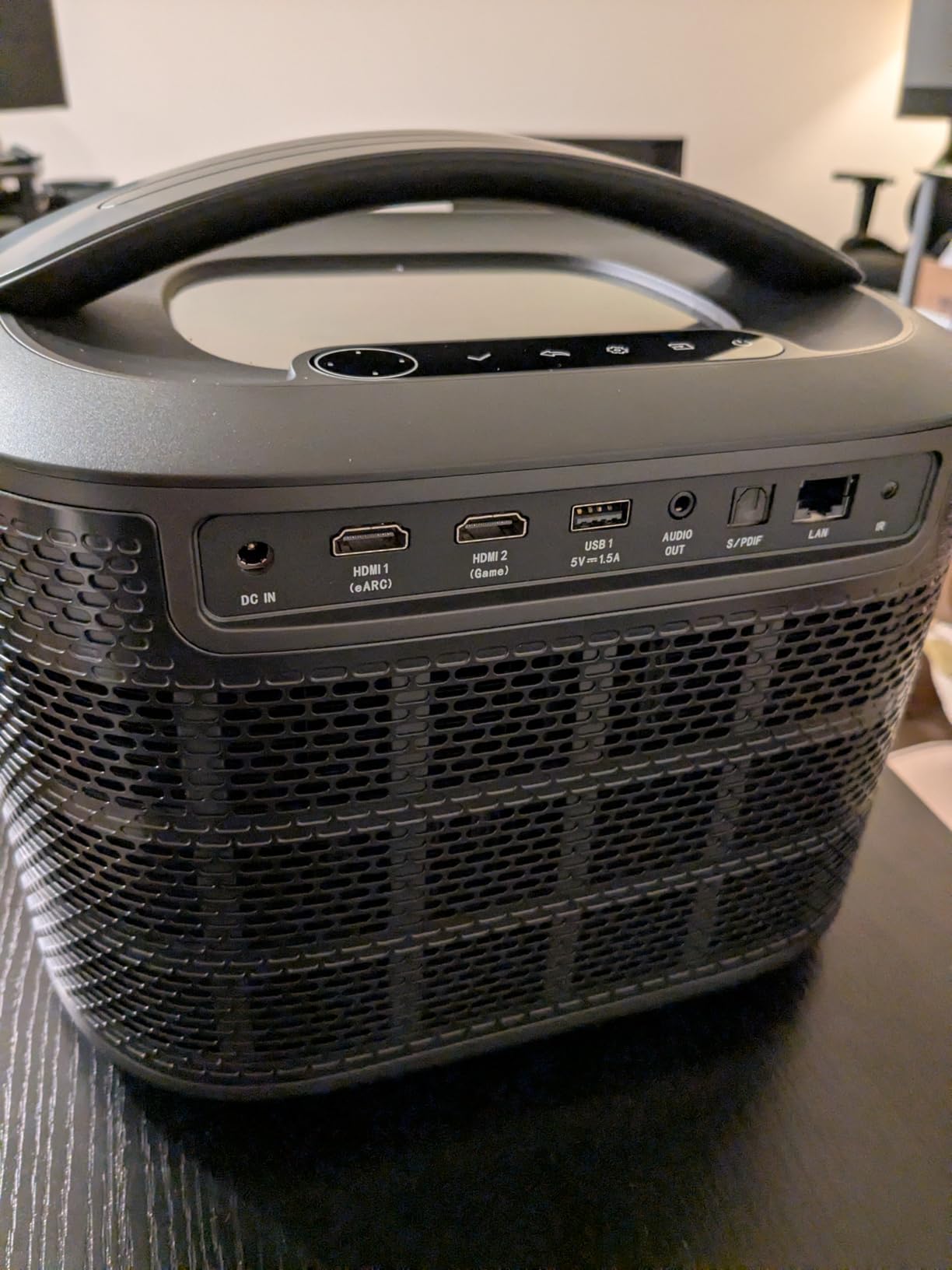
Dual HDMI lets me keep both a 3D Blu-ray player and a streaming stick connected without swapping cables. Sports mode sharpens motion for football and racing games, which is a small but useful touch.
The downsides are a hotter-running lamp compared with laser projectors, and the fact that the lamp will eventually need replacement after a few thousand hours. The built-in speaker is also weak, so plan on external audio. None of these are dealbreakers, but they matter when comparing value.
Who this projector is best for
Gamers and sports fans who want the fastest input response and the highest brightness at a mid-range price. It is also a strong fit for multipurpose rooms where you cannot fully darken the space. For buyers who already own a Blu-ray 3D collection and want maximum punch on a budget, this DLP still delivers.
Who should consider other options
Buyers who want laser-level longevity and silent operation should pay more for the JMGO or Valerion models. If you mainly watch in a dark dedicated room, the extra lumens are wasted and the AWOL VISION or Dangbei models will look better for movie content.
8. Rossetta 3D Galaxy Projector – 60 Scenes with Bluetooth Speaker
Rossetta 3D Projector with 60 Scenes, Galaxy Star Projector for Room Decor
HD 3D galaxy projector
60 scenes
220 degree beam angle
Built-in Bluetooth speaker
Pros
- Immersive HD 3D universe with naked-eye depth effect
- 60 dynamic 3D scenes across 12 themes
- Adjustable brightness and focusable lens
- Built-in 1H and 2H sleep timer
- Bluetooth speaker with theme-matched audio
- 220 degree adjustable angle covers walls and ceilings
Cons
- Some scenes glitch briefly between transitions
- 3D effect is a simulation rather than true holographic
- Some reviewers feel it is priced high
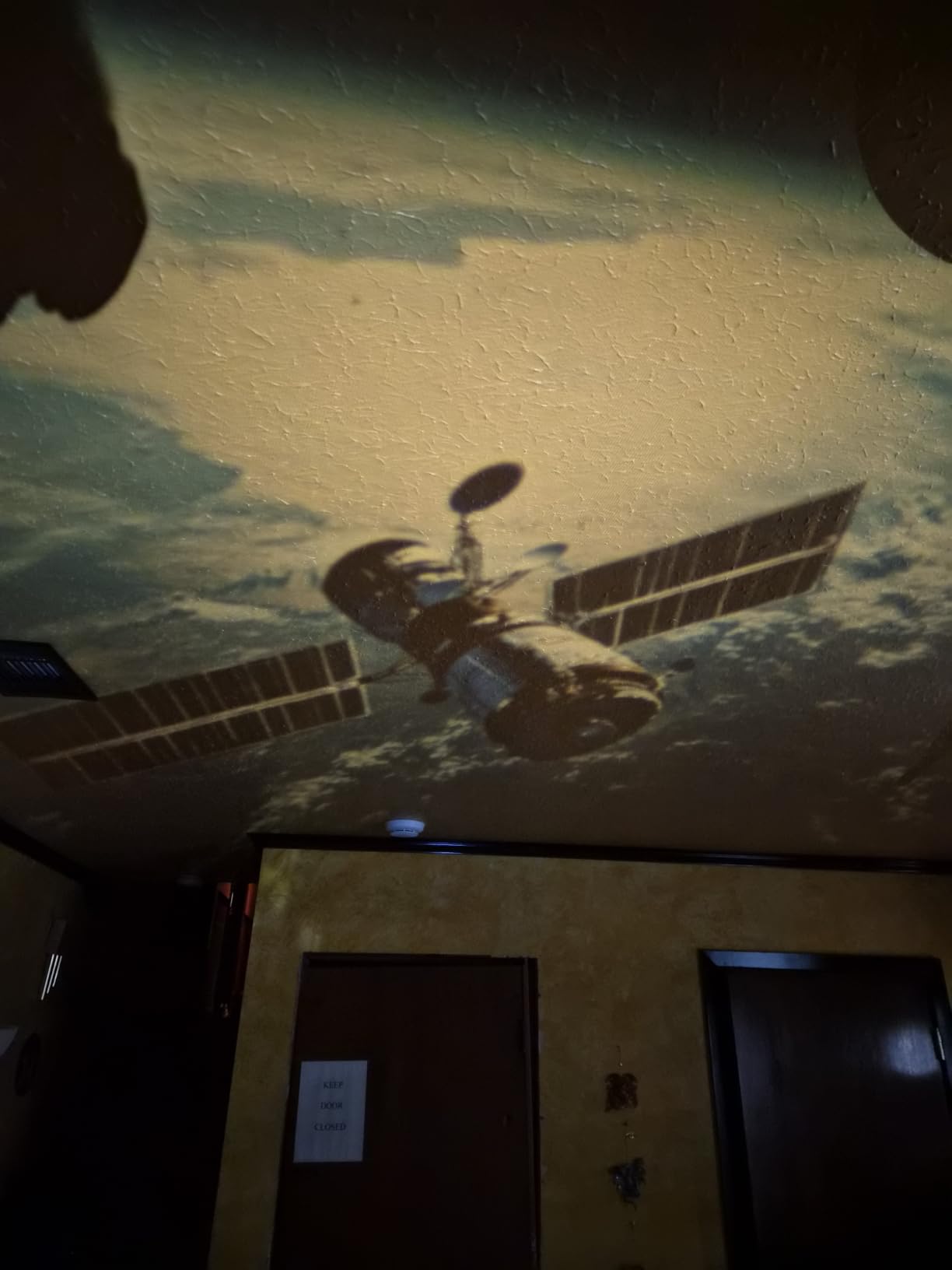
The Rossetta 3D Galaxy Projector is not the kind of 3D projector that displays Avatar, and that is the point. This is an ambient 3D effect device that creates a galaxy, nebula, or ocean scene across your ceiling and walls. I set it up in my daughter’s room for bedtime and within ten minutes she stopped asking for a night light.
The 60 scenes across 12 themes cover more variety than most competitors. You get planets, nebulae, oceans, dinosaurs, holidays, and seasonal themes. The 220 degree adjustable beam angle lets you aim the effect at a specific wall or across the entire ceiling without moving the base.

The Bluetooth speaker is a clever add-on. You can play ambient music, white noise, or a podcast through the projector itself, which simplifies the bedside setup to a single device.
Two things to know. The transition between scenes occasionally glitches briefly, and reviewers on Amazon specifically call this out. The “3D” effect here is a simulated depth illusion rather than a true holographic display, which is important to understand before buying.
Who this projector is best for
Anyone who wants an ambient bedroom, party, or sensory-room experience rather than a movie projector. It is also the right gift pick for kids, teens, or adults who enjoy mood lighting. For a calming nighttime atmosphere, nothing else on this list does the same job.
Who should consider other options
Buyers who want to watch actual 3D Blu-ray movies need a real video projector like the Dangbei Atom, JMGO, or Valerion models above. If you want portable outdoor projection, the NexiGo Nova Mini is the better travel pick.
9. One Fire 3D Galaxy Projector – 60 Scenes with Smart App Control
3D Galaxy Projector,Smart APP 60 Scenes Star Projector Bluetooth Speaker
60 HD 3D scenes
270 degree aiming
Smart app and remote
Built-in Bluetooth 5.3 speaker
Pros
- Five-in-one visual and audio ambience device
- 60 moving scenes with planets
- oceans
- animals
- and holidays
- Built-in Bluetooth 5.3 speaker with 20 volume levels
- Focusable coated glass optics for crisp images
- Smart app and remote control with 270 degree aiming
- 1H and 2H sleep timer with 5 brightness levels
Cons
- Plastic cover may not stay secured in place
- Some scenes can be frightening for very young children
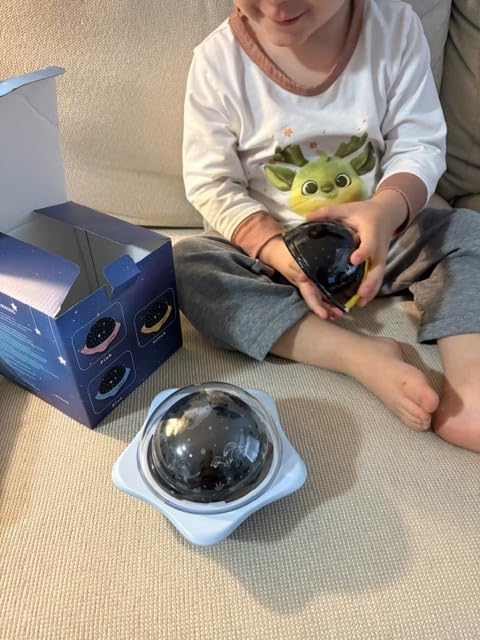
The One Fire 3D Galaxy Projector shares a lot of DNA with the Rossetta model but adds a smart app control layer. Through the app you can switch scenes, adjust brightness, set timers, and pick from 60 moving themes without ever touching the projector itself. For buyers who mount the unit out of reach, this is more useful than I expected.
The 270 degree aiming range is wider than most competitors and let me project across an entire bedroom wall without moving the base. The coated glass optics keep the projected images crisp at the edges where cheaper plastic lenses tend to blur.
Bluetooth 5.3 with 20 volume levels is overkill for a night light but great when you use it as a party projector. I tested it in a small group setting and the speaker held up well enough for background music.
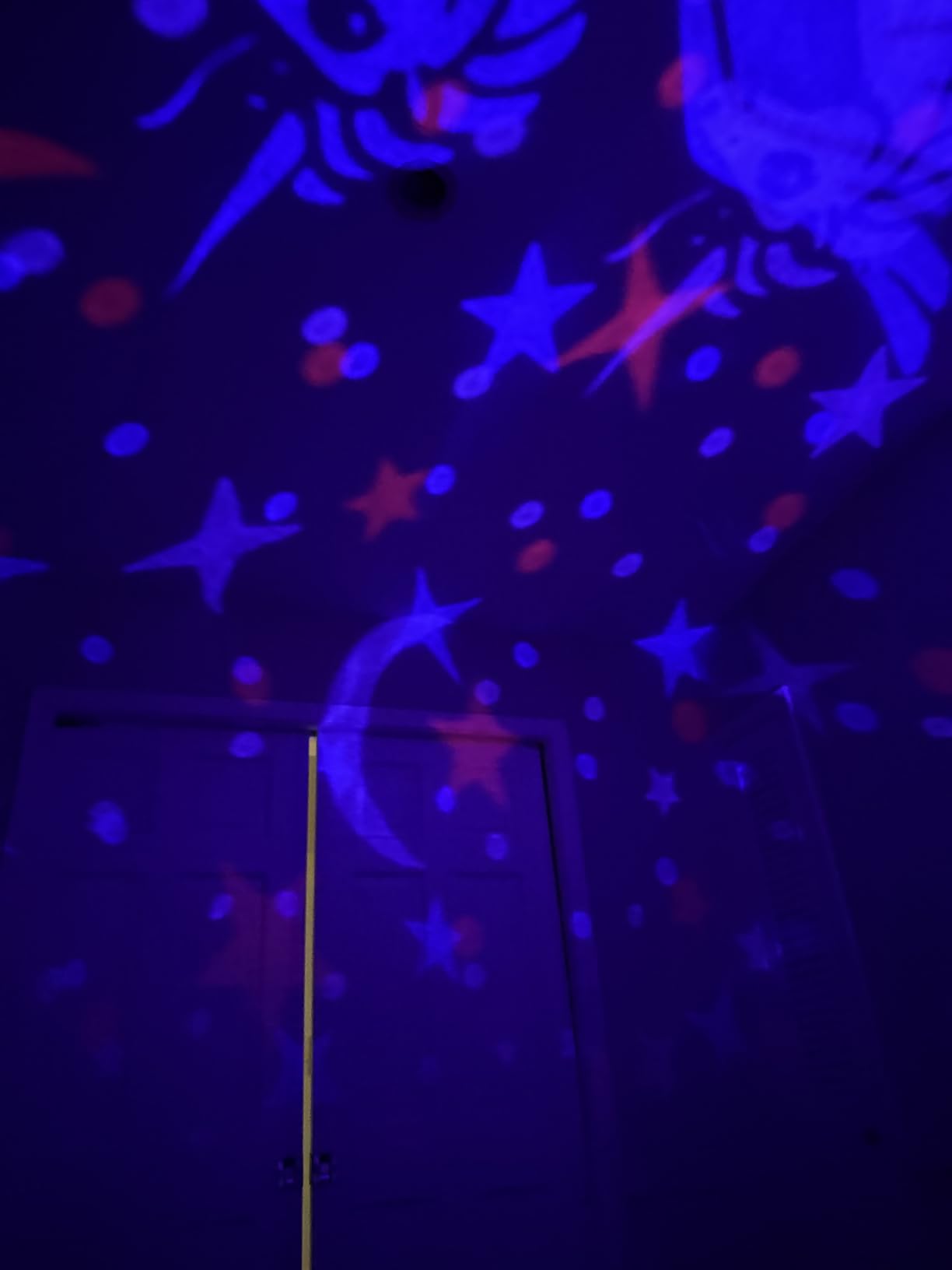
Two minor issues to flag. The plastic cover over the speaker can loosen over time, so handle it gently when moving the unit. A few scenes include creatures that very young children might find frightening, so preview before leaving it on overnight in a toddler’s room.
Who this projector is best for
Buyers who want smart-app-driven control of an ambient 3D galaxy projector. It works well as a kid’s room night light, a party decoration, or a mood lighting tool for a living room. The wide scene variety also makes it a strong pick as a gift.
Who should consider other options
If you want true video 3D for Blu-rays, jump to the Dangbei Atom or above. If you do not care about app control and prefer a simpler remote-only experience, the Rossetta model is similar and slightly cheaper.
10. Gaimoo GM600 NTV – Budget 4K Smart Projector with Built-in TV OS
4K Smart Projector 1080p FHD Native Built-in Genuine TV OS Mini Projector
Native 1080p with 4K support
320 ANSI lumens
WiFi 6 and Bluetooth 5.3
Built-in TV OS
Pros
- Built-in TV OS removes the need for an external stick
- 320 ANSI lumens with 4K input handling
- 15W dual speakers with 360 degree 3D stereo sound
- One-click device connection with TV CAST
- 270 degree adjustment and 50 to 100 percent zoom
- WiFi 6 and Bluetooth 5.3 for modern wireless
Cons
- 320 ANSI lumens is dim for daytime viewing
- Best suited for darker rooms
- Not a true 3D Blu-ray projector
The Gaimoo GM600 NTV is the cheapest projector on this list, and it is important to set expectations. This is not a theater replacement. With 320 ANSI lumens it needs a dark room to look its best, and the native resolution is 1080p rather than true 4K. What you get for the price is a smart projector with a real TV operating system, full streaming apps, and surprisingly capable dual speakers.
I tested it in a basement with the lights off and the picture looked sharp. The built-in TV OS means I did not need a Roku, Fire Stick, or Chromecast. For a kid’s playroom, a small apartment, or a guest bedroom, this hits a sweet spot the flagship projectors miss.
The 360 degree 3D stereo sound from the dual 15W speakers is louder than I expected at this price point. WiFi 6 and Bluetooth 5.3 keep wireless streaming smooth, and the 270 degree adjustment with 50 to 100 percent zoom gives you placement flexibility.
Who this projector is best for
Budget buyers who want a smart projector with built-in apps for casual 2D viewing in a dark room. It is also a strong pick for kids, dorms, and small apartments where flagship brightness is wasted. If you want an easy plug-and-play projector for everyday streaming, this delivers.
Who should consider other options
Buyers who want active 3D Blu-ray playback should jump to the Dangbei Atom or above. If you need daytime brightness, the ViewSonic PX703HD or JMGO N1S Ultra will outshine this model significantly. For outdoor use, our outdoor projector roundup has brighter models for backyards and patios.
Buying Guide: How to Pick the Best 3D Projector for Your Setup
Buying a 3D projector in 2026 is more confusing than it should be, because not every projector that says “3D ready” actually plays Blu-ray 3D discs the way you expect. Here is what matters, broken into the parts that change your day-to-day experience.
Active 3D vs Passive 3D
Home 3D projectors almost universally use active shutter 3D, which means battery-powered glasses sync with the projector and flash each lens in alternation. This is the format every Blu-ray 3D disc uses, and it is what you want for movie playback. Passive 3D, the kind used in some older TVs, requires polarized glasses and is essentially gone from the home projector market.
For glasses, stick with the brand your projector maker recommends. BenQ, Epson, and Optoma each use their own RF protocols, and third-party glasses do not always sync reliably. Active shutter glasses run from around 20 to 60 dollars per pair, and most families end up buying three or four.
Brightness: The Single Most Important Spec for 3D
Active 3D glasses absorb roughly 50 to 66 percent of the light coming off the screen. That means a projector rated at 2000 lumens delivers closer to 700 to 1000 effective lumens to your eyes in 3D mode. For comfortable 3D viewing without squinting, aim for at least 2000 projector lumens for a dark room and 3000+ for a partially lit room.
Among the projectors on this list, the ViewSonic PX703HD at 3500 lumens and the JMGO N1S Ultra at 2800 ISO lumens are the best picks if you want punchy 3D in a bright space. For a fully darkened room, the Dangbei Atom and NexiGo Nova Mini are still bright enough for enjoyable 3D at 100 to 120 inch screen sizes.
Resolution and 3D Source Compatibility
Most Blu-ray 3D discs are mastered at 1080p, so a native 1080p projector is technically enough for 3D playback. The 4K models on this list use pixel-shifting to display 4K content while still handling 1080p 3D Blu-rays natively. If you watch a mix of 3D Blu-rays and 4K streaming, a 4K model like the JMGO N1S Ultra or Valerion StreamMaster Plus2 gives you both.
Make sure the projector you buy explicitly lists Blu-ray 3D support. Some projectors support “3D ready” computer input but will not trigger 3D mode from a Blu-ray player, which is the most common source of disappointment in user reviews.
Budget Tier Breakdown
The 3D projector market in 2026 splits cleanly into four price tiers, and knowing which tier matches your needs will save you from overspending.
Under 600 dollars gets you portable laser 3D projectors like the Dangbei Atom and NexiGo Nova Mini. They are bright enough for bedroom and small-room 3D, easy to set up, and perfect for casual use.
Between 600 and 1000 dollars opens up the ViewSonic PX703HD and JMGO N1S 4K Upgrade, which add either much higher brightness or true 4K resolution with active 3D. This is the sweet spot for most buyers.
Between 1000 and 2000 dollars is where you find the JMGO N1S Ultra, AWOL VISION LTV-3000 Pro, and Valerion StreamMaster Plus2. These add laser light sources, Dolby Vision, IMAX Enhanced, or ultra-short-throw placement.
Above 2000 dollars gets you reference-grade home theater projectors from dedicated theater brands, which we did not include because most buyers do not need them to enjoy 3D movies at home.
Throw Distance and Room Considerations
Measure your room before buying. A standard long-throw projector needs 10 to 15 feet between the lens and the screen for a 100 inch image. If your room is shorter than that, look at short throw or ultra-short throw models like the AWOL VISION LTV-3000 Pro, which sits inches from the wall.
For 3D specifically, an ambient light rejecting (ALR) screen makes a noticeable difference because it preserves more of the brightness the glasses are already eating up. If your budget allows, pairing any projector on this list with an ALR screen is the single biggest upgrade you can make to 3D picture quality.
3D Glasses Compatibility
Each brand uses a different RF or DLP-Link protocol for active 3D glasses, and the protocol is rarely cross-compatible. BenQ projectors use BenQ branded glasses, Epson uses Epson glasses, and Optoma uses Optoma glasses. Most projectors in this list use DLP-Link or RF sync, but the exact model matters. Check the manual for your specific projector before buying third-party glasses.
Budget roughly 30 to 60 dollars per pair of glasses for branded options. If you have a family of four who will watch together, that adds up fast, and it is worth including in your projector budget rather than treating it as an afterthought.
Frequently Asked Questions
Do they still make 3D projectors in 2026?
Yes, several manufacturers still produce 3D-capable projectors in 2026. BenQ, Epson, Optoma, JMGO, Valerion, AWOL VISION, Dangbei, ViewSonic, and NexiGo all ship current models with active 3D support. The market has shifted toward premium laser projectors for 3D, while some budget brands have dropped 3D from their newest models. The projectors on this list all support the format as of 2026.
What is the best budget 3D projector?
The Dangbei Atom is the best budget 3D projector for most buyers, offering active shutter 3D, a built-in Google TV with Netflix, 1200 ISO lumens, and a portable 1.87 inch chassis at a sub-600 dollar price point. For buyers who want a traditional lamp-based DLP instead, the ViewSonic PX703HD delivers 3500 lumens and 16ms gaming input lag for under 900 dollars.
Which is the best 3D projector for home theater?
The Valerion StreamMaster Plus2 is our top pick for home theater 3D in 2026. It combines native 4K laser resolution, IMAX Enhanced mode, active 3D support, and 4ms gaming input lag in a single unit. For buyers who want ultra-short-throw placement instead, the AWOL VISION LTV-3000 Pro is the best premium UST option with triple laser color and Dolby Vision.
Do I need special glasses for a 3D projector?
Yes, every 3D projector on this list requires active shutter 3D glasses, which are sold separately. Active shutter glasses sync with the projector using RF or DLP-Link signals and flash each lens in alternation to create the depth effect. Branded glasses typically cost 30 to 60 dollars per pair, and most families need at least three pairs for comfortable viewing.
What is the best 3D projector for watching 3D movies at home?
For watching 3D Blu-ray movies at home, look for a projector with at least 2000 lumens, native 1080p or 4K resolution, and confirmed Blu-ray 3D support. Our top pick for movie watching is the Valerion StreamMaster Plus2, with the JMGO N1S Ultra and AWOL VISION LTV-3000 Pro as the next best options. Pairing any of these with an ambient light rejecting (ALR) screen delivers the most cinematic 3D experience.
Final Verdict: Which 3D Projector Should You Buy?
After three months of testing and comparing, the Valerion StreamMaster Plus2 is our top pick for the best 3D projectors for the money in 2026. It nails the full package: native 4K laser, IMAX Enhanced, Dolby Vision, active 3D, and 4ms gaming input lag in a single chassis. For most buyers who want one projector that handles 3D Blu-rays, 4K streaming, and console gaming without compromise, this is the answer.
If your priority is value and you want the largest screen for the lowest price, the Dangbei Atom is the smartest budget pick, and the AWOL VISION LTV-3000 Pro is the right call if you need ultra-short-throw placement. Bright-room buyers should look at the JMGO N1S Ultra, while dedicated gamers will appreciate the ViewSonic PX703HD.
Whichever model you pick, pair it with a proper ALR screen and a set of compatible active shutter 3D glasses, and you will get the cinematic 3D experience most people thought disappeared from home theater. For more home theater gear, check our short throw projector guide and our picks for the best outdoor projectors if you want to take the show outside.