
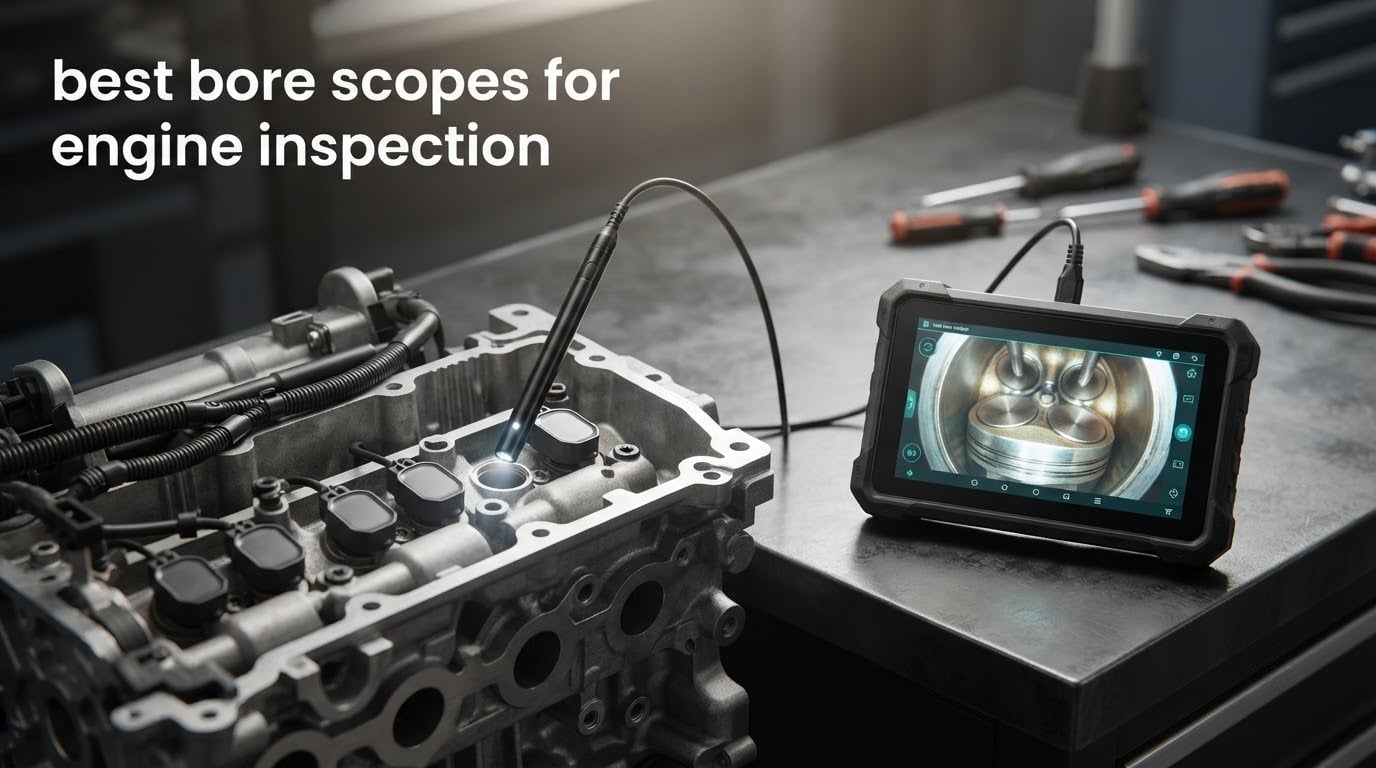
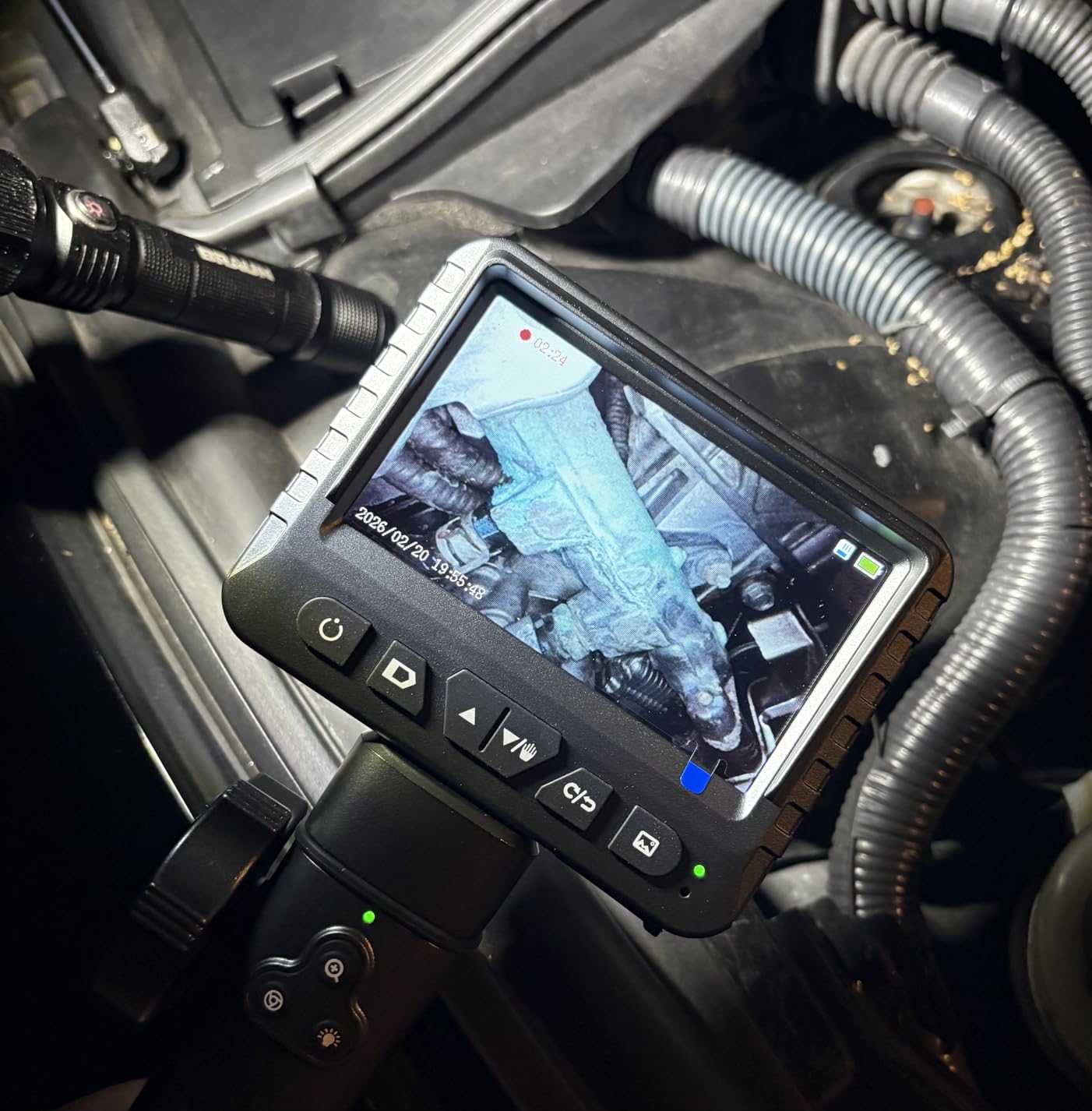
A bore scope is a small camera on a semi-rigid probe that you feed down a spark plug hole to see the inside of a combustion chamber. You get a look at the piston crown, the cylinder wall, the valves and the carbon build-up that no amount of guessing will tell you about, and the image shows up on a built-in screen right next to the engine.
For years the category was dominated by thin plastic tools with a fixed tip, a single forward lens and a hazy image. That is no longer the whole story. The current generation of bore scopes puts a side-facing lens alongside the forward one, adds an articulating tip that steers up to 220 degrees, and pairs a slim 6.2mm probe with a full HD sensor. This roundup covers the best bore scopes for engine inspection available now, eight of them, tested against the criteria that actually matter when a probe has to survive a plug well.
Two specs decided almost every pick in this list: probe diameter and the side-view lens.
Probe diameter comes first, because an 8mm probe will not enter the same spark plug hole that a 6.2mm probe enters without a fight, and some engines give you almost no room. The side-view lens is what turns a curiosity tool into a real diagnostic instrument. Mechanics on r/mechanics put it plainly: for engine work, what you want is any high resolution borescope that is 10mm or smaller and includes a side-looking camera. The dual-lens picks in this roundup follow that rule.
We worked through eight tools on the same criteria: whether the probe physically fits a spark plug hole, whether the tip can steer to a valve face, how the image holds up in a dim chamber lit by one working bulb, how long the cable is when the plug well sits at the back of a transverse engine, and how many hours the battery lasts between the first cylinder and the last.
Table of Contents
Top 3 Picks for Engine Inspection in 2026
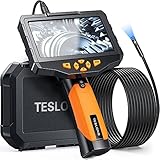
Teslong NTS300 Dual Lens
- Front and side lenses
- 16.5ft semi-rigid cable
- 5-inch IPS screen
- IP67 probe


All 8 Best Bore Scopes for Engine Inspection (October 2026)
The table below is the short version. Every unit on it is a self-contained borescope with its own screen, so you can work away from a phone, a signal and a pairing menu. Probe diameter is the first column after the name because it is the number that decides whether the tool reaches your engine at all.
| Product | Specifications | Action |
|---|---|---|
| Teslong NTS300 Dual Lens 5 inch |
|
Check Latest Price |
| DXZtoz AGC430N Two-Way Articulating |
|
Check Latest Price |
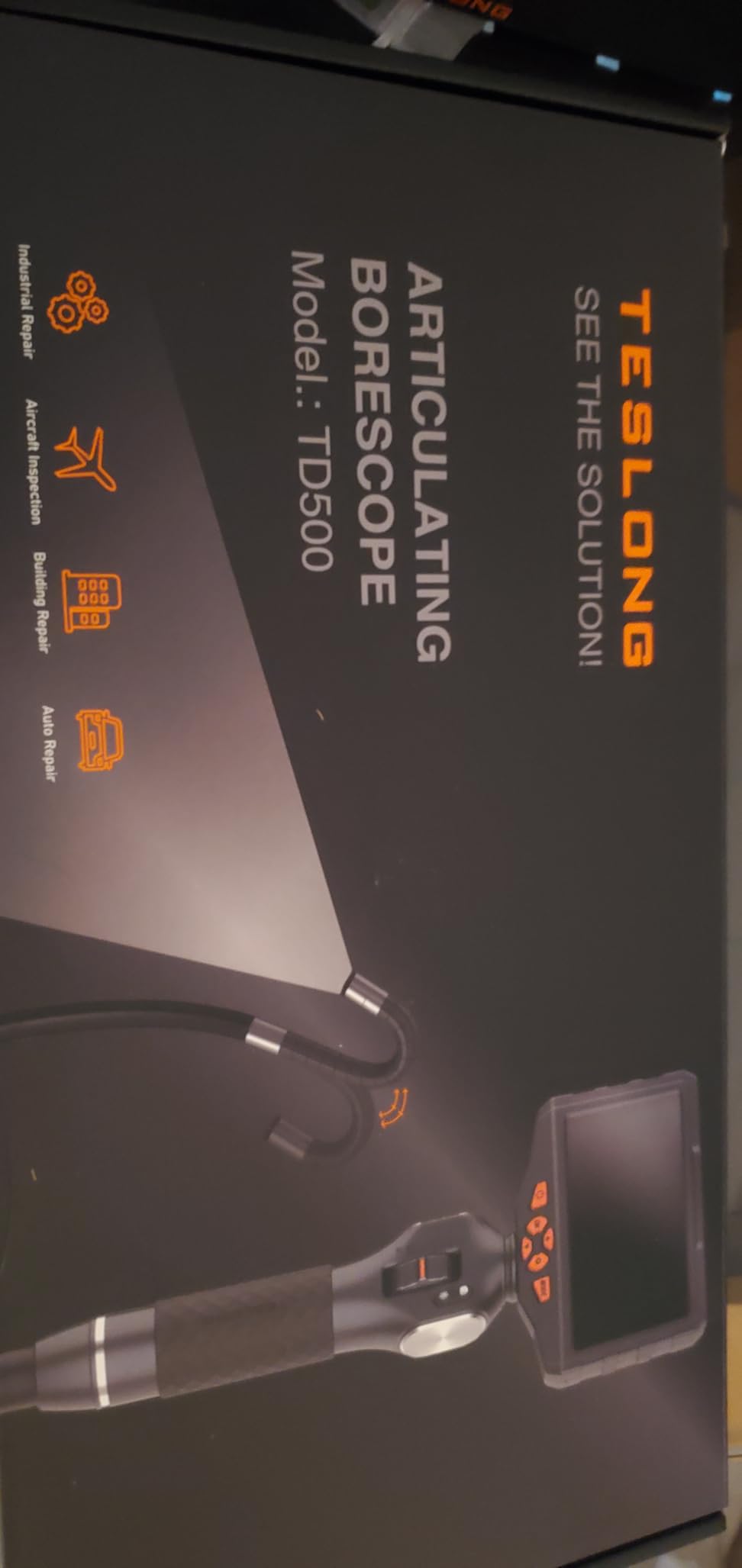
 Teslong TD500 Articulating Teslong TD500 Articulating |
|
Check Latest Price |
 FOXWELL Y400 Ultra-Slim FOXWELL Y400 Ultra-Slim |
|
Check Latest Price |
| VEVOR ZX2-D2 Articulating |
|
Check Latest Price |
 FOXWELL FY408 Dual Lens 10FT FOXWELL FY408 Dual Lens 10FT |
|
Check Latest Price |
 Anykit AD430 Slim Probe Anykit AD430 Slim Probe |
|
Check Latest Price |
 Acoath Dual Lens 5FT Acoath Dual Lens 5FT |
|
Check Latest Price |
1. Teslong NTS300 Dual Lens – Long Cable and Two Lenses in One Unit
Teslong 5” Dual Lens Borescope Camera for Wall & Engine Inspection
5-inch IPS screen
8mm dual lens probe
16.5FT semi-rigid cable
IP67 probe, 5000mAh battery
Pros
- Front and side lenses cut blind spots behind valves
- 16.5ft cable reaches deep and transverse engine bays with no disassembly
- Self-contained 5-inch IPS screen
- no phone or app pairing
- 5000mAh battery runs about 4.5 hours
- Semi-rigid cable holds its shape and still coils for storage
Cons
- 720p video capture is below the 1080p models
- 8mm probe is bulkier than 6mm-class probes in tight plug wells
- Fixed-focus head cannot be steered around obstacles
The NTS300 is the unit we kept reaching for first, and the reason is boring but decisive: the cable. At 16.5 feet of semi-rigid line, this is the longest probe in the roundup, and it is long enough to reach a transverse engine’s rear plug wells or a valley bottom without pulling a cover off first. The cable holds a curve once you shape it, so you can route it around a coil pack and still have steering to spare.
Both lenses have their own lighting. The forward camera carries six LEDs and the side camera one, with brightness control on the whole set, which matters more than it sounds. A combustion chamber is a dark box with a polished valve face bouncing your own light straight back at the lens, and being able to dim the source is often the difference between seeing carbon build-up and seeing a white blob.
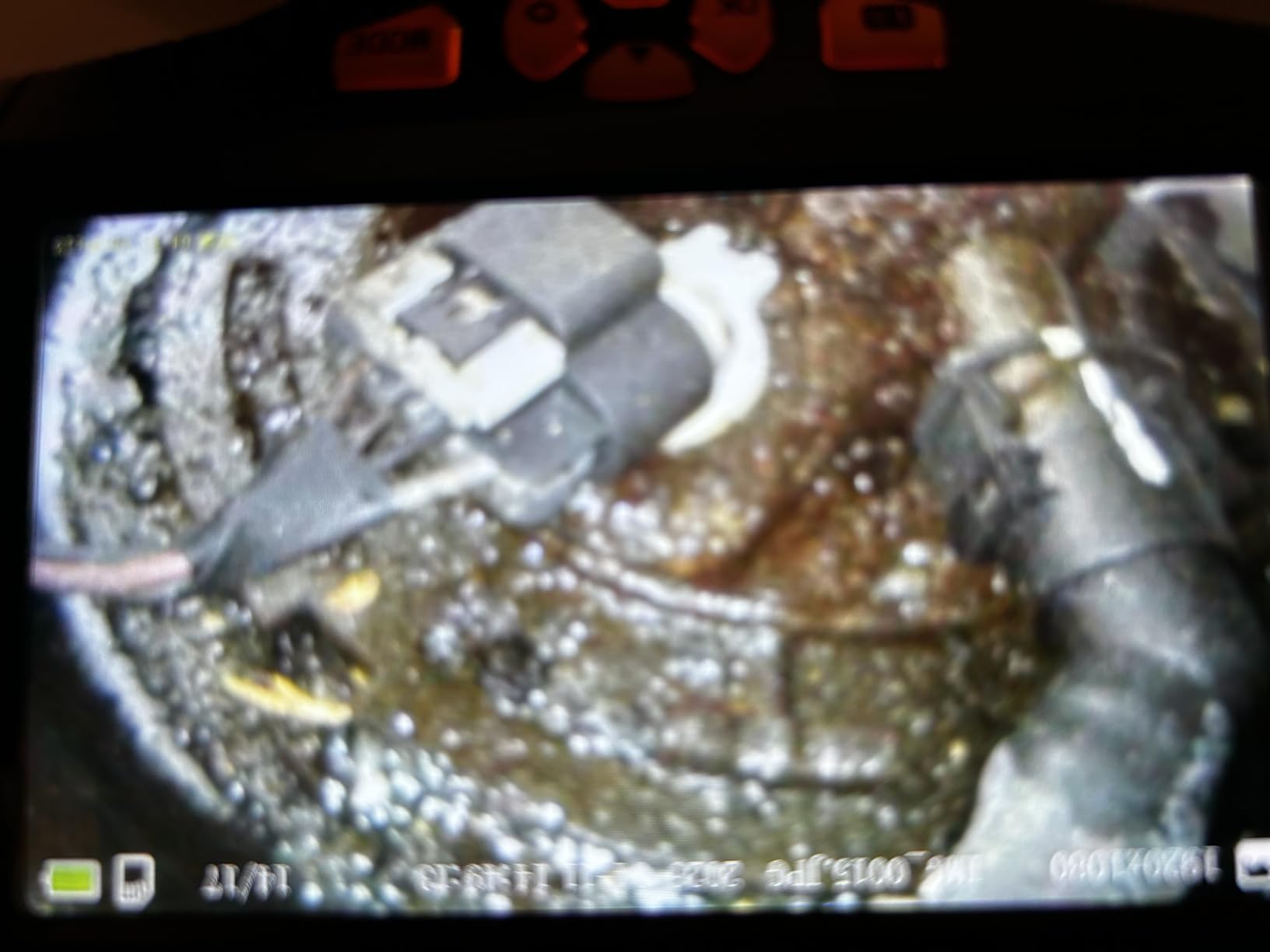
The dual lens is what separates it from most of the articulating models here. You can frame a valve face without rotating the probe at all, which saves the awkward cable-twisting that turns a two-minute check into a ten-minute fight. On a crossflow head where the valves sit at an angle to the bore, that is the difference between a useful image and no image at all.
There are trade-offs, and they are real. The video capture is 720p on a 2MP still sensor, so stills look better than video and neither matches the 1080p sensors in the DXZtoz and VEVOR. The fixed-focus head has no articulation, so you steer entirely by shaping the cable. And the 8mm probe is thick for a small plug well, which is the trade you accept to get the length and the second lens.
The 5000mAh battery is quoted at about 4.5 hours, and the hard case in the box has a hook, a magnet and a small mirror for the attachments. Weighing 2 kg, it is not a pocket tool, but the balance and the case make it the one we would leave in a van rather than carry to a single job.
Where the NTS300 earns its place
It is the pick for anyone whose diagnostic work is spread across a whole engine rather than one cylinder. A six-cylinder with the plugs at the back of the bay, a V8 with a valley cover you would rather not remove, a turbocharged four where the plug tubes are tight and deep. The 16.5 feet means you are not planning the route around the length of the probe.
For a single-cylinder check on an accessible plug, the shorter articulating models below give you a cleaner image and a steerable tip, and they cost less. The NTS300 is the answer when access, not image quality, is the problem.
Where it will frustrate you
Fixed focus on a head covered in thick carbon is where this unit shows its age. The near field is sharp and everything past the piston crown softens, so the depth of a scored wall or a chipped valve face is harder to judge than on a model with a stated macro range. There is also no articulation to nudge past a valve stem.
Buyers also report the app and its generated wireless network as the least reliable part of the package, even though the screen alone handles the job. Treat streaming as a bonus for showing a customer, not as part of the workflow.
2. DXZtoz AGC430N – Best Two-Way Articulation for Valve Work
DXZtoz Two-Way Articulating Borescope with Light, 1080P Industrial Endoscope Inspection Camera with Flexible Articulated Probe for Automotive Engine Mechanic HVAC- 5.5FT
220-degree two-way articulating head
8.5mm probe with 8 LEDs
1080P on 4.3-inch IPS
IP67 oil-resistant, 5.5FT cable
Pros
- 220-degree two-way steering reaches angles a fixed probe cannot
- 1080P sensor gives true-colour cylinder and valve images
- 34mm bending section works in confined plug wells
- IP67 oil-resistant gooseneck suits oil and coolant work
- 32GB card
- hook
- magnet
- mirror and case included
Cons
- Articulation is horizontal only with no up and down tilt
- 8.5mm probe is bulkier than slim 6mm-class probes
- No on-screen orientation readout makes the image hard to interpret
This is the steering answer. A 220-degree two-way articulating head driven by a control wheel will swing the camera around a corner of the chamber that no fixed tip can reach, which is exactly what you need when the question is whether a valve face is pitted or when a coolant leak has left a stain on one side of the bore.
The sensor is a true 1080P with an 8x optical zoom and a stated 1-15cm macro range on a 4.3-inch IPS screen. In our use that combination gave the clearest cylinder images of the eight. Autofocus settles the picture quickly as you move the tip, so you spend your time looking rather than waiting for the image to hunt.
The 34mm bending section is short enough on both sides that the head articulates inside a deep plug tube instead of bending the cable to get there. That is a quiet spec that only matters when you are working in a transverse engine, and then it matters a great deal. The gooseneck is IP67 and oil-resistant, so coolant or oil in the well is not the end of the afternoon.
Two things stop this from taking the top slot. The steering is horizontal only, with no way to tilt the tip up or down, so looking at the underside of a valve seat means rotating the whole probe in the hole. And the absence of an on-screen orientation readout is genuinely confusing on a symmetric four-valve head, where a mirrored image can send you to the wrong cylinder.
At 1.41 kg with a 3000mAh battery rated at roughly four hours, it is light enough to hold one-handed while your other hand works the extension bar. The box includes a 32GB card, a USB-C cable, a hook, a magnet, a side mirror and a form-fitting case, with a 12-month quality warranty.
When mechanics reach for this one
Valve and seat inspection, and any job where you need to confirm whether a misfire has left a mark on one specific valve. The 220 degrees of two-way travel is enough to put the side of the lens on a valve face or a spark plug tip without guessing. Owners on borescope-specific forums repeatedly name articulation as the feature that separates a useful tool from a disappointing one, and this is the most capable steering we tested.
It is also the one to buy for leak tracing around intake runners and exhaust joints, where the small head and 1080P detail make a smear of coolant or a dark line of soot visible at a reasonable distance.
When a different pick makes more sense
Two situations rule it out. The first is a small plug hole: 8.5mm is one of the thicker probes here, and on engines with tight wells you will be fighting the plug tube rubber instead of inspecting the cylinder. The second is when you need to look behind a valve in a confined area, because without a side lens the single forward camera leaves a real blind spot.
Eight hours of work in a hot engine bay means planning around the four-hour battery, though it recharges over USB-C between cylinders.
3. Teslong TD500 – Articulating Head With Wireless Streaming
Teslong TD500 Articulating Borescope for Mechanic Automotive Inspection
Two-way articulating probe
5-inch IPS LCD with 3000mAh battery
5ft semi-rigid gooseneck
Wireless adapter plus 32GB card
Pros
- Articulating head steers to valve and chamber angles a fixed probe misses
- 5-inch IPS display and 32GB card let you save and show evidence
- Adjustable LED brightness for dark cavities and reflective surfaces
- Wireless streaming puts the image on a tablet for a second viewer
- 0.6-4 inch macro focus range suits chamber work
Cons
- 0.33in probe is difficult in some Ford engines with smaller plug holes
- Single-lens design leaves blind spots behind the head
- Non-tilting screen is awkward when the unit rests on a seat or the ground
The TD500 is the pick when the diagnosis needs a second pair of eyes. Its built-in wireless adapter streams to a phone or tablet, so you can have a customer or a colleague watching the live image while you work the engine. For a shop that wants to show a customer the carbon on a valve face without handing over a screen, that is worth more than another few millimetres of probe length.
The two-way articulating head is the reason it lands in this roundup rather than on the shelf. Combined with a stated 0.6-4 inch macro focus range, it is the model here that handles the widest range of chamber geometry, from the piston crown up close to a valve face further away. The 5-inch IPS LCD is bright enough to read in a shaded bay, and the 32GB card records MP4 and JPG with audio.
Reviewers who use this professionally tend to be aircraft and heavy-duty technicians as much as automotive ones, and they consistently praise the LED brightness control and the semi-rigid 5ft cable for holding a bend. One long-term owner reported a focus fault after 18 months that the manufacturer replaced under support, which tells you something useful about the warranty handling on a tool that lives in a van.
The probe is 0.33in across, roughly 8.4mm, and that is the practical ceiling for this model. Owners working on some Ford engines with smaller plug holes report it is a genuine struggle to get in, so if your daily driver has a tight tube, check before you commit.
There is no side camera. The single forward lens means that looking at a valve face means articulating the tip to an angle and accepting that the area behind the head stays dark. For a head with a single row of valves overhead, that is workable. Behind a pent-roof combustion chamber, it is the blind spot everyone complains about.
The case for it
Buy this one if you explain your diagnosis to customers, work on aircraft or heavy equipment alongside cars, or want to record evidence of a fault before you quote a repair. The 5ft semi-rigid gooseneck strikes a useful middle ground between a short shop cable and the very long runs of the Teslong NTS300, and the molding case protects a 1.48 kg unit that will be in and out of a van daily.
The streaming is genuinely useful for a second opinion from a colleague across the shop, which is how a lot of misfire calls get settled.
The case against it
Two hard limits. The 0.33in probe will not fit some engines, which rules it out as a single-tool purchase for a generalist. And the single lens means it will always be second choice behind a dual-lens unit for valve work.
The non-tilting screen is a small annoyance: you end up propping the unit on a fender cover or holding it in an awkward position, and the image can end up inverted with no reference to tell you. The app and its wireless setup are also the most commonly criticised part of the package.
4. FOXWELL Y400 – Slim 6.2mm Probe With Full Two-Way Steering
FOXWELL Y400 220° 2-Way Articulating Borescope, 0.24in Ultra-Slim Endoscope
6.2mm ultra-slim probe
220-degree two-way articulation
4.3-inch IPS display
IP67, 32GB onboard storage
Pros
- 6.2mm probe slides into spark plug holes where 8mm scopes stall
- Responsive thumb-wheel gives lag-free 220-degree two-way steering
- Two and four times zoom plus three LED brightness levels reveal carbon build-up
- IP67 waterproof dustproof and oil-resistant probe
- 32GB onboard storage so no app or Wi-Fi setup
- Textured grip works with gloved hands
Cons
- 720p video capture is below the 1080p competitors
- Single-lens head so side-facing views are unavailable
- Two-way steering only with no up and down tip tilt
- Overheat shutdown at 158F can interrupt a long inspection
Everything in this roundup that goes 8mm or wider is a compromise on access, and the Y400 is the reason. At 6.2mm, or 0.24in, this is one of the slimmest articulating probes on the list, and slimness is the spec that decides whether the tool goes into a Honda plug tube or stays in the case.
For that reason it earns its own category rather than a ranking. Buyers single out the probe diameter as the reason to choose it over larger rivals, and the articulating head still gives you 220 degrees of two-way steering on a 6.2mm body. That combination, slim plus steerable, is what engine work actually asks for.
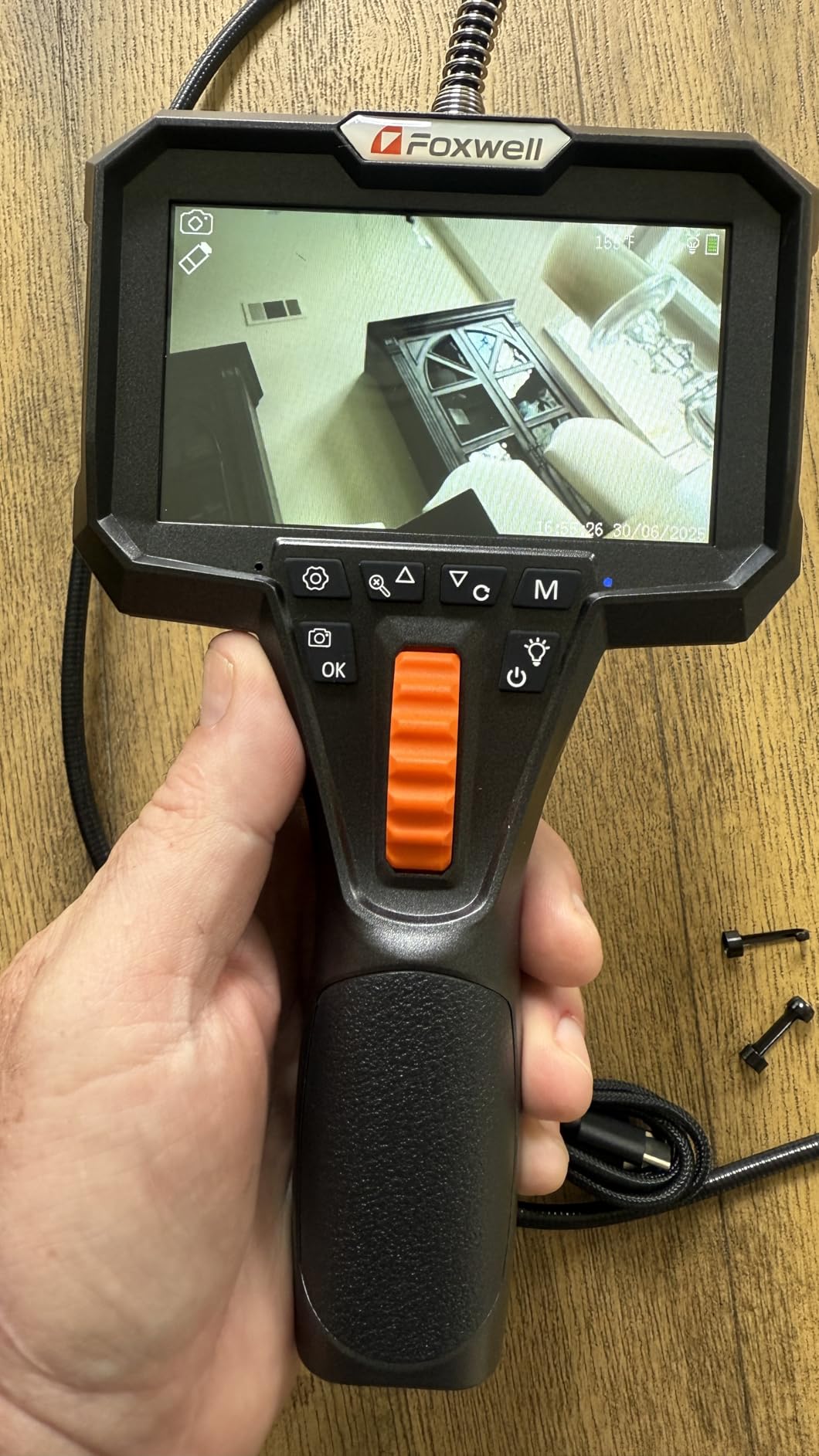
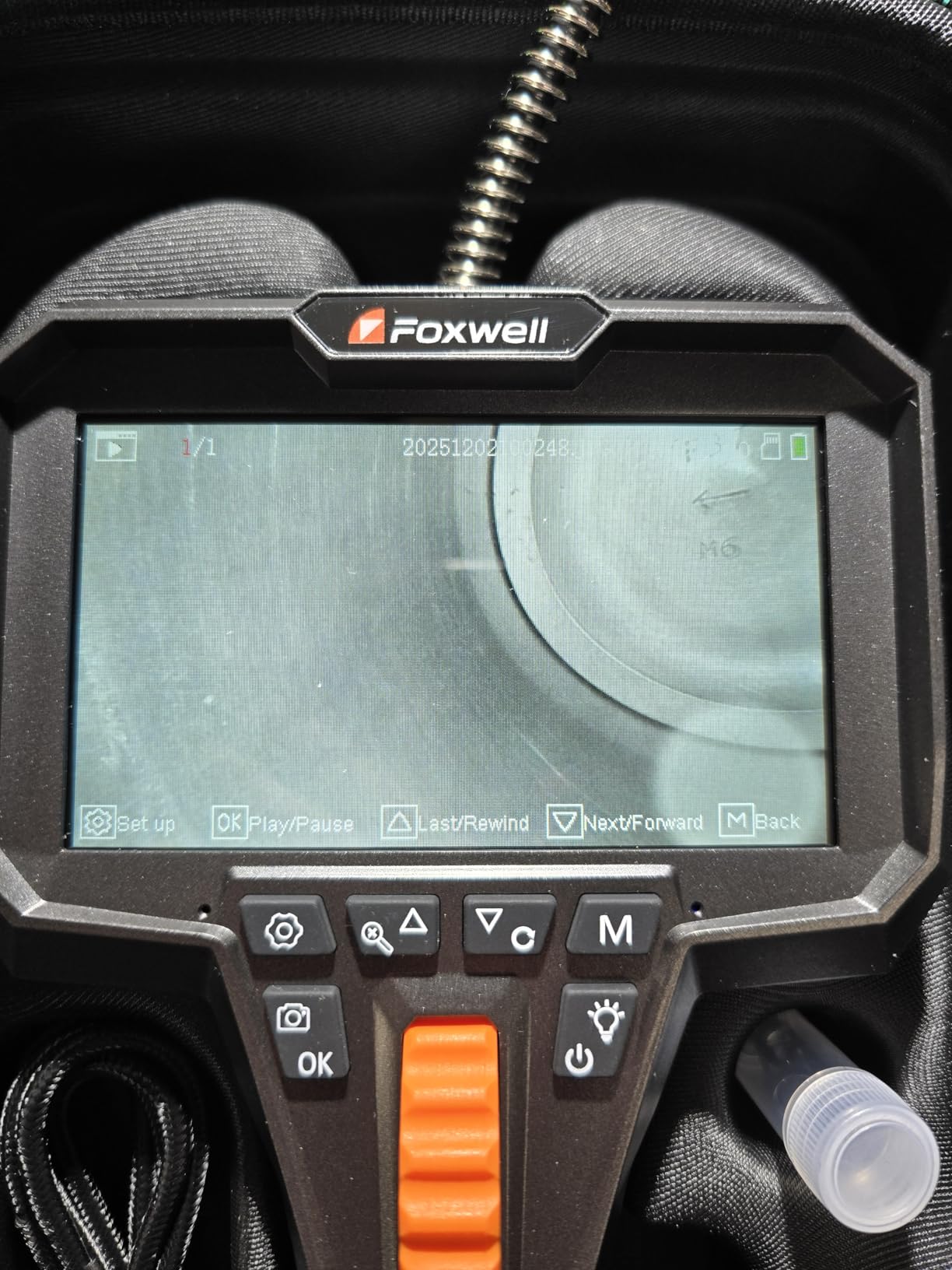
The imaging is 720p with a 2MP still sensor, 4x optical zoom and a 4.3-inch IPS display, with six LEDs across three brightness levels. The picture is not as detailed as the 1080p units, but at typical chamber distances of a few centimetres the difference matters far less than the access does, and the zoom recovers detail on a scored piston crown when you need to judge the depth of a mark.
It also has smart overheat protection that shuts the unit down at 158F, which is a real feature in a hot engine bay but also an interruption. If a thermal cut-off happens mid-cylinder, you wait for it to cool and start that section again. The grip is textured and works with gloves, which is a bigger deal during a real inspection than it sounds.
Onboard storage is 32GB, listed at more than 10000 photos and over 50 videos, and there is no Wi-Fi, no app and no pairing step. On a customer job that is a feature. The IP67 rating covers water, dust and oil, and the warranty is one year.
When it is the right call
Any four-cylinder where the plug tube is narrow, a transverse engine with rear plugs, or a turbocharged or direct-injection motor with tight, angled plug wells. The community rule of thumb is 10mm or smaller for spark plug access, and 6.2mm clears that with room to spare. If you have ever bent a plug removal tool fighting a rubber grommet, this is the probe that avoids the fight.
It is also the one to take on a used-car inspection. Getting into cylinders 3 and 4 on a compact transverse is the difference between a useful report and a shrug.
Where it falls short
The single lens is the main limitation. Without a side camera you have to articulate the tip every time you want to look at a valve face, and at 220 degrees of two-way travel you will sometimes need an angle you cannot get. If your work is mostly valve inspection rather than access, a dual-lens model suits you better even if it is wider.
The 720p sensor and the no-tilt steering are the other two. It is also a 4.3-inch screen in a field where 5-inch panels are common, which matters when you are trying to show someone a carbon-covered valve.
5. VEVOR ZX2-D2 – Best Value 5-Inch 1080P Setup
VEVOR 2-Way Articulating Borescope Camera with Light & 5″ Screen
6.4mm ultra-slim IP67 probe
180-degree two-way steering
5-inch IPS screen with 1080P
4500mAh battery, 32GB TF card
Pros
- 6.4mm probe reaches access points 8.5mm lenses cannot
- Large 5-inch IPS screen with 1080P video and up to 8x zoom
- 180-degree image rotation orients the view inside cavities
- 4500mAh battery gives 4-6 hours with a 32GB card included
- Buzzer alert above 85C protects the camera in a hot bay
Cons
- 180-degree articulation is half the travel of 220-degree models
- 4.9ft cable is short for deep engine bays
- Single-lens variant has no side camera
The VEVOR is the most complete specification set you can get at an entry-level price, and the 5-inch 1080P screen is the reason. Most of the articulating competition puts a 4.3-inch panel in front of a 720p sensor, and this matches the screen size of the far more expensive units while keeping a slim 6.4mm probe.
Zoom is where it earns its place. Up to 8x with 1x through 8x steps, on a 3-8cm macro range, gives you real control over how much of the chamber you frame. A 3-8cm focus band also matches the working distance inside a cylinder better than a fixed-focus head, and the 180-degree image rotation function corrects an upside-down view in one press, which removes a persistent source of confusion in a plug tube.
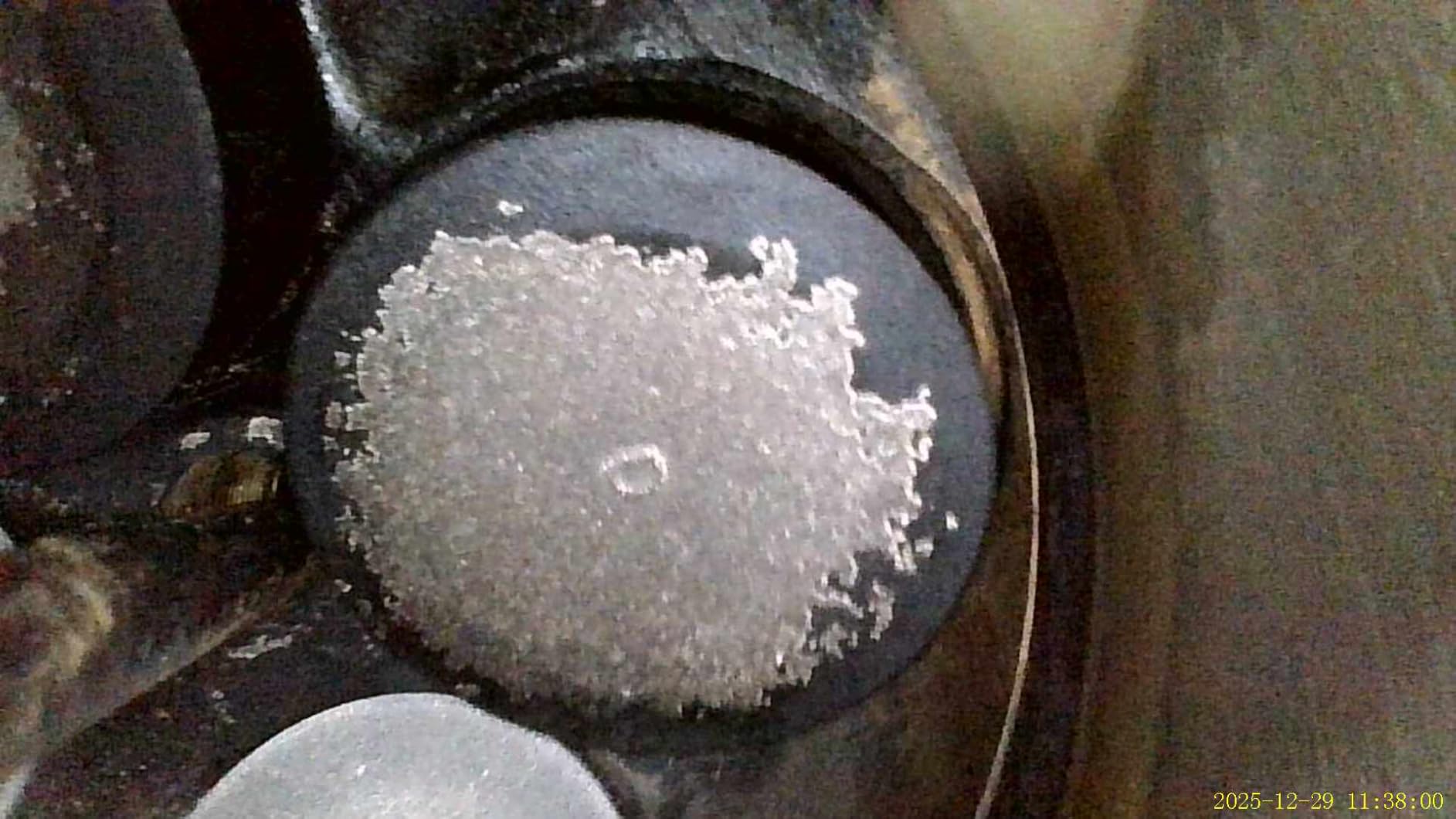
Heat handling is thoughtful for an engine tool. Eight lights across three brightness levels let you tune the light rather than blasting a polished valve face, and a high-temperature buzzer alarm above 85C gives you audible warning before you cook the tip. That is a more usable warning than a shutdown, because you can pull the probe and let it cool rather than losing the image mid-job.
It is also light, at 0.9 kg for the whole unit, and the box includes a 32GB TF card and a USB-C cable. The 4500mAh battery is quoted at 4-6 hours, which covers a full teardown of a four-cylinder with charge to spare.
Where it stops is articulation travel. 180 degrees of two-way steering is roughly half the range of the 220-degree models here, and buyers treat the zoom and the screen as the reason to buy rather than the steering. It is also a single-lens design, so the same blind spot behind the head applies.
The 4.9ft cable is the other constraint. It is a shop-length cable that handles most four-cylinder work without drama, and it becomes the limiting factor on a V8 or a long transverse where you need reach more than manoeuvrability.
The value argument
A 5-inch 1080P screen with a slim articulating probe is a premium specification set in this category, and the VEVOR delivers it with a 604-review base at 4.5 stars and 79 percent five-star ratings. For a weekend mechanic moving from a phone-camera-on-a-stick setup, it is the shortest jump to a real instrument.
The 8x zoom is genuinely useful for the job in a way that sounds minor until you use it. Framing a single valve face in a pent-roof chamber from 8cm away, then zooming to check for pitting, is a workflow the 4x models cannot really support.
Where the money is saved
Two savings, both visible in use. The steering travel is 180 degrees, so extreme side angles need cable shaping, and there is no side camera at all, so valve-face work means angling the tip rather than switching lenses. The 4.9ft cable is the second saving, and on a big engine it will be the first thing you notice.
If valve inspection is your main task rather than piston crowns and cylinder walls, put the money toward a dual-lens unit instead. The warranty is one year and the dimensions are a compact 5.2 by 3.2 by 12.7 inches, so it stores easily.
6. FOXWELL FY408 – Dual Lens on a 10 Foot Steel-Core Cable
FOXWELL 10FT Dual Lens Borescope, 220° 2-Way Articulating Endoscope Camera
Dual front and side cameras
10FT semi-rigid steel-core cable
220-degree two-way steering
1080P with 8 adjustable LEDs
Pros
- Dual front and side lenses cut blind spots during one inspection
- 10ft semi-rigid cable reaches deep compartments without disassembly
- 220-degree bi-directional articulation on a one-hand control wheel
- 1080P CMOS with 8 adjustable LEDs on an HD IPS screen
- Steel wire core tested for 20000+ flex cycles
- 5-7 hour battery and 32GB onboard memory
Cons
- Hook magnet and mirror accessories are omitted to keep the probe slim
- Newer listing with a smaller review base than the established models
- Two-way steering only with no up and down tip tilt
The FY408 answers a question no other dual-lens pick on this list can: what happens when you need both lenses and you also need length. A 10ft semi-rigid gooseneck with an imported steel wire core, front and side cameras, 220 degrees of two-way articulation, and a 1080P sensor on an HD IPS screen. That is a full feature set on one probe.
The steel wire core is the detail worth understanding. It is listed as tested for more than 20000 flex cycles, which matters because a semi-rigid cable that kinks at the plug tube entry will not go back the way it came. Buyers working repeatedly in the same engine report that it holds a bend without fighting, and the one-hand control wheel is smooth and precise rather than twitchy.
Dual lenses plus 220 degrees of articulation is close to ideal for chamber work, because the side camera covers the angles you would otherwise have to steer to, and the steering covers the rest. Eight adjustable LEDs handle the lighting on both sides of the head, and 5-7 hours of battery means a full engine without a mid-job charge.
Where it wins
Longitudinal engines with plugs at the back, deep intake runners, HVAC plenums, exhaust ports and the far side of a V8 valley. Ten feet of reach with a steerable, dual-lens tip means you can inspect something you would otherwise only reach by removing an intake manifold, and that is where the real time saving is.
The 32GB onboard memory means no app, no Wi-Fi and no pairing. On a job where you need the images later for a customer, the memory just works.
Where it loses
The 76-review base is the honest weakness, and it is the smallest pool in this roundup. A recent listing has not accumulated the long-term ownership history that tells you how the cable and the seals hold up after two winters. Buy it on the specification sheet, and know that you are taking the first-owner risk on a product where the first owners are still finding out.
The omitted hook, magnet and mirror accessories are a real, if minor, loss. They were cut to keep the probe slim, a trade we would accept for engine work but a nuisance for the drain and pipe jobs the same tool gets pointed at.
At 3.32 pounds the unit is the heaviest here, and the package is 12.48 by 8.98 by 3.07 inches, so it is a shop tool rather than a portable one. Heat protection shuts it down at 158F.
7. Anykit AD430 – Slim-Probe Pick for Entry Budgets
Anykit 210° Two-Way Articulating Borescope, 0.22in Slim Probe Endoscope
0.22in slim probe
210-degree two-way articulation
1080P on 4.3-inch IPS
4ft cable, 3000mAh, 8GB card
Pros
- 0.22in slim probe is among the narrowest here for tight cavities
- 210-degree two-way articulation with an ambidextrous thumb-slider
- 1080P sensor with adjustable LEDs and 3 zoom levels
- 180-degree image flip corrects orientation instantly
- Built-in overheat sensor alerts you before the camera is damaged
- Plug-and-play with no phone or app
Cons
- 4ft semi-rigid cable is the shortest in this roundup
- 8GB card holds less footage than the 32GB models
- 4.3-inch screen is smaller than the 5-inch panels
The Anykit solves a specific problem: you want a slim, steerable, 1080P probe and you do not want to spend much to get it. At 0.22in, the probe is the narrowest in the roundup, and it still carries 210 degrees of two-way articulation, which most narrow probes in this bracket cannot manage.
Two features stand out in the feedback. The 180-degree image flip is a one-press orientation correction, which sounds trivial until you are working over your shoulder in a dark bay with the probe in a vertical plug tube. And the built-in overheat alert puts a red temperature icon on screen before the camera is damaged, rather than cutting power on you mid-inspection.
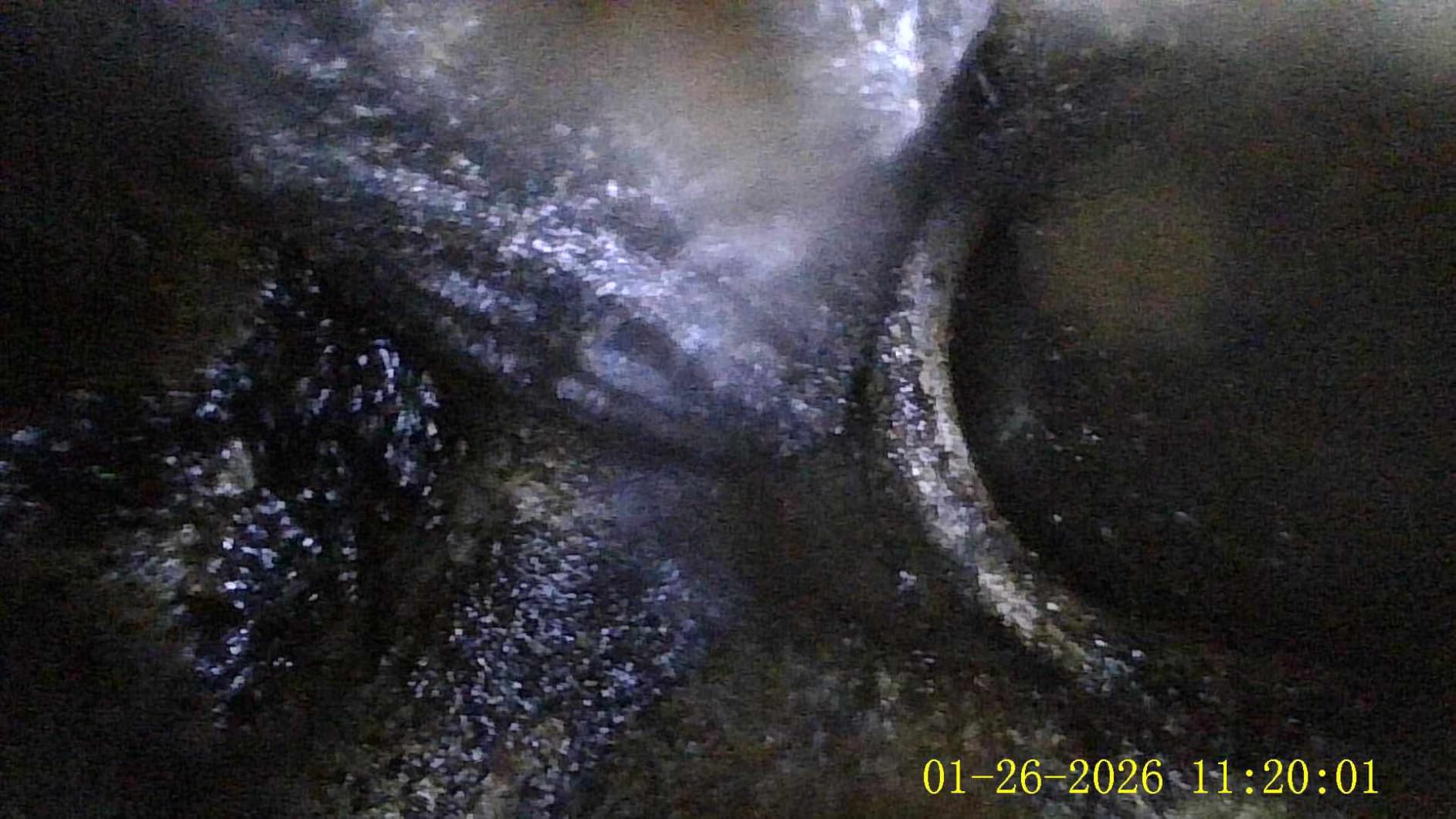
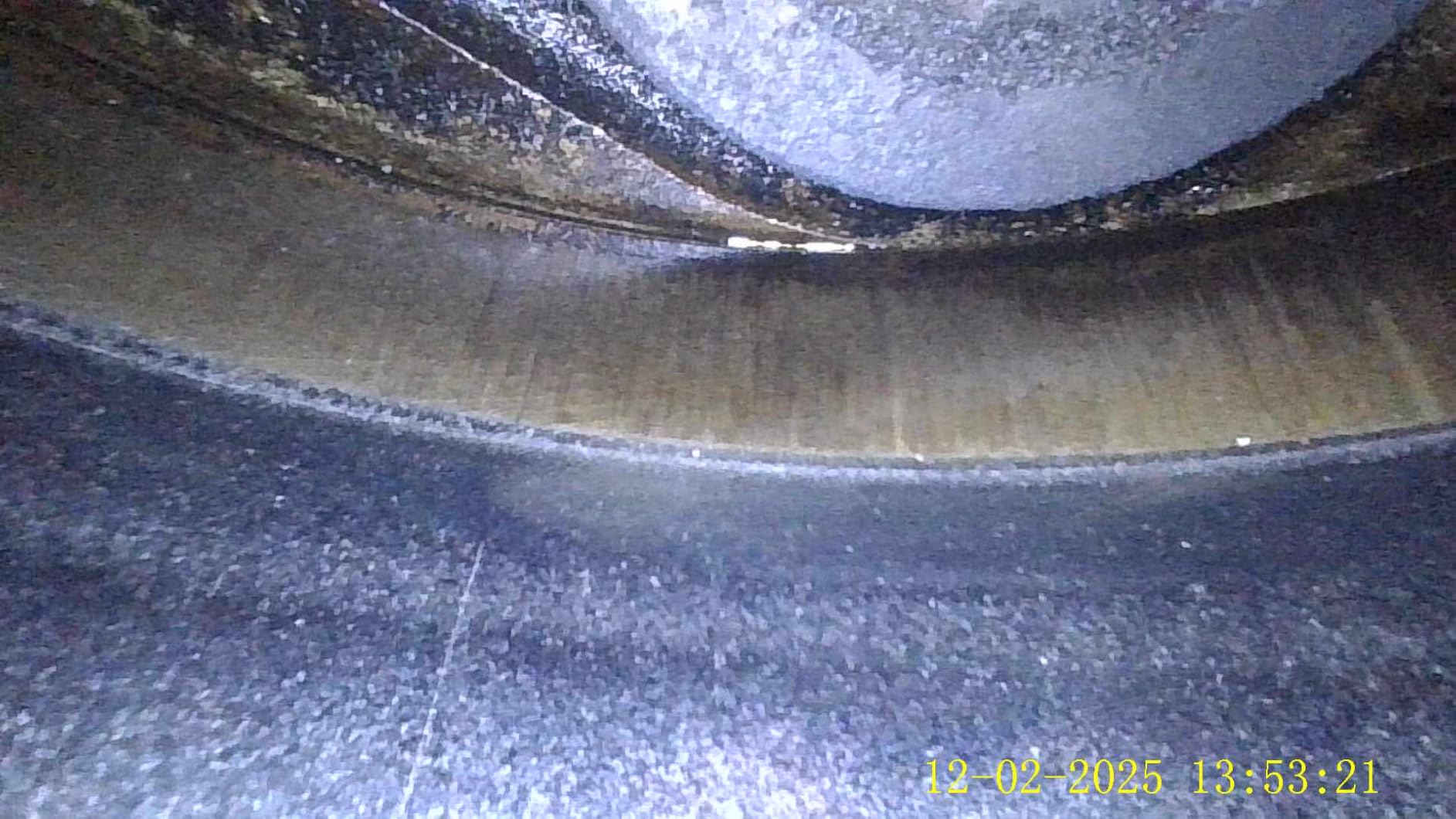
The 4.3-inch IPS screen runs a 1920×1080 CMOS sensor with adjustable high-brightness LEDs and three zoom levels, and the ambidextrous thumb-slider feels responsive even with a glove on. Plug-and-play throughout: no phone, no app, no Wi-Fi. The 3000mAh battery is listed at about five hours, which is a full four-cylinder job.
The 4ft semi-rigid cable is the significant compromise. It is the shortest in this roundup, and short is fine for a transverse four-cylinder with accessible plugs and useless for a V8 or a deep plug tube. If you buy one borescope and your work is on large engines, look at the FOXWELL FY408 or the Teslong NTS300 instead.
The 8GB TF card is small by the standards of this list. A full engine inspection of stills will fill it, and swapping cards mid-job is a small annoyance. The package is 15.2 by 8.74 by 3.35 inches and the unit weighs 1.54 pounds.
Who should buy it
A weekend mechanic on a four-cylinder who wants a steerable, full-HD probe with a slim tip and no app to fight. A mobile mechanic who needs one tool that does piston crowns, valve faces and small cavities without a second purchase. It is also a good first borescope, because the failure modes of the category (rigid probe, no side lens, poor light) are all avoided.
The slim probe is the argument. Narrow access is the most common reason a borescope disappoints someone, and 0.22in clears most plug tubes without the fight.
What you give up
Cable length, screen size and storage. The 4ft cable is the one that will annoy you, and the 8GB card is the one that will annoy you on a teardown. There is no side camera either, so valve inspection depends entirely on the 210 degrees of steering.
The model is still a recent release, so its 235 reviews do not yet tell the long-term story. Treat it as a capable short-reach tool rather than a shop investment.
8. Acoath AC-C50-004 – Two Lenses and 420 Degrees of Motion on a Light Body
Acoath Two-Way Articulating Borescope, Endoscope Camera with Light, Dual-Lens 1080P Industrial Inspection Camera, 4.3″ IPS Screen, 32GB Card, IP67 Waterproof Sewer Tools – 5FT
Dual 70-degree and 60-degree lenses
210-degree two-way articulation
1080P CMOS on 4.3-inch IPS
5ft IP67 cable, 570g body
Pros
- Front and side lenses switch with a single button
- 210-degree two-way articulation giving a 420-degree total range
- 1080P CMOS with 8 LEDs at 4 brightness levels
- IP67 semi-rigid 5ft cable holds shape in tight spaces
- 32GB card
- case
- magnet
- hook
- mirror and cap included
- 24-month warranty is the longest here
Cons
- 0.33in probe is one of the thicker designs
- 4.3-inch screen is smaller than the 5-inch models
- Wider spread of 3-star and 1-star reviews than the leaders
The Acoath earns a place for one reason: it puts two lenses on an articulating head at an entry-level price, and buyers consistently name the dual lenses as the reason they bought it. Seventy degrees forward, sixty degrees to the side, switching with one button, on a head that articulates 210 degrees two ways for a 420-degree total range of motion.
In practice that is a genuinely complete tool for chamber inspection. The side lens handles valve faces and the far side of the bore without steering gymnastics, and the articulation covers the angles around the piston skirt. Few scopes at this level give you both.
Imaging is 1080P on a 2MP CMOS with a 130-degree real angle of view, a 2-10cm macro range and 8 LEDs across four brightness levels. The four brightness levels are the useful ones here, because more steps means finer control over glare off a polished valve face. The 5ft IP67 semi-rigid cable holds its shape in a tight space, and at 570 grams it is by far the lightest unit in the roundup.
Light weight matters more than it sounds. A borescope inspection involves holding your arm in an awkward position above an engine for several minutes at a time, and the lightest tool here is the one you are more willing to keep using through a full engine.
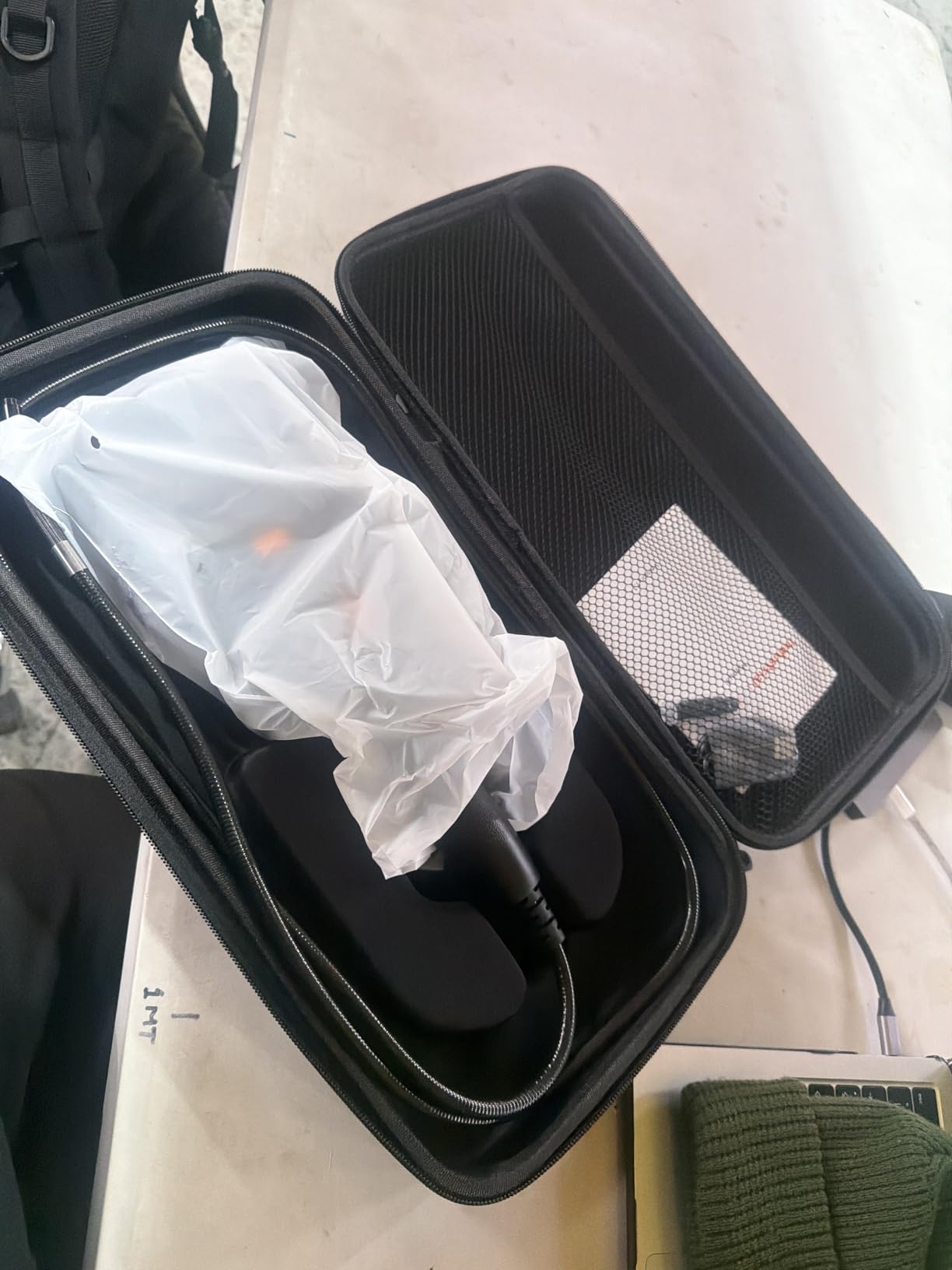
The box is generous: a 32GB TF card, a carrying case, a magnet, a hook, a mirror and a protective cap. The 24-month warranty is the longest of the eight, with 24-hour after-sales support, which matters on a category where the leading ownership cost is a damaged tip.
Why it earns a place
It is the answer to a specific question: what do you buy when valve inspection matters as much as access? Dual lens plus 210-degree articulation gives you the most complete head geometry in the roundup, and the 4-level lighting is the most granular. For a first or only bore scope on a four-cylinder, that combination is hard to argue with.
The 2-10cm macro range also sits well for chamber work, and the 24-month warranty covers the scenario forums keep raising, where a tip gets damaged by heat or oil and the replacement cost decides whether you keep using the tool.
Why it sits eighth
The 0.33in probe is one of the thicker designs on the list, and the same access rule applies: wider probes lose the small plug wells. On an engine with tight tubes, this unit frustrates you in exactly the way the FOXWELL Y400 avoids.
The 4.4 average across 525 reviews comes with the widest rating spread in this group, 71 percent five-star against a meaningful share of 3-star and 1-star feedback, which usually points to build or seal variation. The 4.3-inch screen is also a step down from the 5-inch panels on the Teslong and VEVOR units.
Against all that, it is the pick for someone who values valve visibility most and works on engines with roomy plug wells.
How to Choose a Bore Scope for Engine Work
Choosing between eight capable tools comes down to four decisions: how small the probe has to be, whether you need a second lens, how you want to view the image, and how much cable you need. Work through those and the list almost sorts itself. The rest of this section is the reasoning behind them, including the limits of what any of these tools can tell you.
A bore scope and an endoscope are the same device
There is no meaningful difference. The term endoscope is the medical and industrial name; bore scope is the trade name used in automotive work for the same class of small camera on a flexible or semi-rigid probe. Listings mix both words freely, sometimes on the same product page. When you see a cheap tool described as an endoscope, it is the same category of device, and the specs that matter are identical.
If a product page tries to make the distinction sound meaningful, treat the marketing as noise and read the probe diameter, the lens count and the articulation figure instead.
Probe diameter: the spec that decides whether it fits
For spark plug hole access, stay at 10mm or smaller. That is the community rule of thumb and it is a sound one, because a standard plug tube on a modern four-cylinder is tight. Below that threshold, the practical options in this roundup span 0.22in to 0.33in, and the difference between them decides which engines you can service.
For cylinder work specifically, 6.2mm and 6.4mm are the sweet spot. They clear tight plug tubes on transverse four-cylinder engines and still have enough body for an LED array and an articulating joint. The 8mm-plus designs in this roundup are fine, but they need a wide, straight plug well to work at all.
Check the diameter before anything else. A 1080P sensor inside a probe that will not enter the engine is a very expensive camera on a stick.
Articulating versus rigid probes
Articulating is worth the extra money for cylinder work, and the reason is angle. A rigid or fixed-focus head sees straight down the bore, which shows you the piston crown and the near cylinder wall beautifully and tells you almost nothing about a valve face sitting at an angle. An articulating head steers the tip to put the lens where you want it.
Rigid probes still win in two situations. In a very deep or very narrow plug tube, a rigid slim probe can reach further because none of its length is lost in a bend. And for straight-line work like a brake line, a drain or a crack in a casting, a rigid scope is simpler and cheaper.
Look for two-way articulation at 180 degrees or more. The 210 and 220-degree models here reach angles that genuinely open up the far side of a chamber, and the extra 30 to 40 degrees of travel is noticeable in a pent-roof head.
Standalone screen versus phone app
A standalone screen wins for engine work, and not by a small margin. A phone-based scope makes you manage a wireless network, an app and a storage location at the moment you need both hands and full attention, and phone-based scopes are the option forums single out first when they talk about apps that freeze or disconnect mid-diagnosis.
A phone does give you a bigger display, easy sharing and no battery to manage, and it is the sensible choice for occasional wall and drain inspection. For a tool that lives in a van and gets used on a hot engine, the self-contained screen wins. All eight picks here have their own displays, which is itself a statement about where the category has moved.
Lighting, IP rating and heat in an engine bay
Look for adjustable LED brightness with at least three levels, and treat an IP67 rating as the minimum. An engine bay is hot, oily and occasionally wet, and IP67 is the rating that says the probe survives being rinsed rather than surviving a splash.
Heat protection matters more than most buyers expect, because the top long-term ownership cost in this category is a camera tip damaged by sustained heat or oil ingress. A unit that warns you at 85C, or displays an overheat icon, lets you pull the probe before the damage happens. A unit that simply shuts down at 158F, as the FOXWELL models do, is safer but interrupts the job.
Also check whether the tip is replaceable and whether a replacement is offered. Sealed units with no replacement path are cheaper up front and worse over five years.
What a bore scope can and cannot diagnose
A bore scope shows you the symptom surface. It can confirm heavy carbon build-up on a valve face, a scuffed cylinder wall, a damaged piston crown, a stuck or bent valve, a cracked combustion chamber or a coolant or oil film on the piston. It turns a guess into evidence in a few minutes, without pulling a head.
It cannot tell you why the cylinder is misfiring. A dirty valve looks the same whether the cause is a weak coil, a fouled plug, bad fuel or a valve that has actually stuck. Visual diagnosis narrows the list; it does not close it. For that you still need a compression test, a leak-down test, a smoke test at the intake and exhaust ports, and a fuel and ignition check. Bimmerpost users use a small borescope to inspect head and Y-pipe connections for leaks after removing the engine cover, which is a good illustration of the second role for this tool: finding where a fluid has been, not only what is wrong mechanically.
Buying a used car is the other case where limits matter. A borescope can show you a scored bore, heavy deposits or a damaged valve, and it can save you from a bad purchase. It cannot certify an engine, and a clean-looking cylinder on a high-mileage engine is not a warranty.
How to inspect a cylinder through the spark plug hole
Once you have the tool, the sequence matters more than the specification. Six steps covers a full engine.
1. Pull the coil or plug lead, remove the spark plug and drop the plug into the cylinder. That protects the plug threads and gives you a reference for where the piston crown sits.
2. Hand-crank or rotate the engine to bring the piston of the cylinder you are inspecting to about mid-travel, not at the top dead centre. At mid-travel you can see both the crown and down the bore without the crown blocking the view.
3. Feed the probe in slowly without forcing it. If it meets resistance, stop and check the plug tube for a seal or a rag left behind. Bending a semi-rigid cable inside a plug tube is how a probe gets replaced.
4. Light the chamber on the lowest brightness that still shows detail, then increase. Starting dim avoids the white-out you get when a polished valve face reflects a bright LED straight back at the lens.
5. Use the side lens before you steer. Look at each valve face, the spark plug tip and the roof of the chamber, then articulate the tip to follow the cylinder wall down and check the piston crown for scoring, deposits or a crack.
6. Photograph every cylinder, including a healthy one for comparison, before you reassemble. A sequence of eight images is what turns a verbal opinion into a written diagnosis for a customer or a future purchase decision.
For a broader look at the tools that pair well with one of these, our feeler gauge guide for engine work covers the mechanical checks that pair with a visual inspection, and the inspection microscope roundup is useful if you also need to look at deposits up close once they are out of the engine.
Frequently Asked Questions
Which is better, a borescope or an endoscope?
There is no difference: they are the same class of device, a small camera on a flexible or semi-rigid probe. Endoscope is the industrial and medical term, bore scope is the automotive trade name, and listings mix both on the same product page. Judge either one on probe diameter, lens count, articulation and lighting rather than on the label.
What borescope probe diameter fits in a spark plug hole?
Stay at 10mm or smaller, which is the community rule of thumb, and aim for 6mm to 6.5mm if you work on transverse four-cylinder engines with tight plug tubes. In this roundup the FOXWELL Y400 at 6.2mm and the VEVOR ZX2-D2 at 6.4mm clear the tightest wells, while 8mm and 0.33in designs need a wide, straight plug tube.
Do I need an articulating or rigid borescope for engine work?
Articulating is worth it for engine work because a rigid head only sees straight down the bore, which shows the piston crown but not an angled valve face. Look for two-way articulation at 180 degrees or more. Rigid probes still make sense in very deep or very narrow plug tubes where no cable length is lost in a bend, and for straight-line work such as drains and cracks.
What is the best borescope for the money?
For most people the VEVOR ZX2-D2 is the strongest value: a 6.4mm slim probe, 180-degree two-way steering, a 5-inch 1080P screen with up to 8x zoom, a 4500mAh battery and a 32GB card. If your engine has tight plug tubes, the FOXWELL Y400 at 6.2mm is worth the step up, and if valve inspection is your main task, a dual-lens model beats both.
Can a borescope tell me why my cylinder is misfiring?
No. A bore scope shows the symptom surface, such as carbon build-up on a valve face, a scored cylinder wall or a damaged piston crown, and that turns a guess into evidence. It cannot identify the cause, because a dirty valve looks the same whether the fault is a weak coil, a fouled plug, bad fuel or a stuck valve. You still need a compression test, a leak-down test and a smoke test.
Is a phone-based borescope good enough for engine work?
It works, but a standalone screen is better for repeated engine use. A phone-based scope means managing a wireless network, an app and storage at the moment you need both hands free, and app reliability is the most common complaint in owner feedback. All eight picks in this roundup have their own displays, which reflects where the category has moved for automotive work.
Which Bore Scope Should You Buy?
Start with access, then add features. If your engines have tight plug tubes, the FOXWELL Y400 at 6.2mm is the one that gets in, and it still articulates 220 degrees. If you need reach as much as reachability, the Teslong NTS300 takes a dual lens 16.5 feet into a transverse engine and still shows you a self-contained image with no app in the way.
For valve work, the DXZtoz AGC430N gives you the sharpest chamber images and 220 degrees of two-way steering, while the Acoath and FOXWELL FY408 add the side lens that makes a fixed head unnecessary. For value, the VEVOR ZX2-D2 pairs a slim probe with a 5-inch 1080P screen, which no other entry in this bracket matches.
Whichever you choose, this roundup of the best bore scopes for engine inspection in 2026 comes down to one habit: crank the cylinder to mid-travel, light the chamber dim, check the side lens before you steer, and photograph every cylinder. That sequence, not the specification sheet, is what finds the fault.
If you are planning the rest of the job around the inspection, the engine hoist guide covers safe lifting, and our feeler gauge roundup covers the mechanical checks that confirm what the camera shows you.