
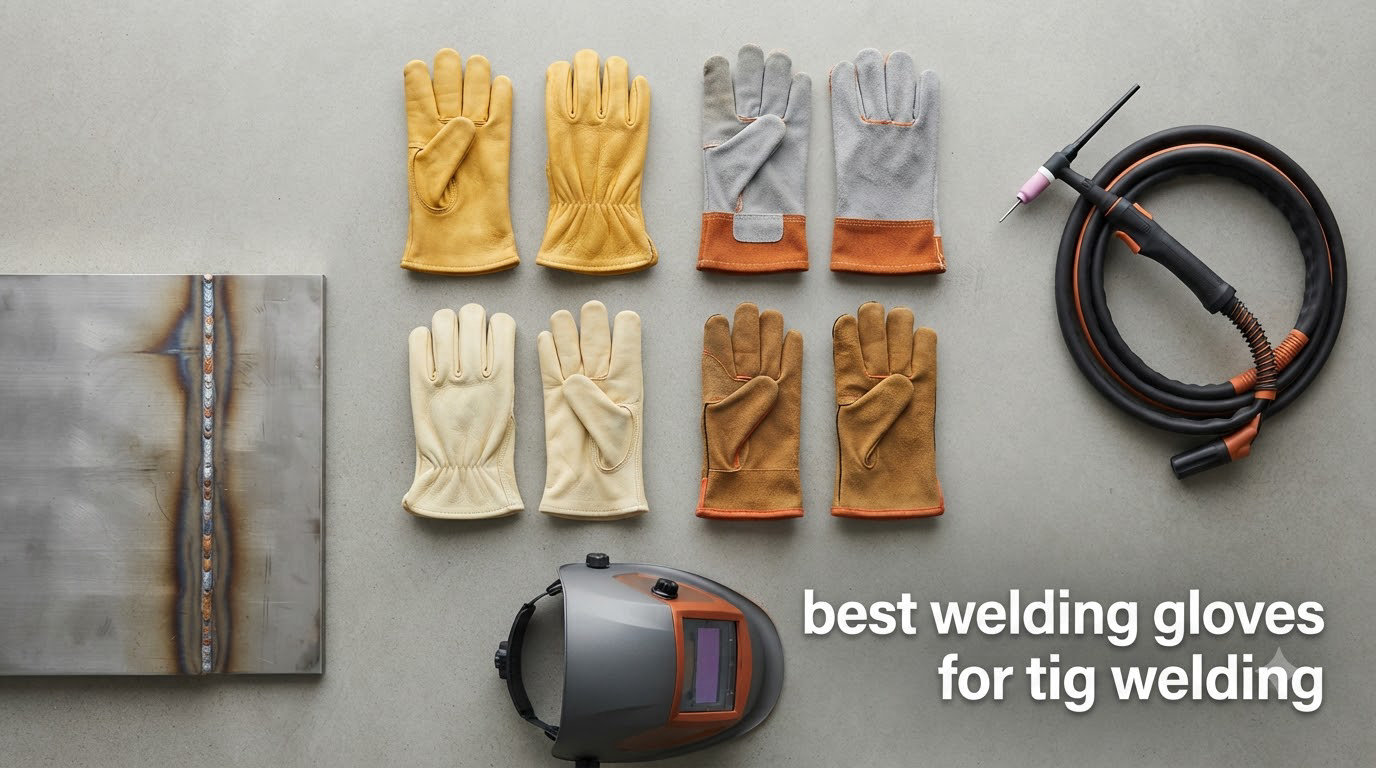
The best TIG welding gloves prioritize maximum dexterity, heat-resistant leather, and tactile feel for handling fine filler wire. That three-part answer matters more than any brand name, because a TIG arc throws far less heat at your hands than a MIG gun does, and the glove you pick decides whether you can feel the rod through your fingertips or fight a stiff leather shell all afternoon.
I have welded long enough to know that the wrong glove changes your work. A heavy MIG gauntlet feels safe and ruins a bead on thin-wall stainless, because you cannot feel where the filler rod is going. A featherlight cotton glove feels great and gets you a burn the first time you brush a hot coupon. The right TIG glove sits in a narrow band, and the ten below all land inside it.
In this roundup I compared ten TIG welding gloves on the three things that actually decide the purchase: how thin and soft the leather is, how the seam is built, and how much heat the glove is honestly rated for. I weighted customer feedback heavily because the failure mode everyone hits is the same one, the seam opening at the fingers after a few months of shop work. If you are still choosing your machine, our TIG welder picks cover the other half of the setup.
Updated for 2026. All ten gloves below are dedicated TIG models, not general-purpose welding gloves with TIG in the name.
Table of Contents
Top 3 Picks for Best Welding Gloves for TIG Welding (October 2026)

Tillman 1338 Goatskin TIG Glove
- Top grain goatskin
- 4 inch cuff
- Kevlar sewn
- Reinforced thumb

Lincoln Electric K2981 TIG Glove
- Soft grain leather
- 3-part sewn fingers
- 4 inch cuff
- Kevlar thread

Defiant Metal Goatskin TIG Glove
- Double-layered palms
- Brown cow skin cuff
- Double-row stitching
- Sizes XS to 2XL
The Tillman 1338 takes the top slot because it pairs the highest average rating in this group with the kind of review volume that tells you the rating is real. The Lincoln Electric K2981 is the runner-up with a near-identical rating and the largest number of individual reviews here, and the Defiant Metal glove wins on construction value with true double-layered palms.
All 10 TIG Welding Gloves Compared Side by Side
Every glove in the table below is a purpose-built TIG glove. Scan the key features column first, then read the individual review for the one you are considering.
| Product | Specifications | Action |
|---|---|---|
| Tillman 1338 Top Grain Goatskin TIG Gloves |
|
Check Latest Price |
| Lincoln Electric K2981 Grain Leather TIG Gloves |
|
Check Latest Price |
 Caiman 1540-5 Premium Goat Grain TIG Gloves Caiman 1540-5 Premium Goat Grain TIG Gloves |
|
Check Latest Price |
 Caiman 1600-4 Goat Grain TIG Gloves Caiman 1600-4 Goat Grain TIG Gloves |
|
Check Latest Price |
 Tillman 1488 TrueFit TIG Gloves Tillman 1488 TrueFit TIG Gloves |
|
Check Latest Price |
| Defiant Metal Black Goatskin TIG Gloves |
|
Check Latest Price |
 YESWELDER Premium Goatskin TIG Gloves YESWELDER Premium Goatskin TIG Gloves |
|
Check Latest Price |
 Superior Glove Endura 370GFKL TIG Gloves Superior Glove Endura 370GFKL TIG Gloves |
|
Check Latest Price |
 IRONCAT 6141 Kidskin TIG Gloves IRONCAT 6141 Kidskin TIG Gloves |
|
Check Latest Price |
 ARCCAPTAIN Goatskin TIG Gloves ARCCAPTAIN Goatskin TIG Gloves |
|
Check Latest Price |
1. Tillman 1338 Goatskin TIG Gloves – The Best All-Rounder
Tillman unisex adult Tig Welding Gloves R3SC34122981, White, X-Large Pack of 1 US
Pearl top grain goatskin
4 inch cuff
Straight thumb
Kevlar sewn
Pros
- Stays flexible instead of stiffening after heat
- Kevlar seams and reinforced thumb
- True to size across hand sizes
- Comfortable in long sessions
Cons
- Thin leather rated for lower-heat work
- Fingertips can stiffen with heavy use
- X-Large can run small for very large hands
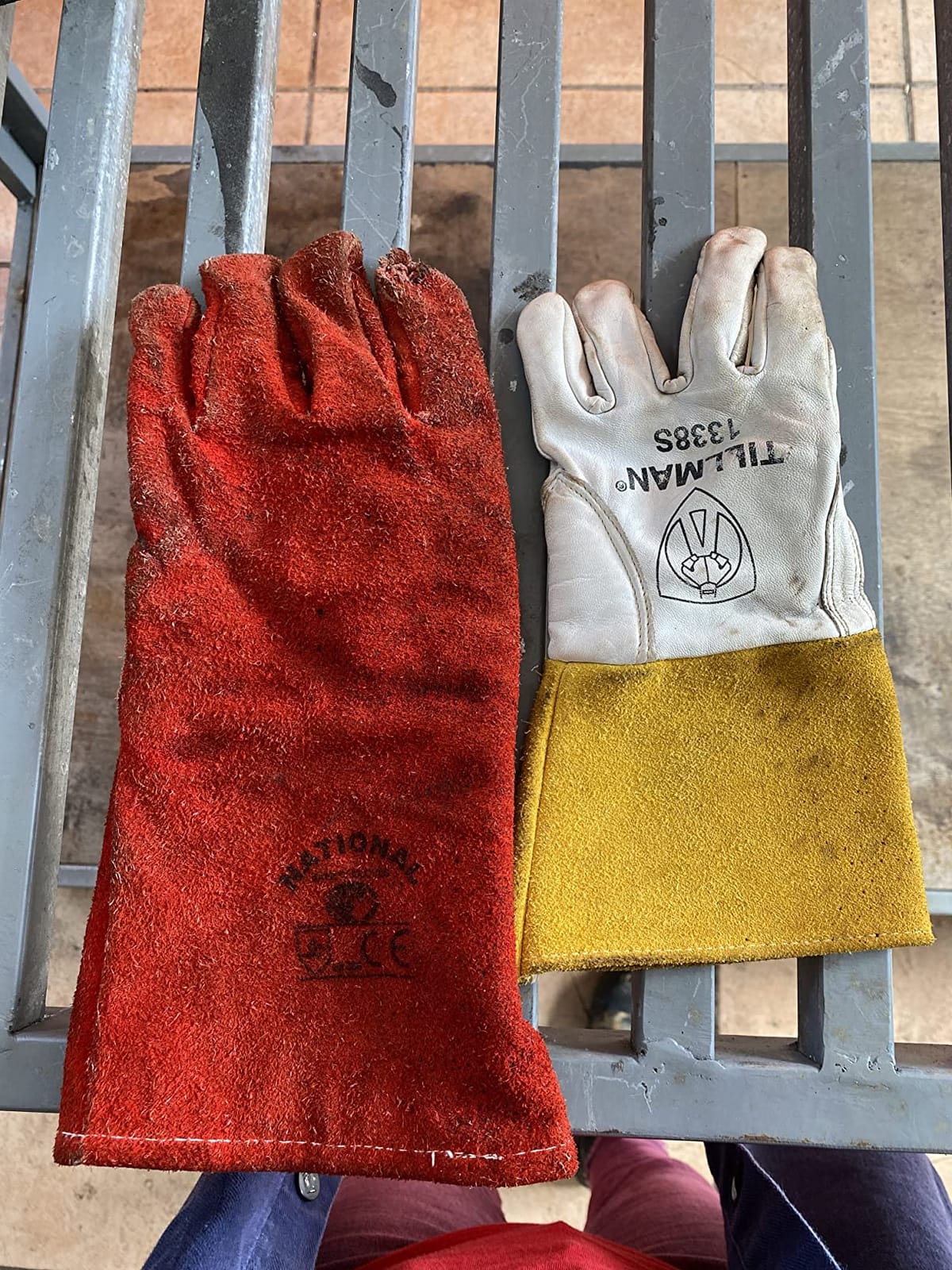
This is the glove I end up recommending to people who ask for one answer. The pearl top grain goatskin is thin enough to feel a 3/32 filler rod through the glove and soft enough that it molds to your hand within a week. Tillman sews the whole thing with Kevlar thread, which is the detail that separates this from a cheap goat-grain glove with the same leather on the label.
The straight thumb is a deliberate choice rather than an accident of pattern. It lines the thumb up with the torch in a way that makes a continuous push-pull feed feel natural, and the reinforced thumb patch is where most TIG gloves give out first.
What I noticed in the customer feedback is unusual consistency about softness. Owners report the leather staying pliable through repeated heat cycles instead of curing stiff, which is the single biggest reason a budget glove here outlives a heavier one. Sizing runs true, and reviewers with smaller hands, including women’s hands, call it a fit rather than a compromise.
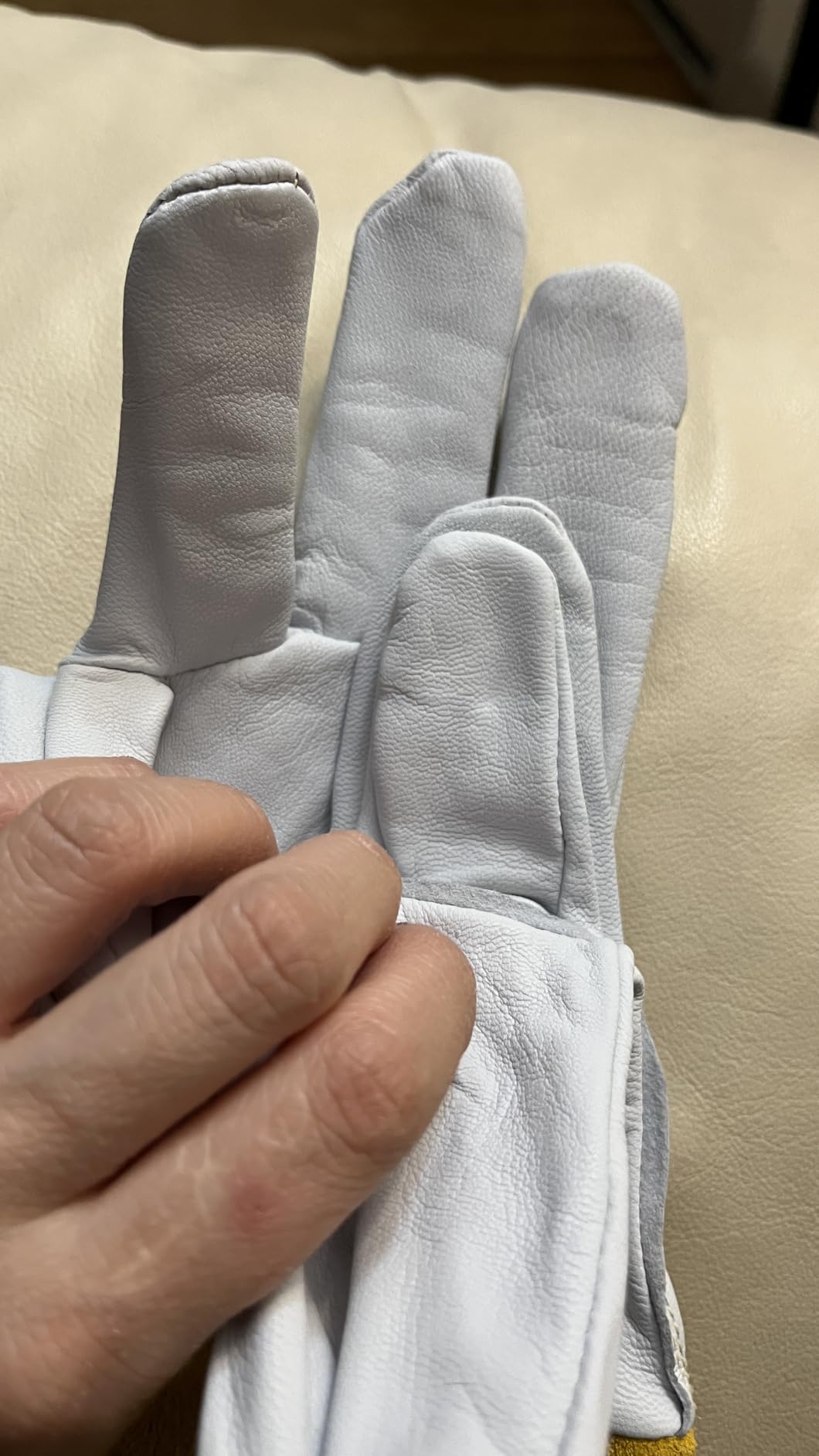
The honest limit is heat. Reviewers consistently put this leather at roughly 250F or below, which covers AC and DC TIG on thin-wall material but not a production pass on heavy stainless or any hot-metal handling. The other recurring note is fingertip wear, where heavy shop use burns through the tips in a few months.
If you are moving to a machine, this pairs well with the helmet picks in our auto-darkening welding helmet roundup, since both decisions come down to the same trade of visibility against control.
Why you would pick this glove
Choose it if you do a mix of stainless, mild steel and aluminum TIG and you want one glove that disappears in your hand. The 4 inch cuff is a good middle ground: it covers the wrist spatter zone without catching on a torch neck the way a long gauntlet can.
When you should pick something else
Move up a tier if you regularly weld copper, run high-amperage DC, or handle hot stock between passes, because the thin leather here will not cover you. Skip it if you need certified cut and heat ratings for a workplace PPE audit, since it carries no published ASTM class.
2. Lincoln Electric K2981 Grain Leather TIG Gloves – Most Reviews, Proven Design
Lincoln Electric Grain Leather TIG Welding Gloves | High Dexterity | Large | K2981-L, White, Black
Soft lightweight grain leather
3-part sewn fingers
4 inch cuff
Reinforced thumb
Pros
- Excellent filler rod and torch feel
- Breaks in and molds to the hand
- Beats cheap shop gloves on durability
- Generous Large sizing
Cons
- Runs warm on long high-amp passes
- Thin leather not for stick or hot metal
- White leather stains quickly
This is the most thoroughly reviewed glove in the group, and the volume matters because it means the small complaints have been found and filtered by thousands of buyers rather than a handful. The soft lightweight grain leather and 3-part sewn fingers are the design idea worth stealing: splitting the finger seams into three short sections removes the long hinge point that makes a glove feel stiff when you close your hand.
Lincoln Electric has been building this pattern for close to a decade, and the date first available on this listing goes back to 2018. That longevity is not marketing fluff, it is the reason the review count is where it is.
Owners describe the leather as breaking in properly, softening and molding rather than hardening, and they consistently report outlasting the free gloves handed out in a shop. Sizing is the quiet strength here, reviewers call the Large generous relative to other TIG gloves on the shelf.
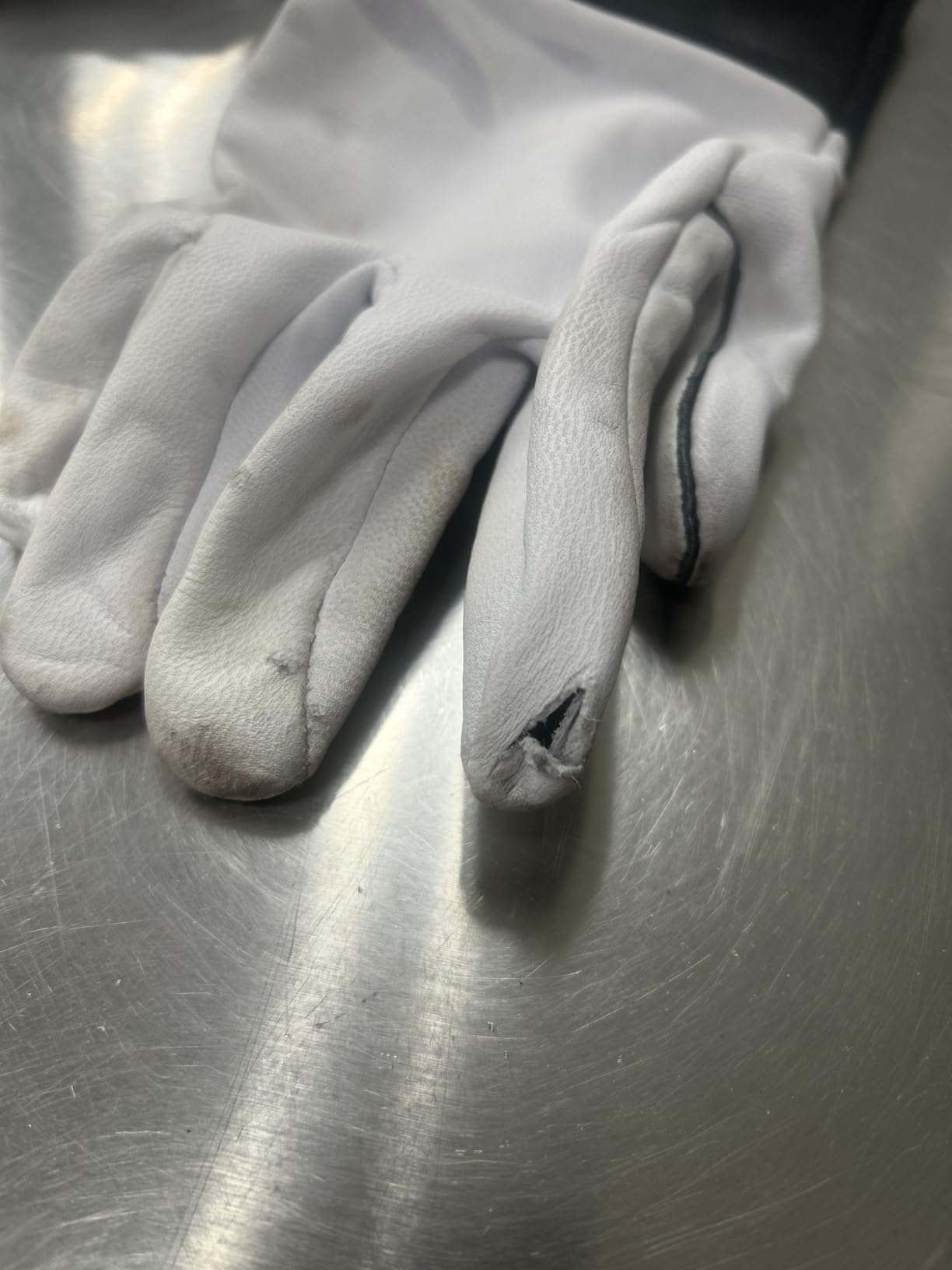
The two criticisms that come up are heat build-up on long high-amperage passes, which is what you get from any glove with a full leather cuff, and the white finish, which shows shop dirt immediately. The leather is also too thin for stick work or picking up hot cut-off steel, same as most of this roundup.
At the top end of this roundup, I want to be straight about whether the construction justifies it. If you weld daily, the answer is usually yes because the seam build is what holds. If you weld a few evenings a month, the Tillman above does the same job.
Why you would pick this glove
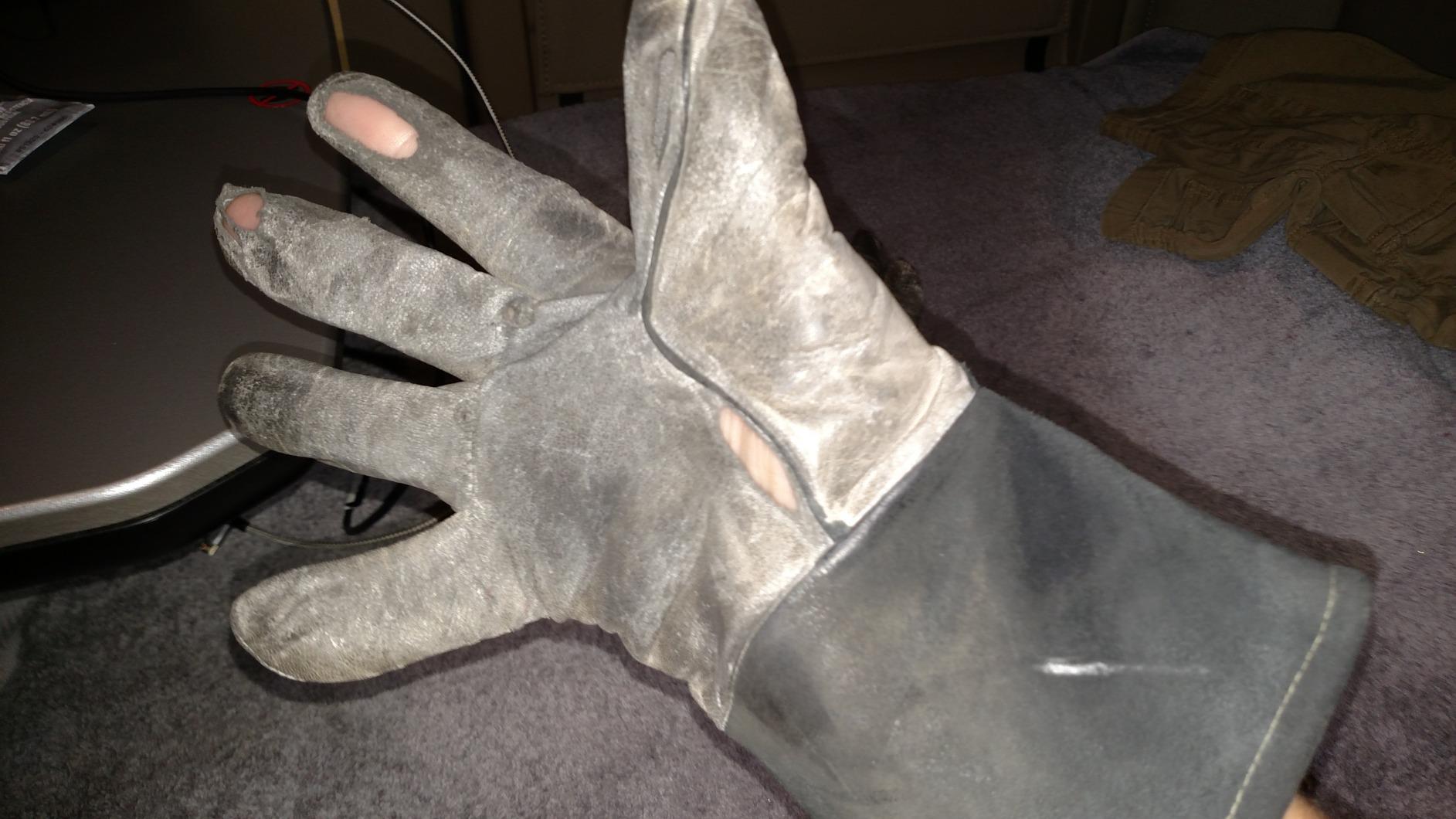
Choose it if you weld often enough that seam life is the real cost. The Kevlar thread throughout and the reinforced leather thumb are the two construction details that separate it from mid-range goatskin, and the 3-part fingers make it one of the more comfortable gloves here on a long shift.
When you should pick something else
Pass if heat build-up is your main frustration, since a fully leathered 4 inch cuff traps more warmth than an unlined design. Pass if you work in a shop where gloves turn black in a week, because the white grain leather will not hide anything.
3. Caiman 1540-5 Premium Goat Grain TIG Gloves – Best Where Spatter Lands
Caiman Premium Goat Grain TIG/Multi-Task Welding Gloves, Split Cowhide Back, 4-Inch Extended Cuff, White/Gold, Large (1540-5)
Goatskin palm with cowhide back
4 inch extended cuff
Keystone thumb
ANSI heat level 2
Pros
- Goatskin palm gives strong rod feel
- Split cowhide back absorbs spatter
- Kontour wrist cuts slippage
- Shaped fingers resist shrinking
Cons
- Runs small so size up
- Fingertips wear through in a few months
- Palm too thin for hot material
The smart thing about this glove is the mixed construction. You get a top grain goatskin palm for feel where it matters and a gold split cowhide back where it does not, which is where spatter and splash land. On a glove that is single layer everywhere, the back of the hand is usually what goes first.
Caiman calls the pattern Kontour Design, and the practical result is that the fingers are shaped to the natural hand rather than cut flat. Reviewers like the fact that they do not shrink out of shape after a few washes, which is a real problem with cheaper untreated goat grain.
The Kontour wrist technology is the sleeper feature. Owners report the glove staying put through long runs with far less slippage, and for TIG work where your hand is constantly repositioning, a glove that stays put means you stop thinking about it.
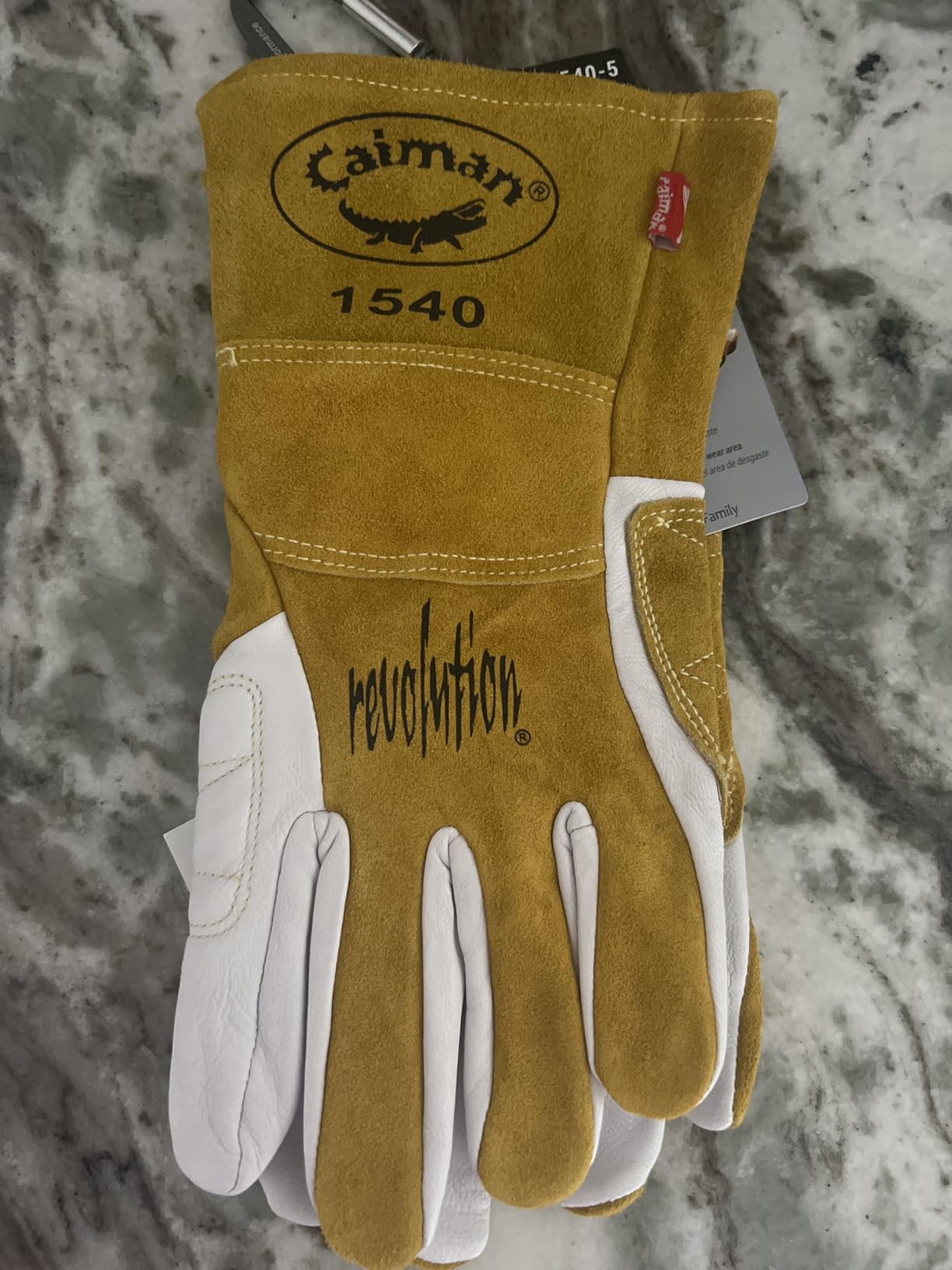
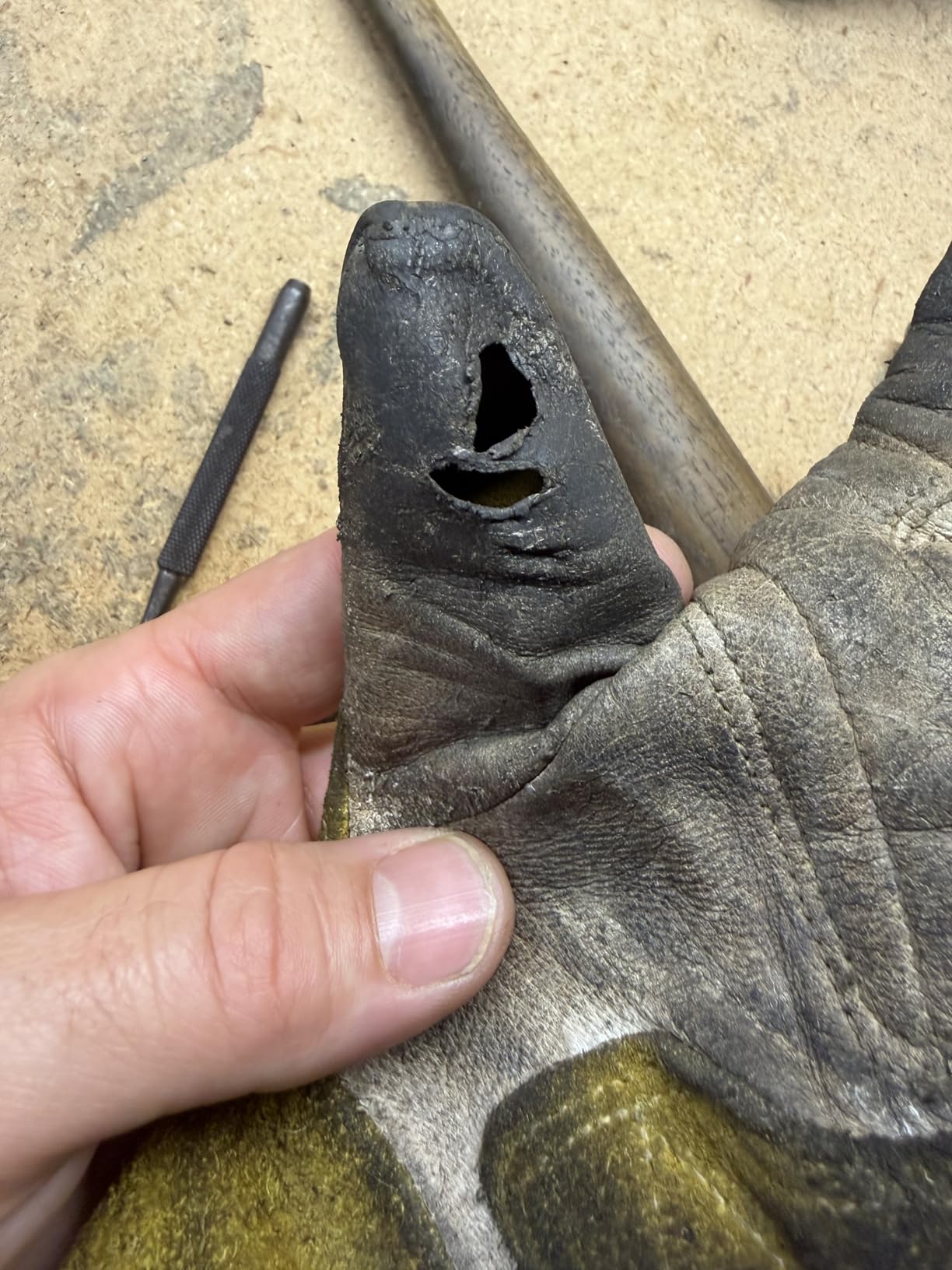
Now the honest part. This is the lowest rated of the top three, and the reason is durability, not comfort. Long-term owners report two to three months of shop work before the thumb and index fingertip wear through, which is exactly the seam failure the buying guide covers further down. Sizing also runs small, so most buyers size up.
There is a carry-over caution worth knowing. A welding school student on a WeldingWeb thread bought Caiman goat grain gloves and reported they did not hold up at all and were not replaced. That first-use experience lines up with the fingertip wear pattern in the reviews here, so plan on a spare pair rather than assuming a year of service.
Why you would pick this glove
Choose it if you do layout and fit-up work where spatter hits the back of your hand as much as the palm, and you want a glove that will not slide around when you reposition. It is rated to ANSI heat level 2 at 392F, the highest figure on the two Caiman gloves here.
When you should pick something else
Skip it if fingertip life is what you are buying. The single-layer fingers are the weak point, and a shop welder welding several hours a day will burn through them faster than the leather body suggests. Some buyers also report dye bleeding onto skin at first wear.
4. Caiman 1600-4 Goat Grain TIG Gloves – Best Unlined Feel
Caiman Premium Goat Grain TIG Welding Gloves, 4-Inch Gold Extended Cuff, Unlined, White/Gold, Medium (1600-4)
Unlined goatskin palm and back
4 inch split cowhide cuff
Keystone thumb
Kevlar stitched
Pros
- Maximum fingertip sensitivity
- Thicker goatskin than standard Caiman TIG
- True to size per owners
- Cuff adds wrist protection
Cons
- Heat rating of 284F is modest
- White leather stains fast
- Not for stick or hot stock
This is the unlined option in the roundup, and that single design choice drives everything about it. Removing the lining means no layer between your skin and the leather, which is the difference between feeling the filler rod and merely holding it. Owners put the tactile feel above anything else about this glove.
Caiman also uses a slightly thicker goat grain here than on their lighter TIG models, which is the sensible trade. You give up a little bare-skin sensitivity and get back a meaningful amount of wear life, which is the complaint that sank the previous glove.
The construction is otherwise identical in spirit to the 1540-5: Kevlar stitching, a keystone thumb, and a 4 inch gold split cowhide extended cuff for the wrist. This one is the Medium, and reviewers call the sizing true to size rather than a compromise.
No customer images were available for this listing, which is worth noting only so you know the feedback here is text-based. The text itself is consistent and specific, with owners calling the goatskin ultra soft and the stitching clean and even.
Why you would pick this glove
Choose it if your work is 90 percent filler rod handling and bead placement, on thin-wall tubing or small stainless, and you have never found a glove thin enough. The unlined construction is the most sensitive design in this group.
When you should pick something else
Pass if you work hot. The published rating is 284F, among the lowest in this roundup, and there is no heat-rated liner to buy you margin. The white body also shows grime quickly, so it is a poor fit for a grimy fabrication shop.
5. Tillman 1488 TrueFit TIG Gloves – Best for Micro-TIG and Plasma Cutting
Tillman Medium 11″ Pearl and Black Top Grain Goatskin and Dupont Kevlar Unlined TrueFit TIG Welders Gloves with Short Cuff and Kevlar Thread Locking Stitch
Kevlar stretch inserts
TrueFit golf glove fit
11 inch glove
Unlined
Pros
- Exceptional dexterity for precision work
- Kevlar stretch panels flex with the hand
- Fully Kevlar sewn for heat and seam life
- Lightweight and cool
Cons
- Kevlar panels are delicate to clean
- Snug golf-glove fit means sizing up
- No long gauntlet cuff for spark work
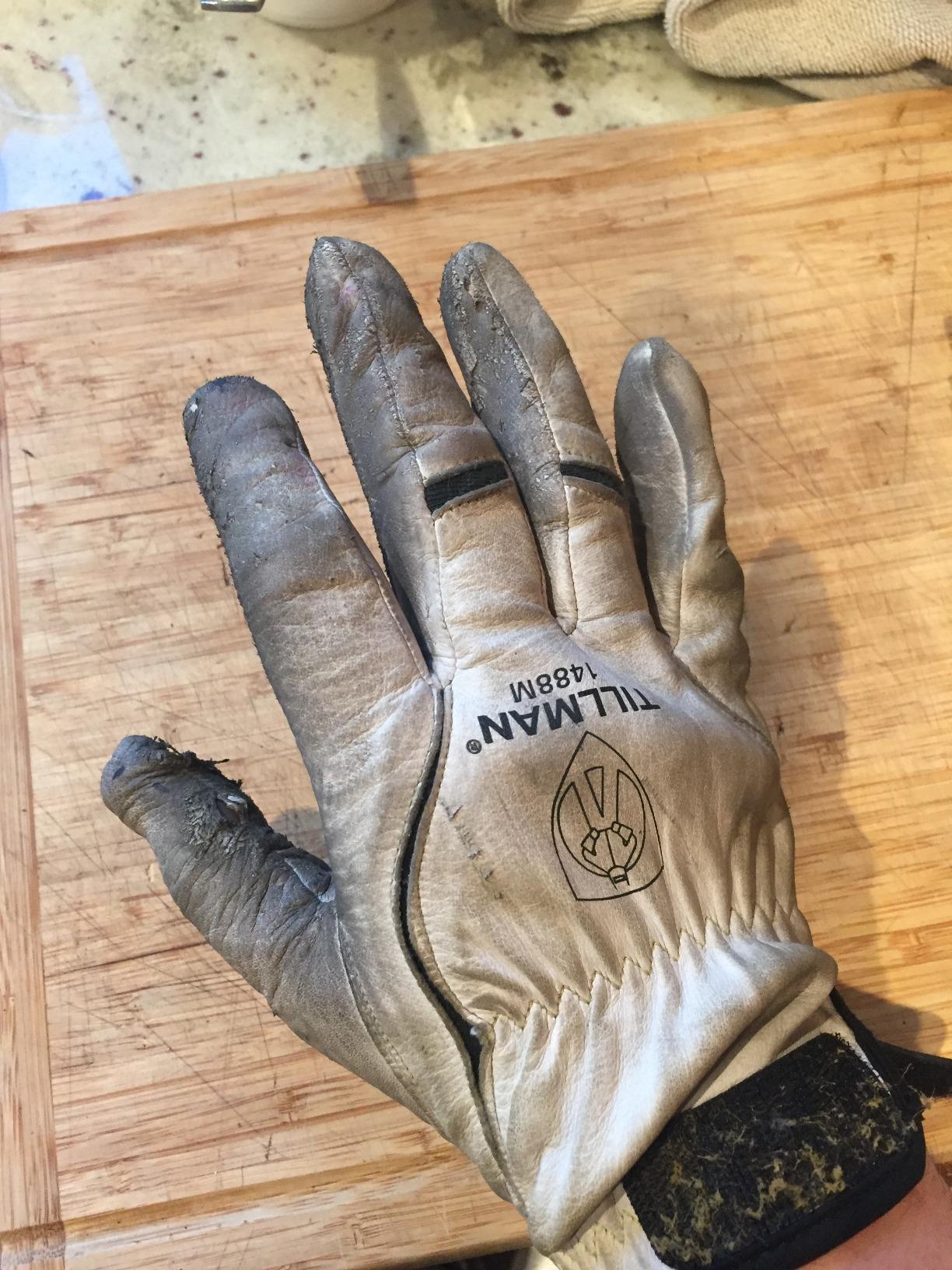
This is the most interesting construction in the roundup. Instead of one continuous sheet of leather, the 1488 puts black DuPont Kevlar stretch inserts through the hand, so the glove moves with your natural contours instead of resisting them. If you have ever felt a leather glove fight you while you closed your grip, this is the fix.
Tillman built the TrueFit pattern off a golf glove, and you can feel it. The 11 inch length keeps the cuff low enough to stay out of the way, which matters when you are working a torch at close range on a small part. Reviewers pair it with micro-TIG and precision plasma cutting, and the feedback is enthusiastic about both.
Because the whole glove is sewn with DuPont Kevlar, the seam strength and heat behaviour are better than a standard leather-only build, and the unlined interior keeps it cool through long sessions. The listing weight comes to 3.2 ounces for the pair, which is light in the hand.
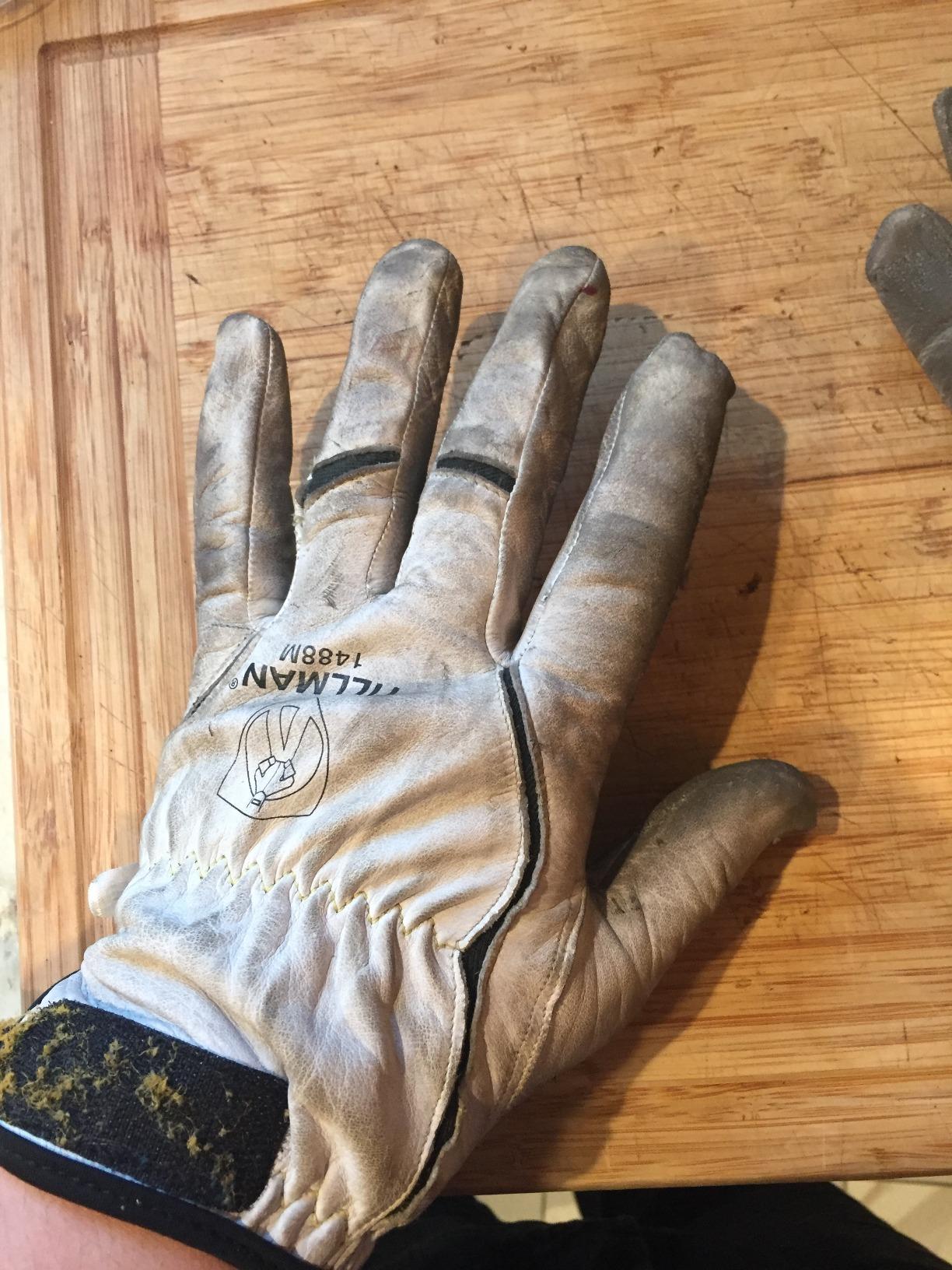
The caveat is fit. A golf-glove fit is snug by definition, and reviewers consistently advise sizing up, particularly if you are between sizes or have larger hands. The Kevlar stretch panels are also more delicate to clean than leather, and they can age faster, so treat them carefully around grease and solvents.
There is no long gauntlet cuff here. That is a deliberate choice for control, but it does mean this is not the glove for a lot of overhead spatter work.
Why you would pick this glove
Choose it if you do precision TIG, thin-wall work, or plasma cutting where the job is guiding something with a fingertip. The stretch inserts give you a range of motion no all-leather glove in this roundup matches, and owners who switch back to thick gloves describe it as a downgrade.
When you should pick something else
Pass if you want a single glove for everything, because the short cuff and the delicate stretch panels are a poor match for heavy spark and spatter duty. If you have large hands, size up or the fit will fight you from the first bead.
6. Defiant Metal Goatskin TIG Gloves – Best Value Double-Layer Build
Defiant Metal TIG Welding Gloves – Premium Black Goatskin Leather (Medium)
Premium black goatskin
Cow skin cuff
Double-row stitching
Double-layered palms
Pros
- Double-layered palms survive spatter fireballs
- True X-Small sizing is rare in this category
- Snug wrist stays put
- Works as a general shop glove
Cons
- Runs small so size deliberately
- Some pairs wear at the thumb seam
- Thicker than ultra-thin TIG gloves
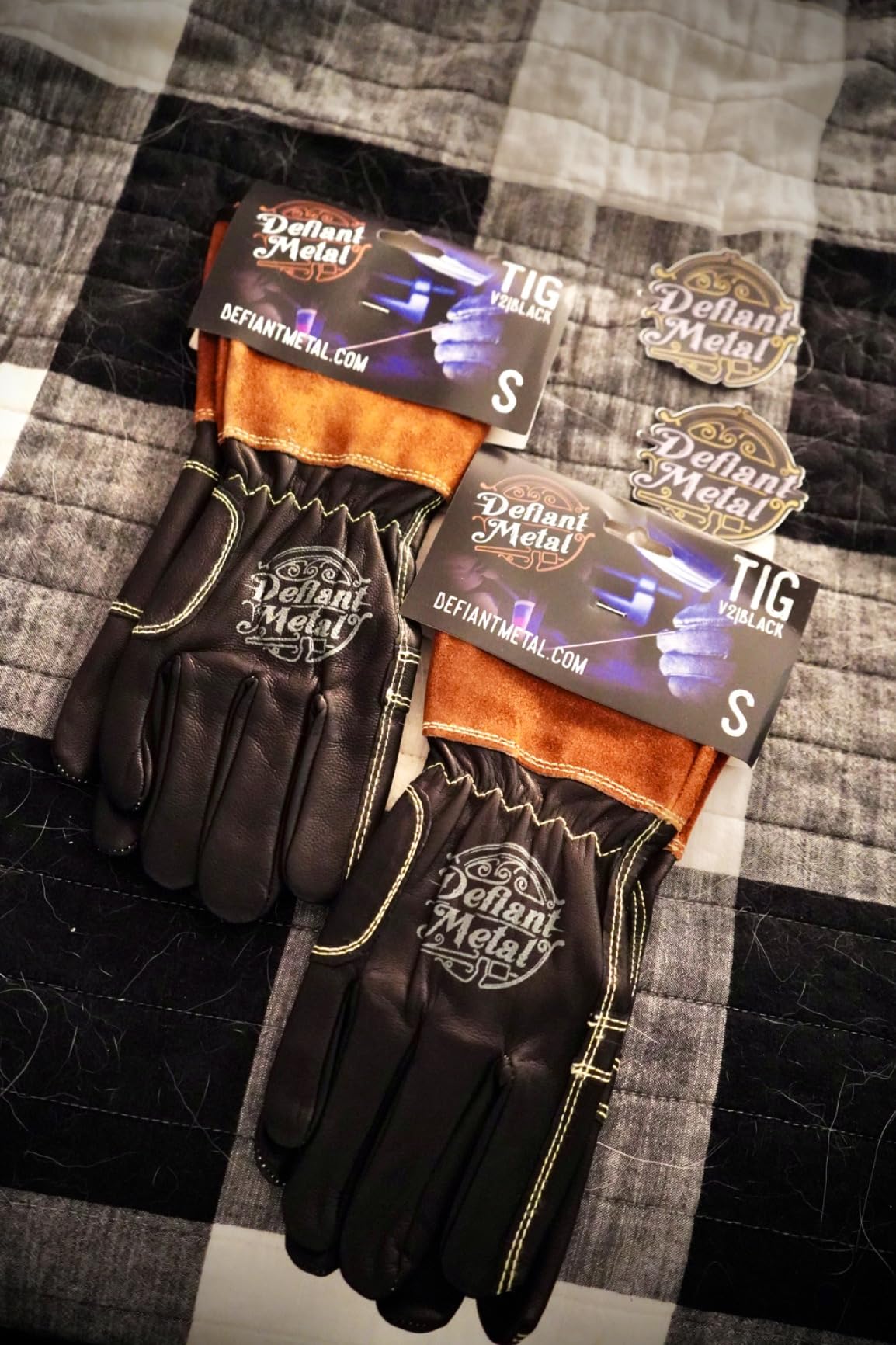
Owners of this glove keep calling it the best value in their drawer, and the reason is simple: double-layered palms and wrists. Most TIG gloves in this roundup are single layer, which means a dropped piece of slag or a spatter fireball finds bare skin. This one has a second layer where it counts.
The cow skin cuff protects your wrists and lower arms from sparks, heat and splatter, and the double-row stitching is heavier than the single-row seams common at this tier. The form-fitting cut keeps the glove close, and the snug wrist is a genuine plus when you are repositioning constantly.
Two details stand out. First, the size range runs from X-Small through 2X-Large, and a real X-Small is genuinely rare in welding gloves, so anyone with small hands has options. Second, the brand’s replacement service has earned unusually strong goodwill, with multiple owners reporting a failed pair replaced.
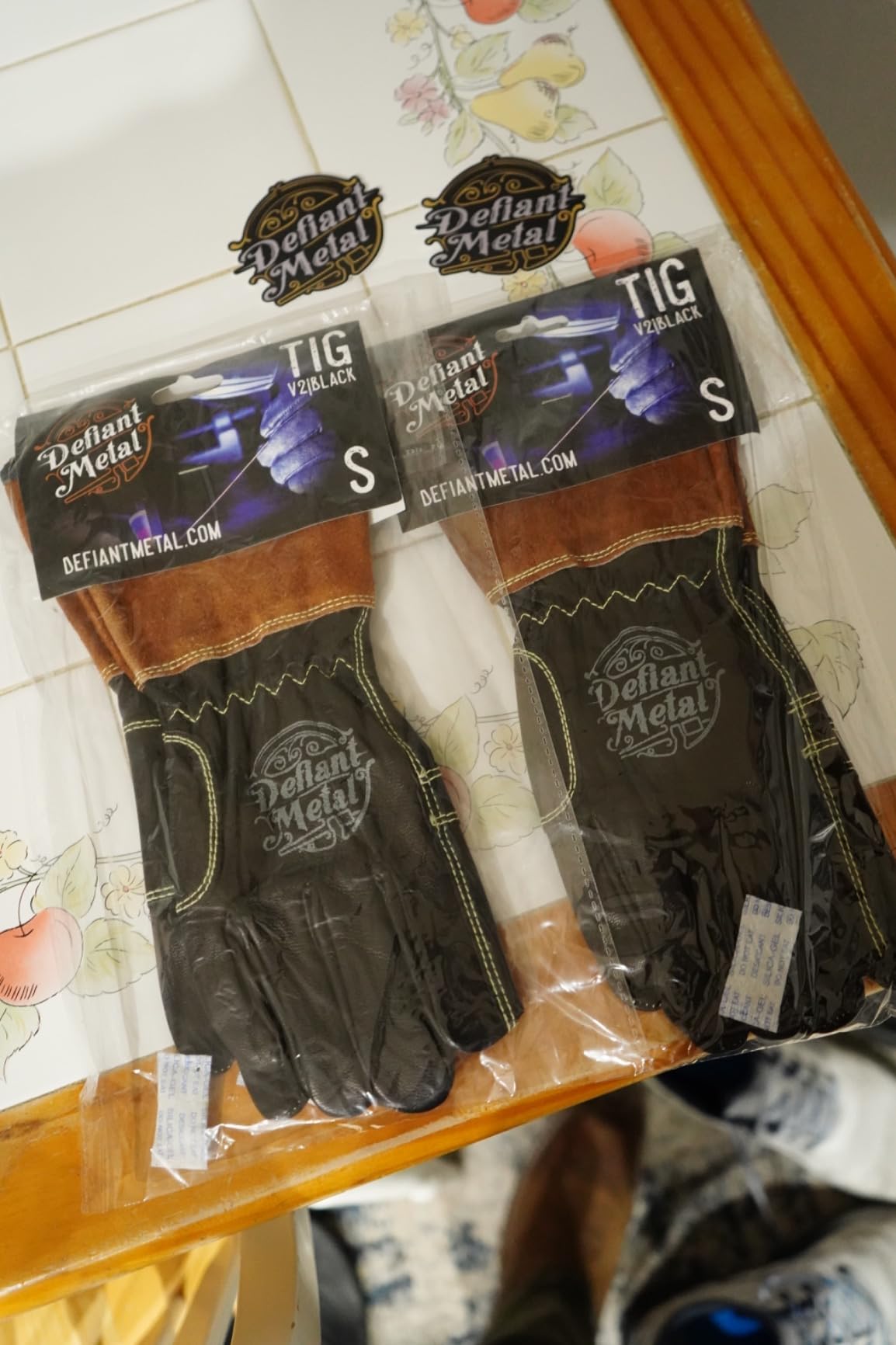
The forum consensus is worth repeating here because it corroborates the reviews. A welding student on WeldingWeb compared the Defiant metal gloves against Tillman Drivers, found the seam quality near identical, and preferred the Defiant pair on cost. That is a construction comparison rather than a brand comparison, and it is the right way to shop.
The catch is that this is not the thinnest glove here. It is thicker and stiffer than an unlined goat grain model, so you give up some fine touch for the added layer. Sizing also runs small, so decide deliberately rather than defaulting to your usual size.
Why you would pick this glove
Choose it if you want one glove that can move between the bench and the welding booth without worrying about slag, and if you have small hands that other brands do not fit. The double-layer build and the replacement service make it a low-risk first pair.
When you should pick something else
Pass if fine rod feel is your priority, because the extra layer costs you tactility compared with the unlined Caiman. Be aware that some pairs wear through at the thumb seam within weeks of heavy work.
7. YESWELDER Premium Goatskin TIG Gloves – Best Rated for High-Heat TIG
YESWELDER Premium Goatskin TIG Welding Gloves
Top grain leather with cotton lining
932F heat rating
Reinforced palm
Keystone thumb
Pros
- Rated to 932F for high-heat work
- Thin enough to feed rods and small parts
- True to size
- Grease wipes straight off
Cons
- Fingertips split within a few weeks
- Widely spaced thumb inseam tears early
- Inconsistent quality between pairs
- Not for grinding
This glove is the heat outlier in the roundup. The published rating is 932F, several hundred degrees above what the other thin TIG gloves here claim, and that comes from the cotton liner combined with a thicker top grain leather. If you weld copper or run high-amp DC, this is the one to look at first.
One qualification matters here. The 932F figure is printed as a single temperature number with no accompanying ANSI or ASTM test class, so treat it as a manufacturer claim rather than a certified rating. The Superior Glove Endura below carries a full cut, puncture and heat certification if you need one on paper.
Even with that liner, owners report the leather is thin enough to manipulate filler rod and small parts without fighting it. The seamless index finger and keystone thumb are designed for control and grip, and the reinforced palm and fingertips take the abrasion that normally kills a TIG glove.
There is a nice practical detail in the reviews: the surface wipes grease off easily, which matters more than it sounds when you are handling hot, dirty stock all day. Sizing is consistent with standard work gloves, so you can pick your usual size.
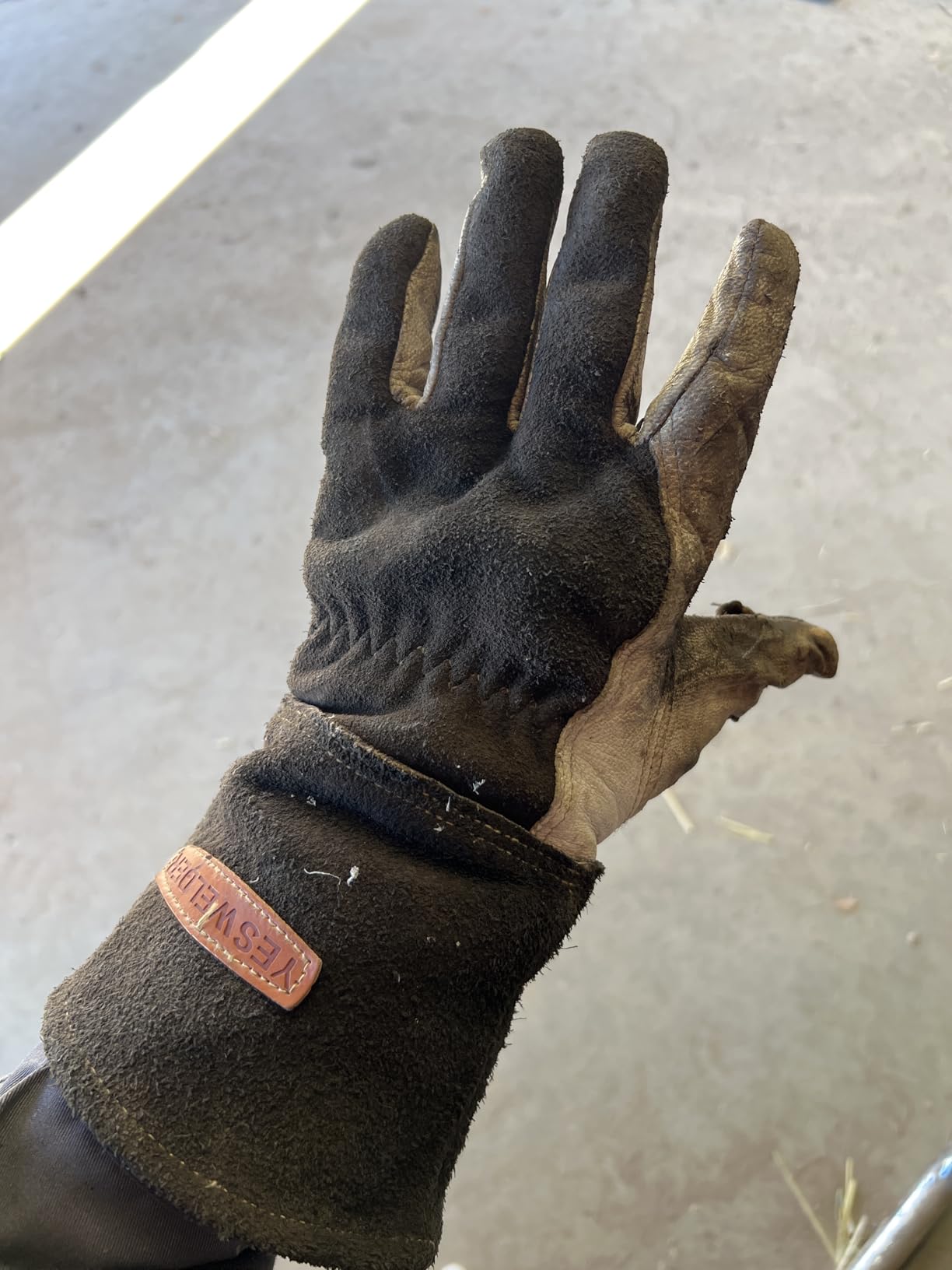
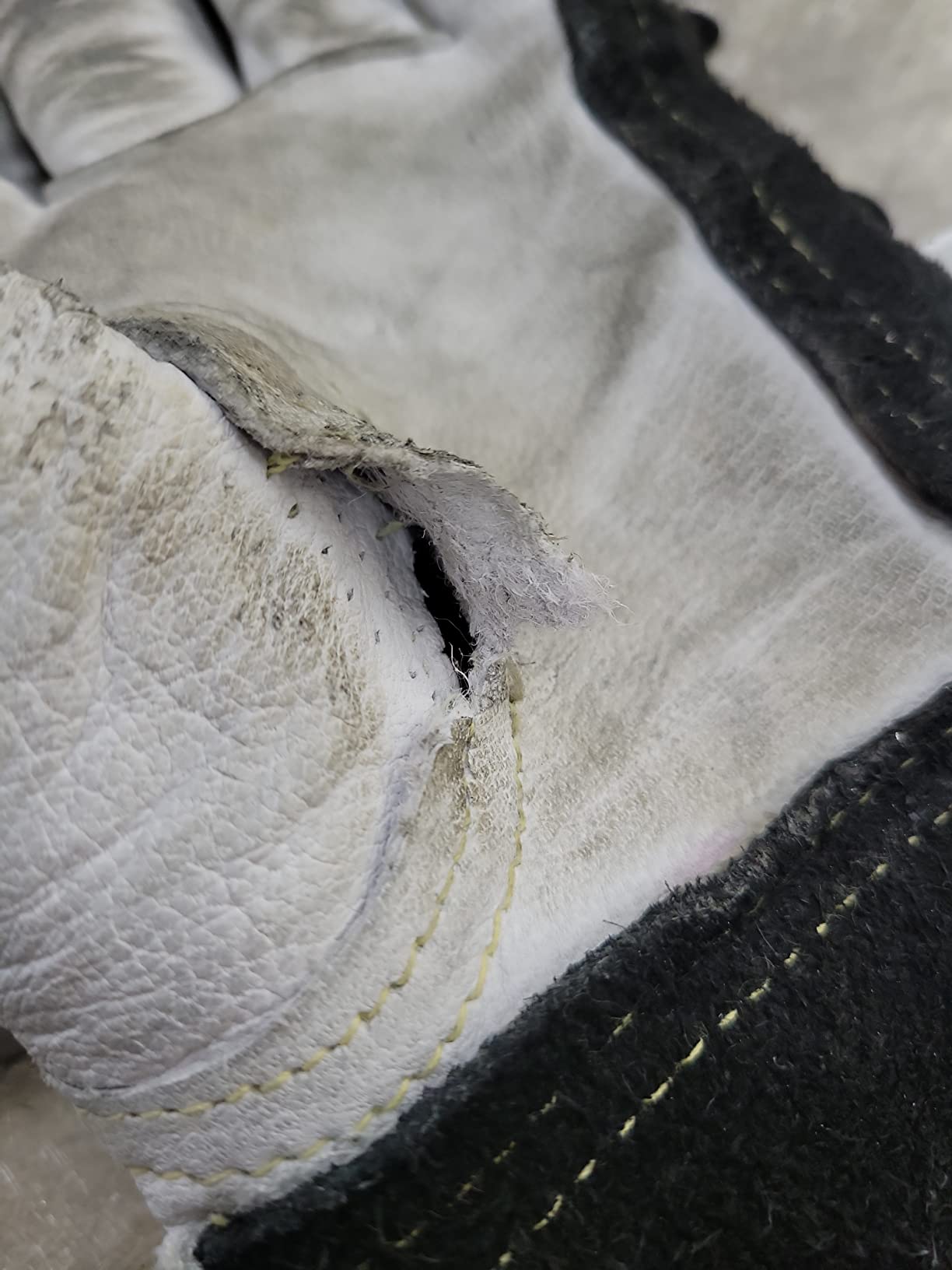
Now the durability picture, because it is mixed. Several reviewers report fingertips wearing down and splitting within a few weeks of fabrication shop use, and the thumb inseam can tear early because the seams are widely spaced. One buyer also noted a noticeable quality difference between the two gloves in the same pair, which is a QC concern rather than a design flaw.
So read the heat rating as the reason to buy it and the seam spacing as the reason to buy a spare. For a hobbyist welding copper and stainless in a home shop, that is an easy trade.
Why you would pick this glove
Choose it if heat is your binding constraint, specifically copper, high-amperage DC work, or exhaust and muffler repair. A 932F rating with a cotton liner gives you real margin that none of the unlined goatskin options in this roundup can match.
When you should pick something else
Pass if you are welding thin-wall stainless all day and your priority is raw fingertip feel, because the liner costs sensitivity compared with an unlined glove. Also expect shorter wear life than the double-layer Defiant build at heavy shop duty.
8. Superior Glove Endura 370GFKL – The Only Safety-Rated Glove Here
Superior Glove Endura 370GFKL Leather TIG Work Gloves (1 Pair) Medium
ANSI A2 cut,Level 3 puncture,Heat level 3
ParaActiv liner
Goatskin palm
Gauntlet cuff
Pros
- Documented ANSI A2 cut and heat level 3 ratings
- ParaActiv liner adds spark protection
- Goatskin palm keeps TIG feel
- Gauntlet cuff covers the wrist
Cons
- Bulkier than minimalist thin gloves
- Liner feels stiff compared with unlined
- White palm sections stain quickly
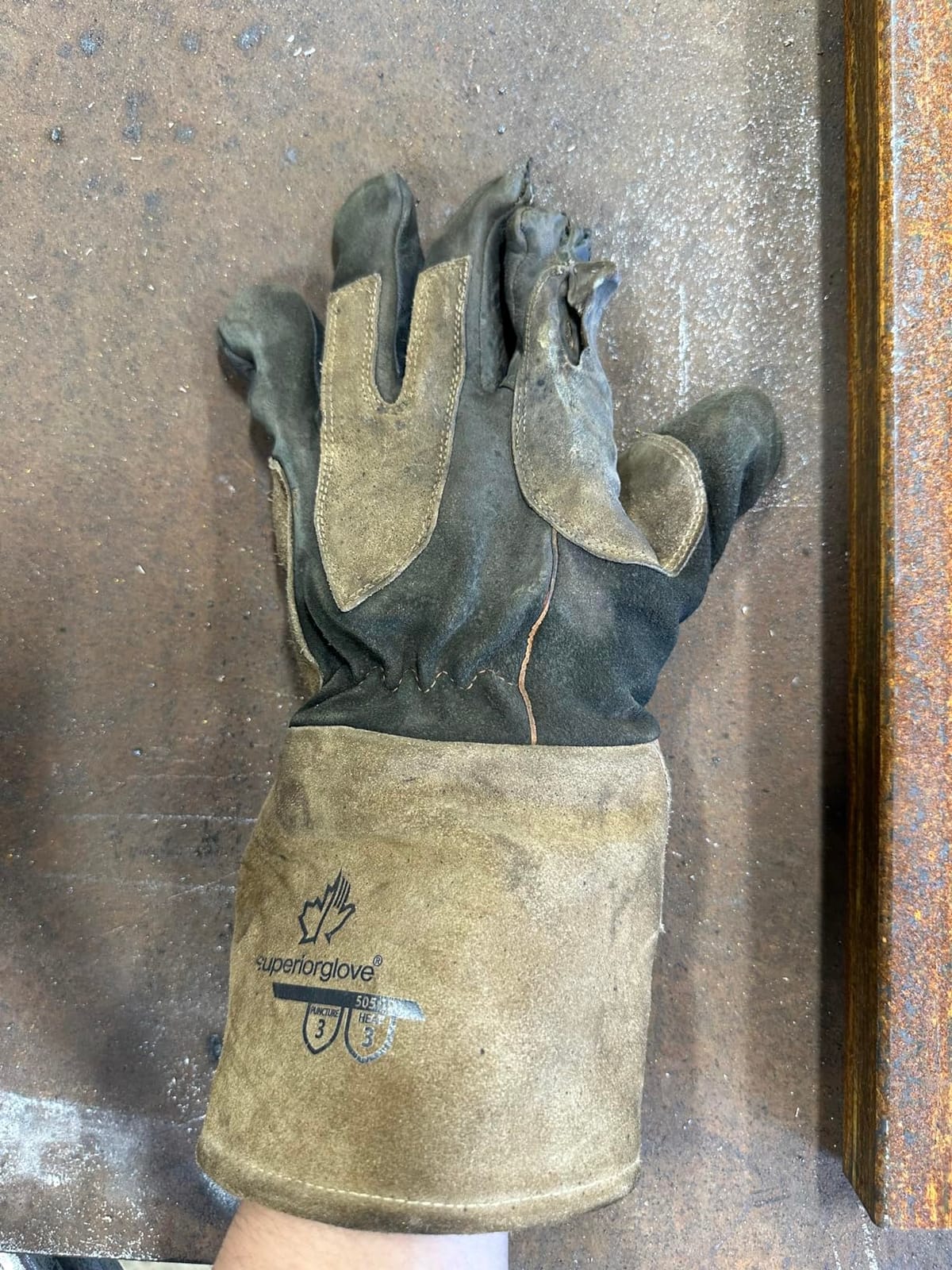
If you work somewhere with a PPE audit, this is the most fully documented glove in the roundup. It carries ASTM ANSI Cut Level A2 at 625 grams, Puncture Resistance Level 3, and Heat Level 3, which is documentation rather than marketing language. Several others here state a heat figure, but none of the rest publish a cut and puncture rating alongside it.
Those numbers come from a ParaActiv engineered yarn liner wrapped in a goatskin leather palm. The liner is what delivers 360 degree cut protection without turning the glove into a hockey pad, and the goatskin palm keeps the fine touch TIG work needs.
The extended gauntlet cuff is a genuine upgrade over the standard 4 inch cuff for anyone whose forearms take spatter. Reviewers note it gives solid wrist coverage, and the sizing feedback is consistently positive across the board.
Owners who switch to this from plain unlined goatskin describe the hand as slightly heavier, which is the honest cost of the certified liner. You are carrying a cut-resistant yarn, and that has a feel.
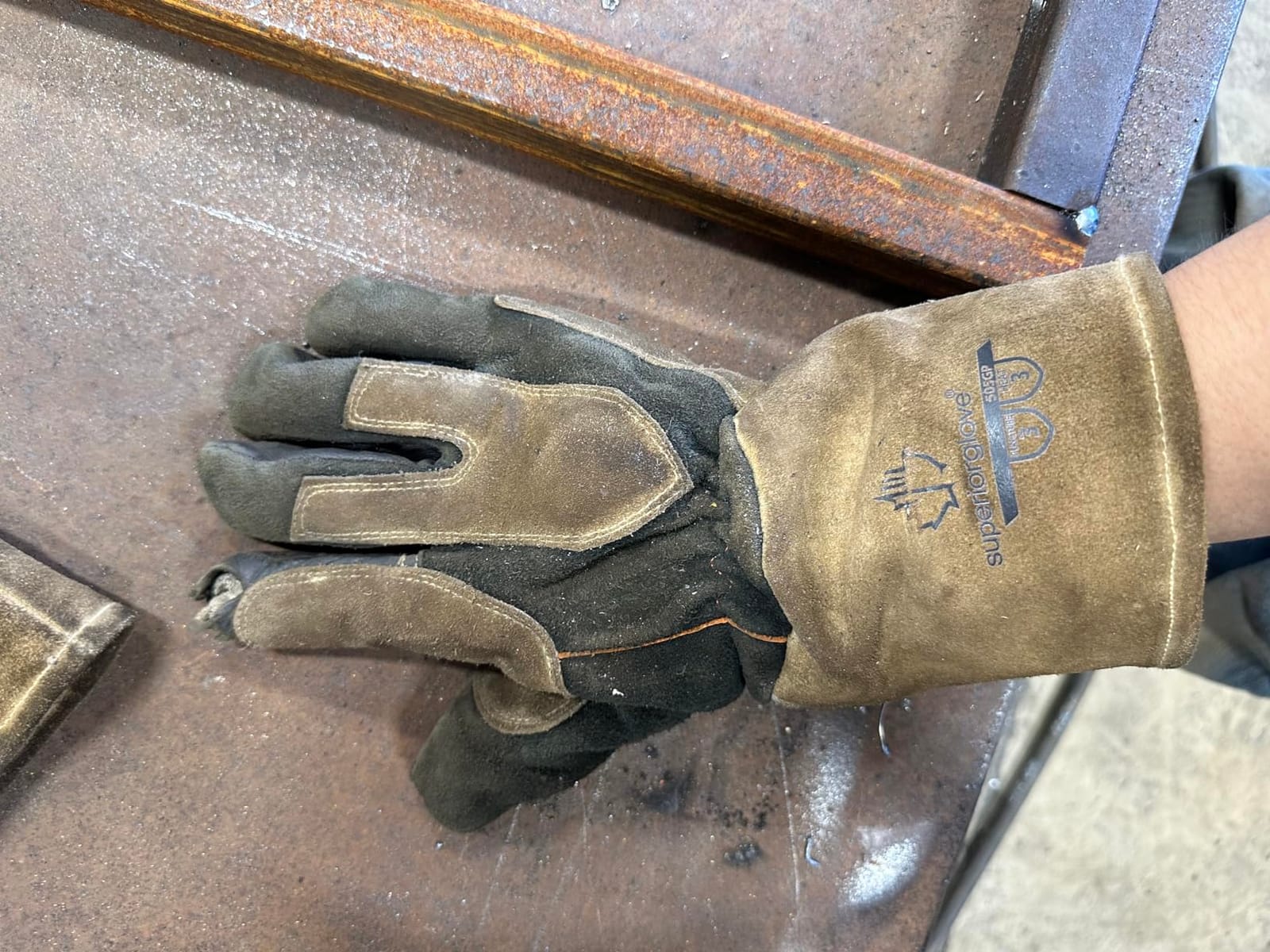
This is also the glove that suits a mixed workload best. The specification sheet names fine MIG or TIG welding, steel foundries and stainless-steel welding, so if your shop does not separate the processes the way your head does, this is the safe middle.
Why you would pick this glove
Choose it if you work in a regulated environment, if you handle stainless where the heat load climbs, or if you want a glove you can point at a certificate for. The heat level 3 rating is the only glove here with a certified cut, puncture and heat figure published together.
When you should pick something else
Pass if you are chasing maximum bare-finger tactility on thin-wall work, because the engineered liner stiffens the hand relative to an unlined goat grain glove. The white palm sections also show wear and staining quickly.
9. IRONCAT 6141 Kidskin TIG Gloves – Best Budget Entry
IRONCAT 6141 Kidskin TIG Welding Gloves – Large, Kevlar Thread Welding Gloves with 4 in. Gold Cuff, Straight Thumb, Pearl, Natural
Top grain kidskin leather
4 inch gold cuff
Kevlar stitching
Straight thumb
Pros
- Entry-level build that still gets Kevlar stitching
- Soft kidskin hand gives good dexterity
- Full size range including a real Small
- True to size
Cons
- Very thin so light duty only
- Some stitching arrives incomplete
- White pearl finish dirties fast
- Gauntlet cuff lets debris in
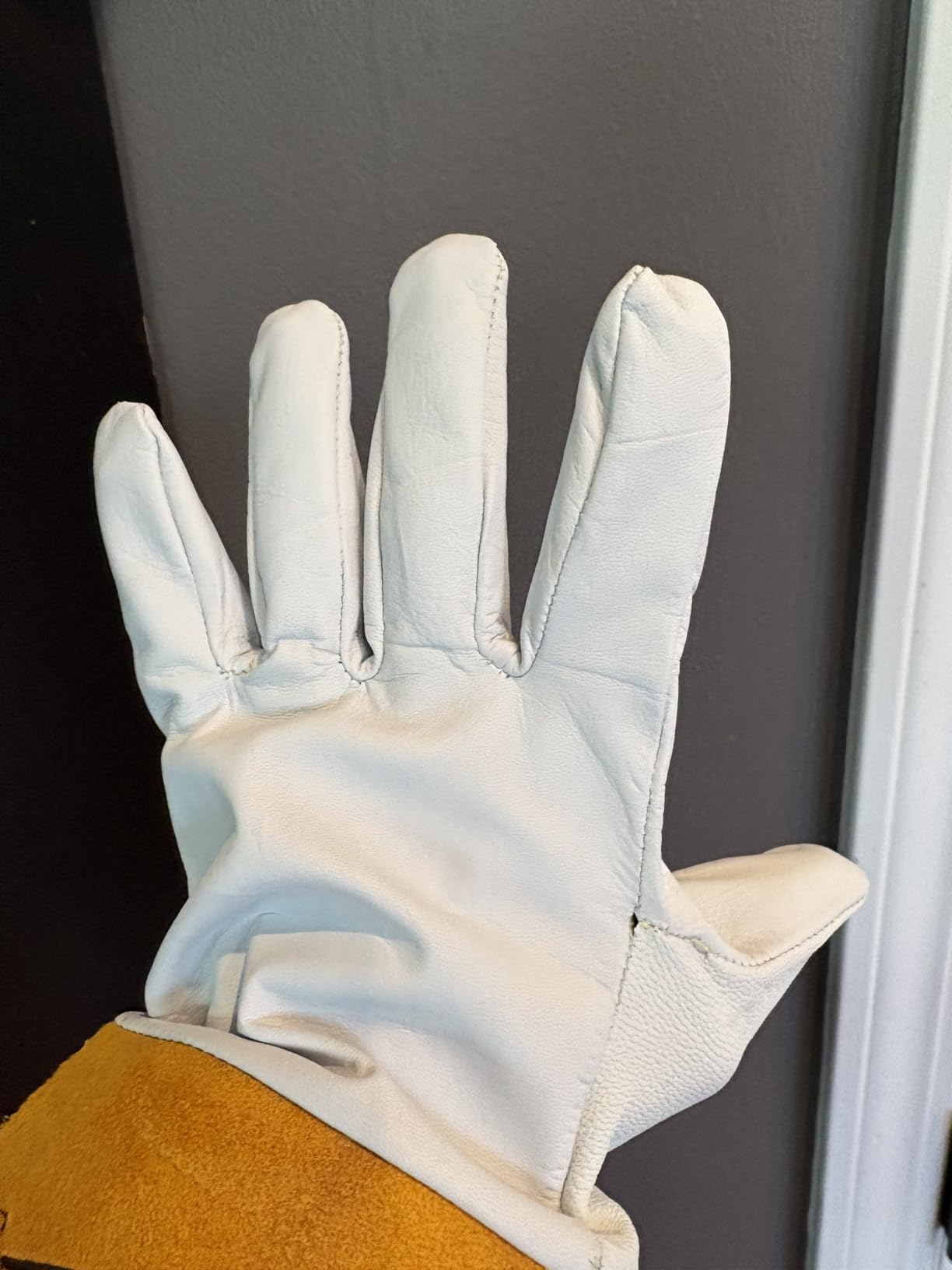
Kidskin is the sleeper material in this roundup. It is thinner and softer than goatskin, and that is exactly the property TIG work rewards. The straight thumb lines up with a torch grip, and owners report real dexterity for filler rod work from one of the thinnest hand sections here.
You get a 4 inch gold extended cuff and Kevlar thread through the seams, which is more than a lot of gloves in the same bracket offer. The glove runs 12.13 inches long, and the heat rating is ANSI level 3 for impact at level 2.
The size range is unusually complete, from Small to 2X-Large, and the Small actually fits small hands. That matters more than it sounds, because sizing is a repeat purchase blocker in this category and most brands skip the ends of the range.
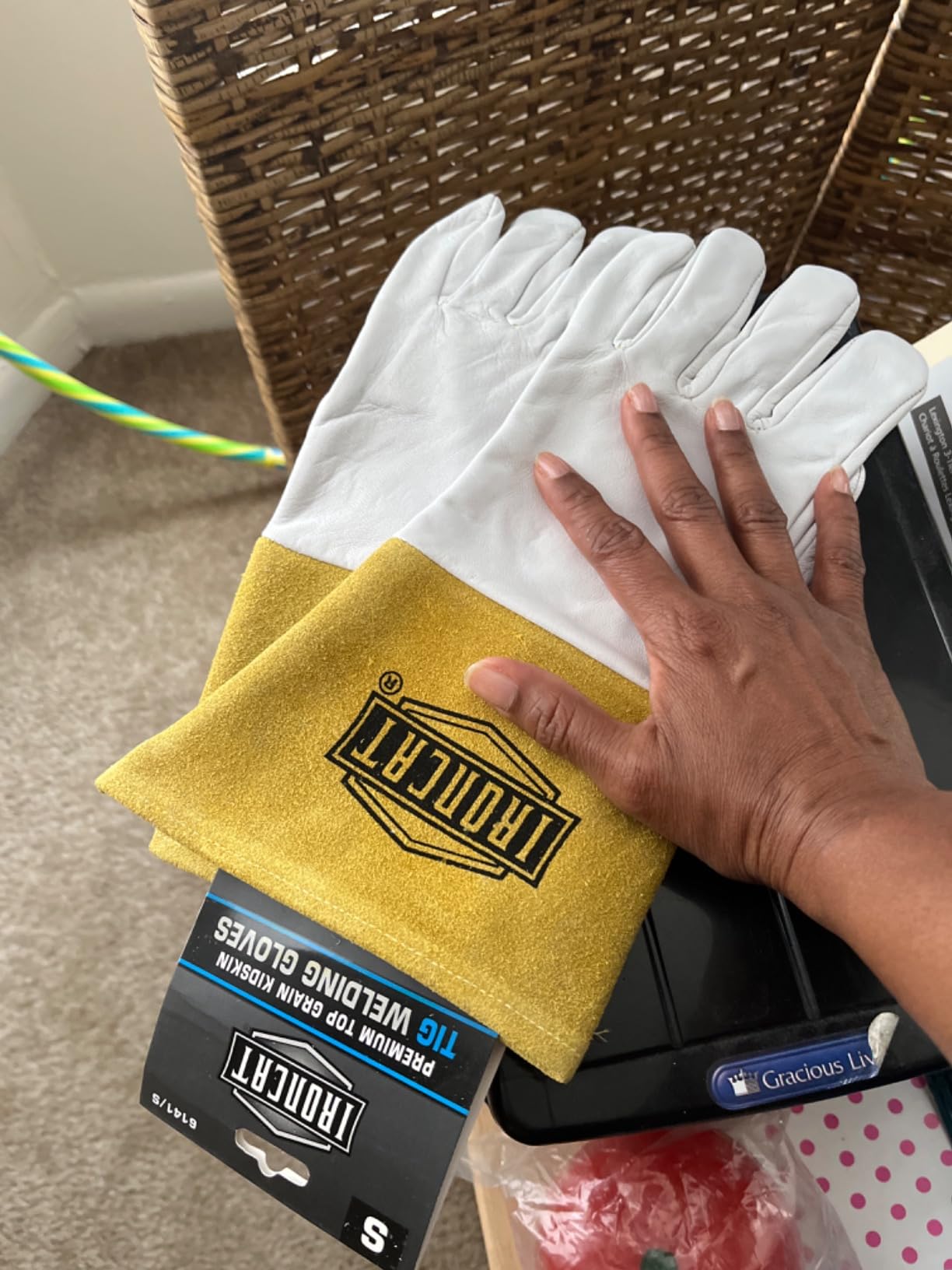
The buyer consensus is clear about the limit: this is a TIG and light fabrication glove, not a material handling glove. The leather will rip quickly, the white pearl finish shows every bit of shop dirt immediately, and some units arrive with incomplete stitching, so inspect the seams on day one.
If you are starting out, learning to run a bead, and welding a few evenings a month, this is the correct purchase. Buying an expensive glove to learn on is how people end up with two pairs they never use.
Why you would pick this glove
Choose it if you are a student, a first-time TIG buyer, or you want a second pair to keep in the truck for light cleanup work. The softness and the real Small make it hard to beat as an entry point.
When you should pick something else
Pass if you weld every day and expect fingertips to last more than a few months, or if you handle hot stock and scrap. Inspect stitching on arrival, and skip the white finish if your shop is grimy.
10. ARCCAPTAIN Goatskin TIG Gloves – Best Forearm Coverage
ARCCAPTAIN TIG Welding Gloves, Premium Grain Goatskin Leather
Goatskin with cowhide protection
14 inch sleeve
Sweat-absorbing lining
Reinforced stitching
Pros
- 14 inch sleeve protects the forearm
- Soft goatskin keeps dexterity
- Elastic back panel and lining for all-day comfort
- Accurate sizing
Cons
- Recent pairs report inner seams tearing in a week
- Not for grabbing very hot metal
- Fit runs slightly off for some hands
- Strong smell on arrival
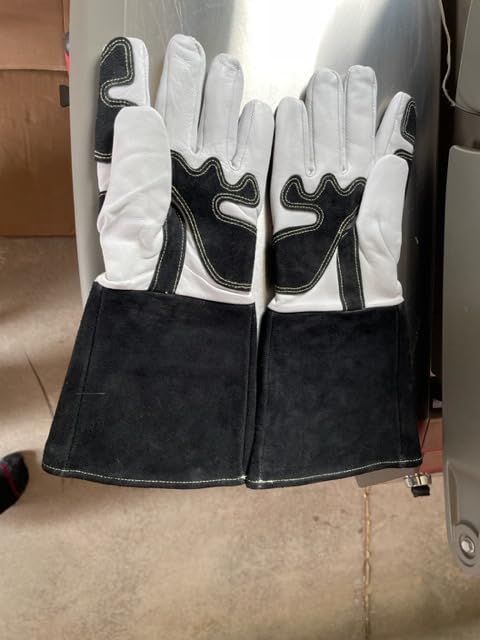
This is the longest glove in the roundup, with a 14 inch sleeve and an oversized cuff that cover the forearm rather than stopping at the wrist. If you do overhead work or have a history of spatter reaching your sleeves, that coverage is the reason to consider it.
The hand itself is soft lightweight goatskin with added cowhide leather, which keeps enough tactility to pick up rods and small parts. A sweat-absorbing lining and an elastic back-of-hand panel keep it wearable through an all-day shift, and the extra leather at the thumb and finger crotch is exactly where reinforcement belongs.
Owners also like that it works for TIG, MIG and stick, plus general work, so it doubles as a shop glove. The one size fits most sizing is accurate for medium to large hands in most reviews.
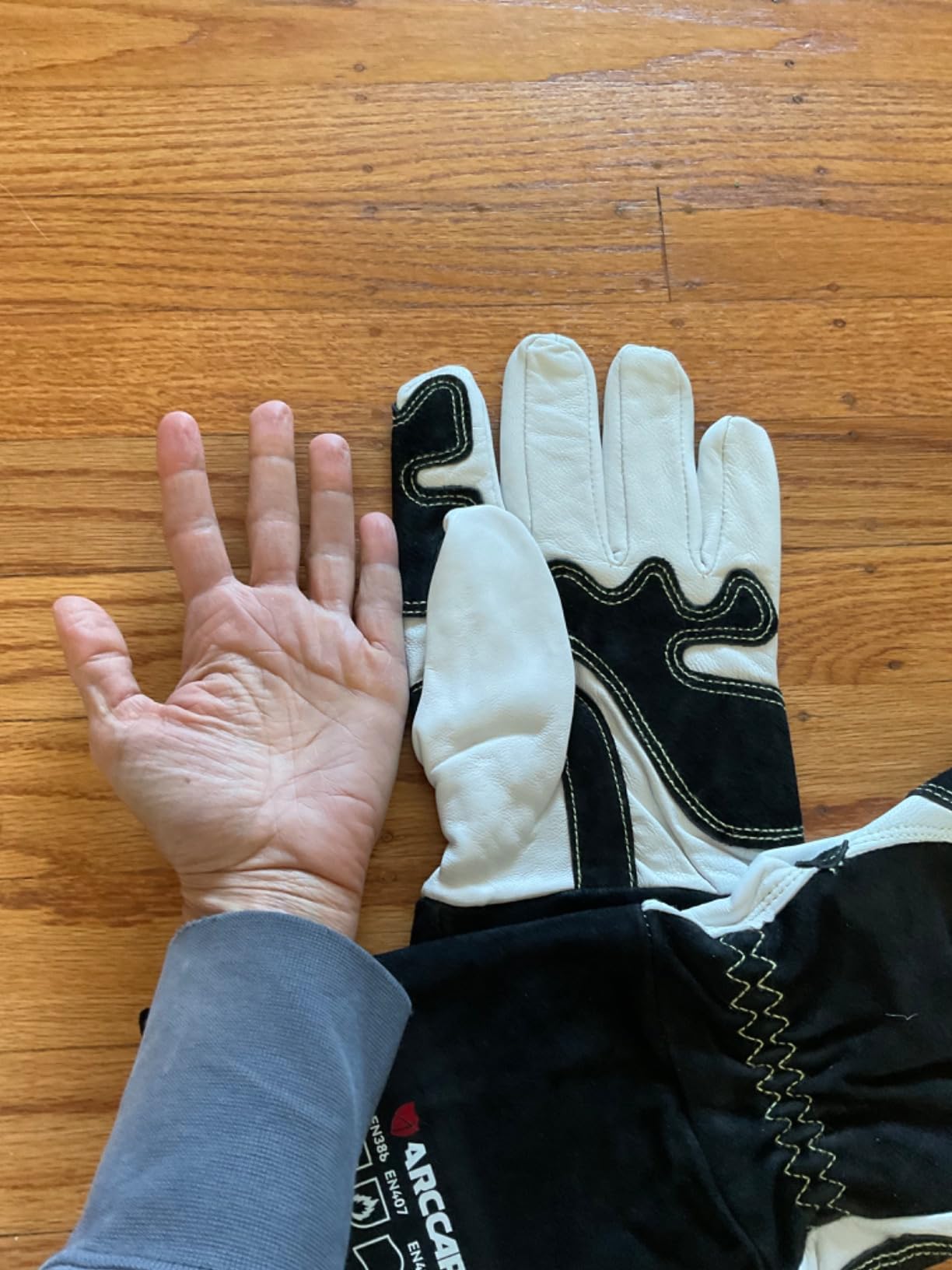
Here is the concern I would weigh carefully. Newer owners rate the comfort and softness very highly, but repeat buyers report that quality has declined, with inner seams tearing within about a week on recent pairs. That is the most serious durability complaint in this roundup, and it comes from people who have bought the product before.
Two smaller notes: the leather can smell strongly on arrival, and finger length runs slightly off for some hand shapes, which is worth checking if you have long fingers.
Why you would pick this glove
Choose it if forearm coverage is a real concern for your work, or if you want one glove that covers TIG, light MIG and general shop duties. The sweat-absorbing lining and elastic back are genuinely well thought out for long shifts.
When you should pick something else
Pass if you weld daily and cannot afford to replace gloves weekly, given the reported internal seam failures. It is also not the right glove for picking up very hot metal, whatever the sleeve length suggests.
How to Choose Welding Gloves for TIG Welding
Every glove above shares the same basic job, so the differences come down to four variables: leather type, seam construction, cuff length, and honest heat rating. Work through those in order and the choice makes itself.
Leather types that work for TIG
Goatskin is the default and the reason most of this roundup exists. It is thin, supple, and stays flexible after heat exposure, which is exactly what a filler-rod hand needs. Top grain goatskin, the pearl finish used in the Tillman 1338, is the tougher and longer lasting of the goat leathers.
Kidskin, as used in the IRONCAT 6141, is thinner and softer than goatskin and usually cheaper. Cowhide is tougher and heavier, so brands use it for the back of the hand and the cuff rather than the palm. Split cowhide is the suede-like layer split from the hide, and it is what the Caiman cuffs and the ARCCAPTAIN sleeve are made of. Pigskin and deerskin come up constantly in forum recommendations as the longest lasting leathers, but they are thin, and thin means less heat margin.
Skipping leather entirely, Nomex and Kevlar blends appear in heavy and multi-task gloves. They handle heat well and ignore sweat, but they give you no tactility at all, which defeats the purpose of a TIG glove.
Safety ratings decoded for TIG gloves
ANSI and ISEA heat levels run from 1 to 4, and the figure in front of them is the maximum contact surface temperature in Fahrenheit. Level 2 covers 284F and 392F depending on the certificate, which is enough for most thin-wall TIG. Level 3 is what you want for stainless and heavier work.
EN 12477 Class 0 through Class 2 is the European welding glove standard, where a higher class means more protection, not less. The counterintuitive part for Americans is that Class 0 is the minimum, not the best.
EN 388 is mechanical, covering abrasion, cut, puncture and tear. EN 407 covers thermal risks, split into contact heat, convective heat, radiant heat and molten spatter, which is the one that matters for welding. Finally, electrical insulation class, from 00 through 4, rates the glove against voltage and is what makes a glove safe for electrical work. Only the Superior Glove in this roundup publishes a certified cut and puncture rating, which is worth remembering if your employer requires documentation.
Cuff length and sizing, where brands disagree
Cuff length is a heat-versus-control dial. A 4 inch cuff, which most of this roundup uses, protects the wrist spatter zone without getting in the way. A gauntlet cuff, like the Superior Glove, buys more coverage at the cost of bulk. A 14 inch sleeve, like the ARCCAPTAIN, is for people whose forearms take hits.
Sizing is the most common source of disappointment, and the reason is simple: there is no standard. A Medium in one brand can be a Large in another, and the honest workaround is to measure your hand and read the specific listing rather than your usual size. Tighter patterns like the Tillman 1488 TrueFit need a size up, while the Caiman gloves tend to run small and the Defiant Metal pair runs small as well.
How to extend the life of a leather welding glove
Rotate two pairs instead of wearing one until it fails. Leather recovers between uses, and a glove rested overnight lasts far longer than one worked continuously.
Wash your hands before putting gloves on. Oil and grinding dust accelerate leather breakdown faster than heat does, and most gloves only need a wipe with a damp cloth. Store them away from radiators and sunlight, because heat and UV both cure leather until it cracks.
Pull the cuff over your jacket sleeve rather than letting the sleeve ride up. Sparks run, and the last two inches are the ones that matter. And when the seam at the thumb starts to open, replace the pair rather than stitching it, because a repaired seam is the failure point that failed once already.
Which TIG Welding Glove for Which Metal?
Thin-wall stainless is the easiest case. Any of the unlined goatskin models handles it, and the Caiman 1600-4 and Tillman 1488 give you the most rod feel for the least money in wear.
Aluminum TIG is the most common reason welders say they cannot find a good glove. The metal glows and the heat keeps coming, so you want a cuff that stays put and a fit that does not slip when your hand gets wet. The Caiman 1540-5 with its Kontour wrist is the best answer here, and the ARCCAPTAIN works if your forearms take the heat.
Copper and high-amp DC TIG is where thin gloves stop being the right answer. The YESWELDER glove, rated to 932F with a cotton liner, is built for exactly this. Users on the Miller forum recommend the heavier Tillman models specifically for high heat TIG on copper and DC work, which is the same principle.
Plasma cutting is precision work with a torch, and the Tillman 1488 TrueFit was built for it. The stretch inserts and short cuff keep your hand out of the way of the cut.
Light MIG duty is the one place to be careful. Thin TIG gloves are not rated for high-amperage MIG, and manufacturers print that warning. A welding student on WeldingWeb used these same gloves for light oxy-fuel and material handling work, which is a reasonable personal call, but a dedicated MIG gauntlet is the correct answer for sustained MIG.
Should You Wear Gloves When TIG Welding?
Yes. The bare-hand practice is common in the hobby community, and a Garage Journal poster described welding happily in light leather-palmed mechanics gloves, but those are not welding gloves and carry no heat rating.
The reason TIG feels like it needs less protection is the process itself. A non-consumable tungsten electrode and an inert gas shield produce a remarkably clean, low-spatter arc, so the radiant heat reaching your hands is far less than in stick or MIG work. Low spatter is not no heat. The arc is bright enough to cause a UV eye injury, and the torch runs hot enough to burn through thin fabric on contact.
The tradeoff runs the other way too. An over-insulated glove reduces touch sensitivity, which increases the chance of a torch collision, and a torch collision means a spatter burn on the exact hand that was wearing the protective equipment. The right glove is the one that makes you precise.
The rest of the PPE matters as much as the gloves. You need an auto-darkening helmet with a shade appropriate to your amperage, a flame-resistant shirt, leather gauntlet-style sleeves or a jacket, safety glasses under the helmet, and leather footwear. A respirator is worth considering for stainless and aluminium, since both produce fume you do not want to breathe. The rule of 33 is the working number welders use to size amperage to material, one amp per thousandth of an inch of thickness, and it tells you how much heat your hands are dealing with before you even pick a glove.
Frequently Asked Questions
What are the best hand gloves for TIG welding?
The best TIG welding gloves are thin, unlined or lightly lined top grain goatskin with Kevlar seams and a 4 inch cuff, because they protect against radiant heat and low-spatter burns while preserving fingertip feel for filler rod. The Tillman 1338 is our top pick, with the Tillman 1488 TrueFit as the most precise option.
Who makes the best TIG welding gloves?
Tillman is the most consistently recommended name across welder forums for TIG and light MIG duty, with the 1338 and 1488 covering the mainstream and precision ends. Lincoln Electric, Miller, Black Stallion and Caiman are the other names worth knowing, and the Superior Glove Endura stands out for certified safety ratings.
Should you wear gloves when TIG welding?
Yes, wear purpose-built welding gloves. TIG produces a low-spatter arc, so less heat reaches your hands than in MIG or stick work, but the arc still delivers intense UV and the torch is hot enough to burn. An over-thick glove reduces touch and raises the chance of a torch collision, so choose thin heat-rated leather instead of going bare-handed.
Can I use TIG gloves for MIG welding?
Only for light duty, and never for high-amperage MIG. Manufacturers print a not for high amperage MIG or stick welding warning on TIG gloves because the thin leather is designed for radiant heat, not for the sustained heat and spatter of a MIG gun. Buy a dedicated MIG gauntlet for production MIG work.
Are welding gloves electrically insulated?
Standard leather welding gloves are not electrically rated by default. Electrical protection is a separate certification with classes from 00 through 4, covering specific working voltages, and it is not the same as the ANSI heat level or EN 12477 welding class printed on the glove. Only buy an electrically rated glove if your work requires it.
Why do my TIG welding gloves fall apart at the fingers?
It is almost always seam failure, not leather failure. Heat, spatter and sweat attack the thread at the thumb and index fingertip, where the glove flexes most, and single-row stitching gives way first. Look for Kevlar or double-row stitching, rotate two pairs instead of wearing one to failure, and replace the glove when a seam starts to open rather than repairing it.
Final Verdict: Which TIG Glove Should You Buy?
For most welders the Tillman 1338 is the answer. It has the highest average rating in this group, thousands of reviews behind that rating, Kevlar seams, and a goatskin thin enough to feel the rod.
Change direction based on the job. High-heat TIG on copper or DC calls for the YESWELDER with its 932F rating. Regulated shops should look at the Superior Glove Endura 370GFKL, the one glove here with a certified cut, puncture and heat figure. Overhead spatter calls for the Caiman 1540-5 or the ARCCAPTAIN with its 14 inch sleeve. And if you are just starting, the IRONCAT 6141 is a perfectly good pair to learn on.
One last piece of advice that costs nothing: measure your hand and check the specific listing before you order, because sizing is the single most common reason a good glove ends up unused. Our other protective gear picks cover the rest of the kit, including heated gloves for cold shop work and motorcycle gloves for people who weld and ride in the same year.
Whichever you choose, rotate two pairs and replace on the first opened seam. Most of the durability complaints in this roundup trace back to a single pair being worn past that point.