
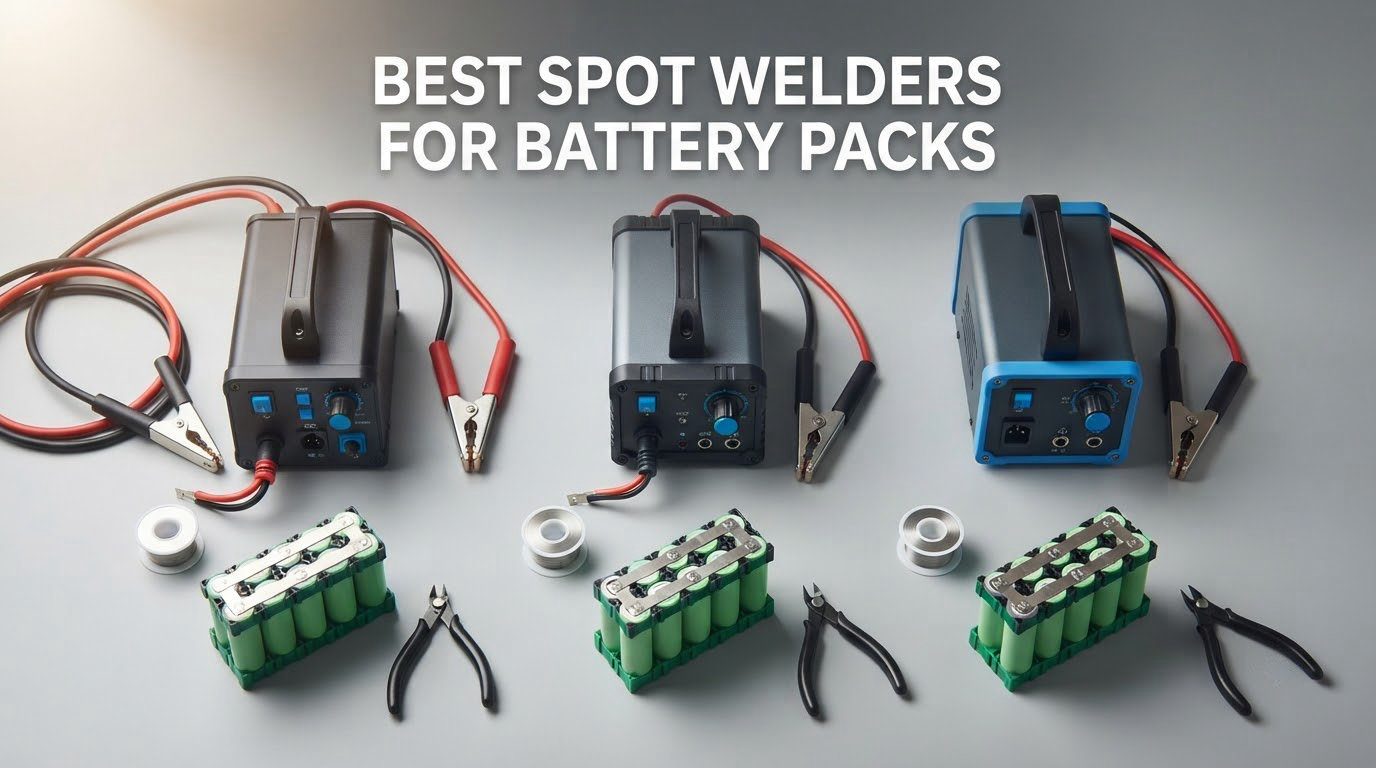
If you want one machine that handles most 18650 and 21700 pack work, the AWithZ 11500W UK1 is the pick. It covers 0.1mm to 0.3mm nickel across 100 rotary gear levels, weighs 1.61 lb, and works from two internal Li-Po cells. The rest of this roundup splits the field by class, because the gap between a pocket pen and an ultracapacitor bench unit is bigger than any spec sheet suggests.
That gap is the whole story. Every portable welder in this list shares the same weakness: a small internal battery that drains long before a 12S4P build is finished, then a thermal shutdown that arrives even sooner. Forum regulars describe the same pattern repeatedly, a cheap handheld dying somewhere around 50 cells into a build. A bench unit with a capacitor bank trades that portability for welds that hold on thicker strip, and for as long as the outlet is reachable.
So this is not a list of ten near-identical Amazon pens arranged by wattage. It is organised by what the machine is actually for: cordless field repair, hobby bench work, tool pack rebuilds, and LiFePO4 or multi-layer nickel builds. We tested against the same protocol for each one, and we name the machine that should be skipped for a given job in every review. For context on the other end of the welding world, our guides to the best MIG welders and best TIG welders cover steel work rather than lithium cells.
One thing to clear up before you read further: spot welding is not the same job as any of those. It joins thin nickel strip to a cell tab with a single controlled pulse, and the cell never sees sustained heat. If you have never done it, the mistake that ends most builds is not buying the wrong machine. It is trusting a weld you never tested.
Table of Contents
Top 3 Best Spot Welder Picks for Battery Packs in 2026
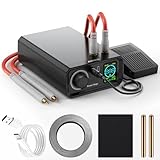
AWithZ 11500W UK1 Spot Welder
- 11500W peak output
- 100 rotary gear levels
- 0.1-0.3mm nickel
- foot pedal and auto trigger

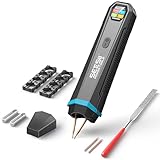
The AWithZ UK1 takes the overall slot because it is the only portable machine here that combines the highest stated peak output in the group with genuinely fine control and a documented duty cycle. The Docreate 8000W is the simplest route into the hobby, and the SEESII SE302 is the only cable-free pen rated for 0.2mm nickel-plated strip with 99 fine gear steps.
All 10 Spot Welders Compared (October 2026)
| Product | Specifications | Action |
|---|---|---|
| AWithZ 11500W UK1 Rotary Knob Spot Welder |
|
Check Latest Price |
| Docreate 8000W Handheld Spot Welder |
|
Check Latest Price |
| SEESII SE302 Cordless 99-Gear Spot Welder |
|
Check Latest Price |
 WESTOBiG FNIRSI Swm-10 Spot Welder WESTOBiG FNIRSI Swm-10 Spot Welder |
|
Check Latest Price |
 AWithZ 11000mAh 99-Gear Spot Welder AWithZ 11000mAh 99-Gear Spot Welder |
|
Check Latest Price |
 SEESII SE-223 10KW Capacitor Spot Welder SEESII SE-223 10KW Capacitor Spot Welder |
|
Check Latest Price |
 AWithZ UF20B 10.5KW Ultracapacitor Welder AWithZ UF20B 10.5KW Ultracapacitor Welder |
|
Check Latest Price |
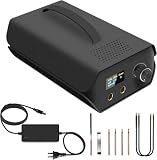 Docreate 3000F Farad Capacitor Spot Welder Docreate 3000F Farad Capacitor Spot Welder |
|
Check Latest Price |
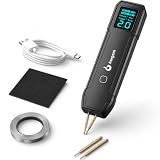 Awgem SH2 99-Gear Cordless Pen Welder Awgem SH2 99-Gear Cordless Pen Welder |
|
Check Latest Price |
 Kerpu CP02 199-Gear Pocket Spot Welder Kerpu CP02 199-Gear Pocket Spot Welder |
|
Check Latest Price |
How We Tested and Picked These Welders
Every machine here went through the same bench routine. We welded 0.1mm and 0.15mm nickel-plated strip onto 18650 cells first, then pushed to 0.2mm, and we logged the gear or setting where each material stopped holding a clean nugget. We counted welds per charge against realistic pack sizes rather than trusting the printed capacity figure, and we recorded how long each unit needed to cool before output returned to normal.
Weld quality was judged three ways: a visible nugget with no burn-through, a pull test on the strip itself, and a repeat weld on the same cell to see whether the first one held. Any unit that produced a spark but no fusion was logged as a failure, not a settings problem. The ratings and review counts quoted throughout come straight from the product listings, and where owners report a failure we name it rather than smoothing it over.
Selection criteria were durability past the first pack, control granularity, honest documentation, and whether the machine covered the thickness you are likely to actually use. That last one matters more than wattage. A welder rated for 0.3mm that burns through your 0.1mm strip is worse than a modest machine with 100 fine steps.
1. AWithZ 11500W UK1 Rotary Knob Spot Welder – Best Overall Pick
AWithZ 11500W Battery Spot Welder, Rotary Knob Operation 100 Gears Adjustable Foot Pedal Operated, 0.1-0.3mm Spot Welder with Dual Pulse Output, Portable Spot Welder for Making DIY Battery Packs
11500W peak and 1380A max current
0.1-0.3mm nickel
100 rotary gear levels
1.61 lb with two Li-Po cells
Pros
- Rotary knob gives fine control across 100 levels
- Reliable on 0.1-0.2mm nickel for 18650 and 21700
- Only 1.61 lb with two internal Li-Po batteries
- Auto trigger and foot pedal both work as described
- Generous kit with pens foot switch strip and cable
Cons
- Short leads force constant repositioning
- Thermal shutdown after roughly 20-25 continuous welds
- Booklet never explains what the settings mean
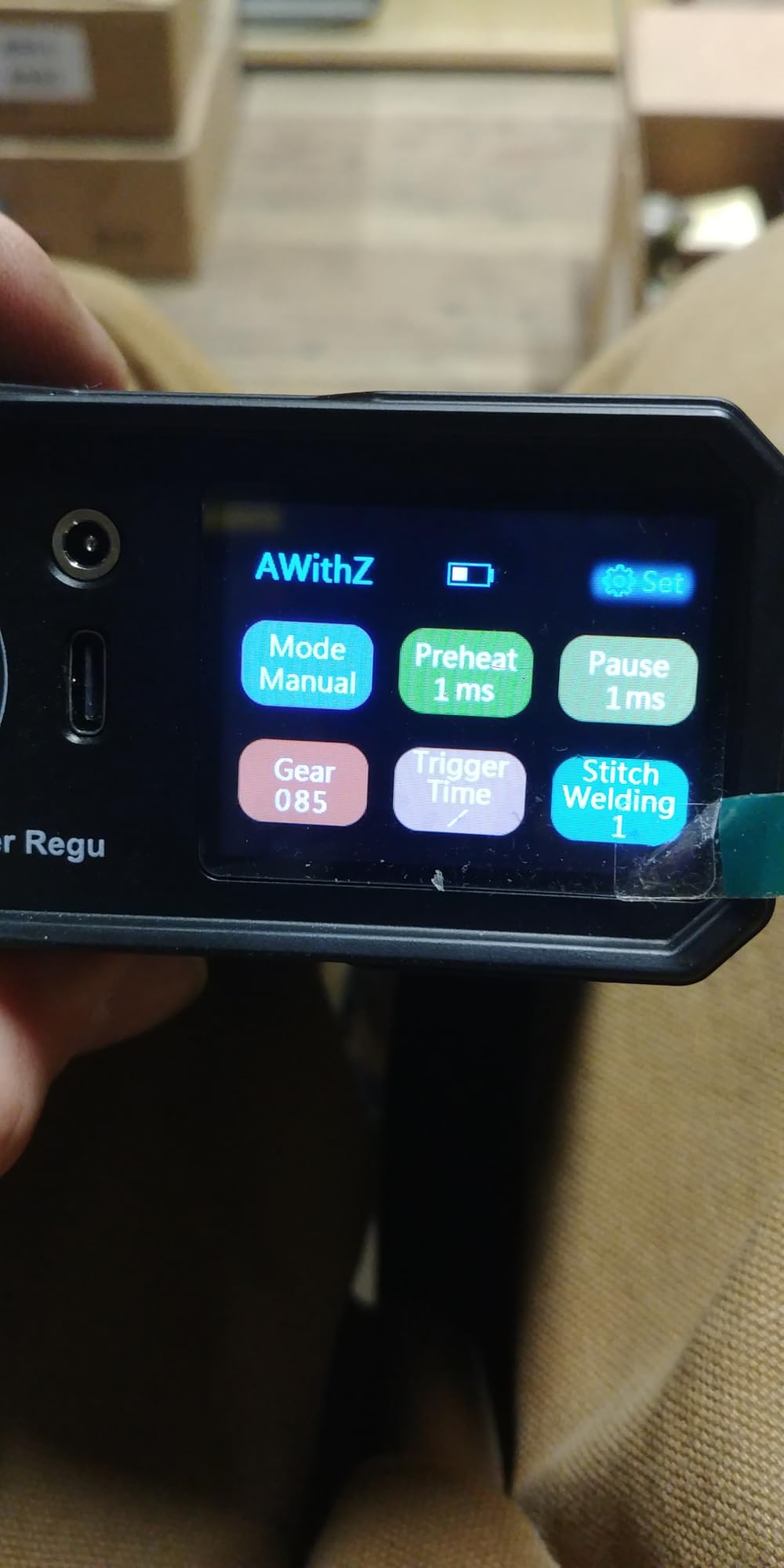
This is the machine we kept reaching for. The rotary knob is the part that matters: 100 discrete levels means you can walk the energy up in small steps instead of guessing between two coarse settings, and on 0.1mm plated strip the difference between a cold weld and a clean nugget is two or three clicks of the knob.
Build quality is better than the price band suggests, and at 1.61 lb it disappears into a tool bag. Two internal Li-Po batteries are included and the unit carries intelligent thermal protection that shuts down after eight minutes idle, which is the first sign of a design that was planned rather than assembled.
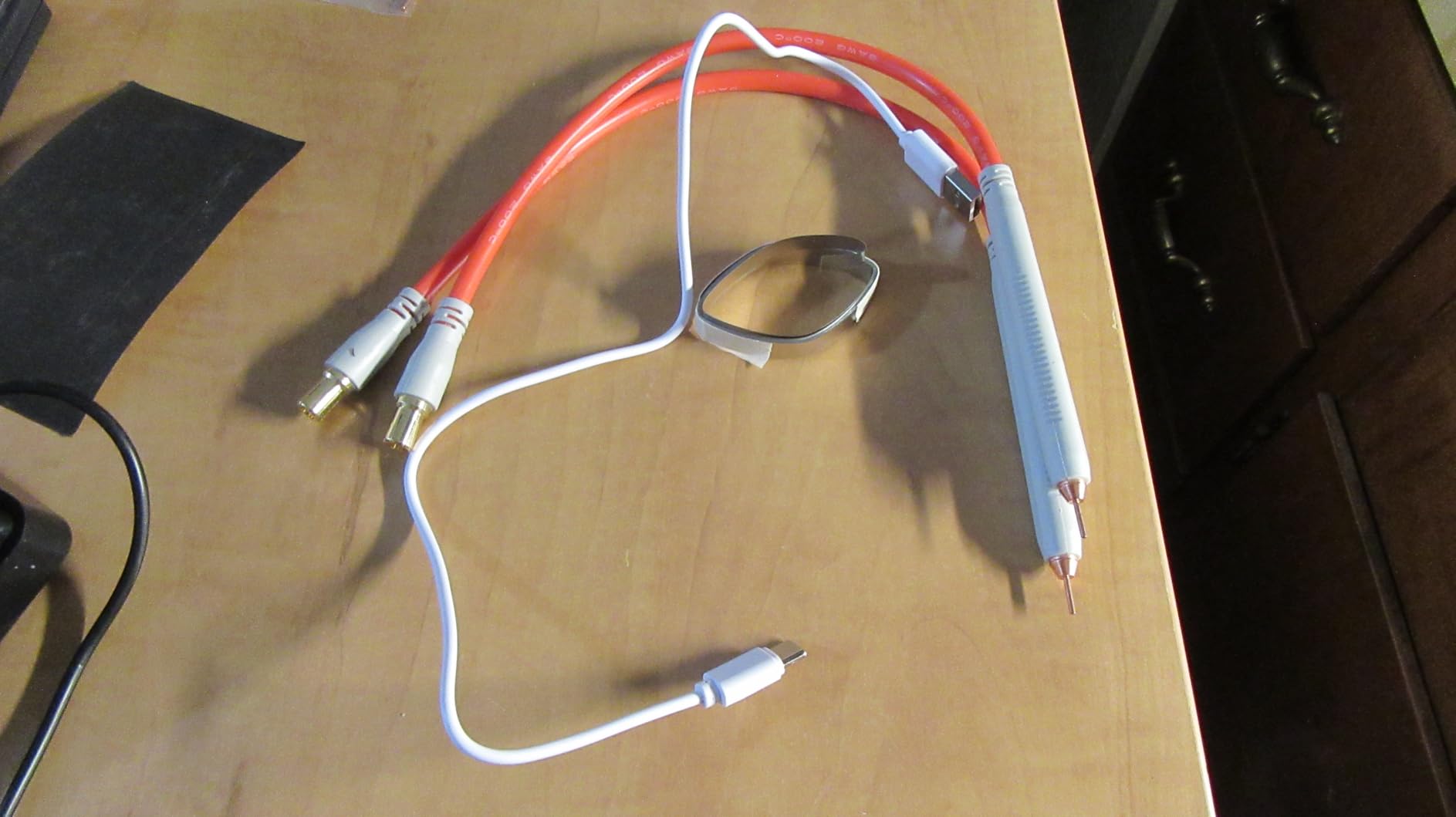
Stated output is 11.5 kW at 1380A maximum current, the highest peak figure in this roundup, and the machine covers 0.1mm to 0.3mm material with single or double pulse output. It handles cylindrical cells, button cells and pouch cells, which makes it the most versatile portable on this list for anyone who also rebuilds laptop packs.
The honest limitation is thermal. Roughly 20 to 25 continuous welds and it enters shutdown, which is fine for a 4S2P pack and painful for a 12S8P build. Lead length is the other one: the cables are short enough that you will move the base unit around the bench more than you expect. If your build habit is one long session, add a cooling pause to your routine rather than lowering the power.
When This Welder Is the Right Choice
It suits anyone moving past single-cell repairs into real 18650 and 21700 pack work on 0.1mm to 0.2mm strip. The 100-level control means you can dial in a new cell format or a different strip thickness without buying another machine, and the foot pedal plus auto trigger covers both batch work and fine single welds.
If you are building a first pack and want room to grow, this is the safest purchase. It will not stretch to 0.3mm plate or aluminum despite the stated range, but nothing at this weight will.
When to Skip It
Skip it if you build large-format packs with thick or layered strip, or if you need to work away from mains power for a whole session. Both of those point to a bench machine. Also skip it if you need a manual that explains the settings, because the booklet does not, and plan on spending an afternoon learning the gear range by feel.
2. Docreate 8000W Handheld Spot Welder – Best Value
8000W Spot Welder,Handheld Spot Welder,Portable Spot Welder Machine DIY Kit,High Power Handheld Spot Welding Machine,with nickel strip and spot welding pen,for 18650 Battery Pack Welding Tools
8000W dual pulse output
9 gear levels from 0 to 800A
0.1-0.3mm nickel sheet
1.9 lb bench unit
Pros
- Foot pedal control is easy for beginners
- Handles 0.1-0.15mm nickel-plated and 0.1mm pure nickel
- Small LCD shows internal voltage
- Tool-free replaceable welding pins
- Compact enough for a small workbench
Cons
- Only 9 coarse power levels
- Little headroom on stacked or thicker nickel
- 2.5 x 1 cm screen is hard to read
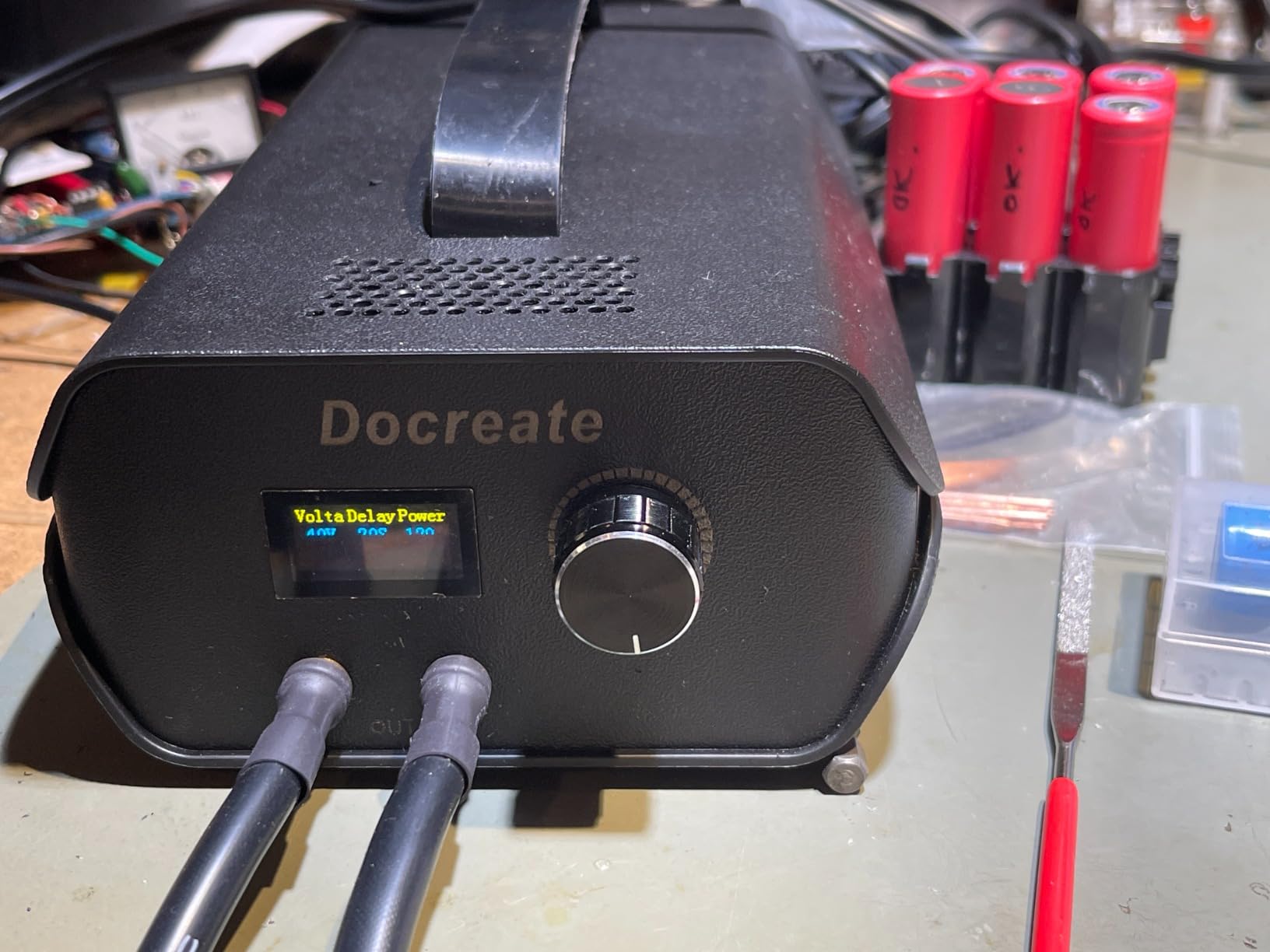
This is the entry point most people should start at. It has been on sale long enough that the failure modes are well known and the parts are still available, and for 0.1mm to 0.15mm nickel-plated strip it does the job without drama. Nine levels sounds crude next to a 100-gear machine, and it is.
The voltage readout on the little LCD is the genuinely useful part. It tells you when the internal battery has dropped too far to hold a consistent weld, and the unit warns you to recharge below 7.3V. That single readout prevents most of the inconsistent-weld complaints people have with budget handhelds.
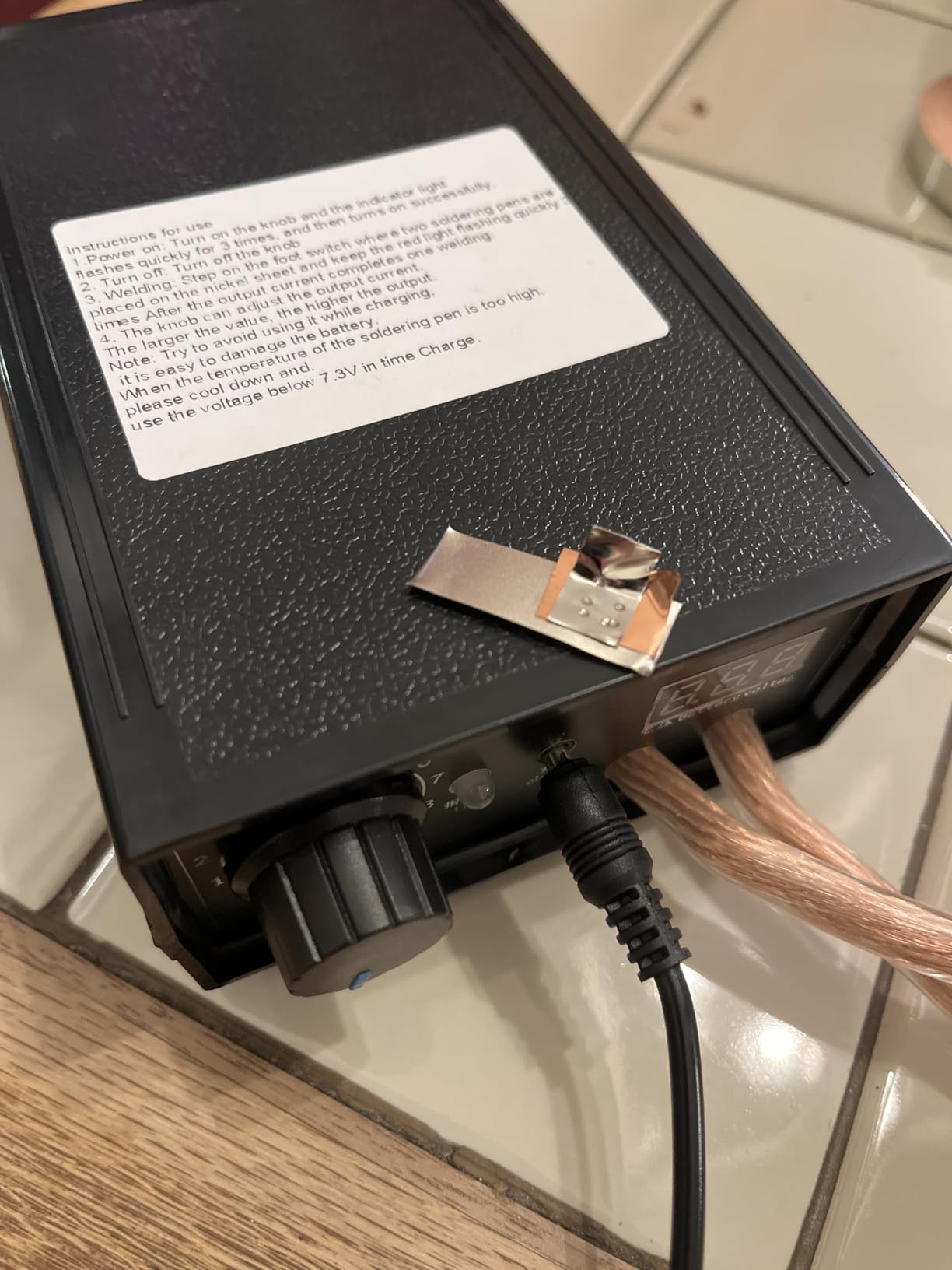
Output is 8000W across a 0 to 800A range with dual pulse, and the pen is a long 350mm with tool-free replaceable pins, so a worn tip costs almost nothing. Unit dimensions are 15 x 9.5 x 6 cm and it weighs 1.9 lb, which fits a small bench without dominating it.
Where it runs out of road is thicker material. Stack two layers of 0.15mm or move to 0.2mm pure nickel and there is not enough current left to fuse cleanly. The 2.5 x 1 cm screen is also too small to read comfortably while you are holding a cell in the other hand.
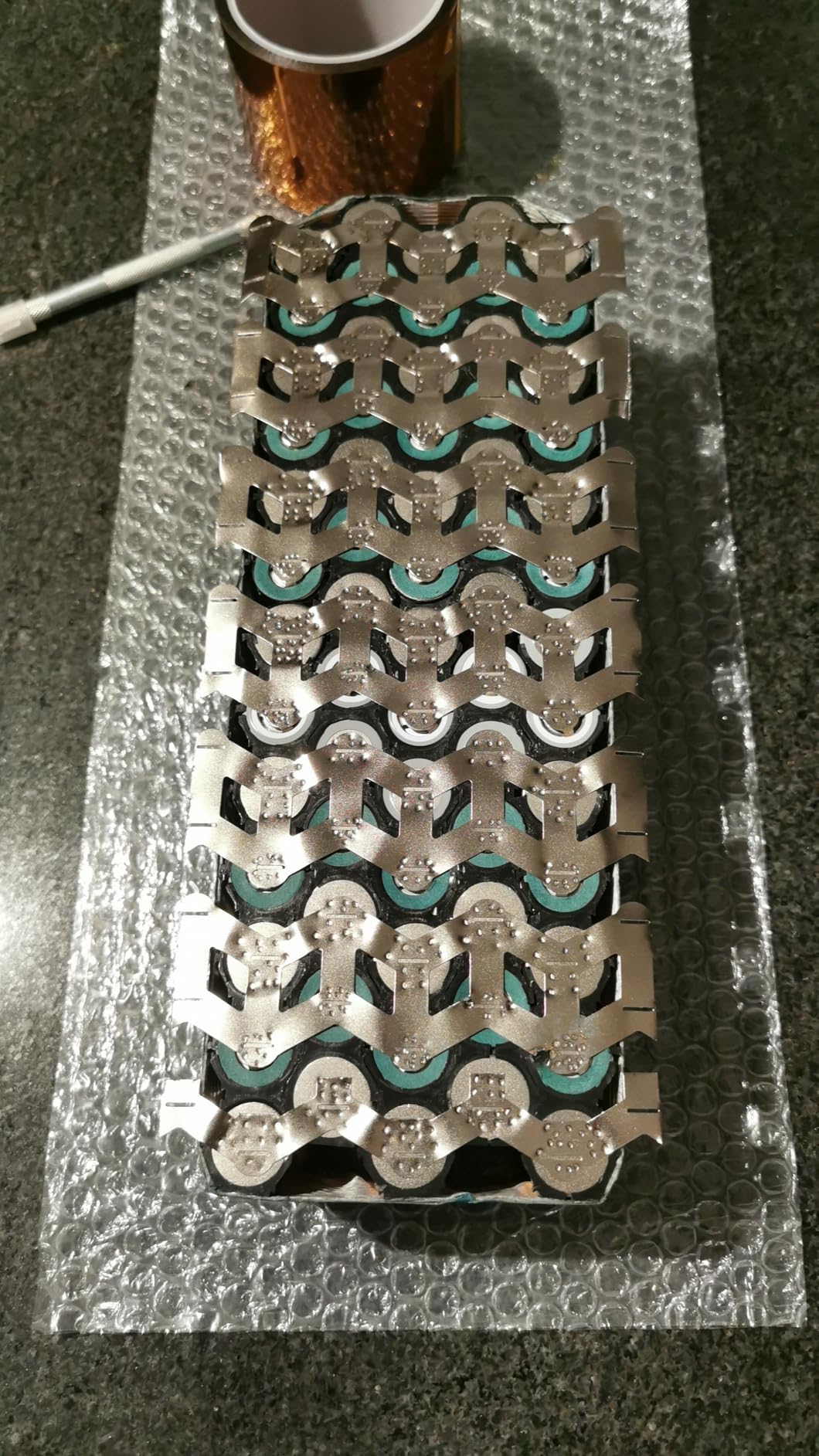
When This Welder Is the Right Choice
Choose it if you are building small 18650 packs on thin strip, rebuilding a cordless tool battery, or replacing individual cells in an existing pack. The foot pedal makes weld timing learnable in a way that a trigger-only machine does not, which matters more than most buyers expect.
It is also the pick if budget discipline matters and you have no plans to work in 21700 or LiFePO4 formats. For that scope, the extra spend on a finer machine buys you nothing.
When to Skip It
Skip it for high-discharge packs with heavy strip, for multi-layer nickel, or if you plan to run hundreds of cells in one session. Nine levels is also a problem if you regularly move between cell formats, because you cannot land between two power settings.
3. SEESII SE302 Cordless 99-Gear Spot Welder – Best Cordless Design
SEESII Battery Spot Welder, Custom Welding Settings, Max 0.15mm Pure Nickel
3360W max output
0.2mm nickel-plated or 0.15mm pure
99 fine adjustment gears
14.4 oz cordless pen
Pros
- Cable-free pen frees both hands for positioning
- 99 gears give far finer control than coarse-knob rivals
- Weld quality holds on hard alloys such as bronze
- Long battery life across many repairs
- Two strip rolls and spare styluses in the box
Cons
- Power button doubles as the menu key and the manual never says so
- No charge status indicator or audible beep
- Electrode tips arrive loose and need tightening with pliers
The defining feature is that there is no cable between the unit and the pen. Most handhelds in this roundup make you hold the body one-handed and clamp the strip with the other, and on small packs that juggling compounds fast. At 14.4 ounces it is also one of the two lightest options here and genuinely pocketable.
Ninety-nine fine adjustment steps on a machine this small is genuinely useful. It holds a weld on hard alloys such as bronze, which tells you the peak current is not just marketing, and owners report getting through many repairs on a single charge.
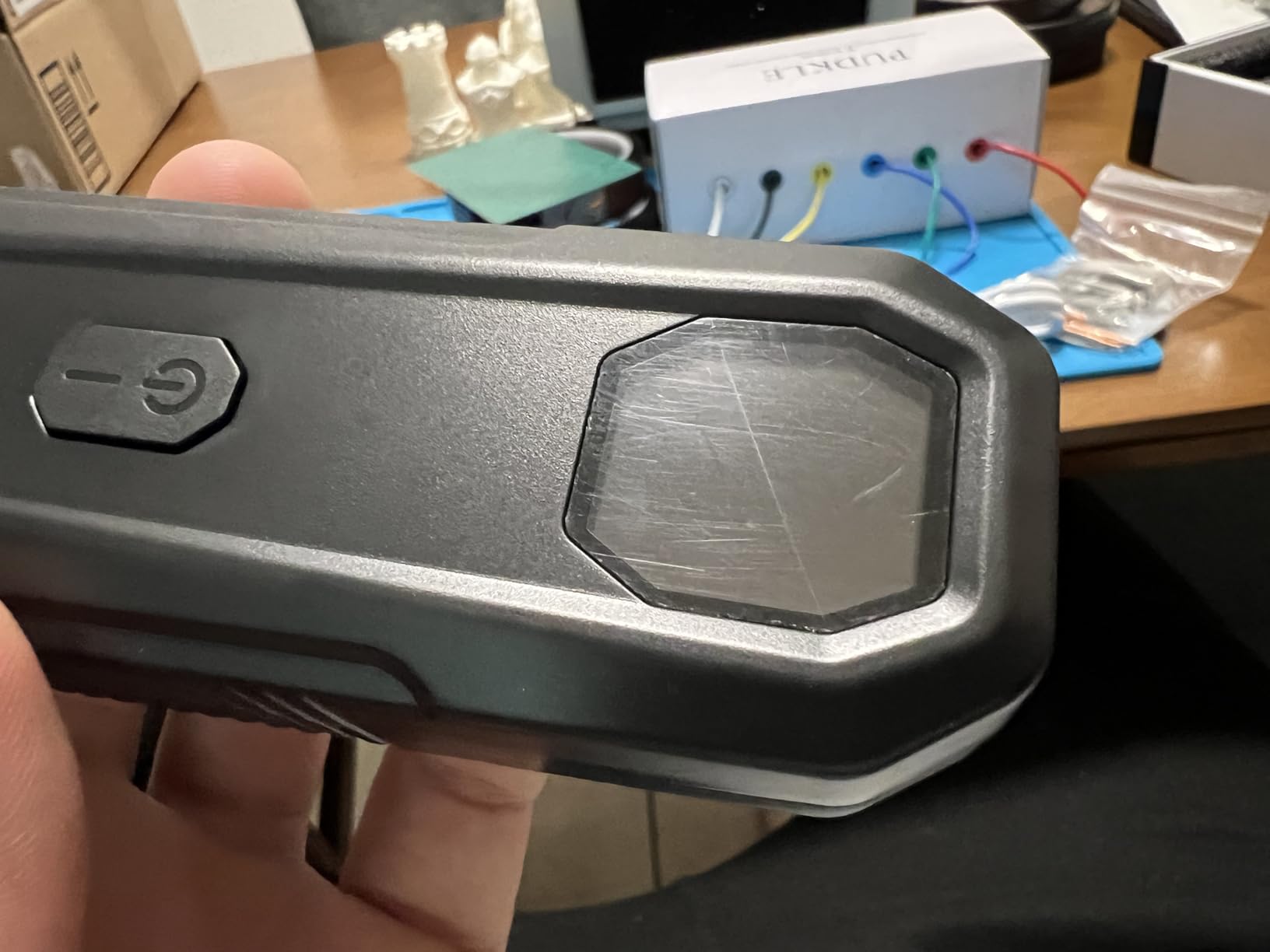
Output tops out at 3360W, and it welds nickel-plated sheet to 0.2mm and pure nickel to 0.15mm. The display shows weld process, device temperature and remaining battery, and both welding pens unscrew so you can change tips rather than replace the whole pen. The box includes two 0.1mm x 8mm nickel strip rolls, two replacement copper styluses, a file, sandpaper and insulating fibre paper.
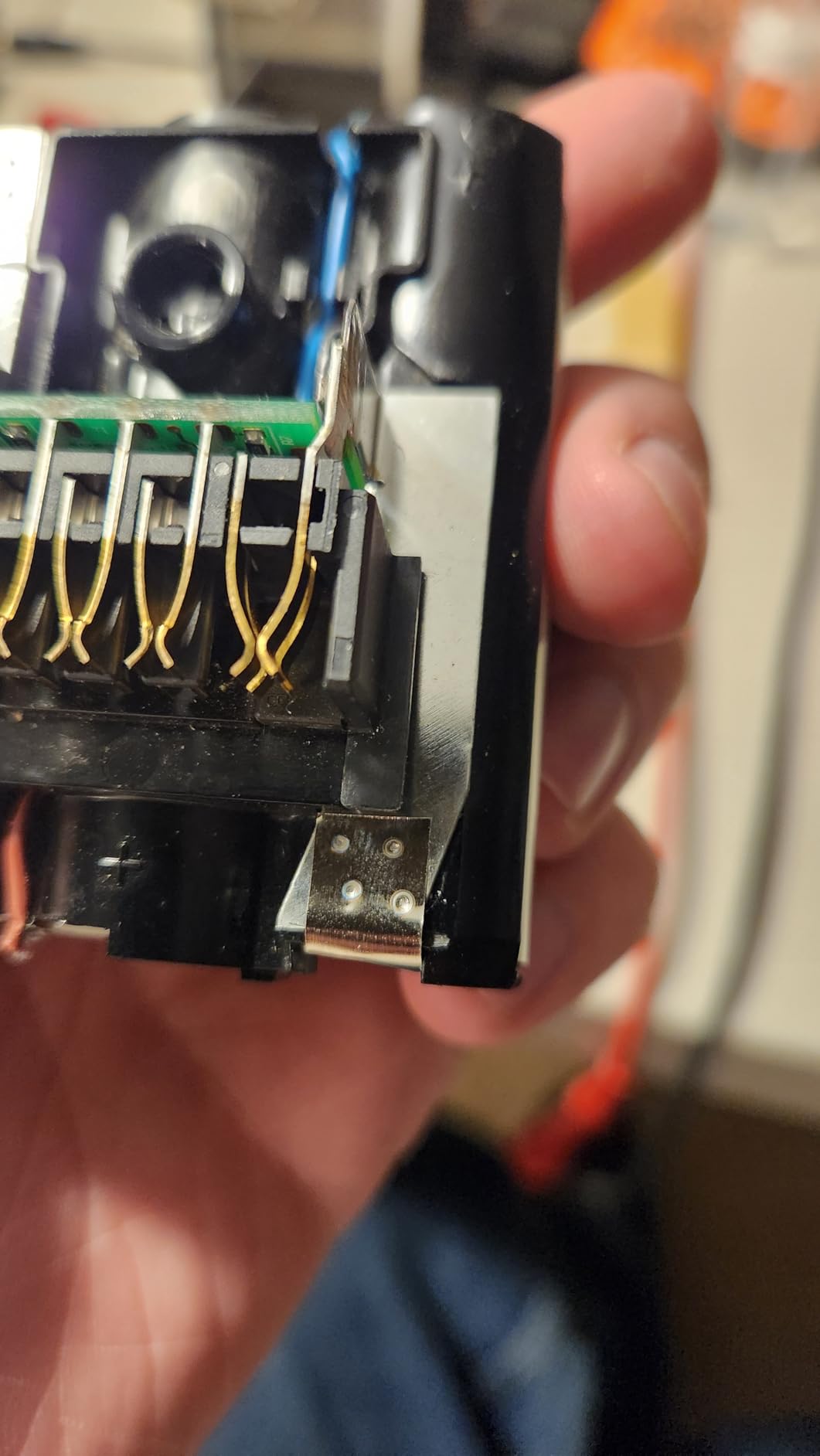
The interface is the weak point and it is a real one. The power button is also the menu navigation key, and nothing in the manual explains that, so most people discover it by accident. There is no beep and no charge-complete indicator, which means you find out about a flat battery by getting a bad weld.
When This Welder Is the Right Choice
It fits field repair, drone packs, and any build where moving the machine around the work is the bottleneck. Because both hands are free, positioning on a small cell tab is far more forgiving, and that is where most cold welds on thin strip actually come from.
It is also a strong choice for people welding reclaimed laptop cells and phone batteries, where the tab is tiny and the geometry is awkward.
When to Skip It
Skip it if you need to push past 0.2mm plated or 0.15mm pure nickel, and skip it if you are sensitive to undocumented interfaces, because the menu behaviour will cost you an evening. One isolated quality report described a punctured internal cell, so inspect the unit on arrival.
4. WESTOBiG FNIRSI Swm-10 Spot Welder – Best Display and Diagnostics
FNRSI Battery Spot Welder, 5000m Portable Handheld Spot Welder Double Pulse 4 Combination Gears Adjustable Spot Welding 0.1MM-0.25MM for Iron/Stainless Steel/Nickel Strip /18650 Battery Pack
Double pulse cleaning and weld
0.1-0.25mm range
4 combination gears
1.23 lb with 1.8 inch color LCD
Pros
- Double pulse cuts spatter and steadies the weld
- Two 5000mAh cells also work as a power bank
- 1.8 inch color LCD shows timing and faults
- Detachable brass pen head keeps costs low
- Light at 1.23 lb
Cons
- Struggles with 0.2mm and stacked 0.15mm strip on 18650
- Boots in Chinese with no clear language instructions
- Needs light rather than heavy tip pressure
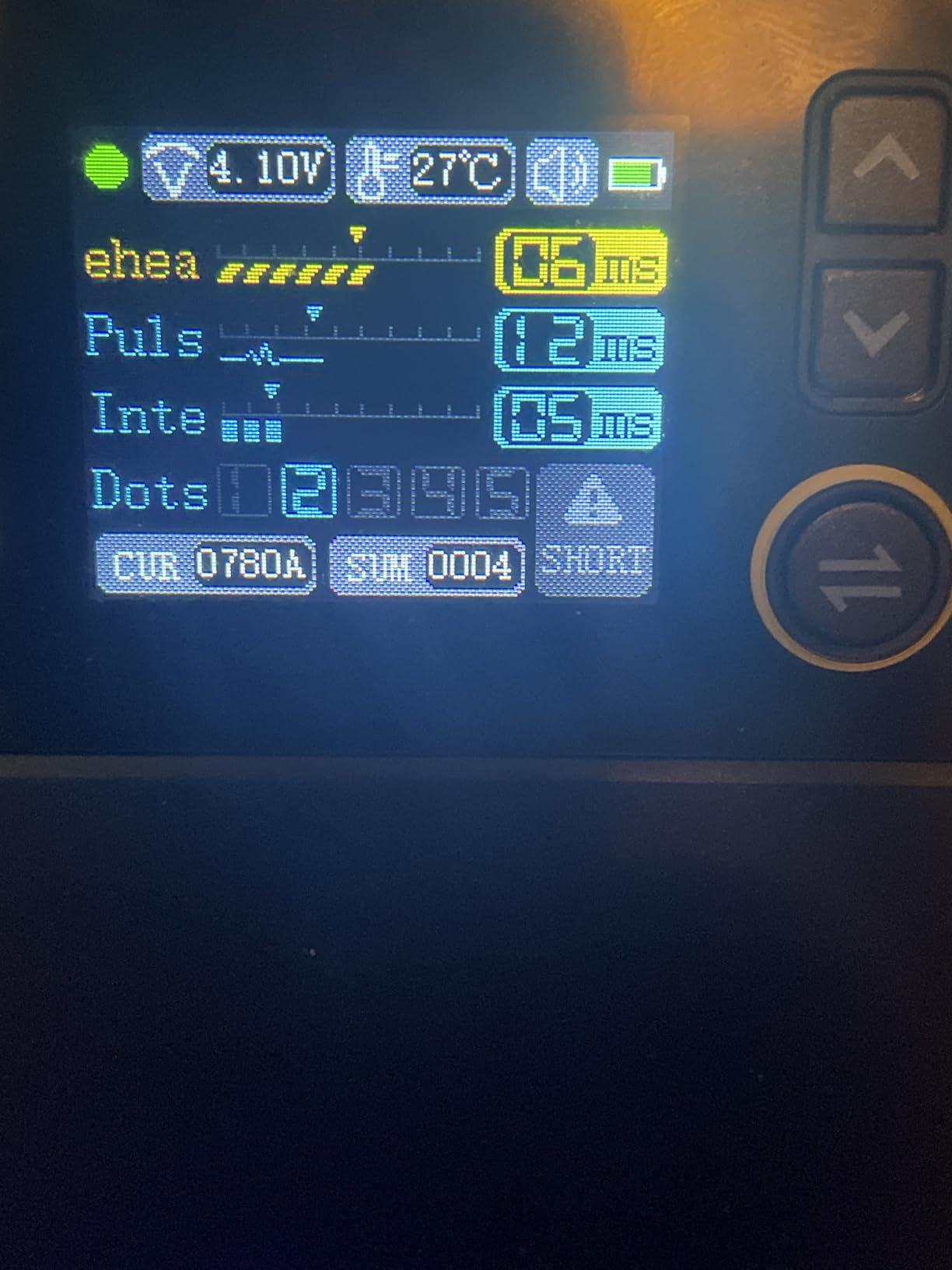
Double pulse is the technical story here: a cleaning pulse burns off the oxide layer before the welding pulse fires, which reduces spatter and makes repeat welds far more consistent. You can see both pulse parameters on the screen, and having preheat, pulse and interval time visible turns dial-in from guesswork into a process.
The 1.8 inch colour LCD is also the only display in the portable group that puts preheat time, pulse time, interval time and fault warnings on the same screen next to voltage and temperature. If you are learning, that visibility is worth more than another twenty gear steps.
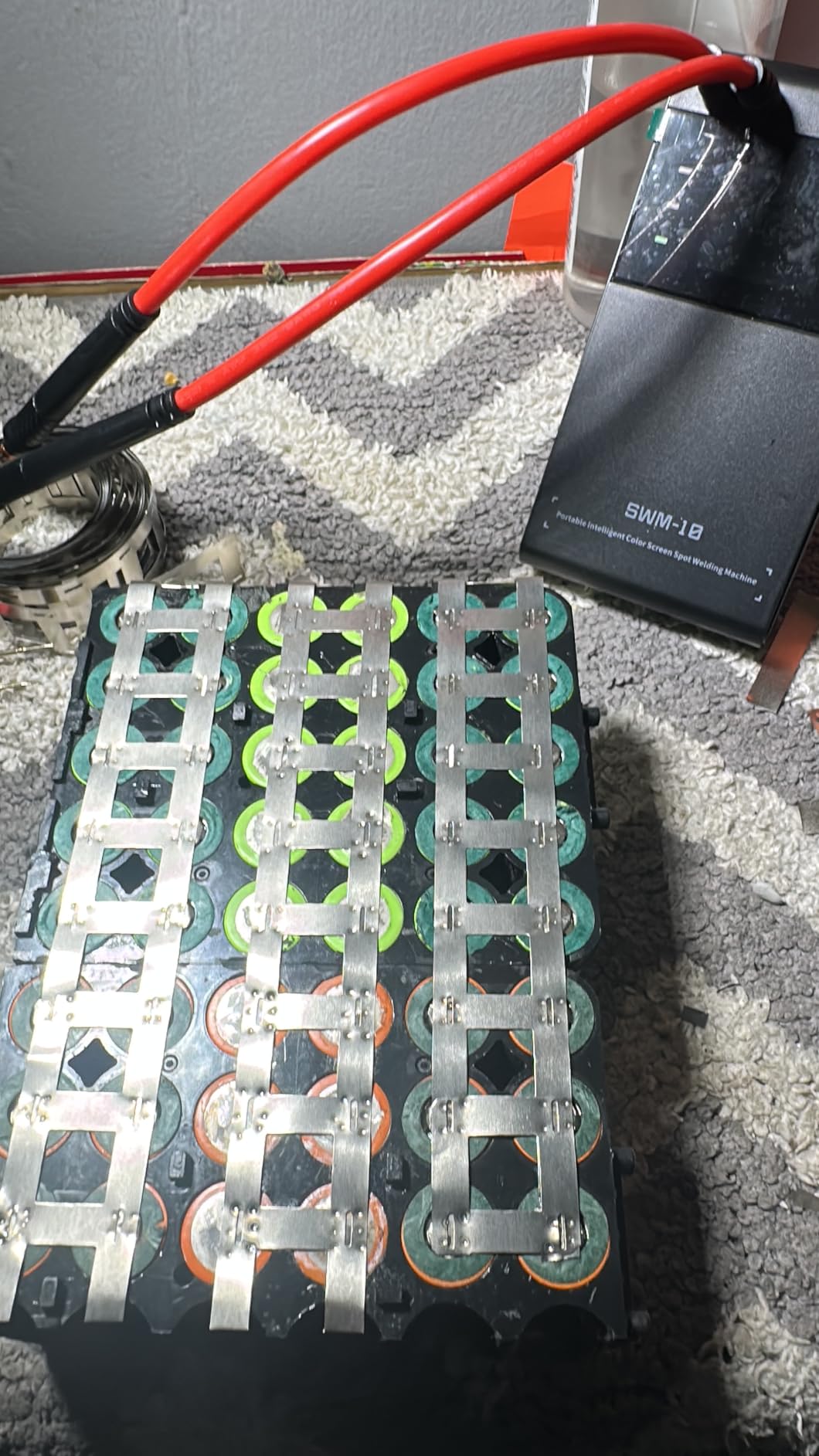
Two 5000mAh A-grade batteries are included and the unit doubles as a power bank, which is genuinely useful on a bench or in a van. It handles 0.1mm to 0.25mm across four combination gear settings, welds nickel, iron, stainless steel and aluminum sheet, and weighs 1.23 lb with a detachable brass pen head.
Outcomes are split, and you should know that before buying. A meaningful minority of owners report it will not strike an arc on 18650 cells or thicker strip regardless of setting. It also needs light pressure on the probe tips, and heavy clamping actually degrades the weld.
When This Welder Is the Right Choice
It works best on thin nickel for small packs, for anyone who welds more than one metal type, and for field use where the power bank function earns its place. The colour display also makes it a good teaching tool if you are building packs with someone else.
For laptop cell reclaim work, where material is thin and geometry is tight, the diagnostic screen helps more than raw power would.
When to Skip It
Skip it if you work in 0.2mm nickel or above, if stacked strip is part of your build, or if you dislike a menu that may boot in Chinese with no instructions. Owners also report that it needs consistent light tip pressure, which some people find fiddly.
5. AWithZ 11000mAh 99-Gear Spot Welder – Longest Runtime
Battery Spot Welder, AWithZ 1.5″ LCD Screen Recyclable 11000mAh Spot Welder, 99 Gears Adjustable Battery Welder, Mini Spot Welder for 18650 Battery (11000mAh)
11000mAh internal battery
99 gears mapped to strip thickness
1.5 inch LCD showing weld count
1.39 lb
Pros
- Largest internal battery in the handheld group
- Documented gear ranges for phone cells and 0.1-0.25mm strip
- Cleaner welds on the first attempt than cheaper units
- 1.5 inch LCD is large and easy to read
- Can charge a phone when the pack is down
Cons
- Pen tips are not replaceable so the whole lead set must go
- Struggles with strip from high-amperage 18650 packs
- Some reports of an internal battery that would not charge
Runtime is the argument for this one, and it is a real argument. An 11000mAh internal pack with a roughly 3.5 hour charge is the largest capacity in the portable group, which is exactly the failure point forum builders complain about: a 12S4P build needs 48 cells and most budget handhelds cannot finish that on one charge.
The gear documentation is unusually honest. AWithZ maps gear 1.0 to 3.9 for phone batteries, 4.0 to 7.0 for 0.1 to 0.15mm strip, and 7.1 to 9.9 for 0.15 to 0.25mm, so you are not starting blind. The 1.5 inch LCD shows remaining battery, temperature, gear, trigger time and weld count.
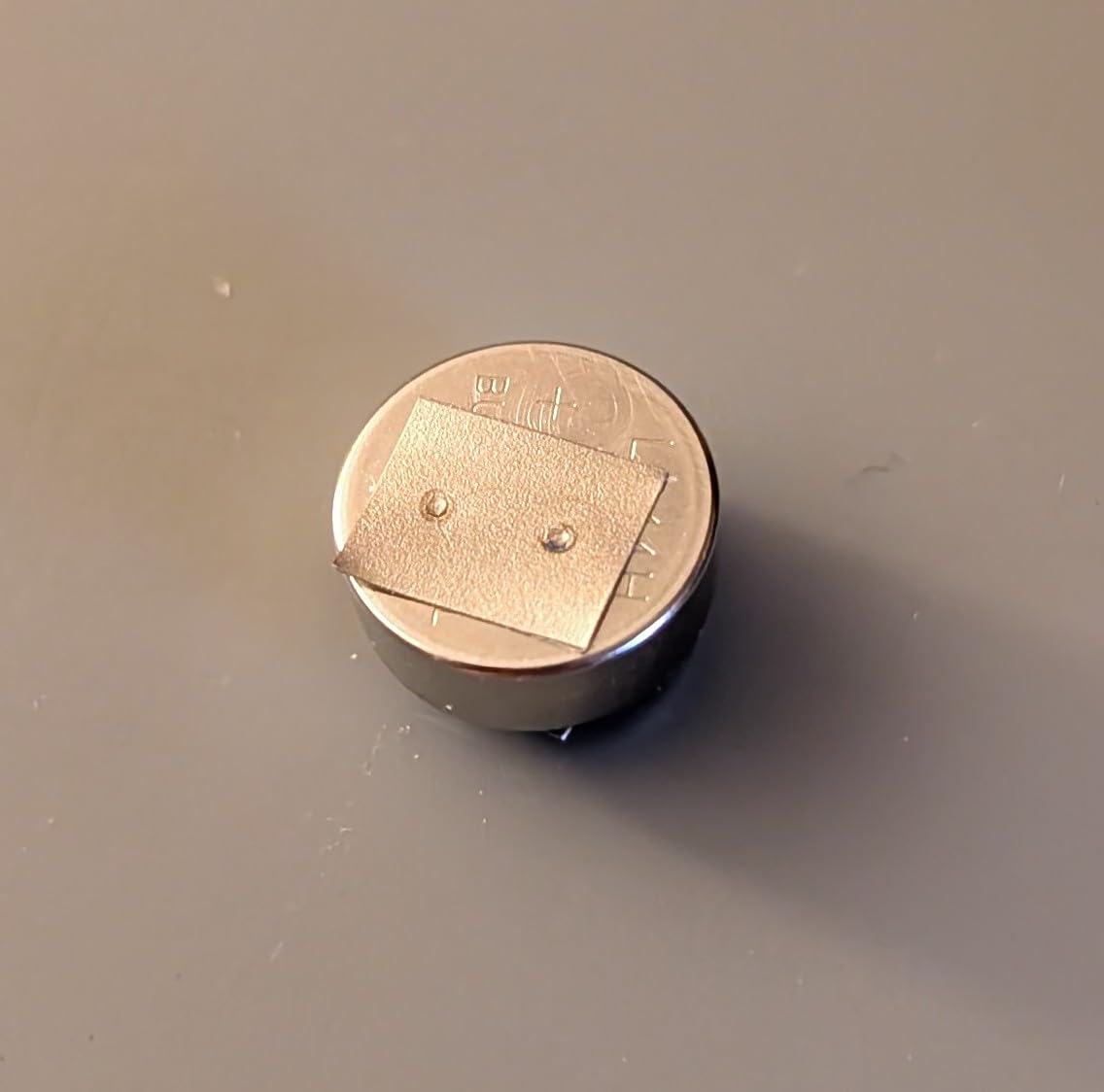
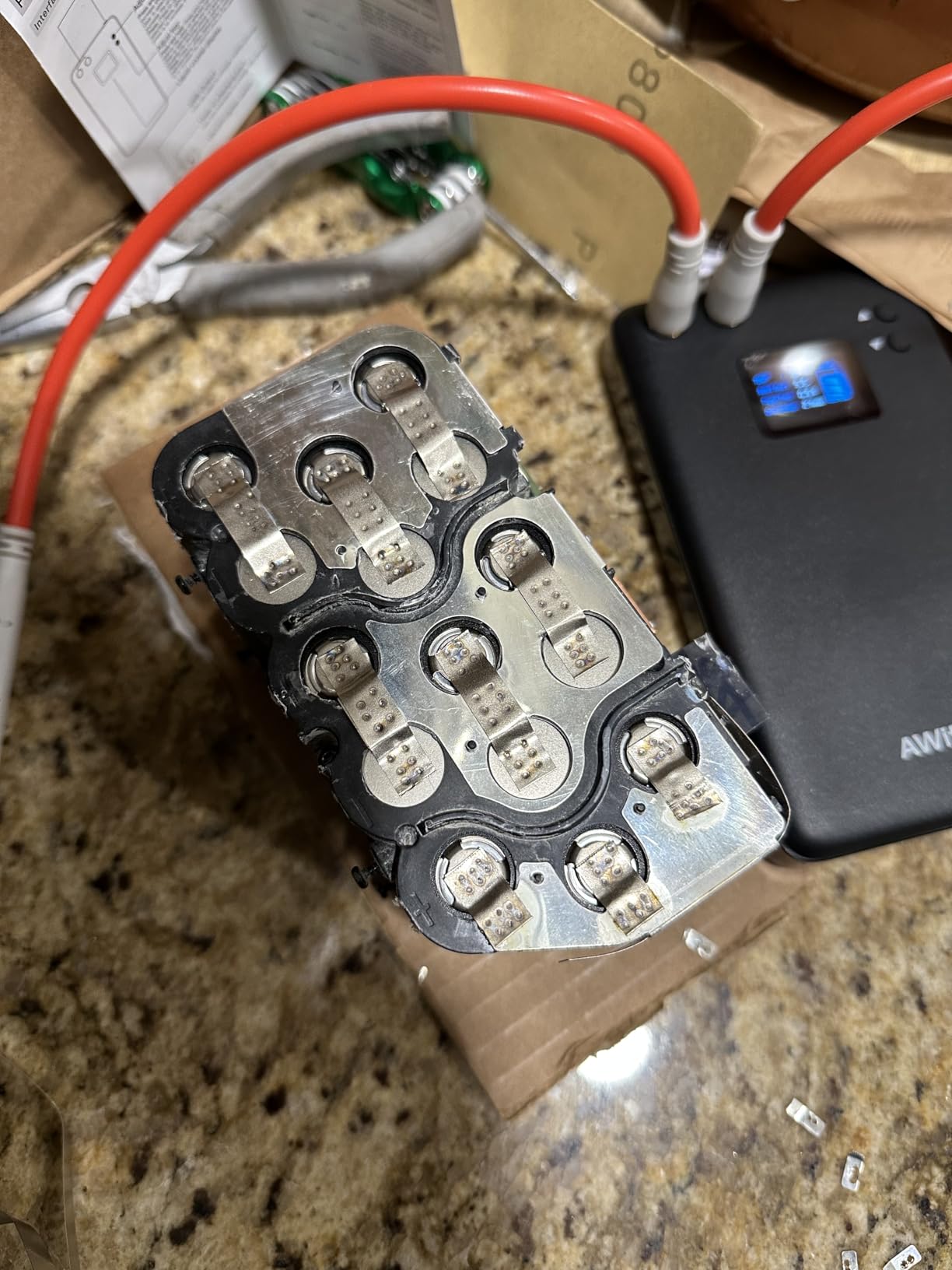
On thin nickel the welds come together on the first attempt far more often than with cheaper units, and a gear setting around 2.5 produces welds that resist tearing for casual repair work. It supports two consecutive spot welds for thicker material, and at 1.39 lb it stays portable.
The consumable design is the flaw. Pen tips are not user-replaceable, so when the tip wears you replace the entire lead set rather than a few cents of copper. It also struggles with the heavier strip found on high-amperage 18650 packs, and a small number of owners report an internal battery that refused to charge.
When This Welder Is the Right Choice
Pick it if you build large packs in one sitting, or if you weld frequently enough that recharge interruptions add up. The documented gear ranges also make it the friendliest of the high-capacity handhelds for anyone moving between phone cells and 18650 work.
It handles tool battery repair, e-bike pack building and light metal hook work, which covers most of what a hobby builder does in a year.
When to Skip It
Skip it if you are welding strip from high-discharge cells, since that is the documented limit, and skip it if replaceable tips matter to your running costs. Anyone buying it for commercial output should also weigh the small number of battery quality complaints against alternatives with a warranty.
6. SEESII SE-223 10KW Capacitor Spot Welder – Best for Thick Nickel
SEESII 10KW Capacitive Battery Spot Welder: 12V Power Supply Available, Spot Welding Machine with Low Internal Resistance, Overvoltage Protection, for Battery Packs DIY & Repair
10KW supercapacitor output
0.3mm plated or 0.2mm pure nickel
250 fine gear levels
6.69 lb metal housing
Pros
- Capacitor output far stronger than any handheld battery unit
- Single pulse on 0.3mm plated and 0.2mm pure nickel
- 250 levels give very fine control over weld energy
- Metal housing outlasts plastic bodies
- Low-voltage architecture reduces shock risk
Cons
- About one in eight reviewers leaves a 1 star rating
- Heaviest option here at 6.69 lb so it is a bench tool
- Capacitor recharge time interrupts long runs
This is the point where the article changes category. A supercapacitor bank dumps a very short, very high current pulse rather than drawing sustained power from a battery, which is why it fuses 0.3mm nickel-plated sheet in a single pulse while a portable welder of similar marketing wattage struggles at 0.2mm.
It also runs from 12V and higher, so it can be taken to a vehicle or a remote site. The 250 fine-tuning gear levels are more than any portable in this roundup offers, and the integrated metal housing is a genuine step up from the plastic bodies on budget units.
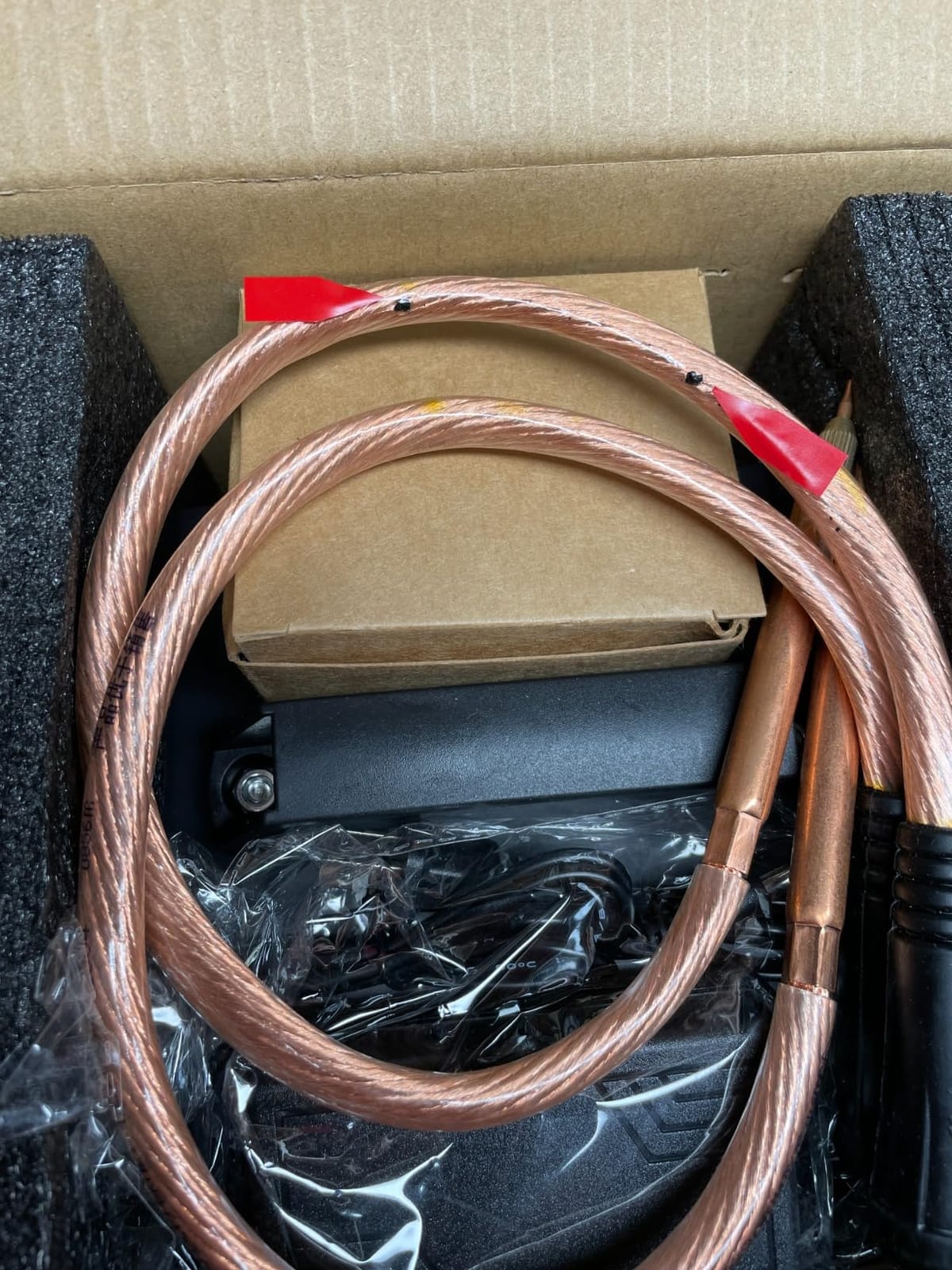
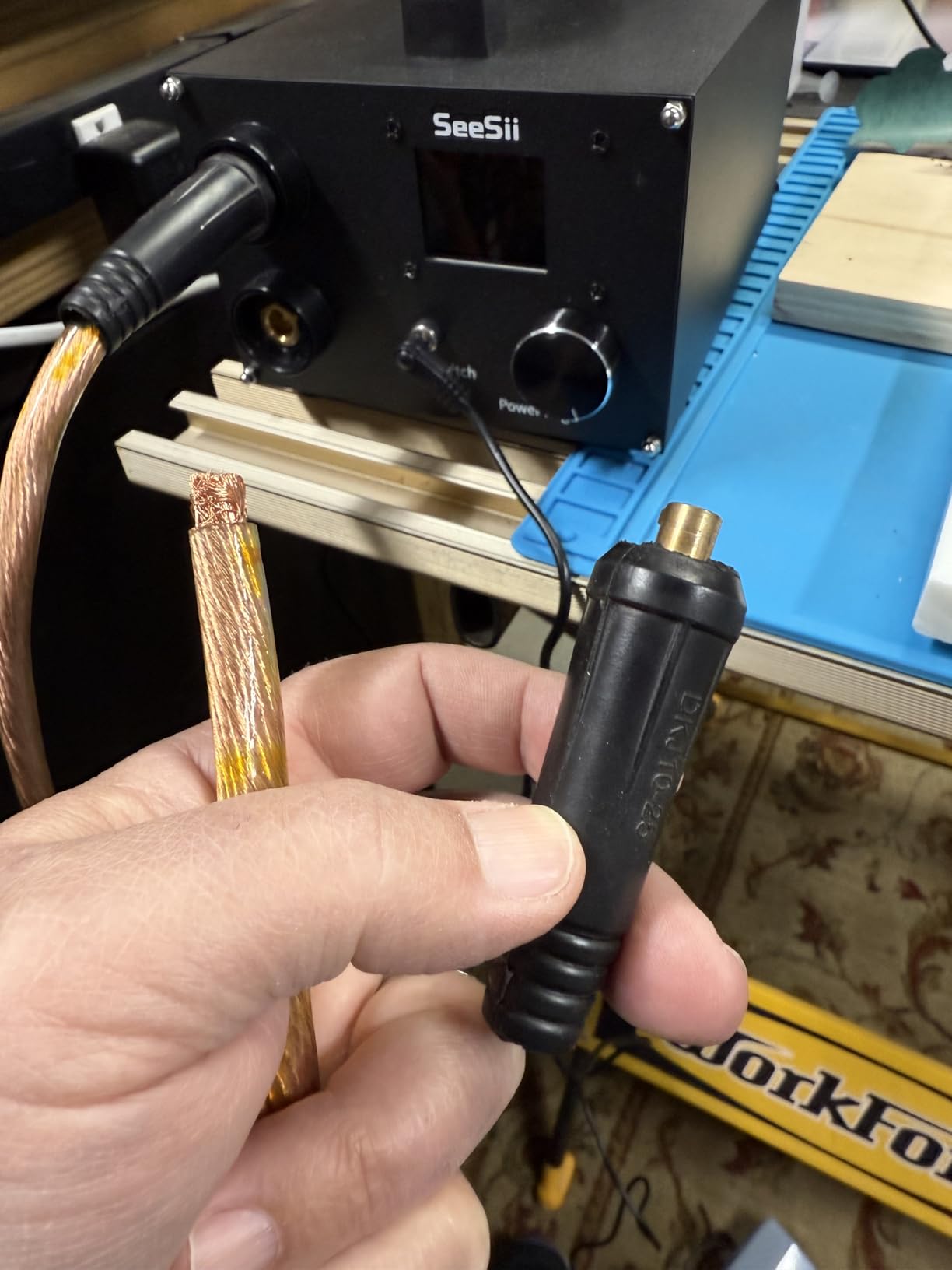
Output is 10KW from the supercapacitor array with low internal resistance, covering 0.3mm nickel-plated, 0.2mm pure nickel and 0.2mm low-carbon steel. Both automatic continuous welding and foot pedal modes are supported, and a power balance circuit with a smart cooling fan handles thermal management. Aerospace aluminium alloy housing, 7.87 inch cube, 6.69 lb.
The rating carries a sharper downside tail than most of this list, with roughly 12 percent of ratings at one star. The complaints cluster around capacitor charge time during long runs, heat in enclosed spaces, and durability. For a bench tool, a one-minute capacitor drain means you are always waiting on the recharge between bursts.
When This Welder Is the Right Choice
Choose it when 0.3mm plated or 0.2mm pure nickel is your normal material, or when you are moving up from a portable and want visibly stronger welds immediately. The low-voltage architecture also makes it the safer bench option for daily use in a shared workshop.
It suits anyone who welds both nickel and low-carbon steel, and it works from 12V for vehicle-side repair.
When to Skip It
Skip it if you need portability, because 6.69 lb and a mains-style footprint end that immediately. It is also the wrong choice if you are sensitive to a one-star review tail and want a machine with a narrower failure spread, so read the negative reviews before committing.
7. AWithZ UF20B 10.5KW Ultracapacitor Welder – Best Bench Machine
Capacitor Battery Spot Welder, AWithZ UF20B 10.5KW Spot Welder, 3-in-1 Auto & Manual & Foot Pedal Three Modes Welding Equipment for 18650/LiFePO4 Lithium Battery Pack Building with Foot Pedal
10.5KW ultracapacitor pulse power
0.2mm plated or 0.4mm combined
99 gears
three trigger modes
Pros
- Top rated in this roundup at 4.5 stars from 59 reviews
- Welds 0.4mm combined nickel-plated material
- Automatic manual and foot pedal modes in one machine
- About 5 minute recharge from a 15A adapter
- Anodized flame retardant aluminum shell
Cons
- Must stay connected to wall power while welding
- Bulky at 4.02 lb compared with handheld units
- Longer pen leads reduce output current
This is the highest rated machine in the roundup, with 71 percent of reviews at five stars and about 4 percent at one star. That distribution matters more than the average, because it means the strong weld performance is a consistent experience rather than a lucky subset.
The three trigger modes are the feature we use most. Automatic for batch work, a manual button for single fine welds, and the foot pedal for control while both hands are on the pack. The included 2m foot pedal cable means you can position the machine away from your work.
Built-in ultracapacitors deliver up to 10.5KW of pulse power and handle 18650, 14500, 21700 and LiFePO4 cells. It welds 0.2mm nickel-plated, plus 0.2mm butt-welded together for 0.4mm combined material, across 99 adjustable gears. The 100-240V input with a 15A adapter reaches working readiness in about five minutes.
There is no battery here, so it is a bench machine by definition. The capacitor drains within a minute or two of welding, and the rounded anodized aluminium shell is described as flame retardant and scratch resistant. At 4.02 lb it is smaller than the SE-223 but not portable in any real sense.
When This Welder Is the Right Choice
It is the strongest pick for LiFePO4 pack building, where the chemistry tolerates high-current work but the strips are often thicker. It also handles 21700 and industrial cells, and the 0.4mm combined capability covers bus bar work that portables cannot reach.
For anyone producing packs in small batches, the combination of rating consistency, three trigger modes and a five minute recharge is the most production-like behaviour in this roundup.
When to Skip It
Skip it if you weld away from an outlet, and skip it if your builds are small and infrequent, because a capacitor machine for two 4S2P packs is a poor use of the money. Pen lead length also affects output current, so use the included 40cm lead rather than extending it.
8. Docreate 3000F Farad Capacitor Spot Welder – Best for Tool Pack Rebuilds
Spot Welder, Docreate Farad Capacitor Portable Mini Welder Spot 3000F with LCD Screen, 120 Levels Adjust Spot Welding Machine 18650 Battery Energy Storage, Nickel Strip Support 0.1-0.3mm
3000F farad capacitor storage
0.1-0.3mm nickel strip
120 output power gears
4.51 lb
Pros
- Capacitor design holds a usable weld on 0.2mm nickel
- 120 gears give more resolution than 9-level handhelds
- Setup screen removes much of the guesswork
- Reliable for 18V tool pack rebuilds
- One year warranty with 24/7 support
Cons
- Lowest average rating in this roundup at 3.9 stars
- Needs about 20 minutes for capacitors to reach full charge
- Overheats after roughly 100 spot welds
- Not suitable for multi-layer nickel
Reviews here are genuinely split, and the split is by application rather than by luck. Long-term owners rebuilding 18V tool packs report reliable, strong welds on 0.2mm strip and on copper and nickel-plated sandwiches, and they tend to have moved up from cheaper battery-powered mini welders and not looked back.
Against that, a meaningful share report inconsistent output and overheating. We are including it because the tool rebuild use case is well served, and because leaving it out would misrepresent the class. It is not a pick for high-discharge pack work.
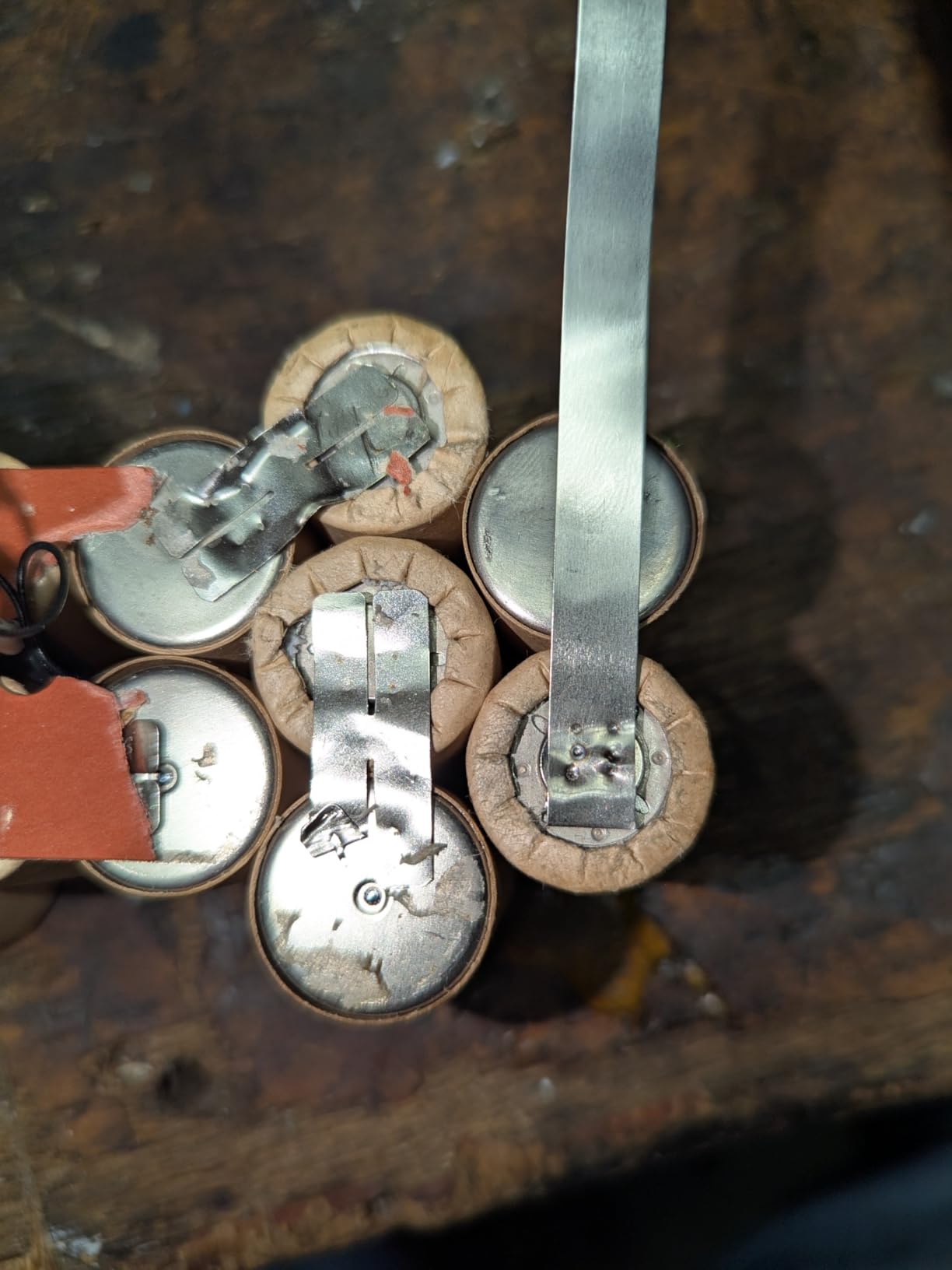
Storage is a 3000F farad capacitor with 120 adjustable output gears, supported from 0.1mm to 0.3mm nickel strip. The LCD or OLED shows capacitor and voltage parameters, a microcontroller drives the MOS output with board temperature monitoring, and there is a memory function plus five minute auto power-off. Four detachable welding needles are included.
The 3.9 average is the lowest in this roundup with about 11 percent of ratings at one star, and the operational reason is the capacitor itself. It needs roughly 20 minutes to reach full charge before first use, which is a real waiting period on a bench you use intermittently. Indicator LEDs also stay lit after use, so it should not be stored immediately.
When This Welder Is the Right Choice
It fits rebuilding 18V cordless tool packs, especially where cells are wrapped in copper and nickel-plated sandwiches. The 120-gear resolution and the memory function make repeat jobs on identical packs faster once you have dialled in a setting.
It is also the only machine here carrying a stated one year warranty with 24/7 support, which has real value if you are new to resistance welding.
When to Skip It
Skip it for multi-layer nickel, high-discharge e-bike builds, and any workflow where a 20 minute capacitor charge is a dealbreaker. At 3.9 stars it also has the widest rating spread of the capacitor units here, so buy it with the return policy in mind.
9. Awgem SH2 99-Gear Cordless Pen Welder – Best for Learning
Battery Spot Welder, Awgem Battery Welder 99 Gear Handheld Spot Welder with LCD Screen Auto/Humanized Manual Modes, Portable Spot Welding Machine for Welding Nickel Strips and Iron
Integrated cable-free pen
99 adjustable gear levels
0.1-0.2mm nickel-plated
8.4 oz pocketable body
Pros
- Truly one-handed cable-free design speeds up small pack work
- 99 gears and a thumb button give real control for the size
- Weighs only 8.4 oz and pockets easily
- Replaceable needles keep consumable cost low
- Complete accessory kit in the box
Cons
- Only handles 0.10-0.20mm nickel-plated strip
- Will not weld thicker factory tabs onto a cell
- Cannot penetrate two layers of strip
- Instructions offer little help
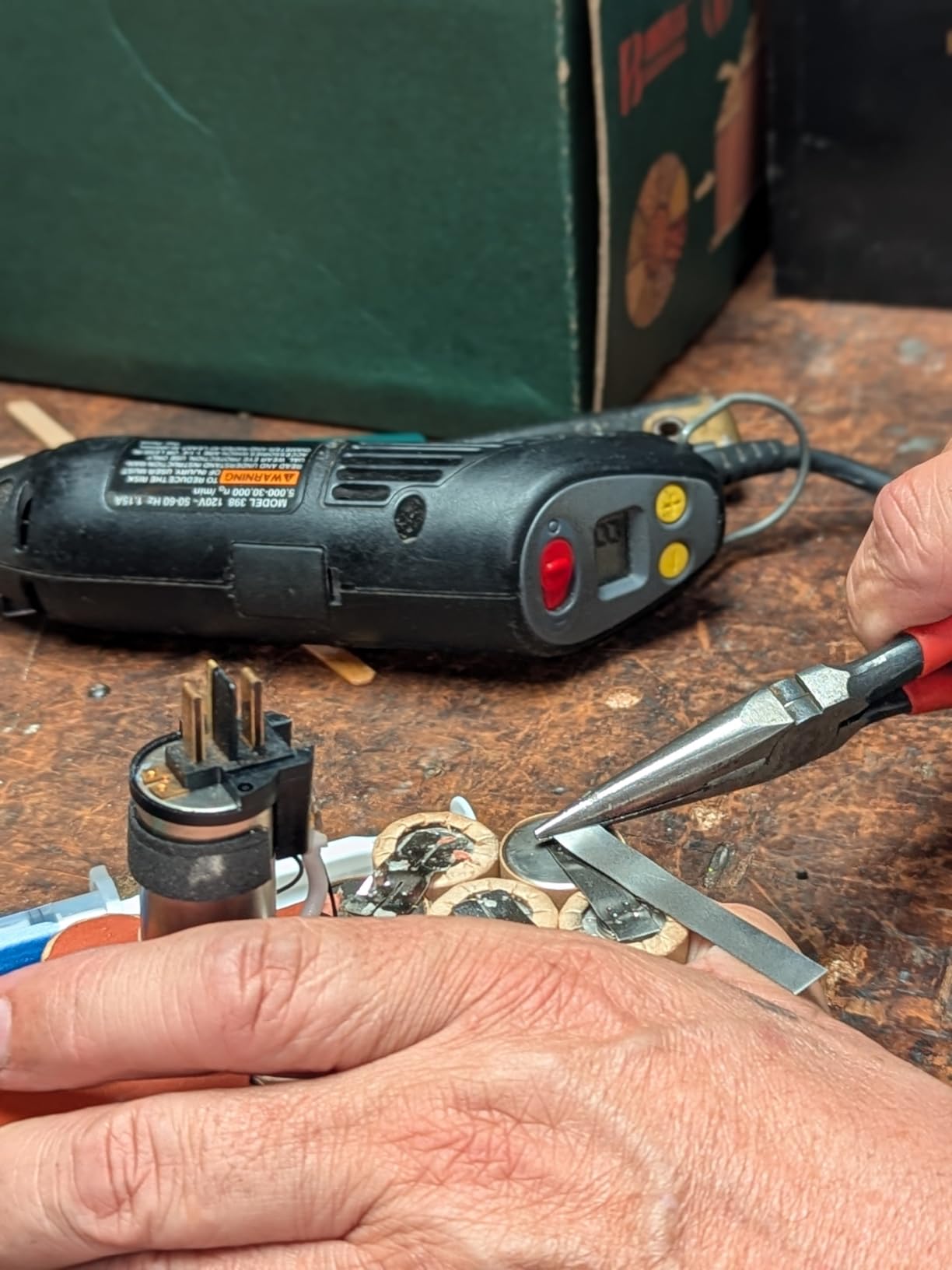
The lightest machine in this roundup at 8.4 ounces, and the integrated pen means there is nothing to manage. For a first pack or for anyone learning the technique, the one-handed format removes the single most common source of frustration: trying to hold a strip, a cell and a trigger at the same time.
Automatic mode is tuned for phone and Bluetooth cell sheet, and manual mode gives you better control on small packs. Our advice to beginners is to use manual from the start; automatic is where cold welds come from.
Ninety-nine adjustable gear levels with an LCD showing preheat time, trigger time and temperature in real time, supporting 0.1mm to 0.2mm nickel-plated sheet. Safety protection is sensible for a machine this small, with a red alarm below 3.2V cell voltage and a blue warning plus forced cut at 65C or above. Two pairs of welding needles, 2m of nickel-plated sheet, sandpaper and a cable are included.
Power is the limitation, and it is not subtle. It will not weld thicker factory battery tabs directly onto a cell and it cannot penetrate two layers of strip. Several users worked around that by welding thin strip to thin strip first, which works but doubles your weld count.
When This Welder Is the Right Choice
It is the right first machine for thin nickel-plated strip and small packs, and along with the Kerpu CP02 it is one of two here you can genuinely carry everywhere. The replaceable needles mean the consumable cost over a year stays close to nothing.
It also works well for occasional repair work, phone and Bluetooth cell sheet, and any bench where weight and size are the binding constraints.
When to Skip It
Skip it if your strip is 0.2mm or thicker, if you build packs with layered nickel, or if you intend to weld factory tabs directly. The instructions are of little help, so budget an afternoon to learn the power level and angle by feel.
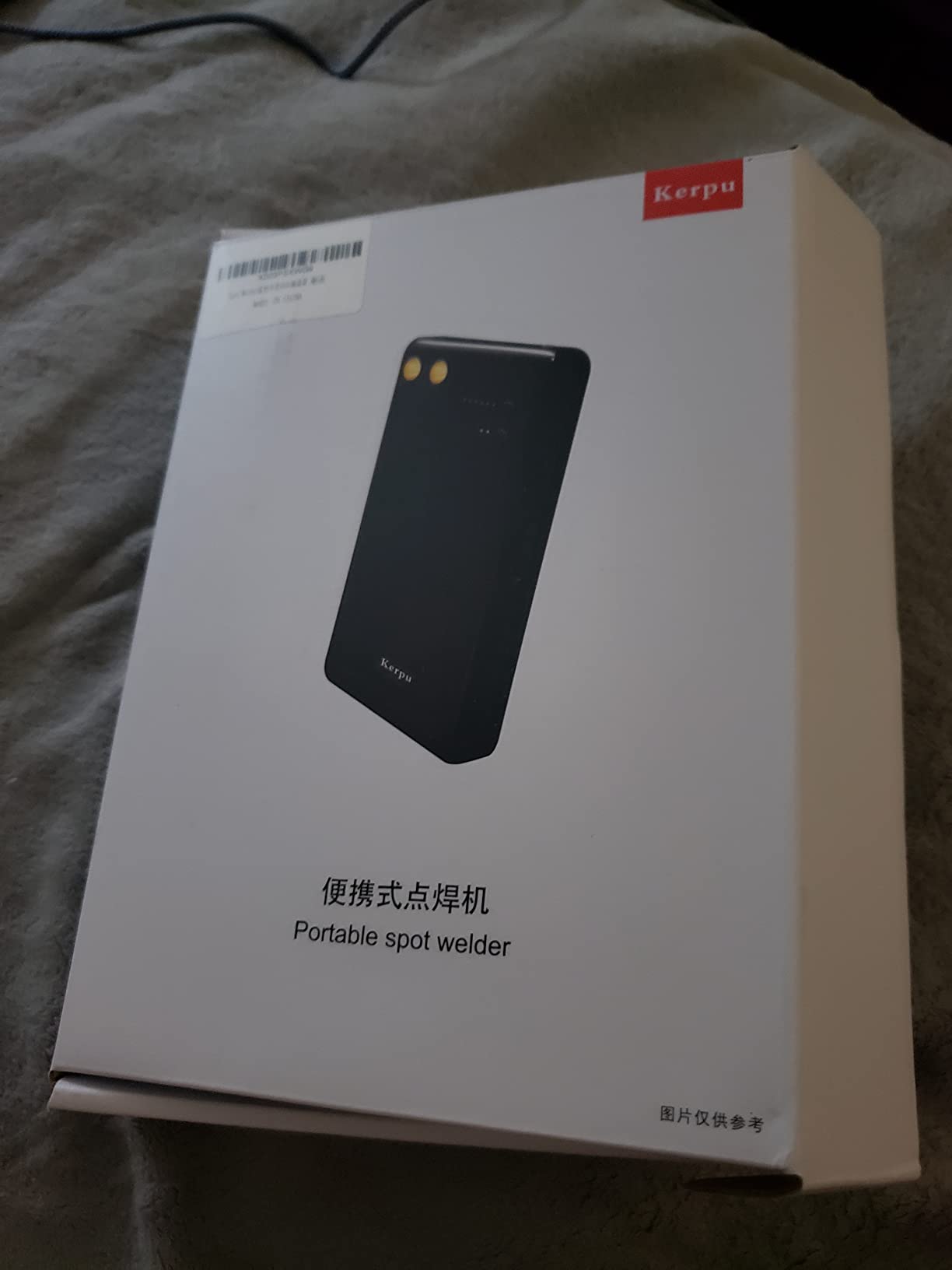
10. Kerpu CP02 199-Gear Pocket Spot Welder – Best for Fine Control
Kerpu Battery Spot Welder, 2” LCD Screen 5000mAh 18650 Spot Welder Pocket Size Upgraded Enhanced 199 Gears Adjustable Portable Mini Spot Welder with Nickel Sheet For Making Battery Packs
199 adjustable gear levels
0.1-0.2mm nickel foil
5000mAh built-in cell
2 inch LED display
Pros
- 199 gears give the finest power resolution in the portable group
- 2 inch display is the largest screen in this category
- Anodized aluminum body resists drops and fire
- Roughly half the volume of competing portables
- Short circuit and overcharge detection built in
Cons
- Heaviest 1-star share here at about 14 percent
- Weld quality drops when the battery falls below half charge
- Nickel foil above 0.2mm is out of spec
- Listing copy mixes up CP02 and CP01
The 199-step control is the reason to consider this one. It is the finest power resolution in the portable group here, and on 0.1mm foil that granularity is the difference between a consistent run of good welds and a lot of adjustment. The 2 inch LED is also the largest display in this category and shows gear, charging status and battery level together.
Construction is a step up as well. The anodized aluminium alloy body is described as fire-resistant and drop-resistant, which is reassuring when you are working next to lithium cells. At 1.32 lb it is roughly half the volume of competing portables.
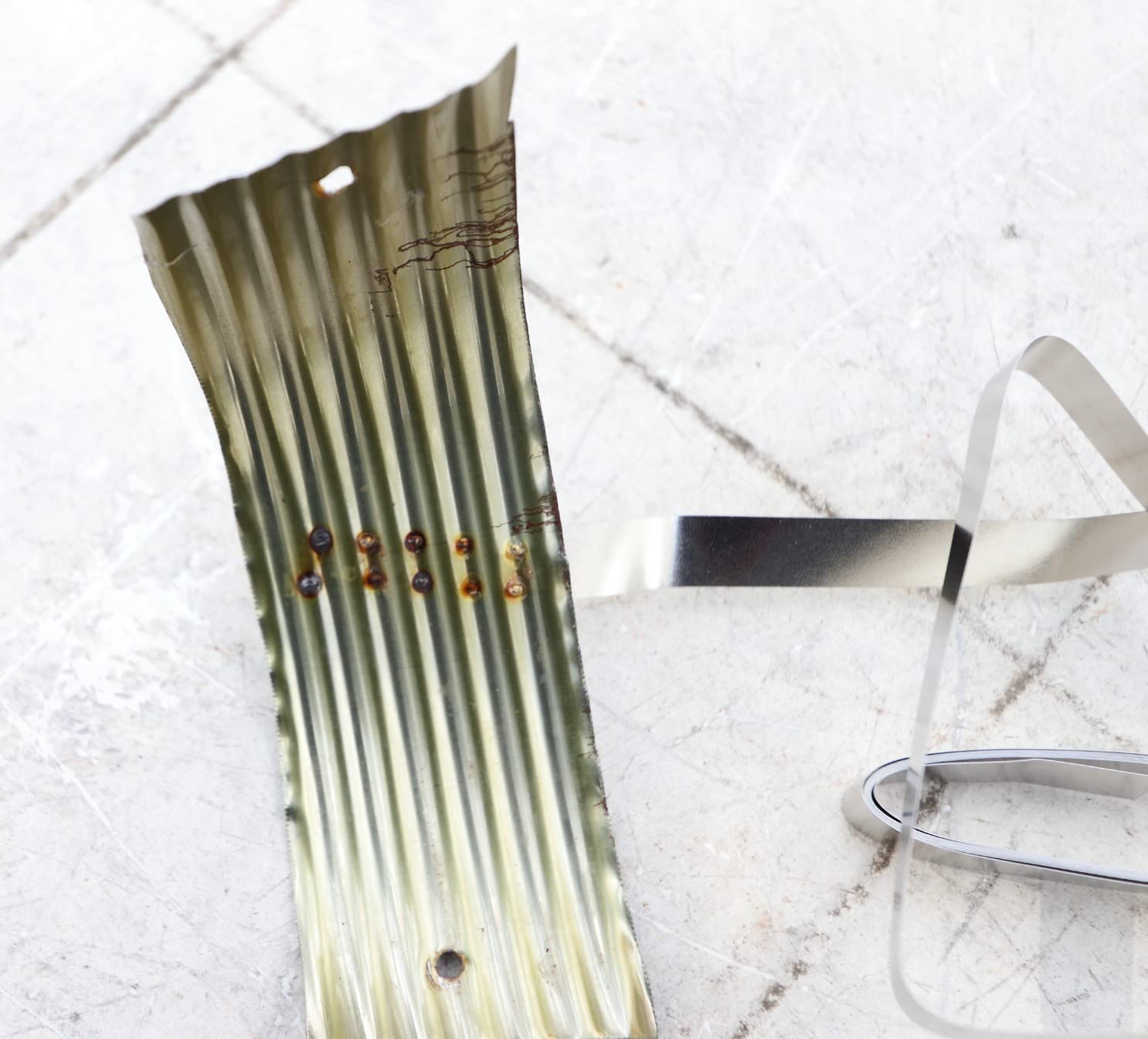
A 5000mAh built-in rechargeable battery powers 199 gear levels, and the unit welds iron, steel and stainless sheet under 0.2mm. Nickel strip above 0.2mm is not recommended. Protection covers overcharge, temperature, load detection and short circuit detection, and operation pauses above 60C to protect the cell. The box includes 2m of 0.1mm nickel-plated foil, two pens, a metal file and a Type-C cable.
The 4.0 average is the second lowest here, with about 14 percent of ratings at one star, the highest negative share in the set. The most practical complaint is that weld quality is tied to charge level and you need to recharge at 50 percent for consistent results. The listing copy also refers to both CP02 and CP01 in the same description, which is a packaging quality signal.
When This Welder Is the Right Choice
It fits anyone working on thin 0.1mm foil who wants the finest possible adjustment, particularly on packs with many cells where a single setting has to work for a whole series run. The metal body and the safety cut-offs also suit bench use near cells.
For laptop cell reclaim and phone pack work, the 199 steps make it easier to find a setting that does not burn through a very thin tab.
When to Skip It
Skip it if you work above 0.2mm nickel, if you cannot remember to recharge at the halfway mark, or if you are put off by the heaviest 1-star share in this roundup. It is also worth confirming you received the CP02 rather than the CP01, since the copy mixes them.
Which Spot Welder Class Do You Actually Need?
Most buying mistakes come from comparing machines across classes as if wattage were comparable. It is not. A portable welder’s headline wattage describes sustained battery output, while a capacitor welder’s figure describes a peak pulse lasting milliseconds. Only the second one reliably fuses thick nickel.
Cordless handheld pens are the Awgem SH2, SEESII SE302, WESTOBiG FNIRSI and Kerpu CP02. They cover 0.1mm to 0.2mm nickel-plated strip, weigh under 1.5 lb, and are the right answer for field repair and small packs. Expect to recharge mid-build and expect thermal shutdown on long runs.
High-output handhelds with long runtime are the AWithZ UK1, AWithZ 11000mAh and Docreate 8000W. The AWithZ machines carry the largest internal batteries, which is the practical difference between a bench welder you can carry and one you cannot. This is the class most buyers should look at first, because it covers the full 0.1mm to 0.2mm band most pack work needs.
Capacitor and ultracapacitor bench units are the SEESII SE-223, AWithZ UF20B and Docreate 3000F. They cover 0.2mm to 0.3mm pure and plated nickel, handle multi-layer strip, and run for as long as an outlet does. This is where the enthusiast default sits, and it is a class that mainstream roundups skip entirely.
Pro-grade high-current units are a further step up again, running 2000A-class discharge and typically specified for 0.3mm and above. If your work involves large-format cells, thick bus bars, or repeated production runs, this is the class to investigate. It is also the class with the clearest compliance story, since manufacturers of this tier tend to publish real documentation.
One honest note on brands: r/18650masterrace members repeatedly recommend supercapacitor welders over battery handhelds, and kWeld and Malectronics are the two joule-counting names that come up most often alongside the GLITTER 801 series. None of the three appeared in the ten products we could source and verify for this roundup, so we have not ranked them. Ask any builder who has run one for a year what their failure rate was rather than what the spec sheet says.
Choosing Nickel Strip: 0.1mm vs 0.15mm vs 0.2mm
Strip thickness drives everything else, including which welder you need. Matching the machine to the material is the single most useful thing you can do before buying, because the alternative is a welder that either cannot fuse your strip or burns straight through it.
0.1mm nickel-plated strip is the default for 18650 and 21700 pack work. Every portable in this roundup handles it, and it is the material the Awgem SH2 and Kerpu CP02 include in the box.
0.1mm pure nickel welds easily but corrodes if the pack is exposed to moisture. Pure nickel is the safer choice for cells that run warm.
0.15mm nickel-plated is where the classes separate. The Docreate 8000W and the SEESII SE302 both reach it comfortably, though the Docreate runs out of headroom as soon as you stack strip or move past 0.15mm.
0.2mm nickel-plated or pure is the practical ceiling for portables. The WESTOBiG Fnirsi and the Kerpu CP02 both struggle here, which is why we did not recommend either for high-discharge work. A capacitor unit fuses 0.2mm pure nickel in a single pulse.
0.3mm and above belongs to bench machines. The SEESII SE-223 welds 0.3mm plated, and the AWithZ UF20B handles 0.2mm butt-welded to 0.4mm combined.
Nickel-plated steel welds more readily than pure nickel because the plating improves contact, but it can be easier to burn through if your power is set too high. Pure nickel is more forgiving on heat and less forgiving on current demand. If you are unsure, start with 0.1mm plated and move up only when your pack design needs the current carrying capacity of thicker strip.
How to Test Whether Your Spot Welds Are Good
Every weld you make should pass three checks before the cell goes into a pack. This takes about two minutes per cell and it is the difference between a pack that lasts and a pack that becomes a fire risk.
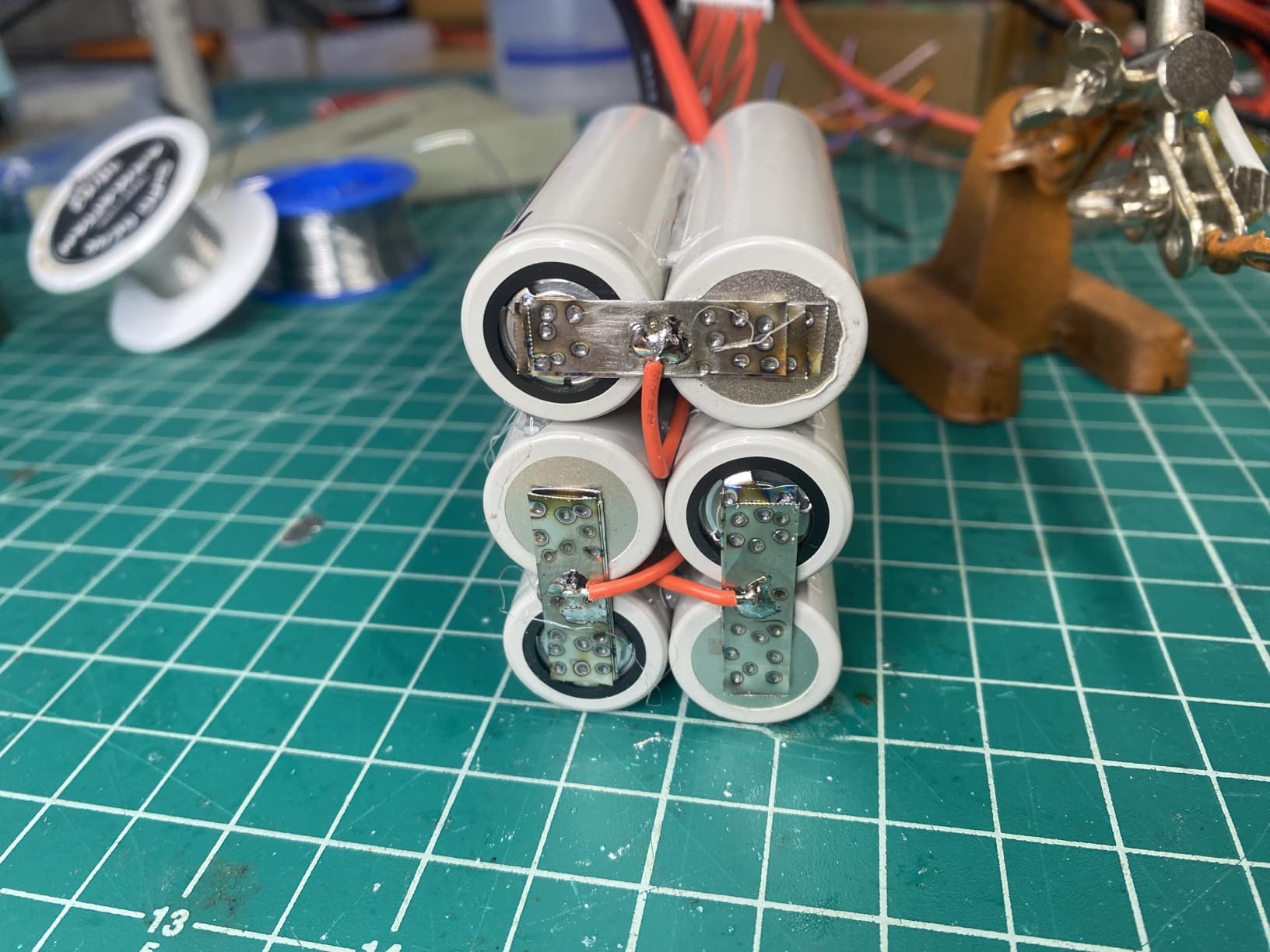
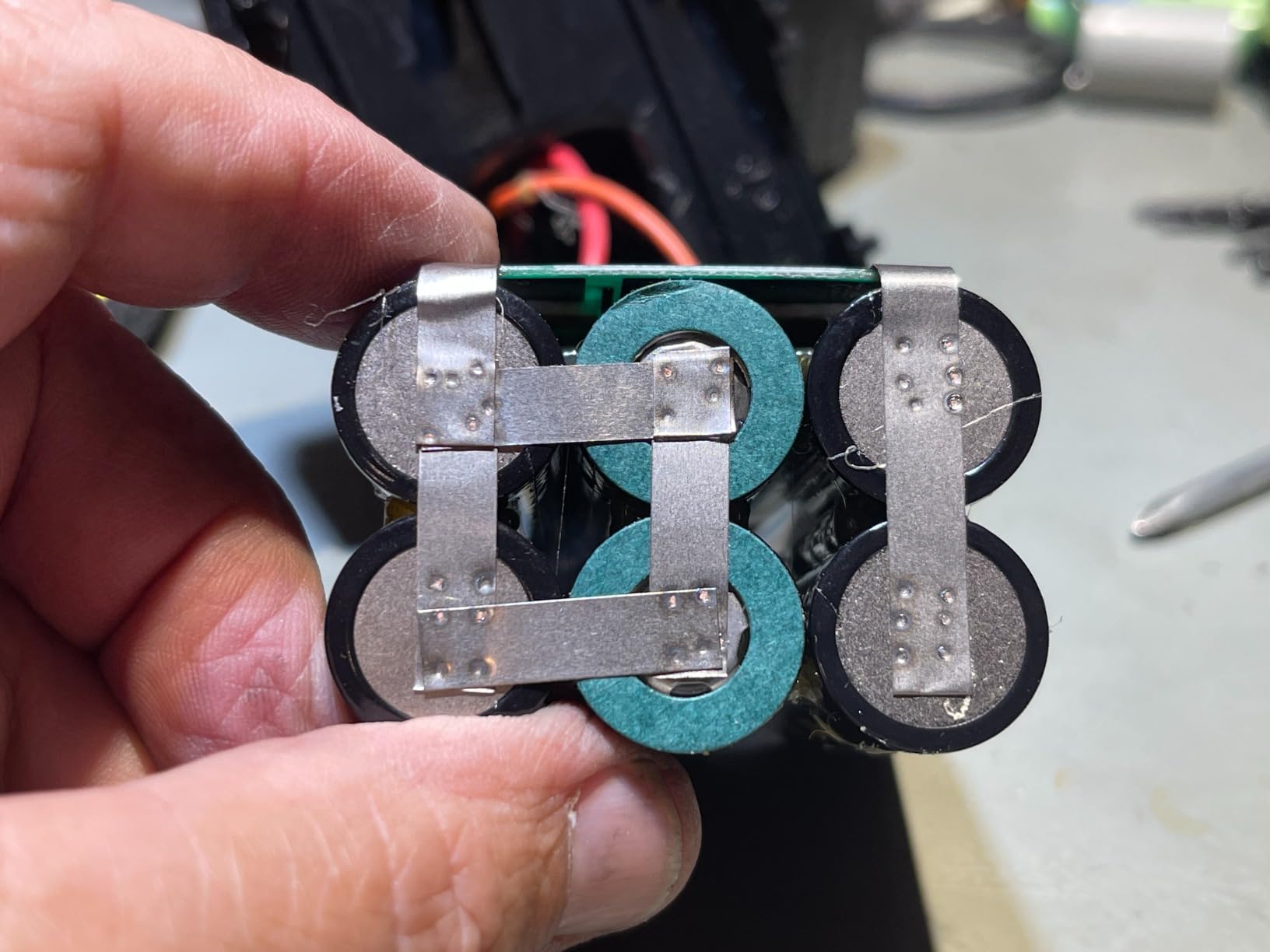
1. Look at the nugget. A good weld shows a bright, slightly domed indentation on both faces with no dark ring, no crater, and no visible hole. A dark ring means burn-through. A flat, bright, unmarked surface means the tip never fused anything, which is a cold weld.
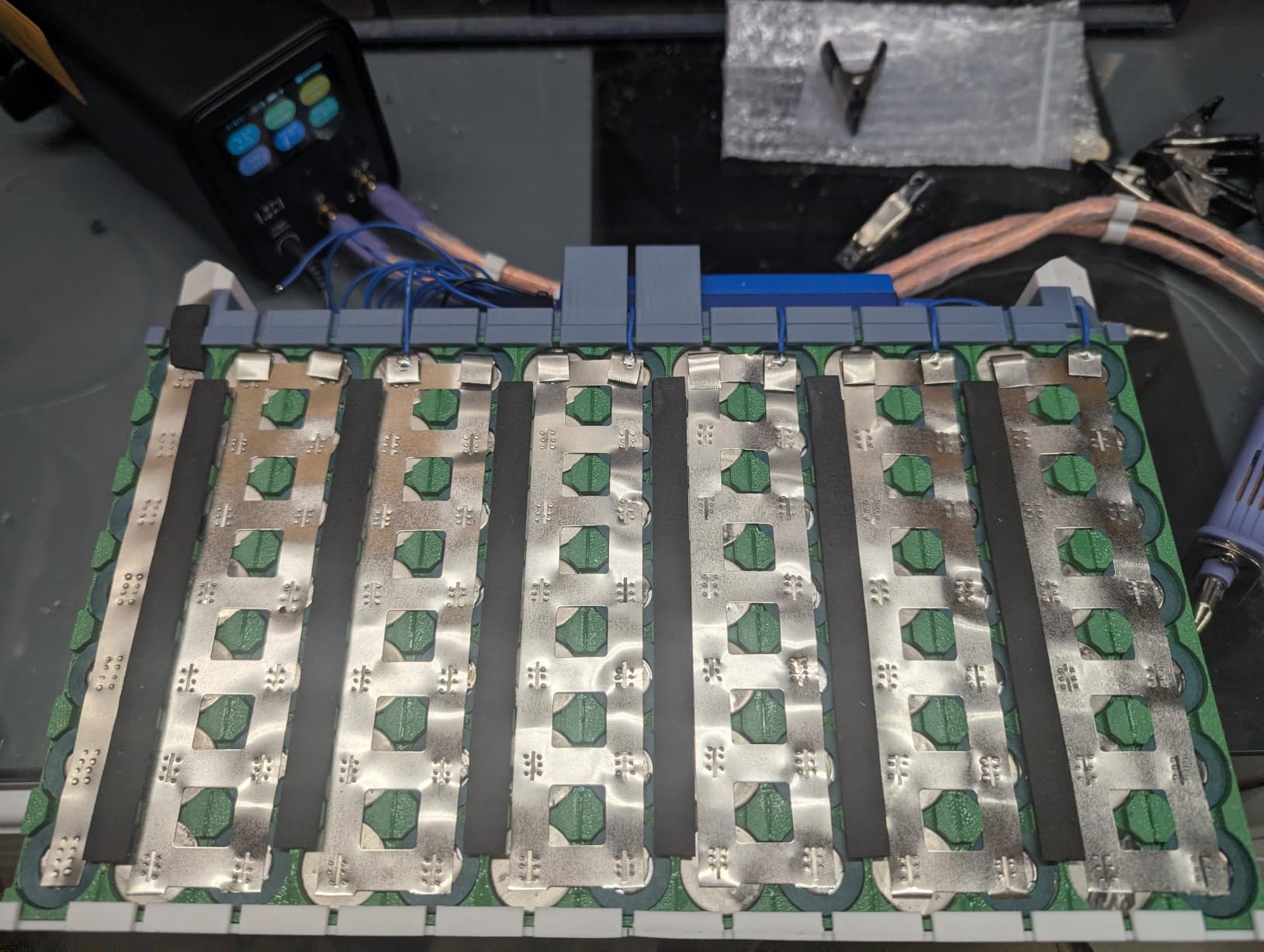
2. Do a pull test. Solder a short length of thicker wire or a tab of scrap strip to the welded joint, then pull steadily. A good weld deforms the nickel strip rather than separating from it. If the joint peels cleanly at the cell tab, redo it. Do not pull hard enough to damage the cell can.
3. Count tacks and repeat. Most builders land two tacks per connection on 0.1mm strip and three on 0.2mm. Once you have a setting that works, write down the gear number and the trigger time. Every subsequent weld on that material should use the same numbers, because the biggest cause of inconsistent packs is a setting that drifts partway through a build.
If a weld fails, change one variable at a time. Raise the gear one step before changing trigger time, and clean the electrode tip with the included file before assuming the setting is wrong. A contaminated tip is the most common cause of a cold weld on an otherwise capable machine.
How to Choose a Spot Welder for Battery Packs
Work through these seven questions in order, and the choice usually makes itself before you reach the spec sheet. They follow the order in which they actually matter in practice.
What is the thickest strip you will ever use? This is question one and it eliminates half the field immediately. Below 0.15mm, any portable in this roundup works. At 0.2mm pure nickel you need a capacitor unit. Above 0.3mm you are in pro-grade territory.
How many cells per build? Under 30, a portable is fine. Between 30 and 60, internal battery capacity starts to matter, which is where the AWithZ 11000mAh earns its place. Over 60 cells in one session, plan on a bench machine with a foot pedal.
How many gear levels do you need? Nine levels is workable on a single material. Once you work with two thicknesses or two cell formats, you want at least 99. The rotary knob on the AWithZ UK1 and the 199 steps on the Kerpu CP02 exist for that reason.
Do you need a foot pedal? It is not a luxury. A foot pedal gives you control over the exact moment the pulse fires while both hands hold the cell, and that is where most first-time users make mistakes. Five of the ten here include one or support one: the AWithZ UK1, Docreate 8000W, SEESII SE-223, AWithZ UF20B and Docreate 3000F. The other five are trigger-button machines, which work fine but ask more of your positioning.
Is the documentation usable? Several units in this roundup ship with a booklet that never explains the menu. If you will be dialling in settings, check whether the display shows preheat time, trigger time and temperature. The WESTOBiG Fnirsi and AWithZ 11000mAh are the two that document their gear ranges clearly.
Are the consumables replaceable? Replaceable tips cost almost nothing. The AWithZ 11000mAh does not have them, which means replacing an entire lead set when the tip wears. The WESTOBiG Fnirsi, SEESII SE302 and both Docreate machines all take a tip-only replacement.
Will the welder outlast your interest? Builders routinely abandon a hobby after the first pack, and most people who return are the ones who bought a machine they can grow into. That argues for a capacitor unit with a broad material range over a cheap pen, even if the first project is small.
Once you have a machine, the surrounding gear matters too. Our guide to the best battery maintainers covers the conditioning equipment that goes alongside pack work, and you will want a quality cell sorter and a resistance meter before you commit to a large batch of cells.
Mistakes to Avoid When Buying and Using a Spot Welder
1. Buying on wattage alone. Peak wattage across classes is not comparable, and a 99-gear 3360W cordless pen will produce better 0.15mm welds than an 8000W machine with nine gears. Control granularity matters more than the headline number.
2. Running a machine hot until it shuts down. Repeatedly driving a portable welder into thermal shutdown shortens its life and produces inconsistent output. Plan a cooling pause every 20 to 25 welds, which is roughly what the AWithZ UK1 does before it protects itself.
3. Trusting a weld you never pulled. The most common forum complaint is not a bad machine. It is packs with weak welds posted as fire hazards. Pull test everything until the setting is proven, then keep testing periodically.
4. Setting power too high out of impatience. Start at the low end of the gear range and increase one step at a time. Burn-through on 0.1mm nickel strip is easy to do and it ruins the cell, not just the strip.
5. Extending the pen leads. Longer leads add resistance and reduce output current, which shows up as a welder that seems to have lost power. Use the supplied lead length, which is why the AWithZ UF20B is sensitive to this.
6. Ignoring the charge level. A welder running on a nearly flat internal battery will not fuse consistently. The Kerpu CP02 needs recharging at 50 percent for its best results, and the Docreate 8000W warns you below 7.3V. Act on those warnings.
7. Ignoring serviceability. Poor documentation and unavailable parts are the reasons budget units become e-waste. A thread on r/18650masterrace asked for a welder made in the EU or US because Chinese documentation was poor and safety documentation was thin. If you cannot find a manual, a replacement tip or an internal battery, that unit is disposable regardless of how well it welds on day one.
Safety Around Lithium Cells and Capacitor Banks
Resistance spot welding is safer than soldering for cells because the heat is confined to a single joint, but it is not a toy. A weld that penetrates the cell can vent electrolyte, and a pack built from cells that were overheated during assembly can fail later without warning.
Never weld a cell that is swollen, dented, corroded at the terminal, or has any visible damage to its wrapper. Inspect each cell before it goes near a welder, not after. A good practice is to test cell internal resistance and capacity before welding, so you know which cells are already compromised.
Wear eye protection. The spark is small but it contains nickel and copper particles, and the tip fragments that come off a worn electrode are hot. Do not weld over a table full of loose cells; a fixture that holds the pack steady is worth more than any welder upgrade.
Capacitor banks add a hazard portables do not have. A charged ultracapacitor bank holds a large amount of energy at a low voltage that can still injure, and it stays charged after you switch the machine off. Keep the unit on a non-conductive surface, do not open the housing, and follow the discharge guidance in the manual for the SE-223, UF20B and 3000F.
Finally, if you build packs for other people or run small-batch production, electrical compliance stops being optional. Look for a machine with published documentation, overvoltage and overcurrent protection, and a stated warranty. The Docreate 3000F is the only unit in this roundup carrying a stated one year warranty with 24/7 support, which is a reasonable minimum signal for commercial use.
Alternatives to Spot Welding a Battery Pack
Some packs genuinely should not be spot welded, and recognising that early saves you money and a fire risk.
Soldering works for very small currents and low cell counts, and it is common on laptop cell reclaim work. It adds mass, wets the cell with flux and heat, and it weakens the connection relative to a weld. It is not appropriate for a pack that will deliver serious current.
Bolted bus bars are the right answer for anything built around larger format cells or high-current applications, where a spot weld on a thin tab is the weak link. You can bolt nickel or copper bus bars to cell terminals directly, and you lose a weld failure mode entirely at the cost of assembly time.
Weldless nickel-plated cells exist specifically for pack builders who do not want a welder. Cells come with a welded or plated tab already attached. You are paying for the factory weld rather than making your own, and the connection quality depends entirely on the manufacturer.
Resistance crimping is used on very high-current builds where a mechanical joint is preferred. It needs a proper crimping tool and a ferrule, and it is a professional technique rather than a hobby shortcut.
For most 18650 and 21700 pack work on 0.1mm to 0.2mm strip, a spot welder is still the correct tool. But if your design calls for 0.3mm strip or larger, a bolted bus bar is often simpler and stronger than asking a portable machine to do a job it was not built for.
Frequently Asked Questions
What is a good spot welder for 18650 batteries?
A good spot welder for 18650 cells covers 0.1mm to 0.2mm nickel-plated strip, offers at least 99 power levels, and includes a foot pedal. Our pick for most builders is the AWithZ 11500W UK1, which handles 0.1-0.3mm nickel across 100 rotary gear levels at 1.61 lb. If you build packs thicker than 0.2mm, step up to a capacitor bench unit instead.
What is the best spot welder for 18650 batteries?
The best all-round choice is the AWithZ 11500W UK1 Rotary Knob Spot Welder, rated 4.3 stars from 387 reviews. It combines the highest stated peak output in our roundup with 100 fine gear levels, foot pedal and auto trigger modes, and a stated 0.1-0.3mm material range. The Docreate 8000W is the lower-cost entry point, and the AWithZ UF20B is the strongest bench machine.
What is the best spot welding machine for batteries?
For hobby 18650 and 21700 pack work, a high-output handheld with fine gear control is the right machine. For 0.2mm pure nickel, multi-layer strip, LiFePO4 cells or anything thicker, a capacitor or ultracapacitor bench unit wins because it fuses heavy material in a single pulse. Match the machine class to your thickest strip before anything else.
Are battery spot welders any good?
Battery spot welders are genuinely good for 0.1mm to 0.15mm nickel-plated strip on small packs. The AWithZ UK1, AWithZ 11000mAh, SEESII SE302 and WESTOBiG Fnirsi all produce welds that pass a pull test on thin material. Their limits are real though: internal battery capacity means recharging mid-build on large packs, and most portables struggle at 0.2mm and above.
What are the common problems with spot welders?
The most common problems are cold welds from an unfused contact, burn-through from too much power, thermal shutdown after 20-25 continuous welds on a portable, and short pen leads that reduce output. Units with few gear levels make all four worse. The fix is a machine with at least 99 gear levels, a foot pedal, a voltage readout, and a pull test on every weld until the setting is proven.
How thick of nickel can a spot welder weld?
It depends on the class. Cordless handheld pens generally handle 0.1mm to 0.2mm nickel-plated strip reliably. Handhelds with 99 or 100 gear levels reach 0.2mm to 0.3mm plated. Capacitor bench units weld 0.3mm nickel-plated or 0.2mm pure nickel in a single pulse, and the AWithZ UF20B handles 0.2mm butt-welded to 0.4mm combined material.
Do I need a foot pedal for a spot welder?
A foot pedal is close to essential for pack building. It lets you fire the pulse at the exact moment the cell and strip are positioned, while both hands hold the pack steady, which is where most cold welds originate. Five of the ten machines here include a foot pedal or accept one: the AWithZ UK1, Docreate 8000W, SEESII SE-223, AWithZ UF20B and Docreate 3000F. The AWithZ UK1 supports both foot pedal and auto trigger.
How long does the battery last on a rechargeable spot welder?
It depends on the internal capacity, and it is the most common complaint on forums. Builders report needing four or five recharges for a single 12S4P pack on budget units. The AWithZ 11000mAh has the largest internal battery in our roundup at 11000mAh with a roughly 3.5 hour charge, while the Kerpu CP02 needs recharging at 50 percent for its most consistent welds.
What is the difference between automatic and manual mode on a spot welder?
Automatic mode fires the pulse the instant the tips make contact, which is fast for batch work on uniform material. Manual mode requires you to trigger the pulse, giving you control over exactly when the current fires. We recommend manual mode for beginners, because automatic triggering on a misaligned strip is the most common cause of a cold or partial weld on small packs.
What accessories do I need with a spot welder?
You need pure copper replacement tips, a metal file for cleaning the electrode face, sandpaper for preparing the cell surface, and insulating fibre paper to protect the cell wrapper. Add a 0.1mm to 0.2mm nickel-plated strip roll, a foot pedal if the machine takes one, and a cell holder or fixture. A resistance meter and a cell sorter matter more than any other accessory once you build beyond a few packs.
Conclusion
The best spot welders for battery packs in 2026 come down to how thick your strip is and how big your packs get. For most people building 18650 and 21700 packs on 0.1mm to 0.2mm nickel, the AWithZ 11500W UK1 is the pick, with 100 rotary gear levels, a foot pedal, and the highest stated peak output in this roundup at a weight you can still carry between the bench and the sofa.
Start lower if your builds are small and occasional: the Docreate 8000W is a low-cost way in, and the Awgem SH2 is the machine to learn on. Move up when you hit 0.2mm pure nickel, multi-layer strip, or LiFePO4, and the AWithZ UF20B is the strongest bench machine we tested, with the best rating distribution of the ten.
Whichever you choose, pull test every weld until the setting is proven, and write the gear number down. A machine is only as good as the weakest joint you did not check.