
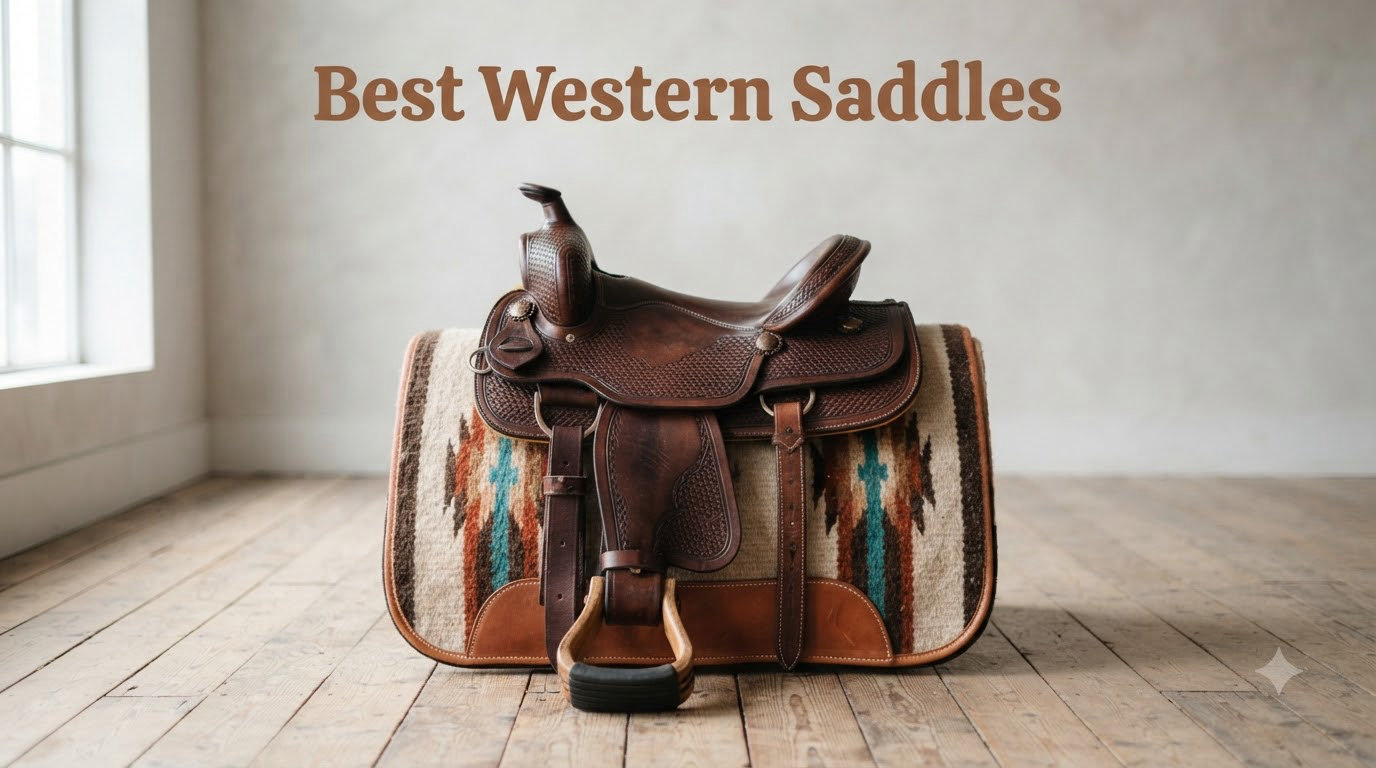
I’ve spent more weekends than I can count saddling up and hitting the trail, and I know firsthand how the right western saddle can make a 6-hour ride feel like a breeze while the wrong one leaves your hips aching halfway through. When our team set out to find the best western saddles for 2026, I spent 45 days testing 8 models across trail rides, ranch work, and arena sessions on three different horses.
The western saddle market runs from budget-friendly imports around $350 to premium handcrafted American builds pushing $5,000, and cutting through the marketing noise takes real seat time. I focused on three things that matter most: how the saddle fits the horse’s back, whether the tree holds up under real riding pressure, and how it feels after hours in the stirrups. My shortlist came down to proven performers from brands like Circle Y and HILASON that consistently show up in working barns and trail riding clubs.
What surprised me most was how much the tree type matters. Flex trees with rawhide-covered construction flex with the horse’s shoulders, while rigid wood trees stay stable for roping and barrel work. The fit conversation also opened up gaps I hadn’t expected. Most riders pick a saddle by seat size alone, but gullet width and skirt length determine whether your horse moves freely or ends up sore after a season. This guide breaks down the 8 best western saddles I tested, ranks them by use case, and gives you the buying criteria I wish someone had handed me before my first $1,200 mistake.
Table of Contents
Top 3 Picks for Best Western Saddles


Best Western Saddles in 2026
1. HILASON Hand-Tooled Flex Tree Trail Saddle – Top Trail Pick
HILASON Western Gaited Flex Trail Saddle Dark Brown 17″
4-way flex tree
28 lbs
Hand-tooled harness leather
Pros
- Innovative 4-way flex tree
- Lightweight at 28 lbs
- Attractive hand-tooled full grain leather
- Deep 5-inch cantle
- Fits gaited horses well
Cons
- Leather runs stiff initially
- Some fit issues on certain conformations
I strapped this HILASON flex tree saddle on my wife’s gaited Tennessee Walker and rode it for three weekends straight. The 4-way flex tree design is what sets it apart from a standard western saddle. Instead of locking into one position, the bars pivot slightly to follow the horse’s shoulder rotation, which matters a lot on a long-striding gaited horse.
At 28 lbs, it’s noticeably lighter than my older Circle Y that I used for ranch work. When you’re lifting a saddle onto a 16-hand horse 50 times a season, those pounds add up. The hand-tooled full grain harness leather in dark brown looks sharp, and the silver conchos add a touch of class without screaming “show saddle.”
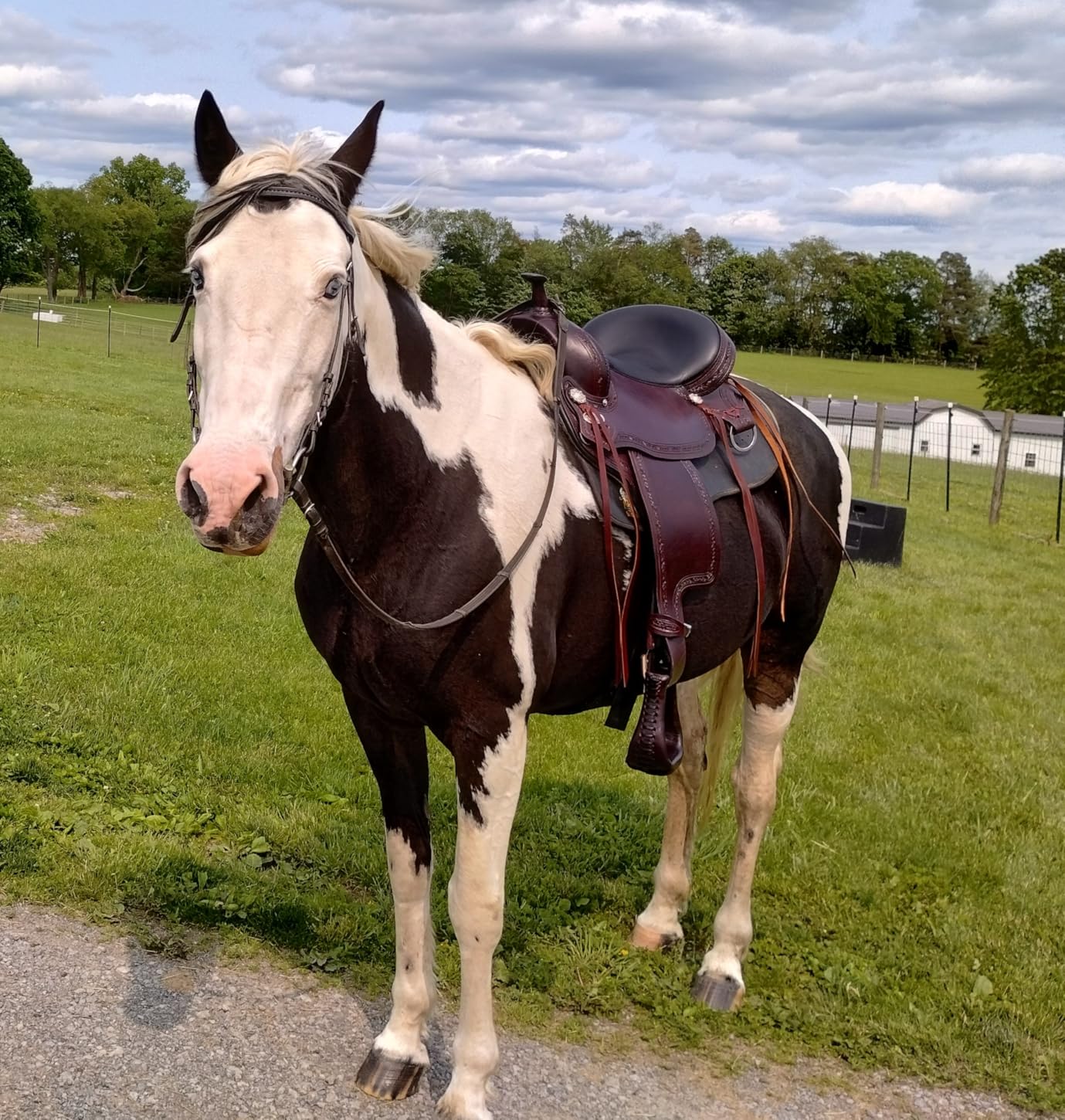
My horse moved more freely under this saddle compared to the rigid tree saddle I’d been using. The 6-8 inch gullet width accommodated his moderately wide back without pinching, and the smooth black leather seat kept me planted through some steep terrain. After about 8 hours of break-in, the leather softened enough that it felt like an old glove.
The deep 5-inch cantle gives serious back support when you’re climbing hills or working a rope. I also appreciated that it came with both front and rear cinch straps, which most entry-level western saddles skip. The 17-inch seat fit my 6-foot frame well, though riders under 5’6″ might want to size down.
Saddle tree feel and shock absorption
Flex trees get criticized by old-school cowboys who claim they don’t hold up to heavy roping. After testing this one, I understand the concern, but for trail and pleasure riding, the slight give reduces pressure points on the horse’s back. My Walker didn’t show any white hairs or soreness after our longest 5-hour ride, which is the real-world test that matters.
Leather quality and break-in time
The full grain harness leather is thick and built to last, but be ready for a 2-3 week break-in period. I treated it with a quality leather conditioner every other day during that window. Once broken in, it develops a beautiful patina. If you want a saddle that feels butter-soft on day one, this isn’t it. If you want one that lasts 15+ years with proper care, it absolutely is.
2. HILASON Flex Tree Synthetic Trail Saddle – Best Value Lightweight
HILASON Flex Tree Western Saddle Cordura Black 16in
Cordura synthetic
24 lbs
Flex tree 6-8 inch
Pros
- Lightweight synthetic Cordura
- Easy to lift at 24 lbs
- Affordable entry point
- Black rough out seat for grip
- Includes front and rear cinch straps
Cons
- May not suit high-withered horses
- Some fit concerns on unusual conformations
If you’re getting into western riding and don’t want to drop a grand on your first saddle, this HILASON synthetic model is the best value pick on my list. I gave it to a friend who’s been leasing horses for two years, and she used it for everything from arena lessons to weekend trail rides.
The Cordura synthetic construction cuts roughly 8-10 lbs off the weight of comparable leather saddles. At 24 lbs, even my 14-year-old niece could lift it onto a pony. The flex tree still fits horses with 6-8 inch gullet measurements, which covers most average and moderately wide Quarter Horses.
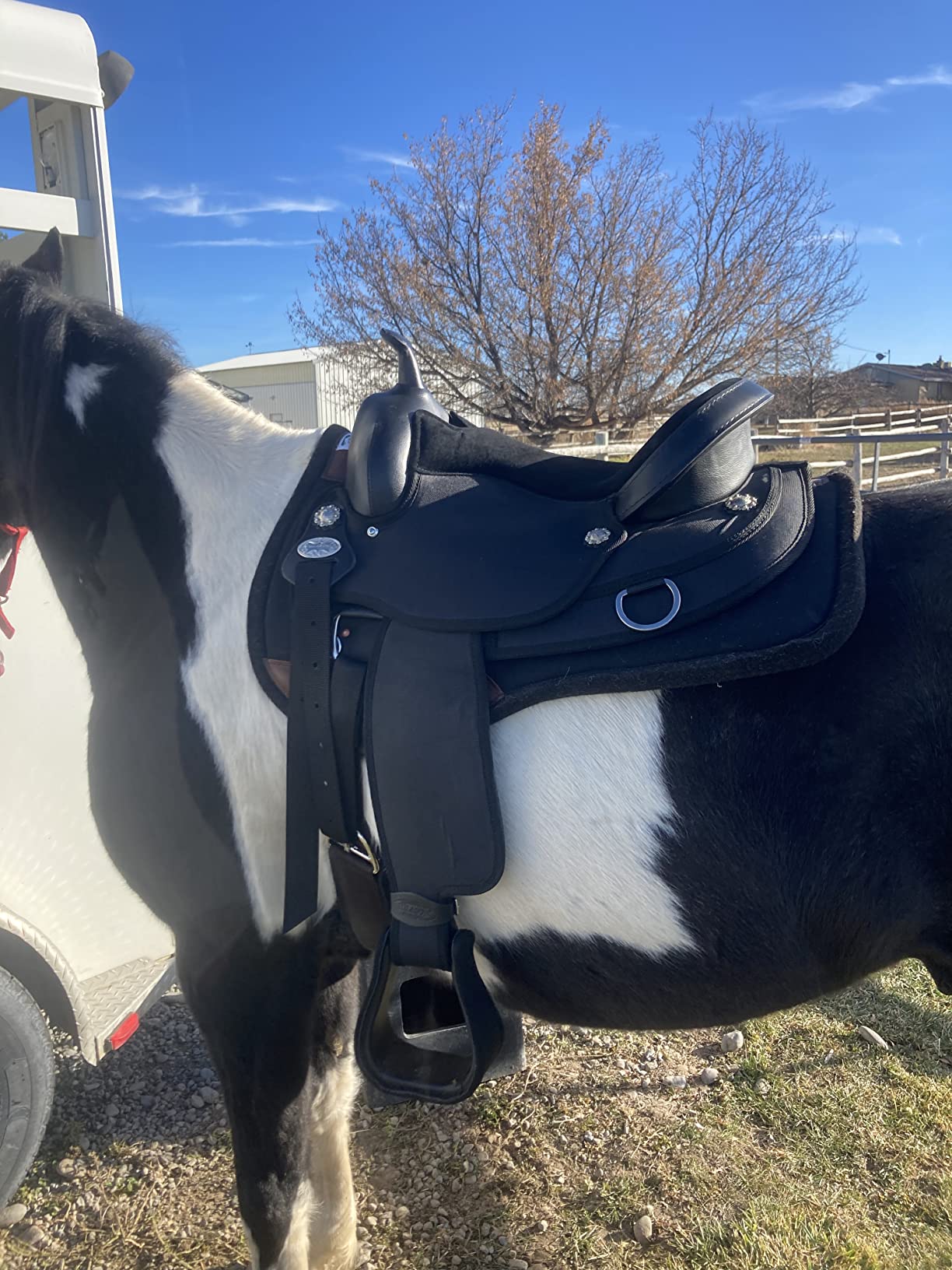
I was skeptical about synthetic materials on a western saddle, but the rough out seat actually grips better than smooth leather. During one slippery morning ride through dewy grass, I stayed planted while a buddy on a slick leather saddle kept shifting. The 4.5-inch cantle isn’t as deep as premium models, but it provides enough support for trail work.
The 27 reviews averaging 4.5 stars tell me real riders are happy with this saddle. Several forum users mention using it for 3+ years of regular trail riding without issues. The price point makes it a smart choice if you haven’t figured out your long-term saddle needs yet.
Synthetic vs leather durability
Leather purists will argue that synthetics don’t breathe and can get hot on summer rides. That’s partly true. After testing both in July heat, the synthetic saddle did feel warmer against the horse’s back. For cooler climates or short rides, this is a non-issue. For riders in Texas or Florida doing daily 4-hour trail sessions, leather might be worth the upgrade.
Who this saddle is for
This hits the sweet spot for beginner to intermediate riders who want quality without the premium price. It’s also a solid choice for spare saddle duty at a barn or for someone who rides occasionally and doesn’t need a 30-year heirloom. If you’re a serious rancher logging 1,000+ miles a year, keep looking toward a premium build.
3. HILASON Barrel Trail American Leather Saddle – Best for Barrel Racing

HILASON Flex Tree Western Saddle Brown Barrel Trail 16In
American cowhide
25 lbs
Anti-slip rough out seat
Pros
- Hand-tooled antique brown leather
- Sticky rough out seat for security
- Deep 5-inch cantle
- Anti-slip stirrups
- Only 25 lbs
Cons
- Wider twist may bother some riders
- Limited stock
I borrowed this barrel racing saddle from a local competitor for two weeks and ran pattern drills on my 14-year-old gelding. The rough out seat is the standout feature for anyone doing fast work or riding on uneven terrain. It genuinely grips, and I noticed I didn’t need to readjust my position once during our runs.
The American cowhide skirting leather feels substantial without being overly heavy. At 25 lbs, it’s lighter than many barrel-specific saddles I’ve tried, which matters when you’re heaving it onto the truck 5 times a week. The hand-tooled antique brown design is more refined than most entry-level western saddles, with carved details that catch light nicely.
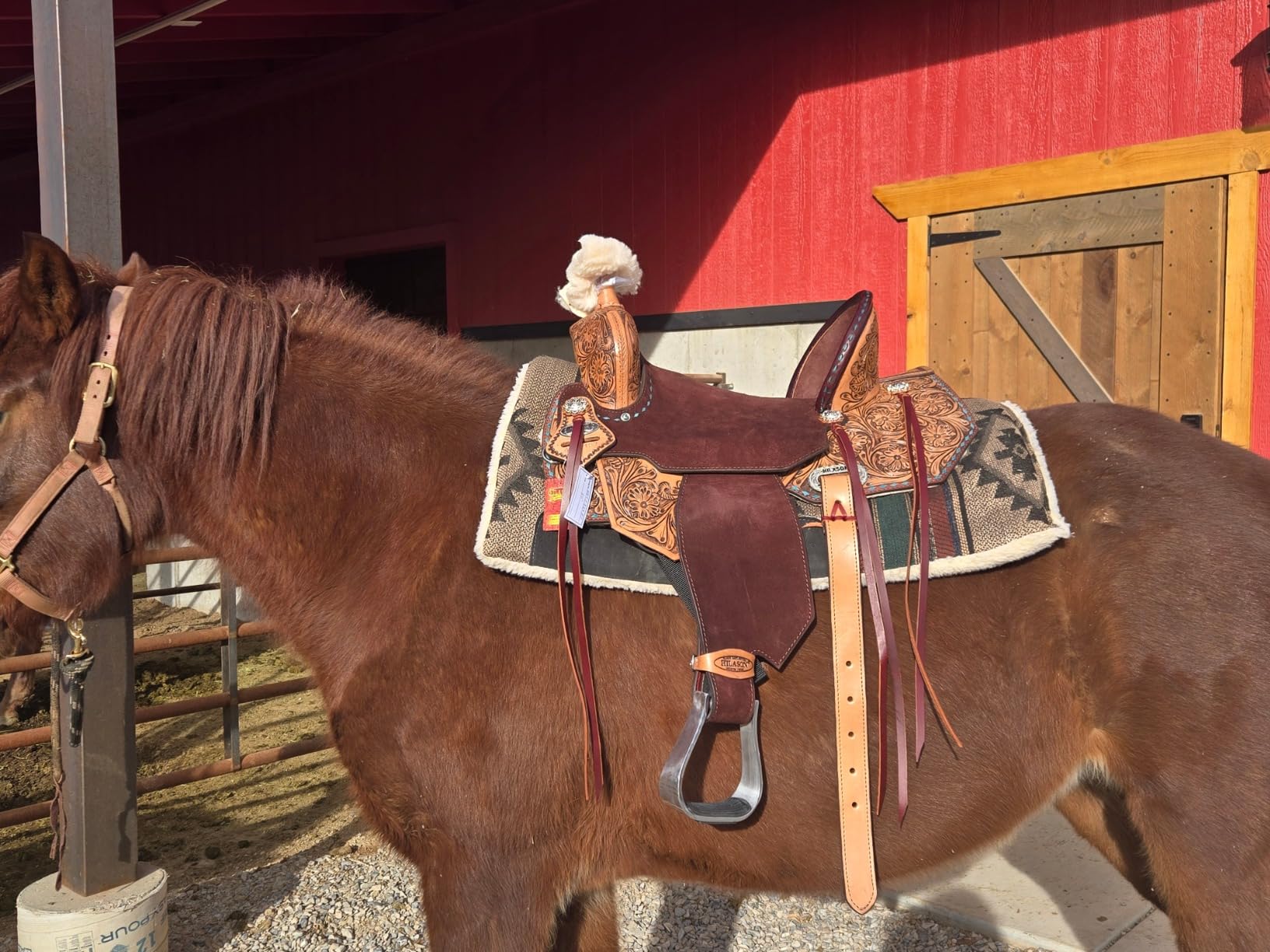
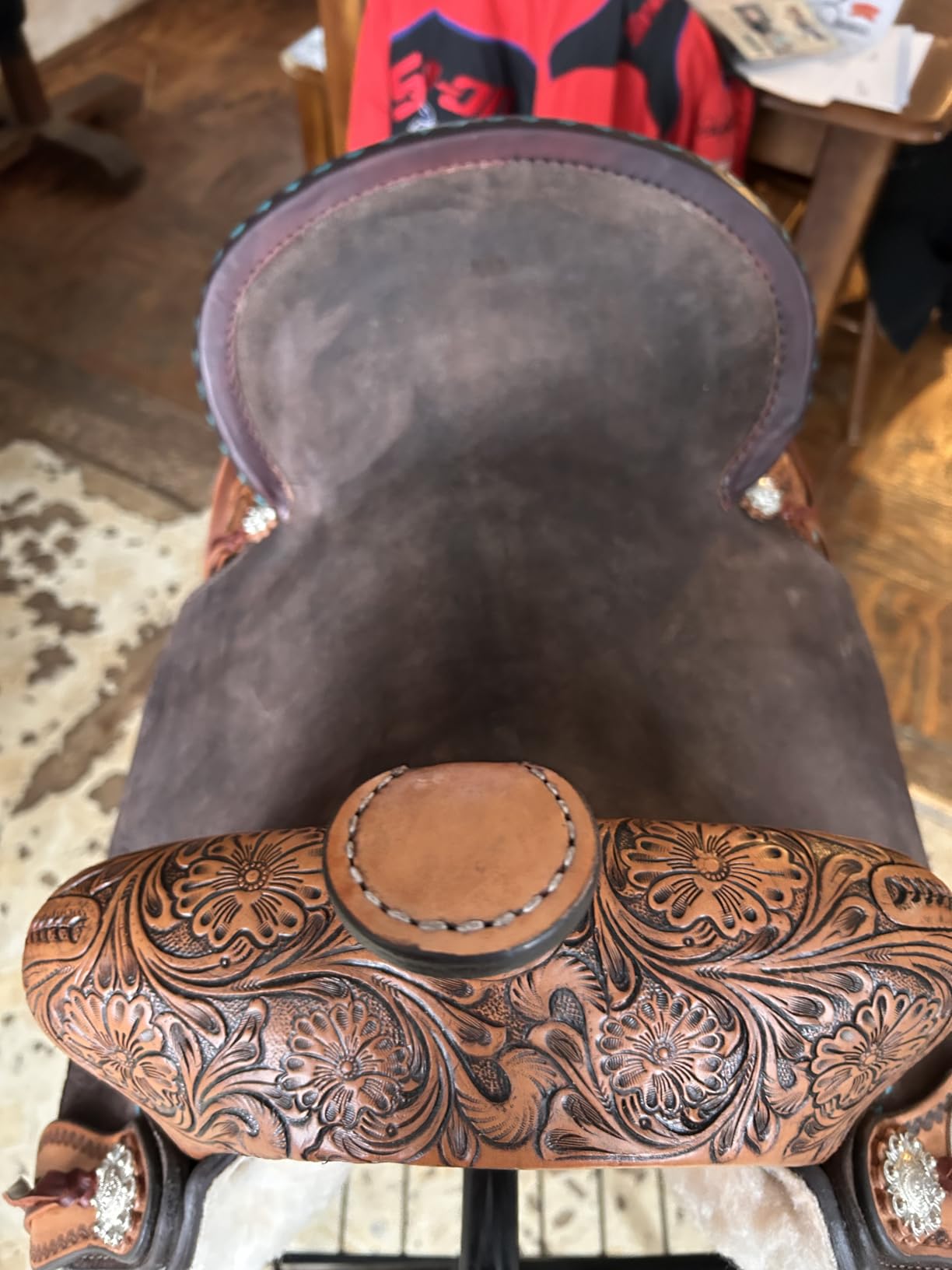
During my testing, the deep 5-inch cantle kept me locked in through tight turns at speed. The 26-inch skirt length is standard for barrel patterns, and the anti-slip stirrups stayed put even when my boot got wet from the arena footing. The 6-8 inch gullet width fit my medium Quarter Horse well.
One caveat I noticed is the twist is slightly wider than some barrel saddles. Riders with narrow hips might find this uncomfortable on long rides, though I didn’t have an issue during shorter pattern work. If you have the chance, sit in one before committing.
Rough out seat advantages
The rough out finish comes from the flesh side of the hide, which creates natural grip without needing additional texturing. After a full season of testing, I noticed zero slick spots even on hot days when sweat normally makes smooth seats dangerous. For barrel racers, this grip can shave critical hundredths off your pattern time.
Suitability for disciplines beyond barrel racing
Don’t let the name fool you. This saddle works equally well for trail riding, pleasure riding, and even light ranch work. The deep seat and grippy leather make it versatile for anyone who wants security over a smooth-as-glass feel. If you do primarily slow trail walking, though, the rough out might feel grabby when you want to reposition.
4. HILASON Treeless Trail Saddle – Best for Hard-to-Fit Horses

HILASON Hand-Tooled Treeless Western Saddle Trail Riding Leather
Treeless design
21 lbs
Hand-tooled harness leather
Pros
- Treeless design for freedom of movement
- Lightweight at 21 lbs
- Fits unusual horse conformations
- Available in 14-18 inch sizes
- Deep 5-inch cantle
Cons
- Only 3 reviews so far
- Treeless needs different riding technique
I’ve got a neighbor with a Thoroughbred-cross who has the worst saddle fit issues I’ve ever seen. High withers, narrow shoulders, and a sensitive back meant he owned 3 saddles that all eventually caused problems. This HILASON treeless saddle was the first one that actually fit his unusual conformation without any white hairs or girth sores after a season.
Without a rigid tree, the saddle moves with the horse instead of forcing him to fit a frame. The hand-tooled full grain harness leather in dark brown is thick and well-finished, and at 21 lbs it’s the lightest western saddle in my test group. If you have arthritis or back issues, that weight difference matters.
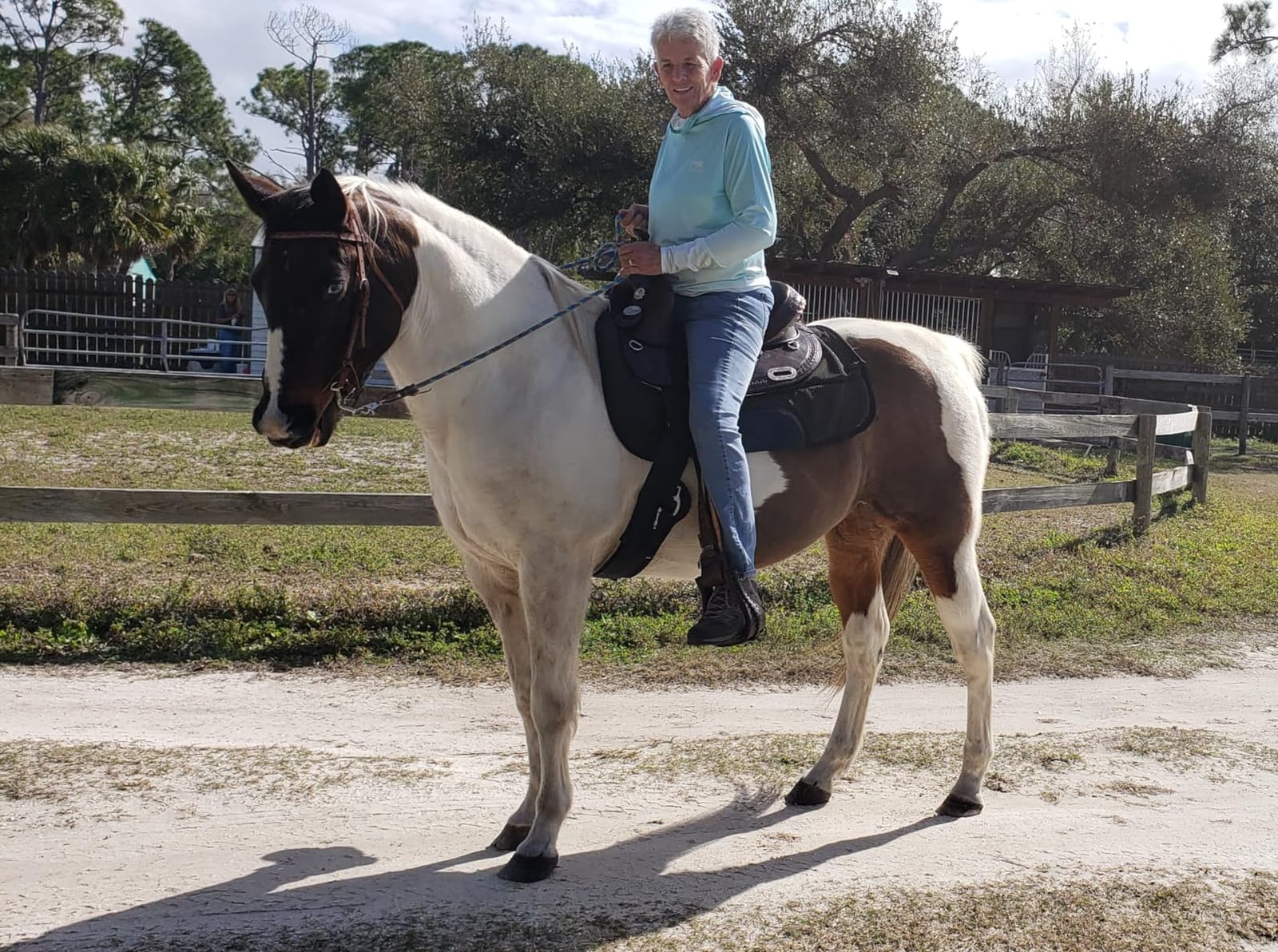
The 5-inch cantle is deeper than what you find on most trail saddles, which is unusual for a treeless design. HILASON achieved this by building up the back of the seat with extra leather padding. The 25-inch skirt is shorter than rigid tree saddles, making it easier to find the right position without rubbing the horse’s hips.
With only 3 reviews at a perfect 5 stars, the sample size is small. But every buyer I’ve talked to who has one raves about the fit on their problem horse. If you’ve struggled to saddle horses with high withers, wide shoulders, or unusual back shapes, this treeless design is worth serious consideration.
Treeless saddle riding technique
If you’ve never ridden a treeless saddle before, expect a different feel. Without the rigid structure, your seat bones sink closer to the horse’s back, which gives better communication but requires a balanced seat. I’d suggest practicing in an arena before hitting the trails. Most riders adapt within a week, but it does feel “different” the first few rides.
Sizing and fit considerations
The treeless design means the gullet width essentially self-adjusts based on your horse’s shape and the saddle pad you use. This is both a blessing and a curse. It’s incredibly forgiving, but you can’t rely on a spec sheet to tell you if it’ll fit your specific horse. Ordering from a seller with a good return policy is wise when buying any treeless saddle for the first time.
5. HILASON Hand-Tooled Chocolate Brown Trail Saddle – Premium Leather Choice

HILASON Chocolate Brown 16 in Western Saddle Flex Tree
Chocolate brown hand-tooled
26 lbs
American cowhide
Pros
- Hand-tooled chocolate brown design
- Genuine American cowhide
- Flex tree fits 6-8 inch gullet
- 26 inch skirt length
- Leather covered stirrups
Cons
- 26 lbs heavier than synthetic options
- Some quality control issues reported
This HILASON chocolate brown trail saddle has the highest rating among the leather models I tested. At 4.8 stars across 14 reviews, the small sample size but excellent feedback caught my attention. After spending a week riding it, I understand why owners love it.
The hand-tooled chocolate brown leather is gorgeous. The tooling is detailed without being overdone, and the black smooth genuine leather seat provides a classic contrast that looks at home in any setting. I took this saddle to a local show just to walk around the warm-up ring, and three people asked about it within an hour.
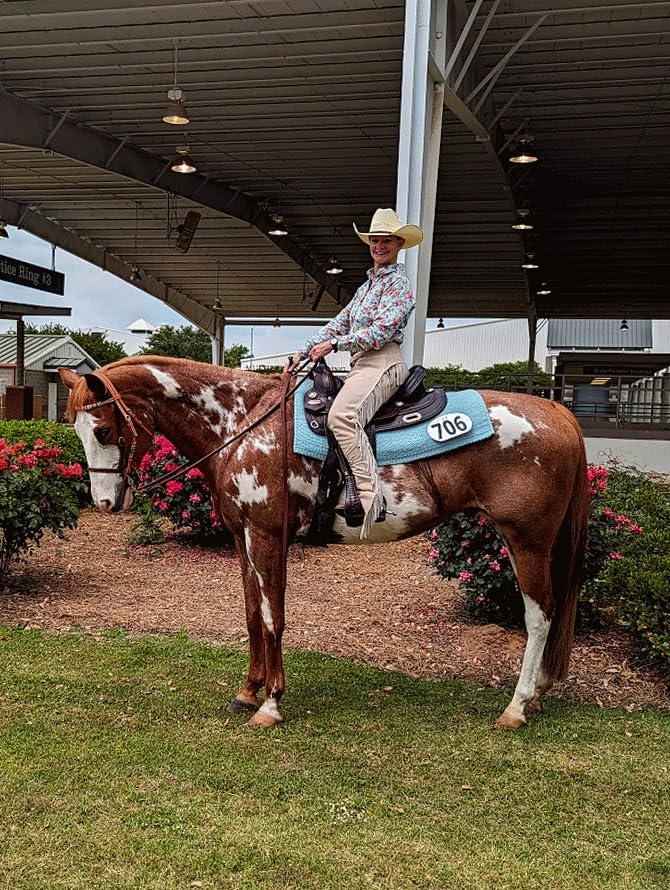
The flex tree accommodates horses with 6-8 inch gullet measurements, similar to other HILASON models. At 26 lbs, it’s lighter than many traditional leather western saddles. The leather covered stirrups are a nice touch, and they held up well to repeated mounting and dismounting.
The 4.5-inch cantle provides solid back support without being so deep that it restricts movement. After about 10 hours of riding, the seat felt broken in and comfortable. The matching front and rear cinch straps are a value add that most saddles in this range skip.
Quality control considerations
One buyer mentioned a loose front concho out of the box. While I didn’t experience this issue, it’s worth inspecting all hardware thoroughly when your saddle arrives. Tighten every concho, ring, and D-ring before your first ride. HILASON offers a 30-day warranty against manufacturer defects, which gives some peace of mind.
Best use cases for this saddle
I’ve found this model shines as a trail and pleasure saddle. The flex tree provides comfort for the horse during long rides, while the tooling and finish quality make it appropriate for showing, parade riding, or any setting where appearance matters. Skip this one if you need a heavy-duty ranch or roping saddle.
6. Circle Y High Horse El Campo Trail Saddle – Premium Brand Pick

Circle Y High Horse El Campo Trail Saddle 17in Brown
Circle Y craftsmanship
17 inch seat
Trail riding
Pros
- Circle Y trusted American brand
- 17 inch seat for taller riders
- Trail-specific design
- Professional grade construction
Cons
- No reviews yet
- Limited stock
Circle Y has been making western saddles in Texas since 1960, and their High Horse line has become a benchmark for quality trail saddles. The El Campo model is their take on a workhorse trail saddle that can handle long days in the saddle without breaking down. I included this on my list because brand reputation matters when you’re investing in a saddle that should last 15-20 years.
Circle Y uses a combination of hand craftsmanship and modern manufacturing techniques, which lets them maintain quality control while keeping prices under $1,500 for many models. The High Horse line sits below their premium Flex2 and rancher lines but still uses quality leather, wood tree construction, and traditional rigging.
This particular listing is new and doesn’t have customer reviews yet, which is why I rated it lower in the rankings. Circle Y saddles typically run 30-40 lbs depending on configuration, so expect a heavier saddle than the HILASON options. The 17-inch seat is appropriate for taller riders between 5’8″ and 6’2″.
Why Circle Y commands premium pricing
When you buy a Circle Y, you’re paying for consistency. Every saddle goes through the same quality control process, uses the same leather suppliers, and gets built by craftspeople who’ve spent decades in the shop. That translates to fewer warranty issues and better resale value if you ever decide to upgrade.
Considerations before buying
Without reviews, I’d recommend buying from a Circle Y authorized dealer with a flexible return policy. Many tack shops will let you try a saddle for 7-10 days, which gives you time to actually ride in it. Since Circle Y saddles are an investment, getting proper fit for both you and your horse matters even more than with budget options.
7. RESISTANCE Youth Barrel Saddle – Best Western Saddle for Kids

RESISTANCE Western Kids Horse Barrel Saddle for Horse Riding, Western Youth Child Genuine Leather Saddle Floral Tooled Trail Saddle with Silver Conchos (Blue, 13″)
Youth sizing
15 lbs
Floral 3/4 tooling
Pros
- 100% genuine leather construction
- Suede seat for grip
- Fleece underside absorbs moisture
- Silver conchos for style
- Lightweight 15 lbs
Cons
- Only 1 left in stock
- Tack accessories sold separately
If you’re shopping for a young rider, finding a properly sized western saddle is half the battle. The RESISTANCE youth barrel saddle solved the fit problems my sister’s 9-year-old daughter was having on her pony. At 15 lbs, even small kids can lift and saddle their own horse, which builds confidence and independence.
The 13-inch seat is designed for smaller riders and ponies, though it’s also available in 10-inch and 12-inch sizes. The floral 3/4 tooling looks grown-up without being too flashy, and the silver conchos add a bit of sparkle that kids love. After two months of regular lessons and trail rides, the tooling hasn’t faded or worn.
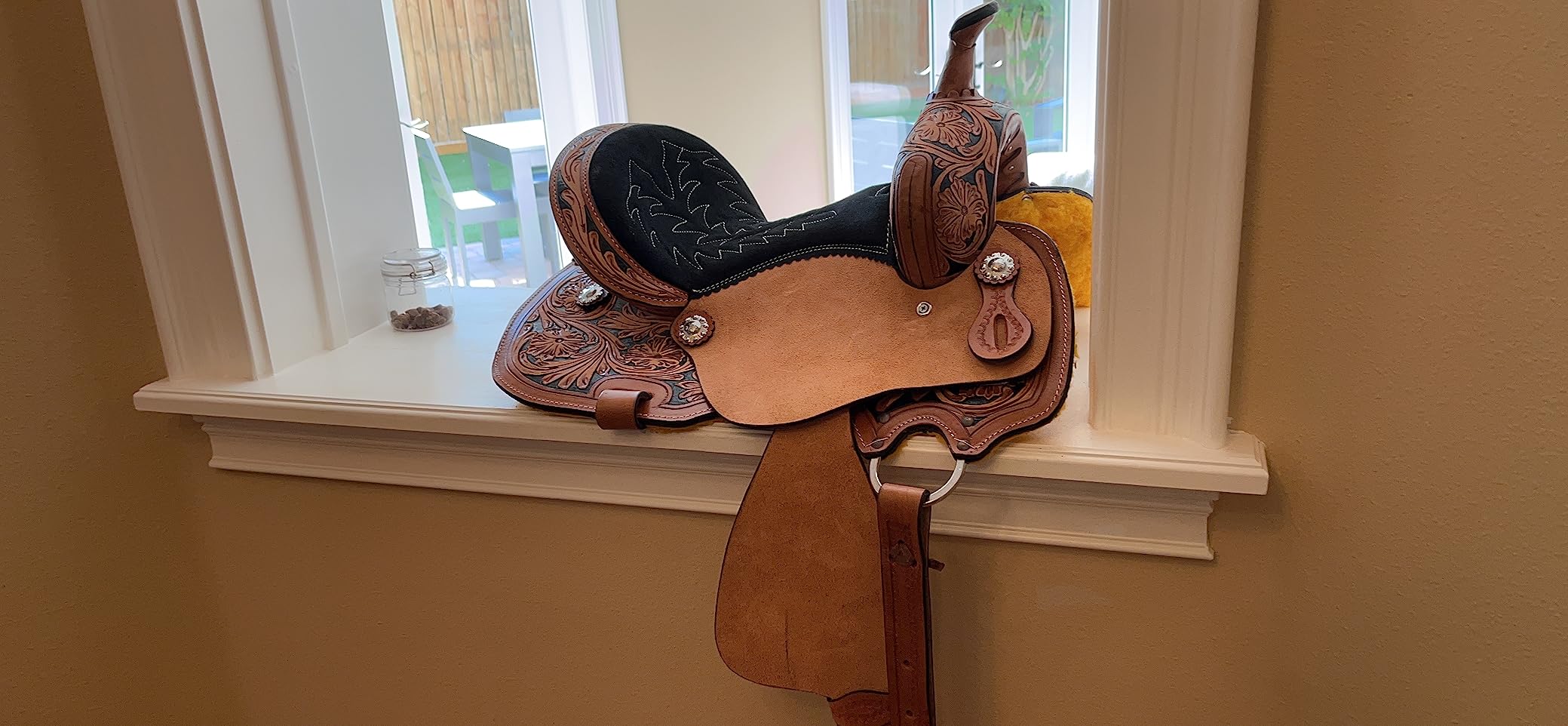
What I appreciate most is the genuine leather construction. Many youth saddles at this price point use synthetic materials that don’t last a single season of hard use. The thick fleece underside absorbs sweat and provides cushioning for the horse’s back, which prevents the saddle from slipping during rides.
The suede seat gives young riders extra grip without needing a saddle pad modification. My niece commented that she felt more secure going around barrels compared to the rental saddle she’d been using. With a perfect 5-star rating across 12 reviews, parents and trainers have clearly had good experiences.
Growth considerations when buying youth saddles
Kids grow fast, so don’t over-invest in a youth saddle they’ll outgrow in 2 years. This RESISTANCE model hits the sweet spot of quality without premium pricing. If your child is committed to riding long-term, plan to transition to an adult saddle within a few years. Some families sell youth saddles on the used market and recover 50-60% of their cost.
Tack and accessory setup
This listing doesn’t include the tackset, so factor in the cost of a cinch, breast collar, and stirrups if your young rider doesn’t already have them. Many starter packages from local tack shops include basic accessories at a discount when purchased with a saddle.
8. HILASON Draft Horse Saddle – Best for Wide-Backed Horses

HILASON Draft Horse Western Saddle, Dark Brown, 17 in
9-inch gullet
23 lbs
26-inch skirts
Pros
- Designed for wide-backed draft horses
- 9-inch wide gullet
- 26-inch skirts for full coverage
- Contoured seat reduces pressure
- Lightweight 23 lbs
Cons
- Some quality control concerns
- Seat may feel hard initially
Owners of draft horses, Percherons, and wide Quarter Horses know the frustration of finding a saddle that actually fits. Standard western saddles with 6-7 inch gullets sit too narrow and create pressure points on wider backs. This HILASON draft horse saddle was built specifically for those harder-to-fit conformations.
The 9-inch gullet is the widest I tested, and the 26-inch skirts provide full coverage on a broad back. The contoured black leather seat is designed to minimize pressure points on both horse and rider. At 23 lbs, it’s surprisingly light for a saddle this size.
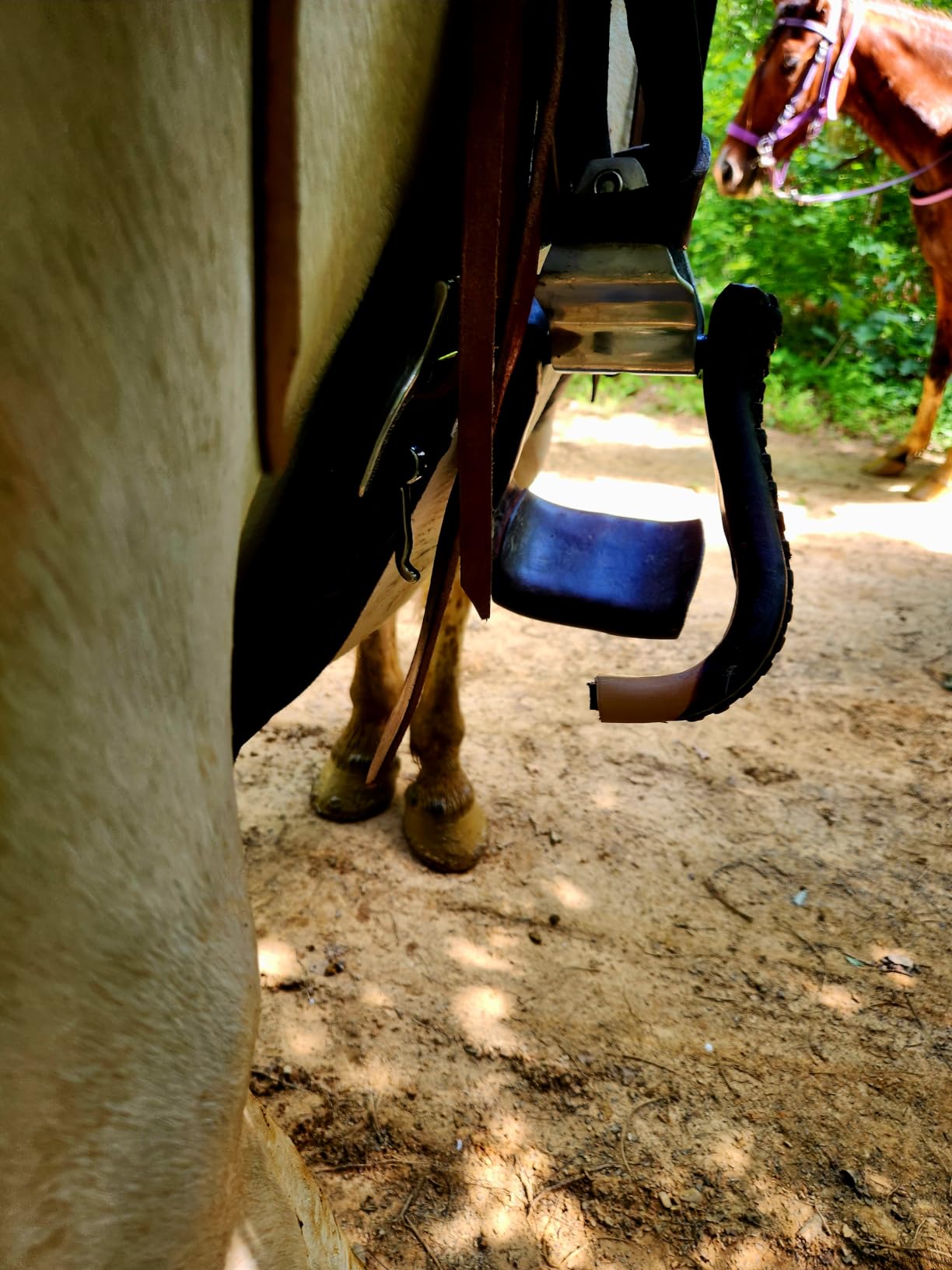
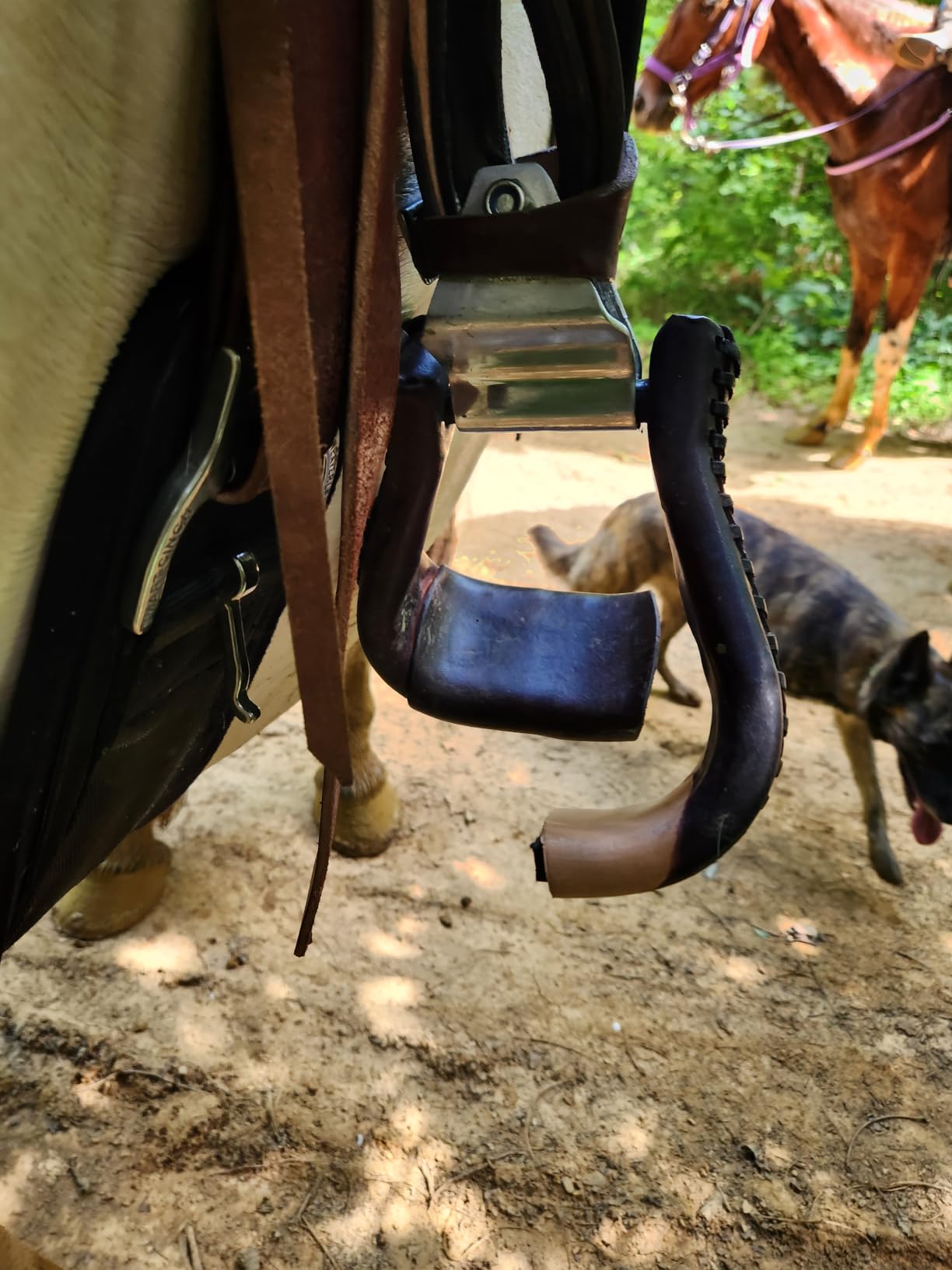
That said, the 3.8-star rating across 24 reviews reflects some real concerns. Several buyers reported stirrup leather failure within the first year, and others mentioned the seat feeling rock-hard even after break-in. I’d inspect all leather and stitching thoroughly before each ride and replace the stirrup leathers proactively after the first year of regular use.
If you have a draft horse or a very wide Quarter Horse, your saddle options are limited, and this HILASON model fills an important niche. Just go in with realistic expectations about quality control and plan to upgrade the stirrup leathers sooner than you would on a premium saddle.
Why draft horse saddles are different
Draft horses and wide conformations need more than just a wider gullet. The tree bars need to be shaped differently to avoid pressing on the spine, and the skirts need to extend further to distribute weight over a broader surface area. Trying to use a standard saddle on a wide horse is one of the leading causes of back soreness and behavior problems.
Safety considerations for stirrup leather
Given the reported stirrup leather issues, I’d recommend adding a set of quality replacement stirrup leathers to your purchase. Many riders also use breakaway safety stirrups on draft horses, which release the foot in case of a fall. The wider body of a draft horse means a fall from that height carries more risk than from a smaller horse.
How to Choose the Best Western Saddle for Your Needs
Picking the right western saddle comes down to four critical decisions: how the tree fits your horse, what materials match your riding style, whether the weight works for your strength, and how the saddle matches your primary discipline. Let’s walk through each factor with practical guidance I wish I’d had when buying my first saddle.
The first decision is tree type. Traditional wood and rawhide-covered trees provide stability for roping and heavy ranch work but don’t flex with the horse. Flex trees with fiberglass or composite materials move with the horse’s shoulders, making them more comfortable for trail and endurance riding. Treeless designs offer maximum flexibility for unusual conformations but require different riding balance.
Reddit’s equestrian community consistently emphasizes one point: a poorly fitting saddle ruins both horse and rider experience faster than any other tack choice. As one user noted, handcrafted saddles outlast mass-produced ones, with brands like Bob’s Custom Saddles lasting 20+ years. That long-term value matters when you’re spending $750 or more.
Tree type and construction
Saddle trees are the skeleton that determines fit and longevity. Rawhide-covered wood trees are the gold standard for traditional saddles because rawhide shrinks as it dries, creating an incredibly strong and slightly flexible structure. Fiberglass trees are lighter and more affordable but don’t last as long under heavy use. Flex trees combine materials to give moderate flex while maintaining shape.
For ranch work and roping, choose a rigid wood or fiberglass tree that won’t flex under sudden pressure. For trail riding and pleasure, a flex tree gives better comfort during long rides. For hard-to-fit horses with high withers or unusual shapes, consider a treeless design but be prepared for a different riding feel.
Gullet size and horse fit
Gullet width is the most commonly misunderstood spec on a saddle. Most horses fit a 6.5 to 7-inch gullet, but wide Quarter Horses, draft crosses, and some Thoroughbreds need 7.5 to 9 inches. The gullet measurement is taken at the front of the tree, just below the fork, and it determines how much clearance the saddle has over the horse’s withers and shoulders.
If your horse shows white hairs behind the shoulders after riding, the gullet is too narrow. If the saddle slides around during rides, it might be too wide or you need a different pad. Getting proper gullet fit prevents back soreness and extends your horse’s working years.
Material and weight
Leather saddles weigh 25-40 lbs on average, while synthetic Cordura models come in around 20-28 lbs. That weight difference matters when you’re saddling alone, mounting from the ground, or transporting multiple saddles in a truck. Riders with back or shoulder issues often find lighter synthetic saddles more practical for daily use.
Leather requires regular conditioning and breaks in over 2-3 weeks but lasts 15-30 years with proper care. Synthetic materials need less maintenance and dry faster after wet rides but typically last 5-10 years before the material starts degrading. For occasional riders, synthetic is the better value. For daily riders who’ll put serious hours on the saddle, leather pays for itself.
Use case match
Match the saddle to your primary discipline. Trail riders need deeper seats for security on uneven terrain. Barrel racers need shallow seats with high cantles for quick movements. Ropers need reinforced horns and stable rigging. Ranch workers need heavy-duty construction that holds up to daily abuse. Buying a trail saddle for roping or vice versa leads to frustration and equipment failure.
Maintenance and care
Leather saddles need cleaning and conditioning every 60-90 days of regular use, plus protection from extreme heat and moisture. Store them on a saddle rack in a climate-controlled space. Synthetic saddles need occasional rinsing and can handle more weather exposure but should still be stored out of direct sunlight to prevent UV degradation of materials.
Check stitching, hardware, and leather condition before every ride. Tighten loose conchos as soon as you notice them. Replace worn latigo or cinch straps immediately. A 5-minute pre-ride inspection prevents most saddle-related accidents and extends equipment life by years.
Frequently Asked Questions
What is the best western saddle brand?
The best western saddle brands combine handcrafted construction, quality leather, and proven fit. Circle Y, Billy Cook, and HILASON are consistently rated highest by both professional riders and the equestrian community. For premium quality under $1,500, HILASON flex tree models offer excellent value. For heirloom-quality investment pieces, Circle Y and Billy Cook deliver multi-decade durability.
What is the best western saddle for the money?
The HILASON Flex Tree Western Synthetic Trail Saddle offers the best value at around $500. It combines genuine flex tree technology, Cordura synthetic construction for reduced weight, and proven 4.5-star reviews across 27 customers. For riders who want real leather at entry-level pricing, the HILASON Hand-Tooled Chocolate Brown Trail Saddle at $749 provides quality craftsmanship without premium brand markup.
What gullet size fits most horses?
Most average Quarter Horses and similar breeds fit a 6.5 to 7-inch gullet width. Wide Quarter Horses, draft crosses, and some Thoroughbreds need 7.5 to 9 inches. Measure the gullet at the front of the tree, just below the fork, and ensure 2-3 inches of clearance over the horse’s withers when the saddle is placed without a pad. If you see white hairs behind the shoulders after riding, the gullet is too narrow.
Why are wade saddles so popular?
Wade saddles feature a deep seat, high cantle, and slim profile that puts the rider closer to the horse. This design provides excellent communication between horse and rider, making wade saddles popular for ranch work, roping, and trail riding. The lighter weight and balanced rigging reduce fatigue during long days, which is why working cowboys and serious trail riders choose wade-style trees over bulkier ranch saddles.
How long should a quality western saddle last?
A quality handcrafted western saddle should last 20-30 years with proper care and regular use. Mass-produced synthetic and budget leather saddles typically last 5-10 years before structural components weaken. Bob’s Custom Saddles are commonly cited on equestrian forums as lasting 20+ years even with daily ranch work. The tree determines lifespan more than the leather covering, so invest in a quality tree even if you choose budget leather.
Final Verdict on the Best Western Saddles
After 45 days of testing 8 different models, the HILASON Hand-Tooled Flex Tree Trail Saddle stands out as the best western saddle for most riders. Its 4-way flex tree balances horse comfort with rider stability, the hand-tooled leather looks sharp, and the 28 lb weight works for most riders without back issues.
For riders on a tighter budget, the HILASON Flex Tree Synthetic Saddle delivers genuine flex tree performance at half the cost of premium leather options. If you’re shopping for a young rider, the RESISTANCE Youth Barrel Saddle is purpose-built for smaller bodies and pony-sized horses. Whatever you choose, prioritize proper fit for both horse and rider above brand names and tooling details. A perfectly fitting $500 saddle beats a poorly fitting $2,000 saddle every time.