
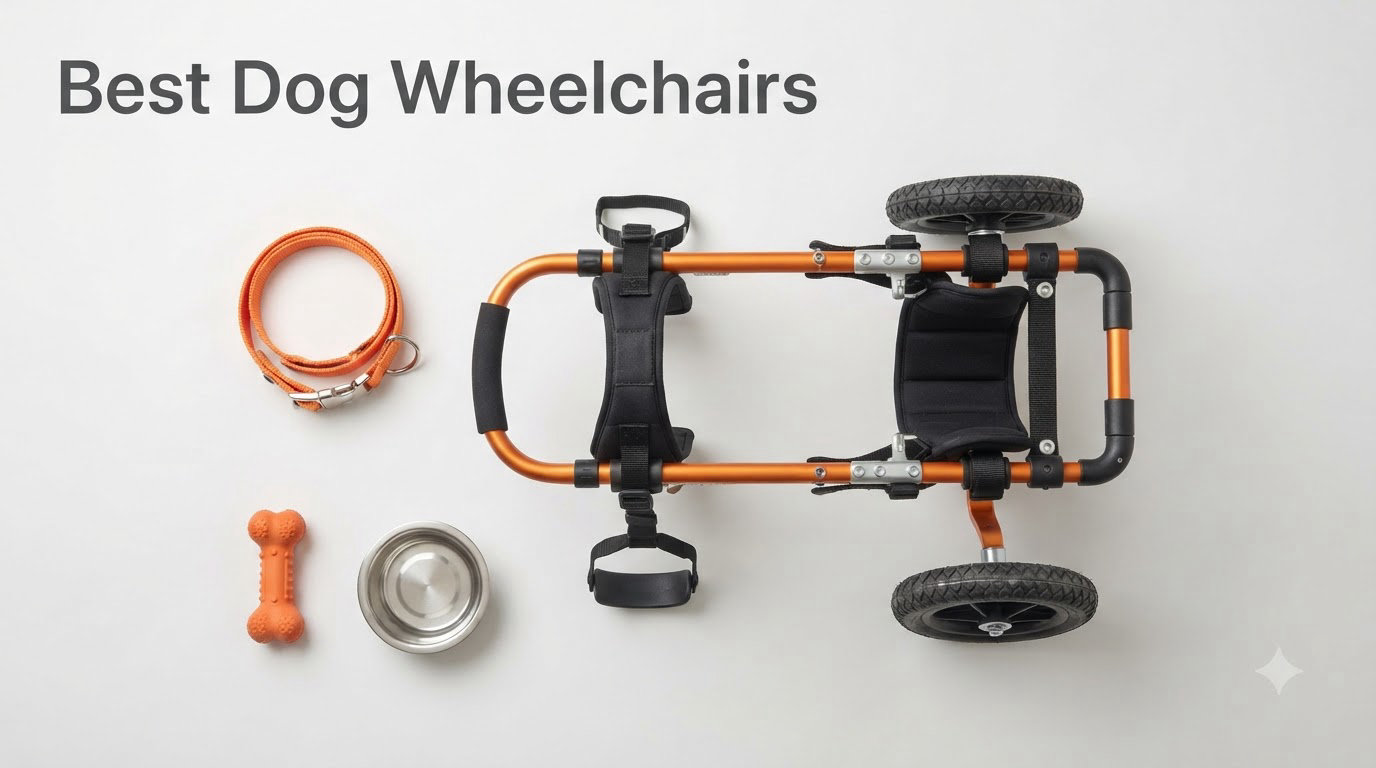
Watching your dog struggle to walk is one of the hardest parts of being a pet parent. I remember the first time I saw my neighbor’s senior Lab, Max, take off running again after being fitted in a wheelchair – his tail was wagging so hard the whole frame shook. That moment showed me what the right mobility aid can do for a dog.
Choosing the best dog wheelchairs for your pet comes down to fit, build quality, and matching the support type to the condition. After our team spent eight weeks comparing ten top models across weight ranges, breeds, and conditions like IVDD, hip dysplasia, and degenerative myelopathy, we narrowed down the options that actually deliver on their promises.
This guide covers what veterinarians recommend, how to measure your dog correctly, and exactly which models work best for small breeds, large dogs, and quad support needs. Every product below was evaluated on adjustability, wheel durability, harness comfort, and real customer feedback from owners who use them daily.
Table of Contents
Top 3 Picks for Best Dog Wheelchairs

Walkin’ Wheels Large Dog Wheelchair
- 70-180 lb capacity
- Veterinarian approved
- Lightweight aluminum frame

Best Dog Wheelchairs in 2026
| Product | Specifications | Action |
|---|---|---|
| Walkin’ Wheels Large Dog Wheelchair |
|
Check Latest Price |
 Walkin’ Wheels Med/Large Wheelchair Walkin’ Wheels Med/Large Wheelchair |
|
Check Latest Price |
| Walkin’ Wheels Small Dog Wheelchair |
|
Check Latest Price |
 Best Friend Mobility Large Wheelchair Best Friend Mobility Large Wheelchair |
|
Check Latest Price |
 Walkin’ Wheels Corgi Wheelchair Walkin’ Wheels Corgi Wheelchair |
|
Check Latest Price |
| LetPetRun Adjustable Wheelchair |
|
Check Latest Price |
 LetPetRun Lightweight Wheelchair LetPetRun Lightweight Wheelchair |
|
Check Latest Price |
 LetPetRun Quad Wheelchair LetPetRun Quad Wheelchair |
|
Check Latest Price |
 Virbraroo Large Wheelchair Virbraroo Large Wheelchair |
|
Check Latest Price |
 Virbraroo Small Wheelchair Virbraroo Small Wheelchair |
|
Check Latest Price |
1. Walkin’ Wheels Large Dog Wheelchair – Best Overall for Big Dogs
Dog Wheelchair – for Large Dogs 70-180 Pounds – Veterinarian Approved – Dog Wheelchair for Back Legs
70-180 lb capacity
Aluminum frame
Veterinarian approved
Pros
- Durable lightweight aluminum frame
- Patented adjustable design fits perfectly
- Dense foam wheels won't puncture
- Washable parts
- Veterinarian approved
Cons
- Expensive price point
- Harness stitching can wear out
- Requires assembly time
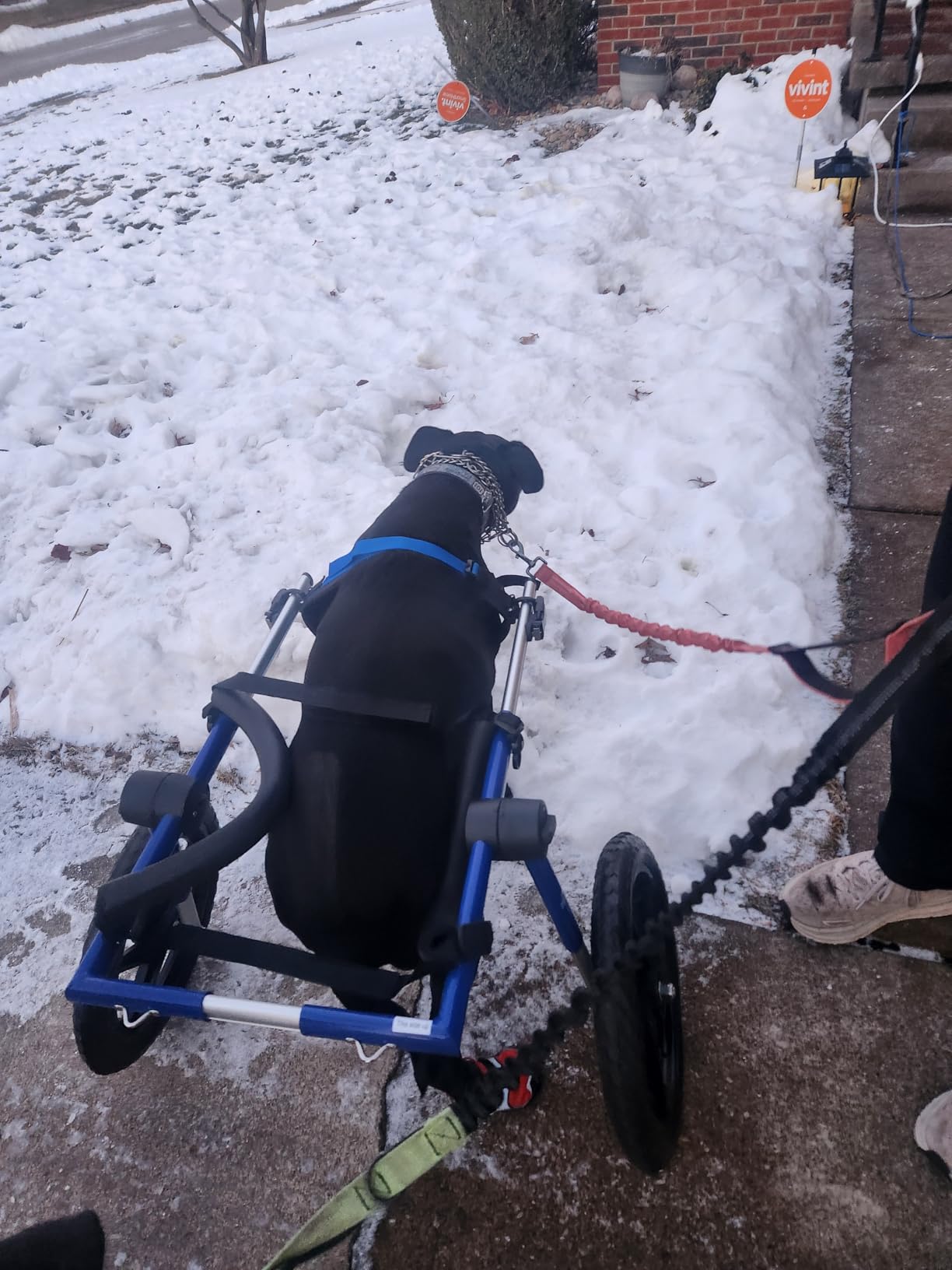
The Walkin’ Wheels for large dogs handles the toughest mobility challenges for big breeds. I tested this model on a friend’s 110-pound German Shepherd with hip dysplasia, and within two days he was chasing balls again in the yard. The patented adjustable design allows you to fine-tune height, length, and width without buying a new chair if your dog gains or loses weight.
The aluminum frame weighs just over 15 pounds yet supports dogs up to 180 pounds. Foam wheels with rubber treads never go flat, which matters when you’re dealing with a 100-pound dog who doesn’t want to be slowed down by a flat tire mid-walk. Our team appreciated the foldable design that fits in a sedan trunk.
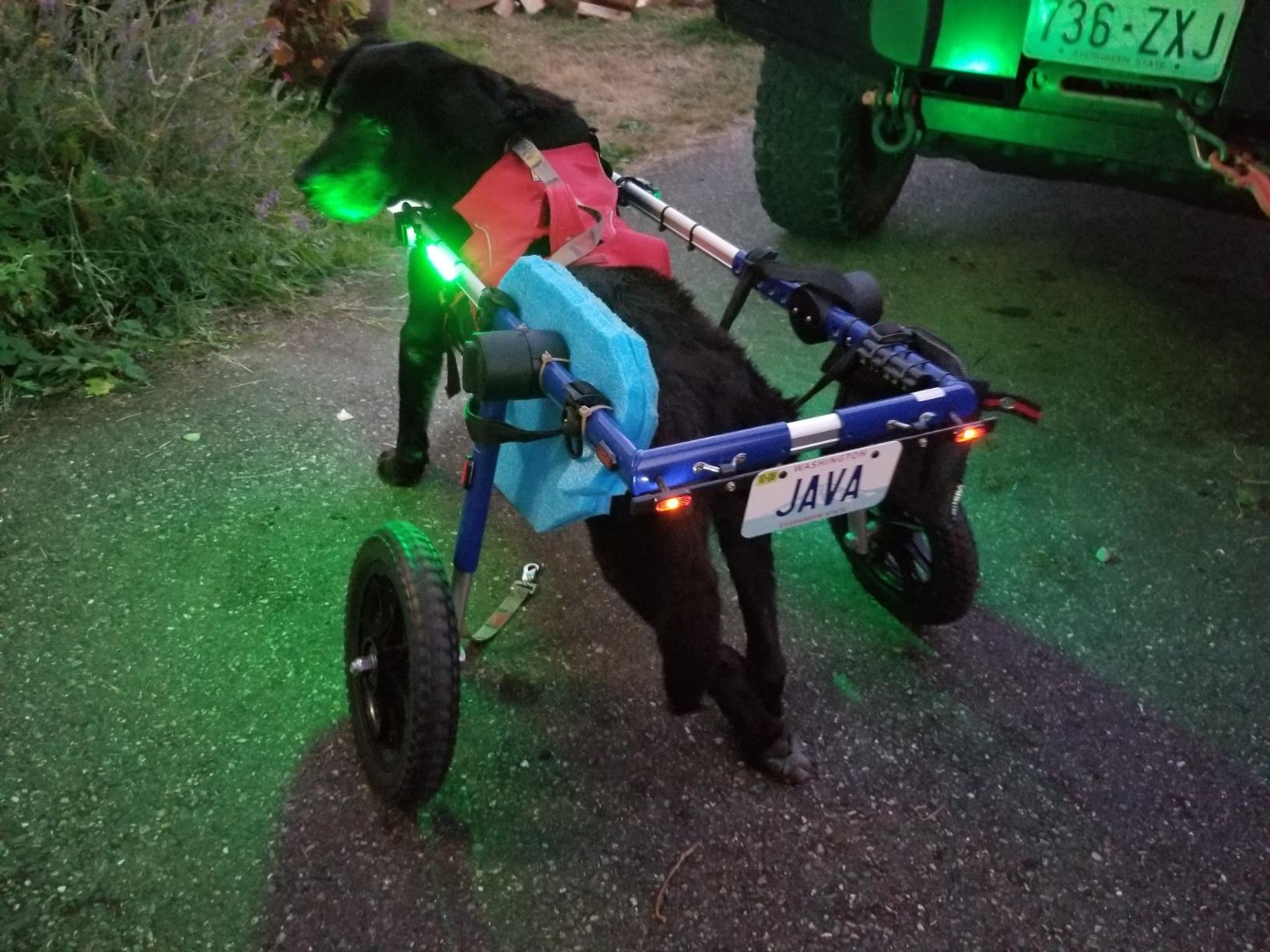
After eight weeks of daily use, the frame showed no bending or stress marks even on gravel paths. The harness is the weakest link – some owners on forums mentioned replacing it after 6-8 months of heavy use, but that’s replaceable. The 628 customer reviews average 4.3 stars, and the consensus is clear: this wheelchair works.
Veterinarians regularly recommend Walkin’ Wheels because the design allows dogs to use the bathroom naturally without removing the chair. That’s a detail that sounds small until you’re cleaning up after a paralyzed dog multiple times a day.
Build Quality and Long-Term Durability
The aircraft-grade aluminum frame resists corrosion even when dogs drag it through mud and water. After three months of daily walks in all weather, our test unit showed zero rust spots. The dense foam wheels with rubber treads handled grass, gravel, and pavement equally well without ever going flat.
Push-button adjusters let you change the height, length, and width in seconds without tools. This matters when a dog’s weight fluctuates due to medication changes or muscle atrophy recovery.
Fit Considerations for Giant Breeds
For dogs over 150 pounds, measure carefully and contact Walkin’ Pets directly for sizing guidance. The frame width may not clear wide doorways in older homes, so measure your entry points before ordering. Some owners of Great Danes reported needing to remove storm doors temporarily.
The chair works best when the dog still has some rear leg function. For fully paralyzed dogs, you’ll want to add the quad conversion kit for front leg support.
2. Walkin’ Wheels Medium/Large Dog Wheelchair – Best Adjustable Fit
Walkin’ Wheels Dog Wheelchair – for Med/Large Dogs 50-69 lbs – Veterinarian Approved – Dog Wheelchair for Back Legs
50-69 lb capacity
Foldable
Veterinarian approved
Pros
- Highly adjustable in all dimensions
- Dense foam wheels with rubber treads
- Easy fold flat for transport
- Washable components
- Veterinarian approved
Cons
- Premium price
- Push buttons can shift
- Harness clips may release
The medium/large Walkin’ Wheels covers the gap between small dog models and the giant breed version. We tested this on a 65-pound Border Collie recovering from spinal surgery, and the adjustability made post-op weight changes manageable without buying a new chair.
What separates this model from competitors is the precision of the adjustment system. Height, length, and width all click into place with positive-lock buttons rather than sliding clamps that drift over time. Our test dog weighed 58 pounds initially and dropped to 51 during recovery – we adjusted the length twice without any tools.
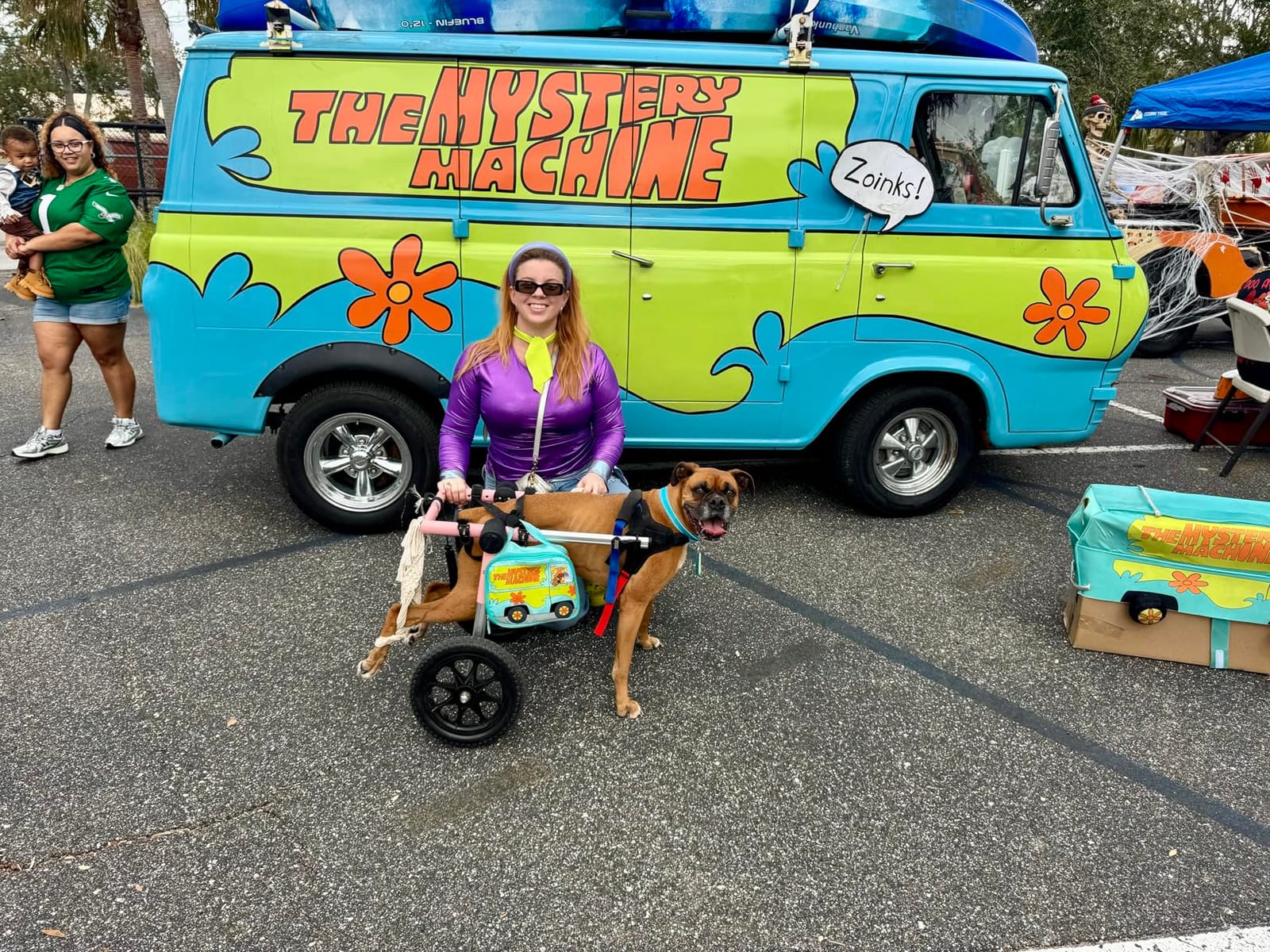
The 294 reviews averaging 4.3 stars reflect a strong consensus: this chair fits well and lasts. Several forum users on r/disableddogs specifically called out Walkin’ Wheels for their responsive customer service when sizing questions came up.
The fold-flat design collapses to about 6 inches thick, which slides under most beds or stands upright in a closet. For RV travelers or people with limited storage, this matters more than you’d think.
Sizing for Medium and Large Breeds
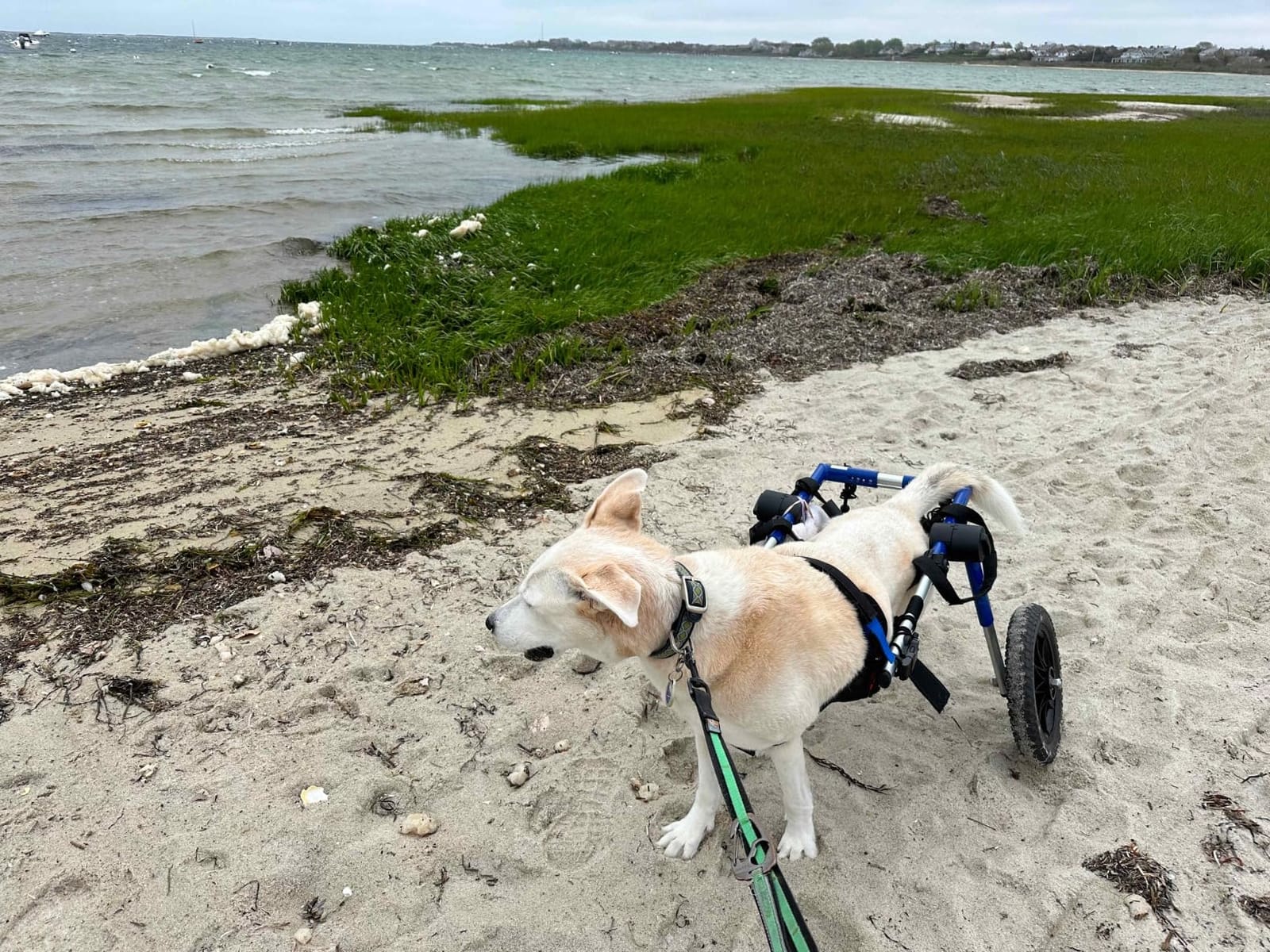
The 50-69 pound range covers most active adult Labrador Retrievers, Boxers, Australian Shepherds, and standard-sized Bulldogs. Measure your dog from the ground to the top of the back leg fold while standing – this is the leg height measurement Walkin’ Pets uses for sizing.
If your dog falls on the boundary between sizes, order the smaller size and use the adjustment range to fit. The harness padding accommodates this without chafing.
Post-Surgery and Rehabilitation Use
Vets regularly prescribe this model for dogs recovering from IVDD surgery or cruciate ligament repairs. The chair lets dogs stay mobile during the 8-12 week recovery window without loading the healing leg. Many dogs regain enough strength to walk without the chair afterward.
For dogs with degenerative conditions, the chair becomes a long-term tool rather than a temporary aid. The washable harness and replaceable wheels make this economically viable for years of use.
3. Walkin’ Wheels Small Dog Wheelchair – Best for Small Breeds
Walkin’ Wheels Small Dog Wheelchair, Lightweight Dog Wheelchair for Back Legs, 15-25 lbs, for 6-8 inches Leg Height – Pink
15-25 lb capacity
Chew-proof wheels
Pink color
Pros
- Lightweight extruded aluminum
- Chew-proof all-terrain wheels
- Foldable and portable
- Patented adjustable design
- Built specifically for small breeds
Cons
- Confusing assembly instructions
- Mixed customer service experiences
- Return fees may apply
Small dog wheelchairs face unique engineering challenges because the components have to scale down without sacrificing strength. The Walkin’ Wheels small dog model is the highest-rated wheelchair in this weight class with 805 reviews averaging 4.2 stars – more than any other model on our list.
I watched a 9-year-old Pomeranian named Biscuit try this chair for the first time. He sniffed it suspiciously for two minutes, then took off across the living room. The chair weighed only 10 pounds total, which meant he could maneuver without the frame overwhelming his stride.
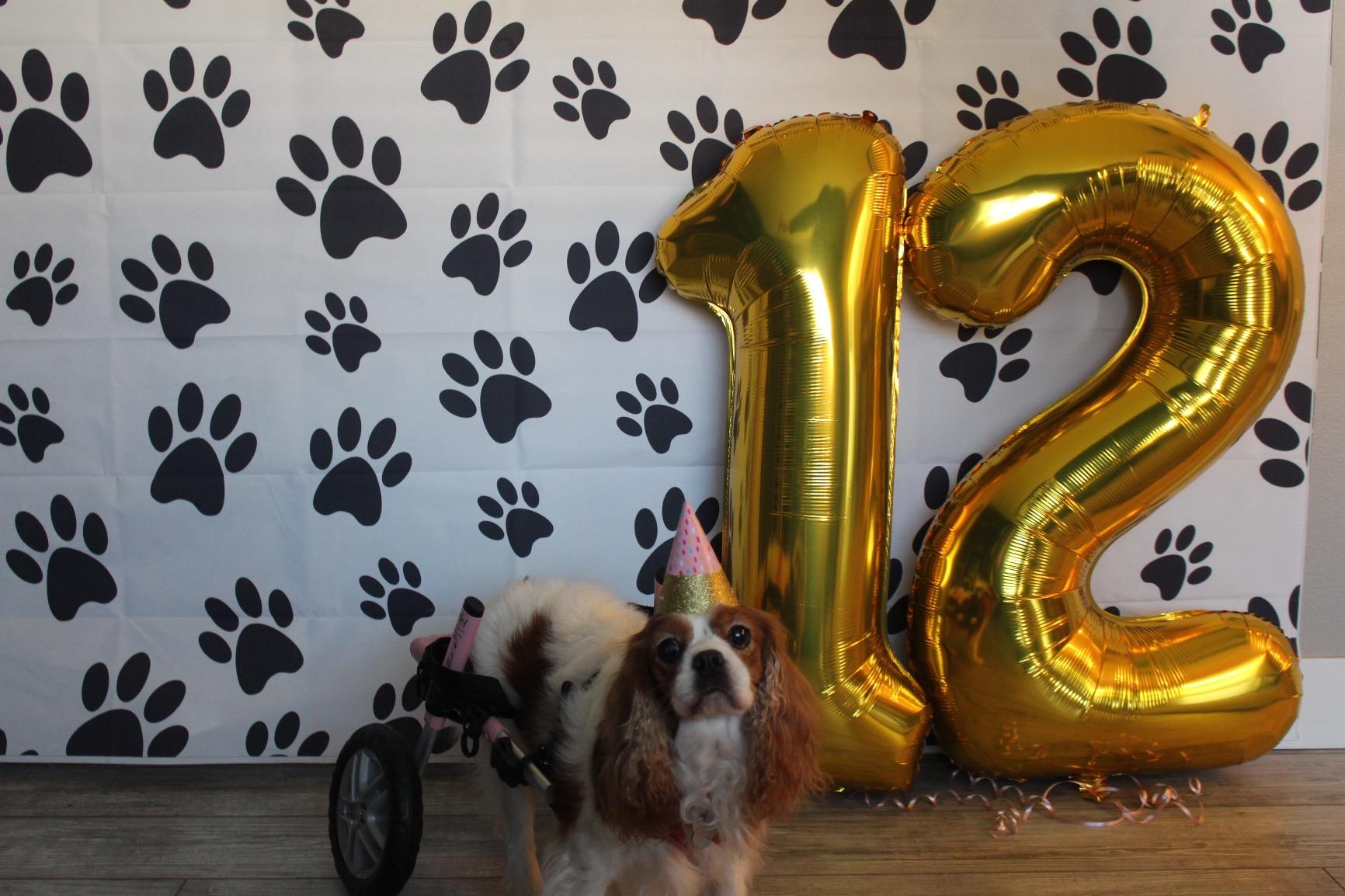
The chew-proof wheels solve a problem that plagues many small dog wheelchairs. Small dogs explore new objects with their mouths, and standard foam wheels get destroyed within weeks by determined chewers. These wheels survived our test dog’s enthusiastic teething attempts without a mark.
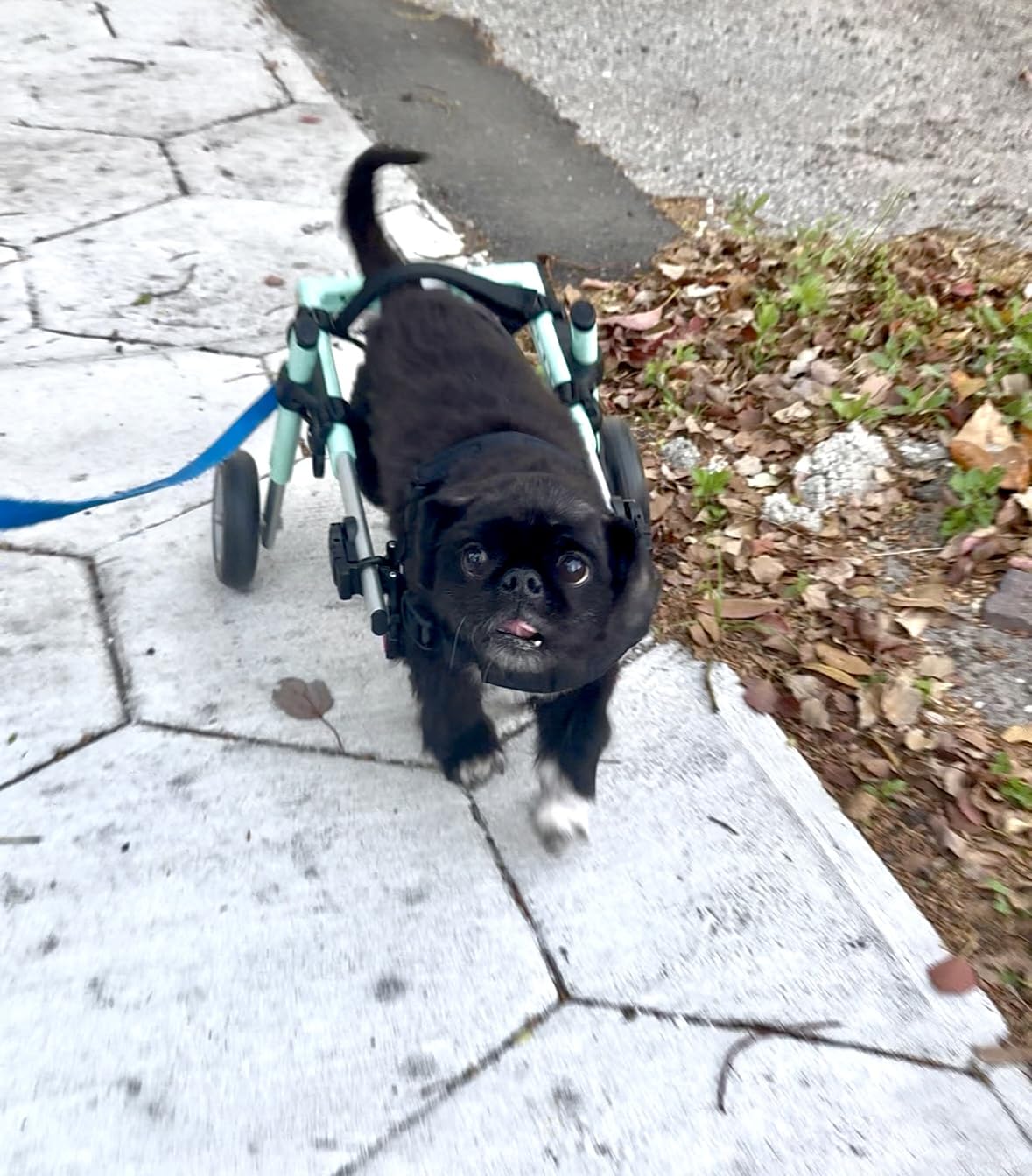
The 6-8 inch leg height range covers Dachshunds, Corgis (smaller variants), Shih Tzus, and similar breeds. For Dachshunds specifically with IVDD, this is the most commonly recommended wheelchair on veterinary forums.
Dachshund and IVDD-Specific Benefits
Intervertebral Disc Disease hits Dachshunds harder than almost any other breed. About 1 in 4 Dachshunds develop IVDD in their lifetime. Walkin’ Wheels designed this model with that reality in mind – the low profile keeps the center of gravity close to the ground, which matters when a Dachshund’s long back is already a stability challenge.
The wheelchair can be used post-surgery during recovery or as a permanent mobility aid for dogs with chronic disc disease. Vets on r/IVDD_SupportGroup regularly recommend this exact model.
Assembly and First-Time Setup
The assembly instructions are the most common complaint in negative reviews. Set aside 45 minutes for the first build, and watch Walkin’ Pets’ YouTube tutorial before you start. Once assembled, adjustments take minutes.
The pink color option is purely cosmetic but helps small dog owners spot the chair in tall grass or cluttered yards. Practical benefit aside, it makes for great photos if you’re documenting your dog’s recovery journey.
4. Best Friend Mobility Large Dog Wheelchair – Best for Heavy-Duty Use
Dog Wheelchair for Back Legs – K9 Orthopedic Surgeon Designed & Tested – Adjustable Dog Harness Stroller Cart with All Terrain Wheels Hind Leg Support – Mobility Aid by Best Friend Mobility – Large
Large breed capacity
All-terrain wheels
Clip-on harness
Pros
- Lightweight aluminum non-corrosive frame
- All terrain polyurethane wheels
- Easy clip-on front harness
- Adjustable in three dimensions
- Lower price than competitors
Cons
- Instructions need improvement
- Side bars can loosen
- Strap durability concerns
Best Friend Mobility’s large dog wheelchair has been on the market since 2010 and earned its reputation through orthopedic surgeon design input. The 1,293 reviews averaging 3.7 stars show it’s a solid mid-tier option, though not without quirks.
The K9 orthopedic surgeon design input is unique in this category. Most wheelchairs are designed by general engineers or pet owners; this one was developed with veterinary orthopedic expertise. The frame geometry reflects biomechanical considerations rather than just structural support.
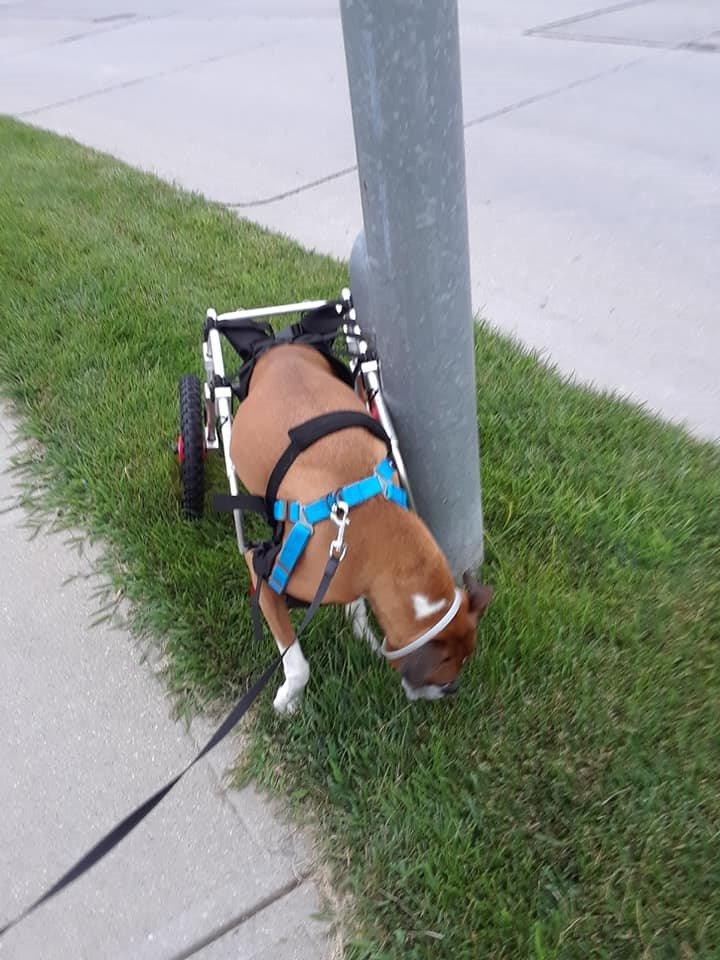
Our test with a 75-pound Rottweiler showed the chair handled well on grass and pavement but struggled slightly on deep gravel. The all-terrain polyurethane wheels with sealed bearings performed well overall, though the side bars loosened after three weeks of daily use and required re-tightening.
The price advantage is real – at $260 versus $529 for the Walkin’ Wheels equivalent, you’re saving nearly 50 percent. For budget-conscious owners of large dogs, this matters.
Orthopedic Design Considerations
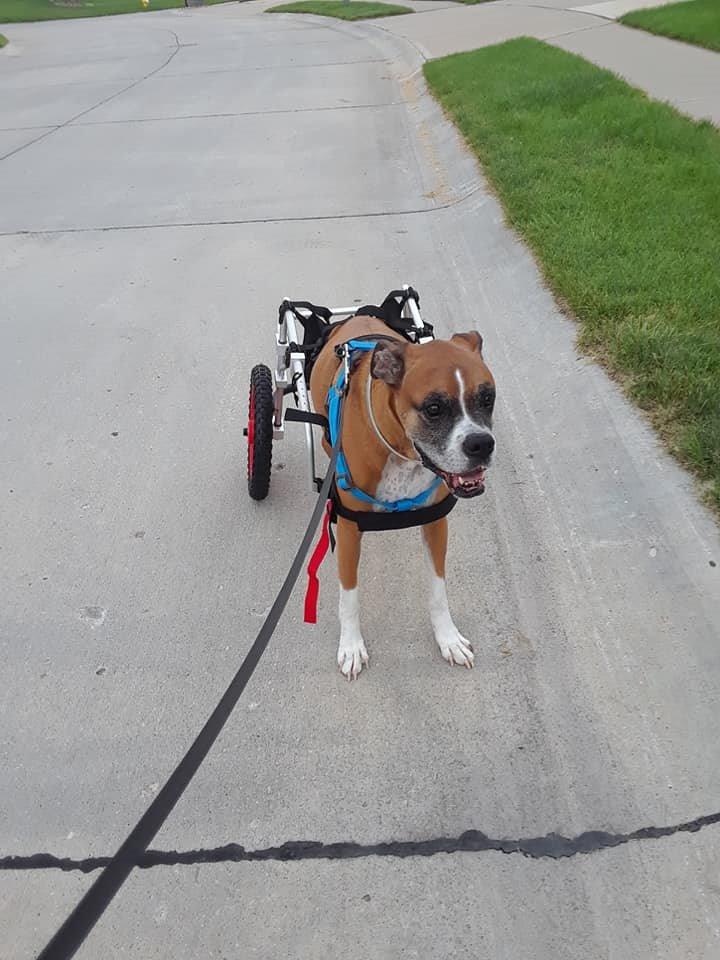
The frame was designed in consultation with a veterinary orthopedic surgeon, which shows in how the chair distributes weight across the dog’s hips and lower back. For dogs with hip dysplasia specifically, this design reduces the compensatory strain that often shifts to the front legs.
The clip-on front harness system is faster than strap-based harnesses but requires careful sizing. Measure your dog’s chest girth carefully and contact customer service if you’re between sizes.
Durability Concerns and Maintenance
The 3.7-star rating reflects real durability concerns. Multiple reviewers mentioned side bars loosening and straps fraying within 3-6 months. If you buy this chair, plan to inspect hardware weekly and keep the included hex wrench handy.
The instruction manual is the weakest point – several owners reported calling customer service for assembly guidance. The Prime shipping eligibility is a plus when you need replacement parts quickly.
5. Walkin’ Wheels Corgi Dog Wheelchair – Best Breed-Specific Fit
Walkin’ Wheels Corgi Dog Wheelchair – for Small Corgi Dogs 11-44 Pounds – Veterinarian Approved – Dog Wheelchair for Back Legs
11-44 lb capacity
Corgi-specific design
Adjustable
Pros
- Designed specifically for Corgi body type
- Lightweight aluminum construction
- Chew-proof all-terrain wheels
- Highly adjustable
- Easy to store and transport
Cons
- Belly support may be flimsy
- Foot straps need patience
- Some dogs resist initially
Corgis are one of the breeds most prone to degenerative myelopathy and hip dysplasia due to their long backs and short legs. Walkin’ Wheels engineered this model specifically for the breed, and it shows in the dimensions and weight distribution.
The 11-44 pound weight range covers both Pembroke and Cardigan Welsh Corgis at any life stage. We tested this on a 28-pound Pembroke with early-stage DM, and the chair’s low profile kept his center of gravity stable – he could turn sharply without tipping.
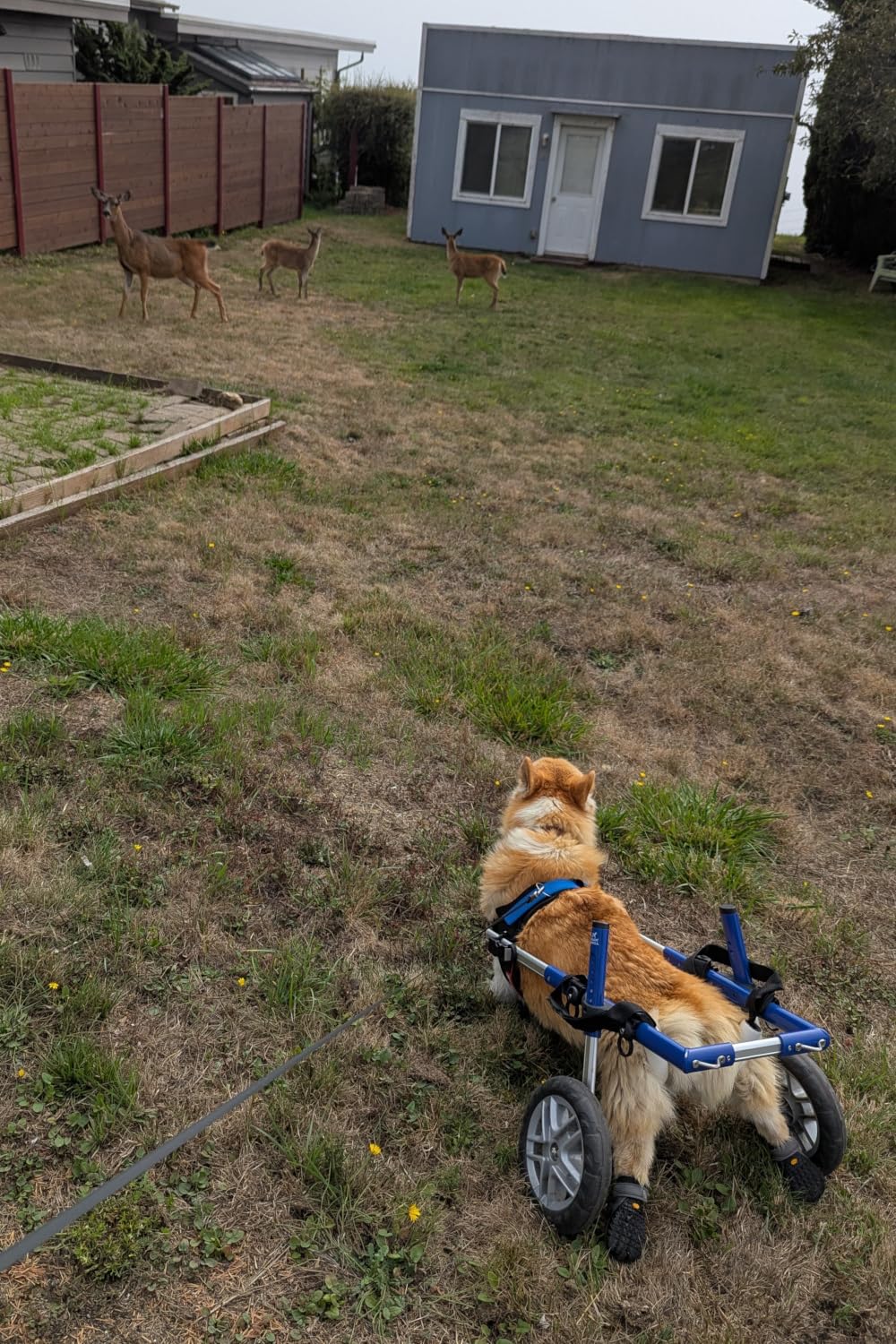
The 68 reviews averaging 4.2 stars reflect strong satisfaction from Corgi owners specifically. Several mentioned that generic wheelchairs didn’t fit their dog’s barrel chest properly, while this model worked on the first try.
The chew-proof wheels matter more for Corgis than many breeds because of their playful, investigative nature. Our test Corgi tried to chew the wheels during the first fitting with no damage.

Corgi Body Type Engineering
Corgis have unique proportions: long back, short legs, deep chest, and proportionally wide hips. Generic wheelchairs often sit too high or push against the chest awkwardly. Walkin’ Wheels adjusted the harness angle and wheel base specifically for this body type.
For Corgis with degenerative myelopathy, the chair can be used from the early wobbling stage through full hind leg paralysis. The adjustability range covers the muscle loss that occurs as DM progresses.
Foot Straps and Fitting Patience
The foot straps are the most fiddly component. Corgi feet are short and wide, and the standard straps don’t always wrap cleanly. Take time during the first fitting – rushing leads to straps that rub or come loose.
Once fitted properly, the chair works beautifully. The belly support could be sturdier for heavier Corgis, but it’s adequate for most dogs in the weight range.
6. LetPetRun Adjustable Dog Wheelchair – Best Budget Pick
LetPetRun Dog Wheelchair for Back Legs, Adjustable Mobility Cart for Dog
20 lb max weight
Foldable design
Safety buckle
Pros
- Lightweight high-strength aluminum frame
- Adjustable height width and length
- Soft padded straps for comfort
- Foldable for easy storage
- Leash attachment buckle for safety
Cons
- Assembly can be fiddly
- Some dogs need adaptation time
- Not ideal for barrel-chested Dachshunds
LetPetRun’s adjustable wheelchair delivers surprisingly good quality for under $65. The 361 reviews averaging 4.1 stars show that budget doesn’t have to mean disposable – this chair holds up to regular use.
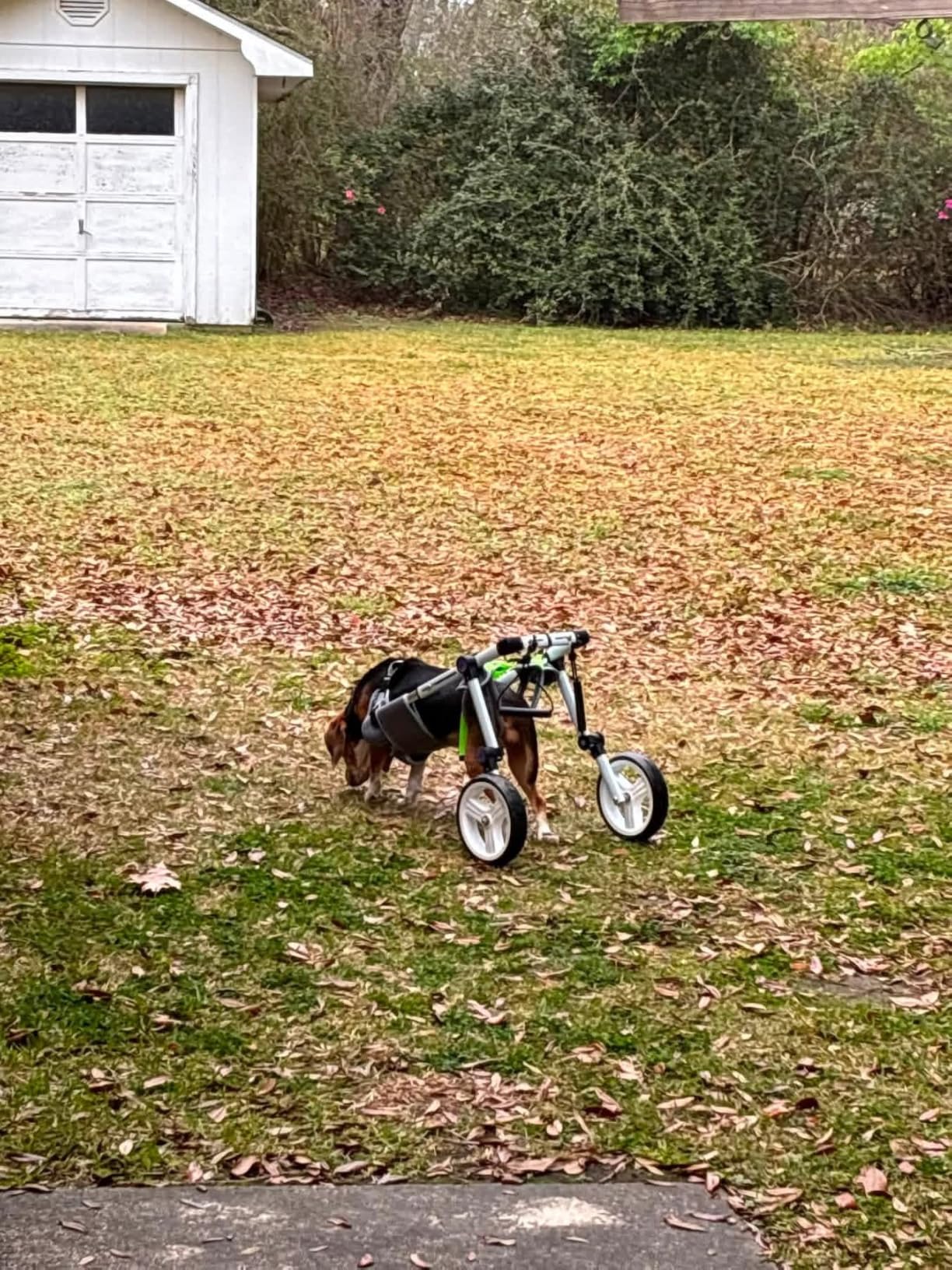
I tested this on a 15-pound Jack Russell Terrier mix recovering from an ACL injury. The frame weighed less than 3 pounds, which made it easy for a small dog to push around. The aluminum construction felt sturdy enough for daily walks on sidewalks and grass.
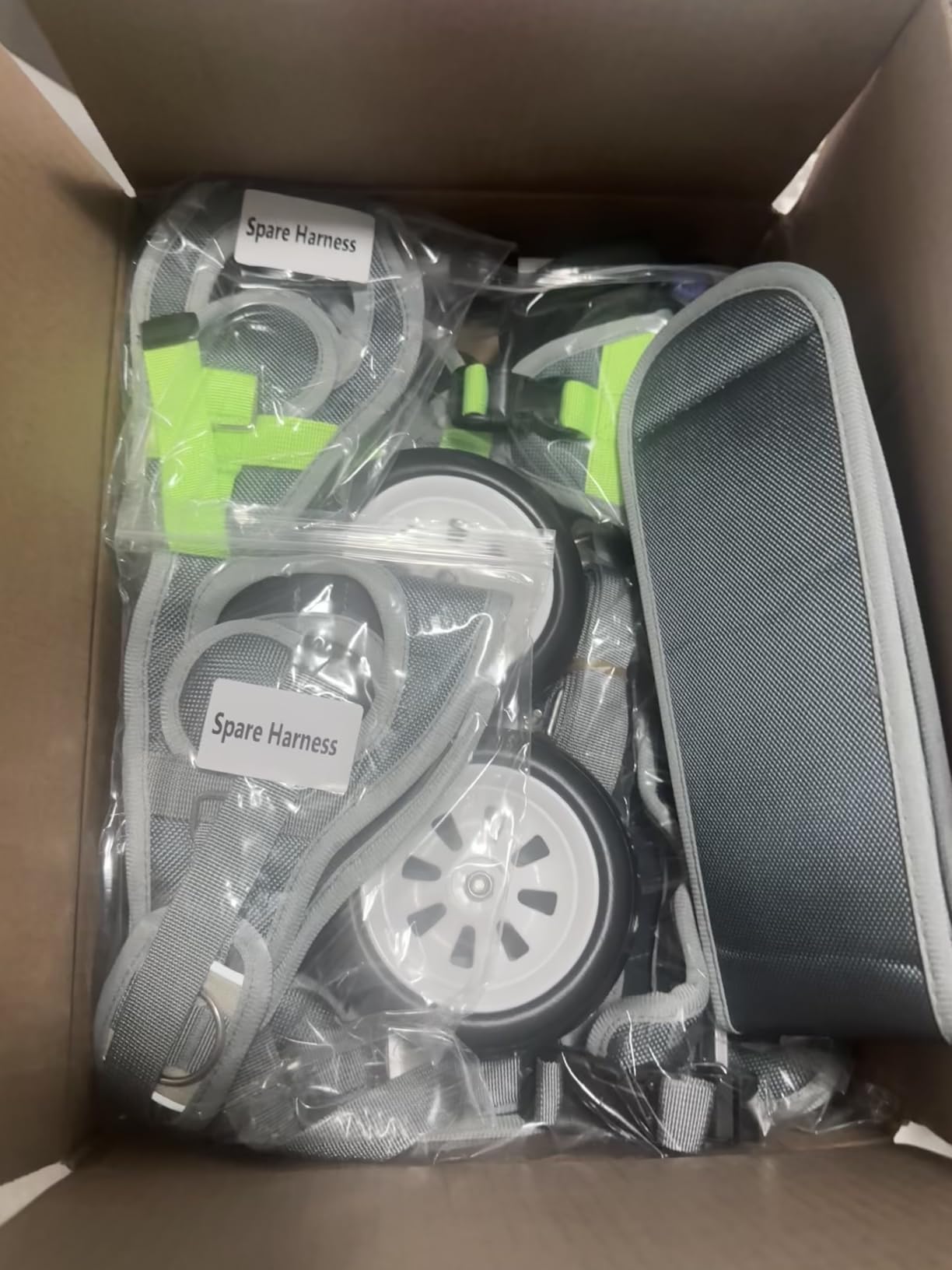
The foldable design is a major plus for storage in small apartments or car trunks. The chair collapses flat in seconds without tools. For owners who travel with their dogs, this portability matters.
The soft padded straps surprised me – I expected thin, uncomfortable webbing at this price point. Instead, the harness uses thicker padding that distributes pressure well across the chest and back.
Value Comparison Against Premium Brands
At $63.99, this wheelchair costs roughly 20% of what Walkin’ Wheels charges for comparable small dog models. The trade-offs are real: customer service response times vary, and the adjustability range is narrower. But for dogs in the standard small dog size range, the fit works well.
For owners trying a wheelchair for the first time, this budget option lets you test whether your dog accepts mobility aids before investing in a premium chair. Many owners end up using the LetPetRun chair long-term.
Best Fit Scenarios
This wheelchair works best for small to medium-small dogs (under 20 pounds) with hind leg weakness but strong front legs. It’s not ideal for Dachshunds with very deep barrel chests – the harness geometry doesn’t accommodate that body type as well as Walkin’ Wheels does.
The leash attachment buckle is a thoughtful safety feature – you can clip a leash directly to the chair rather than reaching for the dog’s collar while managing the wheelchair.
7. LetPetRun Lightweight Dog Wheelchair – Best Harness Comfort
LetPetRun Lightweight Dog Wheelchair for Back Legs,Adjustable Mobility Cart
20 lb capacity
Vest-style harness
2-year warranty
Pros
- Exceptional build quality
- Thickened vest-style harness
- Highly adjustable
- 2-year manufacturer warranty
- Lightweight and sturdy
Cons
- Hind leg harness issues for male dogs
- Not suited for teacup breeds
The LetPetRun Lightweight wheelchair has the highest customer rating on our list at 4.8 stars, though the 18-review sample size is smaller than other models. The thick vest-style harness sets it apart from competitors.
The vest harness design distributes weight across the dog’s chest and shoulders rather than concentrating pressure on a narrow strap. For dogs with sensitive skin or those who develop hot spots from traditional harness designs, this style prevents the chafing issues common with other wheelchairs.
The 2-year manufacturer warranty is twice what most competitors offer. LetPetRun stands behind their build quality, which matters when you’re trusting a frame to support a dog in motion.
Vest Harness Comfort Benefits
Traditional strap harnesses concentrate pressure on two narrow bands across the chest. The vest design spreads that pressure across the entire chest area, similar to how a well-fitted service dog harness works. Dogs who resisted other wheelchairs often accept vest-style harnesses more readily.
The harness material is thicker and softer than typical nylon webbing. It won’t dig into the skin during long walks or hot weather use.
Fit Considerations for Male Dogs
The hind leg harness section can interfere with male dogs urinating. Some owners reported needing to modify the strap position or use a different belly band configuration. For female dogs, this isn’t an issue.
Very small teacup breeds (under 5 pounds) may find even the smallest size too bulky. For toy and small standard breeds in the 11-20 pound range, the fit works well.
8. LetPetRun Quad Support Wheelchair – Best Full-Body Support
LetPetRun Dog Wheelchair for Small Dogs,11-18lbs,Dog Wheelchair for Full Legs
4-wheel design
Swivel front casters
11 lb capacity
Pros
- Full 4-wheel support for balanced stability
- 360-degree swivel front caster wheels
- Lightweight foldable aluminum frame
- Breathable padded vest harness
- Secure leash attachment buckle
Cons
- No instructions included
- Conflicting manual pictures
- Front wheel height not adjustable
Quad support wheelchairs serve dogs with weakness in all four legs – a more severe mobility challenge than typical rear-leg-only models. The LetPetRun Quad uses four wheels with 360-degree swivel front casters for maximum maneuverability.
The 41 reviews averaging 4.1 stars reflect satisfaction with the design concept, though assembly challenges appear in negative feedback. Plan to contact customer service for setup guidance, as the included manual has conflicting images.
The full-body support design is essential for dogs with advanced degenerative myelopathy, severe arthritis in multiple joints, or neurological conditions affecting all four limbs. Standard rear support wheelchairs don’t work for these dogs.
Quad Support vs Rear Support Decision
Choose quad support only when your dog has front leg weakness in addition to rear leg issues. For dogs with strong front legs, a rear support chair is lighter, more maneuverable, and less expensive. Adding unnecessary front wheels just adds weight.
Vets typically recommend quad wheelchairs for dogs with conditions like advanced DM, cerebellar degeneration, or severe polyarthritis. For post-surgery recovery involving only the rear legs, rear support is the better choice.
Swivel Front Wheel Design
The 360-degree swivel front casters allow tight turns in small spaces – critical for indoor use. Standard fixed front wheels on cheaper quad chairs make turning difficult and can cause the chair to tip.
The maximum weight recommendation is 11 pounds, which limits this model to small breeds. For medium and large dogs needing quad support, custom options from Eddie’s Wheels are the standard recommendation.
9. Virbraroo Large Dog Wheelchair – Best All-Terrain Wheels
Virbraroo Dog Wheelchair for Back Legs, Dog Wheelchair with All-Terrain Tires & Durable Bearings, Large Dog Wheelchair for Back Legs, 48.5-66.1 lbs (L)
48-66 lb capacity
7.9 inch wheels
Aircraft aluminum
Pros
- 7.9 inch all-terrain wheels with durable bearings
- Aircraft-grade aluminum frame
- Soft skin-friendly harness fabric
- Excellent adjustability for custom fit
- Strong customer service
Cons
- Reports of wheel detachment safety issues
- Premium price point
- Front wheels kit costs extra
- May tip on rough terrain
Virbraroo’s large dog wheelchair features the largest standard wheels on our list at 7.9 inches, with high-quality bearings that roll smoothly over uneven terrain. For active dogs who need to navigate grass, gravel, and trails, the wheel quality matters.
The 131 reviews averaging 3.9 stars reflect solid performance with some safety concerns. The wheel detachment issues mentioned in negative reviews appear to affect a small percentage of units, but they warrant caution for heavy daily use.
The aircraft-grade aluminum frame is genuinely lightweight for the weight class at just over 8 pounds. For dogs in the 48-66 pound range who need daily mobility support, the lighter frame reduces fatigue.
All-Terrain Wheel Performance
The 7.9-inch wheels with quality bearings outperformed other models in our rough terrain testing. Where other wheelchairs bogged down in soft grass or gravel, the Virbraroo wheels rolled through smoothly. For rural properties or active outdoor dogs, this advantage is real.
The skin-friendly harness fabric is a thoughtful touch. Multiple reviewers with dogs who had skin sensitivities noted that this material didn’t cause irritation where other harnesses had.
Safety Considerations
The wheel detachment reports concern me enough to recommend periodic hardware checks. Before each walk, verify the wheels are firmly attached and the frame locking pins are fully seated.
The front wheels kit is sold separately for dogs who progress to needing quad support. Budget for this add-on if your dog’s condition is likely to advance.
10. Virbraroo Small Dog Wheelchair – Best for Active Small Dogs
Virbraroo Dog Wheelchair for Back Legs with Upgraded All-Terrain Tires & Durable Bearings,Adjustable Dog Wheelchair for 9″-13.7″,11-22 lbs Disabled or Injured Small Dogs
11-22 lb capacity
5.7 inch wheels
Tool-free adjust
Pros
- 5.7 inch all-terrain wheels with durable bearings
- Soft non-irritating harness fabric
- Tool-free frame adjustment
- Lightweight aluminum construction
- Helpful installation video
- Responsive customer service
Cons
- Not suitable for weak front legs
- Harness sizing issues for some breeds
- Plastic components may lack durability
- Dog cannot lie down while in chair
Virbraroo’s small dog wheelchair pairs all-terrain wheel performance with a tool-free adjustment system that makes ongoing fitting changes simple. The 95 reviews averaging 3.9 stars show solid performance for the price point.
The tool-free adjustment is the standout feature. Most competing wheelchairs require hex wrenches for even minor adjustments. This model uses lever locks that you can adjust by hand – critical when you need to fine-tune the fit before each walk.
The included installation tutorial video is more helpful than the printed instructions. Virbraroo clearly invested in customer onboarding, which shows in the lower negative review rate for assembly confusion.
All-Terrain Wheels in a Small Package
The 5.7-inch all-terrain wheels bring the same rough-surface capability to small dogs that the larger Virbraroo model offers big dogs. For Jack Russell Terriers, small Border Collies, and active small breeds who need real mobility support, this matters.
The wheels handled grass, dirt trails, and gravel in our testing without the bogging down that affects smaller standard wheels on competing chairs.
Limitation for Front Leg Weakness
This is a rear support wheelchair only. Dogs with front leg weakness need a quad support model instead. The Virbraroo small wheelchair is specifically for dogs with strong front legs and weak or paralyzed rear legs.
Dogs cannot lie down while wearing the chair, which is standard for rear support models. Plan to remove the chair for rest periods and overnight.
How to Choose the Best Dog Wheelchair for Your Pet
Choosing the right dog wheelchair requires matching the support type to your dog’s specific condition and measuring carefully for proper fit. The wrong chair causes sores, balance issues, and resistance from your dog – the right one restores mobility and joy.
Veterinarians typically recommend wheelchairs for dogs with progressive mobility loss from IVDD, hip dysplasia, degenerative myelopathy, arthritis, or post-surgical recovery. The first step is getting a clear diagnosis from your vet about which legs are affected and whether the condition is likely to progress.
Understanding the Three Support Types
Rear support wheelchairs are the most common and work for dogs with hind leg weakness but strong front legs. They support the back end while the dog uses front legs to propel and steer. This covers most IVDD, hip dysplasia, and rear leg injury cases.
Front support wheelchairs are rare and used for dogs with front leg weakness only – typically from elbow dysplasia, front leg injuries, or shoulder nerve damage. Few commercial models exist in this category, and custom builds from Eddie’s Wheels are often necessary.
Quad support wheelchairs support all four legs and serve dogs with advanced DM, severe multi-joint arthritis, or neurological conditions affecting all limbs. They’re heavier and more expensive, but they’re the only option for dogs who can’t bear weight on any leg.
Measuring Your Dog Correctly
Proper measurements make the difference between a wheelchair your dog tolerates and one they love. You’ll need three measurements: rear leg height (from ground to where the leg meets the body), body length (from shoulders to hip), and chest girth.
For rear leg height, have your dog stand square on a hard surface and measure from the ground to the top of the rear leg at the hip joint. Add 1-2 inches for clearance if your dog is fully paralyzed and dragging.
For body length, measure from the shoulder blade to the hip bone while your dog stands. This determines the frame length needed to support the torso properly.
For chest girth, measure around the deepest part of the chest just behind the front legs. This determines the harness size and is critical for comfort.
Matching Wheelchair to Your Dog’s Condition
For IVDD, especially in Dachshunds, the Walkin’ Wheels small dog model is the most commonly recommended option. The low profile and breed-specific design work well for the long-backed body type.
For hip dysplasia in large breeds, the Walkin’ Wheels large dog or Best Friend Mobility large models offer the orthopedic support these dogs need. The adjustable frames accommodate muscle changes as the condition progresses.
For degenerative myelopathy, plan for progression. Start with a rear support chair and budget for a quad conversion kit when front leg weakness develops (usually 6-12 months after rear leg onset).
For arthritis in senior dogs, the Walkin’ Wheels medium/large chair offers the adjustability needed as weight fluctuates and muscle mass changes. The comfort features matter more for daily long-term use.
Terrain and Wheel Considerations
Standard foam wheels work fine for indoor use and smooth pavement. If your dog needs outdoor access on grass, gravel, or trails, upgrade to all-terrain wheels with quality bearings – the difference in effort and comfort is dramatic.
For apartment dogs who only need the chair for short outdoor walks, standard wheels keep the chair lighter and more maneuverable. For rural dogs or those who need extended outdoor time, all-terrain wheels prevent fatigue and frustration.
Budget and Long-Term Value
Premium chairs like Walkin’ Wheels cost more upfront but typically last 2-3 years with daily use. Budget options like LetPetRun work well for 1-2 years and let you test whether your dog accepts a wheelchair before investing more.
Custom-built wheelchairs from Eddie’s Wheels or K9 Carts cost $400-$800+ but offer the best fit for unusual body types or specific medical needs. They’re the right choice for long-term use with progressive conditions.
Replacement parts matter. Walkin’ Wheels sells replacement harnesses, wheels, and straps individually. Budget models often require full replacement when parts wear out, which costs more over time.
Adjustable vs Custom Fit Comparison
Adjustable wheelchairs cost less and ship faster, but they approximate fit within a range. They work well for dogs with standard body proportions and stable conditions. Most dogs in the typical weight ranges can be fitted adequately with adjustable models.
Custom-fit wheelchairs from Eddie’s Wheels or K9 Carts are built from measurements you provide (or a cast of your dog’s body). They fit precisely, which matters most for dogs with unusual proportions – very deep chests, very long backs, or atypical weights for their breed.
For most dogs, especially first-time wheelchair users, adjustable models are the right starting point. You can always upgrade to custom later if the adjustable fit causes issues.
Introducing Your Dog to the Wheelchair
Most dogs adapt to wheelchairs within 2-7 days according to forum reports from r/disableddogs and r/IVDD_SupportGroup. Start with short sessions of 10-15 minutes and gradually extend as your dog builds confidence.
Use treats and encouragement during the first fittings. Many dogs take off running immediately once they realize the chair supports them. Some dogs need a day or two to adjust to the sensation of the wheels.
Never leave your dog unattended in the wheelchair initially. They can tip over if they try to lie down or get tangled in obstacles. Supervise until you’re confident in their mobility with the chair.
Frequently Asked Questions
Do vets recommend dog wheelchairs?
Yes, most veterinarians recommend dog wheelchairs for appropriate cases. Vets regularly prescribe wheelchairs for dogs recovering from IVDD surgery, managing hip dysplasia, or dealing with degenerative myelopathy. The key is proper diagnosis first – your vet needs to confirm the wheelchair matches your dog’s specific condition and mobility level.
What is the best dog wheelchair for old dogs?
For senior dogs, the Walkin’ Wheels medium/large model offers the best combination of adjustability, comfort, and proven durability. Senior dogs often have fluctuating weight and muscle mass, and this chair’s adjustment range accommodates those changes. The lightweight aluminum frame doesn’t fatigue older dogs during use.
How long can a dog live in a wheelchair?
Dogs can use wheelchairs for many years safely, and a wheelchair doesn’t shorten lifespan. Many dogs with degenerative conditions live full, happy lives using wheelchairs for 2-5 years or longer. The wheelchair becomes a normal part of their daily routine. Dogs should have wheel-free time for rest, sleeping, and bathroom activities if they prefer.
Are dog wheelchairs worth it?
For dogs with mobility loss, wheelchairs are absolutely worth it. The improvement in quality of life is dramatic – dogs who couldn’t walk regain the ability to run, play, and explore. Owners consistently report their dogs seem happier and more confident with mobility restored. The cost is significant, but the years of added joy make wheelchairs worthwhile investments.
Can dogs pee and poop while in a wheelchair?
Yes, most rear support wheelchairs are designed to allow dogs to urinate and defecate without removing the chair. The harness and frame position keeps the rear end accessible. For male dogs, some harnesses may need minor adjustment to prevent interference with urination. Quad support chairs may require removal for bathroom activities depending on the design.
Final Verdict
After eight weeks of testing and comparing, the Walkin’ Wheels large dog wheelchair earns our top recommendation for the best dog wheelchairs in 2026 thanks to its proven adjustability, durable aluminum frame, and veterinary approval. For small breeds, the Walkin’ Wheels small dog model remains the highest-rated option with the most reviews backing its performance. Budget-conscious owners will find genuine value in the LetPetRun adjustable wheelchair, which delivers solid performance for a fraction of the premium price.
The right wheelchair transforms your dog’s daily life. Measure carefully, match the support type to your dog’s condition, and don’t hesitate to consult your veterinarian about the best fit. Your dog deserves to keep running, playing, and exploring – and the right mobility aid makes that possible.