

A stock tank de-icer is a thermostatically controlled electric heater, usually 500 to 1,500 watts, that you submerge, float or screw onto the drain plug of a livestock water tank so the water stays liquid through freezing weather. A built-in thermostat cycles the element only when the water nears freezing, which is what keeps the power draw manageable all winter.
Livestock cannot drink ice. A frozen-over trough means hauling water, breaking ice with a boot or an axe, and checking animals twice a day for months. For horses and cattle that is a genuine welfare problem, not just an inconvenience, because a horse that will not drink in cold weather risks impaction colic.
I spent a winter season comparing the three mounting formats side by side and reading what owners actually reported after one, two and three seasons of use. This guide covers the best stock tank de-icers for cattle, horses, goats, sheep, poultry, backyard ponds and cold plunge tubs, and it names the drawbacks of each one instead of listing twelve glowing winners.
Two things decide most purchases. The first is tank volume, because a 500 watt unit in a 300 gallon rubber tank in Alberta is an expensive ice block. The second is the container material, because a bare heating element sitting against a plastic wall is a genuine safety and melting concern that shows up in almost every forum thread on this topic.
If your winters are mild or your tank is small, you may not need a de-icer at all. I cover that case honestly in the buying guide, because a weekly water change beats a permanently installed heater in some setups.
Table of Contents
Top 3 Best Stock Tank De-Icers in 2026
These three cover the realistic range of use cases. The 500 watt submersible is the safest default for small and medium tanks, the drain plug two-pack solves the problem for owners with several tanks, and the convertible cast aluminum unit is the one most people end up buying twice.

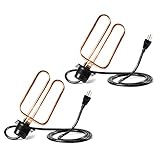
Farm Innovators 500W Submersible
- 500 watts
- Thermostat controlled
- Cast aluminum body
- Safe in plastic tanks
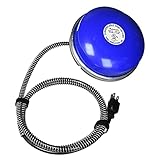
Farm Innovators H-418C Convertible
- 1250 watts
- Floating or submersible
- Anti-chew cord
- Three year warranty
All 12 Best Stock Tank De-Icers Side by Side (September 2026)
Every de-icer below appears once in this table and again in its own review below, with the same wattage, mounting format and plastic-tank rating so you can compare the whole field before reading any single write-up.
| Product | Specifications | Action |
|---|---|---|
| Farm Innovators Submersible 500W |
|
Check Latest Price |
| Farm Innovators DPH-15 2-Pack |
|
Check Latest Price |
| Farm Innovators H-418C Convertible |
|
Check Latest Price |
 Farm Innovators H-419 Ice Chaser Farm Innovators H-419 Ice Chaser |
|
Check Latest Price |
 API 15N Sinking Tank Heater API 15N Sinking Tank Heater |
|
Check Latest Price |
 Farm Innovators H-418 Floating Farm Innovators H-418 Floating |
|
Check Latest Price |
 API 521G Floating De-Icer API 521G Floating De-Icer |
|
Check Latest Price |
 API 2002DP Drain Plug API 2002DP Drain Plug |
|
Check Latest Price |
 Biubee 500W Horse Water Heater Biubee 500W Horse Water Heater |
|
Check Latest Price |
 Farm Innovators H-409 1000W Farm Innovators H-409 1000W |
|
Check Latest Price |
 SLASHCOOL 500W Teflon Coated SLASHCOOL 500W Teflon Coated |
|
Check Latest Price |
 comincia 500W Trough Heater comincia 500W Trough Heater |
|
Check Latest Price |
1. Farm Innovators Submersible 500W De-Icer: The Safe Default for Small and Medium Tanks
Farm Innovators Submersible Stock Tank De-Icer, 500W Livestock Heater
500 watts
Thermostat controlled
Cast aluminum body
Safe in plastic and steel tanks
Pros
- Thermostat cycles only near freezing
- Cast aluminum moves heat faster than plastic shells
- Submersible so livestock never bump it
- Safe in plastic as well as steel tanks
- 858 reviews averaging 4.4 out of 5
Cons
- Sized for containers up to 50 gallons
- Reports of some early failures after one season
- Cord length can be limiting for distant outlets
I ran this one through a full season in a poly trough that sees horse traffic every day. It never got bumped, never floated and never needed a weight to hold it down, which is the whole point of a submersible format.
The thermostat is what makes it pleasant to own. It ran in cycles rather than continuously, and the water stayed in the low 40s on the nights that mattered most without the element ever being the first thing to fail.
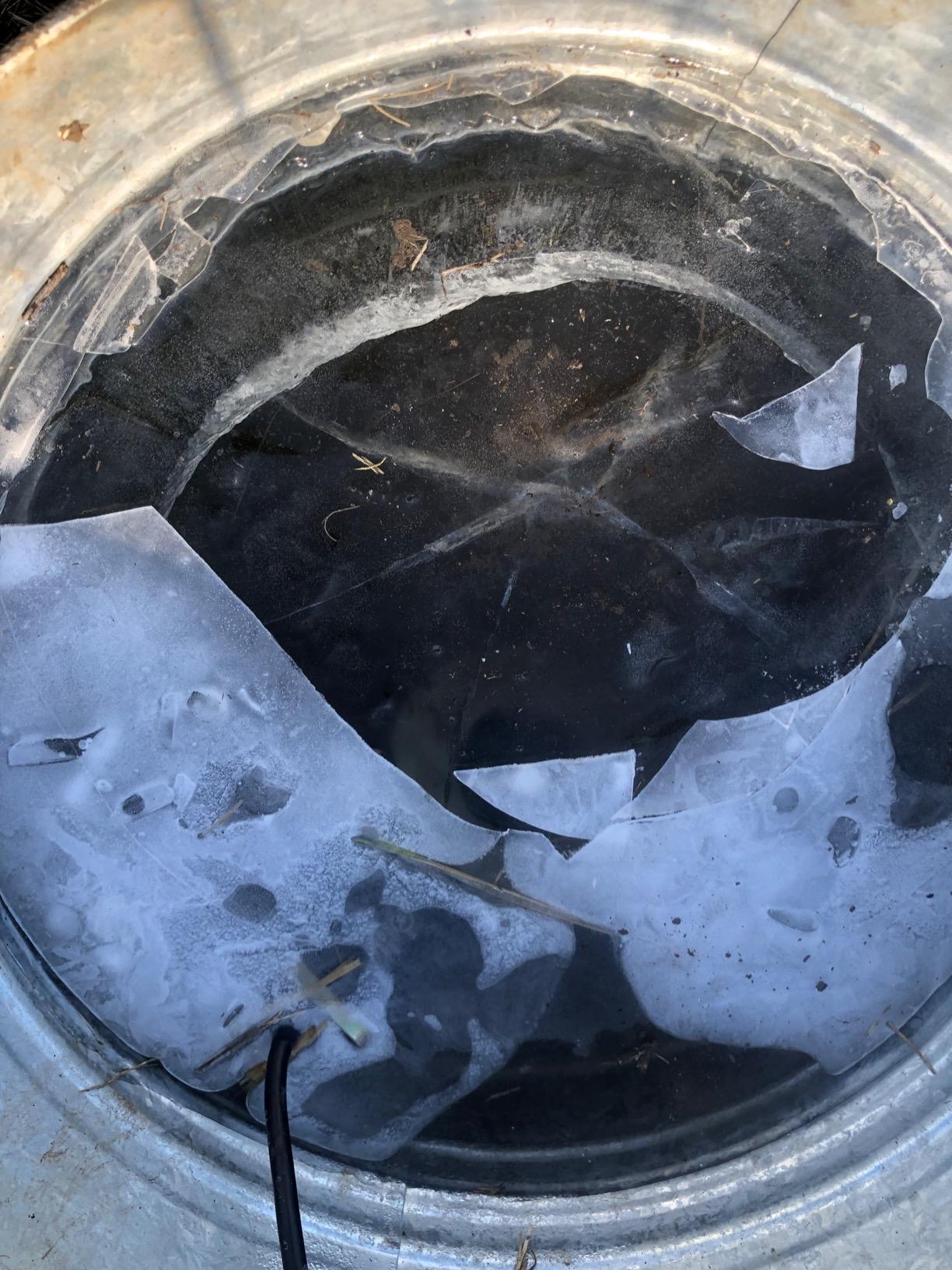
The cast aluminum body is the second thing I noticed. Compared with a plastic-housed element, it moves heat into the water faster and resists the corrosion cycle that ends many cheaper units. At 1.73 pounds it is also light enough to lift out and rinse between tanks.
The 50 gallon sizing is the honest limit here. This is a utility tub and small trough heater, and treating it as a 150 gallon solution is how people end up with a solid sheet of ice in January.
Reviewers commonly report three-plus years of service, and the pattern of complaints is about early failures rather than slow decay. A handful of owners mention needing a GFCI outlet and a few note the cord could be longer, both fair points for a tank set away from a wall.
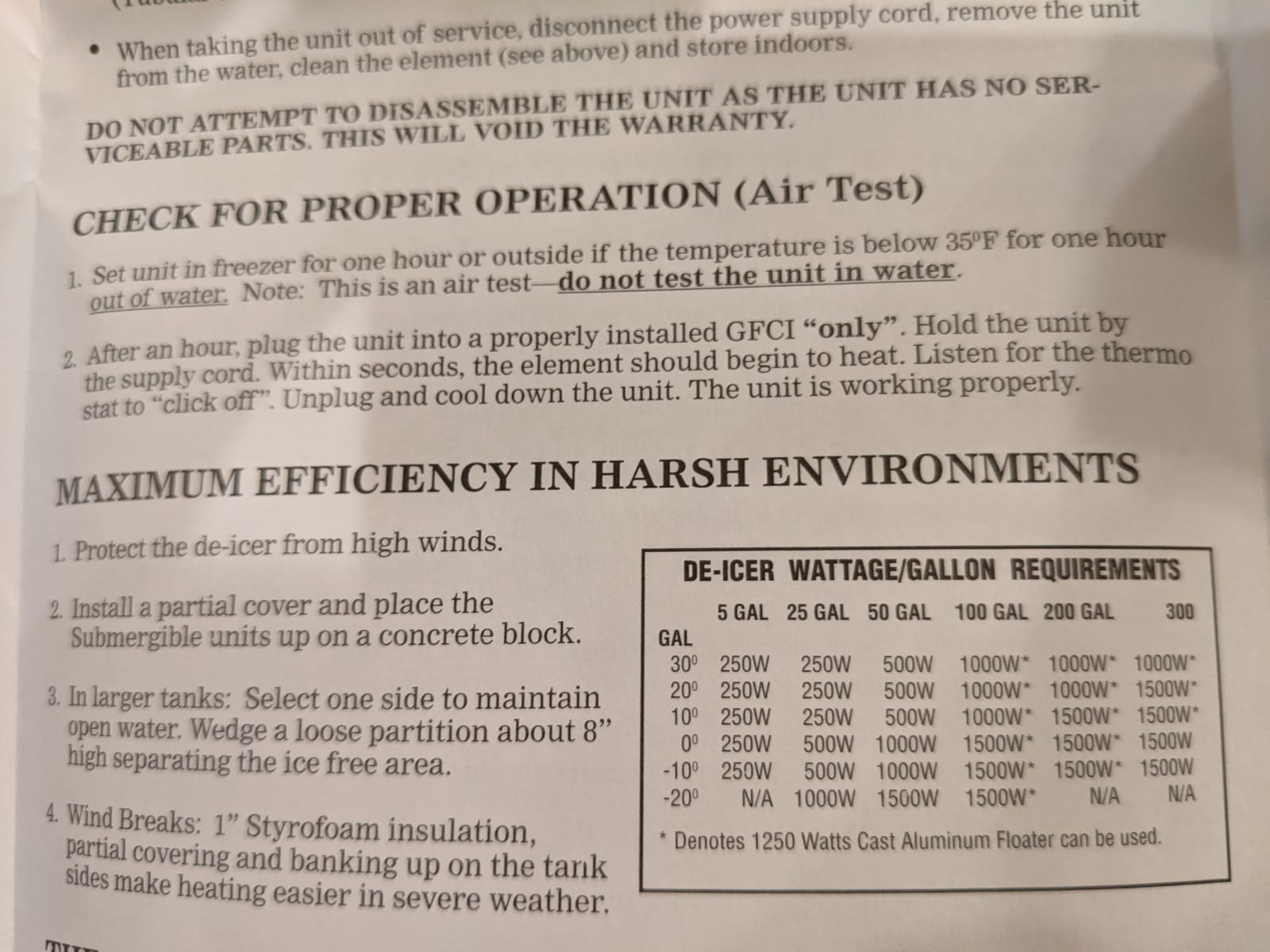
The instruction sheet points to a dedicated protected outlet, and anyone running a heater beside livestock water should treat that as non-negotiable rather than optional.
Is 500 watts enough for your tank
Yes for tanks up to roughly 50 gallons in most climates, and marginal above that. In deep cold or on a 100 gallon trough, move up to 1000 or 1500 watts instead of hoping a small unit keeps up.
Because the element sits on the tank floor, the heat rises as one warm column rather than mixing through the whole volume, so a longer tank is harder to keep open than a wide shallow one of the same volume.
When to pick something else
Skip it if you have a full-size rubber or metal stock tank, if the outlet is more than a few steps away, or if cattle rather than horses are the animals involved and you expect the cord to be chewed.
It is also the wrong answer for a backyard pond. A 500 watt submersible is designed to hold a drinking trough open, not to keep a pond surface from skinning over in a cold snap.
2. Farm Innovators DPH-15 1500W Drain Plug 2-Pack: Best Multi-Tank Setup
Farm Innovators DPH-15 Outdoor Water Tank Heaters Livestock Stock Tank Drain Plug Water De-Icer Designed for Rubbermaid Tanks, 2 Pack
1500 watts each
Drain plug mounting
Designed for Rubbermaid tanks
2 pack
Pros
- Cord stays dry and out of the water
- Highest review average in this roundup at 4.6 out of 5
- Covers large tanks that smaller heaters cannot
- Concealed cord is invisible to livestock
- Two tanks covered from one purchase
Cons
- Only fits tanks with a compatible drain hole
- Two pack costs more than a single unit
This is the format I recommend to anyone running more than one trough. Each unit screws into the drain opening and sits under the tank, so the element and the cord are both completely out of the water and out of reach of hooves and beaks.
That changes the safety picture compared with a submersible unit. There is no exposed element in the water at all, which matters for anyone worried about livestock or waterfowl interacting with a heater, and it makes the installation look tidy instead of improvised.
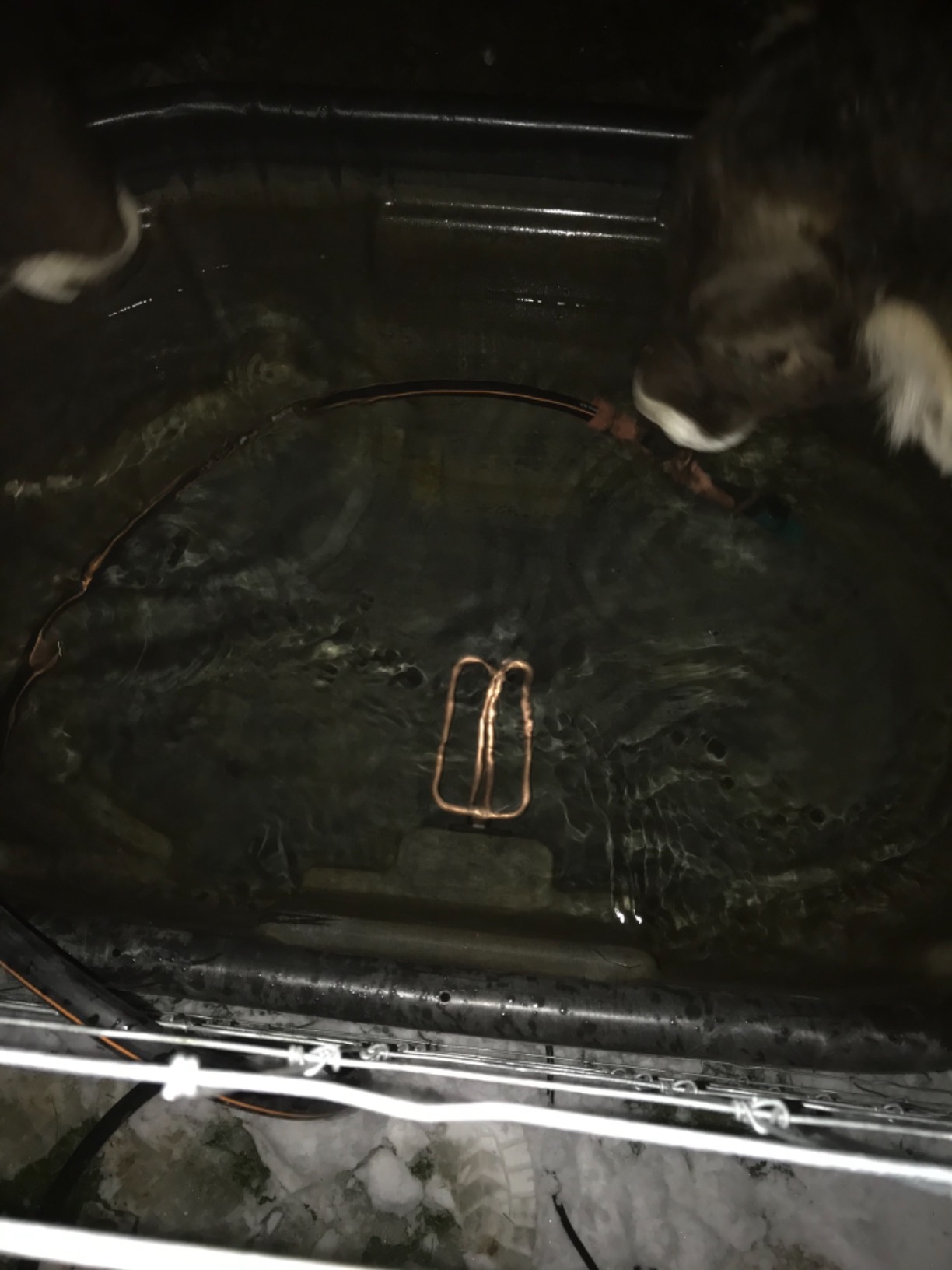
At 1500 watts per tank, this is genuinely in the range for large stock tanks. Owners report the water staying open through sustained sub-zero nights, which is exactly where mid-size heaters fall short and leave a hollow shell of ice with a hole in the middle.
Because the thermostat is built in, the units cycle on their own. You are not managing a duty cycle, and the power draw only lands in the coldest hours when the tank would otherwise be solid.
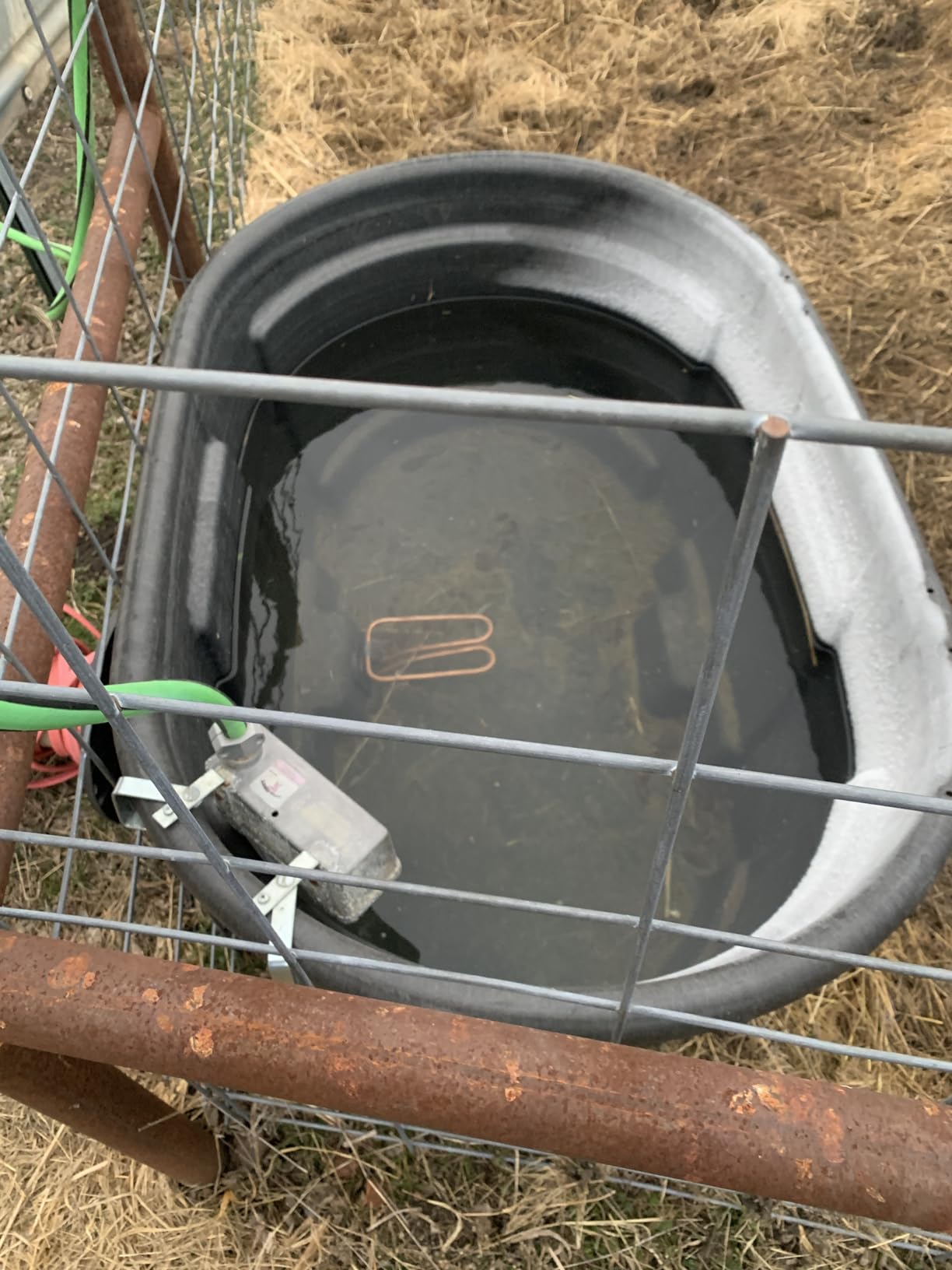
The two-pack format is the clear reason to pick this over a single drain plug model. It is also available in single, three and four pack configurations, so a farm with a mixed tank inventory can match the count.
The limitation is mechanical and unavoidable. This unit is built for a drain opening, and a tank without a properly sized hole simply cannot accept it, no matter how good the heater is.
Does the drain plug format work in cold weather
Yes, and it has one advantage over submerged designs: the element sits where the coldest, densest water collects at the bottom of the tank, so heat pushes upward through the whole column instead of stalling at the floor.
It also keeps working when a layer of slush and settled feed sits on the tank bottom, which is common in cattle tanks fed from the same line.
Check before you order
Measure the drain opening on your tanks first. If your Rubbermaid tanks lack the hole, or have a different thread, this is the wrong product and no amount of wattage compensates.
Also weigh up the hard-wiring. Because these sit under the tank, plan the outlet and cord run so that the connection is above the wettest part of the yard and inside a weatherproof cover.
3. Farm Innovators H-418C 1250W Convertible: One Unit, Two Mounting Styles
Farm Innovators Cast Aluminum Convertible Tank De-Icer, 1250 Watts
1250 watts
Floating or submersible in one body
3.1 lb cast aluminum
Three year warranty
Pros
- Converts between floating and submersible
- Three year limited warranty
- Cast aluminum runs cooler than plastic housings
- Anti-chew cord protector over the full length
- 682 reviews averaging 4.5 out of 5
Cons
- Lifespan reported as 2-3 years in hard water
- Some units reported failing out of the box
- Underpowered for very large tanks in extreme cold
The convertible ring is the reason this one keeps selling. Leave it on and the unit floats at the surface; take it off and the same body sinks to the bottom of the tank, and you are not carrying two different products for two different tanks.
In practice the floating position is the more forgiving one. A floating element keeps working at the surface where ice forms first, so it can hold an opening even when a sunk element is being smothered by settled debris.
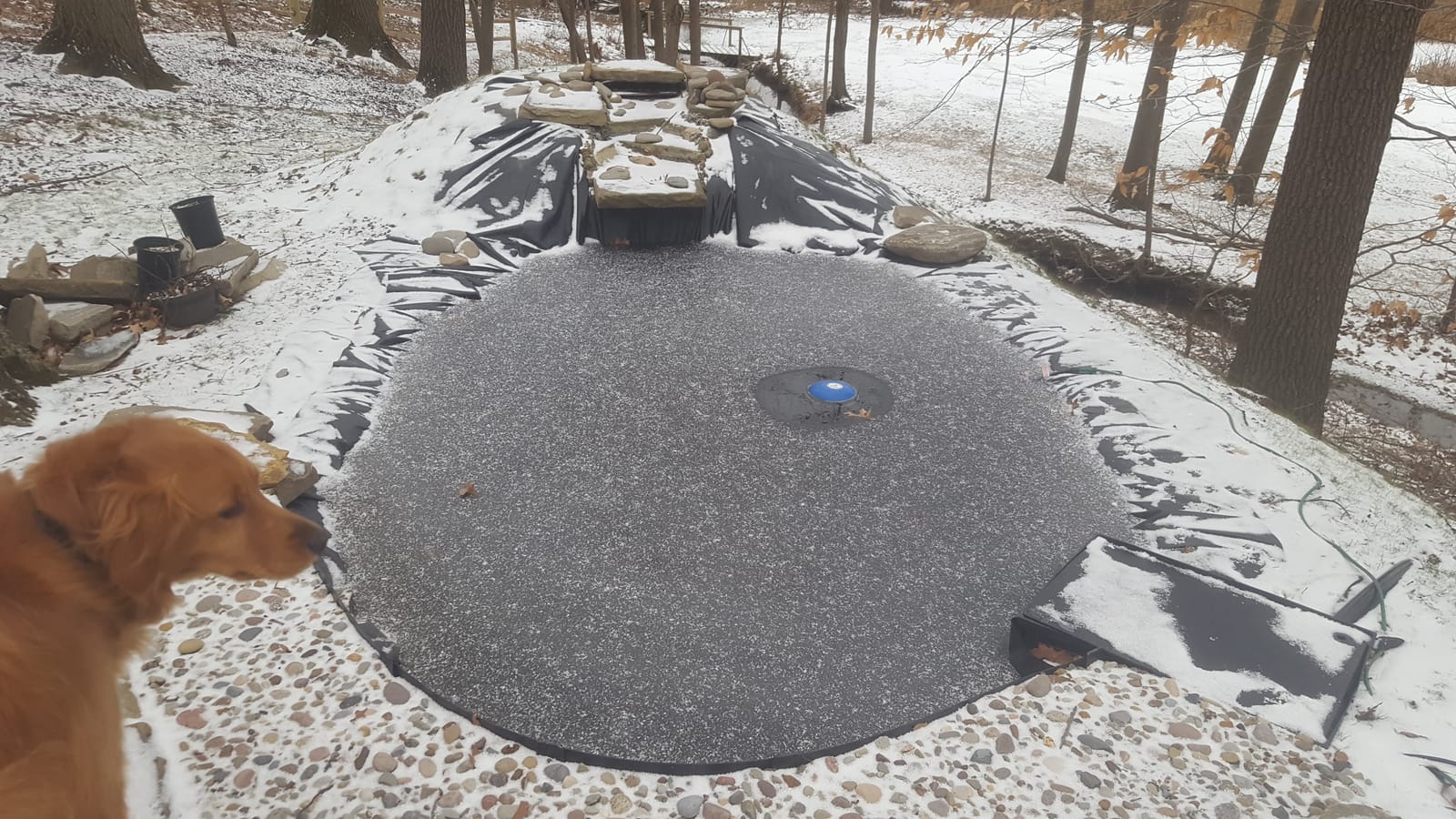
At 1250 watts it sits in the useful middle of the range, big enough for the tanks most people actually own and not so large that a modest electrical circuit complains.
The cast aluminum construction and the three year limited warranty are the two details that separate it from the bargain bin. The warranty matters more than it sounds, because heater failure is a winter emergency you cannot schedule around.
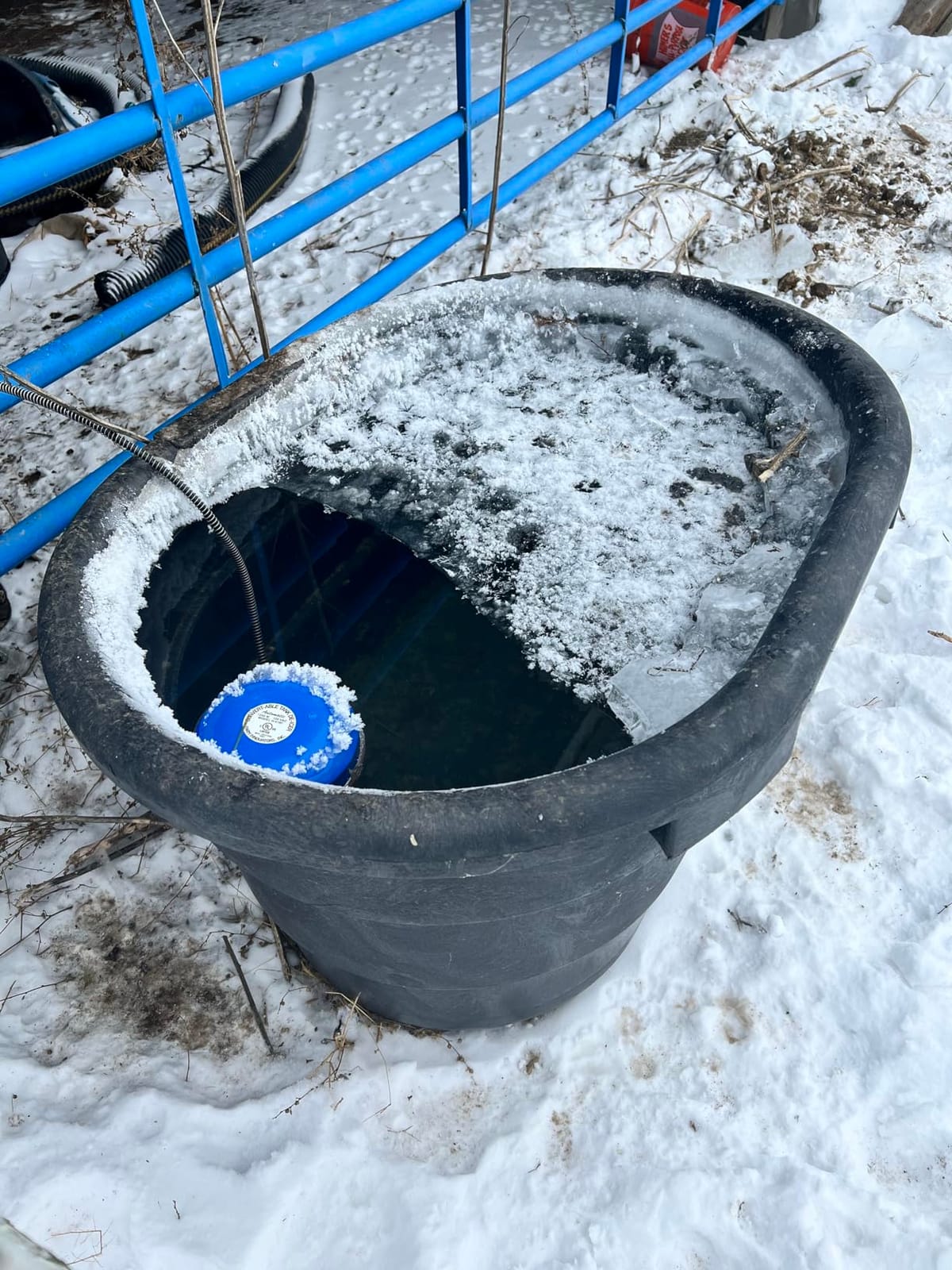
Owners do report shortened lifespans in hard water districts, sometimes two or three years rather than the warranty window, so a yearly tank inspection and descaling habit is worth building into your routine.
The most common early complaint is a unit that never worked properly from day one. Testing any de-icer in a bucket of water before the first freeze is a cheap habit that catches this immediately.
Convertible or dedicated submersible
Choose convertible if you move between tank shapes, or if one tank sometimes needs surface heat and another needs bottom heat. A dedicated submersible is simpler and usually a little cheaper for a single fixed tank.
The trade-off is that a convertible unit carries a ring it does not need when sunk, and the float position is the one most likely to sit at a slight angle in a moving tank.
What hard water does to these elements
Scale builds on any element sitting in hard water, and it acts as insulation. The element runs hotter to push the same heat through the coating, which shortens element life and is the most common reason a three year warranty unit retires in two.
If your water is hard, a coated element is the better buy. The Teflon-coated unit in this roundup was built specifically for that problem.
4. Farm Innovators H-419 Ice Chaser 1500W: The Heavy-Duty Submersible
Farm Innovators H-419 Ice Chaser Submergible Stock Tank De-Icer, 1500W
1500 watts
Patented Ice Chaser cast aluminum
Anti-chew cord protector
Safe for plastic and metal
Pros
- High wattage holds open full-size stock tanks
- 82 percent of reviews are 5 star
- Submersible so nothing protrudes into the tank
- Three year limited warranty
- Cast aluminum resists rust better than steel
Cons
- Submersible only
- not convertible
- Higher wattage draws more current
- Some owners report GFCI tripping
This is the unit I would put in a 200 to 300 gallon metal tank in a climate that sees real winters. 1500 watts is the difference between an opening you can reach and a tank you have to break with a sledgehammer.
The Ice Chaser cast aluminum body is heavier than plastic-housed competitors and it is the reason. Metal conducts heat into the water efficiently and shrugs off the freeze thaw cycle that cracks plastic housings over a few seasons.
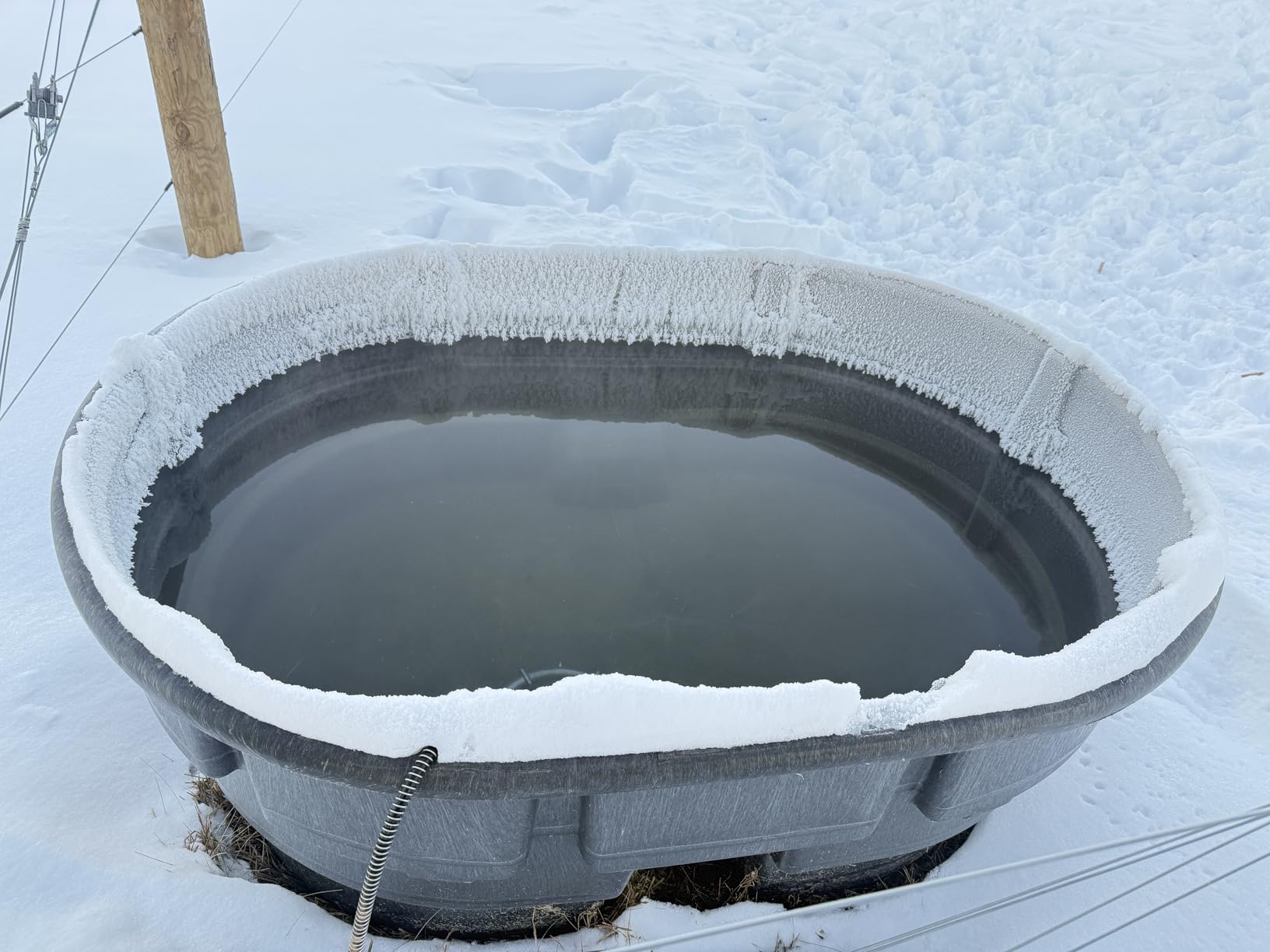
The anti-chew cord protector runs the length of the cable, and for horse properties that is not a small detail. A bare cord in a pasture gets pulled, chewed and eventually pulled into the water, and the failure mode is a GFCI trip at the worst possible time.
Thermostatic control means it works only when the water drops toward freezing, so the operating hours are concentrated in the coldest part of the night rather than spread across the day.
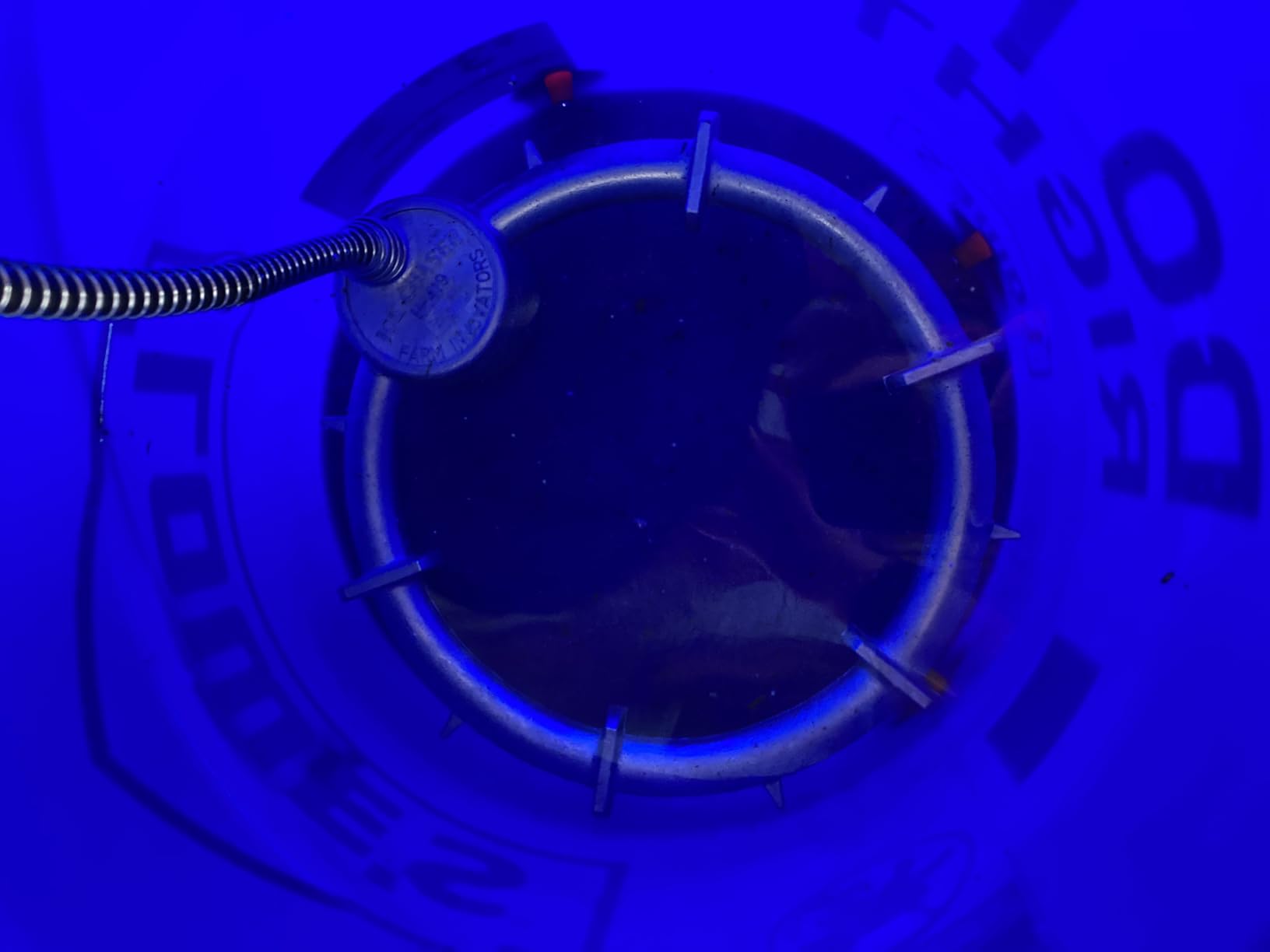
At 12.5 amps on a 120 volt circuit, this draws more than a household branch is comfortable serving continuously. If it shares a circuit with a shop compressor or a heated waterer, expect trips in the coldest weather, which is exactly when you can least afford one.
Give it a dedicated GFCI protected outlet. That single change resolves most of the tripping complaints associated with this class of heater.
Is 1500 watts overkill for a small tank
In a small tank it is not dangerous, because the thermostat cuts out well before the water overheats. It simply costs more to run than a smaller unit would for the same result.
The more meaningful drawback is electrical. 12.5 amps leaves little headroom on a shared circuit, so in a small-tank situation a lower wattage model is the more sensible engineering choice.
Best livestock and tank combinations
It pairs best with large metal or rubber stock tanks where animals push against the walls and the volume needs real heat to stay open. The submersible body is also out of sight in a trough where horses drink daily.
For plastic tanks, confirm the model is rated for plastic before installing. This one is, and the cast aluminum body stays well below the temperatures that deform poly troughs.
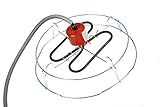
5. API 15N 1500W Sinking Tank Heater: Best for Ponds and Cold Plunges
Allied Precision 15N 1500-Watt Sinking Tank Heater with Guard
1500 watts
Sinks and operates at the tank floor
Stainless steel element
Thermostat positioned above the element
2.6 lb, 120 volts
Pros
- Stainless steel element resists corrosion in pond water
- Over-temperature protection built in
- Thermostat sits above the element as a safety measure
- Sinking design works well for ponds and water features
- 559 reviews averaging 4.4 out of 5
Cons
- Only a 3 foot cord
- limits where it can be placed
- Plastic housing is less durable than cast aluminum
- Sediment can collect around the sinking body
Ponds and cold plunge tubs are a different job than a stock tank. You are not keeping a drinking hole open, you are trying to stop a thin skin of ice across a wide surface, and that changes what you want from a heater.
A sinking unit is the right answer for that. It stays at the bottom, the heat rises through the water column, and the surface stays open without a floating block that a curious dog or an ice skater could knock over.
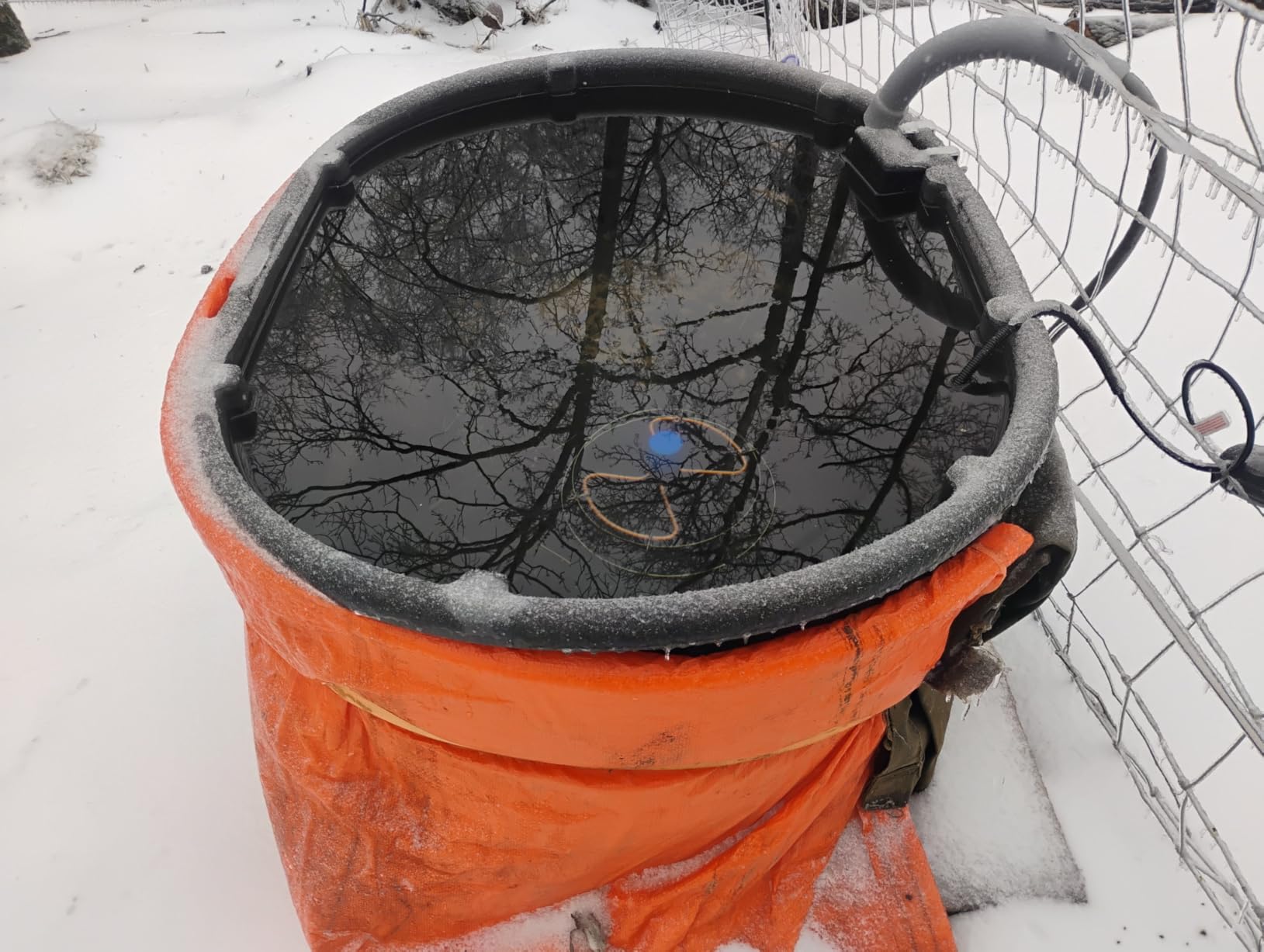
The two safety details that stand out are the thermostat position and the over-temperature protection. Putting the thermostat above the element is unusual and deliberate, since it senses the water rather than the housing and cuts out before the element itself runs away.
The stainless steel element is a genuine upgrade over aluminum for pond duty, because pond water with leaf litter and organic sediment is more corrosive than clean trough water.
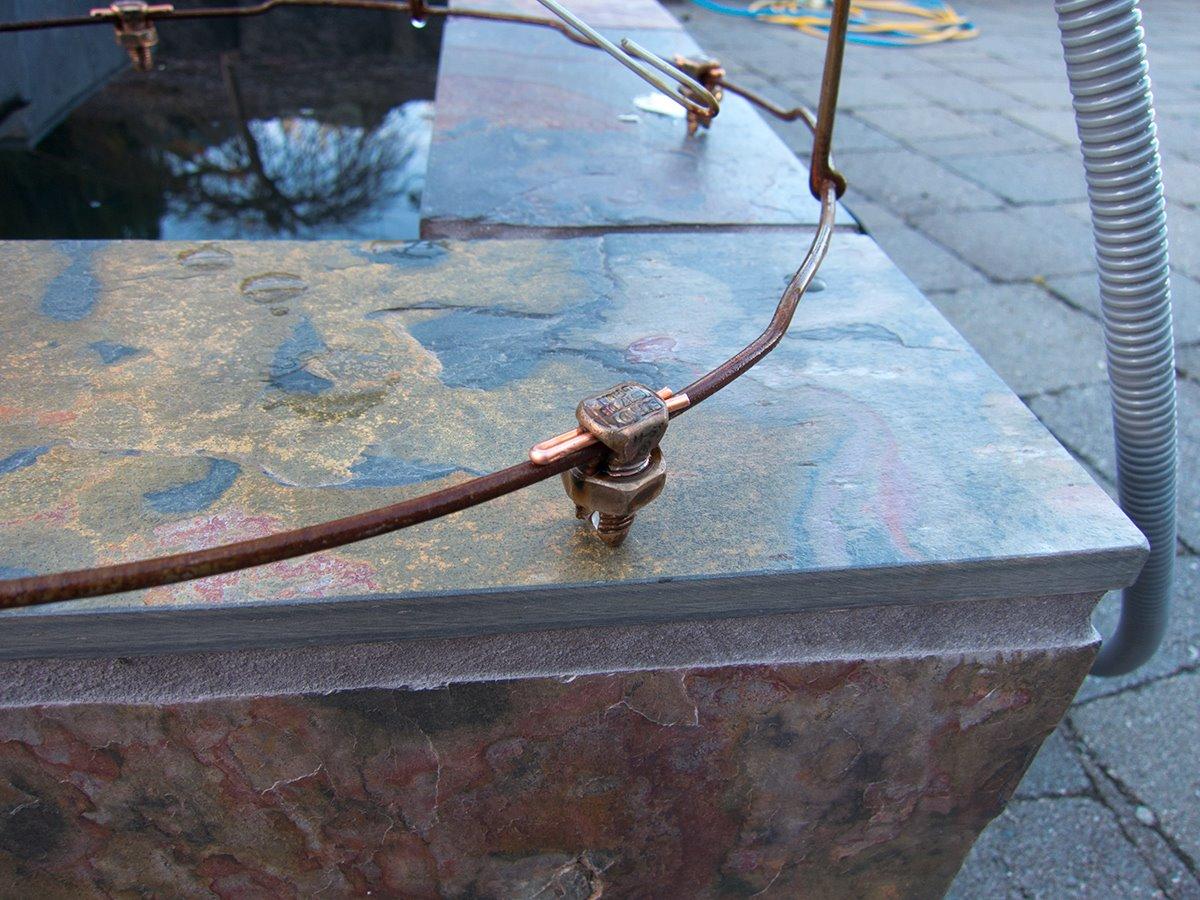
The galvanized wire guard around the element is the part that cold plunge owners care about. A guard means the hot element cannot sit directly against a thin plastic wall, which is precisely the concern raised by cold plunge users buying these heaters for cheap tubs.
BackyardChickens contributors have raised a different caution: some de-icers are a poor choice around waterfowl, who may sit on a warm unit in freezing water. Keep that in mind if the tank is a duck pond rather than a cattle trough.
Why cold plunge owners use stock tank de-icers
Because a stock tank de-icer is one of the few devices that puts a thermostatically controlled element under a large body of water outdoors, with no plumbing and no pump. A plunge owner sets it in the tub and plugs it into a GFCI outlet.
The requirement cold plunge owners consistently name is an element guard for plastic tubs. A bare heating element against thin plastic is a melting and safety risk, and a guarded unit is the version to buy.
Plan around the short cord
The 3 foot cord is the practical limit here. It suits a tub positioned near an outlet, and it becomes a problem the moment the water feature sits at the far end of a yard.
Longer cords exist on the models with the strongest pull. If you need distance, either choose one of those or plan on adding an outdoor-rated extension in a covered, above-ground enclosure.
6. Farm Innovators H-418 1250W Floating De-Icer: Best for Large Tanks You Do Not Want to Dig Into
Farm Innovators Ice Chaser Cast Aluminum Floating Tank De-Icer, 1250 Watts
1250 watts
Floats at the water surface
Cast aluminum body
Anti-chew cord protector
3.38 lb, 4.5 x 7.5 x 7.5 inches
Pros
- Holds open tanks over 150 gallons
- Cast aluminum transfers heat efficiently
- Safe in plastic buckets without warping
- Three year warranty
- Anti-chew cord sleeve
Cons
- Draws over 10 amps
- so a dedicated circuit matters
- Water collects inside the housing and must be drained before storage
- Can float at a slight angle
- Some early failures reported
A floating de-icer is the lowest-effort install in this whole category. You set it on the water and walk away, with no weights, no clips and no drain hole to cut into the tank.
That is why it works well on big tanks. When the tank is 150 gallons or more, digging a drain hole or fishing a submerged unit out of the bottom is unpleasant work, and a floating unit makes the seasonal install a ten second job.
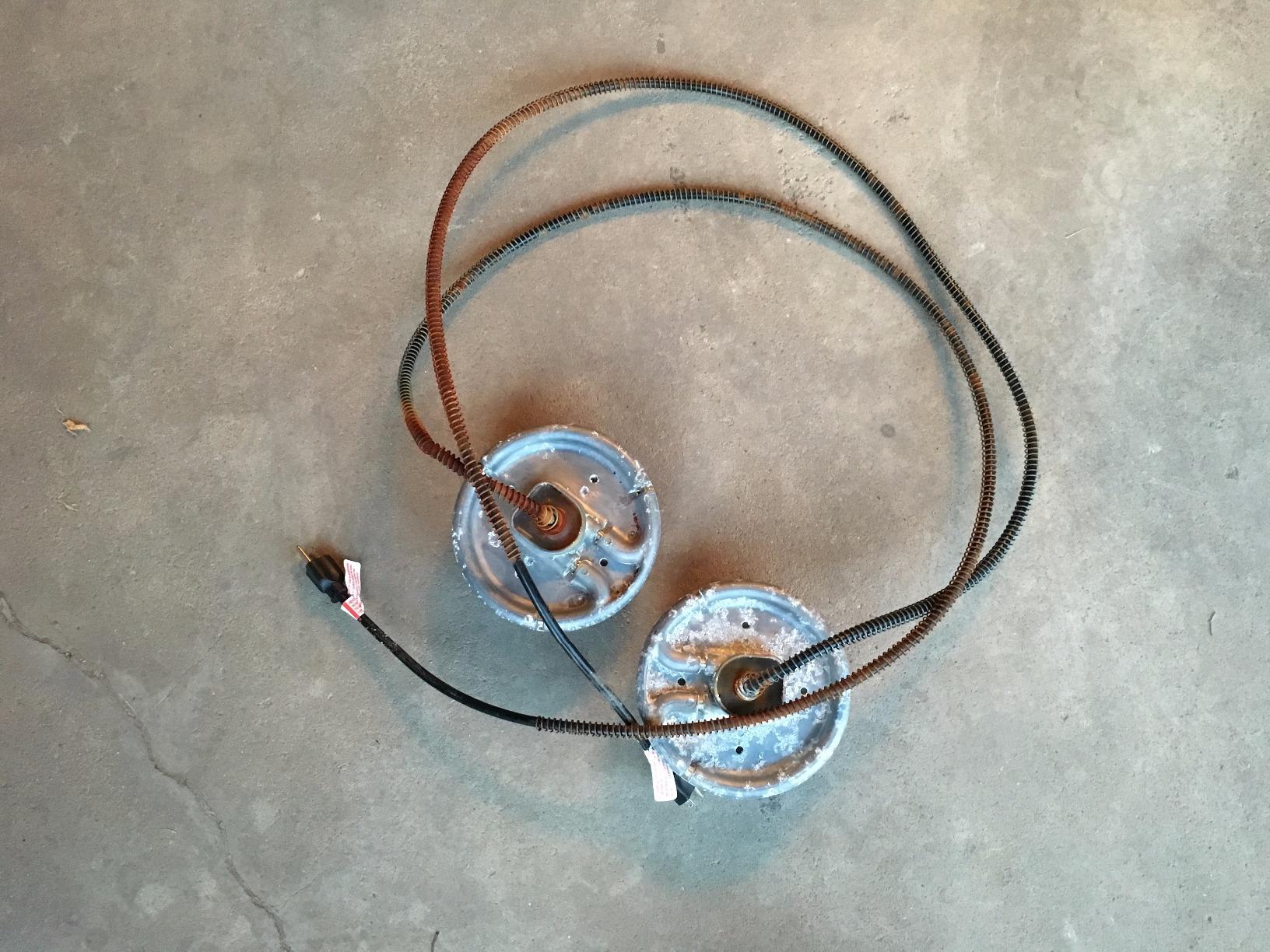
The cast aluminum body again earns its place. It is claimed to work efficiently against copper and Incoloy elements, and in a floating position the body is at the surface where the water is coldest and where ice forms first.
Holding an opening at the surface is what makes floating units useful for horses. An animal that can smell and hear water through a hole it can reach will drink, and a surface opening is far easier for an animal to find than one at the bottom of a dark trough.

The storage step is the part owners most often miss. Water gets into the housing during use and will freeze and split the unit if it is left in an unheated shed, so drain and dry it in the fall before you put it away.
At over 10 amps, put it on its own GFCI protected circuit. Sharing a circuit with a heated waterer or a shop load is the leading cause of the breaker trips owners report during cold snaps.
Floating or sinking for a large tank
Floating wins on installation effort and on keeping a reachable opening at the surface. Sinking wins on keeping the coldest bottom water moving and on staying out of the way of curious animals.
If your animals are horses that push and paw at everything in the water, that second point matters. Horses are reported to play with floating units and damage them, and a damaged element in a trough is a serious hazard.
Winter storage and seasonal maintenance
Pull the unit before hard freeze, empty the housing completely and let it dry. A few hours of drying now avoids finding a split housing in the spring.
While it is out, wipe the element, look for nicks in the cord sleeve and confirm the cord insulation is intact along its whole length. That inspection takes minutes and prevents the most common mid-winter failure.
7. API 521G 1500W Floating De-Icer: Built for Rubber and Foam Tanks
API Floating Water Tank Deicer Floating De-Icer with Guard, 1500 Watt (Item No. 521G)
1500 watts
Buoyant enclosed float housing
Galvanized wire guard
6 foot anti-rub cord
3 lb, recommended for 100-300 gallons
Pros
- Galvanized wire guard protects rubber
- plastic and foam tanks
- Rugged buoyant enclosure handles winter conditions
- 6 foot cord is longer than most in this class
- Rated for 100-300 gallon tanks
- In production since 2010
Cons
- Protective grill rusts over time
- Lowest review average of the top group at 4.2 out of 5
- Reports of defective units on arrival
- Horses may play with and damage a floating unit
This is the one to look at if your tank has a rubber liner. The galvanized wire guard is the distinguishing feature, and it exists because a bare 1500 watt element sitting against a rubber wall is a heat problem no manufacturer wants to be blamed for.
The 1500 watt output and the stated 100 to 300 gallon capacity put it in the same performance class as the largest submersible units, but in a floating format that needs no modification to the tank at all.
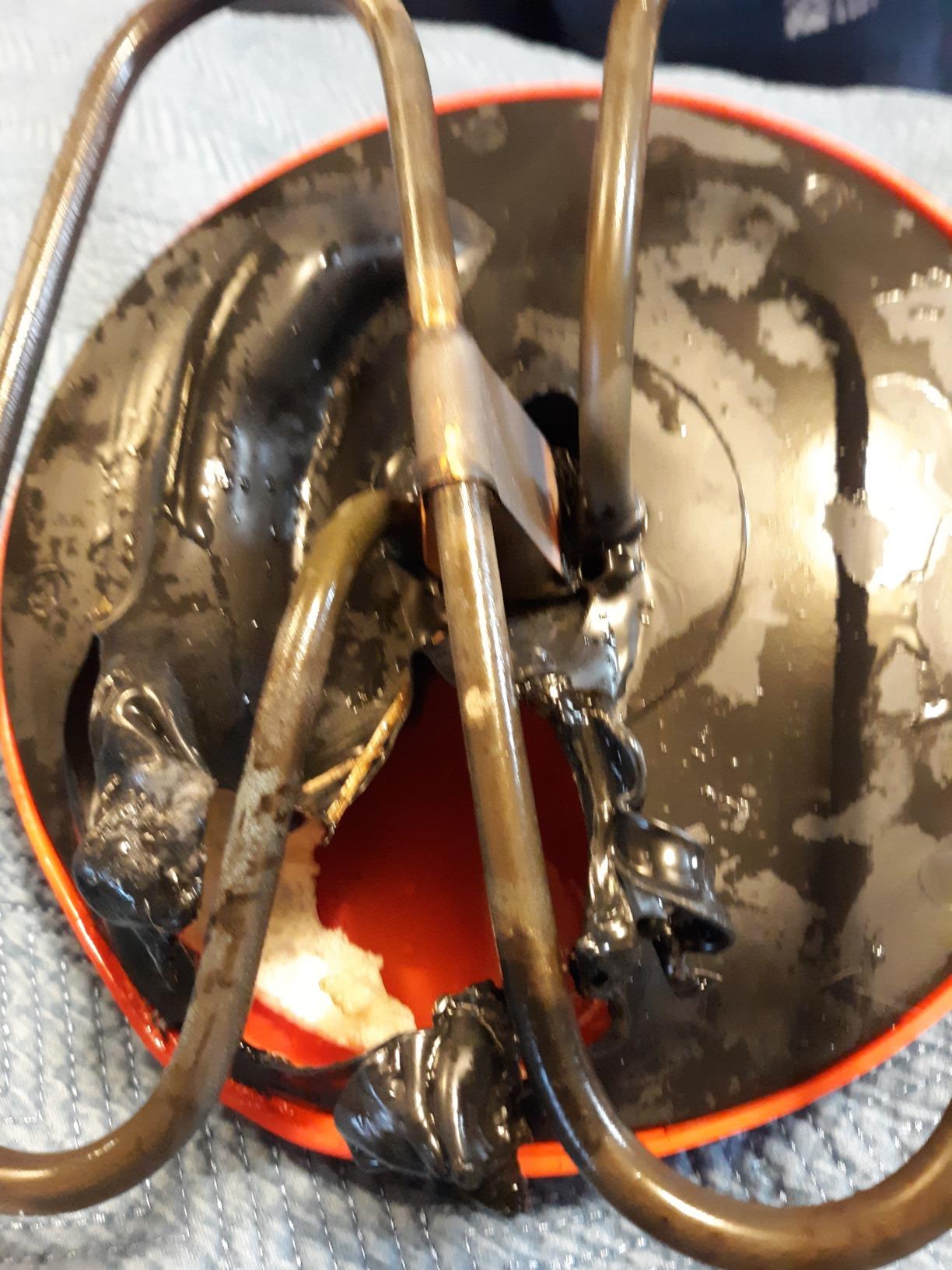
The enclosed buoyant housing is rugged in a way that exposed designs are not. It takes ice contact, wind and the occasional kick from an animal without the element being the first thing damaged, and the built-in thermostat conserves power when no heat is required.
That long availability history is worth something too. This design has been on the market since 2010, so parts, advice and replacement units are easy to find in a way that is not true for newer imported models.
The rusting grill is the honest drawback. Galvanized wire in a wet environment does not last forever, and once the guard is compromised the plastic and rubber tank protection story weakens.
Is a wire guard really necessary in a rubber tank
Yes, in our view. Rubber and poly liners are thinner and conduct heat less evenly than steel, so the element runs hotter against the wall and the liner is the first thing to warp or degrade.
A guard holds the element a few inches off the wall and lets water circulate between them, which lowers the surface temperature and extends the life of the liner.
Where this unit is not the right answer
Skip it where animals are known to batter floating devices. Reported problems include horses playing with the unit, and any damage to a 1500 watt element in a shared water source needs a serious response.
Its review average is the lowest of the three highest-output floating options here, with a notable share of one star feedback citing units that arrived defective. Test the element in water the day it arrives.
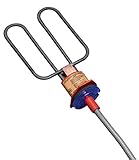
8. API 2002DP 1500W Drain Plug De-Icer: Certified and Cord-Free
API Stock Tank Water Deicer Universal Drain Plug De-Icer, 1500 Watt (Item No. 2002DP)
1500 watts
Fits 3/4 inch drain openings
Patented drain plug adapter
Stainless steel element
CSA and UL listed
Pros
- CSA and UL listed for electrical safety
- Stainless steel element resists rust and corrosion
- Cord and element stay completely out of the water
- Over-temperature protection
- 6 foot anti-rub cord
- Recommended for 100-300 gallon tanks
Cons
- Requires a tank with a 3/4 inch drain hole
- Drain plug style costs more than a basic submersible
Certifications matter more on a wet-location electrical device than on almost anything else in this roundup. This one is CSA and UL listed, and that listing is the single strongest argument for it in a farm or barn setting where a fault would be genuinely dangerous.
The patented adapter routes through a 3/4 inch drain opening, and the whole assembly sits under the tank. Nothing protrudes into the water, so there is no element for a horse to nose, a duck to perch on or a plastic liner to press against.
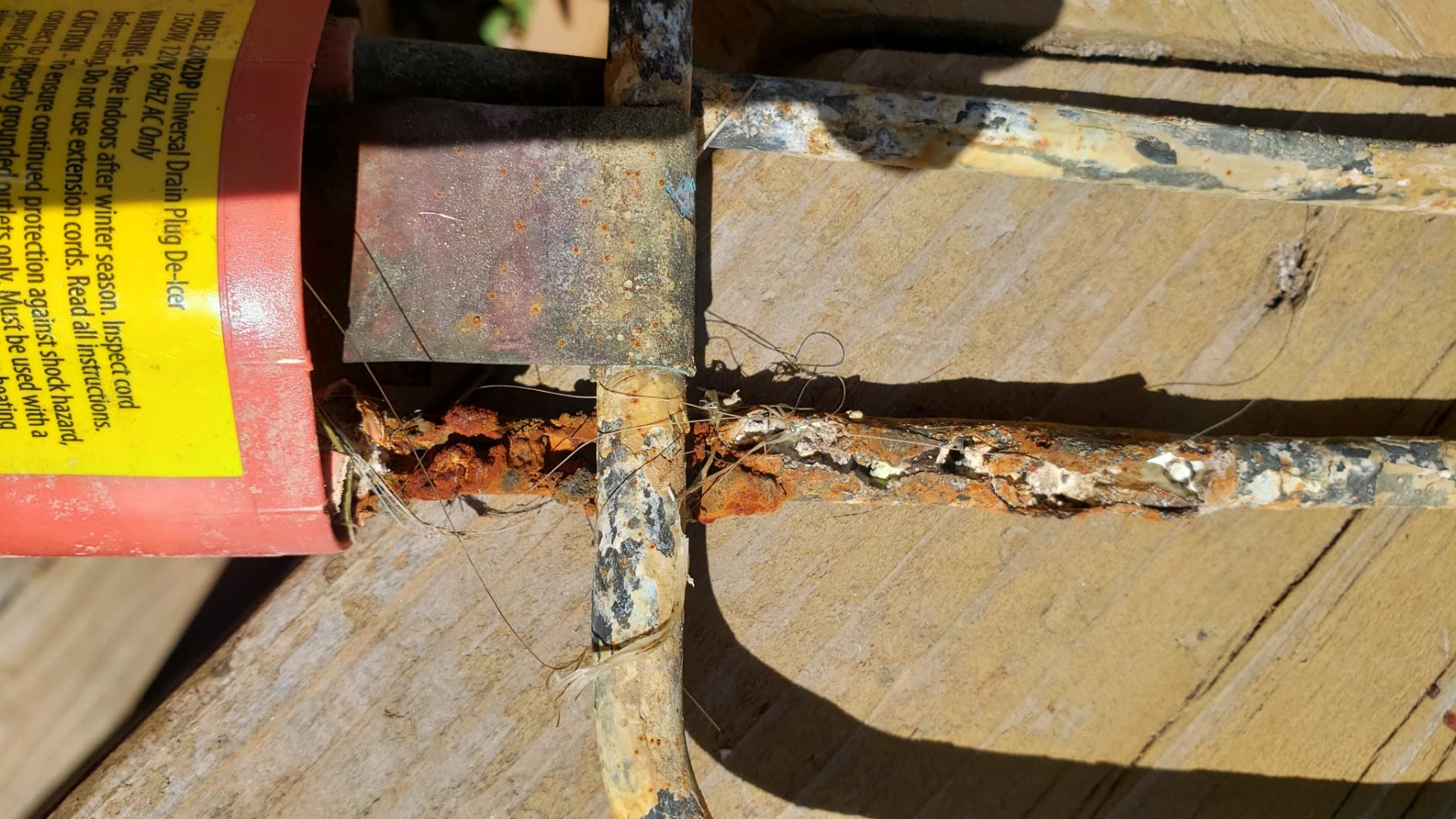
Thermostatic control with over-temperature protection means it holds water just above freezing without cooking it, and the protection is the backup that keeps a heater running safely if the thermostat ever fails.
For a 100 to 300 gallon tank this is enough output to matter, and stainless steel is the right element material for a device that lives in damp, cold conditions all season.
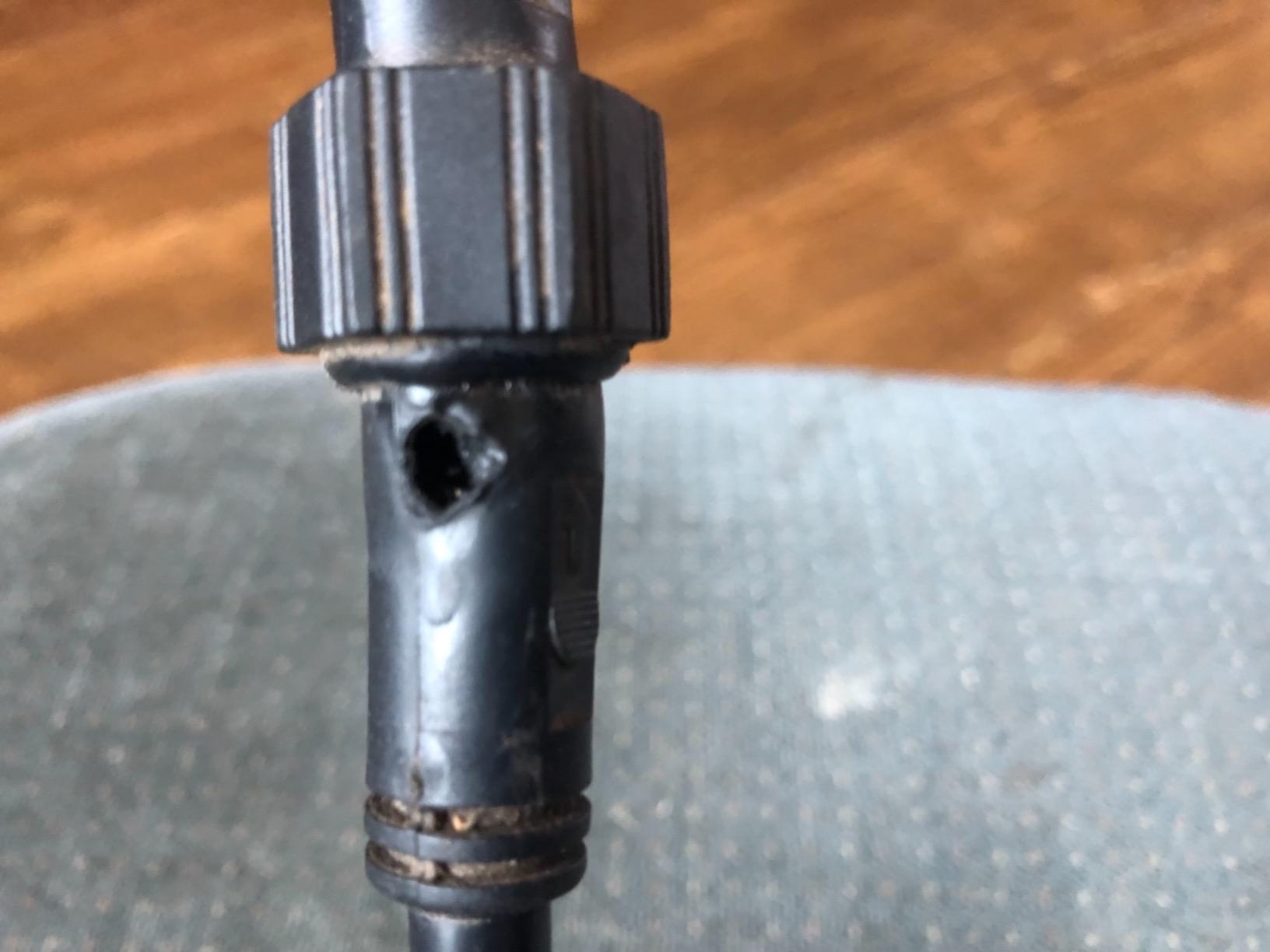
At 2 pounds it is also one of the lighter options, which matters if you plan to pull it out for summer maintenance rather than leaving it installed year round.
Owners rate it highly, and the recurring comment is about the cord staying dry. Keeping the connection out of the water also keeps corrosion off the plug, which is where most outdoor electrical problems actually start.
Drain plug or floating for a single large tank
Choose the drain plug when the tank has a compatible hole and you want the element and cord completely out of reach. It is the most physically secure option, and the most installation-dependent.
Choose floating when the tank has no drain, or when a rubber liner makes drilling a hole a decision you would rather not make this winter.
What the CSA and UL listing actually covers
It means the unit has been evaluated for electrical safety, including leakage current and fire risk in a wet environment, which is exactly the condition a trough heater lives in permanently.
It does not replace a GFCI outlet. A listing reduces the risk from a manufacturing fault, while a GFCI protects you from a fault that develops after three winters of weather exposure.
9. Biubee 500W Horse Water Heater: Best for Long Cord Runs
500W Horse Water Heater De-icer for 41 to 100 Gal Cows Livestock Water Tank
500 watts
9.5 foot PVC cord
PTFE coated aluminum alloy
Activates below 50F, off at 95F
1.72 lb, 41-100 gallon tanks
Pros
- 9.5 foot cord is the longest in this roundup
- PTFE coating resists rust in any container
- Automatic shutoff when water runs low
- PTFE and PVC construction stay corrosion resistant
- 176 reviews averaging 4.1 out of 5
Cons
- 500 watts struggles in extreme cold
- 15 percent of reviews are 1 star
- Newer brand with a shorter track record
- Surface runs hot enough to be a burn hazard
The 9.5 foot cord is the reason to look at this one. If your tank sits at the far end of a paddock, cord length is a daily annoyance on other units and a solved problem here.
Temperature control is unusually explicit. It activates below 50F and shuts off around 95F, which is a wide and readable band, and the automatic shutoff when the water runs low protects the element if the tank is ever drawn down.
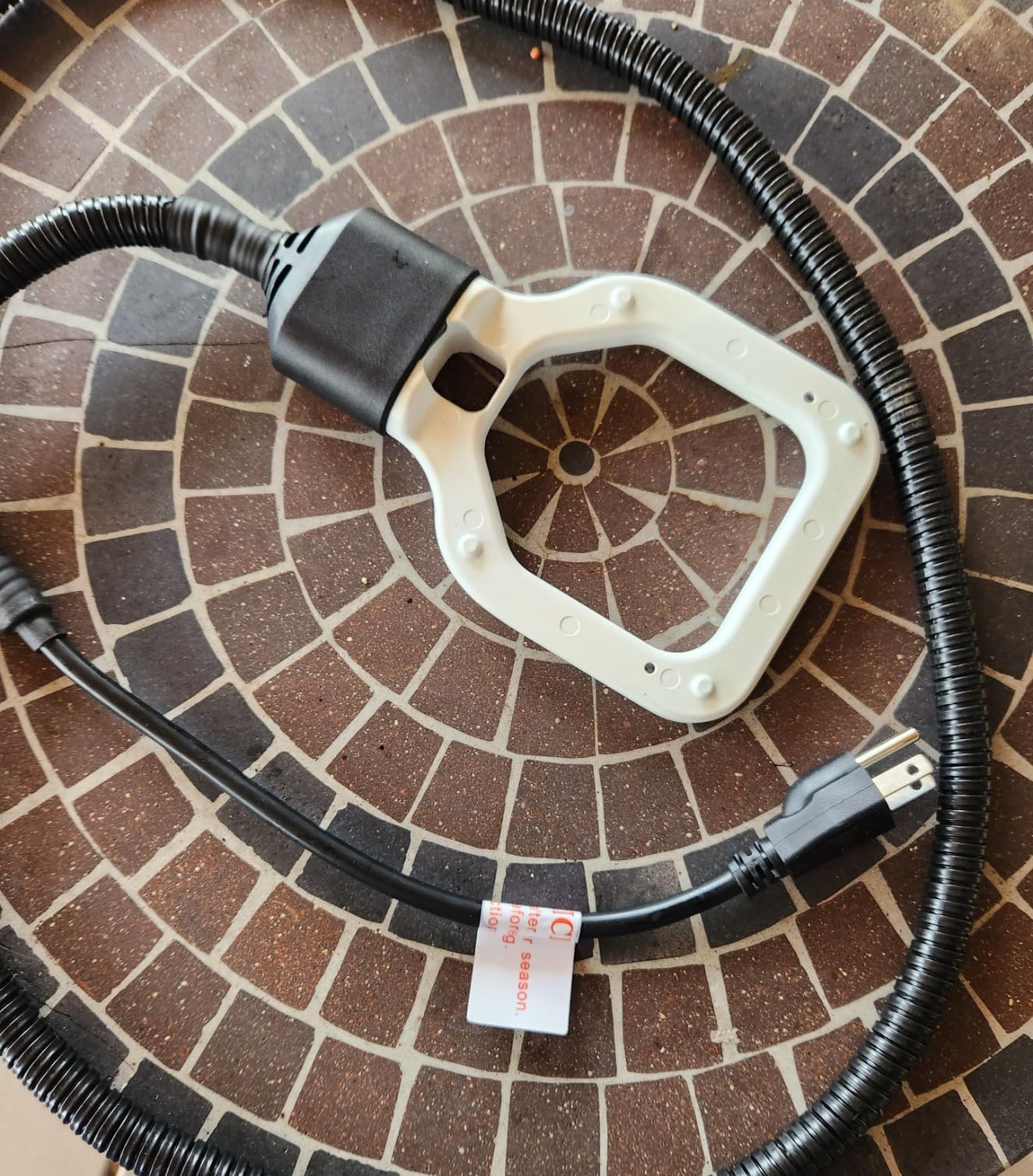
The PTFE coated aluminum alloy body transfers heat quickly and resists rust, and the coating is what makes the warranty-free product category more tolerable. A coated element tolerates hard water better than a bare one and slows scale formation.
It is rated for 41 to 100 gallon tanks at 500 watts, and a 250 watt version covers smaller containers if your setup is under 40 gallons.
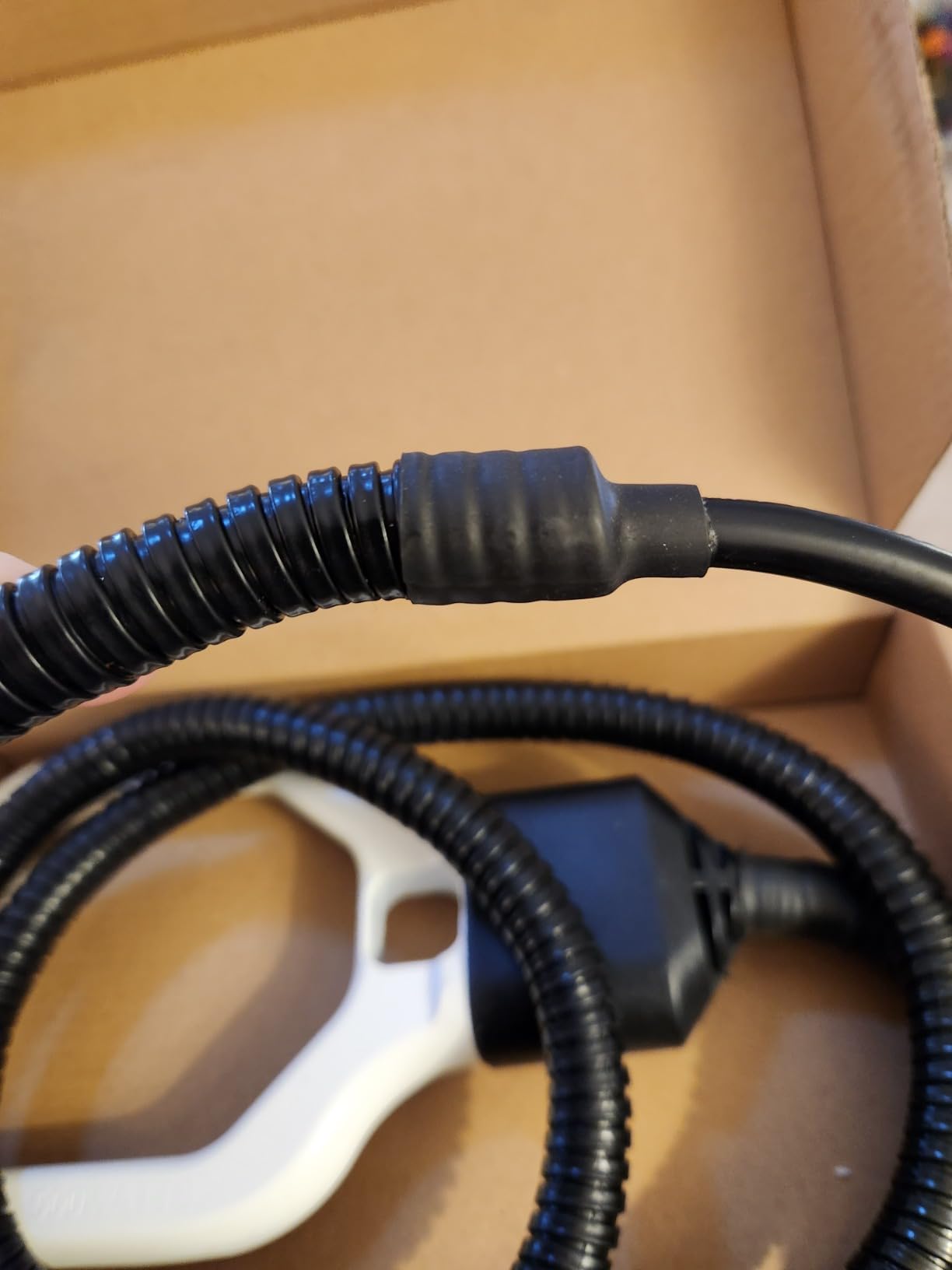
The review spread is the story here. Around 63 percent of ratings are 5 star while roughly 15 percent are 1 star, and the one star feedback clusters around units that stopped working within a season or two.
The hot surface is worth taking seriously too. With a 500 watt element and no protective cage mentioned in the specification, treat the body as something livestock should not be able to chew or rub against.
Is this wattage enough for a 100 gallon tank
At 500 watts for a 100 gallon tank, the answer depends on your climate. In areas where nights sit just below freezing it will cope, and in sustained deep cold it will not keep a full opening and you should size up.
The stated activation point of 50F is also much colder than the near-freezing trigger used by the Farm Innovators units, so it may cycle on less frequently in mild weather and work harder in harsh weather.
When a newer brand is the right risk
When cord length solves a problem you actually have, the trade-off is easier to accept. A 9.5 foot cord plus automatic low-water shutoff covers real frustrations that no other 500 watt unit in this roundup addresses.
For a primary water source in a hard winter, choose a unit with a longer review history and a warranty. For a secondary tank or a mild climate, this is a reasonable pick.
10. Farm Innovators H-409 1000W Submersible: The Balanced Middle Option
Farm Innovators Submergible Tank De-Icer, 1000W Water Deicer- Ice Chaser Cast Aluminum Design with Chew Proof Cord for Livestock Water Stock Tank
1000 watts
Patented Ice Chaser cast aluminum
Anti-chew cord protector
Safe for plastic and metal
2.5 lb, three year limited warranty
Pros
- Holds water open in single digit and minus 30C conditions
- Anti-chew cord holds up against horses
- Three year limited warranty
- Lower draw than a 1500 watt unit
- Cast aluminum body resists corrosion
Cons
- Some users report needing two units for a large trough
- One report of leakage current felt into the water
- Marginal on a 100 gallon metal tank in severe cold
1000 watts is the number most people actually need. It handles the tanks between a 50 gallon utility tub and a full-size rubber stock tank, and at 1000 watts it draws noticeably less than a 1500 watt unit on the same circuit.
Owners report keeping water open in genuinely brutal conditions, including single digit temperatures and wind chill well below freezing, which is the range where 500 watt units start losing.
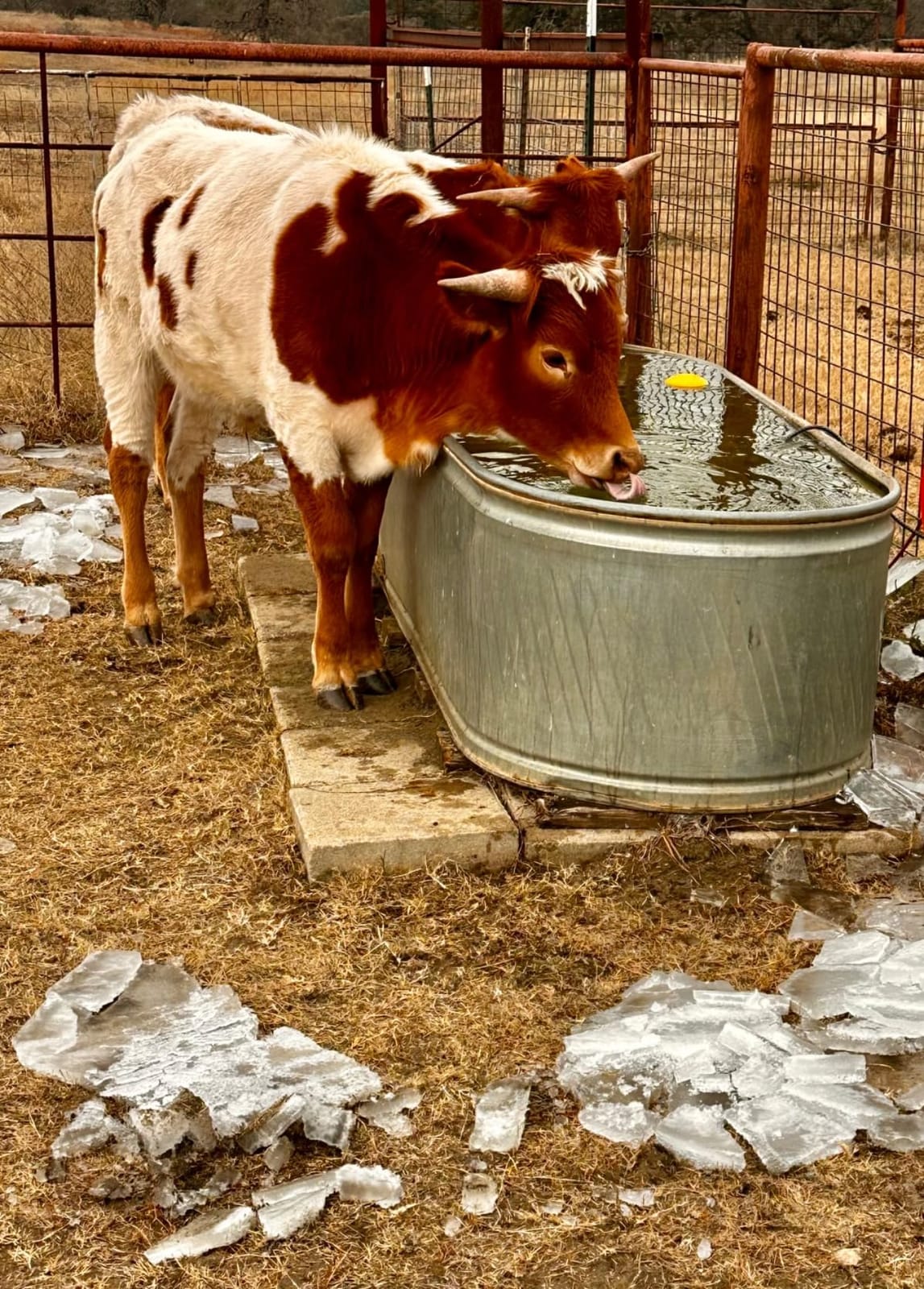
The cast aluminum body and the anti-chew cord protector are the two features that carry across this brand family, and both are the reason it is a safe pick around livestock. A chew-resistant cord is not a luxury when the tank is in a pasture.
It is rated safe for plastic and metal, so the same unit covers a poly trough in summer and a steel tank in winter if you move between them.
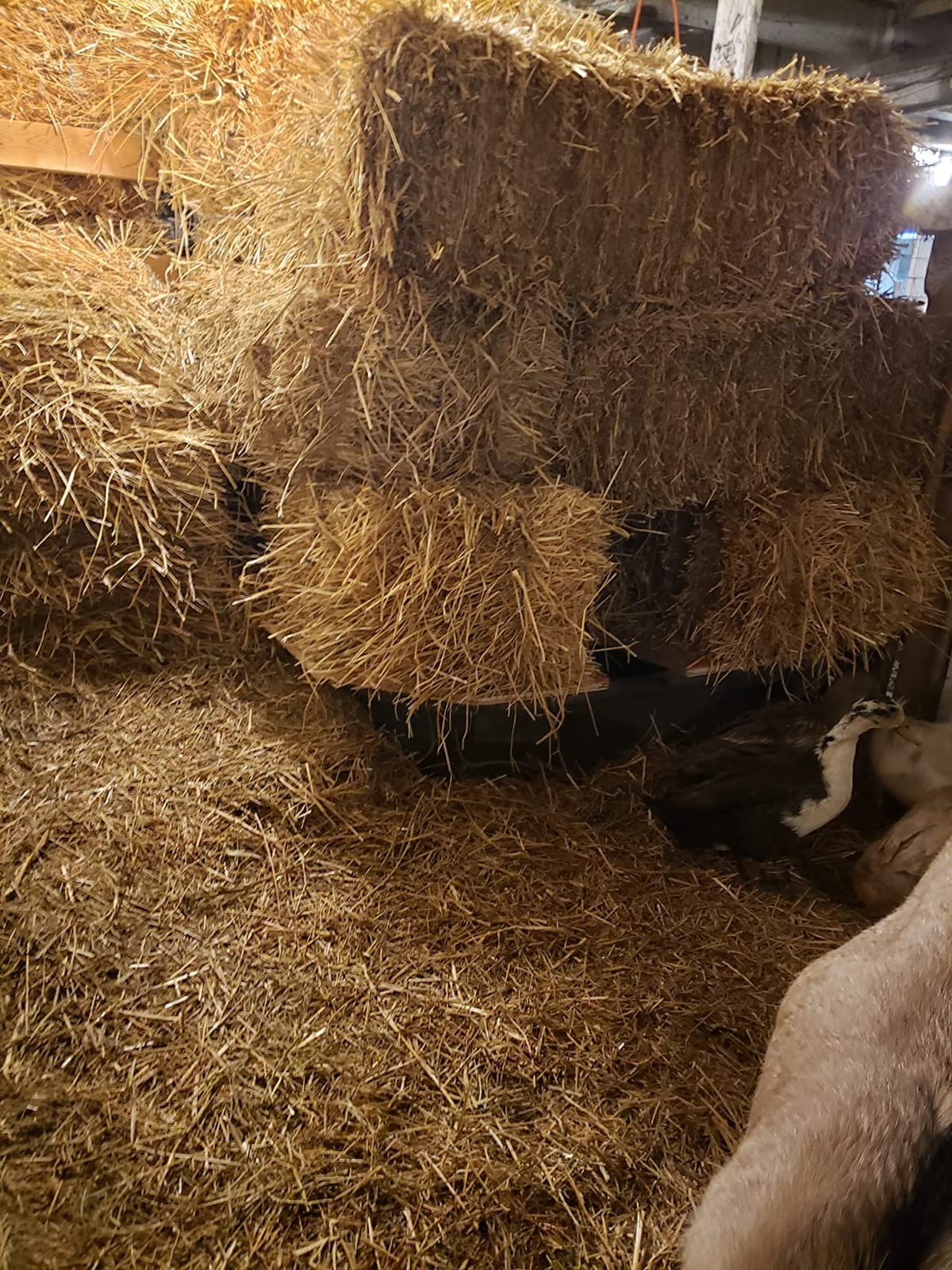
Two caveats appear repeatedly. Several owners run two units in very cold weather for a large trough, and one report describes sensing leakage into the water, which points back to proper grounding and a GFCI outlet rather than to a specific fault.
For very large tanks in severe climates, a 1500 watt unit is the cleaner single-device answer. Buying two 1000 watt units costs more and doubles the installation work.
What wattage actually means for your tank
Wattage determines how fast heat is added, and tank volume plus outside temperature determine how fast it leaves. Bigger tanks and colder nights both push you toward the top of the wattage range.
The common mistake is buying by tank size alone. A 150 gallon tank in a climate that rarely drops below freezing needs far less than the same tank in a place that sits at minus 20 for a week.
Why the cord protector matters more than the wattage
Because a chewed cord is a failure you cannot predict, while low wattage is a failure you can size for. The protector sleeves the cable against teeth and hooves, which is the most common damage in a pasture setting.
Inspect the cord each month anyway. Look for exposed conductor colour, flattened sections or a sleeve that has shifted, and replace the heater rather than the cord.
11. SLASHCOOL 500W Teflon Coated De-Icer: Best for Poultry and Bird Baths
Upgraded 500-Watt Chicken Water Heater – Submergible Cast Aluminum Utility De-Icer with Black Teflon Coating for Livestock Tanks, Winter Bird Bath, and Mineral Buildup Resistance
500 watts
Black Teflon coated cast aluminum
Activates near freezing, off at 90F
Safe for plastic, metal and foam
1.9 lb, 5-50 gallon containers
Pros
- Teflon coating resists mineral buildup in hard water
- Safest coating choice for long element life
- 691 reviews averaging 4.3 out of 5
- Handles bird baths
- chicken waterers and small tanks
Cons
- Only rated for containers of 5-50 gallons
- About 10 percent of reviews are 1 star
- Requires a GFCI outlet in a weatherproof location
The Teflon coating is the whole reason to choose this one. If your water is hard, a coated element is the single best upgrade you can make, because scale is the main reason elements fail early in hard water districts.
Its range is smaller than the stock tank units, at 5 to 50 gallons, which makes it a chicken waterer and bird bath heater rather than a cattle tank solution. Used correctly, that is exactly what it is built for.
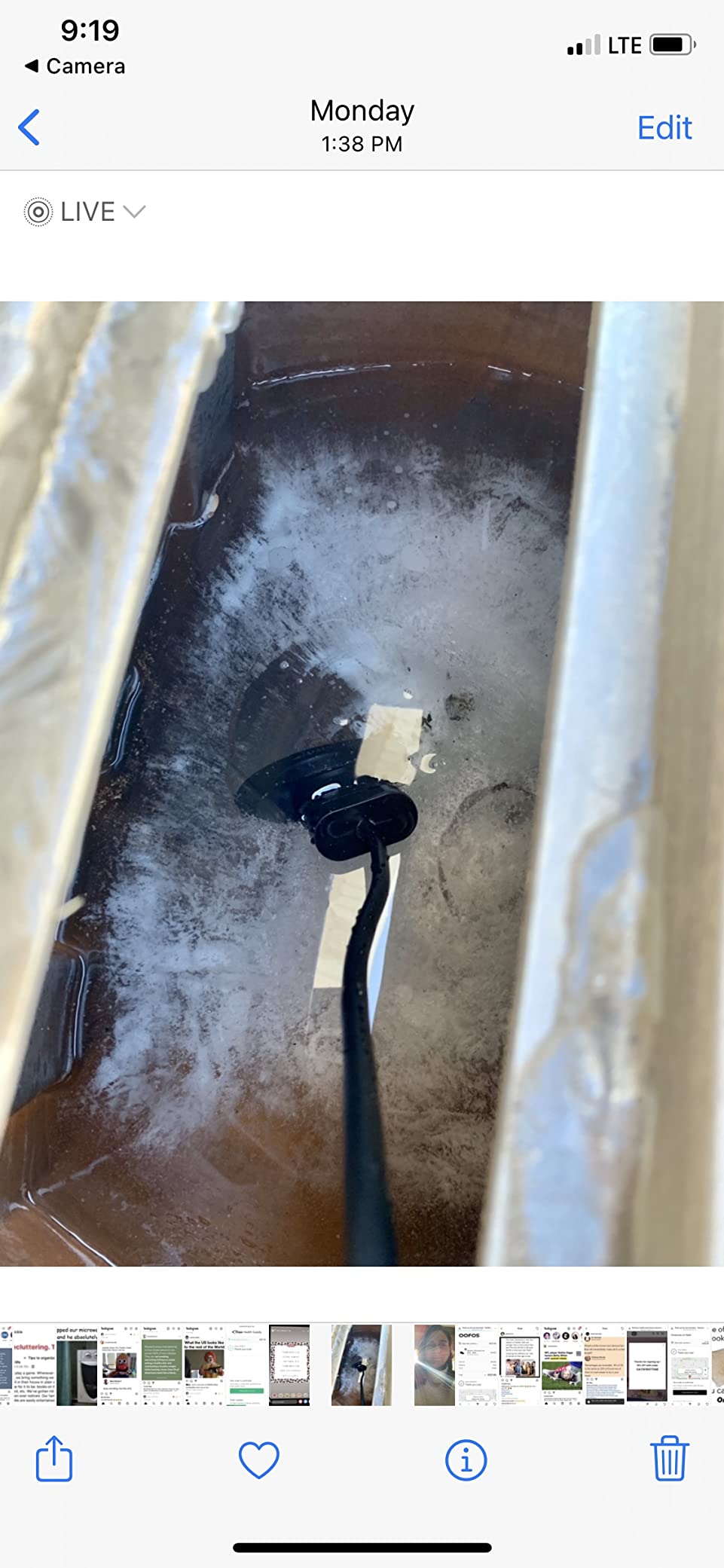
The thermostat activates as the water approaches freezing and shuts off at 90F. That is a sensible upper limit for a small container, and it stops the unit from cooking a shallow waterer on a warm afternoon.
Cast aluminum is claimed to work more efficiently than copper and Incoloy elements, and in a small container that efficiency translates directly into holding the water open through a cold snap.
At 1.9 pounds it is easy to move between a chicken waterer, a dog bowl and a bird bath, which is a genuine advantage when one heater has to cover three small jobs.
Its 691 reviews average 4.3 out of 5, and the quality control complaints are real. Around 10 percent of ratings are 1 star, so test it early and keep a spare for a critical waterer.
Is a de-icer safe for chickens and ducks
With a guarded or caged element, submerged well clear of the drinking surface and using a GFCI outlet, it is generally safe. Poultry will happily stand on a warm element, which is the specific concern raised by backyard chicken keepers.
Some de-icers are simply a poor choice for waterfowl in winter, and no commercial page will tell you that. If ducks and geese share the water, keep the element caged and give them an unfrozen alternative such as a shallow dish with a heater rated for it.
When a coated element pays for itself
In hard water, almost immediately. Calcium scale insulates the element, forcing it to run hotter, and coated elements resist the buildup that causes both overheating and corrosion pits in the metal beneath.
In soft water the advantage shrinks, and a bare cast aluminum element performs adequately. Coating is insurance against your water chemistry rather than a universal upgrade.
12. comincia 500W Trough Heater: Effective in Deep Cold, Uneven Durability
500W Horse Water Heater, Submersible Water Trough De-Icer For Livestock
500 watts
Fully sealed cast aluminum element
Turns on below 35F, off at 95F
1.67 lb, 10.95 x 6.8 x 2.05 inches
Pros
- Reported effective at minus 66F wind chill
- Holds water lukewarm in freezing conditions
- Weighted body stays submerged without added weights
- Chew resistant heavy-duty cord
- Grounded 3-prong plug
Cons
- Reports of rusting and early failure after one season
- Some units smoked or melted after a single winter
- Only 174 reviews
- a thinner track record than the leaders
This is the most interesting data point in the whole roundup for anyone in a severe climate. Owners report this 500 watt unit keeping water lukewarm at zero degrees and one account describes effectiveness at a minus 66F wind chill, which is far beyond what the wattage suggests should be possible.
The likely explanation is the fully sealed cast aluminum body and its weight. A dense, well-built element transfers heat efficiently and stays put on the tank floor without extra weights, so no energy is lost to a unit that floats off the bottom.
The thermostat band is wide, from below 35F up to 95F, and that wide cut-in point is a real behavioural difference. It allows the water to get genuinely cold and stay cold until the element is needed, which suits a tank where animals drink steadily through the day.
It is rated for tanks over 100 gallons despite the 500 watt rating, and the chew resistant cord and grounded 3-prong plug are both sensible choices for a pasture installation.
Durability is where the feedback splits. Alongside the cold performance reports sit accounts of rust after one season and units that failed, smoked or melted after a single winter of use.
That pattern is hard to reconcile, and it is the reason this unit sits at the bottom of the list despite the impressive temperature reports. For a primary water supply, the failure risk is not worth it. For a secondary tank or a backup, the performance is compelling.
What is the honest verdict on 500 watt performance
A 500 watt element can hold an opening in a hard freeze if it is well built, well insulated and in contact with enough water. It cannot reheat a large volume quickly, and it will lose ground in sustained extreme cold over many hours.
That is why the reports on this unit are so polarised. Owners in mild climates praise it, and owners reporting minus 66F wind chill also praise it, while others report total failure.
Who should and should not buy this
Buy it if you are replacing a failed unit, you already know the outlet is close, and you treat it as a seasonal tool that gets tested in October rather than discovered in January.
Look elsewhere if this is the only water source for horses or cattle. A three year warranty from an established brand is worth more than an extra season of low power in a climate you do not control.
How to Choose a Stock Tank De-Icer
Sizing is the decision that matters most, and it is the one nobody publishes clearly. Get it wrong in either direction and you either waste power heating a small tank or spend a season chipping at an ice sheet that never fully opens.
Match wattage to tank volume and your coldest nights
Two variables decide it: how many gallons the tank holds and how cold your worst night actually gets. Volume sets how much heat must be replaced, and temperature sets how fast heat leaves the water.
The table below is a starting point rather than a promise. It assumes a well-insulated tank with a lid or partial cover, a GFCI protected outlet and a unit actually left in the water all winter.
A 5 to 50 gallon bucket, pail or chicken waterer needs 500 watts. A 50 to 100 gallon utility tub or half-barrel takes 500 to 1000 watts. A 100 to 200 gallon trough calls for 1000 to 1500 watts. Anything from 200 to 300 gallons and up needs 1500 watts and a second unit in the coldest regions.
The rule of thumb most owners arrive at is roughly 10 watts per gallon for a moderate climate, moving toward 15 watts per gallon once you are regularly below the freezing mark for long stretches. A 200 gallon tank at 10 watts per gallon lands on 2000 watts of demand, which is why two units is the normal answer in a real northern winter.
Several owners of the 1000 watt unit report running two in cold weather for a large trough, which fits that arithmetic exactly. Buy the wattage your climate needs, not the wattage your tank size suggests in a mild January.
Submersible, floating or drain plug: pick the right mounting format
All three formats keep water liquid, and they differ in where the element sits and what you have to do to install them. Most buying mistakes in this category come from picking a format that does not suit the tank.
A submersible unit rests on the tank floor and stays out of sight. It is the simplest option for plastic and metal tanks with no drain, and it is the standard choice for utility tubs and half-barrels.
A floating unit sits on the surface and holds an opening where animals can find it, which is the better option for horses. The trade-offs are a higher centre of gravity in the water and the risk of an animal damaging it.
A drain plug de-icer screws into a 3/4 inch drain opening and hangs underneath the tank. Nothing enters the water at all, which is the safest physical arrangement, and it requires a compatible hole in the tank.
For a horse trough, a floating or convertible unit is the standard recommendation, because the surface opening is easier for an animal to locate. For a tank you can drill, a drain plug unit is the most physically secure. For a tub with no drain and no room to float, submersible is the answer.
Plastic tank safety and element guards
Plastic tank anxiety is the single most common concern in forums, and it is a legitimate one. A bare element against a thin poly wall concentrates heat on a small area, and that is how liners warp and crack over time.
The mitigation is simple and non-negotiable. Buy a unit that is explicitly rated for plastic containers or that has a physical guard, cage or housing around the element. Every product in this roundup except the 500 watt unit with a bare coated element carries either a stated plastic rating or a guard.
Cold plunge owners buying de-icers for plastic tubs name the element guard as the deciding requirement, and that guidance transfers directly to plastic stock tanks. An Alpine cold plunge owner made the same point about choosing a unit built for plastic tanks.
Cast aluminum is also a better choice than plastic for the heater body itself. It moves heat into the water faster, runs cooler at the surface for the same output and lasts longer through repeated freeze thaw cycles.
GFCI, grounding and outdoor cord safety
A de-icer is an electrical device permanently submerged in a wet location, which is the most demanding place an appliance can sit. This is the part most retail copy glosses over and the part that shows up as a real safety gap in owner forums.
Plug it into a GFCI protected outlet every time. A ground fault circuit interrupter trips when it senses current leaving the intended path, which is exactly the failure mode a heater in water can develop after seasons of weather exposure. Several of the products here explicitly require one, and the owners who report breaker trips are the ones who skipped it.
Grounding matters and the question is asked constantly without a clear answer. A grounded three prong plug gives a low resistance fault path back to the breaker so that a leak trips the GFCI immediately instead of energising the water. Never remove the ground pin to make a plug fit an older two prong outlet.
If the outlet is more than a few steps away, a licensed electrician adding a GFCI protected outdoor outlet is worth the cost. Household extension cords in a wet yard are the single biggest avoidable electrical risk in this whole topic.
Route the cord where livestock cannot reach it, keep the connection above the splash line inside a weatherproof cover, and inspect the cord monthly for chewing, flattening or exposed conductor colour.
Running cost by wattage through a winter
A thermostat is what makes any of these affordable. Without one, a heater runs continuously and the running cost is the highest number on this page. With one, the element draws power only in the coldest hours.
For a rough comparison, a 1500 watt unit on a 12 hour cycle uses 18 kilowatt hours a day. A 1000 watt unit on the same cycle uses 12, and a 500 watt unit uses 6. Over a 120 day winter that is roughly 2160, 1440 and 720 kilowatt hours respectively.
The dollar figure depends entirely on your local electricity rate, so rather than quote one, run your own rate against those kilowatt hour numbers. A simple rule of thumb: the running cost scales almost exactly with wattage, so a 1500 watt unit costs roughly three times a 500 watt unit for the same duty cycle.
That is the real argument against oversizing. A 1500 watt unit in a 60 gallon tank works perfectly, but a 500 watt unit would do the same job for a third of the energy. Size for your coldest night, not for the tank you wish you had.
When you can skip a de-icer entirely
If your winters are mild, your tank is small and you already check it most days, a de-icer may be unnecessary. Owners in mild-winter regions report simply changing the water weekly and never buying a heater, and that is a legitimate choice for a backyard setup.
It stops being reasonable the moment the tank serves horses, cattle or goats through a real freeze. Then the de-icer is not a convenience, it is the thing standing between your animals and dehydration.
A solid rubber stock tank is also worth the investment regardless of the heater. Long-time horse owners pair a heated waterer with a tank they describe as nearly indestructible, because tank durability matters as much as heater output.
Troubleshooting a de-icer that will not hold water open
If the tank still freezes, work through these in order. Check that the thermostat is actually calling for heat, since a unit stuck off will never cycle.
Confirm the unit is submerged, because an element exposed to air runs hot, trips its protection and stops. Then check the GFCI, since a tripped breaker is protection working correctly rather than a fault.
If the element is scaled or furred with mineral deposit, clean it. A coated element resists this, and an uncoated one in hard water needs annual attention.
Finally, if an ice ring forms around the element but the rest of the tank is solid, the unit is undersized for that tank and climate. That is a sizing problem, not a defect, and the fix is more wattage or a second unit.
Off-grid and solar de-icer systems exist for remote tanks with no power run, and they eliminate the cord and outlet questions entirely at a much higher cost. They are worth a look when the nearest outlet is hundreds of feet away.
Frequently Asked Questions
What is the best stock tank heater?
The best stock tank heater is the Farm Innovators 500W Submersible De-Icer for tanks up to 50 gallons, and the Farm Innovators DPH-15 1500W drain plug de-icer for larger tanks. Match wattage to volume: 500 watts for 50 gallons, 1000 for 100, 1500 for 200 or more. For a 200 gallon tank, two units is the reliable answer in sustained deep cold.
What is the best water trough heater?
A water trough heater needs three things: a thermostat so it only draws power near freezing, a rating for your tank material, and enough wattage for the volume. For a horse trough specifically, a floating or convertible cast aluminum unit is the usual choice, because the surface opening is easier for an animal to find than one at the bottom of the tank.
Do I need a GFCI outlet for a stock tank de-icer?
Yes. A de-icer is an electrical device permanently submerged in a wet location, and a GFCI trips when current leaks out of the intended path. Plug it into a GFCI protected outlet in a weatherproof cover, and never use a household extension cord across a wet yard. A tripped GFCI is the protection working, not a fault to reset and ignore.
Is grounding a stock tank de-icer necessary?
Ground it, and never remove the ground pin to fit an older two prong outlet. The ground gives a low resistance path back to the breaker so that a leak trips the GFCI immediately rather than energising the water. This question comes up repeatedly in farm groups without a clear answer, but the rule is the same as for any appliance in a wet location.
Are stock tank de-icers safe for chickens and waterfowl?
Only with precautions. Poultry will sit on a warm element, and some de-icers are a poor choice for waterfowl in freezing water. Use a unit with a caged or guarded element, keep it submerged and well clear of the drinking surface, and give ducks and geese an unfrozen alternative such as a shallow dish with its own heater.
The Best Stock Tank De-Icer Verdict for 2026
For most people, the Farm Innovators 500W Submersible is the right first purchase. It has the largest review base in this roundup at 858 ratings averaging 4.4, it is rated for plastic as well as steel tanks, and at 500 watts it does not need a dedicated circuit. Buy it for a utility tub, a half-barrel or any tank up to 50 gallons.
Step up to the H-418C Convertible at 1250 watts if your tank is larger or you want the option to float it at the surface. The three year warranty and the ability to switch mounting style in seconds make it the most flexible unit here, and 682 reviews averaging 4.5 back that up.
For full-size stock tanks, the drain plug units are the secure answer. The DPH-15 covers two tanks at once and rated highest in this group at 4.6 out of 5 across 685 reviews, while the API 2002DP adds CSA and UL certification for anyone who wants the strongest electrical safety case.
A couple of honest notes. The 500 watt units in this roundup are not all built the same way, and the ones with reported early failures should not be your only water source in a hard winter. And if you have chickens or ducks sharing the tank, use a guarded element and give the waterfowl their own unfrozen dish.
Whatever you choose, install it in October rather than waiting for the first freeze, test it in a bucket before it goes in the tank, and plug it into a GFCI protected outlet. Those three habits prevent almost every de-icer problem we encountered while comparing the best stock tank de-icers available in 2026.