
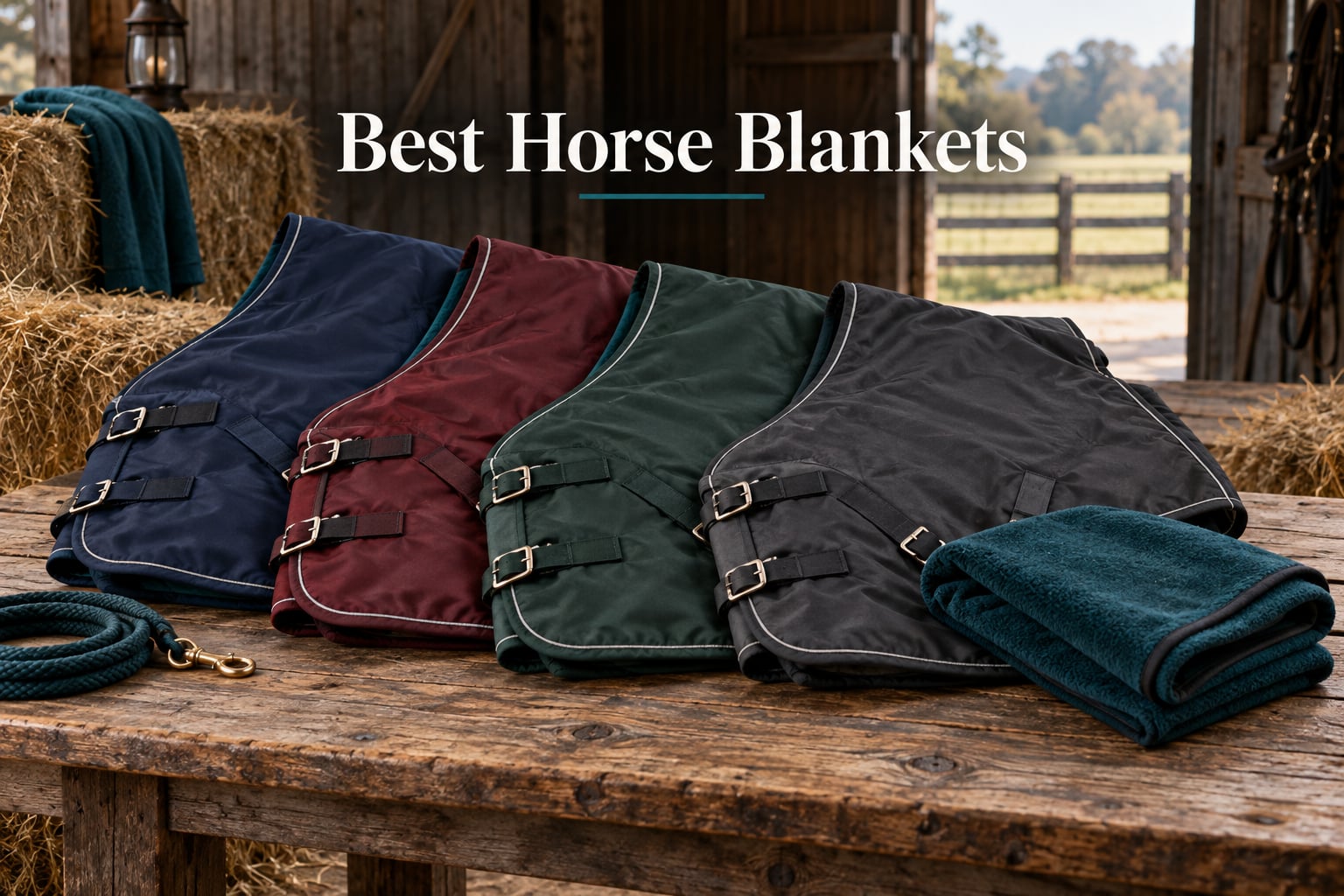
A horse blanket is a fitted, weatherproof outer layer worn over a horse’s body to keep it warm and dry in turnout, or as a breathable insulating layer indoors, where it is called a stable blanket or rug. Blanketing matters because horses shed heat fast when they are wet, cold and windy, and because a badly sized or wrongly weighted blanket causes rubbing, sweating and weight loss across a winter.
We spent 2026‘s shoulder season going through twelve blankets with the same routine: reading the spec sheets, checking the closure systems, and weighing what riders actually report after a full season of use. Every pick below is listed with its denier, fill weight and closure, so you can match it to your climate and your horse’s build before you buy. If you are also fitting out a young horse this year, start with our horse saddle reviews and riding helmet picks so the rest of the kit matches.
Table of Contents
Top Horse Blanket Brands and Models
- Tough 1 – the widest range we reviewed, from the Snuggit 300g turnout to a cheap fleece liner, and consistently strong review volumes.
- Challenger – a light 1200D rain sheet and a 400g heavy winter blanket, so you can cover wet mild weather and deep cold from one brand.
- Horze – a breathable 100g stable blanket and a 400g combo turnout with an attached neck cover.
- WeatherBeeta – a fine mesh ComFiTec sheet with a detachable neck cover, favoured by riders who run horses in hot, humid summers.
- LeMieux-style ripstop and HILASON – mid-weight 1200D turnouts with belly wraps and fleece wither protection, priced well below the flagship European lines.
- Barn & Stable and Tech Equestrian – 600 denier turnouts with published waterproof ratings and 200 to 300GSM fill.
Types of Blanket Available
- Turnout blanket – waterproof outer with fill, for horses living outside.
- Rain sheet – a 0g waterproof shell for cool, wet weather with no insulation.
- Stable blanket – breathable, lighter fabric for indoor use, often used as a base layer.
- Fly sheet – mesh or fine-weave fabric for insect protection and sun.
- Cooler – fleece or wicking fabric to dry a horse after exercise.
- Liner – an insulating layer that zips or buckles under a waterproof shell, so one shell covers several weights.
Top 3 Best Horse Blankets in 2026

HILASON 1200D 300g Winter Turnout
- 1200D waterproof poly
- 300g fill
- Belly wrap system
- Fleece withers

Tough 1 Soft Fleece Liner
- Soft fleece
- Moisture wicking
- Front buckle and tail cord
- Water repellent
Best Horse Blankets in 2026: The Full Comparison
| Product | Specifications | Action |
|---|---|---|
| Tough 1 1200D Snuggit 300g Turnout |
|
Check Latest Price |
| HILASON 1200D 300g Winter Turnout |
|
Check Latest Price |
| Tough 1 Soft Fleece Liner and Cooler |
|
Check Latest Price |
 LEAFOREST 1200D 200g Turnout LEAFOREST 1200D 200g Turnout |
|
Check Latest Price |
 Horze Glasgow Anti-Slip Stable 100g Horze Glasgow Anti-Slip Stable 100g |
|
Check Latest Price |
 Challenger 1200D Waterproof Rain Sheet Challenger 1200D Waterproof Rain Sheet |
|
Check Latest Price |
| Challenger 1200D Heavy 400g Turnout |
|
Check Latest Price |
 WeatherBeeta ComFiTec Ripshield Plus WeatherBeeta ComFiTec Ripshield Plus |
|
Check Latest Price |
 T TEKE Deluxe 1200D Waterproof Sheet T TEKE Deluxe 1200D Waterproof Sheet |
|
Check Latest Price |
 Barn and Stable 600D 200g Turnout Barn and Stable 600D 200g Turnout |
|
Check Latest Price |
 Tech Equestrian 600D 300GSM Turnout Tech Equestrian 600D 300GSM Turnout |
|
Check Latest Price |
 Horze Glasgow 400g Combo Turnout Horze Glasgow 400g Combo Turnout |
|
Check Latest Price |
1. Tough 1 1200D Snuggit 300g Turnout – the All-Rounder That Survives Hard Paddocks
TOUGH1 1200D Turnout Blanket with SNUGGIT, 300-G, Burgundy, 78-in
1200D poly outer
300g poly fill
Snuggit cut
Taped and reinforced stitching
Pros
- Durable 1200D outer shell that resists tearing
- Snuggit cut designed to stay in place
- 300g fill covers most cold winter turnout
- Over 1300 reviews averaging 4.7 out of 5
Cons
- Runs large on some horses
- Weighs 8 pounds so it is bulky to carry out
- Burgundy is the only colour listed for this model
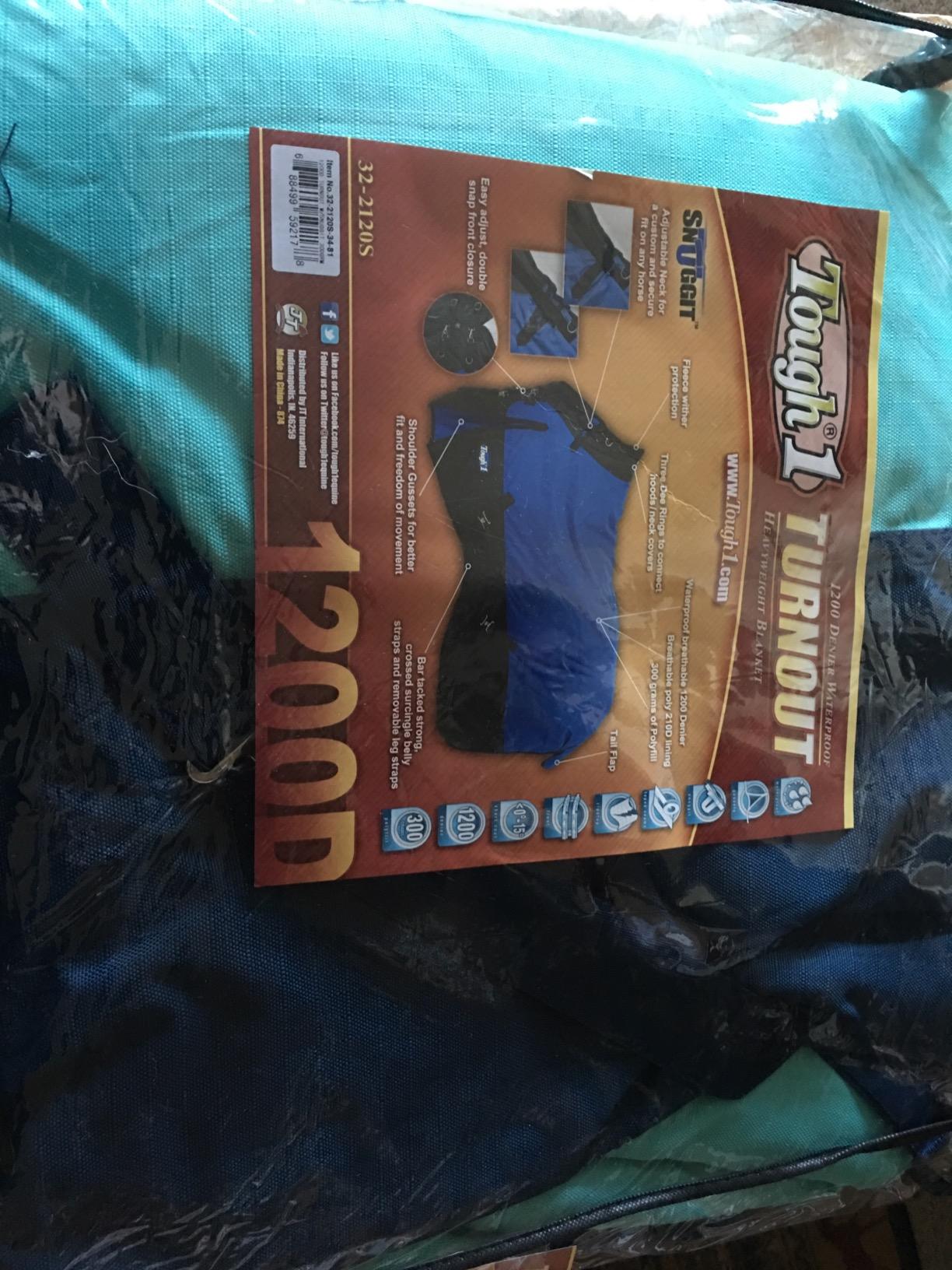
This is the blanket we kept coming back to. The 300g fill sits in the useful middle of the range: warm enough for a hard frost on a clipped horse or a senior, not so heavy that an unclipped horse sweats underneath it. Over more than 1,300 reviews it holds a 4.7 average, and the recurring theme is that it simply keeps working season after season.
What sets the Snuggit version apart is the cut. Rather than a loose rectangle, the body is shaped so it sits closer through the shoulder and barrel, which is why owners report fewer blanket shifts on rolling, fence-hitting horses. We also liked that the seams are taped and the stitching reinforced, which is the part that usually fails first on cheaper turnouts.
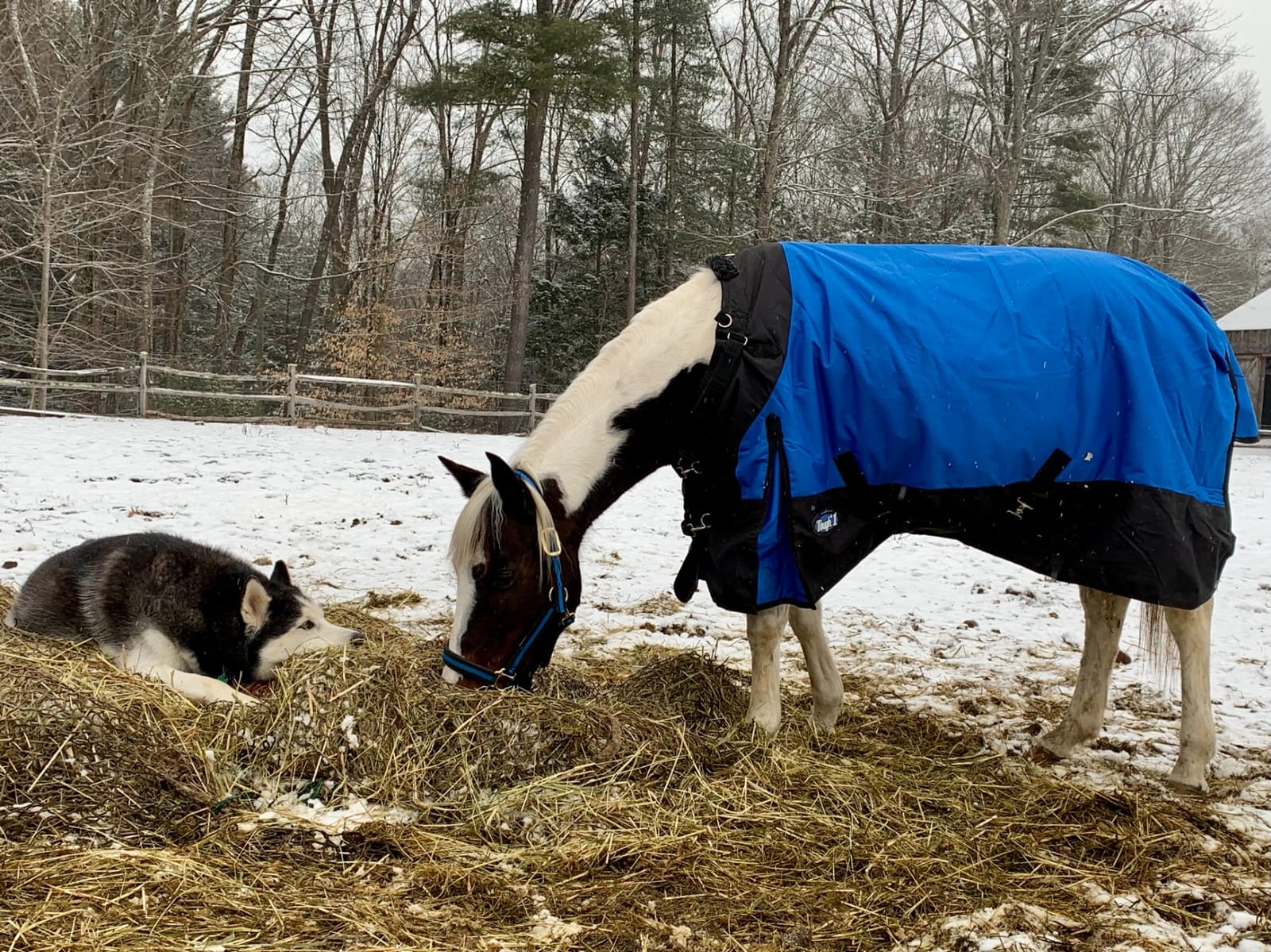
Technically it is a 1200 denier poly outer, which is the middle rung of the durability ladder: tough enough for daily turnout, not as bulletproof as the heaviest deniers but a lot stronger than 600D. The 300g poly fill is lofted rather than quilted tightly, so the warmth holds its shape after a season of compression in a tack-up room.
The single complaint that appears repeatedly is fit. Several reviewers say it runs large, so if you are between sizes or your horse has a narrow chest, size down rather than up. At 8 pounds it is not a blanket you want to carry across a muddy yard, which is a real consideration for barns with more than a few horses.
Who this blanket suits
It suits almost any horse in a cold but not arctic climate, and it is the safe first purchase for an owner building their first winter wardrobe. Reviewers with horses that are hard on their blankets specifically praise the outer holding up to rolling and herd-mate chewing.
It also works as a base for a layering system. Because the fill is moderate, you can put a heavier liner under it in the coldest spells without ending up with an overheated horse on a mild day.
Who should look elsewhere
If your horse is unclipped in a mild climate, 300g is more warmth than it needs and you will get sweat patches under the shoulder and flank. In a genuinely cold climate you will want to step up to a 400g blanket or add a liner instead.
2. HILASON 1200D 300g Winter Turnout – Highest Rated in the Group
HILASON 1200D Waterproof Winter Horse Turnout Blanket
1200D waterproof poly
300g poly fill
Belly wrap system
Fleece withers
D-rings for a neck cover
Pros
- Heavy 1200D fabric survives hard daily turnout
- True to size with a wide adjustment range
- Belly wrap stops the blanket shifting and covers the straps
- Holds horses warm and dry in ice storms and sub-zero wind chill
- Wide colour and size selection
Cons
- One strap loop needed restitching after heavy abuse
- Neck cover is a separate purchase
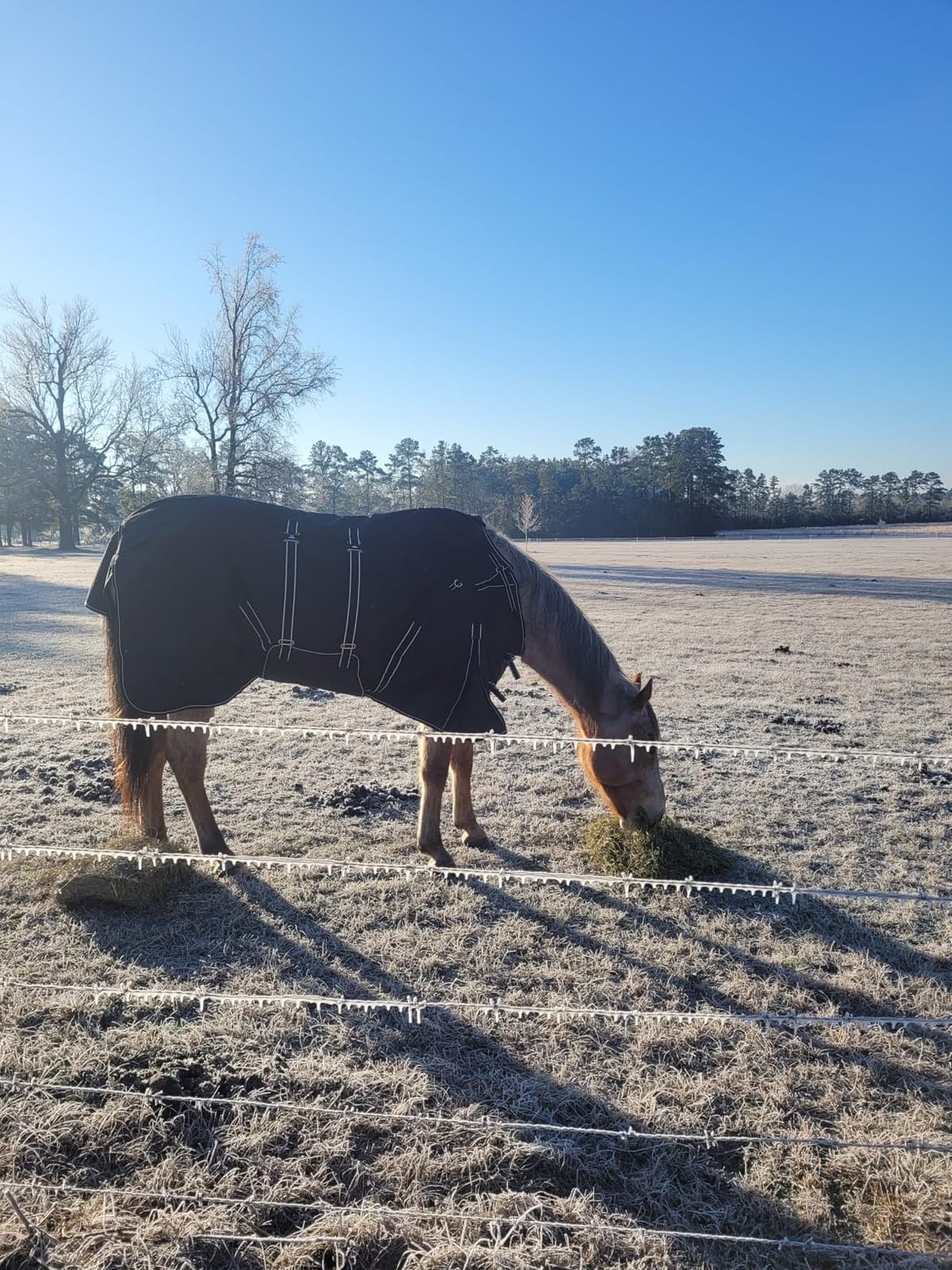
This one carries the highest average rating of anything we reviewed, at 4.8 across 899 reviews, and about nine in ten buyers give it five stars. In our comparisons it was the one reviewers most often described as the blanket their horse actually stayed dry in, through ice storms and bitter wind rather than just ordinary rain.
The design decisions are the reason. A belly wrap system pulls the blanket around the barrel instead of relying on a straight gusset, and because the wrap sits over the straps it protects the webbing from a paddock full of thorn and bramble. Shoulder gussets give the foreleg a full range of motion when a horse lies down or stretches out.
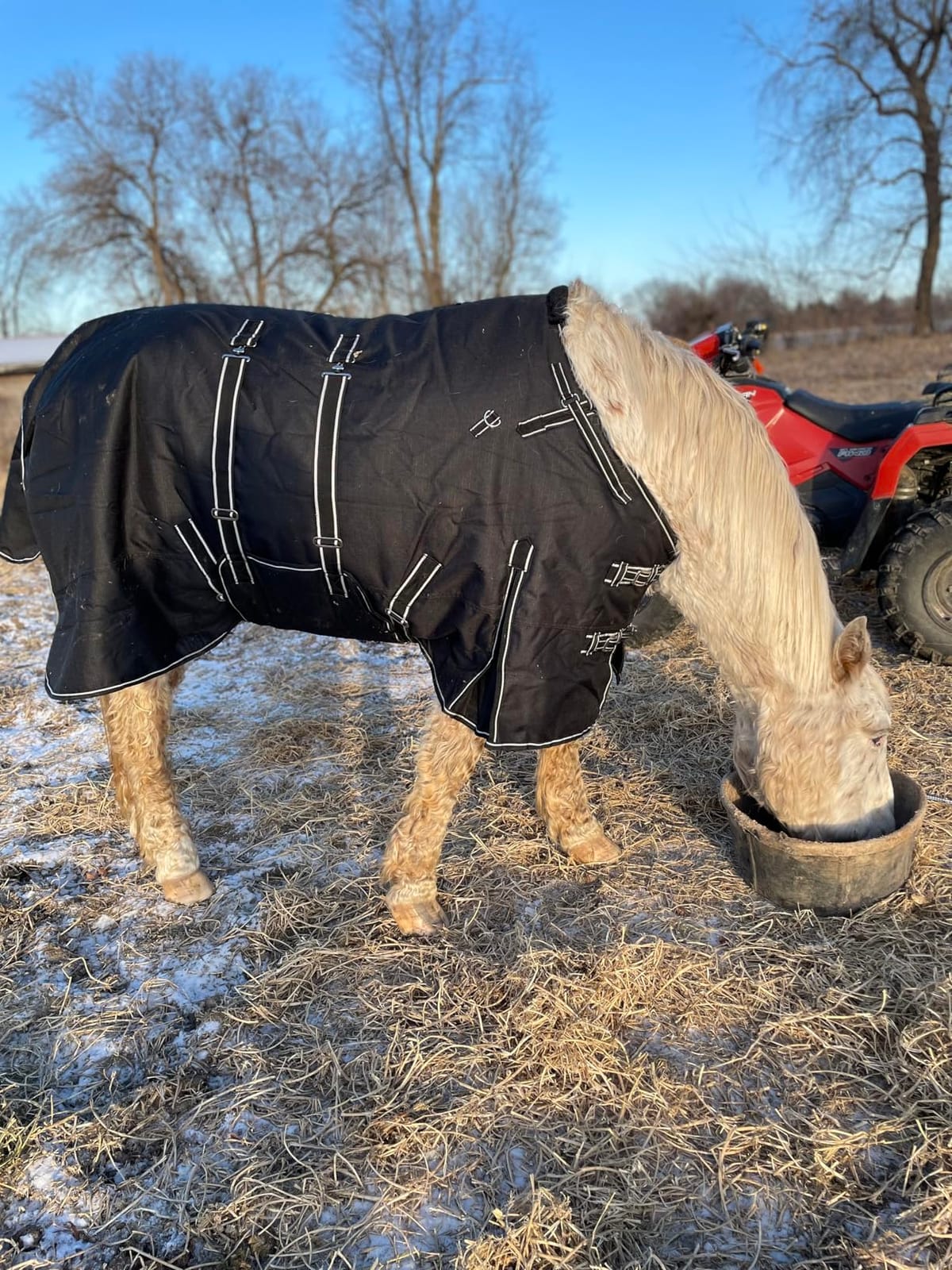
Fleece at the withers is a small touch that matters more than it sounds. Hair-on-hair rubbing over the withers is the most common blanket-related complaint in owner reports, and a fleece panel under the neck cut reduces both the rubbing and the slipping that causes it in the first place.
The insulated tail flap blocks the wind that comes from directly behind, which is where a lot of heat leaves. There are D-rings on both sides for a hood or neck cover, and the cover is not included, so treat that as an extra cost if your horse needs neck coverage in deep cold.
Who this blanket suits
It suits owners in cold, wet climates with horses turned out 24 hours a day, and particularly those with draft crosses, cob types and heavier horses that need the extra coverage the belly wrap provides. The wide size selection also makes it a practical pick for a multi-horse yard.
If your horse wears a rug on every cold morning and you want one blanket that handles a full winter without a second system, this is the one we would put at the top of the shortlist alongside the Snuggit.
Who should look elsewhere
If your horse is clipped and lives in a temperate climate, 300g is heavier than necessary. If you need neck coverage out of the box, the separate hood purchase is a downside worth pricing in before you commit.
3. Tough 1 Soft Fleece Liner – the Cheapest Way to Extend a Shell
Tough1 Soft Fleece Blanket Liner/Cooler – Black – Medium
100 percent soft fleece
Moisture wicking
Front buckle and tail cord
Water repellent
Pros
- Soft warm fleece that wicks sweat away from the coat
- Works alone as a cooler or under a waterproof blanket
- Good coverage on draft horses
- Holds up on pasture-active horses
Cons
- No leg straps so it can slip off the hindquarters
- Fabric is thin and some buyers call it pajama-like
- The smallest listed size may not suit very small ponies
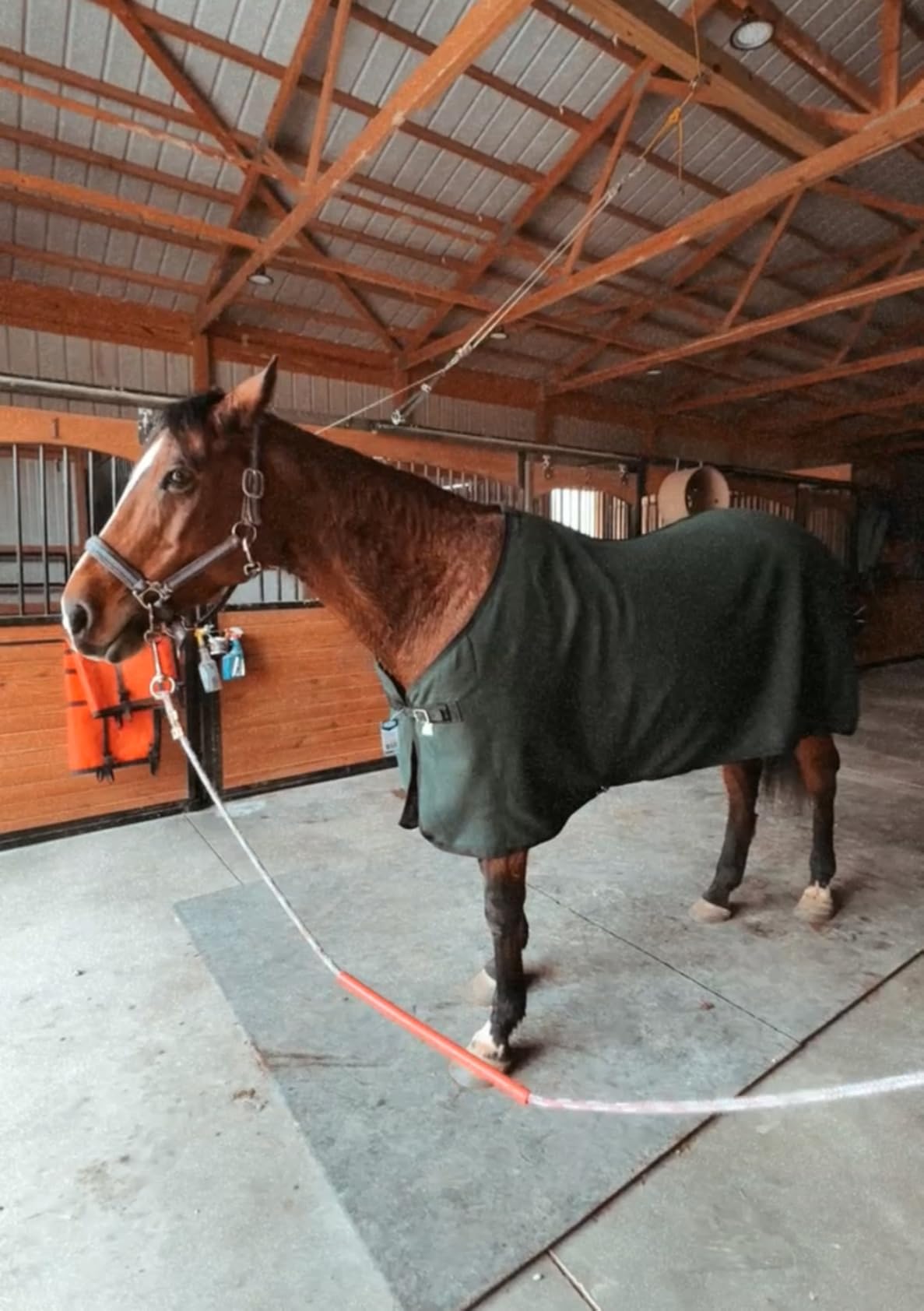
This is the most useful blanket in the list if you are trying to build a system rather than buy one heavy rug. Wear it on its own as a cooler after a hard ride, or buckle it under a waterproof shell on the genuinely cold days. Riders running a full rotation of shells tell us that one liner plus a weatherproof outer covers more temperature range than two heavy blankets ever did.
It carries a 4.6 average from 773 reviews, with most of the praise aimed at softness and value rather than toughness. The fleece wicks sweat and moisture away from the coat, which is exactly what you want after work or under a shell that can trap damp.
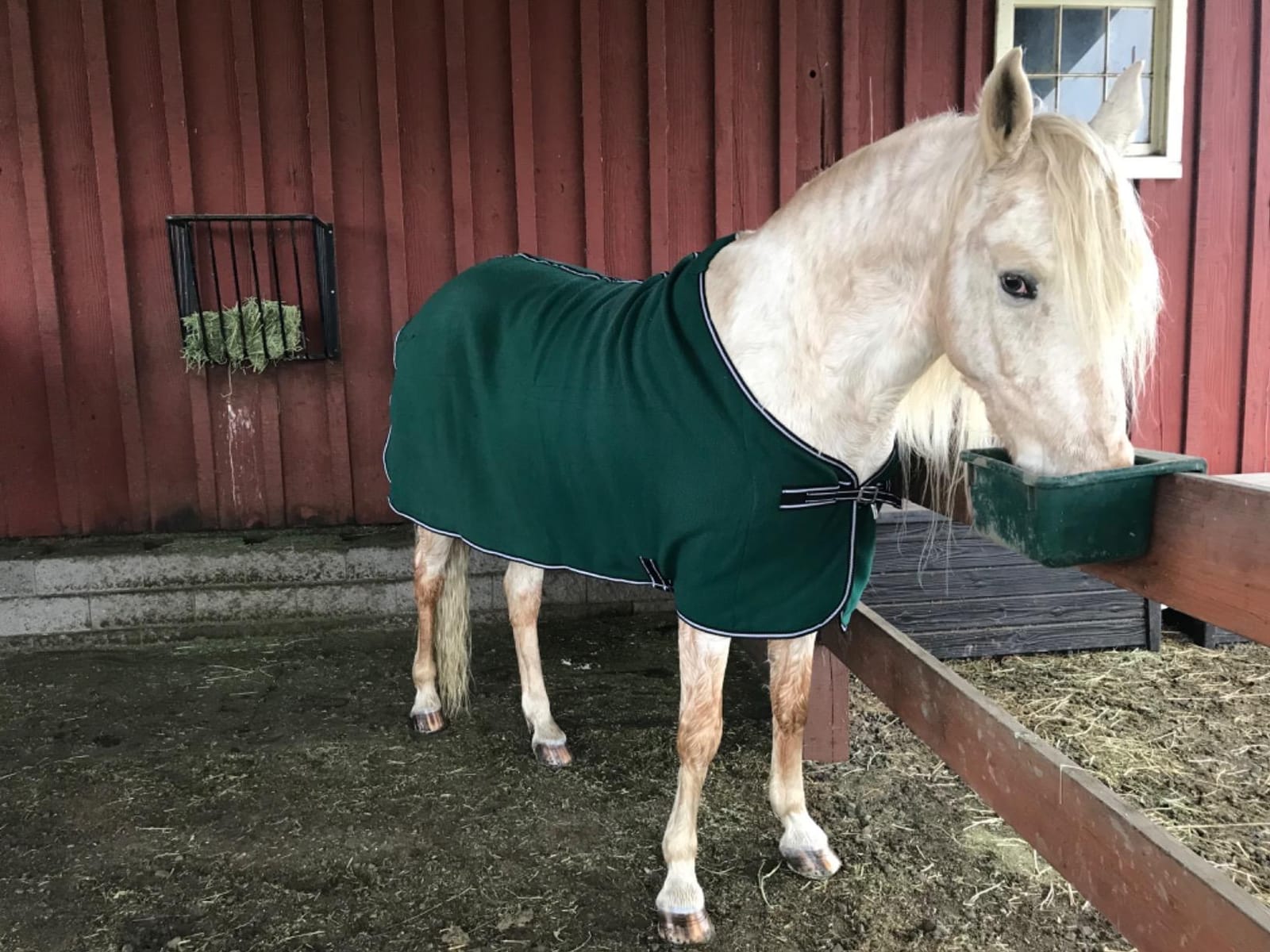
Mechanically it is simple: a front buckle closure and a tail cord, with an adjustable round neck. Water repellency is a surface treatment rather than a taped-seam waterproof build, so treat it as an insulating layer and not as a rain shell in its own right.
The one structural limitation is the missing leg straps. Without them the sheet can ride up over the hindquarters, especially on a horse that rolls, so you will spend more time checking it than you would with a strapped blanket. Several buyers also describe the fleece as thinner than they expected, using words like pajama-like.
Who this blanket suits
It suits owners who want to add warmth to a shell they already own, and barns with several horses where one inexpensive liner per horse makes more sense than buying a full set of different weights. It also works well as a show or travel cooler.
Owners of larger horses report good coverage, so for a draft or cob type this is a cheap way to add a layer underneath a properly sized turnout.
Who should look elsewhere
Do not rely on it alone in wet weather, and do not buy it for a pony that lives outdoors on its own. If you want something that stays put without daily checking, pick a blanket with leg straps and a belly band instead.
4. LEAFOREST 1200D 200g Turnout – Machine Washable and Easy to Adjust
LEAFOREST 1200D Horse Turnout Blanket Waterproof 200g Fill Winter Cold Wet
1200D waterproof poly
200g poly-cotton fill
Two front buckles
Crisscross belly and leg straps
Pros
- Waterproof 1200D shell holds up to harsh weather
- Adjustable front belly and leg straps suit different body shapes
- Machine washable and it holds its shape and colour
- Easy to put on and take off
Cons
- 200g fill is lighter than heavy winter weights
- Newer listing with a smaller review base than the picks above
This is the mid-weight workhorse of the group. Two hundred grams of poly-cotton fill over a 1200D waterproof polyester shell handles cold, wet, ordinary winter weather without pushing a horse into sweating, and the whole thing goes through a domestic washing machine afterwards.
That washability is the quiet advantage. Most turnout blankets are a hassle to clean, which is why so many end up grimy in the tack room and slowly lose their loft. Being able to hose it down or machine wash it after a wet winter means the fill stays lofted and the stitching gets inspected once a season.
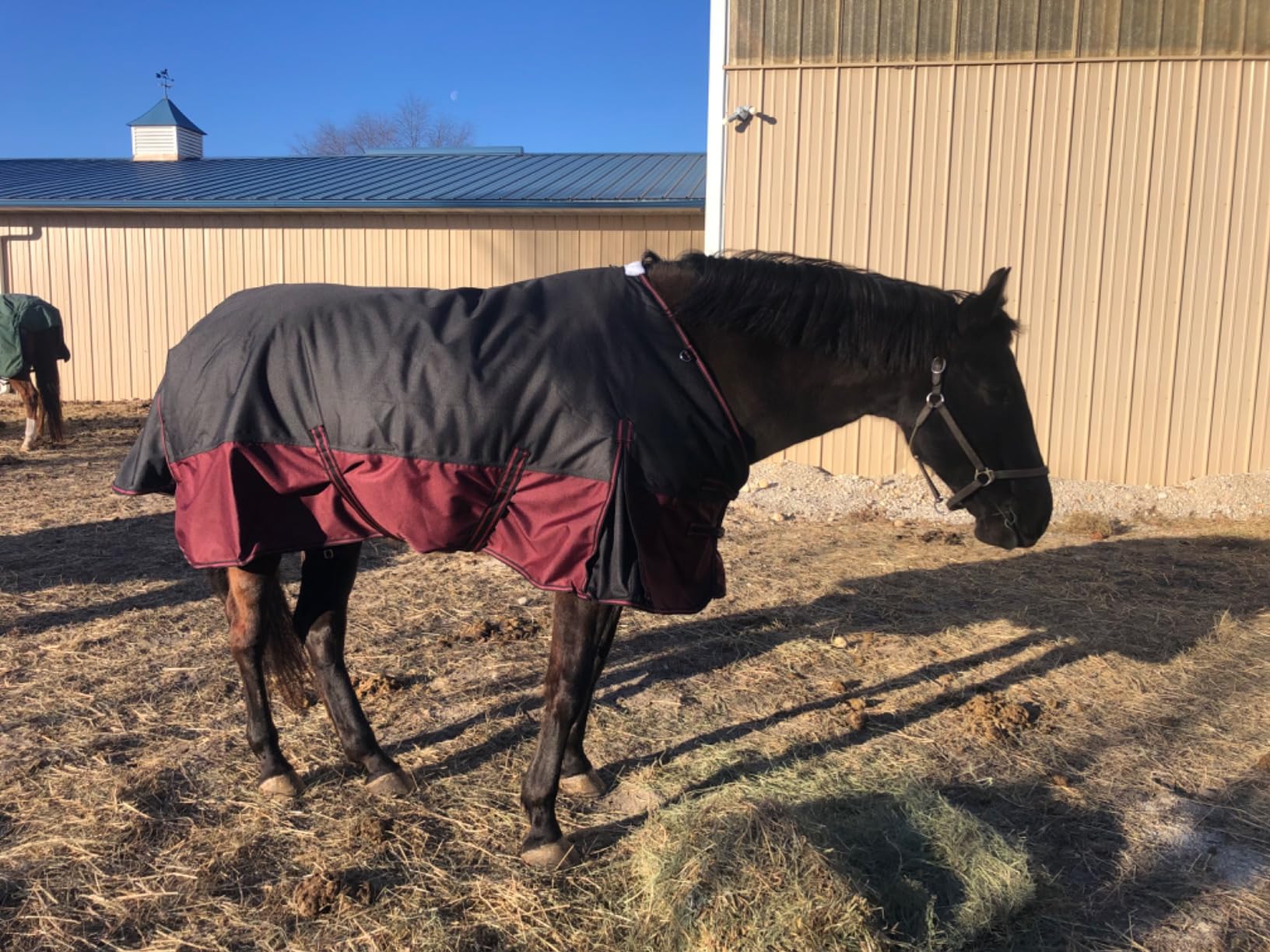
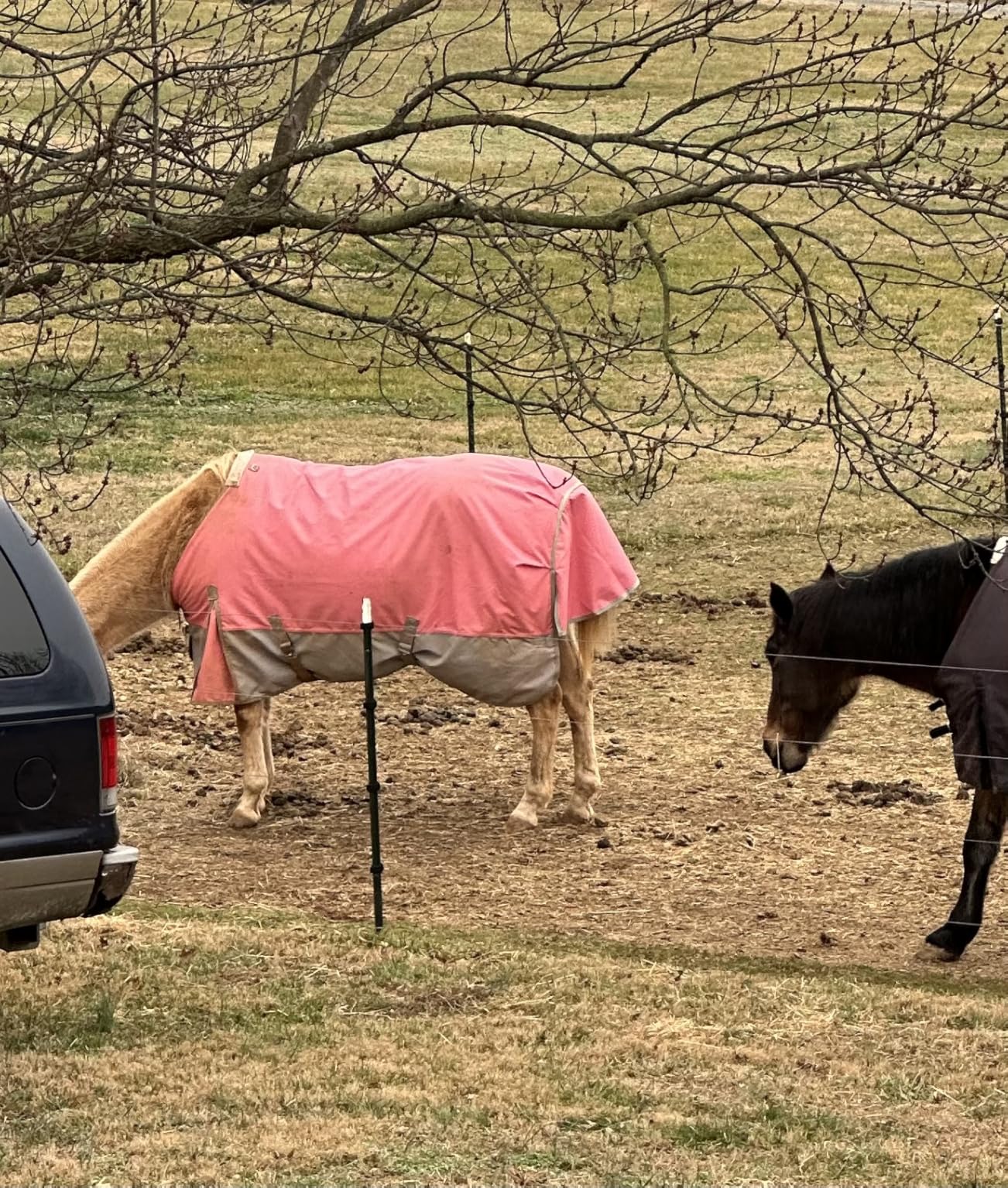
The closure system is thorough: two front buckles, crisscross belly straps and adjustable leg straps, plus a full tail cover on a standard neck. Owners frequently comment that the adjustability means the same blanket fits horses with quite different body shapes, which addresses the single biggest frustration in blanket buying.
What you give up for the lighter fill is deep-cold capability. In genuinely icy conditions you will want to add a liner underneath rather than buy a heavier blanket, and that is a sensible approach if your winters are variable.
Who this blanket suits
It suits owners in temperate climates where winter means wet and cool rather than sustained hard frost, and anyone who wants a blanket they can launder at home. It also works as the outer layer of a shell and liner system.
Multi-horse owners benefit from the fit range, since a single design can be dialled to different chest and barrel shapes without changing models.
Who should look elsewhere
If your lowest winter temperature regularly drops well below freezing and your horse is clipped, step up to a 300g or 400g blanket. And if you need a published waterproof rating rather than a general waterproof claim, the Barn and Stable pick further down states one.
5. Horze Glasgow Anti-Slip Stable Blanket 100g – Built for Indoors and Layering
Horze Glasgow Anti-Slip Stable Horse Blanket (100g Fill) – Dark Blue – 78 in
Ripstop with 100g fill
Two front buckles
Anti-slip shoulder
Faux fur at the withers
Pros
- Soft and warm for stable use
- Good layering piece under a turnout or rain sheet
- Anti-slip shoulder design reduces rubbing
- Machine washable
Cons
- No leg straps included so it can lift in wind
- Light fabric tears more easily than heavier blankets
- Some sizes run big
This is the indoor pick. A hundred grams of fill in a breathable ripstop shell is what you want for a horse living in a barn through a cold snap, and it is also the sensible base layer to zip or buckle under a turnout when the temperature drops.
Be aware it is the lowest-rated blanket we included, at 4.2, with around 8 percent one-star reviews. Most of the dissatisfaction comes down to a light fabric and the absence of leg straps rather than any fault in the design itself, so set your expectations accordingly.
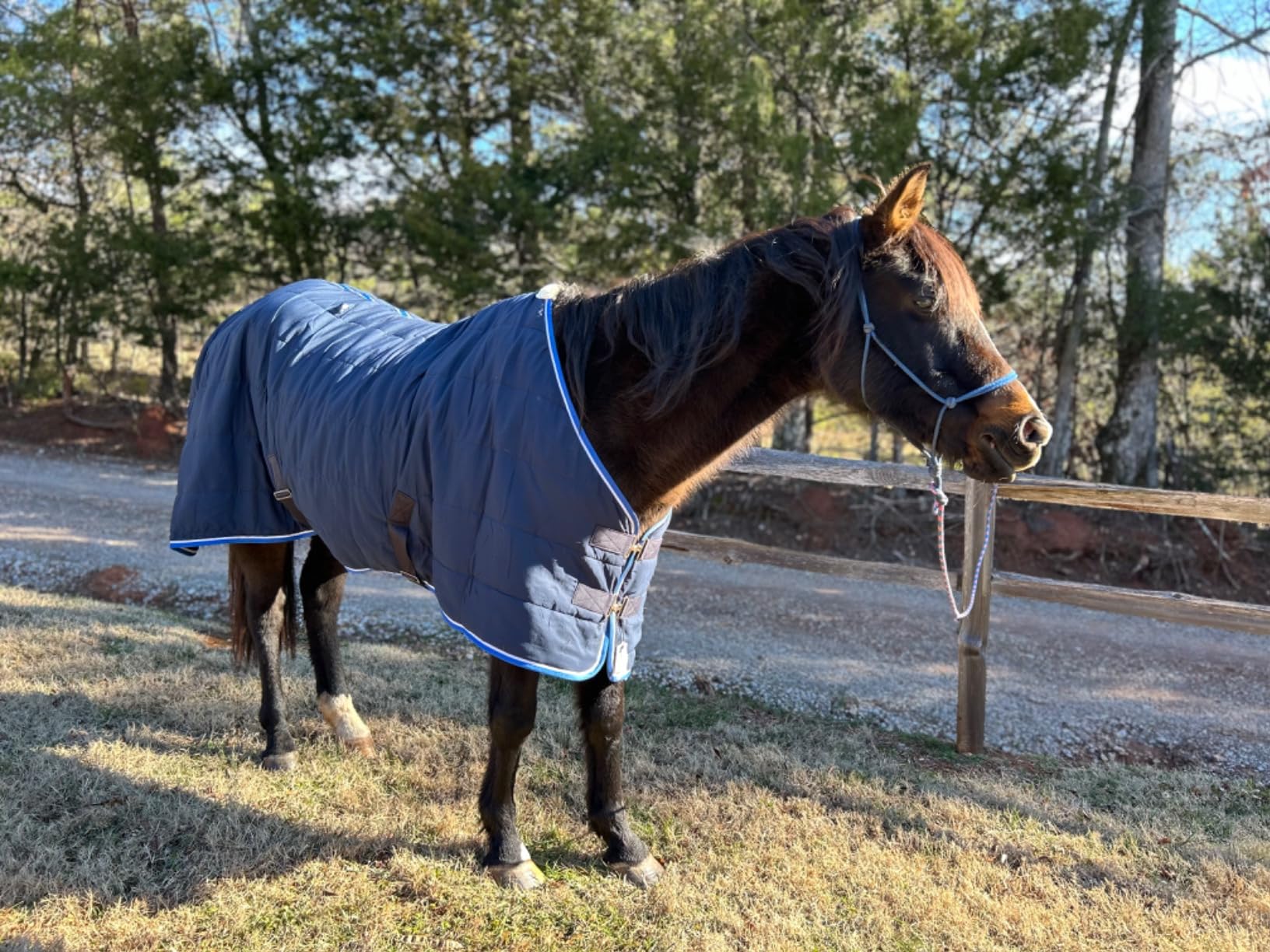
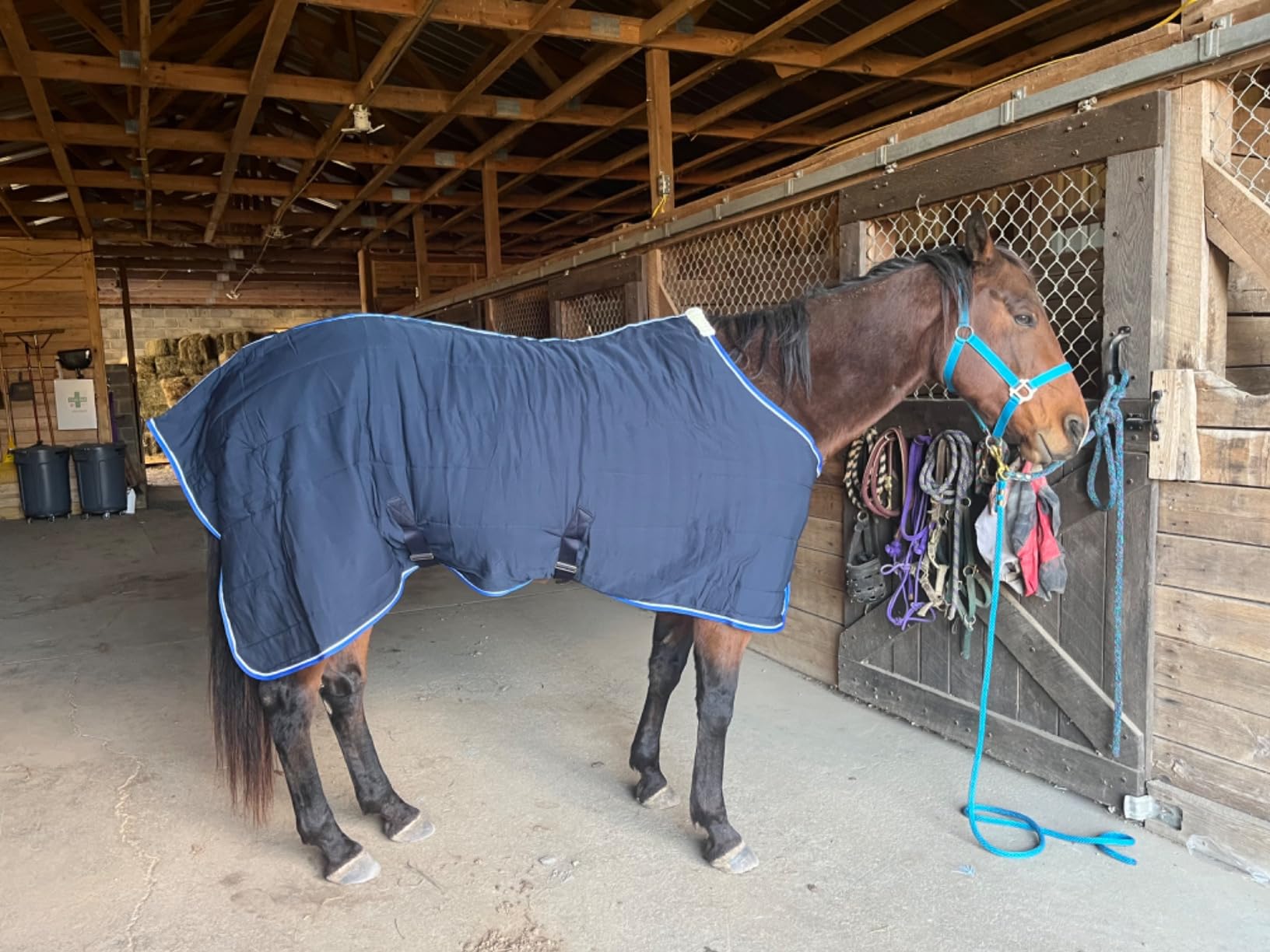
The anti-slip shoulder and the soft faux fur at the withers are the features that earn their keep. A stable blanket that slides forward puts pressure exactly where you do not want it, and the fur panel both reduces chafing and helps the blanket sit where you put it.
Two front buckles plus cross surcingles give more holding power than a single chest strap, and rear loops are provided for an optional tail strap. It weighs under three pounds, so it is genuinely easy to throw on for a stable check in the dark.
Who this blanket suits
It suits barns where horses spend the day indoors and are rugged up only for turning out, and owners building a layering system who want a breathable base rather than a waterproof shell. The machine washable build is a bonus in a stable environment.
It is also a sensible first blanket for a new owner whose horse needs light winter insulation indoors rather than full outdoor turnout protection.
Who should look elsewhere
It is not a turnout blanket and it will not keep a horse dry in a paddock. If your horse lives outside through winter, or if the blanket needs to survive rolling and herd-mate chewing, choose one of the 1200D turnouts instead.
6. Challenger 1200D Waterproof Rain Sheet – the Cool, Wet Weather Answer
Challenger 1200D Turnout Waterproof Rain Horse Sheet Light Winter Blanket 394B
1200D double-stitched taped seams
Removable elastic leg straps
D-rings for a neck cover
Insulated tail flap
Pros
- Keeps horses dry through rain sleet and snow
- True to size with plenty of adjustability
- Vibrant two-tone colours that match the listing photos
- Belly band sits over the crossed straps to protect them
- Holds up on horses that destroy blankets
Cons
- Belly band does not resize with the blanket and is oversized on small ponies
- Leg strap clips are basic metal and may need replacing
- Water can seep through the sides and neck in prolonged heavy rain
A rain sheet is the most underrated item in this whole category. If your horse is unclipped and your winter is wet rather than cold, an insulated sheet will keep them drier and more comfortable than any heavy blanket, and they will not overheat on a sunny day.
This one carries a 4.4 average from 148 reviews, with roughly three quarters of buyers giving five stars. Owners consistently mention that their horses stayed genuinely dry, and that the two-tone colours look far better in daylight than most utilitarian sheets.
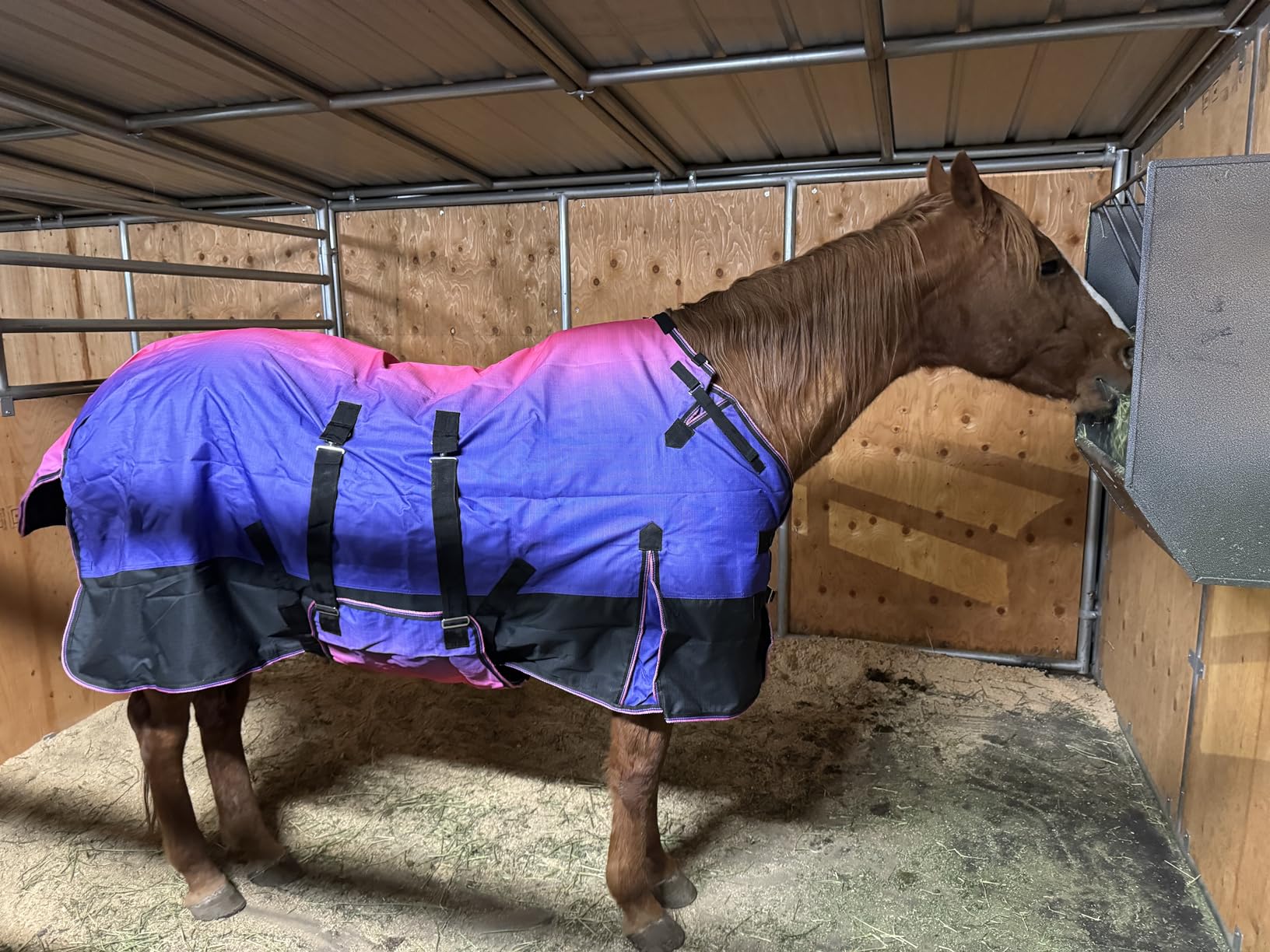
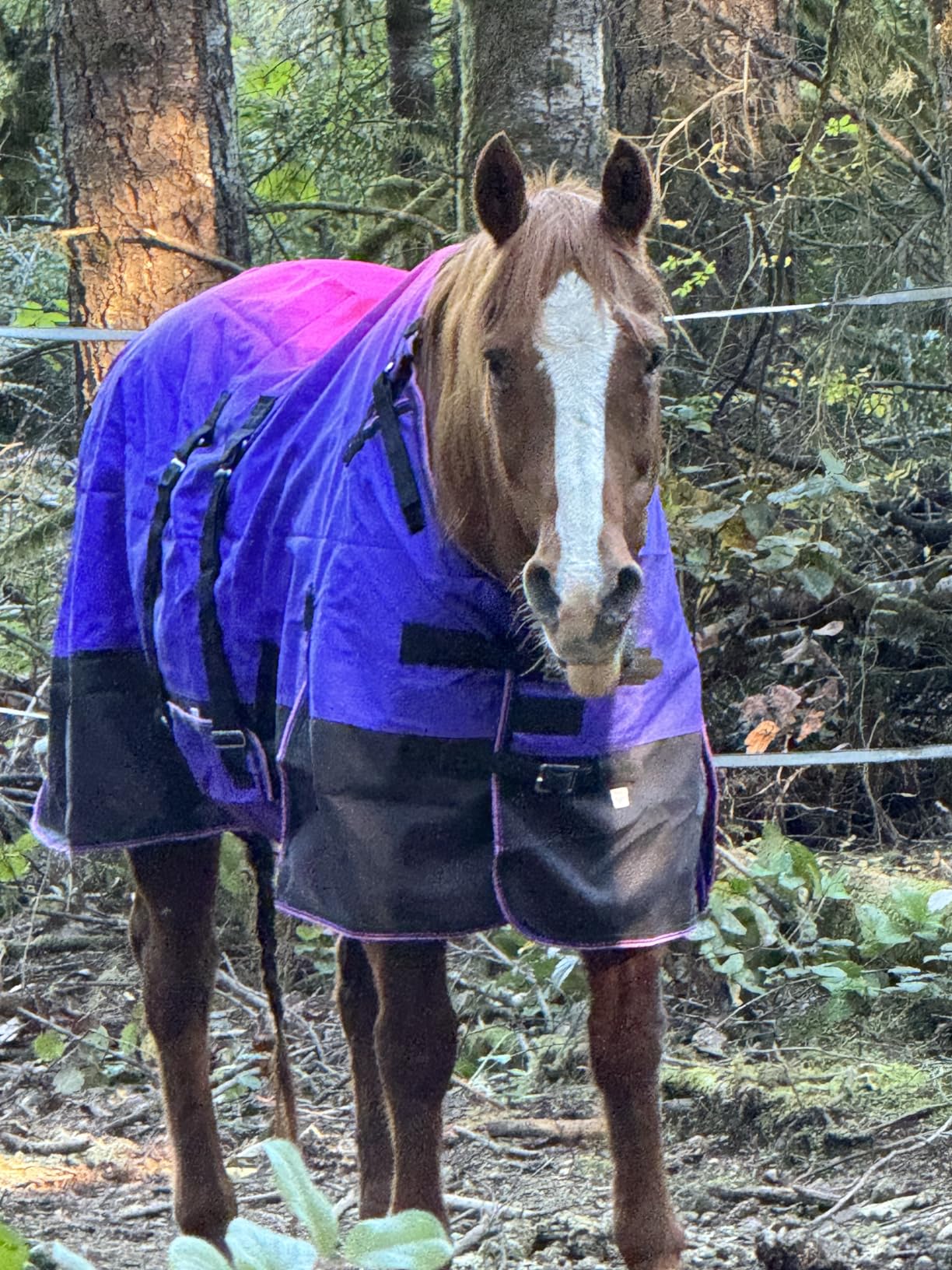
Construction is the selling point: double-stitched, taped and reinforced seams, removable elastic leg straps, D-rings on both sides for a hood, and an insulated tail flap that blocks the wind from behind. The belly band is fitted over the crossed straps rather than under them, which stops the straps dragging through wet brush.
Two honest caveats. The belly band does not resize with the blanket, so it sits oversized on a small pony. And in prolonged heavy rain some owners report water working in at the sides and neck, which is normal for a sheet of this class but worth knowing if you are in a very wet climate.
Who this blanket suits
It suits owners in mild, wet climates, particularly with unclipped horses, seniors and hard keepers that struggle to hold weight through a wet winter. It also works as a summer layer over a fly sheet on cold, showy mornings.
Owners with horses that are hard on their blankets say it stands up well, and the removable leg straps mean you can swap the hardware rather than the whole blanket.
Who should look elsewhere
It is not a winter blanket, so if you are heading into sustained frost you need fill above this sheet. The fixed belly band also makes it a poor choice for a barn with ponies as well as horses.
7. Challenger 1200D Heavy 400g Winter Blanket – the Deep Cold Option
Challenger 1200D Horse Turnout Waterproof Heavy Weight Winter Blanket 5B105
1200D ripstop outer
400g polyfill insulation
Belly band on both sides
Waterproof and windproof
Pros
- Genuinely waterproof and horses stayed dry in cold rain
- 400g fill handles deep cold and wind chill
- Light for the warmth it delivers
- Fits well and colours stay vibrant over seasons
Cons
- Runs small and several buyers recommend sizing up
- One strap broke after about a week of use
- Takes some time to dial the adjustments in
Four hundred grams is the heaviest fill in this roundup, and it is the pick for clipped horses, seniors and anything standing out in genuinely cold conditions. The listing is explicit that it suits full winter turnout, and owners in cold regions back that up.
It rates 4.5 from 145 reviews. What reviewers single out is that it delivers serious warmth without feeling bulky or heavy to put on, and that horses stayed dry in cold rain rather than only in drizzle.
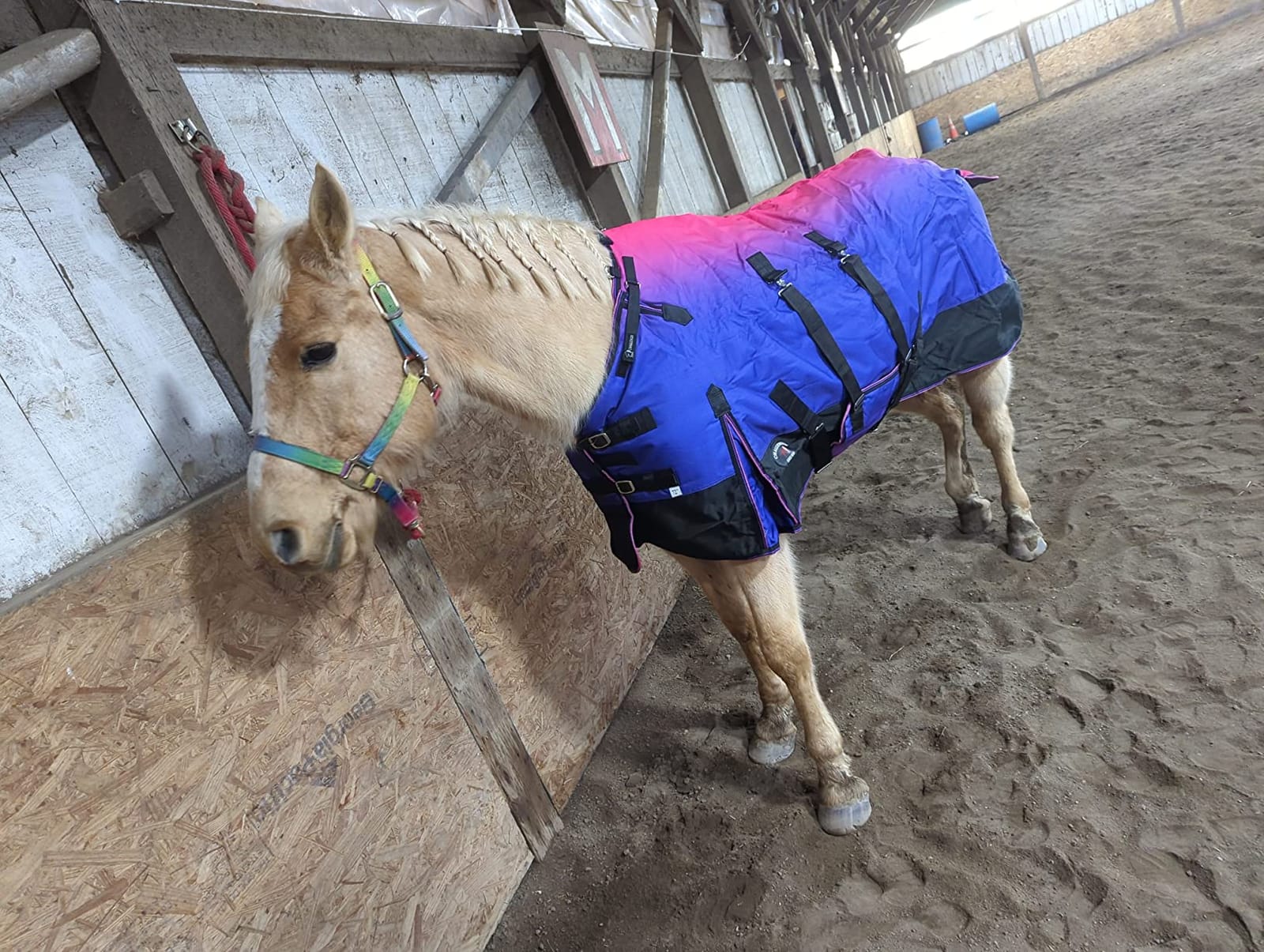
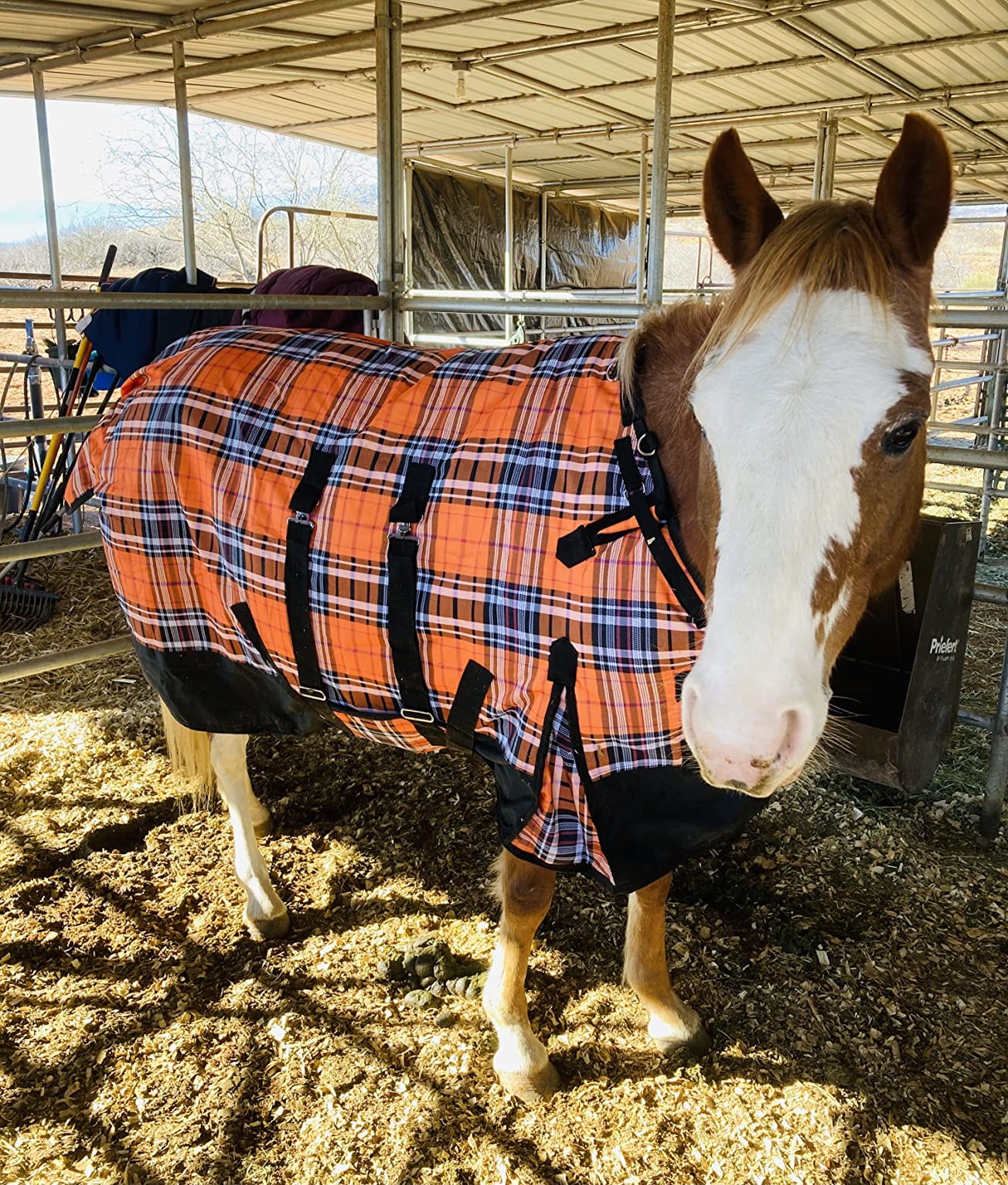
The outer is a 1200 denier ripstop described as waterproof, windproof and breathable, with a belly band that attaches on both sides for a snug fit. Crisp colours that resist fading is a small detail, but it matters when a blanket lives in the sun all summer.
Size up if you are between sizes. Several buyers report the blanket running small, and the same reviews mention one strap breaking after about a week, so inspect the hardware early in the season rather than discovering a snapped strap in a storm.
Who this blanket suits
It suits clipped horses, senior horses and hard keepers in regions with sustained freezing temperatures. It is also the correct choice for a full clip, a trace clip or a body clip in deep winter.
If you are a show barn turning out for a few hours at a time, a 400g is more than needed. For horses living out, it is exactly the right tool.
Who should look elsewhere
An unclipped horse in a temperate climate will sweat under 400g, and a blanket that runs small on a broad horse will rub at the wither. If either applies to you, the 200g and 300g picks suit better.
8. WeatherBeeta ComFiTec Ripshield Plus – the Fly Sheet with a Detachable Neck Cover
WeatherBeeta ComFiTec Ripshield Plus with Belly Wrap Detach A Neck, White/Burgundy, 69″
1200 denier fine mesh outer
Detachable neck cover
Ultra belly wrap
210T nylon lining at shoulders and tail
Pros
- Breathable fine mesh stays cool in hot humid weather
- Ripstop weave stops small snags from unraveling
- Lasts multiple seasons under hard use
- Hose off or machine wash at home
- Removable neck cover and leg straps add versatility
Cons
- Front Velcro can stay stuck and fold against the chest
- Some buyers report seam failure and a flimsy hood attachment
- Neck cover edge binding can separate
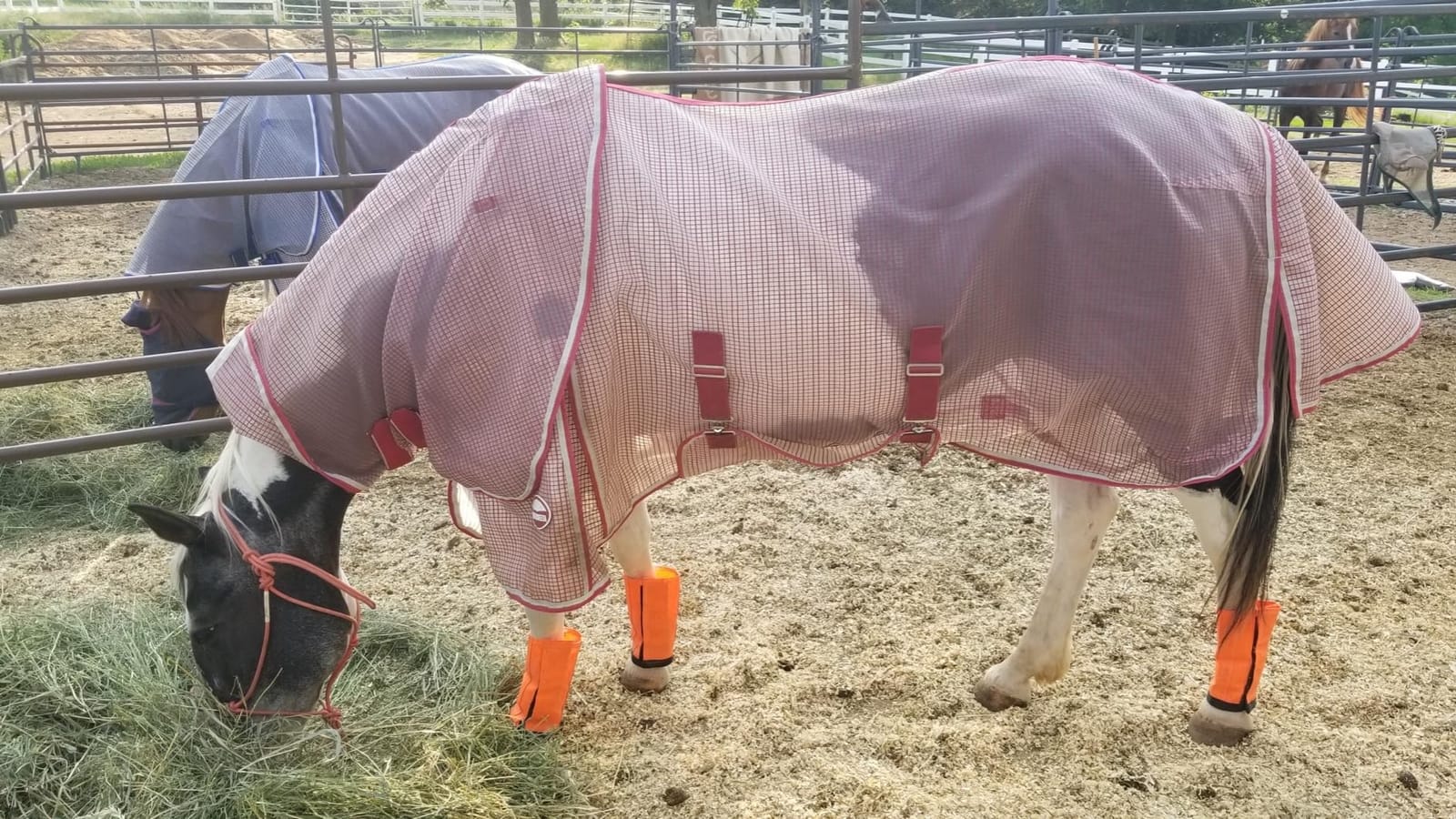
If your problem is heat, insects and sun rather than cold, this is the one to buy. The fine mesh outer with a 1200 denier cross-hatch weave lets air move through while stopping flies, and owners in hot, humid climates report that horses stay cool in it where solid sheets cook them.
The detachable neck cover is the feature that converts a fly sheet into partial fly control, which is why it is worth the money over a plain sheet. The boa fleece at the wither adds a layer of protection exactly where mesh rubs on a fine-skinned horse.
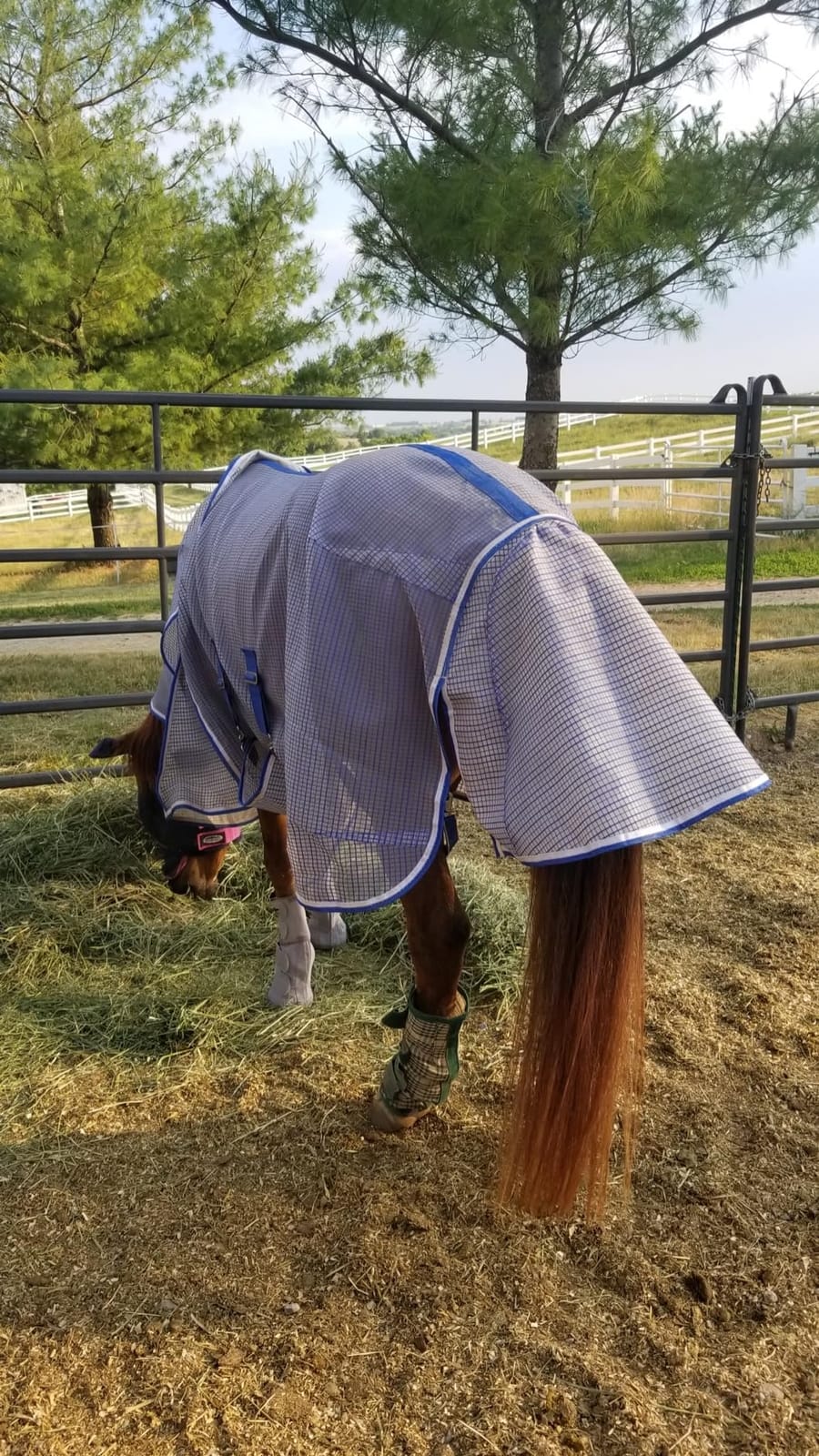
Construction is careful for a mesh product: 210T nylon lining at the shoulders, mane and tail flap, a traditional side gusset, twin adjustable front buckles, an ultra belly wrap, a full two-piece wrap tail flap, and elasticised removable leg straps. The ripstop weave is what stops a small snag becoming a hole.
Keep the neck cover in mind as a wear item. A minority of buyers report seam failure, a flimsy hood attachment and edge binding on the neck cover separating, all of which are repairable but worth checking at the start of each fly season.
Who this blanket suits
It suits owners in hot climates, show yards, and anyone whose horse has a sweet spot that makes a full fly sheet too warm in the middle of the day. Riders who show overnight also value the detachable cover for early mornings.
It pairs well as a mid-season layer over a stable blanket, giving protection without adding heat load.
Who should look elsewhere
Mesh is not waterproof, so this does nothing for a wet winter. If you need something for a horse living outdoors through rain, look at the 1200D turnouts further up the list.
9. T TEKE Deluxe 1200D Waterproof Sheet – the Widest Size Range Here
T TEKE Deluxe Turnout Horse Sheets, 1200D Waterproof and Breathable Horse Care Sheets with no Filling (51″-87″ Including Miniature/foal Size)
1200D ripstop polyester
Silky nylon lining
Quick-clip front closures
Sizes 51 to 87 inch
Pros
- Accurate fit across a very wide size range
- Sturdy shell straps and liner that hold up to hard use
- Quick-clip closures make it easy to put on
- Good rain resistance and easy to rinse clean
- Deep gusset gives full range of motion
Cons
- Large chest and neck opening may not suit narrow or high-withered horses
- Unfilled so it offers limited warmth
What makes this line different is the size run, from 51 inch up to 87 inch including miniature and foal sizes. If you keep a mix of ponies, a growing youngster and a full-size horse, buying one design that covers all of them simplifies the yard enormously.
It holds a 4.4 average from 118 reviews, with owners praising accurate sizing across that range, sturdy hardware and the silky nylon lining with a sewn-in name label. That name label is a genuinely useful detail in a yard with staff managing several horses.
The roomy cut is the one thing to check before ordering. Owners of narrow, high-withered breeds report that the chest and neck opening is too generous for those horses, so those animals need a narrower sheet. It also carries no fill, so it works as a waterproof outer or a 0g layer under a heavier blanket rather than as a winter rug on its own.
Who this blanket suits
It suits owners of mixed yards, breeders, and anyone with a foal, miniature or small pony that the standard adult sheet range never fitted. It also works as a 0g waterproof layer under a heavier blanket, giving you two weights from one purchase.
Who should look elsewhere
The roomy cut is the catch. Owners of narrow, high-withered breeds report that the chest and neck opening is too generous, so those horses need a narrower sheet. It also carries no fill, so it is not a winter blanket in its own right.
10. Barn and Stable 600D 200g Turnout – the One That States Its Waterproof Rating
BARN & STABLE 600Denier 3000mm/3000mvp Super Waterproof & Breathable Horse Blankets for Winter with 200g Fill
3000mm waterproof rating
3000mvp breathable
200g poly fill
Fleece wither protection
Pros
- Published waterproof and breathability figures for the fabric
- Fleece withers reduce rubbing and slipping
- Secure double-buckle front with criss-cross surcingles
- Large gussets allow unrestricted movement
Cons
- 200g fill is mid-weight rather than extreme winter warmth
- 600 denier shell is a step below 1200D for horses that are hard on blankets
The reason this blanket stands out is that it publishes its numbers: a 3000mm water column rating and a 3000mvp moisture vapour transmission rating for the 600 denier polyester shell. Most brands in this category use the word waterproof without a figure, which makes them impossible to compare.
With a 4.6 average from 108 reviews and about 81 percent five-star feedback, the practical reports back that up. Owners like the fleece at the wither, which cuts rubbing and slipping, and the double-buckle front with a hook-and-loop assist, which makes it quick to fit in the dark.
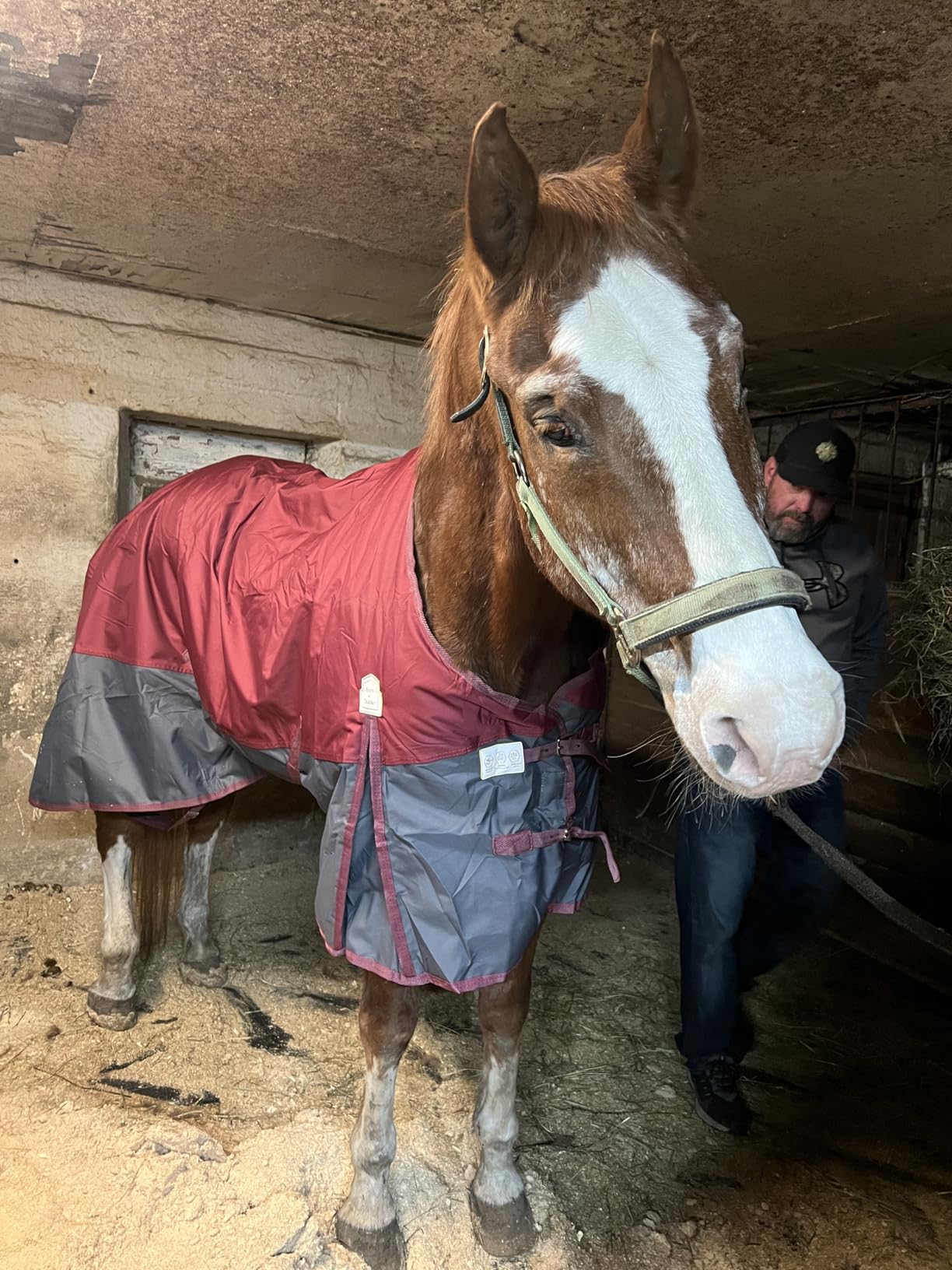
Below the front, low criss-cross surcingles, large gussets, a tail flap and adjustable removable leg straps complete a secure build. Large gussets matter more than most buyers realise, because they are what stop a blanket tearing at the shoulder when a horse lies down or stretches forward.
The compromise is the denier. Six hundred denier is a lighter fabric than the 1200D shells, so in a yard where blankets get chewed, rolled on and dragged through bramble, expect a shorter life than a 1200D model would give you.
Who this blanket suits
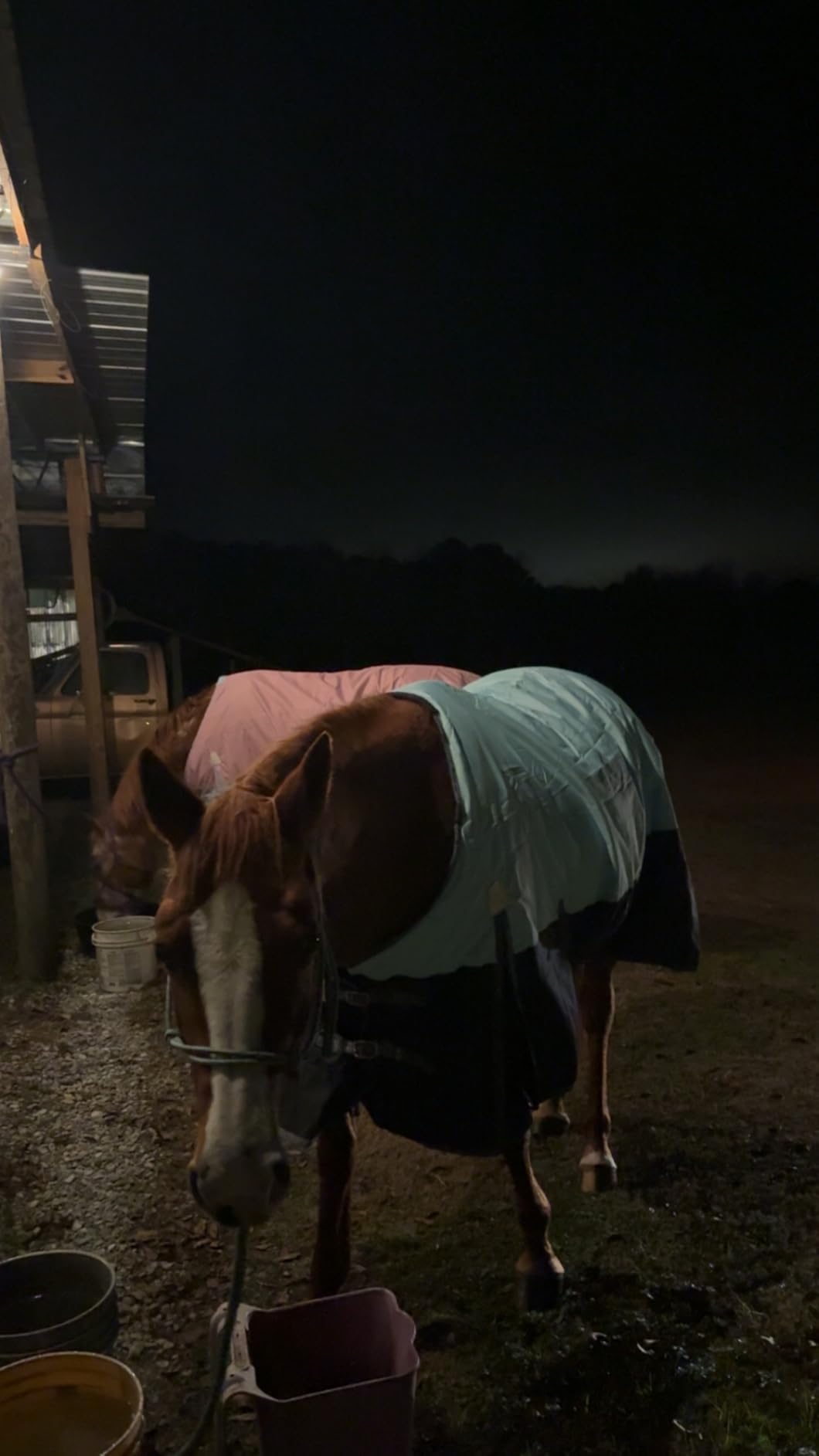
It suits owners in genuinely wet, moderate climates who want to compare waterproofing on paper rather than on faith, and barns that use blankets in both the field and the barn. The removable leg straps make it easy to adjust between jobs.
At 200g it also works as the base of a system, with a heavier liner added for the few weeks of real cold.
Who should look elsewhere
For horses that destroy blankets, the 1200D models are the safer bet. And if your climate is cold rather than wet, 200g will not be enough on a clipped horse without a liner.
11. Tech Equestrian 600D 300GSM Winter Turnout – Warm for a Light Fabric
Tech Equestrian Winter Horse Blanket 300GSM 600 Denier (Waterproof/Breathable/Snow Proof) Turnout Blanket | Heavy Winter Blanket (78, Black with Turquoise Trims)
600 denier outer
300GSM poly fill
Water snow and wind proof
Shoulder gussets and tail flap
Pros
- Thicker and warmer than expected for a 300GSM blanket
- Holds body heat well despite feeling light
- Good waterproofing in snow and cold
- Solid stitching quality
- Fits true to size
Cons
- Runs short top to bottom and can leave the belly exposed
- Back leg straps clip to the front which is awkward
- Some reports of reduced breathability and trapped moisture
This is the pick for a cold, dry climate rather than a wet one. Three hundred grams of fill in a 600 denier shell gives a high warmth-to-weight ratio, and owners repeatedly remark that it feels lighter than the warmth it delivers.
It holds a 4.6 average from 94 reviews, with solid stitching and true-to-size fitting coming up most often in the positive comments. The listing describes it as water, snow and wind proof, which is the right specification for an area that gets hard frost rather than constant rain.
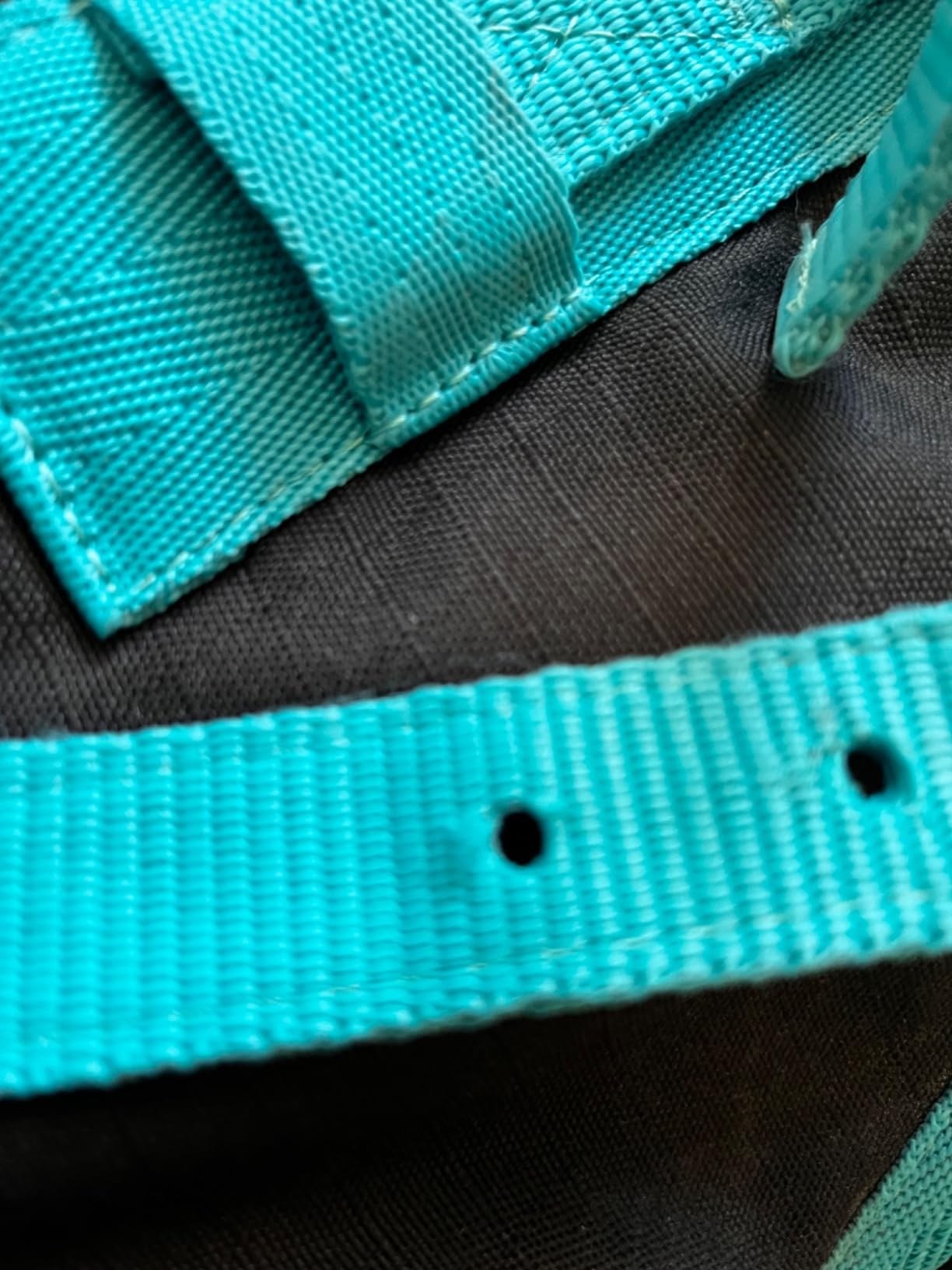
The build is sensible for the price: two front buckles with a large adjustment range, two removable elastic leg straps, two shoulder gussets, a tail flap and four hood rings. Two gussets and hood rings are more than most sheets at this level offer.
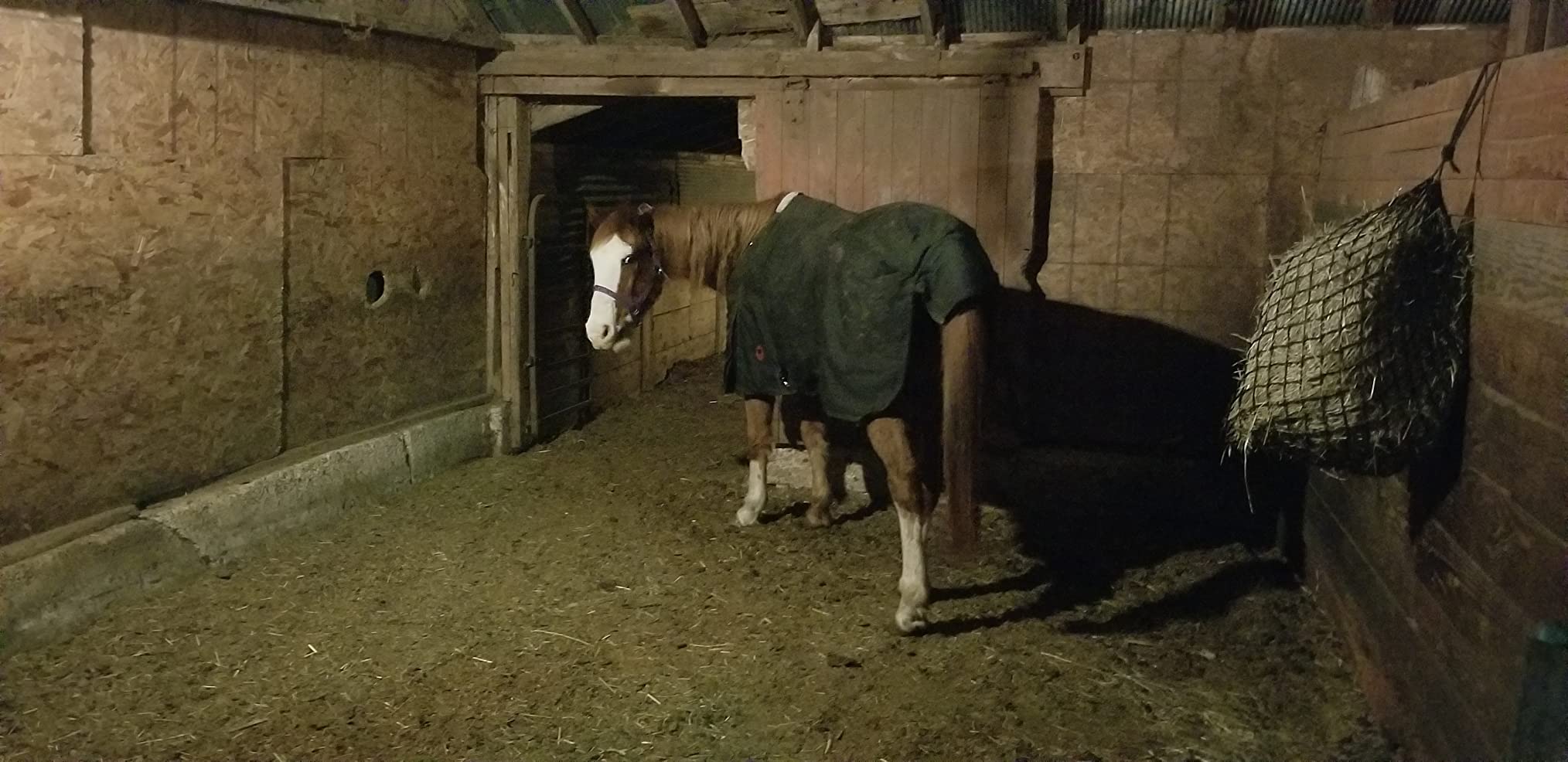
Length is the thing to check. Some owners report it runs short from top to bottom, which can leave part of the belly exposed on a longer-backed horse, and the back leg straps clip to the front rather than to each other, which takes a little getting used to. A few owners also report moisture condensing between layers in mild conditions.
Who this blanket suits
It suits owners in northern and continental climates where the ground freezes and snow is the main challenge. It is a strong value for a horse that needs genuine warmth but is turned out only part of the day.
The four hood rings also make it easy to add a neck cover later without changing the whole blanket.
Who should look elsewhere
If your horse is long-backed or tall, check the length carefully before buying, since the shortfall shows up on those body types. In a damp climate a 1200D shell with a higher waterproof rating is the safer option.
12. Horze Glasgow 400g Combo Turnout – Full Neck Coverage in Deep Cold
Horze Glasgow Heavy Weight Winter Turnout (400g Fill) | Waterproof Combo Horse Blanket with Neck Cover – Dark Blue – 78 in
400g fill
3000mm waterproof and breathable
Attached neck cover
600D ripstop outer
Pros
- Very warm at 400g without making horses sweat
- Neck cover gives real protection and stays on
- Does not slide to the side in the paddock
- Well made and easy to put on
Cons
- Runs small and several buyers recommend sizing up
- Neck cover is narrow and tight for head-down grazing
- Neck closure is Velcro with d-rings and no strap
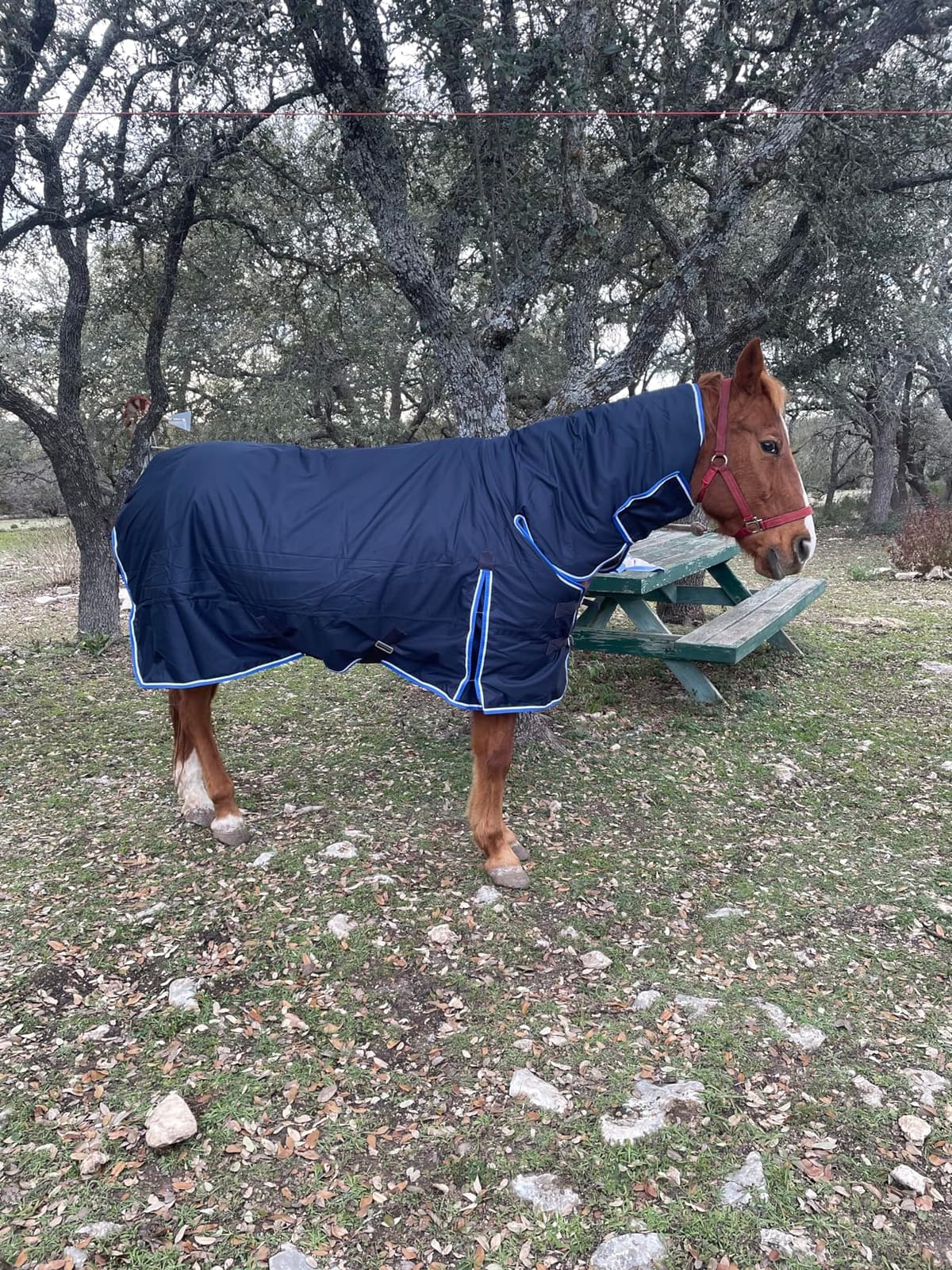
This is the most complete winter package in the roundup: 400g fill, a 3000mm waterproof and breathable fabric, taped seams, an attached neck cover and a tail flap. Owners report that horses stay warm in it without the sweating that usually accompanies a blanket this heavy, which is the hardest balance to strike.
It holds a 4.4 from 95 reviews. The most common positive comment is that the neck cover does not come off in the field, and that the blanket does not slide to one side in the paddock, which are exactly the failures owners complain about with cheaper combo designs.
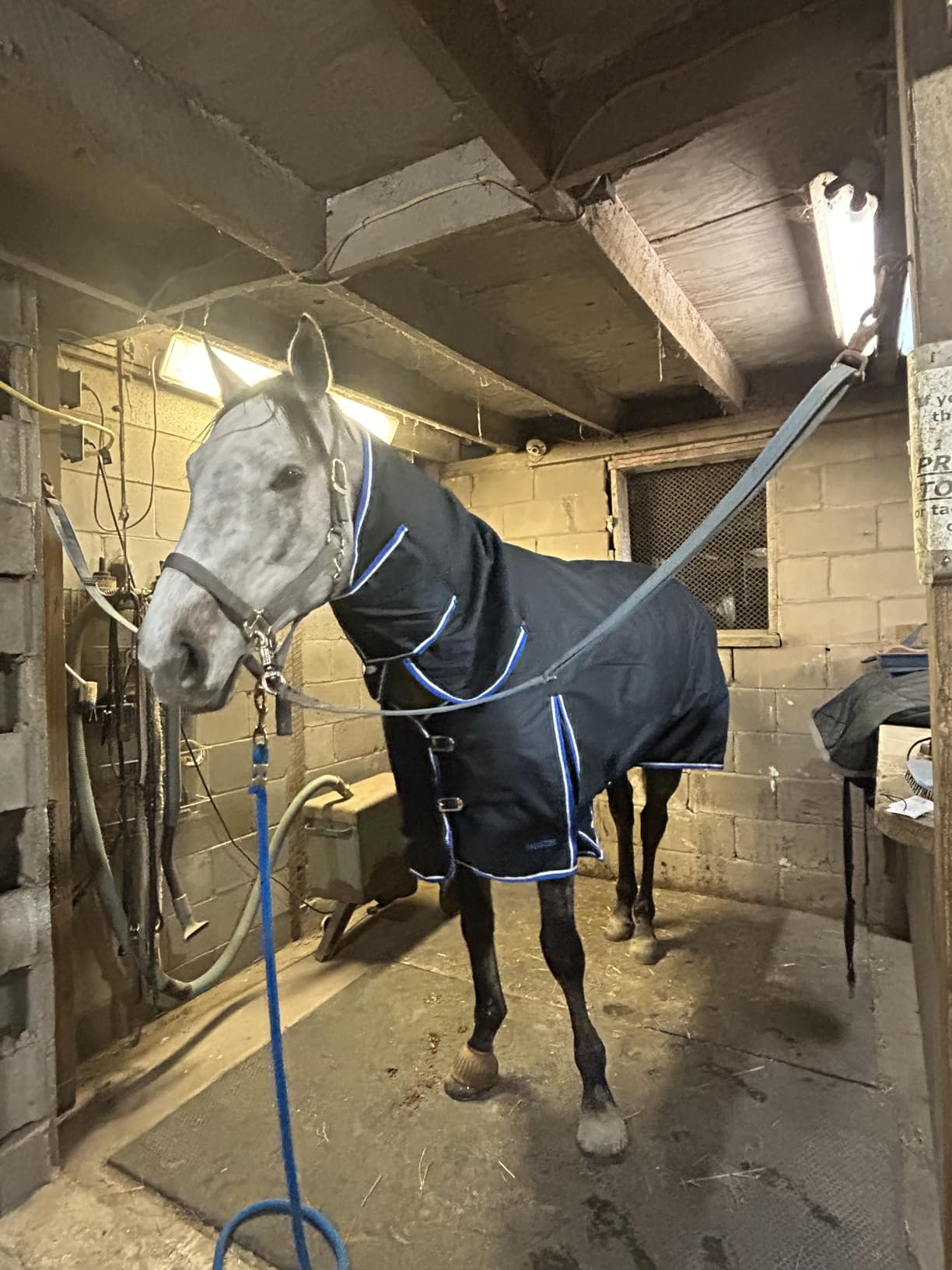
Build details are thorough: taped seams, two front buckle closures with cross surcingles, leg straps, a 600 denier ripstop outer with high shoulder gussets, and an anti-slip shoulder and neck panel. That anti-slip panel is what keeps the blanket square through a wet winter instead of letting it drift toward the shoulder.
Who this blanket suits
It suits owners with clipped horses in hard winters who want chest, neck and barrel protection from one blanket with no hood to lose. The anti-slip shoulder and neck help with the rubbing that many horses develop at the wither in deep cold.
Who should look elsewhere
It runs small, so size up. The narrow neck restricts head-down grazing, which matters for a horse that grazes more than it stands, and the neck closure is Velcro with d-rings rather than a strap, so it is not as secure as a buckled neck rug.
How to Choose a Horse Blanket
Denier explained: 600D vs 1200D
Denier measures the thickness of the fibres in the outer shell, and higher denier means a tougher, more tear-resistant fabric. Six hundred denier is light and is a reasonable choice for a cool climate, a part-time or stabled horse, or a younger horse that will outgrow the blanket. Twelve hundred denier is the workhorse number and is what most owners should default to for daily turnout. Heavier deniers add real durability for horses that roll, fence-walk or have a herd-mate who chews straps, at the cost of weight and bulk.
Denier says nothing about warmth. A 0g 1200D rain sheet and a 400g 1200D turnout use the same fabric; the difference is entirely the fill. A 600D shell with a published waterproof rating can outperform an unrated 1200D one in a downpour, which is why we included the Barn and Stable blanket below the heavier models.
Fill weight matched to temperature
Fill weight in grams is the warmth rating, and it is the number that decides whether a horse is comfortable. As a rough guide riders use: 0g for rain only in cool weather, 100g for a mild winter indoors or a cool spring, 200g for typical cold and wet conditions, 300g for a cold winter on a clipped horse, and 400g for hard frost, deep cold and full winter turnout. Individual needs shift a long way, because a clipped horse, a senior, a hard keeper and a thin-bred in a dry climate all run colder than a hardy cob in a sheltered field.
The variable that changes everything is wind and rain. A horse generating plenty of heat in an unclipped coat can be comfortable in 200g on a dry cold night and uncomfortable in 100g in cold rain. Check the forecast on both sides of a front before you change weights.
Turnout, stable, sheet, fly sheet, cooler or liner
Turnout blankets are for horses living outside and have a waterproof outer. Rain sheets are unfilled turnouts for cool, wet weather. Stable blankets are breathable and belong indoors, either alone in a cold barn or as a base layer. Fly sheets use mesh or fine weave for insects and sun, and a cooler is fleece or wicking fabric for drying a horse after exercise. A liner is an insulating layer that goes under a waterproof shell, and it is the most cost-effective item in the whole category if you own any shell at all.
Sizing and fit by body type
Sizing varies between brands, so a 78 inch from one maker does not fit the same horse as a 78 inch from another. Measure from the point of the shoulder to the point of the butt, and compare that with the maker’s chart rather than with the size your current blanket happens to be.
Body type matters more than the number. A high-withered horse needs a wither cutback or an adjustable fit, and the blankets in this roundup include several models whose owners report rubbing at the wither when the blanket is too generous across the shoulders. A narrow-chested or upright-necked horse needs a narrower cut, and owners of those types consistently prefer specific narrower brands over roomy, generous sheets. A long-backed horse, a tall Appendix or a draft needs an extended or oversized cut, often 90 to 92 inch, and these are the hardest sizes to find, so plan ahead and check the length from point of shoulder to point of butt as well as the width.
Too small is the more common mistake, because a too-small blanket rubs at the wither, presses on the spine and leaves the belly exposed. Too large is not harmless either, because a loose blanket rotates, twists under the belly and hangs on the leg straps. The best fit is snug enough that it does not move when the horse rolls, with enough room to slide a hand under the neck.
Over-blanketing and sweat risk
Undersized blankets are the visible problem; oversized ones are the hidden one. A horse in too much weight sweats underneath, loses condition, and often catches a chill when the weather turns. Signs include a damp neck and chest, a sweating pattern in the hair after the blanket comes off, a horse that looks uncomfortable lying down, and a rug that is wet on the inside on a mild day.
The fix is a rug you can check every day rather than one you put on in October and forget. Many owners now do a hands-on check under the chest and behind the shoulder, or clip a trace coat so the horse does not sweat underneath a heavy winter rug. If your horse is unclipped and healthy in a mild climate, the honest answer is often no blanket at all.
Care, washing and mildew prevention
Blankets rot from the inside out, and the usual cause is trapped sweat and damp fabric folded in a warm tack-up room. Shake blankets out fully after every wet day, dry them completely before folding, and never store one inside another. Check the linings for mildew at the start and end of each season.
Pick blankets that you can actually clean. Fleece liners and many stable blankets go through a domestic machine, and some turnouts are machine washable as well, which makes it far more likely that you will do it. Hose off mud before washing rather than after, and mend small tears at the seam before they travel. Our horse tack set picks cover the rest of the kit that goes wrong between washes.
Frequently Asked Questions
What is the difference between 1200D and 600D horse blankets?
Denier measures the thickness of the outer shell fibres. 600D is lighter and suits mild climates, stabled horses or growing youngsters, while 1200D is the everyday workhorse for daily turnout and resists tearing far better on horses that roll or chew straps. Denier affects durability, not warmth, which is set by the grams of fill.
What is the best material for a horse blanket?
A durable polyester or nylon ripstop outer is the best all-round material for a turnout blanket, because the woven grid stops small snags from becoming holes. Polyester holds waterproof coatings better, while nylon is softer and often used for the lining at the shoulders and withers. Fleece is the right material for a liner or cooler rather than an outer shell.
What is the difference between Rhino and Rambo horse blankets?
Both come from the same maker and share similar build quality. Rambo is the heavier, more insulated range aimed at hard winters, Rhino sits slightly lower in insulation and is often chosen as the middle weight, and Amigo is the lighter, lower-cost line many riders use as a practical alternative. Riders generally rate Rambo highest for longevity and Amigo best for value.
Is it better for a horse blanket to be too big or too small?
Too small is the more common and more damaging mistake, because it rubs at the wither, presses on the spine and can leave the belly exposed. Too large is not harmless either, since an oversized blanket twists under the belly and hangs on the leg straps. Aim for a fit that stays put when the horse rolls, with room to slide a hand under the neck.
What size blanket do most horses wear?
Most average horses take a blanket in the 78 to 81 inch range, measured from the point of the shoulder to the point of the butt. Larger warmblood and cob types often need 81 to 84 inch, and tall, long-backed or draft horses may need an extended cut around 90 to 92 inch. Always check the maker’s own chart, because sizing varies between brands.
Conclusion: Our Best Horse Blankets in 2026
For most owners the best horse blankets in 2026 come down to two or three pieces rather than one heavy rug. Our editor’s choice, the Tough 1 1200D Snuggit 300g turnout, is the safest all-rounder for a cold winter, and the HILASON 300g turnout is the pick if you want the highest rating in the group plus a belly wrap that holds through storms.
Add the Tough 1 fleece liner underneath on the coldest nights, keep a rain sheet for wet mild spells, and match the weight to the horse rather than the calendar. Check the fit at the wither, keep an eye out for damp hair in the morning, and blanket choice stops being a guessing game.