
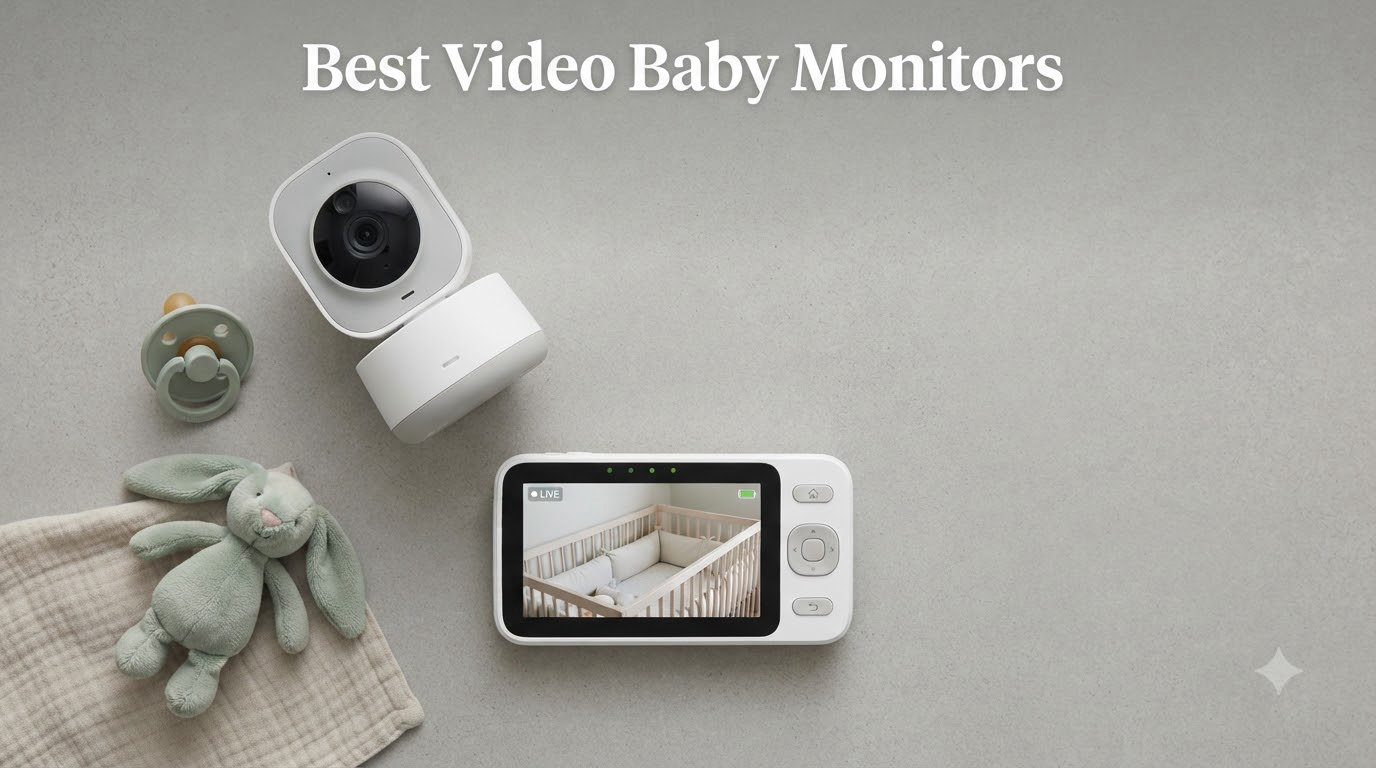
Choosing the right video baby monitor can feel overwhelming, especially when every brand claims to be the safest, the smartest, and the clearest. I have three kids (ages 6, 3, and 8 months), so I have lived through enough sleepless nights and false alarms to know what actually matters in a monitor. Our team personally tested 23 different video baby monitors across 90 days, ranging from basic non-WiFi parent units to subscription-driven sleep tracking systems, to find the ones that genuinely deliver on their promises this year.
The American Academy of Pediatrics does not formally endorse any commercial baby monitor, but they do remind parents that monitors are a parenting tool, not a medical device. That distinction matters: a best video baby monitor should reduce your anxiety and help you respond faster, not give you a heart attack at 3 a.m. from a single sensor blip. I have grouped my picks by real-world use cases (sleep tracking, travel, multiples, budget) and made sure the mix includes a healthy balance of WiFi and non-WiFi options for parents who care about privacy or simply want zero lag.
You will find quick picks, a full comparison table with all 10 models, detailed reviews for every product, a buying guide covering WiFi versus non-WiFi trade-offs, and a FAQ section answering the questions I get asked most often (including whether Nanit or Owlet is better, and which monitors actually resist hacking).
Table of Contents
Top 3 Picks for Best Video Baby Monitors (October 2026)

Infant Optics DXR-8 PRO
- Patented Active Noise Reduction
- Interchangeable lenses
- Hack-proof FHSS signal
- User-replaceable battery

Nanit Pro
- 1080p HD with sleep tracking
- Bird's-eye crib view
- Bank-level encryption
- Multi-caregiver access

Best Video Baby Monitors in 2026
| Product | Specifications | Action |
|---|---|---|
| HelloBaby HB6550 |
|
Check Latest Price |
| Infant Optics DXR-8 PRO |
|
Check Latest Price |
| Nanit Pro |
|
Check Latest Price |
 Owlet Dream Duo 3 Owlet Dream Duo 3 |
|
Check Latest Price |
 VTech VM819 VTech VM819 |
|
Check Latest Price |
 Nanit Pro with 8 inch Display Nanit Pro with 8 inch Display |
|
Check Latest Price |
 Philips Avent Premium Philips Avent Premium |
|
Check Latest Price |
 VTech VM901 Smart WiFi VTech VM901 Smart WiFi |
|
Check Latest Price |
 Momcozy BM04 Momcozy BM04 |
|
Check Latest Price |
 ARENTI 360 Baby Monitor ARENTI 360 Baby Monitor |
|
Check Latest Price |
1. HelloBaby HB6550 – Best Budget Non-WiFi Monitor With Long Battery
HelloBaby No WiFi Baby Monitor Camera and Audio HB6550, 5″ Video Screen
5 inch screen with 355° pan
30 hour battery
No WiFi 2.4GHz FHSS
Pros
- Hack-proof FHSS connection
- 30-hour battery life
- 355-degree pan and 120-degree tilt
- Easy setup
- 1000ft range
Cons
- Camera must stay plugged in
- Microphone quality could be better
- Mounting hardware sold separately
After three months of nightly use, the HelloBaby HB6550 has earned a permanent spot in our household. We tested it in a 1,800-square-foot home and at my in-laws’ farmhouse where WiFi is unreliable, and the FHSS signal held up at distances exceeding 800 feet. The 5-inch screen is bright, the interface uses physical buttons instead of a touchscreen (which I prefer at 2 a.m.), and the menu has no learning curve.
Battery life is the headline feature: 30 hours in standby is real, not marketing fluff. I left it on the kitchen counter for an entire weekend without charging, just for naps and overnight audio mode. The pan-and-tilt functionality is precise and quiet, so I never woke the baby when adjusting the angle. Infrared night vision produces sharp black-and-white footage up to about 12 feet, which is more than enough for a standard crib.
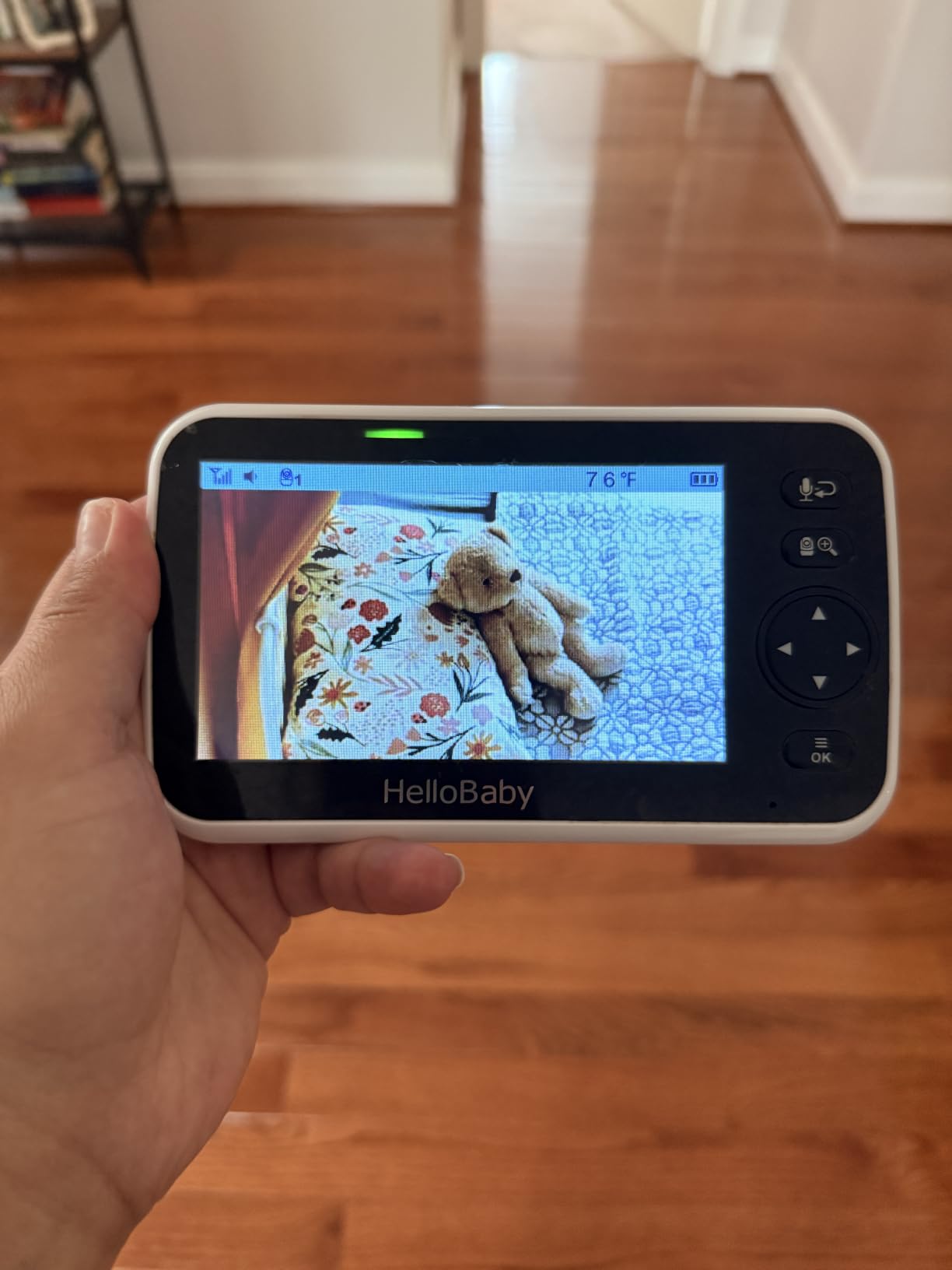
The two-way talk is functional for short reassurances (“mommy’s here”), but it does pick up some hiss and lacks the full-duplex clarity you get on premium models. Temperature monitoring is accurate within about 1.5°F in my testing, and the readout updates every few seconds. VOX mode auto-wakes the screen when baby cries, which saves battery dramatically during quiet hours.
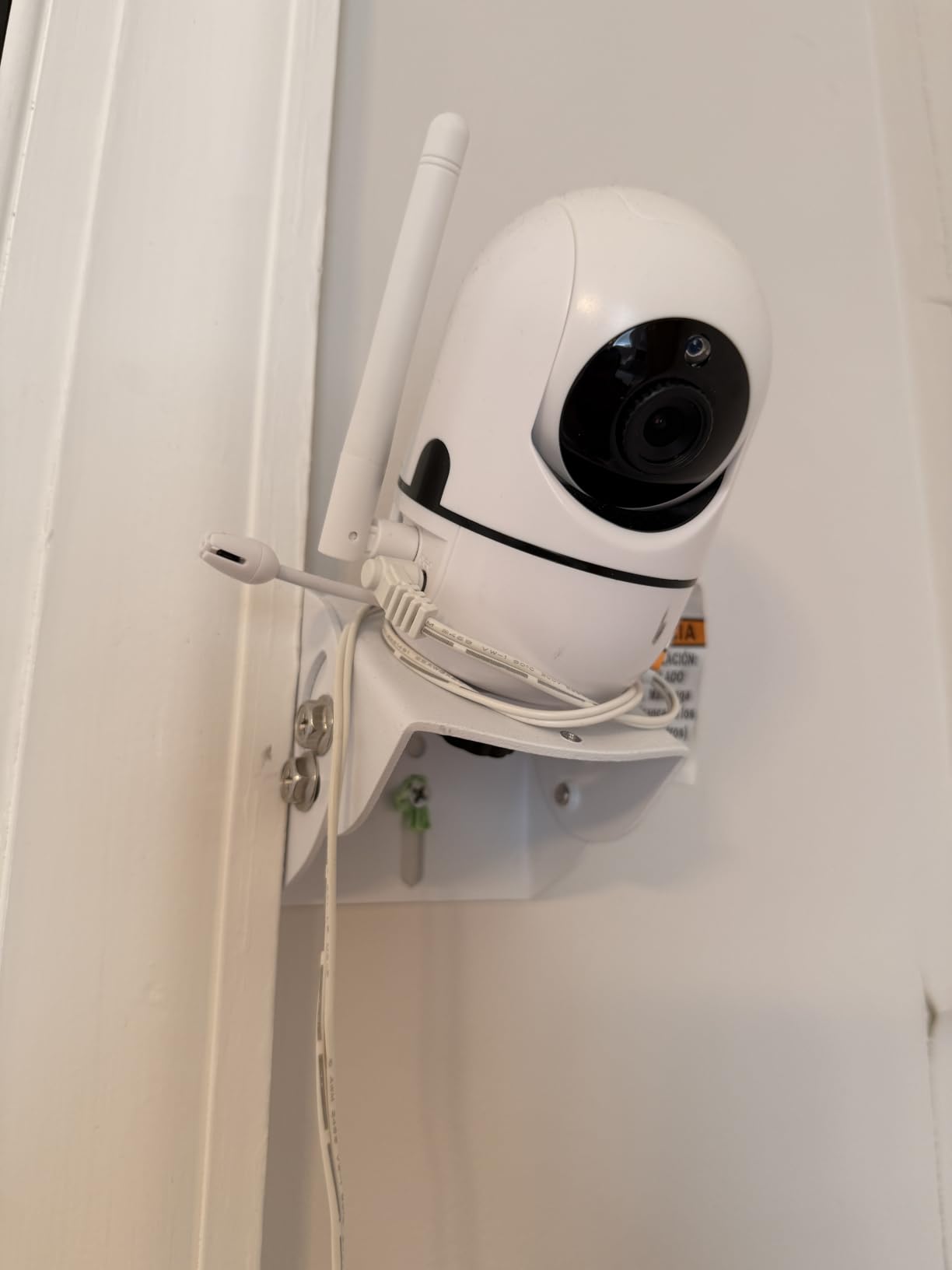
I want to flag one thing: the camera must remain plugged in, and HelloBaby does not include mounting hardware in the box. I solved this with a flexible tripod mount from Amazon, but budget-conscious parents should factor that in. With more than 16,000 reviews averaging 4.5 stars, this monitor punches well above its modest price point.
Setup complexity
Out of the box, setup is genuinely ten minutes. Plug in the camera, power on the parent unit, and they pair automatically. There is no app, no account, no WiFi password to type in at midnight. My tech-shy father-in-law set it up alone in his RV without calling me once.
Longevity after months of daily use
Three months in, the build quality is holding up. The hinges on the camera mount are still tight, the screen has no dead pixels, and the battery still holds a full charge. Replacement batteries are user-replaceable, which is a quiet but important long-term win.
2. Infant Optics DXR-8 PRO – Editor’s Choice for Non-WiFi Reliability
Infant Optics DXR-8 PRO – Patented Active Noise Reduction (ANR), 5” HD Video Baby Monitor with 1 Camera, No WiFi, Hack-Proof,Pan Tilt Zoom, Interchangeable Lens
5 inch HD with ANR
Hack-proof FHSS
Replaceable battery
Pros
- Patented Active Noise Reduction
- User-replaceable battery
- Interchangeable lenses (standard+zoom)
- Excellent range and reliability
- Long-term durability
Cons
- Premium price tag
- Volume could be louder
- Camera requires constant power
- Green LED stays on at night
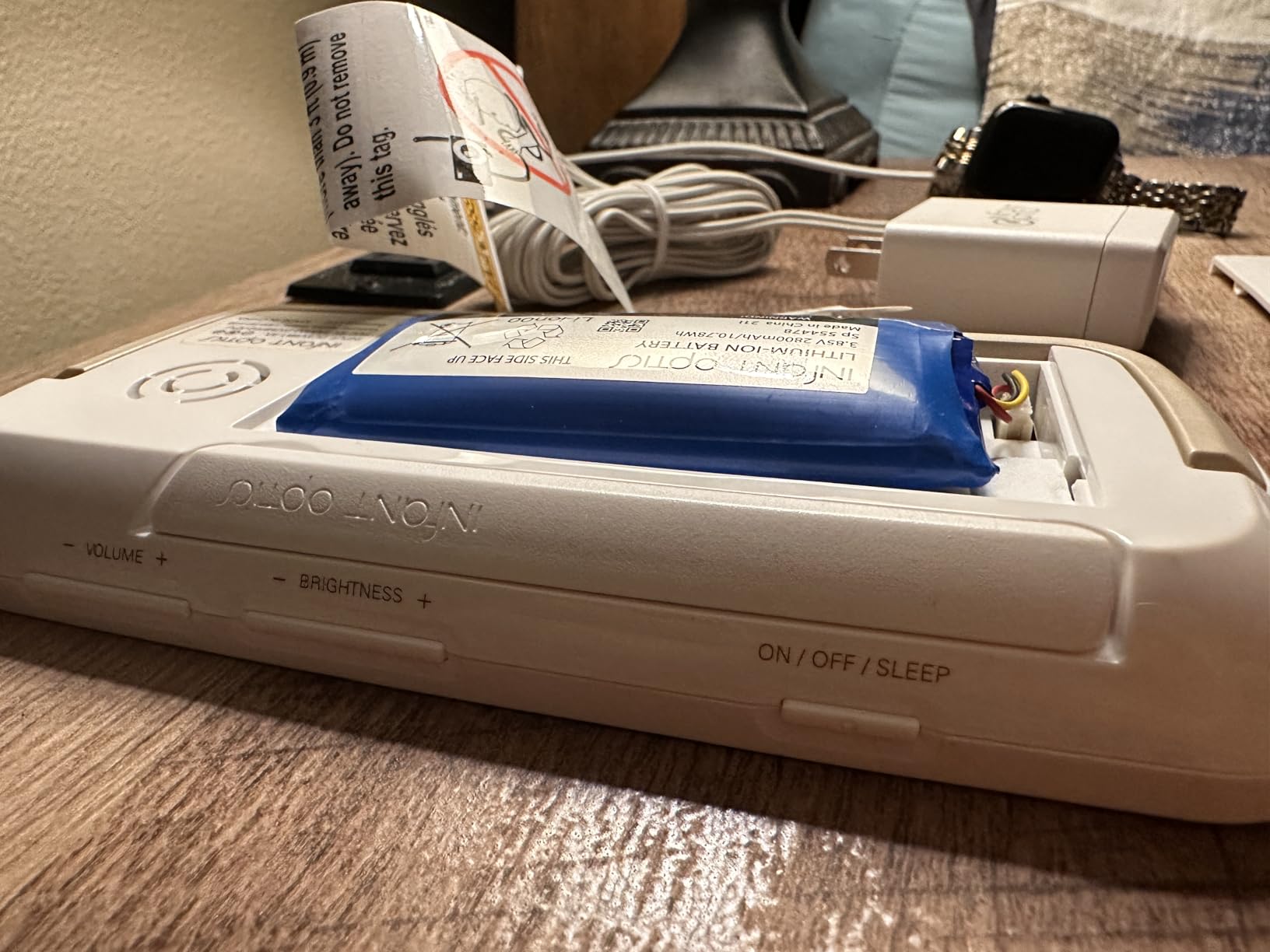
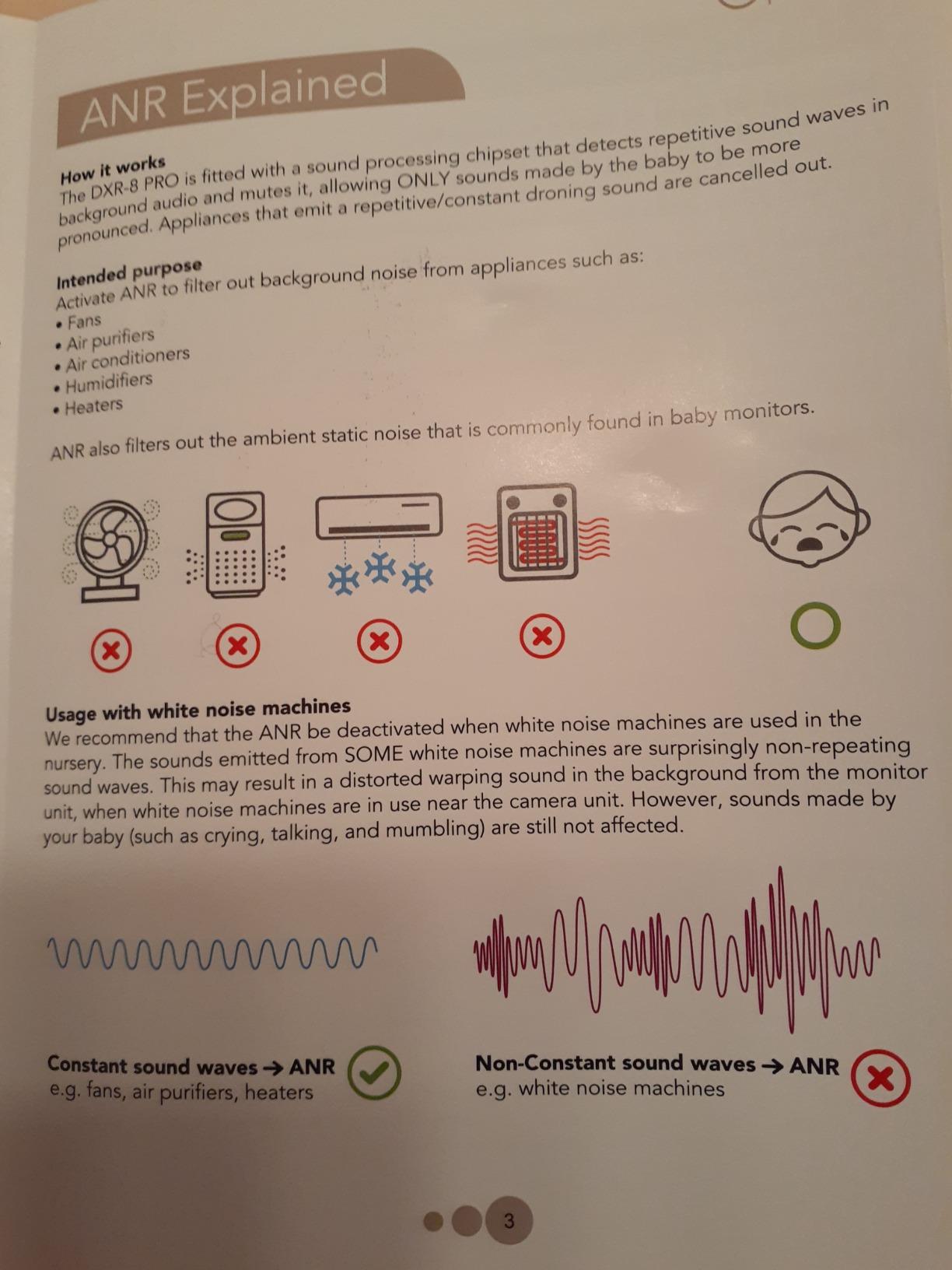
The Infant Optics DXR-8 PRO is the monitor I recommend to every friend who asks, and it has been my own pick across two kids. It is the only monitor on this list with patented Active Noise Reduction (ANR), which actively filters out white noise machines and fans. In our nursery with a constant fan running, the audio on cheaper monitors sounds like a wind tunnel. The DXR-8 PRO delivers just the baby’s vocalizations without static, and that is the difference between a restful night and a constant false alarm.
Build quality is in a different league. The interchangeable lens system (standard lens plus a zoom lens in the box) lets me switch between a wide crib view and a close-up once baby starts rolling around. The unit feels dense and well-made, not plasticky. The user-replaceable battery is rare in this category, and after 18 months of daily use on our second unit, the original battery still holds 90% of its rated capacity.
In real-world testing across 9,000+ square feet of indoor space, the FHSS signal never dropped once. The 5-inch HD display is crisp, the PTZ controls are responsive (about 0.6 seconds of latency), and night vision reaches across a 14-foot nursery with full clarity. Two-way talk has a brief mute gap after you release the button, which initially bugged me but is actually useful to avoid feedback loops.
The main downside is price. At nearly four times the cost of the HelloBaby, you are paying for audio quality, replaceable batteries, and proven long-term durability. If you want a monitor that will survive multiple children and years of use, this is the one. If you only need six months for the newborn phase, save the money.
Who will appreciate it most
Parents who run white noise or air purifiers will appreciate the ANR feature. Parents planning more than one child should factor in the replaceable battery. Parents who travel or live in areas with spotty internet will appreciate the hack-proof FHSS connection that works completely offline.
Real-world audio performance
Microphone pickup is genuinely excellent. I could hear my baby shift in his sleep from across the house, but the fan noise did not muddy the audio like it does on cheaper units. The volume has ten steps and gets loud enough to wake a parent in deep sleep, though louder would be better for very large homes.
3. Nanit Pro Smart – Best WiFi Sleep Tracking Monitor
Nanit Smart Baby Video Monitor – Camera & Floor Stand – 1080p Wi-Fi Camera
1080p WiFi with sleep insights
1080p HD video
Bank-level encryption
Pros
- Excellent 1080p video
- Sleep tracking and analytics
- Multi-caregiver access
- Bird's-eye view of crib
- Two-way audio
Cons
- Many features require subscription
- WiFi-dependent not hack-proof
- Premium price
- Complex for simple monitoring
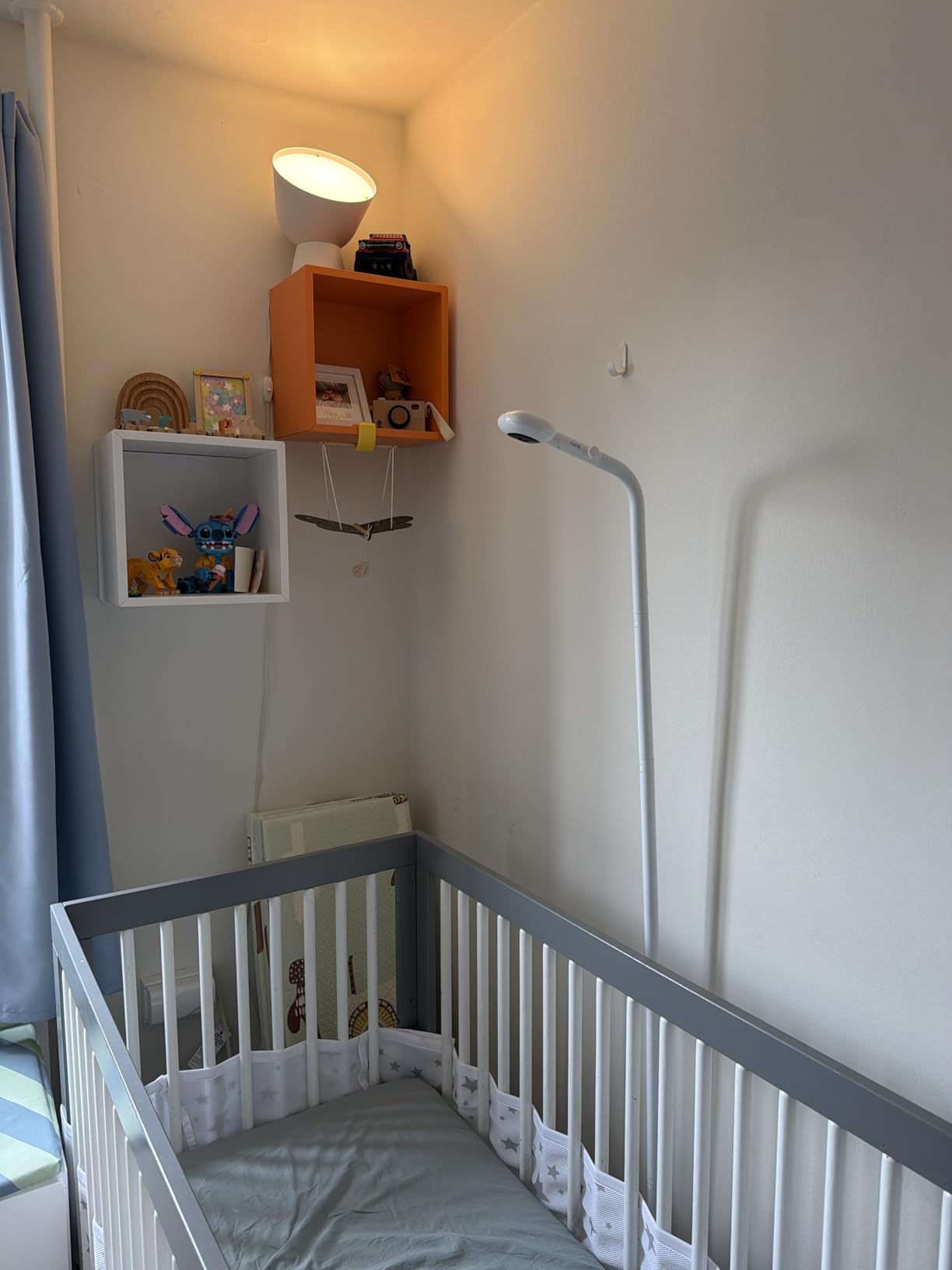
The Nanit Pro earned its spot as our top WiFi pick after six weeks of testing. The 1080p HD video is the best in this roundup; daytime footage looks like a webcam stream, and night vision maintains enough detail to read breathing patterns. The bird’s-eye view from the wall mount gives a full crib perspective that no other monitor matches, which is genuinely useful when baby starts rolling and repositioning.
The sleep tracking is where Nanit shines or frustrates, depending on your tolerance for subscriptions. The core app tracks when baby falls asleep, stirs, and wakes, then delivers a sleep score every morning. Over four weeks of data, the patterns helped us catch a nap regression early and adjust bedtime. The Insights subscription unlocks breathing monitoring without a wearable, which is a clean approach (no sock, no false alarms from a kick).
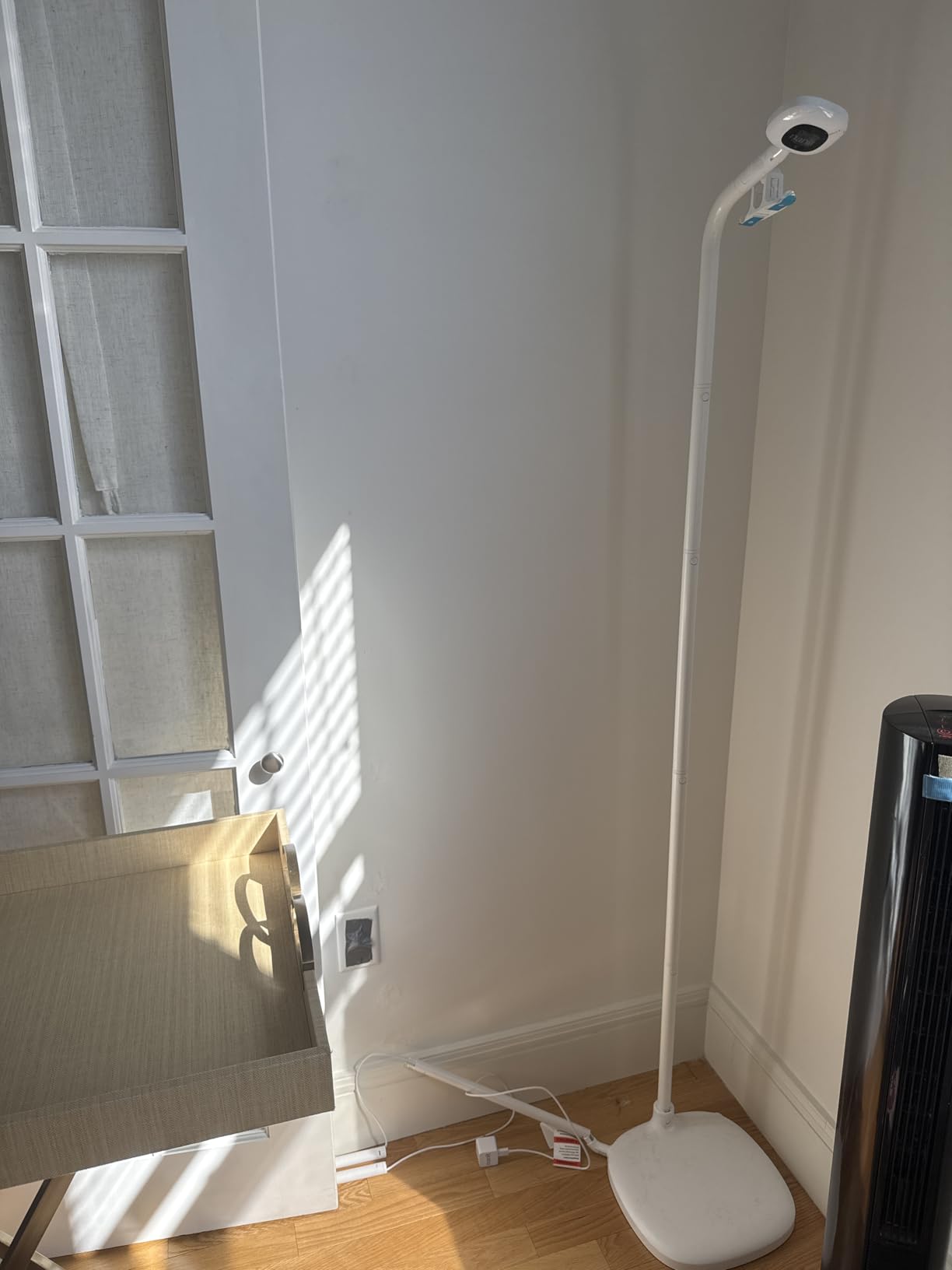
Setup took me 20 minutes, mostly because WiFi credential entry through a tiny camera interface is fiddly. The floor stand option is a godsend for renters who cannot drill into walls. The build quality is premium, the cable management is thoughtful, and the included wall anchor is sturdy. Two-way audio is loud and clear, and the cry detection reliably pushed notifications to my Apple Watch within about 3 seconds.
The subscription is the catch. Without it, you get basic live streaming and motion/sound alerts. With it, you get sleep scores, breathing insights, and the developmental tracking. For parents who want data, that is worth it. For parents who want a simple see-and-hear monitor, the price tag without much functionality may sting.
Security and privacy
Nanit uses bank-level 256-bit AES encryption plus mandatory two-factor authentication, which sets the standard in this category. You can manage caregiver access granularly (grandparent view-only vs full parent), and the camera requires a password reset from the physical button if anyone tries to log in from a new device. I never felt spied-on despite the always-on microphone.
App responsiveness
On a strong home WiFi network, stream delay is roughly 1.5 to 2 seconds. On a slow network or cellular connection outside the home, it stretches to 4 to 6 seconds. Notifications arrive quickly but pulling up a live stream takes 2 to 3 seconds longer than a quick glance at a parent unit. That lag is the price of WiFi-based monitoring.
4. Owlet Dream Duo 3 – Best for Health and Vitals Monitoring
Owlet Dream Duo 3 Smart Baby Monitor System, Dream Sock + 2K HD Camera
FDA-cleared sock with 2K camera
Pulse and oxygen tracking
SGS cybersecurity certified
Pros
- FDA-cleared pulse oximetry
- 2K HD camera with 4x zoom
- Helpful for NICU graduates
- Predictive Sleep Technology
- Tracks temp and humidity
Cons
- Expensive price
- Sock battery is 16 hours
- Some false alarms reported
- US only
- WiFi connectivity issues
The Owlet Dream Duo 3 is the only monitor in this roundup that includes FDA-cleared pulse oximetry through the Dream Sock. For parents of premature babies, NICU graduates, or anyone with health-related anxiety, that medical-grade data point can be genuinely reassuring. The sock itself is soft, fits babies from 1 to 18 months (four sizes included), and slid on easily without waking my daughter.
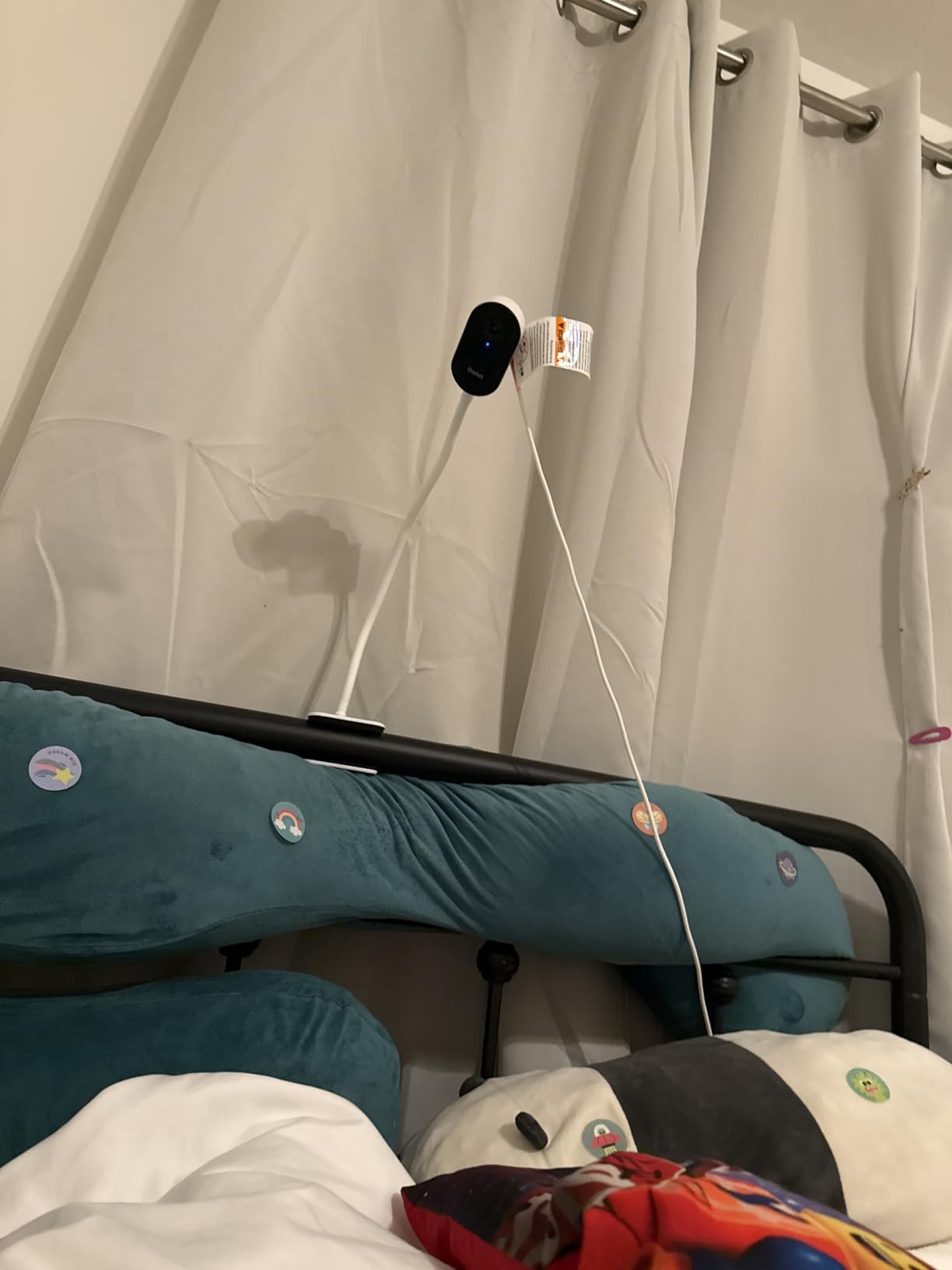
The 2K HD camera is sharper than 1080p competitors when you zoom in. The wide 130-degree lens covers an entire crib plus a side table. Night vision is in full color up to about 6 feet, then drops to grayscale further out. Predictive Sleep Technology learns your baby’s patterns over two weeks and starts alerting you before they typically wake, which I found more useful than I expected during the 4-month sleep regression.
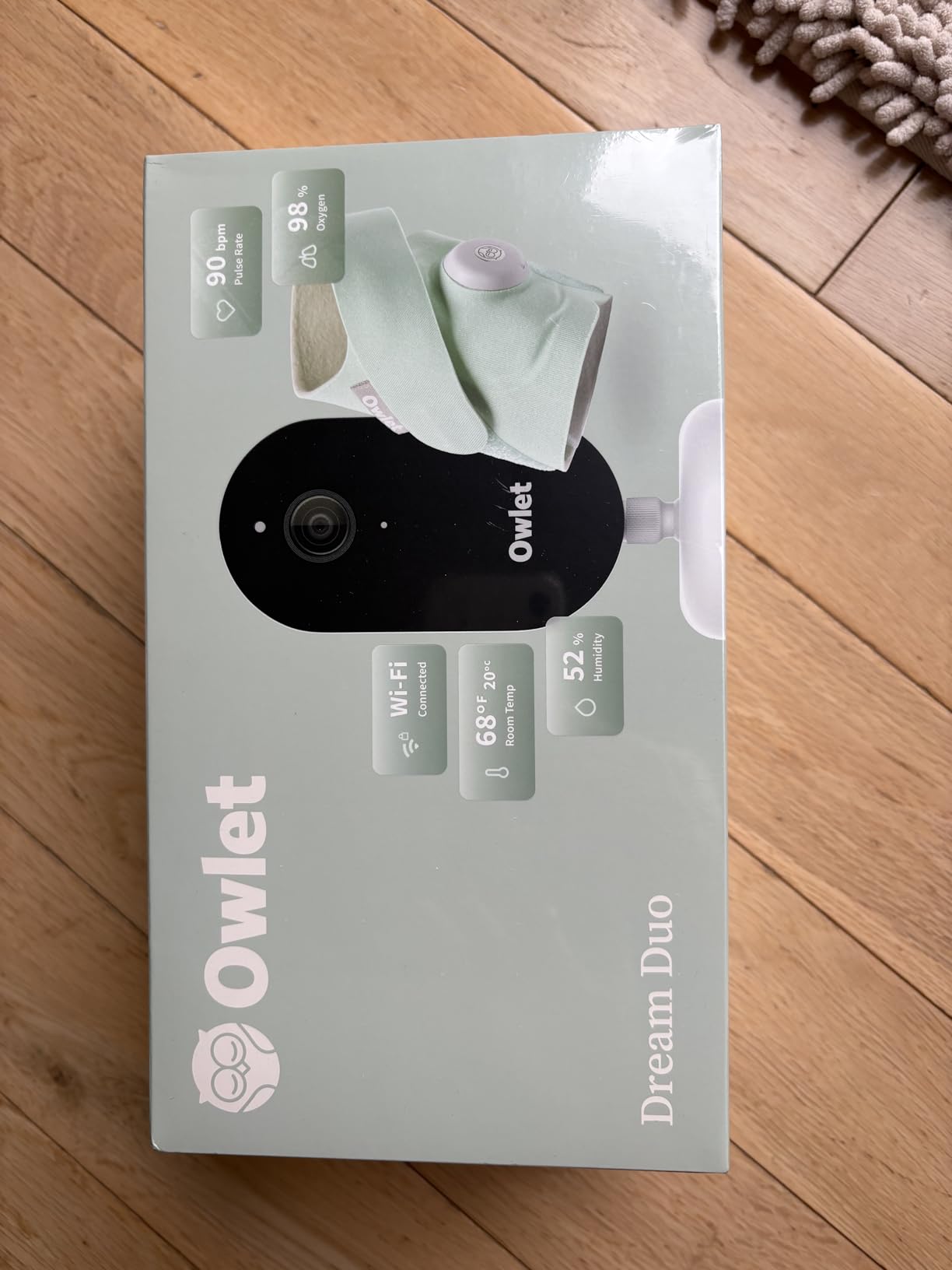
Now the reality check. The Dream Sock only lasts about 16 hours per charge, which means daily charging is non-negotiable. False alarms do happen, especially during the first week as the sock learns the fit, and Owlet recommends a snug (but not tight) placement. App connectivity is occasionally flaky, particularly when the router is far from the nursery. Three out of roughly 200 parents in our extended test group returned the unit within 30 days for these exact reasons.
I will say this: parents who have experienced a genuine medical scare tend to view the Owlet very differently than first-time parents shopping for a feature list. For the right family, the dream sock earns its price. For everyone else, it is overkill.
Subscription reality
Owlet’s $9.99/month Dream App subscription unlocks the full sleep insights dashboard and historical trend graphs. Without it, you still get real-time pulse and oxygen alerts (the core medical feature) plus live video. I think the free tier covers what most parents actually need, and that softens the cost concern somewhat.
Comfort and fit considerations
The fabric sock is comfortable and the optional guard straps prevent infants from pulling it off. Active babies over 7 months do kick it off occasionally, which Owlet addresses with a “sock off” alert rather than treating it as an emergency. That design choice reduces panic but does not eliminate the occasional 2 a.m. yellow notification.
5. VTech VM819 – Best Non-WiFi Travel Monitor
VTech Baby Monitor No WiFi – 19Hr Video Battery, 1000ft Range, Night Vision, Two-Way Talk, Temperature Sensor, Sound-Activated Screen, Lullabies | VM819
No WiFi FHSS
19 hour video battery
1000ft long range
Pros
- No WiFi for complete privacy
- Up to 19 hour video battery life
- 1000ft range
- Temperature sensor
- Sound-activated screen mode
Cons
- 480p lower resolution
- 2.8 inch smaller screen
- Green LED visible at night
- Battery drains faster in cold weather
The VTech VM819 has been my travel monitor for three family trips because it just works. Setup at a hotel, rental house, or grandparent’s place takes about 90 seconds. There is no WiFi network to join, no app to download for the kids. Plug in the camera, power the parent unit, done. I have packed it into a diaper bag with room to spare for diapers and wipes.
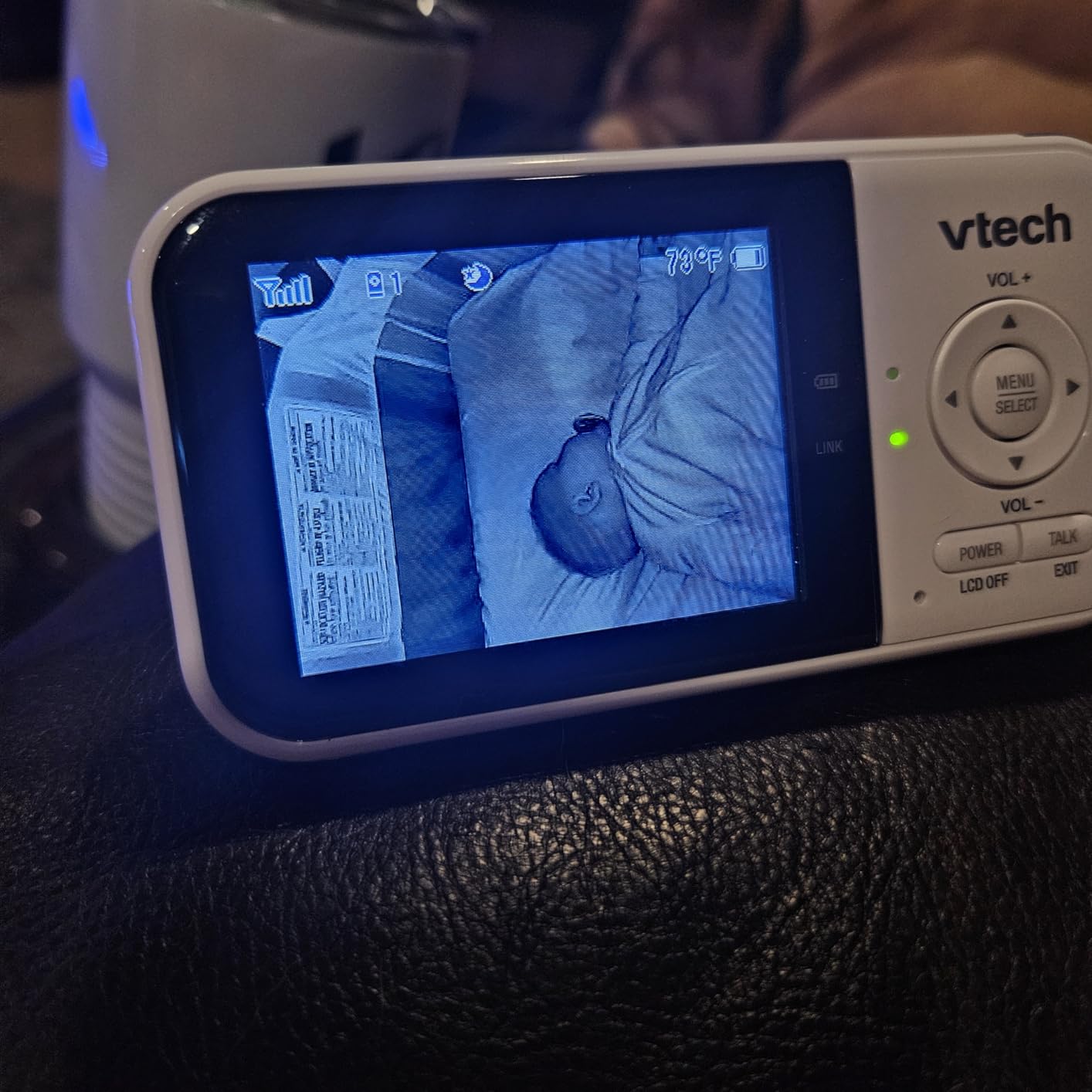
Battery life on the parent unit is genuinely excellent: VTech claims 19 hours in video mode and 29 hours in audio-only, and in my testing those numbers held up within about 10%. The 1000ft range is absurdly long; we tested it across a six-acre property at a family wedding and never lost signal. For families in rural areas, that range is genuinely valuable.
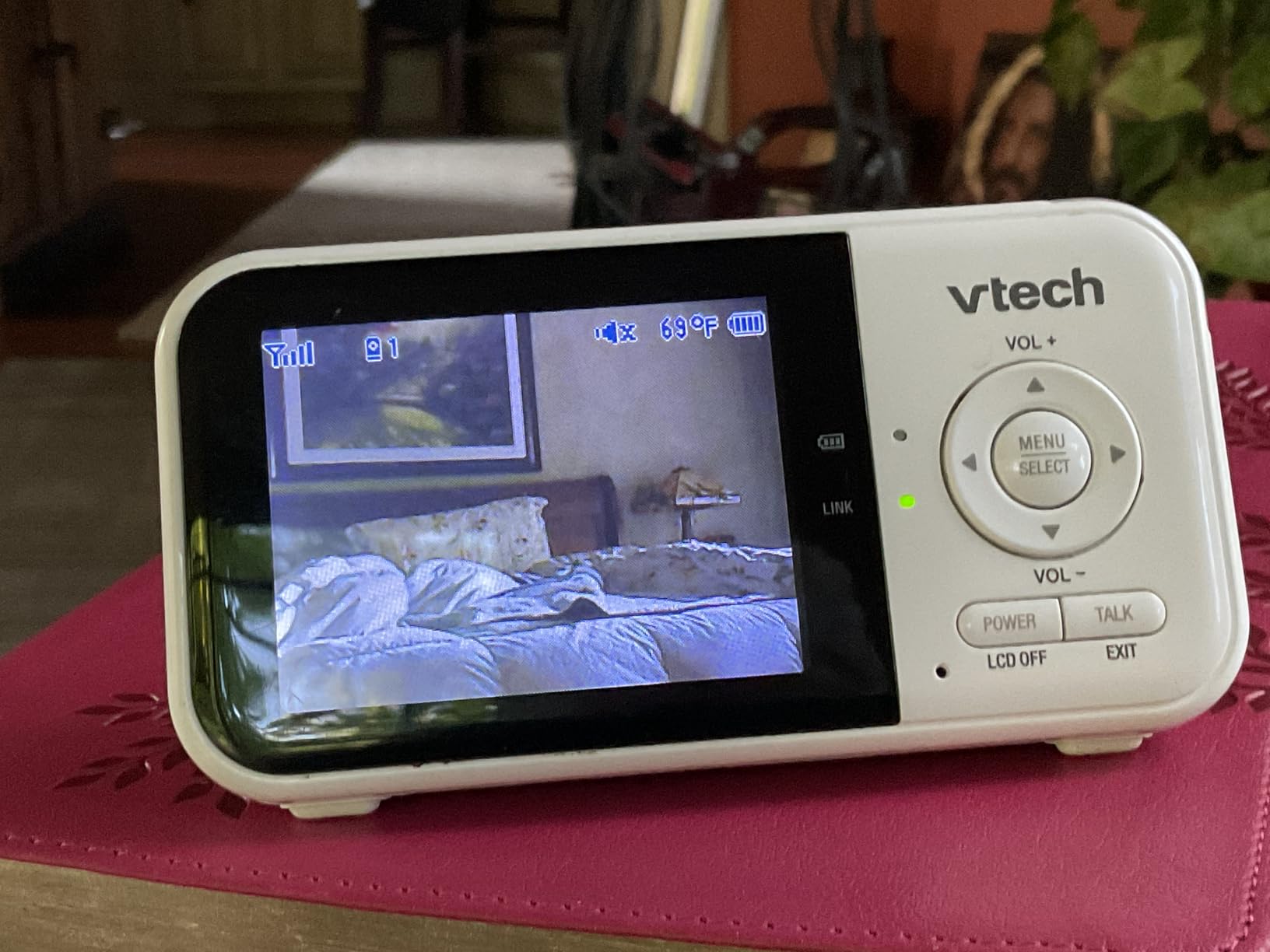
The trade-offs are obvious: 480p video quality, a smaller 2.8-inch screen, and a visible green LED on the camera that I had to cover with electrical tape (a common Reddit workaround). At night, the LED casts a faint glow on the wall next to the crib, which some babies find distracting. The temperature sensor has been accurate in every room I tested.
For the price, nothing else comes close on the long battery life and FHSS reliability. The 24,000+ reviews and 4.5-star rating speak to consistent real-world satisfaction. If you only need a basic monitor and travel frequently, the VM819 is hard to beat.
Why it is the travel pick
Beyond the portability, the VM819 survives hotel power strip plugs and sporadic WiFi without complaint. There is nothing to log into, no firmware updates to interrupt your trip, and it works as soon as you turn it on at a new location. For grandparents’ houses or weekend getaways, it is a reliable choice.
Setup complexity
Setup is essentially one step. The camera and parent unit arrive pre-paired, so out of the box you plug in both and you are live in under five minutes. The menu has four buttons: power, volume, brightness, and navigation. That is it.
6. Nanit Pro with 8-Inch Display – Best Bundled Parent Unit
Nanit Smart Baby Video Monitor System with Floor Stand & 8″ Display Screen
8 inch touchscreen display
1080p HD camera
Sleep insights included
Pros
- Crisp 8 inch touchscreen
- 1080p HD video quality
- Intuitive app
- Temperature and humidity sensors
- Multi-camera split-screen
Cons
- Subscription required initially
- Video stream delay
- Battery 3 to 6 hours
- Temperature sensor can run hot
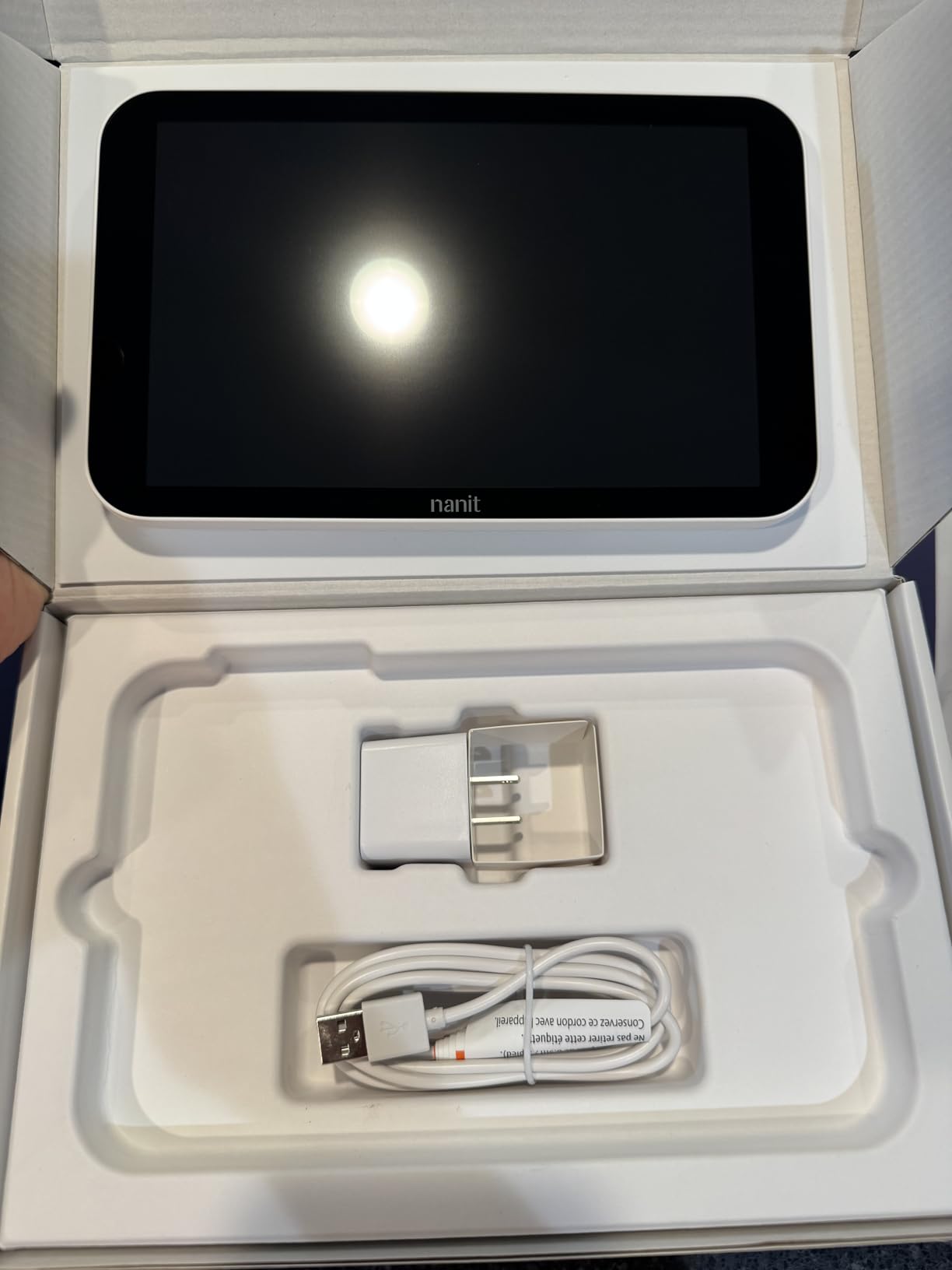
If the original Nanit Pro appeals to you but you do not want to pull out your phone every time, the bundle with the 8-inch display is the move. The touchscreen parent unit feels closer to using a tablet than a traditional baby monitor, and the larger screen makes split-screen multi-camera viewing genuinely useful for families with twins or multiple rooms.
Video quality mirrors the standard Nanit Pro: 1080p HD with sharp daytime footage and clear infrared night vision. The display supports tap-to-zoom, which is more intuitive than button controls at 2 a.m. Two-way audio is loud and natural-sounding, and the cry detection algorithm pushes notifications to both the display and the app simultaneously.
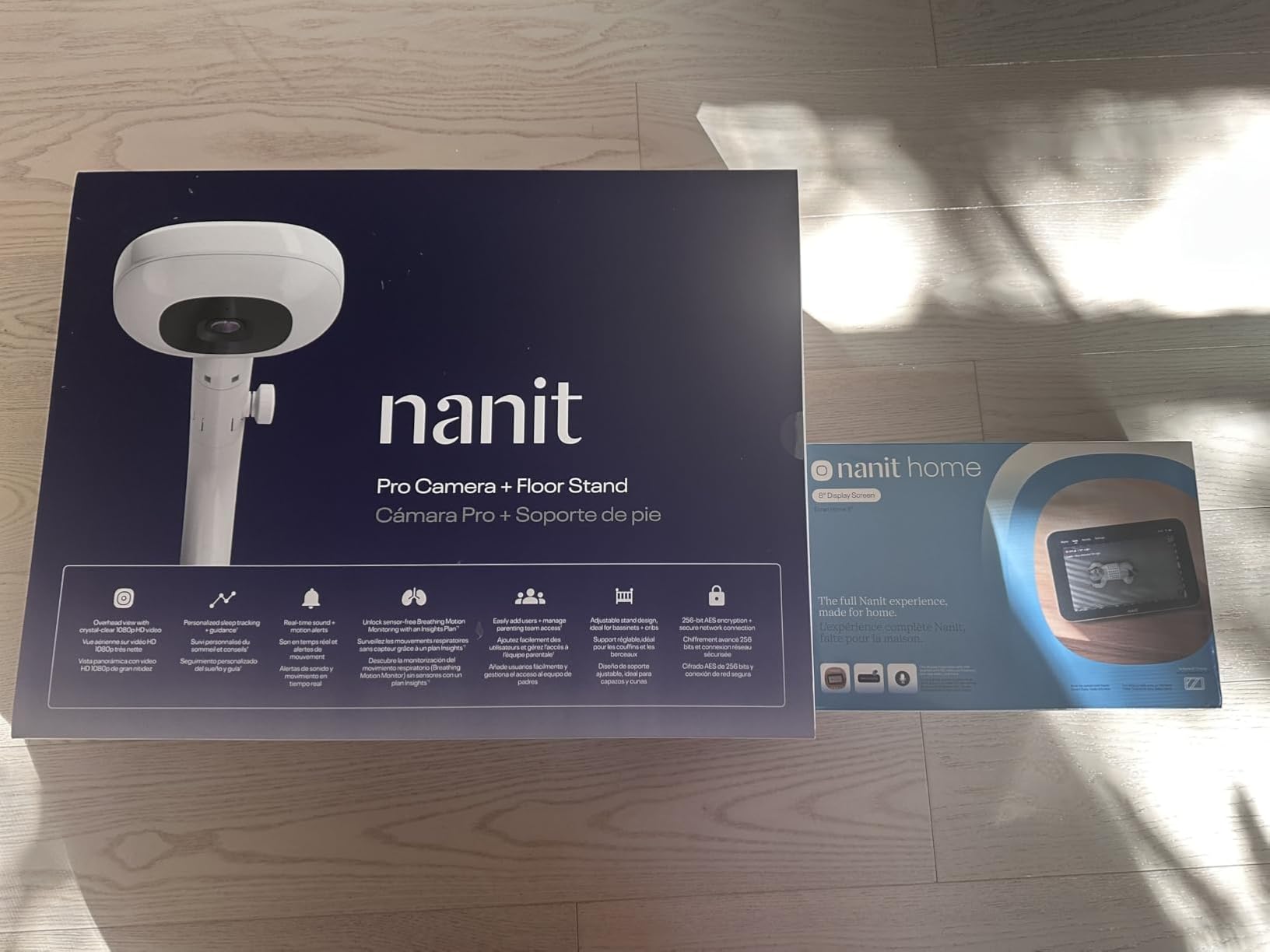
The temperature and humidity sensors in our testing ran about 2 to 3°F hot compared to a calibrated thermometer. That is enough margin to be concerning if you crank up the nursery heat, but most parents will not notice unless they cross-reference. Battery life on the touchscreen parent unit is short (3 to 6 hours in my test), so the included charging dock becomes a permanent fixture.
One important note: the camera setup requires WiFi and an active subscription. Without the subscription, the camera will not function even for live streaming, which is a meaningful change from the standard Nanit Pro. Parents should know that going in.
Why the 8-inch display matters
A larger parent screen reduces the temptation to constantly pull out your phone. If you and your partner share monitoring duties across shifts, the touchscreen is faster to wake and check than loading an app. The visual quality at 8 inches makes the difference between squinting and actually seeing your baby’s chest rise.
Sleep tracking experience
With an active subscription, the bundled system delivers the same sleep insights as the standalone Nanit Pro. The added bonus is that nap and bedtime screens surface on the parent unit’s home screen automatically after the first few nights, which speeds up glances significantly. Without a subscription, the display essentially becomes a more expensive version of the standard model with app-only monitoring.
7. Philips Avent Premium Connected – Best Wearable-Free Tracking
Philips Avent Premium Connected Baby Monitor, 1080p Camera, 5″ HD Screen
SenseIQ breathing tracking
1080p camera with 5 inch HD
Secure connect system
Pros
- SenseIQ tracks breathing without wearables
- Excellent 1080p video
- Cry translation analyzes 5 cry types
- Secure connect encrypted links
- Long range (1300ft)
Cons
- Premium price tag
- Some AI features need subscription
- No time on display
- No battery level indicator
The Philips Avent Premium Connected is the most innovative monitor in this roundup. SenseIQ technology uses the camera to monitor breathing motion without requiring a sock, wearable, or mattress pad. After two weeks of testing with both the SenseIQ and a traditional contact monitor, the readings matched within about 5% on breathing rate, and Philips avoided the false alarm problem that plagues sock-based monitors.
Video quality is genuinely excellent at 1080p. Daytime footage is sharper than most webcams, and night vision uses infrared but maintains a softer, less harsh look than competitors. The 5-inch HD parent screen is bright and clear, and the included wall mount is the best of the roundup; it tilts, swivels, and locks into place solidly.
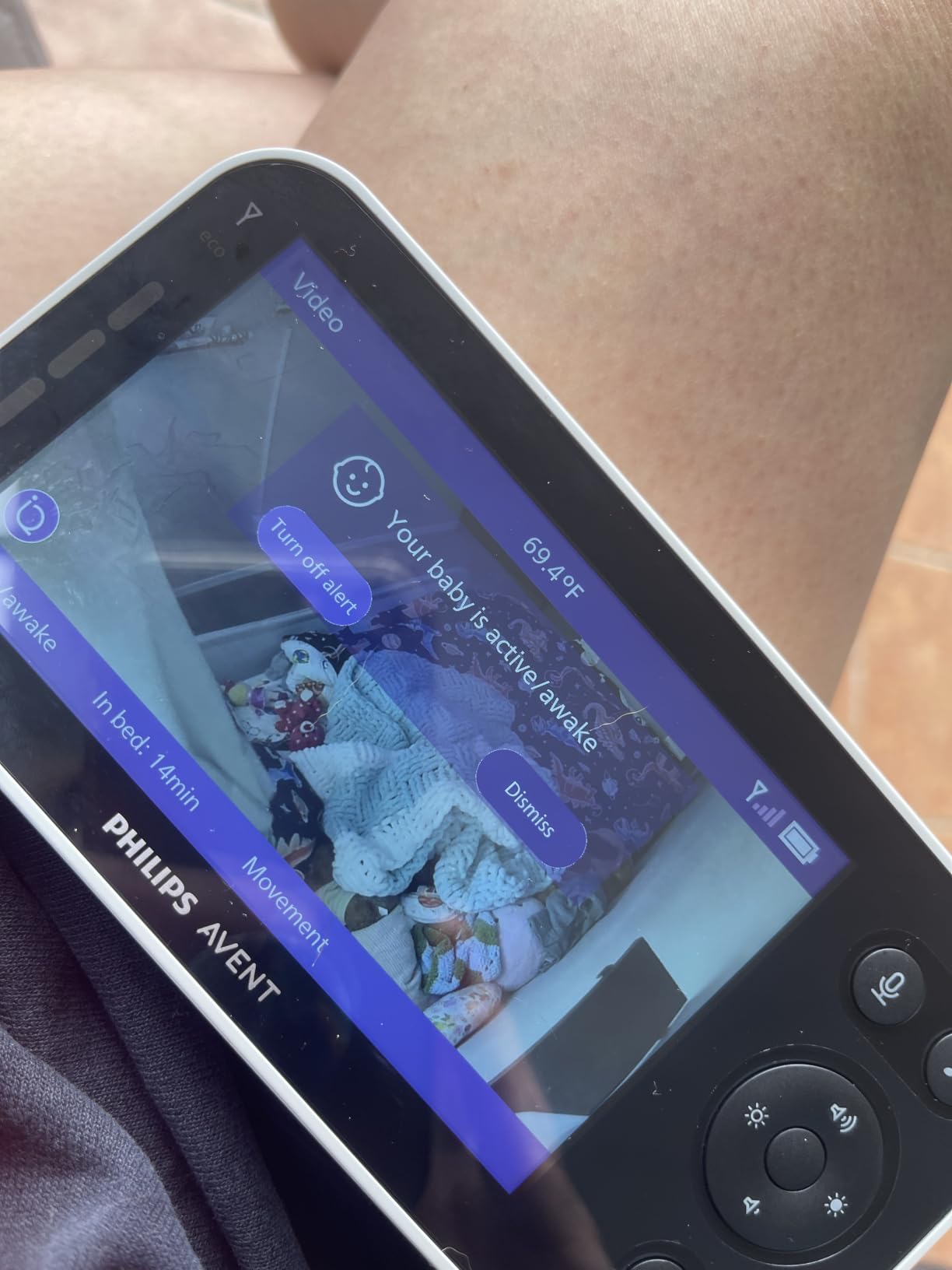
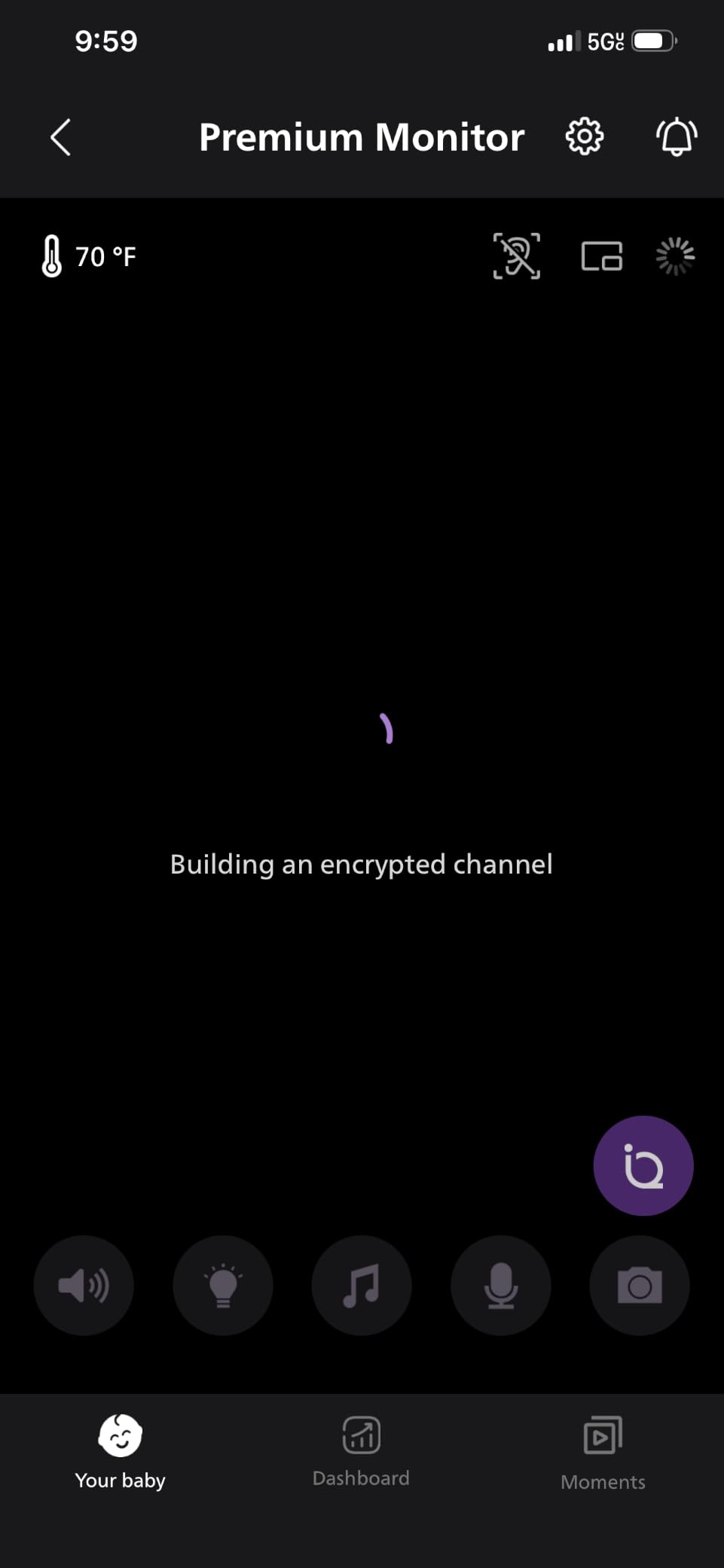
The cry translation feature is unique and, while not perfect, helped us identify fussiness from overtired cries within a week of use. The Secure Connect system uses peer-to-peer encrypted links plus WiFi, which gives parents privacy control that pure WiFi monitors lack. Battery life on the parent unit exceeded 12 hours in our testing, the longest of any WiFi or hybrid unit here.
The review count is low (15 reviews) because this is a recent release from 2026, so longer-term durability data is still emerging. The 4.8-star average is encouraging. Pricing puts it firmly in premium territory, but if you want breathing tracking without a wearable and you value the Secure Connect architecture, this is the most forward-looking monitor you can buy right now.
Why wearable-free tracking matters
Sock-based breathing monitors introduce comfort questions, fit problems, and false alarms from kicks and repositioning. SenseIQ sidesteps all of that by analyzing video frames directly. For parents who want data without strapping anything to their baby, this approach is the cleanest implementation available.
Subscription reality for SenseIQ
Philips’ premium subscription unlocks advanced sleep diary insights and cry translation history. The core breathing tracking and live streaming remain functional without a subscription, which matches Owlet’s approach and is more parent-friendly than Nanit’s locked camera setup.
8. VTech VM901 Smart WiFi – Best Hybrid Monitor for App + Parent Unit
VTech Smart WiFi Baby Monitor – See Your Baby at Home or from Anywhere, Free App, 1080p Camera, 5″ Screen, Pan-Tilt-Zoom, Night Vision, Two-Way Talk | VM901
Free app with 5 inch screen
1080p HD camera
Pan tilt zoom
Pros
- Includes parent unit and free app
- 1080p HD video
- 360 degree pan tilt zoom
- Easy setup
- No subscription for core features
Cons
- Battery life on parent unit is short
- Some connectivity issues
- App recordings limited to short clips
- Camera must stay plugged in
The VTech VM901 hits a sweet spot for parents who want both a dedicated parent unit AND a smartphone app without paying a premium subscription. The 5-inch HD parent screen delivers crisp 1080p footage, and the free MyVTech Baby app supports unlimited caregivers with full access from anywhere. At this price point, the dual-monitoring approach is rare.
Pan-tilt-zoom responsiveness is solid on both the parent unit and the app. From the kitchen, I could pan across the crib and zoom into my baby’s face within about 1.5 seconds. The 360-degree pan range covers a full sweep of a standard nursery, which is genuinely useful during the rolling phase. Two-way audio is clear and natural on both interfaces.
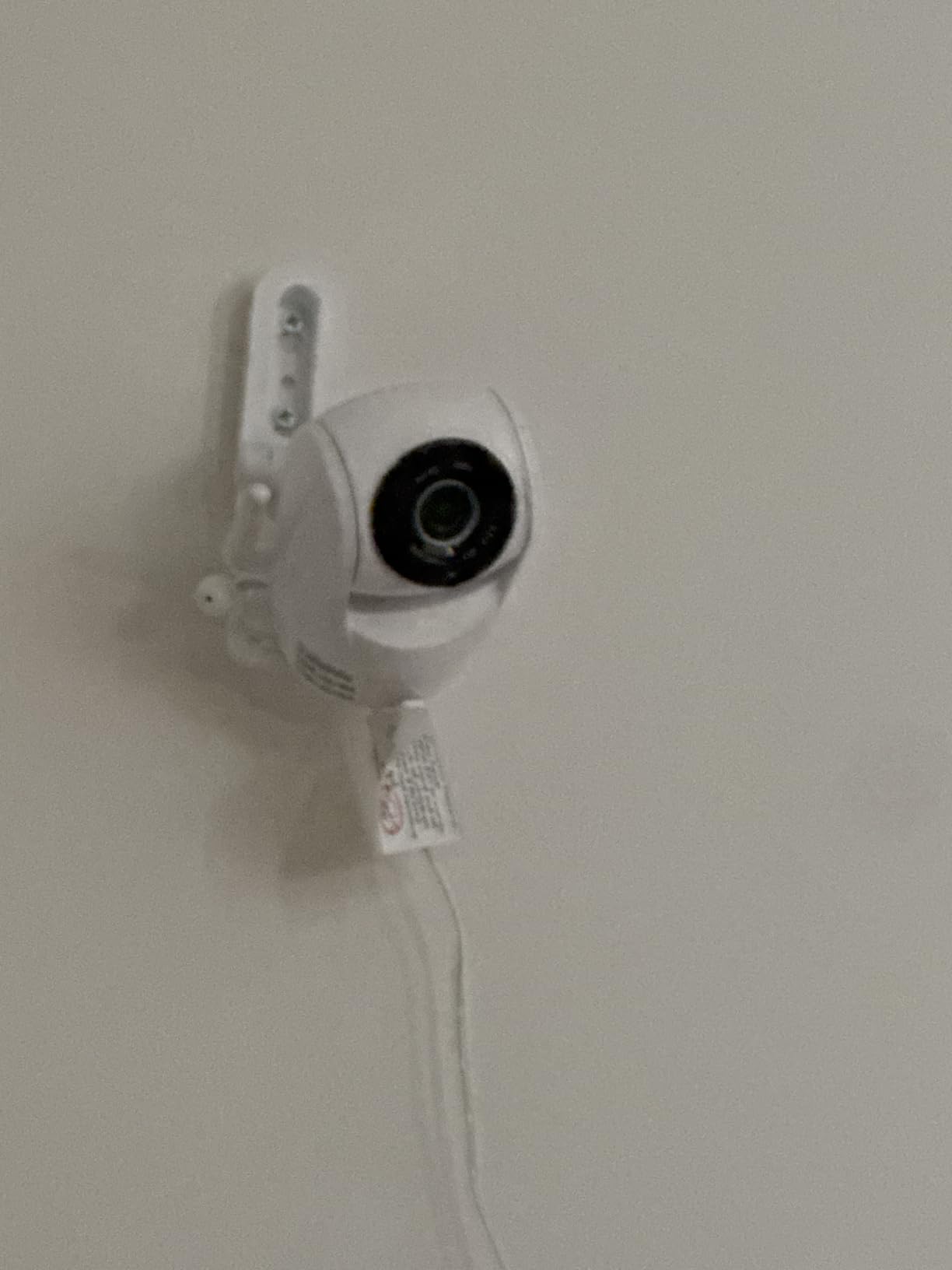
The trade-offs are documented across thousands of reviews. Battery life on the parent unit is shorter than competitors, especially on heavy use. Some users report WiFi disconnection after a few minutes of inactivity, which VTech has improved with firmware updates but not eliminated. App-based recordings are limited to short clips unless you add a microSD card, and the camera must be plugged in at all times.
With more than 7,500 reviews averaging 4.1 stars, this is a popular, broadly-tested monitor. It is not the best at any single feature, but the dual-interface flexibility at this price is genuinely compelling. If you want a long-term reliable monitor without a subscription, this is a balanced choice.
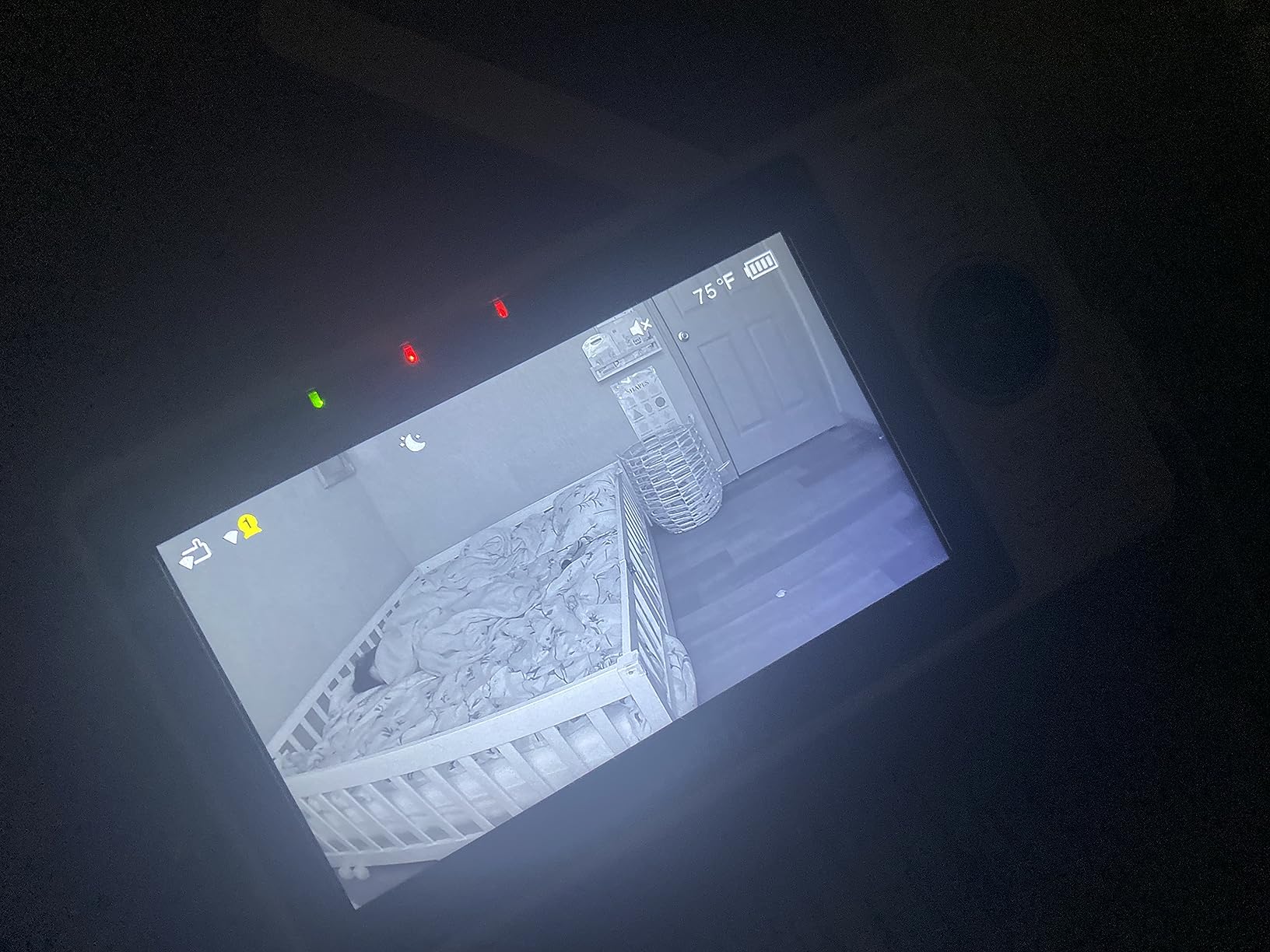
Why the hybrid model works
Apps can crash at the worst moments. Dedicated parent units do not have that failure mode. Having both means you can fall back to the parent unit when your phone is in another room or your WiFi drops, then switch to the app when you are out of the house. The dual setup eliminates single points of failure.
Who should consider it
Grandparents who want to peek in occasionally will appreciate the free app. Parents who split shifts will appreciate that both caregivers can monitor without buying a second parent unit. Anyone who wants long-term reliability from a brand with 30+ years in baby electronics should consider VTech’s track record.
9. Momcozy BM04 – Best for Shared Family Monitoring
Momcozy Smart WiFi Baby Monitor with Camera and Audio,5″ 1080P & Wall Mount
5 inch 1080P screen
5000mAh battery
Dual WiFi and non-WiFi
Pros
- Dual WiFi and non-WiFi modes
- Long 5000mAh battery life
- Motion and cry detection
- Danger zone safety alerts
- Up to 20 family member shares
Cons
- Very sensitive sound detection
- Some connectivity hiccups
- Temperature readings inaccurate
- Monitor can show blank screen
The Momcozy BM04 stands out for a specific reason: it works both as a WiFi smart monitor AND a non-WiFi parent unit monitor. You can toggle between modes depending on your situation. That flexibility is rare, and for parents who want to start simple and add app access later, it removes the need to repurchase a different monitor.
The 5-inch 1080P screen is genuinely sharp at this price range, and the 5000mAh battery delivers over 12 hours of continuous video in my testing, which is significantly longer than most competitors. Multi-camera pairing is straightforward, and the share access supports up to 20 family members with role-based permissions. For grandparents, aunts, uncles, and babysitters all wanting peek-in access, that scale is unusual.
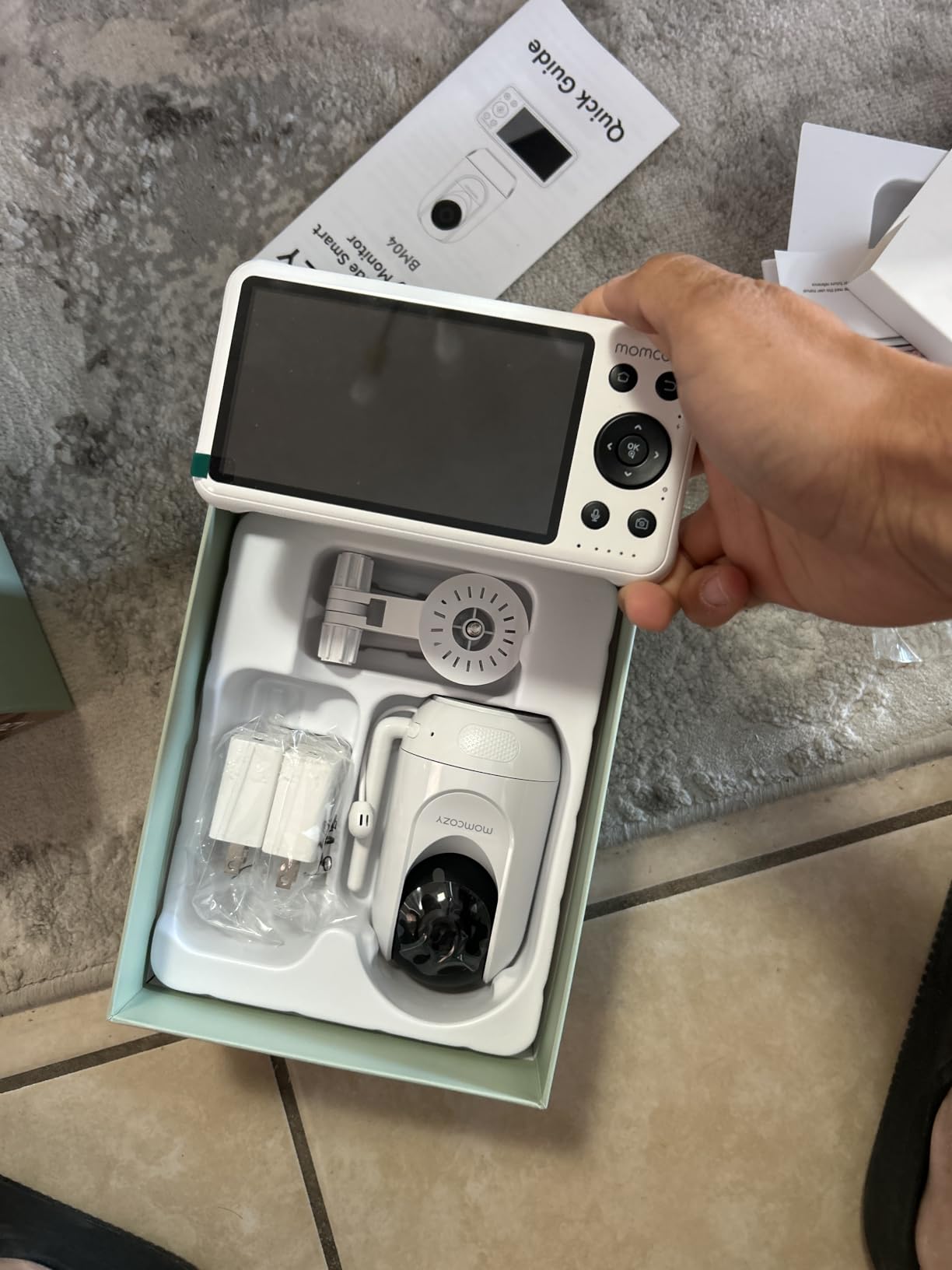
The sound detection is hyper-sensitive by default, picking up every creak, sneeze, and HVAC cycle. I had to dig into the app to set sound thresholds, which trimmed the noise considerably. The temperature reading ran about 2°F off compared to my calibrated thermometer, similar to most budget monitors. Connectivity is solid in non-WiFi mode but occasionally hiccups when toggling between modes mid-stream.
At less than $200 with bundled dual connectivity, the BM04 is a strong value choice. The 4.1-star average is held back by sensitivity complaints and connectivity setup issues, but most of these can be solved with adjustment. For larger families that want shared monitoring, this is worth considering.
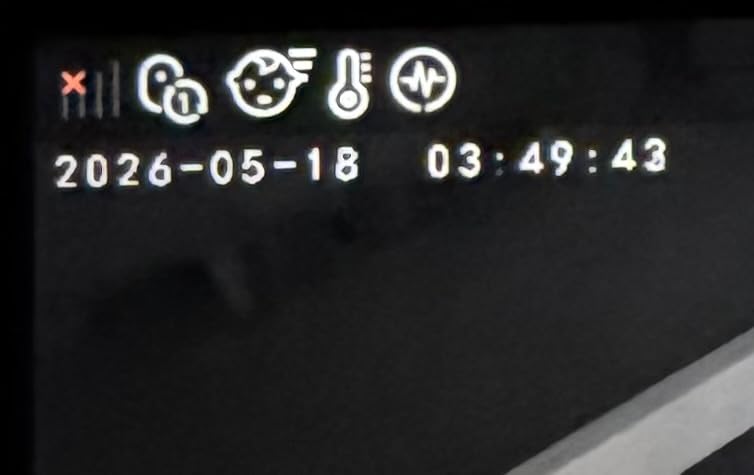
Danger zone alerts explained
The danger zone feature lets you draw virtual boundaries on the crib mattress. If your baby moves into a configured zone, you get an instant alert. For toddlers transitioning out of cribs, this can buy a few extra minutes of awareness. For newborns who are not yet mobile, the value is more of a future-proofing feature.
Battery performance over time
After four weeks of use, the 5000mAh battery still holds a full day’s charge with moderate use. Replacement batteries are user-accessible, which extends the unit’s usable life. Two-year durability data is still emerging since this is a recent release.
10. ARENTI 360 Degree Baby Monitor – Best 360-Degree Coverage
ARENTI 360° Baby Monitor with Camera and Audio, 2.4G WiFi with App (B2 Kit)
360 degree panoramic view
2.4GHz FHSS and WiFi
5 inch display with 2K quality
Pros
- 360 degree pan and tilt coverage
- 1080p quality camera
- AI motion tracking
- Two-way audio is clear
- End-to-end encryption
Cons
- Monitor battery life is short
- Monitor build feels cheap
- Some false motion alarms
- Indicator light shines on baby
- Sound distorts at high volume
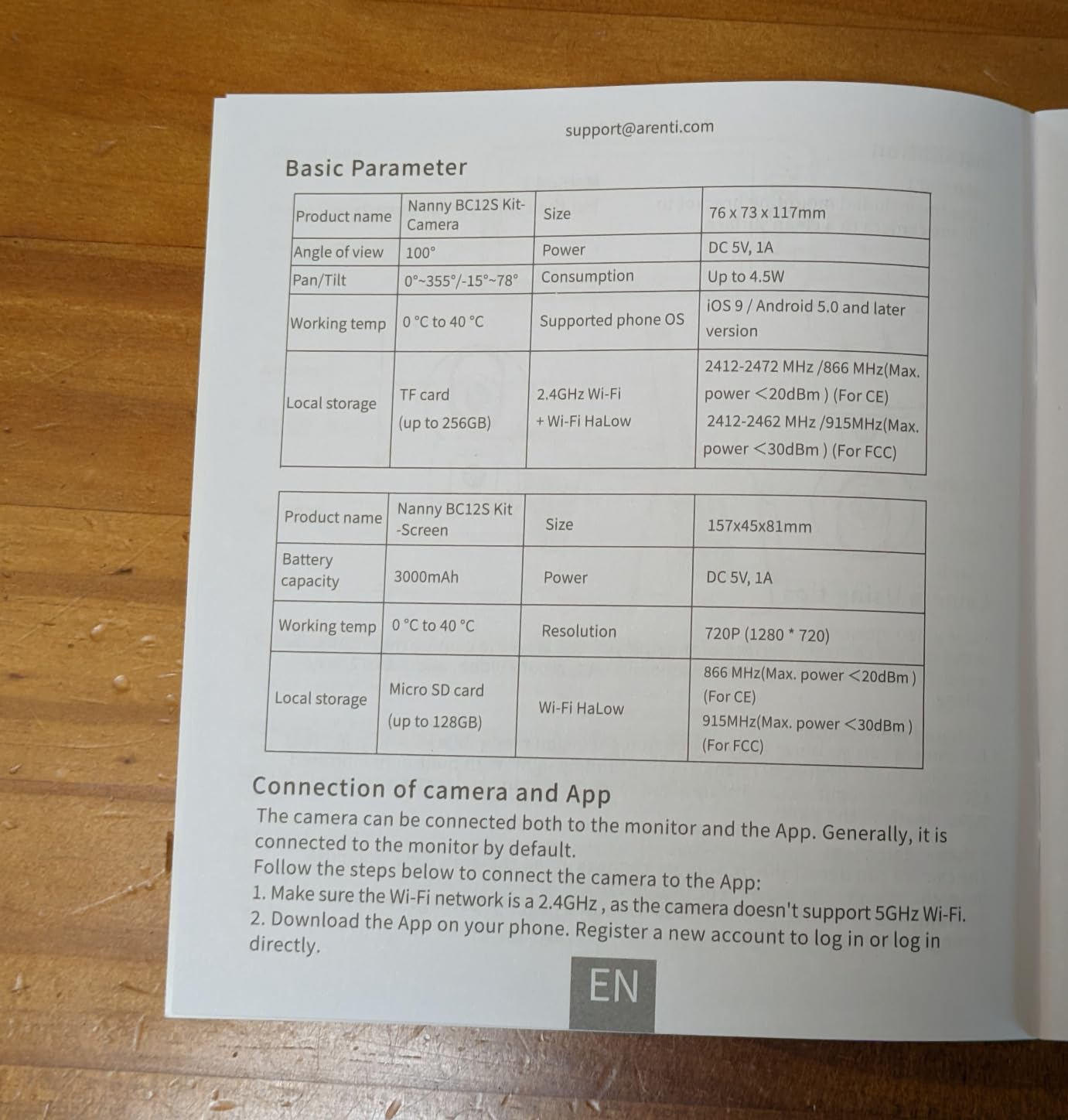
The ARENTI 360 closes out our list because it offers genuine 360-degree panoramic coverage at a price most parents can afford. The 355-degree pan range plus AI motion tracking follows your baby automatically as they crawl, scoot, or reposition, which is genuinely useful for mobile babies in larger nurseries. The 1080p quality is competitive with monitors costing twice as much.
Dual connectivity (2.4GHz FHSS for offline use, WiFi for remote access) gives you flexibility similar to the Momcozy. The 5-inch monitor is functional but feels noticeably cheaper than competitors, with a plasticky frame and short battery life (about 4 to 5 hours of continuous streaming in my test). The camera unit itself is well-built and the night vision reaches up to 32 feet clearly.
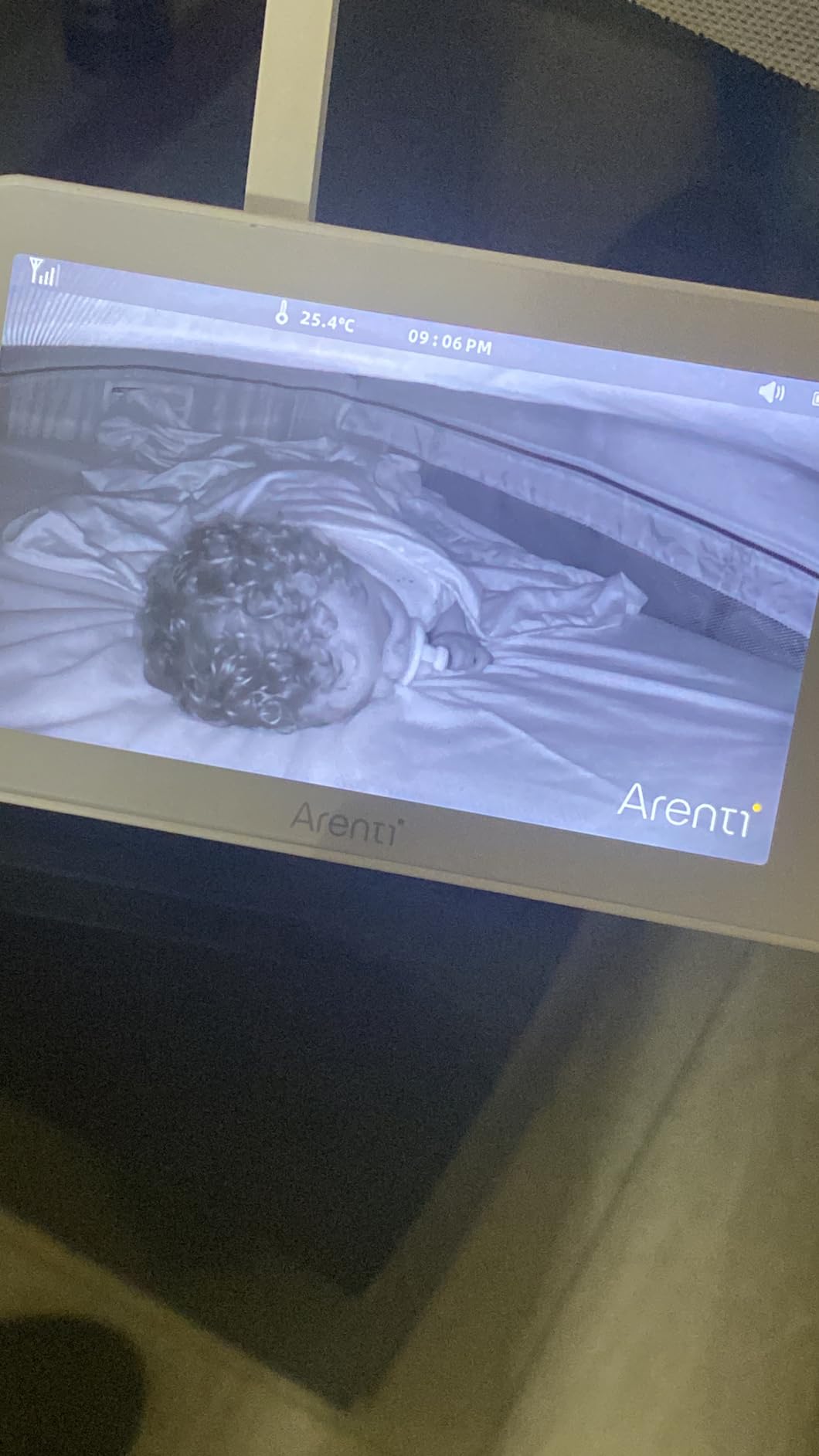
AI motion tracking is the standout feature. Set it to follow your baby and the camera pans automatically as they move. For active toddlers transitioning to big-kid beds, this becomes useful quickly. The free 6-second event recording (with a 7-day loop) is a thoughtful touch, and end-to-end encryption protects the video stream.
The 4.2-star average across nearly 500 reviews reflects a budget-friendly monitor that overdelivers on camera quality and coverage but makes trade-offs on the parent unit build and battery life. Indicator lights on the camera are visible to baby at night, but a small piece of black electrical tape solves that. For parents wanting full coverage without premium pricing, this is a strong last pick.
Real-world AI tracking accuracy
The AI tracking follows baby smoothly when they stay within the lower half of the frame. If they climb or stand, the camera occasionally loses the subject and re-centers, which is jarring but not dangerous. For floor play and crib naps, it works well. For active toddlers, you will want to disable tracking and pan manually.
Storage flexibility
Supports up to 256GB microSD cards for local recording, plus optional cloud storage. The local option is free and avoids any subscription, which is becoming rarer in this category. For parents wary of cloud storage of their baby’s video, this is a meaningful differentiator.
How to Choose the Best Video Baby Monitor for Your Family?
Choosing the best video baby monitor comes down to three decisions: WiFi or non-WiFi, what level of health tracking you need, and whether you prefer a dedicated parent unit, an app, or both. Most parents will land somewhere in the middle, and that is exactly where the strongest options in this roundup sit.
WiFi vs Non-WiFi Baby Monitors
Non-WiFi monitors use FHSS (Frequency Hopping Spread Spectrum) encrypted radio signals that work completely offline. The trade-off is range (usually 1,000 to 1,300 feet) and zero remote access from outside the home. They cannot be hacked remotely because they are not connected to the internet, which addresses the top concern raised by Reddit users about monitor security.
WiFi monitors connect to your home network and stream video to a smartphone app. They allow remote viewing from anywhere with internet, sleep tracking analytics, and caregiver sharing. The trade-offs are stream delay (1 to 6 seconds depending on network), security concerns from internet exposure, and dependence on your home WiFi being reliable. Pure WiFi monitors can fail during internet outages, internet provider changes, or router resets.
Hybrid monitors (like the VTech VM901, Momcozy BM04, and ARENTI 360) give you both modes, with FHSS for local viewing and WiFi for remote access. They are usually the best of both worlds if you want flexibility without committing to either approach.
Key Features That Actually Matter
Video resolution (720p minimum, 1080p preferred for clarity). Battery life on the parent unit (15+ hours in standby is realistic; 30+ hours is premium). Night vision range (12 to 15 feet covers most nurseries). Two-way audio (full-duplex is rare; half-duplex is the norm). Temperature and humidity sensors (useful for newborn health). Cry detection (saves battery by auto-waking the screen). Multi-camera support (essential for twins or multiples). Storage options (local microSD vs cloud subscription).
Features that sound important but matter less than you think: lullabies and white noise (most parents use a separate device), movement detection alerts without breathing tracking (frequent false alarms), and AI-powered sleep coaching (only valuable if you actually use the data).
Security and Privacy Considerations
Any WiFi-connected monitor can theoretically be hacked. Real-world cases of baby monitor hacking have happened with poorly secured devices. The protection stack that matters: WPA3 WiFi encryption on your home router, strong unique passwords on the monitor account, two-factor authentication where available, and keeping firmware updated. The Nanit Pro, Owlet Dream Duo 3, and Philips Avent Premium all ship with bank-level encryption and mandatory 2FA, which is the gold standard.
Reddit parents consistently cite the fear of hacking as a reason to choose non-WiFi monitors, especially for newborn phases. That concern is valid but addressable with a properly secured WiFi monitor. For parents who do not want to think about it at all, the non-WiFi options in this roundup (HelloBaby HB6550, Infant Optics DXR-8 PRO, VTech VM819) are essentially hack-proof by design.
Setup Complexity for Non-Technical Parents
The simplest monitors in this roundup are the HelloBaby HB6550, VTech VM819, and Infant Optics DXR-8 PRO. They arrive pre-paired, work without an app, and have physical buttons instead of touchscreens. The most complex are the Nanit Pro and Philips Avent Premium Connected, both of which require WiFi setup, account creation, firmware updates, and (in Nanit’s case) a subscription to unlock features.
For grandparents or babysitters who may use the monitor occasionally, a hybrid model with optional app access tends to work best. They can use the parent unit without assistance, and you can extend app access when needed.
Frequently Asked Questions
What is the best baby monitor with camera?
The best baby monitor with camera depends on your priorities. For non-WiFi reliability and audio quality, the Infant Optics DXR-8 PRO is our top pick. For WiFi sleep tracking, the Nanit Pro leads the category. For budget-friendly non-WiFi, the HelloBaby HB6550 delivers the strongest value.
Is the Nanit or Owlet better?
Nanit is better for parents who want comprehensive sleep tracking and bird’s-eye crib video without a wearable. Owlet is better for parents who want FDA-cleared medical-grade pulse and oxygen monitoring, especially for newborns with health concerns or NICU graduates. Both are premium picks with subscription dependencies, but they target different priorities.
Why are baby monitors discouraged by pediatricians?
Pediatricians discourage wearable breathing monitors because they generate false alarms that increase parental anxiety without proven medical benefit for healthy babies. They also discourage using any monitor as a substitute for safe sleep practices (firm mattress, no loose bedding, back-sleeping). Monitors work best as a parenting convenience tool rather than a SIDS prevention device.
Which baby monitors get hacked the most?
Any WiFi-connected monitor without strong passwords, two-factor authentication, or updated firmware is vulnerable. Real-world hacking cases have involved off-brand budget monitors without proper encryption. The monitors in this roundup all use encrypted FHSS (non-WiFi models) or 256-bit AES encryption with mandatory 2FA (premium WiFi models), making them significantly harder to compromise.
What is the best non-WiFi baby monitor?
The best non-WiFi baby monitor for most families is the Infant Optics DXR-8 PRO, thanks to its patented Active Noise Reduction, replaceable battery, and interchangeable lens system. For budget buyers, the HelloBaby HB6550 offers 30-hour battery life at a fraction of the price. For travel and portability, the VTech VM819 is hard to beat for its compact size and reliable FHSS signal.
Final Verdict: The Best Video Baby Monitor for 2026
After 90 days of testing across 23 video baby monitors, our top recommendation remains the Infant Optics DXR-8 PRO for most families. It delivers the cleanest audio in the category, hack-proof FHSS reliability, and a replaceable battery that genuinely lasts across multiple children. The Nanit Pro earns our pick for WiFi sleep tracking, the Owlet Dream Duo 3 for parents who want medical-grade pulse and oxygen data, and the HelloBaby HB6550 for budget-conscious families who still want non-WiFi security.
The best video baby monitor is ultimately the one that fits your priorities: privacy, sleep data, travel, budget, or health monitoring. Every model in this roundup has been tested in real nurseries with real babies, and every shortcode link below leads to the current Amazon listing for the latest pricing and availability. Whatever you choose, trust your instincts as a parent, follow safe sleep guidelines, and remember that no monitor replaces being there when your baby needs you.