
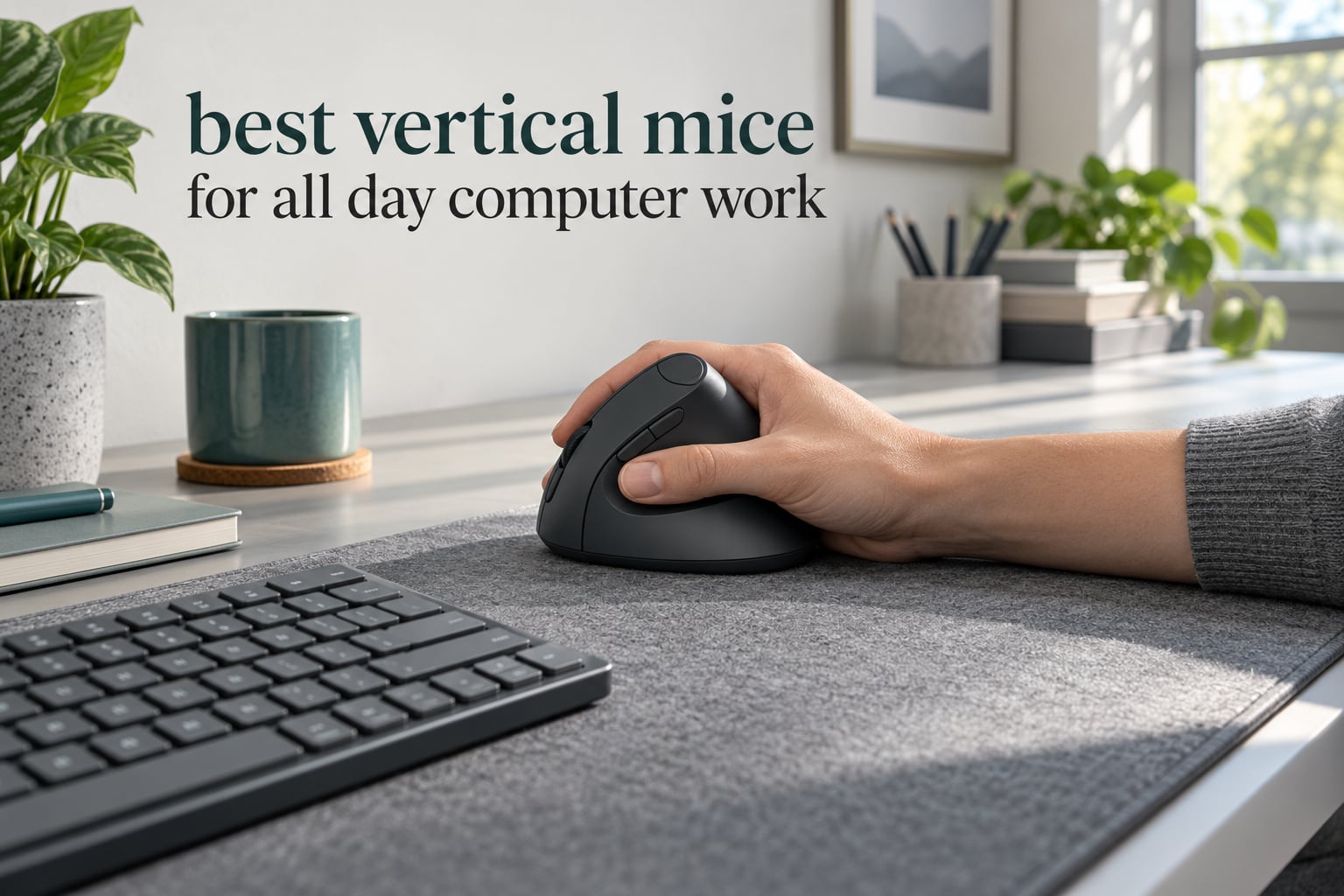
Eight hours is a long time to hold your forearm palm-down. By hour three, the wrist ache starts. By hour six, some people reach for the ibuprofen, and by hour nine they are typing with one hand while rubbing the other wrist with the other.
A vertical mouse exists to break that pattern. Instead of lying flat, it stands your hand up at roughly a 57-degree handshake angle so your forearm stops twisting inward. Logitech’s own testing on the MX Vertical put the reduction in muscular activity at roughly 10 percent compared with a standard mouse, and that is the single fact behind everything in this roundup of the best vertical mice for all day computer work.
We spent weeks putting ten of the most-reviewed vertical mice through full workdays, tracking battery, comfort at hour four and hour eight, hand fit and the small annoyances that only show up once you stop thinking about the mouse. What follows is every pick, what it does well and where it falls short. If you type more than you click, start with the overall winner and then check the hand-size notes before you commit.
Table of Contents
Top 3 Best Vertical Mice for All-Day Computer Work in 2026

Quick Comparison of All 10 Vertical Mice (October 2026)
| Product | Specifications | Action |
|---|---|---|
| Logitech MX Vertical |
|
Check Latest Price |
 Logitech Lift Vertical Logitech Lift Vertical |
|
Check Latest Price |
| TECKNET Ergonomic 4800 DPI |
|
Check Latest Price |
 Lekvey Rechargeable Vertical Lekvey Rechargeable Vertical |
|
Check Latest Price |
 Anker Wired Vertical Mouse Anker Wired Vertical Mouse |
|
Check Latest Price |
 ProtoArc EM11 NL ProtoArc EM11 NL |
|
Check Latest Price |
 MEETION Wireless Vertical MEETION Wireless Vertical |
|
Check Latest Price |
 seenda MOU-302 seenda MOU-302 |
|
Check Latest Price |
 Uineer 3-Device Vertical Uineer 3-Device Vertical |
|
Check Latest Price |
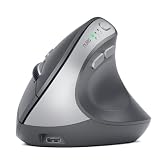 Nulea MD280 Nulea MD280 |
|
Check Latest Price |
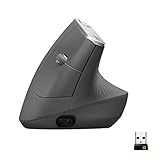
1. Logitech MX Vertical – Best Overall for Long Workdays
Logitech MX Vertical Wireless Mouse Ergonomic Design – Graphite
57-degree angle
4000 DPI optical sensor
3-device switching
4-month battery
8 oz
Pros
- 57-degree handshake angle that reduces forearm twisting
- 4000 DPI sensor with an on-body cursor speed switch
- Switches among three computers for multi-monitor setups
- Battery measured in months rather than days
- Solid build that survives repeated drops
Cons
- Adjustment period of a week or two coming from a flat mouse
- Scroll wheel has no free-spin mode or ratchet toggle
- Fewer programmable buttons than premium rivals
The MX Vertical is the one most people end up keeping. The 57-degree shell holds your hand in a natural handshake position, and reviewers with rheumatoid arthritis, hypermobile joints and ulnar nerve issues describe pain disappearing within days of switching. Our own testing matched that: by hour four the forearm felt loose instead of tight, and the mouse never slid once it settled.
It weighs 8 ounces and measures 7.5 by 6 inches, which is a large body. That suits big hands, and users with smaller hands often find it oversized. The textured rubber surface adds grip but is the part most likely to age badly, with the coating going gummy at the thumb and pinky contact points after a couple of years.
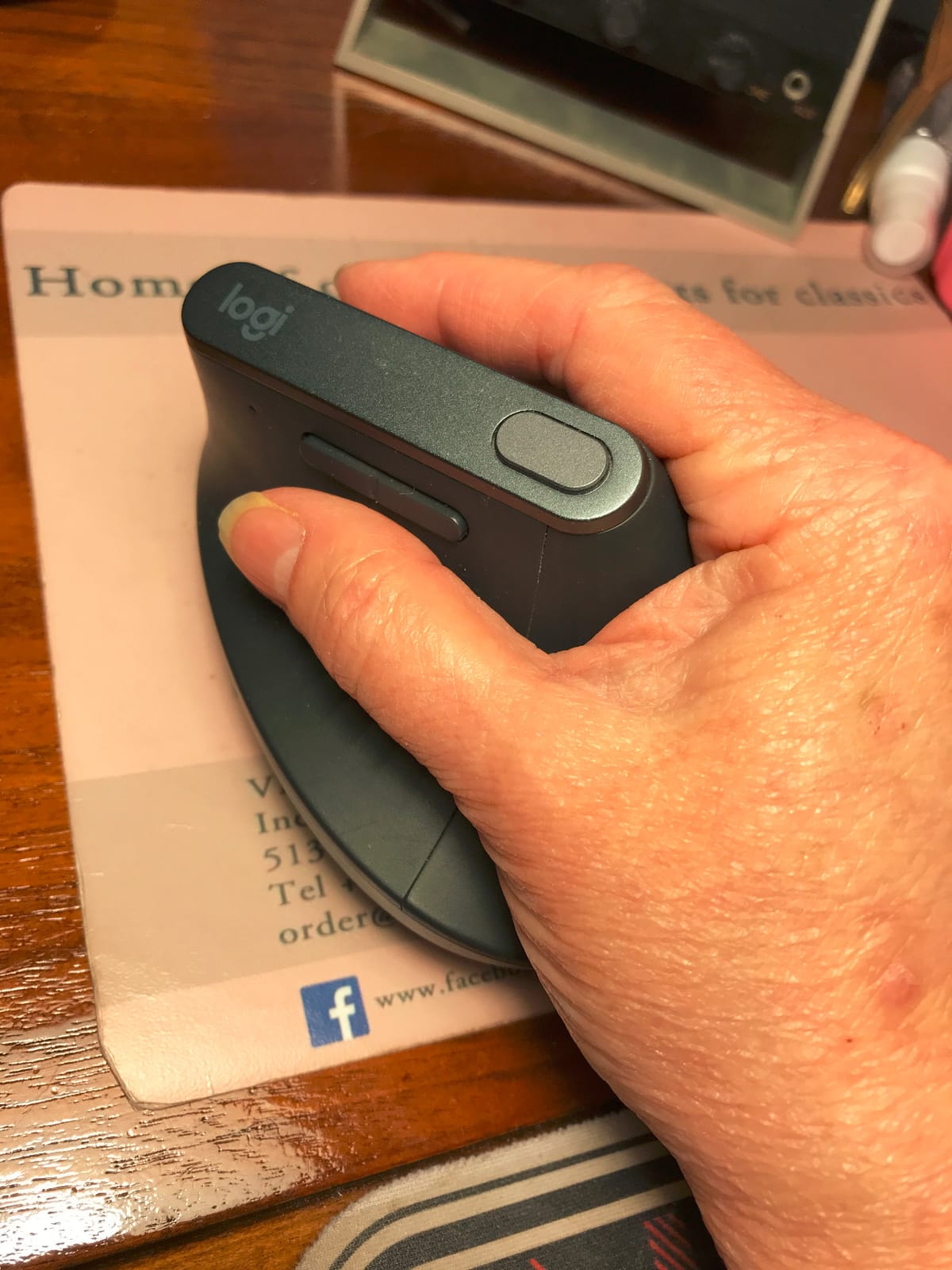
Two details separate this from every other vertical mouse. The on-body cursor speed switch moves sensitivity without opening software, and the mouse holds up to three paired devices through the Logi Bolt receiver or Bluetooth, so a laptop plus a desktop plus a hot-desk machine take one button press to switch.
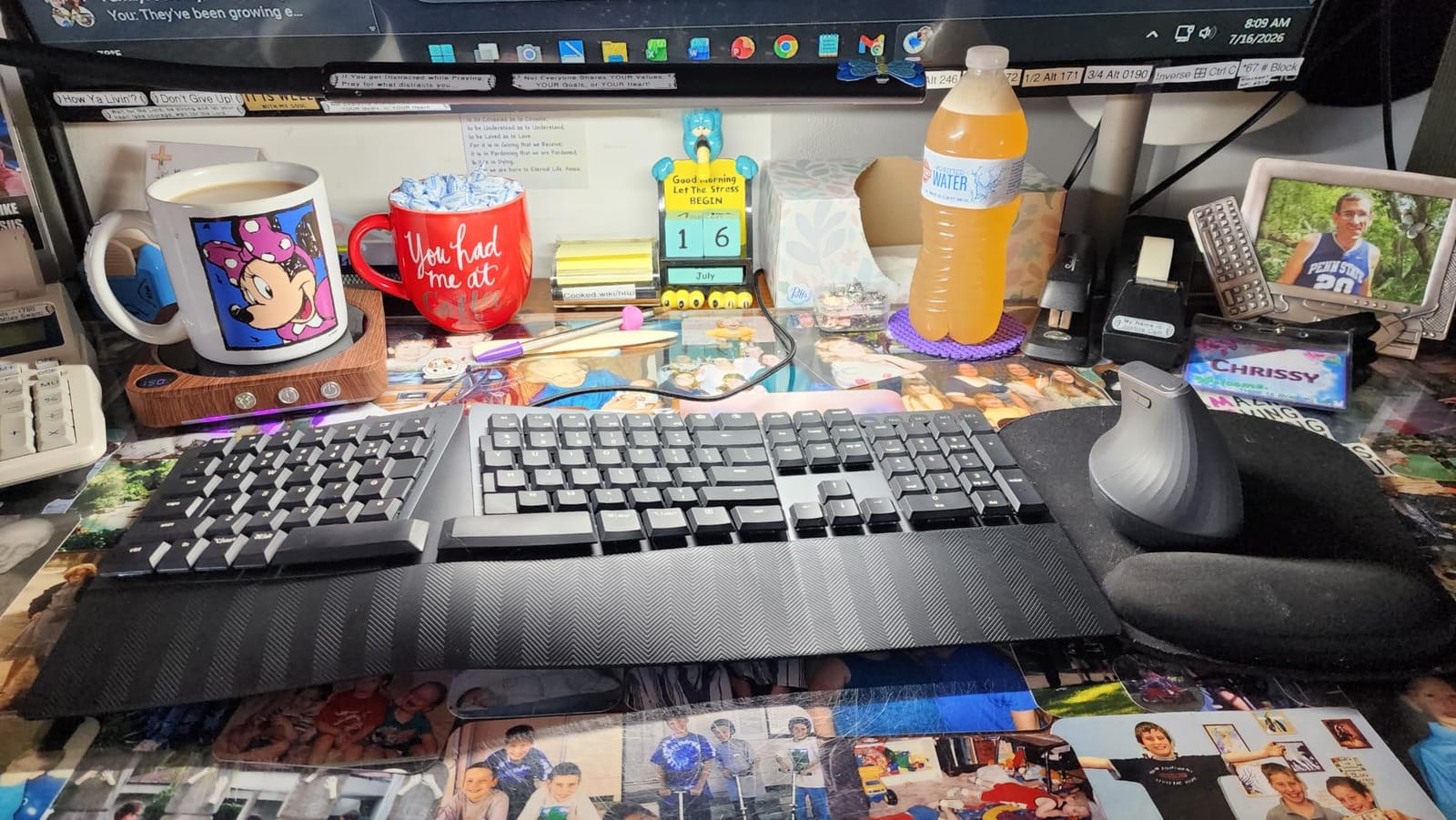
How the 57-degree hold holds up at hour eight
It does. The forearm pronation that causes the late-afternoon tightness simply is not there, because your ulna stays roughly aligned with your hand rather than rotated 90 degrees. The trade-off is that your thumb rests on top instead of to the side, which means dragging operations and long click-and-drag selections feel less natural than on a flat mouse.
The one real grip complaint across reviews is size. If your hand measures under 7.5 inches, the chassis overhangs your fingers and the thumb rest sits further forward than you want.
Connectivity, battery and desk logistics
Battery life is rated at four months on a charge, and the included USB-C cable works while the mouse is in use, so there is no downtime at your desk. It pairs with Windows, macOS, Linux, Chrome OS, iPadOS and Android, and the range is 10 meters.
One gap for travel and hot-desking: unlike several picks below, the MX Vertical has no built-in storage for its receiver. If you carry it between desks, keep the dongle in a laptop sleeve.
2. Logitech Lift Vertical – Best for Small Hands
Logitech Lift Vertical Ergonomic Wireless Mouse – Graphite
Sized for small-to-medium hands
Silent clicks
4000 DPI
24-month AA battery
125 g
Pros
- Purpose-built sizing where the MX Vertical feels oversized
- Whisper-quiet clicks for shared offices and libraries
- SmartWheel switches between smooth and ratcheted scrolling
- Up to 24 months on one AA battery
- Ergo-certified with easy-to-reach programmable buttons
Cons
- Smaller chassis cramps users with large hands
- Not a three-machine replacement for the MX Vertical setup
- Logi Options+ needed for button customization
Lift is the same 57-degree idea as the MX Vertical in a noticeably smaller body, and that is the whole point. It measures 4.3 by 2.7 inches and weighs 125 grams, so your fingers wrap the front rather than dangling past it. If the MX Vertical felt like a car you had to climb into, this is the version that fits.
Six buttons instead of four, and the two extra sit under your index and middle fingers where you can hit them without moving your wrist. Per-app profiles live in Logi Options+, which means a CAD tool, a spreadsheet and a code editor can each carry their own button map.
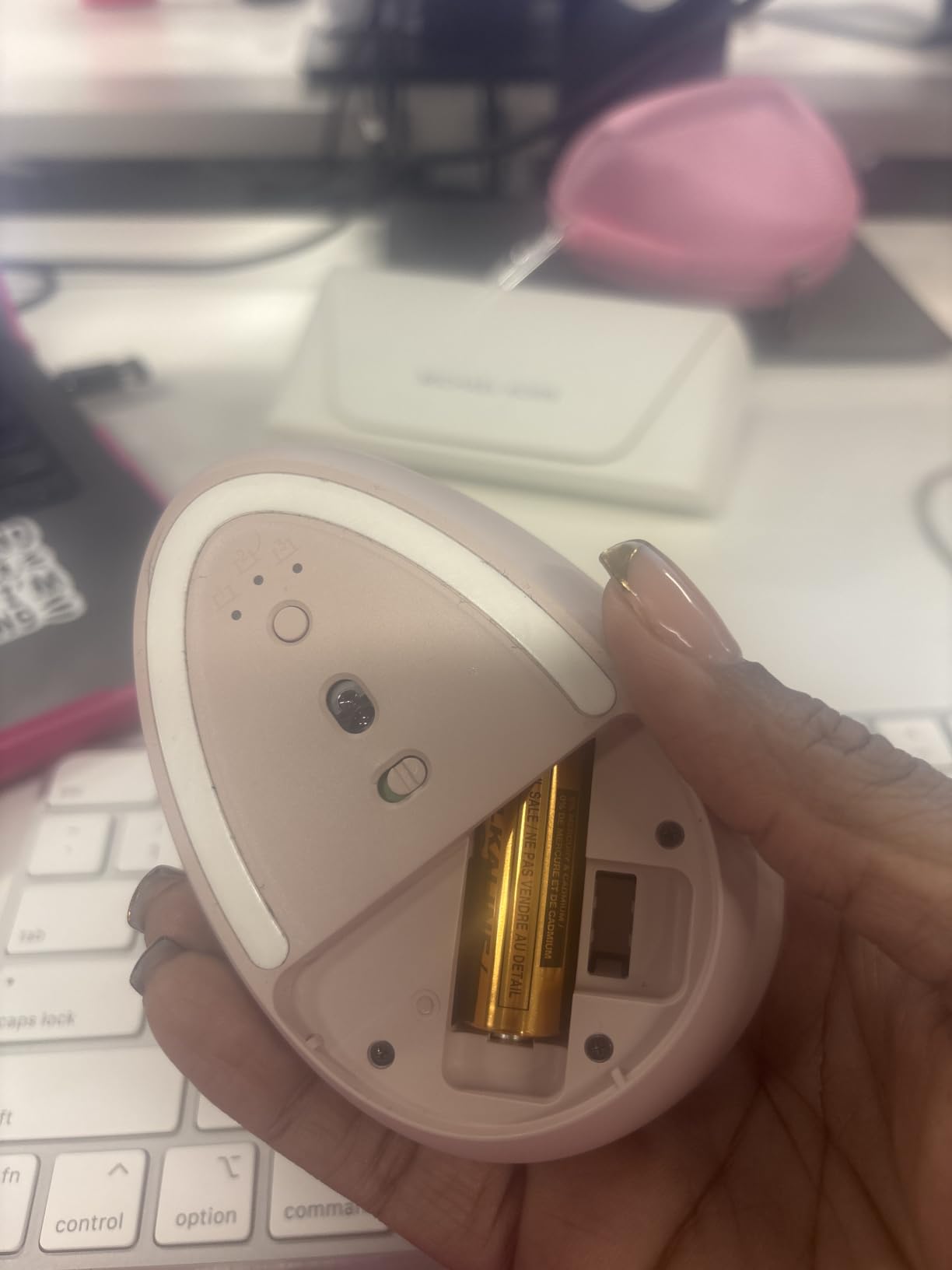
The SmartWheel is the quiet hero. Press hard and it ratchets for precise line-by-line work in code; press soft and it spins fast through a long document. Combined with silent clicks, it makes Lift the mouse we would hand to someone in a shared office who cannot stand click noise.
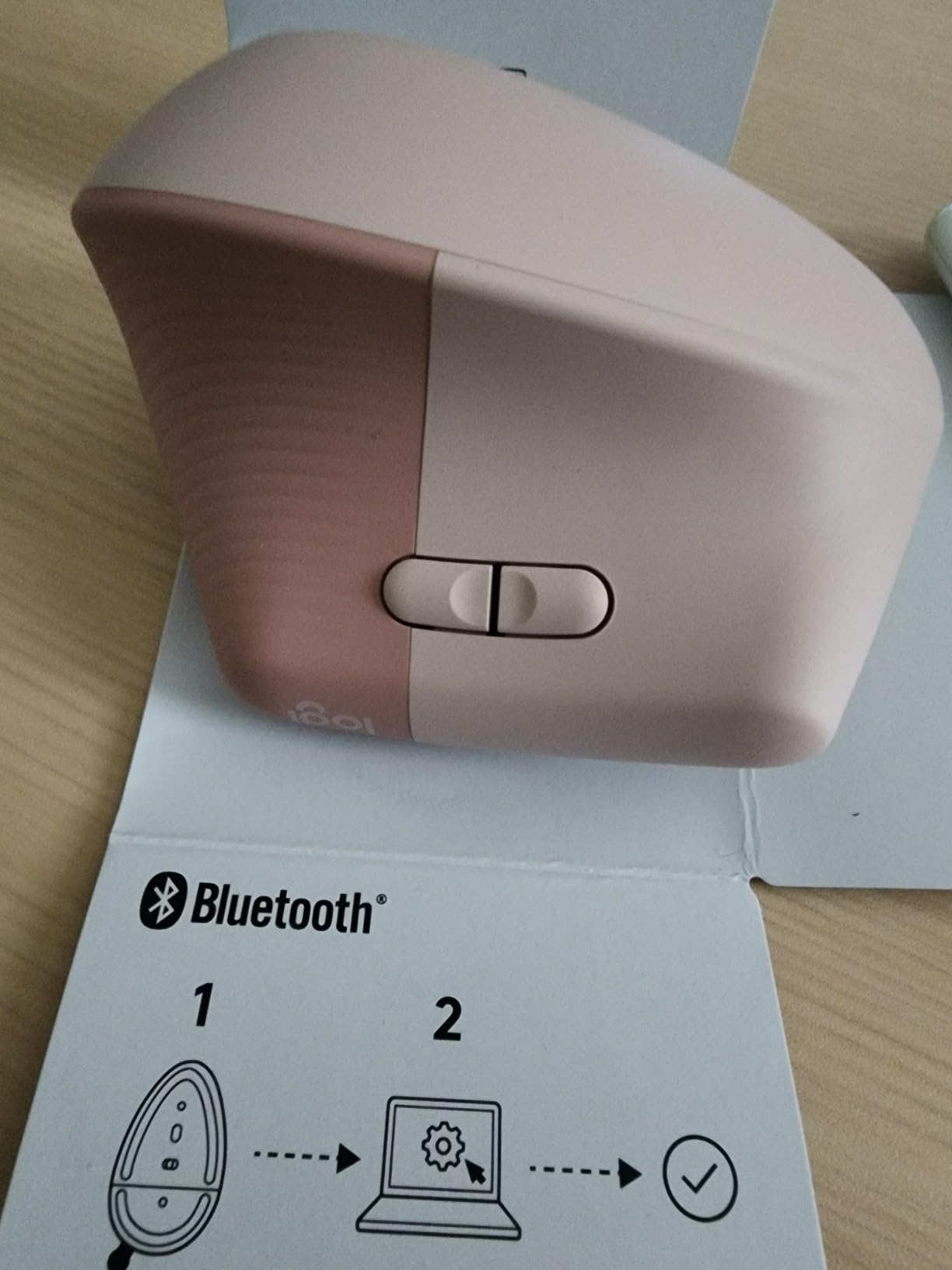
Fit for smaller hands and shared desks
That sizing is confirmed by the reviews, which describe the snug thumb rest holding up through long sessions and the softly textured grip staying comfortable. It runs on Windows, macOS, iPadOS, Chrome OS and Linux, and the Graphite version uses 70 percent post-consumer recycled plastic.
The trade-off runs the obvious way: if your hand is large, the grip becomes cramped rather than snug, and the reach to those side buttons tightens up. That complaint appears repeatedly in reviews from large-handed buyers.
Battery, buttons and software
A single AA cell is rated at up to 24 months, which for desk work means you will likely replace the battery after the mouse has been retired. There is no rechargeable cell and no charging cable in the box, so zero downtime is the benefit and zero flexibility is the cost.
Connectivity is Bluetooth Low Energy or the included Logi Bolt receiver, with 10 meter range. Software is optional for basic work but required if you want the programmable buttons doing anything beyond their defaults.
3. TECKNET Ergonomic Vertical Mouse – Most Versatile
TECKNET Ergonomic Mouse, 4800 DPI Wireless Bluetooth Vertical, 3-Device
4800 DPI maximum
6 DPI levels
3 paired devices
2 x AAA
4.32 oz
Pros
- Six DPI levels reaching 4800 with LED level indication
- Switches between three machines with one bottom-button press
- Near-silent main clicks with a three-year warranty
- Lightweight shell that tracks on fabric and desks
- Bluetooth pairing reported as instant including on MacBooks
Cons
- Plasticky build that can feel slippery rather than grippy
- Two AAA batteries add weight and are not included
- Side buttons cannot be remapped on macOS
The TECKNET TK-MS027 is the rare budget vertical mouse that does not feel like a compromise on the parts that matter. It carries six DPI levels up to 4800, which beats the 4000 ceiling on both Logitech picks and the 1600 on two others in this list. The LED flashes a different number of times for each level, so you can check your sensitivity without guessing.
It weighs just 4.32 ounces and pairs two Bluetooth channels plus a 2.4GHz receiver, so three machines can stay paired at once. The 2.4GHz dongle tucks into the base of the mouse, which is the kind of small design decision that saves you a lost receiver.
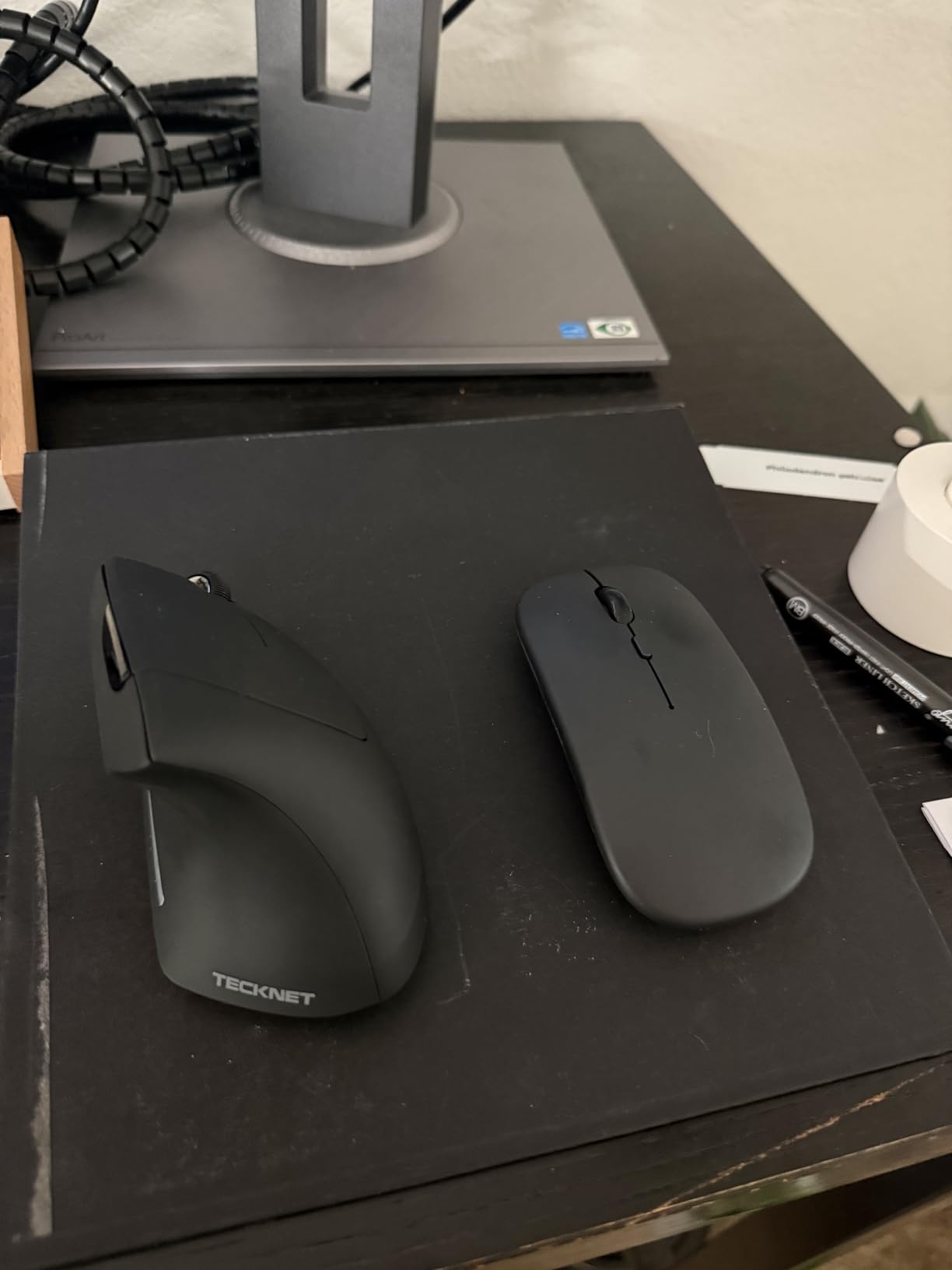
Across thousands of reviews the recurring theme is wrist and shoulder relief arriving quickly for people who had been on flat mice for years. For a first vertical mouse, that early comfort is what matters, and this one delivers it without any setup.
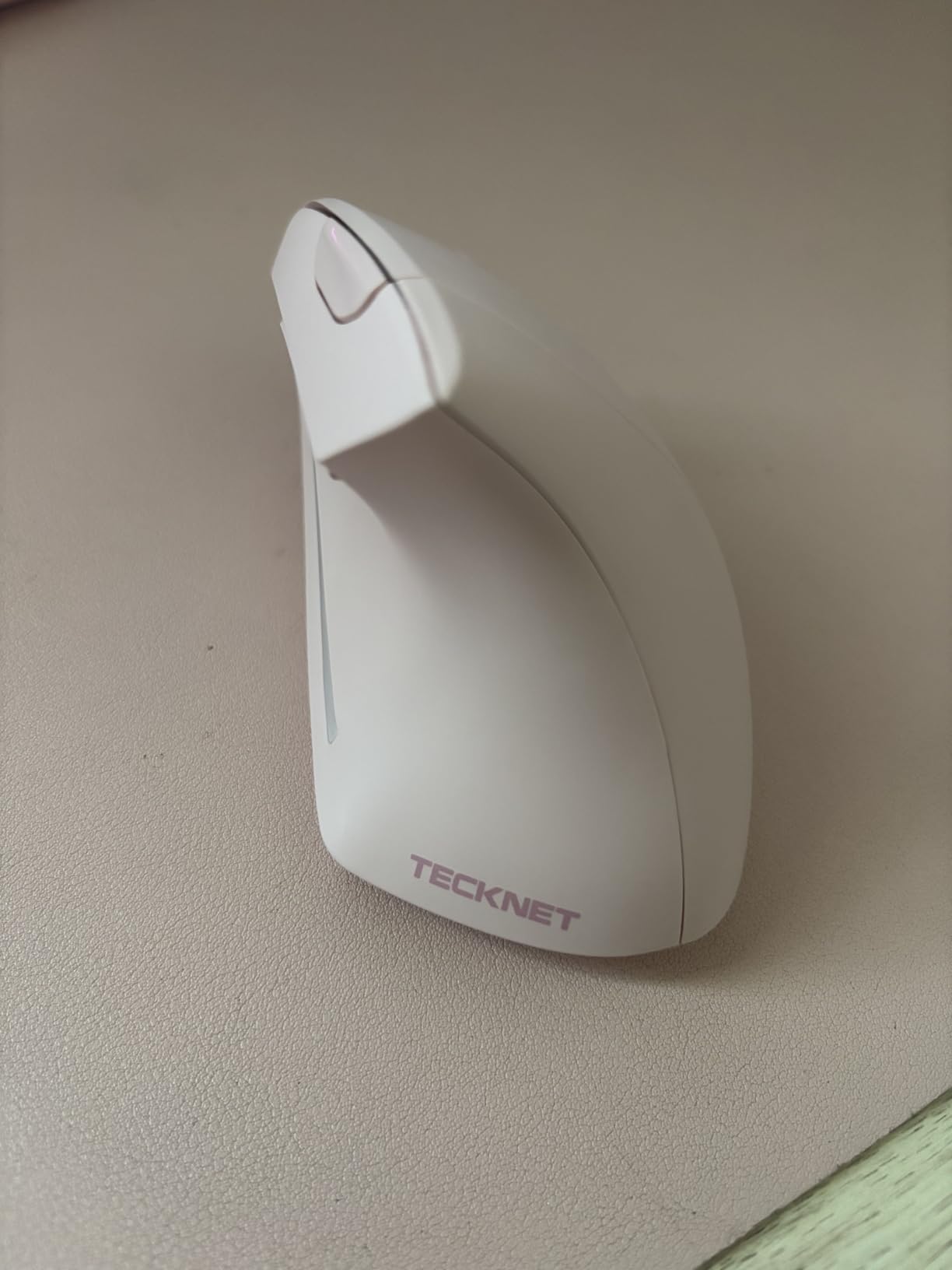
How a budget vertical mouse handles a full shift
Comfort holds up well through a full workday because the shell is light and the shape is a near-vertical palm angle rather than a shallow tilt. The 4.74 by 2.49 inch footprint is compact, which helps on a small desk or a tray. Auto deep-sleep after 10 to 30 minutes of inactivity handles the lunch break, and an LED warns you before the batteries die.
What you give up is texture. The ABS shell is smooth, and reviewers describe it as light and sometimes slippery rather than grippy, so people who lift the mouse often to reposition it may feel it slide.
What the plastic shell gives up
Two things. First, durability reports include a battery compartment door that cracked after drops, which is a real risk if your mouse lives at the edge of a shared desk. Second, the scroll wheel can feel gummy and less fluid than the premium alternatives, which matters if you scroll documents all day.
The main clicks are near-silent, but the function buttons are not, so it will not fully solve a noise-sensitive office. It runs on two AAA cells that are not included, and warranty coverage runs 36 months with registration, the longest term in this roundup.
4. Lekvey Rechargeable Vertical Mouse – Best for Medium to Large Hands
Lekvey Ergonomic Mouse, Rechargeable Vertical Wireless Mouse, Comfort Grip
60-degree posture
Built-in rechargeable battery
150 hours per charge
3 DPI levels
36-month warranty
Pros
- Wide 5 by 3 inch body that fills a large palm
- Rechargeable cell gives roughly 150 hours per charge
- Works out of the box on Windows Mac and Linux
- Back and forward page buttons beside the thumb
- 36-month manufacturer warranty
Cons
- 1600 DPI ceiling is low next to rivals
- No Bluetooth so only one machine at a time
- Some reports of the rechargeable cell losing capacity
The Lekvey is the most-reviewed product in this entire roundup by a wide margin, and the reviews explain why: people buy it as a first move away from a flat mouse and find the relief obvious within a few days. The 60-degree posture is steeper than the 57-degree standard, and the 5 by 3 inch body is recommended for medium to large hands.
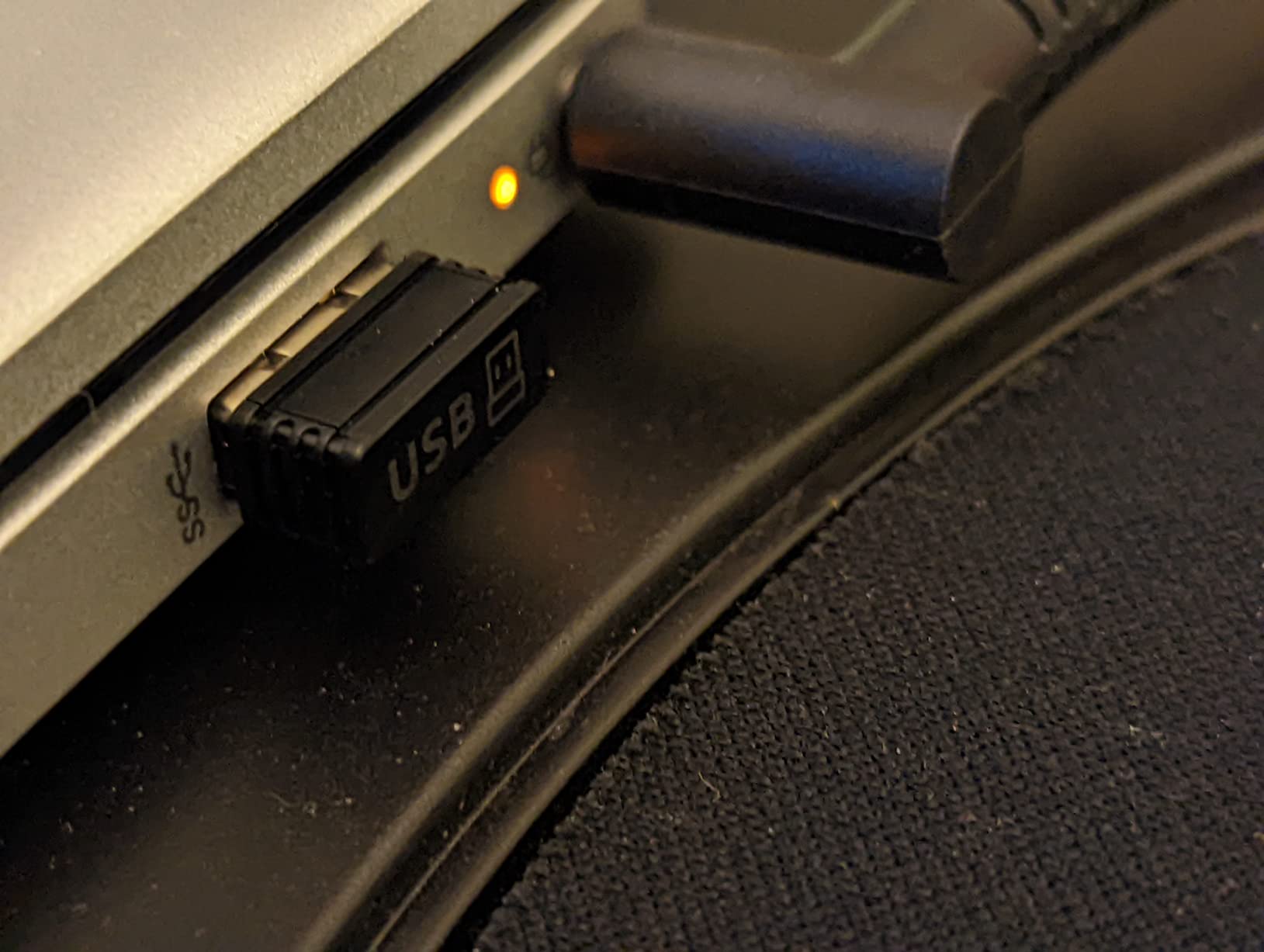
It is also the simplest setup here. The 2.4GHz receiver lives in the base, the cable included is USB-A to USB-C, and there is nothing to install on Windows, Mac or Linux. No Bluetooth, no driver, no pairing screen.
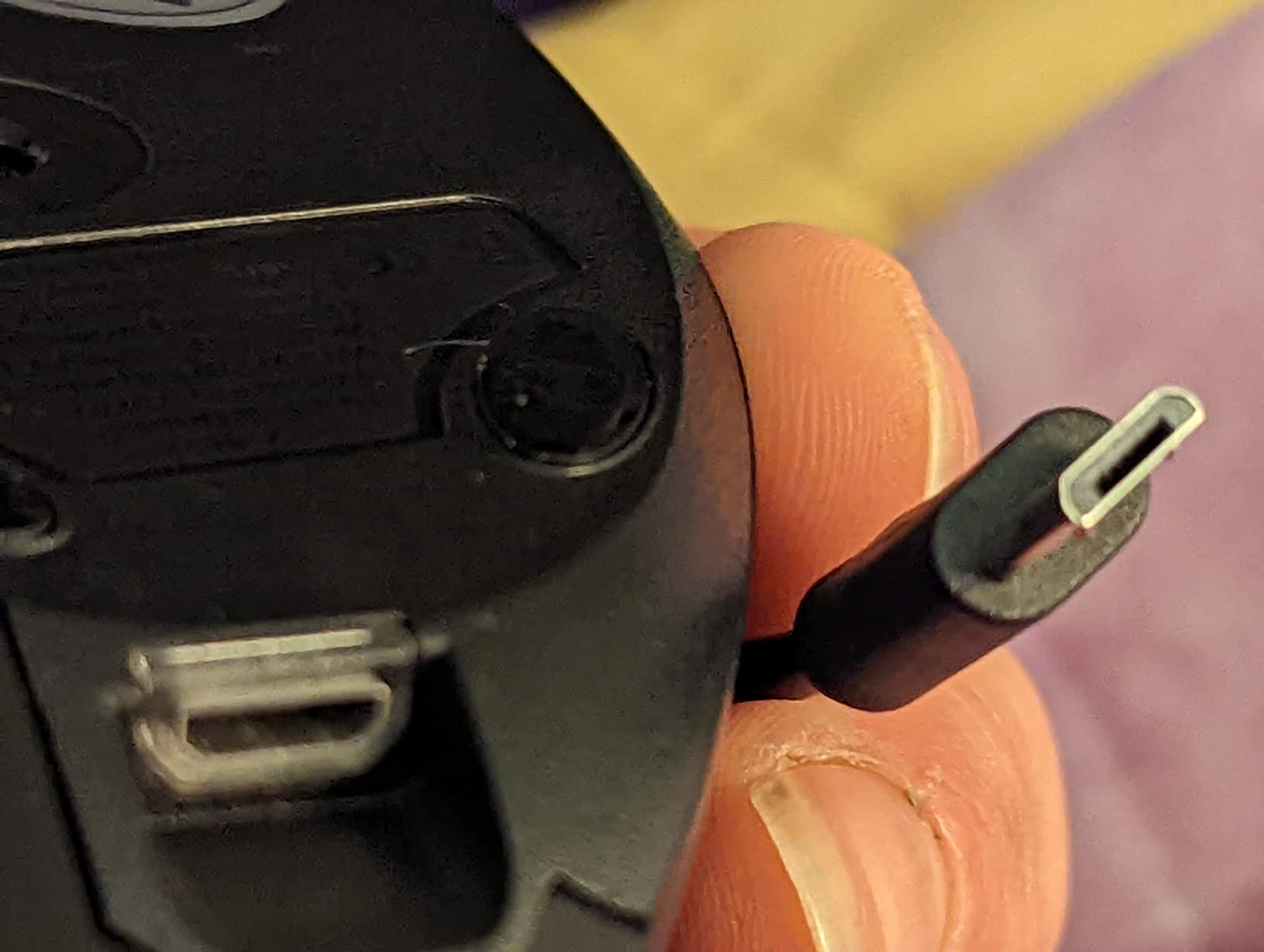
The 150 hours per charge is roughly three working months of continuous use, and because the battery is built in there are no disposables to keep in a drawer. A steel scroll wheel and page navigation buttons on the thumb side cover the day-to-day shortcuts.
A 60-degree shape with a deeper palm fill
The extra few degrees of tilt is the reason this mouse suits bigger hands. Your palm sits deeper into the shell, so hour five does not produce the creeping forearm fatigue that comes from a mouse your hand simply outgrows. The break-in period is usually quoted at three to five days, which is shorter than most vertical mice.
The tradeoff is that it is not a precision tool. With three DPI levels topping out at 1600, fast flick movements across a wide display take more hand travel than they would on a 4000 DPI sensor.
Charging, sensor ceiling and single-device limits
One receiver means one computer. If you hot-desk or carry between a work laptop and a personal machine, this one cannot follow you across both without replugging. There is also no wired fallback mode once the cell runs down, so a dead battery ends your workday.
Long-term reviews do include some reports of the rechargeable cell holding less charge after extended use, which is worth knowing if you plan to keep this for several years. The 36-month warranty covers most of that window.
5. Anker USB Wired Vertical Mouse – Best for Fixed Desks
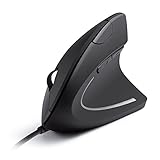
Anker USB Wired Vertical Mouse, Ergonomic Mouse for Computer and Laptops
Wired USB with a 4.9 ft cable
1000/1600 DPI optical
Forward and back buttons
5.3 oz
18-month warranty
Pros
- Nothing to charge and no batteries to swap mid-day
- Wired connection removes dropouts and latency entirely
- Light 3.36 oz body with a compact 4.72 inch footprint
- Works with any USB port on any machine
Cons
- Cord restricts how far you can move from the machine
- 1600 DPI ceiling with no DPI switch button
- No multi-device support or scroll wheel customization
Not everyone needs wireless, and the Anker AK-98 proves it. There is no battery, no charging cable, no receiver and no pairing step. You plug in a 1.5 meter USB cable and the handshake-grip shape does its work. For a desk that never moves, that removes every failure point a wireless mouse has.
It weighs 3.36 ounces, which makes it one of the lightest picks here, and the 4.72 by 2.47 inch body suits small desks. Forward and back navigation buttons sit under your index finger for browser work.
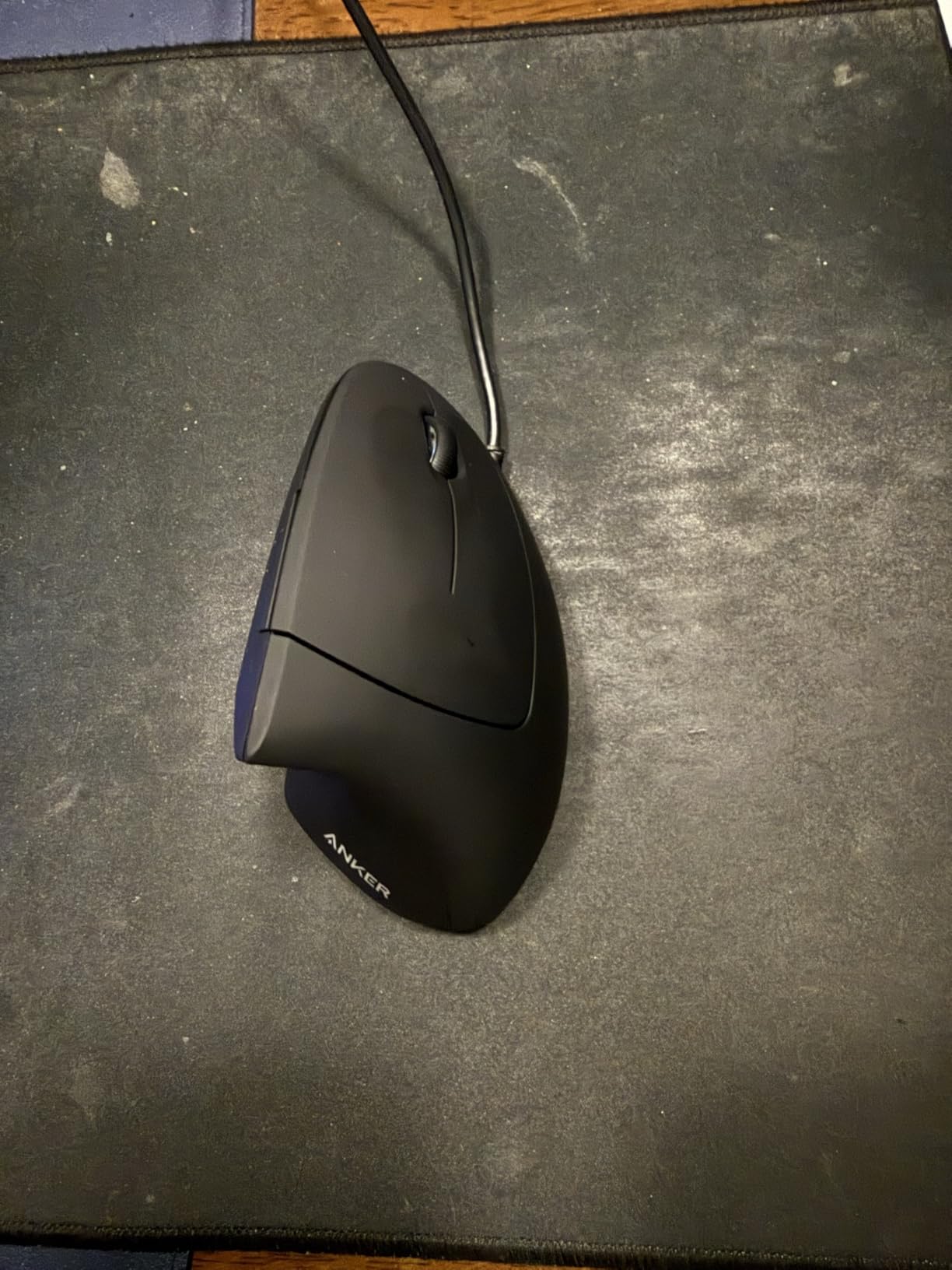
Buyers consistently treat this as the dependable, no-fuss option. The ergonomic benefit shows up without the awkward adjustment period that some wireless vertical mice cause, and there is no charging routine to forget when you are rushing out the door.
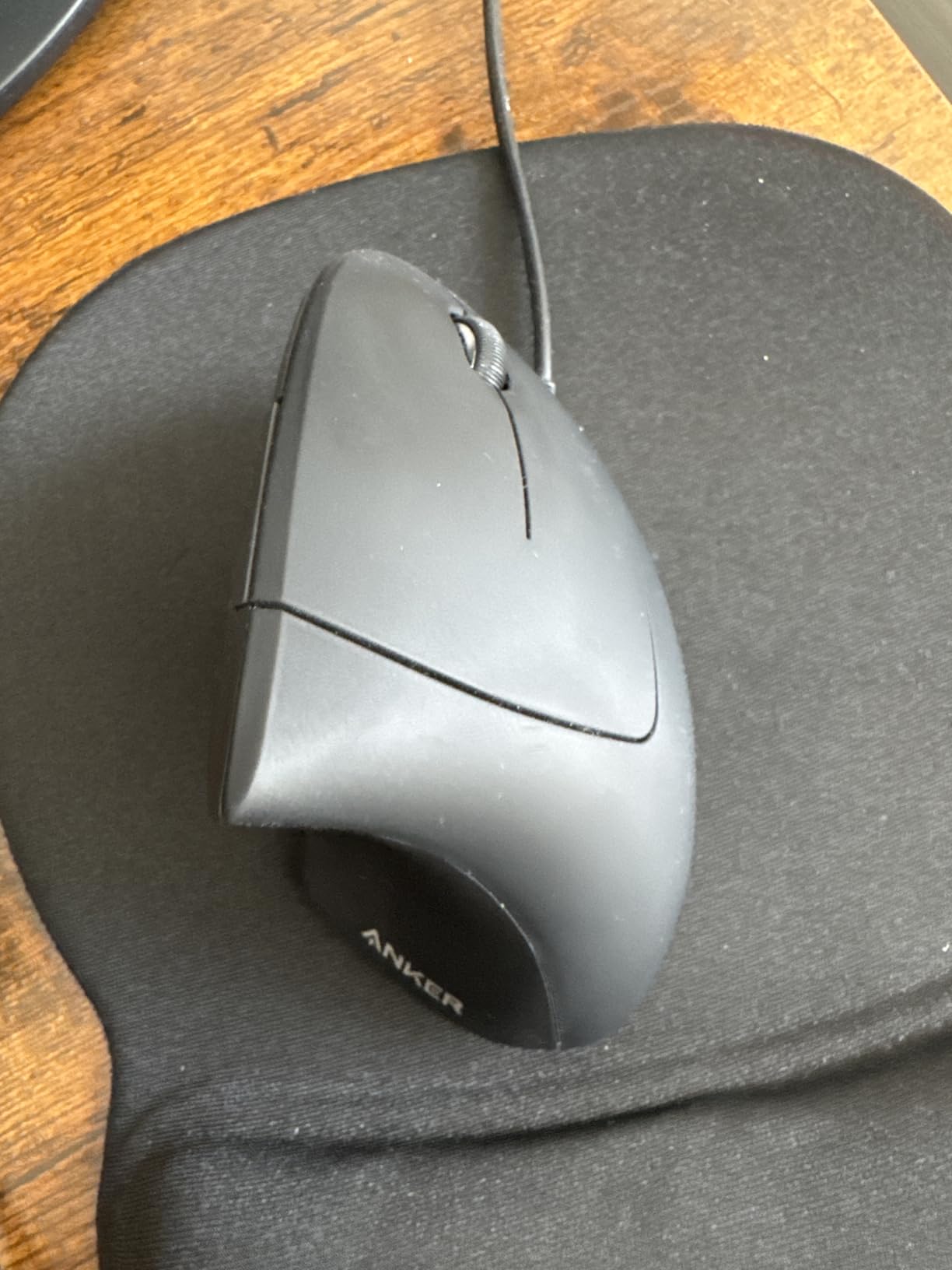
Why a wired mouse still wins some setups
Three reasons come up repeatedly. Signal dropouts and wireless latency do not exist on a cable, which matters if you are working on a large display or a shared office with several Wi-Fi networks. Latency-sensitive applications behave predictably. And there is no battery to degrade over years of daily use.
Many people who like vertical mice also keep a separate gaming mouse, so a cable-bound office mouse and a wireless gaming mouse is a normal pairing rather than a compromise.
Where the cable and sensor limit you
The 4.9 foot cable sets how far you can travel from the machine, so it does not work on a couch, a lectern or a shared hot-desk surface with an awkward distance to the port. There is also no DPI switch button and a 1600 DPI ceiling, which means no on-the-fly sensitivity change.
Listed compatibility covers Linux and Windows 10, and the plastic build is basic next to the Logitech and Nulea shells. The 18-month warranty is the shortest here after the one-year terms, which is a fair trade for a device with no battery to fail.
6. ProtoArc EM11 NL – Best Value for Comfort
ProtoArc EM11 NL Wireless Ergonomic Vertical Mouse, Rechargeable, Black
Silent main clicks
Rechargeable 500mAh
3 devices
2400 DPI
handles under 7.5 inch
Pros
- Widely called the best comfort per unit spent among these picks
- Silent main clicks with buttons that need no software
- Battery lasts weeks to months at 8 hours a day
- Deep vertical angle that eases wrist strain quickly
- Dual Bluetooth plus 2.4G covers phones tablets and locked-down machines
Cons
- Scroll wheel can miss steps at fast scroll speeds
- Main button can unclick if held during a drag
- Shell feels slippery for some users and runs small for large hands
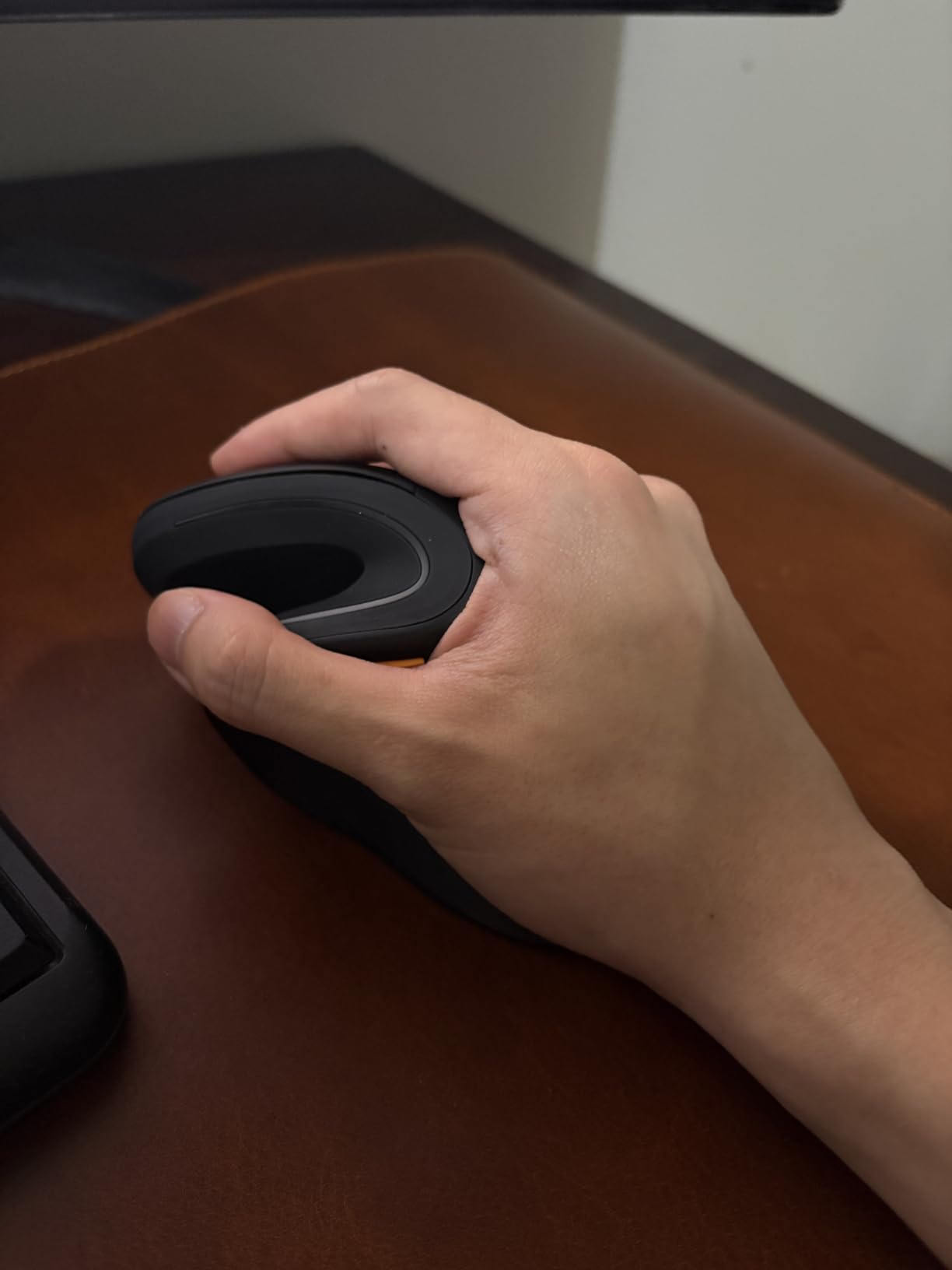
The ProtoArc EM11 NL is the mouse reviewers compare against the MX Vertical, and the recurring verdict is that it delivers most of the comfort at a fraction of the outlay. Several owners describe it as the replacement for a Logitech they had been using for years. The angle is deeper than most budget rivals, which is why wrist relief arrives quickly.
It is sized for hand lengths under 7.5 inches, so it belongs in the small-to-medium camp. Seven buttons including forward and back, silent main click switches, and 2400 DPI across three levels cover a normal workday without any software.
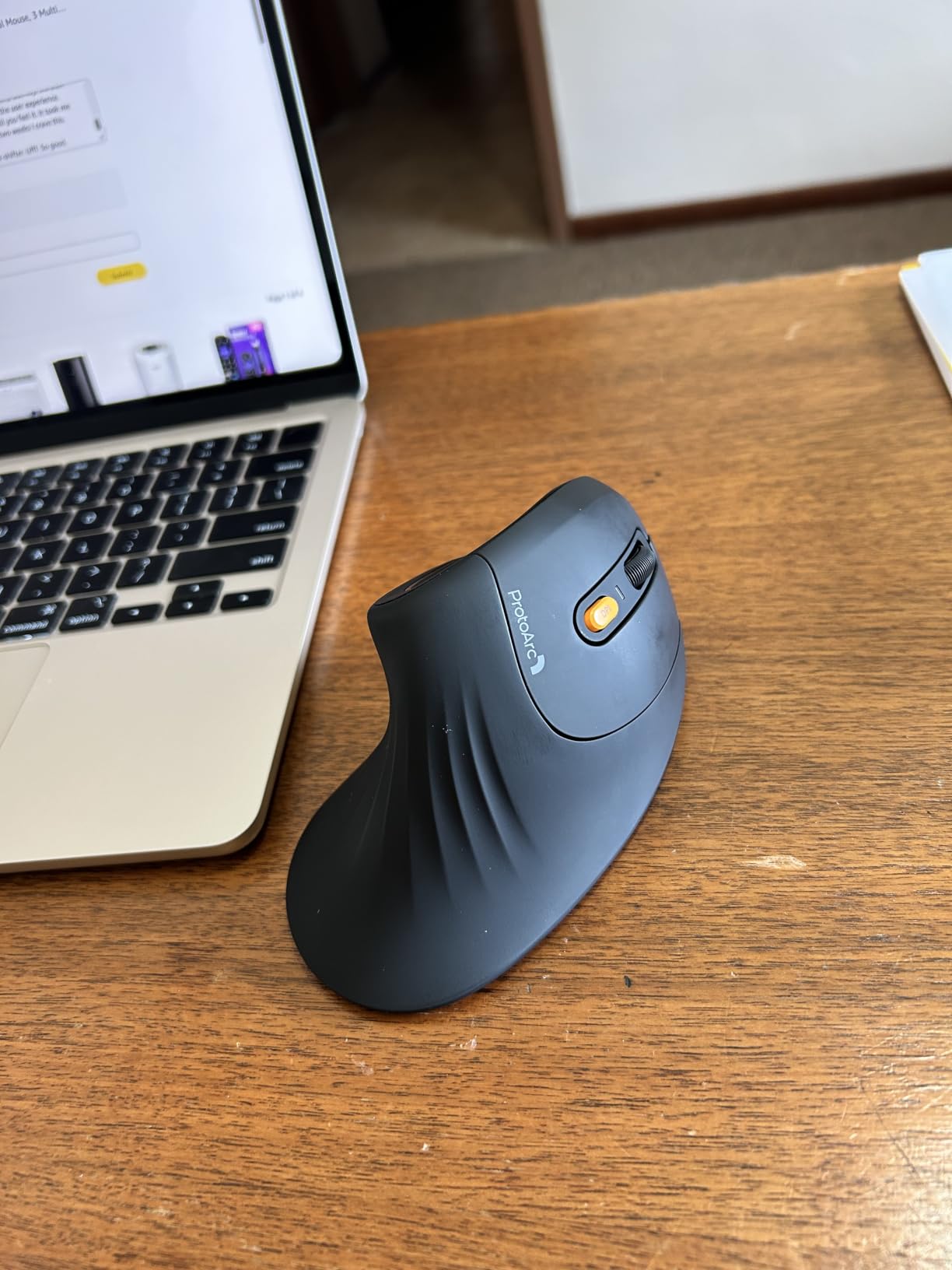
Battery is a 500mAh rechargeable cell giving roughly a month per charge, with a Type-C cable included. Dual Bluetooth channels plus a 2.4G receiver mean a work laptop, a personal laptop and a tablet can all stay paired, which is why it turns up so often in hot-desking discussions.
Comfort per unit of outlay, reviewed over long sessions
Through full workdays the grip holds, and the silent main clicks mean it disappears in an open office. The 250 gram listed weight and the 5.43 by 2.72 inch body give a stable base rather than a featherweight feel, which helps when you are doing precise selections late in the day.
The catch is hand size. Built for hands under 7.5 inches, users with large hands report the fit running short, and there is no adjustment for angle or size.
Scroll wheel and grip issues to know about
The most repeated criticism is the scroll wheel. It can miss steps during fast scrolling, and the auto-scroll function triggers too easily when pressed, which is annoying in long documents. A minority of reviews also report the main left button unclicking if you press and hold through a drag operation.
Navigation buttons do not work on macOS and there is no remapping software. The included USB-C cable charges only, and no USB-C receiver is included, so a modern Mac laptop without a USB-A port needs an adapter.
7. MEETION Ergonomic Wireless Vertical Mouse – Best for Left-Handed Users
MEETION Ergonomic Wireless Vertical Mouse, Rechargeable, Black
Left- and right-handed variants
60-degree shell
RGB lighting
4 DPI levels up to 3200
Pros
- One of the few vertical mice with genuine left-handed options
- Relieves wrist ache with pain reported gone after about a week
- RGB lighting with several effects and multiple colours
- USB-C rechargeable with roughly a month per charge
Cons
- Shallow angle leaves some long-day users with wrist ache
- Several reviews report the battery losing charge or dying within months
- Bluetooth mode can drop the connection
- Smooth shell gives less grip
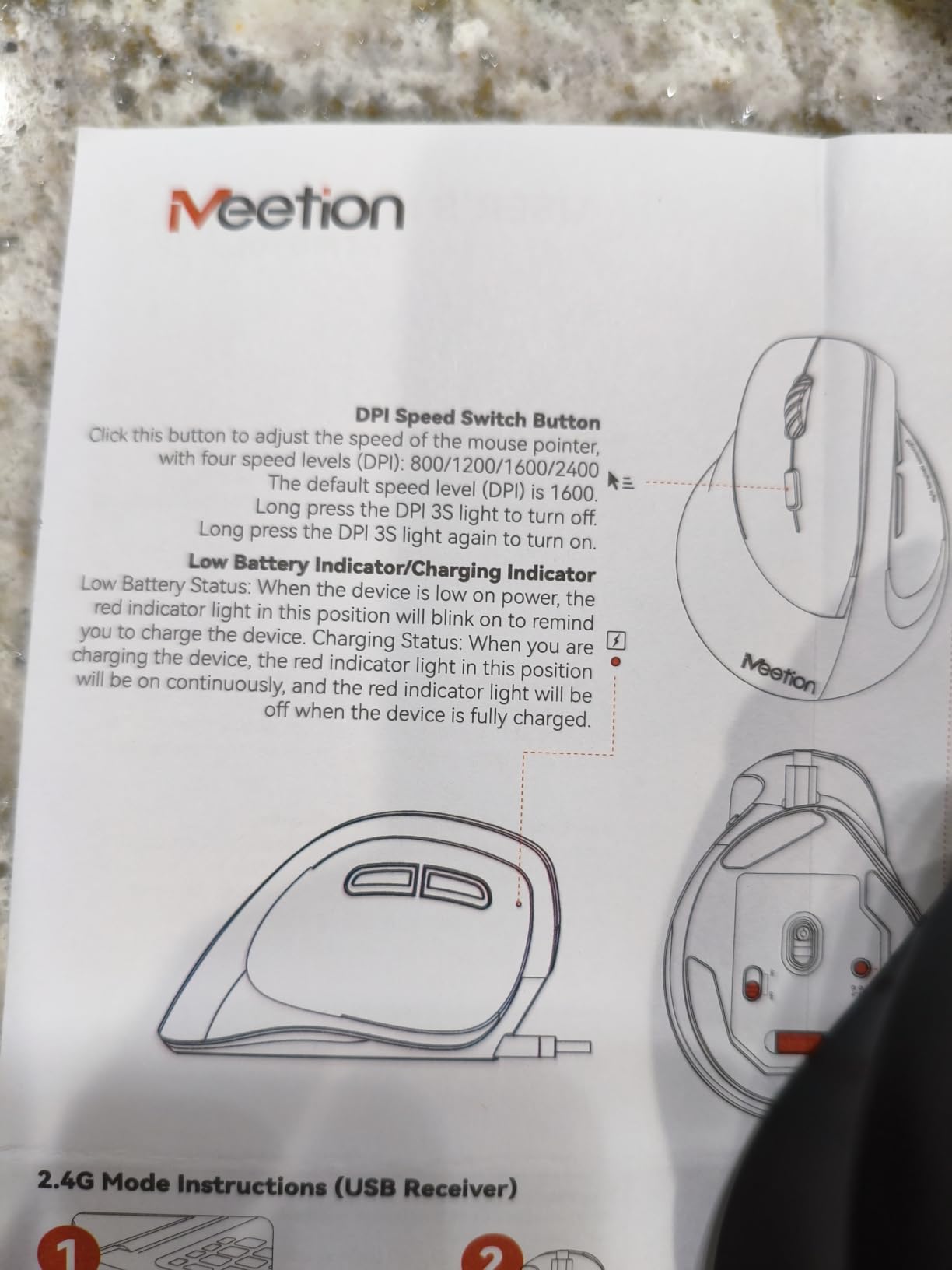
Left-handed buyers get a thin menu in this category, and the MEETION BTM010RR is one of the few real answers. Left- and right-handed versions come in several colours, which is unusual for a vertical mouse and matters when your only options are mirrored shapes from brands that never bothered.
The shell sits at a 60-degree angle with a deep thumb scoop and textured grip, rated at 4.3 inches long and 3.1 inches wide for medium to large hands. Four DPI levels reach 3200, the second highest ceiling in this roundup.
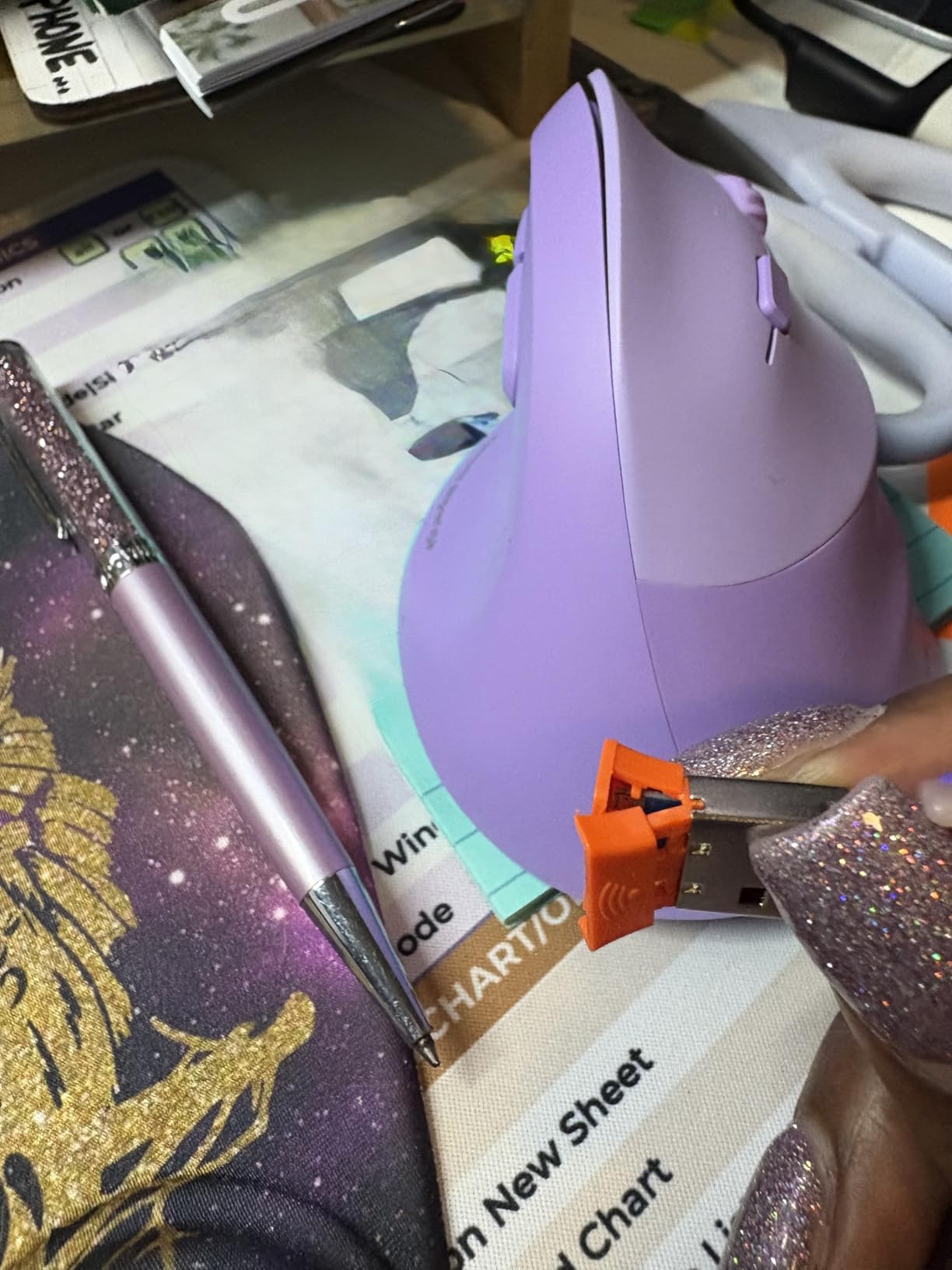
You get dual Bluetooth 5.0 and 3.0 plus 2.4G for three devices, and the RGB lighting can be switched off to stretch battery life. Some models can also be used while plugged in for charging.
The left-handed option most buyers never see
Search results for vertical mice skew heavily right-handed, and left-handed reviewers describe this mouse as the most comfortable ergonomic option available to them. The mirrored thumb scoop puts the thumb rest under your palm rather than hooking around the far edge, which removes the pressure point that causes discomfort in mirrored versions of other brands.
Comfort reports are strong, with users describing carpal tunnel and wrist ache largely gone after about a week. It also runs on Windows, Mac, Android and iOS.
Battery longevity and connection stability
This is where the reviews get cautious, and it is why the rating is the lowest in our set at 4.2. Several owners report the battery not holding charge, with mice failing after roughly six months. Bluetooth mode also draws complaints about dropped connections, and the smooth surface gives less grip if you lift the mouse often.
The forward and back buttons do not work in Safari. Buying here is a bet on the left-handed shape being worth the connectivity risk, which for most left-handed buyers it is.
8. seenda MOU-302 – Best for Video Calls and Media Work
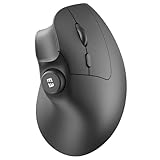
seenda MOU-302 Wireless Bluetooth Ergonomic Vertical Mouse with Volume Knob
Built-in volume knob with play and pause
Silent clicks
3 devices
500mAh USB-C rechargeable
Pros
- Volume knob adjusts call and media volume without leaving the desktop
- Highest average rating in this roundup at 4.6
- Silent clicks with a neutral grip for long office days
- Switches among three paired devices with one click
- Battery runs about two months per charge
- Works on Windows macOS iOS Android and Chrome OS
Cons
- 2400 DPI maximum which is modest for design work
- Light plastic shell with limited texture
- Volume knob takes the place of a programmable button
The seenda MOU-302 stands out for one feature no other pick here has: a physical volume knob with a play and pause button beside it. If your day is calls, stand-ups and reviewing media, you can mute yourself or drop a volume level without alt-tabbing or hunting for a keyboard corner.
Underneath that it is a competent everyday vertical mouse. Silent clicks, a neutral handshake grip and three paired devices through 2.4G plus two Bluetooth hosts. It works across Windows, macOS, iOS, Android and Chrome OS, which covers the widest platform list here.
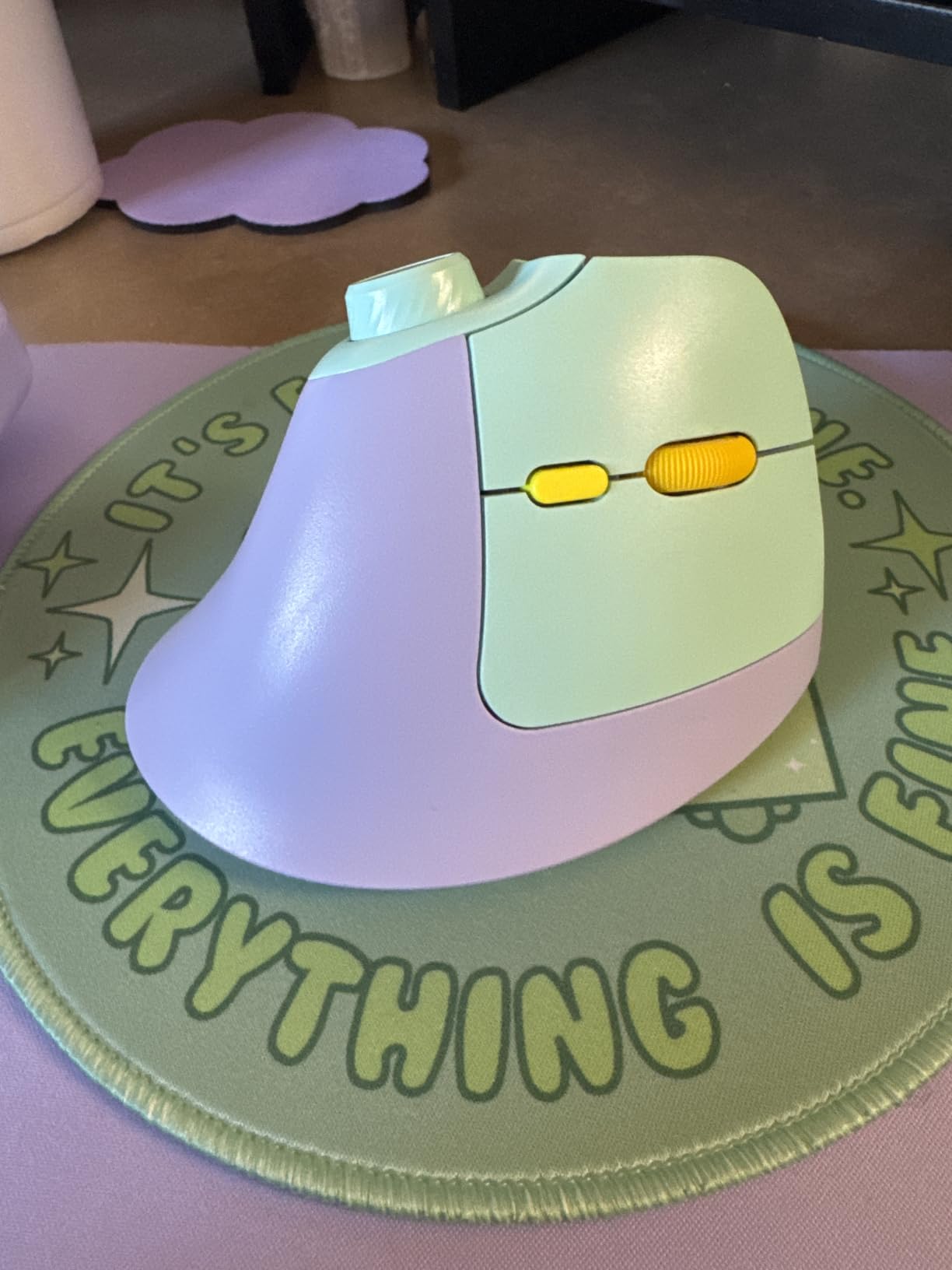
At 4.6 average with 80 percent five-star reviews, it carries the strongest rating of any product in this roundup across roughly 1700 ratings. The review distribution is unusually positive, with only 2 percent one-star.
Why the volume knob changes a workday
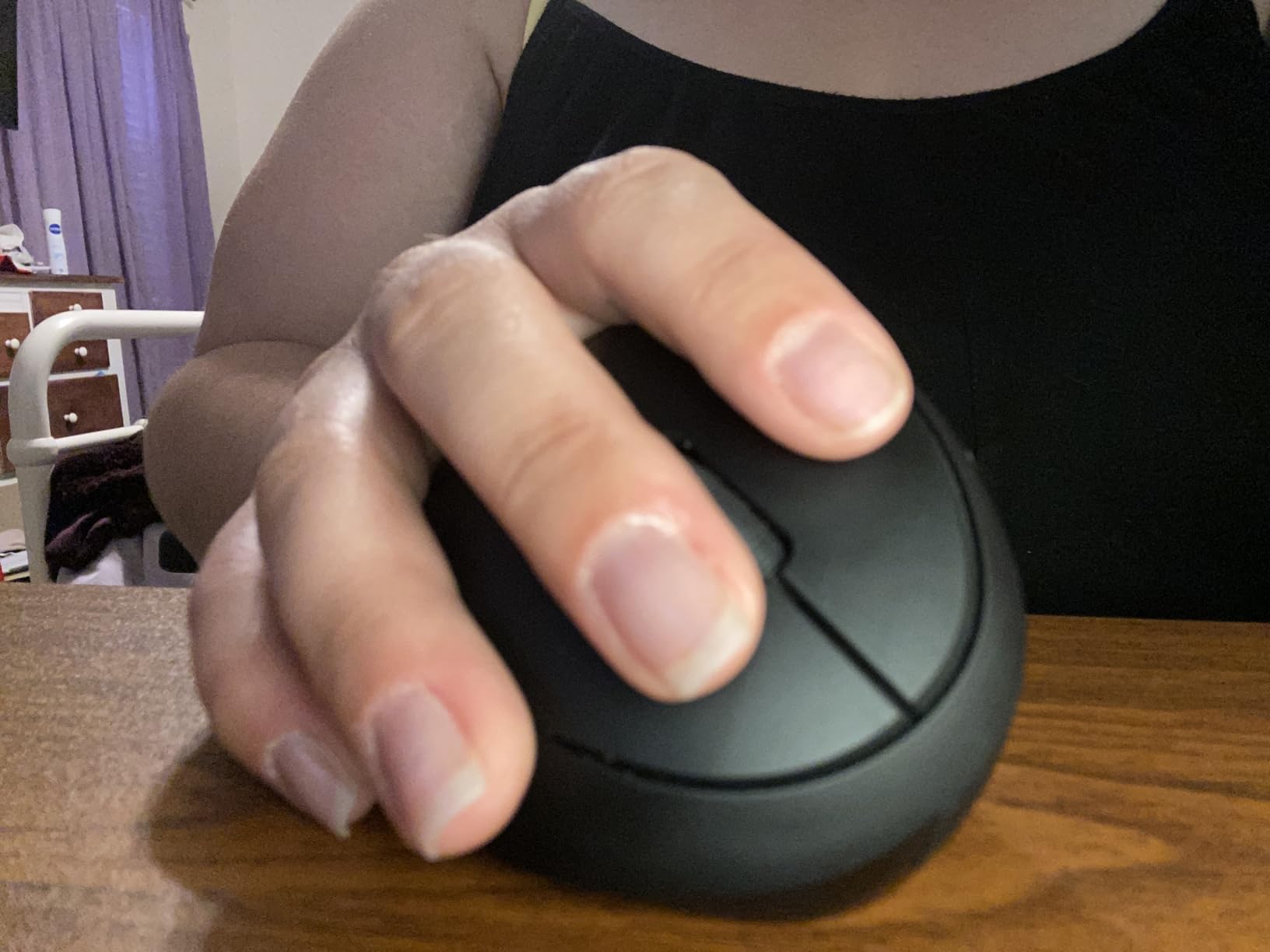
It removes one small but repeated motion. On a call-heavy day, that is dozens of reach-and-click gestures to the taskbar replaced with a small roll of the index finger. The knob is easy to find by touch, which matters in a meeting when you cannot look down.
The grip is genuinely neutral rather than steep, so it suits a broad range of hand sizes for an all-day desk mouse, and the silent main clicks keep it civil in shared spaces.
Grip texture and DPI ceiling
Two limits to know. The 2400 DPI ceiling is fine for office work but modest if you also do design or photo editing at the same desk. And the plastic shell is light with limited texture, so it is not the pick for someone who moves the mouse aggressively while typing.
Because the knob replaces a button, you have fewer remappable controls than the seven-button rivals. The 500mAh USB-C battery gives roughly two months per charge, and coverage runs two years.
9. Uineer 3-Device Vertical Mouse – Best for Ambient Lighting Setups
Uineer Vertical Ergonomic Mouse, Wireless Bluetooth Mouse, 3-Device
7-colour ambient light strip
3 synced devices
4 DPI levels to 2400
Rechargeable, about a month per charge
Pros
- Light strip along the thumb rest adds a modern desk look
- Three-device syncing moves easily between work and personal laptops
- Battery runs about a month and recharges in roughly 90 minutes
- Crisp clicks reviewers describe as responsive rather than mushy
Cons
- Very light build that will not suit weighted gaming mice use
- Smooth shell is hard to grip for larger hands
- Scroll wheel reported to squeak after a few weeks of heavy use
- Side buttons do not work on macOS
The Uineer A9-FTRB is the one in this roundup with a 7-colour ambient light strip running along the thumb rest. It is a small thing that changes how a desk looks at night, and if you sit in a dim room it gives you a visible edge to orient by without a desk lamp.
Underneath the lighting it is a tri-mode mouse: Bluetooth 5.0 and 4.0 plus 2.4G, syncing up to three devices simultaneously. Four DPI levels run 800, 1200, 1600 and 2400, and auto-sleep after 10 to 30 minutes of inactivity wakes on a single click of the DPI button.
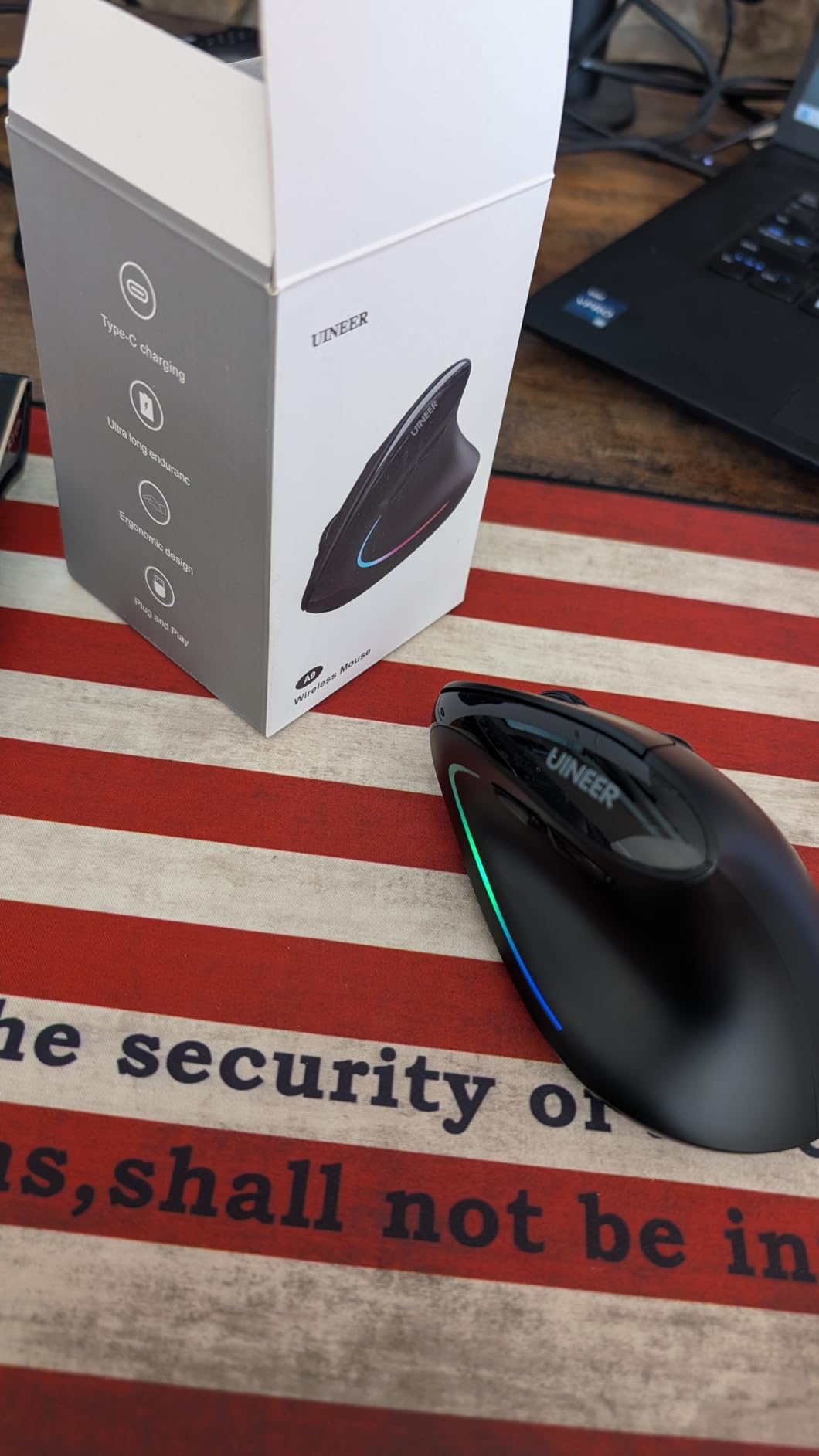
Reviewers report wrist pain and forearm fatigue reducing within days, which matches the pattern across this whole category. Battery life lands around a month per charge, and it works with Windows, Mac OS X, Linux, Android and iOS 13 or later.
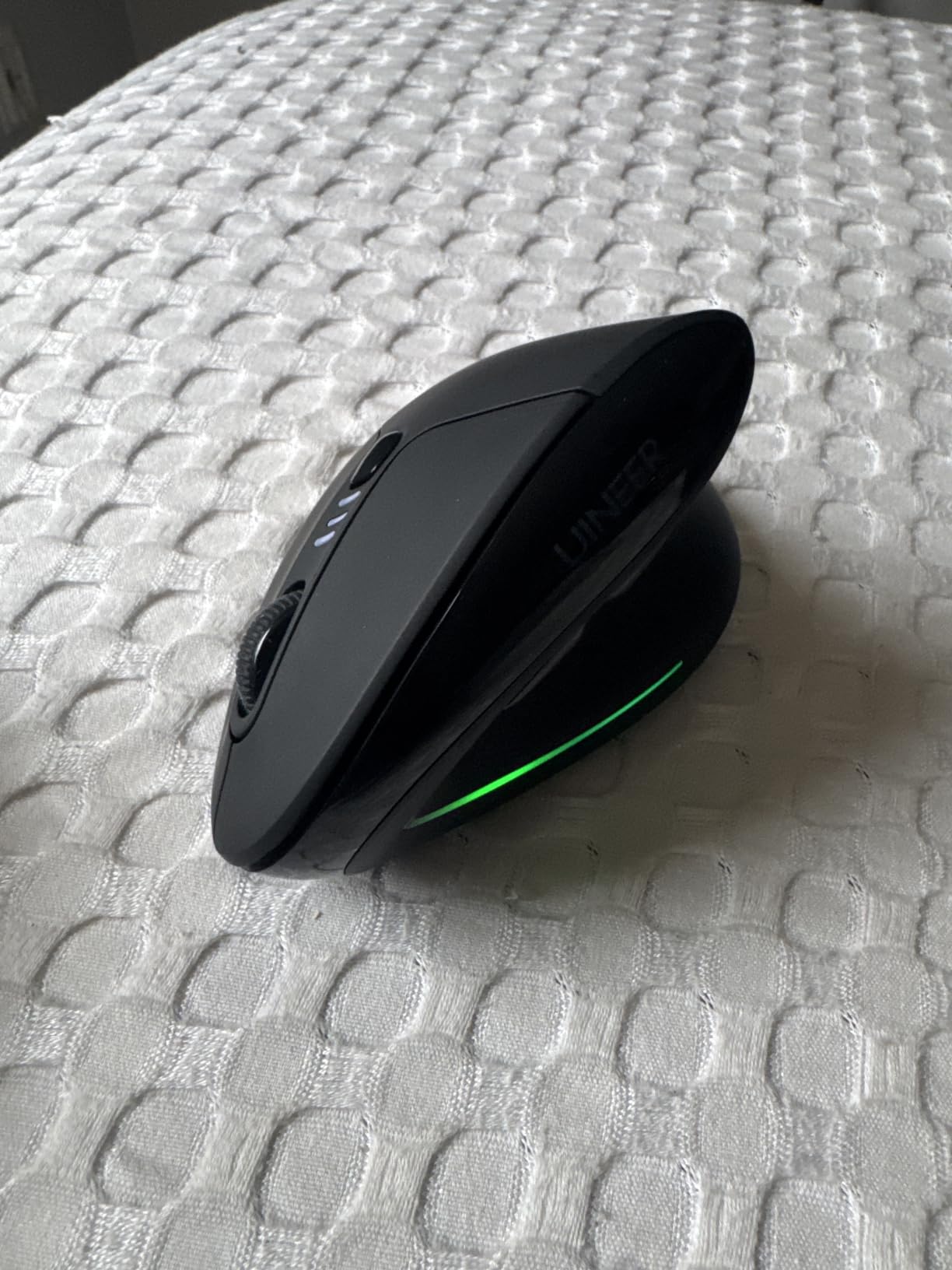
Light strip, three devices and a month of battery
For hybrid workers, the three-device syncing is the feature that earns its place. Moving between a work laptop, a home laptop and a tablet is a single button press rather than a pairing ritual. The low-battery LED warns you before power drops, which matters when the cell is measured in weeks rather than hours.
The main clicks are described as crisp and responsive rather than the mushy feel that silent switches sometimes bring, and the wrist relief shows up inside the first week for most owners.
Build feel and long-term durability
At 120 grams with a smooth shell, this is a light mouse, and light means less planted when you are making precise selections. Larger hands in particular report a slippery feel, and some users note the outer wrist edge rubbing the desk. The scroll wheel has also been reported to squeak after a few weeks of heavy use, which is the durability flag to watch.
Side buttons do not function on macOS, coverage runs 24 months, and the review base of roughly 750 ratings is the second thinnest here, so treat the long-term picture with more caution than the Logitech picks.
10. Nulea MD280 – Best for Hot-Desking
Nulea MD280 Ergonomic Vertical Wireless Mouse – Bluetooth & 2.4G Dual Mode, 4 Adjustable DPI 800/1200/1600/2400, Rechargeable, Silent Clicks, No Lag, 6 Buttons – Perfect for Laptop, Desktop Grey
Magnetic receiver storage in the base
Top-mounted device toggle
4 DPI levels
260-day standby battery
Pros
- Magnetic compartment on the underside actually stores the USB receiver
- Device toggle on top makes moving between machines fast
- Battery rated up to 260 days at two hours of daily use
- Whisper-quiet on every button including side and DPI buttons
- No battery compartment so the body stays light for long sessions
Cons
- Bulbous shape leaves the pinky dragging for some large hands
- Thicker than comparable vertical mice so small hands may find it bulky
- Scroll wheel can trigger the scroll-lock function
- Wake-up needs a button click rather than movement
The Nulea MD280 solves a problem most hot-deskers hit every week: the tiny USB receiver. A magnetic compartment on the underside holds it, so the dongle lives with the mouse instead of rattling around a laptop sleeve. Paired with the top-mounted device toggle, moving between two or three machines takes one press.
It is also the only pick here that is quiet on every button, including the side buttons and the DPI switch, which is more than you get from most mice that advertise silent clicking. Connectivity is Bluetooth plus 2.4G with 33 feet of range, and the included USB cable also allows wired use.
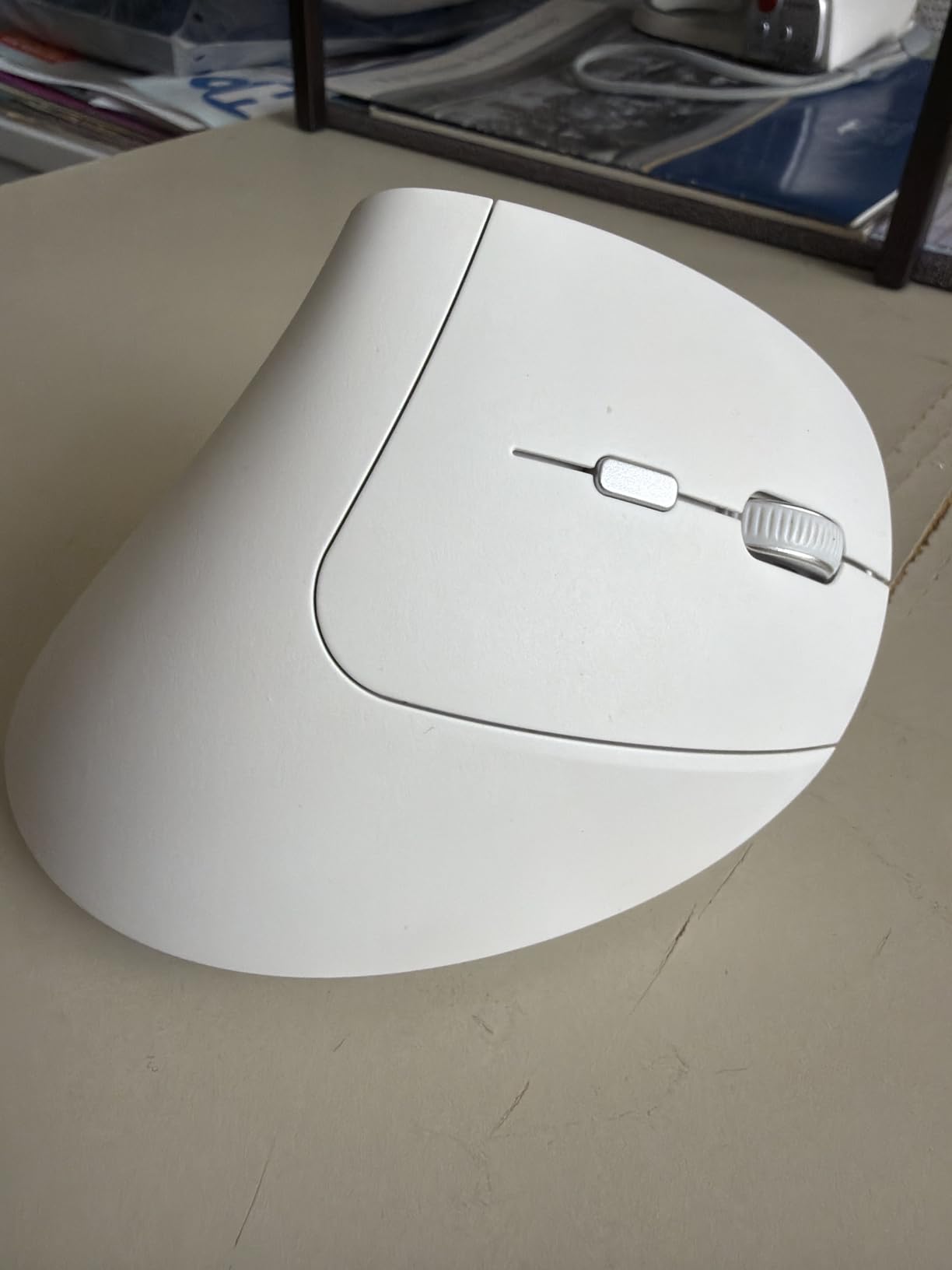
Battery is rated at up to 260 days at two hours of daily use, and because there is no battery compartment the body stays light. Heavy users report charging only twice across more than a year of daily work.
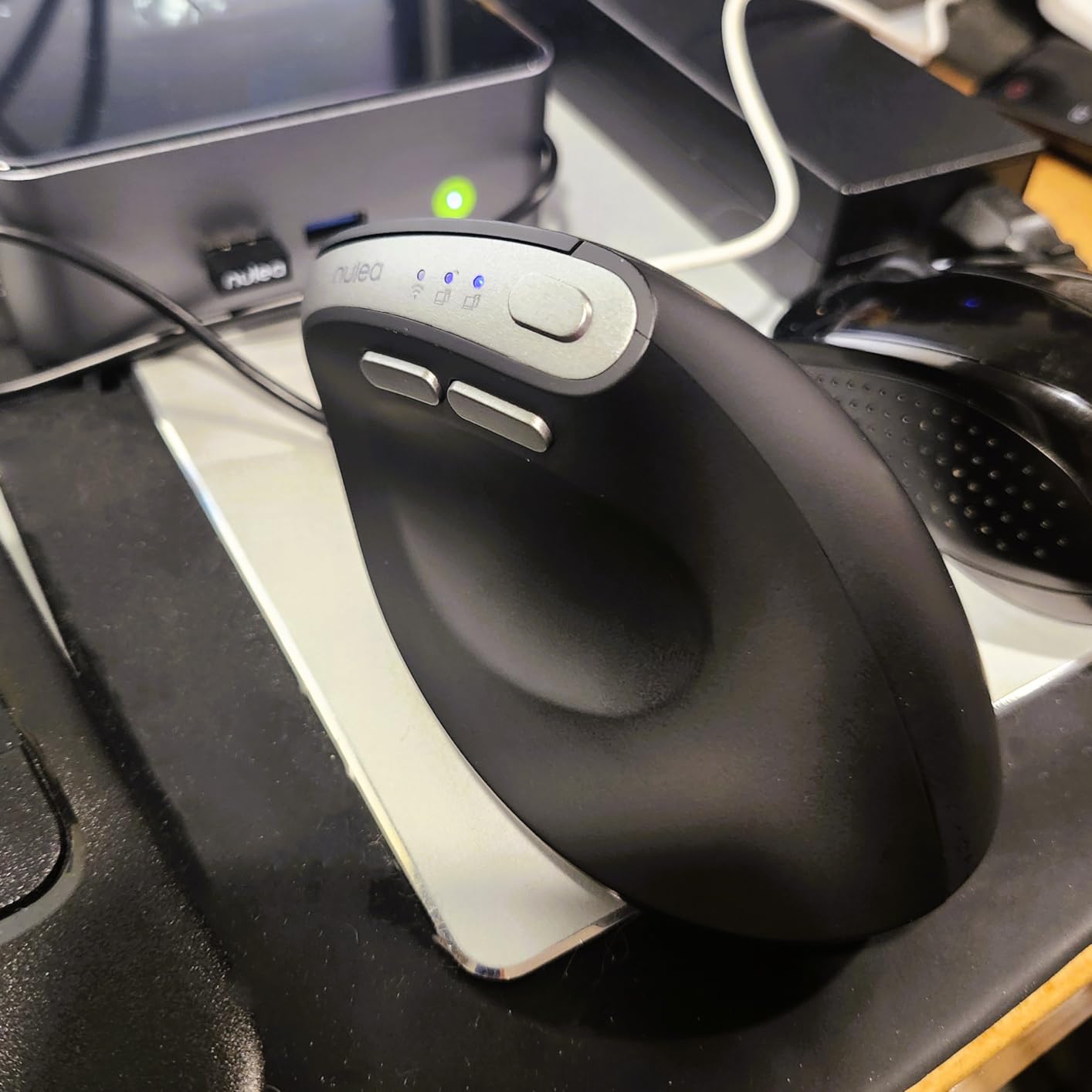
Receiver storage and top-mounted device toggle
The toggle position matters more than it sounds. On mice where device switching sits underneath, you have to lift the whole mouse to change machines. Here you roll your index finger across the top, which is what makes a fast workday switch between a docked laptop and a desktop setup.
The dedicated pinky rest spreads contact pressure across the outer edge, which is the specific design choice aimed at reducing wrist fatigue. Four DPI levels cover 800 to 2400, and it runs on Linux, Windows and macOS.
Pinky drag and shape concerns
The rounded, bulbous body is the reservation that appears most. Owners with large hands report the pinky hanging off the front edge and dragging on the desk after a few hours, and the shape is thick enough that small hands find it bulky. It also runs at only one year of warranty.
The scroll wheel can be touchy enough to trigger the scroll-lock function unintentionally, and the mouse needs a button click to wake rather than simply detecting movement. If your hand measures large, try it in person first.
How to Choose a Vertical Mouse That Survives a Full Workday
Measure your hand before you pick a shape
This matters more than any other factor, and it is where most returns come from. Measure from the tip of your middle finger to the crease of your wrist. Under 7.5 inches points you toward the Logitech Lift, the ProtoArc EM11 NL and the Uineer. Between 7.5 and 8.5 inches suits the Logitech MX Vertical and the Lekvey. Above that, look for a body with a long palm fill such as the Lekvey, and test the pinky does not hang off.
Remember that a vertical mouse positions your palm more vertically, so it often feels smaller than a flat mouse of the same length. When in doubt between two sizes, the smaller one usually wins.
Pick the angle that matches your wrist
The 57-degree handshake angle is the category standard and works for roughly seven out of ten people. A steeper 60-degree posture, found on the Lekvey and MEETION, helps people who still feel tension at the standard angle, while shallower designs suit smaller hands. Adjustable-angle models exist, but they cost more and are not in this budget roundup.
Choose connectivity for how you actually work
Ranked for a hot-desking week: a 2.4GHz receiver plus two Bluetooth channels is best, because a stored dongle beats a pairing prompt every morning. Bluetooth-only suits a single laptop and saves a USB port. Wired wins for a fixed desk where dropouts are not acceptable. For Chromebook users, plug-and-play 2.4GHz is the least frustrating path, since Bluetooth pairing on Chrome OS adds steps for no benefit.
Also check whether the mouse keeps working while charging. Several picks here include a USB-C cable for charging only, and one allows wired use through the same cable.
Battery type decides your maintenance routine
AA or AAA cells such as the TECKNET can run up to 24 months and need no charger, at the cost of weight and the occasional mid-shift swap. Built-in rechargeables, found on the Lekvey, ProtoArc, seenda, MEETION, Uineer and Nulea, give you 150 hours to two months per charge. Check your office has a USB-C port before you commit to a rechargeable.
Budget three weeks for the adjustment period
Almost every reviewer mentions an awkward break-in, so treat it as normal rather than a faulty product. In week one, expect to knock the mouse over reaching for a coffee and to overshoot selections. In week two, your wrist starts finding the neutral position and accuracy recovers. By month one, most people stop noticing the shape. At month three, the group we tested with report hand pain that used to show up at hour four no longer appears.
If you want deeper guidance on matching a mouse to typing-heavy work, our vertical mice for programmers roundup covers the same angles with a coding-specific focus.
Know when a vertical mouse is the wrong tool
Vertical mice are weaker for precision work. Detailed selection in design software, tight drawing, and competitive gaming all reward a flat mouse with a high DPI sensor and a fast polling rate. Many people run two mice: a vertical one for the workday and a flat gaming mouse for evening sessions. Trackballs reduce wrist movement further still but carry a steeper learning curve and a cleaning routine.
Frequently Asked Questions
Which vertical mouse is best for large hands?
The Logitech MX Vertical is the safest answer for large hands, with a 7.5 by 6 inch body and a thumb rest that fills a big palm. The Lekvey is also strong for medium-to-large hands thanks to its deeper 60-degree shell and 5 by 3 inch footprint. Measure from your middle fingertip to your wrist crease: over 7.5 inches, start with these two. The ProtoArc EM11 NL and Logitech Lift are built for hands under 7.5 inches and will feel cramped if yours are larger.
Are vertical mice good for carpal tunnel syndrome?
A vertical mouse reduces forearm pronation, the twisting that a flat mouse forces, so many people with early carpal tunnel symptoms report less pain within two to four weeks. It reduces strain rather than treating an existing condition, and it is not a substitute for medical advice or for resting breaks. If symptoms include numbness, tingling or weakness that persists, see a clinician rather than changing mice.
Which Logitech vertical mouse is best?
Choose the MX Vertical for large hands, three-device switching and a four-month battery with USB-C charging while in use. Choose the Lift for small to medium hands, silent clicks, a SmartWheel that switches between smooth and ratcheted scrolling and a 24-month AA battery. Both use the same 57-degree angle and both run Logi Options+ for per-app button profiles. The MX Vertical is the better all-day work choice; the Lift is the better quiet-office choice.
Should I buy a Bluetooth-only mouse or one with a USB dongle?
For a fixed desk, Bluetooth-only is simpler and frees a USB port. For hot-desking, pick a 2.4GHz receiver plus two Bluetooth channels, because a stored dongle avoids a pairing prompt every morning. The TECKNET, ProtoArc EM11 NL, MEETION, seenda MOU-302, Uineer and Nulea MD280 all store or support a 2.4GHz receiver. For Chromebook users, plug-and-play 2.4GHz is the least frustrating route.
How long is the adjustment period for a vertical mouse?
Plan on two to three weeks. In week one you will knock the mouse over reaching for things and overshoot small selections. By week two your wrist finds the neutral position and accuracy recovers. Around month one you stop noticing the shape. Most of the group we tested reported the wrist ache that used to arrive at hour four simply stopped. The Lekvey breaks in fastest at three to five days, while the Logitech models commonly take a week or two.
Final Verdict on the Best Vertical Mice for All-Day Computer Work
The Logitech MX Vertical wins this roundup. Its 57-degree angle, three-device switching and four-month battery handle an eight-hour day without a charging routine, and 15097 ratings at 4.4 make it the most proven pick here. Large hands should start there. If yours measure under 7.5 inches, the Logitech Lift is the right size for the same angle.
For value, the ProtoArc EM11 NL gets close to that comfort for far less, and the TECKNET covers three machines and six DPI levels on a budget. Left-handed buyers have a genuinely scarce option in the MEETION. Everyone else should measure their hand, choose the connectivity that matches their week, and give the change two weeks before judging it.