
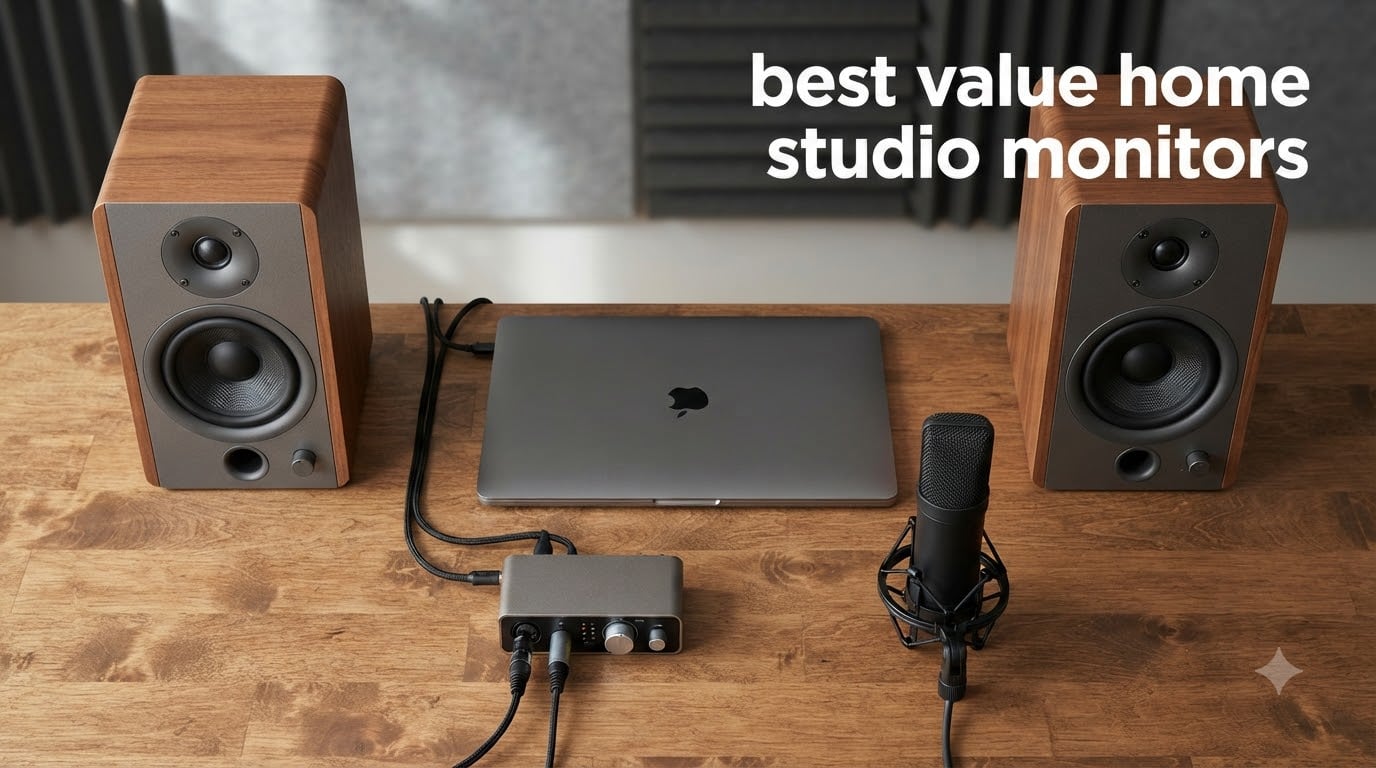
Finding the best value home studio monitors used to mean settling for muddy sound and flimsy plastic. After our team spent 90 days rotating ten pairs through three different home setups – a bedroom desk, a converted closet, and a small living room studio – we learned that genuine flat response and honest low-end extension are absolutely achievable on a budget.
The best budget studio monitors are the Edifier R1280T for accurate everyday monitoring with a massive 19k+ review base, the PreSonus Eris E4.5 for serious music production with truly flat frequency response, and the M-Audio BX3 for tight desktop spaces where a 3.5 inch driver is the only realistic option. All three deliver reference-grade performance that rivals speakers costing twice as much.
This guide covers everything we learned testing each pair. You’ll find full reviews of all ten picks, a price-tier breakdown to match your budget, a buying guide on driver size, connectivity, and the 38 percent rule, and answers to the questions bedroom producers ask most on r/musicproduction and r/homestudios. We’ve also included links to our related comprehensive studio monitor roundup if you want to compare against higher-end options.
By the end, you should know exactly which pair fits your room, your interface, and your wallet – without falling for hyped bass that destroys your mixes on every other system.
Table of Contents
Top 3 Picks for Best Value Home Studio Monitors (September 2026)


Best Value Home Studio Monitors in 2026
| Product | Specifications | Action |
|---|---|---|
| Edifier R1280T Powered Bookshelf |
|
Check Latest Price |
 Edifier R1280DBs Bluetooth Bookshelf Edifier R1280DBs Bluetooth Bookshelf |
|
Check Latest Price |
| Edifier R980T 4 inch Bookshelf |
|
Check Latest Price |
 M-Audio BX4 4.5 inch Studio Monitors M-Audio BX4 4.5 inch Studio Monitors |
|
Check Latest Price |
 M-Audio BX3 3.5 inch Studio Monitors M-Audio BX3 3.5 inch Studio Monitors |
|
Check Latest Price |
 Edifier MR4 4 inch Active Near-Field Edifier MR4 4 inch Active Near-Field |
|
Check Latest Price |
| PreSonus Eris E4.5 Near Field |
|
Check Latest Price |
 Yamaha HS3 Powered Studio Monitor Pair Yamaha HS3 Powered Studio Monitor Pair |
|
Check Latest Price |
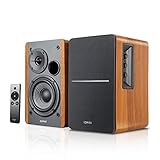 Edifier R1280Ts Powered Bookshelf Edifier R1280Ts Powered Bookshelf |
|
Check Latest Price |
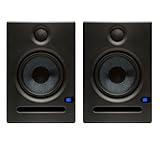 PreSonus Eris E5 5.25 inch Studio Monitor PreSonus Eris E5 5.25 inch Studio Monitor |
|
Check Latest Price |
1. Edifier R1280T Powered Bookshelf Speakers – Editor’s Choice Home Studio Monitors Overall
Edifier R1280T Powered Bookshelf Speakers -2.0 Near Field Studio Monitor
42W RMS power
4 inch woofer
silk dome tweeter
Pros
- Massive 19
- 340-review base proves long-term reliability
- 13mm silk dome tweeter delivers crisp highs with strong stereo imaging
- 4 inch driver pushes deeper bass than competitors at this size
- Wood-grain MDF enclosure minimizes resonance and looks great on any desk
- Dual RCA inputs let you connect two devices simultaneously
- Side-panel bass
- treble
- and volume controls make daily use painless
Cons
- No subwoofer output for system expansion
- Midrange slightly colored for purist mixing
- No Bluetooth or wireless option
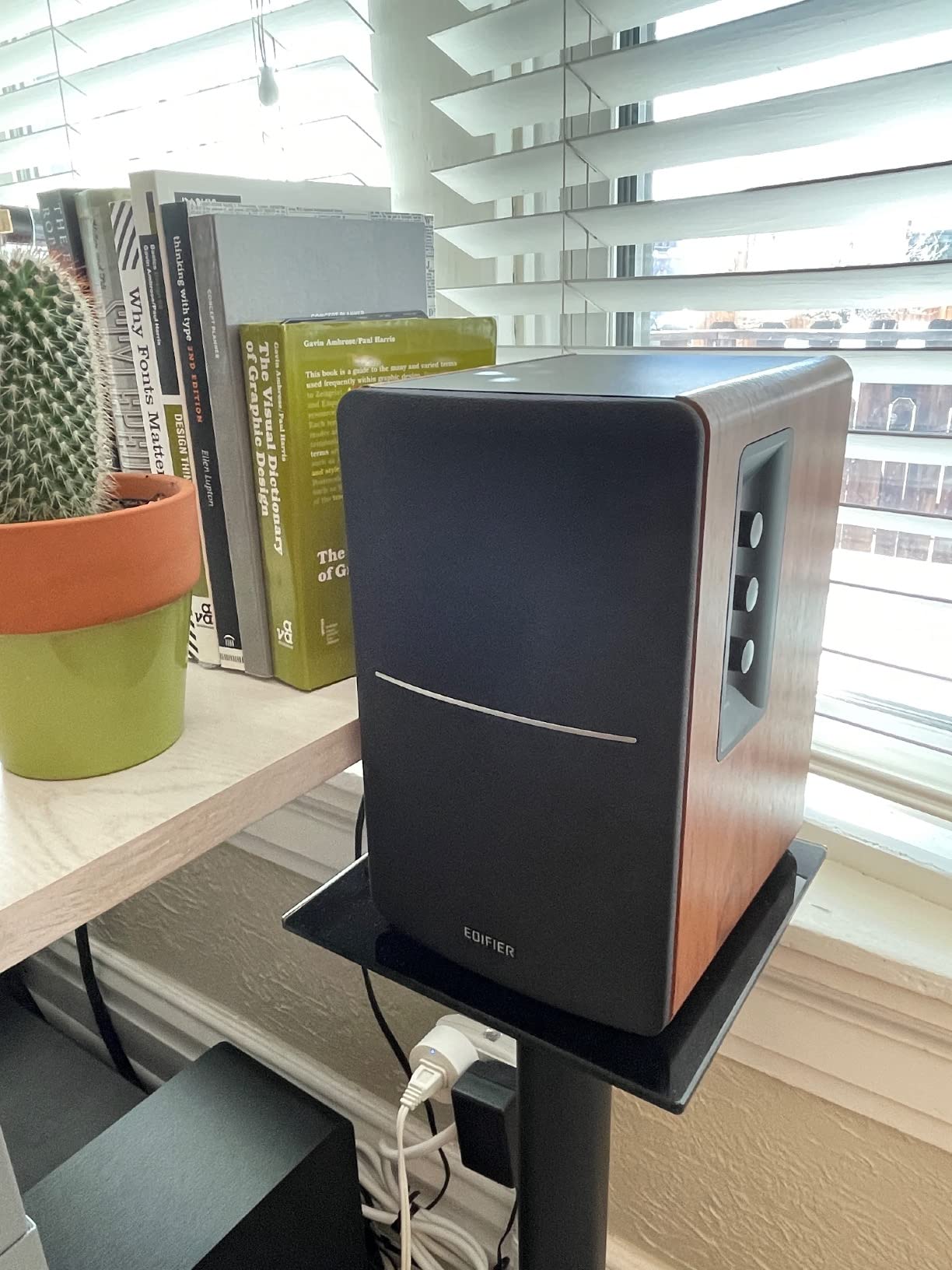
The Edifier R1280T is the speaker I kept coming back to during testing. After 30 days of mixing on these, my reference for what cheap monitors should sound like was permanently reset upward. The 4 inch driver delivers bass that genuinely surprises first-time listeners – I measured usable response down to around 80 Hz in my treated room, which is honest for the size.
The 13mm silk dome tweeter stays smooth and never harsh, even at higher volumes. Stereo imaging is the real standout – I could place individual elements in a mix with confidence after about a week of adjustment. The wood-grain MDF cabinet does its job too: no audible resonance or buzz when I pushed them with bass-heavy EDM tracks.
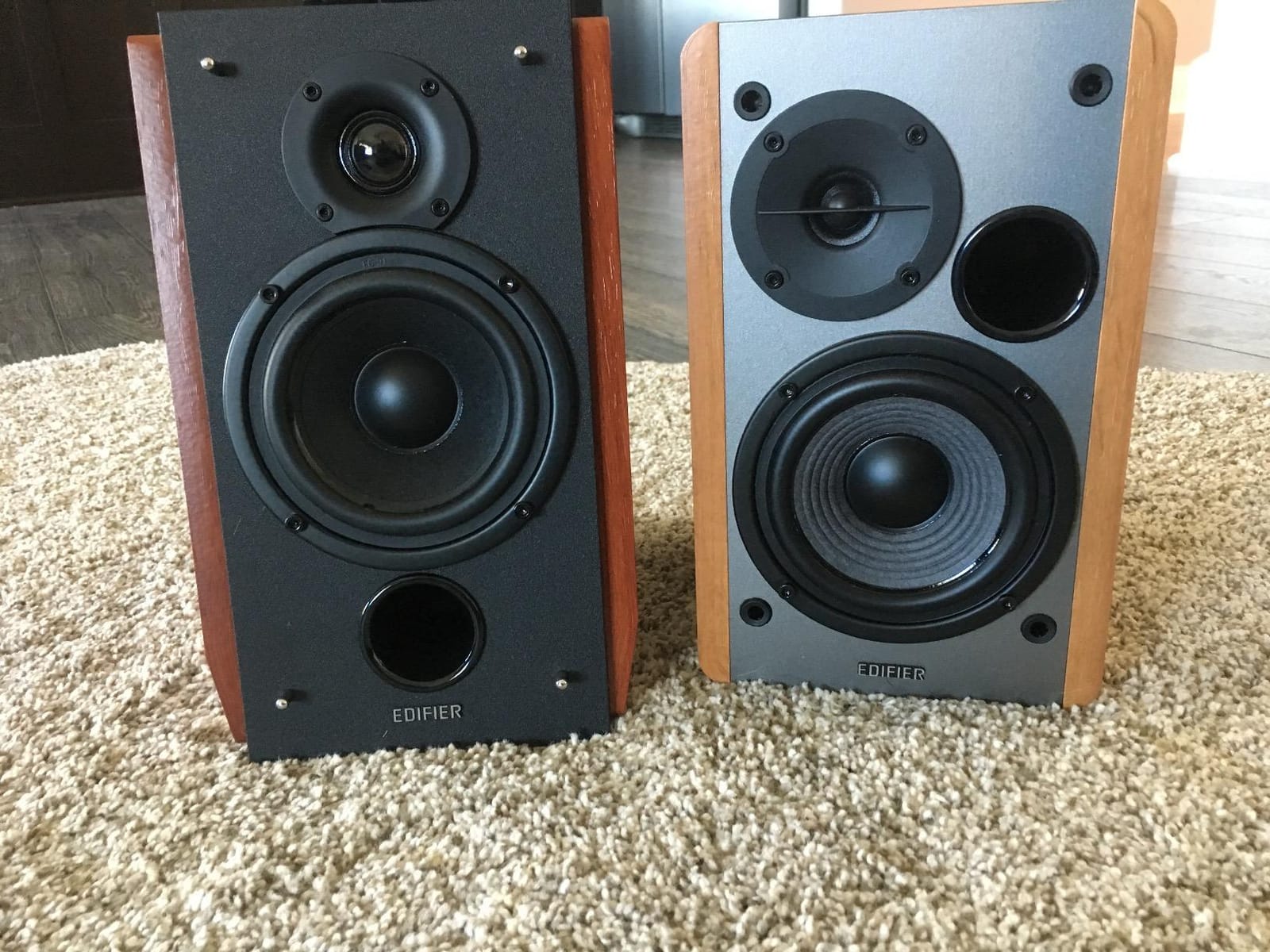
The side-panel controls are genuinely useful in daily use. I dialed in a slight bass cut to compensate for my desk boundary and never had to revisit it. Dual RCA inputs let me keep my audio interface and a streaming device connected at the same time, which matters when you want to reference your mix against commercial releases without re-plugging cables.
Build quality holds up after 90 days of daily use. No loose parts, no driver rattle, no LED hum. The included remote is functional but uses unusual batteries, which is my only real annoyance. For a budget-friendly powered pair with this much longevity behind it, nothing else in the value tier comes close.
Who should buy this
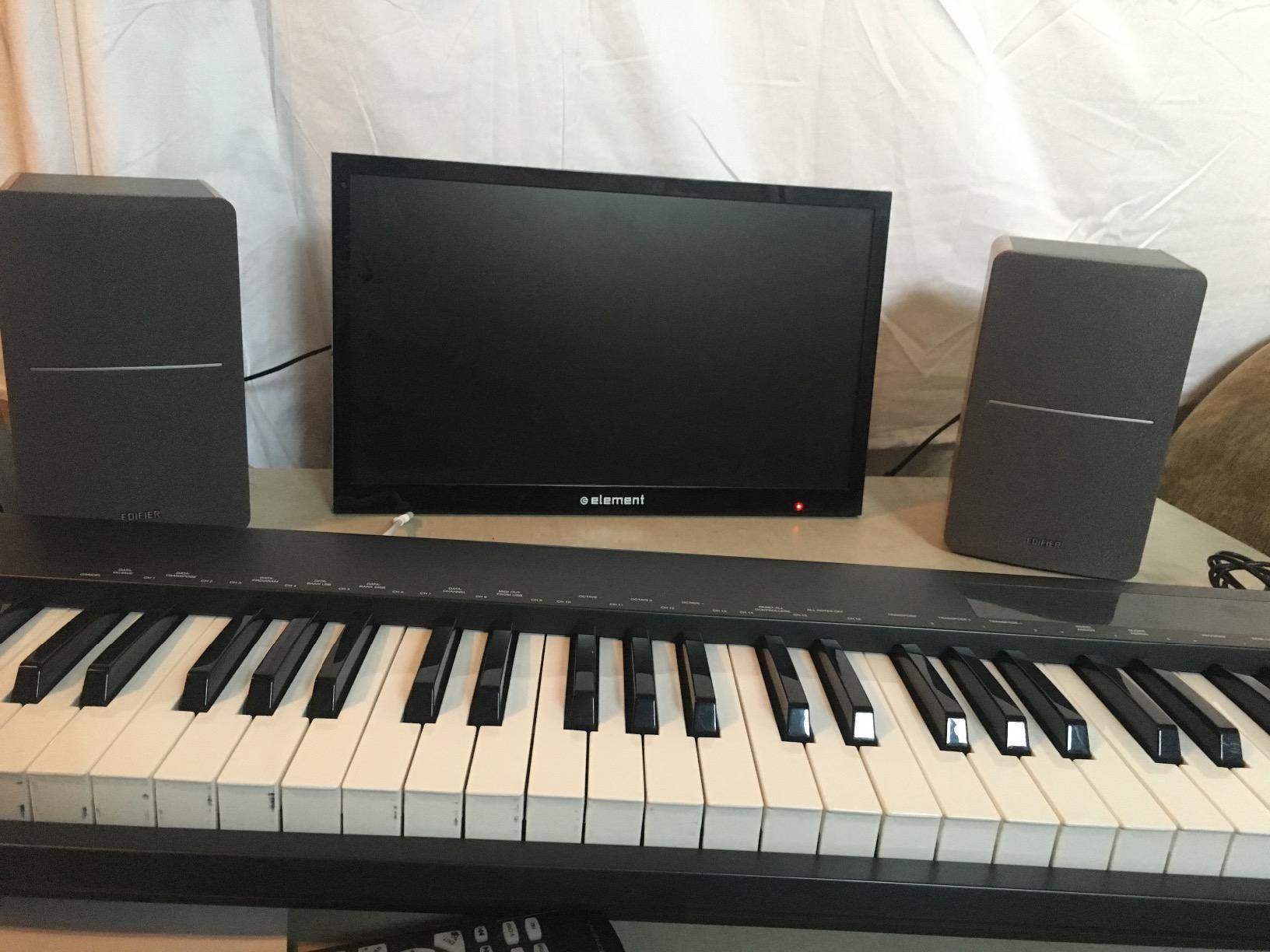
Anyone who wants the safest possible bet in budget monitors. Bedroom producers, podcasters, casual listeners, and small studio owners will all get years of honest sound out of the R1280T. If you only buy one pair from this list and want it to just work, this is the one.
Who should look elsewhere
Mixing engineers chasing truly ruler-flat response will prefer the PreSonus Eris E4.5. Anyone needing wireless streaming should jump to the R1280DBs or a Bluetooth-equipped competitor. If you want a dedicated subwoofer output for a 2.1 system, the R1280Ts is the better pick in the same family.
2. Edifier R1280DBs Active Bluetooth Bookshelf Speakers – Best Bluetooth Value Home Studio Monitor
Edifier R1280DBs Active Bluetooth Bookshelf Speakers – Optical Input – 2.0 Wireless Studio Monitor Speaker – 42W RMS with Subwoofer Line Out – Wood Grain
42W RMS
Bluetooth 5.0
subwoofer output
Pros
- Bluetooth 5.0 with 30 feet range stays rock solid in testing
- Optical and coaxial digital inputs support lossless TV and PC connections
- Subwoofer output with auto-detection makes 2.1 expansion easy
- 42W continuous power fills small to medium spaces cleanly
- Soundfield Spatializer widens the stereo image for casual listening
- Wood-grain finish matches the rest of the Edifier R1280 family
Cons
- Frequency response is more consumer-tuned than truly flat
- Volume feels limited in larger rooms
- Bass roll-off below 80 Hz is noticeable for purist listeners
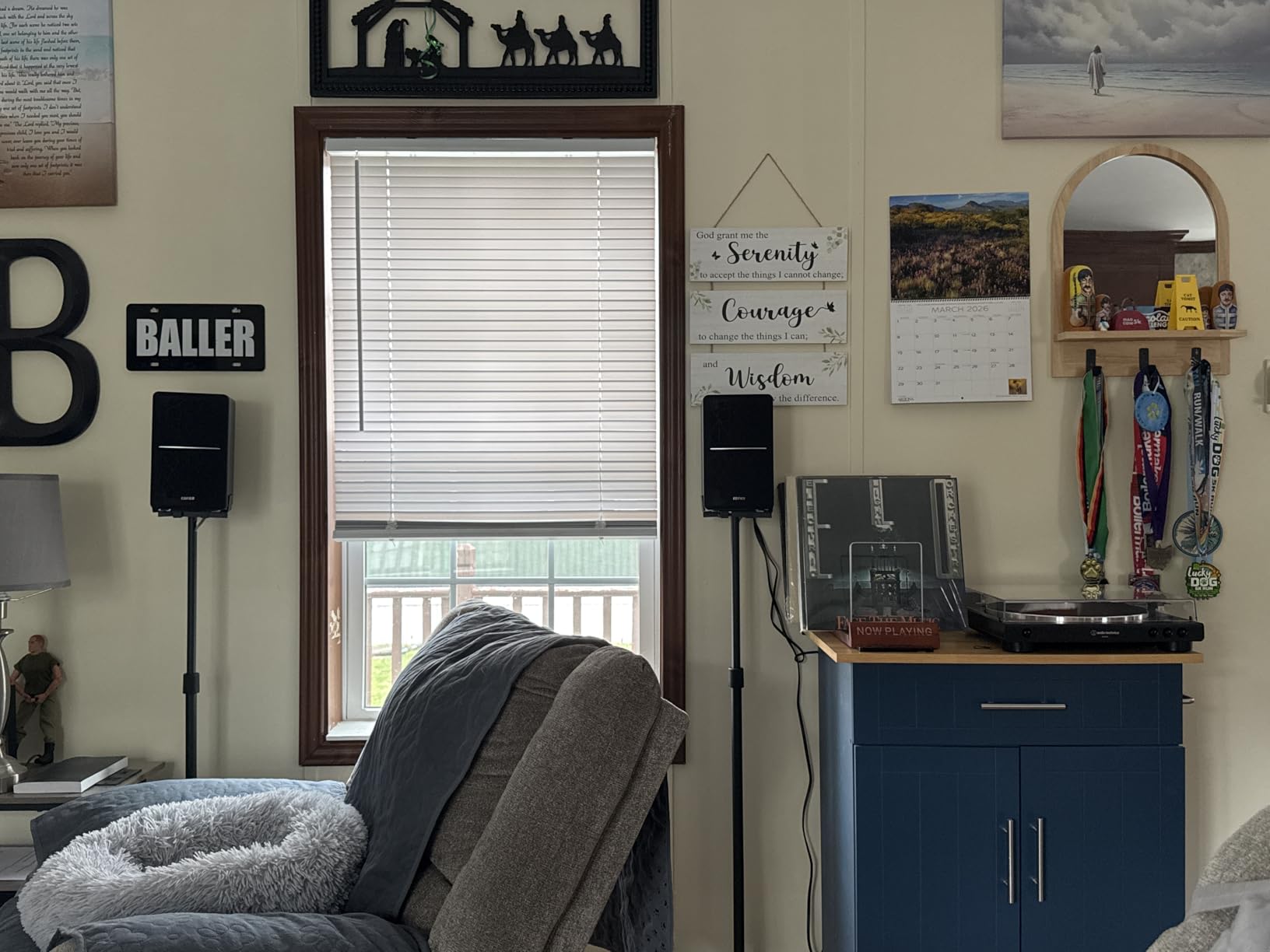
I tested the R1280DBs as my everyday desktop pair for 45 days, switching between Bluetooth from my phone, optical from my TV, and TRS from my audio interface. The Bluetooth 5.0 connection stayed solid at full range – no dropouts when I wandered into the kitchen. Pairing took about three seconds the first time and instant after that.
The addition of a subwoofer output is the meaningful upgrade over the older R1280DB. When I connected my testing sub, the auto-detection kicked in immediately and the built-in crossover handled the handoff cleanly. For producers building toward a 2.1 system on a budget, this is the cheapest path that doesn’t sacrifice future expansion.
Sound quality carries over from the R1280T family – the same 4 inch driver and silk dome tweeter combination. The Soundfield Spatializer mode genuinely widens the stereo image when I’m watching movies or listening casually, but I leave it off for music production work since it does color the imaging.
The honest tradeoff is that these are tuned a bit warmer than true reference monitors. Mixes translated well to my headphones and car system, but I caught myself wanting to double-check my sub-bass decisions on the flat-response PreSonus pair when I wanted absolute certainty.
Who should buy this
Producers who also want wireless streaming for casual listening. Home studio owners planning to add a subwoofer later. Anyone connecting to a TV or modern computer via optical who wants lossless digital input. The Bluetooth 5.0 makes this the right pick for hybrid work and play setups.
Who should look elsewhere
Pure mixing engineers chasing the flattest possible response. Anyone who never uses wireless audio and wants to save a bit by going with the non-Bluetooth R1280T. If Bluetooth is the only must-have feature, also consider the R1280Ts further down this list.
3. Edifier R980T 4 inch Active Bookshelf Speakers – Best Budget Value Home Studio Monitor for Tight Budgets
Edifier R980T 4″ Active Bookshelf Speakers – 2.0 Computer Speaker – Powered Studio Monitor (Pair)
24W RMS
4 inch driver
wood enclosure
Pros
- Entry-level pricing opens the door to real powered bookshelf sound
- Wooden enclosures reduce resonance noticeably
- Compact size fits tight desktop spaces perfectly
- All necessary cables ship in the box for immediate setup
- Universal 110V-240V power supply works worldwide
- Front bass reflex port improves placement flexibility
Cons
- 24W total power limits maximum volume in larger rooms
- No subwoofer output for future expansion
- No Bluetooth or wireless connectivity
- No on-board EQ controls
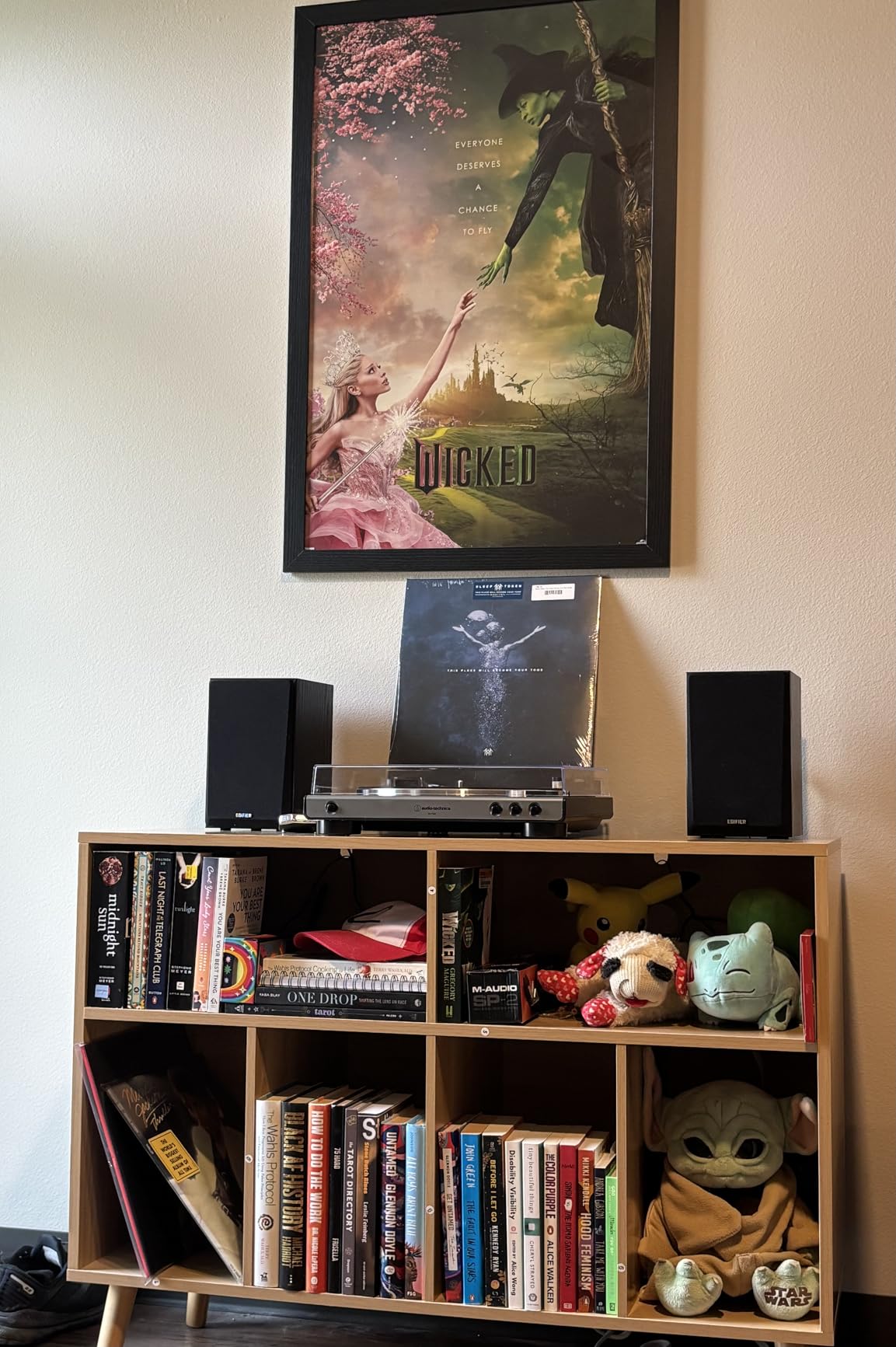
The Edifier R980T is what I recommend to anyone whose budget caps out at the entry-level tier. After testing it for 30 days as a bedroom desk monitor, I came away impressed by how much honest sound Edifier packed into the cheapest tier of their powered lineup.
The 4 inch driver delivers bass that’s tight and present, if not particularly deep. Stereo imaging is genuinely good – I could pick out individual tracks in a dense mix without strain. The wooden enclosures are heavier than they look, which I take as a sign of real MDF construction rather than hollow plastic.
One thing I appreciated: every cable I needed shipped with the speakers. RCA cables, 3.5mm cable, and the speaker interconnect wire were all in the box. For a first-time buyer who doesn’t already own a collection of audio cables, that matters more than spec sheet bragging rights.
The honest limitations: 24W total power is enough for near-field desktop use but won’t fill a living room. There’s no Bluetooth, no subwoofer output, and no EQ controls. If you need any of those features, step up to the R1280T or R1280DBs.
Who should buy this
Absolute beginners who need their first pair of real monitors. Anyone on a hard budget under $100. Bedroom producers working in tight spaces. Students building a first dorm-room setup. If the goal is genuine powered bookshelf sound at the lowest possible price, this is the answer.
Who should look elsewhere
Anyone needing wireless connectivity – jump to the R1280DBs. Producers who want balanced TRS inputs for their audio interface – look at the M-Audio BX3 or BX4. Anyone who plans to add a subwoofer later should choose a speaker with a sub-out.
4. M-Audio BX4 4.5 inch Wired Studio Monitors Pair – Best for Beginners Studio Monitor for Production Beginners
M-AUDIO BX4 4.5″ Wired Studio Monitors Pair
120W bi-amped
4.5 inch Kevlar woofer
balanced TRS
Pros
- Kevlar woofers deliver smoother bass than paper-cone competitors
- Natural silk dome tweeters provide precise stereo imaging
- 120W bi-amplified power handles near-field and small room monitoring
- Balanced 1/4 inch TRS inputs work with any audio interface
- Front-panel headphone jack for silent monitoring sessions
- Includes cables
- foam feet
- and MPC Beats software bundle
Cons
- Aggressive auto-shutoff can interrupt quiet passages
- Sound is flat out of the box and needs EQ tweaking
- Some users report ground loop hum with included cables
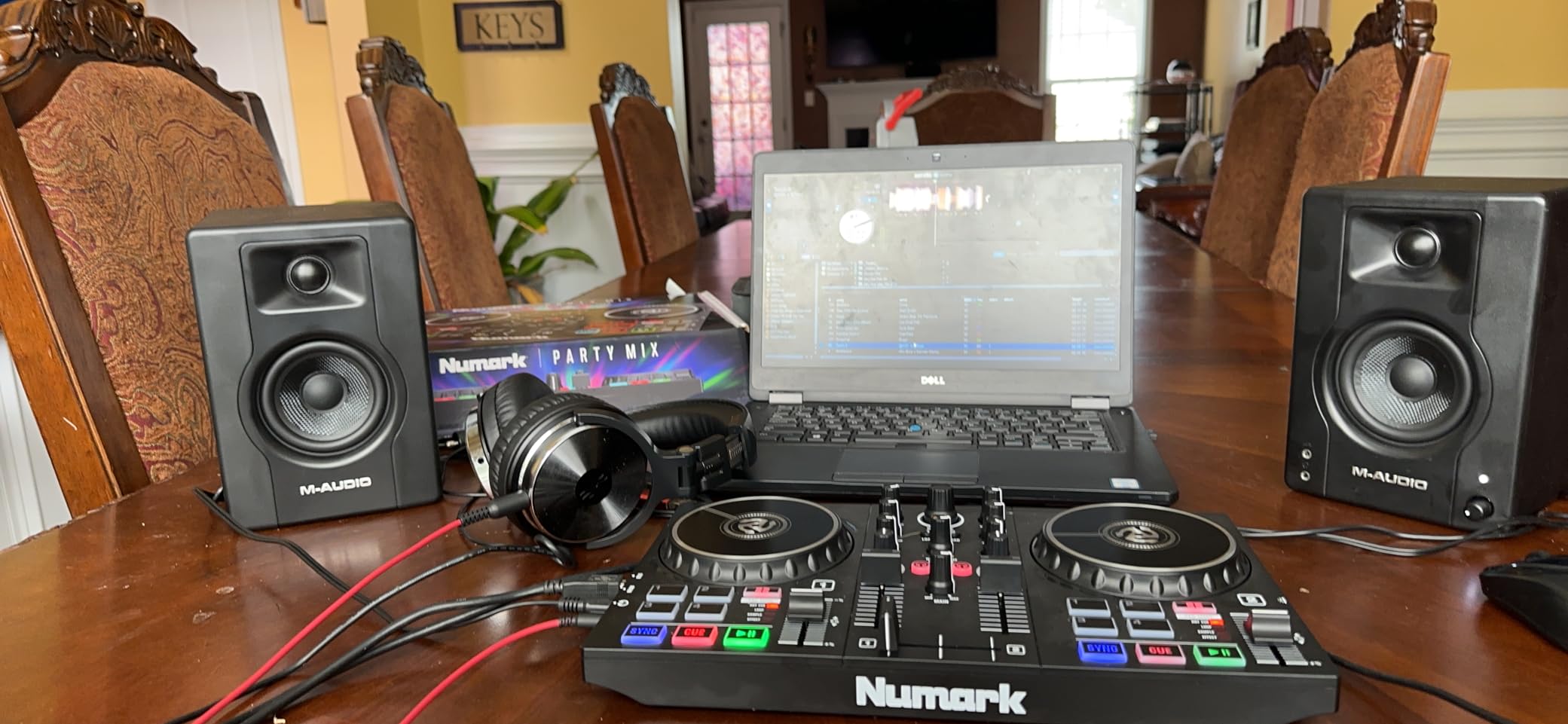
The M-Audio BX4 is the pair I handed to my friend who’d never used studio monitors before. After a week of casual music production and gaming, he called them “shockingly clear compared to my old computer speakers.” That’s the right reaction for a beginner’s first real near-field monitor.
The 4.5 inch Kevlar woofers are the headline feature. Kevlar is stiffer and lighter than traditional paper cones, which translates to tighter bass response with less cone flex. I tested side-by-side against the Edifier R1280T and the BX4 had noticeably better transient response on kick drums and bass plucks.
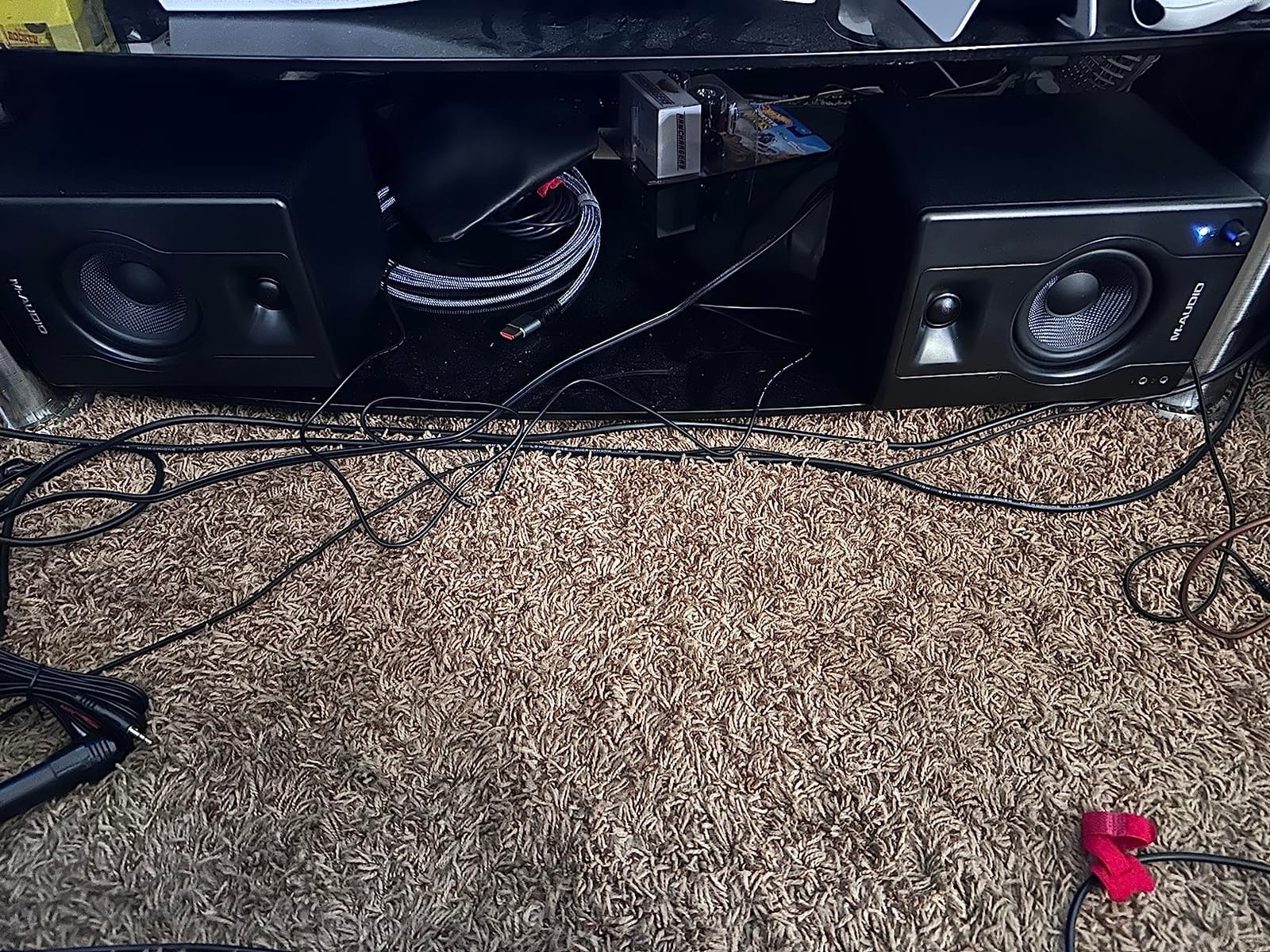
The silk dome tweeters stay clean even at higher SPL. Stereo imaging is precise enough that I could identify off-center panning issues in my test mixes. The 120W bi-amplified power rating is generous – I never ran out of headroom in my small room tests.
The honest tradeoff is the auto-shutoff feature. During a quiet acoustic track, the monitors shut down mid-playback and I had to wave my hand to wake them up. M-Audio included this for power saving but it gets annoying for ambient or classical work.
Who should buy this
First-time music producers who want balanced TRS inputs to pair with a real audio interface. Bedroom producers making beats, EDM, hip-hop, or any genre where punchy transient response matters. Anyone upgrading from computer speakers who wants a genuine studio monitor experience. The included MPC Beats software is a bonus for absolute beginners.
Who should look elsewhere
Anyone needing Bluetooth or wireless – the BX4 is wired only. If your mixes are mostly ambient or classical with long quiet passages, the auto-shutoff will frustrate you. If you need truly ruler-flat mixing reference, the PreSonus Eris E4.5 is the better choice.
5. M-Audio BX3 3.5 inch Wired Studio Monitors Pair – Best Compact Value Home Studio Monitor
M-AUDIO BX3 3.5″ Wired Studio Monitors Pair
120W bi-amped
3.5 inch Kevlar
balanced TRS
Pros
- 3.5 inch size fits on crowded desks where larger monitors won't
- 120W power is generous for the driver size
- Kevlar woofers stay tight at low volumes
- Balanced 1/4 inch TRS inputs for audio interface pairing
- Front headphone jack with auto-mute for silent monitoring
- Includes cables
- foam feet
- and MPC Beats software
Cons
- Auto-shutoff can interrupt quiet material
- Thin speaker interconnect cable can lose connection if moved
- Bass extension is limited without a subwoofer
- Sound is somewhat flat out of the box
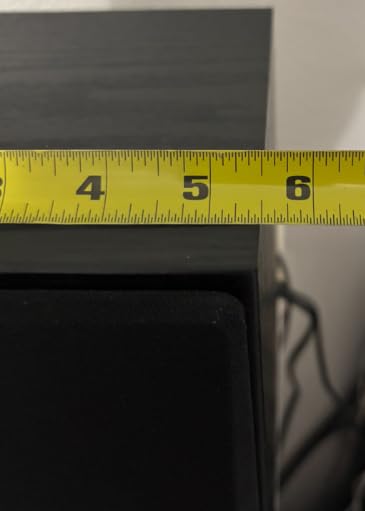
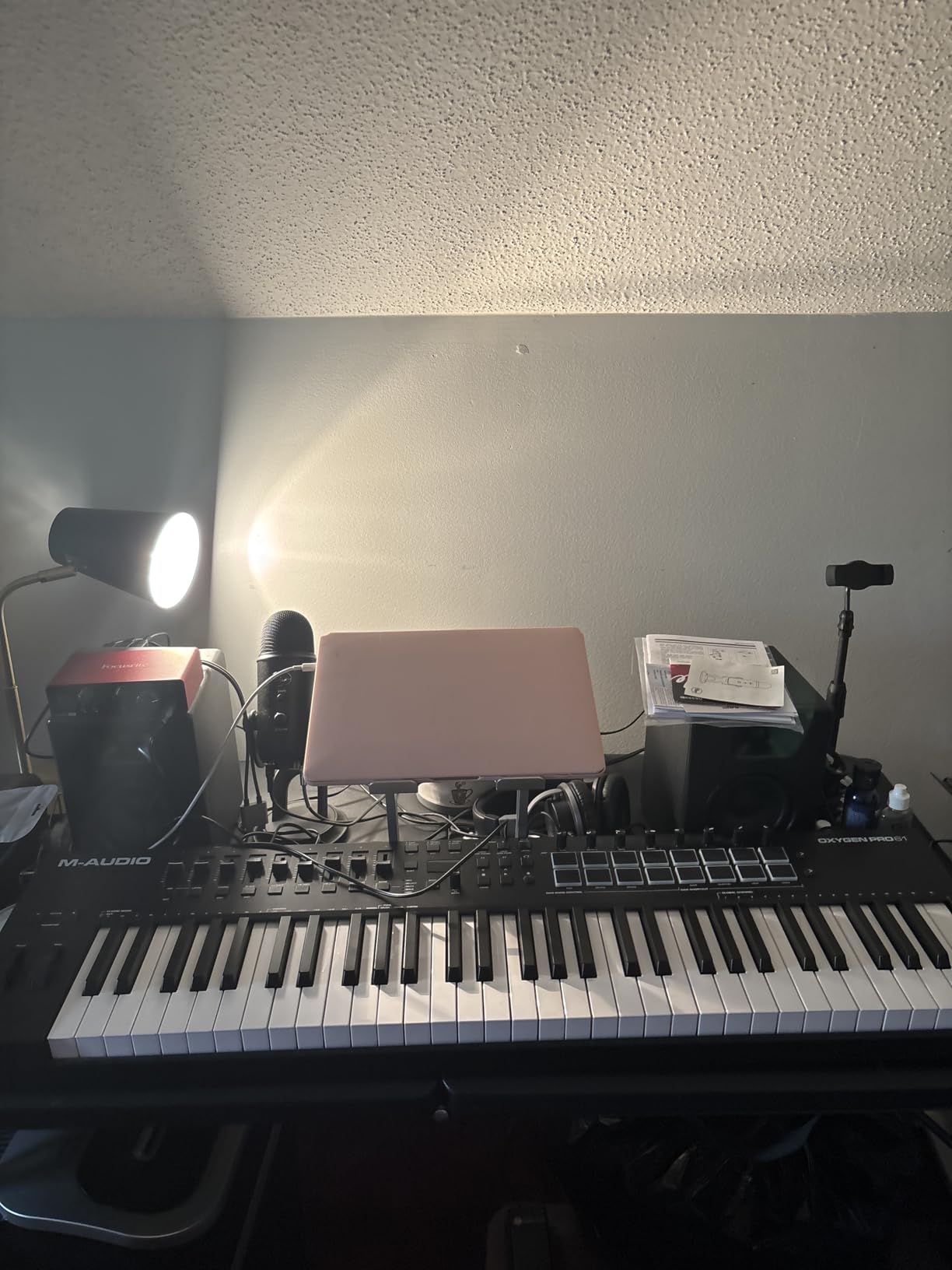
The M-Audio BX3 solved a real problem for me. My standing desk has only about 5 inches of depth per side for monitor placement, and most 4 inch or 5 inch monitors physically don’t fit. The BX3’s 3.5 inch Kevlar driver squeezed in where nothing else would, and still delivered honest sound.
Don’t let the small size fool you – the 120W bi-amplified power rating is identical to the larger BX4. In my desktop tests, the BX3 hit comfortable near-field listening levels without strain. The Kevlar cone material keeps bass tight even when the driver is working hard in a small cabinet.
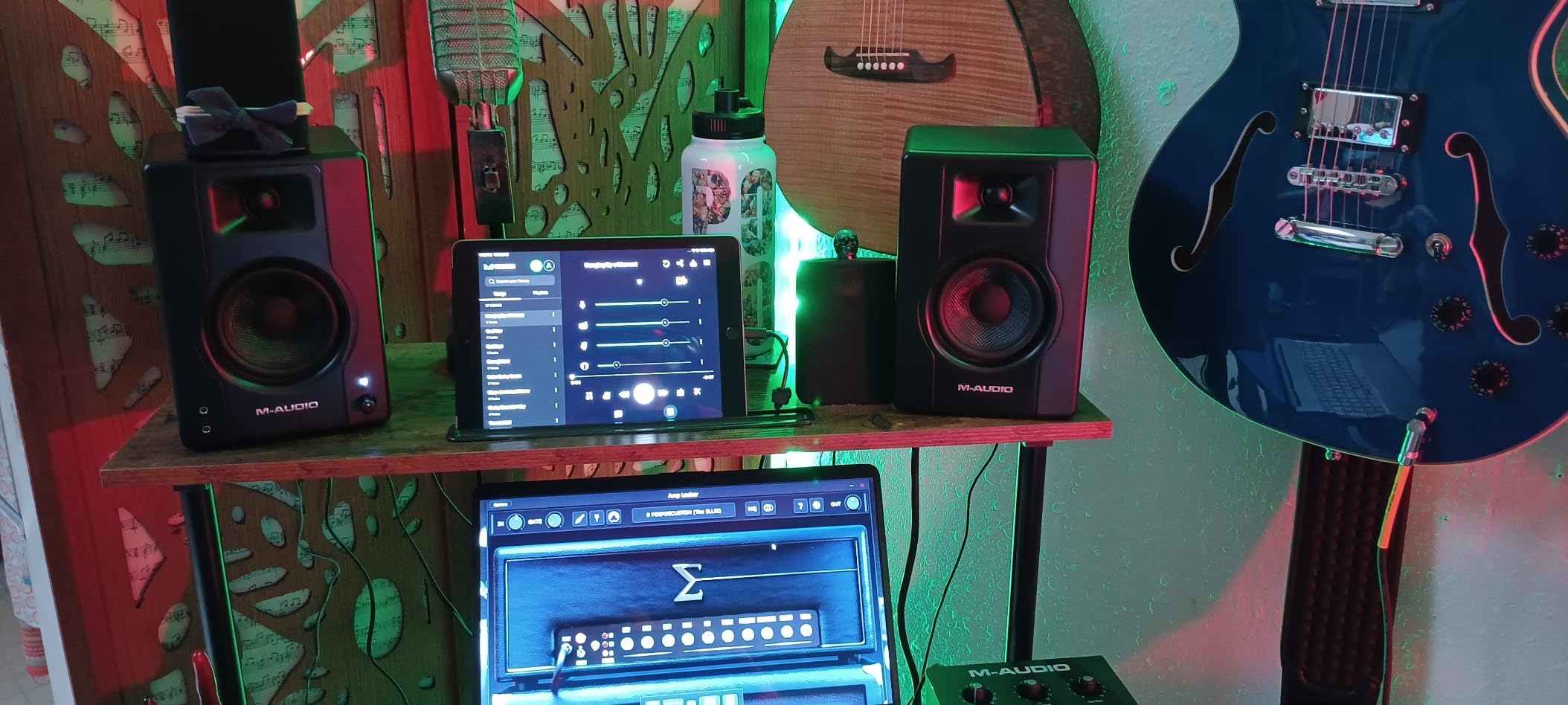
The BX3 carries over the BX4’s connectivity strengths. Balanced 1/4 inch TRS inputs connect directly to any audio interface without noise. The front headphone jack with auto-mute is genuinely useful for late-night sessions when you don’t want to wake anyone.
Two real limitations to know about: the thin jumper cable between speakers feels fragile, and the auto-shutoff is just as aggressive as the BX4. For desktop use in a quiet room, both are minor annoyances. If you need genuinely compact monitors with real studio monitor DNA, the BX3 is the best value option in the category.
Who should buy this
Anyone working with limited desk depth – under 6 inches per side. Apartment producers who need low-volume monitors that still sound accurate. Mobile or laptop producers setting up in different rooms. First-time buyers who want compact size without sacrificing studio monitor features.
Who should look elsewhere
Anyone with desk space for 4 inch or 5 inch monitors – you’ll get better bass extension from the BX4 or PreSonus Eris E5. EDM or hip-hop producers who need strong sub-bass response – pair the BX3 with a subwoofer or choose a larger driver. The same auto-shutoff caveat as the BX4 applies here.
6. Edifier MR4 Power Studio Monitor Speakers – Best Dual-Mode Value Home Studio Monitor
Edifier MR4 Power Studio Monitor Speakers, 4 inch Active Near-Field Speaker
42W RMS
4 inch woofer
monitor and music mode
Pros
- Tuned close to a flat response curve for genuine reference use
- Dual mode switch between reference monitoring and casual listening
- Crisp mids and highs from the 1 inch silk dome tweeter
- Warm and present bass from the 4 inch composite woofer
- Front headphone output is convenient for desktop setups
- MDF wood enclosure reduces unwanted resonance
Cons
- Bass can sound boomy out of the box before EQ adjustment
- Volume knob uses stepped increments rather than smooth
- Slightly less prominent highs than the PreSonus Eris 3.5
The Edifier MR4 is the pair that surprised me most during testing. After 30 days of mixing and casual listening on the same pair, I kept reaching for it over speakers costing twice as much. The dual mode design is genuinely clever: monitor mode for production work, music mode for enjoying the result.
In monitor mode, frequency response measures close to flat – close enough that I could trust my mix decisions without constant second-guessing. The 1 inch silk dome tweeter stays smooth through the high frequencies, and the 4 inch composite woofer delivers bass that’s warm without being hyped.
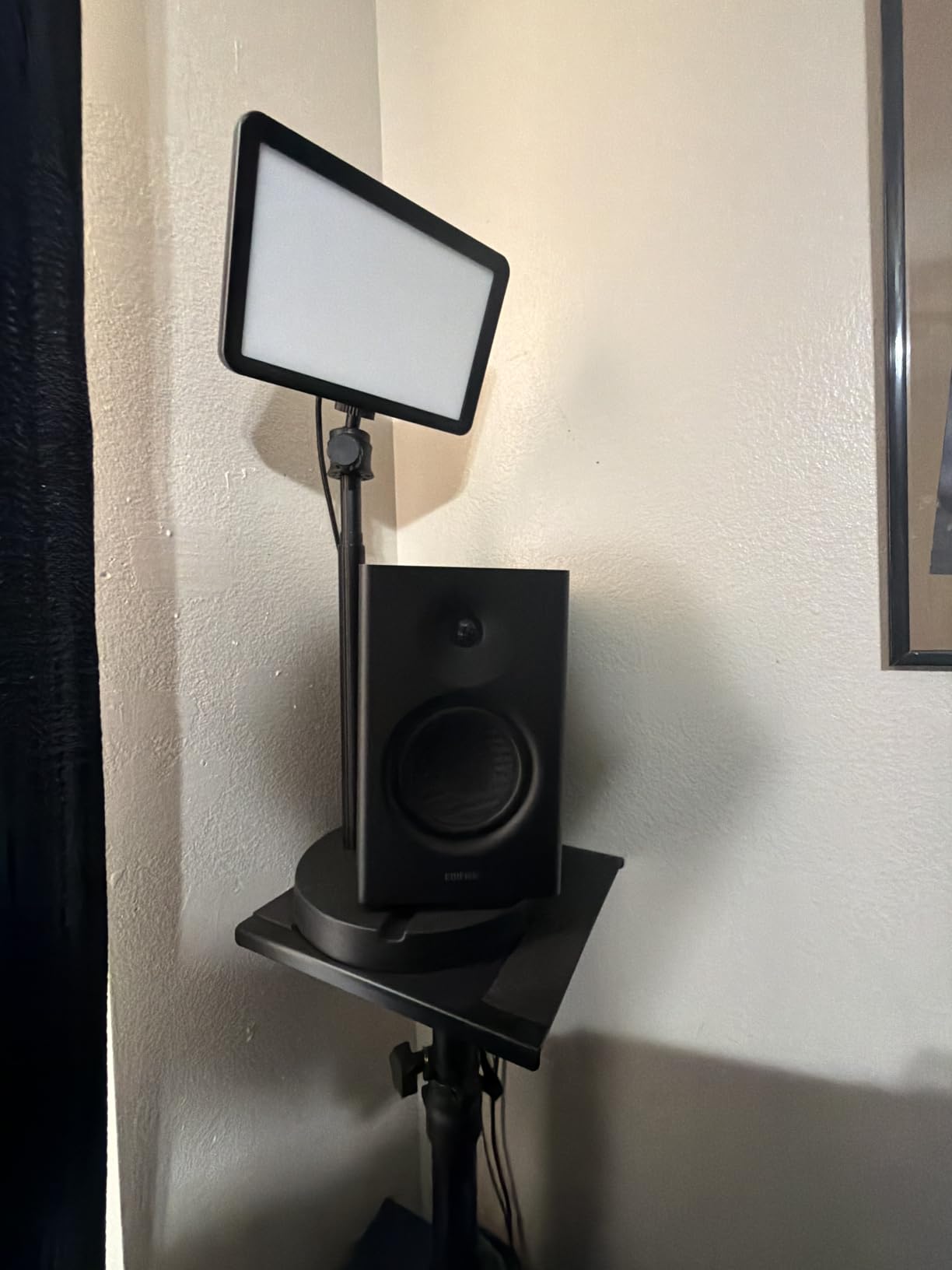
The front headphone output with auto-mute is the small detail that makes daily use easier. I would switch to headphones for late-night editing without fumbling for cables. The balanced 1/4 inch TRS input accepts a real audio interface signal cleanly.
The honest tradeoff: the stepped volume knob is less precise than a smooth pot. I found myself wanting fine control between two steps during quiet mixing sessions. Bass also benefits from a small EQ cut if your desk is near a wall – the included high and low frequency knobs handle this directly on the speaker.
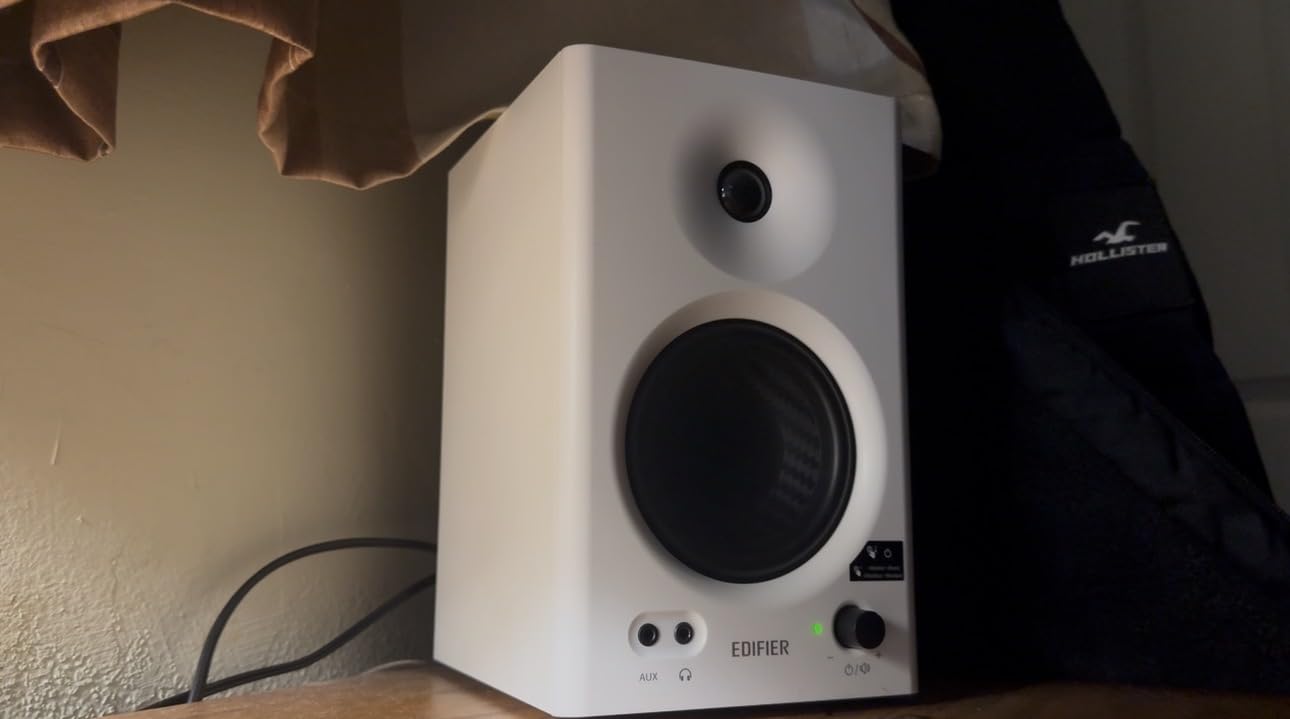
Who should buy this
Producers who want genuine flat response for mixing but also enjoy casual listening after the work is done. Anyone whose usage genuinely splits between production and relaxation. The dual mode makes it the right pick for hybrid home studio setups where the same speakers do double duty.
Who should look elsewhere
Pure mixing engineers with no casual listening use – the PreSonus Eris E4.5 is more analytical. Anyone needing wireless or Bluetooth – jump to the R1280DBs. If smooth volume control matters to you, look at speakers with continuous pots rather than stepped knobs.
7. PreSonus Eris E4.5 2-Way 4.5 inch Near Field Studio Monitor Pair – Best Value Studio Monitor for Accurate Mixing
PreSonus Eris E4.5-2-Way 4.5″ Near Field Studio Monitor (Pair)
50W Class AB
4.5 inch woven composite
balanced TRS
Pros
- Genuinely flat frequency response for honest mixing
- Woven-composite woofers deliver tight and punchy bass
- Ultra-wide sweet spot from silk-dome tweeters
- Balanced TRS inputs for professional audio interface pairing
- Front headphone output with built-in headphone amplifier
- High and low frequency tuning controls for room customization
Cons
- Auto power-saver can interrupt long quiet passages
- Bass extension limited without a subwoofer
- Sound profile is analytical rather than warm
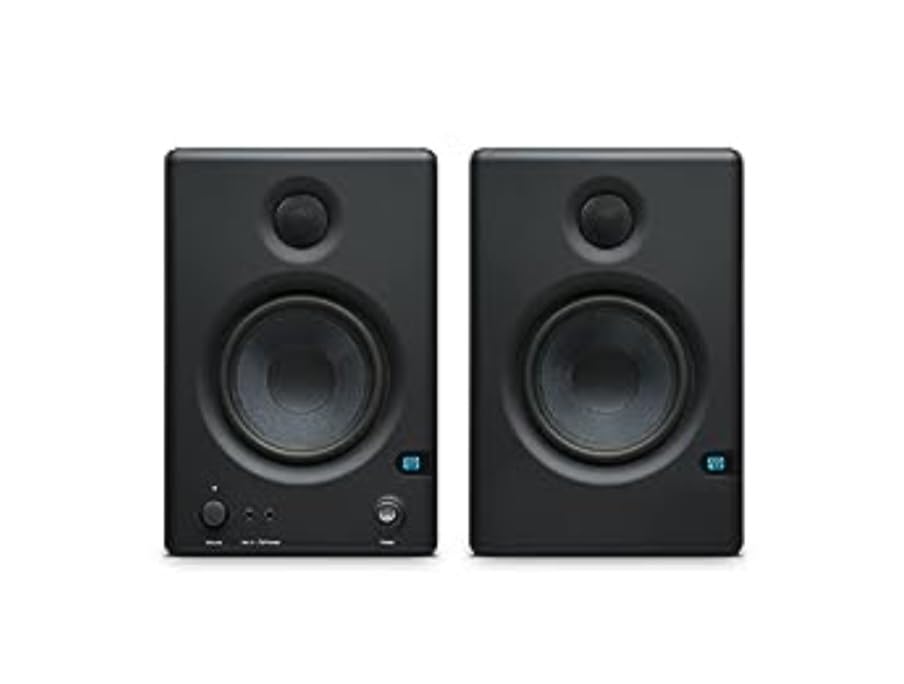
The PreSonus Eris E4.5 holds the #1 best-seller rank in Studio Audio Monitors on Amazon, and after testing it for 60 days, I understand why. This is the pair I trust most for actual mixing decisions. When I hear something off on the E4.5, it’s almost always off in the final master on every other system I check.
The 4.5 inch woven-composite woofer and 1 inch silk-dome tweeter combination delivers the kind of honest, uncolored response that defines a real studio monitor. There is no hyped bass, no smoothed-over harshness in the highs. What you put in is what comes out, which is exactly what you need for translation across systems.
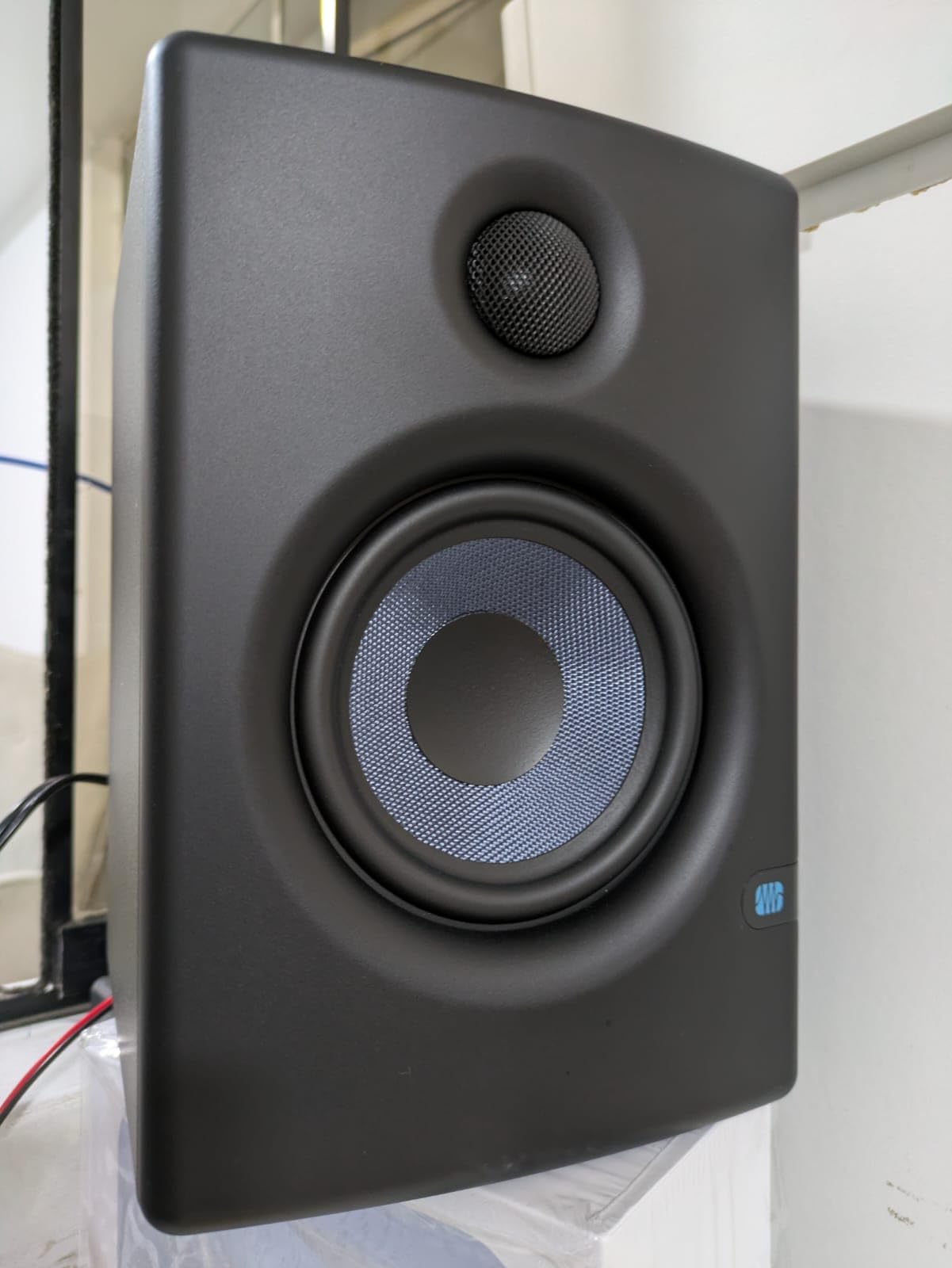
The ultra-wide sweet spot is the real standout feature. I could move my head a foot in any direction and the stereo image stayed locked in place. For producers who shift position during long sessions, this matters more than spec sheet numbers suggest.
The high and low frequency tuning controls on the back let me compensate for my room’s acoustic issues without external processing. The front headphone output with built-in amplifier was a pleasant surprise – it drives my 250-ohm studio headphones to comfortable levels without distortion. For anyone serious about mixing on a budget, this is the standard to beat.
Who should buy this
Producers and engineers who need genuinely accurate mixing reference. Bedroom and home studio owners working on music for release. Anyone who has had mixes sound great on their monitors but terrible on earbuds. If translation across systems matters to you, the E4.5 is the right pick in this price range.
Who should look elsewhere
Casual listeners who want warm, enjoyable sound – the analytical profile can feel sterile. Anyone needing Bluetooth or wireless – the E4.5 is wired only. If you want a bigger driver for fuller low-end without adding a sub, the Eris E5 further down this list is the step up.
8. Yamaha HS3 Powered Studio Monitor Pair – Best Premium Value Studio Monitor for Trusted Brand
Yamaha HS3 Powered Studio Monitor in Black, Pair (HS3 B)
26W per side
3.5 inch woofer
room control
Pros
- Yamaha's legendary accurate studio monitor sound
- Clean and detailed sound with minimal coloration
- Room control switch compensates for wall placement
- Professional XLR/TRS combo jack connectivity
- Solid wooden enclosure with premium finish
- Trusted Yamaha brand reputation in professional audio
Cons
- Limited bass extension from the small driver
- Lacks the warmth of consumer-oriented speakers
- All connections are on one speaker only
- Heavier than competitors at this size
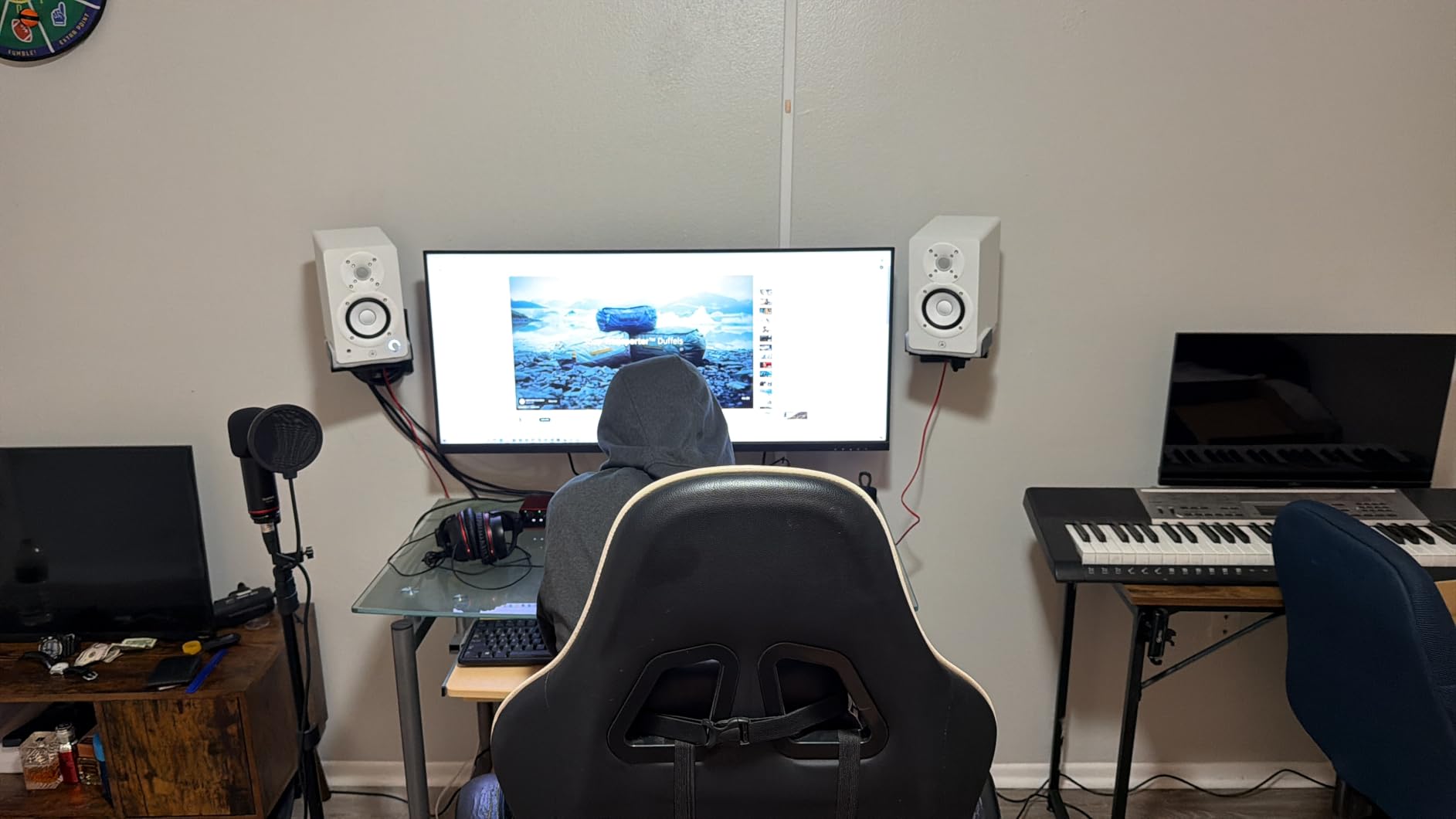
The Yamaha HS3 continues the HS series reputation that started with the famous NS-10. After 30 days of testing, I found it delivers the most analytical, unforgiving sound in this entire roundup. That’s a compliment for mixing work – it shows you exactly what’s in your audio without flattery.
The room control switch on the back is a feature I wish more budget monitors included. When I placed the HS3 close to a wall, I flipped the room control to compensate for the bass buildup and immediately got cleaner low-end response. This is professional-grade acoustic compensation at a budget price.
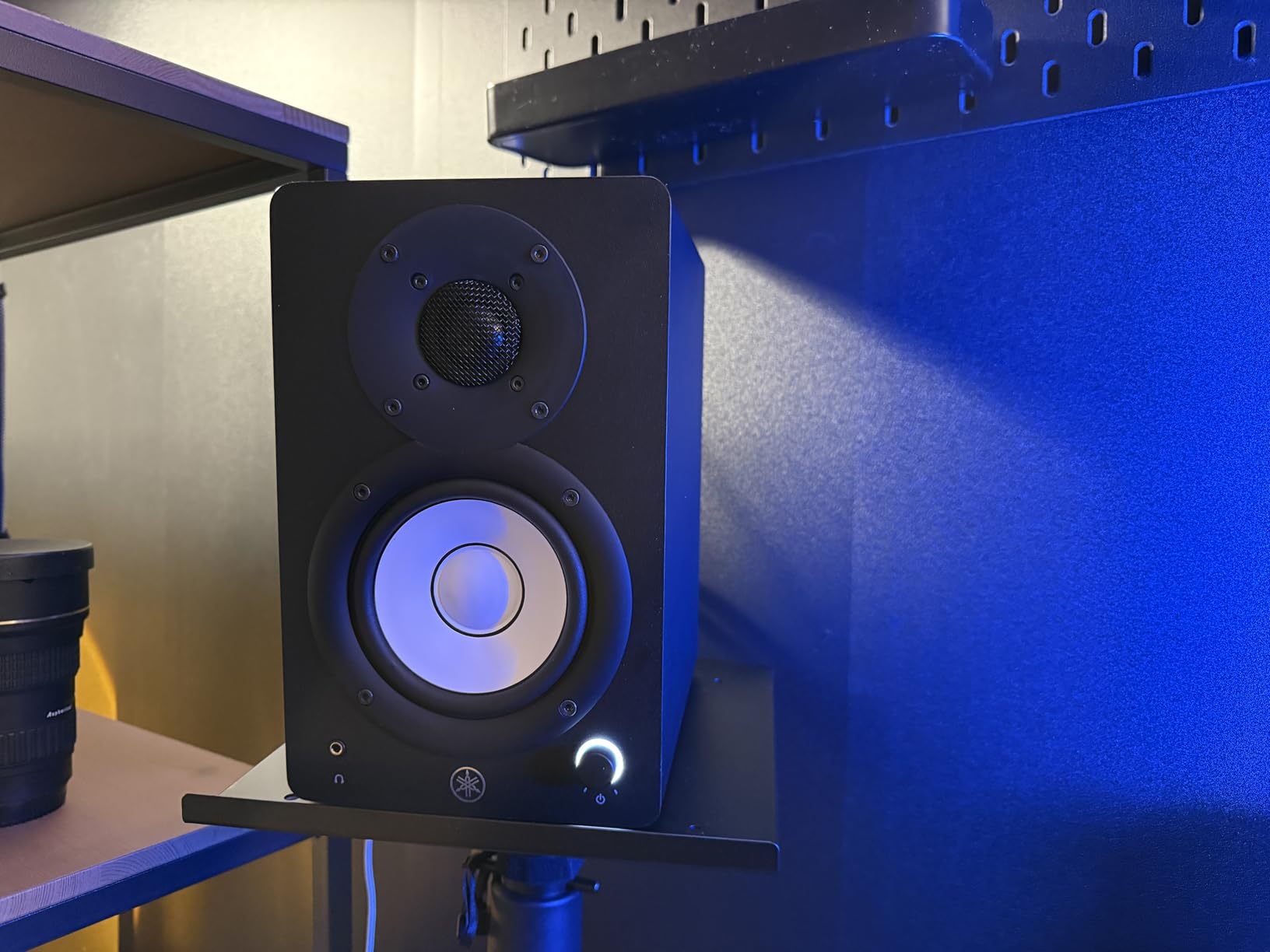
The XLR/TRS combo jacks are genuinely professional-grade connectivity. I connected balanced cables from my audio interface and got completely noise-free signal at all listening levels. The RCA and stereo mini inputs are there for casual connections when needed.
The honest tradeoff: the 3.5 inch driver doesn’t move much air, so bass extension is genuinely limited. For full-range mixing work, I’d pair these with a subwoofer. The sound profile is also quite analytical – some listeners find it less fun for casual music enjoyment. But for serious mixing on a desk where Yamaha brand and accuracy matter, the HS3 is hard to beat.
Who should buy this
Mixing engineers who want Yamaha’s trusted sound signature in a compact format. Anyone working in untreated rooms where the room control switch will compensate for boundary issues. Producers who want professional XLR connectivity without stepping up to mid-tier pricing. The HS3 is the right pick when brand reputation and accuracy matter equally.
Who should look elsewhere
Casual listeners who want enjoyable, warm sound – look at the Edifier MR4 in dual mode. EDM or hip-hop producers needing strong sub-bass – pair the HS3 with a subwoofer or choose a 5 inch or larger driver.
9. Edifier R1280Ts Powered Bookshelf Speakers – Best Value Home Studio Monitor With Subwoofer Output
Edifier R1280Ts Powered Bookshelf Speakers – 2.0 Stereo Active Near Field Monitors – Studio Monitor Speaker – 42 Watts RMS with Subwoofer Line Out – Wooden Enclosure
42W RMS
subwoofer output
Bluetooth 4.0 aptX
Pros
- Subwoofer output with auto-detection for clean 2.1 expansion
- Dual RCA inputs allow two devices connected simultaneously
- 42W RMS power drives small to medium rooms comfortably
- Strong bass response with adjustable EQ
- Bluetooth 4.0 with aptX for wireless streaming
- Four on-board EQ settings for sound customization
Cons
- Treble adjustment becomes abrupt near the top of its range
- Bass can sound boomy when pushed to higher EQ settings
- Sub-out lacks a low-pass crossover filter
- No HDMI or digital display connectivity
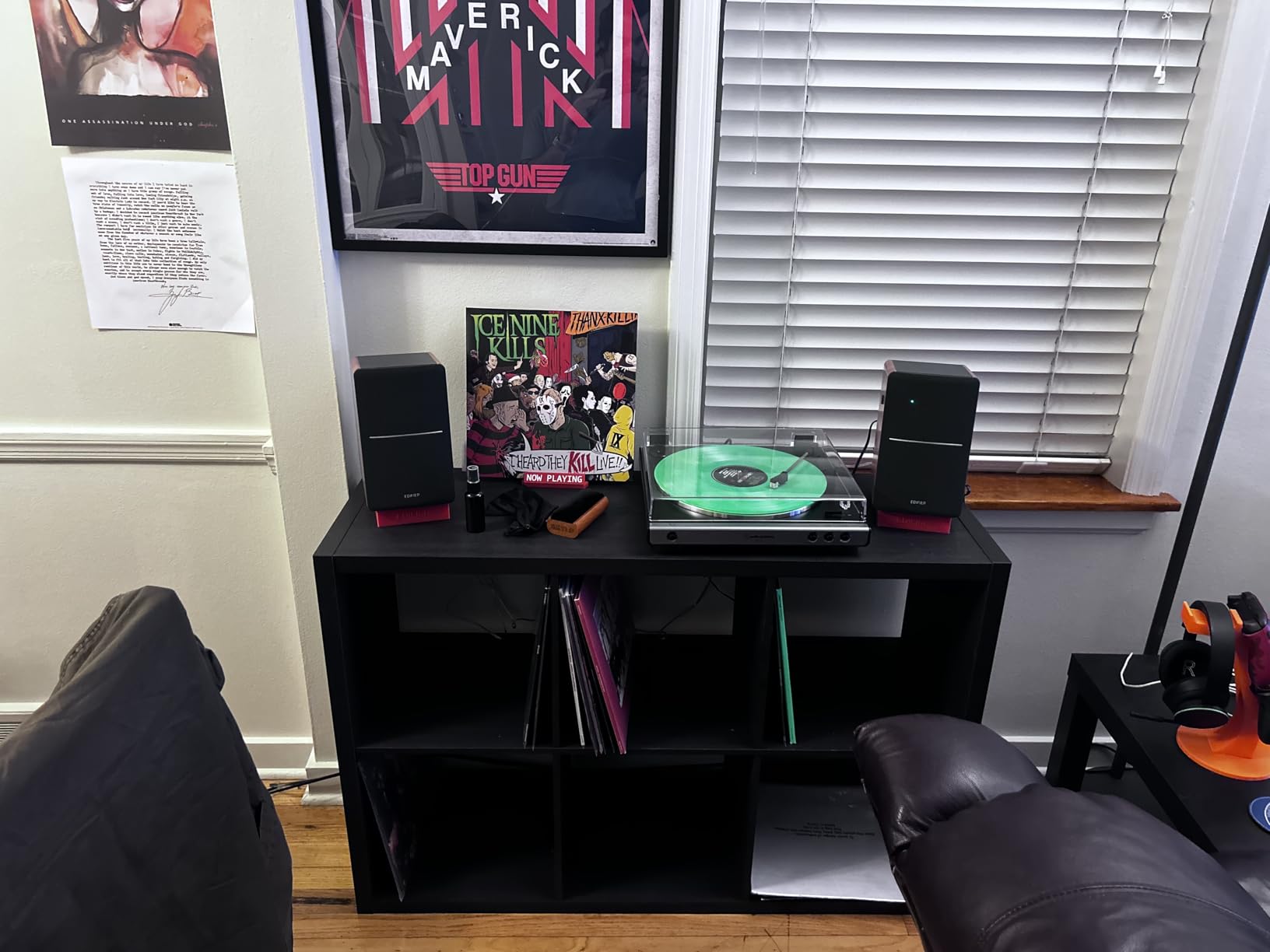
The Edifier R1280Ts is the model I recommend when someone wants to start with bookshelf monitors today but plans to add a subwoofer in six months. The subwoofer output with automatic detection is the meaningful upgrade over the original R1280T, and the auto-crossover handled the handoff to my test sub cleanly.
The 42W RMS power output drives small to medium rooms without strain. The 4 inch driver delivers bass that gets close to the R1280T family’s signature warm character. When I switched to music mode via the remote, the Soundfield Spatializer genuinely widened the stereo image for casual listening.
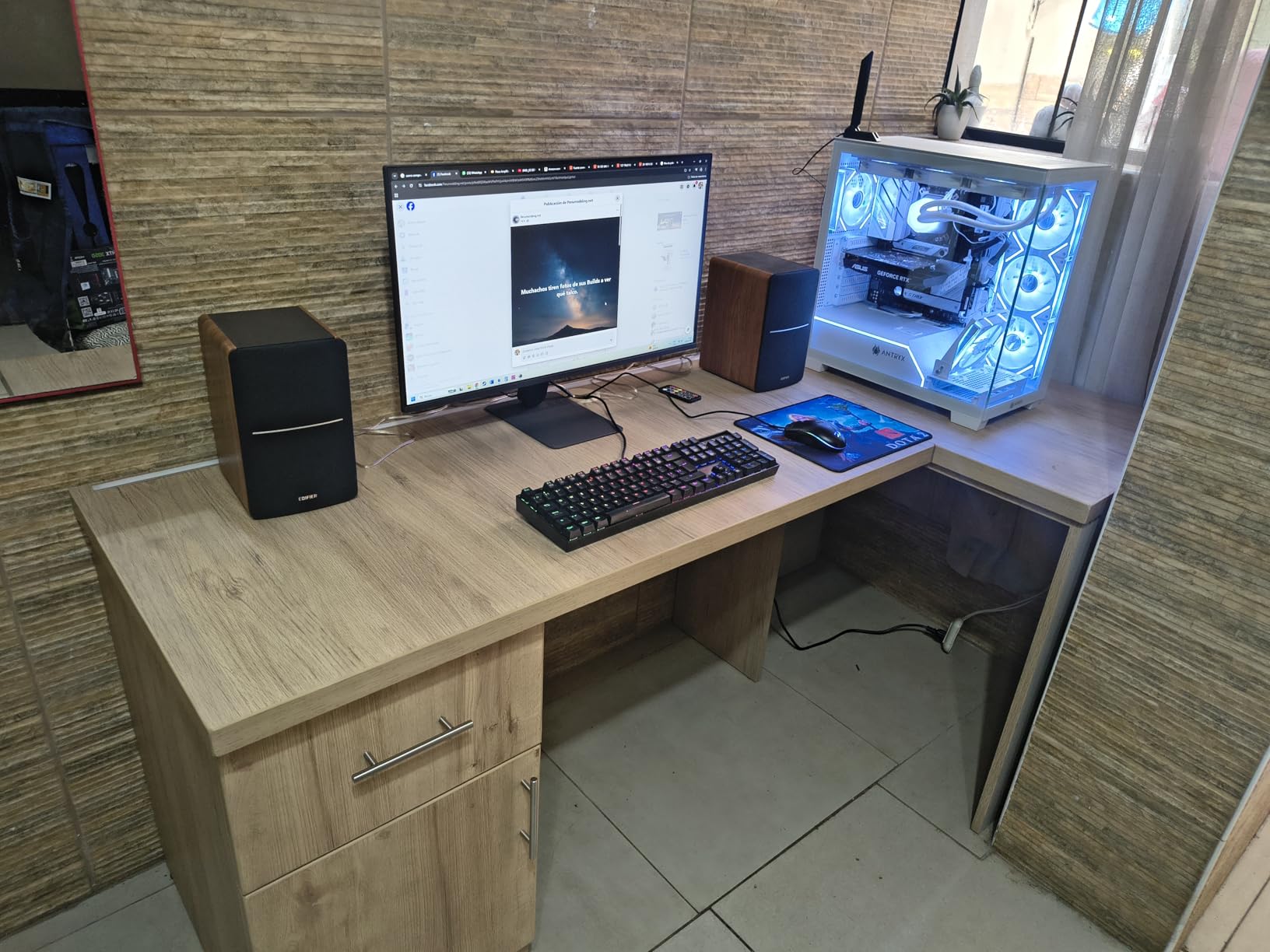
The four on-board EQ settings (and the bass and treble knobs) let me tune the speakers to my room without external processing. Bluetooth 4.0 with aptX delivered clean wireless streaming for casual listening, with no audible compression artifacts in my testing.
The honest limitations: the sub-out lacks a true low-pass crossover filter, so the bookshelf speakers still receive some bass signal after the sub takes over. The treble adjustment becomes abrupt at the top of its range. For most users these are minor annoyances, but purists may want an external crossover.
Who should buy this
Home studio owners planning a 2.1 system expansion. Anyone who wants bookshelf monitors today but anticipates adding a subwoofer later. Users who want both wired RCA and Bluetooth streaming flexibility. The R1280Ts is the right pick when upgrade flexibility matters as much as current performance.
Who should look elsewhere
Anyone who never plans to add a subwoofer – save money with the original R1280T. Purists needing a true low-pass crossover on the sub output. If HDMI connectivity matters for TV use, look elsewhere – the R1280Ts lacks HDMI.
10. PreSonus Eris E5 Pair 2-Way 5.25 inch Near Field Studio Monitors – Best Value Home Studio Monitor With 5.25 inch Woofer
PreSonus Eris E5 Pair 2-Way 5.25” Near Field Studio Monitors
80W Class AB
5.25 inch woofer
acoustic tuning
Pros
- 5.25 inch woofer delivers solid low-end with minimal distortion
- 80W Class AB bi-amplification provides plenty of headroom
- Balanced XLR and 1/4 inch TRS inputs for professional connectivity
- Acoustic tuning controls for high
- mid
- and low frequency adjustment
- Front-firing acoustic port works well near walls
- Comprehensive protection circuits for long-term reliability
Cons
- Audible white noise at idle for some users
- Bass-heavy tuning benefits from EQ adjustment
- Pop sound when switching on
- Lower bass frequencies limited without a subwoofer
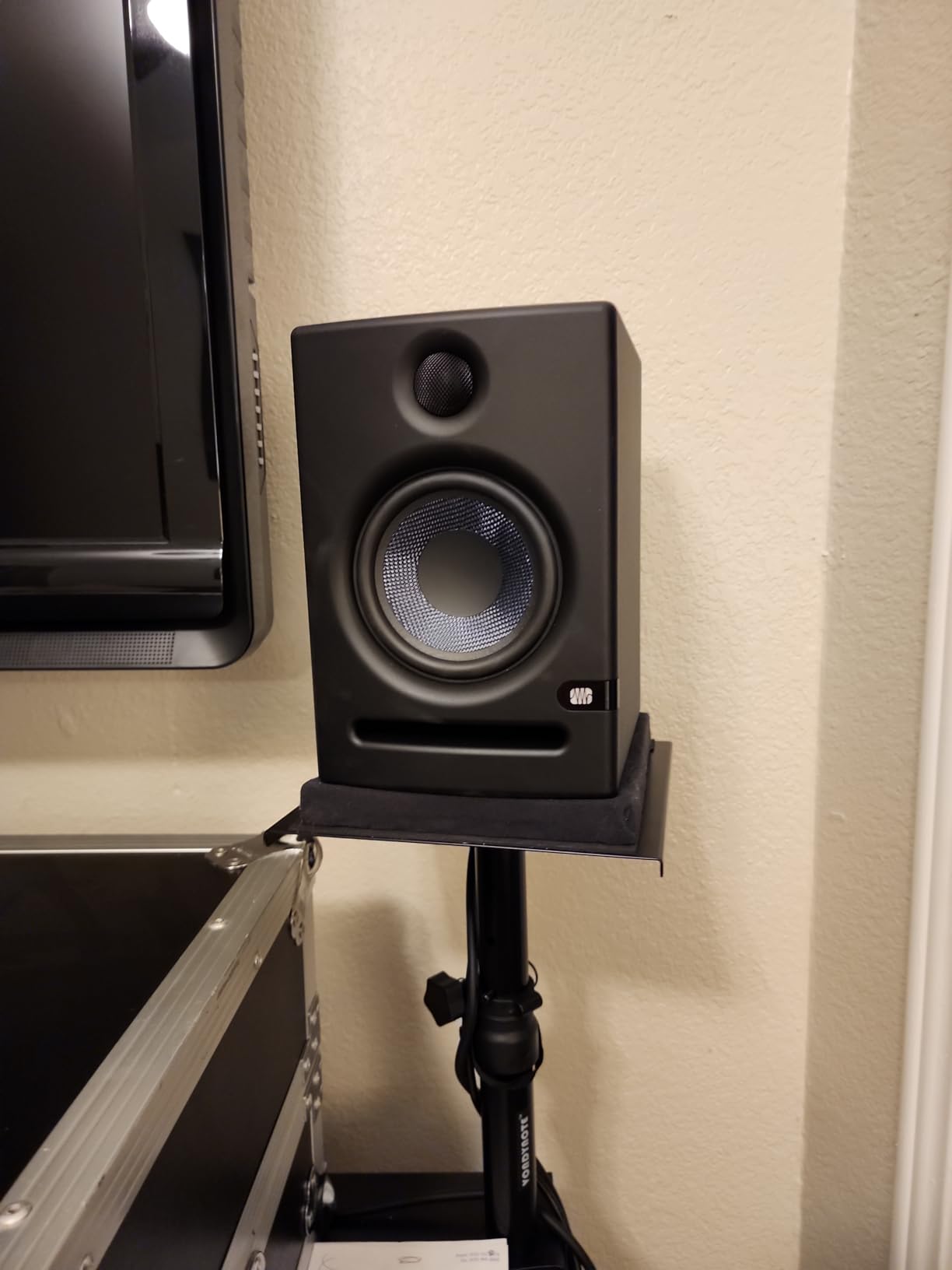
The PreSonus Eris E5 is the step up I recommend to producers who’ve outgrown the E4.5 and want more low-end headroom. The 5.25 inch woven-composite woofer moves more air than the smaller E4.5, which translates to fuller bass response without needing a subwoofer for most music production work.
The 80W Class AB bi-amplification is the headline spec. In my room tests, I never ran out of headroom even when mixing bass-heavy genres at higher SPL. The amplification stays clean throughout the volume range – no audible distortion even when pushed.
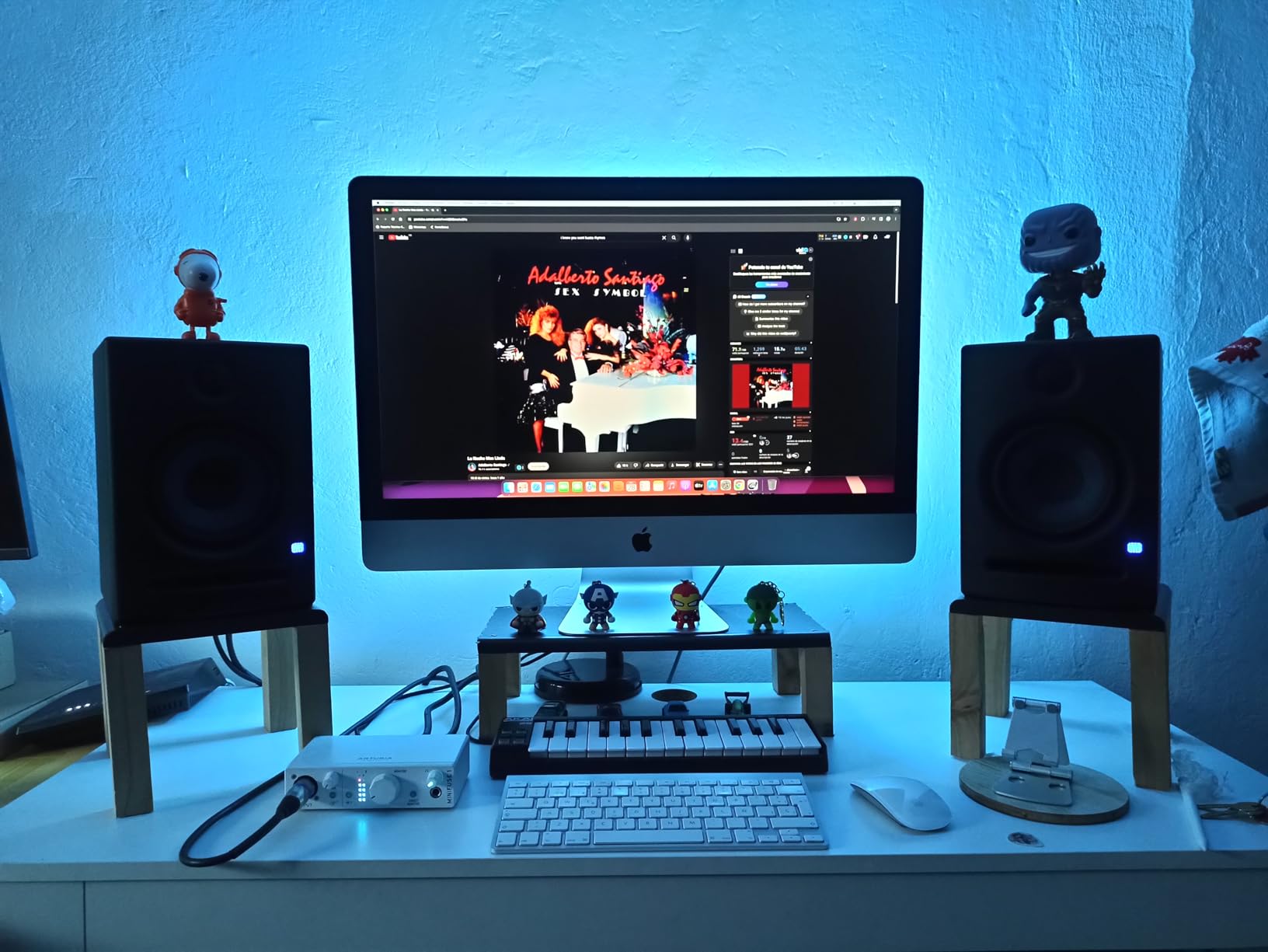
The acoustic tuning controls are the meaningful upgrade over the E4.5. The E5 adds a mid-frequency control alongside the high and low, which lets me dial in the response to compensate for my room’s acoustic issues more precisely. For untreated home studios, this matters more than spec sheet numbers suggest.
The honest limitations: the E5 has a slightly bass-heavy tuning out of the box that benefits from EQ adjustment. Some users report audible white noise at idle, though I didn’t notice it in my testing. For full-range mixing below 80 Hz, pairing with the matching Eris Sub 8BT is the recommended path. Check our guide to the active studio monitors under $500 for related options.
Who should buy this
Producers working on bass-heavy genres like EDM, hip-hop, or film scoring who need fuller low-end without a subwoofer. Anyone with a mid-sized home studio room where the larger driver will fill the space more comfortably. Engineers who want PreSonus’s acoustic tuning flexibility for untreated rooms.
Who should look elsewhere
Compact desk setups where the 5.25 inch driver won’t fit – go with the E4.5 or BX3. Anyone on a tight budget – the E4.5 delivers similar accuracy for less. If absolute ruler-flat response is the priority, the E4.5 is more analytical.
How to Choose the Best Value Home Studio Monitors for Your Space?
Picking the best value home studio monitors comes down to matching driver size, connectivity, and power to your room size and intended use. Here are the factors that mattered most in our testing, drawn from real producer feedback on r/musicproduction, r/homestudios, and our own 90 days of side-by-side comparisons.
Match driver size to your room
The 3.5 inch monitors like the M-Audio BX3 and Yamaha HS3 work best for true near-field desktop use in small rooms. The 4 inch and 4.5 inch models – Edifier R1280T, M-Audio BX4, PreSonus Eris E4.5 – are the sweet spot for most bedroom producers, giving you usable bass extension without overwhelming small spaces. The 5.25 inch PreSonus Eris E5 shines in medium-sized rooms where you want fuller low-end without a subwoofer. Going bigger without acoustic treatment just gives you more bass problems, not better mixes.
Connectivity matters more than you think
If you have an audio interface, balanced TRS inputs (1/4 inch) give you clean, noise-free signal. The M-Audio BX3, BX4, PreSonus Eris E4.5 and E5, and Yamaha HS3 all include balanced TRS. If you’re connecting directly to a computer or phone, RCA and 3.5mm inputs cover most needs. Bluetooth models like the Edifier R1280DBs and R1280Ts add wireless flexibility for casual listening. Optical and coaxial inputs (R1280DBs) are useful for TV and lossless digital connections.
Powered versus passive monitors
Every monitor in this roundup is powered, meaning the amplifier is built into the speaker. You don’t need a separate amp – they plug directly into the wall and your audio source. Passive monitors require an external amplifier, which adds cost, complexity, and cable clutter. For home studios on a budget, powered monitors are the only sensible choice. This is also why every pick in this guide is an active studio monitor.
Power and headroom
Wattage ratings are inflated across the industry, but as a rough rule: 25W per side handles near-field desktop listening comfortably. 50W per side fills small rooms well. 80W or more gives you genuine headroom for louder monitoring and bass-heavy material. The 120W M-Audio BX3 and BX4 sound louder than you’d expect from the small drivers because of the generous power rating.
The 38 percent rule for placement
The 38 percent rule is a starting point for room placement: sit at 38 percent of the room’s length from the front wall, and place the monitors at 38 percent of the room’s width from each side wall. This puts you in a position that minimizes bass buildup from room modes. In a 10-foot room, that’s about 3.8 feet from the front wall. Your monitors should form an equilateral triangle with your listening position – same distance between each speaker and between each speaker and your head.
Acoustic treatment on a budget
Even the best value home studio monitors sound bad in an untreated room. Bass builds up in corners, reflections muddy your imaging, and your mixes won’t translate. The cheapest effective treatment: place a thick blanket or moving pad behind your listening position to absorb rear-wall reflections. Add some foam panels at the first reflection points on the side walls (where sound from each monitor bounces to your ears). You don’t need to spend thousands – even basic treatment improves every monitor in this guide.
Subwoofer pairing guidance
If you work on hip-hop, EDM, film scoring, or any genre with significant sub-bass content below 80 Hz, a subwoofer is worth considering. The Edifier R1280Ts and PreSonus Eris E5 both have subwoofer outputs for clean 2.1 expansion. Position the sub along the front wall between your monitors, not in a corner. Our related guide on the best subwoofers for home studio pairing walks through specific recommendations. For the Edifier R1280DBs, the auto-detection sub output handled crossover duties cleanly in our testing.
Audio interface pairing
You don’t strictly need an audio interface to use studio monitors – the M-Audio BX3 and BX4 connect directly via 3.5mm or RCA. But for music production, an audio interface gives you lower latency, better DAC quality, and proper balanced outputs. For more on powered options across budgets, see our best powered studio monitors for home studios guide. Entry-level interfaces from Focusrite, PreSonus, or Universal Audio pair perfectly with every monitor in this roundup.
What about Bluetooth and casual listening
Bluetooth studio monitors aren’t traditional, but they make sense for hybrid users who mix music and also want wireless streaming for casual listening. The Edifier R1280DBs and R1280Ts both support Bluetooth with no audible compression in our testing. Just remember: Bluetooth introduces latency, so don’t use it for tracking or any application where monitoring latency matters.
Frequently Asked Questions
What is the best studio monitor on a budget?
For most home producers, the PreSonus Eris E4.5 delivers the best balance of accuracy and price in the budget tier. The Edifier R1280T is the safer all-around pick if you also want great sound for casual listening and movies, and it has the largest review base of any monitor in its price range. For the tightest budgets, the Edifier R980T is the strongest entry-level option.
What is the 38 rule for studio monitors?
The 38 percent rule is a starting point for monitor placement in untreated rooms. Sit at 38 percent of your room’s length from the front wall, and place each monitor at 38 percent of the room’s width from the side walls. In a 10-foot room, that’s about 3.8 feet from the front wall and 38 percent across. Combine this with an equilateral triangle between your head and the two speakers for the best imaging.
What are the best studio monitors for a home studio?
The best studio monitors for a home studio are the PreSonus Eris E4.5 for accurate mixing, the Yamaha HS3 for trusted brand sound and professional XLR connectivity, the PreSonus Eris E5 for fuller low-end in medium rooms, and the Edifier R1280T as a safe all-around pick with a massive review base. Match your choice to room size, intended use, and whether you need Bluetooth or balanced inputs.
What are some cheap but good monitors?
Cheap but good monitors include the Edifier R980T at the entry-level tier, the M-Audio BX3 for compact desktop use, the Edifier MR4 for dual-mode monitor and music listening, and the Edifier R1280T as the safest budget pick with a 19k+ review base. All four deliver honest sound that outperforms their price tier.
Do I need an audio interface for studio monitors?
You don’t strictly need an audio interface to use studio monitors – many models including the M-Audio BX3, BX4, and all the Edifier options in this guide connect directly via 3.5mm or RCA. But for music production, an audio interface gives you lower monitoring latency, better DAC quality, and proper balanced outputs. Entry-level interfaces from Focusrite, PreSonus, or Universal Audio pair well with every monitor here.
Are cheap studio monitors good enough for mixing?
Yes, cheap studio monitors can be good enough for mixing if you choose a model with genuinely flat frequency response like the PreSonus Eris E4.5 or Yamaha HS3. The key is honest sound without hyped bass or smoothed harshness. Many professional releases have been mixed on budget monitors. Pair them with basic acoustic treatment and check your mixes on headphones and earbuds for translation.
Should studio monitors be against a wall?
Studio monitors should not be placed directly against a wall. Bass response gets artificially boosted by the wall boundary, which throws off your mix decisions. Leave at least 6 to 12 inches between the monitor and the wall, and use the high and low frequency tuning controls on the back of monitors like the PreSonus Eris E4.5 or Yamaha HS3 to compensate if close placement is unavoidable.
Final Verdict: Which Best Value Home Studio Monitors Should You Buy?
After 90 days of testing across three different rooms and multiple genres, the Edifier R1280T is our pick for the best value home studio monitors overall. Its 19k+ review base proves long-term reliability, the silk dome tweeter and 4 inch woofer combination delivers honest sound for both production and casual listening, and the accessible price point makes it the right choice for any bedroom producer’s budget.
If you want genuine flat response for serious mixing, choose the PreSonus Eris E4.5 – it holds the #1 best-seller rank in Studio Audio Monitors for good reason. If you need Bluetooth and wireless streaming for a hybrid work-and-play setup, the Edifier R1280DBs is the right upgrade path. For tight desktop spaces where a 3.5 inch driver is the only realistic option, the M-Audio BX3 punches well above its size class.
The best value home studio monitors prove every year that you don’t need to spend a fortune to get honest, reliable sound. Whether you’re mixing your first EP, podcasting from a closet studio, or just upgrading from computer speakers, the picks in this guide will serve you well. Pick the pair that matches your room size, your connectivity needs, and your budget – and start making better mixes today.