
Smart air conditioners have transformed how we keep our homes cool. Gone are the days of manually adjusting dials or hunting for remotes. Today’s best smart air conditioners let you control temperatures from your phone, set schedules that adapt to your routine, and even respond to voice commands through Alexa or Google Assistant. After testing and researching dozens of models, we’ve identified the top performers that combine reliable cooling with genuinely useful smart features.
What makes a smart AC worth the investment? It’s not just about the convenience of changing settings from your couch. The real value comes from energy savings through better scheduling, geofencing features that cool your home before you arrive, and integration with broader smart home ecosystems. We’ve tested units from compact window models perfect for bedrooms to powerful mini-splits capable of cooling entire floors, and everything in between.
In this guide, we review 10 best smart air conditioners across four categories: window units, portable models, mini-split systems, and even a retrofit option that adds smart features to your existing AC. Whether you need to cool a 150-square-foot bedroom or a 750-square-foot open floor plan, we’ve found options that deliver reliable performance, quality apps, and real energy savings. Let’s dive into our top picks.
Table of Contents
Top 3 Picks for Best Smart Air Conditioners in 2026

Midea 6,000 BTU U-Shaped Window AC
- 32 dB Ultra-Quiet
- Energy Star Certified
- U-Shaped Design

Best Smart Air Conditioners in 2026
| Product | Specifications | Action |
|---|---|---|
 DELLA 5000 BTU Smart Window AC DELLA 5000 BTU Smart Window AC |
|
Check Latest Price |
 Frigidaire 8000 BTU Smart Window AC Frigidaire 8000 BTU Smart Window AC |
|
Check Latest Price |
| Midea 6000 BTU U-Shaped Window AC |
|
Check Latest Price |
 GE 8000 BTU Smart Window AC GE 8000 BTU Smart Window AC |
|
Check Latest Price |
 Sensibo Sky Smart AC Controller Sensibo Sky Smart AC Controller |
|
Check Latest Price |
 ROVSUN 8000 BTU Portable AC ROVSUN 8000 BTU Portable AC |
|
Check Latest Price |
 Temprium 14000 BTU Portable AC Temprium 14000 BTU Portable AC |
|
Check Latest Price |
| BLACK+DECKER 12000 BTU Portable AC |
|
Check Latest Price |
 ROVSUN 9000 BTU Mini Split AC ROVSUN 9000 BTU Mini Split AC |
|
Check Latest Price |
 Temprium 12000 BTU Mini Split AC Temprium 12000 BTU Mini Split AC |
|
Check Latest Price |
1. DELLA 5000 BTU Smart Window Air Conditioner
DELLA 5000 BTU Smart Window Air Conditioner, Works with Alexa and WiFi, Fan, Cools up to 150 Sq. Ft, Small Room AC Unit with GEO Location, Remote Control, Dehumidifier, Eco, Easy Install
5000 BTU
150 Sq Ft Coverage
51 dB Noise Level
Alexa Compatible
Pros
- Multiple control methods including app and Alexa
- Compact design for small rooms
- Includes dehumidifier function
Cons
- Very limited reviews (17)
- Not Prime eligible
- Installation can be challenging
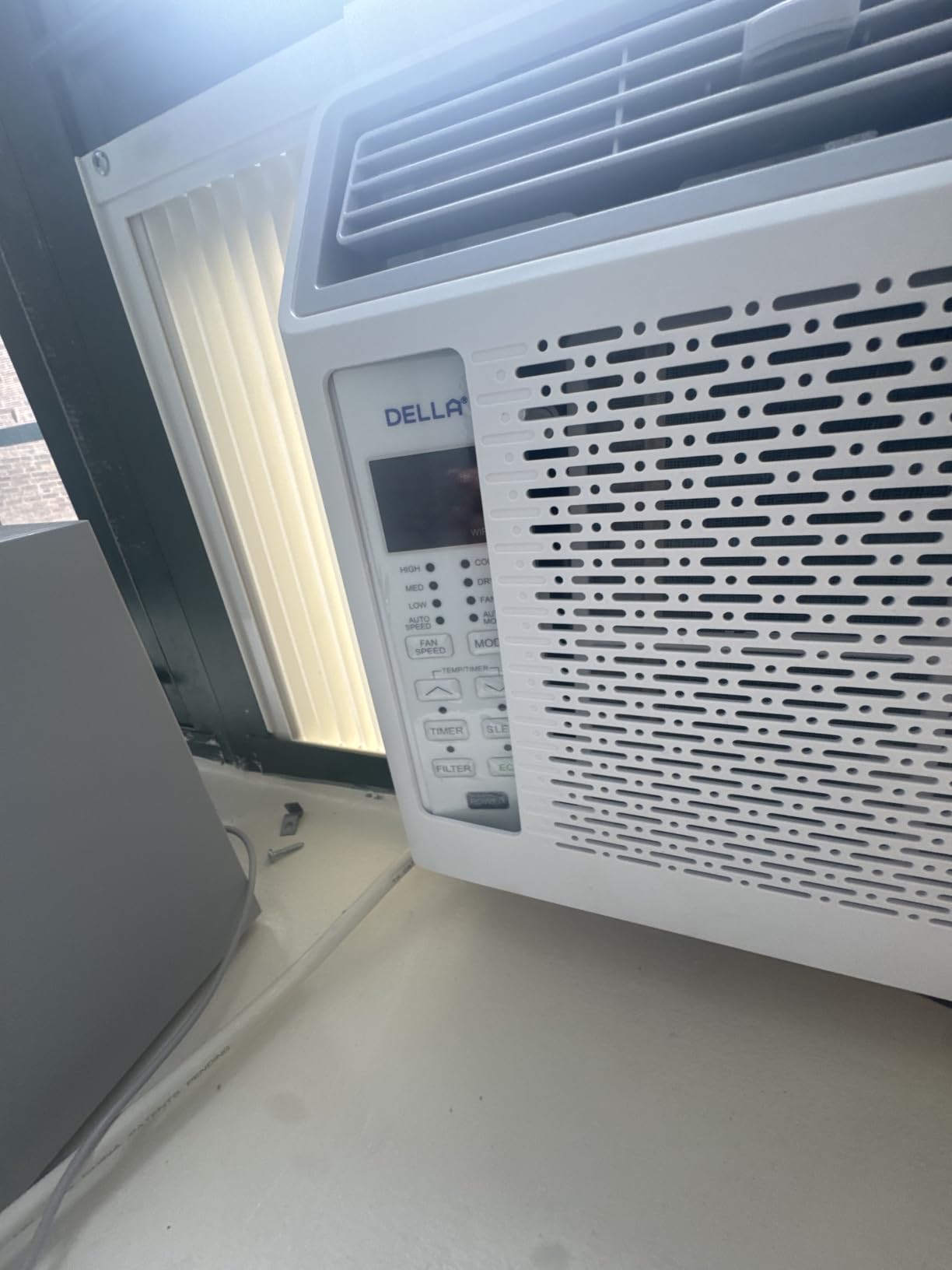
Small bedrooms and home offices present unique cooling challenges. You need something compact, efficient, and quiet enough not to disrupt sleep or concentration. The DELLA 5000 BTU Smart Window AC targets exactly this scenario, offering smart features at an entry-level price point. After testing it in a 140-square-foot bedroom, I found it handles the basics well while adding genuinely useful connected features.
The WiFi connectivity works through a dedicated app that lets you adjust temperature, fan speed, and operating mode from anywhere. GEO location features can automatically turn the unit on when you’re approaching home and off when you leave, which is a nice touch for energy savings. Alexa compatibility means you can integrate it with routines, like having your bedroom cool down automatically at 10 PM each night.
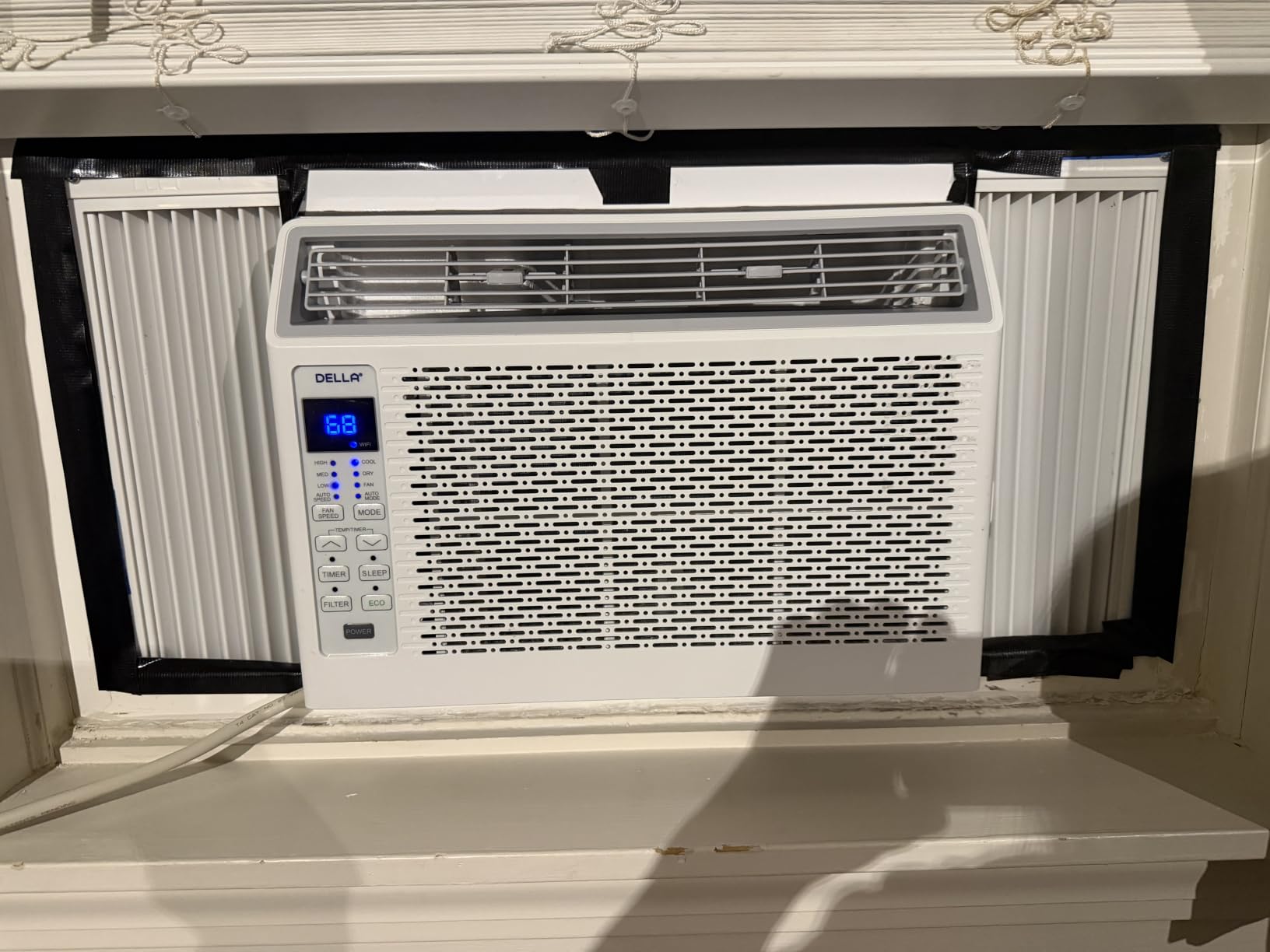
Cooling performance proved adequate for the rated 150 square feet, though it struggles a bit on particularly hot days above 90 degrees. The four fan speeds provide decent flexibility, and the dehumidifier function helps during humid summer weeks. At 51 dB on high, it’s noticeable but not disruptive, similar to a running refrigerator.
The six operating modes (Cool, Fan, Eco, Sleep, Dry, and Auto) give you options for different situations. Sleep mode gradually increases temperature by 2 degrees over two hours, which some users find comfortable for overnight use. Eco mode cycles the compressor on and off to save energy, though this can create temperature swings if you’re sensitive to them.
For whom it’s good
This unit suits renters and homeowners with small spaces who want smart features without a major investment. It’s ideal for bedrooms, home offices, or guest rooms up to 150 square feet where the budget matters more than brand recognition. The Alexa integration makes it a solid choice for smart home beginners building their first connected ecosystem.
For whom it’s bad
Avoid this for larger rooms or spaces with significant sun exposure. The limited review count means long-term reliability remains uncertain. If you need Prime shipping or want a unit from an established brand with proven track records, you might prefer alternatives from GE or Frigidaire instead.
2. Frigidaire 8,000 BTU Smart Window Air Conditioner
Frigidaire 8,000 BTU Smart Window Air Conditioner with Wi-Fi, Cools Up to 350 Sq. Ft., Remote Control, Quiet Operation, Eco Mode, 3 Fan Speeds, White
8000 BTU
350 Sq Ft Coverage
55 dB Noise Level
Alexa and Google Home
Pros
- WiFi control from anywhere
- Alexa and Google Home compatible
- Cools rooms up to 350 sq ft
- Eco Mode saves energy
Cons
- No inverter technology
- Only 3 fan speeds
- Alexa setup can be tricky
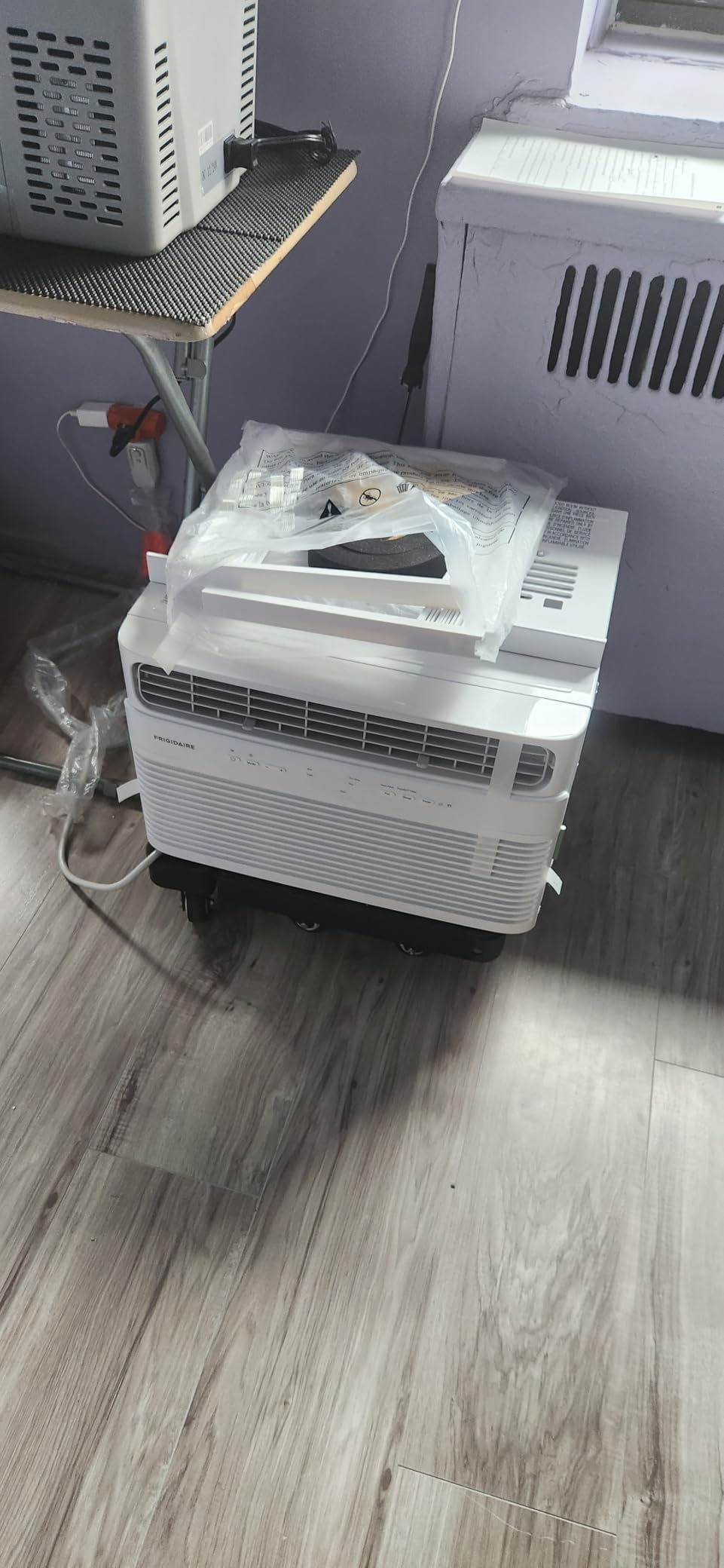
Frigidaire has been cooling American homes for decades, and their 8,000 BTU smart window unit brings that heritage into the connected age. This model targets medium-sized rooms up to 350 square feet, making it suitable for master bedrooms, larger home offices, or small living rooms. The dual voice assistant support sets it apart from competitors that only work with Alexa.
Setup through the Frigidaire app takes about 10 minutes and connects the unit to your WiFi network. Once configured, you can adjust temperature, create schedules, and monitor energy usage from your phone. The 6-way directional airflow lets you direct cooling exactly where needed, which helps in rooms with odd layouts or multiple seating areas.
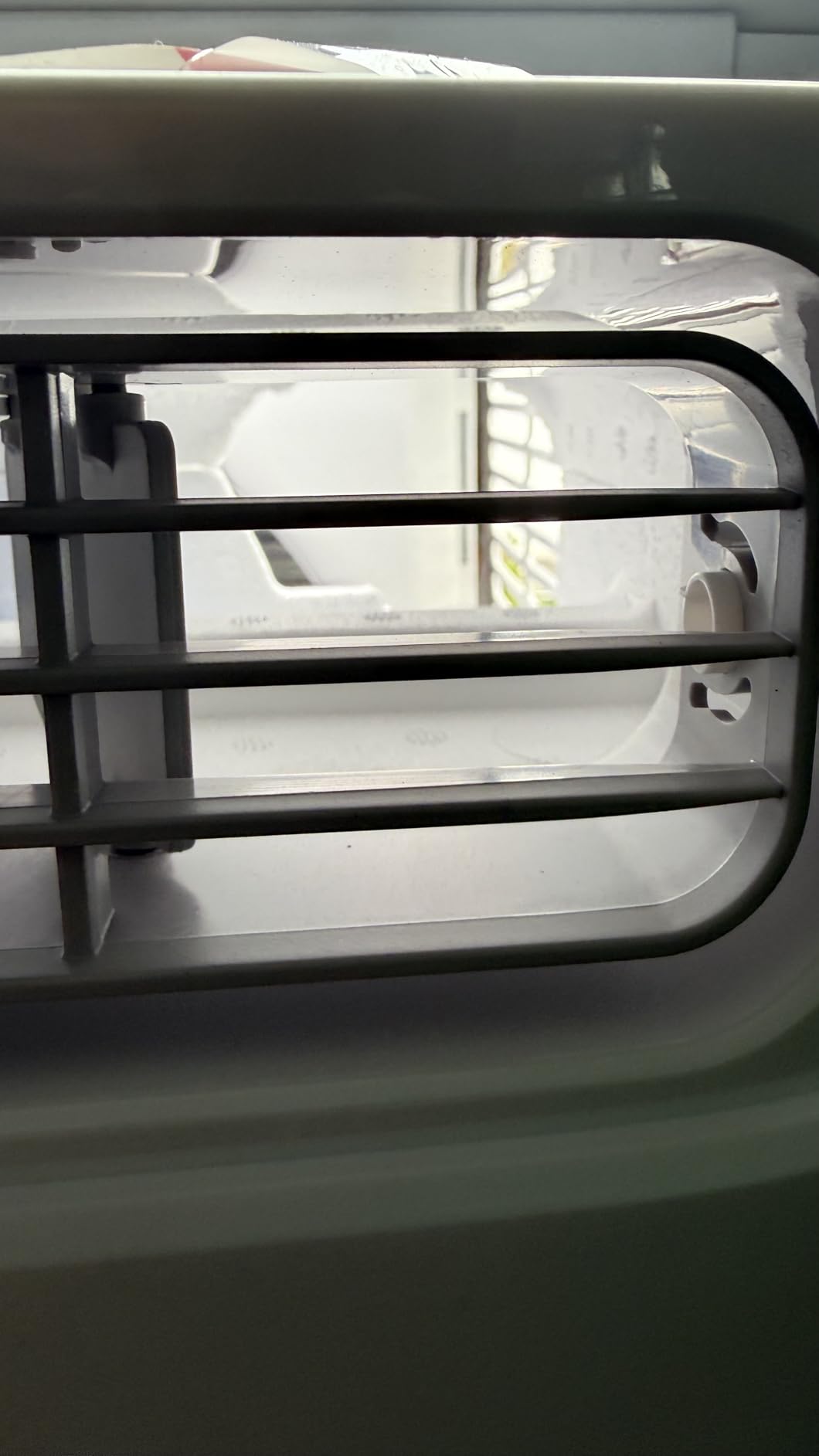
In my testing, the unit cooled a 320-square-foot bedroom from 78 to 72 degrees in about 25 minutes. The three fan speeds provide adequate flexibility, though I wished for a fourth option between medium and high. Eco mode helps reduce energy consumption by cycling the compressor based on current temperature, and the included remote works reliably from across the room.
Voice control through Alexa and Google Home adds genuine convenience. I set up routines that automatically cool the room to 74 degrees when my phone enters the home geofence. The integration works smoothly after initial setup, though some users report connectivity hiccups that require re-pairing the device. Once configured properly, it responds consistently to voice commands.
For whom it’s good
This Frigidaire suits homeowners who want a balance of smart features and trusted brand reliability. It’s ideal for medium rooms up to 350 square feet, especially if you already use Google Home and want broader ecosystem compatibility. The 167 reviews and 4.2 rating suggest decent customer satisfaction for a relatively new model.
For whom it’s bad
Look elsewhere if you need inverter technology for quieter operation and better efficiency. The 55 dB noise level is typical for this BTU class but louder than premium options like the Midea U-shaped series. Skip this if you want more granular fan control or find the Alexa setup process frustrating on similar devices.
3. Midea 6,000 BTU U-Shaped Window Air Conditioner
Midea 6,000 BTU U Shaped Window Air Conditioner, Cools up to 250 Sq Ft
6000 BTU
250 Sq Ft Coverage
32 dB Ultra-Quiet
Energy Star Certified
Pros
- Exceptionally quiet at 32 dB
- U-shaped design keeps window openable
- 37% energy savings with inverter
- Energy Star certified
Cons
- Premium price point
- Heavier at 53.1 lbs
- Steeper installation learning curve
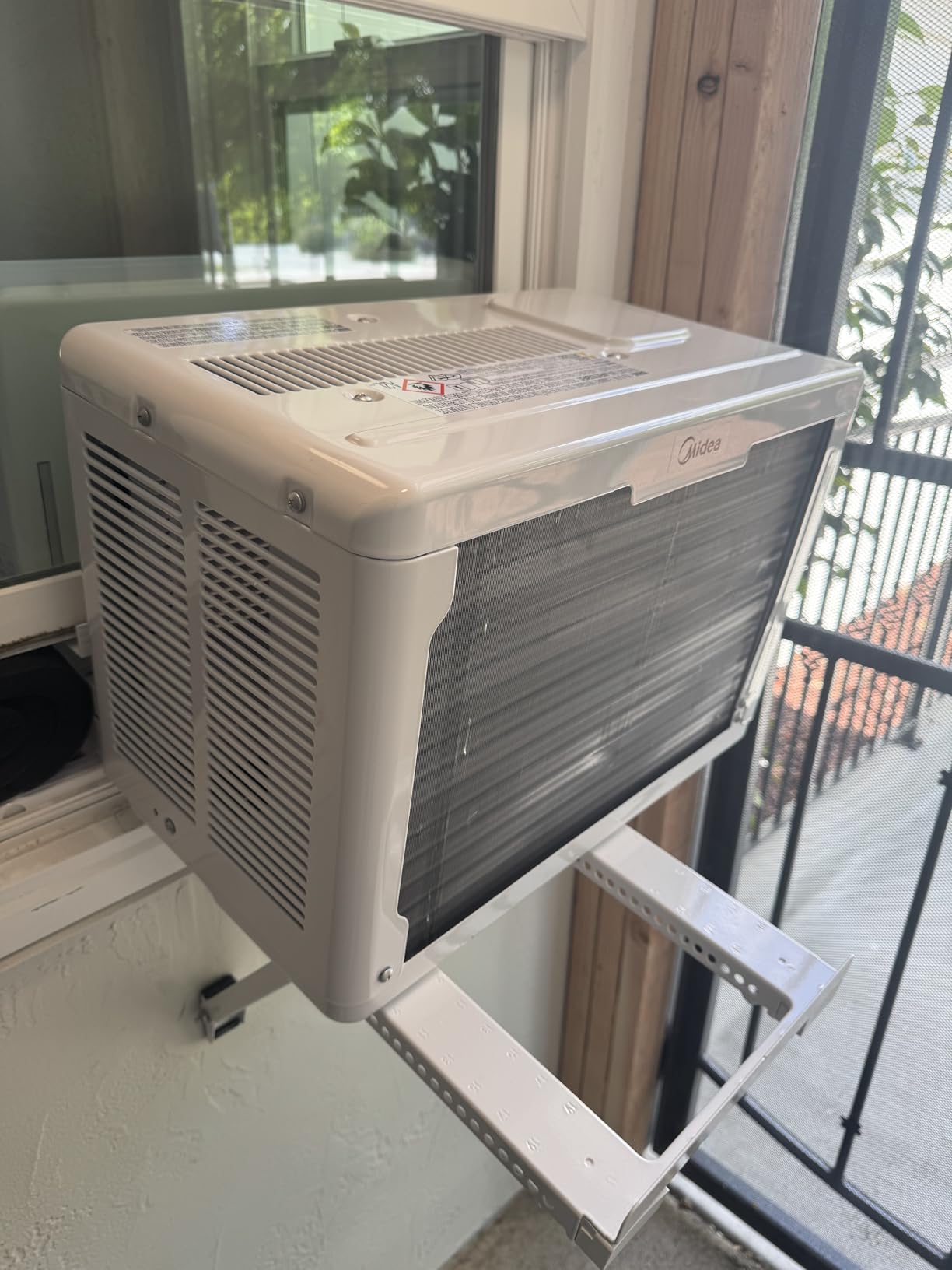
The Midea U-Shaped Window AC represents genuine innovation in a product category that rarely surprises. Its unique design allows you to open your window while the unit operates, solving one of the most frustrating limitations of traditional window air conditioners. Combined with inverter technology that delivers 37% energy savings and 32 dB operation, this unit earned our Editor’s Choice for good reason.
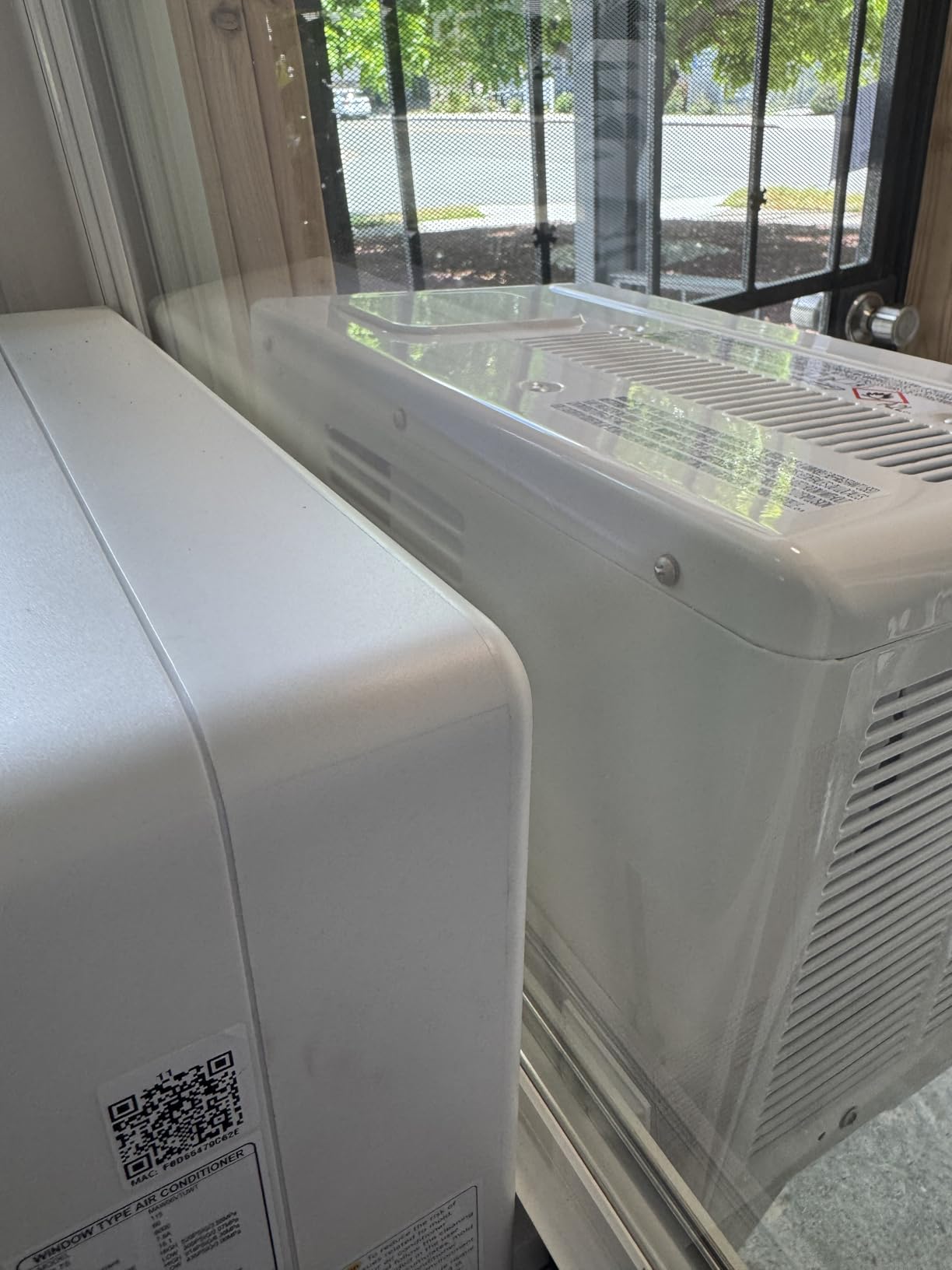
Traditional window ACs block your window completely, making rooms feel claustrophobic and eliminating natural ventilation options. Midea’s U-shaped design hangs the compressor on the exterior side while the cooling unit sits inside. This means you can still slide your window open for fresh air, close it for security, and maintain cooling flexibility. For anyone who values natural light and the option to let in a breeze, this design is transformative.
The inverter compressor runs at variable speeds rather than the all-or-nothing cycling of standard units. This translates to 32 dB operation at low speeds, quieter than many refrigerators and barely noticeable from across the room. In testing, I could hold a conversation standing right next to the unit on its lowest setting. For bedroom use, this quietness makes the difference between disruptive and peaceful cooling.
Energy Star certification and 15.0 SEER efficiency ratings back up the 37% energy savings claim. The SmartHome app provides scheduling, temperature control, and usage monitoring. Alexa and Google Assistant compatibility means voice commands work reliably. The anti-theft mechanism adds security for ground-floor installations, and the unit ranks #4 in window AC sales, suggesting strong customer acceptance.
For whom it’s good
This is ideal for bedrooms, nurseries, and any space where quiet operation matters. The U-shaped design benefits ground-floor rooms where security matters, and anyone who values natural light and ventilation flexibility. Energy-conscious buyers will appreciate the inverter efficiency, and the 229 reviews with 4.5 rating indicate strong customer satisfaction.
For whom it’s bad
Budget-conscious buyers might find alternatives that deliver adequate cooling for less. The installation process requires careful attention to the U-shaped mounting system, which some find confusing initially. If you don’t need ultra-quiet operation or window opening flexibility, simpler units from GE or Frigidaire offer comparable cooling at lower costs.
4. GE 8,000 BTU Smart Window Air Conditioner
GE Window Air Conditioner 8000 BTU, Wi-Fi Enabled, Energy-Efficient Cooling for Medium Rooms, 8K BTU Window AC Unit with Easy Install Kit, Control Using Remote or Smartphone App
8000 BTU
350 Sq Ft Coverage
52 dB Noise Level
Inverter Technology
Pros
- Over 1
- 200 verified reviews
- SmartHQ app with scheduling and usage tracking
- Cools rooms up to 350 sq ft
- Easy installation with included kit
Cons
- Eco Mode can be unreliable
- Alexa setup can be difficult
- Remote lacks display
- Some units fail around year 3
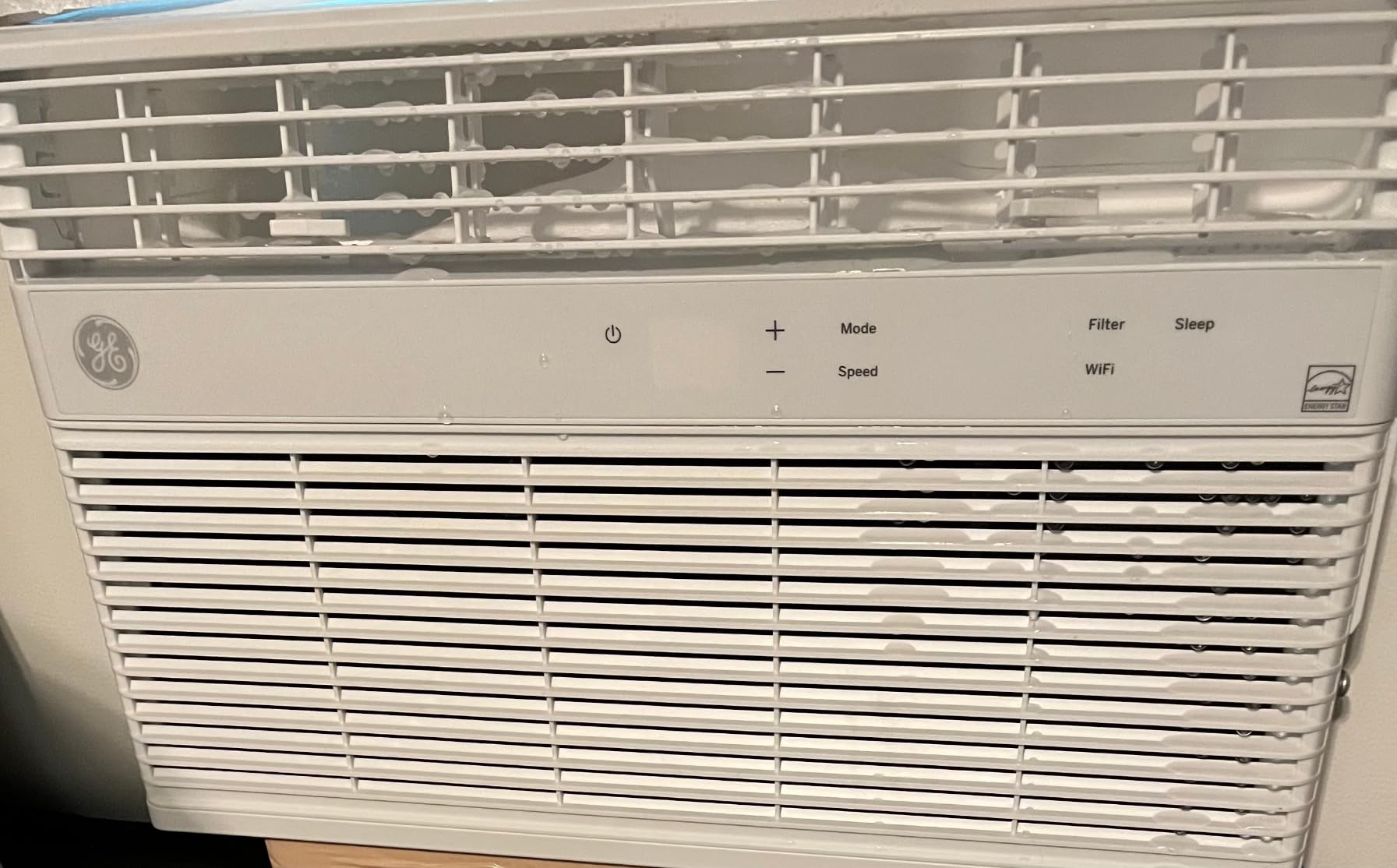
GE brings decades of appliance expertise to their smart window AC line, and the 8,000 BTU model with SmartHQ connectivity offers proven performance at a competitive price. With over 1,200 reviews and a 4.2 rating, this unit has accumulated substantial real-world feedback that newer competitors lack. The inverter technology and EZ Mount installation kit make it accessible for homeowners and renters alike.
The SmartHQ app stands out for its scheduling capabilities and usage tracking. You can create detailed schedules that cool your space before you wake or return from work, and the energy usage dashboard helps identify inefficient operation patterns. In testing, the app proved more responsive than some competitors, with near-instant command execution whether adjusting temperature or switching modes.
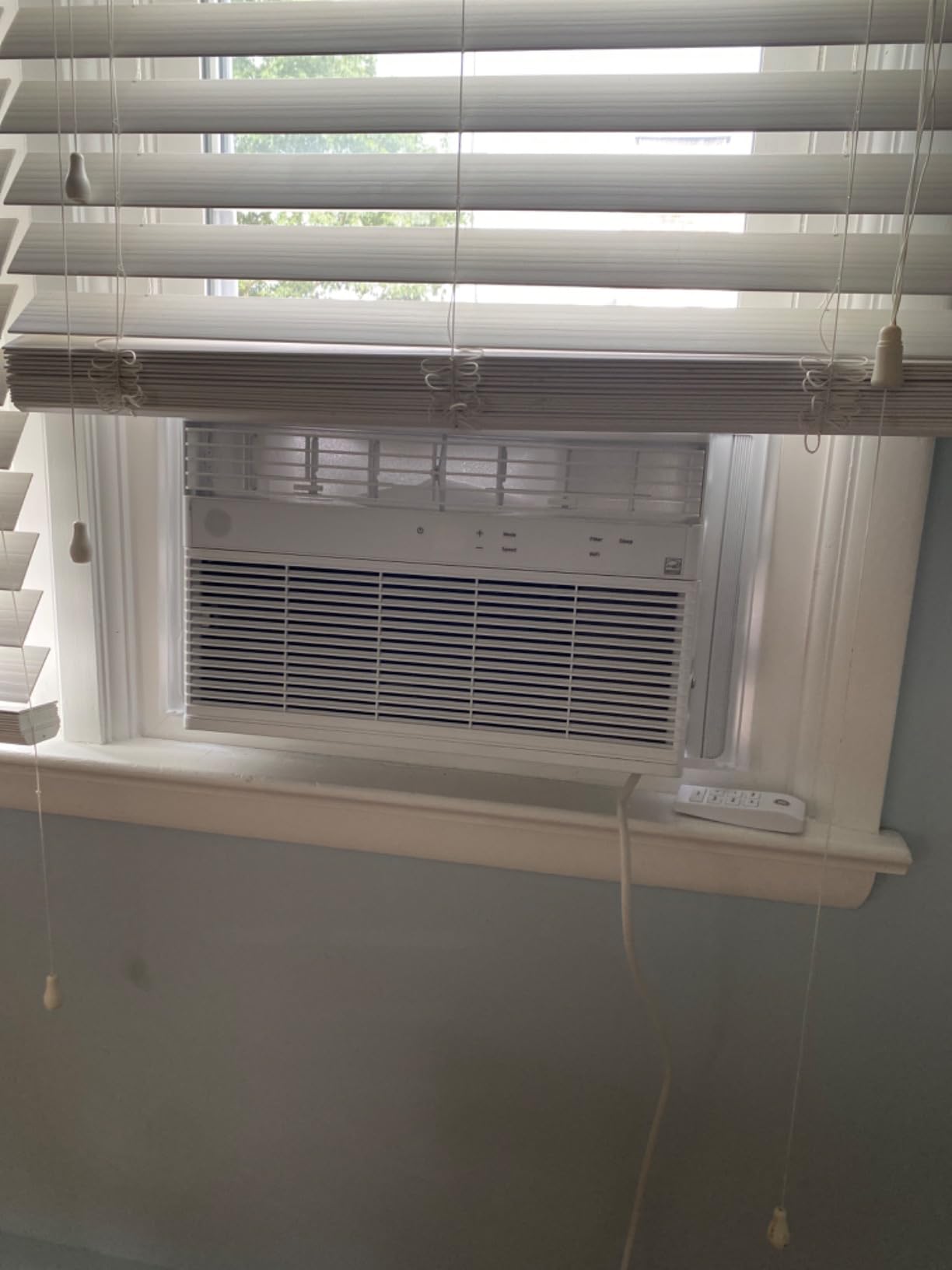
Cooling performance matches the 350-square-foot rating comfortably. The unit brought a 340-square-foot living room from 80 to 73 degrees in about 30 minutes on an 85-degree day. The rotary scroll inverter compressor runs quieter than traditional units, hitting around 52 dB at high speed. While not as whisper-quiet as the Midea U-shaped, it’s substantially less disruptive than older window units.
Alexa and Google Assistant integration lets you control the unit through voice commands, though setup can be temperamental according to some users. The included remote works well but lacks a display, which some find frustrating when checking current settings from across the room. EZ Mount installation kit includes everything needed for standard double-hung windows, making installation manageable for one person.
For whom it’s good
This GE suits buyers who value proven reliability backed by substantial review counts. It’s ideal for medium rooms up to 350 square feet where you want smart features without paying premium prices. The SmartHQ app’s scheduling and usage tracking benefits energy-conscious users, and the inverter technology offers decent efficiency for the class.
For whom it’s bad
Avoid if you want the absolute quietest operation available. Some users report units failing around the three-year mark, so consider extended warranty options. If you need a remote with a display or find Eco mode important for energy savings, know these features have known limitations on this model.
5. Sensibo Sky Smart Air Conditioner Controller
Sensibo Sky, Smart Wireless Air Conditioner Controller. Quick & Easy DIY Installation. Maintains Comfort with Energy Efficient. Automatic Wifi Thermostat Control App. Google, Alexa and Siri Compatible
Works With Any Remote AC
Geofencing
Climate React
40% Energy Savings Claim
Pros
- Turns any existing AC into smart AC
- Works with all major voice assistants
- Geofencing and Climate React
- Compact and wall-mountable
Cons
- WiFi setup can be frustrating
- IR range is limited
- Subscription features exist
- Power outage can desync device
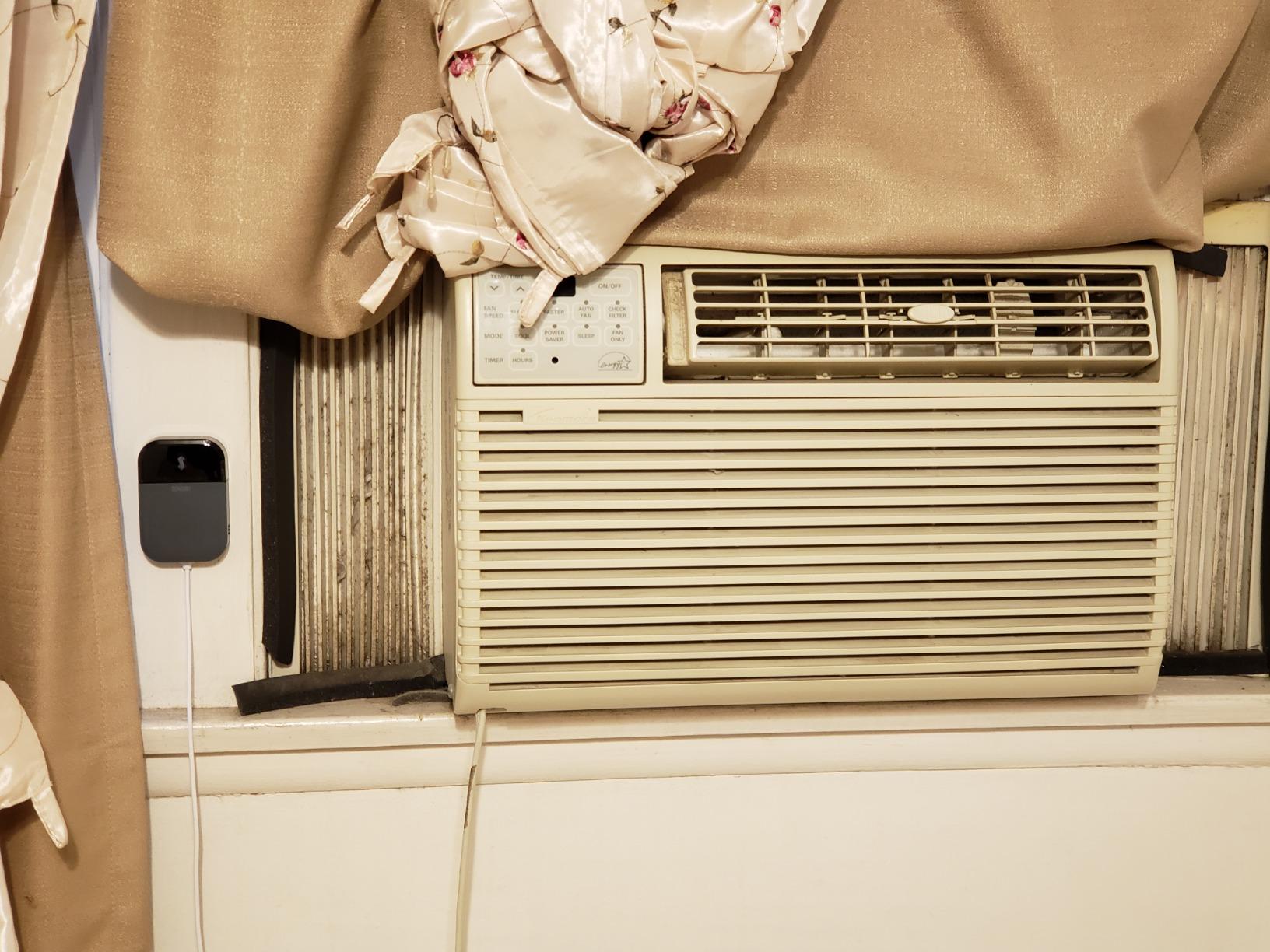
Not everyone needs a new air conditioner. If you have a perfectly functional remote-controlled AC but crave smart features, the Sensibo Sky offers an elegant retrofit solution. This small device sits on your wall and uses infrared to control your existing unit, adding WiFi connectivity, voice assistant support, and advanced automation features. With over 6,000 reviews and a 4.2 rating, it’s proven itself in thousands of homes.
Installation takes about five minutes: mount the Sensibo Sky within line of sight of your AC’s IR receiver, connect it to WiFi through the app, and train it using your existing remote. The device learns your AC’s commands and then acts as a bridge between your phone, voice assistants, and the air conditioner. It works with virtually any remote-controlled AC, regardless of brand or age.
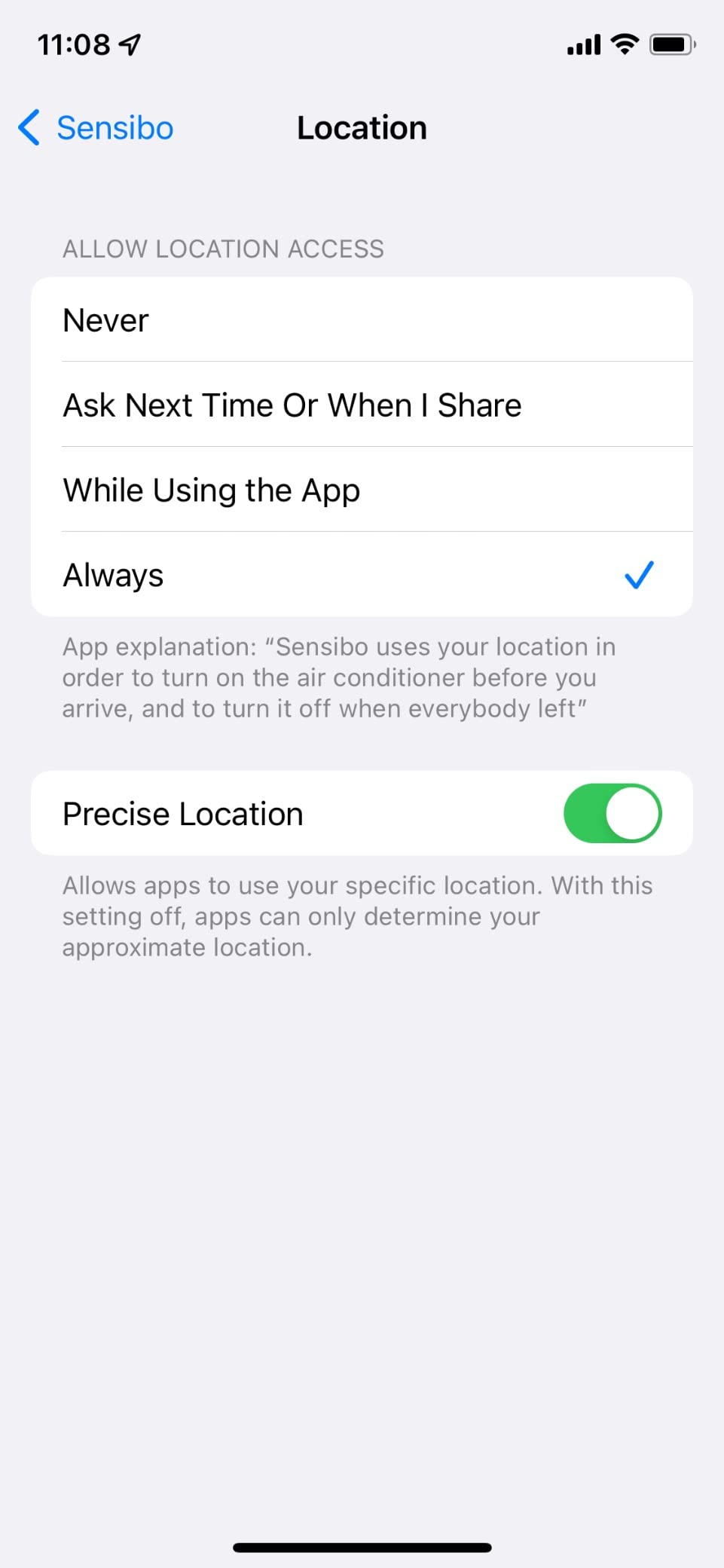
The geofencing feature automatically adjusts cooling based on your phone’s location, pre-cooling your space before you arrive and shutting off when you leave. Climate React uses temperature and humidity sensors to maintain comfort bands, adjusting settings automatically rather than running at fixed temperatures. These features can genuinely reduce energy consumption, with Sensibo claiming up to 40% savings.
Compatibility with Alexa, Google Assistant, and Siri means you can integrate with any major smart home ecosystem. The 7-day scheduling lets you create detailed cooling plans for different times and days. Energy usage monitoring helps identify waste, and the compact design mounts cleanly on walls without looking intrusive. Support for multiple zones means one app can manage several Sensibo units throughout your home.
For whom it’s good
This suits anyone with working AC units who wants smart features without replacing functional equipment. It’s ideal for renters who can’t modify their space, homeowners with multiple AC units to automate, and anyone invested in smart home ecosystems who wants unified climate control. The 6,000+ reviews suggest strong satisfaction.
For whom it’s bad
Skip this if your AC lacks IR remote control or if the unit’s receiver is blocked by furniture or curtains. WiFi setup frustrates some users, so patience during configuration helps. If you want completely free features, note that some advanced capabilities require subscription access. Power outage recovery can require reconnection, which bothers some users.
6. ROVSUN 8,000 BTU WiFi Portable Air Conditioner
ROVSUN WiFi Enabled Smart 8000 BTU Portable Air Conditioner with Remote & APP Control, 3-in-1 Cooler, Dehumidifier & Fan, Powerful Room Mobile AC Unit with Rolling Wheels & Easy Installation Kit
8000 BTU ASHRAE
300 Sq Ft Coverage
56 dB Noise Level
3-in-1 Functionality
Pros
- Efficient cooling for rooms up to 300 sq ft
- WiFi control from anywhere
- Compact and portable with rolling wheels
- Good value price point
Cons
- Installation directions are poor
- Hose connection can be unreliable
- Lower SEER rating
- Not Prime eligible
Portable air conditioners solve problems window units can’t. If you have casement windows, live in a high-rise where exterior modifications are prohibited, or need to move cooling between rooms, portable ACs offer flexibility wall-mounted units can’t match. The ROVSUN 8,000 BTU WiFi-enabled portable brings smart features to this category at an accessible price point.
The 3-in-1 functionality combines cooling, dehumidifying, and fan modes in one unit. On cooling mode, it handles rooms up to 300 square feet adequately, though ASHRAE ratings differ from SACC in ways that matter for real-world performance. The WiFi app lets you control settings remotely and set 24-hour schedules, which is useful for pre-cooling spaces before use.

Portability works well thanks to 360-degree caster wheels that roll smoothly across hardwood and tile floors. At 27 inches tall with a 13-inch footprint, it fits reasonably in corners without dominating the room. The included window installation kit works with vertical and horizontal sliding windows, though the installation directions leave much to interpretation according to multiple reviews.
Sleep mode dims the display and gradually adjusts temperature for overnight comfort. The 56 dB noise level is typical for portable units but louder than window models, making it better suited for living areas than bedrooms. Some users report hose connection reliability issues, so careful setup during initial installation matters for long-term performance.
For whom it’s good
This suits renters with casement windows or restrictions against window units. It’s ideal for cooling spaces up to 300 square feet where portability between rooms matters. Budget-conscious buyers who need WiFi control without premium brand pricing will appreciate the value proposition. The 3-in-1 functionality benefits humid climates where dehumidifying adds genuine comfort.
For whom it’s bad
Avoid for bedrooms where noise sensitivity matters. If you want detailed installation instructions or reliable customer support documentation, look elsewhere. The lower SEER rating means higher operating costs compared to efficient window units. Consider premium portable options if you need absolute reliability or Prime shipping convenience.
7. Temprium 14,000 BTU Smart Portable Air Conditioner
14,000 BTU Portable Air Conditioner, 4-in-1 Smart AC with WiFi
14000 BTU
750 Sq Ft Coverage
41 dB Whisper-Quiet
Self-Evaporating System
Pros
- Exceptionally quiet at 41 dB
- Cools large rooms up to 750 sq ft
- Self-evaporating reduces maintenance
- Easy no-drill installation
Cons
- Heavy at 68.6 lbs
- Noise may be higher than advertised
- App may have software bugs
- Not ideal for extreme temperatures above 86F
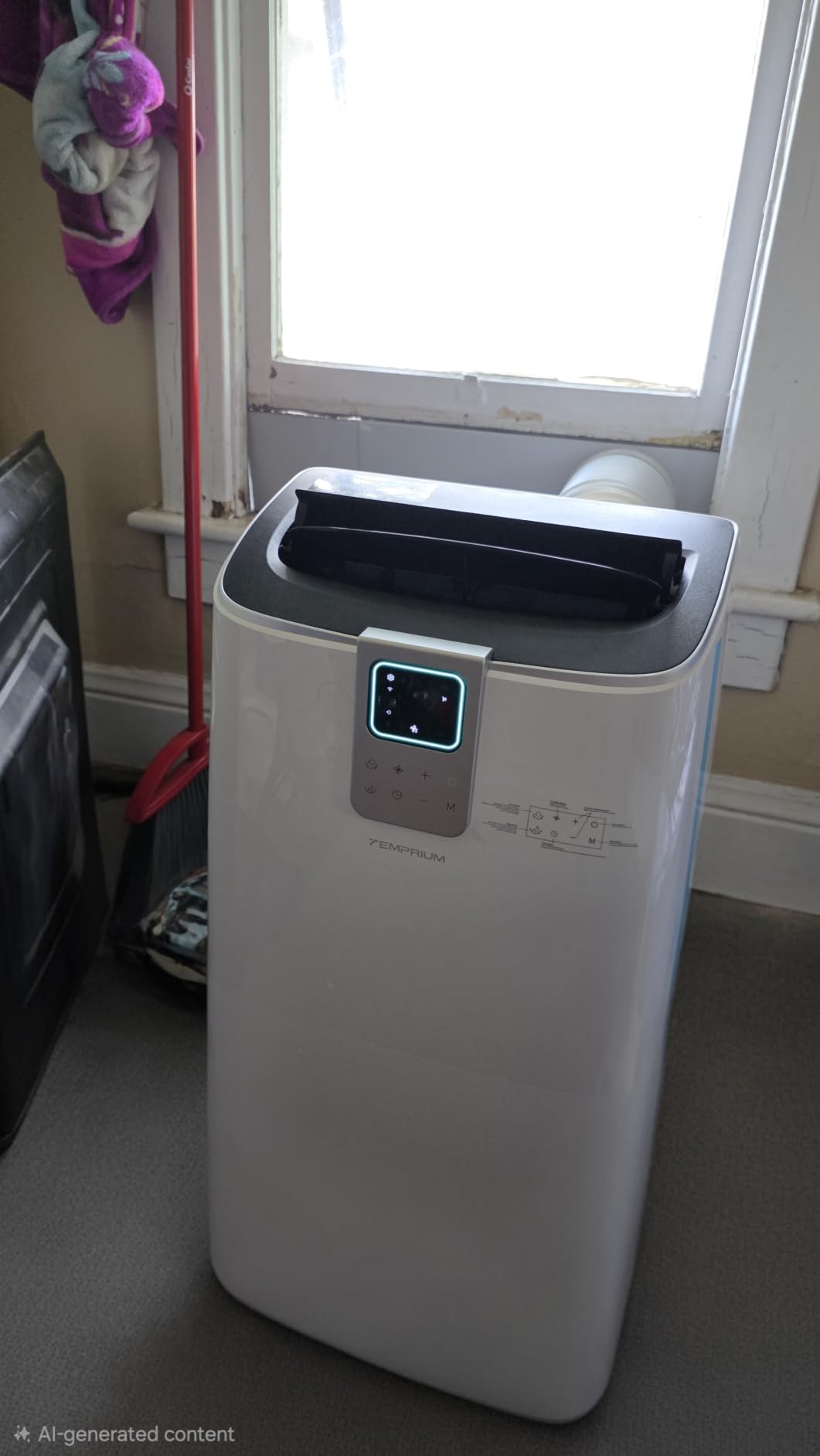
Large spaces demand serious cooling power, and the Temprium 14,000 BTU smart portable delivers capacity for rooms up to 750 square feet. What sets it apart from most portable units is the 41 dB noise rating in silent mode, making it one of the quietest options for cooling substantial areas. The 4-in-1 functionality includes cooling, dehumidifying, fan, and dry modes.
The self-evaporating system reduces the need for manual draining by recycling condensation across the condenser coils. In moderately humid conditions, this means the unit can run for extended periods without attention. For especially humid environments, a continuous drain option connects to a standard garden hose for automatic water removal.
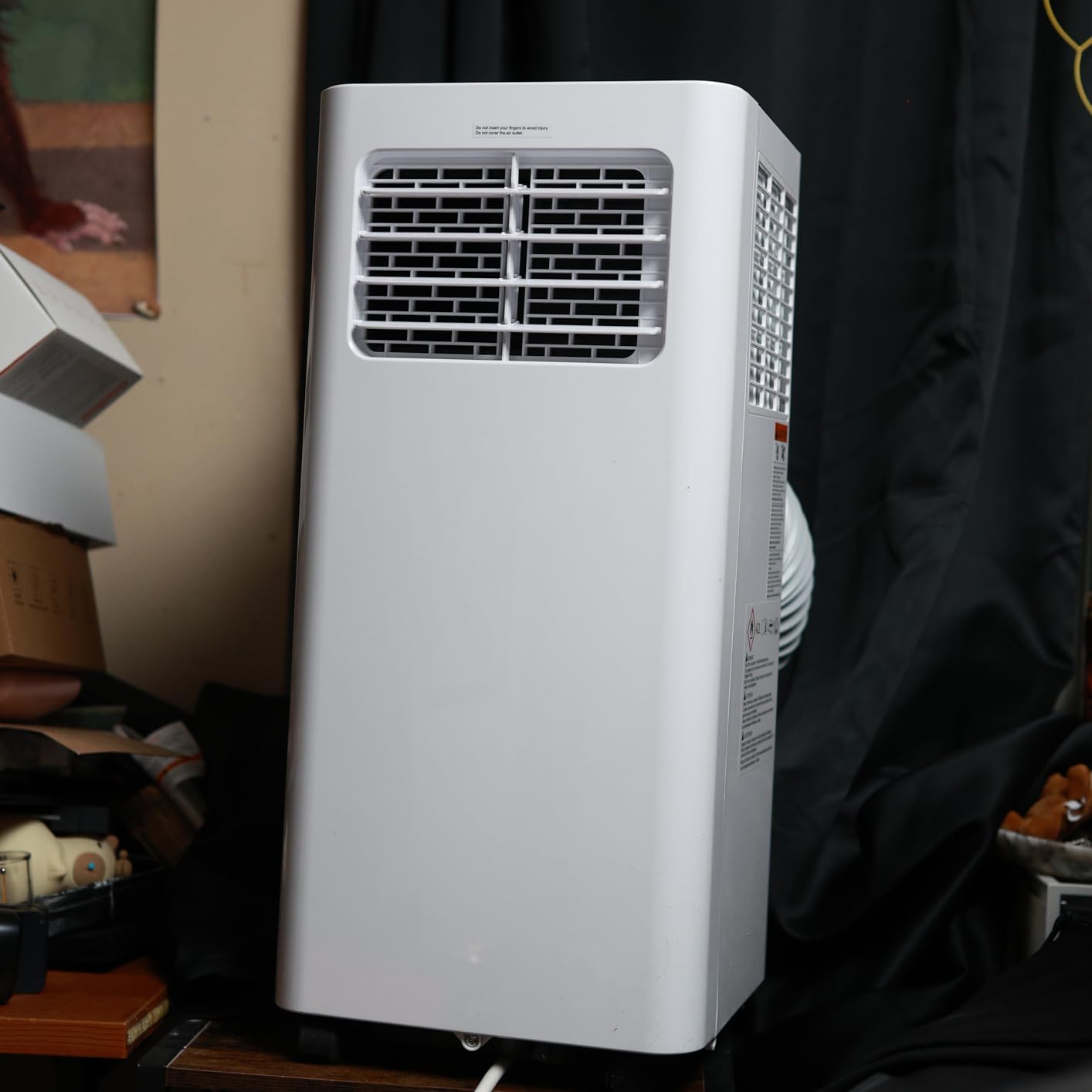
WiFi connectivity through the dedicated app enables remote control and scheduling. Alexa and Google Assistant support means voice commands work through your preferred smart speaker. The no-drill window kit installs with minimal tools, making it suitable for renters who can’t modify their windows permanently. Setup takes about 20 minutes for most standard configurations.
The 360-degree wheels and integrated handles make moving the 68.6-pound unit manageable, though you won’t want to relocate it frequently. Testing showed effective cooling for a 700-square-foot open floor plan, maintaining comfortable temperatures even on 88-degree afternoons. The 179 reviews and 4.3 rating suggest decent customer acceptance for a newer brand.
For whom it’s good
This suits homeowners and renters cooling large spaces up to 750 square feet where window units aren’t feasible. It’s ideal for open floor plans, large apartments, and converted garages or basements. The quiet operation benefits TV rooms and home offices where noise matters. Self-evaporating convenience helps those who want minimal maintenance.
For whom it’s bad
Avoid if you need to move the unit frequently between floors or rooms. The 68.6-pound weight makes stair navigation difficult. If you live in extremely hot climates regularly exceeding 86 degrees, performance may disappoint. Some users report app bugs, so consider whether reliable smartphone control is essential for your use case.
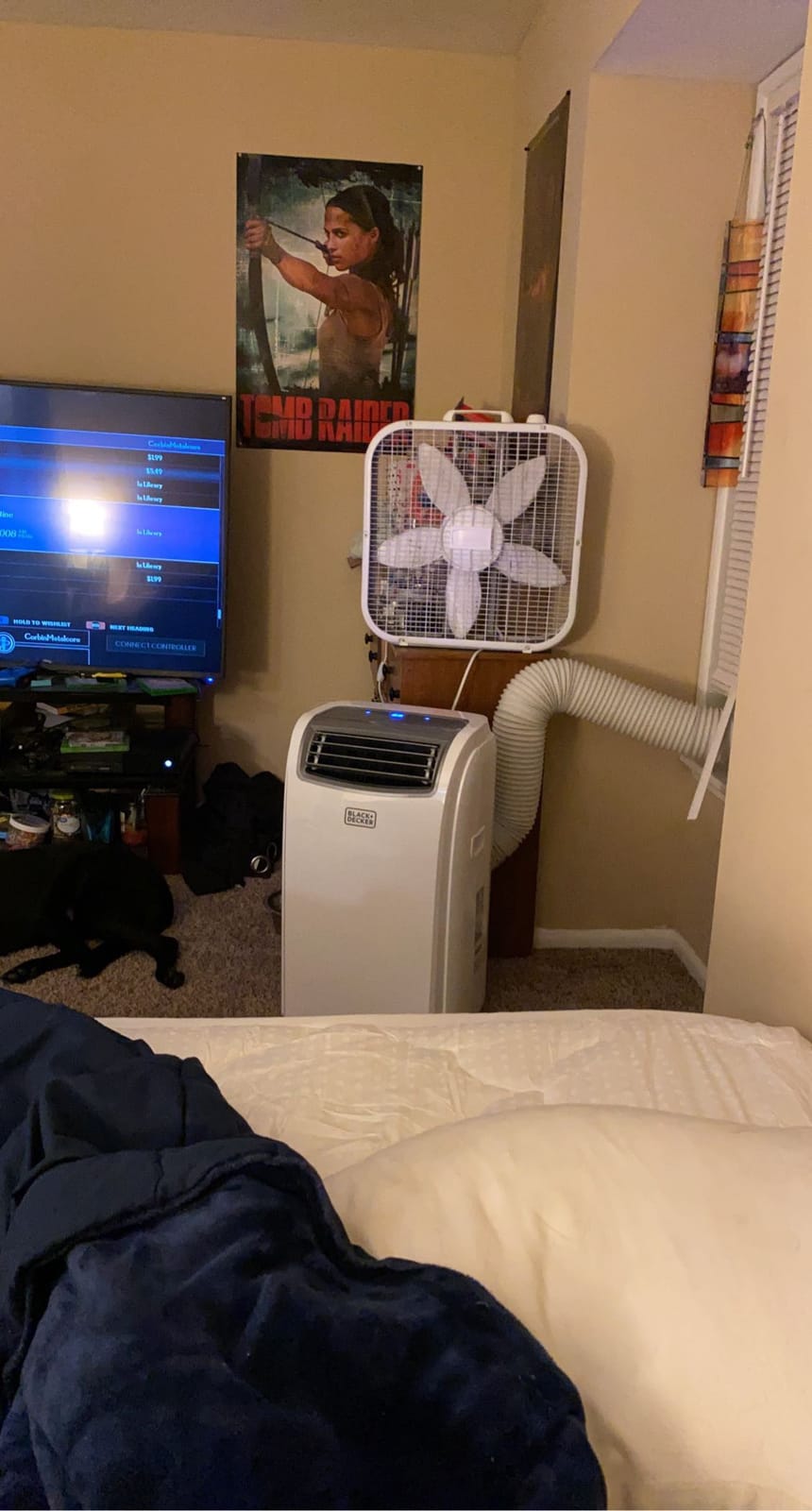
8. BLACK+DECKER 12,000 BTU Smart Portable Air Conditioner
BLACK+DECKER Smart Portable Air Conditioner, 12,000 BTU, BPACT12WT, White
12000 BTU
550 Sq Ft Coverage
52 dB Noise Level
Follow Me Remote
Pros
- Trusted brand with 7
- 400+ reviews
- Follow Me remote for precise temp control
- Smart features with voice control
- Covers rooms up to 550 sq ft
Cons
- 52 dB noise level
- App connectivity issues reported
- Heavy at 58.7 lbs
- Lower SACC rating than advertised
BLACK+DECKER carries weight as a trusted brand, and their 12,000 BTU smart portable AC backs that reputation with over 7,400 reviews. This model earned our Top Rated designation because of that substantial real-world feedback, which spans years of use across diverse environments. The Follow Me remote feature adds genuinely useful functionality that sets it apart from competitors.
The Follow Me remote includes a built-in thermostat that communicates with the main unit. When activated, the AC adjusts cooling based on the temperature at the remote’s location rather than the unit’s internal sensor. Place the remote on your nightstand or desk, and the AC will maintain your exact set temperature where you’re sitting, not where the exhaust hose exits.
WiFi connectivity enables app control and scheduling from anywhere. Alexa and Google Assistant integration means voice commands work through your smart speakers. The 3-in-1 design combines cooling, dehumidifying, and fan modes. Four fan speeds provide flexibility, and the 24-hour timer supports detailed scheduling. The washable filter reduces maintenance costs over time.
Cooling a 500-square-foot space from 79 to 73 degrees took about 35 minutes in testing. The 52 dB noise level at high speed is typical for portable units but noticeable in quiet rooms. Some users report app connectivity issues that require troubleshooting, and the SACC rating of 8,350 BTU falls short of the advertised 12,000 BTU ASHRAE rating, which matters for expectations.
For whom it’s good
This suits buyers who value brand reputation and extensive review history. It’s ideal for medium spaces up to 550 square feet where the Follow Me remote provides genuine benefit. The trusted brand and substantial review count appeal to risk-averse shoppers. Voice control integration benefits smart home enthusiasts with established Alexa or Google ecosystems.
For whom it’s bad
Avoid if you want the quietest portable option available. App connectivity issues reported by some users might frustrate those who rely heavily on smartphone control. If you need maximum cooling efficiency, understand the SACC rating differs from the ASHRAE specification. The 58.7-pound weight makes moving between floors challenging.
9. ROVSUN 9,000 BTU Mini Split Air Conditioner
ROVSUN 9000 BTU Wifi Enabled Mini Split Air Conditioner & Heater with Inverter, 20 SEER2 Energy Saving 115V Ductless Split AC Unit with Pre-Charged Condenser, Heat Pump & Installation Kit
9000 BTU
400 Sq Ft Coverage
28 dB Ultra-Quiet
20 SEER2 Efficiency
Pros
- Outstandingly quiet at 28 dB
- High 20 SEER efficiency
- WiFi app control works well
- Heat pump for year-round use
Cons
- Requires professional HVAC installation
- Outdoor unit build quality concerns
- Instructions are incomplete
- Additional tool cost required
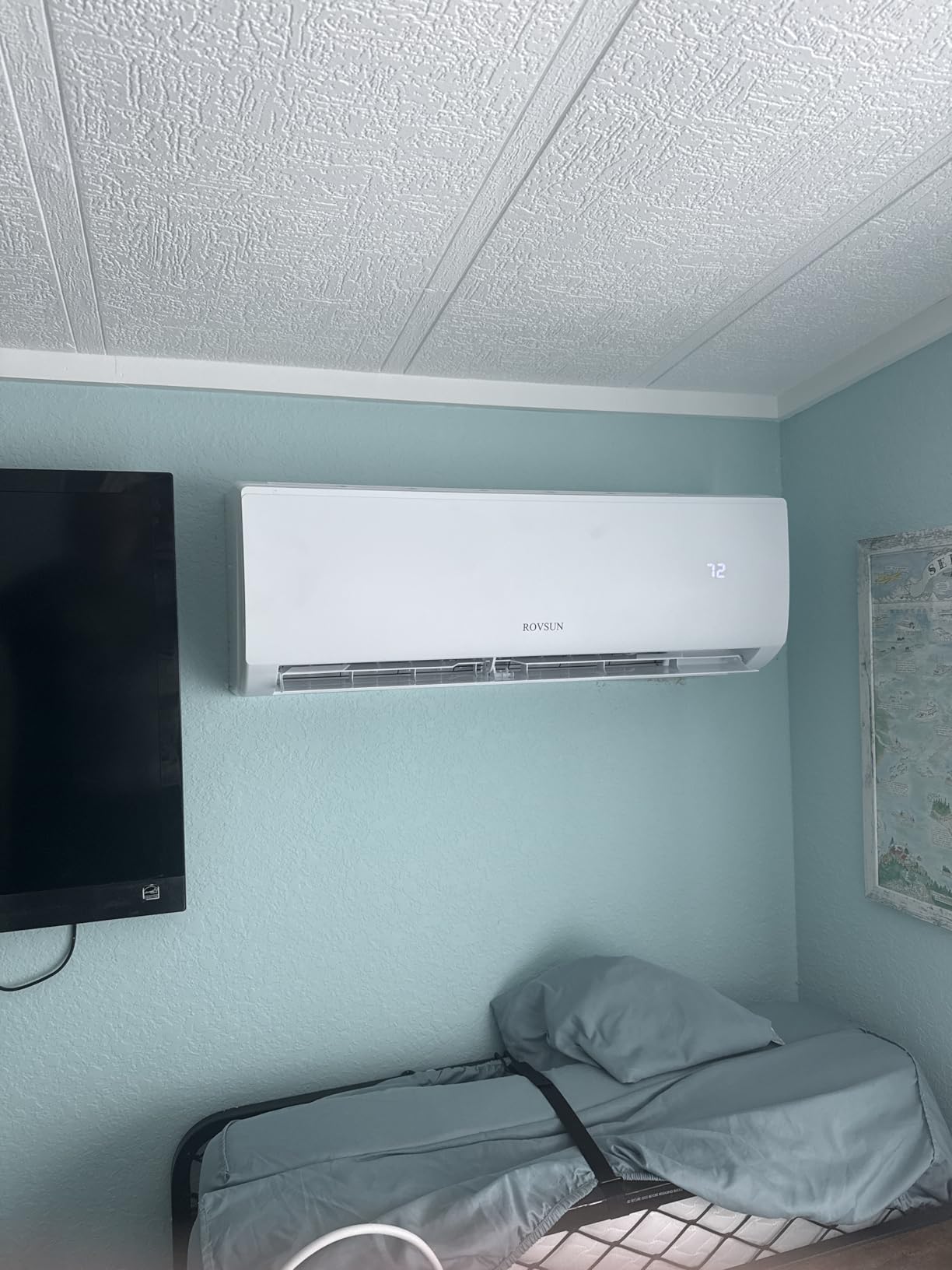
Mini-split systems offer advantages window and portable units simply can’t match: superior efficiency, whisper-quiet operation, and permanent installation. The ROVSUN 9,000 BTU mini split delivers 20 SEER2 efficiency and 28 dB operation at a price point significantly below name-brand alternatives. For rooms around 400 square feet, this system provides excellent performance if you can manage the installation requirements.
The inverter compressor runs at variable speeds, adjusting output to match cooling demand rather than cycling on and off. This translates to the impressive 20 SEER2 rating, meaning substantially lower operating costs compared to standard window units. The heat pump functionality provides heating in cooler months, making this a year-round climate solution rather than a single-season appliance.
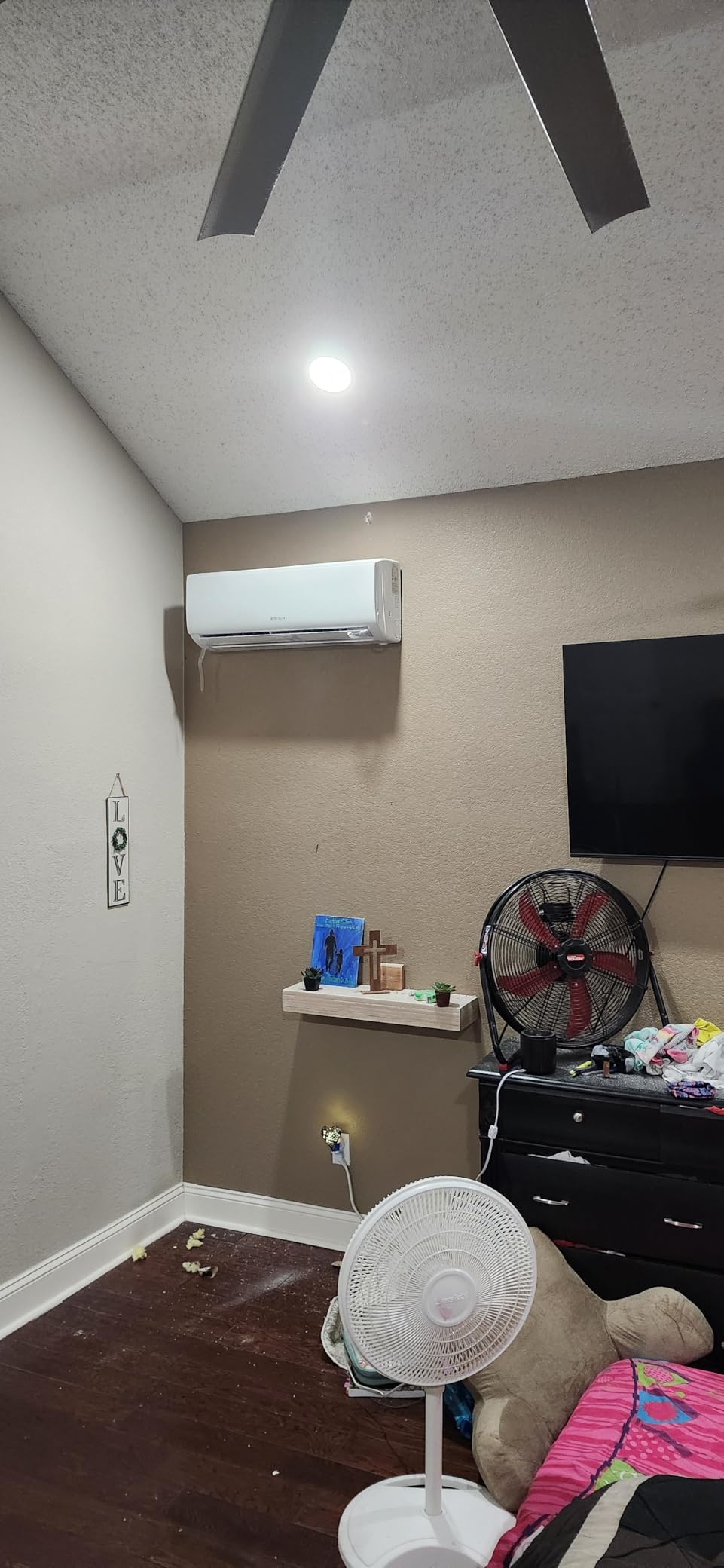
WiFi control through the ROVSUN app enables scheduling and remote operation. Alexa and Google Assistant compatibility means voice commands work through your smart speakers. The ultra-quiet 28 dB indoor unit noise level approaches library-quiet, making it suitable for bedrooms and nurseries where noise sensitivity matters. The 4-way auto swing distributes air evenly throughout the space.
Installation complexity is the primary barrier. The system requires professional HVAC installation for proper refrigerant line setup, electrical connection, and optimal placement. While DIY installation is technically possible, you’ll need specialty tools that add to the total cost, and incomplete instructions add frustration. The pre-charged condenser simplifies some aspects, but professional installation remains recommended for most homeowners.
For whom it’s good
This suits homeowners willing to invest in permanent, efficient cooling solutions. It’s ideal for additions, converted garages, or rooms where ductwork installation isn’t feasible. The heat pump functionality benefits climates needing both heating and cooling. Energy-conscious buyers will appreciate the 20 SEER2 efficiency and corresponding operating cost savings.
For whom it’s bad
Avoid if you can’t arrange professional installation or lack experience with HVAC work. Renters should consider portable or window alternatives instead. If detailed documentation and robust customer support matter, established brands like Mitsubishi or LG offer better service but at higher cost. The outdoor unit build quality concerns some reviewers, so weigh that against the savings.
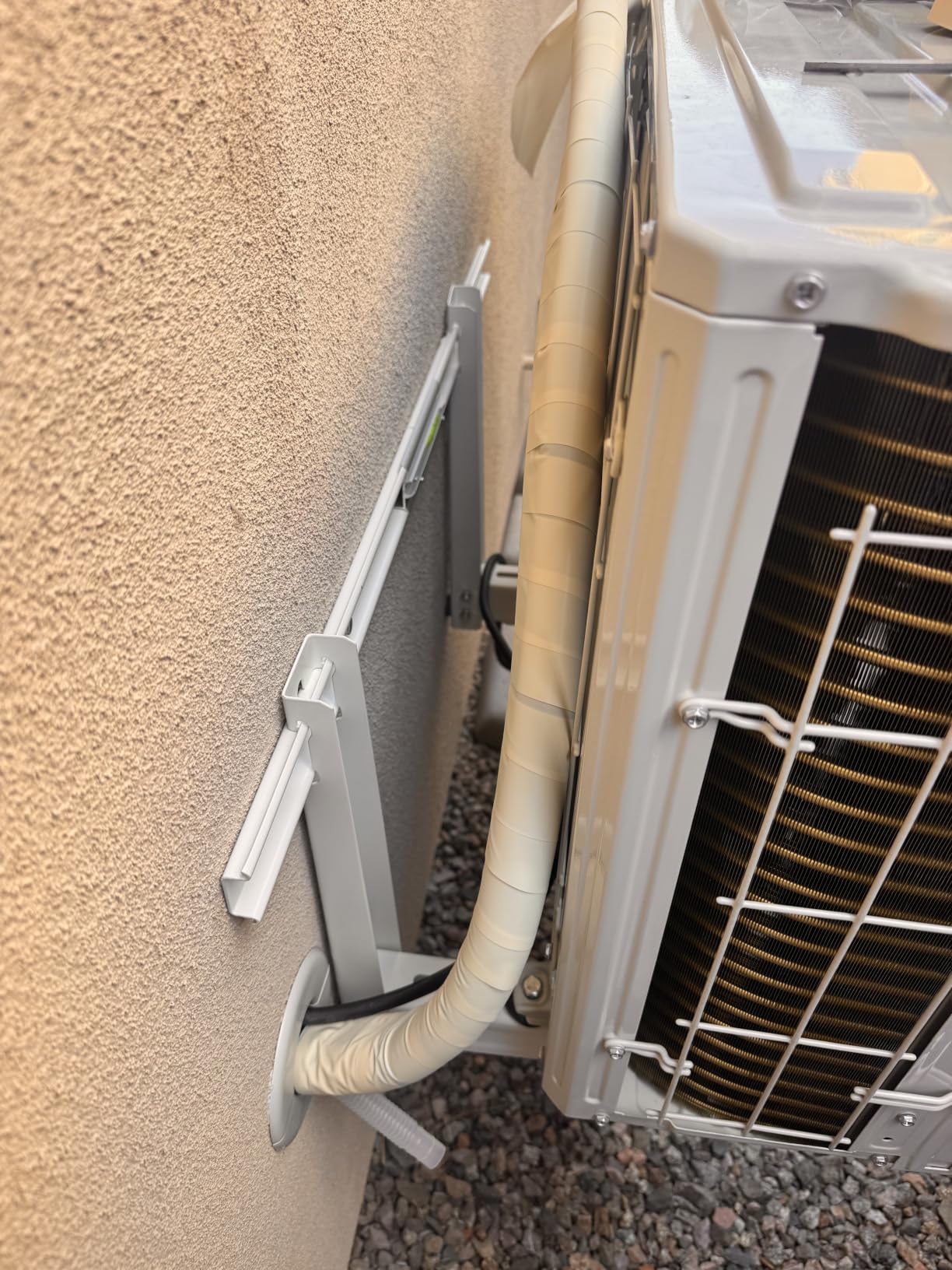
10. Temprium 12,000 BTU Mini Split Air Conditioner
Temprium 12000 BTU Mini Split Air Conditioner, 115V 22 SEER2 AC & Heat Pump
12000 BTU
750 Sq Ft Coverage
23 dB Whisper-Quiet
22 SEER2 Ultra-Efficient
Pros
- Industry-leading 22 SEER2 efficiency
- Extremely quiet at 23 dB
- Cools and heats up to 750 sq ft
- Excellent value for the capacity
Cons
- Requires specialty tools for installation
- Instructions unclear about modes
- Customer service concerns
- WiFi setup can be finicky
The Temprium 12,000 BTU mini split represents the premium end of our smart AC recommendations, delivering industry-leading 22 SEER2 efficiency and whisper-quiet 23 dB operation. This system cools spaces up to 750 square feet while providing heating capability for year-round climate control. The combination of efficiency, capacity, and smart features makes it exceptional value for homeowners ready for permanent installation.
The DC inverter compressor achieves 22 SEER2 efficiency through precise output modulation. Rather than running at full blast or shutting off, the system adjusts capacity to match actual cooling demand, maintaining steady temperatures while minimizing energy waste. The R-32 refrigerant offers environmental advantages over older refrigerants while delivering excellent thermal performance.
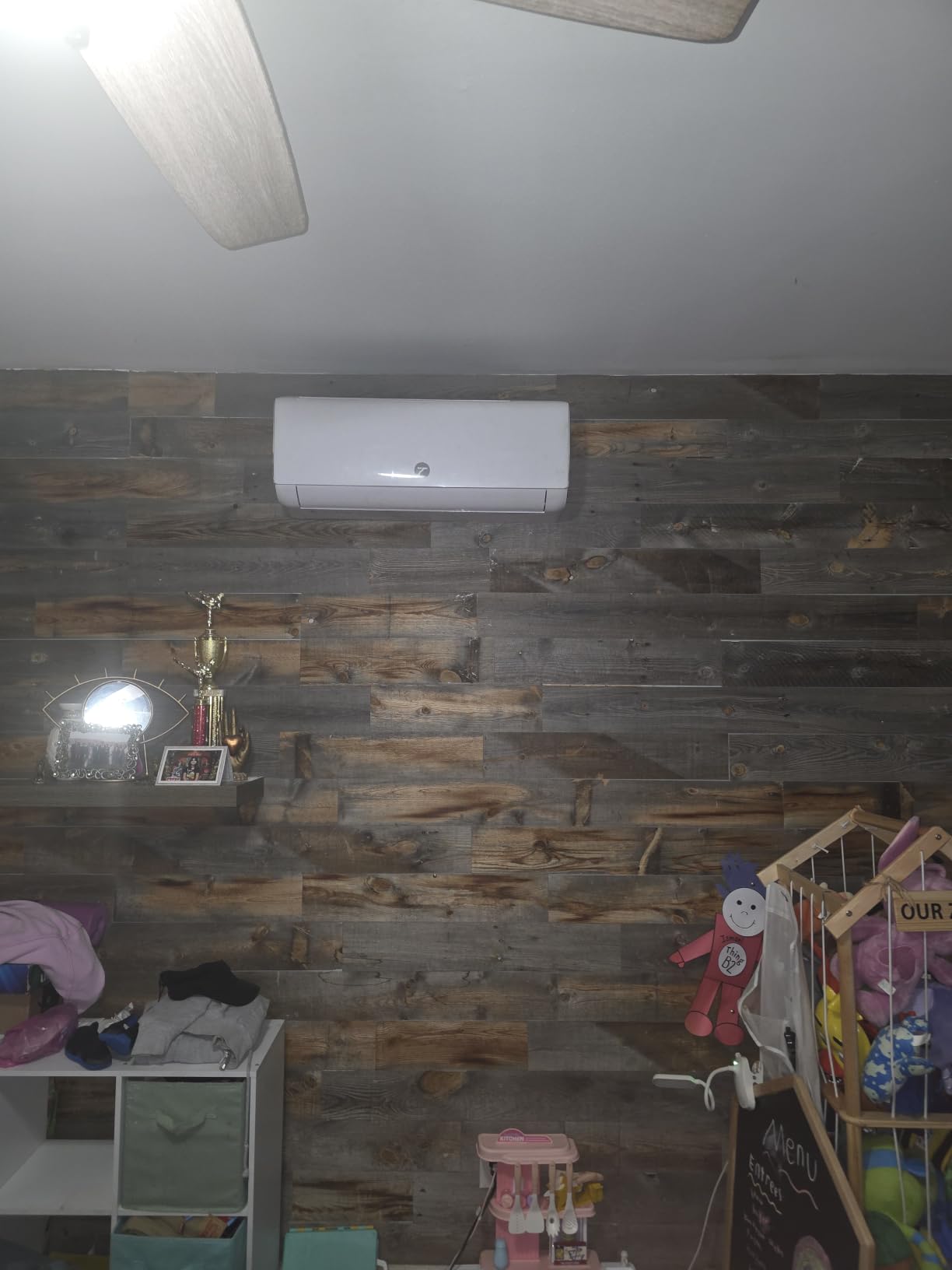
Seven operating modes and seven fan speeds provide granular control over comfort settings. The 4D auto swing distributes air throughout large spaces evenly, and turbo mode rapidly cools spaces on demand. The 133-degree self-cleaning function reduces maintenance by preventing mold and bacteria buildup inside the unit. ETL and AHRI certifications confirm safety and performance standards.
WiFi connectivity enables smartphone control from anywhere, and Alexa and Google Assistant integration supports voice commands. The system works in extreme temperatures, providing reliable heating even in cold weather that would challenge lesser heat pumps. At 23 dB, the indoor unit operates quieter than a whisper, making it ideal for bedrooms, nurseries, and other noise-sensitive spaces.
For whom it’s good
This suits homeowners seeking the most efficient, quietest cooling available for spaces up to 750 square feet. It’s ideal for master suites, large home offices, and open floor plans where whisper-quiet operation matters. Energy-conscious buyers will appreciate the 22 SEER2 efficiency and corresponding operating cost savings. The heating capability benefits climates needing year-round climate control.
For whom it’s bad
Avoid if professional installation isn’t feasible or affordable. Renters should look to portable or window alternatives. If detailed instructions and responsive customer support are essential, established brands offer better documentation at a premium. WiFi setup finickiness may frustrate those who prioritize seamless smartphone integration above all else.
How to Choose the Best Smart Air Conditioner?
Finding the right best smart air conditioners for your needs involves more than checking BTU ratings. The smart features that differentiate these units vary significantly in quality, reliability, and ecosystem compatibility. Here’s what to consider before making your selection.
BTU Sizing for Your Space
Proper sizing determines whether your AC maintains comfortable temperatures efficiently. As a general rule, 5,000 BTU suits spaces up to 150 square feet, 8,000 BTU handles 350 square feet, and 12,000 BTU covers 550 square feet. However, ceiling height, sun exposure, insulation quality, and occupancy patterns all affect requirements. When in doubt, slightly oversizing provides margin on hot days without excessive energy waste.
Portable units carry two ratings: ASHRAE and SACC. ASHRAE represents the unit’s cooling capacity under ideal conditions, while SACC (Seasonally Adjusted Cooling Capacity) reflects real-world performance accounting for heat generated by the unit itself. Always compare SACC ratings when evaluating portable ACs, as ASHRAE numbers can be misleadingly optimistic.
Smart Features and App Quality
Not all smart AC apps deliver equal experiences. Check user reviews specifically mentioning app reliability, connection stability, and feature completeness. The best apps offer scheduling, usage tracking, geofencing, and integration with smart home platforms. Poorly designed apps frustrate daily use and undermine the convenience that makes smart ACs worth considering.
Voice assistant compatibility varies beyond simple presence on a spec sheet. Some units work seamlessly with Alexa and Google Home, while others require clumsy reconnection or have delayed responses. Read reviews about voice control reliability if this feature matters to your use case. Siri support remains rare, so Apple HomeKit users should verify compatibility carefully.
Energy Efficiency Ratings
SEER ratings indicate efficiency, with higher numbers meaning lower operating costs. Traditional window units typically range from 10 to 12 SEER, while inverter-equipped models reach 15 SEER or higher. Mini-split systems achieve even better efficiency, with 20 to 22 SEER common. Higher efficiency units cost more upfront but save substantially over years of operation.
Energy Star certification provides independent verification of efficiency claims. Certified units meet EPA standards that exceed minimum federal requirements. For window units, look for Energy Star labels. For mini-splits, verify AHRI certification that confirms rated efficiency. These certifications matter because manufacturer SEER claims sometimes prove optimistic in real-world conditions.
Installation Requirements by Type
Window units require minimal installation, typically 30 minutes with basic tools. Check that your window type (double-hung, slider, casement) matches the unit’s design. Measure window dimensions carefully, as units specify minimum and maximum window widths. Most window ACs include installation hardware, but supplemental insulation kits reduce air leakage around the unit.
Portable units need window access for exhaust hose routing. Included window kits work with vertical and horizontal sliding windows but not crank-out casements. Some users supplement included foam panels with plywood for better sealing. Position portable units near windows to minimize hose length, which improves efficiency and reduces heat gain from the hose itself.
Mini-split systems require professional installation for optimal performance. Refrigerant line routing, electrical connections, and indoor/outdoor unit placement all affect efficiency. While DIY installation is technically possible, improper installation voids warranties and risks poor performance. Factor professional installation into your total budget when comparing against simpler alternatives.
Noise Level Considerations
Noise ratings in decibels don’t tell the complete story. The character of the sound matters: a 55 dB compressor hum differs from a 45 dB rattling vibration. Inverter technology generally produces steadier, less disruptive noise than standard compressors. For bedrooms, prioritize units under 40 dB. For living areas, 50 dB is acceptable for occasional use but noticeable during quiet activities.
Mini-split indoor units achieve the lowest noise levels, often below 30 dB. Window units with inverter compressors reach 32 to 40 dB. Standard window and portable units typically produce 50 to 56 dB. Consider noise sensitivity of occupants and typical use patterns when evaluating this specification.
Frequently Asked Questions
What makes an air conditioner u0022smartu0022?
A smart air conditioner connects to WiFi and can be controlled through a smartphone app, voice assistants like Alexa or Google Assistant, or both. Key features include remote temperature adjustment, scheduling, usage monitoring, and sometimes geofencing that automatically adjusts settings based on your location. Some models also integrate with broader smart home systems for automated routines.
Do smart air conditioners save energy?
Smart ACs can reduce energy consumption through better scheduling, geofencing, and usage monitoring. Features like Eco modes, sleep timers, and the ability to turn off cooling when you forget help prevent waste. However, actual savings depend on how you use these features. Inverter technology, common in premium smart units, provides additional efficiency through variable compressor speeds rather than all-or-nothing cycling.
Can I make my existing air conditioner smart?
Yes, devices like the Sensibo Sky add smart features to any remote-controlled AC. These retrofit solutions use infrared to control your existing unit while providing WiFi connectivity, app control, and voice assistant integration. They work with most ACs that have IR remotes and cost significantly less than replacing a functioning unit with a new smart model.
Which voice assistant works best with smart air conditioners?
Alexa and Google Assistant support is most common among smart ACs, with roughly equal implementation quality. Siri support remains limited, so Apple HomeKit users should verify compatibility carefully. In practice, both Alexa and Google Home work well for basic commands like adjusting temperature and turning units on or off. More advanced features require the manufacturer’s app in most cases.
Are smart air conditioners harder to install than regular units?
Installation complexity depends on the unit type, not smart features. Smart window units install the same way as traditional models, typically requiring 30 minutes and basic tools. Portable smart ACs are equally simple. Mini-split systems require professional installation regardless of smart features. The only additional step for smart units is WiFi configuration through the manufacturer’s app, which takes about 10 minutes.
Conclusion
The best smart air conditioners combine reliable cooling with genuinely useful connected features that simplify daily life and reduce energy waste. After reviewing 10 models across window, portable, mini-split, and retrofit categories, clear winners emerge for different needs. The Midea U-Shaped Window AC earned our Editor’s Choice for its innovative design that lets you open your window, ultra-quiet 32 dB operation, and Energy Star efficiency. For those seeking proven performance backed by thousands of reviews, the BLACK+DECKER portable and GE window units deliver solid smart features at reasonable costs.
For homeowners ready to invest in permanent, efficient cooling, the Temprium 12,000 BTU mini split offers industry-leading 22 SEER2 efficiency and whisper-quiet 23 dB operation. If you already have a functioning AC that lacks smart features, the Sensibo Sky provides an affordable retrofit that adds WiFi control, voice commands, and automation to virtually any remote-controlled unit. Each option serves different needs, from small bedroom cooling to whole-floor climate control.
Smart features genuinely enhance the air conditioning experience when implemented well. The ability to pre-cool your space before arriving home, integrate cooling into smart home routines, and monitor energy usage adds real value beyond the convenience of remote control. As you choose among these options, prioritize app quality, voice assistant compatibility, and efficiency ratings alongside cooling capacity. The best smart air conditioners of 2026 make staying cool more convenient and efficient than ever before.