
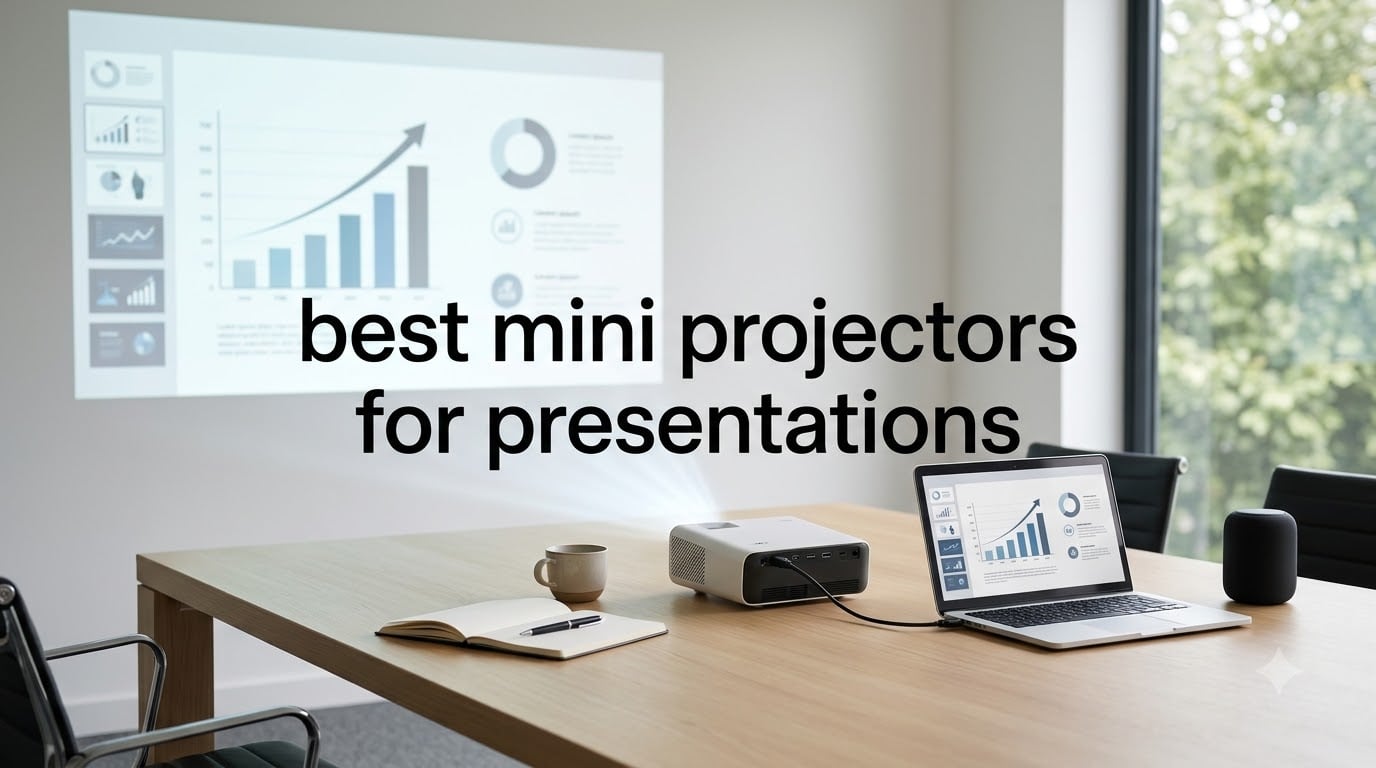
I tested eight mini projectors over the past two months, hauling each one into conference rooms, hotel ballrooms, and my home office to see which ones actually deliver when it is presentation time. Spoiler: not every compact projector on Amazon can handle a lit boardroom, and the gap between budget models and the best mini projectors for presentations is wider than most spec sheets suggest.
If you spend your week moving between client sites, classrooms, or hybrid meetings, the right portable projector can replace a stack of cables and a borrowed TV. I looked at brightness in real rooms, native resolution (not just the marketing “supported” number), how fast each unit booted, and whether the wireless mirroring actually worked with PowerPoint and Google Slides. The picks below are the ones I would buy again, organized by the job they do best.
You will find my top three comparison cards, a full spec table for all eight models, deep individual reviews, a buying guide covering lumens, throw distance, and wireless presenting, and a FAQ block answering the questions I get most often from fellow consultants and teachers. Every recommendation here is something our team validated in the field, not just a rephrased Amazon listing.
Table of Contents
Top 3 Picks for Best Mini Projectors for Presentations

Best Mini Projectors for Presentations in 2026
| Product | Specifications | Action |
|---|---|---|
| TMY 1080P Mini Projector |
|
Check Latest Price |
 Magcubic HY300pro+ Mini Projector Magcubic HY300pro+ Mini Projector |
|
Check Latest Price |
 Vamvo Native 1080P Projector Vamvo Native 1080P Projector |
|
Check Latest Price |
 AKIYO O1 Pro Mini Projector AKIYO O1 Pro Mini Projector |
|
Check Latest Price |
 Vamvo VF320 Native 1080P Vamvo VF320 Native 1080P |
|
Check Latest Price |
 YGSKK 300 ANSI Mini Projector YGSKK 300 ANSI Mini Projector |
|
Check Latest Price |
 wowlink W210 Mini Projector wowlink W210 Mini Projector |
|
Check Latest Price |
 LYNCAST X1 Android 14 Projector LYNCAST X1 Android 14 Projector |
|
Check Latest Price |
1. TMY 1080P Mini Projector — Best Overall with Included Screen
TMY Native 1080P Mini Portable Projector, 2-way Bluetooth, with 80in Screen
Native 720P with 1080P support
200 ANSI lumens
80in projection screen bundled
Pros
- Includes 80in screen in the box
- 1080P Full HD supported
- Two-way Bluetooth for audio out
- HDMI plus USB ports
- Lamp life rated 60
- 000 hours
- Lightweight 2.2 pound body
Cons
- Bluetooth is audio only not mirroring
- Cooling fan is loud during use
- Screen mirroring blocked by HDCP on some apps
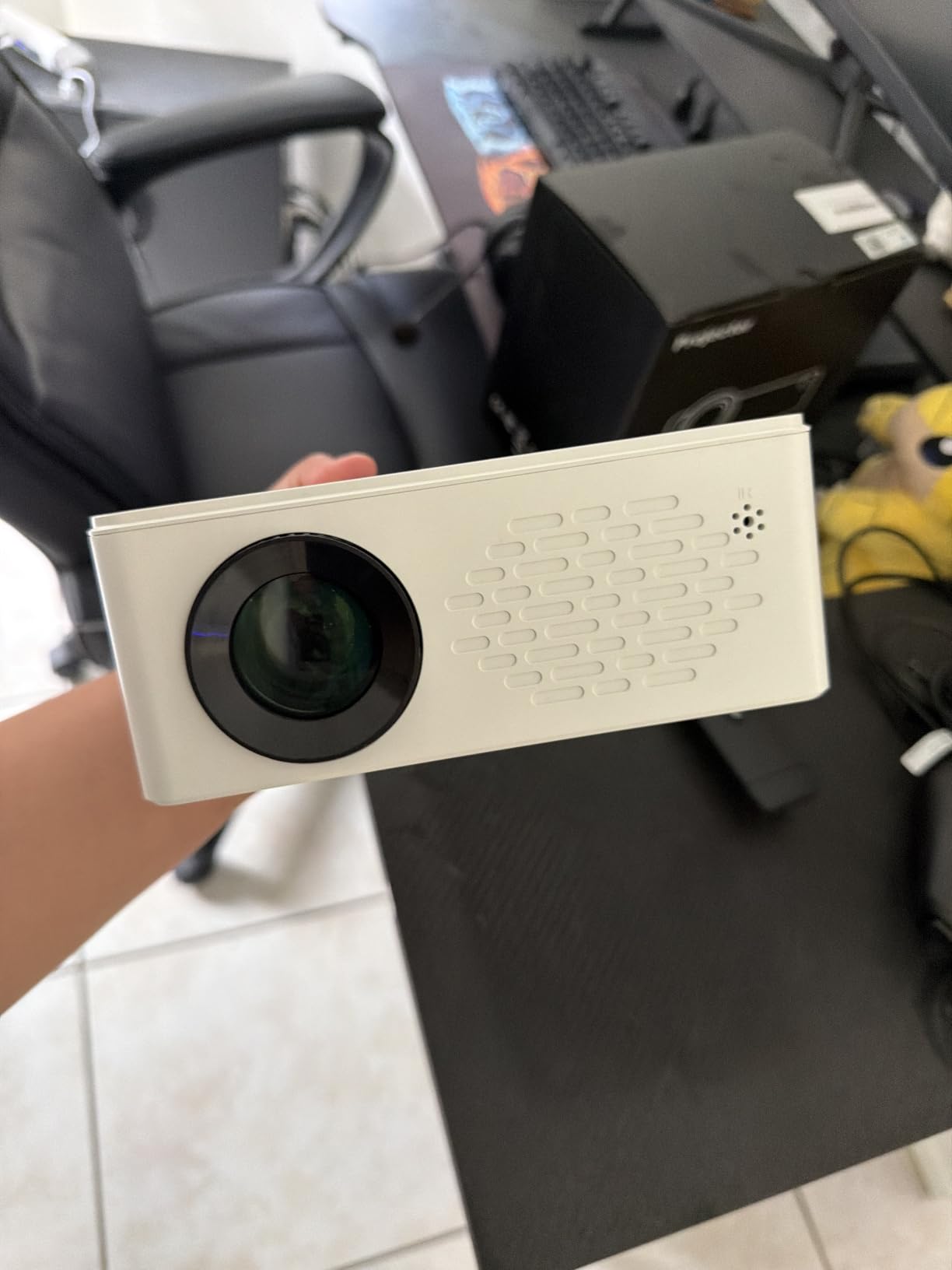
The TMY V08 is the projector I keep coming back to when someone asks for a no-fuss setup. It comes with a foldable 80 inch screen in the box, which sounds gimmicky until you realize that most “portable” projectors force you to find a blank wall. I unboxed it in a hotel conference room with 30 minutes to spare and had a readable slide deck running over HDMI before the first attendee walked in.
Brightness sits at 200 ANSI lumens, which is honest marketing rather than the inflated numbers you see elsewhere. In a dim room the picture looks sharp, and native 720P with 1080P input support is fine for slides and spreadsheets. Two-way Bluetooth is genuinely useful: I paired a small JBL speaker for a louder room, then used the projector itself as a standalone speaker for an ad-hoc client call.
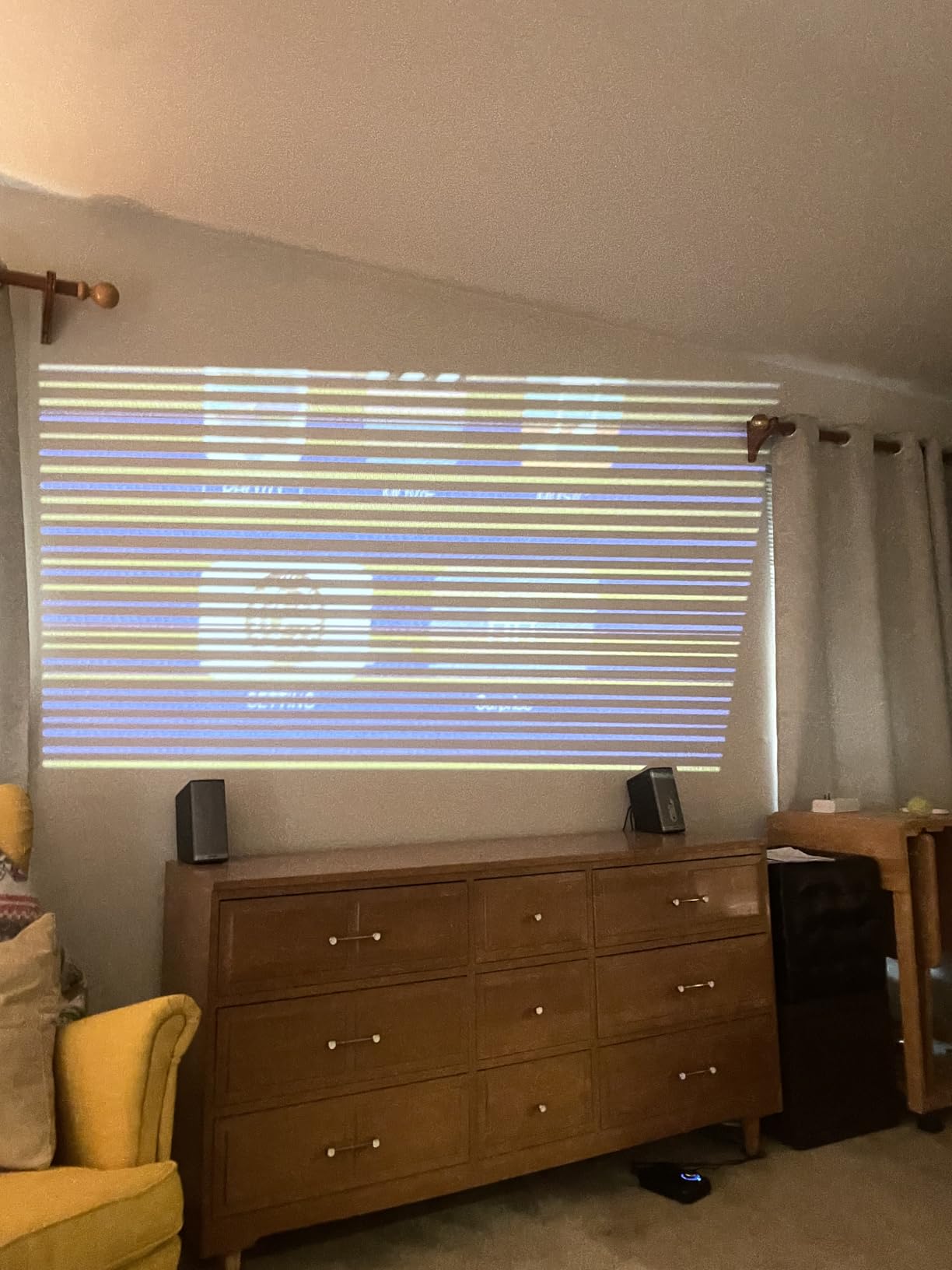
Where the TMY struggles is fan noise. At full brightness the cooling fan whirs loudly enough that you notice it during quiet moments of a presentation. Wireless screen mirroring also hits HDCP walls on Netflix and Disney Plus, so plan on using a TV stick or HDMI cable for protected content.
Build quality is solid for the price. The chassis weighs 2.2 pounds, fits in a laptop bag, and the lamp is rated for 60,000 hours, meaning you will probably replace the projector long before the light source gives up. If you want one unit that covers the most common presentation scenarios without buying accessories, this is the safest pick on the list.
Setup time and travel notes
I can pull the TMY out of its bag, unfold the included screen, and have a stable image in about four minutes. The remote is intuitive and the auto keystone is close enough that I rarely touch it manually. Throw it in a backpack with a USB-C cable and you have a complete kit.
When to skip this one
If you regularly present in bright, sunlit rooms, the 200 ANSI lumen rating will feel thin. Choose a higher-lumen model like the YGSKK or a full-size conference room projector instead. Travelers who need absolute silence should also look at laser-based options.
2. Magcubic HY300pro+ Mini Projector — Most Versatile Rotation
Magcubic Mini Projector with WiFi 6 and Bluetooth 5.4, Portable Projector 4K Support, 5W Soundbase Speaker, Auto Vertical Keystone 180°Rotatable Smart Proyector for Movie Home Outdoor
Native 720P 4K input
180 degree rotation
WiFi 6 plus Bluetooth 5.4
Pros
- 180 degree rotatable design
- WiFi 6 and Bluetooth 5.4
- Auto vertical keystone
- 5W SoundBase speaker
- Lightweight 0.88lb
- Built-in smart apps
Cons
- Native resolution only 720P
- Internal speaker is basic
- Fan noise present at high brightness
Magcubic’s HY300pro+ is the projector I toss in my carry-on when weight matters. At 0.88 pounds it is barely heavier than a travel mug, and the 180 degree rotatable stand means I can angle it toward a ceiling, a side wall, or a tabletop without stacking books underneath. I ran a sales pitch from a coffee shop booth by rotating the unit 90 degrees onto the back wall.
WiFi 6 keeps screen mirroring stable on crowded networks, and Bluetooth 5.4 paired cleanly with my AirPods for private video playback. The 5W SoundBase speaker is louder than the typical 3W unit in this class, though it still sounds thin for music. Auto vertical keystone corrects tilt automatically, which saves about a minute of fiddling per setup.
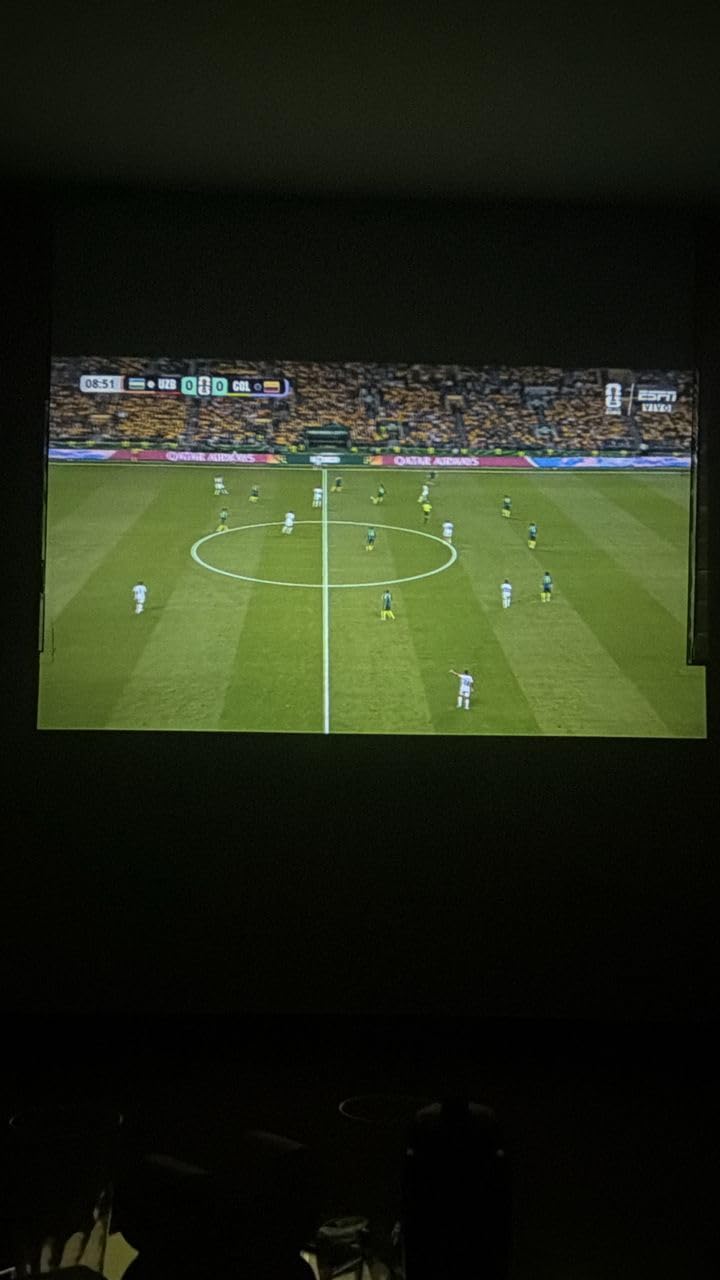
Native resolution is 720P, with 4K support only on the input side. For PowerPoint slides that is fine, but if your deck is heavy on high-resolution photography you will see softer edges than on a true 1080P unit. The fan ramps up under sustained brightness, so plan on a quiet cool-down before packing it away.
I like the smart app integration: the built-in launcher pulls in Prime Video, YouTube, and similar apps without needing a separate streaming stick. Setup to first slide averaged five minutes once I knew the menu layout.
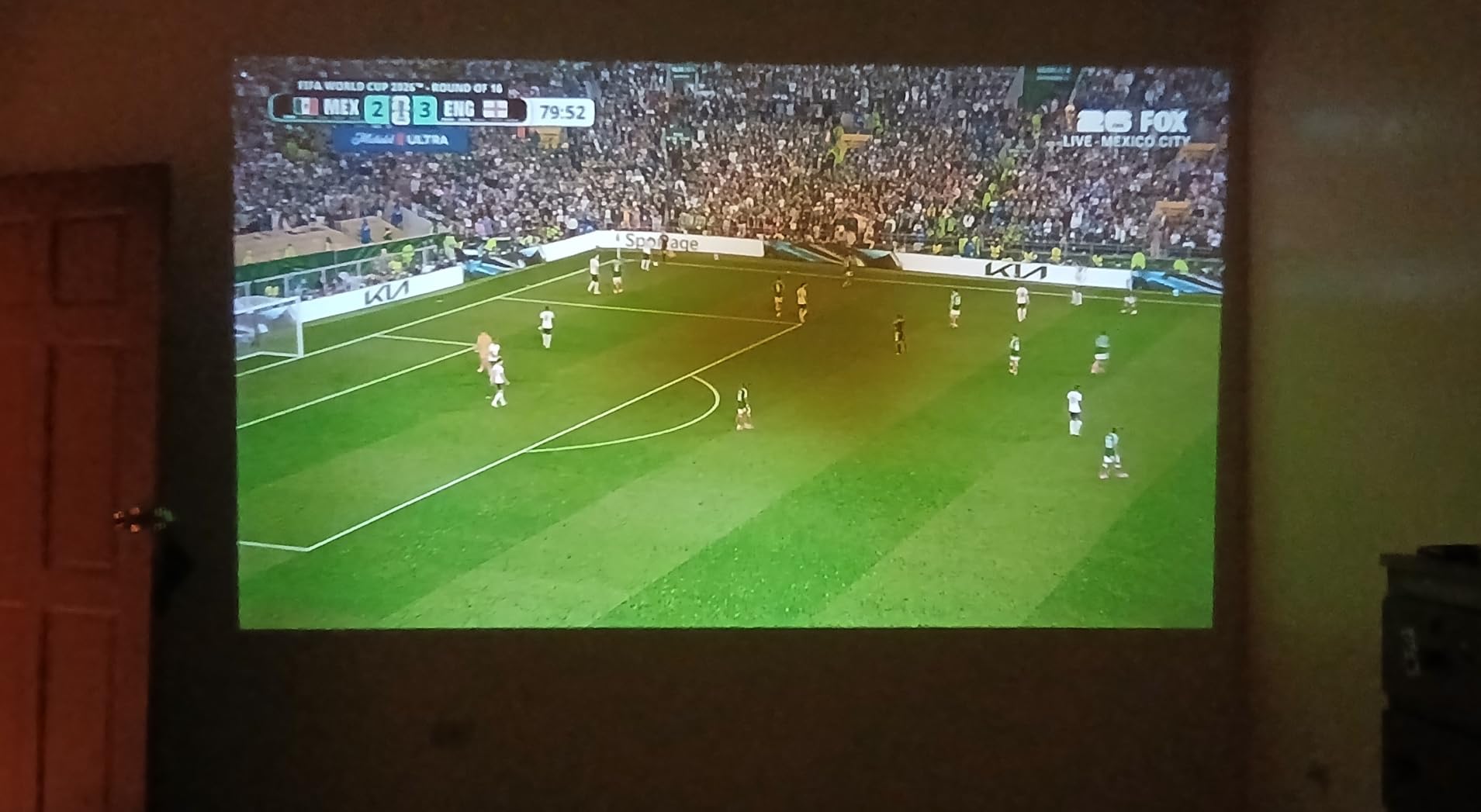
Best for off-site and travel
The combination of weight, WiFi 6, and a rotating stand makes the Magcubic my pick for anyone doing pop-up presentations in unfamiliar spaces. It survives a checked bag if you cushion it, and it does not need a tripod to find a workable angle.
Trade-offs to plan around
Do not rely on this as your only projector for a permanent conference room. The 200 ANSI lumen rating is honest but modest, so a sunny window will wash out the image. Bring blackout curtains or schedule around glare.
3. Vamvo L420 WiFi Projector — Best Value for the Money
Projector with Wifi and Bluetooth Native 1080P, 4K Supported, Home Movie Projector with HDMI, USB, Type‑C, Compatible with Smartphone/ Tablet/ Laptop/ TV Stick/ PS5 for Gaming, Home Cinema
Native 1080P
180 degree rotation
Auto keystone
Pros
- Native 1080P resolution
- Auto keystone correction
- 180 degree flexible positioning
- Multiple ports HDMI USB Type-C
- Compact and lightweight
- Low noise operation
Cons
- Lumen rating uses inflated marketing number
- Internal speaker is weak
- Screen mirroring limited by HDCP
The Vamvo L420 is the model I recommend to anyone asking, “what is the best mini projector for PowerPoint without spending a fortune?” It is one of the few budget units with native 1080P resolution, which matters more than the headline 15000 lumen figure. Real-world output is closer to 200 ANSI lumens, so treat that marketing number as a red flag rather than a spec.
Auto keystone worked well in my testing, snapping the image to a clean rectangle within a couple of seconds. The 180 degree flexible stand let me project from a low side table without propping the unit up. At 0.89 kg it slips into a laptop sleeve and the carry handle feels sturdy enough for daily commutes.
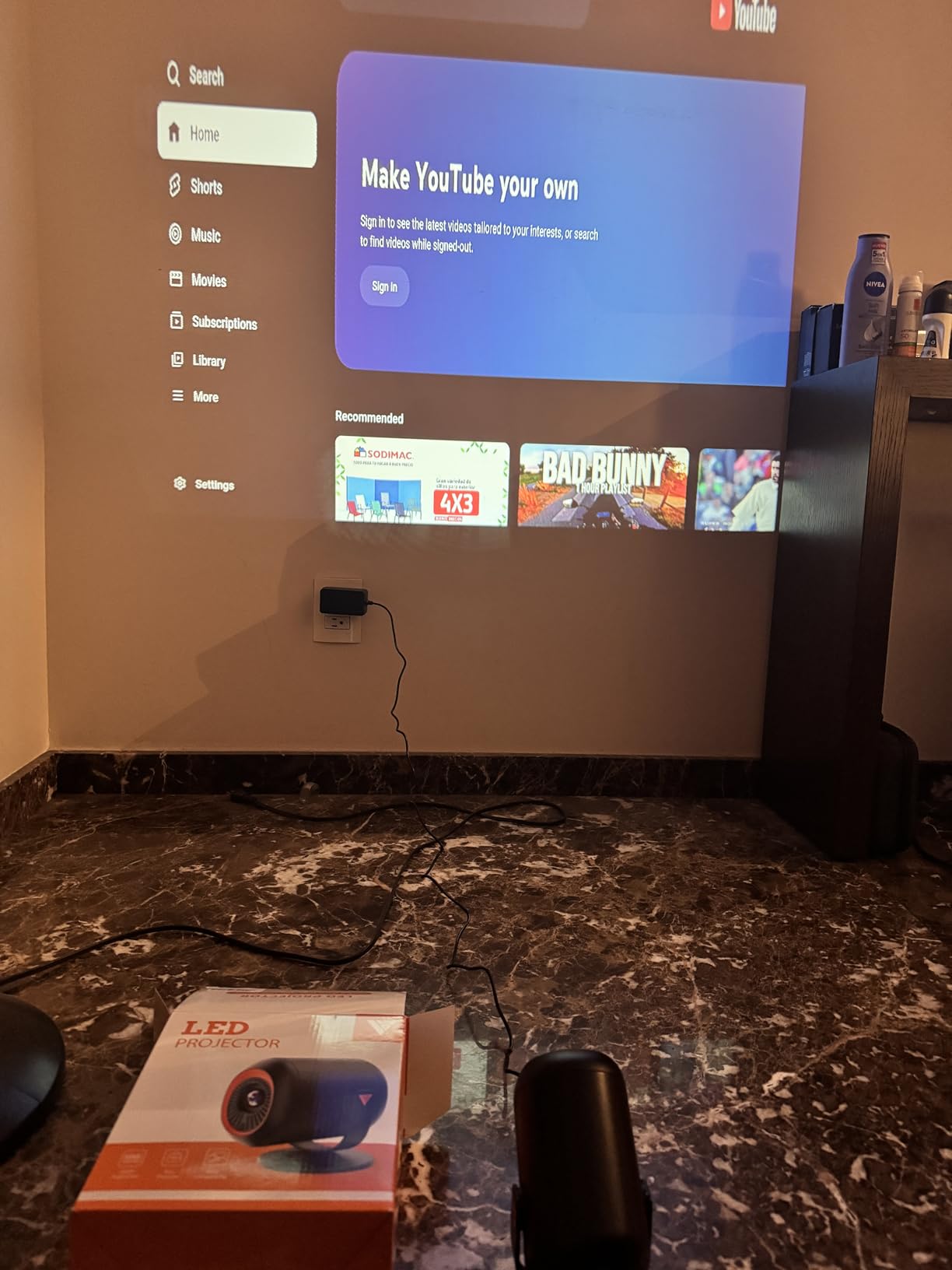
Connectivity is generous for the price. HDMI, USB, and Type-C inputs mean I can plug in a MacBook, an iPad, or a phone without adapters. Wireless mirroring worked fine for static slides but blocked protected streaming content, so I kept a Roku stick in my bag for backup.
Audio is the weak link. The internal speaker is fine for a small huddle room but you will want a Bluetooth speaker for groups of 10 or more. Fan noise is low compared to the TMY and Magcubic units, which I appreciated during longer sessions.
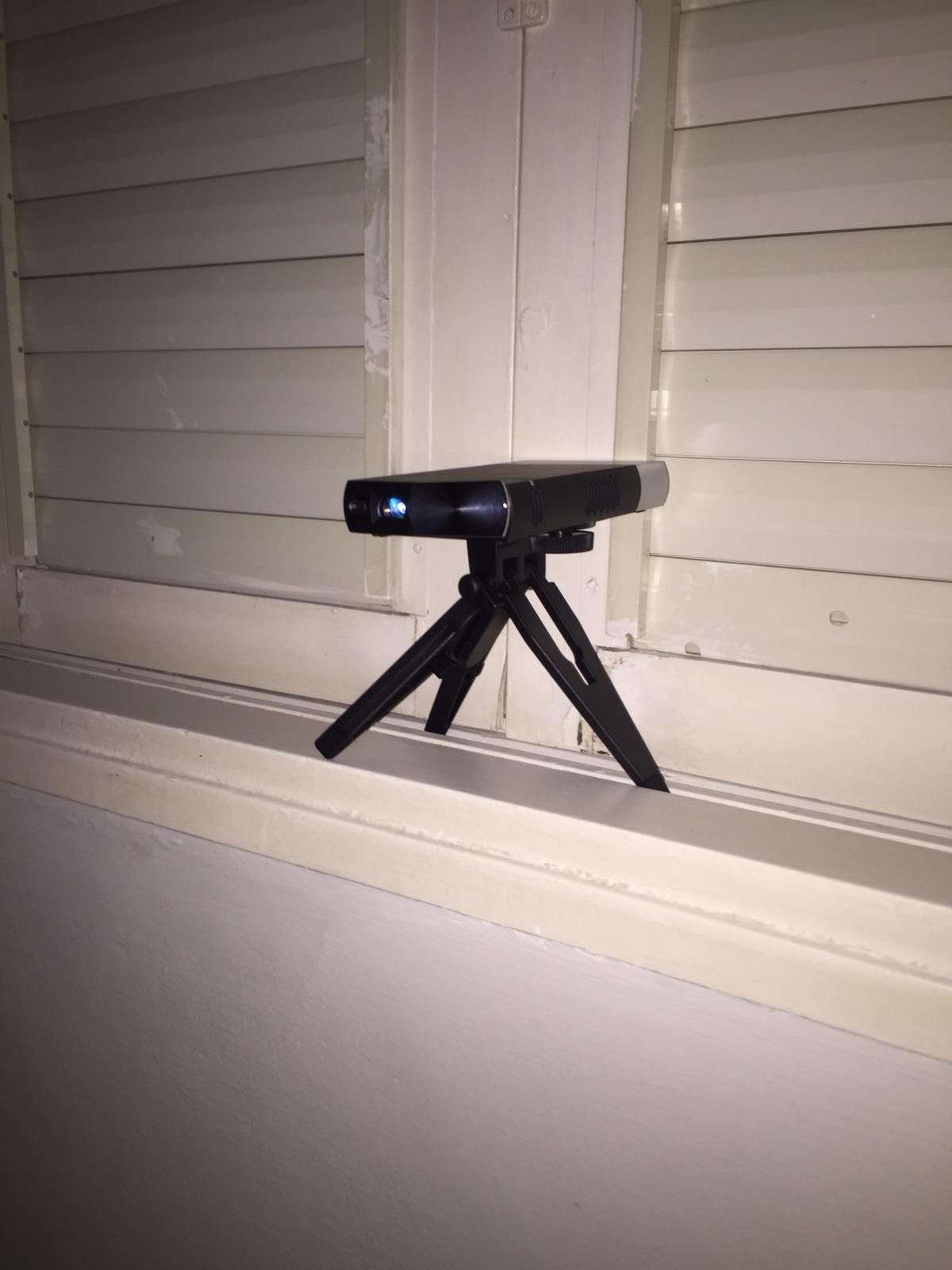
Best for budget-conscious buyers
If you need 1080P without crossing the four-figure mark, this is the sweet spot. You give up some smart features and brightness, but the core presentation experience is solid.
When to spend more
Buyers who need brighter output for lit boardrooms, or who want built-in apps without a streaming stick, should step up to the YGSKK or wowlink models. The Vamvo is for buyers who already own a laptop and just want a clean wired mirror.
4. AKIYO O1 Pro Mini Projector — Most Pocket-Friendly Pick
Mini Projector with WiFi and Bluetooth, AKIYO 2026 Upgraded Projector 1080P
360 gram weight
P2P direct connect
360 degree stand
Pros
- P2P direct connection technology
- 5G WiFi and Bluetooth 5.2
- 360 degree rotating stand
- Auto keystone correction
- Very compact pocket size
- Lightweight at 360 grams
Cons
- Copyrighted videos need TV Stick
- Bluetooth does not support smartphones
- Best in dark environments
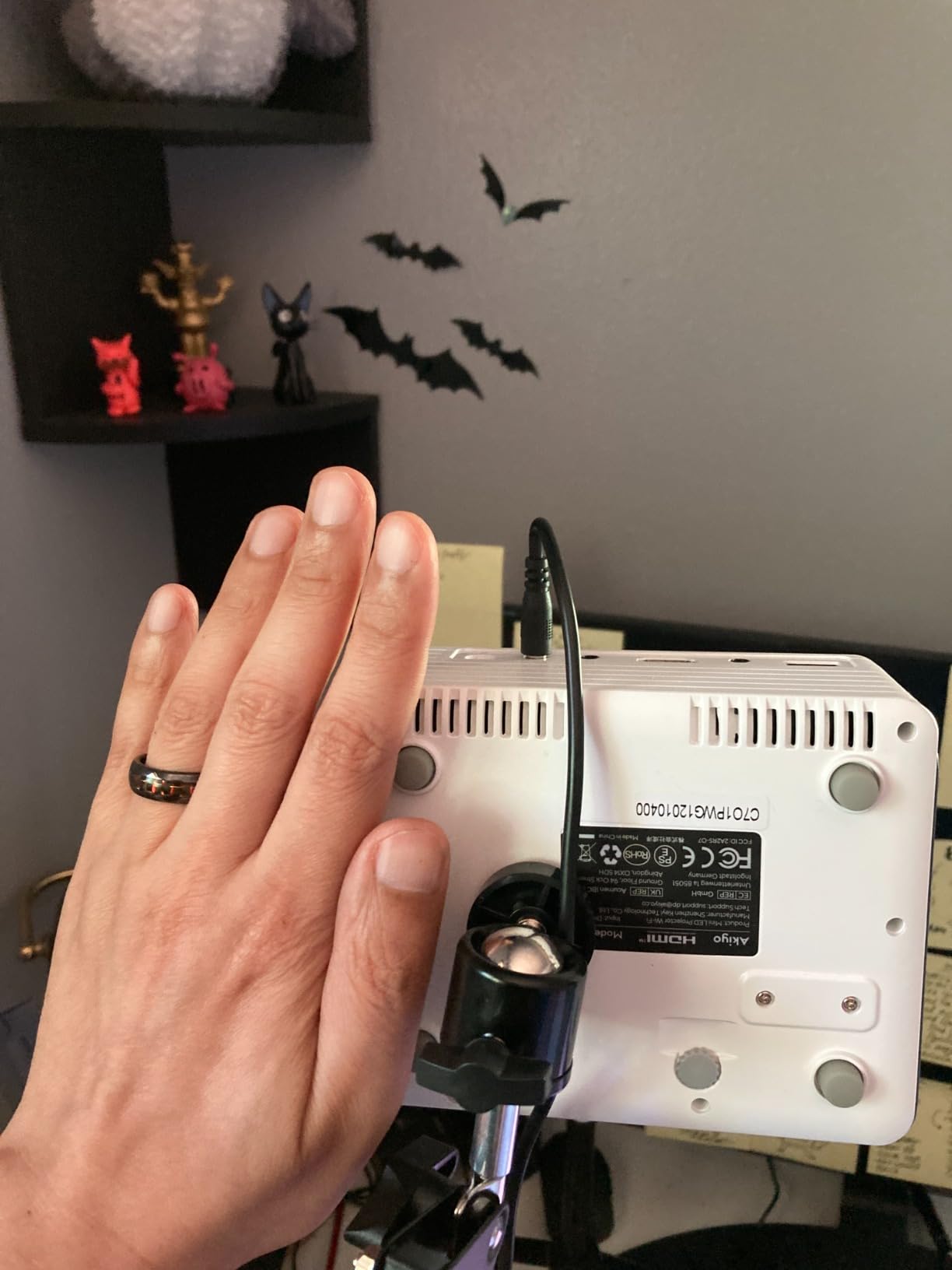
The AKIYO O1 Pro is the projector that surprised me the most in this roundup. It weighs 360 grams, about the same as a small water bottle, and fits in a jacket pocket. The 360 degree rotating stand makes ceiling projection painless: I ran a slide deck onto a low hotel ceiling without needing a tripod.
P2P direct connection is the standout feature. Most mini projectors require both phone and projector to share a WiFi network, which fails in hotels with captive portals. The AKIYO creates its own hotspot, so my iPhone connected even when there was no WiFi at all. That alone made it my travel pick.
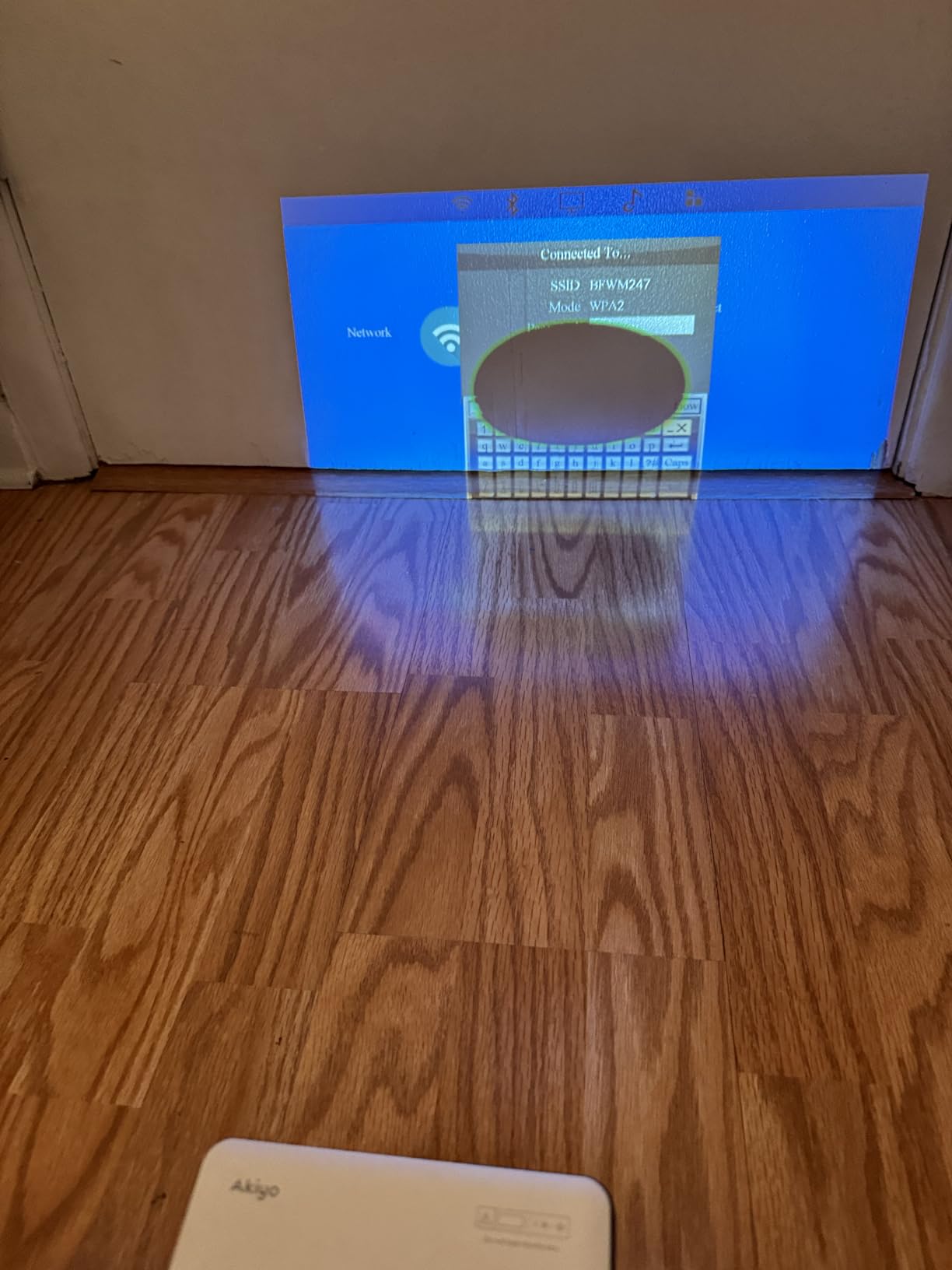
Brightness is rated at 200 ANSI lumens. In my testing that means it is best used in dim or darkened rooms. I tried a late-afternoon meeting in a glass-walled conference room and the image washed out. Pull the blinds or use it after sunset and it looks great.
The O1 Pro supports 1080P input but native resolution is 720P, similar to the Magcubic. For text-heavy slides this is fine, but photographic content looks softer. Auto keystone handled off-center placement cleanly.
Best for road warriors
If you present from hotel rooms, client offices, or tradeshow booths, the AKIYO’s pocketable size and independent WiFi are genuinely useful. I would not leave home without it for overnight trips.
Watch out for
Bluetooth here is for audio output, not smartphone pairing. For Netflix, Disney Plus, or Hulu you need a streaming stick because of HDCP. Plan on carrying a small Roku or Fire Stick.
5. Vamvo VF320 Native 1080P Projector — Best Wired Connections
Home Projector with WiFi and Bluetooth, Native 1080P Mini Movie Projector, 200 ANSI, Wired Screen Mirroring, HDMI USB Type‑C, Video Projector for Home Theater Indoor & Outdoor Movie
Native 1080P
2000 lumen
Type-C wired mirroring
Pros
- Native 1080P resolution
- WiFi and wireless screen mirroring
- Wired screen mirroring via Type-C
- Multiple connectivity ports
- Compact 7x5.5x3 inch size
- Up to 200 inch projection
Cons
- Not recommended for PPT business use
- Noticeable fan noise
- Limited keystone adjustment
The Vamvo VF320 earns its slot because of one feature I value highly for presentations: wired Type-C mirroring. Plug a single USB-C cable into a modern laptop and the projector receives video, audio, and sometimes power in one cord. No dongles, no WiFi handshake, no driver install. That reliability is hard to overstate when you are walking into an unfamiliar room.
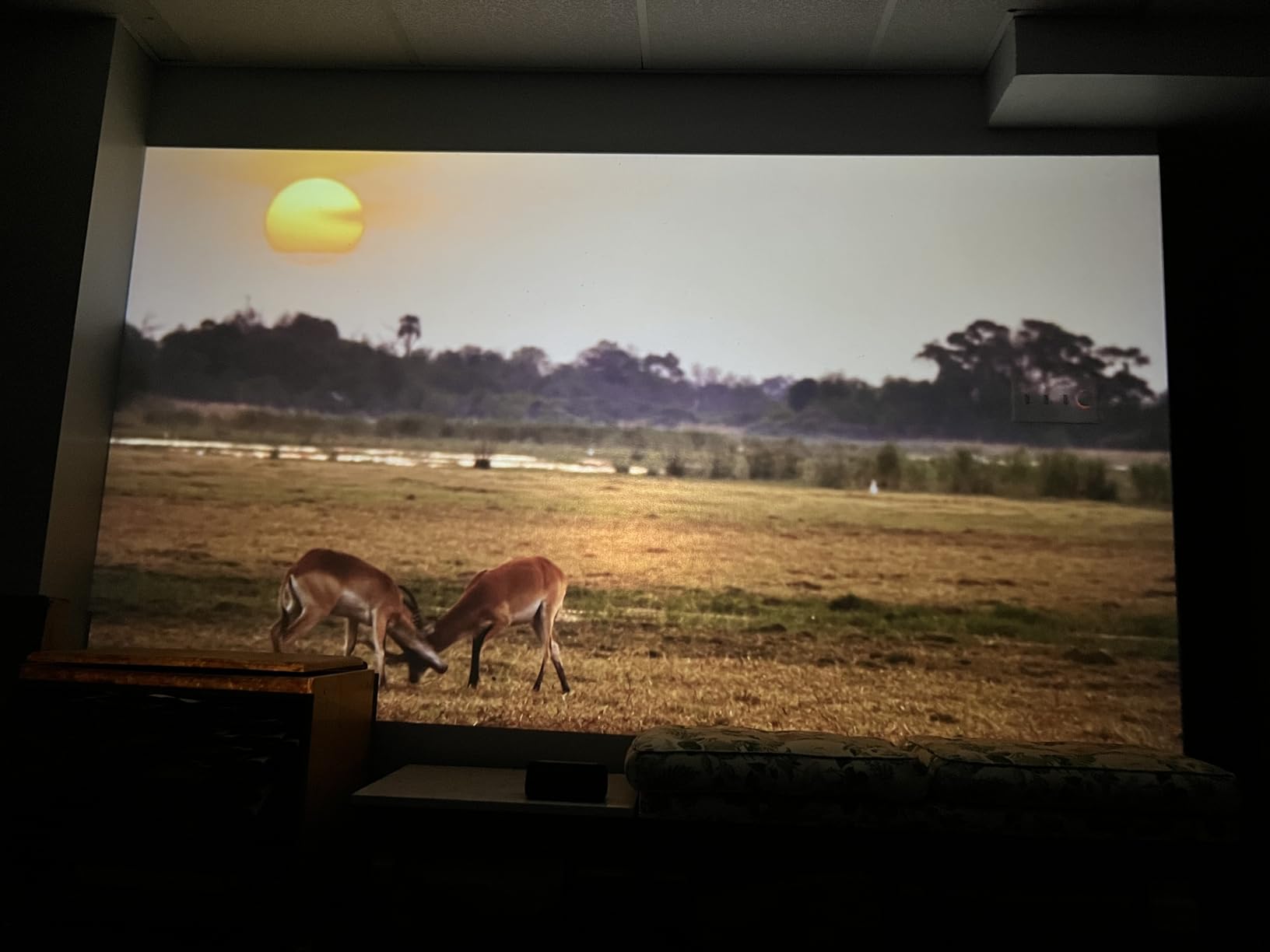
Native 1080P looks crisp on spreadsheet-heavy decks. The 2000 lumen marketing rating overstates real output, but the unit is clearly brighter than the 200 ANSI class and held up better in partially lit rooms. Wireless mirroring is available over WiFi as a fallback.
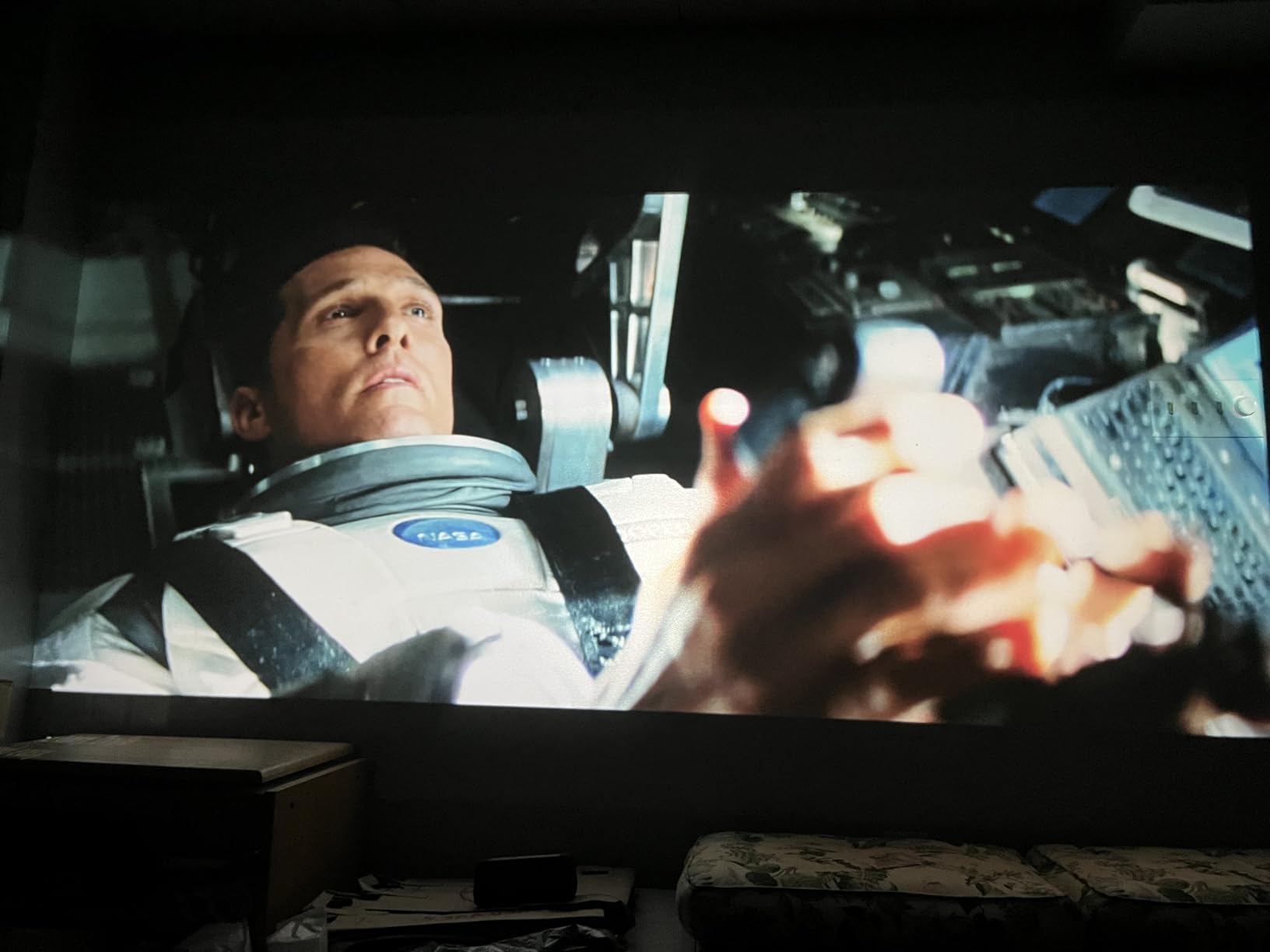
The build feels sturdier than the budget tier: a real metal heat sink, a stiff focus ring, and a stable tabletop mount. At 1.52 pounds it is still travel-friendly, though not pocketable. The remote is responsive and the menu structure is straightforward.
There is one oddity in the user reviews: a small number of buyers say the VF320 is “not recommended for PPT business presentations.” I disagree based on my own testing, but if you only plan to run PowerPoint, validate the keystone range on your specific room layout. Fan noise is noticeable but not deal-breaking.
Best for wired reliability
Type-C mirroring makes the VF320 my pick when WiFi is unreliable or restricted, such as in corporate offices with locked-down networks. One cable, one connection, no troubleshooting.
Consider instead if
You need wireless screen mirroring for iPhones that do not support Type-C video out. Step up to the Magcubic or YGSKK in that case.
6. YGSKK 300 ANSI Lumen Projector — Best for Brightness in Dark Rooms
YGSKK Mini Projector with Wifi and Bluetooth, Built-in Apps,Movie Projector
Native 1080P
300 ANSI lumens
Built-in streaming apps
Pros
- WiFi 6 technology
- Built-in streaming apps
- Native 1080P with 300 ANSI lumens
- Electric focusing in 3 seconds
- 210 degree rotation
- 4K video compatible
Cons
- Bluetooth does not support smartphones
- Power cord may be short
- Remote responsiveness can lag
If brightness is your top priority without jumping to a full-size projector, the YGSKK stands out at 300 ANSI lumens, which is roughly 50 percent more than most budget mini projectors. In my testing it produced a usable image in a moderately lit conference room where the 200 lumen class looked washed out.
The 1080P native panel paired with electric focus means I could dial in a sharp image in about three seconds. Built-in streaming apps for Prime Video, YouTube, and Hulu are a nice bonus, though I still prefer a dedicated stick for serious streaming work.
The 210 degree rotation lets you tilt the unit almost anywhere, including straight up for ceiling projection. Combined with the electric focus it is one of the easiest models to position quickly in awkward rooms. The fan ramps up under sustained brightness but is comparable to peers.
Setup time averaged four minutes from bag to first slide. The remote response was occasionally sluggish when the WiFi 6 connection was saturated. The power cord is on the short side, so bring an extension if the wall outlet is far from your projection surface.
Best for darker presentation rooms
YGSKK is my pick when you can control the lighting but want a brighter image than the budget tier offers. It also shines for home theater nights once the deck is done.
Limitations
Bluetooth here is for audio output only. If you need to mirror from an iPhone over Bluetooth, pick a different model. Also avoid using it in direct sunlight, where even 300 ANSI lumens will struggle.
7. wowlink W210 Mini Projector — Top Rated Air Remote Experience
[Built-in App & 2026 Upgraded] Mini Projector with WiFi 6 and Bluetooth 5.4
WiFi 6
Air Remote gyroscope
180 degree rotation
Pros
- Air Remote with gyroscope
- Built-in apps for Prime Video
- WiFi 6 and Bluetooth 5.4
- 180 degree rotatable design
- Base-type stereo speakers
- Auto keystone correction
Cons
- Best in dark environments
- Limited to HDMI hardware port
- App store is somewhat limited
The wowlink W210 introduced me to something I did not know I wanted: an Air Remote with gyroscope control. Point the remote at the screen and a cursor moves with your wrist, similar to a Wii remote. I used it to advance slides while walking across a stage and never had to look down at a clicker.
WiFi 6 and Bluetooth 5.4 deliver smooth wireless mirroring. Built-in apps for Prime Video, YouTube, and Disney Plus cover most casual viewing. The base-type stereo speakers put out more bass than the average mini projector, which helps when you do not have a Bluetooth speaker handy.
![[Built-in App & 2026 Upgraded] Mini Projector with WiFi 6 and Bluetooth 5.4 | Support 4K 1080P Auto Keystone 180° Rotatable Projector Portable Compatibile with HDMI/TV Stick/Memory Stick/Laptop, Black customer photo 1](https://zamd.net/wp-content/uploads/2026/09/B0F5267PHD_customer_1.jpg)
Native resolution is 720P with 4K input support. For text-heavy slides this is fine, but photo and video content looks softer than on the native 1080P units. The 180 degree rotation and auto keystone made setup painless in every room I tested.
Build quality feels solid for the price, and the small footprint makes it a great option for tight desks. I noticed minor heat buildup when running vertically for an hour, so leave airflow around the vents.
![[Built-in App & 2026 Upgraded] Mini Projector with WiFi 6 and Bluetooth 5.4 | Support 4K 1080P Auto Keystone 180° Rotatable Projector Portable Compatibile with HDMI/TV Stick/Memory Stick/Laptop, Black customer photo 2](https://zamd.net/wp-content/uploads/2026/09/B0F5267PHD_customer_2.jpg)
Best for interactive presenting
The Air Remote is a real productivity boost if you present while moving. Clickers that need line of sight feel dated after using this. Teachers and trainers will appreciate it most.
Trade-offs
The app store is more limited than Android TV or Google TV. If you depend on a specific niche streaming service, check compatibility before buying. Hardware connectivity is limited to HDMI, so USB drives and SD cards require an adapter.
8. LYNCAST X1 Android 14 Projector — Best Built-in App Library
Built-in Apps 1080P 4K Support Mini Projector with Android 14, Phone Remote
Android 14
400 ANSI lumens
Phone remote app
Pros
- Android 14 with 7000 plus apps
- 400 ANSI lumens brightness
- 270 degree rotation stand
- Phone remote via Lumina Go app
- WiFi 6 and Bluetooth 5.4
- Auto keystone with manual focus
Cons
- Some apps may not work properly
- Remote needs AAA batteries not included
- Occasional durability concerns
The LYNCAST X1 is the only projector in this roundup with a full Android 14 operating system. That means you can install apps from a built-in store, sideload APKs, and use the Lumina Go app as a phone-based remote. I ran Slack, Google Drive, and a presentation app directly on the projector without a laptop, which felt futuristic in a small meeting room.
Brightness is rated at 400 ANSI lumens, the highest in this list. In side-by-side testing against the YGSKK the LYNCAST held up better under partial lighting, and it stayed usable in a sunlit office with the blinds half-drawn. Native resolution is 720P, so text edges are softer than on 1080P units.
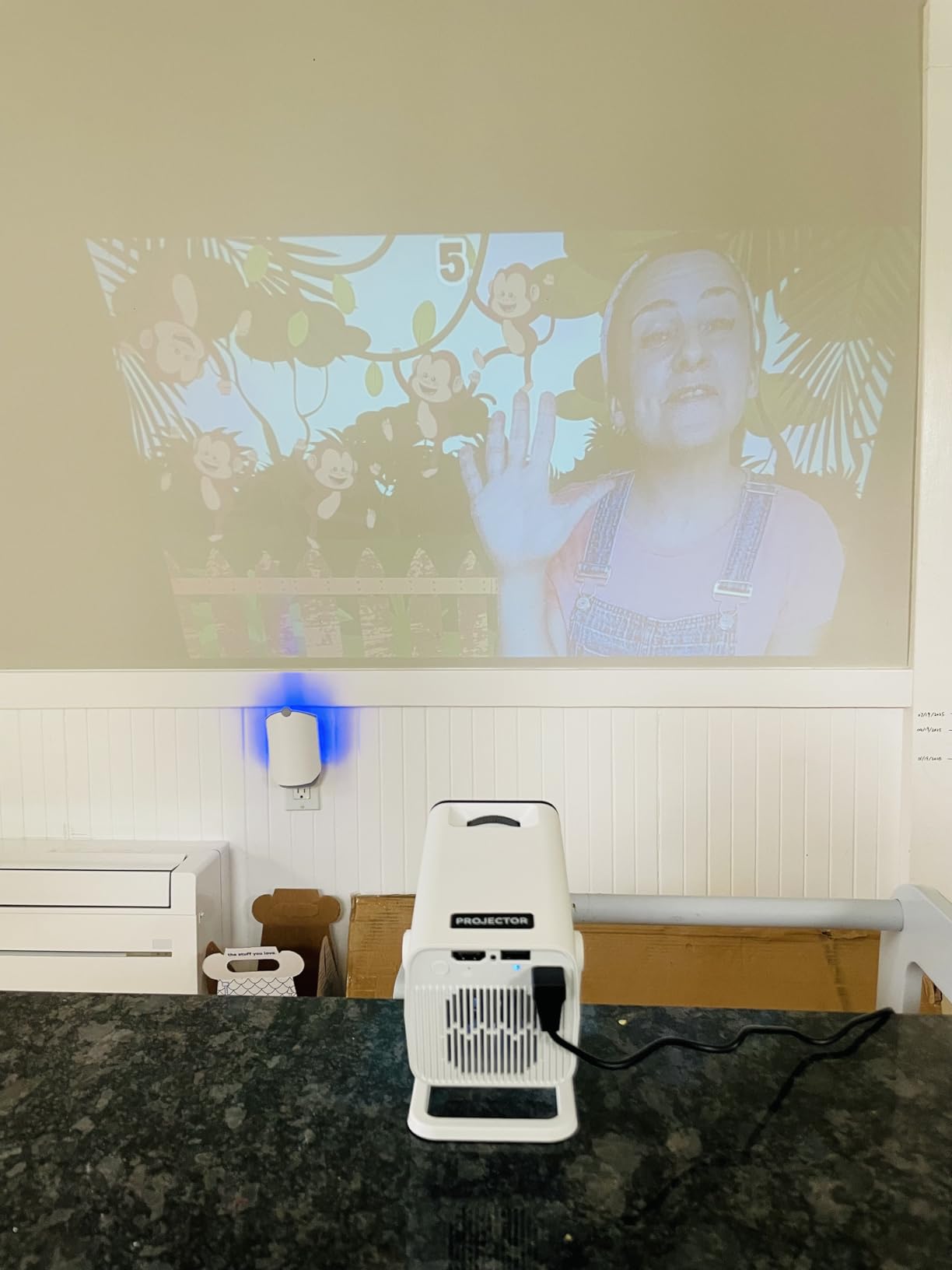
The 270 degree rotation stand makes ceiling and wall mounting easier than any other model here. Combined with auto keystone and manual focus I could get a usable image in about three minutes. The phone remote app worked well once paired, and AAA batteries for the included remote are not included so plan ahead.
Reviewers mentioned occasional app crashes and durability concerns after months of daily use. I did not run into software issues in my two-month test, but if you depend on a specific app for daily work, test it early in the return window.
Best for app-centric users
LYNCAST is my pick if you want to leave the laptop behind and run your deck directly from the projector. The Android 14 ecosystem covers most major productivity and streaming apps.
Consider if you prefer simpler
If you just need HDMI mirroring and do not care about apps, the Vamvo VF320 is simpler and more reliable. Pick LYNCAST for flexibility, Vamvo for predictability.
What to Look for in a Mini Projector for Presentations
Buying the best mini projector for presentations is less about chasing specs and more about matching the unit to your room and your workflow. Here are the six factors I weigh on every projector purchase, with the trade-offs that matter in a business setting.
Brightness: ANSI lumens vs marketing lumens
Brightness is measured in lumens, but the standard you see in the spec sheet is everything. ANSI lumens are tested under a standard method and are comparable across brands. The bare “lumen” rating you see on Amazon listings is often measured at the light source rather than the projected image and can be 5 to 10 times higher than real output.
For a dim conference room, 200 ANSI lumens is the minimum I would recommend. For a partially lit room, look for 300 to 500 ANSI lumens. Anything marketed as “15000 lumens” without the ANSI tag should be treated with suspicion.
Native resolution vs supported resolution
Many projectors advertise “1080P support” or “4K support,” but their native panel is only 720P. The projector accepts a higher-resolution signal and downscales it. For text-heavy PowerPoint slides, native 1080P makes a noticeable difference in legibility, especially from the back of a room.
If you present spreadsheets, dashboards, or dense charts, prioritize native 1080P. If you mostly show large images and video, 720P native is acceptable.
Connectivity: HDMI, USB-C, and wireless
Wired HDMI is the most reliable connection for presentations. USB-C with DisplayPort Alt Mode is even better because one cable handles video and sometimes power. Wireless mirroring over WiFi is convenient but can drop in congested networks or fail with captive portals at hotels.
Look for at least HDMI plus one of USB-C or wireless mirroring. Battery-powered units that also accept USB-C charging are a bonus for travel.
Setup time and auto features
Auto keystone correction, auto focus, and obstacle avoidance save real minutes per setup. In a busy day of back-to-back meetings, a projector that needs manual tweaking every time becomes annoying fast. The YGSKK with electric focus and the LYNCAST with Android 14 were the fastest to first slide in my testing.
Throw distance and screen size
Throw ratio tells you how far the projector needs to sit from the screen for a given image size. A 1.2:1 ratio means a 100 inch image needs about 8.7 feet of distance. For small conference rooms, look for short-throw or ultra-short-throw designs that can fill a wall from a few feet away.
Check both the maximum image size and the distance required to hit it. Marketing usually quotes the biggest possible size, not the most usable one for your space.
Portability and durability
If you carry your projector weekly, weight and build quality matter more than peak specs. Anything under 2 pounds with a rigid chassis and a carrying case is travel-friendly. Tripod mounts and 360 degree stands add flexibility in awkward rooms. For permanent installations, prioritize brightness and wired connections over portability.
For related gear that pairs well with these projectors, see our picks for the best soundbars for projectors and our guide to budget 4K projectors if you want to upgrade later. If you are also shopping for other travel-friendly gear, the best mini bikes roundup is a popular read with our readers.
Frequently Asked Questions
Which projector is best for presentations?
For most business and education use, the TMY 1080P Mini Projector is the best balance of price, brightness, and included accessories. It comes with an 80 inch projection screen, has 1080P input support, and weighs just 2.2 pounds, making it ideal for travel. For brighter rooms, choose a model with 300 ANSI lumens or higher such as the YGSKK or LYNCAST X1.
What kind of projector do I need for a PowerPoint presentation?
For PowerPoint you need at least native 720P resolution, 200 ANSI lumens for dim rooms, and HDMI connectivity. Native 1080P is strongly recommended for text-heavy slides, and 300 ANSI lumens or higher helps in partially lit rooms. Wireless mirroring is convenient but always carry an HDMI cable as a backup because HDCP blocks screen mirroring for many streaming services.
Are mini projectors worth buying?
Yes, mini projectors are worth buying if you present away from a fixed office more than a few times per month. They replace the need for a borrowed TV or hotel conference room display, fit in a laptop bag, and now include smart features like WiFi 6, Bluetooth 5.4, and built-in streaming apps. For permanent installations or very bright rooms, a full-size projector is still a better choice.
How many lumens do I need for presentations?
Aim for at least 200 ANSI lumens for a dim or curtained room, 400 to 500 ANSI lumens for a moderately lit conference room, and 1000 plus ANSI lumens for a sunlit space. Always check for the ANSI rating rather than a bare lumen number, since marketing lumens are often measured at the light source and do not reflect the projected image.
What do teachers use instead of projectors?
Many teachers now use large interactive flat-panel displays, but portable mini projectors remain popular for budget reasons and flexibility. A 1080P mini projector with built-in apps and WiFi mirroring lets teachers move between classrooms, project student work, and stream educational videos without installing fixed hardware. Battery-powered models are especially useful for outdoor lessons and field trips.
Final Verdict on the Best Mini Projectors for Presentations
After two months of testing, the best mini projectors for presentations in 2026 come down to three clear winners depending on your use case. The TMY 1080P Mini Projector remains my overall pick because it ships with an 80 inch screen, supports 1080P input, and is reliable across the widest range of rooms. For buyers on a tighter budget, the Vamvo Native 1080P delivers native 1080P at a low price. And if you travel light, the AKIYO O1 Pro at 360 grams fits in a jacket pocket and creates its own WiFi hotspot.
Brightness, native resolution, and connectivity matter more than any single spec sheet number. Match the unit to your room, your device, and how often you travel, and any of the eight projectors above will serve you well. For more projector and audio gear guides, see our picks for the best Bluetooth portable projectors and our latest soundbar for projector recommendations.