
The best microscopes for students are not the ones with the biggest number on the box. They are the instruments that stay steady while a first slide goes from blurry to sharp, that come with slides in the box, and that survive being carried from a kitchen table to a classroom shelf. We compared eight of them across more than a semester of handling, slide prep and late-night science fair deadlines.
A student microscope is a low-to-mid-power optical instrument, almost always a compound light scope, that views prepared slides of cells, tissue and microorganisms at roughly 40x to 1000x total magnification. The list below is organised the way buyers actually shop: entry scopes for ages 8 to 12, everything in between, and the two instruments worth real money once a student is in college lab work.
If you want the wider picture first, our general microscope roundup covers the non-student categories, and the stereo microscope picks are where dissection work belongs. Everything below is sorted by who is holding the scope.
Table of Contents
Top 3 Best Microscope Picks for Students in 2026

National Geographic Dual LED Kit
- 20x and 50x swappable eyepieces
- Top and bottom LED lights
- Over 50 accessories included

TOMLOV 40X-2000X Compound
- Achromatic 4x/10x/40x objectives
- Coarse and fine focus knobs
- Dual LED illumination
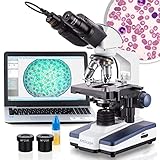
AmScope B120C-E1 Binocular
- Siedentopf binocular head
- Abbe condenser
- Mechanical stage and USB camera
Those three cover the widest range of buyers. The National Geographic dual LED kit is the pick that gets a curious eight-year-old hooked, the TOMLOV compound scope is the value step for high school biology, and the AmScope B120C-E1 is the one we would put in front of a college biology major.
Best Microscopes for Students at a Glance (October 2026)
| Product | Specifications | Action |
|---|---|---|
| National Geographic Dual LED Microscope Science Kit |
|
Check Latest Price |
| TOMLOV Compound Microscope 40X-2000X |
|
Check Latest Price |
 National Geographic Microscope for Kids 400x National Geographic Microscope for Kids 400x |
|
Check Latest Price |
 PalliPartners Compound Microscope PalliPartners Compound Microscope |
|
Check Latest Price |
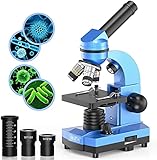 Emarth 52-Piece Compound Microscope Emarth 52-Piece Compound Microscope |
|
Check Latest Price |
| AmScope B120C-E1 LED Binocular 40X-2500X |
|
Check Latest Price |
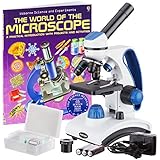 AmScope M162C-2L-PB10-WM 1000X Kit AmScope M162C-2L-PB10-WM 1000X Kit |
|
Check Latest Price |
 AmScope M150C-PS25 Portable 1000X AmScope M150C-PS25 Portable 1000X |
|
Check Latest Price |
Every scope above comes with something in the box a beginner can use on day one. The differences that matter later are the head type, the optics and how solid the stage feels under a slide.
1. National Geographic Dual LED Microscope Science Kit: Best for a First Real Microscope
National Geographic Dual LED Microscope Science Kit for Kids Ages 8-12
20x and 50x swappable eyepieces
Dual top and bottom LED lights
Over 50 accessories
Pros
- Durable plastic and glass build that shrugs off normal handling
- Two eyepieces pull out and swap without tools
- Top light handles opaque objects without slide prep
- 50+ accessories including 10 prepared slides
Cons
- 50x ceiling means advanced specimens stay out of reach
- Eyepieces are not locked in and can be knocked out
- Glass stage plate is fragile when handled roughly
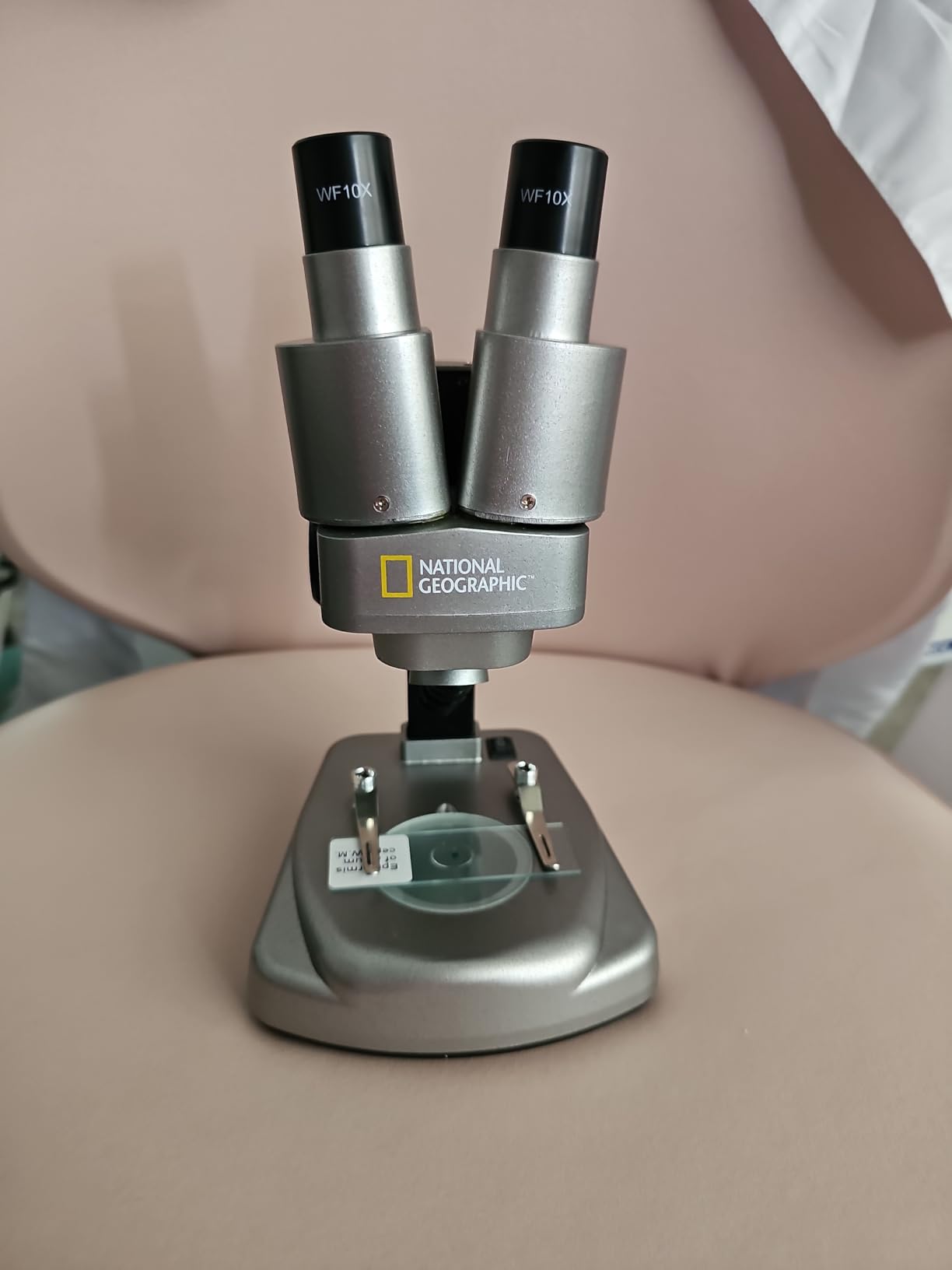
This is the scope we hand to a curious child first. It tops out at 50x, which sounds disappointing until you realise that 50x is genuinely the right ceiling for a brine shrimp egg or a leaf cross-section viewed by an eight-year-old. Anything more powerful just produces a blur at that age.
The two-in-one lighting is the detail that earns its place. A light from below handles prepared slides and a cheek swab; a light from above lets a child look straight down at a rock, a coin or a beetle wing with no mounting at all. That is the moment microscopy stops being homework and starts being a toy.
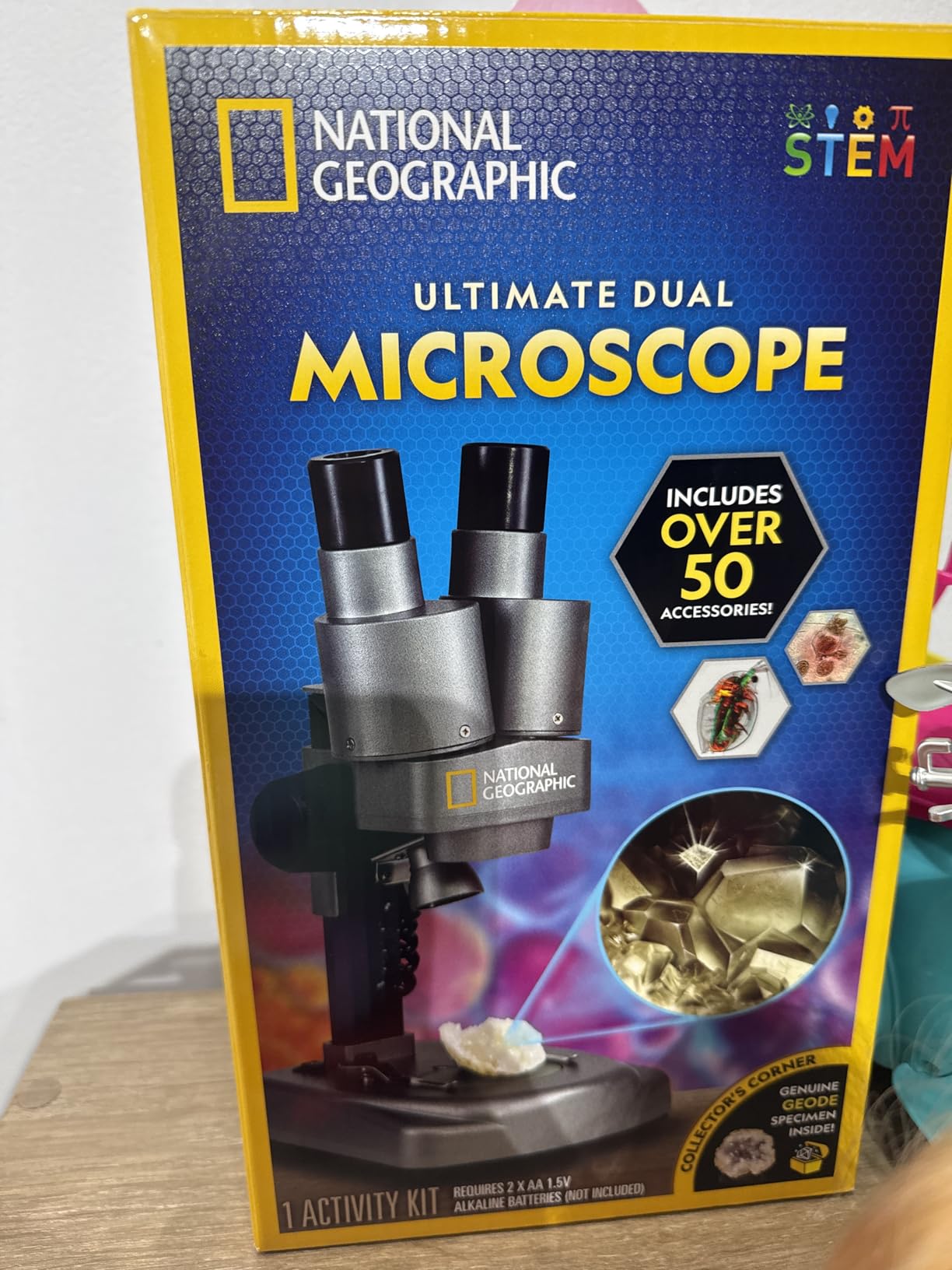
Everything needed to start arrives in the case: 10 prepared slides, blank slides, cover slips, tweezers, an eye-dropper, a brine shrimp hatchery and a mini geode, plus a full-colour guide for the first few sessions. More than 3300 reviews averaging 4.6 stars reflect a build that reviewers describe as durable rather than disposable, and the brine shrimp kit teaches life cycles better than any single prepared slide.
Who it suits
Ages 8 to 12, homeschool families starting from scratch, and any parent who has watched a child lose interest in a plastic microscope within a week. Battery power and a 2-pound weight also make it the easiest of the group to carry between rooms.
What to watch out for
The eyepieces are not locked in their tube. Carrying the scope from the back rather than the base will pop one out, which is the single most common handling complaint. Teach the carry rule early.
The glass stage plate slides out if bumped, and the lower light can be too bright on pale specimens without a diffuser. Both are manageable, and neither is a reason to skip it at this stage.
2. TOMLOV Compound Microscope 40X-2000X: Best Value for High School Biology
TOMLOV Compound Microscope with Coarse & Fine Focus for Students, 40X-2000X
Achromatic 4x/10x/40x objectives
WF10X and WF25X eyepieces
Coaxial coarse and fine focus
Pros
- Coaxial coarse and fine focus for smooth high-power work
- Dual LED handles slides and opaque objects
- Achromatic objectives cut colour fringing
- Colour diaphragm improves contrast on faint specimens
Cons
- Headline 2000x overstates real optical performance
- Delivered light is dim and extra lighting is often needed
- Rack-and-pinion height needs frequent re-tightening
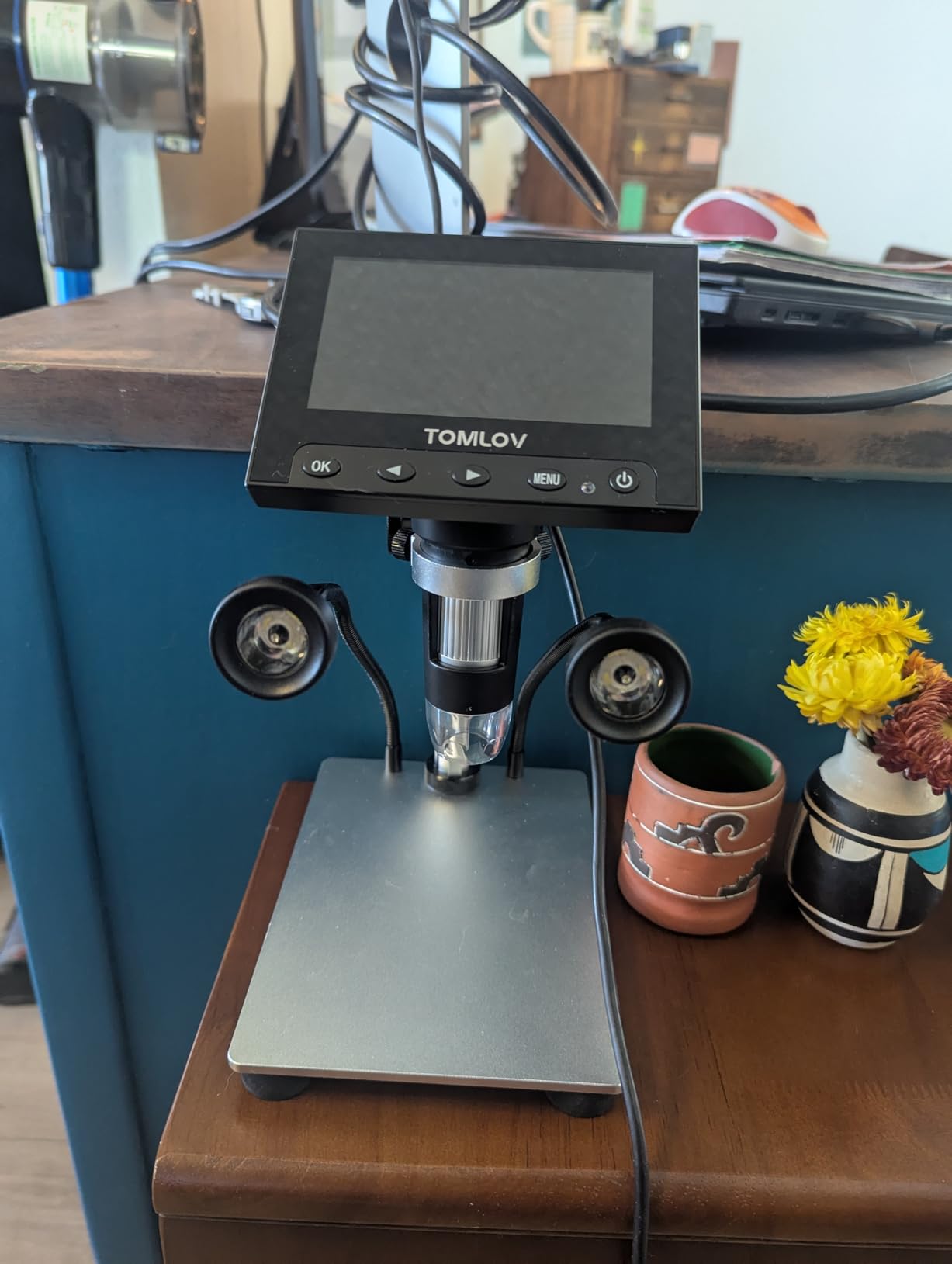
Most of the 2000x on the box does not exist optically, and any honest buyer should plan around that. The real instrument is a 4x, 10x and 40x achromatic objective set on a rotating nosepiece, read through WF10X and WF25X wide-field eyepieces. That is a 40x to 1000x working range, which is exactly what a high school biology course asks for.
What you actually get is coaxial coarse and fine focus. That single feature separates this from the plastic kits below it, because at 400x you need a fine knob to bring the focal plane in without knocking the slide off position.
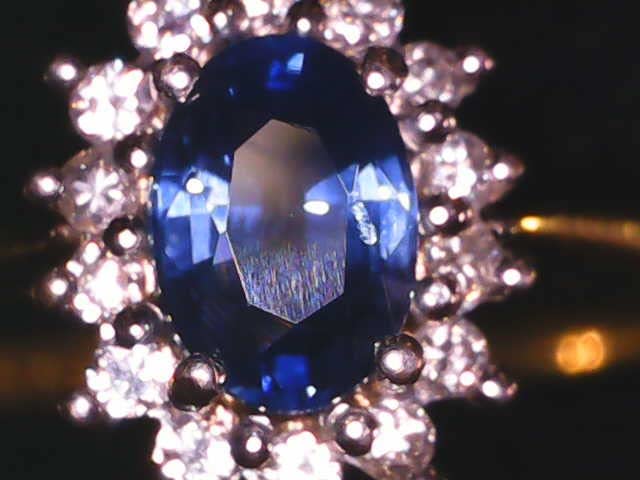
Achromatic objectives are the other reason it outclasses the cheaper units. They correct the colour fringing that makes cheap images look soft and purple at the edges, and the 6-position colour disc diaphragm gives a faint specimen enough contrast to be worth looking at. Five prepared slides, five blank slides and round cover slips are included, so nothing has to be bought before the first session.
Who it suits
A high school student working through cell biology, a family that wants genuine optics on a budget, and anyone who will be moving up to a college lab in a year or two. The 2.7-pound metal build survives being moved between a kitchen table and a shelf.
What to watch out for
Delivered illumination is not bright, and several buyers add their own lamp. Plan on a desk lamp as a companion rather than expecting the built-in LED to carry a stained slide.
The height adjustment needs occasional re-tightening, and the base is light enough to wobble at high power. A steadying hand and a slow fine focus solve both.
3. National Geographic Microscope for Kids with 400x: Best Budget Starter
National Geographic Microscope for Kids with Up to 400x Magnification
Three levels up to 400x
LED lighting above and below
6 plant slides plus rocks
Pros
- Large focus knobs small children can turn
- Simple setup with no learning curve
- Complete kit of slides and rock samples
- Lab guide with activities and merit badges
Cons
- Focus mechanism is stiff and notchy
- Light feels cheap and delivered illumination is weak
- Sample slides and rocks look underwhelming up close
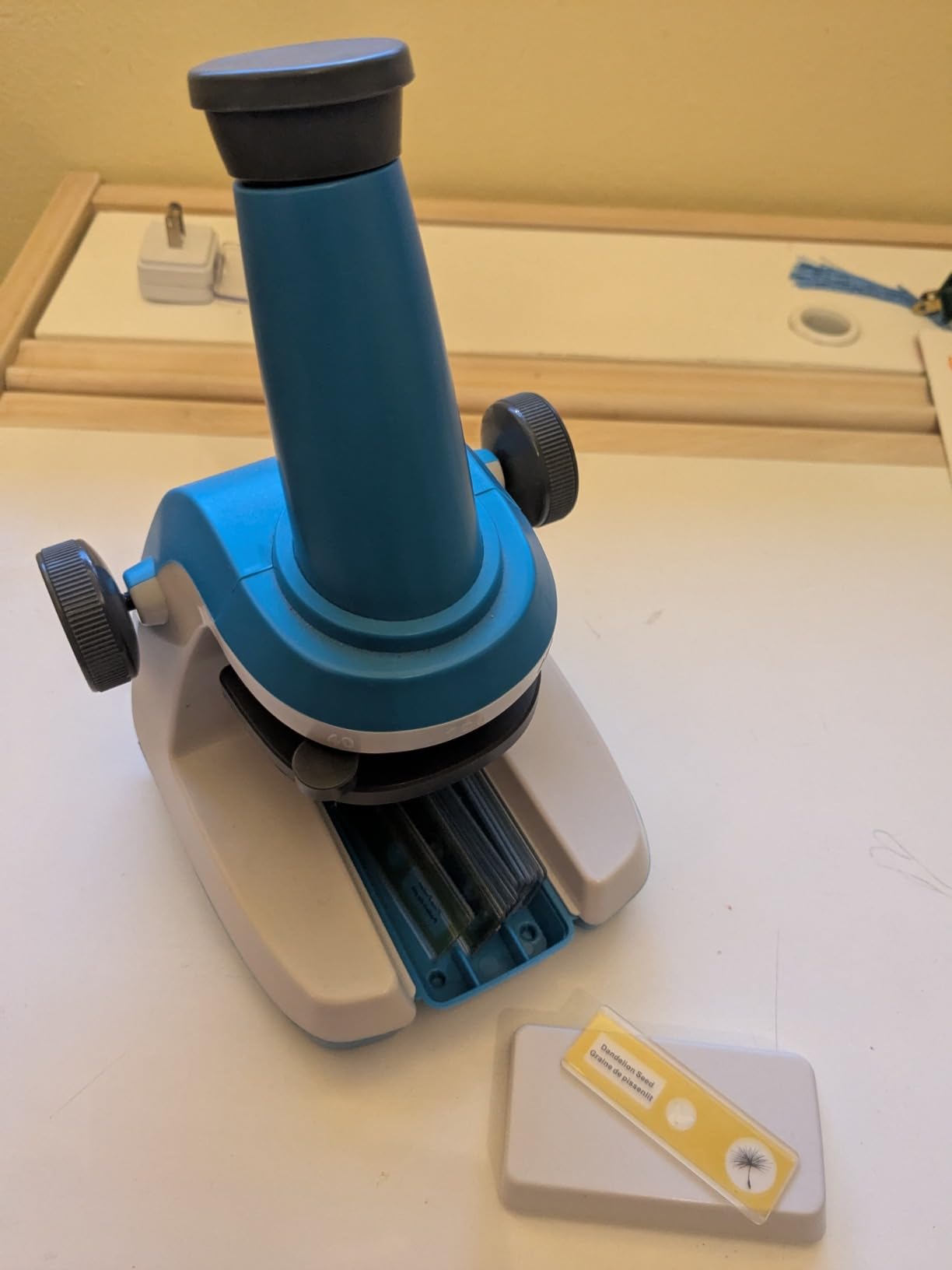
This is the most direct way to find out whether a child is interested, and roughly 1.8 pounds of plastic that a five-year-old can operate without help. The large focus knobs and soft-touch eyepiece do more for early engagement than any spec on the label.
Three magnification levels topping out at 400x is enough to see plant cells in the included prepared slides. Lights above and below the stage let a child look at the 6 rocks and minerals as well, which is often what sells the whole hobby.
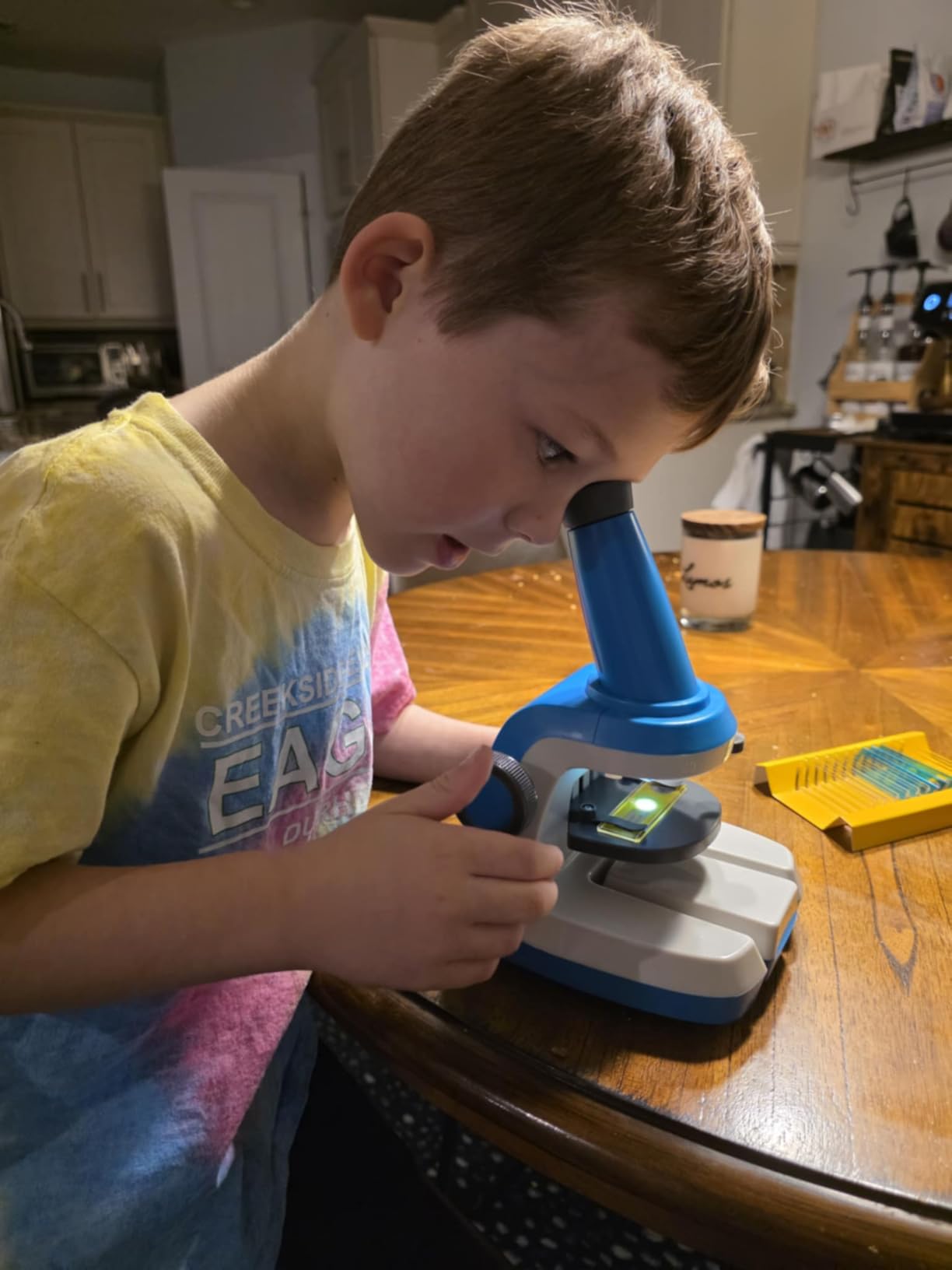
The activity guide, the specimen dish, the pipette and the merit badge stickers turn a device into a complete gift. Across 2.8k reviews averaging 4.5 stars, the reception is genuinely split: parents of 5 to 8 year olds report repeat use, and imaging-focused reviewers call it primitive. Both are true.
That split is the decision. If the goal is engagement, this works. If the goal is image quality that survives a science fair photo, it does not, and the Emarth below is the better step up.
Who it suits
Children roughly 5 to 8, gift buyers working from a small budget, and any family who wants to test interest before spending on a real instrument. It is a poor choice for a teenager who will be doing microbiology within the year, because the stiff focus and weak light are not fixed by practice.
What to watch out for
The focus knob is stiff and notchy, sticking and then jumping rather than moving smoothly. Small hands cope with it; an adult trying to find a focal plane at 400x will not.
Delivered illumination is dim, which makes fine detail on the prepared slides hard to see. Reviewers who bought it for older children tend to be the disappointed ones, because expectations rise faster than the magnification.
4. PalliPartners Compound Microscope: Best for Documenting Work With a Phone
PalliPartners Compound Microscope for Adults & Students, White
4x/10x/40x objectives with 25X eyepiece
Top and bottom adjustable LED
Phone clip included
Pros
- Phone clip adapter and remote shutter included in the box
- Top and bottom light handles coins and insect wings
- Coaxial coarse and fine focus
- 28 slides supplied including 10 prepared
Cons
- Real magnification falls well short of the 2000x claim
- Objectives can wobble loose in the housing
- No movable stage so specimens are hard to locate
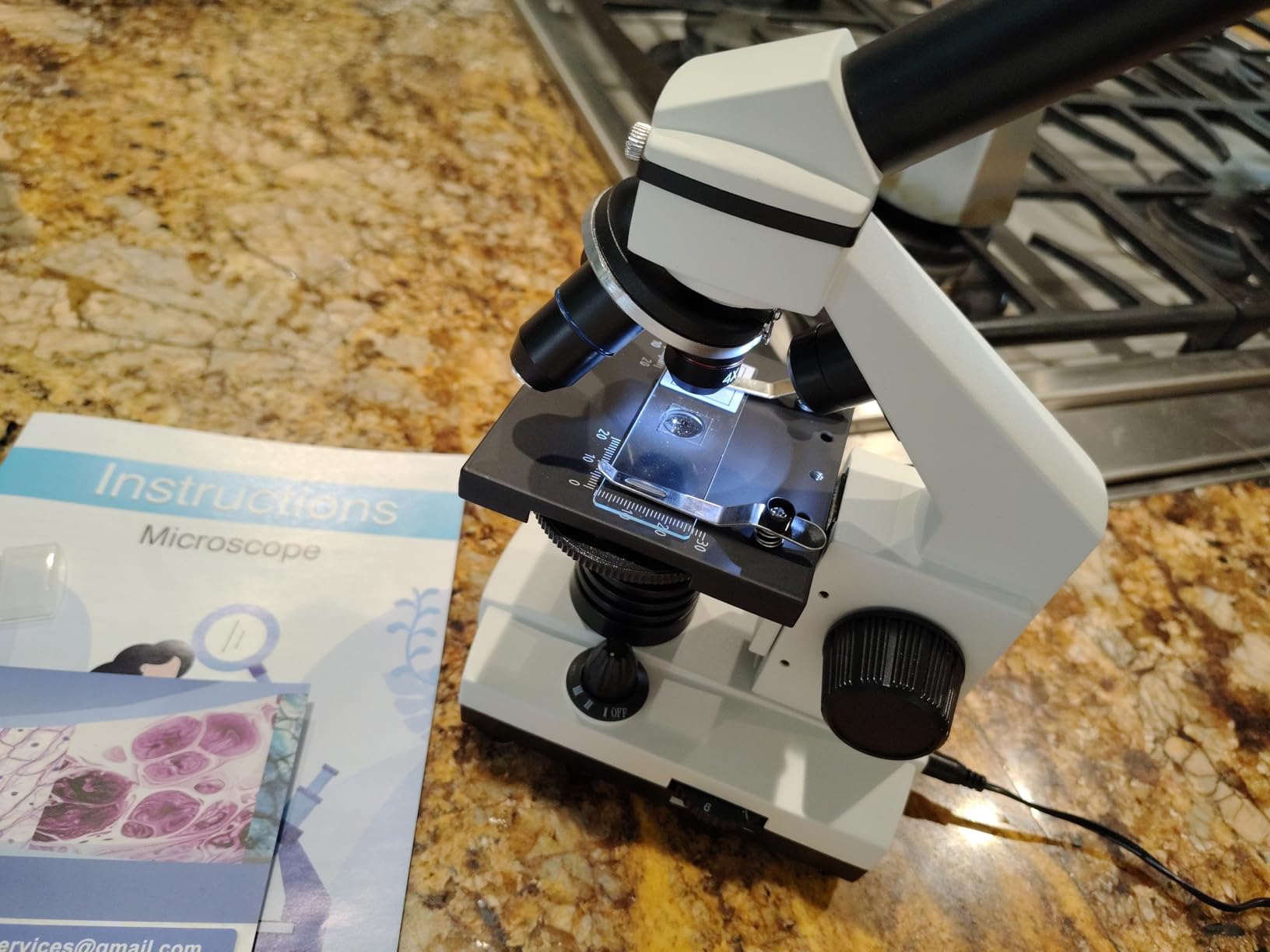
This is the only scope in the group that includes a phone clip adapter and a Bluetooth remote shutter, and that single detail answers the question students keep asking: how do I photograph what I am looking at. Clip the phone to the eyepiece, roll the ball, and the image is on the screen.
Optically you are looking at 4x, 10x and 40x achromatic objectives with a WF25X eyepiece and a 2X auxiliary lens. The listing calls it 100x to 2000x, and reviewers who measured it report far less usable power than that headline suggests.
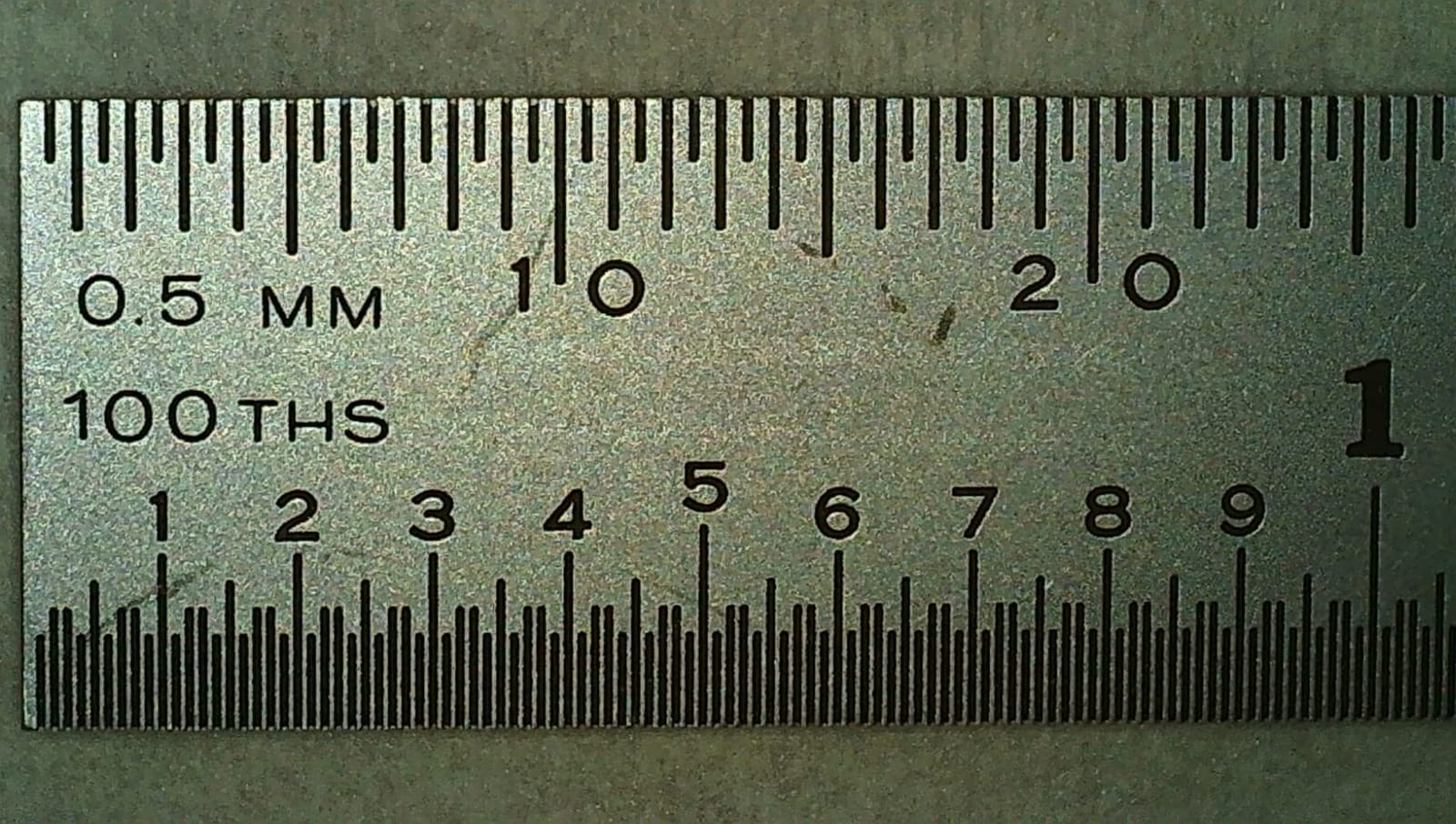
What holds it together is the kit. Ten prepared slides, 18 blank slides, a phone clip, a Bluetooth shutter and a power adapter is a generous bundle, and the top and bottom LEDs mean translucent cells and opaque objects like coins and insect wings both work.
The 4.3 rating across 1189 reviews is the widest spread in this set, with owners using it as a casual hobby scope mostly happy and the harshest reviews concentrated on magnification claims, loose lenses and a thin manual. Materials are SGS certified for non-toxic content and electrical safety.
Who it suits
Students running a science fair or STEM project who need dated images of their slides, and families who want to photograph specimens without buying a separate camera adapter. It is not the right tool for long college lab sessions, since a monocular head with no movable stage gets tiring quickly.
What to watch out for
Objective lenses can loosen in the housing and knock out of alignment during adjustment. If a lens starts to feel loose, stop and reseat it rather than pushing through.
There is no movable stage, so locating a specific cell means pushing the slide around by hand while looking. The included manual is also thin on the parts and the phone setup, so budget time for a quick search on the controls.
5. Emarth 52-Piece Compound Microscope: Best for a School Science Fair
Microscope for Kids Beginners Children Student, 40X- 1000X Compound Microscopes with 52 pcs Educational Kits
40X-1000X across 4 objectives
Metal objective housings
10X and 25X swappable eyepieces
Pros
- Metal objective housings outclass all-plastic kids scopes
- Two swappable eyepieces give clearly different views
- Image stays usable at the top of its range
- Three-position lighting covers opaque and translucent work
Cons
- Plastic frame makes it noticeably shaky
- Manual references a dust cover that is not in the box
- Only a handful of plastic slides supplied
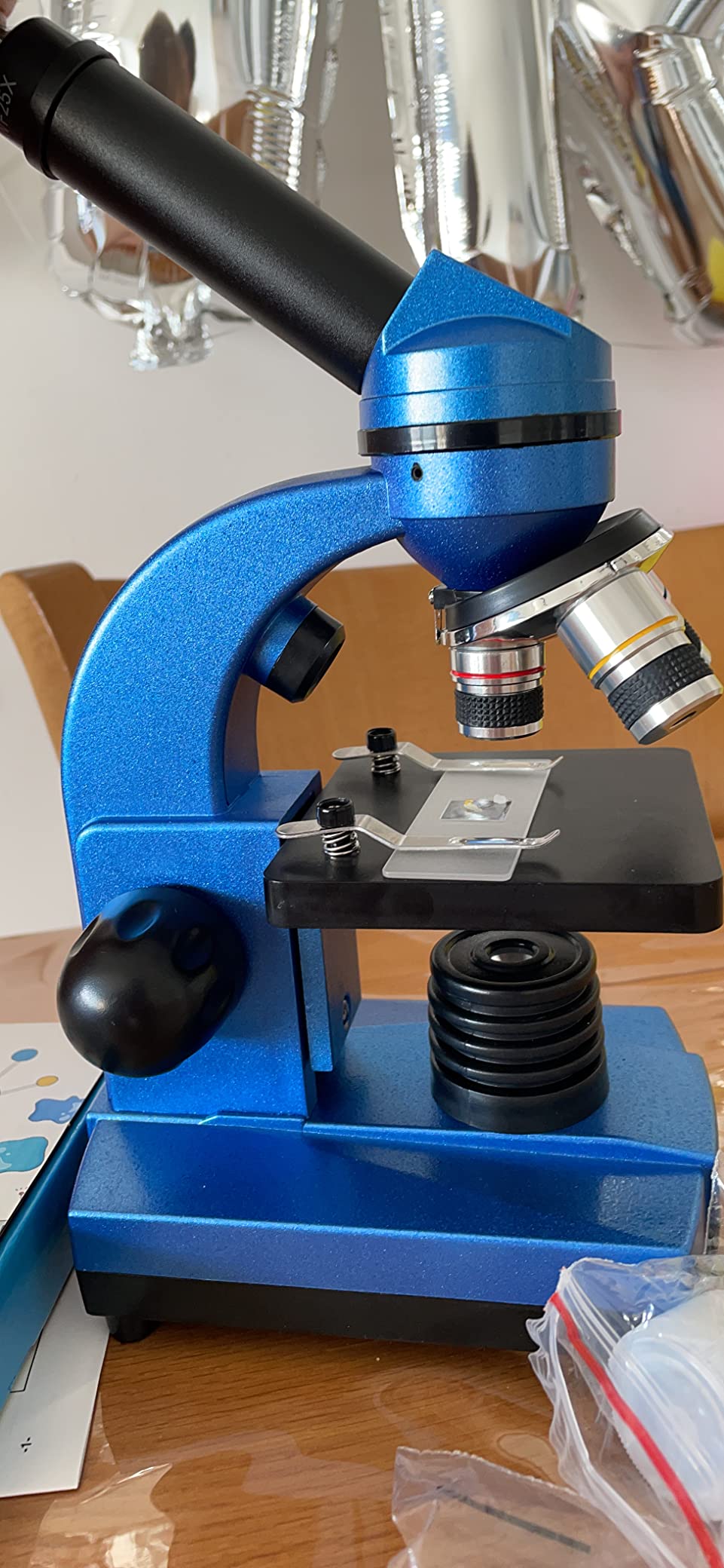
Many kids microscopes in this bracket are moulded plastic from the objective down. The Emarth uses metal objective lens housings, and side-by-side comparison reviews repeatedly single that out as the reason the image looks better than two cheaper alternatives side by side.
Two swappable eyepieces at 10X and 25X are the practical winner. Switching eyepieces instead of rotating objectives is faster, and a child can double the apparent size of a cell in two seconds without touching a fragile lens thread.
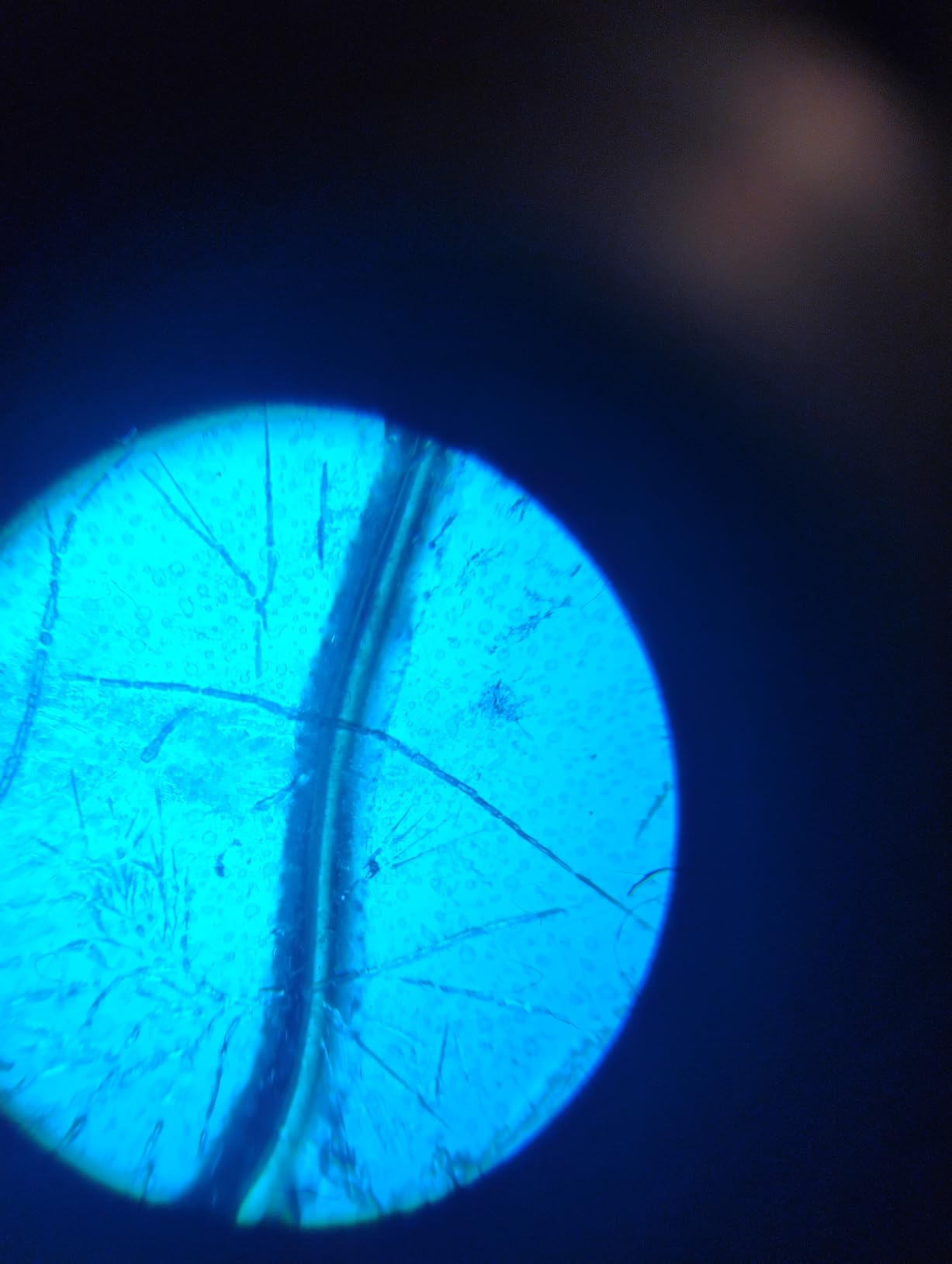
The three-position light switch runs below, above or both, with adjustable intensity, and 6 built-in colour filters add contrast to pale specimens. Reviewers note the image holds up at the top of the range, which is unusual for a kit at this level.
At 4.5 stars across 1103 reviews, the consensus is that this is a real compound microscope rather than a toy. The one complaint that comes up again and again is the light plastic frame, which shakes when a specimen is moved.
Who it suits
A student building a science fair display who needs a documented set of slides and a scope that will survive a school year of handling. Younger children need an adult nearby, because the controls are more involved than the National Geographic kits above.
What to watch out for
The plastic frame is the weak point. Bracing an elbow on the table while focusing removes most of the shake that reviewers complain about.
The instruction booklet references a dust cover that is not actually in the box, which is a small irritant and a reason to find the controls from the product photos before the first session.
6. AmScope B120C-E1 LED Binocular Compound Microscope: Best for College Labs
AmScope B120C-E1 LED Binocular Compound Microscope, 40X-2500X
Siedentopf binocular head
Abbe condenser with blue lens
Dimmable fly-eye LED
Pros
- Siedentopf binocular head with adjustable interpupillary distance
- Abbe condenser gives real control of contrast
- Dimmable fly-eye LED and a mechanically smooth stage
- Bundled 1.0 MP USB camera with Windows software
Cons
- Bundled camera is low resolution with shallow depth of field
- Switching between eyepieces and camera is clumsy
- Above 1000x is empty magnification with no extra detail
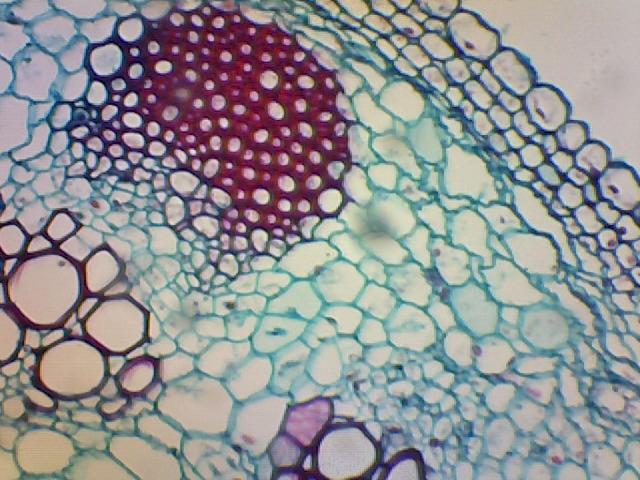
This is the most lab-oriented instrument in the group, and the differences are structural rather than cosmetic. A Siedentopf binocular head with adjustable interpupillary distance keeps both eyes at the correct angle for a long lab session, which is exactly what a three-hour microbiology practical demands.
The Abbe condenser with a pivot-out blue lens and the dimmable fly-eye LED give genuine control over contrast. On a stained or unstained sample, closing the iris diaphragm down is the difference between seeing structure and seeing a bright smear.
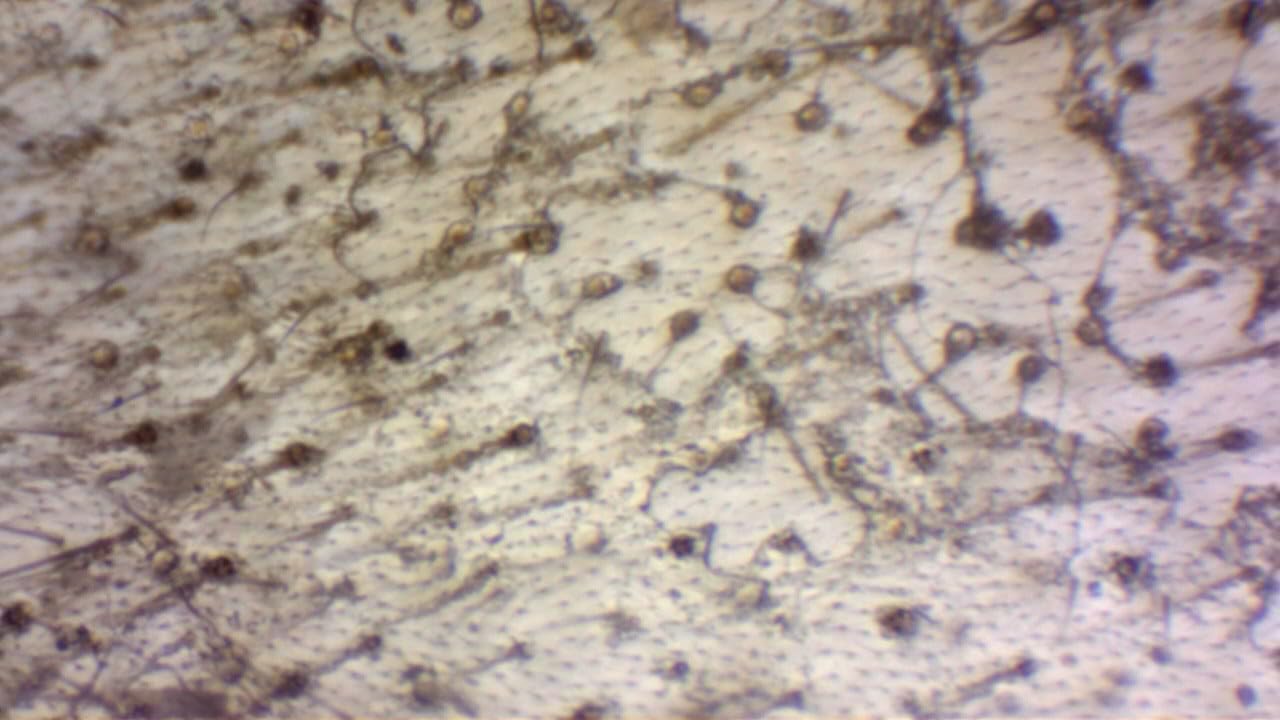
The mechanical stage has coaxial X-Y controls, so a slide moves smoothly in two axes with one hand. That is a feature students do not miss until they have used a scope without one, and it is the reason a mechanical stage should be non-negotiable for serious lab work.
A 1.0 MP USB camera and Windows software are bundled, and the 5-year manufacturer warranty is backed by responsive parts support that several buyers single out as the deciding factor. Reviewers with university lab experience rate the optics on par with far costlier instruments.
Who it suits
College biology and microbiology majors, homeschool families with older children, and anyone who will spend real hours at the eyepiece. The bundled camera is a bonus for lab notes, not a substitute for proper photomicrography.
What to watch out for
The bundled 1.0 MP camera produces low-resolution images with limited depth of field, and switching between the eyepieces and the camera is awkward because the head is binocular, not trinocular. Photographers should budget for a separate camera and adapter.
Above roughly 1000x the image enlarges without resolving extra detail. That is empty magnification, not a fault, and paying a premium for a higher headline number buys nothing here.
7. AmScope M162C-2L-PB10-WM 1000X Kit: Best All-Metal Scope for Homeschool Families
AmScope M162C-2L-PB10-WM “Awarded 2018 Best and Microscope Kit” – 1000X
All-metal frame and optical components
Dual-layer mechanical stage
10X pointer plus 25X eyepiece
Pros
- All-metal frame and optics resist wear and vibration
- 4.6 stars across 591 reviews
- Substantial weight keeps it stable during use
- Coaxial X-Y stage and working stage clips
- Works with optional AmScope digital cameras
Cons
- No real instruction manual for the model
- Only 5 prepared slides included
- Mono head is harder for young children to align
Metal, all of it. The frame and the optical components are metal rather than a plastic shell with metal accents, and at 3.7 pounds the scope stays put when a slide is nudged. That stability is the difference between a usable image and a frustrating one at 400x.
The dual-layer mechanical stage with coaxial X-Y controls is a real stage, not a flat plate. A 10X pointer eyepiece is included alongside a 25X, and the pointer is genuinely useful for counting cells or pointing out a feature to a student across the table.
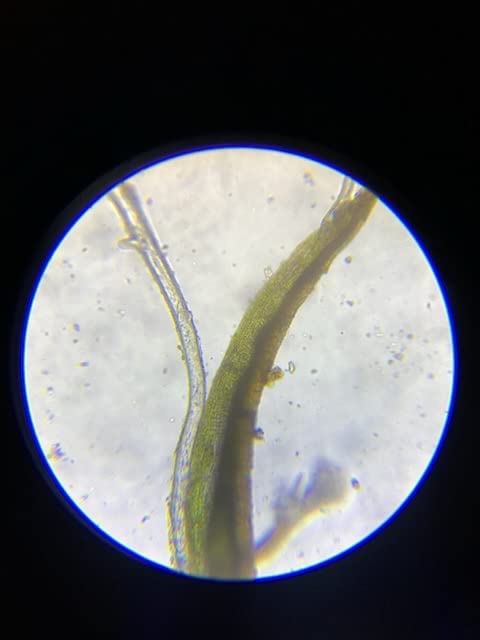
A former biology lab instructor quoted in the reviews rates the 4X and 10X objectives as crisp and comparable to university teaching scopes. That is a high bar for a student kit, and it is why this one holds its own against the scopes above it.
At 4.6 stars across 591 reviews, the feedback skews heavily positive from parents and homeschool families who describe it as an instrument rather than a disposable toy. It also accepts optional AmScope digital cameras.
Who it suits
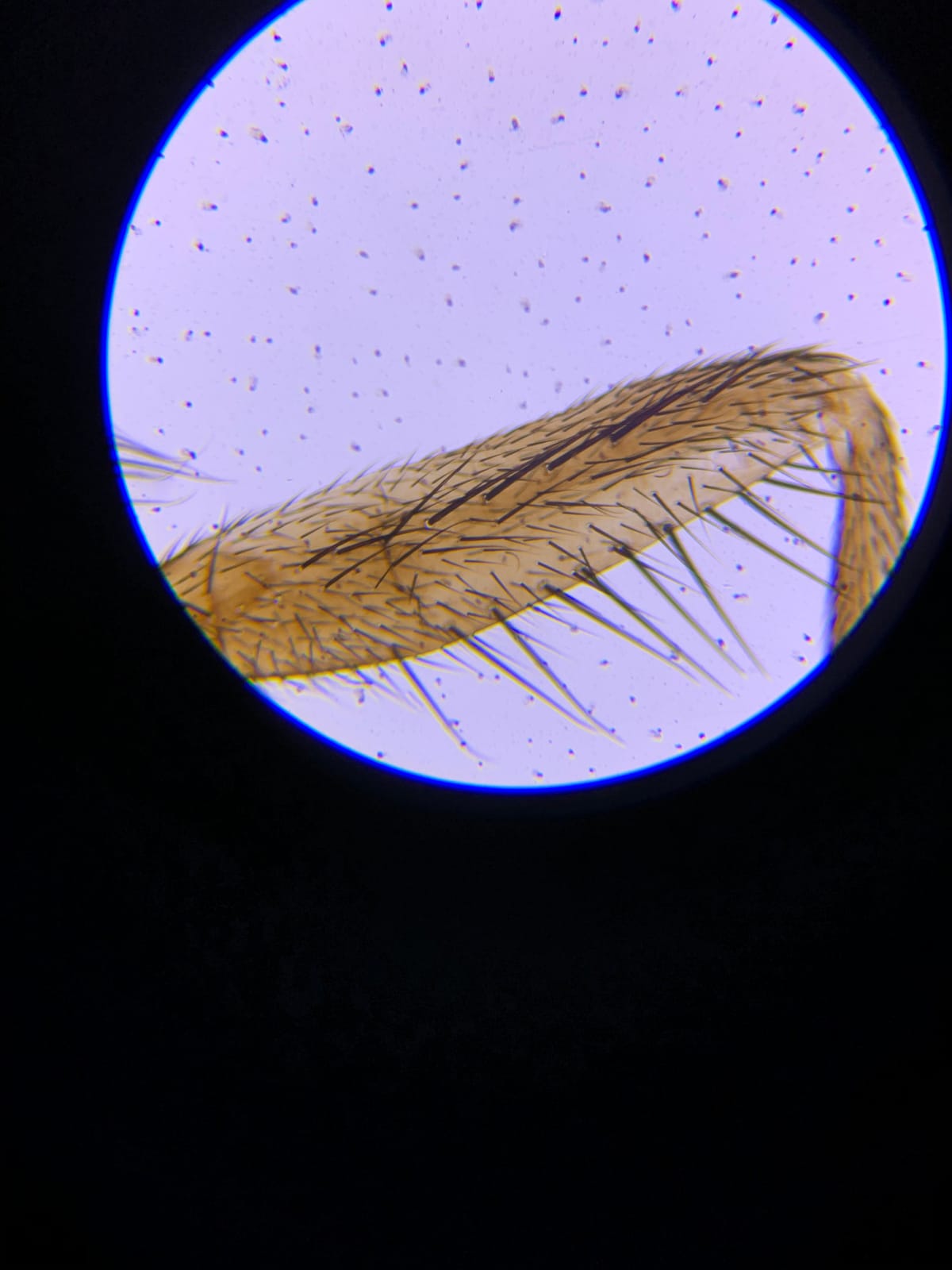
Homeschool families with more than one child, and students moving from middle school into high school biology. A monocular head has to be lined up with one eye held steady, which takes practice before it stops being annoying.
What to watch out for
Documentation is the weak point. The included book is general microscopy reading rather than instructions for this model, and several buyers learned the controls from the product photos. Find a short setup walkthrough before handing it over.
Only 5 prepared slides are included and they run out quickly, so budget for a glass slide pack. The 40X objective is also noticeably less sharp than the 4X and 10X, which is normal for this class of instrument.
8. AmScope M150C-PS25 Portable Monocular 1000X: Best for Classrooms and Field Work
AmScope M150C-PS25 Series Portable Monocular Compound Microscope – 1000X
All-metal construction
40X-1000X achromatic objectives
LED ring light
Pros
- Sturdy metal build safe for children to handle
- Magnification actually matches the stated range
- 25 prepared biology slides included
- Portable form factor works for classroom and field use
Cons
- A bit advanced for a child to run alone
- Listing photos imply a bundled camera that is not included
- No slide case and the eyepiece can be knocked out
This is the classroom and field scope. The flat metal body and 3.3-pound weight mean it goes into a bag and survives a bus ride, and buyers note that magnification levels actually match the stated 40x to 1000x range, which is not something every listing in this bracket can say.
Twenty-five prepared biology glass slides are included. For a shared classroom set or a homeschool family running multiple children through the same specimens, that bundle changes the maths.
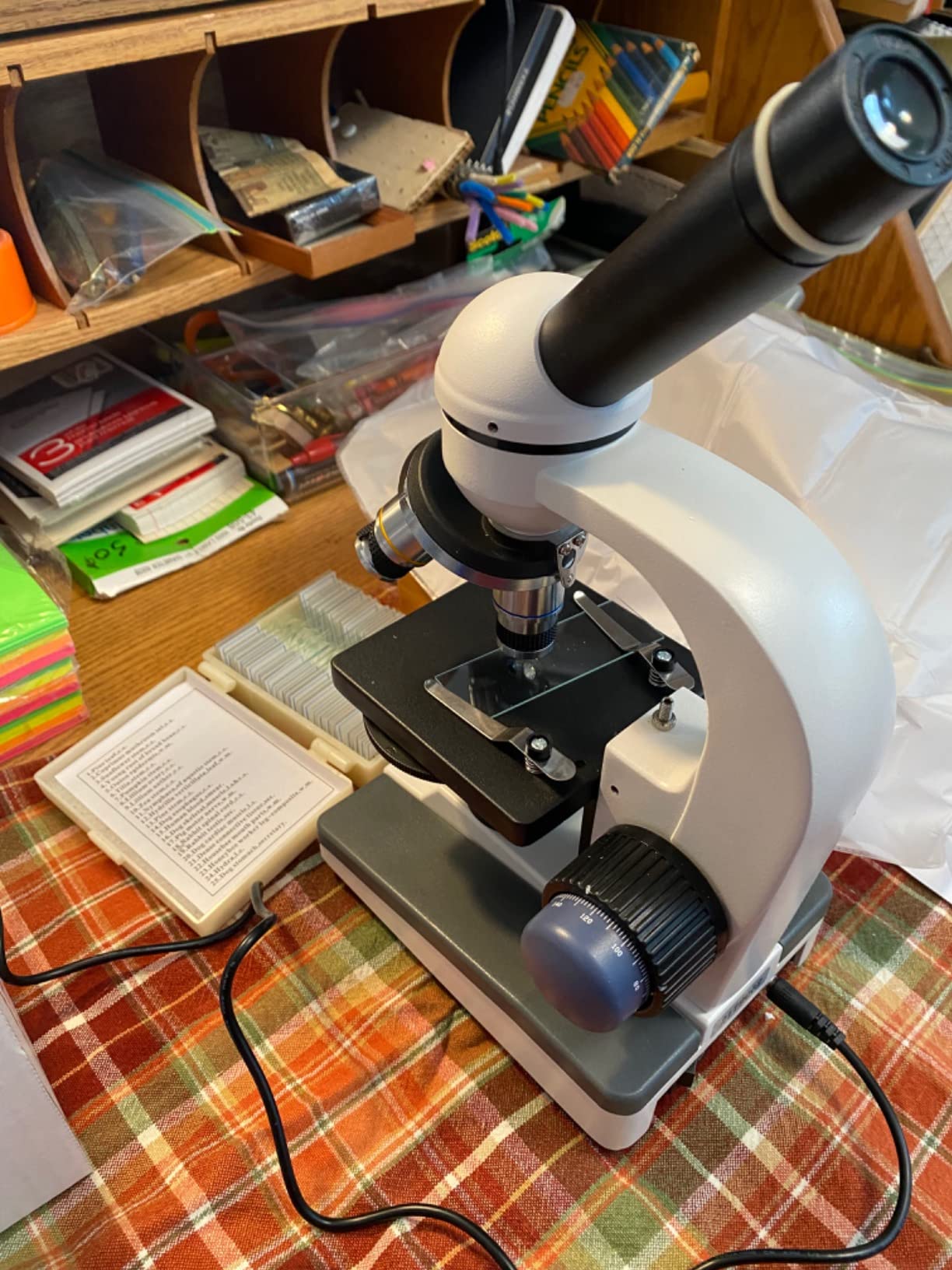
The LED ring light gives even illumination across the field, and the 5-year manufacturer warranty is the same cover AmScope puts on its higher models. Reviewers describe it as a clear step up from plastic kids scopes, with the metal construction and honest magnification as the deciding factors.
One reviewer tip has stuck with us: the eyepiece is easy to photograph with a phone camera held against it. On a monocular head that is the cheapest documentation method available, and it is how most students record a slide for a lab notebook.
Who it suits
Teachers equipping a room, families who want one scope that travels, and students who want to photograph slides without any extra equipment. Corded electric power means no battery planning, and adult help at the start is worth the ten minutes.
What to watch out for
The product photography implies a computer camera is included and it is an optional add-on. Read the box contents rather than the images, and do not plan on digital capture out of the box.
There is no case or holder for the slides, which is a real problem when 25 glass slides need storing, and the eyepiece is easy to knock out of the tube if the scope is carried carelessly.
How to Choose a Student Microscope in 2026
Start with the magnification, because it is the number most often oversold. Total magnification is simply the eyepiece multiplied by the objective: a 10X eyepiece with a 100X objective gives 1000X. Once you know that, a listing claiming 2000X from a 40X objective and a 50X eyepiece is arithmetic, not capability.
For almost all school work, 40X to 1000X is the honest range. Resolution, not magnification, is what shows detail, and useful magnification past 1000X is empty magnification unless the optics are genuinely good. Achromatic objective lenses correct the colour fringing that makes cheap images look soft and purple at the edges, and they are worth more than any headline number.
Monocular, binocular or trinocular
A monocular head has one eyepiece, costs less, and is the right choice for a beginner who will not spend hours at the scope. A binocular head has two, and the Siedentopf design on the AmScope B120C-E1 lets you adjust the interpupillary distance so both eyes sit at the correct angle, which is what makes long lab sessions bearable.
A trinocular head adds a third port for a camera, so you can photograph without taking your eye off the sample. None of the eight scopes here has one, which is worth knowing before you plan to document lab work. For students who want images without a trinocular head, our digital microscope picks and USB microscope guide cover that route directly.
Lighting, condenser and stage
LED illumination beats a mirror in every practical way, and dual lighting (above and below) unlocks opaque specimens like coins, rocks and insect wings. A condenser and iris diaphragm are what let you control contrast, and they are the single biggest quality jump between a student scope and a lab scope.
A mechanical stage with coaxial X-Y controls is worth paying for. Without one, you hunt for a cell by shoving the slide around by hand, which is the fastest way to damage a slide and lose a specimen.
Build, accessories and care
Metal frames and metal objective housings matter more than the numbers on the box. A scope that shakes at 400x produces blurry images no amount of magnification can fix, and the forums consistently treat a metal frame as the durability signal to look for.
Check what is in the box. Slides, cover slips, a dropper and stage clips are the difference between a usable first afternoon and an immediate second purchase. Keep lenses clean with a lens cloth and a drop of lens fluid, never a tissue, and store the scope with the stage lowered so the objective does not take a weight it was not designed for.
Compound vs Stereo vs Digital: Which One Do Students Need?
A compound light microscope is what schools use, and it is what every scope in this list is. It passes light up through a thin specimen and resolves a single cell, a stained tissue section or a drop of pond water. Monocular and binocular simply describe how many eyepieces it has.
A stereo microscope is the right tool for dissection, insects, rocks and circuit boards because it gives a three-dimensional, upright view with real depth. It does not resolve single cells, so it complements a compound scope rather than replacing one. If that kind of work is coming, read the stereo microscope roundup alongside this one.
A digital or USB microscope skips lenses entirely and shows the image on a screen or phone. It is a good companion for photographing slides and for opaque objects, and a poor substitute for optical resolution at 400X and above.
Frequently Asked Questions
What is the best microscope for a beginner?
The National Geographic Dual LED Microscope Science Kit is the best starting point for a beginner, because it reaches 50x, lights specimens from above and below, and includes more than 50 accessories with 10 prepared slides. Children 8 to 12 get a genuine first look at cells without a learning curve. If the student is already 13 or older, step up to a compound scope with achromatic objectives and coaxial fine focus such as the TOMLOV or the Emarth 52-piece kit.
How much magnification does a student microscope need?
Between 40x and 1000x covers essentially all school work. Total magnification is the eyepiece multiplied by the objective, so a 10X eyepiece with a 100X objective gives 1000X. Useful magnification above 1000X is empty magnification unless the optics are genuinely good, which is why advertised numbers like 2000X are worth treating sceptically.
What is the difference between monocular, binocular and trinocular microscopes?
The difference is the number of eyepieces and the ports on the head. A monocular scope has one eyepiece, costs the least and suits short sessions. A binocular scope has two and is far more comfortable over long lab work, especially with an adjustable Siedentopf head. A trinocular scope adds a third port for a camera so images can be taken without looking away from the sample.
What should my child look at under a microscope?
Start with the prepared slides in the box, then move to specimens the child prepares. Onion skin cells and a cheek swab are the classic first two. After that, pond water, a brine shrimp hatchery, fabric fibres, a strand of hair and a fingerprint give visible differences in structure. Opaque items such as coins, rocks and insect wings need the top light switched on.
How do I clean my microscope lenses?
Lower the stage, rotate a lens off, and breathe gently on the surface to clear loose dust. Add one drop of lens cleaning fluid to a lens cloth, never a tissue or your sleeve, and wipe from the centre outward in a spiral. Repeat for the eyepieces. Avoid the objective on the lowest power lens while it is still attached to the body, and store the scope with the stage lowered.
Which Student Microscope Should You Buy in 2026?
That is our short answer to best microscopes for students. For a child aged 8 to 12, the National Geographic Dual LED Microscope Science Kit wins on dual lighting and a 50-piece accessory kit that turn a first session into a habit. Older students moving into high school biology should take the TOMLOV compound scope for its achromatic objectives and coaxial fine focus, or the Emarth 52-piece kit for its metal objective housings.
Once lab hours get long, the metal AmScope scopes are the serious answer. The M162C-2L-PB10-WM suits homeschool families who need something durable, the M150C-PS25 travels for classroom and field work, and the B120C-E1 is the one we would put in front of a college biology major. Whichever you pick, buy glass slides and a lens cloth at the same time, and check the magnification math before you are impressed by any number on a box.