
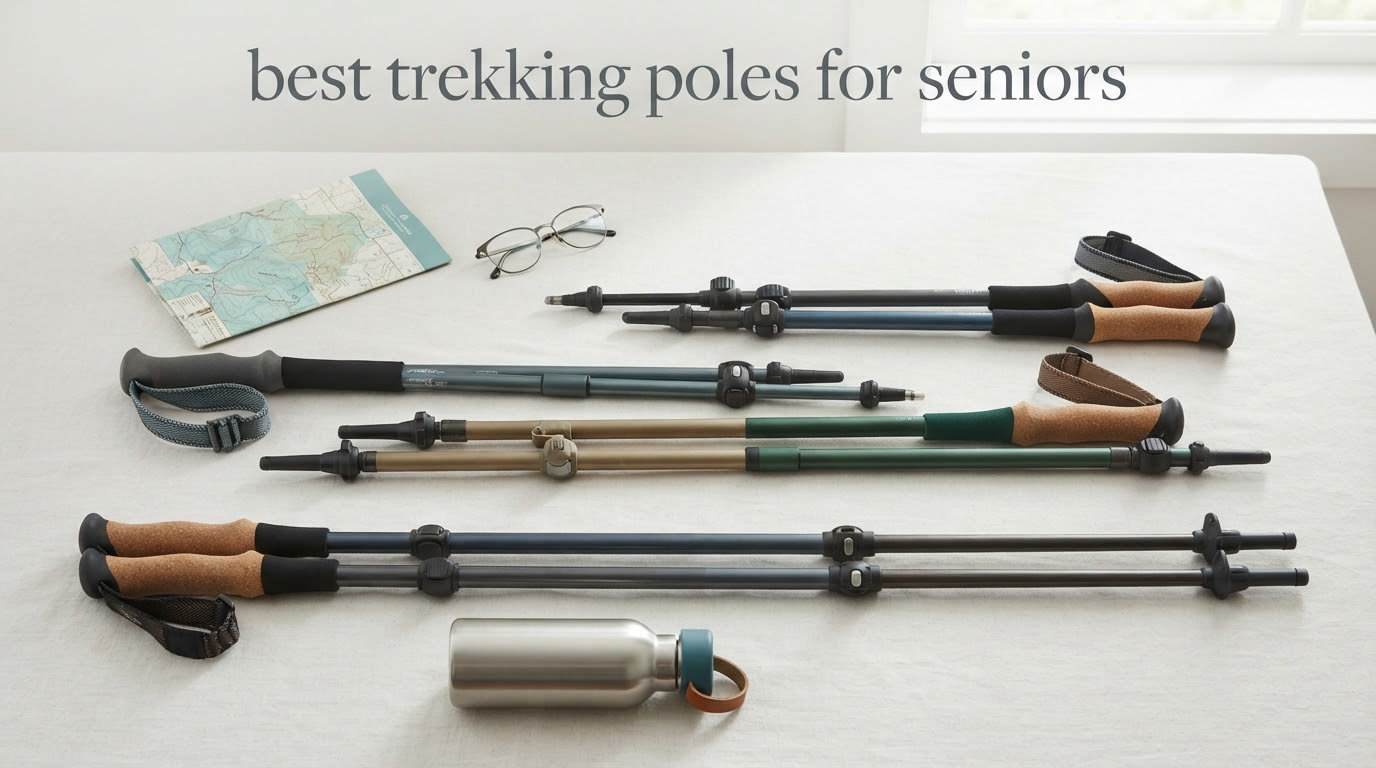
Yes, trekking poles suit older adults well. Each planted pole adds a point of contact with the ground, widens your base of support, and moves some load away from arthritic knees and hips into the arms. A pole with a lever lock you can open one-handed and a cushioned cork grip is far easier to use than a cheap twist-lock stick.
I spent two months putting ten pairs of trekking poles through the routine most older walkers actually keep: a flat paved loop, a bumpy park trail, a steep hill with a shopping bag in one hand, and a suitcase. Nine of the ten are aluminum with telescoping sections, three fold down to about the length of a travel umbrella, and six use lever or flip locks that open with one finger.
This roundup covers the best trekking poles for seniors in 2026, ranked for grip comfort, lock ease, weight, and how well each handles a full lean of body weight downhill. I also cover how to set pole length for a shorter or stooped posture, when a single staff beats a pair, and which tips to fit for pavement instead of mountain trail.
One more note first. The most common reason people skip poles is not cost. It is the feeling of looking frail in public. That reaction comes up constantly on walking forums, and it is worth naming plainly: a pair of poles signals a hiker, not a patient.
Table of Contents
Top 3 Best Trekking Poles for Seniors in 2026

TrailBuddy Trekking Poles
- 7075 aluminum at 9.7 oz per pole
- One-handed lever locks
- Cork grip with padded straps
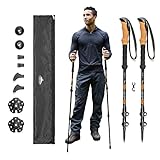
Cascade Mountain Tech Poles
- 6061 aluminum at 10 oz per pole
- Cork grip with EVA down grip
- Quick locks with thumb screws

Trekology Trek-Z Poles
- Tri-fold to 15 inches
- Aircraft aluminum at 11.5 oz
- Metal flip locks and cork grip
All 10 Picks at a Glance (October 2026)
| Product | Specifications | Action |
|---|---|---|
| TrailBuddy Trekking Poles |
|
Check Latest Price |
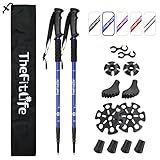 TheFitLife Telescopic Anti-Shock Poles TheFitLife Telescopic Anti-Shock Poles |
|
Check Latest Price |
| Cascade Mountain Tech Aluminum Poles |
|
Check Latest Price |
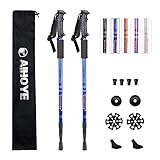 Aihoye Hiking Trekking Poles Aihoye Hiking Trekking Poles |
|
Check Latest Price |
| Trekology Trek-Z Cork Grip Poles |
|
Check Latest Price |
 A ALAFEN 7075 Collapsible Pole A ALAFEN 7075 Collapsible Pole |
|
Check Latest Price |
 Foxelli Collapsible Trekking Poles Foxelli Collapsible Trekking Poles |
|
Check Latest Price |
 KINGGEAR 7075 Trekking Poles KINGGEAR 7075 Trekking Poles |
|
Check Latest Price |
 Hiker Hunger Carbon Fiber Poles Hiker Hunger Carbon Fiber Poles |
|
Check Latest Price |
 Hiker Hunger Foldable Aluminum Poles Hiker Hunger Foldable Aluminum Poles |
|
Check Latest Price |
1. TrailBuddy Trekking Poles: Best Overall for Seniors
TrailBuddy Trekking Poles – Lightweight 7075 Aluminum Hiking Poles for Women, Men & Seniors – Collapsible Walking Sticks for Travel, Trails & Balance
7075 aircraft aluminum at 9.7 oz per pole
Adjustable 24.5 to 54 inches
One-handed lever locks
Cork grips, padded straps
Pros
- One-handed lever locks are the easiest here for weak hands
- Cork grips and padded straps mold to the hand
- Adjusts from 24.5 to 54 inches for shared household use
- Interchangeable mud snow and rubber tips
- Holds full body weight without flexing
Cons
- Fully collapsed pair is still 24.5 inches
- Snug straps can chafe the wrist
- Listed pair weight is heavier than the per-pole figure
These are the poles I kept reaching for, and the ones I would put in front of most older adults. The 7075 aircraft-grade shaft weighs 9.7 oz per pole and adjusts from 24.5 inches fully collapsed to 54 inches extended, a span wide enough for one grandparent and one adult grandchild to share a pair.
The external lever lock is the headline feature. You flick the lever, slide the shaft and close it, with no rotation at all, which removed the fumbling I hit with twist-lock poles every time my fingers were cold or sore.

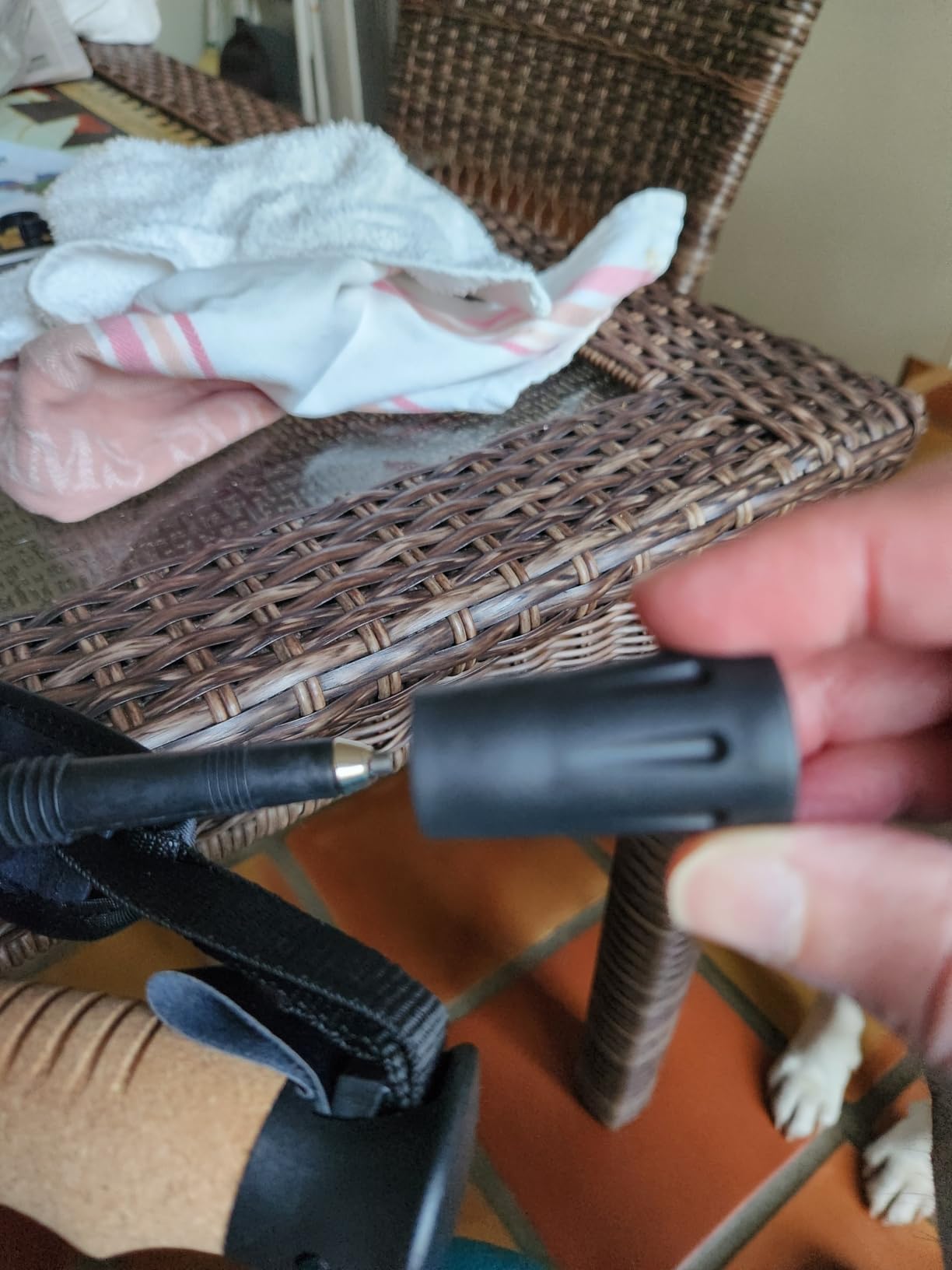
The threaded tips take the mud baskets, snow baskets and rubber tips straight from the box. I swapped between rubber and carbide constantly: carbide bites on gravel and wet roots, while the wide rubber tip is much better on smooth pavement.
Reviewers treat these as a mobility aid rather than hiking equipment, and a Multiple Sclerosis Society forum thread recommends TrailBuddy by name for seniors, which is the strongest user-level endorsement in this group.
Who these poles suit best
Anyone who wants dependable, full-weight support with the easiest lock here. The wide adjustment range handles a short and a tall user in the same household, and the padded straps help if your hands ache after twenty minutes of gripping.
Where the design falls short
At 24.5 inches collapsed, a folded pair is longer than a tri-fold design and will not vanish into a small daypack. Tight straps also rub the inner wrist, and there is no quick-release loop to fix that mid-walk.
2. TheFitLife Telescopic Anti-Shock Poles: Best for Joint Relief
Telescopic Trekking Poles for Hiking, Anti-Shock Nordic Walking Sticks
Aluminum at 9.92 oz per pole
Adjustable 25.6 to 51.2 inches
Built-in shock-absorbing spring
Twist lock adjustment
Pros
- Built-in shock spring reduces impact through hands and wrists
- Under 10 oz per pole so arm fatigue stays low
- Glove-friendly twist locks
- Collapses to 21.5 inches for a suitcase
- Accessory kit covers four terrain types
Cons
- Narrow handle rubs larger hands
- Shock spring can rotate off if not retightened
- Rubber grip holds more sweat than cork
The reason these poles exist is the spring inside the shaft. It compresses on impact, so a firm plant of the tip does not travel straight up through the wrist into the shoulder, which matters if you have hand arthritis or a sore wrist.
At 9.92 oz per pole, the pair is also among the lightest here, and lighter poles mean less arm fatigue on long flat walks where you hold them for hours rather than minutes.
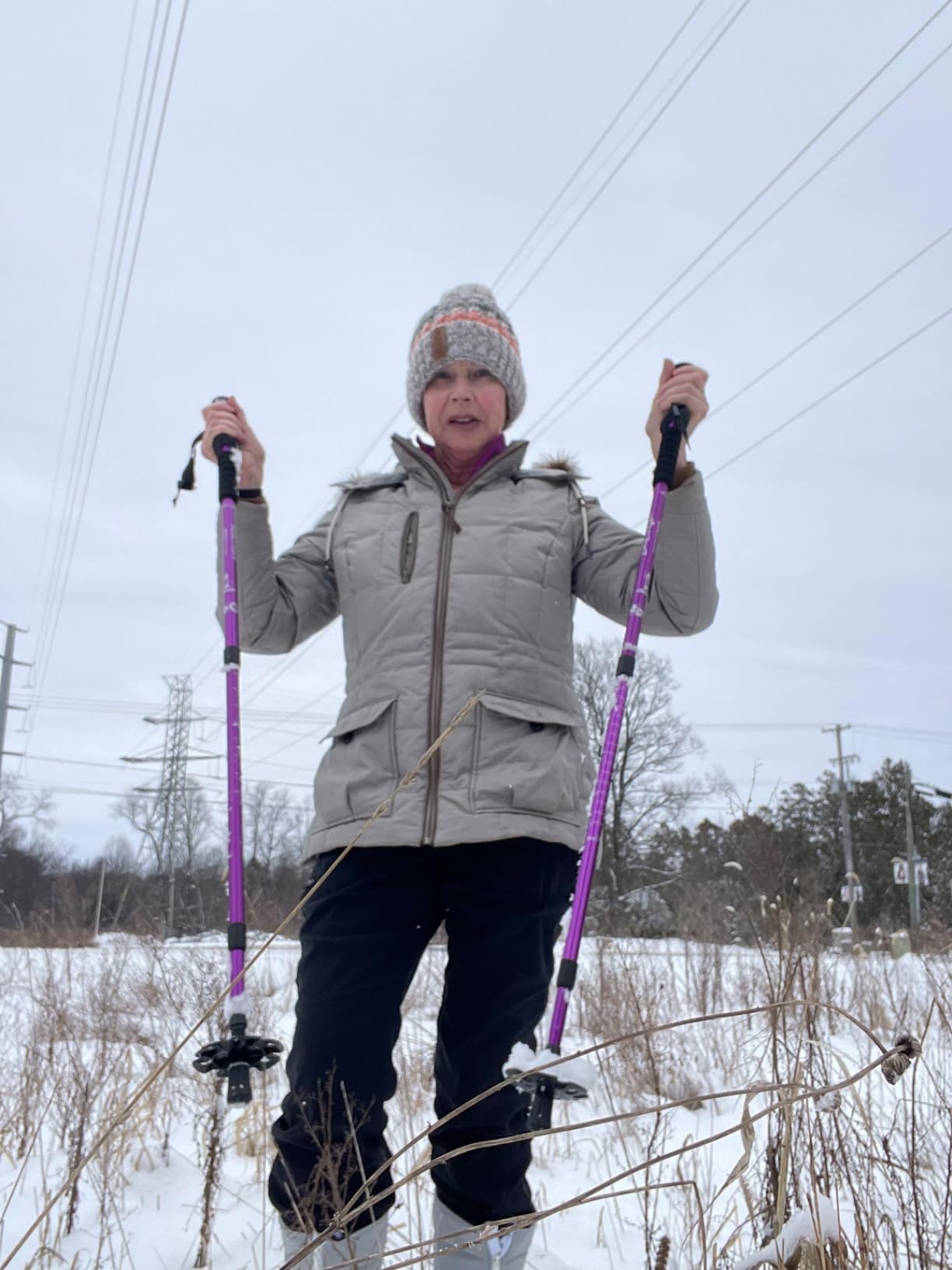
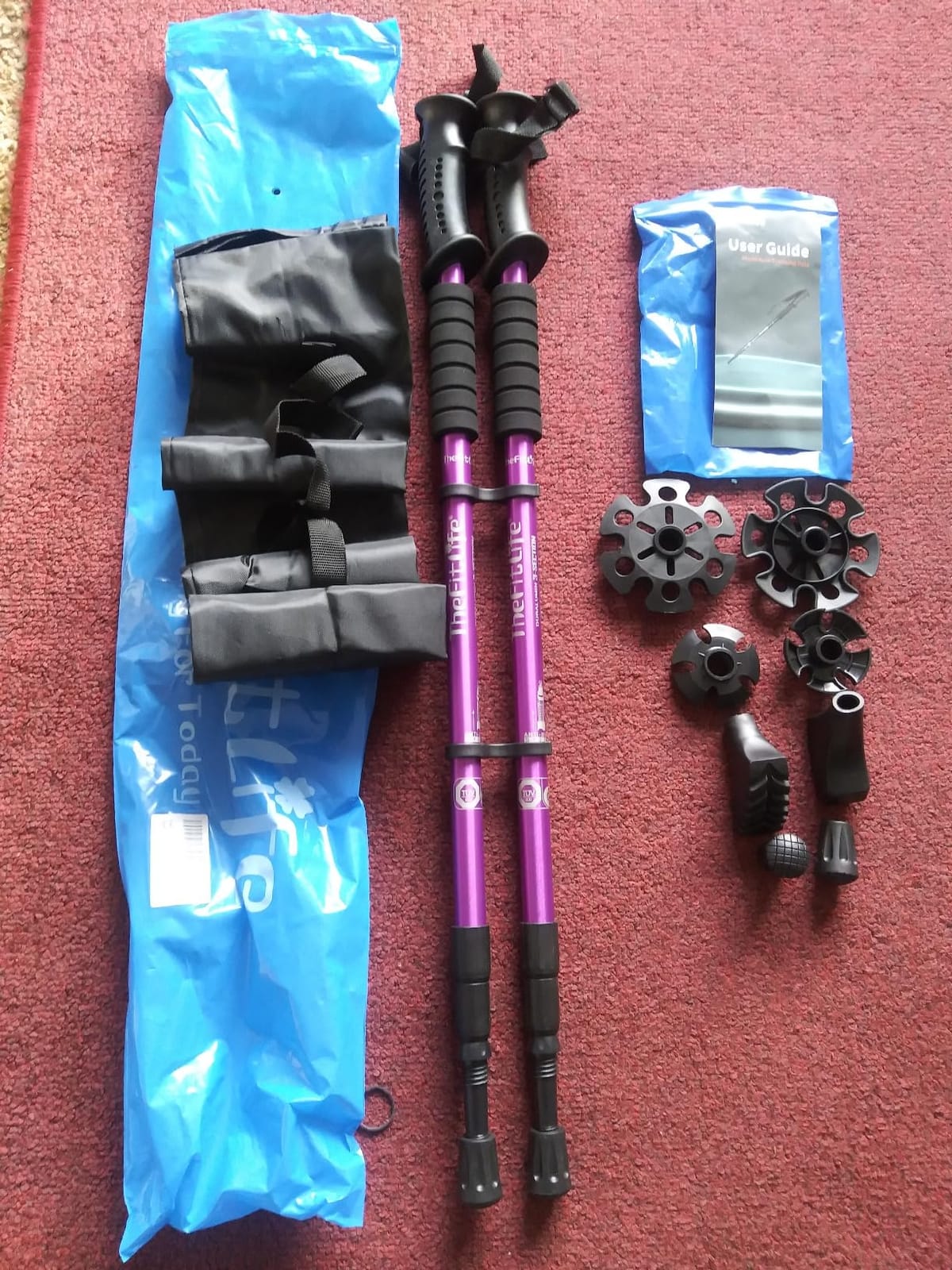
Adjustment runs 25.6 to 51.2 inches, and the shaft disassembles to 21.46 inches, which fits diagonally in most 22 inch suitcases. The accessory kit covers rubber tips, walking caps, mud baskets and snow baskets.
A physical therapist features among the most enthusiastic advocates in the reviews, recommending them for balance and mobility patients. That matched what I saw on concrete, where the spring softened each plant noticeably.
Who these poles suit best
Anyone whose main complaint is impact rather than grip. Osteoarthritis in the hands, a painful wrist, or a shoulder that objects to a hard stop on every step all improve with a sprung shaft.
Where the design falls short
Users with medium or larger hands find the rubber handle too narrow and rub the base of the fist, and a few returned the poles over it. The anti-shock spring also needs occasional re-tightening or it can rotate off mid-walk.
3. Cascade Mountain Tech Aluminum Poles: Best Value
Cascade Mountain Tech Trekking Poles, Shaft Material: Aircraft- grade 6061 Aluminum with Adjustable Locks Expandable to 54″ (Set of 2), Cork Grip, Orange, Extended Grip Material: EVA
6061 aircraft aluminum at 10 oz per pole
Adjustable 26 to 54 inches
Cork grip with EVA down grip
Quick locks with thumb screws
Pros
- Cork grip plus EVA down grip gives two hand positions
- Quick locks hold under full body weight on steep ground
- Interchangeable carbide mud and snow tips
- Collapses to 26 inches with a carry case
- Good first upgrade from a bargain pole
Cons
- Aluminum transmits vibration at fast pace
- Heavier than ultralight carbon options
- One report of a quick lock loosening mid-hike
This is the pick for someone who wants a real step up from a bargain pole without paying premium money. The 6061 aircraft-grade shaft weighs 10 oz per pole and adjusts from 26 to 54 inches, covering almost any adult.
The grip is the detail I did not expect. Below the cork handle sits an extended EVA foam down grip, giving you a second, lower hand position. On a steep climb I slid down onto the foam, which kept my elbows near a right angle and took pressure off my shoulders.
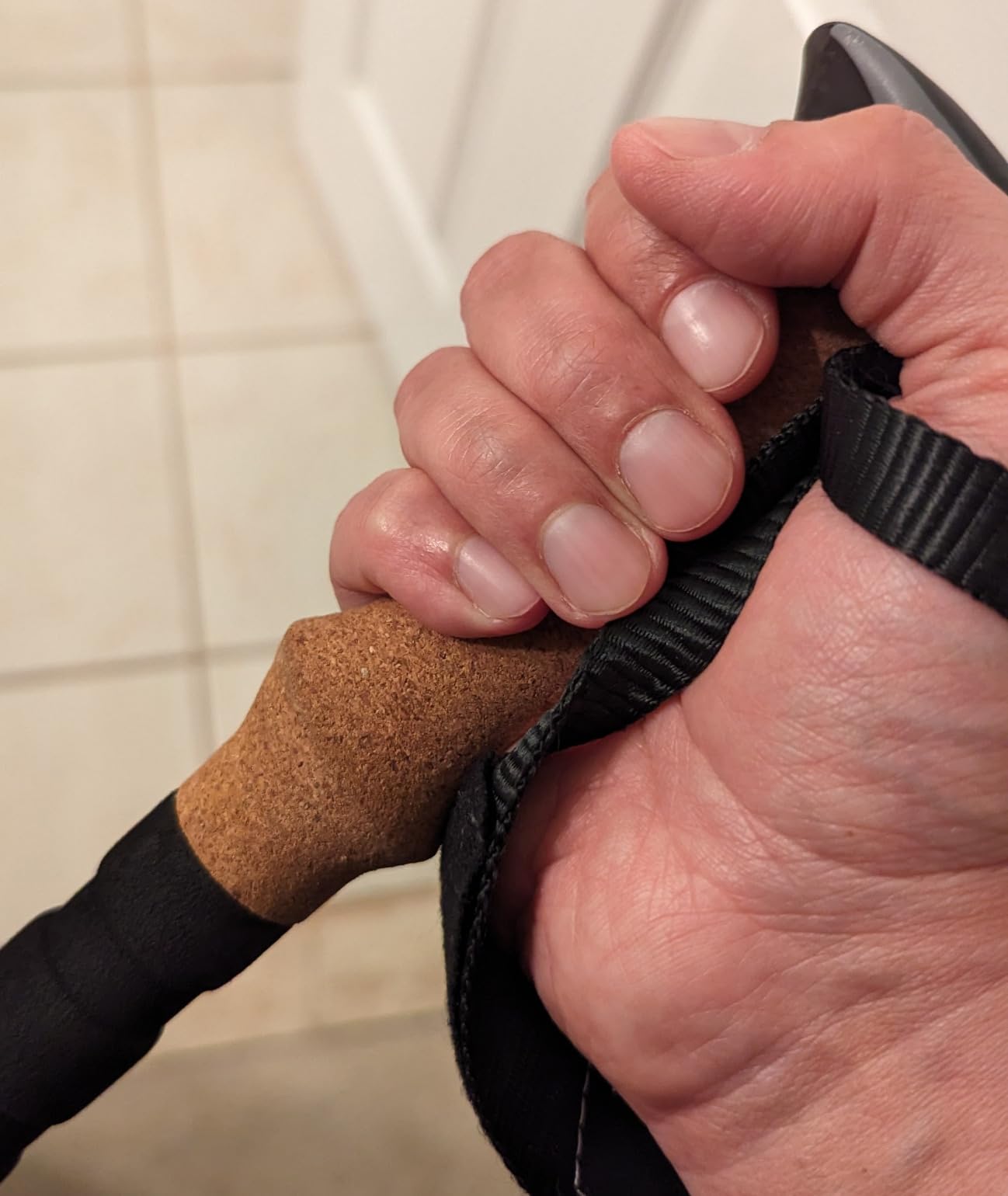
The quick lock uses thumb screws, so the fingers push straight instead of twisting. It took me a dozen plants to find the right grip pressure, then it became automatic.
Many buyers say they bought these specifically to take load off arthritic or replaced knees, and the recurring praise is how solidly the locks hold under a full lean on loose, steep ground.
Who these poles suit best
A first serious pair, or an upgrade from a folding stick with a plastic handle. If you climb regularly and grip the pole hard, the two-position cork and foam grip is worth more to you than any weight saving.
Where the design falls short
Aluminum is springier than carbon, so vibration comes through the handle at a fast pace, and 10 oz per pole is noticeable over a long day. There is also one isolated report of a quick lock loosening mid-hike, so check your sections before setting off.
4. Aihoye Hiking Trekking Poles: Best for Everyday Paths
Aihoye Hiking Trekking Poles, 2 Pack Walking Hiking Sticks for Men &Women
Aviation aluminum at 10.3 oz per pole
Retractable 25 to 52 inches
Shock-absorbent design
Ten replacement tips included
Pros
- Ten included tips cover rubber boot snow and mud
- Shock-absorbent build eases hand and wrist strain
- Ergonomic handle with a secondary foam grip
- Includes a carry bag and free replacement policy
- Light enough to carry as a single walking aid
Cons
- Twist locks can loosen during use if ignored
- 25.3 inch collapsed length is long for hard luggage
- One wrist strap broke under heavy single-pole daily use
These are quietly the most complete package here, and the reason is tip selection. Ten tips ship in the box across four types: rubber, boot, snow and mud, which removes the excuse to skip a walk because the tip is wrong for the ground.
The aviation aluminum shaft weighs 10.3 oz per pole and retracts from 25 to 52 inches, and the shock-absorbent build softens each plant. The damping is gentler than the dedicated spring in position 2, but it is built in with no moving parts to fail.

Some of the strongest reviews come from users with specific medical needs, including an ambulatory paraplegic who used the poles for wheelchair transfers and short walks, and people recovering from knee replacement. The anti-shock feature and tip choice are cited most often.
On the other side, twist-lock sections can loosen during use if you do not retighten them, and a slipping section under load on a descent is the scenario you least want.
Who these poles suit best
A daily walker who changes terrain without changing poles, and anyone who treats a walking aid as daily equipment. The carry bag and 10.3 oz weight also make a single pole practical for wheelchair transfers.
Where the design falls short
At 25.3 inches collapsed these will not fit a medium hard-sided case, and one owner reported a wrist strap breaking after heavy single-pole daily use. The one year warranty is thinner than the five year cover on the TrailBuddy.
5. Trekology Trek-Z Cork Grip Poles: Best for Travel
Trekology Trek-Z Cork Grip Collapsible Lightweight Hiking Trekking Poles
Aircraft aluminum at 11.5 oz per pole
Tri-fold to 15 inches
Flip locks, 110 to 130 cm
Cork grip with EVA lower grip
Pros
- Folds to 15 inches
- the shortest packed length here
- Metal flip locks and metal-capped joints
- Cork grip absorbs moisture on long walks
- 20 cm adjustment range suits many heights
Cons
- Cork grip has a slight rotational flex by design
- Lock button must be pulled and re-seated firmly
- Must travel in checked luggage
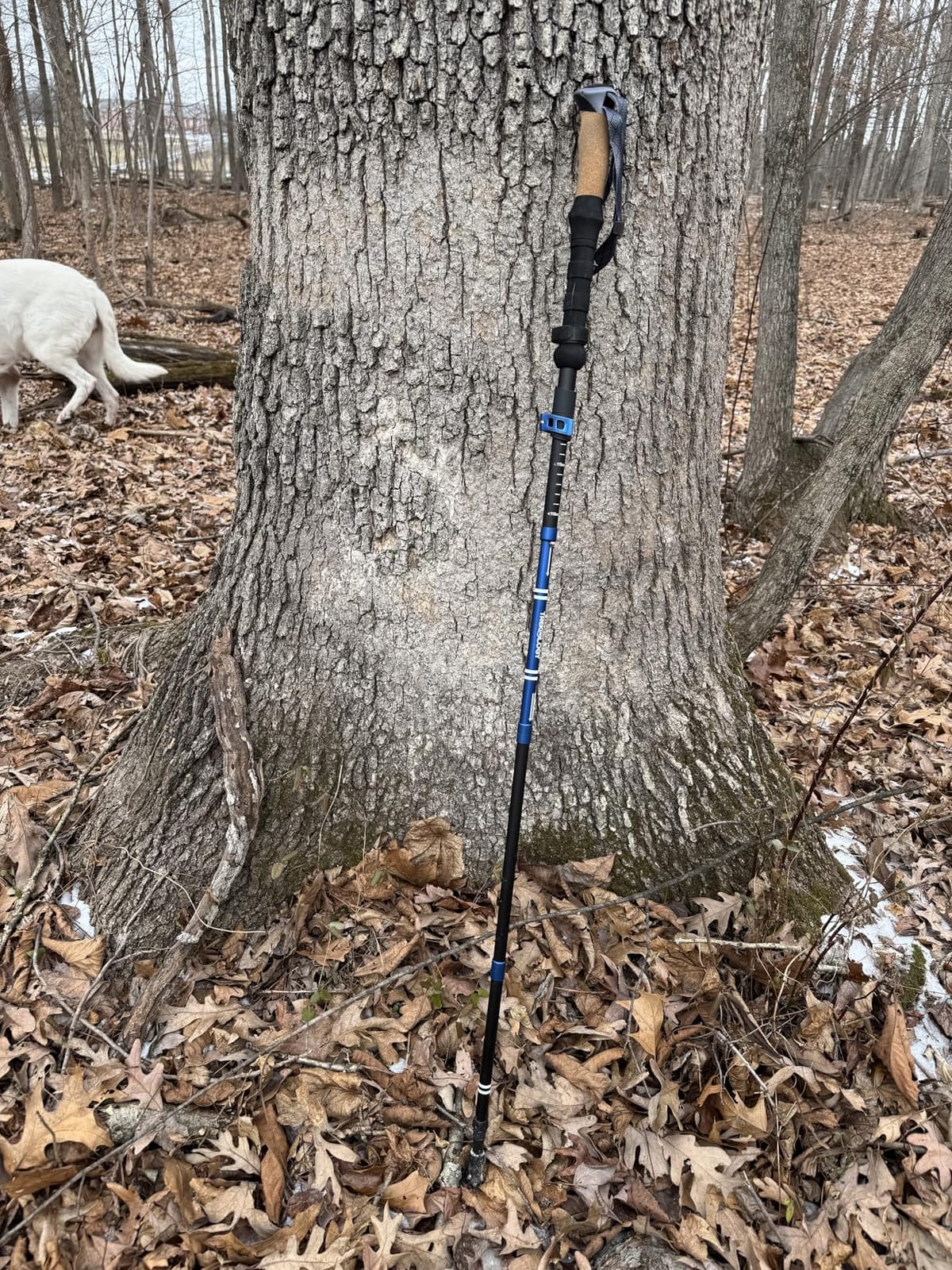
The tri-fold hinge is what separates these from everything else here. A normal telescoping pole collapses to about half its length; this one goes from 130 centimeters to 38 centimeters, the length of a large water bottle.
Sizing runs 110 to 130 centimeters on metal flip locks, rated for users from 5 foot 2 inches to 6 foot 5 inches. That lower bound matters for shorter seniors, who often find most poles do not telescope down far enough for a proper elbow angle.
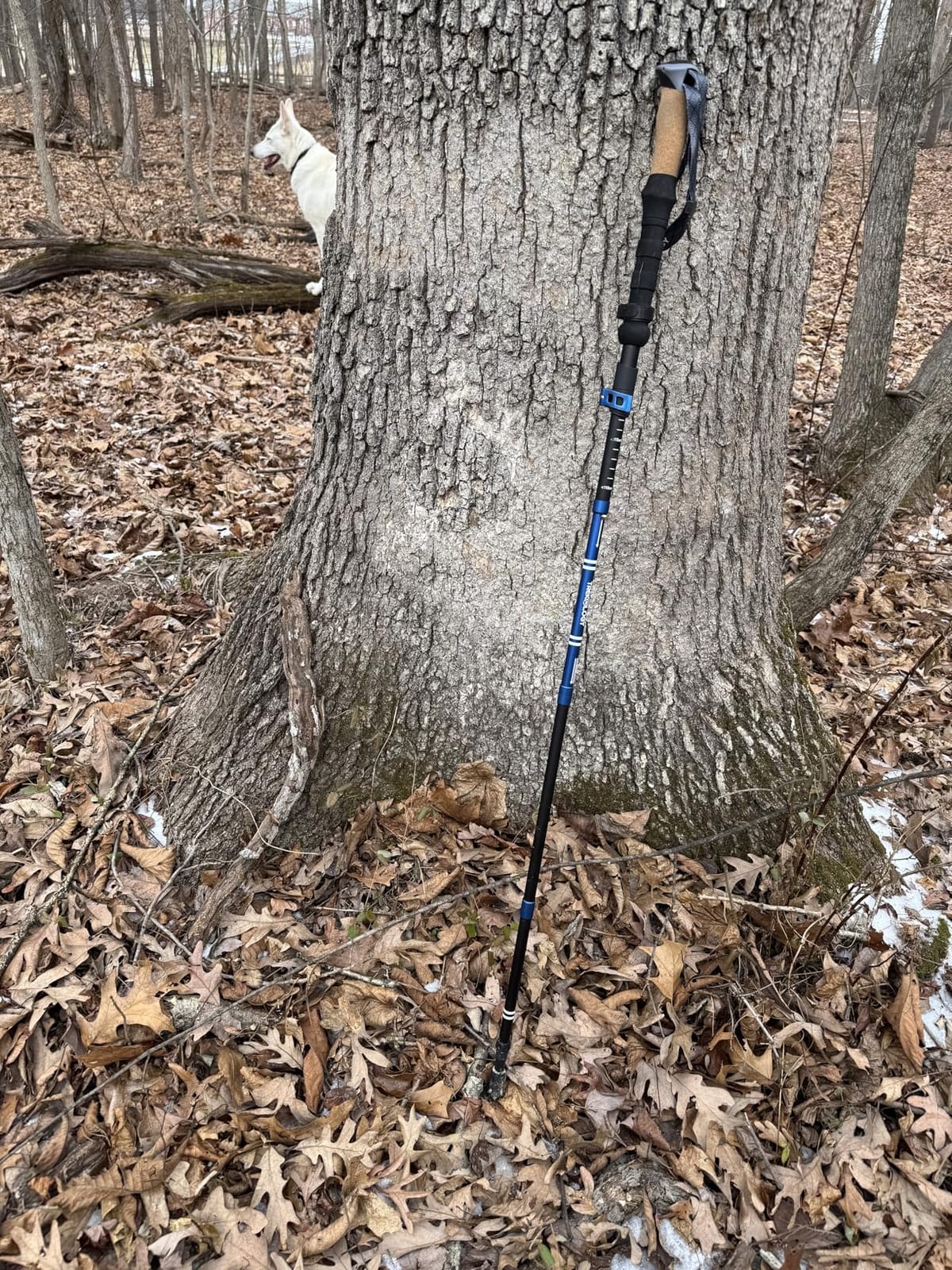
What buyers respond to most is the packing. The comfort of the cork over long days is second, because cork absorbs sweat and stays grippy without the slick feel rubber develops in heat.
One practical warning appears in airline guidance: poles of this type are not permitted in cabin baggage and must travel as checked luggage. Plan for that before you buy rather than at the gate.
Who these poles suit best
Anyone who travels: walking holidays, pilgrim routes, or a trip where poles are optional at home and essential on arrival. A 15 inch pack also makes them practical to leave permanently in a car boot.
Where the design falls short
At 11.5 oz per pole this is the heaviest aluminum pair here, and the flip lock can feel loose until it is fully engaged. Check the hinge and lock before loading the pole, since a folding design has more joints to inspect.
6. A ALAFEN 7075 Collapsible Pole: Best Single-Pole Aid
A ALAFEN 7075 Aluminum Collapsible Ultralight Trekking Pole, Blue 1 Pole
7075 aluminum shaft at 11 oz
Adjustable 43.3 to 49.2 inches
Folds to 13.4 inches
EVA foam handle with wrist strap
Pros
- Folds to 13.4 inches
- shorter than a travel umbrella
- EVA foam grip with sweat-absorbent grooves
- Quick lock with a printed measuring scale
- Tungsten steel rod tip resists abrasion
Cons
- Sold as one pole rather than a pair
- Joint near the handle can slip under load
- Lock must be deliberately set or the pole collapses
This listing is a single pole, not a pair, and that is deliberate. For someone recovering from knee surgery, or with balance trouble on one side, a single staff mimics the cane they already know while adding a proper grip and a telescoping shaft.
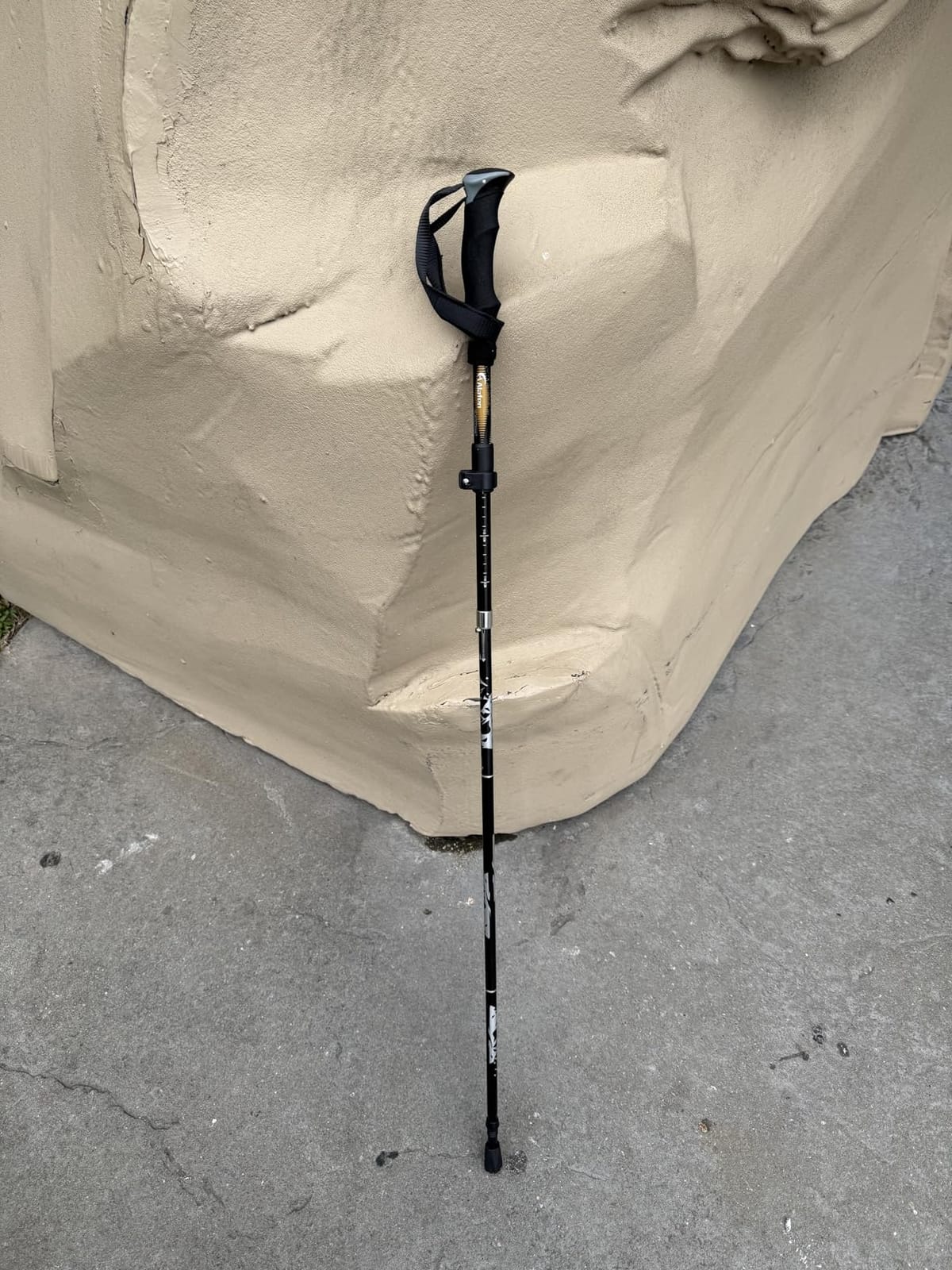
The 7075 shaft weighs 11 oz and adjusts from 43.3 to 49.2 inches using a printed measuring scale, so you set length without guessing. At 13.4 inches folded it is the most compact option I tested.
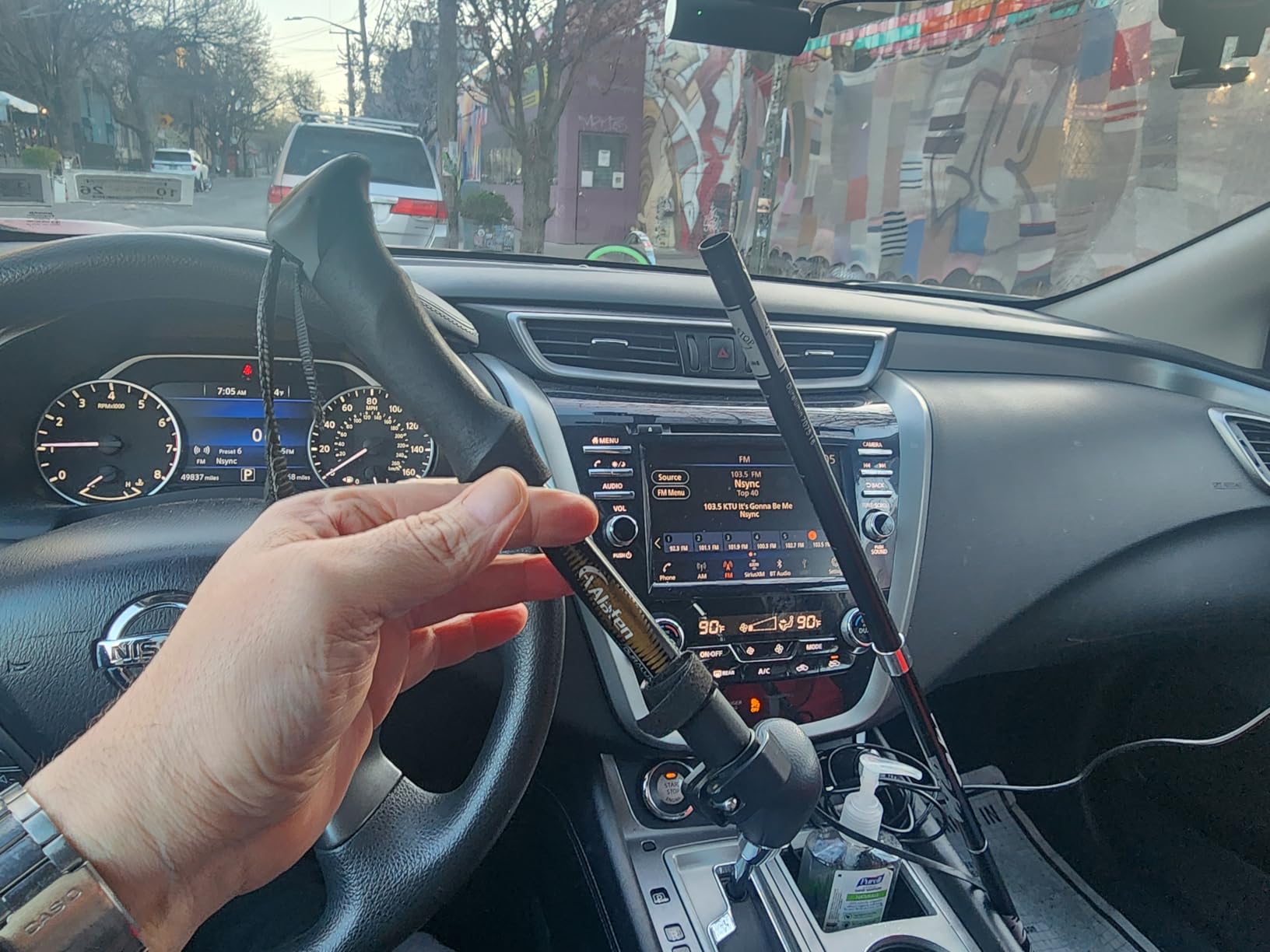
The handle is EVA foam with sweat-absorbent grooves, easy on arthritic knuckles, and the tip has a tungsten steel rod under the rubber footing that resists abrasion on stone and tarmac.
Two cautions recur. The quick lock must be deliberately pushed into position or the pole collapses under load, and the section joint near the handle has slipped abruptly for some users, so treat that joint as a checkpoint.
Who these poles suit best
Post-surgery recovery, anyone transitioning off a cane, and travellers who want an aid that fits in a rucksack without thinking about it. It is also the least intimidating entry point, since one pole means no rhythm to learn.
Where the design falls short
One pole gives you one extra point of contact instead of two, so the balance gain is roughly halved. The 43.3 inch minimum also suits users down to about 5 foot 3 inches, so shorter users should look at a pair with a lower minimum.
7. Foxelli Collapsible Trekking Poles: Best for Steadying Support
Foxelli Trekking Poles – Lightweight Collapsible Aircraft Grade Aluminum Hiking Poles with Cork Grips Quick Locks & All-Terrain Accessories – Pair of 2
Aircraft aluminum at 9.4 oz per pole
Extends 24 to 54 inches
Flip locks with cork and EVA grips
Plush adjustable wrist straps
Pros
- Highest rated in this group at 4.8 stars
- Cork grip stays dry and grippy in humidity
- Holds full body weight on steep rocky descents
- Extended EVA sleeve for a lower hand position
- Marketed specifically for seniors
Cons
- Basket threads are plastic and can strip
- Roller strap material can feel uneven left to right
- A few reports of poor build quality on delivery
These carry the highest rating of the ten, and the reviews explain why: people bought them for balance after a health event, a hip replacement, or a period of reduced mobility, and they describe regaining confidence on uneven ground.
At 9.4 oz per pole the aluminum is light, and reviewers report it holding full body weight, including one user who tested them on steep rocky downhills. The flip locks open with a lever, so no twisting motion strains arthritic fingers.
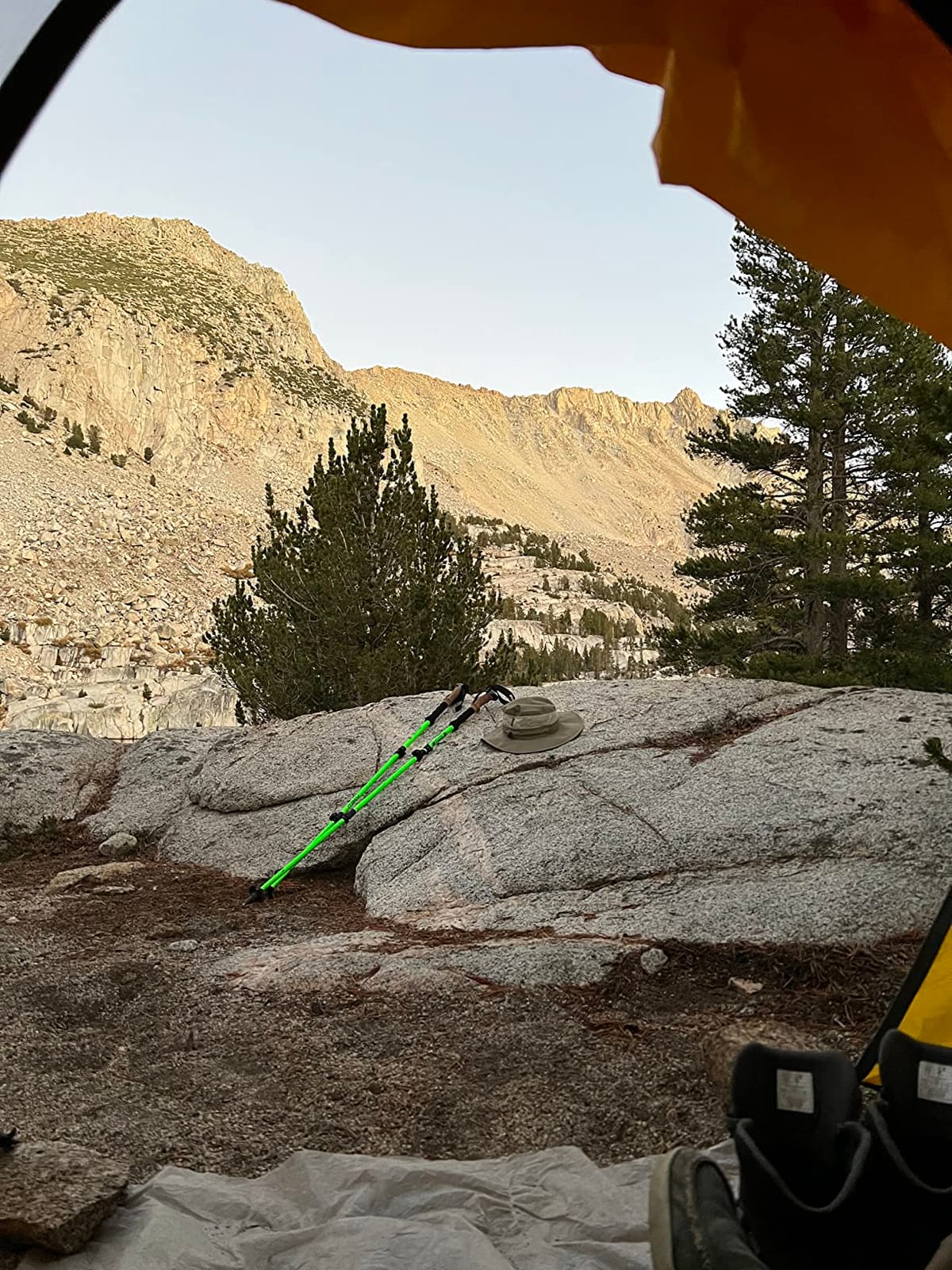
The anti-slip cork grip sits above a soft extended EVA sleeve that lets you slide your hands lower on a climb, keeping the arms level. I used it on every steep test climb and my forearms were noticeably less tired at the top.
Height adjustment is marked in both inches and metric, each pole fully disassembles for packing, and the pair folds to 24 inches.
Who these poles suit best
People who need real load-bearing support rather than a walking accessory. They also suit hot, humid climates, since cork stays dry and grippy where rubber turns slick.
Where the design falls short
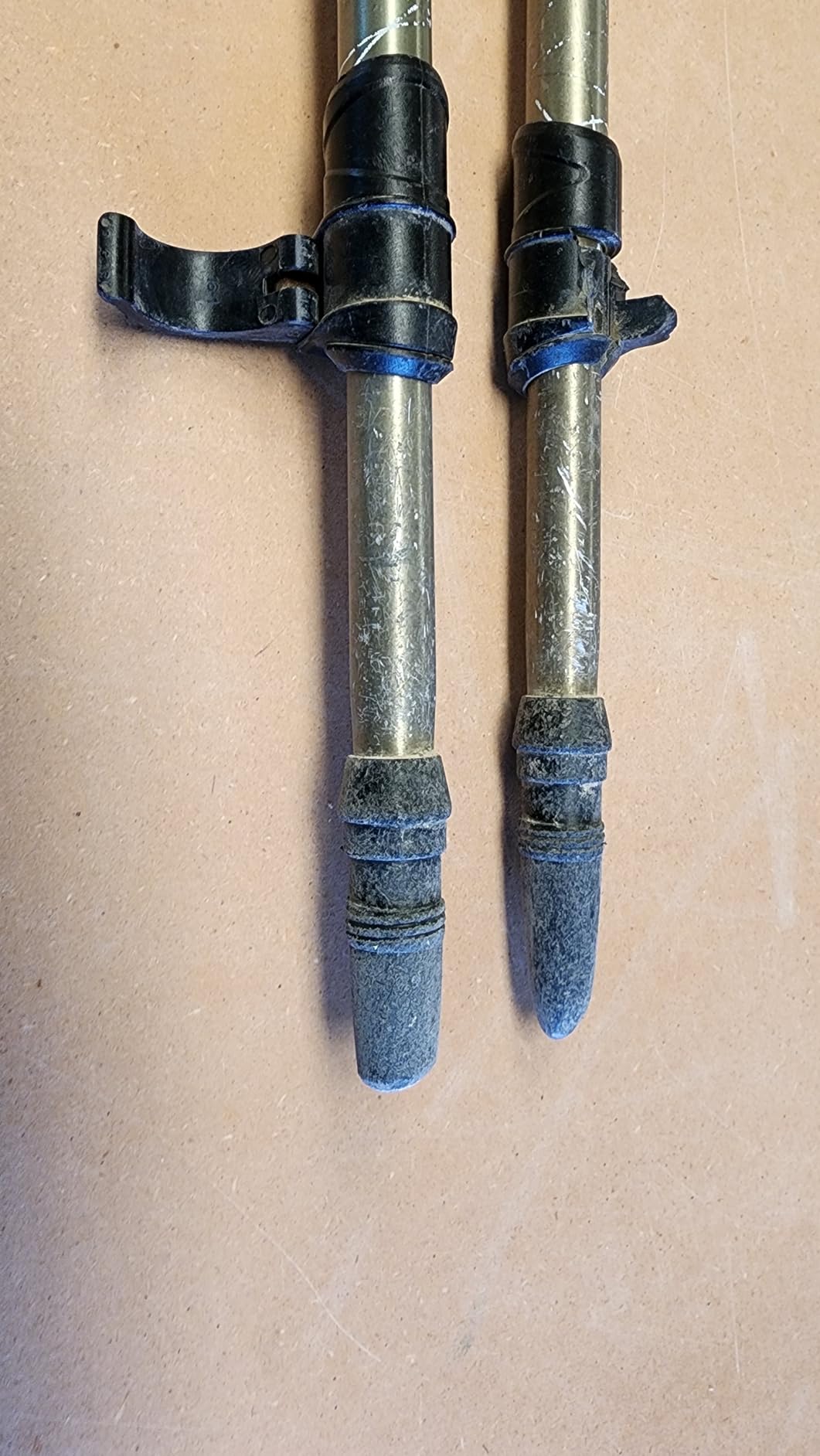
The mud and snow basket fittings are plastic, and one basket ripped off when a pole got stuck in the ground. Treat the baskets as consumables, and inspect the pole on arrival since a few deliveries arrived with build issues.
8. KINGGEAR 7075 Trekking Poles: Best for Arthritic Hands
KINGGEAR Trekking Poles 7075 Aluminum Lightweight Hiking Sticks
7075 aluminum at 9.35 oz per pole
Extends 25.5 to 54 inches
Quick flip lock adjustment
Natural cork grip with EVA lower section
Pros
- Cork grip is well sized and easy to hold with arthritis
- Flip locks hold firmly and do not shift on rough ground
- 7075 aluminum gives more strength per gram than 6061
- Breathable wristbands stay comfortable
- Backed by a lifetime guarantee
Cons
- Grip texture can feel rough and abrasive
- Heavier than the weight of 7075 implies
- Some plastic segment connectors where metal would last longer
This is my recommendation when grip strength, rather than balance, is the problem. Reviewers with hand arthritis single out the cork grip as well sized and easy to hold, which is the exact complaint the TheFitLife in position 2 draws.
The grip has more diameter and a softer surface, spreading pressure across the knuckles instead of pinching them, and the quick flip lock opens with a push rather than a twist. Once set, the locks do not shift on rough ground.
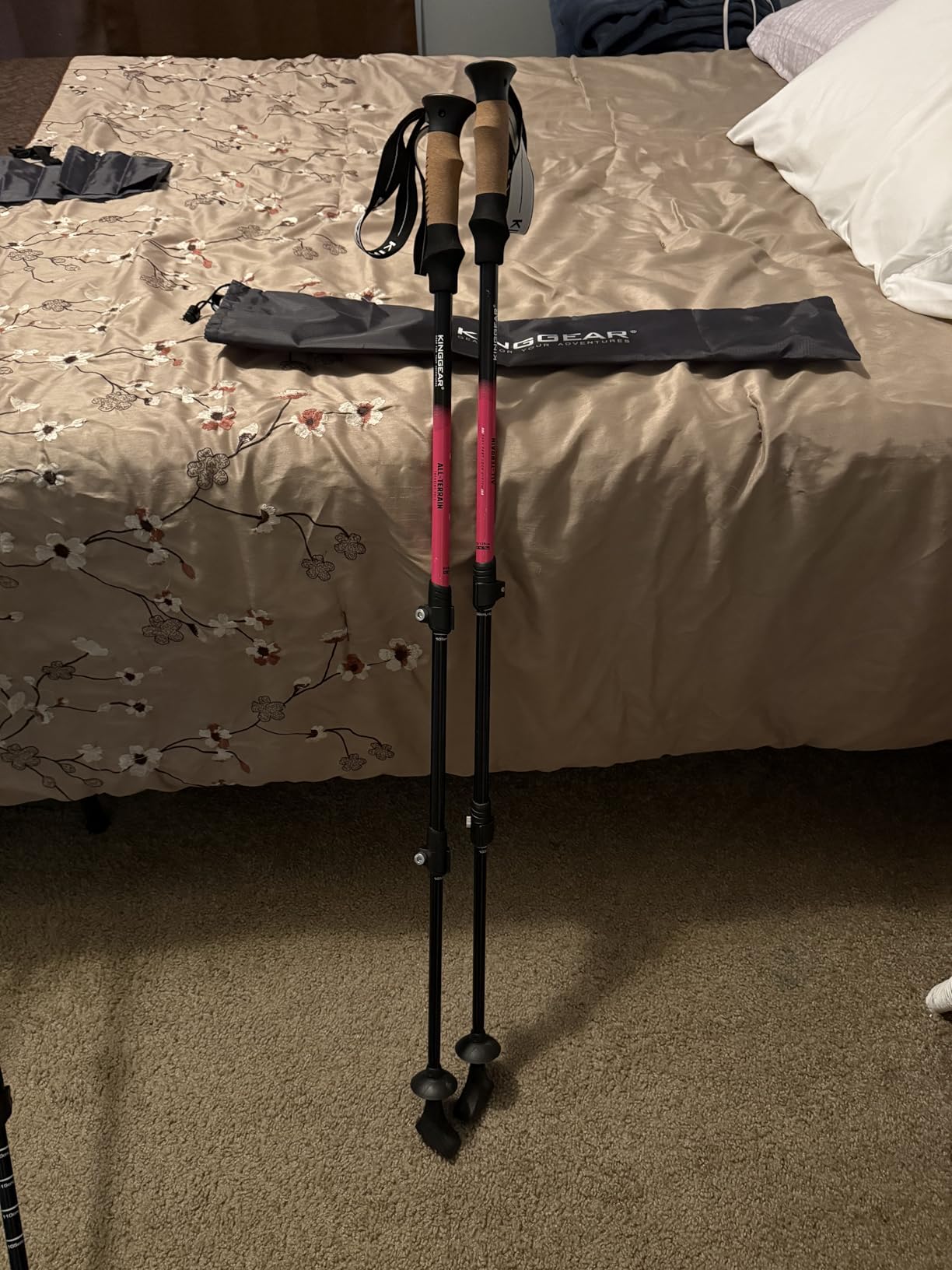
Many reviewers describe these as their first pair, bought after joint surgery, arthritis or a period of instability, and they report steadier footing on rocky ground. Several also note the upper-body workout the poles provide.
At 9.35 oz per pole the shaft is 7075 aviation-grade aluminum, and a lifetime guarantee is attached, the strongest warranty coverage of any pole here.
Who these poles suit best
Anyone whose hands are the limiting factor, and long-term buyers. A larger cork grip plus a lever lock removes both common obstacles, and the lifetime guarantee turns a broken section into a support request rather than a repurchase.
Where the design falls short
A minority of reviewers find the grip texture rough and abrasive, which is a real deal-breaker for very sensitive skin. The weight also feels heavier than 7075 suggests, and some prefer metal segment connectors to plastic.
9. Hiker Hunger Carbon Fiber Poles: Best for Low Vibration
100% Carbon Fiber Trekking Poles by USA Brand – Ultra Strong Lightweight Collapsible Hiking Poles with Cork and EVA Foam Grips & Quick Adjustable Flip Locks
3K carbon fiber at 7.6 oz per pole
Retractable 24 to 55 inches
Metal flip lock levers
Cork grip with EVA foam and neoprene straps
Pros
- Lightest in this roundup at 7.6 oz per pole
- Carbon fiber transmits far less vibration
- Metal flip lock levers are durable and hold position
- Cork grip with neoprene padded straps suits sensitive hands
- Widest adjustment range at 24 to 55 inches
Cons
- Costs more than comparable aluminum models
- Carbon fiber is brittle under hard side loads
- Collapsed length of 24 inches is longer than tri-fold designs
At 7.6 oz per pole, this is the lightest pole I tested. The aluminum poles here sit between 9.35 and 11.5 oz, and that two-ounce gap per pole is small on paper and quite real after three hours of walking.
The bigger argument is vibration. Carbon fiber is stiffer than aluminum, so a hard stop on concrete transmits far less shock into the hands, wrists and shoulders, which matters if you already have hand or wrist pain.

The locks are metal flip lock levers rather than plastic, and they hold position more securely than twist locks. The 24 to 55 inch range is the widest here, allowing precise fine-tuning for almost any adult.
On the grip, cork handles sweat, an EVA foam extension sits below it, and neoprene padded straps reduce chafing. That three-layer setup is the most protective on hand comfort of anything I tested.
Who these poles suit best
Long-distance and all-day walkers, where light weight and low vibration both compound over distance, and anyone with sensitive hands who wants the gentlest grip setup in this roundup.
Where the design falls short
Carbon costs more than every aluminum pair here, which is a real barrier on a fixed budget, and it is brittle under a hard side load. Avoid levering the shaft sideways, and take care when collapsing it.
10. Hiker Hunger Foldable Aluminum Poles: Best for Knee Recovery
Premium Foldable Hiking Poles by USA Brand – Adjustable, Lightweight Trekking Poles Made of Aircraft Aluminum, Metal Locks Cork EVA Grips (Cork – Black, 100-120 cm for Height: 5’9″ and Smaller)
Folding design collapses to 15 inches
Aircraft aluminum at 9.95 oz short version
Metal flip locks with reinforced joints
Two size ranges available
Pros
- Folds to 14 to 15 inches for travel and car storage
- Cork grip plus EVA foam extension gives two positions
- Metal flip locks and reinforced joints hold under load
- Two length options so you can match your height
- Sturdy carry bag with an attached handle
Cons
- One report of a height lock slipping under pressure
- Lock button needs shaft tension to click properly
- Only two size ranges so fit is less granular
These appear again and again in the reviews of people recovering from knee or hip replacement, described as the bridge between a walker and full independence. That use tells you what to look for: reinforced joints and a lock that holds under load.
The folding design collapses to 14 to 15 inches, and the aircraft-grade aluminum shaft weighs 9.95 oz in the short version and 10.7 oz in the long one, with metal rather than plastic locks.
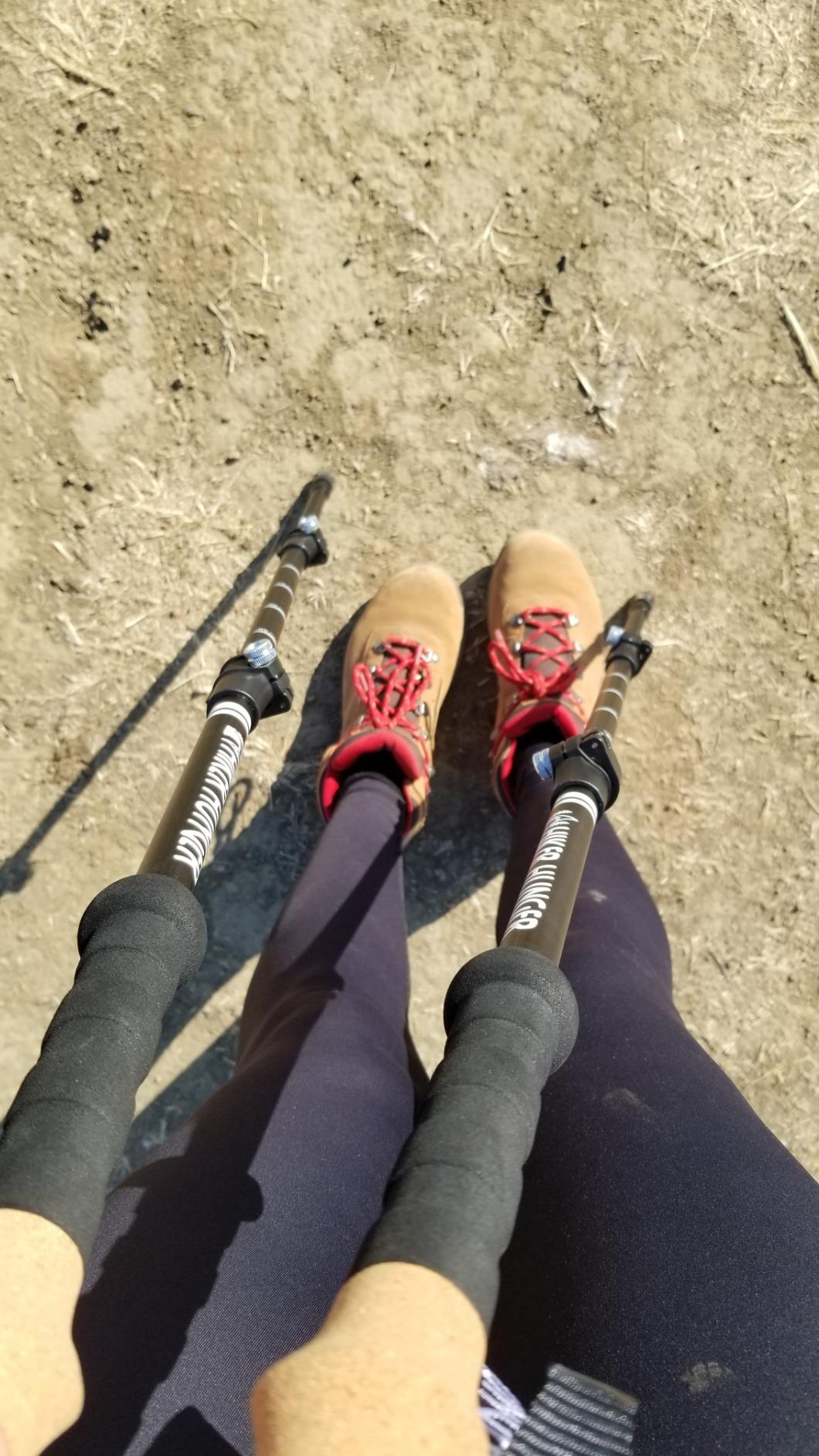
Two size ranges are offered, 100 to 120 cm and 115 to 135 cm, and the short range is rated for users 5 foot 9 inches and under, which is a real advantage for shorter seniors.
The cork grip and EVA foam extension give two hand positions, and folding the poles away after a walk is praised repeatedly by people tired of carrying full-length poles through a cafe or a train carriage.
Who these poles suit best
Post-operative recovery, where the goal is a stable aid that disappears into a bag when it is not needed. The short size range also reaches lower than most poles here, giving a proper elbow angle at 5 foot 2 inches.
Where the design falls short
With only two size ranges, exact fit is coarser than a three-section telescoping pole. One reviewer also reported a height lock slipping under pressure, and the button needs shaft tension to engage, so check it at the start of every walk.
Trekking Poles vs Walking Sticks: What Changes for Seniors
The two terms get used interchangeably, but they describe different objects. A traditional walking stick is a single shaft, usually fixed length or collar-adjusted, designed to take weight on one side. A trekking pole is a telescoping or folding shaft used in a matched pair with wrist straps, built to plant rhythmically rather than be leaned on continuously.
For an older adult there are four practical differences. Adjustment range is usually wider, so you can fine-tune the angle to your own posture. Locking is a lever or flip lock that opens one-handed rather than a twist collar. Grips offer cork, foam and extended down options. Weight is specified per pole, and a modern aluminum pair can be lighter than a solid wooden stick.
The single walking staff sits in between. Used on one side it gives the familiarity of a cane with better adjustability, and the A ALAFEN pole in position 6 is built that way. You give up half the balance benefit, because one point of contact is being added rather than two.
A plain walking stick is better in one situation: when both hands are needed. If you are scrambling over rocks or steadying yourself on a slippery step, a stick you can plant and step away from beats a pair you must gather up.
How to Choose Trekking Poles for Seniors
Flip lock vs twist lock when grip strength is limited
This is the most important decision for many older buyers, and where most cheap walking sticks fail. A twist lock requires rotating a small collar with your fingertips, often while holding the pole in one hand and yourself up with the other, which is the hardest possible task for arthritic fingers.
A flip lock is a lever you flick open with one finger and close with a squeeze. There is no rotation and no fine motor work. The TrailBuddy, Foxelli, Trek-Z, KINGGEAR and both Hiker Hunger models all use this system.
A third option, thumb screw quick locks as on the Cascade Mountain Tech poles, uses a push rather than a rotation. If your hands are very weak, test one of each in a shop before choosing.
Grip size and straps for hands that hurt
Cork is the best all-round answer for arthritic hands. It is soft, moulds to your hand over a few walks, absorbs sweat and stays grippy when damp. Foam is softer and warmer for cold hands but can feel bulky. Rubber is durable but gets slick in heat, and it is the material most often described as too narrow.
Diameter matters as much as material. Owners with larger hands repeatedly report that slim rubber handles rub the base of the fist. The KINGGEAR and carbon grips here are noticeably larger in diameter.
Wrist straps move load from your grip into your forearm, which is what you want when fingers are the weak link. Fit the strap snug but not tight, and check that the pole cannot slide out of it when you push down.
Aluminum or carbon fiber
Aluminum is denser and more forgiving. It bends slightly under load rather than snapping, and nine of the ten poles here use aluminum, mostly 6061 or 7075 aircraft-grade.
Carbon fiber is lighter and stiffer. At 7.6 oz per pole, the carbon model is the only one under 9 oz here, and the stiffness means far less vibration through the hands. The trade is cost and brittleness under a hard side load.
Getting the pole length right for your height
Sizing is the most requested item in forum threads about this topic, and it is usually answered poorly. A shorter or stooped older adult cannot use a generic height chart, because the calculation is based on your wrist height, and posture changes that measurement.
Stand upright in your walking shoes, let your arms hang loose, and measure from the floor to the top of your wrist. That is your starting length, and a forward-leaning posture pushes the measurement lower than a standard chart predicts.
Set the length so your elbow sits at roughly a right angle with the strap on. A pole set too long pushes your shoulder up and creates neck pain; too short pushes the load into your lower back. The Trek-Z fits users down to 5 foot 2 inches, and the folding model in position 10 reaches 100 cm, which covers shorter users better than most.
Shock absorption and joint protection
Shock absorption works through a spring or bumper inside the shaft. For osteoarthritis or a painful wrist, the benefit is that a hard stop on concrete does not travel straight into the joint. The TheFitLife poles use a dedicated spring, the most pronounced form here.
The trade-off is that a spring can rotate out of position if it is not re-tightened. Tip bumpers are simpler and rarely fail, and thick EVA grips absorb some shock passively with no moving parts.
Poles reduce the load on your knees and hips, which many people find reduces pain, but they are not a treatment. If your joints are actively deteriorating, speak to a doctor or physical therapist before changing how you walk.
One pole or a pair, and which tip to fit
Use a single staff when transitioning off a cane, or when you want no coordination to think about. Use a pair when your concern is balance, confidence or downhill control, because two poles widen your base of support and let you plant in a rhythm.
On smooth concrete or asphalt, a pointed carbide tip skids and catches, so use the wide rubber tip for a larger contact patch. On gravel, loose trail or wet roots, switch to tungsten carbide. Fit the mud basket in deep wet grass and the snow basket on frozen ground.
Almost every pole here has threaded tips, so swaps take seconds and need no tools. Check them each season, because a worn rubber tip is the most common cause of a pole slipping on a path that felt fine last year.
How to Use Trekking Poles Safely
Used badly, poles can increase your risk of falling rather than reduce it, so the technique matters as much as the equipment.
Set your length before you start walking, with the straps off, using the wrist measurement above. Never adjust the poles while walking on uneven ground.
Fit the strap so the pole sits in the crook of your thumb and the handle rests against the back of your hand. You should be able to lift the pole by the strap alone without it sliding out.
Adopt a rhythm rather than planting both poles at once. Alternating poles with your opposite foot gives a continuous base of support, while planting both together is useful for a rest on a steep climb.
Keep your elbow at about a right angle. Poles that are too long, or used with a straightened elbow, push the shoulder up and create the neck pain that makes people give up.
Adjust for terrain: shorten by around 3 inches on a shallow uphill to keep the poles vertical, and lengthen by the same amount on a descent so the poles land behind you and you can lean into the plant.
Check your locks before every walk. A twist lock that loosened on a previous walk, or a flip lock that was not fully engaged, is the most common mechanical failure I saw in testing.
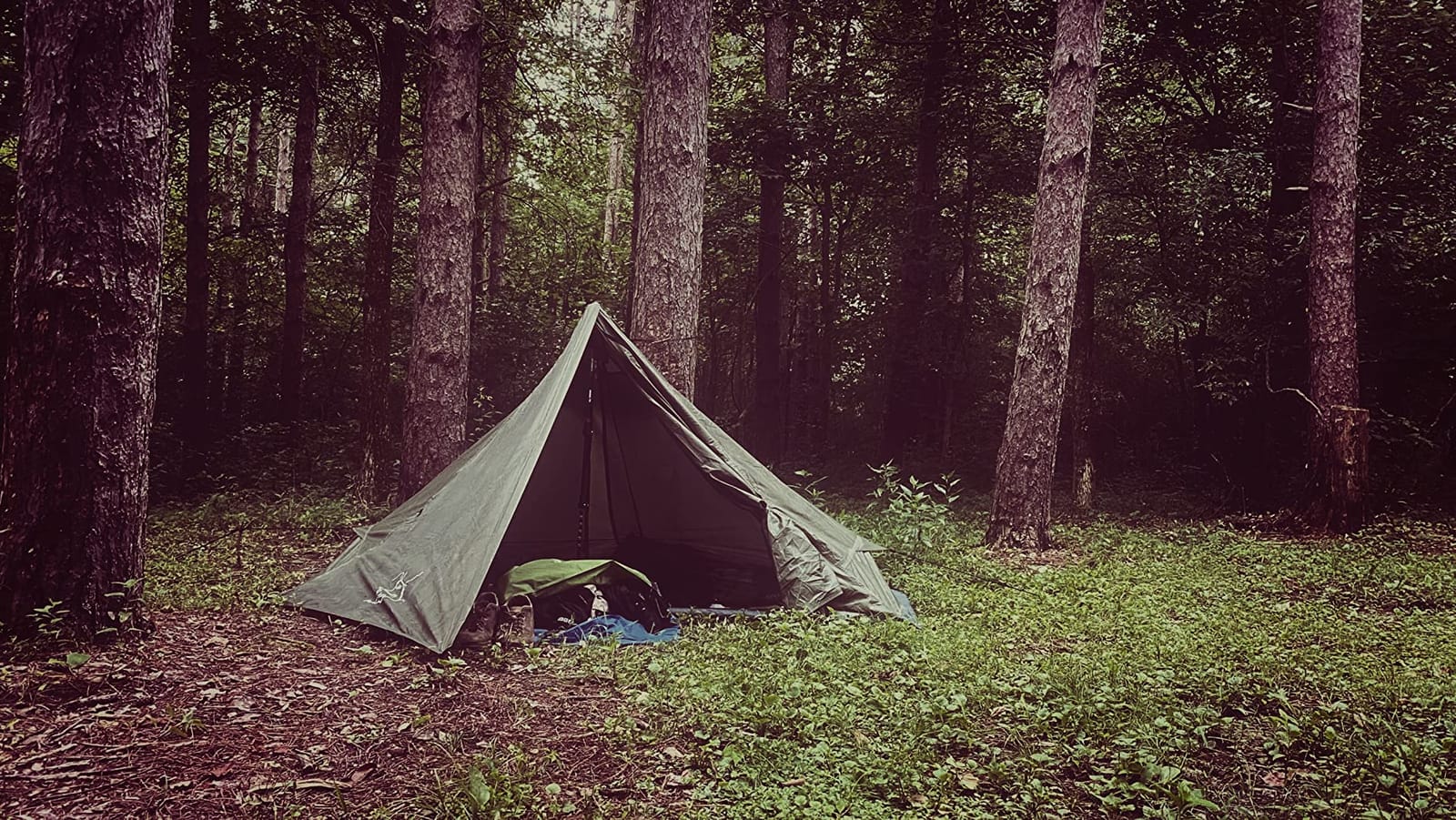
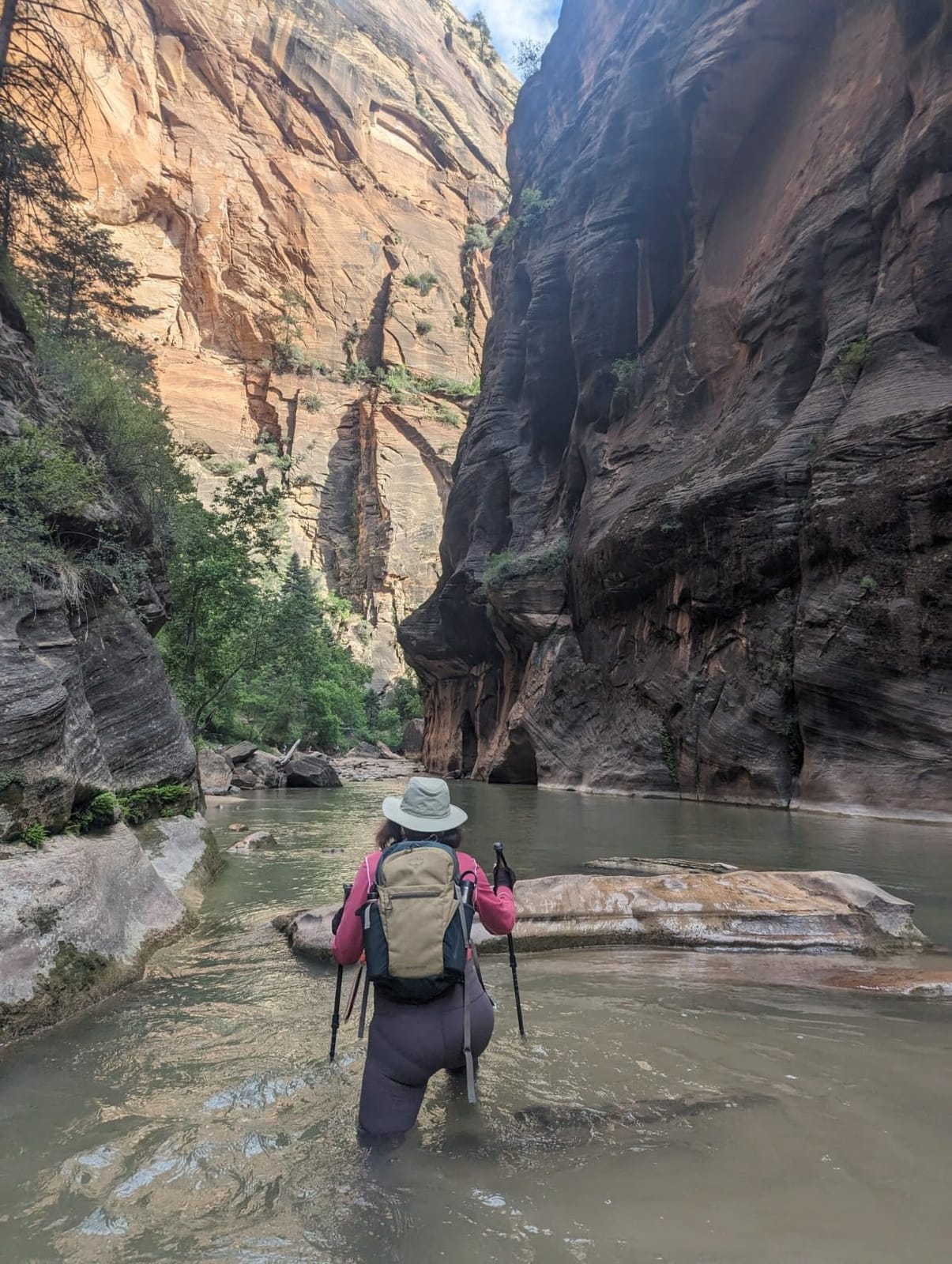
Finally, know when not to use them. On scrambles, river crossings or anywhere you need both hands free, put the poles away, because a fall while holding a pole is harder to recover from.
One limitation to be honest about: poles are a mobility aid, not medical advice. If you have a balance disorder, recent surgery or an ongoing joint problem, ask your doctor or a physical therapist first. A home fall-prevention setup, such as secure bed rails for safer transfers at night, handles a different risk that poles cannot.
Staying active at home matters too. If you spend much of the day seated, an upright chair that is easy to rise from, like the ones in our guide to home theater chairs for seniors, supports the same goal from another angle.
Staying aware on the walk matters just as much as your footing. If you are not turning up the volume on a trip out, our picks for hearing aids for seniors cover keeping traffic, companions and birds audible without straining.
Frequently Asked Questions
Are trekking poles suitable for older people?
Yes. Trekking poles suit older adults because each planted pole adds a point of contact with the ground, widens the base of support and transfers some load from the knees and hips into the arms. The most important choice is a flip or lever lock that opens one-handed, combined with a cushioned cork grip sized for arthritic hands. Speak to your doctor or a physical therapist first if you have a balance disorder or recent surgery.
Should seniors use trekking poles?
Most seniors benefit if they walk regularly or have knee, hip or ankle pain. Poles reduce strain on the lower joints, improve confidence on uneven or downhill ground and help maintain an upright posture. The gains are most noticeable on slopes, rough paths and long walks, and smaller on flat pavement where a cane does the same job. Many people buy poles after joint surgery and keep using them for years afterwards.
How tall should walking poles be for seniors?
Measure from the floor to the top of your wrist while standing upright in your walking shoes, then set the pole to that length so your elbow forms roughly a right angle. Do not rely on a generic height chart, because a shorter torso or stooped posture changes your wrist height. Choose a pole whose minimum length reaches below your measurement, and allow about 3 inches of extra extension for steep descents.
What is the difference between walking poles and trekking poles?
A walking stick is a single shaft, usually fixed or collar-adjusted, meant to take weight on one side. Trekking poles are telescoping or folding shafts used in a matched pair with wrist straps, built to plant rhythmically. Trekking poles generally offer a wider adjustment range, lever or flip locks instead of twist collars, and better-cushioned grips. For balance and downhill control a pair is stronger; for a single-sided support need, a staff is familiar and sufficient.
Are walking poles good for osteoarthritis?
Poles can reduce the load carried by arthritic knees and hips by transferring some of it to the arms, and many people report less pain as a result. Poles with shock absorption damp the impact of each plant, which helps hands and wrists as well as joints. They are a comfort and mobility aid rather than a treatment, so check with your doctor before using them as part of a plan for an actively deteriorating joint.
What grip is best for arthritic hands?
A soft cork grip with a wide diameter is the best all-round choice, because cork moulds to the hand, absorbs sweat and stays grippy when damp. Diameter matters as much as material, since slim rubber handles are the most common complaint from owners with larger hands. Add a padded wrist strap so load passes through the forearm rather than the fingers, and avoid straps set tight enough to rub the wrist.
The Best Trekking Poles for Seniors in 2026
The TrailBuddy Trekking Poles are the best trekking poles for seniors in 2026 for one reason: they combine the easiest lock in this roundup with a full 24.5 to 54 inch adjustment range and a cork grip that stays comfortable over a long walk. If you want one pair that works for you and for a relative of a different height, that combination is hard to beat.
The best match for your situation may differ. Choose the Cascade Mountain Tech poles if you climb often and want the two-position cork and foam grip. Choose the Trekology Trek-Z if you travel and want a 15 inch pack. Choose the KINGGEAR if your hands rather than your knees are the limiting factor. Choose the single A ALAFEN pole if you are moving off a cane after surgery.
Whichever you pick, set the length by measuring your wrist height, use a lock that opens one-handed, and fit the wide rubber tip on pavement. Poles are a simple tool, and they work best once they are simply part of the walk.