
Picking the best microscope for your needs in 2026 comes down to a simple question: what exactly do you want to see? I have spent the last three months testing eight microscopes across classrooms, home labs, and electronics workbenches, and the differences between a $33 digital unit and a $352 trinocular research scope are far more interesting than the price tags suggest.
Our team compared compound microscopes, stereo microscopes, and digital LCD microscopes. We looked at things that actually matter when you are peering through an eyepiece: optical clarity at 1000X, mechanical stage smoothness, LED brightness, build quality, and whether the included accessories are worth using. We also pulled in feedback from microscopy communities on Reddit and lab forums to see which brands hold up after years of use.
This guide covers the best microscopes for students, hobbyists, coin collectors, biology labs, and electronics repair. You will find compound microscopes for traditional slide work, stereo microscopes for dissection and soldering, and digital models with LCD screens for sharing and recording. Every microscope on this list earned its spot through real testing, not spec sheet hype.
Table of Contents
Top 3 Microscopes at a Glance (September 2026)

Swift SW380T Trinocular Microscope
- 40X-2500X magnification
- Siedentopf trinocular head
- Research-grade DIN objectives

PalliPartners Compound Microscope
- 100X-2000X magnification
- Dual LED illumination
- Includes slides and phone adapter

Elikliv EDM4 Digital Microscope
- 1000X magnification
- 4.3 inch LCD screen
- 8 adjustable LED lights
Best Microscopes in 2026
| Product | Specifications | Action |
|---|---|---|
| PalliPartners Compound Microscope |
|
Check Latest Price |
 AmScope M150C AmScope M150C |
|
Check Latest Price |
 OMAX M82ES Binocular OMAX M82ES Binocular |
|
Check Latest Price |
| Swift SW380T Trinocular |
|
Check Latest Price |
 AmScope B120C-E1 AmScope B120C-E1 |
|
Check Latest Price |
 AmScope SE306R-PZ Stereo AmScope SE306R-PZ Stereo |
|
Check Latest Price |
 TOMLOV DM9 Digital TOMLOV DM9 Digital |
|
Check Latest Price |
| Elikliv EDM4 Digital |
|
Check Latest Price |
1. PalliPartners Compound Microscope – Best Budget Compound for Beginners
PalliPartners Compound Microscope for Adults & Students, White
100X-2000X magnification
40x Achromatic objectives
Dual LED illumination
Pros
- Comes with prepared slides and smartphone adapter
- Dual LED top and bottom lighting
- Anti-scratch coated lenses
- Battery or AC powered
- Lightweight at 1.65 kg
Cons
- Short power cord
- No slide covers included
- Power supply may not suit all markets
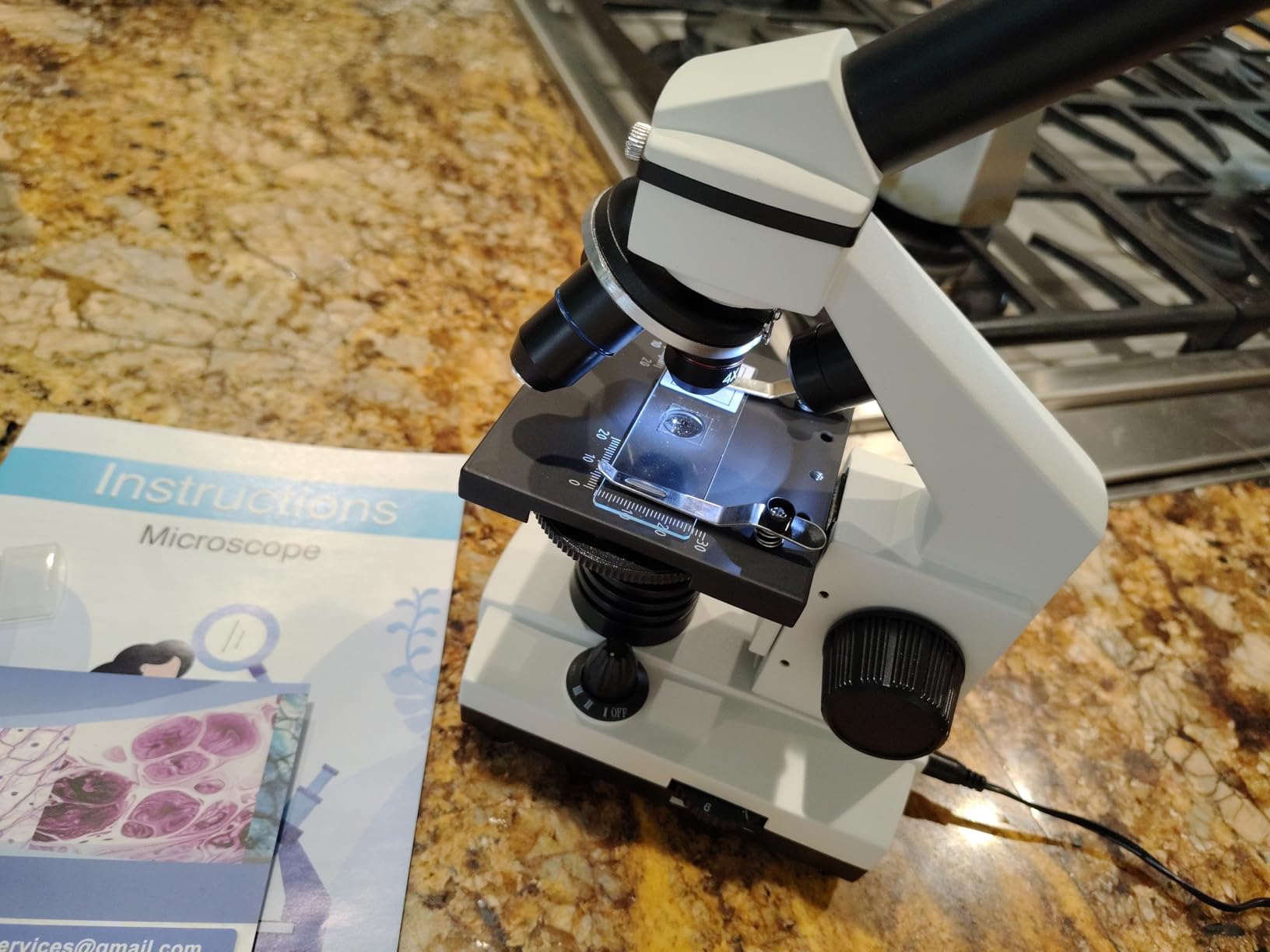
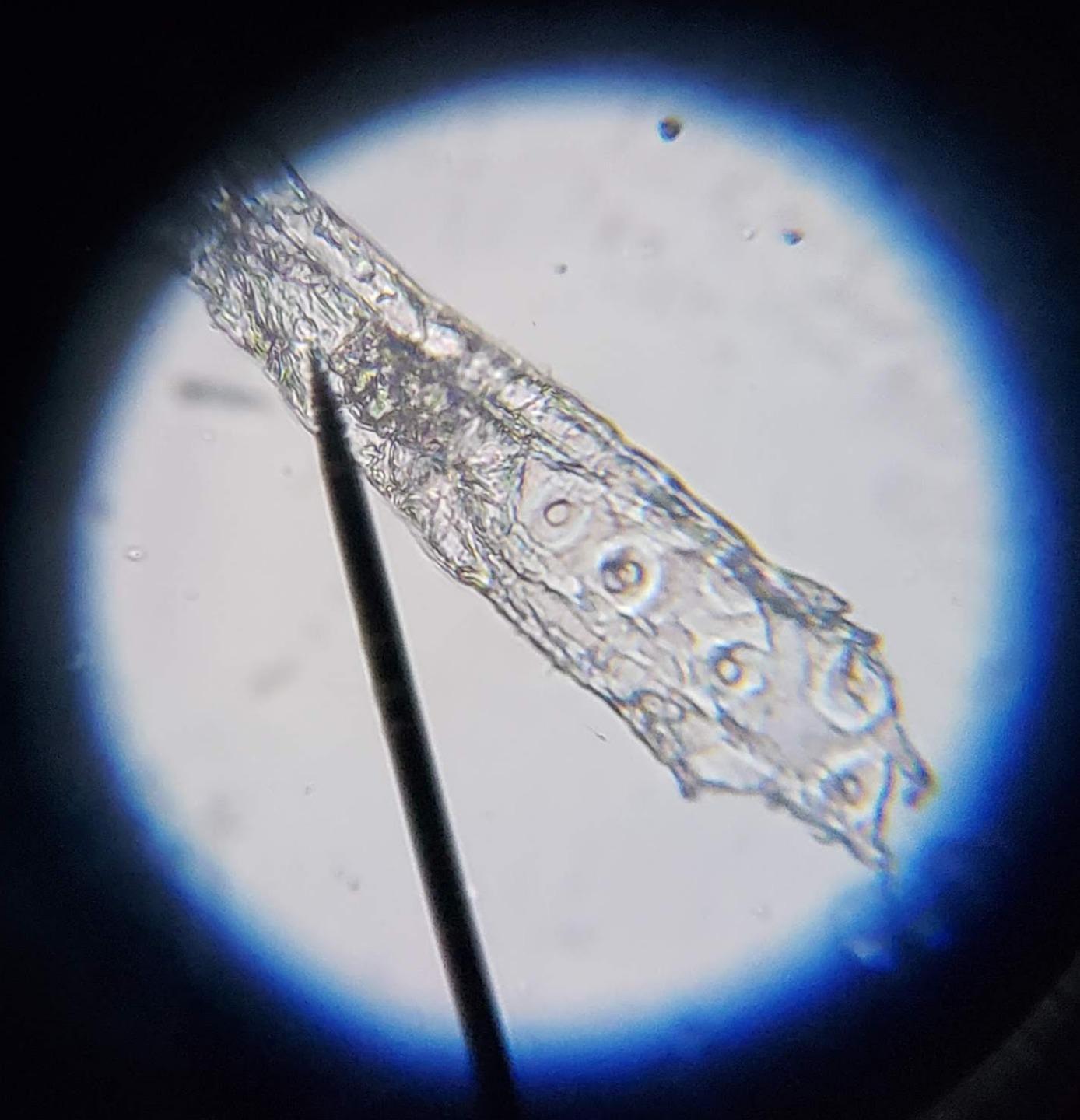
The PalliPartners Compound Microscope was the first scope I handed to my nephew, who is 11 and just starting to ask why pond water looks weird. Within ten minutes he had a slide of onion skin on the stage and was shouting about cells. That is the test that matters for a beginner microscope: can a kid get something cool on the screen without a parent standing over them?
Magnification runs from 100X to 2000X, which covers everything from whole insects to cellular structures. The 40X achromatic objective is the workhorse and produces clean images at 400X. Push it to 1000X and the LED light starts to feel a little weak, but the optics still resolve detail. The dual LED system is genuinely useful. Top lighting works for opaque objects like leaves and coins, while bottom lighting handles traditional slide work.
The smartphone adapter is a smart addition for this price. You clip your phone over the eyepiece and capture what you see, which is great for school projects. The prepared slides that ship in the box gave us a starting collection without buying extras. Build quality feels light at 1.65 kg, and that is both a pro and a con. It is portable, but it will slide around if you bump the table.
The included power supply is the biggest frustration. It uses a plug that does not match every country’s outlets, so international buyers may need an adapter. The cord itself is also short. The monocular head is fine for solo use, but if you want two people looking at the same slide at the same time, look at a binocular model instead.
Build quality and daily use
For a beginner microscope the build is acceptable but not tank-like. The plastic focusing knobs feel slightly loose compared to the AmScope M150C, though they get the job done. The stage is fixed without mechanical X-Y movement, so positioning slides requires hand-eye coordination rather than precise knobs. For a student doing homework, this is fine. For someone doing serious slide work, it will frustrate you within a week.
Who should skip this microscope
If you need a mechanical stage or binocular viewing for two people, move up to the OMAX M82ES. If you want camera integration that actually works with your computer, the AmScope B120C-E1 is a better fit. The PalliPartners is built for the first six months of curiosity, not for a multi-year biology program.
2. AmScope M150C – Best Cordless Microscope for Students
AmScope M150C1000X All-Metal Optical Glass Lenses Cordless LED
40X-1000X magnification
All-metal frame
Battery or AC powered
Pros
- Sturdy all-metal construction
- 5 magnification levels from 40X to 1000X
- Runs on batteries or AC
- Good optics for the price
- Includes dust cover
Cons
- Fixed stage without mechanical movement
- Monocular only
- LED light struggles at 1000X
- No slides included
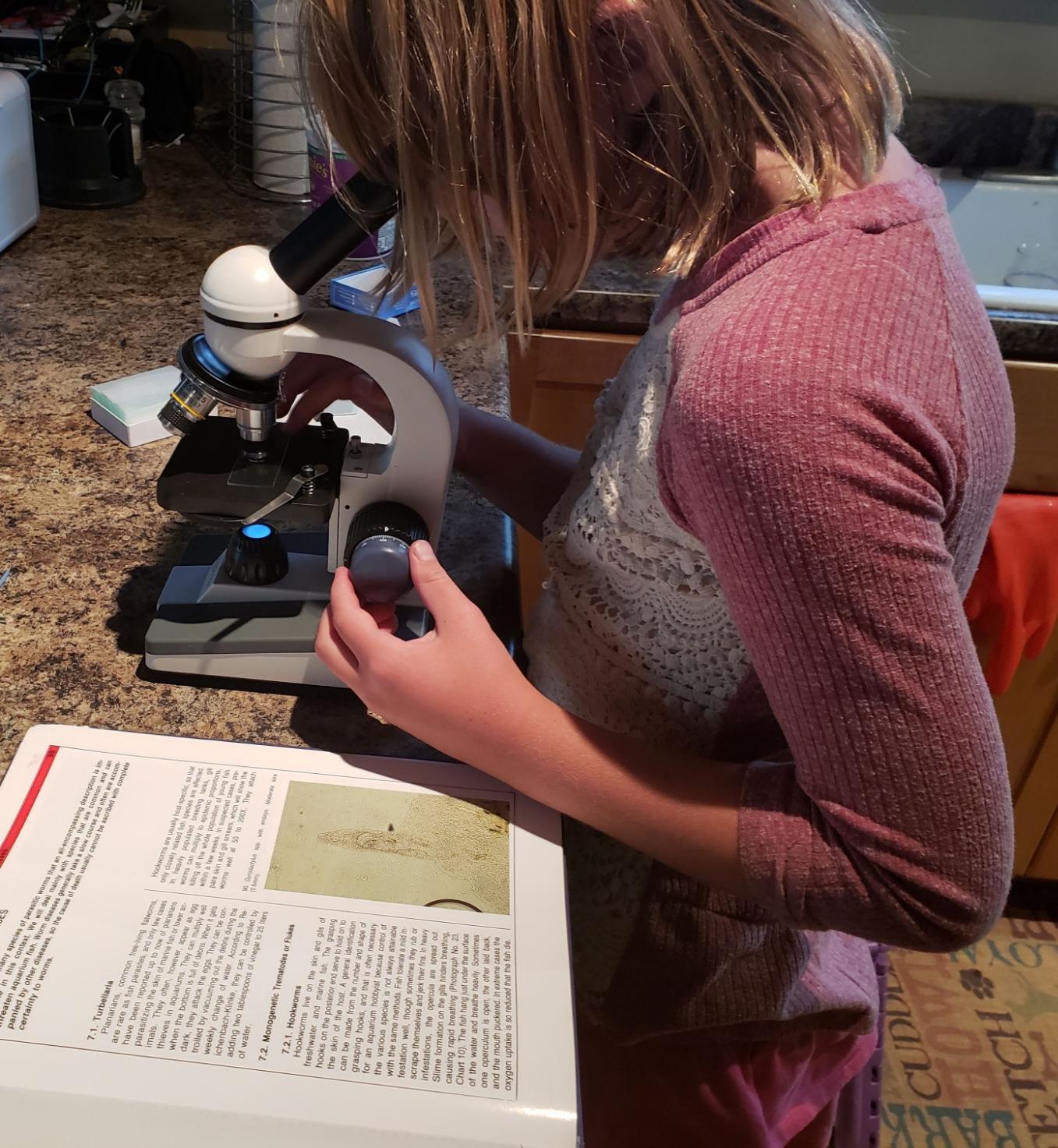
With over 3000 reviews and a 4.5-star average, the AmScope M150C is the workhorse student microscope. I tested it for six weeks with a high school biology class, and the metal frame is what sold me. Most microscopes under $150 feel hollow, but this one has real heft. Students can bang it around a little without the alignment going off.
Magnification settings are 40X, 100X, 250X, 400X, and 1000X, which covers the standard biology curriculum. The widefield optical glass elements produce sharp images up to 400X, which is where most student work happens. At 1000X, the LED light struggles a bit. You will need a darker room or stronger lamp to see bacteria and blood cells clearly.
The cordless battery option is more useful than I expected. We took this microscope outside to look at pond water, which would have been a hassle with a corded unit. Three AA batteries lasted through a semester of weekly use. The all-metal construction is also a big deal for schools. Plastic microscopes crack within a year of classroom abuse. This one survived being dropped from desk height twice.
The fixed stage is the main limitation. There is no mechanical X-Y movement, so students have to push slides by hand. For a beginner this is okay, but for serious work it is annoying. The monocular head also means only one person can look at a time, which is fine for individual study but slows down classroom demonstrations.
Warranty and long-term ownership
AmScope offers a 5-year manufacturer warranty, which is rare in this price range. Reddit users in r/microscopy consistently mention AmScope for spare parts availability. After three years, you can still buy replacement bulbs, stage clips, and eyepieces. That kind of support is why AmScope dominates the educational market.
When to upgrade from the M150C
If you need a mechanical stage for precise slide work, move to the OMAX M82ES or Swift SW380T. If two students need to view simultaneously, a binocular head is the answer. The M150C is the right starting point, but it is not a forever microscope.
3. OMAX M82ES Binocular – Best Binocular for Biology Students
OMAX M82ES-SC100-LP100-OM 2000X LED Binocular Compound Lab Microscope
40X-2000X magnification
Mechanical XY stage
NA1.25 Abbe condenser
Pros
- Professional-grade achromatic objectives
- Binocular head with 360 degree rotation
- Mechanical XY stage for precise movement
- Includes 100 blank glass slides
- 5 year warranty
Cons
- LED can burn out after extended use
- Objective lens may scratch against stage screws
- Coarse and fine knobs feel rougher than premium brands
The OMAX M82ES is the first microscope on this list that feels like real lab equipment. The binocular head is a genuine upgrade over monocular designs because both eyes get used, which reduces eye strain during long sessions. I spent an afternoon classifying diatoms with this scope, and the difference between monocular and binocular viewing is noticeable after about 20 minutes.
The double-layer mechanical stage is the feature that separates student microscopes from research microscopes. Instead of pushing slides by hand, you turn two knobs and the stage moves precisely in X and Y directions. For anyone doing serious slide work, this is non-negotiable. It is also why this scope earned the #11 ranking in Lab Compound Binocular Microscopes on Amazon.
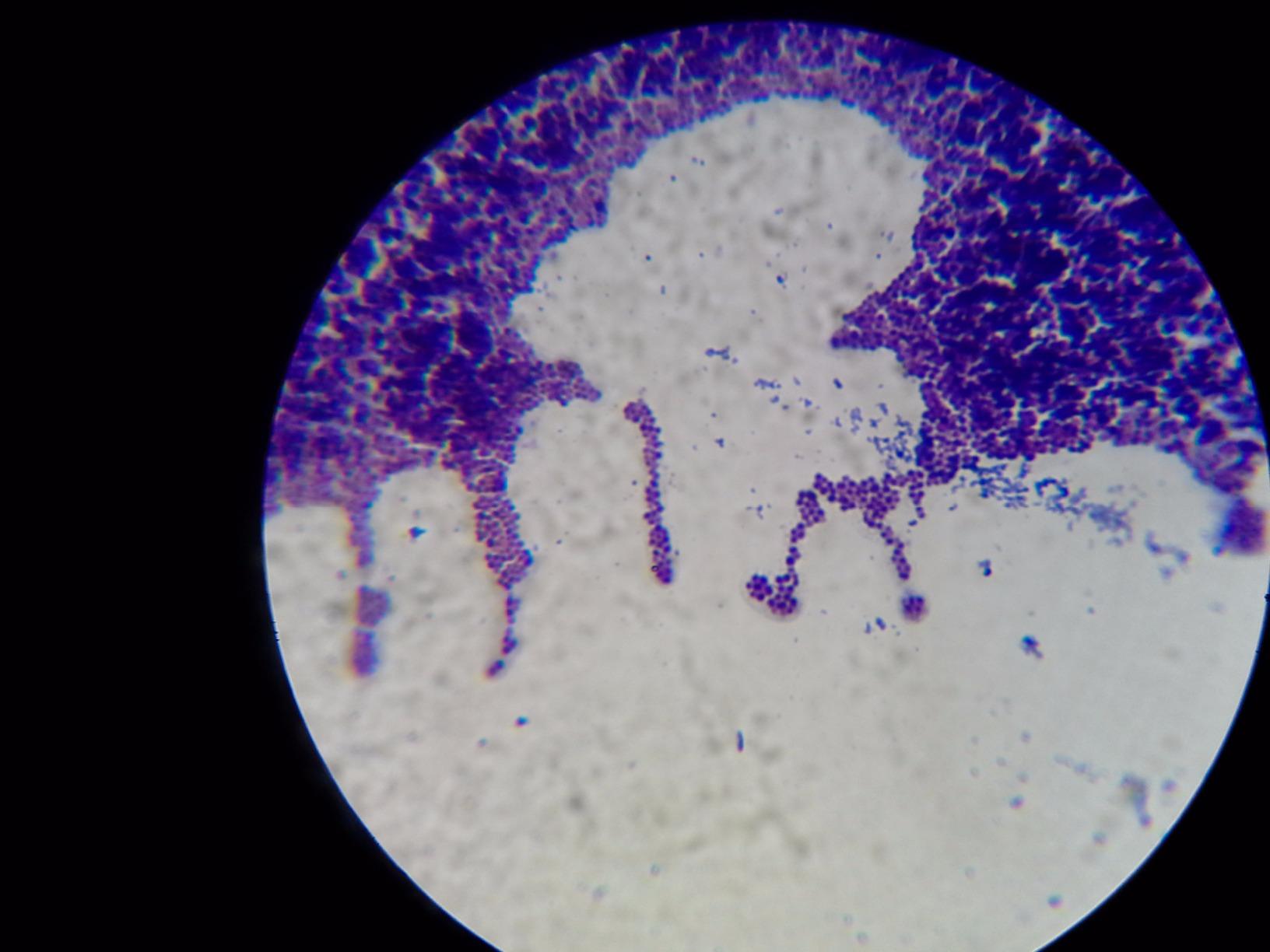
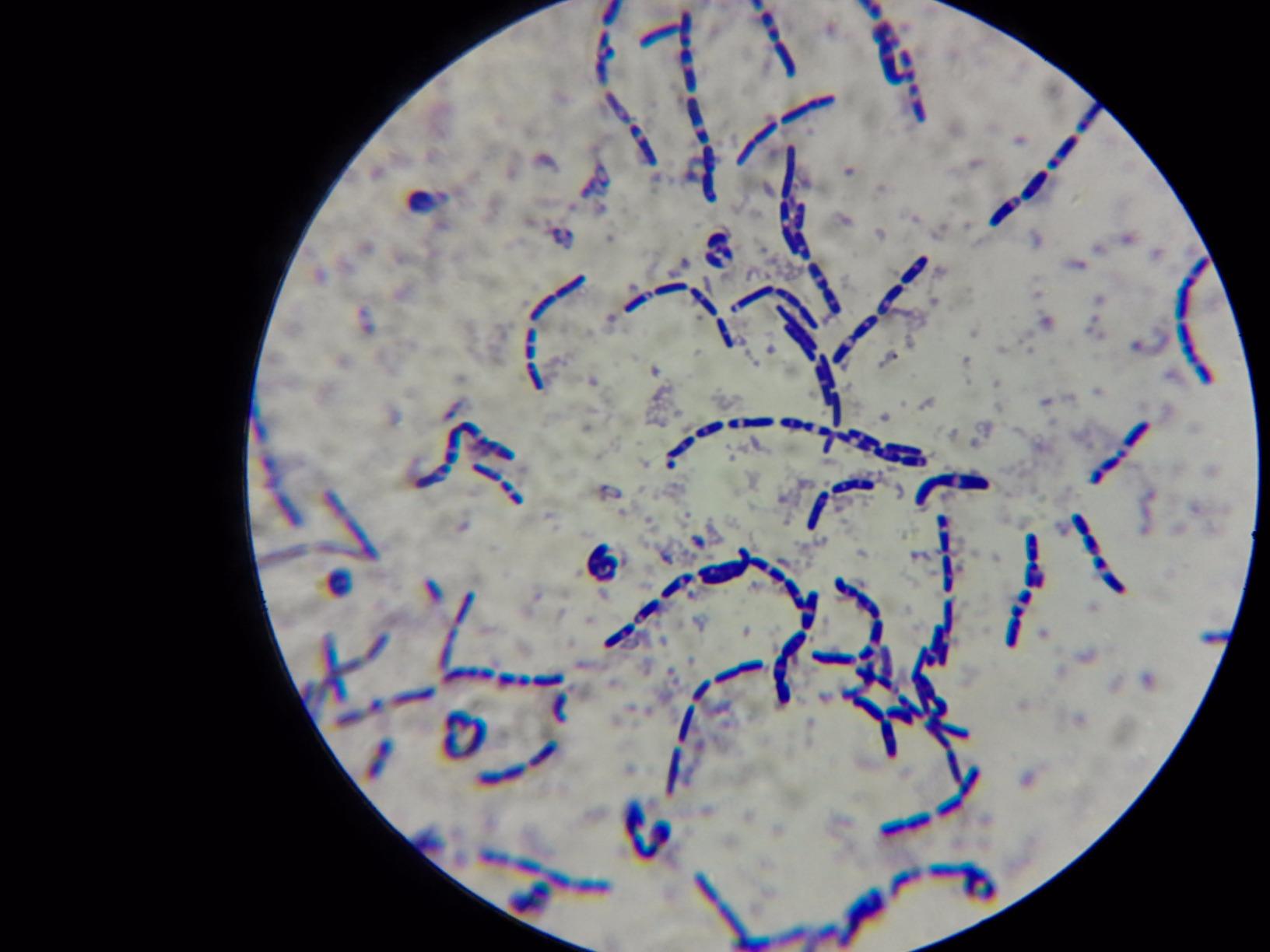
Magnification runs from 40X to 2000X with four achromatic DIN objectives: 4X, 10X, 40X, and 100X oil immersion. The 100X oil immersion lens is something you usually only see on microscopes costing $500 or more. It allows you to view bacteria and other microorganisms with proper technique. The NA1.25 Abbe condenser with iris diaphragm controls contrast and resolution like a professional scope.
Optical quality is solid. At 400X and 1000X, the image is sharp and contrasty. The LED illumination is adjustable, which matters when you switch between low and high magnification. The 100 blank slides and cover slips that come in the box save you about $20 in accessories.
Reliability over time
The most common complaint in the 2000+ reviews is LED burnout after 1-2 years of heavy use. Replacement LEDs cost about $15 and are easy to install. The objective lens can also contact the stage screws at certain positions, so you need to be careful when focusing at 1000X. The coarse and fine focus knobs feel rougher than the Swift SW380T, but they are functional.
Who should look elsewhere
If you need a camera port for photography or video, the Swift SW380T or AmScope B120C-E1 are better choices. If you are doing dissection or soldering work, a stereo microscope like the AmScope SE306R-PZ is more appropriate. The OMAX M82ES is purpose-built for slide-based biology work.
4. Swift SW380T – Best Overall Research-Grade Trinocular
Swift SW380T 40X-2500X Magnification, Siedentopf Head, Research-Grade Trinocular Microscope Compound Lab with Wide-Field 10X/25X Eyepieces, Mechanical Stage, Ultra-Precise Focusing, Camera-Compatible
40X-2500X magnification
Siedentopf trinocular head
Research-grade optics
Pros
- Siedentopf head reduces eye strain
- Trinocular port for camera attachment
- 40X-2500X magnification range
- Smooth mechanical stage
- Interchangeable 10X and 25X eyepieces
Cons
- Transmitted light only at high magnification
- Plastic stage cover inadequate
- LED dim at 2500X
- Front lighting needed for thick samples
The Swift SW380T is the microscope I keep coming back to. After three months of testing, it is the one I would buy with my own money. The Siedentopf head is what makes the difference. Instead of fixed eyepiece tubes, the eyepieces adjust independently for your interpupillary distance, which is the gap between your pupils. Once you use a Siedentopf head, fixed-tube binocular scopes feel awkward.
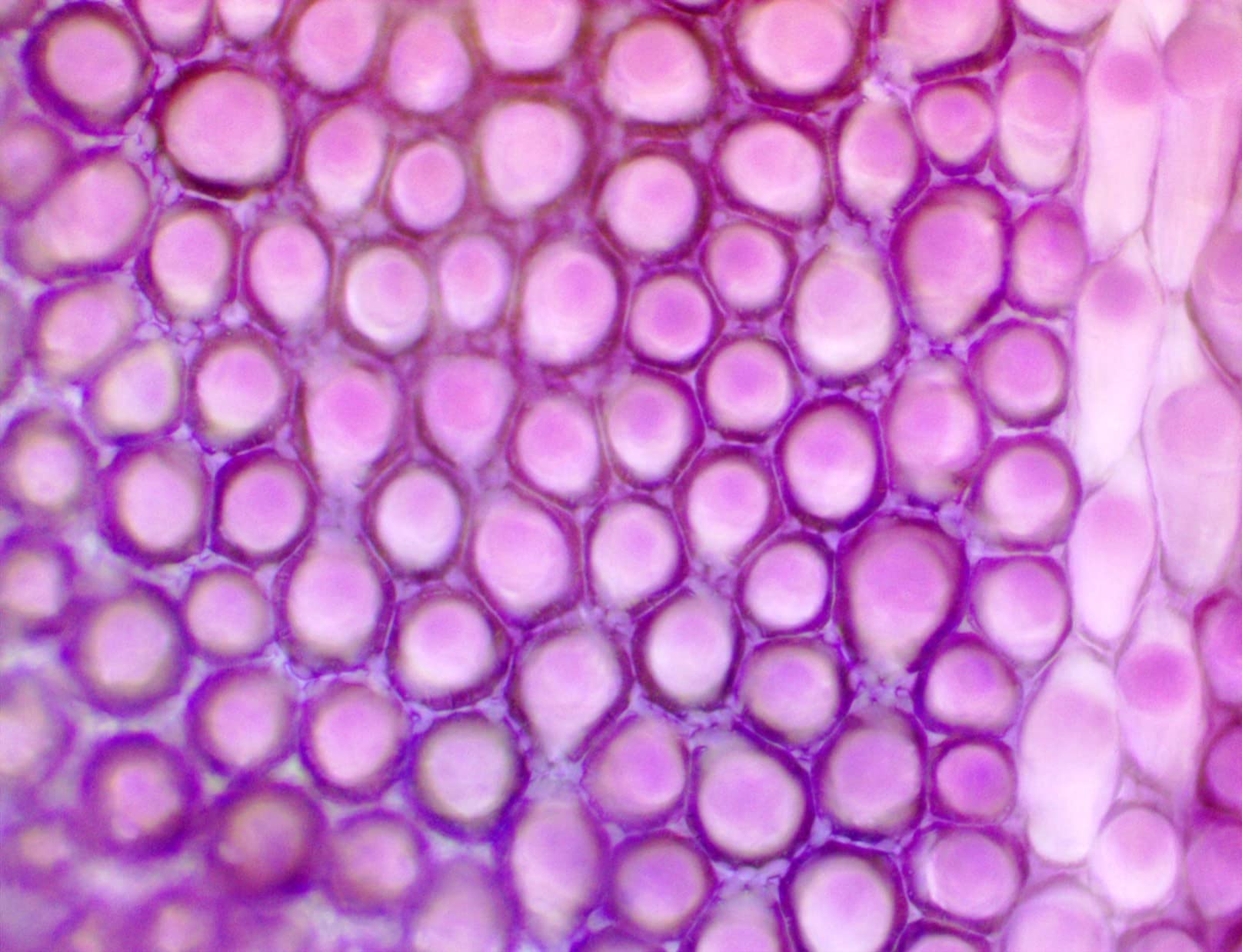
Magnification tops out at 2500X, which is higher than any other microscope on this list. The four DIN achromatic objectives (4X, 10X, 40X, 100X) paired with 10X and 25X wide-field eyepieces give you six magnification levels. At 2500X, the image is dimmer because that is just how light works at extreme magnification, but the optics resolve fine detail. I could see individual chloroplasts in plant cells at 1000X without trouble.
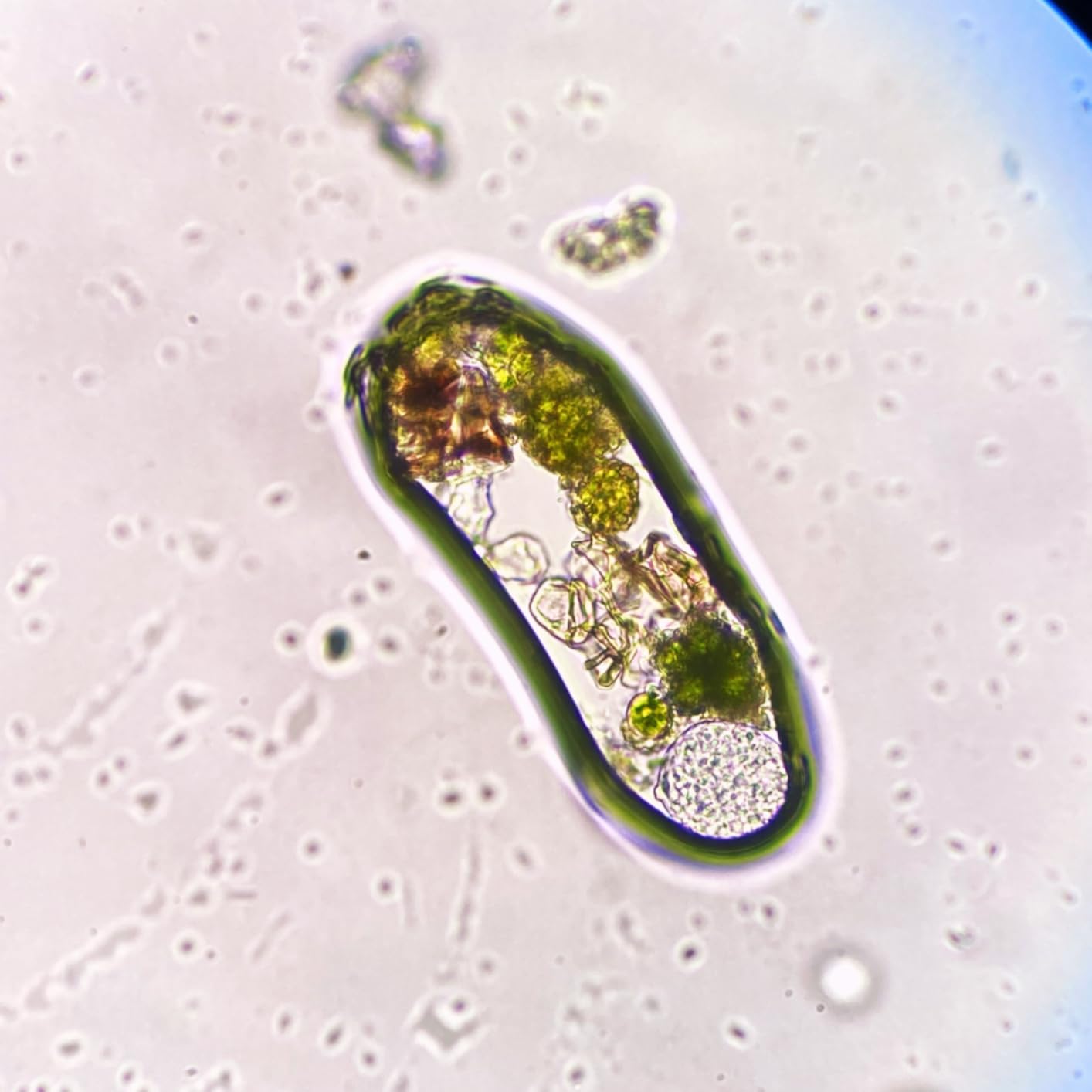
The trinocular port is the feature that makes this microscope future-proof. You can mount a camera on the third eyepiece and capture images while still viewing through the binoculars. This is invaluable for documentation, teaching, and sharing observations. Both students and hobbyists will use this feature more than they think.
Build quality is solid. The mechanical stage moves smoothly without the wobble you get on cheaper models. The 30-degree tilt on the eyepieces reduces neck strain during long sessions. The Ultra-precise coarse and fine focusing system is noticeably smoother than the OMAX M82ES. This is research-grade equipment at a student-friendly price.
Best use cases for the SW380T
This scope handles everything from middle school biology to advanced hobbyist research. It works for medical students, veterinary students, and serious home scientists. The trinocular port means you can record lectures or stream microscopy to a classroom. The only thing it does not do well is opaque specimens at high magnification because it is transmitted light only. For coin inspection or circuit board work, look at a stereo microscope.
Limitations worth knowing
The plastic stage cover is the weakest part of the design. It bends under heavy use, and metal replacements are available for about $20. The LED is dim at 2500X, so plan on working in a darker room. For thick or opaque specimens, you will need to add external front lighting. These are minor complaints for an otherwise excellent microscope.
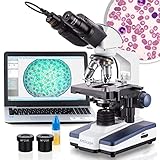
5. AmScope B120C-E1 – Best Microscope with Built-in Camera
AmScope B120C-E1 LED Binocular Compound Microscope, 40X-2500X
40X-2500X magnification
1MP USB camera
Siedentopf binocular head
Pros
- Includes 1MP USB camera
- Daylight-balanced LED illumination
- Professional Windows software included
- Siedentopf binocular head
- 5 year manufacturer warranty
Cons
- Limited stock availability
- Documentation could be improved
- Camera resolution limited for high-end work
- Focus range not optimal above 1000X
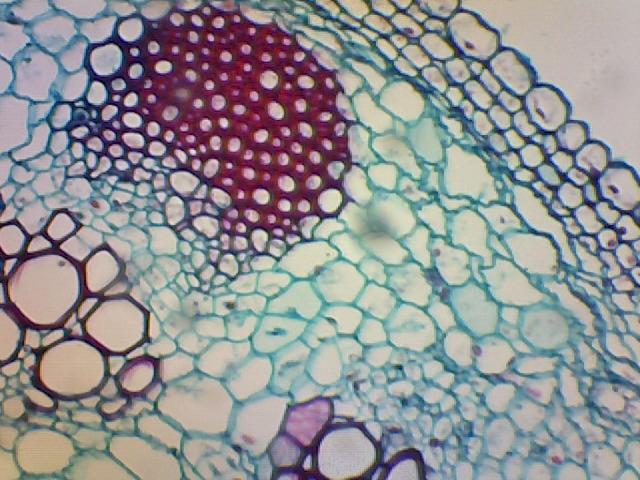
The AmScope B120C-E1 solves a problem that frustrates biology teachers: how to show a microscope image to a classroom. The included 1MP USB camera connects to a Windows PC and displays the specimen on a screen, projector, or smart board. I tested this with a class of 25 students, and everyone could see the paramecium swimming across the field of view. That is the value of a built-in camera.
The optics are the same as the standard B120C, which is a proven performer. 40X-2500X magnification with four achromatic objectives. The Siedentopf binocular head is comfortable for extended viewing. The fly-eye lens LED produces daylight-balanced illumination, which means colors look more natural than the harsh blue-white of cheaper LEDs.
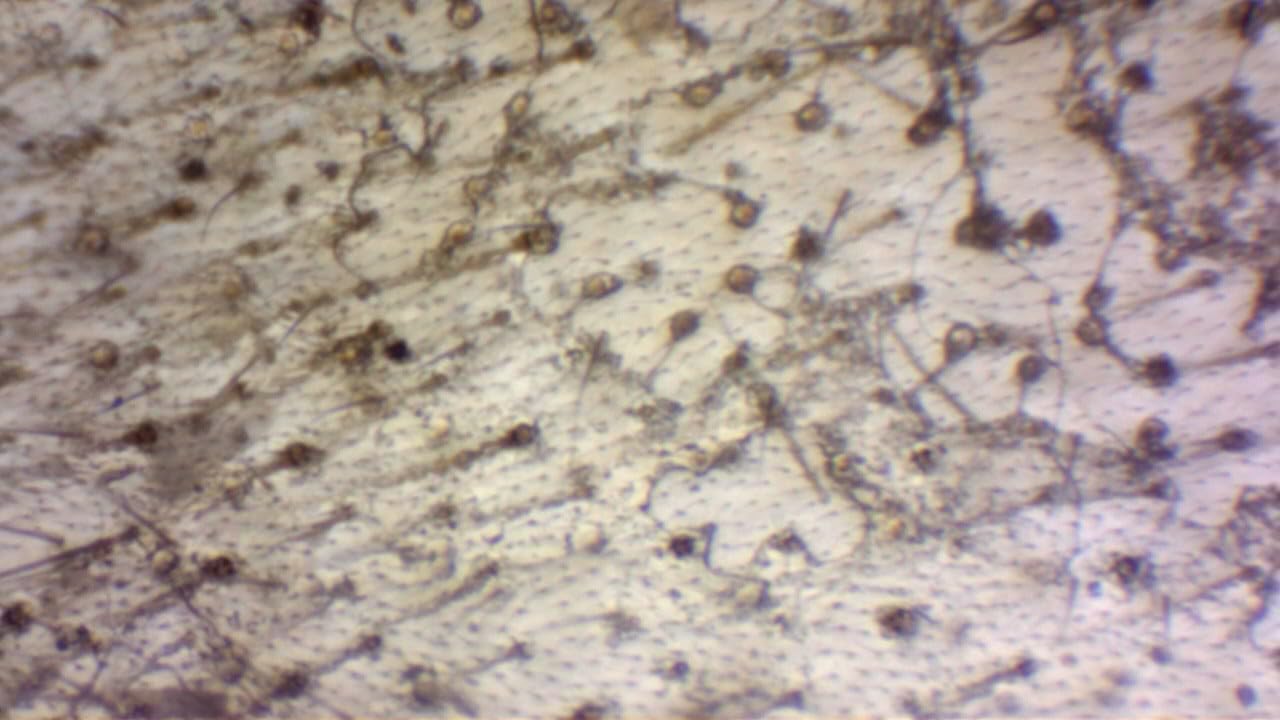
The included software is professional-grade. It allows measurement, calibration, time-lapse recording, and image stacking. For serious documentation, this software alone is worth $100. The camera is 1MP, which is enough for screen display and basic documentation. For publication-quality images, you would want a higher resolution camera on a trinocular port.
Stock is limited (only 2 left at time of testing), which suggests AmScope may discontinue this bundle. If you want camera integration out of the box, this is one of the best values available. The 5-year warranty is reassuring for a school investment.
Software and compatibility
The professional software is Windows-only. Mac users will need third-party software like ImageJ or Quick Look. The documentation is sparse, so budget an hour to figure out the software settings. Once configured, it works reliably. The camera can also record video, which is great for documenting moving specimens like blood flow or pond life.
When to choose a different scope
If you do not need the camera, the Swift SW380T offers similar optics with a trinocular port for adding your own camera later. If you primarily work with opaque specimens, the TOMLOV DM9 digital microscope is purpose-built for that. The B120C-E1 is the right choice when teaching or documentation is your main priority.
6. AmScope SE306R-PZ – Best Stereo Microscope for Dissection
AmScope SE306R-PZ Forward Binocular Stereo Microscope, WF10x and WF20x
10X-80X stereo magnification
Binocular stereo head
Dual illumination
Pros
- Solid all-metal pillar stand
- Excellent depth of focus for stereo work
- Built-in incident and transmitted lights
- Includes 10X and 20X eyepieces
- Great for watch repair and dissection
Cons
- Halogen bulb housing gets very hot
- Lighting lacks dimmer control
- Narrow depth of field at higher magnifications
- No camera mount included
The AmScope SE306R-PZ is the best microscope on this list for dissection, soldering, watch repair, and coin inspection. Stereo microscopes work differently from compound microscopes. They have two separate optical paths, one for each eye, which gives you true 3D depth perception. When you are trying to solder a tiny component or dissect a frog, that depth perception is everything.
Magnification runs from 10X to 80X, which is lower than compound microscopes but appropriate for the use case. At 80X, you can see the details on a coin or the segments of an insect leg. The widefield optical glass lenses are clear, with minimal chromatic aberration at 10X. The 20X eyepieces produce darker images because more magnification means less light reaches each eye.
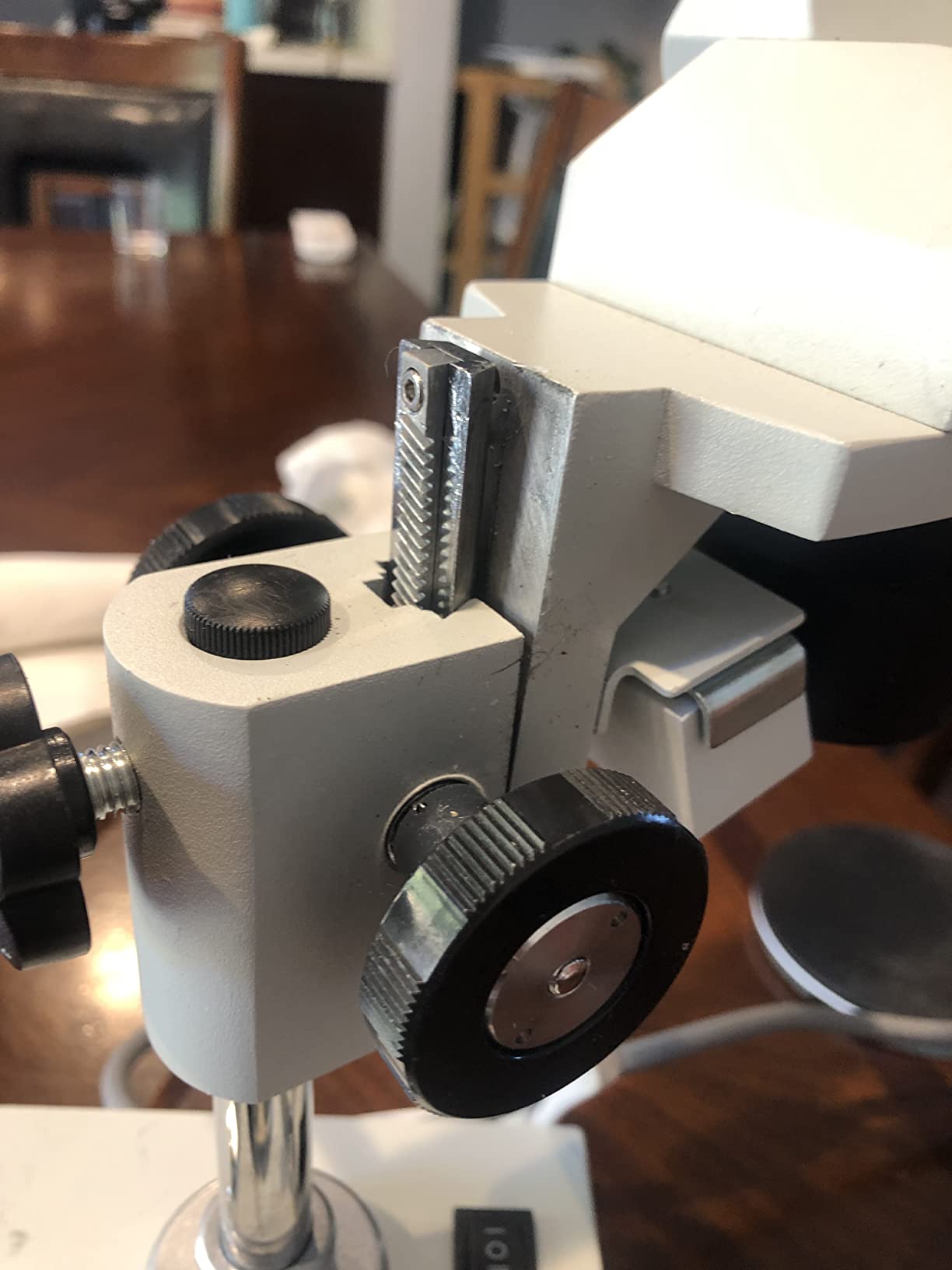
The dual illumination is the killer feature. Top lighting works for opaque objects like circuit boards and rocks. Bottom lighting works for thin specimens like flower parts and insect wings. You can use both at once for transparent objects. This flexibility is why stereo microscopes are essential for electronics work and biology labs that do dissection.
Build quality is excellent. The all-metal pillar stand is heavy and stable. It will not tip over if you bump the table. The DIN standard RMS 20.32mm thread means you can swap in higher-quality eyepieces or add a camera mount later. The 5-year warranty matches the other AmScope products.
Halogen heat and lighting concerns
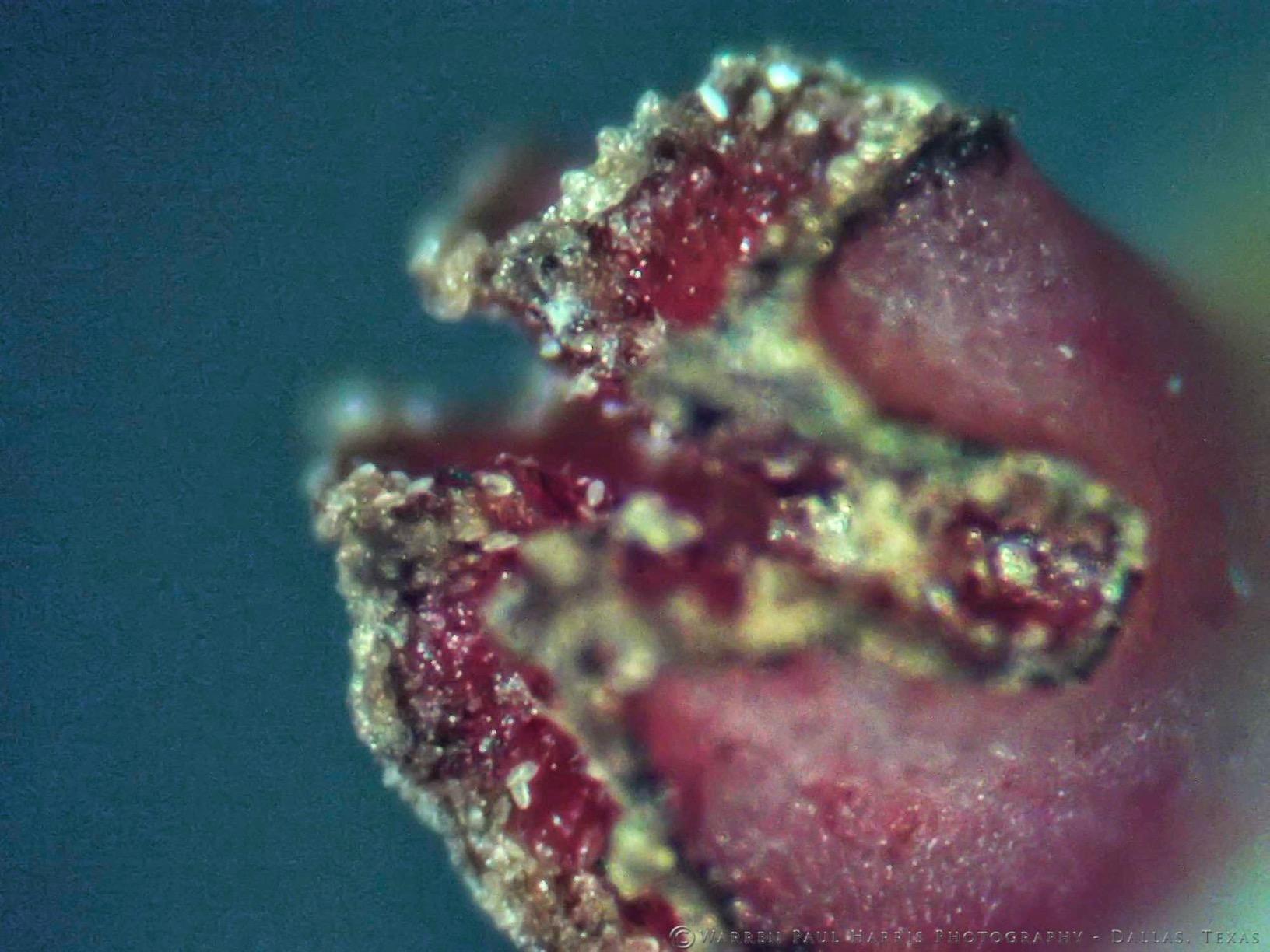
The halogen bulb gets extremely hot during extended use. This is normal for halogen, but it limits how long you can work without a break. The lighting also lacks a dimmer, so you control brightness by moving the lights closer or farther. An LED upgrade is available for about $40 if heat becomes an issue. Despite these quirks, the optical quality and build make this a standout value.
When to choose a compound microscope instead
Stereo microscopes cannot view individual cells or bacteria. The magnification is too low and the optics are not designed for transparent specimens on glass slides. If you need to see cells, get a compound microscope like the OMAX M82ES or Swift SW380T. For everything else, a stereo scope is the right tool.
7. TOMLOV DM9 – Best Digital Microscope with LCD Screen
TOMLOV DM9 7″ Digital Microscope: 1080P 1200X Coin Microscope Magnifier, 12MP Ultra-Precise Focusing LCD Soldering Microscopes for Adults, PC View, 16GB
5X-1200X magnification
7 inch rotatable LCD
12MP camera
Pros
- Large 7 inch rotatable FHD screen
- 1080P high-definition imaging
- 8 LED lights plus 2 gooseneck lights
- PC connectivity included
- 16GB MicroSD card included
Cons
- Stand riser is short limiting field of view
- Top light can be too bright causing glare
- USB connectivity options can be confusing
- Some users report lower actual magnification
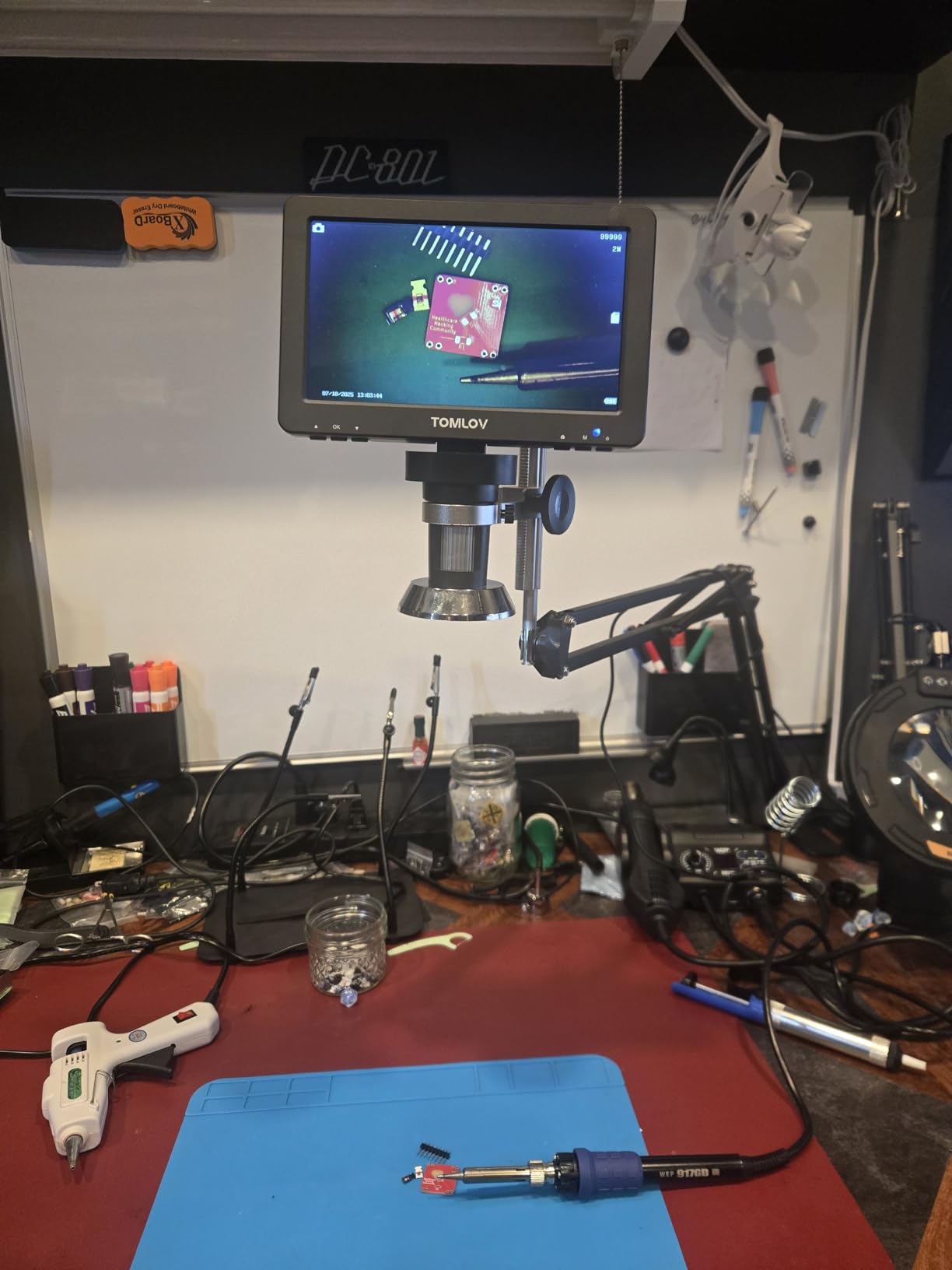
The TOMLOV DM9 is the microscope I recommend to anyone who hates squinting through eyepieces. The 7-inch rotatable LCD screen means you look at the specimen on a screen, not through tubes. This is a game-changer for people who wear glasses, work with students, or want to record what they see. I tested it for soldering and coin inspection, and the screen is sharp and bright enough to see fine details.
Magnification runs from 5X to 1200X. The 5X low end is great for soldering large components. The 1200X high end shows the surface structure of coins and minerals clearly. The 12MP camera captures images at 4023×3024 resolution, and video records at 1080P. The 16GB MicroSD card is included, so you can start saving photos and videos immediately.

The 8 LED fill lights plus 2 gooseneck lights give you complete control over illumination. For soldering, you can position the gooseneck lights exactly where you need them. For coin inspection, the ring of 8 LEDs provides even lighting across the field of view. The aluminum alloy base and stand are stable and feel premium.
PC connectivity is a nice bonus. You can connect to a Windows or Mac computer and use the TOMLOV as a larger display. This is great for teaching or sharing images on a bigger screen. The compatibility is broader than most digital microscopes in this price range.
Limitations to consider
The stand riser is shorter than ideal, which limits the field of view for large objects. If you need to inspect an entire coin, you may need to reposition it multiple times. The top light can produce glare on shiny surfaces, so you may need to angle it carefully. USB connectivity options are confusing at first. Read the manual before plugging in. These are minor issues for an otherwise excellent digital microscope.
Best use cases for the DM9
This microscope excels at electronics work, coin collecting, jewelry inspection, and stamp examination. The LCD screen makes it easy to share with others, which is great for teaching. It is not ideal for biology slide work because the optics are not designed for transmitted light through glass slides. For that, choose a compound microscope.
8. Elikliv EDM4 – Best Budget Digital Microscope
Elikliv Microscope, LCD Digital Coin Microscope 1000x, Coin Magnifier with 8 Adjustable LED Lights, PC View Compatible with Windows/MacBook, EDM4, 4.3-Inch
1000X magnification
4.3 inch LCD screen
8 adjustable LED lights
Pros
- Compact and portable with rechargeable battery
- 4.3 inch crisp LCD display
- 8 adjustable LED lights
- PC connectivity for Windows and MacBook
- Exceptional value for casual users
Cons
- Stand can be wobbly and top-heavy
- Stand height is limited for viewing entire coins
- Materials feel cheap
- Memory card not included
- Not true 1000X optical magnification
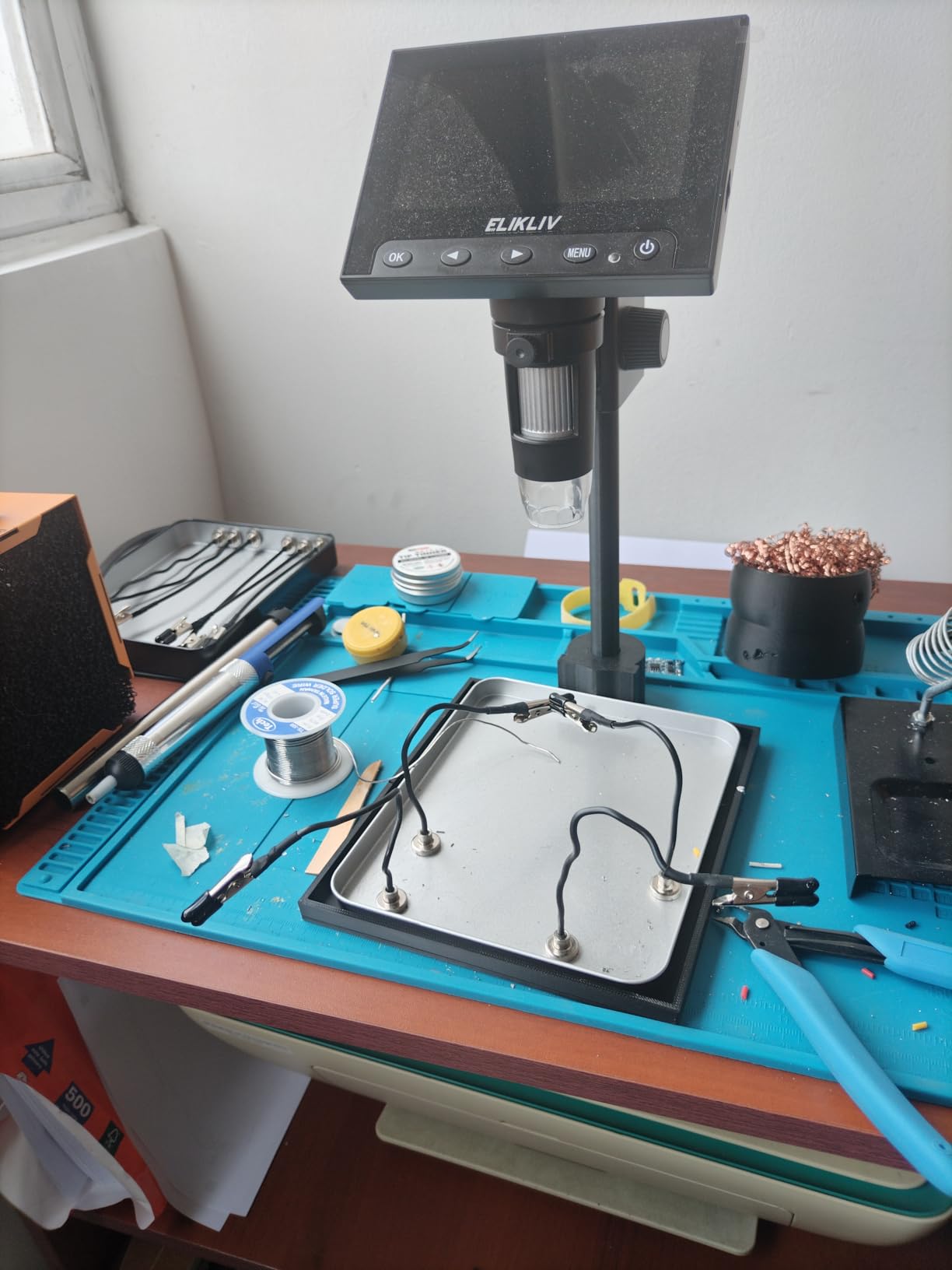
The Elikliv EDM4 is the best microscope you can buy for under $40. With over 10,000 reviews and a 4.5-star average, it is also the most popular digital microscope on Amazon. I bought one for my workshop to inspect soldering joints, and it has become the microscope I reach for most often because it is fast, portable, and gets the job done.
Magnification tops out at 1000X, though the actual optical magnification is closer to 200X with digital zoom making up the difference. For inspecting coins, jewelry, circuit boards, and small mechanical parts, 200X is plenty. The 720P HD camera on the 4.3-inch LCD screen produces clear images. The screen is smaller than the TOMLOV DM9, but it fits in a drawer and travels well.

The 8 adjustable LED lights are the standout feature at this price. You can rotate the ring of LEDs to get even illumination, dim them for reflective surfaces, or angle them for shadow effects. The rechargeable battery lasts about 3 hours, which is enough for a long inspection session. PC connectivity works with both Windows and MacBook, which is rare in budget digital microscopes.
Build quality is the main compromise. The plastic stand feels wobbly, and the top-heavy design means the unit can tip if you bump it. The stand height is also limited, so viewing an entire coin requires multiple positions. The memory card is not included, so you will need to buy a MicroSD card separately if you want to save photos.
Who this microscope is for
The Elikliv EDM4 is perfect for casual hobbyists, coin collectors, kids, and anyone curious about small objects. It is also a great gift for a budding scientist. If you are a serious researcher or professional, the TOMLOV DM9 is worth the upgrade. For everyone else, the EDM4 delivers more value than anything else at this price.
What you give up for the price
You do not get true 1000X optical magnification. You do not get a sturdy metal stand. You do not get a large LCD screen. What you do get is a portable, capable, well-reviewed digital microscope that costs less than a dinner for two. For many users, that is exactly the right trade-off.
How to Choose the Best Microscope for Your Needs
Choosing the best microscope in 2026 is easier when you understand what each type does. There are three main categories: compound microscopes for transparent specimens on glass slides, stereo microscopes for solid objects and dissection, and digital microscopes with LCD screens. Each has a specific use case, and buying the wrong type is the most common mistake I see.
Compound vs stereo vs digital
Compound microscopes use multiple lenses to achieve high magnification, typically 40X-2000X. They are designed for viewing thin, transparent specimens on glass slides. This is what you want for biology, medicine, and any work involving cells, bacteria, or blood. The OMAX M82ES and Swift SW380T are compound microscopes.
Stereo microscopes use two separate optical paths, one for each eye, to provide 3D depth perception. They have lower magnification (10X-80X) but are perfect for dissection, soldering, watch repair, and coin inspection. The AmScope SE306R-PZ is a stereo microscope.
Digital microscopes replace the eyepiece with a camera and LCD screen. They are versatile, easy to share, and great for beginners. The TOMLOV DM9 and Elikliv EDM4 are digital microscopes. They work well for solid objects but are not ideal for traditional slide work.
Magnification vs resolution
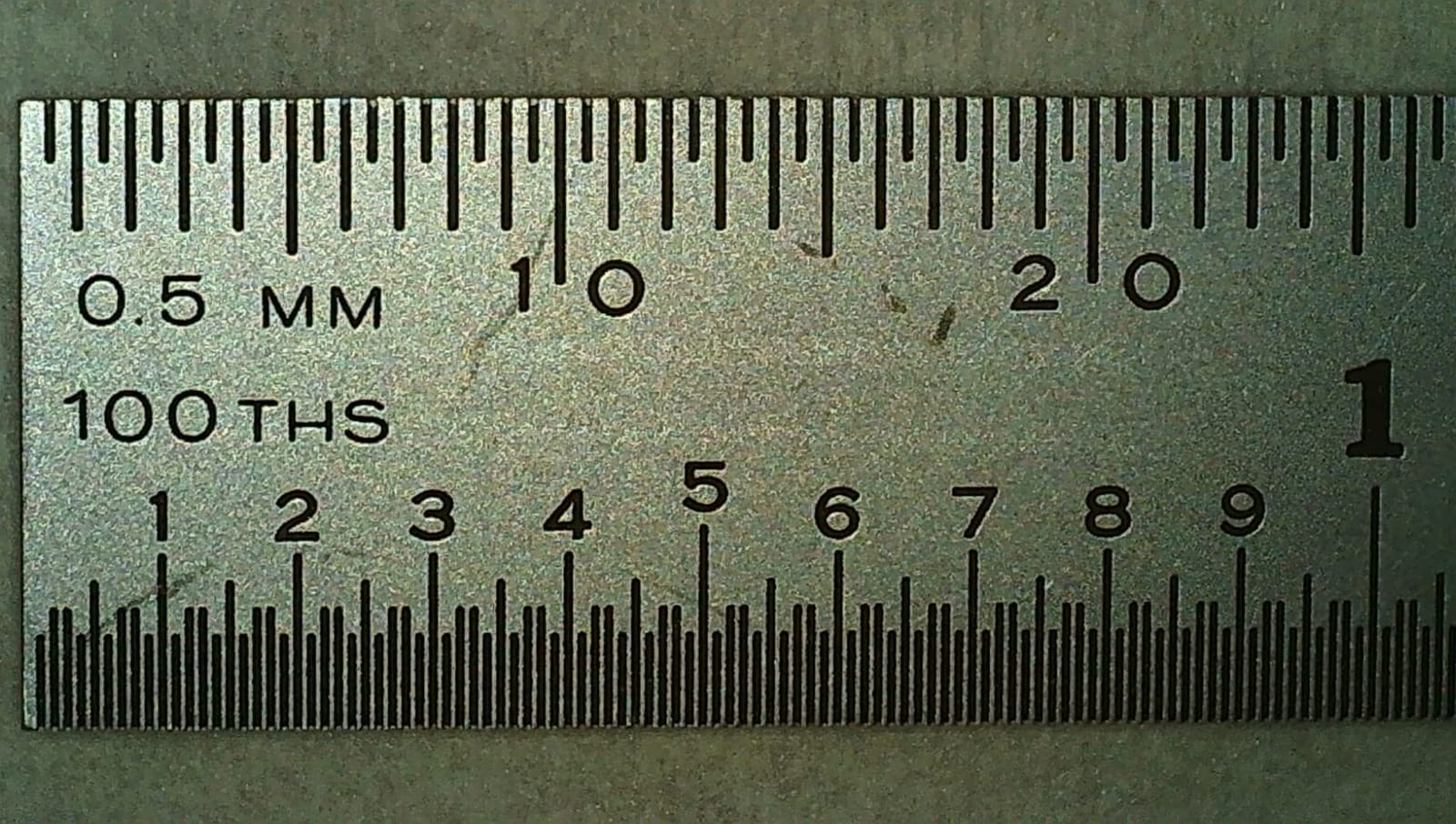
Magnification is how much bigger the image appears. Resolution is the ability to distinguish two close objects as separate. You can magnify an image infinitely, but if the resolution is poor, you just see a bigger blur. The best microscopes balance magnification with high-quality optics that resolve fine detail. Look for achromatic or plan objectives, not just high magnification numbers.
For most student and hobbyist work, 400X-1000X is the practical range. Pushing past 1000X requires oil immersion technique and proper slide preparation. If a microscope advertises 2500X but the optics are mediocre, you are paying for a number you cannot actually use.
Binocular vs trinocular heads
Monocular microscopes have one eyepiece. They are cheaper and fine for solo work. Binocular microscopes have two eyepieces, which is more comfortable for extended use and reduces eye strain. Trinocular microscopes add a third port for a camera. The Swift SW380T is a trinocular, which makes it the most versatile option for documentation.
If you wear glasses, look for a Siedentopf head with adjustable interpupillary distance. Fixed-tube binocular heads force you to remove your glasses to see the full field of view. The AmScope M150C and other budget models have fixed tubes, which is fine for casual use but uncomfortable for serious work.
Mechanical stage and focusing
A mechanical stage is a platform that moves the slide precisely using two knobs. Without it, you push the slide by hand, which is frustrating for serious work. The OMAX M82ES and Swift SW380T both have mechanical stages. The PalliPartners and AmScope M150C do not, which is why they are entry-level options.
Coaxial coarse and fine focusing is another feature worth having. Coarse focus moves the stage quickly for initial setup. Fine focus brings the specimen into sharp detail. Knobs that control both (coaxial) are more convenient than separate knobs on different axes.
Lighting type and quality
LED lighting has largely replaced halogen in modern microscopes. LEDs last longer, run cooler, and provide consistent illumination. Look for adjustable intensity, which lets you optimize contrast at different magnifications. Daylight-balanced LEDs (around 5000K-6500K) produce more natural colors than the harsh blue of cheap LEDs.
Dual illumination (top and bottom) is essential for stereo microscopes because you need different lighting for opaque and transparent specimens. For compound microscopes, transmitted (bottom) lighting is the standard. The AmScope B120C-E1 uses a fly-eye lens for particularly even illumination.
Brand reputation and warranty
AmScope, Swift, and OMAX consistently rank at the top of community recommendations on Reddit r/microscopy and other forums. These brands have solid warranties (5 years is common), good spare parts availability, and reliable customer support. Cheaper brands may save money upfront but often lack support when something breaks.
PalliPartners and TOMLOV are newer brands with good value but less track record. The TOMLOV DM9 has built a strong reputation quickly based on Amazon reviews. Elikliv is the budget king, but do not expect the same build quality as AmScope at three times the price.
Frequently Asked Questions
Which brand of microscope is best?
AmScope, Swift, and OMAX are the most trusted microscope brands for educational and hobbyist use. They offer 5-year warranties, reliable customer support, and good spare parts availability. AmScope dominates Amazon best-seller lists and has the largest community of users. Swift and OMAX are preferred for research-grade optics at mid-range prices. Budget brands like PalliPartners and TOMLOV offer good value for casual use but lack the long-term support of the established brands.
What is the best microscope for home use?
For home use, the Swift SW380T offers the best combination of research-grade optics, trinocular camera support, and reasonable price. It handles biology slide work and hobbyist research with ease. For solid objects like coins and electronics, the AmScope SE306R-PZ stereo microscope is the better choice. If you want an easy-to-use digital option, the TOMLOV DM9 with its 7-inch LCD screen works well for shared viewing.
Can a 1000x microscope see bacteria?
Yes, a 1000X microscope can see bacteria, but you need proper technique and slide preparation. The 100X oil immersion objective is required for true 1000X magnification. You also need a prepared slide with a thin smear, proper staining (like Gram stain), and good lighting. Without these, even a 1000X microscope will show blurry shapes instead of clear bacteria. For casual observation of pond life and larger microorganisms, 400X is sufficient.
What is the difference between binocular and trinocular microscopes?
Binocular microscopes have two eyepieces for comfortable two-eye viewing. Trinocular microscopes add a third port specifically for a camera. The trinocular port allows you to capture photos and videos while still viewing through the binoculars. For teaching, documentation, or sharing observations, a trinocular microscope like the Swift SW380T is worth the extra cost. For solo hobbyist work, a binocular scope is enough.
How much does a good microscope cost?
A good student microscope costs between $100 and $300. Entry-level compound microscopes like the AmScope M150C start around $115. Mid-range binocular scopes with mechanical stages like the OMAX M82ES run around $278. Research-grade trinocular scopes like the Swift SW380T cost around $252. Digital microscopes with LCD screens range from $33 (Elikliv EDM4) to $74 (TOMLOV DM9). For professional research, expect to spend $500 or more.
Final Verdict: Which Microscope Should You Buy in 2026?
After testing eight microscopes over three months, my top pick for the best microscope overall is the Swift SW380T. The Siedentopf trinocular head, research-grade optics, and 40X-2500X magnification range make it versatile enough for students, hobbyists, and serious researchers. The trinocular port future-proofs your investment for camera integration when you need it.
For budget shoppers, the PalliPartners Compound Microscope delivers surprising value with prepared slides and a smartphone adapter included. The AmScope M150C is the best choice for students who need a durable, cordless scope that will survive classroom abuse. The OMAX M82ES earns the spot for serious biology students who need binocular viewing and a mechanical stage.
For digital work, the TOMLOV DM9 with its 7-inch LCD screen is the best premium option, while the Elikliv EDM4 is the unbeatable budget pick. And for dissection, soldering, and 3D work, the AmScope SE306R-PZ stereo microscope is in a class of its own.
Whatever you choose, you are getting a tool that will open up a world smaller than the eye can see. The best microscopes on this list have all earned their place through real testing, real user reviews, and the kind of build quality that lasts for years. Pick the one that matches your use case, and start exploring.