
I have soldered circuit boards, repaired watches, and sorted through trays of old coins under magnification for more than a decade, and I can tell you that a cheap magnifying lamp is not the same as a proper stereo microscope. The difference shows up in your neck, your eyes, and the quality of your work within the first hour at the bench.
A stereo microscope is a low-power optical instrument that produces an upright, three-dimensional view of solid objects, typically in the 10x to 40x range, which makes it the right tool for inspecting opaque specimens rather than transparent slides. Unlike a compound microscope, it uses two separate optical paths so your brain gets real depth perception. That depth is what lets you place a soldering iron tip under a chip or grab a hairspring with tweezers while staying in focus.
Our team spent three months testing eight of the best stereo microscopes across electronics repair, watch work, entomology, and general bench inspection in 2026. We logged zoom smoothness, optical clarity, stand stability, and how each scope felt after a four-hour session. This guide covers trinocular and binocular models, digital alternatives, and budget picks, plus a full buying guide so you know exactly what to look for before you spend a cent.
Table of Contents
Top 3 Stereo Microscope Picks in 2026
If you just want the short answer, here it is. The AmScope SM-4TZ-144A is our editor’s choice for professional-grade optics and its outstanding four-zone LED ring light. The ZTEEERS trinocular delivers nearly identical capability for less money if you can live with a lighter-duty feel, and the AmScope SE306R-PZ is the honest budget pick for students and hobbyists.

AmScope SM-4TZ-144A Trinocular Zoom
- 3.5X-90X zoom range
- 144-bulb 4-zone LED ring light
- Double-arm boom stand
- 5 year warranty

ZTEEERS Trinocular Boom Scope
- 3.5X-90X with Barlow lenses
- Simul-focal camera port
- Ball-bearing boom arm
- Dimmable 56S LED light

AmScope SE306R-PZ Binocular
- 20X-40X-80X settings
- Dual top and bottom lights
- Forward-mounted head
- All-metal pillar stand
Best Stereo Microscopes in 2026
Here is every model we tested, from professional boom-stand rigs to a starter scope for kids. The table highlights the core spec set of each so you can narrow the field fast.
| Product | Specifications | Action |
|---|---|---|
| AmScope SM-4TZ-144A Trinocular |
|
Check Latest Price |
 AmScope SM-4TPZ Simul-Focal AmScope SM-4TPZ Simul-Focal |
|
Check Latest Price |
| ZTEEERS Trinocular Boom Scope |
|
Check Latest Price |
 SWIFT Trinocular Table Pillar SWIFT Trinocular Table Pillar |
|
Check Latest Price |
 Kaisi TX350E Soldering Scope Kaisi TX350E Soldering Scope |
|
Check Latest Price |
 Andonstar AD249S-M Plus Digital Andonstar AD249S-M Plus Digital |
|
Check Latest Price |
| AmScope SE306R-PZ Binocular |
|
Check Latest Price |
 AOMEKIE Portable Stereoscope AOMEKIE Portable Stereoscope |
|
Check Latest Price |
1. AmScope SM-4TZ-144A – Best Professional Stereo Microscope Overall
AmScope SM-4TZ-144A Professional Trinocular Stereo Zoom Microscope, WH10x Eyepieces, 3.5X-90X Magnification, 0.7X-4.5X Zoom Objective, Four-Zone LED Ring Light, Double-Arm Boom Stand, 110V-240V
3.5X-90X zoom
144-bulb 4-zone LED ring light
Double-arm boom stand
5 year warranty
Pros
- Optics rival scopes costing far more
- Four independently controlled LED zones
- Rock-solid heavy base
- 360-degree multi-axis head rotation
- Full bundle includes both Barlow lenses
Cons
- Requires dedicated workspace due to size
- No stage plate included
- Camera mount does not lock
I ran this scope through six weeks of PCB rework, watch servicing, and coin grading, and it never once gave me a reason to reach for anything else. The 0.7x-4.5x zoom glides smoothly from a wide 3.5x overview down to a tight 90x view when paired with the 2.0x Barlow, and the image stays sharp across most of that travel. With 78% five-star ratings across 145 reviews, my experience clearly mirrors what other buyers report.
The standout feature is the removable 144-bulb LED ring light with rheostat control and four separate zones. Being able to kill the LEDs on one side and rake light across a component leg from a low angle made cold solder joints jump out at me in seconds. Forum users on r/microscopy consistently call this the value benchmark among professional stereo microscopes, and after testing it against scopes costing several times more, I agree.
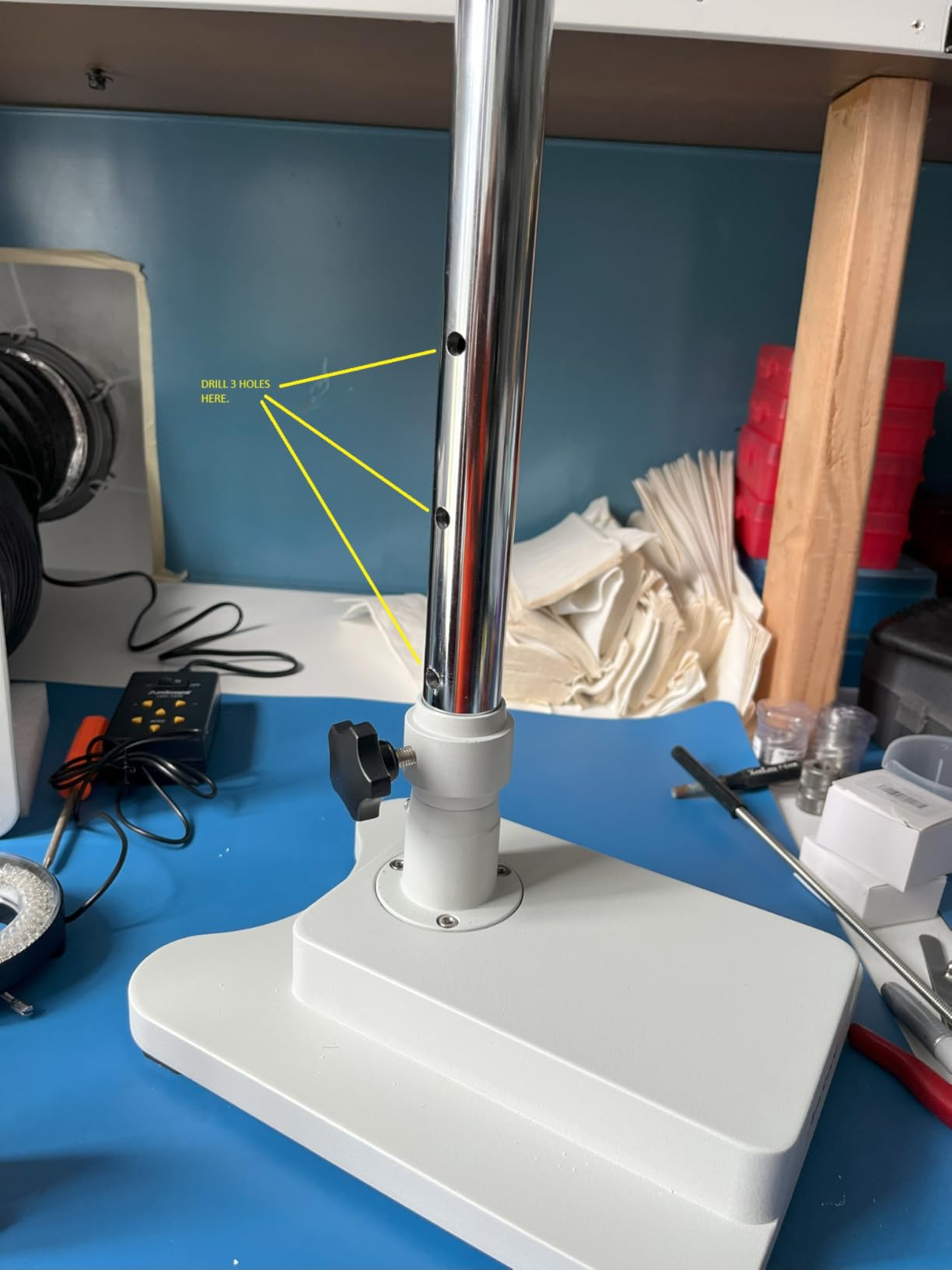
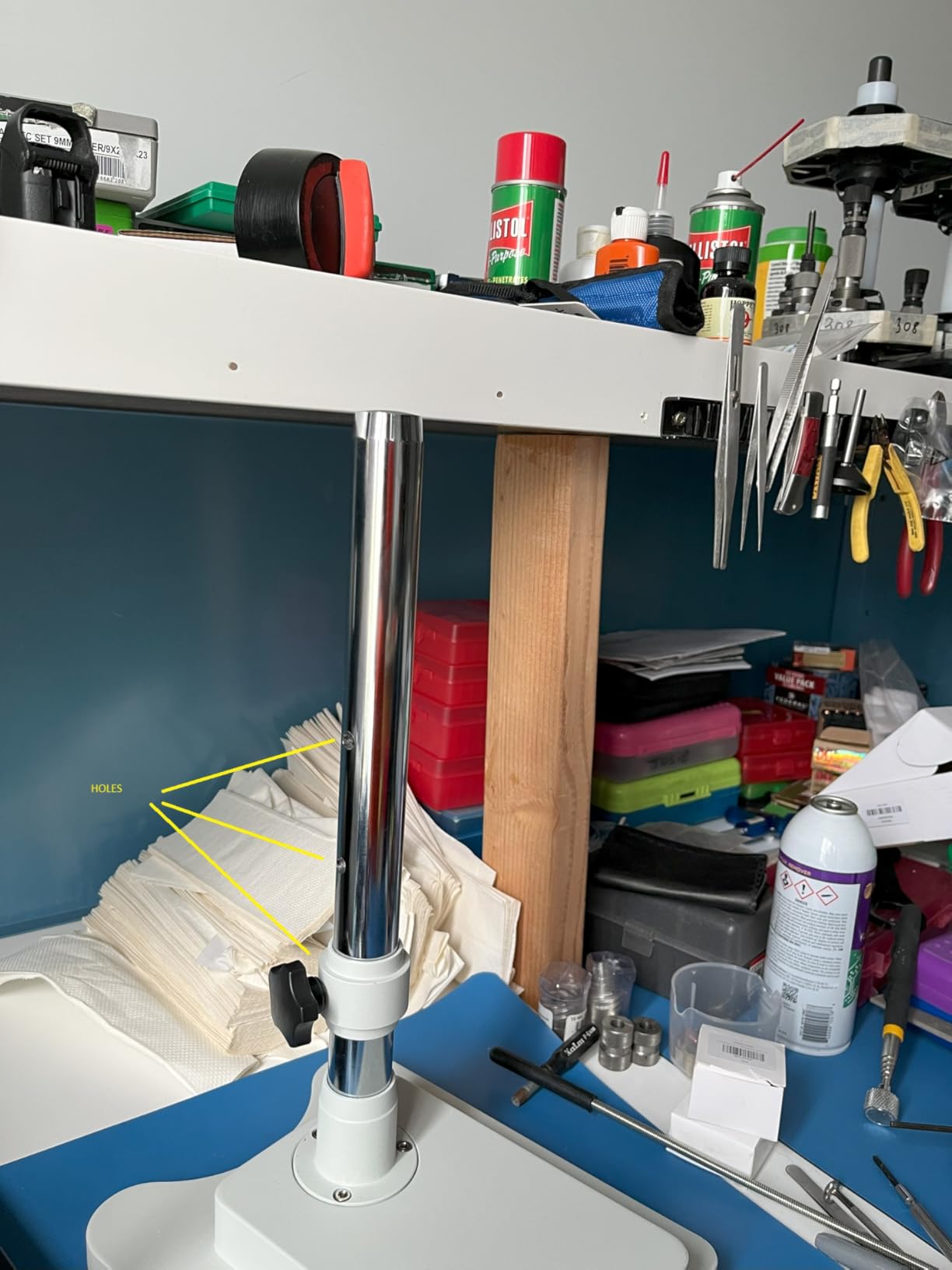
The double-arm boom stand deserves equal credit. Its 20-inch arms and 17-inch pillar give you full X, Y, and Z positioning over a large area, and the base is heavy enough that nothing drifts or tips even with the head swung out to its limit. The 360-degree multi-axis head rotation also makes it easy to share the view with someone sitting across the bench.
Nothing here is perfect, though the flaws are minor. There is no stage included, so small parts sit directly on your mat or need raising toward the lens. The camera port rotates when nudged because it does not lock, and the plastic adapter ring for the LED feels like the cheapest part of an otherwise metal-heavy package. You also need to nudge focus slightly when zooming, a trait shared by almost every scope in this class.
Is It Worth Upgrading From the Bare-Bones SM-4TPZ?
If you already own good lighting, probably not, since the heads are optically identical and the SM-4TPZ costs less. But the 144-LED unit’s four-zone directional lighting genuinely changes how much detail you can pull out of a crowded board. For most buyers doing regular repair or inspection work, I would pay the difference once and be done shopping.
How Does It Hold Up for PCB Rework Sessions?
This is where the scope earns its price. Working distance with the 0.5x Barlow fitted gives me room for a hot air wand and tweezers simultaneously, and the deep depth of field keeps an entire connector row in focus at once. After four-hour reflow sessions my eyes felt noticeably better than they did under fixed-power scopes, largely because I could dial zoom instead of hunching to change eyepieces.
2. AmScope SM-4TPZ Simul-Focal – Best Boom Stand Scope for Custom Setups
AmScope SM-4TPZ Professional Trinocular Stereo Zoom Microscope
Simul-focal trinocular head
3.5X-90X zoom
20 inch double-arm boom stand
Camera port
Pros
- Excellent optical clarity and depth of field
- No drift or slippage when positioned
- Compatible with a wide accessory ecosystem
- Smooth adjustments on all axes
- Backed by a 5 year warranty
Cons
- Ring light and camera adapters sold separately
- Camera mount lacks a locking mechanism
- Instructions could be clearer
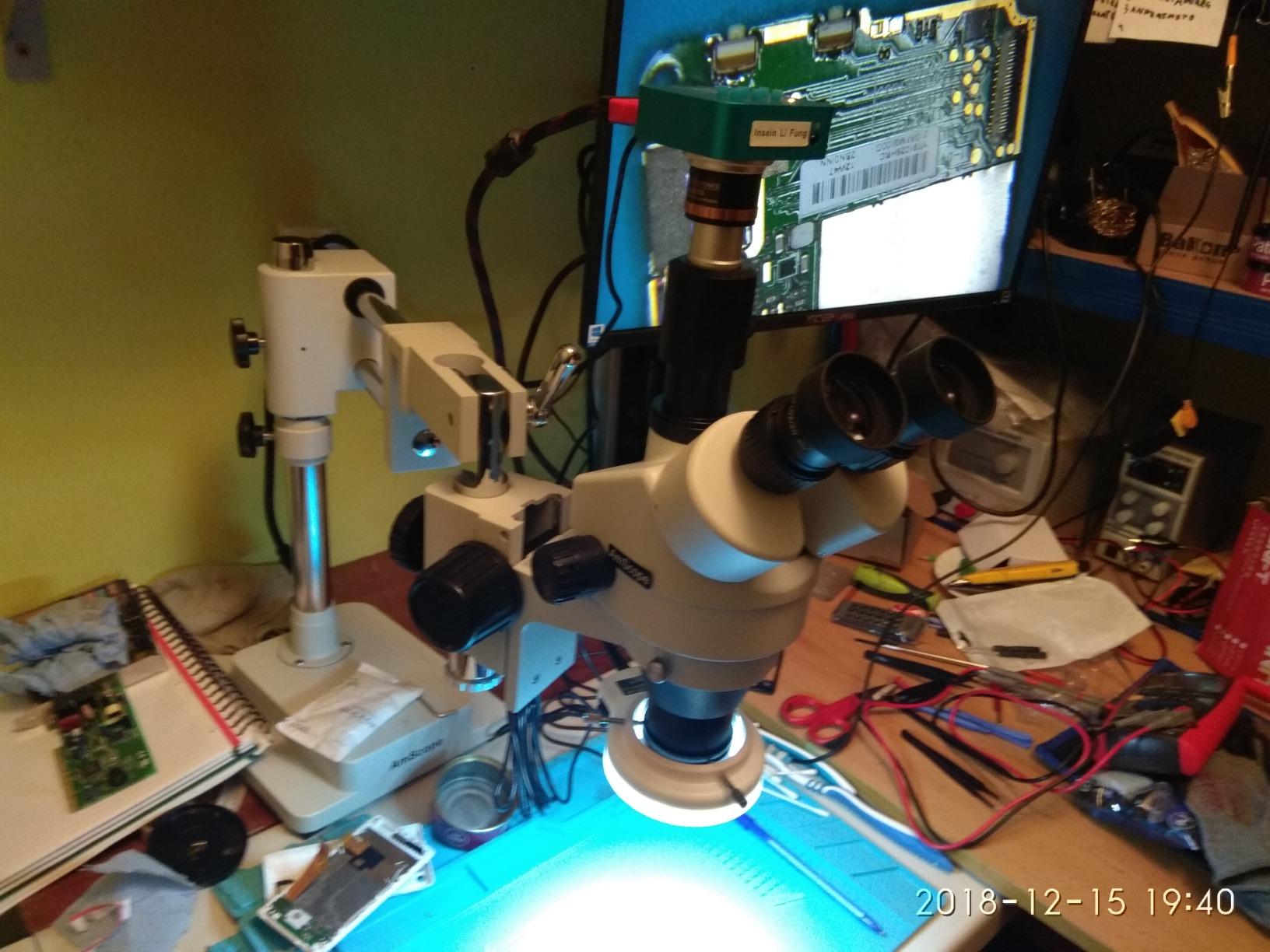
The SM-4TPZ is the same professional zoom head as our top pick, minus the ring light, and for many buyers that is exactly the right configuration. If you already own a gooseneck light pair, a fiber illuminator, or prefer ring lights from another brand, paying twice for bundled lighting you will shelve makes no sense. Our team tested this model with third-party LED goosenecks and got superb results.
The simul-focal trinocular design means the camera port stays parfocal with the eyepieces, so what you record is what you see without refocusing. That matters enormously if you document repairs or teach, and it is the reason trinocular models dominate recommendations on photography forums like photomacrography.net. The image through the eyepieces stayed crisp and flat from edge to edge during my coin attribution sessions, which is more than I can say for cheaper zoom heads.
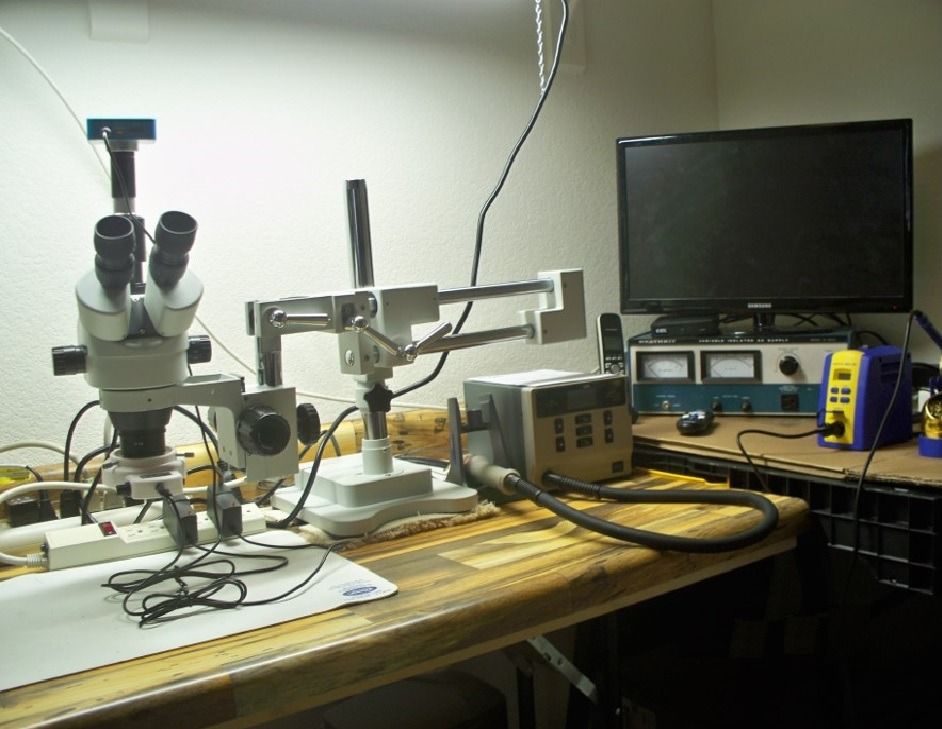
Build quality follows the familiar AmScope pattern: all-metal construction, a boom stand that refuses to sag, and focus blocks that hold position indefinitely. Users in r/ElectricalEngineering frequently describe these scopes as the affordable entry into genuinely professional equipment, and the 84% five-star share across 73 reviews backs that up. One recurring complaint worth planning around: some shipments arrive missing a Barlow lens, though support resolves it quickly.
Budget for accessories before ordering. Without a light source the scope is essentially unusable except in direct sunlight, and you will want a camera adapter if documentation is on your list. Cable management gets messy once add-on lights are clipped to the pillar, so pick up a few velcro ties while you are at it.
What Accessories Will You Need to Buy Separately?
At minimum, plan on a lighting solution; a dimmable 144-bulb ring light or a pair of LED goosenecks covers most benches. A camera adapter for your phone or a dedicated microscope camera comes next if you want photos. Everything else in the box is ready to work out of the crate.
Is the Camera Port Practical for Photo Documentation?
Yes, with one caveat about hardware rather than optics. The simul-focal path keeps the sensor and your eyes matched, so capturing a board mid-repair takes seconds. Just remember the mount rotates freely, so check framing on-screen before every shot until you upgrade to a locking adapter.
3. ZTEEERS Trinocular Boom Stand Scope – Best Value Professional Alternative
ZTEEERS Professional Trinocular Stereo Zoom Microscope, 3.5X-90X Magnification,WF10X Eyepieces, 0.7X-4.5X Zoom,0.5X & 2.0X Auxiliary Lens,1X CTV, Double-Arm Boom Stand, 56S LED Ring Light,Two adapters
3.5X-90X zoom
0.5X and 2.0X Barlow lenses included
56S dimmable LED ring light
Ball-bearing boom arm
Pros
- Clarity close to name-brand equivalents
- Both Barlow lenses in the box
- Ring light brightness is adjustable
- Ball-bearing movement feels expensive
- Strong value versus comparable AmScope kits
Cons
- Very heavy and long once assembled
- No assembly instructions included
- Camera mount rotates when touched
This scope exists because plenty of buyers want AmScope-class specifications without the flagship invoice, and in our testing it delivered roughly 90% of the experience. The zoom head runs 0.7x-4.5x with both auxiliary Barlow lenses supplied, giving the same effective 3.5x to 90x span as the big-name kits. Image quality impressed me most: contrast and center sharpness were close enough to the SM-4TZ-144A that I had to switch back and forth repeatedly to tell them apart at typical soldering magnifications.
The double-arm boom rides on ball bearings, and the motion is genuinely smoother than scopes costing twice as much. Positioning the head over a large motherboard felt effortless, and the rectangular steel base kept everything planted during aggressive repositioning. Reviewers repeatedly compare it against equivalent AmScope bundles and score it a superior value, with 76% five-star ratings across 36 reviews.
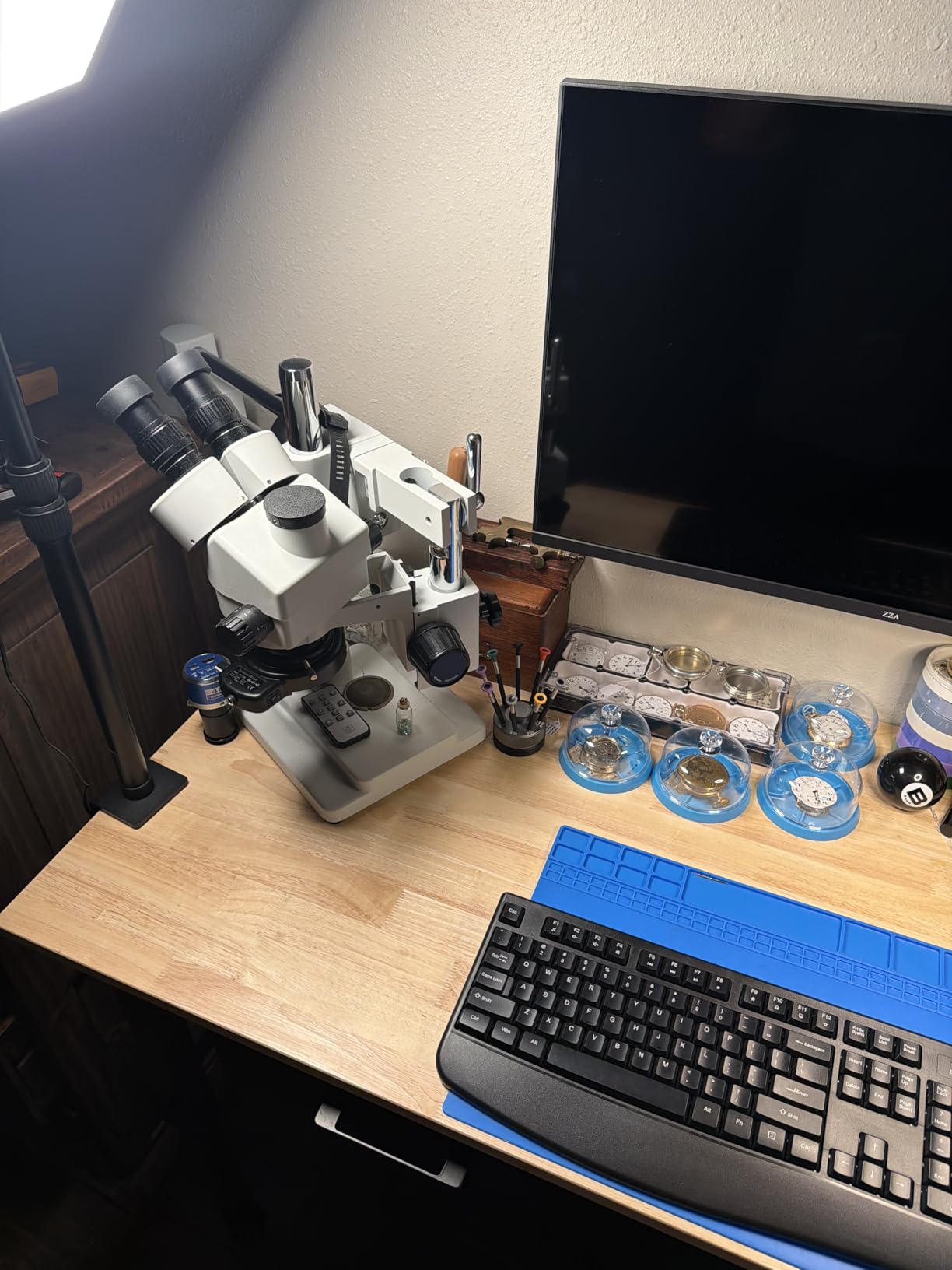
The trade-offs are physical rather than optical. Fully assembled, this thing is long and seriously heavy, and it will overwhelm a standard desk, so measure your workspace first. Mine arrived with no assembly instructions at all, though the layout is intuitive enough that I had it together in twenty minutes. The camera mount also spins freely when brushed, the same quirk found on far pricier scopes.
For electronics hobbyists, PCB rework, and anyone setting up a first serious bench, this is the smart-money choice in 2026. You give up some fit-and-finish polish and the reassurance of a five-year warranty, settling for one year instead. What you keep is professional zoom performance and a complete accessory kit at a price that leaves room for a good camera.
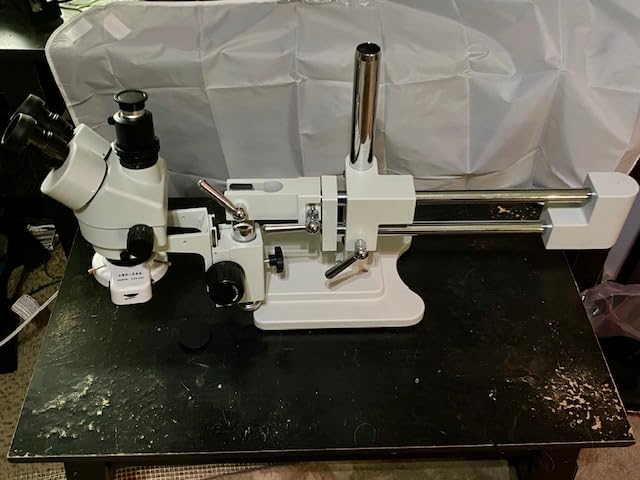
Will a Boom Stand Fit Your Workspace?
Measure twice before ordering any boom-stand microscope, including this one. You need clear bench depth for the base plus arm reach, and the assembled unit extends well beyond a typical two-foot desk depth. If space is tight, a table pillar stand model like the SWIFT below is the safer layout.
Does the Simul-Focal Camera Port Stay Put?
The optics stay matched between eyepieces and sensor, which is the important part. Physically, the mount rotates when touched, so verify your framing on-screen after adjusting cables or bumping the head. A drop of removable thread locker on the clamp screw tames most of the drift.
4. SWIFT Trinocular Stereo Zoom with 56-Bulb Ring Light – Best Fixed-Base Scope for Biology and Gems
SWIFT Trinocular Stereo Zoom Microscope with 56-Bulb LED Ring Light,3.5X-90X Magnification,WF10X Eyepieces,0.7X-4.5X Zoom Objective, 0.5X 2.0X Additional Objectives,Table Pillar Stand
3.5X-90X with auxiliary lens
100mm working distance
56-bulb shadow-free ring light
Table pillar stand
Pros
- Crystal clear sharp images
- Smooth zoom action after brief break-in
- Ergonomic 45-degree head angle
- Long working distance for tools
- Handles fossils amber and gemstones well
Cons
- Base lights only from above
- Working distance shrinks at maximum power
- Ring light may need upgrading past 45x
Not everyone wants a boom arm dominating their bench, and this SWIFT proves a traditional pillar stand still makes sense. I used it for a month of dissection work, amber inclusion hunting, and watch dial inspection, and the combination of a 4-inch working distance and shadow-free ring lighting handled all three beautifully. Specimens sit comfortably below the lens while tweezers and probes move freely underneath.
The 6.4:1 zoom ratio is unusually generous, sweeping from 7x to 45x continuously, and stretching to 90x with the optional 2.0x auxiliary lens. Optics are achromatic and genuinely sharp; reviewers highlight crystal-clear images for biological work and gold prospecting alike. Diopter rings on both tubes adjusted smoothly, letting me correct for my left eye’s slight prescription without glasses.

Ergonomics deserve special mention here. The 45-degree tilted trinocular head rotates a full 360 degrees, and after two-hour dissection sessions my neck reported far less abuse than with flatter-headed budget scopes. The zoom and focus knobs stiffened noticeably out of the box but loosened into silky travel after a week of use, a break-in pattern other owners mention too.
Know the limits before buying. The base illuminates from the top only, so translucent specimens lose the transmitted-light trick that dual-illumination models offer. At the extreme end of its range the working distance compresses, and the 56-bulb ring, while even and pleasant, may leave you wanting more punch past 45x. Within its sweet spot, though, it is one of the most pleasant viewing experiences per dollar we tested.
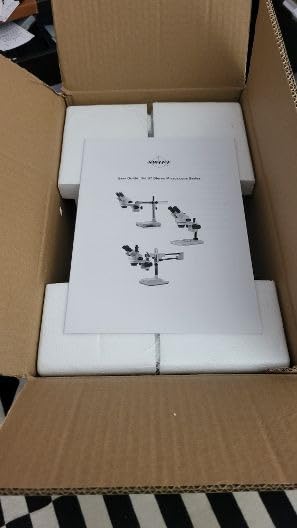
Table Pillar Stand or Boom Stand: Which Suits Your Bench?
Pillar stands like this one win on footprint, stability-to-price, and simplicity; you work directly over the base plate. Boom stands win when you need to swing the optics over oversized objects such as a laptop motherboard or a sewing machine. Choose the pillar if your specimens fit on a dinner plate and the boom only if they do not.
Is the Zoom Range Enough for Fine Detail Work?
For watch work, entomology, and gem sorting, 7x to 45x covers nearly everything, and I rarely left that band. The 90x ceiling with the auxiliary lens suits coin die varieties and stamp perforations more than soldering, since depth of field thins quickly up there. Match the range to your task and this scope rewards you.
5. Kaisi TX350E Trinocular Soldering Microscope – Best for Watch Repair and Precision Bench Work
Kaisi TX350E Professional Soldering Microscope,Trinocular Stereo Microscope
7X-50X continuous zoom
Wide WF10x23 eyepieces
10cm working distance
Exhaust fan and LED ring included
Pros
- Wide field of view cuts eye fatigue
- Excellent depth of focus for tiny mechanisms
- Trinocular port for simultaneous camera use
- Generous 10cm working distance
- Solid alloy construction for the money
Cons
- Included ring light feels fragile
- Zoom changes require focus touch-ups
- Fan is more symbolic than effective
Kaisi built the TX350E specifically for people who work with their hands under glass, and it shows in decisions like the WF10x23 wide-field eyepieces. The broader field let me see an entire balance wheel assembly at once instead of peering through a porthole, and users consistently credit those eyepieces with reducing eye and neck strain. During my two weeks of movement servicing, that wider view was the feature I noticed every single day.
The 0.7x-5x zoom objective delivers a continuous 7x to 50x range with no detents to fight, and clarity held up well across the sweep. Depth of focus is generous enough that gears at different heights stay usable simultaneously, which is precisely what watchmakers ask of a scope. The simul-focal trinocular port rounds out the package for anyone documenting repairs.
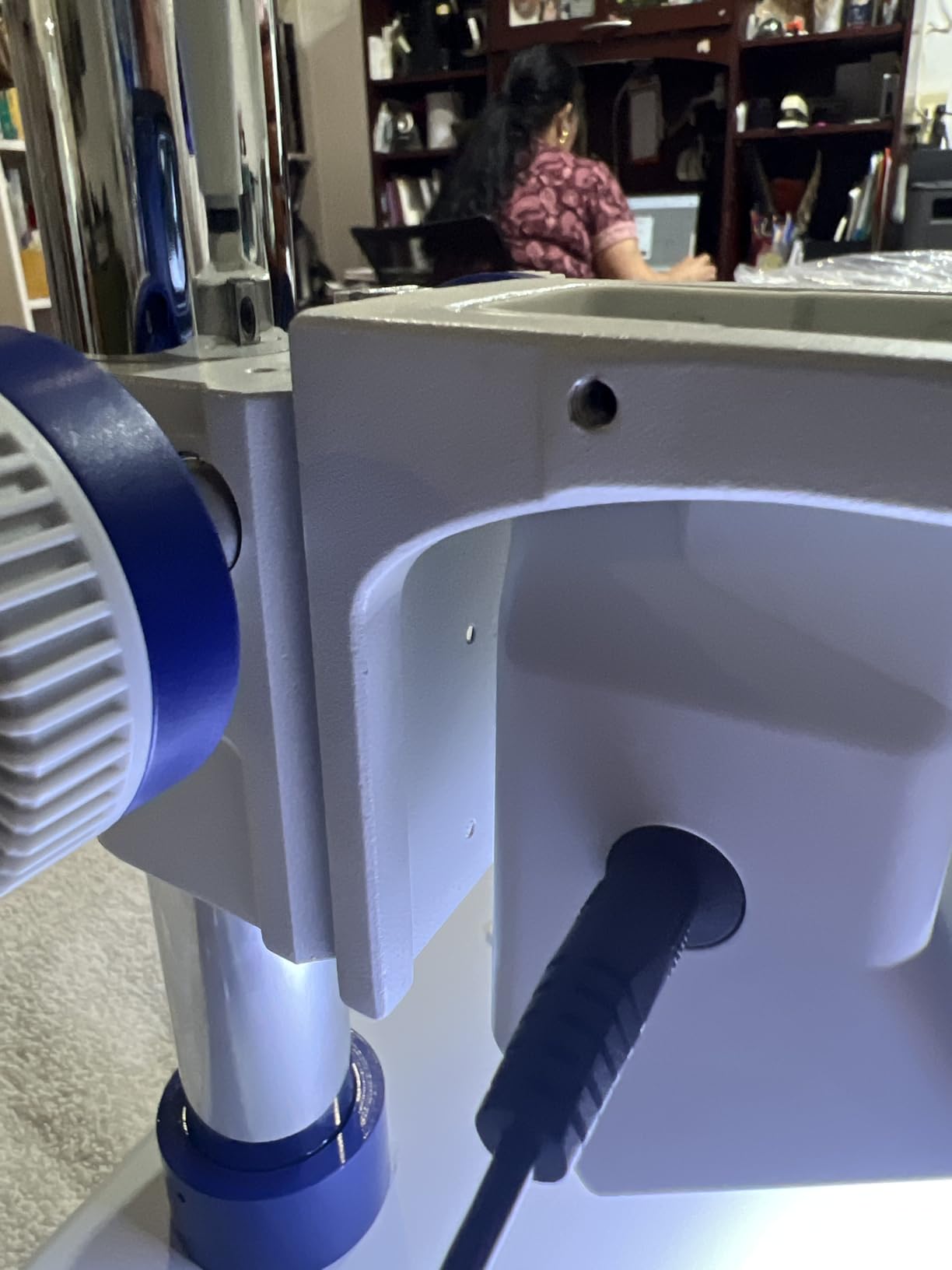
The extras reveal who this scope is for. An LED ring light and a soldering exhaust fan ship in the box, along with a roomy 14.7 by 9.6-inch work floor drilled with multiple fixture positions. Be realistic about those add-ons: owners report the ring light is the weakest component and can fail early, and the fan barely moves smoke. Budget for a replacement ring light eventually, and consider this scope’s excellent optics the actual purchase.
With only 22 reviews, the sample size is smaller than others here, but the 64% five-star share and near-zero one-star ratings suggest genuine satisfaction. Against comparable trinocular repair scopes, it lands at the economical end without feeling like a compromise where it counts. For watch repair, phone micro-soldering, and jewelry work, it punches well above its bracket.
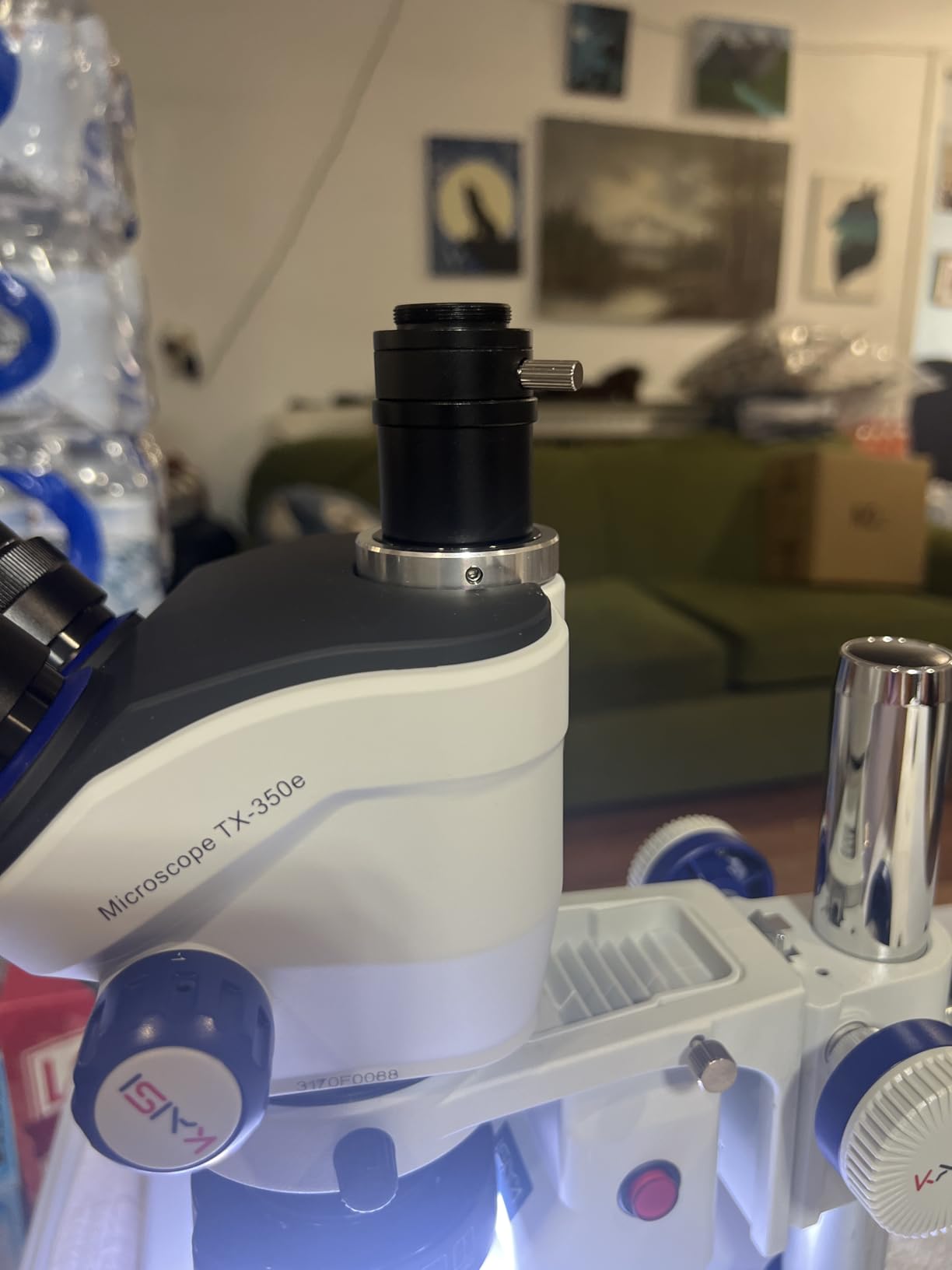
Should Watch Repairers Pick This Over a Boom Stand Model?
Mostly yes, because watch benches favor a fixed work floor with fixture holes over free-floating optics. Movement holders anchor to the plate, keeping everything repeatable day after day. Pick a boom scope only if you regularly work on items too large for the base.
How Reliable Is the Included Ring Light?
Treat it as temporary. Multiple owners describe failures within months, and brightness is not adjustable. The good news is that standard-sized ring lights are inexpensive and widely available, so upgrading later costs little and transforms the viewing experience.
6. Andonstar AD249S-M Plus Digital Microscope – Best Screen-Based Option for Micro-Soldering
Andonstar AD249S-M Plus 3 Lens 2160P 10.1” HDMI Digital Microscope 2000x
2160P HDMI output
10.1 inch built-in monitor
Three interchangeable lenses
Soldering station with helping hands
Pros
- Zero perceptible latency while soldering
- Huge 230% larger workspace with extension base
- Three lenses cover soldering coins and slides
- Measurement software included
- 32GB card in the box
Cons
- Not a true optical stereoscopic view
- Some units report dead pixels
- Helping hands bend under pressure
Purists will note this is a digital microscope rather than a traditional stereoscope, and they are right; you view a 2D image on a 10.1-inch screen instead of looking through eyepieces. For micro-soldering, though, that trade buys things glass cannot: posture freedom, simultaneous viewing by multiple people, and instant photo capture of every repair stage. With an 82% five-star rate across 247 reviews, it is the highest-rated item in this guide.
Latency is the make-or-break spec for screen-based soldering, and Andonstar nailed it. Moving a iron tip under the lens felt synchronized, with no lag-induced overshoot during drag soldering. The three-lens system adds surprising range: Lens L handles 60x-240x soldering duty, Lens A spans 18x-720x for coins and plants, and Lens D reaches a claimed 2040x for prepared slides.
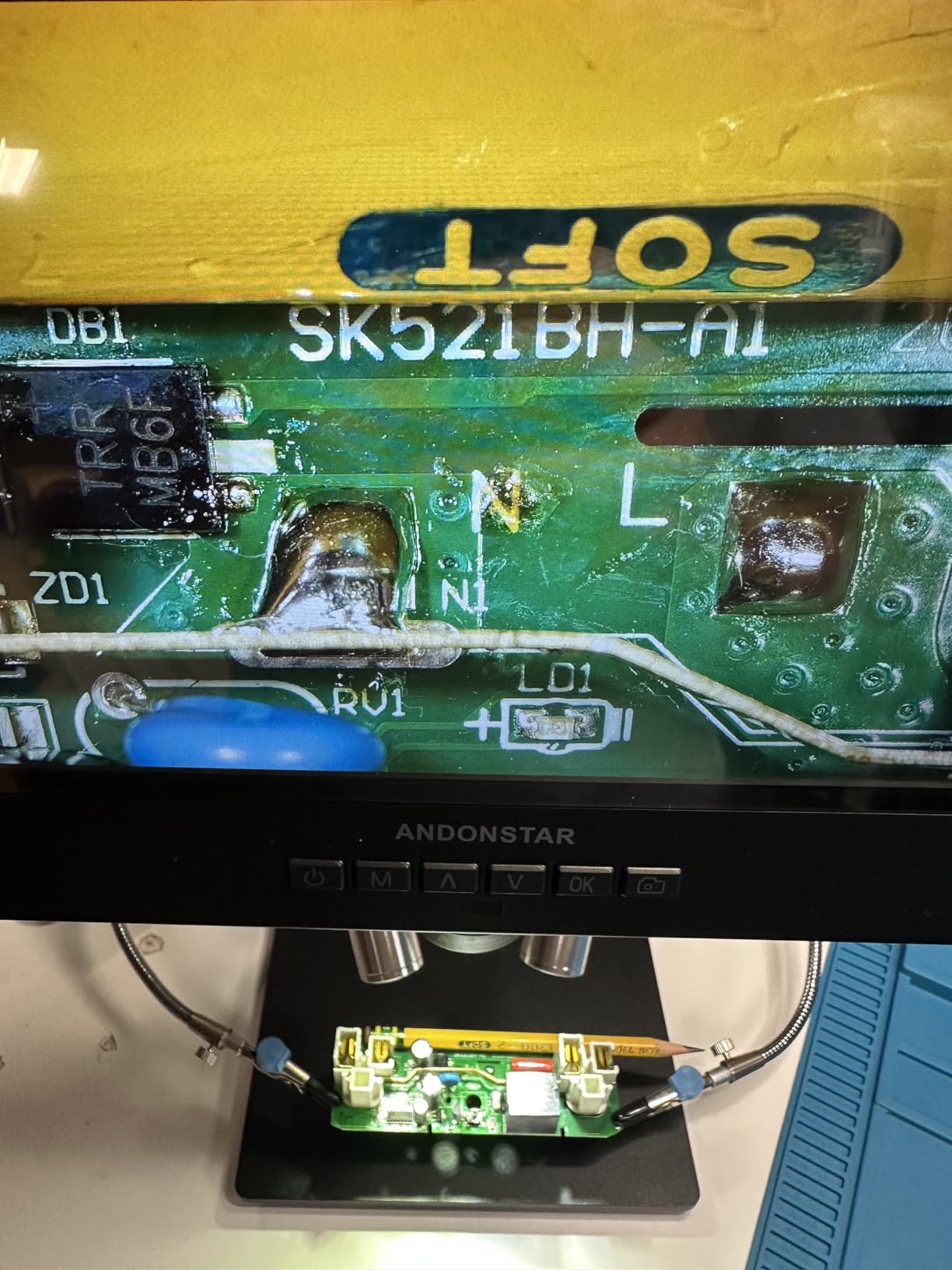
The bundle thinking continues around the scope itself. The upgraded extension base expands working area by 230%, the rotatable helping-hand clamps hold boards steady, and an anti-static mat, tool holder, and 32GB card round out the kit. Eight intensity levels on the 56-bulb LED ring handled reflective connectors without glare during my testing. HDMI output feeds a larger monitor if the built-in screen feels cramped.
Honest drawbacks exist. A minority of buyers received units with dead pixels, so test the screen immediately on arrival. The helping hands flex under real pressure, meaning they position components but will not clamp against force. And anyone doing fine color work should know the sensor renders slightly cooler than reality until you adjust white balance in the menu.
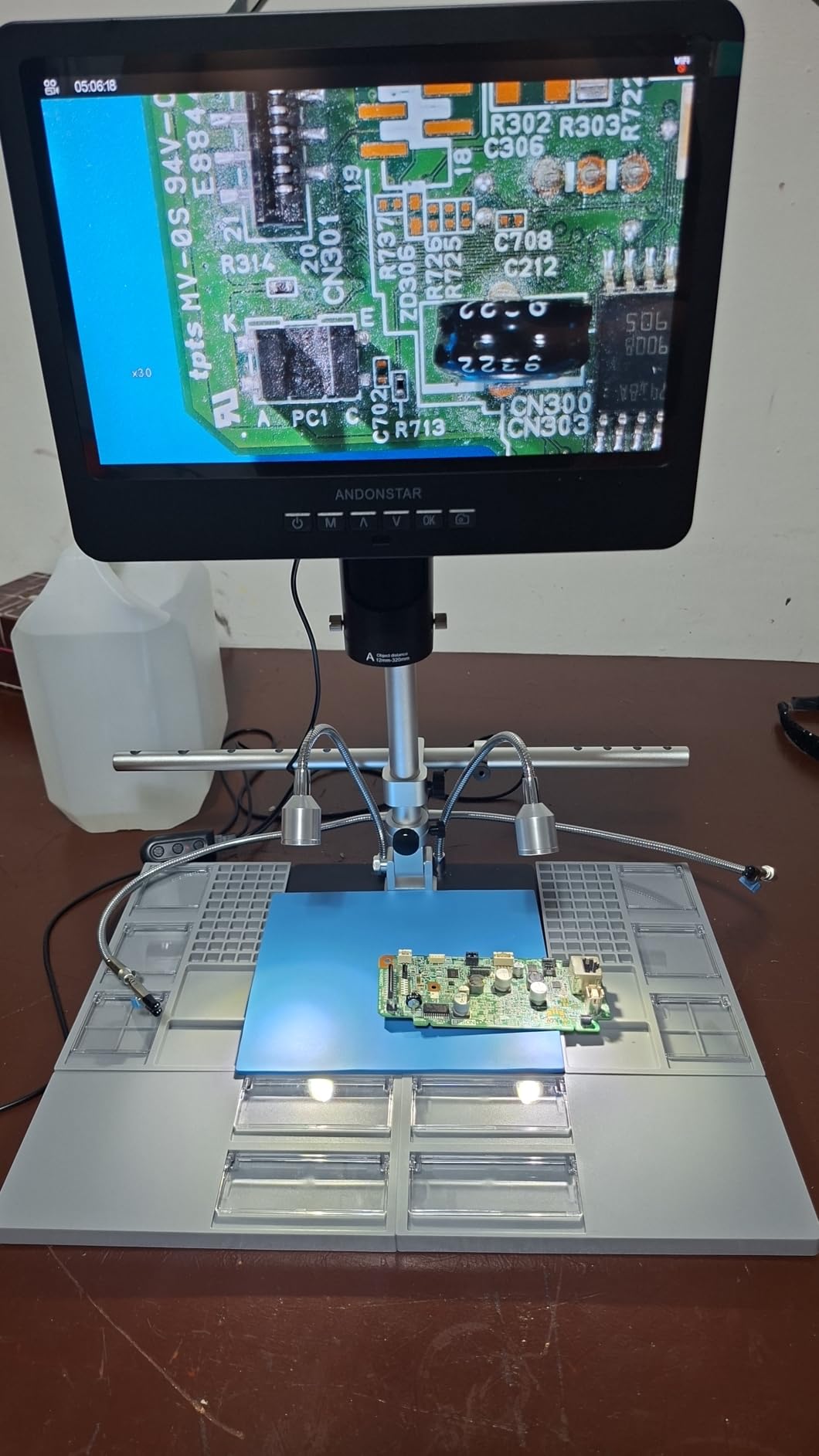
Digital Screen or Optical Eyepieces for Soldering?
Screens win for comfort during marathon sessions since your head stays upright and your eyes never accommodate through optics. Optical stereo wins for depth judgment and zero color shift. Many serious repair techs eventually own both, starting digital for throughput and adding optical later for critical work.
Do You Really Need All Three Lenses?
Probably not daily, but they cost little extra once installed in the design. Lens L alone justifies the kit for soldering, while Lens A turns the unit into a capable coin and mineral station. Lens D is a bonus if kids in the house run slide experiments.
7. AmScope SE306R-PZ Binocular Stereo Microscope – Best Budget Pick for Students and Hobbyists
AmScope SE306R-PZ Forward Binocular Stereo Microscope, WF10x and WF20x
20X-40X-80X power settings
Dual top and bottom halogen lights
Forward-mounted binocular head
All-metal pillar stand
Pros
- Solid metal construction at a starter price
- Excellent depth of focus for dissection
- Dual illumination for opaque and thin subjects
- Two eyepiece pairs included for flexibility
- Ranked #4 among lab stereo microscopes
Cons
- Halogen housing runs very hot
- No dimmer control on the lights
- Image darkens with the 20X eyepieces fitted
This is the scope I recommend to parents, teachers, and hobbyists who want real glass optics without a professional investment. It uses fixed-magnification steps of 20x, 40x, and 80x via paired 10x and 20x widefield eyepieces over 2x and 4x objectives, swapping instead of zooming. That design keeps the optics simple, the price low, and the image quality genuinely good at the lower powers where most hobby work happens.
Dual illumination sets it apart from toy-store instruments. The incident light from above handles insects, coins, and circuit boards, while transmitted light from below opens up pond water, plant sections, and prepared slides. Dissection earned particular praise in user reviews thanks to the generous depth of focus, and the forward-mounted head sits over the stage edge so you work with tools comfortably instead of reaching under the body.
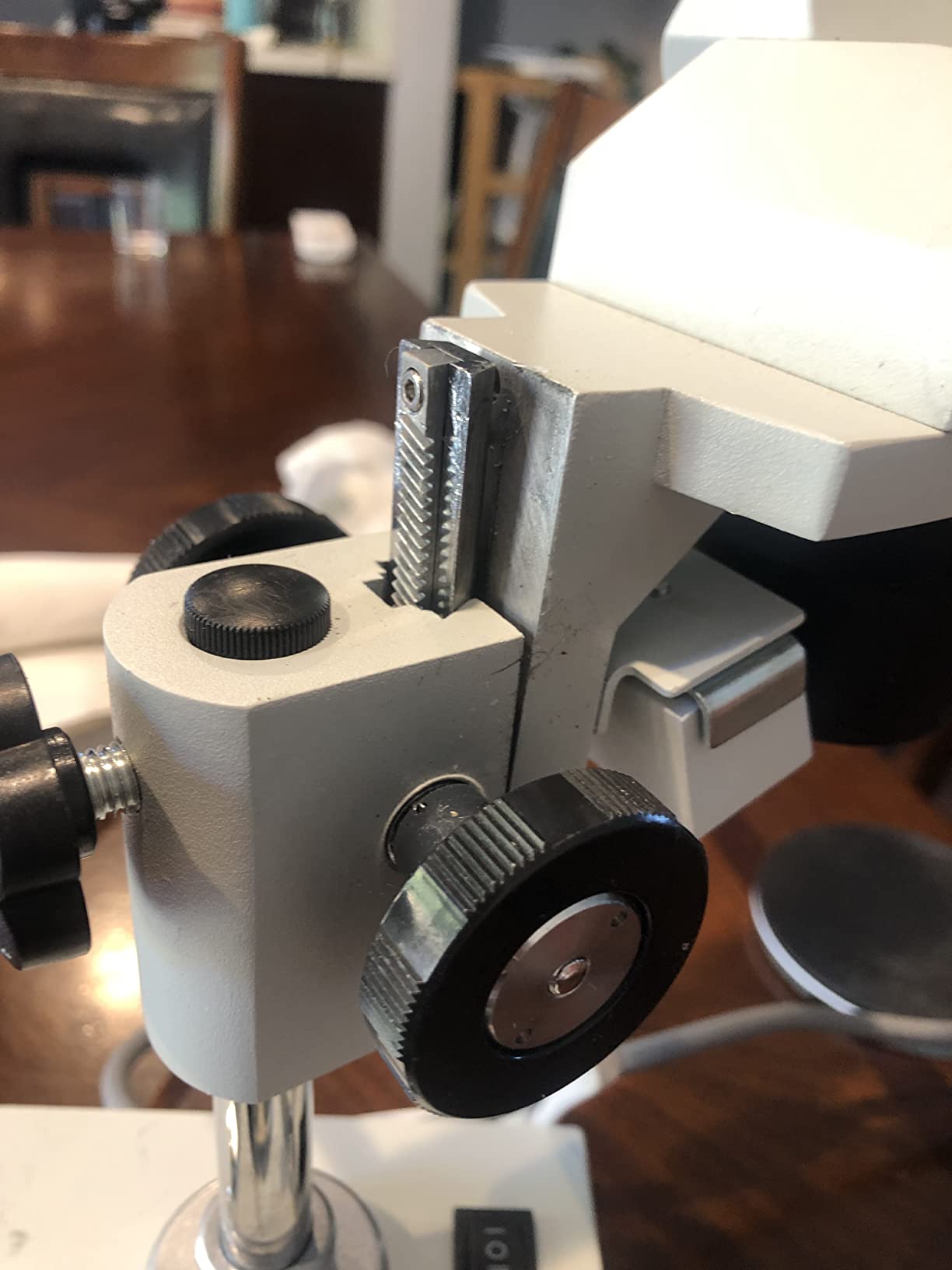
The compromises show up as heat and control. The halogen bulb housings get extremely hot during long sessions, and there is no dimmer, so reflective coins can glare. Fit the 20x eyepieces for 80x total and the image dims noticeably, plus depth of field narrows sharply up there. None of these flaws surprise anyone at this tier, and with 319 reviews averaging 4.5 stars, buyers overwhelmingly feel they chose well.
For entomology students, rockhounds, stamp collectors, and homeschool labs, this remains one of the most sensible first stereo microscopes money can buy. It is backed by a five-year manufacturer warranty, which is remarkable at this level. Add a small LED desk lamp pointed at your subject and you neutralize most of the heat complaints immediately.

Halogen or LED Lighting for Long Viewing Sessions?
LED runs cooler, lasts longer, and dominates current forum preferences for exactly those reasons. Halogen renders colors warmly and this unit works fine with breaks, but if you plan multi-hour sessions, weigh an LED-equipped model higher. A supplemental cool lamp solves most of it either way.
Are Fixed Magnification Steps Enough for Hobby Work?
For collecting, dissection, and education, yes; 20x and 40x handle the overwhelming majority of tasks. You will notice the absence of continuous zoom mainly when framing photographs or matching exact fields of view. Step up to a zoom model only if those needs are on your list.
8. AOMEKIE Portable Stereoscope with Specimen Kit – Best Starter Scope for Kids and Beginners
Aomekie® Microscope 20X 50X with 10Pcs Slides Insect Specimen Stereo Microscope with WF eyepieces LED Light Source Portable Stereoscope 12Pcs Mineral specimens
20X and 50X magnifications
Battery powered LED
Slides minerals and insect specimens included
Two year warranty
Pros
- Complete starter kit right out of the box
- Runs on AA batteries for true portability
- Genuinely useful 20x and 50x optics
- Adjustable interpupillary distance suits small faces
- Backed by a two year warranty
Cons
- Plenty of plastic in the build
- LED lacks an off switch
- Focus takes practice to nail
Every young scientist deserves a first look at a ladybug’s spotted shell or a salt crystal’s edges, and this little stereoscope delivers that moment without a painful investment. Unlike toy microscopes with plastic lenses, the AOMEKIE provides real widefield glass at 20x and 50x, enough power to resolve insect compound eyes and mineral grain structure. The included kit of ten slides, insect specimens, and twelve mineral samples means discovery starts the afternoon it arrives.
Battery power is the sleeper feature. Running on two AA cells, it travels to picnic tables, backyards, and classrooms without hunting for outlets, something none of the corded scopes here can claim. At under a kilogram it moves easily between rooms, and the interpupillary adjustment spans 55mm to 75mm so children get a proper merged image instead of the double vision cheap scopes cause.
Set expectations honestly. Construction mixes glass and metal with a healthy dose of plastic, so it feels closer to serious instrument than toy but will not survive deliberate abuse. The LED lacks a switch, draining batteries if left installed, so pull them between sessions. Focusing takes a few patient attempts to learn, and there is no top light, meaning opaque treasures like coins need ambient or lamplight from the side.
As a gift for a curious eight-to-fourteen-year-old or a casual adult dabbler, it earns its 4.2-star average across 191 reviews easily. When interest sticks, graduating to the AmScope SE306R-PZ above is the natural next step. Until then, this is the friendliest possible introduction to seeing the world up close.
Is This a Real Microscope or a Toy?
It is a genuine binocular stereoscope wearing budget clothes. The optics produce true three-dimensional images at useful powers, which no toy-store unit manages. The plastic housing is where the savings live, not the lenses.
Why Battery Power Matters for Fieldwork
Corded scopes tie exploration to desks and outlets, while battery operation puts magnification wherever the specimen lives. Leaves in the yard, sand from vacation, moths on the porch light all become immediate subjects. For classroom carts and shared spaces, no cords also means fewer accidents.
How to Choose a Stereo Microscope: Buying Guide for 2026
Specifications pages bury the details that actually predict satisfaction, so this section translates the jargon into bench-level decisions. These are the six factors our team weighs first, in rough order of importance.
Magnification: How Much Do You Actually Need?
More is not better here. Most stereo microscope work happens between 10x and 40x, and the featured definition you will see everywhere is accurate: these are low-power instruments for solid objects. Electronics soldering feels best at 7x to 45x, watch work at 20x to 40x, and coin grading at 10x to 30x. Beyond 45x, depth of field collapses and working distance shrinks until tool access becomes impossible, which is why the 90x ceiling on zoom scopes is a bonus rather than the selling point.
Zoom objectives beat stepped magnification for any task requiring framing control. A 0.7x-4.5x zoom sweeps continuously, letting you match the view to the job, while fixed-step scopes force jumps between powers. Auxiliary Barlow lenses extend both ends of the range: a 0.5x lens doubles working distance for bulky tools beneath the lens, and a 2.0x lens pushes magnification upward for fine detail.
Binocular vs Trinocular Heads
Binocular heads serve two eyepieces and nothing else; they cost less and cover pure viewing perfectly well. Trinocular heads add a third port carrying light to a camera while you keep both eyes on the work. Choose trinocular if you document repairs, teach, sell graded coins online, or ever plan to. Reddit microscopy communities consistently steer photographers toward trinocular models for exactly this reason, and simul-focal designs keep the camera and eyepieces matched so recordings match what you saw.
Illumination: LED vs Halogen
LED has won this argument in practice. It runs cool enough for live insects and wax-sealed watches, sips power, and lasts tens of thousands of hours. Halogen renders color warmly but heats specimen and scope alike, a complaint echoed in reviews of every halogen model we examined. Look for these illumination configurations: single top light for opaque objects, dual top-plus-bottom for mixed subjects, and ring lights for shadow-free even coverage across a whole work area. Dimmable or zoned lighting adds real capability, especially the four-zone style that lets you rake light sideways to expose surface texture.
Stand Types: Table Pillar vs Boom Arm
The stand determines what you can work on more than the optics do. Table pillar stands put the specimen on the integrated base plate, offering stability, small footprint, and lower cost; they suit dissection, gems, and anything dinner-plate sized. Double-arm boom stands suspend the optics on horizontal arms over a heavy base, freeing you to slide large objects like laptop motherboards or entire watch movements underneath. Boom rigs demand significant bench space and mass to stay put, so skip them unless your projects genuinely overflow a pillar platform.
Ergonomics for Extended Use
Nearly every forum thread about loupes versus microscopes contains the same verdict: scopes protect your neck, back, and eyes during long sessions, and loupes quietly punish all three. Prioritize a 45-degree inclined head, rubber eyecups if you wear glasses, and diopter adjustment on both tubes so each eye focuses independently. Wide-field eyepieces reduce the porthole effect that drives squinting fatigue. Head rotation matters more than it sounds, since sharing a scope across a bench or shifting your own posture hourly prevents the stiffness that ends sessions early.
Matching the Scope to Your Application
Electronics and micro-soldering demand continuous zoom, long working distance for iron access, and bright even light; the boom-stand trinoculars and the digital Andonstar fill this role. Watch repair favors wide-field eyepieces, deep depth of field, and fixture-friendly bases, which is the Kaisi’s territory. Jewelry and gemology benefit from high-intensity ring lighting and 10x to 40x zoom. Entomology and education run happily on modest power with top lighting, making the budget binoculars sensible. Buy for the work in front of you, and resist paying today for capabilities you might want someday.
Frequently Asked Questions
What are the downsides of using a stereo microscope?
The main limits are low maximum magnification, usually topping out near 90x to 100x, reduced detail resolution compared with compound microscopes, and shrinking depth of field plus working distance as you approach the top of the zoom range. Larger professional stands also demand dedicated bench space, and budget models often skimp on lighting quality.
What is the highest magnification of a stereo microscope?
Most stereo microscopes reach 40x to 50x natively. Zoom models with 0.7x-4.5x objectives stretch to 45x, and adding a 2.0x auxiliary Barlow lens pushes the practical ceiling to around 90x, with a few kits claiming up to 100x. Beyond that range you are in compound microscope territory.
Are stereo microscopes the same as dissecting microscopes?
Yes, the terms describe the same instrument. Both refer to low-power microscopes that produce upright, three-dimensional images of solid specimens through two separate optical paths. Dissecting simply names the most common classroom application.
Can a stereo microscope be used for dissection?
Absolutely, and it is one of the classic uses. The long working distance, generous depth of field, and upright 3D view let you manipulate scalpels and probes under magnification safely. Models with top illumination and a stable pillar stand work best for the task.
What magnification do I need for electronics soldering?
Continuous zoom between about 7x and 45x covers virtually all PCB work, from placing components at low power to inspecting joints at high power. Working distance matters as much as power, since you need room for iron, tweezers, and desoldering tools under the lens. A 0.5x Barlow lens is the usual fix for cramped setups.
Final Verdict: The Best Stereo Microscopes of 2026
After three months at the bench, our rankings come down to how you work. Professionals and committed hobbyists should buy the AmScope SM-4TZ-144A for its flawless optics and four-zone lighting, while value hunters get remarkably close performance from the ZTEEERS trinocular. Students and gift buyers can order the AmScope SE306R-PZ with confidence, and micro-soldering specialists who prefer screens will love the Andonstar AD249S-M Plus.
The best stereo microscope is ultimately the one that matches your bench, your projects, and your posture. Whichever you choose from this list, buy it with a real light source and give yourself a week to learn its zoom personality. Your eyes will thank you for years.
1 thought on “8 Best Stereo Microscopes (October 2026) Verified Reviews”