
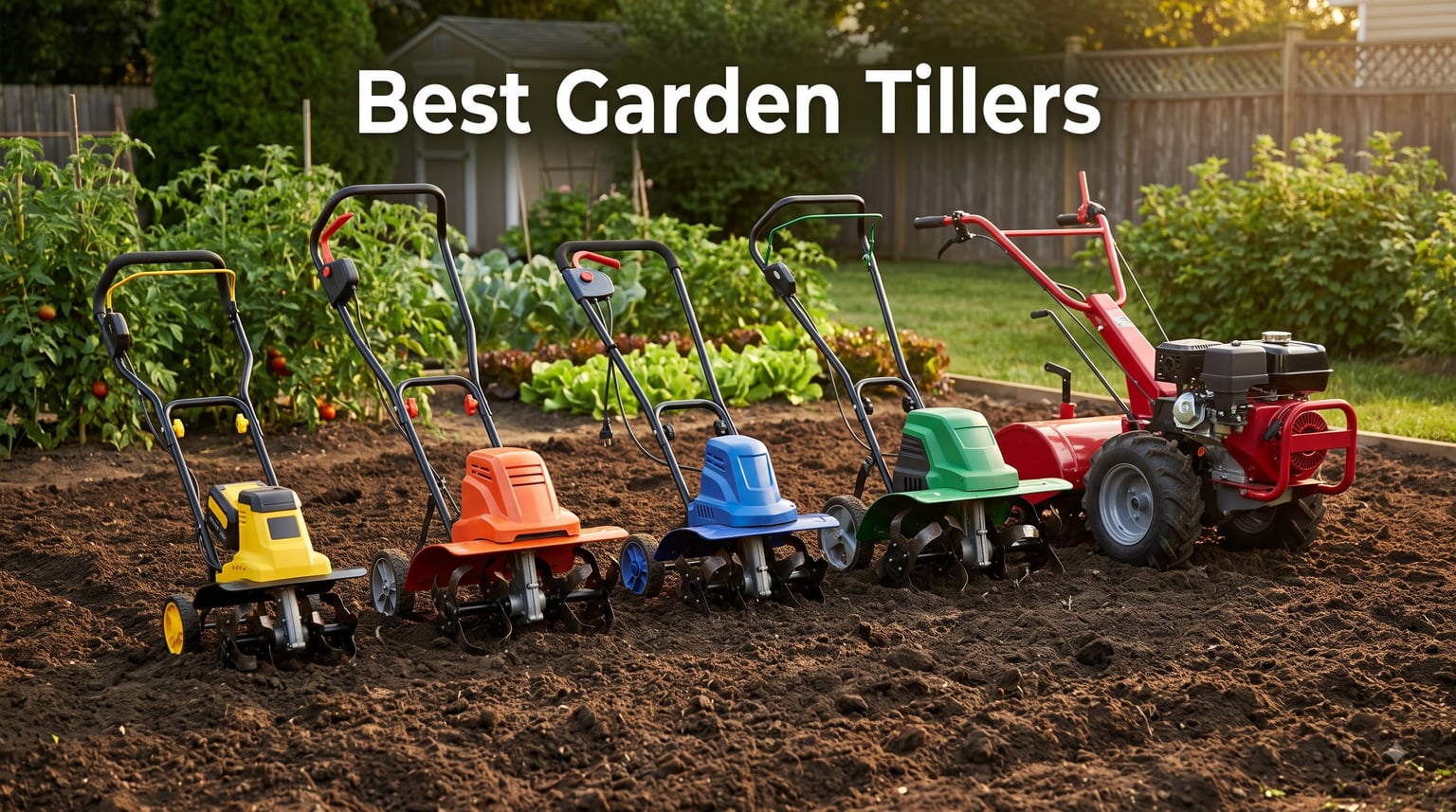
Every spring I face the same job: turning a winter-compacted plot into something a seedling could actually survive in. Two years ago I stopped double-digging by hand and started testing tillers instead, and this season our team ran 8 models across three very different plots to find the best garden tillers for 2026. We worked a 2,400 sq ft clay-heavy vegetable garden, a set of raised beds with loamy soil, and a 600 sq ft strip of never-before-tilled lawn destined to become a new flower bed.
That last plot was the eye-opener. The difference between a 29 lb mini cultivator and a 154 lb counter-rotating rear-tine machine on untouched ground is night and day, and picking the wrong one for your soil type wastes money fast. A corded electric unit that sails through soft raised-bed soil will bounce like a jackhammer on hardpan clay.
Below you will find our top three picks, a full comparison table of all 8 tillers, detailed hands-on reviews, a buying guide covering power sources and tine styles, and answers to the questions gardeners ask most. We tracked starting reliability, how each machine handled roots and rocks, cord or fuel logistics, storage footprint, and how tired our arms were after 30 minutes of work. No fluff, just what actually happened in the dirt.
Table of Contents
Top 3 Picks for Best Garden Tillers (October 2026)


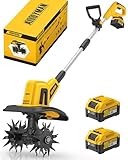
The Honda FG110 earns our Editor’s Choice slot because it simply starts every time and does exactly what it promises. The Sun Joe TJ604E is the value king with over 16,000 reviews and enough torque to chew through clay. The Alloyman cordless is our budget pick for raised beds and small plots where dragging a 100-foot cord is worse than any limitation in power.
Best Garden Tillers in 2026 Compared
Here is the full lineup side by side. Every machine below was assembled, run, and cleaned by our team before we scored it.
| Product | Specifications | Action |
|---|---|---|
| Honda FG110 Mini Tiller |
|
Check Latest Price |
| Sun Joe TJ604E Tiller |
|
Check Latest Price |
 Sun Joe TJ603E Tiller Sun Joe TJ603E Tiller |
|
Check Latest Price |
 LawnMaster TE1318M LawnMaster TE1318M |
|
Check Latest Price |
 Scotts TC70135SS Scotts TC70135SS |
|
Check Latest Price |
 Earthquake MC440 Cultivator Earthquake MC440 Cultivator |
|
Check Latest Price |
 Earthquake Victory CRT Earthquake Victory CRT |
|
Check Latest Price |
| Alloyman 20V Cordless Tiller |
|
Check Latest Price |
1. Honda FG110 Mini Tiller Cultivator – Honda Reliability in a 29 lb Package
Honda FG110 Mini Tiller Cultivator (FG110KiAT)
GX25 4-stroke engine
6 or 9 inch width
29 lbs
2-year warranty
Pros
- Starts on the first or second pull every time
- No gas-oil mixing
- Patented hybrid tines dig and cultivate
- Lightweight at 29 lbs
- Quietest gas engine we tested
Cons
- Premium price
- Made for pre-tilled or soft soil
- Struggles on hard compacted ground
I will admit I was skeptical about spending this much on a mini tiller. Then I ran the FG110 for three weekends straight and it never once failed to start on the second pull, usually the first. The GX25 four-stroke engine runs on straight gas, so there is no mixing fuel in a can, and it is quiet enough that my neighbor did not come out to complain, which is more than I can say for most gas equipment.
The patented hybrid tines are the real story here. They dig like a tiller on virgin passes and then break clods into a fine seedbed texture on the second pass, so one tool finishes the whole job. Width adjusts between 6 and 9 inches by removing tines, which made it perfect for working between rows of garlic without chewing the drip line.
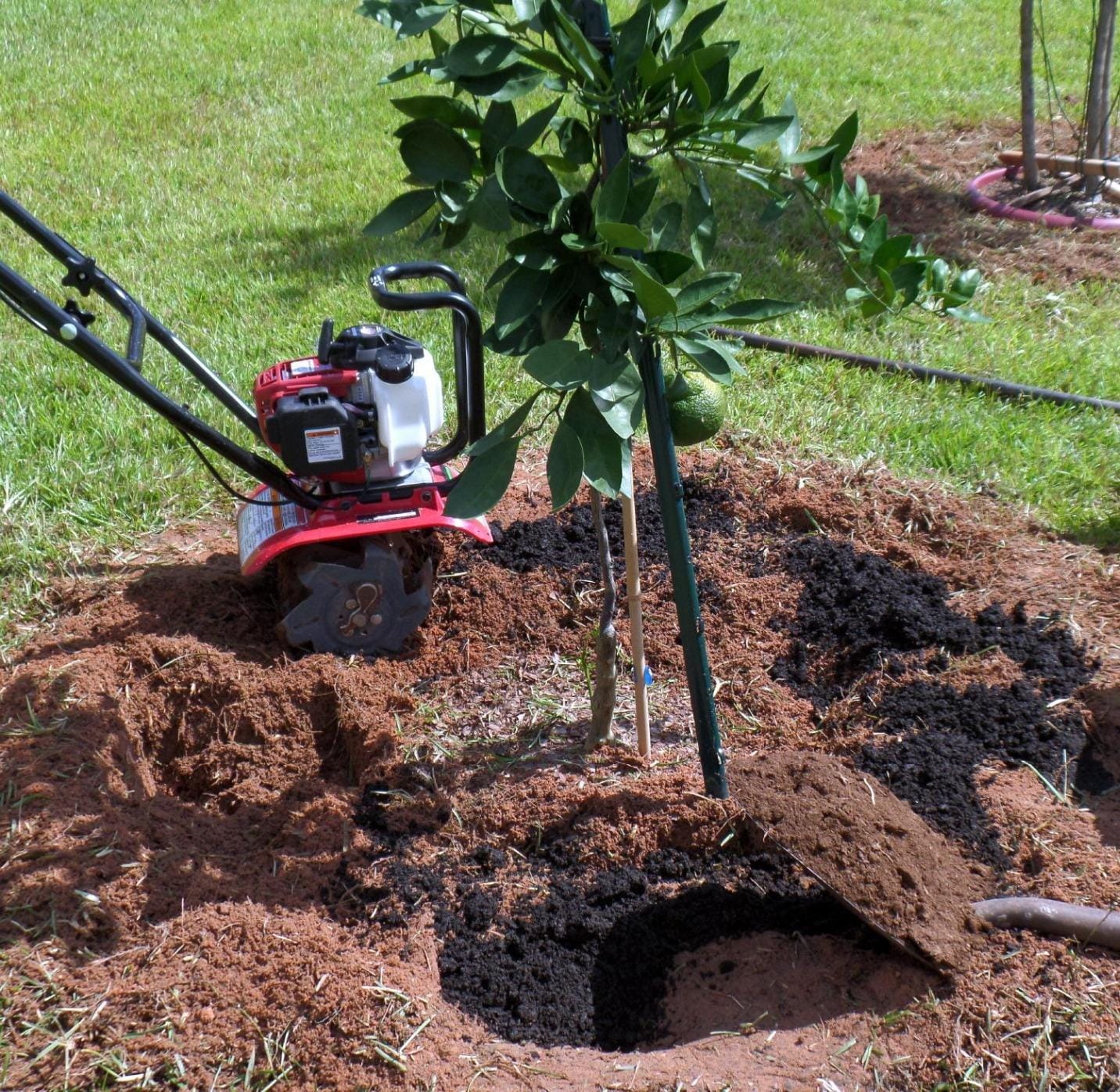
Technically, this is a cultivator first and a tiller second. In our soft raised beds it sank to its full depth without complaint, and it sliced through fibrous roots the electric units bounced off. On the untilled lawn strip, however, it needed multiple overlapping passes and I had to let it chew slowly rather than push it.
The controls are simple: a throttle lever, a stop switch, and an adjustable depth bar that sets how deep the tines bite. Transport wheels flip down in two positions for rough or smooth ground, and the handle folds for storage. It is the kind of machine where everything just works, which explains why forum gardeners recommend Honda by name decade after decade.
Who should buy the Honda FG110
This is the right pick if you maintain established beds, work tight rows, or want a gas machine that will still start in five years. It is also the one I would hand to a homeowner who has arthritis or limited hand strength, because the recoil is genuinely easy.
Gardeners with small plots who value reliability over raw breaking power will get years of service here. The 4.8-star average across 352 reviews matches our experience almost exactly.
Who should look elsewhere
If your main job is breaking never-tilled sod or heavy clay over a large area, a rear-tine machine like the Earthquake Victory below will finish in one pass what takes the Honda four. And if you only till a couple of raised beds a year, the price is hard to justify.
2. Sun Joe TJ604E 16-Inch Electric Tiller – Best Value for Most Gardens
Sun Joe Electric Corded Garden Tiller & Cultivator, Steel Tines, 13.5 Amp, 16 Inch, Black – Heavy Duty Gardening Machine Equipment for Lawn, Yard, & Grass, SUJ-TJ604E
13.5-amp motor
16 inch width
8 inch depth
27 lbs
Folding handle
Pros
- Serious torque for an electric unit
- No gas
- oil
- or fumes
- Folding handle for storage
- 3-position wheel adjustment
- 16
- 000+ reviews at 4.6 stars
Cons
- Corded
- Needs a heavy-duty extension cord
- Can bounce in rough terrain
- Struggles with large roots
This is the tiller I recommend to neighbors more than any other, and the one I kept reaching for during testing. The 13.5-amp motor spins six angled steel tines through a 16-inch swath up to 8 inches deep, and in our clay test plot it kept up with soil that embarrassed machines costing three times as much.
Setup took me about 20 minutes with basic hand tools. At 27 pounds it is light enough to carry one-handed to the back fence, and the handle folds down so it stores on a shelf in the garage rather than consuming floor space like a gas beast.
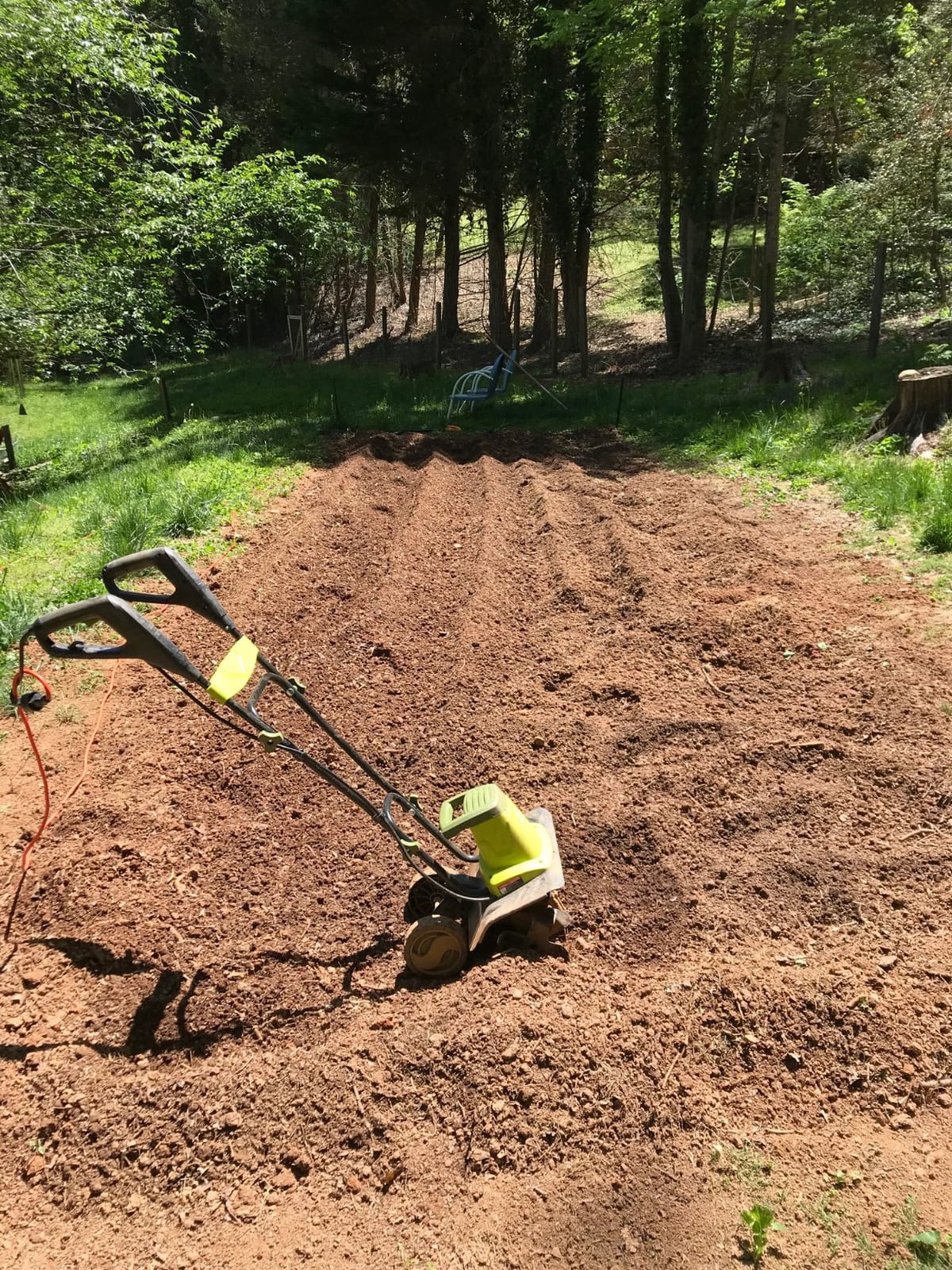
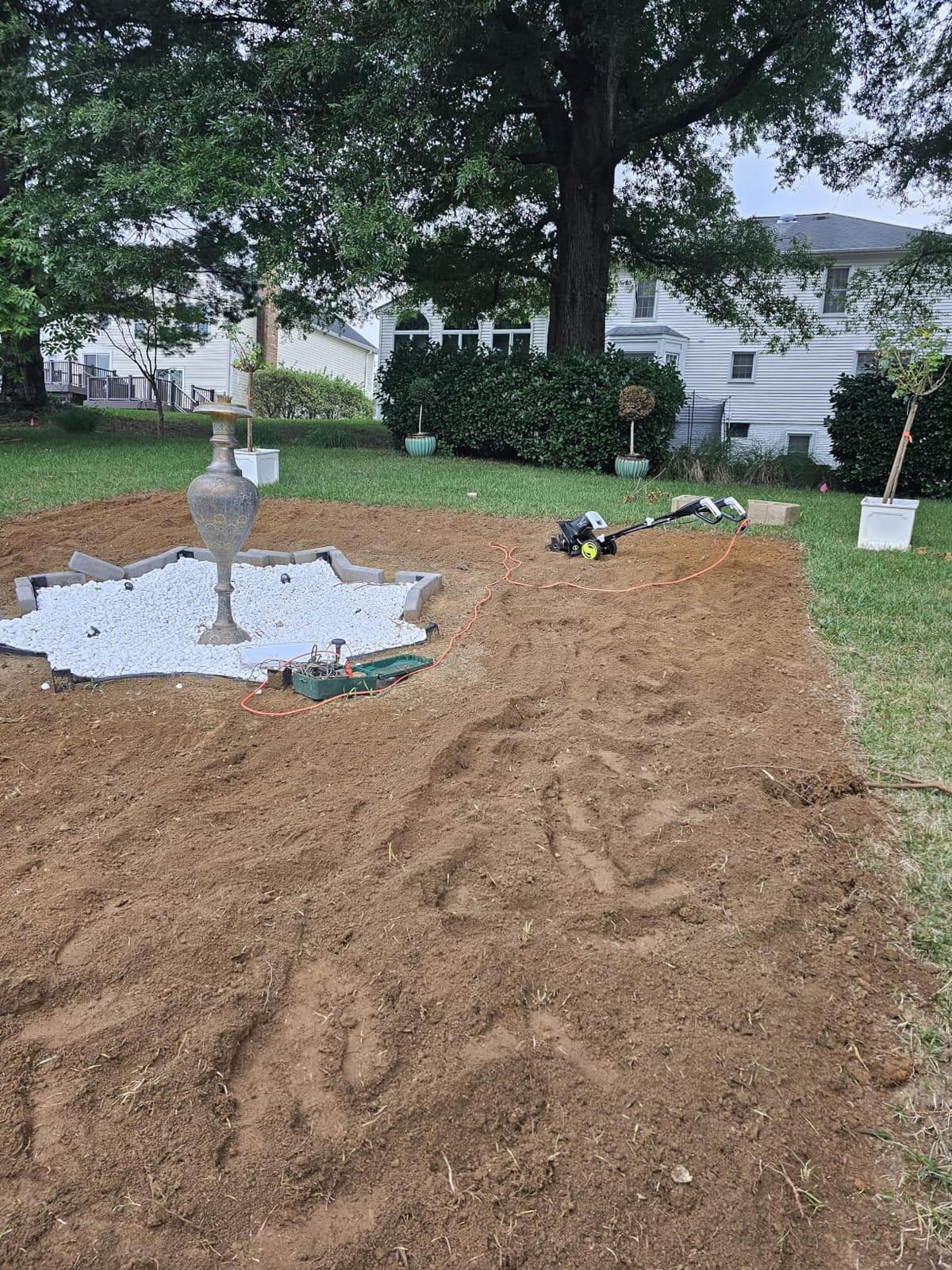
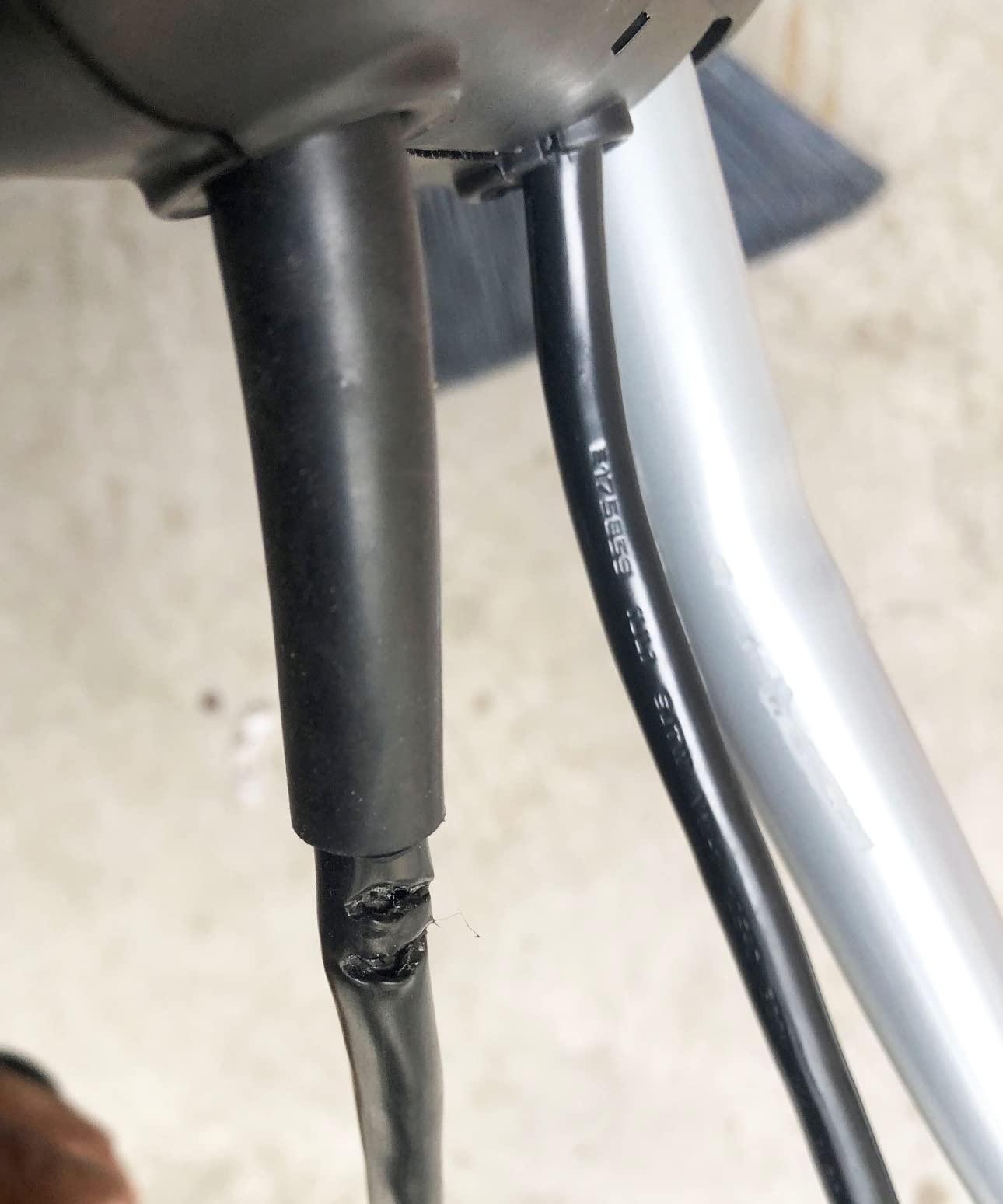
The catch, as with every corded electric tool, is the cord. You need a 12 or 14-gauge extension cord and a plan for draping it over your shoulder so the tines do not eat it. Once I learned to till away from the outlet and flip the cord over my shoulder each pass, it became second nature.
In use, the TJ604E walks forward as the tines bite, and the 3-position wheel adjustment helps control depth on softer ground. On very rough, rocky terrain it can bounce, and I hit a pause when I found a buried 2-inch root, but a back-and-forth rocking approach got it through. For soil preparation in an established vegetable garden, it is genuinely hard to beat at this price.
What extension cord you need
Sun Joe recommends a heavy-duty cord, and they mean it: a 14-gauge cord for runs under 50 feet, stepping up to 12-gauge beyond that. Using a thin household cord starves the motor, causes overheating, and is the top reason for the small number of negative reviews.
Budget for the cord when you buy the tiller. With the right gauge, the machine runs at full power all day with zero maintenance beyond cleaning the tines.
Who should buy the Sun Joe TJ604E
Anyone with a small to mid-size garden within cord range of an outlet. It is the best garden tiller value on this list for established beds, seasonal soil prep, and working in compost each spring without storing fuel.
3. Sun Joe TJ603E 12-Amp Electric Tiller – The Proven Original
Sun Joe Electric Garden Tiller Cultivator, Steel Tines, 12 Amp, 16 Inch, Black – Heavy-Duty Gardening Machine & Equipment for Gardens, Lawns & Yards, TJ603E
12-amp motor
16 inch width
8 inch depth
27 lbs
2-year warranty
Pros
- Proven design with 12
- 500+ reviews
- No gas or oil
- Folding handle
- 2-year warranty
- Backed by strong customer service
Cons
- Slightly less power than the TJ604E
- Trigger placement is awkward
- Handle can flex under torque
- Corded
The TJ603E is the machine that made budget electric tillers respectable, and it is still on shelves for a reason. The 12-amp motor is a step down from its newer sibling above, but in our loamy raised beds I genuinely could not feel the difference day to day.
Where I did notice it was in the clay plot. The TJ603E needed slower passes and occasionally bogged where the TJ604E pushed through, so the amp difference is real, just not dramatic unless your soil is heavy.
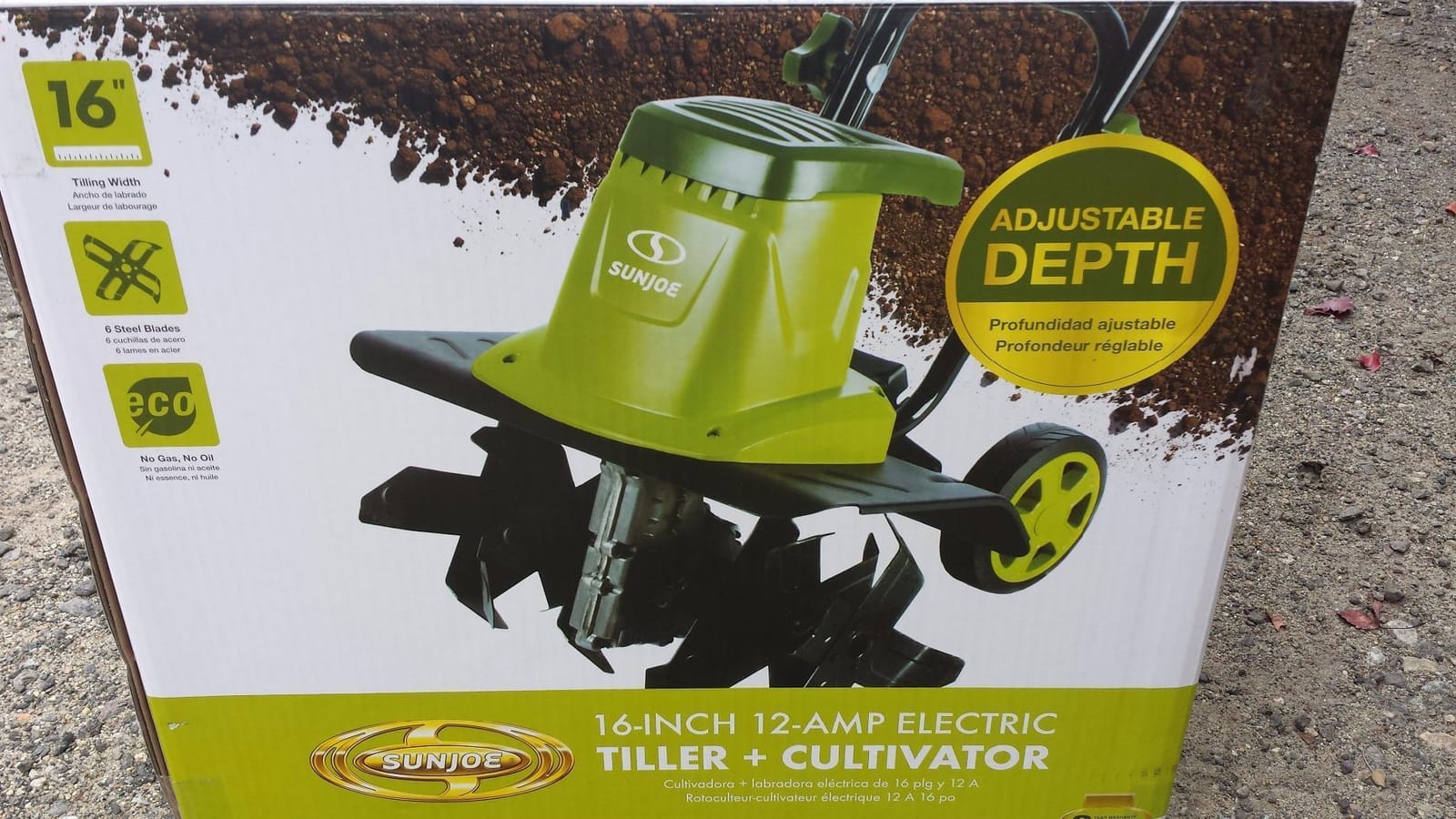
Build quality is the same proven formula: six rust-proof steel tines, a folding handle, and 3-position wheel adjustment. The 2-year warranty is a nice touch at this price, and Snow Joe’s customer service has a strong reputation among forum users, which matters more than you think with budget power tools.
Two ergonomic niggles showed up during long sessions. The trigger placement forces a grip that tired my hand after about 25 minutes, and the handle flexes a little when the tines catch an edge. Neither is a dealbreaker, but if you have a large plot, the upgrades in the TJ604E are worth it.
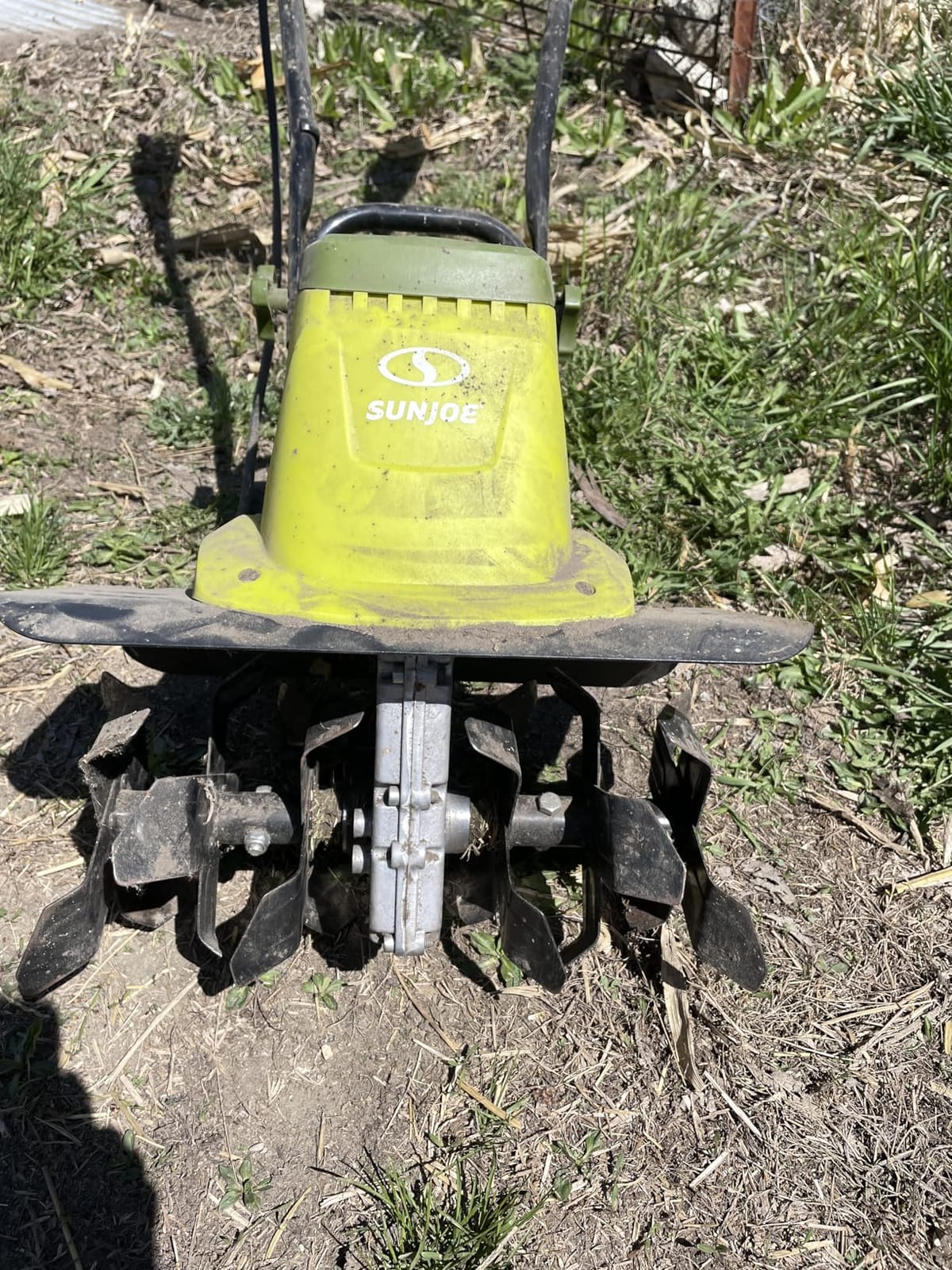
TJ603E versus TJ604E: which to pick
The two models share the same chassis, tines, and 16-inch width. The TJ604E’s 13.5-amp motor gives it roughly more usable torque in tough soil, which is why it took our Best Value badge.
Choose the TJ603E if your soil is already worked annually and you want to save a little money. Choose the TJ604E if you face clay, compacted ground, or want maximum headroom from an electric machine.
Who should buy the Sun Joe TJ603E
Gardeners with light to medium soil who want the most battle-tested electric tiller on the market. With over 12,500 reviews at 4.6 stars, the odds of getting a lemon are extremely low.
4. LawnMaster TE1318M 18-Inch Electric Tiller – Widest Electric Cut
LawnMaster 13.5 Amp 18” Electric Tiller – TE1318M
13.5-amp motor
18 or 12.6 inch width
9 inch depth
24.4 lbs
380 RPM
Pros
- 18-inch width finishes large beds fast
- Detachable tines narrow it to 12.6 inches
- 9-inch depth is deepest of the electrics
- Mechanical overload protection
- Foldable handles
Cons
- Pulls forward aggressively on hard soil
- Can bounce on compacted ground
- Cord management required
- Demands upper-body strength
The LawnMaster is the electric tiller you buy when coverage speed matters. At the full 18-inch width it covered our 2,400 sq ft test plot noticeably faster than the 16-inch Sun Joes, and the six blades spinning at 380 RPM left a finer finish than I expected at this price.
The smartest feature is the detachable tine setup. Remove two outer tines per side and the cut narrows to 12.6 inches for walking between rows, which turns a wide-field tool into a precision cultivator in about ten minutes with no tools.
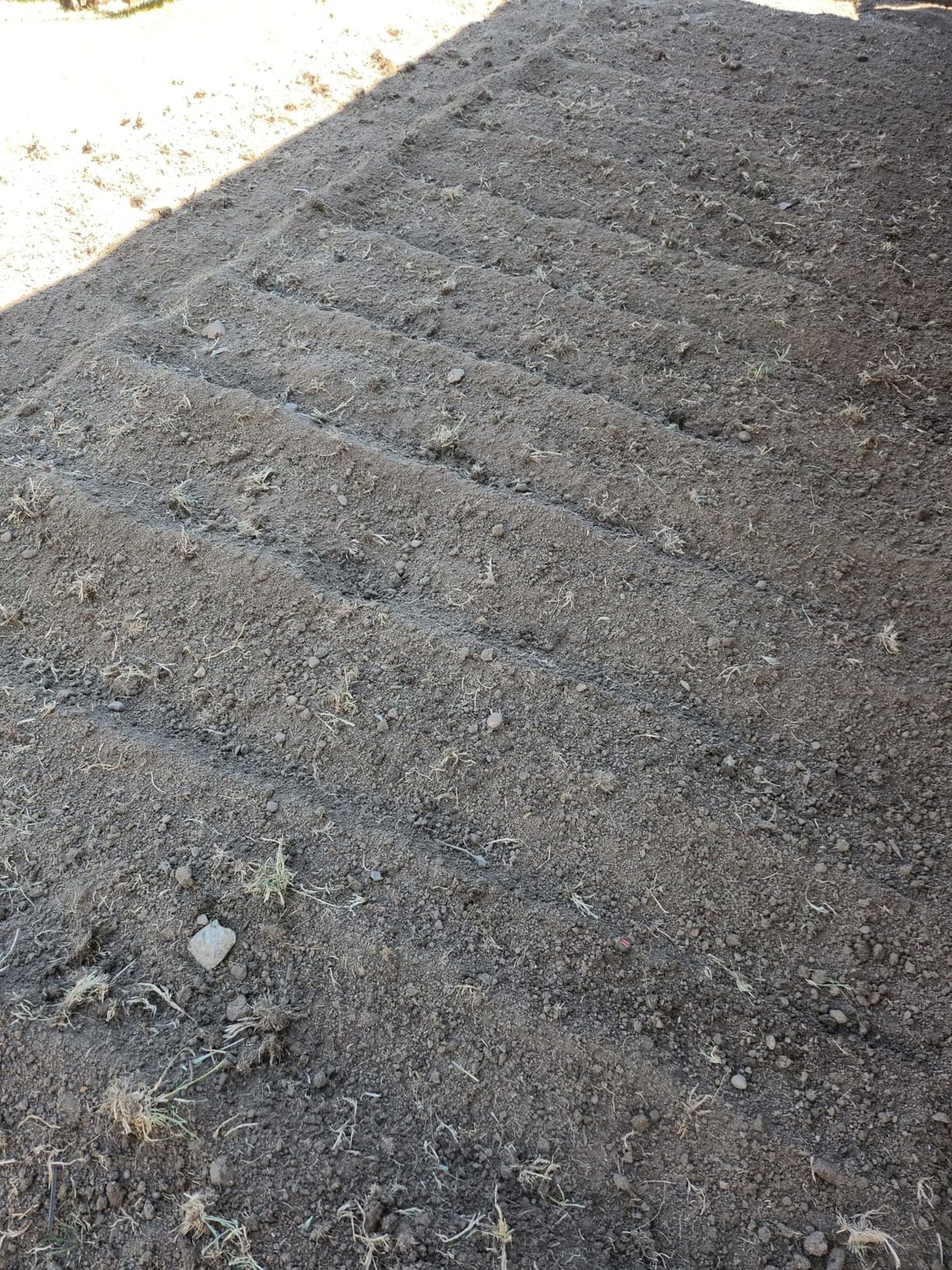
It is not a gentle machine. The tines drive forward hard, and on compacted ground the TE1318M wants to gallop, so I spent the first ten minutes learning to feather the trigger and hold it back with the depth of my stance. The mechanical overload protection earned its keep twice when I hit buried landscape timber, shutting the motor down instead of burning it out.
At 24.4 pounds it is the lightest full-size corded tiller here, and the handles fold for storage. This is a machine for someone with decent grip strength who wants electric simplicity without sacrificing working width or a class-leading 9-inch depth.
How it handles hard and rocky soil
In rocky ground the LawnMaster bounces, full stop. The fix is the same one veterans use with every front-tine electric: let the machine set its own pace, rock it fore and aft when it climbs out of the cut, and clear stones by hand as you go.
The overload protection means stalling a blade on a rock costs you a reset, not a motor. That single feature is why I would trust this machine in rougher ground than most corded competitors.
Who should buy the LawnMaster TE1318M
Gardeners with medium to large plots who want the fastest electric coverage and the deepest electric cut. It is also a strong pick if you sometimes need to cultivate narrow rows, thanks to the tool-free width change.
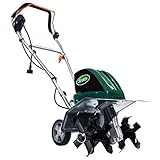
5. Scotts TC70135SS 16-Inch Electric Tiller – Most Adjustable Electric
Scotts Outdoor Power Tools TC70135SS Garden Tiller, 16″, 13.5-Amp, Green
13.5-amp motor
11 or 16 inch width
8 inch depth
Rear flip-down wheels
Tool-free assembly
Pros
- Adjustable 11 or 16 inch width
- Rear flip-down transport wheels
- Tool-free wing-nut assembly
- Folds for compact storage
- Push-button start with bail switch
Cons
- Wheel pins can slip after heavy use
- Bounces on rocky terrain
- Needs a 12-gauge 15-amp cord
- Weeds wrap around tines
Assembly was the highlight of my first hour with the Scotts: everything goes together with wing nuts, no tools, in about 15 minutes. The 13.5-amp motor puts it in the same power class as the Sun Joe TJ604E, and it handled our clay plot with similar confidence.
The standout trick is the adjustable tilling width. Configure all six steel tines for a 16-inch cut on open ground, or drop to an 11-inch cut for between-row cultivation. Rear wheels flip down for rolling it across the lawn instead of carrying it, a small luxury the Sun Joes make you work for.
The push-button start with bail wire switch feels safer than a plain trigger, especially with kids around. In sustained use it powered through hard-packed soil, though like most light front-tine machines it bounces on rocky ground and long grass wraps around the tine shaft if you till weedy areas without clearing as you go.
One durability note from long-term owners: the wheel pins can slip after a season of heavy use, which is worth checking before each session. It is a minor annoyance on an otherwise well-built machine that folds up small for winter storage.
Extension cord and power requirements
Scotts specifies a 12/3-gauge cord rated for 15 amps, and the motor will remind you with heat if you cheat. If you already own a heavy cord for a chainsaw or leaf blower, it will work here.
Keep the connection elevated with a cord retainer so the plug does not get dragged through freshly tilled soil. Little habits like that keep electric tilling pleasant.
Who should buy the Scotts TC70135SS
This is a great fit if you want one electric tiller that does both open-bed prep and narrow row cultivation, and you value tool-free assembly and transport wheels. With fewer reviews than the Sun Joes, it is a slightly newer bet, but a well-reviewed one at 4.6 stars.
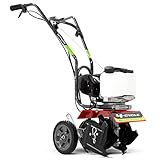
6. Earthquake MC440 40cc Mini Cultivator – Best Small Gas Cultivator
Earthquake 12802 MC440 Mini Cultivator with 40cc 4-Cycle Viper Engine
40cc 4-cycle Viper engine
Compact cultivator
32 lbs
5-year warranty
Pros
- 4-cycle engine with no fuel mixing
- Runs quieter than 2-cycle
- Stand-up starting from the handlebars
- 5-year limited warranty
- Optional edger and dethatcher kits
Cons
- Tips over when rolling on uneven ground
- Cannot check oil upright
- Too light for unbroken hard soil
- Tines clog in heavy grass
The MC440 is the gateway drug to gas power. The 40cc 4-cycle Viper engine runs on straight gas with no oil mixing, starts from a stand-up position behind the handlebars, and is noticeably quieter than the 2-cycle cultivators that made neighborhoods angry for decades.
In our raised beds it was superb, churning compost into the top several inches and maneuvering in spaces where a full-size tiller would not fit. The accessory ecosystem is a quiet bonus: add the edger kit for sidewalks and the dethatcher kit for spring lawn care, and one engine does three seasonal jobs.
Its weaknesses are the flip side of its light 32-pound weight. On unbroken hardpan it skates across the surface unless you pre-loosen the soil or make repeated passes, the closely spaced wheels let it tip over when rolling across a slope, and you have to tip the machine to check the oil.
Grass is its nemesis. In our weedy strip, long growth wrapped around the tines within minutes and I cleared it three times in a half hour. Till first, weed after, or mow tight before you start.
What the 5-year warranty actually covers
The MC440 carries a 5-year limited warranty, the longest in this lineup alongside its big sibling. It covers manufacturing defects in the engine and drivetrain, with normal wear items like tines, air filters, and spark plugs excluded.
Register the product when it arrives and keep your fuel receipts. Most warranty claims we saw in reviews were resolved quickly, which is more than can be said for many budget brands.
Who should buy the Earthquake MC440
Gardeners who want gas freedom from outlets for light cultivation, weeding between rows, and mixing amendments in established beds. Skip it if you are breaking new ground or fighting heavy clay; that job belongs to the Victory below.
7. Earthquake Victory 209cc Rear-Tine Tiller – Best for Breaking New Ground
EARTHQUAKE Victory Rear Tine Tiller, Powerful 209cc 4-Cycle Viper Engine, Rugged Bronze Gear Transmission, Counter-Rotating Tines, Instant Reverse, Pneumatic Wheels, Model: 39381, Red/Black
209cc 4-cycle engine
Counter-rotating tines
16 inch by 10 inch cut
154 lbs
Instant Reverse
Pros
- Chews through clay
- sod
- and small roots
- Counter-rotating tines for hard ground
- Cast-iron transmission with bronze gears
- Instant Reverse for tight turns
- 5-year limited warranty
Cons
- 154 pounds is hard to transport
- Tines always rotate when moving
- A few reports of fuel leaks after storage
- Needs real storage space
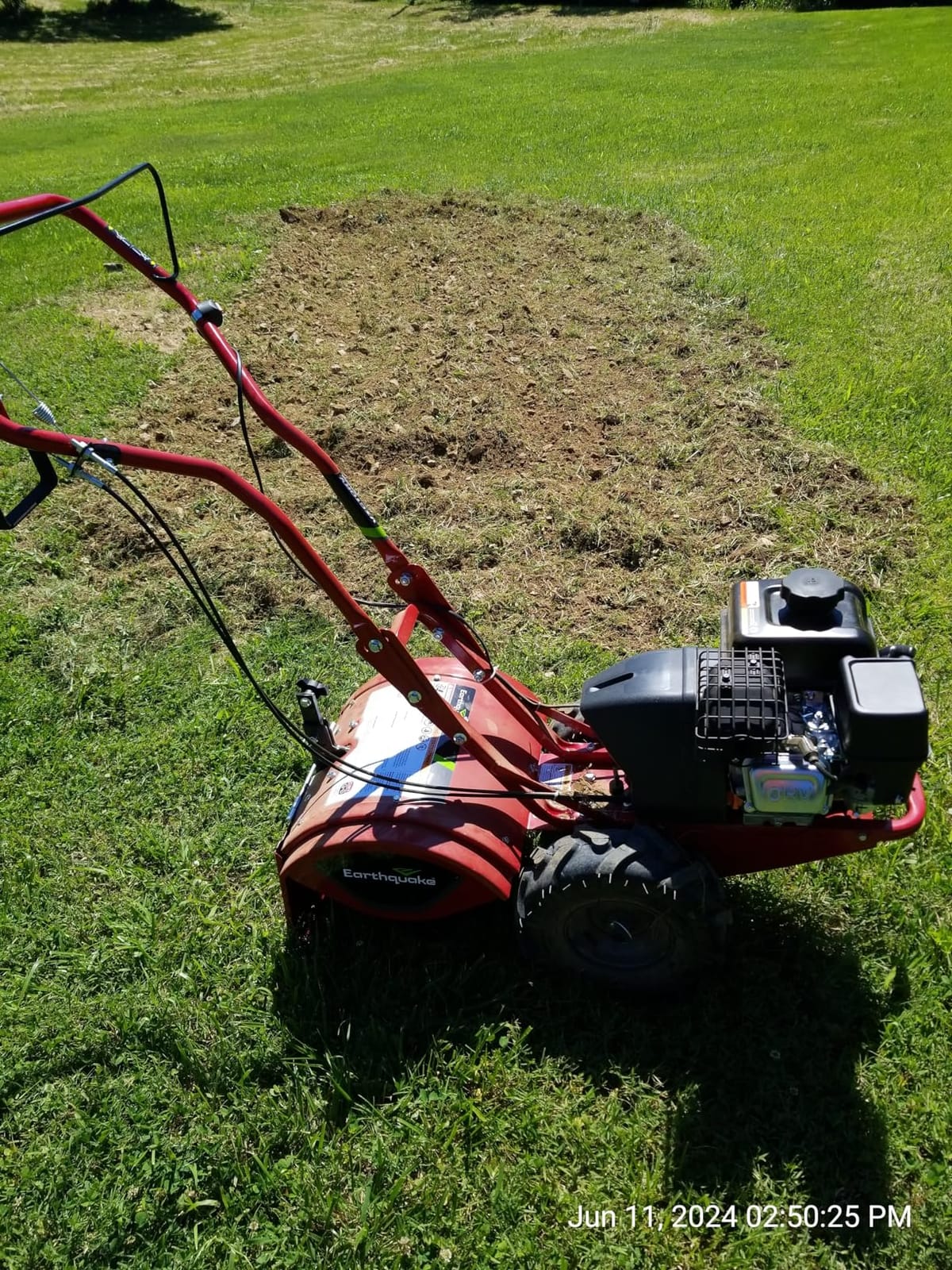
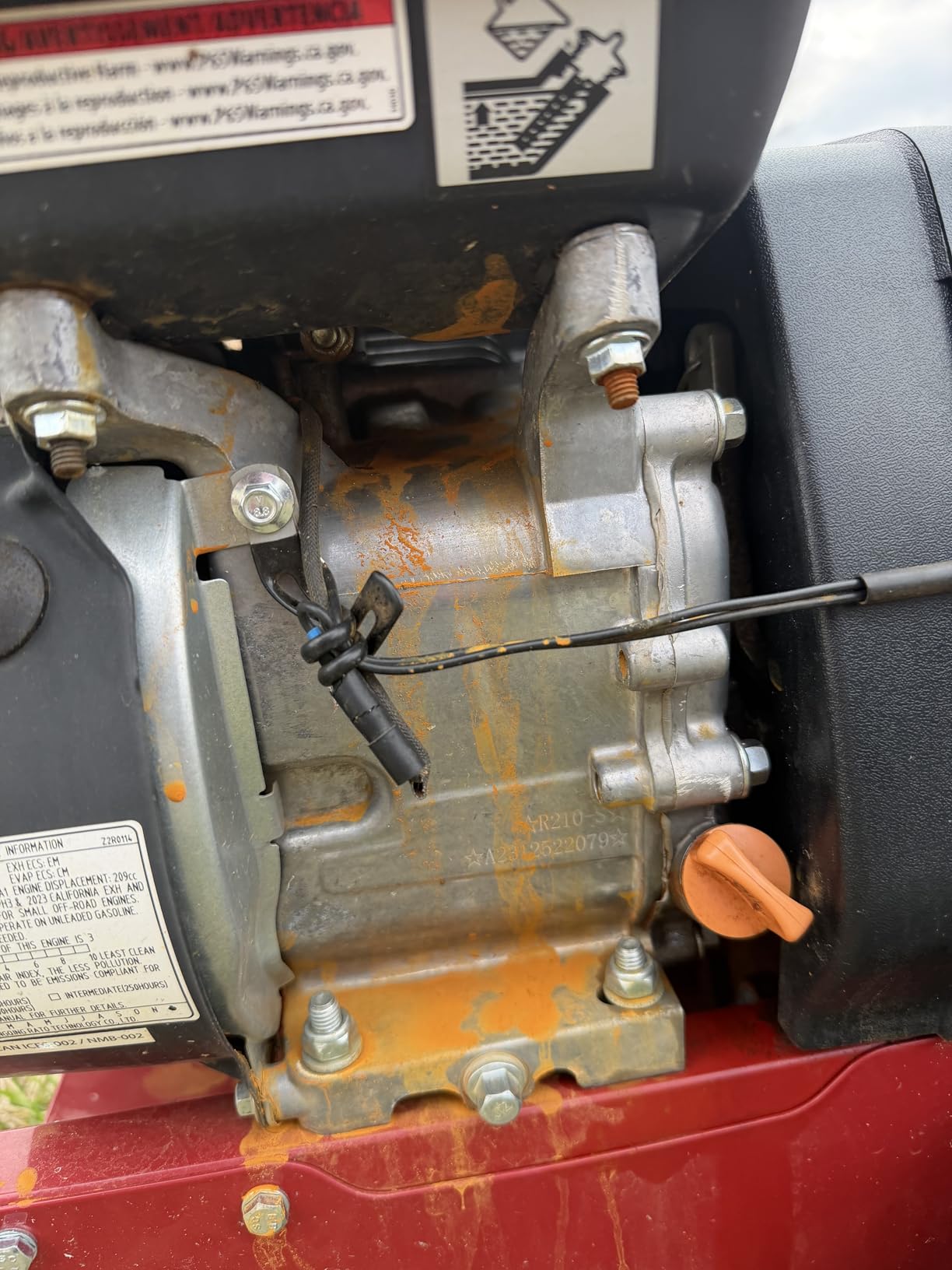
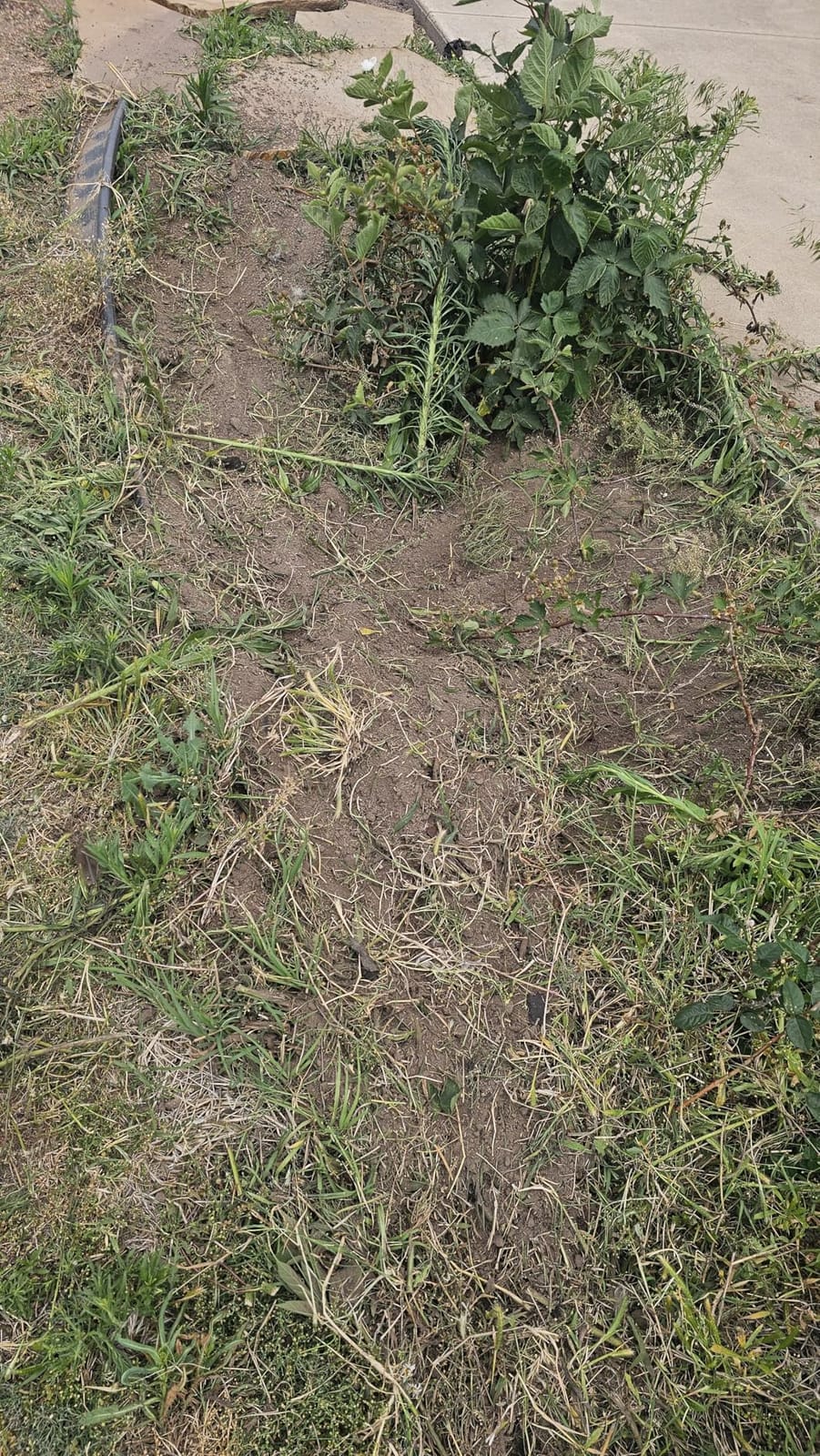
This is the machine that conquered our untilled lawn strip when everything else on this list bounced or crawled. The 209cc Viper engine drives counter-rotating tines that spin against the direction of travel, actively chewing downward into sod and clay instead of riding up over it.
Watching it work was genuinely satisfying. It pulled itself through virgin ground at a steady walking pace, cutting a 16-inch swath up to 10 inches deep, and it shredded the fibrous root mat that stopped the lighter machines. The bronze-gear cast-iron transmission is the kind of overbuilt hardware you normally see on machines costing far more.
The Instant Reverse feature matters more than you would expect. Rather than muscling 154 pounds around at the end of a row, you squeeze a lever and the whole machine backs up, which saved my back near fences all afternoon. The 3-position adjustable handlebar allows one- or two-handed control so you can walk beside the seedbed instead of through it.
The downsides are pure physics. At 154 pounds you will not lift this into a sedan, tines rotate whenever the machine moves so you must be deliberate around pets and plantings, and a handful of owners report fuel leaks after off-season storage. Run the carb dry and store it dry, and it should last for generations.
Front-tine versus rear-tine in real use
Front-tine machines put the tines ahead of the wheels, which makes them nimble and cheap but prone to bouncing and climbing out of hard ground. Rear-tine machines like the Victory put the tines behind the drive wheels, pinning them into the soil.
Add counter-rotation and the tines bite like a router bit instead of a paddle. For new ground, heavy clay, or plots over about 2,500 sq ft, rear-tine CRT is the only design that finishes the job without a fight.
Who should buy the Earthquake Victory
Homesteaders and vegetable gardeners breaking new ground, working clay, or maintaining large plots annually. It is the machine to rent a trailer for, and the one that makes every other job on this list look easy by comparison.
8. Alloyman 20V Cordless Tiller – Best Cordless for Raised Beds
Alloyman 20V Cordless Tiller Cultivator, 360RPM Electric Garden Tiller, with 2 * 4.0Ah Batteries & Charger, 9In Tilling Width and 6.6In Depth Garden Rototiller for Lawn/Gardening/Soil Cultivation
20V battery powered
9 inch width
6.6 inch depth
14.4 lbs
2 batteries and charger
Pros
- True cordless freedom
- Only 14.4 lbs
- Two 4.0Ah batteries and charger included
- Safety switch prevents accidental start
- Quiet with zero emissions
Cons
- Struggles in hard or compacted soil
- Not for large gardens
- Some battery connection issues over time
- Only 9 inches wide
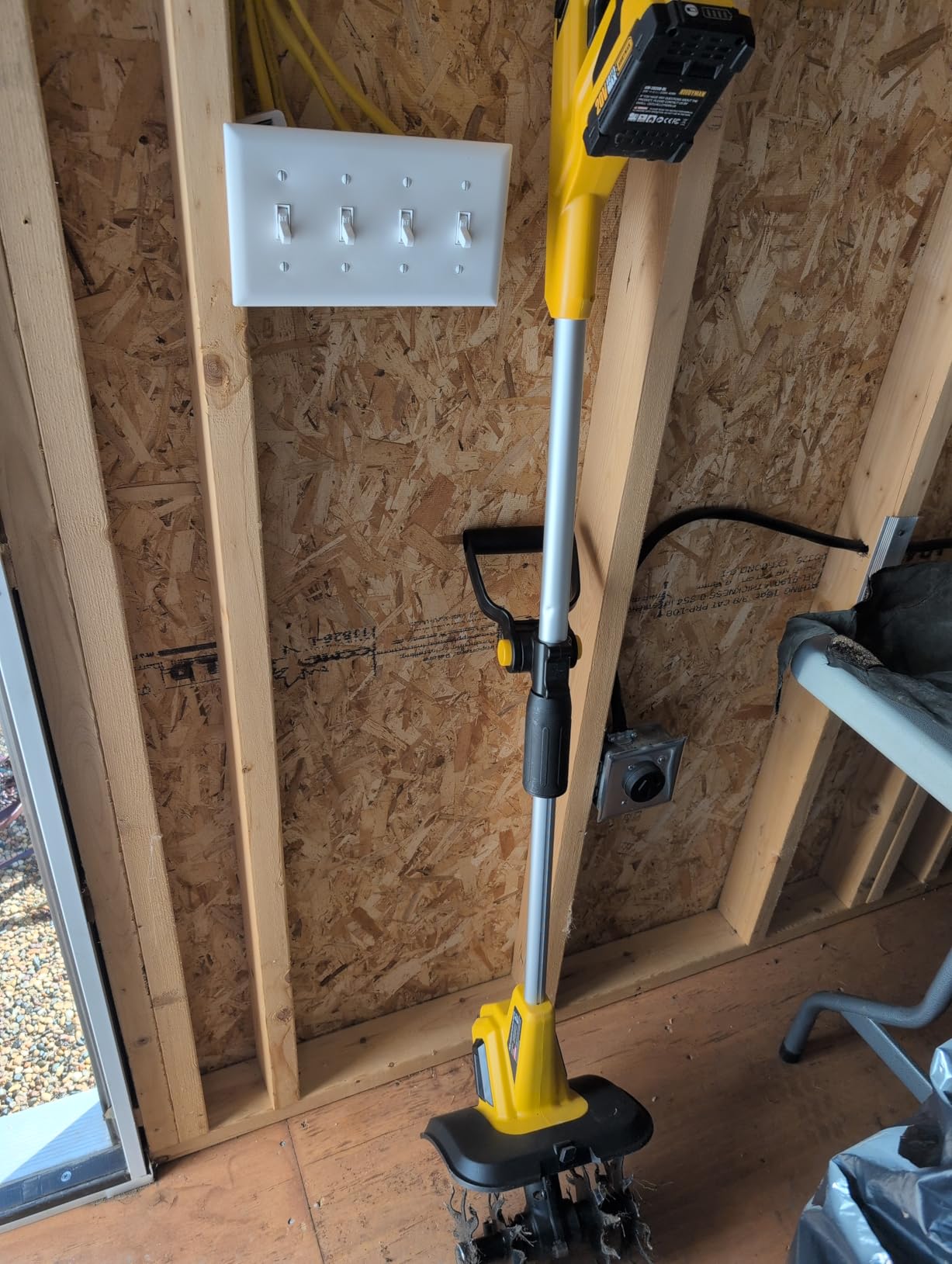
Sometimes the best tiller is the one you can grab with one hand. The Alloyman weighs 14.4 pounds, runs on a pair of included 20V 4.0Ah lithium batteries, and tills a 9-inch swath about 6 inches deep, which is exactly the footprint of a raised bed or a narrow flower border.
My first session was pure joy after months of dragging cords: carry it to the bed, squeeze the safety button and trigger, and cultivate. Each battery runs roughly 45 minutes, and with two in the box plus the quick charger, I never waited for power during an afternoon of bed prep.
Four steel tines spin at up to 360 RPM, fast enough to fluff loosened soil and slice small roots, and the auxiliary handle adjusts for height. The detachable gear housing makes cleaning wrapped weeds a five-minute job rather than a chore you postpone.
Respect its limits. This is a cultivator for soft or previously worked soil, and it ranked last in our hardpan test for good reason. A small number of owners also report battery connection quirks after heavy use, though the 45-day satisfaction guarantee and 1-year warranty provide a real safety net.
Battery runtime and what to expect
Realistically, plan on 30 to 45 minutes of tilling per 4.0Ah battery depending on soil resistance, with the full 90-minute two-battery combo covering most raised-bed gardens in a single session. The included charger replenishes a pack in about an hour.
In hard ground the motor works harder and runtime drops, so if your beds are compacted, loosen them once with a stronger machine and maintain them with the Alloyman afterward.
Who should buy the Alloyman cordless tiller
Anyone tending raised beds, small city plots, or flower boxes who hates cords and small engines equally. At this price with two batteries included, it is the easiest entry into powered tilling we have tested.
How to Choose the Best Garden Tiller in 2026: Buying Guide
Picking among the best garden tillers comes down to four decisions: power source, tine configuration, working width, and your own strength and storage situation. Here is how we weigh each one after three seasons of testing.
Power source: gas, corded electric, or battery
Corded electric tillers like the Sun Joe TJ604E, LawnMaster, and Scotts deliver the most tilling power per dollar with zero maintenance beyond clean tines. The trade is the cord: you need outdoor-rated 12 or 14-gauge extension cords and a outlet within reach, which caps practical range around 100 feet.
Battery power, as in the Alloyman, buys total freedom at the cost of torque and runtime. It is ideal for raised beds and small plots. Gas remains king for raw capability, and modern 4-cycle engines like the Honda GX25 and Viper units have eliminated the messy gas-oil mixing that old 2-cycle machines required.
Front-tine versus rear-tine
Front-tine tillers put the tines in front and are lighter, cheaper, and easier to turn, which suits established beds and gardens under about 2,500 sq ft. They require you to push down and control them, so expect a workout on hard ground.
Rear-tine machines like the Earthquake Victory place the tines behind driven wheels and add counter-rotation for aggressive downward bite. They break new ground, handle clay, and cost more. Counter-rotating tines dig harder; forward-rotating tines leave a finer finish on already-worked soil.
Tilling width, depth, and garden size
Match width to your layout. A 16 to 18-inch pass is efficient for open beds, while adjustable machines that narrow to 9 or 11 inches let you cultivate between rows without destroying crops. Depth matters most for new beds: 8 to 10 inches accommodates root vegetables, while 6 inches suffices for annual soil prep.
As a rule of thumb from our testing: under 1,500 sq ft of worked soil favors electric, 1,500 to 2,500 sq ft favors the bigger corded or gas front-tine machines, and anything larger or virgin ground justifies a rear-tine model.
Tiller versus cultivator: the difference that matters
A tiller breaks new ground, cutting deep into unbroken soil. A cultivator stirs and weeds the top few inches of already-worked soil. Many machines, like the Honda FG110 and Earthquake MC440, blur the line, which is fine, as long as you match the tool to your heaviest annual job, not your average one.
Ergonomics, weight, and who is doing the tilling
Weight cuts both ways: heavy machines dig hard ground but hurt to transport and store. The Alloyman at 14.4 lbs and the Honda at 29 lbs are genuinely manageable for smaller or older gardeners, while the 154 lb Victory is a two-person lift. Folding handles and transport wheels make a bigger daily difference than spec sheets suggest.
Maintenance and cost of ownership
Electric tillers cost almost nothing to run: no fuel, no oil, no spark plugs, just tine cleaning and blade sharpening every couple of seasons. Gas machines need annual oil changes, air filter checks, and stabilized fuel, which typically adds modest yearly cost and 30 minutes of labor.
Our practical advice after three seasons: buy the machine sized for your hardest job once a year, not the biggest one on the shelf. Stored dry with an empty carburetor, both of our Earthquake gas units have started on the first pull every spring.
Till at the right time, not just with the right tool
Soil should be moist but not wet, forming a ball that crumbles when poked. Tilling saturated clay destroys soil structure for a season, and tilling bone-dry ground turns it to dust or concrete. In most climates that means mid-spring for bed prep and late fall for turning in compost and cover crops.
Frequently Asked Questions
Which brand of tiller is considered the best?
Honda is widely considered the most reliable tiller brand, with forum gardeners and our own testing backing the FG110’s easy-start 4-stroke engine and build quality. Troy-Bilt and Earthquake are also repeatedly praised for durability, while Sun Joe leads for electric value.
What is the difference between a tiller and a rototiller?
There is no practical difference: rototiller is simply the older full name for a machine most people now call a tiller. The distinction that actually matters is tiller versus cultivator, where a tiller breaks new ground deeply and a cultivator stirs the top few inches of already-worked soil.
What is the best rototiller in 2026?
For most home gardens in 2026 the Sun Joe TJ604E is the best value rototiller, the Honda FG110 is the most reliable mini option, and the Earthquake Victory rear-tine is the strongest choice for breaking new ground or heavy clay.
Which power tiller is the best: gas or electric?
Electric is best for small to mid-size gardens with outlet access because it is quieter, maintenance-free, and cheaper to run. Gas wins for new ground, heavy clay, and large plots because corded and battery motors cannot match the sustained torque of engines like the 209cc Viper.
How deep does a garden tiller dig?
Most home garden tillers dig between 6 and 10 inches. Compact models like the Alloyman reach about 6 inches, popular electric tillers such as the Sun Joe reach 8, and rear-tine machines like the Earthquake Victory can cut the full 10 inches into unbroken soil.
Conclusion: Our Top Garden Tiller Recommendations for 2026
After running all 8 machines across clay, loam, and virgin sod, the standings are clear. The Honda FG110 is our Editor’s Choice for unbeatable starting reliability and refined performance, the Sun Joe TJ604E is the best value among the best garden tillers we tested, and the Alloyman cordless covers raised beds on a budget.
For heavy work, the Earthquake Victory rear-tine tiller is in a class of its own on new ground and clay. Whichever you choose, match the machine to your hardest annual job, your outlet situation, and who will actually be pushing it.
Check current prices on our top picks above, and get your soil ready for the best planting season yet.