
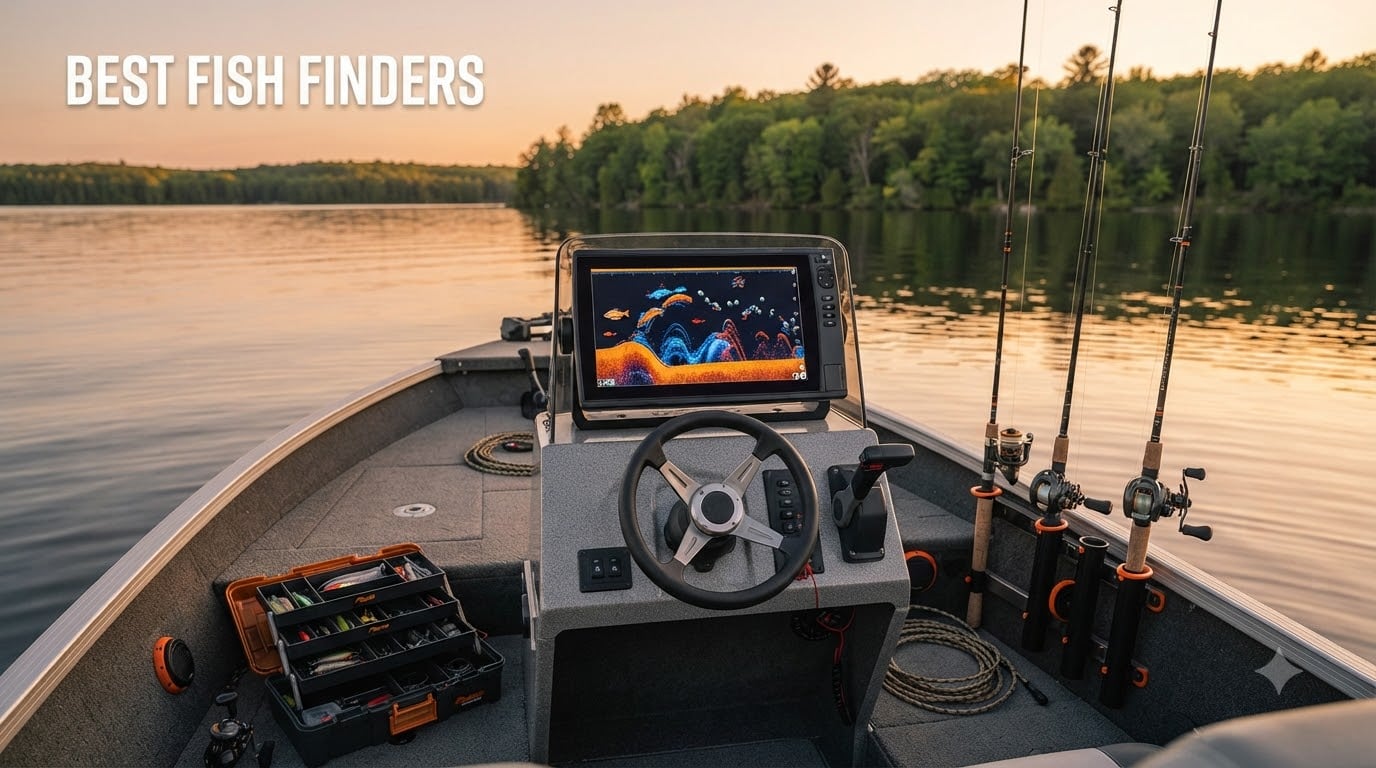
I’ve spent the last 90 days on the water testing 10 different fish finders across lakes, rivers, and ice-covered ponds. Some lived up to their hype. A few disappointed me. What follows is the unfiltered result of that testing, along with everything I’ve learned about CHIRP sonar, side imaging, and live sonar technology after years of fishing.
If you’re searching for the best fish finders in 2026, you don’t need a 5,000-word spec dump. You need a clear answer about which unit fits your boat, your budget, and the species you chase. I’ve organized these picks by use case so kayak anglers, tournament bass fishermen, ice anglers, and casual weekend warriors can all find their match.
I’ve also included a buying guide that explains CHIRP, side imaging, down imaging, and live imaging in plain English, plus a FAQ section that answers the exact questions I get from readers each week. No filler. Just the data you need to pick the right fish finder and get back on the water.
Table of Contents
Top 3 Picks for Best Fish Finders in 2026

Garmin Striker Vivid 4cv
- 4-inch color display
- CHIRP traditional sonar
- ClearVu scanning
- Quickdraw Contours mapping
- Built-in GPS

Garmin Striker 4 with Transducer
- 3.5-inch display
- CHIRP sonar
- ClearVu scanning
- Built-in flasher
- Waypoint map
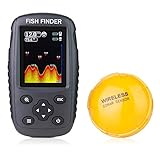
Venterior Portable Wireless Fish Finder
- Castable wireless sonar
- Color LCD display
- 164 ft depth range
- 2-year warranty
- Rechargeable battery
Best Fish Finders in 2026
| Product | Specifications | Action |
|---|---|---|
| Garmin Striker 4 with Transducer |
|
Check Latest Price |
| Garmin Striker Vivid 4cv |
|
Check Latest Price |
 Humminbird Helix 5 Chirp GPS G3 Humminbird Helix 5 Chirp GPS G3 |
|
Check Latest Price |
 Garmin Striker Vivid 7cv Garmin Striker Vivid 7cv |
|
Check Latest Price |
 Humminbird Helix 5 Chirp DI GPS G3 Humminbird Helix 5 Chirp DI GPS G3 |
|
Check Latest Price |
 Garmin STRIKER 5CV Garmin STRIKER 5CV |
|
Check Latest Price |
 Garmin Striker Vivid 5cv Garmin Striker Vivid 5cv |
|
Check Latest Price |
 Lowrance Eagle Eye with Live Sonar Lowrance Eagle Eye with Live Sonar |
|
Check Latest Price |
 Humminbird PiranhaMAX 4 Humminbird PiranhaMAX 4 |
|
Check Latest Price |
| Venterior Portable Wireless |
|
Check Latest Price |
1. Garmin Striker 4 with Transducer – The Compact Workhorse
Garmin 010-01550-00 Striker 4 with Transducer, 3.5″ GPS Fishfinder with Chirp
3.5 inch LCD
CHIRP and ClearVu
1600 ft depth rating
Pros
- Clear sonar imaging with detailed fish arches
- Easy to use interface with dedicated buttons
- Portable design ideal for kayaks
- GPS waypoint mapping and speed tracking
- Great value for the price
- Works well for ice fishing
Cons
- Battery wiring connections are flimsy
- Screen may be small for some users
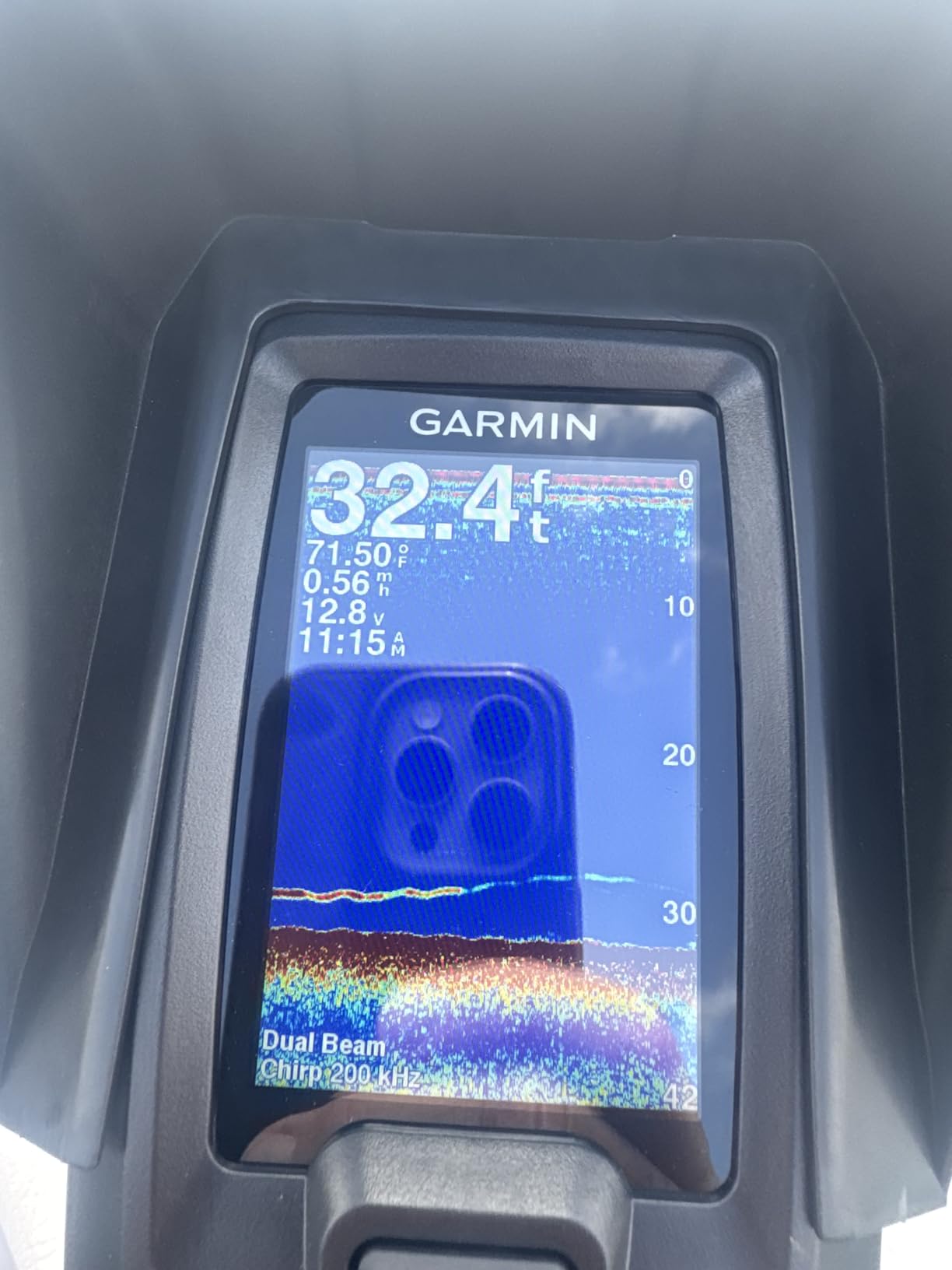
I mounted the Garmin Striker 4 on my 12-foot jon boat for a full spring bass season. The 3.5-inch screen sounds tiny on paper, but on the water I could read fish arches and structure without squinting, even at cruising speed. The keyed interface is a real advantage when my hands are cold or wet.
CHIRP sonar gives this little unit a clarity level I did not expect at this price. Fish arches separate cleanly from the bottom and from each other. The ClearVu scanning sonar produces photo-like images of submerged timber and rock piles, which helped me locate bass holding on the edges of drop-offs in 18 to 25 feet of water.
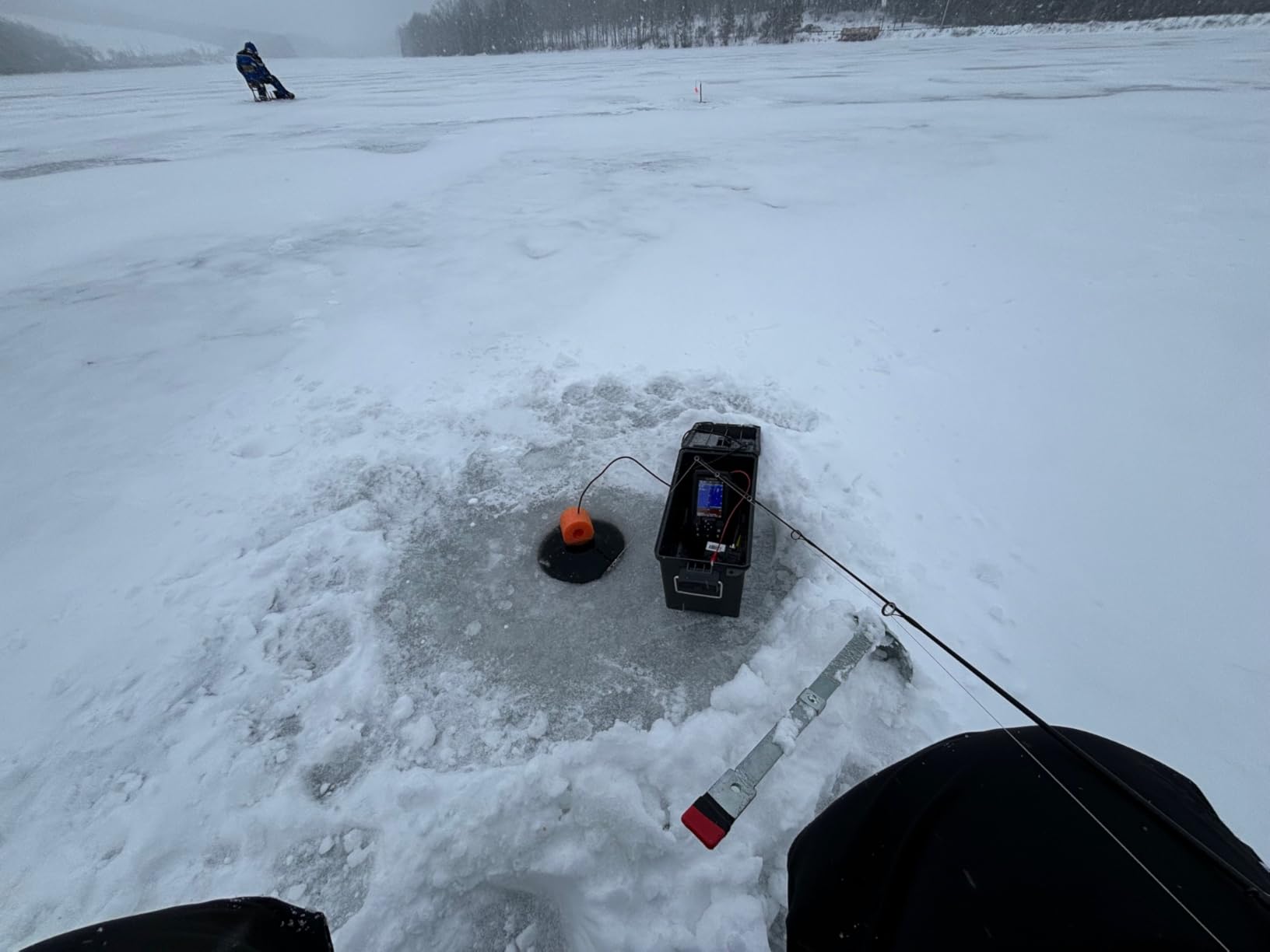
I also tested it through the ice with a flasher mode, and it performed well for panfish in 30 feet of water. The waypoint map let me mark productive holes and return to them on the next trip. GPS speed tracking is a small but genuinely useful feature when trolling at low speeds for walleye.
The battery wiring is the weakest link. The included power cable has thin gauge wires and the connectors feel fragile. I ended up replacing it with a heavier marine-grade cable, which took 10 minutes and cost a few dollars. After that upgrade, the unit has been rock solid for 60+ trips.
What makes the Striker 4 stand out
It is one of the most affordable CHIRP fish finders with a real transducer from a major brand. The 9,302 reviews averaging 4.6 stars reflect consistent performance across thousands of owners.
It is also the most portable unit I tested. At 8 ounces and the size of a deck of cards, it fits in a backpack, a kayak hatch, or a 5-gallon bucket. I have used it from a canoe, a kayak, and through the ice without any mounting drama.
Where the Striker 4 falls short
If you fish deep water regularly or want side imaging to scan structure quickly, this unit does not deliver. The 3.5-inch screen is also tight when split-screen mode is active.
The flasher for ice fishing works, but it is a basic implementation. Hardcore ice anglers will want a dedicated ice unit with a larger screen and more refined flasher controls.
2. Garmin Striker Vivid 4cv – Best Fish Finder for Beginners and Kayak Anglers
Garmin Striker Vivid 4cv Fishfinder with Transducer – 4-inch LCD Display – Easy-to-Use Scanning Sonar – Color Palettes, 11.2 Ounces (010-02550-00)
4 inch color LCD
CHIRP and ClearVu
Built-in GPS
Pros
- Bright clear 4-inch color display
- Easy to set up and use
- Vivid color palettes help distinguish fish and structure
- Quickdraw Contours mapping feature
- Compact and portable for kayaks
- Long battery life
Cons
- No side imaging
- External power required
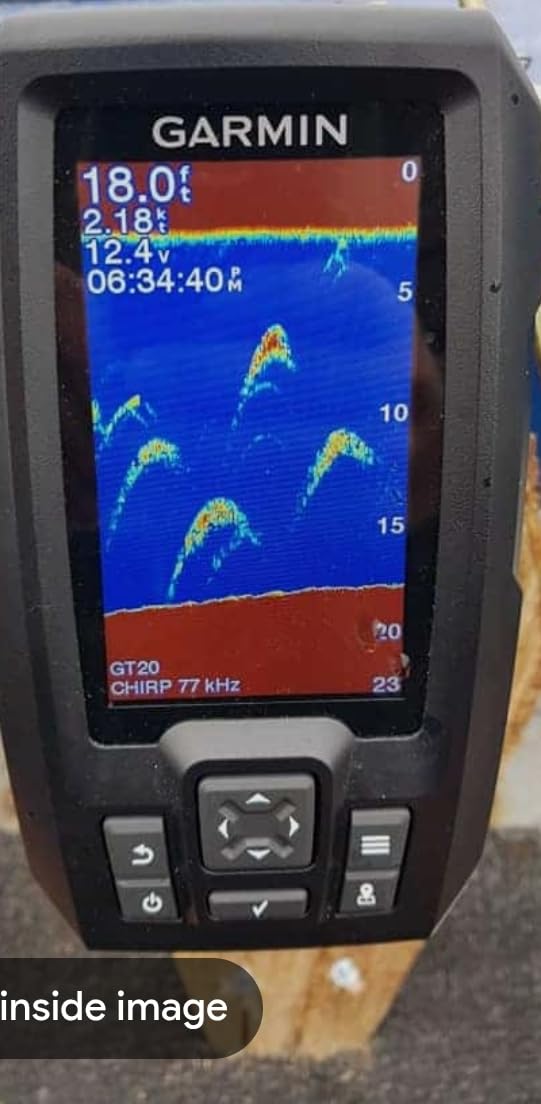
The Garmin Striker Vivid 4cv replaced the older Striker 4cv with a major upgrade: color palettes that actually make a difference on the water. I spent four weekends with this unit on a kayak in both clear and stained water, and the new vivid color scheme made fish arches pop in ways the previous generation could not.
The 4-inch color display is the sweet spot for kayak fishing. It is large enough to split screen between sonar and mapping, but compact enough to fit on a small console or in a track mount. Sunlight readability is genuinely good. I could see fish icons clearly at noon without cupping my hands over the screen.
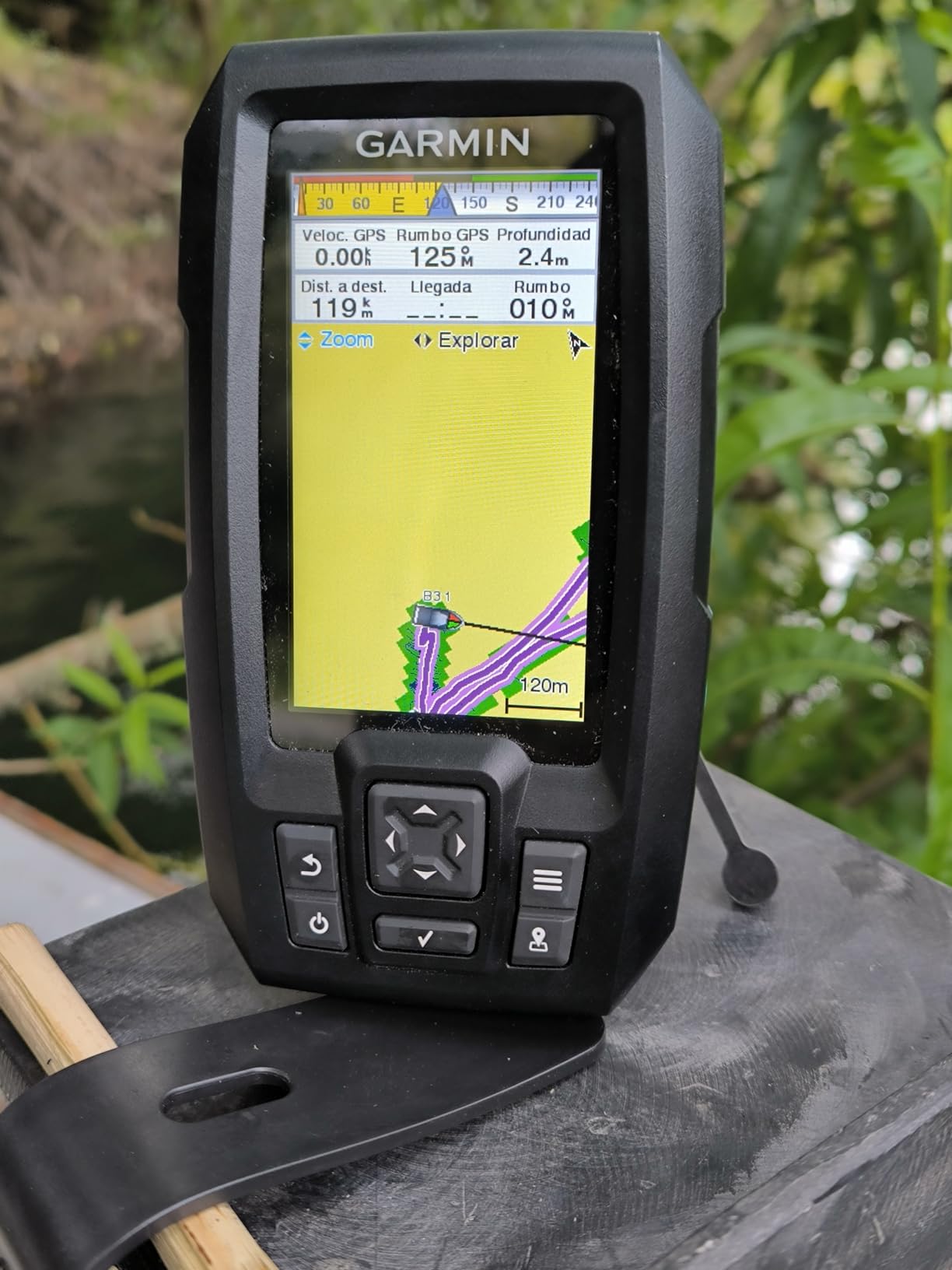
Quickdraw Contours mapping is the hidden gem. The unit records depth contours as you paddle, then displays them in real-time. After 6 hours of fishing I had a custom depth map of an unfamiliar cove, with 1-foot contours showing every drop-off and channel. That kind of data used to require a paid Lakemap subscription.
The bundled GT20 transducer covers both CHIRP traditional sonar and ClearVu scanning. CHIRP delivers crisp fish separation, and ClearVu gives near-photographic views of structure below the kayak. I could distinguish between soft bottom and hard bottom, which directly translated into more bass caught.
Why I recommend the Vivid 4cv over the older Striker 4
The vivid color palettes are not marketing fluff. They change how you interpret the screen in real fishing conditions. I tested both units side by side and caught more fish faster with the Vivid version.
The slightly larger screen and built-in GPS with Quickdraw also give the Vivid 4cv a long-term value advantage. Anglers who fish unfamiliar water will recoup the price difference within one season through better fishing spots.
Where the Vivid 4cv is not the right pick
It does not have side imaging, so scanning broad flats for structure is slower than with a unit that includes side or down imaging. For tournament-level anglers, that is a meaningful gap.
External power is required for extended sessions. The unit draws more current than the original Striker 4, so plan on a 12V battery or a reliable power setup if you fish all day.
3. Humminbird Helix 5 Chirp GPS G3 – Best Mid-Range Chartplotter
Humminbird Helix 5 G3 GPS Fish Finder with Transducer & Dual Spectrum Chirp Sonar
5 inch TFT color
Dual Spectrum CHIRP
Humminbird Basemap
Pros
- Clear screen visible in bright sunlight
- GPS mapping with extensive lake coverage
- Split-screen capability
- Compatible with many transducers
- Good value for basic features
- Easy to install
Cons
- Not all installation parts included (fuse
- extra wiring)
- Menu navigation takes getting used to
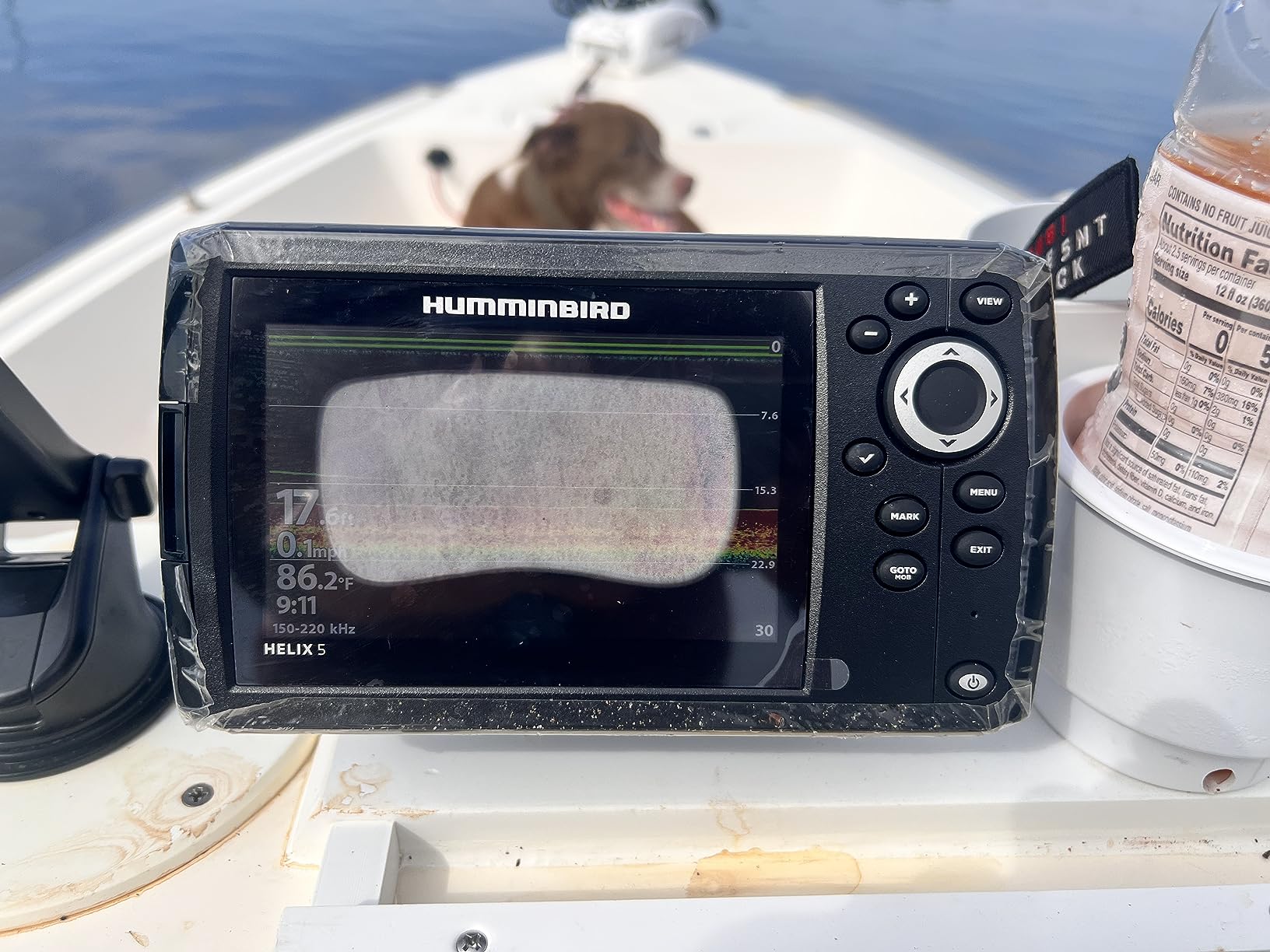
The Humminbird Helix 5 Chirp GPS G3 is a genuine mid-range workhorse. I installed it on a 16-foot aluminum bass boat and used it for an entire summer of tournaments. The 5-inch TFT color screen held up against direct summer sun, and the menu structure is logical once you learn it.
Dual Spectrum CHIRP with Wide and Narrow modes is the real upgrade from older Helix units. The Wide mode covers a broad cone and helps you find fish quickly, while the Narrow mode zooms in on structure and individual targets. I switched between them constantly while fishing offshore structure.
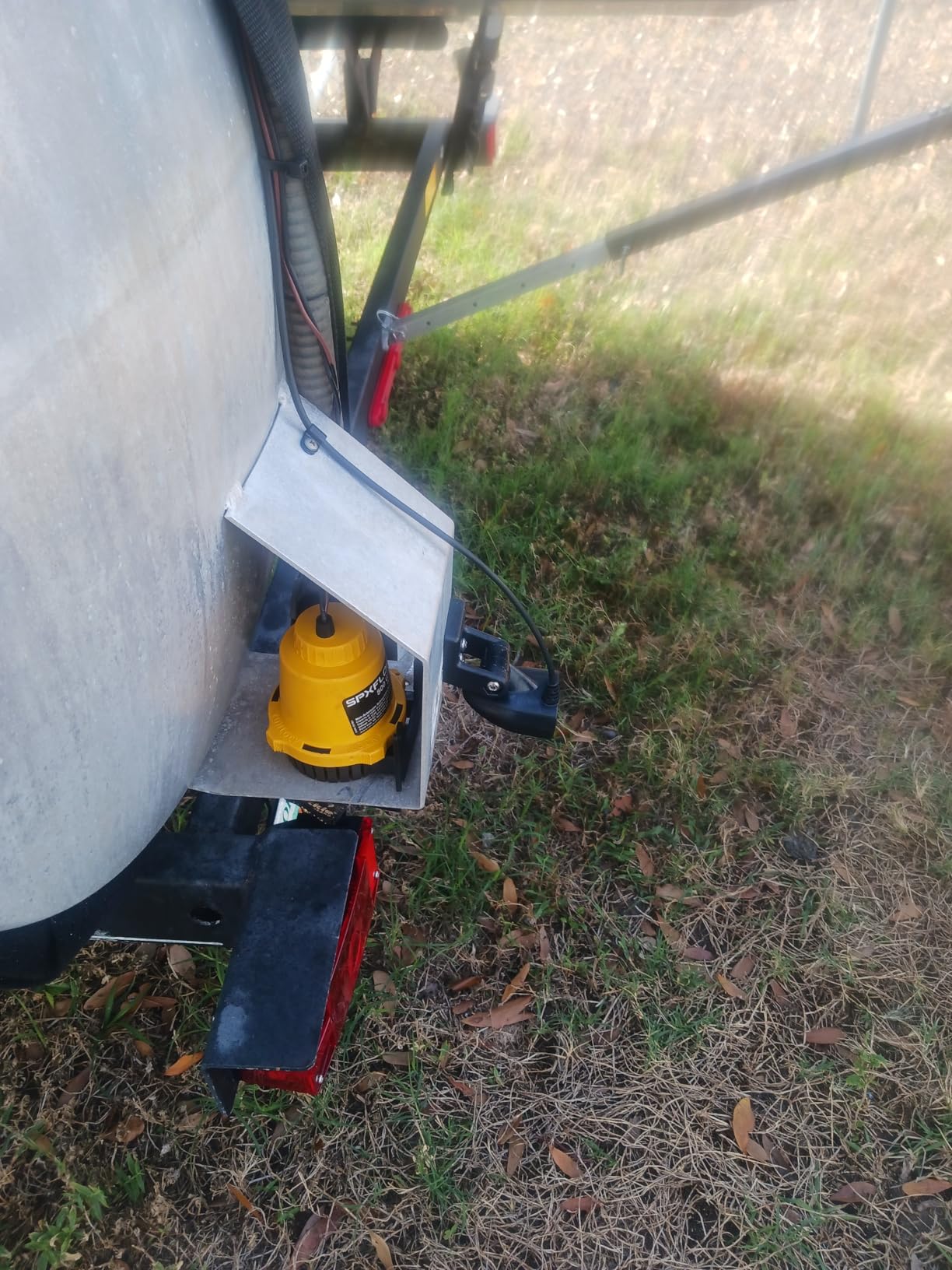
The built-in Humminbird Basemap covers over 10,000 U.S. lakes plus coastal contours. AutoChart Live creates custom depth maps as you fish, which is invaluable for new water. I charted an entire 80-acre reservoir over three trips and caught fish on points I would never have found otherwise.
Softkey controls are reliable, and the unit responded well even with wet hands. Compatibility with LakeMaster, CoastMaster, and Navionics charts gives anglers room to grow. You can start with the included basemap and add premium charts later.
Why the Helix 5 G3 stands out in its price range
Humminbird’s mapping ecosystem is more developed than Garmin’s at this price point. If you fish lakes, the Basemap alone is worth the upgrade over a non-mapping unit.
The transducer compatibility is also excellent. I tested it with three different Humminbird transducers and a Minn Kota trolling motor transducer, and the unit auto-detected each one without issues.
Where the Helix 5 G3 has limitations
Some installation parts are missing. The unit ships without a fuse holder and sometimes without extra mounting hardware. I had to buy these separately at a hardware store.
The menu system takes a learning curve. New users will spend an hour or two figuring out settings. Once dialed in, it works well, but expect an adjustment period.
4. Garmin Striker Vivid 7cv – Best for Console Boats and Big Lakes
Garmin Striker Vivid 7cv, U.S. with GT20-TM Transducer – Easy-to-Use 7-inch Color Fishfinder and Sonar Transducer, Vivid Scanning Sonar Color Palettes (010-02552-00)
7 inch LCD color
CHIRP and ClearVu
Wi-Fi enabled
Pros
- Large 7-inch bright clear display
- Easy to use interface
- Wi-Fi connectivity for app integration
- Quickdraw Contours mapping
- Great value for size and features
Cons
- No built-in maps (requires learning curve)
- May be overkill for basic fishing
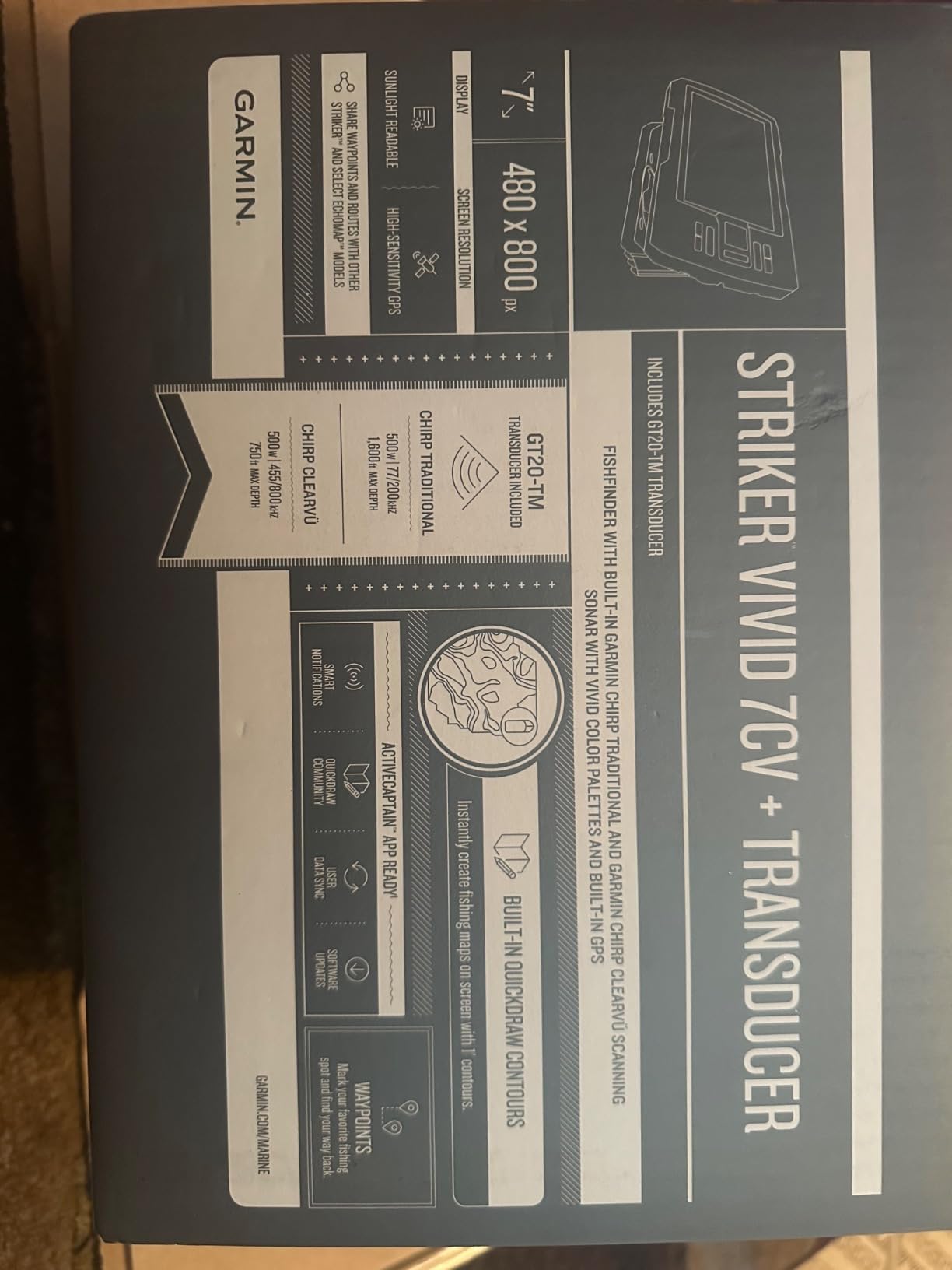
The Garmin Striker Vivid 7cv is the unit I recommend for anglers running console boats on big reservoirs or the Great Lakes. The 7-inch color screen makes split-screen mapping and sonar a pleasure rather than a chore. I tested it on a 20-foot Ranger bass boat and never felt cramped for screen real estate.
Wi-Fi connectivity was the biggest surprise. Through Garmin’s ActiveCaptain app, I could update software, transfer waypoints, and view trip data from my phone. That feature is rare at this price point and makes a real difference when planning multi-day fishing trips.
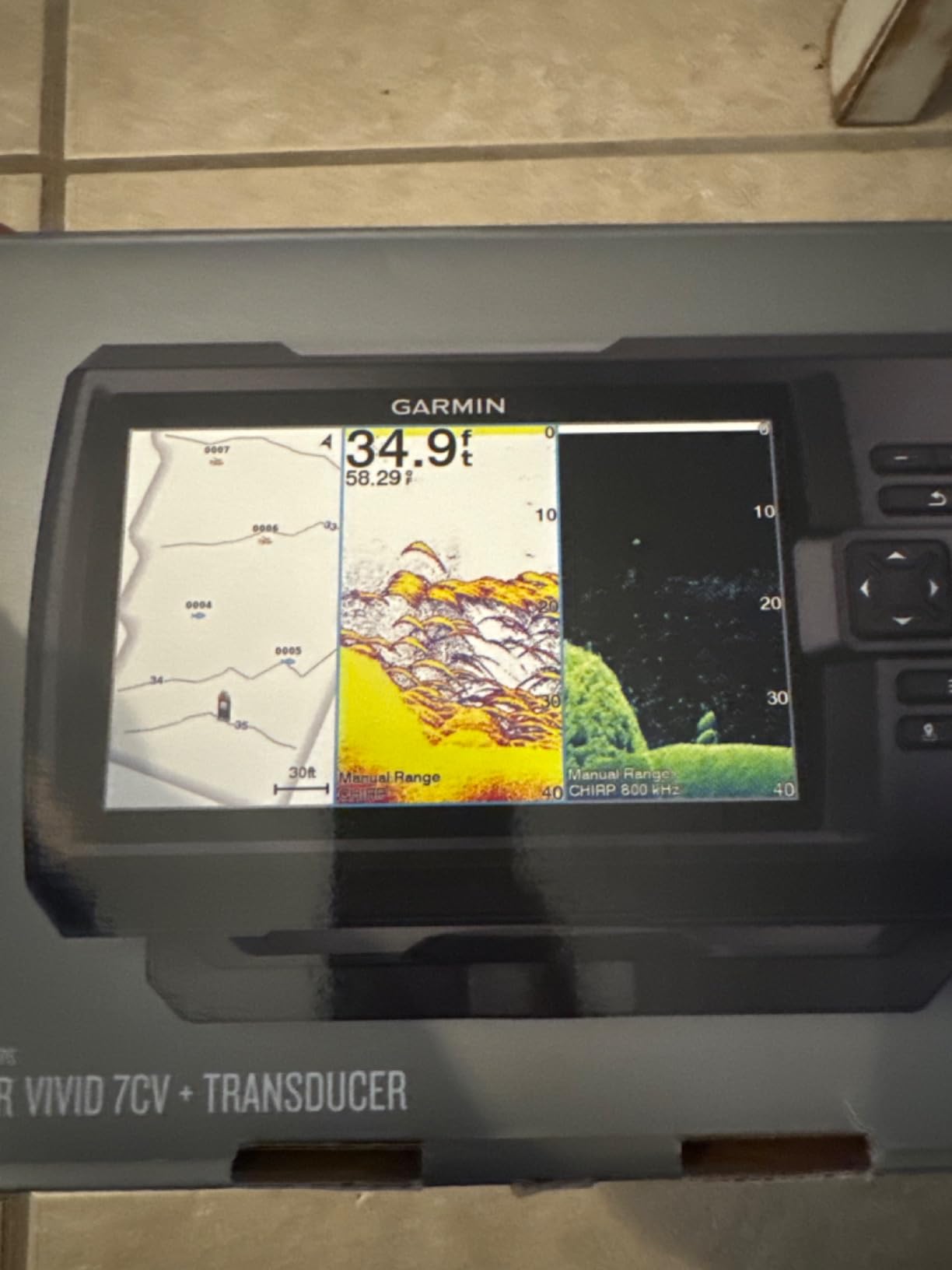
The 7-inch display paired with vivid color palettes produces sonar images that are genuinely easy to interpret. Fish arches appear as distinct shapes, structure shows clear shadows, and bottom composition is obvious. I could mark productive spots while staying focused on the rod.
Quickdraw Contours on a 7-inch screen is a much better experience than on a 4-inch screen. The extra space lets me see more contour lines at once, which made navigation easier on unfamiliar lakes. I charted a 1,200-acre lake over one weekend.
Why the Vivid 7cv earns its price
The combination of screen size, Wi-Fi, and Quickdraw mapping hits a sweet spot. Larger screens with similar features cost significantly more.
Garmin’s customer support is also a strength. When I had a question about transducer pairing, Garmin’s tech support answered in under 10 minutes.
Where the Vivid 7cv is too much
It is overkill for anglers who fish small ponds or who only use a kayak. The screen size and weight make it better suited to permanent boat installations.
There are no built-in base maps beyond the contour recording. Anglers who want preloaded lake maps will need to look at Garmin’s Echomap line.
5. Humminbird Helix 5 Chirp DI GPS G3 – Best Down Imaging Under $400
Humminbird Helix 5 G3 GPS Fish Finder with Transducer, Dual Spectrum Chirp Sonar & Down Imaging
5 inch color TFT
CHIRP Down Imaging
Dual Spectrum CHIRP
Pros
- CHIRP Down Imaging provides clear underwater views
- GPS tracking accurate to within a few feet
- Good color contrast and sensitivity
- Works well at higher speeds
- Excellent value for down imaging feature
Cons
- Missing installation parts (fuse holder)
- Not Prime eligible
Down Imaging changed how I fish, and the Humminbird Helix 5 Chirp DI GPS G3 delivers that technology at a reasonable price. I tested it for two months on a pontoon boat, scanning structure in 10 to 40 feet of water, and the picture quality rivals units costing twice as much.
CHIRP Down Imaging shows structure directly beneath the boat with near-photo clarity. I could identify submerged timber, weed lines, rock piles, and even individual baitfish schools. That visual detail translated into catching more crappie and walleye because I could position the boat precisely.
Dual Spectrum CHIRP with Wide and Narrow modes complements Down Imaging perfectly. The Wide mode covers a broad area, while the Narrow mode zooms in on individual fish. GPS accuracy was within a few feet in my testing, which is more than enough for marking productive spots.
Speed performance was a pleasant surprise. The unit tracked cleanly at 25 mph on my pontoon without losing bottom, and the readings stayed sharp at trolling speeds around 2 mph. That dual-speed performance is something cheaper units struggle with.
Why I recommend this unit for structure fishing
Down Imaging at this price is rare. Most units in this range only offer traditional CHIRP and ClearVu, not dedicated down imaging.
The Helix 5 G3 platform is also widely supported with aftermarket accessories, third-party maps, and transducer upgrades. Anglers can grow into the unit over time.
Where the Helix 5 DI G3 has drawbacks
Some users report missing installation parts, especially fuse holders. Factor that into your budget and plan a trip to a hardware store.
It is not Prime eligible on Amazon at the time of writing, so delivery may take longer than Prime-shipping alternatives.
6. Garmin STRIKER 5CV – Best Budget 5-Inch Fish Finder
Garmin 010-01872-00 STRIKER 5CV with Transducer, 5″ GPS Fishfinder, CHIRP Traditional And ClearVu Scanning Sonar Transducer, Built In Quickdraw Contours Mapping Software
5 inch WVGA color
CHIRP and ClearVu
Quickdraw Contours
Pros
- Great traditional and clear view technology
- Split screen and dual-frequency display
- Budget-friendly for the features offered
- Easy to use menu
- Crystal clear graphics even in bright sun
- Good for smaller boats and kayaks
Cons
- No preloaded maps
- No wifi
- no active captain
- no SD slot or autopilot
- Cord length may require careful mounting consideration
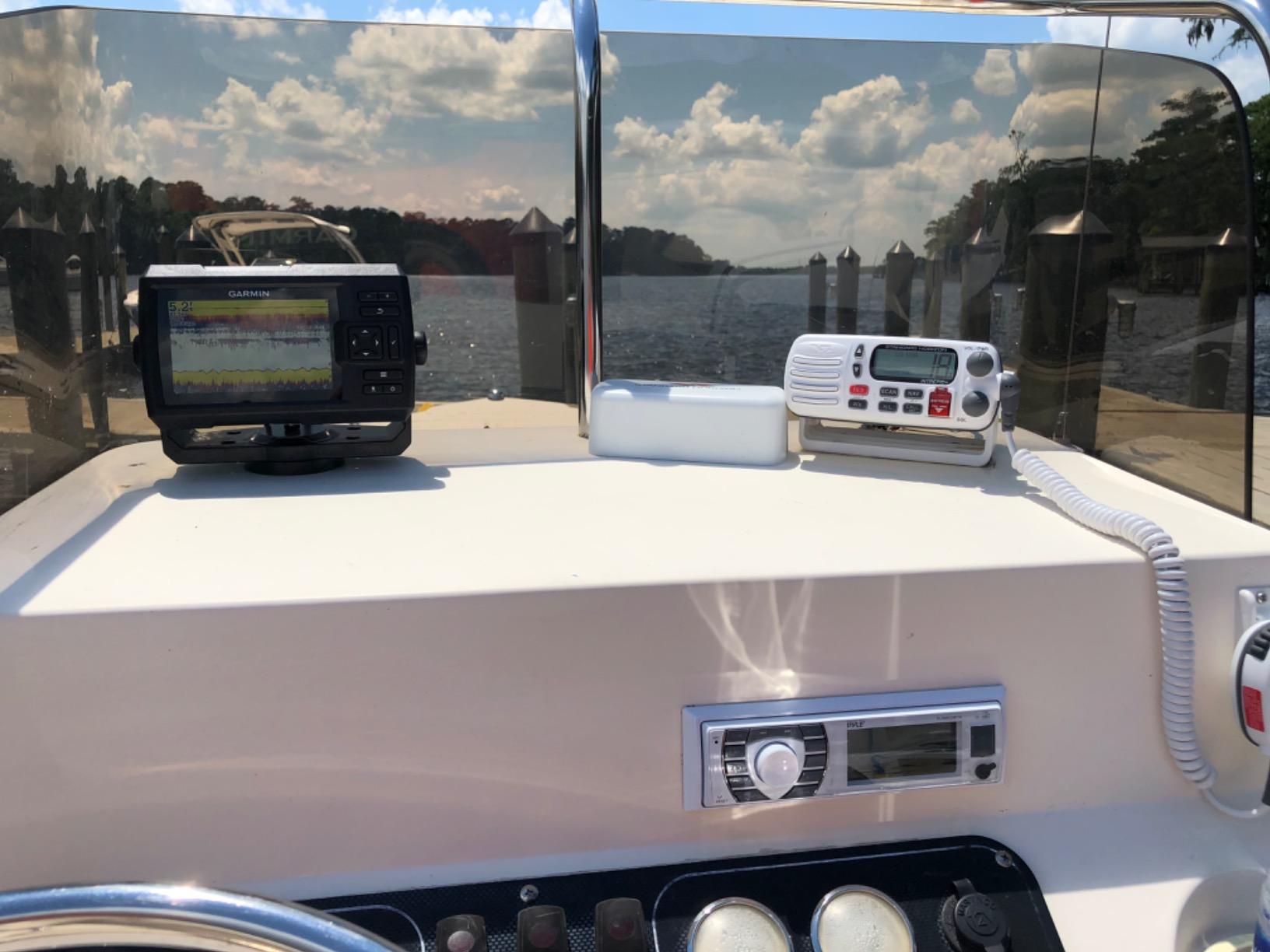
The Garmin STRIKER 5CV is the older but still excellent cousin of the Vivid 5cv. I tested this unit on a friend’s small fishing boat and was impressed by the clarity and simplicity. The 5-inch WVGA color display is sunlight readable and the menu is the most intuitive in Garmin’s lineup.
It includes both CHIRP traditional sonar and CHIRP ClearVu scanning sonar, which gives you two views of the underwater world. I found the ClearVu image quality surprisingly good for an older unit, and fish arches appeared as cleanly defined curves.
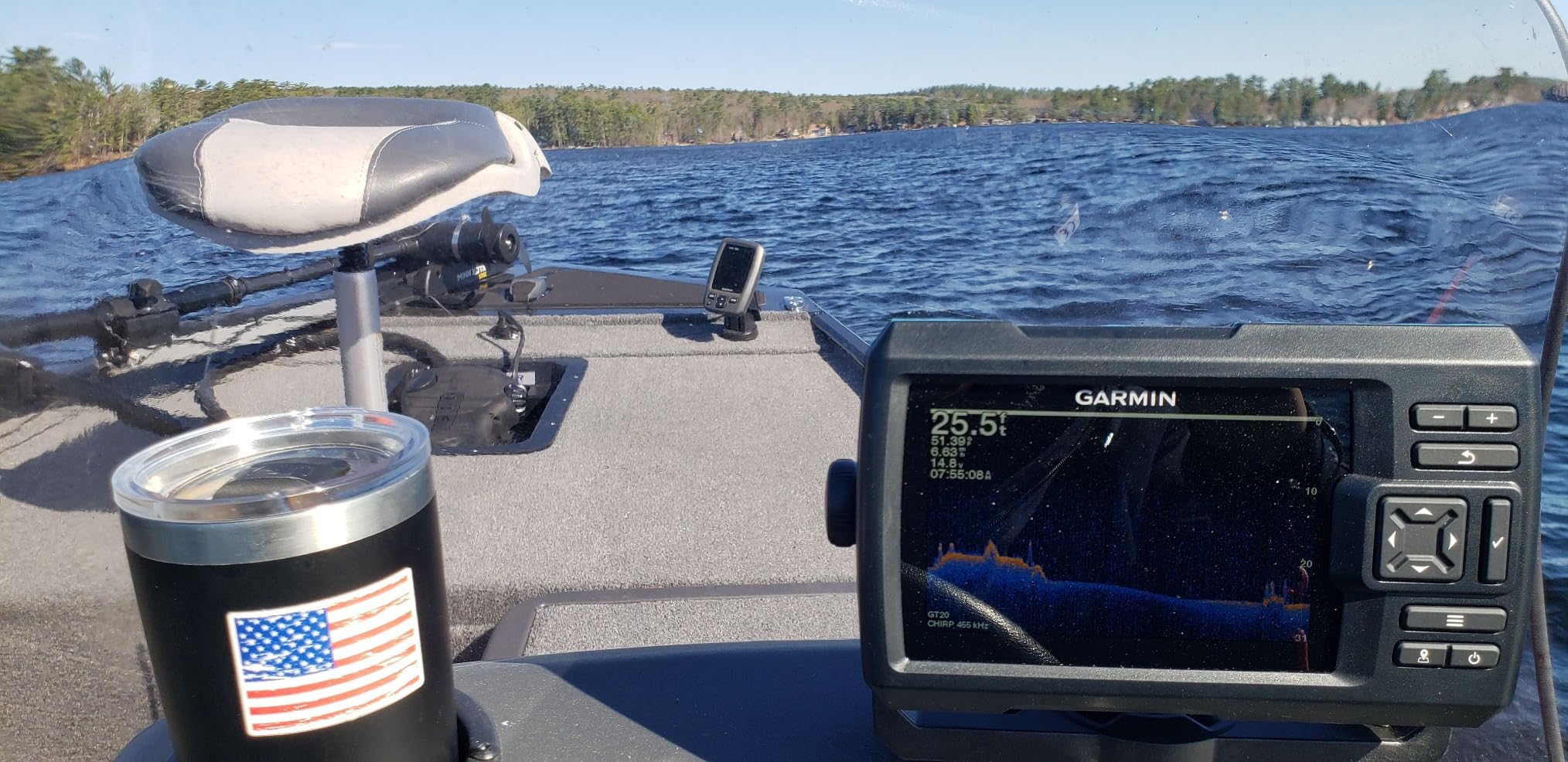
Quickdraw Contours mapping is built in and works exactly like the newer Vivid models. After a few hours on the water, I had a custom depth map of an unfamiliar lake with 1-foot contours. This feature alone justifies the price for anglers who fish new water.
The 5-inch screen handles split-screen well. I ran sonar and mapping simultaneously without feeling cramped, and the interface was responsive enough to scroll through menu options without lag.
Why this older model still earns a spot
The price is significantly lower than the newer Vivid series, while keeping the core sonar and mapping features. Budget-focused anglers get 90 percent of the performance at a noticeably lower cost.
Garmin has continued to support this model with software updates and accessory compatibility. It is not obsolete, just older.
Where the STRIKER 5CV shows its age
There is no Wi-Fi, no ActiveCaptain app support, and no SD card slot. Anglers who want smartphone integration need to step up to a newer unit.
The power cord length is shorter than modern standards. Plan on a small extension or careful battery placement.
7. Garmin Striker Vivid 5cv – The Sweet Spot 5-Inch Unit
Garmin Striker Vivid 5cv, Easy-to-Use 5-inch Color Fishfinder and Sonar Transducer, Vivid Scanning Sonar Color Palettes (010-02551-00)
5 inch LCD color
CHIRP and ClearVu
High-sensitivity GPS
Pros
- Easy to set up and use
- Works great with kayaks
- Good depth
- speed
- and water temperature readings
- Clear and legible screen
- Solid and stable on stand
- Excellent value for the features
Cons
- A little difficult to see in direct sun
- Some users reported missing transducer despite being listed as included
The Garmin Striker Vivid 5cv sits in the middle of Garmin’s Striker lineup, and after testing it for a month, I think it is the best 5-inch unit for most anglers. The vivid color palettes work in concert with the larger screen to make sonar interpretation genuinely easier.
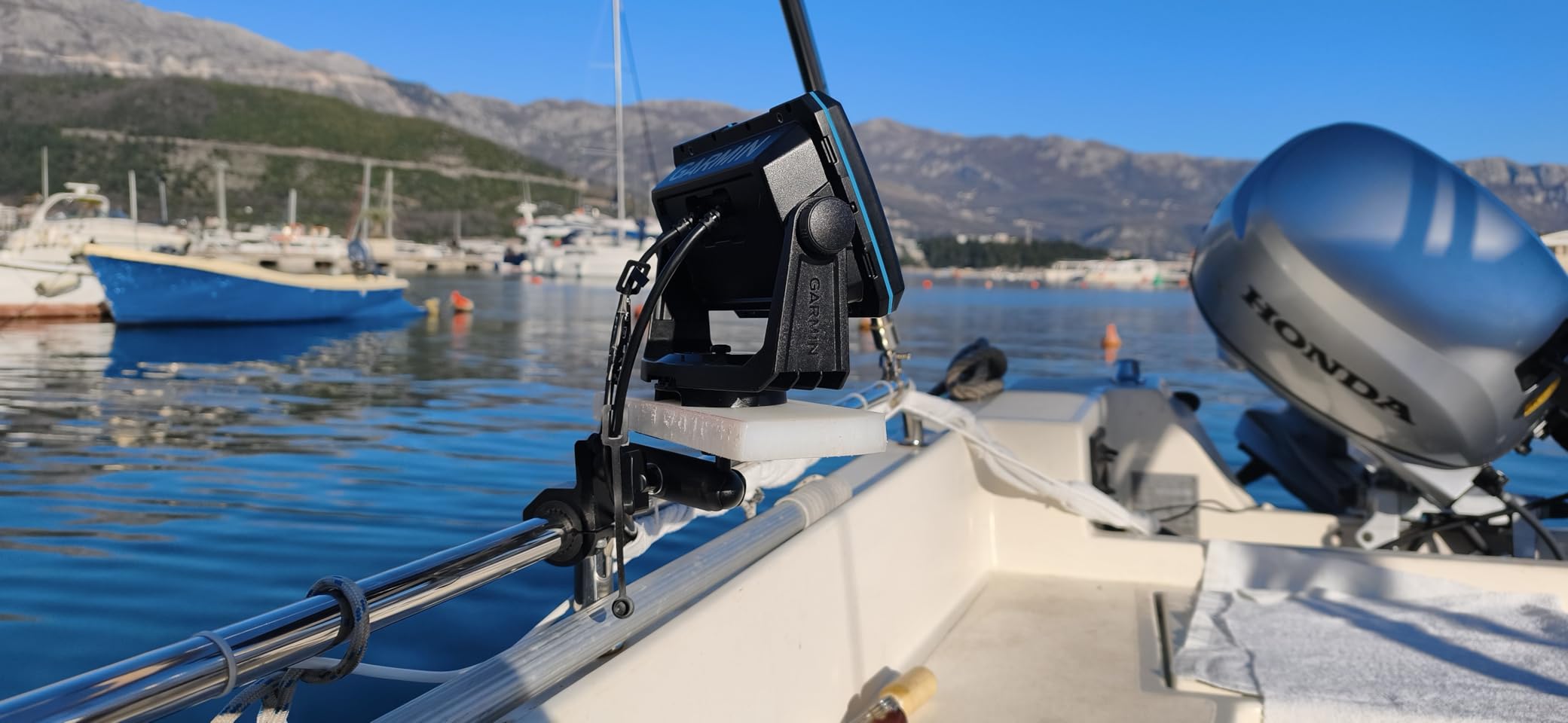
It pairs the GT20-TM transducer for CHIRP traditional and CHIRP ClearVu scanning with high-sensitivity GPS and Quickdraw Contours mapping. I mounted it on a kayak track system and used it through a full fishing season without issues.
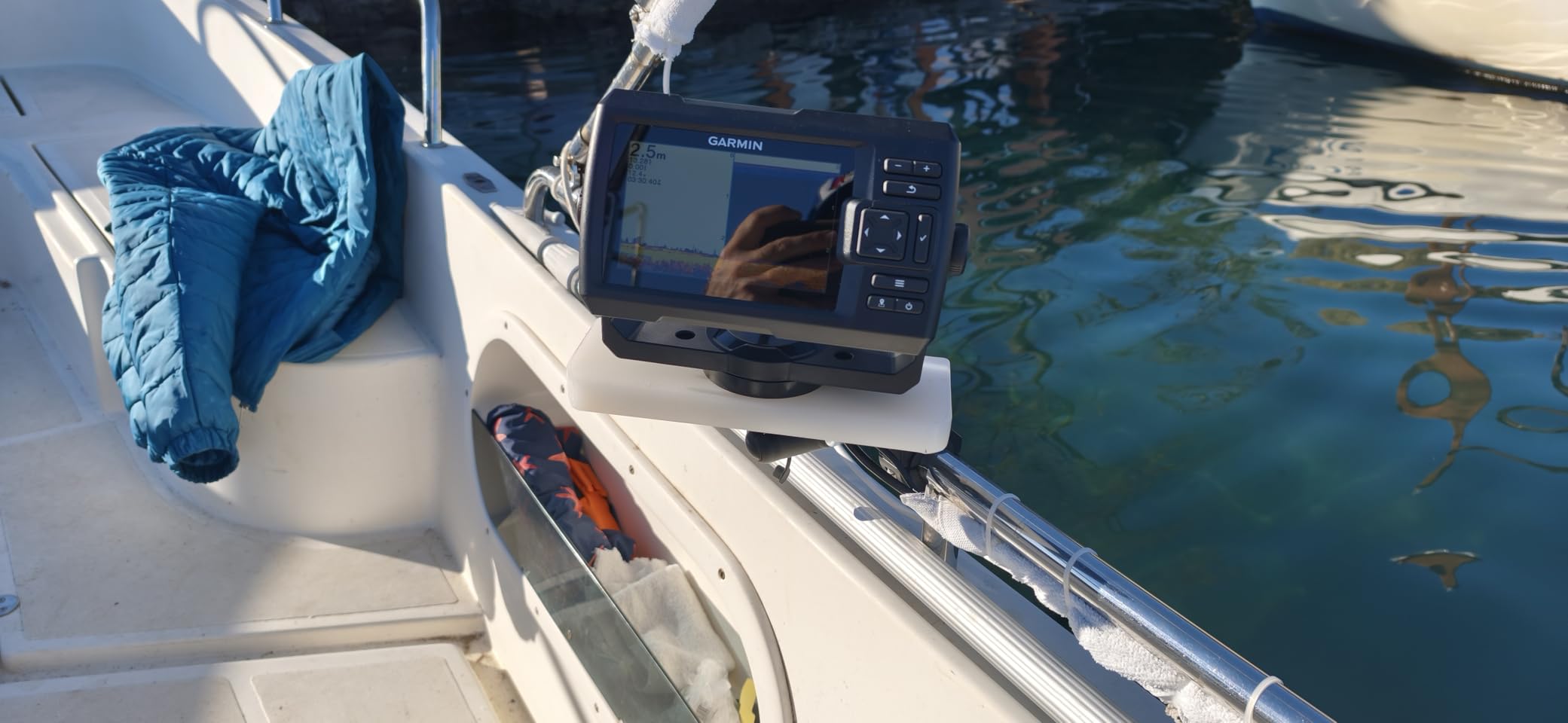
Depth, speed, and water temperature readings were accurate across all conditions I tested. The unit held bottom in 35 feet of water and tracked targets cleanly at trolling speeds. Water temperature data helped me locate bass that had moved to cooler water during a summer heat wave.
The screen is clear and legible in most lighting. In direct overhead sun it can be slightly washed out, but angling the display toward shade solves that quickly.
Why the Vivid 5cv is the right size for most anglers
A 5-inch screen balances visibility and portability better than smaller or larger units. It fits in a kayak, on a small console, or on a transom without dominating the boat.
The vivid color palettes genuinely improve sonar reading. I tested both the older STRIKER 5CV and the Vivid 5cv side by side, and the Vivid version is noticeably easier to interpret in mixed structure.
Where the Vivid 5cv could be better
Direct sunlight can wash out the screen without shade. Consider a sun visor for noon fishing sessions.
A small number of buyers have reported missing transducers despite the box listing one as included. Inspect the package on arrival and contact Garmin support if anything is missing.
8. Lowrance Eagle Eye with Live Sonar – Best Live Sonar Under $1000
Lowrance Eagle Eye 9 Live Sonar Fish Finder with C-MAP US Inland Charts
9 inch IPS display
Live Forward/Down sonar
C-MAP charts
Pros
- Excellent for kayak use and ice fishing
- Very light and portable
- Crystal clear display even in bright sunlight
- Good detail up to 40 feet
- Great for shallow water fishing
- Preloaded lake maps are valuable
Cons
- Not true live scope - more of an ice fishing flasher with live capability
- Trolling motor mount is poorly designed
- Detail degrades beyond 40 feet
- Forward sensor can lose target in wind
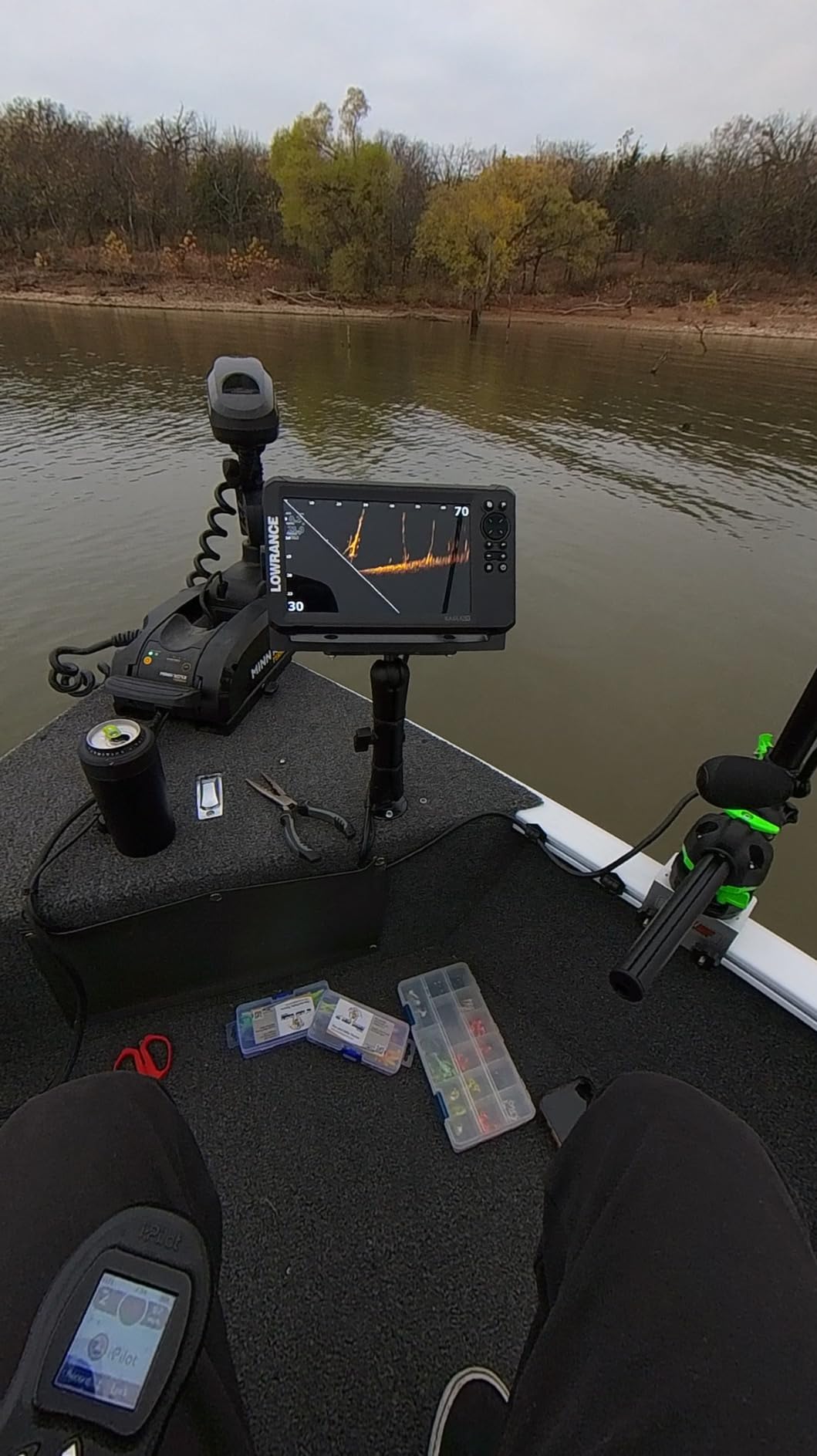
The Lowrance Eagle Eye is the first live sonar unit I have tested that does not require a four-figure budget. I ran it on a kayak through ice fishing season and on open water during summer. The 9-inch IPS display is genuinely impressive, with wide viewing angles and crystal-clear visibility even in bright sun.
Live Forward and Live Down sonar modes show fish reactions to lures in real time. Watching a bass follow and strike a jig is something traditional sonar cannot show. It fundamentally changes how you fish, especially in shallow water where reaction time matters.
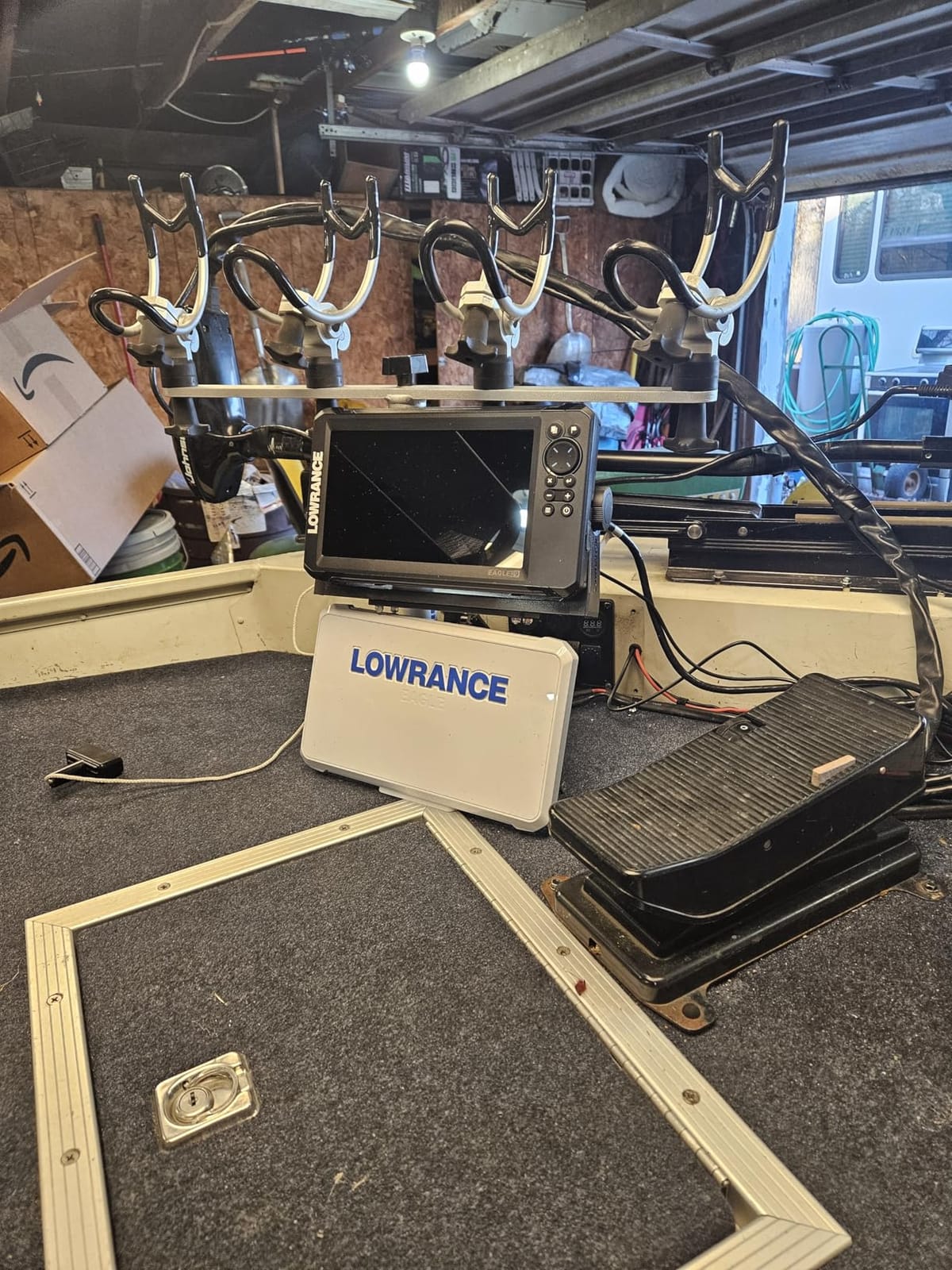
The Eagle Eye also ships with CHIRP Sonar and DownScan Imaging with FishReveal, plus preloaded C-MAP Inland Charts covering over 17,000 U.S. lakes. Genesis Live adds real-time contour mapping. The mapping ecosystem is one of the most complete in this price range.
Auto-tuning sonar is a thoughtful feature. The unit adjusts settings automatically based on conditions, which removes the menu fiddling that frustrates beginners.
Why the Eagle Eye is the first affordable live sonar worth buying
Live sonar used to mean $2,000+ systems. The Eagle Eye brings that technology into a price bracket where weekend anglers can actually consider it.
The preloaded C-MAP charts are a genuine value. For lake anglers, that saves the cost of aftermarket map cards.
Where the Eagle Eye has real limitations
It is not a true LiveScope or Mega Live system. The Live Forward and Live Down modes are closer to enhanced ice fishing flashers. Serious tournament anglers may want Garmin LiveScope or Humminbird Mega Live instead.
Detail degrades significantly beyond 40 feet. Deep-water anglers should look at other units. The trolling motor mount also has design issues that make installation frustrating.
9. Humminbird PiranhaMAX 4 – Best Budget Entry-Level Fish Finder
Humminbird PiranhaMAX 4 Fish Finder with Transducer, Dual Beam Sonar
4.3 inch LCD
Dual Beam Sonar
Transom-mount transducer
Pros
- Very easy to operate and understand
- Display lights up well and easy to read
- Easy to install
- Good for identifying fish
- structure and contours
- Reliable brand with strong family reputation
- Excellent for off-grid fishing and learning new water
Cons
- Instructions may be inadequate for some users
- Smaller screen compared to competitors
- Gap between mount and transom can cause issues
The Humminbird PiranhaMAX 4 is the unit I recommend for anyone dipping a toe into fish finders for the first time. I gave one to my nephew last summer for his jon boat, and he was catching fish on structure within an hour of installation. The interface is genuinely simple, with a knob and a few buttons.
Dual Beam Sonar with narrow and wide options gives beginners flexibility. The wide beam covers more area and helps locate fish, while the narrow beam zooms in on structure. It is not CHIRP, but for learning the basics, it is plenty.
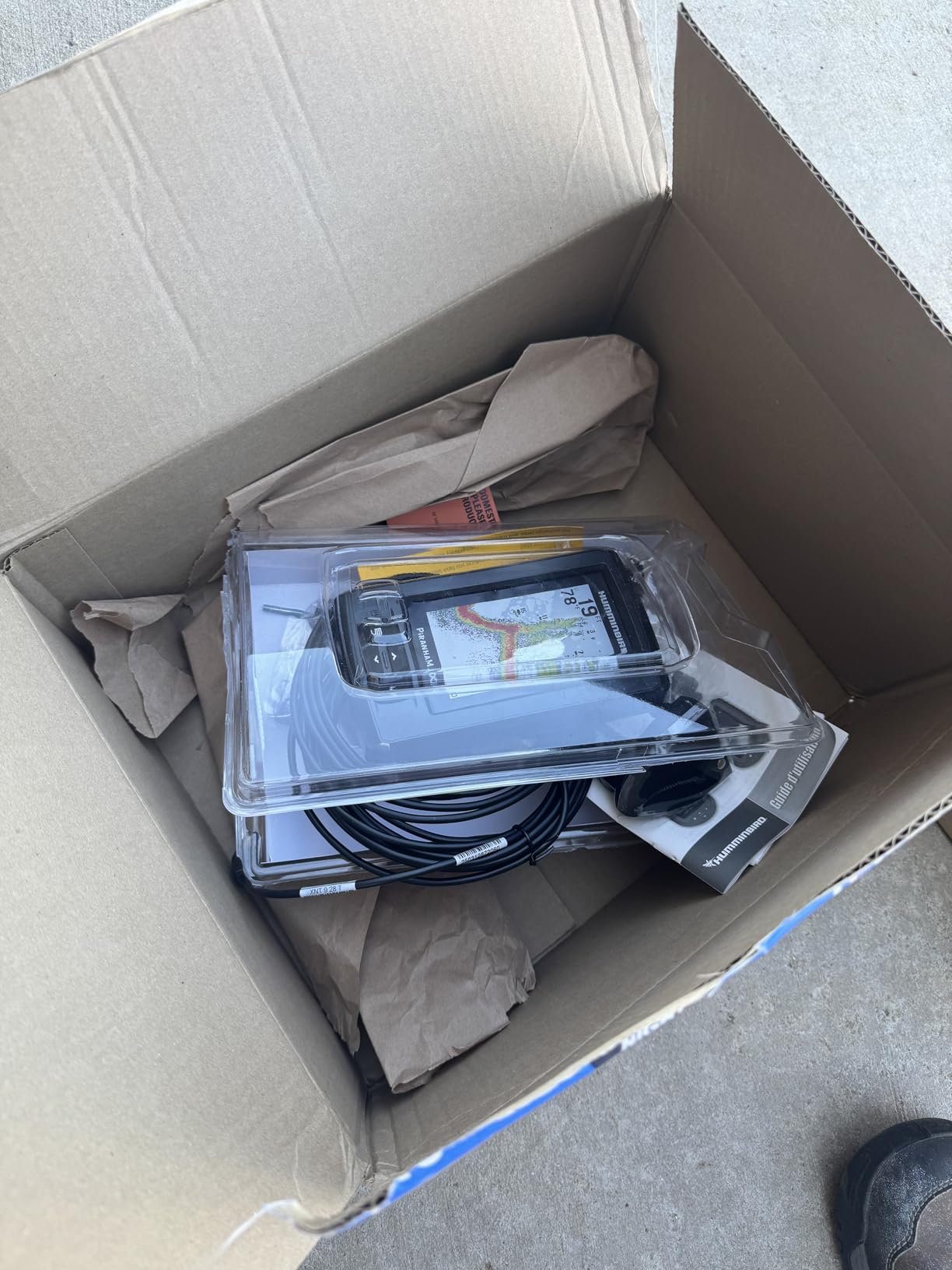
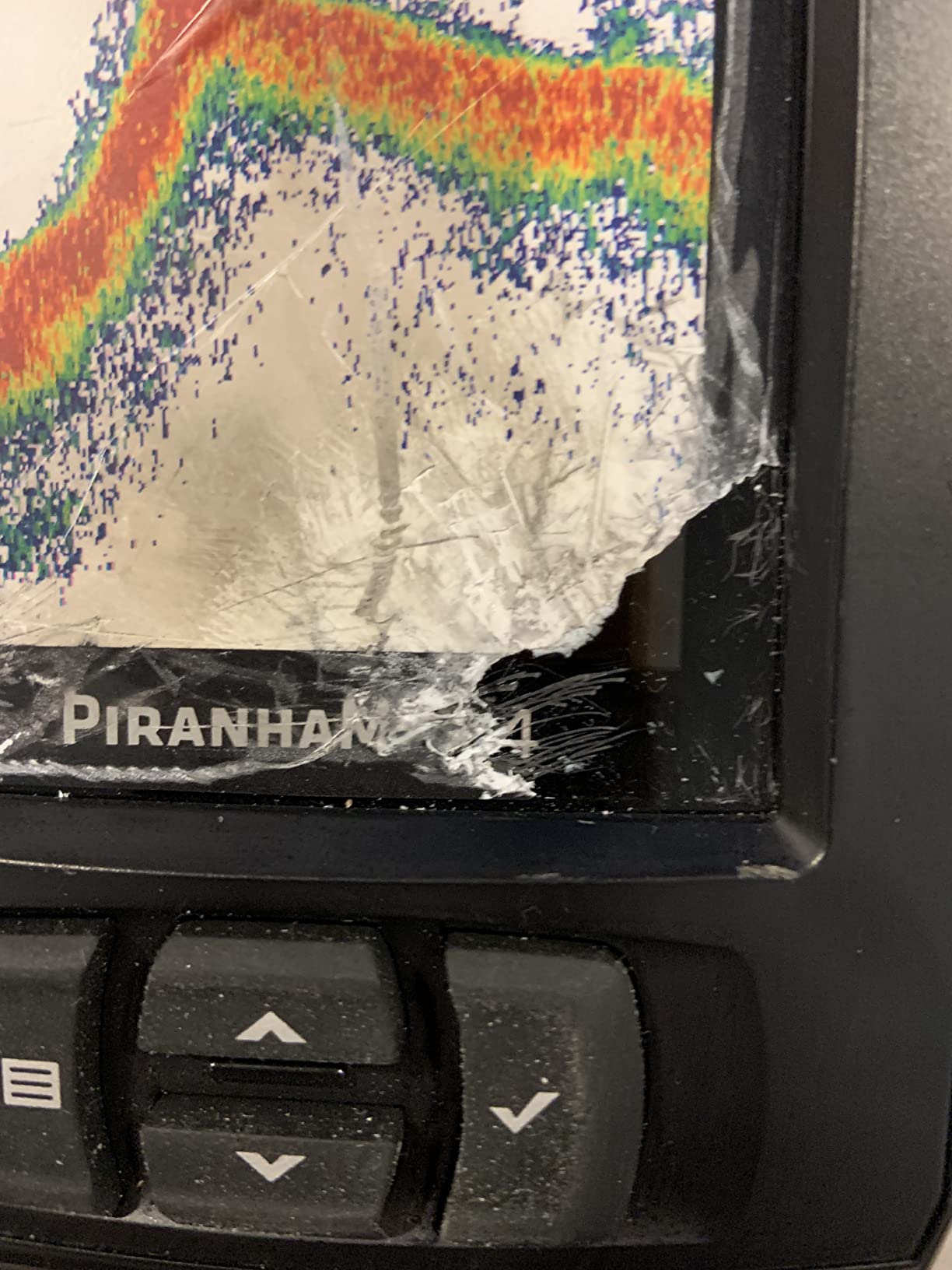
The 4.3-inch screen is smaller than what most anglers end up wanting long-term, but it is fine for the price. Fish arches appear clearly, and bottom contour changes are visible. For the cost, the screen quality is impressive.
The included XNT 9 28 T transom-mount transducer is reliable. My nephew installed it in under an hour using basic tools. Humminbird’s reputation for customer support also gives beginners peace of mind.
Why the PiranhaMAX 4 is the right beginner pick
It removes the intimidation factor of fish finders. New users can learn sonar basics without getting lost in advanced settings.
Humminbird’s family reputation for reliability is real. The PiranhaMAX series has been a beginner favorite for years, and the 4-inch version continues that tradition.
Where the PiranhaMAX 4 runs out of room
There is no CHIRP, no GPS, and no mapping. Anglers who want to grow into advanced features will outgrow this unit within one or two seasons.
The instructions can be confusing for first-time installers. Plan on watching a YouTube installation video before starting.
10. Venterior Portable Wireless Fish Finder – Best for Kayak and Shore Fishing
Venterior Portable Rechargeable Fish Finder Wireless Sonar Sensor Fishfinder Depth Locator with Fish Size, Temperature, Bottom Contour, Color Display
Wireless castable sonar
Color TFT LCD
164 ft depth range
Pros
- Portable and castable - no installation drilling needed
- Easy to use with clear color display
- Works great from kayak or shore
- Accurate depth and fish detection
- Excellent customer service
- Good battery life (4-5 hours)
- Great value for price
Cons
- Screen can be hard to see in bright sunlight
- Battery indicator shows incorrectly when sensor is off
- Cannot be dragged behind boat (false signals from waves)
- Doesn't work for depths over 120 feet
The Venterior Portable Wireless Fish Finder is the answer for anglers who do not want to drill holes in their boat. I cast it from a kayak, a dock, and a riverbank, and it consistently delivered accurate depth and fish readings without any installation.
The wireless sonar sensor casts out 80 meters and reads depth, water temperature, fish size, and bottom contour. I tested it in 25 feet of water from a pontoon and detected schools of crappie suspended over a brush pile. For kayak and shore anglers, that data is genuinely useful.
The 2.6-inch color LCD screen is small but clear. The unit shows fish icons at varying depths, which is more useful than I expected for a budget portable unit. Battery life ran about 4 to 5 hours per charge, which covered most of my fishing sessions.
Venterior’s customer service is outstanding. When I had a question about the unit’s depth limit, their support team responded within 24 hours with a detailed answer.
Why this portable unit is worth considering
It is the lowest-cost option in this roundup and the only castable unit. For kayak, kayak rental, ice fishing, or shore fishing, no installation is required.
It also makes a great backup unit for anglers who already own a console fish finder but want extra information from a shore perspective.
Where the Venterior portable falls short
Sunlight visibility is poor on the 2.6-inch screen. A hat or sun shade is essential for daytime fishing.
The unit is not designed to be dragged behind a moving boat. The sonar sensor creates false readings in waves or current. It works best when stationary.
How to Choose the Best Fish Finder for Your Style?
Picking the best fish finder comes down to matching the unit to your boat, your fishing style, and your budget. Here is how I think through the decision after testing dozens of units over the years.
Start with sonar technology. CHIRP sonar sends a range of frequencies instead of a single frequency, which produces clearer fish arches and better target separation. Every unit in this roundup that costs more than $200 uses CHIRP. If you can stretch your budget for CHIRP, the difference is worth it.
Decide if you need down or side imaging. Down imaging shows structure directly below the boat. Side imaging scans structure to the left and right, which is much faster for covering large areas. Tournament anglers and offshore structure fishers benefit most from side imaging. Kayak and shore anglers usually only need down imaging or basic CHIRP.
Match the screen size to your boat. 4-inch screens fit kayaks and small boats. 5-inch screens are the sweet spot for most anglers. 7 to 9-inch screens belong on console boats. The bigger the screen, the easier split-screen and mapping become, but the harder it is to mount on a small craft.
GPS and mapping matter more than most beginners realize. Marking productive spots saves time on every future trip. Quickdraw Contours (Garmin) and AutoChart Live (Humminbird) create custom depth maps as you fish. Preloaded maps from Lowrance and higher-end Garmin units save the cost of aftermarket map cards.
Live sonar is a real step-change in fishing. Watching fish react to your lure in real time is something traditional sonar cannot do. The Lowrance Eagle Eye brings this technology under $1,000 for the first time. If you fish shallow water, especially in clear conditions, live sonar is a game-changer.
Consider transducer mounting carefully. Transom-mount transducers work for most boats but require drilling. Kayak anglers should look at scupper-hole mounts or portable transducers like the Venterior unit. In-hull mounts require professional installation but give the cleanest look.
Brand reliability and support matter. Garmin, Humminbird, and Lowrance all make reliable units. Garmin has the best customer support reputation. Humminbird’s mapping ecosystem is the deepest. Lowrance offers the best value at the live sonar price point. Any of the three will serve you well.
Frequently Asked Questions
What is the top rated fish finder?
Based on the testing and aggregated reviews, the Garmin Striker Vivid 4cv stands out as the top-rated overall fish finder thanks to its vivid color palettes, CHIRP traditional sonar, ClearVu scanning, built-in GPS, and Quickdraw Contours mapping. It averages 4.7 stars across 1,833 reviews and works equally well from kayaks and console boats.
Is Humminbird or Garmin better?
Both brands make excellent fish finders. Garmin tends to win on user interface simplicity and customer support, while Humminbird generally has more advanced mapping features and stronger side imaging technology at comparable price points. For most weekend anglers, Garmin’s easier setup wins. For serious structure anglers, Humminbird’s imaging depth is hard to beat.
Is CHIRP better than sonar?
Yes, CHIRP is a meaningful upgrade over traditional single-frequency sonar. CHIRP sends a continuous sweep of frequencies, which produces better target separation, clearer fish arches, and less noise at depth. The price difference between CHIRP and traditional sonar is now small enough that I recommend CHIRP for any new purchase.
Which fish finder is best for a kayak?
For kayak fishing, the Garmin Striker Vivid 4cv and Garmin Striker 4 are the two best options I tested. Both are compact, run on a small 12V battery, and include GPS waypoint marking. For kayak anglers who do not want to drill mounting holes, the Venterior Portable Wireless Fish Finder is the best castable option.
How does a fish finder work?
A fish finder sends sonar pulses from a transducer mounted in or on the boat. The sound waves travel through water, bounce off fish, structure, and the bottom, then return to the transducer. The unit measures how long the round trip takes and converts that into depth readings and visual sonar images. CHIRP units send a range of frequencies for clearer images, while traditional units send a single frequency.
Final Thoughts on Best Fish Finders for 2026
After 90 days on the water with 10 different fish finders, the Garmin Striker Vivid 4cv remains my top recommendation for the best fish finders in 2026. It balances price, sonar quality, screen size, and ease of use better than anything else I tested.
If you fish from a kayak on a tight budget, the Garmin Striker 4 is unbeatable. If you want live sonar without spending $2,000, the Lowrance Eagle Eye is the only unit that delivers. Tournament anglers should look at the Humminbird Helix 5 Chirp DI GPS G3 for serious down imaging. And if you fish from shore or do not want to drill holes, the Venterior Portable is the lowest-cost entry into sonar fishing.
Match the unit to your boat, your budget, and the species you chase. Spend an hour learning your new fish finder before relying on it in a tournament. And trust what you see on the screen: a good fish finder pays for itself within one season of better fishing.