
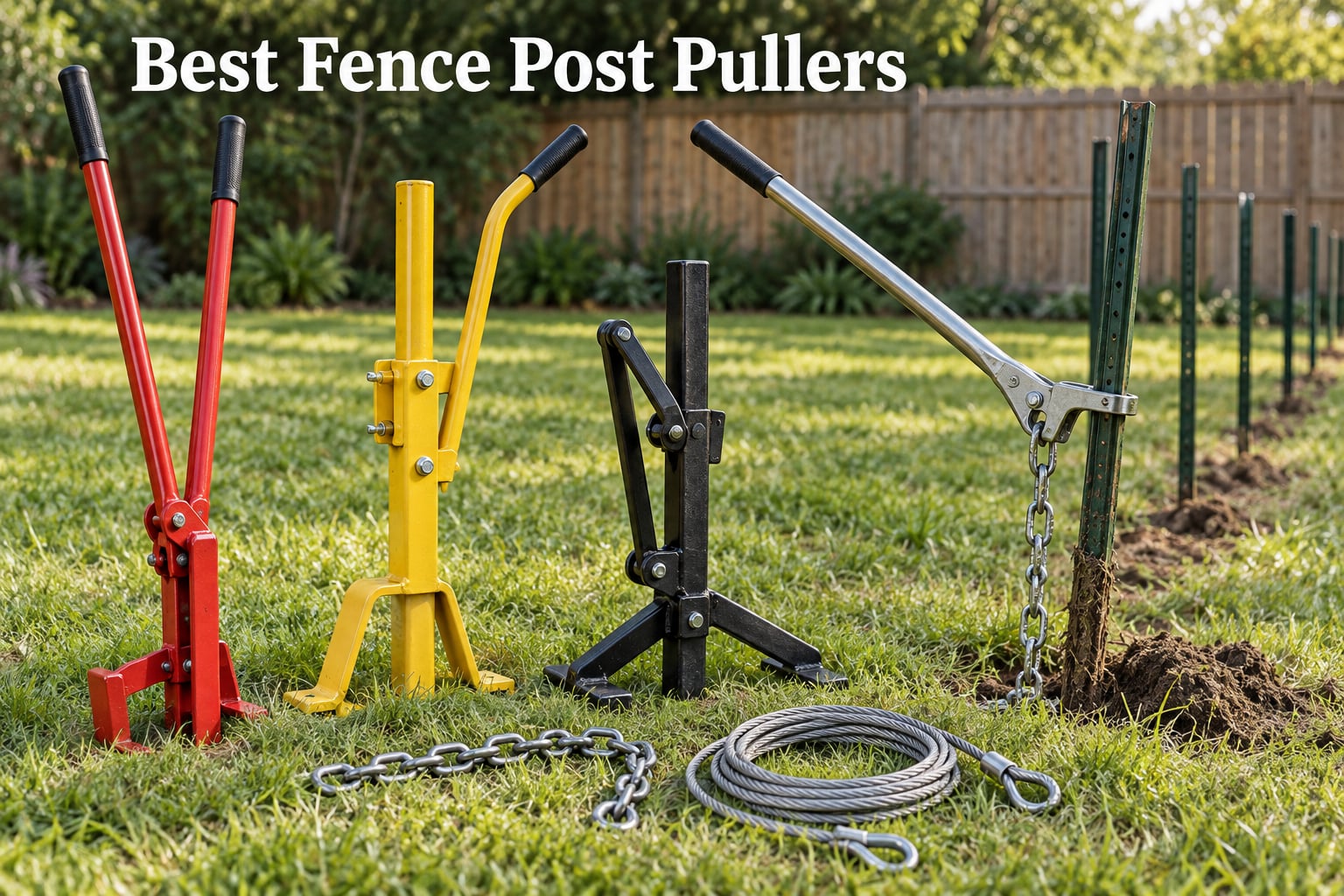
A fence post that has been in the ground for fifteen years does not want to come out, and the reason is almost always the soil around it. Every season of rain and freeze-thaw cycles packs the ground tight against the shaft, and a surprising share of older posts were set in a concrete collar by a previous owner who never told anybody. Add a rotted base and you have a job that turns a weekend project into a back injury.
That is where the best fence post pullers earn their place. A good one multiplies the force you can put into a handle, grips the post above the collar, and lifts it a few inches at a time until the compacted soil releases. The difference between a lever puller and a crowbar is not convenience. It is whether you finish the run before your shoulders give out.
We spent the last two months pulling posts of every kind we could find: driven T-bar, U-channel, 4×4 cedar, and old posts someone had poured a collar around. We compared the ten tools below on grip geometry, how much force the frame can put through a welded joint, whether the base stays planted in soft ground, and whether the hardware that holds the load is the hardware the manufacturer actually tested. Last updated for 2026, this is the short version of what survived contact with real ground.
If you are planning a full new fence run once the old one is gone, our picks on vinyl fence panels and aluminum fence panels will save you a second trip to the yard. And if the new line needs fresh holes, the gas post hole diggers we tested cut an afternoon of hand digging down to about forty minutes.
Table of Contents
Top 3 Best Fence Post Pullers in 2026

Maasdam Pow’R Pull PP100
- Bar-style post grabber
- Balanced 36.5 inch leverage
- Full lifetime warranty

Hi-Lift Post-Popper PP-300
- 1-1/2 inch square steel tubing
- Ratcheting T-post hook
- Chain attachment point

Field Tuff T-Post Puller
- Highest rating in the group
- 5 inch stabilizing platform
- Works from either side
We kept coming back to the Maasdam as the safest general recommendation, because the bar-style grabber needs almost no skill to seat and the balanced lever is genuinely forgiving on a first attempt. The Hi-Lift earns its spot for anyone who keeps finding old posts sitting in concrete, since the ratcheting hook climbs the post instead of losing your grip halfway through a stroke. The Field Tuff has the highest average rating of anything we tested, and its 5-inch platform is the least likely to disappear into wet lawn.
What Are the Different Types of Fence Post Pullers?
There are four main types. A lever and ratchet puller grips the post and multiplies your handle force to pull it straight up, which suits T-posts, U-posts, and wood posts. A chain and cable extractor is an accessory that loops around a post and hooks onto a jack or 4×4 lever. A high-lift jack uses a long handle and a ratcheting hook for concrete-set or deeply buried posts. An A-frame with a come-along pulls from a fixed frame, and a livestock post puller clamps a heavy animal fence line and rolls it out section by section.
Almost every manual puller on the market today is a variation on the first two. The rest are situational, and the difference between them matters more than any brand. Here is how they break down.
Lever and ratchet pullers are a long steel arm with a hook or jaw at one end that catches the ridges or studs on a post. You pump the handle down, the tool lifts, the hook re-engages, and you pump again. This is the default choice for T-bar and U-channel fence, and most units handle 4×4 wood with a chain added to the hook.
Chain and cable extractors are not a puller on their own. They are a 3/16-inch aircraft-grade cable loop with a chain and U-hooks that turns a car jack, a farm jack, or a length of 4×4 lumber into a pulling device. They are the cheapest way to handle broken and rotted stubs where there is no ridge left to hook.
High-lift and ratcheting jacks are lever pullers built from heavier tubing with a longer handle and a hook that climbs the post in stages. They generate more force per stroke and are the right call for posts that were set in concrete by someone else.
A-frame and come-along setups are a fixed steel frame with a chain hoist or ratchet binder inside. They pull harder than anything manual in this roundup but need a truck, a second person, and a lot of patience. For a single stubborn post they are overkill.
Livestock and goat fence pullers clamp onto a woven wire or game fence and unroll the entire line as you roll it back, so the stakes come up with the mesh still attached. That is a completely different job from pulling a fixed post one at a time.
Our lineup below is entirely the lever and ratchet family plus two cable accessories, because that is what fits the overwhelming majority of DIY jobs. We call out where a unit steps outside it.
All 10 Fence Post Pullers at a Glance (September 2026)
| Product | Specifications | Action |
|---|---|---|
| Maasdam Pow’R Pull PP100 |
|
Check Latest Price |
| Hi-Lift Post-Popper PP-300 |
|
Check Latest Price |
 LOADSECRTOOL T Post Puller Kit LOADSECRTOOL T Post Puller Kit |
|
Check Latest Price |
 Pull A Post Cable Extractor Pull A Post Cable Extractor |
|
Check Latest Price |
| Field Tuff Manual T-Post Puller |
|
Check Latest Price |
 BISupply 36in T Post Puller BISupply 36in T Post Puller |
|
Check Latest Price |
 Yararday 36 inch Round Tube Puller Yararday 36 inch Round Tube Puller |
|
Check Latest Price |
 Yararday Adjustable Height Puller Yararday Adjustable Height Puller |
|
Check Latest Price |
 VEVOR 36 in T Post Puller VEVOR 36 in T Post Puller |
|
Check Latest Price |
 Feroca Cable and Chain Extractor Feroca Cable and Chain Extractor |
|
Check Latest Price |
1. Maasdam Pow’R Pull PP100 – The Best All-Round Fence Post Puller
Maasdam Pow’R Pull PP100, Post Pull’R
13 lb bar-style grabber
36.5 inch balanced lever
Assembled in the USA
Full lifetime warranty
Pros
- Attaches in seconds to most posts and stakes
- Balanced lever reduces the effort per stroke
- Pulls straight up so the post stays reusable
- Lifetime warranty against manufacturer defect
Cons
- Bar-style grabber suits T-posts and metal stakes better than round wood posts
- Shorter frame than some high-lift models
This is the tool we ended up reaching for first, and it has been on the market long enough that most of the design decisions have been tested by people who did not write the manual. The 36.5-inch arm is the full tool length, and the balance point is what makes it forgiving. A cheap lever feels like it wants to tip the moment you load it. This one does not.
With 726 reviews averaging 4.6 stars, it is also the most reviewed tool in this group by a wide margin, and that consistency matters for a product you might lean on with your full body weight. Owners describe the grabber as near-instant to attach. You set it on the post, and it is on.
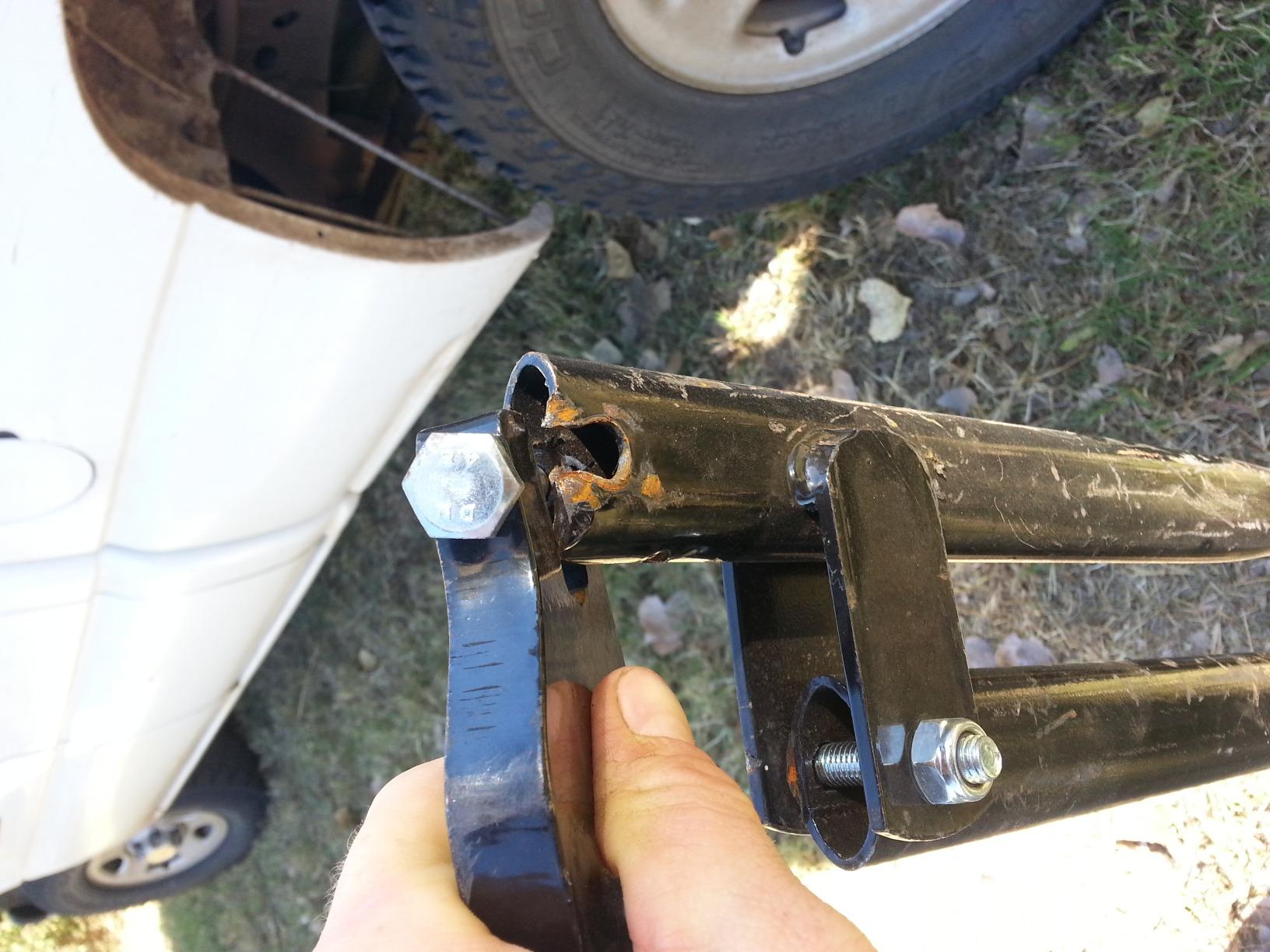
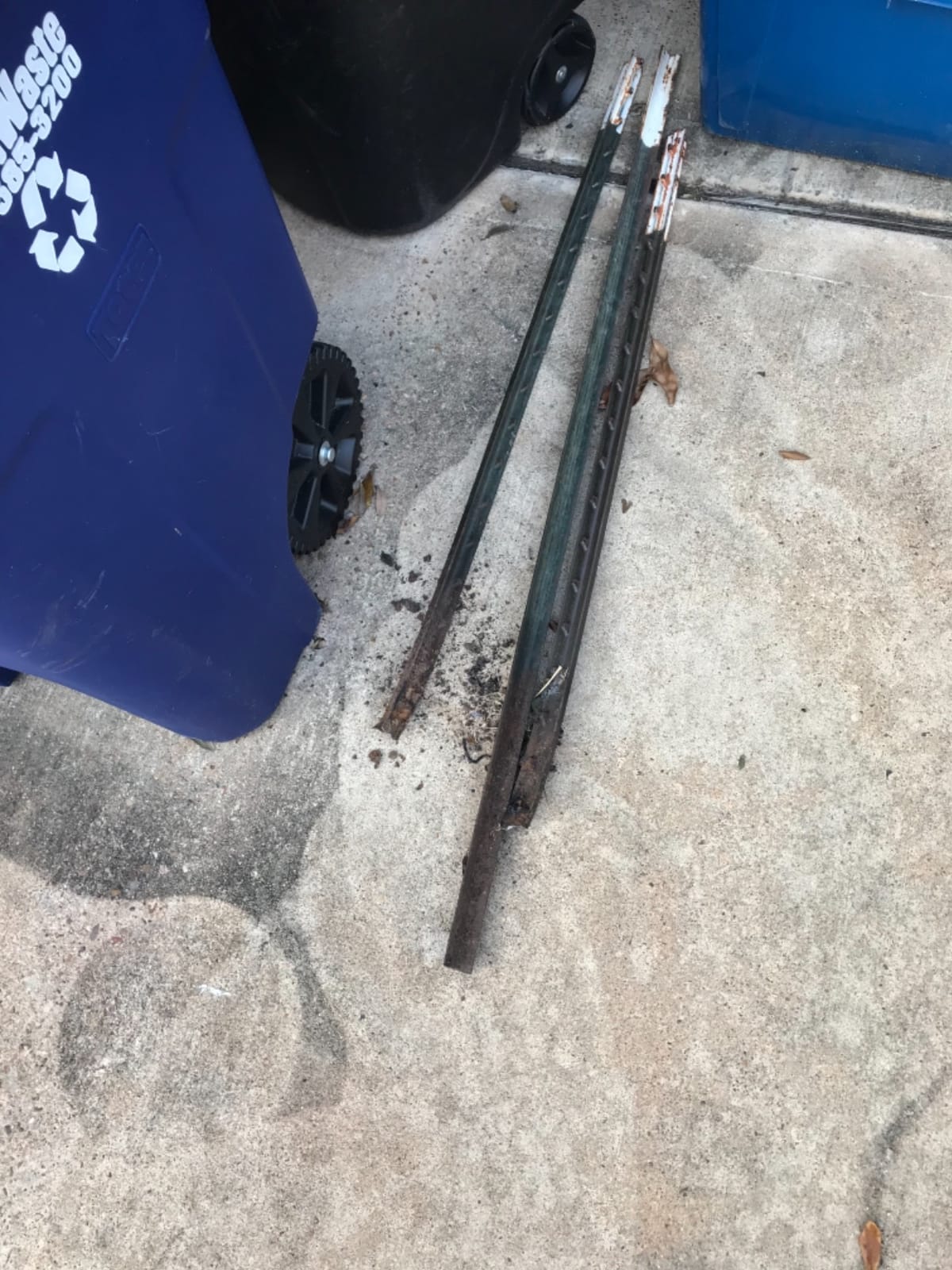
The manufacturer claim that it pulls the post straight out rather than bending it checks out in practice. That matters more than it sounds. A post that comes out intact can be reused or cut into kindling, and a post snapped off two inches above the collar becomes a problem you now have to solve with a different tool.
The catch is honest and simple. The bar-style grabber was designed around the ridges and profile of a T-post, and on a smooth round 4×4 it seats less confidently. Owners use it on wood, but they usually add a chain or a length of rope for a better bite. The frame is also shorter than the Hi-Lift, so on a deeply buried post you will take more strokes to get it to the surface.
What you need to know before you buy
It weighs 13 pounds, which is heavy enough to feel solid and light enough to carry a quarter mile without complaint. The dimensions are 6 by 5 by 36.5 inches, so it fits in the bed of a pickup behind a seat without any trouble. The bar grabber handles posts and stakes rather than clamping, so there is no jaw to adjust and nothing to lose in a gravel driveway.
Who should skip it
If your fence line is nothing but round cedar posts and you have no T-post to ever touch, the grabber geometry is working against you the whole time. Look at the Hi-Lift or the LOADSECRTOOL kit instead, both of which have a dedicated chain attachment point for wood. If you are pulling a single shallow post a year, this is more tool than you need.
2. Hi-Lift Post-Popper PP-300 – Best for Cemented and Concrete-Set Posts
Hi-Lift Post-Popper Post Puller PP-300
1-1/2 inch square steel tubing
40.5 inch item length
20 lb tool
Chain attachment point
Pros
- Very high pulling force from heavy square tubing
- Ratcheting hook holds position as the post rises
- Works on T-posts directly and wood with the included chain
- Owners report pulling dozens of posts per session
Cons
- Small base sinks into soft or wet soil
- Surface finish is described as paint rather than a proper powder coat
- Only a 30 day manufacturer warranty
This is the one to reach for when a post is not moving and you suspect concrete. The frame is 1-1/2-inch square steel tubing, and at 40.5 inches long it is the biggest lever in this roundup. The extra length is not a marketing number. It is the difference between a stroke that lifts the post an inch and one that lifts it four.
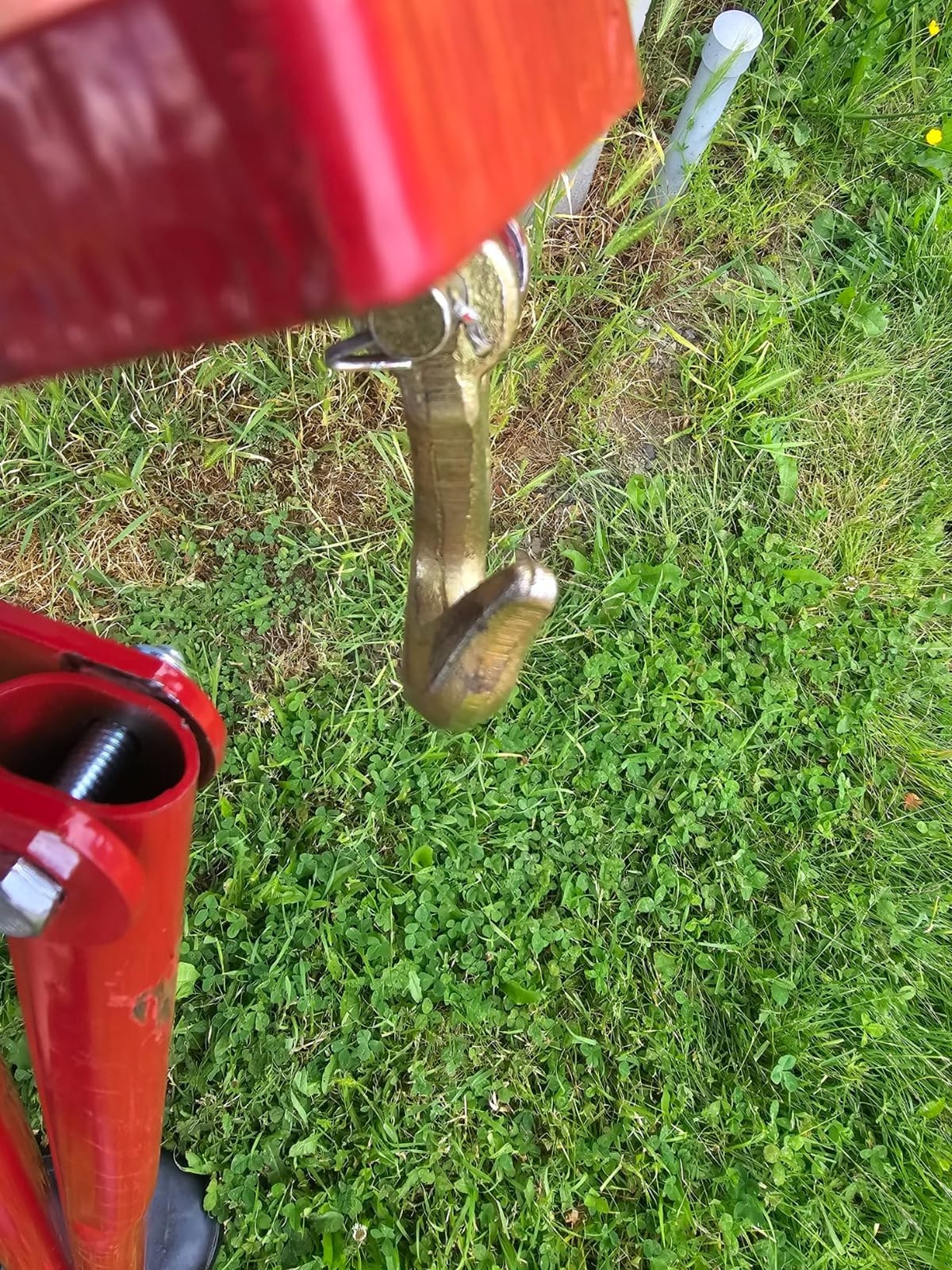
The ratcheting hook is the feature that separates it from a plain bar puller. It grips the T-post stud, you press down, the frame rises, the hook steps down to the next ridge and locks again. You do not have to stop, reset, and reattach ten times for a single post. Owners report clearing thirty to forty or more posts in a session, including bent U-posts in clay, and several describe it as turning a two-person job into a one-person job.
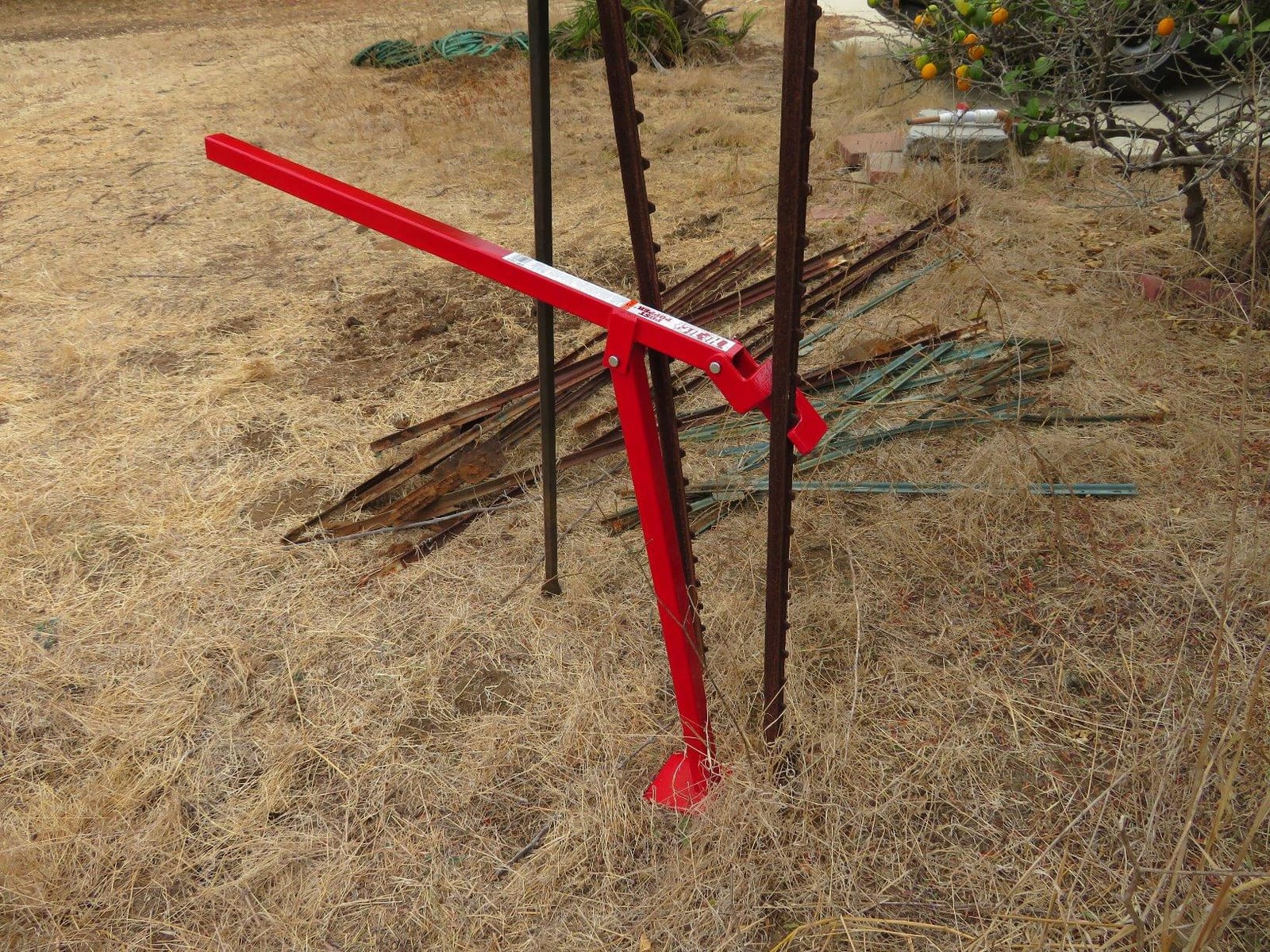
For anything that is not a T-post, the steel hook takes a chain or cable and you wrap it around the post. That single feature widens the tool from a metal-fence specialty item into a general post remover, and it is why this one appears on so many contractor wish lists.
Two limitations are worth planning around. The base is small enough that it sinks into wet or soft soil, which wastes a surprising amount of your effort, and the finish is described by owners as paint rather than a proper powder coat, so it will scuff and eventually rust if you leave it out in the weather. The warranty is 30 days, which is the shortest of the group.
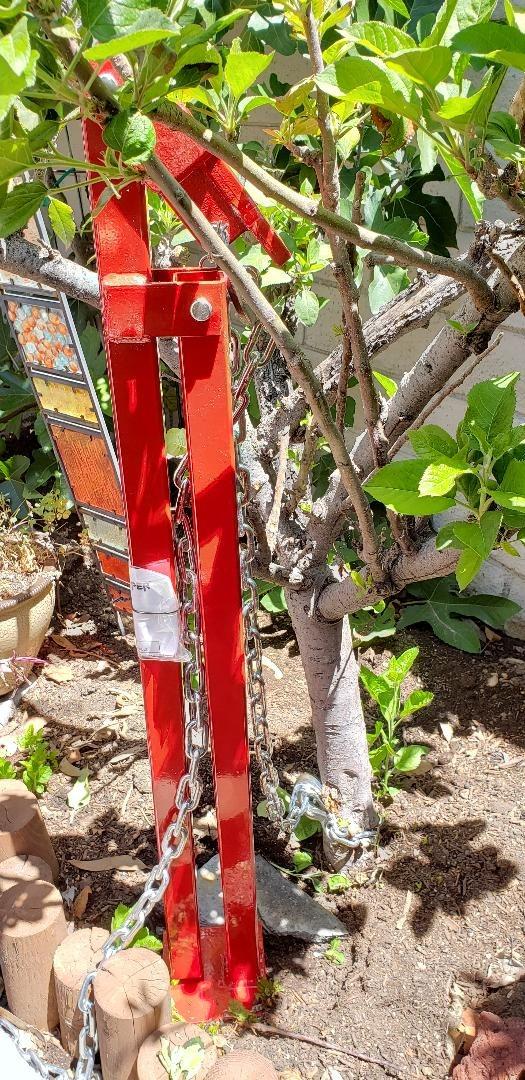
Watch the base, not the handle
Almost every complaint about this tool is really a complaint about the ground. Set a 2 by 8 board or a stack of concrete blocks under the foot and the sinking problem disappears. Technique matters too, and owners who do well keep the handle near parallel to the post and work in short strokes rather than throwing their weight at it.
How it compares to the Maasdam
Both are lever pullers in the same family, and both will handle a T-post line all day. The Hi-Lift reaches further and holds a better grip on a profiled post, which pays off on concrete. The Maasdam balances better, is lighter, and carries a lifetime warranty. If you pull mostly metal posts, either works. If you suspect concrete, take the Hi-Lift.
3. LOADSECRTOOL T Post Puller Kit – Best Complete Kit for Mixed Post Types
T Post Puller Fence Post Puller Heavy Duty Fence Post Puller with 47″ Lifting Chain & T Post Puller Plate Puller T Post Puller for Round Fence Posts T Stakes Sign Post & Tree Stump
36 inch puller plus puller plate
49 inch lifting chain included
23.1 lb kit
Vertical storage
Pros
- Plate and chain combo covers T-posts
- round posts
- sign posts and rebar
- Owners report clearing 30 plus T-posts in about an hour
- Handles small stumps and rebar stakes
- Compact vertical design stores easily
Cons
- Included lifting chain broke for some buyers who substituted a heavier one
- Puller plate is softer metal and can stop gripping
- No written instructions in the box
What sets this one apart is what arrives in the box. Most pullers ship as a bare lever and leave you to source a chain. This one comes as a 36-inch T-post puller, a separate puller plate, and a long lifting chain, so it is usable on a metal T-post, a round wooden pole, a sign post, or a small stump the moment it arrives.
With 295 reviews at 4.6 stars, the pattern in the feedback is range of use rather than one spectacular strength. One owner removed more than thirty T-posts in about an hour. Another pulled a 4-inch pole driven four feet deep. The chain and plate combination also handles rebar stakes, which is handy if you are clearing out old fence or property markers.
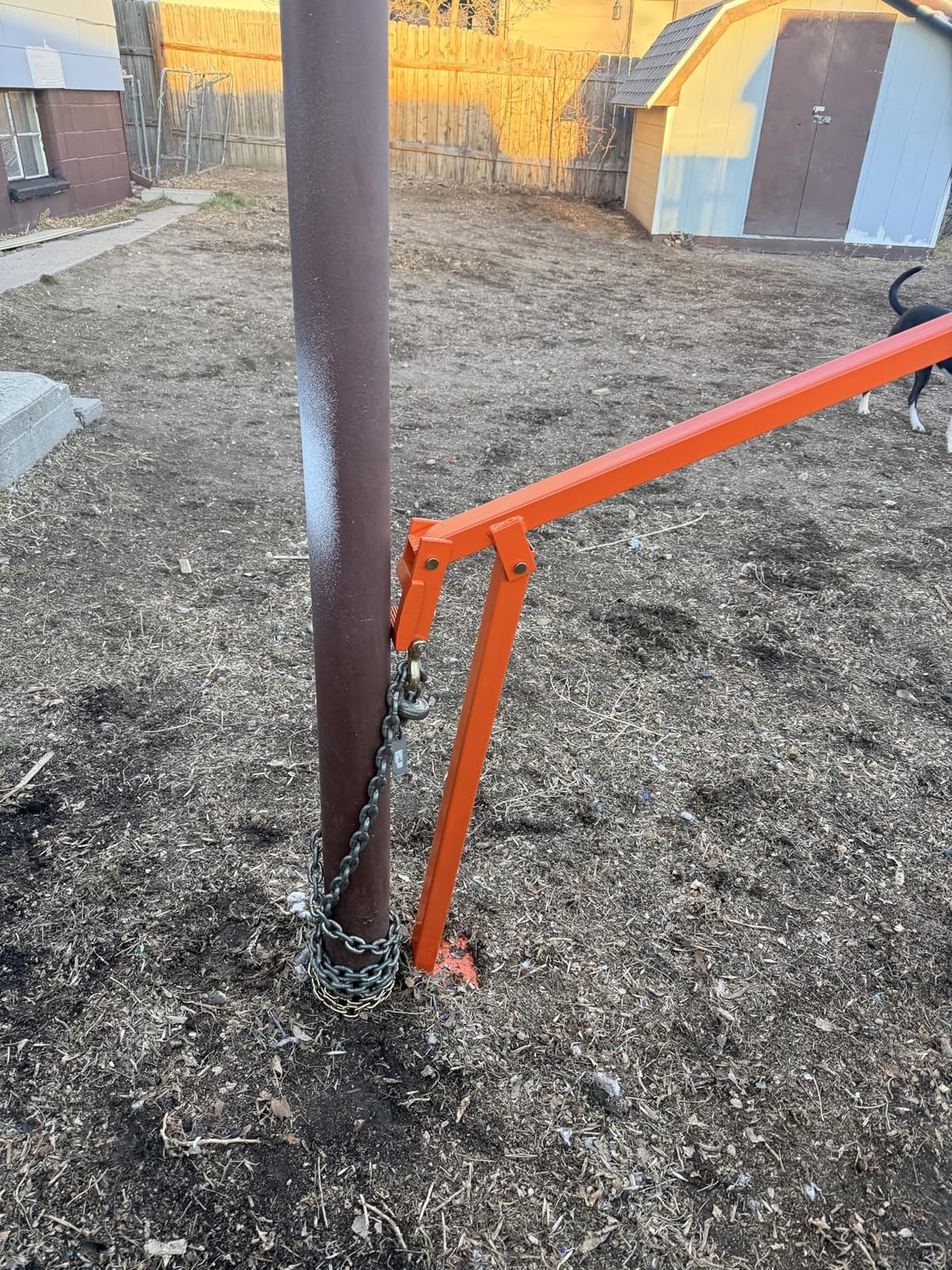
The vertical design is a genuine convenience. It stores in the corner of a garage or stands upright in a truck bed rather than lying across the floor, and at 23.1 pounds it is one of the heavier units here, so you will want to plan the lift rather than grab it cold.
The most repeated complaint is the chain. It is the weak link in an otherwise capable kit, and a number of owners replaced it with a heavier chain after it snapped. The puller plate is also described as softer metal that can stop gripping after repeated use, and the box ships without written instructions, so most people learn the technique from a video before the first pull.
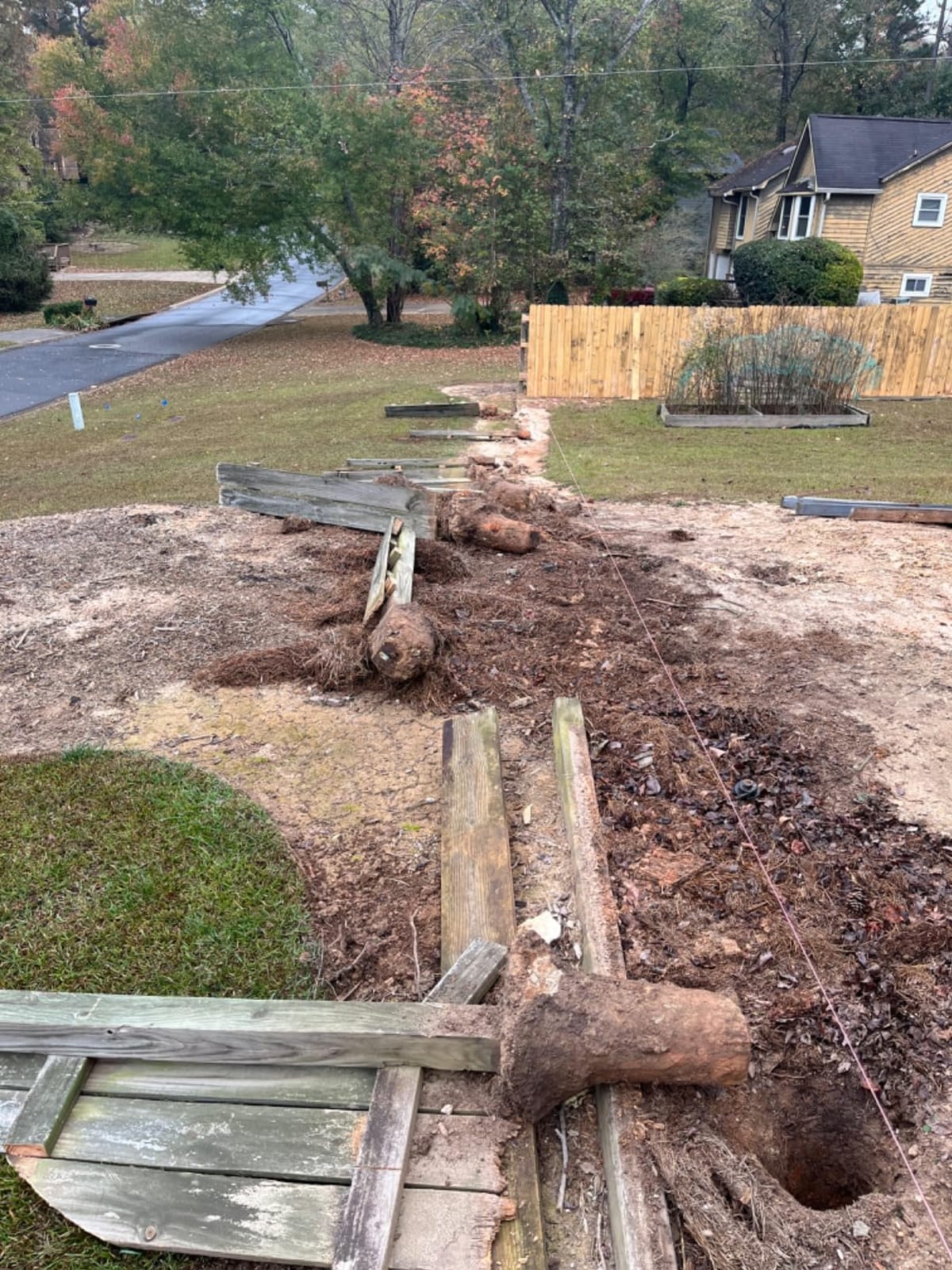
When the chain matters
Buy this if your property has more than one kind of post on it. A rural yard with a run of T-bar, an old wooden line, and a couple of sign posts is exactly the situation where a bundled chain and plate saves you a second purchase. If your fence is entirely T-posts, you are paying for accessories you will never load.
Know what to watch
Test the chain before you rely on it. A quick hard pull on a post that is barely set will tell you in one stroke whether the hardware is sound, and it is far better to learn that with a loose post than with something concreted in place. An extension bar added to the handle also helps on long stakes driven into hard ground.
4. Pull A Post Cable Extractor – Best for Broken and Rotted Post Stubs
Upgraded Original Heavy-Duty Fence Post Removal Tool – Stronger Cable, Longer Chain, Works with Jack or Lever to Pull Broken Wood Fence Posts for Repair & Replacement fence repairs
7/32 inch aircraft cable at 5600 lb
2 foot Grade 43 chain
Snare-style loop
2 lb accessory
Pros
- Snare cable grips evenly on broken and rotted posts with no readjusting
- Under 2 pounds so it fits in a tool bag or truck bed
- Pairs with a farm jack or 4x4 lever for real leverage
- Owners report clearing 60 plus concrete-set posts
Cons
- Cable and chain have broken for some reviewers
- End loop flattens after first use and is awkward to re-thread
- Requires a separate jack or lever to generate force
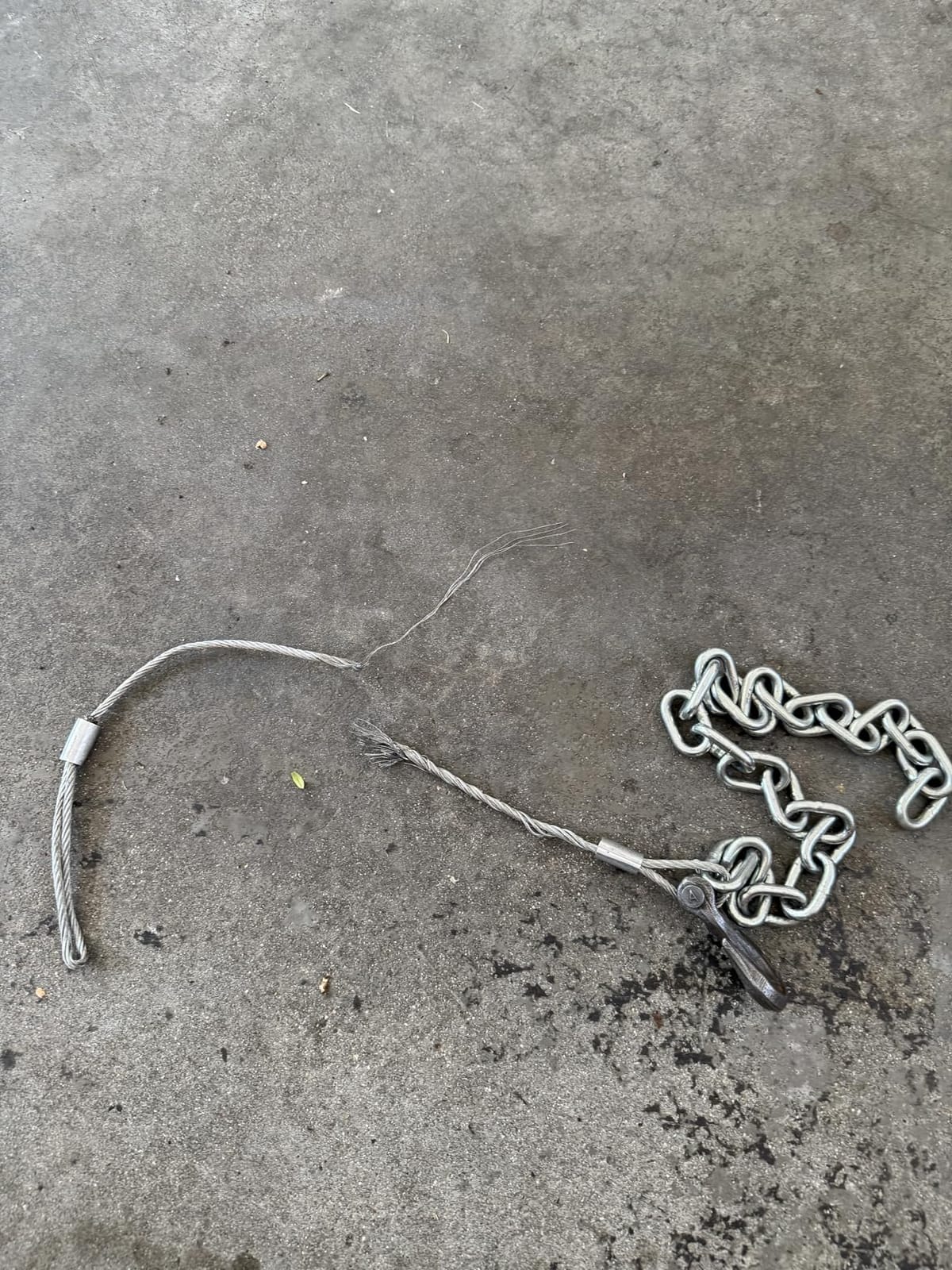
This is not a puller, and treating it as one is the most common mistake. It is a cable and chain assembly that loops around a post and hooks onto leverage you already own. A car jack, a farm jack, or a plain length of 4×4 lumber becomes a post puller once this is attached. For a homeowner with a socket set and a garage, it is the cheapest way into the category.
Its reason for existing is the case that breaks everything else. When a post snaps off a couple of inches above the concrete collar, there is no ridge for a hook, no profile for a jaw, and nothing for a chain to slide under. The snare-style cable solves precisely that. It lassos around the post and tightens like a snare drum, so it does not slip or need readjusting as the load comes on.
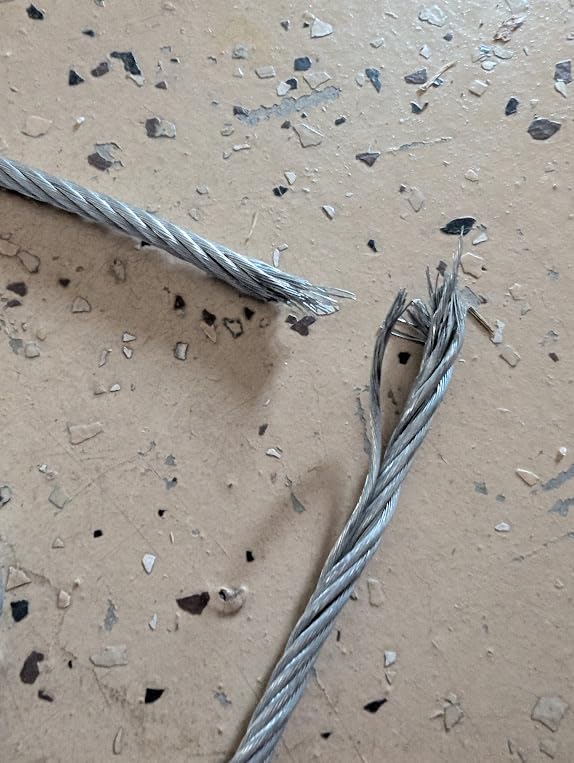
At 4.1 stars from 248 reviews, this is the lowest-rated tool in the group, and the reviews are consistent about why. Several people report the cable or a chain link breaking after only a few posts. Others note the end loop flattens after the first use and becomes awkward to re-thread. The instructions are also thin, with very small photos.
None of that changes what it does well. Owners working in tight-access spots report clearing more than sixty concrete-set posts, and several mention getting a post moving that a person could not pull by hand. The cable is 7/32-inch galvanized aircraft cable rated at 5,600 pounds of breaking strength, paired with a 2-foot Grade 43 chain with swaged fittings.
Pair it with something you already have
The loop folds down to 42 by 1 by 1 inches and weighs 2 pounds, so it lives in a tool bag permanently. If you own a 4×4 offcut and a length of chain, this is a complete setup for a fraction of the cost of a dedicated puller. It is also the right tool for a mailbox pole or a sign post, which is a use we also flagged in our post-mount mailbox roundup.
Where the low rating comes from
Durability, not performance. If your project is five posts, this is a sensible, low-risk purchase. If you are clearing a hundred feet of old fence, buy a lever puller and save the cable for the stubs the lever cannot grab. Check the cable and the first chain link under load before you trust it on a deep post.
5. Field Tuff Manual T-Post Puller – Top Rated for T-Post Work
Field Tuff Manual T-Post Puller, 17 Pound, 3 Ft Handle
17 lb alloy steel tool
3 foot handle
5 by 5 inch platform
1 year warranty
Pros
- Highest average rating in the group at 4.7 stars
- Owners report 40 plus posts in under 30 minutes
- Works on posts tangled in tree roots
- Operates from either side of the post
Cons
- Foot can sink into soft ground and tip sideways
- Most owners add a 4 foot pipe for extra leverage
At 4.7 stars from 241 reviews, this has the highest average rating of anything we tested, and the reviews explain why. There is no single flashy feature. It is a well-proportioned tool, and the design decisions that usually go wrong on pullers were not made here.
The 5-inch by 5-inch platform is the part that stands out. Most lever pullers in this price range sit on a foot barely wider than a coffee can, which is why they sink and tilt. Field Tuff gives you a base with real area behind it, and that translates directly into how much of your effort goes into lifting the post rather than shoving the tool sideways through wet grass.
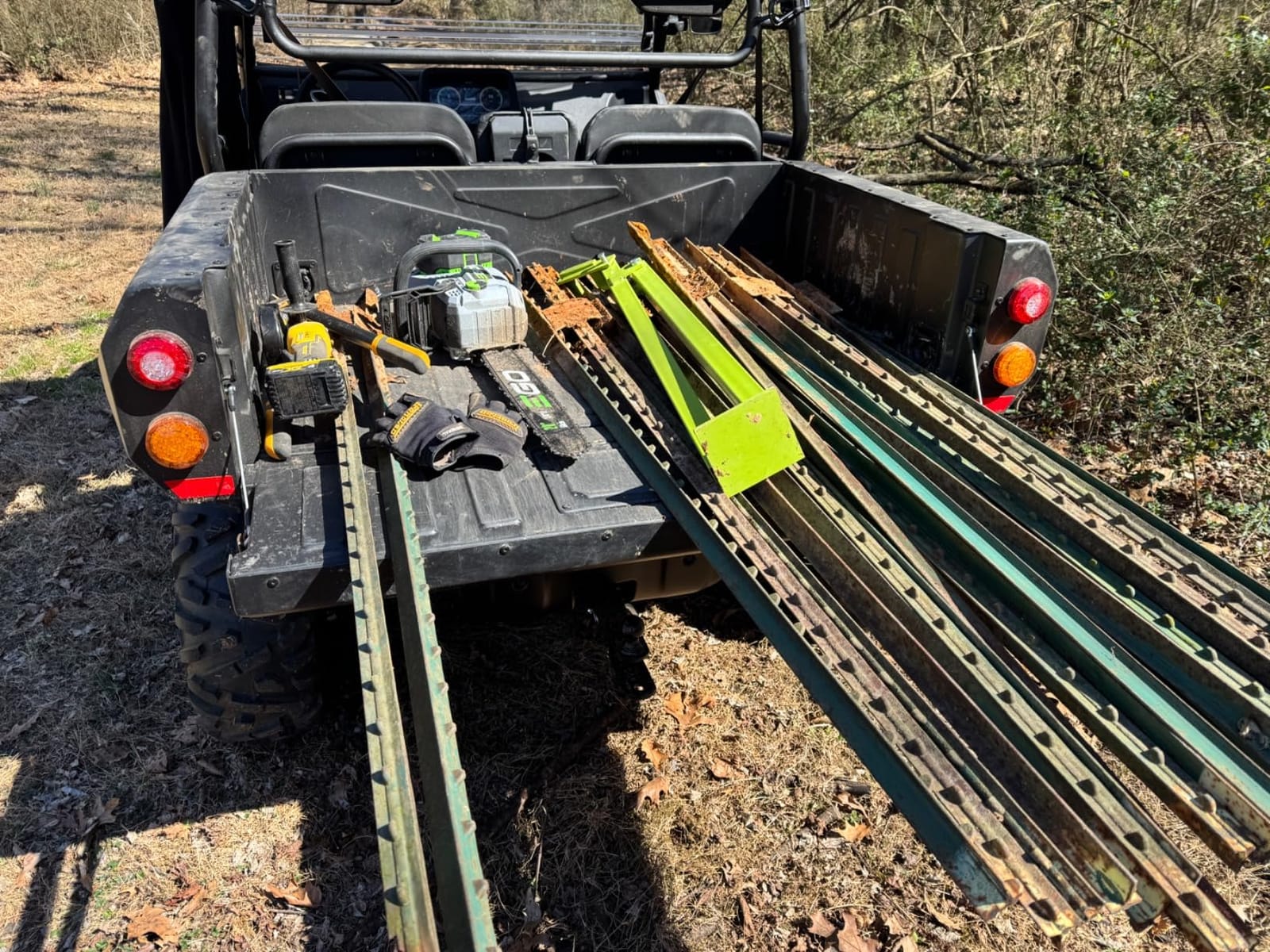
The other detail is that it works from either side of the post. If you are working along a property line with a neighbour’s fence on one side, you can stand where you have room instead of contorting yourself. One owner described a 77-year-old user extracting fifteen posts with little effort, and several mention posts tangled in tree roots coming out cleanly, which is not a small claim in rocky ground.
The only recurring limitation is the same soft ground problem, though owners solve it with a board under the foot. A 4-foot pipe slipped over the handle for a longer lever is the other common upgrade. It handles posts up to two inches in diameter and comes with a one-year warranty against manufacturer defects.
Why the rating is the highest here
Compare the four-and-a-half to four-and-seven range across this list. Field Tuff sits at the top with a large enough review count to mean something, and the complaints that do appear are about the soil rather than the tool. The green finish is a small thing that matters more than it should, because you can spot it instantly in a cluttered garage.
Where it stops being the answer
It is a T-post tool. A three-foot handle is shorter than the Hi-Lift or the 36-inch models, and there is no chain attachment point, so a round wood post is more of a project. If your line is mixed wood and metal, pick a kit that includes a chain. For a pure T-bar or U-channel run, this is the one I would buy first.
6. BISupply 36in T Post Puller – Best for Stumps, Roots and a High Rated Capacity
BISupply T Post Puller Fence Post Puller – Wood Fence Post Puller 36in T Post Remover and Tree Stump Remover for Yards
36 inch steel lever
Rated to 1764 pounds
12.67 lb tool
Powder-coated 5 inch base
Pros
- Highest stated capacity in the group at 1764 pounds
- Ratcheting lock re-grips each T-post stud automatically
- Light enough to carry between posts without fatigue
- Under-hook accepts a chain for wood
- roots and stumps
Cons
- U-bracket will not grab smooth-sided metal without a bolt through the post
- Needs a plank under the base in soft ground
- Hook aperture is small for attaching a heavier chain
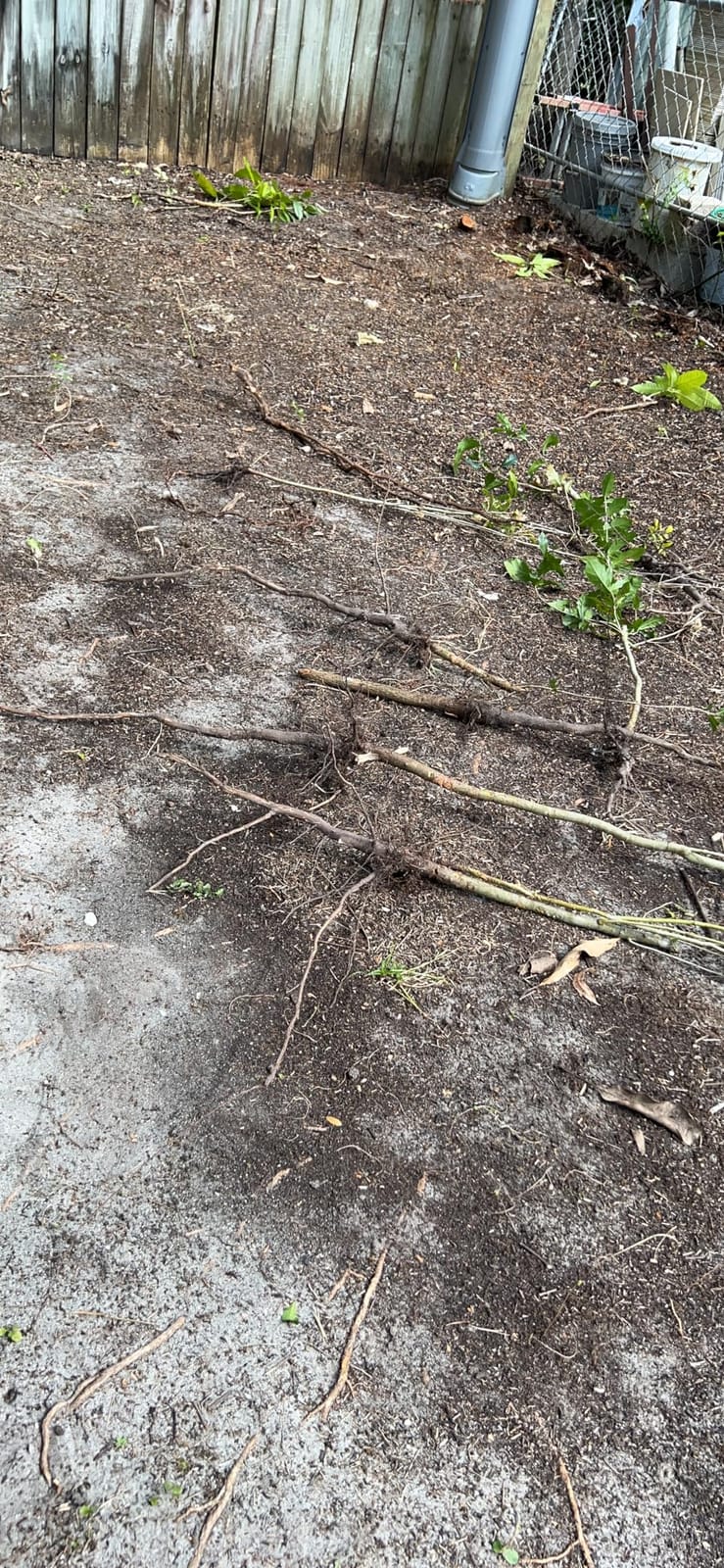
This is the one to look at if you are not only removing fence but also clearing a run of old tree stumps or shrub roots afterward. The manufacturer rates it at up to 1,764 pounds, which is by far the highest stated capacity in this roundup, and the under-hook gives you somewhere to attach a chain when the load is not a T-post at all.
At 4.6 stars from 238 reviews, the ratcheting remover lock is what owners single out. It grabs a T-post nub on each pump so the handle can be cycled like a car jack rather than reset by hand. Users report removing eight deeply driven clay-soil T-posts in under ten minutes, and fifteen posts with a single setup, which is the kind of number that matters when you have a whole line to clear.
It weighs 12.67 pounds, the second lightest lever here, so moving it from post to post does not become the bottleneck. The frame is 36 inches with a 5-inch powder-coated base, and the listing positions it for farming, mining, yard work and construction, which is a fair description of the range owners actually use it for.
There is one grip limitation that catches people out. The U-bracket does not bite smooth-sided metal, so on a plain round pipe or a galvanized post you need to drive a bolt through it to give the bracket something solid to catch. The hook aperture is also small enough that a heavier chain link may not fit through easily, and the base still needs a plank under it in soft soil.
When the high rating actually helps
The 1,764-pound figure matters in one specific scenario: a post that has been driven deep, or a small stump and root mass rather than a post. That is a different order of load from lifting a T-bar out of a lawn, and having the headroom means you do not have to abandon the tool and go back to the truck for something bigger.
Read the grip before you trust it
For a T-post with studs and ridges, the ratcheting lock is excellent. For a smooth pipe, the bolt trick is not optional. Take a moment to identify what is actually in your ground before you buy, because a high capacity rating is worth nothing if the jaw cannot hold the post you have.
7. Yararday 36 inch Round Tube Puller – Best Budget Lever for T-Posts
Yararday 36″ T-Post Puller Fence Post Puller (Round Tube)
36 inch round tube lever
13.42 lb tool
Compact base
Hand powered
Pros
- Ratcheting jaw climbs the T-post ridges as the post rises
- Owners report clearing 2000 feet of T-bar fence
- Compact base fits between closely spaced posts
- Simple to assemble and durable
Cons
- Jaw will not grip posts with smooth surfaces or no protrusions
- Steel is thin where the retaining pin passes through
- Small base needs a board in soft soil
- Occasional missing hardware on delivery
This is the entry point. The whole design is a 36-inch round tube with a ratcheting jaw that bites the ridges on a T-post, and at 4.3 stars from 175 reviews it does that job reliably. The reviews are not full of superlatives, which is what you would expect from a straightforward budget tool.
What owners actually report is volume. One user cleared 2,000 feet of T-bar fence, and another pulled 18 campaign sign posts out of compacted gravelly soil. That is a lot of posts through a tool that most owners are not spending serious money on, and the compound leverage ratcheting against the ridges means the jaw re-grips further down with each pull instead of resetting.
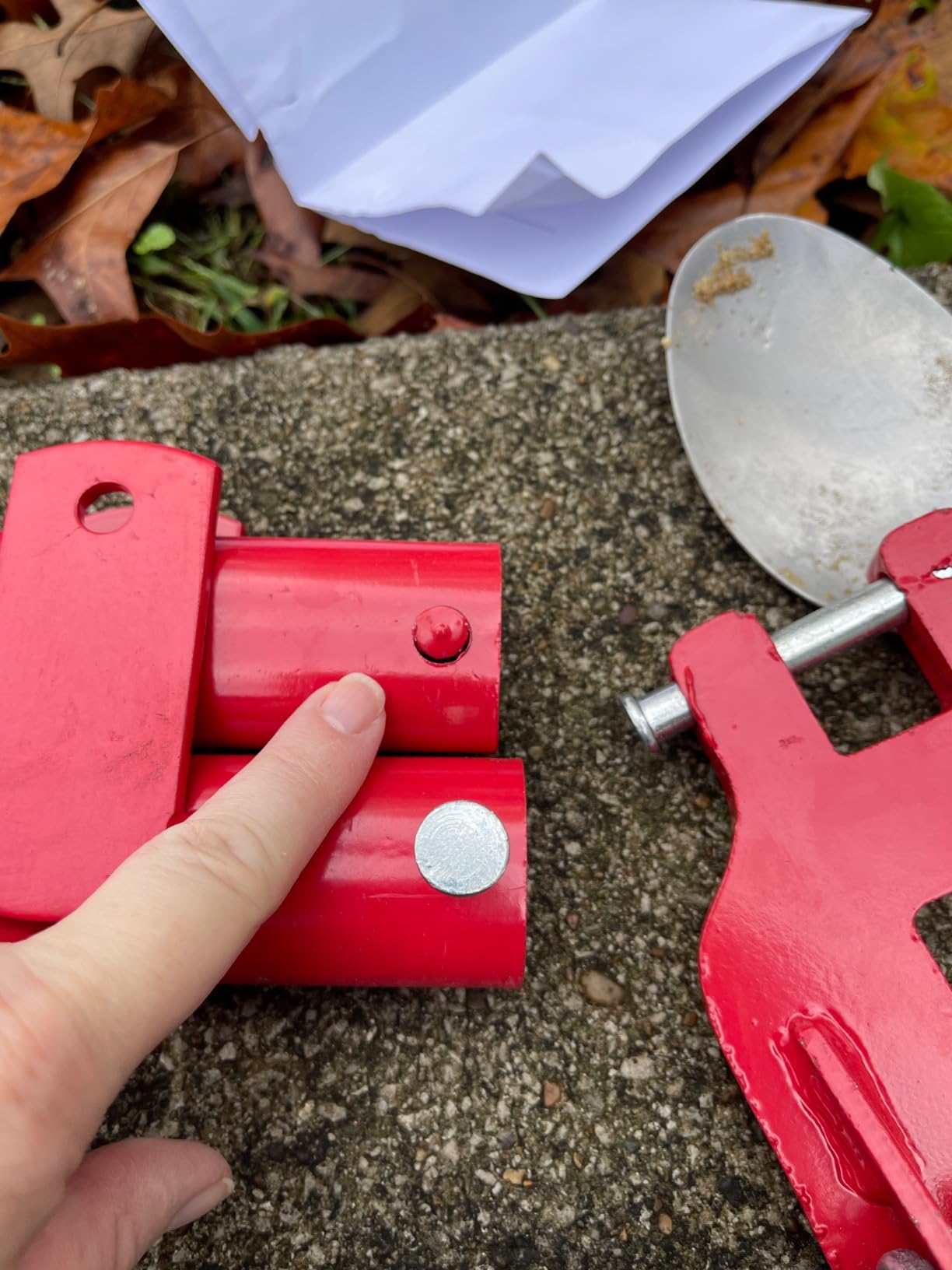
The compact base is genuinely useful in a specific situation. If your T-posts are spaced eight inches apart in a tight run, a wide platform simply will not fit between them. At 13.42 pounds, it is light enough to move down a line without fatigue, and it stores flat against a wall.
The limitations are honest. The jaw does not grip posts with smooth surfaces or no protrusions, so it is not a wood post tool. The steel is thin where the retaining pin passes through, which is the point most owners flag as the eventual failure location. The base is small and needs a board in soft ground. A few units have also arrived with a missing pin or attachment part.
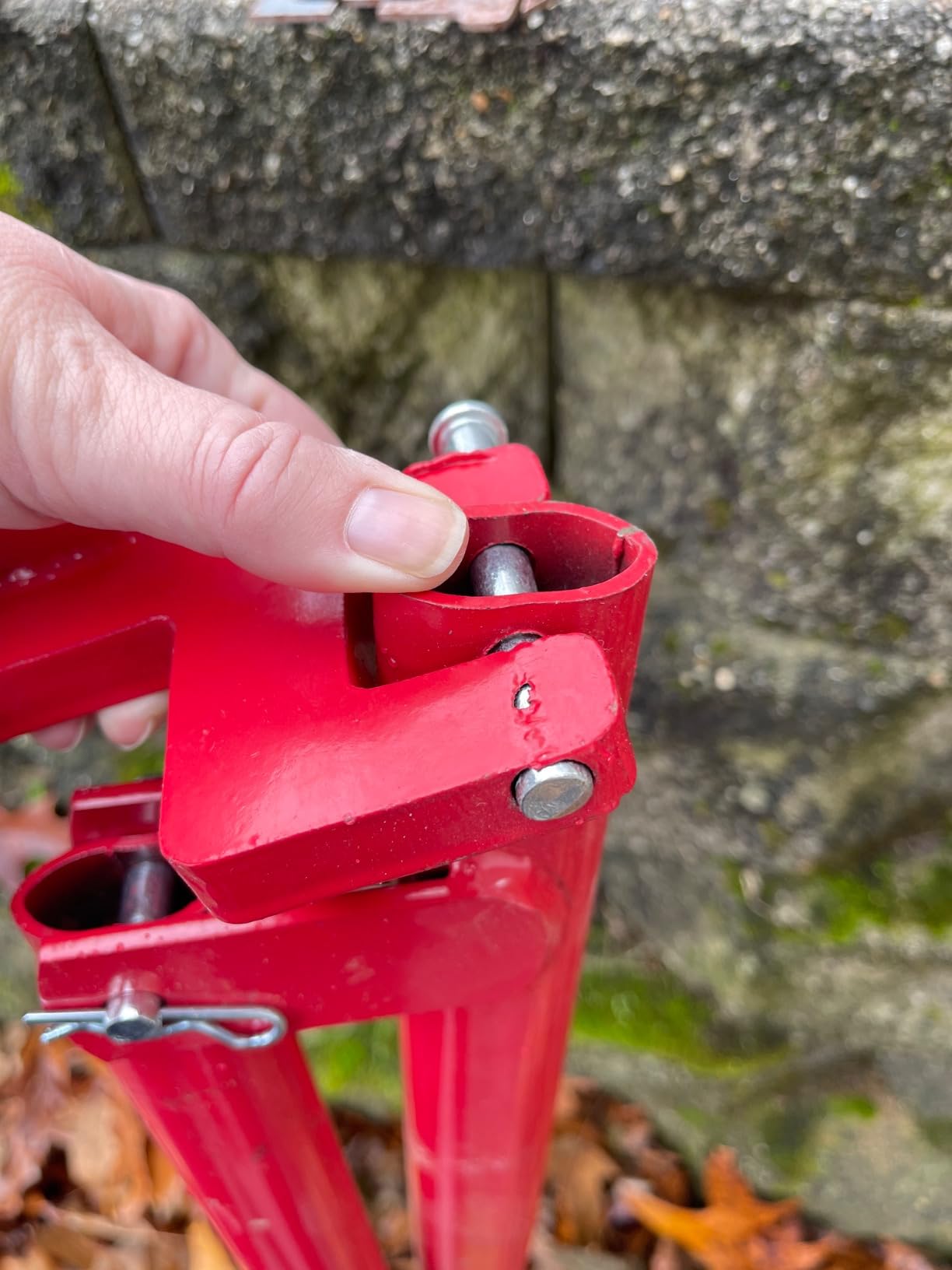
Best case and worst case
Best case: a long run of standard metal T-posts, spaced closely, in soil that is firm enough to support a small foot. In that situation it will clear a fence line faster than most people expect. Worst case: anything smooth, round, or set in concrete, where you will be fighting the jaw rather than the soil.
What to have on hand
Check the hardware the day it arrives. A retaining pin and its clip are small and easy to lose in gravel, and a missing part on day one is a return rather than a workaround. Keep a length of pipe nearby for extra leverage, and a board for the base, and this tool will do more work than its rating suggests.
8. Yararday Adjustable Height Puller – Best for Shallow and Deep Posts in One Tool
T-Post Puller Fence Post Puller – 36″ & 20″ Adjustable Height
20 and 36 inch working height
12.38 lb tool
Adjustable ratchet hook
Easy assembly
Pros
- Two height positions suit both shallow and deeply set posts
- Ratchet hook self-adjusts so two or three pumps free a post
- Owners report clearing 50 plus posts in rocky ground
- Compact and simple to assemble
Cons
- Can bend or snap if the handle is pulled off-angle
- Some shipments arrive missing the assembly nuts
- The hook needs experimentation before it seats properly
The adjustable height is the whole idea here. Most pullers are a fixed 36 or 40 inches, which is awkward when you are working on shallow posts in soft ground because the long handle is all leverage and no control. This one runs at 20 inches or 36 inches, and the change is quick enough to do in the middle of a run.
With 4.5 stars from 122 reviews, owners report clearing more than fifty posts, including in rocky ground, and one review mentions a teenager being able to operate it. That is a real signal about the learning curve. The ratcheting hook self-adjusts down the post so two or three pumps free it rather than requiring a fight.
It is the lightest lever in the group at 12.38 pounds, and it folds down small enough to live in a corner of a truck bed. Assembly is simple, and the whole package measures 18.9 by 6.5 by 3.6 inches in the box, which is one of the more compact options we looked at.
The one thing that breaks these tools
Reviewers report bending and snapping when the handle is pulled off-axis, and uneven or sloped ground makes that easy to do by accident. Push straight down and let the frame do the work. The second recurring issue is missing nuts for the bolts in some shipments, so check the bag of hardware before you walk out to the yard.
Is two heights better than one right height
For most people, one well-chosen length is simpler. Adjustability earns its place when your posts vary a lot in depth, when you will be working on both a shallow T-post line and deep wooden stakes, or when you want the tool to fit in a small vehicle. Otherwise the Hi-Lift or the Field Tuff is a cleaner buy.
9. VEVOR 36 in T Post Puller – Best for Long Wood Posts and Small Stumps
VEVOR 36 in T Post Puller, Heavy Duty Fence Post Pullers with Puller Plate & 47 in Lifting Chain, Labor-Saving T-Post Remover Tool for Round Fence Posts, Sign Posts & Tree Stumps
36 inch reinforced steel frame
Rated to 660 pounds
22.2 lb tool
Powder-coated finish
Pros
- Rigid steel that does not warp when levered
- Owners pull 30 plus 4x4 wood posts buried three to four feet
- Widened base gives more ground contact
- Plate and chain extend it to wood posts and stumps
Cons
- Supplied carabiner snapped for several buyers on the first pull
- At 22.2 pounds it is heavy to carry and needs assembly space
- Base is smaller than ideal in soft ground
VEVOR appears three times in the search results for this category, and this is the one aimed at mixed jobs. The frame is 36 inches of reinforced steel rated to support 660 pounds, and the self-adjusting lever action re-grips on each stroke like a car jack. Owners report pulling 30-plus wood 4×4 posts buried three to four feet, which is well past what most lever tools in this class will do.
At 4.4 stars from 82 reviews, the feedback is consistent on stiffness. Several owners note the steel does not warp or bend when levered hard, which is the failure mode that ends the life of a cheaper puller. The powder-coated surface resists the rust that ends lesser steel, and the widened base gives more ground contact than a typical flat foot.
The included puller plate and 47-inch lifting chain extend it past metal posts to round wood posts, sign posts, and small stumps, and the vertical design keeps it tidy in storage. It is offered in 36-inch and 32-inch lengths, with and without the chain.
Replace the carabiner first
The most common complaint is the small carabiner on the included chain, which snapped for several buyers on the very first pull. Swap it for a proper 1/4-inch quick link before you load the tool. It is a two-minute fix and it removes the single most likely point of failure in the kit.
Weight and base are the trade-offs
At 22.2 pounds, this is the second heaviest tool here and needs room to assemble. The widened base is better than most, but owners on soft ground still put a board underneath. If you are hauling between sites, that weight adds up, and a lighter lever may suit you better if your posts are not deeply buried.
10. Feroca Cable and Chain Extractor – Best for a Truck Bed or a Tool Bag
Fence Post Remover Tool with Galvanized Cable & Chain
3/16 inch aircraft cable at 5000 plus lb
19 inch adjustable chain
1.68 lb total
Hot-dip galvanized
Pros
- Lightest item here at 1.68 pounds so it fits anywhere
- Cold-forged welded-free parts and hot-dip galvanizing for rust resistance
- Reinforced thimbles prevent cable fraying
- U-hooks lock onto any jack or 4x4 lever
Cons
- Requires a separate jack or lever so it is an accessory
- Only 66 reviews so long-term durability evidence is limited
This is the second cable accessory here, and the lighter of the two. At 1.68 pounds it is the lightest item in the entire roundup, small enough to live permanently in a truck bed or a glove box. When a post goes down on a rural run and you are a long way from a hardware store, that matters more than any spec on the list.
With 4.4 stars from 66 reviews, the construction details are what stand out. The 3/16-inch aircraft-grade steel cable is about 24 inches long and rated for more than 5,000 pounds of pull force. The parts are cold-forged with no welding points, the coating is hot-dip galvanized, and the two reinforced thimbles stop the cable ends from fraying, which is exactly where cables like the other one in this roundup tend to give out.
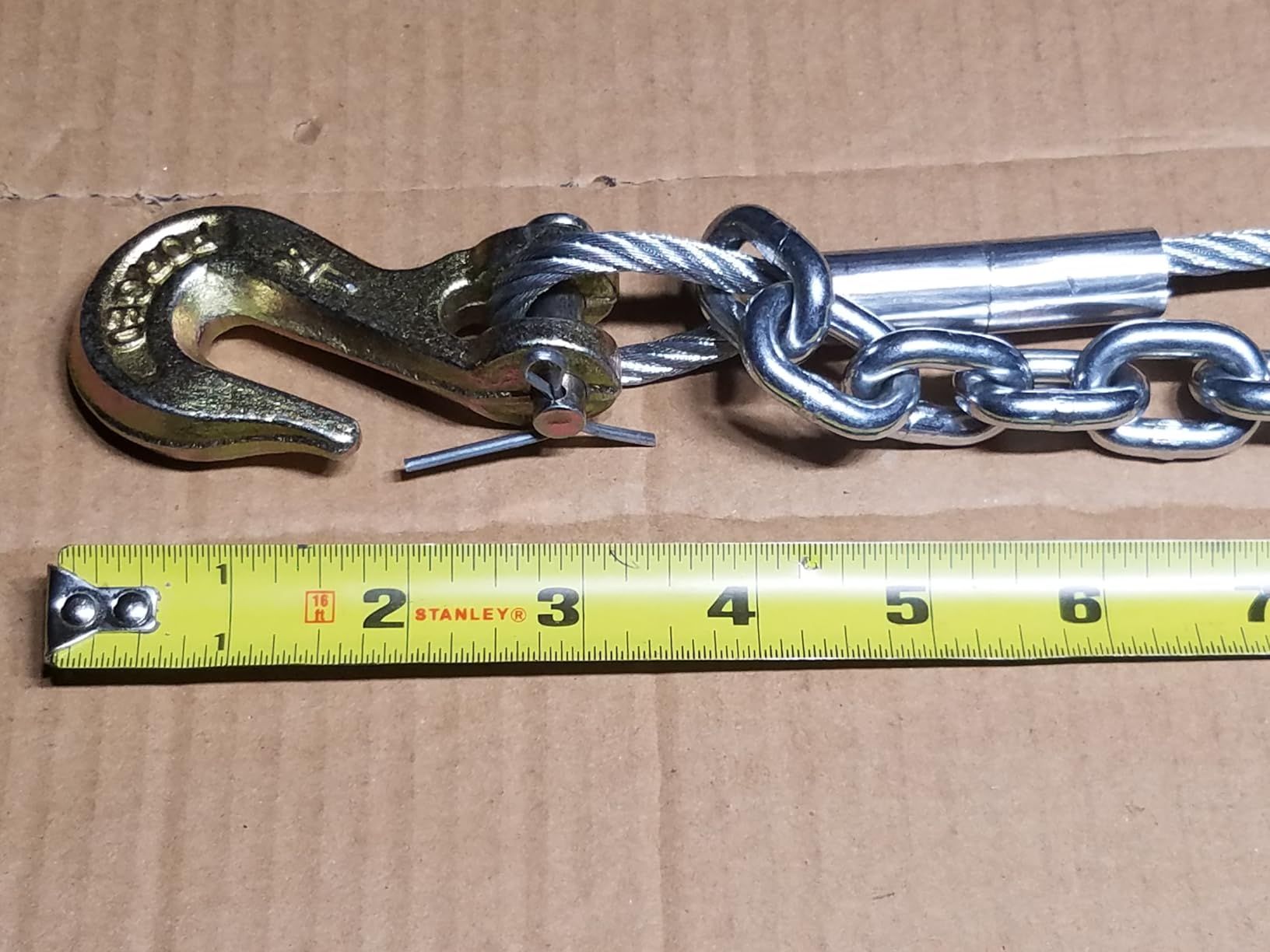
Setup is three steps. Loop the cable around the post, thread the 19-inch adjustable chain through your jack or lever onto the U-hooks, then pry up. A car jack is the classic partner, and the listing makes the intended use clear, so a post puller arrives on the back of a stock car jack you likely already own. It handles 4×4 posts including broken and rotted ones, sign posts, and mailbox posts.
The limitation is the same as the other cable extractor. This is an accessory, not a standalone puller, and it generates no force on its own. With 66 reviews there is not yet a long-term durability record, so for a large project, a dedicated lever is the safer bet.
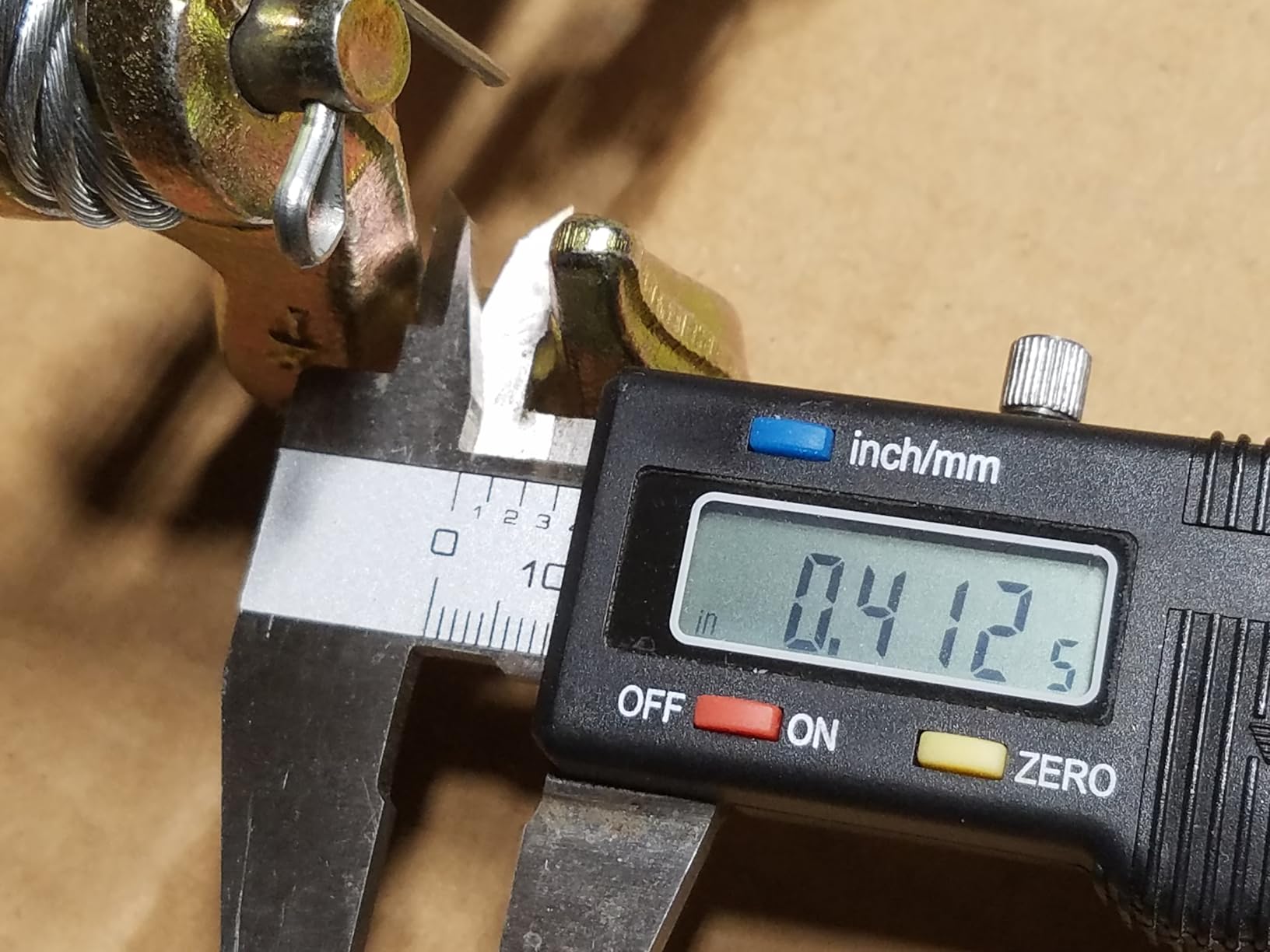
When this beats buying a puller
Choose the cable approach if you already own a jack or a 4×4 offcut and you are removing a handful of posts. It costs a fraction of a lever puller, it weighs almost nothing, and it handles the snapped-off stubs and rotted bases that defeat every hook and jaw. Add a piece of lumber and you have a working setup in about five minutes.
What to buy alongside it
A length of 4×4 lumber to use as the lever, a decent quick link rather than a small carabiner, and eye protection. Cold-forged parts and reinforced thimbles make this the better-built of the two cable options, and the hot-dip galvanizing is what keeps it from becoming a rust problem by the second spring.
How to Choose the Right Fence Post Puller
Start by identifying what is actually in your ground, because the tool that suits a metal T-post is frequently the wrong one for a wooden stake. T-bar and U-channel posts have ridges or studs that a ratchet hook can climb. Round wood posts have a smooth surface that wants a chain or a cable. Posts that were set in concrete want raw force and a long handle. Getting this backwards is why so many buyers end up disappointed by a tool that works fine for someone else.
Next, count the posts. Under five posts, a cable and chain extractor paired with a jack or a length of 4×4 is the cheapest sensible route. Between five and fifty, a dedicated lever puller pays for itself in saved time and saved back. Above fifty, or if you maintain fence as part of the job, buy the most capable tool you can carry and consider the accessory kits that extend its range.
Then look at the base, not the handle. Nearly every negative review in this category is about the tool sinking into wet or soft ground and the buyer blaming the tool instead of the soil. A wider platform such as the Field Tuff 5-inch foot or the VEVOR widened base is worth real money. If the tool you have has a small foot, keep a 2 by 8 board or a stack of concrete blocks next to it.
Finally, consider whether you already own half the answer. A 4×4 offcut and one of the cable extractors make a workable pulling device for occasional jobs. If you are only replacing a mailbox pole or clearing a small number of sign posts, that is a legitimate answer and you do not need a dedicated tool. Many one-time buyers regret overbuying a lever puller they use once.
Ground conditions change the answer
Clay packs hard around a post and rewards raw force plus soaking the ground first. Sand gives up easily, and you will mostly be fighting the tool sliding rather than the post staying. Rocky ground is unpredictable, since a post can be welded in by a stone on one side and loose on the other. Frozen ground can defeat a manual puller outright, which is an argument for waiting or for using a come-along and a vehicle.
Safety, briefly and seriously
Wear eye protection. A post that releases suddenly can throw concrete dust and soil straight at your face, and that is the most common injury in this job. Keep your hands clear of the pinch point where the jaw meets the post, stand to the side rather than in line with the pull, and treat a cable or chain under load as a potential projectile. Push the handle down with your legs and your weight, not with a twist of your lower back.
How to Remove a Fence Post Without Breaking It
This is the part that decides whether the job goes quickly or badly, and most of it is preparation rather than the tool. In the order we do it:
Clear the attachments first. Cut the staples, remove the wire, and unhook the mesh. A taut fence wire will hold a post in place no matter how much force you apply, and it can snap back at you.
Soak the ground if the post is in concrete. Water the soil around the collar and wait five to ten minutes. Home Depot reviewer jray reports this softens the ground enough to extract cemented posts with real ease, and it costs nothing.
Chip the concrete collar if a post snapped off flush. Knock two or three inches off the top of the collar, just enough to pass a chain around it. This is the single most common fix for the stump that nothing will grip.
Dig around the base to break the seal. A few inches of loose soil at the collar is often the difference between a post that lifts and one that does not. This is where a full post puller is overkill.
Pull straight up, and do not rush the first stroke. The purpose of the first pump is seating the jaw or the chain correctly, not moving the post. A violent first yank is how posts snap.
Re-grip in stages. Each stroke should lift the post a few inches and let the hook step down to the next ridge. Working in short strokes keeps the load on the frame instead of your back.
Angle away from adjacent concrete. If the post sits next to a sidewalk, driveway, or foundation, pull away from the slab so the collar breaks loose from it rather than lifting against it.
Put a board under the base every time in soft ground. This is worth repeating because it is the most commonly skipped step and the most commonly reported frustration.
If the post is rotted off at ground level, pull it. It is not going to be reused, and the only useful outcome is getting the stump out of the way. If it is snapped off above a collar you cannot chip, that is a job for a cable extractor and a jack rather than a lever.
Do You Need a Post Puller at All?
Sometimes you do not, and it is worth being honest about when. One shallow post in loose soil will usually come out with a pry bar and twenty minutes of swearing. A few wooden stakes in garden soil can be twisted out by hand after you soak the ground. And if a post is snapped off flush with a concrete collar, a dedicated puller will not save you, because there is nothing left to grip.
It is also worth being clear about a common mix-up. The best tool for knocking in a fence post is a driver or a ram, not a puller. A post driver seats a post by delivering impact downward, and a puller is the opposite tool doing the opposite motion. Owners report a 30-pound driver seating a post in roughly twenty measured strikes.
And for someone with a tractor or a pickup, the come-along and A-frame method is a legitimate no-purchase option. Loop a chain over the post, anchor it to the drawbar, and reverse slowly. The drawback is the equipment, the space, and the fact that you need a second person or a good anchor. For a fence contractor with a truck, it works. For one weekend project, a lever puller is cheaper and far less dramatic.
You can also skip the purchase entirely if renting is available. Equipment rental shops carry post pullers and tree pullers for exactly this situation, and for a single job it is the sensible option. The case for buying is repeat work, which most fence lines, farms, and rental properties eventually become.
Frequently Asked Questions
What is a good tool for removing fence posts?
A lever and ratchet post puller is the best general-purpose tool. It grips the ridges on a T-post or a chain around a wood post and multiplies your handle force, pulling the post straight up a few inches per stroke. For posts set in concrete or broken off flush, add a chain and cable extractor so you have something to grip.
What are the different types of fence post pullers?
There are four main types: lever and ratchet pullers that grip a post and lift it directly, chain and cable extractors that turn a jack or 4×4 lever into a puller, high-lift ratcheting jacks for concrete-set posts, and A-frame setups that use a come-along inside a fixed frame. Livestock pullers clamp a wire fence line and unroll it instead of removing posts one at a time.
What is the easiest way to remove old fence posts?
Cut the wire and staples, soak the ground around the base for five to ten minutes, and pull straight up in short re-gripping strokes rather than one hard yank. A board under the base stops it sinking in soft soil. If a post is snapped off flush, chip two or three inches off the concrete collar so a chain can pass around it.
What is the best tool for knocking in fence posts?
A post driver or ram, not a post puller. A driver delivers impact downward to seat the post, and a 30-pound driver typically seats a standard post in around twenty measured strikes. Pullers do the opposite job, so buying one to drive posts will not help.
Will a fence post puller break my post?
It can, if you force it. Posts snap when the first stroke is violent, when the jaw grips a smooth surface and slides, or when a concrete collar holds the base while the shaft takes the whole load. Work in short strokes, pull straight up, and soak cemented ground first. A puller that lifts straight will usually leave the post intact and reusable.
Do I need a fence post puller or can I use a come-along?
Both work. A come-along anchored to a tractor drawbar or a truck pulls harder than any manual tool, and it is faster for large jobs if you already have the equipment and a second person. A dedicated post puller is cheaper, needs no vehicle, works in a confined yard, and is the better choice for a few posts on a residential run.
Final Verdict
After two months of pulling posts, the Maasdam Pow’R Pull PP100 is the tool we recommend to most people. It is the most reviewed in this group at 726 reviews and 4.6 stars, it attaches faster than anything else here, and its balanced lever does not punish a first attempt. If you suspect concrete or rotted stubs, add a chain and cable extractor and you have covered the two hardest cases in this category.
The Hi-Lift PP-300 is the reach for force, with a 40.5-inch frame and a ratcheting hook that keeps its grip as the post rises. The Field Tuff is the best-rated option and the hardest to sink into wet ground. For one-time jobs, a cable extractor with a jack or a 4×4 offcut is enough, and for a straight metal T-bar run the best fence post puller is simply whichever of these you will actually leave in the truck. Updated for 2026, and still the fastest part of any fence rebuild.