
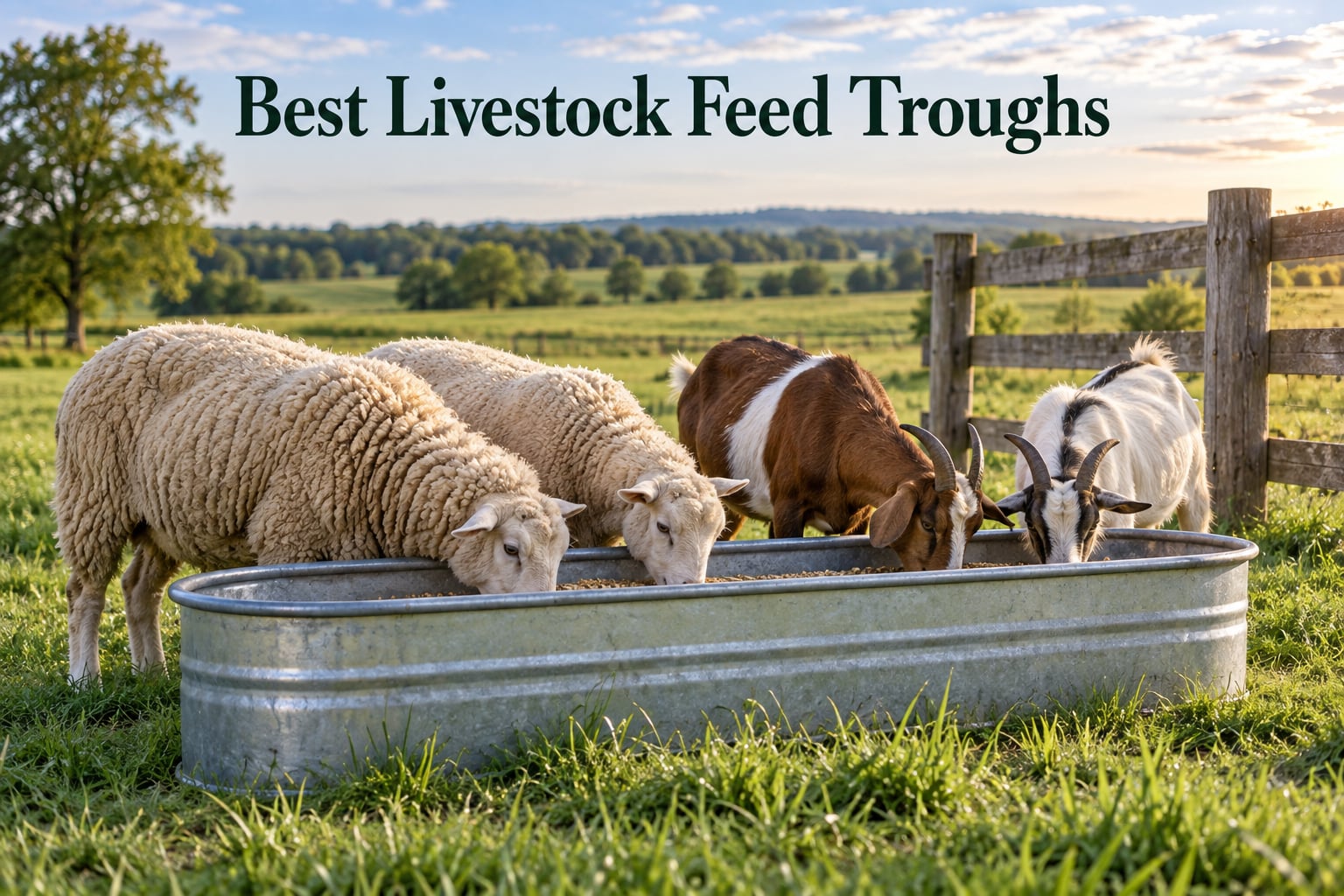
A livestock feed trough is a rigid, open-topped pan set at feeding height that holds grain, pellets or mineral supplement so cattle, sheep, goats, horses and hogs eat without putting feed on the ground. A longer version of the same idea is usually called a feed bunk, and the two words get used interchangeably in farm supply catalogs. In this roundup I compare the 12 best livestock feed troughs available now, from poly troughs that hook straight onto a fence rail to heavy galvanized steel bunks that hold a full flock at one filling.
Most of the complaints I see about feed troughs come down to two things: feed sits in open air and spoils, or animals fight over every mouthful. Those two failures drive every pick below. I looked at capacity, material, mounting method, how well the design slows feed pushing, and how the reviews describe cleaning it out after a wet week. I also weighed review counts, because a 5-star listing with six reviews tells you very little about the second winter.
Everything here is aimed at 2026 buyers with a real herd, from three backyard goats to fifty head of feedlot cattle. Operators in livestock groups keep repeating the same advice: galvanized steel is the durability standard, wire separation bars are what stop goats shoving each other off the feed, and cheap DIY troughs built from cut barrels work fine until a full-size animal leans on them. Use that as the filter when you read the sections below.
Table of Contents
Top 3 Best Livestock Feed Trough Picks for 2026

Goovilla Large Feed Trough 2-Pack 9 Quart
- 9 quart capacity per trough
- Dual feed and water use
- Hanging clips or screw-in mounting

Little Giant 15 Quart Hook Over Feeder
- Hook-over mounting on 2 inch board
- Impact-resistant polyethylene
- 15 quart capacity

Tiflev Hanging Trough Six-Pack 3.5 Quart
- Six troughs in one pack
- Feeding and watering combined
- Weather resistant for coop use
Best Livestock Feed Troughs in 2026 at a Glance
| Product | Specifications | Action |
|---|---|---|
| Goovilla Large Feed Trough 2-Pack 9 Quart |
|
Check Latest Price |
| Little Giant 15 Quart Hook Over Feeder |
|
Check Latest Price |
| Tiflev Hanging Trough Six-Pack 3.5 Quart |
|
Check Latest Price |
 Little Giant 9 Quart Galvanized Goat Trough 2-Pack Little Giant 9 Quart Galvanized Goat Trough 2-Pack |
|
Check Latest Price |
 APRICOCK 10 Quart Hanging Trough 2-Pack APRICOCK 10 Quart Hanging Trough 2-Pack |
|
Check Latest Price |
 DallerSoode 3.5 Quart Hanging Trough 2-Pack DallerSoode 3.5 Quart Hanging Trough 2-Pack |
|
Check Latest Price |
 Oxphanor 44 Inch Pasture Feeder 22 Gallon Oxphanor 44 Inch Pasture Feeder 22 Gallon |
|
Check Latest Price |
 VEVOR 45 Inch Steel Trough 22 Gallon VEVOR 45 Inch Steel Trough 22 Gallon |
|
Check Latest Price |
 FARM-TUFF 36 Inch Reel Top Poultry Feeder FARM-TUFF 36 Inch Reel Top Poultry Feeder |
|
Check Latest Price |
 Little Giant 26 Quart Corner Feeder Little Giant 26 Quart Corner Feeder |
|
Check Latest Price |
 KANE 48 Inch Trough Feeder KANE 48 Inch Trough Feeder |
|
Check Latest Price |
 ECOTRIC 45 Inch Feeder 22 Gallon ECOTRIC 45 Inch Feeder 22 Gallon |
|
Check Latest Price |
1. Goovilla Large Feed Trough 2-Pack 9 Quart Best All-Round Poly Trough
Goovilla Large Feed Trough, Hanging or Screw-in, 2 Pack 9 Quart, Black
9 quart per trough
Dual feed and water use
Hanging clips or screw-in mount
BPA-free PE
Pros
- Large 9 quart capacity cuts refill trips
- Two mounting options in one pack
- BPA-free plastic that resists cracking
- Elevated design keeps feed clean and cuts waste
Cons
- Clips can need reinforcement with animals that lean on the trough
- Some animals tip it unless extra holes are drilled
This is the trough I keep coming back to for mixed herds. At 9 quarts a piece and sold as a two-pack, it handles a pair of goats, a small group of sheep, or a handful of pigs without constant refilling. The interior is a smooth single basin, so a hose rinses it out in seconds and there are no seams where feed can lodge and go rancid.
What sells it is the choice of mounting. Hanging clips and zip ties let you strap it to a rail or wire panel in about a minute, and the screw-in option turns the same tub into something closer to a fixed unit. Reviewers point out that a one-way locking clip resists being knocked loose, which matters more than it sounds when a hungry goat leans its whole weight into the feed.
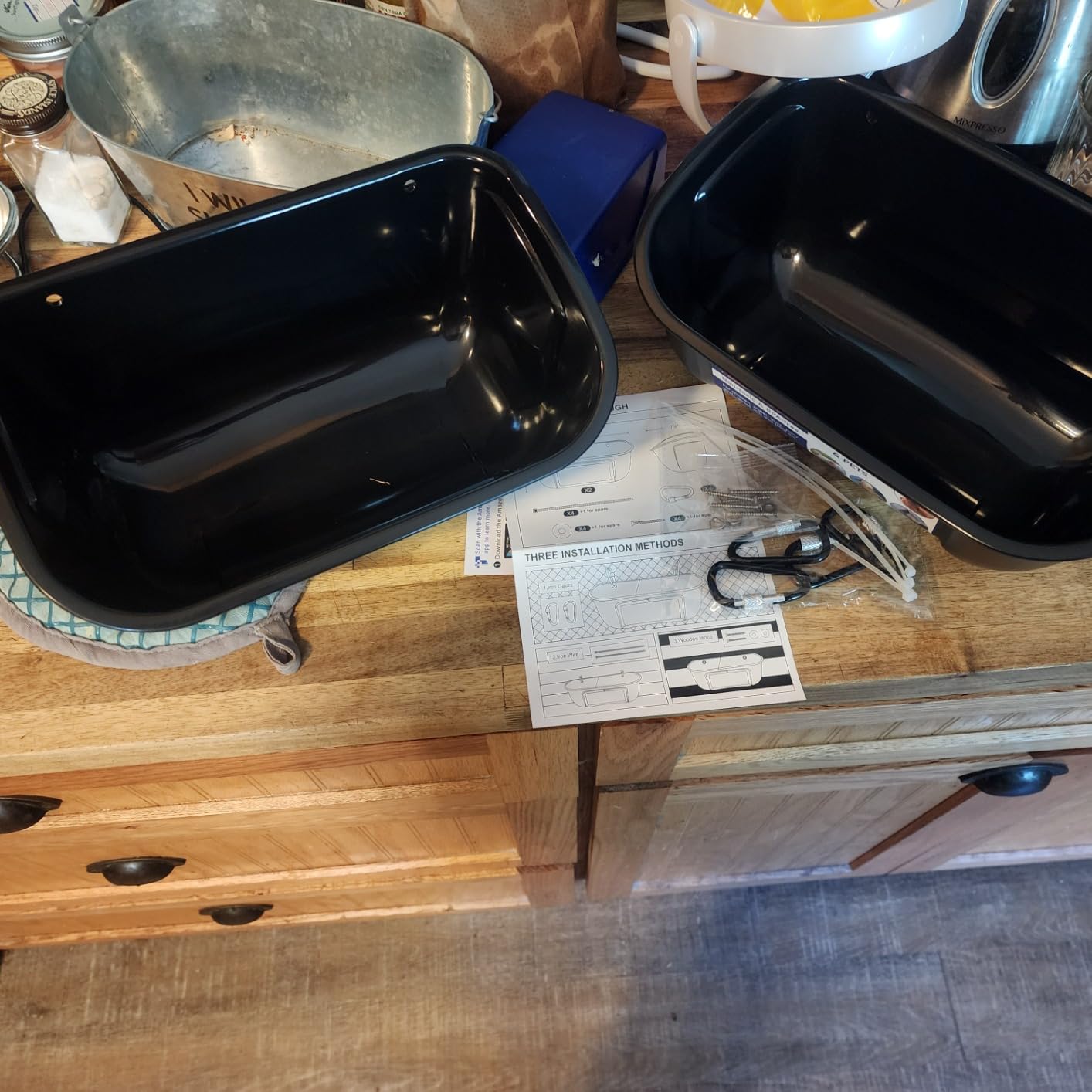
Buyers describe the plastic as thick and rigid enough that it does not flex or bow under a mature animal’s muzzle. With 863 reviews and a 4.4 average, this is the most heavily reviewed product in the group, and the 72 percent five-star share lines up with what I found.
The single most common request in the reviews is more mounting security. Owners of larger animals add their own drilled holes or a secondary screw because a determined hog or deer can work a clip loose. It is a five-minute fix, and it is the first thing I would do after hanging it.
Best For Mixed-Size Herds and Portable Setups
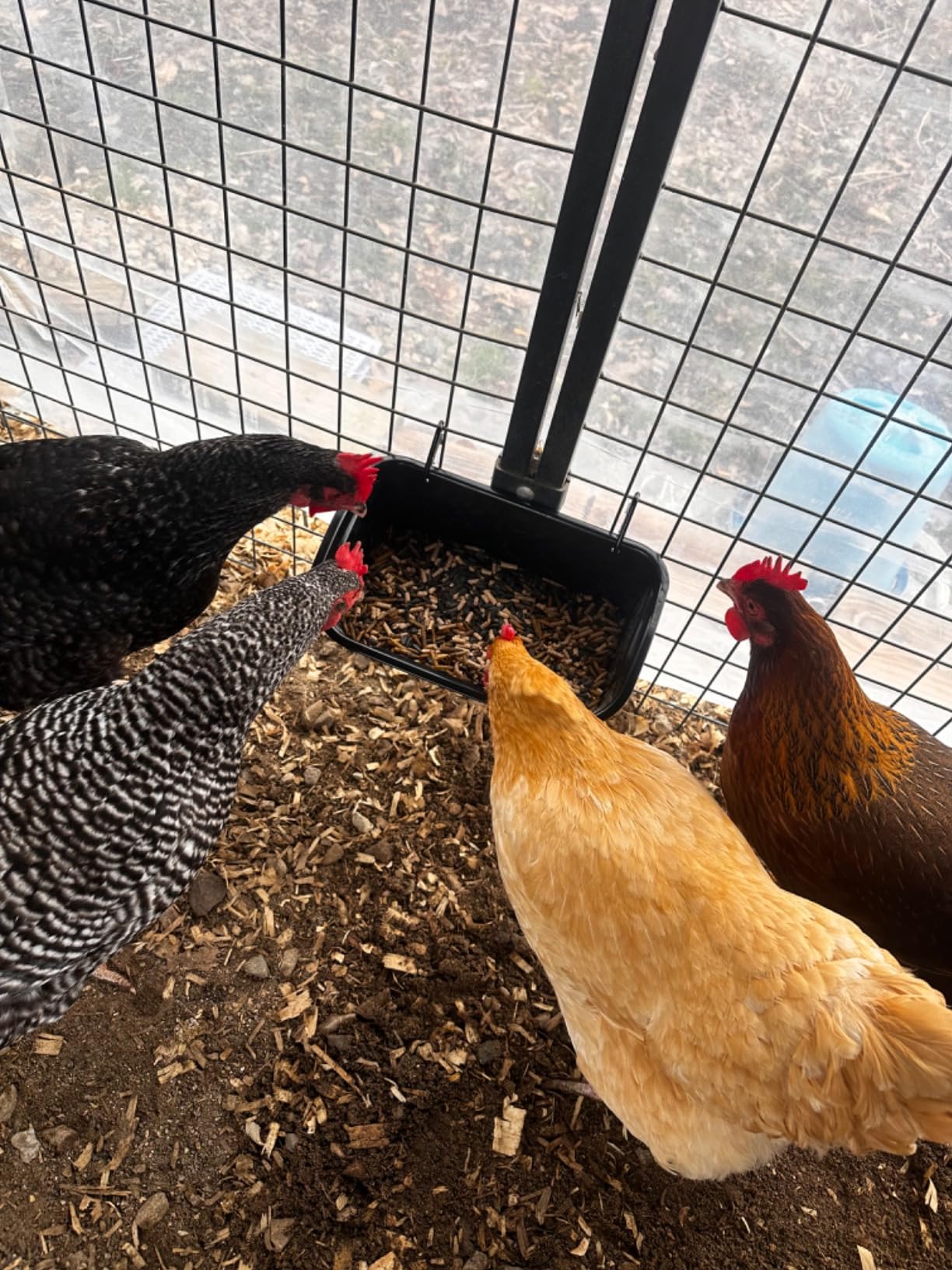
This one covers the widest range of jobs in the lineup. It carries grain for cattle, pellets for pigs, and works as a water bucket when you need a second drinking point. The listed weight of 2.71 pounds means one person can carry a filled trough across a barn without a cart.
Goats and sheep keepers tend to like it for the open width. Several animals can push their heads in at once, which reduces the shoving and head-butting that shows up in small-ruminant groups that share one narrow bucket.
Watch Out For Animals That Tip Feeders
Any open poly trough that hangs on clips is vulnerable to a determined animal tipping it and dumping the ration. The reviews mention this specifically for heavier animals. If your trough sits in a pen with cattle rather than poultry, anchor it into the rail with at least two fasteners.
It is also an open top with no roof, so in a driving rain or snowstorm the feed gets wet. Placing it under an eave or a covered run keeps the ration dry without buying a different unit.
2. Little Giant 15 Quart Hook Over Feeder Best for Rails and Pasture Fencing
Little Giant® Plastic Hook Over Feeder | Mountable Livestock & Pet Feed Bucket | Horse Feed Bucket | Made in USA | 15 Quarts | Black
15 quart capacity
Hooks onto any 2 inch board
Impact-resistant polyethylene
Made in USA
Pros
- Hooks over any 2 inch board or rail in seconds
- Polyethylene resists warpage and stress cracks
- 15 quart capacity serves both feed and water
- Made in USA with a warranty
Cons
- Open top needs shelter in uncovered areas
- Hand wash only
This one earns its spot on the strength of the 4.8 average across 668 reviews, the largest review base attached to a top score here. The hook-over bracket is molded into the back and drops onto any two-inch board or rail, so moving the feeding point between paddocks takes seconds rather than tools.
At 15 quarts it is one of the larger poly troughs here, and the polyethylene resin is chosen specifically to resist warpage and stress cracking. That matters in a trough that sits outdoors through temperature swings, where thinner plastics eventually go brittle. A molded bracket with predrilled holes also lets you convert it to a permanent screw mount.
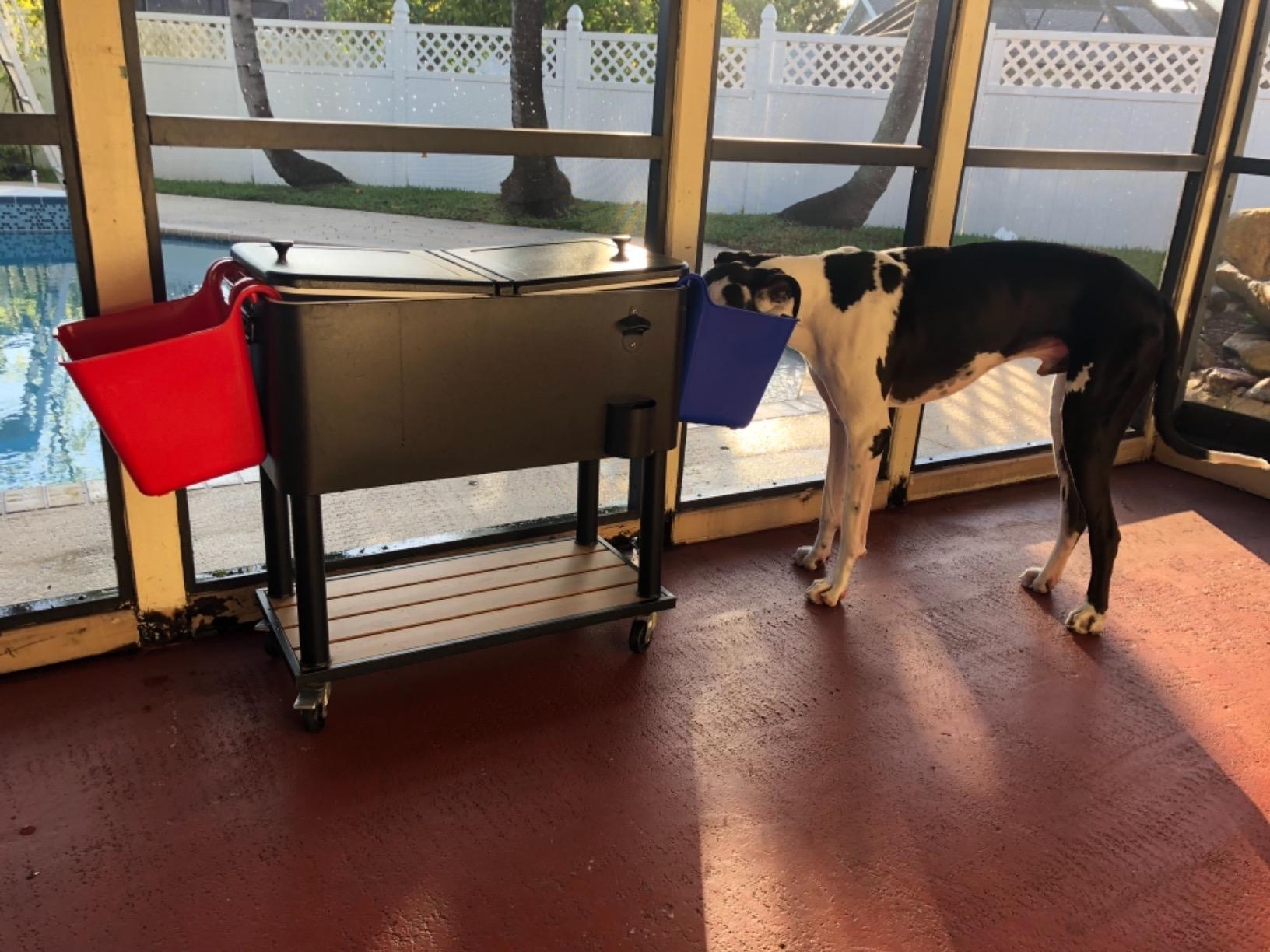
Owners use it for far more than livestock. Horse owners hang it on stall rails, dog owners clip it to kennel panels, and poultry keepers use it as a feeder or waterer depending on the season. Both the 12 quart and 15 quart sizes come in several colors, so matching existing farm hardware is rarely a problem.
The trade-off is straightforward: it is open on top, and the manufacturer lists it as hand wash only. In an uncovered pasture you are relying on the roof above you, or on feeding often enough that the feed never sits through a wet night.
Best For Horses, Dogs and Portable Rail Mounts
This is the pick if your animals live on the other side of a fence or stall rail and you want to reposition the feed constantly. Horses in particular like the 15 quart size because it holds a full grain meal for one animal without being refilled twice.
Because it is made in the USA and backed by a warranty, it also fits the buying habit of owners who have been burned by unbranded plastic that crumbles after one season. The listed dimensions of 12 by 13.25 by 13.25 inches fit comfortably inside a standard stall corner or on a livestock panel.
Watch Out For Rain and Washing Method
There is no cover, and the brand specifies hand washing. A pressure washer or hot water can stress-crack polyethylene over time, so a stiff brush and cool water is the safer routine. Owners who skip the sheltered spot report exactly the problem you would expect: feed that spoils in place.
3. Tiflev Hanging Trough Six-Pack Best Value for Multi-Animal Setups
Goat Feeders Hanging Poultry Feeder Trough for Livestock, 6*3.5 Quart Black
Six 3.5 quart troughs per pack
Feeding and watering combined
Weather resistant coops
Pros
- Six troughs in a single pack
- Feeding and watering in one unit
- 4.8 rating with 89 percent five-star reviews
- Reduces waste and keeps coops tidy
Cons
- Listed package dimensions are not useful for sizing
- 3.5 quart size is small for adult goats and cattle
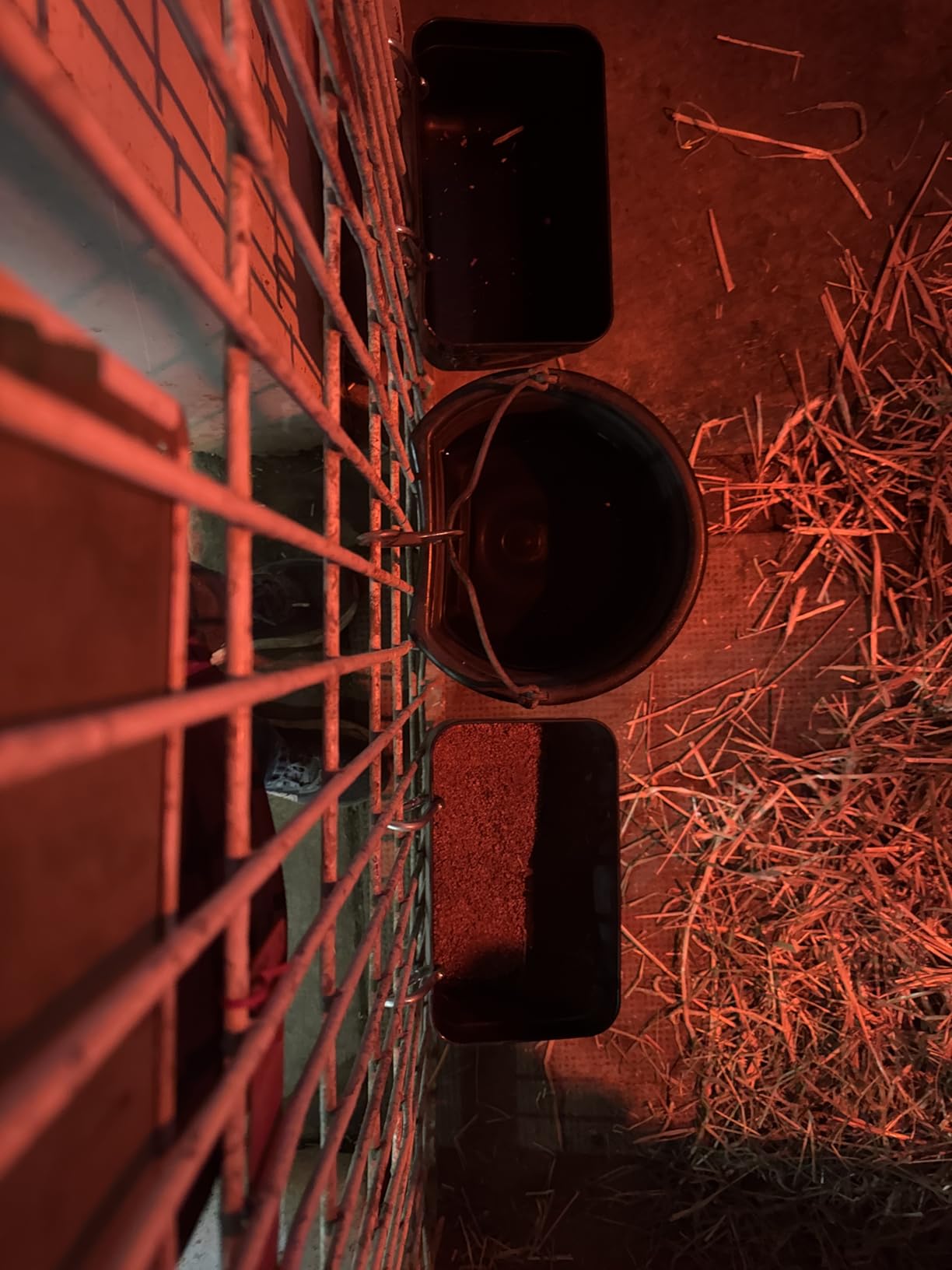
When you are running a mixed flock and want every feeding point stocked at once, buying six at a time removes the worst part of the job. Each 3.5 quart tub handles both feed and water, so the same unit covers a hanging feeder position in the morning and a water position in the afternoon.
The 4.8 average across 487 reviews puts this in the same tier as the Little Giant hook-over. The 89 percent five-star share is the highest reported in the roundup. The design is deliberately simple: a hanging trough shaped to cut overflow, and a body that tolerates outdoor coop conditions.
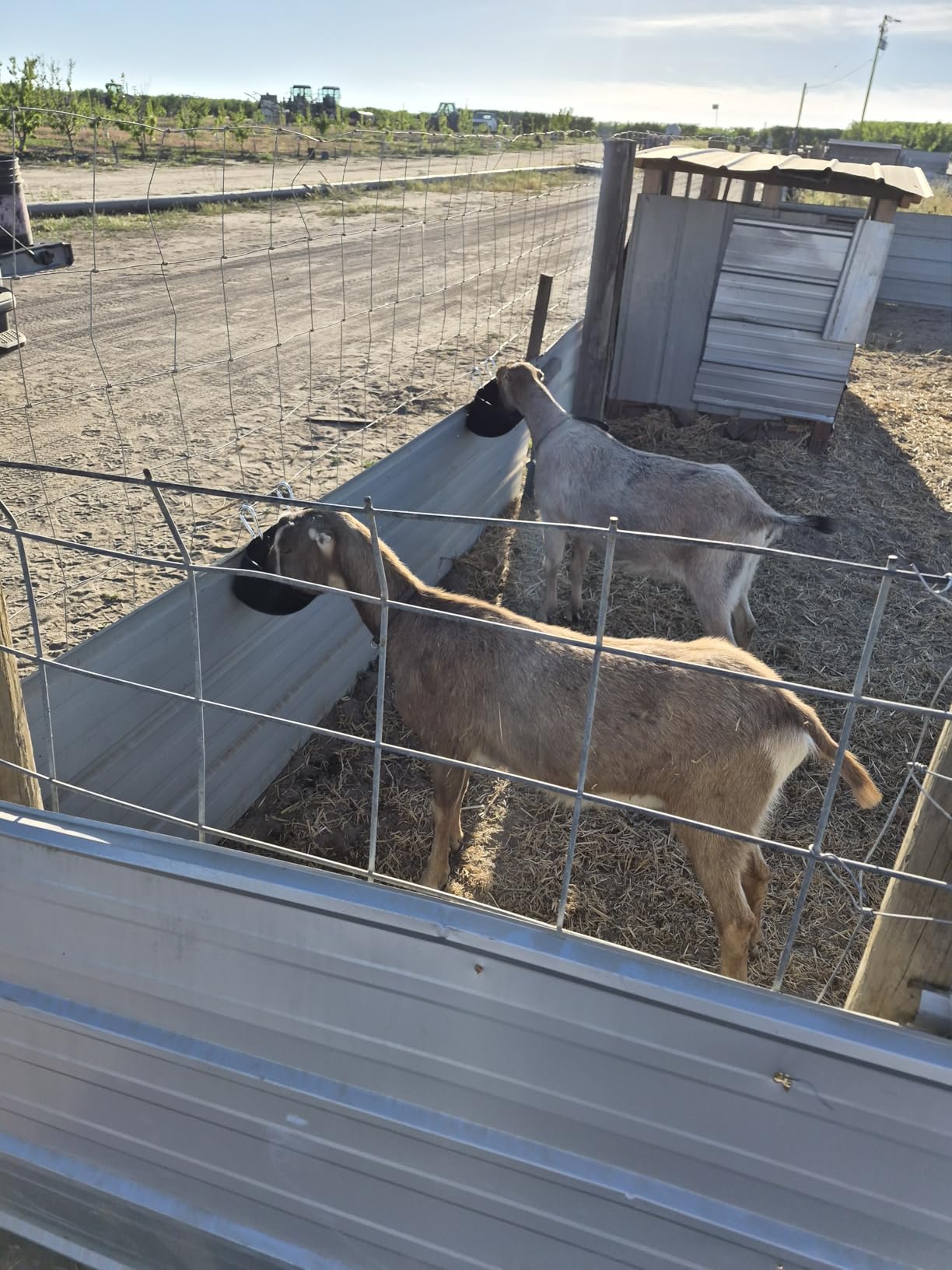
Owners mostly talk about logistics rather than features. Filling six points in one trip saves a morning, the shape keeps feed from being scooped out sideways, and the smooth interior rinses clean without a brush. Poultry operations and backyard flocks are the natural home for a pack this size.
Be realistic about scale, though. At 3.5 quarts these are small pans. A large adult goat or any steer will find the opening tight, and a handful of animals at one station will empty it sooner than you expect. Size this for poultry and small animals, and move up to a longer trough for goats or sheep.
Best for Backyard Flocks and Multi-Species Coops
If you keep a mixed flock of a dozen or more birds, this pack is the efficient answer. Buying in six gives you enough stations to break a flock into smaller groups, which reduces competition and lets you refill everything at once instead of chasing a single popular hanging point.
The dual feed-and-water function is genuinely useful when space is tight. One hanging location can serve a dry ration and a wet one by changing what you put in it, rather than needing separate hardware on the same rail.
Watch Out For Sizing With Larger Animals
Reviewers consistently flag that the listed package dimensions of 1 by 1 by 1 inches tell you nothing useful about the actual trough, so measure the opening before you commit. The 3.5 quart capacity is the number that matters for planning feed amounts.
Larger animals need more lip height and a longer feeding line, and small units encourage animals to fight for a single station. If you move up to goats or sheep, plan a separate, longer trough rather than stretching this one.
4. Little Giant 9 Quart Galvanized Goat Trough Best Wire-Separated Design
Little Giant 9 Qt Hook Over Goat Trough Heavy Duty Galvanized Steel, 2-Pack
Galvanized steel grid
Six feeding slots per trough
Polyethylene pan
Mounts on panels or rails
Pros
- Wire grid gives six feeding positions per trough
- Galvanized grid with reinforced end hooks
- Polyethylene resists UV damage
- Only a screwdriver needed for assembly
Cons
- Mounting can wobble on wire panel if hooks are not fully seated
The defining feature here is the galvanized steel grid across the top, which divides each 9 quart pan into six feeding slots. Small-ruminant owners across hobby-farm groups point to that wire separation as the feature that most reduces fighting at the feed, and the reasoning is straightforward: a goat with a barrier between her head and the next one wastes less and pushes less.
You get two troughs in the pack, each 38 inches long by 9 inches wide and 5 inches high, with hardware for mounting to any two-inch board or wire livestock panel. The polyethylene pan handles the weather and the galvanized grid handles the load, so the two materials each do what they are good at.
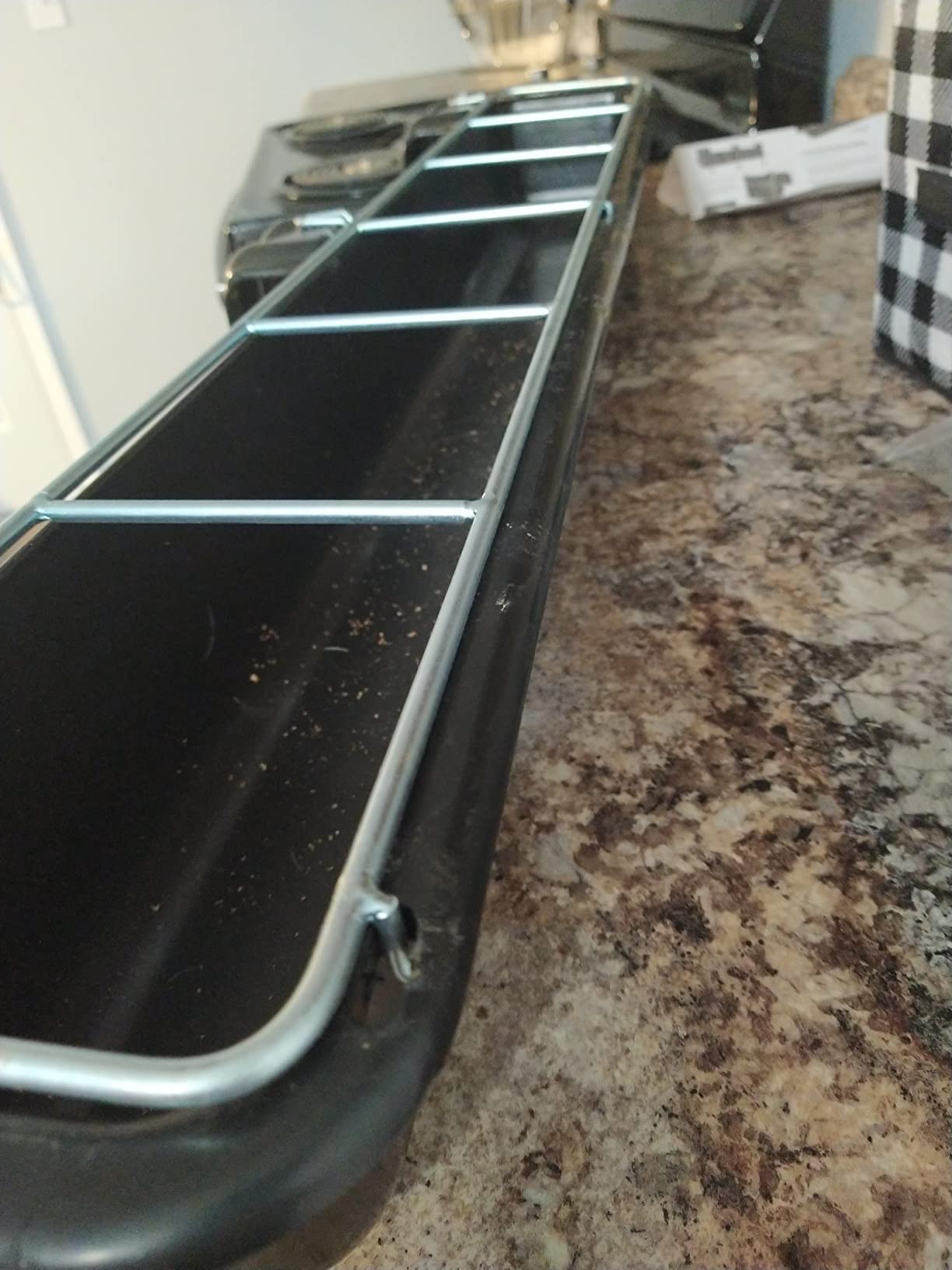
Assembly is light work. The grid seats into the pan and the hooks drop over the rail, so a screwdriver is the only tool involved. The reinforced end hooks are where the load transfers into the panel, and that is the detail I would check first after mounting.
Goats, sheep, alpacas and llamas are the listed target species, and at 4.6 across 348 reviews the feedback is consistent about durability outdoors. The 76 percent five-star share reflects a design that simply does its job without drama.
Best For Goats and Sheep That Crowd the Feed
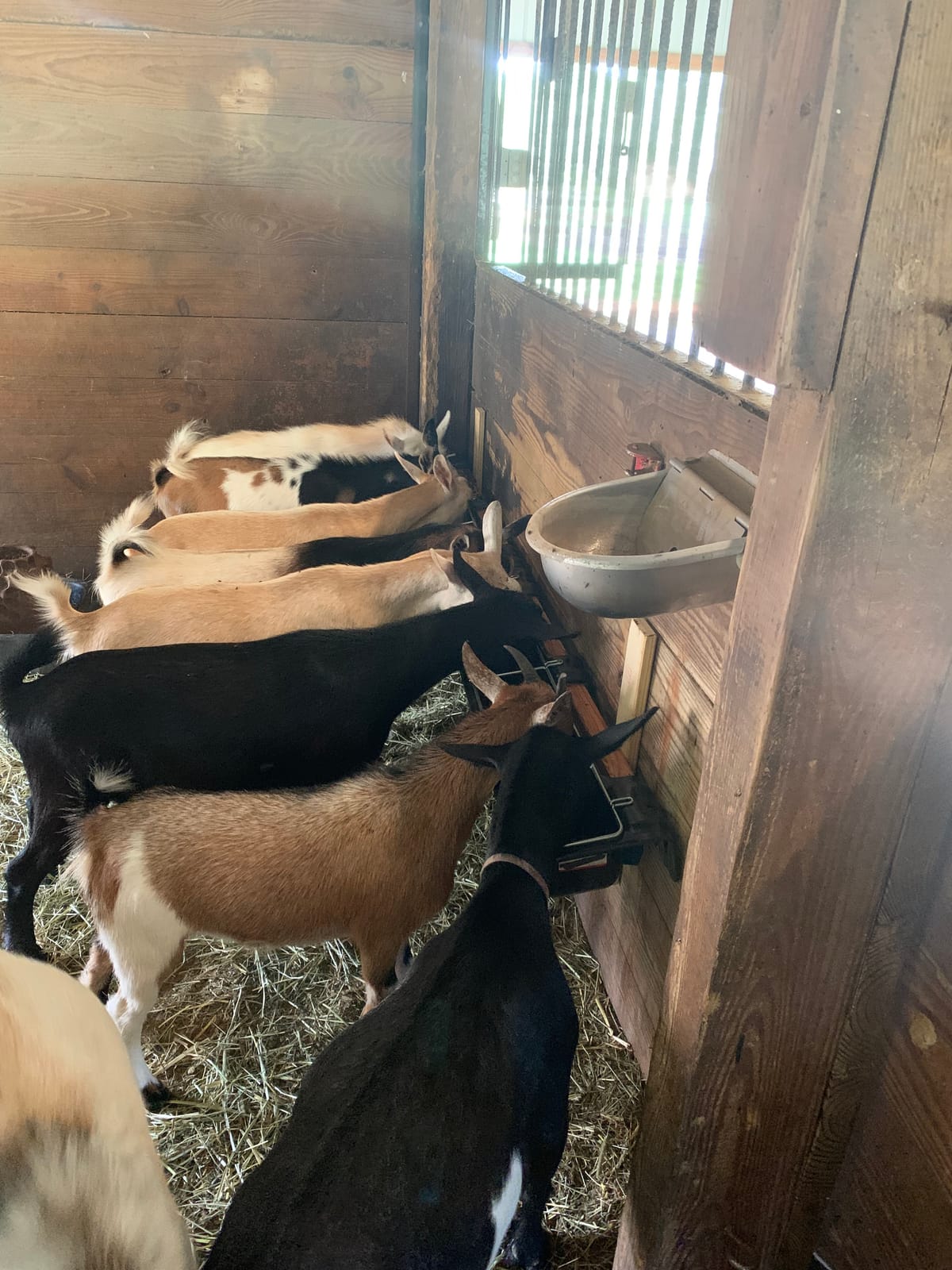
If animals are pushing, shoving or pulling feed out over the rim, this is the trough to try. Six positions across a 38 inch length is a lot of feed space for small animals, and the vertical wire stops the head-butting that causes both injuries and waste.
The UV-stabilized polyethylene matters more than it sounds for a unit that lives outdoors permanently. Pans that are not UV stabilized go brittle and chalky after a couple of seasons, and a cracked pan in a wet pen is a feed-spoilage problem.
Watch Out For Wobbly Panel Mounts
Reviewers mention that the mounting can wobble on wire panel if the hooks are not fully seated. Check the fit the day you install, and tighten or add a fastener if there is movement, because a rocking trough lets animals work it loose over time.
It is also a small unit by volume. Six slots sounds generous until you count feeding times; for a large flock you will be refilling often, and adding a second set on another rail is cheaper than fighting over one.
5. APRICOCK 10 Quart Hanging Trough Best Multi-Mount Poly Trough
Large Feed Trough and Goat Feeder – 2 Pack Hanging Feeder with Clips, Waterer Bucket, Fence Feed Trough, Goat Supplies, 10 Quart
Two 10 quart troughs
Thick BPA-free polypropylene
Wall fence or ground mounted
Sixteen inch trough length
Pros
- Wide 10 quart trough lets animals share feed
- Thick PP plastic holds up to daily use
- Easy to hang clean and reposition
- Works on a wall fence or the ground
Cons
- Included carabiners and clips break under heavy animals
- Animals may tip it unless extra holes are added
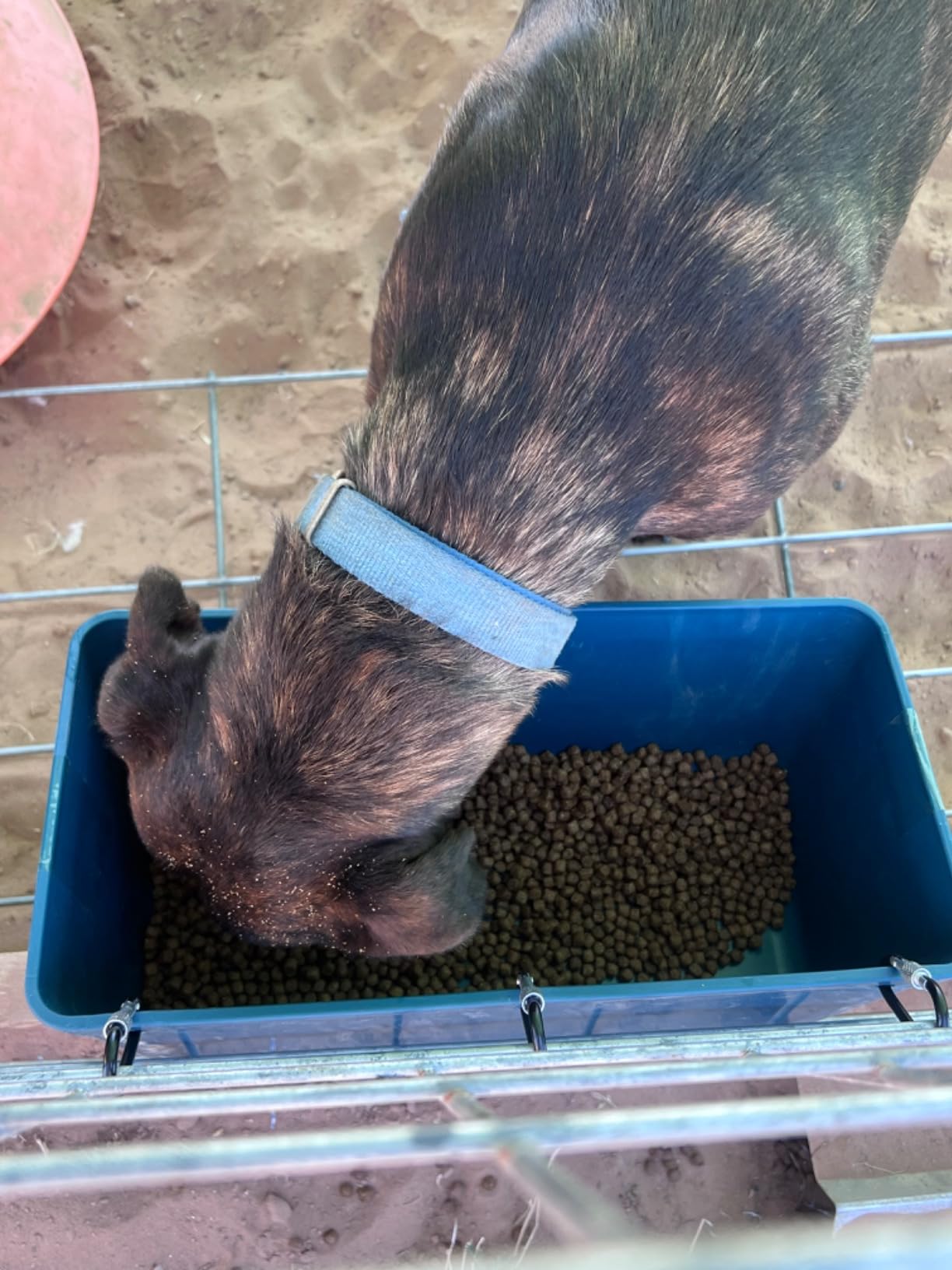
This is one of the roomier openings in the poly group, at 16 inches long by 7.7 inches across and 7.7 inches tall. Wide openings are what allow two animals to eat side by side without one pushing the other off, so this trough scores well for goats, lambs, deer and young cattle.
You get two of them per pack, molded from thick BPA-free polypropylene, with hanging clips and mounting hardware included. The versatility is genuinely useful: the same unit goes on a wall, hooks over a fence, or sits on the ground if you are feeding smaller animals.
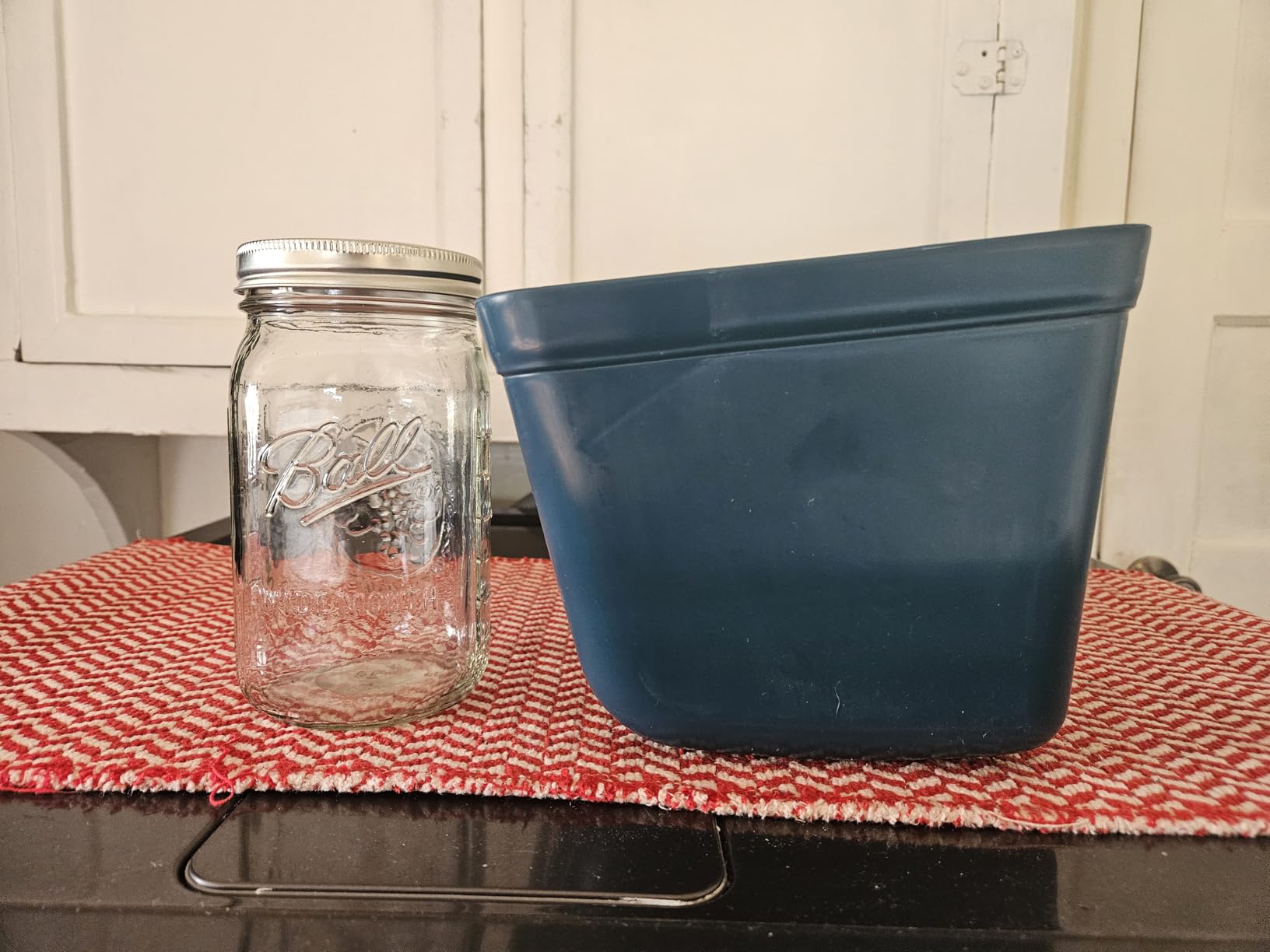
At 4.6 across 271 reviews, the feedback splits neatly into two camps. The troughs themselves are called sturdy and well sized. The supplied hardware is the recurring complaint, which is a fixable problem rather than a design flaw.
Owners also like how simple these are to service. A smooth molded interior with no dividers or seams means a hose rinse clears out the corners, and the bright color options help you spot them in a cluttered barn.
Best for Mixed Fence, Wall and Ground Setups
This is the one I would buy first if your setup is not settled yet. A trough you can move from the fence to the barn wall to the ground as your animals grow solves a problem most fixed feeders create for the first year on a new farm.
For small-ruminant operations it handles the daily ration without the narrow-opening problem that sends animals hunting for food elsewhere. The 78 percent five-star share reflects owners who like the flexibility more than they mind the mounting hardware.
Watch Out For The Included Clips
Reviewers report the supplied carabiners and clips breaking under heavy animals. Treat the included hardware as a starting point rather than a permanent fix, and use stainless screws through the extra mounting positions if anything larger than a goat or dog is going to lean on it.
Tipping is the second issue. Adding a second attachment point or a drilled fixing hole stops an animal from rotating the tub and dumping the feed, and it takes a drill and two minutes.
6. DallerSoode 3.5 Quart Hanging Trough Best Wave-Edge Waste Control
DallerSoode Chicken Feeder Waterer,Hanging Goat Feeders,Feed Trough 3.5 Quart 2 Pack,Hanging Fence Feed Trough for Poultry Livestock,Black
Two 3.5 quart troughs
Wave-shaped feed barrier
Clip-on mounting
Dual feed and water use
Pros
- Wave-shaped edges act as a feed barrier
- Clips hold securely to wire and fencing
- Easy to unclip hose off and refill
- Works as a feeder or a waterer
Cons
- 3.5 quart length is short for larger animals
- Smallest 1.3 quart variants can feel undersized
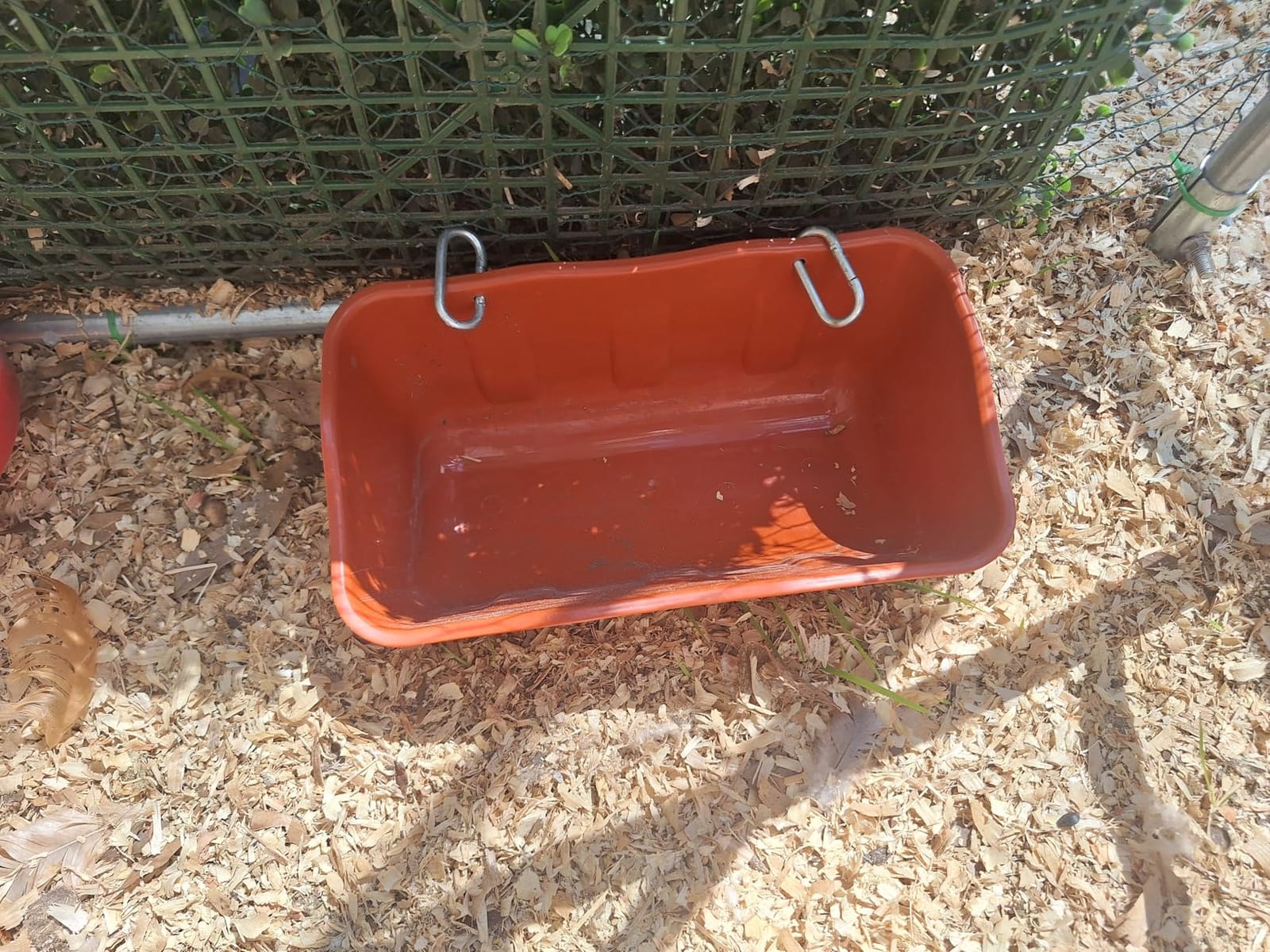
The wave-shaped edge on this trough is the whole idea. Instead of a flat rim that lets birds and animals scoop feed over the side, the molded curve acts as a natural barrier, and owners report noticeably less spilled feed. That is the difference between a feeder and a feed-waste generator.
Mounting clips fit wire mesh, gates and pen doors, and the smooth surface rinses quickly. At 4.7 across 208 reviews, this is one of the better-rated products in the lineup, and the review pattern backs that up.
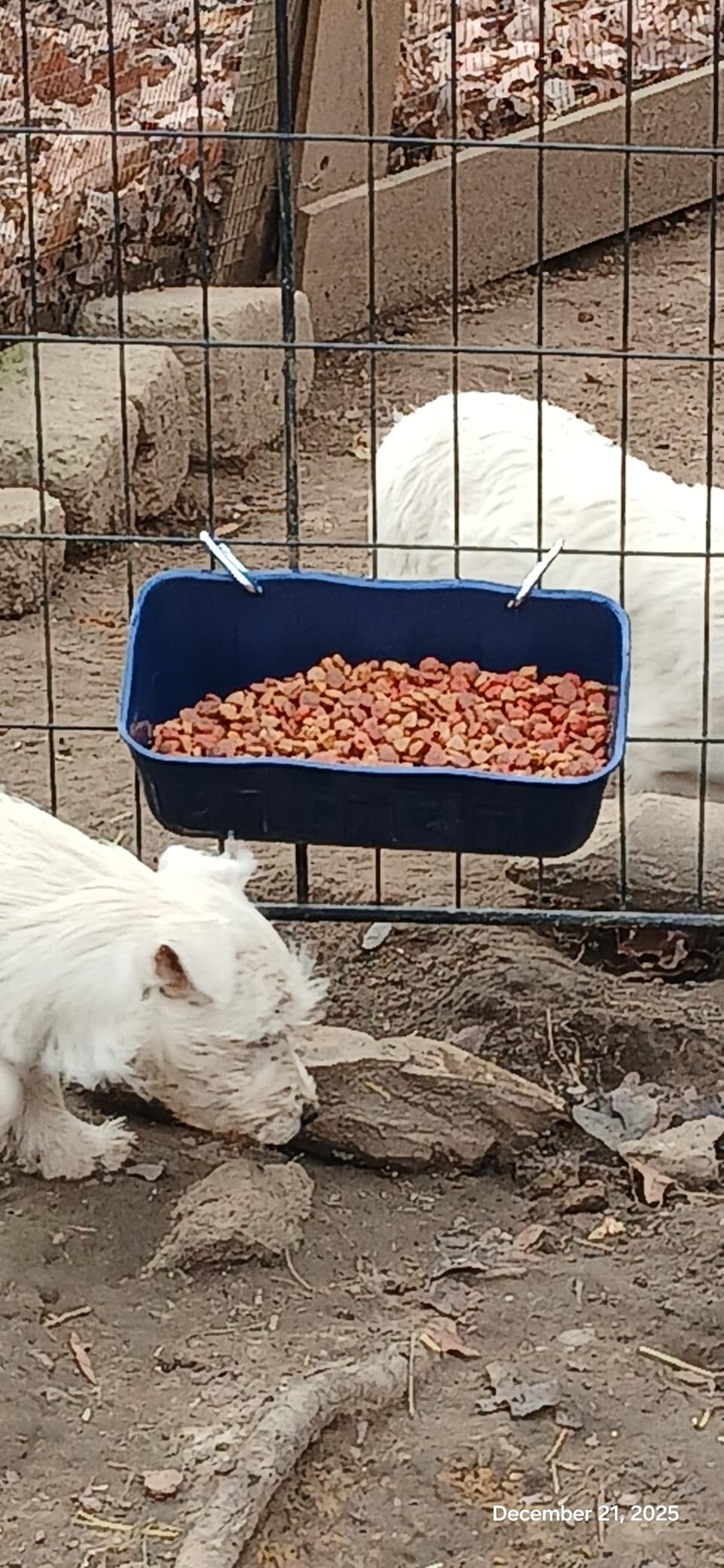
Chicken, duck, goat and pig owners all use this design, and the reviews keep coming back to the same benefit: lifting the feed off the ground keeps it out of bedding and dirt, which cuts cleaning and reduces spoilage. Elevated feeding is the simplest waste reduction available to a small operation.
The same unit doubles as a waterer, and the size range means you can standardize on one product across different pens. The 81 percent five-star share reflects a well-liked, uncomplicated design.
Best for Small Pens and Wire-Fenced Runs
Wherever you already have wire mesh or a gate to hang from, this trough makes sense. It converts a bare fence panel into a feeding point in seconds, and the clips are the kind that hold their grip on wire without needing a bracket or a frame.
Poultry operations get the most from the wave edge because bird behavior is the main source of waste. A goat or pig setup benefits too, since a heavier animal still has to work a little harder to get a full muzzle out over the curve.
Watch Out For Short Capacity
At 3.5 quarts, the length is the limitation. Larger animals crowd at a short trough, and crowding at the feed is where waste and injury both start. For anything bigger than a goat, plan on more than one trough per group.
The smallest 1.3 quart variants in the same family can feel undersized even for adult birds, so match the capacity to your flock rather than to your pen count.
7. Oxphanor 44 Inch Pasture Feeder Best High-Capacity Galvanized Trough
Oxphanor Pasture Feeder 44.2″ Long, Livestock Feeder for Farms
22 gallon capacity
44.2 inch galvanized steel
Powder-coated black finish
About 24 pounds to move
Pros
- 22 gallons feeds a whole group at one sitting
- Powder-coated galvanized steel resists rust
- Light enough for one-person repositioning
- Smooth trough surface cleans easily
Cons
- Lowest rated at 4.0 with a 13 percent one-star share
- Some buyers report loose component fit
- Deep sides make corners hard to reach
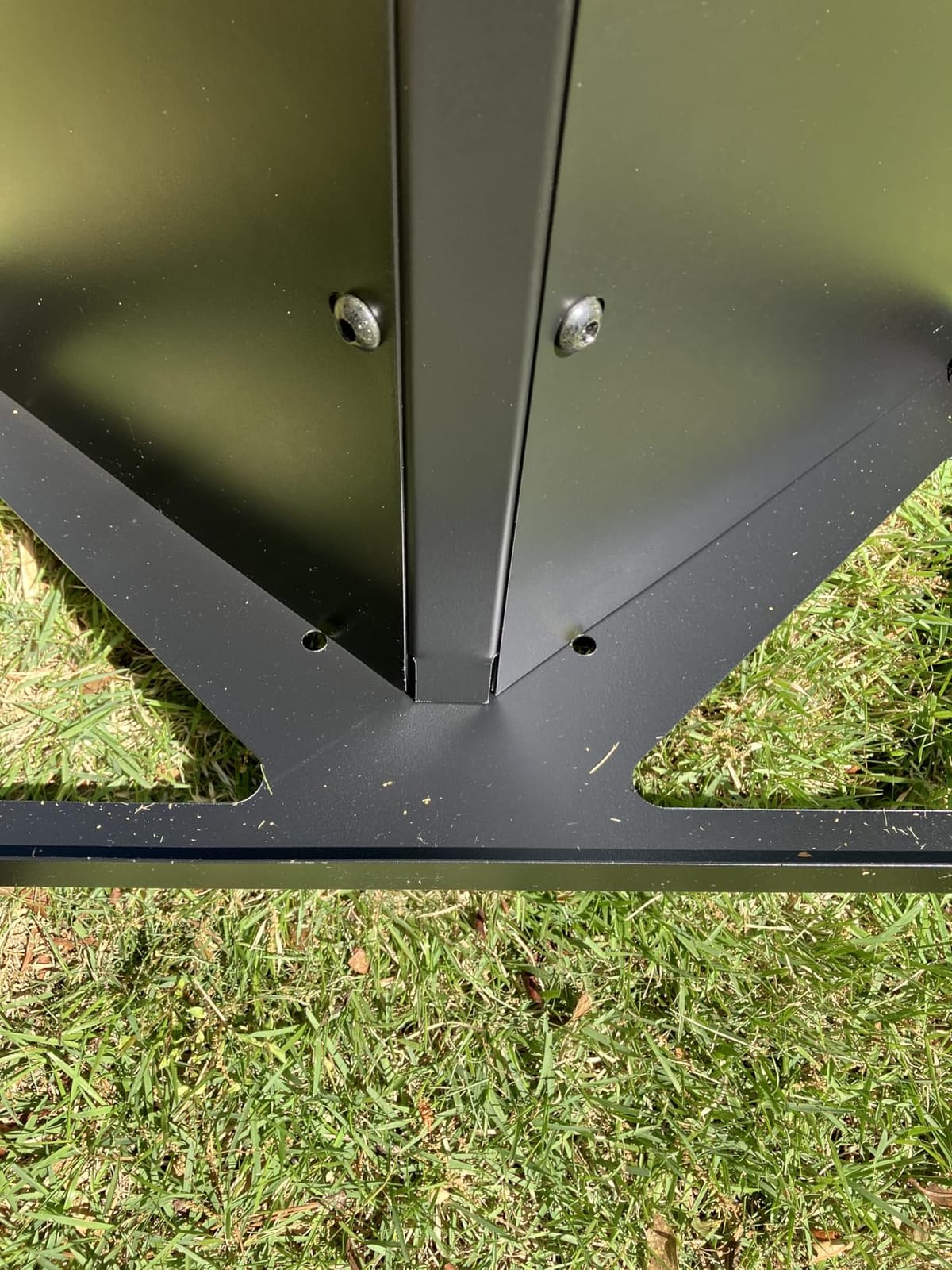
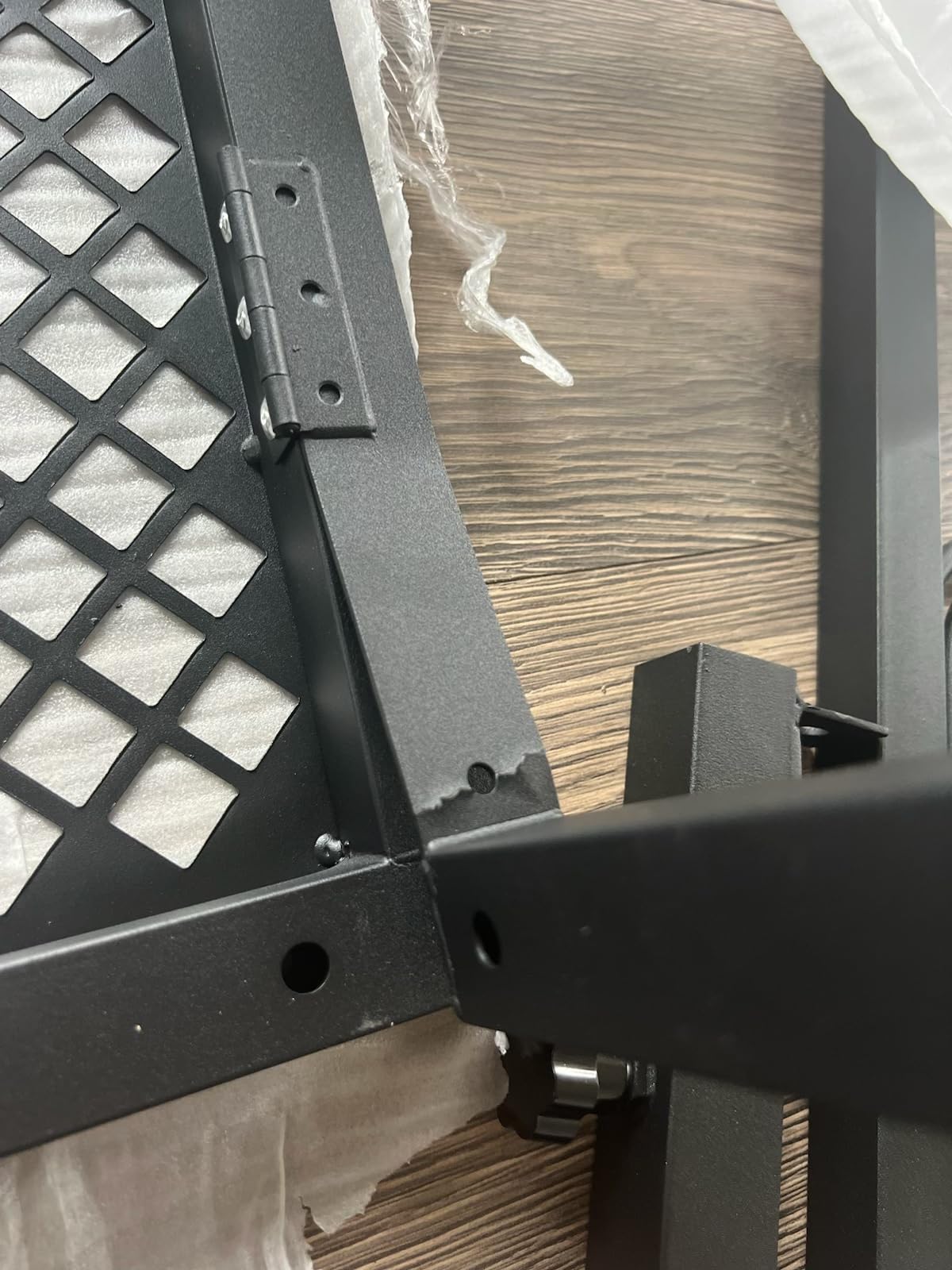
At 22 gallons and 44.2 inches long, this is tied for the largest volume-per-unit option in the roundup, and the manufacturer rates it for feeding about ten sheep in a single sitting. The trough is galvanized steel with a black powder-coated finish, which is the combination experienced operators describe as the durability standard for outdoor equipment.
It is also freestanding, so it goes straight onto the floor or into a pasture with no rail or panel needed. At roughly 24 pounds, one person can reposition it when you rotate paddocks, which matters more for a long feeder than the weight alone suggests.
This is the lowest-rated product here at 4.0 across 90 reviews, and I would rather flag that than bury it. The 66 percent five-star share is solid, but a 13 percent one-star share points at real inconsistency.
Capacity is what buyers praise. Feeding a flock in one round instead of three cuts labor, and the smooth trough surface rinses out quickly. A trough this size also means fewer refills in cold weather, when partially full feed is most likely to freeze or spoil.
Best for Flocks Fed Once a Day
Sheep, goat and small-cattle operations that feed on a schedule benefit most from the volume. If your animals eat twice a day and your current trough needs refilling between meals, a 22 gallon unit removes a trip and the arguments that come with a hungry queue.
Freestanding placement makes it useful where there is no fence, such as a barn corner or an open paddock. The simple shape means there are few corners to trap feed, which keeps mold down.
Watch Out For Fit and Finish Consistency
Some buyers report loose components and finish quality that does not match the coating claims. Check every fastener and wobble the unit on a flat surface before the first fill, because a 24 pound trough that rocks is a tipping risk with larger animals.
The deep sides are also awkward to clean. Reach the corners with a long-handled brush rather than a cloth, and expect to spend a few extra minutes per wash compared with a shallow poly trough.
8. VEVOR 45 Inch Steel Trough Best Two-in-One Hay and Grain Feeder
VEVOR Livestock Feeding Trough, 22 Gallon Capacity, 45″ Hay Feeder, Heavy Duty Steel Livestock Trough, Galvanized Steel Sheep Feeder Trough Feeding up to 10 Goats for Horse Sheep Hog Farm Sheds Pen
22 gallon galvanized steel
45 inch length with hay racks
Up to 10 goats per fill
Rounded safe corners
Pros
- Heavy galvanized steel handles large animals
- Integrated hay racks cut ground waste
- Rounded corners safer for young stock
- 22 gallons reduces refill trips
Cons
- Assembly instructions are poor and often need two people
- Coating chips and some hay rack welds are weak
- Bolt holes sometimes misaligned
- Open ends let goats pull hay to the ground
This is the only two-in-one design in the group: a 22 gallon steel trough with hay racks built along the top. Feed goes in the pan, hay sits in the racks, and both stay off the ground. For an operation that feeds a hay-plus-grain ration, that removes an entire piece of equipment and the labor that goes with it.
The galvanized steel is heavy duty enough for goats and pigs, and the rounded corners reduce injury risk for young animals pushing in to feed. Reviewers who own larger animals consistently call the steel itself sturdy once it is assembled.

At 4.1 across 81 reviews, the 56 percent five-star share is the lowest recorded here. Almost every complaint points at assembly rather than the design: the instructions are poorly illustrated, partly inaccurate, and frequently require two people to complete.
Bolt holes are occasionally misaligned by about a quarter inch, which is small but enough to stop parts seating properly until you force or re-drill them. Budget an hour and a second pair of hands the first time you build it.

Best for Hay and Grain Fed in the Same Spot
Goat and sheep operations that feed a mixed ration get the most out of this. The hay racks keep long stem off the ground where it would be soiled, and the 22 gallon pan means a full group eats in one round.
It works for horses, hogs and shed pens too, though the 45 inch length is sized more for a group than a single stall. The listed dimensions of about 44.88 by 19.29 by 11.02 inches give you a fair idea of the footprint before it arrives.
Watch Out For Open Ends and Coating Wear
The most repeated complaint is hay waste at the open ends. Goats pull hay through the ends and drop it, so if hay efficiency matters to you, add end panels after assembly or accept that some long stem will land on the ground.
Coating chips and weaker hay rack welds also come up. Inspect the welds after the first few weeks, because that is where a feed rack takes the most load, and keep galvanized steel out of acidic bedding where it wears faster.
9. FARM-TUFF 36 Inch Reel Top Feeder Best Anti-Roost Poultry Trough
FARM-TUFF Reel Top Rectangular Poultry Feeder, 36 Inch – Heavy-Duty Galvanized Metal Feeder Trough with Anti-Roost Reel & Spill Resistant Design – Long Feeding Space for Backyard Flocks & Farms
36 inch galvanized steel
Reel-top anti-roost bar
Spill resistant lip
Accepts pellets mash or grain
Pros
- Anti-roost reel stops birds sitting in feed
- 36 inch length feeds the whole flock
- Galvanized steel resists rust and dents
- Rolled edges are safe to handle
Cons
- Narrow 5 inch width limits capacity for big flocks
The reel-top bar running the length of this trough is the entire point. Chickens like to perch on the edge of a feeder and scratch, which contaminates the feed with litter and droppings. The reel makes that impossible, and owners report it cuts waste in backyard flocks.
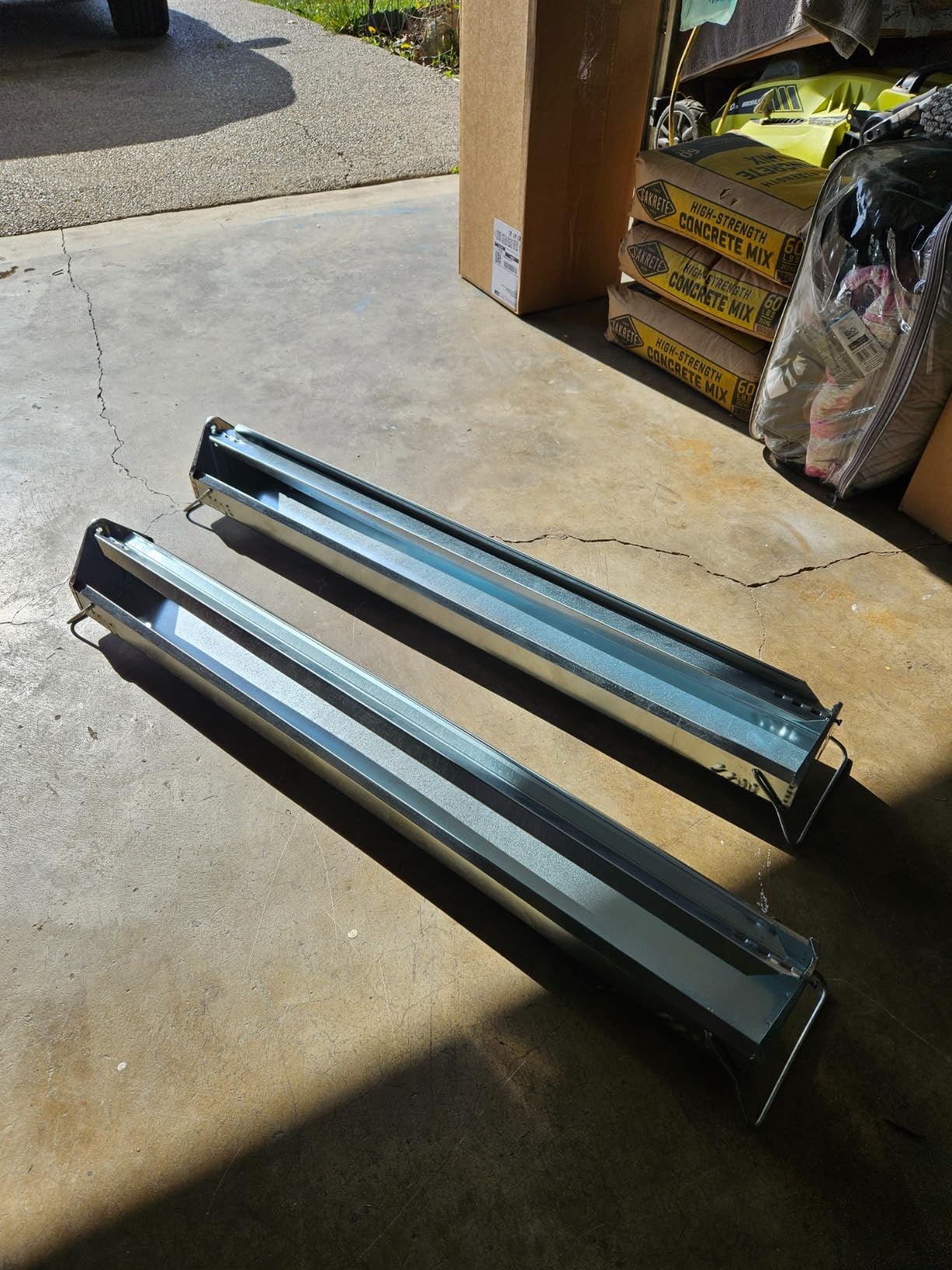
It is a 36 inch galvanized steel trough, so the whole flock can feed along the full length at once. The spill-resistant lip keeps feed from being scooted over the rim, and the steel resists dents and rust outdoors, which is consistent with its 4.7 average across 61 reviews.
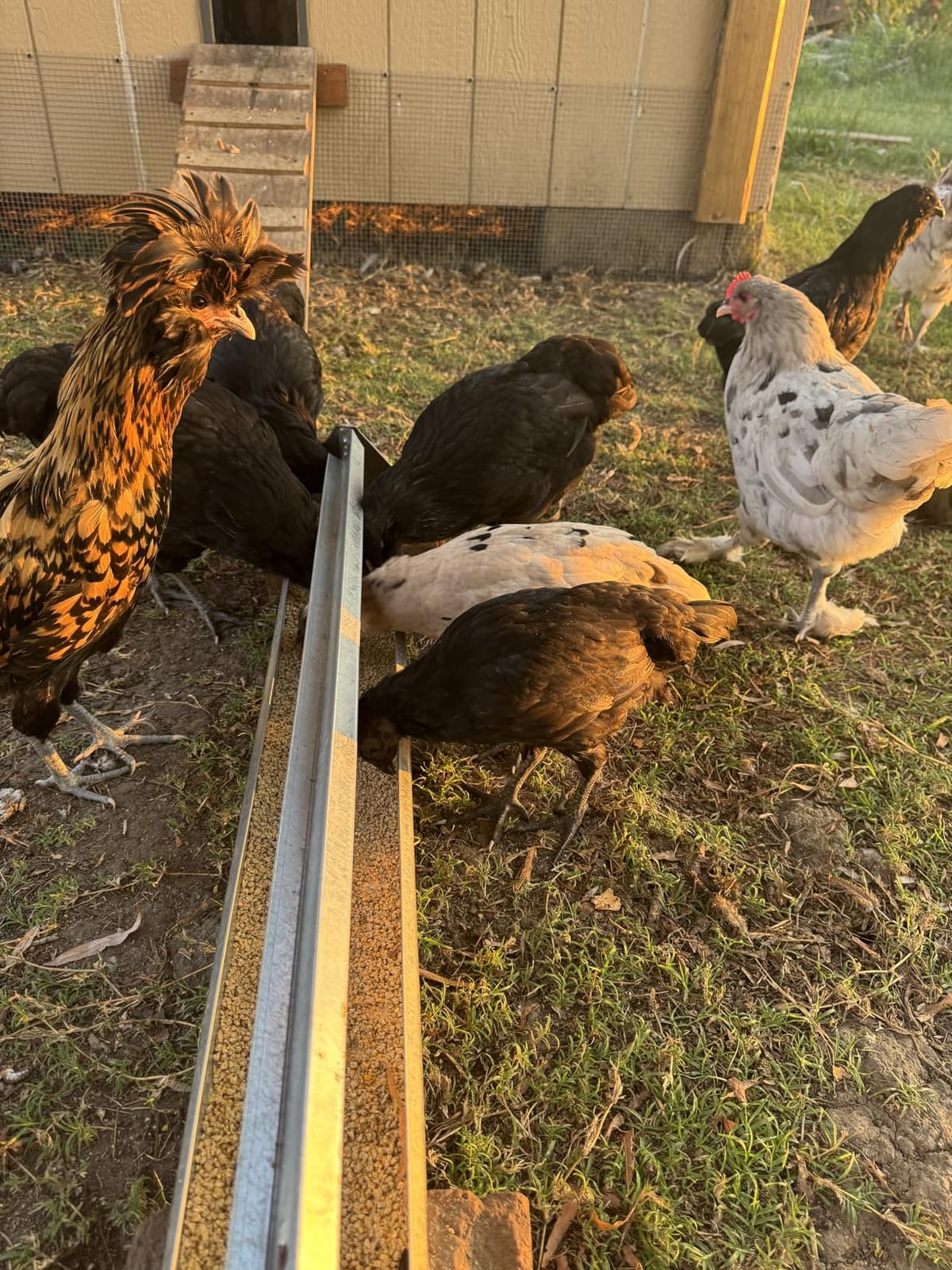
Feed type is flexible. It handles pellets, mash or grain without modification, and the smooth galvanized surface rinses clean quickly. Rolled edges make it safer to handle during refills, which is a small thing you notice when you are filling a feeder twice a day.
At just over 36 inches long and 4.5 inches high, it sits at a comfortable height for chickens, ducks and game birds. The design is narrow by design, which is correct for birds that eat with their heads level and their feet on the ground.
Best for Free-Range and Backyard Flocks
Any flock with access to soil needs the anti-roost feature, and this is the cleanest version of it in the roundup. Reviews from backyard keepers focus on how much less feed ends up scratched out of the trough and on how much better the feed looks after a week outdoors.
It also works for game birds, which tend to be fussier about what they will stand on. The galvanized body handles weather without rusting, and a long trough lets birds spread out rather than compete at one end.
Watch Out For Narrow Width
At 5 inches wide, this trough holds a thin line of feed. That is fine for birds, but if you plan to use it for goats or small pigs you will be refilling constantly. Match the width to the animal, not just the length.
It is also a dry-feed trough only. It has no drainage and no way to wash out standing water, so do not use it as a waterer and expect the same service life.
10. Little Giant 26 Quart Corner Feeder Best Space-Saving Stall Trough
Little Giant Plastic Corner Feeder Bucket (Blue) Durable & Useful Space Saving Corner Feed Trough (26 Quart) (Item No. PCF6BLUE)
26 quart or 6.5 gallon capacity
Corner shaped for tight spaces
25.5 by 19.5 inches
Mounts on two rails
Pros
- Corner shape saves space in pens and stalls
- Large 26 quart capacity for feed or water
- Impact-resistant polyethylene lasts for years
- Secures firmly to two rails with lag screws
Cons
- Mounting hardware not included
- Bottom can soften and crack under heavy horses
- Larger than some buyers expect
A corner feeder solves a problem no straight trough can. When you are fitting out stalls or small pens, the corner is the only space that is not in the way, and this unit turns it into a 26 quart feeding point that sits exactly where the animal already stands.
At 25.5 inches long by 19.5 inches wide and 9.75 inches tall, it is a substantial bucket, and the impact-resistant polyethylene is built to resist warpage and stress cracks. The mounting surface on top takes two perpendicular rails secured with lag screws, so it locks into a corner properly once the fasteners are in.
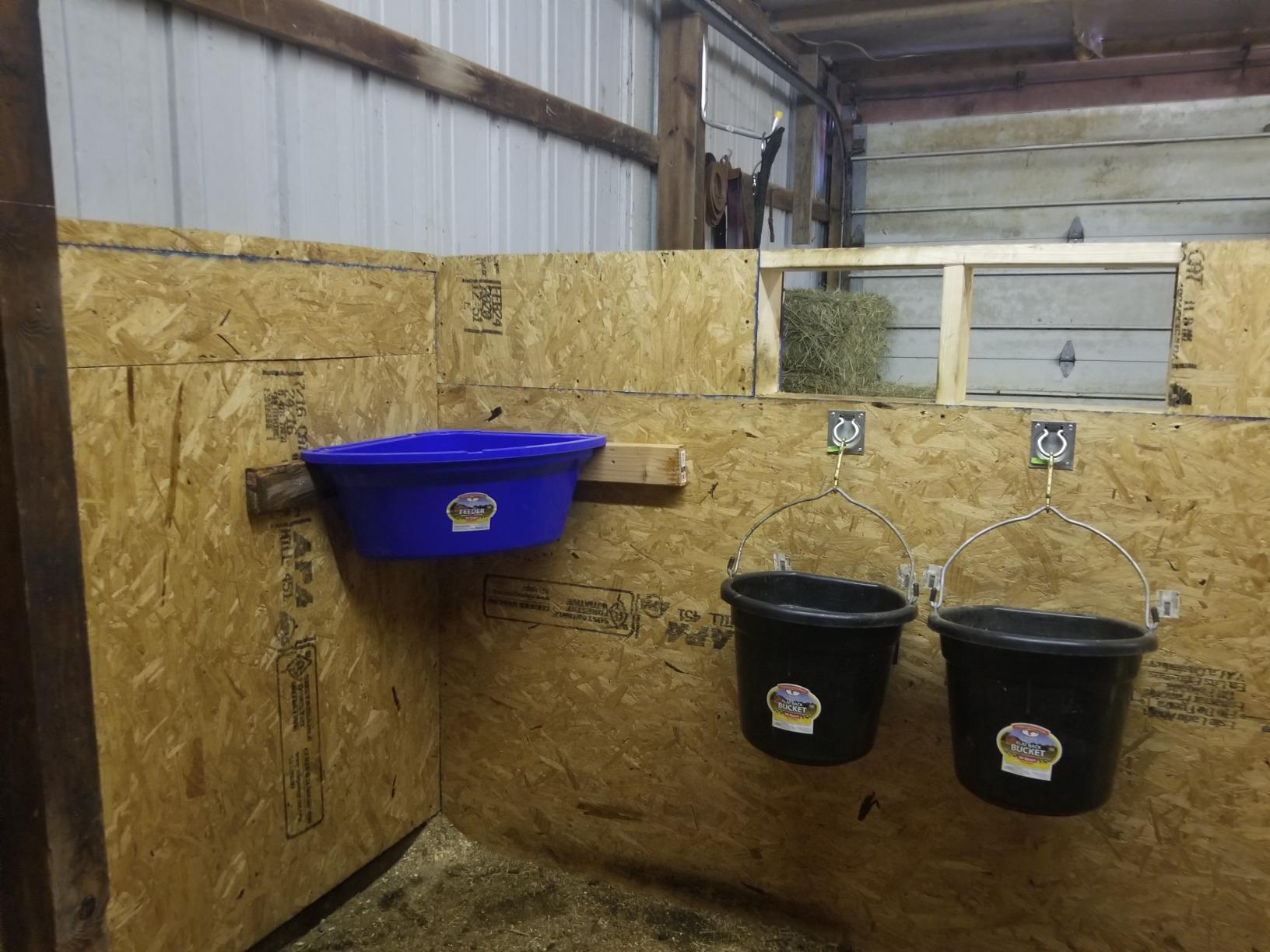
This is a long-standing model at 4.6 across 103 reviews, and the feedback is mostly about fit and durability. Owners running horses, goats and cattle report that it stays put and holds its shape over years of daily use, which is why the 78 percent five-star share is as high as it is.
The corner mounting is the underrated part. Most loose troughs eventually get nudged out of place, and a rail-secured corner unit does not shift, so the feed stays where you put it and the feed space stays available.
Best for Stalls, Pens and Tight Barn Corners
Horse owners and small-pen keepers benefit most, because corner space is at a premium in any stall. At 6.5 gallons it holds a full feed for several animals, and it doubles as a water tub when you need one in the same spot.
If you are building out a barn and want the animals feeding in a predictable place, this keeps them off the floor and out of the bedding. That single change reduces feed waste and manure cleanup at the same time.
Watch Out For Missing Hardware and Heavy Horses
Lag screws are not included, so pick them up before the day you install. Reviews also report that the plastic bottom can soften and crack when a heavy horse noses into the grain, which is a limitation of plastic troughs in general at that level of force.
It is also bigger than buyers often expect. Measure the corner first, and check that the mounting rails are close enough together to carry the load before you commit to the position.
11. KANE 48 Inch Trough Feeder Best Long Line for Pigs and Dogs
KANE Trough Feeder 48″
48 inch long trough
Wide base and smooth sides
Stackable design
Anti-tip shape
Pros
- 48 inches gives a long feeding line for a group
- Wide base resists tipping
- Stackable for compact off-season storage
- Handles pellets and ground feed
Cons
- Shallow 3 inch depth limits wet or bulky feed
- Narrow 8 inch width can crowd larger animals
Length is the feature here. At 48 inches this gives you one of the longest single feeding lines in the roundup, which means a group of animals spreads out along the trough instead of queuing at one end. That reduces competition and the shoving that comes with it.
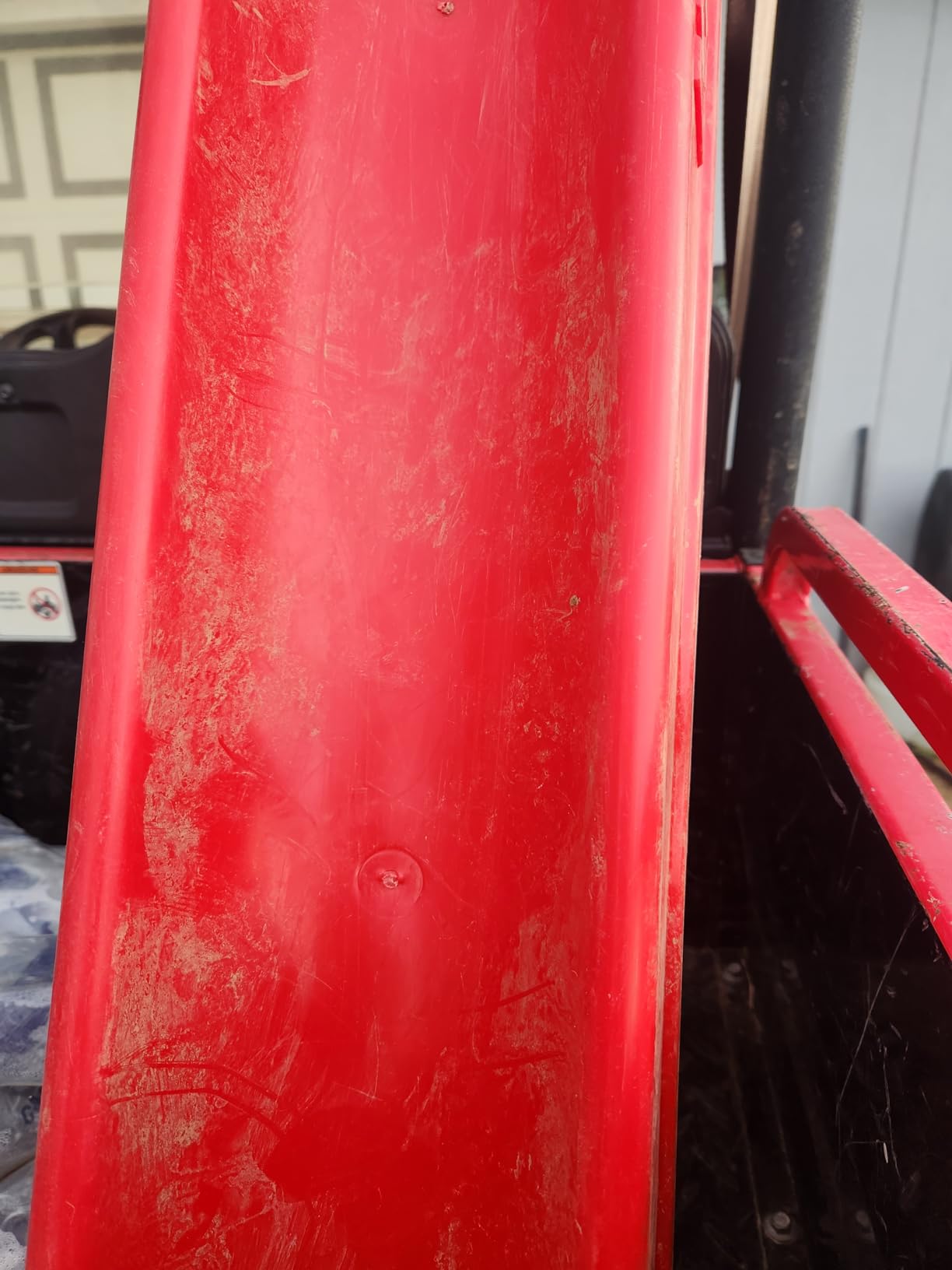
The wide base and smooth sides are a deliberate anti-tip design, and the stackable construction means the troughs nest for off-season storage instead of taking up floor space in a small barn. It is also a branded unit rather than an unlabelled moulding, which matters to buyers who have learned to distrust thin plastic.
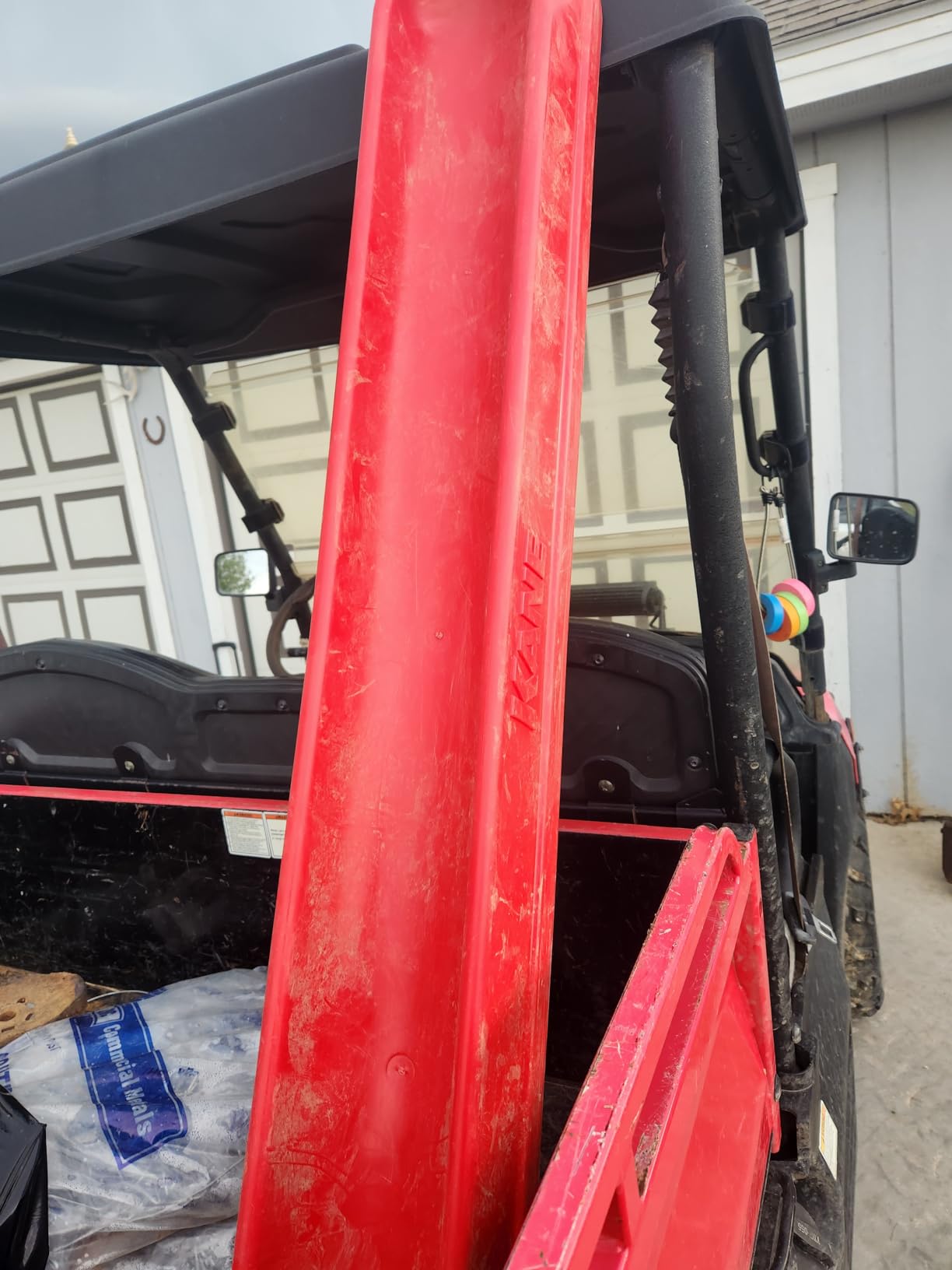
At 4.6 across 59 reviews, with 83 percent five-star, this is a consistent product rather than a polarizing one. Owners mention pigs, dogs and even tortoises and reptiles using the same unit, and they highlight the long line and the easy storage.
Feed type is flexible. It accepts pellets and ground feed without modification, and the smooth interior has no corners or hardware to trap feed, so a rinse is usually enough to keep it clean between feeds.
Best for Pigs, Dogs and Group Feeding Lines
Pig producers and anyone feeding a group of dogs get the most from a long trough, because those animals push and crowd hard. Spreading them along 48 inches of feed line is the cheapest way to cut feed waste without buying anything electronic.
The other 36 inch and multi-pack versions let you build a continuous line, which is useful if your pens are arranged in a row. Stacking them flat when the season ends keeps a small barn usable.
Watch Out For Shallow Depth
The 3 inch depth is the real constraint, and reviewers are clear that this is a dry-feed trough. Wet, bulky or fermenting feed will not clear properly and will spoil in the corners, so keep it on pellets and ground feed only.
The 8 inch width also crowds larger animals. If you are feeding adult cattle or horses, choose a wider unit; this one is sized for animals with narrower head profiles.
12. ECOTRIC 45 Inch Feeder Best V-Bottom Design for Spillage Control
ECOTRIC Livestock Feeder, 45″ Length for 10Sheeps Once, 22 Gallon Feeder
45 inch length
22 gallon capacity
V-shaped bottom
Powder-coated steel
Pre-drilled holes
Pros
- V-shaped bottom gathers feed and cuts spillage
- 22 gallons feeds about 10 sheep at once
- Powder-coated steel resists rust and weather
- Pre-drilled holes make setup quick
Cons
- Some feeders arrive with missing parts
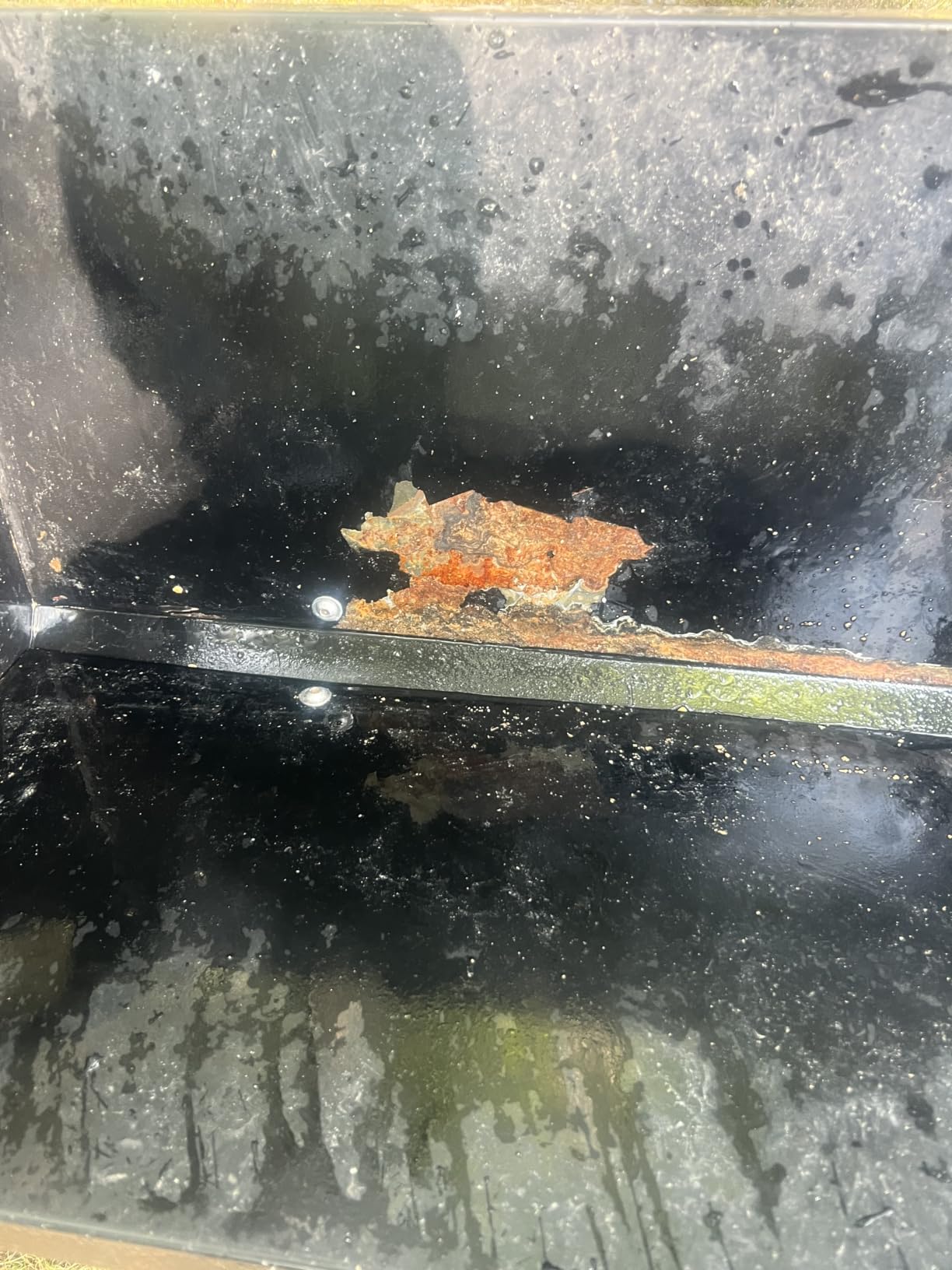
- Powder coating can fail and metal can bend in goat pens
The V-shaped bottom is the design decision that sets this one apart. Instead of a flat floor where feed spreads into the corners, the angled base gathers ration toward the opening, which cuts spillage and means less feed ends up on the ground under the trough.
It is a 45 inch, 22 gallon powder-coated steel feeder rated for about ten sheep at once. Pre-drilled holes make it quick to set and just as quick to take apart for moving between paddocks.
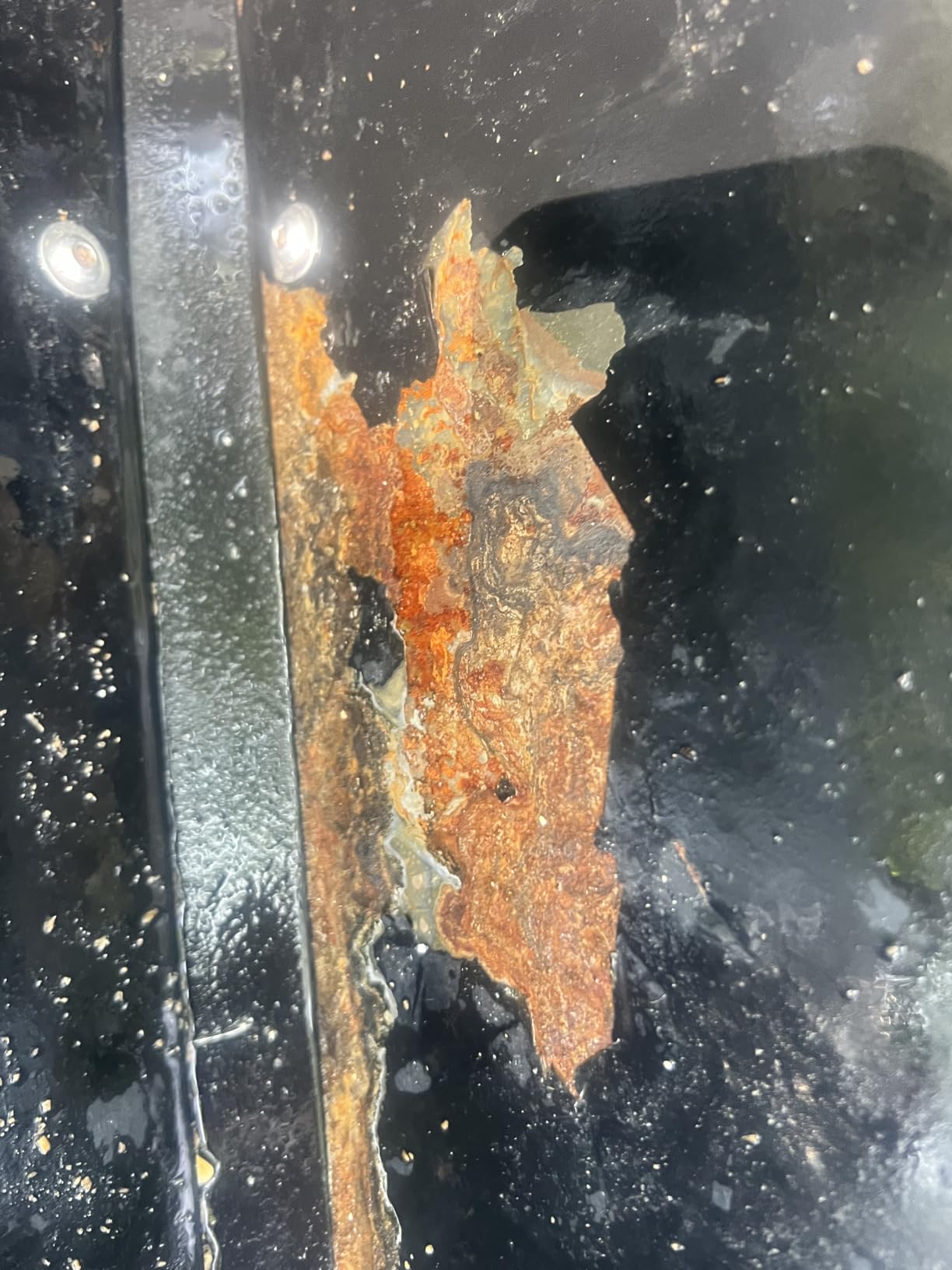
At 4.3 across 41 reviews with 73 percent five-star, the picture is mostly positive. Owners running sheep, ponies and deer call it easy to assemble and durable, and the troughs stack for storage, which helps in a barn with limited floor space.
The powder-coated finish is what handles the weather, and it is the reason this steel trough resists rust outdoors. The silvery finish also matches what most operators end up with on the rest of their equipment.
Best for Rotational Grazing and Moving Feed Points
If you rotate paddocks, the combination of pre-drilled holes and a 45 inch freestanding frame is the one to look at. Disassembly and reassembly takes a few minutes, so you can move the feed point with the herd instead of carrying feed to a fixed trough every day.
It also suits mixed operations covering horses, cattle, sheep, goats and alpacas, since the height works for a range of species and 22 gallons covers a group rather than a single animal.
Watch Out For Goat Pens and Missing Hardware
Goats are the problem species here. Reviewers report the powder coating failing and the metal bending in goat pens, because goats climb and lean on feeders more than almost any other livestock.
A few feeders also arrive with missing parts, so inventory the hardware against the manual before you start. It is also an open-top design, so plan a sheltered position in a wet climate to keep feed dry.
Types of Livestock Feed Troughs and Feeders
Feed trough is the umbrella term, but the feeders under it work in very different ways. Knowing which type you need removes most of the guesswork from sizing, because each one is built around a specific animal and a specific feed.
Feed Bunk
A long trough set on legs or a frame that a whole group of cattle eats from at once. Feed bunks hold the largest volume and are the standard for feedlot and dairy operations, and they are usually built from galvanized or powder-coated steel.
V-Trough Feeder
A feeder with an angled bottom that gathers feed toward the opening instead of letting it spread to the corners. The V profile reduces spillage underfoot and is worth looking for if feed cost per head is your main concern.
Round-Bottom Bunk
A feeder with a curved interior that returns feed toward the center as an animal pushes it around. Round bottoms reduce the dead spots where wet feed collects and spoils, and they are easier to scrub than a flat floor with square corners.
Hook-Over Trough
A trough with a molded or welded bracket that drops over a fence rail, board or livestock panel. This is the portable category, and it is a common choice for rotational grazing because it moves between paddocks in seconds.
Divided Trough
A trough split into compartments or fitted with a wire grid so each animal eats its own section. Divided troughs are the most effective answer to goats and sheep shoving each other off the feed, which operators in small-ruminant groups describe as one of the leading feeding problems on a homestead.
Creep Feeder
A feeder designed to let smaller animals reach feed while keeping larger stock out, usually through an opening sized to the young animals. Creep feeding is how calf and kid growth gets ahead of the herd without the biggest animal in the group taking the best share.
Mineral Feeder
A weather-resistant unit for loose mineral supplement, usually with a roof to keep rain off salt and mineral. Rodent-resistant construction matters as much as the roof, because loose mineral is the first thing wildlife and rats take.
Two-in-One Hay and Grain Trough
A combined unit with a pan for grain and racks above for hay. It saves equipment and labor on a mixed-ration operation, but check how the ends are closed, because open ends are where long-stem hay gets pulled out and wasted.
How to Choose the Right Livestock Feed Trough
A good feeding trough for cows is a long, steep-sided steel bunk on a frame, holding enough feed for the whole group to eat in one sitting, with sides high enough that cattle do not step over the feed and a base that stops manure and bedding from getting in. Wood and poly work for smaller animals, but adult cattle need something that will not be kicked, tipped or dented.
Pick the Material Before the Size
Galvanized steel is the durability standard among experienced operators, and plain steel troughs tend to fail within a few seasons. The zinc coating is what resists rust, and a powder coat over it adds a second layer of protection in wet climates.
UV-stabilized polyethylene is the other main option. It never rusts, weighs a fraction of steel, and is easy to hose out, but it can be tipped or dented by large animals and will not survive a horse that noses into the feed. Match the material to the size of the animal, not to the weather alone.
Size by Linear Inches per Head
Feed space is measured in linear inches of trough per animal, and getting it wrong is the most common reason animals waste feed. The figure below is the working allowance we use when matching a herd to a trough length.
Feedlot or beef cattle: 24 to 30 inches per head. Feeder calves: 20 to 24 inches per head. Dairy cows: 24 to 30 inches per head. Sheep: 8 to 12 inches per head. Goats: 10 to 14 inches per head. Horses: 24 to 30 inches per head. Hog grow-finish: 18 to 24 inches per head.
A worked example: ten head of feeder calves at 20 inches each needs roughly 200 inches of trough, which is two 44 inch troughs with room to spare. Thirty head of sheep at 10 inches each needs about 300 inches, so a 36 inch poultry-style trough is the wrong tool and a 45 inch steel feeder repeated three or four times is the right one.
For gallons, a rule of thumb that holds across the steel troughs in this roundup is roughly 2 gallons per head for sheep and goats, and close to 2.2 gallons per head for larger animals, given as a full fill rather than a daily allowance.
Choose the Style by Behavior
Style matters more than most shoppers expect, because it determines how much feed leaves the trough. A flat-bottom or rounded trough slows feed pushing. A V-bottom gathers ration toward the opening. A divided or wire-grid trough stops small animals from shoving each other off the feed, which small-ruminant owners consistently call their biggest improvement.
Wide mouths beat narrow ones for animals that need to share, and taller sides beat shallow ones for anything that steps over its feed. A shallow 3 inch depth, as on some poly troughs, is fine for poultry and wrong for a wet or bulky ration.
Get the Height and Mounting Right
Trough height is set by the animal, and getting it wrong is what causes waste. Feed bunks are commonly set 6 to 8 inches off the ground, and a 12 inch step where the feed line changes elevation reduces contamination from manure and bedding. Raised feeders also cut the chance of animals standing in the feed.
For smaller animals, match the rim to the animal. Goat and sheep feeders sit at roughly 15 to 20 inches, and deer feeders lower again, since a deer feeder mounted too high means a deer has to stretch and push rather than eat. Horses need a wide, deep, securely rail-mounted unit that will not swing when they lean on it.
Anchoring matters as much as height. Bolt-down base plates or at least two fasteners per unit stop animals from pushing a trough out of position, and for anything in a goat pen I would fasten rather than clip.
Plan for Weather and Cleaning
Feed spoils in rain and snow, and that is the single most cited frustration in the field. A roofed unit, a sheltered position under an eave, or simply feeding often enough that feed never sits overnight all reduce the problem. In cold climates, look for a shape that drains rather than traps water, and be aware that a partially filled steel trough in a freeze is where feed gets lost.
Cleaning is the second priority after durability. A smooth molded interior with no dividers or hardware rinses in seconds, which matters more than it sounds because troughs that are hard to clean develop mold and get skipped on busy days. A dilute vinegar rinse and a stiff brush handle most routine cleaning, and drainage holes keep standing water out of steel units.
Work Out the Herd Size Before You Buy
Multiply your head count by the linear inches per head figure, then divide by the length of the trough you are considering. Add roughly 20 percent spare capacity so animals are not pushed shoulder to shoulder at the end of a feeding, and remember that capacity and access are different numbers. A trough can hold 22 gallons and still be too short for the group that has to eat from it. A trough can hold a full load and still tip if it is not anchored.
It also helps to count refill trips before you commit to volume. A big flock fed once a day wants a large-capacity unit; a small herd fed twice a day can get by with a mid-size poly trough and spend the difference on better anchoring.
Frequently Asked Questions
What is a good feeding trough for cows?
A good feeding trough for cows is a long, steep-sided steel bunk on a frame that holds enough feed for the whole group to eat in one sitting. It needs sides high enough that cattle do not step over the feed, a base that keeps manure and bedding out, and at least 24 to 30 inches of linear feed space per head. Galvanized or powder-coated steel is the standard because plain steel fails within a few seasons.
How to choose the right feeding trough?
Choose in this order. First count linear inches of trough space per head, which is 24 to 30 inches for adult cattle and 8 to 14 inches for sheep and goats. Then pick the material to match the animal: galvanized steel for cattle and horses, UV-stabilized polyethylene for smaller stock. Next choose a style that slows feed pushing, such as a V-bottom or divided trough. Finally set the height, 6 to 8 inches for feed bunks, and anchor the unit with two fasteners.
What is the recommended size for a cow feed trough?
Adult cattle need 24 to 30 inches of linear trough space per head, and dairy cows sit at the same end of that range. A worked example: 20 head of cows at 24 inches each needs about 480 inches of trough, which is six 44 inch troughs or four 48 inch troughs. Allow roughly 2.2 gallons of capacity per head for a full fill, and add spare capacity so animals are not shoulder to shoulder at the end of a feeding.
How many inches of feed trough do feeder calves need?
Feeder calves need about 20 to 24 inches of linear trough space per head, slightly less than adult cattle because they eat smaller meals more often. Ten head of feeder calves at 20 inches each needs roughly 200 inches of trough, so two 44 inch troughs cover the group with room to spare. Keep the feed line continuous, because calves stop eating when they have to push past bigger animals to reach it.
How high should a trough feeder be for deer?
Mount deer trough feeders lower than cattle feeders, because a deer will not stretch for feed it cannot comfortably reach. Set the rim roughly 12 to 18 inches off the ground for deer, against 15 to 20 inches for goats and sheep and 6 to 8 inches for feed bunks. Height is only half of it: a deer feeder needs a roof or a sheltered position, since deer feeders are usually placed in open ground where the feed would otherwise take rain.
What is a good feed trough for goats?
A good feed trough for goats is a wide, high-sided unit with a divided or wire-separated feeding section. Goats shove each other off the feed, and operators in small-ruminant groups rate that wire separation as the feature that most reduces waste and injury. Mount it on a fence rail with two fasteners, size it at 10 to 14 inches per head, and avoid lightweight poly in a goat pen because goats climb and lean on feeders.
Which is better, galvanized or poly livestock feeders?
Galvanized steel lasts longer and takes abuse from large animals, so it wins for cattle, horses and any unit in a goat pen. Polyethylene never rusts, weighs far less and is easier to hose out, so it wins for poultry and smaller animals. The trade-off is durability under force: poly can be tipped, dented or have its bottom crack when a heavy animal pushes into the feed.
What are the different types of livestock feeders available?
The main types are feed bunks for cattle, V-trough feeders that reduce spillage, round-bottom bunks that return feed to the center, hook-over troughs that mount on a fence rail, divided troughs with wire grids for goats and sheep, creep feeders for calves and kids, mineral feeders for loose supplement, and two-in-one hay and grain troughs for mixed rations. Each is built around a specific animal and feed, so match the type to your herd before you size it.
Final Verdict
After working through all twelve, the Goovilla 2-pack of 9 quart troughs is the best livestock feed trough for most people, because it covers the widest range of animals, mounts three different ways and carries the most reviews of anything in the group. The Little Giant 15 quart hook-over takes the top spot for anyone moving feed points between paddocks, and the Tiflev six-pack is the one to buy when you want every station filled in a single trip.
For cattle and sheep, the math points at capacity rather than style. Work out linear inches per head, then choose galvanized steel: the Oxphanor and ECOTRIC feeders cover about ten sheep per fill, and the VEVOR adds hay racks if you feed a mixed ration. For goats, buy the wire grid: the Little Giant 9 quart galvanized trough is built specifically to stop the shoving that wastes feed.
Whatever you choose, anchor it with two fasteners, set the height for your smallest animal, and give it a sheltered position in a wet climate. Those three details decide how much feed you actually collect at the end of the day, and they cost almost nothing compared with replacing a bad feeder in 2026.