
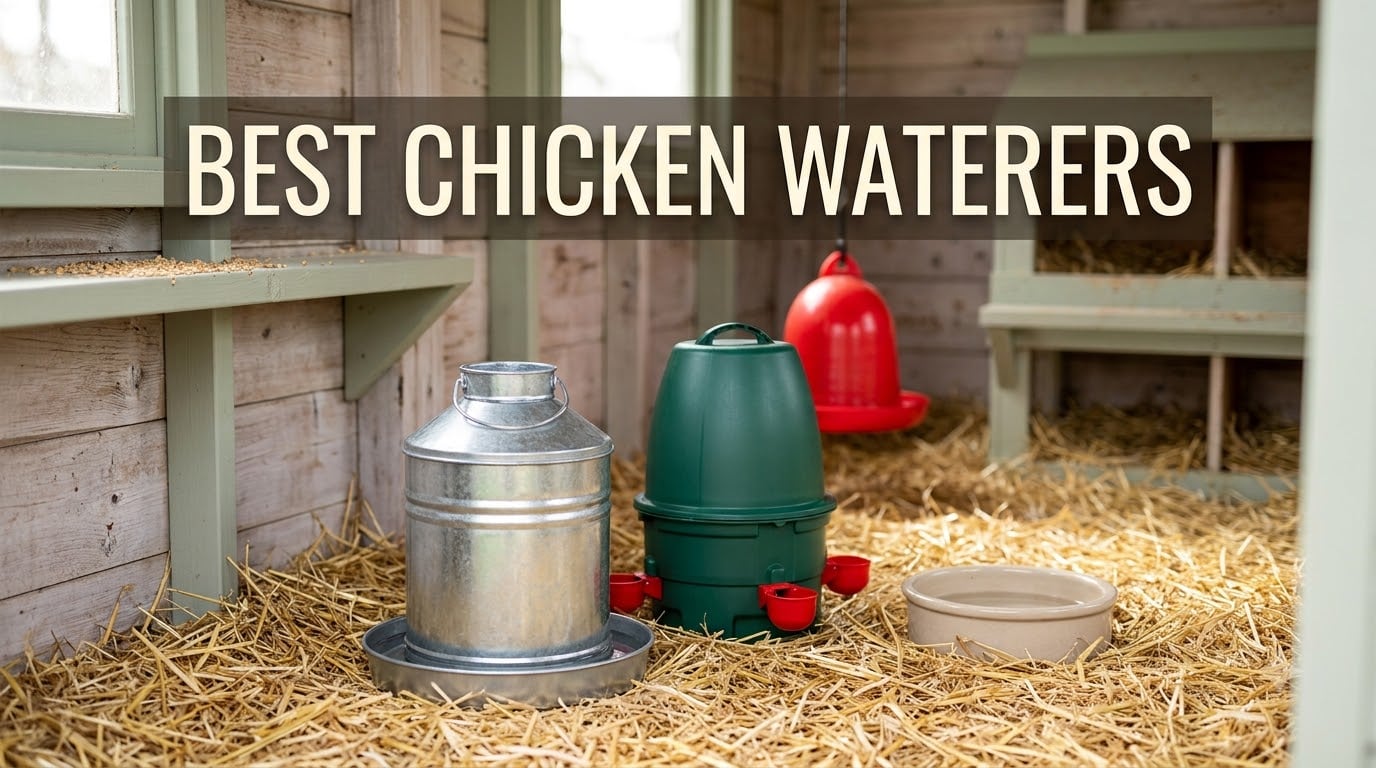
Short answer: the best chicken waterer depends almost entirely on two things — how many birds you keep and how hard your winters hit. A small flock in a mild climate is served perfectly well by a simple gravity fountain, while a 30-bird flock in a place where water freezes in the pipe needs a heated reservoir and nipple drinkers, plus a spare.
We ran 12 of the most popular poultry waterers side by side over a full season, paying attention to what actually breaks: leaks at the seam, nipples that freeze first, bedding kicked into an open trough, algae in summer, and the endless daily refill. Our rule was simple. If a waterer made us clean it twice a day or left the birds without water on the first cold night, it did not make the list, no matter how good it looked.
What follows covers every style worth owning — traditional gravity fountains, insulated plastic, metal founts, cup systems, nipple systems, heated units and one hose-fed automatic set — with the honest drawbacks for each. If you have not built your coop yet, start with our guide to the best chicken coops so the waterer you pick actually fits the space you build. If you plan to move the flock on pasture, the best chicken tractors we tested change the sizing math completely.
One thing to settle before you read further: how much water your flock drinks. A mature hen drinks roughly a pint to a pint and a half a day in mild weather, and that number climbs sharply in summer heat. Five gallons is about 40 to 50 bird-days, which sounds generous until you are topping up a July trough in ninety-degree weather with twenty birds drinking twice as much.
Table of Contents
Top 3 Chicken Waterers of 2026
These three cover the widest range of situations. The heated unit handles winter and moderate flocks, the plastic gravity fount is the dependable default for most backyards, and the insulated unit is the cleanest water you can buy.

Farm Innovators HB-60P Heated 2-Gal
- 60W thermostatically controlled element
- Side-mounted drip-free nipples
- Up to 15 chickens
- Metal handle for hanging
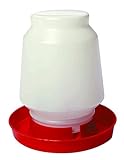
Little Giant 1 Gallon Plastic Fount
- 1 gallon gravity-fed capacity
- Transparent water level jar
- Screw-on base tool-free cleaning
- Heavy-duty polystyrene body

Omlet Insulated 3 Gallon Waterer
- Blocks 99% of light to stop algae
- Insulated walls
- 5 cups and nipples included
- Locking anti-roost dome lid
All 12 Best Chicken Waterers at a Glance (September 2026)
Every pick in this guide, with its style, capacity and the job we think it does best. Use this to narrow the field, then read the full review for the one that matches your flock.
| Product | Specifications | Action |
|---|---|---|
| Farm Innovators HB-60P Heated 2-Gallon |
|
Check Latest Price |
| Little Giant 1 Gallon Plastic Fount |
|
Check Latest Price |
 Double-Tuf 1.5 Quart Waterer with Legs Double-Tuf 1.5 Quart Waterer with Legs |
|
Check Latest Price |
 Little Giant 3 Gallon Double Wall Metal Fount Little Giant 3 Gallon Double Wall Metal Fount |
|
Check Latest Price |
 OverEZ 12 Gallon Automatic Waterer OverEZ 12 Gallon Automatic Waterer |
|
Check Latest Price |
 RentACoop 2 Gallon High Rise Waterer RentACoop 2 Gallon High Rise Waterer |
|
Check Latest Price |
 Premier 1 All-Season Heated 3 Gallon Premier 1 All-Season Heated 3 Gallon |
|
Check Latest Price |
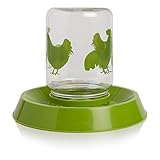 Lixit 64oz Feeder or Waterer Lixit 64oz Feeder or Waterer |
|
Check Latest Price |
| Omlet Insulated 3 Gallon Waterer |
|
Check Latest Price |
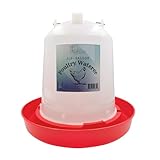 Little Family Members 1.5 Gallon Waterer Little Family Members 1.5 Gallon Waterer |
|
Check Latest Price |
 ZINZINULER Automatic Waterer and Feeder Set ZINZINULER Automatic Waterer and Feeder Set |
|
Check Latest Price |
 FARM-TUFF 5 Gallon Galvanized Fountain FARM-TUFF 5 Gallon Galvanized Fountain |
|
Check Latest Price |
1. Farm Innovators HB-60P — Best Overall for Winter Flocks
Farm Innovators HB-60P Heated Poultry Waterer Drinker, 2-Gal, 60W
2 gallon reservoir
60W thermostatically controlled element
Side-mounted drip-free nipples
Up to 15 chickens
Pros
- Holds off freezing in deep cold
- Thermostat trims electricity use
- Top lifts off for fast refills
- Metal handle for hanging or ground
Cons
- Nipples still need periodic cleaning
- Plastic degrades with long sun exposure
- Only 2 gallons means frequent refills
This is the waterer we kept coming back to. It has the largest review base of anything we tested, by a wide margin, and once you read a few hundred of them the pattern is remarkably consistent: it keeps drinking water through winter, it refills fast, and it does not do anything clever that can go wrong.
The heating element is 60 watts and thermostatically controlled, so it cycles rather than running flat out. Water enters at the base and the side-mounted nipples are described as drip-free and freeze-free, which is the design detail that matters most, because nipples are normally the first thing to ice up.
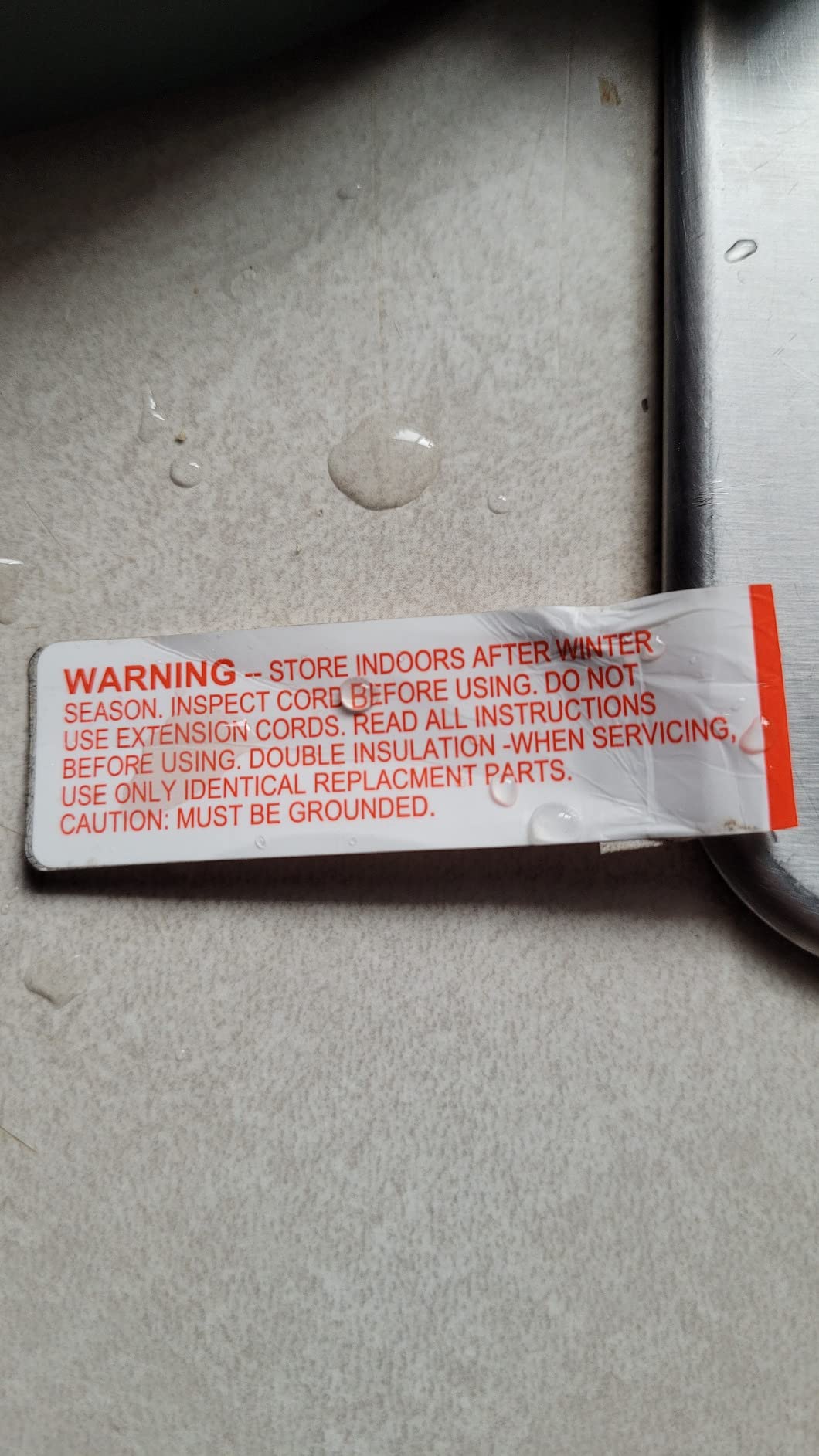
Two gallons is genuinely small. For a flock of 15 in mild weather it is about three days of supply, and in summer heat it disappears faster. We pair it with a second, larger fountain in warm months rather than filling it twice a day.
The removable top is the piece of engineering we appreciated most. You unscrew the whole lid and pour in a hose-end filling, which takes seconds and spills nothing. The metal handle is strong enough to hang the unit, which matters because a waterer sitting on the floor collects kicked bedding and droppings within an hour.
How it holds up in deep cold
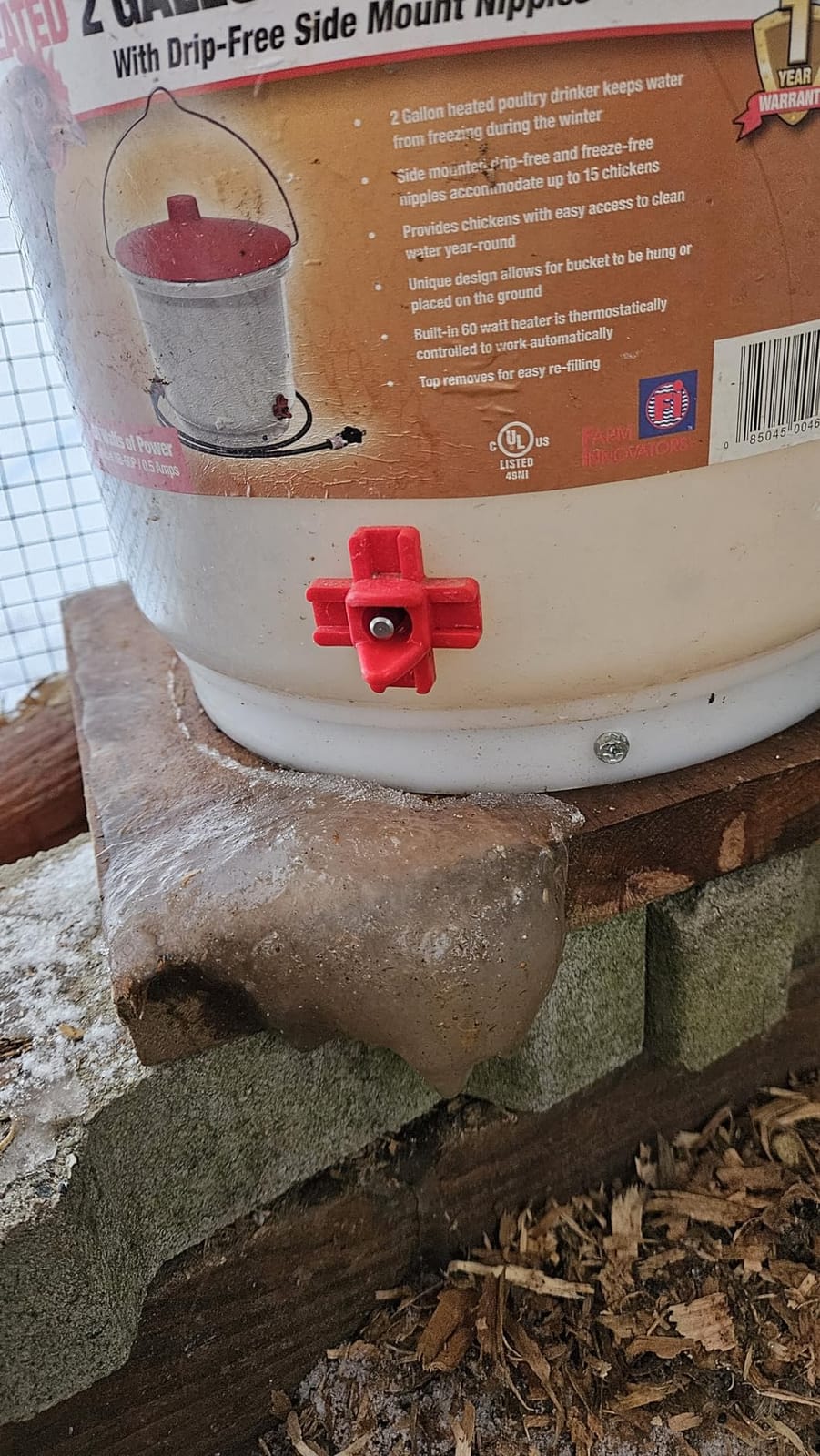
Owners in northern climates report the reservoir staying liquid through extended freezes, which is exactly what a 60W element is built for. The nipples are mounted high on the side, away from the coldest part of the reservoir, and that is why they keep flowing when a low-mounted cup system would ice up.
The caveat here is wind chill rather than raw temperature. A unit sitting in an exposed run with a hard wind across the plastic shell can still lose the nipple tip, and the plastic housing gradually degrades if it lives in full sun year after year.
Who should skip this one
If you run more than about 15 birds, two gallons means daily refills in any real heat, and a twelve gallon reservoir or a hose-fed line will serve you far better. Skip it too if you want an open trough for chicks, since this model is nipple-only.
If your winters are mild, you are paying for a heater you barely switch on. In that case the money is better spent on capacity, and the Little Giant fount further down is the smarter purchase.
2. Little Giant 1 Gallon Plastic Fount — Best Value for Small Flocks
Little Giant® Complete Plastic Poultry Fount | Heavy Duty Plastic Gravity Fed Water Container Jar | Waterer for Chickens, Turkeys, Ducks & More | Made in USA | 1 Gallon | Red
1 gallon gravity fed reservoir
Screw-on base
Transparent level jar
9 x 9 x 10.25 inches
Pros
- Leak-proof and easy to fill
- Heavy-duty plastic will not rust
- Stands level and does not tip
- Transparent jar shows water at a glance
Cons
- No carry handle
- Cracks if lifted by the bottom lip
- Tray needs cleaning between fills
There is a reason this style has been the default backyard waterer for two decades. The screw-on base means the whole thing comes apart in your hand, the reservoir is transparent so you can see the level without lifting anything, and gravity does everything else. Nothing to plug in, nothing to set up.
One gallon suits a flock of about six to eight birds in reasonable weather. It is not a large-capacity waterer and it is not a heated one, so think of it as the reliable daily unit for a small yard rather than a set-and-forget solution.
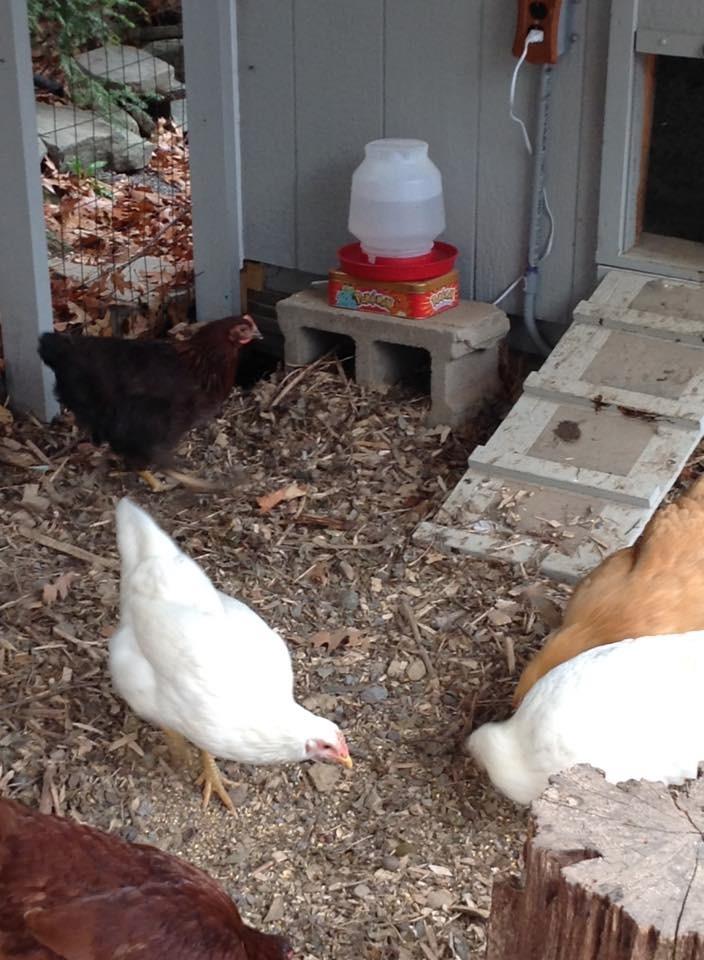
What surprised us was how stable it sits. A wide base on flat ground does not tip when a hen jumps on the edge, and there is no handle or bail to catch on hardware cloth. The heavy-duty polystyrene body shrugs off rain and does not rust, which is the main argument over plastic in a wet climate.
Cleaning is the whole product. Unscrew the base, scrub the tray, reassemble. The jar and base are also sold separately under different item numbers, so a cracked jar does not mean a dead waterer.
What the one gallon capacity really means
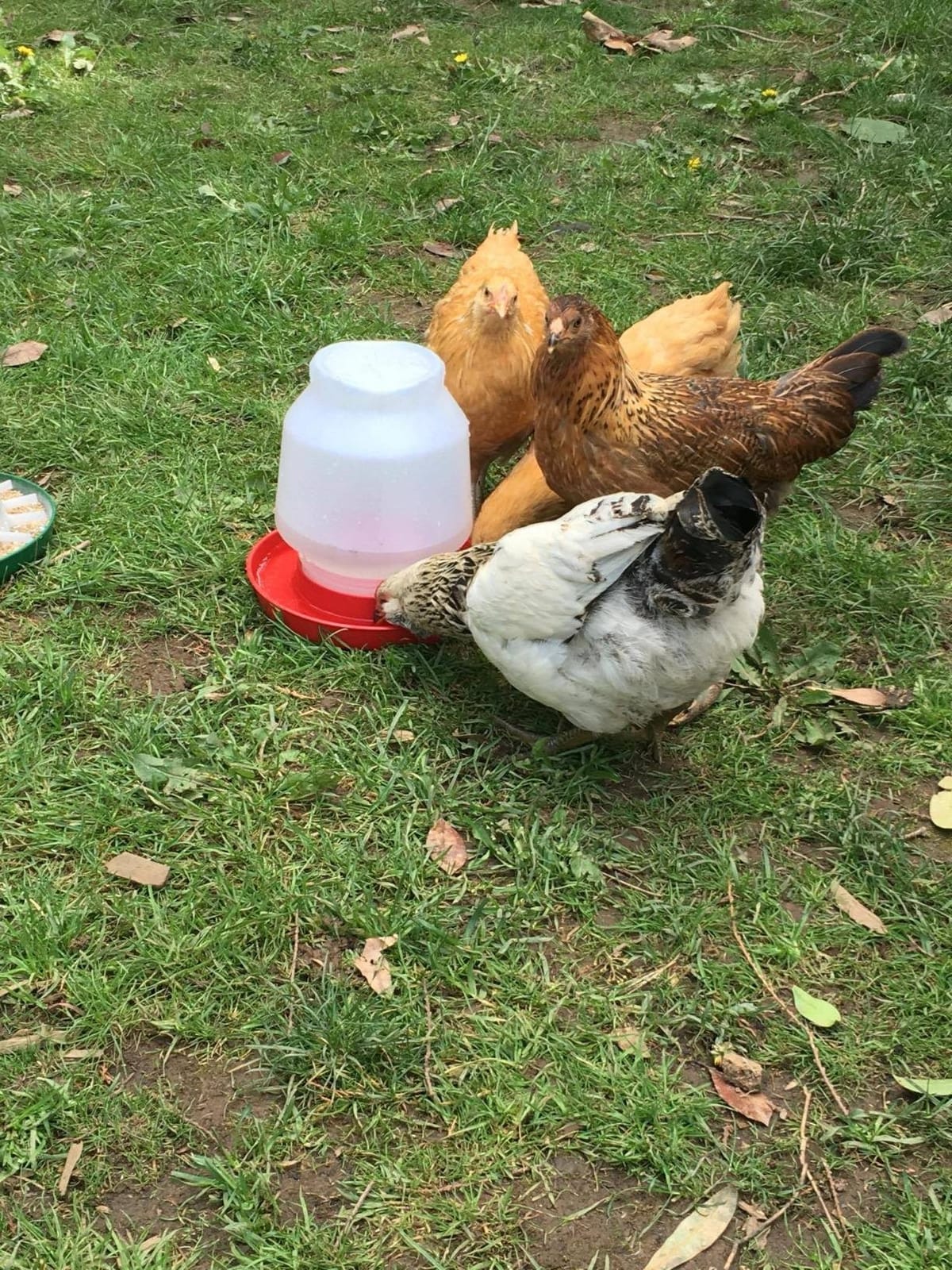
A mature hen drinks roughly a pint to a pint and a half a day when the weather is mild. That makes a gallon about five to seven bird-days, so a six-bird flock goes a week between fills in spring and closer to two days in a July heatwave.
Plan on checking it daily regardless. A waterer that looks full at night can be low by mid-morning, and the level is only visible because the jar is transparent. That visibility is worth more than capacity at this size.
Who should skip this one
Skip it above ten birds, and skip it in any climate where the trough ices over overnight. The open surface also means summer water heats fast, so in hot weather you will be dumping and scrubbing more often than a cup or nipple system demands.
There is no handle, so moving a filled unit means tipping it into a bucket or carrying it with both hands. If you plan to hang it or shuffle waterers between runs, look at a metal-handle design instead.
3. Double-Tuf 1.5 Quart Waterer with Legs — Best for Chickens in a Small Coop
Double-Tuf® Poultry Waterer with Legs | Durable Water Container | Carrying Handle for Chickens & Birds | Chicken Waterer | 1.5 Quart
1.5 quart capacity
Removable legs
Included lid
Integrated carrying handle
Pros
- Legs cut down kicked bedding
- Translucent body shows water level
- Handle makes moving it easy
- Works for chicks through adults
Cons
- Tab locks can leak and break off
- Larger sizes are hard to seal by hand
- Plastic gets brittle with age
- Occasional cracked arrivals
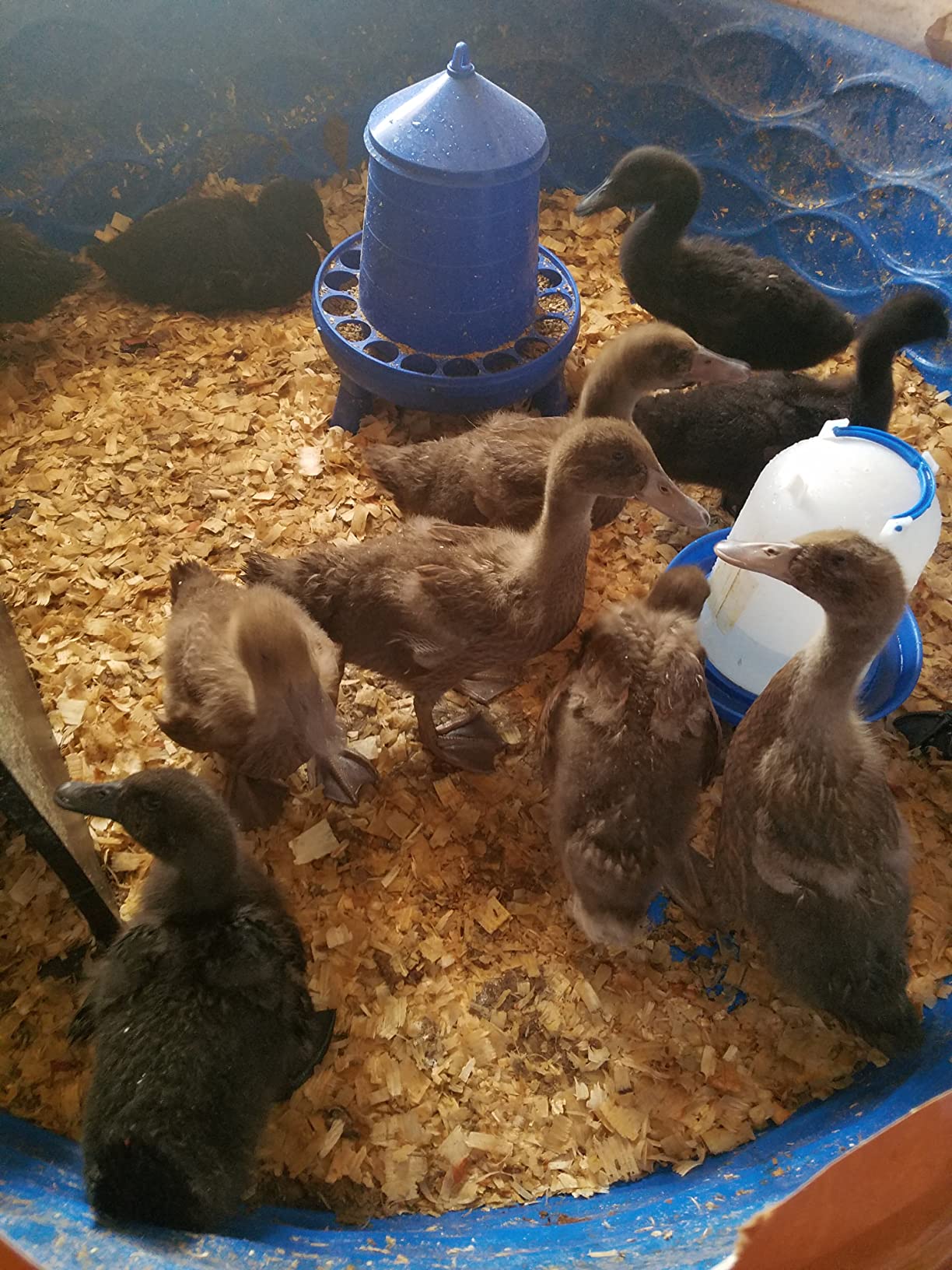
The defining feature here is the legs. Raising the trough a few inches off the ground does not sound like much, but it is the single cheapest upgrade against the number one complaint we heard: bedding and droppings kicked into open water. The wide trough also makes it easy for chicks just off the brooder to reach.
At 1.5 quarts this is one of the smallest capacities in the guide, and that is exactly who it is for. Two to four birds, a bantam flock, or a temporary unit while a larger one is being cleaned.
One-piece jar and water ring construction means there is no seam to separate at the bottom, so the leak risk sits at the locking tabs rather than the base. Those tabs are also the weakness: owners do report slow weeping from a tab that is not clicked in properly, and tabs that eventually snap off.
Age is the other factor. Impact-resistant plastic starts out tough and turns brittle after a couple of seasons of sun and temperature swings, so expect to replace this one eventually rather than treat it as a permanent fixture.
Why height beats capacity in a small run
With a trough this shallow, a bird reaches down into the water and drags litter in with its beak. Raising the unit on legs reduces that, and the included lid keeps rain, dust and curious birds out between refills.
The handle matters more than it sounds, because you will be moving it more than you expect — to dump the tray, to catch the water under the tap, to put it somewhere the flock cannot roost on it.
Who should skip this one
Skip it if you have more than about five birds, because refills become a daily chore and the shallow water area empties fast. Skip it if you have had quality problems before; check the tabs are fully seated when you first fill it.
It is also the wrong pick for freezing climates, since the wide open trough is the first thing to ice over and there is no heater option for it.
4. Little Giant 3 Gallon Double Wall Metal Fount — Best Metal Fountain
Little Giant® Double Wall Metal Poultry Fount | Poultry Waterer | Heavy Duty Galvanized Steel Waterer | Made in USA (Silver, 3 Gallon)
3 gallon capacity
Heavy-gauge galvanized steel
Sloped top prevents roosting
12.25 x 15 x 12.25 inches
Pros
- Outlasts plastic that cracks in sun
- Easy to fill
- carry and clean
- Works with an optional heater base
- No lines or nipples to freeze
Cons
- Galvanization flakes then rusts
- Occasional leaking units
- Needs a level surface to avoid runoff
- Water does not drain on its own
Metal solves the problem that ends most plastic waterers: ultraviolet damage. A plastic reservoir left in summer sun eventually goes cloudy, brittle and cracked, and then leaks. A galvanized steel fount simply keeps working, which is why so many keepers have owned the same one for a decade.
The sloped top is the other smart bit. Roosting on the waterer is the fastest route to fouled water, and a roof that birds cannot stand on removes the problem before it starts.
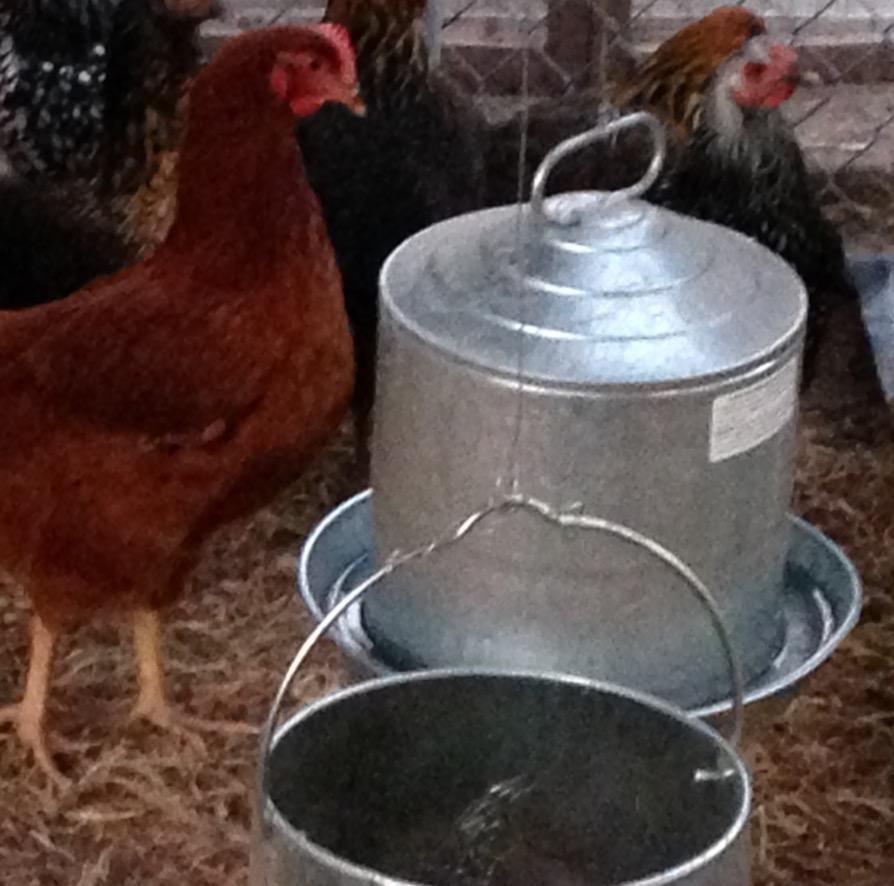
Three gallons is a real step up in capacity and works well for a mid-size flock in spring and autumn. The rolled edges are a genuine safety feature, since birds peck at the drinking lip constantly and a raw seam would be a cut waiting to happen.
It is also the metal option most likely to become a winter waterer, because it accepts the Little Giant electric heater base, sold separately. Add that plate and the fount becomes a freeze-capable unit without replacing anything else.
Galvanized steel and its one real weakness
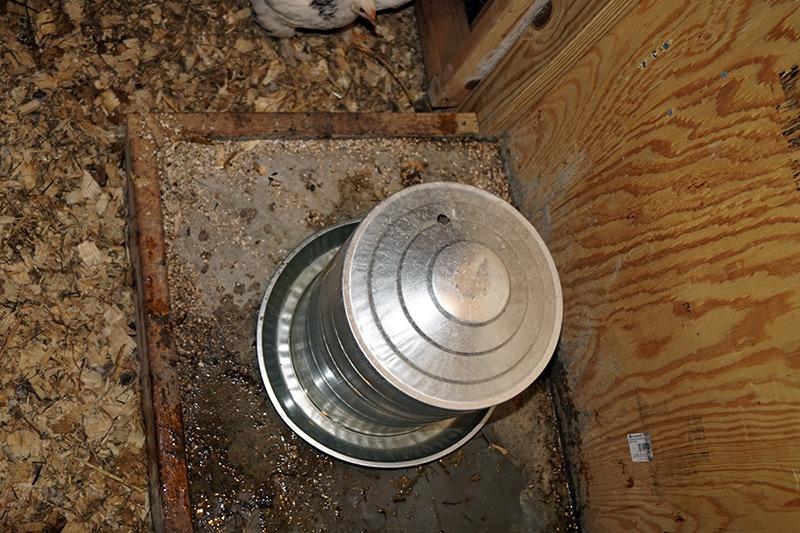
Galvanization is a coating, not a solid block of steel. Owners report the coating flaking off after a few months of use, after which the bare metal begins to spot and rust over a year or two. That is a cosmetic degradation rather than a leak, but it looks alarming if you are not expecting it.
The bigger practical warning is venting. Fit the lid before you carry it and water runs out down the side. Lift the lid, carry it open, set it down on a level surface, then lid it up. Getting that sequence wrong is what produces most of the leak complaints we read.
Who should skip this one
Skip it if you are on a small urban flock that cannot lift three gallons comfortably, because a full fount is heavy and there is no hose fitting. Skip it if the birds need a nipple or cup, since this is an open trough design.
Watch it closely for algae. Standing water in a metal tray does not drain, and while the material holds up, the biofilm inside still needs scrubbing on a schedule.
5. OverEZ 12 Gallon Automatic Waterer — Best High-Capacity Pick
OverEZ Automatic Chicken Waterer with No Spill System, Outside and Inside Poultry Drinker, Large 12 Gallon High Capacity Drinking Bottle Dispenser for Hens
12 gallon reservoir
3 sealed drinking stations
UV-protected BPA-free plastic
Power cord access port
Pros
- Twelve gallons means far fewer refills
- Nipples keep water cleaner than trays
- Walls resist tipping when full
- Birds cannot roost on the water
Cons
- Nipples drip slightly when birds drink
- Not insulated so water heats in summer
- Reports of seam and thread failures
- Knock-off lid
Capacity is the entire pitch here. Twelve gallons is roughly a hundred pounds of water, and for a flock of twenty to thirty birds it turns a twice-daily chore into a weekly top-up. If you have ever hauled a full fountain across a yard in July heat, that alone justifies the size.
It also moves the style from open trough to sealed drinking stations, so birds are not putting beaks into standing water. That is the single biggest hygiene upgrade you can make, and it is why the water stays usable longer between cleanings.
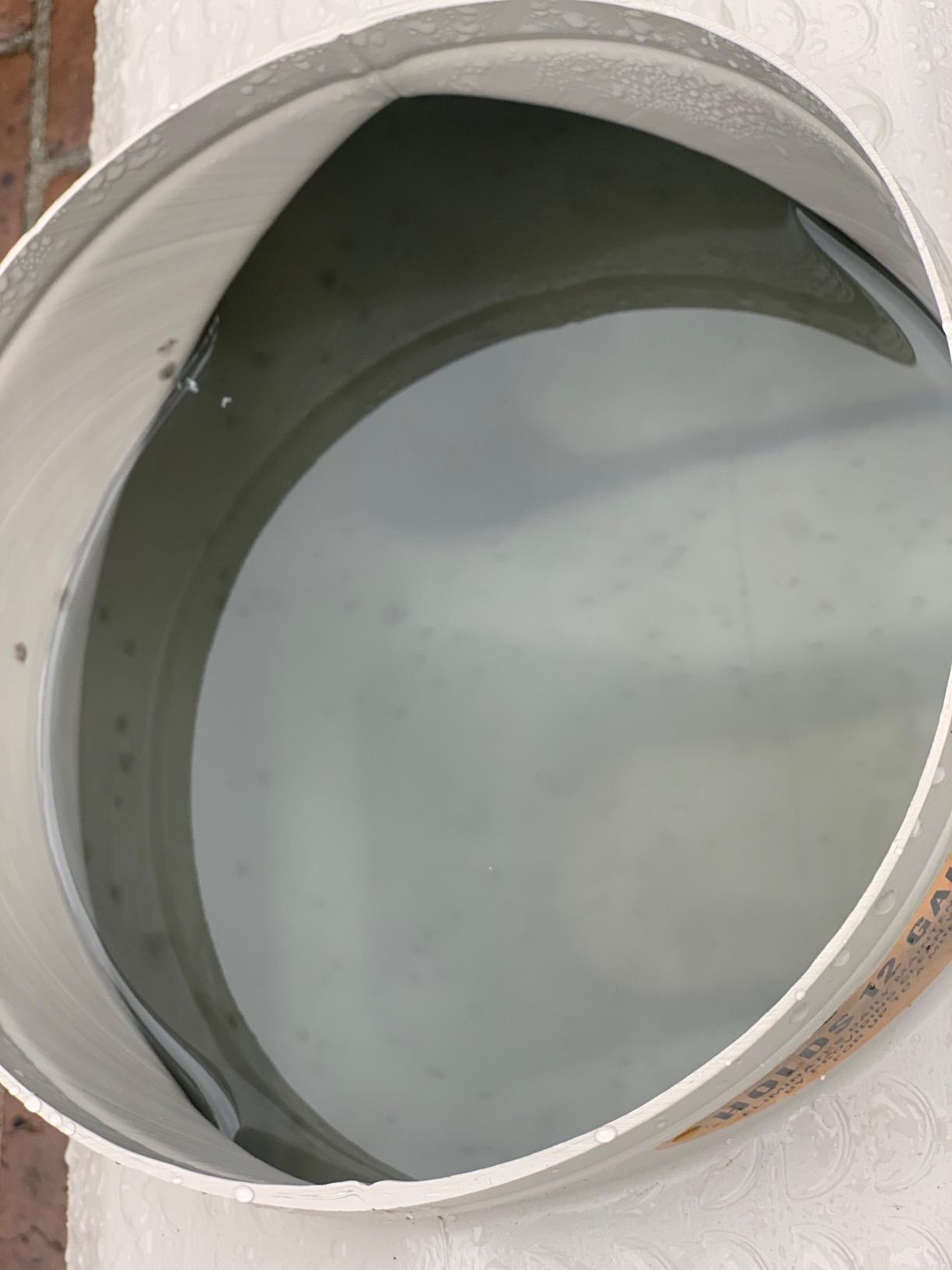
The access port on the side is a thoughtful touch. It lets a de-icer cable or a small circulation pump pass into the reservoir, so you can convert this into a winter waterer later without buying a different unit.
Owners also note the walls do not flex or tip when full, which is the usual failure with oversized plastic reservoirs. The UV-protected, BPA-free plastic is specified for outdoor use, which matters more than it sounds at this capacity.
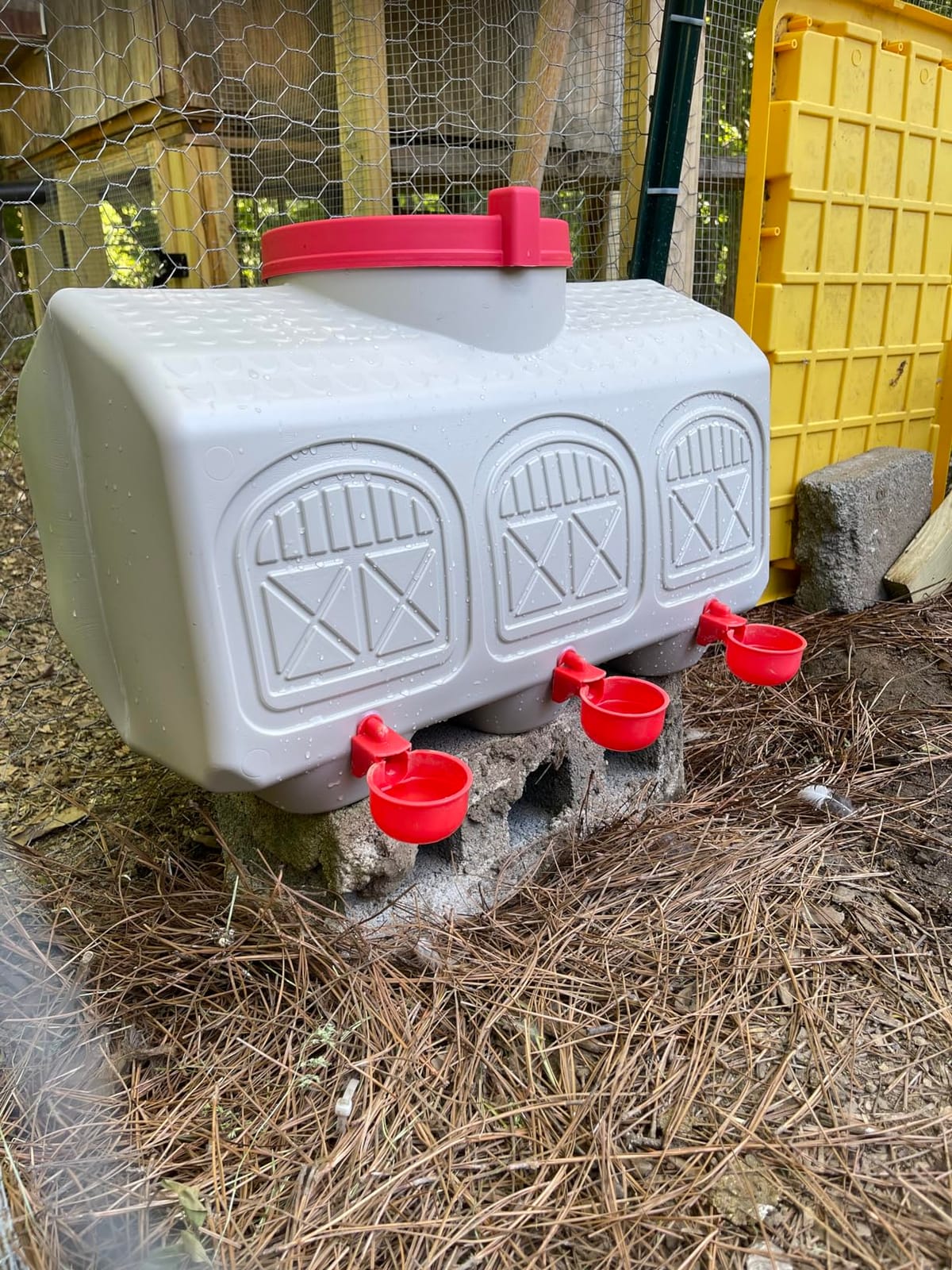
How many birds twelve gallons actually serves
At roughly a pint to a pint and a half per bird per day, twelve gallons is about eighty to a hundred bird-days. A twenty-bird flock gets four or five days from a full fill in mild weather, and around two days in peak summer heat.
That is still a full reservoir, though. Plan on a set location, a hose nearby, and a concrete block or pavers so the base stays level and does not sit in mud.
Who should skip this one
Skip it for a flock under ten birds. Carrying and refilling twelve gallons for six hens is absurd overhead, and a smaller unit will serve you better at every point.
Be aware that the nipples drip slightly when birds drink, so you want a drip tray or a raised position under them. Owners also report occasional seam and nipple-thread failures, so inspect the threads during every clean rather than assuming a slow drip is normal.
6. RentACoop 2 Gallon High Rise Waterer — Best Space-Saving Design
RentACoop 2 Gallon High Rise Chicken Waterer with Cups & Nipples
2 gallon vertical reservoir
2 auto-fill cups and 2 horizontal nipples
Anti-roost lid
Mounts inside or outside
Pros
- Tall narrow footprint saves floor space
- Cups and nipples so birds choose
- Opaque body blocks light and algae
- Cups lift out for cleaning
Cons
- Spring-loaded cups can lose their spring
- Defective cups leak or stop filling
- Inserts hard to remove for deep cleaning
- Some nipple threads do not screw in
Every waterer on this list except this one is roughly as wide as it is tall. This one is a narrow column that hangs on the wall or hooks over hardware cloth, which is the difference between fitting a waterer and not fitting one in a small mobile coop.
Offering cups and nipples together is the smart compromise, and it is the answer for a flock mid-transition. Young or cautious birds take to the open cup, confident adults work the nipple, and both draw from the same sealed reservoir.
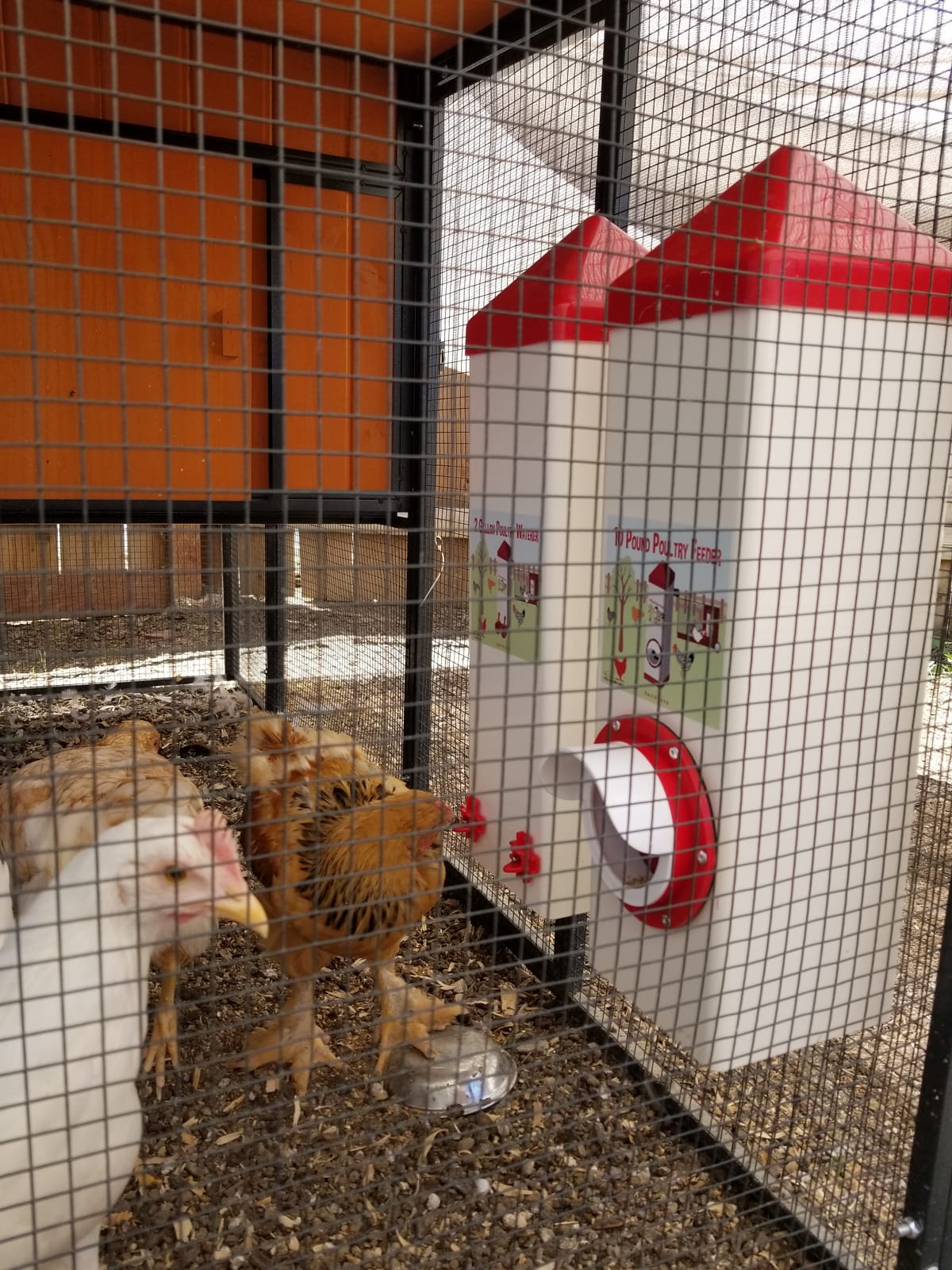
The opaque, UV-resistant plastic does quiet work here. Blocking light prevents algae, and the sealed design means birds are not drinking water that has been sitting open to dust and droppings for a week.
Two gallons covers roughly twenty chickens for about two days in moderate weather, according to owners, which is a sensible ratio for a unit you refill on a schedule rather than one built to run a week.
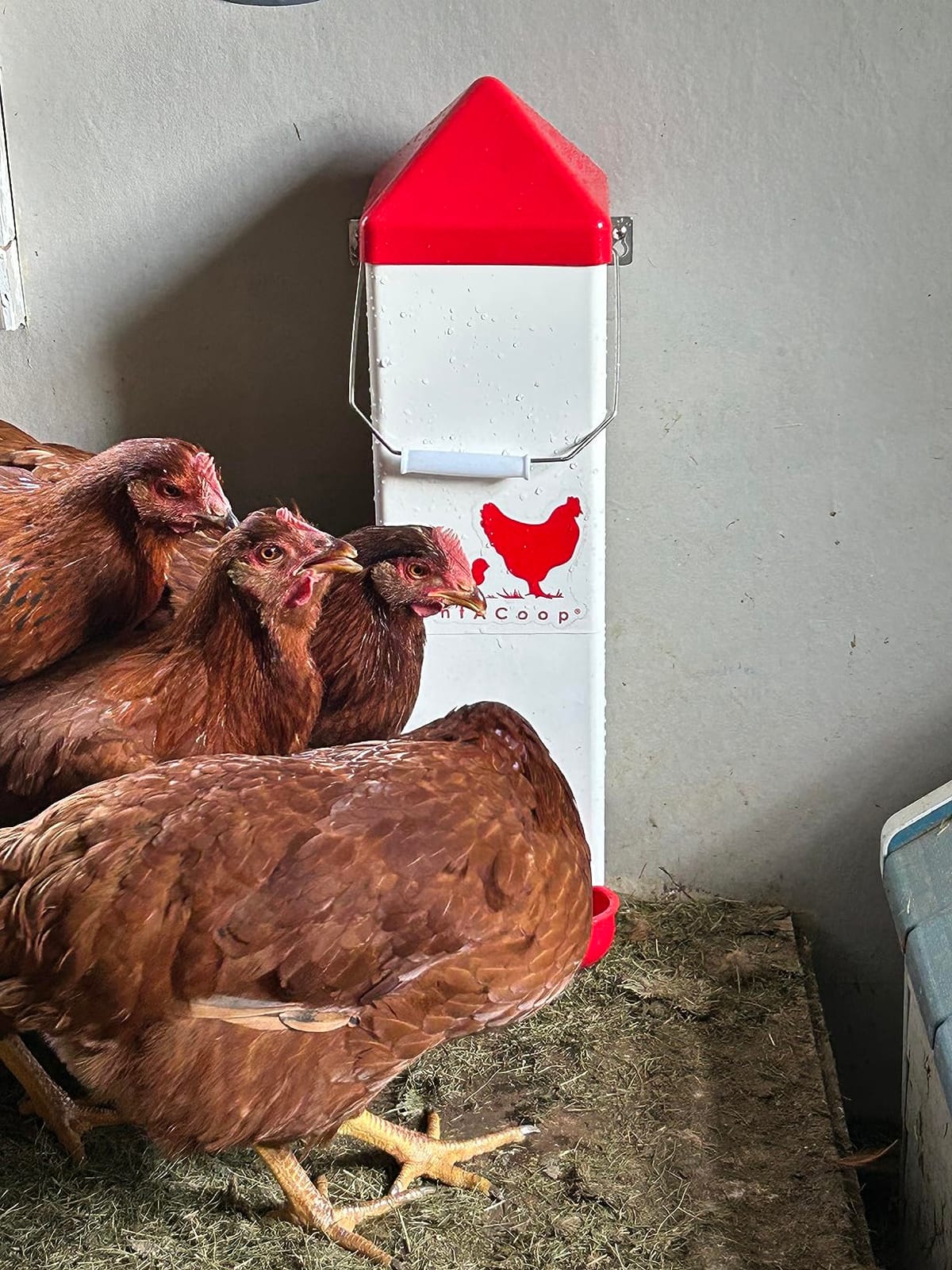
Cups and nipples in the same reservoir
Auto-fill cups are shallow dishes with a float valve that tops them up as a bird drinks. They are easy to see, easy to check, and easy for a bird to learn, but they sit open, so bedding and droppings find their way in. That is the trade you accept for visibility.
Nipples seal completely and are the cleaner long-term option. Two of each means you can retire the cups once every bird is confidently working the nipples, or pull a cup if it keeps collecting litter in a dusty run.
Who should skip this one
Skip it if you need more than a couple of days between refills, and skip it if you run a flock past roughly 20 birds without a second unit. It is a small reservoir with a big footprint advantage, not a capacity answer.
Quality control is the other consideration. Some owners report cups that separate and lose their spring, or nipples whose threads do not screw in cleanly. Check each fitting the first time you fill it and keep the spare cup and nipple that are included.
7. Premier 1 All-Season Heated 3 Gallon — Best for Winter
Premier 1 All-Season Heated Poultry Waterer for Chickens & Ducks – 3 Gallon
3 gallon reservoir
100W element, on below 40F
Suitable for up to 35 chickens
Hinged quick-fill cap
Pros
- Holds off freezing in deep cold
- Insulated walls keep summer water cool
- Quick-fill cap avoids lifting the lid
- Recessed nipples stay clean
Cons
- Nipples and lid can still freeze in wind chill
- Some units arrived without the cord
- Nipples need patience to train
- Large lid is awkward to tighten
If you freeze hard, this is the one to buy. A 100 watt element with a built-in thermostat that switches on below 40F and off at 60F is a meaningful step up from a 60W unit, and the three gallon reservoir means you are not topping it up every morning to keep the heater cycling through the night.
It is genuinely all-season. The insulated walls slow the temperature swing in both directions, so summer water stays cool for days and the same unit handles winter without being swapped out.
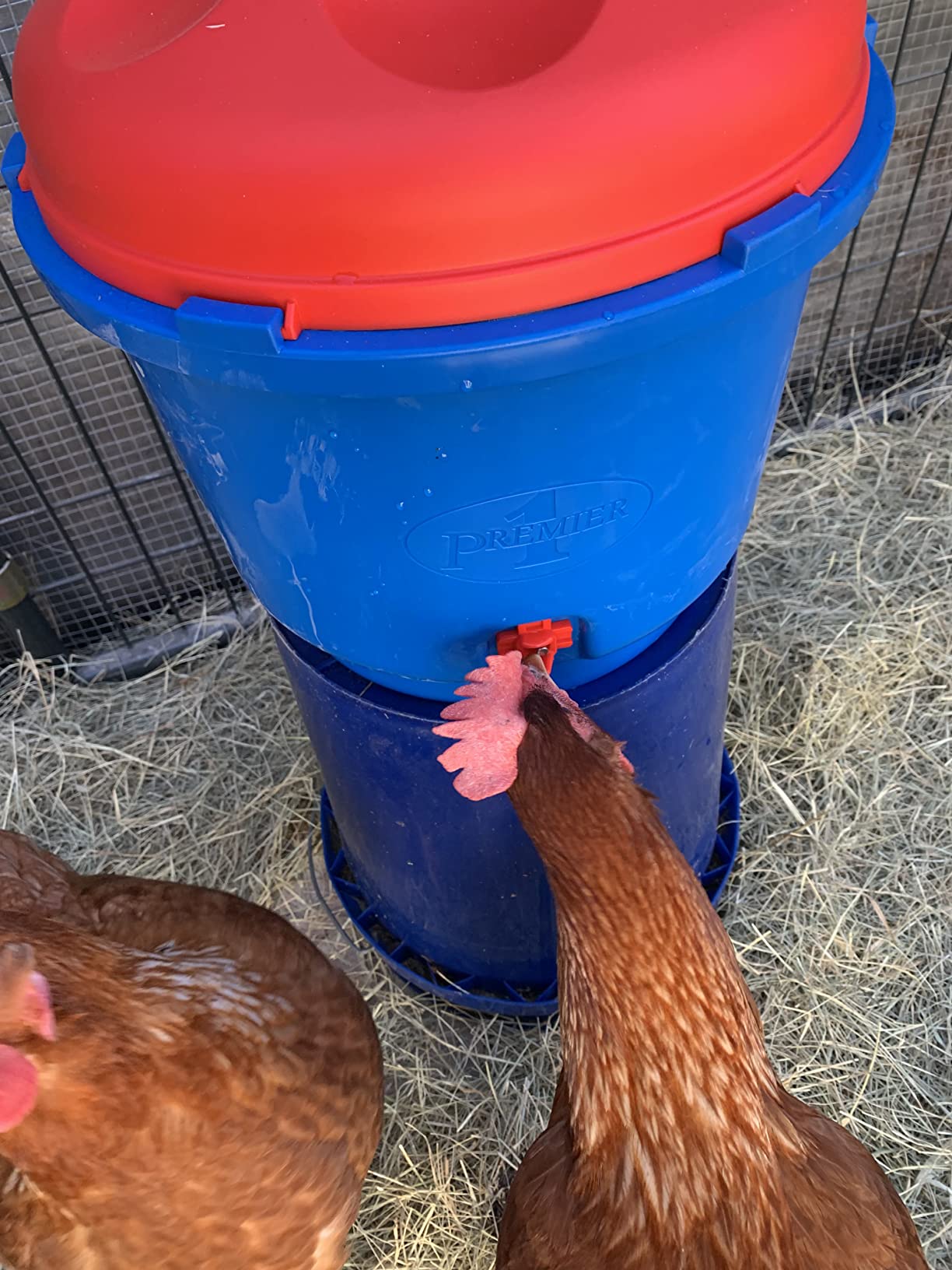
The hinged quick-fill cap is the feature we use most. A hose or watering can goes straight in without removing the whole lid, which means faster fills, less spill, and far less chance of snapping the lid threads on a cold morning.
Three recessed nipple drinkers come with three spares, and recesses keep the water surface shielded from debris. The heavy-duty handle is rated to carry the unit and to hang it, and the 16 foot detachable cord is long enough to reach an outlet.
Where heated waterers still fail
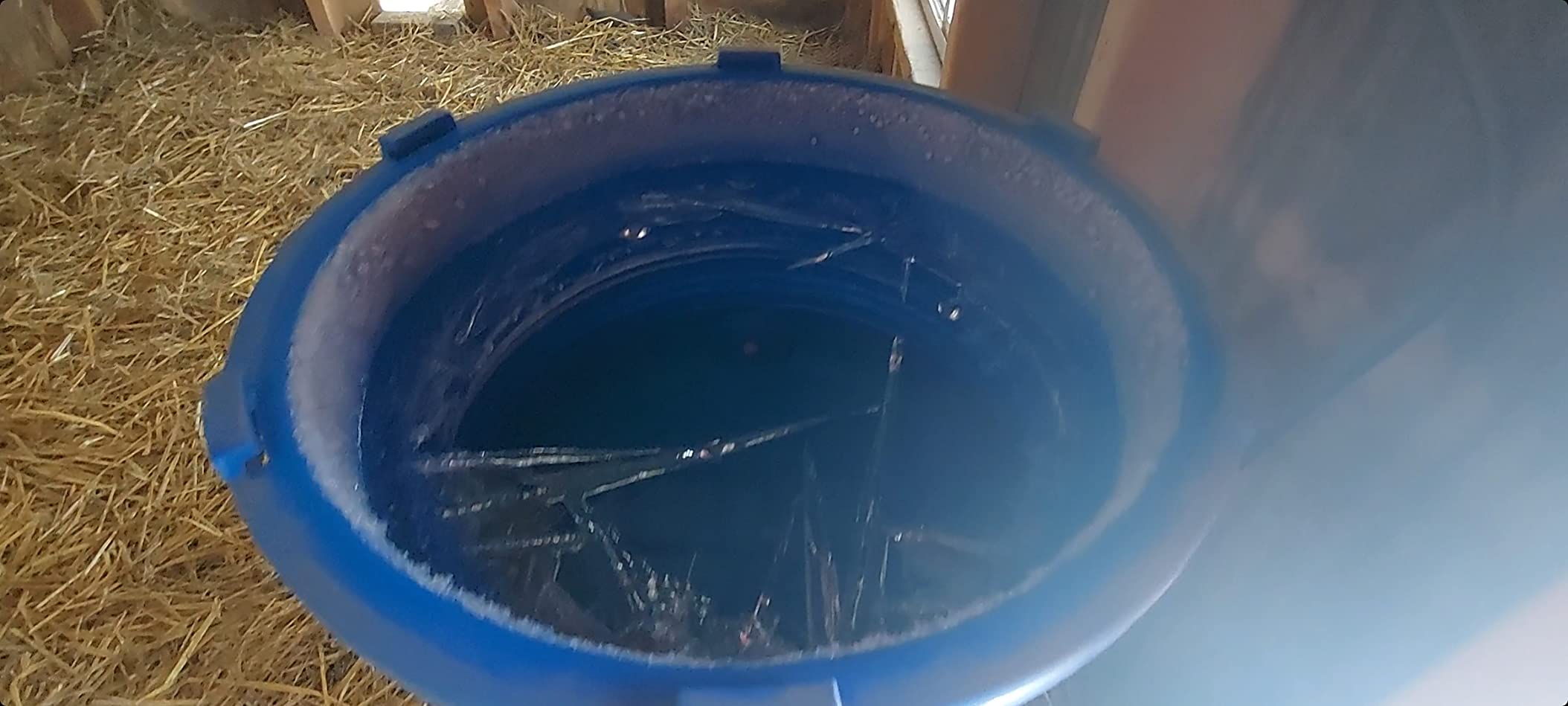
Heated reservoirs warm the water. They do not warm the nipples sticking out of the body, and in a hard wind with very low wind chill that is the first place ice forms. Owners in the coldest states report the nipples and lid still freezing under sustained exposure, so position the unit out of the prevailing wind if you can.
Detaching the cord in spring is the other habit worth building. Running a heater through a hot season wastes electricity and shortens cord life, and the detachable plug makes that a five-second job.
Who should skip this one
Skip it if your winters stay above freezing, because you would be running a heater you never need. And skip it if you cannot safely run a cord to the coop, since this is the most power-hungry pick in the guide.
Nipples also take patience. New birds need to be shown the nipple, and a mixed-age flock learns faster than a flock of first-timers.
8. Lixit 64oz Feeder or Waterer — Best Multi-Purpose Unit
Lixit Feeder or Waterer for Chickens and Other Wildlife (64oz)
64 oz capacity
Reversible base converts feeder to waterer
Wide reservoir opening
10 x 8 x 10 inches
Pros
- Flips from feeder to waterer easily
- Wide opening speeds filling and cleaning
- Light and compact for small flocks
Cons
- Not designed for young chicks
- Small capacity needs frequent refills
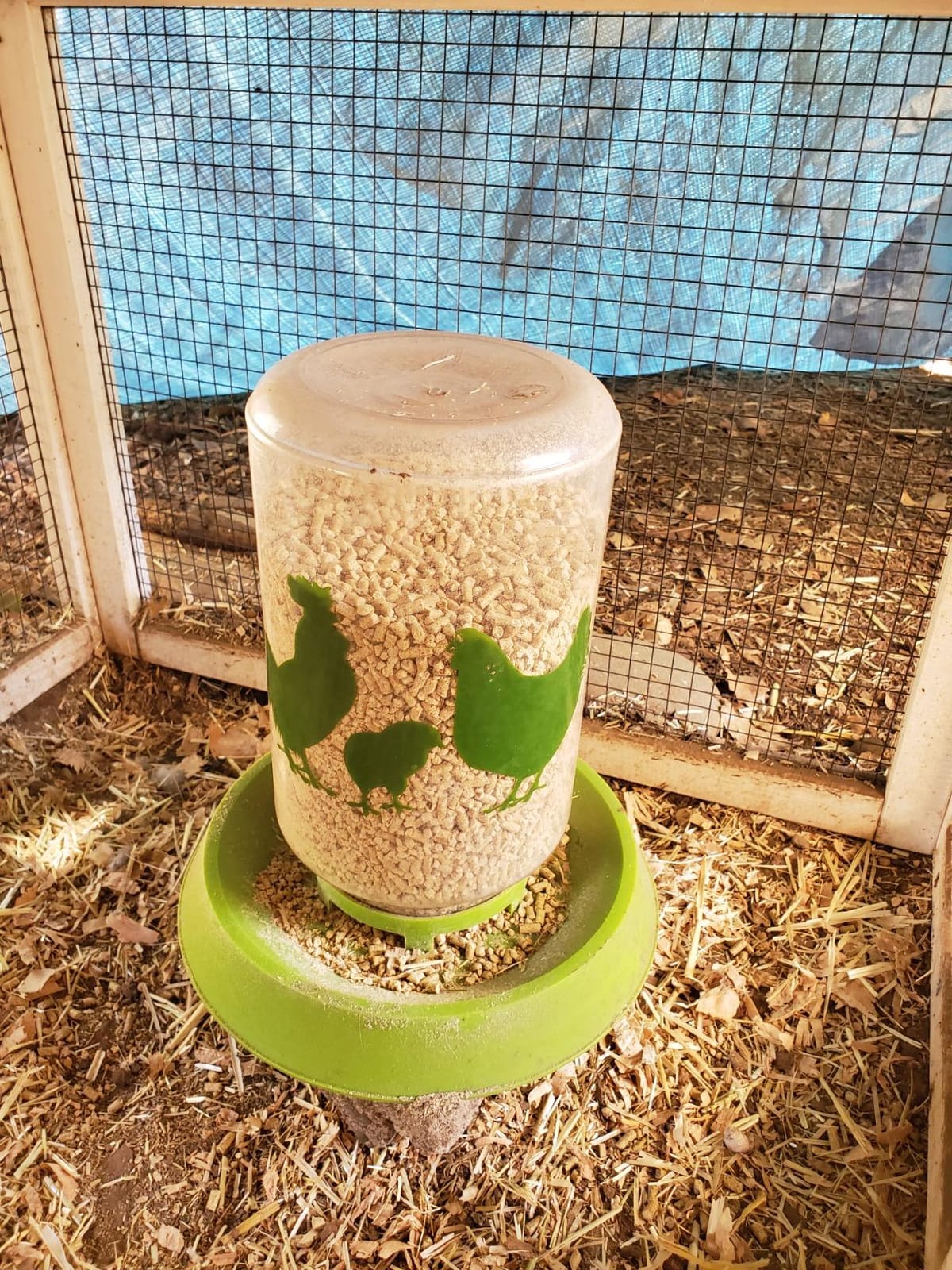
This one earns its place by doing two jobs. Flip the base and it holds roughly four pounds of feed instead of water, which means a single unit can serve as a waterer and a feeder, or rotate between the two as a flock grows.
The wide reservoir opening is more useful than it sounds. A small-mouthed waterer is a nuisance to clean, and this one you can put your hand and a brush straight into.
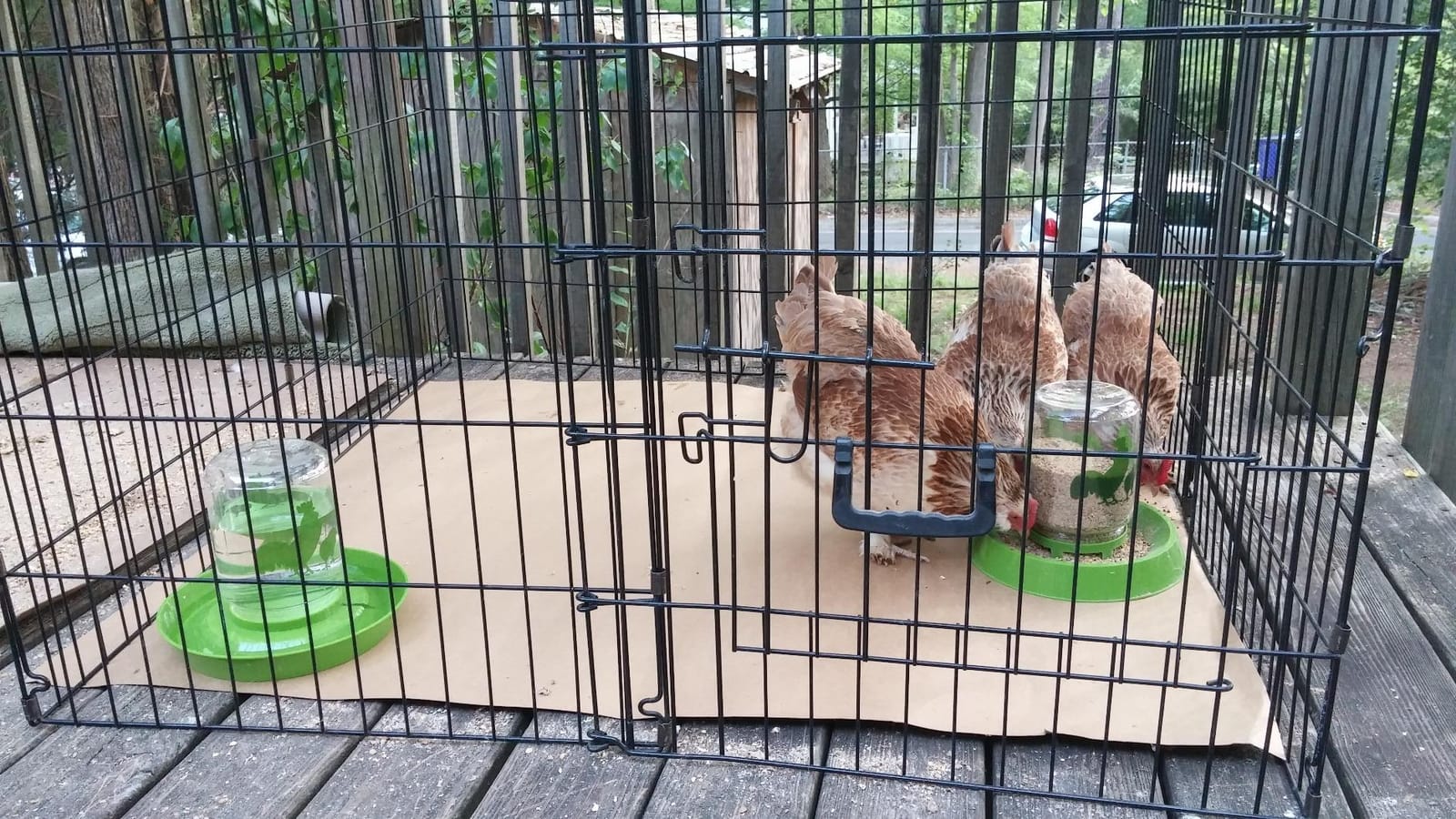
At 64 ounces it is sized for grown chickens, which is exactly what the manufacturer states. Chicks cannot reach a drinking lip at that height, so this is a post-brooder unit, not a brooder one.
Molded plastic keeps the weight down at about eight ounces, which makes it easy to carry between the coop and a sink. That matters when the alternative is wrestling a five gallon fount across wet ground.
When one unit doing two jobs is the point
The clearest use is a mixed flock: pull the feed, flip it to water, hang it low for the bantams and higher for the full-size birds. The adjustable positioning matters more than the capacity in a flock with mixed sizes.
It is also a good travel unit. If you move the flock between a yard and a rented run, a waterer you can pick up with one hand is worth more than a bigger one you have to slide along the ground.
Who should skip this one
Skip it if you have chicks under four weeks, since neither the drinking lip nor the feed opening is sized for them. Skip it above six or seven birds, because 64 ounces runs out in a day in summer.
It is also not a heated or insulated design, so it is a fair-weather waterer no matter how well it is made.
9. Omlet Insulated 3 Gallon Waterer — Best for Clean Water
Omlet Insulated Chicken Waterer, 3 Gallon | Automatic Poultry Water Dispenser with 5 Cups & Nipples Included | BPA-Free | Anti-Roost Lid | Sage Green
3 gallon insulated reservoir
Blocks 99% of light
BPA-free UV stable plastic
5 cups and nipples with spares
Pros
- Highest rated in the guide
- Insulated walls keep water cool in heat
- Light-blocking body stops algae
- Locking lid stops roosting
Cons
- Most expensive unit in the guide
- Over-tightening fittings causes leaks
- Small for large flocks
- Nipples may not work in very cold weather
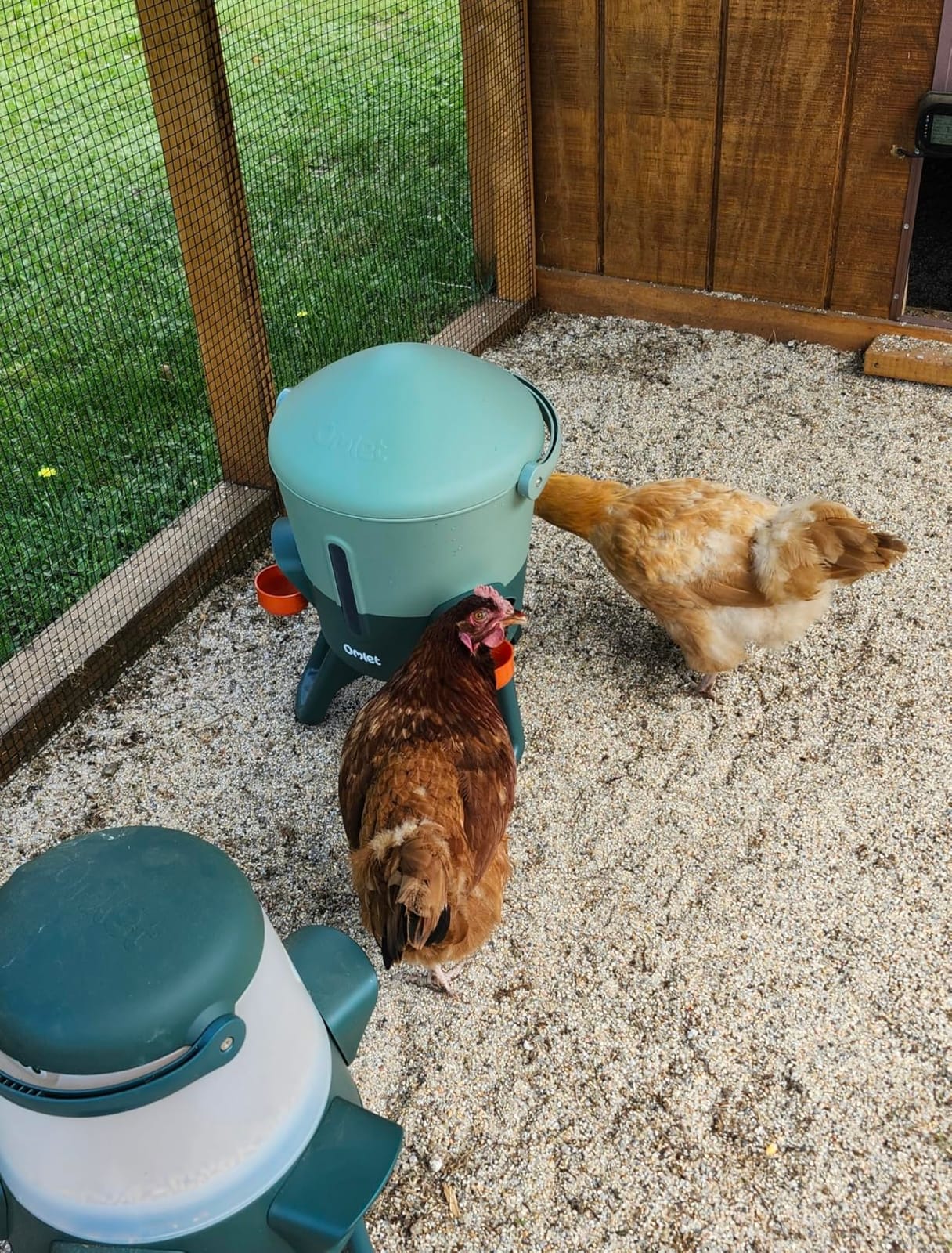
This is the highest rated waterer we tested, and the reason is not a feature list so much as a design philosophy: nothing about it invites dirt. The body blocks 99 percent of light, which removes the single biggest cause of green water and algae, and the enclosed drinking points mean no open surface at all.
Keepers run it through hot summer and report water that stays clear for weeks without treatment, which is the outcome the whole buying guide is chasing. The insulated walls extend that to keeping the water cool rather than merely clean.
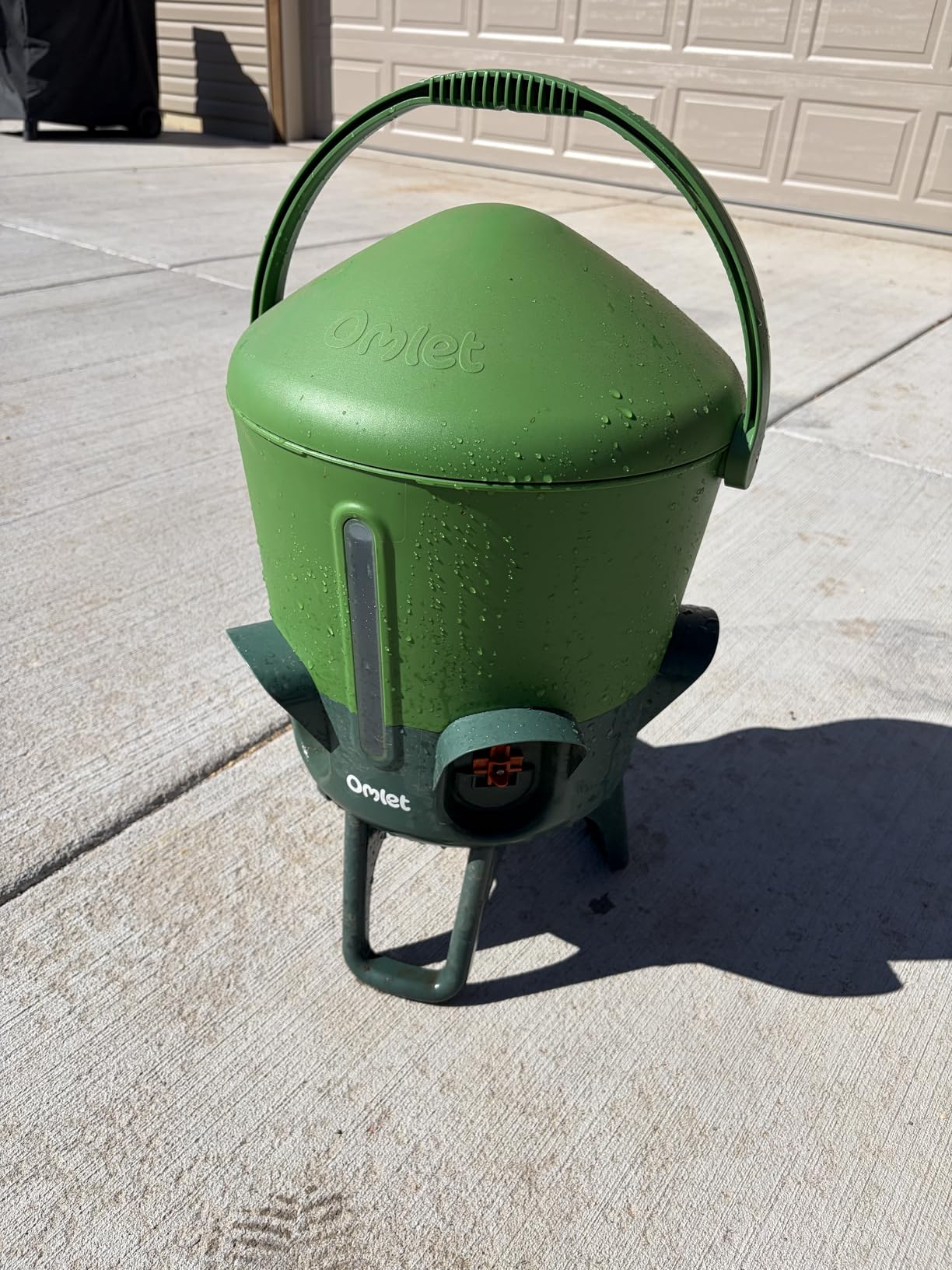
The locking dome lid is the anti-roost solution. There is no flat surface to perch on, and it does not tip when a hen leans on it, so the water stays uncontaminated without you cleaning it twice a day.
Five cups and nipples ship in the box with spares of each, which is a good sign about the fittings. Assembly is straightforward and birds generally start using it within a day or two.
Insulation is not the same as a heater
This is the most common misreading in the category. Insulation slows temperature change, so water that is cold stays cold and water that is warm cools down faster, but it generates no heat. In a genuine freeze, an insulated but unheated unit eventually reaches freezing like anything else.
The manufacturer also notes the nipples may not function in very cold weather. For a winter flock you would add an external heat source; for a temperate climate the insulation alone does a great deal of work in summer.
Who should skip this one
Skip it on cost if algae has never been a problem for you, because you can solve that with cleaning and a smaller budget. At three gallons it is also wrong for a flock past about fifteen birds, where you would need multiple units.
One practical note: overtightening the wing nuts on the cups and nipples forces them out of alignment and causes leaks. Finger tight plus a fraction of a turn is the right technique, and the spares exist because fittings do get overtightened.
10. Little Family Members 1.5 Gallon Waterer — Best for Chicks and Quail
Little Family Members Chicken Waterer 1.5-Gallon Metal Handle Poultry Drinker | Large Capacity Poultry Waterer | for Chickens, Ducks, Baby Chicks, Chickens, Turkeys and More
1.5 gallon (6 liter) capacity
Solid leak-proof base
Metal handle for hanging
12 x 12 x 8 inches
Pros
- Solid base keeps the ground dry
- Sturdy metal handle for carrying and hanging
- Good capacity for its size
- Works from chicks to adults
Cons
- Plastic body degrades faster than metal in sun
- Not insulated
- Open drinking area collects debris
The name says chickens, but the reason to notice this one is the range. A low drinking lip works for quail and for chicks that are a few weeks past brooder heat, and the same unit carries birds through adulthood without a swap. That makes it a good single-purchase answer for a mixed-age flock.
One and a half gallons is a useful middle ground for this style. It is big enough to cover a small flock through a workday and small enough that one person can lift and carry it without a struggle.
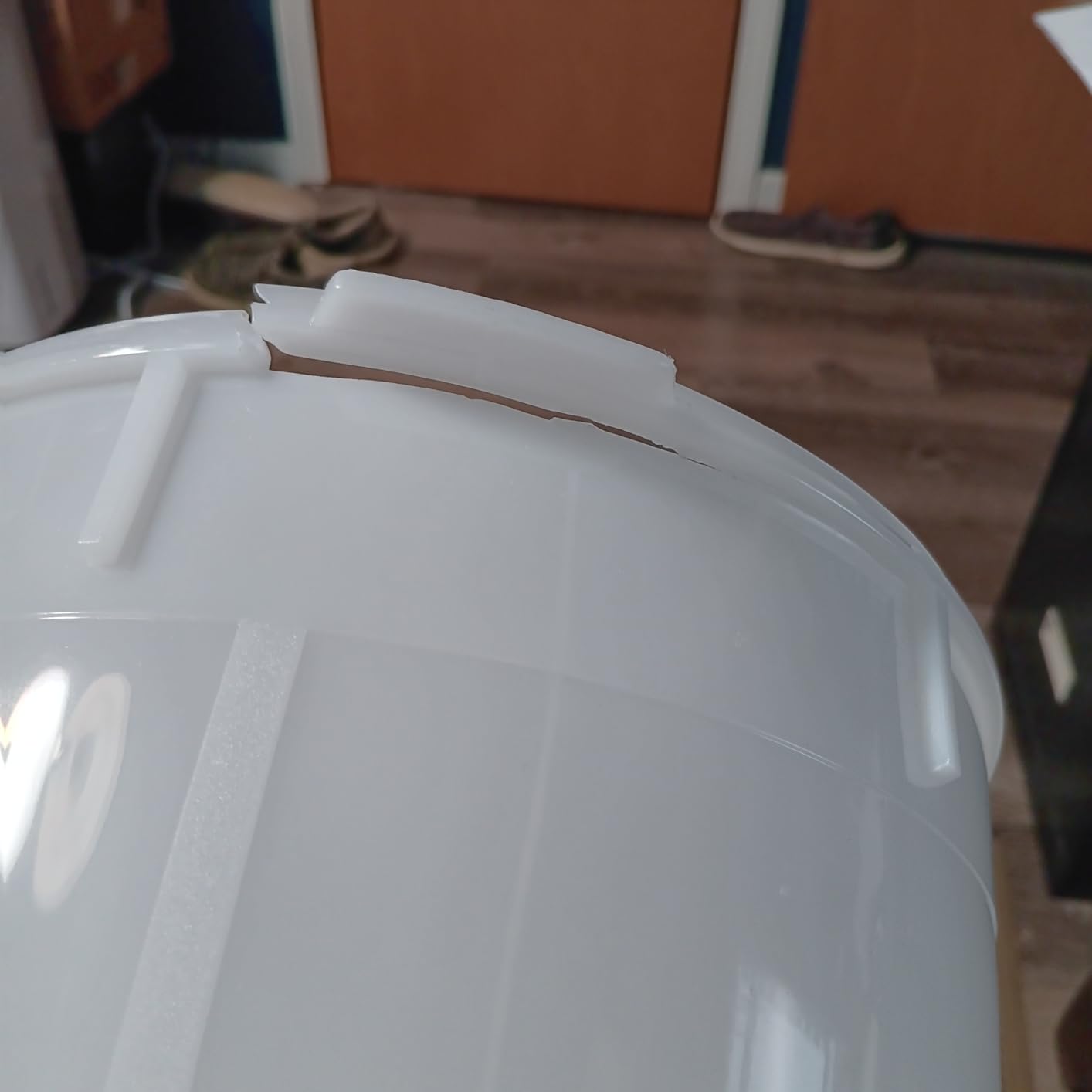
The solid base is the fix for the leak complaints that plague cheap plastic fountains. There is no seam to flex apart, so when it sits still it stays dry, and the coop bedding underneath survives the summer.
Owners also like the deep reservoir with a narrow drinking area. Water is poured in at the top and only a small ring is exposed, so surface contamination stays limited compared with a wide shallow trough.
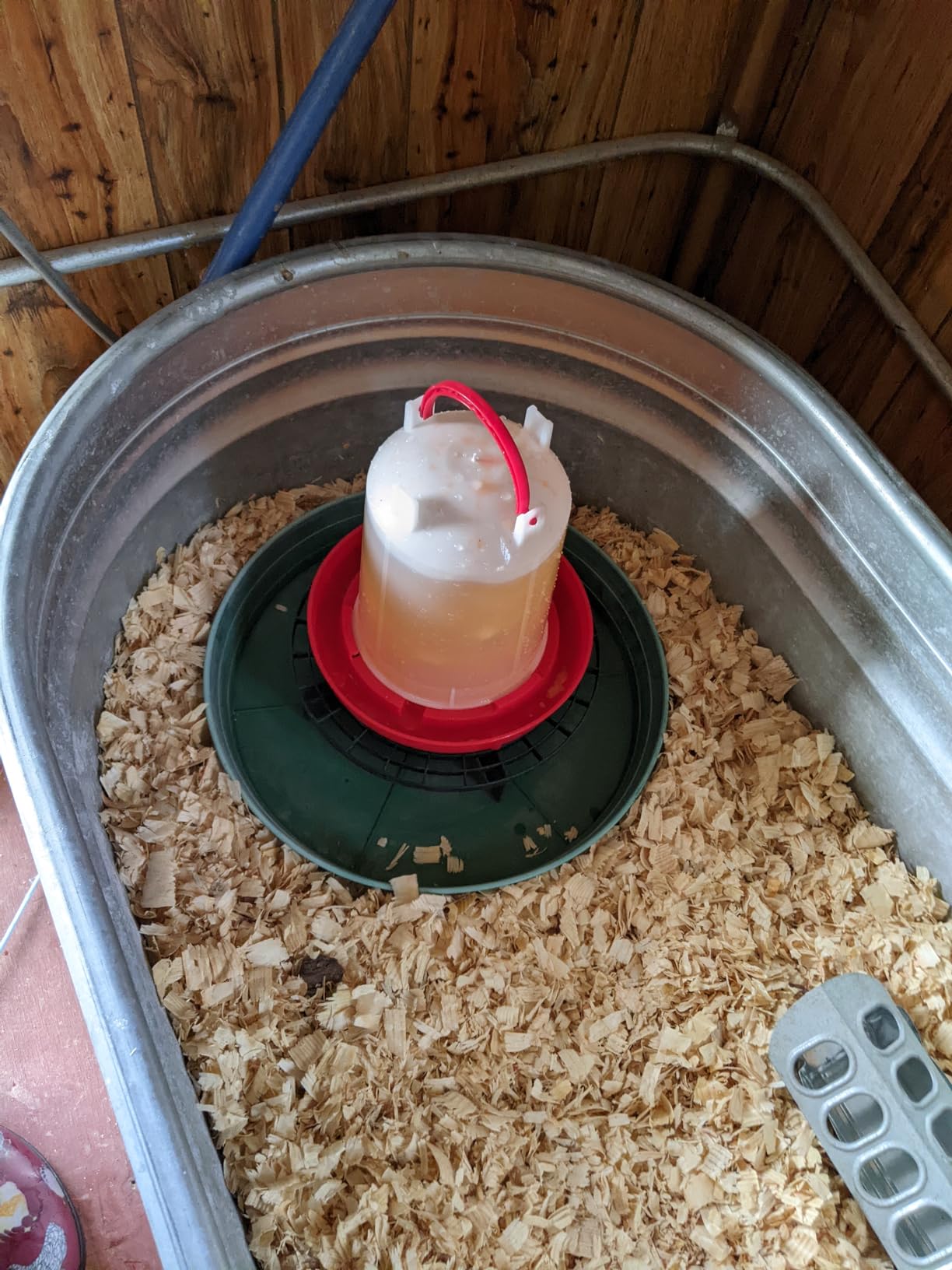
A better choice than a mason jar base
The common brooder setup uses a shallow tray with a mason jar screwed into it. It works, but the tray is where chicks drown and where damp bedding grows, and the jar is easy to tip. A deeper reservoir with a narrow rim removes the drowning surface entirely.
If you are mixing chicks, quail and adult birds, this is the pick that avoids buying three separate units. Set it low for the smallest birds and raise or hang it as they grow.
Who should skip this one
Skip it for very young chicks, since anything under about two weeks still needs a proper brooder waterer with a very shallow, guarded source. Skip it in freezing climates, because there is no insulation and no heater.
Owners do report that the plastic body degrades faster than metal when it sits in direct sun for years, so if you have a south-facing run, put it in partial shade.
11. ZINZINULER Automatic Waterer and Feeder Set — Best Plumbed Set
Chicken Feeder, Chicken Waterer with Float Controlled Automatic Set(3 Gallon/16 Pounds), Chicken Coop Accessories(Compatible with 5/8-inch and 3/4-inch Water Pipes, 60-inch Water Supply Pipe
3 gallon float-controlled waterer
5/8 and 3/4 inch fittings
60 inch supply pipe included
16 lb rainproof feeder
Pros
- Hose-fed water removes daily refilling
- Feeder reduces feed waste and spillage
- Lids snap tight and shed rain
- Assembly takes about 15 minutes
Cons
- Plastic fittings can strip and leak
- Gaskets squawk out of the threads
- Water bowl fills only shallowly
- Water lid does not lock
This is the only set in the guide that connects to a water supply. A float valve controls the level inside a three gallon reservoir, and a 60 inch supply pipe with fittings for 5/8 inch and 3/4 inch pipe runs to your tap or a hose. Once it is plumbed, filling is a problem you no longer have.
For thirty birds or more, that changes the calculus completely. Daily refills are the reason so many keepers abandon waterers, and a float-controlled unit removes the single most tedious chore in the job.
You also get a 16 pound rainproof feeder with a rain lid. Feed runs far longer than water per fill, and a covered feeder cuts spillage and the damp mouldy feed that attracts rodents.
Both drinking modes are present, so nipples and cups work off the same reservoir. The thickened plastic build is heavier than a garden waterer, which is appropriate given it is meant to hang on wire or a wall rather than sit in the mud.
Plumbing notes before you buy
Check your pipe diameter first. The fittings cover 5/8 inch and 3/4 inch, and a mismatch here is the most common reason a set like this never gets connected. Measure the outside of the line before ordering anything else.
Run the supply pipe with a continuous fall toward the tap so any sediment drains out rather than settling inside the reservoir, and fit a union at the tap end so you can disconnect the whole assembly for cleaning without tools.
Who should skip this one
Skip it for a small flock. A plumbed system only makes sense above roughly 20 birds, and below that the fittings are more hardware than the problem needs.
Be honest about the reviews. This is the lowest rated product in the guide, and the complaints are specific: plastic fittings that strip and leak at the connection, rubber gaskets that squawk out of the threading and cause drips, and a water lid that does not lock. If you have small breeds or chicks, an unlatched water lid is a drowning risk and needs securing. Choose a passive waterer if you are not comfortable with a leak-free connection.
12. FARM-TUFF 5 Gallon Galvanized Fountain — Best Large Metal Fountain
FARM-TUFF Galvanized Poultry Waterer, 5 Gallon Capacity – Double-Wall Poultry Fountain with Cone Top – Automatic Gravity-Fed Water Dispenser for Chickens, Ducks & Game Birds
5 gallon double-wall reservoir
Galvanized steel construction
Cone top prevents roosting
16.5 inches tall
Pros
- Metal resists rust and will not crack
- No moving parts to break
- Cone top stops roosting
- Works with a heater plate in deep cold
Cons
- Leaks if lidded before carrying or off level
- Internal handle is thin when full
- Shallow water at the drinking lip
- Heavy once filled
Five gallons in galvanized steel is the answer for a mid-size flock that wants fewer chores without a powered system. Double-wall, vacuum-sealed construction holds a constant water level in the trough, so birds do not push the level down and expose the base, and there are no moving parts to wear out.
Owners report it covering 14 to 21 birds for about two days, which makes it a genuine step down from daily refills while staying light enough to manage in a normal yard.
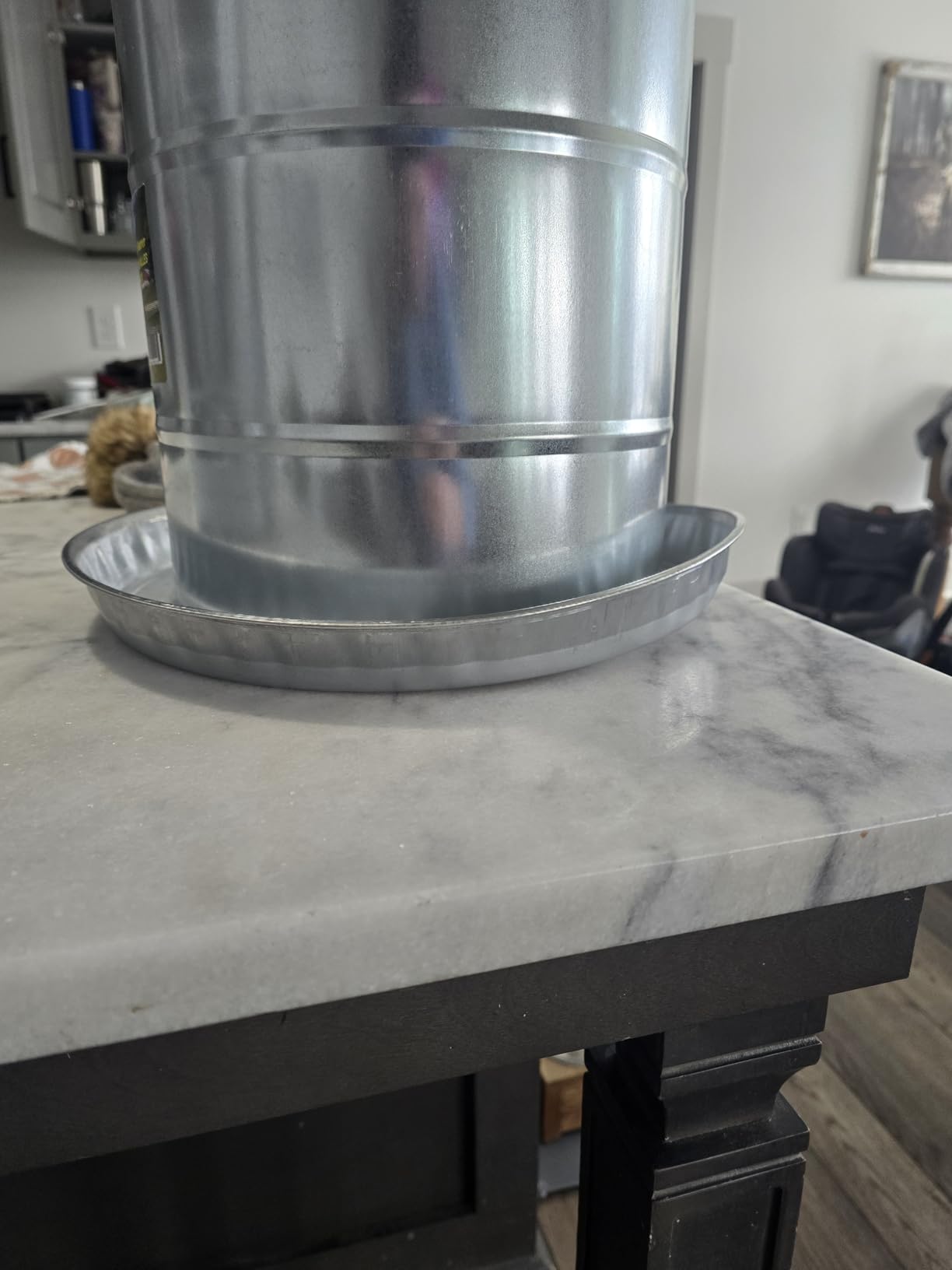
The cone top is doing real work. A domed or conical roof cannot be roosted on, so the water stays clean without constant scrubbing, and the 1.5 inch drinking lip is rolled and safe for birds pecking at it all day.
It is also one of the few fountains in this guide that pairs with a heater plate for genuinely cold conditions, which makes it a sensible starting point if you can add that plate later.
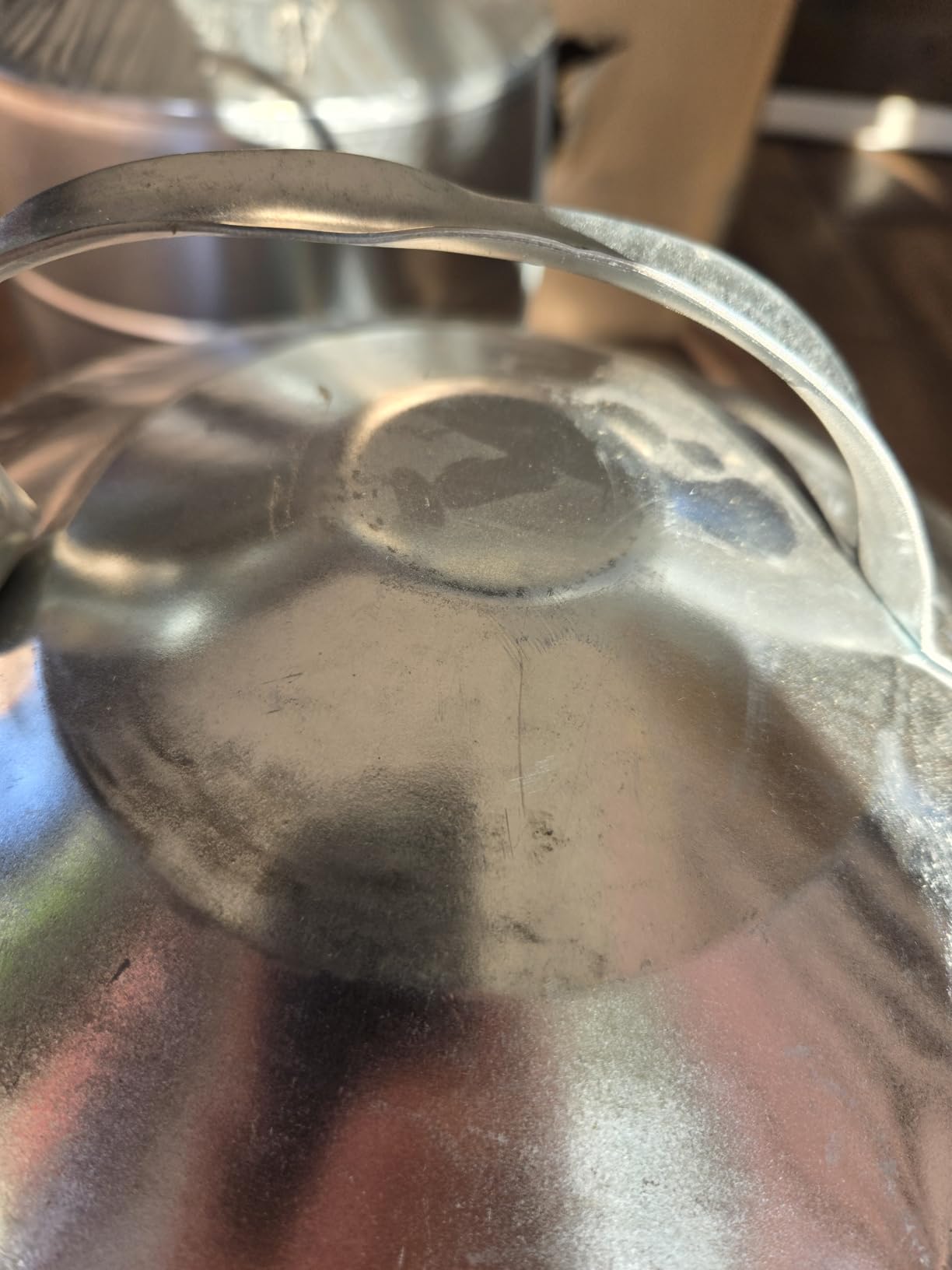
Get the carrying sequence right the first time
The single most reported complaint is that this unit leaks in the yard. Almost all of those reports trace to the same two mistakes: fitting the lid before carrying it, and setting it down on ground that is not level. Lift the lid, carry it open, set it on pavers, then lid it.
The internal carry handle helps but is thin, and a full five gallon fount is awkward to move regardless. Slide it rather than lifting it if the ground is uneven, and plan where it will live before you fill it.
Who should skip this one
Skip it for a small flock, since a full five gallons is genuinely heavy and you would be emptying it more than filling it. It is designed for flat-surface placement, so it is not a hanging waterer.
Skip it if you want cups or nipples for a cleaner drinking surface, and skip it in a very small run where birds can reach the drinking lip and roost on the cone edge.
How to Choose a Chicken Waterer That Lasts
Every product above solves a different problem, so the fastest route to the right one is to answer three questions honestly: how many birds, how cold, and how much time do you want to spend on chores.
Cups vs nipples vs a gravity fountain
These are the three families, and the difference comes down to whether the bird drinks from an exposed surface or a sealed one. Cups and nipples keep water sealed; a fountain exposes it.
Sealed systems stay clean because nothing falls into them. The cost is a learning curve, and for a flock of first-time drinkers you should show them the nipple. Exposed fountains need zero training and are the reason so many keepers default to the traditional red-and-white style, but they collect bedding and droppings continuously and the water heats in summer sun.
The forum consensus leans sealed, and it is the single most repeated recommendation we found: keepers on r/chickens told us they would go nipples over cups every time, citing that there is effectively no droppings to deal with and that the learning curve is easier than expected. Cup owners tell the opposite story about their own setup, filling a bucket with cups that constantly fills with kicked bedding.
How many birds per waterer, and how much water
A mature hen drinks roughly a pint to a pint and a half a day in mild weather, and intake rises sharply in heat. Size the reservoir so you are topping up once a day at most in summer, and twice a day is the point at which most keepers give up.
For nipples, allow one drinking point per six to eight adult birds. For cups, a similar ratio works. For an open fountain, a single large unit serving up to about 20 birds is reasonable, but a second unit in a second location always beats one big one, because it reduces crowding around the water.
Height and placement matter more than most buyers expect
Nipples should sit slightly above eye level for the birds using them, which is the rule of thumb most experienced keepers follow. Cups should be low enough for the smallest bird in the flock. Placing a waterer at the back of the run encourages birds to walk past it, and birds drinking while standing in full sun drink less water, which is a real problem in summer.
Off the floor is the other rule. Bedding, dust and droppings are the enemy of clean water, so hanging the unit or putting it on a raised block keeps it cleaner and reduces the cleaning frequency more than any product feature we tested.
Winter: heated unit, heater plate, or rotation
Insulation is not heating. An insulated but unpowered waterer slows temperature change, which helps enormously in summer, but it will still freeze eventually in a real cold snap. If your water freezes regularly, you need one of three things.
A heated reservoir. The Farm Innovators HB-60P at 60W and the Premier 1 at 100W are both designed for this. A larger wattage handles deeper cold and a bigger reservoir, at higher electricity use.
A heater plate or heater base. Metal fountains such as the Little Giant 3 gallon and the FARM-TUFF 5 gallon accept a separate plate. This is the cheaper route and it works, but it heats the base of the unit rather than the whole volume.
Seasonal rotation. Keep two waterers, one in service and one in the shed, and swap weekly. It is the cheapest strategy, it doubles as a cleaning schedule, and it has no electrical component to fail.
One rule applies to all of them: a heated reservoir does not heat the nipples or cups sticking out of it. Those are the first things to freeze, so in hard wind chill you need to protect the drinking end specifically. Always run heated waterers on a protected outdoor circuit, and keep the connection dry and off the ground where birds can reach it.
Metal or plastic
Plastic wins on weight, price and insulation. It is easier to carry, cheaper to replace, and the insulated models genuinely slow temperature swings. The failure mode is ultraviolet damage: a reservoir in full sun eventually turns brittle and cracks, and dropping a filled plastic fount often cracks it immediately.
Metal wins on durability and heat. Galvanized steel does not rust quickly, does not crack when dropped when full, and survives decades. The costs are weight, no insulation, and the fact that the galvanization coating wears and eventually spots with rust. There is also no insulation and no heating element built into a plain metal fount, so winter requires an accessory.
Our rule: plastic for small flocks, portability and summer performance. Metal for large flocks, harsh sun and any setup that will be moved while full.
Stopping algae without additives
Algae needs light and still water, so the fix is mechanical rather than chemical. Block light where the product allows it, which is the single most effective change you can make. Scrub the reservoir and trough with a stiff brush at least weekly in warm weather, and never let a waterer sit half full and still for days.
Moving a waterer out of direct sun slows growth dramatically. If you want something in the water, a splash of apple cider vinegar is the common keeper answer and is widely considered safe at that dilution, but no additive replaces cleaning, and some additives sold for poultry are not vetted for drinking water. If in doubt, clean the container and change the water instead.
Installing nipples on a five gallon bucket
A DIY bucket system is the cheapest path to a sealed water supply, and most leak complaints trace to two mistakes rather than to bad parts.
Drill straight and square. Horizontal nipples go through the side wall; vertical nipples go through the bottom. Use a drill guide or a scrap of wood with a pre-drilled hole taped over the plastic so the bit does not wander.
Seal every hole. Apply a generous bead of silicone compatible with the plastic, seat the fitting, and let it fully cure before filling. Thread tape alone on plastic threads leaks far more often than it does on metal.
Leak test before you hang it. Fill it in the driveway or shower, leave it an hour, and check every fitting and the bucket base. Dry means sealed.
Drill drainage or vent it. A sealed bucket needs a vent hole near the top so incoming air can escape as water is drawn, otherwise the flow stalls.
Set nipple height, then hang. Measure the shortest bird in the flock and place the nipples just above that bird’s eye level.
Expect to replace fittings rather than reuse them. A nipple thread that has been overtightened will drip, and a spare set costs less than debugging a wet coop floor.
Frequently Asked Questions
What is the best drinking water system for chickens?
The best system depends on flock size and climate. Small flocks in mild climates are well served by a simple gravity fountain. Flocks above 15 birds do better with a cup or nipple system that keeps water sealed from bedding. Any flock in a climate that freezes regularly needs a heated reservoir or a heater plate, because insulation alone will not stop a hard freeze. Plumbed float-fed systems suit 30 birds or more. The single best upgrade for any flock is moving water off the coop floor and sealing the drinking surface.
Are metal or plastic chicken waterers better?
Plastic is lighter, cheaper and insulates, which makes it better for small flocks, portability and summer performance. Metal, usually galvanized steel, does not crack when dropped when full and shrugs off years of direct sun, which makes it better for large flocks and harsh conditions. The trade-off is weight and the loss of insulation. Insulated plastic can crack from ultraviolet exposure over several seasons, while galvanized steel eventually wears through its coating and spots with rust. Neither material prevents biofilm, so both need the same cleaning schedule.
What is a good chicken waterer that doesn’t leak?
A sealed design with no open trough is the most reliable answer, such as a cup or nipple system mounted off the floor. If you prefer a fountain, remove the lid before carrying it and set it on a level paved surface before replacing the lid. Most fountain leak reports trace to fitting the lid too early or setting the unit on uneven ground. For a DIY bucket, seal every drilled hole with silicone and leak test before hanging.
Why do you put marbles in chicken water?
Marbles are not added for health. They are used to widen the surface a chick can stand on so very young birds do not drown, or to knock ice loose from the surface. They are not a substitute for a proper brooder waterer, and marbles are too heavy for a waterer used by adult birds. Never use them in a waterer where chicks could swallow them.
Which is better for a chicken waterer, cups or nipples?
Nipples win on hygiene and are the choice most experienced keepers recommend, because the water is sealed from bedding and droppings and the waterer needs cleaning far less often. Cups are easier for a bird to learn, are easy to check at a glance, and work well for chicks and for a flock mid-transition. Cup systems need more daily cleaning because they collect litter. A combined unit with both gives a new flock an easy start and lets you retire cups once every bird works the nipples.
What type of nipples are best for a chicken waterer?
For adult birds, horizontal nipples mounted on the side of the container are the most common choice because they are easy to see and easy to reach. Vertical nipples mounted through the bottom of a bucket are simple to install and easy for a bird to peck, and chicks can often be trained onto them first. Horizontal nipples are usually too hard for very young chicks to manipulate. Whichever style you choose, buy spares, since overtightened threads drip and are the most common fitting failure.
Do chickens get enough water from nipple waterers?
Yes, provided you provide enough drinking points. Allow one nipple per six to eight adult birds, and keep them slightly above eye level for the birds using them. A waterer that is too empty is a common cause of apparent nipple failure, since birds stop working a nipple when little is left. In hot weather, check the reservoir more often because intake rises sharply and a heated unit cycles more frequently.
How long will 5 gallons of water last for chickens?
A mature hen drinks roughly a pint to a pint and a half a day in mild weather, so five gallons is about 40 to 50 bird-days. A flock of 10 birds gets roughly four or five days from a full fill in spring, and about two days in peak summer heat. Hot weather, laying hens and very cold conditions all increase consumption, so size a reservoir so you are topping up at most once a day in summer.
How do I keep my chicken’s water from freezing in the winter time?
Use a heated reservoir with a thermostat, or add a heater plate or base under a metal fountain. Insulation on its own slows temperature change but does not generate heat, so it will still freeze in a real cold snap. A heated reservoir warms the water but not the nipples or cups sticking out of it, so protect the drinking end from wind chill. The cheapest alternative is to keep two waterers and rotate them weekly, which also doubles as a cleaning schedule.
Is water with algae bad for chickens?
Green water is not an emergency but it should not be left in place. Algae grows in light and still water, it harbours bacteria, and it makes birds less likely to drink. The fix is mechanical: block light where the design allows it, keep the waterer out of direct sun, scrub the reservoir and trough weekly in warm weather, and never leave a waterer sitting part full for days.
What can I put in my chicken’s water to stop algae?
Clean the container first, because no additive compensates for biofilm. Moving the waterer out of direct sun and using a light-blocking container does more than any additive. A small splash of apple cider vinegar is the common keeper answer and is widely considered safe at that dilution, but not every additive sold for poultry water is vetted for drinking use. If you are unsure, empty the unit, scrub it and refill with plain water.
How long can chickens go without water in freezing temperatures?
Not long at all, which is why frozen water is treated as an emergency. Chickens can become seriously dehydrated within hours, and they are especially vulnerable in freezing conditions because they must maintain their own body temperature. A chicken that has gone hours without water in cold weather can go into shock, and hens stop laying quickly. This is why a backup waterer kept in an unfrozen location is the single most important piece of advice in cold climates.
Final Verdict
For most backyard flocks, the Farm Innovators HB-60P is the best chicken waterer we tested. A 60W thermostatically controlled element holds off freezing, side-mounted nipples stay open longer than any cup or low-mounted fitting, and a removable top makes refills fast. It is the pick for a flock of up to about 15 birds that faces real winter.
Match the style to the job instead. The Little Giant 1 gallon fount is the right everyday default for a small flock in a mild climate. The Omlet 3 gallon insulated unit gives the cleanest water and the coolest summer water, at the highest cost. The Premier 1 100W heated unit takes the hardest cold. The OverEZ 12 gallon reservoir is the answer for 20 to 30 birds who want refill-free weeks, and the ZINZINULER plumbed set goes further still. Whichever you choose, keep a second waterer in reserve and run it on a weekly cleaning schedule.