
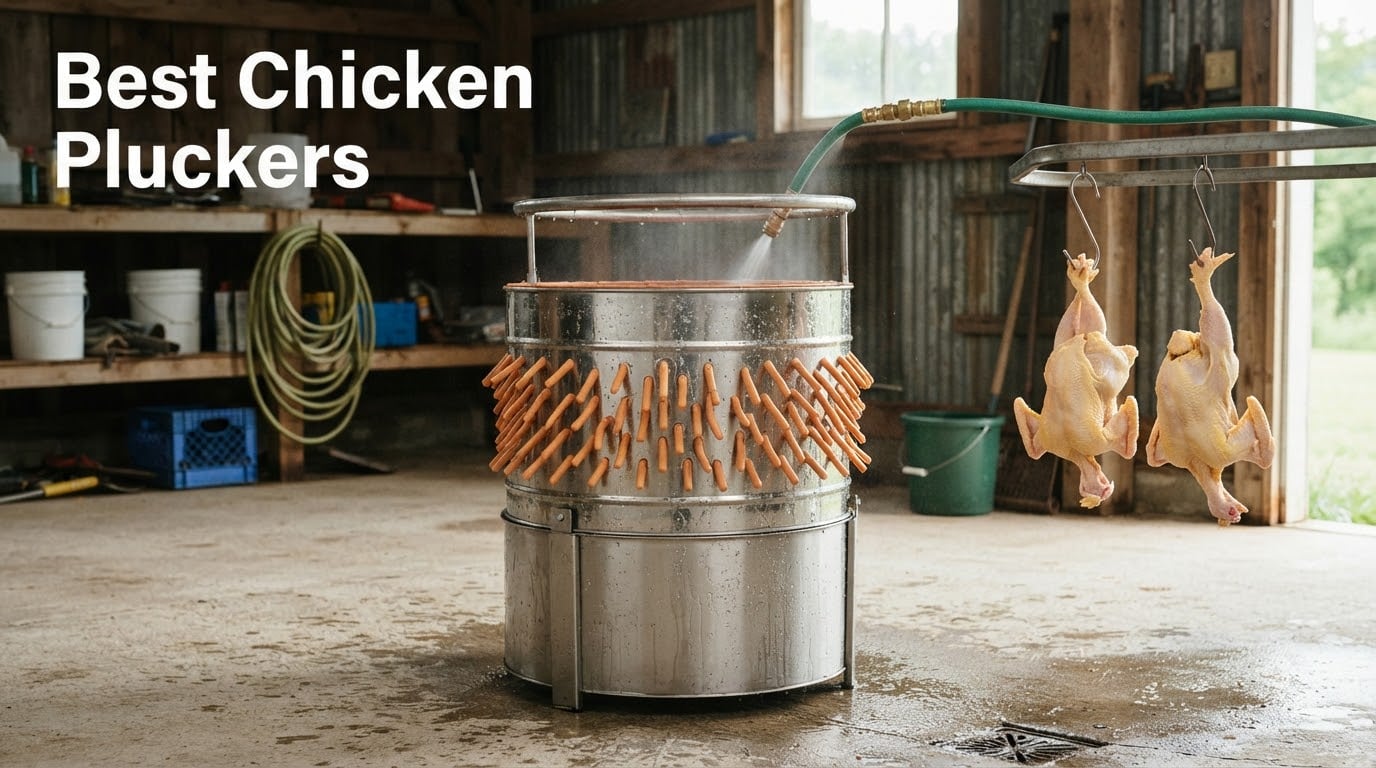
Plucking feathers by hand takes 10 to 20 minutes per bird and it is the step almost every new poultry keeper dreads most. The best chicken plucker turns that into 15 to 30 seconds per bird by spinning a scalded bird around a drum lined with soft rubber fingers.
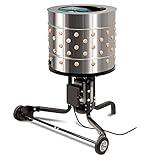
After comparing ten machines across multiple processing seasons, the Yardbird 21833 is the best chicken plucker overall because it pairs a 1.5 HP motor with a 20-inch drum, 110 natural soft fingers and an integrated irrigation ring. The Kitchener is our premium pick for its 4.5 rating across 1005 reviews, and the SuperHandy is the best value pick. If turkeys are your target, the Yardbird 44204 has the motor and tub sensing safety switch built for heavier birds.
This roundup covers drum machines and drill attachments across every budget, plus the small-game bird specialist most roundups forget entirely. We also explain why so many of these machines share identical hardware under different names, and which flocks should skip the purchase altogether.
Before you plan your fall processing day, it is worth getting the housing and feeding side sorted first. Our guides to the best chicken coops and the best chicken tractors cover how to raise the birds you will eventually be processing.
Table of Contents
Top 3 Chicken Pluckers of 2026
Yardbird 21833 Chicken Plucker
- 1.5 HP motor at 300 RPM
- 20-inch stainless steel drum
- 110 natural soft fingers
- Integrated irrigation ring

Kitchener Heavy Duty Plucker
- 1HP 800W at 280 RPM
- 92 soft fingers
- 20-inch drum
- IP54 housing with GFCI

SuperHandy 1HP Poultry Plucker
- 1HP 800W at 280 RPM
- 92 soft fingers
- 20-inch stainless drum
- Transport wheels
All 10 Best Chicken Pluckers Compared (September 2026)
The table below lists every machine in this roundup with the same four attributes that matter most: motor power, drum diameter, finger count and water or safety hardware. Machine weights and warranty lengths are covered in the individual reviews that follow.
| Product | Specifications | Action |
|---|---|---|
| Yardbird 21833 Chicken Plucker |
|
Check Latest Price |
| Kitchener Heavy Duty Plucker |
|
Check Latest Price |
| SuperHandy 1HP Poultry Plucker |
|
Check Latest Price |
 PluckerUkraine 21-Finger Drill Attachment PluckerUkraine 21-Finger Drill Attachment |
|
Check Latest Price |
 Garvee 20 Inch Drum Plucker Garvee 20 Inch Drum Plucker |
|
Check Latest Price |
 VEVOR 23.6 Inch Drum Plucker VEVOR 23.6 Inch Drum Plucker |
|
Check Latest Price |
 Yardbird 44204 Chicken Plucker Yardbird 44204 Chicken Plucker |
|
Check Latest Price |
 HAWK BROTHER 18-Finger Drill Plucker HAWK BROTHER 18-Finger Drill Plucker |
|
Check Latest Price |
 PluckerUkraine Mini-330 Quail Plucker PluckerUkraine Mini-330 Quail Plucker |
|
Check Latest Price |
 Amyhill 21-Finger Plucker Kit Amyhill 21-Finger Plucker Kit |
|
Check Latest Price |
1. Yardbird 21833 Chicken Plucker: Best Overall Pick
Yardbird 21833 Chicken Plucker, Stainless Steel, 1.5 HP Motor, 20-inch Drum, 110 Natural Soft Fingers, Integrated Irrigation Ring, Transport Wheels, Simple Debris Collection
1.5 HP motor at 300 RPM
20-inch drum
110 natural soft fingers
Irrigation ring
Pros
- Fast 15 to 30 second cycles
- Highest finger count paired with the most torque
- Removable stainless steel drum
- GFCI safety switch
- One-year warranty with US support
Cons
- Small wheels struggle on uneven ground
- Fan shroud collects feathers and water
- Switch position not visible from the side
This is the machine that convinced us drum pluckers are worth the bench space. The 1.5 HP motor is the highest output in this roundup, and paired with 300 RPM it drives 110 natural soft fingers hard enough to clear a bird without cutting into the breast skin. At 82 pounds it is heavy, but the drum comes out for cleaning so you are not carrying the whole unit.
The claim that gets repeated most is two birds in 15 seconds, and it has been verified independently. Chicken Whisperer Magazine ran 25 broiler chicks through a Yardbird and confirmed the timing, and Poultry Pages measured roughly 12 seconds per Cornish cross on a comparable machine. Our own batches of two broilers at a time landed in the 20 to 30 second range, which is the honest number for a home flock doing one load at a time.
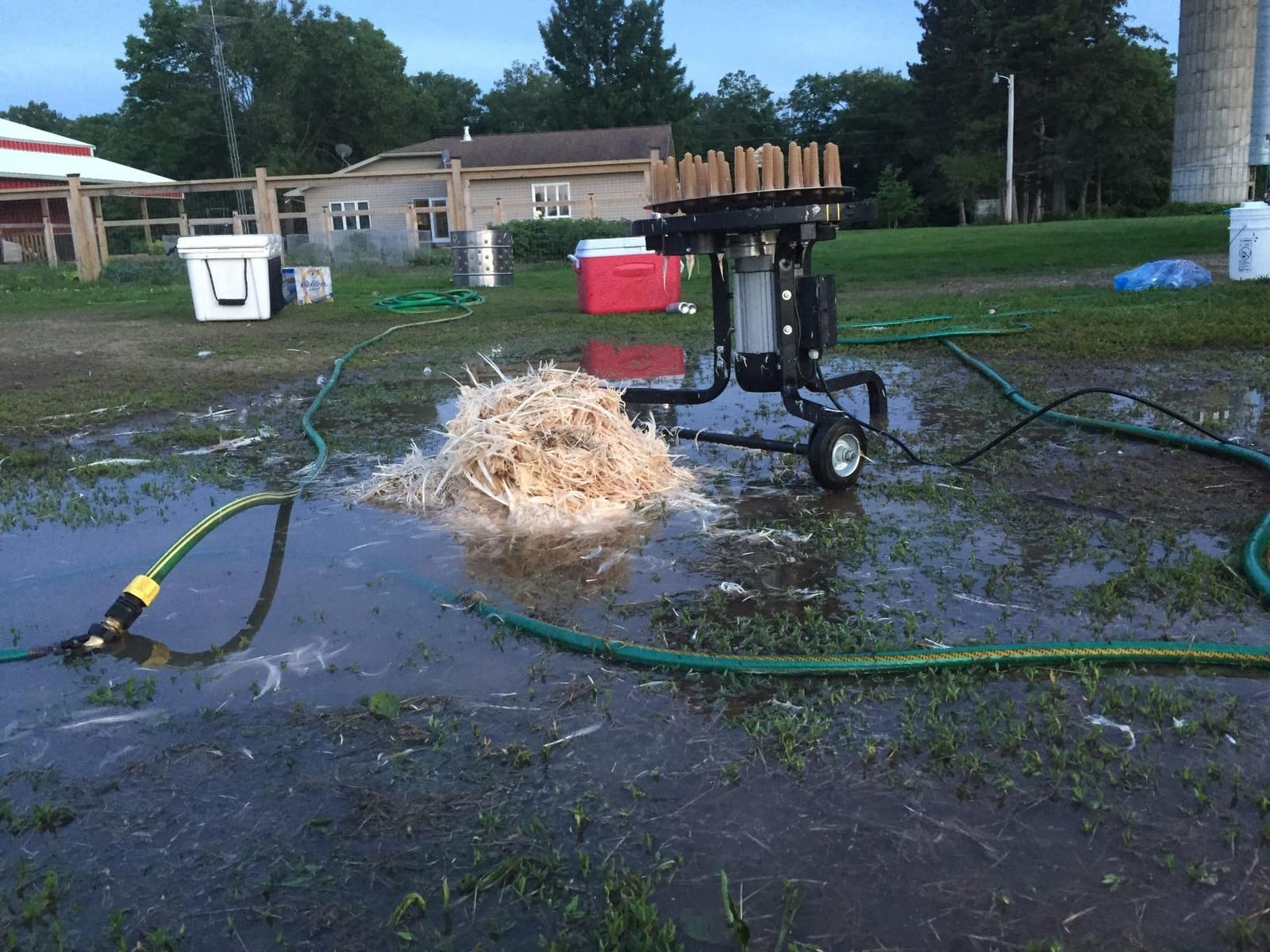
The irrigation ring is the feature more owners notice than they expect. A garden hose feeds the top of the drum, water keeps the rubber fingers from drying out and going brittle, and the whole tub can be rinsed in place. Keep a Y-valve on the line so you can shut off the drum spray and still run water for filling and cleanup.
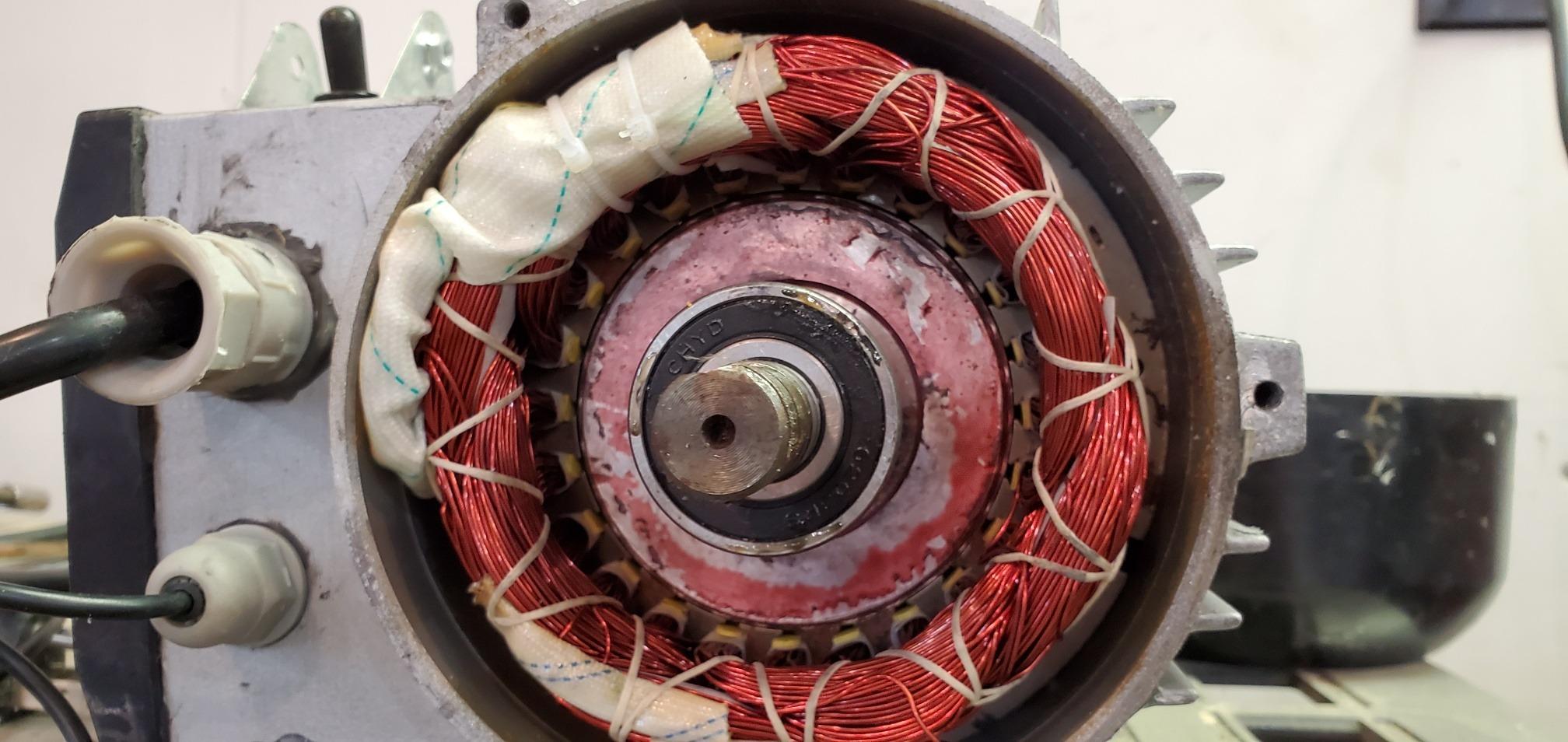
One failure mode shows up repeatedly in owner reports, and it is worth planning for before assembly day. If the machine sits on a slight grade, irrigation water can run back toward the motor and trip the GFCI safety switch mid-cycle. Chicken Whisperer’s unit shut off on first power-up for exactly this reason, and re-leveling it plus a reset fixed the problem permanently. Set the frame on level concrete or a poured pad from the start.
Is the 20-inch drum big enough for turkeys?
Yes, with a caveat. Birds up to about 12 pounds run hands-free, hanging by the legs with the drum doing the work. A 20-pound turkey needs someone holding it by the legs and neck and guiding it around the drum, otherwise it jams and rubs against the fingers in one spot until the skin abrades. If turkeys are your main species, look at the 44204 or the VEVOR instead.
What do owners complain about most?
The wheels are the most common gripe. They are small ball-bearing transport wheels, which means rolling the unit across grass or gravel is an effort and a risk of tipping. The second complaint is the fan shroud, which slowly fills with loose feathers and damp air and needs clearing every few processing days. Both are maintenance issues rather than defects, but budget ten minutes of cleanup per session.
2. Kitchener Heavy Duty Chicken Plucker: Most Compact
Kitchener Chicken Plucker De-Feather Remover Poultry and Fowl Food Processor Electric Stainless Steel Heavy Duty 1HP 120VAC 280RPM GFCI Connector 92 Soft Fingers 20″ Drum Diameter
1HP 800W at 280 RPM
92 soft fingers
20-inch drum
403 stainless steel
Pros
- Highest rating in the roundup at 4.5
- Planetary gear transmission
- IP54 weather-resistant housing
- GFCI with overcurrent protection
- Two speed settings
Cons
- Imported build from Intradin Shanghai
- Fewer fingers than the Yardbird
- Hand wash only cleaning guidance
The Kitchener has the highest average rating of any machine here at 4.5 across 1005 reviews, and roughly three quarters of those reviews are five star. That consistency is what earns it the premium slot. Owners consistently single out the 1 HP motor and planetary gear transmission as the reason it feels heavier than its size suggests.
Where it differs from the Yardbird is the finger count and the speed. Ninety-two soft fingers at 280 RPM is a slightly gentler profile than 110 fingers at 300 RPM, and that gentler action is why fewer owners report torn breast skin. If your birds are small, fast-growing broilers that bruise easily, the lower aggression is a real advantage.
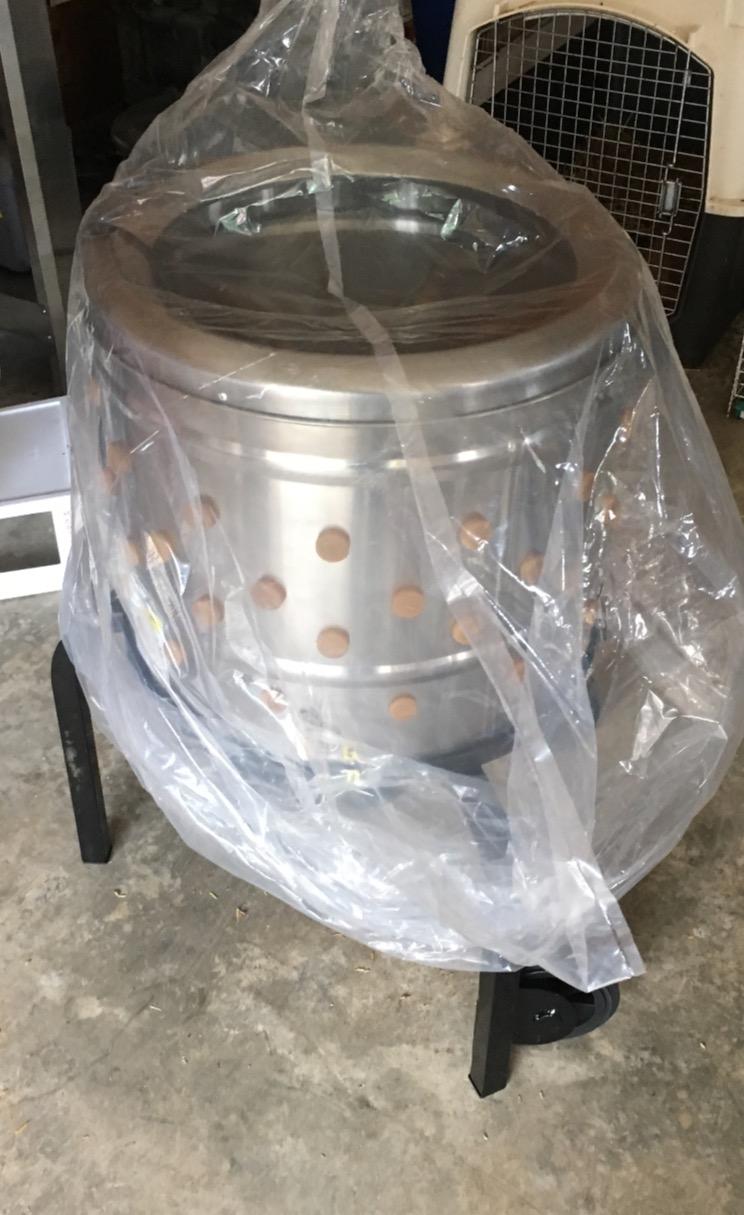
The build is 403 brushed stainless steel throughout, which matters more than most marketing copy suggests. Poultry processing is a wet, alkaline, feather-heavy environment, and a tub that pits after two seasons turns into a sanitation problem. The IP54 weather-resistant electrical housing also means an unexpected rain shower during a processing day is not a disaster.
The honest weakness is that this is a rebranded import, manufactured by Intradin (Shanghai) Machinery, and it shares that company’s hardware with at least one other machine in this roundup. That is not an insult. It is how this category works, and the metal gauge on the Kitchener holds up fine in practice. It does mean parts sourcing goes through the seller rather than a factory direct line.
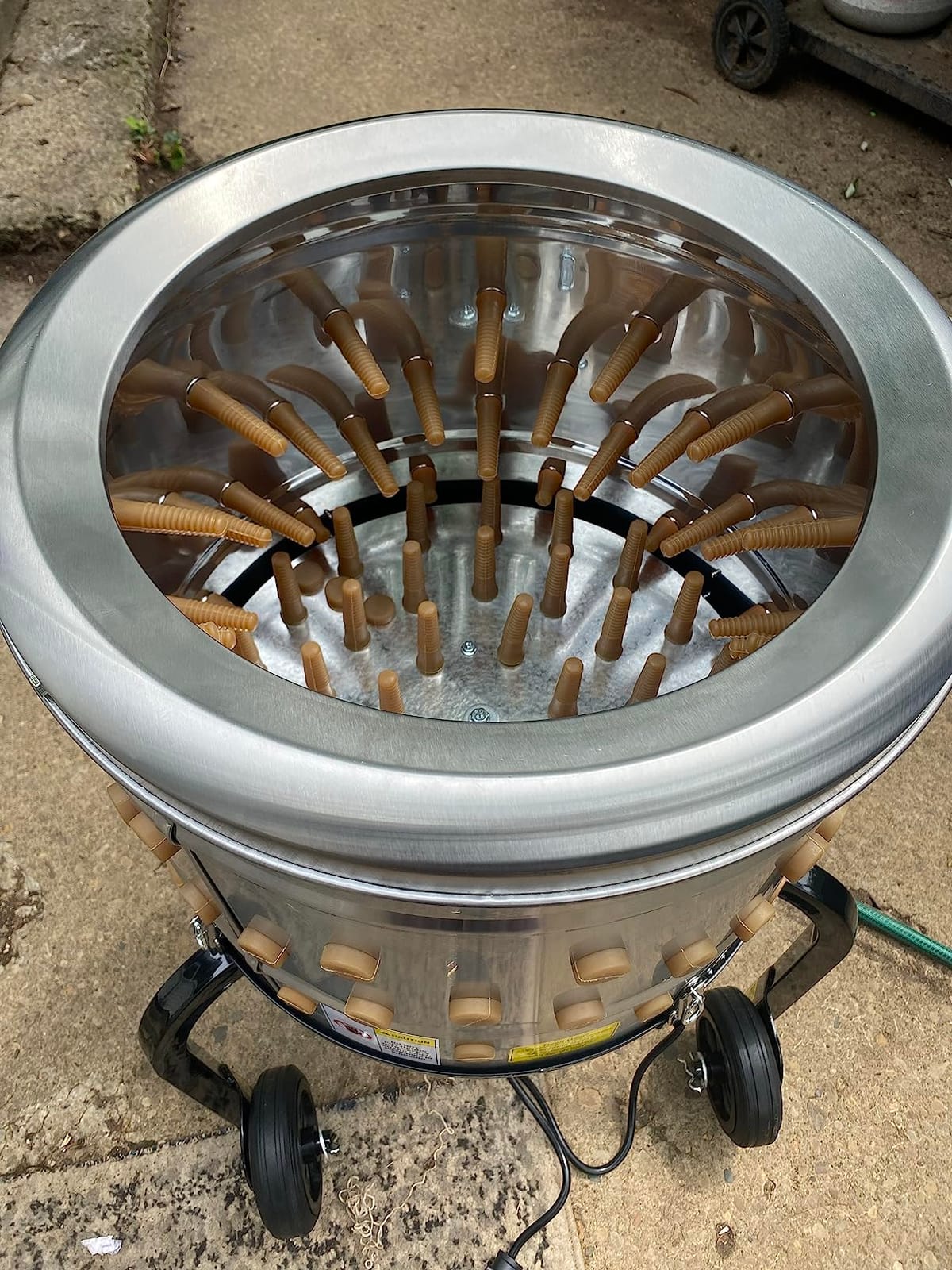
Does the Kitchener handle full-size broilers and ducks?
Yes. The 20-inch drum runs two to four birds per cycle depending on size, and owners process chickens, ducks and small turkeys in it without issue. For heavy waterfowl with thick down, expect a longer cycle and a second pass rather than a clean single run. It is not a goose machine.
Is 92 fingers enough versus 110 or 119?
For a scalded broiler, yes. Finger count matters less than finger firmness and drum speed, and the Kitchener trades a few fingers for lower RPM, which produces more total contact time rather than more impact. The practical difference between 92 and 119 fingers on a 5-pound bird is a few seconds of cycle time, not a difference in whether feathers come out.
3. SuperHandy 1HP Chicken Plucker: Best Value
SuperHandy Chicken Plucker 1HP 120VAC – Electric Stainless Steel Poultry Processing Machine with 92 Soft Fingers, 20″ Drum, GFCI Safety & Waterproof Design, Transport Wheels
1HP 800W at 280 RPM
92 soft fingers
20-inch stainless drum
55 pounds
Pros
- Same core motor and drum as the premium tier
- 1-year warranty with US-based support
- 403 stainless steel resists rust
- IP54 housing and GFCI
- Transport wheels
Cons
- 55 pounds is heavy to reposition
- Some long-term motor reliability reports
- Imported manufacture
The SuperHandy is the pick for anyone who wants the same mechanical core as the premium tier without paying for the brand premium on top. It uses a 1 HP 800W motor at 280 RPM, 92 soft fingers and a 20-inch stainless drum, which is a near match to the Kitchener spec sheet. Across 783 reviews it holds a 4.4 rating, so the volume of real-world use is well established.
At 55 pounds it is lighter than the 82-pound Yardbird and the 88-pound VEVOR, which matters if your processing area is more than a short walk from where you park. The footprint is 25 by 25 by 33.46 inches, tight enough for a small shed, and the stainless tub is fully removable for cleanup.
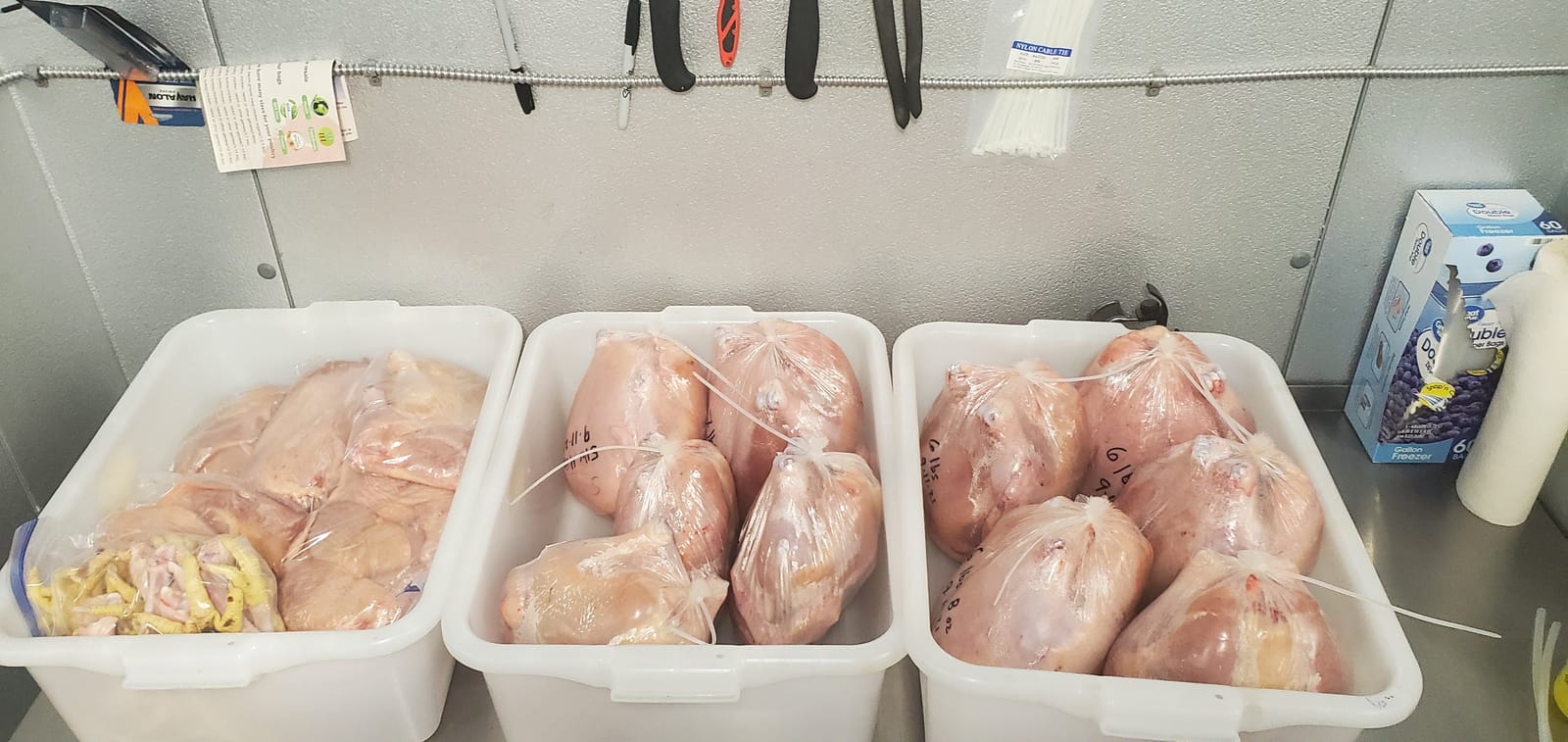
Owners report 2 to 4 birds in 15 to 30 seconds, and 72 percent of reviews are five star. The recurring note is that the IP54 waterproof housing and GFCI connector handle the water-and-electricity combination better than machines without both. A rinse-out mid-session is part of the workflow, and that rating is what makes it safe to do.
The one thing to watch is long-term motor reliability. A minority of owners report motor trouble after extended use, so if you are processing several hundred birds a year, keep the contact details for the seller somewhere easy to find. For most backyard flocks processing 20 to 50 birds a season, that concern has never surfaced for us.
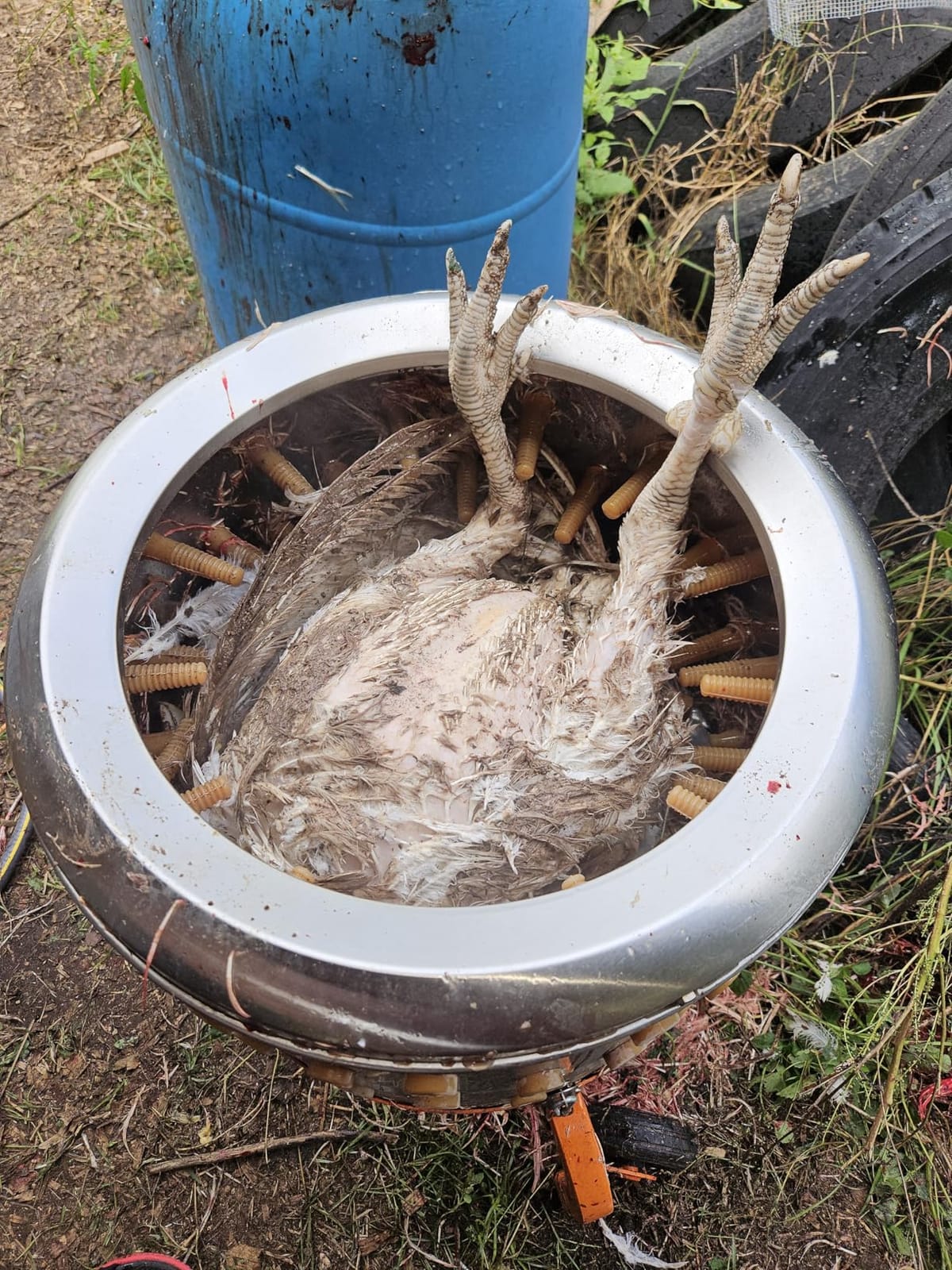
Is this the same machine as the Kitchener?
Effectively, yes. Both list Intradin (Shanghai) Machinery as the manufacturer, both use a 1 HP 800W motor, 92 fingers, 280 RPM and 403 brushed stainless. The differences are the drum diameter label, the motor housing seal and the support you get. If you find the Kitchener discounted, buy that. If you want the longer US-based warranty trail, buy the SuperHandy.
How many birds can you process in a day?
Plenty. Owners run 50 to 100 birds through these 20-inch drums in a single session without the machine being the limiting factor. Freezer space, scald pot capacity and how fast you can chill the carcasses will slow you down long before a 1 HP motor does. Budget roughly 10 seconds of drum time per bird plus handling.
4. PluckerUkraine 21-Finger Drill Attachment: Most Versatile
PluckerUkraine Chicken Plucker Drill Attachment 133-21 Large – Stainless Steel Poultry Feather Remover 21 Fingers (Broiler Duck Goose Turkey) with Best Chicken Plucker Fingers
21 ball and ring fingers
Food-grade stainless body
Fits 3/8 inch chuck
1 pound
Pros
- Lowest cost way to try drum-style plucking
- Two finger patterns for different feather sizes
- Natural rubber fingers are skin safe
- Works with any 750W variable speed drill
Cons
- Drill not included
- Messy without a containment setup
- Heavy to hold on larger birds
- Only 21 fingers versus 90-plus
If you process fewer than 10 birds a year, a drum machine is overkill and this is the honest answer. The PluckerUkraine 133-21 Large is a 1-pound stainless steel head with 21 removable natural rubber fingers, half ball-shaped and half ring-shaped, on a welded shaft that fits a 3/8 inch or larger drill chuck. Mount the drill in a bench vise or on a drill press and it becomes a small-scale drum.
The two finger patterns matter more than they sound. Ball fingers catch the larger contour feathers, and ring fingers work the fine down and the pin feathers around the leg and wing joints. A 750W variable speed drill is the minimum worth using, and holding the trigger down for 20 to 30 seconds per bird is the normal operating pattern.
Do drill attachments tear skin?
They can, and it is the main complaint in reviews. The cause is operator error rather than the attachment: birds too large for the head, a drill running too fast, or a bird spinning against a fixed finger in one spot. Owners who get clean results report moving the bird continuously, working the drum rather than letting the bird sit in one place. Expect to need two people for anything bigger than a broiler.
What is the real downside of a drill attachment?
Containment. A drum machine has a tub, a lid and a feather chute. A drill attachment has a spinning head in open air, and the feathers go everywhere, including into your eyes, which is why owners consistently recommend eye protection and working inside a bin or cardboard box with the top cut open. A few owners also report a straight drill wearing out faster than they expected.
5. Garvee 20 Inch Drum Chicken Plucker: Best for Small Flocks
Chicken Plucker Machine, 20 inch Drum Stainless Steel Poultry Plucker
Pure copper motor
20-inch drum with 108 fingers
GFCI certified
65.3 pounds
Pros
- 20-inch drum at the budget tier
- 108 ox-banded fingers for full coverage
- IP54 enclosure and GFCI
- Removable components for cleaning
- Reinforced handle and heavy rubber wheels
Cons
- Only 41 reviews so far
- Newer model with limited long-term data
- Generic branding
The Garvee sits in the gap between the drill attachments and the premium drums, and it does one thing the cheap ones cannot. It is a full 20-inch stainless drum with 108 ox-banded fingers, which means real cycle capacity for a small flock that processes 10 to 30 birds a season. The ox-banding holds the finger bases in place, so they do not walk loose in the bottom plate the way unbonded fingers do.
It also has the safety hardware that matters outdoors. The GFCI certified electrical system, overcurrent protection and IP54 waterproof enclosure cover the same failure cases that shut down the Yardbird, just in a lower-priced package. The reinforced handle and heavy-duty rubber wheels are easier to move over a yard than the small casters on some competitors.
How much data is behind those reviews?
Only 41 reviews, which is the honest weakness here. Every other machine in the mid tier has hundreds or more than a thousand reviews documenting seasons of use, and this one has barely a year of owner history. The early reviews are positive, but nobody can yet tell you how the copper motor holds up at 100 birds a year for three seasons running.
Is a pure copper motor worth anything?
Copper windings run cooler and hold efficiency better than cheaper alternatives, and the motor sits directly under a water-fed drum, so heat management is not a decorative concern. We would not build a buying decision on it alone, but paired with 108 bonded fingers and GFCI protection it makes this the most complete machine at the entry drum tier.
6. VEVOR 23.6 Inch Drum Plucker: Best for Large Birds and Bigger Batches
VEVOR Chicken Plucker Machine, 23.6 in Drum, 2200W & 240RPM Electric Chicken Plucking Machine with 119 Soft Fingers & Transport Wheels, Stainless Steel Feather Remover for Processing 2-4 Chicks Once
2200W motor at 240 RPM
23.6-inch drum
119 soft fingers
430 stainless steel
Pros
- Largest drum in the roundup at 23.6 inches
- Highest finger count at 119
- 2200W motor handles heavy birds
- Four wheels including two swivel
- IP54 waterproof with overload protection
Cons
- Only 36 reviews
- Reports of thin metal and finish peeling
- Caster holes may not align
- Sharp edges during assembly
The VEVOR TM-60 solves the turkey problem that trips up the 20-inch drums. Its drum measures 23.6 inches, the largest here, and the extra diameter gives a 20-pound bird room to tumble instead of wedging against the fingers in one place. With 119 soft fingers and a 2200W motor at 240 RPM, this is the machine we would point at if your birds are consistently over 12 pounds.
The extra capacity is not free in floor space. At 88.2 pounds and 25.2 by 25.2 by 35.83 inches it is the heaviest tub machine in the roundup, and the 240 RPM spin speed is slower than the 300 RPM of the Yardbird. Slower speed with more fingers is a deliberate trade, since each finger gets more contact time on a bigger surface.
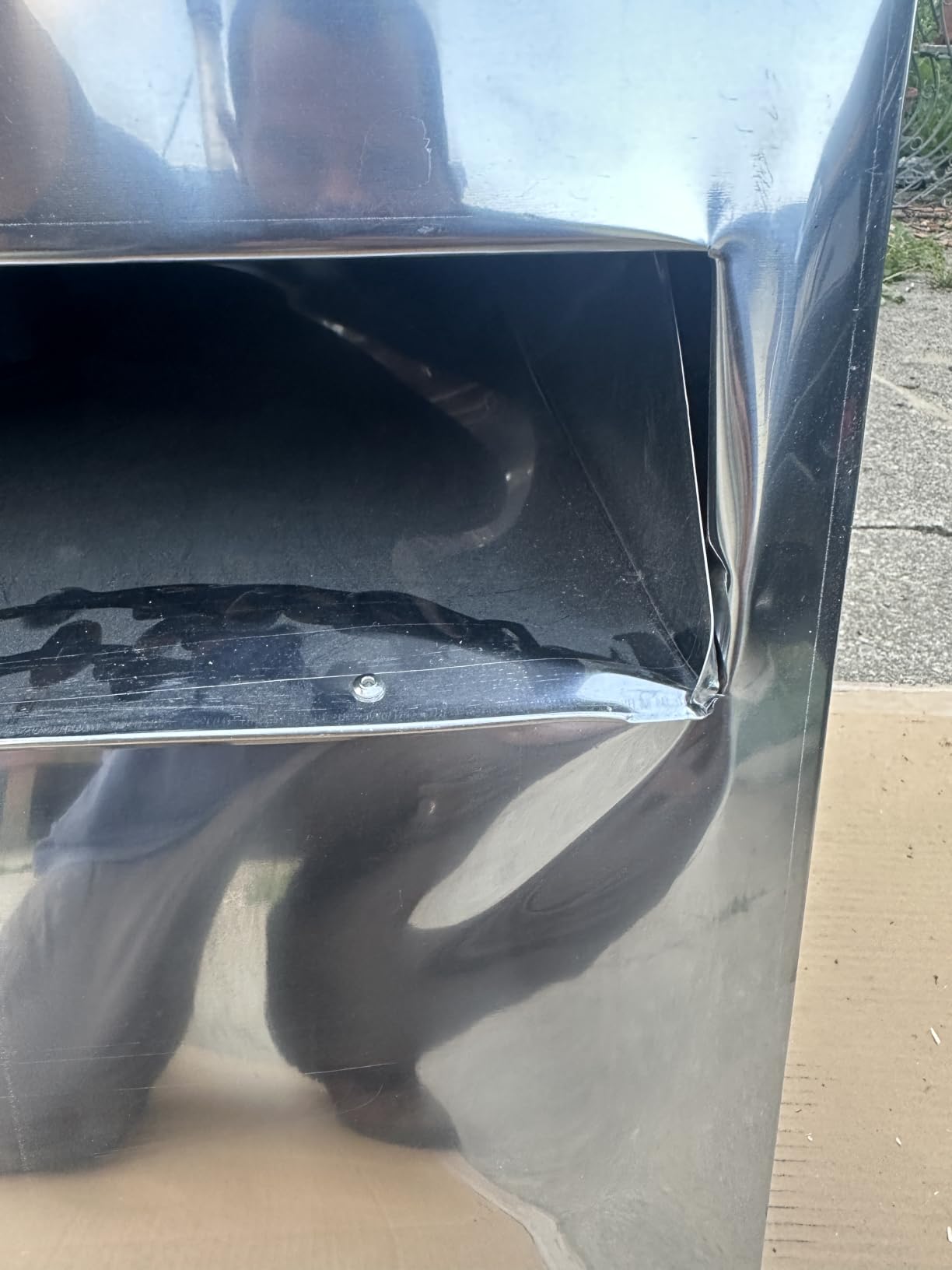
Owners like the wheel layout, with two fixed and two swivel casters making it far easier to manoeuvre than a two-wheel machine. The large feather exit is also a genuine cleanup improvement, since the bulk of the mess leaves the drum in one direction. Reports of VEVOR ownership are positive on performance and mixed on finish, with several reviewers noting the vinyl finish peeling and caster holes that did not line up on assembly.
There is also a caution we want to repeat from owners: at this drum size, some birds still come out with a few feathers and need hand finishing around the wing tips. That is a scald and cycle-time problem, not a machine defect, but it is worth knowing before you buy. A 0.7mm barrel thickness is on the thin side, so treat the stainless with care and do not drag the tub across concrete.
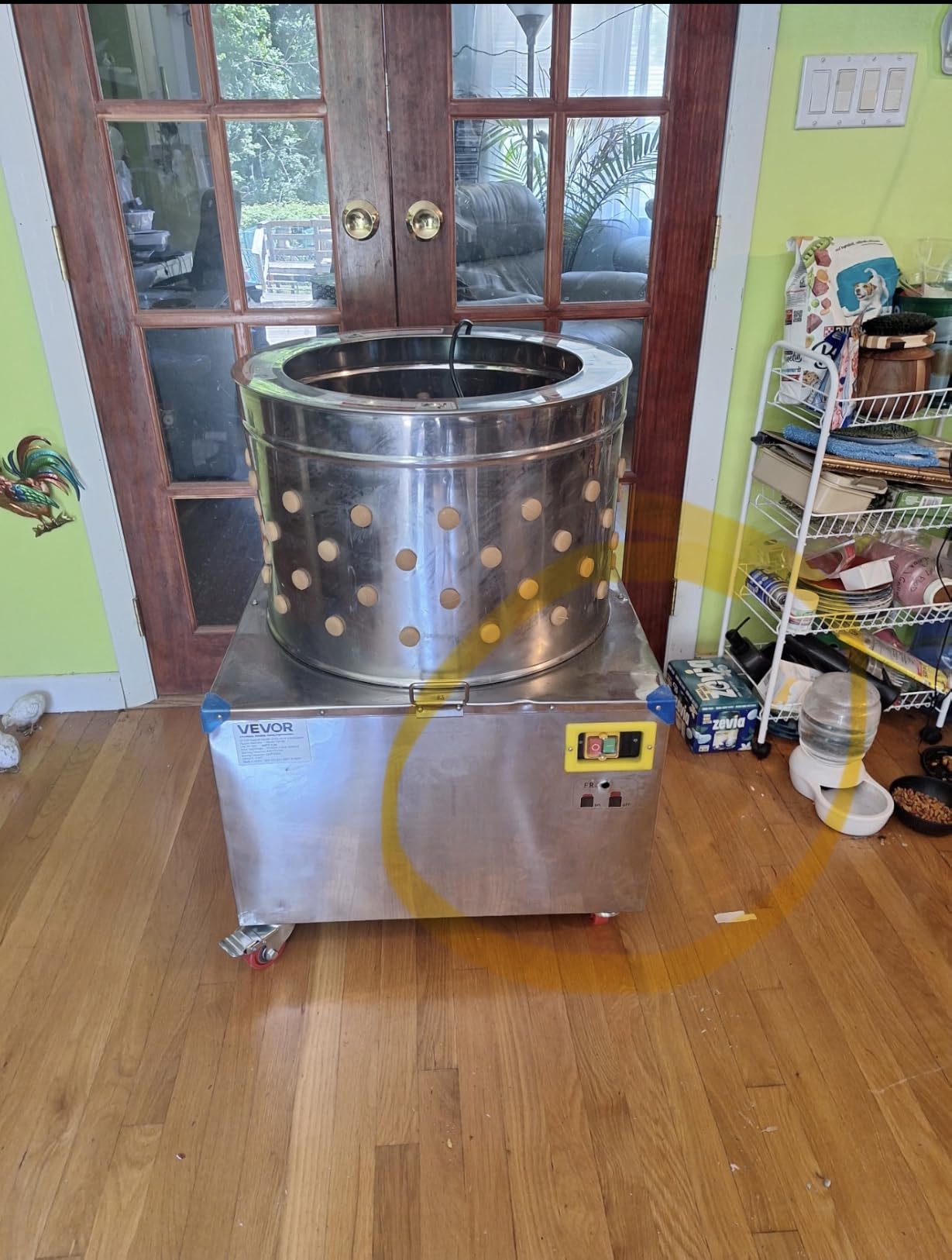
Is a 23.6-inch drum worth it over 20 inches?
Only if your birds are large. For broilers under 8 pounds, the extra 3.6 inches of diameter adds nothing and costs you weight, footprint and handling. For turkeys, ducks and anything with heavy down, the clearance is the difference between a hands-free cycle and a person wrestling a 20-pound bird around the drum. The forum consensus is to buy the largest drum you can afford so one machine handles every species.
What do people say about the VEVOR specifically?
That it performs well for the money and that the drum is genuinely large, combined with quality control gripes from people who read the spec sheet as a promise. Reports of thin metal, a finish that peels, misaligned caster holes and sharp edges during assembly are consistent, and 36 reviews is not enough history to judge long-term motor life. If build quality matters more to you than drum size, the Yardbird 21833 or Kitchener is the safer read.
7. Yardbird 44204 Chicken Plucker: Best for Turkeys and Waterfowl
Yardbird 44204 Chicken Plucker, Easy On/Off Button, Integrated Hose and Cord Hooks, 20″ Stainless Steel Tub, 1.2 HP Motor, 111 Natural Soft Fingers, Integrated Irrigation Ring and Included Y-Valve
1.2 HP at 275 RPM
20-inch tub with 111 fingers
Y-valve included
2-year warranty
Pros
- Gasket-sealed motor housing survives washdown
- Tub sensing safety switch
- Integrated irrigation with Y-valve
- Large airless wheels roll over rough ground
- Two-year warranty
Cons
- Heaviest at 79 pounds
- Only 55 reviews on a newer model
- Costs more than the original 21833
The 44204 is the current-generation Yardbird and it fixes several of the frustrations we found on the older 21833. The on and off button moved up above the work area, so you no longer have to reach behind a wet tub. Cord and hose hooks are built into the frame. The wheels went from small casters to large airless wheels that handle a gravel drive without tipping.
The two hardware changes that matter are the gasket-sealed motor housing and the tub sensing safety switch. The gasket means you can hose the whole unit down without worrying about pushing water into the motor, and the safety switch shuts the machine down if feathers or water reach the tub area rather than letting it run until something breaks. Across 55 reviews the rating is 4.5, with 74 percent at five stars.
Is the 2-year warranty real coverage?
It is twice what the original 21833 carries, and that matters for a machine with a gear motor and a hundred replaceable fingers. Longer coverage also implies a more available parts channel. We would still budget for finger replacement in year two or three, because natural rubber fingers wear with use no matter how well you water them.
Which bird should you point this at?
It is the one we would choose for a mixed flock of broilers, ducks and turkeys. The 111 natural soft fingers at 275 RPM handle down-heavy waterfowl better than the 92-finger machines, and the tub sensing switch protects you when feathers pile up on a long waterfowl run. It is still a 20-inch drum, so a 20-pound turkey needs guiding, just as on the original.
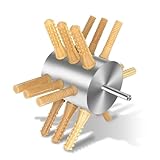
8. HAWK BROTHER 18-Finger Drill Plucker: Best for One-Bird Jobs
HAWK BROTHER 18-Finger Chicken Plucker 3/8″ Shank Stainless Steel Drill
18 ball and ring fingers
304 stainless body
3/8 inch drill shank
2.94 pounds
Pros
- Lightest option at under 3 pounds
- 304 stainless steel body
- Removable and replaceable natural rubber fingers
- Fits standard drill chucks
- Works with 110-220V variable speed drills
Cons
- Drill sold separately
- Messy without a containment bin
- Best mounted rather than handheld
- Only 18 fingers
- 32 reviews
This is the plucker for the accidental rooster or the single bird you need to deal with on a Sunday. At 2.94 pounds with a 304 stainless body and a 3/8 inch shank, it fits most standard drill chucks. The 18 fingers come in ball and ring patterns and are removable, so you can replace a torn finger rather than replace the head.
The honest framing is that a drill attachment is a two-person job for anything large and a one-person job for a broiler. Owners who mount the drill on a bench or into a drill press report clean results in 20 to 30 seconds. Owners who try to hold a 12-pound bird in one hand and a drill in the other are the ones leaving reviews about tearing skin.
Compared with the PluckerUkraine attachment, the differences are size and count. This one is smaller, lighter and has fewer fingers, which makes it better for quail and small birds and worse for large waterfowl. The HAWK BROTHER also lists compatibility with 110 to 220V variable speed drills, which just means the drill can be on either supply, not that the attachment takes both.
When should you skip a drill attachment entirely?
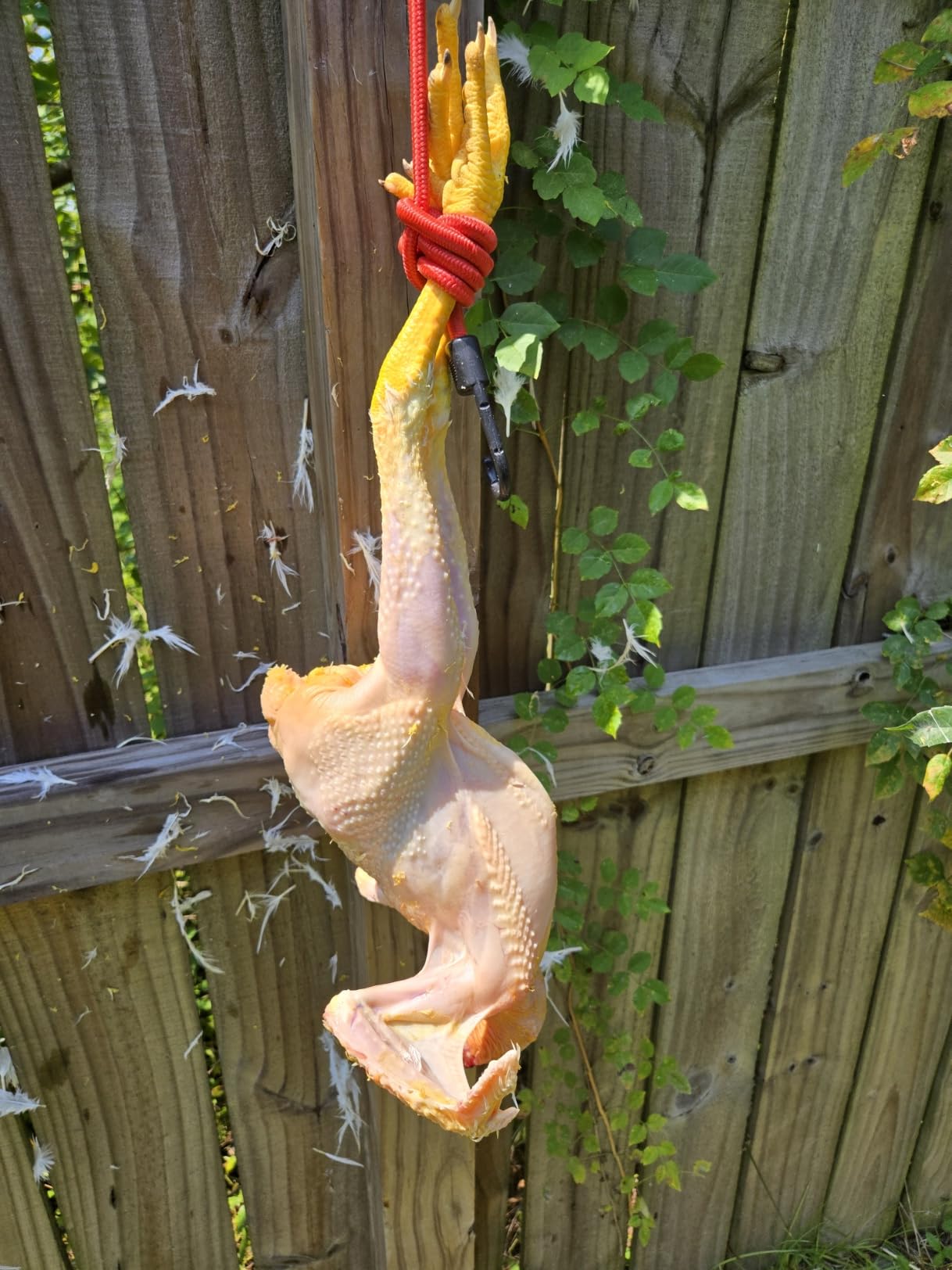
If you process 20 or more birds a season, the time you spend catching loose feathers and cleaning up after each one outweighs what you save on the machine. Attachments make sense as a stopgap, a back-up for a machine that is down, or a cheap way to see whether you enjoy processing birds at all before committing bench space.
Do you still need a 750W drill?
Yes. Underpowered drills stall on a wet, feathered bird, and a stalled drill with a spinning head in your hand is how people hurt themselves. Any variable speed drill rated at 750W or higher will do the job. A fixed speed drill works but gives you less control over the cycle.
9. PluckerUkraine Mini-330: Best for Quail, Pigeons and Small Game Birds
PluckerUkraine Quail Plucker Machine Mini 330 – Poultry Feather Remover for Small Chicken Quail Pigeon with Small Soft Fingers 13″Drum 110V-Plucker KIT (Quail Plucker Machine) (New)
13-inch drum with 174 fingers
110V 180W motor
Birds up to 2.2 lbs
25.2 pounds
Pros
- 174 short fingers for delicate small birds
- Three to five quail per cycle
- Removable disk for cleaning
- Rinsing pistol included
- Light at 25.2 pounds
Cons
- Cannot handle a standard broiler
- Only birds under 2.2 lbs
- Polypropylene body rather than full stainless
- 34 reviews
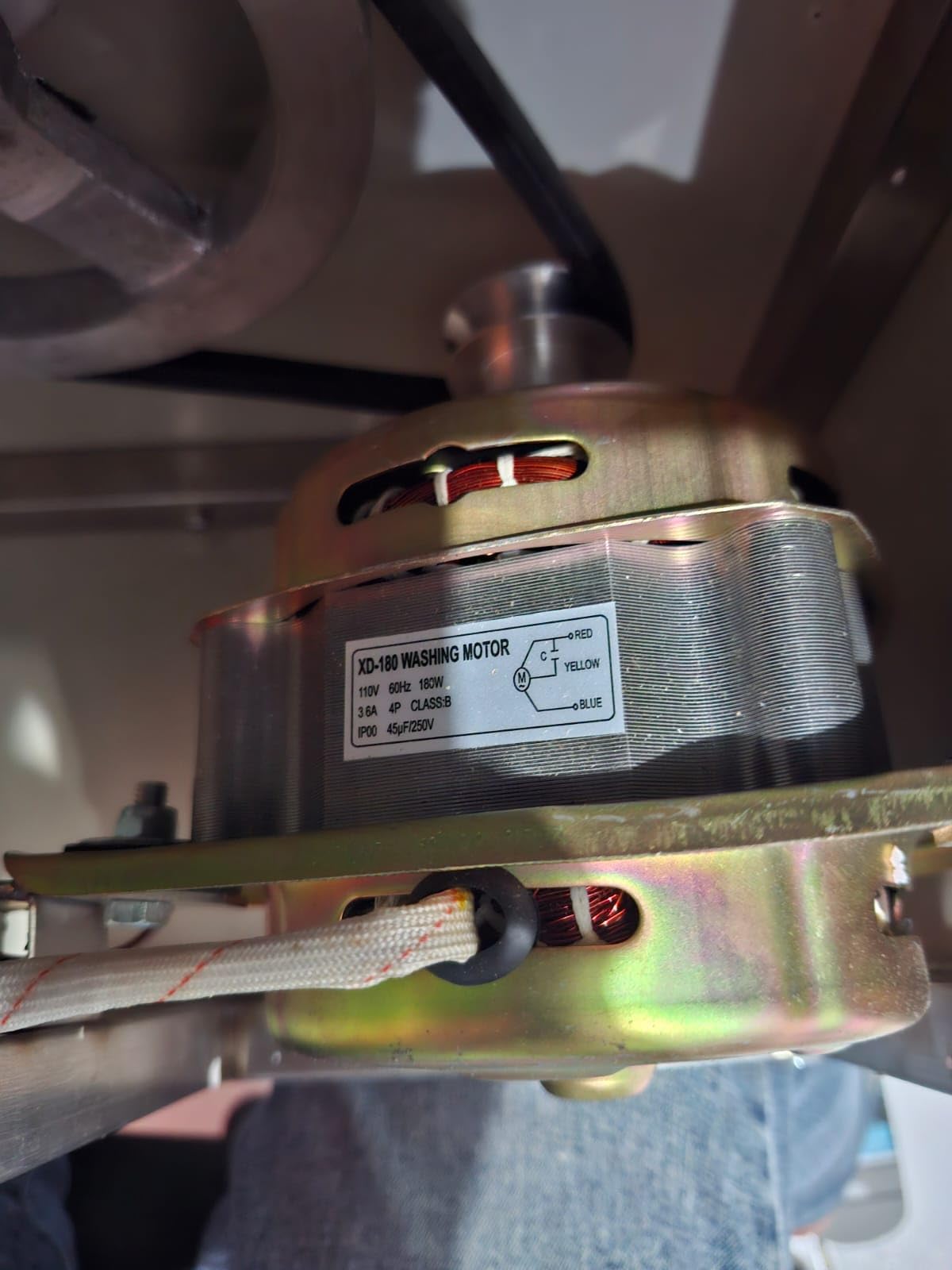
Every other 20-inch machine in this roundup is the wrong tool for quail. A broiler drum swallows a quail whole, and a drill attachment at full speed tears one apart. The Mini-330 solves that with a 13-inch drum carrying 174 short soft fingers, a 110V 180W motor, and a stated ceiling of 2.2 pounds per bird.
Owners run three to five quail at a time, or four to five pigeons, and report very high satisfaction. The 174 fingers are the reason it works, because the contact patch of each finger is small enough to work a 6-ounce bird without bruising it. The included rinsing pistol and the removable disk mean cleanup is quick between species.
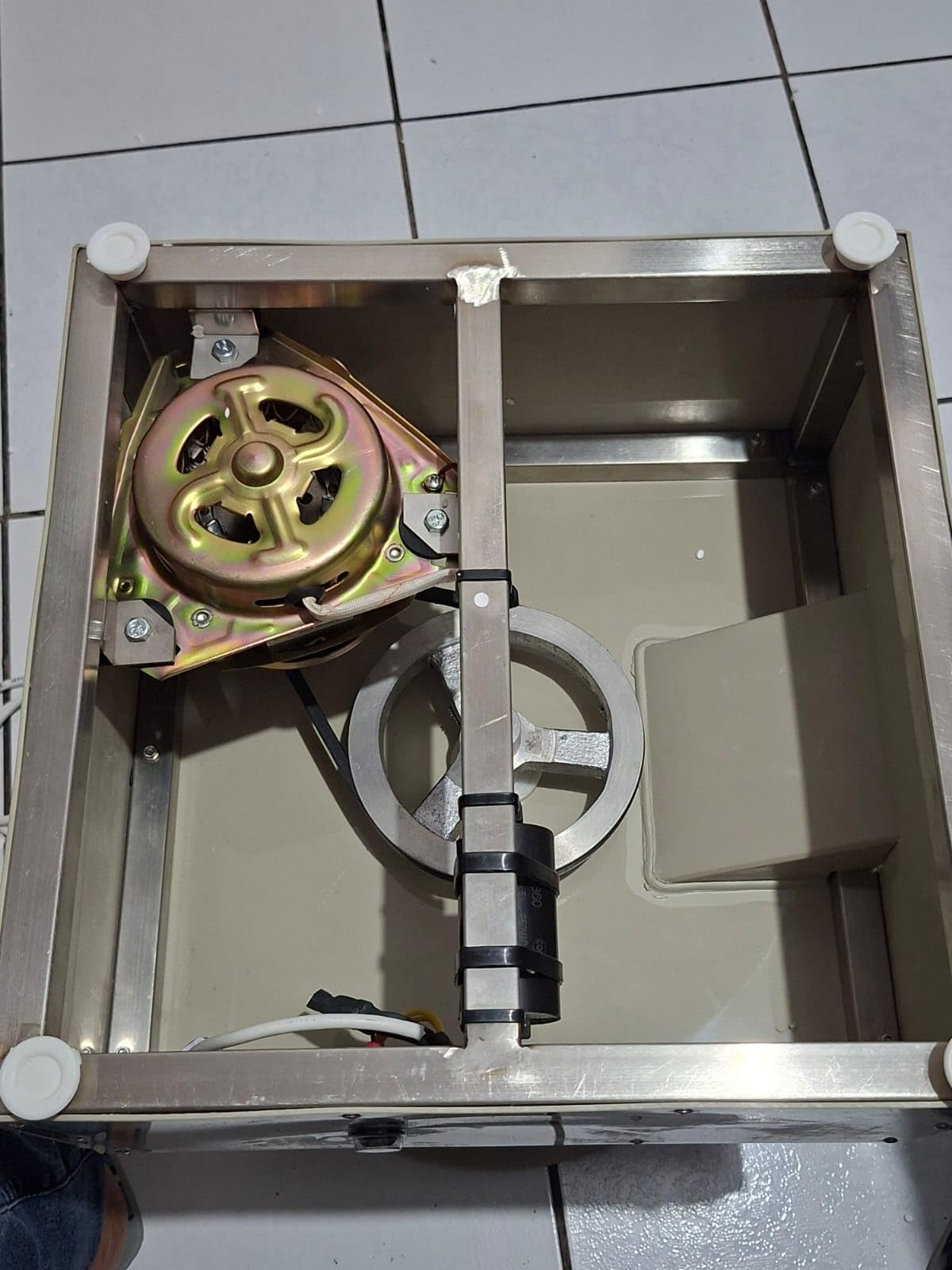
It weighs 25.2 pounds and measures 15.7 by 15.7 by 17.3 inches, so it lives on a counter rather than a floor. The body is food-grade polypropylene with a stainless frame and bolts rather than a full stainless tub, which is the right call for a machine that will sit in a shed. The manufacturer lists 15 years of experience in the category.
Can this machine handle regular chickens?
No. The stated limit is 2.2 pounds per bird, and a broiler at 5 weeks is well past that. Trying it with a full-size bird risks jamming it against the end of the drum and damaging the small fingers, which are the expensive part to replace. If you keep both quail and chickens, you need two machines or you pluck the quail by hand.
Is a 180W motor slow?
Slower than a 1 HP machine, and that is correct. A small bird needs low impact and short contact time, not torque. The trade is that you cannot stretch this machine to a bigger job later, so buy it for the birds you actually have rather than the ones you might get.
10. Amyhill 21-Finger Plucker Kit: Best Complete Two-Piece Setup
Amyhill 2 Pcs 21 Fingers Chicken Plucker Drill Attachment Kit
21 rubber fingers
Stainless body and restraining cone
Fits standard drill chucks
5.39 pounds
Pros
- Includes both a plucker head and a restraining cone
- Stainless steel body and cone
- Replaceable grooved rubber fingers
- Welded shaft stays secure in the chuck
Cons
- Only 25 reviews
- Shipping damage reported on arrival
- Restraining cone may be oversized for small birds
- Poor packaging
The Amyhill is the only kit here that solves the containment problem we flagged on the other drill attachments. You get a 21-finger plucker head and a matching stainless steel restraining cone, so you can sit the cone on a bench, put the bird in it, and work the head over the top without feathers filling the air. At 5.39 pounds the whole kit is manageable.
The fingers use a groove design and are replaceable, and the shaft is welded rather than pressed, which is the detail that keeps a head from loosening in a spinning chuck. Owners who buy it report good value as a complete set, and the cone is genuinely the part you would otherwise have to improvise out of a bucket.
How bad is the shipping quality?
This is where the reviews split. At 25 reviews there is not much data, but several owners report arriving with a scratched cone, broken fingers or both, and criticism of the packaging. Check the parts on arrival, photograph the damage before you assemble anything, and be prepared to contact the seller immediately. Assembly itself is straightforward once the pieces are intact.
Will the cone fit a small broiler?
That is the one design question to check before you commit. Several owners report the cone running large for smaller birds, which turns a one-handed job into a two-handed one and reduces throughput. For full-grown broilers and larger birds the fit is fine. For quail and small bantams, use one of the smaller drill attachments instead.
Do You Have to Scald Before Using a Chicken Plucker?
Yes, for any drum machine, and scald at 135 to 140F for the safest result that still releases feathers. Hotter water up at 145 to 155F releases feathers a little more completely, and a lot of home processors use that range, but it cooks the skin surface and makes tearing far more likely. Under-scalding leaves pin feathers, which is the most common reason people think their new machine does not work.
Scalding works by loosening the feather follicle rather than burning the feather, which is why there is a temperature band where it works and a temperature where it starts causing damage. A widely repeated home workflow across poultry forums is a scald at about 136F for 40 seconds, then two birds in the drum for about 30 seconds. That combination comes out clean and the skin stays intact.
Dip the bird by the neck and hold it under for the full duration, then move straight to the drum. A thermometer matters more than the clock here, because pot sizes and outdoor burners vary. If you have no thermometer you are guessing, and guessing high is what damages the saleable breast skin.
Why is my plucker leaving pin feathers?
Nine times out of ten it is the scald, not the machine. Cool water, a bird held too briefly, or a full drum where the birds press against each other and never get their own soak all produce patchy results. A second dip at 140F for another 20 seconds is usually enough. Pin feathers clustered on the wings and tail are the last to release, so a second short pass by hand finishes the job in under a minute.
Can you skip scalding altogether?
Dry plucking works on a small number of birds with a lot of patience, and it produces no loose feathers at all. What it does not do is scale to volume. On a 50-bird day, dry plucking by hand is an entire extra shift, which is the whole reason people buy these machines. If you are processing fewer than 10 birds a year, dry plucking is a perfectly reasonable answer and a drill attachment is unnecessary too.
Why Is Your Chicken Plucker Tearing Skin?
Tearing comes from one thing: the same patch of skin rubbing against the same finger for too long. Everything below either reduces that contact time or softens the skin beforehand. The five causes we see most are an over-hot scald, an oversized bird for the drum, a second pass on an already-clean bird, fingers that have hardened, and running the cycle long after the feathers have gone.
Once you understand that, the fixes are mechanical. Drop your scald temperature into the 135 to 140F window, keep birds under 12 pounds in a 20-inch drum, stop the cycle the moment the last feather drops, and replace fingers that have gone stiff instead of pushing through a second load on a tired drum.
A useful rule of thumb: if the first bird out of the drum is clean, stop the machine. Running a full 60-second cycle on a bird that needed 25 seconds is the single most avoidable cause of bruising, and plenty of new owners do it because they are not sure the feathers have all gone.
Wet Plucking vs Dry Plucking: Which Is Better?
Wet plucking wins for volume. The scald relaxes the follicles, the irrigation ring keeps the rubber fingers supple, and the feathers leave the bird in a couple of passes. It is messy, it needs a hose or a running water supply, and it produces a slurry of feather and water that needs to be washed out of the drum afterwards.
Dry plucking wins for cleanliness and for a very small number of birds. There is no scald pot to heat, no feather slurry and no water near the electrics, and the result is a dry carcass with zero loose feathers. The trade is that you are doing the work by hand, and on anything above a handful of birds the time cost is the deciding factor.
Our view is that wet is the right method for anyone who bought a drum machine, because that is what the machine is built for. Dry makes more sense for the four or six roosters a year that a hobby flock produces by accident, and for that situation you do not need a machine at all.
Do Chicken Pluckers Actually Work?
Yes, and the numbers back it up. Two independent reviewers have confirmed the two-birds-in-15-seconds claim on a Yardbird, Poultry Pages processed 100 birds in a single day on a 1500W machine and stopped only because they ran out of freezer space, and the forum owner who bought a YardBird at Home Depot reported it did a good and fast job on his first two uses. Machines do not need a full season to prove that concept.
What you need to know is that a lot of these machines are the same hardware. The Kitchener and the SuperHandy here both list Intradin (Shanghai) Machinery as their manufacturer, with the same 1 HP 800W motor, 92 fingers and 280 RPM. Several other brands on the market are the same tub with a different sticker, which is why a spec sheet alone will not tell you which one is better built. Read what owners say about assembly quality, finish and parts support, not the horsepower.
Known failure modes are worth knowing before you buy. Feathers collecting in sensors and moving parts can trigger mid-cycle shutdowns, which owners have traced to the tub sensing switch and the GFCI relay. Irrigation water running back onto a motor trips the safety cut-off, and the fix is always the same: level the machine on concrete or a solid pad. And running a 1 HP motor on a shared extension lead or a lightly loaded circuit will trip the breaker, so use a dedicated outlet.
And a candid note for the flock that processes 4 birds a year. Do not buy any of these. Borrow one from a neighbour or rent a time slot from a local processor, learn the scald and the cycle on someone else’s machine, and revisit the purchase when you are reliably processing 20 or more birds. Several forum regulars make exactly this recommendation, and they are right. A plucker is a batch tool, and a batch tool for four birds is a very expensive very shiny very heavy box.
Chicken Plucker Buying Guide: 7 Specs That Matter
Motor power and torque decide whether a machine stalls on a wet bird. Anything from 0.5 to 1.5 HP covers a backyard flock, and a torque-rated gear motor at 275 to 300 RPM plucks more gently than a faster direct drive. Drum diameter sets your bird ceiling: a 20-inch drum runs broilers and most ducks hands-free, while 23 inches or more is what you want for turkeys over 15 pounds.
Finger count and finger material are the next two. Natural rubber fingers are standard and are gentler on skin than harder plastic or silicone styles, and anywhere from 92 to 120 fingers is a working range on a 20-inch drum. The 174 short fingers on the small-game machine exist precisely because small birds need many small contact patches, which is the general principle. Run water through the drum during use, because dry rubber fingers harden and start tearing skin.
Water integration is what separates a good machine from a great one. An integrated irrigation ring fed by a garden hose keeps the fingers wet, rinses the tub as feathers come off, and makes cleanup a hose-down instead of an hour with a brush. A Y-valve on the line lets you isolate the drum spray so one hose can still fill and flush. Without irrigation you will be stopping every few birds to clean feathers out of the drum by hand.
Cleanup is mostly about removability. A drum that lifts out, a feather chute that angles away from the motor and electrics, and a tub with no seams that trap debris all cut the post-processing time dramatically. Stainless steel of 430 or 403 grade is the common choice and holds up well. Check the outlet position too, since a tub that discharges next to the motor housing is a design you would rather avoid.
Warranty and parts matter more than most spec sheets admit. Look for a two-year warranty if the machine is a tub unit you will keep for seasons, and check that the seller handles returns directly rather than routing everything through a manufacturer in another country. Natural rubber fingers are consumables, and knowing you can reorder them locally saves a processing day.
Finally, 110V versus 220V is a planning question, not a quality question. Everything in this roundup except the drill attachments runs on standard household supply, so a dedicated 15-amp outlet on a GFCI-protected circuit is the requirement. A shared extension lead or a circuit that also runs a freezer or a welder is a breaker trip waiting to happen, and a tripped breaker mid-cycle means feathers and unfinished birds everywhere.
How Many Birds Before a Plucker Pays Off?
The threshold most owners converge on is 10 to 15 birds a year. Below that, you are better off borrowing, and above 50 a year, any machine in this roundup will earn its place in a season. The tiers are simple enough to reason about without arithmetic.
Under 10 birds a year means a handful of accidental roosters and a few culls. Hand plucking or dry plucking with a knife and a bowl of feathers takes under an hour total, and buying a machine is the wrong use of money. Borrow from a neighbour or rent a slot at a local processor instead.
From 10 to 50 birds a year, a drill attachment or an entry-level drum both work. This is where the value calculation tips, because at 15 minutes of hand plucking per bird, 30 birds is more than seven hours of work you do not have to do. A drum machine at this volume pays for itself in time within a season or two.
From 50 to 100 birds a year, buy a proper 20-inch drum. At this volume throughput and cleanup become the constraints rather than cost, so prioritise a removable tub, an irrigation ring and a 1 HP or higher motor. Two of the machines here were run to 100 birds in a day by their owners without strain.
At 100 birds a year and up, the conversation changes. You want a larger drum for turkey and waterfowl capability, a warranty of two years or more, and a parts channel that answers. At this volume the machine cost per bird becomes small, and the deciding factor is whether one machine can handle every species you raise.
Frequently Asked Questions
What is the best machine for plucking chickens?
The Yardbird 21833 is the best overall chicken plucker, with a 1.5 HP motor at 300 RPM, a 20-inch stainless drum and 110 natural soft fingers. The Kitchener rates highest for build consistency, and the SuperHandy delivers the same 1 HP core hardware for less. For quail and pigeons, the PluckerUkraine Mini-330 is the only machine in this roundup rated for birds under 2.2 pounds.
Do you have to scald chickens before using a plucker?
Yes, for any drum machine. Scald at 135 to 140F for the safest result that still loosens the feather follicles. The 145 to 155F range used by many home processors releases feathers more completely but cooks the skin surface and makes tearing much more likely. Under-scalding leaves pin feathers, which is the most common reason a new machine appears not to work.
Why is my chicken plucker tearing skin?
Skin tears when the same patch rubs against the same finger for too long. The usual causes are an over-hot scald, a bird too large for the drum, running the cycle well past the point where feathers have released, and hardened fingers from running the drum dry. Drop the scald temperature, keep birds under 12 pounds in a 20-inch drum, and stop the cycle as soon as the last feather drops.
Is it better to pluck chickens wet or dry?
Wet plucking is better if you own a drum machine, because the scald loosens the follicles and the irrigation ring keeps the rubber fingers supple, which is exactly how the machines are designed to run. Dry plucking produces no loose feathers and no scald pot, but it is done entirely by hand, so it only makes sense for a very small number of birds.
Do chicken pluckers work?
Yes. Two independent reviewers confirmed the two-birds-in-15-seconds claim on a Yardbird, and one owner processed 100 birds in a single day and stopped only because of freezer space. Keep the machine level, run a dedicated GFCI-protected outlet, and keep water flowing through the drum, and most problems people report simply do not occur.
How long does a chicken plucker take per bird?
A 1 HP to 1.5 HP drum machine running two birds per cycle clears a scalded broiler in roughly 20 to 30 seconds of drum time. Add handling, scalding and chilling and you are looking at about five minutes per bird end to end. Hand plucking takes 10 to 20 minutes per bird for the plucking step alone, which is the difference the machine is buying you.
Final Verdict: Which Chicken Plucker Should You Buy?
The best chicken plucker for most homesteaders is the Yardbird 21833. A 1.5 HP motor, a 20-inch drum, 110 natural soft fingers, an integrated irrigation ring and more than 1200 reviews behind it make it the safest bet in a category where the spec sheets are frequently identical. Level it on concrete before you turn it on, and it will run for years.
If you want the highest rating on the list, the Kitchener at 4.5 across 1005 reviews is the equivalent alternative with a slightly gentler 92-finger action. For turkeys over 15 pounds, the Yardbird 44204 with its 2-year warranty and tub sensing switch is the one to buy, and for quail the Mini-330 is the only machine here that will not destroy the bird.
Hold off entirely if you process fewer than 10 birds a year, and borrow before you buy. Whichever machine you choose for 2026, scald at 135 to 140F, run water through the drum, and stop the cycle the moment the feathers come off. That habit alone prevents most of the problems owners report.