
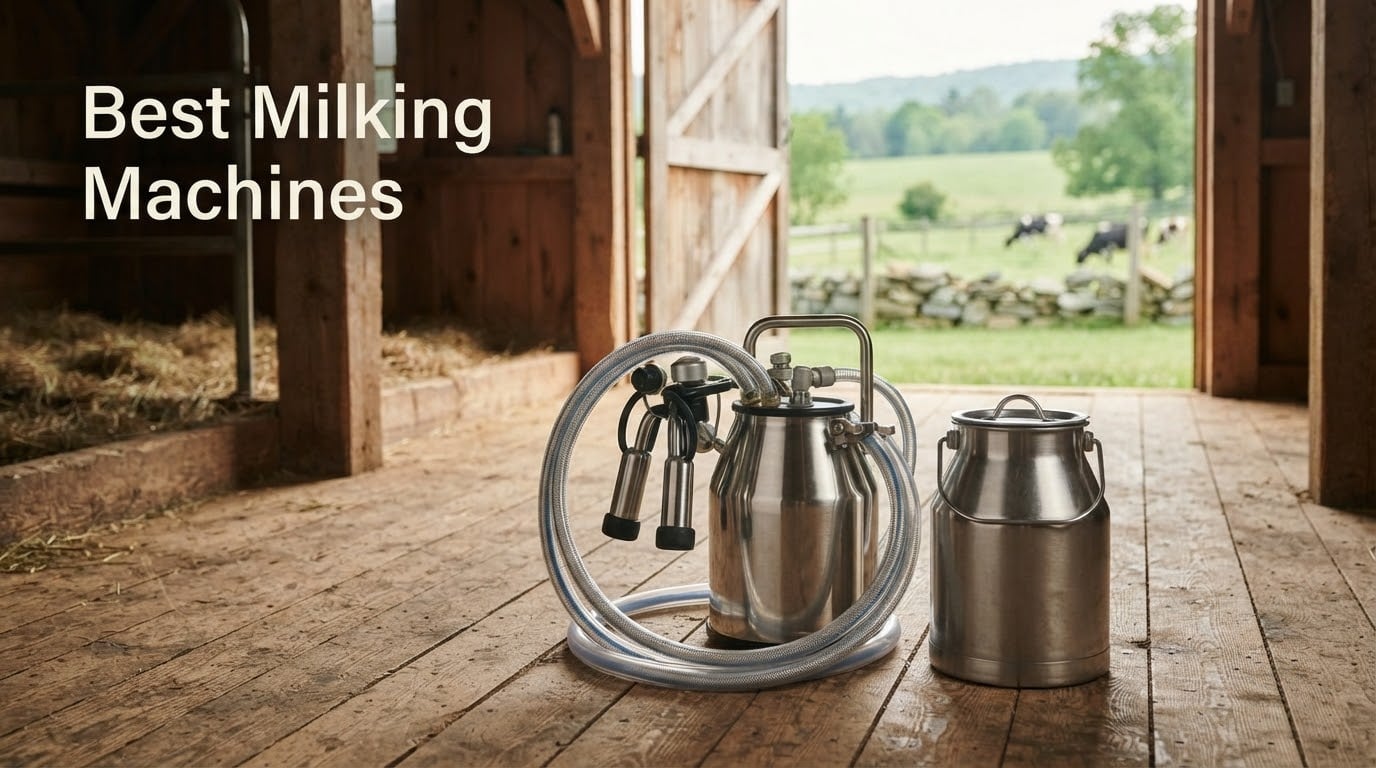
If you want one machine that covers a single family cow through a small hobby herd without a fixed pipeline, the Hantop 12L Cow Milking Machine is the pick we kept coming back to. It has the largest body of owner feedback of anything we reviewed, at 528 reviews, and its rechargeable battery means you are not dragging extension cords into the pen. If your animals are goats rather than cows, the MAPOTAD 3L holds a 4.0 average across 149 reviews, matching the best rating we found, and it is the one we would put on a small doe herd.
One thing you should know before reading further, because nobody in this category tells you plainly: the star ratings on milking machines are built on very few reviews. Every machine in this roundup sits between 38 and 528 reviews, and the median is a little over 100. That is not the same evidence base as a laptop or a blender, and I would rather tell you that up front than let a high star rating imply more certainty than it deserves.
This guide covers portable bucket milking machines, which is where nearly every backyard keeper, goat dairyman and small herd actually shops. Robotic systems from Lely, DeLaval and GEA sit in a completely different price and dealer class, and I cover them separately near the end rather than pretending they are comparable purchases. Every machine below is cordless or plug-in, runs on a battery or mains power, milks into a stainless or food-grade container, and uses a rubber-lined teat cup.
Every pick below is a machine we examined spec by spec, feature by feature, against the same checklist, and every rating and review count in this article is copied straight from the product listing rather than estimated. We also looked hard at what buyers say after the first six months, which is where the differences between these machines actually show up.
Table of Contents
Top 3 Picks for the Best Milking Machines In 2026
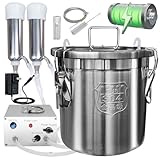

VEVOR 6L Stainless Steel Milker
- 6L 304 stainless bucket
- 45-50 kPa adjustable vacuum
- 60-80 pulsations per minute

MAPOTAD 3L Goat Milking Machine
- 40-46 pulsations per minute
- 13200mAh battery
- 3L 304 stainless bucket
The Hantop 12L takes the top slot on the strength of the largest reviewed owner base we could find for any machine in this price class. The VEVOR 6L earns its place as the most flexible unit here, because its suction adjusts per side and it is listed for cows and sheep as well as goats. The MAPOTAD 3L carries the strongest average rating, and its variable-speed motor makes it the kindest option for a first-time keeper working with does that are not used to a machine.
Best Milking Machines at a Glance (September 2026)
| Product | Specifications | Action |
|---|---|---|
| Hantop 12L Cow Milking Machine |
|
Check Latest Price |
| VEVOR 6L Stainless Steel Goat Milker |
|
Check Latest Price |
| MAPOTAD 3L Goat Electric Milking Machine |
|
Check Latest Price |
 DGBAIZ 7L Rechargeable Goat Milker DGBAIZ 7L Rechargeable Goat Milker |
|
Check Latest Price |
 MAPOTAD 3L Entry-Level Goat Milker MAPOTAD 3L Entry-Level Goat Milker |
|
Check Latest Price |
 Lyfreen 3L Stainless Steel Goat Milker Lyfreen 3L Stainless Steel Goat Milker |
|
Check Latest Price |
 Hantop 6L Pro Plus Pressure Gauge Milker Hantop 6L Pro Plus Pressure Gauge Milker |
|
Check Latest Price |
 Srora 9L Cow Milking Machine Srora 9L Cow Milking Machine |
|
Check Latest Price |
 Proshine 2-in-1 7L Cow and Goat Milker Proshine 2-in-1 7L Cow and Goat Milker |
|
Check Latest Price |
 VEVOR 3L Cordless Goat Milking Machine VEVOR 3L Cordless Goat Milking Machine |
|
Check Latest Price |
A few things this table does not show, because they are the ones that decide whether a machine suits you. First, the pulsation rate: anything in the 40 to 47 cycles per minute range is in the same neighborhood, while the VEVOR 6L runs faster at 60 to 80. Second, battery capacity, which is the difference between milking a whole herd in one pass and stopping halfway to recharge. Third, the honest picture of long-term durability, which we cover per machine below because it is the one spec no listing will tell you.
1. Hantop 12L Cow Milking Machine, Rechargeable Pulsation Pump Milker (Pro)
Hantop 12L Cow Milking Machine, Rechargeable Pulsation Pump Milker (Pro)
12L bucket
43-46 pulsations per minute
13200mAh battery
10.12 pounds
Pros
- Roughly halves hand-milking time
- Cordless battery suits barns with unreliable power
- Survives animals stepping on the unit
- Quick-release pump module is replaceable
Cons
- Bucket lid seal can be finicky
- Suction reported as insufficient by some cow owners
- 12L bucket is small for high-producing Jerseys
This is the machine I would put in front of a family that has one or two cows and no fixed milking pipeline. Out of the box it is a 10.12 pound battery unit with a 12 liter bucket, a 13200mAh lithium pack, and an aluminum alloy casing that sheds heat better than a plastic shell. The whole point of the Pro version over the base model is that the main pump component releases with a quick-release design, so when the motor eventually fades you swap a module rather than the machine.
What convinced me most is the review volume. At 528 reviews, this is the only machine here where you can read enough owner accounts to see failure patterns rather than anecdotes. The dominant report from small herd owners is that it works, halves the milking session, and takes a kick or a step without dying. Buyers with unreliable barn electricity single out the cordless battery as the deciding feature, because it removes extension cords from a wet, muddy pen.
The pulsation cycle runs at 43 to 46 times per minute, which sits comfortably inside the cattle working range. Setup is advertised at under 15 seconds, and two cleaning brushes are included. The bucket lid has a check valve so milk cannot back up into the pump, and the hose, liner and container are all food-grade silicone or commercial-grade material.
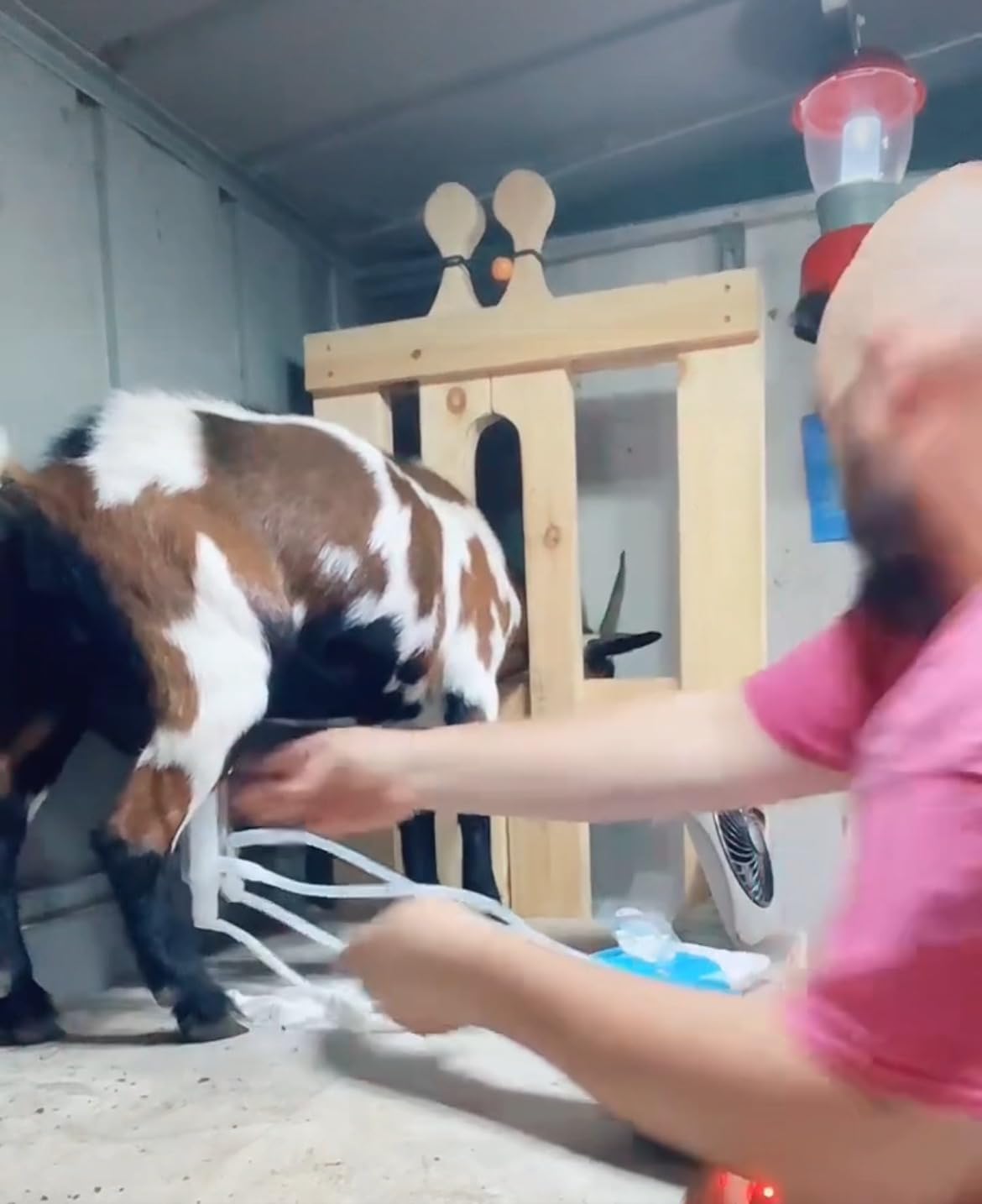
The 3.8 average is honest, and it is lower than some of the newer listings here. The recurring complaints cluster in two places. The lid seal is finicky, and some owners find they have to reseat it mid-session. And a slice of cow owners say the suction is simply not strong enough for them, particularly on heavier milkers, which is the same pattern we see on most compact units in this roundup.
One reviewer reported suction declining to nothing after a couple of months, which is worth weighing against a machine that many other owners report still working. The hoses are thin and kink easily, and there is no four-teat option, so this is strictly a one or two animal unit. On a 17 percent one-star share, the durability complaints are the reason this is not a five.
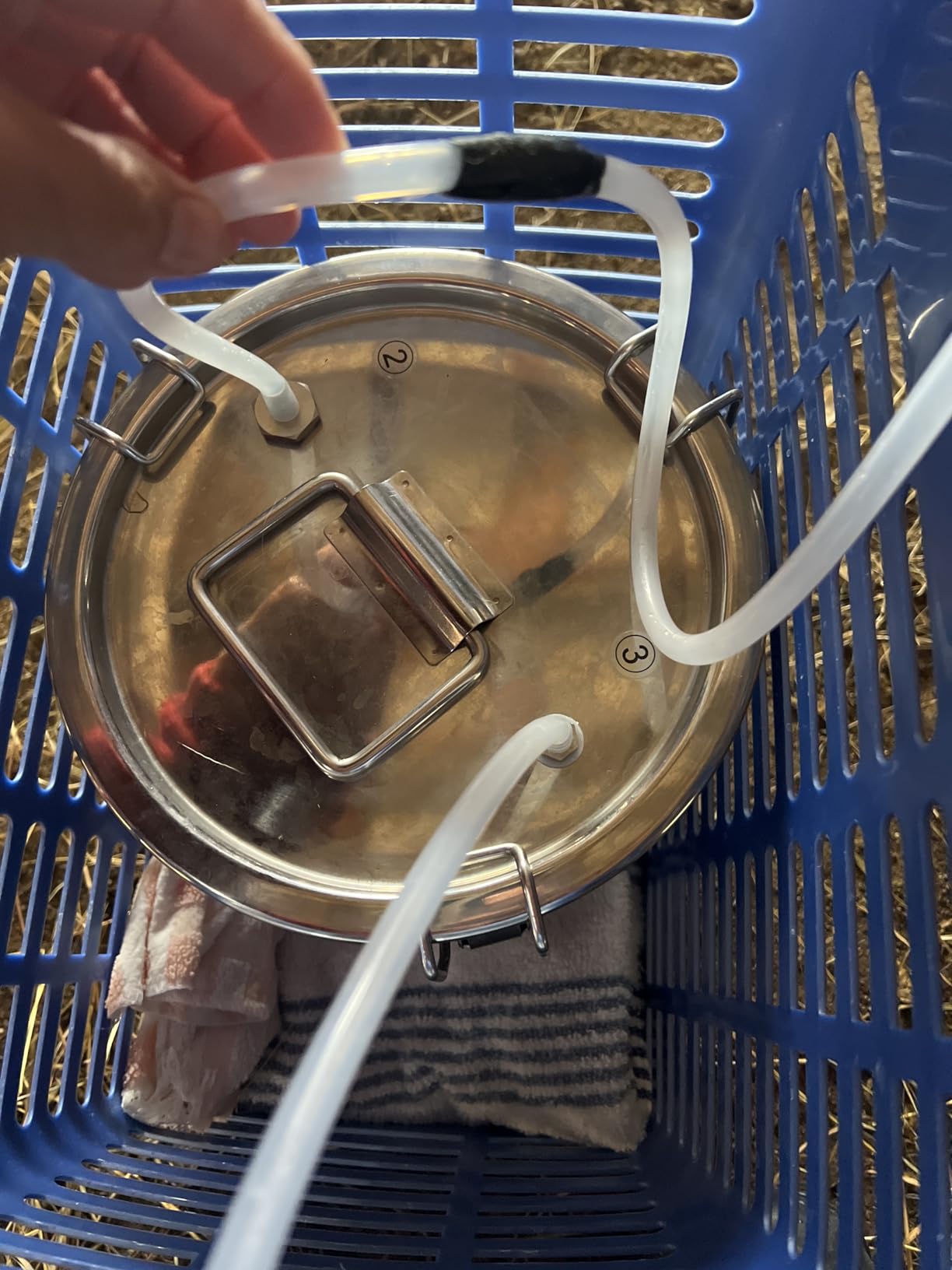
What to check before you buy this for a cow
The single most common mistake with this machine is sizing it for an animal it was not built for. A 12L bucket runs out early on a high-producing Jersey, and owners say the unit then needs a mid-session bucket swap. If your cow gives more than a few gallons a milking, look at the 9L cow unit further down this list or plan on two passes.
Check the cup size against your cow’s teats before ordering, and plan to keep a spare hose and liner on hand from the start. Several owners report snipping the hose and fitting a spare as a ten-minute fix rather than waiting on parts, which is only sensible because the consumables are simple food-grade silicone.
Where it falls short
The suction complaints are not edge cases, and if you have ever hand milked a large cow you will feel the difference immediately. If your barn has no reliable power and no outlet, cordless battery is the right call, but the 12L capacity is the limit of what this unit handles cleanly in one go.
There is also no four-teat cluster, so you cannot grow into a parallel milking setup without new equipment. Treat the 12L as a one-or-two-animal machine that you can grow out of, not a herd machine that grows with you.
2. VEVOR Goat Milking Machine, 6 L 304 Stainless Steel Bucket, Electric Automatic Pulsation Vacuum Milker
VEVOR Goat Milking Machine, 6 L 304 Stainless Steel Bucket, Electric Automatic Pulsation Vacuum Milker, Portable Milker with Food-Grade Silicone Cups and Tubes, Adjustable Suction for Cows and Sheep
6L 304 stainless bucket
60-80 pulsations per minute
45-50 kPa vacuum
9 pounds
Pros
- Per-side suction adjustment
- Owners consistently report quiet operation
- Cups feel gentler than mason-jar milkers
- Three bucket capacity options from the same brand
Cons
- Vacuum power weak at maximum setting
- Green tube stopper plugs fall out and spares are missing
- Cups can be too large for small breeds
No other unit on this list is sold for cows, goats and sheep from a single cup set, and that is where the flexibility comes from. The reason is in the design rather than the marketing: the vacuum adjusts per side, so you can finish one quarter at a time and let down a fast-milking animal without blasting it with the same suction on all four teats. Owners who have used it on cows report finishing in about four to five minutes with the larger tank.
The bucket is genuine food-grade 304 stainless steel at 1.6 gallons, which is a step up from coated or plastic containers on the cheaper units. The hose is 4.1 feet of food-grade silicone, the power is a rechargeable battery with an included adapter, and there is an auto-stop device that shuts off when the bucket is full so milk does not reach the machine. That is a real safeguard, not a decorative one.
At 9 pounds it carries more mass than the plastic 3L kits further down this list, and quiet operation is confirmed by multiple owners who bought it after being burned by louder machines. Pulsation runs at 60 to 80 cycles per minute, faster than most of the field, and reviewers specifically say it feels gentler on teats than the mason-jar style milkers that preceded this generation.
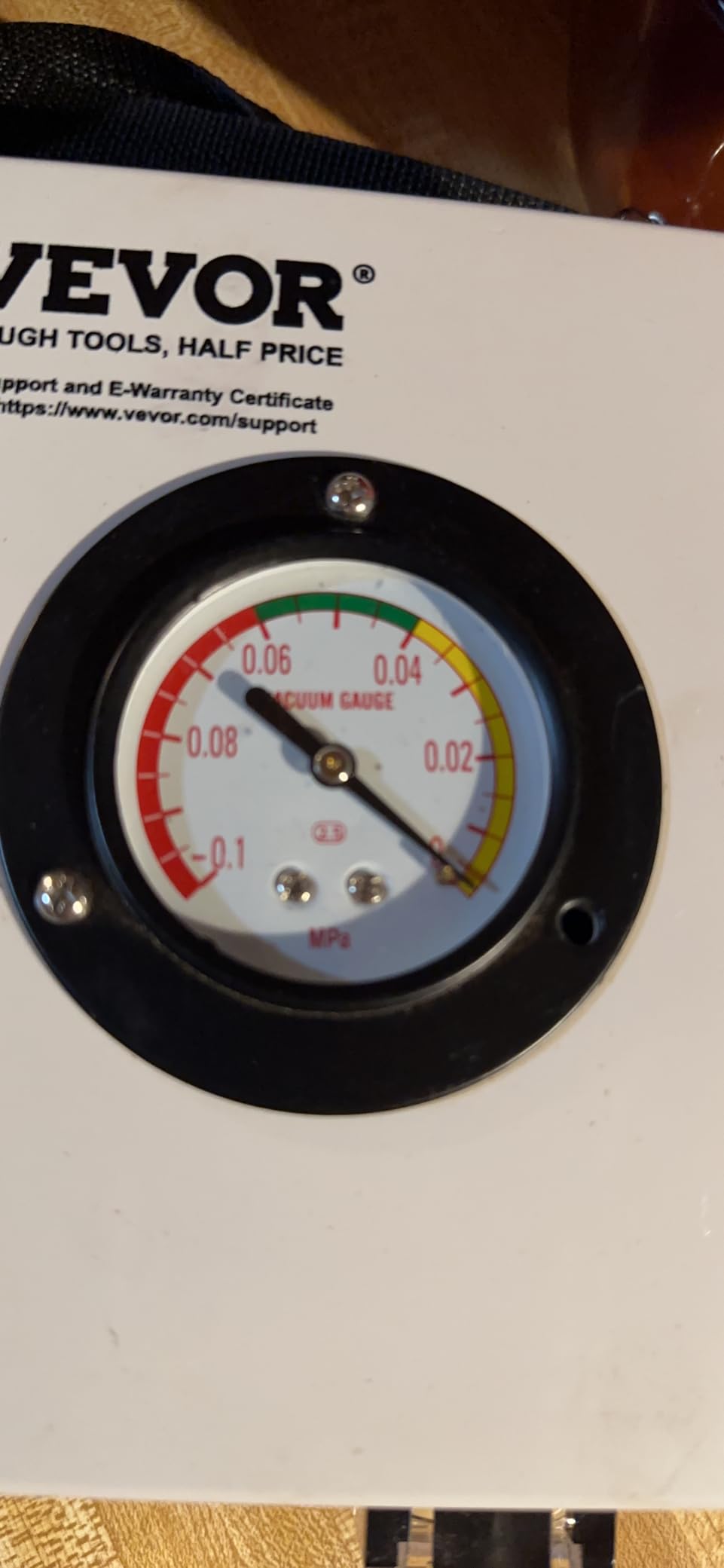
The 3.8 average comes with a 51 percent five-star share, which is a healthy distribution for a category this thin on reviews. The main critique is that the vacuum feels underpowered even with the gauge turned to maximum, which is the same suction ceiling that shows up on other compact units. Owners work around it, but if you are milking a heavy cow you will notice the gap.
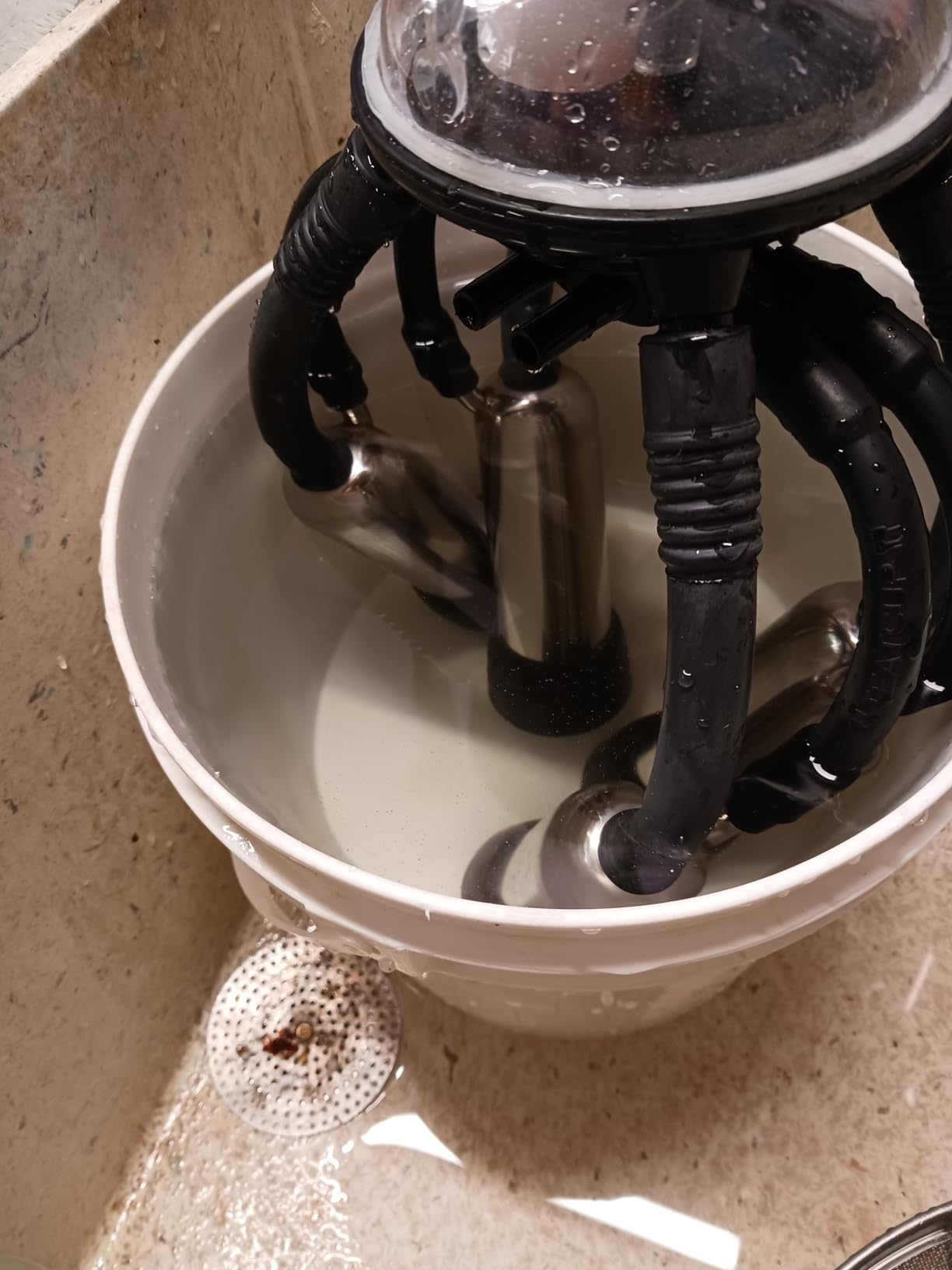
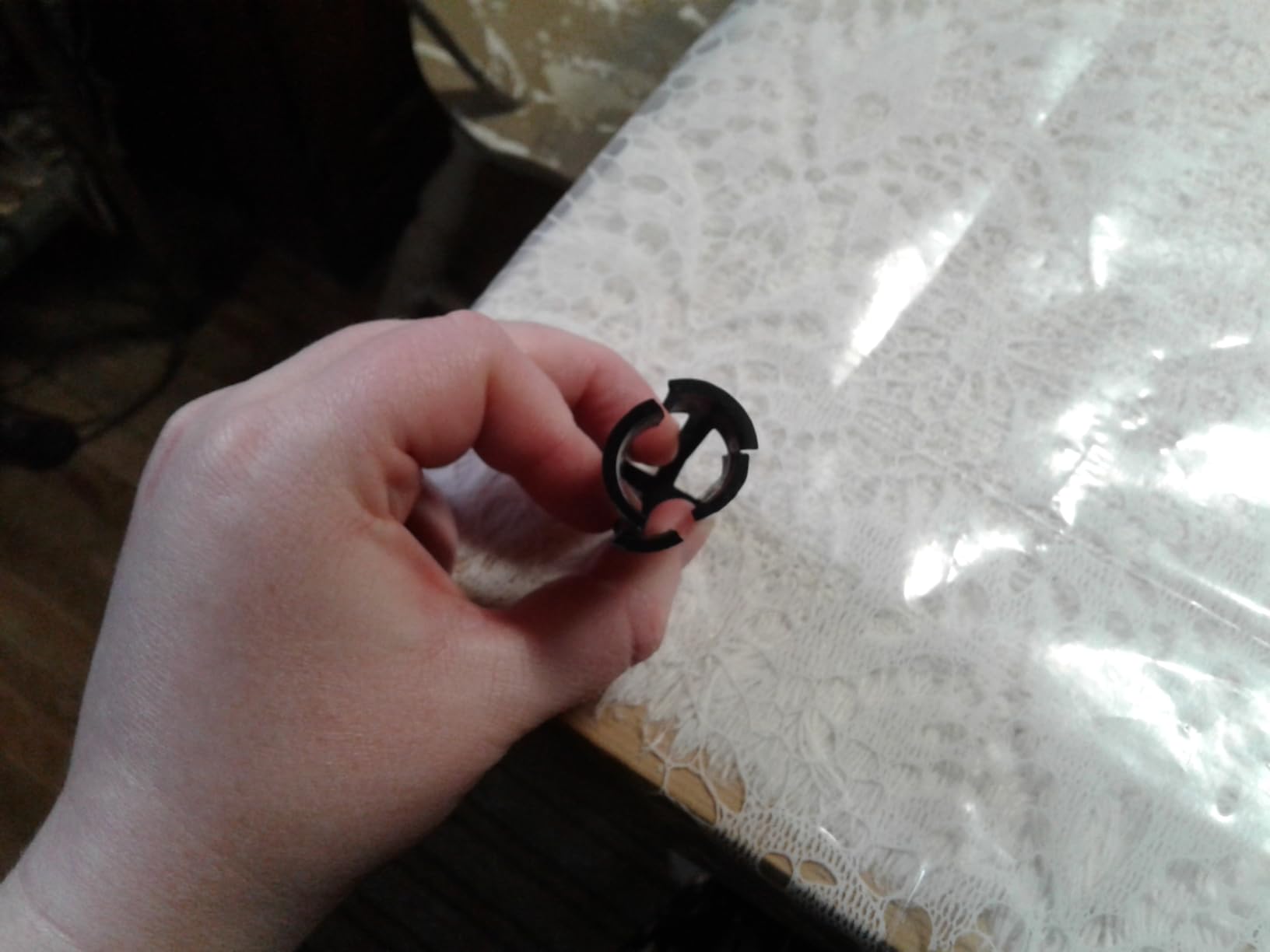
Two smaller issues. The green tube stopper plugs fall out, and the machine does not come with spares, so a lost plug is a small but real annoyance. Assembly of the hoses is described as complicated on first setup, though several reviewers note that VEVOR rebuilt this machine with better instructions and hardware, and that parts are available directly from the brand.
The other real limitation is cup sizing. If your animals are Nigerian Dwarf goats or a small breed of sheep, the standard cups can be too large, and the machine will not hold a proper seal. That is a fit problem, not a quality problem, and it is fixable with the right cup set.
When this is the right machine to buy
Buy this one if you are not sure whether your herd will stay goats. The per-side suction adjustment and the multi-species cup capability give you room to add a cow or a few sheep later without replacing the machine, and the 6L bucket is a sensible middle size that handles two does or one small cow per pass.
Owners who value quiet operation tend to rate it highly, and if your animals are nervous about noise that is a real advantage. The stainless bucket also keeps milk fresher between the parlor and the kitchen than a plastic container does.
When to pick something else
If you are milking a high-producing cow, the weak maximum vacuum is the deciding factor and you should look at a larger cow unit instead. If your animals are very small breeds, the cup sizing needs attention before you start, not after.
The missing tube stopper spares are the kind of detail that should not matter, and it is the one part of this package we would hold against it. Budget for a pack of plugs alongside the machine.
3. MAPOTAD 3L Goat Electric Milking Machine, Rechargeable Battery Pulsation Vacuum Pump
3L Goat Electric Milking Machine, Automatic Rechargeable Battery Powered Pulsation Vacuum Pump with 2 Teat Cups Stainless Steel Bucket for Goat(Battery Model)
3L 304 stainless bucket
40-46 pulsations per minute
13200mAh battery
check valve
Pros
- 4.0 average across 149 reviews
- Highest five-star share among the goat units
- Battery runs about 3 hours on a 5 hour charge
- Adjustable motor frequency softens strong suction
- Stainless and silicone build wipes clean
Cons
- One pump failure reported after roughly 20 uses
- 3L bucket is small for multiple goats
- Manual is poorly written and illustrated
The MAPOTAD 3L holds a 4.0 average across 149 reviews, with a 64 percent five-star share. No other goat-focused unit in this roundup scores higher. Owners consistently describe goats as happier with it and milking time roughly halved, and the variable-speed motor is the feature that comes up most.
That motor frequency knob is worth understanding before you buy. Instead of a fixed suction setting, you can dial the machine down to a comfortable level for an animal that flinches, then bring it up for a hard milker. Reviewers who milk sensitive does rate this machine well for exactly that reason, and it is the feature we would most want to have on a first unit.
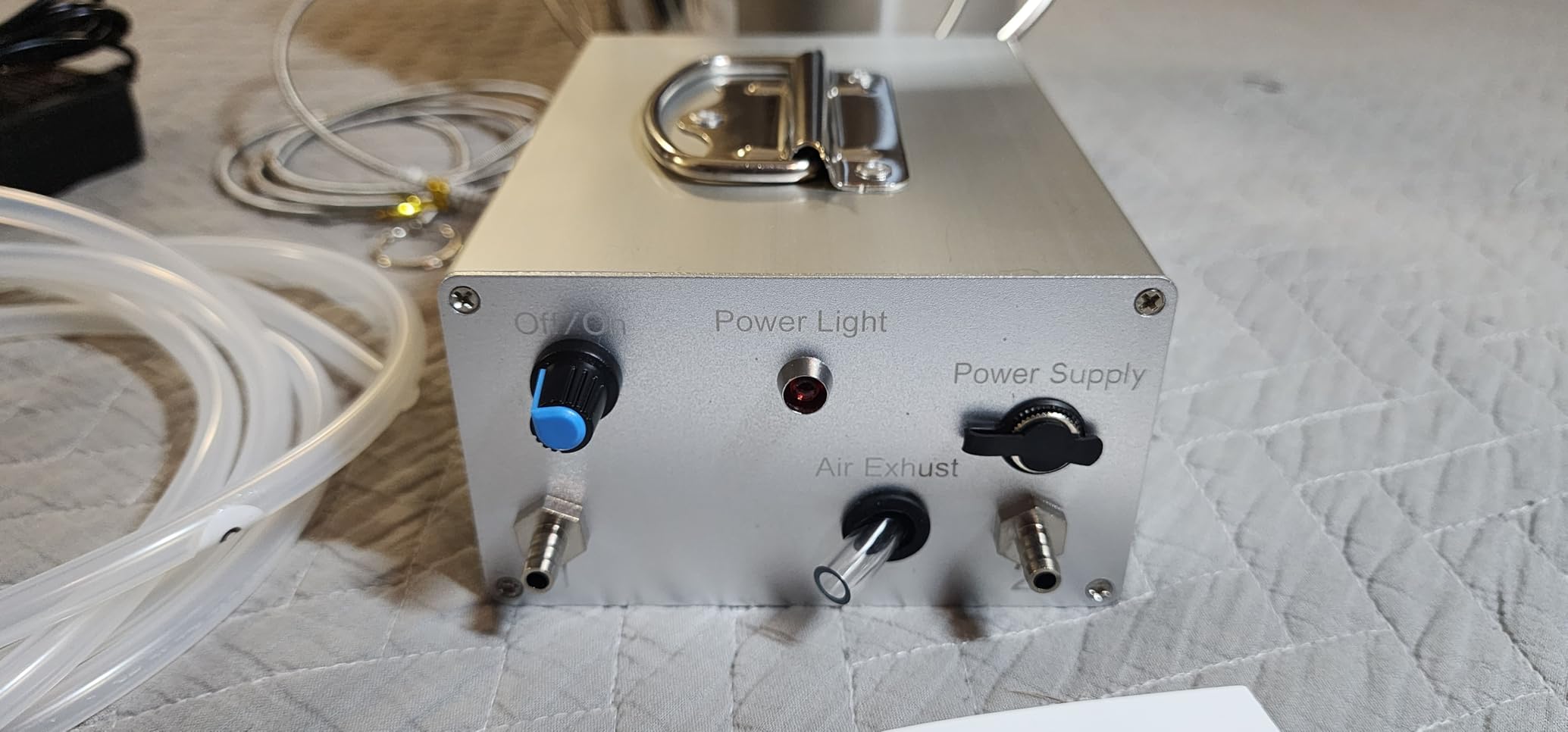
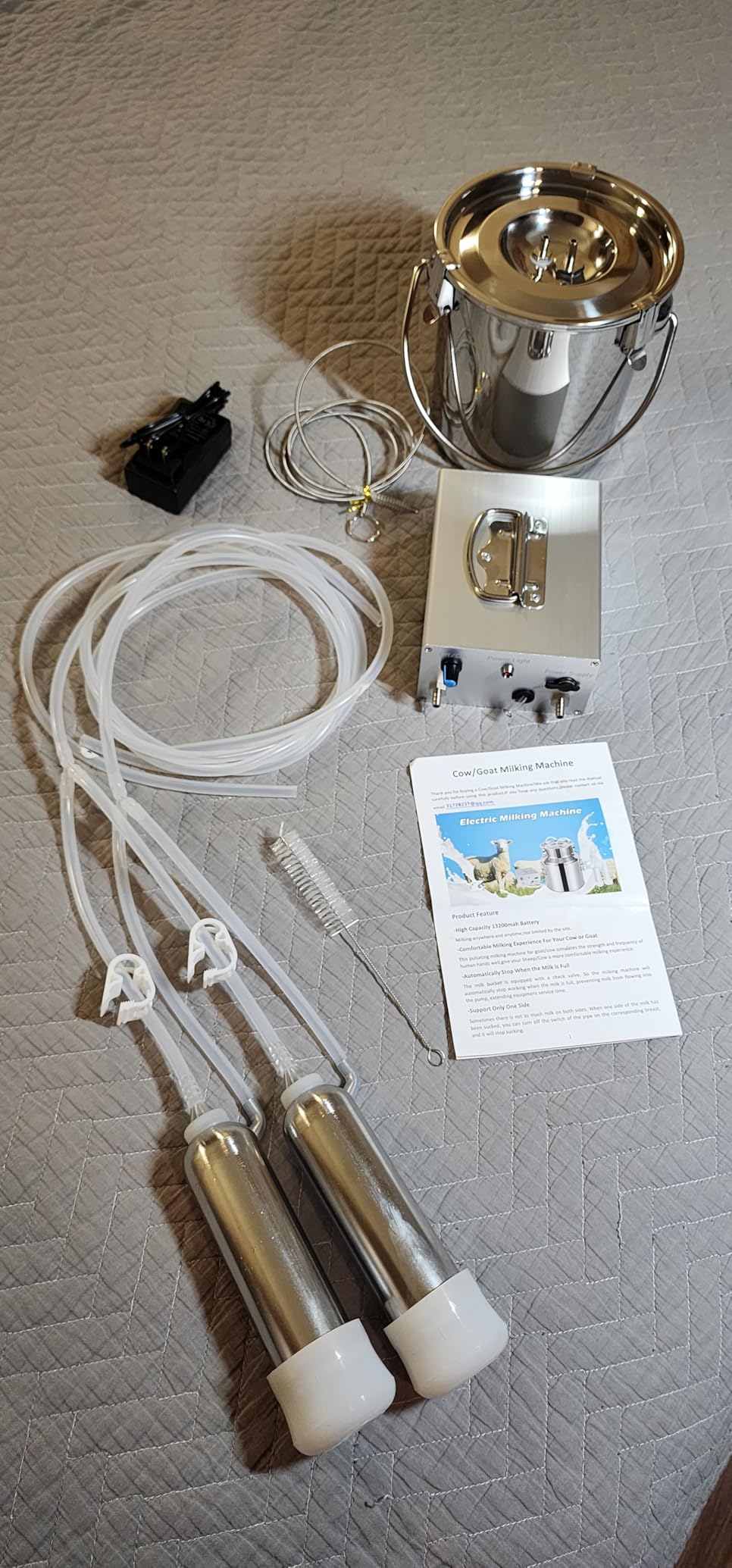
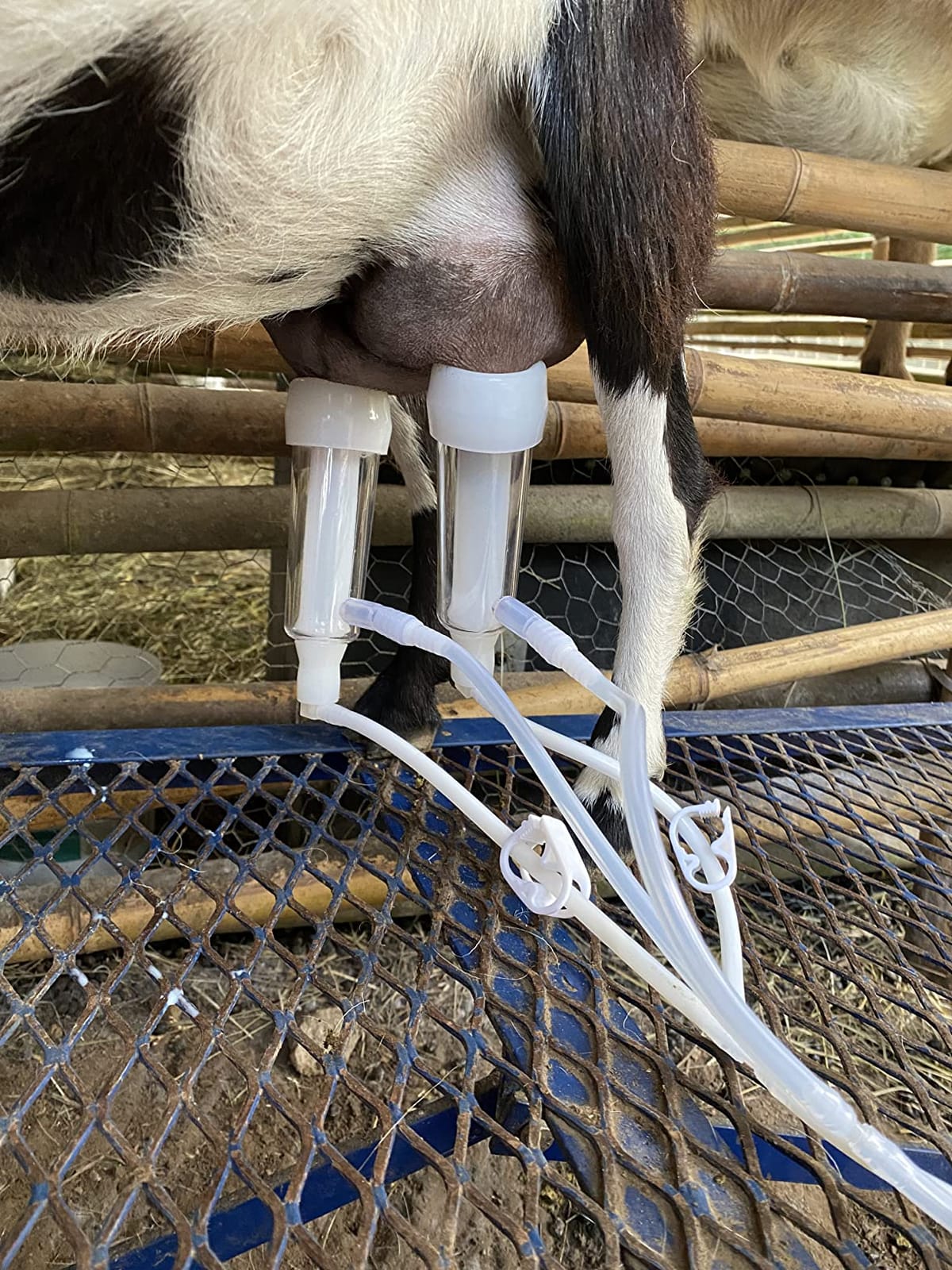
The bucket is 3 liters of premium 304 stainless steel with folding handles on two sides, so it carries from the barn to the kitchen without a separate tote. A check valve in the milk container stops milk reaching the pump, the hose and plug system is numbered for setup, and two cleaning brushes are included. The 13200mAh battery gives about three hours of runtime on a five hour charge, and owners of small herds report it lasting most of a week between charges.
Being honest about the 4.0: this rating is a genuine strength, but the machine is a 3 liter bucket, and that is the constraint that shapes everything. Multiple goats means frequent emptying, and the suction is weaker than larger systems, so it needs a firm seal to hold. One owner reports three years of daily use with the unit still going, which tells you the design can hold up when it is not being pushed past its size.
The one serious failure report is a pump that died completely after about twenty uses, which is isolated rather than a pattern, but at this price point a dead pump is the whole purchase. There are also cups that are sized for goats rather than sheep despite mentions of both, a manual written in broken English, and one buyer who found a sharp metal edge on the pail and early rust.
Variant options run from a 3L battery goat model up through 7L and 14L versions, and there is a 3L cow battery variant too, which is worth a look if your plan changes.
What to check before you buy this for goats
Count your does and multiply by two milkings a day, then work out how much milk that is. Two or three does fit a 3L bucket comfortably. Six does do not, and you will be stopping mid-session to pour, which is exactly the rhythm the machine is supposed to remove.
Check the teat cup against your smallest doe. This unit is goat-focused, and the cups run large for the smallest breeds, so confirm fit before you start. Owners who do this first report far fewer problems than those who force it and then dial the suction up.
Where it falls short
The manual is genuinely poor, and for a first-time keeper that matters more than it should. Budget an extra evening working out the numbered hose connections rather than assuming you will read your way through it in ten minutes.
At three liters this is a small-herd machine. It is also a cordless unit with a real battery, so it works in a pasture or a barn with no outlet, which is where it beats almost everything else at this tier. What it does not do is scale, and a single pump failure is a real risk given the parts ecosystem.
4. DGBAIZ 7L Goat Milking Machine, Rechargeable and Adjustable Suction Electric Milker
7L Goat Milking Machine,Rechargeable & Adjustable Suction Electric Milker
7L 304 stainless bucket
13200mAh battery
40-46 pulsations per minute
6.4 pounds
Pros
- Easy for first-time milkers to learn
- 7L bucket covers several does in one pass
- Quiet and simple to assemble
- Responsive support during warranty
Cons
- Suction declined and stopped working after one season
- One unit only ran on mains power
- Out-of-warranty failures leave no recourse
The DGBAIZ 7L is the one we would hand to someone who has never used a milking machine before. It holds a 4.0 average across 134 reviews with a 59 percent five-star share, and the consistent theme from first-time keepers is that it is simple to learn, including for children helping with the session. At 6.4 pounds it is lighter than most of the units here, and the bucket is 7 liters of 304 stainless steel with folding handles on two sides and inside.
The 7L capacity is the practical win. It covers a small group of does in one pass rather than forcing the stop-start pour that frustrates people on 3L machines, and the 13200mAh lithium battery gives about three hours of runtime on a five hour charge. Adjustable motor working frequency lets you soften the suction, and a check valve stops milk reaching the pump when the bucket fills.
Owners also report that the suction is gentle when dialed to the right level for let-down, and that it works well on Nigerian Dwarf goats despite mismatched teat size between animals. Customer service is described as responsive, including offering a replacement pump, which is more than most listings in this category manage.
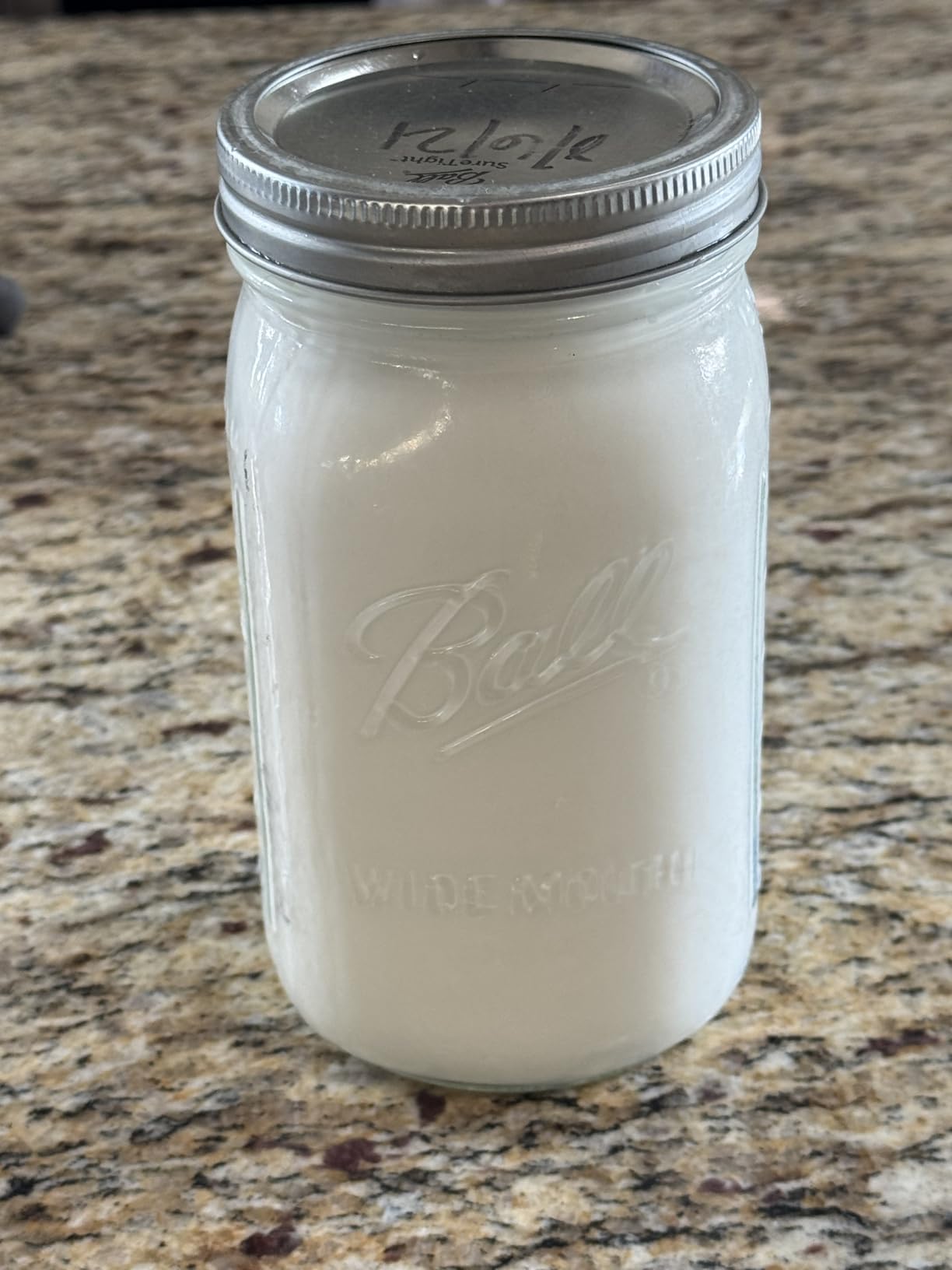
The durability thread is the reason this is not our goat pick despite the equal rating. Several buyers report suction declining and the unit stopping working after a season or two, and at least one states the machine only ran on mains power despite the battery model label. That is a listing accuracy problem as much as a hardware problem, and it is the kind of thing that only surfaces after the warranty conversation.
Out-of-warranty failures leave no recourse from the seller, which owners call out directly. Tubes and cords are vulnerable to chewing if goats are in the pen with the machine, and the suction can be set too high if you do not dial it back, which is a real risk on an animal with tender teats.
Variants include a 3L goat battery model, the 7L goat battery version and a 7L cow battery version, so the same platform covers a couple of different herd sizes.
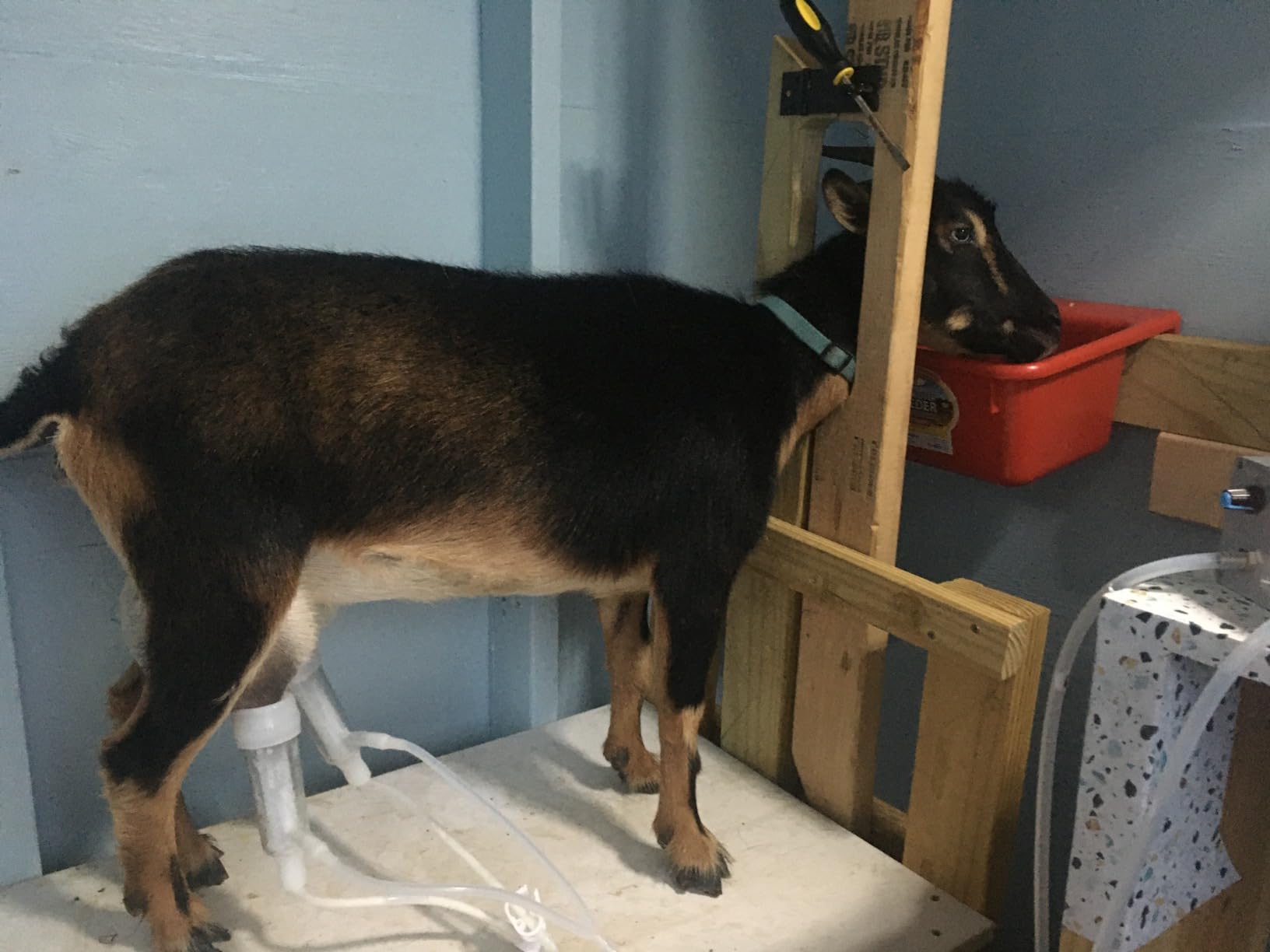
What to check before you buy this
Confirm the battery actually works off-mains before you commit, because at least one buyer found the unit only performing while plugged in. If you are milking in a pasture with no power, test it in the barn first with the charger disconnected.
Set the motor frequency low for the first few sessions. Several owners who dialed suction high to finish faster report uncomfortable animals, and the whole point of pulsation is that you do not have to do that.
Where it falls short
This is a season-to-season machine. The one-season suction reports are consistent enough that we would treat pump longevity as the main open question on this listing, and the warranty is the safety net rather than the assurance.
On the positive side, 7L at 6.4 pounds is a hard combination to beat for a small goat herd, and the light weight means a child can help without lifting a heavy pail.
5. MAPOTAD 3L Goat Pulsation Vacuum Electric Milking Machine with 2 Teat Cups
MAPOTAD 3L Goat Pulsation Vacuum Electric Milking Machine, Automatic Pulsation Breast Pump with 2 Teat Cups Stainless Steel Bucket for Goat.
3L stainless bucket
40-46 pulsations per minute
4.6 pounds
check valve
Pros
- Lowest-cost complete unit we reviewed
- Small and quiet enough to carry anywhere
- Gentle pulsation suited a doe with an injured teat
- Support replies quickly and resolved cup problems
Cons
- Teat cups are not universal and marked teats
- Weak suction reported by multiple buyers
- Power cord and Y-valve both failed within warranty
This is the cheapest complete unit we looked at, and for a small goat herd on a tight budget it can do the job. It runs a 40 to 46 cycle pulsation, has a 3 liter stainless bucket with folding handles, a check valve in the milk container to stop backflow into the pump, and food-grade silicone hose, liner and container. At 4.6 pounds it is the lightest machine in this roundup, which matters when you are carrying it between barn and kitchen twice a day.
At 3.6 across 105 reviews, with a 21 percent one-star share, it is the least consistent unit here, and we want to be clear that this is the budget pick rather than a recommendation. Owners who get it running call it a quiet, compact, hand-saving workhorse, and some report years of continuous service. One owner milked a doe with an injured teat and said the gentle pulsation was the deciding factor.
Support is described as responsive, including a refund offered when the cups caused problems, which tells you the seller handles problems when the hardware does not.
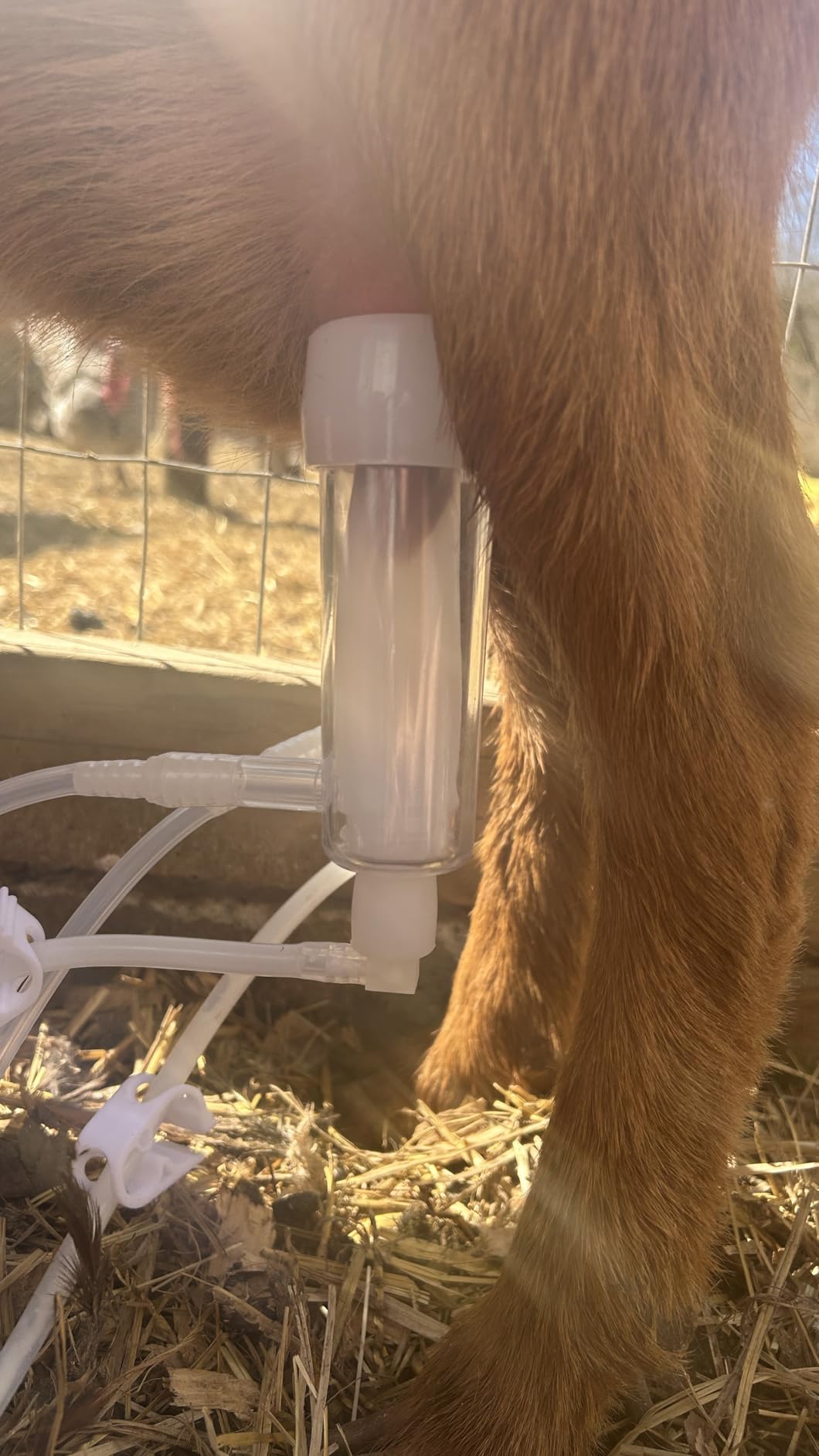
The problems are specific and worth reading. Teat cups are not universal, and owners report teat bleeding on some does, which is the most serious complaint in this roundup and the reason we rank this unit below the other compact goat options despite the low entry point. Suction is reported as weak by multiple buyers, the power cord is fragile and breaks at the ends, and a Y-valve broke within the warranty period.
The 3L bucket also fills quickly with more than one or two goats, so a larger herd means constant pausing. What you are buying here is a working machine at the lowest cost, and what you are accepting is a smaller cup footprint and a cord that may not last.
Because teat damage is a real animal health outcome and not a nuisance, we would only use this machine with goats whose teat size you have already confirmed matches the supplied cups.
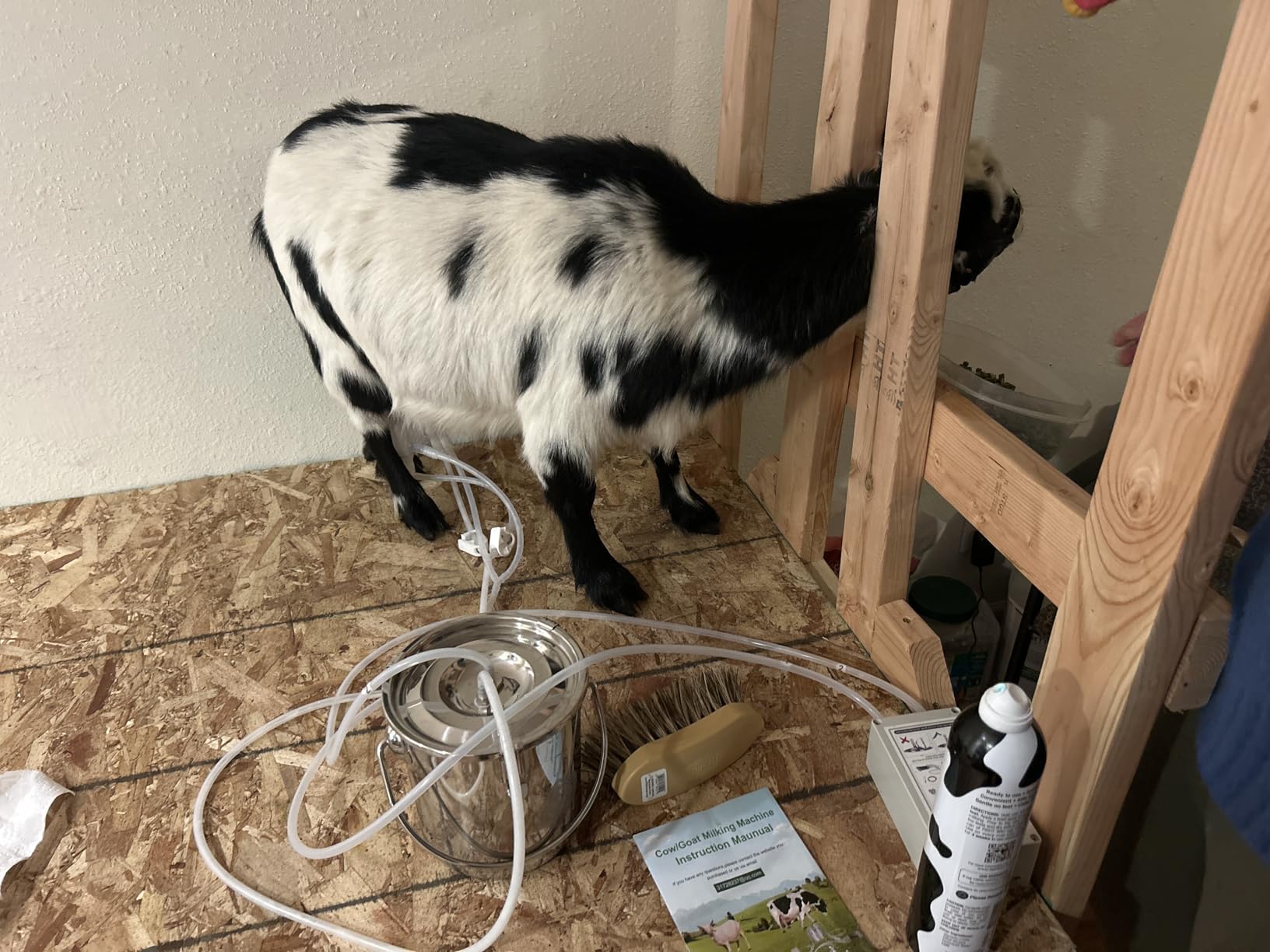
What to check before you buy this
Confirm cup size against your does before the first session. This is not a precaution here, it is the deciding question, because reports of teat marking cluster around the supplied cups being the wrong bore for the animal.
Expect to empty the bucket between animals. Plan the session around two goats at a time and treat anything larger as a reason to move up a tier.
Where it falls short
Weak suction is the recurring technical complaint, and it is the reason the average sits where it does. Combined with a fragile cord and a Y-valve that failed inside the warranty period, the machine is dependable only if kept in dry conditions and treated gently.
If the cups fit your animals and your herd is two or three does, the value is real. If either of those is not true, spend more on a machine with a larger cup and a stronger pump.
6. Lyfreen Electric Goat Milking Machine, Portable 3L Stainless Steel Bucket
Lyfreen Electric Goat Milking Machine, Portable Auto Goat Milker with 3L Stainless Steel Bucket, Gentle & Efficient for Daily Milking of Goats,Sheep, for Small Farms & Home
304 stainless bucket and lid
auto-stop check valve
4.66 pounds
numbered ports
Pros
- Gentle pulsation comfortable for the animal
- Cups fit a range of teat sizes
- Dishwasher-safe bucket
- Responsive seller replaced parts quickly
Cons
- Plastic auto-stop valve snaps and needs glue
- Motor is noticeably loud
- Fixed 3L capacity with no larger option
The Lyfreen is the machine we would pick for a keeper whose animals are sensitive. It holds a 3.8 average across 100 reviews and the consistent owner theme is gentleness: a speed-adjustable electric pump with an auto-stop check valve and a pulsation rhythm designed to mimic natural nursing. Owners report that about 10 minutes of hand milking for roughly 1.5 quarts becomes a machine session, and that the suction builds quickly.
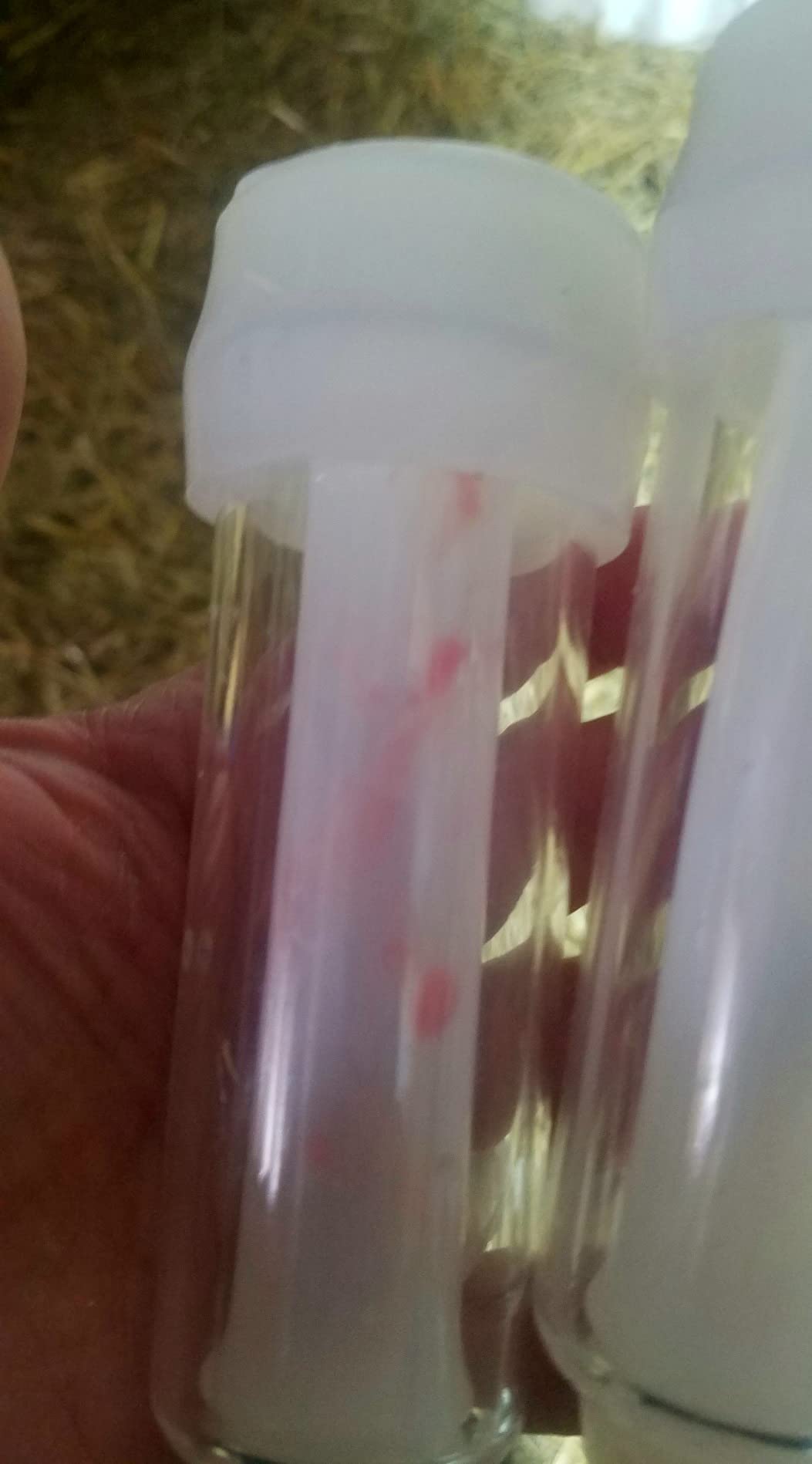
Cup coverage is genuinely better than most of the field here. Reviewers say the cups fit a range of teat sizes from very small animals up to a full-size Saanen, which is the sizing problem that trips people up on most of the compact units. The bucket and lid are 304 stainless steel with food-grade contact materials, and the bucket is dishwasher safe with the rest easy to hand wash.
At 4.66 pounds it is the second-lightest machine we reviewed, and numbered hose ports make assembly and cleaning simpler than units where you have to trace every line. Two cleaning brushes are included.
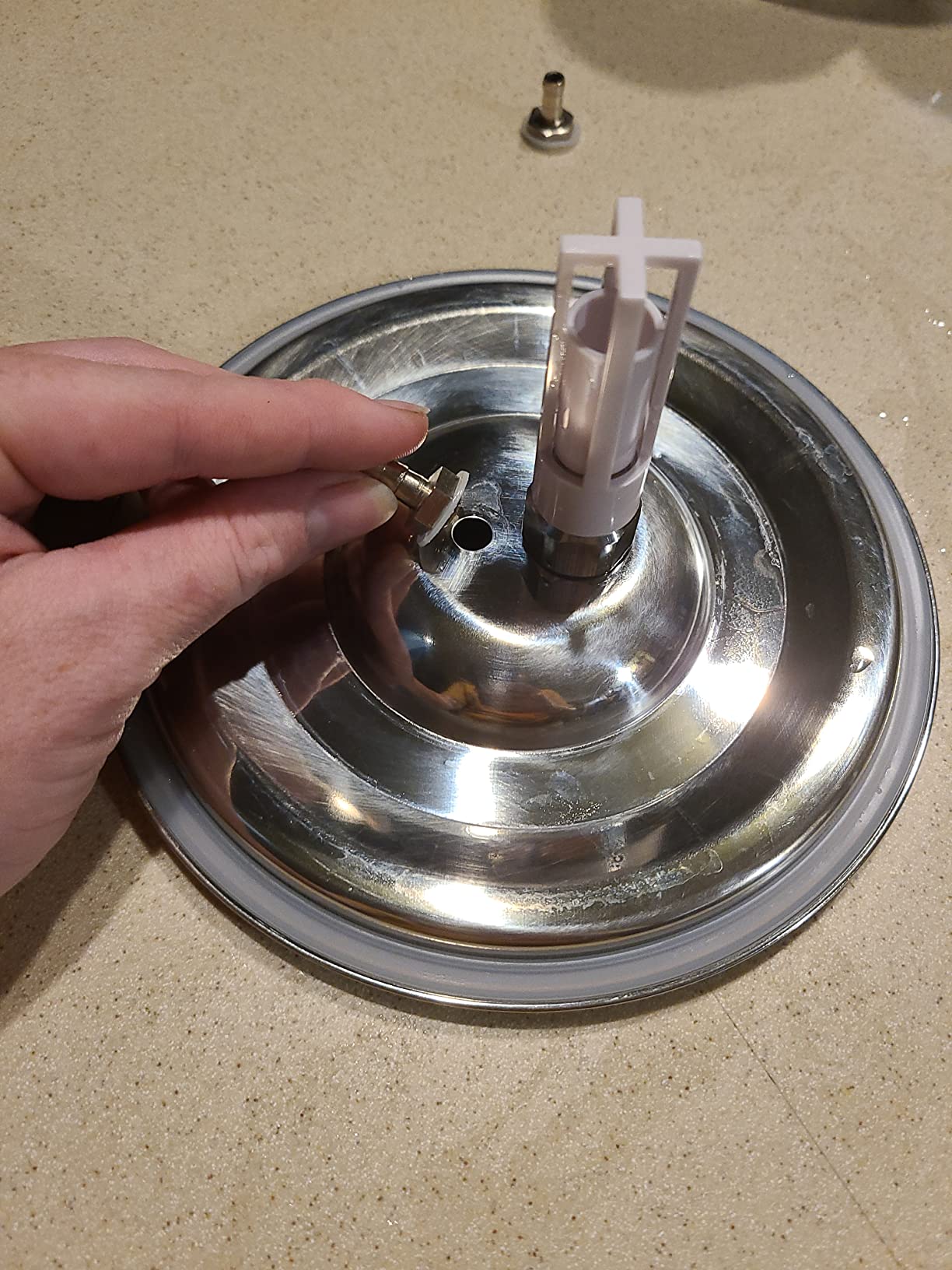
The flaw in this machine is a single part, and it is a cheap one. Several buyers report the plastic auto-stop check valve snapping and having to be glued back on. That is a fifteen-minute fix with epoxy, and it is annoying rather than fatal, but it is a design choice that costs almost nothing to do better and it is the one thing we would raise with the manufacturer.
Beyond the valve, the motor is noticeably loud, and the power cord eventually failed at the adaptor on one long-term unit. Replacement parts are advertised but contact details are not published, which undercuts the otherwise good support record. There is also no larger bucket option, so 3L is the ceiling and it fills before a full session ends.
Owners who troubleshoot tubing clogs and drainage tend to keep the unit running for years, and a few bought a second machine as a backup, which is a reasonable pattern for a design this simple.
What to check before you buy this
Count your animals against the 3L limit before anything else, because there is no bigger bucket in this line. For two or three does this is comfortable, and beyond that the pour interruptions will undo the time saving.
Have epoxy or a bonded plastic repair kit on hand from day one. The auto-stop valve is a known weak point, and repairing it yourself takes less time than waiting on a part.
Where it falls short
Noise is the complaint that matters most for anxious animals, which is slightly ironic given this is the gentle-milking pick. If your does are noise-sensitive, a quieter unit is a better combination of gentleness and predictability than low suction alone.
The unpublished parts contact is a genuine support gap. We like the responsiveness of the seller, but responsiveness is hard to use when you cannot find the number.
7. Hantop 6L Goat Milking Machine, Pressure Gauge Pump Goat Milker (Pro Plus)
Hantop 6L Goat Milking Machine, Pressure Gauge Pump Goat Milker (Pro Plus)
6L bucket
built-in pressure gauge
5200mAh battery
43-46 pulsations per minute
Pros
- Pressure gauge lets you tune vacuum precisely
- Quick-release pump module extends service life
- Battery frees the milker from barn outlets
- Simple to assemble and clean
Cons
- 5200mAh battery gives shorter sessions
- 6L bucket is small for multiple animals
- Aluminum housing is heavier to carry
The reason to buy the Hantop Pro Plus over its cheaper siblings is one component: the built-in pressure gauge. Almost nobody in this category gives you a visible vacuum reading, and a gauge turns a guess into a setting. If you are working with a sensitive animal, a heifer, or a doe with a teat injury, being able to see and tune the vacuum level is worth more than a larger bucket.
Everything else here is familiar Hantop engineering. Pulsation runs at 43 to 46 cycles per minute, the milk bucket lid has a check valve that prevents milk entering the pump, the housing is aluminum alloy for cooling, and the quick-release design lets you replace the main pump module rather than the whole unit when the motor fades.
At 7.88 pounds it is heavier than the plastic kits but still manageable for a single animal, and the 6L bucket sits between the tiny goat units and the larger cow units. It holds a 3.7 average across 83 reviews with a 19 percent one-star share, so the reception is solid but not exceptional.
The battery is the compromise. This model carries 5200mAh, roughly a third of the capacity of the 13200mAh pack in the Hantop 12L, so sessions are shorter and a two-goat morning may need a mid-session charge depending on how long your animals take. Owners buying it for a bigger setup notice this first.
The aluminum alloy housing and tubing are also heavier to carry than plastic kits, which trades portability for cooling. The 6L bucket is on the small side for multiple animals, and the suction and seal complaints that run through Hantop reviews in general show up here too.
What owners who chose it deliberately do appreciate is being able to set the vacuum for a specific animal and see the number, rather than working by feel. If you have ever had a cow or goat flinch at attachment, the gauge is the feature that fixes that.
What to check before you buy this
Work out how long a full session takes you and compare it against the smaller battery. If you are milking two or three animals twice a day, the shorter runtime is manageable. If you are doing a larger group, it is not.
Learn to read the gauge before you need it. The useful habit is to record the vacuum reading that works for your largest animal and use it as your reference for everything else.
Where it falls short
The battery capacity is the practical limit on this unit, and it is a real constraint rather than a minor spec difference. The heavier housing is a second complaint, and both point the same way: this is a machine for fewer animals per session.
It is also a goat-focused 6L configuration in this line. For a cow, the capacity and airflow both point to a different product.
8. Srora 9L Cow Milking Machine, Rechargeable Adjustable Pulse Vacuum Electric Cow Milking Machine
9L Cow Milking Machine, Rechargeable Battery Adjustable Pulse Vacuum Electric Cow Milking Machine,Portable Milking Machine,Individual Pulsation Adjustment, Udder Protection
9L sealed 304 stainless bucket
5200mAh battery
independent suction and pulsation switches
8.67 pounds
Pros
- Separate suction and pulsation switches for fine tuning
- Sealed 9L stainless bucket keeps milk fresher
- Cups fit large-udder Nubian and Alpine crosses
- Removes hand contact and teat reflux
Cons
- Loudest unit in the roundup with noticeable vibration
- Pulsation switch failed within days on one unit
- Second replacement unit also died after about 30 days
The Srora 9L has the most unusual control layout of any cow-capable unit in this roundup, and that is worth understanding. Two independent switch controllers let you run a master suction knob and a separate pulsation switch, which means you can dial the vacuum and the pulsation cycle independently rather than having one setting control both. For a cow with a full udder or a heifer coming into milk, that independence is useful.
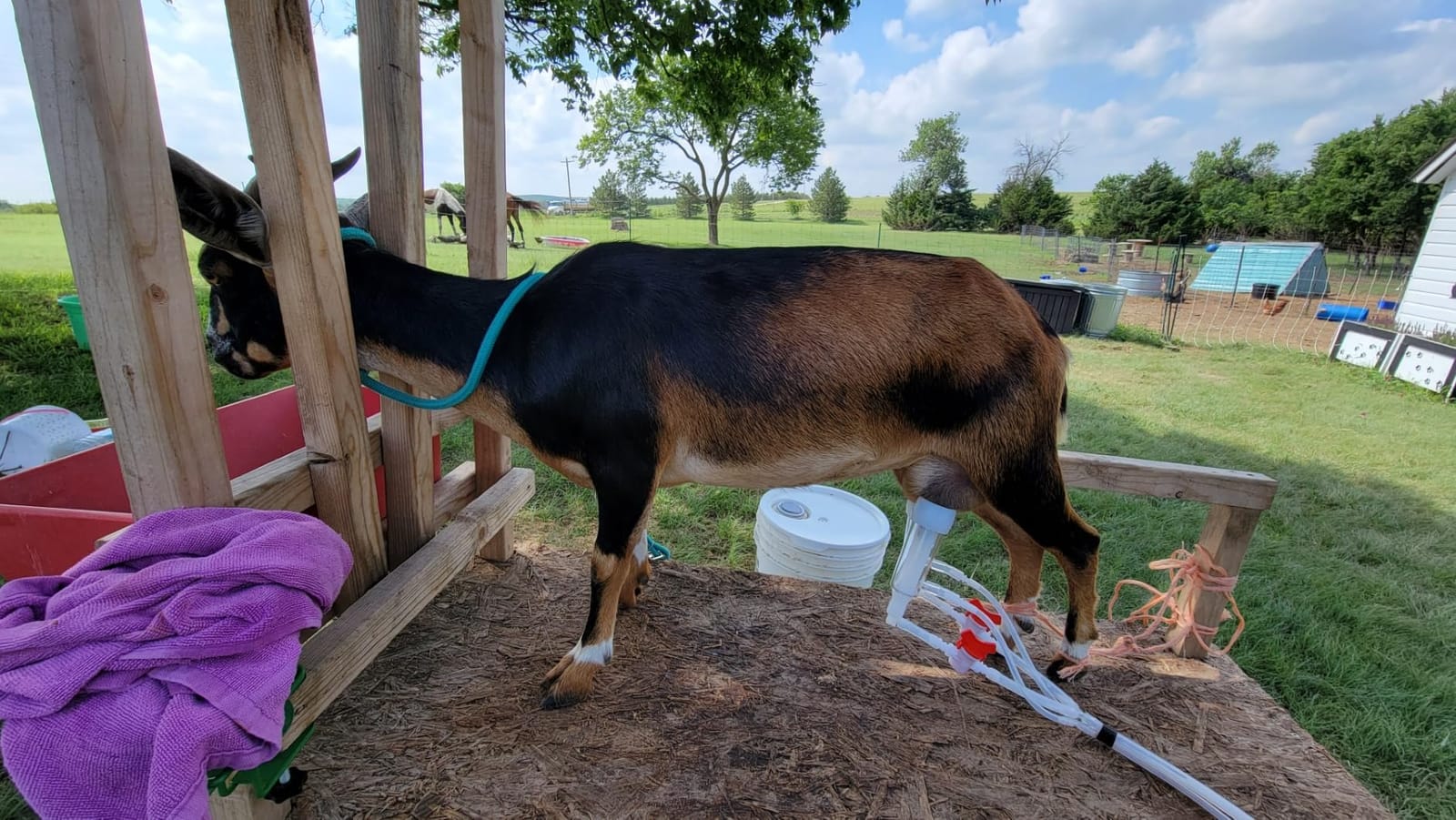
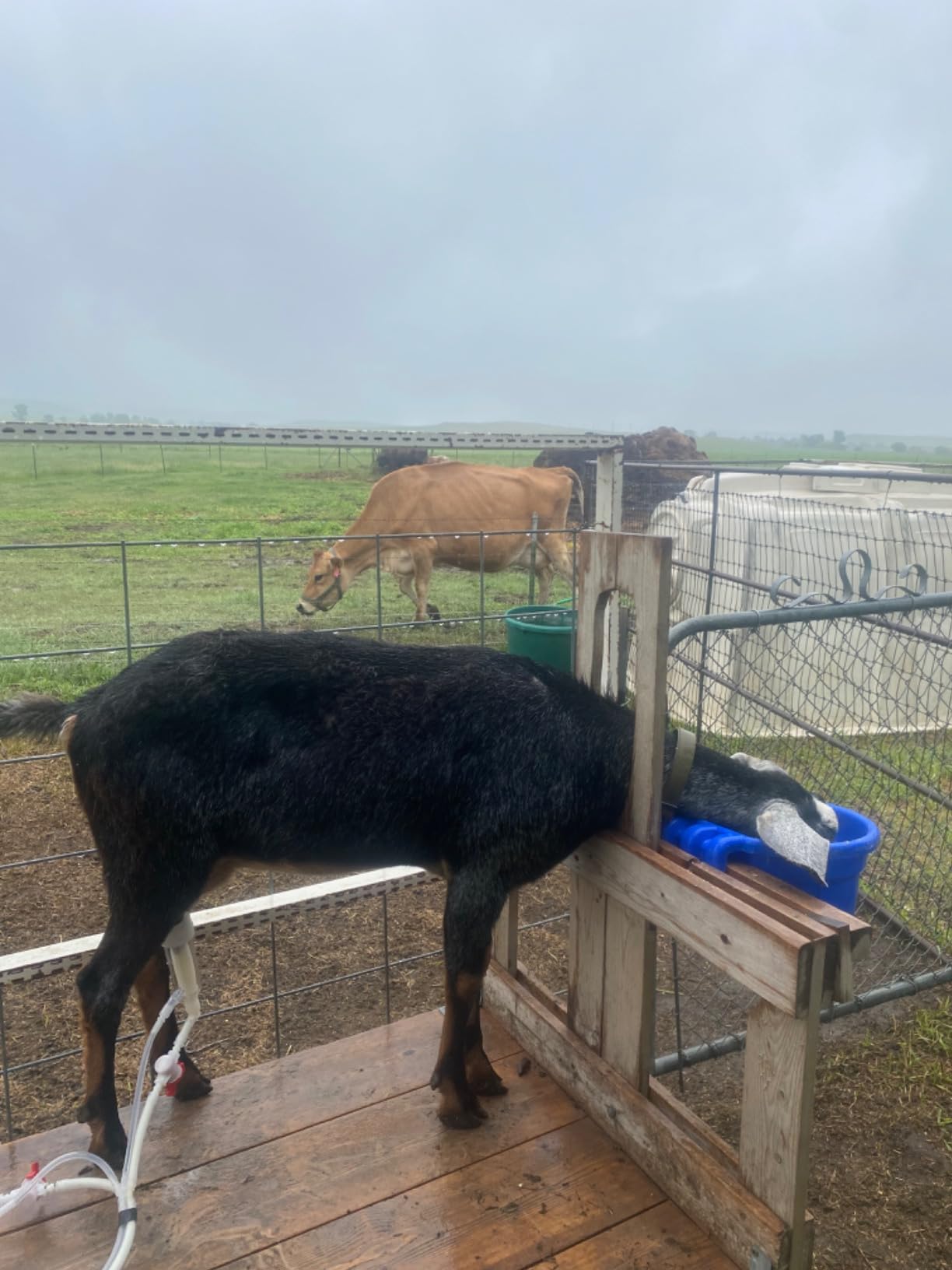
Its 9 liter sealed 304 stainless bucket is among the larger containers here and keeps milk fresher between sessions than an open container. Cups are reported to fit large-udder Nubian and Alpine cross goats, which broadens the animal range. The 5200mAh battery gives three to five hours of use on a five hour charge, and the aluminum alloy shell uses pure copper motor wire for cooling and service life.
Owners like that the machine removes hand contact entirely, which they credit with reducing teat reflux and mastitis risk, and that it halves both the milking and the cleaning session.
This is where we have to be blunt, because the durability record is the weakest of the picks we are recommending. A 22 percent one-star share includes a unit whose pulsation stopped within days and a replacement that failed after about 30 days, prompting the manufacturer to ship further units. Owners also report the loudest operation in the category, with noticeable vibration, which is a real issue for animals that are already uncertain about the process.
One shipment arrived with a cracked hose Y-piece, and the hoses are bulky to carry without a separate tote. None of those are fatal individually. Together, with the two early failures, they make this a machine we would want a replacement policy on before committing to it.
It holds a 3.6 average across 71 reviews, and the sample is small enough that the durability picture could improve or worsen quickly.
What to check before you buy this
Test the pulsation switch as the very first thing you do, before you attach it to an animal. On this model that switch is both the best feature and the most likely failure point, and you want to know which one you have before it matters.
Consider how your animals react to noise. This is the loudest unit here, and a cow that has never been machine-milked may take several sessions to settle.
Where it falls short
Reliability is the answer. A machine that can stop pulsating in days costs more than its price once you count the milkings you cannot do and the animals you fall behind on.
The capacity and control layout are genuinely better than most of the field, so if you do buy it, keep the dual controls in mind and confirm your return window covers the first few seasons of use.
9. Proshine 2-in-1 7L Goat Milking Machine, Electric Vacuum Pulsation Milker
Proshine 2-in-1 7L Goat Milking Machine, Electric Vacuum Pulsation Milker
Goat and cow cup sets included
7L bucket with float valve
45-47 pulsations per minute
mains or battery
Pros
- Two pairs of teat cups included in one package
- 30 minute hand job becomes about 5 minutes
- Runs on mains or built-in battery
- Support described as responsive with a 30 day return
Cons
- Usable capacity is closer to 4-5L once the float valve is counted
- Several units stopped or lost suction within weeks
- Bucket is tedious to empty between two goats
The Proshine removes a specific problem that trips most people up: it ships with two sets of teat cups, one sized for goats and one for cows, in the same package. If you keep one family cow alongside a few does, that is the fitting problem removed rather than solved. You get the right bore for each animal without ordering a second cup set and hoping it fits.
The 2-in-1 label also covers power. It runs on mains electric or the built-in battery, so barn power is not a constraint either way. Pulsation runs at 45 to 47 cycles per minute, which mimics a lamb or calf suckling and sits in the middle of the cattle range. Owners report a 30 minute hand-milking job dropping to about 5 minutes, and a battery that lasted over a week while milking five goats daily.
The bucket is 7 liters of stainless steel with an internal float valve, numbered parts guide assembly, and two brushes are included, one for tubes and one for the bucket. Support is described as responsive, with a 30 day return offered alongside lifetime technical support.
The 3.5 average is the lowest here, and there is one design decision behind most of it. The internal float valve takes up space in the bucket, so usable capacity is closer to 4 to 5 liters rather than the advertised 7, which means you will be emptying sooner than the printed number suggests. A spec sheet can describe two different products. Our [best espresso machine guide](https://zamd.net/best-espresso-machines/) makes the same point about boiler type: identical numbers, completely different results in the cup.
Durability is the second problem. Multiple owners report the unit stopping or losing suction within weeks to a month. One package arrived missing spare overflow valves and cow adapter tubing, which is a packing failure that matters more than usual on a two-cup-set product. The bucket is also described as tedious to empty and clean between two goats, and suction is insufficient for young sheep.
None of this makes the machine wrong for its stated purpose, but it makes it a package where the extra cup set is the real value and the machine itself is the compromise.
What to check before you buy this
Check the box contents on arrival before you start. Missing overflow valves and cow adapter tubing are reported, and both are needed for the two-species use this machine is sold for. Assembly is the first opportunity to notice a missing part.
Plan around 4 to 5 liters of usable capacity, not 7, and count your animals against that number rather than the printed figure.
Where it falls short
The gap between advertised and usable capacity is the honest problem with this machine, and it changes how often you stop mid-session. If you are milking two does twice a day, that is workable. Beyond that the stops add up.
The early failure reports are the reason we placed this below the other 7L unit. If your herd is goats only, the extra cow cup set is not buying you anything, and a goat-specific machine with a better track record will serve you better.
10. VEVOR Goat Milking Machine, 0.8 Gal / 3 L Stainless Steel Bucket, 5200 mAh Rechargeable Battery
VEVOR Goat Milking Machine, 0.8 Gal / 3 L Food-Grade Stainless Steel Bucket, with 5200 mAh Rechargeable Battery, 2 Teat Cups, Cordless Portable Pulsation Vaccum Electric Milking Machine for Goats Only
3L 304 stainless bucket
5200mAh cordless battery
35-45 kPa vacuum
6.83 pounds
Pros
- 4.0 average with 80% four and five star reviews
- Thickened stainless cups grip without slipping
- Sealed system cuts leakage and milk waste
- 35-45 kPa range covers stimulation to milk-out
Cons
- Goats only
- cow cups sold separately
- 3L bucket needs frequent emptying
- Newest listing with the least field history
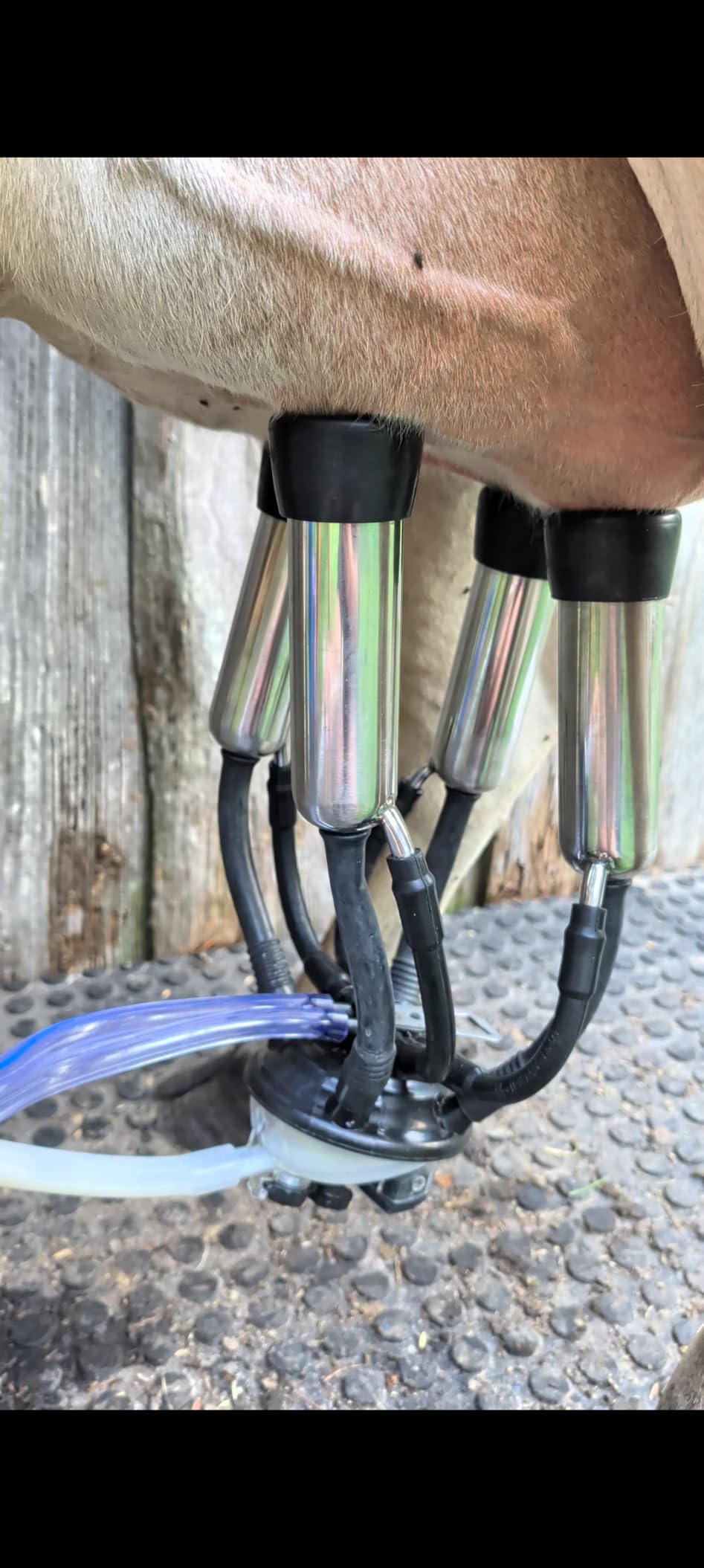
This VEVOR is the newest listing in the roundup, first available in February 2026, and it holds a 4.0 average with an 80 percent four-and-five-star share across 38 reviews. That is the best sentiment distribution we found, and the design decisions behind it are sensible. The cups are thickened stainless steel rather than thin shells, which is what stops them slipping off a teat, and the system is fully sealed to reduce leakage and milk waste.
The vacuum range of 35 to 45 kPa is worth noting because it is stated as covering all milking stages, from stimulation through to final milk-out. In practice that means one machine can handle both the let-down and the end of the udder, rather than needing a setting change that most owners would not think to make. The pulsation is described as biomimetic, simulating a natural suckling rhythm.
At 6.83 pounds with a 5200mAh cordless battery and a 0.8 gallon food-grade 304 stainless bucket, it is built for a barn or a pasture with no outlet, which is where its sealed, compact design earns its place.
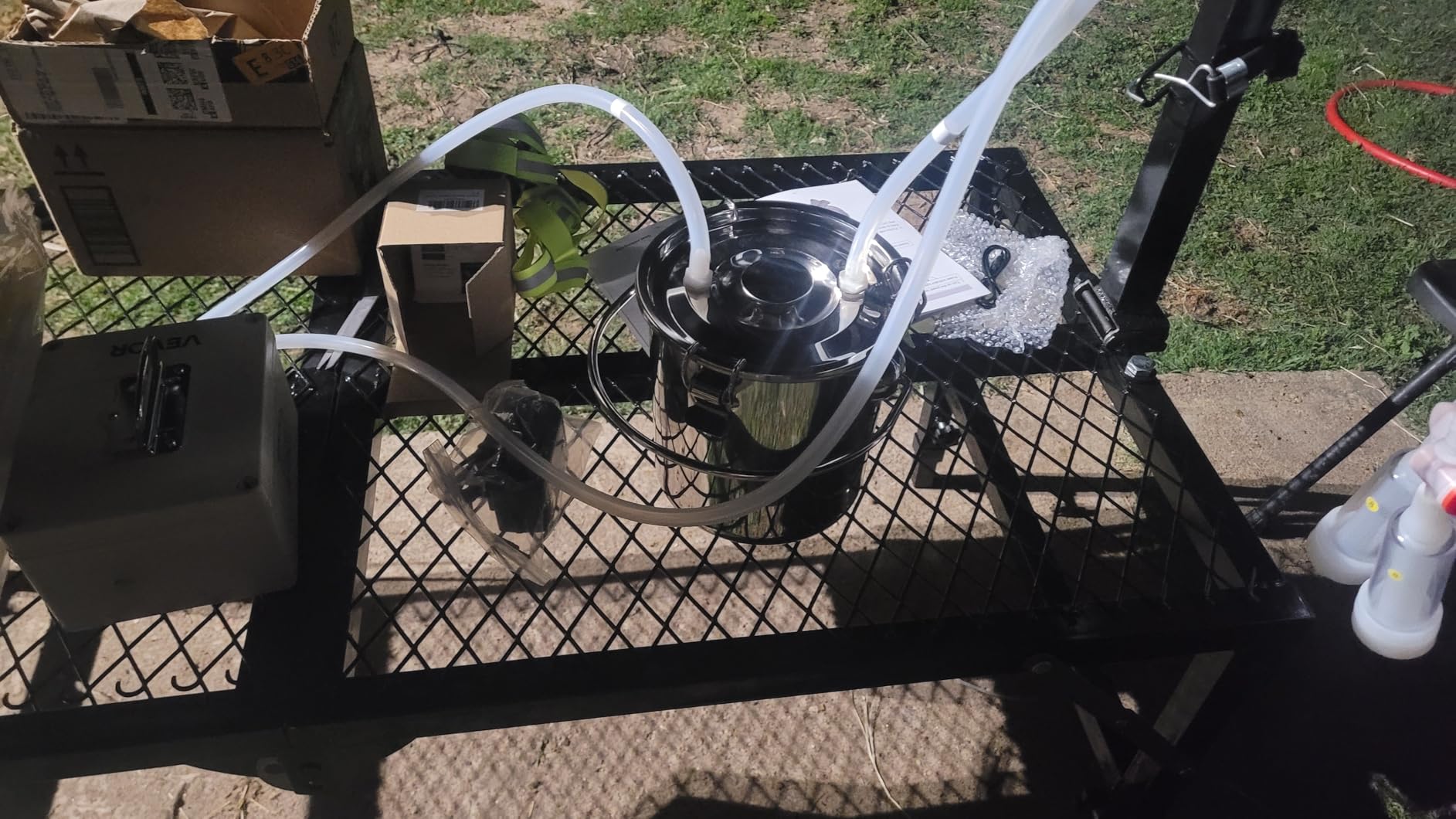
The honest limitation is evidence. Thirty-eight reviews is the smallest sample in this roundup, and the listing is new enough that no owner has yet reported what this machine does after three seasons. A 4.0 average on 38 reviews is a good start and not a reliability record, and we would not build a herd plan around it yet.
It is also goat-only. Cow operation requires a separate cup set that is not included, which is a real cost if you thought this covered both species. The 3L bucket means frequent emptying for more than one or two does, which is the same capacity ceiling as the other compact units.
Variants include a portable package and larger 12L and 25L configurations from the same family, so the path upward exists if the size turns out to be wrong.
What to check before you buy this
Confirm the cup size against your does, particularly if you have Nigerian Dwarf goats or another small breed. The thickened cups grip well, and grip is only an advantage when the bore matches the teat.
Ask yourself whether 3L covers your session. Two does, twice a day, is comfortable. Six does is a lot of pouring.
Where it falls short
The goat-only restriction is the biggest gap. If you are keeping a cow as well, this is not a mixed-herd machine and the extra cups are a separate order.
What this unit has going for it is sealed construction and cordless operation in a compact package, which is a combination few of the competitors match. Against that, you are buying the least-proven machine in the roundup, and it is worth watching reviews for a year before expanding around it.
How a Milking Machine Actually Works?
A milking machine is three things: a vacuum pump, a pulsator, and a cluster of teat cups that hangs on the udder. The pump creates suction. The pulsator cycles that suction on and off so the teat spends part of each cycle under pressure and part of it relaxing, which is what lets blood flow back into the teat between pulls instead of being trapped under constant vacuum.
That on-and-off cycle is the pulsation, and for cattle the accepted working range is roughly 45 to 65 cycles per minute. Every machine in this roundup falls between 40 and 80, so the differences between them are less about whether pulsation exists and more about whether the pulsator stays engaged. That failure mode shows up repeatedly in owner reviews, and we flag it wherever it appears.
Vacuum level is the other number that matters. Cow systems are usually run between 10 and 15 inches of mercury, or roughly 34 to 50 kPa, and listings that quote a kPa figure are quoting the same thing in metric. Too much vacuum and you pull milk out hard enough to damage the teat-end, which is the mechanism behind most machine-related mastitis. Too little and the teat gets crushed without milk flow.
CFM, or cubic feet per minute, is how much air the pump moves, and cattle need at least 6 CFM from a small system. This is where a lot of hobby listings are vague, so treat a seller that never mentions airflow with caution. Goat systems need far less, which is why the compact units below can milk a small herd and still leave a cow short.
Inside the cup there is a rubber liner, sometimes called an inflation or a teat cup liner. It is the only part of the machine that touches the animal, and it is a consumable. The standard rule of thumb in the industry is to replace a liner after about 2,500 milkings, or earlier if it has been stored dry, cracked, or stretched. A worn liner does not announce itself, it just quietly causes liner slips and teat-end damage, so put liner replacement in your maintenance budget from day one.
Goat or Cow: What Changes About the Machine
If you are milking goats, the deciding specs are cup size, bucket volume and how gentle the pulsation feels on a small teat. If you are milking a cow, you need a larger bucket, more airflow, and cups with a bore sized for a cow teat. The overlap is narrower than most listings suggest, and buying one set of cups for both species is where a lot of disappointment comes from.
Bucket volume is the practical one. A 3L bucket holds roughly 0.8 gallons, which sounds plenty until you are doing two does twice a day. Owners of the 3L units report emptying constantly. A 7L or 9L bucket covers a small group of animals in one pass without that stop-start rhythm.
Cup sizing is the one that can actually hurt an animal. Several of the machines in this roundup ship with cups that owners report running too large for Nigerian Dwarf goats or small breeds of sheep. Cup that does not match teat diameter will not hold seal, and the machine has to be run at higher suction to compensate, which defeats the point of pulsation. Check the cup size against your smallest animal before anything else.
Two packages here are built for mixed herds. The Proshine 2-in-1 ships with two sets of cups, one for goats and one for cows, which removes the guesswork if you keep one cow and a few does. The VEVOR 6L is listed for cows, goats and sheep with a single cup set and per-side vacuum adjustment. The VEVOR 3L is explicitly goat-only, and cow operation on that one needs a separate cup set that is not included.
Robotic Milking Systems for 50 or More Cows
Nothing above will scale past a small herd, and if you are milking 50 cows or more you are no longer shopping for a portable bucket milker. You are shopping for a robotic system from Lely, DeLaval or GEA, and the decision is about dealer support, service response and the cost of the cow platform rather than about pulsation cycles.
Roughly 50 to 70 cows per robot is the working range most producers plan around, and a single robotic milker in that band releases a substantial amount of labor by fetching cows, attaching clusters and separating milk. r/dairyfarming discussion is consistent on the brand question, with owners favouring Lely, but the recurring practical advice is that the local dealer network matters more than the badge on the machine.
These systems sit in a price and commitment class of their own, involve building work, and come with service contracts. We have deliberately left them out of the ten picks because no portable bucket machine on this page competes with them, and pretending otherwise would distort every comparison above.
How to Choose a Milking Machine?
Match the machine to the herd size, not the other way around
Start with how many animals you milk per session and how much milk that is, then pick a bucket that holds it in one pass. One or two animals fits a 3L to 6L unit. Three to six animals fits 7L to 9L. More than that, and portable bucket milking stops being a sensible system for you to grow into.
Below two animals, the honest answer is that a machine may not be worth it. Hand milking one cow takes 10 to 15 minutes, and a machine session with setup, takedown and washing is not obviously faster. The case for buying changes once you are milking regularly and the time saved compounds across every session.
On the other end, above roughly 50 cows, you need a pipeline, a parlour or a robot, and no portable unit in this roundup will serve you. Between those two numbers, the bucket capacity is the routing rule.
Check pulsation and vacuum, not just capacity
Every machine here has pulsation, and the rates cluster between 40 and 80 cycles per minute, which is inside or near the working range for cattle. The number matters less than reliability, so look for owner reports that the pulsator stays engaged rather than comparing rates.
For vacuum, a visible gauge is a real advantage. It lets you set a level for your largest animal and keep everything else consistent, and it is the feature the Hantop Pro Plus exists to provide. If a listing never mentions vacuum range in either kPa or inches of mercury, treat that as missing information.
Plan for power where the barn has no outlet
Every machine on this list is cordless or runs on mains, and the battery units fall into two groups. The 13200mAh packs give roughly three hours of runtime on a five hour charge and cover a full session for a small herd. The 5200mAh packs give three to five hours of use depending on the model, which is enough for fewer animals or a longer gap between charges.
For pasture milking with no power at all, a battery unit is the only option in this roundup. For a barn with an outlet, a mains unit removes charging from the routine entirely, and that is worth more than any other spec on the list.
Think about parts, support and who you call
The most repeated forum complaint about marketplace brands is not performance, it is support. Parts that are hard to source turn a fifteen-minute fix into a two-week wait, and several listings here do not even publish a contact for their own parts. Check that replacement hoses, liners, cups and pump modules are sold before you buy, not after.
Look for a quick-release pump module as well. The Hantop units use one, and it converts a dead motor from a total loss into a swap. Brands with a published spare-parts catalog are worth a meaningful premium, because a machine you can keep running is worth more than a machine that is cheaper to buy.
Budget for cleaning, liners and repairs, not just the machine
Total cost of ownership is where these purchases are usually underestimated. A liner is a consumable, and the standard replacement interval is around 2,500 milkings, which for a twice-daily animal is a matter of months rather than years. Hoses, plugs and check valves fail on a similar timescale, and pump modules are the larger expense when they go.
Cleaning is a daily commitment with any machine in this roundup, and several owners note that washing takes longer than the milking session on a small unit. Budget for a proper wash routine from day one, because a machine that is not cleaned after every session is a machine that will cause the teat problems buyers are trying to avoid.
Know when not to buy a machine yet
If you have one cow, or one or two goats, hand milking is faster once you count setup and wash. Spend the money on a good hand milker and a proper bucket, and revisit the decision when the second animal arrives or when a hand injury makes the strain a problem.
That is not a criticism of these machines, it is a statement about scale. Every one of the ten picks is built for repeated daily use, and at one animal per day you would be running a consumable-heavy system at a fraction of its value. The same logic runs through our [best sewing machine guide](https://zamd.net/best-sewing-machines/), where the machine you will actually use beats the one that sits in a box looking impressive.
Frequently Asked Questions
Which milking machine is best?
For a general-purpose pick that handles a family cow through a small herd, the Hantop 12L Cow Milking Machine is the strongest all-rounder, with 528 reviews behind it, a 12L bucket and a 13200mAh cordless battery. For a goat herd, the MAPOTAD 3L has the highest average rating at 4.0 across 149 reviews and an adjustable motor frequency that suits sensitive animals. Pick by herd size and animal type rather than by ranking alone.
What is the best milking machine for a single cow?
For a single cow, a portable bucket milker in the 6L to 12L range is the right size, and the Hantop 12L or the VEVOR 6L both cover it. The important caveat is that hand milking one cow takes 10 to 15 minutes, so a machine may not pay for itself at that scale. Check the teat cup size against your cow before ordering, and confirm the suction is enough for her milk volume.
How much does a small milking machine cost?
Small portable bucket milkers fall into four broad tiers: compact battery units for goats, 3L to 7L models for a small herd, 9L to 12L cow-capable units, and fixed or robotic systems for larger dairies. The compact battery goat machines sit at the low end, the 9L and 12L cow units in the middle, and anything with a pipeline, parlour or robot sits orders of magnitude above them. Ongoing parts, liners and pump modules are the cost most buyers underestimate.
What are people saying about the Vevor electric milking machine?
Owners generally report that it works well, is easy to take apart and clean, and has inexpensive parts available directly from the brand. The recurring criticisms are an intermittent pulsator that sometimes fails to engage, a lack of usable instructions that forces owners to work from online photos, and vacuum power that feels weak at maximum setting. The newer 6L and 3L stainless models have better cups and adjustable vacuum than the earlier versions.
What are the disadvantages of using milking machines?
The main disadvantages are over-milking from excess vacuum or a worn liner, teat cups sized wrong for the animal, liner slips from a poor seal, and sanitation burden from cleaning after every session. Setup, takedown and washing add time that hand milking does not have, and small units need frequent bucket emptying. Poorly made pulsators that stop engaging are the most common quality failure, and replacement parts can be hard to source for marketplace brands.
How many cows can you milk with one robotic milker?
A single robotic milker is generally planned around 50 to 70 cows. Above that, throughput and holding capacity become the constraint, and a second robot or a parallel parlour is usually the better investment. A robot releases significant labor by fetching cows, attaching clusters and separating milk, but the dealer network and service response matter more than the brand choice.
Which Milking Machine Should You Buy
One cow or a small hobby herd, and you want a single machine that will not need replacing next year: the Hantop 12L. It has the deepest owner history in this roundup, a battery that frees you from barn power, and a quick-release pump module. Accept that the lid seal wants attention and that the suction suits a moderate producer rather than a high one.
Goats only, and you want the best rating and the gentlest setting: the MAPOTAD 3L for two or three does, or the DGBAIZ 7L if you want more animals per pass and lighter handling. Both hold a 4.0 average, and the DGBAIZ has the more practical bucket for a small herd.
You keep goats and at least one sheep, or you want per-side control: the VEVOR 6L is the flexible choice, with a stainless bucket, per-side vacuum adjustment and owners who consistently report quiet operation.
You keep one cow and a few does together: the Proshine 2-in-1 saves you from guessing cup sizes, since both cup sets are in the box. Plan around 4 to 5 liters of usable capacity rather than the printed 7.
You are not ready yet: with one or two animals, hand milking is faster once setup and washing are counted, and a machine is money spent on a system you will not use hard enough. Our [best drum machines guide](https://zamd.net/best-drum-machines/) covers the same logic in a different category, where buying for the hobby you will actually have beats buying for the hobby you might. Come back to this list when the second animal arrives.
Whatever you choose, buy the cup size that matches your smallest animal, keep a spare hose and liner from day one, and check that the pump and pulsation parts are sold before you commit. This roundup was put together in 2026, and the best milking machines on this list will still be judged by the same three things: whether the pulsator stays engaged, whether the parts are available, and whether the cup fits the animal.