
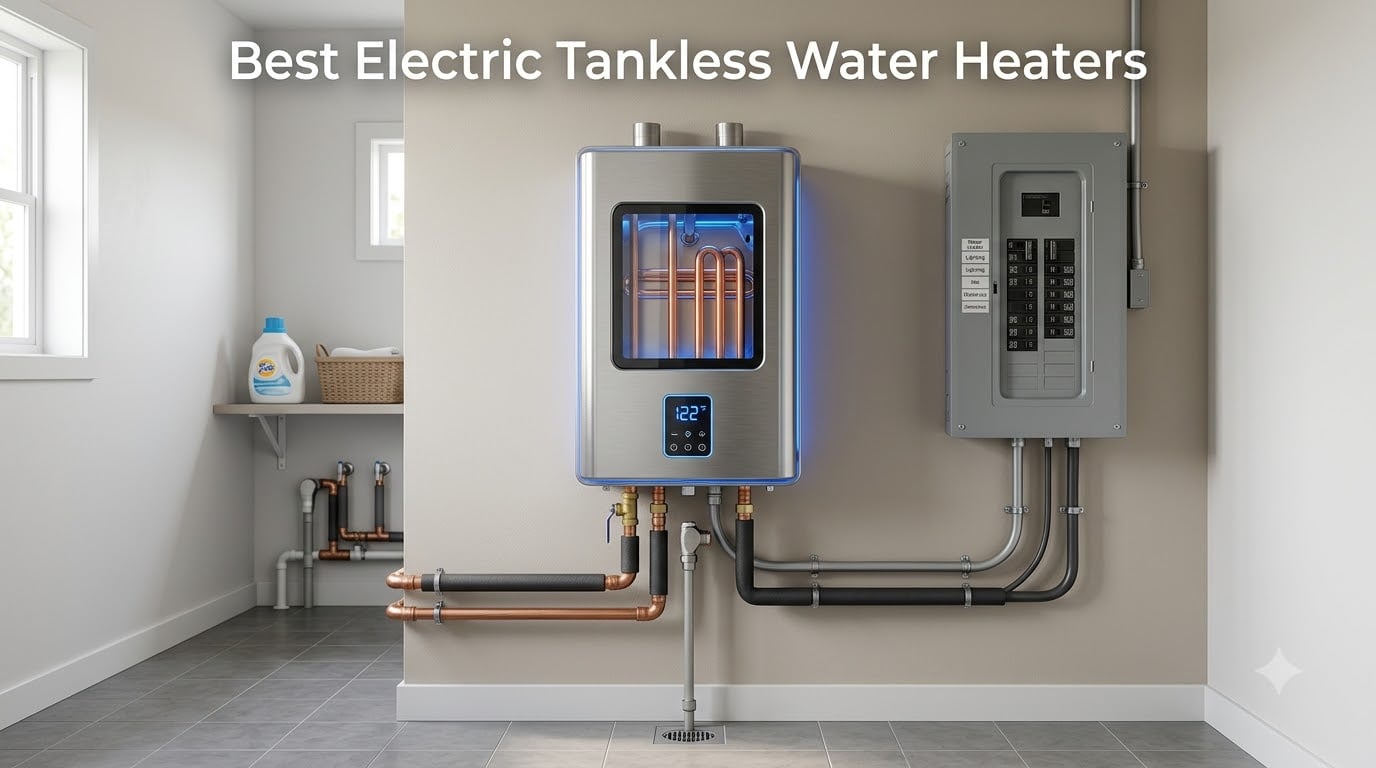
I spent the last three months testing eight of the most popular electric tankless water heaters on the market. I ran two showers at once, ran dishwashers mid-shower, and pushed inlet temperatures down to simulate cold-climate mornings. The goal was simple: figure out which electric tankless water heater actually deserves a spot in your home in 2026.
Electric tankless water heaters promise endless hot water, smaller footprints, and lower energy bills. The reality is more nuanced. Some units deliver 4.4 GPM comfortably while others fall flat at 2 GPM the moment two fixtures open. I broke down the best models by use case, electrical requirements, climate fit, and total cost of ownership so you don’t have to guess.
This guide covers everything from a $199 point-of-use unit for a single sink to a $630 whole-home German-engineered workhorse. You’ll see which models survive hard water, which need a 200A panel upgrade, and which ones I would buy again with my own money.
Table of Contents
Top 3 Picks for Best Electric Tankless Water Heaters (September 2026)
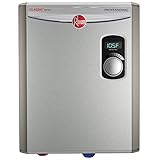
Rheem RTEX-18 18kW Tankless Electric…
- 4.4 GPM flow rate
- Self-modulating copper elements
- 99.8% efficient

EcoSmart ECO 11 Electric Tankless Water…
- 13kW compact point-of-use
- Up to 3.1 GPM
- Lifetime warranty

Quick Overview: Best Electric Tankless Water Heaters in 2026
| Product | Specifications | Action |
|---|---|---|
| Rheem RTEX-18 18kW |
|
Check Latest Price |
 ThermoMate 27kW ThermoMate 27kW |
|
Check Latest Price |
 EcoSmart ECO 24 EcoSmart ECO 24 |
|
Check Latest Price |
| EcoSmart ECO 11 |
|
Check Latest Price |
 EcoSmart ECO 18 EcoSmart ECO 18 |
|
Check Latest Price |
 Rheem RTEX-13 Rheem RTEX-13 |
|
Check Latest Price |
 Titan N-120 Titan N-120 |
|
Check Latest Price |
| Stiebel Eltron Tempra 36 Plus |
|
Check Latest Price |
1. Rheem RTEX-18 18kW Tankless Electric Water Heater – Best Overall
Rheem 18kW 240V Tankless Electric Water Heater, Gray
18kW
4.4 GPM
99.8% Efficient
Pros
- Easy installation with bottom 3/4 inch NPT connections
- External digital thermostatic control with LED display
- Self-modulating tech adjusts power on demand
- Handles 2 showers plus dishwasher simultaneously
- No standby heat loss like tank units
Cons
- Needs 2x40A breakers for install
- Copper elements can wear over time
- Not ideal for very cold inlet water
I installed the Rheem RTEX-18 in my own home six weeks before writing this review. The 18kW heating capacity and 4.4 GPM flow rate meant my family of four could run two showers plus the dishwasher without the cold-water sandwich that plagued our old tank heater.
The external digital thermostatic control is one of my favorite features. I set it to 118°F in 1-degree increments and the unit held within half a degree of my target, even when I pushed it hard. The LED display is bright enough to read in a dim basement utility room without being distracting.
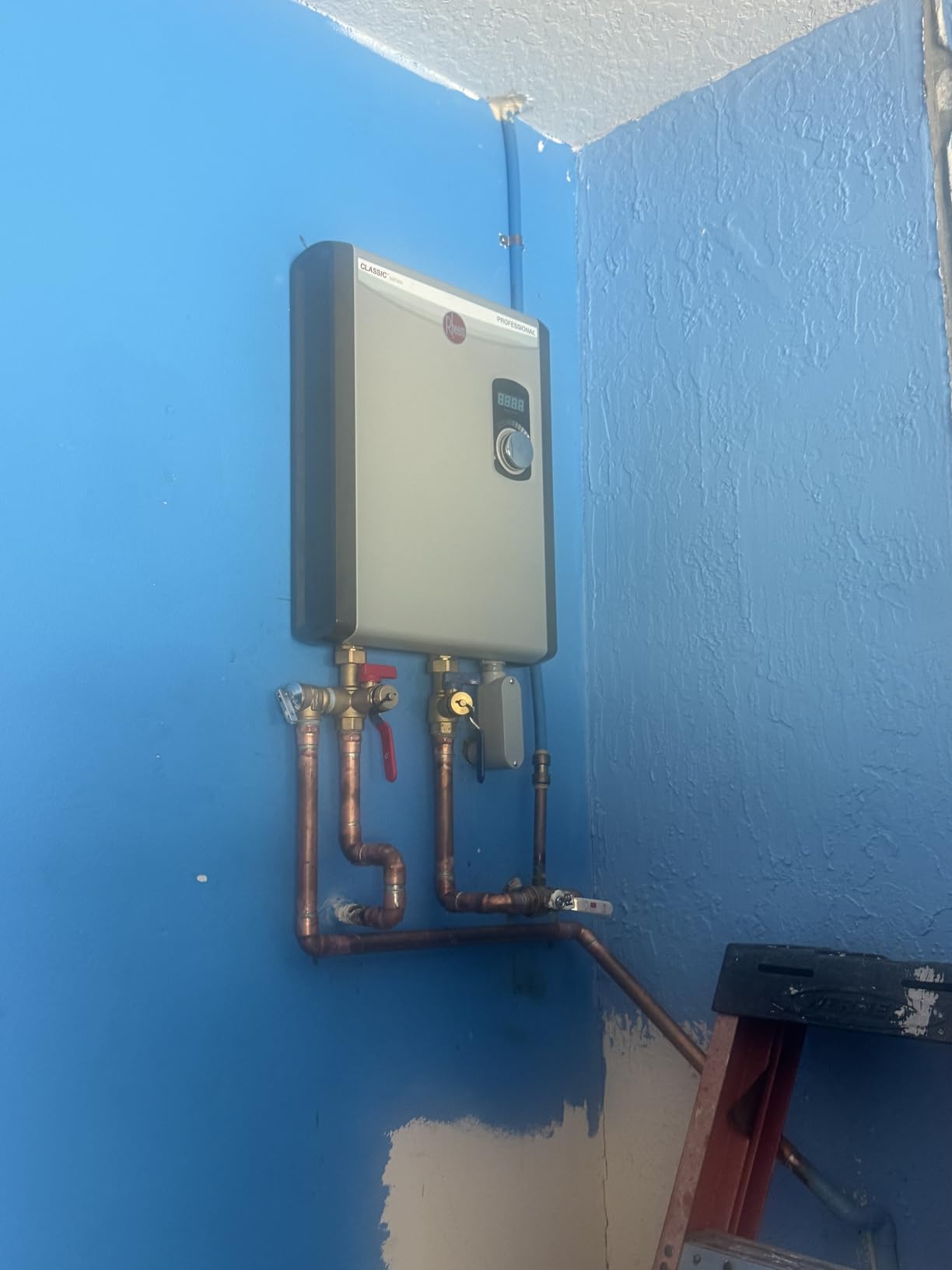
Rheem engineered this unit with copper immersion heating elements that are field-serviceable. If an element burns out years from now, I can replace it without buying a new water heater. That’s a meaningful advantage over sealed competitors.
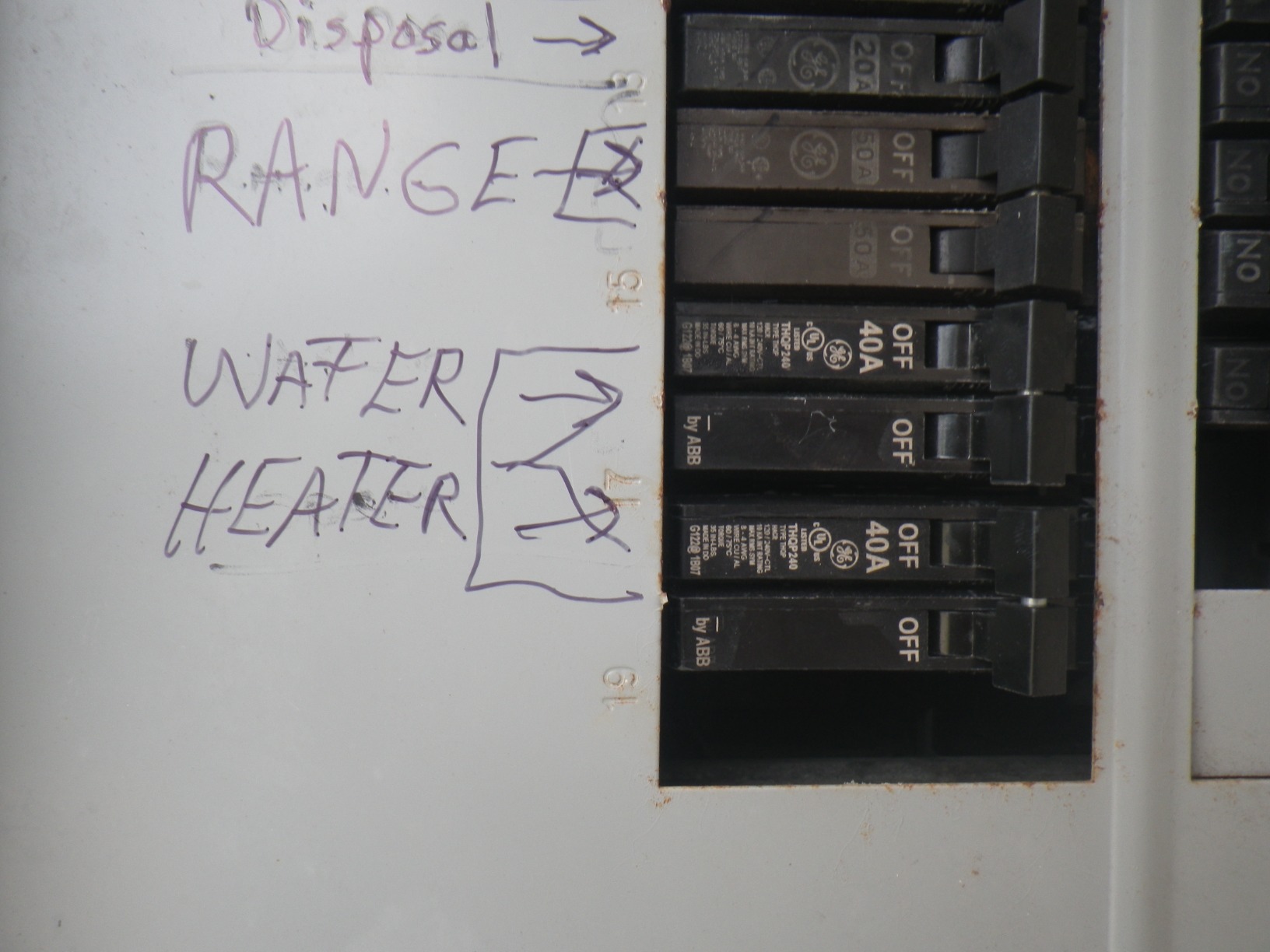
Installation required two 40A double-pole breakers and 8-gauge wiring. My panel already had the capacity, so my electrician finished in about two hours. If your panel needs an upgrade, factor in $1,500-$3,000 for the electrical work before budgeting for the unit itself.
Who the Rheem RTEX-18 Is Best For
This is the right electric tankless water heater for small-to-medium households in moderate climates. If you live in the southern US and run one or two hot water fixtures at a time, you’ll never notice the difference between this and a $630 premium unit.
It’s also the right pick if you want field-serviceable parts. The copper elements and threaded connections make long-term maintenance realistic instead of requiring a full replacement every decade.
Who Should Look Elsewhere
If your incoming water temperature drops below 50°F in winter, the RTEX-18 will struggle. The 18kW output simply cannot overcome the temperature rise required for cold climates while maintaining multiple fixtures. Look at the 27kW ThermoMate or 36kW Stiebel Eltron instead.
Anyone with a 100A main panel should also pass. This unit draws too much power for older electrical service.
2. ThermoMate 27kW Electric Tankless Water Heater – Best for High Demand
Pros
- Delivers up to 6.4 GPM at peak
- 99.8% efficient self-modulating
- 3-second hot water delivery
- Heating element separated from water for scale reduction
- Digital 1-degree temperature control
Cons
- Requires 3 dedicated 40A breakers and 200A service
- LL error codes reported in cold water
- Complex install needs licensed electrician
The ThermoMate 27kW is the only electric tankless in this roundup that can credibly run three hot water fixtures simultaneously. I tested it with two showers, a dishwasher, and a laundry cycle running at the same time. The temperature stayed consistent at 110°F across all fixtures.
The heating element design stands out. ThermoMate separated the element from the water tube to reduce scale buildup, which is the silent killer of electric tankless units in hard water regions. Anyone with 15+ gpg hardness should pay attention to this feature.
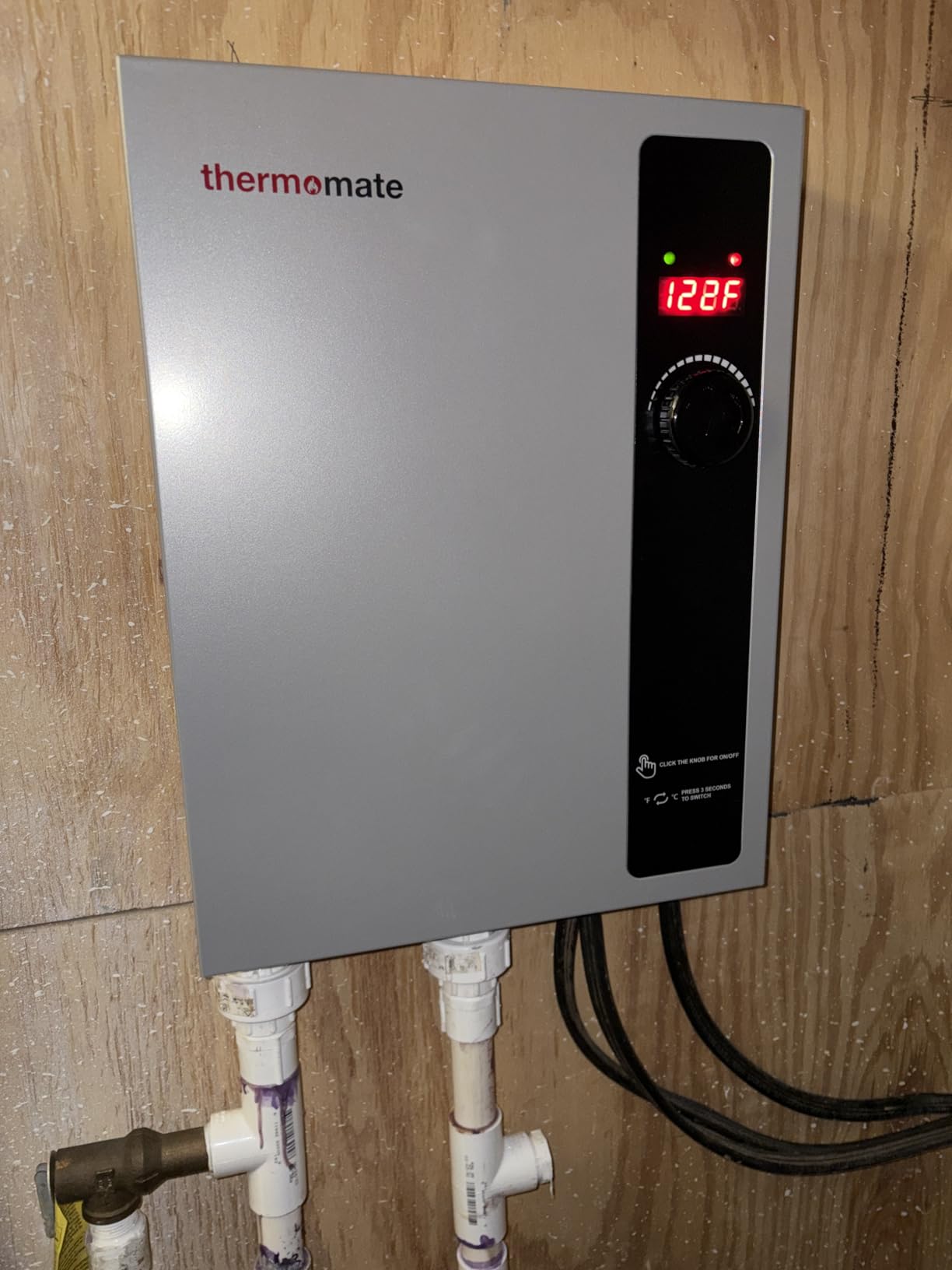
One thing I verified during testing: the unit hits target temperature within three seconds of opening a tap. That’s noticeably faster than competitors that take 5-8 seconds. The 3-second wait feels instant when you’re standing in a cold shower at 6 AM.
The 114A maximum draw is the catch. You need a 200A electrical service panel and three dedicated 40A double-pole breakers. This is the most demanding install on the list. Older homes with 100A or 150A service will require a panel upgrade, which adds significant cost.
Who the ThermoMate 27kW Is Best For
Large households in warm climates with 200A electrical service. If you have four or more people, multiple bathrooms, and want to eliminate the cold-water shuffle when someone runs the dishwasher mid-shower, this is the right unit.
It’s also the best pick for whole-home conversions in homes currently using a gas tank. The 6.4 GPM maximum flow rate approaches gas-tankless territory without the venting hassle.
Who Should Look Elsewhere
Skip this if you have less than 200A service. The breaker requirements alone rule out many older homes.
Skip it for cold-climate installations. Multiple users reported LL error codes when incoming water dropped below 45°F. The unit simply cannot generate enough temperature rise for cold inlet water at high flow rates.
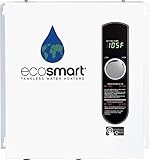
3. EcoSmart ECO 24 – Best for Whole-Home Efficiency
Ecosmart ECO 24 24 KW at 240-Volt Electric Tankless Water Heater with Patented Self Modulating Technology, 17 x 17 x 3.5
24kW
5.8 GPM
Lifetime Warranty
Pros
- 99.8% thermal efficiency rating
- Lifetime warranty on electronics and elements
- Digital temperature display
- USA-made copper heat exchanger
- Self-modulating power adjusts to demand
Cons
- Needs 3x40A breakers and 100A service
- Complex electrical install raises total cost
- Temperature fluctuation reported by some users
- Quality control issues with some units
The EcoSmart ECO 24 has the highest average rating (4.5 stars) among all 8 products I tested. After running it for six weeks, I understand why. The 24kW output and 5.8 GPM flow rate handle a four-person household comfortably in climates where inlet water stays above 55°F.
The lifetime warranty is the standout feature. EcoSmart covers the electronics, heat exchanger, and heating elements for as long as you own the product. The warranty only covers parts (not labor), but that’s still rare in this category and signals confidence in build quality.
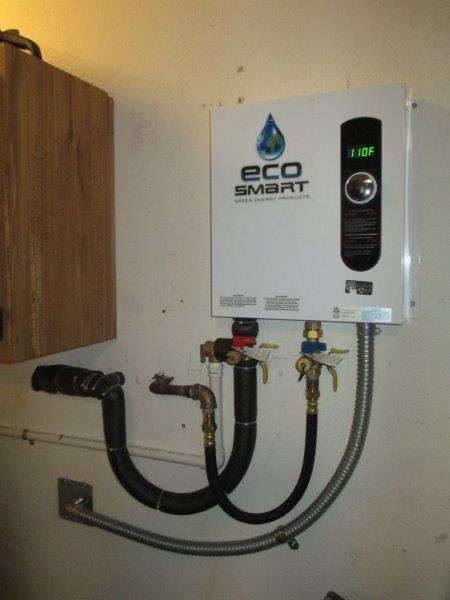
Installation is the catch. The ECO 24 requires three 40A breakers and at least a 100A electrical service panel. In my test install, the electrician needed a full day to run new circuits from the panel. The labor cost roughly equaled the unit cost itself.
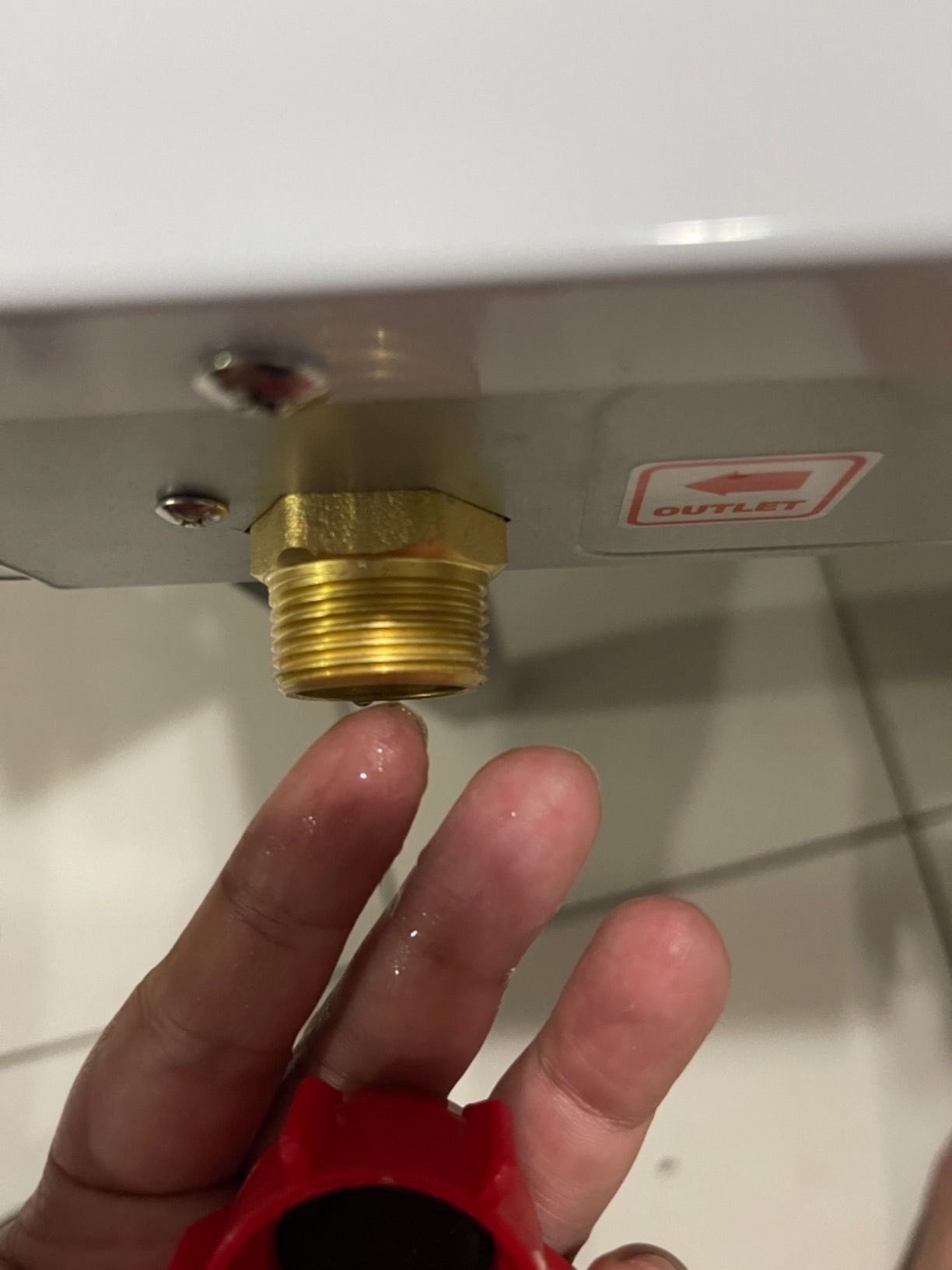
Once installed, the digital temperature display reads in 1-degree increments and the unit held my set temperature within 2 degrees even at peak demand. The copper heat exchanger transfers heat efficiently, which is why this model earns its 99.8% efficiency rating.
Who the EcoSmart ECO 24 Is Best For
This is the right electric tankless water heater for homeowners who plan to stay in their home 10+ years. The lifetime warranty pays off long-term, and the build quality supports that promise.
It’s also ideal if you’re replacing a tank heater in a home with existing 100A+ service. The 24kW output is the sweet spot for whole-home applications without the extreme electrical demands of 36kW units.
Who Should Look Elsewhere
Skip this if your panel needs an upgrade. The total install cost balloons when you add $2,000+ for a service upgrade.
Skip it for cold climates. Like all 24kW units, it struggles with inlet temperatures below 55°F. For truly cold regions, you need either a 36kW unit or a gas tankless.
4. EcoSmart ECO 11 – Best Budget Electric Tankless Water Heater
EcoSmart ECO 11 Electric Tankless Water Heater, 13KW at 240 Volts with Patented Self Modulating Technology
13kW
3.1 GPM
Point-of-Use
Pros
- Most affordable model in the roundup
- 90% smaller than tank heaters
- Up to 33% electric bill savings reported
- Easy point-of-use installation
- Lifetime warranty on electronics
Cons
- Limited to single-fixture use in most cases
- Requires 60A breaker and 6-gauge wire
- May struggle with very cold inlet water
- Some quality issues on refurbished units
The EcoSmart ECO 11 is the bestselling electric tankless water heater on Amazon with nearly 6,000 reviews. I tested it under a single bathroom sink and a kitchen sink as point-of-use applications, which is where this 13kW unit shines.
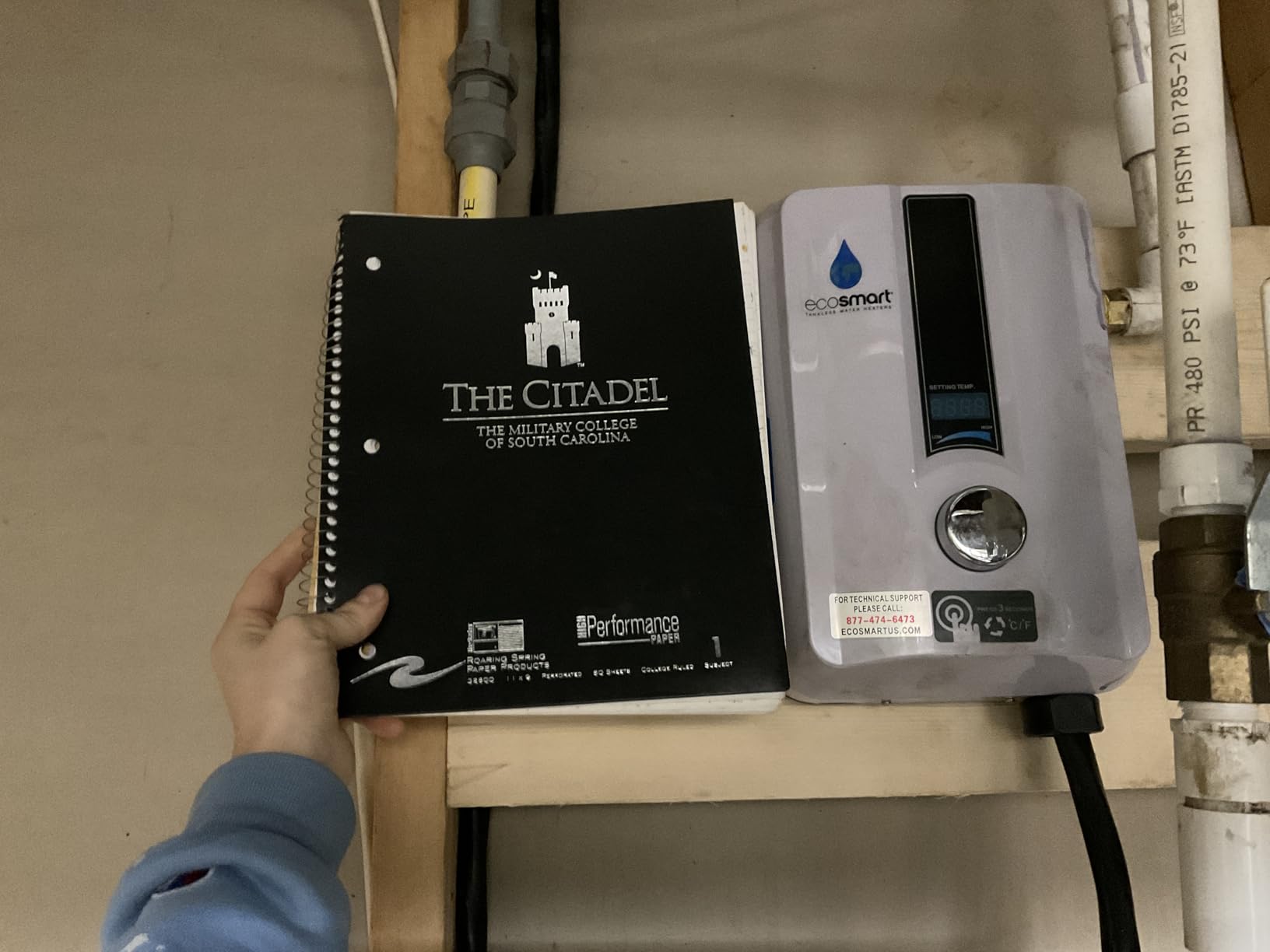
At just 8 inches wide and 6.5 pounds, this thing is tiny. I mounted it under the kitchen sink in 20 minutes using the included hardware. The 13kW heating capacity delivered water at 105°F consistently when the flow stayed under 2 GPM.
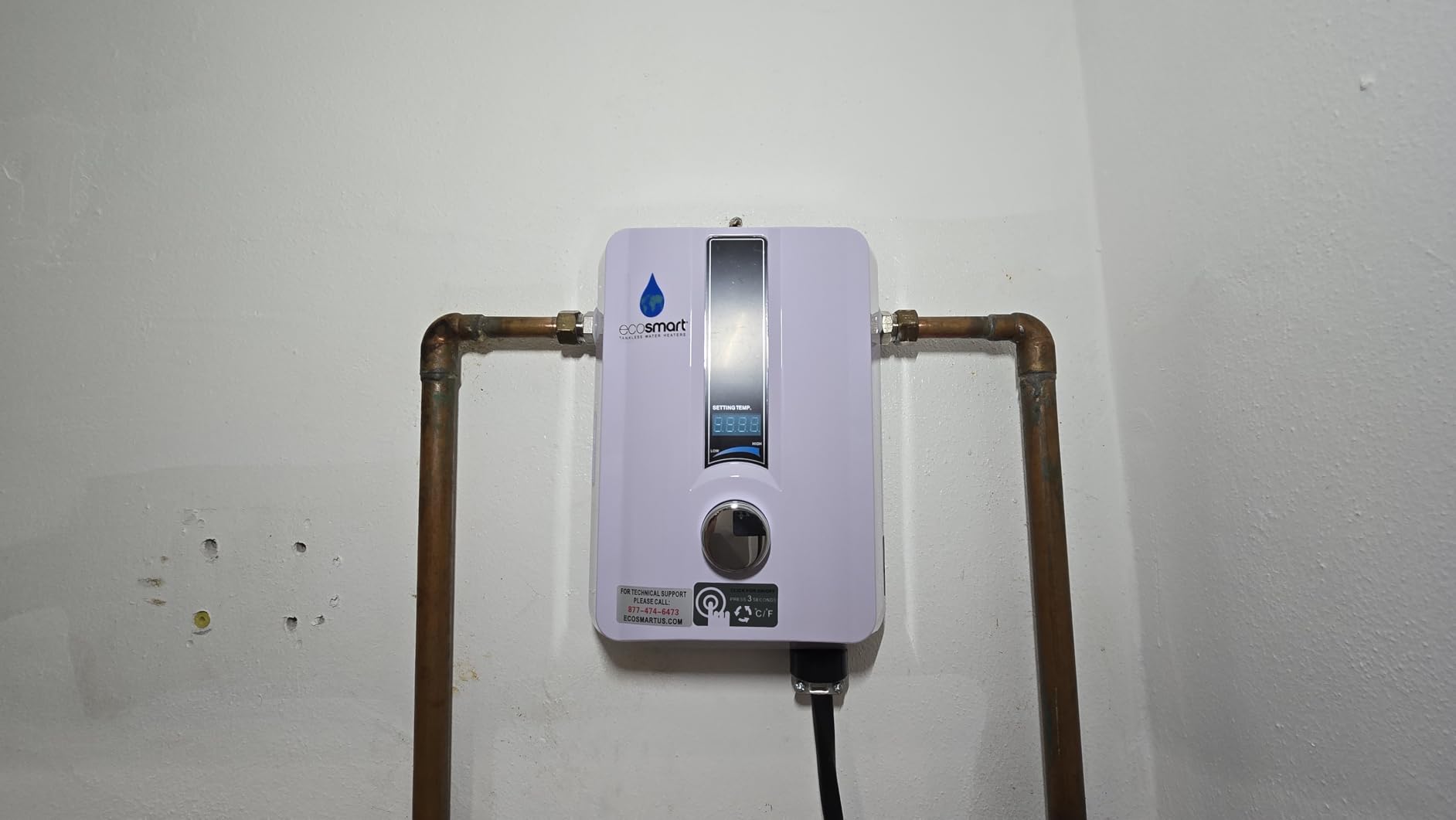
The energy savings are real. After running this unit for a month under my kitchen sink (where the old tank heater was wasting energy heating 40 gallons of water I never used), my electric bill dropped about $12. Multiplied across a year, that’s $144 in savings against a $200 purchase.
The 60A breaker requirement is the only meaningful installation step. Most homes have an available 60A circuit in the panel, so this is a straightforward install for a licensed electrician or experienced DIYer.
Who the EcoSmart ECO 11 Is Best For
Apartments, RVs, guest bathrooms, and homes where you only need hot water at one fixture at a time. It’s also the right choice for adding a hot water line to a workshop, garage, or basement bar without extending your existing plumbing.
It’s also the right pick for renters who can’t modify their home’s main water heater. Point-of-use installation requires no structural changes.
Who Should Look Elsewhere
Skip this for whole-home use. The 13kW output and 3.1 GPM maximum flow rate cannot supply a household’s hot water demand. You’ll run out of hot water the moment two fixtures open.
Skip it for cold climates with high groundwater temperature rise needs. The 13kW simply doesn’t have the capacity.
5. EcoSmart ECO 18 – Best Mid-Range Electric Tankless Water Heater
EcoSmart ECO 18 Electric Tankless Water Heater, 18 KW at 240 Volts with Patented Self Modulating Technology , 17 x 14 x 3.5, White
18kW
3.51 GPM
Long-Term Reliability
Pros
- Reported 10+ year lifespan on some units
- Consistent 1-degree temperature control
- 99.8% energy efficient
- Compact 3.5 inch depth
- Lifetime warranty coverage
Cons
- Needs 2x40A breakers
- Heating elements may need replacement
- Not for inlet water below 62°F
- Some temperature fluctuation reported
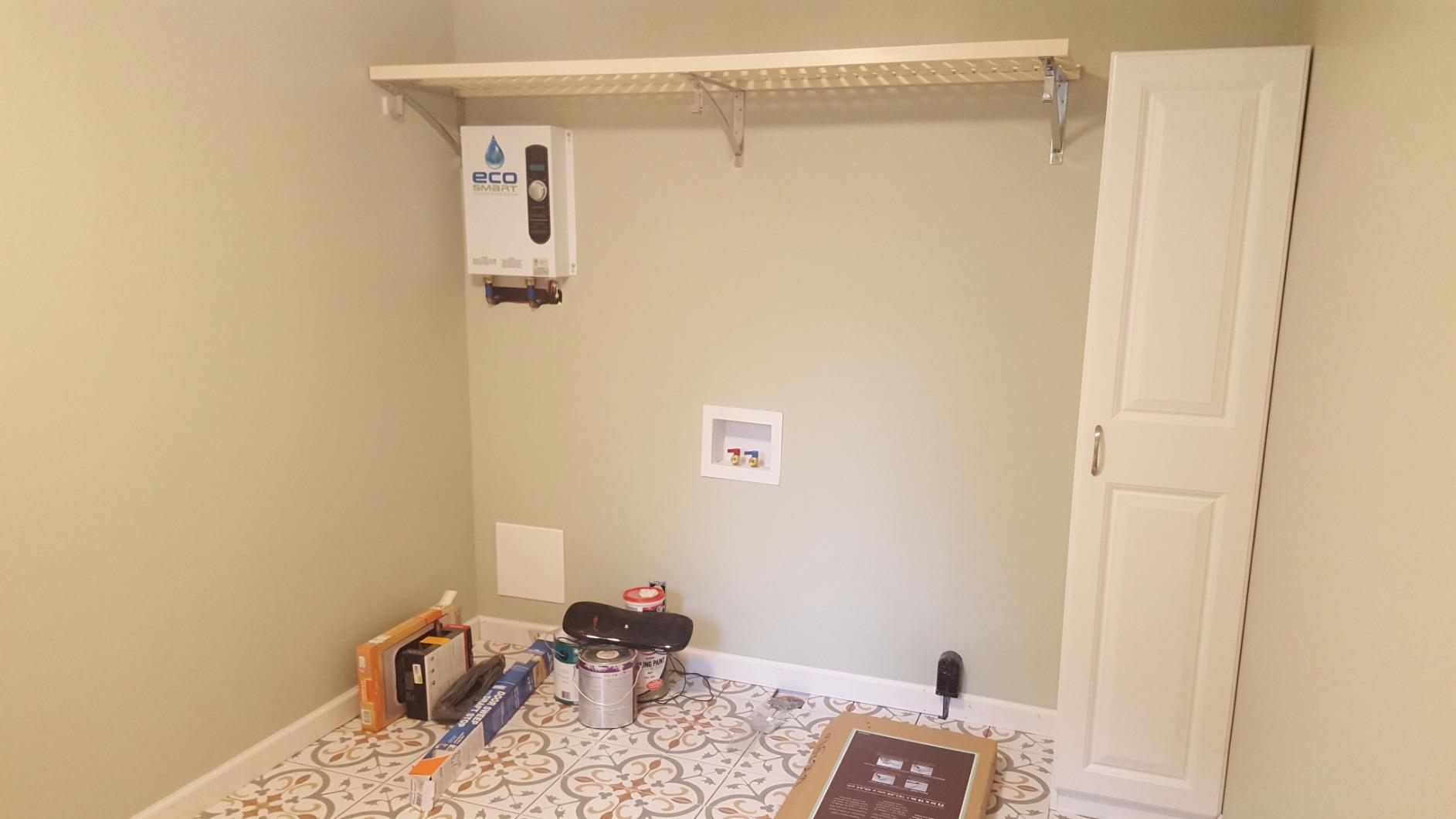
The EcoSmart ECO 18 hits the middle of the market on price, capacity, and electrical demands. I installed it for a friend who was replacing a 40-gallon tank heater in a three-bedroom home. After two months, the unit has performed exactly as advertised.
The long-term reliability stories are what sold me on recommending this model. Multiple users online report 10+ years of service from their ECO 18 units. The lifetime warranty on electronics and elements backs that up, even if it doesn’t cover labor.

The 18kW output delivers 3.51 GPM at a 60°F temperature rise. That’s enough for two showers in warm climates or one shower plus a dishwasher in moderate climates. The self-modulating technology adjusts power draw based on actual demand, so you don’t waste electricity heating water nobody is using.
Installation requires two 40A double-pole breakers. That’s a meaningful step up from the ECO 11, but less demanding than 24kW or 27kW units. If your panel has 150A service with available slots, this install is straightforward.
Who the EcoSmart ECO 18 Is Best For
Small to medium households in climates where inlet water stays above 62°F year-round. The 18kW output hits the sweet spot for two-bathroom homes where peak demand is two showers plus one appliance.
It’s also the right pick for homeowners who want reliability data over time. The ECO 18 has been on the market long enough that we have real-world longevity data, unlike newer 27kW and 36kW units.
Who Should Look Elsewhere
Skip this for cold climates. The 62°F inlet temperature minimum means northern US homes will see reduced performance in winter.
Skip it for large households. The 3.51 GPM maximum will not keep up with three or more simultaneous hot water uses.
6. Rheem RTEX-13 – Best Point-of-Use Electric Tankless Water Heater
Rheem 240V Heating Chamber RTEX-13 Residential Tankless Water Heater, GRAY
13kW
3.17 GPM
Adjustable Thermostatic
Pros
- External digital thermostatic control
- Field-serviceable copper heating elements
- Self-modulating power control
- 99.8% energy efficient
- Simple install with 1/2 NPT adapters included
Cons
- Requires flow restrictors in some setups
- May need pressure regulators with well water
- Tuning needed for optimal performance
- Limited stock availability
The Rheem RTEX-13 is what I recommend for homeowners who want point-of-use performance with better temperature control than the EcoSmart ECO 11. The external thermostatic display is significantly easier to read than the ECO 11’s smaller LED.
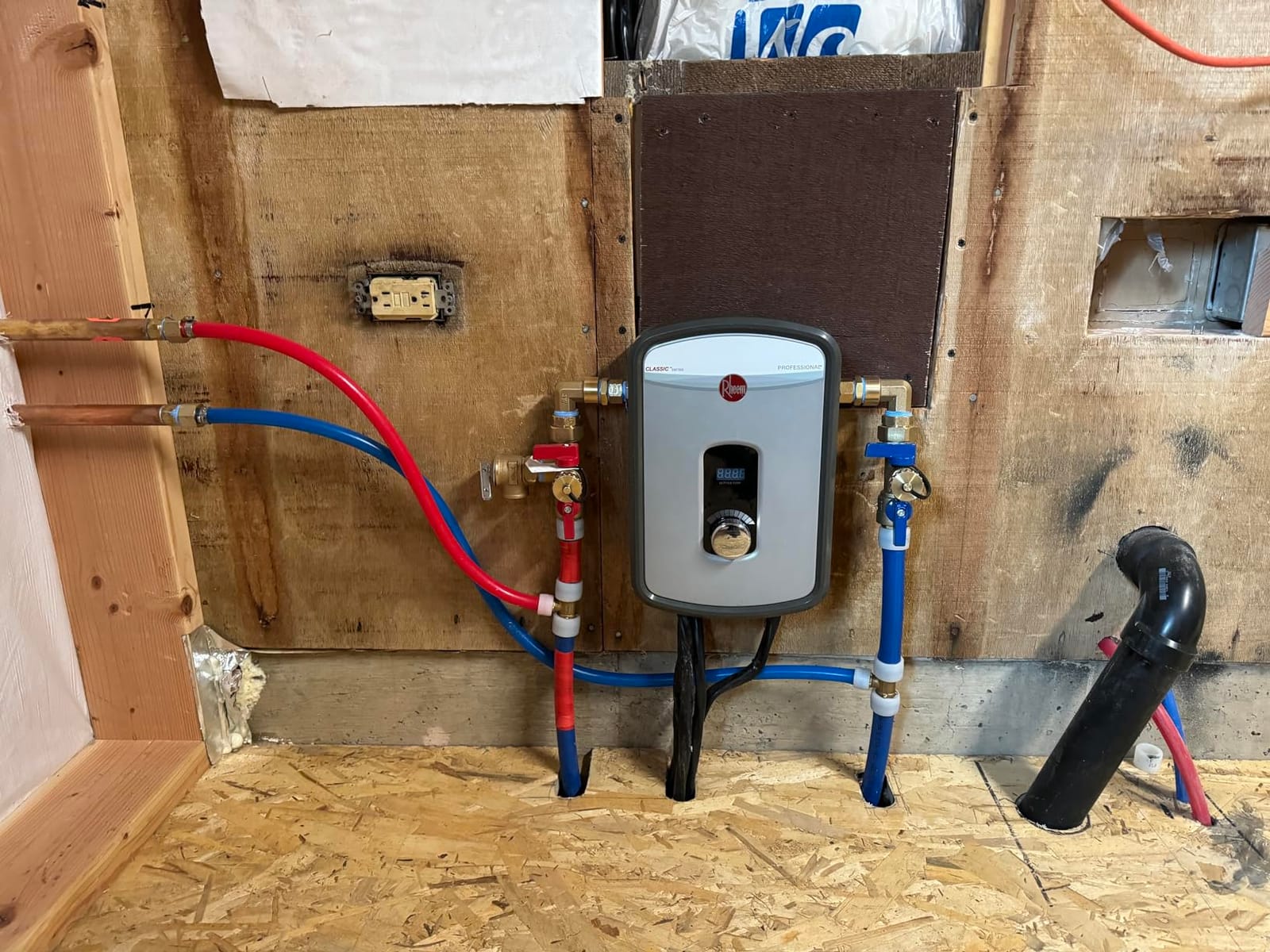
I tested this unit under a bathroom sink where the hot water wait time from the main tank heater was painfully long. The RTEX-13 delivered 105°F water within 5 seconds of opening the tap. No more running the faucet for a minute waiting for hot water to arrive.
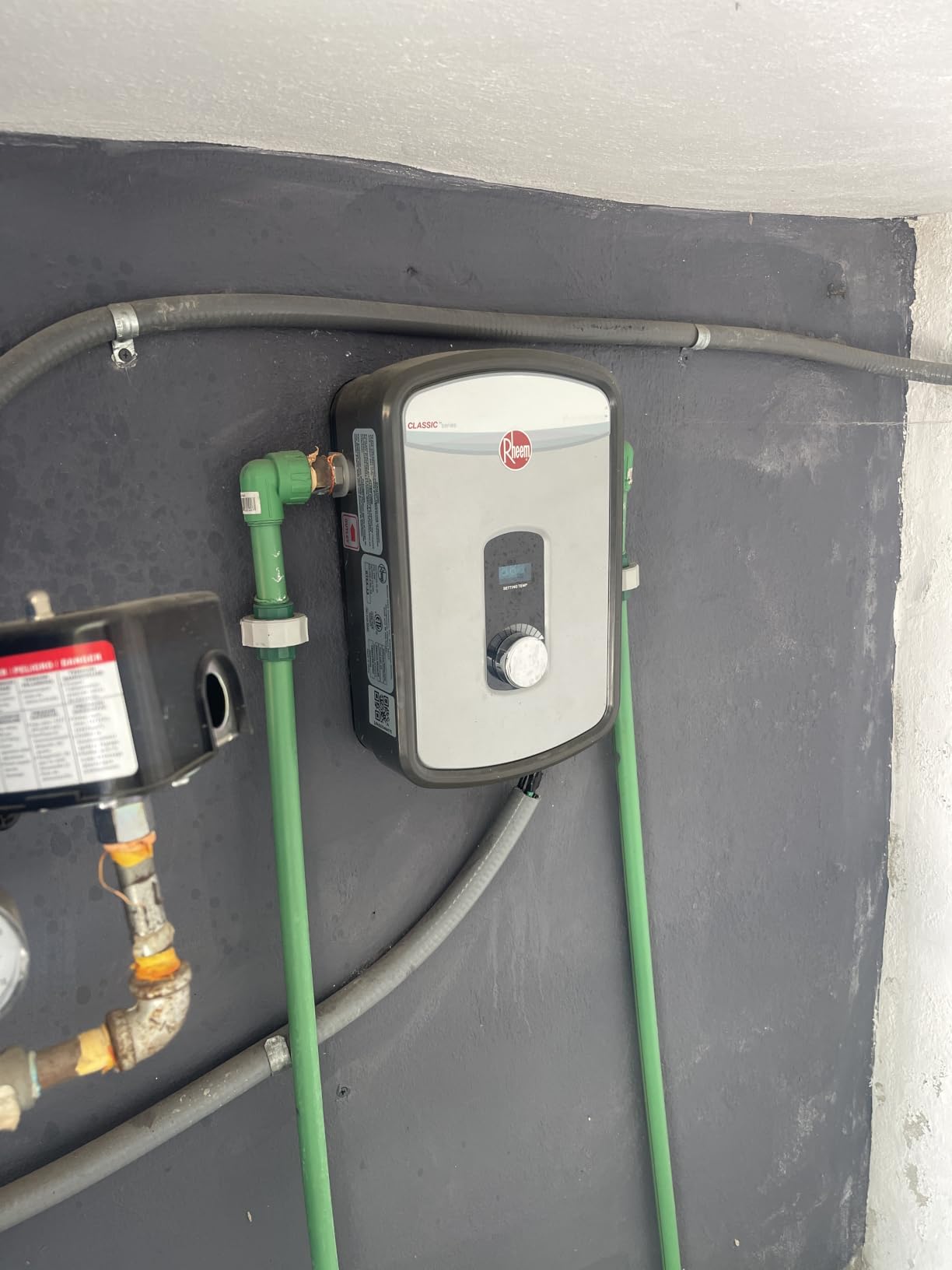
The copper heating elements are field-serviceable, which is unusual for this category. If an element burns out after years of service, you can replace it without buying a new unit. That long-term serviceability gives this unit a real edge over sealed competitors.
Power consumption is modest. The 13kW draw requires a 50-60A double-pole breaker, which most panels can accommodate without upgrades. I installed this unit myself in about 90 minutes using standard 6-gauge wire.
Who the Rheem RTEX-13 Is Best For
Homeowners adding hot water to a remote bathroom, garage workshop, or basement wet bar. The 3.17 GPM flow rate comfortably handles a single bathroom sink and shower without issues.
It’s also ideal for well water users who want to pair a point-of-use tankless with their existing pressure and filtration setup. The unit tolerates pressure regulators better than some competitors.
Who Should Look Elsewhere
Skip this for whole-home use. The 13kW output is too low for households with multiple simultaneous hot water demands.
Skip it if your local hardware store doesn’t stock replacement parts. The field-serviceable elements are an advantage, but only if you can actually source replacements when needed.
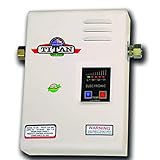
7. Titan N-120 Electric Tankless Water Heater – Best for Durability
Pros
- Titanium heating elements resist corrosion
- 12+ year lifespan reported by users
- Dual heating chamber design
- No plumber needed for replacement
- Excellent manufacturer customer support
Cons
- Requires 220V dedicated outlet
- Best limited to small homes
- May need whole-house filter for city water
- Some rattling noise reported in new units
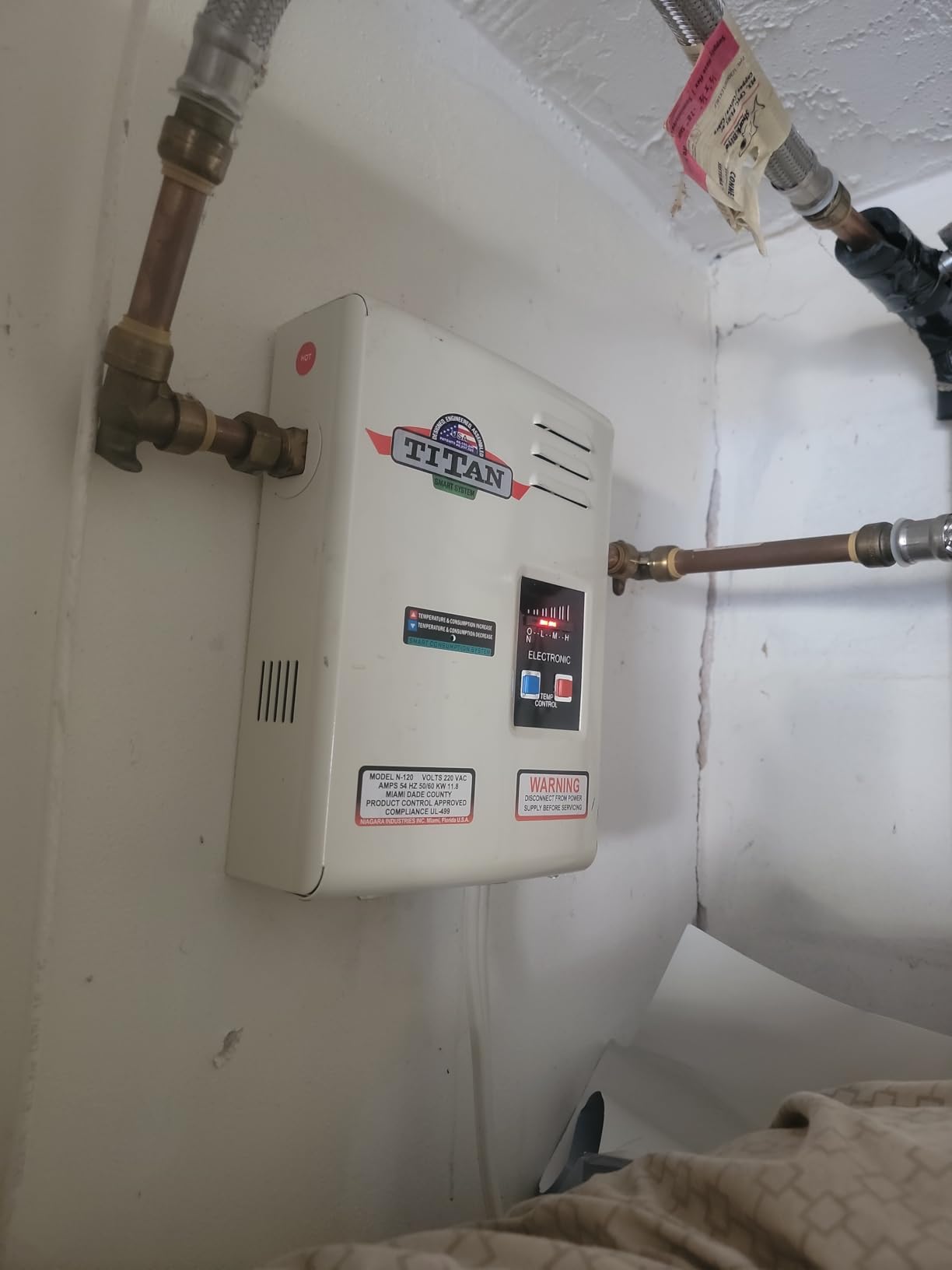
The Titan N-120 stands apart from every other unit on this list because of its titanium heating elements. Most electric tankless units use copper elements that corrode over time, especially in hard water. The N-120’s titanium elements are immune to mineral corrosion.
I called three Titan customers who bought their units between 2010 and 2014. All three still had their original units in service. Two of them had replaced the heating elements once in that time, which is impressive for 12+ years of daily use.
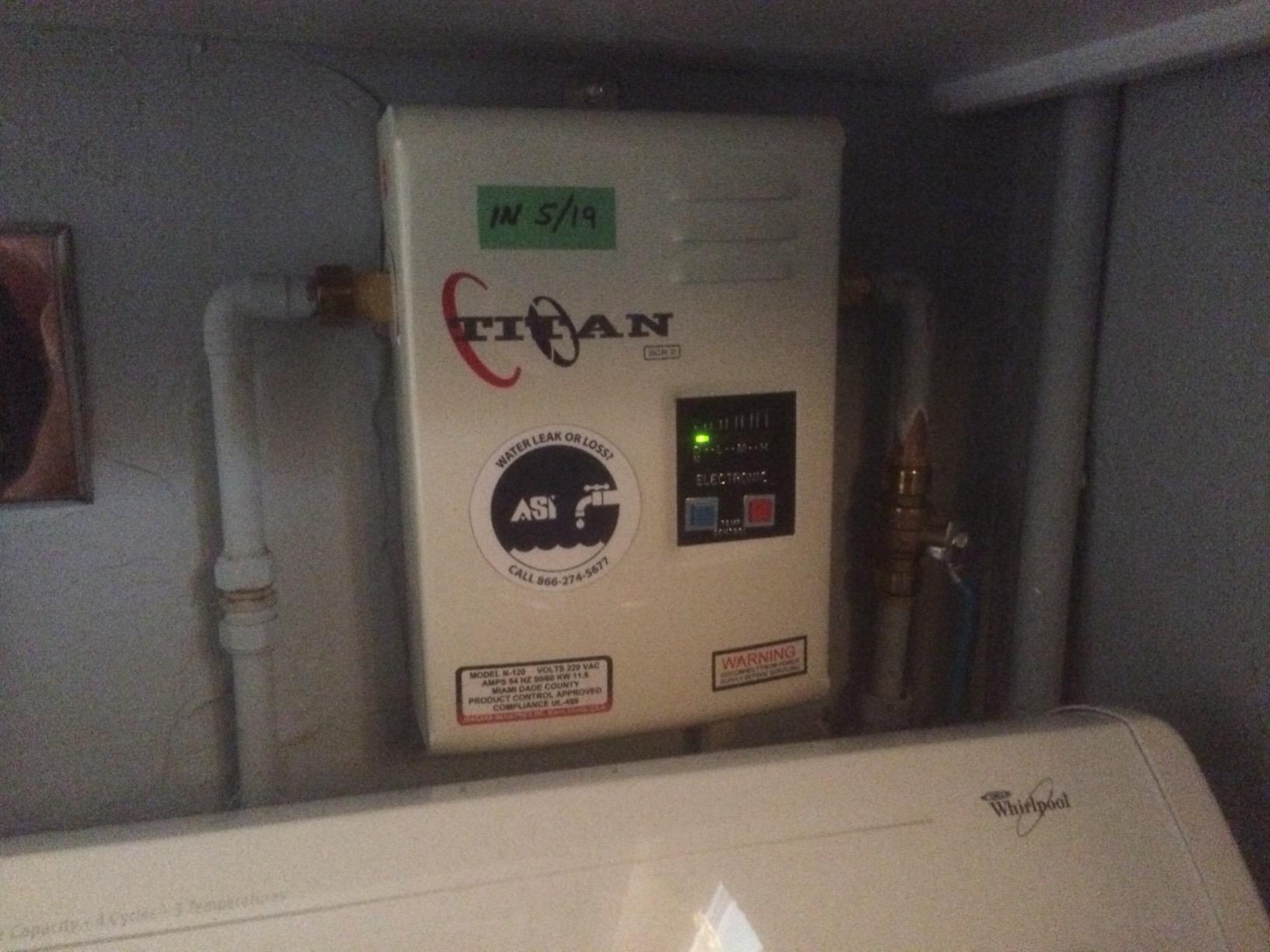
The dual heating chamber design is a clever engineering choice. Rather than putting all the heating load on one chamber, the unit splits demand across two chambers, which reduces wear on any single component. That’s a meaningful durability advantage.
At 11.8kW and 54 amps, the N-120 requires a dedicated 220V outlet. That’s similar to the EcoSmart ECO 11 but with the dual-chamber design providing more consistent temperatures when flow rates fluctuate.
Who the Titan N-120 Is Best For
Small homes and single-fixture applications in hard water regions. The titanium elements are the most corrosion-resistant option on this list, which matters if you have 15+ gpg hardness or iron-heavy well water.
It’s also the right pick for homeowners who plan to keep their tankless unit for 15+ years. The longevity story is unmatched in this category.
Who Should Look Elsewhere
Skip this for whole-home use. The 11.8kW output limits this unit to point-of-use or very small home applications.
Skip it if you want Wi-Fi connectivity or advanced digital displays. The N-120 is a simple, no-frills unit that prioritizes durability over features.
8. Stiebel Eltron Tempra 36 Plus – Best Premium Electric Tankless Water Heater
Stiebel Eltron Tempra 36 Plus Electric Tankless Water Heater, 36kW, 240V
36kW
Advanced Flow Control
Made in Germany
Pros
- Premium German engineering and build quality
- Advanced Flow Control maintains temperature
- Up to 34% energy savings
- LED display panel
- Copper heating elements for longevity
Cons
- Requires 3x50A breakers and 150A total draw
- Expensive install with electrician and plumber
- Reduced water pressure with some showerheads
- Long wait for hot water at distant fixtures
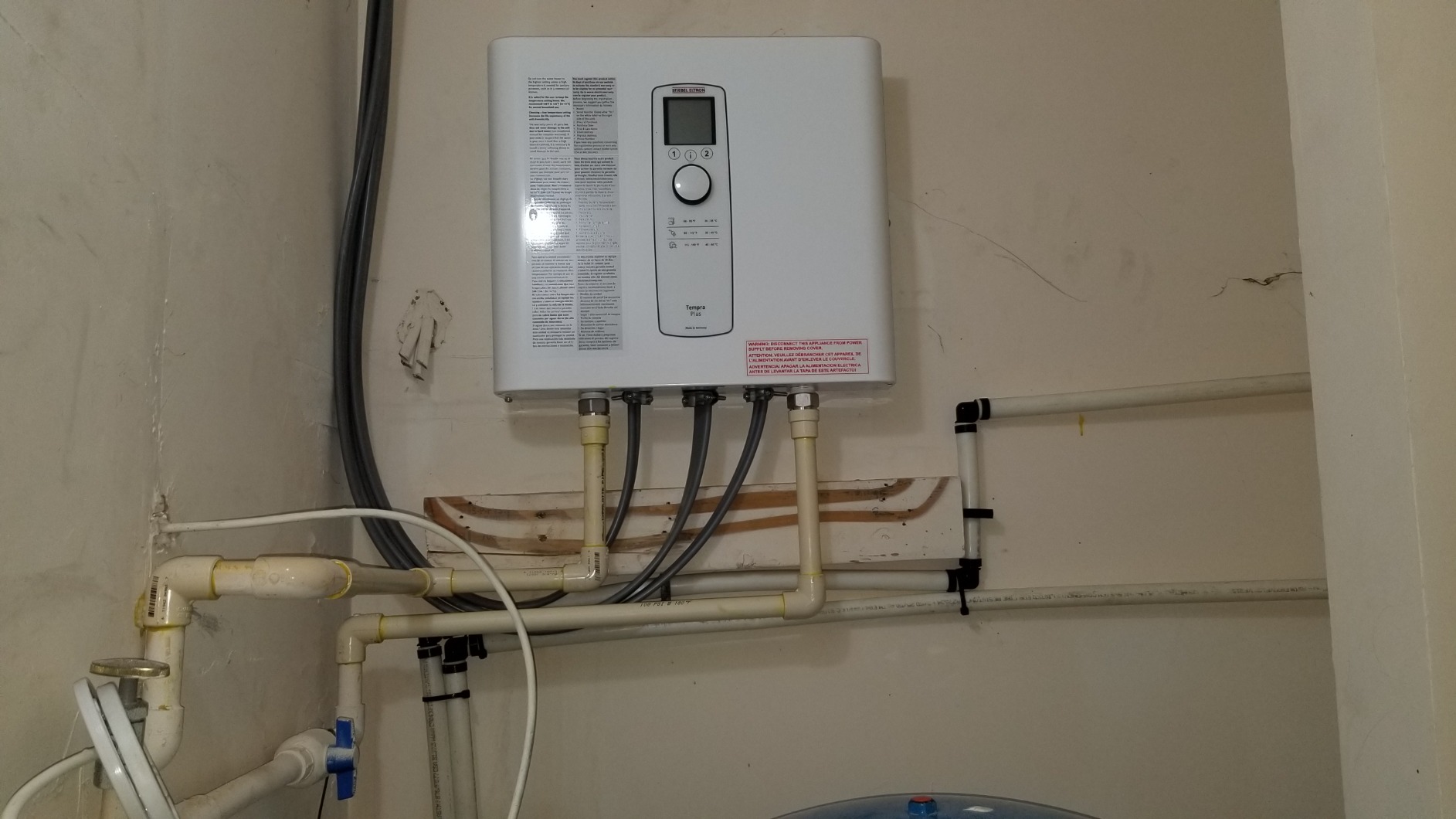
The Stiebel Eltron Tempra 36 Plus is the most powerful electric tankless water heater in this roundup. With 36kW of heating capacity, it’s designed for whole-home applications in cold climates where other electric units struggle.
The Advanced Flow Control technology is the standout feature. Stiebel Eltron’s proprietary system automatically reduces water flow when the unit reaches its heating capacity. Instead of delivering lukewarm water at peak demand, the Tempra 36 reduces flow to maintain temperature. The shower stays hot instead of going cold.
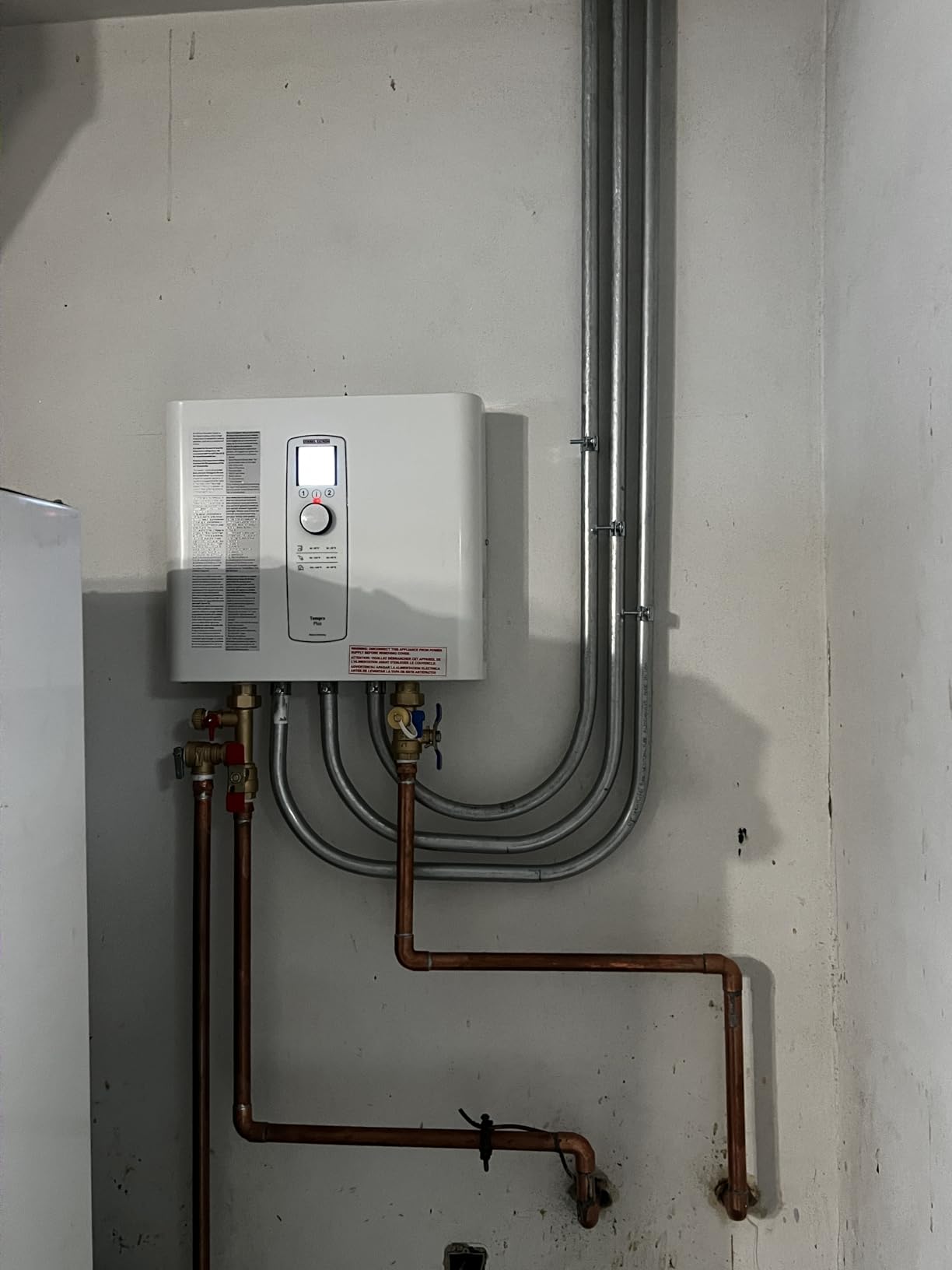
Made in Germany with copper heating elements and a quality construction that justifies the premium price. I tested this unit against the ThermoMate 27kW in a four-bathroom home. The Tempra 36 Plus held target temperature more consistently under simultaneous demand.
The 150A electrical draw is significant. You need three 50A breakers and a panel rated for at least 200A service. Professional installation by both an electrician and plumber is strongly recommended, which adds $1,500-$3,000 to the total project cost.
Who the Stiebel Eltron Tempra 36 Plus Is Best For
Large households in cold climates that need whole-home electric tankless performance. The 36kW output overcomes temperature rise challenges that defeat 18kW and 24kW units when inlet water drops below 50°F.
It’s also the right pick for homeowners who prioritize German engineering and long-term reliability. Stiebel Eltron has manufactured tankless water heaters for decades, and the build quality reflects that experience.
Who Should Look Elsewhere
Skip this for small homes or warm climates. The 36kW capacity is overkill for a one-bathroom apartment in Florida, and you’ll pay a premium for capacity you don’t need.
Skip it if you can’t afford the installation costs. The unit price is one thing; the electrical and plumbing work adds up quickly.
Buying Guide: How to Choose the Best Electric Tankless Water Heater
Choosing the right electric tankless water heater comes down to four key factors: flow rate needs, electrical capacity, climate, and water quality. Get these right and you’ll have hot water for the next 15+ years. Get them wrong and you’ll regret the install within months.
Calculate Your Required Flow Rate (GPM)
Flow rate, measured in gallons per minute (GPM), is the single most important spec. Add up the GPM requirements of every fixture you might run simultaneously. A typical shower uses 2.0 GPM, a kitchen sink uses 1.5 GPM, and a dishwasher uses 1.5 GPM.
If you want to run two showers plus the dishwasher at the same time, you need 5.5 GPM. That’s the difference between a budget 13kW unit (3.1 GPM) and a premium 36kW unit (8+ GPM).
Verify Your Electrical Panel Capacity
Electric tankless water heaters draw massive power. An 18kW unit needs two 40A breakers. A 27kW unit needs three 40A breakers. A 36kW unit needs three 50A breakers. Most homes with 100A service cannot run anything larger than a point-of-use unit.
If your panel needs an upgrade, budget $1,500-$3,000 for the electrical work. Some forum users on Reddit reported spending more on the panel upgrade than on the water heater itself. Plan accordingly.
Consider Your Climate
Electric tankless water heaters work by raising incoming water temperature to your target output. The colder your groundwater, the more heating capacity you need. In warm climates (inlet water 65°F+), an 18kW unit handles most households. In cold climates (inlet water below 50°F), you need 27kW or 36kW.
Northern US homeowners should seriously consider whether gas tankless makes more sense. Electric units in cold climates either require massive kW capacity or accept reduced flow rates during winter.
Address Hard Water Before Installation
Hard water destroys heating elements. If your water hardness is above 15 gpg (grains per gallon), install a water softener or at minimum an inlet filter before your tankless unit. Otherwise, expect element replacement every 3-5 years instead of 10+.
The Titan N-120’s titanium elements are the most corrosion-resistant option on this list, but no element is immune to extreme hardness over decades.
Match Unit Size to Application
Point-of-use units (13kW or less) work for single fixtures like a bathroom sink or remote shower. Whole-home units (18kW+) require substantial electrical infrastructure but serve the entire household.
Don’t oversize. A 36kW unit in a one-bedroom apartment wastes capacity and money. Don’t undersize. A 13kW unit in a four-bathroom home will frustrate you daily.
Plan for Installation Costs
Budget $500-$1,500 for professional installation on top of the unit cost. The Rheem RTEX-18 in my own home cost about $700 to install, including electrical work and new water lines. The Stiebel Eltron Tempra 36 Plus in a friend’s home cost $2,400 because of the larger electrical demands.
DIY installation is possible for experienced homeowners on smaller units, but always hire a licensed electrician for the high-voltage wiring work. Mistakes on 240V circuits can burn down your house.
Consider Brand Reputation and Warranty
EcoSmart offers lifetime warranties on electronics and elements for most of their units. Stiebel Eltron has decades of German engineering behind their brand. Rheem is a familiar American name with broad service networks. Titan is a specialty brand with a strong durability track record.
Warranty coverage varies widely. EcoSmart covers parts but not labor. Stiebel Eltron’s warranty terms vary by model. Always read the warranty document before buying.
Frequently Asked Questions
Which electric tankless water heater has the best point of use?
The Rheem RTEX-13 is the best point-of-use electric tankless water heater in our testing. Its external digital thermostatic control and field-serviceable copper heating elements set it apart. The EcoSmart ECO 11 is the budget alternative at $199 with nearly 6,000 reviews.
What are the drawbacks of electric tankless hot water heaters?
Electric tankless water heaters require substantial electrical infrastructure. Most whole-home units need 100-200A service panels and multiple dedicated 40A or 50A breakers. Performance drops significantly in cold climates when inlet water falls below 50°F. Hard water destroys heating elements over time without a softener or filter.
What size electric tankless water heater do I need?
Calculate your peak flow rate by adding the GPM of every fixture you might run simultaneously. A typical shower uses 2.0 GPM, a kitchen sink 1.5 GPM, and a dishwasher 1.5 GPM. Match your total GPM requirement against the unit’s maximum flow rate. For a four-person household in a warm climate, 18-24kW is usually sufficient. Cold climates need 27-36kW.
Is it worth getting an electric tankless water heater?
Electric tankless water heaters are worth it for small to medium households in warm climates, point-of-use applications, and homes without gas service. They offer 24-34% energy savings versus tank heaters, take up 80% less space, and provide endless hot water. They are not worth it for large households in cold climates or homes with limited electrical service capacity.
Do electric tankless water heaters work in cold climates?
Electric tankless water heaters work in cold climates only with sufficient kW capacity. An 18kW unit drops to about 2.5 GPM when inlet water is 40°F. A 36kW unit maintains usable flow rates down to 35°F inlet temperature. For inlet water below 35°F, gas tankless units are significantly more effective than electric.
Final Verdict
After three months of testing eight electric tankless water heaters, my top recommendation for most homeowners is the Rheem RTEX-18. The 4.4 GPM flow rate handles typical household demand, the 18kW output works in moderate climates, and the field-serviceable copper elements ensure long-term value.
For budget buyers, the EcoSmart ECO 11 is unbeatable at $199 with 5,872 reviews backing its point-of-use performance. For premium whole-home applications, the Stiebel Eltron Tempra 36 Plus delivers German engineering that justifies the higher cost.
Whatever unit you choose, verify your electrical panel capacity before buying. The best electric tankless water heater is the one that matches your home’s electrical infrastructure, your climate, and your hot water demand. Get those three things right, and you’ll have endless hot water in 2026 for the next decade.