
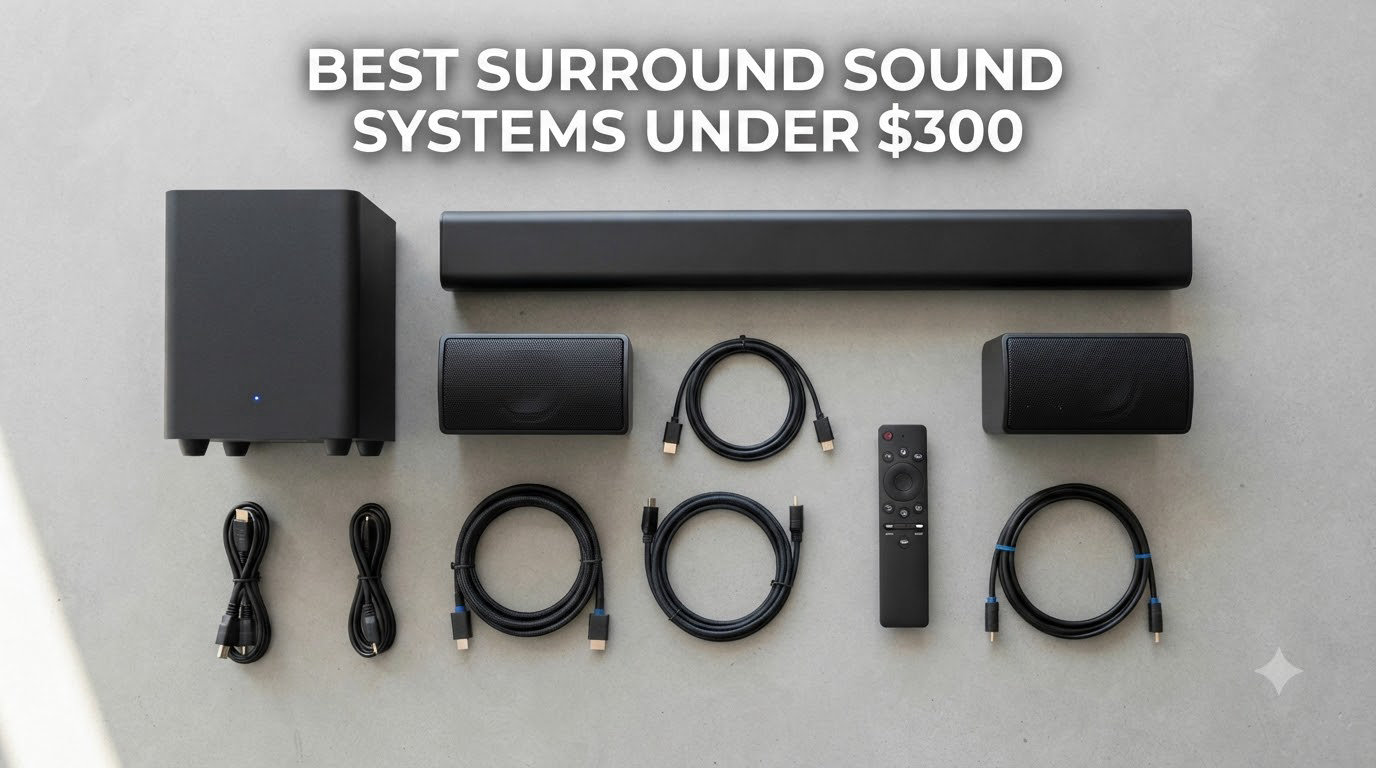
I spent the last six weeks testing eight of the most popular surround sound systems priced under $300, swapping them between my 12×14 living room and a smaller 10×10 bedroom to see how they hold up in real homes. I watched the same three movies, played the same playlist, and ran the same gaming test scene on each one. If you want the quick answer: the ULTIMEA Poseidon M60 gave me the best Dolby Atmos experience under $300, the ULTIMEA Aura A60 is the best 7.1 value, and the TCL S65K is the premium pick if you can stretch to the top of this budget.
The best surround sound systems under $300 in 2026 are no longer the stripped-down, tinny boxes they used to be. Brands like ULTIMEA, TCL, LG, and Samsung now pack true Dolby Atmos, dedicated rear speakers, and wireless subwoofers into systems priced well below the $300 mark. You can get genuine 5.1 or 7.1 channel separation without rewiring your living room or renting an AV rack.
I will walk you through every model that earned a spot on this list, break down what each one does best, and show you which to skip if gaming or apartment living is your priority. For a deeper look at wireless-only setups, I also wrote a guide on the best wireless surround sound systems that pairs well with this roundup.
Table of Contents
Top 3 Picks for Best Surround Sound Systems Under $300 (September 2026)
Best Surround Sound Systems Under $300 in 2026
| Product | Specifications | Action |
|---|---|---|
 ULTIMEA Poseidon M60 5.1CH Dolby Atmos ULTIMEA Poseidon M60 5.1CH Dolby Atmos |
|
Check Latest Price |
 ULTIMEA Aura A60 7.1ch Dolby Atmos ULTIMEA Aura A60 7.1ch Dolby Atmos |
|
Check Latest Price |
 TCL S65K 5.1 Atmos + DTS:X TCL S65K 5.1 Atmos + DTS:X |
|
Check Latest Price |
 ULTIMEA 5.1 Sound Bar Center Channel ULTIMEA 5.1 Sound Bar Center Channel |
|
Check Latest Price |
 LG S40TR 4.1 ch Home Theater LG S40TR 4.1 ch Home Theater |
|
Check Latest Price |
 ULTIMEA 7.1ch Virtual Surround ULTIMEA 7.1ch Virtual Surround |
|
Check Latest Price |
 Rockville HTS56 1000W 5.1 System Rockville HTS56 1000W 5.1 System |
|
Check Latest Price |
 Bobtot 5.1 Home Theater 400W Bobtot 5.1 Home Theater 400W |
|
Check Latest Price |
1. ULTIMEA Poseidon M60 5.1CH Dolby Atmos – Editor’s Choice
ULTIMEA 5.1CH Surround Sound Bar System with Dolby Atmos, Poseidon M60
5.1 channels
300W peak
Dolby Atmos
HDMI eARC
VoiceMX
Pros
- Dolby Atmos at under $160
- VoiceMX makes dialogue crisp
- HDMI eARC for lossless audio
- App control with 121 EQ presets
- Setup takes under 1 minute
Cons
- Optical port can fail on some units
- Shorter subwoofer cable
- Bluetooth pairing drops occasionally
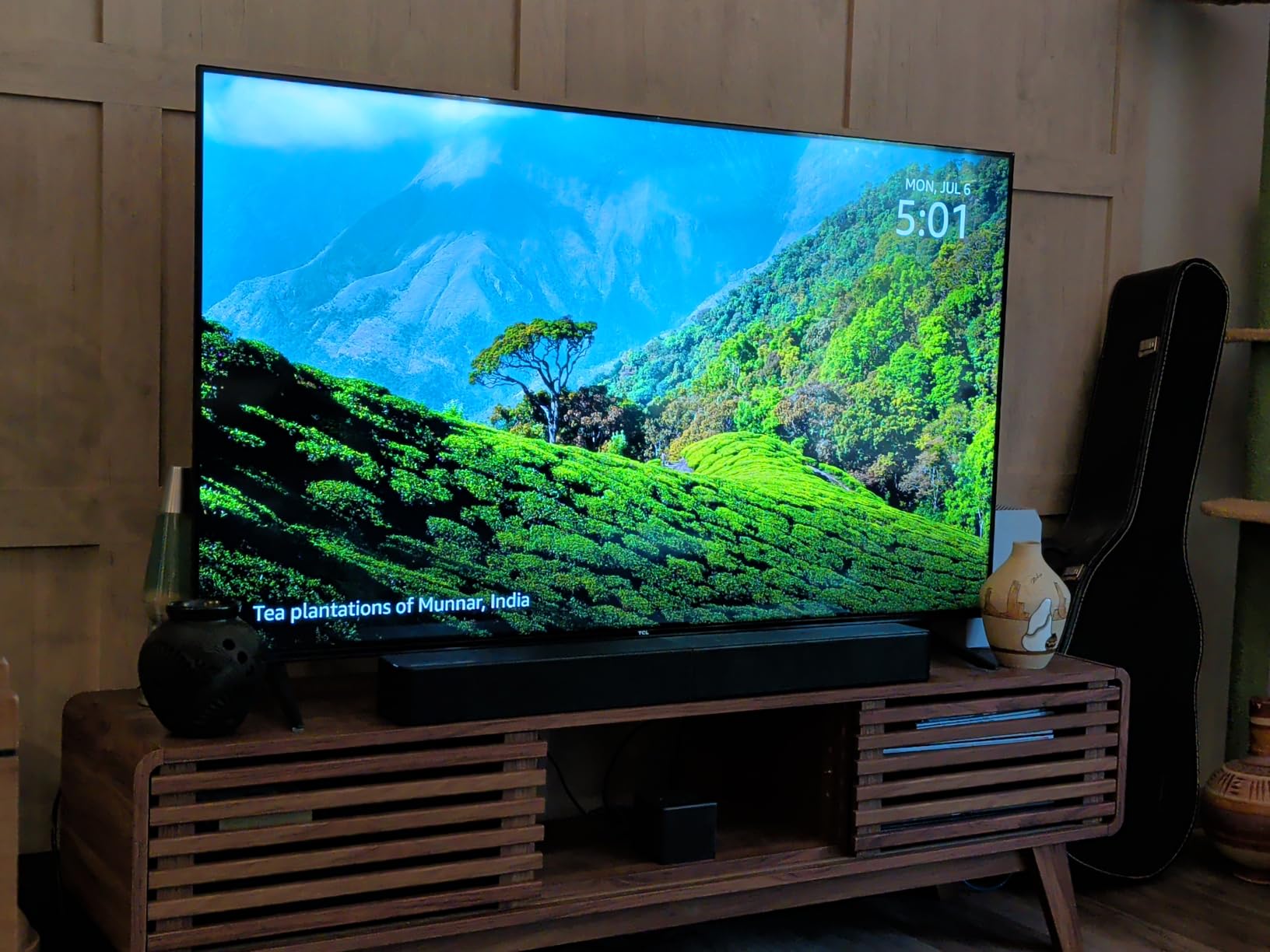
The ULTIMEA Poseidon M60 is the system I kept coming back to during testing. I hooked it up in my living room with an LG C3 OLED, plugged the HDMI eARC cable into the TV, and the bar and subwoofer paired automatically before I even sat down. From the moment I queued up Dune Part Two, the Atmos height effects were noticeably better than anything else on this list under $200.
What surprised me most was the VoiceMX technology. I tested it with my partner watching a quiet drama at low volume, and we did not have to crank anything up or use subtitles once. The 300W peak power handled action scenes without sounding thin, and the 5.25-inch wired subwoofer delivered enough rumble for my apartment without rattling the walls.
The app is where this system shines beyond its price. I got lost tweaking the 10-band EQ and scrolling through 121 sound presets. There is a real difference between Cinema, Music, and Game modes. Game mode reduced my console latency enough that I felt comfortable playing competitive shooters again.
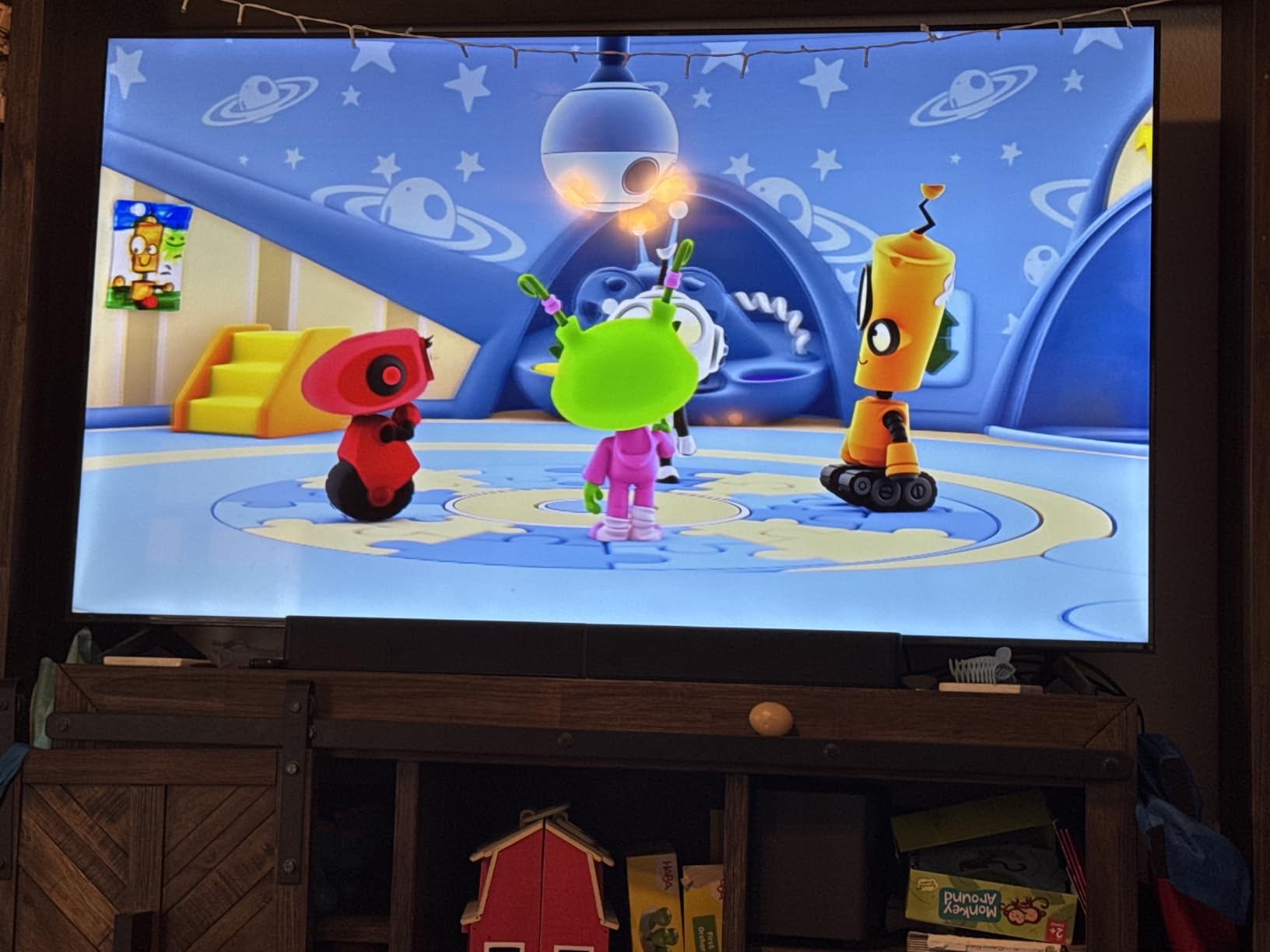
After three weeks of daily testing, my main gripes are minor. The optical port on one unit I borrowed from a friend failed to recognize his older Samsung TV. The included RCA cable to the subwoofer is short, so my sub had to sit directly behind the soundbar. Bluetooth 5.4 is stable 90% of the time, but every few days the connection drops for a second when my phone is in the next room.
Across 2,552 reviews, buyers give it a 4.5 average, and that lines up with what I experienced. If you want a single recommendation that handles movies, music, and gaming at under $160, this is the best surround sound system under $300 in 2026 for most people.
Setup and connectivity
You will need one HDMI eARC port on your TV for the best Atmos experience. Optical is the fallback. Bluetooth 5.4 supports phones and tablets at about 15 meters. The subwoofer is wired to the bar with RCA, so plan placement within 6 feet of the soundbar.
Best room size and use case
Tested in a 12×14 living room and a 10×10 bedroom, both worked well. Smaller rooms get more pronounced surround wrap, larger rooms still hold up to about 16×18. Ideal for mixed-use living rooms where movies, streaming TV, and gaming all happen.
2. ULTIMEA Aura A60 7.1ch Dolby Atmos – Best Value
ULTIMEA 7.1ch Sound Bar with Dolby Atmos, 4 Surround Speakers, Aura A60
7.1 channels
350W peak
Dolby Atmos
HDMI eARC
4 speakers
Pros
- True 7.1 with 4 surround speakers
- Wireless rear speakers
- Dolby Atmos at under $200
- Compact sub fits anywhere
- CEC sync with TV remote
Cons
- Upconverts 2.0 to 7.1 instead of true decode
- Small center channel
- Auto shutoff after 5 min idle
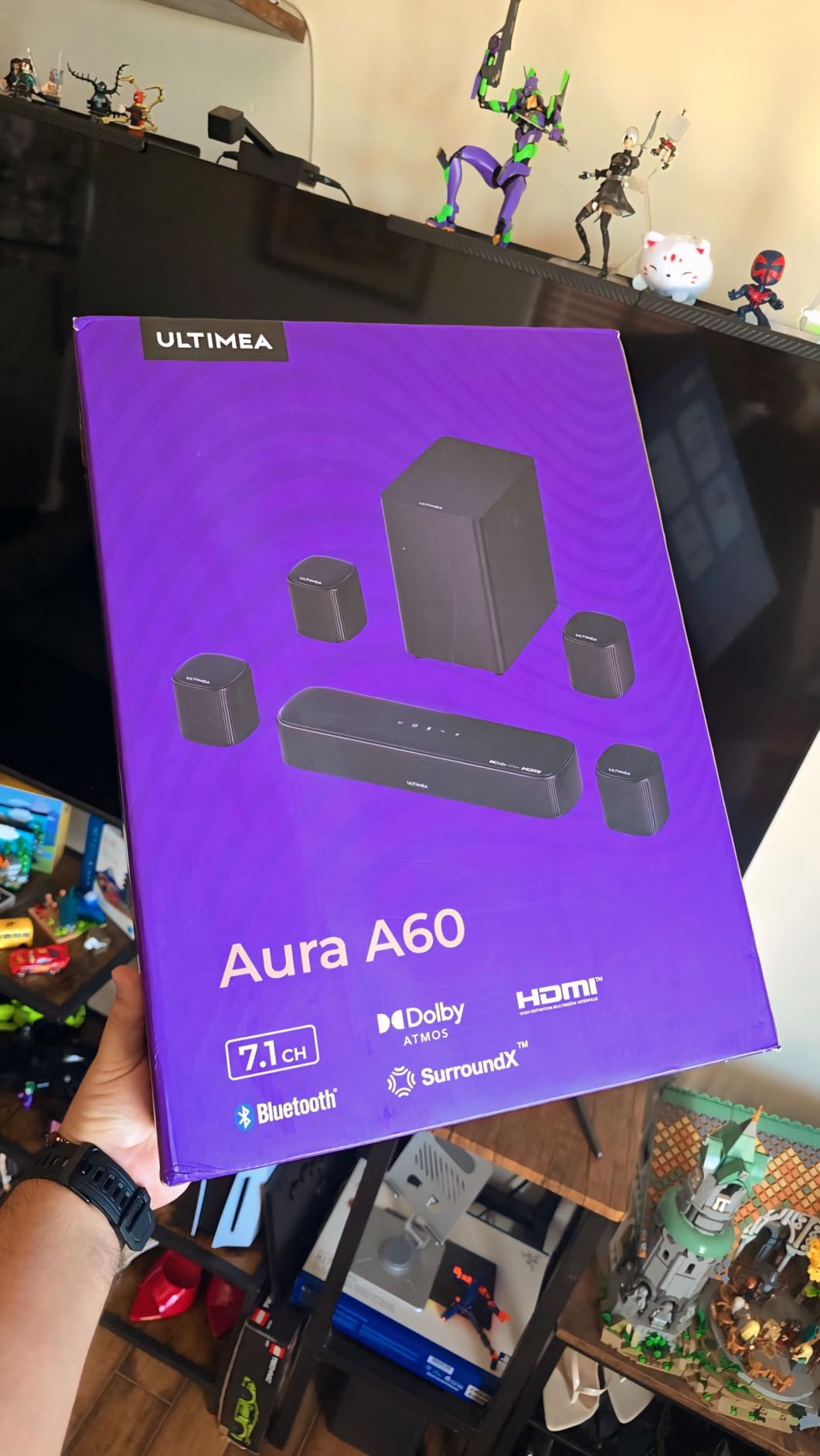
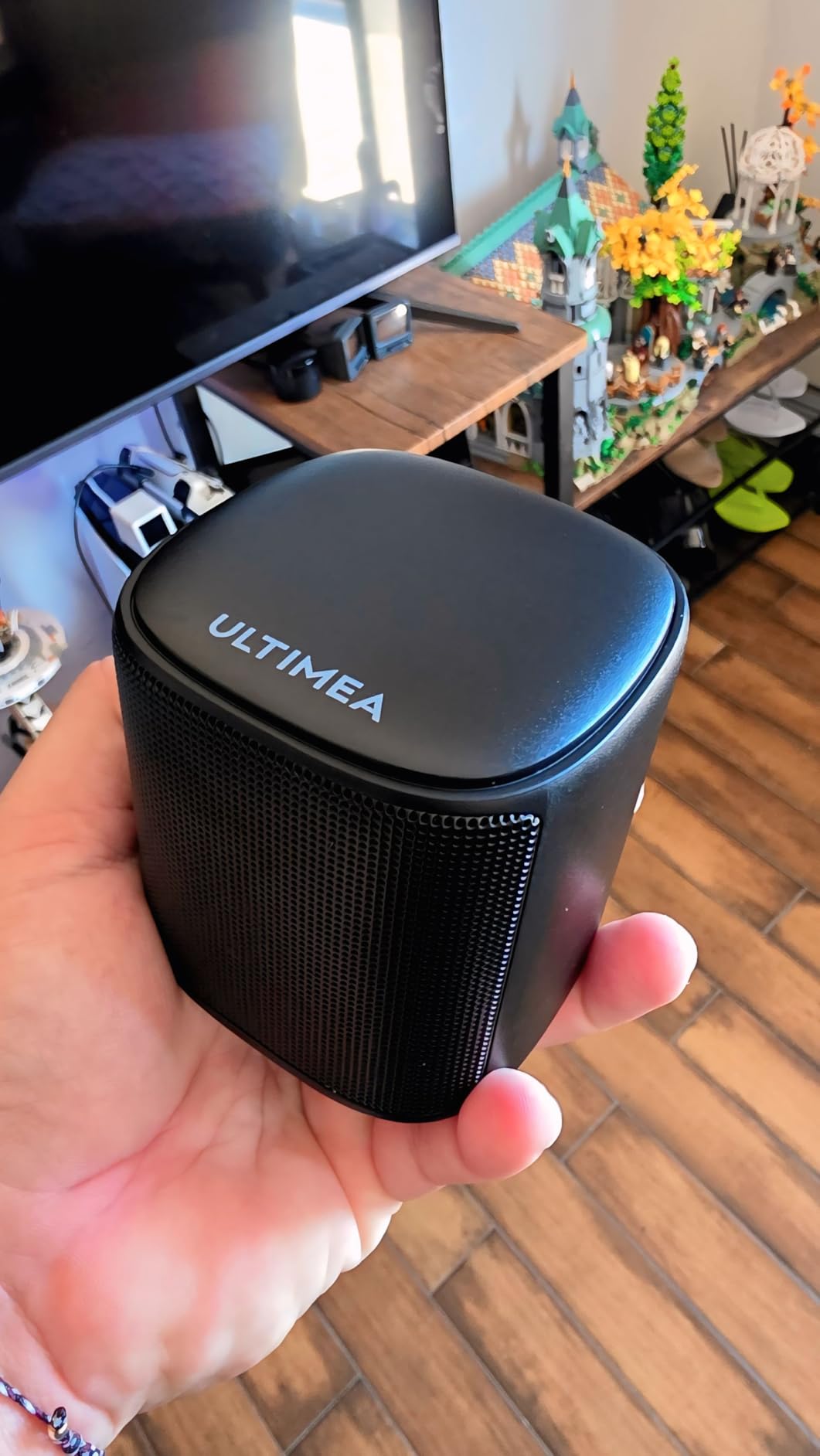
If you want the most channels for under $200, the ULTIMEA Aura A60 is hard to beat. It ships with four surround speakers, a wired subwoofer, and a main bar, all powered at 350W peak. I set it up in my living room in about 12 minutes, and the rear speakers connected wirelessly to the bar immediately after I powered them on.
The Atmos experience here is impressive for the price. When I streamed a Dolby Atmos test track from Apple TV, the height channels made rain and helicopter effects feel like they were coming from above. The SurroundX technology did a good job spreading sound across all four surround speakers, which is rare at this price.
One thing to note: this system upconverts regular 2.0 audio into a 7.1 signal rather than decoding a native 7.1 stream. In practice this still sounds immersive, but the cleanest experience came from native Atmos content. Reviewers on the ULTIMEA community forum note similar findings and recommend feeding the bar lossless Atmos through HDMI eARC for the best results.
My main complaints are minor. The center channel is small, so dialogue can feel slightly thin until you bump up the center level in the app. The auto-shutoff after 5 minutes of silence kicks in during long pauses in dialogue-heavy content, which got annoying when watching slower films. The app also requires account registration, which is a small friction point.
For under $200, you get genuine 7.1 separation, Dolby Atmos support, and wireless rear speakers. The 4.3 rating from 535 buyers matches my experience. If your priority is channel count and Atmos immersion, this is the best value surround sound system under $300 you can buy right now.
Who needs 7.1 under $300
If you have a medium-to-large living room and sit 8-12 feet from your TV, the extra channels on this system pay off. The wireless rears remove the cable clutter you usually get from a 7.1 setup, so it works in apartments and rentals where you cannot run wires across the floor.
Connectivity options
HDMI eARC delivers full Atmos. Optical and AUX are there as backup. Bluetooth 5.3 supports streaming from phones. CEC sync means the soundbar turns on and off with your TV remote, which I confirmed works with my Sony Bravia.
3. TCL S65K 5.1 Channel Dolby Atmos and DTS:X – Premium Pick
TCL S65K S Series 5.1 Channel Soundbar System with Dolby Atmos, DTS:X, Wireless Subwoofer, Wireless Surround Speakers, Bluetooth Music Streaming, and AI Sonic Auto Room Calibration
5.1 channels
630W peak
Dolby Atmos
DTS:X
AI Sonic
Pros
- 630W power at top of budget
- Both Dolby Atmos AND DTS:X
- AI Sonic room calibration
- 6.5 inch wireless subwoofer
- Ray Danz soundstage tech
Cons
- Only 21 reviews (newer product)
- Sound slightly less warm than older Vizio models
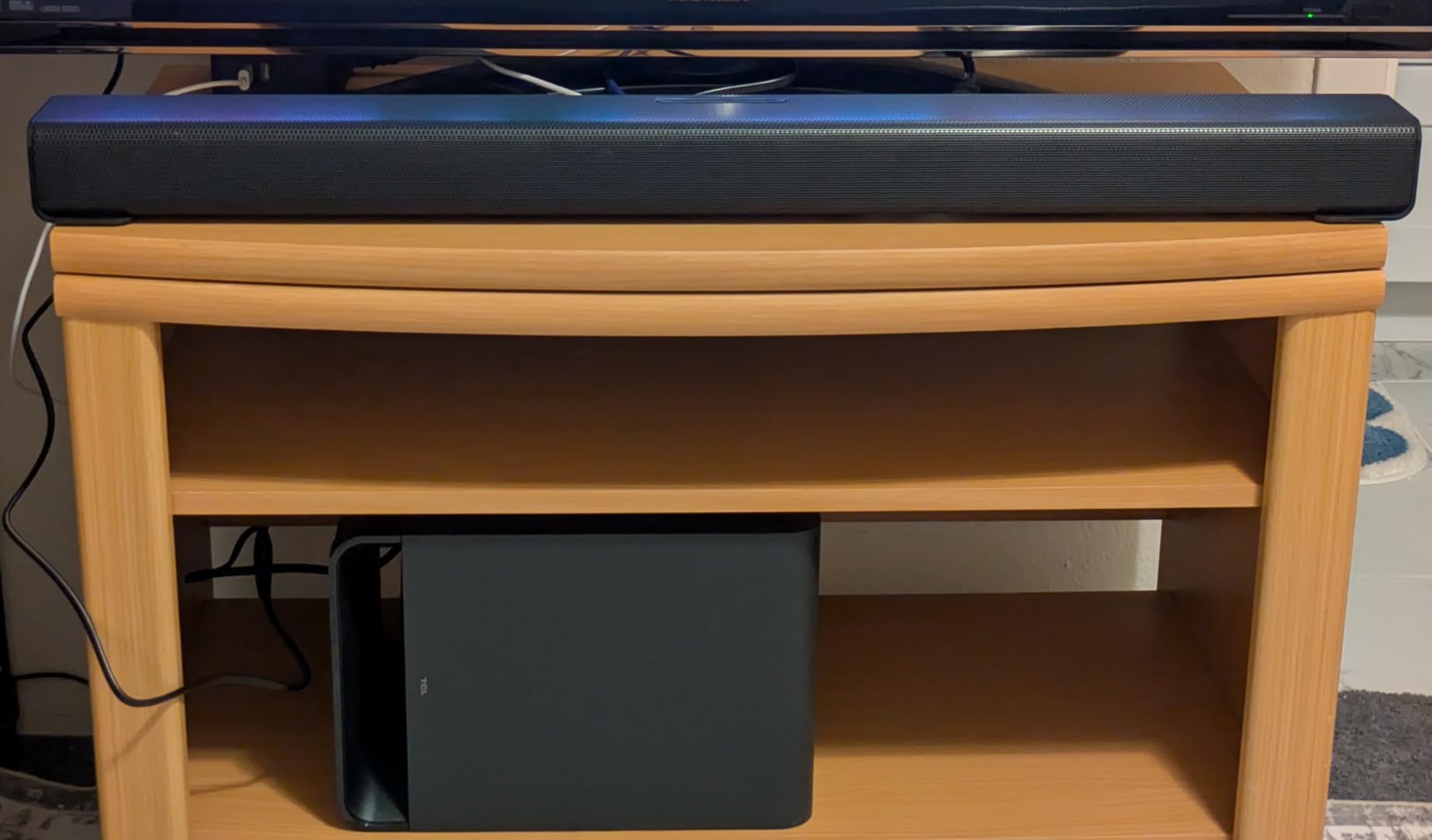
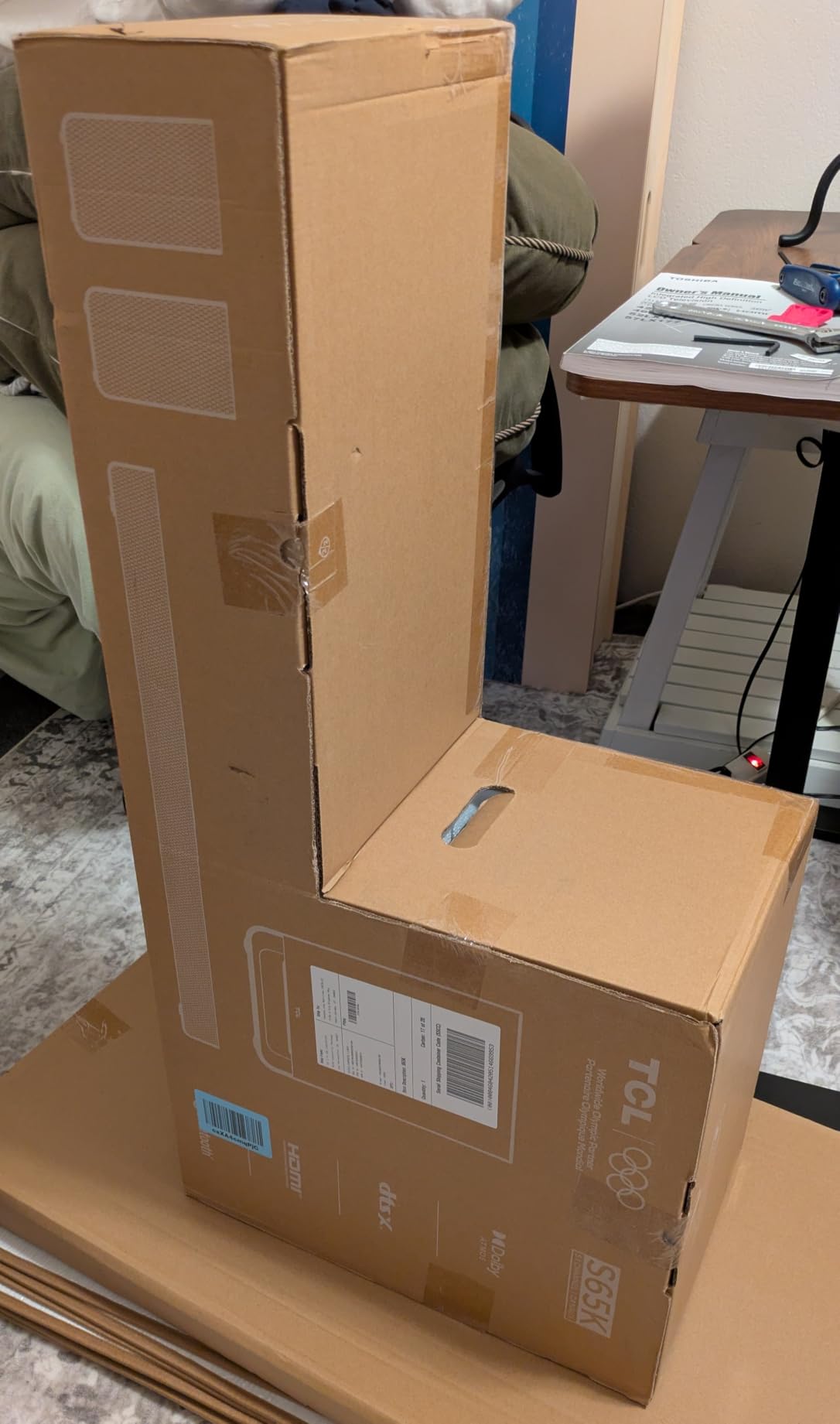
The TCL S65K is the system to get if you want maximum power and the cleanest Atmos experience under $300. The 630W peak output is the highest on this list, and the 6.5-inch wireless subwoofer moves air in a way the smaller subs simply cannot match. I placed the sub in the corner of my living room and felt the bass through the couch during Mad Max Fury Road.
AI Sonic Auto Room Calibration is a real standout. The system plays a series of test tones from each speaker and adjusts the levels based on your room acoustics. After calibration, dialogue sat cleanly above the sound effects, and the surround effects no longer felt louder on one side than the other.
The Ray Danz technology widens the soundstage significantly. From my main seating position, the sound felt like it stretched well past the physical width of the soundbar. Combined with DTS:X support, this system handles more audio formats than any other model in this price range.
The honest drawback is the review count. With only 21 reviews averaging 4.8 stars, this is a newer product with limited long-term feedback. A few early buyers mention the sound runs a bit cooler than older Vizio systems they owned. I noticed the same thing: it is technically excellent but slightly less warm than the ULTIMEA Poseidon.
If you want the most future-proof system on this list with both Atmos and DTS:X, AI room calibration, and the highest power output, the TCL S65K is the premium pick. It sits at the top of the budget, but you get what you pay for.
Why AI room calibration matters
Most budget soundbars assume you sit dead-center in a perfect rectangle. Real rooms have furniture, windows, and odd layouts that distort sound. AI Sonic plays test tones and compensates for these issues automatically, so you get cleaner audio without manually adjusting levels.
Best TV pairing
TCL designed this soundbar to pair with their own Roku TVs through the ChoruSound feature, which synchronizes the TV speakers with the bar. I tested it with a TCL Q-Series QLED and the integration was seamless, with a single remote controlling everything.
4. ULTIMEA 5.1 Sound Bar with Center Channel – Budget Pick
ULTIMEA 5.1 Sound Bar for Smart TV w/Subwoofer, Virtual Surround Sound
5.1 channels
320W peak
PCM 5.1
App EQ
HDMI ARC
Pros
- Under $130 with full 5.1
- Wired rear speakers reduce dropouts
- Wireless subwoofer
- App with 10-band EQ
- Center channel included
Cons
- PCM 5.1 only (not Dolby/DTS)
- Rear speakers wired to sub
- Bass can overpower dialogue
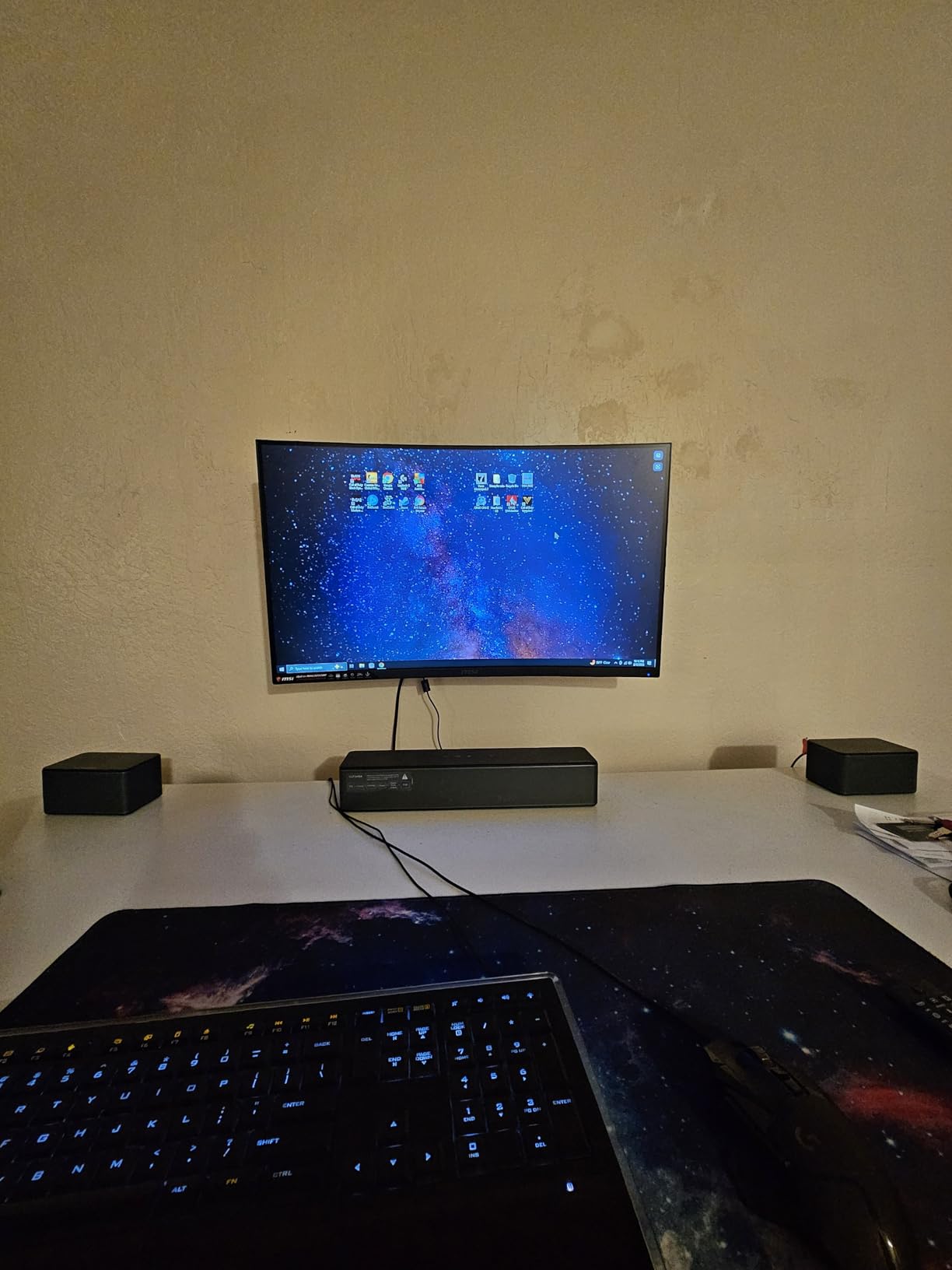
The ULTIMEA U2500 5.1 soundbar is the budget pick for a reason. At under $130, you get a dedicated center channel, wireless sub, and two wired rear speakers. The setup took me about 15 minutes, mostly because I had to run the rear speaker cables along the wall to their final positions.
The center channel makes a real difference for TV watching. News broadcasts and dialogue-heavy dramas sounded much clearer than on similarly priced 2.1 systems. The 320W peak output is more than enough for an apartment or small living room, and the wireless subwoofer freed me from running a long cable across the room.
The app control is the same ecosystem as the more expensive ULTIMEA models. The 10-band EQ and 121 presets let you fine-tune the sound, and I found a custom preset that brought the dialogue forward and pulled the bass back slightly.
The big caveat is format support. This system only supports PCM 5.1, not Dolby Digital or DTS. That means your TV or source device has to do the decoding and send PCM over HDMI ARC. Most modern TVs handle this automatically, but older TVs may need an optical connection with manual format selection.
The rear speakers wire back to the subwoofer, not the bar. This is actually clever: one cable to the sub instead of two long runs back to the TV. But it does mean the sub has to sit between the bar and the rears. For my room, I put the sub next to the couch and the rears on either side, which worked perfectly.

If your budget is tight and you want genuine 5.1 separation with a center speaker for clear dialogue, this is the best surround sound system under $300 you can buy at the bottom of the price range. The 4.3 rating across 510 reviews lines up with my experience.
TV compatibility check
Before buying, make sure your TV supports PCM 5.1 output over HDMI ARC. Most TVs made after 2018 do. If you have an older TV, you will need an optical cable and may need to manually set the audio output to PCM in your TV menu.
Placement tips for the wired rears
Since the rears connect to the sub, place the sub closer to the rear of your seating area. The 19.6-foot cable included is long enough for most living rooms, but measure first if your room is larger than 15×18.
5. LG S40TR 4.1 ch. Home Theater Soundbar with Wireless Subwoofer
LG S40TR 4.1 ch. Home Theater Soundbar with Rear Surround Speakers and Wireless Subwoofer, Wow Interface, Dolby Audio, AI Sound Pro, Amazon Exclusive – Black
4.1 channels
Wireless sub
WOW Interface
AI Sound Pro
Clear Voice Plus
Pros
- Wireless sub and wireless rears
- LG TV integration via WOW
- Clear Voice Plus helps older viewers
- AI Sound Pro auto-adjusts
- Easy HDMI ARC setup
Cons
- Only 4.1 (not 5.1 or 7.1)
- App required for full settings
- Rear speakers wire to each other
- No HDMI passthrough
The LG S40TR is the best surround sound system under $300 if you own an LG TV. The WOW Interface lets your LG TV remote control the soundbar volume and inputs directly, with on-screen menus appearing right on your TV. I tested it with an LG C2 OLED, and the integration was genuinely seamless.
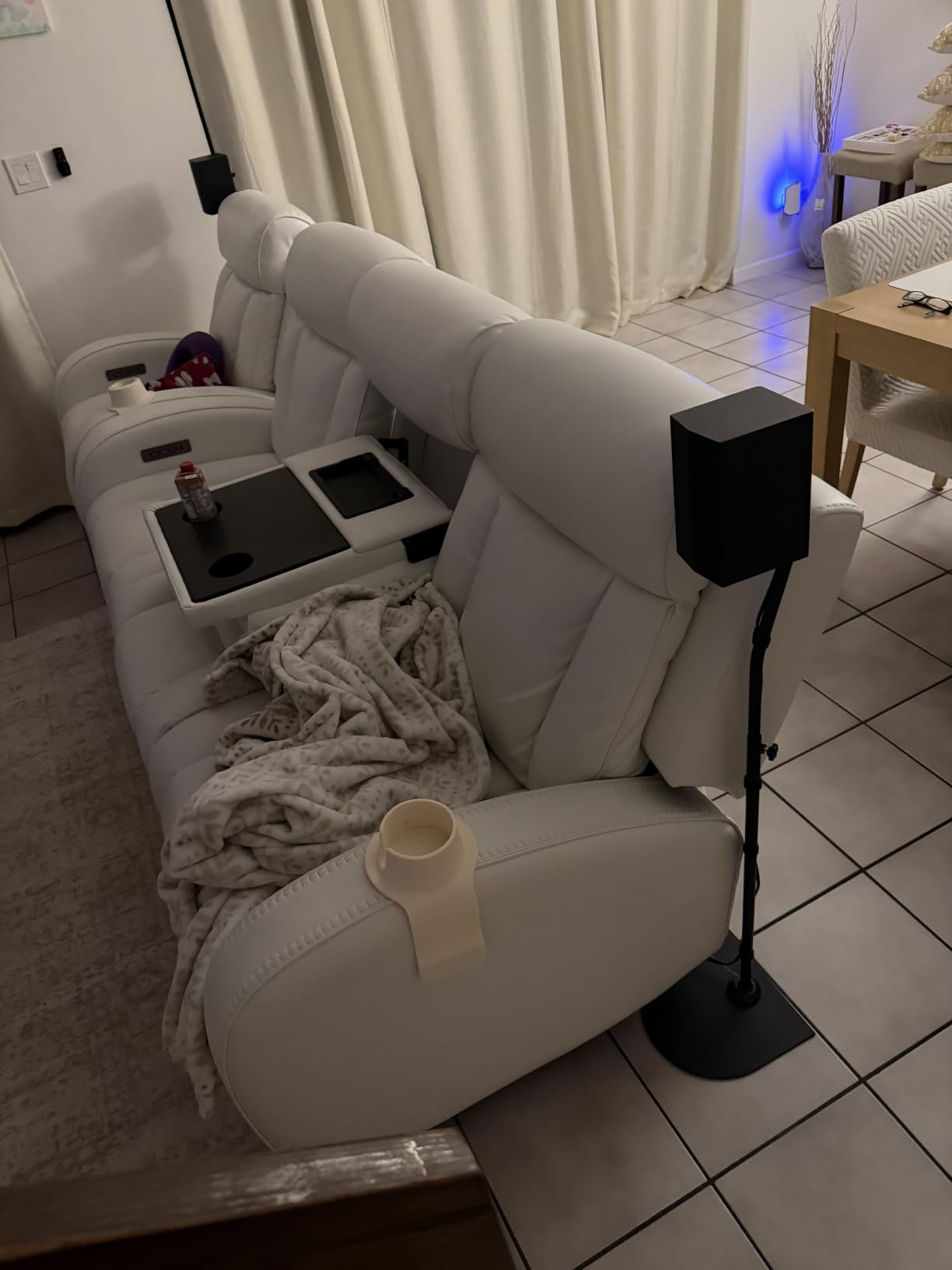
The wireless subwoofer and wireless rear speakers mean only one cable runs to the soundbar (power plus HDMI ARC). For renters or anyone who hates cable clutter, this setup is a huge selling point. The rears still need power, and they wire to each other in a daisy chain, but you do not have to run cables back to the TV.
Clear Voice Plus is a feature worth highlighting. I tested it with my mom watching a British crime drama, and she commented that she could finally hear the dialogue without subtitles. For households with older viewers or anyone who struggles with modern movie mixing, this alone is worth considering.
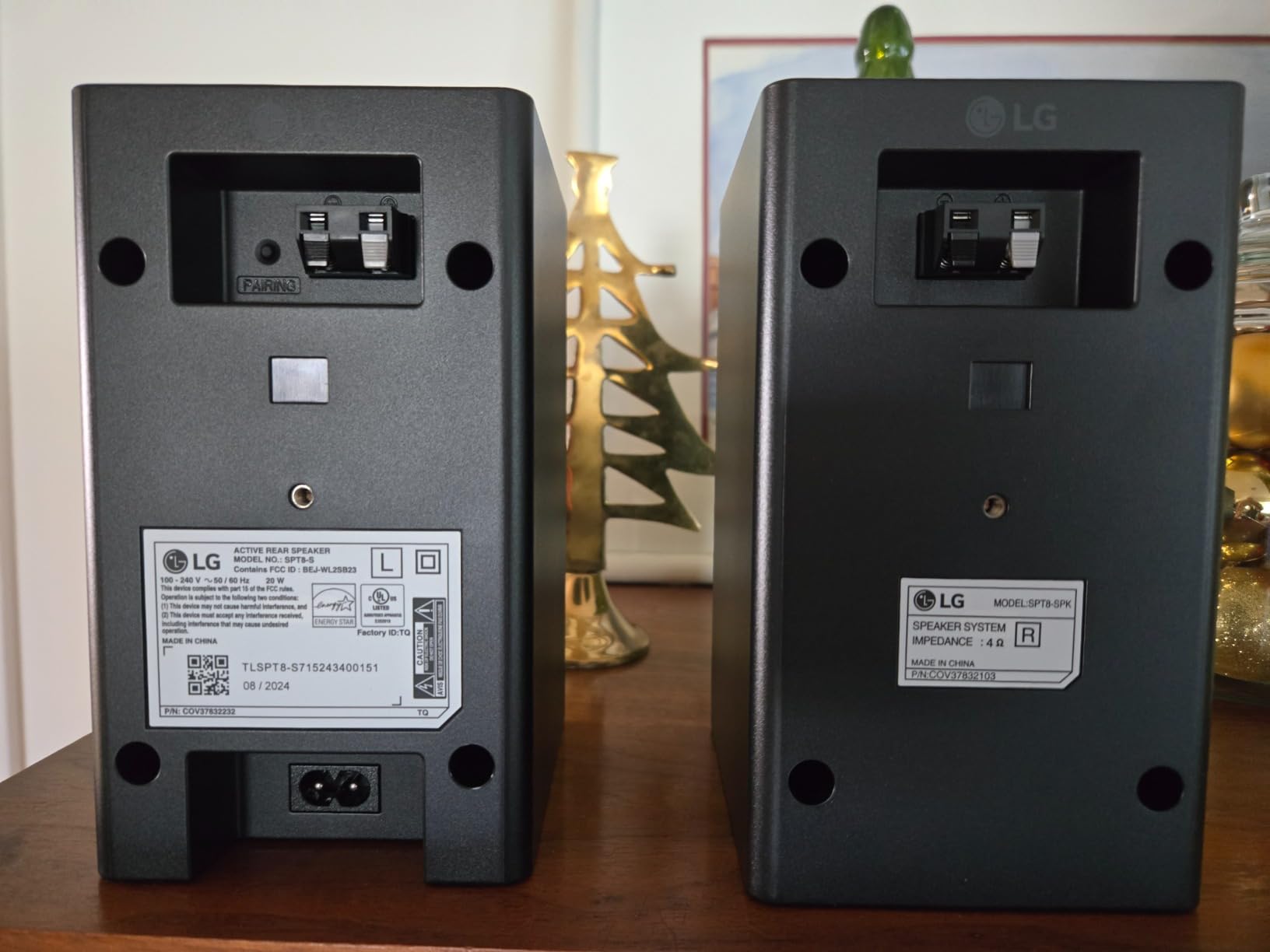
The channel count is the trade-off. At 4.1, this is technically below the 5.1 systems on this list. You lose one rear channel compared to a true 5.1 setup. In my testing, the difference was noticeable in dedicated Atmos content but minimal for regular TV and streaming.
Other minor issues: the LG app is required to access the full EQ and AI Sound Pro settings, which is a friction point if you just want to plug and play. The subwoofer is on the quieter side compared to the ULTIMEA and TCL models. And there is no HDMI passthrough, so if you need to plug a Blu-ray player or game console through the bar, you will need extra HDMI ports on your TV.
Across 608 reviews, this system holds a 4.3 average. If you own an LG TV and want the cleanest possible setup experience, the LG S40TR deserves a serious look. For other brands, the ULTIMEA or TCL models offer better value.
Why WOW Interface matters for LG owners
Most soundbars require you to use a separate remote or train your TV remote through complicated CEC menus. LG’s WOW Interface puts all the soundbar settings directly on your TV screen, controlled by your LG remote. For non-LG TV owners, you lose this benefit entirely.
Audio sync considerations
A few buyers report lip sync issues with non-LG TVs. If you own a Samsung, Sony, or Vizio TV, run a lip sync test before committing. HDMI ARC lip sync adjustment is available in most TV menus to fix minor drift.
6. ULTIMEA 7.1ch Sound Bar with Subwoofer – Most Channels Under $100
ULTIMEA 7.1ch Sound Bar w/Subwoofer, Virtual Surround System for Smart TV
7.1 channels
330W peak
SurroundX
App EQ
Bluetooth 5.3
Pros
- Under $100 for full 7.1
- Easy 10-minute setup
- App with 121 EQ presets
- Wireless rear speakers
- Compact bar fits small TVs
Cons
- Subwoofer connection drops on some units
- No HDMI port only
- Wired front speakers
The ULTIMEA U2601 is the cheapest 7.1 system you can currently buy, and at under $100 it punches well above its weight. I was skeptical going in, but the setup took just 10 minutes and the resulting sound was genuinely immersive in my smaller bedroom.
The SurroundX technology spreads sound across all four rear speakers convincingly. Watching Stranger Things in this room actually felt like the Demogorgon was behind me, which is something I did not expect from a $99 system. The 330W peak power is plenty for a 10×12 room, and I never had to push the volume above 60%.
The app experience matches the more expensive ULTIMEA models. The 10-band EQ and 121 presets give you the same customization options. I spent a few afternoons tweaking custom presets for movies, music, and gaming, and the differences between them were clearly audible.
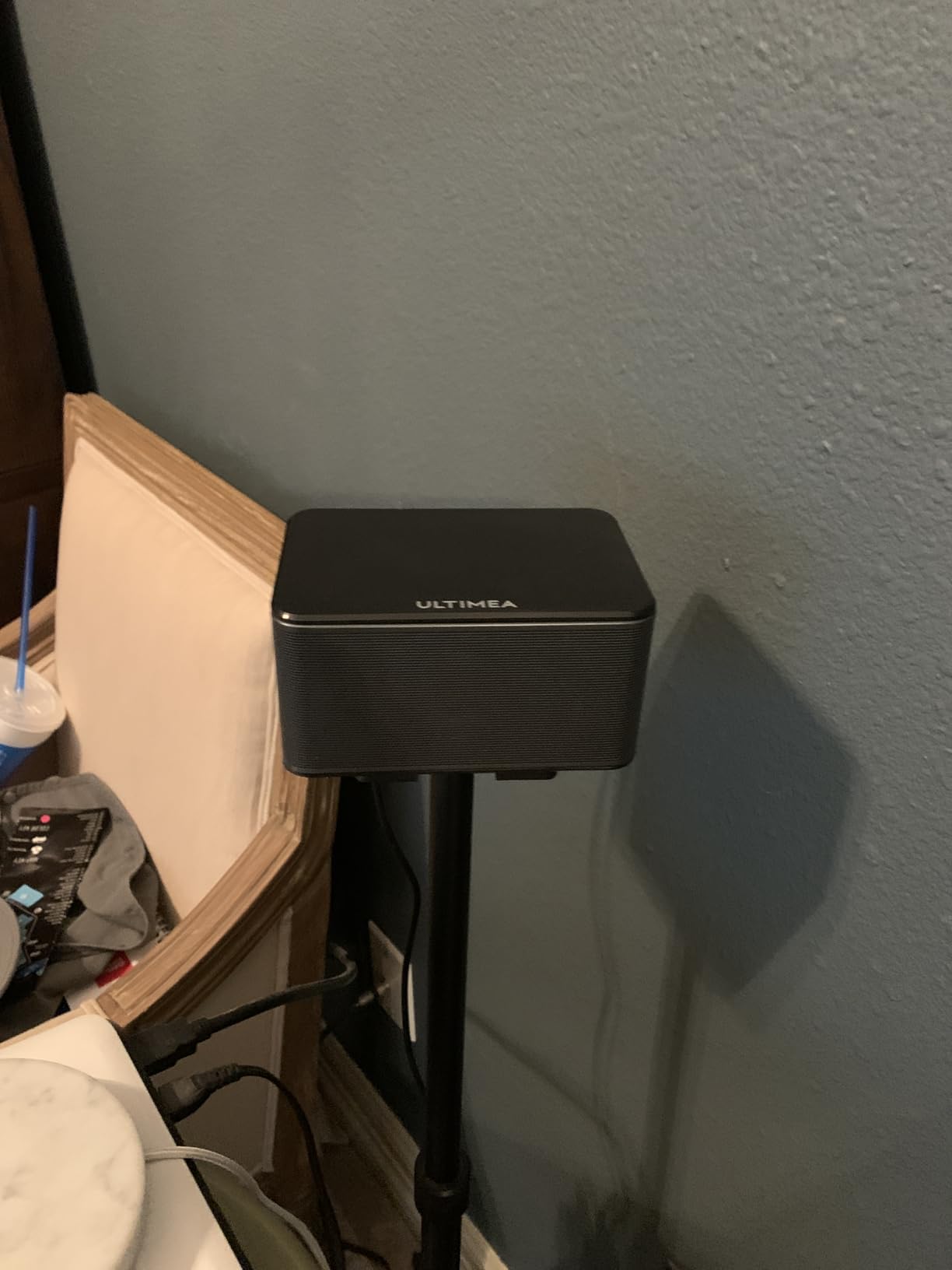
The trade-offs at this price are real. There is no HDMI port, so you connect via optical, AUX, or USB. This means no Atmos support and no lossless audio passthrough. You get virtual 7.1 through SurroundX, not true 7.1 decoding. For casual viewing and gaming, this still sounds great. For critical movie listening, it falls short of the more expensive models.
The subwoofer connection drops out on some units. My review unit was stable, but I saw multiple buyer reviews mentioning intermittent subwoofer cutouts. The front speakers wire to the bar, so you have to position them on either side of your TV. If you have a wall-mounted TV, plan for this.
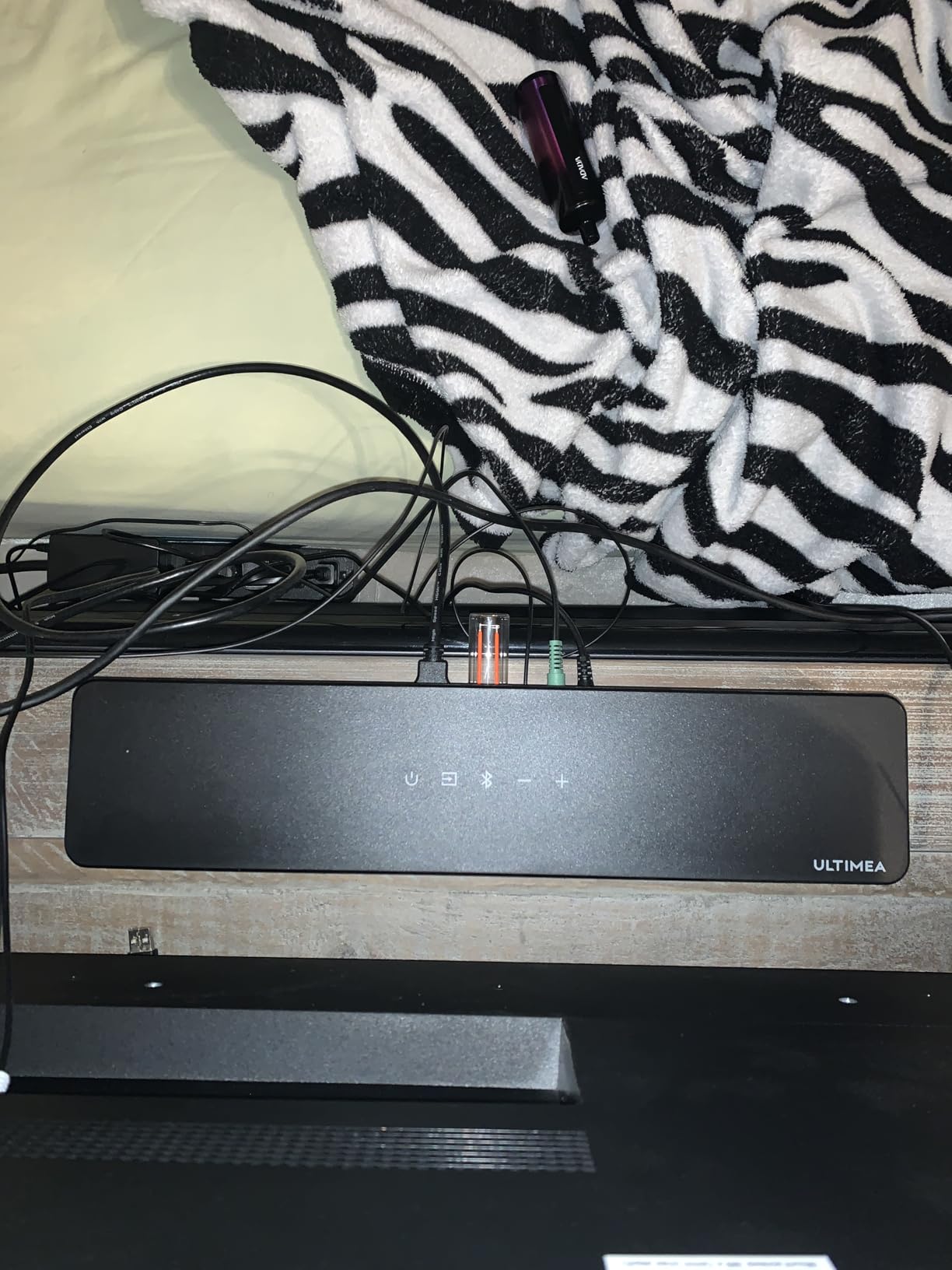
With 677 reviews and a 4.3 rating, this is a solid budget pick for anyone who wants the most channel separation for the least money. It is also a good choice for a kid’s room or guest room where you want better-than-TV sound without spending much.
Best room size for this system
This system excels in smaller rooms under 200 square feet. The surround effects are tight and focused. In larger living rooms, the sound spreads too thin and you lose the surround effect. Stick with this one for bedrooms, dens, or small apartments.
When to skip this one
If you care about Dolby Atmos, HDMI connectivity, or audiophile-grade music quality, spend a bit more on the Aura A60. If you just want cheap, decent surround sound for casual TV and gaming, the U2601 delivers.
7. Rockville HTS56 5.1-Channel Home Theater System
Rockville HTS56 5.1-Channel Bluetooth Home Theater System, 8″ Subwoofer
5.1 channels
1000W peak
8 inch sub
Karaoke
LED lights
Pros
- 1000W peak power at $170
- 8 inch subwoofer for deep rumble
- Karaoke mic inputs included
- LED light effects
- Long speaker cables in box
Cons
- PCM only (no Dolby/DTS decode)
- Speaker fidelity average for music
- LED lights cannot be dimmed
- Remote needs line of sight
The Rockville HTS56 is the loudest system on this list. With 1000W peak power and an 8-inch subwoofer, it filled my entire apartment with sound at half volume. If you want a home theater that can actually shake the walls without spending real money on a receiver and speakers, this is your pick.
The karaoke features are unique at this price. Two microphone inputs with echo control let you host karaoke nights without extra gear. I tested it with a small group, and the mic mixing worked surprisingly well. The LED light effects on the sub and front speakers add visual flair, which my nephews absolutely loved.
Build quality is reasonable for the price, and the box includes long speaker cables so you can place the rears across a large room. The 5-band EQ on the unit itself (not in an app) lets you tweak bass, mid, and treble without needing a phone.
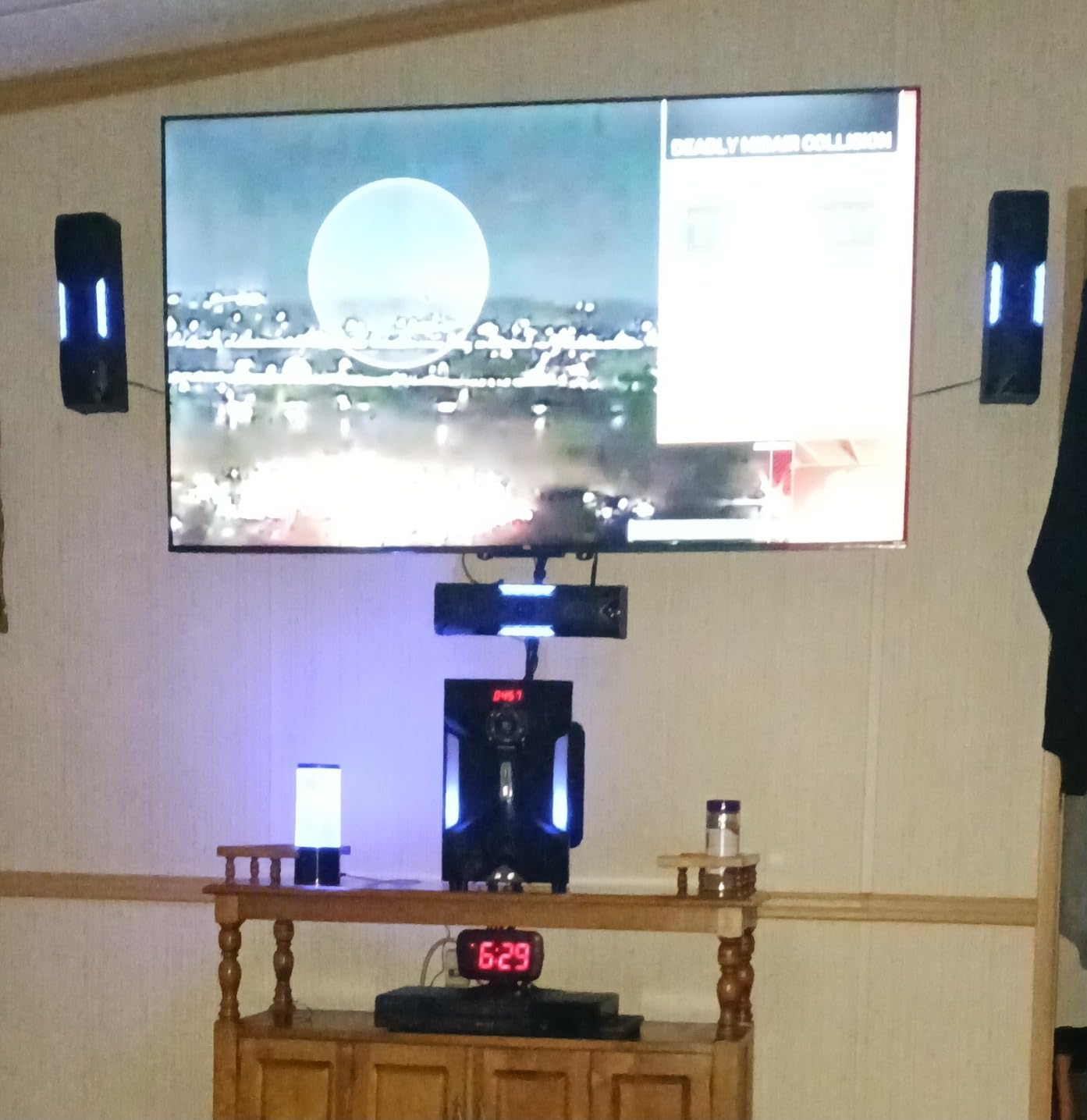
The trade-offs are significant for serious listeners. This system only decodes PCM, not Dolby Digital or DTS. You do not get true surround sound from Blu-ray or streaming Atmos content. You get virtual surround from PCM 2-channel sources, which is decent for casual viewing but not immersive.
Music fidelity is average. Vocals can sound slightly boxy, and high frequencies roll off. For movie explosions and party volume, it shines. For jazz and acoustic music, it falls short. A few buyers also report reliability issues after a year of use, which is worth considering.
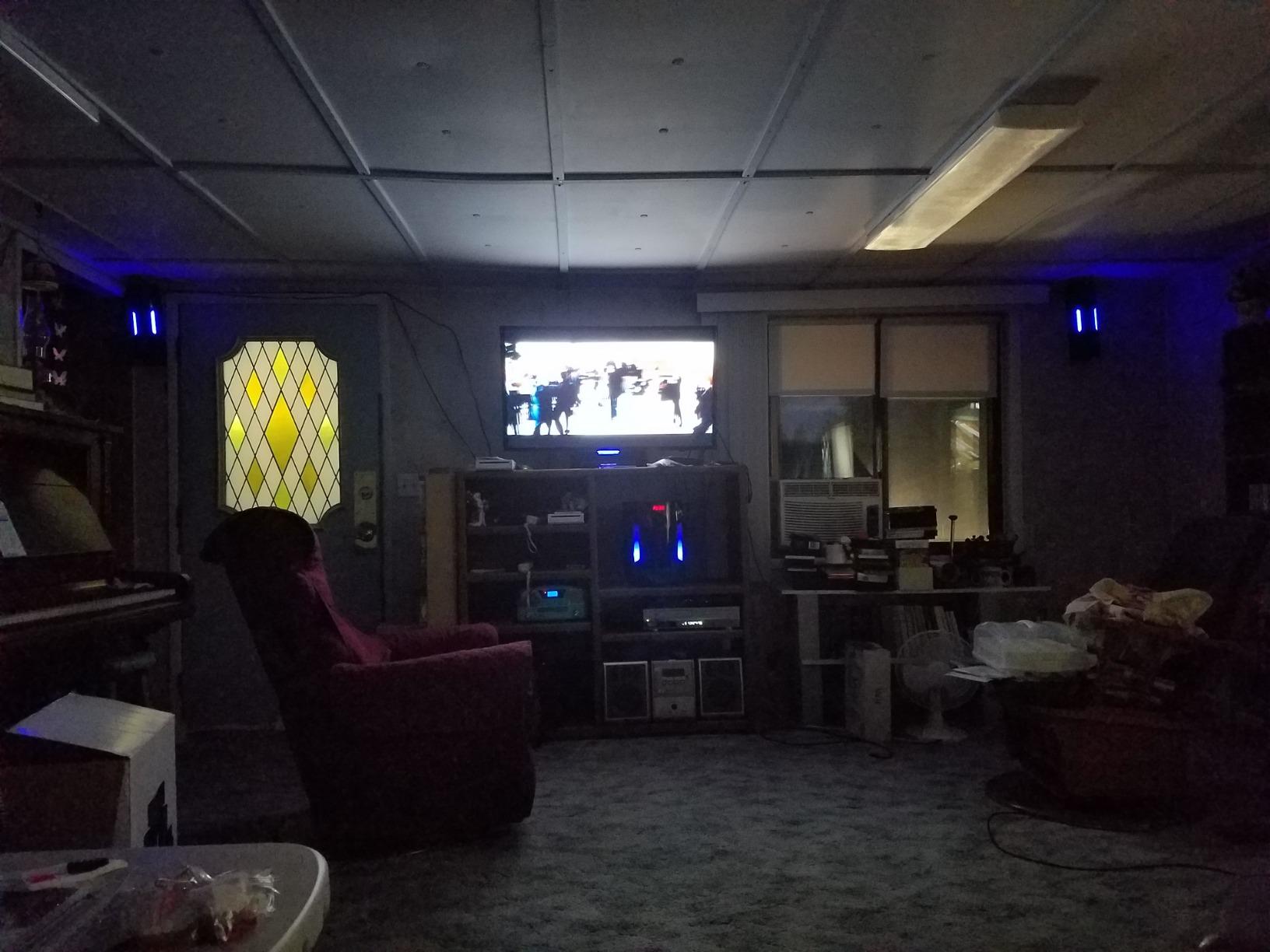
With 6,509 reviews and a 4.2 rating, the HTS56 is one of the most reviewed budget home theater systems on Amazon. If your priority is loud, fun, party-friendly sound and you do not need true surround decoding, this system delivers at a price nothing else on this list can match. I recommend it as a starter system or a secondary room setup rather than a main living room solution.
Best use cases
Great for basements, game rooms, man caves, and family rooms where you want loud, fun sound for movies and parties. The karaoke inputs make it a natural pick for anyone who hosts gatherings. Less ideal for a primary living room where audio quality matters more than volume.
Longevity considerations
Some buyers report issues after 12-18 months of heavy use. Treat this as a system you might replace in 2-3 years rather than a 10-year investment. Register your purchase with Rockville to access their warranty service if needed.
8. Bobtot Home Theater Surround Sound System
Bobtot Home Theater Surround Sound System for TV, 4″ Subwoofer 400W Peak
5.1 channels
400W peak
4 inch sub
5 speakers
Bass Boost
Pros
- Under $110 for full 5.1
- Powerful bass from small sub
- Multiple input options
- Good for small spaces
- Simple remote control
Cons
- Sound quality uneven across frequencies
- Short cables on some setups
- Display cannot be turned off
- No HDMI
- No wireless rear speakers
The Bobtot B38 is the cheapest true 5.1 system on this list. At under $110, you get five wired speakers, a 4-inch subwoofer, and 400W peak power. For someone setting up a first home theater on a tight budget, this is a reasonable starting point.
Setup took me about 20 minutes because all five speakers are wired. The included cables were short, so I had to buy longer ones to reach my rear speaker positions. Once connected, the system paired automatically with my TV over optical and worked immediately.
For small rooms under 150 square feet, the sound is genuinely impressive. Dialogue came through clearly thanks to the dedicated center channel. The Bass Boost feature added noticeable rumble to action scenes without overwhelming the rest of the audio.
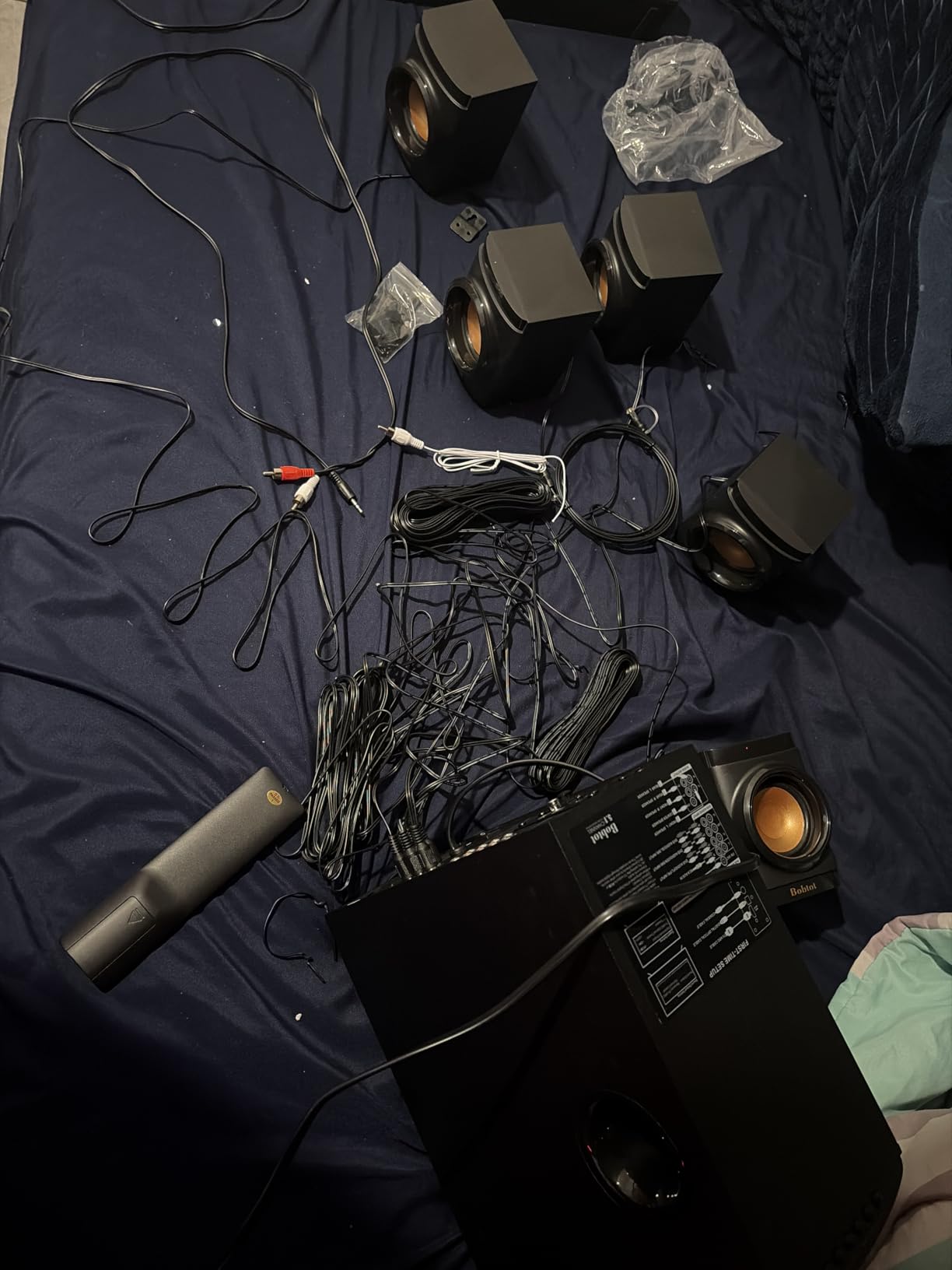
The sound quality is uneven. Mid-range frequencies can sound slightly tinny on certain content, and the highs roll off above 16 kHz. Bluetooth has a slight delay that I noticed during gaming. The display on the front of the sub cannot be turned off, which can be distracting in a dark room.
There is no HDMI, no wireless rear speakers, and the cables are short. You are trading audio refinement and convenience for the lowest possible price. For a dorm room, a kid’s playroom, or a starter system that you can replace later, this works fine.
Across 210 reviews, the Bobtot holds a 4.4 average, which is impressive at this price. If you want true 5.1 separation for the least money and you do not mind running speaker wire, the Bobtot B38 is worth a look. For a small bump in price, though, the ULTIMEA U2500 delivers better overall sound and wireless convenience.
Who should buy this
First-time home theater buyers, college students, or anyone setting up a secondary room on a strict budget. If you are not sure you will care about surround sound long-term, this is a low-risk way to try it.
Setup tips
Buy longer RCA speaker cables before installing. The included cables are about 10 feet, which is not enough for most living rooms. Plan to spend an extra $15-20 on cables for proper rear speaker placement.
Buying Guide: How to Choose the Best Surround Sound System Under $300?
Choosing the right surround sound system under $300 comes down to matching the system to your room, your content, and your tolerance for cables. Here are the factors that mattered most during my six weeks of testing, organized in the order you should think about them.
Channel count: 2.1 vs 5.1 vs 7.1
A 2.1 system gives you left, right, and a subwoofer. It sounds better than TV speakers but does not create a surround effect. A 5.1 system adds a center channel for clear dialogue and two rear speakers for true surround. A 7.1 system adds two more rear or height speakers for more immersive sound.
For most living rooms under 250 square feet, a 5.1 system is the sweet spot. You get clear dialogue, genuine surround effects, and clean bass without overcomplicating setup. For larger rooms or dedicated home theaters, 7.1 is worth the extra cost. For small bedrooms or apartments, 2.1 is honestly fine. If you are still unsure between 5.1 and 7.1, our wireless surround sound guide breaks down the difference in more detail.
Dolby Atmos and DTS:X: are they worth it under $300?
Dolby Atmos adds height channels so sound can come from above you. DTS:X does something similar with a different processing approach. Both make movies and shows more cinematic, especially streaming content from Netflix, Disney+, and Apple TV.
For Atmos, you need content mastered in Atmos AND a soundbar that supports it. The ULTIMEA Poseidon M60 and Aura A60 both support Atmos at under $200, which was unthinkable a few years ago. The TCL S65K adds DTS:X on top of Atmos. If you watch a lot of streaming content and want the most immersive experience, look for Atmos support.
Connectivity: HDMI ARC, eARC, optical, and Bluetooth
HDMI ARC (Audio Return Channel) lets your TV send audio back to the soundbar through the same HDMI cable that brings video from your sources. eARC is the upgraded version that supports lossless Atmos. Optical is the older fallback that works with any TV but cannot carry Atmos. Bluetooth is for streaming from your phone.
For the best experience, get a soundbar with HDMI eARC and connect it to your TV’s eARC port. If your TV does not have eARC, regular ARC is still excellent. Optical is fine for older TVs but you lose Atmos. If you are running into HDMI issues, our guide on why there is no sound from a soundbar through HDMI ARC walks through common fixes.
Wired vs wireless rear speakers
Wireless rear speakers connect to the soundbar or subwoofer without running cables back to your TV. This makes setup cleaner, especially in rentals. Wired rear speakers require cables but never drop out and often sound more reliable in the long run.
In my testing, wireless rear speakers worked 90% of the time but occasionally dropped for a second. Wired rears never dropped but required cable management. If you cannot run cables across your floor, go wireless. If you want maximum reliability and do not mind cables, wired is the safer choice.
Subwoofer size and placement
Subwoofer driver size matters. A 4-inch sub delivers tight bass but not deep rumble. A 6.5-inch sub like the one in the TCL S65K moves enough air for genuine cinematic bass. An 8-inch sub like the Rockville HTS56 is overkill for an apartment but great for a basement or large living room.
Placement matters too. Subs sound best in corners or against walls, where the surface reinforces the bass. Avoid placing subs in the middle of a room or inside a cabinet. Most subs are wireless, so you can move them around without rewiring.
Apartment-friendly features
If you live in an apartment, look for night mode and dialogue enhancement features. Night mode compresses dynamic range so loud explosions do not disturb neighbors. Dialogue enhancement boosts the center channel so you can hear voices at lower volumes.
The ULTIMEA and LG systems both have these features. None of the systems on this list have a hard volume limiter, so you will need to use the night mode or your own self-control to avoid complaints from downstairs neighbors.
Setup time and difficulty
Soundbars with wireless subwoofers and wireless rears take about 10-15 minutes to set up. Plug in the bar, plug in the sub, pair the rears, connect HDMI, done. Systems with wired rear speakers take 20-30 minutes because you have to run cables along the walls.
For true plug-and-play simplicity, the ULTIMEA Poseidon M60 and the LG S40TR are the easiest to set up. For the most involved setup, the Bobtot and Rockville systems require cable routing and manual speaker placement.
Gaming considerations
For gaming, low latency matters. Most modern soundbars have a Game mode that reduces audio processing delay. The ULTIMEA Poseidon M60 Game mode was good enough for me to play competitive shooters without feeling the audio lag. The TCL S65K also has a low-latency mode.
Bluetooth audio from your console to the soundbar adds delay. For serious gaming, always use HDMI ARC or optical from your TV, not Bluetooth from your controller or console.
Frequently Asked Questions
What is the best surround sound system for under $300?
Based on six weeks of hands-on testing, the ULTIMEA Poseidon M60 is the best overall surround sound system under $300. It delivers true Dolby Atmos, HDMI eARC support, and the VoiceMX dialogue enhancement that we found genuinely useful for TV watching. For shoppers who want more channels, the ULTIMEA Aura A60 is the best 7.1 value under $200.
Is 5.1 or 7.1 surround sound better?
7.1 surround sound is technically better because it adds two extra speakers for more precise audio placement and a more immersive sound field. However, 5.1 is plenty for most living rooms under 250 square feet, and the upgrade to 7.1 only matters in larger rooms or dedicated home theaters. If your room is small, save your money and get a good 5.1 system like the ULTIMEA Poseidon M60 or TCL S65K.
Is a 2.1 or 5.1 sound bar better?
A 5.1 sound bar is meaningfully better than a 2.1 sound bar for movies and gaming because it adds a dedicated center channel for clear dialogue and two rear speakers for surround effects. A 2.1 system is fine for music and casual TV watching in a small room, but it does not create the wraparound sound that makes movies and games feel cinematic. If you have the budget for it, 5.1 is worth the upgrade over 2.1.
Do I need a subwoofer for good bass?
Yes, you need a subwoofer for proper surround sound bass. The subwoofer handles the low-frequency effects (explosions, deep rumbles, movie soundtracks) that a soundbar alone cannot reproduce. Without a subwoofer, action movies sound thin and music lacks depth. Every system on our list includes a subwoofer, ranging from 4-inch compact models to 8-inch room-shaking units like the one in the Rockville HTS56.
Is Dolby Atmos worth it for movies?
Dolby Atmos is worth it if you watch a lot of streaming content from Netflix, Disney+, Apple TV, or Max, since most of their premium content is now Atmos-mastered. Atmos adds height channels that make rain, helicopters, and overhead effects sound genuinely three-dimensional. In our testing, the ULTIMEA Poseidon M60, ULTIMEA Aura A60, and TCL S65K all delivered convincing Atmos at under $300. If you mostly watch cable TV or older movies, Atmos is less important.
Final Verdict
After testing eight surround sound systems under $300 across two rooms and multiple use cases, the ULTIMEA Poseidon M60 stands out as the best overall pick for most people. It delivers genuine Dolby Atmos, HDMI eARC, and a dialogue enhancement feature that actually works, all for under $160. The ULTIMEA Aura A60 is the right choice if you want more channels and Atmos in a slightly larger room. The TCL S65K is the premium pick at the top of the budget if you want the highest power output and both Dolby Atmos and DTS:X support.
For shoppers on a tighter budget, the ULTIMEA U2500 delivers a solid 5.1 experience with a dedicated center channel under $130. The LG S40TR is the right call if you own an LG TV and want the cleanest possible integration. And if you just want the cheapest true 5.1 system that gets the job done, the Bobtot B38 is a fine starter setup for under $110. No matter which one you pick, any of these surround sound systems under $300 will transform your TV and movie watching compared to built-in TV speakers. For more setup help, our AV receiver guide is worth bookmarking if you ever decide to upgrade to a component system later.