
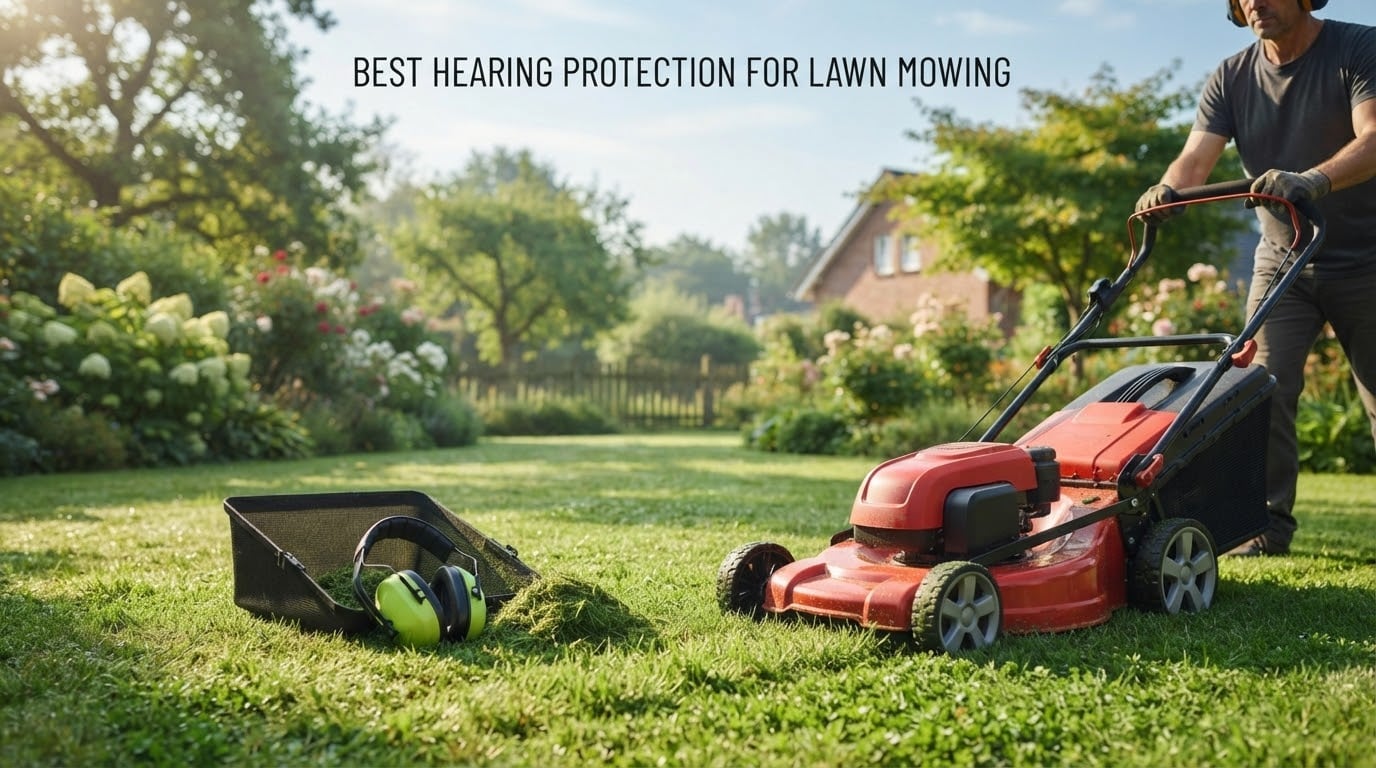
The morning after a long afternoon with a gas mower, the ringing is the tell. It fades by evening, so most people assume it was nothing. It was something: repeated exposure to mower noise causes permanent hearing changes that no supplement, break or weekend of quiet can undo.
Here is the short answer. For most people cutting a gas push mower, pick a protector rated between 25 and 33 dB NRR, and choose the one you will actually keep on your head in July heat. Comfort decides whether the protection gets used, so a well-fitted 28 dB muff beats a badly fitted 34 dB one every time.
Gas push and riding mowers sit far above the 85 dB level that safety regulators treat as a safe eight-hour exposure. Battery and electric mowers are quieter, and a manual reel mower is quiet enough that most owners skip protection. The equipment matters more than the brand.
We put ten of the highest-rated protectors through the same comparison: certified attenuation figures, weight, storage method, and how each one holds up in heat, dust and grass clippings. This is a spec-and-review comparison built on published certifications and thousands of customer reports, not a lab bench test, and we say so plainly so you can weigh it. If you are also shopping for lawn equipment, our guide to the best lawn aerators covers the other machine that puts your ears to work in spring.
Table of Contents
Top 3 Picks for Best Hearing Protection for Lawn Mowing (October 2026)

Walker’s Razor Slim Muff
- Electronic sound amplification
- Slim cups that fit under a hat
- Audio jack for music
- 12.63 oz

Pro For Sho 34 dB Earmuffs
- 34 dB NRR
- 31 dB OSHA adjusted
- Folds flat to pocket size
- ANSI and CE certified
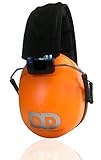
Decibel Defense 37 dB
- Highest certified NRR here at 37 dB
- No batteries or electronics
- Regular and XL sizes
Quick Overview: 10 Hearing Protectors Side by Side in 2026
Every model below carries a published noise reduction figure, either as a US NRR or a European SNR. Those two scales are not identical, so the table names whichever one the manufacturer certified.
| Product | Specifications | Action |
|---|---|---|
| Walker’s Razor Slim Electronic Muff |
|
Check Latest Price |
| Pro For Sho 34dB NRR Ear Protection |
|
Check Latest Price |
 ProCase Hearing Protection SNR 33dB ProCase Hearing Protection SNR 33dB |
|
Check Latest Price |
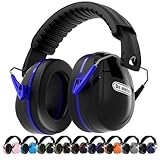 Dr.meter Noise Cancelling Mowing Earmuffs Dr.meter Noise Cancelling Mowing Earmuffs |
|
Check Latest Price |
| DECIBEL DEFENSE 37 dB NRR Ear Muffs |
|
Check Latest Price |
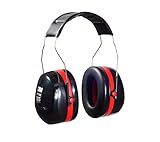 3M PELTOR Optime 105 Earmuffs 3M PELTOR Optime 105 Earmuffs |
|
Check Latest Price |
 PROHEAR 037 Bluetooth Hearing Protection PROHEAR 037 Bluetooth Hearing Protection |
|
Check Latest Price |
 PROHEAR 027 AM FM Radio Headphones PROHEAR 027 AM FM Radio Headphones |
|
Check Latest Price |
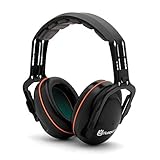 Husqvarna Headband Hearing Protectors Husqvarna Headband Hearing Protectors |
|
Check Latest Price |
 Dewalt Interceptor Safety Earmuff Dewalt Interceptor Safety Earmuff |
|
Check Latest Price |
How Loud Is a Lawn Mower, Really?
Gas-powered mowers are the loud machines in the shed. A typical petrol push mower measures somewhere in the 95 to 100 dB range at the operator’s ear, and a riding or zero-turn machine runs louder still. That is 10 to 15 dB above the 85 dB threshold that OSHA and the World Health Organization treat as a safe eight-hour exposure, and a logarithmic scale makes those extra decibels count more than the number suggests.
Here is the practical version: because the scale is logarithmic, every 3 dB of extra noise roughly doubles the exposure dose. A session at 100 dB burns through a full day’s safe noise allowance in under 30 minutes.
The quieter end of the yard is worth naming, because a good chunk of spending on protection is wasted. Battery and electric mowers sit around 75 dB, and a manual reel mower is quieter still. For a quiet mower, hearing protection is optional, though plenty of owners wear it anyway to soften engine harmonics or keep conversation out.
String trimmers, backpack leaf blowers and wood chippers are the ones people underestimate. A gas trimmer or blower will damage hearing faster than the mower most owners consider dangerous.
1. Walker’s Razor Slim Electronic Muff: Best Overall for Most Mowers
Walker’s Razor Slim Electronic Muff, Black
Electronic amplification
Two hi-gain microphones
12.63 oz slim cups
Audio input jack
Pros
- Amplifies voices and ambient sound
- Instantly blocks sudden loud noise
- Slim cups work with or without a hat
- Padded wire headband for long sessions
- Volume knob usable with gloves
Cons
- Electronic passthrough adds latency
- Directional awareness takes practice
- Faint digital artifacts on the audio input
- Needs batteries for amplification
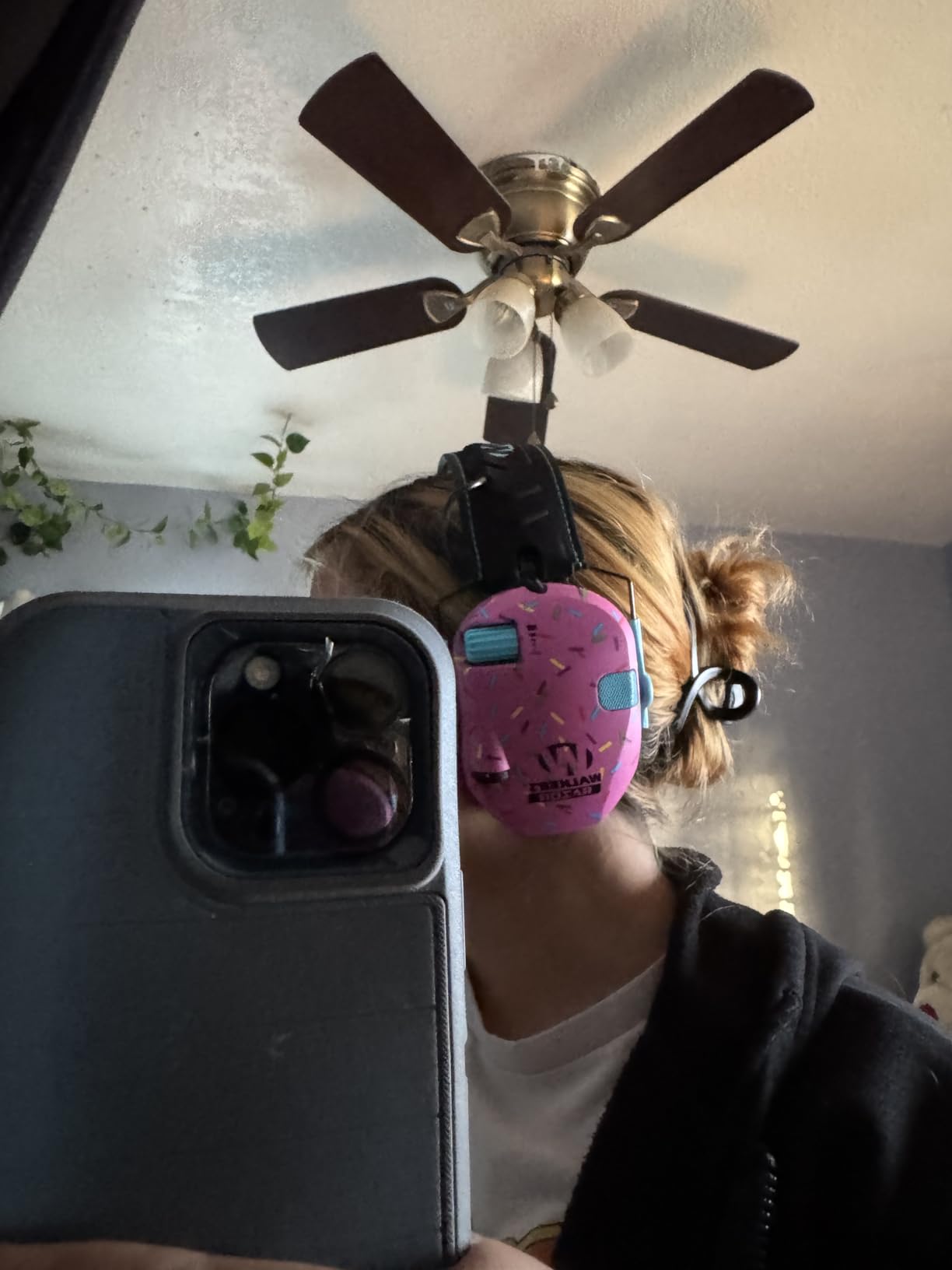
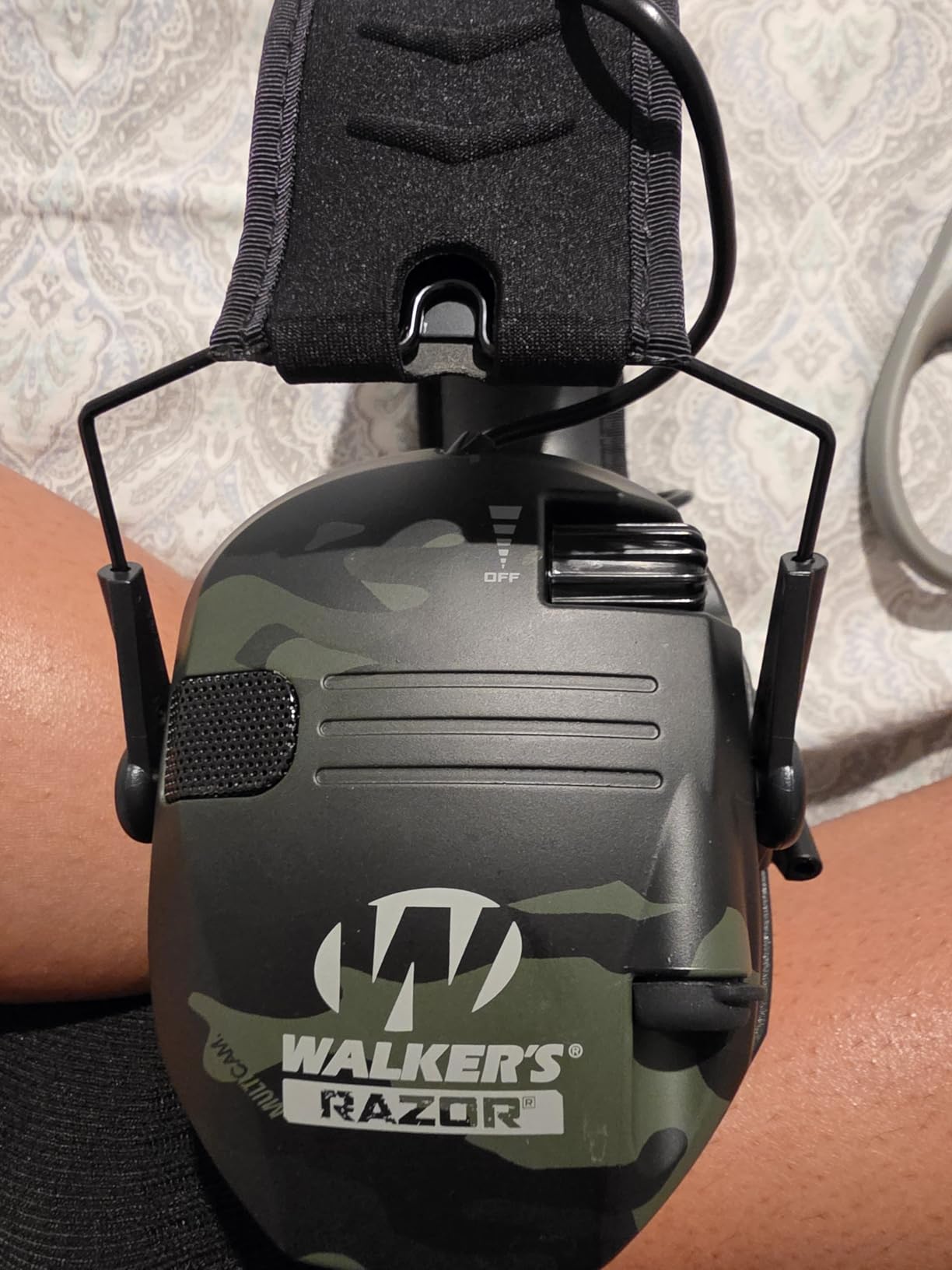
This is the pair I would put on first for a gas push mower, for one reason: the design is built so you can still hear the world. Two hi-gain microphones pull in voices, the neighbour calling out and the dog, while the electronics shut the engine down the instant it gets loud. That trade is the whole point of an electronic muff, and it solves the complaint that ruins passive protection, which is total isolation from anything ambient.
Reviewers describe the slim ear cups as fitting under a cap or sun hat without fighting it, and the padded metal wire headband as comfortable across a long afternoon. The recessed volume knob stays usable when your hands are gloved, which is a small design decision that says who it was built for.
What you give up is a data point worth knowing: the published specifications for this model list amplification, build materials and controls, but not a certified NRR figure. It is an electronic muff rather than a straight rated-attenuation pick, so treat it accordingly. If your mower is genuinely loud enough that you need a stated attenuation number on the label, one of the NRR-certified muffs further down will be the safer paper trail.
The audio jack is a bonus that works in both directions. Owners plug a phone in to listen while the electronics still handle loud transients, though they note the passthrough has an audible delay and a faint digital edge to it. It is not a hi-fi path, but it turns the muff into ordinary headphones for the drive home.
When the Razor Slim beats the alternatives
Choose it if you share the yard. Hearing a child, a dog or a partner while the engine runs matters more to most people than a few extra decibels of attenuation, and no passive muff on this list offers that. It also wins on the two scenarios owners mention most: wearing it over a sun hat, and wearing it for a long session without a headache.
It is less convincing when you are running a zero-turn, a chipper or a gas blower, where sustained 100-plus dB exposure wants the highest certified NRR you can find rather than ambient awareness. There, the Decibel Defense or 3M PELTOR options below are the better fit.
What to watch before you buy
Electronics need batteries, and batteries eventually fail. A dead pair leaves you unprotected unless you notice, so check the battery level before every session rather than assuming. There is also a real lag between the sound in the room and the sound in your ears, which some people find disorienting for the first few mowing sessions.
Directional awareness takes practice. Because both microphones work together, a sound from the side can read as coming from in front, so give yourself a week of use before you trust it near moving equipment.
2. Pro For Sho 34dB NRR Earmuffs: Best Value for Real Protection
Pro For Sho 34dB NRR Ear Protection, Noise Reduction Ear Muffs – Grey
34 dB NRR (31 dB OSHA adjusted)
ANSI S3.19 and CE EN 352-1
Folds to pocket size
7.2 oz
Pros
- 34 dB NRR in a small foldable build
- Folds flat for a tool belt
- Adjustable padded headband fits kids to adults
- Strong against high-frequency engine noise
- Certified to ANSI S3.19 and CE EN 352-1
Cons
- Tight out of the box and needs break-in
- Passive design is weaker against low-frequency sound
- Regular size can run small on very large heads
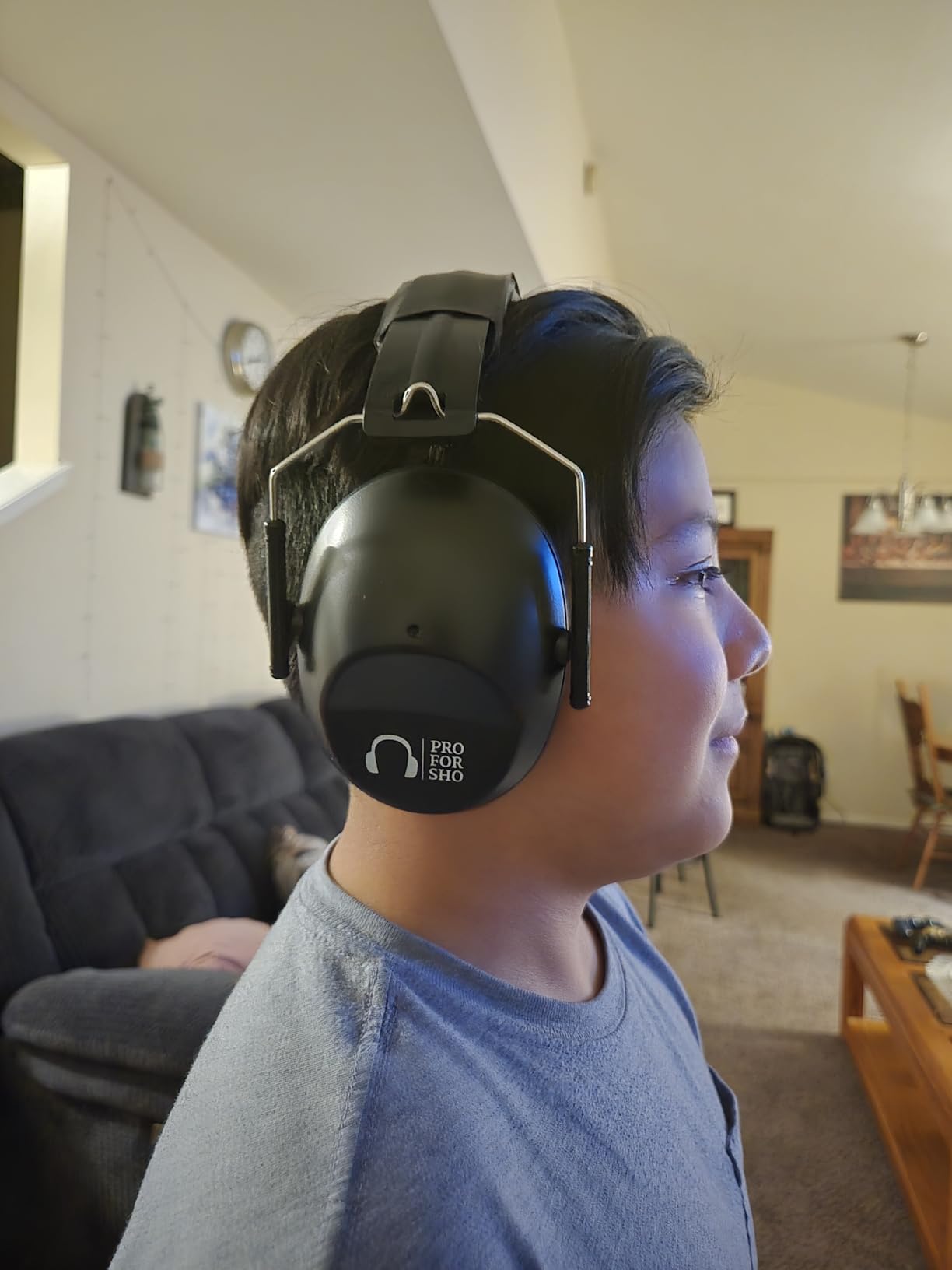
Certified to 34 dB NRR with an OSHA-adjusted figure of 31 dB, this is real attenuation in a package that folds flat. At 7.2 ounces it is one of the lighter pairs here, and the folding design is the practical part: it goes into a tool belt, a mower deck pocket or a glovebox instead of taking up a shelf.
It carries both ANSI S3.19 and CE EN 352-1 certification, which matters because the two scales are not interchangeable. The double certification also signals a properly lab-tested product rather than a marketing number. Buyers use it for yard work, shooting ranges, drumming and sensory needs, which tells you how much range it covers.
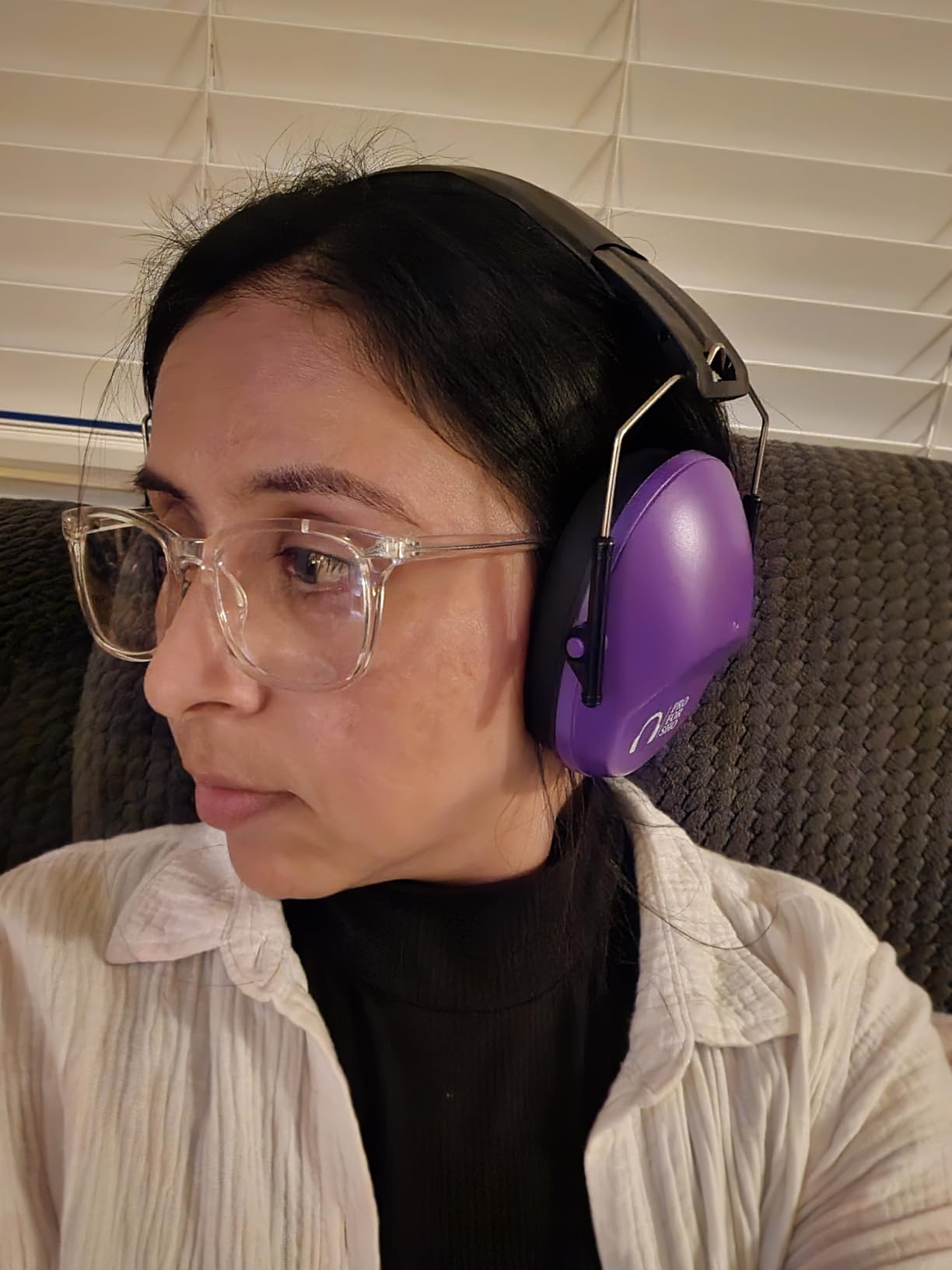
The muff ships tight, and that is by design. The manufacturer recommends clamping it over a box for two to four hours before first use, which lets the headband and cushions take the shape of your head. Skipping that step is the most common reason people call these uncomfortable in the first week.
It is a passive design, so it reduces sound rather than managing it electronically, and low-frequency noise passes through more than a powered muff would allow. Engine harmonics in that range are exactly what a mower throws at you, so if you run a big riding machine, test it before you commit.
Why this one earns the value slot
Nothing else in this roundup pairs a top-tier certified NRR with a body that light and that compact. The certified 31 dB OSHA figure is among the highest verified attenuation levels in this group, and the dual certification removes the guesswork about whether the number means anything.
It suits a household with more than one machine. A second pair folds into the bed of the truck so the blower and the mower each have protection, which is exactly the practice owners describe when they talk about keeping a pair by each machine.
Where it falls down
Sizing is the honest weakness. The regular size runs small on very large heads, and the fit is snug out of the box, so an adult with a wide head circumference should try before settling on it. Kids and smaller adults are well served by the adjustable padded band.
It also does nothing for situational awareness. Once it is sealed, you will not hear insects, birds or a car pulling into the drive. Anyone mowing near a road, or around young children, should keep that in mind.
3. ProCase Hearing Protection Ear Muffs SNR 33dB: Best Budget Pick
ProCase Hearing Protection Ear Muffs SNR 33dB, Noise Cancelling Headphones
SNR 33 dB certified (US NRR 28 dB)
NVLAP accredited lab tested
Foldable compact design
ABS shell
Pros
- Cuts background noise but keeps speech audible
- Comfortable enough to wear all day
- Folds into a compact ball
- No batteries or charging
- Works over glasses with little leakage
Cons
- Headband range is limited on very large heads
- Bulkier than slim designs when lying down
- Needs force to expand the metal band the first time
With tens of thousands of owner reviews behind it, this is the pair people describe as the one they reach for without thinking. The certified figure is SNR 33 dB under the European standard, with a US equivalent of NRR 28 dB, tested by an NVLAP-accredited lab. That is enough attenuation for a standard gas push mower, and the fold-down design keeps it in the bag with the rest of your kit.
What reviewers mention most is that it lowers the volume without erasing the world. Owners using them for shooting, construction and study say conversations still come through. That is the passive-attenuation sweet spot, and combined with a metal frame that holds its shape it holds up better than the price suggests.
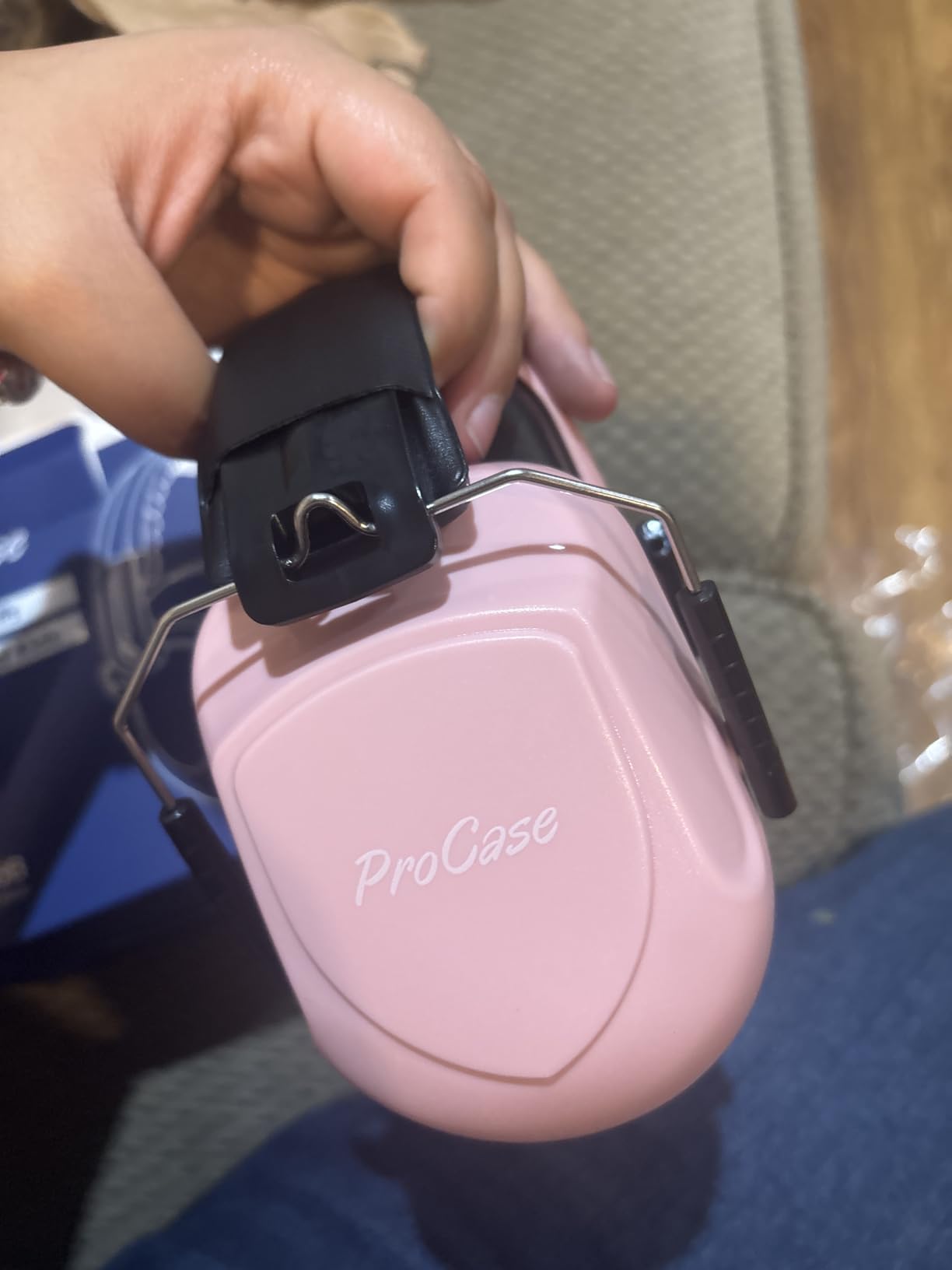
There is no electronics, so nothing to charge and nothing to fail. The ABS shell tolerates being tossed in a bag, and the thickened pads are described as soft and breathable enough for all-day wear, including overnight for people who use them for sensory overload.
They also work over glasses with minimal leakage, which is a practical filter that knocks out a lot of muffs. If you wear prescription glasses or safety glasses, the seal holds better here than with designs that push frames into the cushion.
Is the SNR figure or the NRR figure the one to shop by?
Shop by the US NRR if that number appears on the box, and by the SNR otherwise. This pair is certified to the European standard, where 33 dB SNR corresponds to about 28 dB NRR. Treat the SNR number as roughly five points lower than the equivalent US figure, and the two stop looking contradictory.
At 28 dB NRR, this is a solid match for a push mower and adequate for a riding mower on a short cut. It is not the choice for a gas blower, a chipper or a zero-turn, where you want the 34 dB of the Pro For Sho or the 37 dB of the Decibel Defense.
What to know before it arrives
The recurring limitation is sizing on large heads. The headband has a limited adjustment range, and owners with larger head circumferences report a tight fit; a larger size in the same range is the usual recommendation. It is also bulkier than slim models when worn lying down, which matters if you use it for sleep.
The first expansion of the metal band can need a little force. Work it open gradually rather than forcing it in one go, and the adjustment holds for far longer.
4. Dr.meter Mowing Earmuffs: Best for Small Heads and Mixed-Age Households
Dr.meter Noise Cancelling Headphones for Adults Kids Ear Protection Mowing
SNR 31 dB / NRR 26 dB
ANSI S3.19-1974 and CE EN 352-1
Memory foam under PU leather
Folds very small
Pros
- Lowers volume without cutting off conversation
- Soft PU leather and memory foam cushions
- Adjustable band fits kids through adults
- Folds tiny and includes a pouch
- Colourways kids will actually wear
Cons
- Cushions can get sweaty on long sessions
- Runs tight until broken in
- Skews toward smaller head sizes
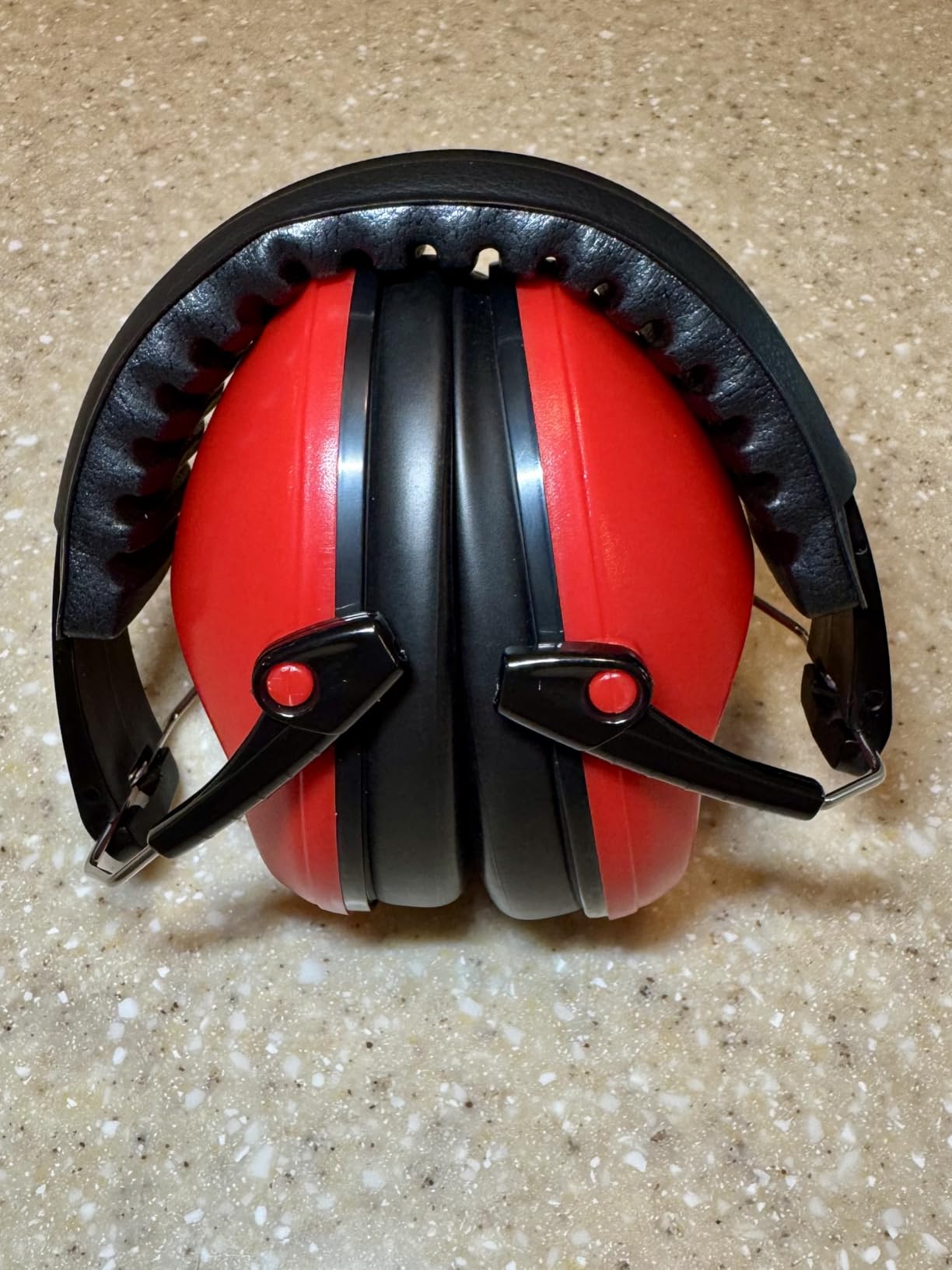
This is the pair to buy when the person wearing it is small, or when a whole family shares the equipment. The adjustable band spans kids through adults, the cushions are memory foam under PU leather, and the colour range is the sort children will actually put on without a fight. Owner reviews do describe the adjustable band working for a whole family sharing one machine, from a teenager to a parent.
Certification is double-stamped at ANSI S3.19-1974 and CE EN 352-1, with a combined rating of SNR 31 dB and NRR 26 dB. That sits at the lower end of what you want for a gas mower, which makes it a better match for a battery mower, a trimmer pass or a yard shared between adults and older children.
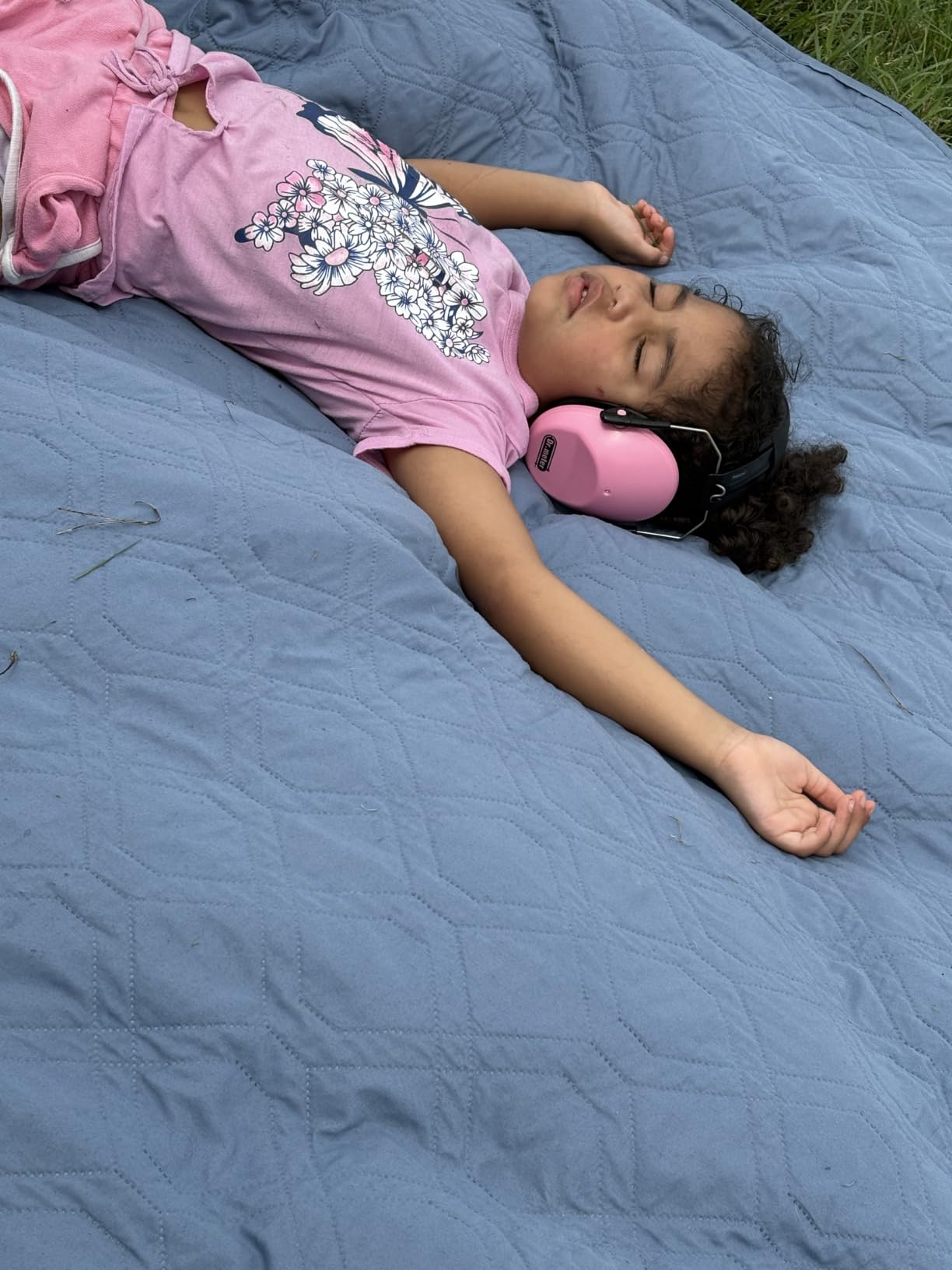
The build is more interesting than the number suggests. ABS shells are layered with triple-layer acoustic foam, which is why owners say the muffs lower volume while leaving conversation audible. The folding design collapses smaller than a burger and comes with a pouch, so it can live in a glovebox or a tool belt rather than a drawer.
It holds up to drops and travel, based on owner reports, and the memory foam cores are designed to avoid pressure marks. That last point matters more than it sounds: pressure marks are the reason people quit wearing protection after a season.
Which household situations suit it best
Small and medium head sizes, first and foremost. Owners with larger head circumferences say the fit skews small, so a full adult should check the sizing before committing. It also suits mixed households where the same protector needs to fit a teenager and a parent, and it works with tractors, chainsaws in the woodshop and general yard work.
It is the sensible pick for a battery or electric mower, where 26 dB of NRR is more than the job requires. Spending more attenuation on a quiet machine is insurance you do not need.
The heat problem to plan for
PU leather over memory foam holds heat, and owners report sweaty ears on long sessions in high temperatures. That is the trade for a soft seal, and it is the main reason some people switch to slim cups or plugs for July.
The fit also runs tight out of the box. The manufacturer’s own advice is to loosen the band over a box or a size 3 soccer ball for a couple of hours first. Skipping that is the fastest way to write the pair off.
5. DECIBEL DEFENSE 37 dB NRR Ear Muffs: Best for the Loudest Machines
DECIBEL DEFENSE Ear Protection, 37 dB NRR Ear Muffs (HI-VIZ ORANGE)
37 dB NRR passive design
ANSI S3.19 and CE EN 352-1
11.7 oz
Foldable, Regular and XL
Pros
- Highest certified NRR in this roundup at 37 dB
- No batteries and no electronics to fail
- Comfortable enough to sleep in
- Non-irritating skin contact wipes clean
- Blocks leaf blowers and shredders
Cons
- Bulky next to slim-profile muffs
- Regular size runs short on larger heads
- Adjustment is unclear without instructions
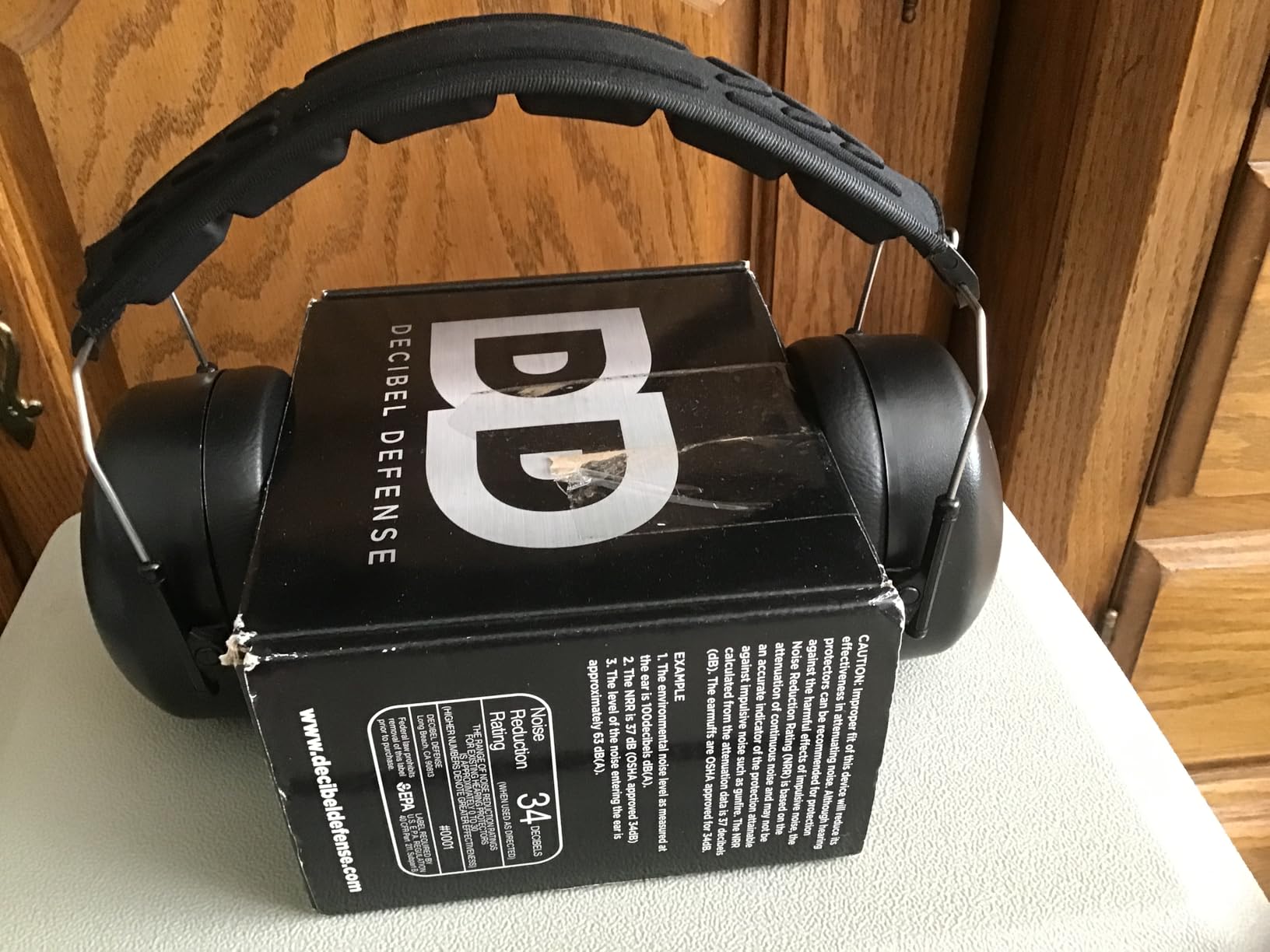
If your equipment is loud enough to worry you, this is the highest certified attenuation in the group at 37 dB NRR, approved to both ANSI S3.19 and CE EN 352-1. Owners use it on leaf blowers, shredders and riding mowers, and the reports of it blocking storms and even neighbours suggest the seal is doing real work rather than just adding a number to a box.
It is fully passive, with no batteries and no electronics. For the person who would rather not think about charging anything, that is a genuine advantage, and it is why reviewers describe it as dependable in situations where a powered muff would leave you unprotected the moment a battery dies.
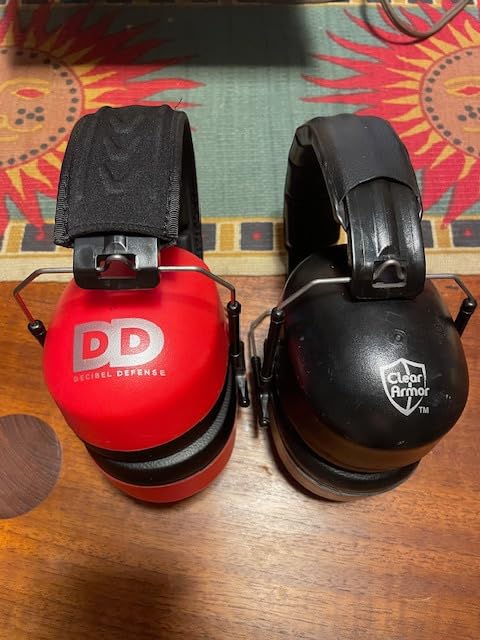
Comfort is the standout finding. The padded headband and soft dBTech foam are described as comfortable enough to wear for hours, including for sleep, at 11.7 ounces. The skin-contact material does not irritate and wipes clean of sweat, which is a small thing that decides whether a muff stays in the rotation through August.
Two sizes are offered, with the ear cups sliding on metal sliders. That is the mechanism to size carefully, and it is also the source of the most common complaint about this pair.
When 37 dB is the right call
Zero-turn and riding mowers, gas string trimmers, backpack blowers and wood chippers. Those are the machines where extra attenuation is not a luxury. Anyone who has finished a session with ringing ears already knows the category they belong to, and this is the strongest certified option in the roundup.
It also suits people who mow for a living, where the exposure repeats several times a week. For a commercial schedule, the passive build means no charging stops and no electronics to fail on a wet morning.
Sizing and label confusion
Two things catch people out. The regular size runs short on larger heads, and the XL version adds the extension needed, so size up rather than fighting the sliders. Separately, the packaging references 37 dB while also citing the 34 dB standard maximum, which several buyers found confusing until they checked the certification label.
Also expect a bulkier profile than slim muffs, and no printed instructions in the box, so budget a few minutes to work out the adjustment before the first mow.
6. 3M PELTOR Optime 105 Earmuffs: Best for Professional-Grade Work
3M H10A Peltor Optime 105 Over the Head Earmuff, Ear Protectors, Hearing Protection, NRR 30 dB
Rated for exposures up to 105 dBA
NRR 30 dB
Double-shell earcups
Stainless steel headband
Pros
- Rated for noise exposures up to 105 dBA
- Pivoting earcups spread pressure for long wear
- Double-shell blocks more than single-shell design
- Stainless steel headband resists bending
Cons
- Heavier and bulkier than consumer earmuffs
- Over-the-head band can clash with hats and helmets
- Does not fold flat for storage
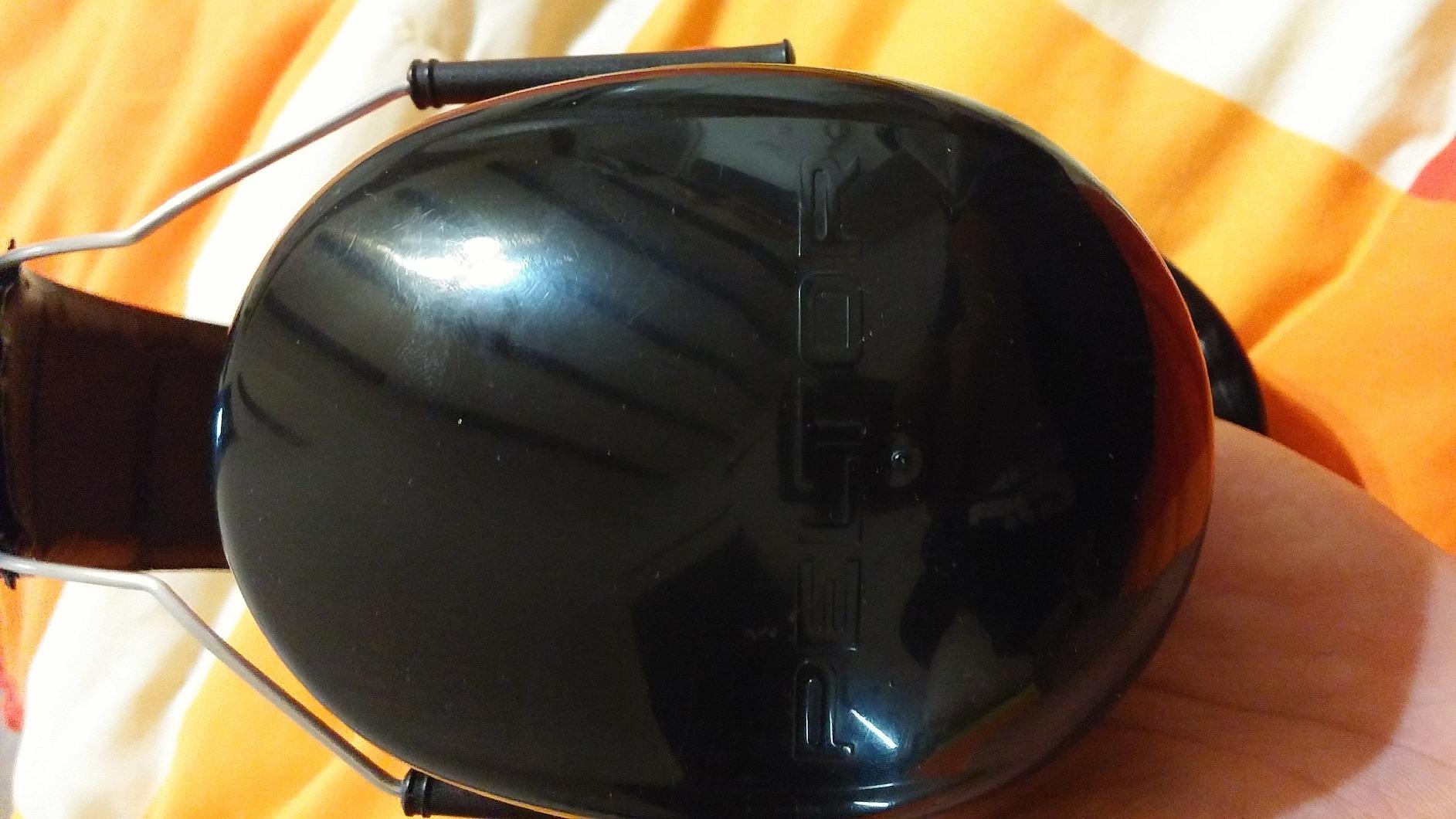
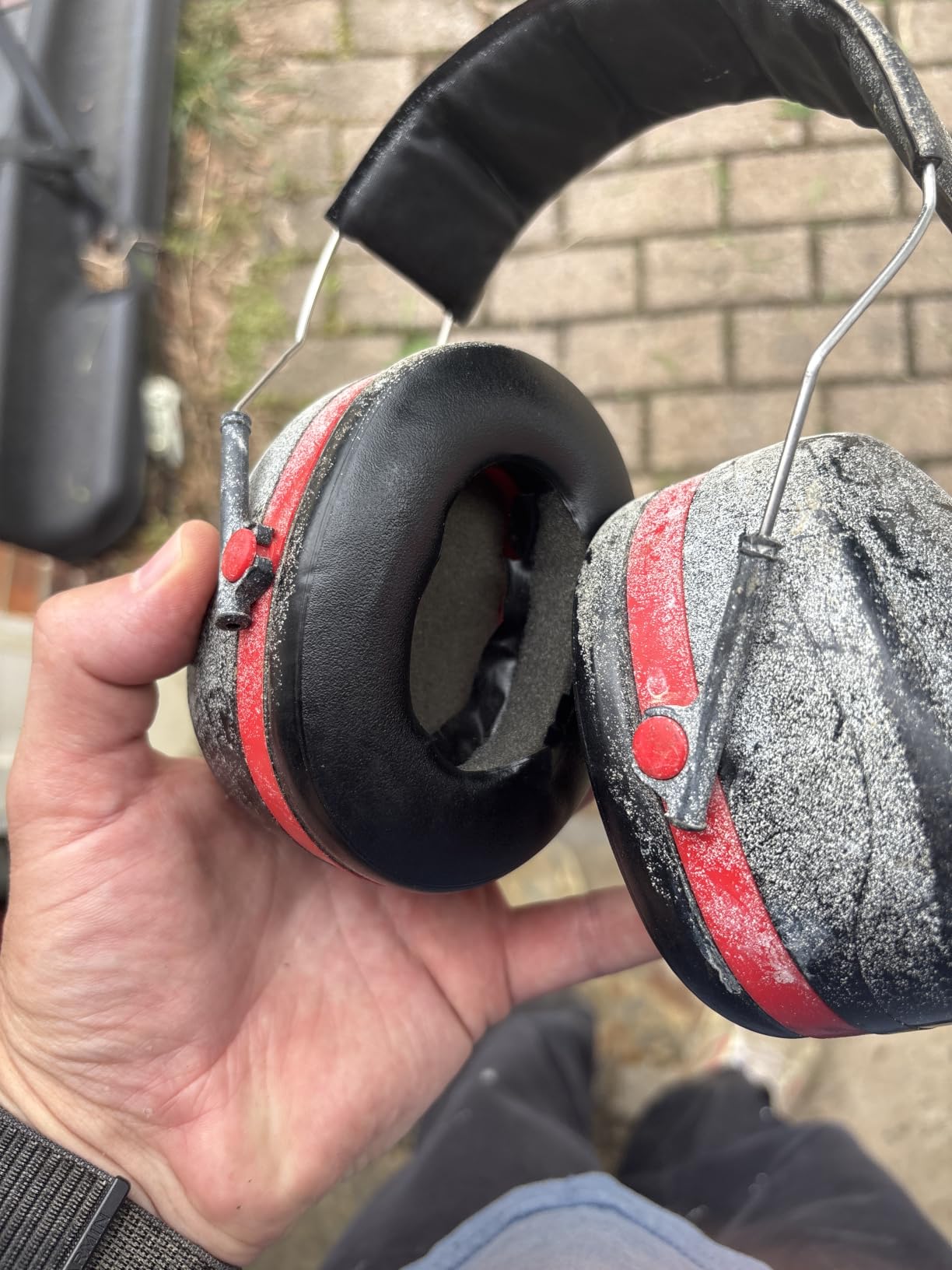
This is the industrial option, and buyers treat it that way. It is rated for noise exposures up to 105 dBA with an NRR of 30 dB, and 3M describes that figure as the highest available in an over-the-head style design. The double-shell construction is what separates it from lighter consumer muffs, blocking substantially more sound by using two separated shells rather than one.
The headband is stainless steel, and that is not marketing. It resists bending and warping in a way plastic bands do not, which is why these show up in workshops and on job sites as much as in yards. The earcups pivot so they can tilt to the shape of your head, spreading contact pressure instead of clamping it.
It is also E-A-Rfit compatible, so you can pair it with a related in-ear protector if you want to double up. That combination, foam plugs under over-ear muffs, is the standard approach for chippers and other equipment where the noise is extreme.
The trade is weight and bulk. This is not a pair you fold into a tool belt, and the over-the-head band interacts awkwardly with a wide-brim hat or a hard hat, which is a real problem on a commercial crew that wears both.
Who this suits
Anyone with a job rather than a hobby in this category. Commercial landscapers, shop owners and anyone running a mower or trimmer for hours at a time are the natural fit, because the 105 dBA rating covers the equipment you actually own rather than a typical weekend machine.
It also suits people who already have lost some high-frequency hearing and want every decibel of margin they can get. The steel band and pivot cups are built for a full working day.
Where it gets in the way
Storage. These do not fold flat, so they live in a truck cab or on a hook, not in a bag. That is a real inconvenience for someone who mows at a different site each week and carries protection with them.
Comfort pressure is the other one. They are heavier and bulkier than lightweight consumer earmuffs, and the top band can interfere with headwear. If you wear a sun hat every session, the folding models on this list are a better long-term fit.
7. PROHEAR 037 Bluetooth Hearing Protection: Best for Music and Calls
PROHEAR 037 Bluetooth 6.0 Hearing Protection Headphones with Rechargeable 1100mAh Battery, 30dB SNR Safety Noise Reduction Ear Muffs 120H Playtime for Mowing, Workshops, Snowblowing – Black
SNR 30 dB
Bluetooth 6.0 up to 80 ft
1100mAh battery, 120H playtime
11.52 oz
Pros
- Real protection plus music and phone calls
- Battery lasts many mowing sessions
- Controls work while wearing gloves
- Stable 80 ft Bluetooth connection
- Includes a carrying bag and cable
Cons
- Bluetooth circuitry adds bulk
- Needs periodic recharging
- Lowest average rating in this group
Bluetooth hearing protectors solve the problem almost nobody admits to: the reason people wear ordinary headphones on a mower is that the alternative is silence. This pair gives you SNR 30 dB of passive attenuation and stereo music from the same cups, so the music is played at a safe level instead of being turned up against a 100 dB machine.
The wireless range is listed at up to 80 ft with Bluetooth 6.0, and that number matters outdoors. The complaints we see in owner reports about Bluetooth dropping out are usually about ordinary consumer earbuds; a stated 80 ft range means you can push the mower at the far end of a lawn without losing the connection.
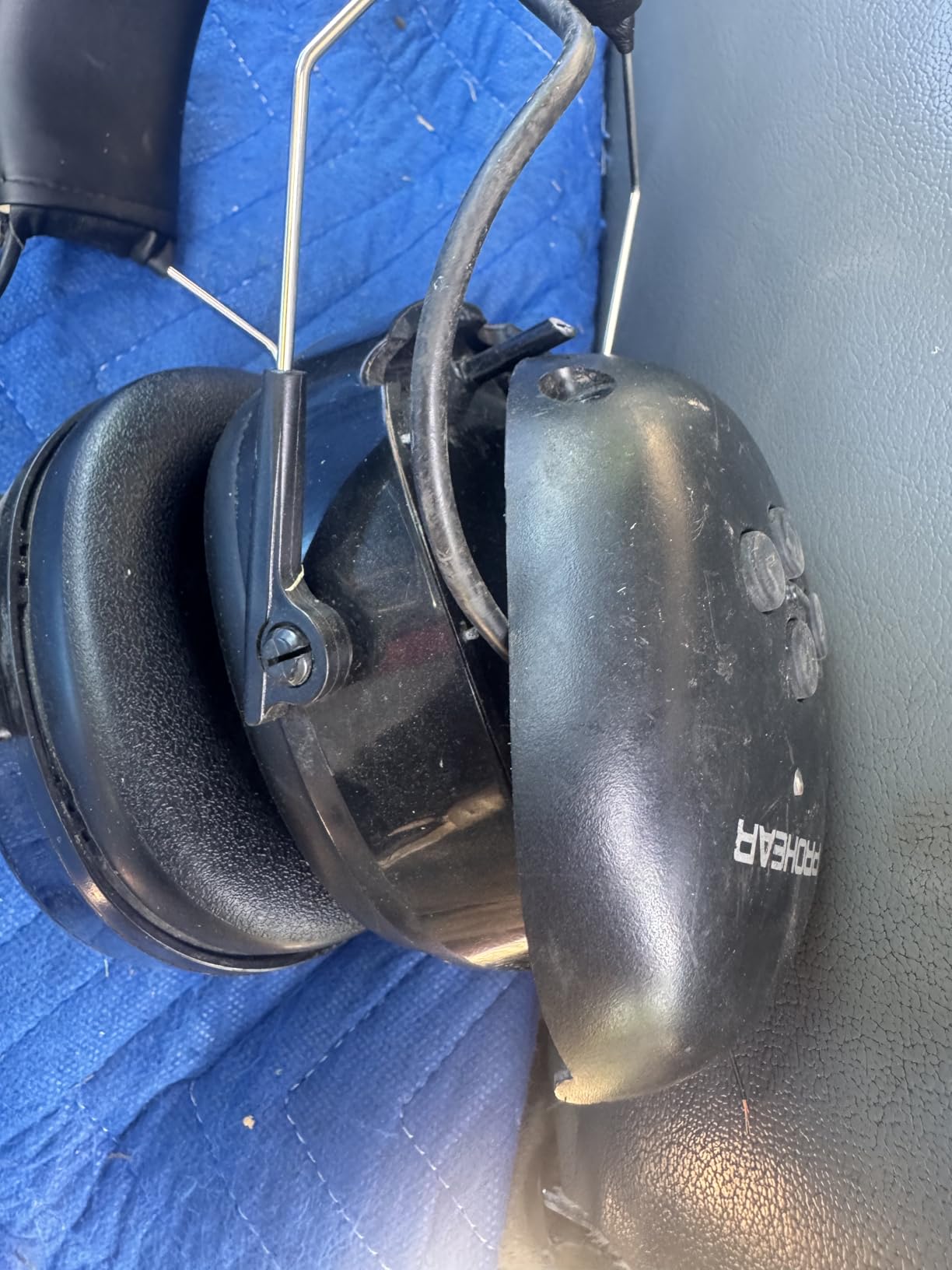
Battery life is the other headline: a 1100mAh rechargeable cell with 120 hours of stated playtime, plus a 3.5mm connector and a charging cable in the box. For a weekly mow, charging is a monthly event at most. The raised on-ear control buttons are deliberately shaped to be operated with work gloves on, which is a small design decision that tells you who it was built for.
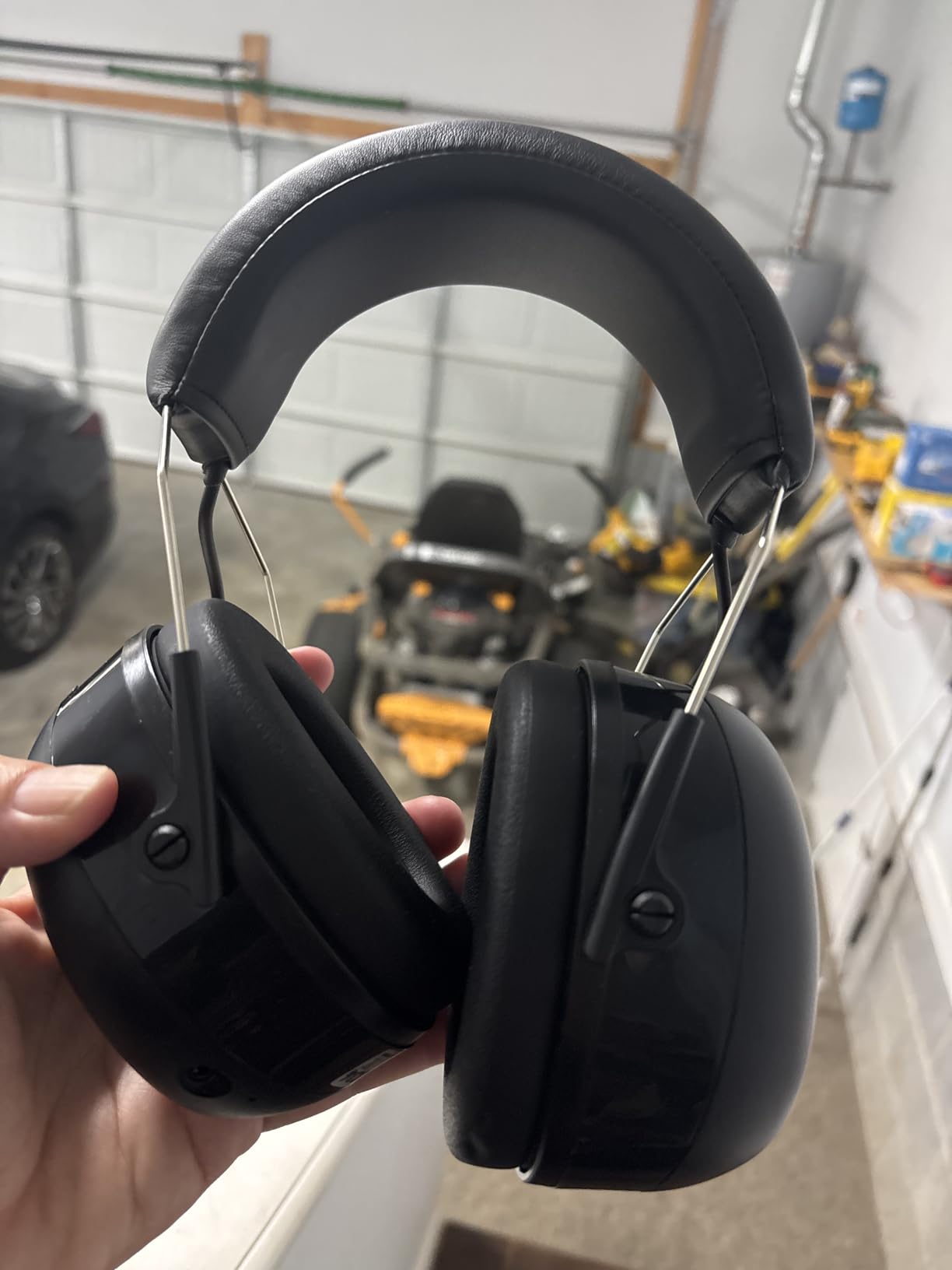
Comfort is handled with soft breathable ear pads and a padded headband, and the whole thing weighs 11.52 ounces. A leather carrying bag is included, so it is not the pair that ends up forgotten in the garage.
When Bluetooth earns its extra bulk
It wins on long lawns, where a phone left on a windowsill goes out of range. If you mow away from the house, or work a spread-out property, the stated 80 ft range is the difference between a soundtrack and silence. Call handling is the other win. Landscaping professionals describe needing protection that survives a full shift while still taking customer calls on the job, and that is exactly where this pair fits.
It is also the pick for anyone who has already decided that a total seal is unacceptable. A lower NRR with music and voices is far more likely to be worn every single time than a 37 dB muff that gets abandoned in the porch.
What the trade costs
Electronics add bulk compared with a passive muff, and a rechargeable cell is another component that can fail. If it dies mid-season, you are holding an expensive pair of headphones until it is fixed.
Also note this pair carries the lowest average rating in the roundup, with a larger share of one-star reviews, mostly about build quality. That is a fair warning, though the protection figure itself is not in question. One more caution: playing music while you work makes it more tempting to turn the volume up, which works against you.
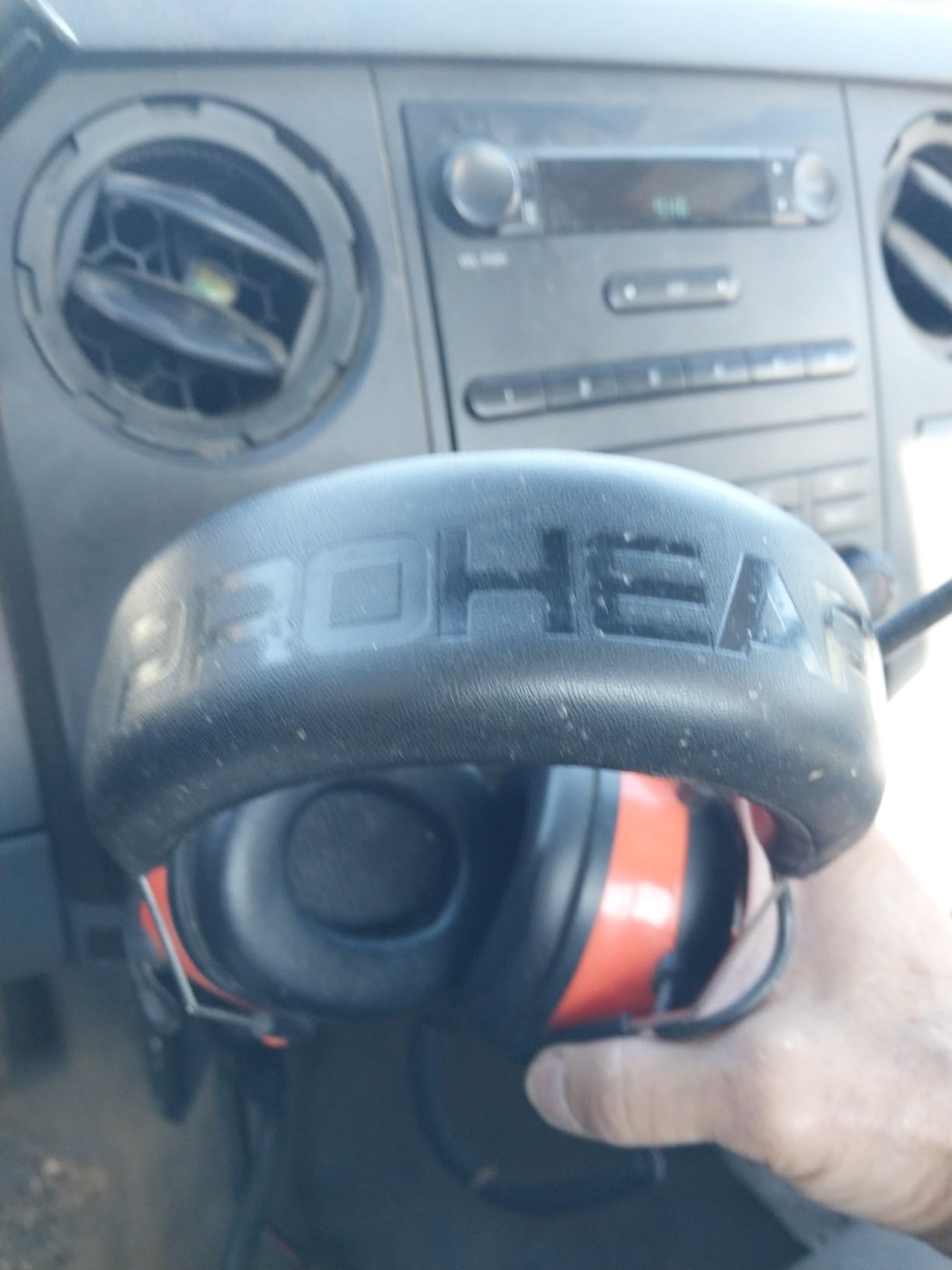
8. PROHEAR 027 AM FM Radio Headphones: Best for Working Away From Signal
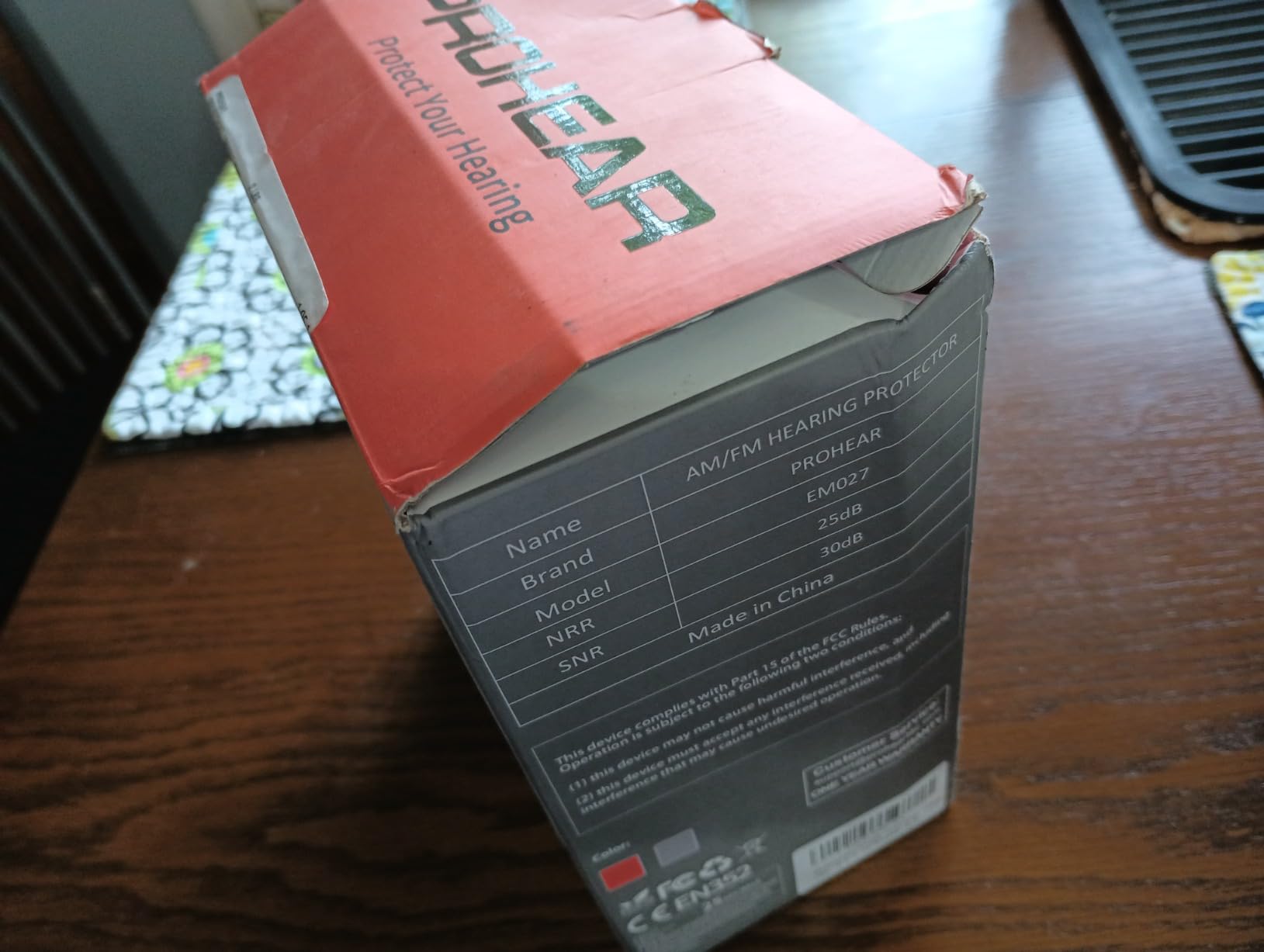
PROHEAR 027 AM FM Radio Headphones with Digital Display, 25dB NRR, Safety Ear Protection Earmuffs for Mowing, Snowblowing, Construction, Work Shops – Orange
25 dB NRR with an 85 dB volume limit
AM/FM radio with LCD display
7.36 oz
Stores 10 AM and 10 FM stations
Pros
- Radio works where phone signal does not
- Lightweight at 7.36 ounces
- 85 dB volume cap keeps long sessions safer
- Clear LCD with manual and auto scanning
- 3.5mm AUX input included
Cons
- Lowest NRR of the passive muffs here
- Two AA batteries not included
- Batteries can loosen in the compartment
- Reception quality varies by location
Where a Bluetooth pair needs a phone and a radio pair needs nothing, this is the pick. The built-in AM/FM receiver with an LCD display is tuned for exactly the situation a mower creates: you are two acres from the house, out of phone range, and still want the forecast or a game call.
It stores 10 AM and 10 FM stations, with both manual and automatic scanning, and it carries an 85 dB volume limit. That cap is a real safety feature rather than a gimmick, because it stops the radio from being turned up loud enough to matter once the attenuation starts doing its job.
It comes with a 3.5mm AUX port so you can plug in another audio source if you would rather leave the radio behind, and a carrying bag is included.
The protection rating is 25 dB NRR, the lowest of the passive muffs in this group. That is enough for a standard push mower and a battery mower, and thin for a riding mower, a gas blower or anything else sustained.
Radio, Bluetooth or plain protection
Choose the radio if you work far from a signal or you genuinely do not want a phone on your person in the yard. It has no pairing step, no app and no firmware, which is also why it keeps working when a Bluetooth pair is busy re-pairing.
Choose Bluetooth if you want your own audio, podcasts or calls and you are within range. Choose a passive muff if you want nothing between you and the sound of the machine, and the lowest weight in the list.
Watch the battery compartment
This pair runs on two AA batteries, and they are not included. Owners report that batteries can work loose in the compartment over time, which is a real nuisance when the display depends on them.
A dead pair can also leave the LCD partially unreadable, which makes a station scan confusing until fresh cells go in. Use alkaline batteries rather than lithium, as the manufacturer advises, and check the compartment before the season starts.
9. Husqvarna Headband Hearing Protectors: Best for Long-Wear Comfort
Husqvarna Professional Headband Hearing Protectors 25dB(A) NRR, Lightweight Ear Protectors with Padded Headband and Clamshell Design for Hearing Protection, Black
25 dB(A) NRR
Lightweight flexible padded headband
Clamshell ear cups
Disassemblable for washing
Pros
- Supple headband avoids pressure headaches
- One thumb-slider covers a wide fit range
- Shell tolerates rain and sweat
- Works over a hat and with eyewear
- No battery and stacks compactly
Cons
- Fit is tight out of the box
- Adjustment sliders are not clearly explained
- Disassembly takes practice
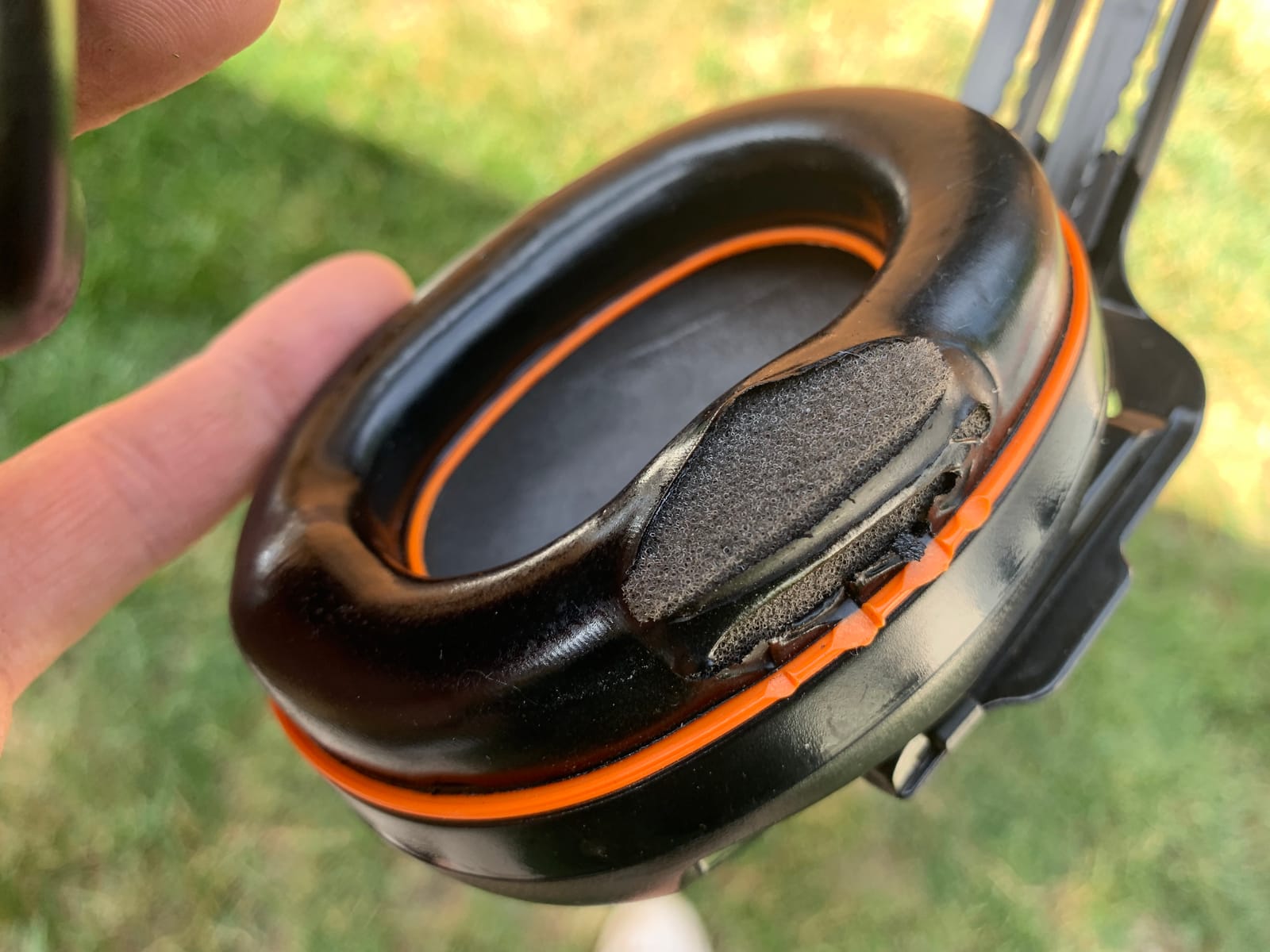
Long-term owners describe the padded headband on this pair as the most comfortable they have worn, and the specific reason is the absence of pressure points. That is the single most common reason people stop wearing over-ear protection: a band that clamps tight enough for extra attenuation ends up causing a headache after twenty minutes.
The protection figure is 25 dB(A) NRR, on the modest side, but the design is built around wearability. The thumb-slider adjustment ranges from slack to tight, the foam cushions hold their shape while staying pliable, and the whole unit is listed as one size fitting most heads.
It is genuinely dismountable, which matters more than it sounds. Owners take them apart to wash and sanitise, and reassemble them, so sweat and grass clippings do not build up over a season. The tough plastic construction is reported to tolerate rain, sweat and drops without complaint.
It also works with eyewear without discomfort and can be worn over a hat, and it stacks compactly enough that it is not the bulkiest thing in a bag. No battery, no charging, nothing to remember before the first mow of the year.
Who rates comfort above raw attenuation
Anyone who has already failed with tighter muffs. Owners switching from cheaper rubber-band muffs to this pair describe the difference as the end of the headaches, and for a person who mows every week from April to October that consistency is worth more than a few decibels.
It is also a strong pick for anyone wearing a sun hat, since owners confirm it can be worn over one. For a riding or zero-turn mower, pair it with earplugs underneath rather than relying on 25 dB alone.
Snug by default, and vague instructions
Two cautions from owners. The fit is tight out of the box, and large-head wearers may find no looser option, so this one favours medium head sizes. The adjustment sliders are also not explained clearly in the instructions, which is where most first-time frustration comes from.
Disassembly and reassembly also take some practice, so do it once in the shed before you need the wash routine mid-season.
10. Dewalt Interceptor Protective Safety Earmuff: Best for Folding Storage
Dewalt DPG62-C Interceptor Protective Safety Earmuff Yellow/ Black, Adult
29 dB NRR
Lightweight design
Cushioned ear cups
Folds to keep dust out of the cups
Pros
- 29 dB handles mowers and weed eaters
- Light enough to forget you are wearing it
- Cushions stay comfortable over long sessions
- Folding design keeps dust and debris out
- Bright yellow adds visibility
Cons
- Band can feel tight and leave ears sore
- Does not block sharp high-pitched noise
- Can clash with the arms of safety glasses
A 29 dB NRR sits in the middle of this roundup, which is exactly where a gas push mower puts you. Owners use these for lawn mowers, weed eaters and shop tools and describe them as effective against that class of noise, with cushions that stay comfortable over extended sessions.
The headline feature is the compact folding design, and the reason it matters is specific to lawn work. Folding the cups inward keeps dust and debris out of the ear cavities, which is what happens when a muff lives in a dusty shed or a mower deck for a month between cuts.
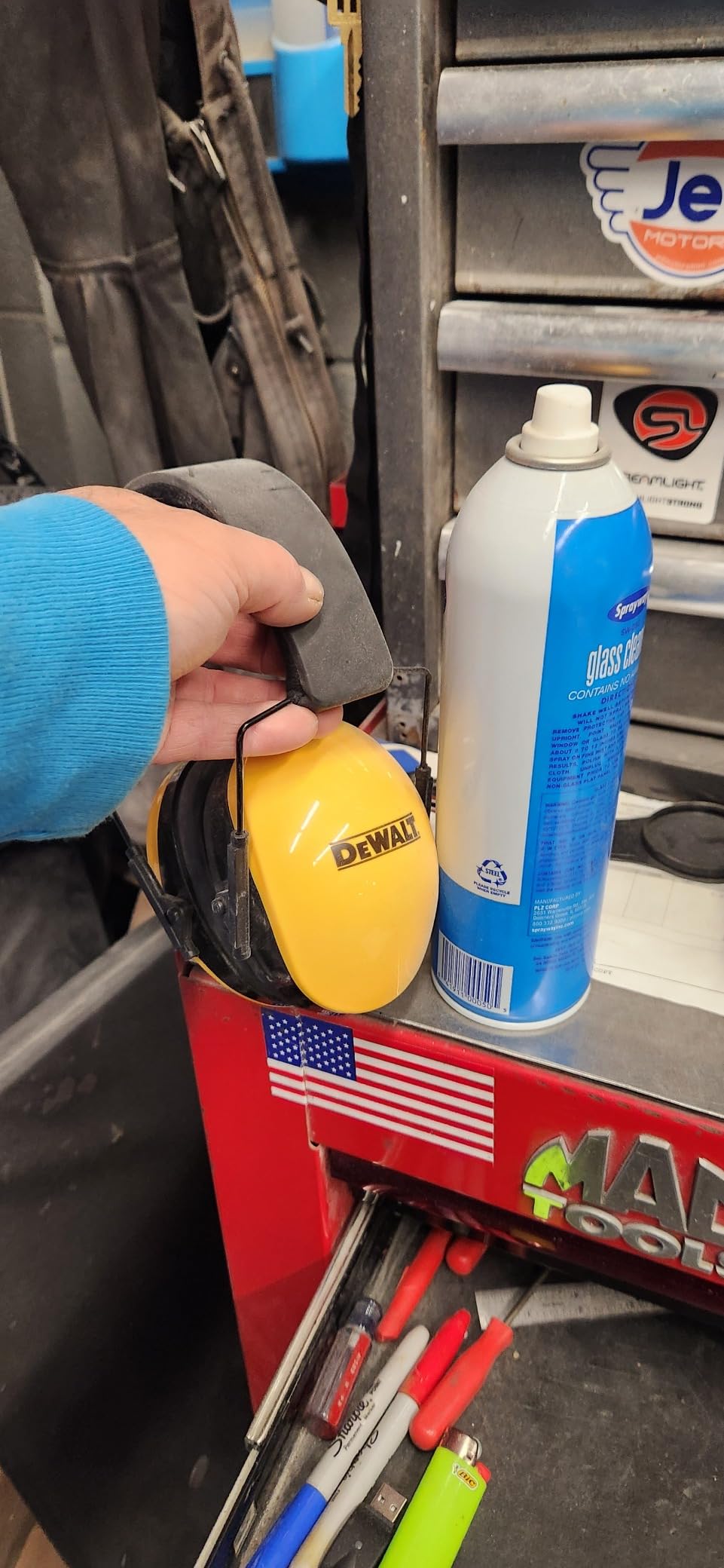
It is light enough that owners forget they are on, and the high-visibility yellow and black colourway is a small safety plus when you are not wearing a vest, such as when someone else is on the mower with you.
It also fits larger heads well and works with safety glasses, both of which knock out plenty of slimmer designs. For a mower that also involves goggles or a face shield, that is a meaningful advantage.
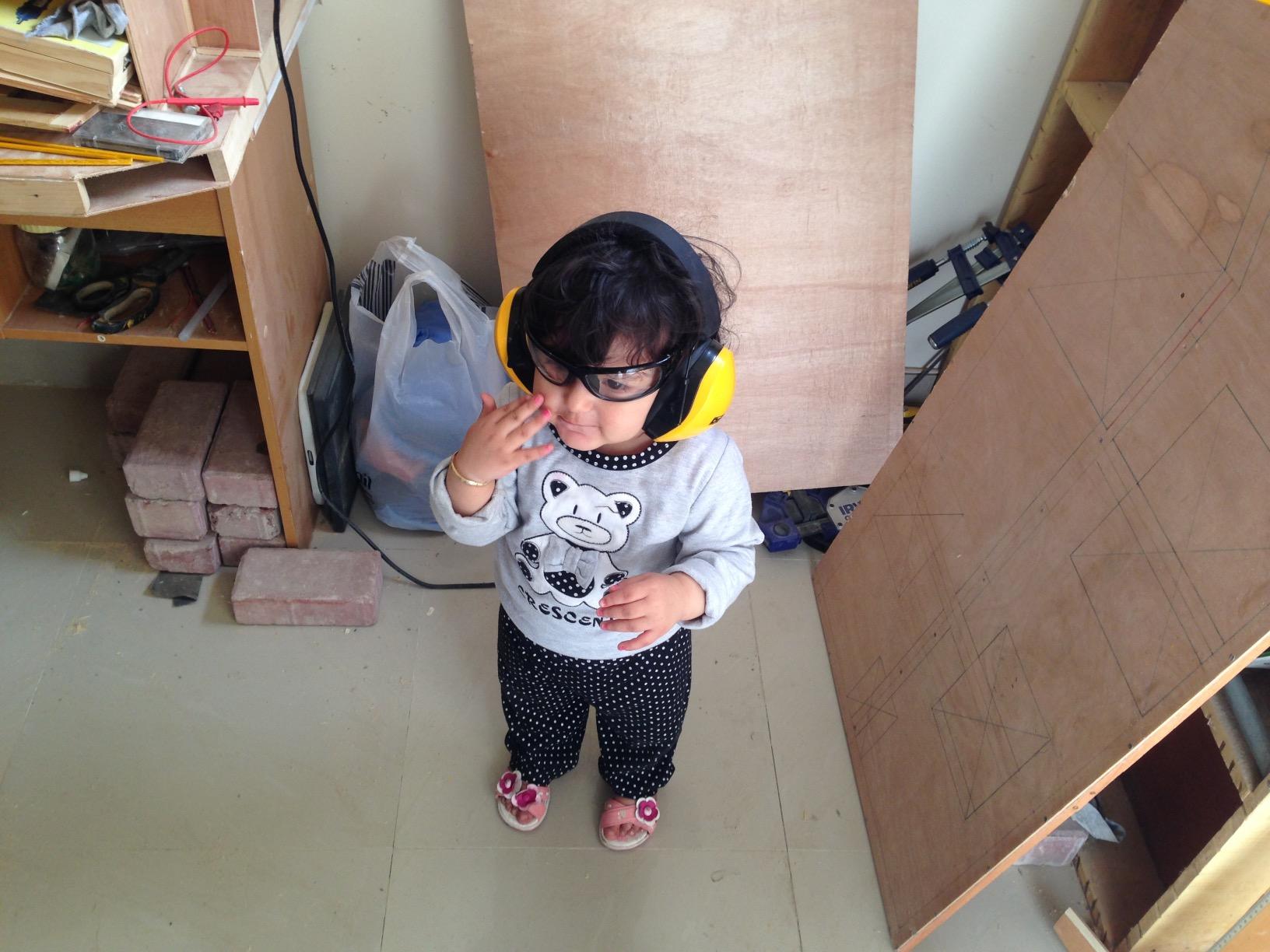
Why folding storage matters more than it looks
Protection that is annoying to put away does not get put away, and protection that lives in the house does not get worn to the yard. A pair that folds into a glovebox or a tool bag is far more likely to be on your head when the engine starts, which is the point of buying it.
It is also the pair to consider for anyone mowing several properties, since you can leave a set in each vehicle without the bulk of a non-folding muff.
Limits to know about
The band runs tight enough that some owners report sore ears after long sessions, so loosen it before the first cut rather than wearing it at maximum tension. It also muffles rather than silences, so sharp high-pitched metal-on-metal noise still comes through, and that is why it is a poor choice for the shooting use its shape suggests.
Finally, the arm of some safety glasses can interfere with the seal. If you wear glasses every time you mow, check the fit with them on rather than testing bare-headed.
What NRR Do You Actually Need for Mowing?
The shortest version: match the protection to the machine, not to a number. A battery mower needs very little, a standard gas push mower needs a mid-range NRR, and a zero-turn with a blower attachment deserves the highest rating you can comfortably wear for the whole session.
Match the NRR to your machine
Manual reel mowers sit below the level where protection is needed, and battery or electric mowers are quiet enough that any comfortable pair will do. A petrol push mower is where protection starts to matter, and a mid-20s NRR is the right starting point. Riding and zero-turn machines, gas string trimmers and backpack blowers deserve 30 dB or above. Wood chippers are the extreme case, and they are where plugs under muffs become normal practice.
Two people are usually wrong about this in opposite directions. Owners of a quiet battery mower buy the highest-rated muff on the page and find it uncomfortable, then stop wearing it. Owners of a gas blower buy a 20 dB pair and lose hearing a little each season. Equipment type settles the question faster than any spec sheet.
Why the label NRR overstates real protection
The number on the box is a laboratory estimate measured under ideal conditions, and the field reality is meaningfully lower. Regulators account for this with a derating formula that subtracts 7 from the NRR and halves the result, and it is worth understanding why.
Lab testing fits a protector perfectly on a head that does not move, with a seal maintained the whole time. In a yard the seal breaks constantly. A hat shifts, sweat changes the friction at the cushion, glasses bend the frame, and a strap that was snug at 8 a.m. is loose by noon. Every one of those moments leaks sound.
So a 26 dB earplug, worn well, frequently beats a 32 dB foam plug worn badly. Fit is the variable, which is why every product section above names the break-in step where one exists.
How to fit foam earplugs properly
Roll the plug between your thumb and forefinger until it is a thin cylinder, not a ball. Pull the ear up and back with the other hand to open the canal, press the narrow end in first, and hold it there for twenty to forty seconds while it expands. It should feel like pressure behind the eardrum, which is normal, and the expansion should feel slightly painful at first.
If it goes in without that pressure, it is not seated. The two common errors are pushing it in with a rounded end and leaving the fold half-collapsed, and both produce a good ten decibels less protection than the label claims. Wash your hands first, too, because a plug fitted with dirty fingers gets discarded and the money goes with it.
Earmuffs or earplugs
Earmuffs go on and come off easily, work over a hat or glasses, and need no technique. They trap heat under the headband, they are bulky to store, and their sealing cushions degrade with sweat over a few seasons. Earplugs are discreet, they work under a hat, they stay cool in summer, and they depend entirely on getting the fit right.
For most home mowers the deciding factor is consistency. A person who will remember to put in a plug every time should pick plugs. A person who forgets or cannot manage clean hands should pick a folding muff that lives in the truck.
Do not mix without knowing the ceiling. Wearing foam plugs under over-ear muffs is the standard high-noise approach, but the two protections do not simply add together, and combined attenuation is capped well below the sum. It is a technique for chippers and blowers, not a general upgrade.
Heat, hats and glasses
Heat is the reason people quit, and the forum consensus is consistent about this. Earmuffs trap heat under the headband, sweat runs down the neck, and a thick PU leather cushion that feels good in April feels wrong in July. Earplugs sidestep the problem entirely.
Hats matter too. A wide-brim sun hat and an over-ear muff are competing for the same space, and models with slim cups, such as the Walker’s Razor Slim and the Husqvarna headband design, are built to sit under or over headwear. Glasses are the other common dealbreaker: a frame arm between the cushion and your head leaks sound, and muffs advertised as working over glasses are worth the extra attention.
If you already use hearing aids, the fit is a different conversation. Our guides to the best OTC hearing aids and the best rechargeable hearing aids cover the moulded-fitting process, which also protects a moulded earplug from being crushed.
Bluetooth and active noise cancelling
Any protector that plays audio and is certified to a published NRR is doing two jobs: attenuating the machine while letting your own sound through. That is a different proposition from ordinary noise cancelling headphones, and it is the distinction that matters here.
Active noise cancelling in consumer earbuds is designed to reduce low-frequency rumble, and a lawn mower’s high-frequency engine note sits largely outside what ANC is tuned to cancel. Headphones without a certified NRR are not hearing protection, no matter how good the noise cancelling sounds. A Bluetooth hearing protector with a stated SNR or NRR is.
Check the stated range before buying. Complaints about Bluetooth dropping out in the yard usually come from ordinary earbuds, while the PROHEAR 037 lists a range of up to 80 ft with Bluetooth 6.0. Do not crank the volume to compensate; the point of the protection is that you do not have to.
Care, sweat and storage
Cushions pick up sweat, and sweat softens the seal long before it wears the foam out. Wipe the ear cushions and the skin-contact headband pad after a session in summer, and let them air dry rather than leaving them clamped shut in a hot truck.
Grass clippings and dust find their way into everything with a cup or a cavity, which is the argument for the folding designs that close the cups inward. For washable models, take them apart periodically, clean the parts, and let them dry fully before reassembly.
Store protection where it is already warm rather than in a cold shed. Anything kept in a vehicle or an unheated garage will suffer faster than the manufacturer’s intended lifespan, and the honest habit is a second pair in the truck next to the spare line.
Frequently Asked Questions
Should you wear hearing protection when lawn mowing?
Yes, if your mower is petrol, riding or gas-powered, because those machines run well above the 85 dB safe exposure limit and repeated sessions add up. A gas push mower commonly measures 95 to 100 dB, where the daily safe dose is used up quickly. Battery and electric mowers near 75 dB, and manual reel mowers, usually do not require protection at all, though plenty of owners still wear it to soften engine harmonics.
What is the best type of hearing protection for lawn mowing?
For most people, a certified over-ear muff rated between 25 and 33 dB NRR is the best balance, because it is easy to put on, works over a hat or glasses and needs no fitting technique. Reusable in-ear earplugs win on hot days and discreetness, and Bluetooth hearing protectors win if you want music or take calls. The best choice is the one rated high enough for your mower that you will actually wear every time.
Will noise cancelling headphones block a lawn mower?
Not reliably, and ordinary noise cancelling headphones are not hearing protection. Active noise cancelling is tuned mainly against low-frequency rumble, while a mower produces a high-frequency engine note that it does not remove well. Headphones with no published NRR or SNR rating should not be treated as protective equipment. A Bluetooth hearing protector with a certified NRR, such as a 30 dB SNR model, attenuates properly and still plays audio.
What are the best headphones to wear while cutting grass?
The best option is a Bluetooth hearing protector rather than ordinary headphones, because it attenuates the mower by a certified amount instead of just masking it, and the music plays at a safe level. Look for a stated NRR or SNR of 25 dB or more, a stated wireless range of 60 ft or better for a large lawn, and controls you can press with gloves on. Check the battery before every session so a dead pair does not leave you unprotected.
How do I stop my ears ringing after mowing?
You cannot undo the exposure, but you can stop the next one. Ringing that fades by evening is still a warning sign of over-exposure, so wear rated protection on the very next session rather than waiting. A persistent ringing that lasts days, or any new difficulty hearing speech, is worth an audiologist appointment rather than another pair of muffs.
Is a high NRR always better than a lower one?
No. A higher NRR only helps if you can wear it comfortably for the full session, and many people clamp tighter muffs tighter than needed, which causes headaches and gets them abandoned. Remember that real protection is below the label figure, because the derating formula subtracts 7 and halves the result, so a well-fitted 28 dB pair often beats a badly fitted 34 dB one. Pick the highest rating you will wear every single time.
Which Hearing Protection for Lawn Mowing Should You Buy?
Start with the machine, not the list. A petrol push mower needs a certified muff in the mid-to-high 20s, a riding or zero-turn machine deserves 30 dB or above, and a battery mower needs very little at all. Then check the three things that decide whether it stays on your head in August: whether it fits under your hat, whether the band stays comfortable past twenty minutes, and whether it lives somewhere you will actually reach it.
Our pick for the widest set of households is the Walker’s Razor Slim, because hearing your surroundings matters as much as blocking the engine, and it slips under a hat. The Pro For Sho 34 dB is the value choice, with the strongest certified attenuation in a body that folds to pocket size. The Decibel Defense 37 dB is the one for zero-turns, blowers and chippers, and the PROHEAR 037 covers the music-and-calls crowd with a stated 80 ft range.
The principle underneath all ten is the same one the safety data points to: wear it consistently, because the best hearing protection for lawn mowing is the one that is on your head every time the engine starts. If your ears rang this season, treat that as the deadline to pick one this week, not next spring. We have covered the fitting side of hearing loss separately in our guide to hearing aids for seniors and our picks for soundbars for TV for hearing-impaired viewers, which matter once hearing has already shifted.