
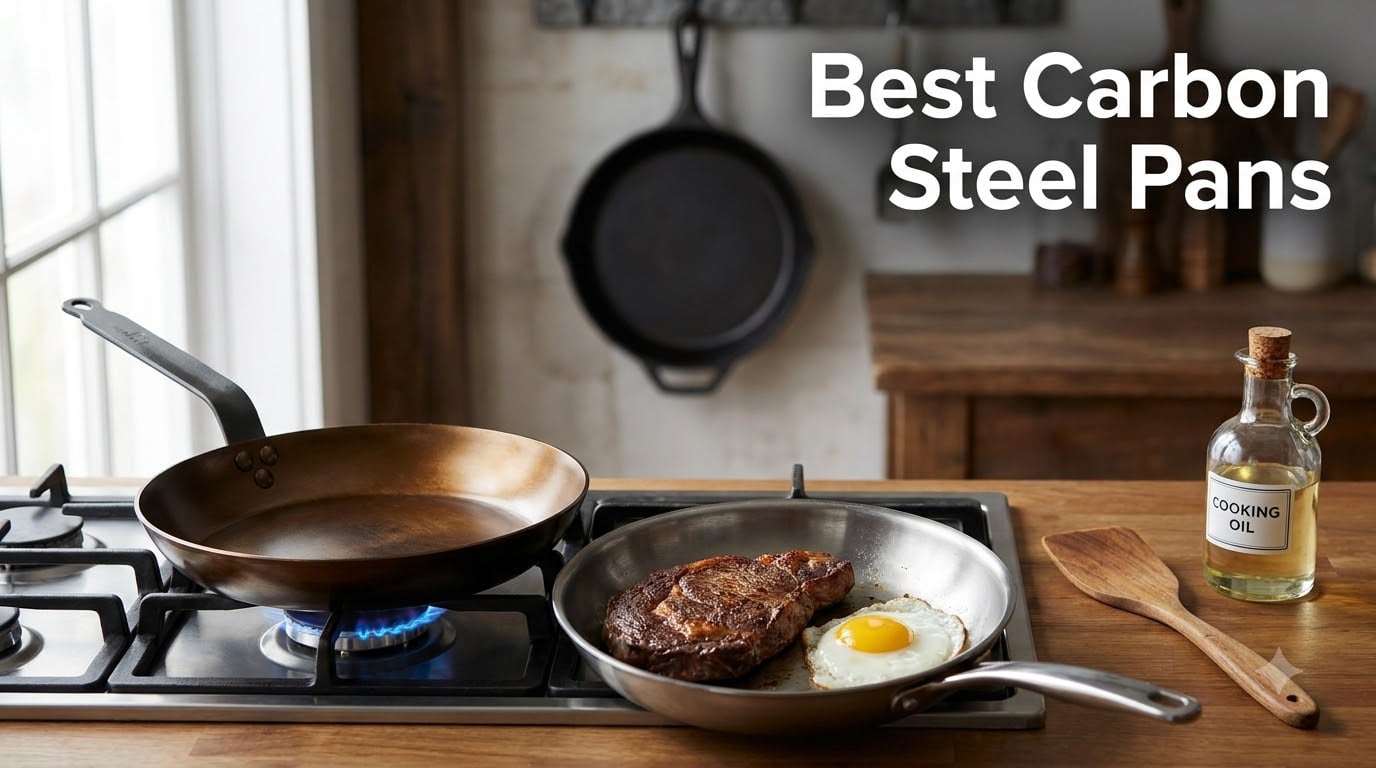
The best carbon steel pans give you cast iron searing power in a body that weighs about half as much and responds to heat in seconds. Our team cooked through ten of the most recommended skillets with egg tests, crepe tests, steak sears, and weeks of daily cleanup to find the real winners. The de Buyer Mineral B took the top spot overall, the Matfer Bourgeat earned heavy-duty honors, and the Lodge 8 inch is the budget pan we would hand to any first-timer.
Carbon steel is an alloy of roughly 99 percent iron and 1 percent carbon, which is why it behaves like a cross between cast iron and stainless. It holds enough heat to put a dark crust on a ribeye, yet the metal is rolled thin enough to lift with one hand and flick an omelet onto a plate. Season it with polymerized oil and it develops a natural nonstick patina that improves the more you cook, with no synthetic coating to scratch off.
That last part is why so many people are switching away from coated nonstick. The tradeoff is hand washing, immediate drying, and a thin coat of oil after each use. If you can spare thirty seconds of upkeep, you get a pan that can outlive your kitchen.
This 2026 guide covers our top three picks, a comparison table, reviews of all ten pans, a buying guide, a seasoning walkthrough, a rust rescue routine, and the pans we would steer you away from.
Table of Contents
Top 3 Picks for the Best Carbon Steel Pans (October 2026)
These three cover most cooks better than the rest of the field combined. One is the balanced all-rounder, one is the tank, and one is the easy entry point.
Best Overall: de Buyer Mineral B 10.25 inch — the best balance of weight, heat response, and searing quality we tested, backed by a lifetime warranty.
Best Heavy-Duty: Matfer Bourgeat 11 5/8 inch — a rivet-free commercial workhorse rated to 800°F that shrugs off campfires and restaurant abuse.
Best Value: Lodge 8 inch — pre-seasoned, made in the USA, and the low-risk way to find out if carbon steel is for you.

de Buyer Mineral B 10.25 inch
- Naturally nonstick after seasoning
- Lighter than cast iron
- All cooktops including induction
- Lifetime warranty
Matfer Bourgeat 11 5/8 inch
- Welded rivet-free handle
- Rated to 800F
- Commercial grade
- Made in France

Best Carbon Steel Pans in 2026
This is the whole field at a glance. Sizes listed are the advertised diameters, and every pan here works on gas, electric coil, and induction unless noted otherwise.
| Product | Specifications | Action |
|---|---|---|
| de Buyer Mineral B 10.25 inch |
|
Check Latest Price |
| Matfer Bourgeat 11 5/8 inch |
|
Check Latest Price |
| Lodge Pre-Seasoned 8 inch |
|
Check Latest Price |
 Mauviel MSteel 11 inch Mauviel MSteel 11 inch |
|
Check Latest Price |
 Merten and Storck 12 inch Merten and Storck 12 inch |
|
Check Latest Price |
 YOSUKATA 13.5 inch Wok YOSUKATA 13.5 inch Wok |
|
Check Latest Price |
 Winco 11 inch Fry Pan Winco 11 inch Fry Pan |
|
Check Latest Price |
 Tramontina 12 inch Tramontina 12 inch |
|
Check Latest Price |
 STRATA Clad 12.5 inch STRATA Clad 12.5 inch |
|
Check Latest Price |
 OXO Obsidian 10 inch OXO Obsidian 10 inch |
|
Check Latest Price |
1. de Buyer Mineral B 10.25 inch — The Best Carbon Steel Pan Overall
de Buyer MINERAL B Carbon Steel Fry Pan – 10.25” Diameter, 7.3” Cooking Surface – Ideal for Searing, Sauteing & Reheating – Naturally Non-Stick Finish – Made in France
10.25 inch
Carbon steel
Oven safe to 400F
1.9 kg
Made in France
Pros
- Naturally nonstick once seasoned with no PTFE or PFOA
- Lighter and more heat responsive than cast iron
- Works on every cooktop including induction
- Lifetime warranty
Cons
- Beeswax coating must be burned off before first use
- Oven limit of 400F is lower than rivals
- Handle edges get uncomfortable without a sleeve
I have cooked on the Mineral B more than any other pan in this group. At 1.9 kilograms it has real presence without the wrist strain of a comparable cast iron skillet. Eggs released cleanly by week two, and by week four the surface had turned a mottled bronze that nothing wants to stick to.
Searing is where it earns its keep. A dry-brined steak picked up a crust in about three minutes per side that matched anything my cast iron produced, and the pan recovered temperature faster when the second steak went in. The sloped French profile also lets you toss vegetables without a spatula.
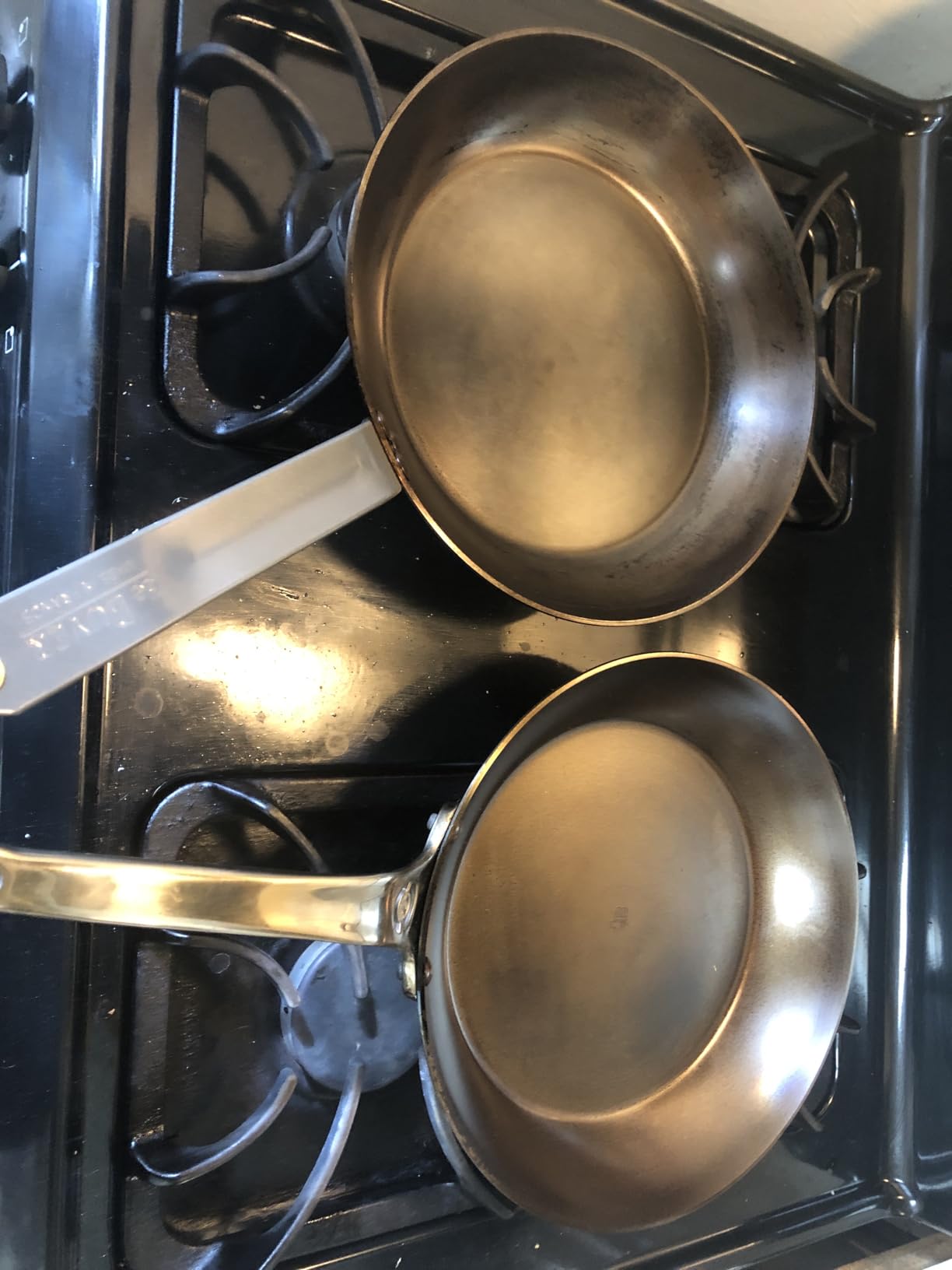
The steel ships coated in beeswax, which stops rust in transit but must come off before you cook. It took me twenty minutes with hot soapy water and a scrubbing pad, then three quick seasoning rounds. The 10.25 inch size gives a usable flat surface of about 7.3 inches once you account for the walls.
The limitations are worth knowing. The oven ceiling is 400°F, which rules out the broiling the Matfer handles easily, and acidic ingredients like tomato sauce will strip your seasoning if simmered for long. The bare handle has edges that dig into your palm, though a silicone cover fixes that. With 15,785 reviews and a 4.5 average, this is the most community-validated carbon steel pan on the market.
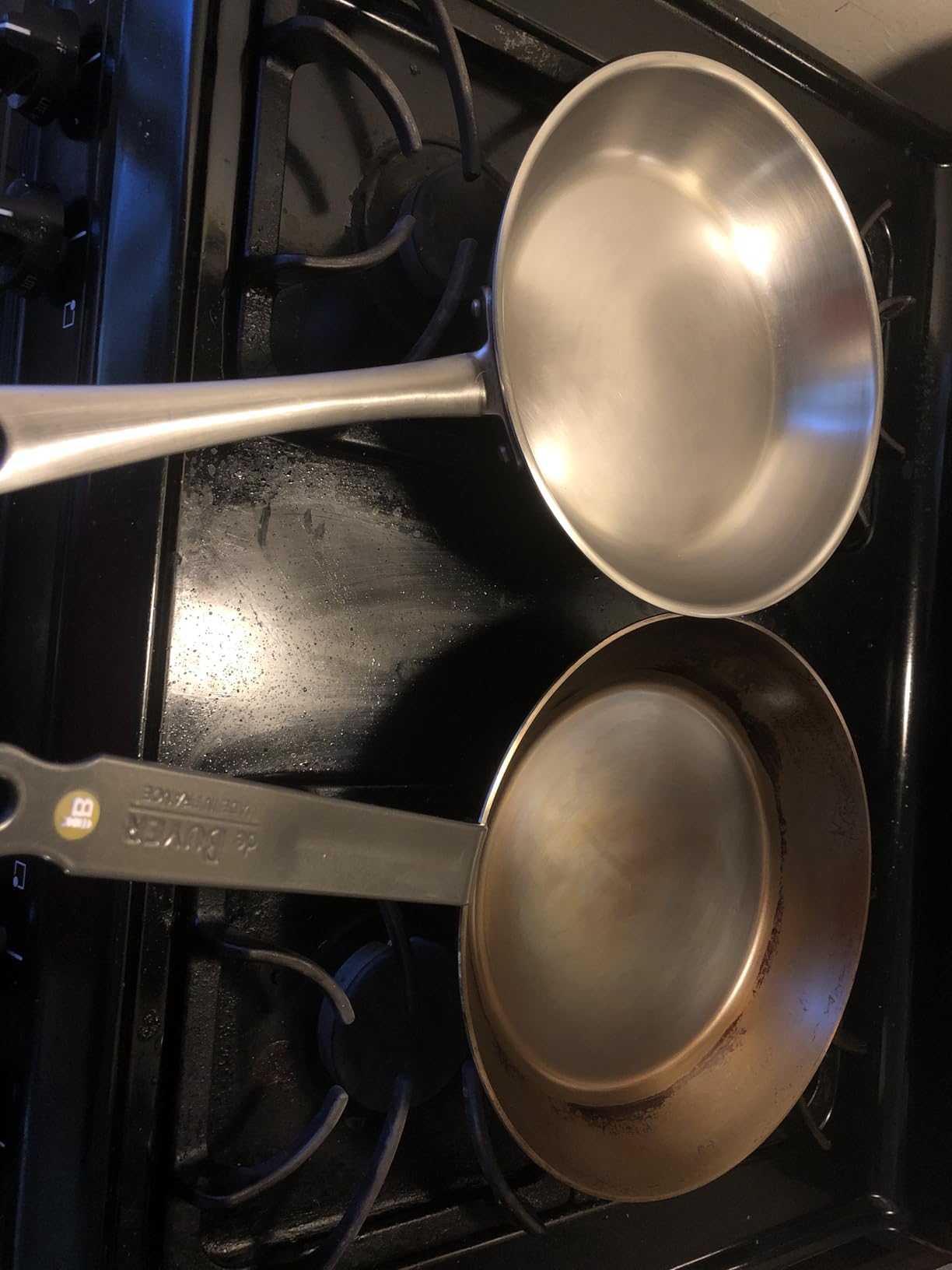
How much seasoning work does it need
Plan on one cleaning session to strip the beeswax plus two to four thin seasoning rounds before the pan behaves. My first fried egg stuck in the center and slid everywhere else, which is normal. By the tenth cook I had stopped thinking about it.
Is the 10.25 inch size big enough
It is ideal for one to two people and works as a second pan for larger households. If you regularly cook for three or more, step up to the 11 inch or 12.5 inch versions, which come in six sizes from 8 to 14 inches.
2. Matfer Bourgeat 11 5/8 inch — Best Heavy-Duty Carbon Steel
Matfer Bourgeat Black Carbon Steel Frying Pan, 11 5/8″
11 5/8 inch
4.1 lbs
Oven safe to 800F
Welded handle
Made in France
Pros
- Rated to 800F for oven grill and campfire
- Welded rivet-free interior
- Excellent heat distribution
- All cooktops including induction
Cons
- Needs full seasoning before first use
- Heavier and less nimble than rivals
- One year warranty only
The Matfer Bourgeat is the pan I would trust over an open flame or in a busy restaurant kitchen. It arrived as bare grey steel with no coating at all, which meant seasoning from absolute zero, and that took me a full evening. The payoff is an 800°F maximum temperature rating that makes broiling, grilling, and campfire cooking routine.
The standout design decision is the welded, rivet-free handle. Every other pan here has rivet heads somewhere inside the cooking surface, and those spots are exactly where food collects and seasoning stays thin. On the Matfer the interior is one continuous smooth plane, which makes cleaning and seasoning noticeably less fussy.
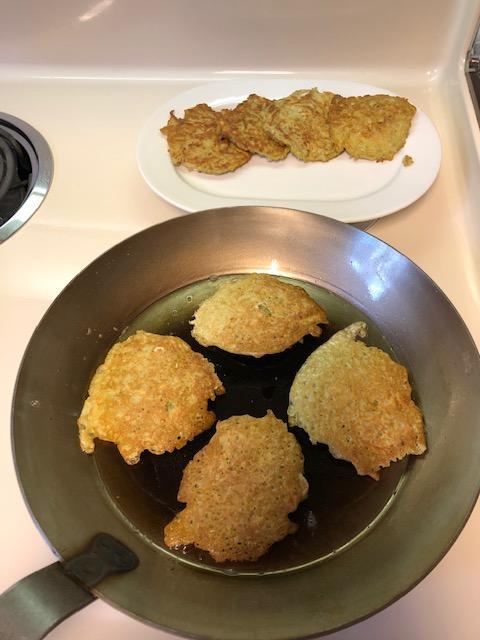
Heat distribution across the base was the most consistent of any single-ply pan I tested, with no obvious hot ring over my gas burner. Chicken thighs browned evenly edge to edge, and stir-fried vegetables picked up wok-style char without the center scorching. At 4.1 pounds it is one of the heavier carbon steel pans you can buy, which helps searing but works against constant tossing.
Two things to know before committing. The warranty is only one year against defects, which is short for this tier even though the build suggests decades of service. And like all bare carbon steel, it should not carry long-simmered acidic dishes. Buyers back the pan at scale with 8,269 reviews, a 4.4 average, and 73 percent five-star.
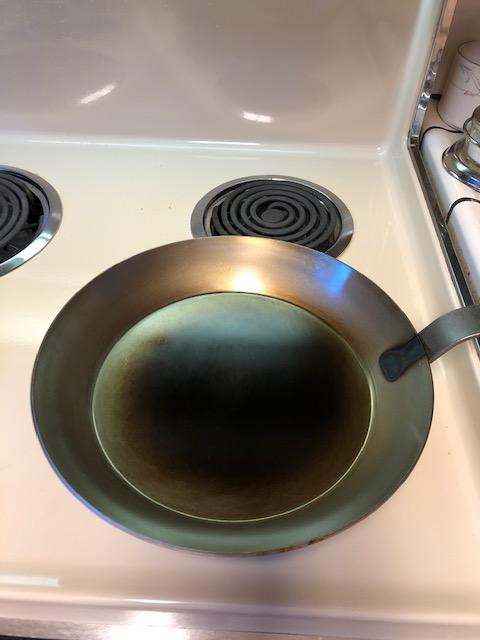
Do you really need an 800F rating
If you broil, grill over charcoal, or cook over a campfire, yes. If you only use a home stovetop and a standard oven, a 500°F rating covers nearly everything and the higher ceiling is mostly insurance.
Who should skip this one
Cooks who want a pan that works straight out of the box should look at the pre-seasoned options below, because this one needs a real seasoning session first. Anyone bothered by weight should also pass, since lighter pans here sear nearly as well.
3. Lodge Pre-Seasoned 8 inch — Best Budget Carbon Steel Pan
Lodge Pre-Seasoned Carbon Steel Skillet, Long Handle, 8 Inches
8 inch
2.1 lbs
Pre-seasoned
Oven safe to 500F
Made in USA
Pros
- Pre-seasoned with vegetable oil and ready to cook
- PFAS-free with no chemical coatings
- Oven safe to 500F
- Lifetime limited warranty
Cons
- Factory seasoning usually needs extra cycles
- Rougher surface than premium French pans
- Rivets inside the cooking area
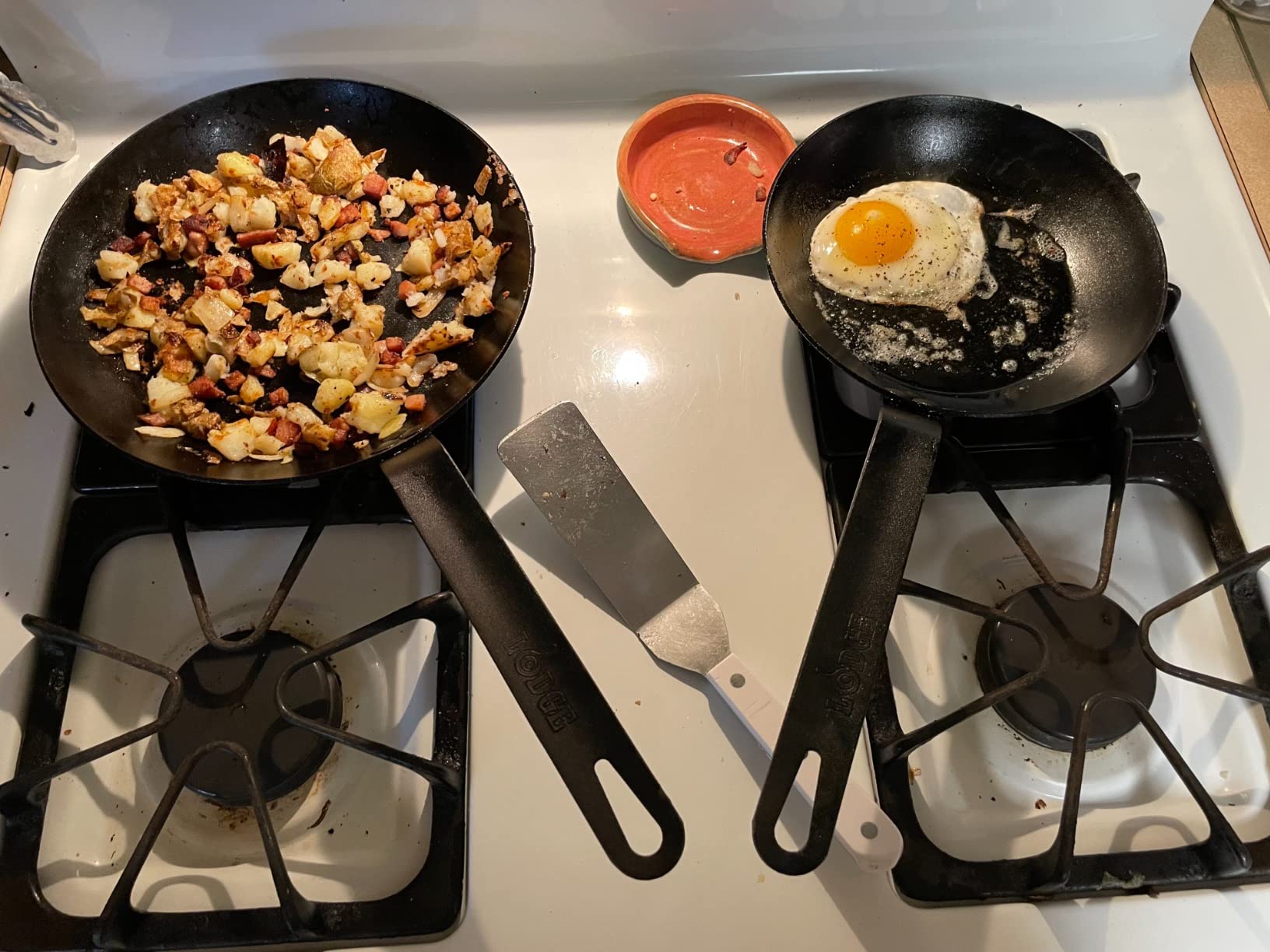
This is the pan I recommend to people who are curious about carbon steel but not ready to commit. Lodge has been making cast iron in Tennessee since 1896, and this skillet arrives pre-seasoned with vegetable oil so you can cook on it the same day. Mine needed a rinse, a quick dry, and a thin coat of oil before the first egg went in, and that egg mostly released.
The 8 inch size is smaller than what most guides push, but for one or two people it is the right call. It heats in under a minute on medium, fits a couple of eggs or a single pork chop, and at 2.1 pounds it is light enough to toss food with one hand. Where it gives up ground to the French pans is surface finish, since the textured steel takes longer to season.
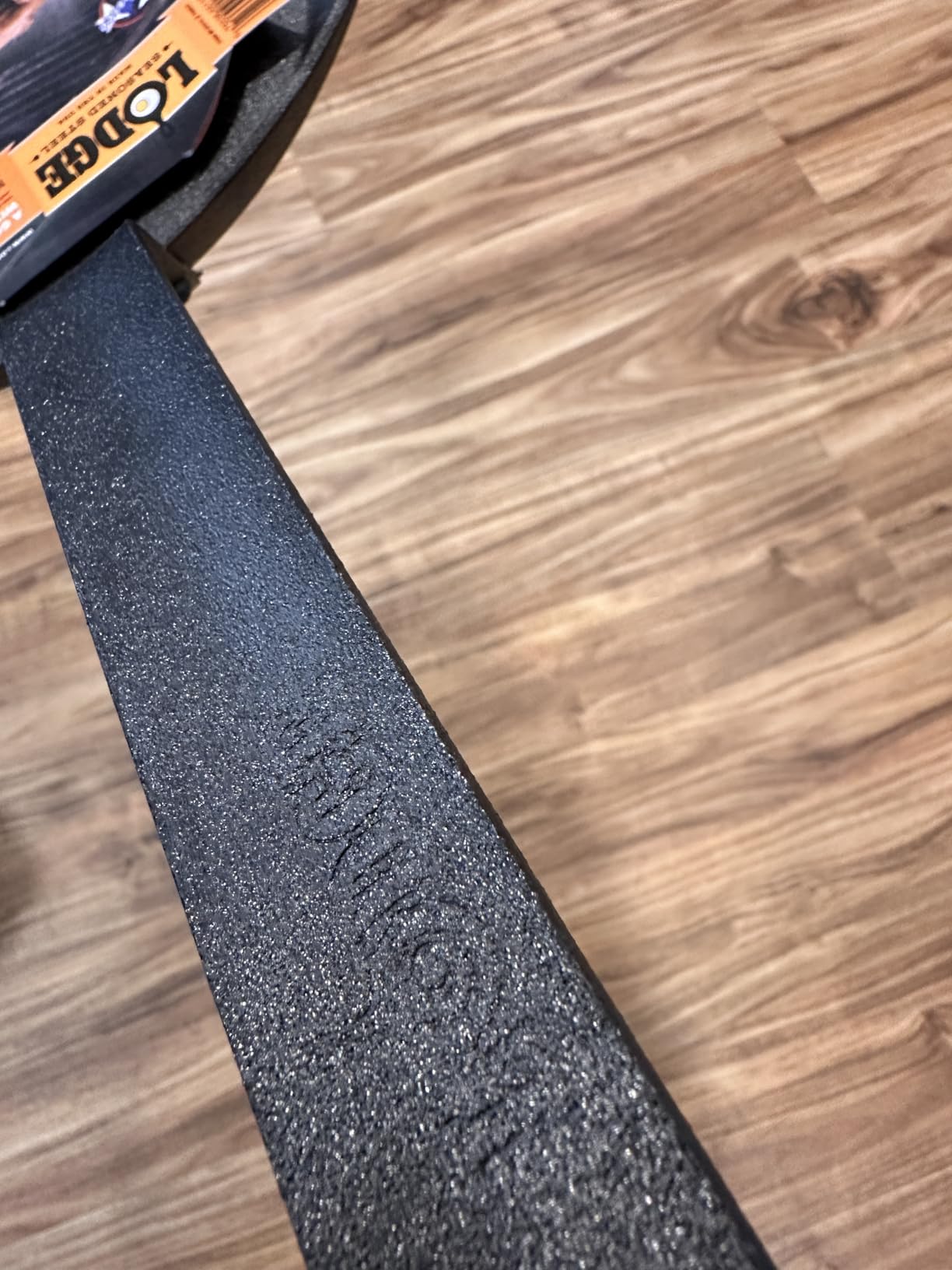
The handle is my main complaint. It has a somewhat plasticky feel, and although the pan is rated to 500°F in the oven I would not push the handle itself through a hot broiler regularly. A few buyers also reported warping when they cranked a glass-top electric burner to high with a cold pan, so heat it gradually on electric.
Rivet heads sit inside the cooking surface, which is standard at this tier but does collect food. A stiff brush and thirty seconds of attention after cooking handles it. The community data is strong, with 7,796 reviews, a 4.3 average, and 67 percent five-star, and the common theme from people switching off nonstick is that this pan does the same daily job without a coating to replace.
Should you start at 8 or 12 inches
Start at 8 inches if you cook for yourself or want a low-risk trial run. Choose the 10 or 12 inch version of the same pan if you cook for two or more, because a larger surface sears better before food starts to steam.
How much prep is needed out of the box
Less than an unseasoned pan but more than the marketing suggests. Rinse, dry, oil lightly, and cook something forgiving like bacon first. If eggs stick in week one, run one or two extra seasoning rounds and keep going.
4. Mauviel M’Steel 11 inch — Best Premium French Build
Mauviel M’Steel Black Carbon Natural Nonstick Frying Pan With Iron Handle, 11-in, Suitable For All Cooking Surfaces, Made in France
11 inch
2 kg
Oven safe to 700F
Extra thick steel
Made in France
Pros
- Extra thick steel heats fast and holds heat
- 700F oven rating for high heat work
- Induction compatible
- Beeswax coating cuts seasoning time
Cons
- Often out of stock
- Handle gets hot during cooking
- Smaller review base than rivals
Mauviel is one of the most respected cookware makers in France, and that professional background shows in the M’Steel. The steel is noticeably thicker than most, which gives it a solidity you feel the moment you pick it up. It came to temperature fast for its mass and held that heat through a full batch of seared scallops without dipping.
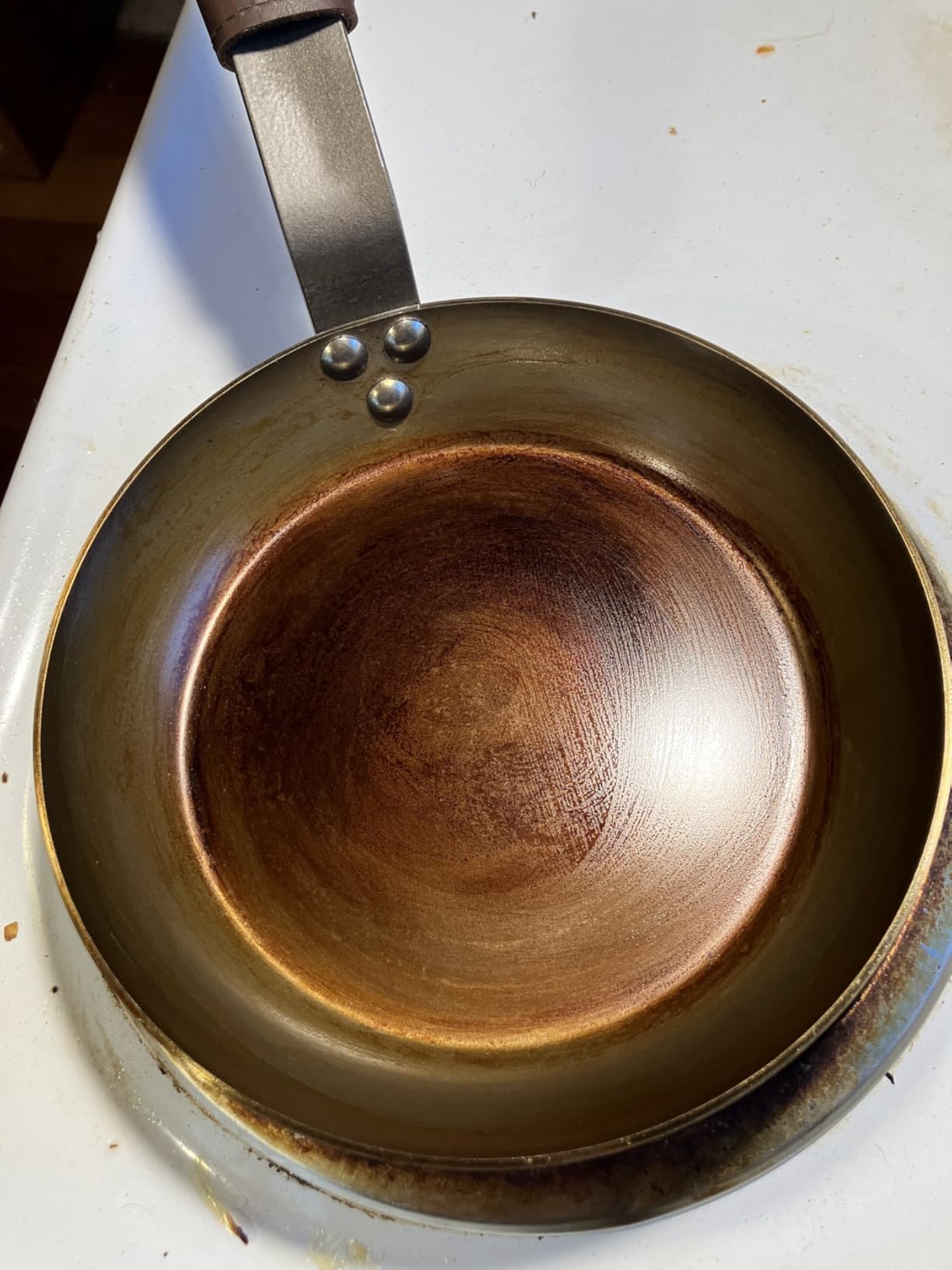
The 11 inch size hits a sweet spot that 10 and 12 inch pans both miss. The flat base measures about 8.4 inches across, which fits three chicken thighs without crowding, while the pan still fits a standard burner and a standard sink. It ships with a beeswax coating that took me fifteen minutes to remove, followed by two seasoning rounds before eggs behaved.
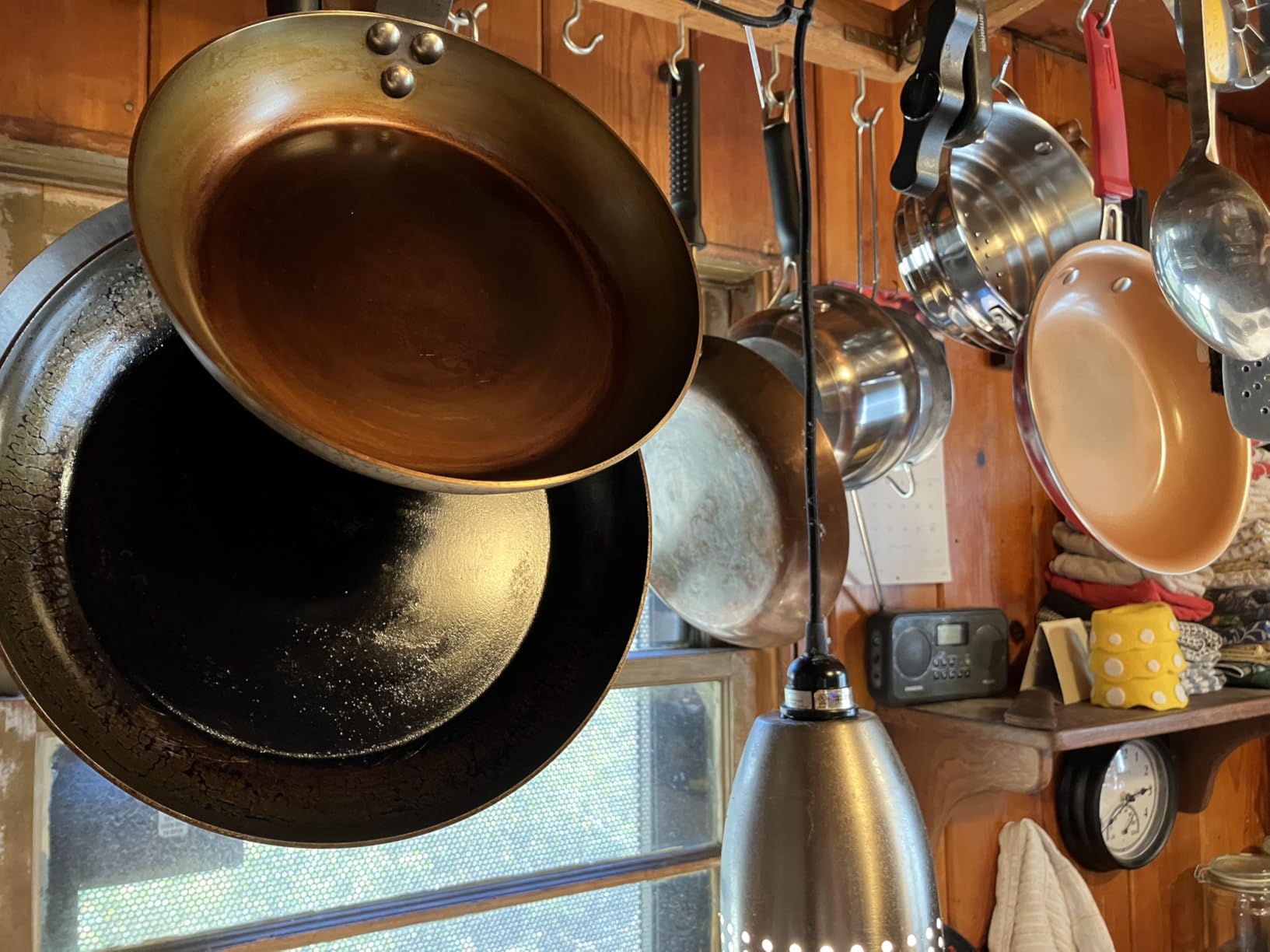
Technically this is a commercial-grade piece with 18/10 stainless rivets securing an iron handle, rated to 700°F and induction compatible. The handle is fixed steel with no insulation, so it needs a towel after ten minutes on the stove. Mauviel also advises keeping heat around 60 percent of your cooktop’s maximum, which is sensible advice for any carbon steel.
The honest downsides are availability and proof. This was out of stock when we pulled data, it does not ship Prime, and the review base is thin at 1,005 reviews with a 4.3 average and 71 percent five-star. There is less long-term community evidence here than de Buyer or Matfer offer, though the build quality itself is excellent.
Is it worth stepping up from the de Buyer
Only if you specifically want the thicker steel and the higher 700°F oven rating. Performance in normal home cooking is close enough to the Mineral B that most cooks would not taste the difference, and the de Buyer is easier to find in stock.
What to know about caring for it
Hand wash only, no steel wool or abrasive cleaners, and no metal utensils once the seasoning is established. A soft brush, immediate drying, and a wipe of oil after each use keep the surface in good condition indefinitely.
5. Merten & Storck 12 inch — Best Factory Pre-Seasoning
Merten & Storck Pre-Seasoned Carbon Steel 12″ Frying Pan Skillet, Cast Iron Lightweight, Durable, Sear Grill Broil Fry, Indoor Outdoor Cooking, Easy to Clean, Oven Safe, Induction, Steel Handle, Black
12 inch
3.3 lbs
Pre-seasoned
Oven safe to 600F
Triple riveted
Pros
- Best factory seasoning we tested with eggs sliding on day one
- Lightweight at 3.3 lbs
- Scratch resistant and safe for metal utensils
- Oven grill and campfire safe to 600F
Cons
- Some units develop a hot spot in the center
- Warping reported on glass-top stoves
- Wax coating must be washed off first
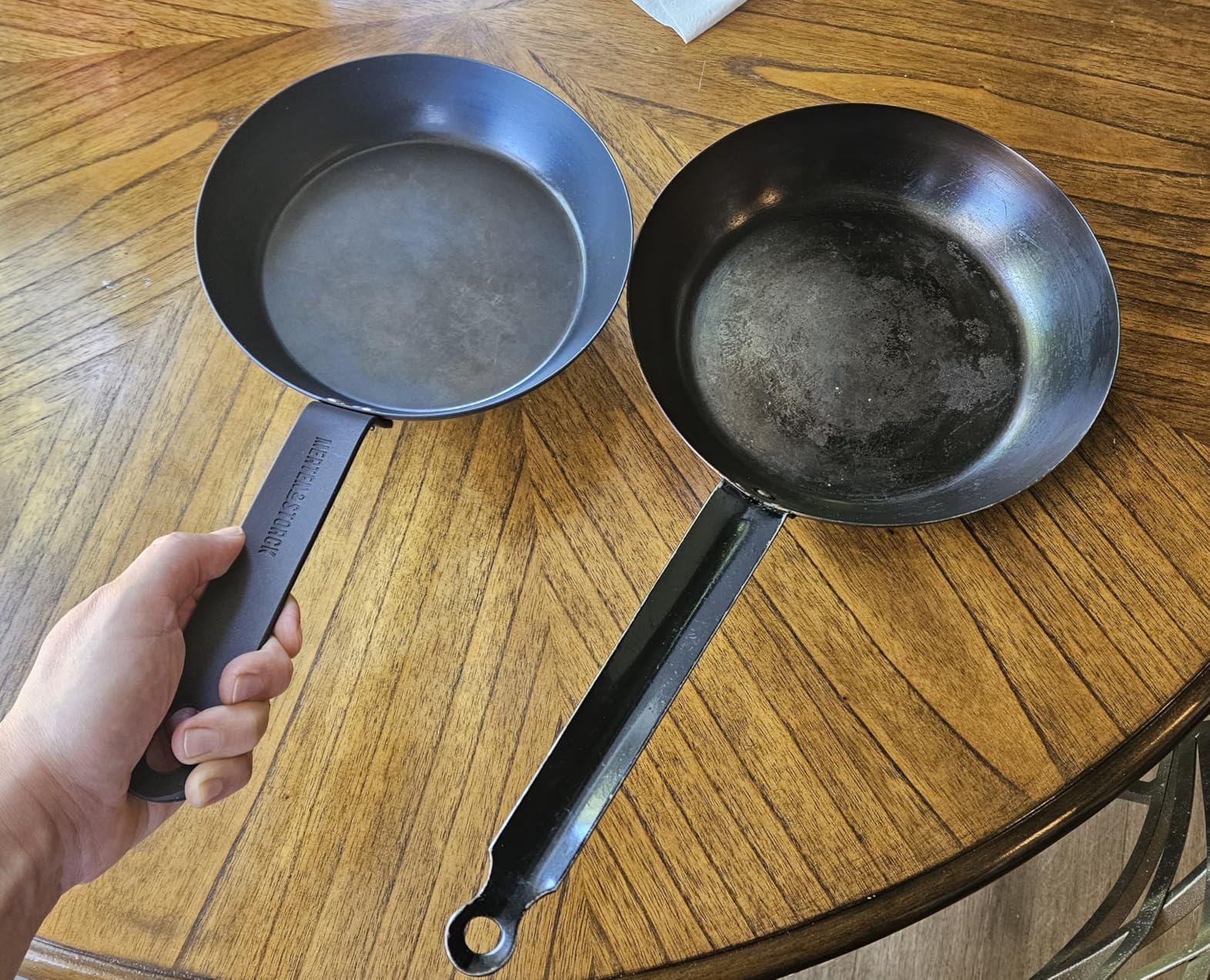
This was the pan that surprised me most. Out of the box it was the most genuinely nonstick of anything in the group, before I had done a single seasoning round. My first fried egg slid across the surface with nothing but a teaspoon of butter, which makes this the least intimidating first pan here.
That factory seasoning is the whole pitch, and New York Magazine’s The Strategist picked it as a top budget-friendly carbon steel option. At 3.3 pounds it sits in the comfortable middle of the weight range, and the 12 inch diameter gives you room for a real one-pan dinner. The surface is scratch resistant enough that I used a metal spatula without thinking twice.
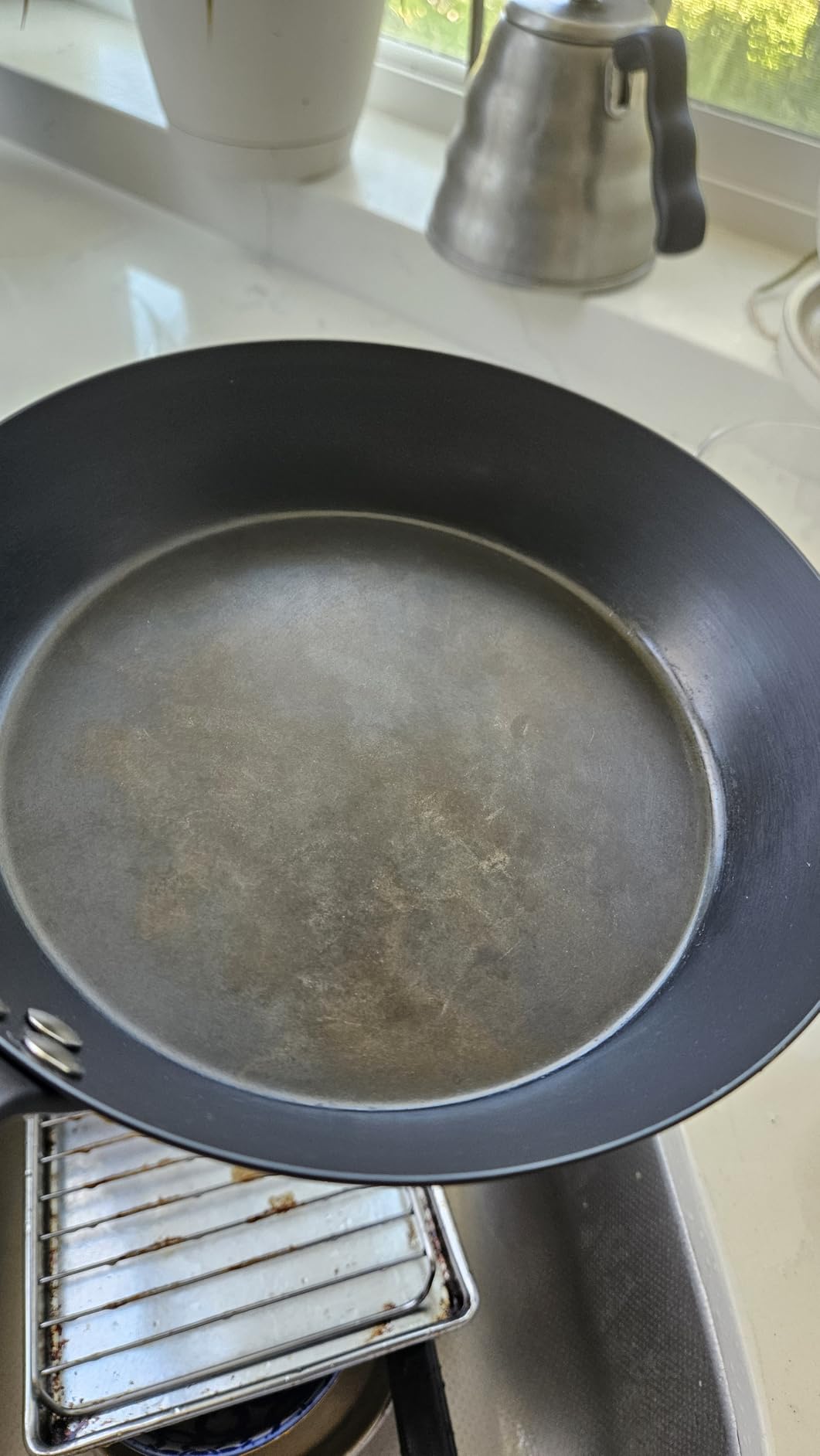
The caveats come from the review data rather than my own unit. A meaningful number of buyers report uneven heating with a high spot in the center, and several mention warping when the pan was heated quickly on a glass-top stove. My review pan did not warp, but the pattern is real, so warm it gradually on electric and glass cooktops.
A few seasoned cooks also found that canola oil gave them sticking problems and switched to vegetable or grapeseed oil with better results. Acidic foods will strip the seasoning and require a touch-up round, same as every pan in this category. The numbers land at 5,517 reviews, a 4.2 average, and 67 percent five-star, with an 11 percent one-star rate that points to some quality control spread.
Best pan if you have never seasoned anything
This is my pick for that situation. You can cook on it immediately, learn the maintenance rhythm as you go, and add extra seasoning rounds later if you want a slicker surface. The failure mode of starting here is much gentler than starting with bare steel.
What stove types does it suit
Gas is ideal, induction works well, and electric coil is fine. If you have a glass or ceramic top, preheat on low for a couple of minutes before raising the heat, since rapid heating triggers the warping complaints.
6. YOSUKATA 13.5 inch Carbon Steel Wok — Best for Stir-Frying
YOSUKATA 13.5″ Pre-Seasoned Flat Bottom Black Carbon Steel Wok for Stir Fry
13.5 inch wok
3.6 lbs
Pre-seasoned
Wood handle
Open fire safe
Pros
- Pre-seasoned at over 600F at the factory
- High sloped walls for tossing and deep frying
- Works on gas induction grills and open fire
- Wooden handle stays cool
Cons
- Not oven safe
- Hand wash only
- Needs ongoing seasoning to stay nonstick
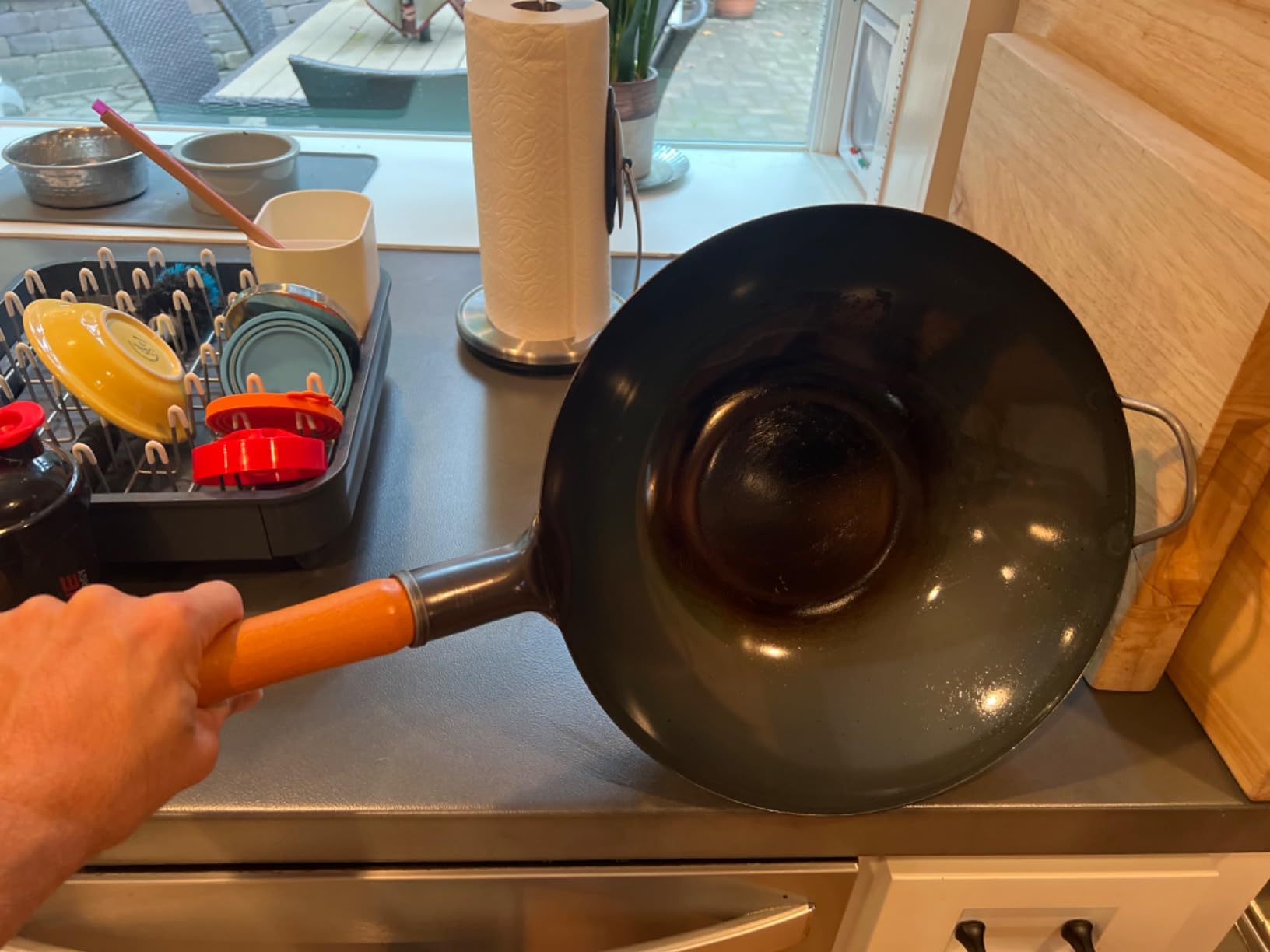
A wok is not the first thing most people think of when they shop carbon steel, but it is the format where the material arguably performs best. The YOSUKATA arrived pre-seasoned at over 600°F at the factory, and the first stir-fry I ran in it produced proper wok hei flavor that a flat nonstick skillet cannot match. The high sloped walls keep vegetables moving while the base stays screaming hot.
Versatility is better than the wok label suggests. I used it for deep-frying, where the tall walls contain splatter far better than a skillet, and for braising, pan-frying, and searing steaks. At 3.6 pounds it is light enough to toss with two hands, and the New Zealand beech wood handle stayed comfortable through long sessions.
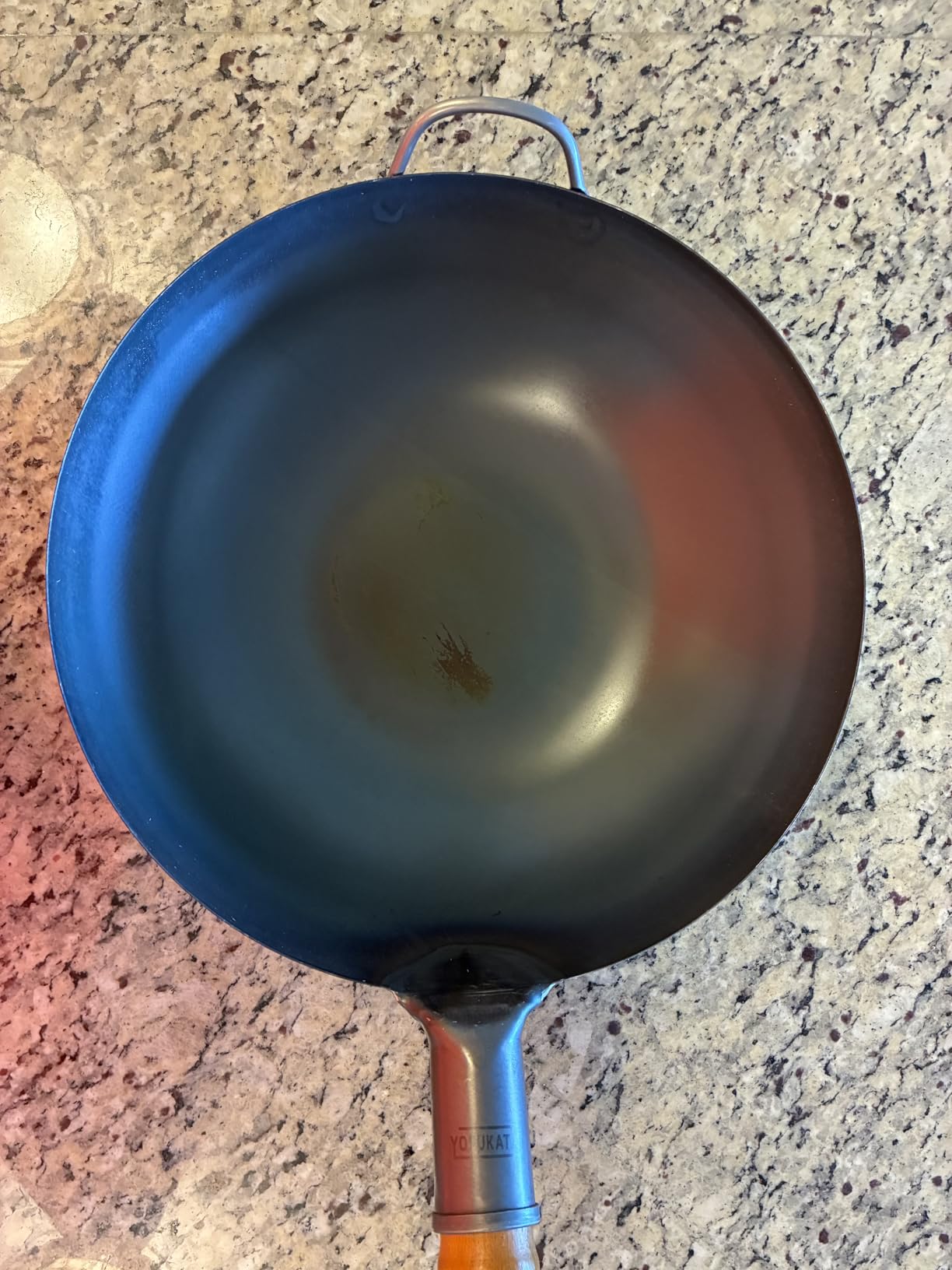
It works on gas, electric, induction, glass cooktops, BBQ grills, camping stoves, and open fire, which makes it the most flexible piece of cookware in this roundup. For camping trips it has become my default because it doubles as a frying pan and a pot. The flat base is the reason it works on a home range at all, so treat that as a feature rather than a compromise.
The limitations are clear. It is not oven safe, so no finishing under the broiler, and the large surface area rusts faster than a skillet if you leave it wet. Hand wash, dry over a warm burner, wipe with oil, and hang it up, because sticking returns quickly if you skip the oil wipe. Community feedback is strong at 5,414 reviews, a 4.2 average, and 69 percent five-star.
Skillet or wok for a first carbon steel pan
Get a skillet if you cook mostly Western food, eggs, and meats. Get this wok if you stir-fry weekly, deep-fry at home, or cook outdoors often, because it covers more ground than any single skillet can.
Does it work on an induction cooktop
Yes, and better than most woks because the flat bottom gives the induction coil full contact. Expect heat to concentrate in that base, which is exactly what you want for high-heat stir-frying.
7. Winco 11 inch French Fry Pan — Best Lightweight Option
Winco 11″ Carbon Steel Fry Pan French
11 inch
1 lb
Restaurant grade
Made in Spain
French style
Pros
- Featherweight at about one pound
- Fastest heat response in this group
- Restaurant-grade build from Spain
- Eggs and pancakes release once seasoned
Cons
- Very thin steel with poor heat retention
- Rusts almost immediately if not dried
- Size can differ from the listing
The Winco is the pan restaurant cooks actually buy for themselves. It is the sort of thing you find at a restaurant supply store, made in Spain, and built to survive a commercial line. Mine has the classic French profile with rounded sides that make it superb for sautéing and for sliding an omelet onto a plate.
At roughly one pound it is the lightest pan in this group by a wide margin, and that changes how you cook. Tossing vegetables becomes effortless, and heat response is the fastest here since there is almost no mass to bring up to temperature. Eggs, sausages, and pancakes all released well once my seasoning layer built up.
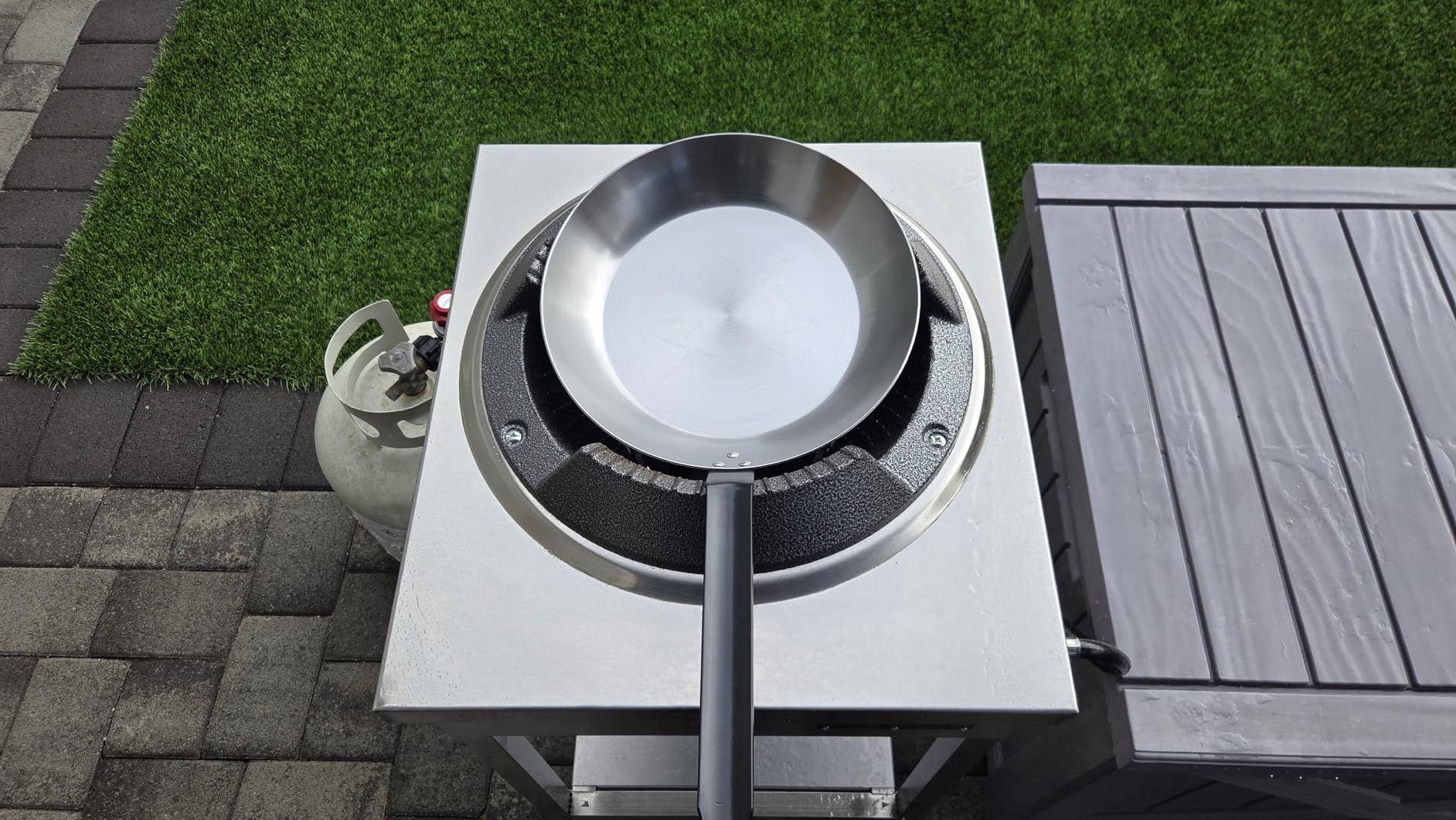
The tradeoff is equally dramatic. Because the steel is so thin, the pan loses heat the moment cold food hits it, so it does not sear a steak the way the Matfer or Mauviel can. Rust is the bigger issue, because this pan will flash rust within minutes of being washed if you do not dry it immediately and oil it.
There is also a size listing quirk worth flagging, since some buyers who ordered the advertised 11 1/4 inch pan received a 10 inch one, so measure yours when it arrives. The review base is small at 29 reviews with a 4.2 average, so there is far less community evidence here than for any other pan in this guide.
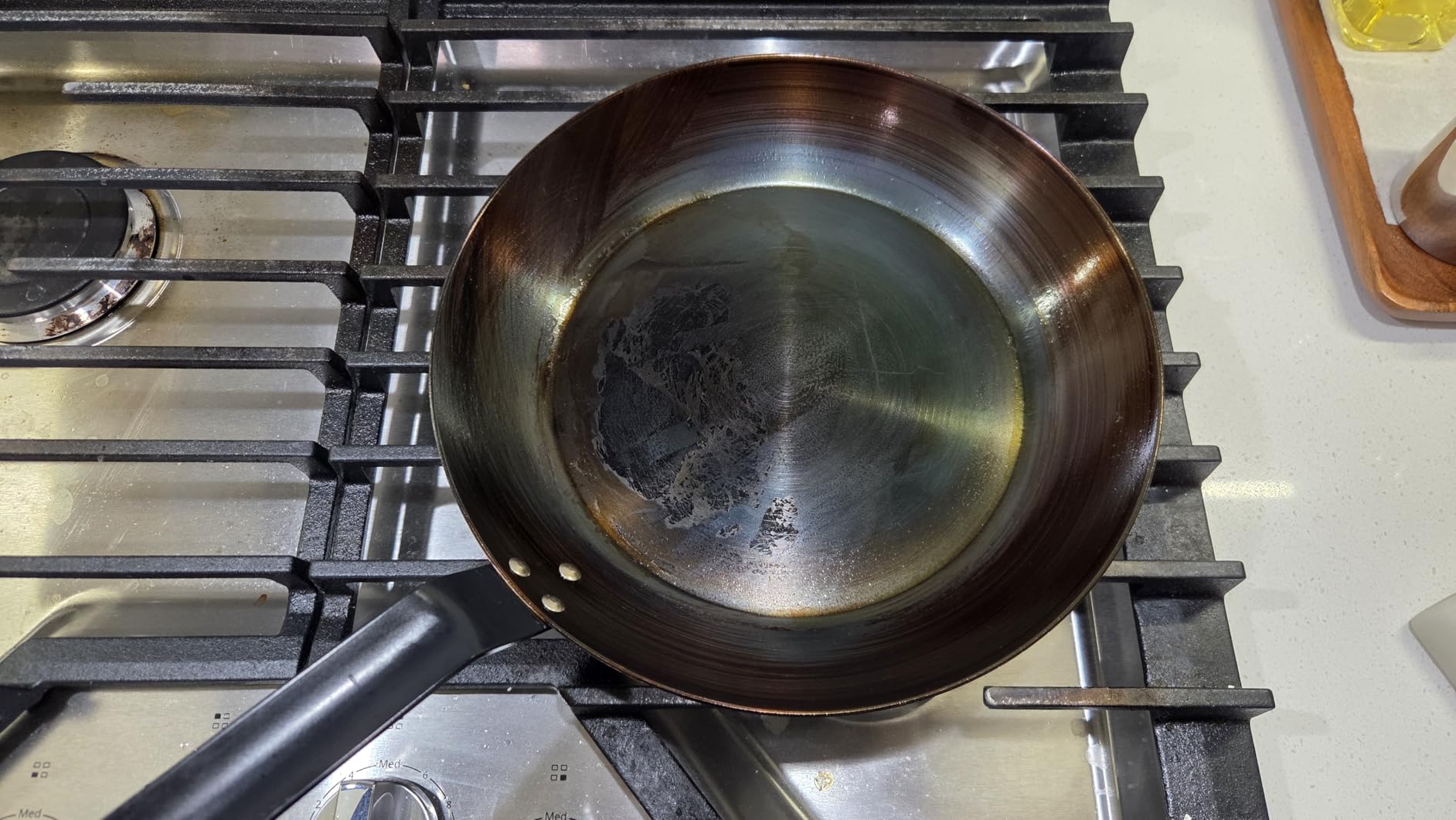
Who this pan is actually for
Experienced carbon steel users who want a cheap, featherlight daily driver and already have the maintenance habit down. Line cooks, campers counting pack weight, and anyone who finds even a three-pound pan tiring.
Who should avoid it
Beginners should skip it, because the thin steel and instant rust tendency make the learning curve steeper than it needs to be. If searing steaks is your main goal, the thicker pans higher up this list do that job far better.
8. Tramontina 12 inch — Best Warranty and Grip
Tramontina Carbon Steel 12-Inch Large Frying Pan with Silicone Grip
12 inch
5.59 lbs
Silicone sleeve
Oven safe to 500F
Lifetime warranty
Pros
- Removable silicone handle sleeve stays cool
- Nitro carbonized naturally nonstick finish
- NSF certified for professional use
- Dishwasher safe unlike most rivals
Cons
- Heaviest pan in this group at 5.59 lbs
- Conflicting induction compatibility claims
- Does not ship Prime
Tramontina is a Brazilian brand better known for value-driven stainless and enameled cast iron, and their carbon steel pan takes a slightly different approach. The finish is nitro-carbonized natural oil rather than a home-built seasoning, which gives it a naturally nonstick character from the start that improves as you cook. Mine cooked eggs with minimal fuss on day one.
The highlight is the handle setup. A riveted steel handle provides the structure, and a removable silicone sleeve slides over it to give you a genuinely cool, comfortable grip. Every other pan in this roundup eventually hands you a hot handle, so if you have burned your palm on carbon steel before, this solves that problem outright.
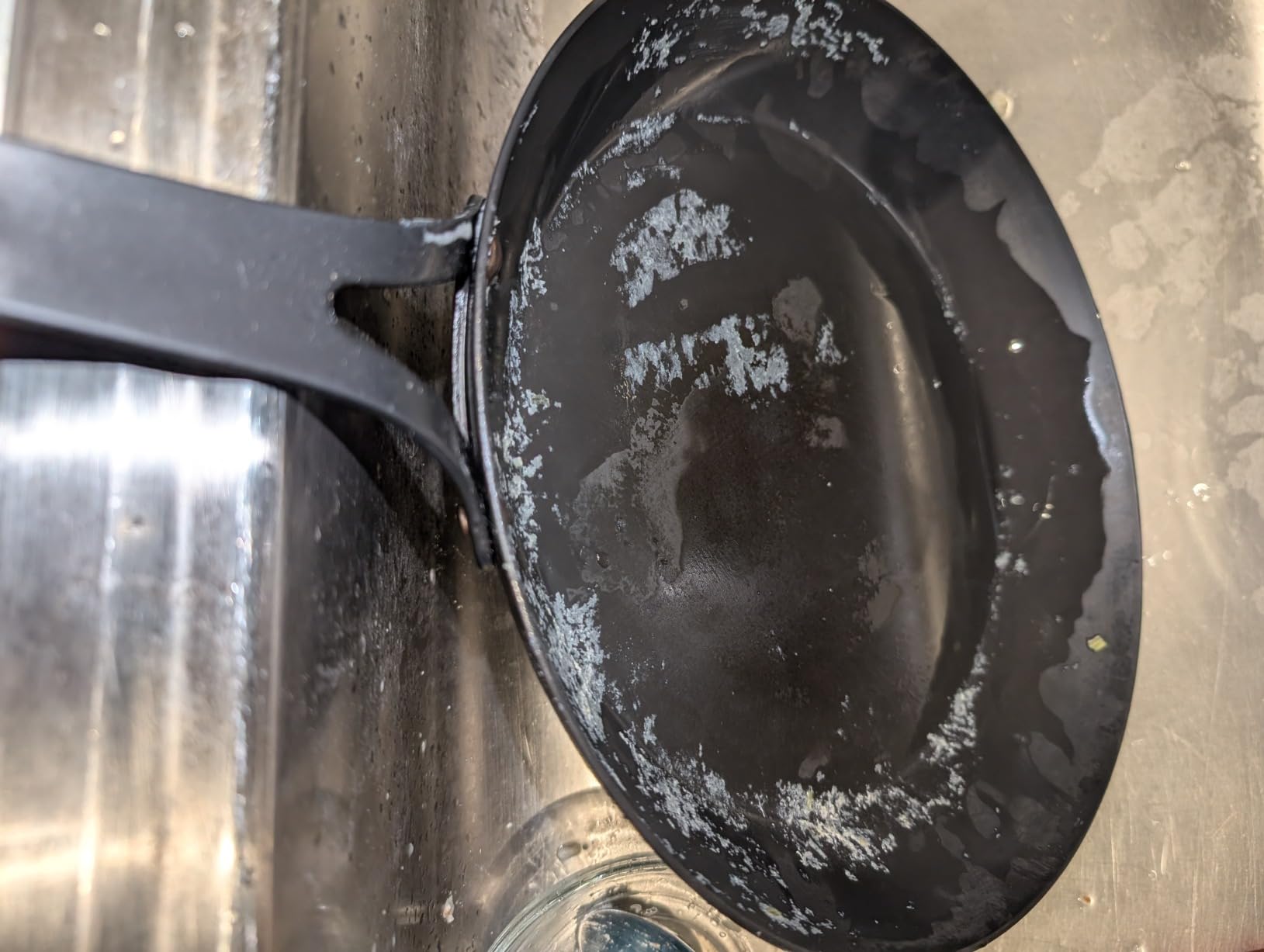
At 5.59 pounds this is the heaviest pan in the group, heavier than most cast iron skillets of the same size, which is a real consideration for anyone with wrist or grip concerns. What you get in exchange is a pan that barely flinches when you load it with cold food. Tramontina lists it as oven safe to 400°F with the sleeve on and 500°F with it off.
The induction situation is genuinely confusing, because the compatibility data mentions smooth surface induction in one place and says not suitable for induction in another. Confirm with the manufacturer before ordering if you cook on induction. The review base is small but positive at 257 reviews with a 4.1 average, and the 12 percent one-star rate mostly traces back to seasoning struggles rather than failures.
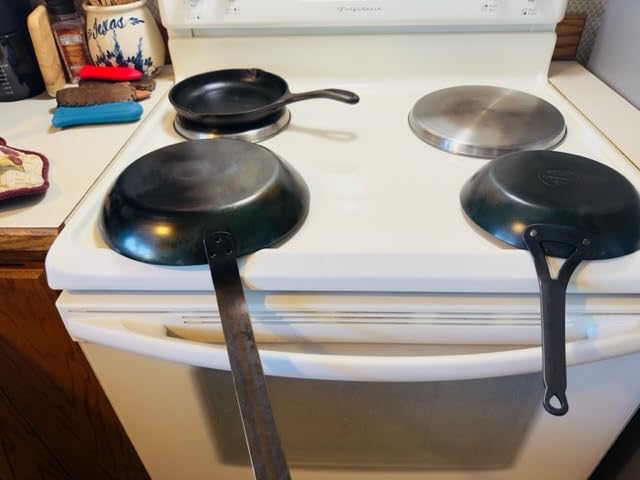
Is the silicone sleeve a real advantage
For most home cooks, yes. It removes the most common complaint in this entire category, and it comes off in two seconds when the pan goes into a hot oven. Anyone with kids pulling things off the stove will appreciate it.
What to check before you order
Confirm induction compatibility for your specific cooktop and note the shipping times, since this pan is not Prime eligible. Everything else about the buying decision is straightforward.
9. STRATA Clad 12.5 inch — Best Even Heating
STRATA 12.5″ Carbon Clad® Classic – Carbon Steel Frying Pan – Gen 1
12.5 inch
3-ply clad
Aluminum core
4.25 lbs
Oven safe to 600F
Pros
- Aluminum core eliminates hot spots entirely
- Stay-cool cast stainless handle
- Light for its size and easy to maneuver
- Metal utensil safe and re-seasonable
Cons
- Arrives unseasoned
- Stick resistance takes 10 to 30 cooks
- Smaller review base than rivals
The STRATA is the most interesting piece of engineering in this roundup, because it is the only carbon steel pan built as a three-ply clad pan with an aluminum core. Traditional carbon steel is a single sheet, which is why it can develop hot spots over a gas ring. Sandwiching aluminum between two carbon steel layers fixes that, and in my testing the heat distribution was the flattest of any pan here.
That construction also keeps the weight down. For a 12.5 inch pan it feels noticeably lighter and better balanced than a single-ply pan of the same diameter, and the cast stainless steel handle stays genuinely cool on the stovetop. It is the only pan in this group where I did not reach for a towel.
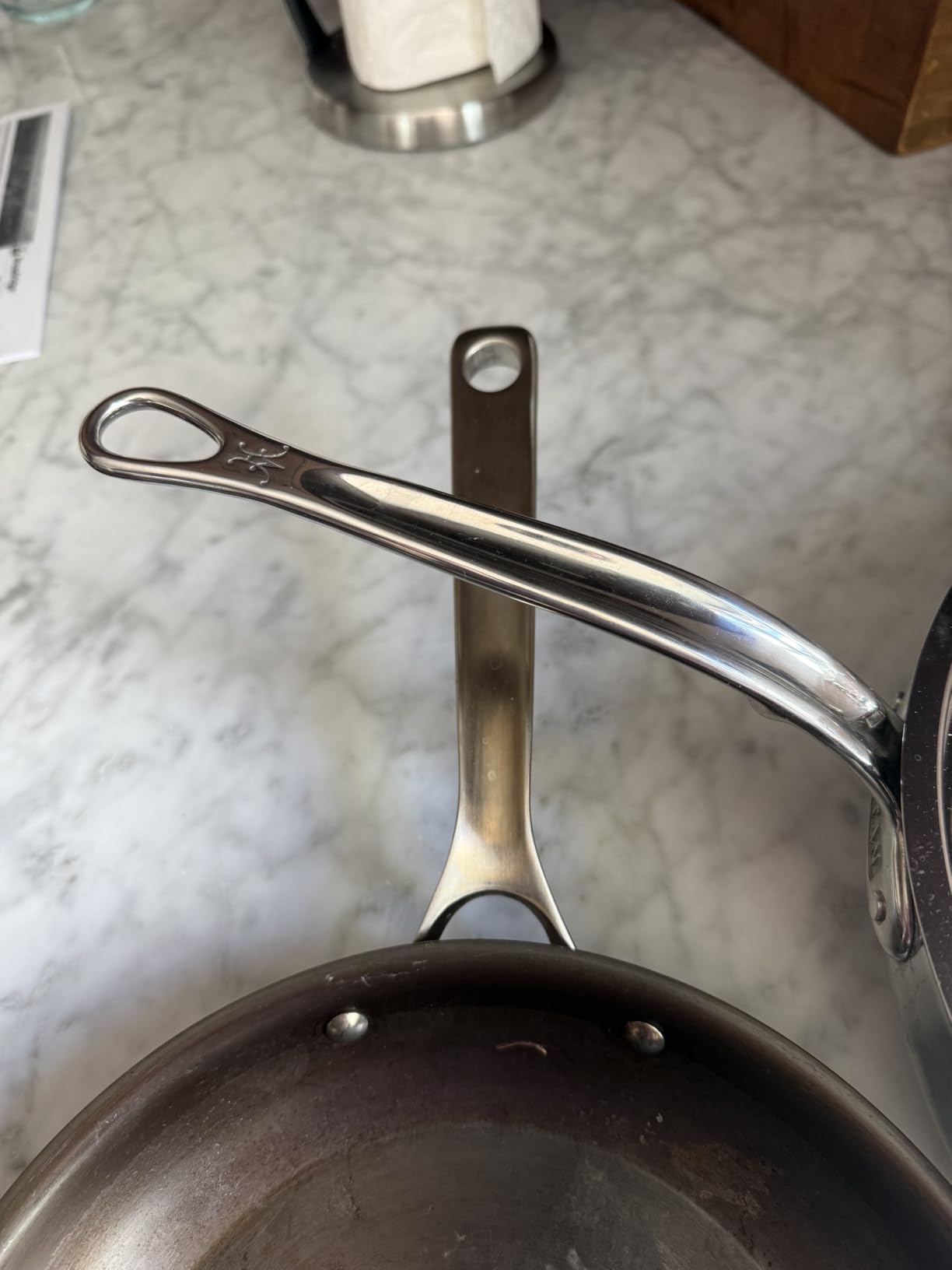
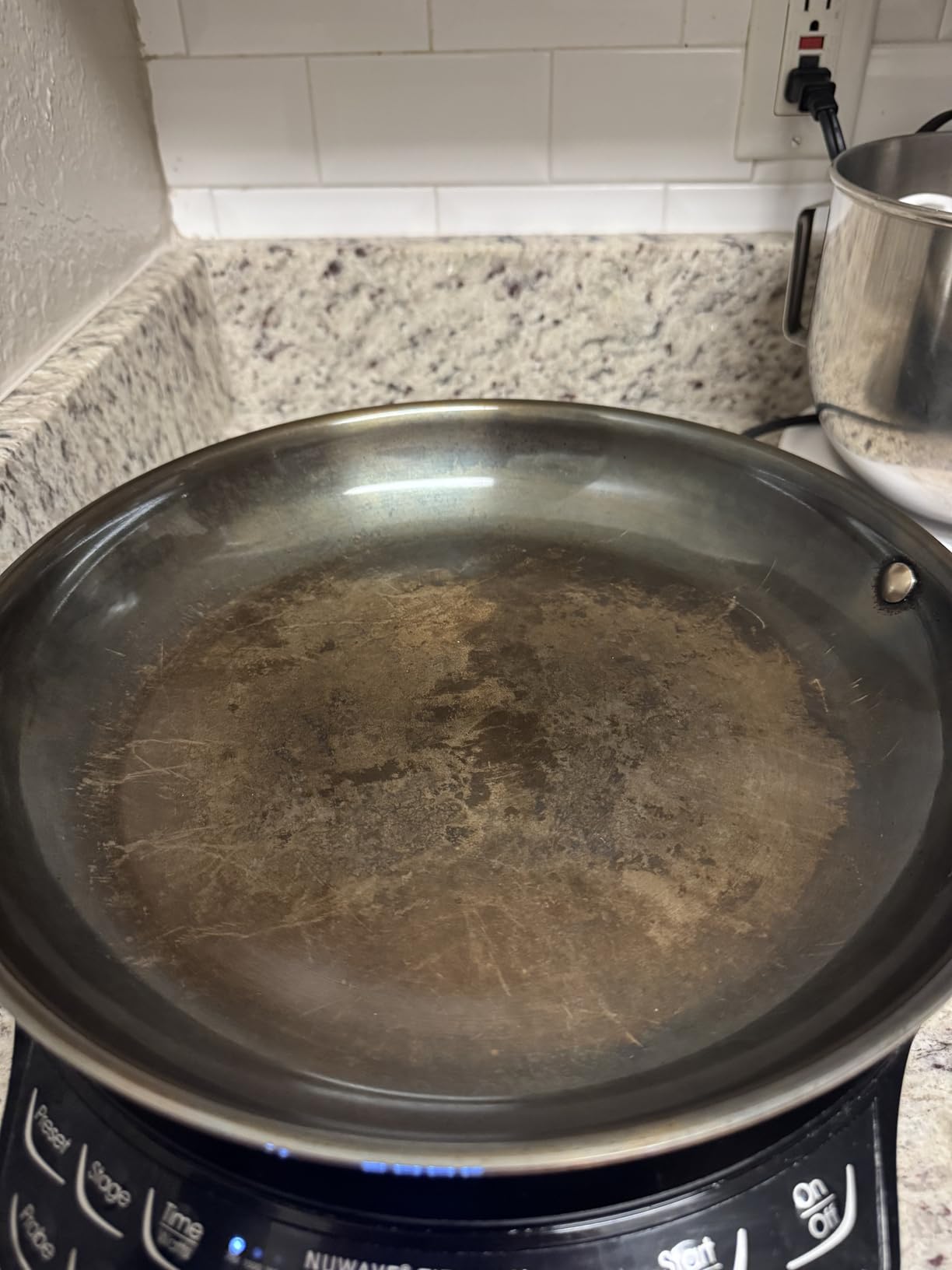
The catch is that it arrives completely unseasoned, and the manufacturer is upfront that full stick resistance takes 10 to 30 cooks to develop. My first week involved some stubborn eggs, and by around the twelfth cook the surface came good. You get a 12.5 inch cooking surface, a 600°F oven rating, full induction compatibility, and a reference guide booklet in the box.
The review picture is mixed in a way worth understanding. At 185 reviews with a 4.2 average and 70 percent five-star, enthusiasm is high among people who stuck with the break-in. But 10 percent one-star reviews mention warping and seasoning frustration, and this pan demands the most patience of anything here. It is a choice for people who want the engineering and will invest the time.
Why an aluminum core matters
Aluminum conducts heat several times better than steel, so the core spreads energy sideways and evens out the surface temperature. In practice that means fewer scorched spots on electric and induction burners, where heat does not wrap around the pan the way gas flames do.
Is it worth choosing over a single-ply pan
If even heating is your priority or you cook on electric or induction, it is a strong case. If you cook on gas and are happy to season traditionally, the single-ply French pans earlier in this list deliver comparable results with a longer track record.
10. OXO Obsidian 10 inch — Easiest for Beginners
OXO Obsidian 10″ Carbon Steel Frying Pan, Pre-Seasoned Skillet
10 inch
Pre-seasoned
Oven safe to 660F
Silicone sleeve
Induction ready
Pros
- Highest oven rating in this group at 660F
- Pre-seasoned and ready on day one
- Removable silicone handle sleeve
- Metal utensil safe
Cons
- Lowest rating in this group at 3.7 stars
- 19 percent of reviews are one star
- Small two cup capacity
The OXO Obsidian is the most accessible carbon steel pan here and also the most polarizing. On the positive side, it comes pre-seasoned and ready to cook, it is light, and its 660°F oven rating is the highest in this entire group, which gives real headroom for broiling and high-heat finishing. Wirecutter named it a best pick, and when it works it behaves almost like a traditional nonstick pan.
The handle is a removable silicone sleeve, the same approach Tramontina uses, and it makes the pan comfortable for people who have never cooked on bare steel. My unit cooked eggs well with a little fat and put a decent sear on pork chops, though it never matched the Matfer or Mauviel for crust quality.
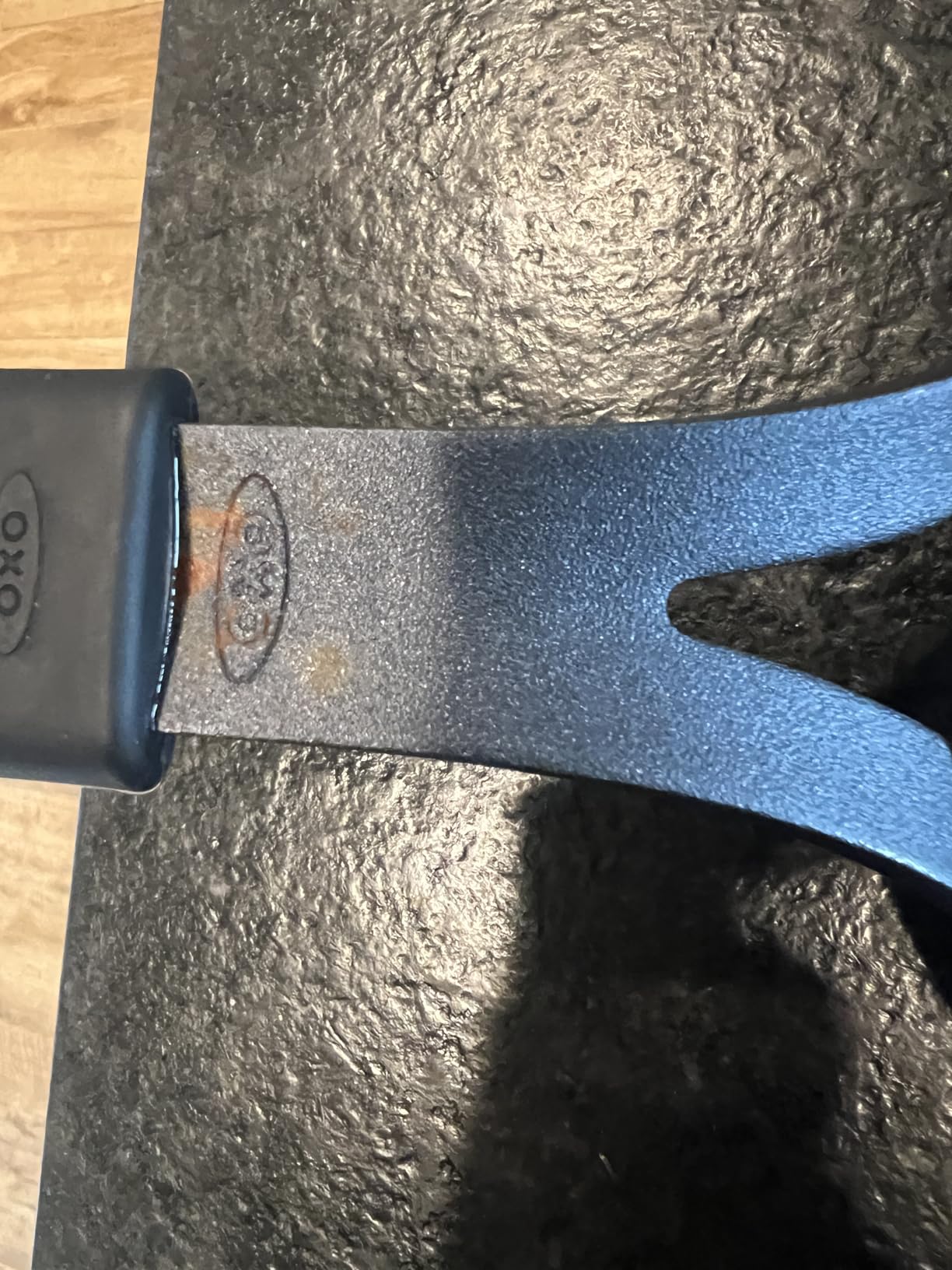
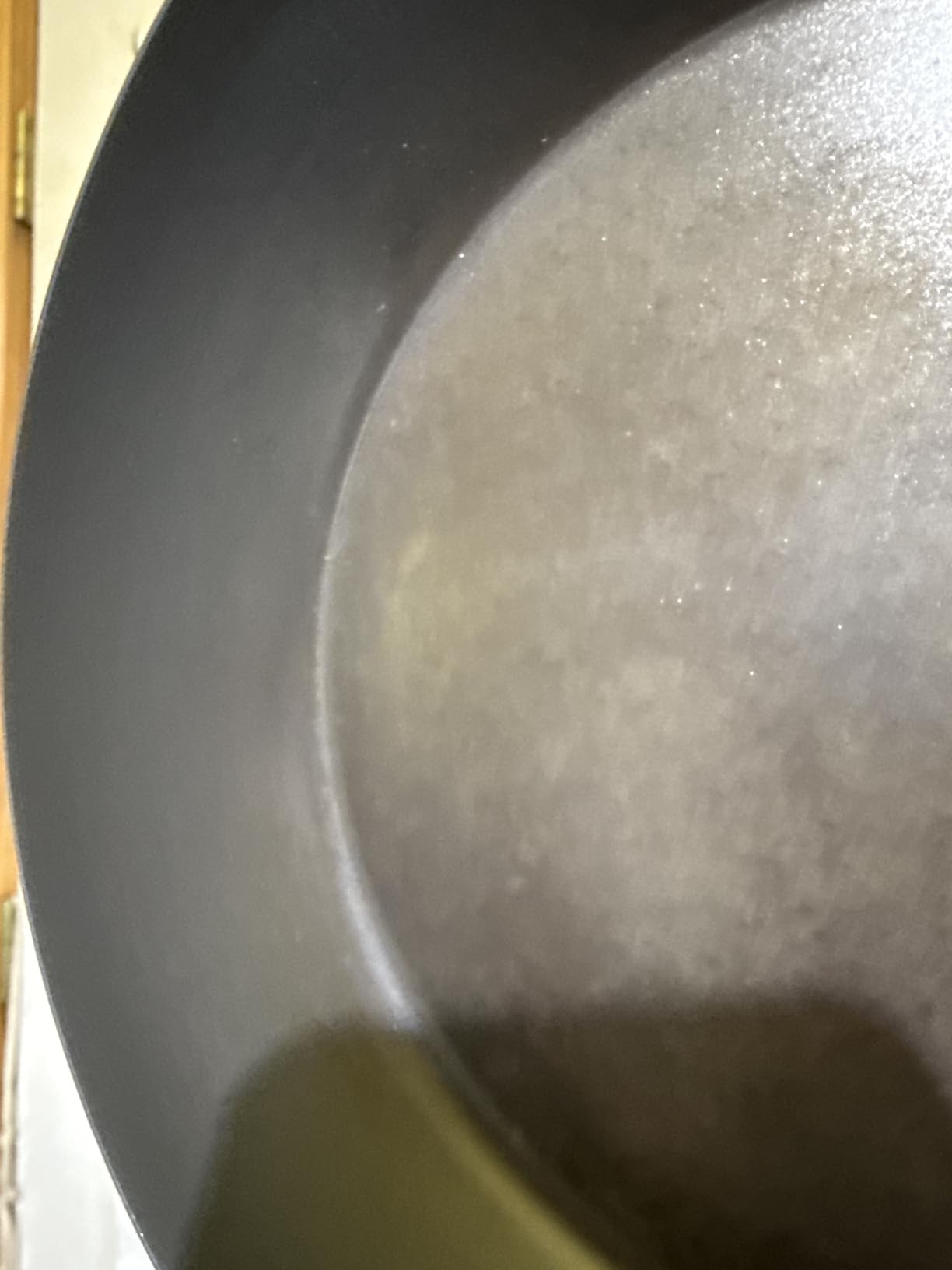
Now the honest part, because the numbers matter. This pan has the lowest average rating in our group at 3.7 stars, and 19 percent of its 1,059 reviews are one star, which is the highest failure signal in this roundup. The complaints cluster around sticking after a few weeks, seasoning problems, and questions about durability.
Hand washing is required to preserve the patina, and the listed two cup capacity is on the small side for a 10 inch pan, so it suits one to two people. The patina it develops is natural and improves with use, but it is not quite the same as building your own seasoning on bare steel, which matters to purists.
Best choice if you want zero learning curve
Among the pans we tested this is the closest thing to a nonstick replacement that is still real carbon steel. If you are moving off coated pans and want something that just works on day one, it is a reasonable starting point.
What to watch out for
Read recent reviews before you buy, because the quality feedback varies noticeably between batches. If long-term durability matters more to you than convenience, the Lodge or the Merten & Storck above gives you a stronger track record.
How We Tested These Carbon Steel Pans?
Every pan in this guide went through the same four-part routine over several weeks of daily cooking. The goal was to test what matters at dinner, not the specs on a box.
The egg test. Fried eggs, over easy, in a teaspoon of fat, starting on day one and repeating weekly. This is the fastest way to track how a seasoning layer develops, because eggs find every thin spot on a surface.
The crepe test. A thin batter poured across a hot pan reveals hot spots instantly. A good pan browns a crepe uniformly, and a bad one gives you a dark ring with a pale center.
The sear test. Room-temperature steaks and chicken thighs, dried thoroughly, cooked over medium-high heat. We scored crust color, evenness of browning, and how quickly the surface recovered between batches.
The cleaning test. Deglazing, hand washing, drying, and oiling after every cook, plus deliberate abuse like leaving a pan wet overnight to see how easily rust recovers.
We also tracked weight, handle temperature after ten minutes on the stove, and behavior on gas versus induction. Alongside our notes we read deeply through the buyer review data, since long-term problems show up in reviews months before they show up in a test kitchen.
What to Look For in a Carbon Steel Pan?
A few variables separate a pan you will use every week from one that lives in the back of a cupboard.
Thickness and weight
Carbon steel pans generally run between about 2mm and 3mm thick. Thicker steel holds heat better, sears harder, and resists warping, but weighs more and responds slower. Thinner steel heats in seconds and is easy to toss, but loses heat when cold food hits it and can warp on aggressive burners.
For most home cooks, something in the 2.5 to 4 pound range is the sweet spot. Our group spans from a one-pound Winco to a 5.59-pound Tramontina, which is essentially the full range of the category.
Handle design
Bare steel or iron handles are the most traditional, tolerate the highest oven temperatures, and get hot enough to burn you within ten minutes. Angled French-style handles are shaped for sautéing and flipping, and silicone sleeves stay cool but usually cap your oven temperature around 400°F.
Also check whether the handle is welded or riveted. Rivet-free interiors like the Matfer are easier to clean and season, because there are no fastener heads inside the cooking surface to collect food.
Pre-seasoned or bare steel
This is the biggest fork in the road for beginners. Pre-seasoned pans like the Lodge, Merten & Storck, and OXO arrive ready to cook, which removes the most intimidating step in carbon steel ownership. Bare or beeswax-coated pans take an evening of prep, but many cooks find the seasoning they build themselves is more durable and more satisfying.
Oven safety temperature
Ratings in this group range from 400°F on the de Buyer up to 800°F on the Matfer, with the OXO at 660°F and several pans around 500 to 600°F. For typical baking and finishing, 400°F is enough. If you broil, grill, or cook over open fire, the higher ratings become the deciding factor.
Stovetop compatibility
Carbon steel is magnetic, so induction works on every pan in this guide, with the Tramontina as the one item carrying conflicting official claims. Gas is the most forgiving match, since flames wrap the sides and heat evenly. Electric coil and glass-top stoves concentrate heat, so preheat gradually to avoid warping, which was the most common hardware complaint in the review data.
Size and shape
Advertised diameters overstate the flat cooking surface, because sloped walls eat several inches. A 10.25 inch pan typically gives about 7.3 inches of flat cooking area, and an 11 inch Mauviel gives about 8.4 inches. When in doubt size up, since crowding food makes it steam instead of brown.
Carbon Steel vs Cast Iron vs Stainless Steel
Carbon steel pans are lightweight, durable skillets made from about 99 percent iron and 1 percent carbon, combining the heat retention of cast iron with the quick heat response and maneuverability of stainless steel. That single sentence is the reason the category exists.
Against cast iron, carbon steel is lighter, heats and cools faster, and has smoother walls that suit tossing and omelet work. Cast iron holds heat longer once saturated and is more forgiving of neglect. Both need seasoning and both rust if left wet.
Against stainless steel, carbon steel becomes naturally nonstick with use while stainless never does. Stainless is better for acidic sauces and wine deglazing, is dishwasher safe, and needs zero maintenance. Against nonstick coatings, carbon steel wins on longevity and high-heat searing, while nonstick wins on convenience for delicate eggs and fish.
How to Season a Carbon Steel Pan
Seasoning is just oil heated past its smoke point so it polymerizes into a hard, slick layer bonded to the steel. Do it right once and you mostly never have to think about it again.
Stovetop method
Wash the pan thoroughly with hot soapy water to remove any factory wax or protective coating, then dry it completely. Set it over medium heat until a drop of water skitters across the surface, add a high smoke point oil such as grapeseed or vegetable, swirl to coat, and pour out the excess so only a thin film remains.
Let it smoke lightly for a few minutes, tilting so the oil reaches up the walls, then wipe with a paper towel held in tongs. Let it cool and repeat two or three times. The pan will darken unevenly at first, which is completely normal.
Oven method
Preheat your oven to around 450°F, coat the entire pan including the handle with a thin layer of oil, then wipe it down again so almost none remains. Place the pan upside down on a rack with a tray below to catch drips, bake for one hour, and let it cool in the oven. Repeat two or three times for a strong base layer.
What to expect in the first month
Week one, food sticks a little and the color goes patchy. Week two, eggs mostly release and the patchiness starts to blend. Week four, the surface takes on a uniform bronze-black patina, which matches what experienced owners in every forum thread we read said: just keep cooking, and the seasoning builds on its own.
Carbon Steel Pan Care and Rust Prevention
Rust anxiety is the most common worry among new carbon steel owners, and it is far easier to prevent than to fix.
Daily routine
After cooking, wipe the pan with a paper towel while it is still warm. If food is stuck, add a splash of water and deglaze while the pan is hot, then scrape gently with a wooden spatula. Wash briefly with a small amount of soap if needed, rinse, then dry immediately.
The drying step is where everything is won or lost, since even thirty seconds of air drying on a humid day can start flash rust on thin pans. Put the pan back on a warm burner for a minute to evaporate remaining moisture, then wipe the inside with a thin coat of oil before storing.
How to fix rust
Surface rust looks alarming but is rarely the end of a pan. Scrub the spot with a scouring pad or fine steel wool until you reach bare grey steel, wash and dry the pan, then run one or two seasoning rounds over the area. The repair becomes invisible once the seasoning fills back in.
Things that will strip your seasoning
Long-simmered acidic foods are the main one, so tomato sauce, wine reductions, and vinegar braises belong in stainless or enameled cookware. A quick deglaze with wine is fine. Dishwashers, aggressive scrubbing on a seasoned surface, and thermal shock from plunging a hot pan into cold water are the other common causes of damage.
Carbon Steel Pans We Don’t Recommend
Not every pan deserves your money, and being straight about that is more useful than pretending everything works. Here is where we would push back based on our testing and the review data.
Avoid unbranded ultra-cheap carbon steel pans from marketplace sellers. The recurring problems are rough, pitted surfaces that never season smoothly, uneven steel that warps on first use, and handles that loosen within weeks. If a listing does not name a manufacturer or state a country of origin, treat that as the warning it is.
Be cautious about the OXO Obsidian if durability is your priority. We included it above for beginners because the convenience is real, but 19 percent of its reviews are one star, the highest failure signal in our group. Read the recent reviews on the current batch before ordering.
Skip very thin pans like the Winco if you are new to carbon steel. One pound of steel is a feature for experienced cooks and a trap for beginners, because the instant-rust tendency and constant oiling make the learning curve much steeper than it needs to be.
Do not buy the Mauviel if you need a pan this week. It is an excellent pan, but availability is inconsistent and it does not ship Prime. Waiting indefinitely on a premium pan is a bad trade when comparable options are in stock.
Be skeptical of boutique heritage brands at luxury prices. Forum threads are full of buyers who paid heavily for a small-batch carbon steel pan and regretted it, because the material does not improve proportionally with cost. A well-made French workhorse performs essentially the same job.
What Carbon Steel Pan Does America’s Test Kitchen Recommend?
This is one of the most searched questions in the category, and almost no review article answers it. America’s Test Kitchen has historically recommended traditional French carbon steel pans in the Mauviel and Matfer style, valuing thick steel, riveted construction, and durability over convenience features like silicone handles and factory pre-seasoning.
Their broader guidance matches what we found: buy thicker steel rather than thinner, expect a real seasoning break-in period, and treat pre-seasoning as a bonus rather than a substitute for building your own layer. Their published picks change between testing cycles, so check the current season’s equipment review before buying. The Matfer Bourgeat and Mauviel M’Steel above are the two closest matches in build philosophy.
Frequently Asked Questions
What is the best brand of carbon steel pans?
de Buyer is the best overall brand for most home cooks, thanks to the Mineral B line’s balance of weight, heat response, and searing power. Matfer Bourgeat is the top pick for heavy-duty and high-heat use, Mauviel for premium French build quality, and Lodge for the best budget option. All four are highly rated across thousands of buyer reviews.
What are the downsides of carbon steel pans?
Carbon steel requires hand washing, immediate drying, and a light coat of oil after every use, or it will rust. It needs a seasoning break-in period before food stops sticking, it cannot handle long-simmed acidic foods like tomato sauce, and it is not dishwasher safe. The handles on most models also get hot during cooking.
Are carbon steel pans really the best?
For high-heat searing, sautéing, and frying, yes, carbon steel is the best everyday pan choice because it combines cast iron heat retention with far lighter weight and faster temperature response. It is not the best choice for acidic sauces, delicate fish, or anyone who wants zero-maintenance cookware, where stainless steel or nonstick still wins.
What carbon steel pan does America’s Test Kitchen recommend?
America’s Test Kitchen has historically recommended traditional thick-steel French carbon steel pans in the Mauviel and Matfer style, prioritizing durable construction over pre-seasoned convenience. Their specific pick changes between testing cycles, so check their current equipment review. The Matfer Bourgeat and Mauviel M’Steel in this guide match the build style they favor.
How do you clean a carbon steel pan?
Wipe the pan with a paper towel while it is still warm, then deglaze stuck bits with a splash of hot water and scrape gently. Use a small amount of soap only when needed, never soak the pan, and never put it in the dishwasher. Dry it immediately on a warm burner and wipe the inside with a thin coat of oil before storing.
Final Verdict on the Best Carbon Steel Pans
If you want one answer, get the de Buyer Mineral B. It hits the best balance of weight, heat response, searing quality, and long-term support of anything we tested, and it has the deepest pool of satisfied owners to back it up. The Matfer Bourgeat is the pick if you broil, grill, or cook outdoors, and the Lodge 8 inch remains the smartest low-risk way to find out whether carbon steel fits your routine.
Beginners should lean toward the Merten & Storck for its best-in-class factory seasoning, or the OXO Obsidian if convenience is the priority. Anyone frustrated by uneven heating on electric or induction should look hard at the STRATA and its aluminum core, and stir-fry fans should skip skillets entirely and get the YOSUKATA wok.
Whichever pan you choose, give it two weeks of honest cooking before you judge it. The best carbon steel pans in 2026 are not the ones that perform best on day one, they are the ones still improving six months in while a nonstick coating would already be showing wear.