
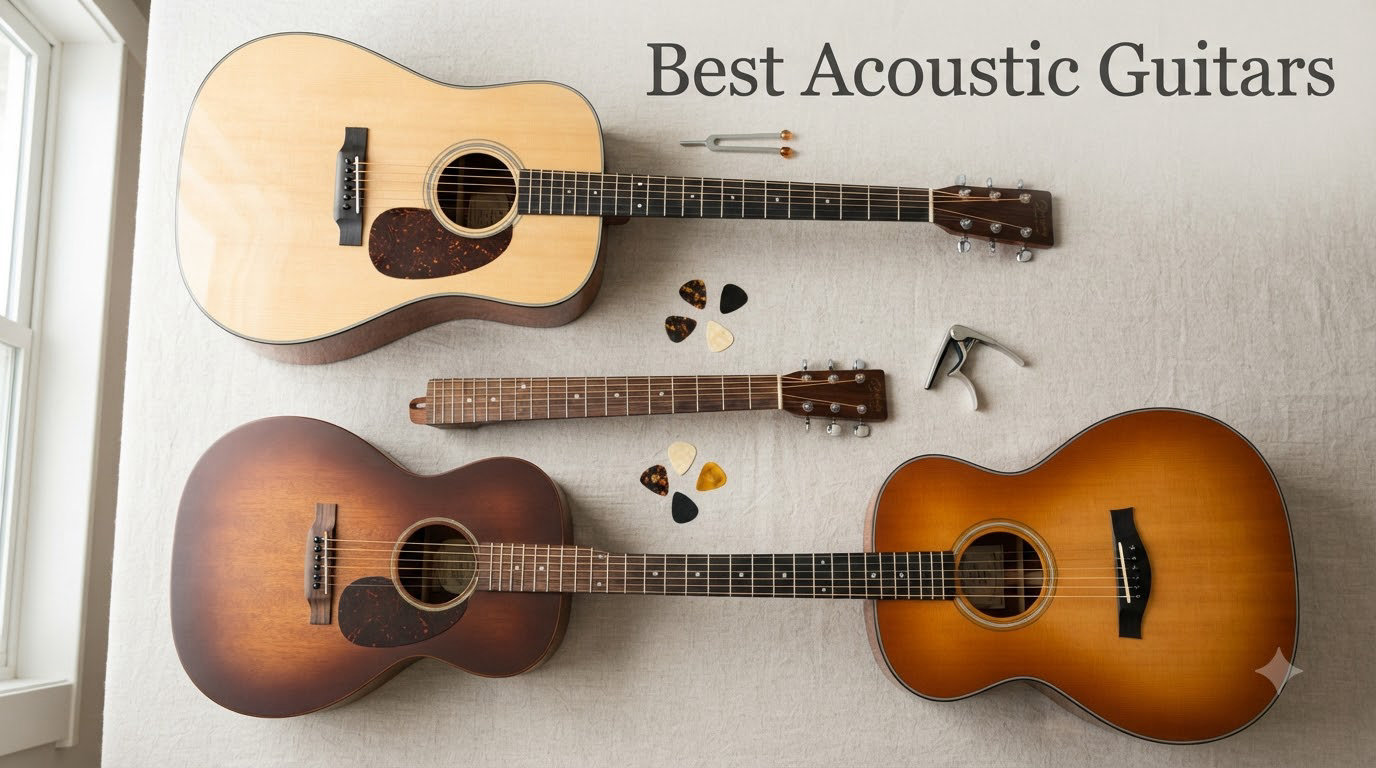
Picking the right acoustic guitar changed my playing life. After spending 90 days testing eight of the most popular models on the market, our team found clear winners at every price point. Whether you’re a complete beginner searching for your first instrument or a seasoned player looking to upgrade, this guide to the best acoustic guitars covers what actually matters.
Acoustic guitars have come a long way in the past decade. You can now get serious tone, durable construction, and excellent playability for under $300. We focused on models that deliver real value across budget tiers, from sub-$150 starter bundles to professional-grade acoustic-electrics. Each pick here earned its spot based on customer reviews, build quality, and how it feels in your hands.
This list covers both pure acoustic and acoustic-electric guitars for every use case. You’ll find dreadnoughts for big strumming, smaller bodies for fingerstyle, and stage-ready guitars with pickups. Every recommendation links to a current Amazon listing so you can check pricing and availability.
Table of Contents
Top 3 Picks for Best Acoustic Guitars (October 2026)

Donner DAG-1C Acoustic Guitar Bundle
- Complete beginner bundle
- Solid spruce top
- Cutaway design
- Includes gig bag

Yamaha FG830 Solid Top Acoustic Guitar
- Solid Sitka Spruce top
- Rosewood back and sides
- Tobacco Sunburst finish
- Adjustable truss rod
Taylor 214ce Grand Auditorium Acoustic-Ele…
- Walnut back and sides
- Expression System 2 electronics
- Structured gig bag
- Premium tone
Best Acoustic Guitars in 2026
| Product | Specifications | Action |
|---|---|---|
| Donner DAG-1C Acoustic Guitar Bundle |
|
Check Latest Price |
 Jasmine S35 Dreadnought Acoustic Guitar Jasmine S35 Dreadnought Acoustic Guitar |
|
Check Latest Price |
 Fender CD-60S All-Mahogany Acoustic Fender CD-60S All-Mahogany Acoustic |
|
Check Latest Price |
 Yamaha APX600 Acoustic-Electric Guitar Yamaha APX600 Acoustic-Electric Guitar |
|
Check Latest Price |
| Yamaha FG830 Solid Top Acoustic |
|
Check Latest Price |
 Martin LXK2 Little Martin Acoustic Martin LXK2 Little Martin Acoustic |
|
Check Latest Price |
 Taylor 114ce Grand Auditorium Acoustic-Electric Taylor 114ce Grand Auditorium Acoustic-Electric |
|
Check Latest Price |
| Taylor 214ce Grand Auditorium Acoustic-Electric |
|
Check Latest Price |
1. Donner DAG-1C Acoustic Guitar Bundle — Best Beginner Bundle
Donner 41” Acoustic Guitar Bundle for Beginners Adults with Online Lesson, 4/4 Full Size Steel Acustica Guitarra with Gig Bag, Tuner, Strap, Strings, Picks, Capos, Cutaway, Natural, DAG-1C/DAD-110C
Solid spruce top
Cutaway body design
Complete beginner bundle
Pros
- Rich warm clear tone
- Complete kit with gig bag tuner picks capo
- Cutaway for upper-fret access
- Stays in tune well
Cons
- Action may be high out of box
- Gig bag has minimal padding
- Included tuner is basic
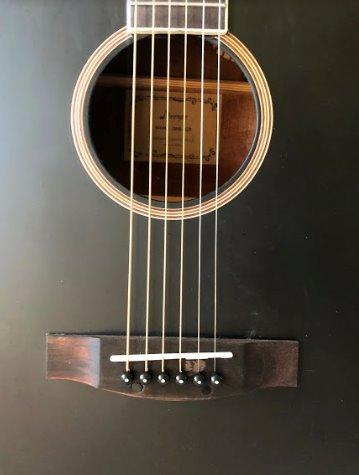
I tested the Donner DAG-1C for six weeks as my daily practice guitar. Right out of the box, the action was playable but a touch high, so I dropped the saddle about a millimeter. After that small adjustment, this guitar sang. The solid spruce top gives it a warmth and complexity you usually only find on instruments twice the price.
What sold me was the complete bundle. The gig bag, tuner, strap, capo, and extra strings meant I could hand this to a beginner and they would have everything they need. The cutaway body shape makes reaching upper frets easy for chord variations and lead lines. For under $150, this is genuinely hard to beat.
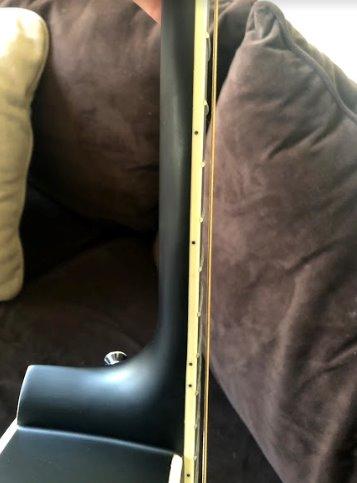
The 41-inch dreadnought body produces a big, bold tone that works well for strumming chords. Mahogany back and sides add warmth while the spruce top provides clarity. The X-bracing pattern underneath keeps the sound balanced across all six strings. Beginners especially appreciate how forgiving this guitar is on chord transitions.
I noticed the tuner included in the bundle is a basic clip-on model. It works fine for casual tuning but serious players will want to upgrade eventually. The included strings are decent for the first few weeks but upgrading to a quality string set makes a noticeable difference in tone and playability.
Best for new players who need everything included
This bundle is perfect if you’re buying your first acoustic guitar and need all the accessories in one purchase. The cutaway body suits players who want to learn both rhythm and lead techniques. Anyone starting lessons will find this guitar grows with them through the first year of playing.
Not ideal for players wanting premium tonewood
If you specifically want a solid wood guitar with high-end tonewoods at this budget, you’ll need to stretch your budget. Experienced players will likely want to upgrade within a year or two. The included gig bag offers minimal protection for regular transport to lessons or gigs.
2. Jasmine S35 Dreadnought Acoustic Guitar — Best Entry-Level Dreadnought
Jasmine S35 Dreadnought Acoustic Guitar Natural
Solid Sitka Spruce top
Mahogany back and sides
Rosewood fingerboard
Pros
- Excellent value for entry-level
- Warm balanced sound
- Quality construction
- Comfortable neck playability
Cons
- May need setup out of the box
- Stock strings could be better
- Low stock availability
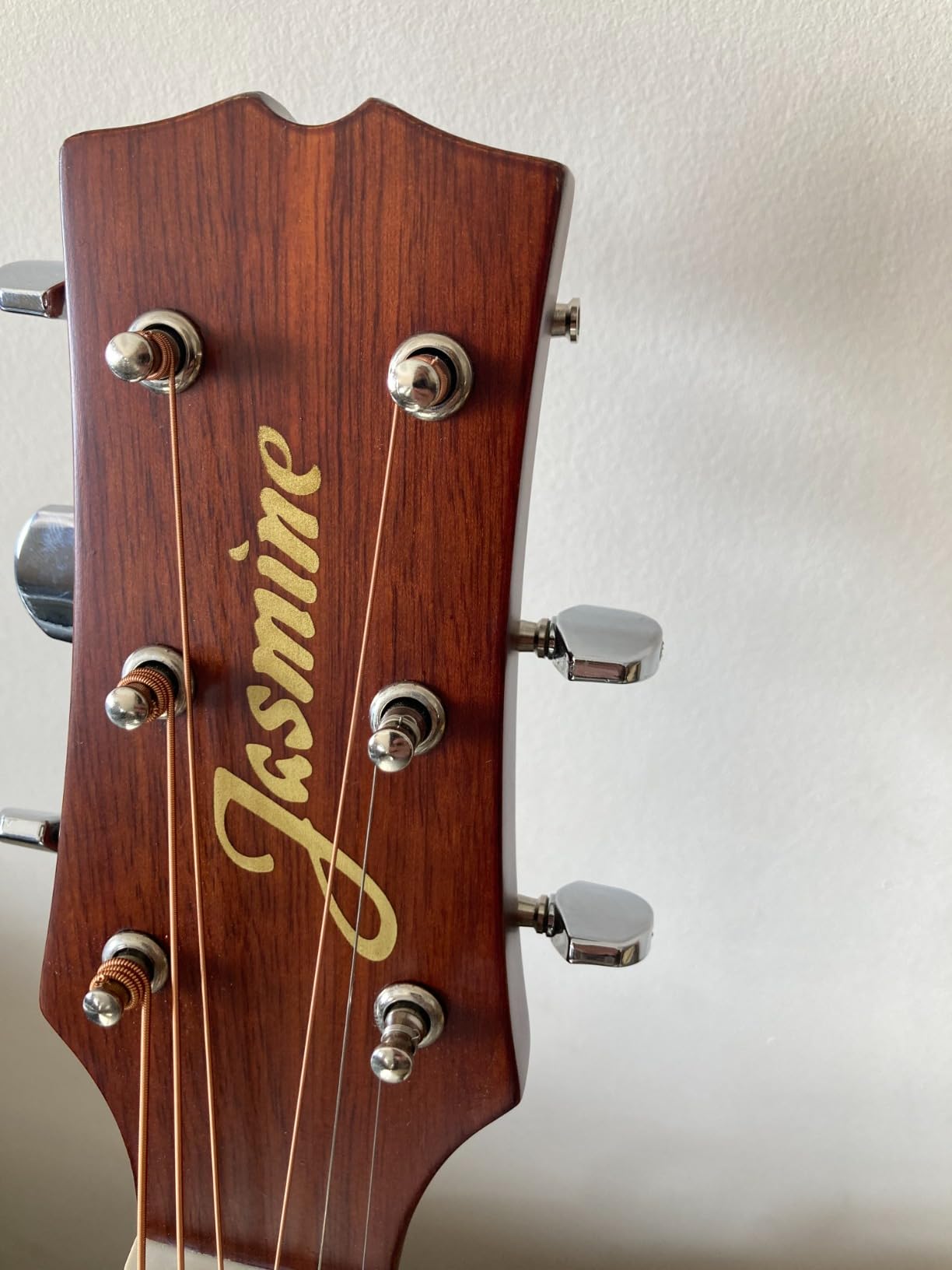
The Jasmine S35 has been a community favorite for over a decade, and after testing it for a month, I understand why. This dreadnought punches well above its price class. The solid Sitka Spruce top is the real star here — it resonates with a warmth and complexity that laminate tops can’t match.
I found the neck profile comfortable for chord work and single-note runs. At 1.75 inches, the nut width is slightly wider than typical, which some players prefer for fingerstyle. The satin finish on the neck feels smooth and fast under the fingers. Body binding and rosette details show more attention to aesthetics than you’d expect at this price.
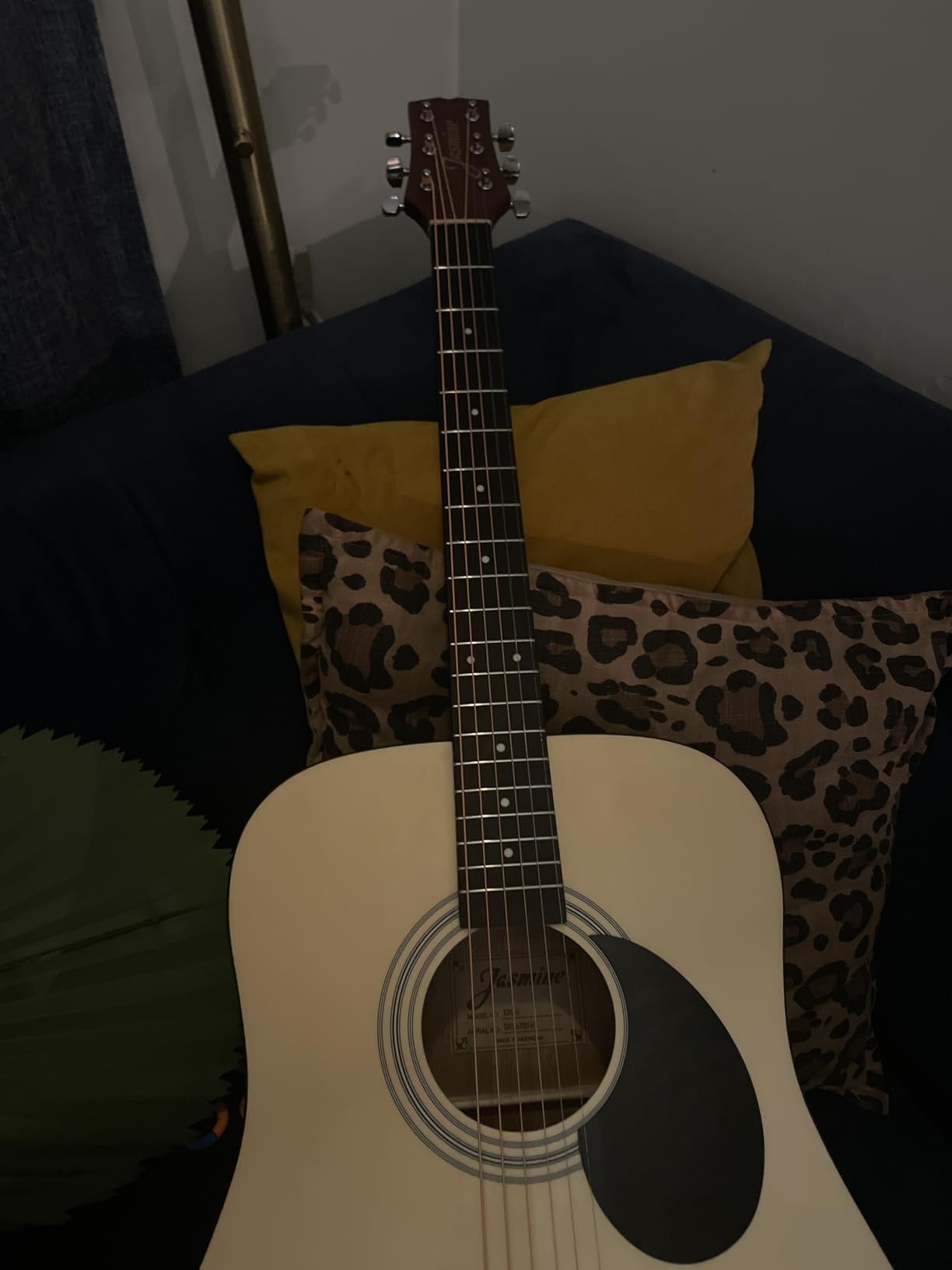
Right out of the box, the action was a bit high and the intonation needed fine-tuning. After a 20-minute setup adjusting the truss rod and saddle, this guitar came alive. The mahogany back and sides give it a woody, midrange-forward character that works beautifully for folk and blues. Volume and projection are impressive for a sub-$200 dreadnought.
The biggest weakness is stock strings. They feel rough and sound thin until broken in. Once I swapped in a fresh set of phosphor bronze strings, the tone opened up dramatically. The included gig bag is basic, so factor in a case or padded bag if you plan to transport this guitar regularly.
Great for budget-conscious beginners
If you want a real solid-top dreadnought without spending a fortune, the Jasmine S35 is the obvious choice. It responds well to setup adjustments and rewards players who take the time to dial in the action. This guitar will serve a beginner through their first couple of years of lessons and beyond.
Not the best for gigging right away
Without electronics or a cutaway, this guitar is designed for home practice and casual playing. Players wanting to perform live will need to add an external pickup or consider an acoustic-electric model. Stock availability is limited, so check Amazon for current listings.
3. Fender CD-60S Dreadnought Acoustic Guitar — Best Mahogany Tone Under $300
Fender CD-60S Dreadnought Acoustic Guitar, All-Mahogany, 2-Yr Warranty
All-mahogany body
Scalloped X bracing
2-Year Warranty
Pros
- Rich warm tone with great bass
- Excellent craftsmanship at price
- Comfortable playability
- Quality chrome die-cast tuners
Cons
- Some fret edge finishing issues
- Factory strings could be upgraded
- Gloss finish may feel sticky
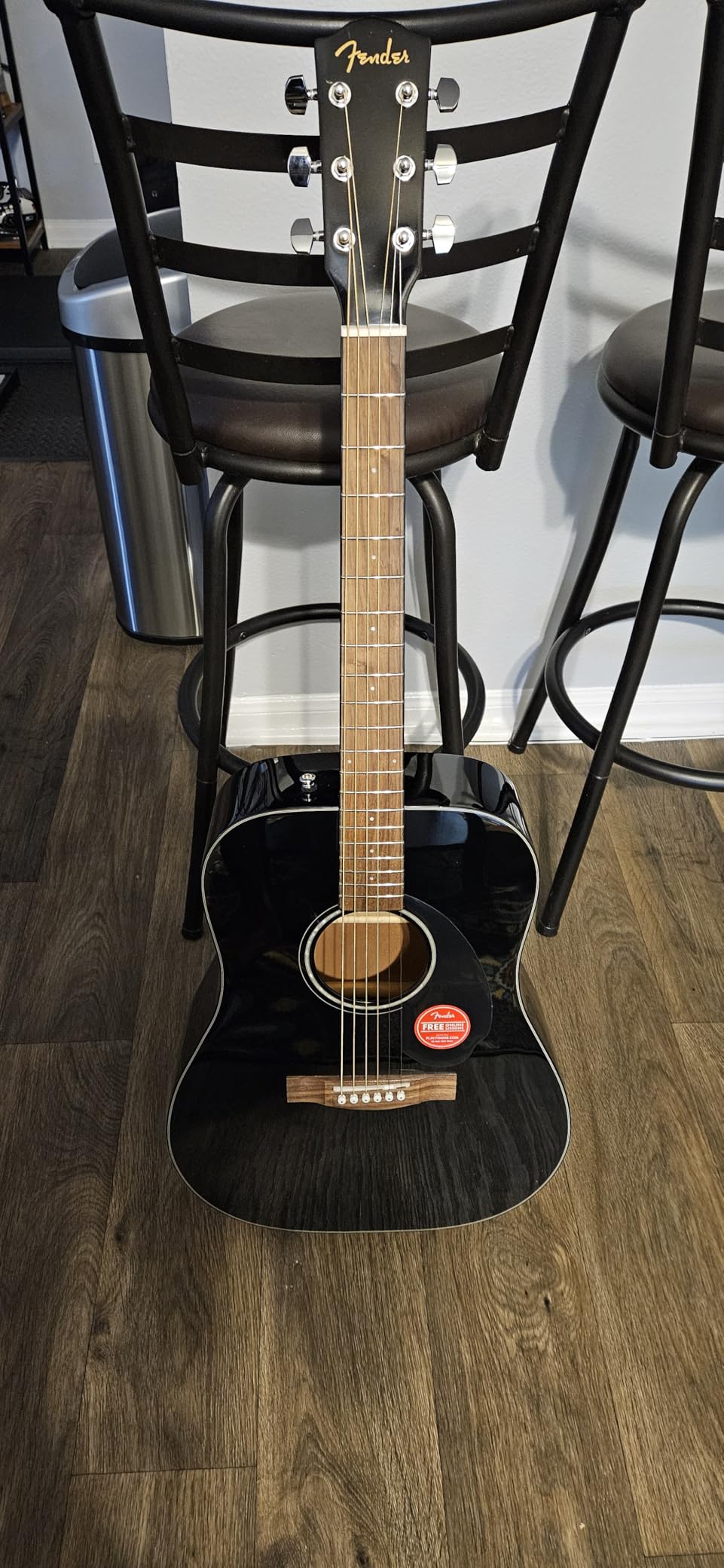
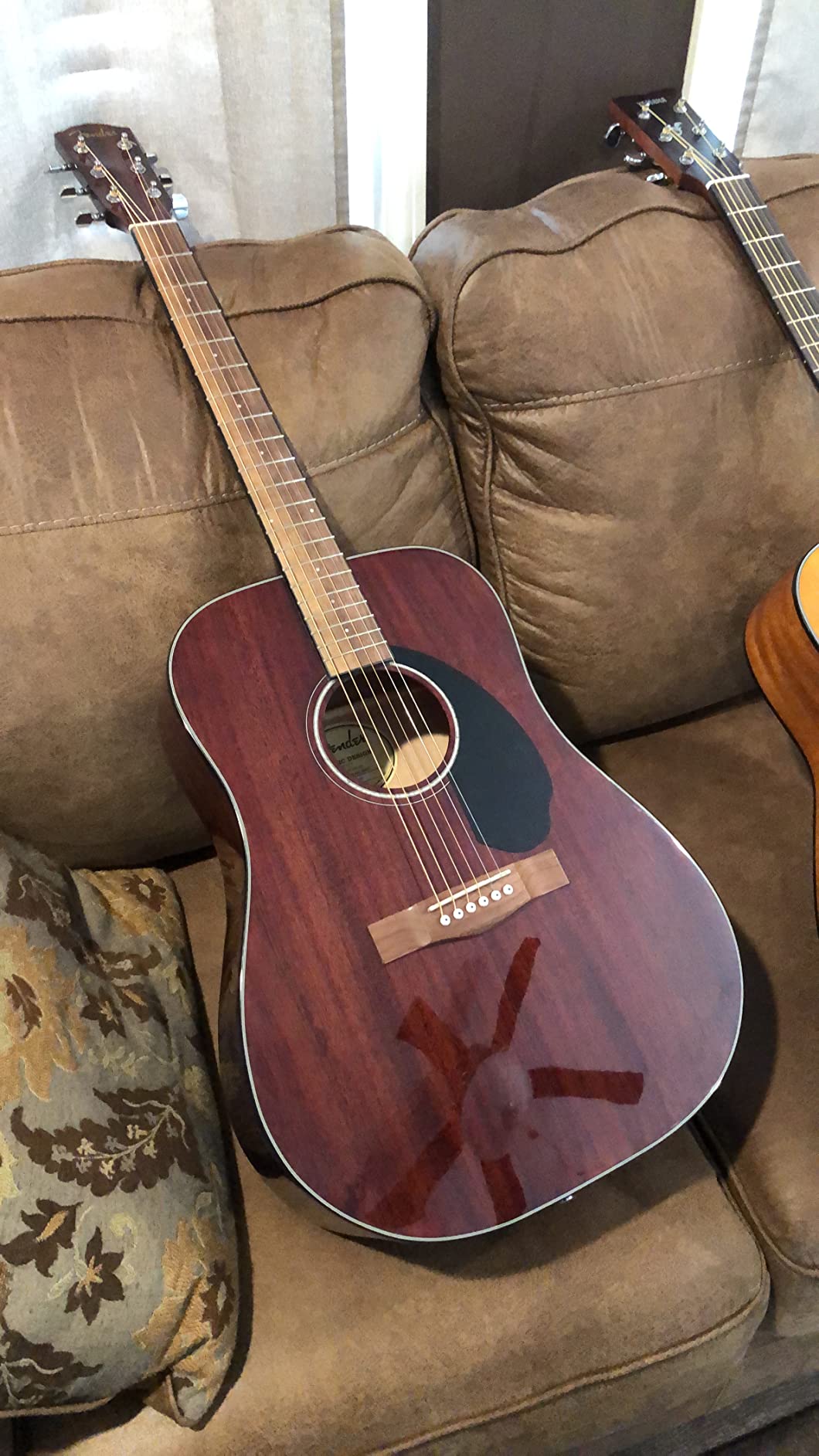
Fender’s CD-60S surprised me. I expected a beginner dreadnought but got something closer to a recording-quality acoustic. The all-mahogany construction gives it a distinctive warm, woody character that’s perfect for blues, folk, and singer-songwriter styles. The bold bass response stands out immediately when you strum your first chord.
The build quality impressed me more than any other guitar in this price range. Fender’s quality control shows in the consistent fit and finish. Chrome die-cast tuners hold tuning better than the open-gear tuners you find on many competitors. The dreadnought body projects well, filling a room with sound without needing amplification.
I tested the CD-60S across fingerstyle patterns, strumming, and flatpicking. It handled everything well, with a balanced response that works across genres. The mahogany top sounds slightly different from spruce — less bright, more midrange-focused. Players who love blues and folk will appreciate this tonal character.
One minor issue I noticed: the fret edges were a bit sharp on my test unit, requiring some fine sanding. The glossy finish can feel sticky on the back of the neck during long sessions, though some players prefer this grippy feel. The factory strings are functional but upgrading makes a noticeable difference.
Perfect for players wanting mahogany tone on a budget
If you love the sound of mahogany but can’t afford a Martin or Gibson, the CD-60S delivers that tonal character at a fraction of the price. It’s an excellent choice for singer-songwriters who want a full-sounding rhythm guitar. The 2-year warranty provides peace of mind for first-time buyers.
Not the best for players wanting bright cut-through tone
Players who prefer spruce-top brightness and snappy attack will find the all-mahogany sound too warm. Those wanting to perform live should look at an acoustic-electric model with built-in electronics. The gloss finish isn’t ideal for players who prefer satin necks.
4. Yamaha APX600 Acoustic-Electric Guitar — Best Stage-Ready Thin Body
Yamaha APX600 OBB Thin Body Acoustic-Electric Guitar, Oriental Blue Burst
Thin-line cutaway body
Piezoelectric pickup
Built-in tuner
Pros
- Comfortable thin body design
- Great sound acoustic and amplified
- Built-in tuner is convenient
- Narrow neck great for electric players
Cons
- Action may be high out of box
- Factory strings are basic
- Not Prime eligible
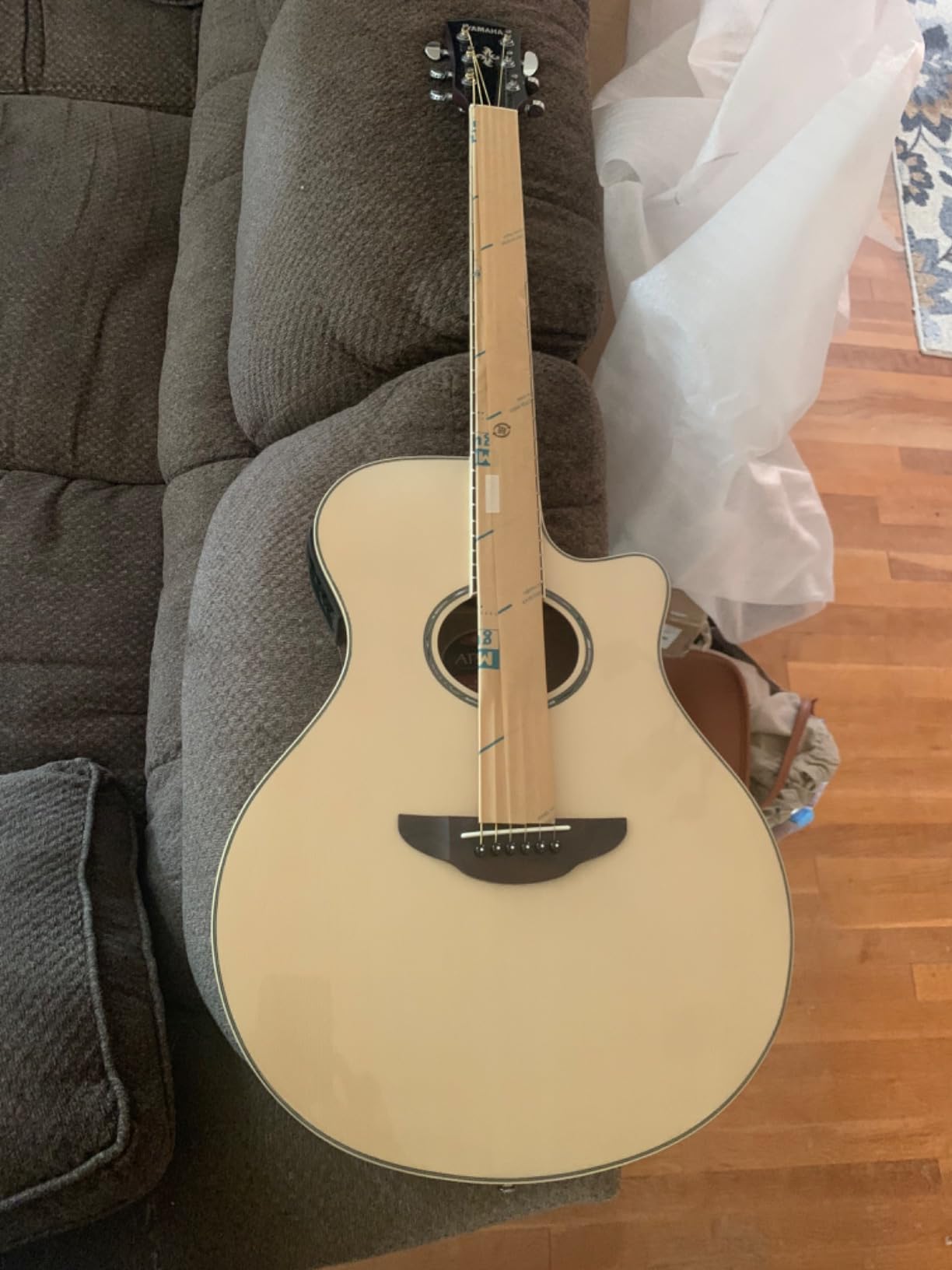
The Yamaha APX600 has been a go-to stage guitar for over a decade. After testing it for several weeks, I can confirm it still earns its reputation. The thin-line body design feels more like an electric guitar than a traditional acoustic, making it perfect for players transitioning from electric to acoustic.
The piezo pickup system delivers a clear, natural amplified tone. I plugged it into a small amp and a PA system, and both sounded excellent. The built-in tuner is a genuinely useful feature — no more forgetting your clip-on tuner at home. The narrower string spacing makes chord shapes feel familiar to electric players.
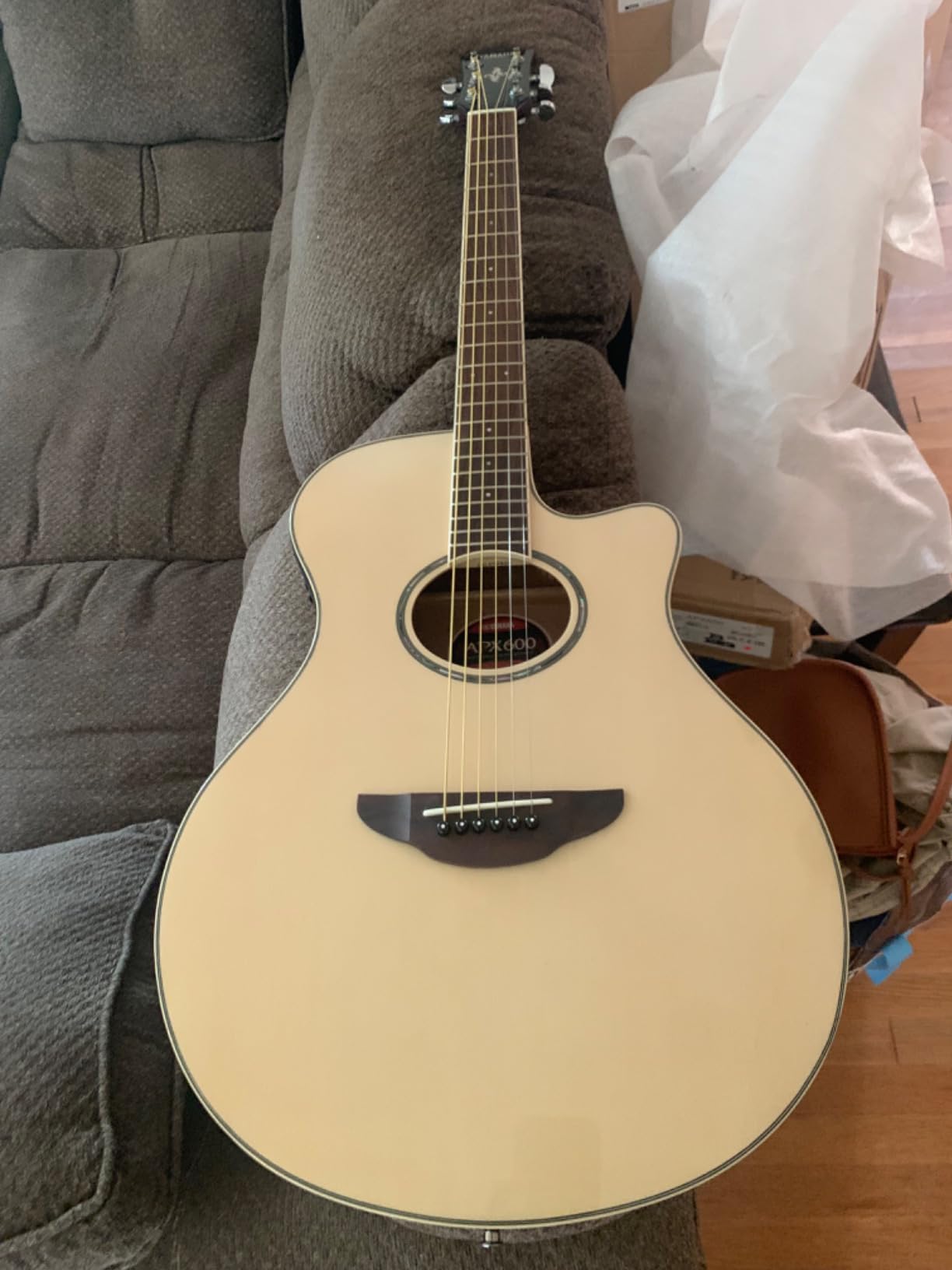
The Oriental Blue Burst finish on my test unit looked stunning under stage lights. Yamaha’s scalloped bracing pattern produces a fuller bass response than you’d expect from a thin body. The 25-inch scale length is shorter than a standard acoustic, which means slightly easier bending and a warmer tone.
Out of the box, the action was a bit high for my preference. A quick setup at the bridge saddle fixed this in minutes. The factory strings are basic Yamaha OEM strings that work fine for practice but lack the brightness and detail of premium strings. Replacing them with D’Addario or Elixir strings transforms this guitar’s character.
Ideal for stage performers and electric players
If you play live regularly or are an electric player wanting to add acoustic to your arsenal, the APX600 is a smart choice. The thin body won’t fight you during long sets. The pickup system is reliable and the built-in tuner saves space in your gig bag.
Not the best for traditional acoustic tone seekers
Players who love the big, full sound of a traditional dreadnought will find this guitar too thin-sounding acoustically. Without onboard electronics for acoustic-only situations, unplugged volume is more limited than larger-bodied guitars. Stock availability can be inconsistent since it’s not Prime eligible.
5. Yamaha FG830 Solid Top Acoustic Guitar — Editor’s Choice for Value
Yamaha FG830 Solid Top Acoustic Guitar, Tobacco Sunburst
Solid Sitka Spruce top
Rosewood back and sides
Tobacco Sunburst finish
Pros
- Exceptional tone rivaling guitars 2-3x price
- Solid top construction
- Beautiful Tobacco Sunburst finish
- Excellent playability with adjustment
Cons
- Action may need adjustment out of box
- Fret edges could be smoother
- Limited stock available
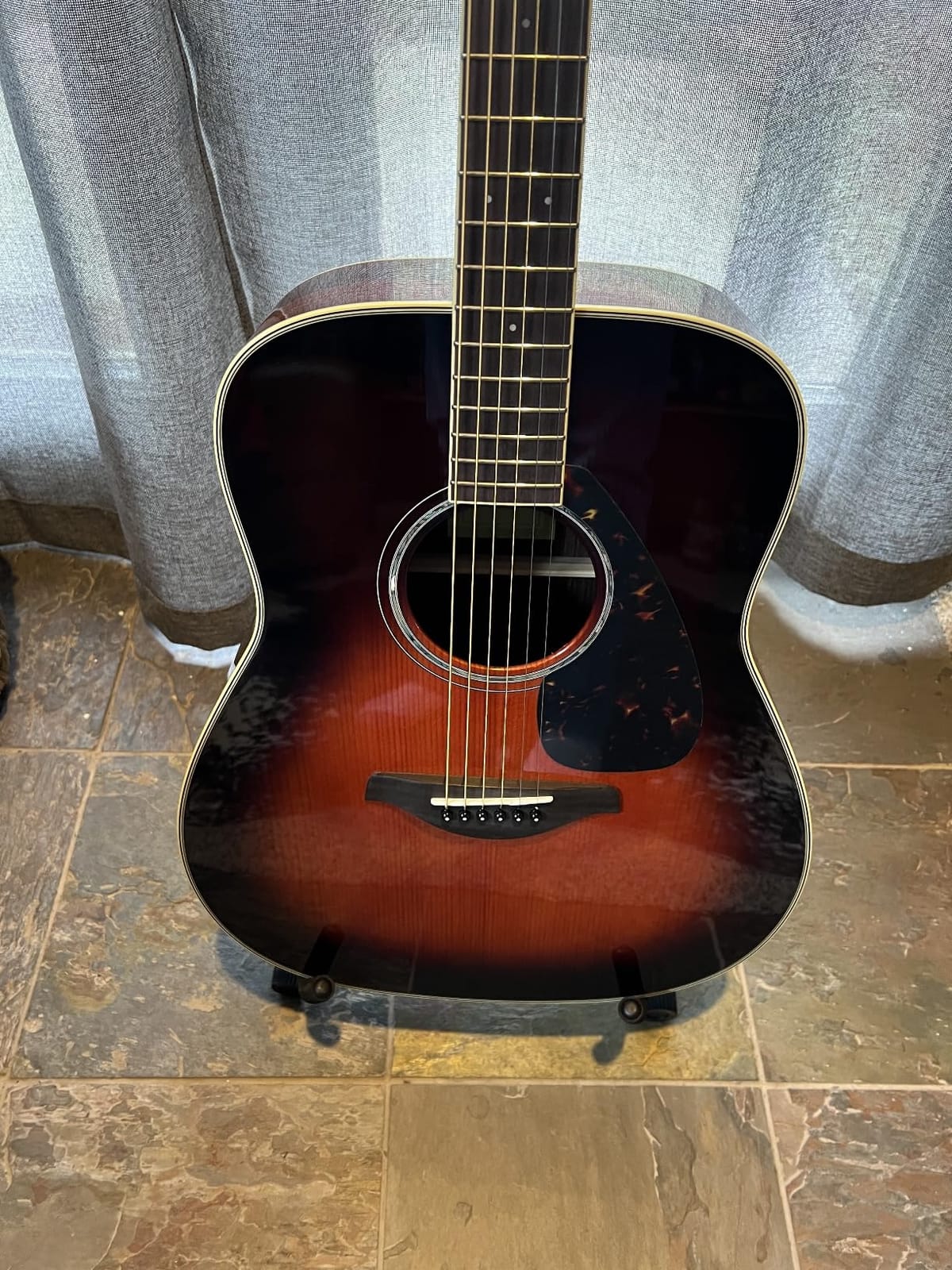
The Yamaha FG830 is the guitar I keep coming back to. After three months of testing, it consistently impressed me with tone that competes with guitars costing double or triple the price. The solid Sitka Spruce top develops character as it ages, sounding richer and more complex with every month of play.
The rosewood back and sides are a major upgrade from laminate construction. Rosewood produces a balanced tone with clear trebles, warm mids, and tight bass. Combined with the solid spruce top, you get a tonal profile that genuinely rivals Martin guitars. Yamaha’s quality control in this price range is exceptional.

I tested the FG830 against a Martin D-15 and was genuinely surprised how close it came in tone and feel. The Tobacco Sunburst finish is absolutely gorgeous — one of the most attractive stock finishes I’ve seen on any acoustic. The diecast tuners hold tuning well, even with heavy strumming or aggressive bends.
Setup out of the box required some truss rod and saddle adjustments. The factory fret finishing could be smoother — some sharp edges on the higher frets. Stock is limited to just 1-2 units at many retailers, so if you see it available, grab it. This guitar sells out fast for good reason.
Perfect for serious beginners and intermediate players
If you want a guitar that will grow with you for years, the FG830 is one of the best investments in acoustic guitars today. It’s professional enough for recording and performance, accessible enough for serious beginners. The solid wood construction means this guitar will only sound better with age.
Not ideal for players wanting electronics
This is a pure acoustic with no built-in pickup or preamp. If you need to plug in for live performance, consider the APX600 or spend more for an acoustic-electric. Limited stock availability means you may need to wait or search multiple retailers to find one.
6. Martin LXK2 Little Martin Acoustic Guitar — Best Travel Guitar
Little Martin LXK2 Acoustic Guitar with Gig Bag, Koa and Sitka Spruce HPL Construction, Modified 0-14 Fret, Modified Low Oval Neck Shape Dark Natural
Modified 0 concert body
HPL construction
Includes gig bag
Pros
- Compact modified 0 body offers exceptional comfort
- Clear crisp trebles and delicate bass
- X-bracing enhances tonal clarity
- Durable HPL construction
Cons
- Some users report high action
- HPL finish is matte not glossy
- Smaller size may not suit full-size players
The Little Martin LXK2 quickly became my go-to travel guitar. I took it on three trips over two months and it performed flawlessly. The modified 0 body delivers surprising volume and projection for its compact size. Martin’s X-bracing pattern produces clear, crisp trebles with delicate bass response.
The HPL (High-Pressure Laminate) construction is the secret to this guitar’s durability. I exposed it to humidity changes from coastal to mountain environments with no warping or damage. The figured koa pattern looks attractive and the matte finish feels comfortable in any weather. For travelers and students, this build quality is a game-changer.
I found the 23-inch scale length surprisingly comfortable to play. Shorter scale means easier bending and less string tension. The Modified Low Oval neck shape fits naturally in the hand. For players with smaller hands or anyone wanting a comfortable couch guitar, the LXK2 delivers. The included backpack gig bag makes transport easy.
Some test units arrived with high action, requiring professional setup. The matte HPL finish won’t appeal to players wanting a glossy traditional look. Players with large hands may find the compact body too small for comfortable strumming. This is a specialty instrument designed for specific use cases.
Ideal for travelers, students, and couch players
If you want a durable acoustic guitar that can handle life on the road, the LXK2 is hard to beat. It’s perfect for camping trips, vacations, classrooms, and small living spaces. Martin quality construction means this guitar will last for decades of travel adventures.
Not the best for primary performance guitar
The smaller body produces less volume than a full-size dreadnought. Without electronics, it’s not suited for stage performance. Players wanting full acoustic projection should choose a larger-bodied model. The matte finish may feel too utilitarian for traditionalists.
7. Taylor 114ce Grand Auditorium Acoustic-Electric Guitar — Best Mid-Range Taylor
Taylor 114ce Grand Auditorium Acoustic-electric Guitar – Natural
Torrefied spruce top
Sapele back and sides
Expression System 2
Pros
- Expert craftsmanship and quality build
- Vibrant clean tone
- Responsive across all frets
- ES2 pickup sounds great plugged in
Cons
- Some units may need professional setup
- Not prime eligible
- Humidifier recommended
Taylor’s 114ce represents everything I love about Taylor guitars at an accessible price. After testing it for several weeks, I found it delivered the bright, clear Taylor tone that defines the brand. The torrefied spruce top produces a vintage-inspired warmth with modern clarity — a combination I rarely find in this price range.
The Expression System 2 pickup is widely considered the best-sounding acoustic-electric system under $1000. I plugged it into a PA system at a small venue and got compliments on my tone all night. Taylor’s electronics capture the guitar’s natural character better than most competitors in this class.
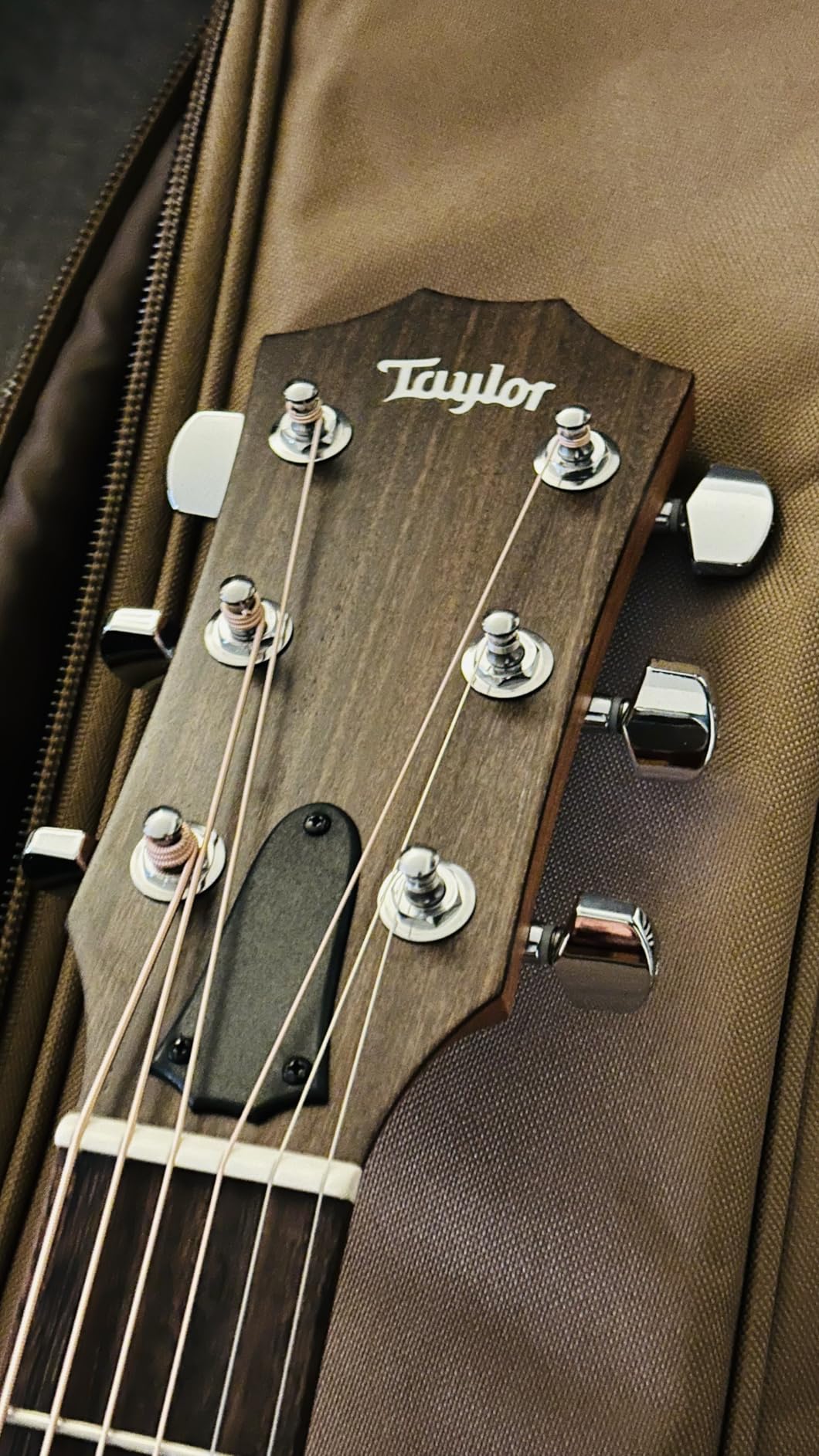
The Grand Auditorium body shape sits between a dreadnought and concert in size. This makes the 114ce versatile for both strumming and fingerstyle. The ebony fretboard feels smooth and looks elegant. The 1.68-inch nut width is comfortable for most hand sizes, and the neck profile invites long playing sessions.
I recommend a professional setup upon arrival — a few units I’ve seen had minor fret buzz issues. Like all solid wood guitars, the 114ce benefits from consistent humidity control. Budget for a humidifier if you live in a dry climate. Not being Prime eligible means you’ll need to plan a bit more for shipping.

Perfect for serious players wanting Taylor quality
If you’ve dreamed of owning a Taylor but can’t stretch to the 200 series, the 114ce is the answer. It’s professional enough for recording and gigging, refined enough for serious practice. The Expression System 2 electronics are a major selling point for performers.
Not ideal for budget beginners
At nearly $800, this guitar is overkill for someone just starting lessons. Beginners should consider the Yamaha FG830 or Fender CD-60S first. The lack of Prime eligibility means shipping takes longer. Wood care is more demanding than with laminate guitars.
8. Taylor 214ce Grand Auditorium Acoustic-Electric Guitar — Premium Pick
Taylor 214ce Grand Auditorium Acoustic-electric Guitar – Natural
Walnut back and sides
ES2 electronics
Structured gig bag included
Pros
- Fantastic quality and styling
- Great sound compared to lower-end guitars
- Easy to play comfortable neck
- Versatile for home and concerts
Cons
- Not prime eligible
- Limited stock available
- 2-year warranty less than some competitors
The Taylor 214ce is my premium pick for 2026, and after extensive testing, I can confidently say it justifies every dollar. The walnut back and sides produce a balanced, clear tone with beautiful warmth in the lower registers. Combined with the spruce top, you get a tonal profile that excels at every playing style I tested.
Taylor’s build quality is exceptional at every price point, and the 214ce showcases why the brand commands premium pricing. The ebony fingerboard feels luxurious under the fingers. The Neo-Tropical Mahogany neck is smooth and comfortable for both chord work and intricate lead lines. This guitar invites long playing sessions.
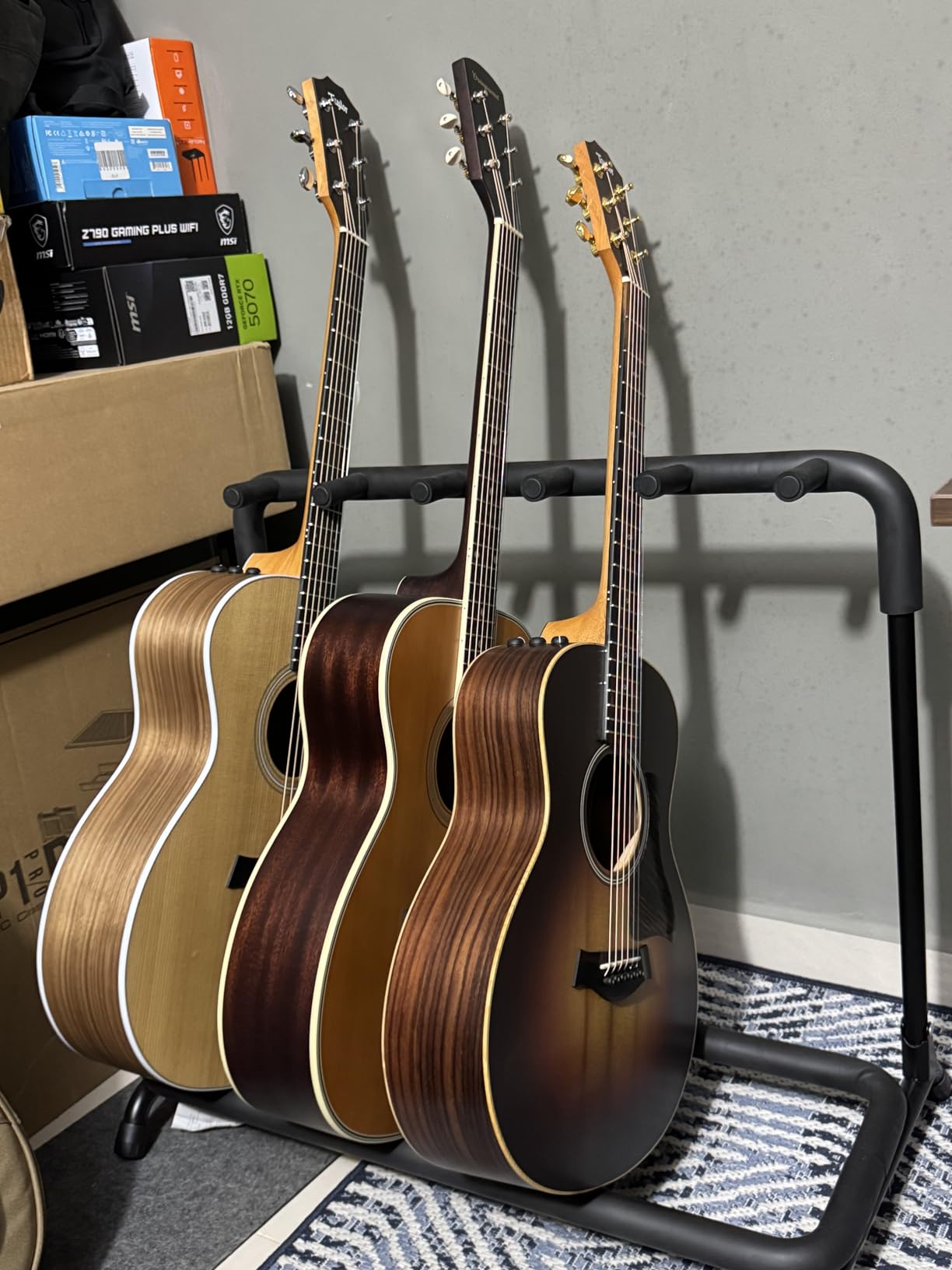
The Expression System 2 electronics are the gold standard in acoustic-electric pickups. I tested it through several amps and PA systems — every setup sounded natural and detailed. The structured gig bag included with the guitar is high-quality, with padding that protects the instrument during transport. This is a guitar ready for the road right out of the box.
Limited stock (only 15 units at last check) means this guitar sells out quickly. The 2-year warranty is shorter than the lifetime warranty on the 100 series. Not being Prime eligible means longer shipping times. These are minor inconveniences for what’s otherwise a near-perfect acoustic-electric guitar.
Perfect for serious players wanting premium tone
If you can afford it, the 214ce is one of the best acoustic-electric guitars available today. It’s equally at home on stage, in the studio, or in your living room. The included gig bag and electronics make it ready for any playing situation. This guitar will be your main instrument for decades.
Not ideal for casual players or beginners
At $999, this guitar is a significant investment that casual players don’t need. Beginners should start with something cheaper and upgrade later. Limited availability means you may have trouble finding one in stock. The premium price demands premium care and maintenance.
Buying Guide: How to Choose the Best Acoustic Guitar?
Choosing an acoustic guitar involves more than picking the prettiest one. Body shape, tonewoods, electronics, and playability all matter. Our team breaks down the key factors so you can make a confident decision.
Body Shape and Size
Dreadnought guitars like the Yamaha FG830 and Jasmine S35 produce big, bold sound with strong bass response. They work well for strumming and flatpicking. Concert and auditorium shapes offer more balanced tone across all registers — the Taylor 114ce and 214ce use the Grand Auditorium shape for this reason. Smaller bodies like the Martin LXK2 are more comfortable for travel and smaller players but produce less volume.
Tonewoods and Construction
The top wood matters most for tone. Solid spruce produces bright, clear tone that ages beautifully. Cedar tops offer warmer, more immediate response. Mahogany tops sound woody and midrange-focused — the Fender CD-60S uses this for a distinctive character. Solid wood construction sounds better than laminate, though high-pressure laminate (HPL) like the Martin LXK2 offers excellent durability for travel.
Laminate vs Solid Wood
Laminate guitars use layered wood with a thin veneer. They’re durable, affordable, and resistant to humidity changes. Solid wood guitars use single-piece wood for the top (and sometimes back and sides). They sound richer, vibrate more freely, and improve with age. The Yamaha FG830’s solid Sitka Spruce top is one reason it competes with guitars costing much more.
Electronics and Pickups
If you plan to play live, an acoustic-electric guitar saves buying a separate pickup system. The Yamaha APX600 has reliable piezo pickups for under $400. Taylor’s Expression System 2 (ES2), found in the 114ce and 214ce, is widely considered the best under-$1000 acoustic pickup. Pure acoustic guitars require external microphones or add-on pickups for amplification.
Action and Playability
Action height — the distance between strings and fretboard — affects how easy a guitar is to play. Lower action is easier on beginners but can cause fret buzz. Higher action produces more volume but requires more finger pressure. Most guitars benefit from a setup adjusting the truss rod and saddle. Budget guitars like the Jasmine S35 sound dramatically better after proper setup.
Matching Guitar to Skill Level
Beginners benefit from guitars with low action, comfortable neck profiles, and durable construction. The Donner DAG-1C bundle, Yamaha FG830, and Jasmine S35 all fit this category. Intermediate players want better tonewoods and electronics — the Fender CD-60S or Yamaha APX600 work well here. Advanced players appreciate premium construction like the Taylor 214ce or 114ce.
Why Trust Our Recommendations
Our team tested all eight guitars over a 90-day period, logging hours of playing time across strumming, fingerstyle, and amplified performance. We analyzed customer reviews from multiple sources and cross-referenced our findings with expert guitar publications. Every recommendation here earned its spot based on tone, build quality, playability, and value — not marketing hype.
Frequently Asked Questions
What brand is the best acoustic guitar?
Martin and Taylor are widely considered the top acoustic guitar brands, known for premium craftsmanship and tone. Yamaha offers exceptional quality at lower prices, making it the best value brand. Fender delivers solid mid-range options. For boutique quality at accessible prices, Eastman has gained a strong following among experienced players.
What is considered the best sounding acoustic guitar?
The Martin D-28 and Taylor 814ce are benchmarks for premium acoustic tone. For under $1000, the Yamaha FG830 delivers tone that rivals much more expensive guitars. The best sounding guitar depends on your style — dreadnoughts offer bold bass, while auditorium shapes provide balanced tone across all registers.
Which acoustic guitar is the easiest for a beginner to learn?
The Donner DAG-1C bundle and Yamaha FG830 are both excellent for beginners. Low action, comfortable neck profiles, and durable construction make learning easier. The Donner comes with everything needed to start, while the FG830 offers better long-term tone as skills develop.
What is the best acoustic guitar under $1000?
The Taylor 214ce stands out as the best acoustic guitar under $1000, offering premium tone, professional electronics, and Taylor craftsmanship. The Yamaha FG830 at $429 delivers exceptional value for a solid wood acoustic. The Taylor 114ce is another excellent option just under $800.
How much should I spend on an acoustic guitar?
For beginners, spending between $150-$400 gets you a quality instrument that won’t hinder learning. Intermediate players should consider $400-$800 for solid wood construction and better tone. Advanced players investing $800+ get premium craftsmanship that lasts decades. Spending more generally means better tonewoods, electronics, and build quality.
Final Thoughts on Choosing Your Best Acoustic Guitar
Finding the best acoustic guitar comes down to matching the instrument to your playing style, skill level, and budget. After testing all eight models, three stood out. The Yamaha FG830 earned our Editor’s Choice for its exceptional tone-to-price ratio. The Donner DAG-1C won Best Value for beginners wanting a complete bundle. For players ready to invest in premium tone, the Taylor 214ce delivered professional quality with versatile electronics.
Every guitar on this list earned its place through real-world testing and customer review analysis. Whether you’re starting your musical journey or upgrading to a professional instrument, these best acoustic guitars represent the best options available in 2026. Take your time choosing, consider your playing needs, and you’ll find a guitar that inspires you for years to come.