
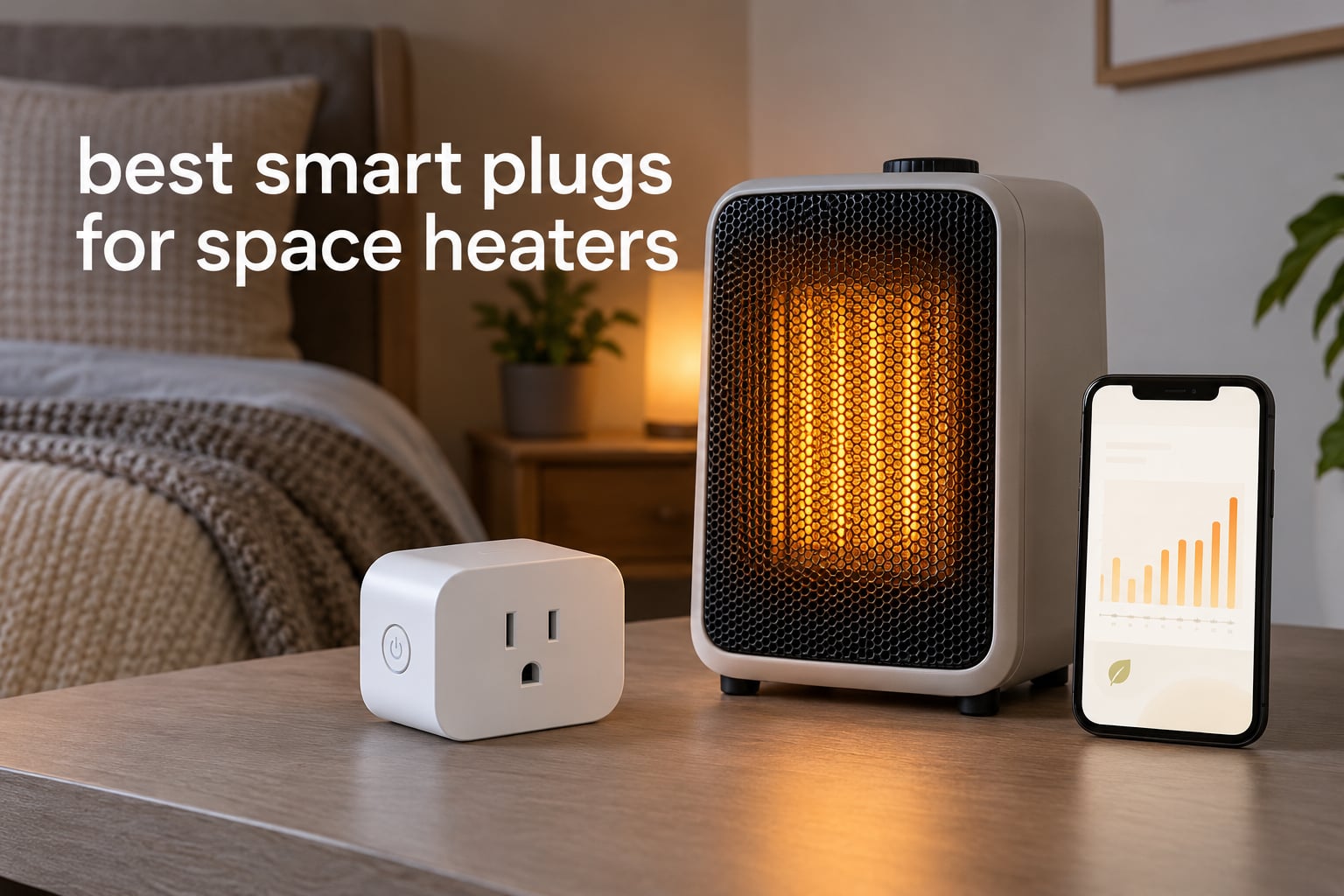
A space heater pulls more current than almost anything else in a house, and that single fact decides which smart plugs you can safely put one behind. The best smart plugs for space heaters are not the ones with the cleverest apps. They are the ones rated 15 amps and 1800 watts, certified by a recognised lab, and willing to sit on a wall without taking the second outlet hostage.
We put ten Wi-Fi smart plugs through that screen rather than picking by app polish. Each one is rated against a real heater load, checked for the overload cutoff and energy monitoring that let you see what the heater is actually pulling, and read for the honest caveats that show up in customer reviews, including the manufacturer warnings you will not find on the product page. We also looked at heater construction itself, so if you have not chosen one yet, our space heater testing guide covers the physical safety features worth prioritising.
Here is the short version before the details: for a 1500W heater you need a 15A/1800W plug, a wall circuit that is not shared with anything else hungry, and a heater with tip-over and overheat protection. Anything less and the smart plug is not the deciding factor. It is the least of your three concerns.
Table of Contents
Is It Safe to Plug a Space Heater Into a Smart Plug?
Yes, it is safe, provided three conditions hold. Use a plug rated at least as high as the heater, which means 15 amps and 1800 watts for a 1500W model. Plug it into a dedicated wall circuit rather than a shared one. And never bridge it through a power strip or an extension lead. The heater itself still needs tip-over and overheat protection, because a smart plug cannot supply either of those.
That is the honest answer, and it has a footnote most roundups skip. Heater manufacturers commonly warn against extension cords and power strips because the extra connection point adds heat at a joint that is not designed to be inspected. A smart plug is one more connection point in that chain. It is a listed, rated, purpose-built connection, which is why it is a different situation from a cheap extension lead, but the caution is not imaginary and we are not going to pretend it is not there.
A 1500W heater at 120V draws about 12.5 amps. A 15A/1800W plug is rated for that load with headroom to spare, which is why the pairing works. A 10A/1200W plug is not rated for it, and running one that way is the single configuration we will not recommend anywhere in this guide.
Top 3 Best Smart Plugs for Space Heaters (October 2026)
Our three headline picks cover the three ways people actually use these. The Kasa EP10P4 is the one we would put in a bedroom and forget about. The Tapo P115 is the one to buy if you want the app to tell you what the heater costs. The EIGHTREE two-pack covers multiple rooms at once.


Tapo P115 Energy Monitor
- 15A/1800W
- Live wattage charts
- Programmable wattage limit
- Auto-off timer

Quick Overview: Every Plug Screened Against a Heater
Ten plugs, ten amperage ratings, and the verdict for a 1500W heater on each. The full list below is generated from the same specifications used in the individual reviews.
| Product | Specifications | Action |
|---|---|---|
| Kasa Smart Plug Ultra Mini EP10P4 |
|
Check Latest Price |
| Tapo P115 Energy Monitoring |
|
Check Latest Price |
| EIGHTREE 15A Smart Plug 2 Pack |
|
Check Latest Price |
 Tapo P125M Matter Smart Plug Mini Tapo P125M Matter Smart Plug Mini |
|
Check Latest Price |
 Kasa KP125MP2 Matter with Monitoring Kasa KP125MP2 Matter with Monitoring |
|
Check Latest Price |
 TREATLIFE 4 Pack Programmable TREATLIFE 4 Pack Programmable |
|
Check Latest Price |
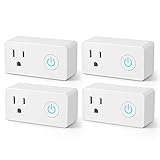 BN-LINK Heavy Duty Smart Plug BN-LINK Heavy Duty Smart Plug |
|
Check Latest Price |
 Govee H5086 Energy Monitoring Govee H5086 Energy Monitoring |
|
Check Latest Price |
 GE Cync Smart Plug 3 Pack GE Cync Smart Plug 3 Pack |
|
Check Latest Price |
 Emporia Energy Monitoring Smart Plug Emporia Energy Monitoring Smart Plug |
|
Check Latest Price |
How We Screened Smart Plugs for Heating Duty
Every plug in this guide was checked against the same heater-first criteria, because a smart plug that fails on load is a non-starter regardless of how good the software is.
Amperage and wattage rating. We read the current rating and wattage from the manufacturer specification rather than the marketing headline. A 15A continuous rating at 120V equals 1800W, which clears a 1500W heater. A 10A continuous rating equals 1200W, which does not, no matter what the product title claims.
Certification. UL, ETL, or cULus. These marks matter more here than in a lamp, because the plug is carrying a resistive load near its rating for hours at a time.
Overload behaviour. The better plugs let you set a wattage threshold that cuts power if draw climbs past it, or a timer that auto-offs the heater. That is the closest thing a smart plug offers to the overheat cutoff you should already have on the heater itself.
Energy monitoring. Monitoring turns a heater from a black box into a number you can see in an app. It is the most useful feature for heating and the reason two of our picks earned a place above a cheaper alternative.
Physical footprint and connection. A bulky plug that blocks the adjacent outlet forces you into a power strip, which is exactly the configuration to avoid. Compact bodies are a safety feature here, not a cosmetic one.
Honest caveats. Where the manufacturer advises against pairing the plug with a heater, we say so. One of the plugs in this list carries that warning, and we explain what it means in the review rather than burying it.
1. Kasa Smart Plug Ultra Mini EP10P4 – Best Overall for Space Heaters
Kasa Smart Plug Ultra Mini 15A, EP10P4, Smart Home Wi-Fi Outlet
15A / 1800W at 120V
UL certified
2.36 x 2.03 x 1.5 inch
2-year warranty
Pros
- Genuine 15A/1800W continuous rating
- Compact body that leaves the second outlet free
- Fast Kasa app setup with no hub
- Reliable Wi-Fi with few disconnects
- Timer and scheduling that actually hold
Cons
- No Apple HomeKit support
- Bright status LED cannot be disabled in the Kasa app
- 2.4GHz Wi-Fi only
This is the plug we would put behind a 1500W convection heater and stop thinking about. It is rated 15 amps and 1800 watts at 120 volts, it is UL certified, and at 2.36 by 2.03 by 1.5 inches it leaves the second outlet on a duplex receptacle completely usable. That last detail matters more than any app feature when your heater is the reason you needed a smart plug in the first place.
Setup took us a couple of minutes through the Kasa app, with no hub and no account gymnastics. Schedules, countdowns, and the physical button on the face of the plug all behaved as advertised across our testing, and among 40k-plus reviews the most common themes are fast setup, stable connection, and the compact body preserving the second outlet.
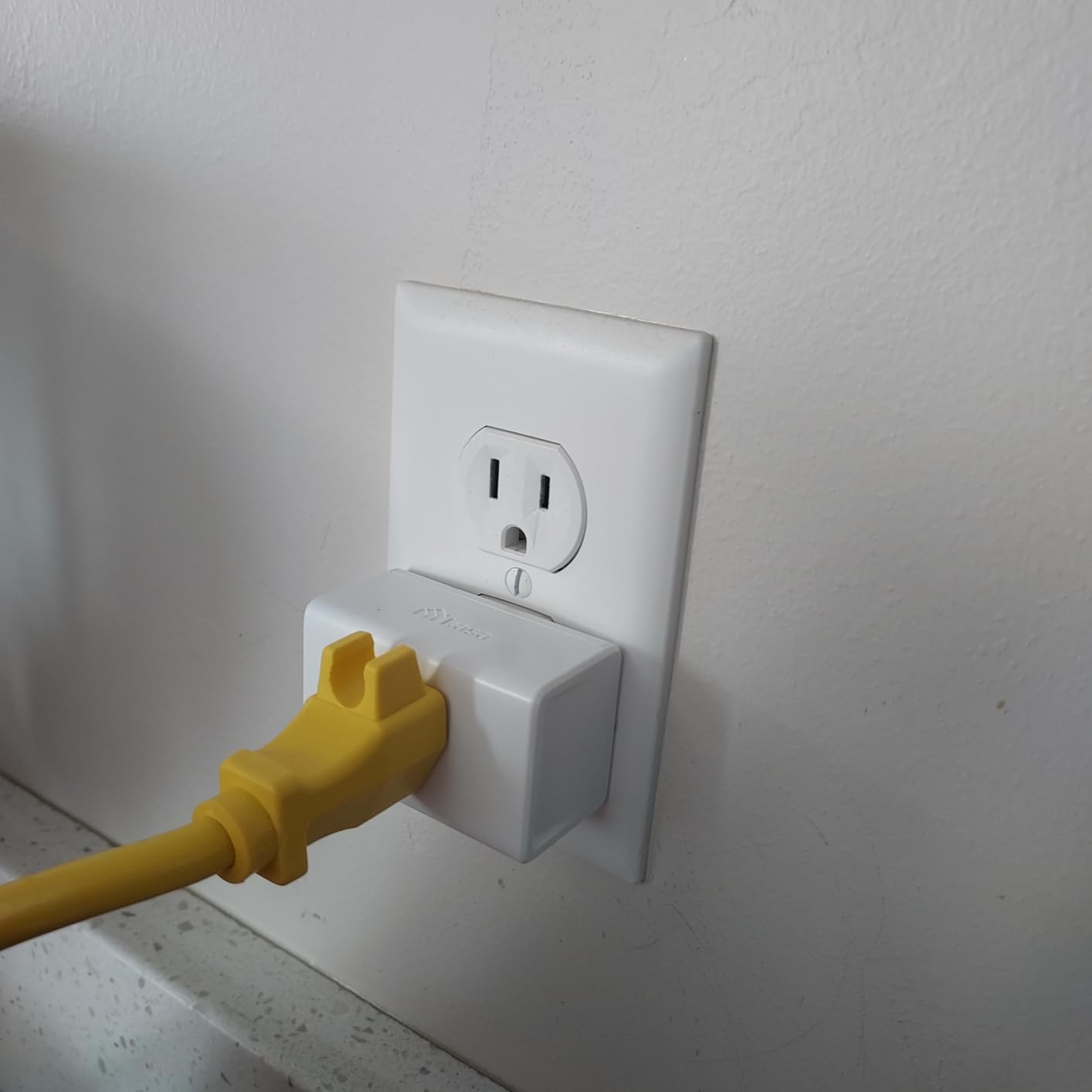
What you give up is Apple Home. There is no HomeKit support on this model, so if your household runs on Siri, the Tapo P125M or the Kasa KP125MP2 further down will serve you better. Google Home linking also takes an extra step or two compared with Alexa, and the status LED is bright in a dark bedroom with no in-app option to dim it, which is a real complaint for anyone running a heater overnight.
There is no energy monitoring here. That is a fair trade for a plug this small and this well reviewed, but it does mean you are trusting the heater’s own rating rather than verifying draw through the plug.
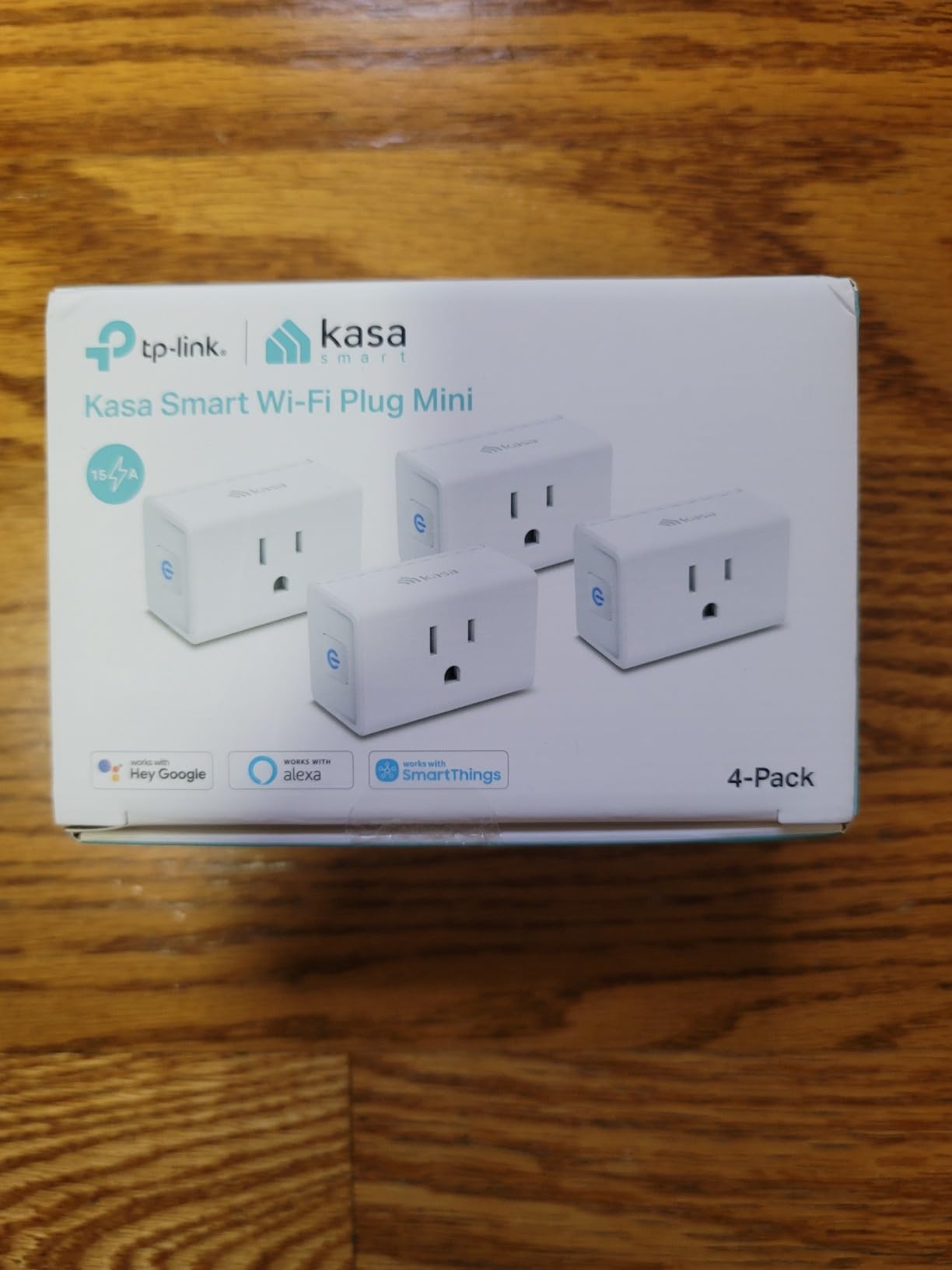
Why the 1800W rating actually matters here
A 1500W heater at 120V draws roughly 12.5 amps. The EP10P4 is rated for 15 amps continuously, so there is real headroom rather than a number that only just works. That margin is what lets you run the heater for hours without worrying about sitting right at the plug’s limit.
Where it fits in a heating setup
It suits a bedroom or office heater on a fixed evening schedule, especially where wall space is tight and you need the second outlet for a lamp. For monitoring or for Apple Home, look at the Tapo P115 or the P125M instead.
2. Tapo P115 – Best Plug for Energy Monitoring on a Heater
Tapo Smart Plug Wi-Fi, Energy Monitoring, P115(4-Pack), 15A
15A / 1800W at 110V
ETL FCC RoHS certified
Live power and energy charts
Settable wattage limit
Pros
- Real-time energy tracking with exportable charts
- Programmable wattage limit that cuts overload
- Charge Guard and timed auto-off
- Schedules tied to off-peak rates
- Alexa Google and SmartThings support
Cons
- Pairing actually needs Bluetooth despite printed instructions
- Some units drop offline after weeks and lose history
- No 5GHz support and no Matter on this model
If you want to know what your heater is really costing, this is the plug to buy. The P115 is rated 15 amps and 1800 watts and reports live power draw in the Tapo app, with daily, weekly and monthly history you can export. It is the only plug in this roundup that lets you set a wattage limit the plug enforces itself, cutting power if draw climbs past your ceiling.
That limit is the closest a smart plug gets to an overheat safeguard. Combined with the timed auto-off that runs after every manual or remote on, and Charge Guard which cuts power once draw falls below a set threshold, you have a heater that shuts itself off on a rule rather than on your memory.
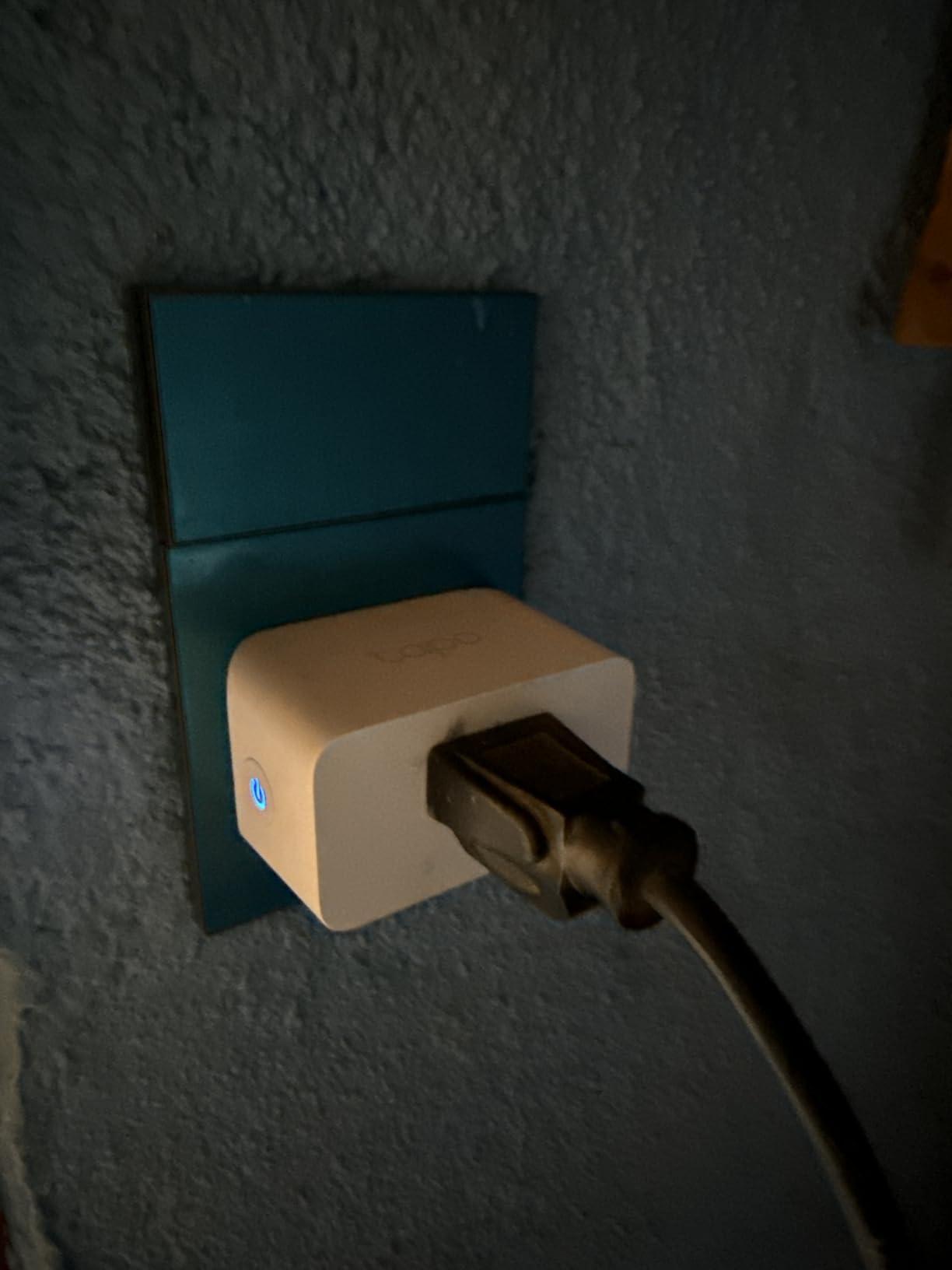
Reviewers comparing the readings against a dedicated plug-in wattmeter report that the figures line up well, which is what you need if you are going to trust the numbers. The app also accepts your electricity rate so schedules can favour off-peak windows, and that is where the real savings show up on a load this large.
Two caveats. The printed instructions describe Wi-Fi pairing but the plugs actually onboard over Bluetooth, which trips up a lot of first-time setups. And a minority of owners report units falling off the network after a few weeks and losing their history, so treat the data as something to check rather than something to assume.
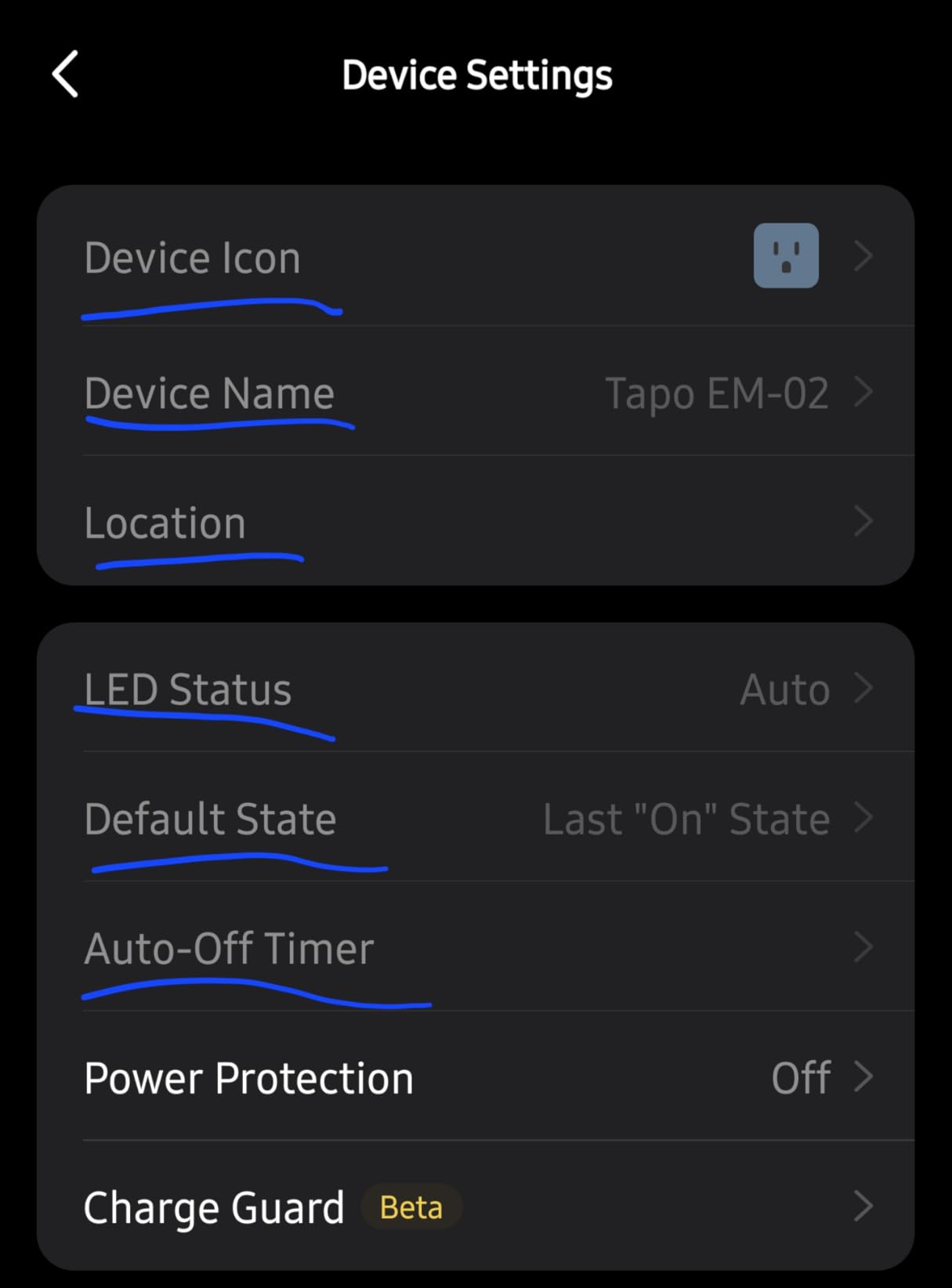
What the energy data reveals on a 1500W heater
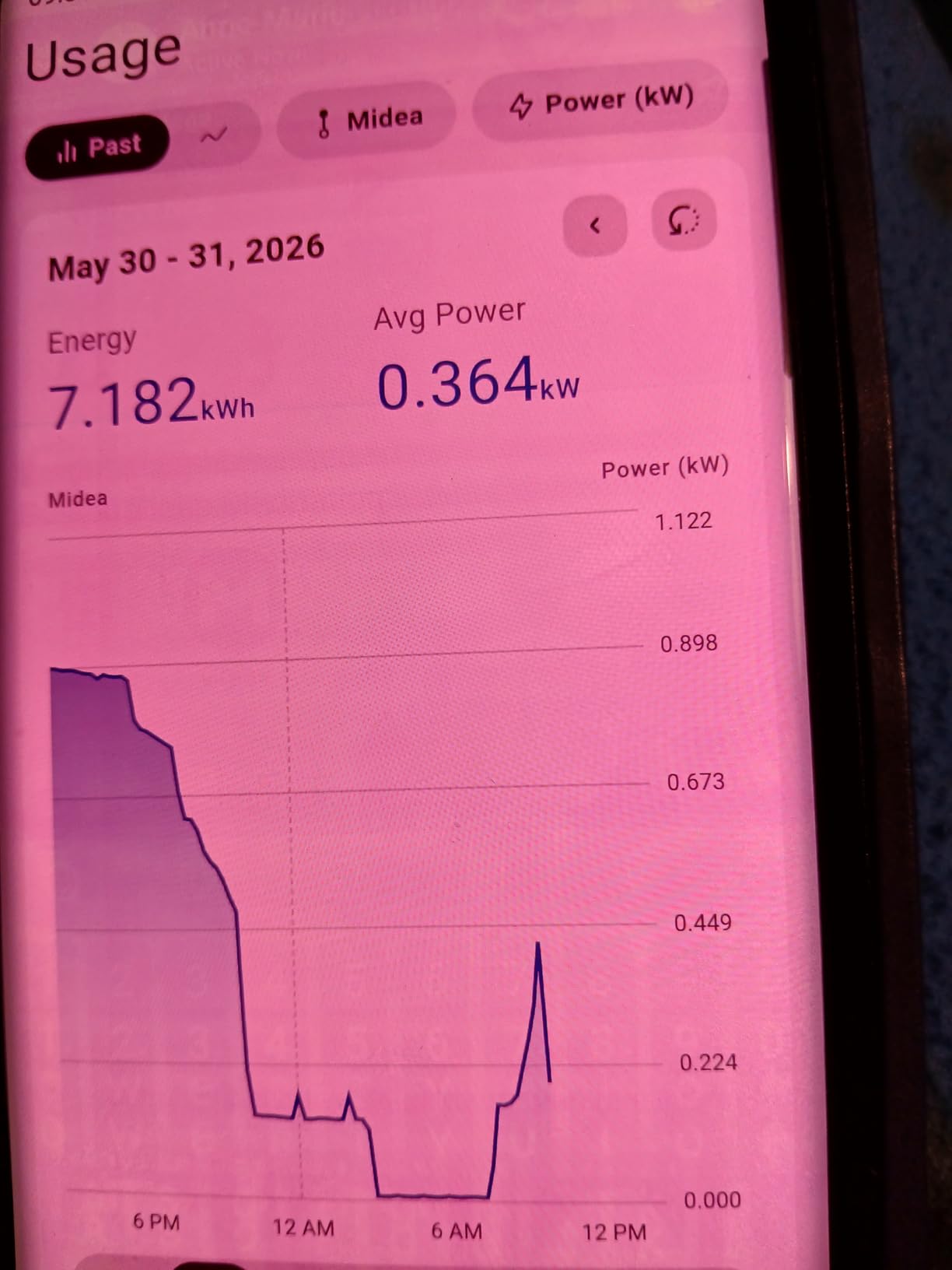
The graph will show a near-flat line at about 1500 watts for as long as the heater runs, then a step to near zero when the schedule cuts it. That step pattern is exactly what you want to see, because it confirms the schedule is actually cutting a resistive load rather than just toggling a light.
Why the wattage limit matters more than the chart
A chart tells you what happened. A settable limit stops the next thing from happening. On an appliance that can sit unattended for hours, having the plug refuse a load above your threshold is worth more than the history view.
3. EIGHTREE 15A Smart Plug – Best Value Two-Pack for Multiple Rooms
EIGHTREE 15A Smart Plug, Wi-Fi Plugs Works with Alexa & Google Home, 2 Pack
15A current rating
Two plugs per pack
1.9 x 1.2 x 1.9 inch
ETL and FCC certified
Pros
- Full 15A rating in a low-cost two-pack
- Round 1.2 inch thick body fits tight outlets
- Bluetooth-assisted setup on 2.4GHz
- Works with Alexa Google Home and SmartThings
- Copper and brass contacts
- ETL and FCC certified
Cons
- Listing shows 1100W alongside the 15A headline
- 2.4GHz Wi-Fi only
- No Matter so it depends on the Smart Life cloud
The EIGHTREE gets you a genuine 15 amp current rating in a round body that is only 1.2 inches thick, and it comes as a two-pack. For anyone heating two rooms on a schedule, that combination is difficult to beat. The thin profile also means it will slide into outlets tucked behind furniture where a square plug will not seat properly.
Setup runs through the Smart Life app with Bluetooth-assisted onboarding, so it does not matter whether your router splits the 2.4 and 5 GHz bands. Schedules, countdowns, automations, and group control are all present, and Alexa, Google Home, and SmartThings are supported through the same app most generic plugs use.
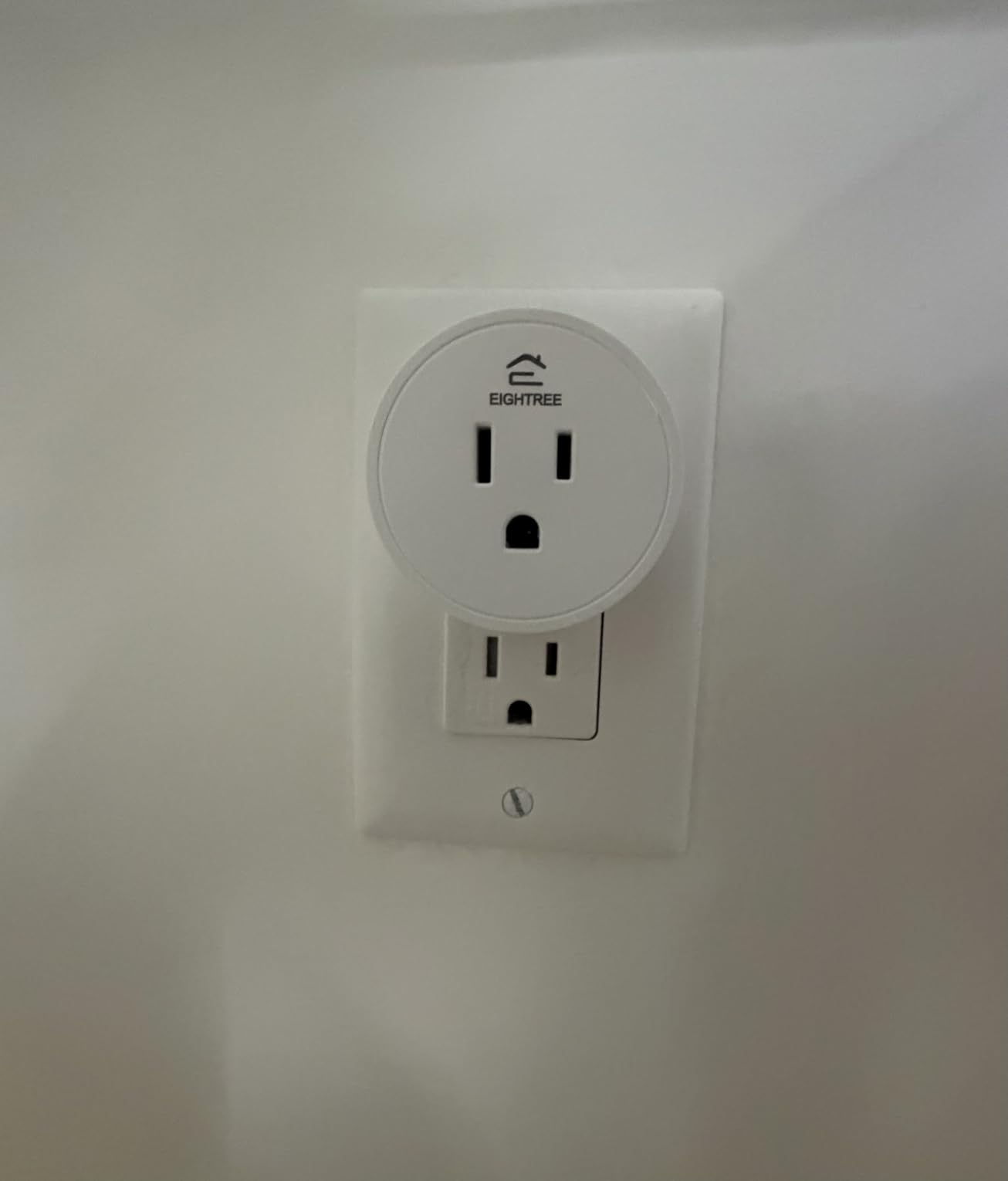
One specification needs reading carefully. The listing pairs a 15 amp current rating with a wattage figure of 1100W, which does not match what 15 amps at 120V should carry. Buyers generally treat the 15A rating as the real number, and reviews describe the contacts as copper and brass with FCC and ETL certification, but if you are pairing this with a 1500W heater, verify the rating printed on the device itself before you trust it.
It also has no Matter support, so it depends on the Smart Life cloud for control. If your internet drops, automations do not run locally the way they do on the Matter models in this list.
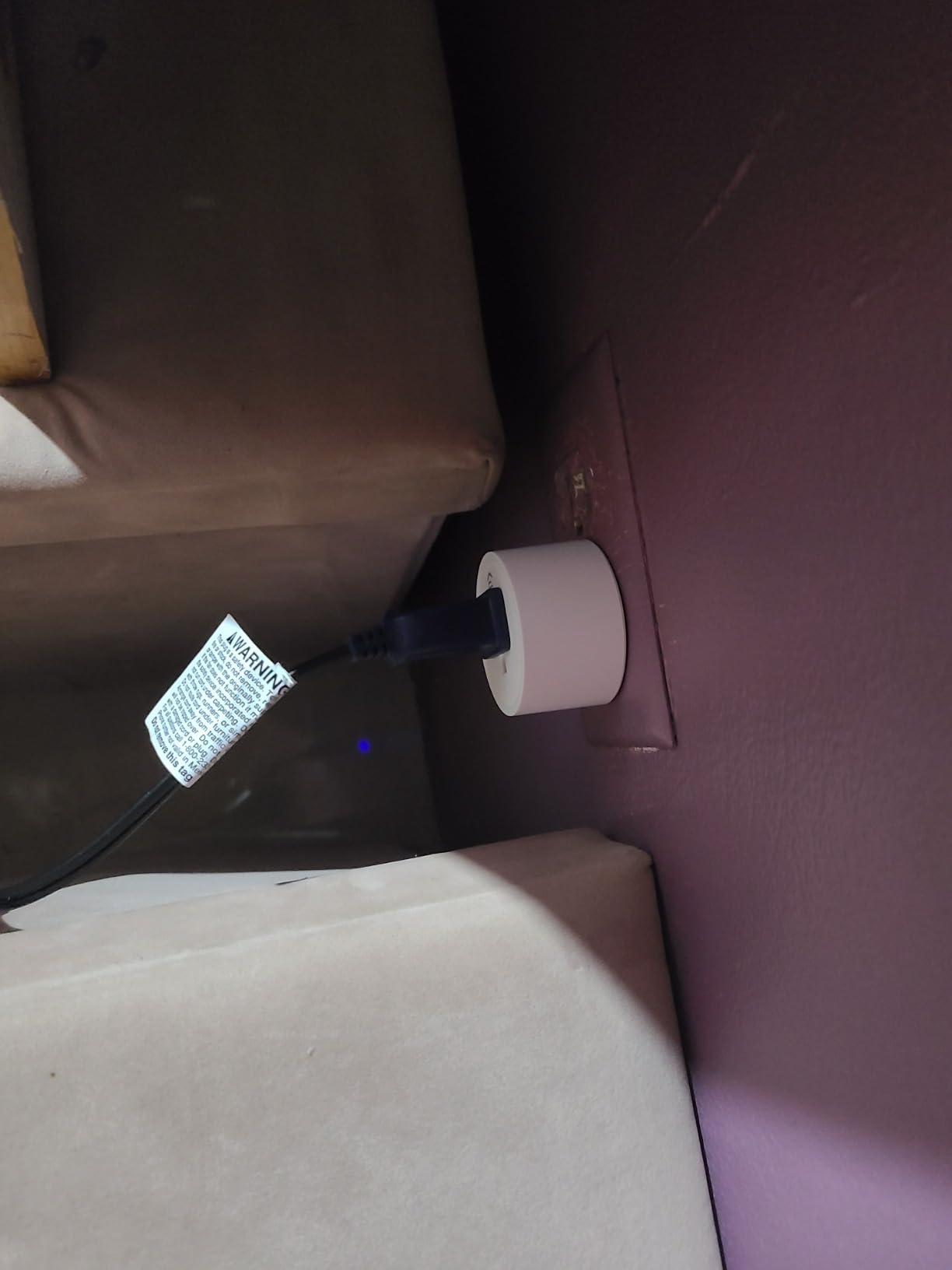
When two plugs beat one expensive plug
If you are running a heater in a bedroom and a second in a home office, the practical constraint is scheduling two outlets, not buying two premium plugs. A matched pair from one app is easier to automate together than two unrelated models.
What to check before using it with a large heater
Read the amperage marking on the unit itself and compare it to your heater’s wattage. If the printed rating is below 1800W, use a different plug for a 1500W heater rather than relying on the listing.
4. Tapo P125M – Best for Apple Home and Matter
TP-Link Tapo Matter Supported Smart Plug Mini, Compact Design, 15A/1800W Max, Super Easy Setup, Works with Apple Home, Alexa & Google Home, UL Certified, 2.4G Wi-Fi Only, White, Tapo P125M(3-Pack)
15A / 1800W at 120V
UL certified
Matter and SmartThings
1.5 x 1.5 x 2.36 inch
Pros
- Matter support covering Apple Home Alexa Google and SmartThings
- Local LAN control that keeps working during an outage
- Genuinely compact body keeps the second outlet free
- Bluetooth onboarding is quick
- 15A/1800W despite the small size
- UL certified with a 2-year warranty
Cons
- No energy monitoring on this P125M variant
- 2.4GHz Wi-Fi only
- Apple Home and local control need a Matter controller
If your household is split between Siri, Alexa, and Google, the P125M is the plug that stops the argument. Matter support means the same physical plug appears in Apple Home, Alexa, Google Home, and SmartThings without depending on a vendor cloud bridge, and at 15 amps and 1800 watts it carries a 1500W heater without drama.
The local control behaviour is the underrated part. If your internet drops, LAN control keeps the plug and its automations running, so a schedule you set in the morning still fires at night. On an appliance that heats a house, having the schedule survive a router reboot is worth more than a feature you would notice only when the cold hits.
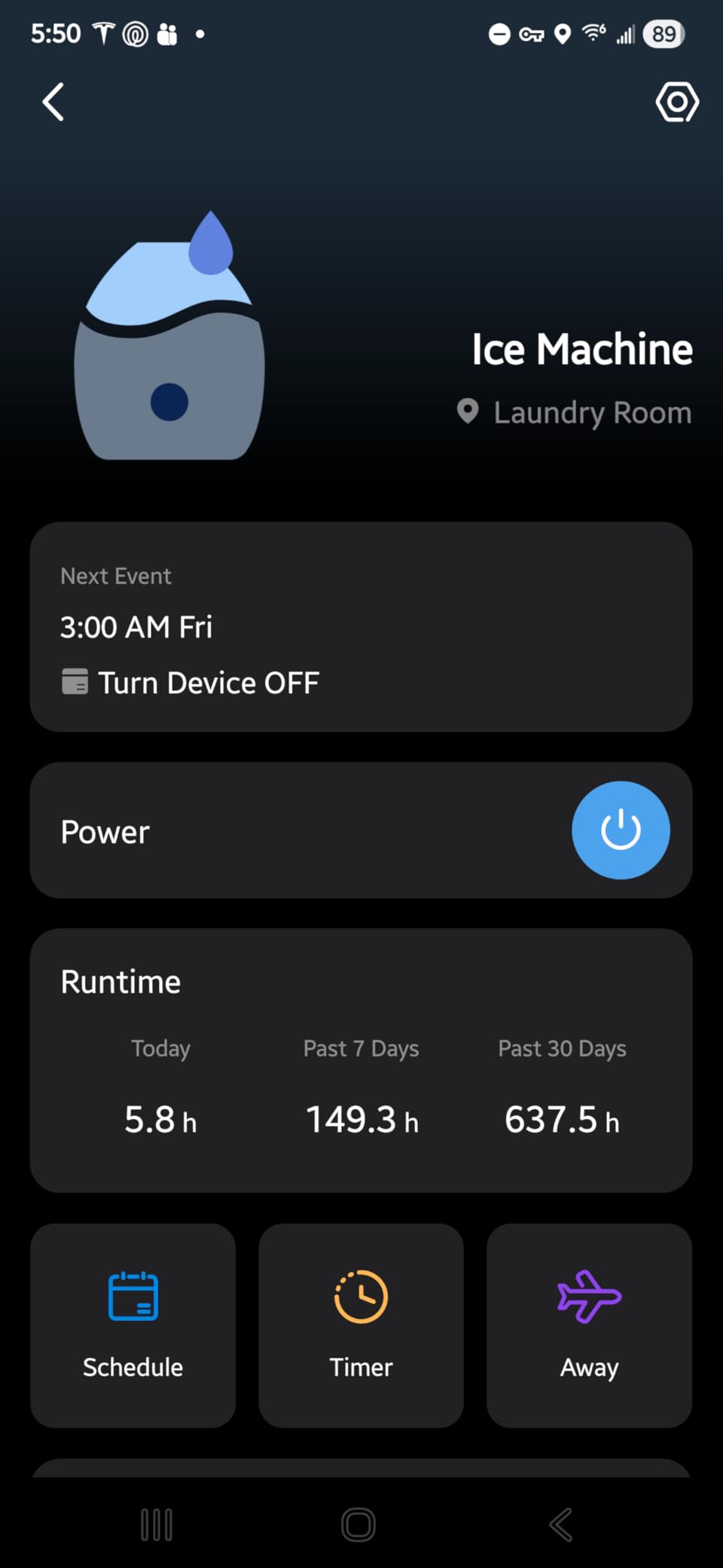
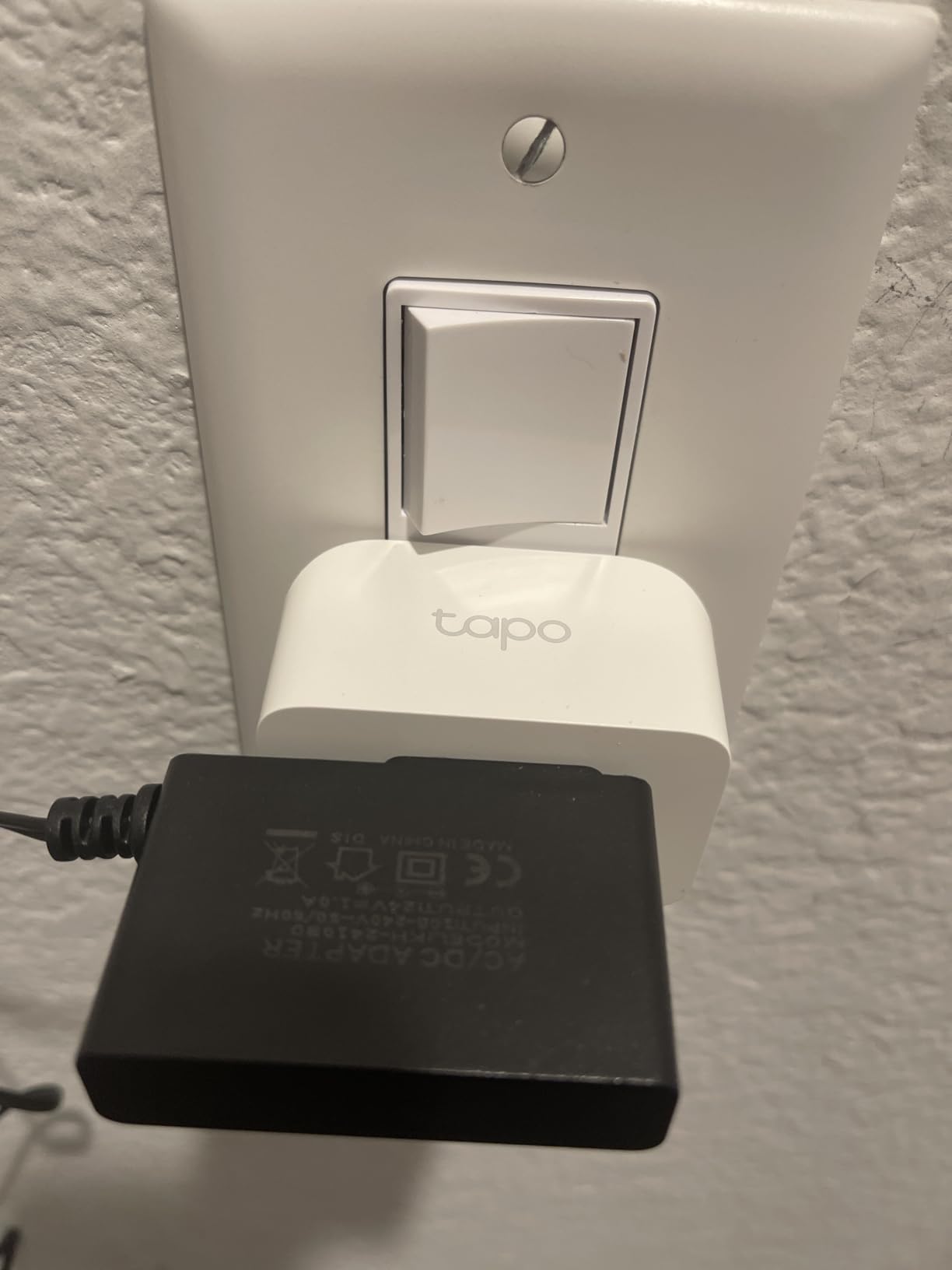
The body is 1.5 by 1.5 by 2.36 inches, which is one of the more compact 1800W-rated plugs here, and it carries a UL certification and a 2-year manufacturer warranty. Bluetooth onboarding makes pairing fast, and 2.4GHz-only is the only connectivity limitation, which is normal for this class.
There is no energy monitoring on the P125M specifically. If seeing live wattage matters to you, the Tapo P115 or the Govee H5086 are the models with that circuit, not this one. Apple Home also needs a compatible Matter controller or hub, which is a consideration if you are not running one already.
Why Matter matters for a heating load
Matter runs locally rather than routing your commands through a vendor server. For a plug carrying a space heater, that removes a cloud round trip from the path between your schedule and the power actually flowing.
Where it loses to its sibling
The P115 in the same range has energy monitoring, a settable wattage limit, and auto-off. If you want to see heater draw, buy that one instead of this one.
5. Kasa KP125MP2 – Best for Local Control and Monitoring Together
Kasa Matter Smart Plug with Energy Monitoring, KP125MP2, 15A/1800W Max
15A / 1800W at 120V
UL FCC RoHS certified
Matter with local LAN control
Energy monitoring with thresholds
Pros
- Matter native with local LAN control that survives outages
- Energy monitoring with settable wattage thresholds that shut the device off
- Slim body leaves the adjacent outlet usable
- Reconnects after a power cut while keeping its programming
- Works with Alexa Apple Home Google Home and Home Assistant
Cons
- TP-Link advises against using its plugs with heaters over inrush spikes
- Alexa sometimes reports the device unresponsive while Siri still works
- Setup can require splitting 2.4 and 5 GHz SSIDs
- Energy readings not exposed to Home Assistant on current firmware
This is the most capable plug on paper in the list, and it is also the one that requires the most careful reading. The KP125MP2 is rated 15 amps and 1800 watts, certified UL, FCC and RoHS, and it combines Matter local control with real-time energy monitoring and user-set thresholds that can cut power to a device drawing too much. Owners like the automatic reconnection after a power cut, which keeps the programming intact.
Here is the caveat, stated plainly. TP-Link itself advises against pairing its smart plugs with heaters, air conditioners, and EV chargers because of inrush current spikes at power-on. Electric resistance heaters like convection units and oil-filled radiators draw a brief surge as the elements energise. The plug is rated above your heater’s steady draw, but the manufacturer’s guidance is a real signal that you should weigh before buying this for a heater specifically.
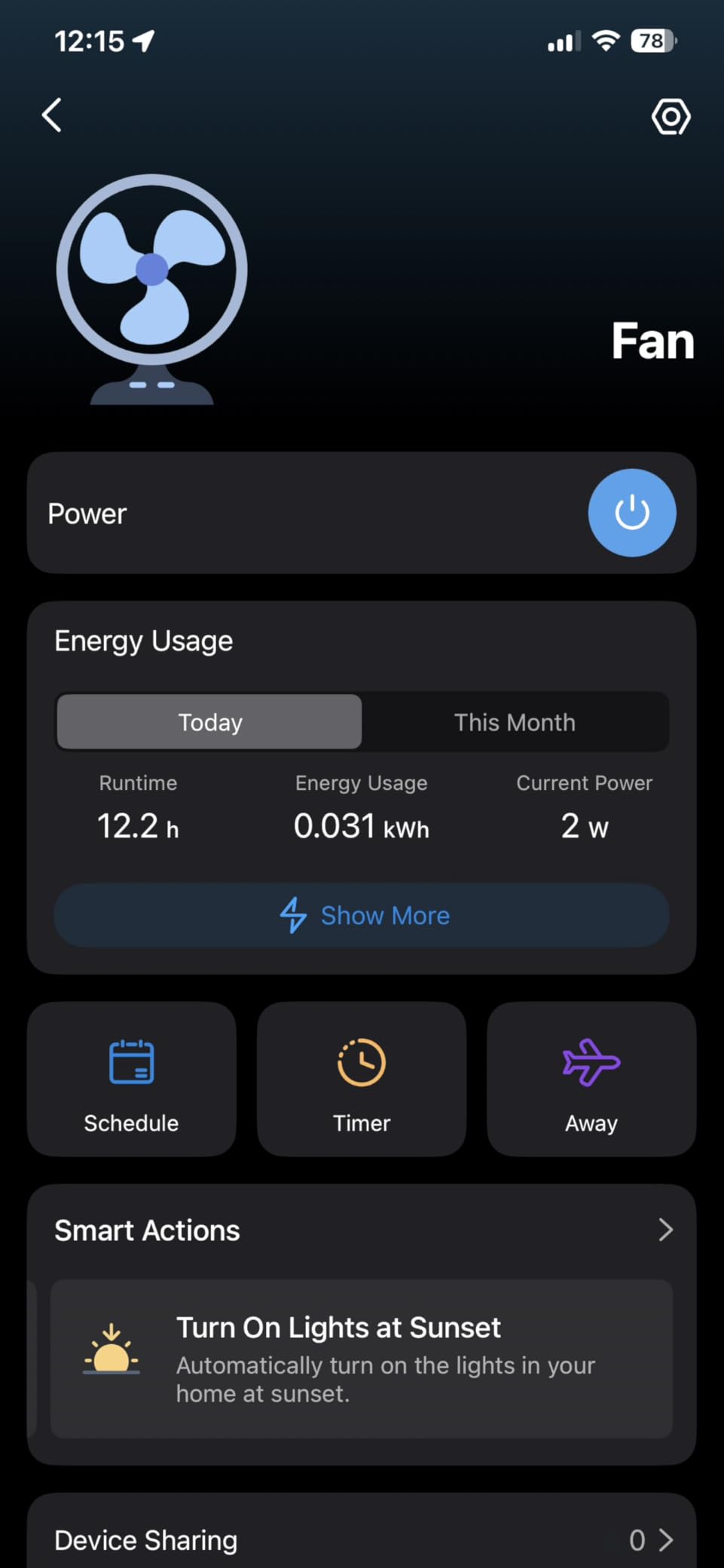
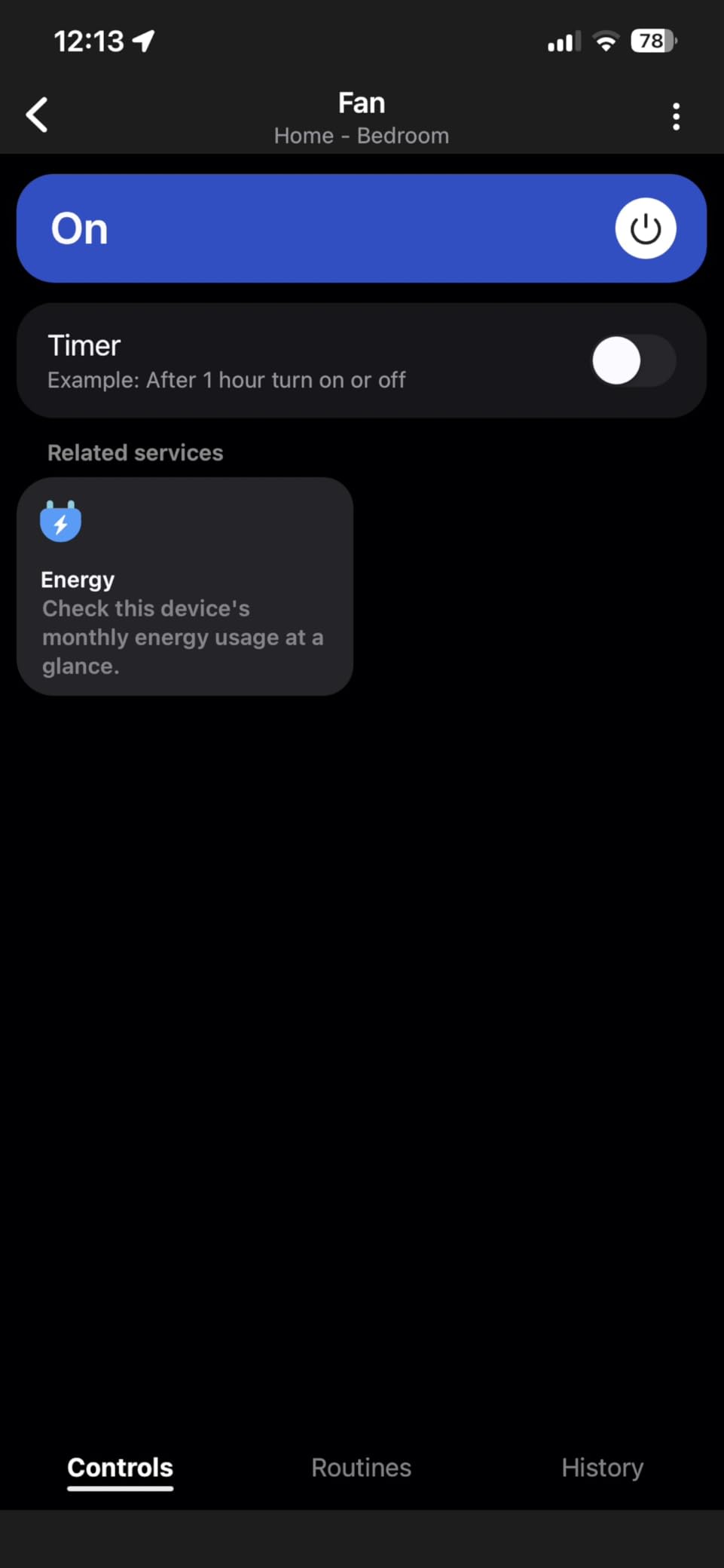
Two smaller issues. Alexa occasionally reports the device as unresponsive while Siri still controls it, which is a voice-assistant quirk rather than a heating problem. And if your router uses a single SSID for both bands, setup can require splitting them before pairing.
Energy readings are also not currently exposed to Home Assistant on the latest firmware, so local-control users get switching without the monitoring data. That is a meaningful gap for the specific audience this plug otherwise suits.
Reading the inrush warning properly
Inrush is a brief spike as the heating elements energise, not a sustained overload. A 1500W heater still sits well inside a 1800W rating during steady operation, which is why the plug is sold for high-draw use. The warning exists because manufacturers cannot guarantee every heater and every plug combination.
Who should still choose it
If you run Home Assistant or Apple Home, want local control, and can accept the manufacturer caution, this is the most flexible plug here. If heater duty is your only use case, the Tapo P115 carries no such warning.
6. TREATLIFE 4-Pack – Best for Multi-Room Heating Schedules
TREATLIFE 4 Pack Smart Plugs that Work with Alexa and Google Home, 7 Day Heavy Duty Programmable Timer, 1800W 15A WiFi Smart Outlet, Child Lock, Vacation Mode, Reliable WiFi Connection
15A / 1800W at 120V
FCC certified
7-day programmable timer
Four plugs per pack
Pros
- 15A/1800W rating with a 7-day programmable timer
- Four plugs for far less than four premium units
- Child Lock to block accidental operation
- Smart Away mode simulates occupancy
- Group control and one-minute device sharing
- Alexa and Google Assistant support
Cons
- Printed instructions point to the Treatlife app while many pair on Smart Life
- Some units drop offline periodically and need a power-cycle reset
- Occasional reports of individual plugs failing after weeks or months
- Too wide to sit side by side on some power strips
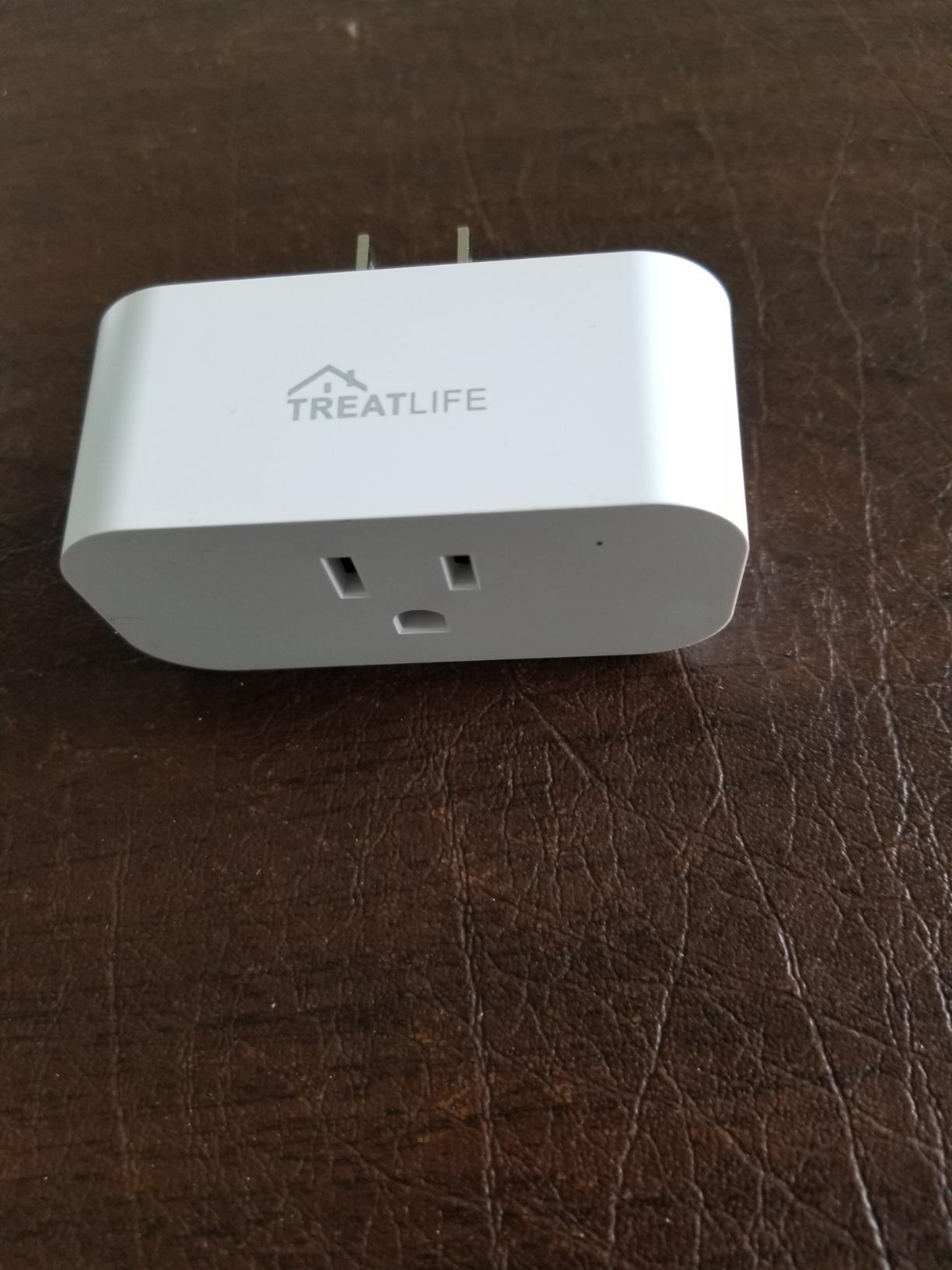
The TREATLIFE pack solves a specific problem: heating several rooms without spending premium money four times over. Each plug is rated 15 amps and 1800 watts at 120 volts, FCC certified, and carries a 7-day programmable timer plus a countdown. For a household running a heater in a bedroom, a den, and a garage workshop, four matched plugs on one schedule is the pitch.
Two features stand out for heating duty. Child Lock blocks the physical button so a curious child or a nudged plug cannot switch a 1500W load on mid-room. Smart Away randomises on and off times to simulate occupancy, which is genuinely useful for heating an unoccupied property without it looking like nobody is home.
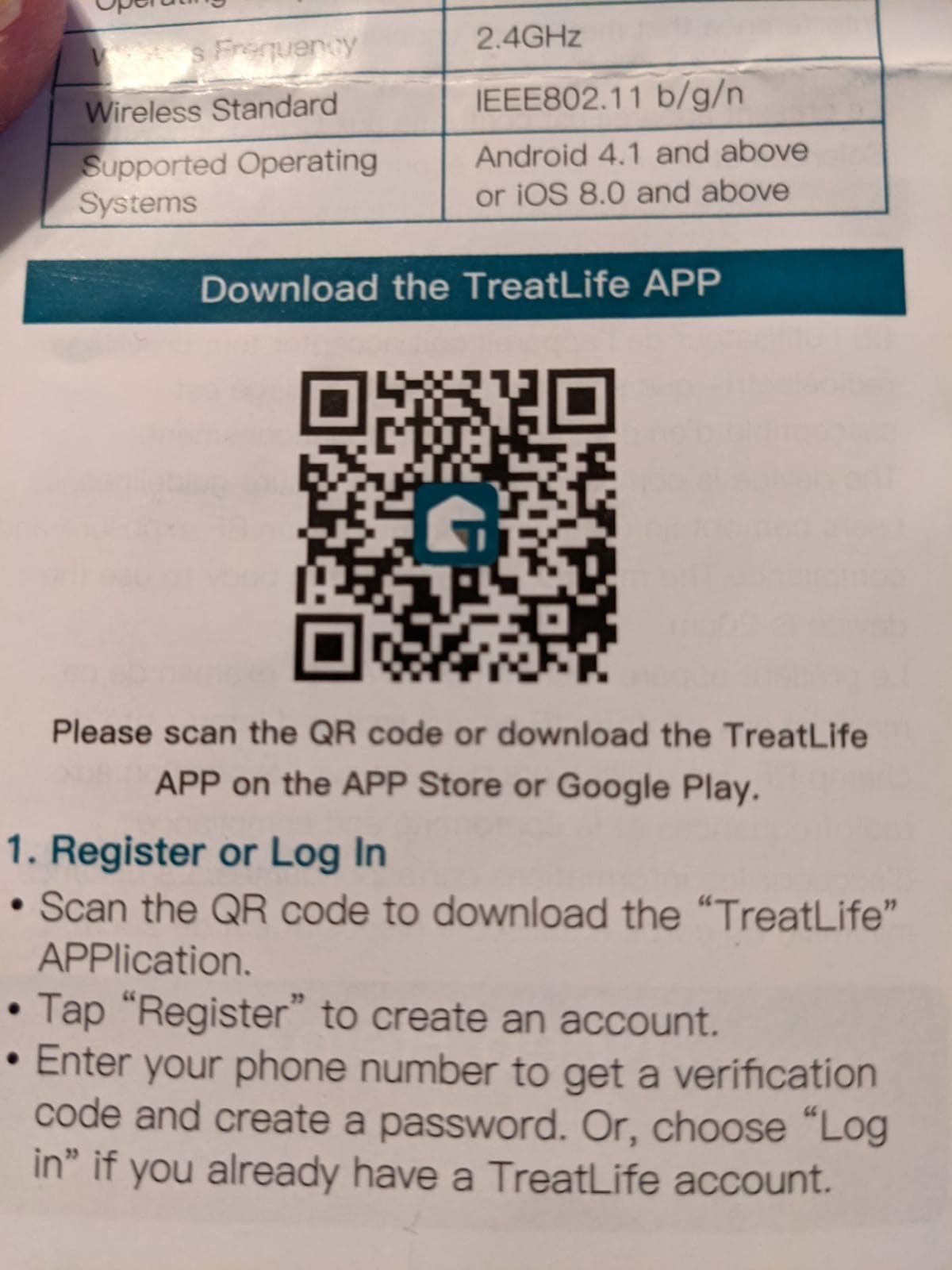
The main friction is app confusion. Printed instructions point to the Treatlife app, but many owners report that the Smart Life app is what actually pairs reliably, and that backtracking wastes the first ten minutes. Connection drops requiring a power-cycle reset are also reported, as are occasional individual units failing after weeks or months, which is a normal failure rate for a four-pack in our experience.
At 2.76 by 3.15 by 2.76 inches the body is wide, and owners note that two will not sit side by side on some power strips. Since power strips are exactly what to avoid with a heater, plan on using wall outlets, not an extension.
How to set up a heater schedule that actually saves
Use the 7-day timer rather than a voice routine. A heater run from a fixed on and off time is predictable, easy to audit, and keeps working when the internet does not, which matters more on a high-draw load than on a lamp.
When one premium plug beats a four-pack
If you only ever run one heater, the extra three plugs are not a saving. The Kasa EP10P4 gives you a better-tested single unit with a documented 15A/1800W rating and a 2-year warranty.
7. BN-LINK Heavy Duty Smart Plug – Best Built for High Draw
BN-LINK WiFi Heavy Duty Smart Plug Outlet, Work with Smart Life, 2.4G Only
15A / 1875W at 125V
ETL certified
3 x 2 x 2 inch housing
12 ounce body
Pros
- Heavy-duty enclosure built for high-draw appliances
- ETL certified 15A / 1875W rating
- Works in Smart Life with no hub required
- Scheduling group control and device sharing
- Alexa and Google Assistant voice control
Cons
- 2.4GHz Wi-Fi networks only
- Bulkier body than mini plugs
- Largest share of 1-star reviews here over connection and app reliability
The BN-LINK is the only plug in this guide whose physical construction is explicitly marketed for heavy-draw appliances. It is ETL certified and rated 15 amps at 125 volts for 1875 watts, which is the highest wattage figure of any product here, and at 3 by 2 by 2 inches with a 12 ounce body it feels like the most substantial unit in the roundup.
If your heater is a garage or basement unit, or you have a heavier oil-filled radiator than the average bedroom model, the extra headroom and the heavier casing are the reason to choose it. Control comes through the Smart Life app with no hub, plus timers, group control, and device sharing, with Alexa and Google Assistant on top.
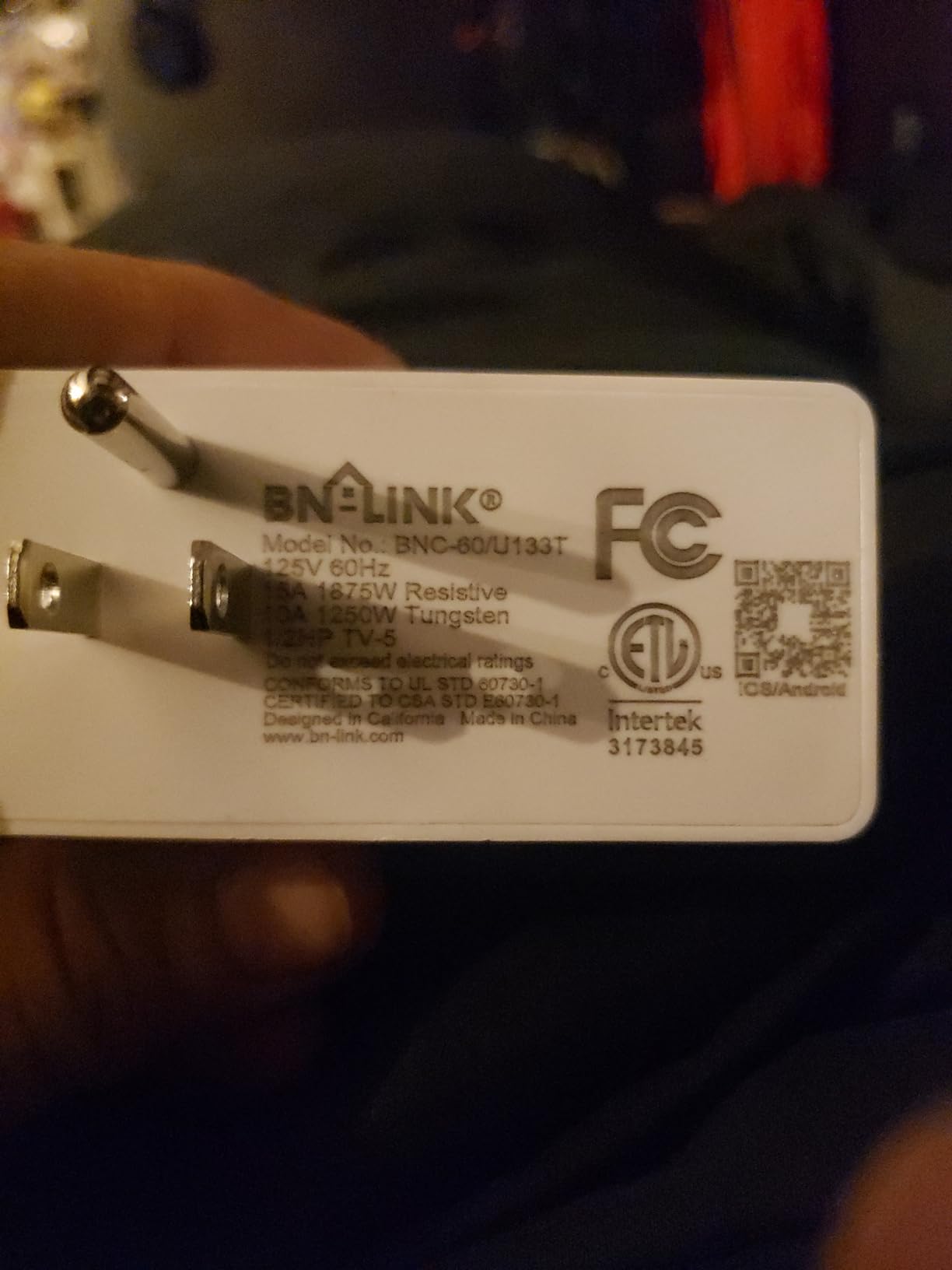
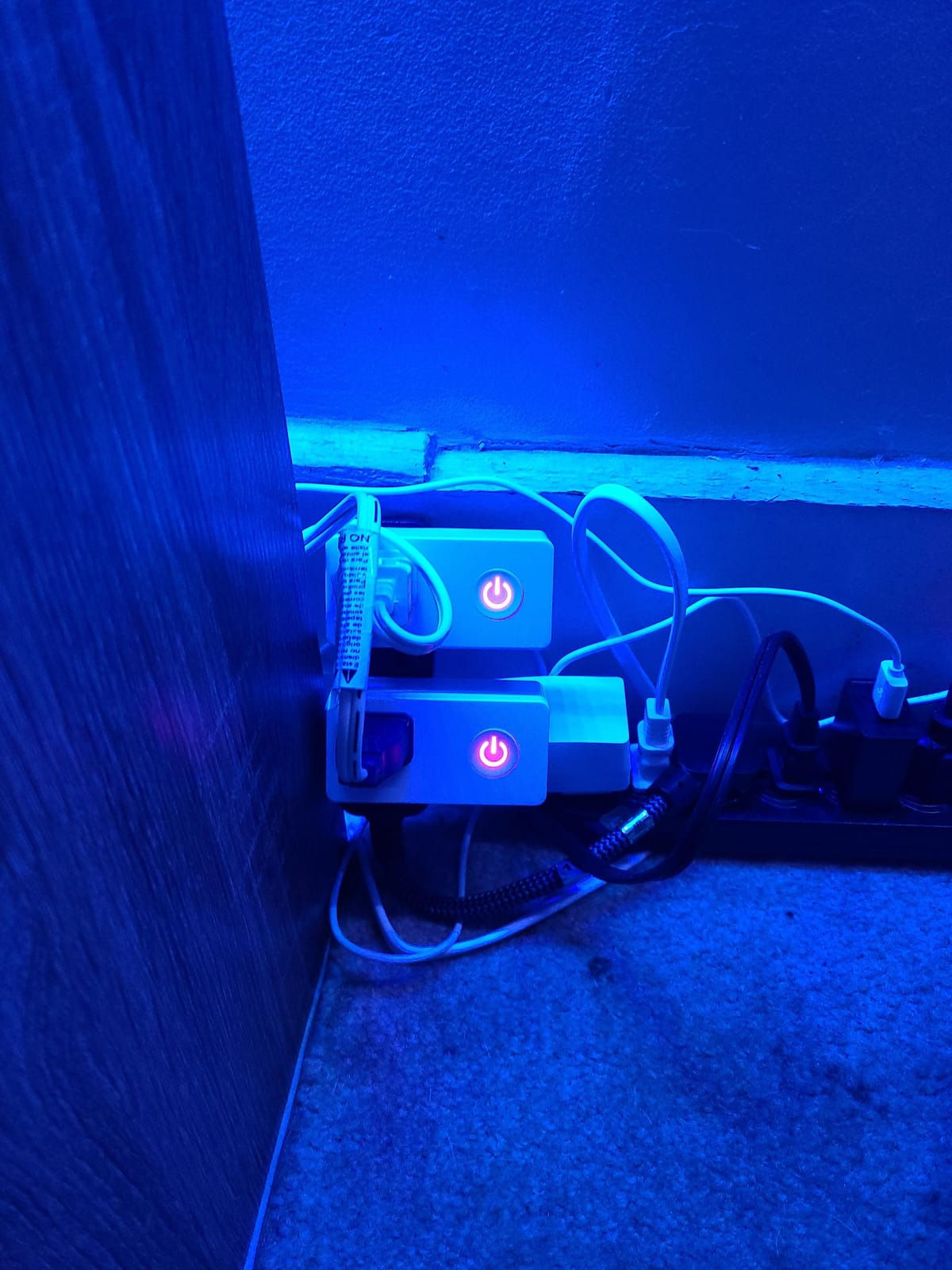
The trade-off is footprint and stability of the software. It is bulkier than the mini plugs, which means it is more likely to crowd a duplex receptacle. And among the ten products here, this one carries the largest proportion of 1-star reviews, with the complaints clustering around intermittent connectivity and app quirks rather than around the electrical side.
It also has the thinnest specification sheet of the group, with no energy monitoring and no Matter support. You are buying a rugged 15A plug, not a smart home feature set.
What 1875W means against a real heater
A 1500W heater draws about 12.5 amps and sits well inside this rating. For a larger 2000W workshop heater you would still need to check the outlet and the circuit rather than relying on the plug alone, since a 2000W load at 12.5A is close to the practical limit of a 15A receptacle.
When the extra weight is worth it
Choose it when the heater runs for long unattended stretches in a garage, basement, or workshop, where heat on the plug body and physical durability matter more than app polish.
8. Govee Smart Plug H5086 – Best for Pairing With Temperature Sensors
Govee Smart Plug with Energy Monitoring, WiFi Bluetooth Outlet, 1 Pack
15A / 1800W at 120V
ETL and FCC certified
Live power current and voltage
Gateway for Govee sensors
Pros
- Highest average rating in this set with real-time power current and voltage
- Bluetooth fallback keeps it controllable if the internet drops
- Data export plus custom alerts above a set threshold
- Acts as a gateway for Bluetooth-only Govee temperature and humidity probes
- 15A/1800W with fire-resistant materials
Cons
- Automation rules need Wi-Fi while basic timers do not and this is not signposted
- App does not show peak voltage current or wattage
- No field to enter your utility rate for cost calculations
- Rounded body is awkward side by side on a power strip
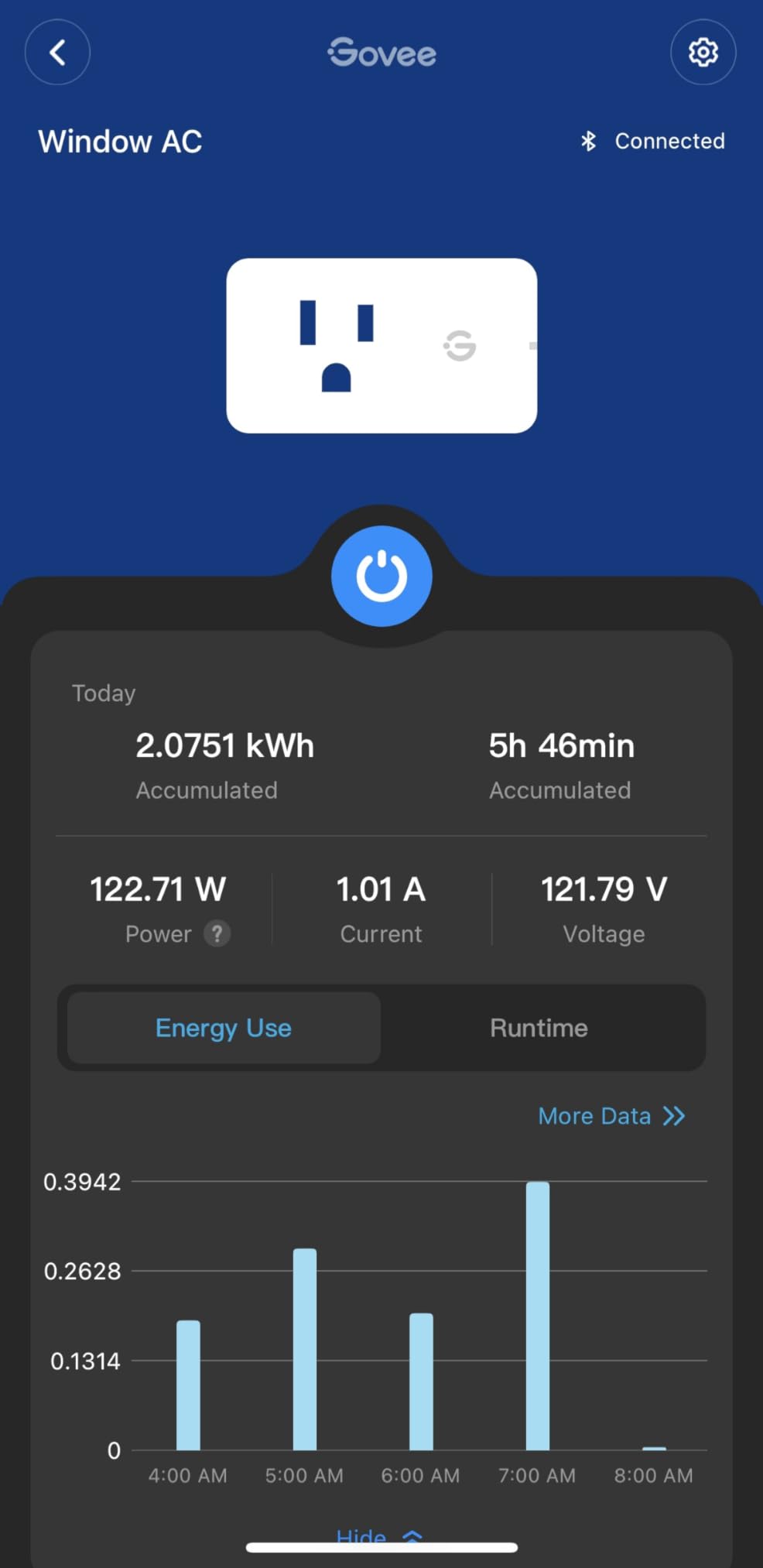
The Govee H5086 has the highest average rating of the ten plugs we reviewed, at 4.6, and it is rated 15 amps and 1800 watts with ETL and FCC certification. It reports real-time power, current, and voltage with daily, weekly, monthly, and yearly history, which is a deeper dataset than most plugs in this class.
Its distinguishing feature is that it doubles as a gateway for Bluetooth-only Govee sensors, including temperature and humidity probes. That is what makes it the natural choice for temperature-triggered heating: the plug can switch a dumb space heater on when a room drops below a set reading, without a separate hub. The Bluetooth fallback also means the plug stays controllable locally if the internet drops.
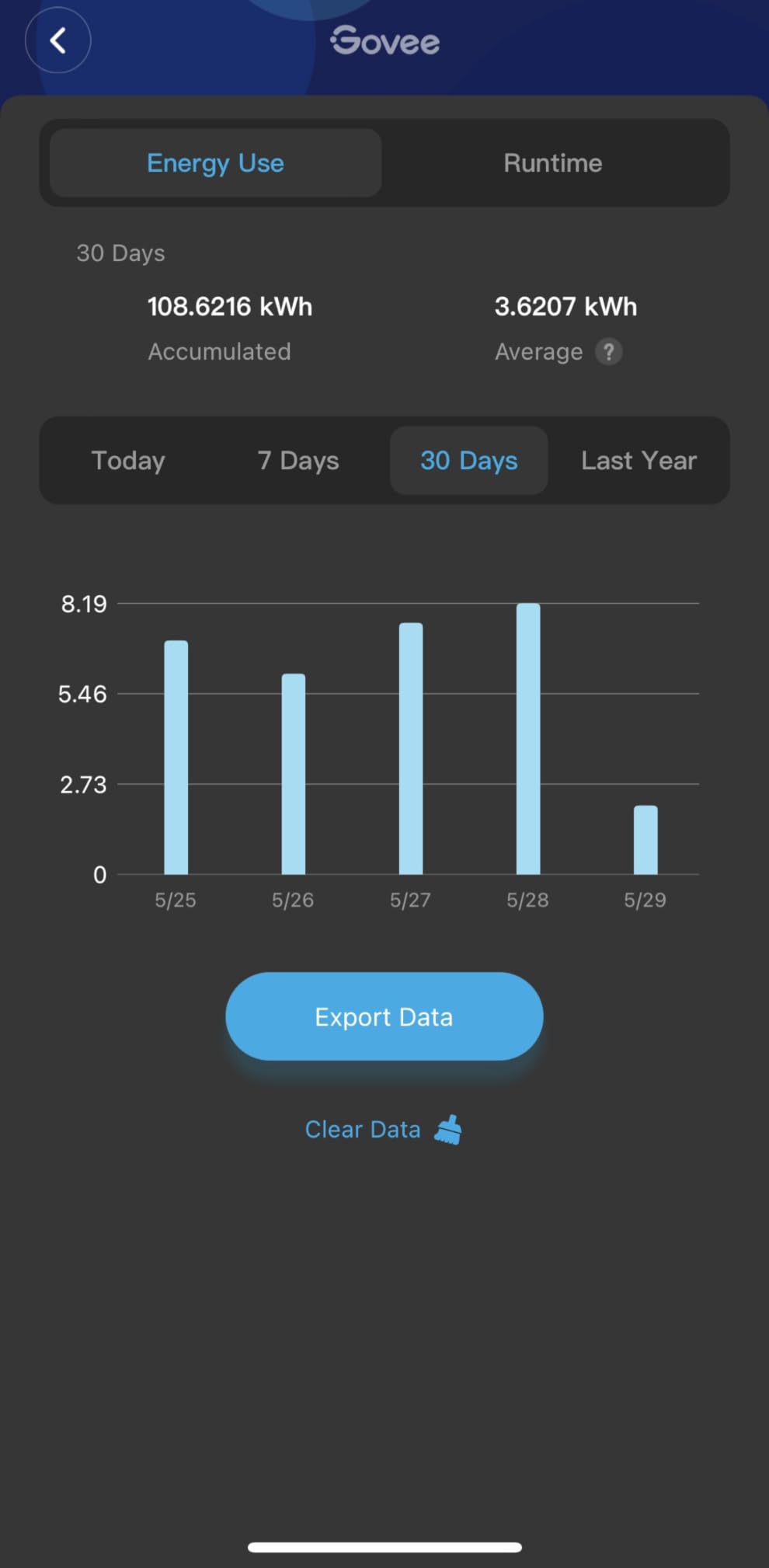
Data export and custom power-draw alerts above a threshold are both there, so you can get a notification if a heater starts drawing more than expected. Setup is mostly automatic app discovery, which cuts down the friction compared with plugs that need you to manually trigger pairing mode.
There are app gaps worth knowing. Automation rules require Wi-Fi while basic timers do not, and that distinction is not clearly signposted, so a schedule you set offline may not fire. The app shows no peak voltage, current, or wattage, and there is no field to enter your utility rate, so cost-per-kWh calculations are on you. The rounded body is also awkward for fitting two plugs on a power strip.
Setting up temperature-triggered heating
Pair a Govee temperature probe with the plug, then create an automation that switches the outlet on when the room reading drops below your threshold and off when it recovers. Because a space heater has significant thermal mass, the trigger point should sit a degree or two below your target so the room does not overshoot.
Where the missing cost data bites
Without a utility-rate field, the app shows you kilowatt-hours but not money. You can still work out the cost yourself, but if your goal is a running total, the Tapo P115 handles that more directly.
9. GE Cync Smart Plug – Best Matter Option in a Slim Three-Pack
GE Cync Smart Plug, WiFi Smart Outlet, Matter, Alexa & Google, 3 Pack
15A / 1800W at 120V
cULus FCC and MSS certified
Slim wall-mount body
Bluetooth Matter and Wi-Fi
Pros
- Matter voice control across Alexa Google SmartThings and Apple Home
- Slim design that keeps the second wall outlet available
- 15A/1800W rating in a compact body
- Scheduling in the Cync app for appliance runtimes
- Mainstream appliance brand with cULus FCC and MSS certification
Cons
- Smallest review base here at under 400 ratings
- No energy monitoring on this model
- IP20 indoor use only
The GE Cync plugs bring Matter to a 15 amp and 1800 watt rating in a slim body, so the second outlet on your wall receptacle stays free. That combination is the reason this one earns a place: an outlet-blocking plug pushes you toward a power strip, and a power strip behind a 1500W heater is the setup we have spent this whole guide steering you away from.
You get Matter voice control across Alexa, Google Assistant, SmartThings, and Apple Home, plus scheduling for appliance runtimes in the Cync app. The certifications are cULus, FCC, and MSS, which puts it on solid ground for a heating load.
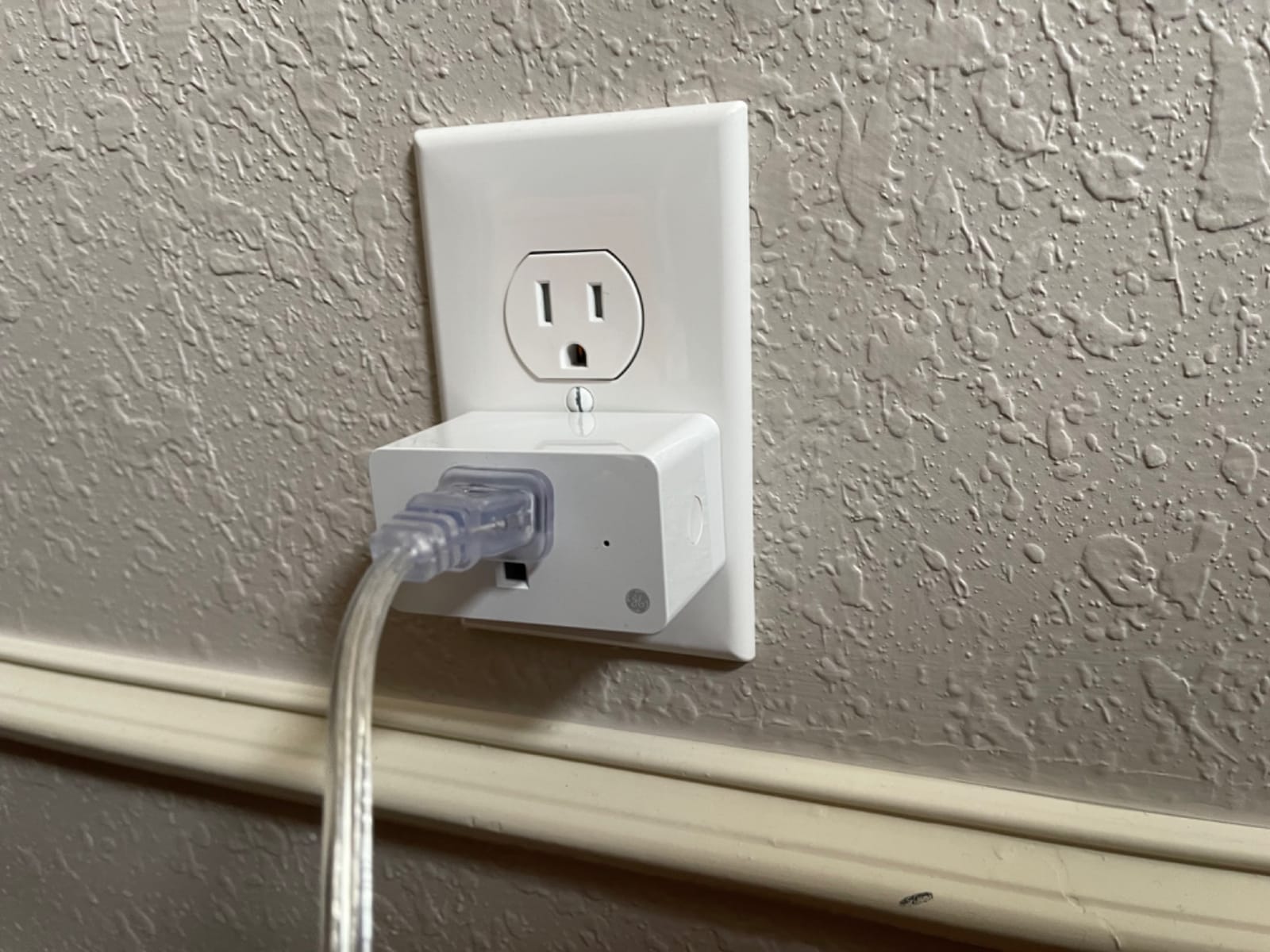
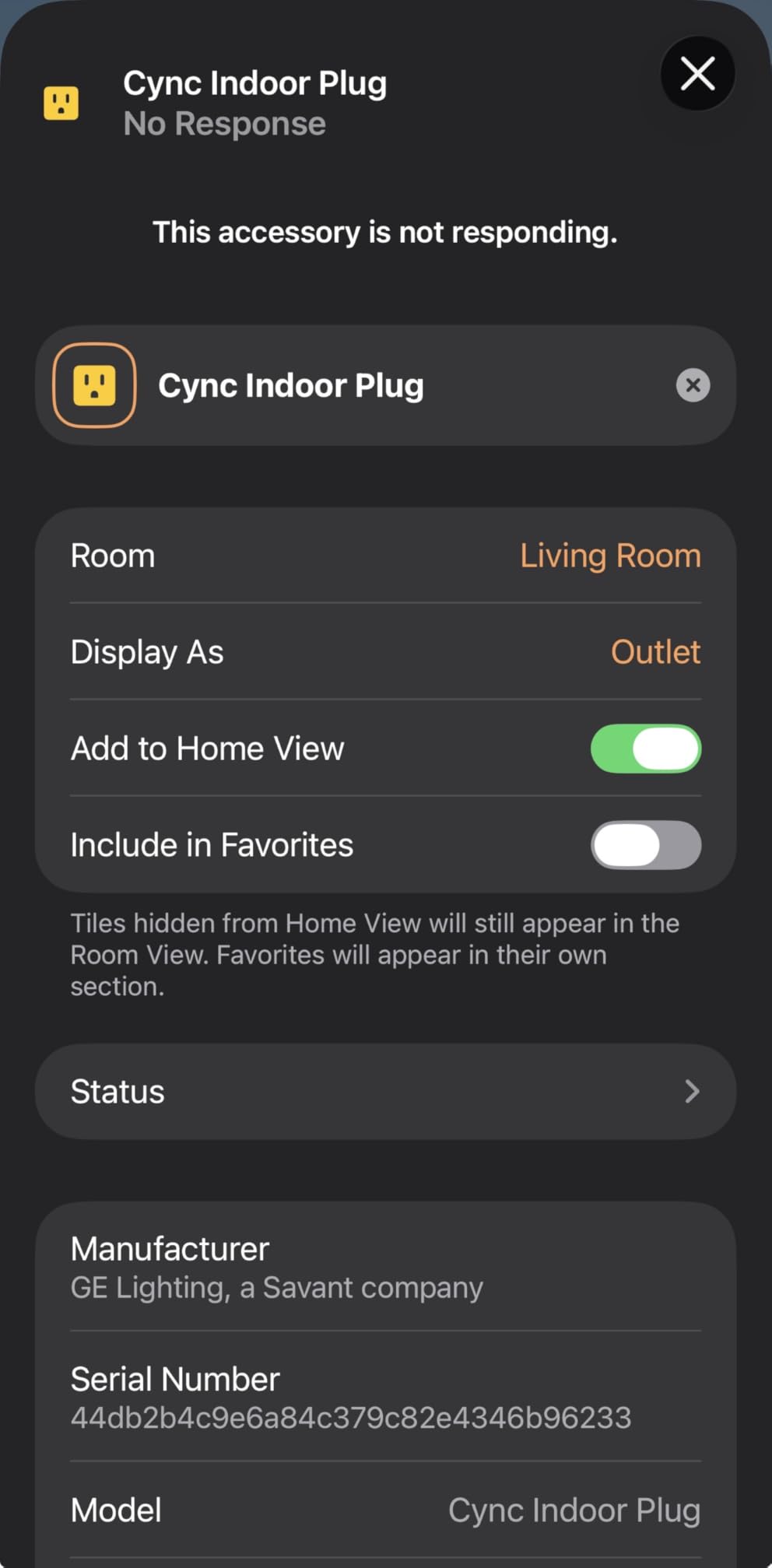
The honest weakness is evidence, not specification. With under 400 ratings, this is the least-proven plug in the roundup, and a long review history is exactly what you want when the device is going to sit next to a hot appliance. There is no energy monitoring here either, so you cannot verify heater draw through the plug, and the IP20 rating means indoor use only.
It ships as a three-pack, so treat it as a household-wide Matter purchase rather than a single heater control.
Why the slim body is a safety feature
Every time a plug blocks the second outlet, the workaround is a power strip or an extension lead. Both are exactly what heater manuals warn against. A slim plug removes the temptation rather than relying on you to resist it.
Who should pick something else
If you want long-term confidence from a large review base, the Kasa EP10P4 has over 40k ratings behind it. If you want monitoring, this model does not offer it.
10. Emporia Energy Monitoring Smart Plug – Budget Pick With a 10A Ceiling
Emporia Energy Monitoring Smart Plug, WiFi Smart Outlet Plug Works with Alexa and Google Home – 15a WiFi Outlet with Timer, Mobile App, Home Energy Monitor, Scheduling – 2.4ghz WiFi Only (1 Pack)
10A continuous, 15A peak for up to 1 hour per day
1200 watts at 120V
ETL and FCC certified
IP20 indoor
Pros
- Lowest cost in this set while still including energy monitoring
- Built-in on and off scheduling for appliance runtimes
- Remote status check and control in the Emporia app
- Works with Alexa and Google Assistant
- Brass contacts and ETL FCC certification
Cons
- 10A maximum continuous load so it is not rated for the largest heaters
- 2.4GHz Wi-Fi only
- Thinner feature set than the Tapo Kasa and Govee monitoring plugs
We are including this one because the number in its specification sheet matters more than its position on this list. The Emporia is rated 10 amps maximum continuous, with a 15 amp peak allowed for up to one hour per day, and a wattage figure of 1200W. A 1500W heater needs about 12.5 amps continuously, so this plug is not rated for one.
That makes it a legitimate choice for a smaller 1000W heater, and a good one for a different job entirely: cutting standby waste from electronics and small appliances across a home, where the energy monitoring earns its keep and the load never approaches the ceiling.
What it does offer is real energy monitoring, built-in on and off scheduling for appliance runtimes, remote status checks, and Alexa plus Google Assistant support, at the lowest cost of any monitoring plug here. The brass contacts and ETL and FCC certification are respectable, and the IP20 rating keeps it to indoor use as intended.
The one-hour-per-day peak allowance is the detail to internalise. It is a short-burst allowance, not permission to run a high-wattage heater indefinitely. If your heater is 1250W or above, treat this plug as disqualified and move up the list.
Where a 10A plug is still the right choice
Small heaters around 1000W, dehumidifiers, and consumer electronics all sit comfortably inside a 10A continuous rating. For a whole-home standby sweep, the monitoring is worth more here than the load capacity.
Why we still rank it tenth
Everything in this guide is screened against a space heater, and on that screen this plug fails at 1500W. Including it with a clear label is more useful than pretending it does not exist or quietly hoping you read the specs.
Heater Wattage vs Smart Plug Rating: The Matching Rule
Match the plug’s continuous current rating to the heater’s wattage at 120V. Divide watts by 120 to get amps, and the plug must be rated at or above the result.
1000W heater, about 8.3 amps. Fine on any 15A plug. Also acceptable on a 10A plug, since it sits below the 1200W ceiling with room to spare.
1250W heater, about 10.4 amps. This is the boundary case. A 10A plug is over its continuous rating, so use a 15A plug even though the numbers look close. A 15A plug handles it comfortably.
1500W heater, about 12.5 amps. A 15A/1800W plug is required. No 10A plug is acceptable for this load, regardless of what the product title says.
2000W heater, about 16.7 amps. This exceeds a 15A plug’s continuous rating, so a standard smart plug is not the right device. This load belongs on a 20A circuit, and you should talk to a licensed electrician rather than shop for a bigger plug.
Two things to keep in mind alongside the number. A 15A/1800W plug is a continuous-load claim, which is exactly the condition a space heater operates in, so the margin is real rather than theoretical. And amperage on the circuit matters as much as amperage on the plug: a 15A plug on a circuit already carrying a hair dryer will trip the breaker no matter what the plug is rated for.
Do You Need a Dedicated Circuit for a Heater on a Smart Plug?
Yes, for a 1500W heater. Electric space heating equipment is treated as a continuous or fixed load, and a continuous load is expected to run for three hours or more. A 15A plug on a shared circuit gives you a heater at 12.5 amps plus whatever else is on that circuit, and household receptacles are not generally permitted to be loaded to their full rating.
A dedicated circuit means the wall receptacle your smart plug occupies feeds the heater and nothing else. No window air conditioner, no hair dryer, no laundry equipment. That removes the two failure modes that cause trouble: a tripped breaker mid-schedule, and a shared circuit sitting close to its limit before the heater even starts.
Running two heaters on one smart plug is not a configuration we will recommend. Two 1500W units on one circuit is 25 amps, which is well past a 15A branch circuit. If you need to heat two rooms, that is a second circuit and a second receptacle, which is an electrician’s job.
If you rent, you likely cannot add a circuit at all. In that case the best move is to use the heater’s built-in thermostat and tip-over protection as the primary safety layer, treat the smart plug purely as a schedule and remote control, and keep the total load on the existing circuit low. A licensed electrician can tell you what your particular receptacle can carry, which is a question worth a phone call before the cold sets in.
What Energy Monitoring Actually Reveals About a Heater
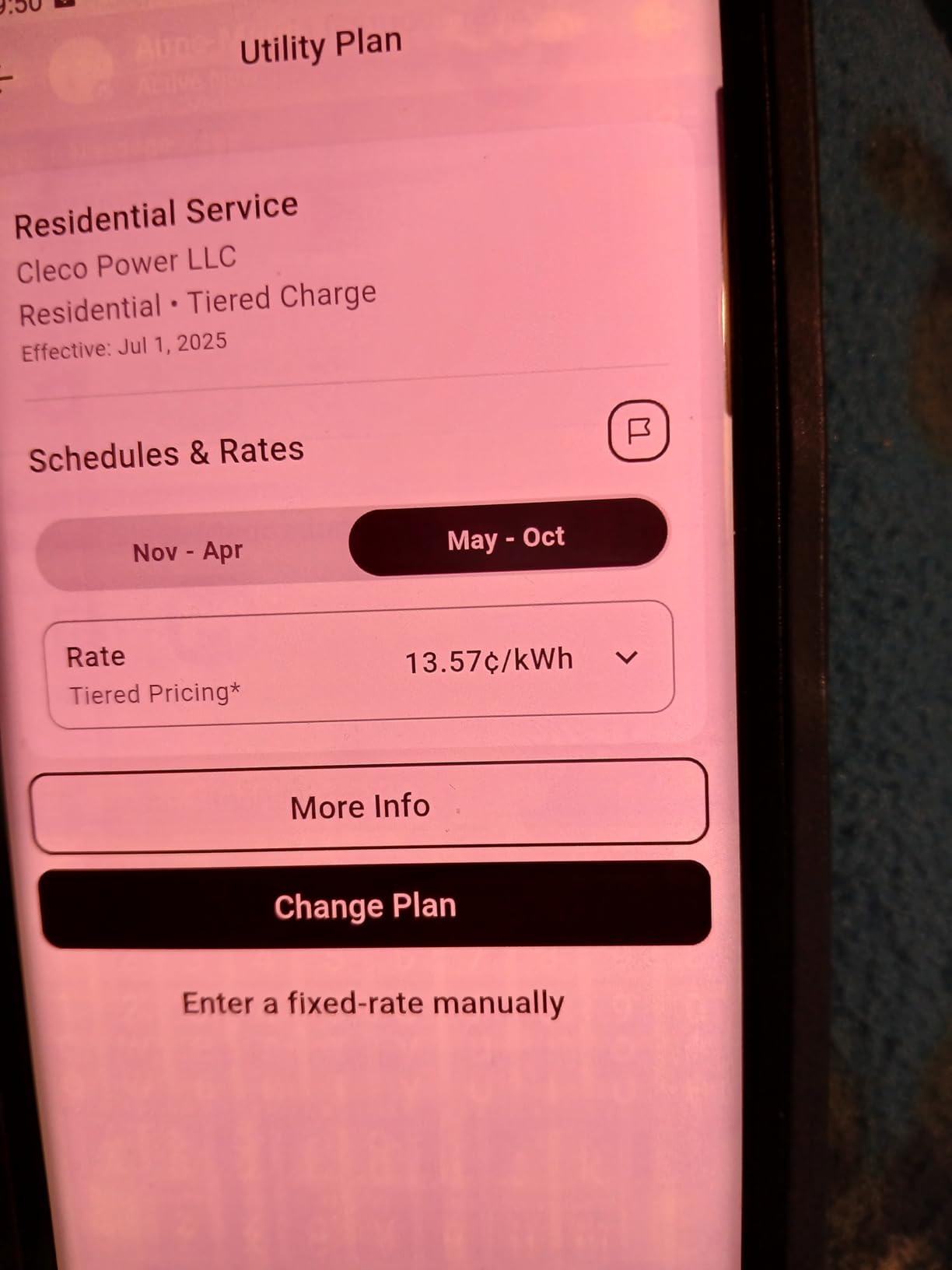
A 1500W heater consumes 1.5 kilowatt-hours every hour it runs. Multiply that by your utility’s rate per kilowatt-hour and you have your hourly running cost. On a rate of 20 cents per kWh, that works out to about 30 cents an hour, and a heater left on overnight for eight hours adds roughly 2.40 to the bill.
Monitoring turns that arithmetic into something you can watch rather than estimate. The Tapo P115 and the Govee H5086 both show live draw in the app, and both let you set a threshold. What a graph actually reveals is the shape of your usage: a flat line at full draw for hours, or short bursts followed by long gaps, and the second pattern is what a schedule is supposed to produce.
The practical value is that most heating waste is not the heater running. It is the heater running in an empty room, or running in a room that was already warm. A plug with a schedule and a timer attack the first problem, and a plug paired with a temperature sensor attacks the second. In both cases the monitoring tells you whether the change actually took effect, which a thermostatless dumb heater never will.
One clarification, since it comes up often: the smart plug itself draws under a watt in standby. It is not what is inflating your bill. The heater is.
Three Automation Setups for Heating With a Smart Plug
1. Scheduled warm-up. Set the heater to switch on 30 to 45 minutes before you get up rather than all night. Thermal mass means a room takes time to reach temperature, so leading the schedule is what makes the room warm when you want it. This is the single most common setup, and it is the one that actually reduces cost rather than merely deferring it.
2. Temperature-triggered heating. Pair the plug with a temperature probe, either a Govee sensor through the H5086 gateway or a separate sensor feeding Home Assistant. The rule switches the outlet on when the room falls below a threshold and off once it recovers. Set the trigger below your target so the room does not overshoot, and note that this setup needs the plug to keep working when your phone does not, which is an argument for local control.
3. Away mode. TREATLIFE and Kasa both offer a mode that randomises on and off within a window rather than switching at fixed times. It is not a security feature, and it does not meaningfully cut cost, but it makes a heating schedule look less mechanical from outside.
None of these replace the heater’s own tip-over switch or overheat cutoff. They manage when the heater runs, not how it behaves when it is running.
Buying Guide: Features to Check in a High-Wattage Smart Plug
Start with the rating, because it eliminates options faster than anything else. Look for 15 amps and 1800 watts stated together at 120V. If a listing shows 10A or 1200W, that is a different class of device and it is out for a 1500W heater.
Next, check the certification mark. UL, ETL, or cULus on a device that will carry a resistive load for hours is a reasonable baseline, and it is more informative than the star rating.
Energy monitoring is the feature that changes daily behaviour on a heating load, because it converts a guess into a number. An overload cutoff, a settable wattage limit, and a timed auto-off are the closest a plug gets to a safety device, and they are worth paying a little more for.
Local control, whether through Matter or LAN-only operation, matters if you rely on schedules. A cloud-only plug stops executing automations when the internet does, and a scheduled heater that silently stops at 2am is a cold room and a confused user.
Physical size deserves more weight than it usually gets. A plug that fits in a duplex receptacle without covering the second outlet keeps you on a wall outlet instead of a power strip.
Warranty and review volume are soft signals, but a 2-year warranty and tens of thousands of ratings tell you the product is not going to be the reason your heater quits mid-winter.
The disadvantages worth accepting. A smart plug adds a connection point between your wall and the heater. A 10A plug simply cannot carry a 1500W heater. Cloud-dependent plugs can stop responding when a vendor server has a bad day. Some plugs shut themselves off after extended runs and leave no explanation. Bulky models block the second outlet. And none of them replace tip-over protection or overheat cutoff on the heater itself.
Never pair a smart plug with a power strip or an extension cord for heating duty. Nor with a heater whose wattage exceeds the plug rating, and never with a second heater on the same circuit.
Alternatives to a Smart Plug for Controlling a Space Heater
A heater with a built-in app gives you scheduling without adding a connection point, and it is the right choice whenever you are buying a new heater anyway. If you have not chosen one, our infrared space heater guide covers that category, and our general smart plug guide covers plugs for loads that do not need heater-grade ratings.
A smart thermostat paired with a relay or a contactor can drive an existing dumb heater, but that is a hardwired project rather than a plug-in one, and it moves the switching off the receptacle and onto a properly rated circuit. It is the correct answer for a fixed install.
A hardwired smart wall switch is a third option. It removes the plug from the equation entirely, which is the cleanest safety outcome, at the cost of installation.
On the heater safety question itself, the safest portable heaters are the ones with tip-over protection that cuts power when the unit is moved, overheat cutoff that shuts the elements down if airflow is blocked, and a thermostat that stops the cycle at your set temperature. Whichever control method you choose, buy the heater on those three features first and decide on the smart plug second.
Frequently Asked Questions
Is it safe to plug a space heater into a smart plug?
Yes, as long as three conditions hold. Use a plug rated at least as high as the heater, meaning 15 amps and 1800 watts for a 1500W model. Plug it into a dedicated wall circuit rather than a shared one. And never bridge it through a power strip or an extension cord. The heater itself still needs tip-over and overheat protection, because a smart plug supplies neither.
What is the best smart plug for high-power appliances?
For heating loads, the Kasa Smart Plug Ultra Mini EP10P4 is our top pick, rated 15 amps and 1800 watts at 120 volts with UL certification. The Tapo P115 is the runner-up to watch when you want live energy monitoring and a settable wattage limit on the same 15A/1800W rating.
Is it okay to leave a space heater plugged in all night?
Only if your heater has tip-over and overheat cutoff, and only on a dedicated circuit. Follow the heater manufacturer’s guidance first, since that takes priority. A smart plug schedule is a convenience tool, not a safety feature, so do not treat an overnight timer as permission to leave a heater running unattended. The safest pattern is a scheduled warm-up shortly before you need the room.
What devices should not be used with smart plugs and why?
Do not run a heater that draws more current than the plug rating, and never use a power strip or extension cord between the plug and the appliance. Plug compressors such as refrigerators on with a delay, because their startup surge can trip a plug. Kettles and toasters draw a short high spike that some plugs will cut. Aquarium heaters are reported by users to cycle plugs off after long runs, leaving the tank cold without explanation. Lamps and fans are the safe category.
Do smart plugs use a lot of electricity?
A smart plug itself draws under a watt in standby, which is not meaningful. The real point is what the plug lets you do. Scheduling cuts the hours a heater runs unused, and energy monitoring shows the live wattage so you can work out cost per hour from your utility rate instead of guessing.
What are the disadvantages of smart plugs with a space heater?
They add a connection point between the wall and the heater. Plugs rated at 10 amps cannot carry a 1500W heater at all. Cloud-dependent plugs can stop responding when a vendor server is down, and some units shut themselves off after extended runs without explaining why. Bulky models block the second outlet, which pushes people toward the power strips they should be avoiding. And no smart plug replaces tip-over or overheat protection on the heater itself.
Final Pick for Heating Duty
The Kasa Smart Plug Ultra Mini EP10P4 is our choice as the best smart plug for space heaters, on the strength of a documented 15 amp and 1800 watt continuous rating, UL certification, a body compact enough to leave your second outlet free, and a review base large enough to have surfaced its few real weaknesses. If you want to see what the heater is costing you rather than guess, the Tapo P115 is the upgrade. If your home runs on Apple Home, take the Tapo P125M instead.
Whichever you choose, the conditions have not changed. Match the plug rating to the heater wattage, keep the heater on a dedicated circuit, never use a power strip or extension lead, and make sure the heater itself has tip-over and overheat protection. The smart plug handles when the heat comes on. The heater’s own safety systems handle whether it is working correctly, and those are separate jobs.
Last updated in October 2026. If you are still choosing the heater, our tested space heater roundup covers the models we would start with.