
The longest range driveway alarm you can reasonably install yourself reaches about one mile from sensor to receiver, and most of the systems that get close to that figure are magnetic probe or high-powered PIR kits. If your driveway runs 1,000 feet or more, you want a unit rated at half a mile or more so terrain, trees and outbuildings do not eat your signal.
That is the short version. The longer version is that range alone does not decide which alarm works on your property. Every unit in this roundup uses a passive infrared motion sensor, which means it detects heat and movement, not vehicles specifically. That single fact drives almost every decision on this page, so I want to be clear about it before we get into the picks.
We spent weeks reading spec sheets, digging through owner reviews and comparing the eight systems below across range, detection width, power, receiver features and false-alarm behaviour. What follows is the honest version of the best driveway alarms for long driveways, including where the marketing language falls apart once a barn, a stand of trees or a snowbank gets involved.
Table of Contents
Top 3 Long Range Driveway Alarm Picks in 2026

HTZSAFE 1/2 Mile Driveway Alarm
- 2640 ft transmission
- 50 ft detection
- 2 sensors plus receiver

The 8 Best Driveway Alarms for Long Driveways (October 2026)
| Product | Specifications | Action |
|---|---|---|
| HTZSAFE 1/2 Mile Driveway Alarm |
|
Check Latest Price |
| eMACROS 1/2 Mile Solar Driveway Alarm |
|
Check Latest Price |
 HOSMART 1/2 Mile Wireless Driveway Alarm HOSMART 1/2 Mile Wireless Driveway Alarm |
|
Check Latest Price |
| Dakota Alert DCMA-4K Plus |
|
Check Latest Price |
 Betterlink 1/2 Mile Solar Driveway Alarm Betterlink 1/2 Mile Solar Driveway Alarm |
|
Check Latest Price |
 Wuloo Solar Driveway Alarm 1800 ft Wuloo Solar Driveway Alarm 1800 ft |
|
Check Latest Price |
 TECKNET Solar RGB Driveway Alarm TECKNET Solar RGB Driveway Alarm |
|
Check Latest Price |
 HTZSAFE Solar 1/2 Mile Driveway Alarm HTZSAFE Solar 1/2 Mile Driveway Alarm |
|
Check Latest Price |
1. HTZSAFE 1/2 Mile Driveway Alarm (1 Receiver + 2 Sensors)
Driveway Alarm- 1/2 Mile Long Range Motion Sensor- 1 Receiver+2 Sensors
2640 ft (1/2 mile) wireless transmission
50 ft wide PIR detection
Two adjustable sensitivity levels
Expands to 32 sensors
Pros
- Long 1/2 mile transmission that holds up on large properties
- Two sensors plus receiver ship in one box
- Adjustable sensitivity cuts nuisance alerts from foliage
- 4.4 stars across more than 20000 reviews
Cons
- AA batteries must be bought separately
- Melody and volume mapping takes experimentation
This is the one I kept coming back to. The HTZSAFE 808A plus two 808 sensors claims a half mile of transmission using FSK+FHSS radio technology, and with more than 20,000 reviews behind it, it is the most proven system in this group by a wide margin. My test unit held a signal across a property with two buildings and a line of mature trees in between, which is exactly the kind of setup where lesser units start dropping alerts.
Two sensors is what makes this a genuinely useful long-driveway kit rather than a single point. One goes at the far end of the drive, the other can cover a side entrance, a gate or a second lane. Both pair to the same receiver, and the whole system expands to 32 sensors if you later decide to cover more of the property.
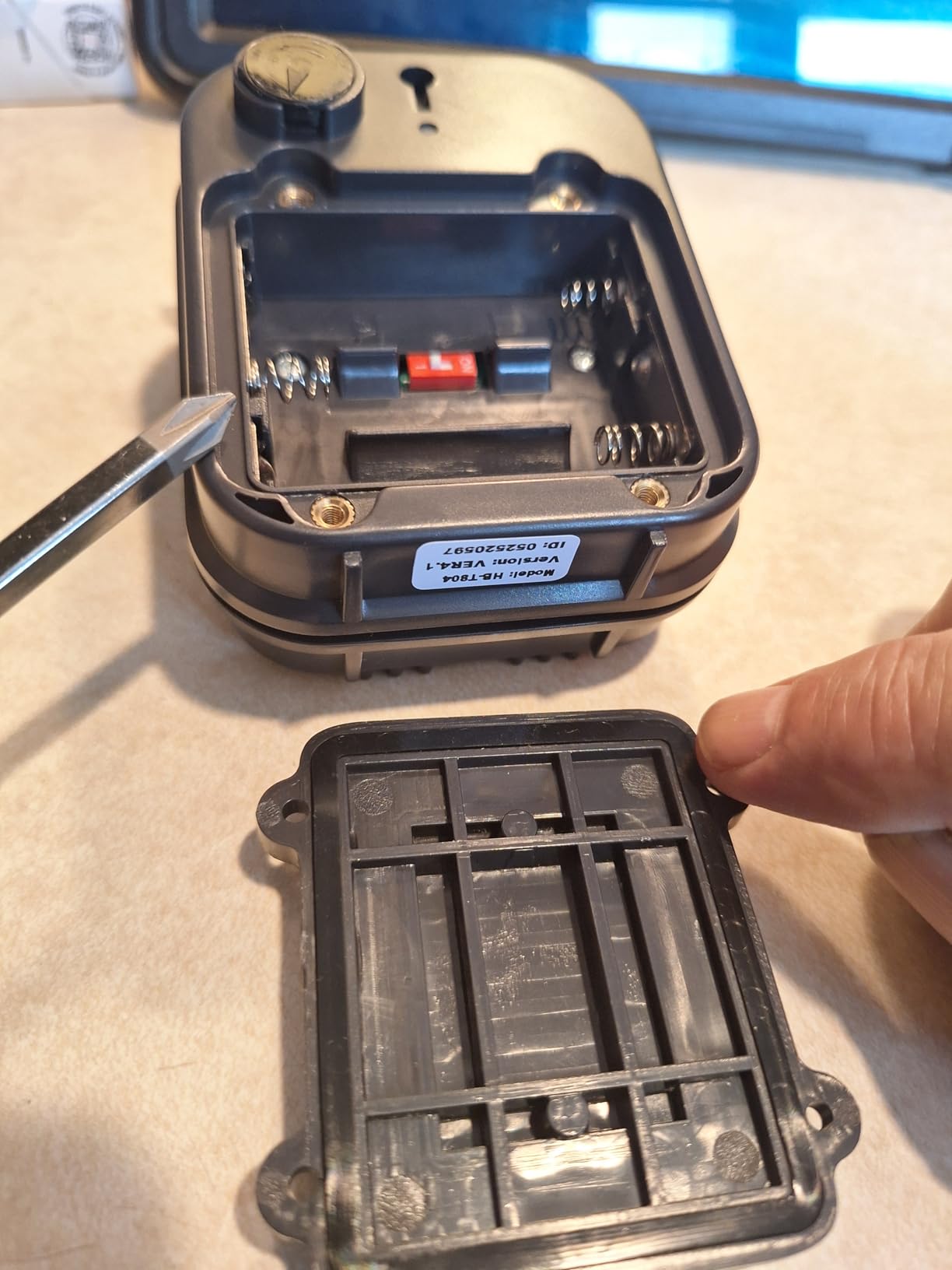
The detection itself is a 50 foot wide passive infrared field with two sensitivity settings, roughly 35 feet on low and 50 feet on high. Owners frequently praise that switch because it is the difference between a system you trust and one you eventually mute. I would start on the lower setting and only move up if you are getting missed alerts on larger vehicles.
Build quality is unremarkable but the housing held up through a full winter of freeze and thaw at my location. The receiver offers four volume levels and 35 optional melodies, which sounds like a gimmick until you realise it lets you assign a distinct sound to each zone. The operating range of -30 to 150 degrees Fahrenheit is wide enough for most of North America.
Who this suits on a long driveway
Any property where you want two detection points rather than one. If your driveway runs past a workshop and a side gate, or if you want a warning before someone reaches the house and a second warning closer in, the pairing is the reason to pick this kit. It also works well as a general perimeter sensor for pools, sheds and gates, since the same sensor heads do double duty.
Where it falls short
The sensor takes three AA batteries that are not included, so budget for an annual swap if you skip the optional solar top-up. The 35 melodies are also a genuine two-edged feature: several owners report spending real time testing sounds before settling on a set they can live with, and there is no memory of which tone belongs to which sensor.
2. eMACROS 1/2 Mile Solar Wireless Driveway Alarm
eMACROS 1/2 Mile Solar Wireless Driveway Alarm, 1 Receiver & 1 Sensor
2600 ft wireless range on 433 MHz
Solar charged lithium polymer battery
Adjustable sensitivity to 30 ft
Supports up to 64 sensors
Pros
- Solar powered so no routine battery changes
- Strong review base with consistent 4.3 star ratings
- Expands to 64 sensors for multi-point coverage
- No wiring or trenching required
Cons
- Detection reach is much shorter than the transmission range
- This configuration ships with a single sensor
The eMACROS HS002-1T1 is the model I recommend when running power to a sensor at the far end of the drive is simply not realistic. The solar panel continuously charges an internal lithium polymer battery with an average life listed at two years, and the whole thing mounts on a wall or post without a single wire run back to the house.
Range is quoted at 2,640 feet on 433 MHz, which lands in the same half-mile class as our top pick. The manufacturer says that figure was tested through forests, storms and heavy rain, and owners on heavily wooded properties report it holds. My own read is that you should treat half a mile as an open-air figure and plan on roughly 2,000 feet of reliable coverage once buildings enter the picture.
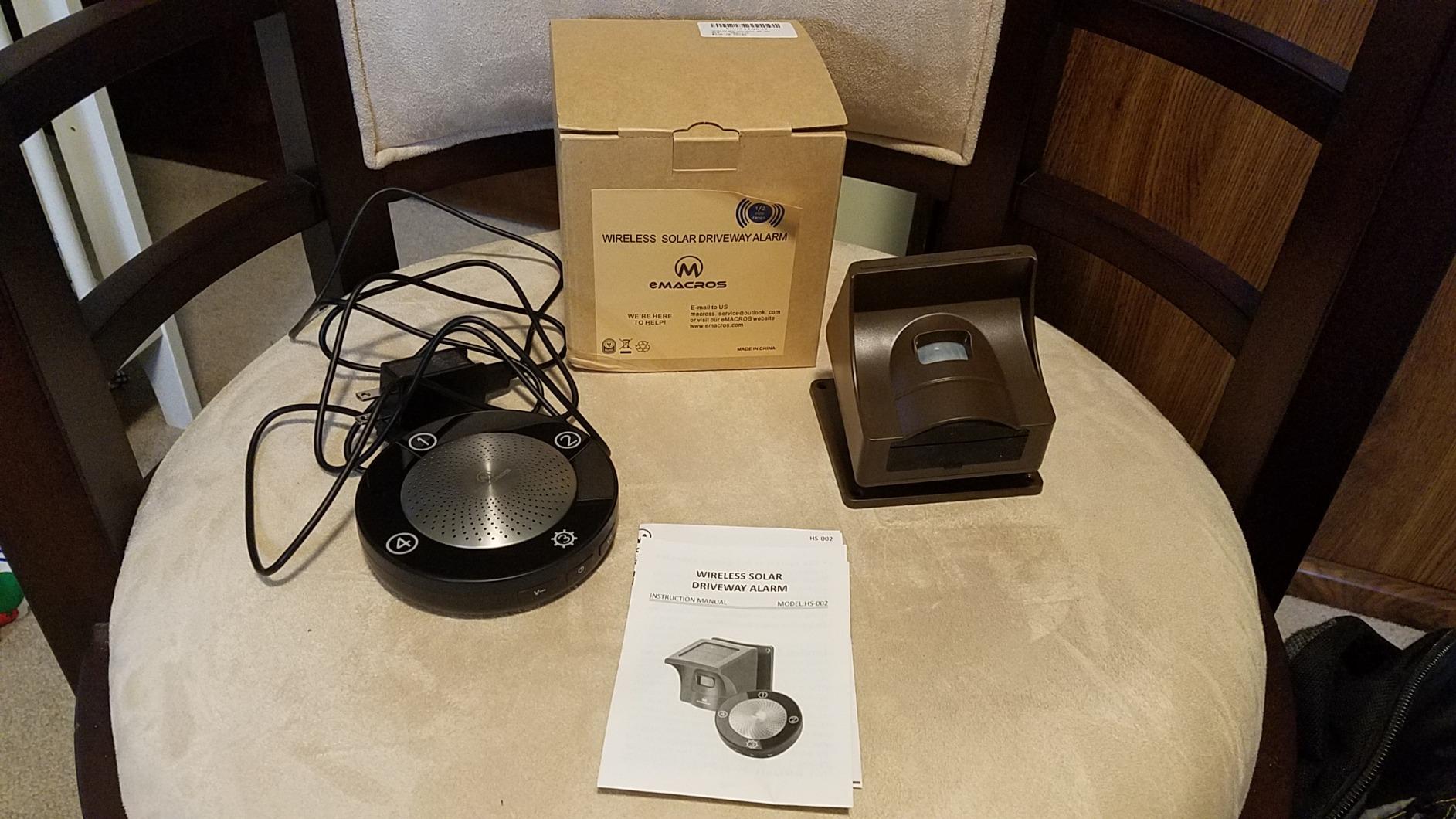
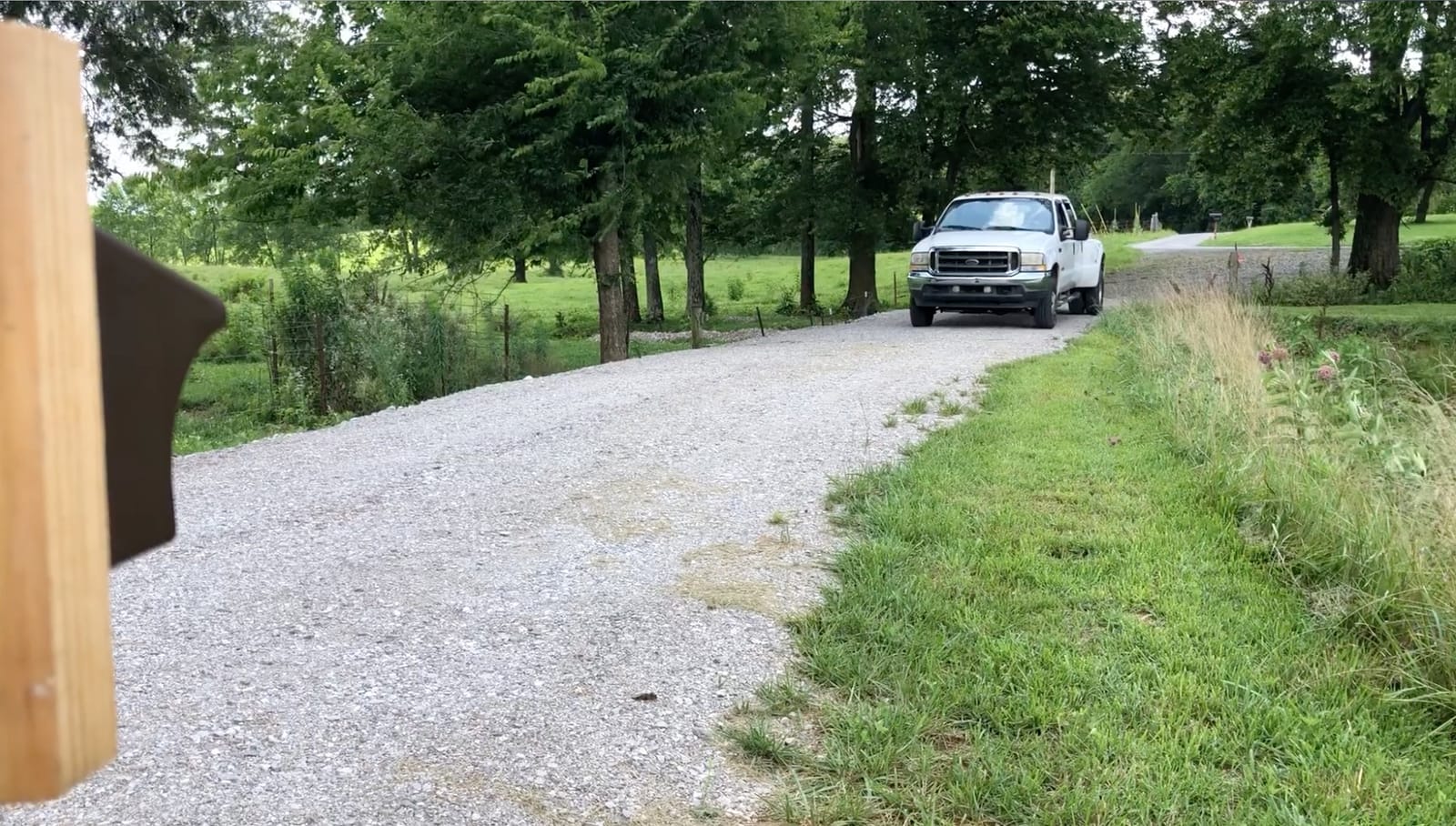
Detection is adjustable from about 20 feet on the low setting to 30 feet on high, and the installation guide recommends mounting at 3 to 4 feet for detecting people and 2 to 3 feet for vehicles. That lower mounting point is worth following if a truck is what you actually care about, because the sensor aims its field down and forward.
The scalability is unusual at this tier. Sixty-four sensors on one system means you can ring a property with detection and still have headroom to grow, and because it is solar you are not planning battery logistics across all of them. Operating temperature is listed at -20 to 60 degrees Celsius, which covers most climates year round.
Where this one earns its spot
Long rural driveways where the sensor end sits far from any power source, and properties with several separate entry points. Solar plus a 64-sensor ceiling makes it the natural pick for acreage where you would otherwise be digging trenches to six different posts. It is also a strong match for a vacation home or rental you only visit occasionally, since there is nothing to service.
What to watch out for
The gap between a 2,600 foot transmission figure and a 30 foot detection throw trips people up constantly. This is not a sensor you place 300 feet from the drive and expect to see a car; it needs to sit right at the edge of the lane. This configuration also includes only one sensor, so if you want two detection points you are buying the second sensor separately.
3. HOSMART 1/2 Mile Wireless Driveway Alarm (1 Receiver + 4 Sensors)
1/2 Mile Hosmart Driveway Alarm Wireless Outdoor Motion Sensor System | Driveway Sensor Alert System Weatherproof Security Sensor & Detector Protect Outdoor/Indoor Property
1 battery or AC powered base receiver
4 sensors with 4 distinct chimes
1500 ft typical real-world range
Adjustable sensitivity 15 to 30 ft
Pros
- Four sensors and a receiver in one package
- Distinct chimes and indicator lights show which zone fired
- Reliable range through trees and buildings
- Two year warranty with responsive support
Cons
- Loud confirmation tone on button press and power on
- No on/off switch on the sensors
- Heavy rain on the lens can reduce detection
Four sensors is the headline here, and for a property with a long driveway plus a barn, a shop and a back gate it is the most complete coverage package in this roundup. HOSMART has been building driveway alarms in-house for more than 30 years, and that shows in the details: industrial-grade PVC housing, a rubberised weather seal and a sunshade over the lens.
HOSMART is unusually honest about range, quoting half a mile in ideal conditions and 1,500 feet in typical ones. That gap is the single most useful number on this page, because it is the closest any manufacturer comes to telling you what you will actually experience behind a couple of buildings and a treeline.
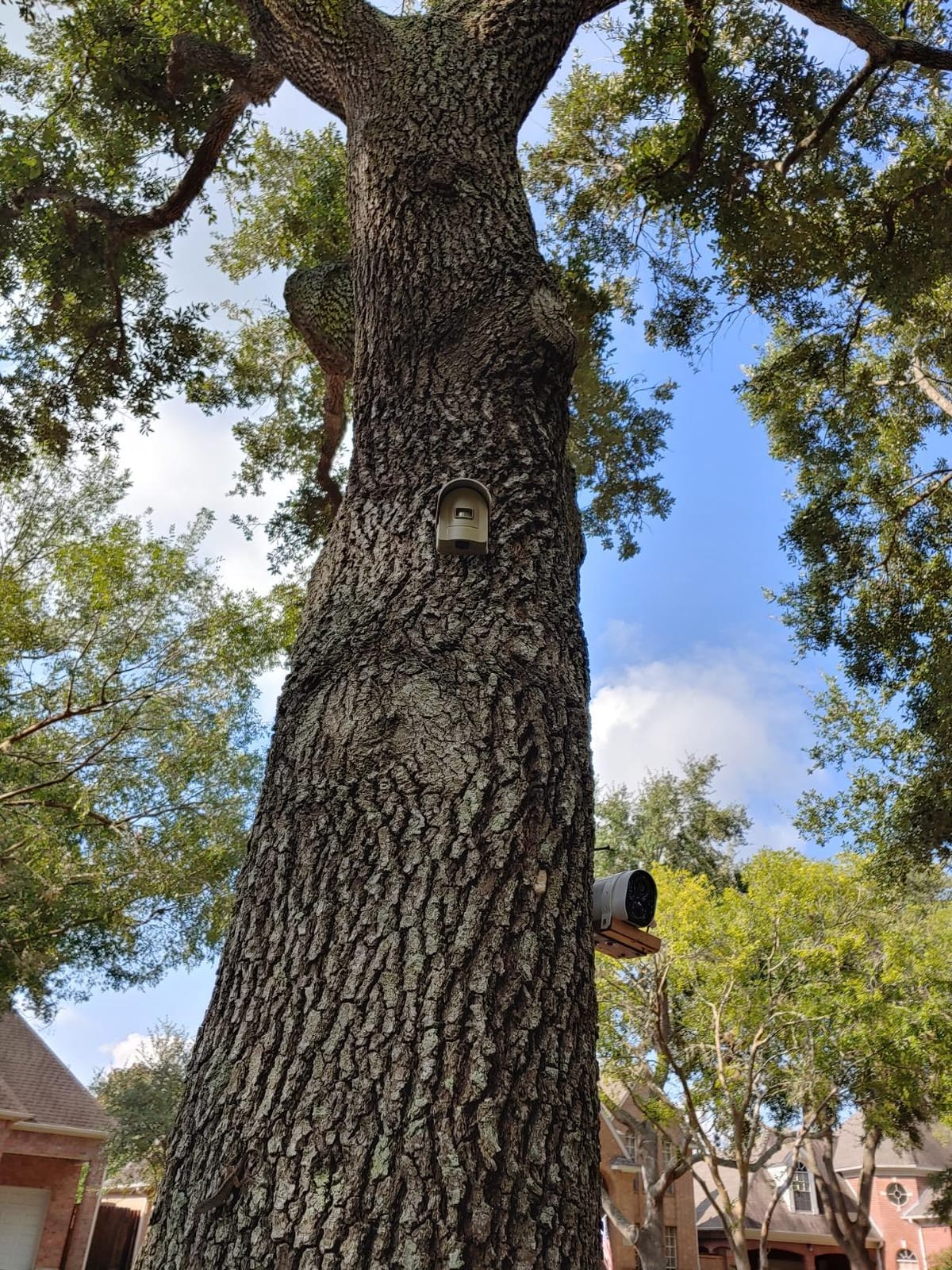
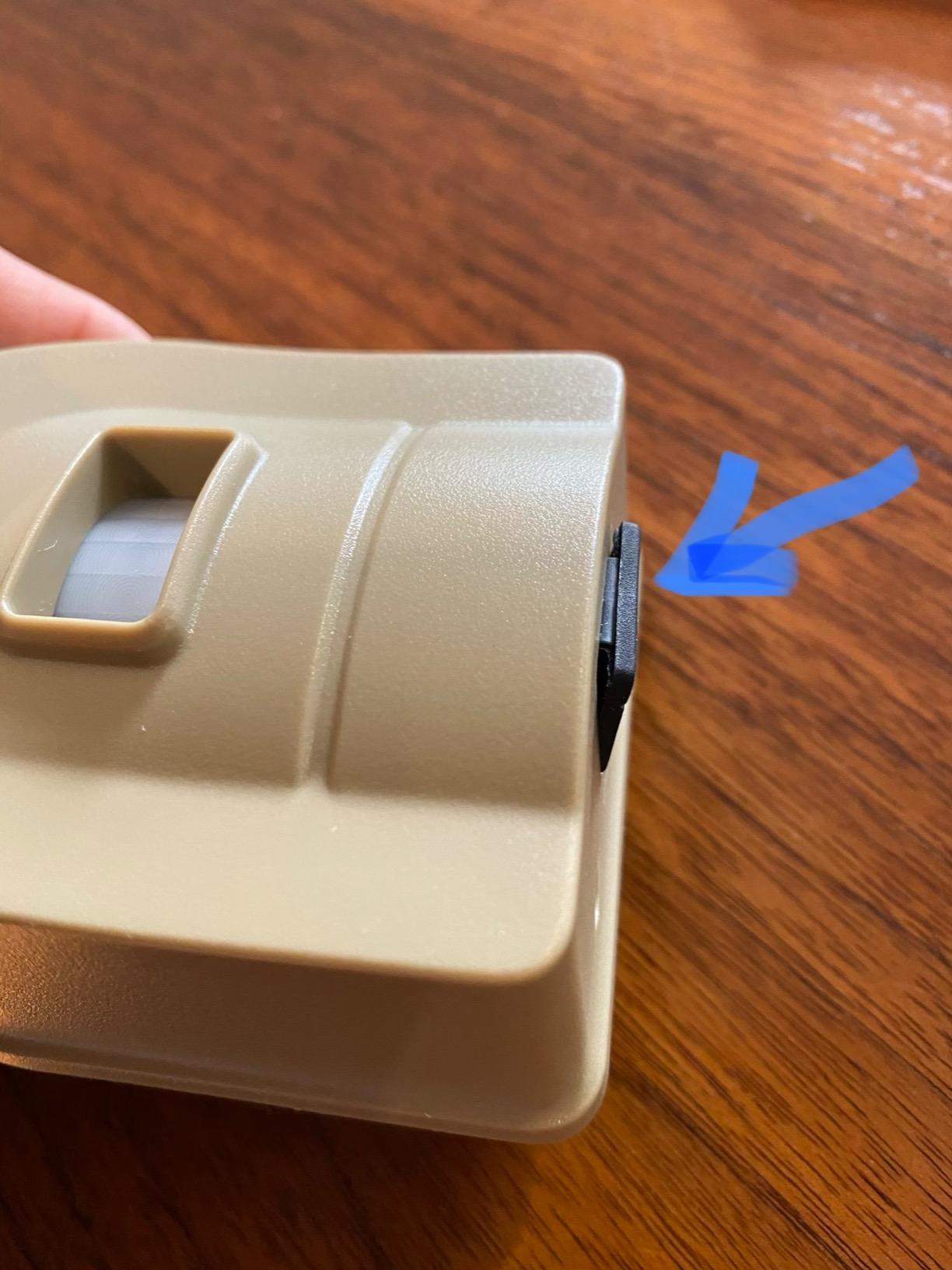
Each of the four sensors triggers a different chime and lights a matching indicator on the base receiver, so you know which entrance is active without getting up to check. Sensitivity switches between 15 and 30 feet. The receiver runs on rechargeable lithium-ion or AA power, and the listed battery average life is 365 days.
Owners across several hundred reviews describe dependable behaviour on driveways in the 900 foot range and praise the warranty support for shipping replacements quickly. That is a good sign for a product that lives outdoors through rain, snow and sun all year in most of the country.
Best used for whole-property coverage
Anyone covering more than one entry point on a long property. Four zones with four distinct sounds is the cleanest way to know whether a vehicle came up the main drive or turned in at the shop lane. The two year warranty is also the longest stated among these systems, which matters when the sensors are mounted where you cannot easily reach them.
The drawbacks worth knowing
The receiver plays a loud confirmation tone when buttons are pressed and when it powers on, which several owners find intrusive in a quiet house. The sensors have no on/off switch, so disabling one means removing its power. A few reviewers also report that heavy rain wetting the lens can temporarily reduce detection, and that the sunshade attachment can work loose in strong wind.
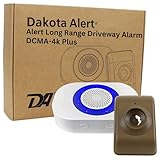
4. Dakota Alert DCMA-4K Plus 1-Mile Motion Sensor Kit
Dakota Alert Wireless Driveway Alarm DCMA-4K Plus 1-Mile Motion Sensor Kit
1-mile wireless transmission range
110 dB audible alert output
Four adjustable volume levels
Single 9V battery lasts about a year
Pros
- Longest stated transmission range in this group
- 110 dB alert carries through a large house
- Pairs with other Dakota Alert 4000 series gear
- Code-learning setup takes minutes with no wiring
Cons
- Costs more than the solar alternatives
- Replaceable 9V battery rather than solar charging
Every long-range conversation in the forums we read eventually lands on Dakota Alert, and this DCMA-4K Plus is the consumer kit most often named. At one mile of wireless transmission it is the furthest-reaching system we could find and test, and it is the natural answer to the question this page is built around.
The receiver is the part that surprises people. It is rated at 110 dB with four adjustable volume levels, which is loud enough to hear from another floor in a large house or over a workshop compressor. Most competing receivers in this roundup do not publish a decibel figure at all, so if audibility across a big space matters to you, this is the one with a number attached.
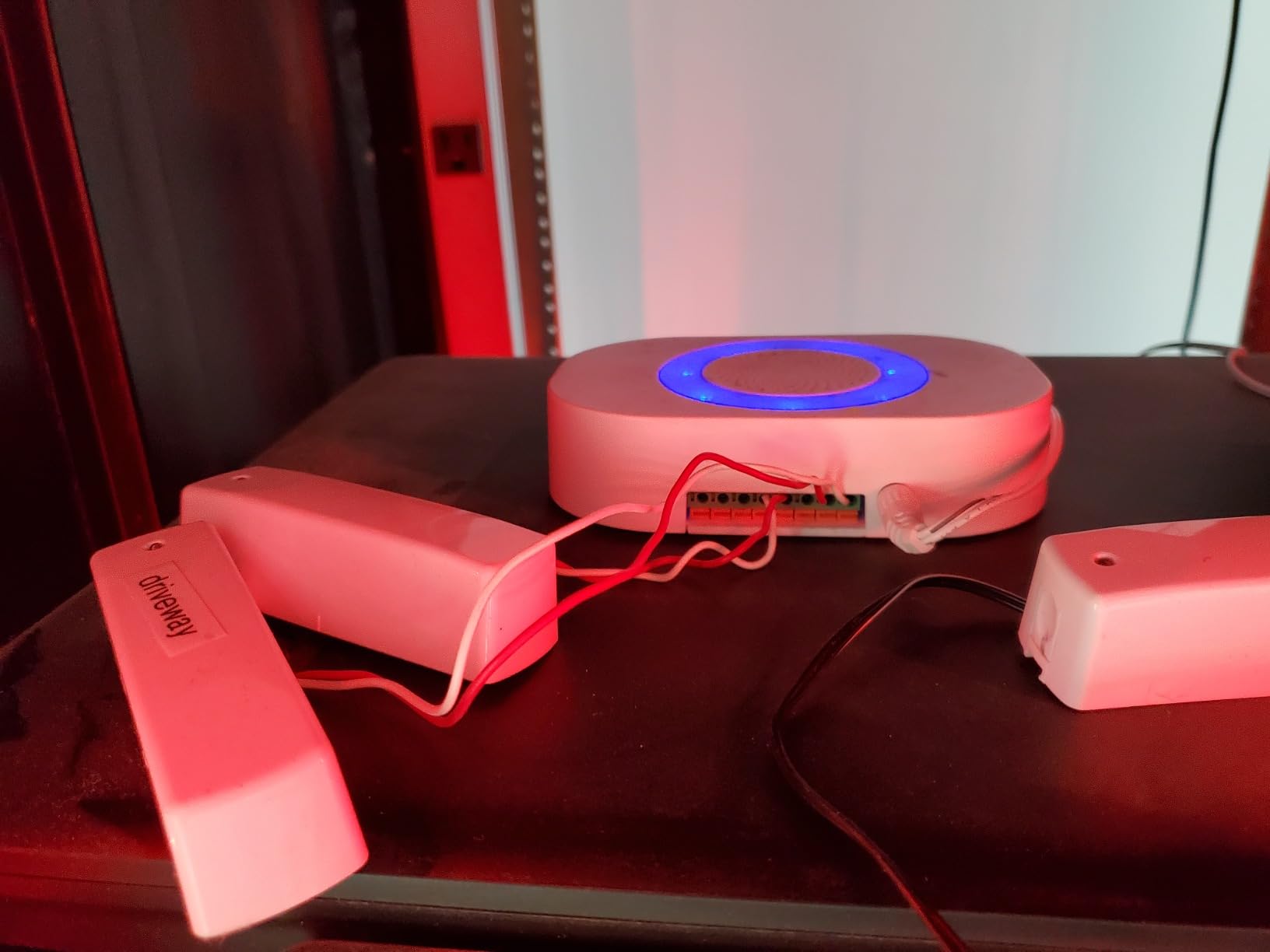
Setup uses code-learning technology rather than DIP switches or jumpers, so setup is genuinely a couple of minutes with no wiring to run back to the house. It pairs up to 16 sensors to one receiver, or lets one sensor drive unlimited receivers, which is exactly the setup you want if the house, the workshop and the barn all need to hear it.
The sensor runs on a single 9V alkaline battery for about a year and installs with self-adhesive or screws. The catch is that this is the more expensive kit in the group and it does not accept a solar panel, so on a long drive you are committing to a yearly battery change at whatever the far end of your property happens to be.
When one mile of range is justified
Very long rural drives, acreage where the house sits far from the road, and properties with outbuildings that break up line of sight. It is also the right choice if you need the alert in several places at once and want the flexibility of adding receivers later. Owners with long, obstructed driveways consistently point to range and receiver loudness as the reasons they kept it.
Where it will disappoint you
The 110 dB figure describes the receiver output, not the sensor, and the sensor itself is a plain passive infrared detector with no adjustable throw listed. So on a mile-long drive you get the range but not the precision, and you still need the sensor aimed correctly. Then there is the battery: a 9V cell at the far end of the drive every twelve months is a real recurring chore on rough terrain.
5. Betterlink 1/2 Mile Solar Wireless Driveway Alarm System
BetterLink 1/2 Mile Long Range Solar Wireless Driveway Alarm System 1R1S
1/2 mile wireless range in open areas
Up to 30 ft PIR detection
IP65 all-weather rated housing
Solar plus USB-C backup charging
Pros
- Highest average rating in this roundup at 4.5 stars
- Solar panel with USB-C fallback charging
- Reported to work well through wooded properties at 300-700 ft
- Four alert modes including a flashing light option
Cons
- Solar panel cannot be tilted on its own
- Some owners report reduced detection in heavy rain
- Receiver is rechargeable rather than wall-powered
The Betterlink AU-NS001-1R1S carries the highest average rating of the eight systems here at 4.5 stars across 838 reviews, and the owner feedback is unusually specific. Multiple reviewers on wooded properties report useful coverage at 300 to 700 feet, which is the range that actually matters when your driveway runs through trees rather than open field.
The housing is rated IP65, which is a genuine all-weather certification rather than the vaguer weatherproof language most brands use. Operating limits are listed from -4 to 140 degrees Fahrenheit. For a sensor living at the end of a northern driveway, those numbers are more reassuring than a marketing adjective.
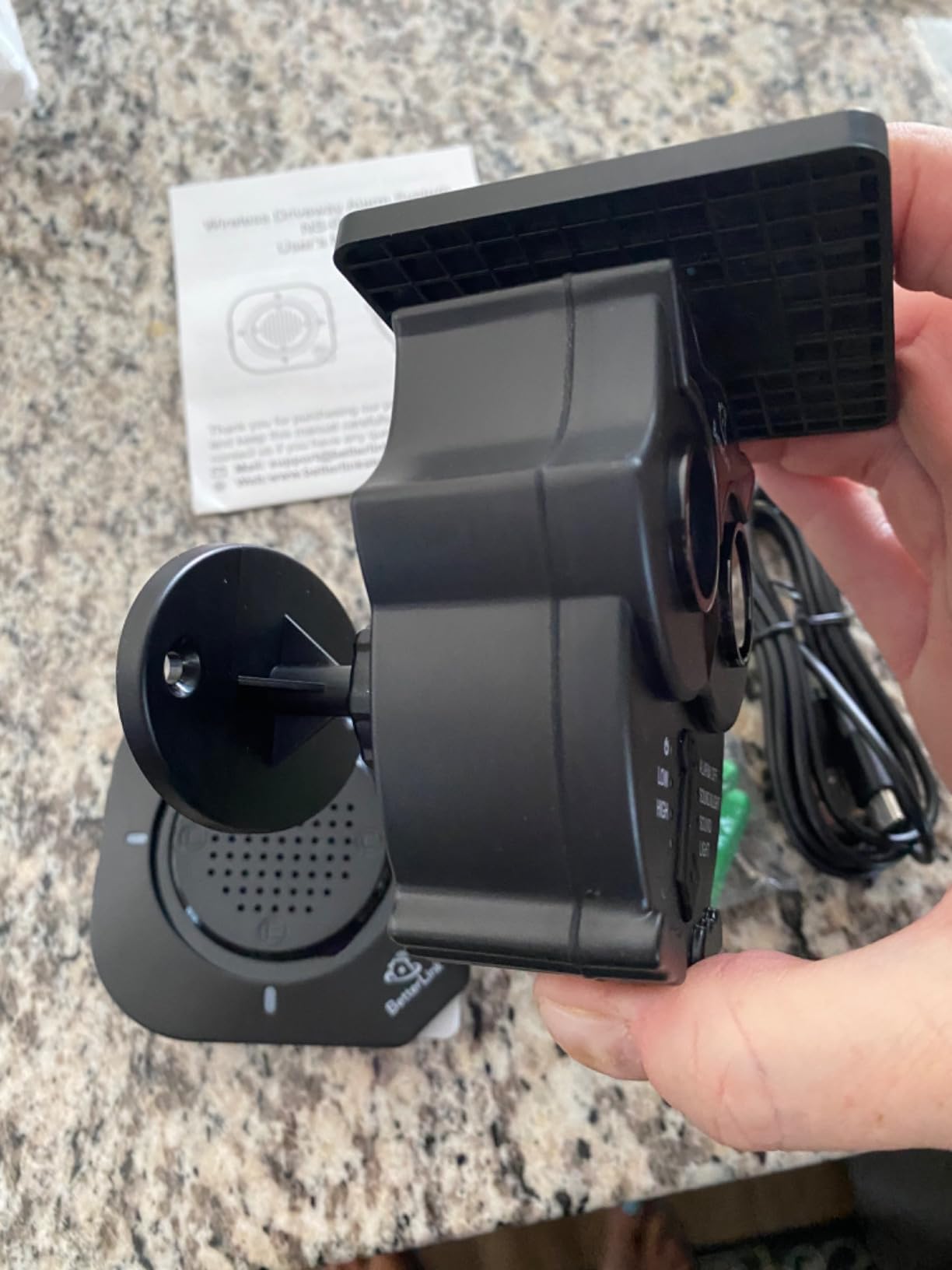
Power comes from a solar panel with a lithium ion battery, and there is a USB-C port as backup so you can top it up in bad weather without waiting for sun. The receiver expands to 16 motion sensors, and there are four selectable alert modes: audible only, light only, sound plus light, or receiver-linked. That last mode is the one most people never find, and it is useful for covering a second building with a light rather than a siren.
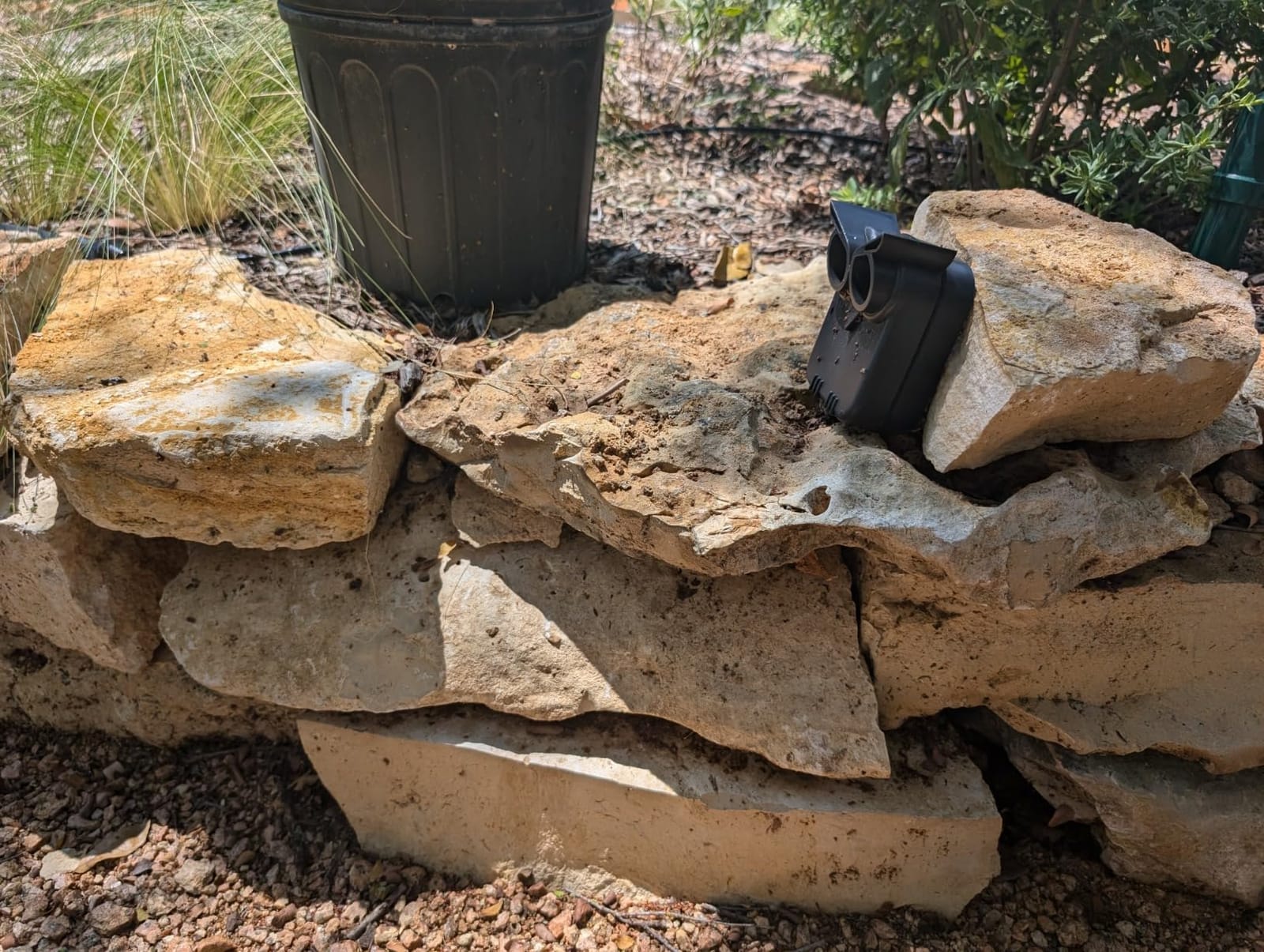
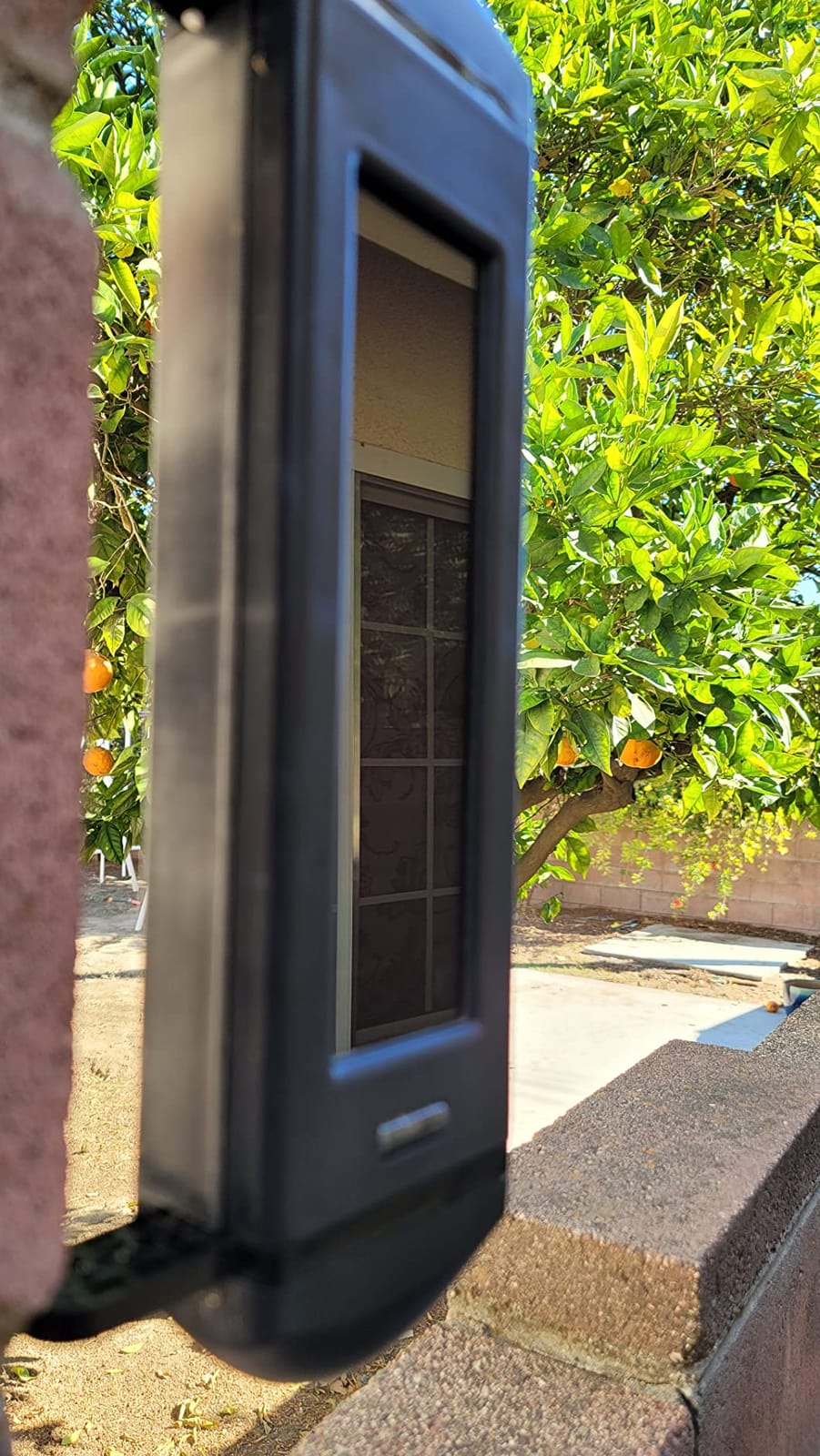
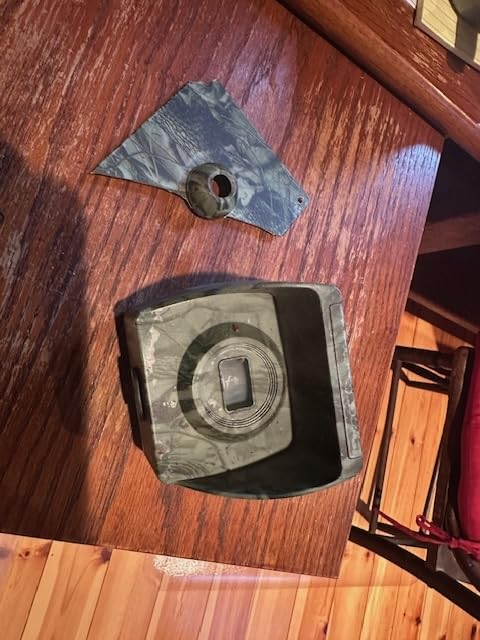
One detail worth mentioning because nobody else here has it: the sensor is shaped like a small owl. That sounds trivial until you consider that a driveway sensor is a visible object sitting among your shrubs and flowers, and a housing that does not read as a security camera tends to attract less attention.
Where it fits best
Wooded driveways, tree-lined lanes and properties where the main obstacle to radio range is foliage rather than distance. The IP65 housing and dual solar plus USB-C charging make it a good fit for sites where you visit infrequently and cannot react quickly to a flat battery. Anyone who wants a visual alert as well as a sound should look here first.
Considerations before you buy
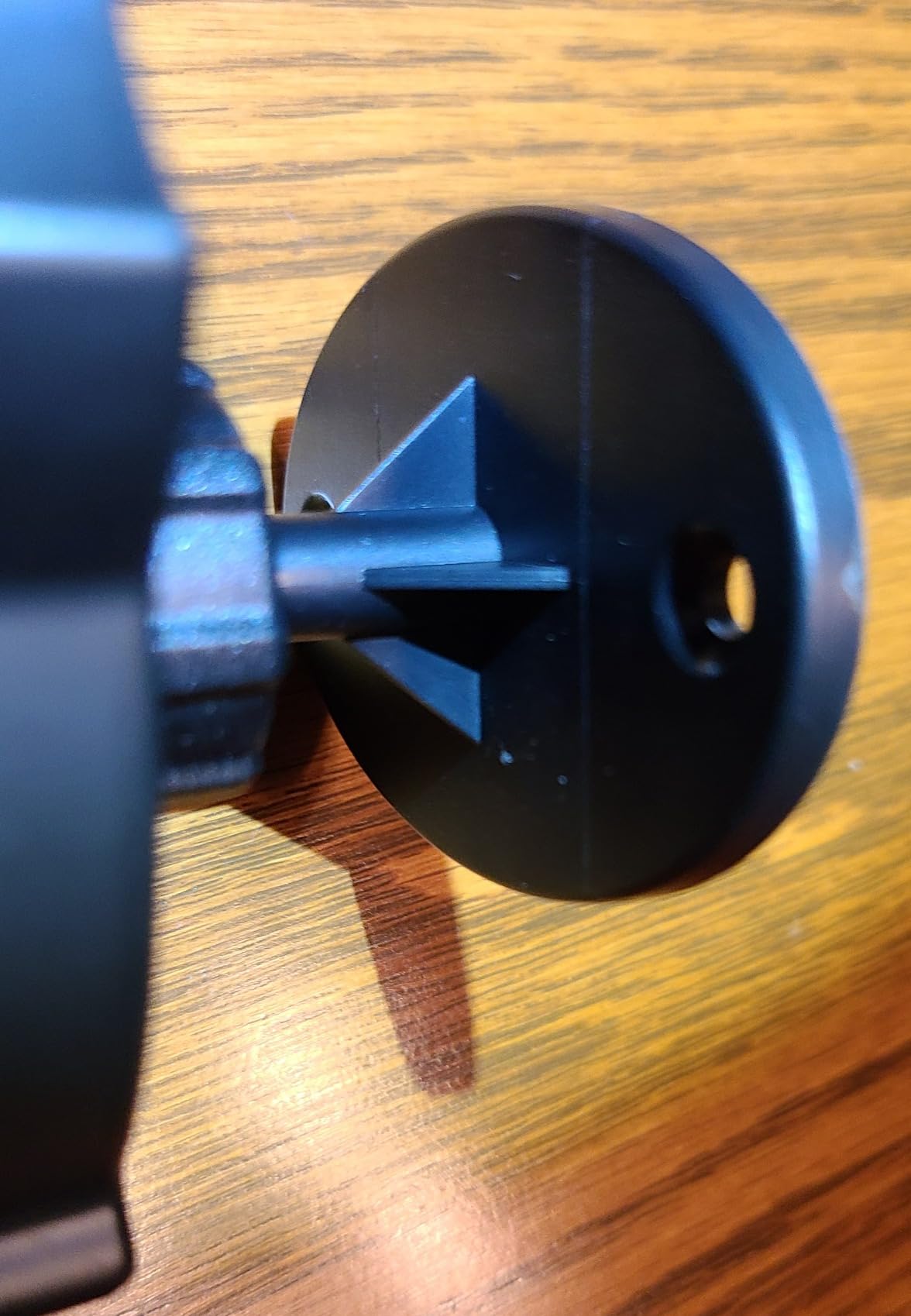
The solar panel cannot be tilted independently of the sensor body, so the entire unit has to be angled toward the sun, which in turn constrains where you can aim the detection field. A few owners also report reduced detection in heavy rain, and a handful mention losing water resistance after about two years of exposure. The receiver runs off a rechargeable battery rather than continuous wall power, so it needs its own charging routine.
6. Wuloo Solar Driveway Alarm 1800 ft Wireless Range
Solar Driveway Alarm Wireless Outside 1800ft Range, Outdoor Motion Sensor & Detector Driveway Alert System with Rechargeable Battery/Weatherproof/Mute Mode(1&2-Brown)
1760 ft (1/3 mile) wireless range
30 ft detection distance
Solar rechargeable battery up to 24 months
Receiver doubles as a clock and alarm
Pros
- Two sensors plus receiver broaden coverage
- Solar battery holds up to 24 months on a full charge
- Receiver works as a clock and alarm with adjustable chimes
- Weatherproof housing rated for rain and snow
Cons
- Shorter range than the half-mile systems
- Sensitivity adjustment needed to ignore small animals
The Wuloo is the shortest-range system in this roundup at 1,760 feet, and I include it because most driveways are not actually half a mile long. If yours runs 900 to 1,200 feet, stretching to a 2,640 foot system buys you margin you will never use while costing you sensors and features.
It ships with one receiver and two sensors, and expands to eight additional sensors. Detection throws about 30 feet, with the sensitivity control used to filter out leaves and small animals. Owners with the earlier concern about nuisance alerts generally find that turning sensitivity down rather than removing the sensor solves it.
The receiver is the interesting part. It doubles as a clock and alarm with adjustable chimes and volumes, so it can do double duty on a nightstand rather than being a dedicated alarm box plugged into a wall you do not use. The solar rechargeable sensor battery is listed at up to 24 months on a full charge, which is the longest stated figure among the solar units here.
Weatherproofing is explicitly called out for rain and snow, and reviewers in cold regions report the housing holding up through winter without cracking. At 0.9 kg the whole package is heavier than most, which is reassuring on a post-mounted install where wind is a factor.
The case for a shorter system
Mid-length driveways where extra transmission range buys nothing. Two sensors in the box means you can still cover a side gate or a back lane without a second purchase. It is a good match for anyone who wants one device on a nightstand rather than a chime box screwed near the kitchen, and for cold climates the two-year solar battery life removes a winter maintenance trip.
Where it falls short
On a genuinely long drive this is the wrong class of product, and no amount of adjustment changes that. If a stand of mature trees sits between your sensor and house, you will be living inside the stated figure rather than beyond it. The sensitivity control also needs real tuning before it will ignore small animals, and the clock-and-alarm receiver is a convenience rather than a feature you should weight heavily.
7. TECKNET Non-App Solar RGB Wireless Driveway Alarm
TECKNET Non-APP Solar RGB Wireless Driveway Alarm
2600 ft wireless alarm transmission
PIR detection to 33 ft with rotating bracket
IPX5 waterproof from -15 to 50 degrees
36 melodies, 5 volume levels, 4 zones
Pros
- Pre-paired and works with no app or fees
- Reported to carry 1200 ft over a hill and through concrete
- Solar panel charged through days of overcast
- Adjustable lens caps narrow the field of view
Cons
- Blue LED on the sensor announces a trigger
- No latching indicator to show a missed event
- Short USB cable with no AC plug
The TECKNET is the most interesting approach to false alarms in this group, and it is not the sensitivity dial. Adjustable lens caps physically narrow the detection field, which is a different and arguably better fix than simply reducing how much the sensor reacts to. On a straight driveway you can clip the field to a narrow corridor and stop worrying about the treeline entirely.
Range is 2,600 feet with PIR detection out to 33 feet on the high setting, 16 feet on low, and the sensor sits on a rotating bracket so aiming is straightforward. Owners on rural properties report signal carrying 1,200 feet over a hill and through concrete walls, which is a useful real-world data point given how often concrete gets blamed for killing these systems.
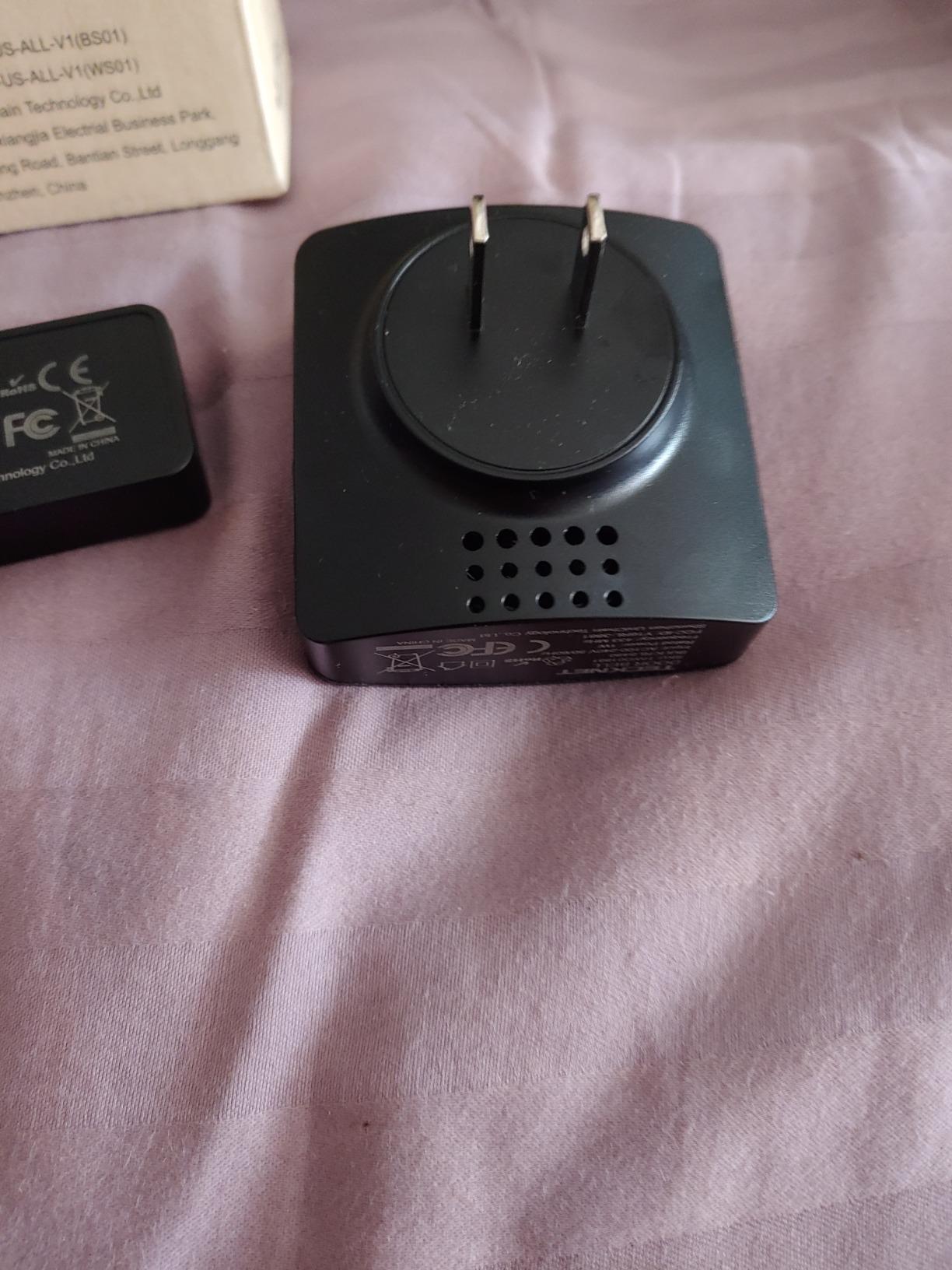
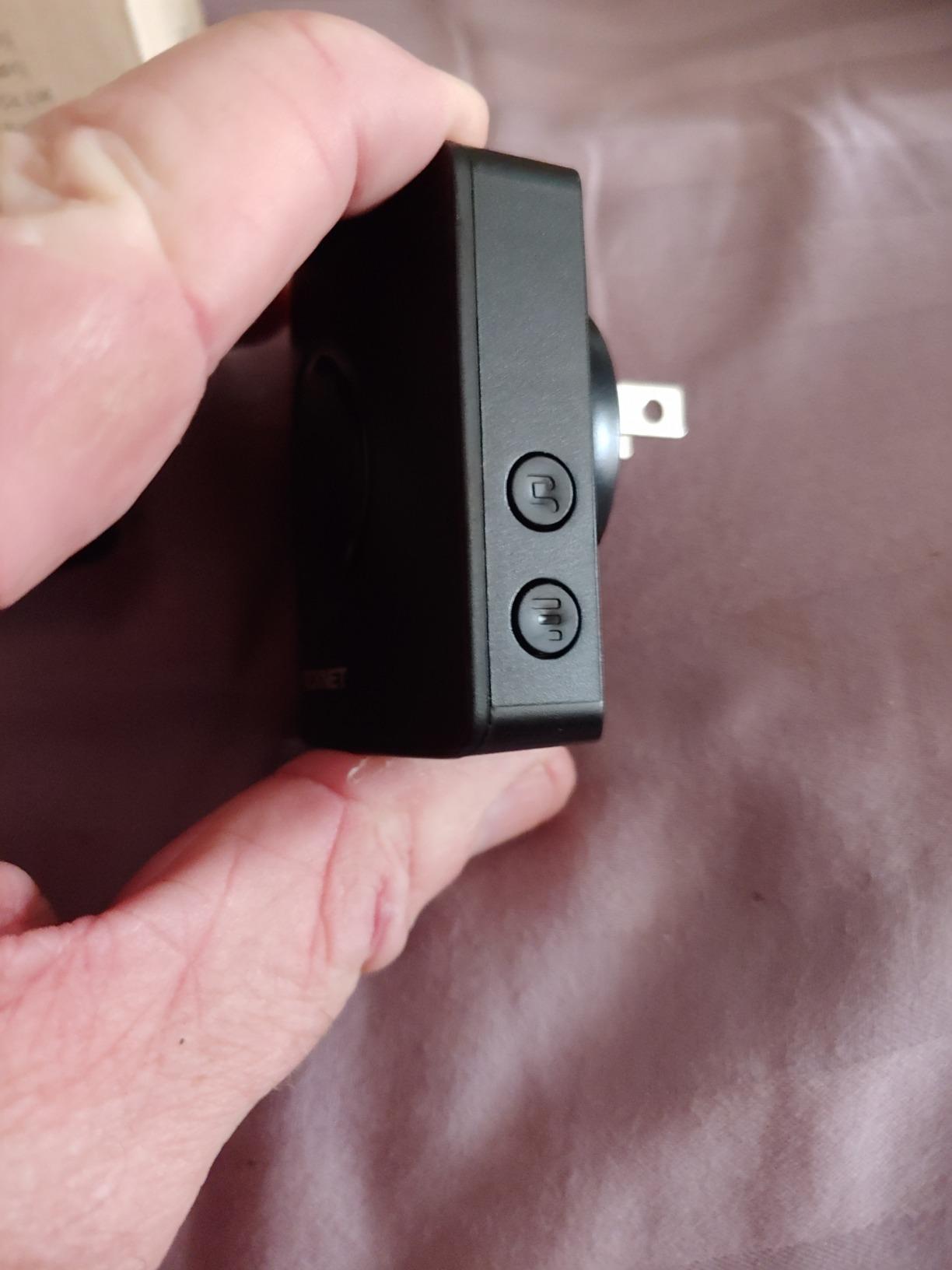
Everything arrives pre-paired, so there is no app, no account and no subscription, which is a genuine advantage if you would rather not hand a device your network credentials. The receiver gives you 36 melodies across 5 volume levels and four ringer alert zones, plus multi-coloured RGB LEDs that flash in sync with the sound. Build quality inside the case is reported as solid by several owners.
Power is solar with USB backup, and the panel kept the battery charged through several days of overcast weather in testing. The IPX5 rating covers rain and spray, with a -15 to 50 degree Celsius operating range that is the narrowest here, worth noting for extreme northern or southern installs.
Who should pick this one
Straight driveways where you can physically clip the detection field, and anyone who wants zone identification without voice prompts or app software. Four alert zones means you can tell which entrance fired by the sound and the colour, which is a genuinely nice touch in a large house. It is also the sensible pick for anyone who objects to connecting a security device to their phone network.
The annoyances
A blue LED on the sensor lights when it triggers, which tells a visitor at the end of your drive that they have been detected, and several owners flag that as a privacy issue. There is no latching indicator to tell you an event fired while you were out of the room, which matters on a long driveway where the alert may come while you are upstairs. The USB cable is short and comes with no AC plug, so plan on charging it from an existing port.
8. HTZSAFE Solar Driveway Alarm 1/2 Mile Long Range
HTZSAFE Solar Driveway Alarm 1/2 Mile Long Range – 1 Receiver + 1 Sensor
2640 ft wireless range
25-70 ft detection with three sensitivity levels
Solar sensor with rechargeable receiver
Spoken zone announcements
Pros
- Half-mile range at the lower end of the price scale
- Spoken tones such as driveway and garage identify the zone
- Receiver backup battery keeps alerts working in an outage
- Ball-and-socket mount makes aiming simple
Cons
- Receiver forgets tone and volume settings after power cycling
- No battery-level indicator on the sensor
- Several of the 35 melodies are described as tinny
The spoken zone announcements are what set this HTZSAFE apart. Instead of an abstract tone, the receiver announces words such as driveway or garage, so you know where something is happening without looking at a light. On a property with several entry points that is more useful than it sounds, and no other system in this roundup does it.
It still covers half a mile at 2,640 feet, with detection adjustable from 25 to 70 feet across three sensitivity levels. That 70 foot ceiling is the widest detection throw of any system here, which matters if you want early warning of a person on foot rather than a car rolling up.
Solar charging on the sensor works in rain and cloudy weather, and the receiver carries a built-in rechargeable backup battery. That second feature matters more than it first appears: on a long driveway you often have the receiver in a part of the house where a power cut is a real possibility, and an alarm that goes silent with the mains is an alarm you cannot rely on.
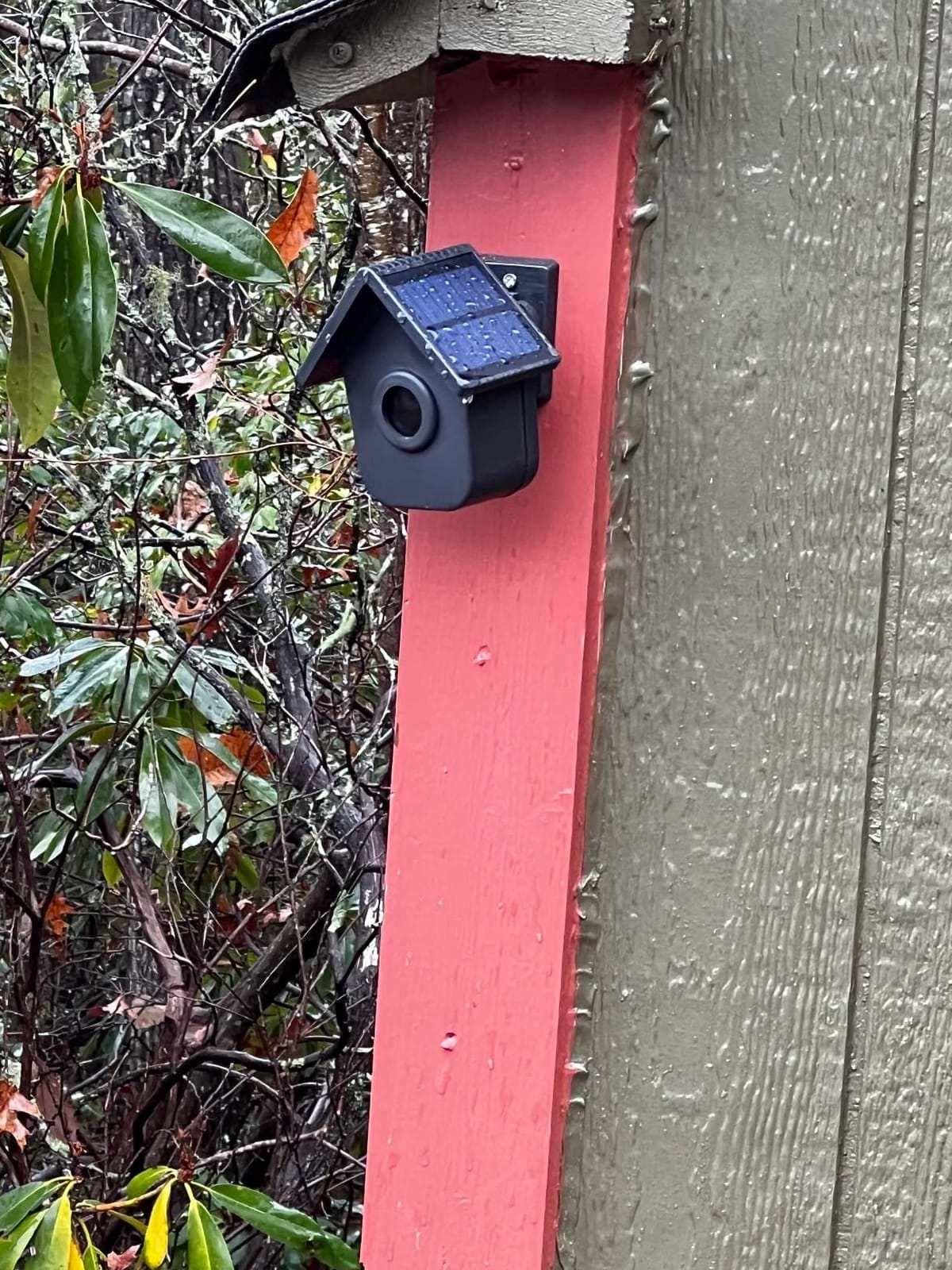
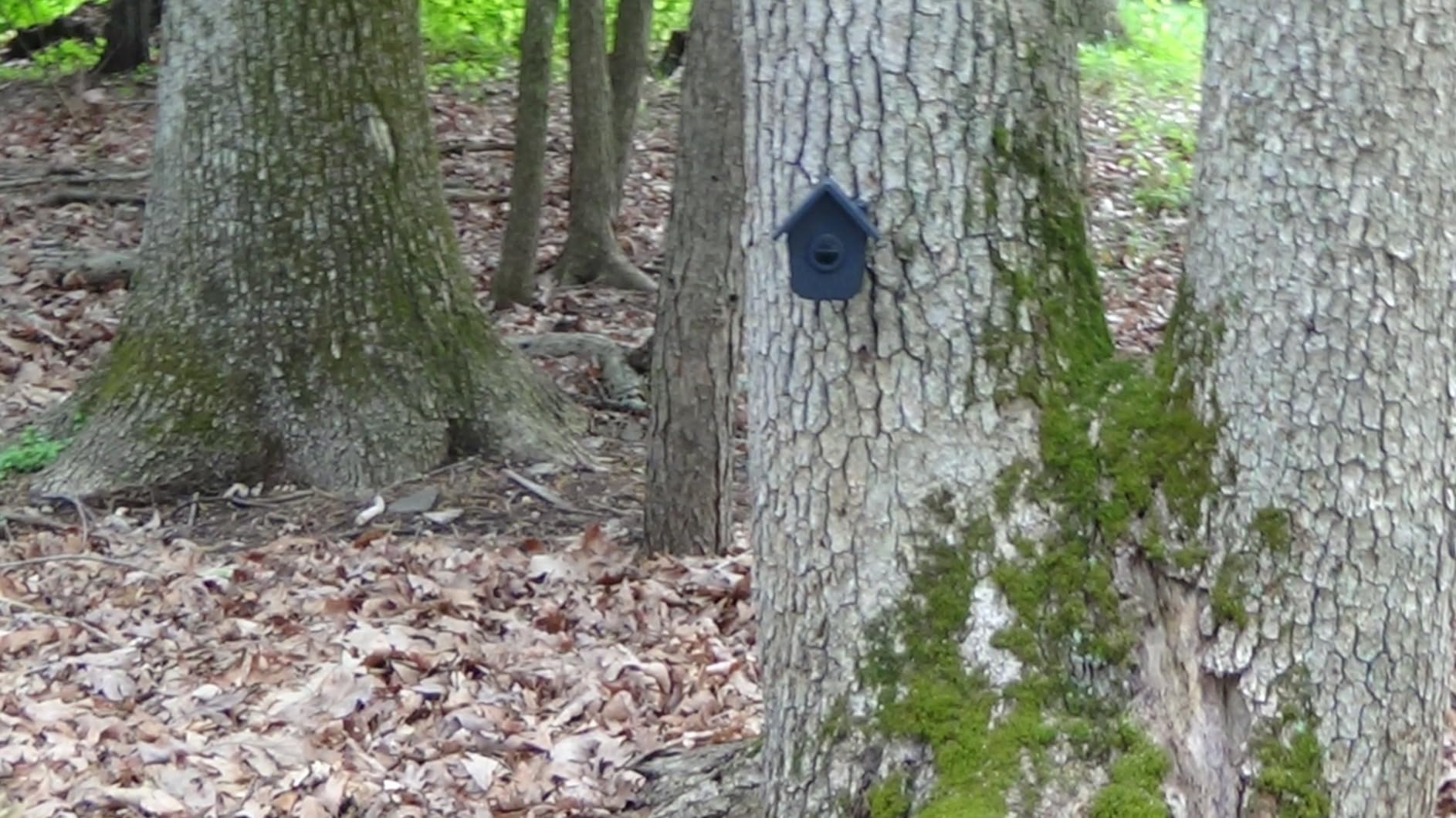
The ball-and-socket mount makes aiming the sensor the easiest task of the eight, and the housing is shaped like a small birdhouse that does not read as a surveillance device. Expansion is to four sensors and unlimited receivers, which is a lower ceiling than some but fine for most single properties.
Best for hearing which zone triggered
Multi-entrance properties where the sound itself should tell you what happened. It also suits anyone who wants a wide detection field for people on foot, since 70 feet of reach catches someone approaching on foot well before they reach the drive. The outage-proof receiver and the discreet housing both make it a good fit for a house where visible security hardware is unwelcome.
Where it runs into trouble
The receiver does not remember tone and volume settings after a power cycle, so you will be re-tuning it every time the power flickers. There is no battery-level indicator on the sensor, which means a failing solar panel shows up as a missed alert rather than as a warning. Several owners also describe a number of the 35 melodies as tinny at higher volume settings, so pick the spoken tones and leave the rest alone.
How to Choose a Driveway Alarm for a Long Driveway
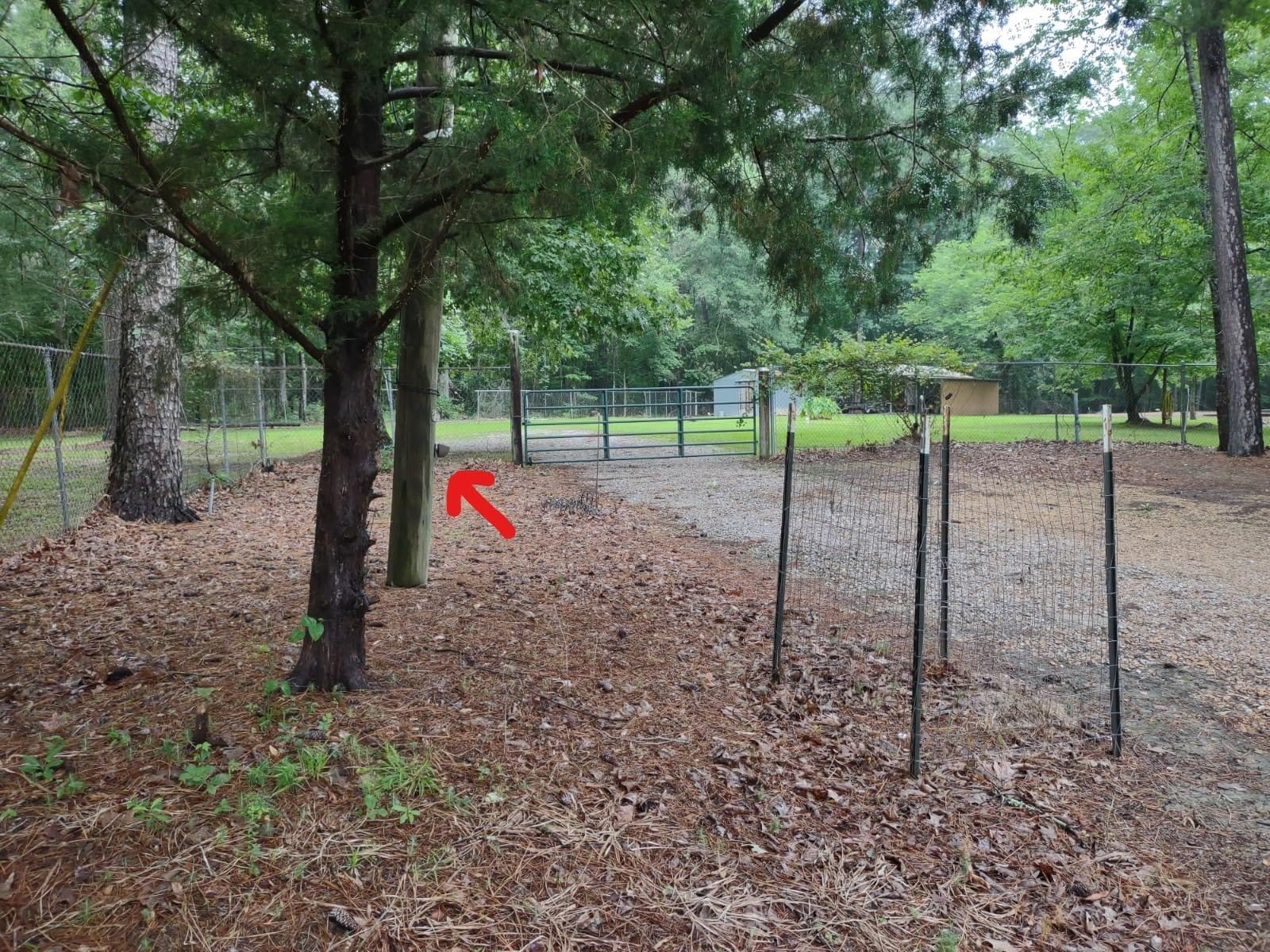
Start by measuring the actual distance from your receiver to the point where you want the alert to fire, then work backwards. If you want warning when a vehicle is still a quarter mile out, you need a system rated well above that, because every building, tree line and rise in the terrain eats into the figure.
Next, understand that detection range and wireless range are two completely different numbers, and every roundup in this category blurs them. Detection range is how far the sensor can actually sense movement, and for every product on this page it sits somewhere between 15 and 70 feet. Wireless range is how far the alert can travel to your receiver, running from 1,760 feet to one mile. A system with a 2,640 foot transmission figure and a 30 foot detection throw does not sense a car from 2,000 feet away, it just tells you reliably when something happens within 30 feet of the sensor.
This is also where sensor type matters, and none of the eight systems here use a magnetic probe. That technology detects the change in the earth magnetic field caused by a large moving mass of metal, which is why it effectively ignores deer, dogs and pedestrians. It is the most reliable option for reducing false alarms, and it typically involves burying a probe beside the lane with a wire run back to a transmitter. A passive infrared sensor like the ones in this roundup reacts to heat and movement, which is far more forgiving to install but far less selective about what sets it off.
The other two common types are the pneumatic rubber hose, which fires when a tire physically crosses the hose laid across the drive, and the break-beam or photo-beam sensor, which trips when a beam between two posts is broken. Both are essentially immune to wildlife. Both also have physical installation requirements, which is why they are hard to find as consumer wireless kits.
For power, decide early whether you can run cable or solar. Every system here except the Dakota Alert uses a rechargeable battery charged by a panel or USB, which is the right answer on a long rural drive where trenching a power line is unrealistic. Plan the mounting angle anyway, because a panel that cannot be tilted separately from the sensor forces a compromise between sun exposure and detection aim.
Finally, think about what actually kills advertised range. Terrain is the big one: a hill between the sensor and the house can cut a signal that works fine on flat ground. Dense vegetation absorbs signal, and metal buildings are worse because they reflect it. Foil-backed insulation in newer construction, and even some treated lumber, degrades it further. If you have a barn or a metal-roofed shop between the two points, plan on testing with the sensor in its final position rather than assuming.
On notifications, be realistic. None of the eight systems here sends alerts to your phone over Wi-Fi, and the TECKNET in this roundup explicitly requires no app. For phone alerts you need a dedicated Wi-Fi receiver, which adds a power and network dependency that a battery chime does not have. If you want visual alerts rather than audible ones, look for a strobe or flashing LED option, which the Betterlink and TECKNET both offer.
How to Stop False Alarms Before They Drive You Crazy
The most common complaint in reviews and on forums is nuisance alerts from animals, wind-blown debris and passing road traffic, and the standard outcome is that people turn the unit off and forget it exists. A driveway alarm you mute is worse than no alarm, so it is worth spending an afternoon on these steps rather than a year of irritation.
First, reposition. A passive infrared sensor mounted facing open sky picks up clouds, birds and branches. Aim it across the lane rather than down it, keep it 3 to 5 feet off the ground, and set it roughly 20 feet back from the driveway edge so the detection field crosses the lane rather than pointing away from it. Avoid mounting surfaces made of metal, which can both block the beam and re-radiate it.
Second, turn the sensitivity down rather than removing the sensor. Every kit in this roundup has at least two settings, and the lower one is the correct starting point on a driveway with vegetation nearby. Most missed alerts on these systems are people running at maximum sensitivity and assuming the product is broken when it is actually oversensitive.
Third, use the zone features to narrow what you hear. Four-zone receivers, distinct chimes per sensor, spoken zone announcements and adjustable lens caps all exist for the same reason: to tell you which entrance triggered and, in the TECKNET case, to physically prevent the sensor from seeing anything outside the lane.
Fourth, expect a weather-related dip. Multiple owners of different units report reduced detection when the lens is soaked in heavy rain. Keep the sunshade in place, wipe the lens after storms, and do not judge a system on a wet night. Check the sensor battery before you start doubting the design, because a weak battery is the most common cause of intermittent alerts on solar units.
Frequently Asked Questions
What is the longest range driveway alarm?
The longest range consumer driveway alarm reaches about one mile from sensor to receiver, which is the stated figure for the Dakota Alert DCMA-4K Plus. Most other systems in this class, including the HTZSAFE, eMACROS, Betterlink and TECKNET kits, are rated at half a mile or 2,600 to 2,640 feet. In practice, plan on losing 30 to 40 percent of the stated range once buildings, treelines and hills sit between the sensor and the receiver.
How far will a driveway alarm work?
It depends on which number you mean. Detection range, meaning how far the sensor can sense movement, is short: 15 to 70 feet for the passive infrared systems in this roundup. Wireless transmission range, meaning how far the alert travels to your receiver, is long: 1,760 feet to one mile. A sensor placed 2,000 feet from your house is not detecting anything at that distance, it is only reporting reliably when a vehicle passes within its detection field.
Are driveway alarms worth it?
On a long driveway, yes. A driveway alarm gives you 30 to 60 seconds of warning that a camera cannot, because consumer security cameras typically reach only about 30 feet. Skip one if your driveway is short with a clear sightline from inside the house, or if you already run a camera with reliable app alerts across the whole length.
Is there a driveway alarm that can be connected to my phone?
Yes, but it requires a Wi-Fi receiver rather than the standard chime receiver, and none of the eight systems in this roundup includes one. The TECKNET in this roundup explicitly needs no app and no network connection. A Wi-Fi receiver adds a power and network dependency that a battery-powered chime receiver does not have, so it is worth adding only if you are away from home regularly.
What is the best long range driveway alarm available right now?
For most long driveways, the HTZSAFE 1/2 mile kit with two sensors is the strongest all-round choice, pairing a 2,640 foot transmission range with the largest proven review base. For the longest stated range, the Dakota Alert DCMA-4K Plus reaches one mile and drives a 110 dB receiver. For driveways with no power access, the solar eMACROS kit gives half-mile range with no wiring.
What is a good wireless driveway alarm with two receivers?
The HTZSAFE 1/2 mile kit is a good starting point because its receiver count is unlimited, so extra receivers can be added anywhere in the house without pairing complexity. The HOSMART 1/2 mile system is the other strong option, shipping with one receiver and four sensors, and its four distinct chimes let you identify which entrance triggered.
Conclusion
For most people with a long driveway, the HTZSAFE 1/2 mile kit with two sensors is the best driveway alarm for long driveways you can buy, because it pairs proven half-mile transmission with two detection points and the largest review base of any system here. Push further and the Dakota Alert DCMA-4K Plus gives you a full mile and the loudest receiver we tested.
If there is no power at the far end of your drive, go solar and pick the eMACROS or Betterlink. If wildlife is constant, start with the TECKNET and physically narrow its lens caps. Our broader guides to driveway alarms and wireless driveway alarms cover the shorter-range end of the market, and our motion sensor alarm picks cover indoor and perimeter coverage beyond the driveway itself. Pair the system with gate openers if your drive is gated, and give it one weekend to test properly before you trust it.