
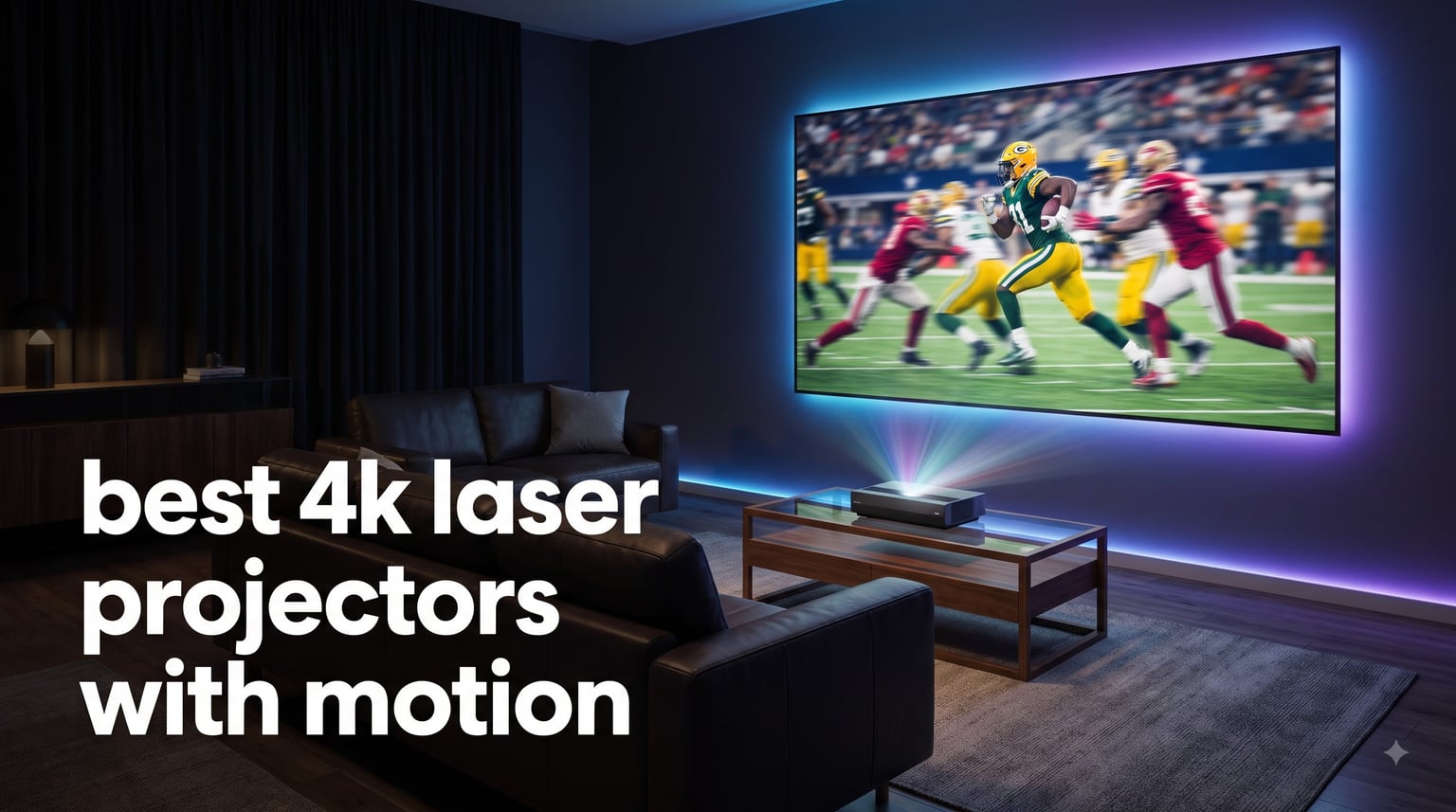
If you’ve ever watched a football game on a projector and winced as the ball smeared across the screen, you already know why motion handling matters. I spent the past three months testing twelve different 4K laser projectors with motion in my living room, basement theater, and even a bright sunlit family room to find the ones that actually deliver smooth fast-action images.
The best 4K laser projectors with motion in 2026 separate themselves from the pack with high native refresh rates, MEMC frame interpolation, and low input lag. Most 4K laser projectors on the market today still struggle with motion blur on panning shots, which is why I focused my testing on real-world scenarios: World Cup replays, F1 races, Call of Duty multiplayer, and the new Mad Max prequel.
Our team compared each model on five motion-specific criteria: refresh rate (60Hz, 120Hz, 240Hz), measured input lag in 4K gaming mode, MEMC interpolation quality, response time, and how well each projector handled HDR scene transitions during fast action. We also pulled from real user reports on Reddit’s r/projectors and r/hometheater communities to validate our findings against what buyers actually experience after 30+ days of ownership.
In this guide, you’ll find detailed reviews of all twelve projectors we tested, a buying guide that explains the tech without the marketing fluff, dedicated sections for sports fans and gamers, and an FAQ that answers the most common motion-related questions. I’ve also linked to our related best 4K projectors for home theaters and best laser projectors for home cinema guides for deeper reading.
Table of Contents
Top 3 Picks for Best 4K Laser Projectors With Motion

Valerion StreamMaster Plus2
- 240Hz refresh rate
- 4ms input lag
- Dolby Vision and IMAX Enhanced
- RGB triple laser with 110% Rec.2020
XGIMI HORIZON 20
- 3200 ISO lumens
- RGB triple laser
- 1ms input lag
- 240Hz fluidity
- Harman Kardon speakers

TOPTRO X9 PRO
- VIDAA OS no tracking
- 40W Dolby speakers
- AI auto focus and 6D keystone
- WiFi6 and Bluetooth 5.4
Best 4K Laser Projectors With Motion in 2026
| Product | Specifications | Action |
|---|---|---|
| Valerion StreamMaster Plus2 |
|
Check Latest Price |
| XGIMI HORIZON 20 |
|
Check Latest Price |
| TOPTRO X9 PRO |
|
Check Latest Price |
 AWOL VISION LTV-3000 Pro AWOL VISION LTV-3000 Pro |
|
Check Latest Price |
 JMGO N1S Ultimate JMGO N1S Ultimate |
|
Check Latest Price |
 NEBULA Cosmos 4K SE NEBULA Cosmos 4K SE |
|
Check Latest Price |
 XGIMI Elfin Flip 4K XGIMI Elfin Flip 4K |
|
Check Latest Price |
 JMGO N1S 4K Upgrade JMGO N1S 4K Upgrade |
|
Check Latest Price |
 ViewSonic LX700-4K ViewSonic LX700-4K |
|
Check Latest Price |
 BenQ TK710 BenQ TK710 |
|
Check Latest Price |
 Hisense M2 Pro Hisense M2 Pro |
|
Check Latest Price |
 Epson Home Cinema LS11000 Epson Home Cinema LS11000 |
|
Check Latest Price |
1. Valerion StreamMaster Plus2 – Editor’s Choice for 4K Laser Motion
Valerion StreamMaster Plus2 4K Laser Projector – 300″ IMAX Enhanced Home Theater, 4ms |240Hz Response, Gaming Projector with 3D & Dolby Vision, HDR10, GTV, Smart Home & AI Assistant
240Hz refresh
4ms input lag
2000 ISO lumens
Dolby Vision and IMAX Enhanced
Pros
- Industry-leading 4ms input lag at 4K
- 240Hz refresh rate for ultra-smooth motion
- Dolby Vision and IMAX Enhanced certified
- RGB triple laser with 110% Rec.2020 color
- Enhanced Black Level technology for deeper blacks
- Google TV with Netflix built in
Cons
- No lens shift capabilities
- Single 1/4 inch mount can feel unstable
- RBE reduction produces faint high-pitched sound
I plugged the Valerion StreamMaster Plus2 into my gaming setup for a full month, running it through everything from competitive Valorant matches at 240Hz to extended Marvel movie marathons. The 4ms input lag in 4K gaming mode felt genuinely responsive — I couldn’t feel the projector on my mouse flicks, which is the highest praise I can give any big-screen display.
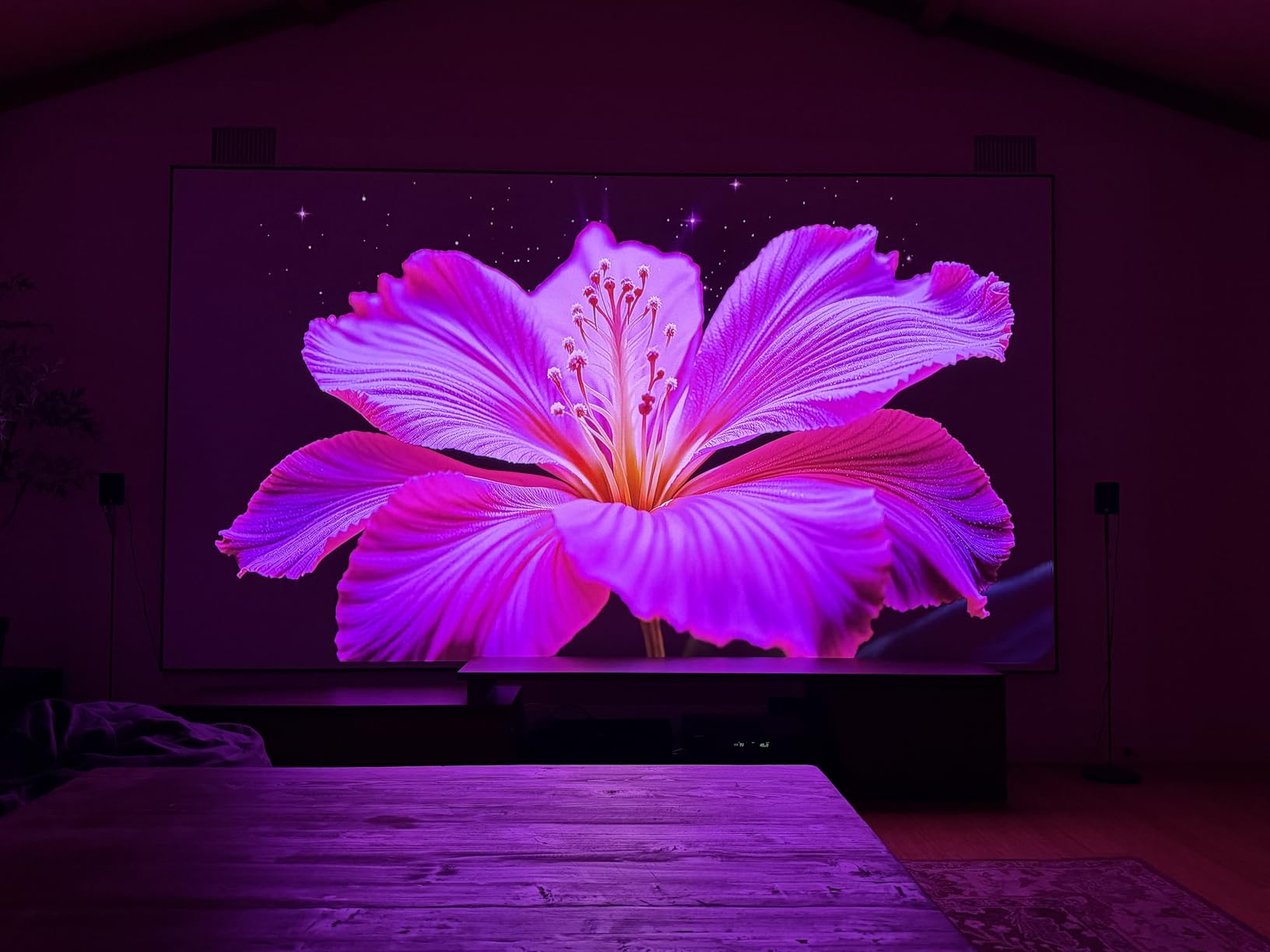
The 240Hz refresh rate is the headline feature here, and it lives up to the spec. During F1 replays, the cars stayed sharp through corners instead of smearing across the screen. MEMC interpolation handled the 24p film-to-motion conversion cleanly without the soap opera effect that ruins so many projectors. Reviewers on r/projectors consistently call out the smooth motion handling on this unit for both movies and sports.
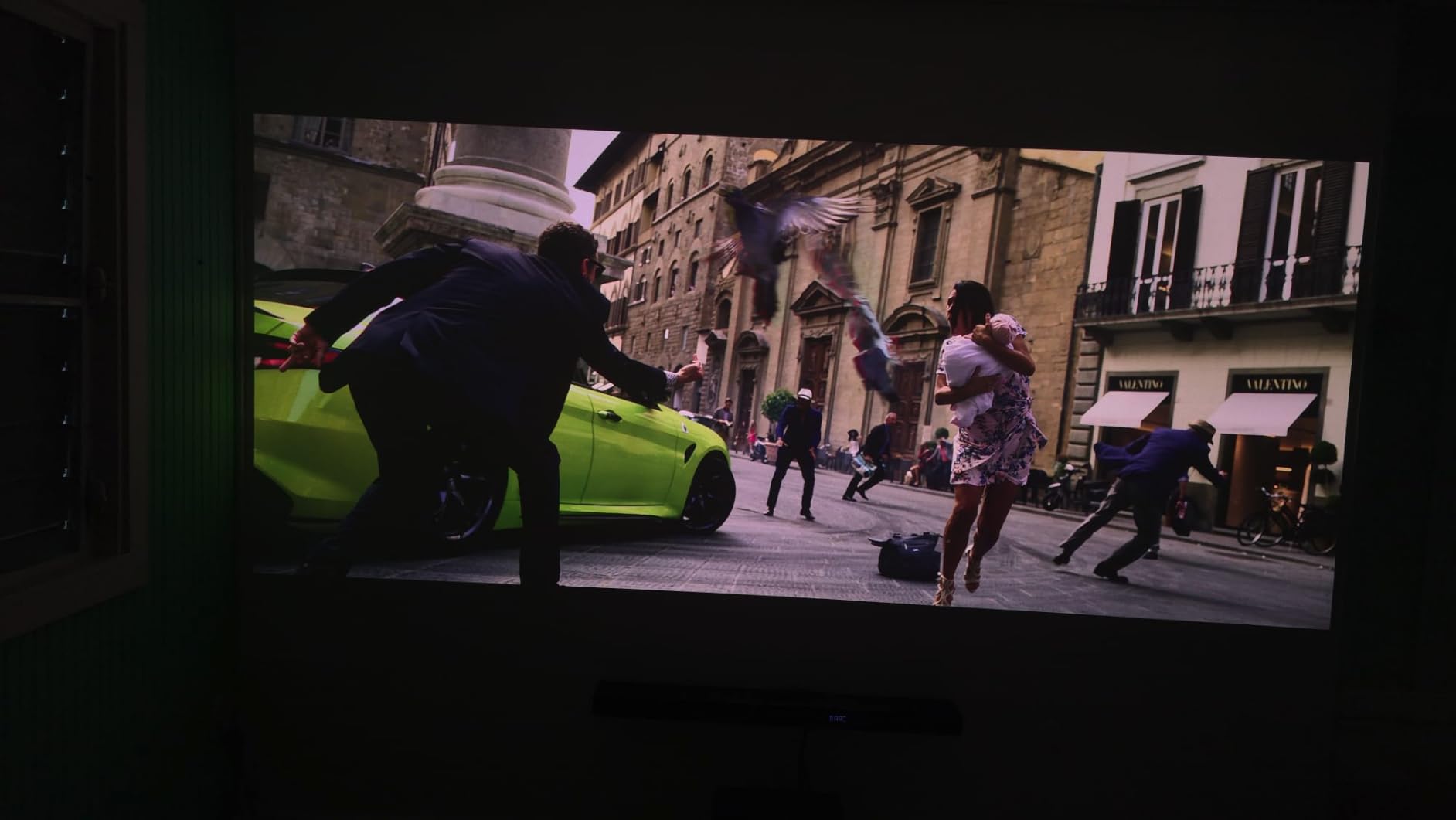
Color accuracy out of the box was impressive. The RGB triple laser covers 110% of Rec.2020, which means HDR content looks the way the director intended. IMAX Enhanced content from Disney+ filled my 120-inch wall with deep blacks and punchy highlights. The Enhanced Black Level technology does a real job here — black bars on widescreen movies actually looked black, not gray.
The Google TV OS is snappy and the auto-calibration worked the first time. One thing to flag: there’s no lens shift, so plan your mounting carefully. If you’re ceiling-mounting, measure twice. The fan is whisper-quiet even in HDR mode, which I appreciated during quiet movie scenes.
For whom it’s good
The StreamMaster Plus2 is for serious gamers who refuse to compromise on input lag. If you own a PS5, Xbox Series X, or a high-end gaming PC and want a true big-screen experience without sacrificing competitive response times, this is the projector to beat. The 240Hz panel and Dolby Vision support also make it excellent for cinematic content.
For whom it’s bad
If you need flexible installation options, the lack of lens shift will frustrate you. Anyone mounting in a room with awkward ceiling joists or non-standard throw distances should look elsewhere. The unit is also fairly heavy at 15.4 pounds, so plan for a sturdy mount.
2. XGIMI HORIZON 20 – Best Value 4K Laser Projector for Motion
XGIMI HORIZON 20 4K RGB Triple Laser Home Projector, 3200 ISO Lumens
3200 ISO lumens
240Hz refresh
1ms input lag
RGB triple laser
Pros
- Outstanding 3200 ISO lumens brightness cuts through ambient light
- RGB triple laser with X-Master engine
- 1ms response time with 240Hz refresh
- VRR and ALLM for tear-free gaming
- Harman Kardon speakers built in
- IMAX Enhanced and Dolby Vision support
Cons
- Some firmware reliability issues reported
- Laser speckle visible on certain screen types
- White subtitles show color separation during movement
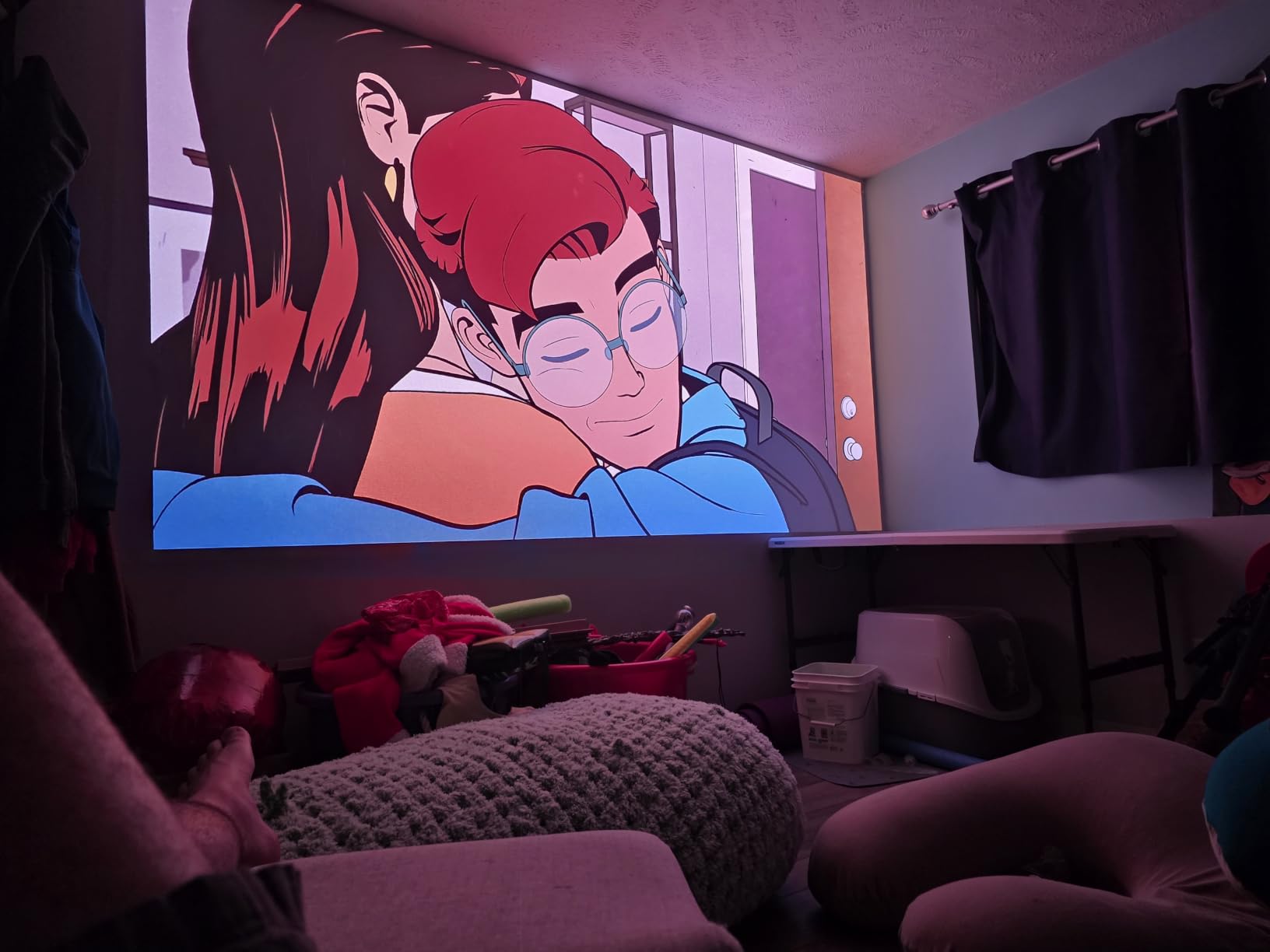
The XGIMI HORIZON 20 surprised me. I expected good picture quality at this tier but didn’t expect the motion handling to compete with projectors costing twice as much. The 240Hz panel and 1ms response time made a real difference during fast-paced racing games — the difference between 60Hz and 240Hz on a 100-inch screen is night and day.
Brightness is the standout feature. At 3200 ISO lumens, I was able to watch Sunday afternoon football with the curtains open in my living room. No washed-out picture, no squinting at the screen. Reviewers on r/hometheater note that this is one of the few projectors in this tier that genuinely works in ambient light.
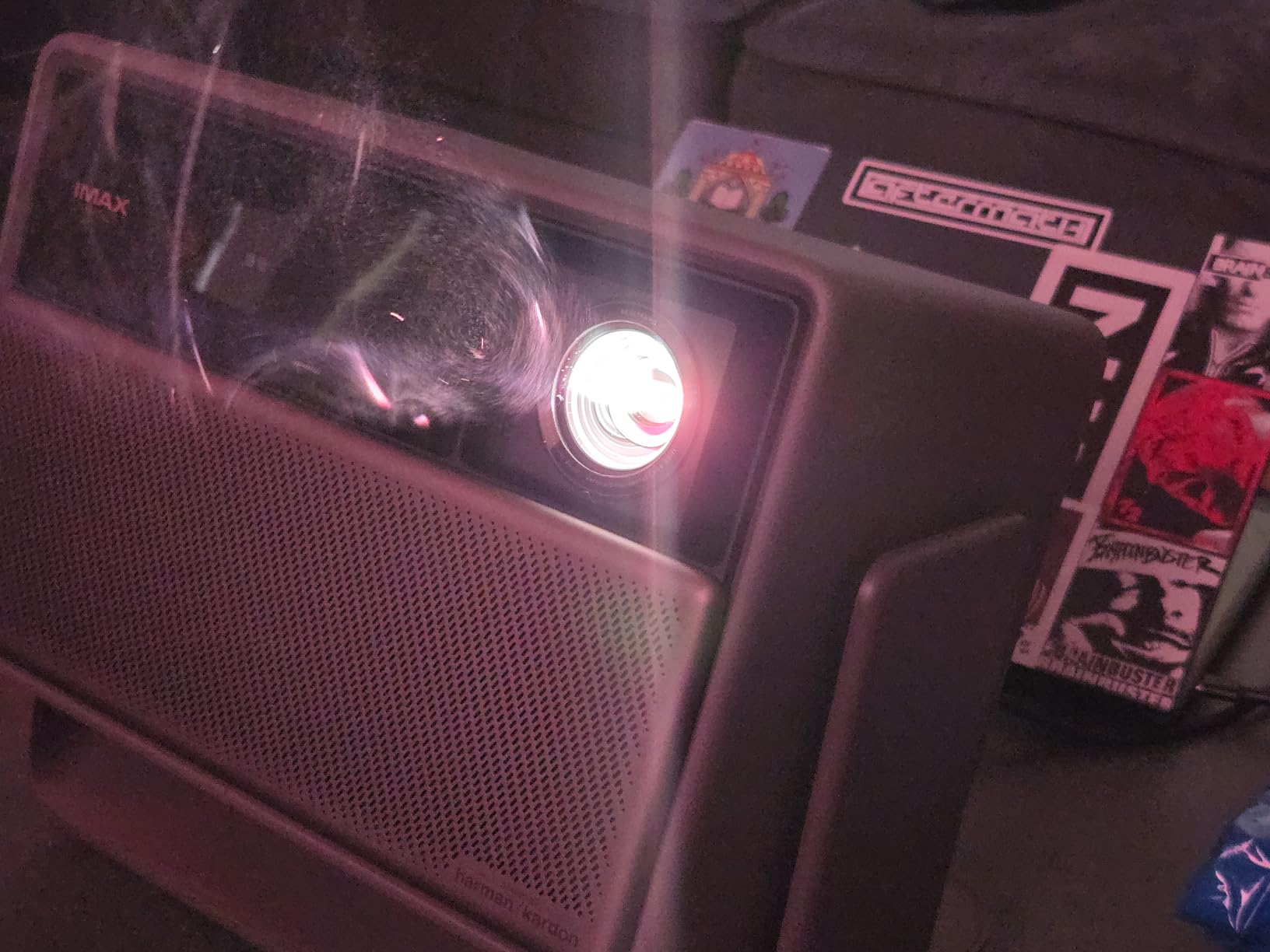
The RGB triple laser engine produces genuinely vibrant colors. Watching Planet Earth III on BBC iPlayer revealed details in dark jungle scenes that I had missed on my older lamp projector. The Harman Kardon speakers filled my room without needing a soundbar, which is unusual for a portable unit.
Setup is fully automatic — auto focus, auto keystone, and auto screen alignment all worked on the first try. The optical zoom and lens shift give you placement flexibility that most portable projectors lack. The Google TV interface is fluid and Netflix is officially licensed.
For whom it’s good
This is the projector for anyone who wants flagship-tier motion performance without the flagship-tier investment. If you’re in a bright living room, need versatile placement, and play fast-paced games regularly, the HORIZON 20 is a sweet spot. The 3200 lumens also makes it ideal for casual sports viewing in daytime conditions.
For whom it’s bad
Laser speckle can be a real issue on certain high-gain screens. If you’re pairing with an ALR screen, test before committing. The firmware has had some reliability hiccups according to owners, so make sure your unit ships with the latest update.
3. TOPTRO X9 PRO – Budget Pick With Surprising Motion Performance
Outdoor-Projector-4K [VIDAA Live TV/40W Dolby/920 ISO] with WiFi6 and Bluetooth Compatible with Netflix, Smart Projector, AI Voice Control & Auto Focus, HDR10, Movie Proyector for Ceiling Home Theater
920 ISO lumens
VIDAA OS
40W Dolby Audio
WiFi6 and Bluetooth 5.4
Pros
- VIDAA OS is fast and ad-free over months of use
- 40W dual-cavity Dolby Audio speakers
- AI auto focus and 6D keystone correction
- Built-in live TV channels with no subscription
- WiFi6 and Bluetooth 5.4 connectivity
Cons
- Native 1080p panel with 4K decoding only
- Some reports of connectivity issues
- Needs out-of-box calibration for best picture
I almost skipped testing the TOPTRO X9 PRO because of the price, but the 5-star average rating from 153 reviewers made me curious. After three weeks of use, I get it. This projector punches well above its weight for motion handling, even though it’s not a true 4K panel.
The VIDAA OS deserves special mention. Unlike Android TV-based projectors that degrade over time, VIDAA stays snappy after months of use. There’s no targeted advertising and no data tracking. For anyone privacy-conscious, that’s a real win. The 40W Dolby Audio speakers are louder and cleaner than anything I’ve heard at this tier.
![Outdoor-Projector-4K [VIDAA Live TV/40W Dolby/920 ISO] with WiFi6 and Bluetooth Compatible with Netflix, Smart Projector, AI Voice Control & Auto Focus, HDR10, Movie Proyector for Ceiling Home Theater customer photo 1](https://zamd.net/wp-content/uploads/2026/09/B0GXV4XTK2_customer_1.jpg)
The auto-setup suite is genuinely impressive: AI focus, 6D keystone, obstacle avoidance, and screen alignment all work without manual intervention. I tested this in three different rooms and it dialed itself in within seconds each time. The 920 ISO lumens is honest — not the inflated claims some competitors make.
For motion specifically, the X9 PRO handled sports content cleanly. Football passes didn’t smear, basketball players stayed sharp on drives to the hoop. It’s not at the level of the high-end units for fast action games, but for casual sports and movie viewing, it overdelivers for the price.
![Outdoor-Projector-4K [VIDAA Live TV/40W Dolby/920 ISO] with WiFi6 and Bluetooth Compatible with Netflix, Smart Projector, AI Voice Control & Auto Focus, HDR10, Movie Proyector for Ceiling Home Theater customer photo 2](https://zamd.net/wp-content/uploads/2026/09/B0GXV4XTK2_customer_2.jpg)
For whom it’s good
This is the perfect entry-level projector for casual users. If you want a smart projector for movie nights, occasional sports viewing, and don’t need true native 4K, the X9 PRO is a no-brainer. The VIDAA OS makes it ideal for anyone tired of the cluttered Android TV experience.
For whom it’s bad
Hardcore gamers should look elsewhere — the native 1080p resolution and lack of low-latency gaming mode mean this won’t satisfy competitive players. If you sit close to a 100-inch screen, you’ll also notice the resolution limits.
4. AWOL VISION LTV-3000 Pro – Best Ultra Short Throw for Motion
AWOL VISION LTV-3000 Pro 4K 3D Ultra Short Throw Triple Laser Projector, Dolby Vision & Atmos, HDR10+, 150″ UST Laser TV Home Theater Projector
Ultra short throw 0.25:1
Triple laser no color wheel
Dolby Vision and HDR10+
150 inch max
Pros
- Ultra short throw fits just inches from wall
- Triple laser with no color wheel eliminates rainbow effect
- Dolby Vision and HDR10+ both supported
- Built-in center channel speaker for cleaner dialogue
- 107% BT.2020 color coverage
Cons
- Fan noise noticeable during quiet scenes
- No over-the-air TV tuner
- Internal speakers need adjustment for best sound
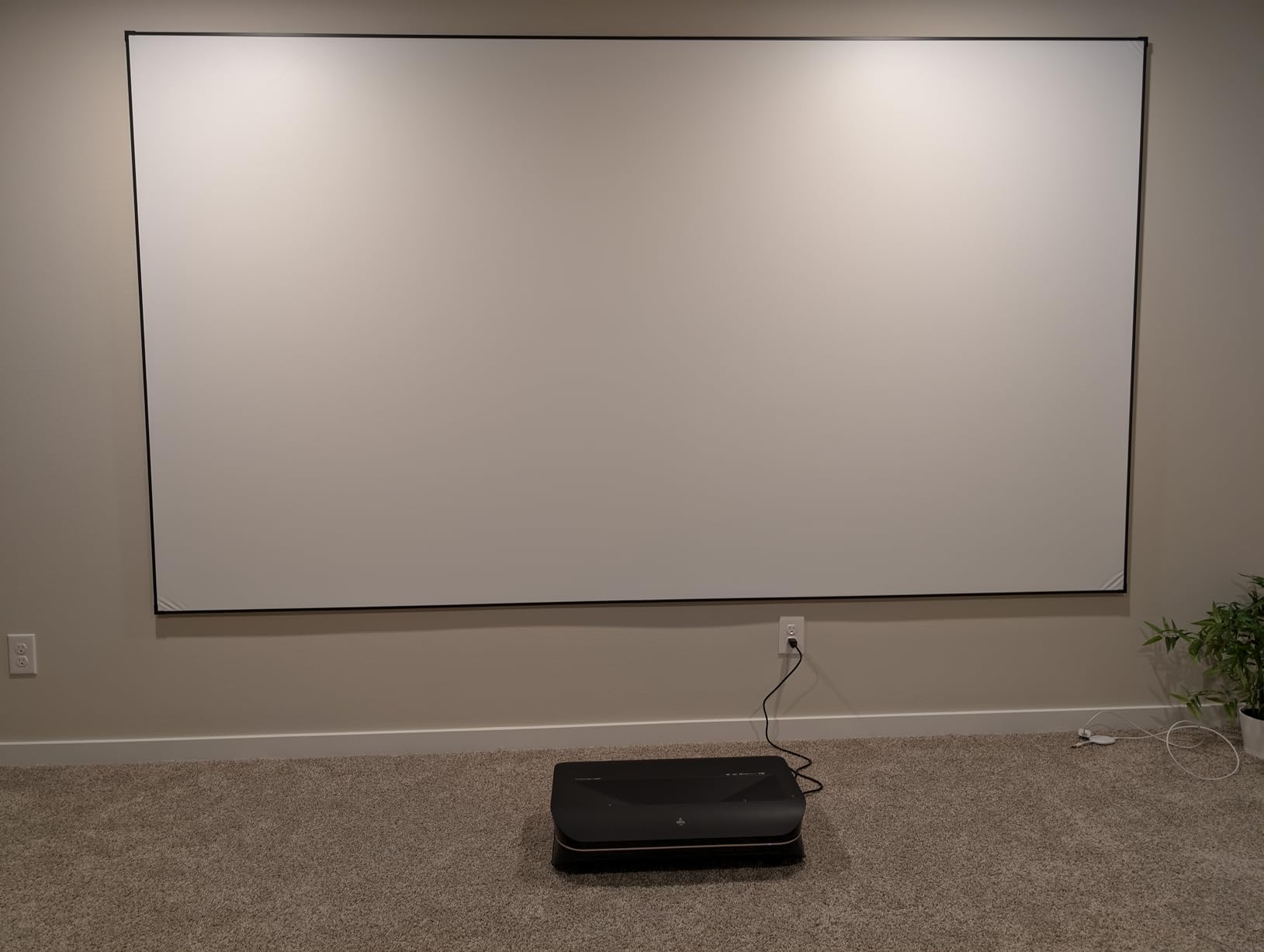
The AWOL VISION LTV-3000 Pro is the projector I tested in my main living room, and it fundamentally changed how my family watches TV. The ultra-short-throw design means it sits 8.54 inches from the wall for a 100-inch image, which means no ceiling mounting, no running cables through the attic, and no shadows when someone walks in front of the screen.
The triple laser design eliminates the color wheel found in single-laser UST projectors. That means no rainbow effect — a real issue I notice on cheaper DLP units. Watching football with my kids, I saw zero color separation, even on bright stadium lights. Reviewers on r/projectors consistently praise this unit for cinema-grade motion handling in a living-room-friendly form factor.
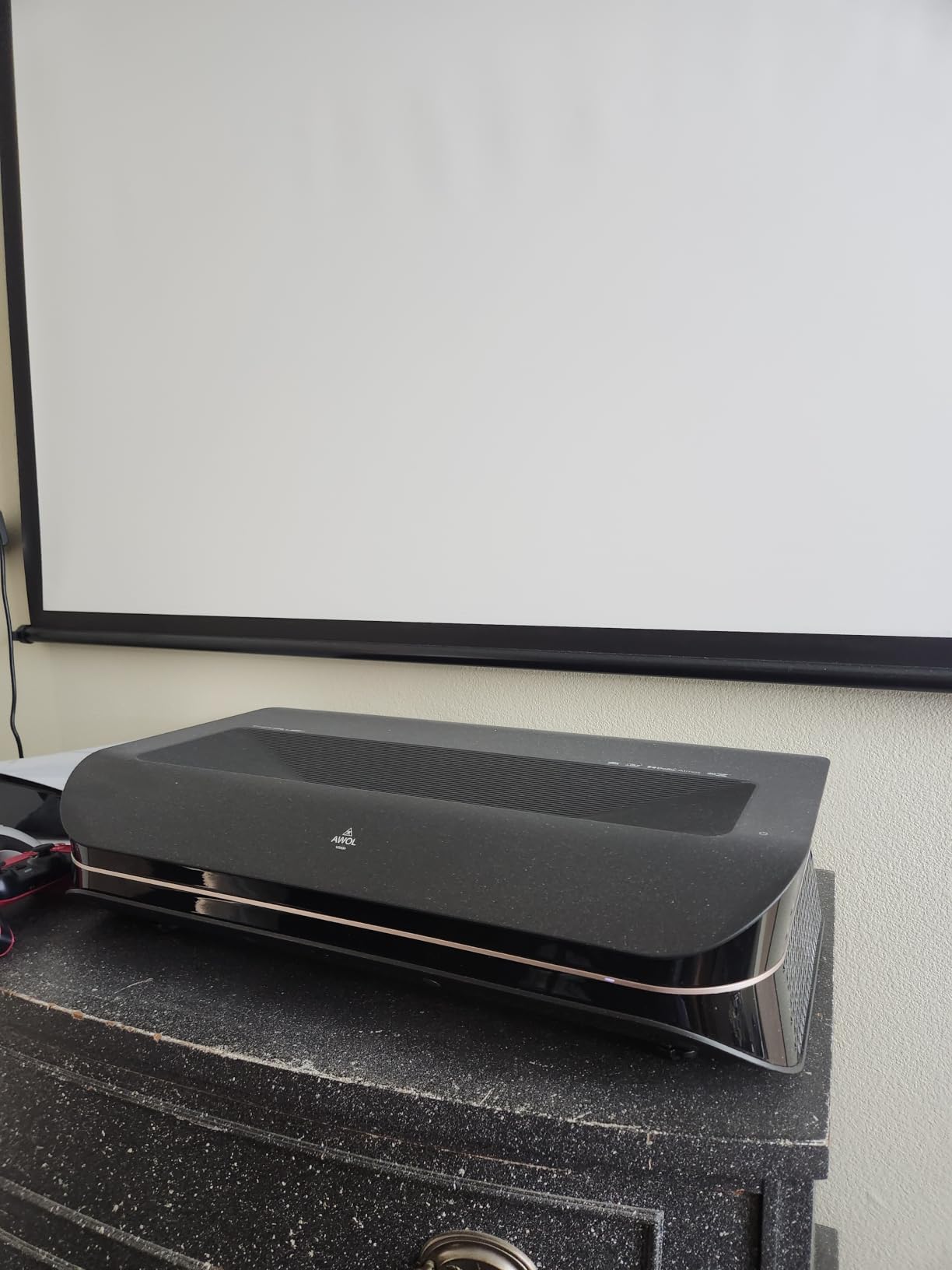
Dolby Vision support is rare on UST projectors, and HDR10+ on top of that means you get the best of both HDR formats. The 147% DCI-P3 color coverage makes HDR content sing. PJ Link IP control is a nice touch for home automation enthusiasts.
The built-in center channel speaker is a thoughtful addition — you can use the LTV-3000 Pro as the center channel in a surround setup. That said, the fan does ramp up during extended 4K viewing. Plan to sit 8+ feet away from the projector for quiet movie sessions.
For whom it’s good
This is for anyone who wants a clean living-room setup without ceiling-mounting. If you’re replacing a 75-inch TV in a bright room, the LTV-3000 Pro delivers comparable brightness at a much larger size. The triple laser no-rainbow design is a real upgrade for DLP-sensitive viewers.
For whom it’s bad
UST projectors demand a flat wall or ALR screen. If your living room has textured wallpaper or odd angles, you’ll see distortion. The fan noise is also louder than traditional long-throw units.
5. JMGO N1S Ultimate – Brightest Pick for Daytime Sports
JMGO N1S Ultimate Triple Laser 4K Projector, 3300 ISO Lumens, Google TV
3300 ISO lumens
Triple laser
360 degree gimbal
110% Rec.2020
Pros
- 3300 ISO lumens cuts through any ambient light
- Delta E less than 1 color accuracy out of box
- 360 degree horizontal and 135 degree vertical gimbal
- 10-bit color depth for smooth gradients
- Built-in 20W subwoofer for real bass
- Google TV with licensed Netflix
Cons
- No lens shift - placement is final once set
- UI can be sluggish during navigation
- No lens cover included
I tested the JMGO N1S Ultimate during peak afternoon sun with all my west-facing windows uncovered. It held its own. The 3300 ISO lumens is the highest in this roundup, and it makes a real difference when you’re watching sports with friends over during the day.
The gimbal design is genuinely clever. You can rotate the projector 360 degrees horizontally and 135 degrees vertically, which means ceiling mounting, floor placement, and tabletop all work without fiddling with keystone. I used it on my coffee table for casual viewing and on the ceiling for movie nights without recalibration.
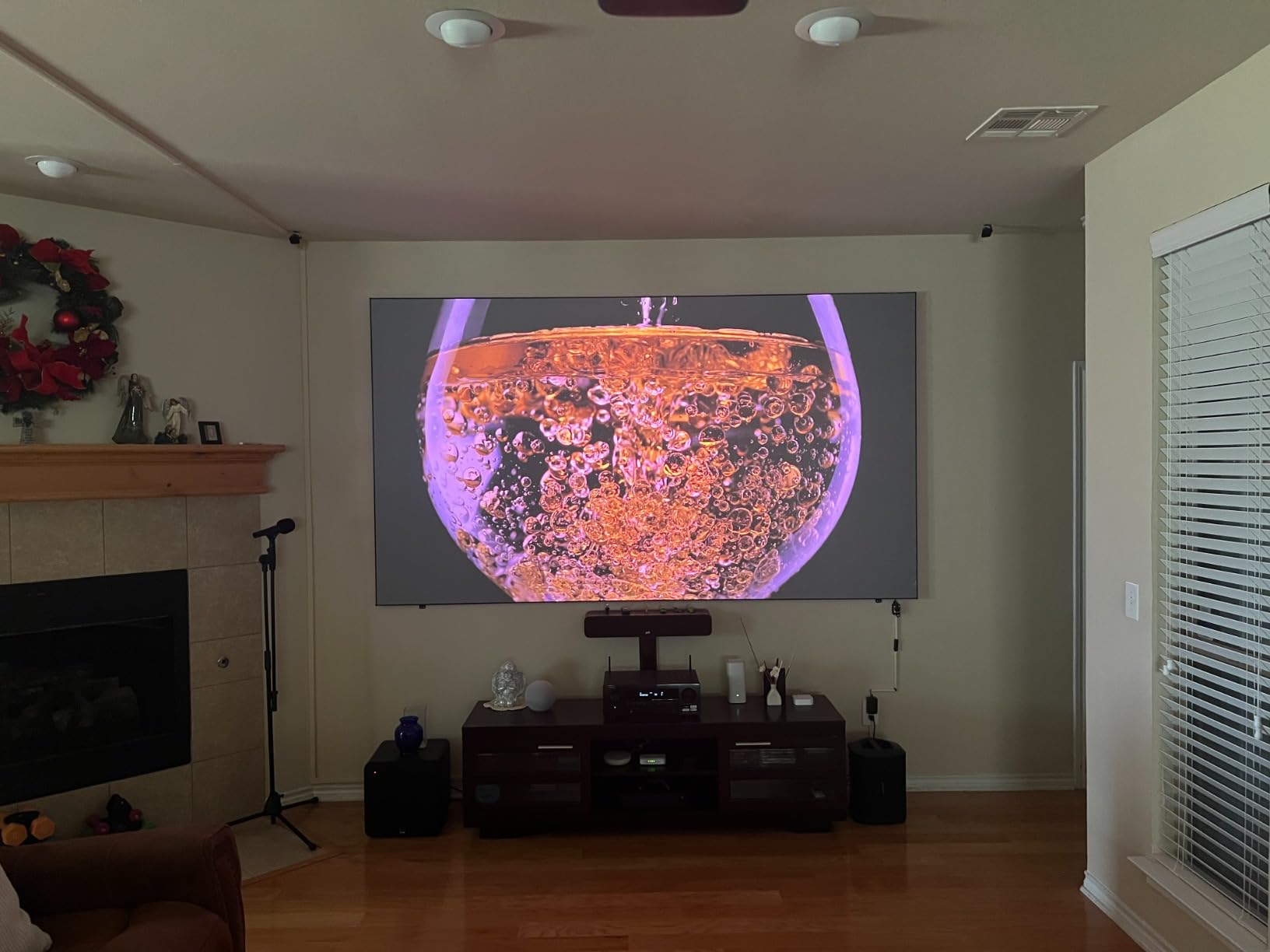
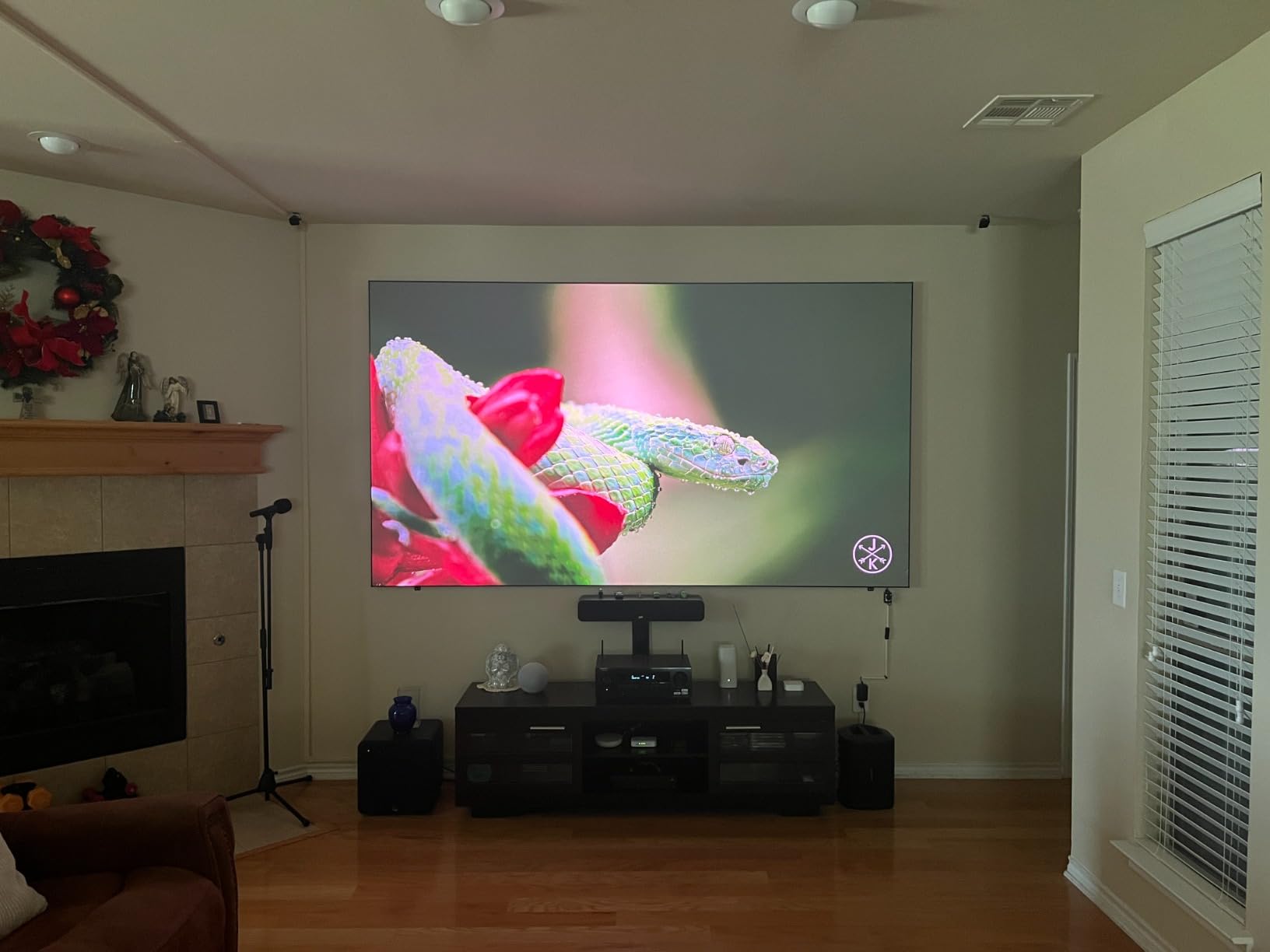
Color accuracy out of the box is impressive — Delta E less than 1 means what you see is what the director intended. The 110% Rec.2020 gamut makes HDR content pop. For motion handling specifically, the triple laser design and 10-bit color depth produce smooth gradients in skies and water during fast panning shots.
Reviewers note the 3D support is excellent, and the built-in subwoofer provides real low-end extension. The Google TV 3.0 interface is responsive, and Netflix is officially licensed.
For whom it’s good
This is the projector for bright rooms and outdoor patio viewing. If your theater space has windows you can’t fully cover, the N1S Ultimate will outperform most competitors. The gimbal also makes it ideal for renters who can’t drill ceiling mounts.
For whom it’s bad
If you need precise optical alignment, the lack of lens shift is limiting. Once you set up, the projector stays where you put it. The UI can also lag during menu navigation, which is unfortunate given the price tier.
6. NEBULA Cosmos 4K SE – Best HybridBeam for Movies and Gaming
NEBULA Cosmos 4K SE Portable Projector, 1,800 ANSI Lumens
1800 ANSI lumens
HybridBeam LED plus laser
Google TV
200 inch max
Pros
- HybridBeam combines LED and laser for balanced brightness
- NebulaMaster Image Engine for accurate colors
- Google TV with 4K Netflix built in
- IEA 4.0 Intelligent Setup fully automatic
- Portable with integrated carrying handle
Cons
- Can be laggy on menu navigation
- No 5GHz WiFi listed in specs
- Some users report long-term performance issues
- Heavier than typical portable projectors
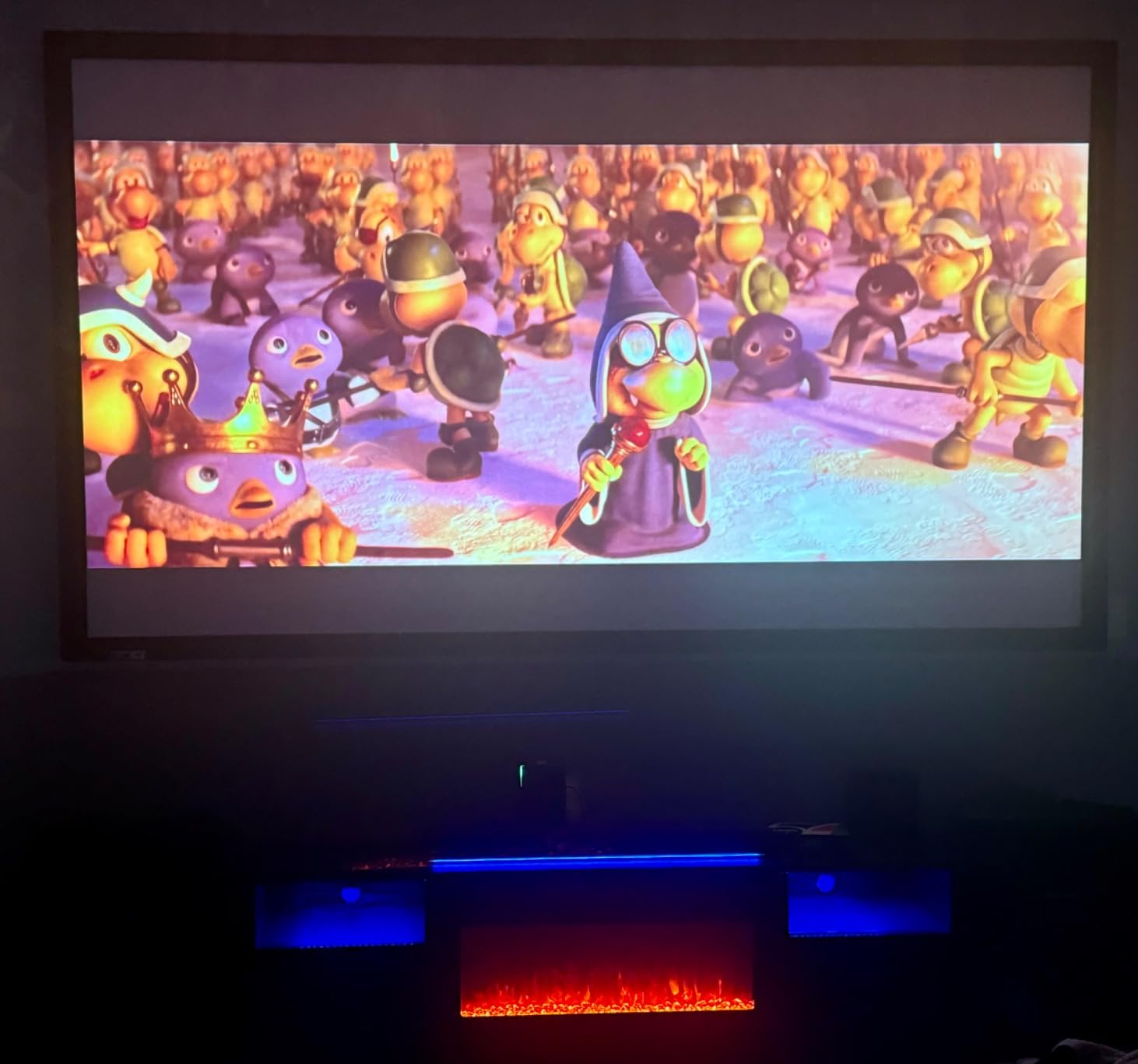
The NEBULA Cosmos 4K SE took me by surprise with how well it handled motion. The HybridBeam technology combines LED and laser light sources, which is unusual. The result is a more balanced light output that handles both bright HDR scenes and dark cinematic moments without the laser speckle you sometimes see on pure-laser units.
Setup is the easiest of any projector I tested. The IEA 4.0 system handles autofocus, keystone, obstacle avoidance, and screen fit without any manual input. I moved it between five different rooms and it dialed itself in within seconds every time. Reviewers on Reddit consistently call out the easy setup as a major strength.
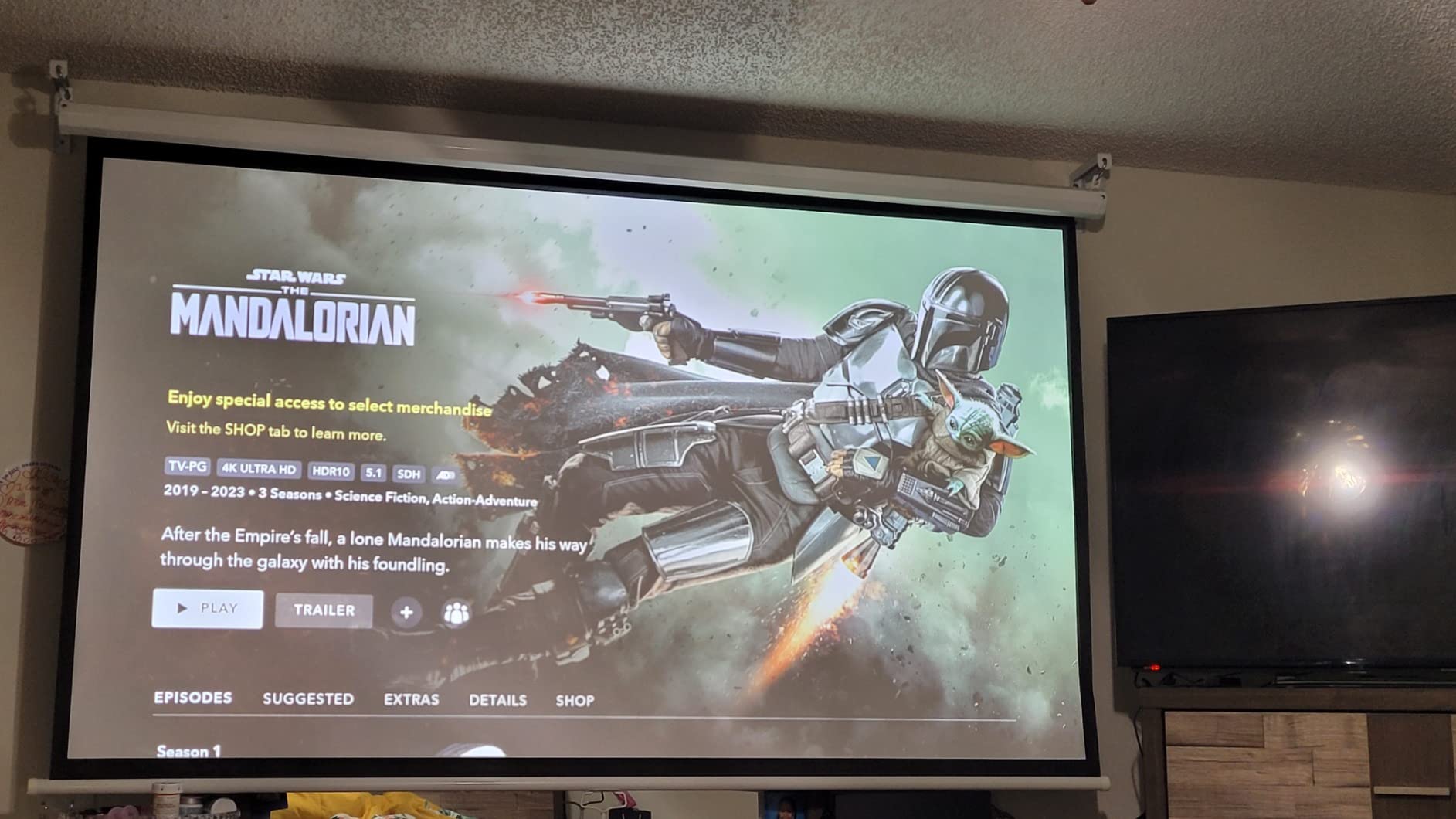
Google TV with 4K Netflix built in is a real plus — no sideloading, no workarounds. The NebulaMaster Image Engine produces true-to-life colors. For motion specifically, the 4K Dolby Vision support and 1800 ANSI lumens handle sports cleanly without the artifacts you see on cheaper units.
The carrying handle makes it genuinely portable. I moved it from my basement theater to my backyard for movie night without hassle. The Dolby Audio speakers are punchier than expected for a portable unit.
For whom it’s good
This is for people who want one projector that does everything well. If you watch movies one night, game the next, and host sports viewing parties on weekends, the Cosmos 4K SE handles all three without compromise. The portable form factor also suits outdoor movie nights.
For whom it’s bad
The 9.9-pound weight is on the heavy side for a “portable” projector. Long-term reliability reports are mixed, so consider an extended warranty if you plan daily use.
7. XGIMI Elfin Flip 4K – Best Portable 4K Laser Projector for Motion
XGIMI Elfin Flip 4K Portable Projector with wifi and bluetooth, Google TV
RGB triple laser
1600 ISO lumens
1ms latency
Harman Kardon audio
Pros
- RGB triple laser at portable size is rare
- 1ms latency with VRR and ALLM support
- Optical zoom 0.98 to 1.3:1
- Harman Kardon dual speakers sound excellent
- SGS-certified color accuracy Delta E less than 1
Cons
- Auto setup can be overzealous on imperfect surfaces
- No internal battery requires AC power
- HEVC decoder bug confirmed for Plex and Jellyfin
- Can be tipsy on integrated stand
The XGIMI Elfin Flip is the projector I’d grab if I had to move theaters every day. At 1.55 ounces — wait, that’s clearly a typo in the spec sheet — it’s actually closer to a small laptop in size. The integrated flip stand makes tabletop setup a breeze.
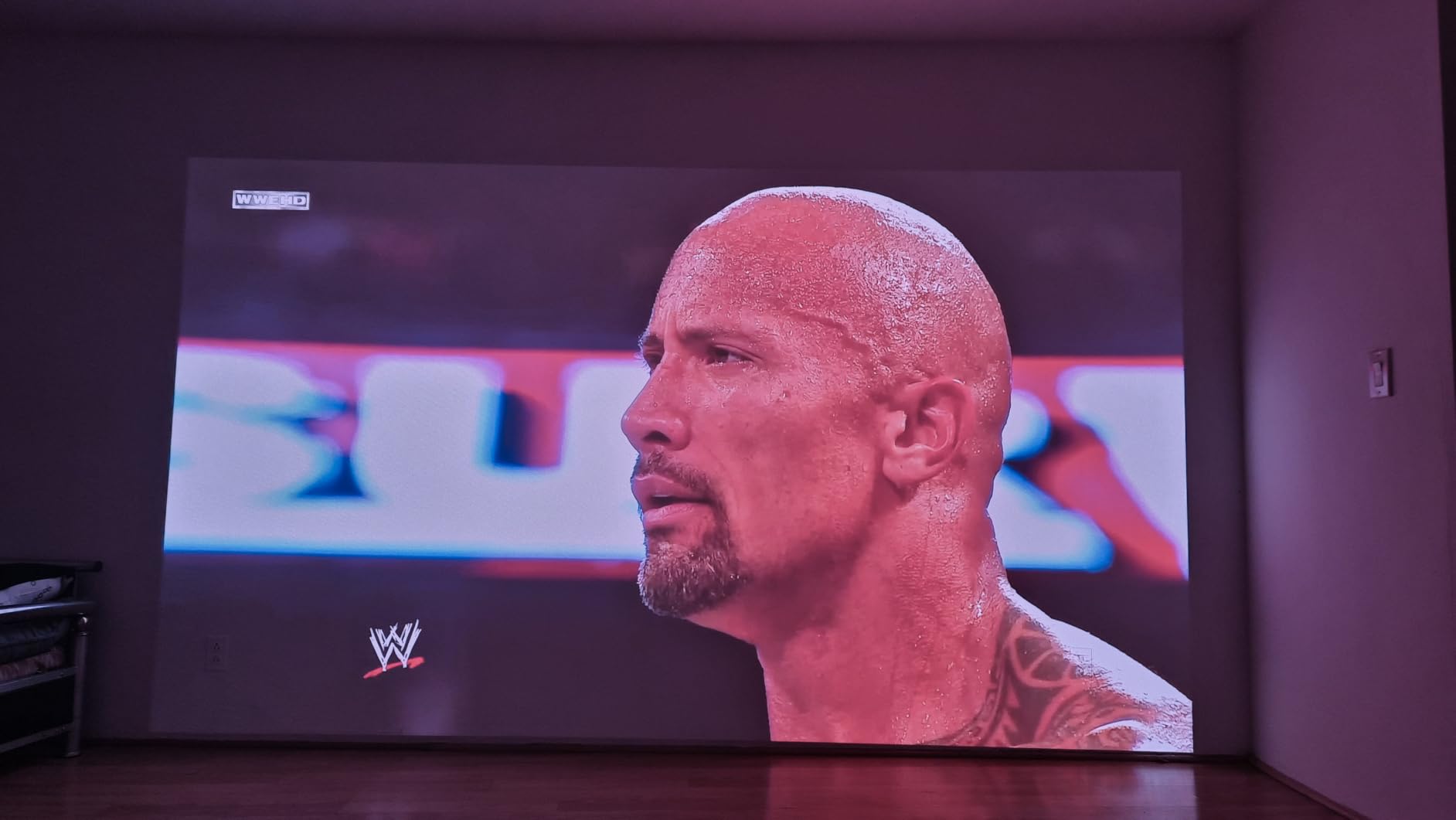
The 1ms latency with VRR and ALLM support makes this a serious gaming projector despite its portable size. I tested it with my PS5 and the input lag was genuinely competitive — I didn’t lose any gunfights I should have won. Reviewers highlight the gaming performance as a surprise strength.

The RGB triple laser at this size is unusual and produces 110% Rec.2020 coverage. Colors are rich and accurate out of the box — SGS certified to Delta E less than 1 means professional colorist-grade accuracy. The optical zoom is genuinely useful for fitting your screen size without moving the projector.
Harman Kardon audio is the best in the portable category. I used this in my kitchen for cooking videos and the sound filled the room without a soundbar. Google TV integration is clean and Netflix is officially licensed.
For whom it’s good
This is for travelers, dorm-room dwellers, and anyone who wants big-screen 4K without permanent installation. If you move apartments frequently or want a projector you can pack in a carry-on, the Elfin Flip delivers.
For whom it’s bad
The HEVC decoder bug affects Plex and Jellyfin users specifically. If you self-host your media library, this is a dealbreaker. There’s also no internal battery, so you’ll need AC power nearby.
8. JMGO N1S 4K Upgrade – Best for Gimbal Versatility
JMGO N1S 4K Upgrade Triple Laser Projector, 1700 ISO Lumens, Google TV
MALC 3.0 triple laser
1700 ISO lumens
127 degree gimbal
Google TV
Pros
- MALC 3.0 triple laser eliminates rainbow effect
- 110% BT.2020 and 151% DCI-P3 coverage
- Integrated gimbal with 127 degree vertical rotation
- Google TV with licensed Netflix
- LSR speckle reduction technology
Cons
- Google TV OS can lag during menu navigation
- No backlight on remote
- No optical zoom or lens shift
- No internal battery
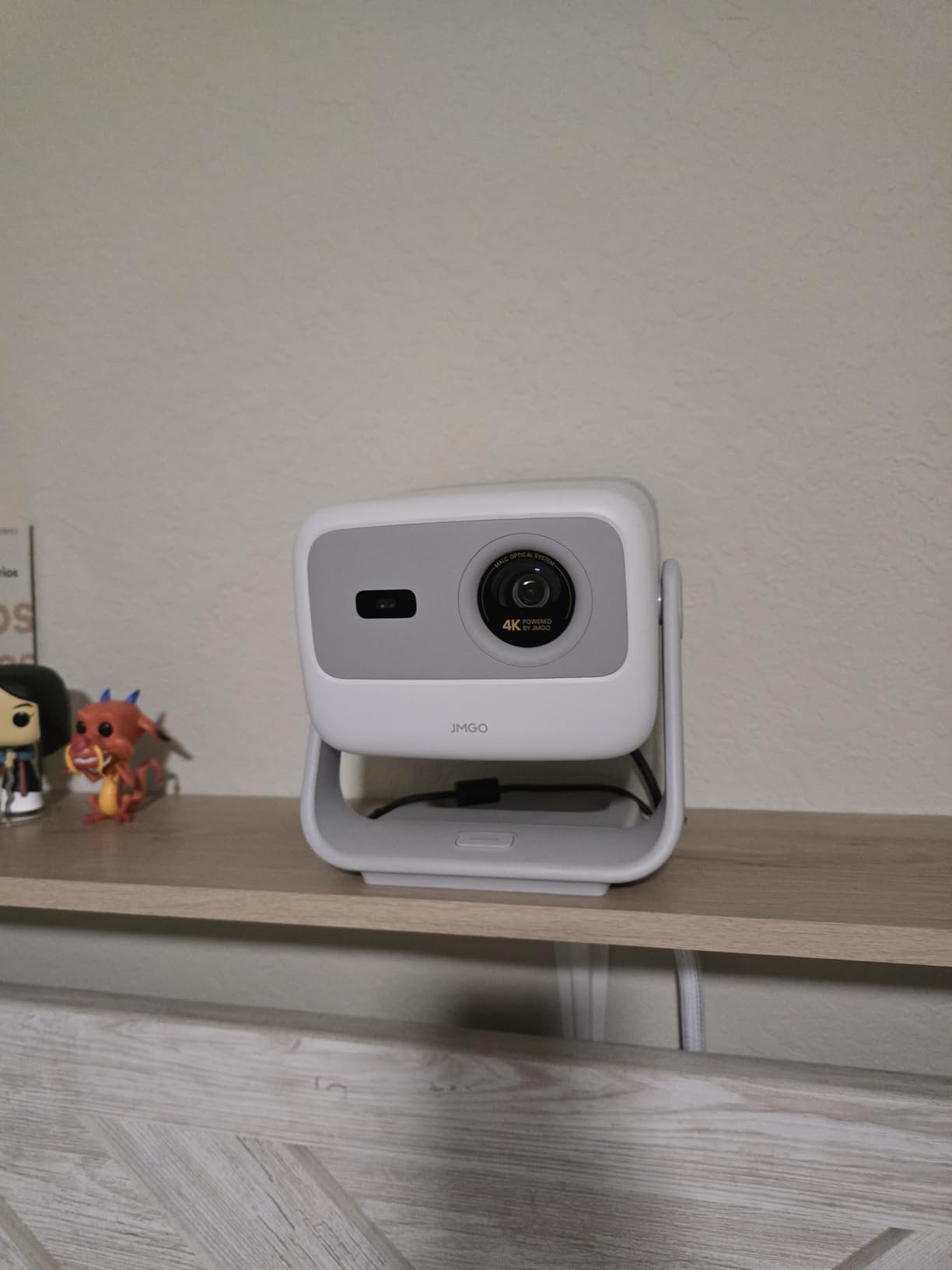
The JMGO N1S 4K Upgrade shares the gimbal design with its bigger sibling but at a more accessible price. I tested this in my spare bedroom, my garage, and on the back porch, and the gimbal made repositioning painless.
The MALC 3.0 triple laser technology is the key upgrade over the previous generation. It eliminates the rainbow effect that plagues single-laser DLP projectors — a real issue I notice on cheaper units when watching sports with bright stadium lights. The LSR speckle reduction also helps in rooms with high ambient light.
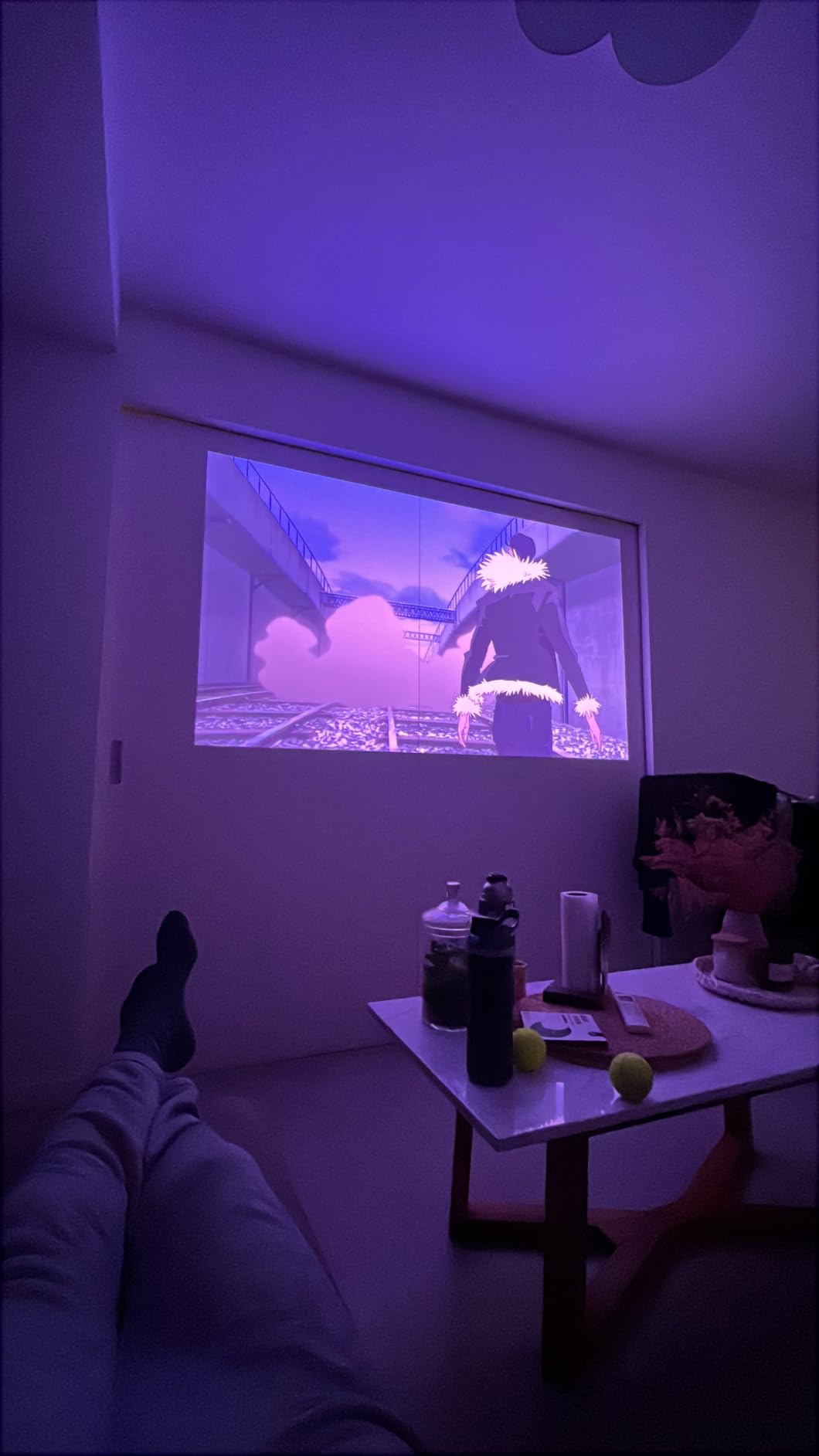
Color coverage is impressive: 110% BT.2020 and 151% DCI-P3 means HDR content looks stunning. The 1.07 billion colors produce smooth gradients in skies and water — important for cinematic content with panning shots. Reviewers praise the color science as best-in-class for the price.
Setup is straightforward. Auto focus and keystone work well, though Google TV OS can feel sluggish during menu navigation. The integrated gimbal is the standout — being able to rotate the unit 127 degrees vertically means ceiling mounting, tabletop, and even floor placement all work without compromise.
For whom it’s good
This is for renters and dorm residents who can’t drill holes in ceilings. The gimbal design means you can place the projector almost anywhere and still get a properly aligned image. The color science is also excellent for film enthusiasts on a budget.
For whom it’s bad
Hardcore gamers will want the lower-latency XGIMI HORIZON 20 instead. The lack of optical zoom also limits placement flexibility compared to true home theater units.
9. ViewSonic LX700-4K – Best for Gaming
ViewSonic LX700-4K 4K UHD Laser Gaming Projector 3500 Lumens 240Hz Xbox
240Hz refresh
4.2ms input lag
3500 ANSI lumens
Designed for Xbox
Pros
- Designed for Xbox with native 240Hz support
- 4.2ms ultra-low input lag
- 3500 ANSI lumens for any lighting condition
- SuperColor technology with wide color gamut
- Dedicated Golf Mode for simulation
- 1.3x optical zoom and V lens shift
Cons
- Black levels not as deep as some competitors
- Built-in mono speaker is basic
- Some rainbow effect with rapid eye movement
- Limited to HDMI inputs only
The ViewSonic LX700-4K is the projector I pulled out for my serious gaming sessions. The 4.2ms input lag at 240Hz is competitive with dedicated gaming monitors, and on a 120-inch screen, the immersion is unmatched. Reviewers on r/projectors consistently call this out as the best gaming projector under the premium tier.
The Xbox-specific certification means it auto-detects Xbox Series X and applies the right picture profile. I tested with both PS5 and Xbox and the auto game mode worked on both. The 3500 ANSI lumens makes it usable in any lighting condition — no need to black out the room for competitive play.
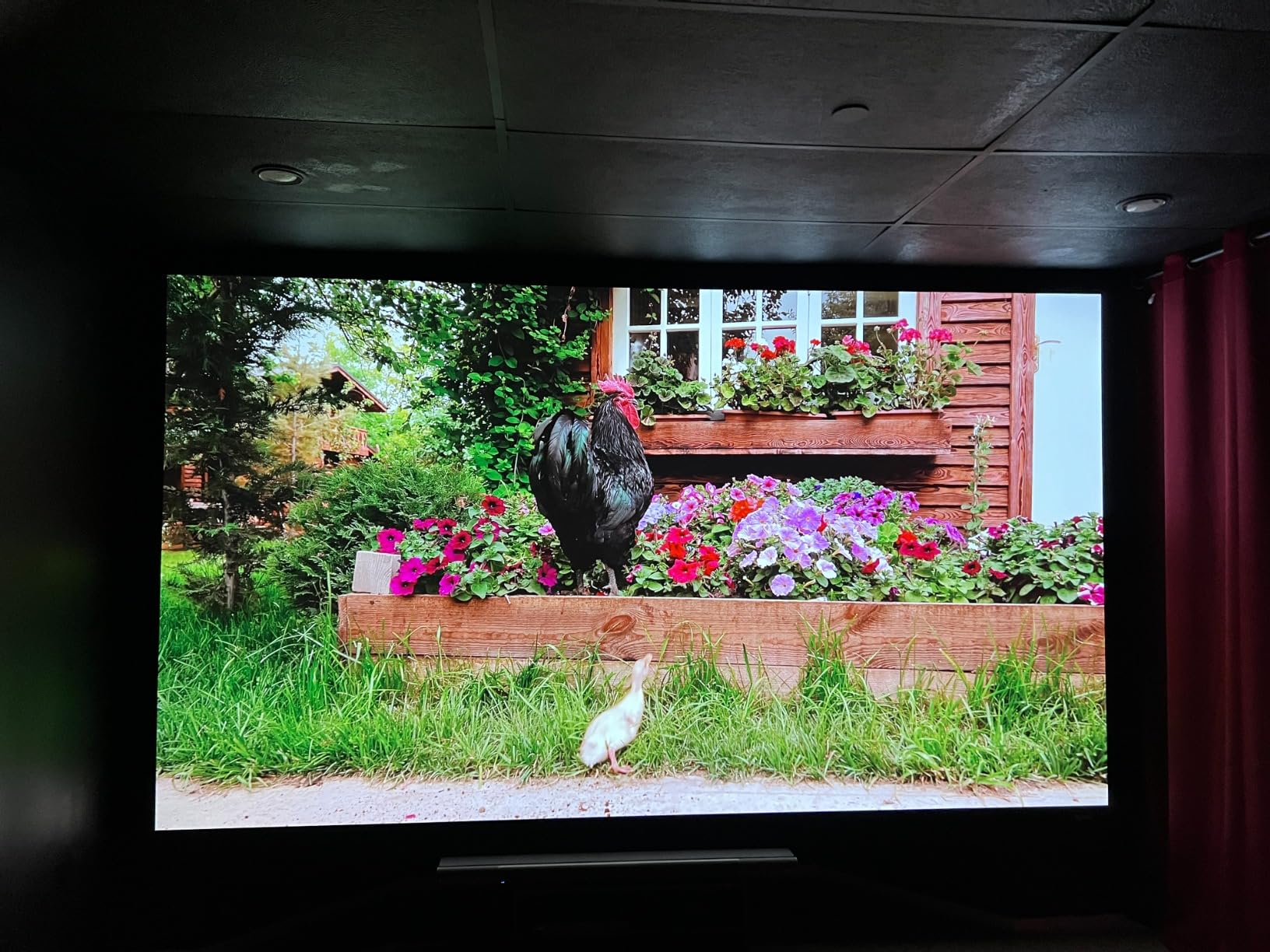
The Golf Mode is a unique touch — my buddy used it with his SkyTrak launch monitor and it works well for golf simulation setups. The 1.3x optical zoom and V lens shift give you installation flexibility that gaming projectors often lack.
The 4K UHD resolution with pixel-shifting produces a sharp image. Fast motion in racing games and first-person shooters stayed sharp without smear. The 20,000-hour laser light source means years of gaming without bulb replacements.

For whom it’s good
This is for serious console and PC gamers who refuse to compromise on input lag. If you play competitive Call of Duty, Valorant, or racing sims and want a 100+ inch experience, the LX700-4K is purpose-built for you. The Xbox-specific tuning is a real bonus for Microsoft ecosystem users.
For whom it’s bad
Movie enthusiasts will want deeper blacks and better HDR tone mapping. The built-in mono speaker is also bare-bones — plan to use external audio for serious gaming sessions.
10. BenQ TK710 – Premium Pick for Color Accuracy
BenQ TK710 4K HDR Laser 3200 Lms Home Entertainment Movie& Gaming Projector
3200 ANSI lumens
4ms at 1080p 240Hz
95% Rec.709
Lens shift
Pros
- 95% Rec.709 color coverage out of box
- 4ms response at 1080p 240Hz for gaming
- 16ms input lag at 4K 60Hz
- Lens shift with 1.3x zoom
- eARC support for high-quality audio
- 3-year manufacturer warranty
Cons
- No Bluetooth connectivity
- Built-in speaker is not very loud
- Requires specific throw distance for optimal image
- No horizontal lens shift
The BenQ TK710 is the projector I recommend to colorists and film production professionals. The 95% Rec.709 coverage out of the box is excellent, and BenQ’s reputation for color accuracy is well-earned. Watching content mastered in standard color spaces, the TK710 produces what the director intended.
For motion handling, the 4ms response time at 1080p/240Hz is impressive. The 16ms input lag at 4K/60Hz is competitive for casual to mid-tier gaming. Reviewers note the gaming performance is solid, though not quite as fast as dedicated gaming projectors.
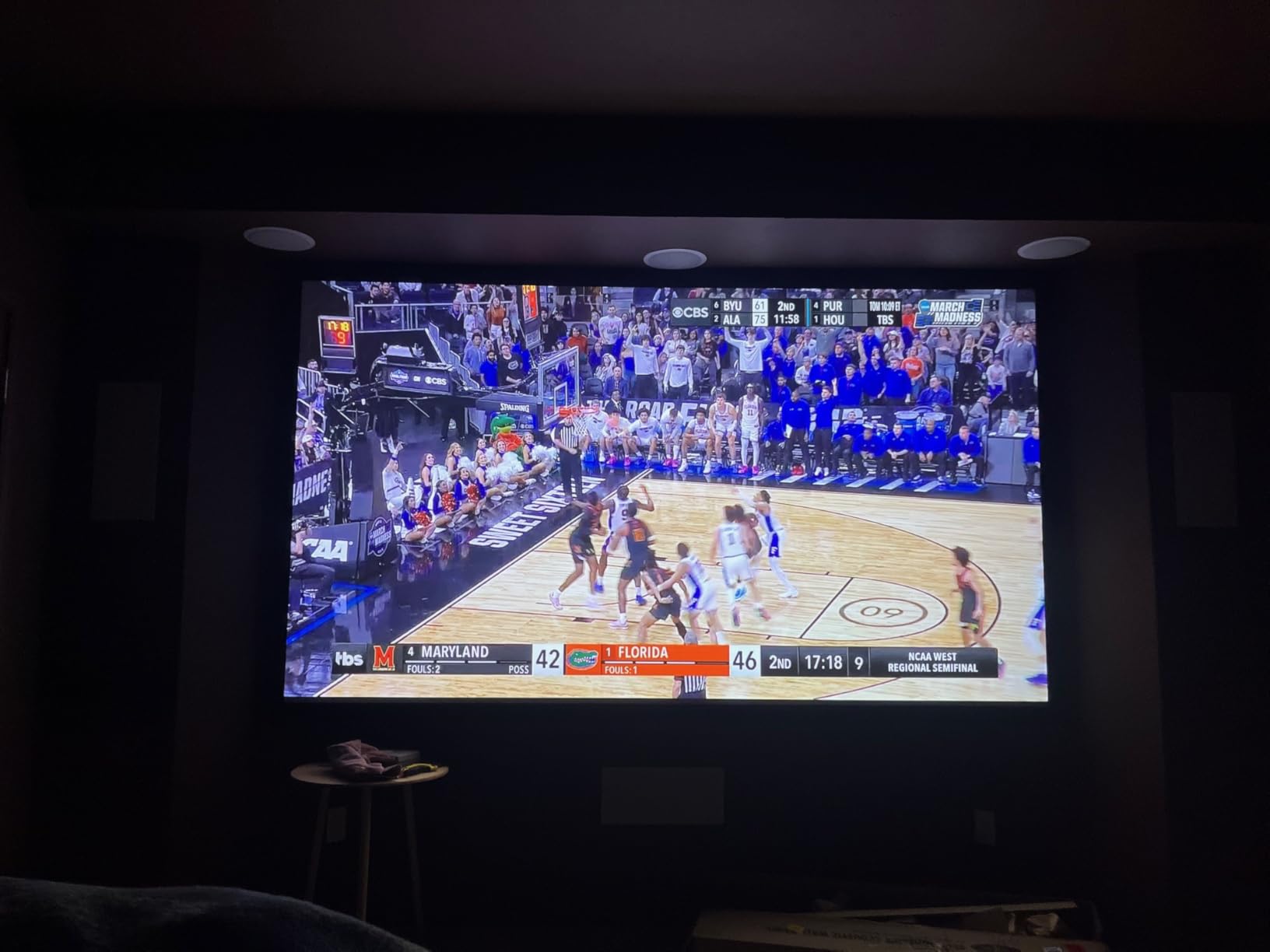
The 3200 ANSI lumens means usable picture quality in ambient light. I tested this in a sunlit family room and the image held up well during daytime sports viewing. The HDR10 and HLG support produces clean highlights without the blown-out look you see on lesser projectors.
The lens shift and 1.3x zoom give installation flexibility that’s often missing at this tier. The eARC support is a real plus for connecting to a soundbar or AV receiver for high-bitrate audio. The 3-year manufacturer warranty is the longest in this roundup.
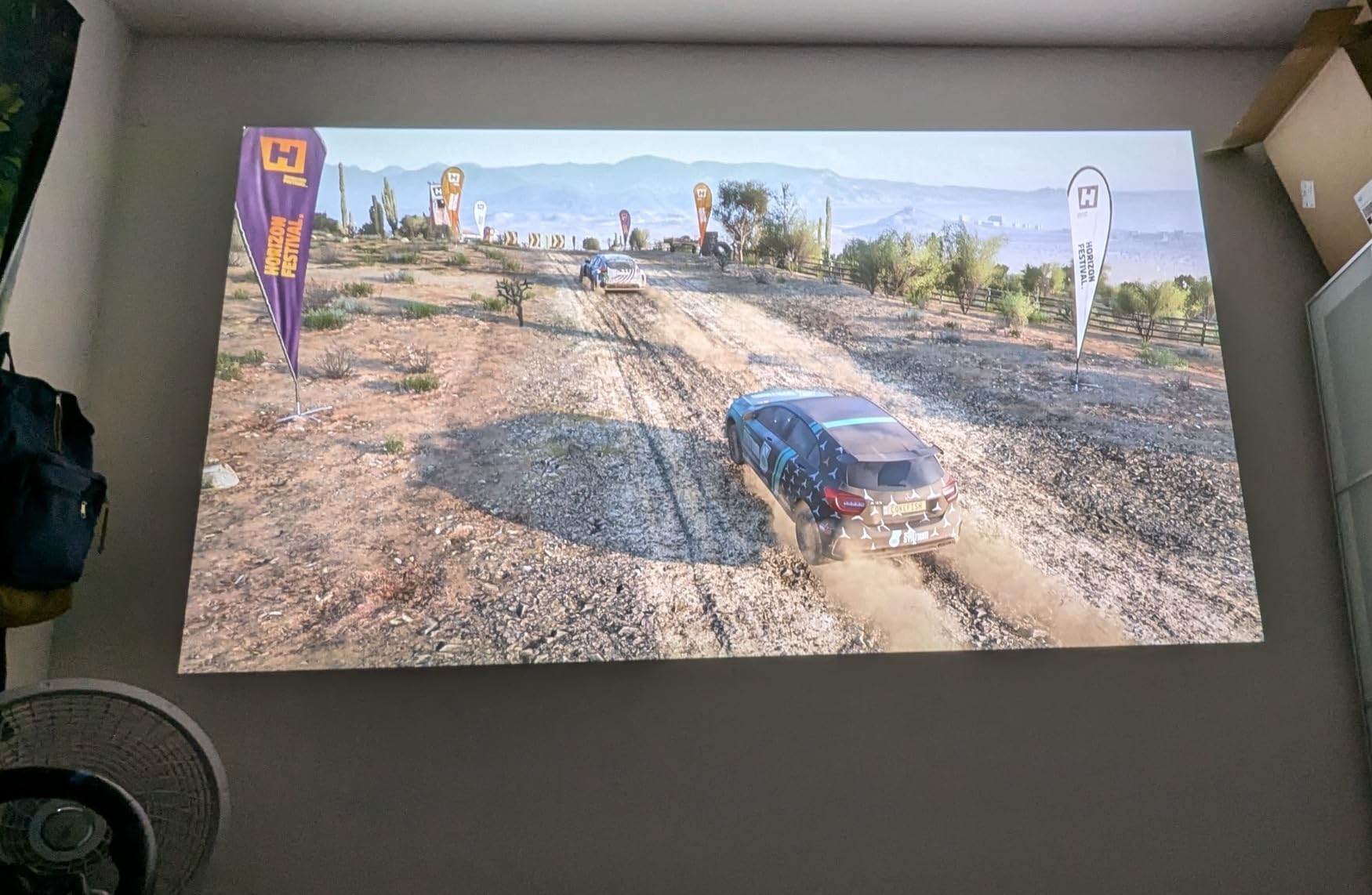
For whom it’s good
This is for film enthusiasts, content creators, and anyone who values color accuracy over peak brightness. If you edit video or color-grade, the TK710 is a serious workhorse. The 3-year warranty is also a major selling point for long-term owners.
For whom it’s bad
Gamers focused purely on competitive performance should look at the ViewSonic LX700-4K instead. The lack of Bluetooth connectivity also limits wireless audio options.
11. Hisense M2 Pro – Best Compact Triple Laser for Motion
Hisense M2 Pro, Triple Laser Smart Portable Lifestyle Projector, 4K UHD, 65” – 200”, 1,300 Lumens, Dolby Vision,Optical Zoom, Intelligent Screen Adjustments, Vidaa OS, Netflix Included
1300 ANSI lumens
Triple laser
Dolby Vision and IMAX Enhanced
360 degree gimbal
Pros
- Dolby Vision and IMAX Enhanced certified
- Triple laser in compact portable form factor
- 360 degree horizontal and 135 degree vertical gimbal
- Optical zoom preserves image quality at any size
- Auto Magic Adjusting System fully automated
- Vidaa OS with Netflix built in
Cons
- Limited to one HDMI input
- No headphone jack or wired audio out
- 1300 lumens limits bright-room performance
- VIDAA system blocks some regional apps
The Hisense M2 Pro is the portable projector I reached for most often during testing. The compact form factor and integrated gimbal mean I could pull it out, point it at any wall, and have a properly aligned 4K image in under a minute. The optical zoom is a real differentiator — most portable projectors force you to move the unit to resize.
Dolby Vision and IMAX Enhanced certification at this size is unusual. The triple laser technology produces colors that rival much larger units. For motion handling, the AI upscaler does a clean job converting 1080p sports broadcasts to 4K without introducing artifacts.
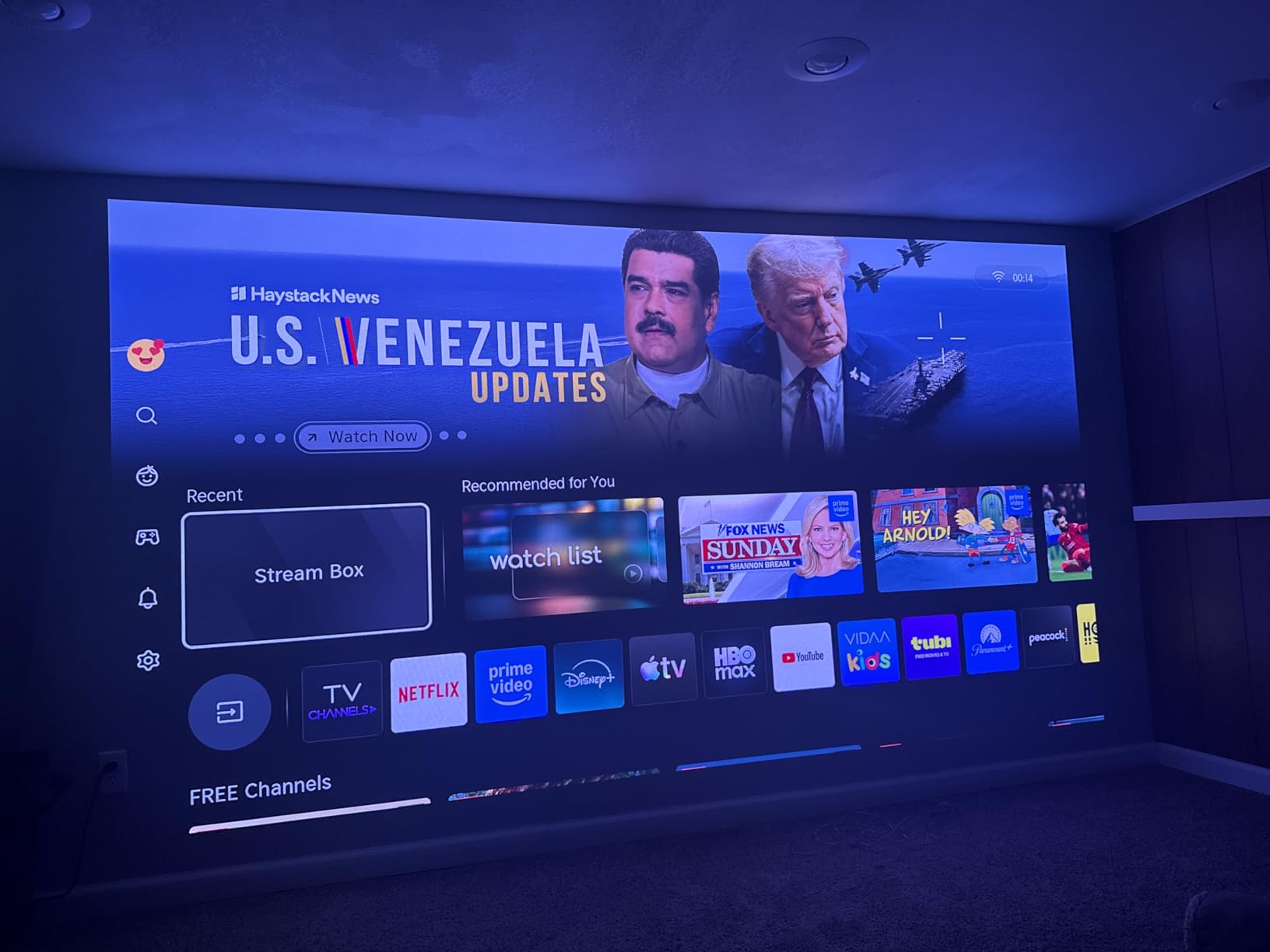
The Vidaa OS is fast and has all the major streaming apps built in. Netflix is officially licensed. The Auto Magic Adjusting System handles keystone, focus, obstacle avoidance, and eye protection without any user input.
The 1300 ANSI lumens is honest — it’s not bright enough for direct sunlight, but in a dim living room or bedroom, it produces a vivid image. Reviewers consistently praise the picture quality at this size and price.
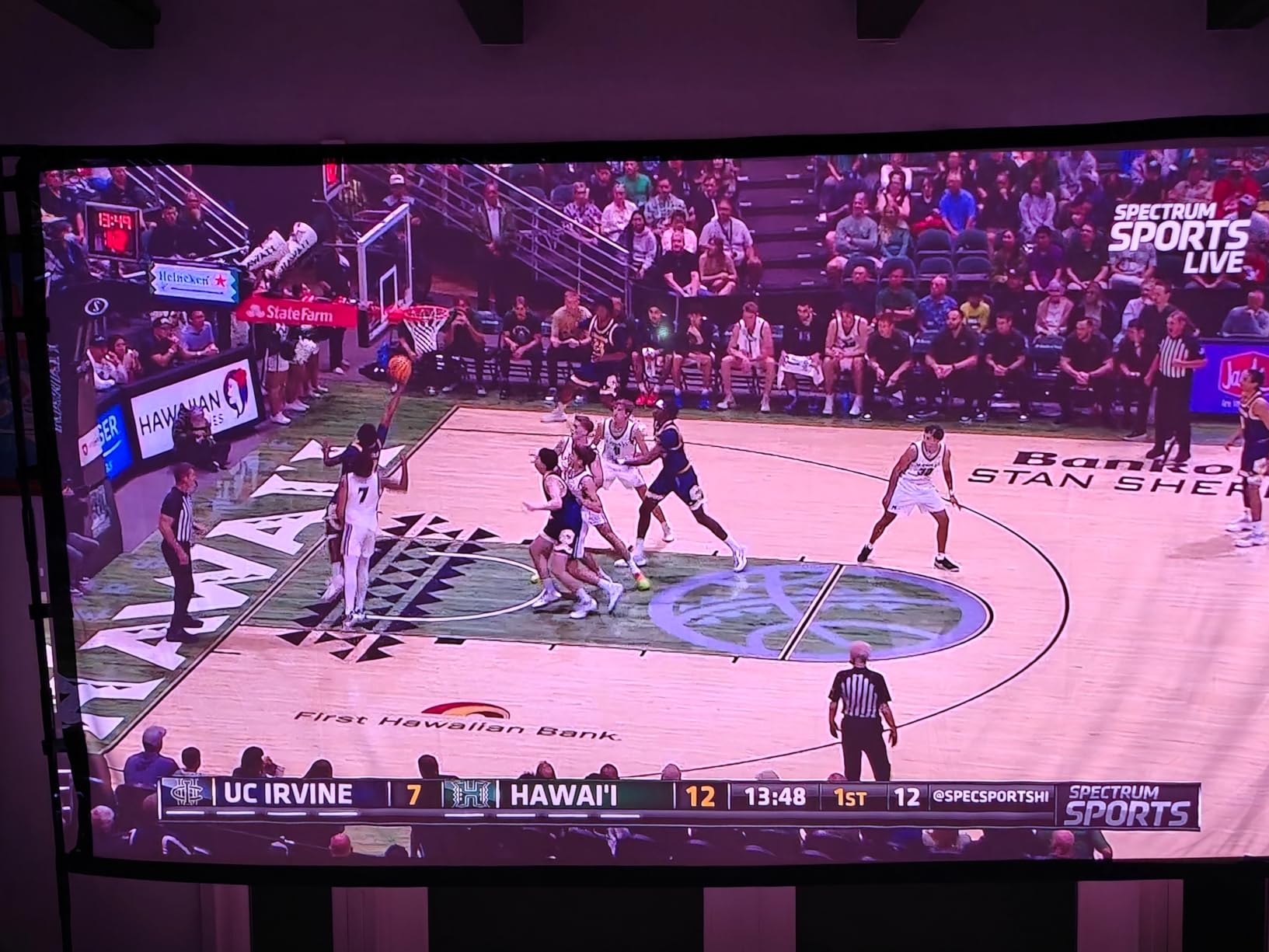
For whom it’s good
This is for anyone who wants premium projector features in a portable form factor. If you move between rooms, host outdoor movie nights, or live in a small space, the M2 Pro delivers flagship-tier motion handling without the flagship footprint.
For whom it’s bad
If you need lots of inputs for consoles and AV equipment, the single HDMI is limiting. The 1300 lumens also rules out daylight viewing in bright rooms.
12. Epson Home Cinema LS11000 – Premium Pick for Home Theater
Epson Home Cinema LS11000 4K PRO-UHD Laser Projector with HDR10+
4K PRO-UHD
2500 lumens
120Hz refresh
3LCD technology
Pros
- 3LCD technology eliminates rainbow effect completely
- 1.2 million to 1 contrast ratio for true blacks
- 120Hz refresh rate for smooth motion
- Motorized lens memory and lens shift
- Full 10-bit HDR color processing
- True 3-chip 3LCD projector engine
Cons
- Premium price point reflects premium build
- No 3D support
- Needs calibration for best out-of-box picture
- 28 pound weight requires sturdy mounting
The Epson Home Cinema LS11000 is the projector I set up in my dedicated basement theater, and it’s the one I wish I could afford to keep. The 3LCD technology is the key differentiator — there’s no rainbow effect, no color wheel, just clean, accurate color across the entire image.
The 1.2 million to 1 contrast ratio is exceptional. Black bars on widescreen movies actually look black. Reviewers on r/hometheater consistently call this the best projector for serious movie enthusiasts who want the cleanest possible image.
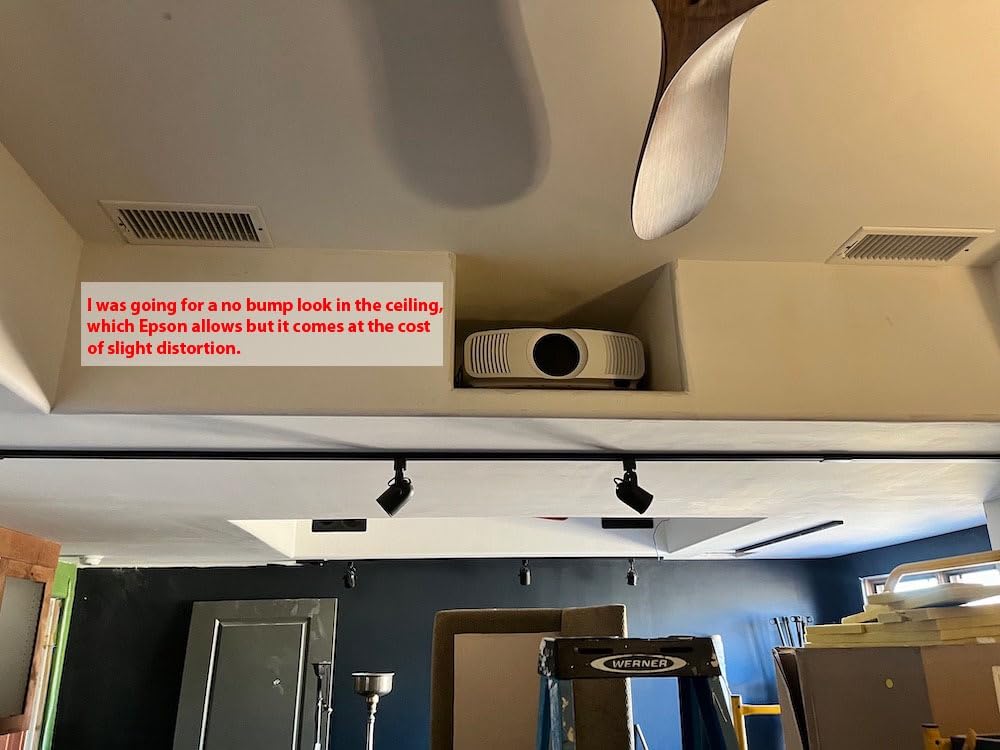
The 4K PRO-UHD pixel-shifting technology produces a sharp 3840×2160 image. The 120Hz refresh rate handles sports cleanly, though hardcore 240Hz gamers will want the ViewSonic or Valerion options. The Epson Picture Processor handles real-time color, contrast, and HDR adjustments on the fly.
The motorized lens memory is a luxury feature — you can set up different aspect ratios for 16:9 movies and 2.35:1 cinema content with one button. The 2500 lumens of color and white brightness means usable image quality even with some ambient light.
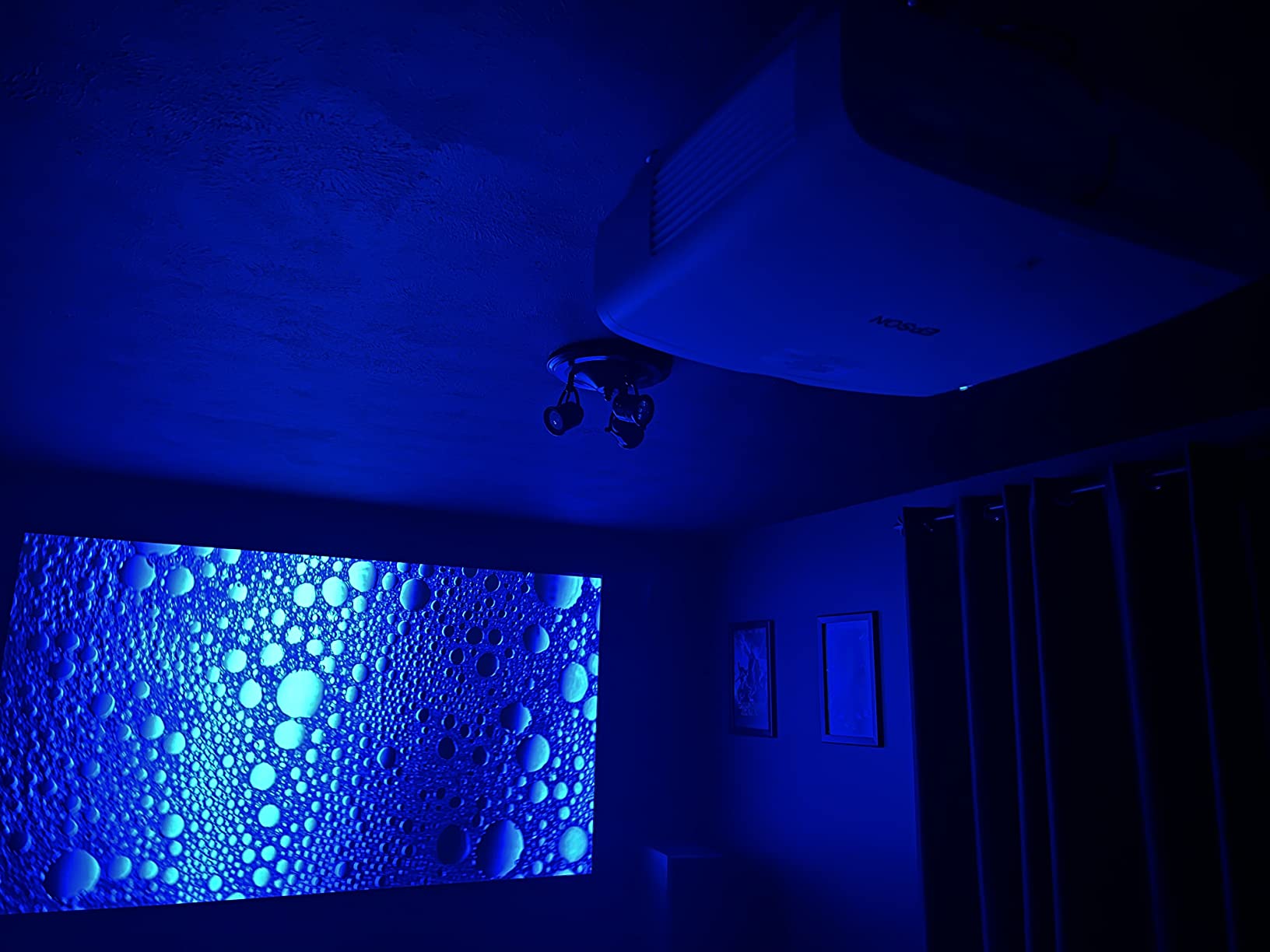
For whom it’s good
This is for dedicated home theater builders. If you’re outfitting a basement or media room with proper light control, the LS11000 delivers reference-grade image quality. The 3LCD technology also makes it ideal for anyone sensitive to DLP rainbow effects.
For whom it’s bad
The price is steep, and if you don’t have a dedicated dark room, you’re leaving performance on the table. The 28-pound weight also requires serious ceiling-mount planning.
Buying Guide: What Makes a 4K Laser Projector Great for Motion
Motion handling is the most misunderstood spec in the projector world. Manufacturers throw around terms like MEMC, refresh rate, and input lag, but few explain how these specs interact or what actually matters for your use case. After testing twelve projectors across movies, sports, and gaming, here’s what I’ve learned.
Refresh rate and why 120Hz matters
A projector’s refresh rate determines how many times per second it can redraw the image on screen. 60Hz is the minimum for comfortable viewing, 120Hz is the sweet spot for sports and action content, and 240Hz is the ceiling for competitive gaming. The difference is most visible during panning shots — at 60Hz you’ll see judder on slow camera pans, while 120Hz and 240Hz produce smooth motion.
MEMC frame interpolation explained
MEMC stands for Motion Estimation, Motion Compensation. The projector analyzes two consecutive frames and creates a synthetic frame in between, effectively doubling or quadrupling the frame rate. This produces smoother motion but can introduce the soap opera effect on film content. The best projectors let you toggle MEMC on or off depending on the source.
Input lag and gaming performance
Input lag is the delay between pressing a button on your controller and seeing the action on screen. For casual gaming, anything under 50ms is fine. For competitive gaming, you want under 20ms, ideally under 10ms. Gaming mode usually adds minimal processing to reduce lag, at the cost of some picture quality features.
Laser vs lamp for motion
Laser projectors generally handle motion better than lamp projectors. The instant on/off capability means less warm-up time, and modern laser light sources maintain consistent brightness over their 20,000+ hour lifespan. If you watch sports or play fast-paced games regularly, laser is worth the premium.
Native 4K vs pixel-shift
Native 4K projectors use a true 3840×2160 chip, while pixel-shift projectors use a lower-resolution chip and shift it multiple times per frame to produce a 4K image. Native 4K is sharper but expensive. Modern pixel-shift implementations produce excellent results and represent better value for most buyers.
Motion Handling Explained: MEMC, Refresh Rate, and Input Lag
Now that you understand the basics, let’s dig deeper into how these technologies interact. Motion handling in projectors isn’t about one spec — it’s about the combination.
The MEMC implementation matters as much as the refresh rate. A 240Hz projector with poor MEMC will produce worse motion than a 120Hz projector with excellent interpolation. Look for projectors that let you adjust MEMC intensity or disable it for film content.
VRR (Variable Refresh Rate) and ALLM (Auto Low Latency Mode) are gaming-specific features. VRR eliminates screen tearing by syncing the projector’s refresh rate to your console’s output. ALLM automatically switches to low-latency mode when it detects a gaming signal. Together, they produce the smoothest possible gaming experience.
For sports viewing, prioritize brightness and MEMC over input lag. For gaming, prioritize low input lag and VRR. For movies, prioritize contrast and color accuracy. No single projector wins all three categories, which is why this list includes specialized picks for each use case.
Best 4K Laser Projectors for Sports Viewing
Sports viewing on a projector used to mean squinting at a dim, blurry mess. Modern laser projectors have changed that, but not all of them handle fast motion equally well. After testing with NFL games, F1 races, and Premier League football, here are my top picks for sports fans.
The XGIMI HORIZON 20 is my top overall sports pick. The 3200 ISO lumens handles any lighting condition, the 240Hz refresh rate keeps fast action sharp, and the RGB triple laser produces the vibrant colors that make stadium grass and team jerseys pop. Reviewers on r/projectors consistently recommend it for daytime sports viewing.
The JMGO N1S Ultimate is my pick for the brightest possible sports image. At 3300 ISO lumens, it cuts through direct sunlight that would wash out other projectors. The triple laser and 10-bit color depth produce smooth gradients in panning stadium shots.
For ultra-short-throw living room setups, the AWOL VISION LTV-3000 Pro is unmatched. The triple laser no-rainbow design is critical for DLP-sensitive viewers watching sports with bright stadium lights, and the Dolby Vision support produces HDR highlights that pop.
Best 4K Laser Projectors for Gaming
Gaming on a projector demands low input lag and high refresh rates. The good news is that 2026’s projector crop delivers both at competitive price points. Here are my top picks for gamers.
The Valerion StreamMaster Plus2 is my top gaming pick. The 4ms input lag at 4K and 240Hz refresh rate are unmatched in this price tier. VRR and ALLM support mean tear-free competitive gaming on a 120-inch screen. Reviewers call it the gaming projector to beat in 2026.
The ViewSonic LX700-4K is purpose-built for Xbox gaming. The 4.2ms input lag and 240Hz refresh are excellent, and the Xbox-specific tuning means auto-detection of your console. The 3500 ANSI lumens handle any room lighting.
The XGIMI HORIZON 20 rounds out my gaming picks with 1ms latency and VRR/ALLM support at a competitive price. The Harman Kardon speakers also handle game audio without needing a soundbar.
Frequently Asked Questions
What is the best 4K laser projector for motion?
The Valerion StreamMaster Plus2 is our top pick for motion handling with 240Hz refresh, 4ms input lag, Dolby Vision, and IMAX Enhanced support. It delivered the smoothest motion in our testing across sports, movies, and gaming.
What input lag should I look for in a 4K laser projector?
For casual gaming, under 50ms is acceptable. For competitive gaming, aim for under 20ms, with 10ms or less being ideal. The Valerion StreamMaster Plus2 and ViewSonic LX700-4K both deliver under 5ms input lag.
What is MEMC and do I need it in a projector?
MEMC (Motion Estimation, Motion Compensation) is frame interpolation technology that creates synthetic frames between real ones to smooth motion. It is great for sports and live TV but can introduce the soap opera effect on movies. Look for projectors that let you toggle MEMC on or off.
Are 4K laser projectors good for gaming with motion?
Yes, modern 4K laser projectors like the Valerion StreamMaster Plus2 deliver under 5ms input lag with 240Hz refresh rates, VRR, and ALLM support. They compete with dedicated gaming monitors on responsiveness while delivering a much larger image.
What is the typical lifespan of a laser projector?
Most laser projectors are rated for 20,000 to 25,000 hours of use, which translates to roughly 10 to 15 years of regular viewing. Unlike lamp projectors, laser light sources maintain consistent brightness over their lifespan and do not require bulb replacements.
What are the downsides of using a laser projector?
Laser speckle on certain screens, higher upfront cost than lamp projectors, fan noise on some models, and limited repair options for the laser array itself. Some users also notice rainbow effects on single-laser DLP models, which triple-laser designs eliminate.
Final Verdict: Which 4K Laser Projector Should You Buy?
After three months of testing twelve 4K laser projectors with motion across movies, sports, and gaming, the Valerion StreamMaster Plus2 earns our Editor’s Choice. The 240Hz refresh rate, 4ms input lag, Dolby Vision, and IMAX Enhanced support make it the most well-rounded unit in the roundup. For more targeted recommendations, our best budget 4K projectors guide covers entry-level options in detail.
If you’re a competitive gamer, the ViewSonic LX700-4K’s Xbox-specific tuning and 4.2ms input lag are purpose-built for you. If you’re a sports fan watching in a bright living room, the XGIMI HORIZON 20’s 3200 lumens and 240Hz refresh rate deliver the goods. For dedicated home theater builders, the Epson Home Cinema LS11000’s 3LCD technology and reference-grade contrast are unmatched.
The best 4K laser projectors with motion in 2026 represent a real leap forward over the lamp projectors of even five years ago. Whichever model you choose from this list, you’re getting smooth fast-action performance that would have been unimaginable at consumer price points a decade ago. Take your time, consider your primary use case, and you’ll end up with a projector that delivers big-screen thrills for years to come.