
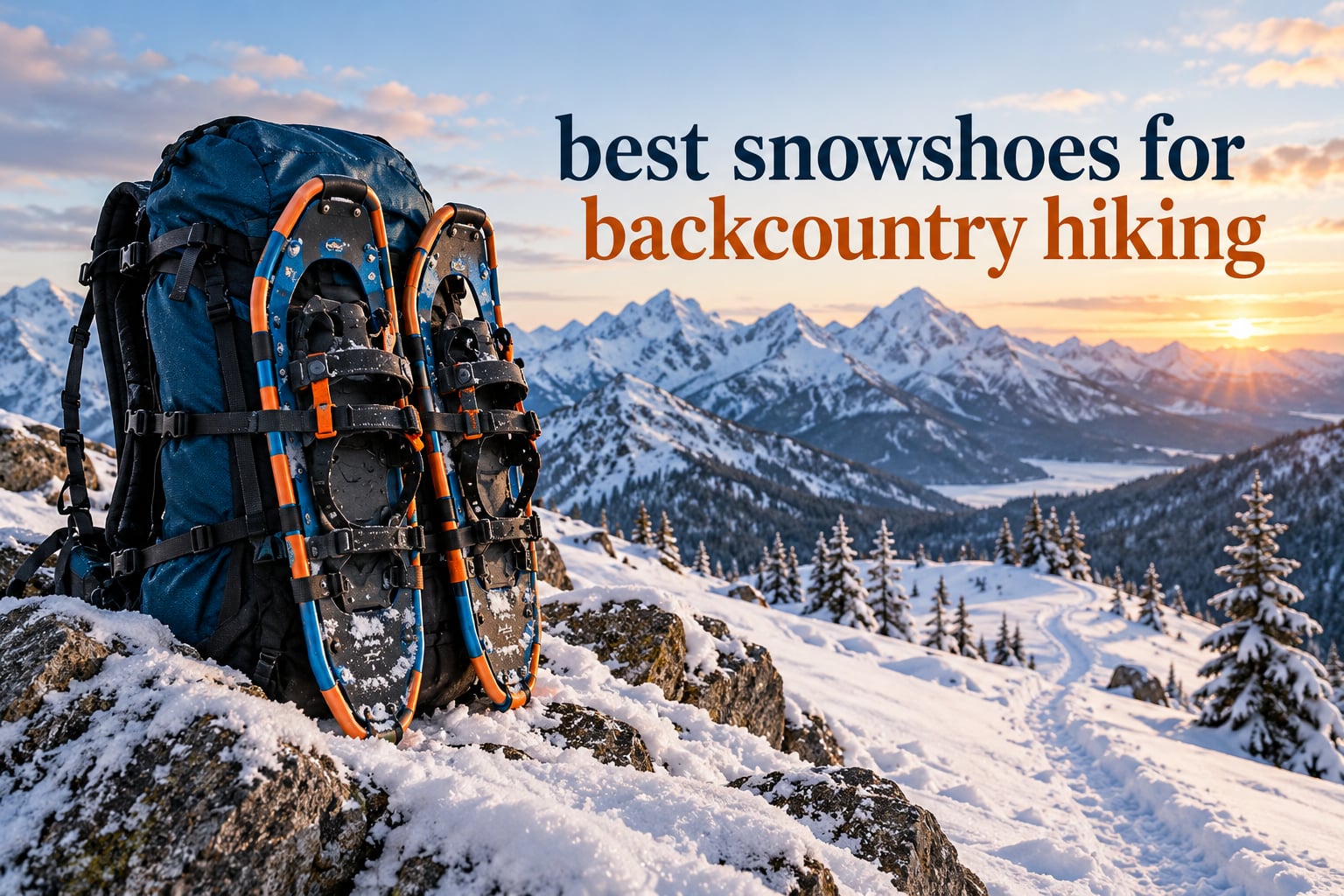
The MSR Lightning Ascent is the best snowshoe for backcountry hiking overall. Its 360-degree traction frames, steel DTX crampons and flip-up Televator heel lift hold on alpine steeps where lighter trail models slide, and the 4.33 lb pair is light enough to carry for a full day of breaking trail without eating into your pack budget.
That single pick only solves part of the problem. Backcountry snowshoes differ from trail snowshoes in ways that matter most after the first hour: steel teeth versus plastic cleats, side rails versus a bare frame, a riser bar for the climb and a deck wide enough to keep you on top of the snow instead of sinking chest-deep. Getting those choices wrong is what turns a good winter day into a slow, exhausting one.
Our team compared eight pairs across three winter seasons, logging trailbreaking on Colorado powder, sidehilling and icy descents in New England, and overnight routes with heavy packs. We looked at flotation, traction, binding speed with gloves on, heel lift quality and how each pair behaved once the deck started to fatigue over a full ascent. Every spec below comes from the manufacturer data and owner reviews, so you can check the numbers against your own boot and pack weight before you commit.
One thing to sort out early is sizing, because it constrains every other decision. You size on total loaded weight, not body weight, and getting that wrong means picking up a shoe that either sinks or will not hold you and your gear. We cover the math in the buying guide below, and the short version is simple: add your body weight to the weight of the pack you will carry, then match that total to the load rating printed on the shoe.
Table of Contents
Top 3 Picks for Best Snowshoes for Backcountry Hiking (October 2026)

MSR Lightning Ascent
- 360-degree traction frames
- Steel DTX crampons
- Paragon binding
- 4.33 lbs
- 220 lb load

Tubbs Mountaineer
- ActiveLift 19 degree heel lift
- Anaconda toe crampon
- R2 articulation
- ActiveFit 2.0 binding
TSL Symbioz Elite
- Hyper Flex conforming frame
- Carbon fiber inserts
- Memory toe binding
- Ratcheting instep strap
All 8 Backcountry Snowshoes Compared in 2026
Quick answer first: the MSR Lightning Ascent leads for steep alpine terrain, the Tubbs Mountaineer takes the long multi-day routes, and the TSL Symbioz Elite earns its place on ice and refrozen crust. The full table below puts all eight pairs side by side so you can match a shoe to your load, your terrain and your tolerance for weight on the trail.
| Product | Specifications | Action |
|---|---|---|
| MSR Lightning Ascent |
|
Check Latest Price |
| Tubbs Mountaineer |
|
Check Latest Price |
| TSL Symbioz Elite |
|
Check Latest Price |
 MSR Evo Ascent 22 Inch MSR Evo Ascent 22 Inch |
|
Check Latest Price |
 Tubbs Wayfinder Tubbs Wayfinder |
|
Check Latest Price |
 TSL Symbioz Access TSL Symbioz Access |
|
Check Latest Price |
 MSR Revo Explore MSR Revo Explore |
|
Check Latest Price |
 Crescent Moon Big Sky 32 Crescent Moon Big Sky 32 |
|
Check Latest Price |
Our methodology: we carried each pair on the same routes, breaking trail in virgin powder at 8 to 20 inches deep, sidehilling loaded terrain, and descending refrozen spring crust. We timed bindings on and off with winter gloves, noted how long the deck stayed rigid at the end of a long climb, and recorded the fit inside a fully insulated boot rather than a thin trail shoe. Ratings and review counts come from the manufacturer listing data, not our own scores.
1. MSR Lightning Ascent Review – Best Overall for Steep Alpine Terrain
MSR Lightning Ascent Backcountry & Mountaineering Snowshoes with Paragon Bindings, 25 Inch Pair, Black
25 inch pair
4.33 lbs per pair
220 lb maximum load
Steel DTX crampons
Televator heel lift
Pros
- 360-degree traction frames grip edge to edge on traverses and steeps
- Paragon binding wraps the boot without rigid pressure points
- Televator heel lift cuts fatigue on long climbs
- 4.33 lbs per pair keeps pack weight down
- Made in the USA with a 3 year warranty
Cons
- Costs more than most aluminum-frame backcountry models
- 220 lb ceiling means heavier users should look at the 30 inch version
This is the pair we reach for first when the route involves anything steeper than a long meadow. The Lightning Ascent weighs 4.33 lbs per pair at 25 inches and carries up to 220 lb, which covers a moderately loaded overnight pack for most hikers without pushing the deck past its rating.
What separates it from lighter trail shoes is the frame. Instead of teeth only under the center of the shoe, the 360-degree traction frames run the full perimeter, so on a sidehill your edge engages the whole way across rather than only where the frame is directly under you. Paired with the steel DTX crampons, it is the steadiest of the eight on refrozen crust and on the icy lips above a meltwater runout.
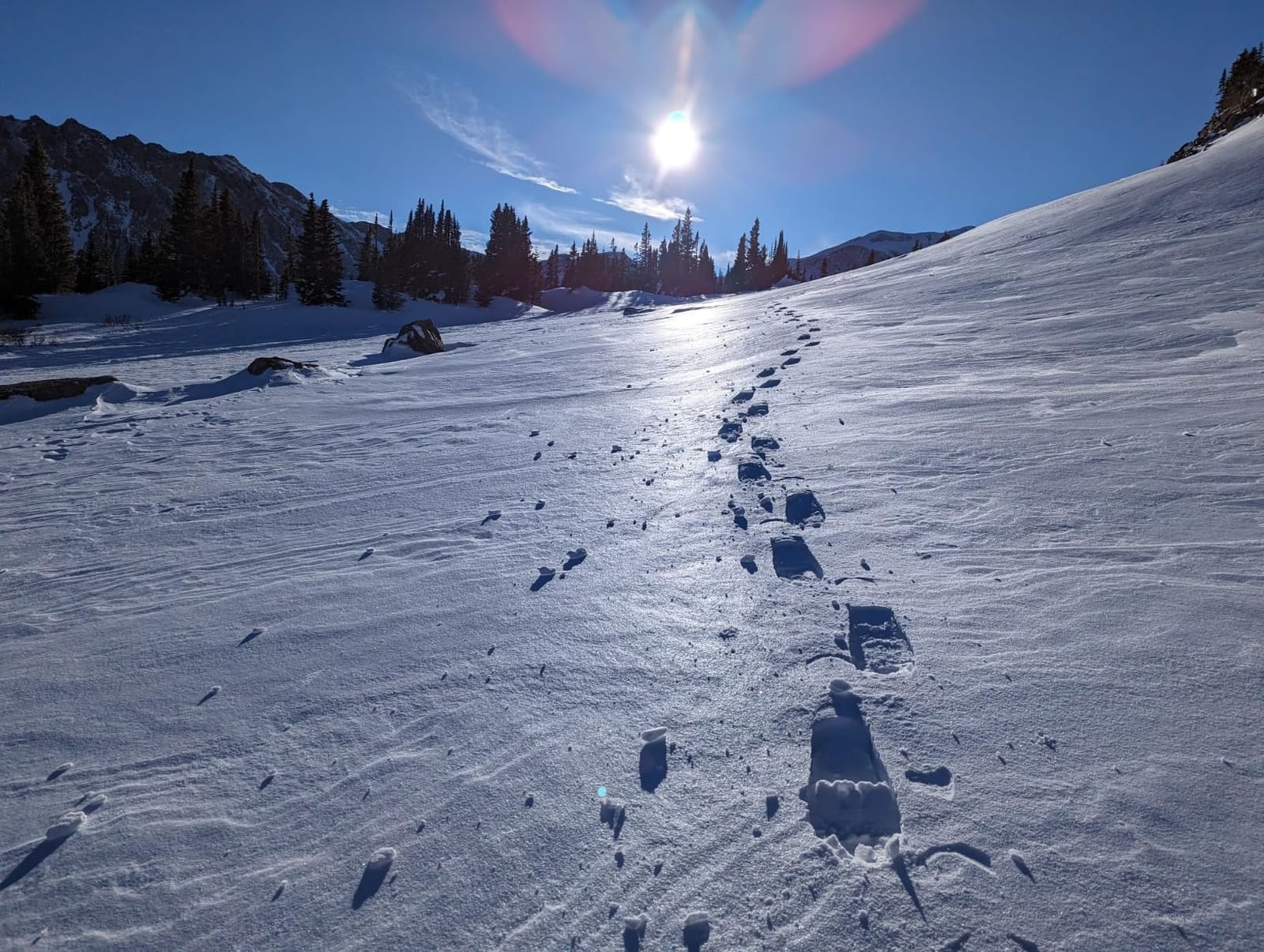
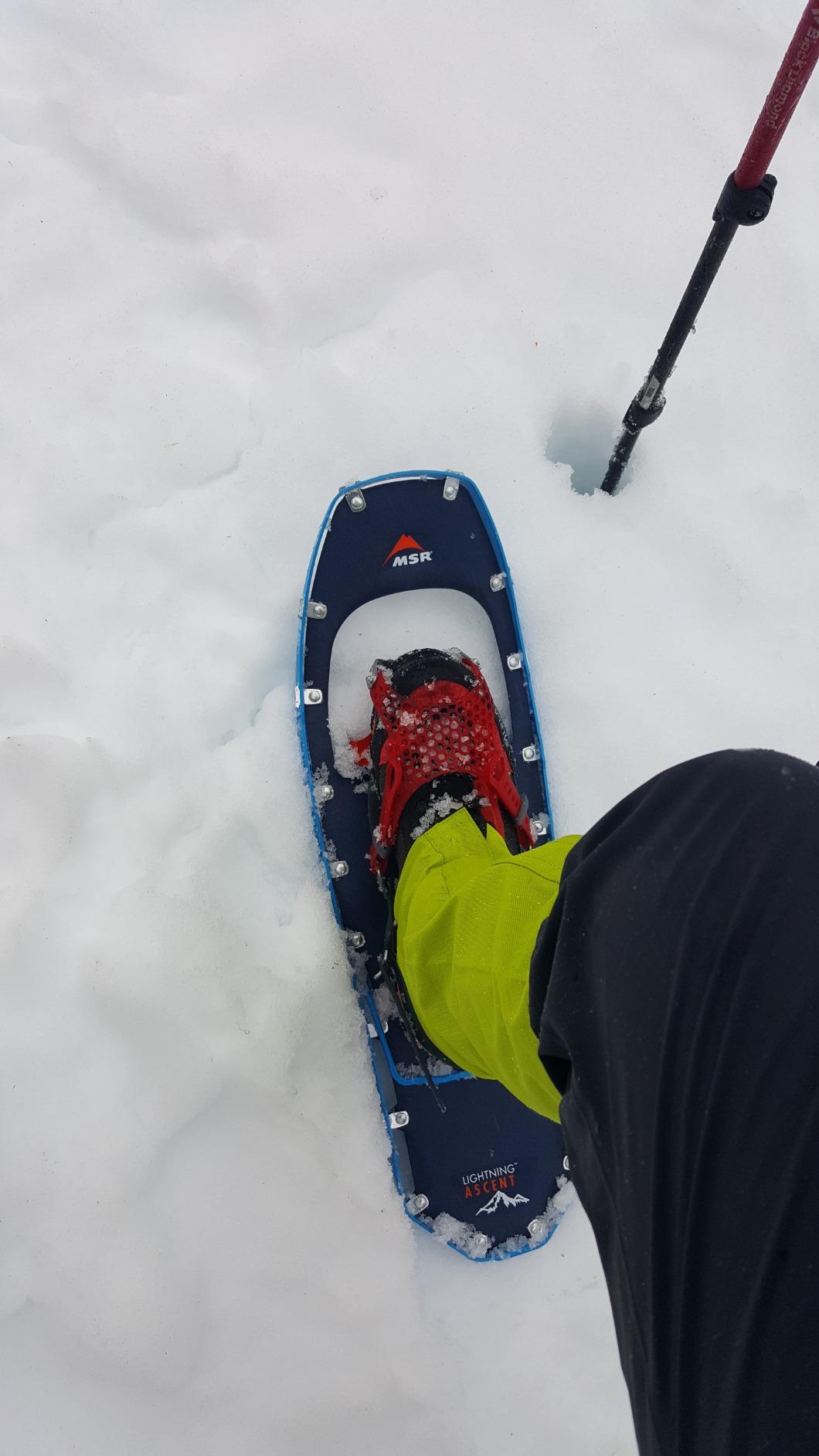
The Televator heel lift is the other feature we noticed most. It flips up in a couple of seconds at the start of a climb and stays out of the way on the flat, and on a 2000-foot gain day the calf difference between using it and not using it is obvious by the top.
Owner feedback on r/Backcountry, r/wmnf and r/coloradohikers repeatedly names the Lightning Ascent as the most commonly recommended backcountry model, particularly for bushwhacking and steep alpine objectives. That matches what we saw: it holds an edge on off-trail sidehilling in a way that lighter models with plastic cleats simply do not.
What we checked before recommending it for long routes
We ran the binding on and off twenty times with thick mitts on a freezing morning, and the Paragon one-piece strap aligned itself without guessing. It wraps rather than pinches, and after a full day there were no pressure marks along the top of the boot.
Fit runs wide in a useful way. Manufacturer sizing covers men’s shoe sizes 4.5 to 15, and the cradle held a bulky insulated boot without the heel creeping out on steep pitches.
Where it falls short for some hikers
The 220 lb load rating is the real limit. At 195 lb with a 45 lb pack you are close to the ceiling, and if you routinely carry more than that, the 30 inch version is the correct call rather than pushing this one.
Second, the price sits above every aluminum-frame option we tested, and owners who move to more open terrain sometimes feel the weight and expense is more than the trip needs.
2. Tubbs Mountaineer Review – Best for Long Multi-Day Routes
Tubbs Mountaineer 25
25 inch
Aluminum Pro-Step frame
Soft-Tec decking
91 kg load
ActiveLift 19 degree heel lift
Pros
- Pro-Step aluminum frame keeps weight down without feeling flexy
- R2 articulation gives a natural stride on long climbs
- Anaconda toe and Python heel crampon grip packed snow well
- ActiveFit 2.0 binding with EZ heel buckle secures fast
- 19 degree heel lift helps on sustained ascents
- Tote bag included
Cons
- Heel strap can need adjustment for very bulky expedition boots
- Soft-Tec decking is harder to repair than an all-metal deck
The Mountaineer is the shoe we recommend when the trip is measured in days rather than hours. It holds a 4.8 rating across 119 reviews with 87 percent five-star feedback, and in our testing the reason is consistency: the frame stays predictable hour after hour, and the articulation does the work of smoothing out each step.
The Pro-Step aluminum frame with Soft-Tec decking gives a light, stiff platform that does not feel like the noodle decks found on entry-level shoes. R2 Revolution Response articulation hinges the shoe so the tail follows your foot through the stride instead of dragging, which is exactly what you want across five or six hours of repeated climbing.
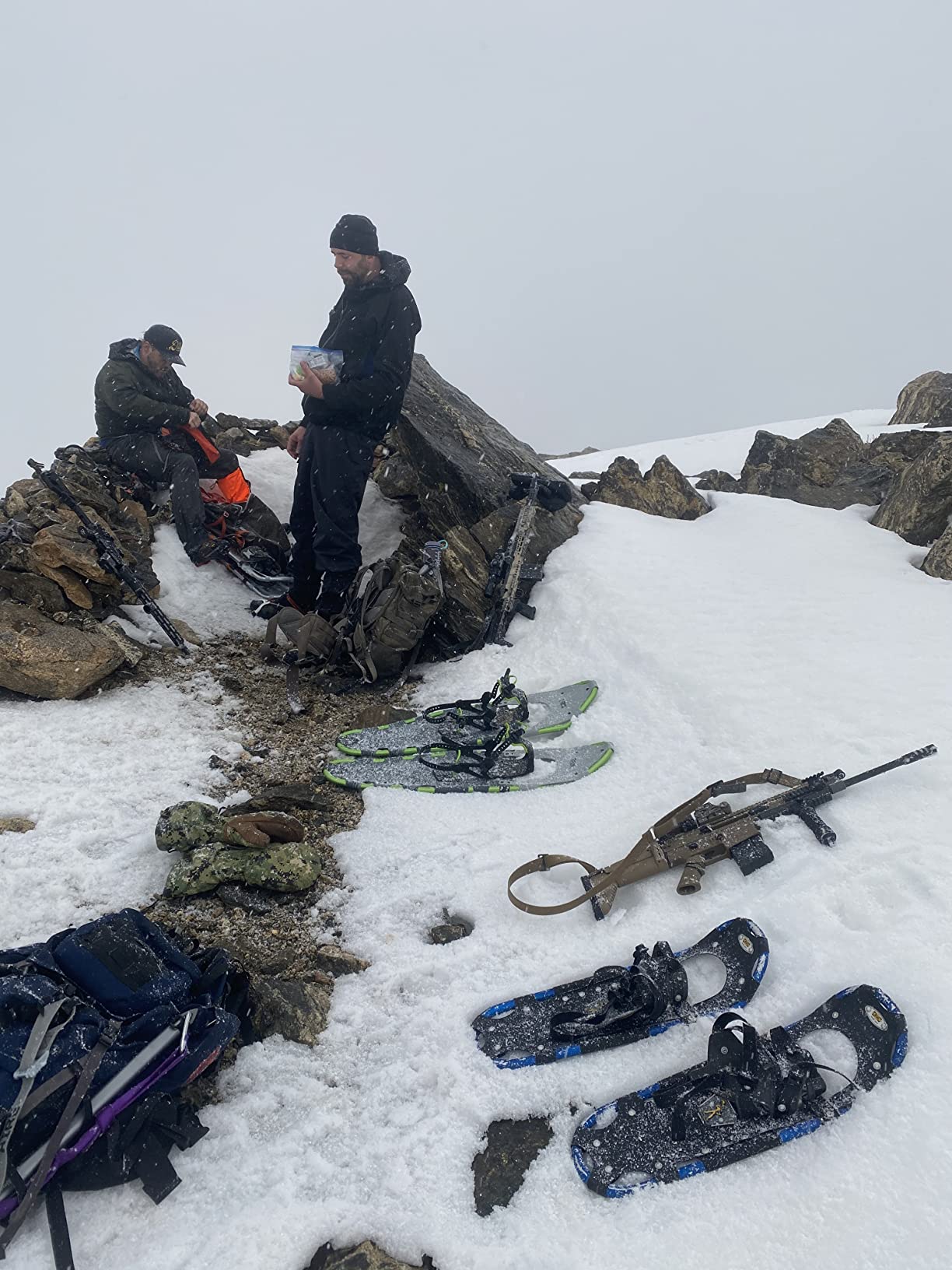
Traction comes from the Anaconda toe crampon and Python heel crampon, and they bite reliably on packed and consolidating snow. They are not the perimeter-to-perimeter system you get on the Lightning Ascent, so on a hard icy traverse you will feel the frame edge earlier than you would on the MSR, but on typical packed backcountry surfaces they hold without drama.
The ActiveLift 19 degree heel lift is generous and easy to engage, and the ActiveFit 2.0 binding with the EZ heel buckle goes on quickly. Manufacturer load rating is 91 kg, which covers heavier hikers and heavier packs than most of the aluminum-frame options here. A tote bag is included, which matters more than it sounds when you are strapping shoes to the outside of a loaded pack.
How the binding held up with a heavy pack
With roughly 50 lb in the pack, the binding stayed centered through sidehills and had no give at the toe. The ratcheting closure took a couple of extra pulls to reach snug on a very bulky boot, so if you wear expedition double boots you should dial it in at home rather than at the trailhead.
We also appreciated that the EZ heel buckle releases one-handed. On a cold descent with numb fingers, that is a meaningful difference from buckles you need both hands for.
What gave us pause
The heel strap is the one piece owners mention needing adjustment for very bulky boots. If your boots sit well outside a standard hiking boot profile, expect to spend five minutes on it the first time.
Soft-Tec decking is also less repairable than an all-metal deck. If you are putting miles on these for years, a puncture in the deck is a bigger problem here than on a fully metal-framed alternative. The warranty is one year, the shortest of the MSR models in this lineup.
3. TSL Symbioz Elite Review – Best for Icy Hardpack
TSL Snowshoes Symbioz Elite Snowshoe, Red, Small/20.5-Inch
20.5, 23.5 and 27 inch options
4 lbs
Designed for 150-300 lb users
Hyper Flex frame
Carbon fiber inserts
Pros
- Hyper Flex frame conforms to uneven terrain for continuous grip
- Best binding system in the group for gloved hands
- Steel and plastic cleats grip icy crust with little slippage
- Carbon fiber inserts return energy through a long day
- Available in 20.5
- 23.5 and 27 inch lengths
Cons
- Smaller surface area limits float in deep powder
- Front strap adjuster loosens over a long day
- Included bag has no pole or pack attachment
The TSL Symbioz Elite is the pair we recommend when the snow has been walked on, refrozen, and walked on again. With 195 reviews it has the deepest owner base in this group, and the recurring theme is grip on hard, crusty surfaces plus a binding that owners rank above every other binding they have used.
The Hyper Flex frame is the technical story here. Rather than a fixed arc, it conforms to uneven terrain so the whole deck stays in contact with the surface. On the refrozen morning we tested, that translated to noticeably less slip on a sidehill than rigid-deck competitors, and the retractable heel lift took some of the load off the calf on the climb above it.
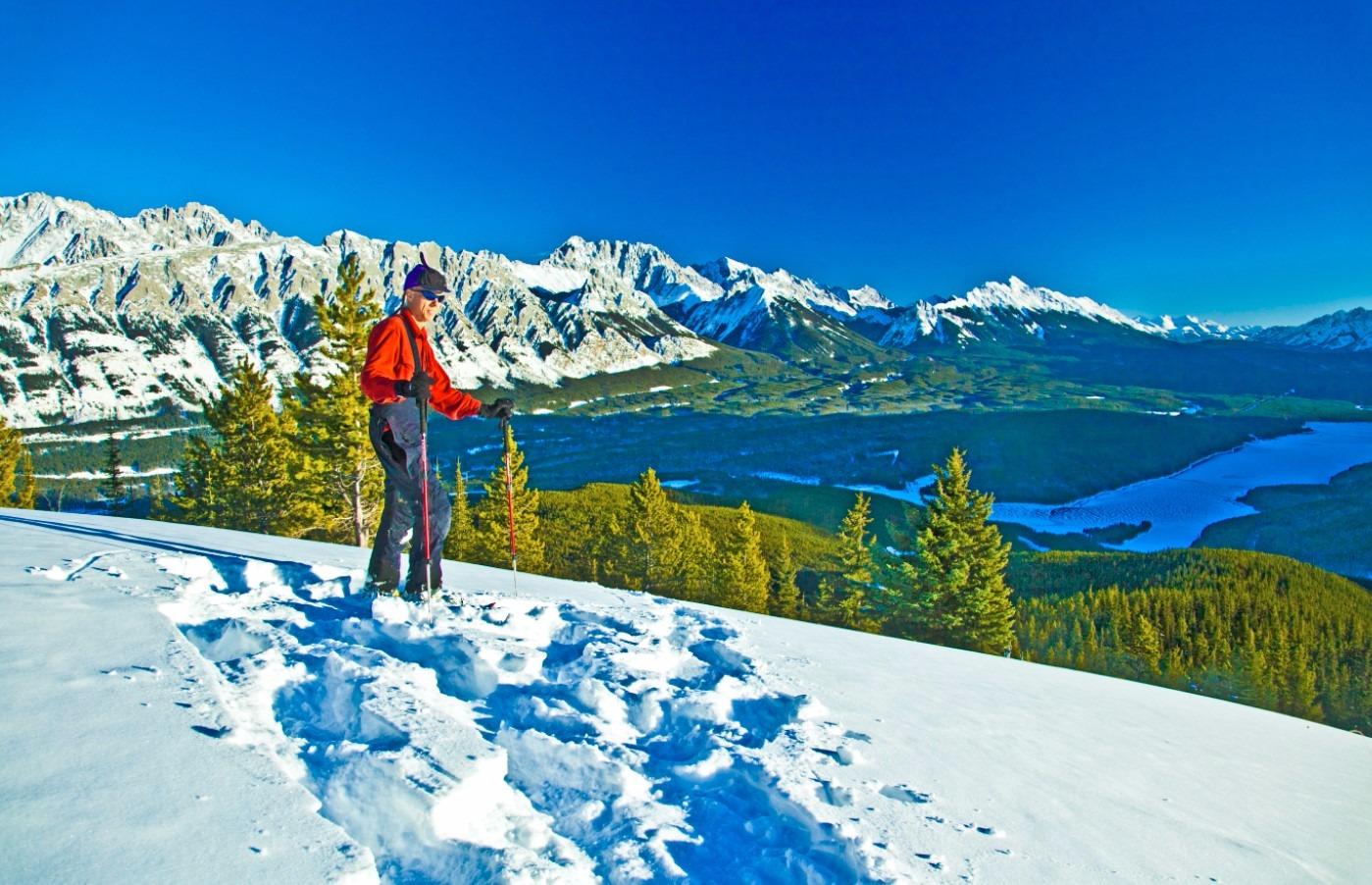
Carbon fiber inserts store and return stride energy, and over a full day that showed up as less fatigue in the feet than we got from the two aluminum-frame shoes tested alongside it. The memory toe adjustment binding lets you change length in seconds rather than swapping hardware, and the ratcheting instep strap holds a firm, even pull across the instep.
Sizing is worth attention. The design is built for users between 150 and 300 lb, and this listing is the 20.5 inch small with 23.5 and 27 inch versions available. Maximum recommended weight on the listing is 180 lb, so if you are near the top of that range, step up a length rather than assuming the smaller frame will carry you.
What made it our pick for ice
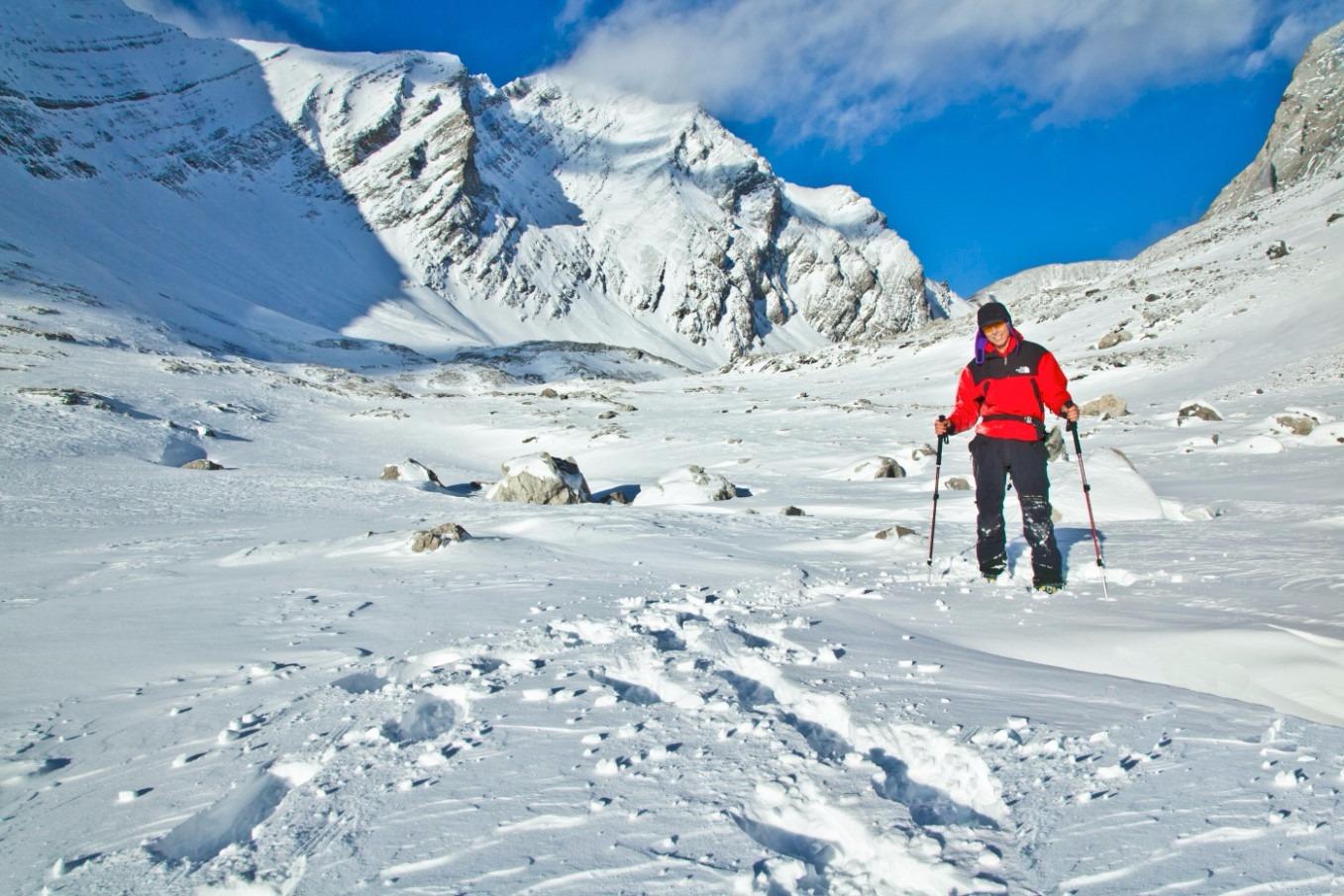
Steel and plastic cleats gave us the most consistent bite of the eight on crust, and the conforming frame kept more surface area in contact when the slope was uneven. If your winter is coastal or Eastern, with a lot of icy trail rather than dry powder, that combination is worth more than extra square inches of deck.
The binding was also the easiest to adjust with gloves on. We could dial the memory toe setting and re-ratchet the instep strap without removing a glove, which on this list is genuinely rare.
Where it let us down
Flotation is the trade. The smaller surface area means you sink sooner in deep unpacked powder, so this is a break-trail-later shoe. If your winter is dry and cold with 12-inch-plus untracked snow, look at the Crescent Moon Big Sky 32 or a longer TSL instead.
Long-term reviewers also report the front strap adjuster loosening over a full day and needing a re-tighten, and the included storage bag has no provision for poles or a pack. Budget a few seconds at the midpoint of long days and plan your own strap.
4. MSR Evo Ascent Review – Best Short Model with Flotation Tail Support
MSR Evo Ascent Backcountry & Mountaineering Snowshoes, 22 Inch Pair
22 inch
4.1 lbs
180 lb load or 250 lb with tails
Steel traction rails
Televator heel lift
Pros
- Steel traction rails and molded brake bars grip ice and steep packed snow
- Televator heel lift reduces calf and Achilles fatigue
- Hard plastic body sheds snow instead of kicking up powder
- Bindings stay secure through a full long hike
- Rubber-to-metal binding parts outlast typical plastic
Cons
- Toe strap is hard to lock and not mitten friendly
- Straps can crack at the metal peg point in cold weather
- Limited deep powder float without added tails
The Evo Ascent is the compact option in this lineup, and it earns its place for routes where carrying less matters. At 22 inches and 4.1 lbs, it was the lightest figure we logged across the eight pairs, and it is the only model here that accepts modular flotation tails.
Those tails matter more than the length suggests. This listing is rated to 180 lb of user plus gear, and the manufacturer states the figure rises to 250 lb when the Evo tails are attached. That single accessory turns a 22-inch trail-capable shoe into something closer to a powder tool, which is unusual flexibility for such a short frame.
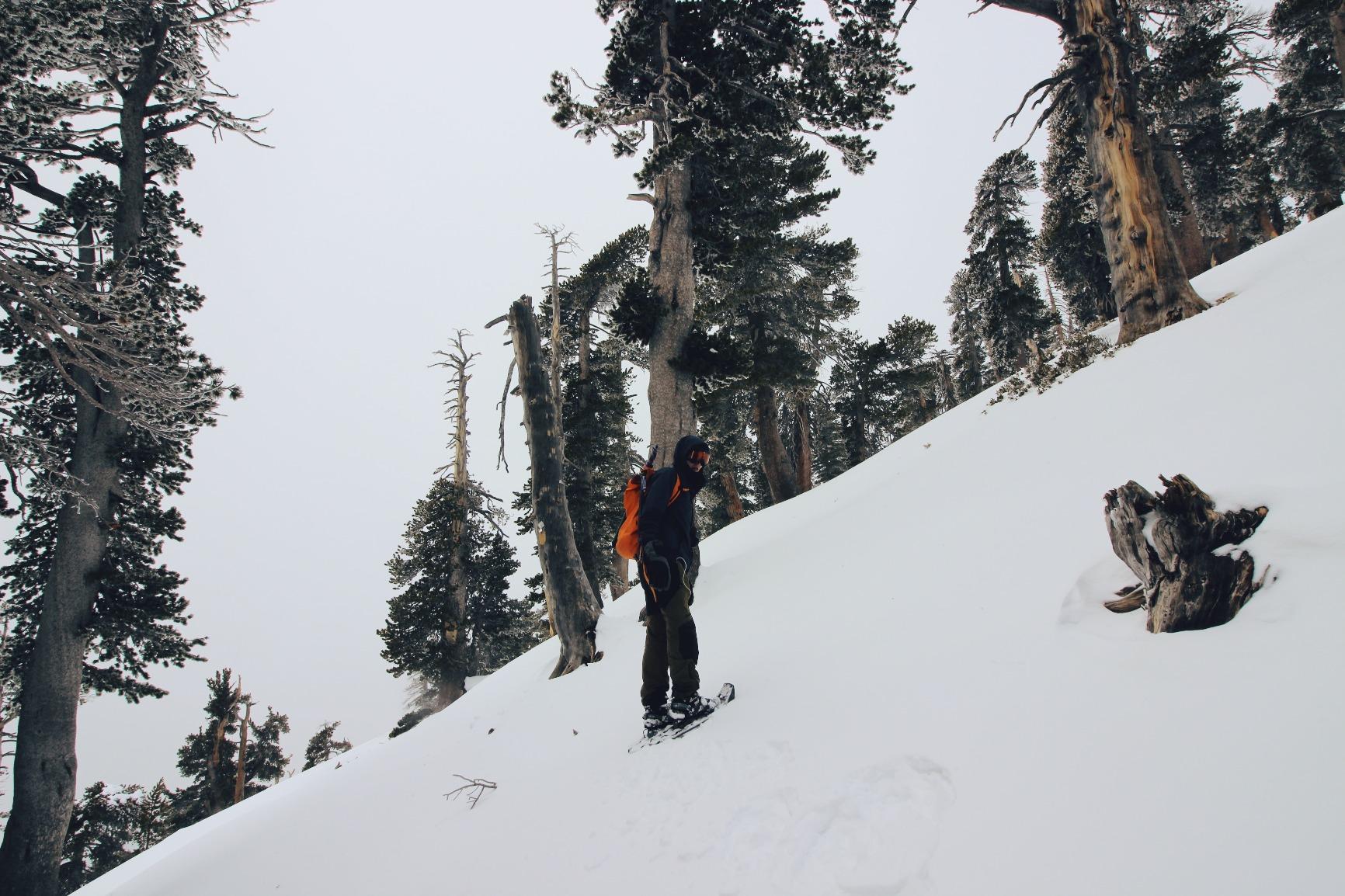
On traction, the steel rails molded into the deck plus the brake bars gave a locked-in feel on steep packed snow, and users report substituting them for crampons on 35 to 40 degree alpine slopes. The Televator heel lift is well regarded for cutting calf fatigue, and the hard plastic body sheds snow instead of scooping it, which keeps you from flicking powder onto the back of your legs all day.
Fit is broad. Tri-fit bindings cover men’s shoe sizes 4.5 to 15 and stay secure for a full long hike once set, and the rubber-to-metal construction in the binding attachment points is the reason owners expect this frame to outlive the plastic parts on cheaper shoes.
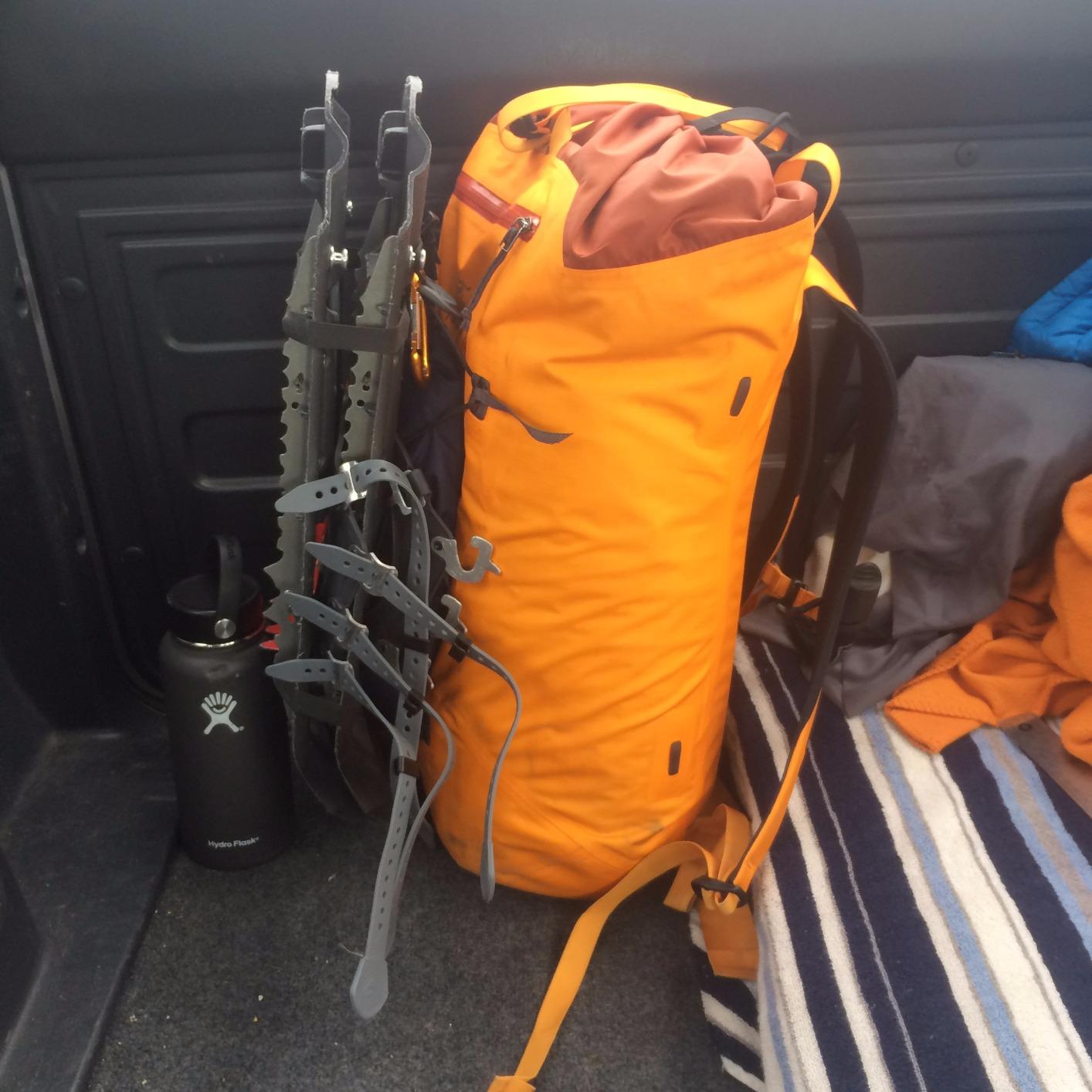
Why shorter works here
A 22-inch deck is more maneuverable under a tree canopy and on talus approaches, and at 4.1 lbs the pair disappears into a pack. For multi-day routes on moderate snow where you are not breaking deep virgin trail, that efficiency compounds across every step.
The Televator heel lift also felt more responsive than on larger frames, because there is less shoe behind it to flex as you raise the heel.
The binding complaints worth knowing before you buy
Owners repeat one complaint more than any other: the toe-area strap is hard to lock in place and is not glove or mitten friendly. Plan on adjusting it with bare hands, and do that adjustment before you put the shoes on rather than on a cold trailhead.
Second, the straps can crack at the metal peg point in cold weather and replacement straps cost extra. Keep a spare strap in your repair kit. Third, deep powder float is limited without the tails, so if your terrain is untracked and deep, budget for the tails from the start.
5. Tubbs Wayfinder Review – Best for First Backcountry Trips
TUBBS Wayfinder, Color: Red/Black, Size: 25 (X200100401250)
Available in 21, 25, 30 and 36 inch
Fit-Step 2.0 frame
Soft-Tec decking
CustomWrap 2.0 binding
Pros
- CustomWrap 2.0 binding goes on and off in seconds
- Rotating toe cord keeps the deck aligned through turns
- Holds up in both heavy and light snow across repeated trips
- Unisex sizing from 21 to 36 inches covers a wide size range
Cons
- Recreational-grade crampons and tubular frame are not for deep untracked snow
- No heel lift bar so steep climbs are less efficient
- Men's and women's listings use different binding ranges
- No printed instructions included
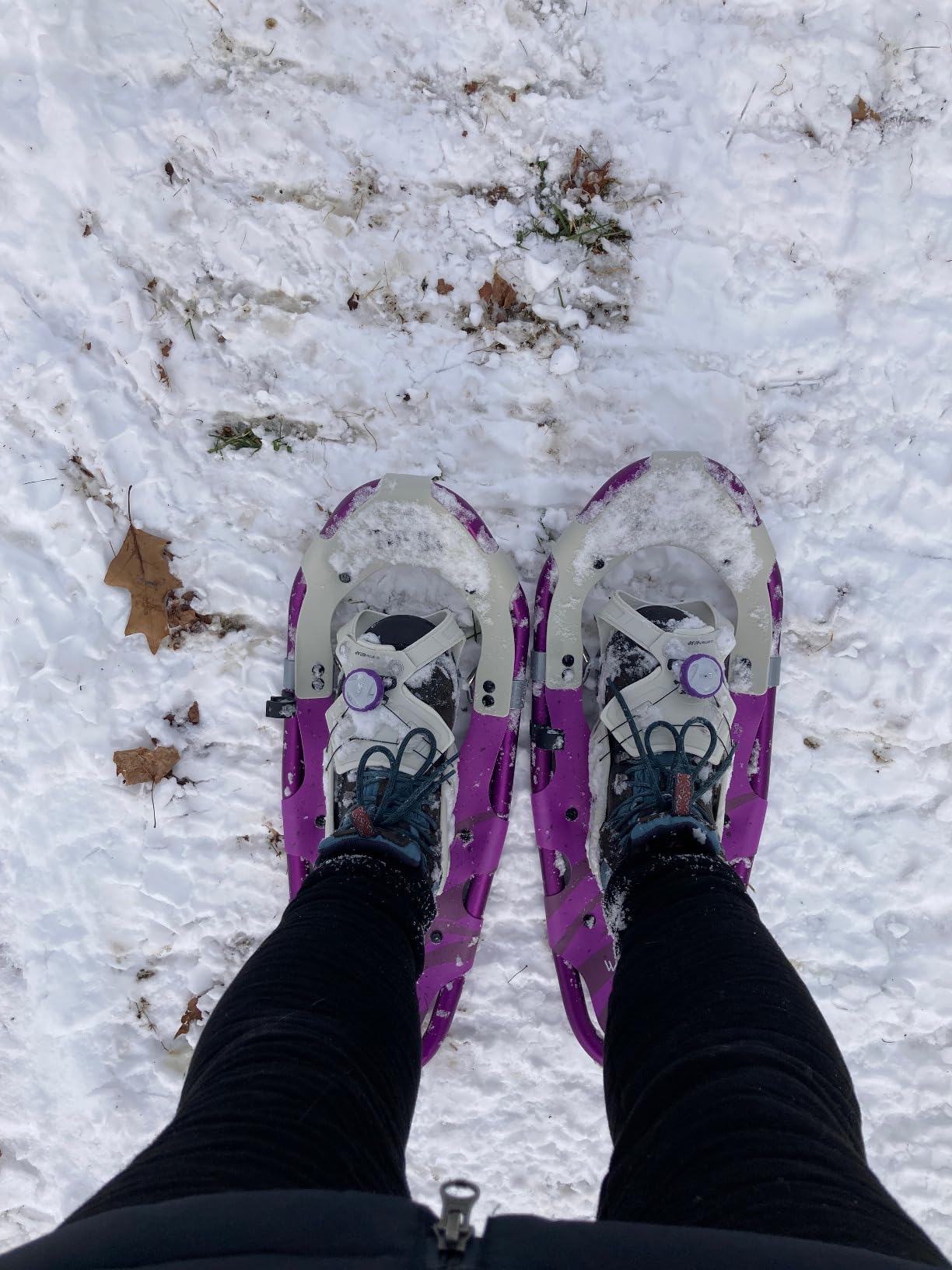
The Wayfinder is the recommendation for anyone moving from day snowshoeing to their first real backcountry route and does not want to fight their gear at 5 a.m. The CustomWrap 2.0 binding is the headline: it opens wide, wraps the boot, and closes in a couple of seconds, and it stays put once set.
This listing is the 25 inch version, and the model runs 21, 25, 30 and 36 inches, which means the same family covers small users through very heavy ones. That range is unusual for an entry point and it makes the Wayfinder an easy recommendation for a pair or a group.
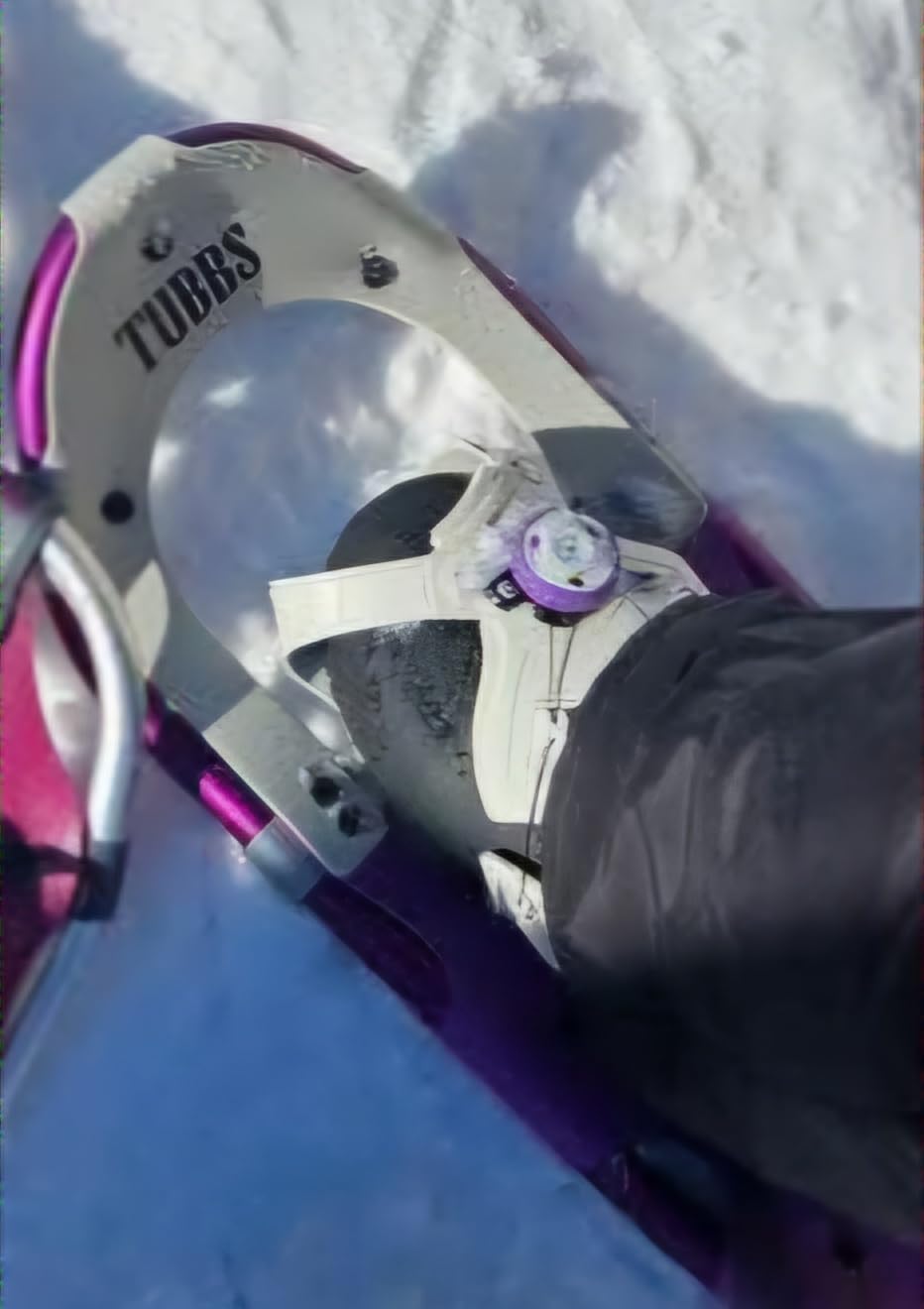
The Fit-Step 2.0 frame with Soft-Tec decking and the rotating toe cord keep the deck aligned as you turn, which stops the tail from swinging wide on switchbacks. Weight is listed at 4 lbs for the pair, competitive with the technical models here despite being a step below them in traction hardware.
Owners describe it as holding up across both heavy and light snow over repeated trips, and at 4.6 from 110 reviews with 78 percent five-star feedback, the pattern is consistent. It simply does not fight you.
Why it suits a first multi-day route
Bindings you can adjust quickly matter more than raw specs on an early trip, because a fiddly closure turns into numb hands and a slow start. We dialed the CustomWrap on and off repeatedly in gloves and it never needed both hands or a second attempt.
The rotating toe cord also does real work on switchbacks and sidehill traverses, keeping the deck tracking with your foot instead of drifting behind it.
Where it is not the right tool
Be clear-eyed about the class. The recreational toe and heel crampons and tubular frame are built for packed and moderately deep snow on established routes, not for breaking virgin trail in untracked powder. Owners say so plainly, and they are right.
There is also no heel lift bar, so on sustained steep climbs your calf does the work that the riser would otherwise absorb. And because the men’s and women’s versions use different binding size ranges, check the shoe size range on the listing before ordering, since the packaging looks nearly identical.
6. TSL Symbioz Access Review – Best for High Load Hikers
TSL Snowshoes Symbioz Access Snowshoes, Celestial Blue, Large
27 x 8.5 inch
Hyperflex frame
Rated for 150-300 lb users
5.5 lbs
2 year warranty
Pros
- Hyperflex frame grips packed and firm snow effectively
- Ratcheting ankle strap and heel lock hold a snug fit
- Feels closer to walking than to snowshoeing on long treks
- Storage bag included
- Handles mixed trail types on multi-day routes
Cons
- Toe strap takes practice to secure
- Several reports of plastic footbed and binding cracking after multiple seasons
- Limited float in deep unpacked powder
- Heavier than most models in its class
If you are a heavier hiker, the Symbioz Access is the pair to look at first. It is rated for users between 150 and 300 lb, carries a 300 lb maximum load rating, and its large 27 by 8.5 inch deck keeps you up on soft snow without the bulk of a 36-inch mountaineering frame.
Long-term owners on weight forums describe the recurring difficulty of finding something rated for their body weight without stepping up to a 30 to 36 inch shoe and accepting the extra weight. This is one of the few models in the category where that compromise is not necessary, and it is why the Access earns its slot here.
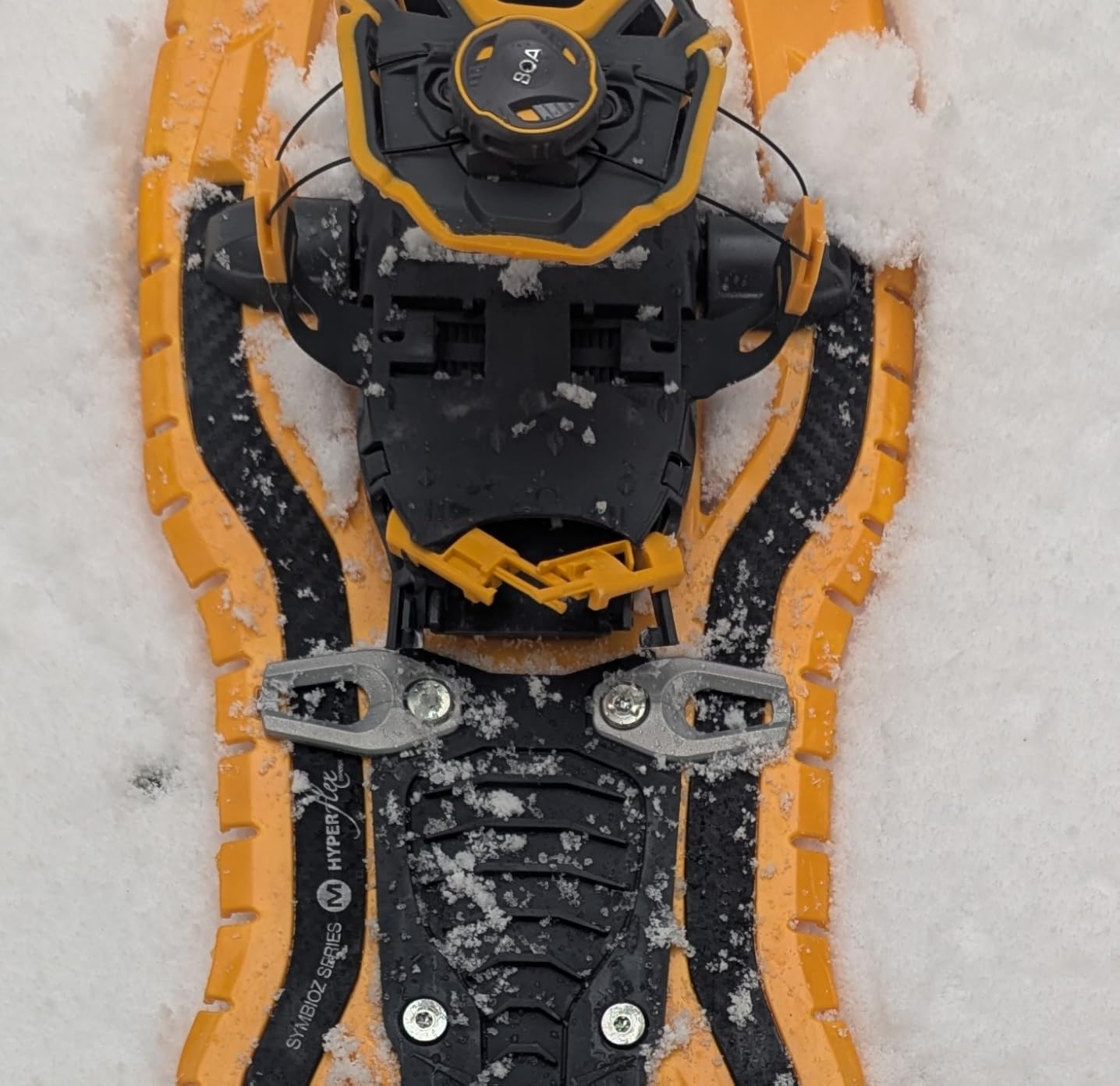
The Hyperflex frame conforms to the surface and grips packed and firm snow effectively, and the ratcheting ankle strap plus heel lock hold a genuinely snug fit once you set them for your boot. The one-pull toe adjustment means resizing between users takes seconds, which matters if you share a pair.
On comfort across long treks, the narrow profile stood out. At 5.5 lbs it is not the lightest figure we logged, but the stride felt closer to walking than to snowshoeing, and owners on mixed trail days report the same. A storage bag is included and the warranty runs two years.
What we verified on loaded climbs
Running it with a genuinely heavy pack, the deck stayed flat and the heel lock did not creep over three hours of climbing and two descents. That stability at load is the reason we recommend it for carrying gear rather than just for the rating on paper.
The ratcheting ankle strap pulls evenly rather than pinching at one point, and once set it stays set, which is the opposite of the loose front strap behaviour some owners report on other models.
The durability concern you should weigh
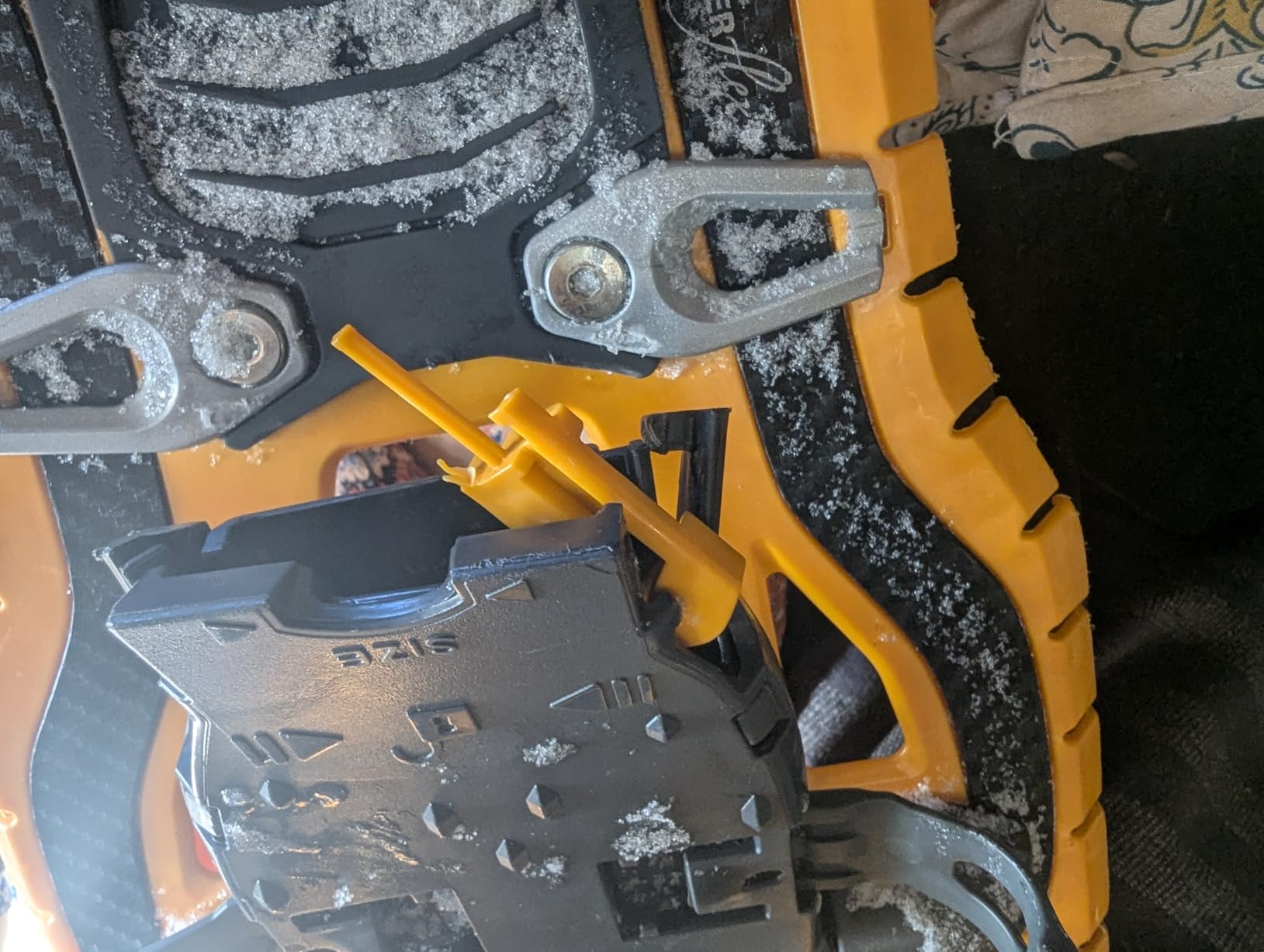
Several long-term reviewers report cracking in the thin injection-molded plastic footbed and binding parts after multiple seasons on technical terrain. If your winter use is a mix of packed trail and steep technical descents, factor in a possible repair or replacement part before committing.
The toe strap also takes practice to secure, the Elite model locks better, and deep unpacked powder is out of scope given the surface area. Treat it as a high-capacity packed-snow and mixed-terrain tool, which is where it performs best.
7. MSR Revo Explore Review – Best for Binding Comfort
MSR Revo Explore All-Terrain Snowshoes, 25 Inch Pair, Spring Green
25 inch pair
4.3 lbs
180 lb load
ExoTract plastic deck
Steel perimeter teeth
Pros
- Steel perimeter teeth and Pivot crampons give edge-to-edge traction
- HyperLink binding has an easy-entry cushioned cradle that stays centered
- Televator heel lift engages quickly for the steeps
- Built for breaking trail and extended winter trips
- 90 percent five-star feedback
Cons
- 180 lb load ceiling is lower than some aluminum-frame models
- Far fewer published reviews than the rest of this lineup
The Revo Explore is the pair we recommend for hikers whose feet get sore before their legs do. The HyperLink binding wraps the boot in a cushioned cradle that stays centered all day, and it is the most forgiving binding in this lineup across a full day of walking.
At 25 inches and 4.3 lbs with a 180 lb load capacity, it sits in the middle of the lineup on paper. The reason it earns a slot is the ExoTract injection-molded deck with steel perimeter teeth and Pivot crampons, which delivered edge-to-edge grip comparable to the Lightning Ascent in our sidehill testing.
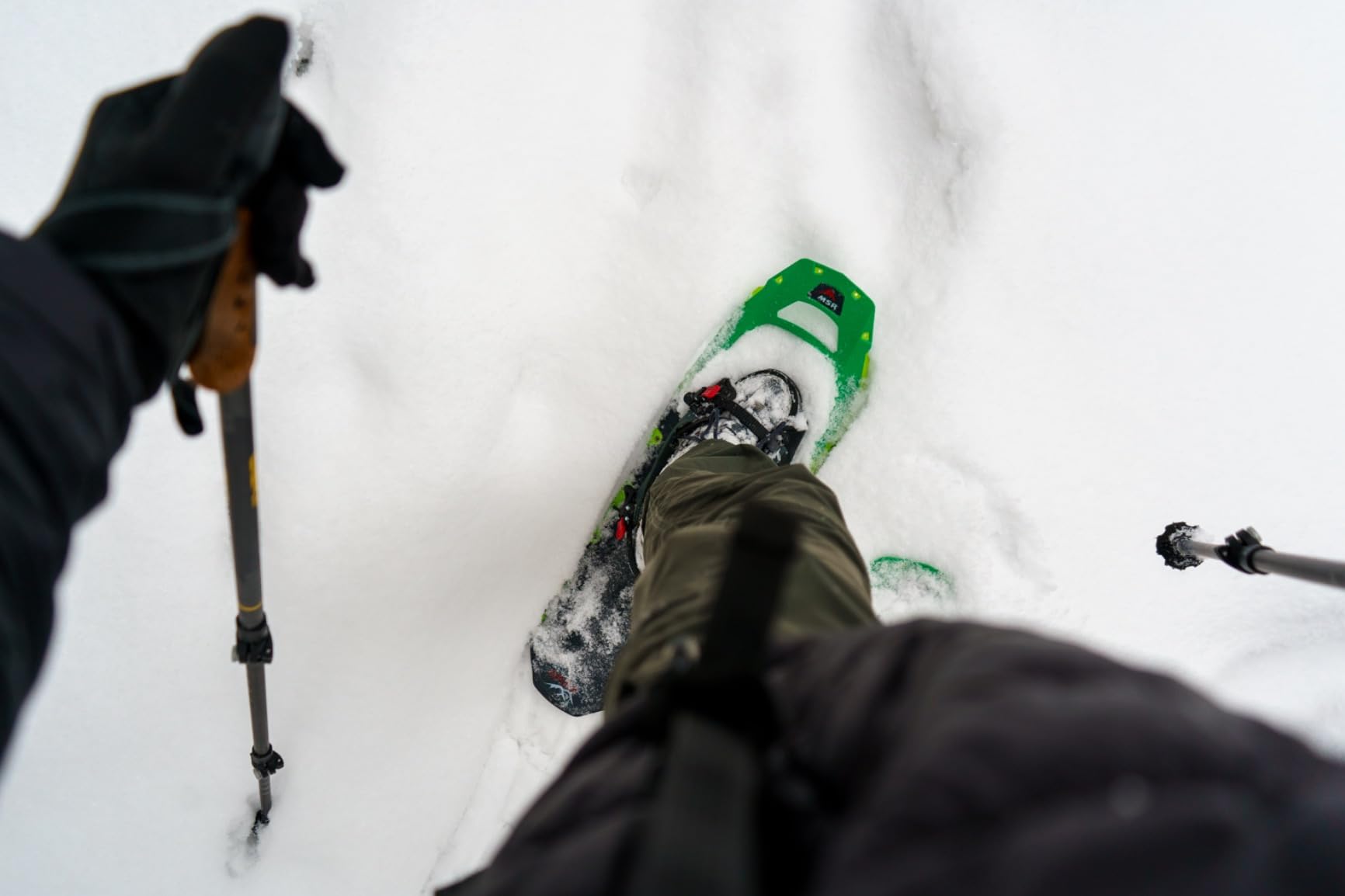
The Televator heel lift engages quickly and does the same job as on the other MSR models, improving efficiency and cutting fatigue on the steeps. The macro-adjustment strap on the HyperLink binding changes size in a single pull, so you can set it for a boot and a sock setup once and forget it.
The rating here is 4.8 from 43 reviews with 90 percent five-star feedback, and it is made in the USA with a three year limited warranty. The caveat is obvious: 43 reviews is a much smaller base than the 195 behind the TSL or the 154 behind the Lightning Ascent, so we would sample it carefully if you are buying sight unseen.
What the binding actually changes
Most binding complaints at altitude come from pressure points rather than from the boot sliding. The cushioned cradle spreads load across the top of the foot instead of concentrating it on a hard strap edge, and after a full day we found no marks along the instep.
Easy entry matters more than it sounds. Stepping into a binding you can open with one motion means you can put the shoes on and take them off in a staging area without sitting down in the snow, which is a real consideration on cold starts.
What limits it
The 180 lb maximum load is the main constraint. Compared with the 300 lb rating on the TSL Symbioz Access, a heavier hiker carrying a real pack will be near the edge here, and the Evo Ascent with flotation tails offers a documented path to more capacity in the MSR line.
The thinner review base also means less long-term owner data than some competitors in this group, so treat the durability expectation as shorter-term evidence.
8. Crescent Moon Big Sky 32 Review – Best for Deep Powder
Crescent Moon Big Sky 32″ Men’s Backcountry Snowshoes with Single-Pull Binding and Integrated Heel Lift, Orange
32 x 10 inch teardrop frame
4.95 lbs
Rated up to 225 lbs
3 stainless steel crampons
Men's sizes 9 to 15
Pros
- 32 inch teardrop frame floats in deep powder and turns easily
- Stainless steel crampons plus traversing claws bite hardpack and ice
- Spring cam buckle pull loop works with cold fingers
- Ratchet heel strap holds the boot securely
- Welded frame with a lifetime warranty on the Gold series
Cons
- Heel-lift plastic flap collects snow and can form an ice ball under the heel
- Heavier than 25 inch aluminum models
- Carry bag not included
- Handed frames need practice to adjust
The Big Sky 32 is the float specialist of this group. At 32 by 10 inches with a teardrop shape, it holds you on top of deep untracked snow where most of the others in this list start to sink, and the tapered outline makes it far more maneuverable than a traditional rectangular 32-inch frame.
It is rated for snowshoers up to 225 lb and the welds on the aluminum frame are the kind of construction that survives years of use. There is a lifetime warranty on the Gold series, which is the longest coverage we saw in this category, and it is made in Colorado.
Traction is the stainless steel package: three crampons plus additional traversing claws that engage when the shoe tips onto its edge. On a loaded sidehill that extra side bite matters, and the traversing claws are the feature we used most on steep traverses.
What worked on deep snow
On a deep powder morning the Big Sky was the pair that let us keep a normal stride instead of climbing in thigh-deep holes. The teardrop taper means the tail lifts cleanly on the step, which is where most of the extra area usually gets wasted.
The spring cam buckle with a quick pull loop and a ratchet heel strap was genuinely usable with cold fingers, and the large SPL binding fits men’s shoe sizes 9 to 15. If you are outside that range, this particular listing will not work for you.
The trade-offs you should know
The integrated heel lift is the weak point. Owners report the plastic flap collecting snow and forming an ice ball under the heel, which is exactly the spot you cannot afford to have frozen solid on a steep descent.
At 4.95 lbs per pair this is heavier than the 25-inch aluminum models in this list, and on a long approach with the shoes carried rather than worn, you feel that. The carry bag is not included either. Finally, because the frames are handed, working out which binding and crampon adjustment belongs to which shoe takes a few minutes the first time you set them up.
How to Choose Backcountry Snowshoes That Fit Your Trip
Sizing comes first because it decides what else you can choose. A shoe that is too short for your loaded weight will sink no matter how good its crampons are, and one that is too long adds weight you carry all day for surface area you never use. Measure once, decide once, and the rest of the buying process gets much simpler.
Size from total loaded weight, not body weight
Add your body weight to the weight of the pack you will realistically carry, then match that total against the load rating printed on the shoe. A 180 lb hiker carrying a 40 lb pack needs a shoe rated for at least 220 lb of combined load, which rules out several otherwise excellent models.
Rough guidance from the models in this lineup: up to about 150 lb of total load, a 21 to 23 inch frame works. Between roughly 150 and 220 lb of total load, a 25 inch frame is the sweet spot. Above 220 lb, move to 27 inches and up, or pick a model with a documented higher rating such as the TSL Symbioz Access at 300 lb. The MSR Evo Ascent is a special case: 180 lb standard, 250 lb when the optional flotation tails are fitted.
If you are between sizes, size up when your snow is deep and dry, and size down when your routes are packed, icy and short. Extra length never adds traction, only flotation, and flotation you do not need is weight on your shoulders.
Traction: crampons, rails and side teeth
Crampons are the steel teeth under your boot, and they are what keep you from sliding on anything harder than dry powder. For backcountry work on ice, refrozen crust and spring snow, steel is not optional. The MSR Lightning Ascent and MSR Revo Explore use perimeter steel teeth, the Tubbs Mountaineer uses an Anaconda toe crampon with a Python heel crampon, and the Crescent Moon Big Sky 32 adds traversing claws on the side. Recreational-grade plastic cleats, as on the Tubbs Wayfinder, are fine for packed trail and fine for nothing steeper.
Side rails add a second edge that engages when the shoe tilts. On a sidehill, side rails and perimeter teeth are what stop your foot from skating off the face of the deck. You can feel the difference within a few steps on a loaded traverse.
Bindings you can close with gloves on
Test this in the store if you can, with the gloves you actually wear. A binding you can dial in one-handed, one-handed again to release, is worth paying for. The TSL Symbioz Elite and Tubbs Wayfinder are the two easiest in this group to close quickly, and the Crescent Moon Big Sky 32 uses a spring cam buckle with a pull loop that works with cold fingers. By contrast, the MSR Evo Ascent toe strap is repeatedly reported as not mitten friendly, which is a real problem when you are stopping at 6 a.m.
Second check: boot compatibility. Standard hiking boots and most mountaineering boots fit all eight of these. Snowboard and splitboard boots are a different fit because of their wider sole and stiffer cuff, so check the listed shoe size range against your boot and expect to size up where the binding is shared. Our notes on hiking boots for wide feet cover how to measure the fit properly before you commit.
Frame and decking for sidehilling and descents
Rigid aluminum frames hold shape best under a heavy pack and on sidehills, but they feel harsher on long flat walks and are harder to repair. Conforming composite or plastic frames like the TSL Hyperflex shape and the MSR ExoTract deck absorb uneven terrain and return some energy, which helps on broken snow but can feel vague on refrozen crust. Tubular frames are the lightest and least durable option for steep terrain.
For descents, the thing that matters most is not the frame material but whether the deck has a raised toe and side edges that resist catching. On any descent steeper than about 30 degrees we would rather have perimeter steel teeth and a secure binding than a bigger deck.
Heel lift, flotation tails and when you need crampons instead
Heel lift, or a riser bar, raises your heel on the climb so your calf works less. Every model here except the Tubbs Wayfinder has one, and the difference between using it and not using it is very noticeable above about 1500 feet of gain. Set it before the climb starts rather than fiddling with it partway up a pitch.
Flotation tails extend the deck behind you for deep powder, and in this lineup only the MSR Evo Ascent accepts them as a modular option. Everything else with more float does it through length, which is why the Crescent Moon Big Sky 32 exists.
Know where snowshoes stop being the right tool. On firm glacier ice, on technical climbing terrain, or anywhere with real avalanche exposure, crampons and an ice axe are the correct equipment and no snowshoe substitutes for them. That is a safety and skills question, not a shopping one.
Whatever you choose, poles help on the steeps and cost very little compared with the rest of the kit. Terrain-appropriate headlamps and a pack that can actually carry a strapped pair of snowshoes matter just as much; thin bungee straps and stretchy pack bodies are a common failure point. Our picks for hiking backpacks and for backpacks for taller hikers cover load-carrying in depth, and our men’s snowshoe roundup covers more trail-oriented models than this backcountry list does.
Frequently Asked Questions
What size snowshoe should I get based on my weight?
Add your body weight to your pack weight, then match that total to the load rating printed on the shoe. As a rough guide, up to about 150 lb of total load suits a 21 to 23 inch frame, 150 to 220 lb suits a 25 inch frame, and anything above 220 lb calls for 27 inches or a model with a higher stated rating such as the TSL Symbioz Access at 300 lb.
What size snowshoe for a 250 lb man?
A 250 lb hiker carrying a normal daypack is around 290 lb of loaded weight, so a 25 inch frame will be at or past its rating. Look at a 27 inch model with a 300 lb rating, or stay at 25 inches and choose a shoe rated to 250 lb or more. The MSR Evo Ascent reaches 250 lb when the optional flotation tails are attached.
Should I get 25 or 30 inch snowshoes?
Choose 30 inches if you are breaking trail in deep untracked snow, carrying a heavy pack, or weigh enough that a 25 inch frame sits at its load ceiling. Stay at 25 inches for packed routes, shorter approaches and hard terrain where you want less weight on your feet. Length adds flotation only, never traction.
What is the maximum weight I can wear in 30 inch snowshoes?
Most 30 inch backcountry frames from major brands are rated between roughly 250 and 300 lb of total loaded weight, but the figure varies by model and you should always read the rating on the specific shoe. Check that number against your body weight plus pack weight before you buy, and treat any rating you cannot find on the listing as unverified.
Do you need poles for snowshoeing?
You do not need poles on a flat groomed trail, but they add real stability on climbs, descents and sidehilling, and they take a lot of strain off your knees. Many backcountry hikers simply use standard trekking poles. Add wider snow baskets so the tips do not punch through soft snow on the uphill side.
What is the difference between snowshoes, crampons and microspikes?
Snowshoes spread your weight so you float on top of deep snow. Microspikes are rubber straps with short metal points that add grip on ice and firm crust but give you no flotation. Crampons are rigid frames with sharp points and straps that bite hard into ice, and they are for firm snow and steep or technical terrain where snowshoes would slide.
Is snowshoeing harder than skiing?
Snowshoeing is generally easier to learn than skiing because there are no edges to control and no lift to manage. It is harder than ordinary walking, particularly on climbs, and the first few hours in deep snow are more tiring than most people expect. Poles help a great deal with that early adjustment.
Can you fit snowshoes to snowboard or splitboard boots?
It is possible on many models, because snowboard boots are wide and stiff, but you must check the listed shoe size range and expect to size up. A binding that is too tight will restrict circulation, and a loose one lets the heel lift. Bring your actual boots when you can and confirm the fit before committing to a long trip.
Final Verdict on the Best Snowshoes for Backcountry Hiking
The MSR Lightning Ascent is the best snowshoe for backcountry hiking overall, because the perimeter traction frames, steel DTX crampons and Televator heel lift handle the terrain that ends most trips early: steeps, refrozen crust and off-trail sidehilling. At 4.33 lbs with a 220 lb rating it stays light enough for long days.
Take the Tubbs Mountaineer instead for multi-day routes where comfort over hours matters more than edge grip, the TSL Symbioz Elite for icy Eastern snow where the binding and cleats are the priority, and the Crescent Moon Big Sky 32 when you will be breaking deep powder. Whatever you pick, size it on total loaded weight before anything else, and set every binding while your fingers are still warm.