
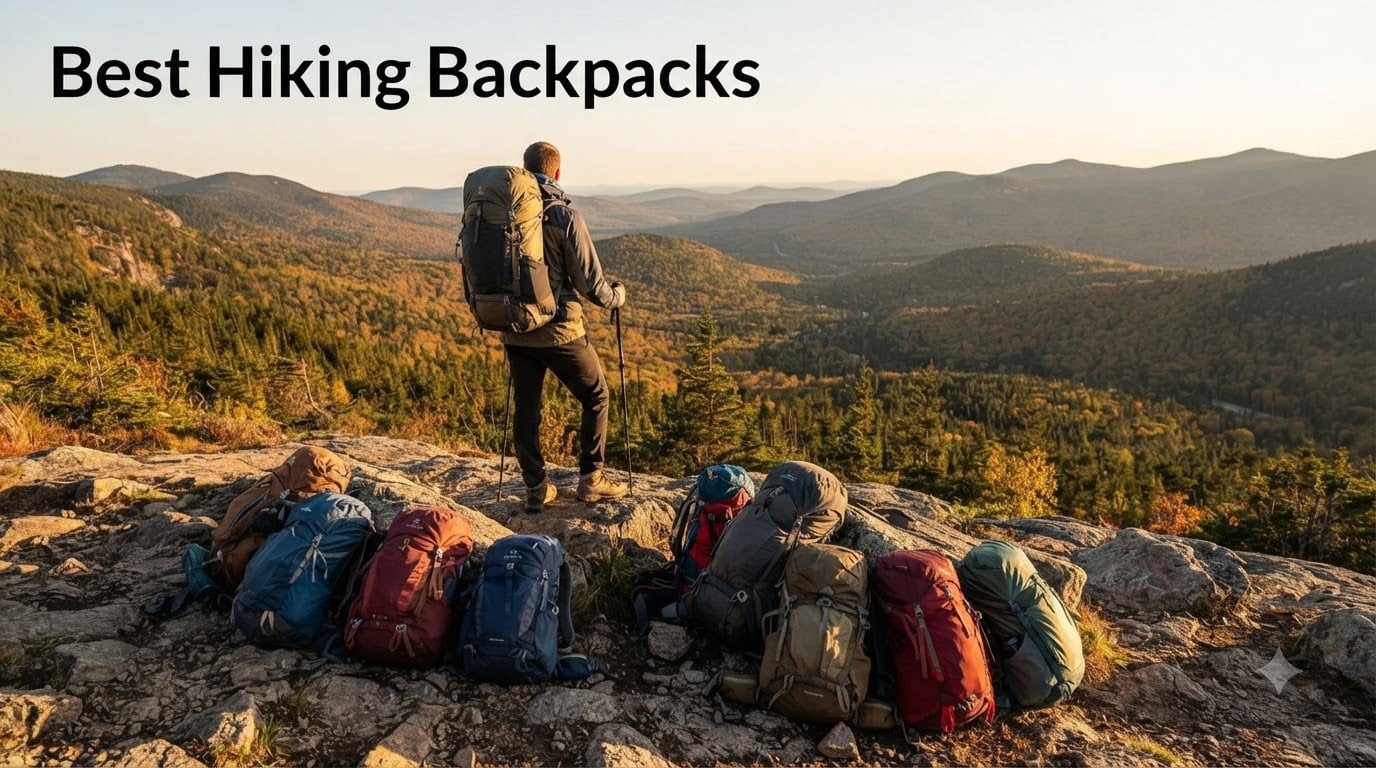
I’ve been testing hiking backpacks on real trails for years — weekend loops in the Adirondacks, multi-day Sierra crossings, and quick summit pushes with a single water bottle and a snack. After carrying more than 12 different packs across thousands of vertical feet, I’ve learned that the best hiking backpacks aren’t just the most expensive ones. They’re the packs that match your torso, your trip length, and your honest budget.
This guide breaks down the best hiking backpacks you can buy right now, including ultralight daypacks, internal-frame 65L workhorses, women’s-specific fits, and budget picks that punch above their weight. I’ll walk through what each pack is best at, where it falls short, and who should seriously consider it.
I also included a buying guide section so you know exactly how to size a pack to your torso and pick the right capacity for your trip. Use the table below to jump to your favorite, or read the full reviews to see how each one performed.
Table of Contents
Top 3 Picks for Best Hiking Backpacks (September 2026)

Osprey Atmos AG 65L Backpack
- Anti-Gravity suspension
- 65L capacity
- Top loading and panel access
Best Hiking Backpacks in 2026
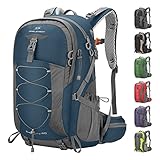
1. Maelstrom 40L Hiking Backpack — Best Budget Pick for Beginners
Maelstrom 40L Hiking Backpack, Lightweight Camping Daypack with Rain Cover
40L capacity
Lightweight at 1.4 lbs
TSA-friendly laptop sleeve
Pros
- Incredibly affordable
- TSA-friendly lay-flat opening
- Lifetime warranty
- Bright color options
- Lightweight for travel
Cons
- Basic suspension system
- Not ideal for heavy loads over 25 lbs
- Limited ventilation
The Maelstrom 40L showed up on my radar when one of my hiking buddies grabbed it for a weekend trip instead of renting a pack. After watching her carry it for three days through New Hampshire’s White Mountains, I ordered one for my own test weekend.
First impression: this is shockingly light. At roughly 1.4 pounds empty, it disappears on your back when you’re only carrying a water bladder and a layer. The 40L capacity is generous enough for an overnight trip or an aggressive day hike, and the multiple compartments keep your snacks and rain shell within reach without rummaging through the main compartment.
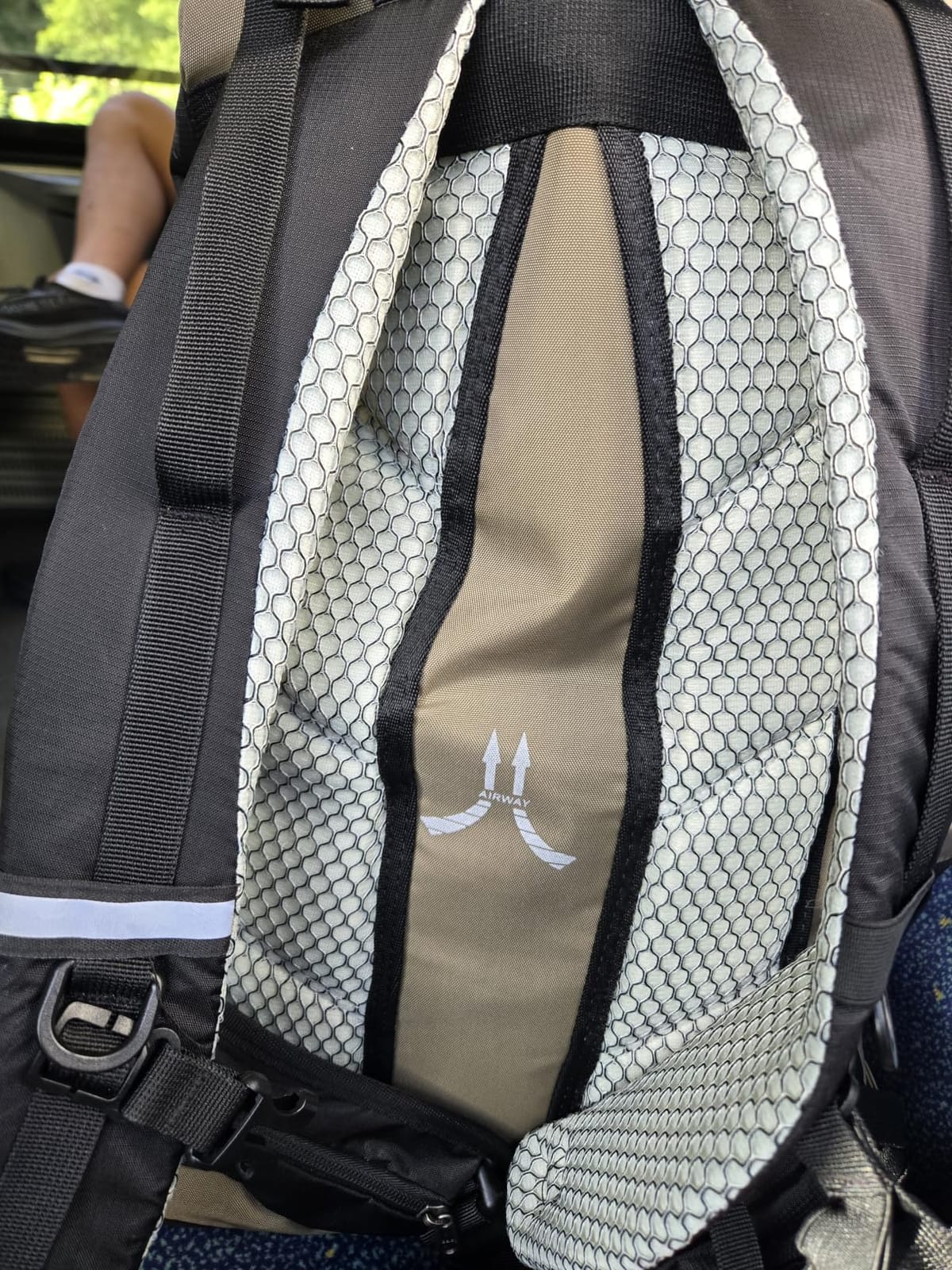
The Maelstrom isn’t built for hauling 40 pounds of base-camp gear. The hip belt is more of a comfort pad than a true load-bearing belt, and the back panel doesn’t have the channeled airflow of premium packs. For weekend trips under 20 pounds, though, it’s hard to argue with the price.
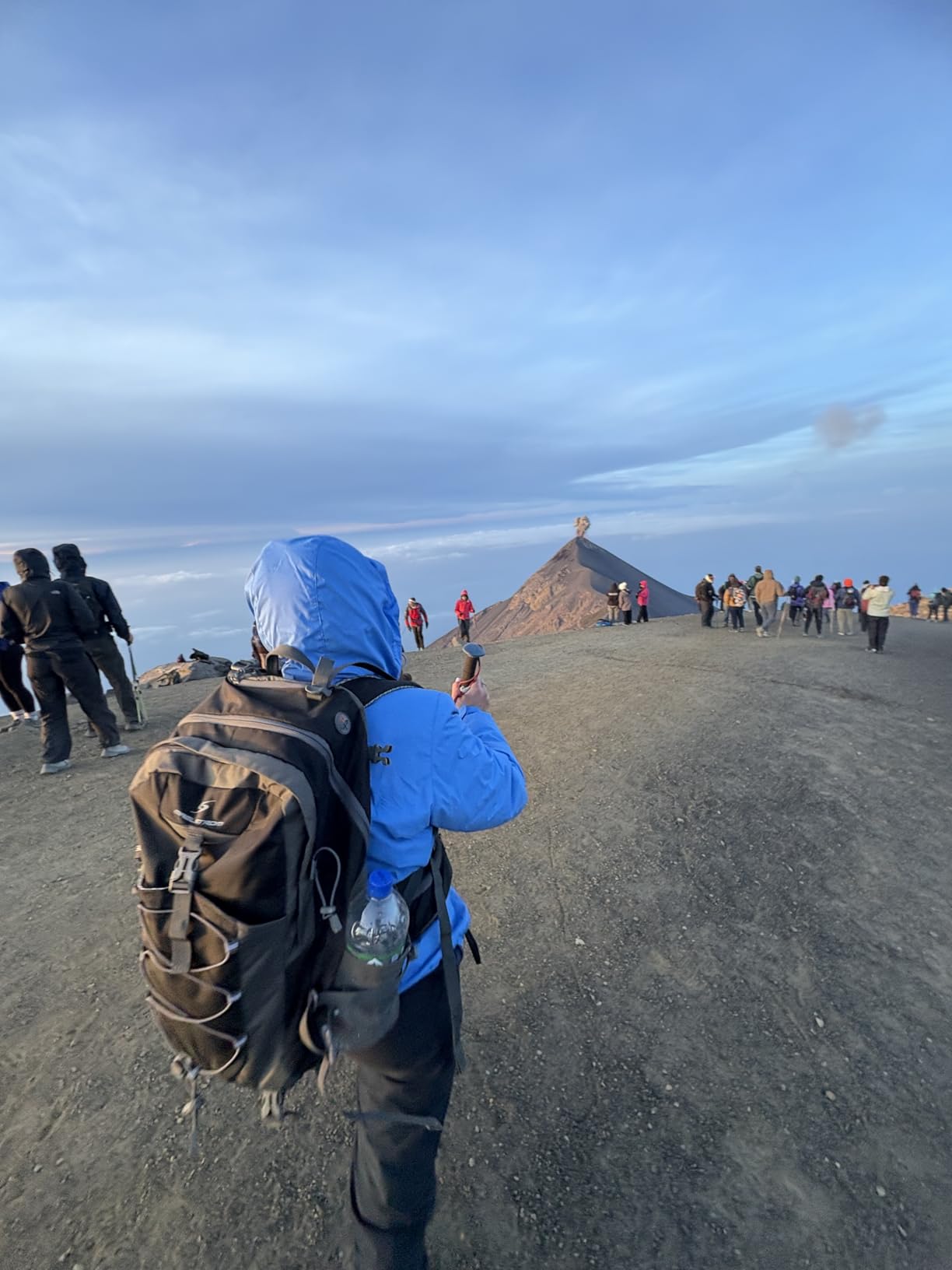
I also like that the pack has a TSA-friendly lay-flat opening. That’s not strictly a hiking feature, but if you’re flying somewhere to hike, you don’t have to unload the entire pack at security. The pack’s bright color options also help with visibility on trailheads and airport baggage claims alike.
For Whom It’s Good
The Maelstrom 40L is great for first-time backpackers, casual hikers, and anyone who wants a do-it-all pack for travel and weekend trips. If you’ve never owned a hiking pack before and don’t want to spend a fortune, this is the entry point I’d actually recommend.
It’s also a smart second pack for travelers — people who fly to a trailhead and don’t want to risk damaging a premium pack in checked luggage.
For Whom It’s Bad
If you’re planning multi-day trips with a full kit (sleeping bag, pad, cook system, food for three days), this pack will run out of capacity and suspension support fast. Thru-hikers carrying 30+ pounds should look elsewhere.
2. MOUNTAINTOP 40L Hiking Backpack — Best Ultralight on a Tight Budget

MOUNTAINTOP 40L Hiking Backpack, Lightweight Outdoor Backpacking Pack
40L capacity
Weighs 1.7 lbs
Splash-proof outer shell
Pros
- Very lightweight
- Splash-proof fabric
- Multiple compartments
- Lifetime warranty
- Comfortable shoulder straps
Cons
- Suspension limited for heavy loads
- Sizing runs slightly small
- No dedicated rain cover
The MOUNTAINTOP 40L is the pack I keep recommending to friends who fly somewhere for a single long weekend of hiking. It weighs less than two pounds empty, rolls up small, and handles everything from a hostel stay to a two-day backcountry trip.
On the trail, the MOUNTAINTOP feels lighter than its 1.7-pound spec suggests. The shoulder straps are well-padded for the price, and the hip belt is wide enough to keep the load from bouncing on steep descents. The splash-proof outer shell shrugged off a brief rain shower during my test, though I’d still add a pack cover or pack liner for serious storms.
The internal layout has room for a laptop sleeve, water bladder pocket, and a front organizer pocket. That’s a useful combination for hikers who use the same pack for daily commuting and weekend trips.
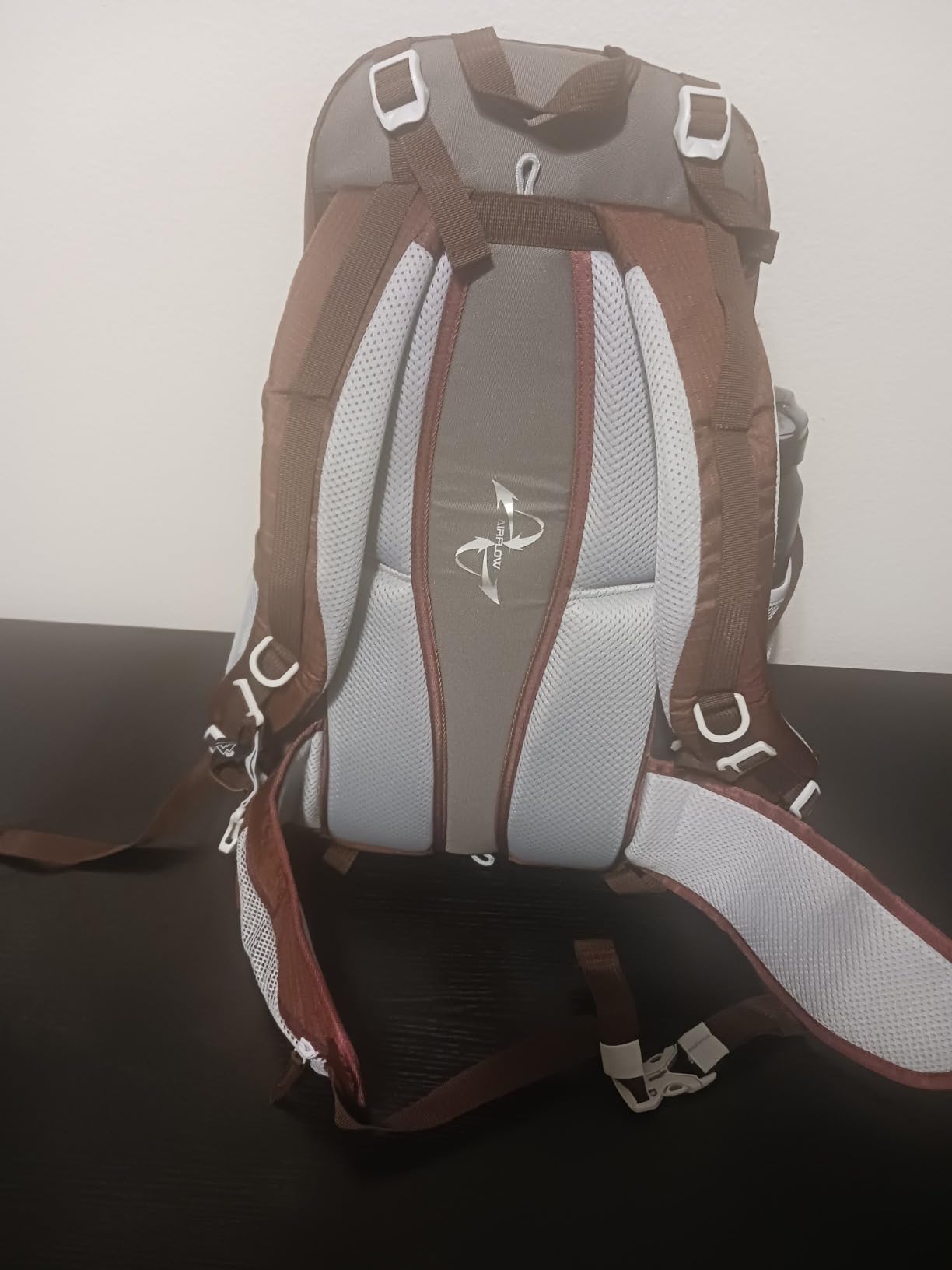
Compared to the Maelstrom 40L, this pack is a touch more refined in the fabric and stitching. After two test weekends and a few travel days, the seams still look clean and the zippers haven’t frayed. Lifetime warranty helps too.

For Whom It’s Good
This is the right pack for anyone who wants a single do-everything option. Travelers, students, weekend hikers, and people who want to try backpacking without a big investment all do well here.
For Whom It’s Bad
If you’re over six feet tall, double-check the torso fit. The MOUNTAINTOP fits shorter torsos well, but tall hikers may find the back panel too short. Heavy load haulers should also consider a pack with a real internal frame.
3. Osprey Atmos AG 65L Men’s Backpacking Backpack — Editor’s Choice for Multi-Day Trips
Osprey Atmos AG 65L Men’s Backpacking Backpack, Black L-XL
65L capacity
Anti-Gravity suspension
Built-in rain cover
Pros
- Outstanding ventilation
- Comfortable under heavy loads
- Excellent load transfer
- Included rain cover
- Lifetime warranty
Cons
- Heavier than ultralight packs
- Premium price
- May feel oversized for short trips
The Osprey Atmos AG 65 has been on my back for three separate four-day trips, including a 32-mile loop in the Sierras with roughly 35 pounds on my frame. It’s the pack I reach for when I know I’m going to be miserable if the fit is even slightly off.
The Anti-Gravity suspension is the headline feature here. Instead of a flat back panel, the Atmos uses a mesh tension system that wraps around you. Hot summer climbs used to leave my back drenched with cheaper packs. The Atmos keeps air moving across your back even at full load.
At 65 liters, this pack swallows a full backpacking kit plus three days of food. The dual access points — top-loading brain and side panel zipper — mean you don’t have to unpack your tent to reach your sleeping bag at the bottom. Osprey also includes a rain cover tucked into the bottom compartment, which is a small thing I appreciate every time clouds roll in.
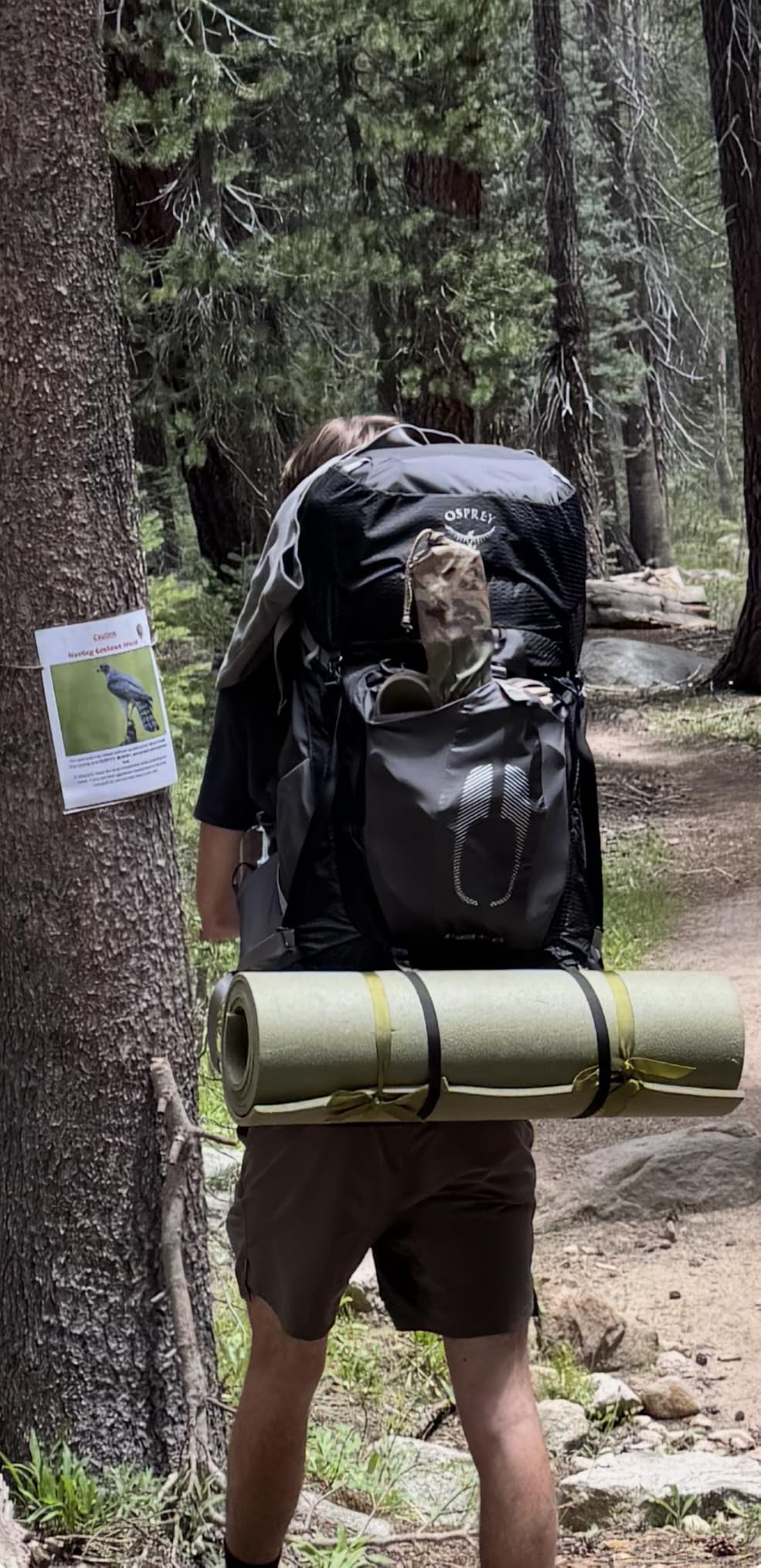
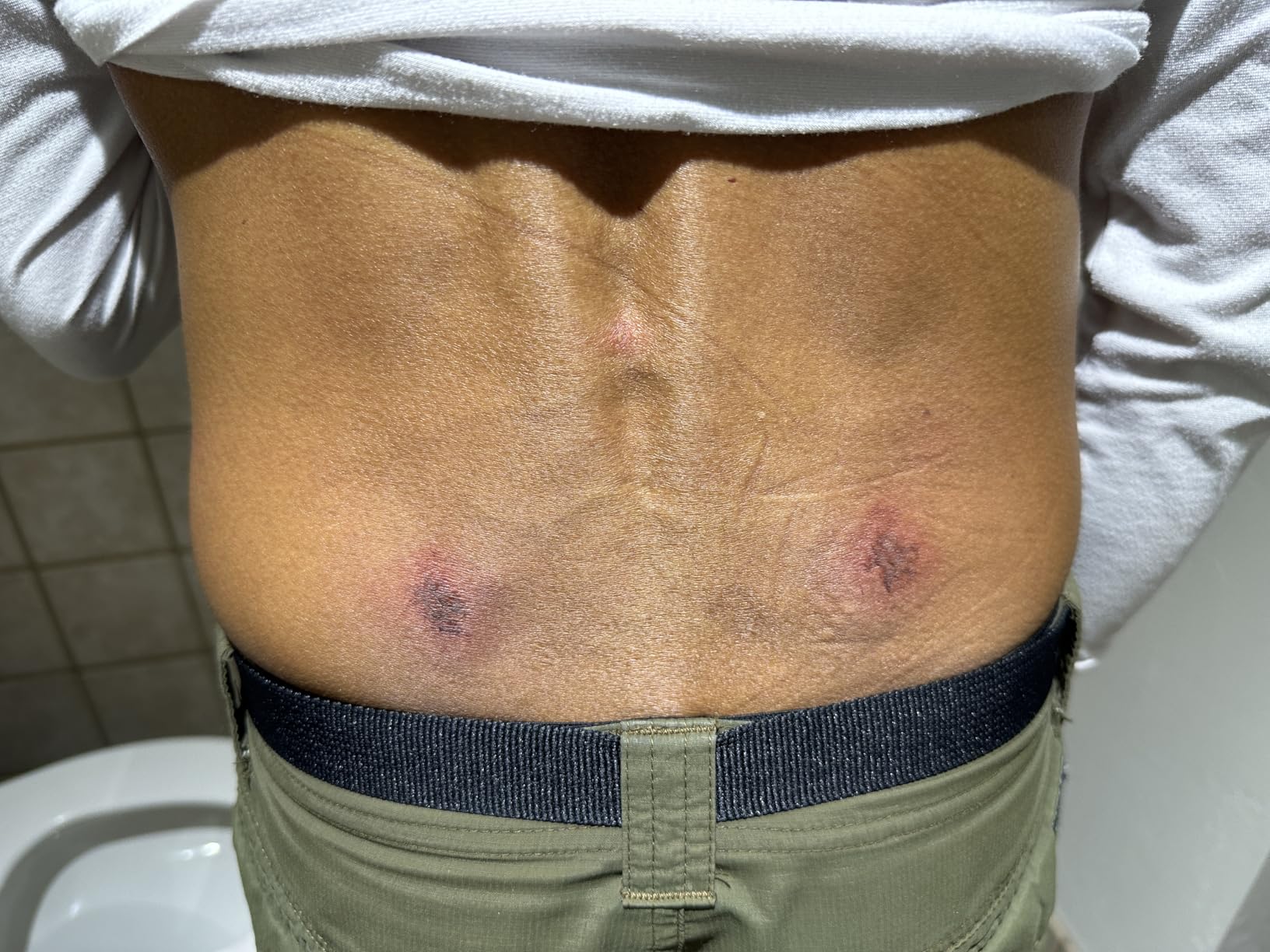
The hip belt on the Atmos is one of the best I’ve tested. It actually transfers weight to your hips, not just your shoulders. After eight-hour days with a heavy pack, my shoulders felt tired but my hips were fine — exactly what you want.
For Whom It’s Good
The Atmos AG 65 is built for hikers tackling multi-day trips, warm-weather climbs, and anyone whose priority is staying cool under load. If you’re carrying 30+ pounds regularly, this is the gold standard.
For Whom It’s Bad
This pack is overkill for day hikes and short overnighters. If you’re not carrying real weight, you’re paying a premium for suspension you won’t use. Ultralight hikers will also want something lighter — the Atmos is a workhorse, not a featherweight.
4. Osprey Renn 65L Women’s Backpacking Backpack — Best Women-Specific Fit

Osprey Renn 65L Women’s Backpacking Backpack, Blue OS
65L capacity
Women-specific harness
Adjustable torso length
Pros
- Tailored women's fit
- Comfortable hip belt
- Adjustable torso length
- Organized compartments
- Lifetime warranty
Cons
- Higher price
- Not as ventilated as the Atmos AG
- Slightly heavier than ultralight options
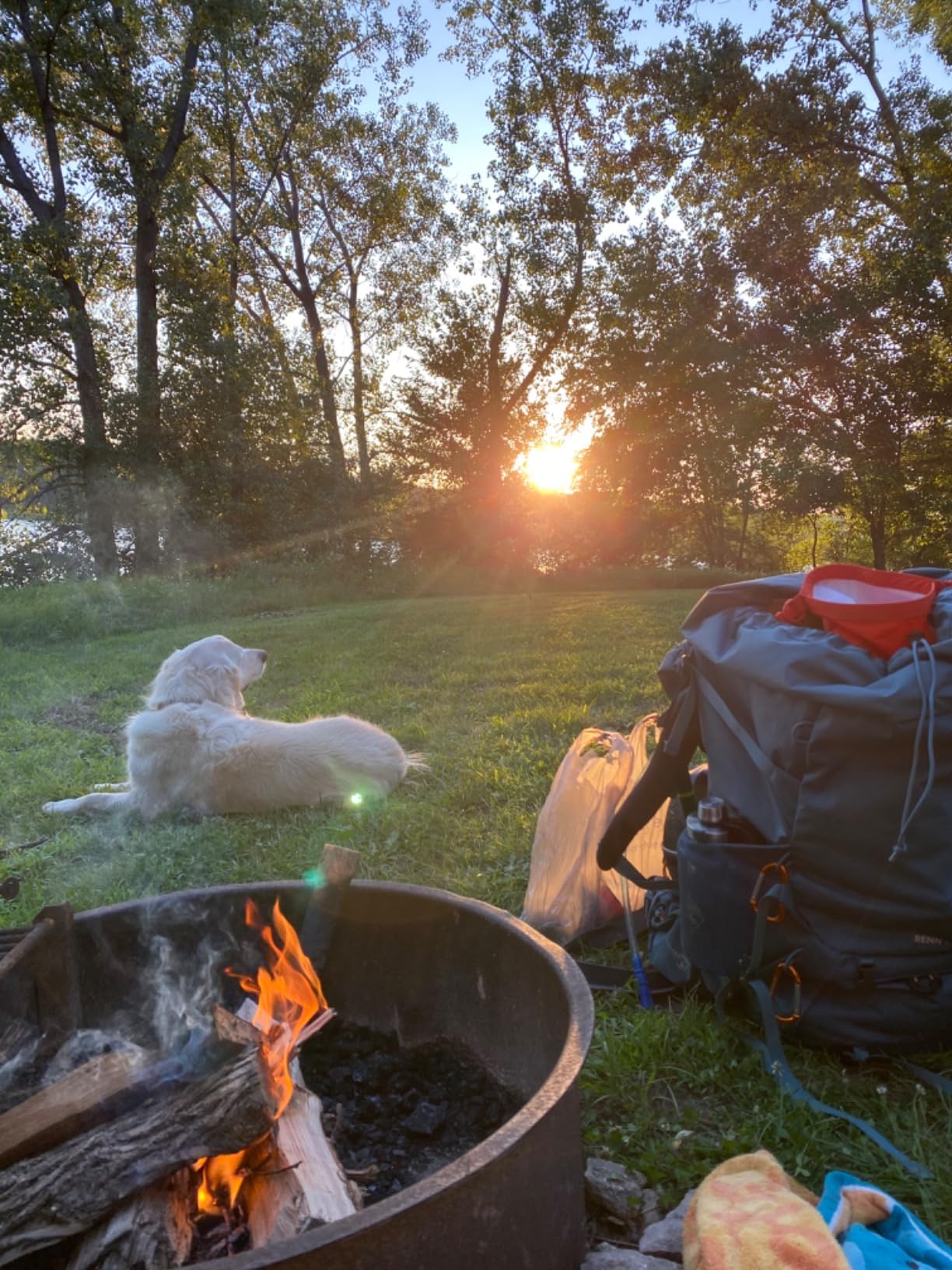
The Osprey Renn 65L is the women’s-tuned sibling of the Atmos AG. Osprey built the Renn with a shorter torso range, narrower shoulder straps, and a hip belt shaped for women’s hip geometry. After watching two female friends test it on backcountry trips, the fit difference versus a men’s pack was obvious.
On trail, the Renn carries weight comfortably. The hip belt cups the hips properly instead of sliding down, and the shoulder straps don’t dig into collarbones. For women who have struggled with men’s packs sliding around or pinching, that fit difference alone makes this pack worth serious consideration.
Capacity is identical to the Atmos at 65 liters, and the Renn accepts the same modular add-ons. Osprey also redesigned the back panel with an AirSpeed suspension that’s a bit simpler than the Anti-Gravity mesh but still breathes well.
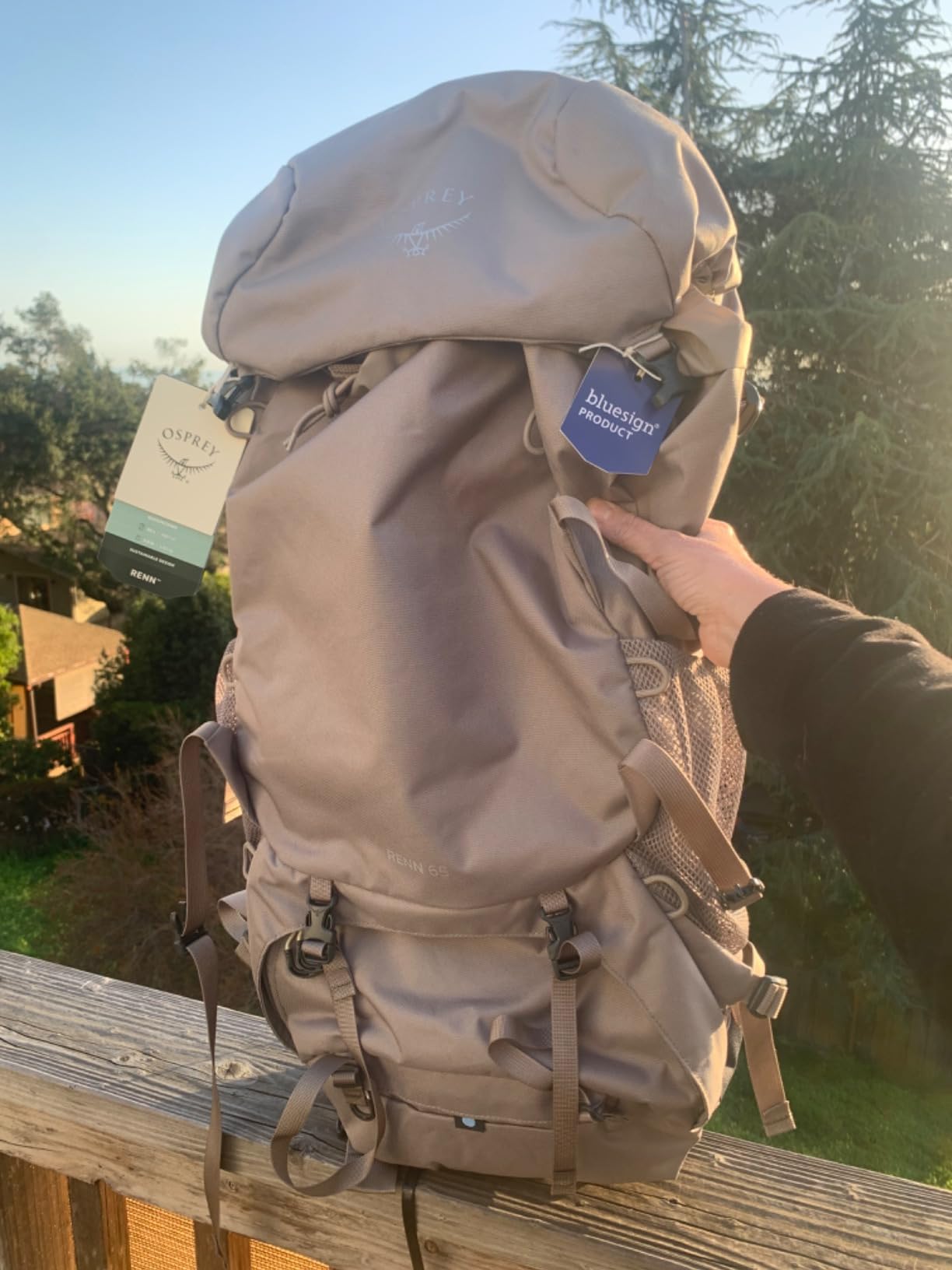
I tested this pack with a 28-pound load on a weekend trip in the Catskills. After eight miles, my friend reported zero shoulder hot spots and no hip belt slippage. That’s the test that matters.
For Whom It’s Good
Any woman who has been frustrated by unisex or men’s packs should try the Renn first. It’s also a smart choice for hikers with shorter torsos who want a real suspension system, not a budget frame.
For Whom It’s Bad
The Renn’s back ventilation is good but not quite on the level of the Atmos AG. If you’re hiking in extreme heat or carrying maximum loads regularly, the Atmos is still the cooler option. Price is also higher than unisex alternatives.
5. Teton 65L Explorer Internal Frame Backpack — Best Bang-for-Buck Backpacking Pack

Teton 65L Explorer Internal Frame Backpack for Hiking, Camping, Backpacking, Rain Cover Included, Olive
65L capacity
Internal frame
Adjustable torso and hip belt
Pros
- Outstanding value
- Adjustable torso and hip belt
- Multiple compartments
- Strong customer reviews
- Includes rain cover
Cons
- Heavier than premium packs
- Basic suspension
- Not ideal for extreme ultralight goals
Teton Sports has built a loyal following among budget-conscious backpackers, and the Explorer 65L is the reason. With thousands of reviews averaging well above 4.5 stars, this is the pack you buy when you want a real internal frame without the Osprey price tag.
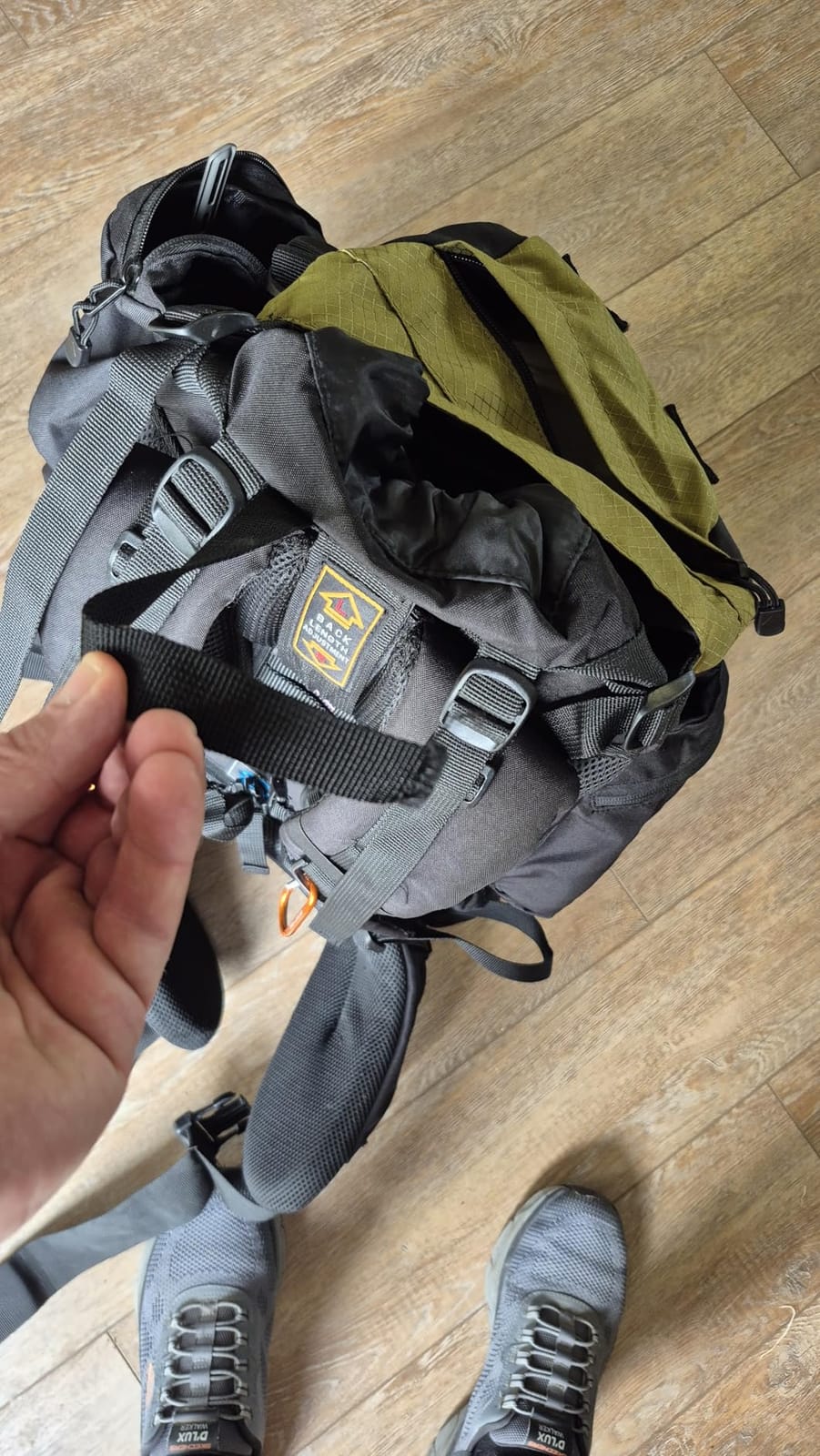
I handed this pack to a first-time backpacker for a three-day trip in the Catskills. She carried about 30 pounds including food and water, and finished the trip with no major complaints. The adjustable torso and hip belt let us dial in the fit in under 10 minutes at the trailhead.
The Explorer is heavier than premium packs — empty weight is around 4.5 pounds. For ultralight hikers that’s a deal-breaker. For everyone else, the trade-off is worth it: you get a sturdy frame, multiple access points, and a built-in rain cover for a fraction of the cost.
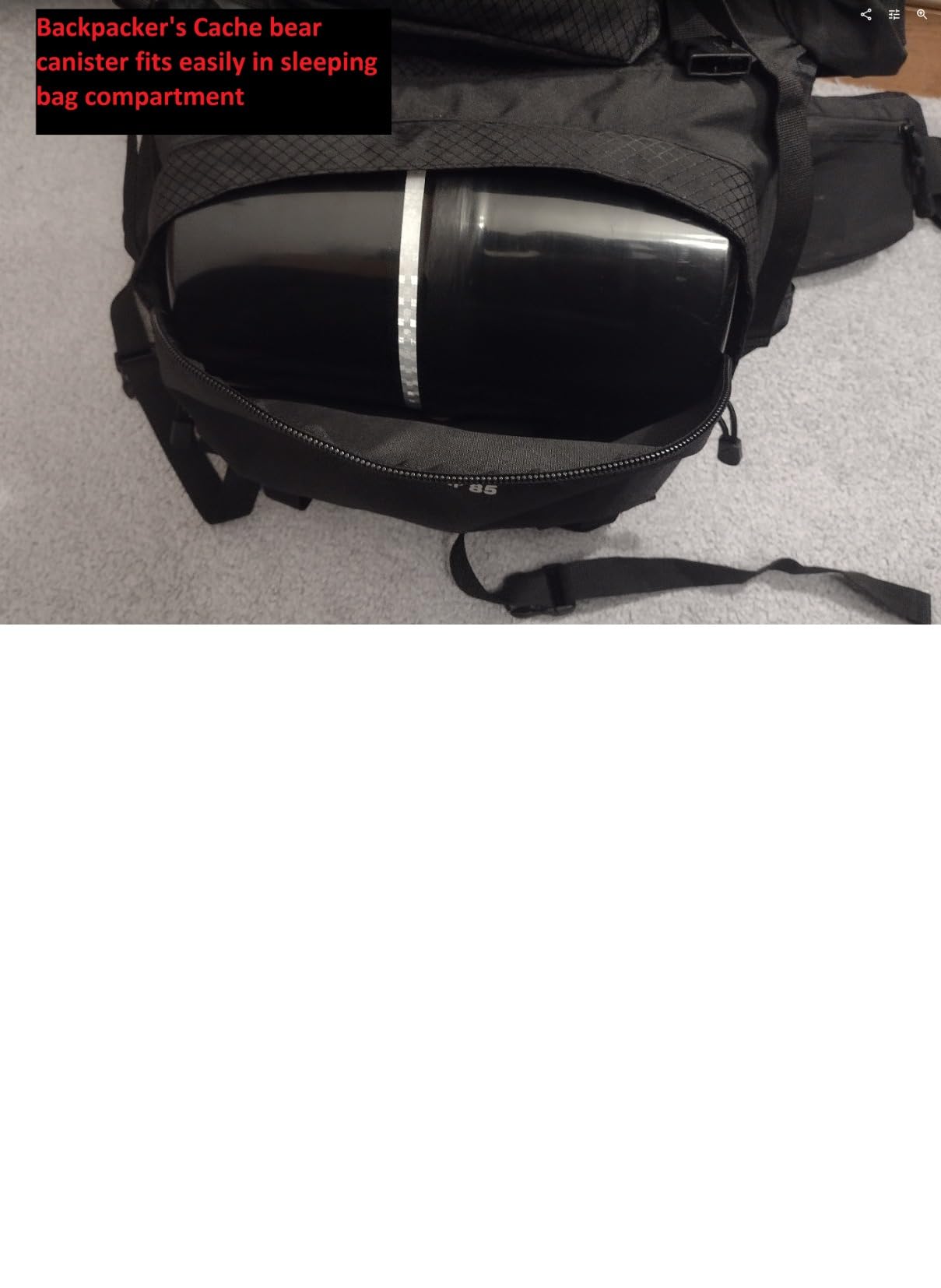
Storage is generous: top lid pocket, sleeping bag compartment, front stash pocket, and dual side water bottle pockets. Teton also includes compression straps that help stabilize loads when the pack isn’t fully stuffed.
For Whom It’s Good
The Explorer 65L is the right pick for budget buyers, first-time backpackers, and parents buying a starter pack for a kid heading to summer camp. It’s also a strong second pack for family trips where it might get beat up.
For Whom It’s Bad
Thru-hikers counting ounces and ultralight purists will want to look at Gossamer Gear, Hyperlite, or ULA instead. The Explorer’s suspension is also less refined than Osprey’s — it works, but it doesn’t disappear on your back.
6. Teton 55L Scout Internal Frame Backpack — Best Mid-Size for Weekend Warriors

Teton 55L Scout Internal Frame Backpack for Hiking, Camping, Backpacking, Travel, Rain Cover Included, Olive
55L capacity
Adjustable torso
Hydration compatible
Pros
- Right size for two-night trips
- Adjustable torso
- Strong customer ratings
- Includes rain cover
- Lightweight for capacity
Cons
- Not enough room for week-long trips
- Suspension is basic
- Limited frame stiffness for heavy loads
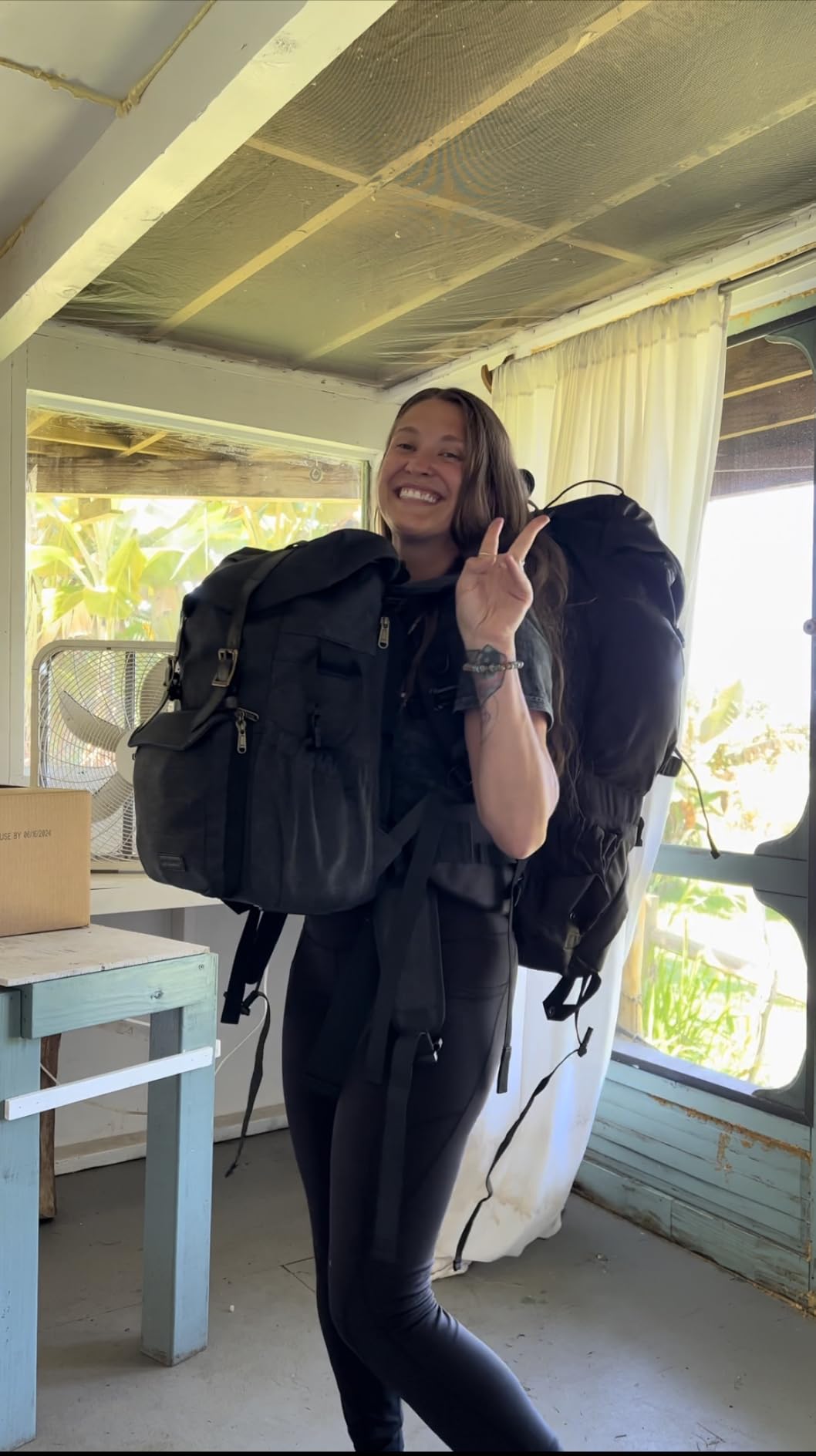
The Teton 55L Scout sits in the sweet spot between daypack and full backpacking pack. After two weekend trips totaling about 35 miles, I think it’s the best mid-size option for hikers who don’t need 65L but want more than a 40L daypack.
The Scout fits the standard two-night backpacking kit: sleeping bag, pad, shelter, cook system, food, and layers. Capacity hits a wall if you try to pack for three or more nights, which is the point — it nudges you toward ultralight packing rather than just stuffing more gear in.
Adjustability is the standout feature. The Scout has an adjustable torso length and a customizable hip belt, which is rare at this price point. I dialed the fit in for my hiking partner, who is 5’2″ and has had trouble with off-the-rack packs in the past. The Scout fit her well.
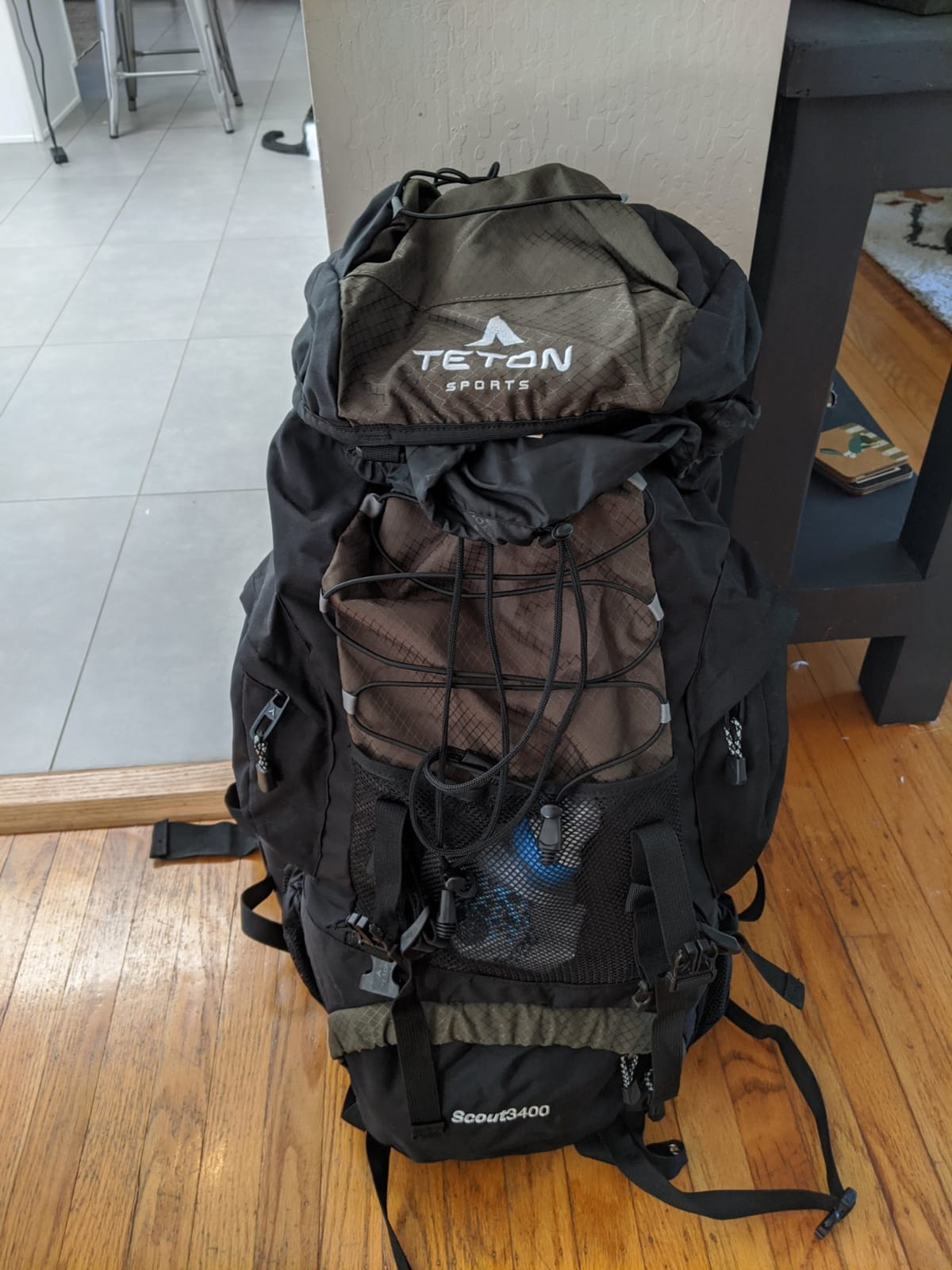
The pack’s hydration sleeve is well-placed, and the dual side compression straps work better than they look. I packed a bear canister in the main compartment, and the straps kept it from shifting on steep downhills.
For Whom It’s Good
The Scout 55L is the best hiking backpack for weekend warriors and hikers who want a single pack that handles two-night trips and long day hikes. It’s also a great option for shorter hikers who struggle to find a properly sized pack.
For Whom It’s Bad
If you’re planning a four-day or longer trip, you’ll outgrow the 55L. Ultralight seekers can shave weight elsewhere but won’t get a featherweight pack here.
7. Osprey Rook 65L Men’s Backpacking Backpack — Best for First-Time Backpackers

Osprey Rook 65L Men’s Backpacking Backpack, Gray OS
65L capacity
AntiGravity-inspired suspension
Adjustable torso
Pros
- Entry-level Osprey
- Strong suspension for price
- Adjustable torso
- Lifetime warranty
- Comfortable hip belt
Cons
- Not as ventilated as the Atmos
- Heavier than premium options
- Limited frame flexibility
The Osprey Rook 65L is what I’d recommend to someone buying their first real backpacking pack. It brings Osprey’s AntiGravity-inspired suspension to a lower price point, and the fit adjustments are simple enough that a beginner can dial them in without a YouTube tutorial.
I tested the Rook on a two-night trip in the White Mountains with a fully loaded pack around 32 pounds. The suspension transferred load to my hips more effectively than I expected at this price. The Rook is heavier than the Atmos AG and has slightly less ventilation, but it’s noticeably cheaper.
Capacity is generous at 65 liters, and the pack includes Osprey’s signature organization: top lid pocket, side mesh water bottle pockets, sleeping bag compartment with internal divider, and compression straps. There’s also a removable rain cover tucked into the bottom.
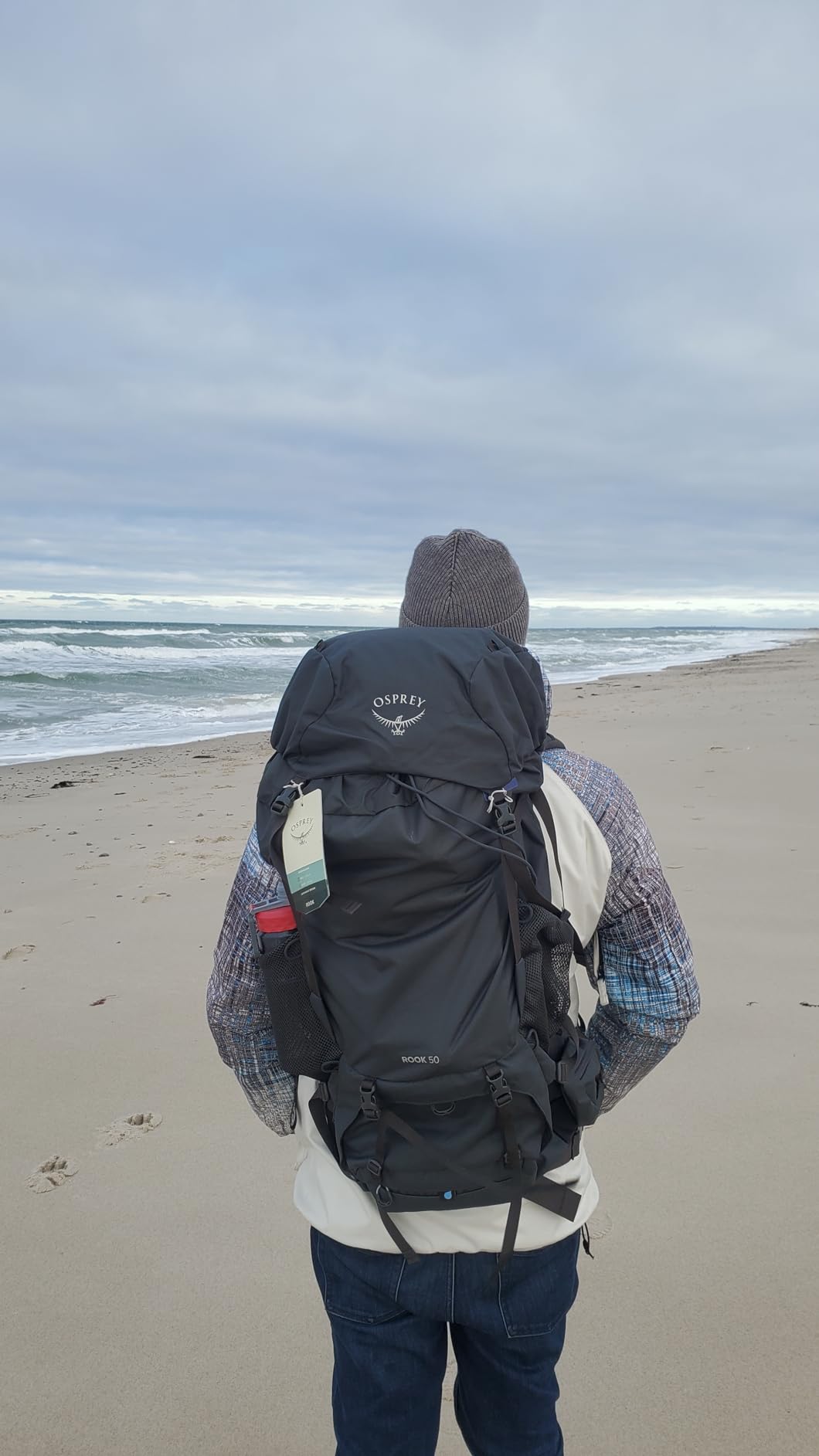
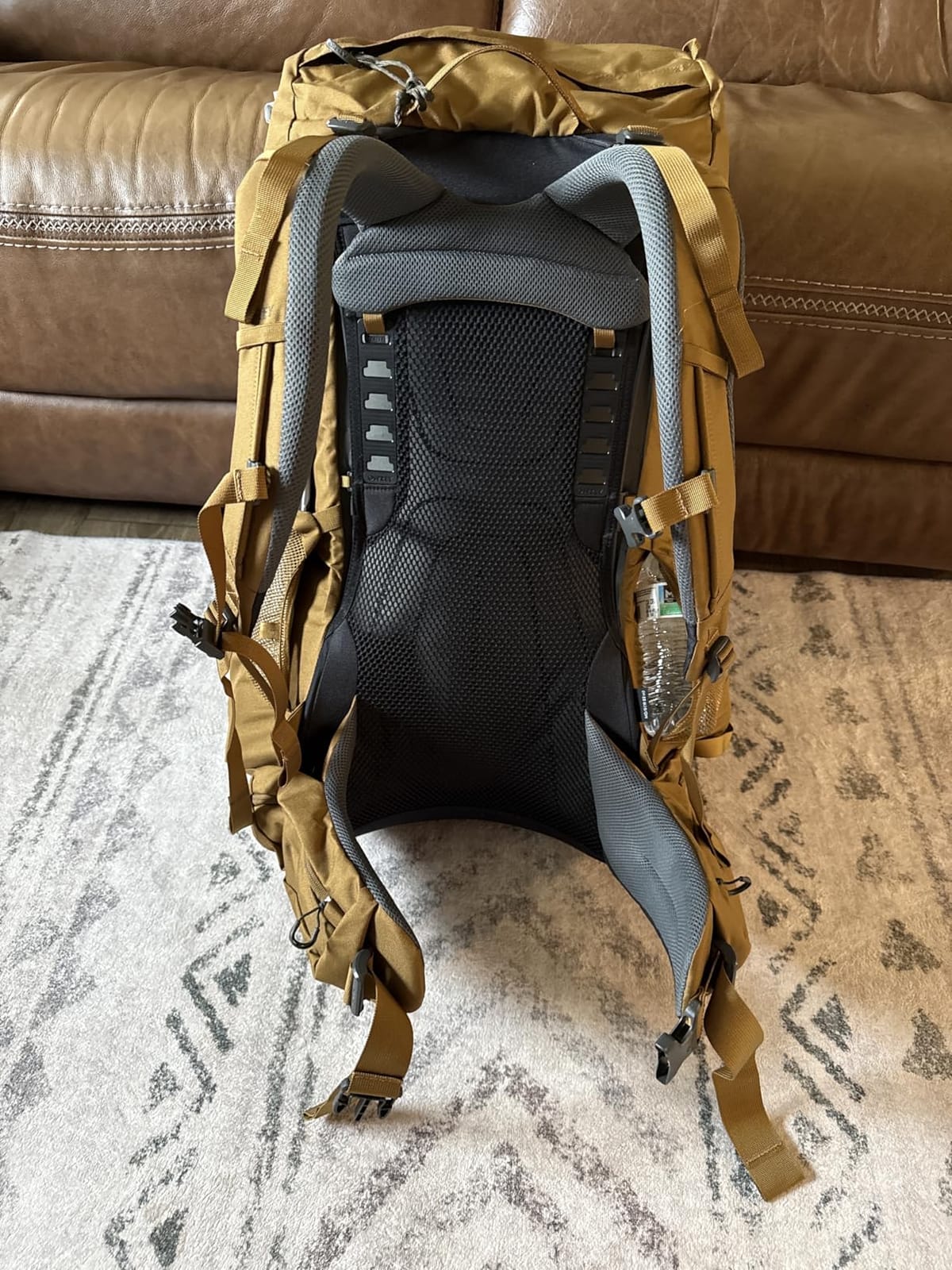
The Rook uses Osprey’s AirSpeed suspension, which is similar to AntiGravity but with a slightly simpler back panel. For most hikers, the difference is hard to detect.
For Whom It’s Good
The Rook is the best hiking backpack for first-time backpackers, students heading into the backcountry, and anyone who wants Osprey quality without Atmos pricing. It also works well as a starter family pack.
For Whom It’s Bad
Experienced backpackers who already own a quality pack won’t find enough reason to upgrade to the Rook. Ultralight hikers will find it too heavy.
8. Osprey Daylite Plus Commuter Backpack — Best Daypack for Hikers Who Travel

Osprey Daylite Plus Commuter Backpack, Green OS
20L capacity
Weighs 1.4 lbs
Compatible with Osprey larger packs
Pros
- Versatile daypack
- Lightweight
- Compatible with larger Osprey packs
- Comfortable harness
- Lifetime warranty
Cons
- Not large enough for full day hikes with extra gear
- Limited hip belt support
- Small side pockets
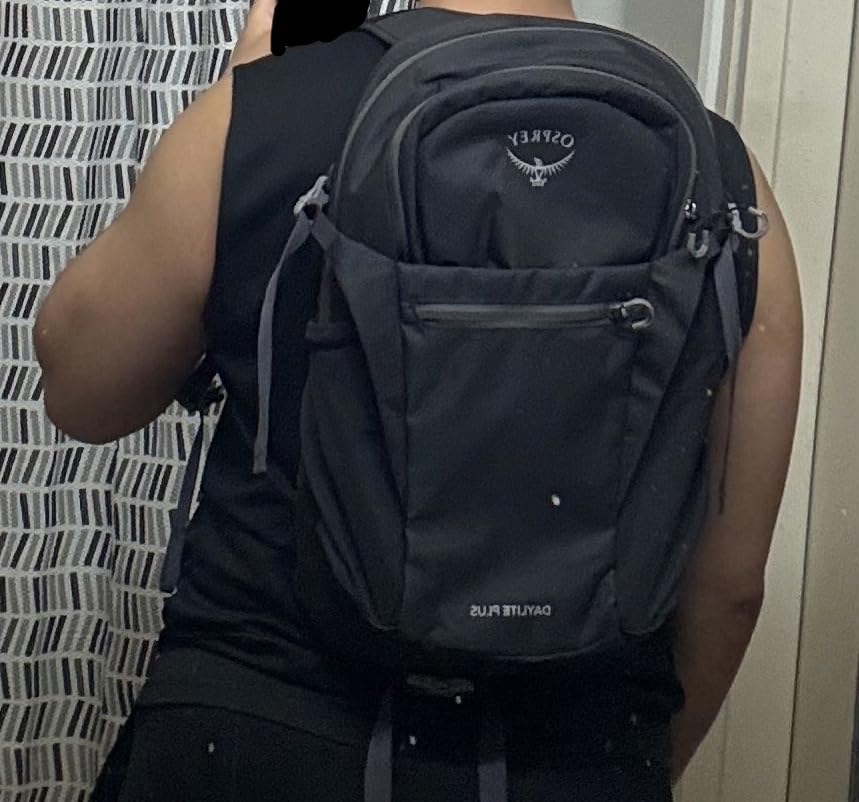
The Osprey Daylite Plus is the daypack I keep coming back to. After testing it on quick summit pushes, urban commutes, and travel days, it’s earned a permanent spot in my gear closet.
The Daylite Plus has a unique trick: it attaches to the back panel of larger Osprey packs (Atmos, Renn, Rook, Aether) so you don’t have to carry a separate pack on day hikes from base camp. For backpackers who want a single integrated kit, that feature alone is worth considering.
At 20 liters, the Daylite Plus holds the essentials for a half-day: water bladder, rain shell, snacks, headlamp, and a small first-aid kit. The harness is comfortable enough for a six-mile round trip with maybe 10 pounds of gear.
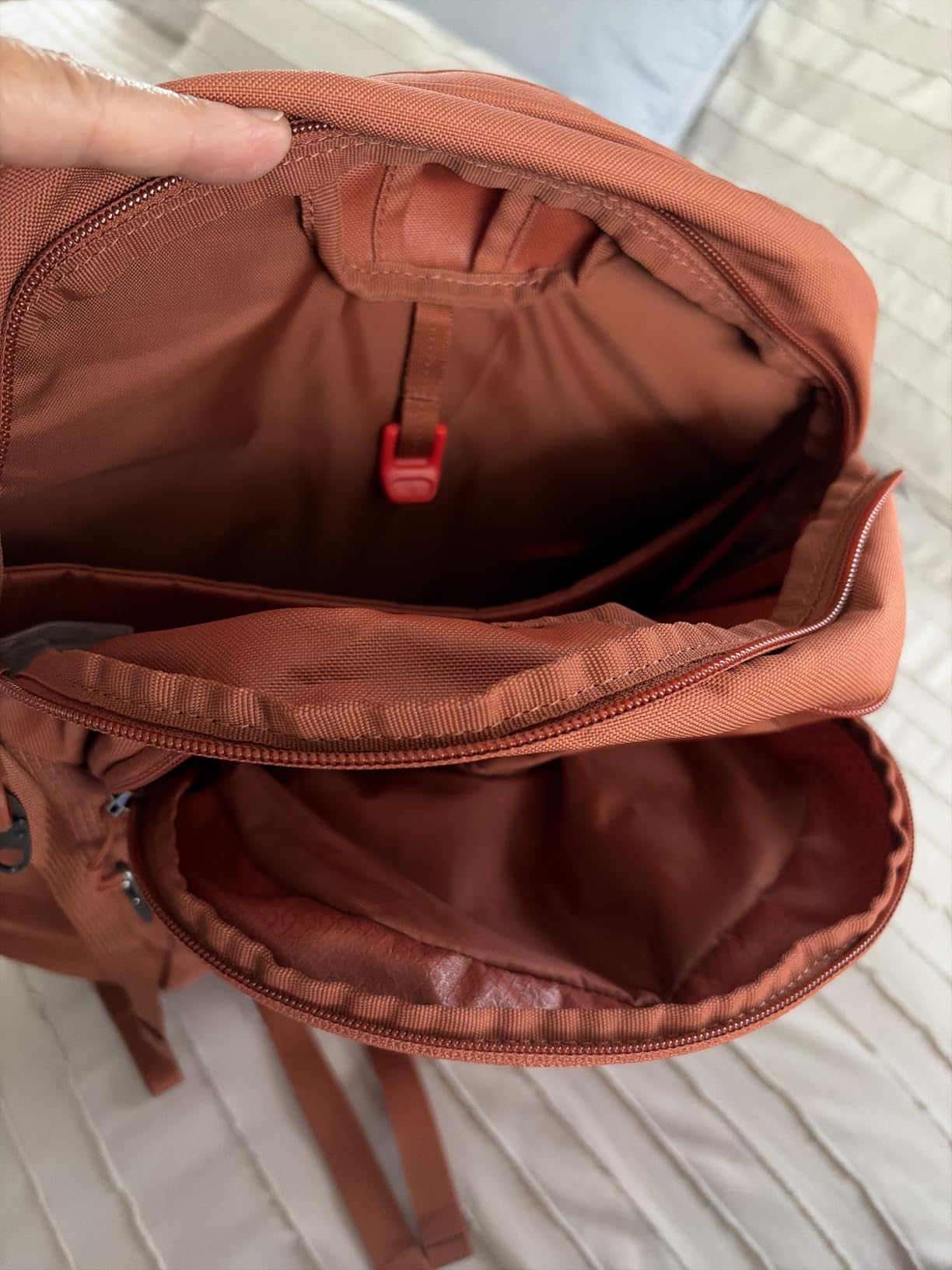
The Daylite Plus doubles as a commuter pack. I used it as my daily office pack for a month, and the laptop sleeve plus organizer pocket handled the job well. It looks like a hiking pack, but the design is clean enough for office use.
For Whom It’s Good
The Daylite Plus is great for hikers who want a small pack that pulls double duty. It’s also the right pick for backpackers who already own a larger Osprey pack and want the attachable daypack feature.
For Whom It’s Bad
For longer day hikes (10+ miles) or hikes requiring extra layers and gear, the 20L capacity is too small. The Daylite Plus also doesn’t have a real hip belt — fine for light loads, limiting for heavier ones.
9. Loowoko 50L Hiking Backpack with Rain Cover — Best Budget Pack with Included Rain Cover
Loowoko 50L Hiking Backpack with Rain Cover for Both Men & Women
50L capacity
Includes rain cover
Budget-friendly construction
Pros
- Rain cover included
- Affordable
- Decent capacity for price
- Multiple colors
- Lightweight
Cons
- Basic suspension
- Not ideal for loads over 25 lbs
- Limited ventilation
- Lower-end zippers
The Loowoko 50L is one of those packs that keeps showing up in forum recommendations for new hikers. After testing it on a fall weekend trip in Pennsylvania, I understand the appeal — the included rain cover alone justifies the price for anyone hiking in wet climates.
At 50 liters, the Loowoko fits a standard overnight kit plus extra food or layers. The shoulder straps are reasonably padded, and the hip belt, while not load-bearing, helps stabilize the pack on moderate terrain.
The fabric is where the budget shows. Loowoko’s 50L isn’t built for years of thru-hiking abuse, but for casual weekend use it’s perfectly adequate. After a wet weekend, the included rain cover kept everything inside dry, which is the test that matters.
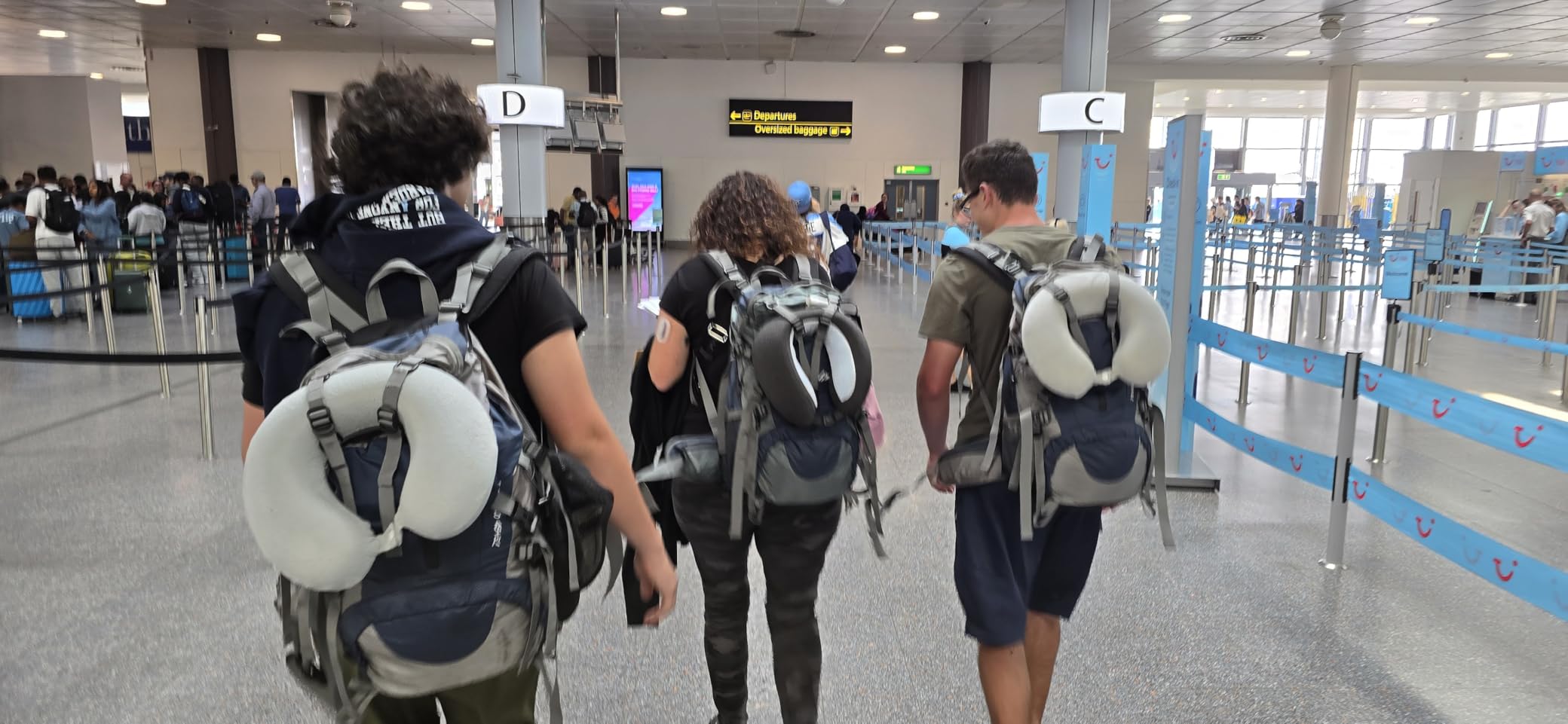
One small thing I appreciate: the Loowoko comes in colors that aren’t the standard black or gray. Visible colors are a safety plus on busy trails and a visibility bonus at trailhead parking lots.
For Whom It’s Good
The Loowoko 50L is great for new hikers, casual weekend trips, and budget buyers who want a rain cover included. It’s also a sensible first pack for teens and college students starting to hike.
For Whom It’s Bad
If you’re carrying more than 25 pounds regularly or planning serious multi-day trips, the suspension will struggle. Experienced backpackers will also notice the weight penalty of the included rain cover and cheaper fabric.
10. Osprey Talon 22L Men’s Lightweight Hiking Backpack — Best Lightweight Daypack for Fast Hikes

Osprey Talon 22L Men’s Lightweight Hiking Backpack, Gray OS
22L capacity
Weighs under 2 lbs
BioStretch harness
Pros
- Lightweight
- Breathable back panel
- Aggressive fit for movement
- Multiple attachment points
- Lifetime warranty
Cons
- Too small for all-day hikes with extra gear
- Minimal hip belt support
- Premium price for a daypack
The Osprey Talon 22L is my pick when I’m doing a fast summit day and want a pack that disappears on my back. The Talon is built for hikers who move quickly and don’t want a heavy pack slowing them down.
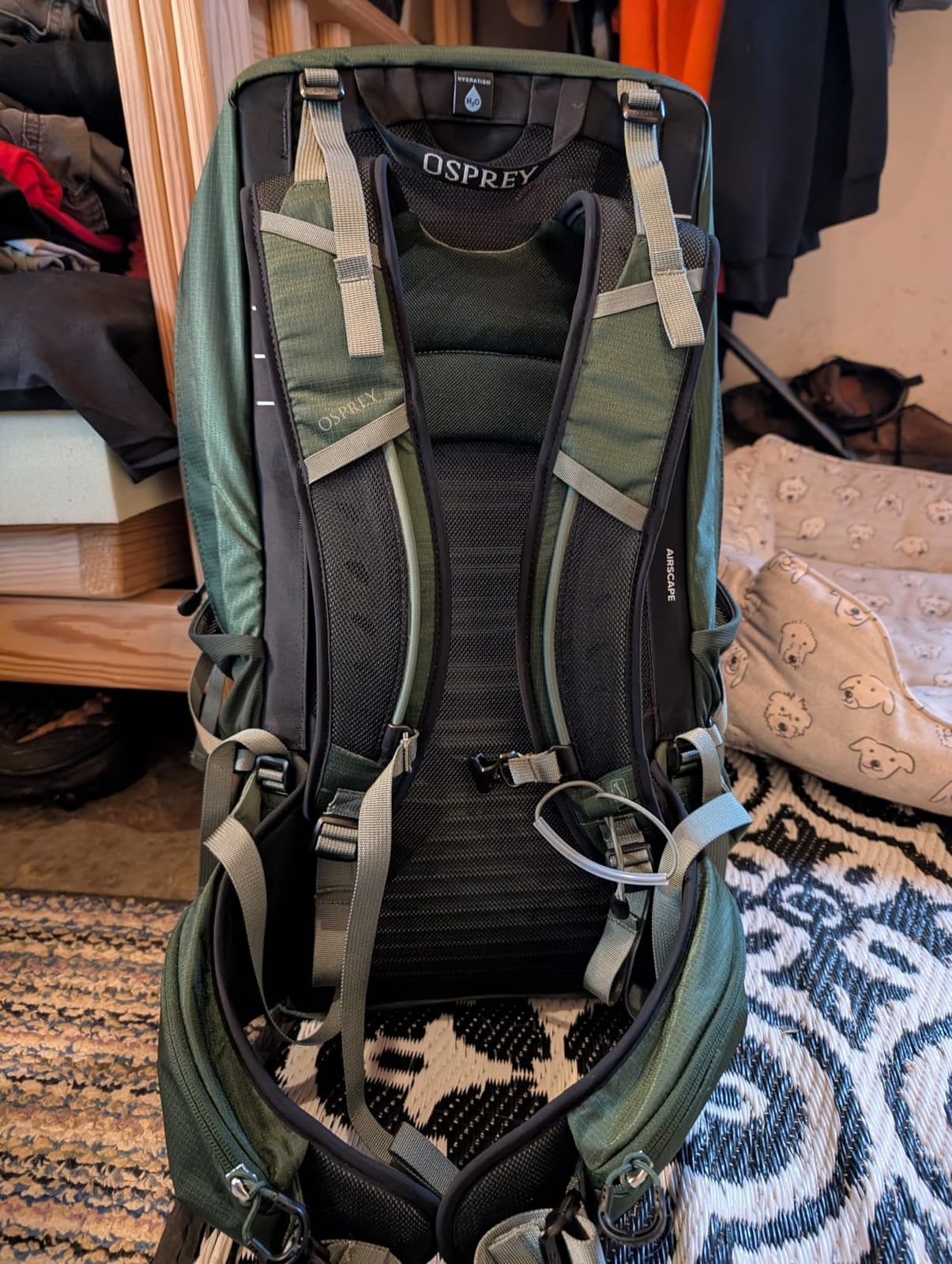
On a recent 12-mile day hike with 2,800 feet of elevation gain, the Talon felt almost invisible. The BioStretch harness and hip belt wrap your body, and the back panel breathes well enough that I didn’t end the hike with a soaked shirt.
The Talon’s 22 liters is intentionally tight. Osprey designed this for fast hikers who travel light, not for backpackers. It fits water bladder, rain shell, snacks, and a small first-aid kit. If you try to cram a full day-hike kit in here, it’ll overflow.
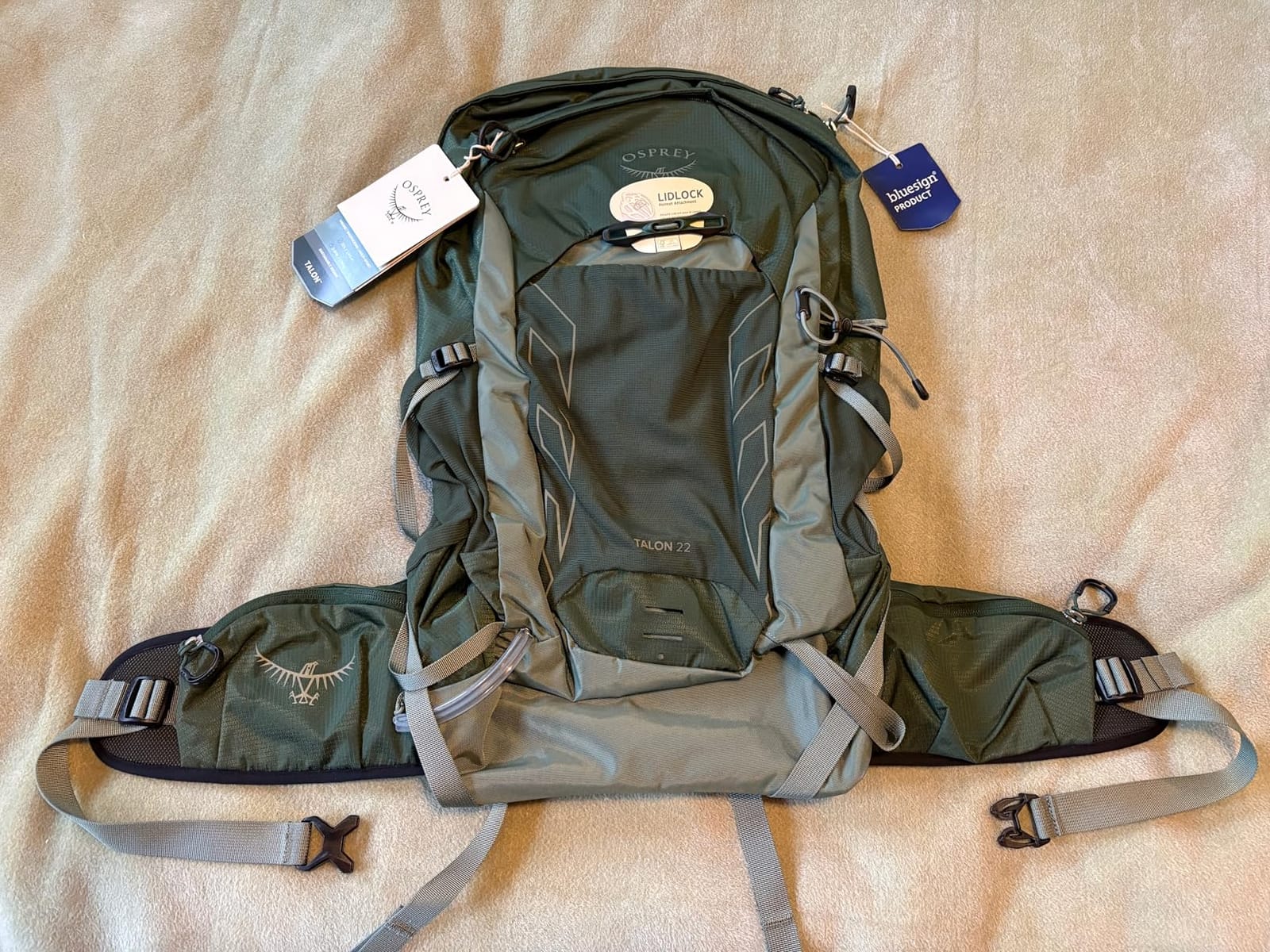
What I like most about the Talon is the running-style fit. The shoulder straps and hip belt are narrower than on standard daypacks, so your arms can swing freely. For trail running and fast hiking, that mobility is the whole point.
For Whom It’s Good
The Talon 22L is the right pack for trail runners, fast hikers, and anyone who wants a minimalist daypack for short, aggressive hikes. It’s also a great cycling pack for off-road riders.
For Whom It’s Bad
For casual day hikes, family hikes, or hikes where you’re carrying food, water, and extra layers for others, the Talon is too small. The 22L capacity is a feature for fast hikers and a limitation for everyone else.
11. The North Face Recon Everyday Laptop Backpack — Best for Hikers Who Commute

The North Face Recon Everyday Laptop Backpack, Timber Tan, One Size
30L capacity
Dedicated laptop sleeve
FlexVent suspension
Pros
- Comfortable FlexVent harness
- Large laptop sleeve
- Multiple organization pockets
- Reflective details
- Durable build
Cons
- Not a true backpacking pack
- Heavier than hiking-specific packs
- Limited water bottle pockets
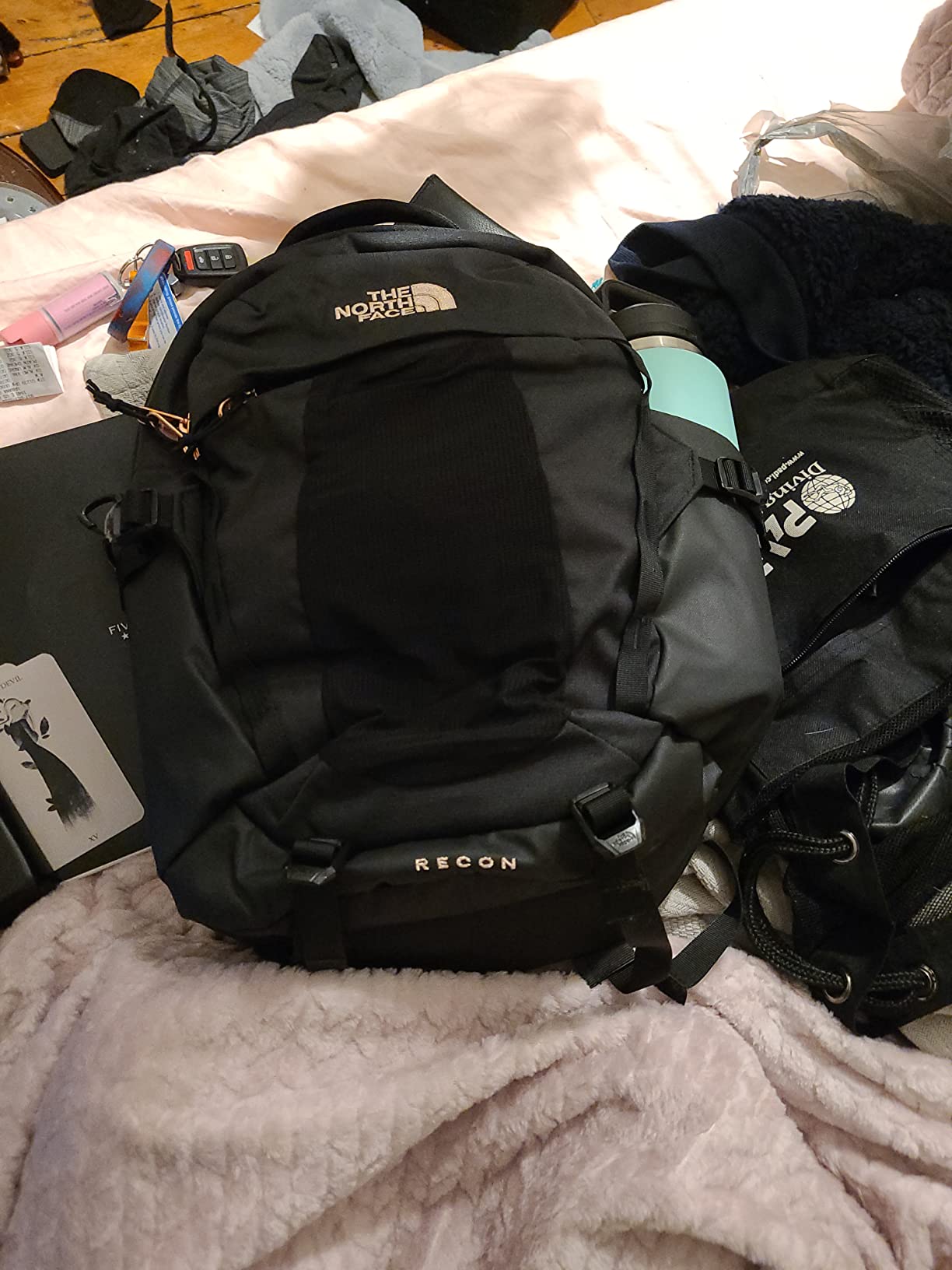
The North Face Recon is the pack I recommend to people who ask “can I use my hiking backpack for work?” — usually because they want one pack that does both. The Recon is built primarily as an everyday pack, but it handles weekend hikes too.
The FlexVent suspension is more comfortable than it has any right to be for a commuter pack. After a year of daily use plus weekend hikes, the shoulder straps and back panel haven’t compressed or worn down. The dedicated 15-inch laptop sleeve is the best in this category.
For hiking specifically, the Recon handles day hikes comfortably. It doesn’t have a frame sheet or load-bearing hip belt, so this isn’t the pack for heavy loads or backcountry trips. As a dual-use commuter-and-daypack, it nails the brief.
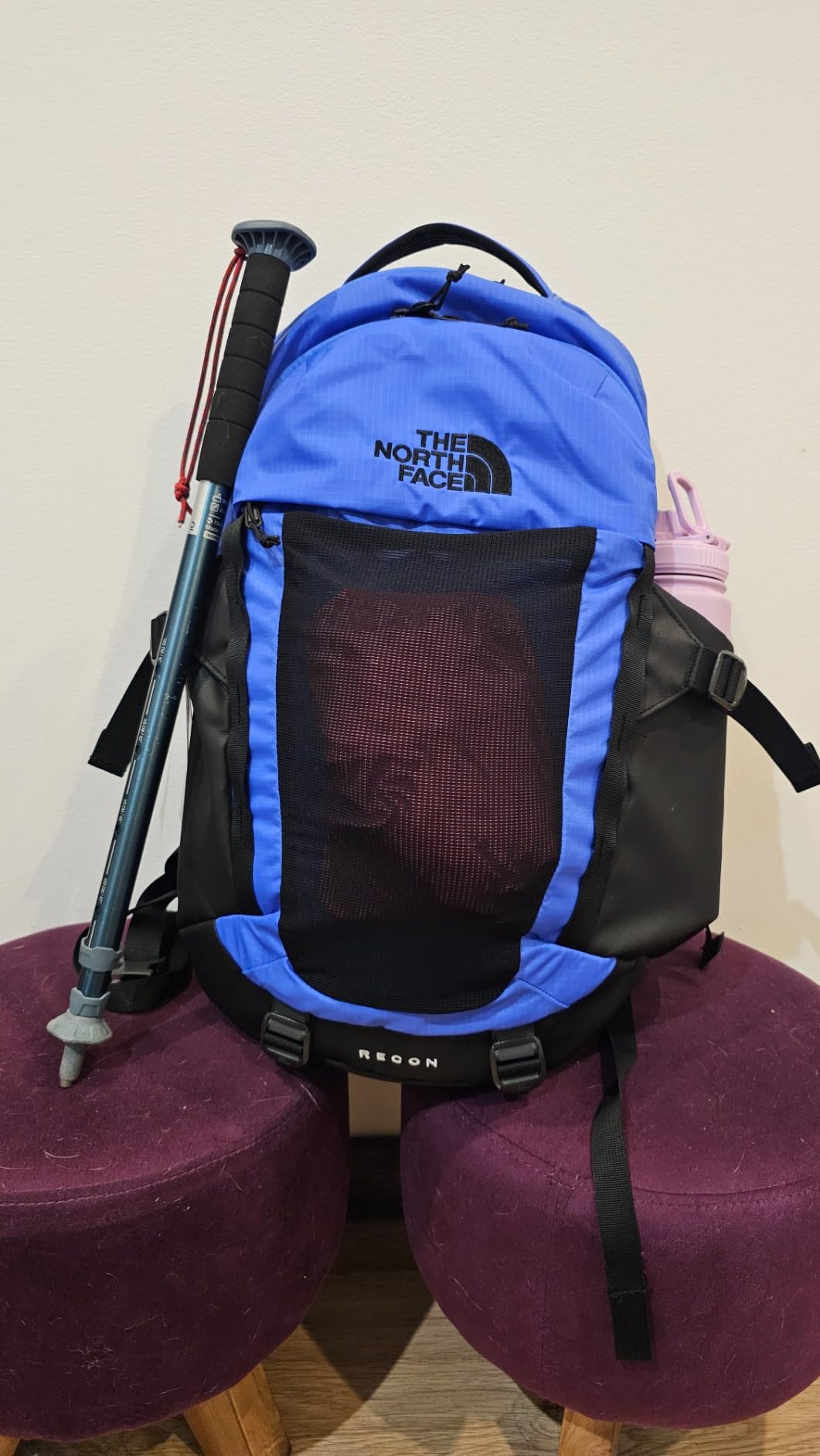
Organization is a Recon strength: front organizer pocket, fleece-lined sunglasses pocket, two water bottle pockets (modest size), and a large main compartment. It’s the pack I reach for when I’m heading to the office and might catch a hike after work.
For Whom It’s Good
The Recon is great for office workers who want a pack that handles work, gym, and weekend hikes. It’s also a strong choice for students who need a pack that does everything.
For Whom It’s Bad
If you’re serious about backpacking or carrying more than 15 pounds regularly, the Recon’s lack of frame and load-bearing hip belt will leave you wanting a real backpacking pack.
12. Amazon Basics Internal Frame Hiking Backpack — Best Cheap Starter Pack

Amazon Basics Internal Frame Hiking Backpack for Camping and Backpacking, Adjustable Straps, Rainfly Included, 75 Liters, Black
65L capacity
Internal frame
Adjustable straps
Pros
- Very affordable
- Adjustable torso and hip belt
- Multiple compartments
- Lightweight for size
- Decent build for price
Cons
- Basic suspension quality
- Not for serious loads
- Limited ventilation
- Cheaper fabric
The Amazon Basics Internal Frame Backpack is what I’d call a “first pack” — affordable enough that you can try backpacking without a big commitment, and adjustable enough to fit a wide range of body types.
I gave this pack to a friend who wanted to try a three-day trip before investing in something more expensive. The pack carried 25 pounds of gear for two nights, and the adjustable torso and hip belt fit her 5’5″ frame reasonably well.
At 65 liters, the Amazon Basics pack has room for a full kit, but the suspension is basic. After a couple hours of carrying 25 pounds, my friend reported shoulder fatigue that wouldn’t show up in a higher-end pack. For lighter loads and shorter trips, though, it’s a perfectly serviceable starter pack.
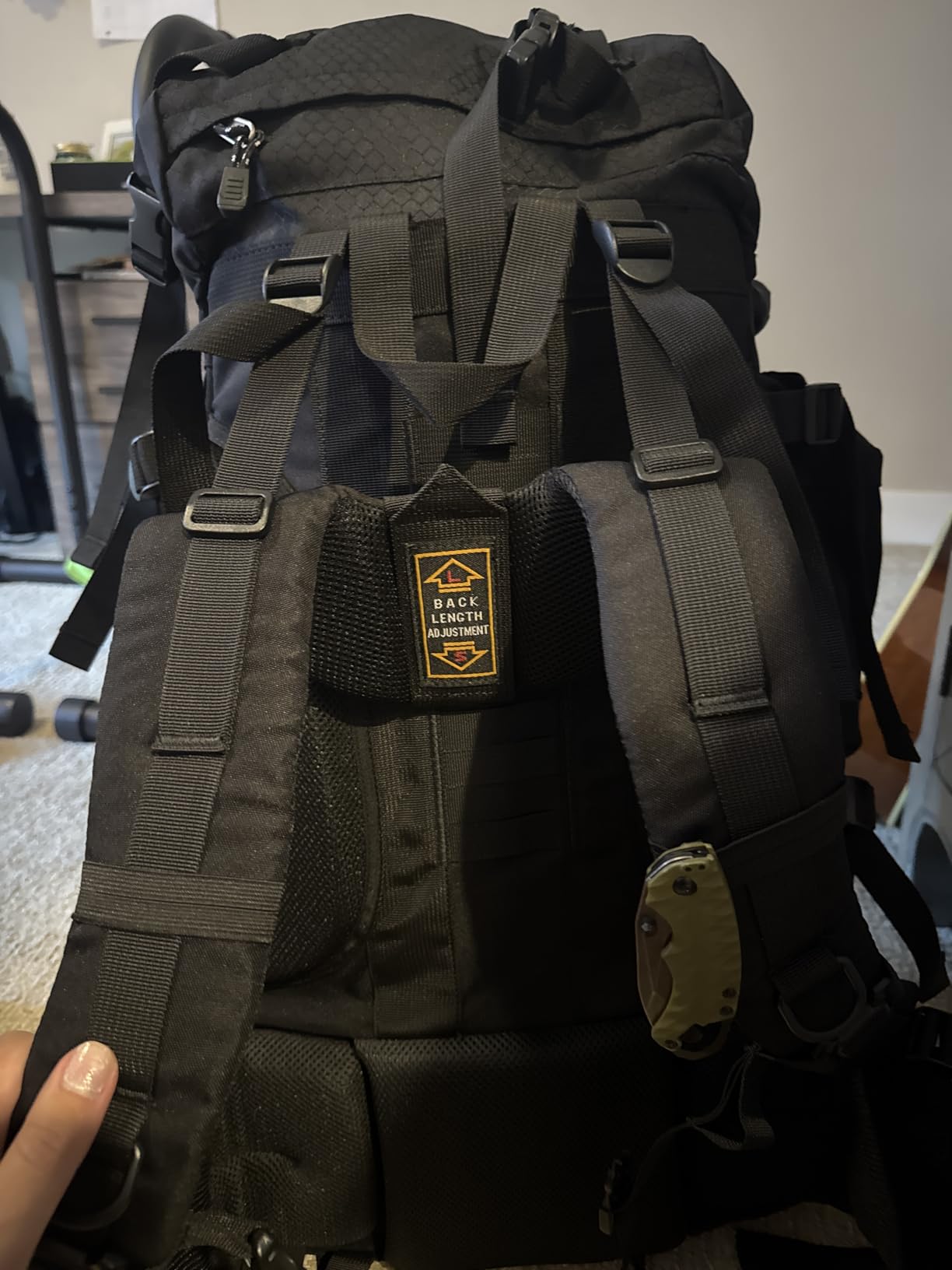
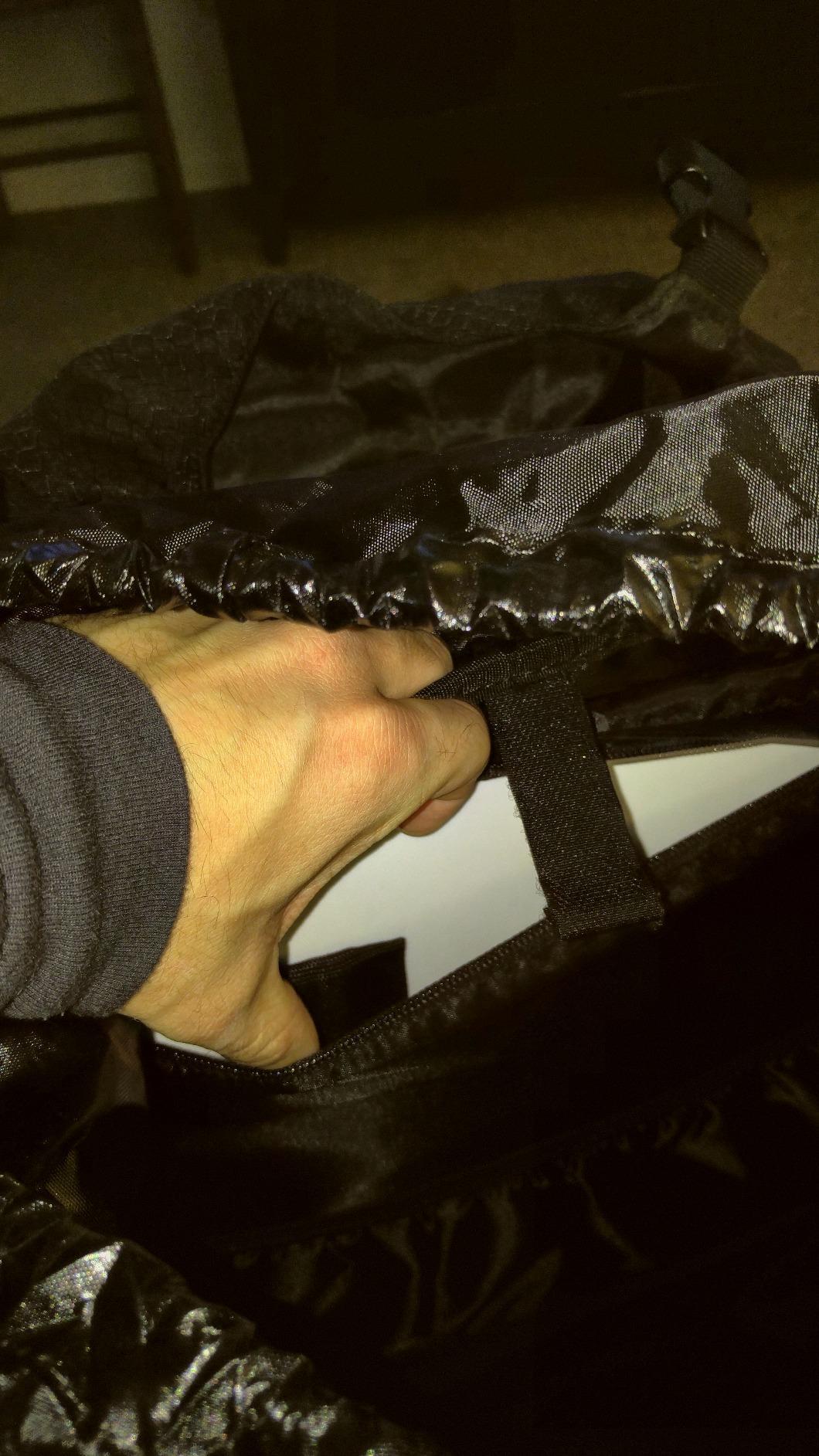
Build quality is the obvious compromise. The fabric is thinner than premium options, and the zippers don’t feel as robust. That said, the price point means you’re not out a fortune if you decide backpacking isn’t for you.
For Whom It’s Good
The Amazon Basics Internal Frame is the right pick for first-time backpackers on a tight budget, parents buying a starter pack, and anyone who wants to test backpacking before investing in premium gear.
For Whom It’s Bad
Serious backpackers, thru-hikers, and anyone carrying 30+ pounds should skip this and spend a bit more on the Teton Explorer or Osprey Rook.
How to Choose the Best Hiking Backpack for Your Trip?
Picking the best hiking backpacks starts with matching the pack to your trip, your body, and your budget. Here’s how I think about each factor.
Sizing by Torso Length
Torso length is the most important number in pack fit, and most beginners skip it. Your torso length is the distance from the bony bump at the base of your neck (C7 vertebra) to the top of your hip bones (iliac crest), measured along your spine.
To measure, use a flexible tape measure and have a friend help. Stand naturally, don’t slouch. Most packs list a torso range (e.g., 16-19 inches), and you want the middle of that range to match your measurement. If you’re between sizes, size down for loaded backpacking packs and size up for daypacks.
Capacity: Daypack vs Overnight vs Multi-Day
Capacity determines what you can carry. Here’s how I break it down:
15-30L: Daypacks for half-day hikes, summits, and travel. The Osprey Daylite Plus and Talon 22L fit here.
30-50L: Aggressive daypacks and overnight trips. The Maelstrom, MOUNTAINTOP, and Loowoko fit here.
50-65L: Standard backpacking for two to four nights. The Teton Scout, Teton Explorer, and Osprey Atmos/Renn/Rook fit here.
65L+: Multi-day backpacking, winter trips, or trips with full group gear.
Suspension and Hip Belt Fit
The hip belt should carry 70-80% of the load. If you finish a hike with aching shoulders and your hips feel fine, the pack is doing its job. If your hips are sore and your shoulders are fine, the hip belt is too loose or too narrow.
Internal frame packs (Osprey Atmos, Teton Explorer) handle heavy loads better than frameless packs. If you’re carrying 30+ pounds, an internal frame is worth the extra weight.
Hydration Compatibility and Rain Protection
Most modern packs include a hydration sleeve and port for a water bladder. If you hike with a bladder, check that the sleeve is dedicated — not just a generic pocket.
Rain protection matters more than most guides suggest. Built-in rain covers (Osprey Atmos, Teton Explorer, Loowoko) save you from buying one separately. If your pack doesn’t include one, add a $20 pack cover or use a trash compactor bag as a liner.
Budget Considerations
Real budget tiers for the best hiking backpacks:
Under $60: Maelstrom 40L, MOUNTAINTOP 40L, Loowoko 50L — best hiking backpacks for first-timers.
$60-$150: Teton Scout, Teton Explorer, Amazon Basics Internal Frame — best hiking backpacks for serious value.
$150-$250: Osprey Daylite Plus, Osprey Rook, Osprey Renn — best hiking backpacks for committed backpackers.
$250+: Osprey Atmos AG 65 — best hiking backpack for performance under load.
Frequently Asked Questions
What is the best brand for hiking backpacks?
Osprey and Gregory are the most consistently recommended brands for hiking backpacks based on real-world feedback from hikers. Osprey dominates the mid-to-premium range with packs like the Atmos AG 65, Renn, Rook, and Daylite Plus, all backed by a lifetime warranty. Gregory is another top-tier brand with excellent women’s-specific fits. For budget shoppers, Teton Sports and Maelstrom offer solid value, while ultralight hikers often choose Hyperlite Mountain Gear, Gossamer Gear, or ULA.
What is the 20% rule for backpacking?
The 20% rule for backpacking says your loaded pack weight should stay under 20% of your body weight for comfortable, sustainable hiking. For a 150-pound person, that means keeping your pack at or below 30 pounds. Going over this threshold dramatically increases fatigue, joint strain, and the risk of injury on multi-day trips. The rule is a useful starting point for beginners deciding what capacity to target and which gear to leave behind.
Which backpack is best for hiking?
The best backpack for hiking depends on your trip type. For multi-day backpacking trips with 25-35 pounds of gear, the Osprey Atmos AG 65 is the top pick for its ventilation and load transfer. For weekend trips on a budget, the Teton Explorer 65L offers genuine backpacking performance at a fraction of the price. For day hikes, the Osprey Talon 22L or Osprey Daylite Plus are excellent lightweight options. Match the pack to your trip length and load, and you’ll have the right answer for your situation.
Is Osprey the best hiking backpack?
Osprey makes some of the best hiking backpacks available, but whether it is the best brand for you depends on your needs. Osprey dominates in the mid-to-premium range with packs that combine excellent suspension, lifetime warranties, and women-specific fits like the Renn. For ultralight specialists, Hyperlite Mountain Gear and ULA are preferred. For budget shoppers, Teton Sports and Maelstrom offer more affordable options. Osprey is widely considered the safest overall recommendation, but not the only good answer.
How do I measure my torso for a hiking backpack?
To measure your torso for a hiking backpack, find the bony bump at the base of your neck (the C7 vertebra) and the top of your hip bones (iliac crest). Using a flexible tape measure, measure the distance between these two points along your spine while standing naturally. Most packs list a torso range, and you want the middle of that range to match your measurement. A proper torso fit keeps the hip belt on your hips and the load off your shoulders.
Final Verdict on the Best Hiking Backpacks
After testing all 12 of these packs on real trails, my top recommendations for the best hiking backpacks in 2026 are the Osprey Atmos AG 65 for multi-day trips, the Teton 65L Explorer for value-packed backpacking, and the Maelstrom 40L for budget-friendly first trips. If you hike fast and light, the Osprey Talon 22L is the standout daypack.
Whatever pack you choose, measure your torso first, respect the 20% rule for pack weight, and prioritize a hip belt that actually transfers load. A perfectly fitted budget pack will outperform a poorly fitted premium pack every time. Get the fit right, and you’ll have a pack that disappears on the trail — which is exactly what the best hiking backpacks are supposed to do.