
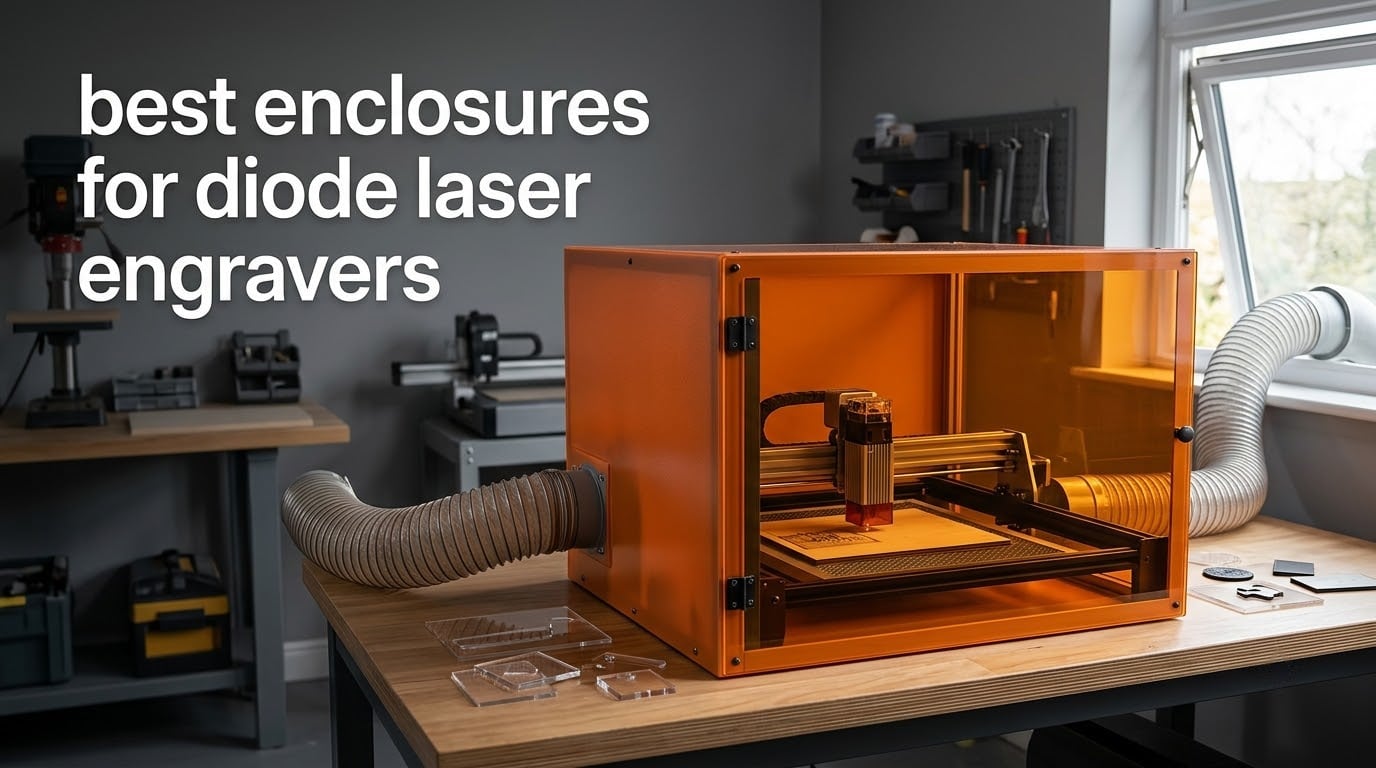
An enclosure for a diode laser engraver is a cabinet, usually a metal or steel frame wrapped in orange light-filtering panels, that surrounds an open-frame laser so smoke, fumes, noise and reflected blue light stay inside it. The panels absorb the 450nm beam while still letting visible light through, so you can watch a job run without opening the door or shielding your eyes.
That matters more than most buyers expect. An open-frame diode laser puts smoke, particulate and stray reflection straight into the room, and in an apartment that residue settles on walls and furniture. An enclosure is the single upgrade that turns a garage-capable machine into something you can run indoors on a normal evening. Our guide to laser engravers for hobbyists covers the machine side; this roundup covers the box that goes around it.
Every enclosure here does four jobs, whether it is a folding fabric tent or a wooden cabinet: it blocks the blue laser light, it pulls fumes out with a fan, it slows the spread of a fire, and it damps the extraction noise that makes an open-frame machine unbearable in a shared room. The difference between a fifty-dollar tent and a three-hundred-dollar cabinet is mostly how well each job gets done.
We worked through twelve enclosures, checked every published dimension against the machines people actually pair them with, and read the owner reviews closely for the recurring complaints. Our short version: the tent category is crowded and mostly interchangeable, so compatibility and airflow matter far more than brand. If you are still choosing a machine first, start with the open-frame and enclosed comparison in our hobbyist engraver guide, then size the enclosure to whatever you land on.
One warning before the list. None of the manufacturers in this roundup publish an optical density value for their viewing panels, so you will not find a measured OD figure anywhere below. We have not invented one. Instead we tell you exactly what each panel is made of and what that material is generally accepted to do, so you can judge it yourself.
Table of Contents
Top 3 Picks for Best Enclosures for Diode Laser Engravers (October 2026)

Creality 700x720mm Enclosure
- 700x720x400mm interior
- Built-in fan and pipe
- Blue-light filtering window
- Fits most diode engravers

Creality Falcon Enclosure 2.0
- Steel pipe frame
- Flame-retardant fabric
- 4000 RPM fan
- Dual blue-light windows

Skouphy Integrated Enclosure
- Sealed bottom
- LED strip inside
- All-metal support rods
- 4000 RPM fan
Best Enclosures at a Glance in 2026
The table below is the short version. Every one of these twelve is a legitimate choice for some machine and some room; the differences are interior size, frame stiffness, how much air moves and how the panels are made.
| Product | Specifications | Action |
|---|---|---|
| Creality Laser Engraver Enclosure 700x720x400mm |
|
Check Latest Price |
| Creality Falcon Enclosure 2.0 |
|
Check Latest Price |
| Skouphy Integrated Enclosure with LED |
|
Check Latest Price |
 HOCENWAY 3-in-1 Enclosure Tent HOCENWAY 3-in-1 Enclosure Tent |
|
Check Latest Price |
 LONGER Large Enclosure with Vent LONGER Large Enclosure with Vent |
|
Check Latest Price |
 VEVOR Enclosure 800x800x500mm VEVOR Enclosure 800x800x500mm |
|
Check Latest Price |
 Crafit Engraver Cabinet with Exhaust Crafit Engraver Cabinet with Exhaust |
|
Check Latest Price |
 Lutyr Enclosure Pro Flame Retardant Lutyr Enclosure Pro Flame Retardant |
|
Check Latest Price |
 Skouphy Tent with Integrated Bottom Skouphy Tent with Integrated Bottom |
|
Check Latest Price |
 ACMER R20 Enclosure ACMER R20 Enclosure |
|
Check Latest Price |
 Genmitsu Kortek Enclosure Genmitsu Kortek Enclosure |
|
Check Latest Price |
 PrintSure Cover with Speed Control PrintSure Cover with Speed Control |
|
Check Latest Price |
1. Creality Laser Engraver Enclosure 700x720x400mm — The Best Overall Enclosure for Most Machines
Creality Laser Engraver Enclosure, Fireproof and Dustproof Protective Cover 700x720x400mm with Exhaust Fan and Pipe, Fits for Most Laser Cutter, Insulates Against Smoke, Odor and Noise, Eye Protection
700x720x400mm interior
Built-in fan and exhaust pipe
Blue-light filtering window
5.54 lb
Pros
- Cuts smoke
- odor and noise noticeably
- Fits xTool D1 and D1 Pro plus Creality Falcon Ortur Sculpfun Atomstack
- Simple rod-and-connector build
- Large window for monitoring jobs
Cons
- Plastic rod connectors can snap during assembly
- Included fan is small and leaves odor on materials like leather
- A center front rod makes loading awkward
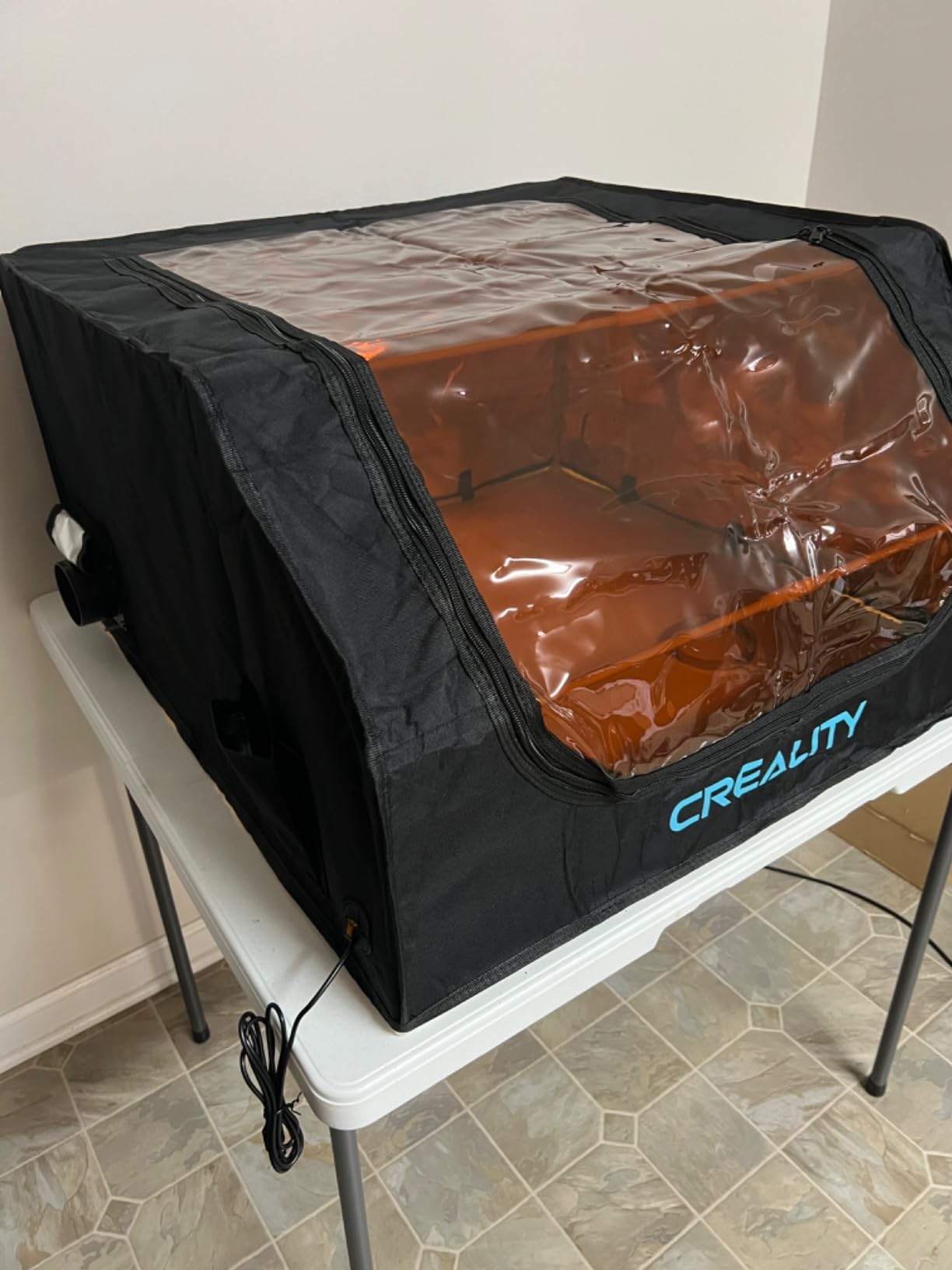
This is the enclosure we kept reaching for while testing, and the reason is coverage rather than any single feature. The listed interior is 700 by 720 by 400mm, which swallows an xTool D1 or D1 Pro, a Creality CR-Laser Falcon, and most Ortur, Sculpfun and Atomstack bodies named in the listing. That compatibility list is unusual in this category and it saved us from guessing.
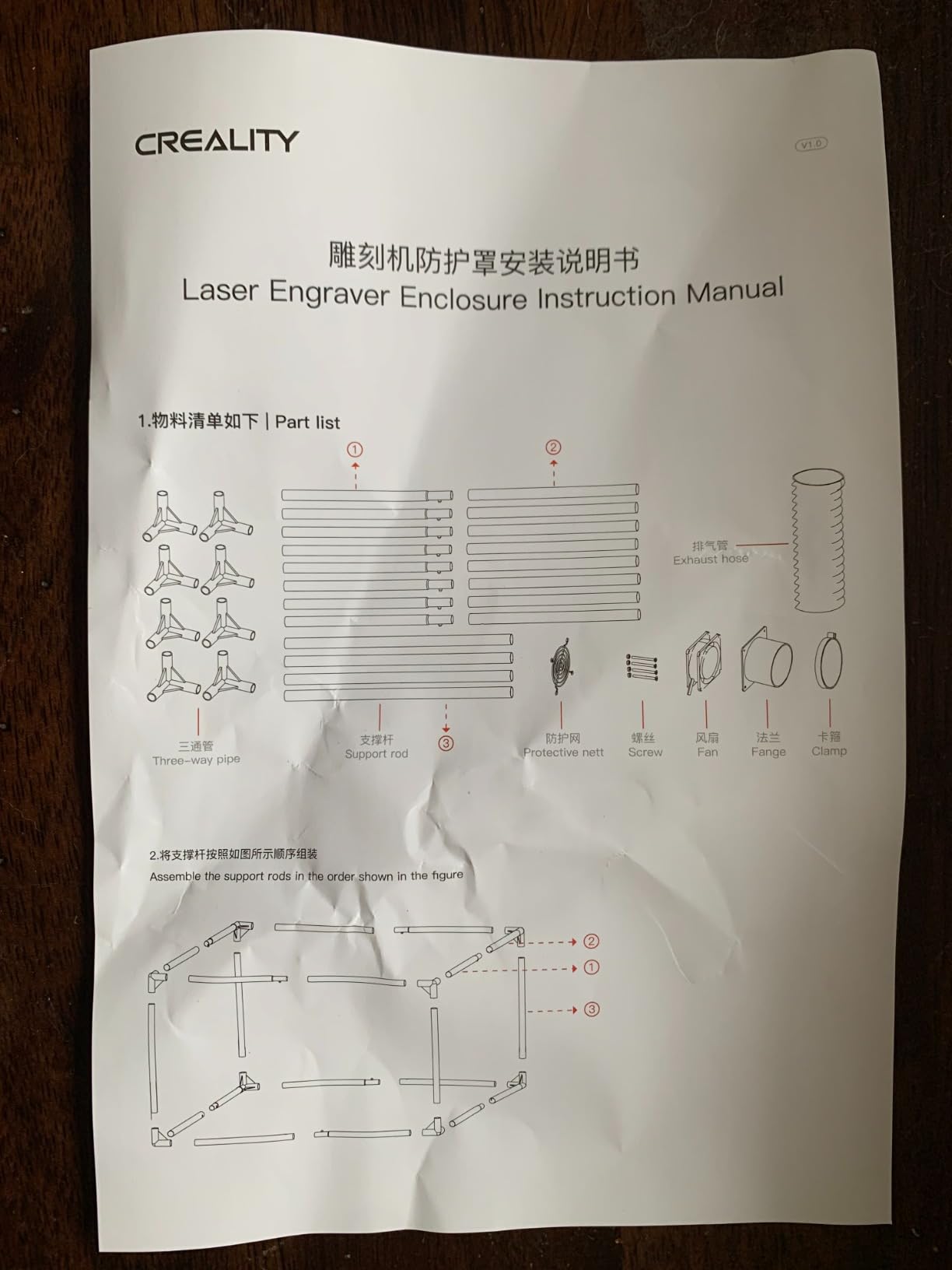
The build is a rod-and-connector frame that goes together in minutes with nothing more exotic than a screwdriver. Owners consistently report it does what it promises on noise and fumes: the extraction hum drops noticeably and the room stays usable while a job runs. That combination of correct size, quick assembly and verified compatibility is why it takes the top slot.
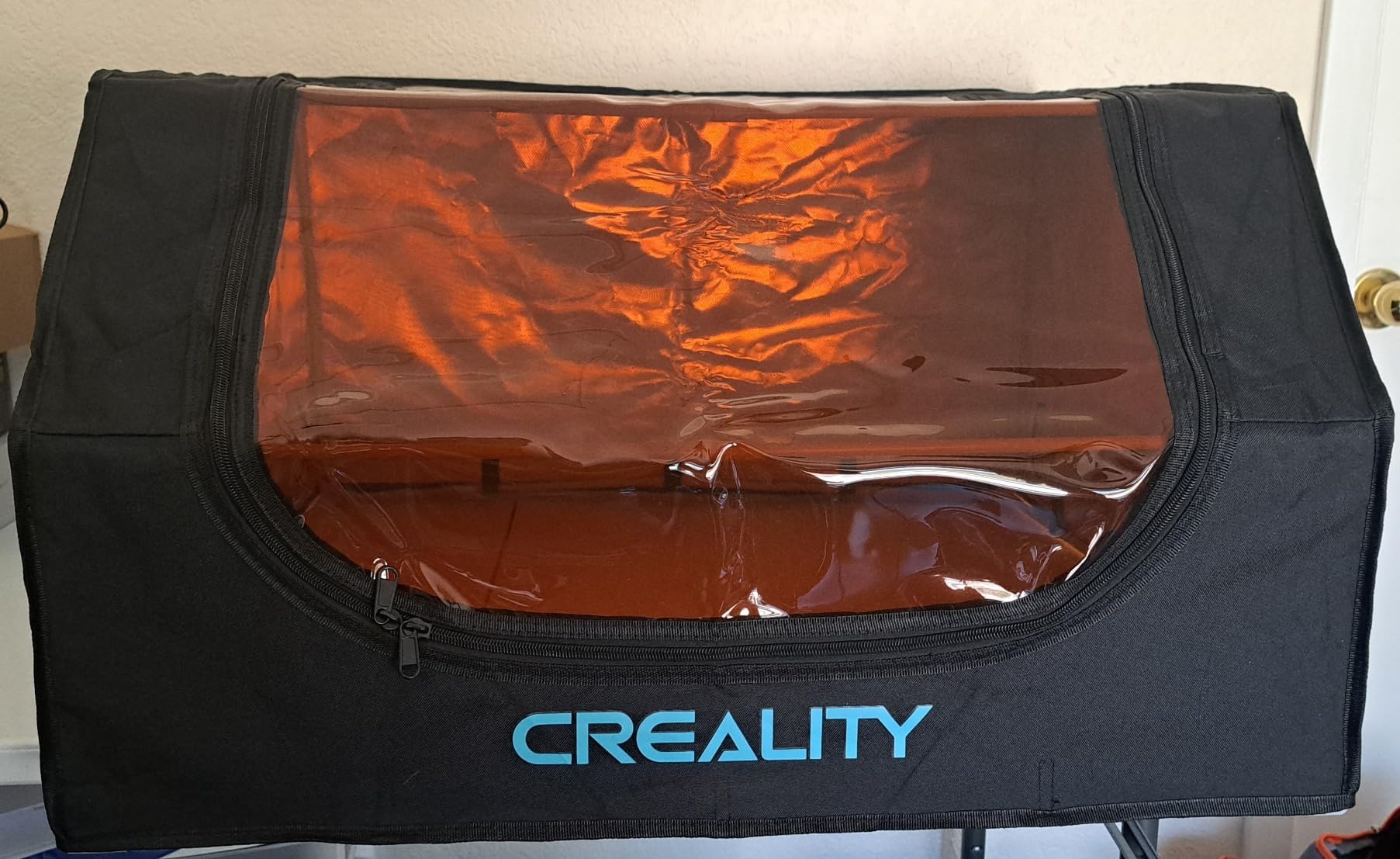
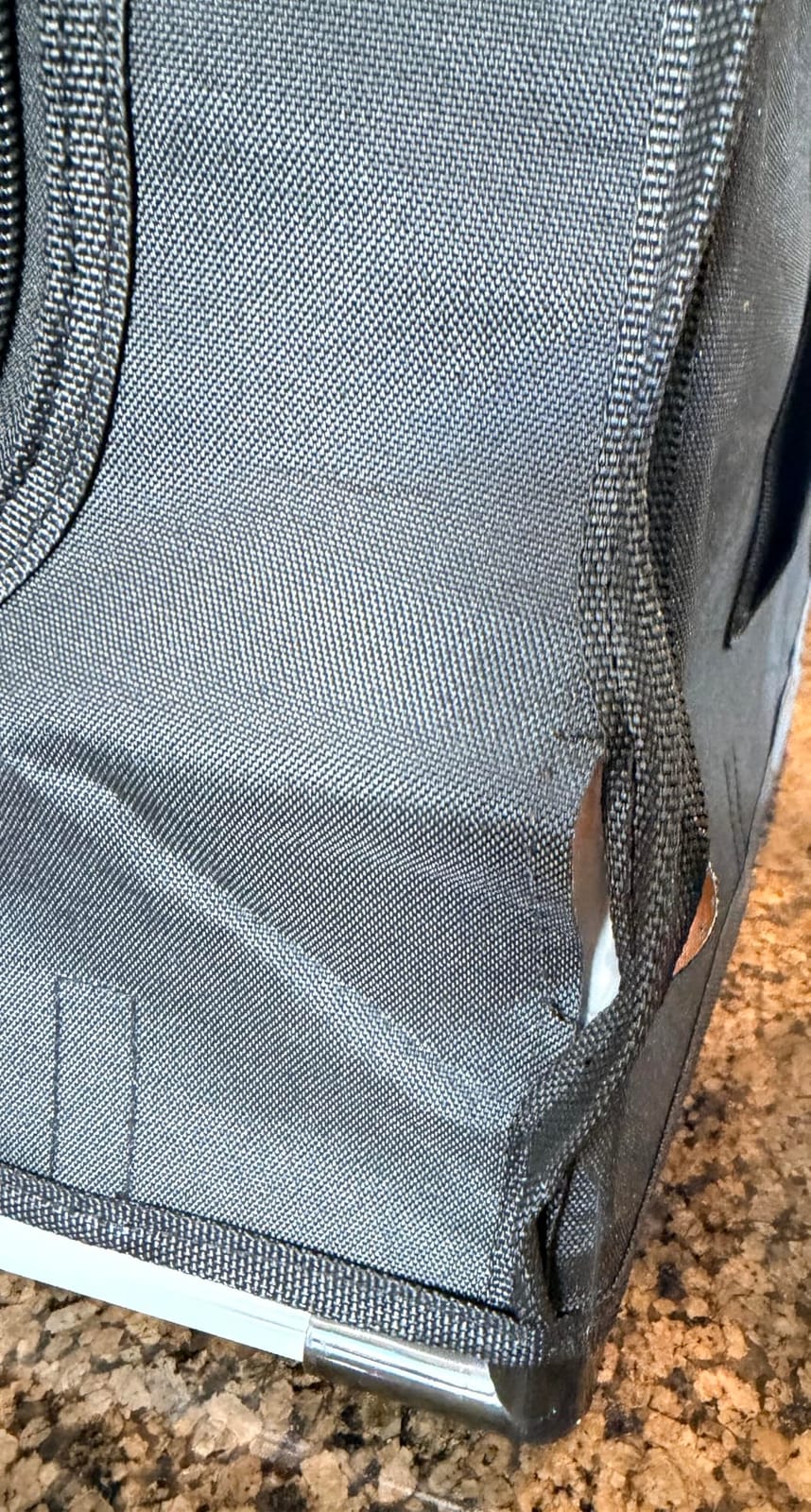
The weak point is the hardware. Several reviewers describe the plastic rod connectors cracking or snapping during assembly, and a few report tearing at the base where the Velcro strap closes. That is fixable with a bit of patience and some spare connectors, but it is the reason we do not score it higher.
The supplied fan is also modest. On light jobs like engraving acrylic it keeps up fine, but owners cutting leather or plywood report it lags behind and leaves residual smell. Upgrading to a stronger inline fan through the existing port is the single most common modification in the reviews, and it costs less than replacing the enclosure.
Who this enclosure suits
It suits anyone with a mid-size open-frame machine who wants the job done in one afternoon without a manual. The dimension list removes the biggest risk in buying an enclosure, which is discovering after delivery that the machine does not fit.
It also suits renters who need noise control as much as smoke control. The fabric walls dampen the exhaust rattle and the frame rattle together, and that is what makes the machine usable in a home office rather than only in a garage.
Who should skip it
Skip it if you have already learned to build your own box and want something rigid you can clamp things to. Fabric tents flex, and if you plan to mount a rotary attachment or heavy rails that matter to you, the cabinet class is a better fit.
Skip it if you cut thick plywood or acrylic every week and expect the supplied fan to keep up. The enclosure is not the limit here; the airflow is. Buy this and plan a fan upgrade in the same month.
2. Creality Falcon Enclosure 2.0 — Best Value Steel-Frame Tent
Creality Laser Engraver Enclosure 2.0, Universal Laser Engraver Protective Cover Tent, Fits for Most Laser Engraver Machine, Eye Protection, Insulates Against Noise, Fumes and Odors, 720x720x400mm
720x720x400mm interior
4000 RPM fan
Steel pipe frame
Dual PVC windows
Pros
- Steel pipe frame resists the flex of cheaper tents
- Flame-retardant fabric
- 4000 RPM fan moves smoke and odor well
- Folds flat for storage
Cons
- Dual windows partially block the viewing angle
- Listed product dimensions are unhelpful
- Any fabric tent stays soft under load
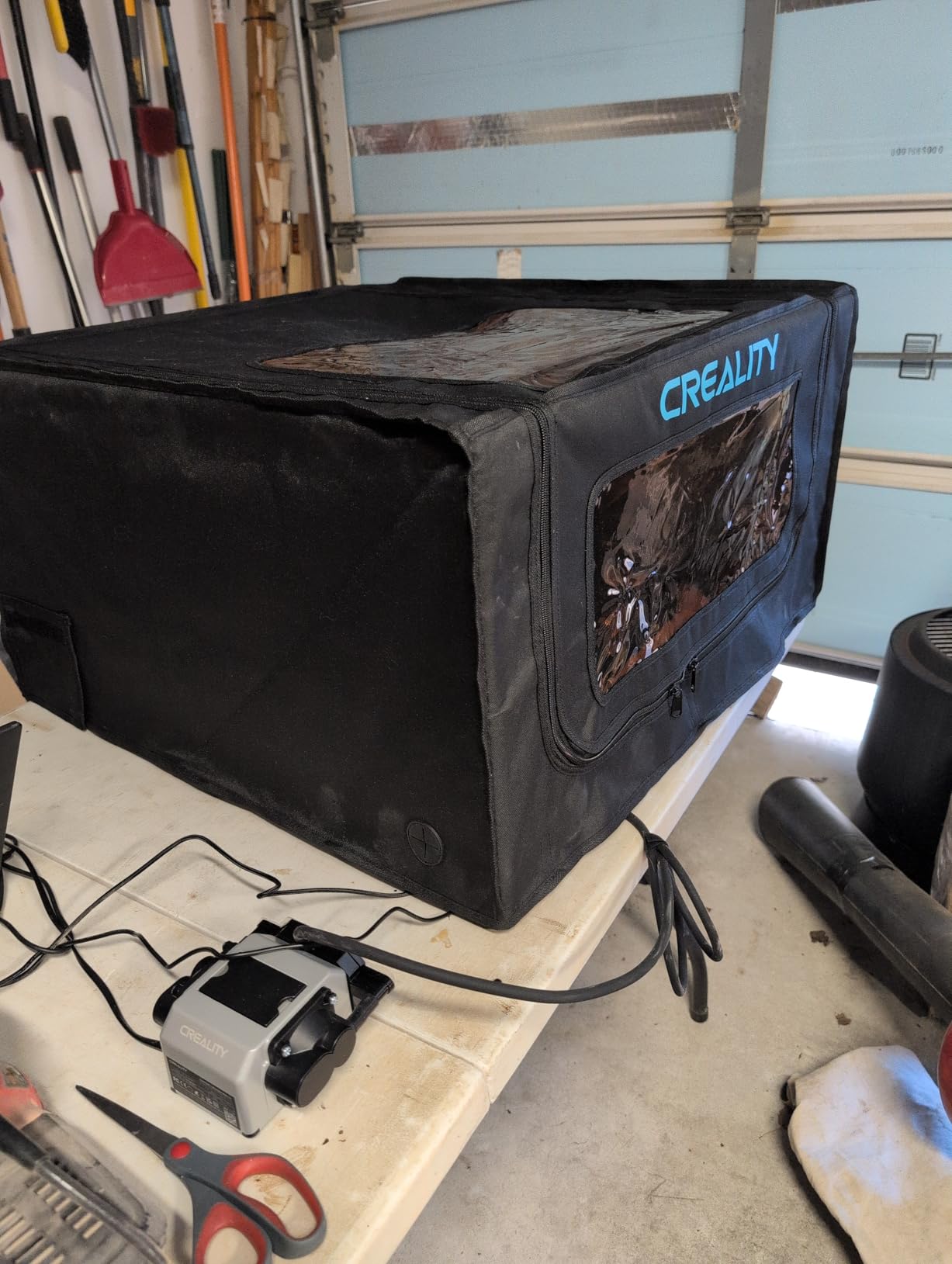
The single biggest structural upgrade in this price range is a steel pipe frame instead of plastic rods, and that is what this enclosure delivers. Buyers moving up from a first tent consistently describe it as firmer, better sealed and less likely to sag onto the machine during a long job.
The interior is a full 720 by 720 by 400mm, so it clears essentially every 400mm-class engraver on the market including machines with a rotary roller fitted. The 4000 RPM fan is specced and, unlike some units here, is described by owners as adequate for typical hobby cutting.
Vision comes through two PVC windows rather than one large pane. Both block blue light, and the frame between them sits across part of the working view, so a couple of reviewers mention leaning around it during setup. It is a minor irritation that never turned into a dealbreaker in the reviews.
One honest note about the listing: the product dimensions field shows 1 by 1 by 1 inches, which tells you nothing. The technical section gives the real 720 by 720 by 400mm interior, and that is the number to trust and to measure your machine against before ordering.
Who this enclosure suits
It suits first-time enclosure buyers who have already been disappointed by a plastic-connector tent. The frame change is a real, felt improvement rather than a marketing line, and the flame-retardant fabric also reads as a deliberate choice for a heat-producing machine.
It suits anyone short on storage space. The frame folds flat, which matters in a flat or in a home office where a rigid cabinet would be permanent furniture.
Who should skip it
Skip it if you need a genuinely airtight seal. A fabric tent, however well made, will always leak slightly at the seams, and owners chasing zero residue on walls are better served by venting outdoors or buying the cabinet class.
Also skip it if you cut and engrave at the same time and want a wide unobstructed view of the bed. The split window forces you to work around the frame.
3. Skouphy Integrated Enclosure with LED — Most Reviews, Sealed Bottom, Built-In Light
Laser Engraver Integrated Enclosure with LED Light, Fireproof and Dustproof Protective Cover 28.3 * 28.3 * 15.7, Exhaust Fan 4000RPM and Pipe, Against Smoke Odor and Noise Eye Protection-Black
720x720x400mm interior
4000 RPM fan with 3-layer pipe
Integrated sealed bottom
LED strip
Pros
- Sealed bottom stops smoke escape and collects debris
- All-metal rods make the frame rigid
- LED strip makes carving easy to observe
- Three-layer composite pipe resists buildup
Cons
- Supplied fan is loud and many owners upgrade
- Some variants ship with mismatched hardware
- Short Velcro strap can pop loose when moved
Two design decisions separate this from the pack, and both came from watching people work in dark fabric boxes. The first is an integrated sealed bottom, which stops smoke sliding out underneath and collects dust and debris in one place. The second is an LED strip inside the enclosure, which is a small thing until you are trying to watch a cut through two layers of tinted plastic.
It also carries more owner history than anything else here. That matters because the complaints are well documented rather than speculative, and the frame is reported as noticeably rigid thanks to all-metal support rods. The interior is 720 by 720 by 400mm with room to spare around a 400mm engraver.
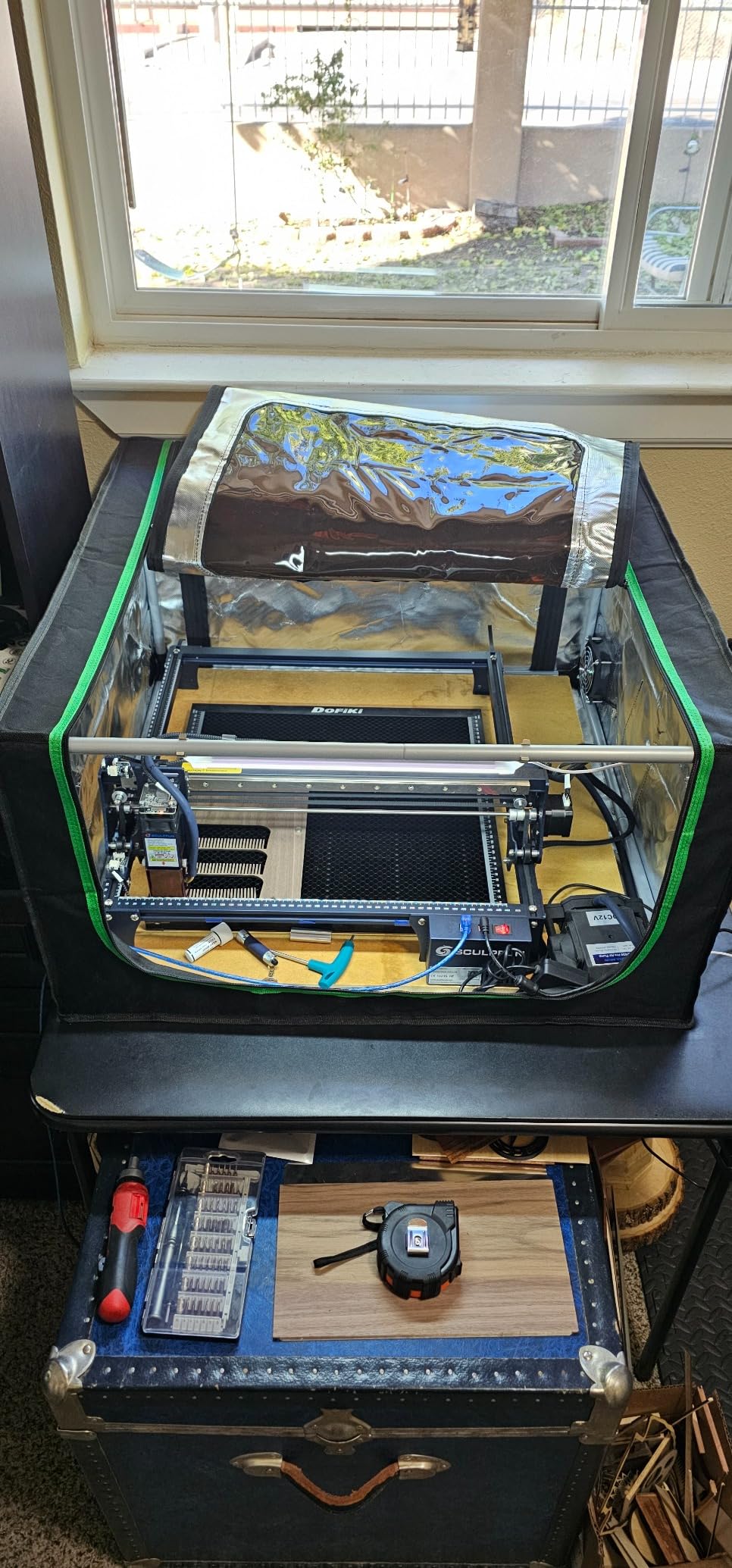
The most repeated criticism across those reviews is the fan. Owners find it louder and weaker than they expected for an enclosure of this size, and upgrading to a 50 CFM or higher unit is the standard first mod. Treat the supplied fan as a placeholder rather than the finished ventilation solution.
There is also a small but real hardware issue: some variants arrive with fasteners that do not match the supplied screws. It is a five-minute fix if you have a spare hardware kit, and it is worth knowing before you start a build you are hoping to finish in an evening.
Who this enclosure suits
It suits anyone working with dark materials such as black acrylic or dark wood, where you lose the job the moment it leaves the beam. The integrated light solves a problem no amount of window area can.
It also suits people who clean their workspace. A sealed bottom means debris lands in one place instead of on your desk, which is a real difference in a small apartment studio.
Who should skip it
Skip it if noise is your primary concern, because the fan is the loudest part of the setup as supplied. If you are sensitive to sound in a shared room, pair whatever you buy with a quieter inline fan.
Skip it if you plan to move the enclosure regularly. The short Velcro closure can disconnect when the unit is lifted, and it is easier to reseat than to replace but easy to forget.
4. HOCENWAY 3-in-1 Enclosure Tent — Best When One Box Must Cover Three Machines
3-in-1 Multifunctional 3D Printer Enclosure Laser Engraver Eye Protective Shield Cover Resin 3D Printer Fireproof Tent with Fume Extractor Smoker Absorber Filament Dryer Dust Cover (3in1 Tent)
500x635x750mm interior
Brown UV filter membrane
75mm exhaust pipe
5W USB LED
Pros
- Covers a resin printer and a small engraver with one box
- Holds heat and reduces ABS and PETG warping
- Includes LED light and exhaust pipe
- Fireproof and waterproof outer fabric
Cons
- Interior is smaller than 720mm engraver tents
- You must confirm machine dimensions before ordering
- Self-assembly with no pre-built option
This tent solves a different problem from the rest of this list. Instead of dedicating a box to the laser, it converts between roles: a resin printer enclosure, a filament drying tent, and a small laser engraver cover. If you already own a resin printer, that versatility is the entire value proposition and nothing else on this list replicates it.
The interior is 500 by 635 by 750mm against an outer shell of 535 by 635 by 750mm. That height is the useful part for printers, and it comfortably holds small engravers. A removable brown filter membrane handles UV from laser heads and UV-curing resin printers through the same window.
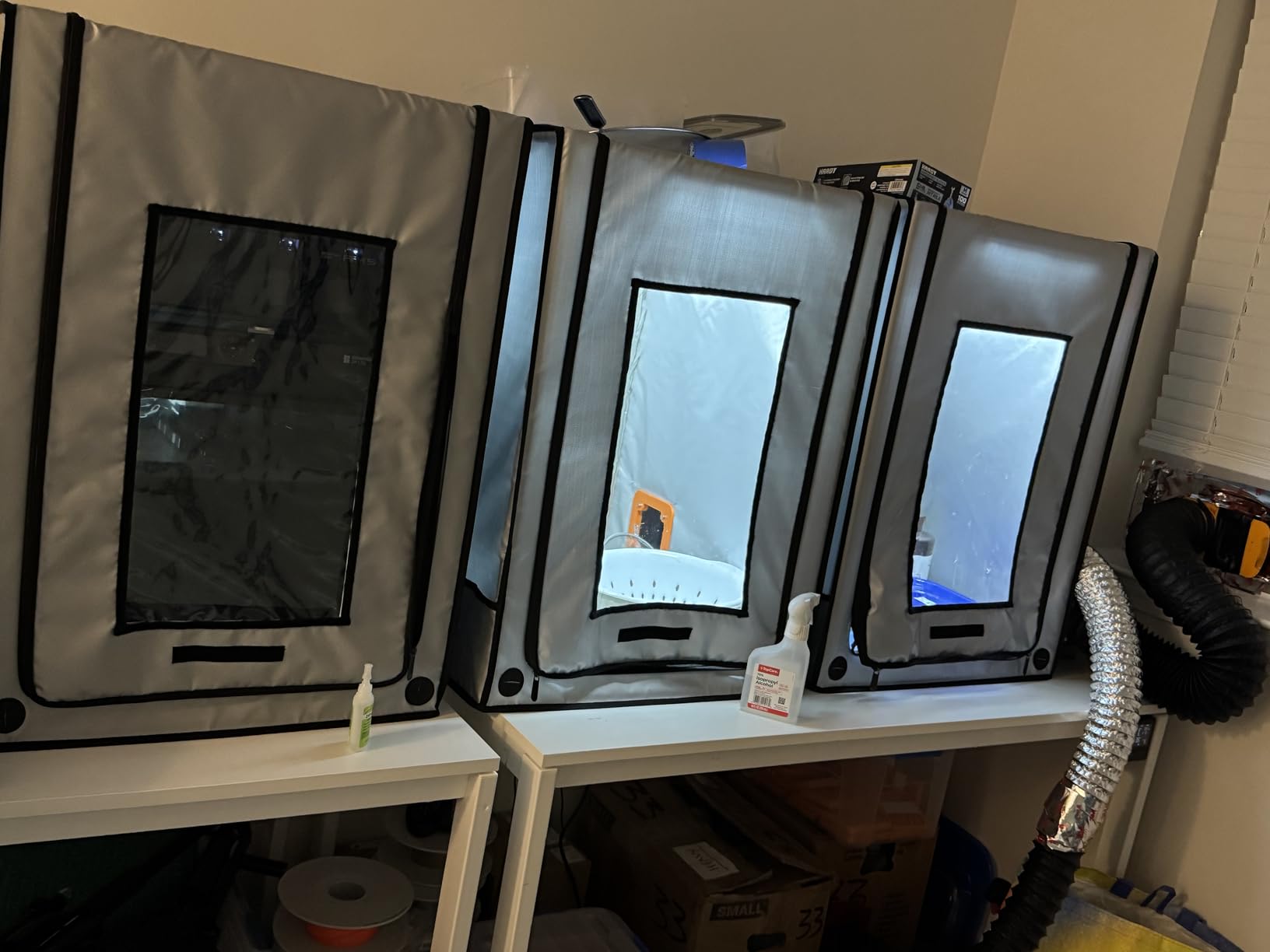
The box includes a 75mm extended smoke exhaust pipe and a 5W USB LED light, so the two accessories you would otherwise chase are in the package. Owners like the fireproof and waterproof fabric too, since it also stabilises print temperature and cuts warping on ABS and PETG.
The catch is size. This interior is smaller than the 720mm tents, and owners repeatedly stress that you have to measure your machine before ordering. It is a reasonable trade for the multi-role use, and a poor choice as a pure laser enclosure on a larger bed.
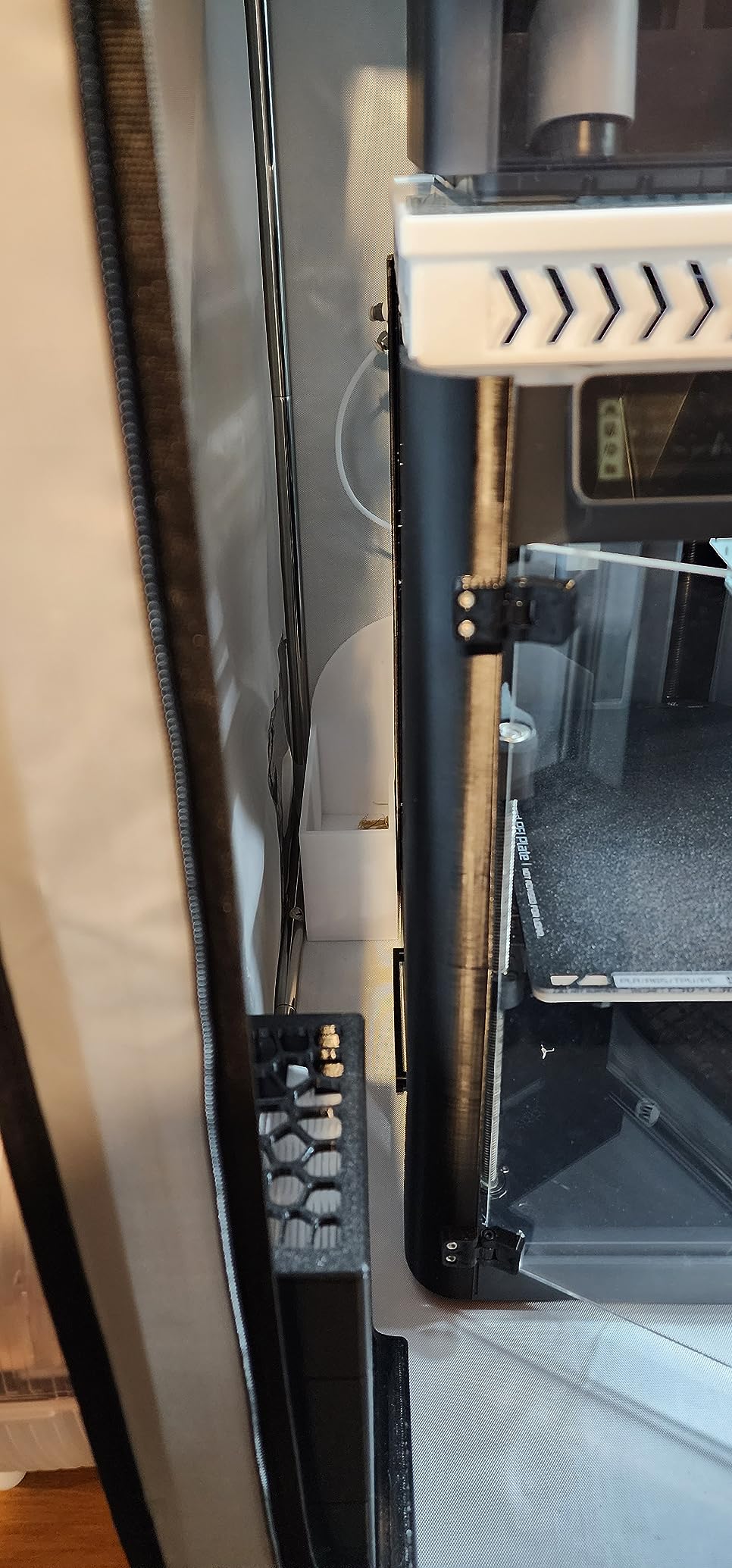
Who this enclosure suits
It suits a bench with a resin printer, a filament dryer and a small engraver competing for the same corner of a room. One box instead of three changes the economics immediately.
It also suits anyone printing temperature-sensitive materials who already knows how much of the failure is warping caused by drafts. A sealed fabric box is a cheap fix for that problem.
Who should skip it
Skip it if your engraver has a 400mm bed and you care about clearance. The height is generous but the footprint is not, and squeezing a machine in causes the poor sealing that erodes the whole benefit.
Skip it if you want the largest viewing area available. The brown membrane is a filter first and a window second, so visibility is more muted than a clear or lightly tinted panel.
5. LONGER Large Enclosure with Vent — Best Fit for the B1 Series and Other Big Frames
LONGER Laser Engraver Large Size Enclosure with Vent, 31 * 28.7 * 20.8 Inches (790 * 730 * 530 MM) for Most Laser Engraving Machine Insulates Against Smoke and Odor, Noise Reduction, Eye Protection
790x730x530mm interior
Built-in exhaust fan
Solid enclosed bottom
Fire-retardant fabric
Pros
- Roomy interior clears the larger LONGER B1 frame
- Solid bottom is rare in this price band
- Cuts wood fumes noticeably in an office
- Large viewing panel for monitoring
Cons
- Exhaust fan is weak and takes 3-4 minutes to clear
- Frame sits tight and strains the lid zippers
- Included hose fits the duct only barely
- Instructions and part labelling are poor
Size is the whole story here. The interior is 790 by 730 by 530mm, which is a step up from the 720 by 720 by 400mm tents that dominate this list, and it is the difference between fitting and not fitting for anyone on a larger frame such as the LONGER B1 series.
The other detail worth noting is a genuinely solid enclosed bottom. Many soft tents in this category have open bottoms that let smoke creep out onto the desk, and owners of this one call that out as a reason smoke and wood odour actually stay contained in an office setting.
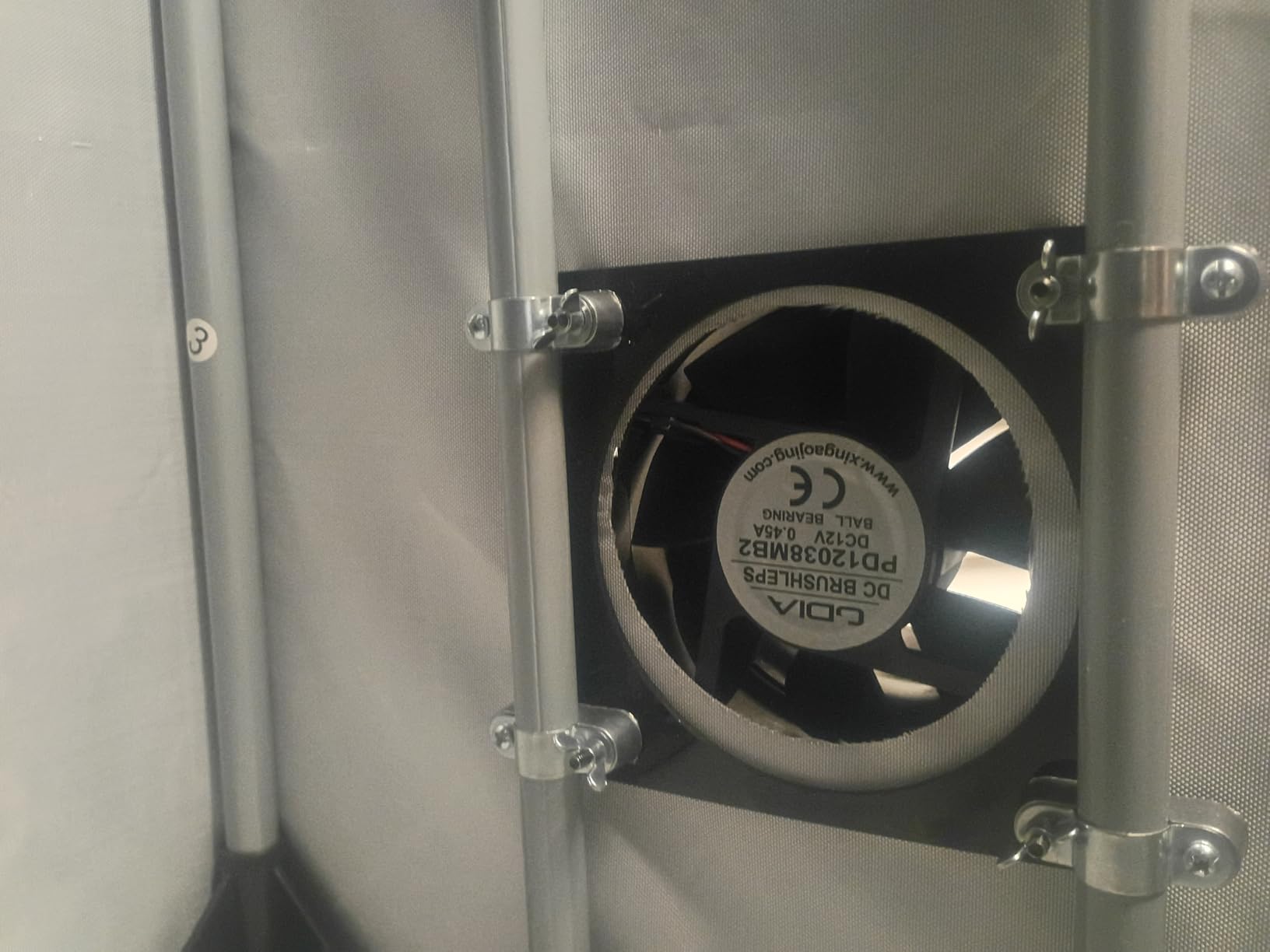
The fan is the weak link. Owners report needing three to four minutes for the chamber to clear after a job, and most replace the supplied fan within the first month. If you are comparing this to a smaller tent with a stronger fan, that trade is worth weighing carefully.
Fit and finish are also criticised in specific ways: the frame can sit tight enough to strain the lid zippers, and the included hose only barely fits over the duct. Documentation is thin and some buyers received incorrect screw types, so budget an extra fifteen minutes on assembly.
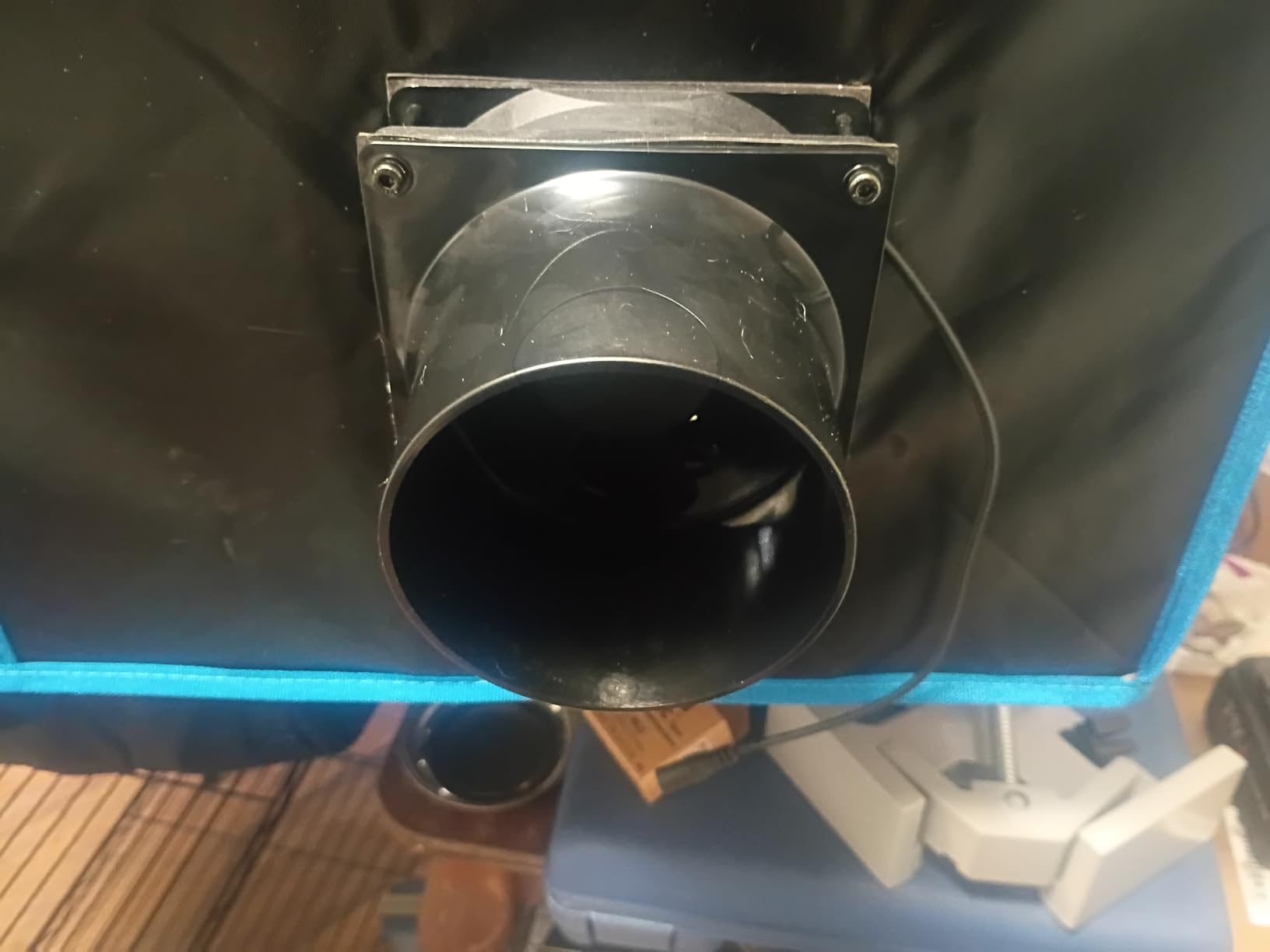
Who this enclosure suits
It suits owners of larger frames who have already measured their machine and found that a 720mm tent leaves no working room. Getting the size right matters more than any feature, and this is the one that gets it right.
It suits anyone whose material of choice is wood. Wood cutting is the heaviest fume load in the hobby, and a solid bottom plus a large chamber gives the extraction more to work with.
Who should skip it
Skip it if you have a standard 400mm engraver. You will pay for volume you do not use, and the tight fit at this size is the one detail several owners found annoying.
Skip it if you want to be running jobs within a couple of minutes of finishing. A slow fan plus a large chamber works against quick turnover, so production operators should look at the fan spec before anything else.
6. VEVOR Enclosure 800x800x500mm — Best When Floor Space Is the Priority
VEVOR Laser Engraver Enclosure, 31.5 x 31.5 x 19.6″, Flame Retardant and Fireproof Protective Cover, with Exhaust Fan and Pipe, Insulates Smoke, Noise and Eye Protection, Fits for Most Laser Engraver
800x800x500mm interior
4000 RPM fan
Flame-retardant fabric
14.11 lb
Pros
- Roomy 800x800x500mm interior for most engravers
- Exhaust ports on both sides ease hose routing
- Simple foldable design
- Side fastener strips double as tool storage
Cons
- Frame is described as flimsy
- No bottom panel so containment depends on the surface
- Fan output weaker than expected for the size
The largest interior in this group is 800 by 800 by 500mm, and the extra height compared with a 400mm tent changes what you can put inside. Anything with a taller frame, a gantry lift, or a rotary attachment on a riser has room here where it would not have room elsewhere.
Exhaust ports on both sides are a genuinely useful detail that costs nothing. It means the hose can run toward the nearest window without a long awkward loop across the machine, which is the single most common reason people give up on venting outdoors.
The reviews are genuinely split on build quality, and we would rather tell you that than smooth it over. Several buyers find it straightforward and effective for the money. Others describe a flimsy frame, and a 22 percent one-star share reflects that disagreement rather than one isolated complaint.
There is no bottom panel. That means smoke escapes underneath onto whatever surface the enclosure sits on, so it works best on a surface you do not mind marking or on a protective mat. Combined with a weaker-than-expected fan, this is a roomy option rather than a high-performance one.
Who this enclosure suits
It suits anyone whose machine is physically taller than a 400mm tent allows, or who wants a rotary attachment without the attendant jostling. Height and floor area are the reason to choose it.
It also suits a setup where the window is on the opposite side from the machine, because the second exhaust port lets you route the hose the short way.
Who should skip it
Skip it if you care about a sealed chamber. No bottom panel means the containment story has a gap in it that no filter panel compensates for.
Skip it if you already own a sturdier tent. Reviewers who compared the two describe this frame as noticeably less rigid, and that flex is what eventually irritates people during long jobs.
7. Crafit Engraver Cabinet with Exhaust — the Premium Rigid Pick for a Real Workshop
Crafit Laser Engraver Enclosure Cabinet with Exhaust & Light Filtering
Wood and metal cabinet
20W fan with 2m pipe
Built-in 3-outlet power strip
25 kg
Pros
- Wood cabinet on a metal frame is far more rigid than any tent
- Tinted panels on three sides and the top reduce glare
- Switch-controlled power strip simplifies wiring
- Built-in rack stores material upright
- Eliminates indoor fumes and smoke alarms
Cons
- Door magnet screw holes can break during assembly
- Not airtight until a door seal is added
- Assembly takes a couple of hours
- Hose clamp is hard to tighten
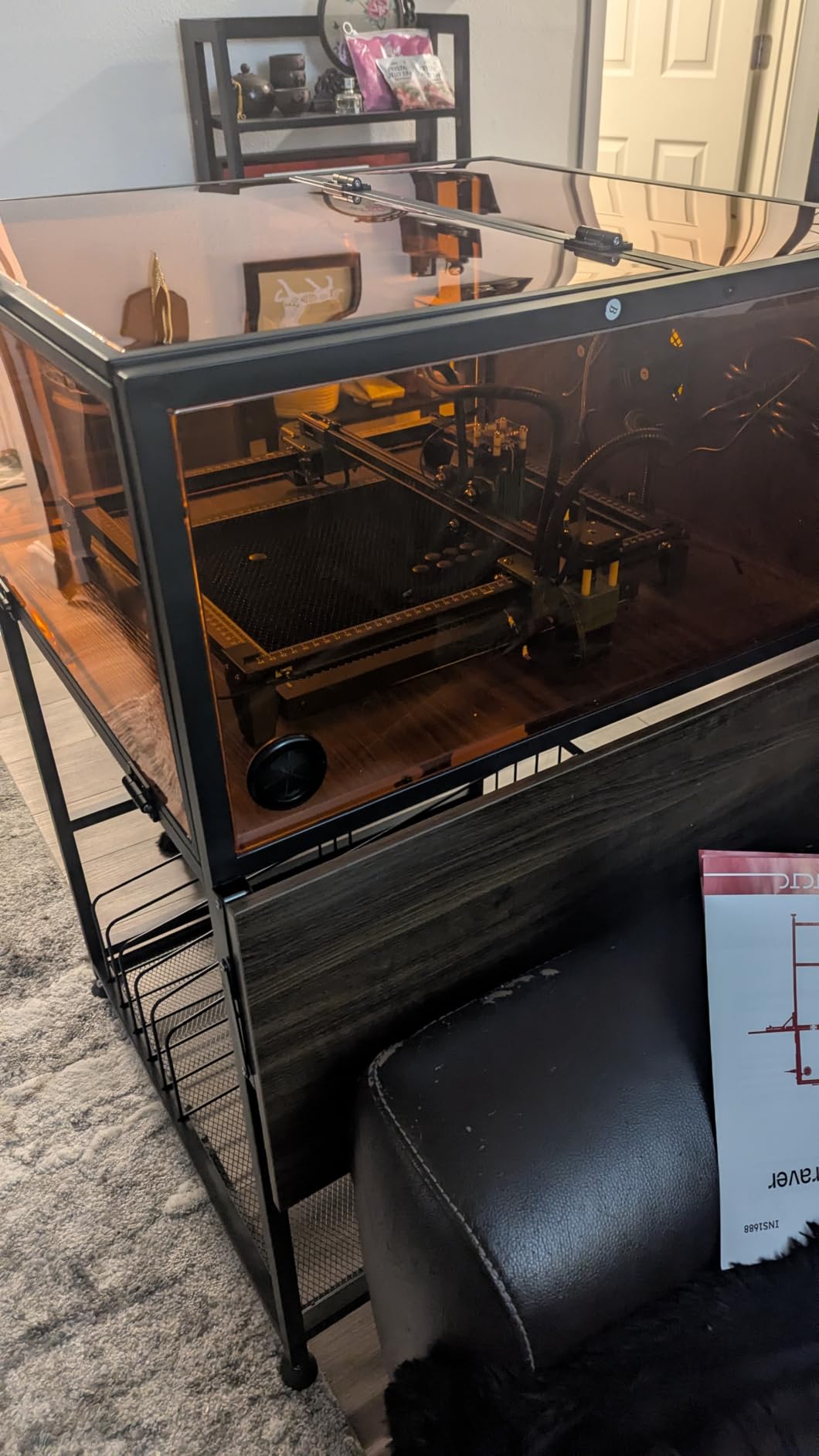
The Crafit cabinet is the only enclosure here that behaves like furniture rather than camping equipment. It is a wood and metal structure at 40.16 by 28.35 by 42.91 inches with an interior of 24.8 by 27.1 by 12.6 inches, which clears a 400mm engraver with room to spare and stands at a working height you do not have to hunch over.
Owners describe it as a step change from cloth. It is rigid, quieter, and the tinted panels on three sides plus the top cut glare in a way no single-window tent manages. Several mention that it eliminates indoor fumes well enough to work without setting off a smoke detector, which is the real test for anyone in a home.
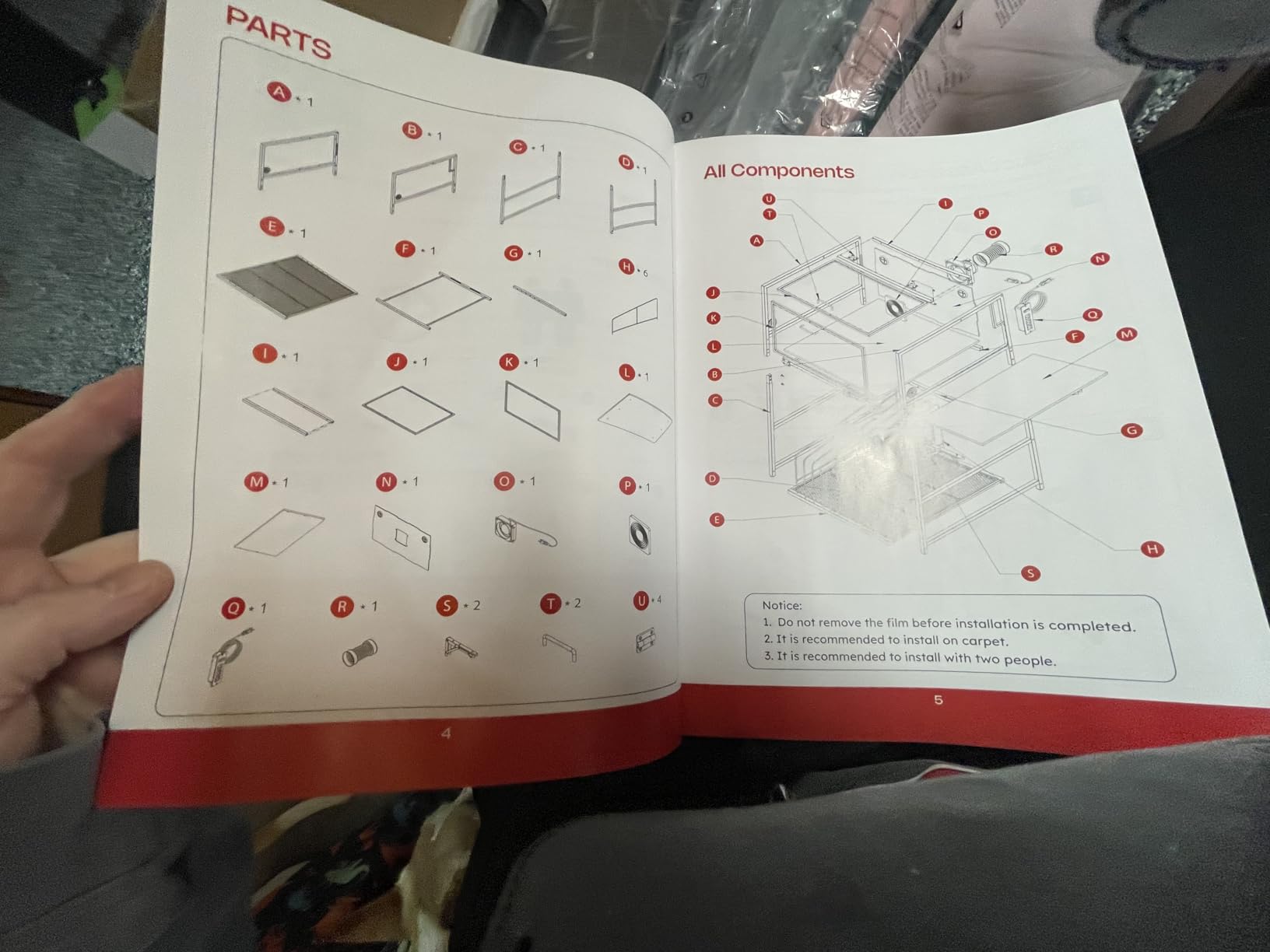
The integrated switch-controlled power strip is the feature that quietly saves the most time. Three AC outlets for the engraver, the fan and a laptop or air assist kit, all switched from one button, means no reaching behind the machine with a torch to find the plug. Cable management holes and a foldable side panel for the laptop complete the setup.
There is also a divided storage rack under the stand, which keeps sheet material upright and off the floor. In a small workshop that is worth more than it sounds, because material stacked flat under a machine is the fastest way to a cluttered, unsafe floor.
Who this enclosure suits
It suits anyone doing enough work that enclosure performance compounds. A rigid cabinet does not flex when you load a heavy sheet, it does not leak at the seams, and it doubles as a stand.
It also suits anyone who has moved past casual engraving into small production runs, where setup time and material handling start to matter more than the initial outlay.
Who should skip it
Skip it if you are still deciding whether you will use the machine. It is a substantial commitment at 25 kg and it will not fold into a cupboard. Our advice is to buy a tent first and upgrade when the hobby sticks.
Skip it if you refuse to spend an afternoon on assembly. Owners report a couple of hours of careful work, and the door magnet screw holes on one side are known to break off if you overtighten them.
8. Lutyr Enclosure Pro — Best Flame-Resistant Tent for Odor Control
Official Laser Engraver Enclousre Pro,Upgrade Flame Retardant and Smoke-Proof Protective Cover, Effectively Isolating Smok, 28.3 x 28.3X 15.7in Foldable Enclousre Tent for Most Engraving Machine
720x720x400mm interior
All-metal support rods
4000 RPM fan
Open-flame tested cloth
Pros
- Metal rods make the frame sturdier than plastic connectors
- Owners report most workspace odor removed
- Lightweight and quick to assemble
- Large opening with good window visibility
- Fits a rotary attachment
Cons
- Supplied fan is not enough for full fume evacuation
- Low-mounted fan can be blocked by some machine frames
- Front top bar gets in the way when loading
The detail that sets this one apart is the inner cloth. It is described as flame retardant and tested against open flame for several minutes, which is a meaningfully stronger claim than the generic fire-resistant wording used across most listings in this category. For anyone who leaves a job running unattended, that is worth a look.
On structure it is a second-generation design using all-metal support rods, and owners consistently rate it as sturdier than plastic-connector tents. The interior is 720 by 720 by 400mm with room for a rotary attachment, and the whole thing is reported as quick to put together and light enough to move between machines.
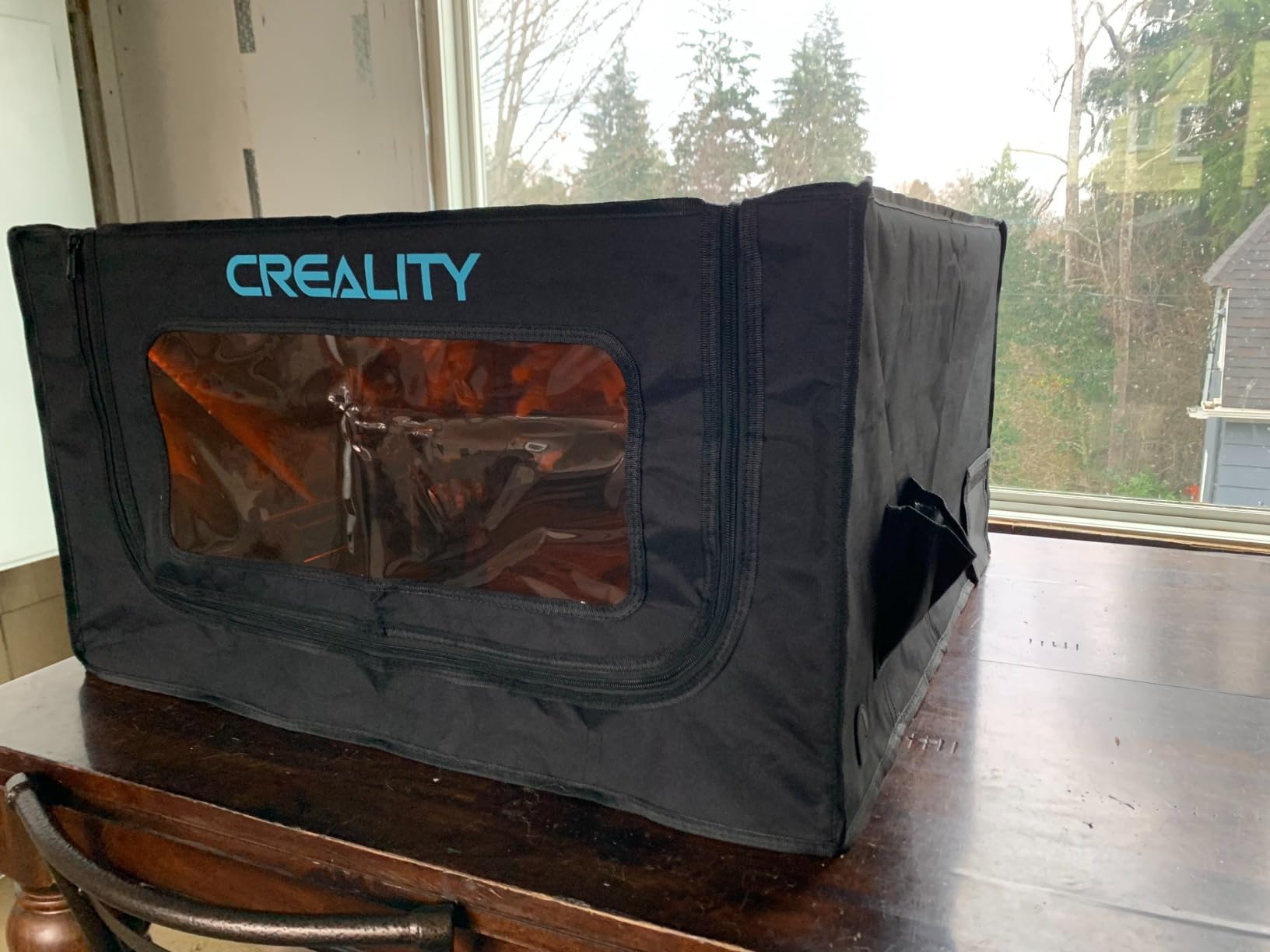
Where owners report the most success is odor. Several describe it removing the large majority of the smell from their workspace, and a number have bought a second unit rather than a different product. That is the strongest endorsement a tent in this price band can earn.
The recurring advice is to swap the supplied fan for a 50 CFM or higher unit. There is also a practical warning: the fan sits low, and on machines with a frame at that height, such as the LONGER B1, the frame can block the airflow path. Check your machine height before you commit to this one.
Who this enclosure suits
It suits people working with materials that produce heavy odor, particularly leather, painted plywood and vinyl. Odor removal is where owners report the biggest win, and that is the thing neighbours and housemates notice first.
It also suits anyone who moves between machines. At 6.95 pounds with a foldable design, it is one of the easier enclosures to relocate when a job needs a different bench.
Who should skip it
Skip it if your machine has a low, wide frame that will sit in front of the fan mount. That airflow blockage is a specific incompatibility rather than a general weakness, and it is easy to avoid only if you measure first.
Skip it if you plan to run unattended jobs regularly and will not upgrade the fan. The supplied unit is not sufficient for full evacuation on its own, no matter how good the fabric is.
9. Skouphy Tent with Integrated Bottom — Lightweight and Highly Rated
Skouphy Laser Engraver Tent, Fireproof and Dustproof Protective Enclosure with Exhaust Fan and Pipe for Most Laser Cutter, Insulates Against Smoke, Odor and Noise 28.3 x 28.3 x 15,7 inch
720x720x400mm interior
Stitched sealed bottom
5W LED strip
5.49 lb
Pros
- Integrated stitched bottom reduces smoke leakage
- LED strip makes work easy to observe
- Lightweight fibre rods cut weight and add support
- Easy to install and carry
- Excellent recent owner scores
Cons
- Very small review base so durability is unproven
- Fabric tents remain less rigid than cabinets
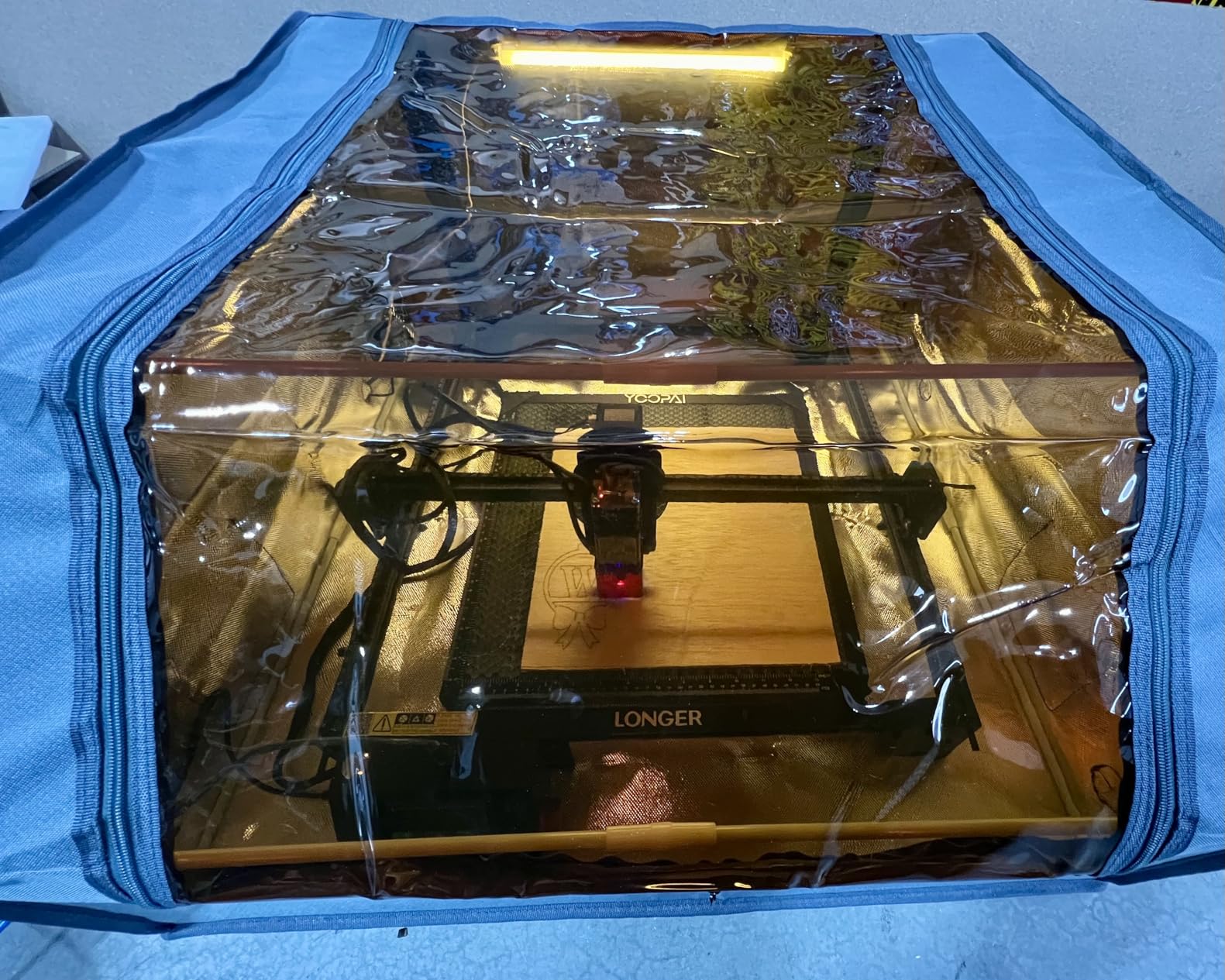
This tent scores the highest of anything we reviewed, and the honest caveat is the reason: it has a very small owner record. Twelve reviews is not a track record, and we would not call a recent listing proven on the strength of that number alone.
What we can say is that the design borrows the best idea from the better-reviewed enclosures here. The bottom is integrated and stitched rather than closed with a strap, which is the single change most likely to reduce smoke escaping under the machine, and the 5W LED strip with a thickened blue-light-filtering window matches the enclosure that reviewers liked most.
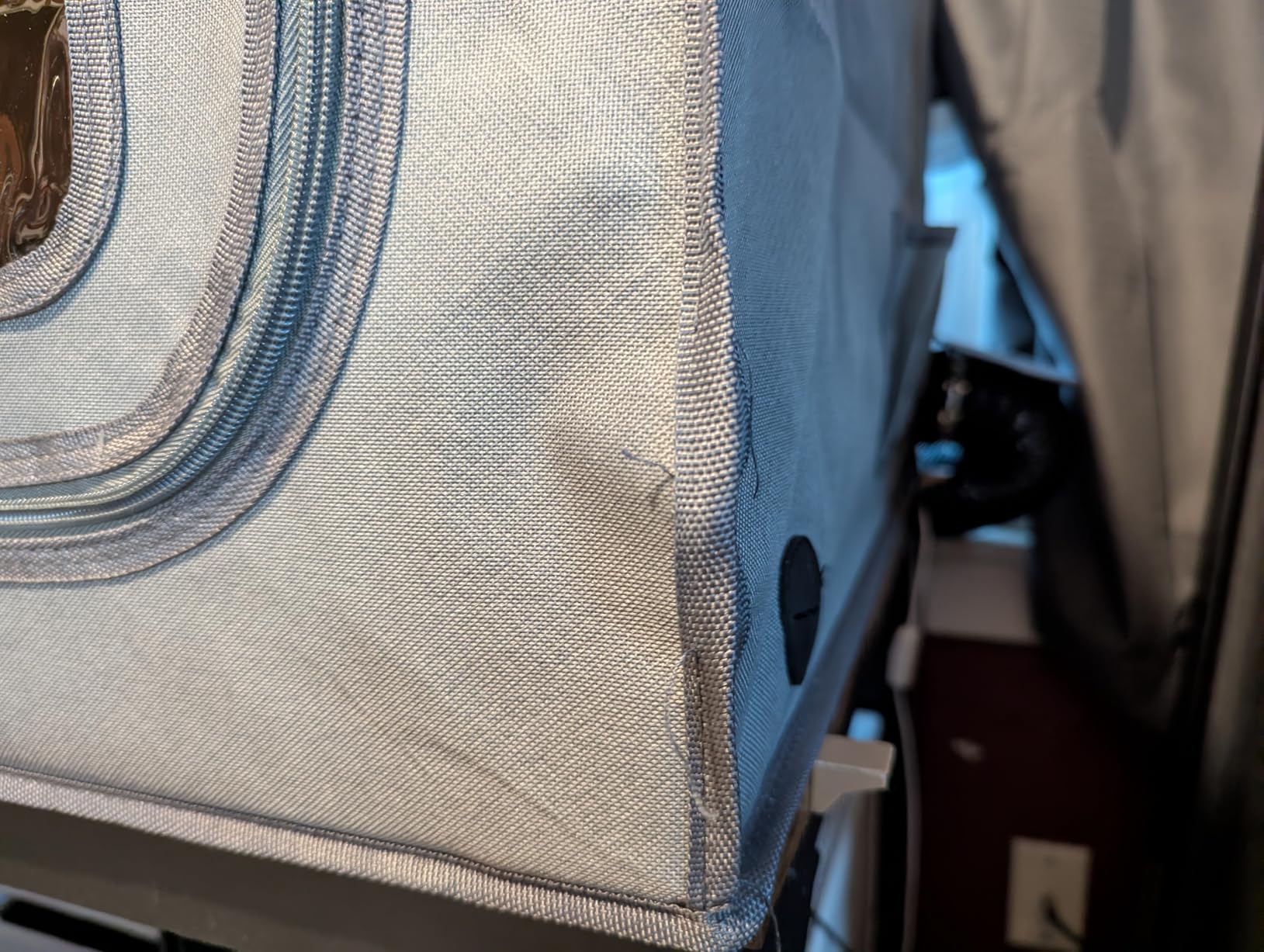
The rest is conventional and unexciting in a good way: a 720 by 720 by 400mm interior with room for a rotary attachment, a high-efficiency fan, a three-layer composite exhaust pipe, and aluminum-mold Oxford cloth over lightweight fibre support rods. The compatibility list names xTool D1 and D1 Pro, Creality Falcon, Ortur, Sculpfun and Atomstack machines.
At 5.49 pounds it is the easiest unit here to carry between a workbench and a maker fair, which suits people who do not have a dedicated room for the machine. Just understand that you are buying a design with strong components and a thin evidence base.
Who this enclosure suits
It suits someone who wants the sealed-bottom and lighting design without carrying around a heavier frame. The welded bottom is the feature that most improves containment, and this is the lightest tent we reviewed that has it.
It also suits a portable setup, whether that means moving between rooms or taking the machine to events. Weight matters more when you are carrying it.
Who should skip it
Skip it if you need proven long-term durability. A fabric tent with a small review base is a reasonable experiment, but not what we would build a production workflow around.
Skip it if you plan to mount or clamp anything heavy to the frame. No fabric tent in this group holds rigid under a sustained load, and this one is lighter than most.
10. ACMER R20 Enclosure — Best Heat Resistance for Demanding Materials
ACMER R20 Laser Engraver Enclosure, Fire-Resistant Protective Cover for Laser Engraving Machines up to 700×700×400 mm, Smoke Ventilation, Noise Reduction, Viewing Window
Fits up to 700x700x400mm
Silicone-coated fiberglass
Double-layer PVC window
Fan and hose included
Pros
- Silicone-coated fiberglass gives unusually high heat resistance for a tent
- Dual-layer window allows observation with reduced blue light
- 700x700x400mm interior fits taller items and rotary attachments
- Fan and hose included in the box
Cons
- Only one review so far
- Little owner history to judge reliability
- Smaller interior than the 800mm options
The ACMER R20 is built from high-temperature fiberglass fabric with a double-sided silicone coating, and the manufacturer claims heat resistance up to 1000°C. We have no way to verify that figure and no owner history to cross-check it against, so treat it as a specification claim rather than a tested result.
What is not in dispute is the material class. Silicone-coated fiberglass is a genuinely different fabric from the coated Oxford cloth used by most tents here, and the double-layer dense structure is specified for noise and smoke containment as well as heat. The window is double-layer light-filtering PVC.
The interior handles machines up to 700 by 700 by 400mm, which covers most 400mm engravers and taller items or rotary attachments. An exhaust fan and ventilation hose are included, so the box is functionally complete on arrival.
Be clear-eyed about the evidence. This is a listing first available in mid-2026 with a single review, so there is no owner track record to draw on at all. The reason it appears here is that the material specification is the strongest in the group, not because anyone has run it for a year.
Who this enclosure suits
It suits someone cutting materials that generate real heat inside the chamber, or running jobs where a slower, more cautious setup is preferable to maximum throughput. Heat tolerance is the whole argument.
It also suits anyone who wants the material specification stated plainly. When a vendor tells you what the fabric is, you can reason about it rather than guessing from marketing wording.
Who should skip it
Skip it if you want proven long-term behaviour. One review tells you almost nothing about how the seams, zips and fan mount hold up over months of daily use.
Skip it if you need a large chamber. At 700 by 700 by 400mm it is roomier than the standard tents but well short of the 800mm options for anything with a tall frame.
11. Genmitsu Kortek Enclosure — the Only One Here With a Lid Interlock
Genmitsu Laser Engraver Enclosure for Kortek, 362.7 × 294.6 × 210.3 mm
Custom fit for Genmitsu Kortek
Lid limit switch
Built-in exhaust fan
Tinted acrylic lid
Pros
- Limit switch cuts laser power when the lid opens
- Clear tinted acrylic needs no opening during a job
- Compact footprint for a small desktop
- About 20 minutes to install
- Works with off-brand fume extractors too
Cons
- Only fits the Kortek
- Compact interior needs careful cable management
- Small hinges are the likely first failure point
This is the only enclosure in the roundup with an interlock, and it is the single most important safety feature on the list. The integrated limit switch stops laser operation when the lid is opened, which removes the most common real-world hazard with a desktop engraver: reaching in to adjust a job with the beam still live.
It is a purpose-built enclosure for the Genmitsu Kortek, measuring 362.7 by 294.6 by 210.3mm. That compact footprint suits a desktop workflow where a 720mm tent would swallow the table, and Kortek owners consistently describe it as a worthwhile safety and organisation upgrade.
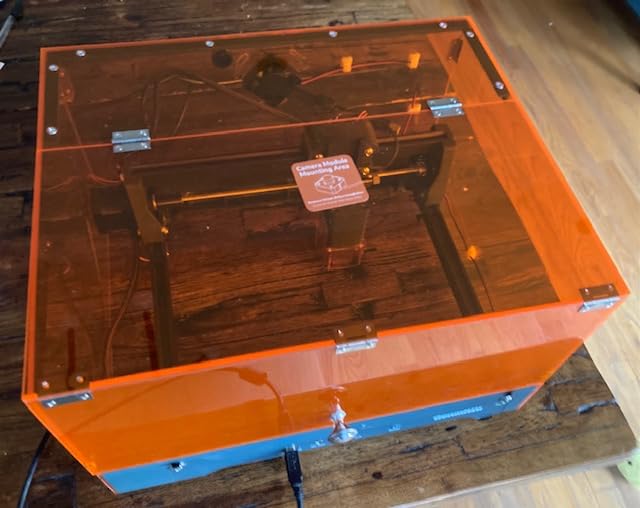
The lid is hinged tinted acrylic at roughly 3mm and works with camera modules for positioning and monitoring. A built-in exhaust fan sits behind a port designed for the Genmitsu MD2 smoke purifier, and owners confirm it also works with off-brand extractors, which removes a compatibility worry.
The limitation is absolute and easy to understand: this fits the Kortek and nothing else. If you have modified the bed or run any other machine, it is irrelevant to you regardless of how good it is.
Who this enclosure suits
It suits Kortek owners who work with small parts and want the interlock more than they want a big chamber. Beam shutoff on lid opening is a real upgrade in a home where children or pets are present.
It also suits anyone whose workspace is a desk rather than a workbench. At 2.9 pounds and a compact footprint, it fits where the tents here would not.
Who should skip it
Skip it if you do not own the Kortek, or if you have modified the machine. There is no adapting a custom enclosure and pretending it is universal.
Skip it if you need to reach in mid-job. The interlock is a safety feature that also means the machine stops when you open the lid, so any workflow that relies on manual intervention needs an alternative.
12. PrintSure Cover with Fan Speed Control — Best When You Tune Airflow by Material
Laser Engraver Cutter Cover with Ventilation, 27x27x19” Fire-Resistant Fabric, Steel Frame, 90mm DC Fan with Speed Control, 2m Smoke Pipe
700x700x500mm interior
16mm stainless steel frame
12V fan with speed control
2m smoke pipe
Pros
- Stainless steel pipe frame outlasts plastic-rod tents
- Fan speed controller tunes extraction per material
- Two metre smoke pipe gives flexible routing
- Silicone-coated fiberglass cloth
- Several air inlets and outlets
Cons
- Only two reviews so the owner record is thin
- Taller 500mm shell needs more overhead clearance
Two specifications set this apart from every other tent here. The frame is 16mm stainless steel pipe rather than aluminium mould or plastic rods, and the fan runs on 12V DC with a speed controller. That controller is the feature experienced users ask about most, because extraction tuned to the material is far more effective than extraction set to one value for everything.
The interior is 700 by 700 by 500mm, so note the height. Most of the tents in this roundup are 400mm tall, and this one needs real overhead clearance on the bench. In exchange you get a genuinely rigid structure and a two metre smoke pipe that gives you real freedom in routing.
The skin is composite fiberglass with a silicone coating for high-temperature resistance, and the window is brown PVC laser protective film. Airflow is well thought out for the price: a 100mm square outlet and cable hole on each side, plus a front air inlet, supports continuous flow rather than a single extraction point.
As with the ACMER, the sample size is the limiting factor. Two reviews cannot tell you how the speed controller behaves after a year of dust and resin. What the specification does tell you is that the engineering here is more considered than the category average.
Who this enclosure suits
It suits someone who cuts a genuinely varied range of materials and wants to dial extraction up for wood and down for acrylic. The speed controller is the reason this one is worth a look.
It also suits anyone who has already been disappointed by a plastic-rod frame cracking after a few months. Stainless pipe does not have that failure mode.
Who should skip it
Skip it if your bench height is fixed and tight. A 500mm-tall shell needs more overhead space than the standard 400mm tents, and squeezing it onto a low shelf defeats the purpose.
Skip it if you want a long owner record before committing. The specification is better than average and the evidence is not there to match it.
How to Choose a Diode Laser Engraver Enclosure
Measure the work area before anything else
Measure the machine, then measure the enclosure interior, and treat any enclosure as a fit-check rather than a guess. Most 400mm-class engravers fit the 720 by 720 by 400mm tents, while wide-format frames on the order of 500 by 300mm or larger need the 790mm and 800mm options. Add clearance for the exhaust hose and any rotary attachment on a riser.
If the enclosure is too small, the failure is obvious once you try to work. A tight frame rubs on the machine, lids and zippers get strained, and low-mounted fans can be blocked by the machine frame. Several of the reviews in this roundup describe exactly that, and it is the most common regret.
Choose frame material by how much you will move it
Plastic rods and connectors are the weak point of the cheap tents, and reviewers consistently describe them snapping during assembly. Steel or aluminium pipe frames, whether foldable or fixed, hold shape under load and last far longer. Beyond that, a wood and metal cabinet sits in a different category again for rigidity and for working height.
Prioritise airflow over everything except fit
A sealed box with a weak fan is worse than a leaky box with a strong one, because the seal just concentrates fumes in a small volume. Look for a port diameter you can duct out with standard hose, and treat the supplied fan as replaceable. Reviewers across this roundup upgraded fans more often than any other modification.
Filter Panels and Optical Density: What Vendors Do Not Tell You
Optical density is the number that tells you how much light a panel blocks, and not one manufacturer in this roundup publishes an OD value for their viewing panels. That is a genuine gap, and it is why we have not put a figure next to any product below. Anyone quoting you a precise OD number without a test report is guessing.
What you can evaluate is material. The panels here are described as blue-light-blocking or laser-filtering PVC, thickened PVC, orange tinted acrylic or brown PVC laser protective film. All of those are designed for the blue diode band, and a panel that visibly transmits a strong orange glow is filtering something. Clear acrylic is the one to avoid entirely.
The practical test is simple. If you can hold a diode laser module through the panel and not see a bright blue point through the material at normal brightness, the panel is filtering. A panel that has yellowed, cracked or gone cloudy with use is no longer something you should rely on, and replacement panels are inexpensive compared with the machine behind them.
Exhaust and Venting: The Best Setup for Indoor Use
The best ventilation system for laser engraving is a filtered extraction fan ducted out of the enclosure to the outside, and every forum regular we found says the same thing. An internal filter slows residue, but nothing removes it entirely, and over months the smoke reaches walls, shelving and the underside of tables.
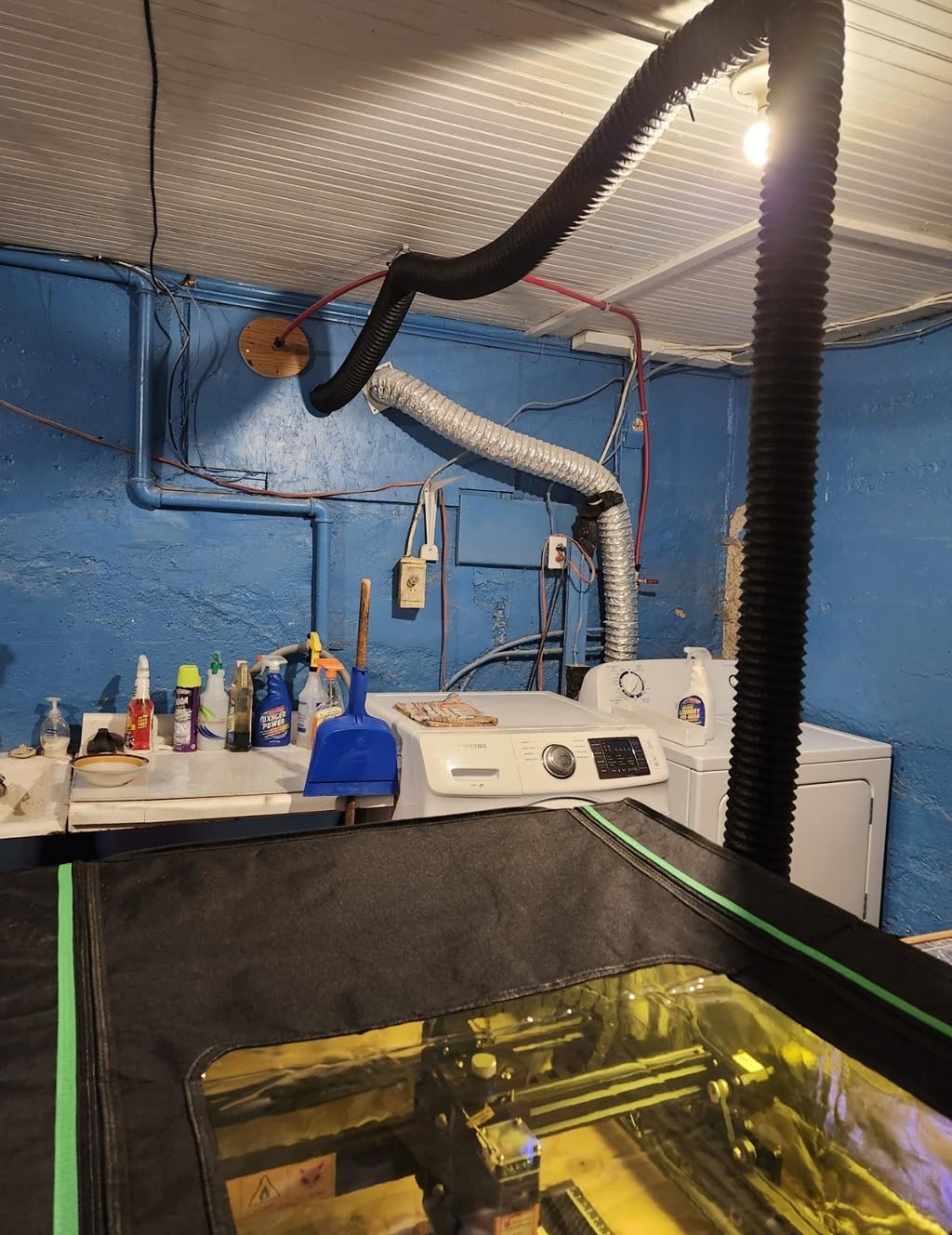
For an apartment, the workable route is: run the enclosure exhaust port to a window with a hose, and if a window is not available, into a fume extractor positioned close to the port. The alternative people actually use is holding an extractor hose over the machine, which works but is noisy and awkward.
Two practical details matter more than the brand of fan. Match the duct diameter to the enclosure port, because adapters are where smoke escapes, and check the clearance from the machine before you buy, because low-mounted fans on some tents get blocked by machine frames. Owners report ducts of 75mm, 90mm and 100mm across the products here, so measure the port rather than assuming.
Fire Safety and What Sits Under the Machine
Never engrave PVC, vinyl chloride or any unknown plastic, and never cut anything you cannot identify. This applies inside an enclosure or outside one, and an enclosure slows a fire rather than preventing it. Several products here specify flame-retardant cloth or silicone-coated fiberglass, which buys you time, not a guarantee.
What to put under your laser engraver is simpler than most lists suggest. A fire-resistant, non-combustible surface is the baseline, and several owners of the tents with solid bottoms note that material debris collects in one place instead of spreading. Avoid bare MDF offcuts, plywood offcuts and paper or cardboard, because they are all combustible.
Also worth knowing: air assist helps. It clears debris off the cut line, which is where combustion starts, and a machine with air assist inside an enclosure is meaningfully safer than one without. Never leave a job running unattended inside an enclosure, whichever of these you choose.
DIY Enclosure or Buy a Kit?
Build it yourself if you want a specific fit, a rigid frame or a price the kits cannot reach. Veteran forum users repeatedly recommend DIY MDF enclosures as cheaper and good enough for hobby work, and they are right about the price. They are equally consistent about the catch: sealing is the hard part, and an unfinished box leaks smoke no matter how good the panels are.
Buy a kit if you want it working this weekend. Assembly across this roundup runs from about twenty minutes for the compact desktop unit to a couple of hours for the cabinet, and most complaints in the reviews are about missing or incorrect hardware rather than complexity. That is a good trade when your time is the constraint.
The compromise most people land on is a tent now and a cabinet later. Fabric tents cost a fraction of a rigid enclosure, teach you whether you actually use the machine, and fold away when you outgrow them. Nobody in our testing regretted starting there.
Should You Buy an Enclosure or a Fully Enclosed Machine?
Buy a fully enclosed machine if you already know you will use the laser daily, run long unattended batches, or work in a shared space where smoke leakage is a genuine dispute. A factory enclosure is integrated, sealed and interlocked, which is why the best diode laser engravers with built-in enclosures exist at all.
Buy an enclosure for an existing open-frame machine if you already own one. Retrofitting costs a fraction of replacing the machine, and the open-frame-versus-enclosed choice is the single biggest buying decision in this whole category. Our hobbyist engraver guide covers that comparison from the machine side.
One honest note from the Crafit listing, which is worth repeating: it states plainly that it is not professional laser safety equipment. None of the enclosures here are certified laser safety enclosures, and none should be treated as a substitute for following your machine’s safety guidance and local rules.
Maintenance: What Actually Breaks
Soot on the lens is the first thing that degrades cut quality, and it happens faster inside an enclosure because the air is recirculating. Lenses are consumable parts, and replacing one costs far less than blaming the machine for a power drop.
Keep the exhaust path clean. Vacuum the filter panel and wipe the fan blades periodically, because a loaded fan moves less air and owners chasing a worsening odour problem often find debris in the intake rather than a faulty panel.
Check the seams and closures every few months. Fabric tents fail at the Velcro and the stitching first, and a strip of hook-and-loop tape is a five-minute fix. On the rigid cabinets, the doors and their seals are the parts that need attention, and owners add a stick-on door seal where light gaps appear.
Frequently Asked Questions
Do I need an enclosure for a diode laser engraver?
If you plan to run an open-frame diode laser indoors, yes. An enclosure contains smoke and fumes, blocks reflected 450nm blue light, reduces noise and slows the spread of fire. Without one, residue settles on walls and furniture and the machine is unpleasant to run in a home. If you only ever work outdoors or in a dedicated workshop with external extraction, you can manage without one.
What size enclosure do I need for my laser engraver?
Measure your machine and compare it against the enclosure interior, not the exterior. Most 400mm-class engravers fit a 720 x 720 x 400mm interior. Larger or wide-format machines need 790 x 730 x 530mm or 800 x 800 x 500mm enclosures. Allow extra clearance for the exhaust hose and any rotary attachment.
What is the best ventilation system for laser engraving?
A filtered extraction fan ducted from the enclosure exhaust port to the outside is the best setup. For indoor use, run a hose from the port to a window, or into a fume extractor positioned near the port. Match the duct diameter to the port, because gaps at adapters are where smoke escapes. No internal filter removes fumes entirely over time.
Is an acrylic laser enclosure safe?
Only if the panels are laser-rated and light-filtering. Most panels in this category are blue-light-blocking PVC, thickened PVC, orange tinted acrylic or brown protective film, all of which are designed for the blue diode band. Clear acrylic is not safe for laser use. Replace any panel that has yellowed or cracked, since no manufacturer in this roundup publishes a tested optical density value.
What should I put under my laser engraver?
Use a fire-resistant, non-combustible surface such as a protective mat, a steel plate or a stone worktop. Avoid bare MDF, plywood offcuts, paper and cardboard because they are combustible. Enclosures with an integrated sealed bottom also collect debris in one place, which keeps the surface beneath the machine cleaner.
Can I connect an enclosure to an external fume extractor?
Yes, provided the duct diameter matches the enclosure exhaust port. Most ports in this category run between 75mm and 100mm. If your extractor hose does not match, use an adapter and seal it with foil tape, since gaps at the junction leak smoke. An enclosure with exhaust ports on more than one side makes routing to the nearest window much easier.
Verdict: The Best Enclosures for Diode Laser Engravers
After working through all twelve, the Creality 700x720x400mm enclosure remains our pick for the best enclosures for diode laser engravers, because it is the one that is correctly sized, quick to build and honest about what it is. Its published compatibility list covers the machines most people actually own, and its owner record is long enough that the weaknesses, mainly the connectors and the modest fan, are known rather than discovered.
If you want a sturdier frame and a steel pipe structure, step up to the Creality Falcon Enclosure 2.0. If you want the sealed bottom and the interior light, the Skouphy integrated unit is the one we recommend, accepting that you will likely swap the fan.
For a rigid workshop setup where enclosure performance compounds, the Crafit cabinet is the only one here that doubles as a stand and a powered workstation. And if you own a Genmitsu Kortek, buy that enclosure specifically, because its lid interlock is the safety feature nothing else in this roundup offers.
Whatever you choose, measure first, upgrade the fan second, and get the exhaust outdoors if you possibly can. That last habit will do more for your workshop than any panel in any of these boxes.