
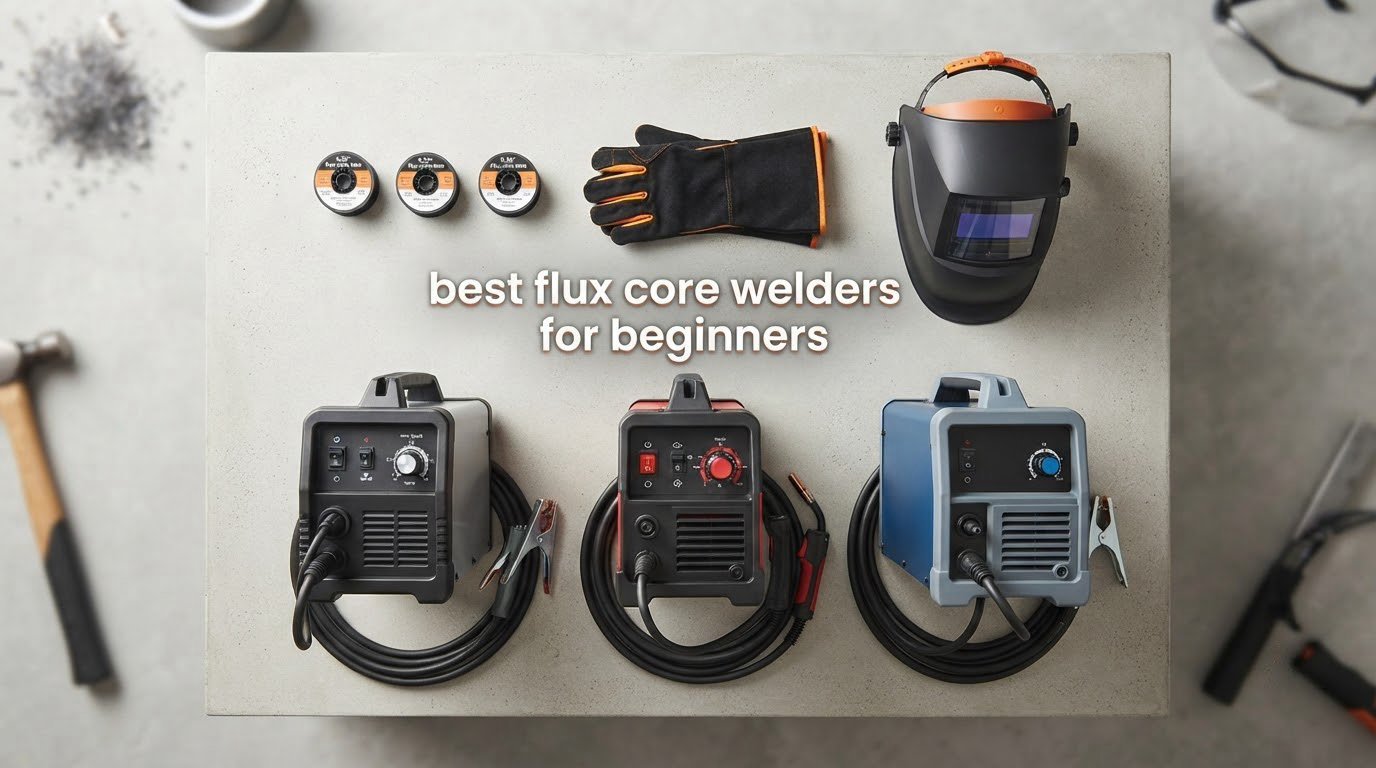
Last updated: October 2026 — We re-checked every machine below against current owner reviews. Selection criteria: independent control of wire feed speed and voltage, DC arc behaviour, stated metal thickness, 120V/220V capability, duty cycle, warranty length and the availability of spare wire drive parts. Rankings are not paid placements.
Short answer: the Forney Easy Weld 140 FC-i is the best flux core welder for beginners overall, because infinite voltage and wire feed adjustment means you can fix a bad bead instead of living with it. If you want stick and lift TIG on the same box, take the YESWELDER FLUX-135PRO. If you want the smoothest inverter arc on this list, the Lincoln Electric 90i FC is the one to buy.
Flux core welding removes the two barriers that stop most beginners before they start: there is no gas bottle to buy, rent or transport, and the arc does not care about wind. Self-shielded flux core wire carries its own shielding, so you can weld a rusted gate hinge in the rain outside your garage and still get a bead you can grind smooth. That is why nearly every beginner in the forums we read starts here rather than with gas MIG.
Before you shop, answer three questions honestly. How thick is the thinnest metal you care about? Sheet metal and auto body panels want a fine control machine, while structural tube and trailer frames want amperage. Where will you weld? Outdoors and on dirty stock, flux core wins. And what power do you actually have? A standard 120V wall circuit limits you to roughly 140 amps, and that number decides how thick a plate you can push before the machine crawls.
We compared ten machines across the price spectrum, from a bare-bones 110V unit to a Lincoln inverter with a carrying strap. Ten machines, one question each: will a first-time welder be happy with this in six months? If you also want a broader look at the machines that use shielding gas, our guide to the best MIG welders covers the other side of the fence.
Table of Contents
Top 3 Best Flux Core Welder for Beginners in 2026
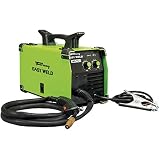
Forney Easy Weld 140 FC-i
- 140A on 120V
- welds up to 1/4 in mild steel
- infinite voltage and wire speed control
- 19 lb all-metal case
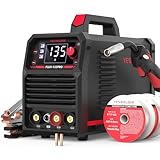
YESWELDER FLUX-135PRO
- 3-in-1 flux core
- stick and lift TIG
- synergic auto voltage matching
- 135A on 110V

Lincoln Electric 90i FC
- 15 lb inverter with shoulder strap and metal case
- two-knob control
- welds up to 1/4 in
Quick Picks: 10 Best Flux Core Welders for Beginners (October 2026)
Here is the short version, with a categorical label for each machine so you can match it to the kind of work you plan to do.
Best overall — Forney Easy Weld 140 FC-i. 19 lb, 120V, 140A, infinite voltage and wire feed control, welds to 1/4 in.
Best value — YESWELDER FLUX-135PRO. 135A on 110V, three processes, synergic auto-setting, wire included.
Best for first timers — ARCCAPTAIN MIG130. Wire-size auto selection, two-year warranty, heaviest accessory bundle.
Best multi-process — YESWELDER YWM-160. Dual 110V/220V, 160A, real gas MIG plus flux core, stick and lift TIG.
Budget pick — AZZUNO MIG 130F. Single-process 130A on 110V, light, simple knobs, one-year warranty.
Best dual voltage — HITBOX 200A. 110V/220V, .030 and .035 wire, 8.6 lb chassis, 4.0 mm capacity.
Best lightweight — SSIMDER MIG-140. 7.7 lb body, 110V/220V, flux core plus lift TIG and stick.
Best for portability — Lincoln Electric 90i FC. 15 lb inverter, shoulder strap, metal case, 1/4 in capacity.
Best with bundled safety gear — BILT HARD WLD-1606. Solar helmet, gloves, wire and gun included, 2T/4T/SPOT modes.
Best for pulse control — ANDELI 135A. Pulsed flux core, adjustable inductance, 4.1 inch display, 9.04 lb body.
One note on weights before you read the reviews: several manufacturers publish two different figures for the same machine, usually one for the bare unit and one with the handle, leads and accessories. The Forney is listed at 19 pounds and the Lincoln at 15 pounds, both consistent. Several cheaper machines show a gap, so treat the larger figure as the number you will feel on the day you carry it out of the car.
| Product | Specifications | Action |
|---|---|---|
| Forney Easy Weld 140 FC-i |
|
Check Latest Price |
| YESWELDER FLUX-135PRO |
|
Check Latest Price |
 ARCCAPTAIN MIG130 ARCCAPTAIN MIG130 |
|
Check Latest Price |
 YESWELDER YWM-160 YESWELDER YWM-160 |
|
Check Latest Price |
 AZZUNO MIG 130F AZZUNO MIG 130F |
|
Check Latest Price |
 HITBOX 200A HITBOX 200A |
|
Check Latest Price |
 SSIMDER MIG-140 SSIMDER MIG-140 |
|
Check Latest Price |
| Lincoln Electric 90i FC Weld-PAK |
|
Check Latest Price |
 BILT HARD WLD-1606 BILT HARD WLD-1606 |
|
Check Latest Price |
 ANDELI 135A Pulse ANDELI 135A Pulse |
|
Check Latest Price |
1. Forney Easy Weld 140 FC-i — Best Overall for Beginners
FORNEY Easy Weld 140 Amp 120-Volt Flux-Cored Wire Feed Welder (No Gas Needed)
140A on 120V
Up to 1/4 in mild steel
Infinite voltage and wire speed control
19 lb
8 ft gun and ground clamp
Pros
- Infinite voltage and wire feed control so you can dial in any bead
- 140A handles mild steel up to 1/4 in
- Only 19 lb so it moves between jobs easily
- All-metal case built for daily use
- Accepts both 2 lb and 10 lb wire rolls
Cons
- 120V only so it needs a dedicated 20 amp circuit
- Single process with no stick or TIG mode
The Forney Easy Weld 140 FC-i is the machine we keep coming back to, and it earned the most reviews of anything on this list with 3387 owners weighing in. It is a single-process flux core machine, which sounds like a limitation until you realise that for most beginners it is a feature. One process means one set of controls and far less to get wrong.
What separates it from the cheap boxes is genuine infinite adjustment on both voltage and wire feed speed. Most entry-level machines give you stepped voltage settings, so when your bead is too wide or too narrow you are hunting through presets. On the Forney you turn two knobs until the bead changes. That single feature is the difference between a frustrating first month and a satisfying one.
At 140 amps on household power, the FC-i is rated to weld mild steel up to 1/4 inch, which covers the overwhelming majority of home garage work: gate hinges, trailer frame repairs, thicker shelf brackets and auto body panel patches. It takes both 2 lb and 10 lb spools, so you can buy the small spools while you learn and the big ones once you are running out mid-project.
It weighs 19 pounds and has an all-metal case, which is unusual at this level. The included kit is an 8 ft MIG gun, an 8 ft ground clamp and a 20A-15A adapter. Those lead lengths matter more than they sound, because a short ground clamp forces an awkward torch angle and a bad ground is the number one cause of a sputtering arc.
What you give up with the Forney
There is no stick mode and no TIG mode. That is not a problem if you are building a gate, but it becomes one the day you want to tack thin stainless or do a clean lift TIG bead on a small bracket. If multi-process matters to you now rather than later, look at the YESWELDER FLUX-135PRO instead.
It is also 120V only, and it wants a 20 amp circuit. Running it on a shared household circuit with a shop vac and a radio going will trip the breaker mid-bead, which is a miserable way to learn.
Where it fits your work
Choose the Forney if your projects are outdoor, structural or on metal that is already dirty and rusted. It is the one we would put in the hands of somebody who has never held a torch and wants to be making decent welds within a weekend.
Skip it if you plan to weld a lot of thin sheet or stainless, or if you want to grow into TIG without buying a second machine. Reviewers report a 4.6 average with 79% of owners giving it five stars, and the thin-gauge complaints that do appear are about spatter rather than arc control.
2. YESWELDER FLUX-135PRO — Best Value 3-in-1
YESWELDER 135A MIG Welder, 110V Flux Core Gasless MIG/Lift TIG/Stick 3-in-1
135A on 110V
Flux core, stick and lift TIG
Synergic auto voltage matching
LED display
Flux core wire included
Pros
- Three processes in one 110V machine
- Synergic mode matches voltage to wire feed speed automatically
- E71T-GS wire in two diameters included in the box
- Oversized LED display readable outdoors
- Over-current
- over-load and over-heat protection
Cons
- Lift TIG needs a separately purchased torch
- Only handles 2 lb spools with the supplied setup
- Cheap wire spool holder and tensioner
The FLUX-135PRO is the most reviewed machine in the MIG welding equipment category we looked at, and the reason is simple. It arrives with everything you need, including a pound of E71T-GS wire in both .030 and .035 diameters, an electrode holder, a ground clamp and a MIG torch. Nothing to buy before your first bead.
The headline feature is synergic control. In flux core mode the machine matches voltage to wire feed speed automatically, with plus or minus 3V of manual trim on top. Reviewers with decades of shop experience describe that mode as close to foolproof, and it is the single most useful thing on this machine for a beginner. You set amperage, it does the rest.
That said, synergic-only control is also the main criticism from experienced users. Once you outgrow the automatic setting you are stuck, because there is no full manual voltage mode in flux core. The manual range on the Forney is worth something if you take welding seriously.
Stick and lift TIG modes are there as insurance for later, though lift TIG requires a torch you buy separately. It is a 135 amp machine on 110V, good for mild steel up to 3/32 inch, which covers sheet metal, auto panels and light fabrication. The weight is published as 11.4 lb in the feature set and 16.98 lb in the technical block, so plan for something closer to the middle of that.
How the synergic mode actually behaves
The auto-matching works by pairing a voltage value with each wire feed speed step. On thin material you drop the amperage, the voltage follows it down, and the bead narrows. The plus or minus 3V trim lets you correct for a long lead extension or a cold ground without leaving the mode.
The catch is that the pairing is tuned for clean mild steel. On heavy mill scale or on very thick plate you will want the Forney’s independent knobs, because there is nowhere else to go in this machine.
Where it fits your work
Choose the FLUX-135PRO if you want one box to grow into, if you want to keep the option of stick for structural work, and if you would rather spend your money on a helmet than on a machine with a bigger output number. It suits 110V-only homes, sheet metal work and general garage repairs.
Reviewers give it 4.4 stars from 2985 owners, with 76% at five stars. The recurring gripes are the cheap spool holder and tensioner hardware, 2 lb spool limitation and occasional quality control misses on arrival.
3. ARCCAPTAIN MIG130 — Best for First Timers
ARCCAPTAIN 130A Flux Core Welder MIG Welder 110V Gasless MIG Stick Lift TIG
130A on 110V
Auto matches wire size .030 .035 .040
10-speed wire feed control
11.79 lb
Two-year warranty
Pros
- Synergic mode matches current and wire speed for each wire diameter
- Most complete accessory package in this group
- Wire spool
- contact tips
- brush and hammer all included
- Only 11.79 lb with handle or shoulder strap
- Two-year manufacturer warranty
Cons
- Lift TIG requires an extra torch purchase
- 130A output limits it to lighter gauge mild steel
The ARCCAPTAIN MIG130 solves a problem most budget machines create. Instead of asking you to guess, you tell it what wire you loaded — .030, .035 or .040 — and it matches current and wire feed speed for you. That removes a decision that has no correct answer when you are starting out.
It is also the most generously packed machine in this roundup. The box contains the MIG torch, ground clamp, electrode holder, a 2 lb spool of .030 flux core wire, two contact tips, a chipping brush and hammer, and a manual. For a first purchase that is a meaningful saving in the first month, when consumables and safety gear are what you are actually shopping for.
Weight is 11.79 pounds, with both a carry handle and a shoulder strap, so taking it to a fence line or a driveway job is not a two-person lift. Built-in over-current, over-load and over-heat protection cut power before the unit cooks itself, which is the kind of boring reliability that matters when you are new.
The wire feed is a 10-speed variable control rather than an infinite dial, so it is stepped. In practice that is fine for flux core work at household amperages, and the synergic pairing handles the rest.
How the wire size selection works in practice
You set a switch based on the diameter you loaded, then choose your amperage. The machine pairs a wire feed rate with that combination. If you swap spools mid-project, you change the switch, and forgetting to do that is the most common cause of the stubbing and birds-nesting that beginners report on machines like this.
On a 2 lb spool you will be replacing wire more often than on a 10 lb spool, and the tiny spool is also easier to unwind and tangle. If you weld in long sessions, factor in a spare spool.
Where it fits your work
Choose the ARCCAPTAIN if you are buying your first machine, if you want everything in one box, and if your work is 16 gauge and lighter mild steel, square tube and light plate. It also carries a two-year manufacturer warranty, the longest warranty among the budget machines here.
It is not the choice for 1/4 inch plate. Reviewers rate it 4.6 from 1831 owners with 80% at five stars, and the honest limitation in nearly every review is the 130A ceiling rather than anything about how it welds.
4. YESWELDER YWM-160 — Best Multi-Process Machine
YESWELDER 160A MIG Welder, 110V/220V MIG/Flux Core/Lift TIG/Stick
110V and 220V dual voltage
160A output
Real gas MIG plus flux core, stick and lift TIG
2 lb and 10 lb spools
Synergic and manual modes
Pros
- Only machine here with genuine gas MIG capability
- 110V and 220V lets you grow with your outlet
- Accepts 2 lb and 10 lb spools of .030 and .035 wire
- Synergic for beginners with full manual control available
- Reviewers report two-plus years of shop reliability
Cons
- Needs genuine 220V for full output and can trip household breakers
- Display washes out in direct sunlight
- Thin torch liner can melt against a hot weld
The YWM-160 is the only machine in this roundup that runs true gas MIG alongside flux core, stick and lift TIG. That matters more than it sounds. Once you are comfortable with self-shielded wire, gas MIG is the natural next step, and this machine lets you make that step without buying a second welder.
It is 160 amps on 110V or 220V dual voltage, which is the real reason to consider it. Household power gets you a useful range, and a dedicated 220V circuit opens up thicker material and a far better duty cycle for long seams. It accepts both 2 lb and 10 lb spools of .030 and .035 wire, solid or flux core.
Both synergic and manual modes are present. Beginners get automatic voltage and wire feed matching, and the moment you want fine control you switch to manual and take the whole range. The LED digital display shows live values, though several reviewers note it is hard to read in direct sunlight and the button labels are very small. The viewing panel itself is thin plastic and is the weakest physical part of the unit.
Weight is published as 19.4 lb in the feature set and 27.5 lb in the technical block, a wider gap than most machines here, so measure before you plan to carry it up a set of stairs.
What dual voltage really changes
On 120V the same machine produces less output, and the numbers on the display are not what you get. On 220V the full 160 amps is available, which is the difference between pushing a bead on 1/4 inch plate and hoping. The included 220V to 110V adapter lets you plug into either, but adapters do not create amperage.
Stick mode handles 6010, 6011, 6013 and 7018 electrodes, though reviewers report 6010 running poorly and some difficulty striking an arc on stick for the first time. If stick is a secondary process for you, buy 7018 or 6013.
Where it fits your work
Choose the YWM-160 if you have or plan to install a 220V circuit, if you want to weld aluminum later with the right setup, and if you are the kind of person who will be using this machine in five years rather than five months.
Skip it if your only outlet is a kitchen-style 120V wall socket and you will not install a circuit. Reviewers give it 4.5 stars from 908 owners, with long-term shop users calling it a dependable value buy.
5. AZZUNO MIG 130F — Best Budget Starter
AZZUNO MIG Welder,Flux Core Welder Machine 110V 130Amp, Gasless MIG Welding Machine IGBT Inverter Welder Portable Wire Feed Welder (110V)
130A gasless flux core on 110V
IGBT inverter
Welds mild steel to 3.0 mm
Includes wire, torch and clamp
One-year warranty
Pros
- Lowest entry cost of the machines that hold a stable arc
- Dedicated voltage knob plus wire speed knob
- IGBT inverter design rather than a transformer core
- Light enough to move with one hand
- Overload and overheat protection included
Cons
- Only handles 2.2 lb wire rolls
- Single process with no stick or TIG mode
- One-year manufacturer warranty
The AZZUNO MIG 130F is the machine to buy if the total budget for your first welder is genuinely tight. It is a single-process 130 amp gasless flux core machine on 110V, which is exactly what a beginner learning on mild steel needs and nothing more.
The layout is refreshingly simple: a voltage knob, a wire speed knob and a synergic auto-adjustment that handles the pair for you when you are learning. Output is rated to 3.0 mm mild steel plate, roughly 1/8 inch, which covers sheet, light plate and structural tube. The IGBT inverter core keeps the arc stable for a machine at this level.
Weight is listed as 11.98 lb in the technical block and 8.6 lb in the feature set. The box includes a MIG torch, ground clamp, chipping brush and hammer, 1 lb of .030 flux core wire and two contact tips, so again you can weld on day one.
What you are trading away is capacity. It takes only 2.2 lb spools, which is a genuinely small roll and means more frequent wire changes on a longer project. It is also single process, so stick and TIG are simply not on the menu.
What a single-process machine gives you
One process means no mode switches, no torch changes, no chance of setting the machine to the wrong mode. There is less to break and fewer ways to waste an afternoon. For a first machine aimed at mild steel, that simplicity is a feature rather than a compromise.
The 3.0 mm limit is the real ceiling. Once you move past 1/8 inch plate, a 140 amp machine on 120V is the minimum you want, and ideally you would be looking at 220V.
Where it fits your work
Choose the AZZUNO if you are welding thin to medium mild steel in a home garage, you want the smallest sensible machine, and you would rather put the difference into a proper auto-darkening helmet and a good ground clamp.
It is not a farm or trailer frame machine. Reviewers rate it 4.5 from 890 owners and treat it as a solid first welder for light home and craft work, with a one-year manufacturer warranty as the only warranty on this list that is that short.
6. HITBOX 200A — Best Dual-Voltage Headroom
HITBOX 200A MIG Welder, 110V/220V Flux Core MIG/Lift TIG/Stick 3-in-1
IGBT inverter up to 200A
110V and 220V
.030 and .035 flux core
4.0 mm capacity
8.6 lb body
Pros
- Dual voltage opens up output on a 220V circuit
- IGBT inverter technology
- Supports .030 and .035 wire
- 8.6 lb with a built-in carrying handle
- Reviewers report clean low spatter welds for its size
Cons
- Actual output runs below the displayed amperage
- Holds only a 2 lb wire spool
- Soft ground clamp warps quickly
- No hot start and limited stick electrode support
The HITBOX is sold as a 200 amp machine and that number needs a caveat. Reviewers consistently report that real output runs roughly 20 to 30 percent below what the display shows, so you calibrate by ear and by bead rather than by the amperage readout. Buyers still rate it well, which tells you the arc itself is sound.
It is 110V and 220V dual voltage with IGBT inverter technology, supports .030 and .035 flux core wire, and is rated to 4.0 mm mild steel. Synergic control coordinates voltage and wire feed as you change current or wire diameter, and the chassis weighs 8.6 lb with a built-in handle.
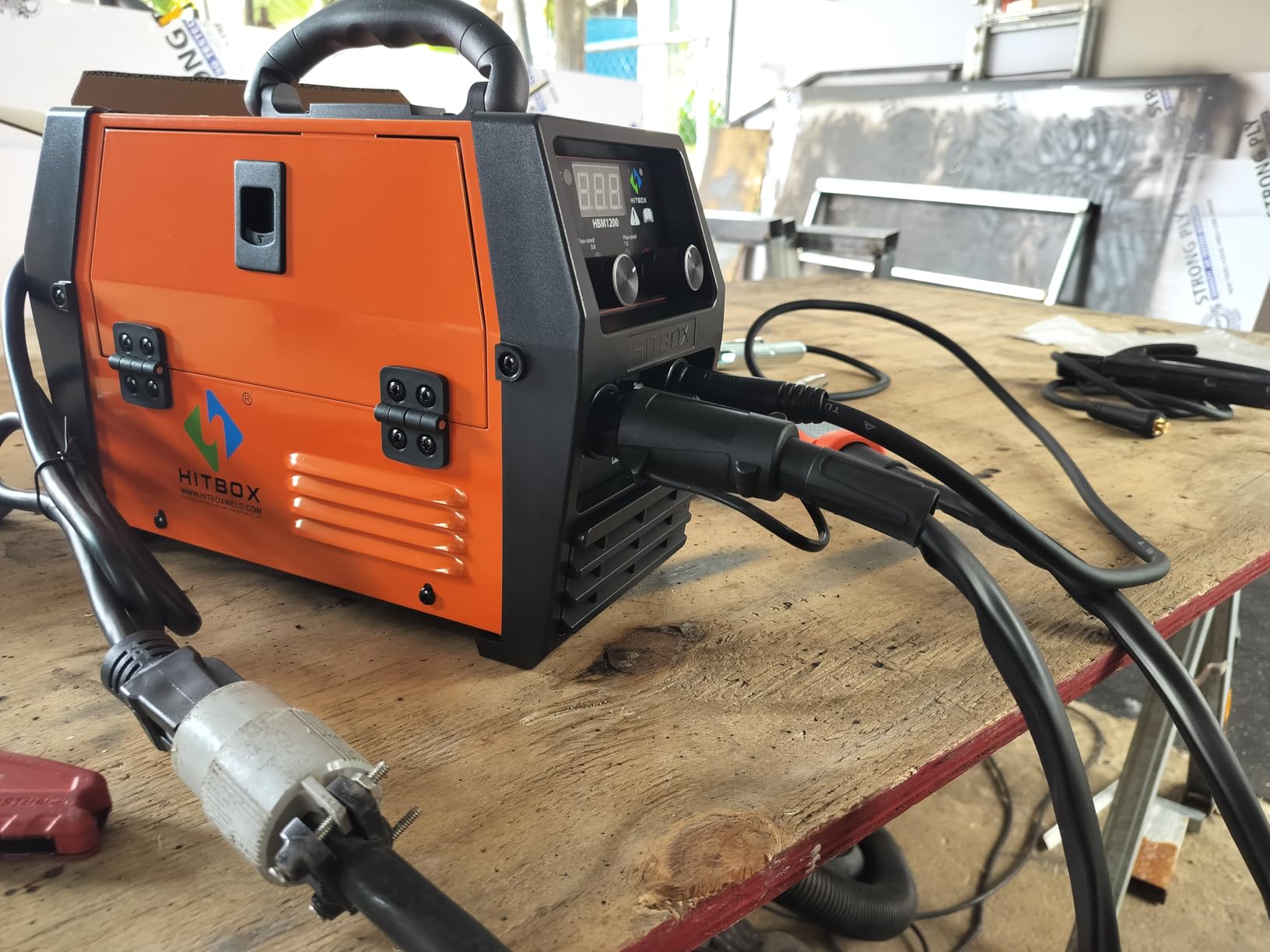
The technical block lists the weight as 6.6 lb, and the features list it as 8.6 lb. Either way it is one of the lighter machines here, and the metal housing plus over-current, overload, over-voltage and overheat protection make it feel like more than a hobby box.
It includes a MIG torch, ground clamp, electrode holder, 2 lb of .035 flux core wire, two conductive nozzles, brush and hammer. Several owners say it outperforms pricier units for light repair and DIY work, which is a reasonable expectation for the money.
Calibrating around the amperage display
If the display overstates output, treat it as a relative scale rather than an absolute one. Set the machine, weld a test bead on scrap of the same thickness, and adjust until the bead matches what you need. Write the setting down. This is normal on budget machines and it costs you one afternoon.
Stick mode is the weak point. Reviewers report trouble maintaining an arc with 6010, 6011 at 1/8 inch or 7018 at 3/32 inch, and there is no hot start. Treat stick as a secondary function you will not lean on.
Where it fits your work
Choose the HITBOX if you have or will have a 220V circuit, if you want headroom above the 140 amp household ceiling, and if you like a light machine with a synergic auto mode and more amp capacity than the 130A boxes.
Skip it if you are on 120V only, since the dual voltage advantage disappears and you are left with the small spools. Owners rate it 4.4 from 824 reviews with 73% at five stars.
7. SSIMDER MIG-140 — Best Lightweight Unit
SSimder 140A MIG Welder 3 in 1, Dual Voltage Flux Core Lift TIG Stick
7.7 lb body
110V and 220V dual voltage
Lift TIG without high frequency
Two-year warranty
Flux core plus stick
Pros
- Lightest listed body weight in this group at 7.7 lb
- Dual voltage runs on a standard household outlet
- Lift TIG without high frequency avoids electronics interference
- Stated material range covers carbon and low alloy steel
- Two-year warranty honored with a replacement unit
Cons
- Supplied MIG gun has a gas tip that is wrong for flux core work
- Manual shipped is for a different model
- Short power cord of about four feet
The SSIMDER MIG-140 is the one to consider if you will be carrying your welder up stairs, into a truck bed or out to a job on foot. At 7.7 lb it is the lightest listed body weight of the ten machines here, and the 11 by 6.5 by 6.5 inch footprint stores on a shelf.
It runs on 110V or 220V with a conversion cord included, so it works on a household outlet now and a dedicated circuit later. Lift TIG uses a torch you buy separately, and because it is lift rather than high frequency start, it will not interfere with WiFi routers or sensitive electronics in your shop.
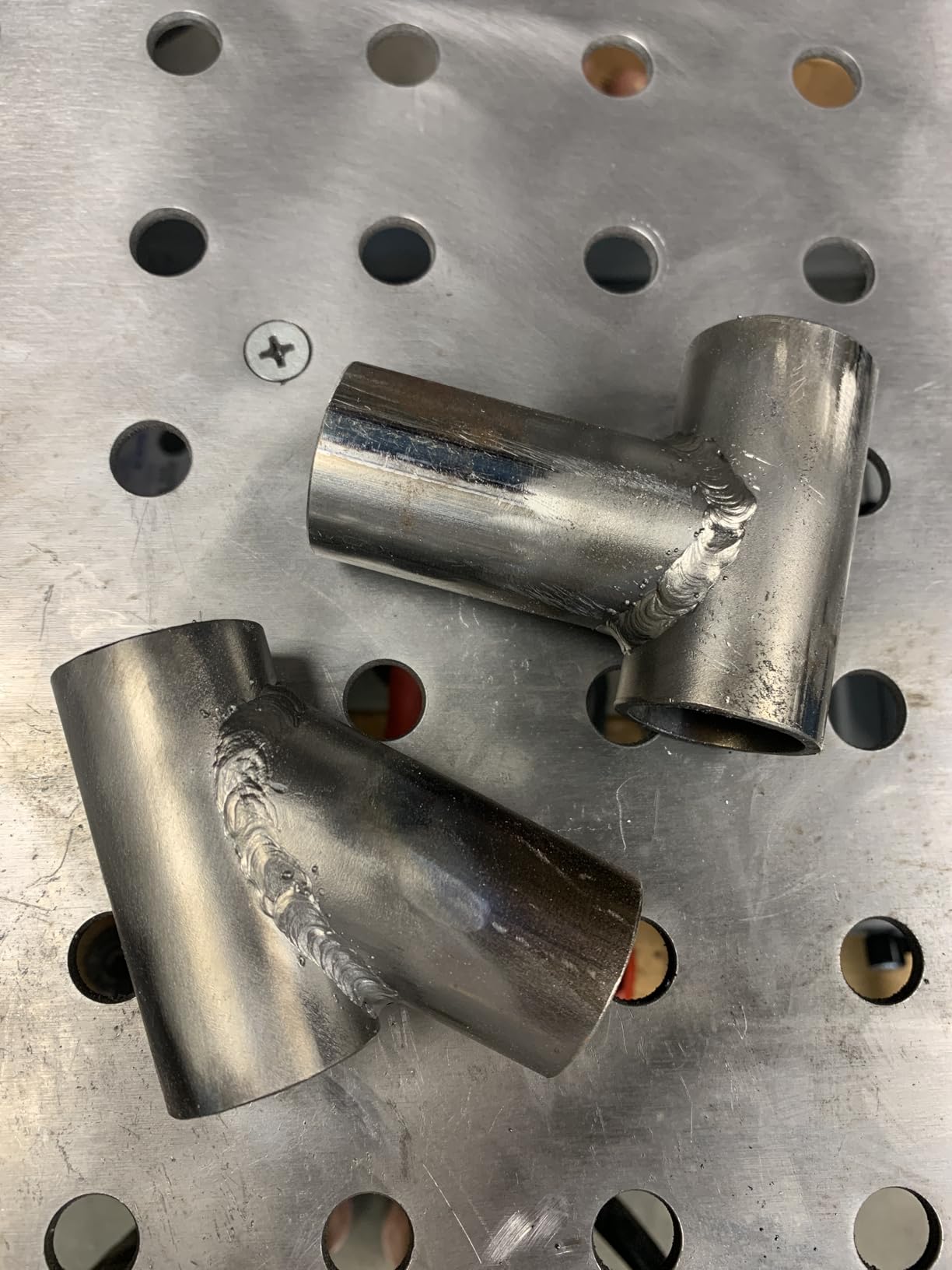
The stated material list is unusually broad for a beginner machine: carbon steel, low alloy steel, stainless, titanium, copper and cast iron. In practice you will use it on mild steel most of the time. The box includes a 14AK MIG torch, 1 lb flux core spool, electrode holder, ground clamp and the 220V conversion cord.
It accepts 0.8 mm and 1.0 mm self-shielded wire in 1 lb and 2 lb spools, which is the .030 and .035 diameter pair in metric. That is the right range for a 140A machine.
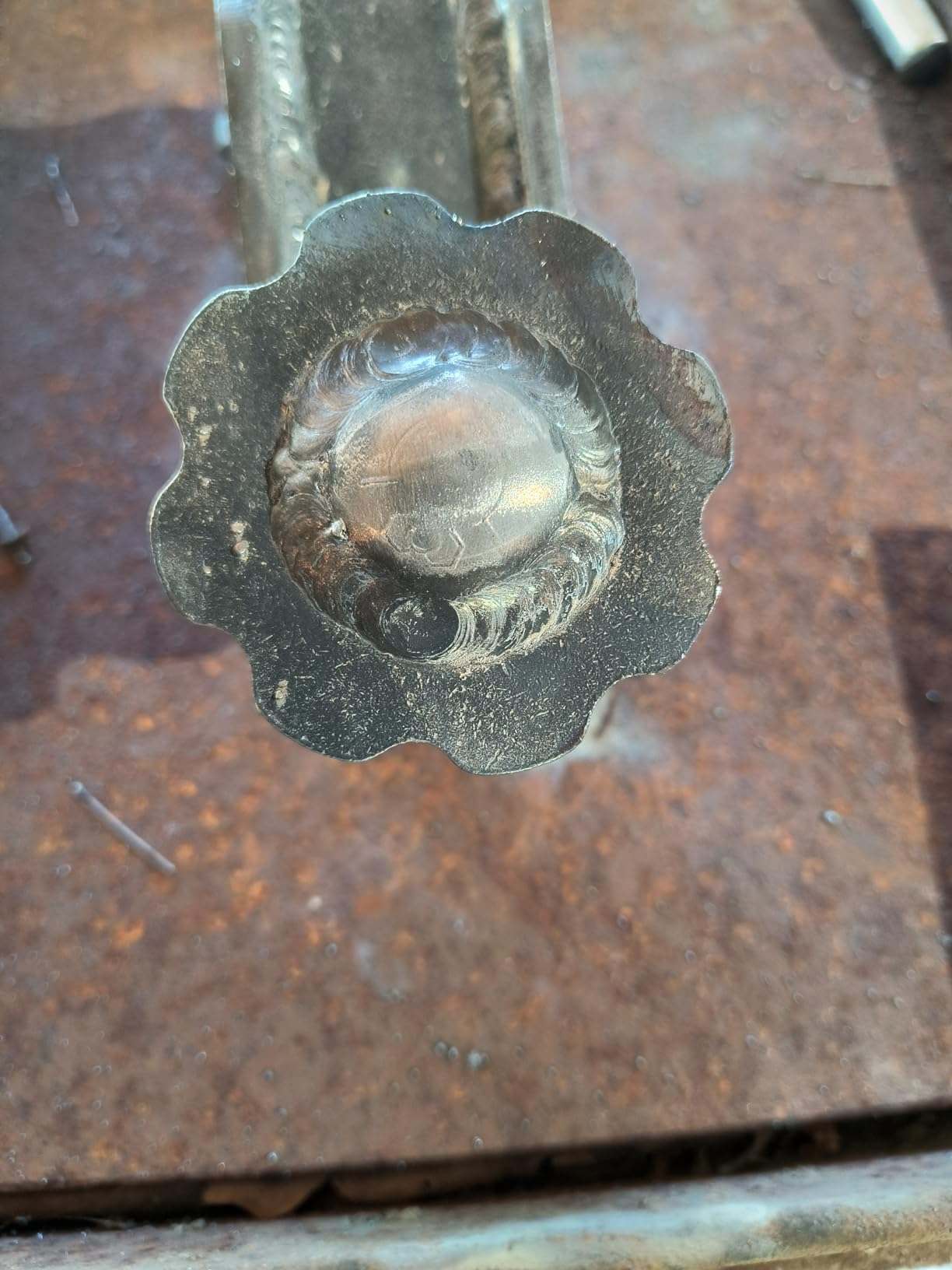
Two problems you should know about before you buy
The supplied MIG gun has a gas tip, which is the wrong nozzle for flux core work. You will need to replace it, and it is a five-minute fix once you know. The manual that ships in the box is for a different model, so do not rely on it for settings; search the model number instead.
Switching from MIG to stick means feeding out several feet of wire and disconnecting the gun, which is a real annoyance if you plan to use stick often. The power cord is also short at about four feet, so plan on an extension before you start.
Where it fits your work
Choose the SSIMDER if weight and storage are your binding constraints, or if you are welding in a tight space where a 20 pound machine is genuinely inconvenient. Two-year warranty coverage adds confidence for a first purchase.
It will not weld aluminum and it uses no shielding gas, so this is a flux core and stick machine only. Owners rate it 4.4 from 721 reviews, and the most common complaints are the mismatched manual and the gas tip, both fixable.
8. Lincoln Electric 90i FC Weld-PAK — Best Built and Best Rated
Lincoln Electric 90i FC Flux Core Wire Feed Weld-PAK Welder, 120V Welding Machine, Portable w/Shoulder Strap, Protective Metal Case, Best for Small Jobs, K5255-1
15 lb inverter with shoulder strap
120V
Welds up to 1/4 in
Two-knob control
Protective metal case
Pros
- Highest owner rating on this list at 4.7
- 15 lb inverter with a shoulder strap and metal case
- Two simple knobs that first-time welders can learn in minutes
- Inverter power gives a smoother arc than a transformer welder
- Infinite voltage adjustment for fine tuning
Cons
- Ground clamp bonding braid is short and can work loose
- Spatter is noticeable on thinner work
- 120V only with no 220V option
- Flux core wire not included
The Lincoln Electric 90i FC carries the highest owner rating of the ten machines here at 4.7 stars, with 84% of its 572 reviewers giving five stars. Owners with commercial shop backgrounds describe it as a capable handyman’s welder rather than a toy, and the reason is the inverter power source.
An inverter produces a smoother, more stable arc than a transformer machine of the same class, and reviewers who have used heavier transformer Lincoln units say this one welds as well as they do. It is 15 lb, comes with a shoulder strap and a protective metal case, and is genuinely portable to a job site.
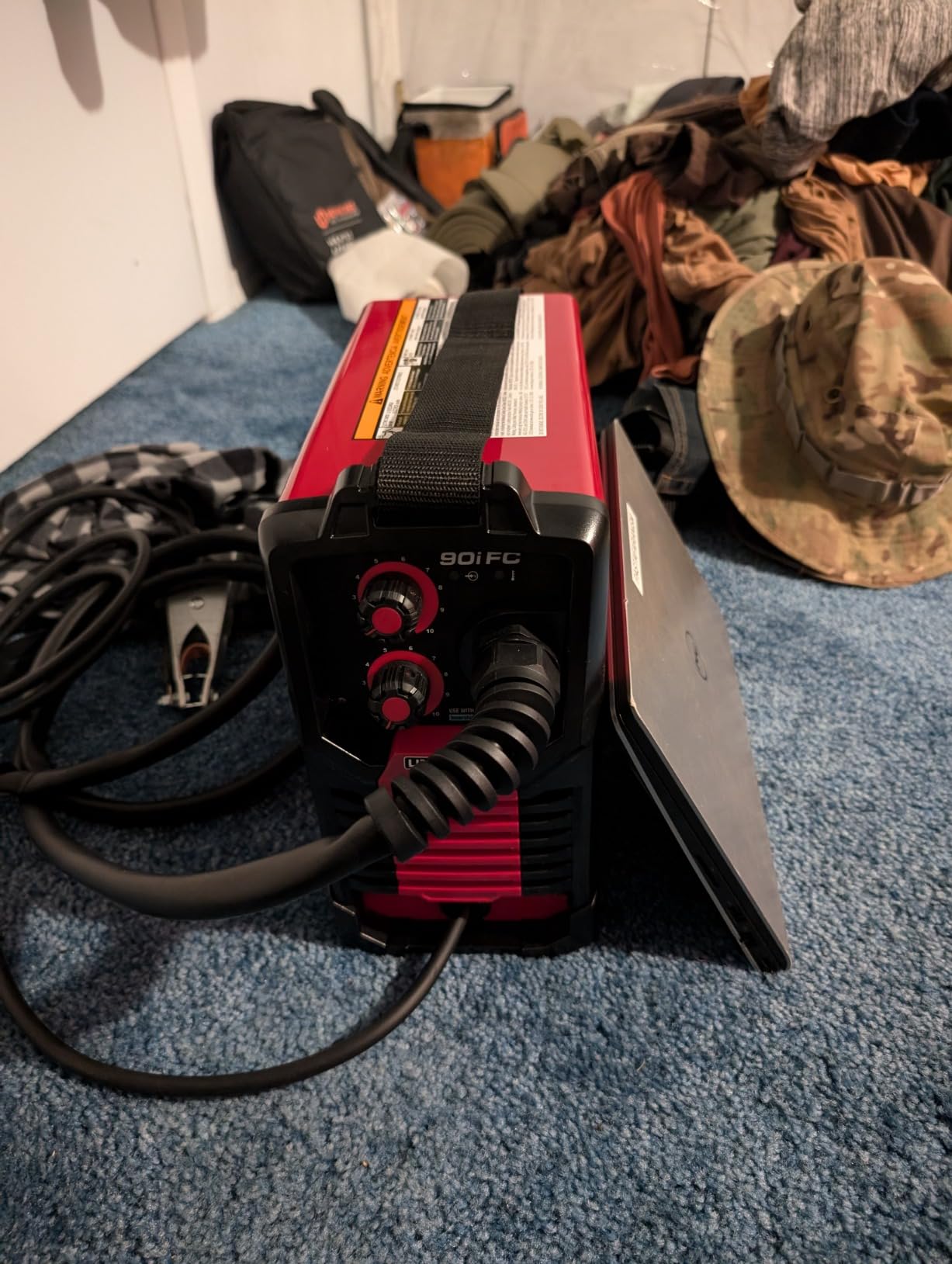
Control is two knobs: wire speed and voltage, with infinite voltage adjustment. There is no display, no synergic mode and no mode switch. For a first machine that simplicity is an advantage, because there is nothing to mis-set.
Output is rated up to 1/4 inch material, and reviewers report it handles 14 to 18 gauge stainless work well. The kit includes the welding gun, nozzle, contact tip, work cable and ground clamp. You supply your own flux core wire.
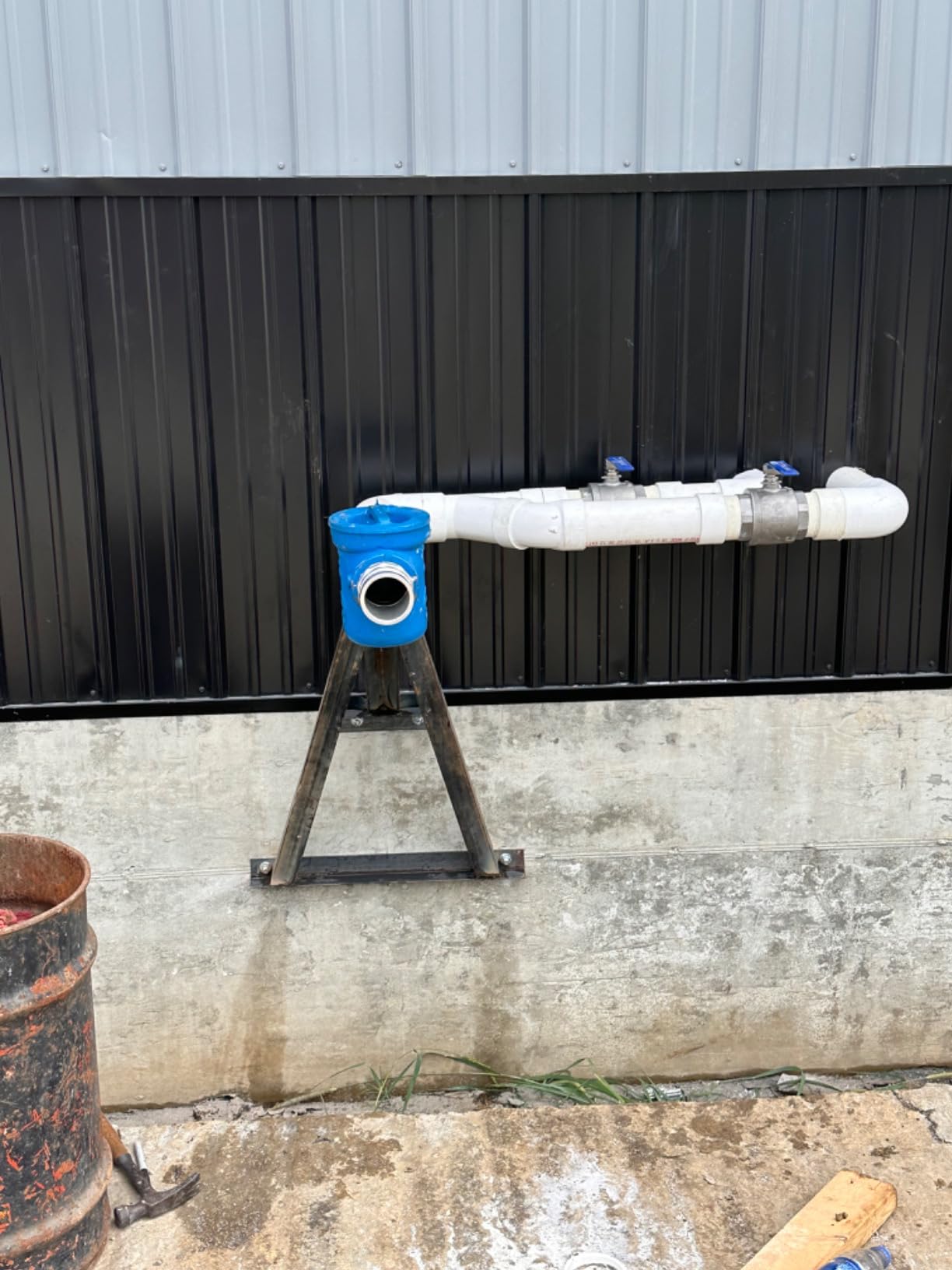
What the build quality is worth
This is a Lincoln Electric product, which means a 12-month manufacturer warranty, a US service network and a genuine spare parts catalogue. For a welder that you will use in a dusty garage for years, that matters more than a higher amperage number on the box.
The one recurring complaint is the ground clamp bonding braid, which reviewers say is too short and can work loose after a few welds. Budget a replacement ground clamp, and the machine is excellent.
Where it fits your work
Choose the Lincoln 90i FC if you want the best-made machine in this roundup, if you will be taking it to work sites regularly, and if you want the option to reach 1/4 inch material on 120V power without stepping up to 220V.
It is 120V only and flux core only. Spatter is noticeable on thin work, which is normal for this process and worth knowing before your first sheet metal attempt. Our guide to the best TIG welders covers the machines to consider if thin, clean, low-spatter work is where you are heading.
9. BILT HARD WLD-1606 — Best with Bundled Safety Gear
BILT HARD 135A 3-in-1 IGBT Inverter Welder, 110V Flux Core MIG/Lift TIG/Stick Welding Machine with Synergic Control, LED Display, 2T/4T/SPOT Modes & Full Kit (Solar Helmet)
135A on 110V
Solar auto-darkening helmet included
2T 4T and SPOT trigger modes
LED display with error codes
IGBT inverter
Pros
- Only kit here with a solar auto-darkening helmet included
- 2T
- 4T and SPOT trigger modes for tacks and short seams
- LED display tracks live voltage
- current and wire speed
- Error codes for E1 overcurrent and E2 overheat
- Reviewers report build quality better than the price suggests
Cons
- Duty cycle is limiting for long continuous sessions
- Top output realistically around 3/16 in not 1/4 in
- Included helmet darkness knob shifts during use
- Spool spindle too short to hold a 2 lb spool properly
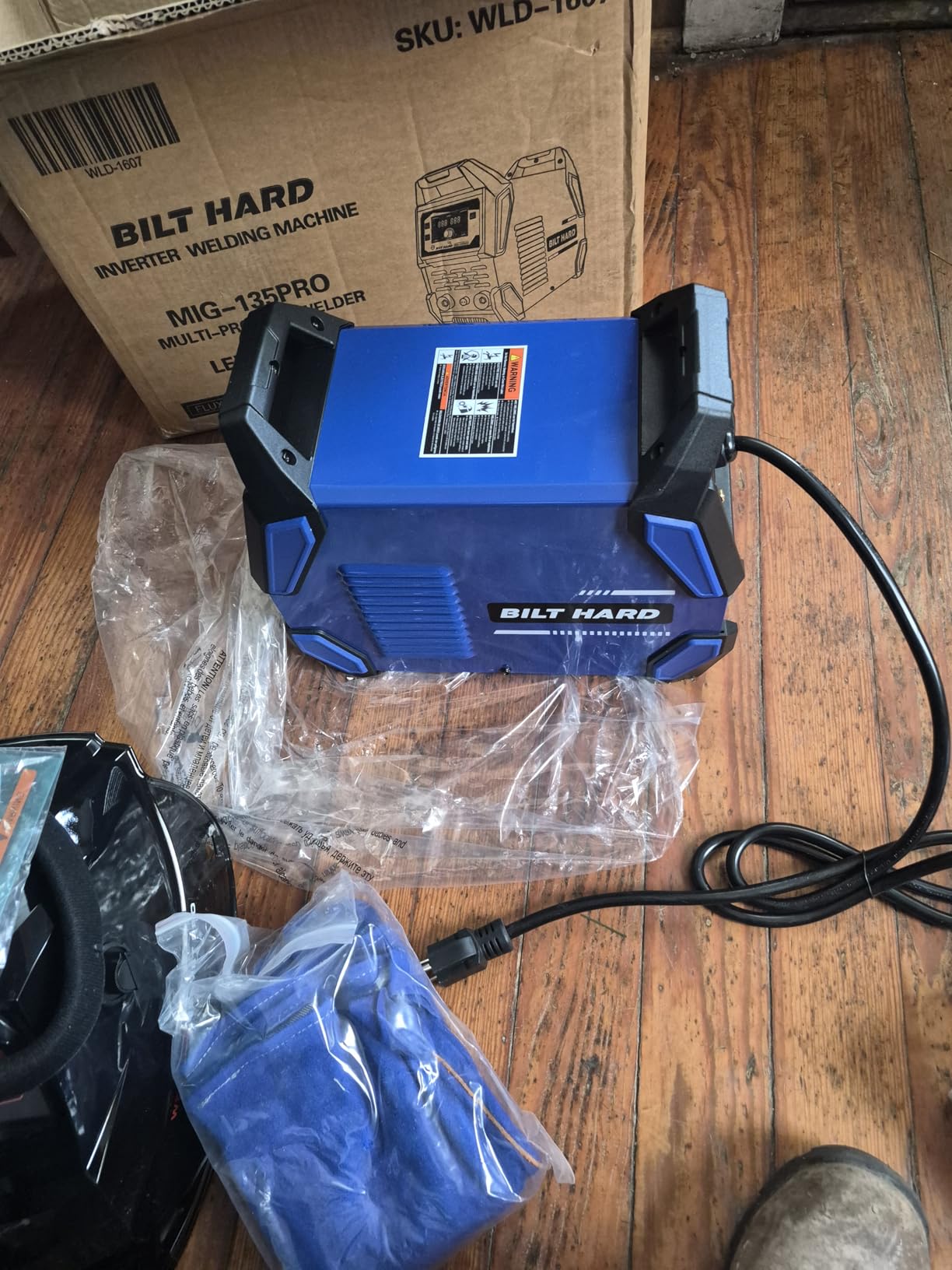
The BILT HARD WLD-1606 solves a problem the other machines here do not. It ships with a solar-powered auto-darkening welding helmet, and a helmet is not optional equipment. A first-time welder will not buy one unless it is in the box, and every cheap unit we have watched get used improperly was a missing helmet.
As a welder it is a 135A 110V IGBT inverter with flux core MIG, lift TIG and stick modes. The 2T, 4T and SPOT trigger modes are the feature that stands out: 2T for tacking, 4T for long seams with the trigger locked on, and spot mode for repeat short fix welds without burning through.
The LED display tracks real-time voltage, current and wire speed, and it shows error codes with a fan cooldown before a safe restart. E1 means overcurrent and E2 means overheat, which is useful information instead of a machine that simply stops.
The kit also includes a 6.6 ft MIG gun with a .030 contact tip, a 10 ft ground clamp, 2 lb of flux core wire, a spare .035 tip, a brush and hammer. That spare .035 tip matters, because it means you can change wire diameter without ordering parts.
Where the included gear falls short
The helmet darkness knob rotates too easily and shifts during use, and a shading change mid-bead is distracting at best. Replace it within the first year. The included chipping hammer and brush are low quality and the gloves are stiff, which is normal for bundled accessories.
The electrode clamp is not good quality either, and the spool spindle and wingnut are too short to hold a 2 lb spool properly, so check the spool sits square before you start.
Where it fits your work
Choose the BILT HARD if you are starting from nothing and need safety gear on day one, and if your work is tack welding, short seams and sheet metal repair. The spot mode and 2T trigger genuinely speed up that kind of job.
Real output tops out closer to 3/16 inch than the advertised quarter inch, and the duty cycle is limiting for long continuous sessions. Owners rate it 4.5 from 525 reviews and are broadly impressed that a machine in this class has a menu screen and a stable arc on a 110V outlet.
10. ANDELI 135A Pulse — Best for Arc Control
ANDELI 110V/220V MIG Welder 135A ,PULSE Flux Core/Lift TIG/Stick 4-in-1
Pulsed flux core MIG
110V and 220V
Adjustable inductance
5.0 mm capacity
4.1 inch LED display
Pros
- Pulse mode produces a smoother arc and finer beads with less spatter
- Adjustable inductance gives real spatter control
- 4.1 inch display under a spark-protective cover
- .030 .035 and .040 wire supported on dual voltage
- Only 9.04 lb with a carrying handle
Cons
- Lift TIG torch sold separately
- Only accepts 2 lb wire spools
- Included welding helmet is low quality and should be replaced
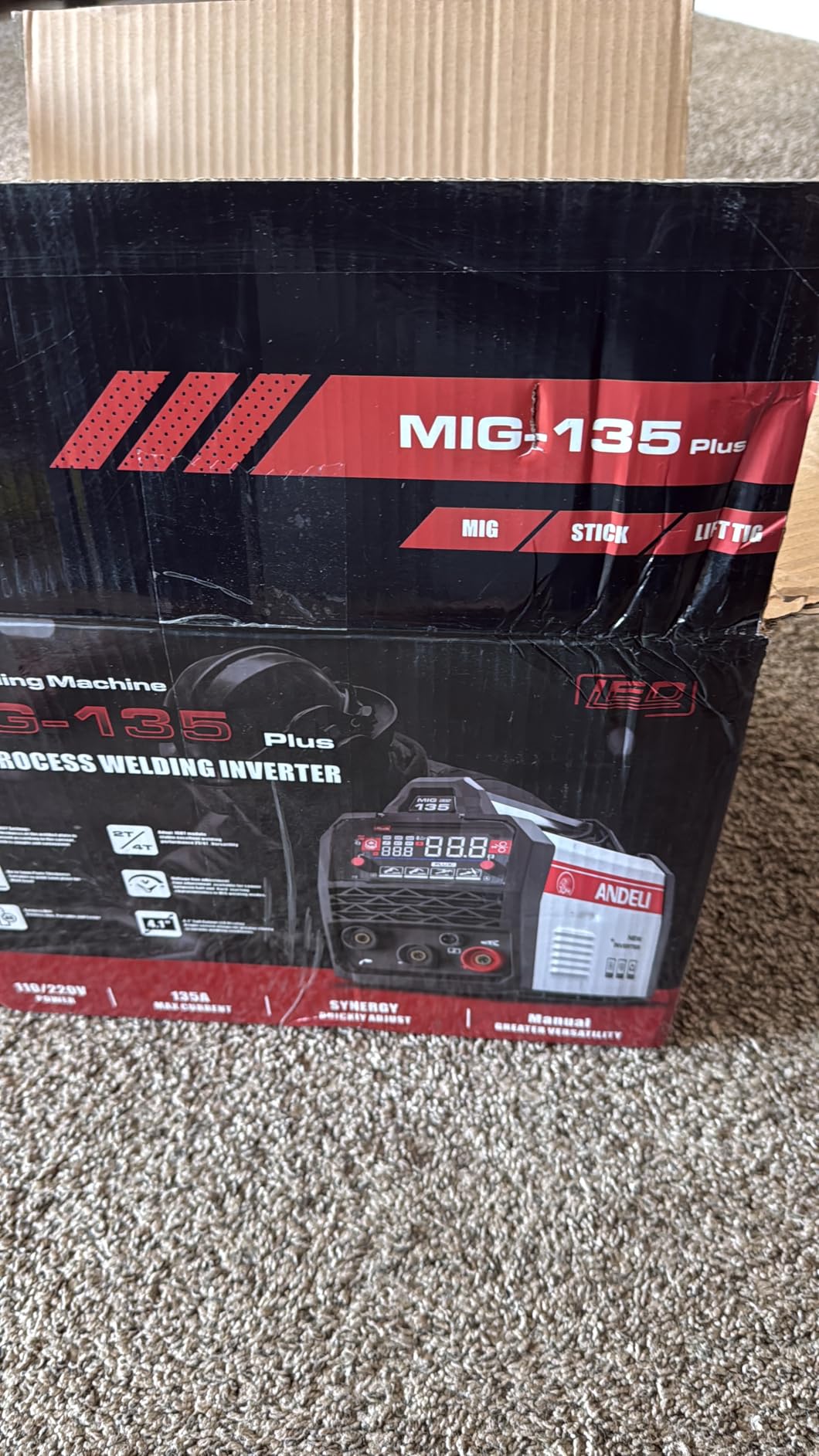
The ANDELI 135A is the most technically interesting machine in this roundup, because pulse mode in flux core is not a gimmick. Pulsing drops and raises the current rapidly, which produces a narrower bead, less heat distortion and noticeably less spatter than continuous wire feed at the same settings.
It runs 110V and 220V dual voltage and accepts .030, .035 and .040 wire. Material capacity is listed at up to 5.0 mm, roughly 3/16 inch, which is the highest stated thickness of the 110V-friendly machines here. Adjustable inductance gives you another layer of spatter control, on top of hot start and arc force settings for stick.
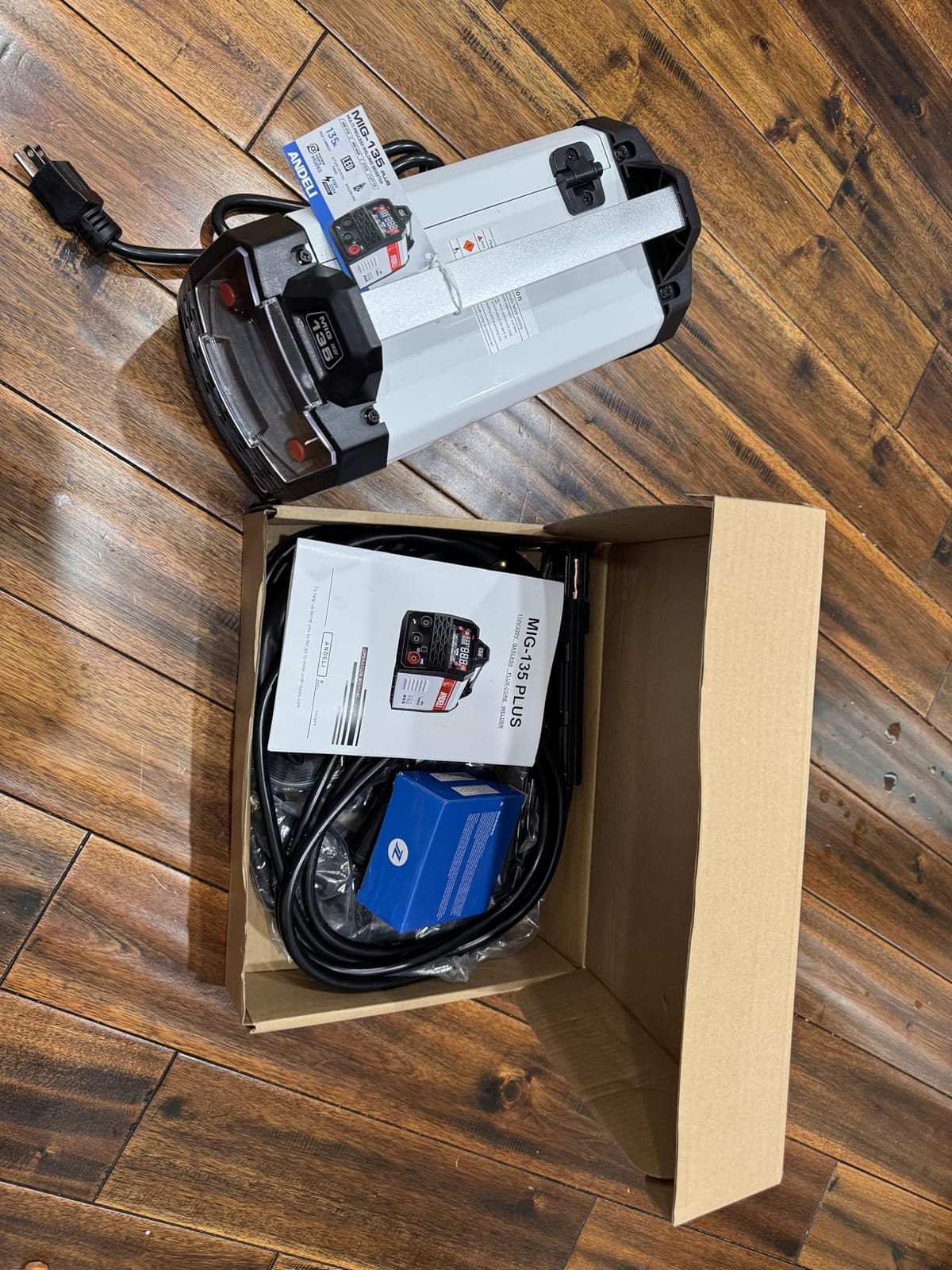
The 4.1 inch LED display sits under a transparent protective cover that shields it from sparks and impact, which is a sensible design choice on a machine that will be knocked around. Weight is listed as 9.04 lb in the features and 18.46 lb in the technical block, so check the packaged figure before lifting it into a truck bed.
The kit is complete: flux core wire, a 220V to 110V adapter, two contact tips, leather gloves, auto-darkening welding glasses, a welding helmet, ground clamp, electrode holder and torch. The torch and leads are detachable and replaceable, which a long-term owner specifically praises.
What adjustable inductance does for a beginner
Inductance is a spooling characteristic of the wire drive. Higher inductance smooths the wire coming off the spool, which reduces the pulsing and popping you hear when the drive roller is fighting a tangled or worn spool. Turning it up helps on long beads and with older wire.
Turning it down makes the wire respond faster to your trigger. On a first machine this is an advanced control, and the honest advice is to leave it in the middle until the arc is behaving, then experiment.
Where it fits your work
Choose the ANDELI if you are welding thinner material where spatter is most annoying, if you have a 220V circuit and want to use it, or if you want pulse control at a level most budget machines do not offer.
Two things to plan for: the lift TIG torch is sold separately, and it only accepts 2 lb spools. The included helmet is low quality, so replace it early. Owners rate it 4.5 from 381 reviews with 78% at five stars.
What Is Flux Core Welding and Why Beginners Start There
Flux core welding is wire-feed welding that uses self-shielded tubular wire. The flux inside the wire burns away as the wire melts and forms its own shielding gas around the weld. That is the whole trick, and it is why you can weld a dirty, rusty trailer frame in the middle of a windy afternoon with nothing but a machine and a spool of wire.
The alternative is gas-shielded MIG, where an external bottle of argon and carbon dioxide does the shielding. That process gives a cleaner, quieter bead with far less spatter, which is why professional shops use it. It also costs more to run, is awkward to store and transport, and is sensitive to wind. For a first machine in a home garage, flux core is the right trade.
One setting catches beginners out. Flux core runs on DCEN, meaning direct current electrode negative, and the torch lead connects to the negative terminal. On most machines this is the default, but if your weld is spitting, hedging and making no sense, check the polarity switch before you start changing settings.
What flux core cannot do is aluminum. Self-shielded wire will not weld aluminum, because the flux chemistry contaminates the molten metal. For aluminum you need gas MIG with a spool gun, which is a good reason to consider the YESWELDER YWM-160 later rather than now.
120V vs 240V and How to Read a Duty Cycle Rating
A 120V household circuit gives you roughly 140 amps of welding output, and that is the ceiling on the Forney, the YESWELDER 135 and most machines in this roundup. It is enough for 16 gauge through 1/8 inch mild steel and most structural tube. It is not enough for sustained work on 1/4 inch plate.
A 220V dedicated circuit roughly doubles the power available, and it is the difference between a machine that is adequate and one that is good. The dual-voltage machines here — the YESWELDER YWM-160, the HITBOX, the SSIMDER and the ANDELI — will run on a household outlet today and improve substantially once you install a proper circuit.
Duty cycle is the number that confuses people, so here is what it means. A rating of 20 percent at 80 amps means the machine can weld for 2 minutes out of every 10 at that output, and must cool for the other 8. Higher percentages mean longer seams before a rest. Buy for your longest single weld, not for your best weld.
If you are building a gate with a 20 foot seam, a machine with a low duty cycle will stop repeatedly and leave a series of cold starts in the middle of your bead. If you are doing tack welds and short patches, duty cycle barely matters. Be honest about which one you are doing before you shop.
Flux Core Only or Multi Process: Reading the MIG Label
Here is a labelling trap that catches almost every first-time buyer. Many machines with wire feed are advertised as MIG welders, but they cannot run gas MIG at all. They weld flux core only. If the product page never mentions a gas inlet, a shielding gas hose or a spool gun connection, assume it is wire feed only.
Multi-process machines give you flux core, stick and sometimes lift TIG from one box. Stick is genuinely useful outside the garage, for outdoor repairs and structural work where flux core is overkill, and lift TIG is the way to thin sheet and small parts. Our MIG welder guide covers the machines that run true gas MIG.
Second trap: AC output. TractorByNet, a forum source the AI overview cited, specifically warns beginners off cheap AC-output flux core machines because the arc is unstable and very hard to control. Flux core is fundamentally a DC process. The Forney’s published spec block lists an AC power source, which is worth verifying with the manufacturer before you buy, and the reason we lean toward inverter DC machines like the Lincoln 90i FC for thinner work.
Third trap: synergic only. A synergic machine matches voltage to wire feed speed for you, which is wonderful for the first month. Once you want to correct for a long lead or a bad ground, you need manual control as well. The Forney and the YESWELDER YWM-160 give you both.
Wire, Settings and Consumables for Your First Bead
Use .030 self-shielded E71T-GS wire on any 120V beginner machine. The Hobby-Machinist, which the AI overview cited, recommends .030 rather than .035 specifically because small machines lack the amperage to push thicker wire, and that matches what we hear from beginners who start with .035 and wonder why the wire spits and the arc sounds wrong.
On wire brand, the same source recommends sticking with Lincoln, Miller or Hobart wire to avoid erratic feeding and poor welds. Owners in Facebook welding groups make a similar point, noting that Lincoln NR-211 in .030 produces less spatter than budget wire. Cheap wire with an inconsistent winding will bird-nest in the liner no matter what machine you own.
Forum settings guidance circulating among beginners for a 110V 135 amp flux core machine is roughly 18.1 to 18.3 volts at a 290 to 300 wire feed speed for thin material, and one notch of voltage down from the manufacturer’s recommendation for butt welds on auto panels. Use that as a starting point and adjust, not as gospel.
Five things to do before your first bead
Set DCEN polarity. The torch lead goes to the negative terminal, the ground clamp to positive. Wrong polarity is the number one cause of a spitting, hedging arc.
Run .030 E71T-GS wire from a brand you trust, and buy a second spool before you finish the first.
Clean the workpiece to bright metal and grind out any rust or mill scale in the weld area. Flux core tolerates dirty metal far better than MIG, but a bead on clean steel is dramatically easier to learn on.
Set the machine aside and do practice beads on 1/8 inch mild steel scrap, not on the project. Start at low amperage, around 20A for .030 wire on thin material, and raise it until the bead looks like a stack of dimes.
Wear a helmet before you strike anything, and work with the door open or a fume extractor running.
A note on consumable cost, because it surprises people. Budget for a spare ground clamp early, a handful of contact tips, a new gun liner every few months if you weld regularly, and a wire spool roughly every four hours of arc time. That is the real ongoing cost of flux core, and it is far lower than the cost of shielding gas would be.
First Weld Troubleshooting Checklist
Almost every frustrating first week comes down to one of five problems. Work through them in order, because each one causes the next.
Wire not feeding. Check the drive roller is the correct size for your wire diameter and that the wire tension knob is snug but not crushing. Check the gun liner for a nest of wire — birds-nesting usually means a liner that needs replacing, not a machine fault.
Wire spitting or popping at the tip. Wrong polarity is the first suspect. Then check that you are actually in flux core mode and that the tip is a flux core tip, not a solid wire tip. A gas tip on a flux core gun is a common and easily fixed mistake.
Excessive spatter. Almost always wire feed speed too low for the voltage, or voltage too high. Raise wire feed until spatter drops, then trim voltage. Dirty wire and a weak ground both make it worse, and a loose ground clamp connection is the fix most people skip.
Undercut, a groove along the weld edge. You are pushing the arc too far forward and travelling too fast for the amperage. Pull the arc back toward the leading edge and slow down.
Stubbing, where the wire shorts into the puddle and the arc dies. The voltage is too low for the wire feed speed. Add half a volt at a time until the arc sounds like frying bacon rather than a sizzle.
If the wire is not feeding at all, it is a machine problem rather than a setup problem and the warranty is where that ends. That is the argument for buying from a brand with a real service network.
Garage Safety and Ventilation for First-Time Welders
Welding fume is a serious health hazard in an enclosed space, and a residential garage is exactly that. Flux core produces more fume than gas MIG because the flux is burning, so the ventilation question matters more here, not less. Weld with the garage door open, and never with your head inside a closed garage with a door open only at the far end.
A fume extractor is worth the money from your first afternoon. Welding outside is best, and a cross-ventilated shop with a fan pulling air out of the room is the minimum. A respirator rated for welding particulate adds a layer of protection that matters if you are doing regular work.
Personal protective equipment is not optional. You need an auto-darkening helmet with a shade appropriate to your process — shade 8 or 9 is a common starting point for flux core at low amperage, and you will want to check the chart in your helmet’s manual. Welding jacket, gauntlet gloves and leather footwear complete the kit. Only the BILT HARD WLD-1606 in this roundup includes a usable helmet in the box.
Fire safety is the other half. Keep a fire blanket nearby, clear the area of anything flammable, and never weld on a vehicle indoors without moving it out first. Hot slag stays hot long enough to start a fire through a seat cushion hours later.
Frequently Asked Questions
What is the best gasless MIG welder for beginners?
The Forney Easy Weld 140 FC-i is our pick for a first gasless machine. It runs self-shielded .030 flux core wire on standard 120V power, gives you independent control of both voltage and wire feed speed, and welds mild steel up to 1/4 inch. That independent control matters more than a higher amperage number, because it lets you fix a bad bead instead of living with it.
What is the easiest welder for a beginner?
The YESWELDER FLUX-135PRO is the easiest machine to learn on, because its synergic mode matches voltage to wire feed speed automatically and you only set amperage. It also runs stick and lift TIG, arrives with wire and a torch in the box, and carries 135 amps on a normal 120V outlet. The trade-off is that flux core mode is synergic only, with no full manual voltage control.
Can a beginner learn flux core welding?
Yes, and it is one of the easier welding processes to start with. There is no gas bottle to buy or transport, and the arc is not bothered by wind, so you can practise indoors or out. The two controls that matter are wire feed speed, which sets heat, and voltage, which sets bead width and spatter. Run practice beads on scrap steel for a few sessions before touching a real project.
Are Harbor Freight flux core welders any good?
The Harbor Freight Easy-Flux 125 is repeatedly cited on r/Welding and on WeldingWeb threads as a legitimate entry-level flux core machine rather than a toy, particularly for outdoor work. Forum consensus broadly agrees that a lot of cheap hobby welders are made for tacking a piece of sheet metal and nothing more. It is not in our top ten, but it is a reasonable second machine to consider.
Which is better, .030 or .035 flux core wire?
Use .030 on any 120V beginner machine, and save .035 for a 200 amp class machine. Smaller machines lack the amperage to push thicker wire, which causes spitting, an unstable arc and poor penetration. Wire brand matters as much as diameter. Owners report that Lincoln NR-211 in .030 produces noticeably less spatter than budget wire, and badly wound cheap wire birds-nests in the gun liner regardless of machine.
What voltage and wire feed speed should I start with?
On a 110V 135 amp flux core machine, forum guidance for a first bead on thin material is roughly 18.1 to 18.3 volts at a 290 to 300 wire feed speed, then one notch of voltage down from the manufacturer recommendation for butt welds on auto panels. Treat that as a starting point only. Set your amperage, weld a test bead on scrap of the same thickness, and adjust until the bead looks like a stack of dimes.
Do I need gas to do flux core welding?
No. Self-shielded flux core wire contains its own flux, which forms shielding gas as it burns, so there is nothing to buy, rent or transport. That is the main reason beginners start with flux core rather than gas MIG. The trade-off is more spatter and a noisier bead. Keep in mind that flux core cannot weld aluminum, which requires gas MIG with a spool gun.
Is 110V enough for home welding?
For most home garage work, yes. A 120V circuit gives you roughly 140 amps, which covers 16 gauge through 1/8 inch mild steel and most structural tube. It becomes limiting for sustained work on 1/4 inch plate, and for long seams where a low duty cycle forces the machine to stop and cool. Install a 220V circuit before then, and look at a dual voltage machine such as the YESWELDER YWM-160 or the ANDELI 135A.
Which Flux Core Welder Should You Buy First?
Buy the Forney Easy Weld 140 FC-i. It is the best flux core welder for beginners in 2026 because independent voltage and wire feed control lets you correct mistakes instead of tolerating them, 140 amps on household power covers real project material, and 3387 owners have already found the parts and the failures that will show up later. The all-metal case and 19 lb weight mean it will still be there in five years.
If the budget is the constraint, take the AZZUNO MIG 130F for light sheet and plate work, or the YESWELDER FLUX-135PRO if you want stick and lift TIG in the same box for barely more. If you have a 220V circuit, start with the YESWELDER YWM-160 and skip the upgrade in two years.
Whichever you choose, buy a real helmet before you power it on, put a fresh ground clamp on the end of that lead, and spend your first afternoon on scrap steel rather than on the project. That is the whole difference between learning to weld this year and still being confused next year.