
The best dog doors give a dog safe independence while you avoid constant trips to the back door. I compared ten models across wall, exterior-door, sliding-glass, and screen installations, with special attention to insulation, security, sizing, and long-term upkeep.
A good choice depends less on a breed name than on your dog’s widest body measurement, the mounting surface, local weather, and whether unwanted animals could enter. My overall pick is the PetSafe Medium Wall Entry because its double-flap design balances cold-weather control with manageable installation, while the Endura Flap is the premium wall choice for severe climates.
For a renter, I would start with a sliding-glass insert or screen door. For giant breeds or maximum access control, the PetSafe X-Large and Power Pet electronic door answer different needs, but both deserve more planning than a standard flap.
Table of Contents
Top 3 Picks for Best Dog Doors (October 2026)

Best Dog Doors in 2026
| Product | Specifications | Action |
|---|---|---|
| PetSafe Medium Wall Entry |
|
Check Latest Price |
 PetSafe Extreme Weather Large PetSafe Extreme Weather Large |
|
Check Latest Price |
 PetSafe Large Wall Entry PetSafe Large Wall Entry |
|
Check Latest Price |
 PetSafe Plastic X-Large PetSafe Plastic X-Large |
|
Check Latest Price |
 PetSafe Sliding Glass Large PetSafe Sliding Glass Large |
|
Check Latest Price |
| PetSafe Screen Door Large |
|
Check Latest Price |
 PetSafe SmartDoor Medium PetSafe SmartDoor Medium |
|
Check Latest Price |
 High Tech Pet Power Pet Large High Tech Pet Power Pet Large |
|
Check Latest Price |
 Endura Flap Large Wall Endura Flap Large Wall |
|
Check Latest Price |
 PetSafe Sliding Glass Aluminum PetSafe Sliding Glass Aluminum |
|
Check Latest Price |
1. PetSafe Medium Wall Entry Pet Door — Best Insulated Wall Value
PetSafe Wall Entry Pet Door, Telescoping, Dogs up to 40 lb, Medium
Double flap
Up to 40 lb
4.75-7.25 inch walls
Pros
- Strong insulation
- Rust-proof PVC frame
- Adjustable tunnel
Cons
- Cardboard template shifts
- Plastic screw caps may break
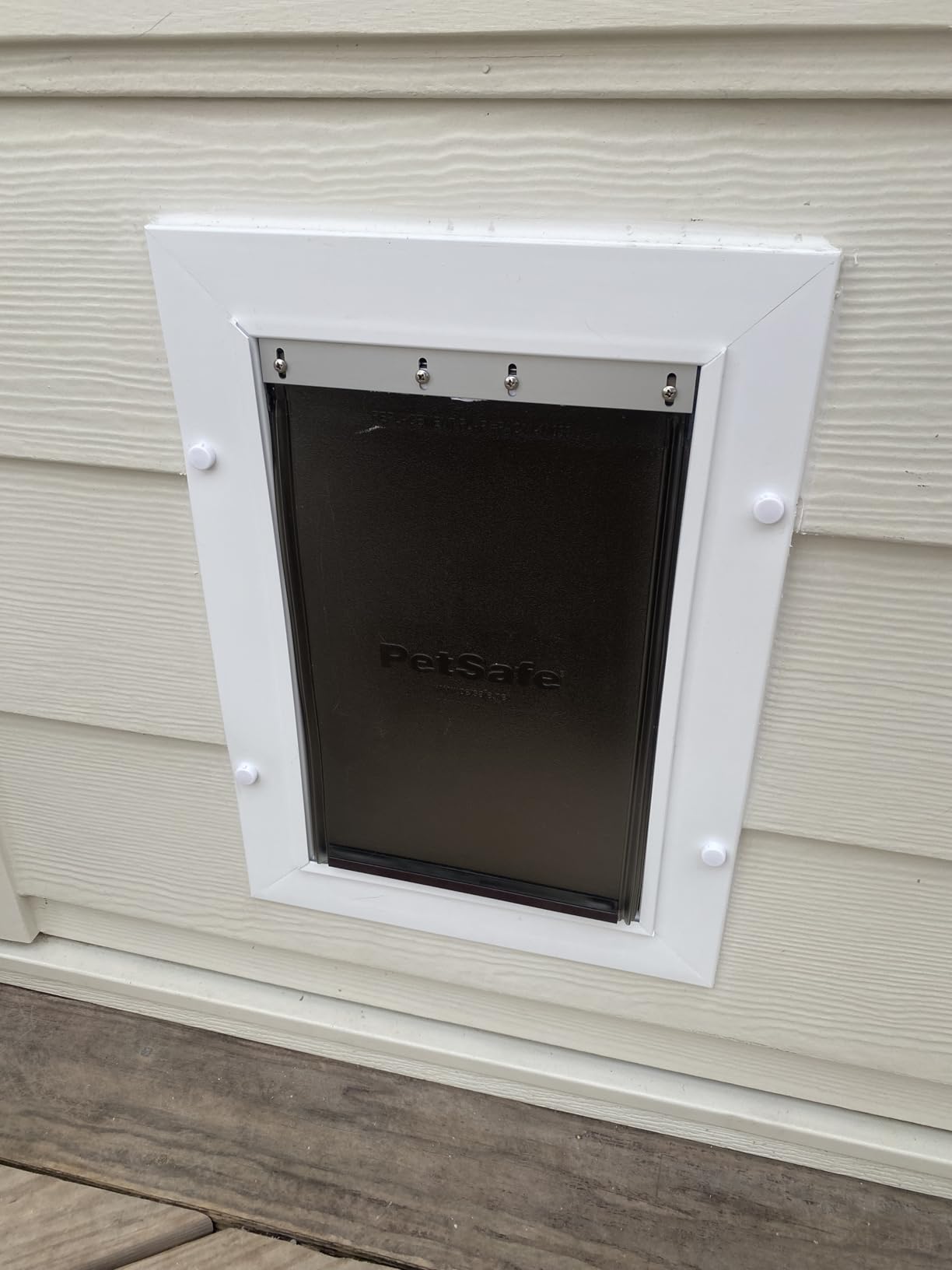
I would use this medium model for a dog up to 40 pounds when the opening must pass through an exterior wall. Its 8 1/4 by 12 1/4-inch flap gives a medium dog useful clearance, and the telescoping tunnel fits common walls from 4.75 to 7.25 inches thick.
The double flaps and slide-in panel made more sense to me than a basic single flap once outside temperatures dropped. Magnets brought the flaps back together, while the closing panel stopped unnecessary airflow when the dog stayed inside.
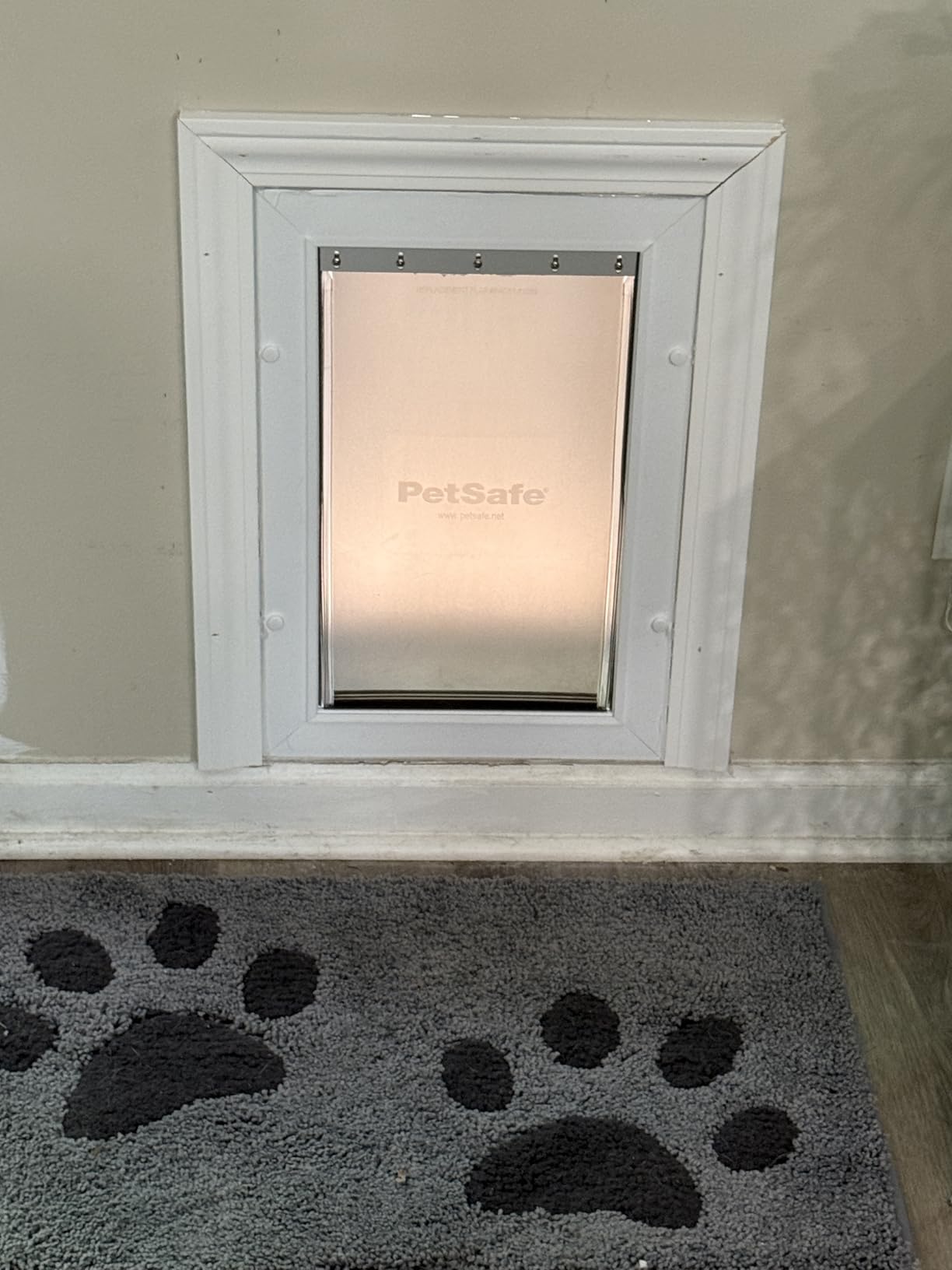
Installation requires care around wiring, plumbing, and wall studs. I would make a rigid replacement for the cardboard template, mark all four corners, and use better screws than the small plastic caps supplied.
Owners repeatedly praise the seal and quick pet training, but the same two installation complaints recur: the template moves and screw caps break. This is still my balanced wall pick because the core door performs well and replacement parts are supported.
Choose this model when insulation matters more than minimal cutting
The telescoping wall tunnel is the main reason to choose it over a door-mounted flap. It suits owners who want a permanent route through a standard-width wall and are comfortable with a multi-hour project.
It is also the safer fit for a dog who dislikes stiff plastic. Owners can secure the flaps open during initial training, then remove the tape once the dog pushes through confidently.
Skip this model when a thick wall or giant dog is involved
Walls thicker than 7.25 inches need an extension or a different product. The listed 40-pound capacity is a useful guide, but I would reject the opening if the dog’s shoulders cannot pass without ducking.
Drywall-only anchoring is another concern. The unit needs solid framing, especially when a strong dog may hit the flap at speed.
2. PetSafe Extreme Weather Large — Best Three-Flap Door Mount
PetSafe Extreme Weather Plastic Pet Door, Insulated 3-Flap, Large
Three insulated flaps
Up to 100 lb
1.625-2.25 inch doors
Pros
- Excellent draft control
- Paintable frame
- Large access
Cons
- Difficult flap alignment
- Plastic screws strip easily
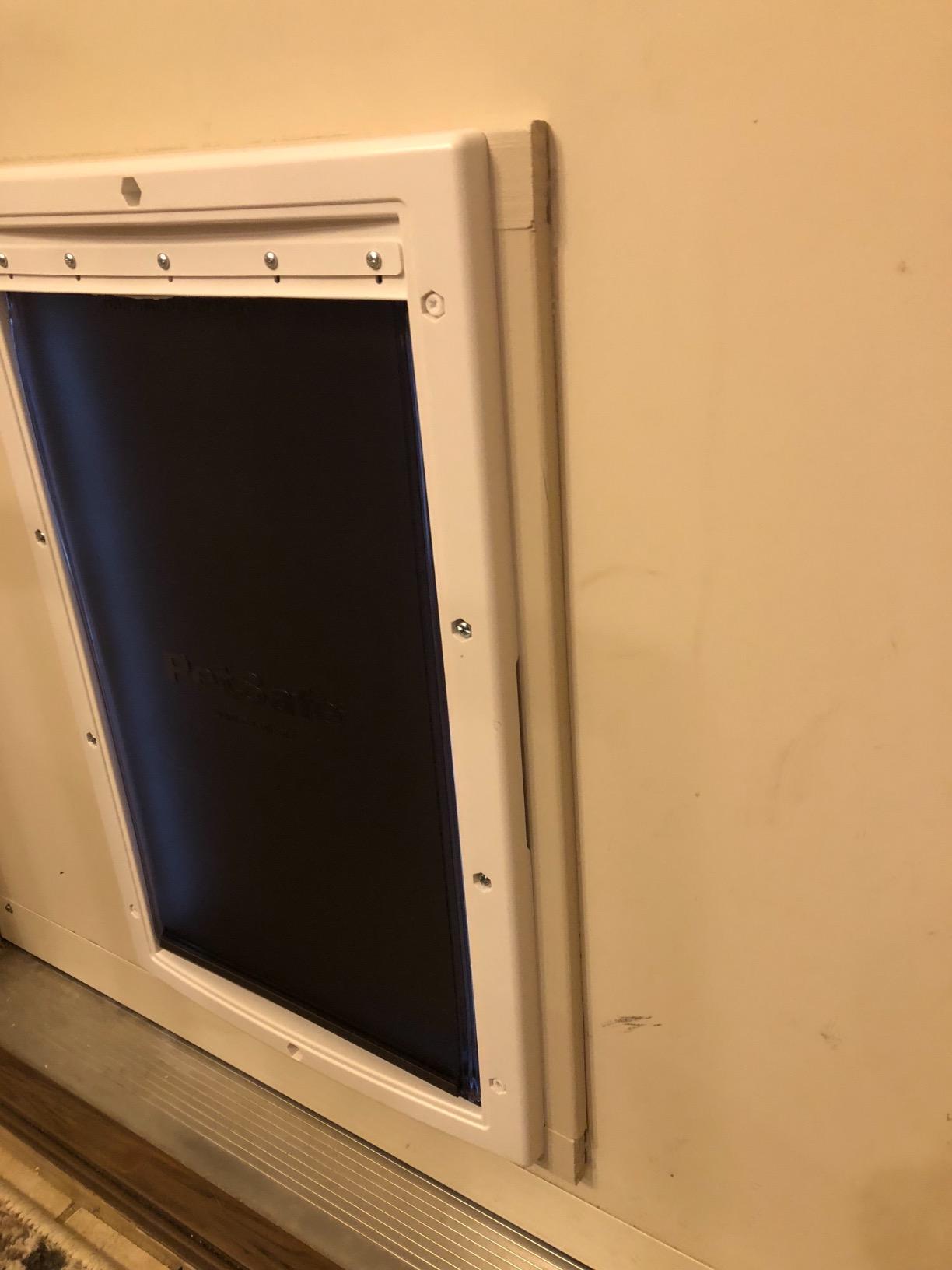
This is the door-mounted answer when drafts and energy loss worry you more than installation speed. Its three-flap system is rated for temperatures from -10 to 100 degrees Fahrenheit and suits doors between 1 5/8 and 2 1/4 inches thick.
I like the paintable frame because it can blend into an existing steel or wood door instead of looking like an obvious add-on. The snap-on panel also lets the household close the route when needed.
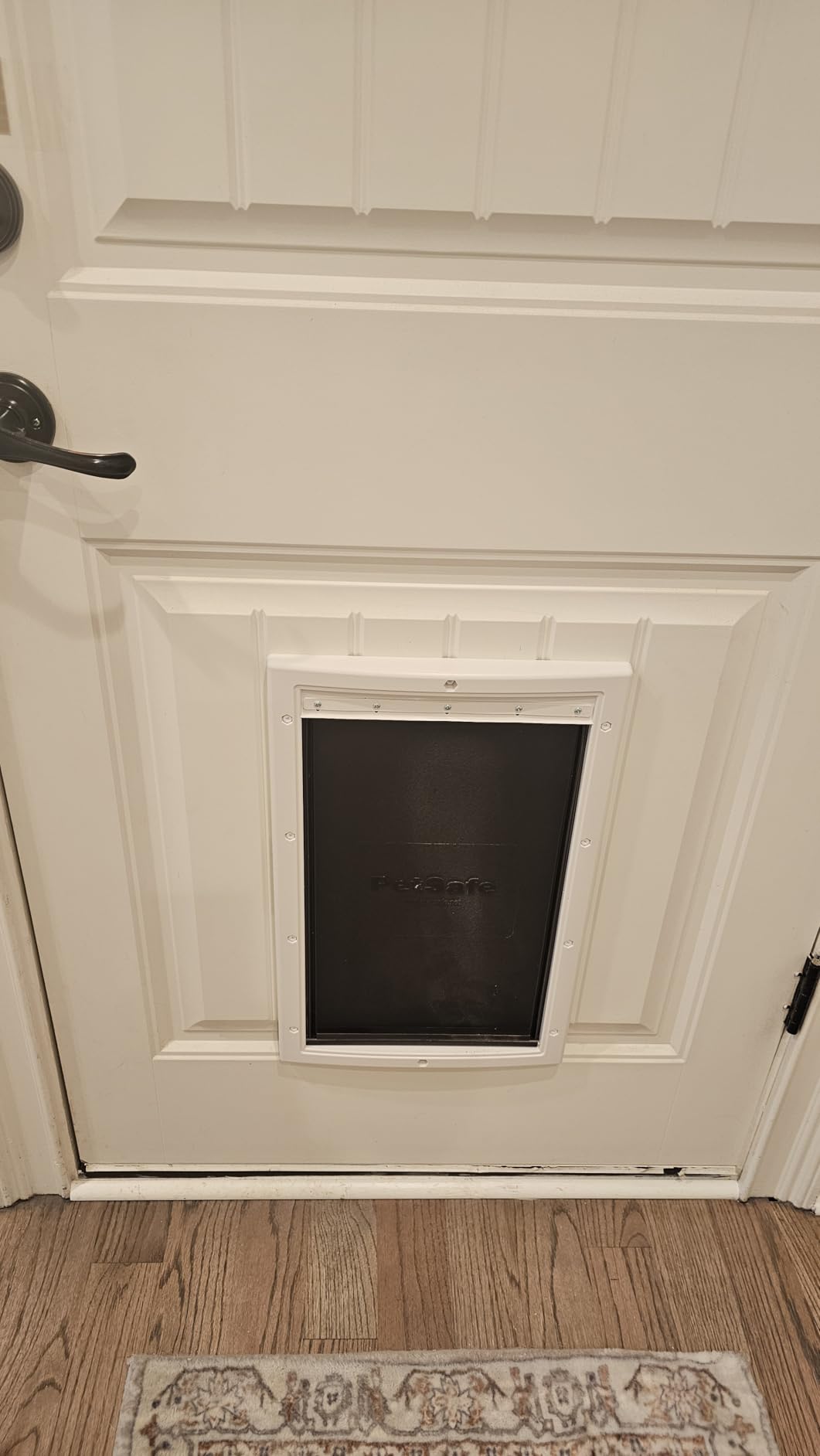
Assembly is the weak link. I would dry-fit every frame and threaded strip before tightening anything, because the inner pieces are awkward to align and the included nylon screws can strip.
Forum owners call three-flap designs especially effective in cold and hot climates, but they also warn about replacement parts and cold brittleness. PetSafe’s long product history and U.S. support make parts easier to source than with an unknown brand.
Choose this model for a draft-prone exterior door
It works best for a large dog up to 100 pounds who will use a rigid, layered flap. The extra center flap creates a stronger air barrier than a conventional single-flap design.
Homeowners who value a paint-matched frame and can recruit a second person for alignment will get the most from it.
Skip this model for a fast, solo installation
The closing panel is not a serious security barrier, so I would not rely on it against human entry. It is intended to control pet access rather than secure the home.
Thin mounting components may become brittle in severe cold, and the door can be noisy as magnets close the flaps. Reinforce the installation with suitable metal fasteners and weather-seal the cut edges.
3. PetSafe Large Wall Entry Pet Door — Best for Large Dogs Through Walls
PetSafe Wall Entry Pet Door, Telescoping, Dogs up to 100 lb, Large
Double flap
Up to 100 lb
4.75-7.25 inch walls
Pros
- Large 10.25 by 16.25 inch opening
- Rust-proof frame
- Strong insulation
Cons
- Requires stud mounting
- Cardboard template is flimsy
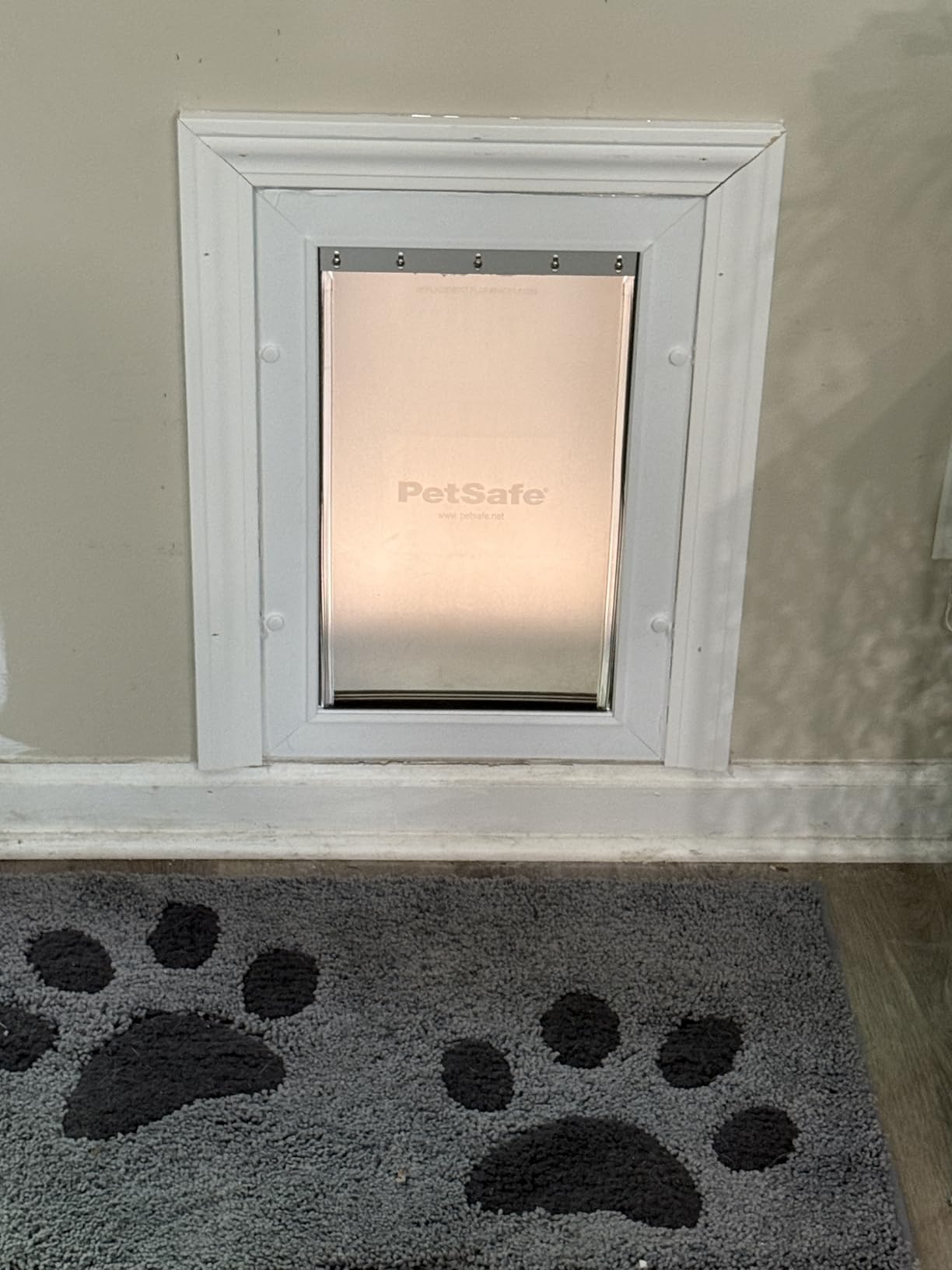
The large version keeps the useful double-flap wall design but expands the opening to 10 1/4 by 16 1/4 inches. That gives dogs listed up to 100 pounds enough room to move through without squeezing.
I see this as the right wall option for Labrador-sized dogs and similar builds. The PVC frame resists rust and UV exposure, and the slide-in panel helps when the outdoor access is not needed.
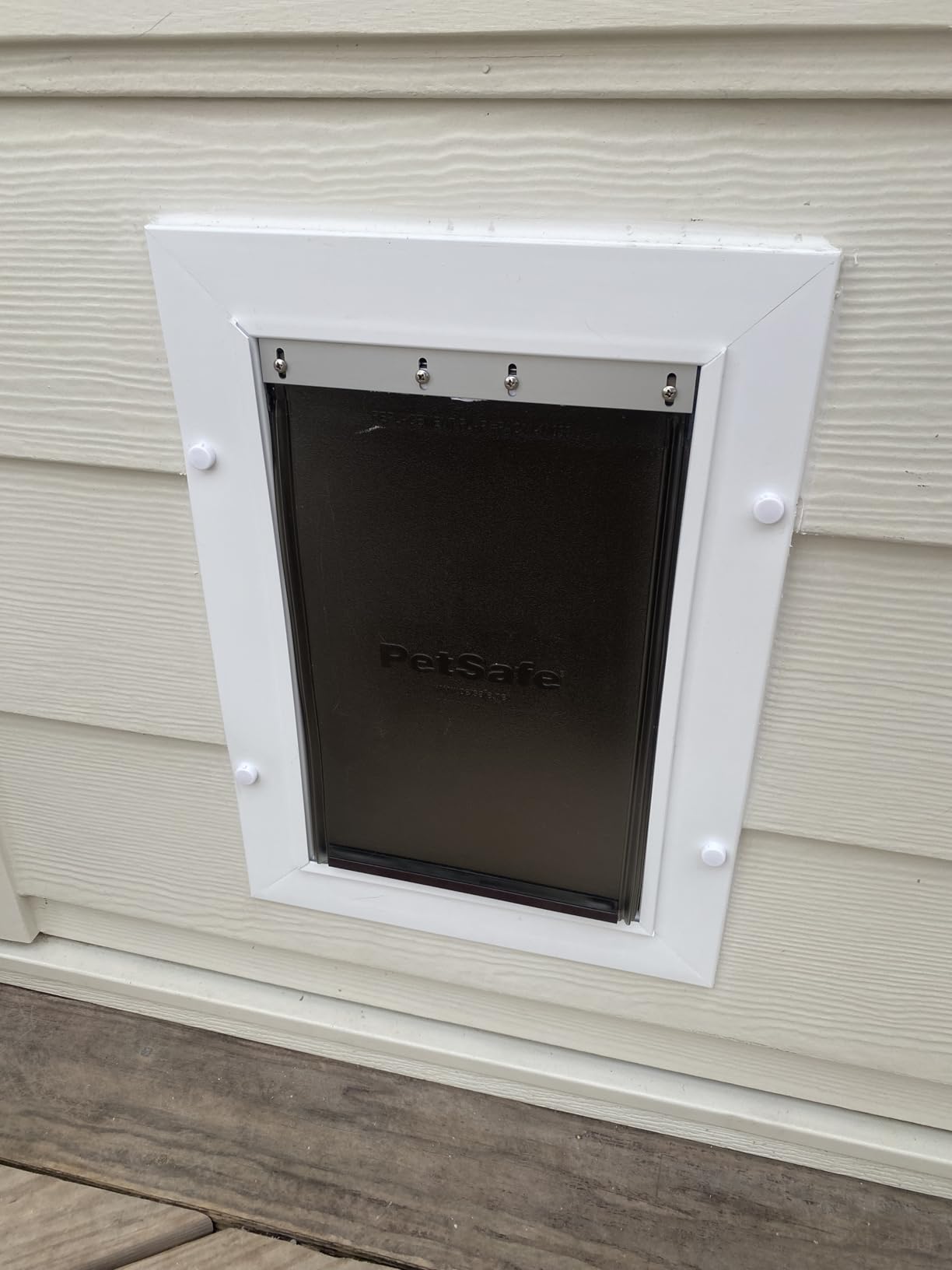
Large dogs create more force, so stud mounting is not optional. I would add exterior flashing and clear silicone in a rain-heavy location, while preserving the flap’s free movement.
Its rating and review total match the medium model’s, which reflects the shared design rather than separate performance. Most complaints concern installation rather than daily operation.
Choose this model for a large dog and a standard wall
It is for owners who need a permanent wall opening and can frame the opening properly. Measure the dog’s shoulder width and chest depth, then add comfortable clearance without sizing so far up that insulation suffers.
Replacement compatibility with the broader PetSafe wall-entry line is another practical benefit.
Skip this model when a stud cavity is obstructed
A thick wall, masonry exterior, or blocked stud bay can turn this into a larger renovation. I would compare a professional wall installation with a no-cut sliding-glass insert before cutting.
The plastic screw caps are still a weak point, and a cardboard template should be replaced or reinforced before tracing.
4. PetSafe Plastic X-Large Dog and Cat Door — Best for Giant Breeds
PetSafe Plastic Dog & Cat Door, Pets Up to 220 lb, X-Large
13.625 by 23.625 inch flap
Up to 220 lb
Door mount
Pros
- Exceptional size
- Easy installation
- Paintable frame
Cons
- Closing cover tabs can break
- Not a security door
This X-Large door has a 13 5/8 by 23 5/8-inch opening, making it the obvious product here for Great Danes, Mastiffs, and other giant dogs. The published capacity reaches 220 pounds.
I would install it only after confirming that the dog can step through without turning sideways. The heavy flap resists ordinary wind, and the white plastic frame can be painted to match the door.
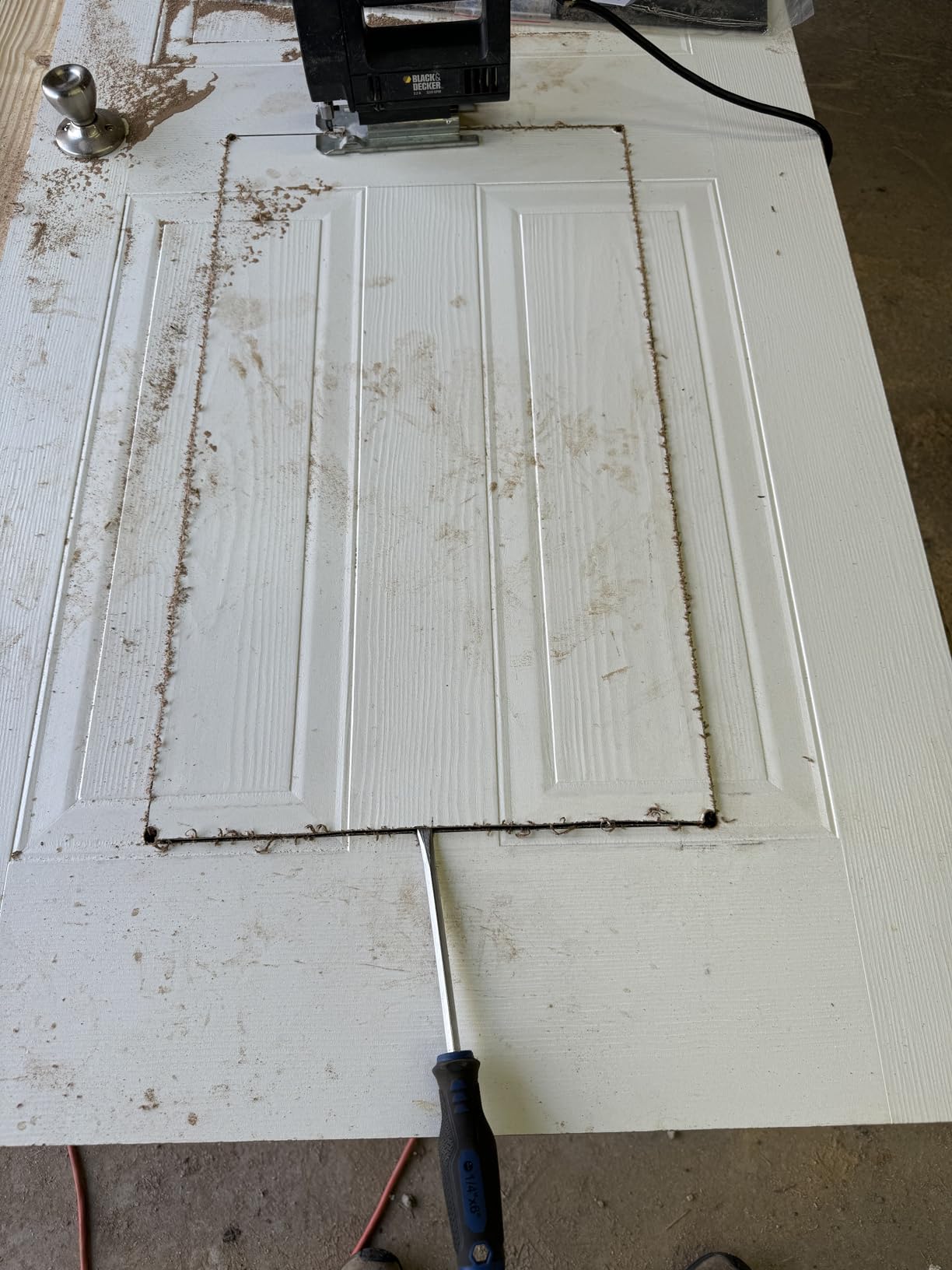
Its huge review count gives useful long-term context. The installation is generally straightforward, but owners frequently replace the nylon screws and struggle with the stiff snap-on cover.
The same size that helps a giant dog also creates an open invitation to wildlife or an intruder. I would pair it with a covered exterior run, a secure fence, and a locking strategy that does not depend on the plastic cover.

Choose this model when a giant dog cannot use a standard flap
It is the practical budget choice for owners who need maximum opening size but do not want an automatic system. Standard door thickness compatibility from 1/16 to 2 inches helps on common interior and exterior doors.
The broad support history is reassuring when a replacement flap or frame part is eventually needed.
Skip this model where security or hot-weather sealing is critical
Heat can keep the flap from closing fully, and the snap panel offers little resistance to forced entry. I would not cut this opening into a door that directly exposes a bedroom or valuables.
If only a medium dog needs access, choosing a smaller flap would preserve more heat and cooling inside the home.
5. PetSafe Sliding Glass Pet Door Large — Best No-Cut Patio Insert
PetSafe Sliding Glass Pet Door, 1 Piece, Large Dogs to 100 lbs, White
No-cut track insert
Up to 100 lb
Shatter-resistant glass
Pros
- Removable installation
- Sturdy aluminum frame
- Closing panel
Cons
- Needs extra weatherstripping
- Reduces walkway clearance
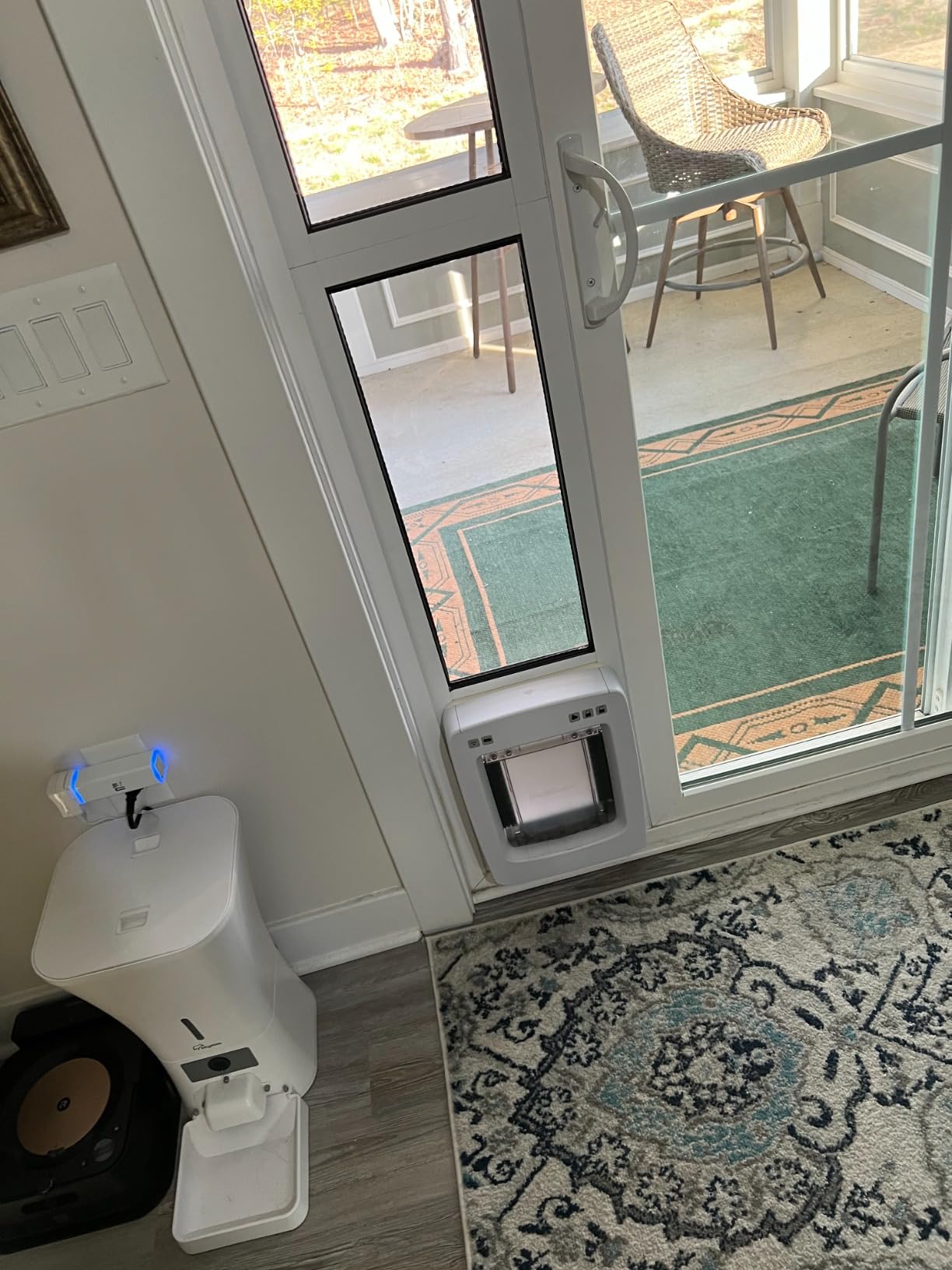
This sliding-glass insert changes the buying decision for renters because it avoids cutting the door, frame, or glass. It drops into a standard-height track and can move to another home later.
I would check three measurements before ordering: door height, track depth, and the space the panel leaves in the walkway. The listed panel projects 1 3/8 inches and needs a track at least 1 inch deep.
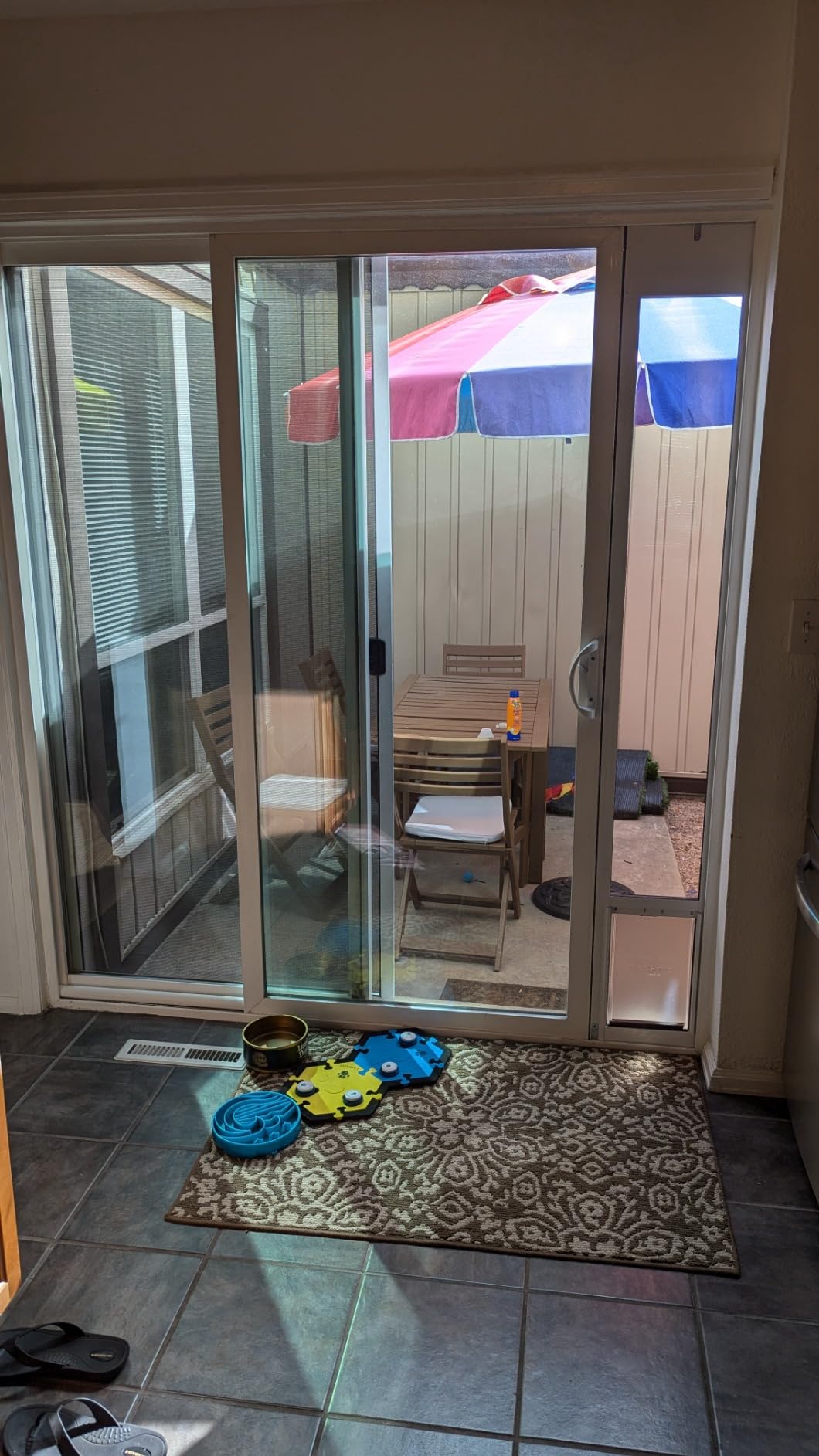
The 10 1/4 by 16 3/8-inch flap fits most dogs up to 100 pounds, but I would size up for a deep-chested dog above roughly 75 pounds. Owners also report that a non-square frame may need additional weatherstripping.
Community users favor sliding panels because installation is fast and reversible. The trade-off is reduced clearance and less protection from a determined person than a permanent wall opening.
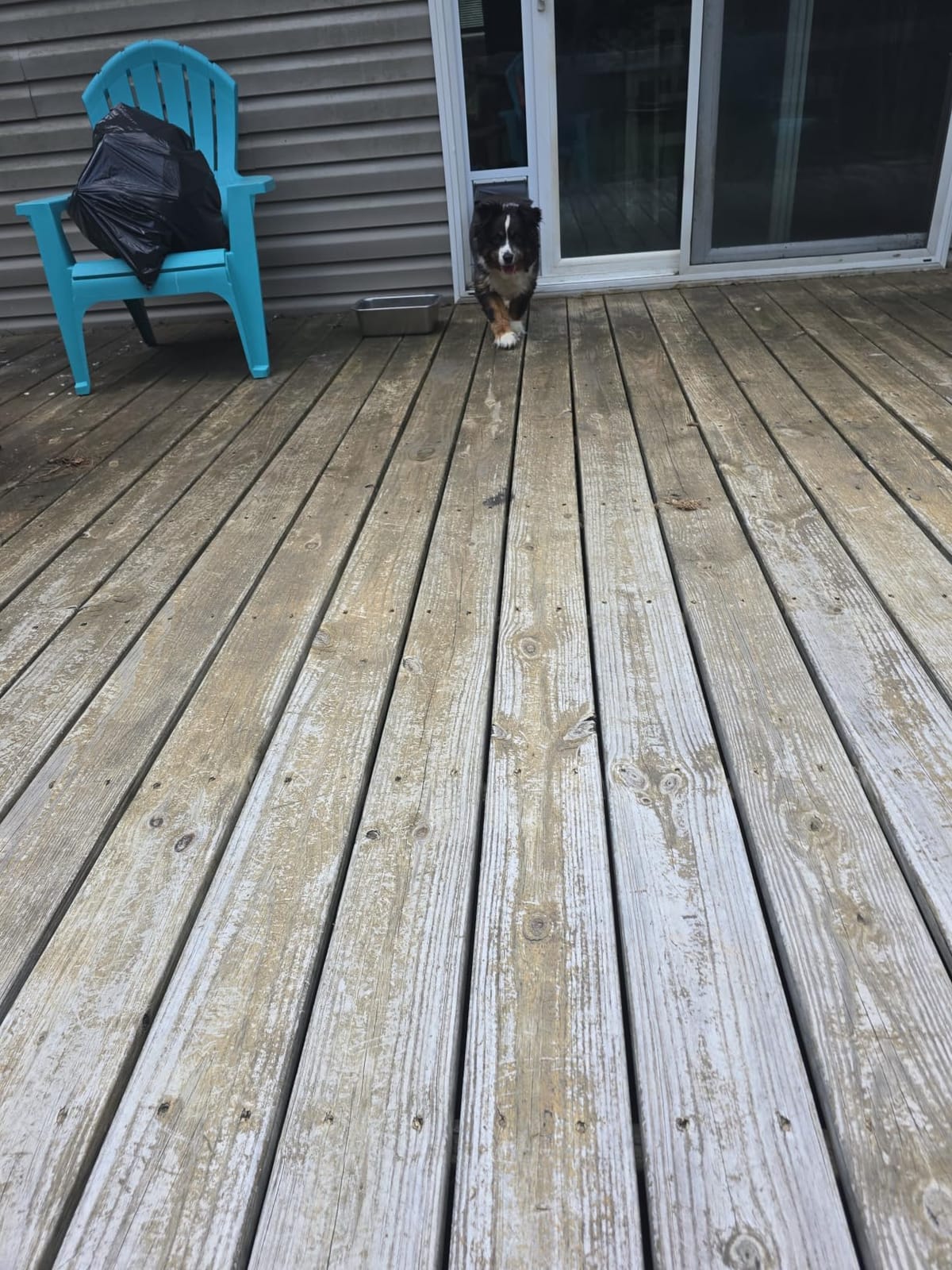
Choose this model for a rental or temporary home
It is ideal when the patio track is square, deep enough, and wide enough to accept the panel. The included glass sweep and weatherstripping help, though extra sealant may still be needed.
I also like the slide-down panel for households that want to stop outdoor access at night without removing the insert.
Skip this model for extreme cold or a narrow passage
Wind can catch the flap if gaps remain around an uneven frame. I would not assume the included weatherstripping is enough for an exposed, high-wind location.
The confusing instructions and weak supplied screws are minor compared with the structural issue: the panel permanently occupies part of the sliding-door opening.
6. PetSafe Screen Door for Dogs and Cats — Best Budget and Renter-Friendly Pick
PetSafe Screen Door for Dogs & Cats, Up to 100 lb, Large
Snap-in screen insert
Up to 100 lb
No tools required
Pros
- Lowest purchase cost
- Tool-free installation
- Removable design
Cons
- Light frame separates
- Plastic pins may break
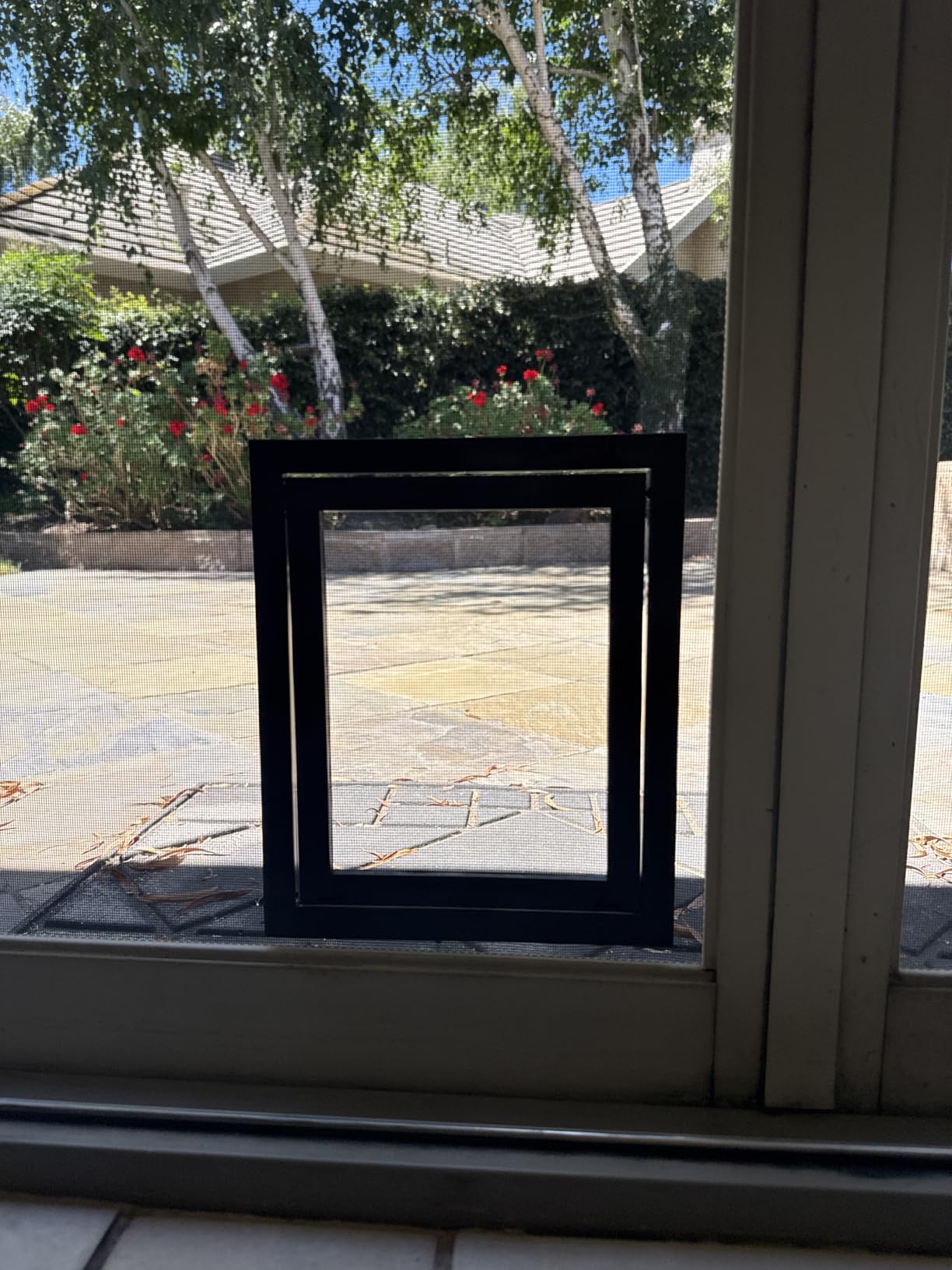
This screen insert is the simplest entry on the list. I could snap it into a compatible metal or vinyl-coated fiber screen in minutes, and a renter could remove it without leaving a permanent opening.
The puncture-resistant mesh and sliding wind-lock are suitable for a small-to-medium dog using the door at a moderate pace. A magnetic inner flap helps stop constant swinging.
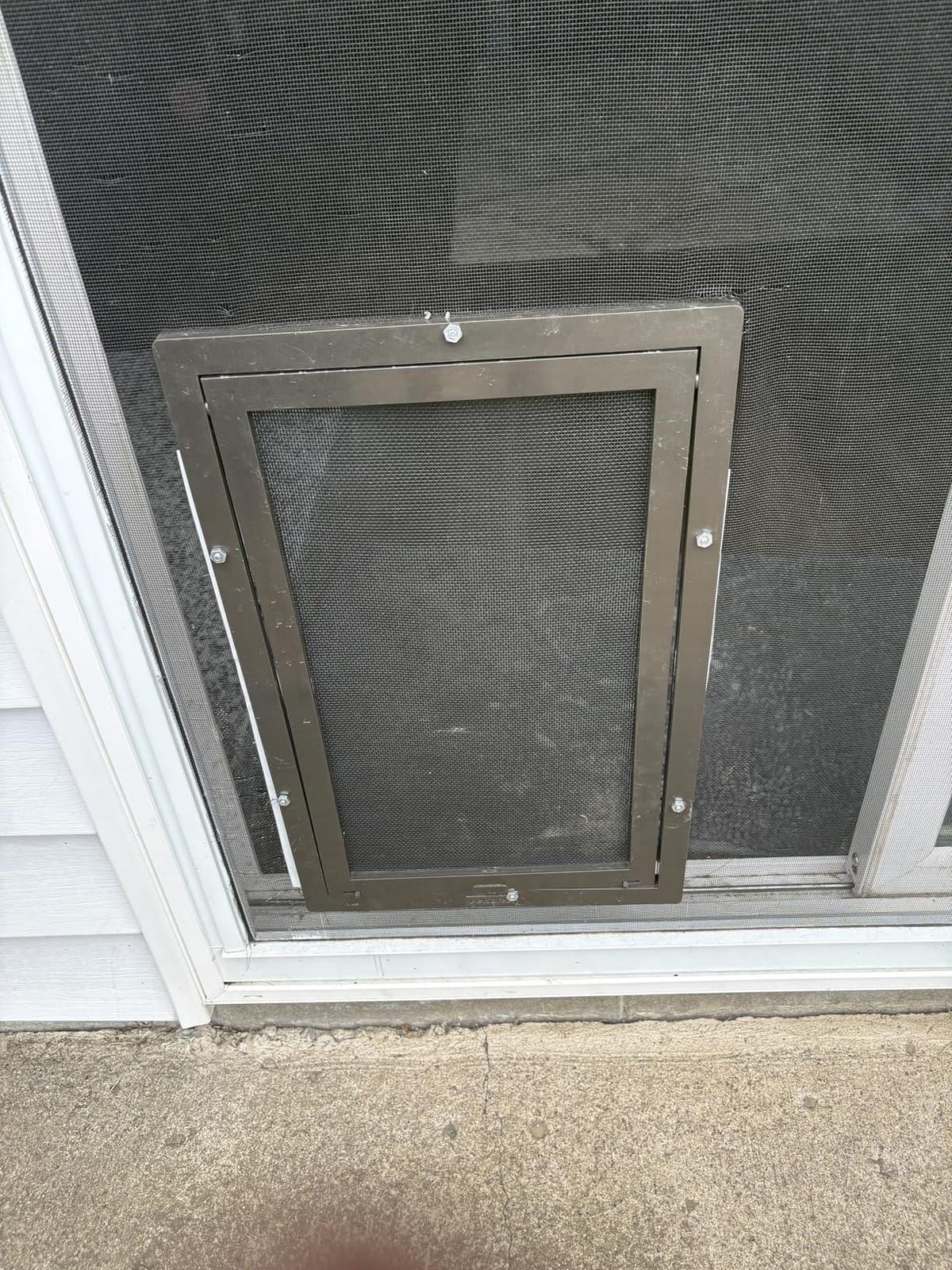
The compromise is structural. Large, active dogs can separate the two-piece frame, and the locking pins may crack after repeated impacts. Adding the supplied reinforcing screws is sensible.
For a seasonal porch or mild-weather screen, that compromise is acceptable. I would not attach it to a heavy door panel that already drags or flexes.
Choose this model for light-duty, reversible access
It is the lowest-cost route to dog independence and works especially well when no permanent modification is allowed. Small dogs and calm medium dogs are the best fit.
The nearly invisible appearance also preserves the look of a screened patio more than a large sliding insert does.
Skip this model for a high-energy large dog
This is not the best choice for a dog that slams through the flap repeatedly. I would choose a framed door or wall unit when traffic is constant or the screen already has weak corners.
Thick pet-resistant screening can make installation difficult, and the plastic frame cannot reinforce the screen itself.
7. PetSafe SmartDoor Connected Pet Door — Best App Concept, Not Best Reliability
PetSafe SmartDoor Connected Pet Door, App Controlled, Medium
App and microchip access
Medium size
Custom schedules
Pros
- Selective pet access
- Remote lock
- Activity notifications
Cons
- Low reliability rating
- Requires permanent cut-in
The SmartDoor is the most control-focused product here. It can restrict entry or exit to registered pets, follow custom schedules, and send phone notifications about activity, lock state, or battery status.
In a stable setup, that would help a multi-pet household separate feeding times or keep outdoor access closed overnight. The dynamic seal and multi-point lock are sensible partners for an electronic opening.
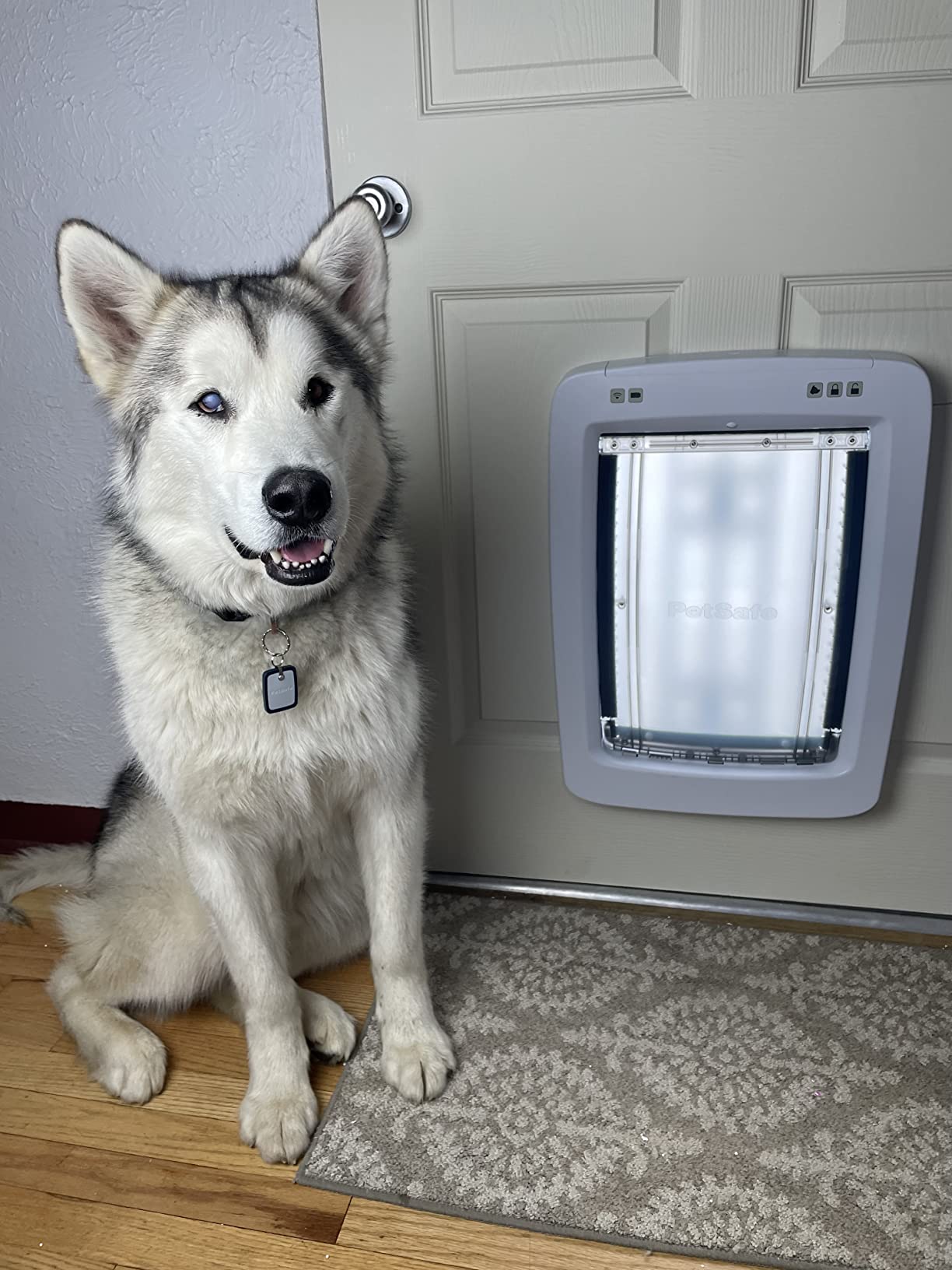
I cannot recommend it as broadly as the other products because the supplied 2.8 rating and 97-review base show substantial app and connectivity complaints. Firmware changes helped some owners but did not settle the issue for everyone.
The 200-pound compatibility claim is less useful than the medium opening size and 1.5-inch installation limit. I would measure the dog and installation surface before focusing on the electronic features.
Choose this model for controlled schedules in a forgiving setup
A technically confident owner who accepts troubleshooting may value selective access and notifications. It is more appropriate when a conventional flap would allow a pet into an unsafe room or when schedules must change remotely.
I would test the entire app and lock workflow before permanently cutting a door or wall.
Skip this model when dependable access is nonnegotiable
A dog that needs reliable bathroom breaks should not depend on a door with frequent connection complaints. The hardwired cut-in also makes installation unsuitable for most renters.
With only 97 reviews, the rating is less stable than the totals behind the PetSafe mechanical doors. I would wait for a stronger reliability record unless the smart features solve a specific problem.
8. High Tech Pet Power Pet Automatic Electronic Door — Best for Security and Selective Access
Genuine Power Pet Fully Automatic Pet Door from High Tech Pet Brand. Pet Collar Operated, 4 Way Access, Directional Sensing, Dead Bolt Lock, Air Tight, Quick, Quiet Operation, USA Customer Service
Collar activated
Automatic dead bolt
Four access modes
Pros
- Strong security
- Directional sensing
- Anti-pinch reopening
Cons
- Requires proprietary collar
- Bulky and expensive
The Power Pet treats the opening like an access-control system rather than a flap. Its included ultrasonic collar triggers an automatic sliding panel, directional sensing reduces false activations, and an automatic steel dead bolt locks after use.
I would choose it where stray animals, wildlife, or unwanted people are serious concerns. The sealed panel also blocks wind, rain, and drafts better than a loose flap.
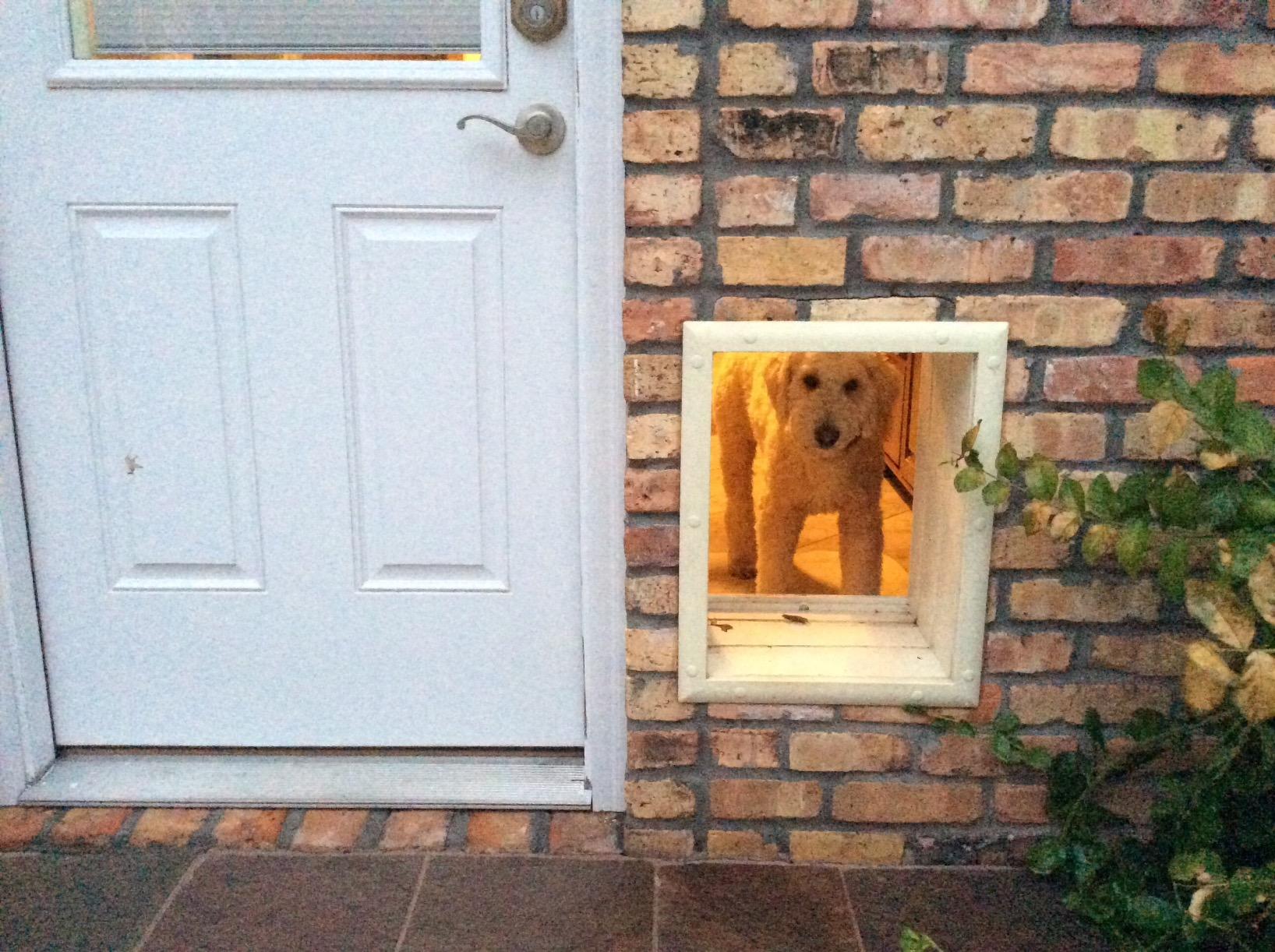
It accepts In Only, Out Only, In and Out, or Locked modes, making it possible to manage an entire household. An obstruction sensor reopens the panel, which is important around children and multiple pets.
The trade-offs are ownership cost, collar dependence, and bulk. I would also plan power routing for the adapter and a location for the optional rechargeable backup.
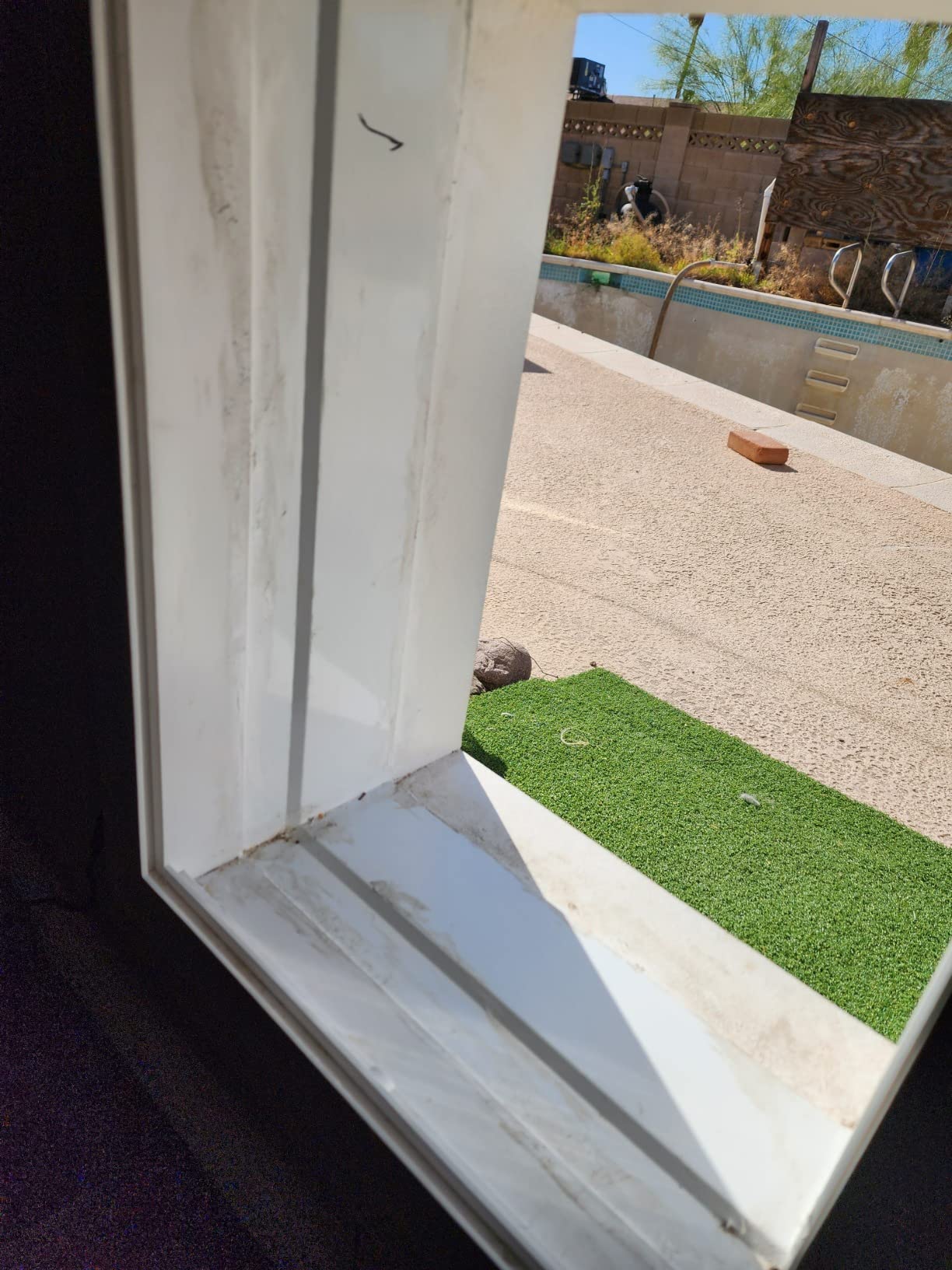
Choose this model for fenced, high-value access control
It suits owners who want only authorized animals to pass and are willing to maintain a genuine MS-5 collar. Its directional response and four access modes offer more control than a simple magnetic flap.
The lifetime manufacturer warranty and U.S.-based support add confidence for a long-term installation.
Skip this model for a low-maintenance household
If a pet will not reliably wear a collar, the automatic system loses its main benefit. Proprietary collar requirements and third-party incompatibility can complicate replacements.
Wall routing is more involved than mounting a basic flap, and the moving panel occupies more space. I would not install it in a narrow entry path.
9. Endura Flap Large Wall Door — Best Premium for Extreme Cold
Endura Flap Pet Door for Walls in White | Energy-Efficient Double Flap Design for Wall Installations | All-Weather Protection with All-Metal Telescoping Tunnel | White, Large, Double Flap
All-metal wall tunnel
Double flap
50 mph wind rating
Pros
- Exceptional insulation
- Premium materials
- Lifetime warranty
Cons
- Complex 4-8 hour installation
- High purchase cost
The Endura Flap is the strongest weather-focused choice in this group. Its aluminum frame, adjustable magnetic seal, and flexible polyolefin flap are rated to resist winds up to 50 mph and temperatures as low as minus 40 degrees Fahrenheit.
I would pay particular attention to that minus sign: not every product marketed for cold weather publishes a temperature rating, and a claimed flap material alone does not predict whole-opening performance. The telescoping metal tunnel also avoids rust-prone wall components.
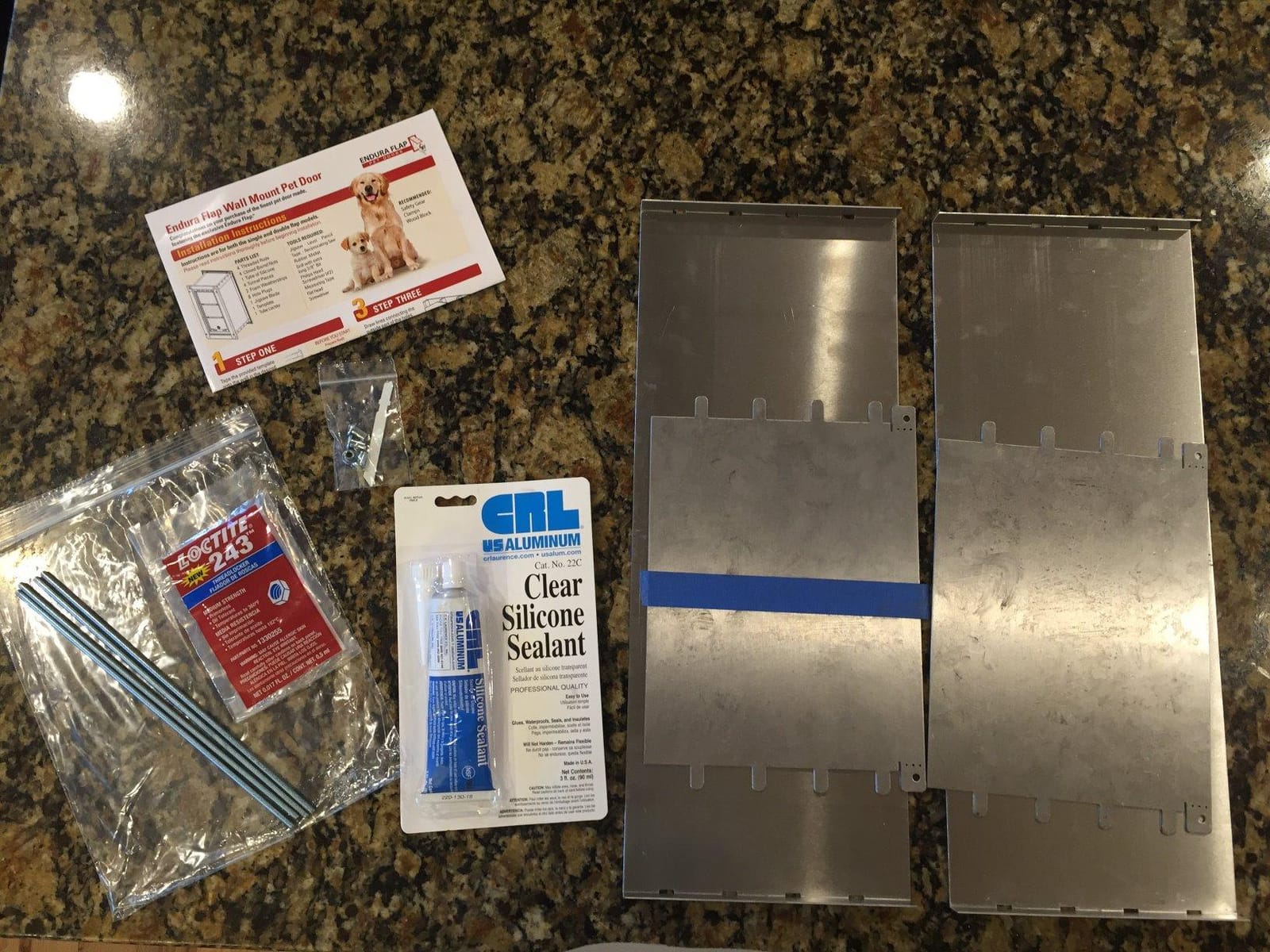
The 10 by 19-inch opening suits dogs up to 28 inches tall, while the tunnel adjusts through a broad 2- to 7.75-inch wall range. Wall thickness must still be measured before ordering, especially for siding, masonry, or unusual framing.
Owners praise the seal and support, but installation commonly takes 4 to 8 hours. I would hire a professional if the wall contains utilities or the exterior finish is not flat.
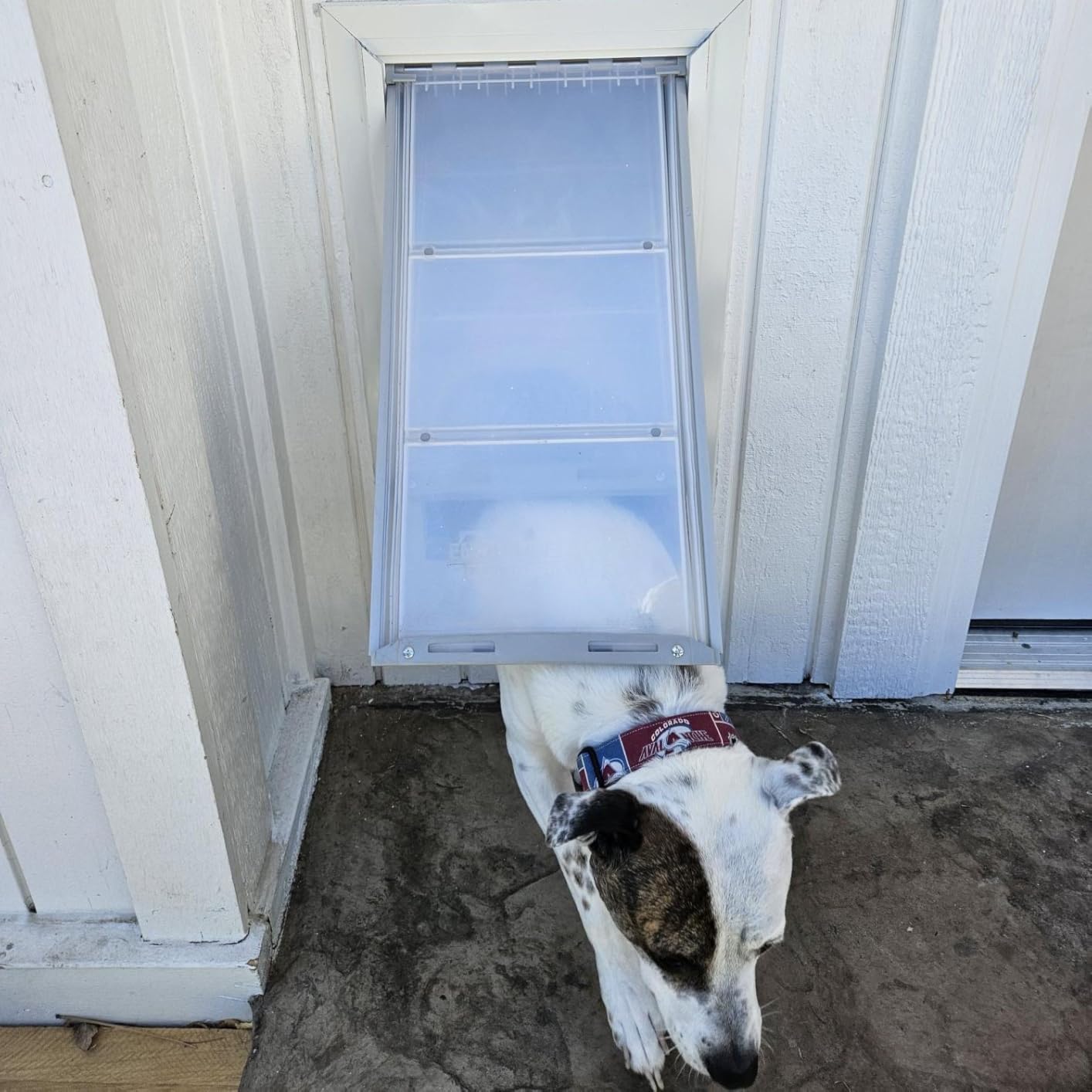
Choose this model for a permanent cold-climate installation
It is for households that prioritize energy efficiency and will keep the home for years. The secure cover, adjustable magnets, replaceable parts, and lifetime warranty make the ownership proposition stronger than its purchase cost alone suggests.
A double-flap wall system also suits a dog that spends regular time outside and cannot wait for an owner to open a door.
Skip this model for a rental or quick weekend project
This is not a removable renter solution, and the deep wall work is beyond a beginner door cut. I would compare the total project requirements with professional installation before buying.
Walls thicker than 8 inches need a separate deep-wall product. Cedar lap siding or another uneven exterior surface may also need custom work.
10. PetSafe Sliding Glass Aluminum Pet Door — Best Removable Aluminum Patio Panel
PetSafe Sliding Glass Pet Door, Aluminum Frame, Pets Up to 100 lb, Large
No-cut patio insert
Up to 100 lb
Tempered glass
Pros
- Removable and portable
- Security latch
- Tinted flap
Cons
- Reduces clearance
- Thin weatherstripping
- Alignment can frustrate
This second PetSafe sliding-glass model is the more premium removable option in the roundup. It combines an aluminum frame, tempered glass, a tinted flap, and a security latch that connects the pet panel to the sliding door.
I prefer its solid construction to a lightweight screen insert, especially for a larger dog. The spring-loaded top also makes removal for cleaning or moving easier.
It does not alter the glass, but it does reduce usable passage width. Owners also add extra weatherstripping in cold climates, so I would test a door-sized cardboard mock-up before ordering.
This is a good fit for renters who want a durable patio panel, but it is not the best high-security answer. A determined person can remove a non-permanent insert, and the included one-year warranty is shorter than the Endura Flap coverage.
Choose this model for portability with more structure than mesh
It suits a calm dog up to 100 pounds, a compatible sliding track, and an owner who may move. The tinted flap can also reduce glare and heat gain in a sunny room.
The connecting hardware and closing panel give more control than a basic track insert, provided the frame aligns correctly.
Skip this model for narrow doors or severe weather
Laundry baskets, furniture, and frequent foot traffic will have less clearance. I would avoid a tight walkway rather than forcing people to squeeze past the panel.
The listed 1-inch minimum glass thickness may exclude some installations, and extra sealing can make a removable system less convenient. For exposed cold, a wall double flap remains the stronger thermal choice.
How to Choose the Right Dog Door?
Measure your dog before comparing sizes
The best dog door is slightly wider than your dog’s shoulders and tall enough to clear the top of the back without forcing a crouch. Measure at the widest point with the dog standing naturally, then add roughly 1 to 2 inches of clearance.
Use the product’s actual flap dimensions rather than the published pet weight alone. Two 80-pound dogs can need very different openings, and a deep chest or long body may require a larger flap than the weight limit suggests.
For a puppy, I would estimate adult shoulder width and account for future growth. If the dog hesitates, secure the flap open with removable tape and reward each approach before asking for a full pass.
Match the installation to the wall or door
Basic flap models fit wood, metal, PVC, and paneled doors when the thickness matches. Wall models require a clear cavity, careful utility checks, exterior flashing, and often a stud-bay or header change for a very large opening.
Sliding-glass inserts are the fastest reversible choice for renters. Screen inserts cost less and weigh almost nothing, but they suit lighter use and compatible screening.
Do not cut a wall near wiring, plumbing, gas lines, or a structural support without locating them first. A professional is worth the added cost when the opening is large, the wall is deep, or the exterior siding is uneven.
Choose materials and insulation for your climate
Aluminum frames provide stiffness and weather resistance, while PVC avoids rust and can be easier to cut or paint. Flexible polymer flaps tend to handle cold movement better than brittle economy plastic, but seals and frame fit matter as much as material.
A double flap creates two air breaks and generally performs better in cold weather. The three-flap PetSafe Extreme Weather adds another barrier for a conventional door, while the Endura Flap combines two flaps with an all-metal tunnel and explicit wind and low-temperature claims.
In hot climates, look for a close magnetic seal, tinted or solar-conscious components, and a removable closing panel. Clean the magnetic edges often because dust and pet hair weaken the seal.
Plan for security, wildlife, and unwanted pets
A flap large enough for a dog can also admit a raccoon, snake, stray pet, or person. Locking covers help with routine control, while electronic doors can identify a registered collar or microchip before opening.
Raccoons are strong, curious, and capable of pushing flexible flaps, so I would avoid relying on a simple cover in wildlife-heavy areas. Snakes need far less clearance, making a powered or tightly locking door the better defense where they are common.
A secure fenced yard, motion lighting, and a covered dog run matter as much as the door. I would keep the interior side visible from the home and avoid placing a large opening directly beside a door latch.
Compare the real ownership requirements
Budget for a rigid template, suitable sealant, flashing, weatherstripping, and possibly upgraded metal screws. Wall models can require a jigsaw, reciprocating saw, drill, level, exterior trim work, and several hours of cleanup.
Mechanical flaps should be wiped weekly during muddy seasons and checked for cracked edges or weak magnets. Keep the model number and a photo of the installed frame so a replacement flap can be matched later.
Electronic systems add batteries, collar maintenance, firmware, power routing, and failure troubleshooting. I would buy them for a specific access-control need, not merely because app features seem modern.
Use a slower rollout when training your dog
Start with the flap or panel held open so the dog can see through the opening. Place treats on both sides, praise investigation, and let the dog choose the pace without pushing from behind.
Next, allow light contact with the flap and reward a nose touch. Gradually lower it until the dog pushes through, then practice from both directions in short sessions.
Do not punish hesitation or force the flap onto the dog. If the plastic is noisy, add a temporary training cover or choose an adjustable magnetic seal until confidence improves.
Frequently Asked Questions
What is the best rated dog door?
The PetSafe Medium Wall Entry is the strongest all-around pick in this roundup, with a 4.6 rating from 9,202 reviews, a double-flap seal, and a telescoping wall tunnel for dogs up to 40 pounds.
What is the best material for dog doors?
Aluminum and quality PVC frames are both practical. Aluminum adds stiffness for large or premium installations, while UV-resistant PVC resists rust; the flap seal, fit, and number of flaps usually matter more than frame material alone.
What is the disadvantage of a doggie door?
A dog door can admit drafts, insects, wildlife, stray animals, or an intruder if the opening is large and insecure. It can also weaken a door or wall, collect dirt, and require flap or electronic-component maintenance.
What can I use instead of a doggie door?
Use a bell or dog doorbell system, schedule a dog walker, install a pet gate, or create a dog-safe room with a patio entrance. These alternatives work when outdoor access does not need to be continuous.
Will snakes come through a doggie door?
Yes, a snake can pass through an opening large enough for its body, especially in warm regions. A powered door that verifies a registered pet, a secure cover, and close inspection of the opening provide better protection than a loose flap.
Final Recommendation
My best dog doors shortlist comes down to the PetSafe Medium Wall Entry for the best overall balance, the PetSafe Screen Door for a low-cost reversible setup, and the Endura Flap for severe cold. Large-dog and renter households have strong alternatives within those same categories, while the Power Pet is the right specialized choice when access control matters more than simplicity.
Before ordering 2026‘s model, measure your dog, confirm the exact wall or door thickness, and decide how much security and weather protection your home needs. That short checklist prevents the most common regrets: an undersized flap, a drafty seal, an opening that cannot be anchored, or a smart feature that is not dependable enough for daily bathroom breaks.