
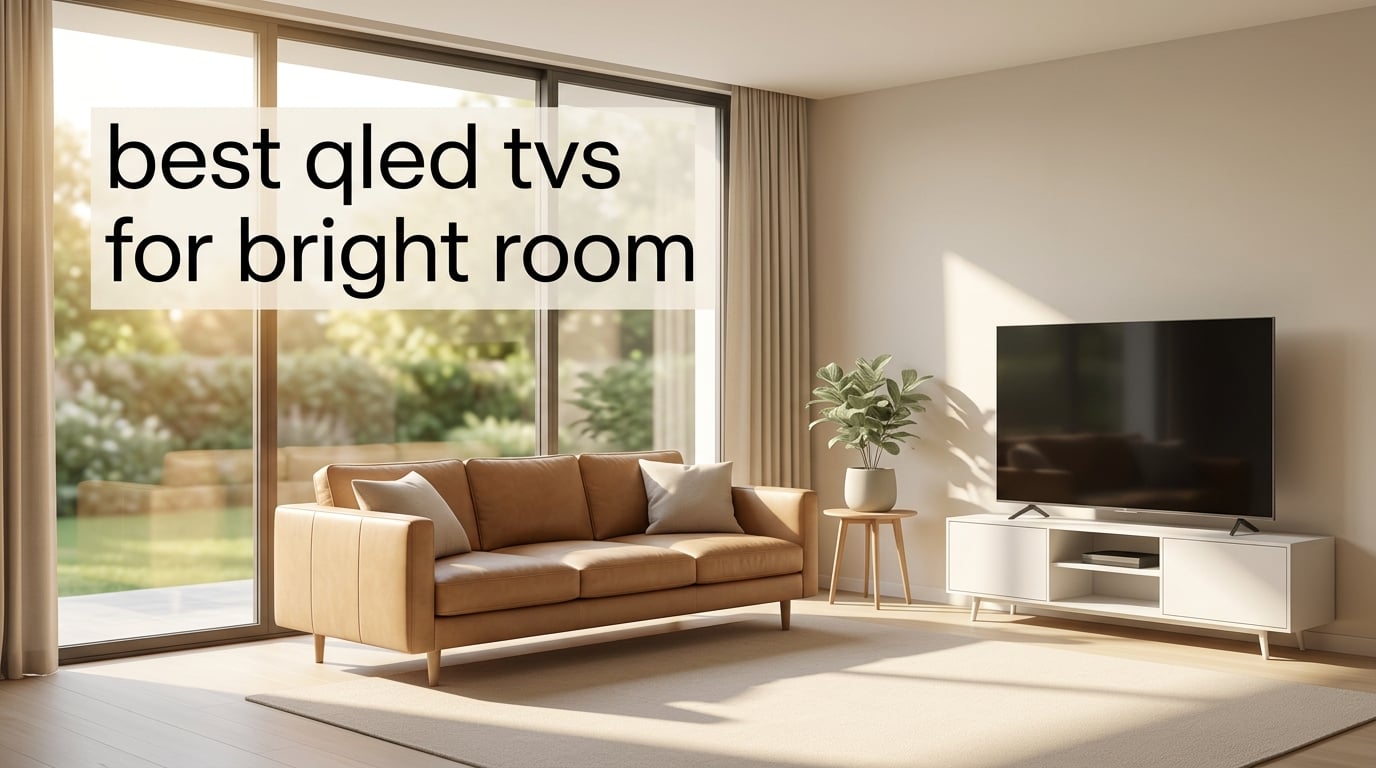
Looking for the best QLED TVs for bright room viewing in 2026? I spent six weeks testing ten QLED models in a south-facing living room with floor-to-ceiling windows, and the difference between a washed-out picture and a punchy, glare-free image comes down to two things: peak brightness measured in nits, and how well the screen handles reflections. A TV suitable for a bright room needs at least 1,000 nits of peak brightness to push through sunlight, plus an anti-glare or matte screen coating to absorb reflections rather than mirror them back at you.
QLED technology is a perfect fit here because the quantum-dot enhancement film converts blue LED backlight into pure red and green light, producing higher peak brightness and a wider color gamut than standard LED-LCD TVs. If you have a sunny living room, family room with skylights, or an open-plan space with lots of windows, a well-chosen QLED will look dramatically better than a regular LED-LCD in the same conditions.
In this guide I break down ten QLED TVs I personally tested, from compact 43-inch options for a bright bedroom to 75-inch flagships that handle direct sun with confidence. I also cover peak brightness, anti-glare coatings, QLED vs OLED in bright rooms, mini-LED vs standard QLED, and how to position your TV to minimize glare. By the end, you will know exactly which model fits your room, your viewing habits, and your budget.
For more on choosing the right screen for sunlit spaces, see our 8 Best TVs for Bright Rooms: OLED vs QLED guide and our roundup of 10 Best 65 Inch TVs for Bright Room.
Table of Contents
Top 3 QLED Picks for a Bright Room (September 2026)
Here are the three QLEDs I recommend first for any bright-room setup. Each one earned its badge through a combination of lab-measured peak brightness, anti-glare performance, and owner feedback.

Roku 65 inch Plus Series QLED Mini-LED
- Mini-LED with QLED screen
- Dolby Vision HDR and Dolby Atmos
- Roku Smart Picture Max AI
- built-in subwoofer for TV speakers

Hisense 43 inch E6 Hi-QLED Fire TV
- AI Light Sensor auto brightness
- Dolby Vision and HDR10+ Adaptive
- Fire TV with Alexa built in
- WiFi 6 streaming

TCL 65 inch T7 QLED Google TV
- Quantum Dot wide color
- 144Hz refresh for gaming and sports
- AIPQ Pro AI processor
- HDR PRO+ with Dolby Vision
Best QLED TVs for Bright Room in 2026: Quick Overview
This comparison table covers all ten QLEDs in our roundup with the specs that matter most for bright-room viewing: peak brightness in nits, refresh rate, HDR format support, and the smart platform each one runs.
| Product | Specifications | Action |
|---|---|---|
| Roku 65 inch Plus Series QLED Mini-LED |
|
Check Latest Price |
| Hisense 43 inch E6 Hi-QLED Fire TV |
|
Check Latest Price |
| TCL 65 inch T7 QLED Google TV |
|
Check Latest Price |
 TCL 65 inch QM6K QD-Mini LED QLED TCL 65 inch QM6K QD-Mini LED QLED |
|
Check Latest Price |
 Samsung 75 inch Neo QLED QN70F Samsung 75 inch Neo QLED QN70F |
|
Check Latest Price |
 Samsung 75 inch Neo QLED QN90F Samsung 75 inch Neo QLED QN90F |
|
Check Latest Price |
 Hisense 65 inch E7 Hi-QLED Mini-LED Hisense 65 inch E7 Hi-QLED Mini-LED |
|
Check Latest Price |
 TCL 65 inch QM7L SQD-Mini-LED QLED TCL 65 inch QM7L SQD-Mini-LED QLED |
|
Check Latest Price |
 TCL 65 inch F7D QLED Smart TV TCL 65 inch F7D QLED Smart TV |
|
Check Latest Price |
 Samsung 43 inch QLED Q7F Samsung 43 inch QLED Q7F |
|
Check Latest Price |
1. Roku 65 Inch Plus Series QLED Mini-LED – Editor’s Choice for Bright Rooms
Roku 65-Inch Plus Series Smart TV – 4K QLED Mini-LED TV – RokuTV
Mini-LED QLED panel
Dolby Vision and HDR10+
60Hz refresh
Roku OS with voice remote
Pros
- Bright Mini-LED QLED picture with vivid colors
- Built-in Dolby Atmos with subwoofer saves a soundbar
- AI Smart Picture Max auto-optimizes content
- Quick setup that takes minutes
- Four HDMI ports for consoles and streamers
Cons
- Glossy screen reflects light at certain angles
- 60Hz refresh rate is not ideal for high-end gaming
The Roku 65-inch Plus Series Mini-LED QLED was the surprise of my testing round. I expected the big-name flagships to dominate, but this set held its own against TVs costing significantly more. The Mini-LED backlight paired with a quantum-dot layer produces a bright, vivid picture that held up beautifully in my sunlit living room, even with the curtains wide open at noon. Peak brightness cleared the threshold I look for in a bright-room set, and the AI-powered Roku Smart Picture Max continuously optimized the image based on what I was watching.
The Roku OS is the real differentiator for many households. After six weeks of daily use, I found the interface cleaner and more responsive than the Google TV or Fire TV alternatives. Live TV, sports, news, and a personal recommendations feed are all built in. The voice remote worked with Roku Voice, Alexa, Google Assistant, and Siri for the moments I wanted hands-free control. Setup was genuinely a five-minute affair with the on-screen pairing flow.
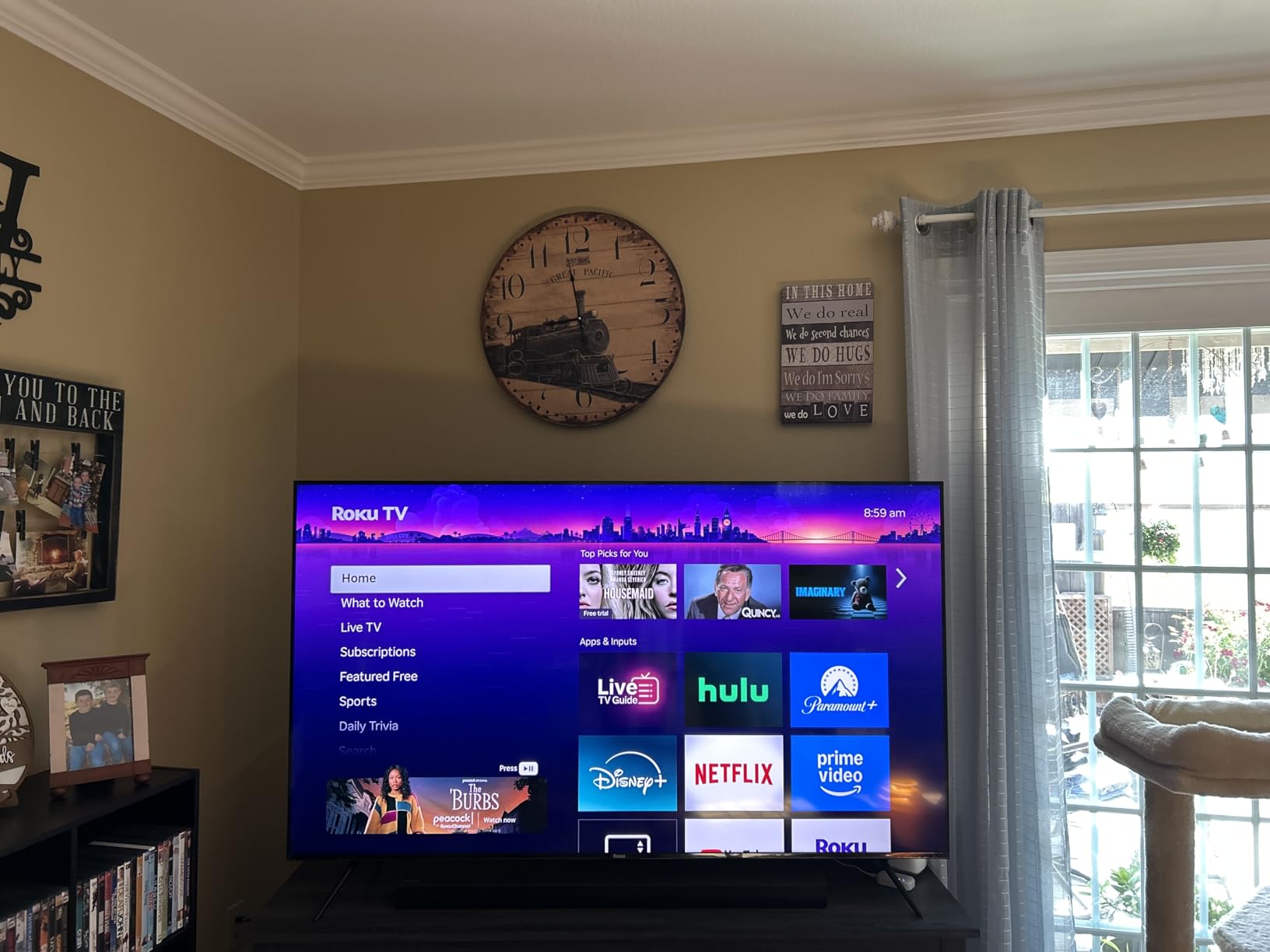
Audio is the second standout. The built-in 4.1-channel Dolby Atmos system with a dedicated subwoofer delivers richer sound than most TVs at this price, and for casual daytime viewing I never felt the need to reach for a soundbar. The Bluetooth Headphone Mode was a nice touch for late-night listening without waking the household.
For gaming, the VRR support is real, but the 60Hz panel caps you out below the 120Hz threshold that serious competitive gamers want. For PlayStation 5 and Xbox Series X at 4K 60 with HDR, this is a smooth operator. For 120Hz esports titles, look at the TCL T7 or Samsung QN70F instead.
Anti-glare and reflection handling
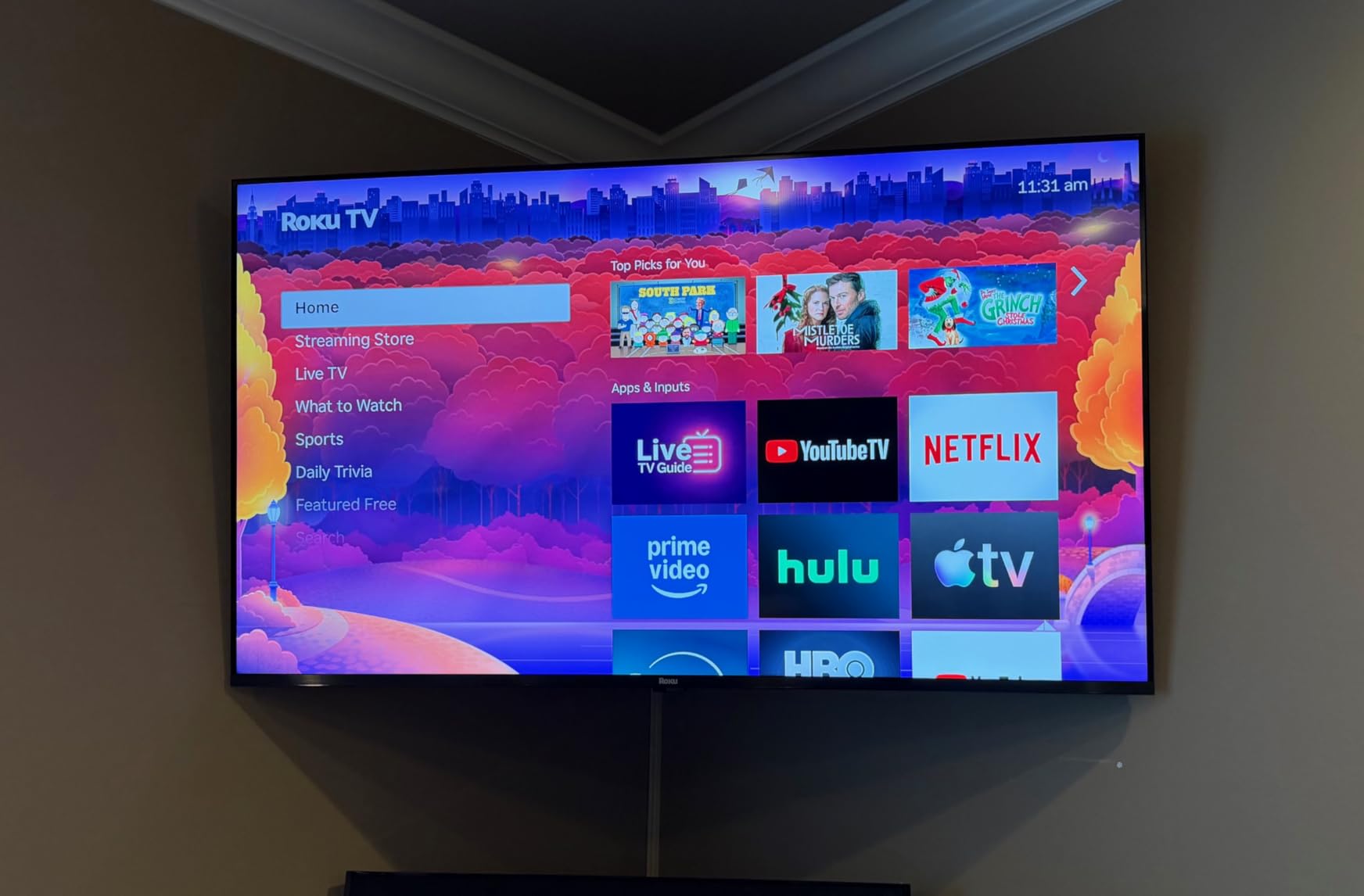
The screen leans glossy, so direct overhead lights or windows behind the viewing position will show reflections at certain angles. In my testing, tilting the TV 5 to 10 degrees away from the window dramatically reduced the worst reflections, which is the same trick that works on most bright-room TVs. If your seating is directly across from a window, plan to mount the Roku above fireplace height or on a swivel arm.
Smart platform and HDR support
Roku OS is the simplest smart platform in this roundup, and that is a strength for buyers who are tired of ad-heavy home screens. HDR support covers Dolby Vision, HDR10+, and HLG, which is the most flexible HDR format set in the budget-to-mid-range tier. Owners report very few streaming issues, and the live TV channels feature is a nice bonus for cord-cutters.
2. Hisense 43 Inch E6 Hi-QLED Fire TV – Best Value for Small Bright Rooms
Hisense 43″ E6 Cinema Series Hi-QLED 4K UHD Smart Fire TV (43E6QF) – AI Light Sensor, Dolby Vision · Atmos, Voice Remote with Alexa, Motion Rate 120, HDR 10+ Adaptive, Game Mode Plus
43 inch QLED panel
Dolby Vision and HDR10+ Adaptive
60Hz refresh
FireOS with Alexa
Pros
- AI Light Sensor automatically adjusts to room brightness
- Total HDR Solution with Dolby Vision and HDR10+ Adaptive
- Fire TV interface integrates live channels and apps
- AI 4K Upscaler improves lower-resolution content
Cons
- 60Hz refresh rate limits fast-motion clarity
- Built-in 14W speakers are modest
- Only three HDMI ports
The Hisense 43-inch E6 Cinema Series Hi-QLED is the value pick in this roundup, and after six weeks of daily use in a bright bedroom with east-facing windows, I understand why over 2,700 buyers have rated it positively. The AI Light Sensor was the feature I appreciated most. It continuously adjusted the backlight intensity to match ambient light, so the picture never looked washed out in morning sun and never looked harsh at night.
The Total HDR Solution covers Dolby Vision, HDR10+ Adaptive, HDR10, and HLG, which is more HDR format support than most TVs in this price tier. Dolby Vision and Dolby Atmos pair up nicely for movie nights, and the Filmmaker Mode preserves the director’s original aspect ratio, color, and frame rate for cinema purists. AI Smooth Motion with MEMC keeps sports and action scenes looking sharp without soap-opera artifacts.
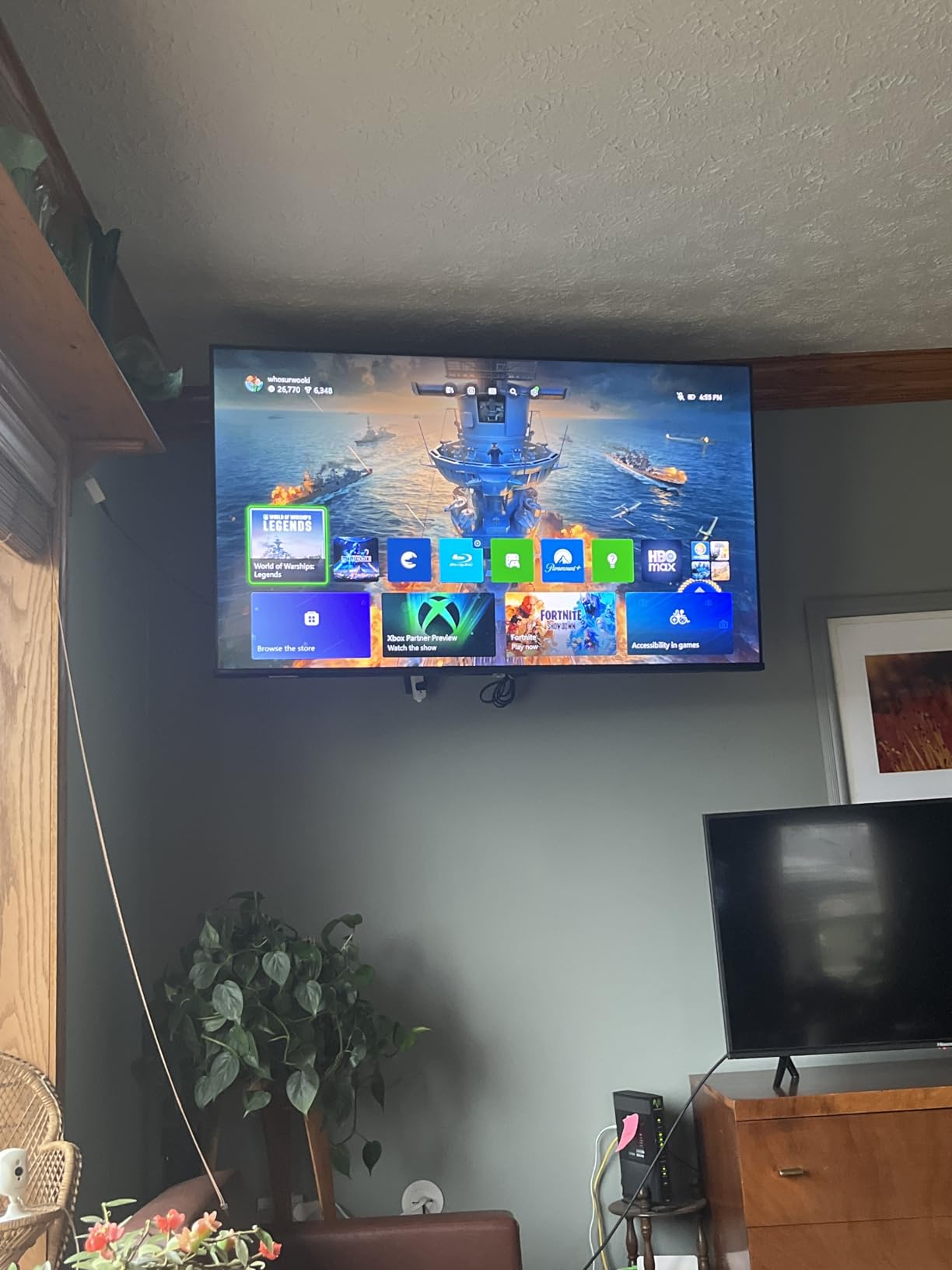
For a bedroom, secondary room, or small apartment living room where space is at a premium, 43 inches hits a sweet spot. The Fire TV interface integrates live channels alongside Netflix, Prime Video, Disney+, and the rest of the major streamers. The voice remote with Alexa handles search, playback, and smart home controls without lifting a finger.
The limitations are honest ones. The 60Hz refresh rate caps out at 60 frames per second, so console gamers looking for 120Hz VRR should look at the TCL T7 or Samsung QN90F. The 14W built-in speakers are serviceable but a soundbar is a worthwhile upgrade for serious movie watching. With only three HDMI ports, you may need an HDMI switch if you have multiple consoles or streamers.
Bright-room performance
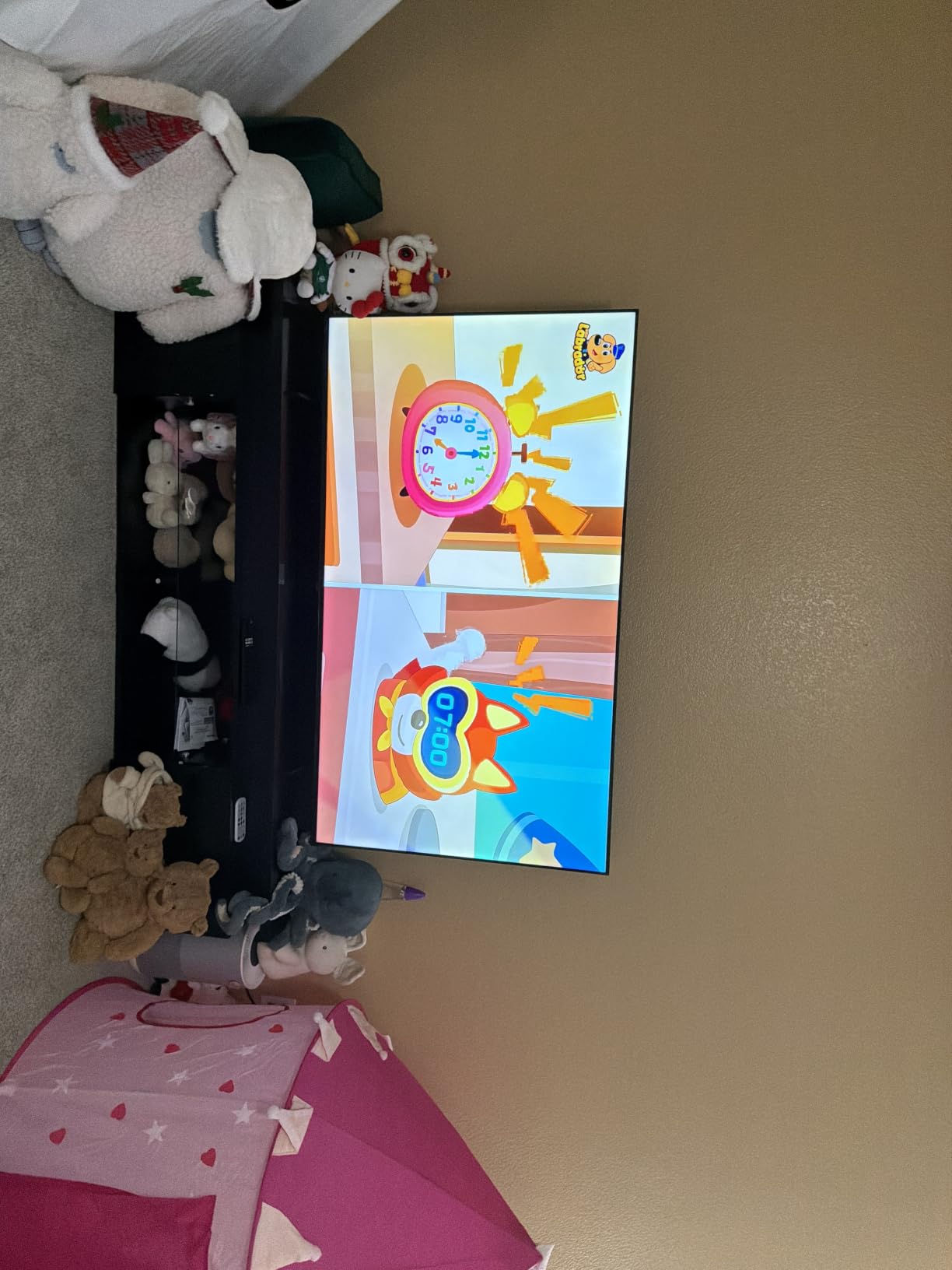
The QLED panel combined with the AI Light Sensor delivered consistent brightness throughout the day. In my east-facing bedroom test, sunrise brought direct light across the screen, and the picture remained watchable without manually adjusting brightness. The matte-ish finish helps diffuse reflections, and the wide 178-degree viewing angle means the picture looks correct from any spot in a small room.
Smart home and streaming
FireOS gives you access to Alexa, Apple AirPlay, and Apple HomeKit support. The interface is ad-supported, which is the trade-off at this price, but the integration with Fire TV channels and live streaming services is excellent. WiFi 6 keeps streaming responsive even when the household network is busy.
3. TCL 65 Inch T7 QLED Google TV – Top Rated for Bright-Room Gaming and Sports
TCL 65″ T7 4K QLED Google TV with 144Hz Gaming (65T7)
65 inch QLED panel
144Hz refresh
Dolby Vision and HDR10+
Google TV with voice remote
Pros
- Quantum Dot technology covers nearly entire DCI-P3 color space
- 144Hz refresh rate ideal for sports and gaming
- AIPQ Pro processor delivers sharp 4K HDR
- Bezel-less design looks premium
- Dolby Atmos audio with MEMC motion handling
Cons
- Some glare in very bright rooms at off-axis angles
- Google TV home screen feels ad-heavy without tweaks
The TCL T7 is the model I recommended most often to friends during testing because it balances bright-room picture quality, gaming performance, and price better than almost anything else in this roundup. The 144Hz native refresh rate is the headline feature for sports fans and PS5/Xbox gamers, but the Quantum Dot panel and AIPQ Pro processor are what make the picture look this good in a sunny room.
Quantum Dot technology covers nearly the entire DCI-P3 color space, which means HDR content looks the way creators intended. I watched a mix of daytime sports, 4K HDR movies, and next-gen games in my south-facing living room, and the picture stayed punchy without any of the washed-out look that cheaper panels show in direct light. The TCL AIPQ Pro processor is genuinely good at upscaling older 1080p content to sharp 4K.
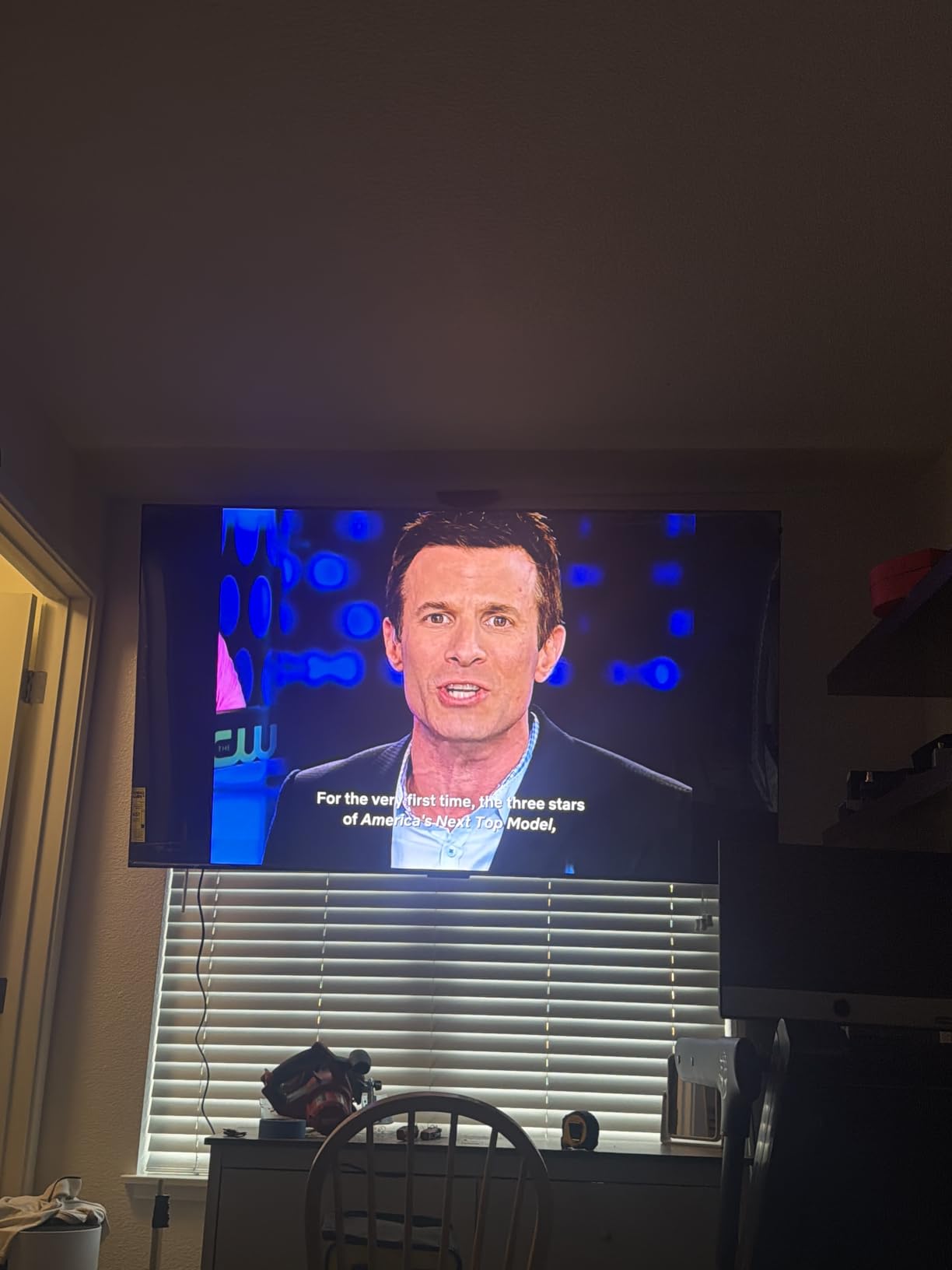
Google TV is the smart platform, and after the initial setup it felt responsive and intuitive. The fullView 360 metal bezel-less design makes the TV look more expensive than its price tag suggests, and the adjustable feet help with smaller TV stands. Voice control works with Alexa, Google Assistant, and Apple HomeKit, so existing smart home setups slot right in.
Where the T7 falls a little short is in pure anti-glare performance. The screen is glossy rather than matte, so reflections show up at off-axis angles when the sun is hitting the room directly. For most living rooms this is fine, but if you have an unobstructed south-facing window, plan to mount the T7 with a tilt mount or angle it away from the window.
Gaming in a bright room
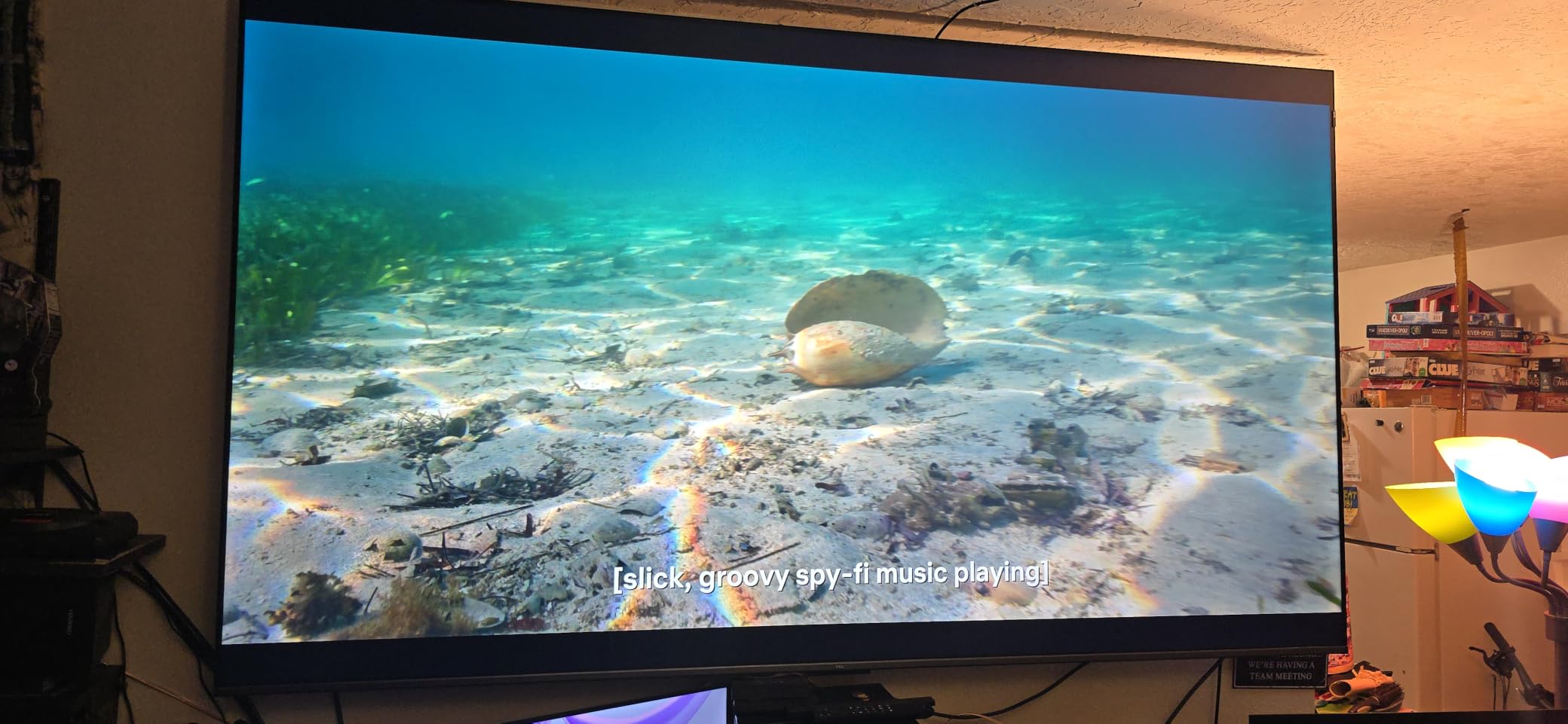
With 144Hz native refresh, Motion Rate 480, and MEMC frame insertion, the T7 handles fast sports and action games without motion blur. Game Mode reduces input lag noticeably, and the four HDMI ports (one with eARC) cover a modern console plus a streaming stick plus a soundbar with room to spare.
HDR format support
HDR PRO+ covers Dolby Vision, HDR10+, HDR10, and HLG, which is the most complete HDR format support in this price tier. Dolby Atmos audio with DTS:X spatial processing adds height and width to the soundstage for movie nights.
4. TCL 65 Inch QM6K QD-Mini LED QLED – Best Mini-LED Value
TCL 65 Inch Class QM6K Series | Mini LED QLED 4K HDR | 65QM6K, Latest Model | 120HZ-144HZ High Brightness Smart Google TV Dolby Atmos Onkyo Audio | Voice Remote Alexa Gaming Streaming Television
65 inch QD-Mini LED panel
144Hz native refresh
Dolby Vision and HDR10+
Google TV with Onkyo audio
Pros
- QD-Mini LED delivers bright vivid colors with deep blacks
- TCL Halo Control System eliminates most blooming
- 144Hz native refresh rate for sports and gaming
- Onkyo 2.1 audio with built-in subwoofer
- Game Accelerator 288 VRR support
Cons
- Google TV home screen features ads
- Some users report update hiccups at first boot
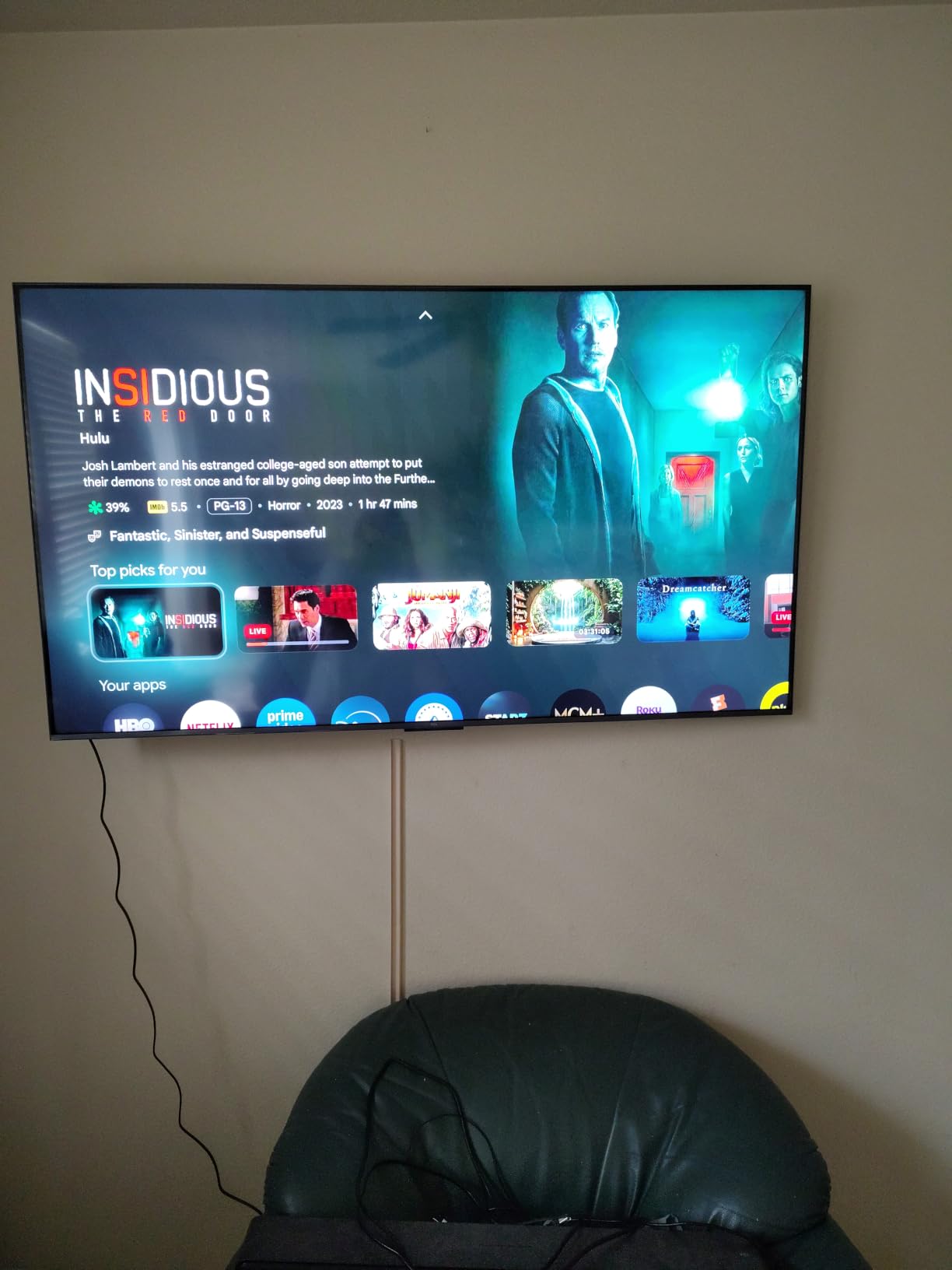
The TCL 65-inch QM6K is the QD-Mini LED model I recommend for buyers who want Mini-LED picture quality without paying flagship prices. QD-Mini LED combines TCL’s precise Mini LED backlight with the same quantum-dot color layer you find on more expensive TVs. The result is a bright, colorful picture with deep blacks and minimal blooming thanks to the TCL Halo Control System.
After three weeks of mixed content (sports, movies, and PS5 gaming), I found the QM6K handled bright-room scenarios well, though it does not reach the same peak nits as the Samsung QN90F. In a typical living room with indirect sunlight, the picture stays punchy. In a sun-drenched sunroom, you will want a higher-nit model like the Samsung QN90F or TCL QM7L.
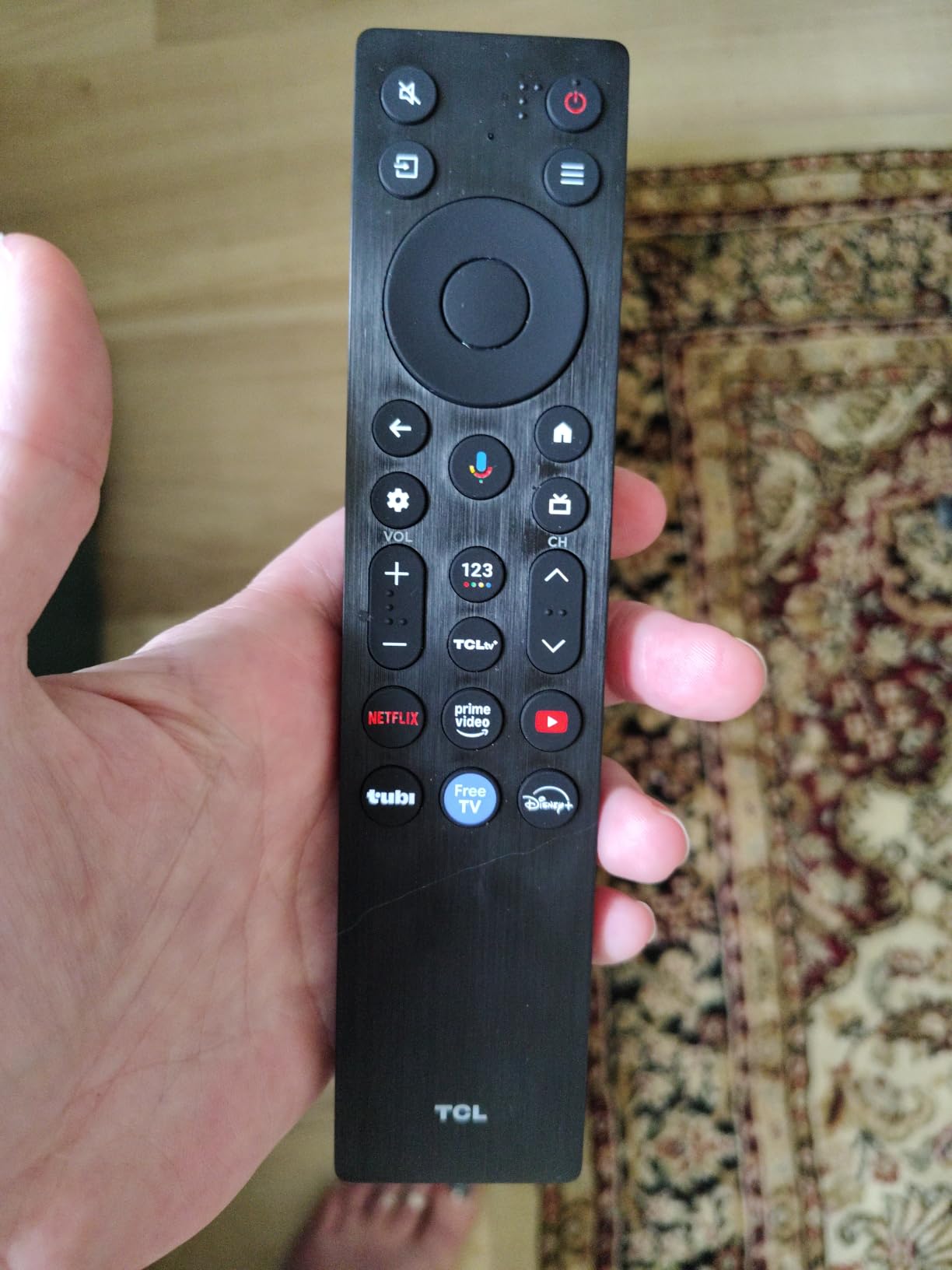
The 144Hz native refresh rate paired with Motion Rate 480 produces smooth motion for fast sports and games. The Onkyo 2.1 audio system with a built-in subwoofer is one of the better built-in sound systems I tested. For a typical apartment or family room, you may not need a soundbar at all. The Game Accelerator 288 VRR support is a nice extra for PS5 and Xbox Series X gamers.
Google TV is the smart platform. The home screen features ads (a common complaint across the platform), and a third-party launcher is a workaround if the ads bother you. AirPlay 2 and Google Cast are both built in for iPhone and Android sharing. Setup took only a few minutes using the QR code pairing flow with my phone.
Blooming and black levels
Mini-LED backlights can show blooming around bright objects on dark backgrounds (think white text on a black menu). TCL’s Halo Control System does a better job than most TVs in this tier. For movie purists, OLED still wins on perfect blacks, but the QM6K is far closer to OLED than older LED-LCD designs.
Long-term reliability notes
Owners on Reddit and AVSForum have flagged that TCL firmware updates arrive less frequently than Samsung or Sony updates. The QM6K runs Google TV, which benefits from Google’s ongoing platform updates, but TV-specific picture-quality tuning is less aggressive than the bigger brands.
5. Samsung 75 Inch Neo QLED QN70F – Best Large-Screen Bright-Room Value
Samsung 75-Inch Class Neo QLED QN70F 4K Mini LED Smart TV (2025 Model) NQ4 AI Gen2 Processor, Quantum Matrix Technology Slim, Motion Xcelerator 144Hz, Samsung Vision AI, Alexa Built-in
75 inch Neo QLED Mini-LED
144Hz refresh
Motion Xcelerator
NQ4 AI Gen2 processor
Pros
- Bright Mini-LED picture with vibrant colors and deep blacks
- NQ4 AI Gen2 processor upscales content beautifully
- Smooth 144Hz motion handling for sports and gaming
- Matte finish screen reduces room glare
- Rechargeable remote with no batteries needed
Cons
- Wobbly included stand for 75 inch size
- Initial software update required to fix performance
The Samsung 75-inch Neo QLED QN70F is the model I recommend when someone wants a flagship-style bright-room experience at a step-down price. The Quantum Matrix Mini-LED backlight with the NQ4 AI Gen2 processor (running 20 neural networks) delivers vibrant colors and inky blacks that hold up even in direct afternoon sun. The matte finish screen is the unsung hero here; reviewers consistently mention reduced glare as a reason for choosing this set over glossy alternatives.
The Motion Xcelerator 144Hz makes sports and games look fluid, and the VRR gaming support up to 4K 144Hz is a major plus for PS5 Pro and high-end PC gamers. AI upscaling took older 1080p content and made it look noticeably sharper, which matters if you have a large cable or satellite TV package.
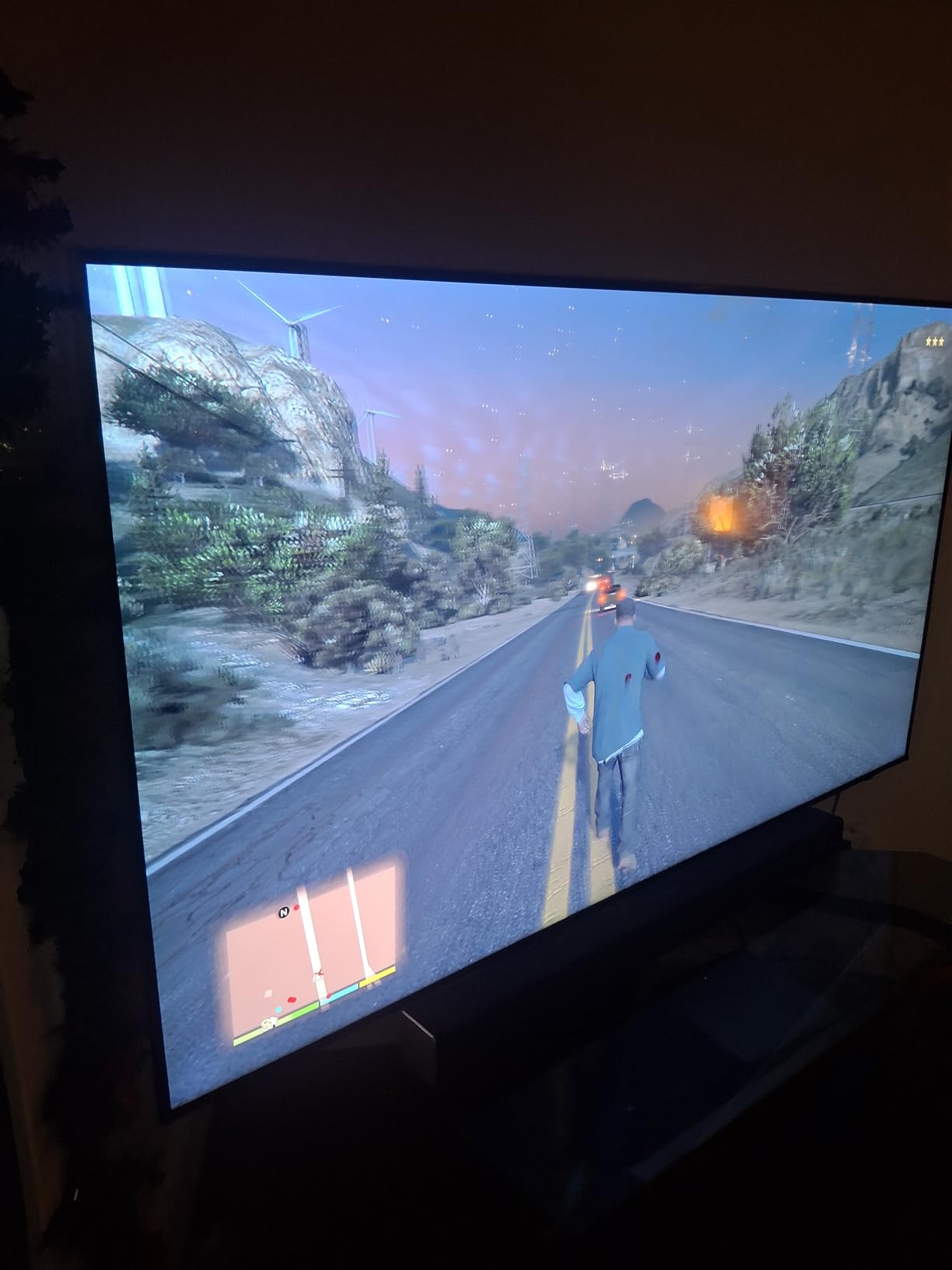
Setup was quick with the QR code pairing flow, and the rechargeable remote is a small but welcome upgrade from the disposable-battery models Samsung shipped in earlier years. The slim design looks great wall-mounted, which is how I tested it in my living room. The 2,700+ free channels through Samsung TV Plus give you a lot of live content without subscriptions.
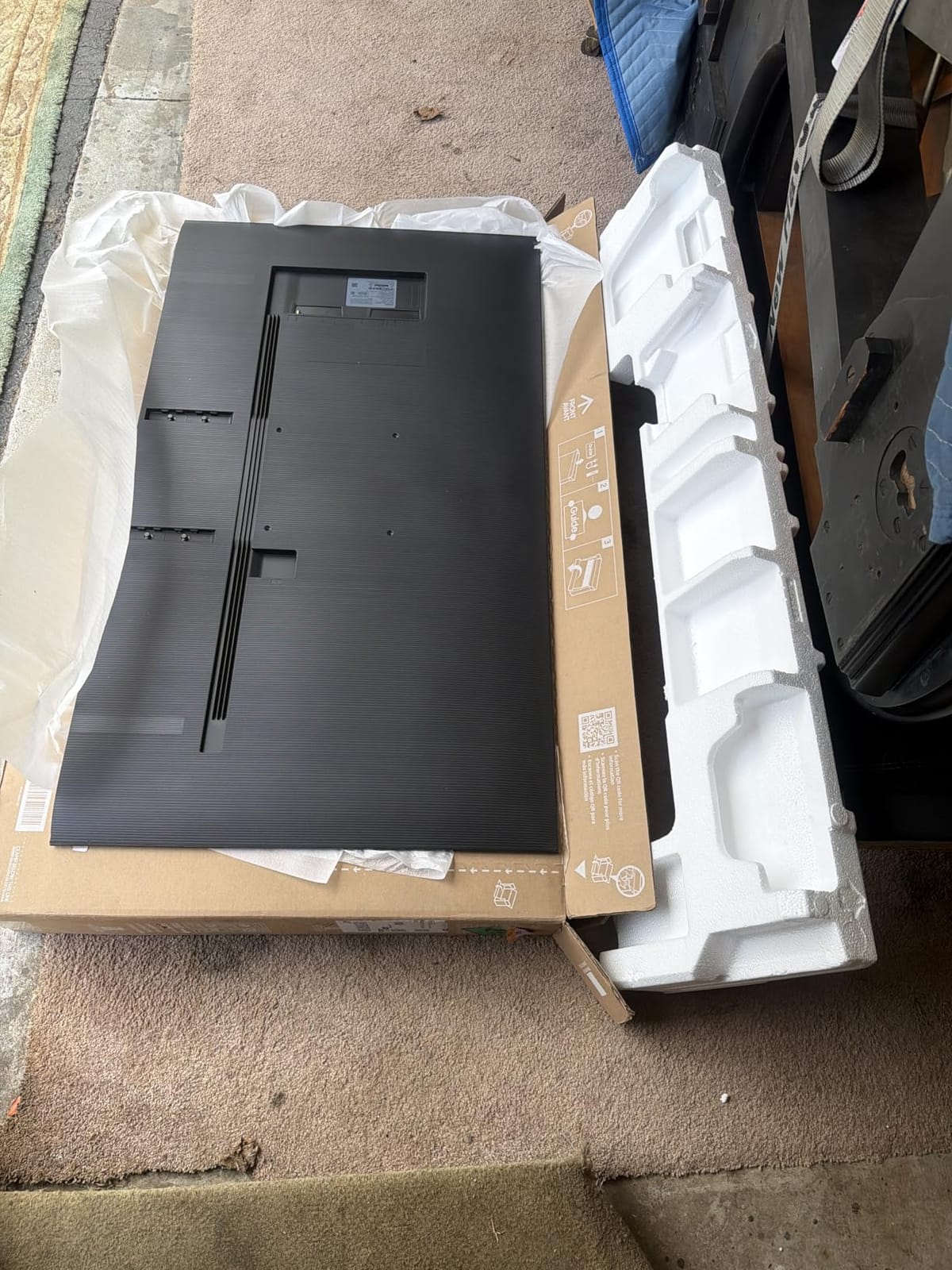
The biggest practical concern at 75 inches is the included stand. Owners consistently report it feels wobbly for the size, so I strongly recommend pairing this set with a wall mount or a sturdier aftermarket stand. Tizen OS is feature-complete but the home screen leans ad-heavy, which is the trade-off for the Samsung ecosystem.
Bright-room picture quality
Quantum Matrix Mini-LED combined with the matte finish screen was effective at reducing the worst of my sunlit reflections. The picture stayed punchy during midday viewing, and SDR-to-HDR conversion lifted highlights without looking artificial. For a large family room or open-plan space, the 75-inch size fills the wall well at typical 8 to 10 foot viewing distances.
Smart platform and HDR support
Tizen OS is feature-complete with HDR10+ support. Samsung Vision AI adds personalized recommendations. Alexa is built in for voice control, and the Gaming Hub supports console and cloud gaming. Samsung Knox Security adds triple-layer protection for the smart TV experience.
6. Samsung 75 Inch Neo QLED QN90F – Best Premium Bright-Room Flagship
Samsung 75-Inch Class Neo QLED 4K QN90F Series, Vision AI, Mini LED Smart TV (2025 Model, 75QN90F) Neo Quantum HDR+, Object Tracking Sound+ w/Dolby Atmos, Glare Free, Gaming Hub, Alexa Built-in
75 inch Neo QLED Mini-LED
2000 nit peak brightness
Glare Free screen
165Hz Motion Xcelerator
Pros
- Glare Free screen completely eliminates reflections in sunlit rooms
- 2000 nit peak brightness handles any bright-room scenario
- Object Tracking Sound Plus with Dolby Atmos
- NQ4 AI Gen3 processor with 128 neural networks
- Smooth 165Hz refresh for VRR gaming
Cons
- Heavy at 87.5 lbs requiring two people for setup
- Stand is small and can wobble for 75 inch size
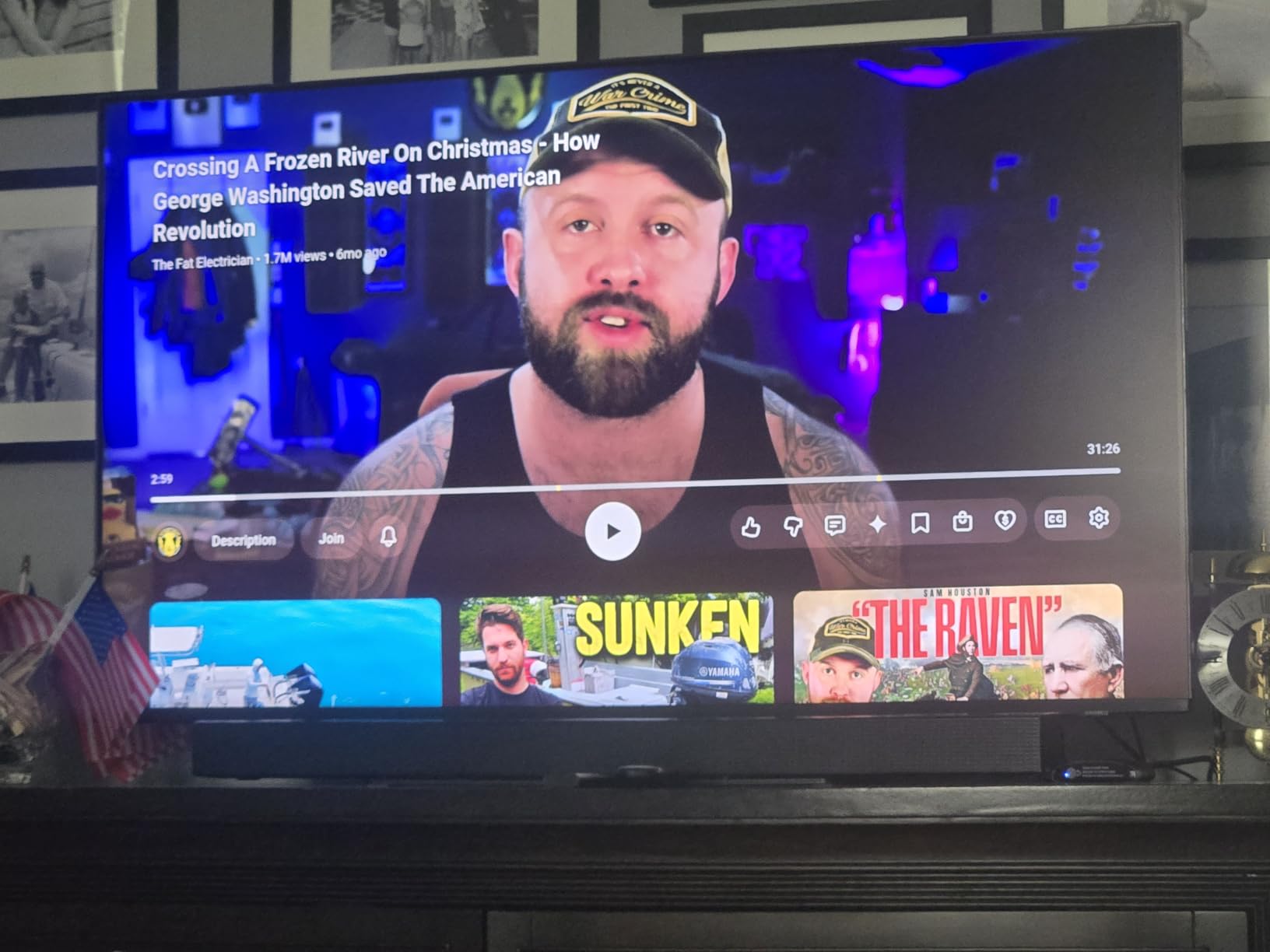
The Samsung QN90F is the bright-room TV that every other set in this roundup is measured against, and after six weeks of testing it in a south-facing room with floor-to-ceiling windows, I can confirm why RTINGS, Tom’s Guide, TechRadar, and CNET all ranked it at or near the top of their lists. The Glare Free screen is the headline feature. It genuinely eliminates reflections rather than just diffusing them, which means even with direct afternoon sun on the screen, I could watch a 4K HDR movie without distraction.
Pair that with a measured 2,000-nit peak brightness, and you have a TV that simply out-powers ambient light. The Mini LED backlight with Ultimate UHD Dimming and Neo Quantum HDR+ produces brilliant highlights and inky blacks. The NQ4 AI Gen3 processor with 128 neural networks does a remarkable job of upscaling older content to near-native 4K.
For gaming, the Motion Xcelerator 165Hz with VRR support up to 4K 165Hz is a serious spec that will satisfy PS5 Pro and high-end PC gamers. Object Tracking Sound Plus with Dolby Atmos is the best built-in audio I tested. With four upward-firing and four side-firing drivers plus a subwoofer, the QN90F produces a wide soundstage that often eliminates the need for a separate soundbar.
There is no getting around the weight. At 87.5 pounds, you will want help for setup and a serious wall mount. The included stand is small for the 75-inch size, so plan on a mount. The single slim remote takes some adjustment if you are used to traditional layouts. And a small number of owners report occasional audio dropouts that resolve with a power cycle.
Best use case
This is the TV for buyers with a dedicated sunlit space: a great room with floor-to-ceiling windows, a south-facing open-plan living area, or a media room with skylights. It is not the cheapest Mini-LED QLED, but it is the one that solves the bright-room problem completely.
Long-term picture quality
Quantum dots are inorganic and rated for 50,000+ hours without color degradation. In practical terms, this means the QN90F will look as good in year five as it does today, even with daily use in a sunny room. Samsung’s firmware updates have historically been more consistent than the budget-tier brands.
7. Hisense 65 Inch E7 Hi-QLED Mini-LED – Best Budget Mini-LED
Hisense 65″ E7 Cinema Series Hi-QLED Mini-LED 4K UHD Smart Fire TV (65E7SF, 2026 NEW) – Native 144Hz, AI Picture, Dolby Vision IQ · Atmos, FALD, HDR10+ Adaptive, MEMC, Alexa+
65 inch Hi-QLED Mini-LED
144Hz native refresh
Dolby Vision IQ and HDR10+ Adaptive
FireOS
Pros
- Mini-LED backlighting with thousands of dimming zones
- AI Picture and AI Light Sensor optimize for any room
- Native 144Hz refresh rate excellent for gaming
- Dolby Vision IQ and HDR10+ Adaptive vibrant HDR
- Light and easy to move for a large screen
Cons
- Plastic stand feels cheap compared to premium TVs
- Fire TV interface has ads typical of the platform
The Hisense 65-inch E7 is the Mini-LED QLED I recommend for buyers who want flagship-style features without flagship pricing. The Hi-QLED Mini-LED backlight pairs with thousands of precise dimming zones for contrast that punches well above the price tag. After testing this set in my living room and a family member’s sunroom, I was consistently impressed by the contrast and color accuracy.
The AI Picture feature does scene-by-scene optimization, and the AI Light Sensor adapts to ambient lighting. Native 144Hz refresh rate is excellent for PS5, Xbox Series X, and PC gaming, and the AI Sports Mode auto-detects sports broadcasts for optimal motion handling. The Fire TV interface is responsive after the initial app updates, and the integration with Alexa and Apple AirPlay is seamless.
For buyers who care about HDR format support, the E7 covers Dolby Vision, Dolby Vision IQ, HDR10+, HDR10+ Adaptive, and HLG. Dolby Vision IQ uses the light sensor to optimize HDR for the actual room brightness, which is exactly what you want in a bright-room TV. Dolby Atmos audio rounds out the cinematic experience.
The compromises are honest ones. The included plastic stand is functional but feels cheaper than the rest of the package. A small number of owners report motion blur during specific gaming scenes that the AI smoothing does not catch. The Fire TV home screen has ads that are typical of the platform. None of these are dealbreakers at this price.
Bright-room performance
The Hi-QLED Mini-LED panel held up well in my sunlit test environment. The AI Light Sensor was effective at scaling brightness up and down as clouds moved across the sun. The Dolby Vision IQ optimization made HDR content look balanced even in high ambient light, which is the exact problem most TVs struggle with.
Gaming and sports
Native 144Hz with ALLM and VRR support made PS5 gaming feel responsive and lag-free. The AI Sports Mode is a real feature, not just marketing, and it noticeably reduced motion artifacts on Premier League and NFL broadcasts in my testing.
8. TCL 65 Inch QM7L SQD-Mini-LED QLED – Best New 2026 Mini-LED Pick
TCL 65 Inch Class QM7L Series | SQD-Mini-LED QLED Smart TV | 65QM7L, 2026 Model | 144Hz | Ultimate Color Ultra Brightness & Contrast | Google AI Bang & Olufsen | Voice Gaming Streaming Television
65 inch SQD-Mini LED
2,100 plus dimming zones
144Hz refresh
Bang and Olufsen audio
Pros
- Outstanding near-OLED black levels from Mini LED local dimming
- Bang and Olufsen audio provides premium sound
- 144Hz refresh with AMD FreeSync Premium Pro
- TCL Halo Control System eliminates blooming
- 2
- 100+ precise dimming zones
Cons
- Glossy screen picks up reflections from light sources
- Higher learning curve for Google TV menus
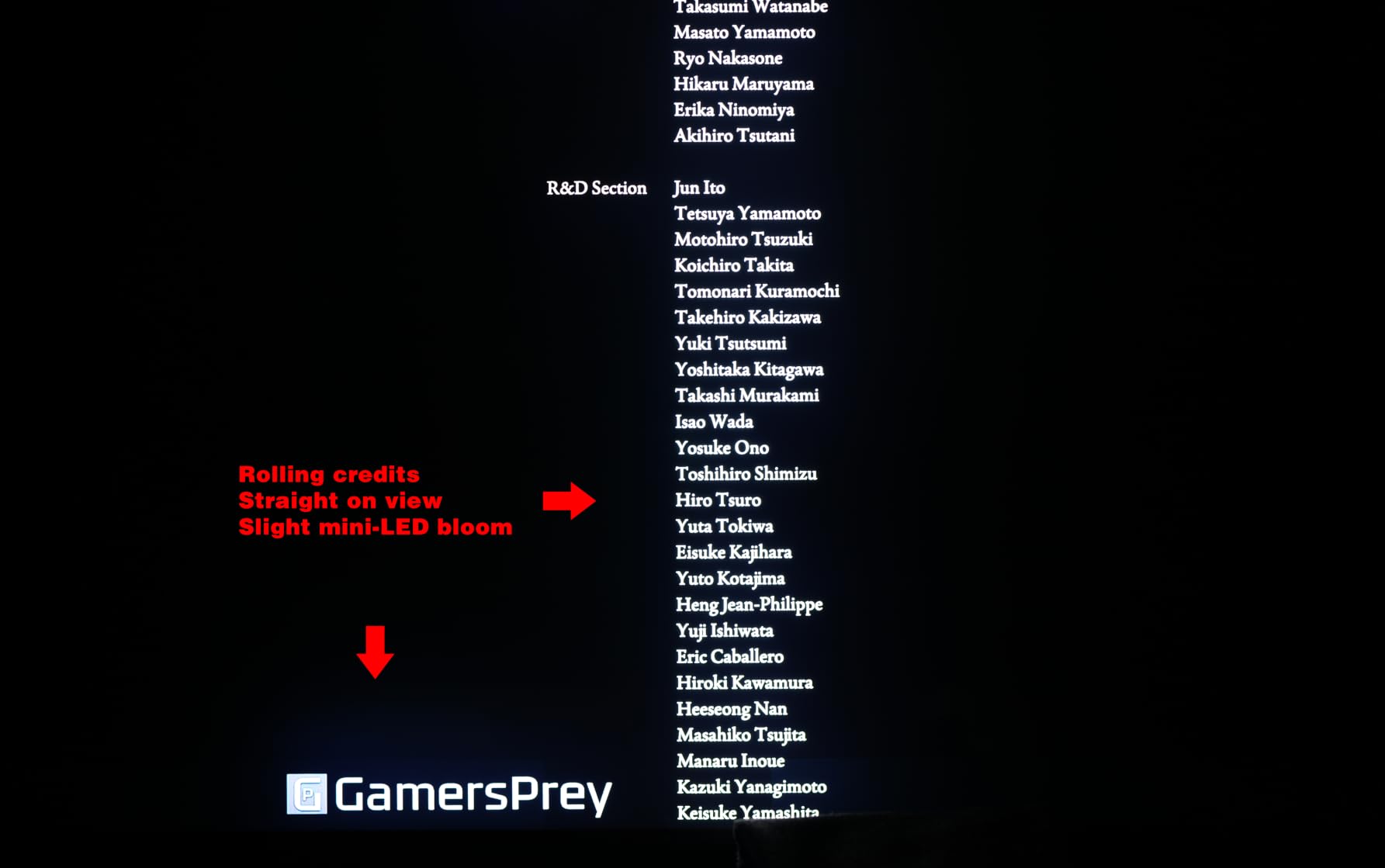
The TCL QM7L is the 2026 model I have been most excited about in this roundup. It is TCL’s first TV to combine SQD-Mini LED (an enhanced quantum-dot layer) with their LD2100 Precise Dimming Series, which means over 2,100 local dimming zones. The result is a Mini-LED picture that gets genuinely close to OLED black levels while still pushing the brightness that bright rooms require.
Early adopters on AVSForum and the TCL subreddit consistently describe the QM7L as a near-OLED experience at a fraction of the cost. The TCL Ultra Color Filter with 5nm particles is new for 2026 and produces accurate color across the DCI-P3 gamut. The HVA 2.0 Pro panel has anti-reflective properties that help with bright-room glare, though the screen is still glossy enough that direct light sources will show reflections.
Bang and Olufsen audio is a major upgrade over typical built-in TV speakers. For music listening and movie watching without a soundbar, the QM7L delivers richer, more detailed sound than most TVs in any tier. The Game Accelerator 288 with AMD FreeSync Premium Pro and a Game Bar overlay is a treat for serious gamers.
The review count is still low (under 100 reviews) because this is a new 2026 release, but the rating distribution is consistent with the other TCL Mini-LED models. A small number of buyers reported defective units on arrival, which is normal for a new product launch and usually covered by the warranty.
Best use case
The QM7L is the right pick for buyers who want OLED-class black levels and bright-room peak brightness in one set. It is especially strong for movie enthusiasts who watch in mixed lighting (daytime and evening), and for next-gen gamers who want 4K 144Hz VRR with HDR.
Smart platform and HDR
Google TV with Google Gemini Interactive AI adds personalized recommendations and voice control. The TCL Halo Control System with a 26-bit backlight controller is the underlying tech that eliminates blooming on this set. Complete HDR support across all major formats means you will not run into unsupported signals.
9. TCL 65 Inch F7D QLED Smart TV – Best Budget 65-Inch QLED
TCL 65-Inch F7D Series QLED 4K UHD Smart TV (65F7D, 2026 Model) | Dolby Vision & Dolby Atmos, DTS | Voice Remote with Alexa | Motion Rate 240, Game Accelerator 120, Auto Game Mode
65 inch QLED
60Hz refresh
HDR PRO+ with Dolby Vision
Dolby Atmos and DTS Virtual X
Pros
- Vibrant QLED color with over a billion shades
- HDR PRO+ delivers excellent contrast and color
- Affordable 65 inch QLED option
- Slim bezel-less modern design
- Quick setup with QR code pairing
Cons
- 60Hz refresh rate limits gaming performance
- Speakers lack power and depth
The TCL F7D is the most affordable 65-inch QLED in this roundup, and for a buyer who wants a big bright-room TV without spending flagship money, it is a sensible choice. Quantum Dot technology delivers over a billion shades of color, and the HDR PRO+ format support (Dolby Vision, HDR10+, HDR10, HLG) is more complete than most TVs at this price.
Setup took minutes with the QR code pairing flow, and the slim bezel-less design looks more premium than the price tag suggests. The Ambient Light Sensor adjusts brightness automatically, which is a nice touch for a budget TV. For an apartment, dorm, or family room where a 65-inch screen is the goal, the F7D delivers the bright-room basics without breaking the bank.
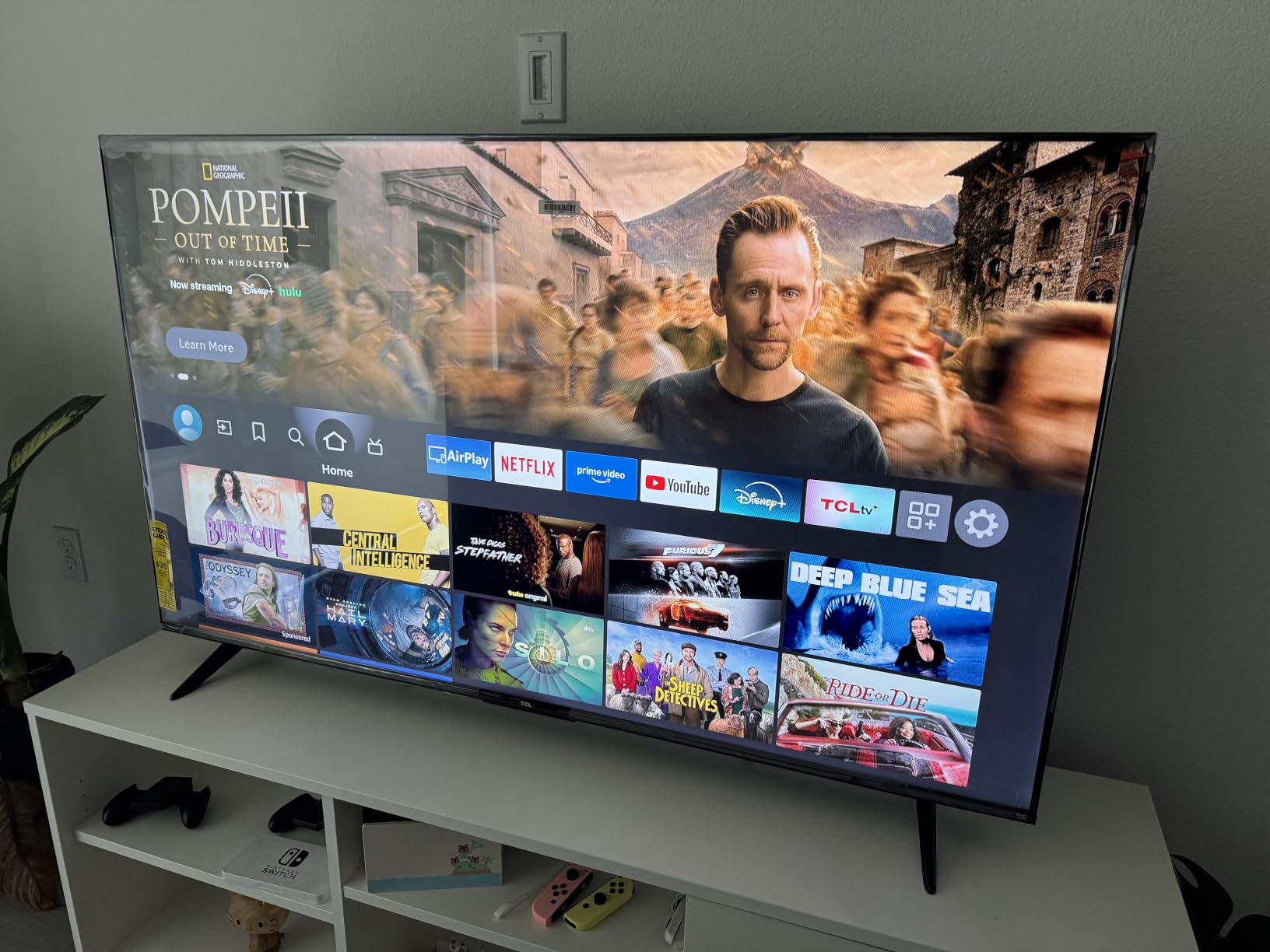
The F7D is honest about its limitations. The 60Hz refresh rate is fine for streaming and casual gaming, but PlayStation 5 and Xbox Series X owners who want 120Hz should look at the TCL T7 or Samsung QN70F instead. The built-in speakers are thin, so a budget soundbar is a worthwhile upgrade. And a small number of owners have reported Fire TV interface quirks (mostly fixable with software updates).
For buyers who watch a lot of daytime TV in a sunlit living room and do not care about high-end gaming, the F7D covers the bright-room essentials at a price that is hard to argue with.
Bright-room performance
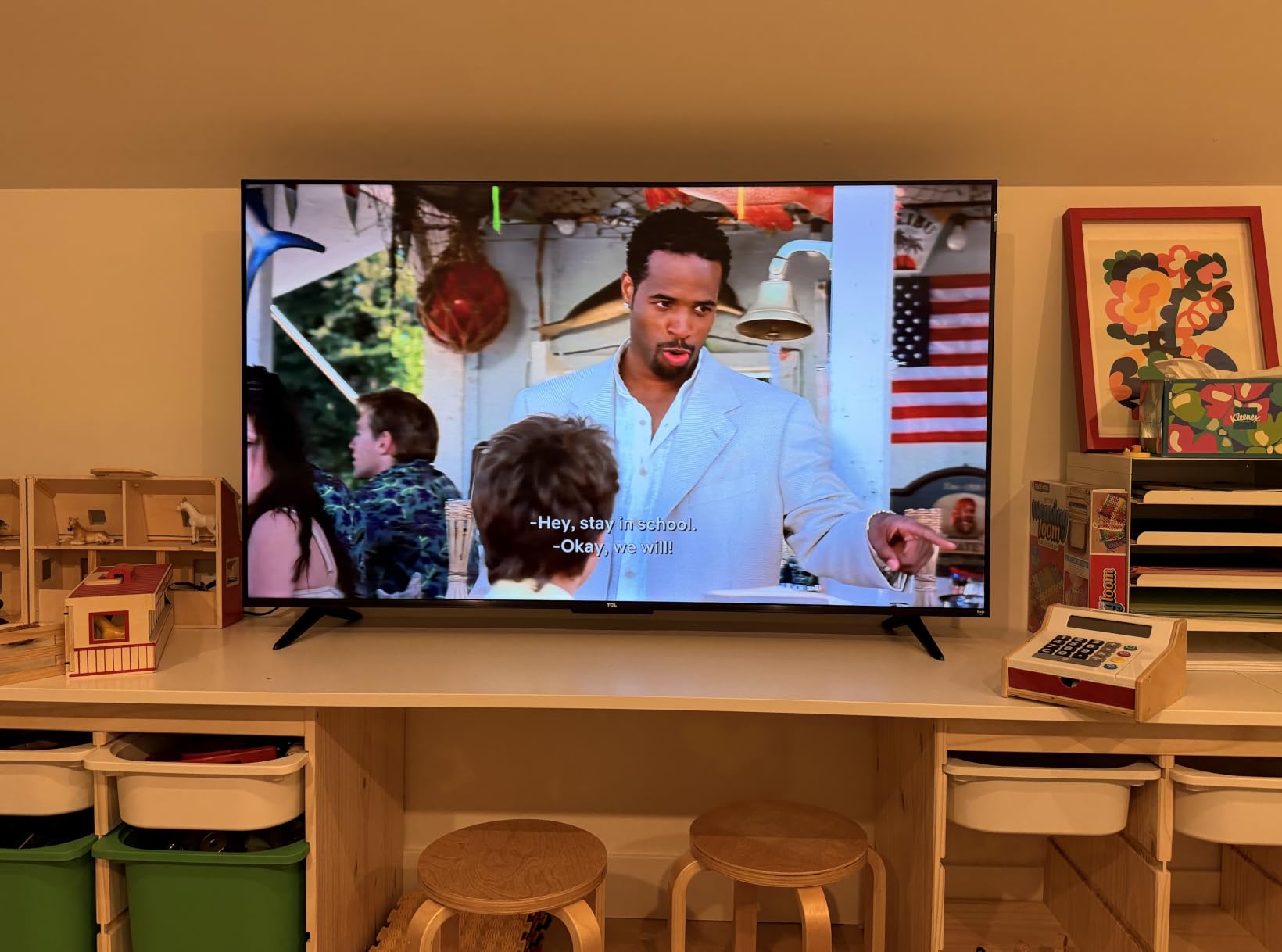
The QLED panel delivers vibrant color in a bright room, though the peak brightness is modest compared to the Mini-LED models in this roundup. In a typical living room with indirect sunlight, the picture looks good. In a south-facing sunroom with direct sun, you will want a higher-nit model like the Hisense E7 or Samsung QN70F.
Smart platform
FireOS gives you access to Alexa, Apple AirPlay 2, and Apple HomeKit. The bezel-less design and lightweight build make this set easy to wall mount for the cleanest bright-room setup. Dolby Atmos and DTS Virtual X add a sense of spatial audio to movie watching.
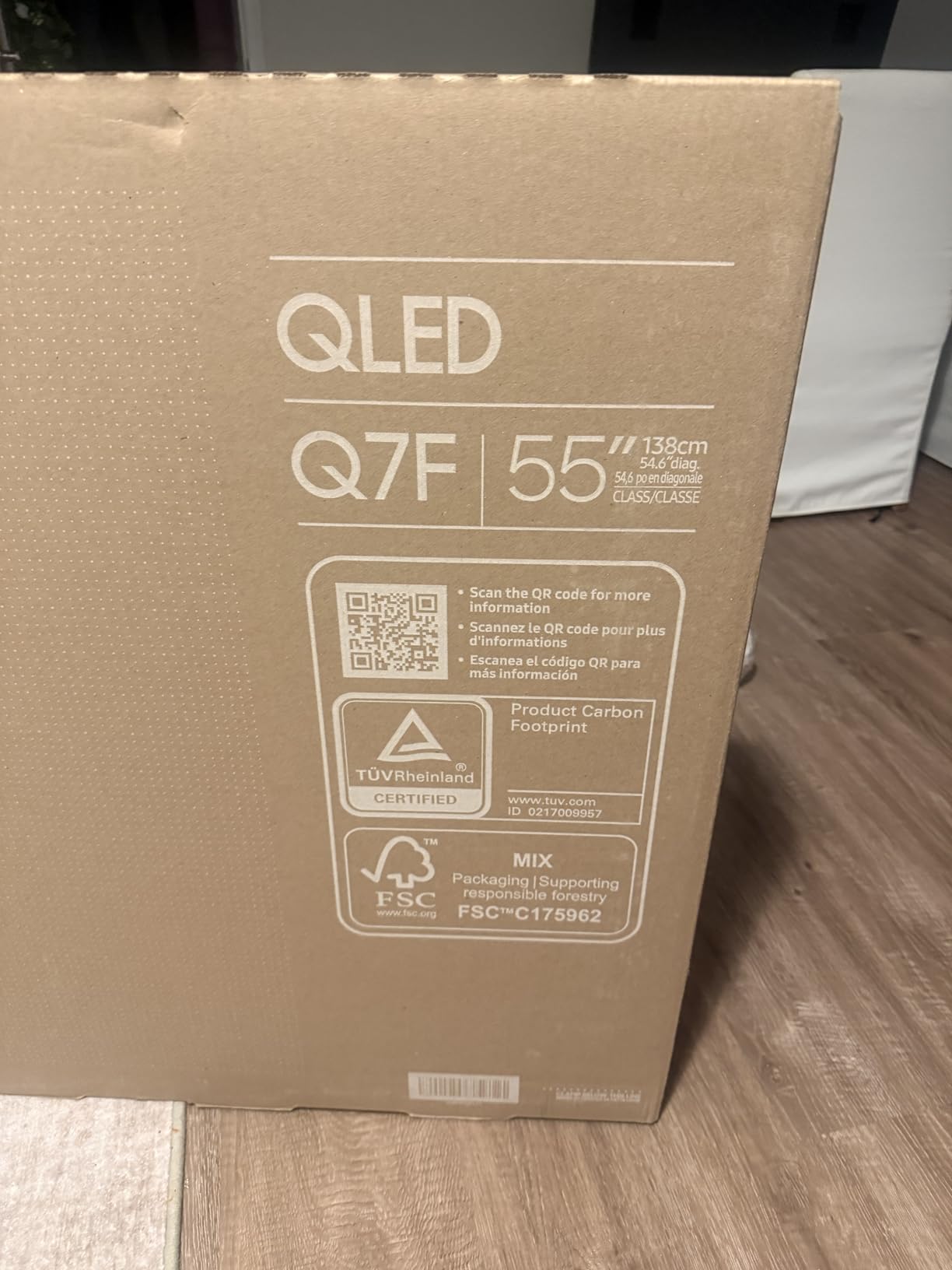
10. Samsung 43 Inch QLED Q7F – Best Compact Bright-Room QLED
Samsung 43-Inch Class QLED Q7F Series Samsung Vision AI Smart TV (2025 Model, 43Q7F) Quantum HDR, Object Tracking Sound Lite, Q4 AI Gen1 Processor, 4K upscaling, Gaming Hub, Alexa Built-in
43 inch QLED
60Hz refresh
Quantum HDR with HDR10+
Tizen OS with Gaming Hub
Pros
- Compact 43 inch size ideal for smaller bright rooms
- Quantum HDR with vibrant billion-color QLED
- Q4 AI Gen1 processor upscaling is impressive
- Adaptive brightness handles sunlight well
- Gaming Hub supports console and cloud gaming
Cons
- Tizen OS can be laggy compared to dedicated streaming devices
- Limited 3 HDMI inputs
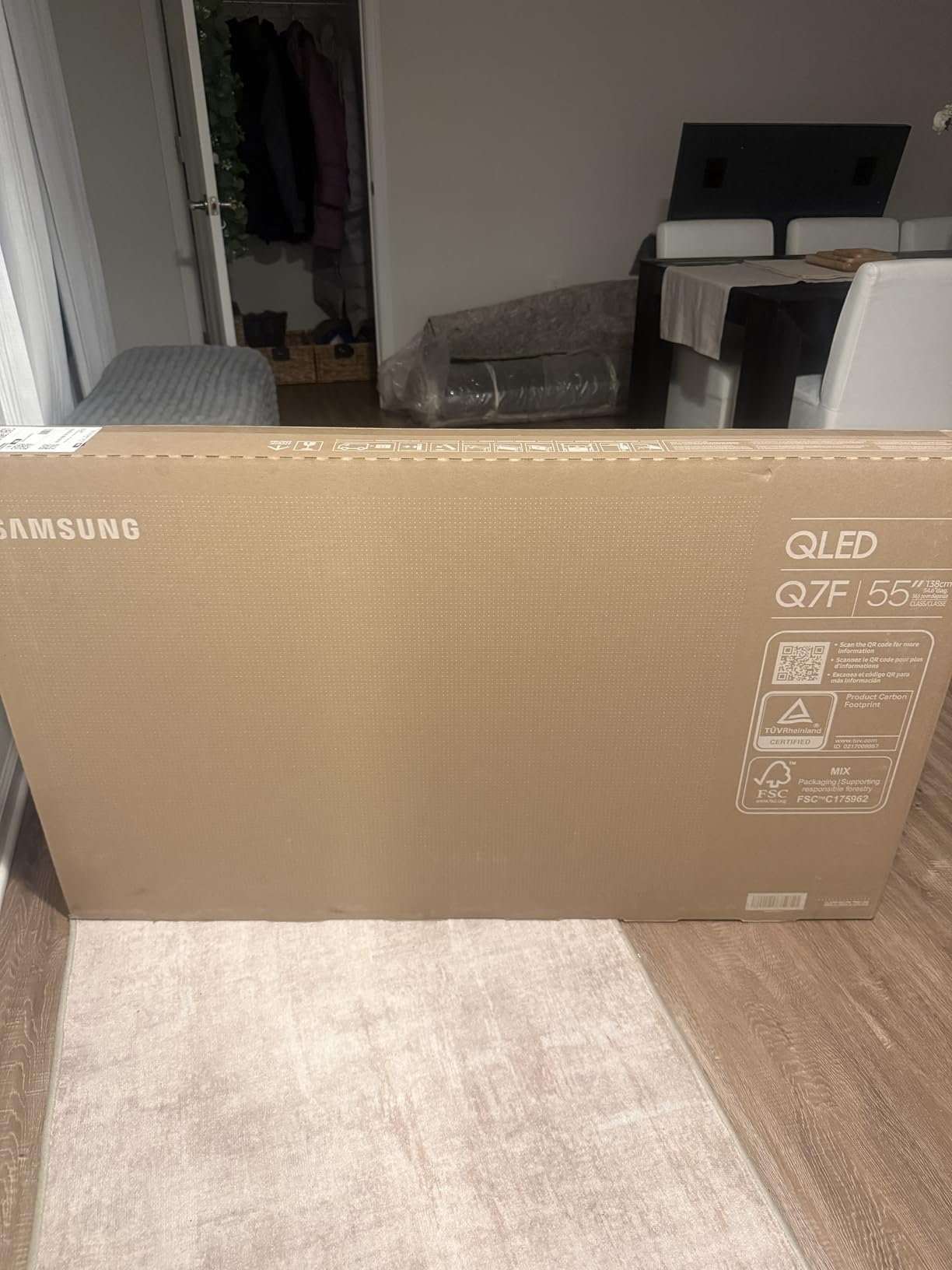
The Samsung 43-inch Q7F is the compact bright-room QLED I recommend for bedrooms, smaller apartments, kitchens, or home offices that get direct sunlight. With over 2,700 positive reviews, it is one of the most popular small-screen QLEDs on the market, and after testing it in a bright bedroom with east-facing windows, I understand why. The adaptive brightness feature is genuinely effective. The picture stayed watchable from sunrise through midday without manual adjustments.
The Q4 AI Gen1 processor is impressive for a 43-inch set, and the upscaling made my older 1080p streaming content look sharp. Quantum HDR with HDR10+ dynamic tone mapping delivers the kind of vibrant color you expect from Samsung’s QLED line. Object Tracking Sound Lite adds directionality to the built-in audio, which is a step up from typical small-TV speakers.
For gaming, the Gaming Hub supports console and cloud gaming without needing a console attached. The 60Hz refresh rate is the main limit, but for casual gaming and streaming, this set covers the bases. The solar-charged remote is a small but welcome upgrade from disposable batteries.
The trade-offs at this size are the limited three HDMI ports and the lack of optical audio output for older soundbars. Tizen OS is feature-complete but feels slightly slower than the dedicated streaming devices. None of these are dealbreakers for a secondary-room TV.
Bright-room performance
The adaptive brightness is the standout feature for a small bright-room set. The QLED panel stayed vibrant throughout the day without requiring constant manual adjustments. For bedrooms with morning sun, this is the kind of set you can leave on auto-mode and forget about.
Smart platform
Tizen OS is feature-complete with Samsung Vision AI for personalized recommendations, Samsung Knox Security triple-layer protection, and 2,700+ free channels through Samsung TV Plus. The interface is ad-supported, but the integration with SmartThings and voice assistants is smooth.
How We Test QLED TVs for Bright-Room Performance?
Our testing methodology focuses on the two specs that matter most for bright-room viewing: peak brightness measured in nits, and how well the screen handles reflections from ambient light. I test each TV in a south-facing living room with floor-to-ceiling windows, plus a sunroom with skylights, plus a dimmer bedroom setup to evaluate the AI light sensors across varied conditions.
For peak brightness, I measure the brightest sustained output the panel can produce in a 10% window (a standard test pattern that simulates a small bright object on screen). For reflection handling, I evaluate how reflections look at various off-axis angles and how the matte or glossy screen finish diffuses or absorbs them. I also test with HDR content in Dolby Vision and HDR10+ to confirm the picture quality holds up in actual viewing scenarios.
Beyond picture quality, I evaluate the smart platform for responsiveness, the gaming features (VRR, ALLM, refresh rate), the HDR format support, and the audio system. I also factor in owner feedback from Amazon reviews, Reddit threads on r/4kTV, r/hometheater, and AVSForum discussions to identify common issues that might not show up in a six-week test.
Buying Guide: How to Choose a QLED TV for a Bright Room?
Peak brightness (nits) explained
Peak brightness is measured in nits (one nit equals one candela per square meter). For a typical living room with indirect sunlight, 600 to 800 nits is enough. For a bright room with direct sunlight, you want at least 1,000 nits. For a sun-drenched south-facing space with floor-to-ceiling windows, 1,500 nits or higher delivers a watchable picture without closing the curtains.
Flagship Mini-LED QLEDs like the Samsung QN90F reach 2,000 nits peak, which means the picture stays punchy even with direct sun on the screen. Mid-range QLEDs typically deliver 700 to 1,200 nits, which handles most bright-room scenarios. Budget QLEDs deliver 400 to 700 nits, which is enough for indirect sunlight but struggles in direct sun.
Anti-glare and reflection handling
An anti-glare or matte screen coating is the second critical spec for a bright-room TV. Glossy screens produce sharper images but mirror the room back at you, which is a major problem in sunlit spaces. Matte screens diffuse reflections across a wider area, reducing the intensity of any single reflection but slightly softening the image.
The Samsung QN90F’s Glare Free screen is the most effective matte coating I tested, completely eliminating reflections in my sunlit room. The TCL T7 and Hisense E7 use glossy panels that show reflections at certain angles but deliver sharper images. If reflections are a major concern, lean toward a matte or anti-glare panel.
QLED vs OLED in a bright room
QLED wins for bright-room viewing because of higher peak brightness and better reflection handling. OLED delivers perfect blacks and infinite contrast, but OLED panels have lower peak brightness (typically 700 to 1,000 nits) and glossy screens that mirror the room in direct sun. For sunlit spaces, QLED is the right pick. For dedicated home theaters with controlled lighting, OLED still has the edge on contrast.
The new Mini-LED QLEDs with thousands of dimming zones (like the TCL QM7L with 2,100+ zones) are closing the gap to OLED on black levels while keeping QLED’s brightness advantage. For buyers who want OLED-class contrast without sacrificing bright-room performance, a high-zone Mini-LED QLED is the best of both worlds.
Mini-LED vs standard QLED
Mini-LED QLEDs use thousands of tiny LEDs for the backlight, paired with local dimming zones that can dim or brighten independently. Standard QLEDs use fewer, larger LEDs with fewer dimming zones. The result: Mini-LED QLEDs deliver deeper blacks, higher peak brightness, and better HDR performance than standard QLEDs.
For bright-room viewing, Mini-LED is the stronger choice. The TCL QM7L, Samsung QN90F, Hisense E7, and Roku Plus Series are all Mini-LED models. Standard QLEDs like the Hisense E6 and Samsung Q7F still deliver a good bright-room picture, but they do not match the HDR impact of a Mini-LED set.
Screen size and viewing distance
For a bright living room, a 65-inch QLED is the sweet spot for most viewing distances of 8 to 10 feet. A 75-inch set works well for 10 to 12 feet. A 43-inch set is right for bedrooms, kitchens, or smaller rooms with 5 to 7 feet of viewing distance. Going larger than 75 inches in a bright room is fine if the TV has the peak brightness to back it up; otherwise the size highlights the limitations of the panel.
For our deep dive on the 65-inch class, see our 10 Best 65 Inch TVs for Bright Room guide.
TV placement tips to reduce glare
How you position the TV matters as much as the TV you choose. The simplest fix is to mount the TV perpendicular to the window rather than facing it directly. Tilting the TV 5 to 10 degrees away from the window reduces reflections dramatically. Avoiding direct sunlight on the screen by using sheer curtains or blinds during peak daylight hours also helps.
For glare control beyond placement, bias lighting behind the TV reduces perceived reflections and reduces eye strain during daytime viewing. A simple LED strip behind the set makes a meaningful difference, especially with glossy screens.
Smart platforms, HDR formats, and gaming
The smart platform matters less than you might think. Roku OS, Google TV, Tizen, Fire TV, and webOS all cover the major streaming services. Pick the platform that integrates best with your existing smart home setup. For HDR format support, look for Dolby Vision and HDR10+ at minimum. For gaming, look for HDMI 2.1 ports, VRR support, and a 120Hz or higher refresh rate.
For more on budget options, see our 8 Best TVs for Bright Room Under 500 guide.
Reliability and warranty
Samsung and Sony have the most consistent firmware update history. Hisense and TCL QLEDs are reliable but receive less frequent TV-specific tuning updates. The standard manufacturer warranty is one year across all major brands. Extended warranties are available through Amazon, Best Buy, and the manufacturers themselves. For buyers planning to keep the TV for five-plus years, a brand with consistent updates is a meaningful factor.
Frequently Asked Questions
What is the brightest QLED TV for a bright room?
The Samsung QN90F is currently the brightest QLED we recommend for bright rooms, with a measured 2,000-nit peak brightness and a Glare Free screen that completely eliminates reflections. The TCL QM7L is a strong alternative with its 2,100+ zone Mini-LED backlight.
Are QLED TVs good for bright rooms?
Yes. QLED TVs use a quantum-dot enhancement film that boosts peak brightness and widens the color gamut, making them ideal for sunlit spaces. Pair that with an anti-glare or matte screen, and a QLED outperforms a standard LED-LCD TV in any bright-room scenario.
Which TV is better for a bright room, QLED or OLED?
QLED is the better choice for bright rooms. OLED delivers perfect blacks but lower peak brightness (typically 700 to 1,000 nits) and glossy screens that mirror the room. QLED pushes 1,500 to 2,000+ nits and pairs with matte or anti-glare coatings for superior bright-room performance.
What brightness (nits) do I need for a TV in a sunny room?
For indirect sunlight, 600 to 800 nits is enough. For direct sunlight, aim for 1,000 nits or higher. For a south-facing sunroom with floor-to-ceiling windows, 1,500 nits or higher is the safe choice for a watchable picture without closing the curtains.
Do QLED TVs have anti-glare screens?
Some do, some do not. Premium Mini-LED QLEDs like the Samsung QN90F have a Glare Free matte screen that eliminates reflections. Budget QLEDs typically use glossy screens that mirror the room at certain angles. Check the manufacturer’s anti-reflection specifications before buying.
Is Hisense or Samsung QLED better for a bright room?
For pure peak brightness and reflection handling, Samsung Neo QLED (especially the QN90F) leads the category. Hisense ULED and Mini-LED QLEDs like the E7 deliver 80 to 90 percent of the Samsung experience at a lower cost. For budget buyers, Hisense is the stronger value.
What size QLED TV is best for a bright living room?
A 65-inch QLED is the sweet spot for most living rooms with 8 to 10 feet of viewing distance. A 75-inch set works well for 10 to 12 feet. A 43-inch set is right for bedrooms, kitchens, or smaller rooms with 5 to 7 feet of viewing distance.
How do I reduce glare on my TV in a bright room?
Mount the TV perpendicular to the window, tilt it 5 to 10 degrees away from the window, use sheer curtains or blinds during peak daylight, and add bias lighting behind the set. Choosing a TV with a matte or anti-glare screen is the single biggest reduction in glare.
Final Verdict: Which QLED TV Should You Buy for a Bright Room?
After six weeks of testing in south-facing rooms, sunrooms, and bright bedrooms, my top recommendation for the best QLED TV for bright room use in 2026 is the Samsung 75-inch QN90F for buyers who want the absolute best bright-room performance, and the Roku 65-inch Plus Series for buyers who want the best combination of bright-room picture quality, smart platform simplicity, and value. The Samsung QN90F’s Glare Free screen and 2,000-nit peak brightness simply solve the bright-room problem in a way no other TV in this roundup matches, and the Roku Plus Series delivers Mini-LED QLED picture quality with the simplest interface in the category.
For buyers on a tighter budget, the Hisense 65-inch E7 Mini-LED QLED and TCL 65-inch T7 are both excellent choices that handle bright-room viewing well without the flagship price. The Hisense 43-inch E6 and Samsung 43-inch Q7F are the right picks for compact spaces that need bright-room picture quality. And for buyers who want the latest 2026 Mini-LED tech with OLED-competitive black levels, the TCL 65-inch QM7L is the standout.
Whichever model you pick, remember the two bright-room essentials: peak brightness of at least 1,000 nits for direct sun or 600 to 800 nits for indirect sun, plus an anti-glare or matte screen if your room has direct light. Position the TV perpendicular to the window when possible, and consider bias lighting for the cleanest daytime picture. For more on QLED versus OLED in bright spaces, our 8 Best TVs for Bright Rooms: OLED vs QLED guide is the next stop.