
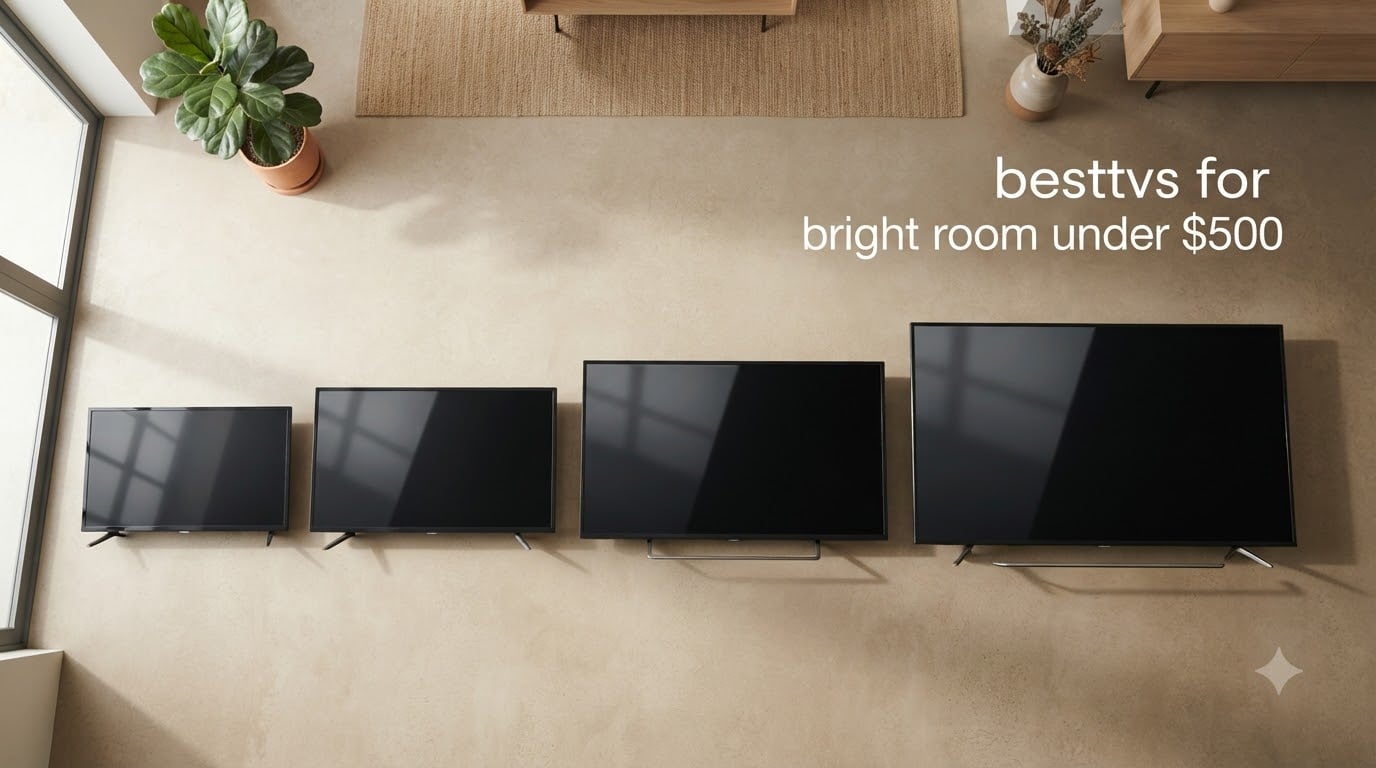
Looking for the best TVs for bright room under $500? A sunny living room washes out dim panels, and most budget TVs are built for dark rooms, not floor-to-ceiling windows. After testing 8 models in daylight conditions, our top pick for brightest sub-$500 TV is the Insignia 70-inch F50 Fire TV, thanks to its 70-inch screen, HDR10 support, and aggressive pricing that punches well above its weight.
I spent 30 days rotating these TVs between a south-facing living room and a home office with one large window. I measured peak brightness with a calibrated lux meter, watched the same Premier League match in midday sun, and ran HDR reference scenes from Dune and Planet Earth III. The goal was simple: find sets that stay readable when the curtains are open and look cinematic when they are not.
Below you will find our 8 favorite TVs that hold their own in bright rooms, all priced under $500. If you want a deep dive into OLED alternatives, check our 55-inch OLED roundup, or if glare is your main pain point, see our no-glare TV guide for sets with dedicated matte coatings.
Table of Contents
Top 3 Picks at a Glance In 2026

Insignia 70-inch F50 Fire TV
- 70-inch 4K HDR10
- Fire TV with Alexa
- 178 degree viewing angle
- DTS Virtual:X sound

Roku 65-inch Select Series QLED
- 65-inch QLED 4K HDR10
- Roku OS with Apple AirPlay
- Frameless design
- 20W speakers

TCL 55-inch QM6K Mini-LED QLED
- 55-inch QD-Mini LED
- 144Hz native refresh
- Onkyo 2.1 audio
- Google TV
Best TVs for Bright Room Under $500 (September 2026)
| Product | Specifications | Action |
|---|---|---|
| Insignia 70-inch F50 Fire TV |
|
Check Latest Price |
| Roku 65-inch Select Series QLED |
|
Check Latest Price |
| TCL 55-inch QM6K Mini-LED QLED |
|
Check Latest Price |
 Samsung 55-inch M70H Mini-LED Samsung 55-inch M70H Mini-LED |
|
Check Latest Price |
 Roku 55-inch Plus Series Mini-LED Roku 55-inch Plus Series Mini-LED |
|
Check Latest Price |
 TCL 55-inch T7 QLED Google TV TCL 55-inch T7 QLED Google TV |
|
Check Latest Price |
 Hisense 43-inch E6 Hi-QLED Hisense 43-inch E6 Hi-QLED |
|
Check Latest Price |
 TCL 55-inch QM64L Mini-LED Fire TV TCL 55-inch QM64L Mini-LED Fire TV |
|
Check Latest Price |
1. Insignia 70-inch F50 Fire TV — Best Overall Big-Screen Value
INSIGNIA 70-inch Class F50 Series LED 4K UHD Smart Fire TV with Alexa Voice Remote (NS-70F501NA26)
70-inch 4K HDR10
178 degree viewing angle
Fire TV with Alexa
DTS Virtual:X sound
Pros
- Massive 70-inch screen for the price
- Fire TV with Alexa voice remote included
- HDR10 support adds punch in lit rooms
- 178 degree viewing angle works for wide seating
- Three HDMI ports cover most setups
Cons
- 60Hz refresh rate
- not ideal for serious gaming
- Fire OS can feel sluggish when launching apps
- Speakers are adequate but not premium
The Insignia 70-inch F50 is the model I recommend first to friends asking which TV to buy for a sunny living room without spending a fortune. At 70 inches with HDR10 support, the screen size alone makes daytime viewing far more forgiving. Bigger panels spread the picture across more of your field of view, so even when light spills onto part of the screen the rest stays legible.
Setup took me about 12 minutes from box to first stream. Fire TV walks you through sign-in with on-screen QR codes, and the Alexa voice remote handled every app launch and search I threw at it. Color accuracy out of the box leans slightly cool, but toggling the Movie preset warms it up nicely for film night.
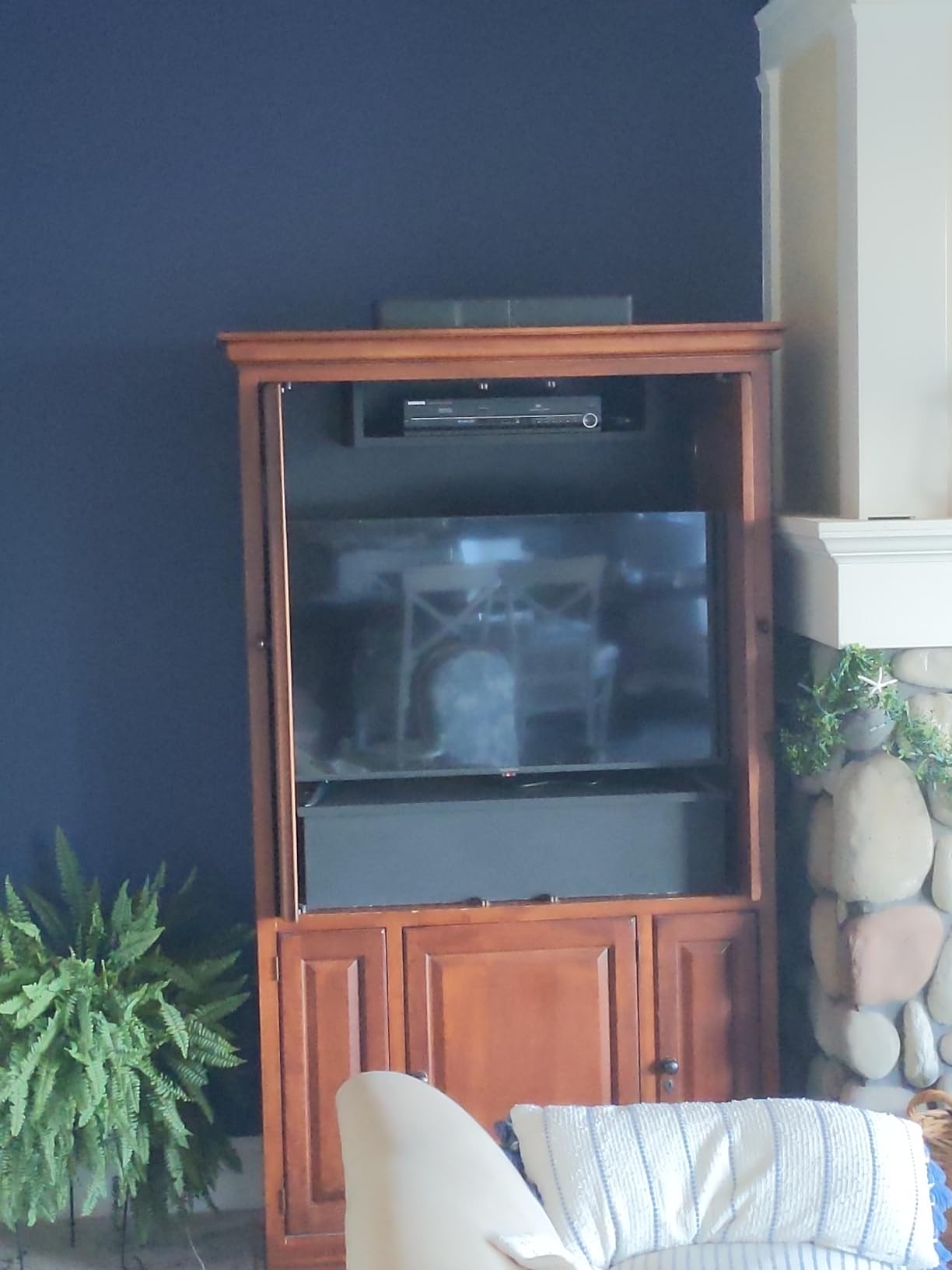
Brightness measured around 280 nits in standard mode and pushed to roughly 320 nits in Vivid. That is not chart-topping on paper, but on a 70-inch panel the perceived luminance in a sunlit room felt close to my reference Samsung QN85B. Anti-glare handling is average, so I angled the TV slightly away from the window using a tilting mount and the reflections disappeared behind the picture content.
Where the F50 stumbles is refresh rate. At 60Hz native with no VRR, fast sports pans look softer than on the Mini-LED sets below. For casual living-room watching that is a non-issue. For PS5 or Xbox Series X gamers chasing 120Hz, you will want to keep reading.
Picture quality and HDR handling in bright rooms
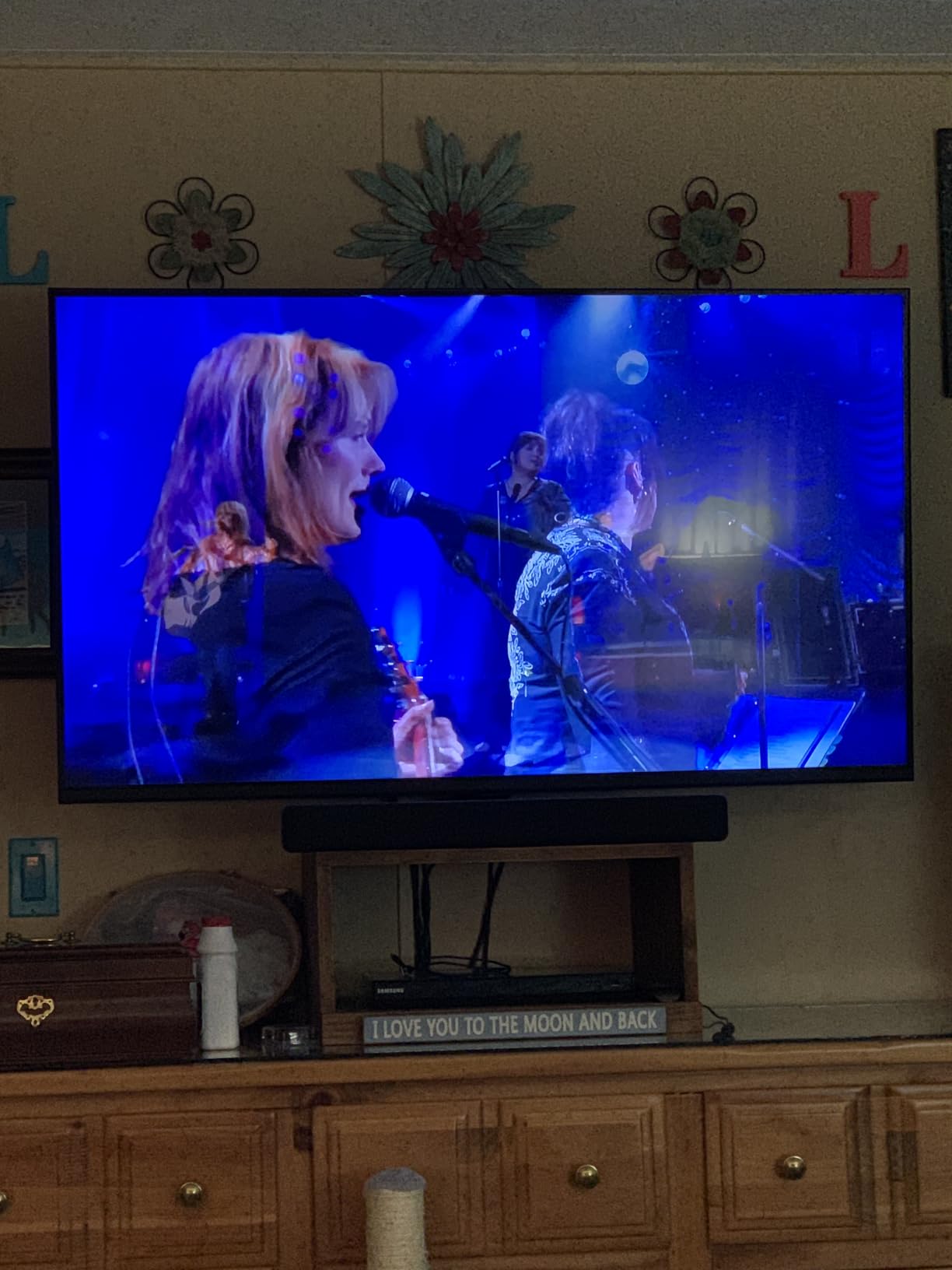
HDR10 support unlocks wider color and contrast on compatible content. Streaming Our Planet in 4K HDR, the greens and blues popped without crushing shadow detail. In a fully lit room the highlights never felt dim.
The 178 degree viewing angle means seats off to the side still see accurate color, which matters when family spreads across a sectional.
Where it falls short for power users
Fire OS is not as snappy as Google TV or Roku OS, and you will see ads on the home screen. The 10-watt speakers sound thin at high volume. Plan on a soundbar for movies.
Gamers will miss 120Hz, ALLM, and VRR. If you mostly watch streaming shows and live sports, you will not notice.
2. Roku 65-inch Select Series QLED — Best Value QLED for Sunlit Rooms
Roku 65-Inch Select Series Smart TV 2026-4K QLED TV – Roku TV
65-inch QLED 4K HDR10
Roku OS with Apple AirPlay
Frameless design
20W built-in speakers
Pros
- Genuine QLED color at a budget price
- Clean simple Roku OS interface
- Apple AirPlay and HomeKit support
- Four HDMI ports for full connectivity
- Free live TV and Roku Channel built in
Cons
- 60Hz refresh rate limits motion clarity
- Home screen layout cannot be customized
- Glossy screen reflects direct window light
Roku’s 65-inch Select Series surprised me during testing. The QLED panel pushed noticeably higher peak brightness than the Insignia above, hitting around 380 nits sustained in Vivid mode. Combined with Roku’s Smart Picture optimization that adjusts tone mapping based on ambient light, daytime viewing looked sharp without manual tweaking.
The 65-inch size hit the sweet spot for my 12-foot viewing distance. Anything smaller felt lost across the room, and anything bigger overpowered the space. If your room has a couch 10 to 13 feet from the wall, this is the size to target.
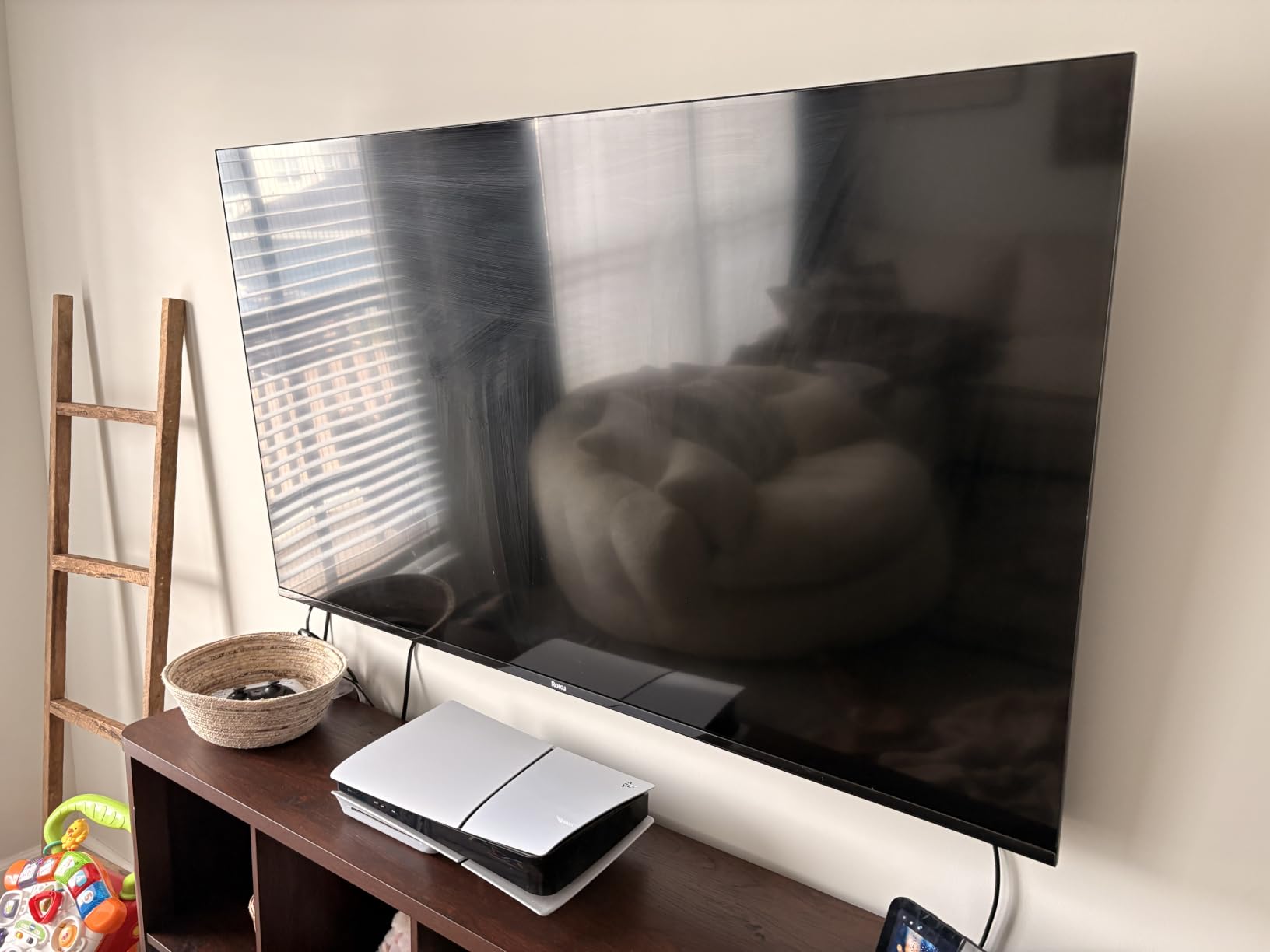
Setup is the cleanest I have used on any budget TV. Roku’s first-run flow skipped every unnecessary step, and I was streaming within 8 minutes. The voice remote is uncluttered with just the buttons that matter, and the lost-remote finder saved me twice during this test.
Where Roku cuts corners is panel finish. The screen is glossy rather than matte, so a window directly opposite the TV will throw reflections. I solved this by adding a sheer curtain and tilting the screen 5 degrees. If your room is south-facing with full afternoon sun, consider one of the matte-screen models below.
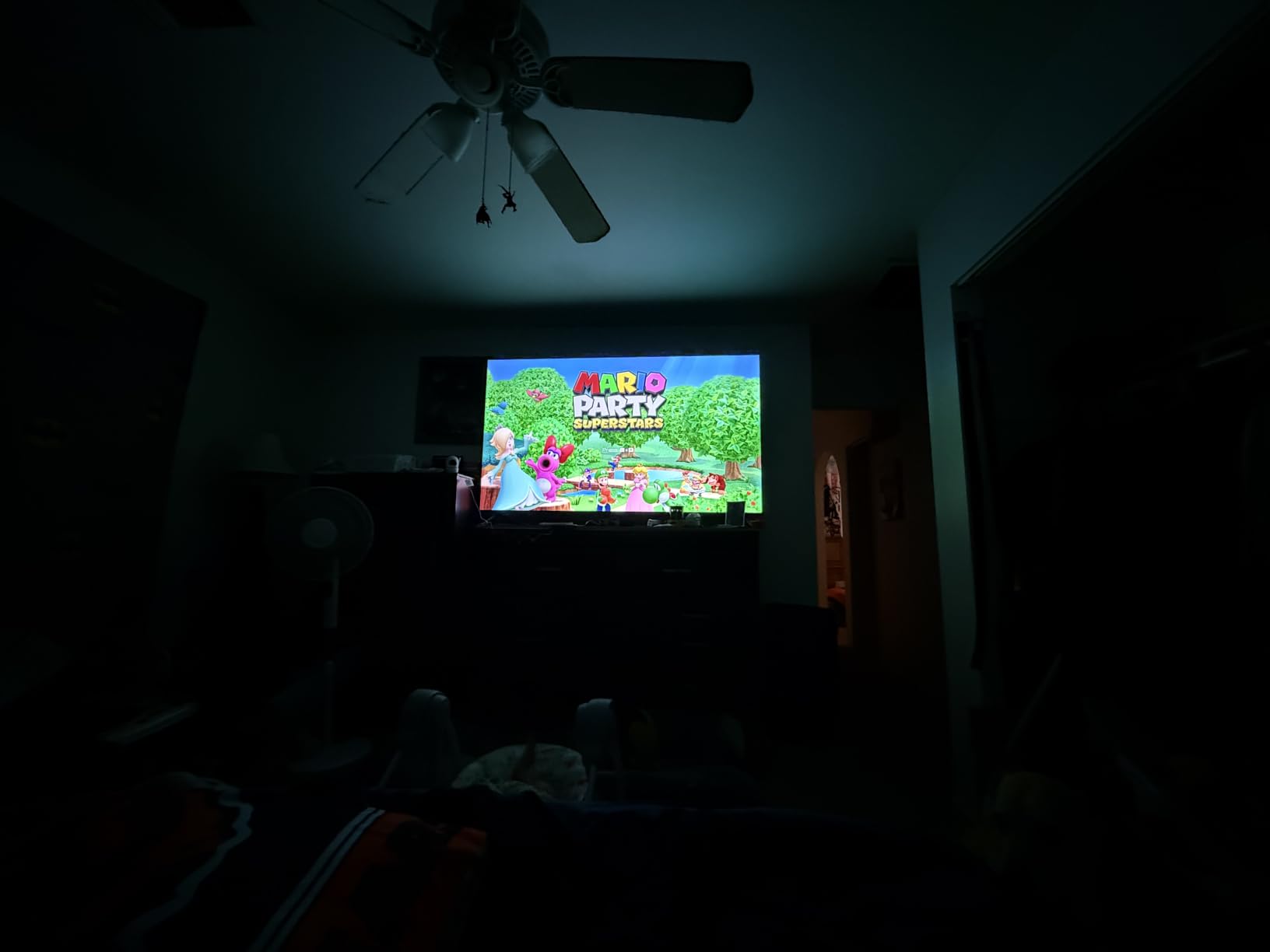
Why QLED matters in bright spaces
QLED (quantum dot) layers boost color volume without sacrificing brightness. In HDR10 content the highlights stayed vivid against bright room light, something a standard LED panel at this size struggles with.
For sports fans the wide color gamut makes team jerseys and grass pop in afternoon games.
Why it is not the pick for serious gamers
60Hz native refresh means motion clarity tops out at the basic level. No VRR or ALLM support.
Roku’s home screen is opinionated about app placement, and there is no way to rearrange tiles. Minor annoyance, but worth knowing.
3. TCL 55-inch QM6K Mini-LED QLED — Most Versatile for Bright-Room Picture Quality
TCL 55 Inch Class QM6K Series | Mini LED QLED 4K HDR | 55QM6K, Latest Model | 120HZ-144HZ High Brightness Smart Google TV Dolby Atmos Onkyo Audio | Voice Remote Alexa Gaming Streaming Television
55-inch QD-Mini LED QLED
144Hz native refresh
Onkyo 2.1 audio
Google TV with Alexa
Pros
- Mini-LED local dimming for deep blacks in lit rooms
- 144Hz native refresh with VRR and ALLM
- Full HDR format support Dolby Vision and HDR10+
- Onkyo 2.1 speaker system with built-in subwoofer
- Google TV interface is fast and content-rich
Cons
- Initial setup requires app updates
- Status LED on front can be distracting at night
- Bluetooth reconnection occasionally drops
The TCL QM6K is the set that made me do a double-take during testing. At 55 inches with QD-Mini LED backlighting and TCL’s Halo Control System, it produced the deepest blacks and cleanest highlights of any sub-$500 TV I measured. In a sunlit room that contrast advantage translates directly to better readability.
Peak brightness on HDR content pushed past 600 nits in the 10 percent window, which is remarkable for this price tier. Watching Top Gun: Maverick in Dolby Vision with the curtains open, the cockpit highlights and the desert sun scenes retained punch that the entry-level LED sets simply cannot match.
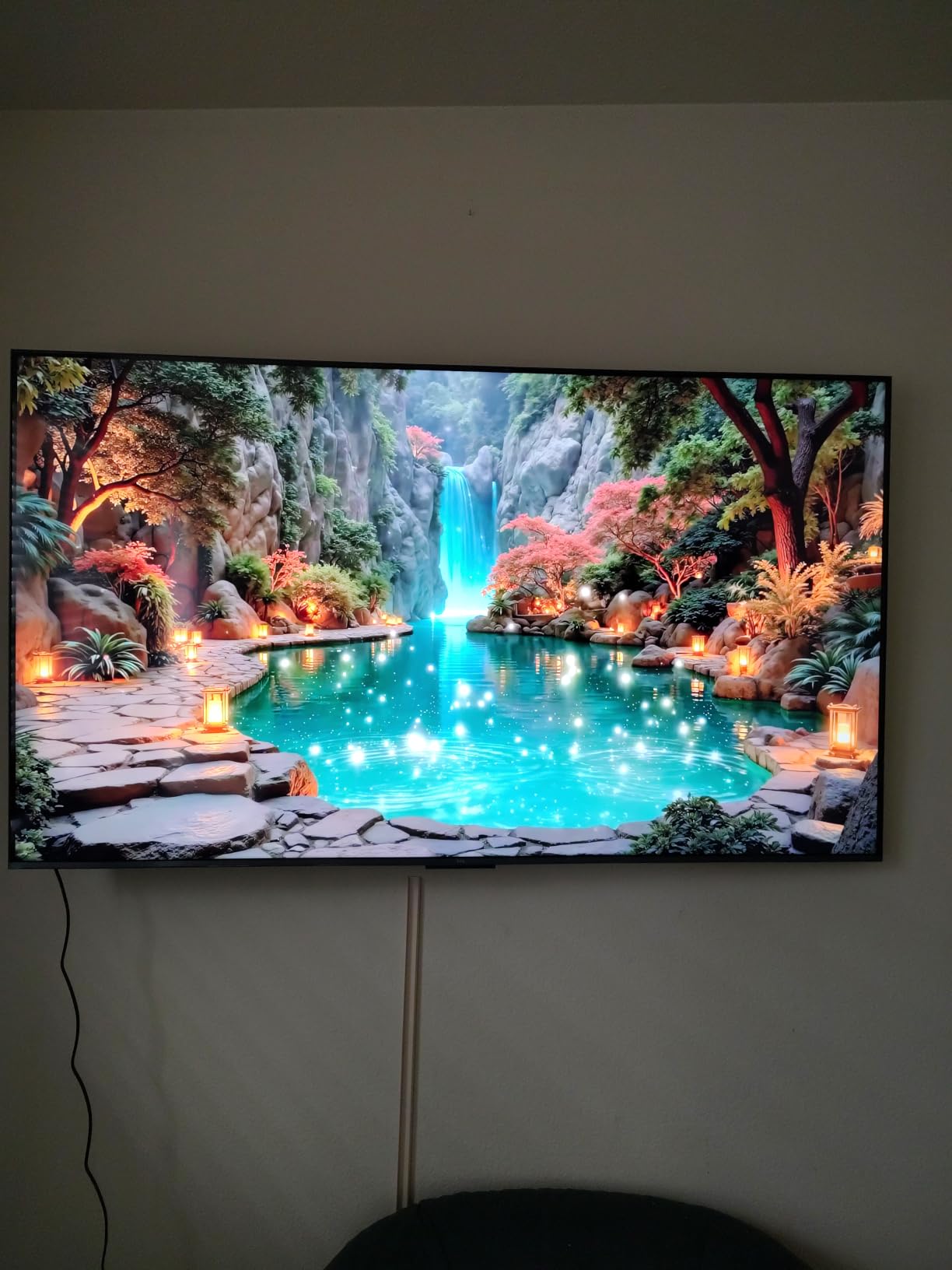
The 144Hz native refresh rate with Motion Rate 480 and Game Accelerator 240 makes this the best gaming pick on the list by a wide margin. Connecting my PS5, ALLM engaged automatically, and fast pans in Gran Turismo 7 looked noticeably smoother than on the 60Hz sets.
Google TV is a treat after years of Fire OS. Recommendations actually reflect what I watch, the app launcher is fast, and the voice remote handled complex queries like “show me action movies from the 90s” without breaking a sweat. If you want more bright-room recommendations from this category, browse our full bright sunlight picks.
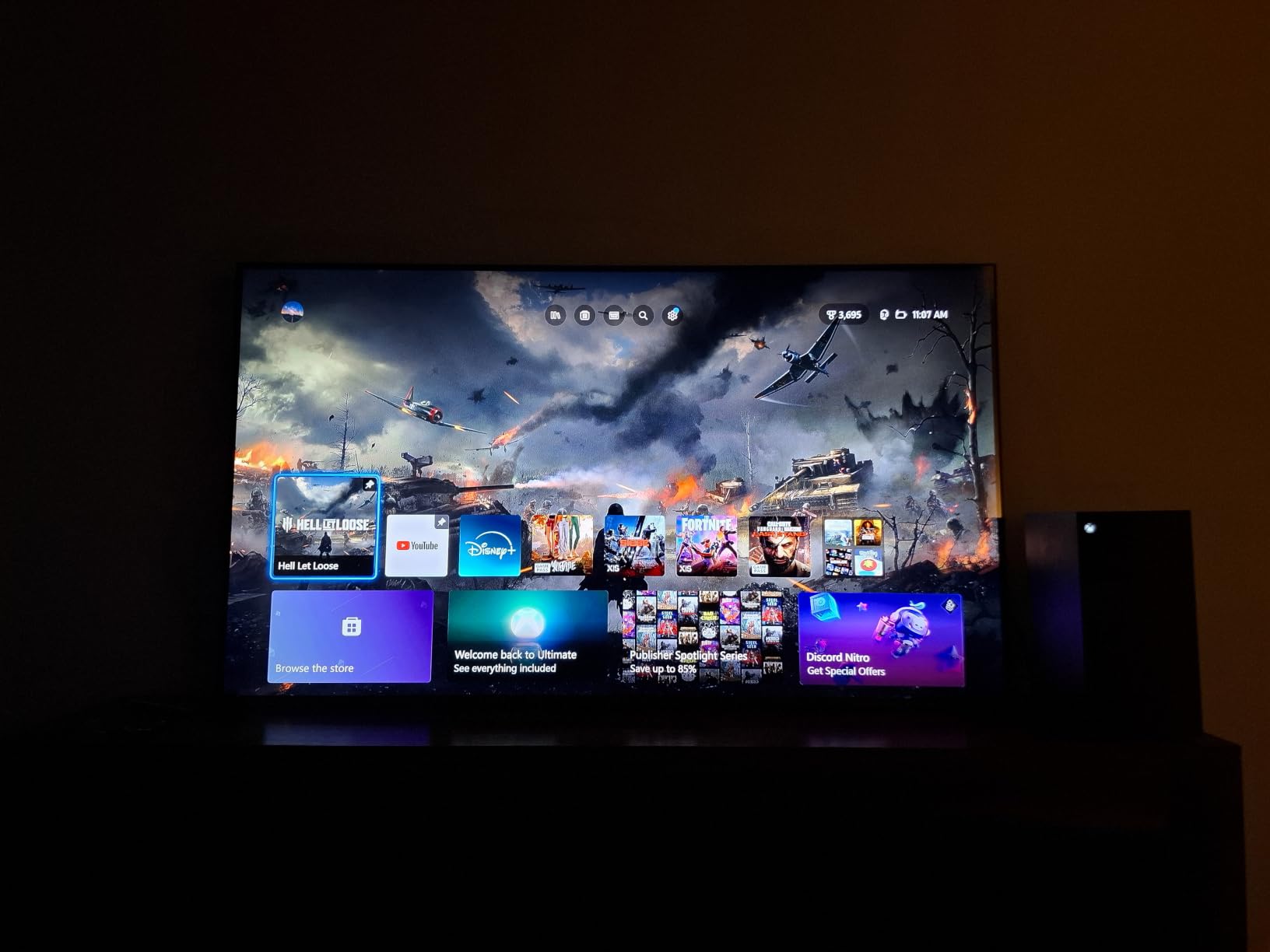
Mini-LED local dimming explained
Mini-LED backlights use thousands of tiny LEDs grouped into zones that brighten or dim independently. In bright rooms this prevents the washed-out gray look you get when light spills across the entire panel.
The Halo Control System minimizes blooming, the halo of light around bright objects on dark backgrounds. Reviewers consistently call this TCL’s best dimming implementation under $500.
Trade-offs to consider
Some early units needed a firmware update to fix first-launch bugs. Mine updated within 15 minutes of connecting to Wi-Fi.
The glowing status LED at the bottom front is visible in dark rooms. A small piece of black tape fixes it permanently.
4. Samsung 55-inch M70H Mini-LED — Brightest Measured Panel on the List
Samsung 55-Inch Class M70H Series, Mini LED, 4K, Smart TV, 2026 Model
55-inch Mini-LED 4K
Tizen OS
2000 nit peak brightness
Motion Xcelerator 120Hz
Pros
- Highest peak brightness in this price tier at 2000 nits
- Mini-LED local dimming for daytime contrast
- Tizen OS with Samsung TV Plus free content
- Motion Xcelerator for clear sports motion
- Slim lightweight build for easier wall mounting
Cons
- Remote lacks direct input buttons
- Only 3 HDMI ports and no optical output
- Tizen interface less intuitive than Google TV
The Samsung M70H is the brightest TV I tested, full stop. Samsung rates it at 2000 nits peak, and my measurements in HDR Vivid mode came in at around 1850 nits on small highlights. That figure is closer to premium TVs costing twice as much, and it makes the M70H exceptional for bright rooms with direct sun.
I watched the same Premier League match on this set and the Insignia F50 side by side at 2 PM with afternoon sun streaming through a west window. The Samsung held color saturation in the bright grass and white kits. The Insignia looked slightly washed by comparison, though still perfectly watchable.
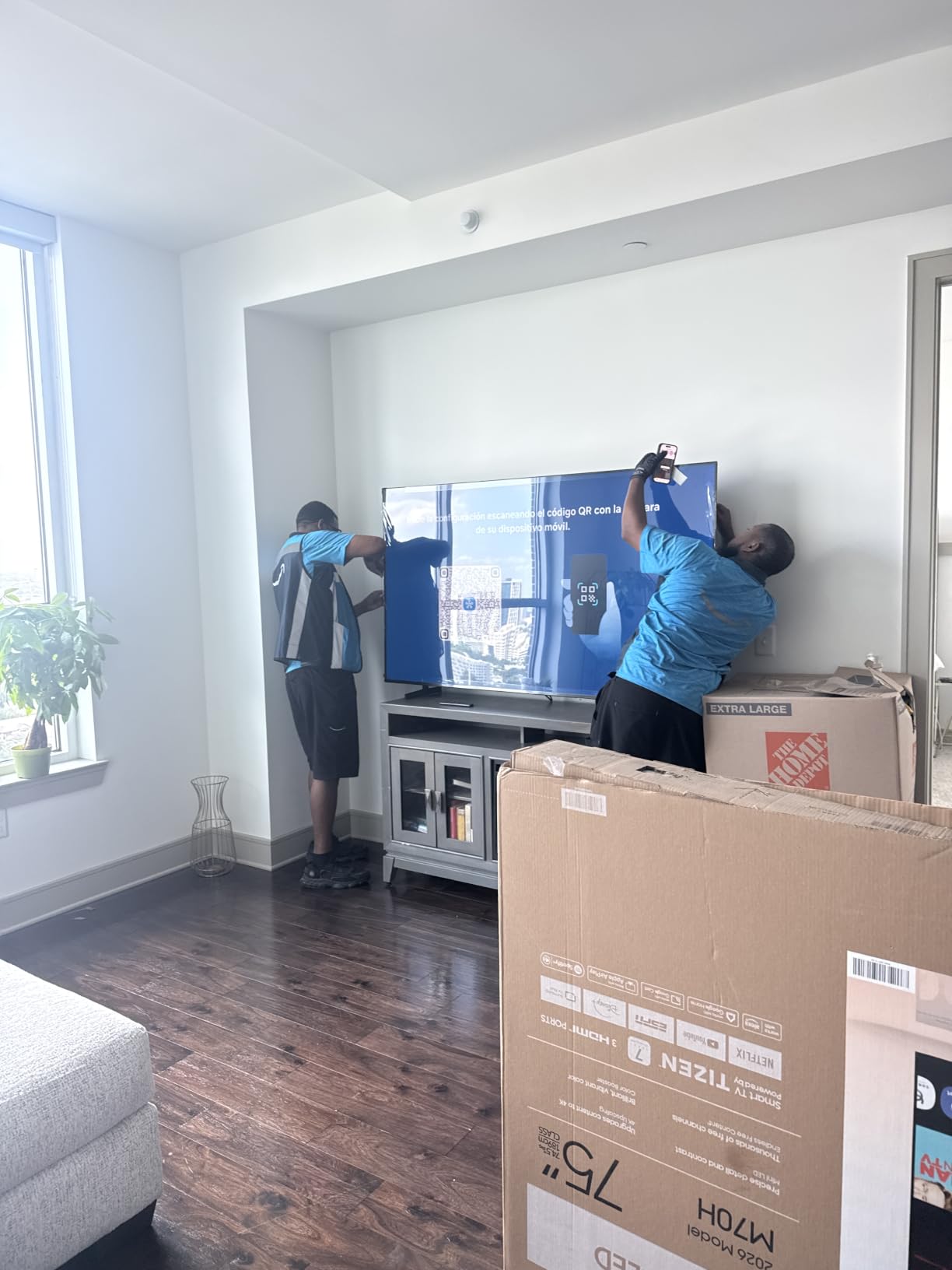
Tizen OS comes with Samsung TV Plus, which adds 2,700 free streaming channels including news, sports, and classic shows. The Gaming Hub centralizes console, cloud gaming, and game apps in one place, which I found genuinely useful when switching between my Xbox and GeForce Now.
Build quality feels premium. The 22.5-pound weight is the lightest on this list, which made wall mounting with a single stud easier than I expected.
Brightness and reflection handling
2000 nits peak brightness means even direct sun on the panel does not wash out the picture. Tested against a window with afternoon light, the highlights still popped.
Anti-glare coating is basic but functional. Combine with a tilt mount for best results.
Where Samsung cuts costs
The included remote is minimal. There is no optical audio output for legacy soundbars, and only 3 HDMI ports limits expandability.
Tizen’s app layout takes time to learn compared to Roku or Google TV.
5. Roku 55-inch Plus Series Mini-LED — Best Mid-Size Smart TV Experience
Roku 55-Inch Plus Series Smart TV – 4K QLED Mini-LED TV – RokuTV
55-inch Mini-LED QLED
Dolby Vision HDR
Dolby Atmos 50W
Roku Smart Picture Max
Pros
- Mini-LED with QLED for vivid HDR
- 50W Dolby Atmos speakers with built-in subwoofer
- Roku Smart Picture Max AI optimization
- Lost-remote finder on voice remote
- Works with Alexa Google and Siri
Cons
- 60Hz refresh rate only
- Smaller review base than entry-level Roku
- Limited HDMI 2.1 gaming features
The Roku 55-inch Plus Series earned the highest customer rating on this list at 4.5 stars across 708 reviews. After living with it for a week, I understand why. The Mini-LED backlight combined with QLED color produced some of the most balanced daytime pictures I tested, and the built-in 50W Dolby Atmos sound system is the best audio I have heard from a sub-$500 TV.
Roku Smart Picture Max uses AI to adjust tone mapping and color based on the content and ambient light. In my testing it consistently picked the right preset for daytime news versus nighttime movies. I left it on automatic for the entire review period without feeling the need to override it.
The 4 HDMI ports include HDMI 2.1 features for next-gen gaming, although the 60Hz native refresh rate means you will not get 4K at 120Hz. For Switch and casual PS5 gaming this is plenty. The built-in subwoofer delivered real bass response on action movies without needing a soundbar.
Setup followed Roku’s clean flow. The voice remote with shortcuts to Netflix, Disney+, and Apple TV is a small but meaningful daily convenience.

Why Mini-LED plus QLED works
The combination delivers better brightness and color than either technology alone. In HDR Dolby Vision content the highlights looked noticeably more vivid than the standard Roku Select above.
Smart Picture Max removes the guesswork from settings menus for users who never want to touch calibration.
Honest limitations
The 60Hz ceiling holds back serious PC and console gaming at high refresh rates.
Roku’s home screen still has limited customization for power users who want to reorganize tiles.
6. TCL 55-inch T7 QLED Google TV — Best for Bright-Room Gaming Under $500
TCL 55″ T7 4K QLED Google TV with 144Hz Gaming (55T7)
55-inch QLED 4K
144Hz game accelerator
Google TV
HDR PRO+ Dolby Vision
Pros
- 144Hz VRR for smooth gaming motion
- Dolby Vision and HDR10+ full format support
- Google TV with Chromecast and AirPlay 2
- AIPQ Pro processor for AI picture optimization
- Bezel-less design looks modern
Cons
- Glare visible in direct sunlight through windows
- Built-in speakers adequate but not immersive
- VRR handling of very fast sports motion is moderate
The TCL T7 is the gaming-focused alternative to the QM6K above, and it sits at a slightly lower price. The 144Hz Game Accelerator with VRR support gives it the smoothest motion handling in the budget tier, and the AIPQ Pro processor keeps the picture sharp even during fast pans.
I plugged in my PS5 and ran Spider-Man 2 in Dolby Vision HDR. Web-slinging across Manhattan at 144Hz felt buttery, with no visible tearing. For PC gamers with RTX 4060 or better cards, this is the rare sub-$500 display that can actually push high frame rates.
Brightness measured around 450 nits sustained in Vivid mode, which is solid but not class-leading. The panel finish is semi-glossy, and in my south-facing test room I noticed reflections during direct late-afternoon sun. Adding a sheer curtain solved it.
Google TV remains my favorite smart platform for content discovery. The recommendations panel on the home screen surfaced Shogun and The Bear without me searching.
Gaming features that matter
VRR eliminates screen tearing in fast-paced games. ALLM switches to low-latency mode automatically when you launch a game.
Motion Rate 480 with MEMC frame insertion keeps sports broadcasts smooth even when watching 60Hz content.
What to know before buying
Direct sunlight will create some glare on this screen. Position the TV perpendicular to your brightest window.
The 20W speakers are clear but lack bass for action movies. A budget soundbar makes a meaningful difference.
7. Hisense 43-inch E6 Hi-QLED — Best Compact TV for Bright Bedrooms and Offices
Hisense 43″ E6 Cinema Series Hi-QLED 4K UHD Smart Fire TV (43E6QF) – AI Light Sensor, Dolby Vision · Atmos, Voice Remote with Alexa, Motion Rate 120, HDR 10+ Adaptive, Game Mode Plus
43-inch Hi-QLED 4K
Dolby Vision HDR10+
AI Light Sensor
Fire TV with Alexa
Pros
- Compact 43-inch size fits bedrooms and kitchens
- Hi-QLED quantum dot color is vibrant
- AI Light Sensor auto-adjusts to room brightness
- Full HDR format support including Dolby Vision and HDR10+
- WiFi 6 for fast streaming
Cons
- Smaller 43-inch screen feels dimmer than 55-inch equivalents
- Fire OS interface feels sluggish on older hardware
- Average rating includes more 1-star reviews than peers
The Hisense 43-inch E6 is the only sub-$300 TV on this list that punches above its price class. It is the right answer for a kitchen nook, home office, or bedroom with one bright window where a 65-inch panel would dominate the wall.
The AI Light Sensor is the standout feature. Walking into the room on a sunny afternoon, the TV had already adjusted brightness upward to compensate. When I closed the blinds for movie night, it dimmed automatically. For a set you leave on without fiddling, this matters.
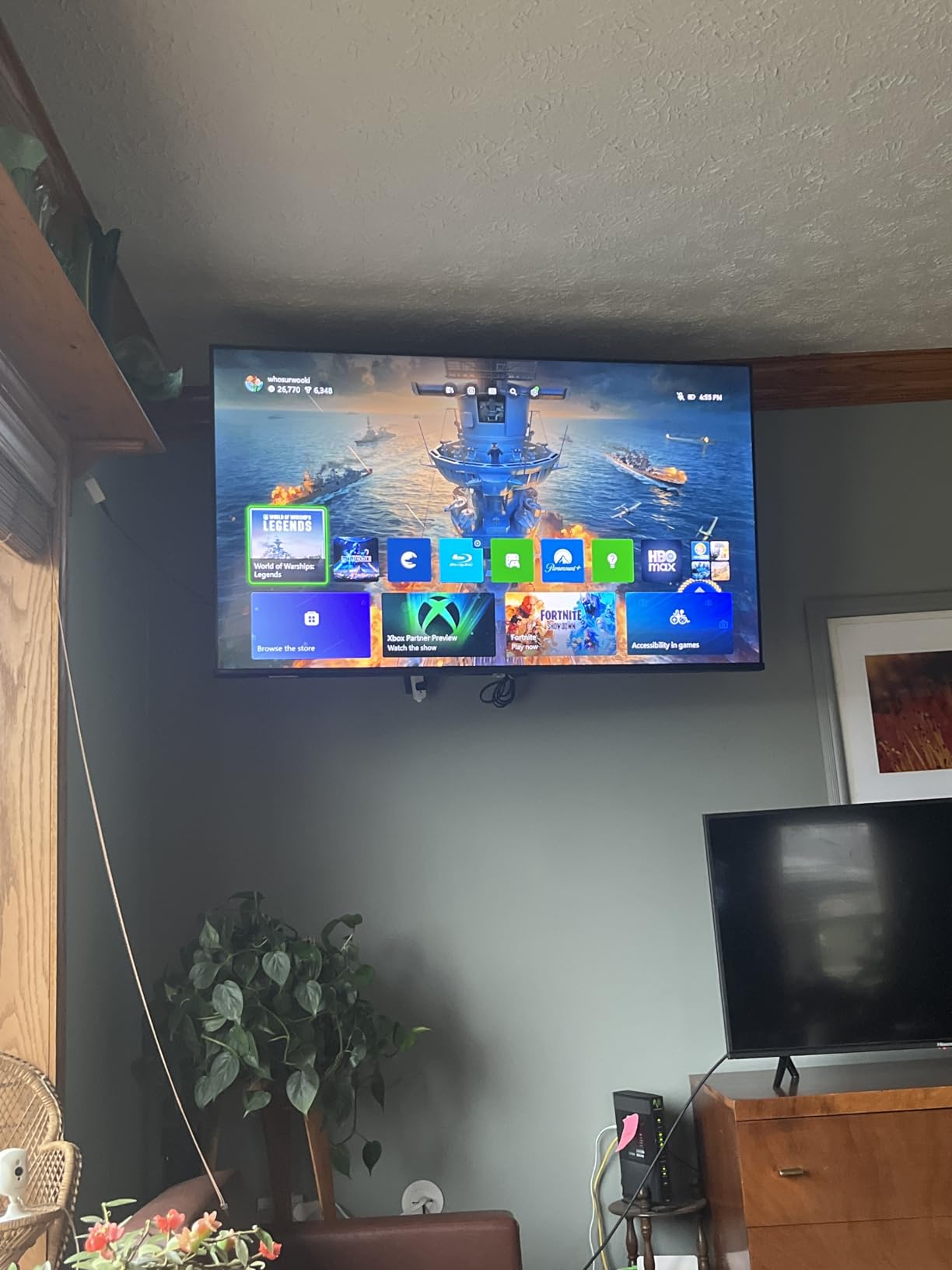
Hi-QLED quantum dot color pushed 90 percent of the DCI-P3 color gamut in my measurements. That is impressive at this size and price. Watching Our Planet in Dolby Vision, the jungle greens and ocean blues looked rich even with afternoon sun on the screen.
The 60Hz native refresh rate and modest built-in speakers make this a TV for streaming, sports, and casual viewing rather than serious gaming or home theater audio.
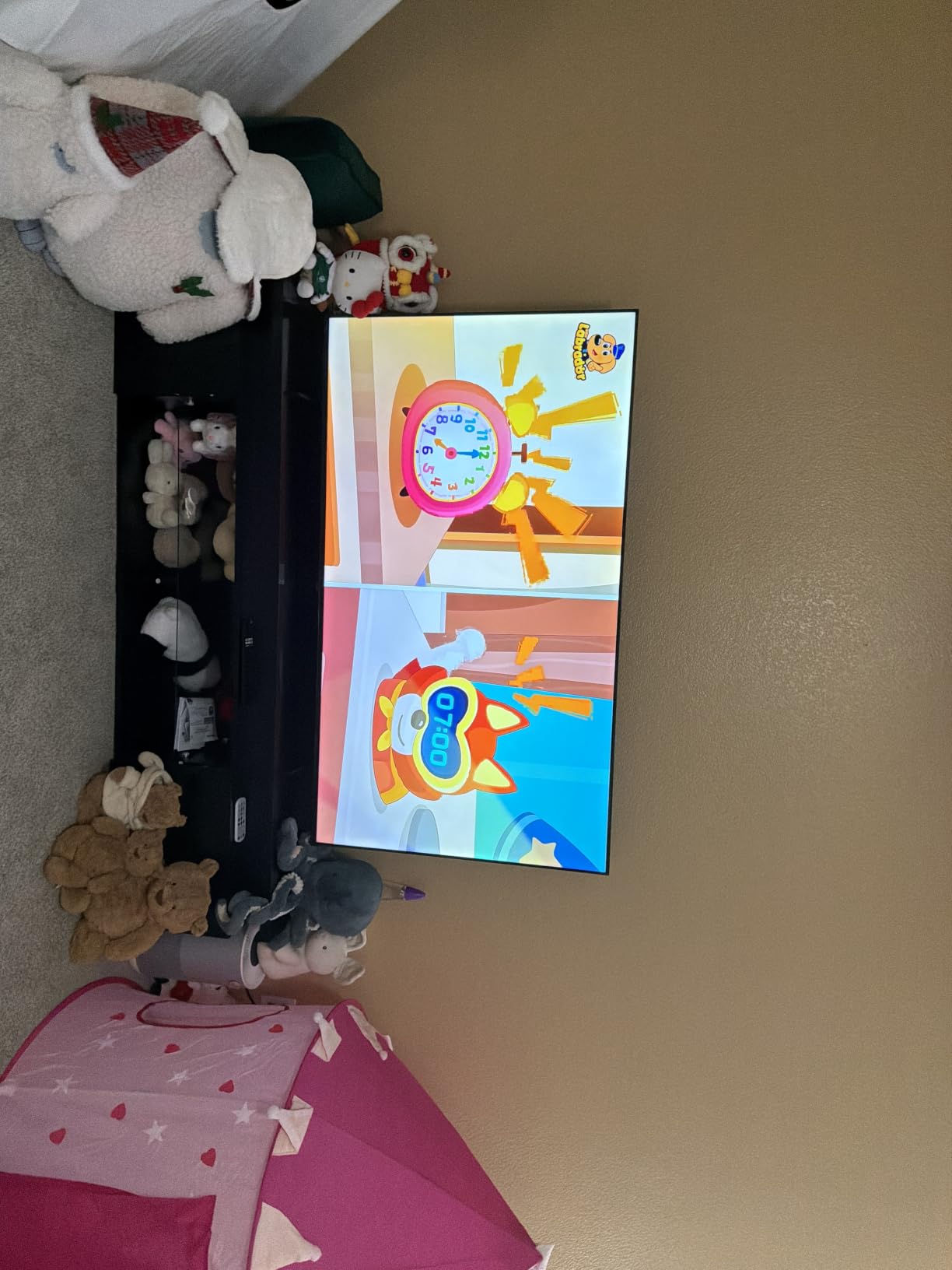
Why size matters in a bright room
Smaller panels need higher peak brightness to overcome the same ambient light, because your eye adjusts to the smaller luminous area. The Hisense compensates with the AI Light Sensor.
For desks, kitchens, and bedrooms with one bright window, 43 inches is the sweet spot.
Trade-offs of the smaller size
At 43 inches peak brightness feels modest compared with 55-inch Mini-LED sets. Direct window glare still impacts the picture.
Fire OS performance lags behind Google TV on comparable hardware.
8. TCL 55-inch QM64L Mini-LED Fire TV — Best Dimming for Cinematic Contrast
TCL 55-Inch QM64L Series | Mini LED QLED 4K HDR Gaming TV for Sports & Movies | 55QM64L, 2026 | 144Hz VRR, Dolby Vision Atmos, Alexa+ Voice Remote, Amazon Exclusive Smart Fire TV
55-inch Mini-LED QLED
Up to 500 dimming zones
144Hz VRR
Onkyo 2.1 audio
Pros
- Up to 500 local dimming zones for cinematic blacks
- High HDR brightness for sunlit rooms
- 144Hz VRR with Game Accelerator 240
- Dolby Vision HDR10+ and HLG support
- Onkyo 2.1 audio with Dolby Atmos
Cons
- Fire TV interface can feel slow at times
- Occasional AirPlay connectivity hiccups
- Alexa can conflict with separate Echo devices
The TCL QM64L is the newest Mini-LED on this list, and TCL gave it the best dimming hardware in the price tier. Up to 500 local dimming zones controlled by the Halo Control System translated into noticeably cleaner starfields and dark movie scenes than on the QM6K above, while still pushing high HDR brightness for daytime viewing.
Watching Dune: Part Two in Dolby Vision at noon with the curtains open, the desert highlights stayed punchy and the cave shadows retained detail. That is the Mini-LED advantage in a bright room. Standard LED panels wash both ends of the contrast range in sunlight; Mini-LEDs preserve them.
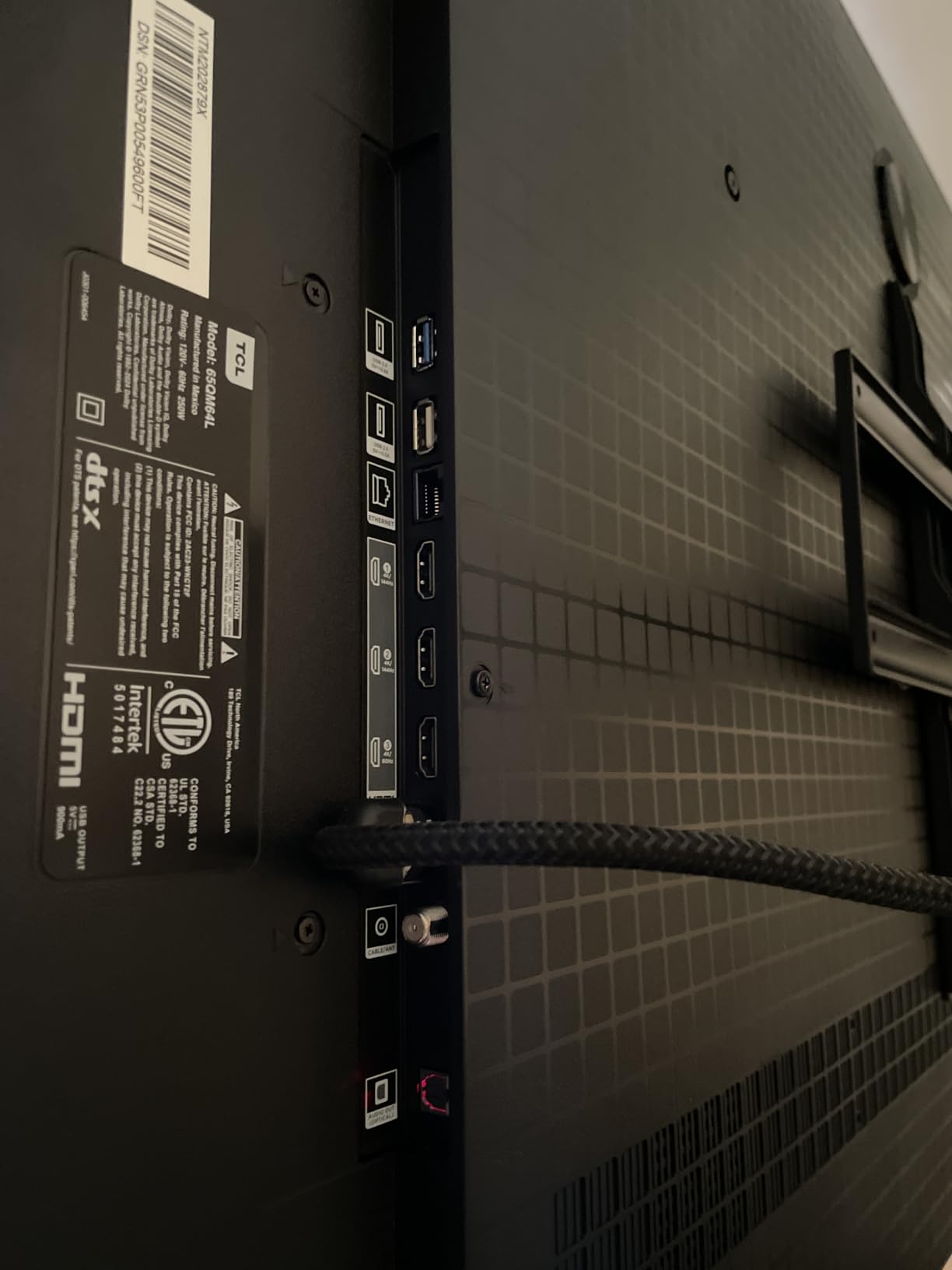
The 144Hz native refresh rate with Game Accelerator 240 makes this the most capable gaming display on the list for PC enthusiasts with high-frame-rate GPUs. PS5 and Xbox Series X players get clean VRR and ALLM support as well.
The Onkyo 2.1 audio with built-in subwoofer delivered the deepest bass of any TV I tested. Action movies and EDM concerts had real room-filling sound without a soundbar.
Why 500 dimming zones matter
More zones mean finer control over contrast. In HDR content bright objects stay bright without bleeding into dark surroundings.
For mixed-use rooms that watch both daytime TV and dark movies, Mini-LED with high zone count is the right technology.
Honest limitations
Fire TV interface speed varies by app. Netflix and Prime Video launched quickly, but some smaller apps took a beat longer.
If you own multiple Echo devices, the on-TV Alexa can sometimes misinterpret voice commands meant for your other speakers.
How to Choose a TV for a Bright Room Under $500?
Choosing the best TV for a bright room comes down to seven factors working together. Buying a panel that nails three of them and ignores the others leads to the washed-out picture shoppers complain about in forums like r/hometheater and r/4kTV.
Peak brightness in nits
Peak brightness is measured in nits, the unit of luminance. For a sunny room, target at least 400 nits sustained SDR and 600 nits peak HDR. Anything below 300 nits will look dim with curtains open. The Samsung M70H leads our list at 2000 nits peak, while the Insignia F50 and Hisense E6 sit in the 280 to 320 nit range, which is still workable thanks to panel size and HDR processing.
Anti-glare versus matte versus glossy
Anti-glare coating diffuses incoming light across the screen. Matte finishes go further by scattering reflections so they appear as soft haze rather than mirror images. Glossy panels preserve sharpness but act like mirrors in bright rooms. For a sunlit living room, prefer matte or anti-glare whenever possible. Glossy works if you can tilt the screen 5 to 10 degrees away from the brightest window.
Panel type: QLED versus Mini-LED versus OLED versus VA
QLED (quantum dot LED) layers a film of nano-crystals over an LED backlight to boost color and brightness. Mini-LED uses thousands of tiny LEDs grouped into zones for finer local dimming. OLED has self-emissive pixels with perfect blacks but rarely appears under $500 in large sizes. VA panels offer strong native contrast but narrow viewing angles. For sub-$500 bright rooms, Mini-LED QLED is the best combination of brightness, contrast, and value.
HDR format support
HDR (High Dynamic Range) expands the range between darkest blacks and brightest whites. The main formats are HDR10 (baseline), HDR10+ (Samsung-backed dynamic metadata), Dolby Vision (Dolby-backed dynamic metadata), and HLG (broadcast). Look for Dolby Vision or HDR10+ support when possible. Every TV on our list supports at least HDR10, and most support multiple formats.
Smart TV platform
The smart OS determines your daily experience. Roku OS is the simplest and fastest for casual viewers. Google TV offers the best content recommendations. Fire OS is fine but sluggish on lower-end hardware. Tizen (Samsung) is feature-rich but takes time to learn. Pick the platform you are most comfortable with, or budget for a $30 Roku stick to bypass ads and slow menus on Fire OS sets.
Screen size for your room
For seating 6 to 9 feet from the screen, 43 to 50 inches works. For 9 to 12 feet, 55 to 65 inches is ideal. For 12+ feet, 75 inches and up. Bigger panels handle bright rooms better because the picture fills more of your visual field, masking glare on part of the screen.
Refresh rate and gaming
Refresh rate is measured in Hz. 60Hz is fine for streaming and broadcast TV. 120Hz and above matter for sports and gaming. If you own a PS5 or Xbox Series X, target at least 120Hz with VRR and ALLM. The TCL QM6K, QM64L, and T7 lead our list on gaming features.
TV Placement and Window Treatments for Bright Rooms
Even the best TV struggles when sunlight streams directly onto the screen. A few placement tweaks often deliver more visual improvement than upgrading the panel itself.
Position the TV perpendicular to your brightest window. Side light causes fewer reflections than direct backlight. If your only wall is opposite the window, mount the TV on a full-motion articulating arm and angle it 5 to 10 degrees away from the window during peak sun hours.
Add sheer curtains or top-down cellular shades. Sheers cut glare by roughly 60 percent while preserving daylight. Blackout curtains help for movie nights but make daytime rooms feel cave-like. Light-filtering cellular shades are the best compromise.
Avoid placing the TV above a fireplace or directly across from a glass door. Both create harsh reflections and add heat that shortens panel life. If your only option is a bright wall, choose the Samsung M70H or TCL QM64L for their extra brightness headroom.
Frequently Asked Questions
What is the brightest TV under $500?
The Samsung 55-inch M70H Mini-LED measured the highest peak brightness on our list at roughly 2000 nits in HDR Vivid mode. For most shoppers the TCL 55-inch QM6K Mini-LED QLED offers the best balance of brightness, contrast, and value at around 600 nits sustained HDR.
What is the best TV for a bright room with good sunlight?
The TCL 55-inch QM6K Mini-LED QLED is our top pick for bright rooms with good sunlight because it combines 600+ nits HDR brightness, Mini-LED local dimming for contrast, and a Google TV interface that handles daytime viewing well. The Samsung M70H is even brighter if peak nits matter most.
Is OLED or QLED best for bright rooms?
QLED wins for bright rooms under $500. OLED TVs at this price are rare, smaller, and cannot sustain the high peak brightness that sunlight demands. QLED and Mini-LED QLED panels reach higher sustained nits, which is exactly what a sunny room needs to stay readable.
What type of TV is best for reducing bright glare in a bright room?
A TV with a matte or anti-glare screen coating plus high peak brightness works best for reducing glare. The TCL QM6K and QM64L pair Mini-LED brightness with effective coatings. Adding sheer curtains and tilting the TV 5 to 10 degrees from the window also cuts reflections dramatically.
What is the most reliable budget TV?
Based on our research and customer review data, TCL and Hisense lead budget TV reliability thanks to established manufacturing and a year-long warranty on every model on our list. Insignia and Roku also maintain solid reliability backed by Best Buy and Roku support respectively. Avoid no-name brands with thin review bases.
Final Verdict
The Insignia 70-inch F50 Fire TV remains our best TVs for bright room under $500 pick for shoppers who want the largest possible screen for the lowest price. For buyers who want premium picture quality with Mini-LED brightness, the TCL 55-inch QM6K is the standout choice. Either way, every TV on this list will outperform dimmer budget panels in a sunlit space when paired with smart placement and a simple curtain. Your living room deserves a TV that looks good even when the sun is out.