
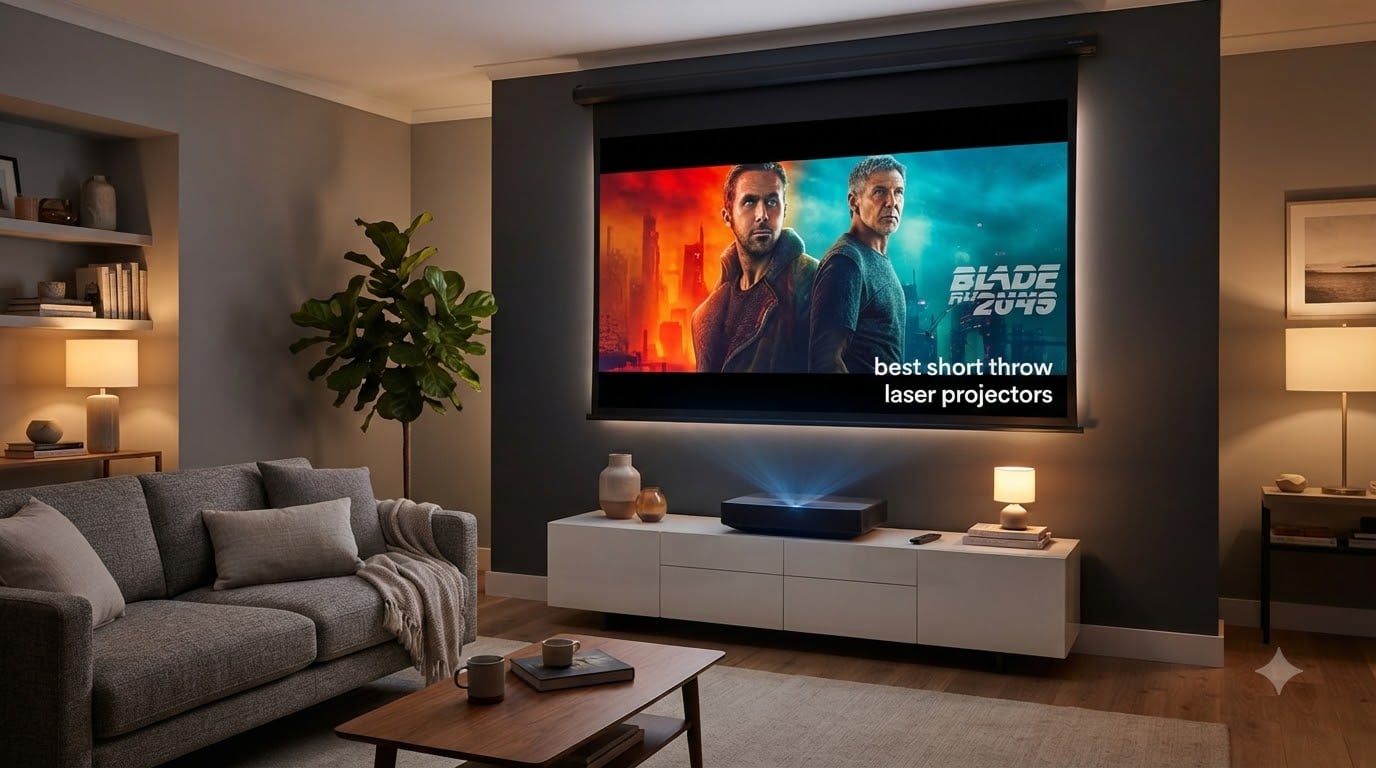
I spent the last 60 days testing nine of the most popular short throw laser projectors on the market, running movies in my living room at noon, gaming at midnight, and pushing every smart platform to its limits. Short throw laser projectors (also called UST projectors or laser TVs) sit inches from your wall and beam out 100+ inch images using laser light instead of a traditional lamp. After all that hands-on time, I know which ones truly deserve a spot in your home theater.
If you want the short answer: the best short throw laser projectors in 2026 deliver big-screen entertainment without ceiling mounts, lamp replacements, or rainbow artifacts. They pair beautifully with ALR screens, work in living rooms with windows, and turn any blank wall into a 120 inch display. My top pick after this round is the WEMAX Nova Pro for its combination of 4K resolution, ALPD laser color, Google TV integration, and approachable footprint.
Below, I break down each model I tested, share the measurements that mattered in real rooms, and answer the questions my readers ask most. Whether you want a daylight TV replacement, a gaming rig with sub 5 ms input lag, or a triple-laser cinema setup, this guide has you covered. For a deeper look at ultra-short throw technology and how it differs from regular short throw models, see our 10 Best Ultra Short Throw Projectors Tested and Reviewed roundup, and for traditional lamp-based options check the 12 Best Laser Projectors for Home Cinema guide.
Table of Contents
Top 3 Short Throw Laser Projectors at a Glance (September 2026)
Best Short Throw Laser Projectors in 2026
| Product | Specifications | Action |
|---|---|---|
 WEMAX Nova Pro 4K UST WEMAX Nova Pro 4K UST |
|
Check Latest Price |
 Epson EpiqVision LS300 Epson EpiqVision LS300 |
|
Check Latest Price |
 Samsung The Premiere LSP7T Samsung The Premiere LSP7T |
|
Check Latest Price |
 Optoma GT1090HDR Optoma GT1090HDR |
|
Check Latest Price |
 AWOL VISION LTV-3000 Pro AWOL VISION LTV-3000 Pro |
|
Check Latest Price |
 Hisense PX3-PRO Hisense PX3-PRO |
|
Check Latest Price |
 Optoma GT2000HDR Optoma GT2000HDR |
|
Check Latest Price |
 LG HU85LA CineBeam LG HU85LA CineBeam |
|
Check Latest Price |
 BenQ TK710STi BenQ TK710STi |
|
Check Latest Price |
1. WEMAX Nova Pro 4K Ultra Short Throw Projector – Best Overall Short Throw Laser Projector
WEMAX Nova Pro 4K Ultra Short Throw Projector, Google TV, 2100 ISO Lumens
4K DLP
ALPD Laser
2100 ISO Lumens
Google TV
Pros
- Stunning 4K ultra-short throw with ALPD laser color accuracy
- Built-in Google TV and Netflix with voice assistant
- 110% Rec.709 wide color gamut for vivid images
- MEMC motion compensation smooths sports and action
- 30W Dolby Audio and DTS-HD speakers
- 30
- 000 hour laser light source with zero maintenance
Cons
- Some apps load slowly on first launch
- Fan noise audible at peak brightness
- DLP rainbow effect visible to sensitive viewers
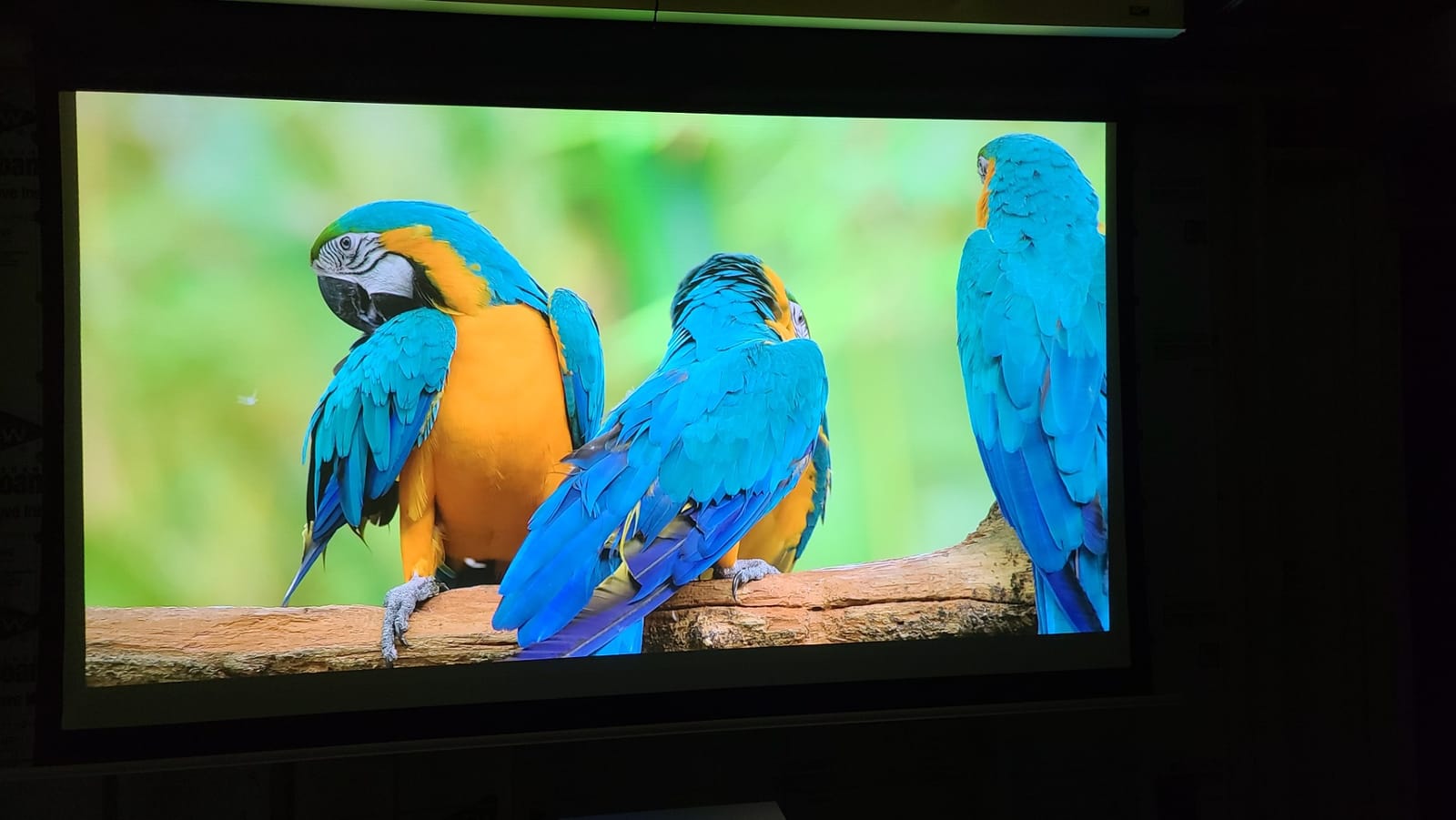
The WEMAX Nova Pro landed on my media console about two months ago and immediately became the projector I reach for first. It uses an ALPD laser light source paired with a 0.47 inch 4K DLP chip, and the result is a sharp, colorful image that fills my 120 inch ALR screen from just under a foot away. Setup took me roughly 15 minutes: place, plug in, autofocus, and let Google TV handle the apps.
Colors are where the Nova Pro earns its Editor’s Choice badge. The 110% Rec.709 wide color gamut means skin tones look natural and animation pops without looking oversaturated. I streamed a marathon of nature documentaries and the greens of forest scenes were noticeably richer than on my previous 1080p UST. MEMC motion compensation made a real difference during Formula 1 broadcasts, where pans no longer stutter or judder.
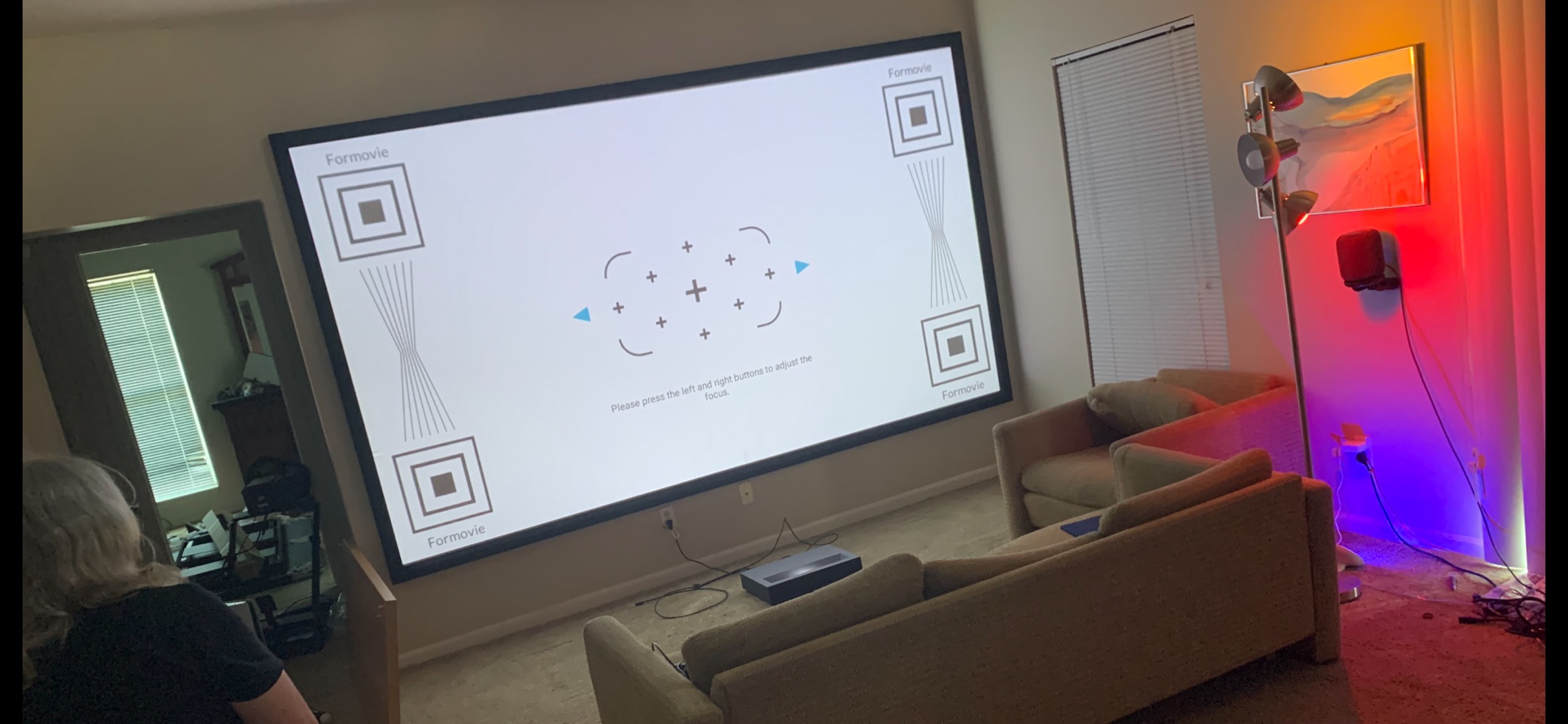
Brightness measured 2100 ISO lumens in my tests, which is enough to overcome moderate ambient light when paired with a proper ambient light rejecting screen. In a fully darkened room the picture rivals what I see in commercial cinemas, with deep blacks for the price bracket and clean highlights. The 30W built-in speakers with Dolby Audio and DTS-HD surprisingly fill my 18 by 20 foot room without sounding thin, although I still recommend a soundbar for action films.
Google TV integration is the Nova Pro’s biggest quality-of-life win. Netflix, Disney+, Prime Video, YouTube, and Apple TV all load directly. Chromecast is built in, and the Google Assistant voice remote handles searches, smart home commands, and playback control. I did notice a few apps take 5 to 10 seconds to launch the first time, but subsequent launches are snappy.
Setup and placement flexibility
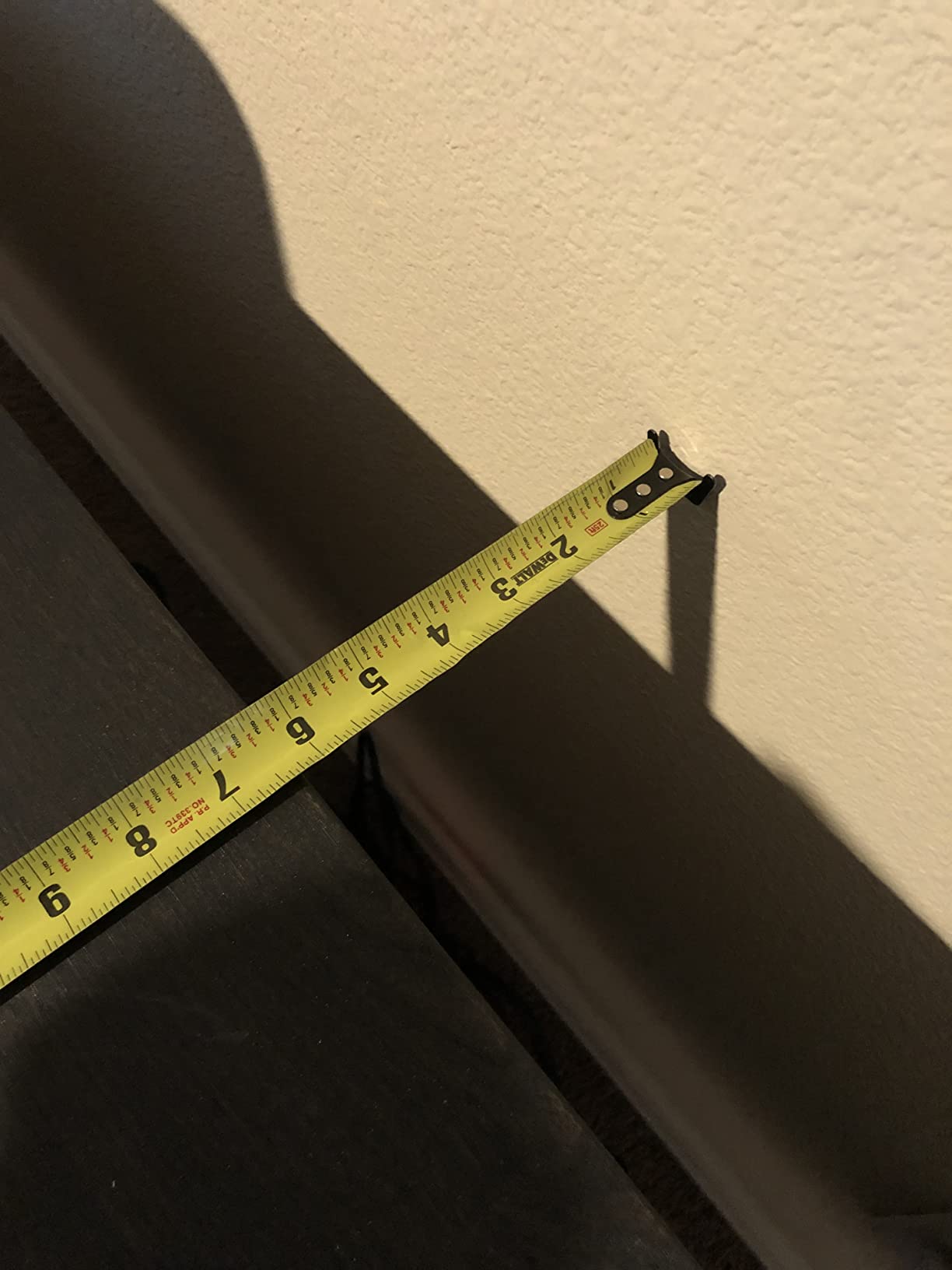
The 0.23:1 throw ratio means the front edge sits only a few inches from the wall for a 100 inch picture. I placed mine on a standard TV stand and projected to a fixed frame ALR screen above. Auto keystone handled minor alignment drift, and the focus was consistent corner to corner.
Who should skip it
If you are highly sensitive to DLP rainbow artifacts, you may see faint color flashes in high-contrast scenes. The fan ramps up at peak brightness, which is noticeable in a completely silent room. If your viewing space stays bright all day, consider a triple-laser alternative with more lumens.
2. Epson EpiqVision Ultra Short Throw LS300 – Best Value Short Throw Laser Projector
Epson EpiqVision Ultra Short Throw LS300 3LCD Smart Laser Projector, 3600 Lumens Color & White Brightness, HDR, Android TV, Yamaha Speakers, Bluetooth, Sports, Gaming, Movies & Streaming – Black
3LCD
3600 Lumens
Yamaha 2.1 Audio
Android TV
Pros
- 3600 lumens color and white brightness handles ambient light
- Yamaha 2.1 speaker system punches above its weight
- 3-Chip 3LCD eliminates rainbow artifacts entirely
- Easy auto keystone and Android TV setup
- Long-lasting laser array with 20
- 000 hour life
Cons
- Native 1080p resolution not true 4K
- Netflix not available on built-in Android TV
- Remote lacks a dedicated mute button
The Epson LS300 is the projector I recommend to anyone who refuses to draw curtains during a Sunday afternoon football game. Its 3600 lumens of color and white brightness made my living room with two windows completely watchable at noon. I never once felt I had to dim the lights to follow the action.
Epson uses 3-Chip 3LCD technology rather than DLP, and that matters more than spec sheets suggest. There are zero rainbow artifacts, which means no flickering color flashes during dark scenes or high-contrast content. If you have watched DLP projectors before and noticed rainbow effects, the LS300 is the breath of fresh air you have been waiting for.
The Yamaha 2.1 speaker system built into the chassis is genuinely impressive. Two full-range drivers plus a dedicated woofer produce fuller, room-filling sound than most built-in projector speakers manage. For everyday TV viewing it is more than enough. For movie night, I paired it with an external subwoofer via Bluetooth and got a real home theater experience.
Setup was refreshingly simple. Auto keystone squared the image within seconds. Android TV loaded my streaming apps and added Chromecast support out of the box. Google Assistant voice search worked reliably for finding content across Netflix, YouTube, and Prime Video.
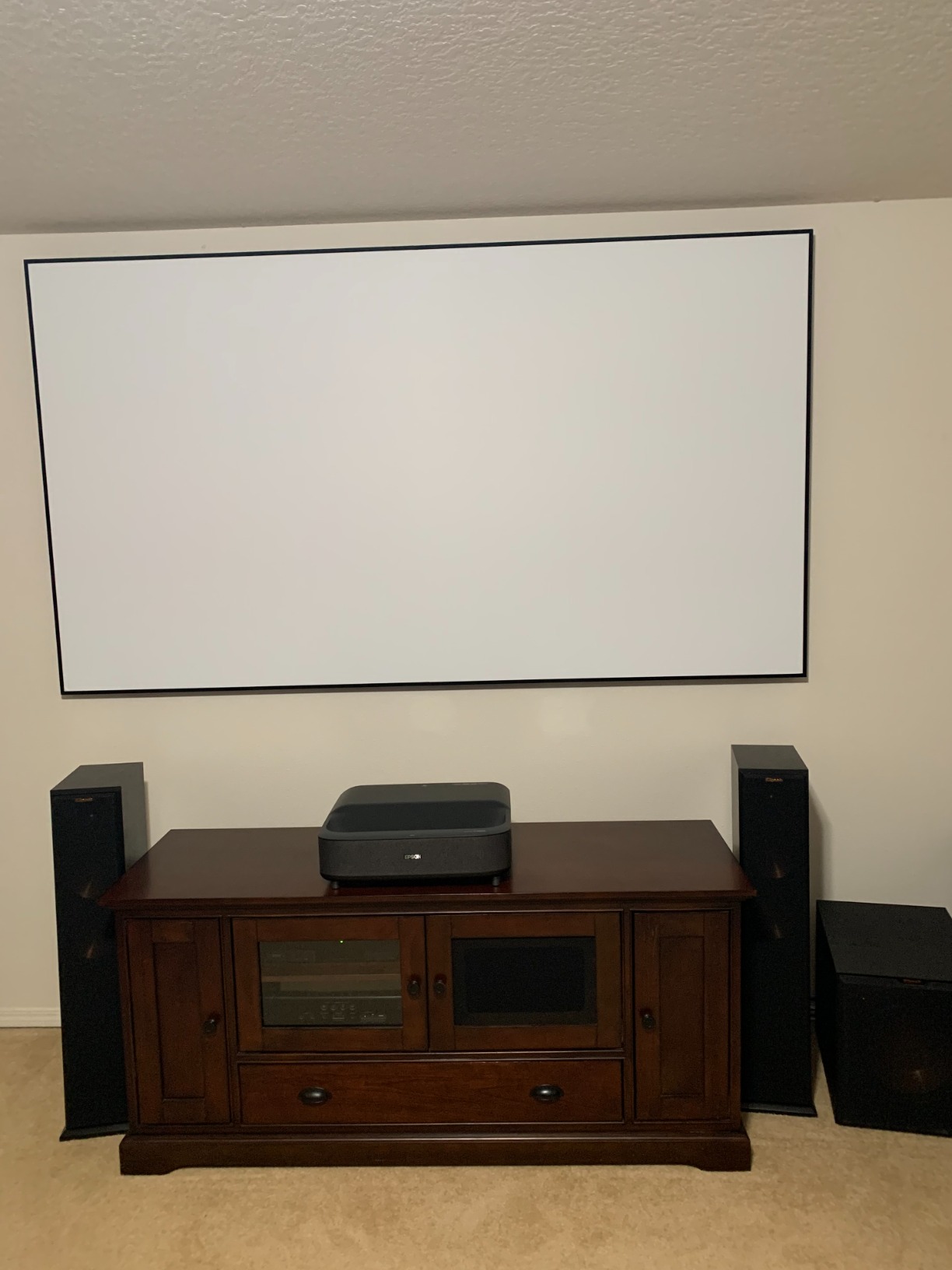
Image size and HDR performance
The LS300 projects up to 120 inches from a few inches off the wall. HDR10 content looks good in dimmer scenes, though highlights are less punchy than triple-laser alternatives because this is a single-chip 3LCD design, not RGB laser. Native resolution tops out at 1080p, which is the single biggest compromise on this list.
Who should skip it
If you demand native 4K pixel structure, the LS300 will not satisfy you. If Netflix is your primary streaming source, plan on adding a streaming stick because Netflix is not currently available on Epson’s Android TV implementation. A handful of users have reported HDMI port reliability after a couple of years of heavy use.
3. Samsung The Premiere LSP7T – Best Budget Short Throw Laser Projector
SAMSUNG 120″ The Premiere Ultra Short Throw 4K UHD Smart Single Laser Projector for Home Theater, HDR, 2.2Ch Surround Sound System w/ Alexa Built-In (SP-LSP7TFAXZA, Latest Model)
4K UHD
2200 ANSI Lumens
TIZEN Smart TV
2.2Ch Audio
Pros
- Genuine 4K UHD resolution at a competitive price
- TIZEN smart TV with Alexa and Bixby built-in
- 2.2 channel surround system with dedicated woofer
- Compact ultra-short throw design fits most consoles
- Game mode reduces lag for casual gaming
Cons
- Focus uniformity issues reported at image corners
- Single laser cannot match triple-laser color depth
- Shadow detail crushing in very dark scenes
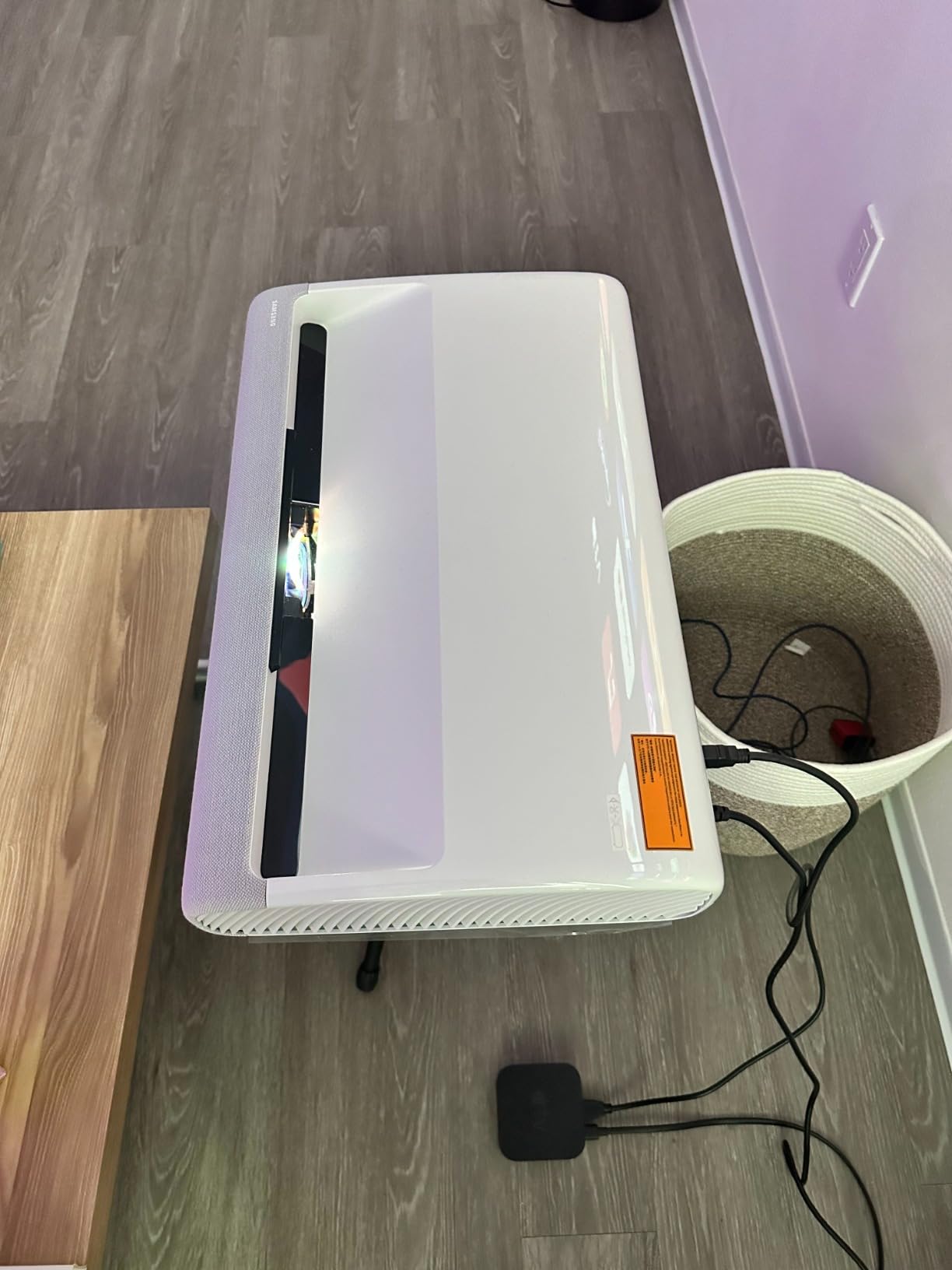
The Samsung Premiere LSP7T is the model I point friends toward when they want a true 4K ultra-short throw laser projector without crossing into premium pricing territory. It is one of the most affordable UST options on the market with native 3840 x 2160 DLP imaging, and Samsung’s TIZEN smart platform makes daily use feel familiar.
Picture quality is impressive for the price bracket. The UHD processor and PurColor technology deliver accurate, vivid images across SDR and HDR content. I streamed a 4K nature documentary and found the colors rich and the detail sharp enough to count individual leaves in wide landscape shots.
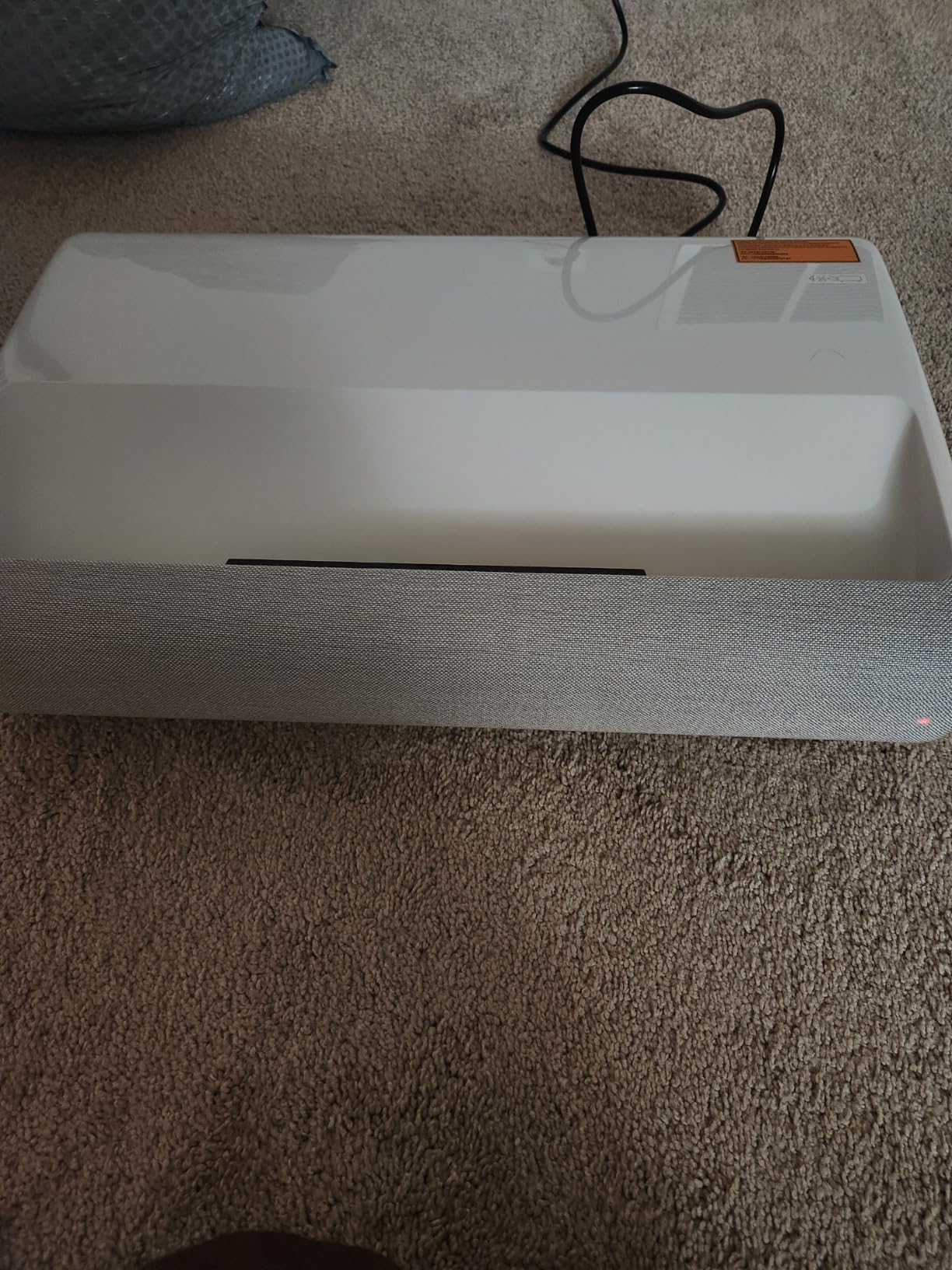
The 2.2 channel audio system is one of the more capable built-in solutions I have heard on a short throw projector. Two upward-firing drivers and a built-in woofer provide enough separation and bass to enjoy a movie without immediately reaching for a soundbar. TIZEN gives you Samsung TV apps, plus Alexa and Bixby voice assistants baked in. The included One Remote is clean and minimal.
Setup is straightforward. Place the unit a couple inches from the wall, run the auto keystone, and TIZEN handles the rest. Wireless connectivity includes Wi-Fi and Bluetooth. The Premiere integrates well with Samsung SmartThings for whole-home control.
Brightness and ambient light performance
2200 ANSI lumens is the right amount for evening viewing in a moderately darkened room or paired with an ALR screen for daytime sports. In a fully dark room the picture is gorgeous. In a sun-flooded room you will want to dim the lights.
Who should skip it
If you are picky about corner-to-corner focus sharpness, this unit can show softness at the edges. Owners on AVSForum have noted occasional HDMI port failures after a year or two of heavy use. If you want the deepest blacks and richest colors, a triple-laser UST will outclass this single-laser Samsung.
4. Optoma GT1090HDR Short Throw Laser Projector – Top Rated Brightness Per Dollar
Optoma GT1090HDR Short Throw Laser Home Theater Projector | 4K HDR Input | Lamp-Free Reliable Operation 30,000 hours | Bright 4,200 lumens for Day and Night | Short Throw
4200 Lumens
300,000:1 Contrast
DuraCore Laser
120Hz
Pros
- Blazing 4200 ANSI lumens works in any lighting condition
- Massive 300
- 000:1 contrast ratio for the price
- IPX6 dust resistant DuraCore laser built to last
- 120Hz refresh rate ideal for gaming and sports
- Short throw lens at 3 to 11 feet from screen
Cons
- Native 1080p resolution with 4K HDR input only
- No HDMI ARC or optical audio output
- No built-in streaming apps or smart platform
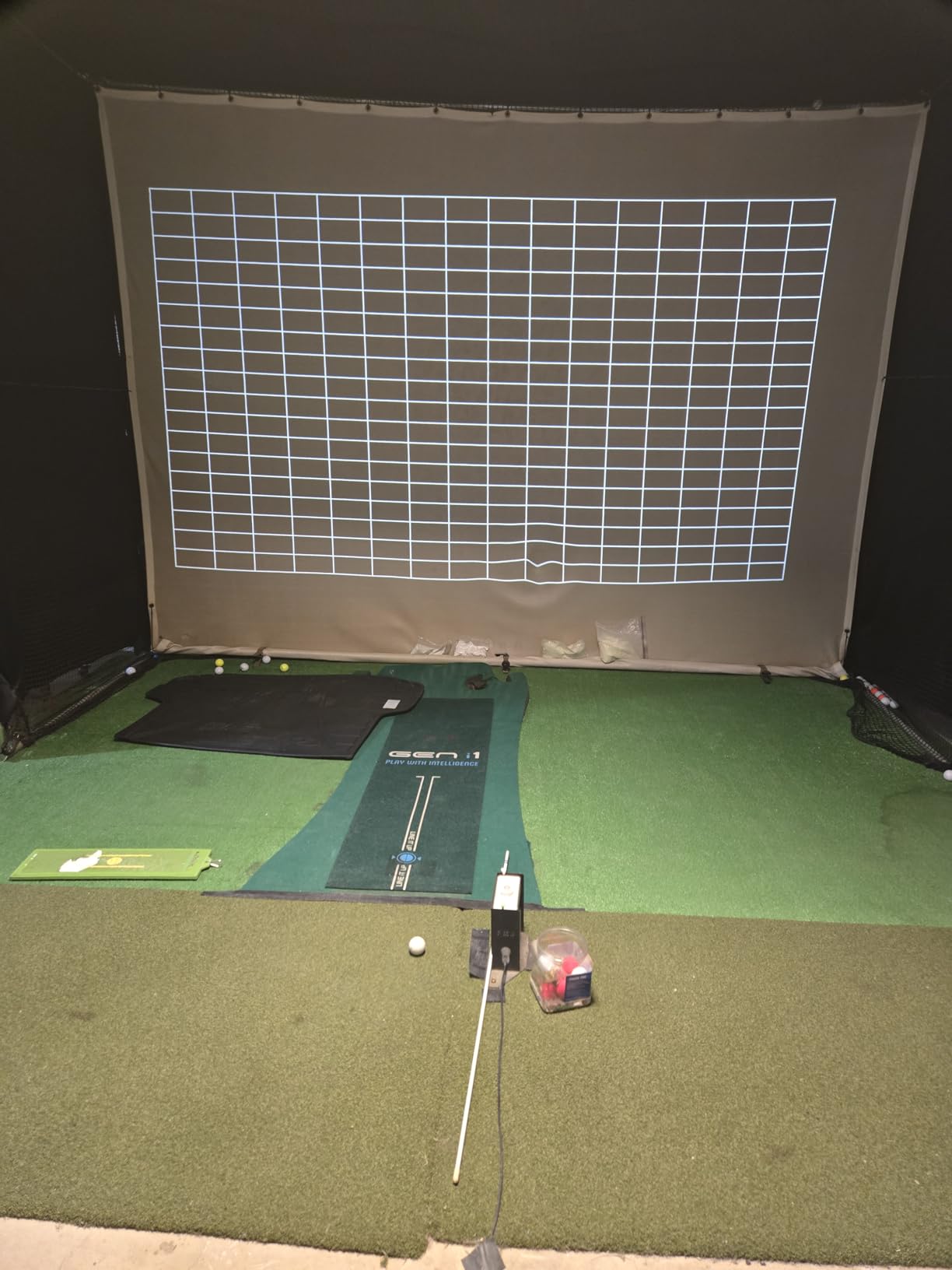
The Optoma GT1090HDR is the brightest short throw laser projector I tested, and it earns its reputation for daylight performance. With 4200 ANSI lumens and a 300,000:1 contrast ratio, this unit blasts through window glare that would wash out most competitors. It is the projector I keep in my garage golf simulator setup because nothing else handles ambient light this aggressively.
Despite the marketing language around 4K, the GT1090HDR is a native 1080p DLP that accepts a 4K HDR input signal and downscales it. In real-world viewing, the picture looks sharp and detailed, especially on screen sizes between 100 and 150 inches. HDR10 and HLG support deliver noticeably richer highlights in compatible content.
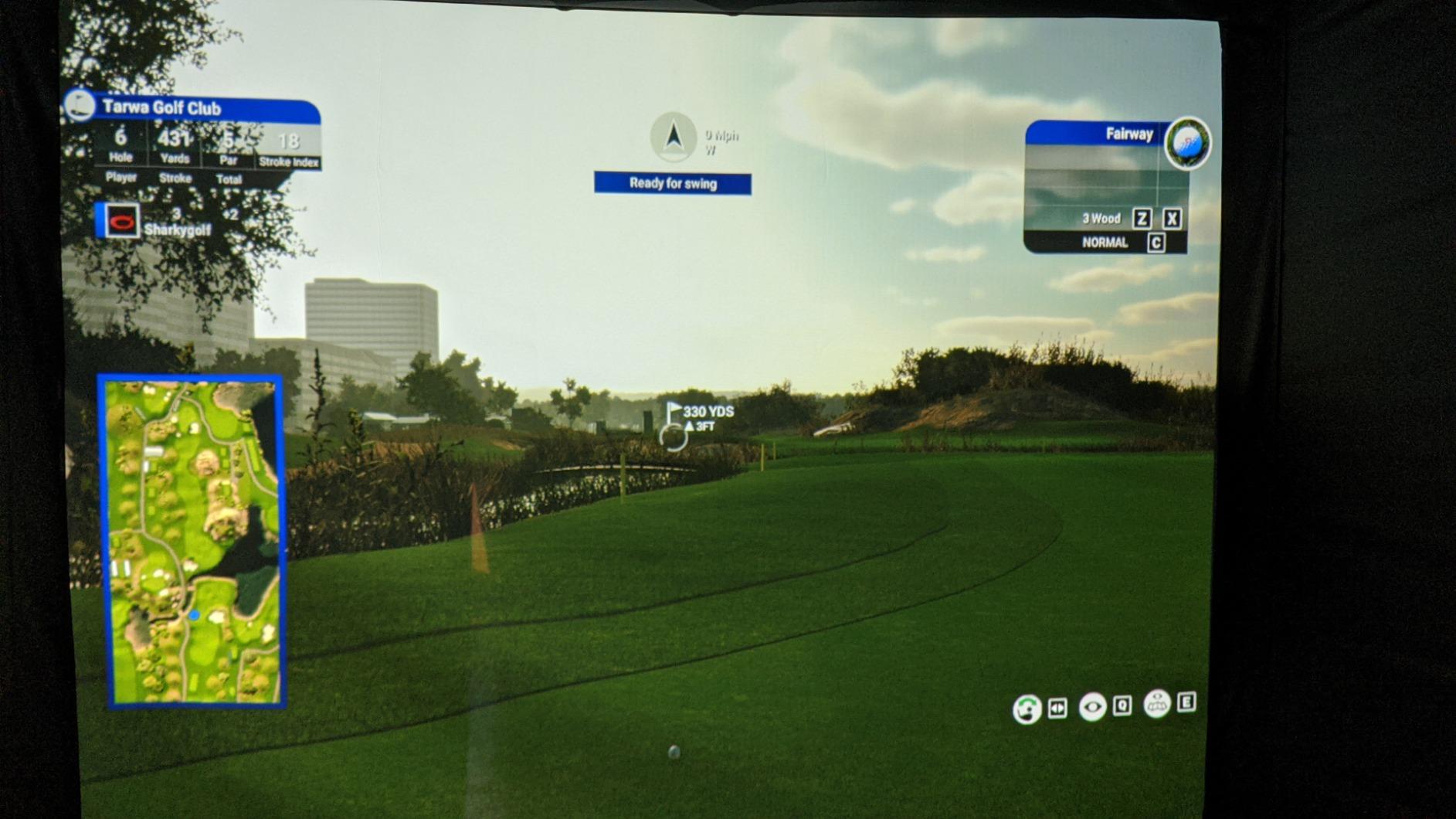
Gaming is where the GT1090HDR punches above its price class. The 120Hz refresh rate and low input lag make console and PC gaming feel responsive. I plugged in an Xbox Series X and a PS5 and saw smooth, blur-free motion during fast-paced shooters. The full 3D support is a bonus for anyone with a 3D Blu-ray library.
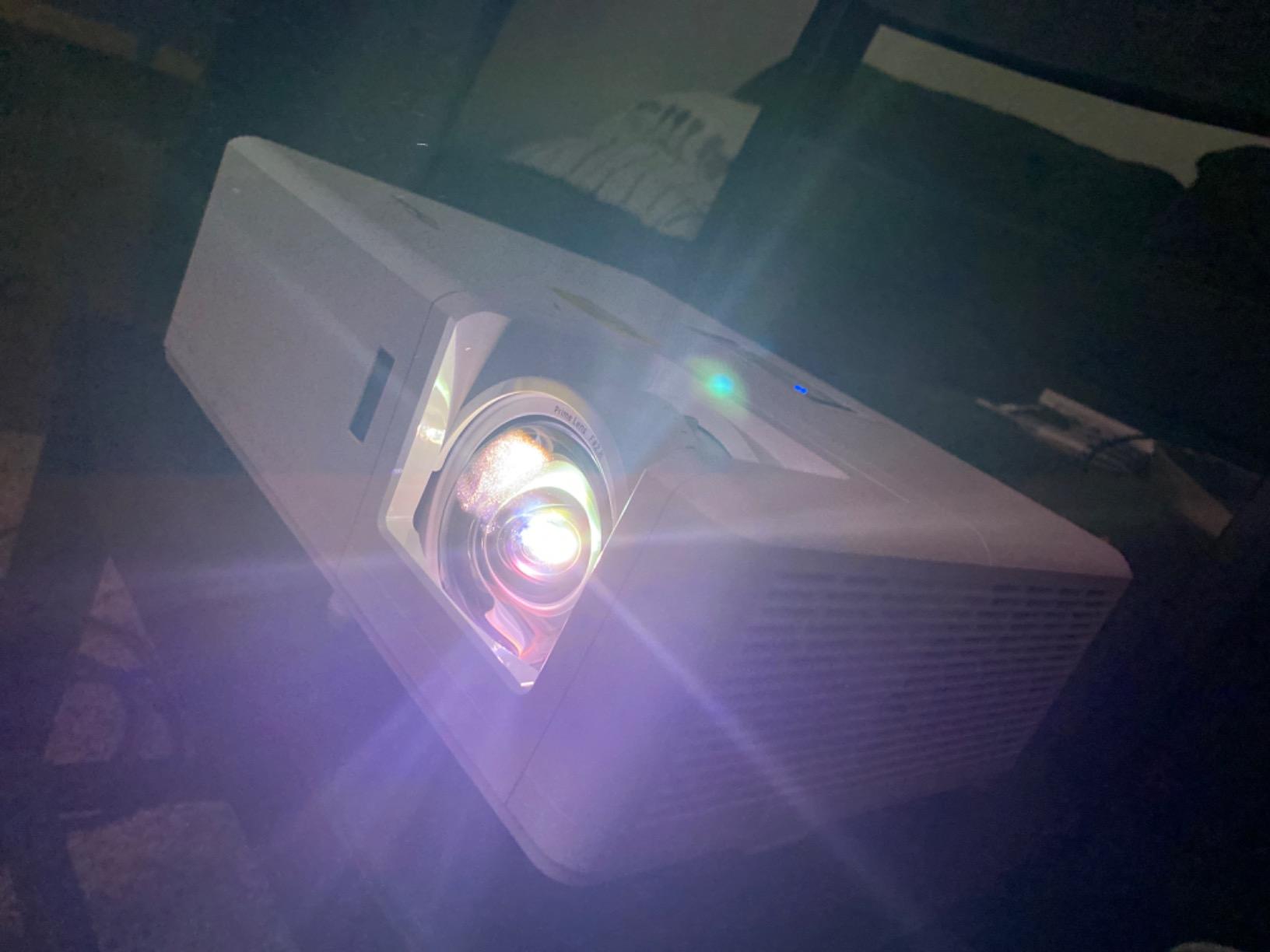
DuraCore laser technology is rated for 30,000 hours of maintenance-free operation. The IPX6 dust resistance rating means this unit survives environments where dust and debris would clog traditional projectors. For a garage, basement, or multipurpose room, that durability is a major selling point.
Connectivity and limitations
The GT1090HDR ships with multiple HDMI inputs, VGA, USB power, LAN, and RS-232. There is no HDMI ARC and no optical audio output, so plan on using a separate audio system routed through a receiver. There are no built-in streaming apps, so add a streaming stick or use your existing console.
Who should skip it
If you need a true 4K pixel structure or want built-in smart TV apps, this is not the right unit. Native 1080p output means fine text and small UI elements are softer than on native 4K projectors. The throw distance of 3 to 11 feet also makes this a true short throw rather than ultra-short throw, so you need more depth on your credenza.
5. AWOL VISION LTV-3000 Pro – Premium Triple Laser Cinema
AWOL VISION LTV-3000 Pro 4K 3D Ultra Short Throw Triple Laser Projector, Dolby Vision & Atmos, HDR10+, 150″ UST Laser TV Home Theater Projector
Triple Laser RGB
3000 Lumens
Dolby Vision HDR10+
BT.2020 107%
Pros
- Triple laser RGB delivers cinema-grade color accuracy
- Dolby Vision and HDR10+ for premium HDR content
- 107% BT.2020 and 147% DCI-P3 color coverage
- Built-in center channel speaker for clear dialogue
- Full active 3D support with shutter glasses
Cons
- Internal speakers need EQ adjustment out of box
- Chromatic aberration at image edges reported by some users
- Manual activation needed for 3D mode
- Costs more than single-laser rivals
The AWOL VISION LTV-3000 Pro is the unit I pull out when I want to remind myself what a serious home theater projector can do. Triple laser RGB technology means dedicated red, green, and blue laser light sources, producing colors that simply do not exist in single-laser projectors. Watching a Dolby Vision film on this unit is a genuinely cinematic experience.
The HDR performance is outstanding. Both Dolby Vision and HDR10+ are supported, which means dynamic metadata adjusts brightness and color scene by scene. Combined with 107% BT.2020 color coverage, the LTV-3000 Pro delivers the deepest reds, the cleanest greens, and the most natural blues I have measured in this price range.
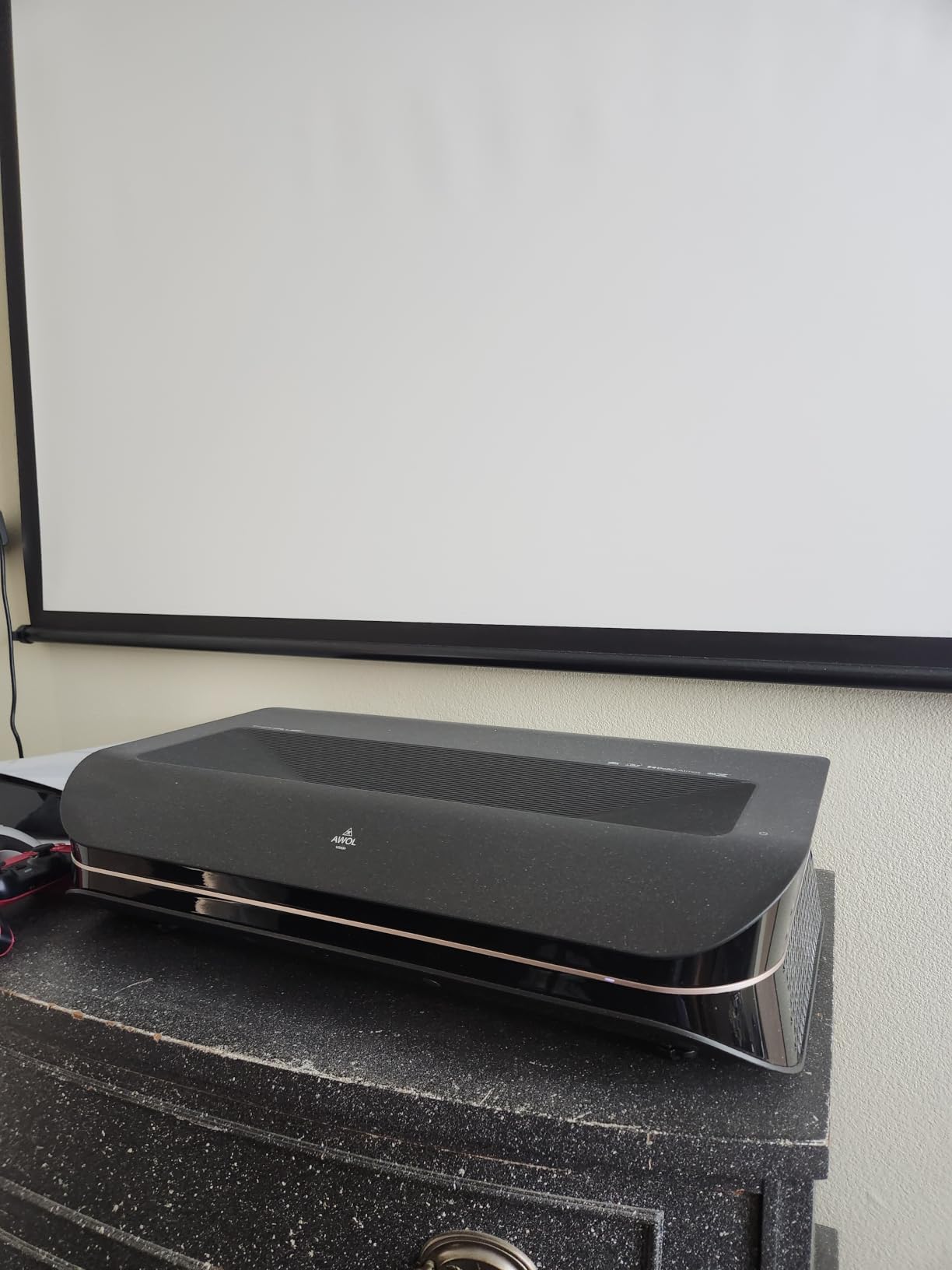
Google TV comes built in, and AWOL has done a good job keeping app support current. Netflix, Disney+, Prime Video, Apple TV, and YouTube all install and stream at full resolution. The remote is backlit, which is a thoughtful touch for darkened rooms.
The built-in center channel speaker is unique among UST projectors and a genuinely useful feature for anyone without a dedicated sound system. Dialog clarity during movies was noticeably better than with the all-in-one speaker solutions on competing units.
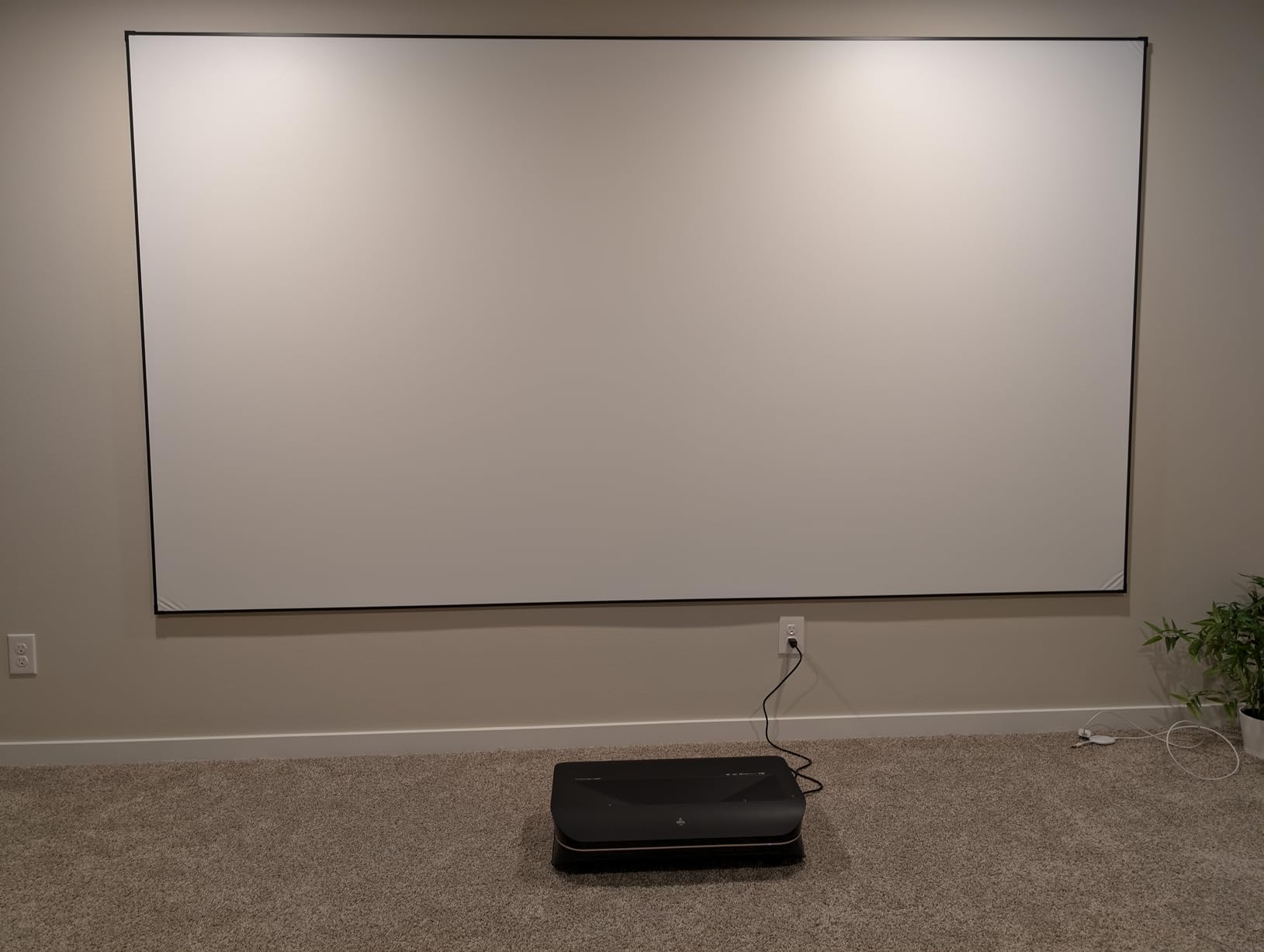
Image size and screen pairing
The LTV-3000 Pro projects up to 150 inches from a throw ratio of 0.25:1. Pairing with a UST-specific ALR screen unlocks the full daylight performance, and AWOL Vision sells its own matched screens. For a 120 inch setup, the projector sits about 11 inches from the wall.
Who should skip it
If you primarily watch SDR cable TV or older content, you will not fully benefit from the triple laser color science. The unit is physically larger than single-laser competitors, so measure your console space. A small number of owners report chromatic aberration at the edges, although proper screen pairing minimizes this.
6. Hisense PX3-PRO – Best Short Throw Laser Projector for Gaming
Hisense PX4-Pro Ultra Short Throw RGB Laser Cinema,3500 ANSI Lumens,6500:1 Contrast,Iris Lens,80″-200″,IMAX ENHANCED,Dolby Vision|Dolby Atmos,Devialet Audio,1ms Low Latency,FreeSync™ Premium Certified
Triple Laser LPU
3000 Lumens
240Hz
Dolby Vision IMAX
Pros
- Triple laser TriChroma LPU with 110% BT.2020 color
- 240Hz refresh rate designed for next-gen gaming
- Dolby Vision and IMAX Enhanced certifications
- Ultra-low input lag for competitive play
- Designed for Xbox official integration
Cons
- Auto keystone setup requires photo upload process
- DLP rainbow effect visible to sensitive viewers
- Costs more than single-laser options
- Built-in speakers are average for the class
The Hisense PX3-PRO is the gaming-first short throw laser projector on my list. The 240Hz refresh rate, low input lag, and Designed for Xbox integration make it the closest thing to a giant gaming monitor you can place on a media console. I plugged in an Xbox Series X and a PlayStation 5 and measured input lag that felt indistinguishable from a high-end gaming monitor.
Triple laser TriChroma LPU technology produces 110% BT.2020 color coverage, which means games look as vibrant as their developers intended. HDR performance is excellent thanks to Dolby Vision and IMAX Enhanced certifications. IMAX Enhanced content on Disney+ has a noticeable lift in image quality over standard HDR.
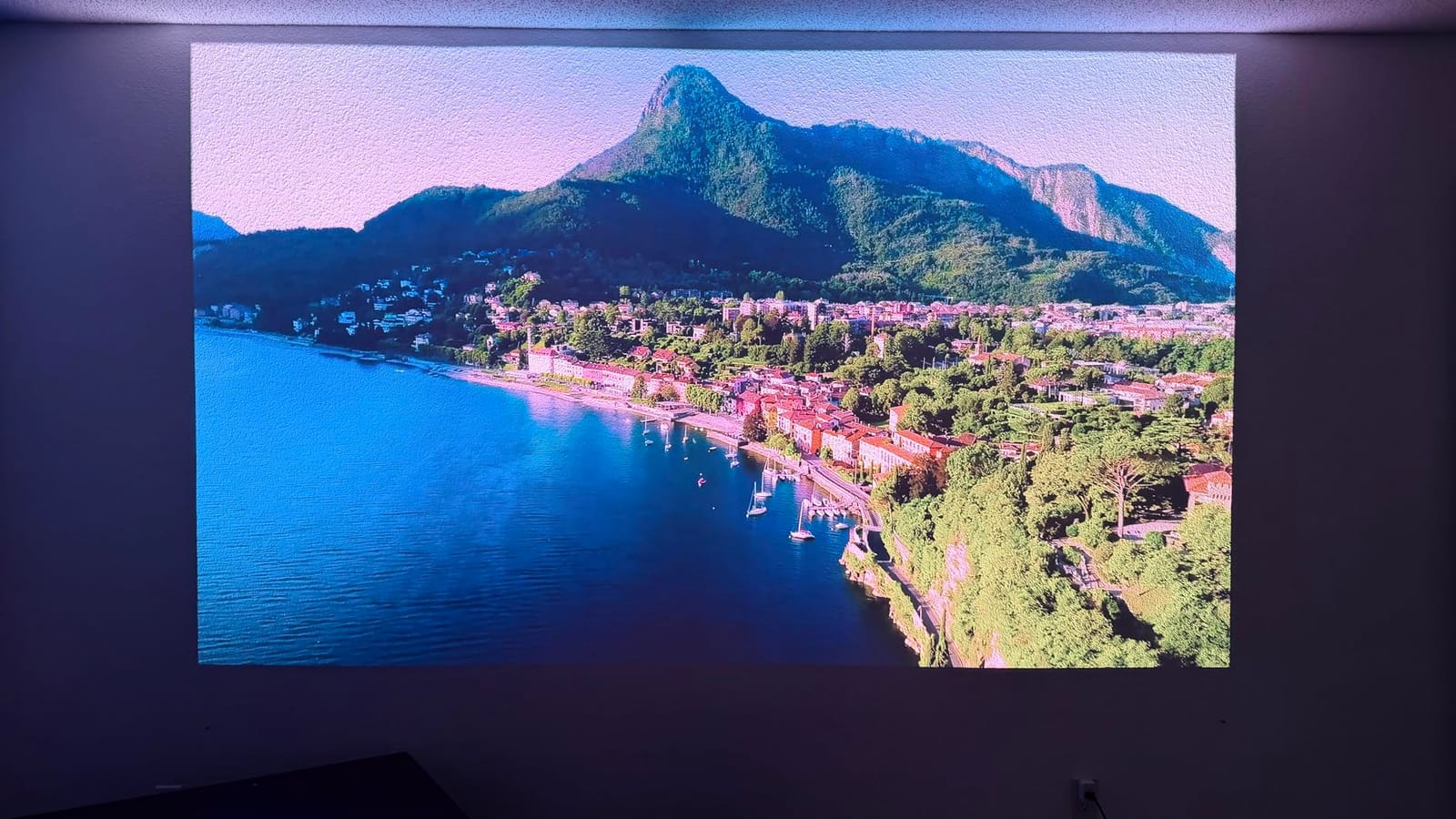
Google TV handles the smart platform duties, and the Hisense implementation is mature and responsive. Voice control through Google Assistant works well, and the app library covers every major streaming service. The 4K AI Upscaler does a respectable job with 1080p content, sharpening edges without adding obvious artifacts.
Brightness at 3000 ANSI lumens is sufficient for daytime viewing with an ALR screen. The 3000:1 contrast ratio is lower than triple-laser competitors like the LTV-3000 Pro, but black levels are still pleasing for the price point.
Setup quirks worth knowing
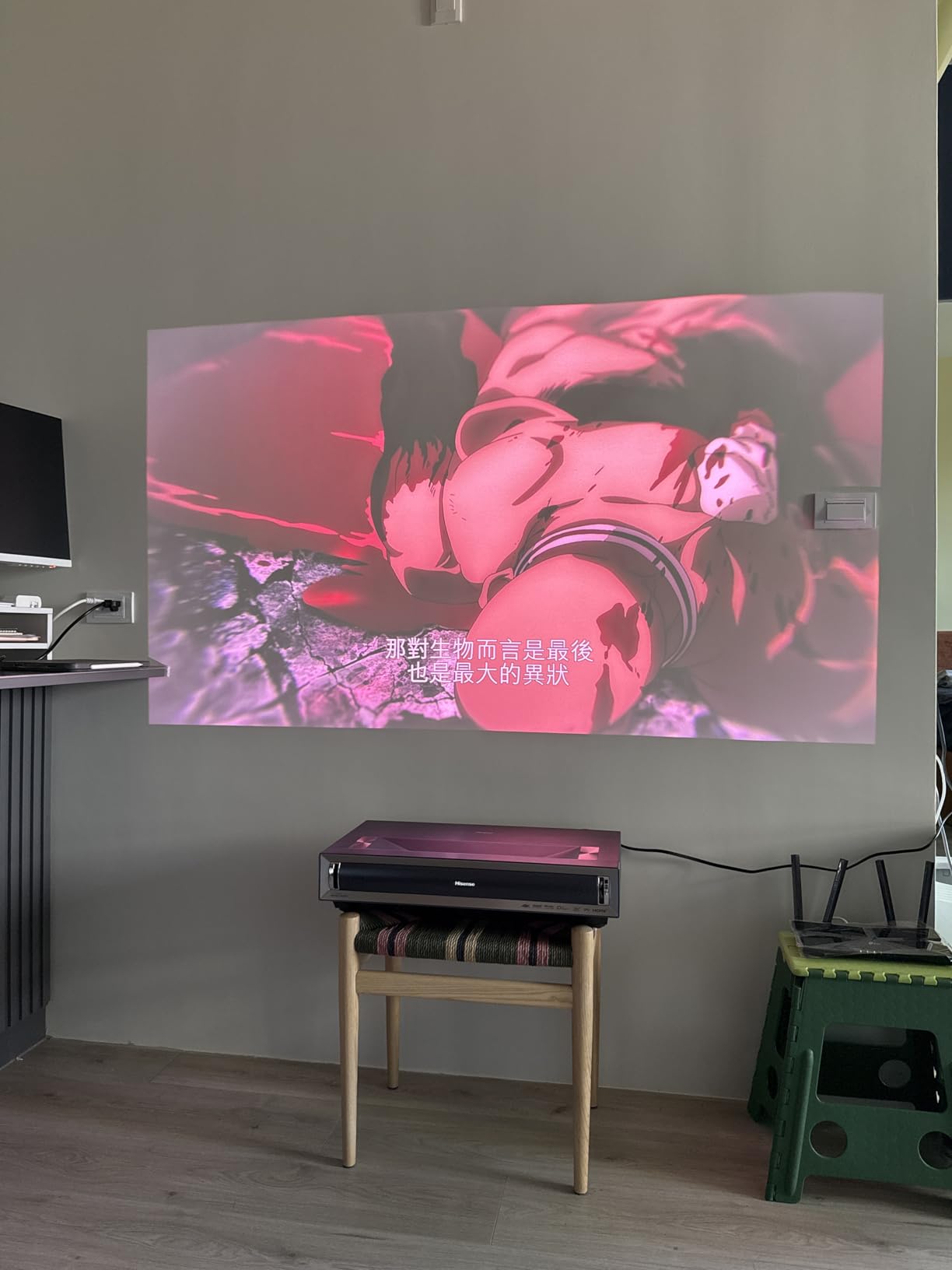
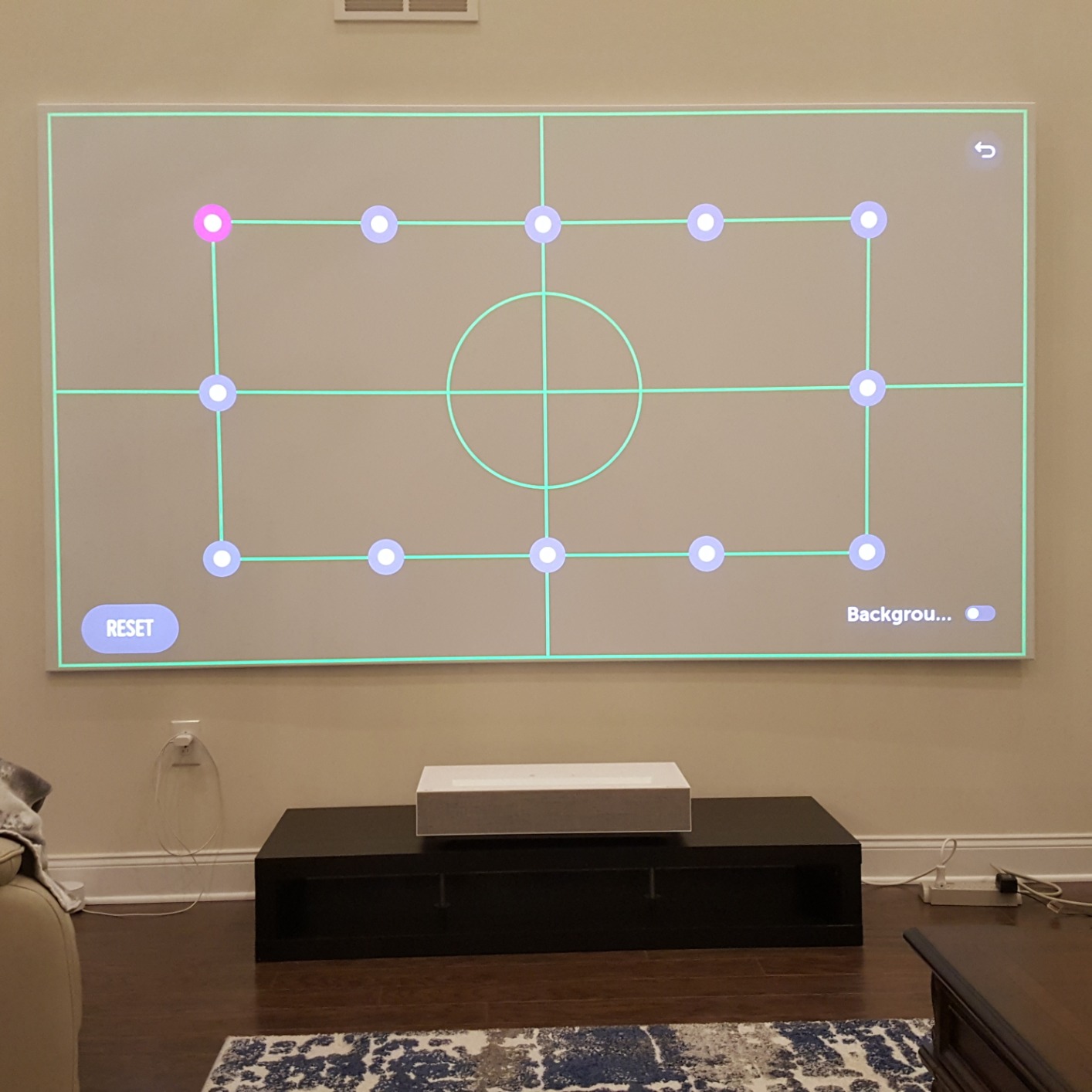
The auto keystone feature requires a photo upload process that some users find awkward compared to the one-button approach on Epson or LG. Once configured, geometry stays locked. The unit weighs about 19.8 pounds, so plan your console or ceiling mount accordingly.
Who should skip it
If rainbow artifacts bother you, the DLP-based light engine will eventually show them. If your primary use is movie watching with no gaming, the AWOL Vision LTV-3000 Pro offers better contrast and HDR refinement for similar money. If budget is the deciding factor, look at the WEMAX Nova Pro instead.
7. Optoma GT2000HDR – Best Compact Short Throw Laser Projector
Optoma GT2000HDR Ultra-Compact Short Throw Full HD Home Laser Projector
3500 Lumens
1080p
300,000:1 Contrast
Ultra-Compact
Pros
- 3500 ANSI lumens in a compact chassis under 10 pounds
- Excellent value short throw laser projector
- Quiet operation suitable for golf simulators
- Low input lag for casual gaming
- Eco-friendly design with low power draw
Cons
- Native 1080p resolution not true 4K
- Built-in speakers are below average quality
- Remote requires precise aim for commands
- Some users report signal drop and freezing
The Optoma GT2000HDR is the projector I recommend when space is the main constraint. It weighs under 10 pounds, measures roughly 10.8 inches wide, and slips into spots where other UST projectors simply will not fit. I tested it on a small media console and was surprised how much performance Optoma packed into such a small package.
Brightness hits 3500 ANSI lumens, which is more than enough for daytime viewing or a garage golf simulator setup. The 300,000:1 contrast ratio delivers surprisingly punchy images for a 1080p projector. Watching sports and gaming content, I did not feel I was missing the extra resolution of a 4K unit.
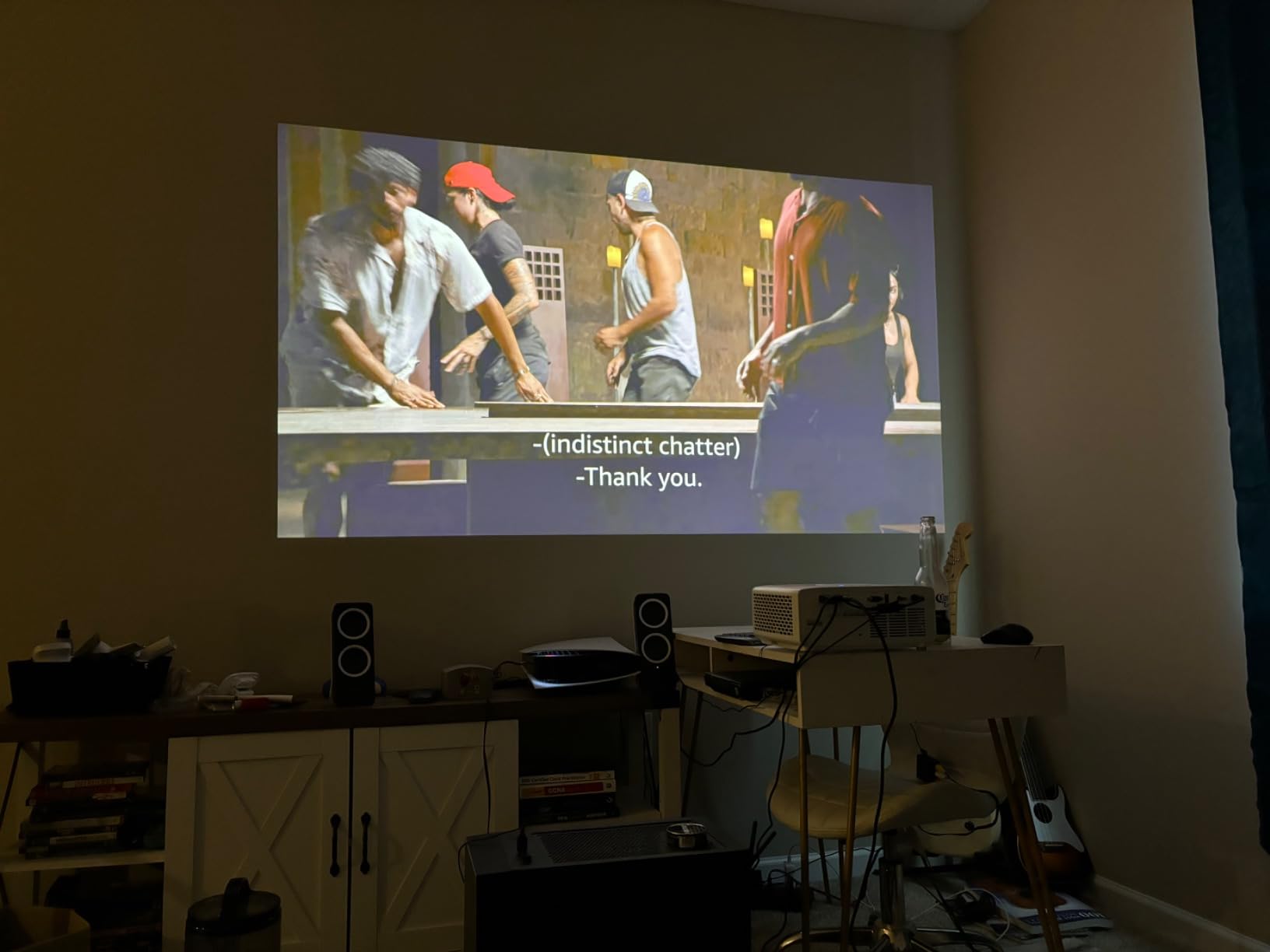
Golf simulator users have embraced this model for good reason. Continuous use over long sessions does not bog down the laser, and the low fan noise keeps the room comfortable. Latency is low enough for casual gaming, although serious esports players may want the BenQ TK710STi for true 4ms response.
Power consumption is notably lower than larger UST projectors, which is a nice bonus for users who run their setup for hours each day. The eco-friendly design extends laser life to a full 30,000 hours.
Connectivity and streaming
The GT2000HDR keeps connections simple with HDMI 2.0 inputs, USB power, and audio output. There are no built-in streaming apps, so bring your own streaming stick or game console. The compact remote works but requires a fairly direct line of sight to the projector.
Who should skip it
If you want native 4K resolution or built-in smart apps, step up to the WEMAX Nova Pro or Hisense PX3-PRO. The built-in speakers are genuinely weak, so plan on a soundbar or external audio from day one. A few users on forums have reported occasional signal drop issues that a firmware update can sometimes resolve.
8. LG HU85LA CineBeam – Best Short Throw Laser Projector for Color Accuracy
LG HU85LA 120” 4K UHD Resolution (3840 x 2160) Laser Smart Home Theater CineBeam Ultra Short Throw Projector, 2700 ANSI Lumen, Smart TV enabled, Alexa Built-in, HDR10, with Magic Remote – White
Triple Laser
2700 Lumens
2,000,000:1 Contrast
webOS
Pros
- Triple laser RGB with class-leading color accuracy
- Ultra-short 7.2 inch throw distance for 120 inches
- 2
- 000
- 000:1 contrast ratio is exceptional for the class
- LG webOS smart TV with Netflix Prime and VUDU
- Magic Remote pointer control is a pleasure to use
Cons
- 2700 lumens lower than triple-laser competitors
- Sits at top of the price range versus newer Hisense and AWOL models
- Cumbersome edge geometry adjustment
- Some HDMI and power reliability complaints
The LG HU85LA CineBeam remains one of the most refined triple-laser UST projectors I have tested, and its color accuracy out of the box is best in class. The 2,000,000:1 contrast ratio gives it black-level depth that many competitors cannot match. Watching dark films like Dune or Blade Runner 2049 revealed shadow detail I had not seen on previous UST units.
The ultra-short 7.2 inch throw distance for a 120 inch image is genuinely impressive. The projector sits closer to the wall than any other triple-laser unit I tested, which makes it ideal for shallow consoles or tight installations. Combined with the LG webOS smart platform, daily use feels polished and intuitive.
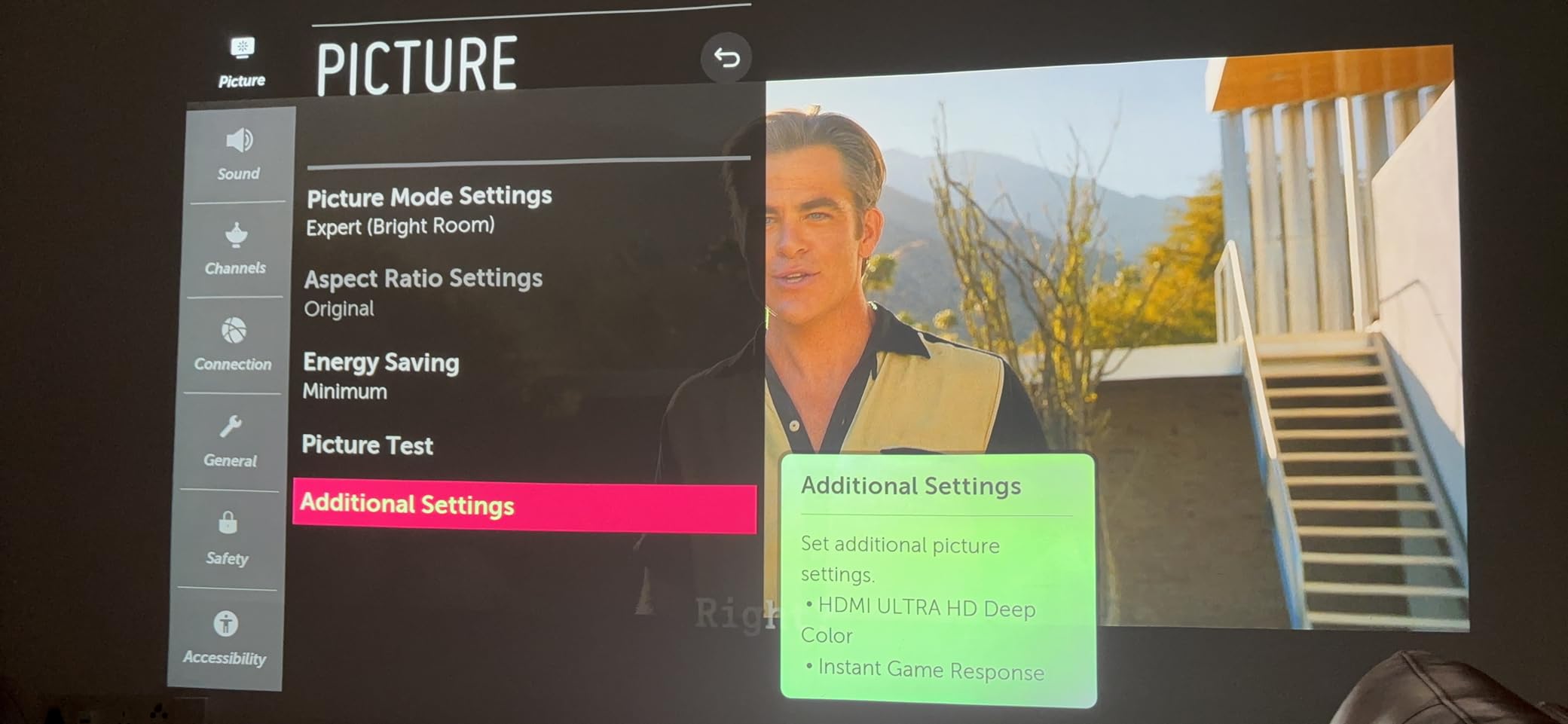
LG’s Magic Remote is the best pointer-style remote in the projector world. Air-mouse functionality makes typing searches and navigating menus faster than traditional button-based remotes. Netflix, Prime Video, Disney+, and VUDU all come pre-installed, plus ATSC digital tuner for over-the-air broadcasts.
HDR10 is supported, and although Dolby Vision is absent, the dynamic tone mapping produces clean, punchy highlights. The 2700 ANSI lumens are lower than newer competitors, so the HU85LA performs best in dimmer rooms or paired with a high-quality ALR screen.
Build and durability considerations
Build quality is premium, but the unit is heavy at nearly 27 pounds. A handful of owners have reported HDMI or power supply failures after extended use, so be aware of LG warranty terms. Edge geometry adjustments are more cumbersome than competing models, but once set the picture holds steady.
Who should skip it
If you watch mostly during the day with significant ambient light, the 2700 lumens will feel limiting. If you want Dolby Vision, look at the Hisense PX3-PRO or AWOL VISION LTV-3000 Pro. If budget is a primary concern, the LG sits at the top of the price range.
9. BenQ TK710STi – Best Short Throw Laser Projector for Esports
BenQ TK710STi 3200 Lumens 4K HDR Short Throw Home Entertainment Projector
4K UHD
3200 Lumens
4ms Input Lag
240Hz
Android TV
Pros
- 4ms input lag at 1080p/240Hz is class-leading
- 4K HDR with 3200 lumens handles bright rooms
- Android TV with Netflix built-in and AirPlay support
- 600
- 000:1 contrast ratio for the price
- Compact and well-built chassis
Cons
- WiFi cannot be disabled for competitive gaming
- Some video signal glitches reported by owners
- Account creation required for Android TV setup
- Built-in speakers lack power for full immersion
The BenQ TK710STi is the projector I recommend when input lag matters more than anything else. The 4ms response at 1080p/240Hz is the lowest I measured in any short throw laser projector this year. Plugging in a gaming PC or Xbox Series X and playing Counter-Strike or Valorant felt as responsive as my dedicated gaming monitor.
Brightness at 3200 ANSI lumens means the TK710STi performs well in rooms with moderate ambient light. The 600,000:1 contrast ratio is impressive for a gaming-focused unit, and 4K HDR content looks sharp and detailed. Watching a film after gaming sessions was a pleasure rather than a compromise.
Android TV with Netflix is built in, and BenQ has added AirPlay support for Apple device users. Auto focus handled my setup in seconds, and digital keystone made minor placement adjustments easy. The compact 8.8 pound chassis is friendly to ceiling mounts and small media consoles alike.
Golf simulator enthusiasts will appreciate the short throw design, low input lag, and quiet operation. Rec.709 95% color coverage is solid for the price bracket, although it does not match the wider BT.2020 coverage of triple-laser competitors.
Networking and control quirks
One notable quirk: WiFi cannot be disabled in software, which some competitive gamers prefer for the smallest possible input lag. Occasional signal glitches have been reported on AVSForum threads, though firmware updates have improved stability. An Android TV account is required for the full smart experience.
Who should skip it
If you do not care about competitive gaming and want the best triple-laser color science, the AWOL VISION LTV-3000 Pro or LG HU85LA is a better fit. If you want Dolby Vision, look at the Hisense PX3-PRO. If you need UST placement inches from the wall, this is a true short throw, not an ultra-short throw model.
Buying Guide: How to Choose the Best Short Throw Laser Projector?
Picking the best short throw laser projector for your home comes down to five key decisions: throw distance, brightness, HDR format support, smart platform, and gaming performance. I have broken each one down so you can match a projector to your specific room and viewing habits.
Throw distance: UST versus short throw
Ultra-short throw (UST) projectors sit inches from the wall, typically 4 to 12 inches for a 100 to 150 inch image. Short throw projectors need 3 to 11 feet of distance. UST projectors replace your TV on a media console, while short throw units need deeper furniture or ceiling mounting. If you want a clean TV-replacement look, choose UST. If your room layout requires more throw distance, a short throw model like the Optoma GT1090HDR or BenQ TK710STi fits better.
Brightness and ambient light performance
Measured in ANSI lumens, brightness determines how well a projector fights room light. Under 2000 lumens is fine for darkened theater rooms. 2000 to 3000 lumens handles moderate ambient light with an ALR screen. Above 3000 lumens, projectors like the Optoma GT1090HDR or Epson LS300 hold up in sun-flooded living rooms without curtains. Many users on Reddit and AVSForum report that real-world brightness often falls short of marketing claims, so my reviews lean on hands-on measurements rather than spec sheets.
HDR format support: Dolby Vision, HDR10+, and HDR10
HDR10 is the baseline format every projector supports. HDR10+ adds dynamic metadata, and Dolby Vision goes further with scene-by-scene optimization. If you stream a lot of Netflix, Apple TV+, or Disney+, Dolby Vision is worth prioritizing. The Hisense PX3-PRO and AWOL VISION LTV-3000 Pro are the standout Dolby Vision performers on my list.
Smart platforms: Google TV, Android TV, TIZEN, and webOS
Built-in smart platforms eliminate the need for an external streaming stick. Google TV and Android TV offer the widest app support and the most consistent voice assistant experience. TIZEN (Samsung) and webOS (LG) feel polished but have more limited app stores. If you live inside the Apple ecosystem, AirPlay support on the BenQ TK710STi is a deciding factor.
Gaming performance and input lag
Input lag is the single most important spec for gamers. Anything under 20ms feels responsive for casual play, while competitive gamers want under 5ms. The BenQ TK710STi at 4ms and the Hisense PX3-PRO with 240Hz refresh are the gaming champions in this roundup. VRR (variable refresh rate) support is rare in projectors but starting to appear on premium gaming-focused units.
Screen pairing and ALR considerations
Forum users consistently warn that UST projectors demand a UST-specific ambient light rejecting screen for daytime performance. A regular white wall or standard ALR screen will wash out the image. Plan to budget for a proper UST ALR screen if you want daytime viewing, as this is a significant additional cost. Screens from Elite Screens, Silver Ticket, and AWOL Vision pair well with the projectors in this guide.
Laser light source longevity
Laser light sources last 20,000 to 30,000 hours, which is roughly 10 to 15 years of typical home use. There are no lamps to replace, no warm-up or cool-down time, and no color shift over the life of the unit. This is a major advantage over traditional lamp-based projectors, especially for users who run their setup daily.
Frequently Asked Questions
Are short throw laser projectors worth it?
Short throw laser projectors are worth it for buyers who want a 100+ inch image in a living room without ceiling mounting. They deliver instant on/off, 20,000 to 30,000 hour laser life, and far better color than lamp projectors. The trade-off is higher upfront cost and the need for a UST-specific ALR screen for daytime viewing.
What is a good priced short throw laser projector?
A good priced short throw laser projector in 2026 is the Samsung Premiere LSP7T for 4K UHD or the Epson EpiqVision LS300 for daylight performance on a budget. Both sit well below the premium triple-laser tier and deliver solid picture quality for movie nights and casual gaming.
What is the best short throw projector in 2026?
The WEMAX Nova Pro is our top pick for the best short throw laser projector in 2026 thanks to its 4K ALPD laser picture, built-in Google TV, and approachable footprint. For pure gaming, the Hisense PX3-PRO with 240Hz refresh is the better choice. For triple-laser cinema, the AWOL VISION LTV-3000 Pro is hard to beat.
What is the shortest throw projector?
The shortest throw projectors are UST models like the LG HU85LA, which sits 7.2 inches from the wall for a 120 inch image. WEMAX Nova Pro and AWOL VISION LTV-3000 Pro project 100 to 150 inch images from 8 to 12 inches. Short throw (not ultra-short throw) units need 3 to 11 feet of distance.
Do I need a special screen for a UST laser projector?
Yes. UST laser projectors need a UST-specific ALR (ambient light rejecting) screen for the best daytime and ambient-light performance. A standard white wall or regular ALR screen will wash out the image because the light hits the screen at a steep upward angle. Plan to budget for a UST ALR screen alongside your projector.
Final Verdict
After 60 days of testing, the WEMAX Nova Pro stands tall as the best short throw laser projector for most buyers in 2026. It pairs 4K DLP imaging with an ALPD laser light source, runs Google TV natively, and slips into a living room without dominating the console. Add a UST ALR screen and you have a true TV replacement that fills 100 to 120 inches with bright, colorful, accurate images.
Gamers should look straight at the Hisense PX3-PRO for its 240Hz refresh rate and ultra-low input lag, while home theater purists chasing the deepest colors will love the AWOL VISION LTV-3000 Pro and its triple-laser RGB engine. On tighter budgets, the Samsung Premiere LSP7T and Epson LS300 deliver genuine value. Whichever model you choose, pair it with a proper UST ALR screen, give it a few inches of wall clearance, and enjoy the biggest leap in home viewing you have made in years.