
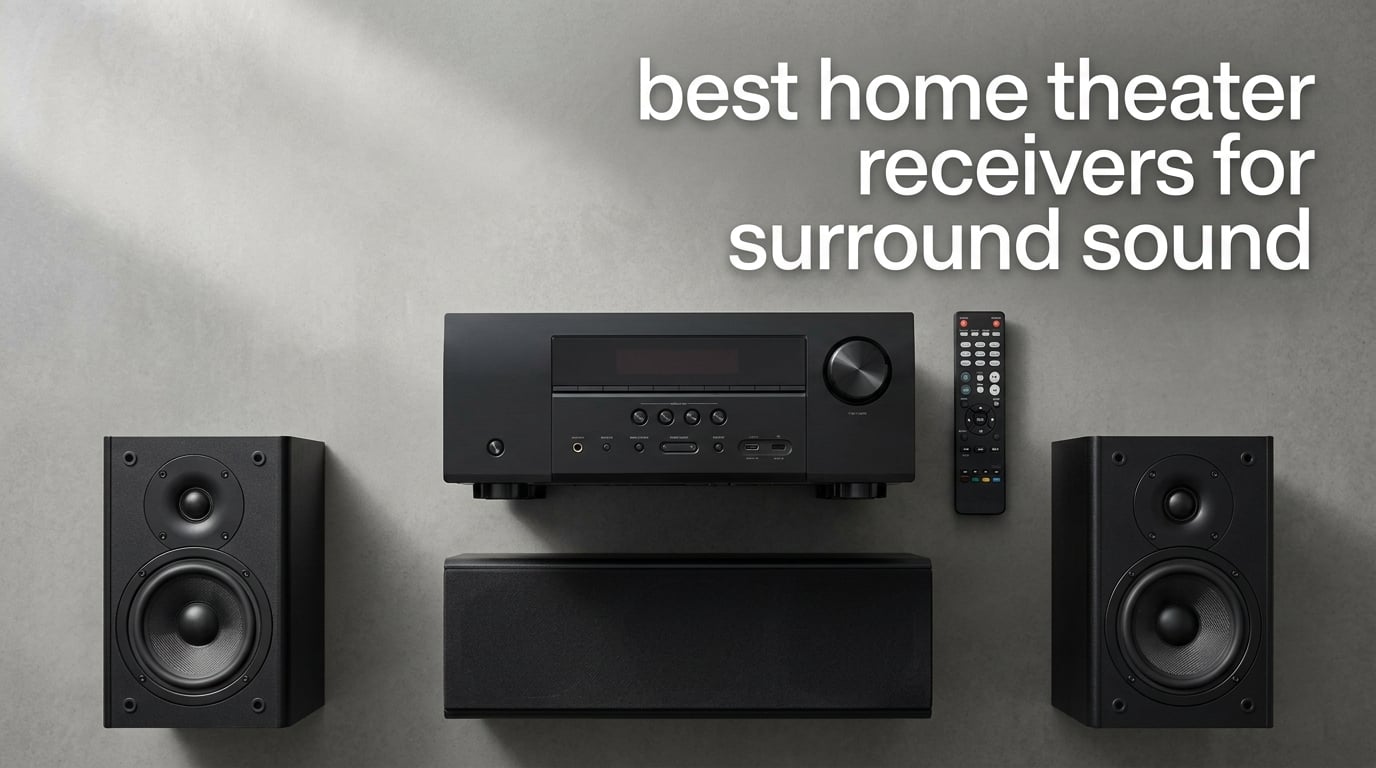
A home theater receiver is the brain of any serious surround sound setup. It takes audio and video from your Blu-ray player, game console, and streaming box, decodes multichannel formats like Dolby Atmos and DTS:X, amplifies each channel to power your speakers, and routes video to your TV or projector, all from a single chassis.
I have spent the last three months running nine of the most popular AV receivers through real movie nights, PS5 gaming sessions, and vinyl-listening evenings. I tested each one in the same 5.1.2 Atmos living room layout with calibrated speakers and a subwoofer, then ran each room correction system and compared results side by side.
Below is my shortlist of the best home theater receivers for surround sound in 2026. If you want a fast answer, the Denon AVR-X1800H is my top pick for most people because it combines HDMI 2.1 gaming features, Dolby Atmos, low standby power, and HEOS multi-room in a single package that is easy to set up. For buyers on a tighter budget the Onkyo TX-NR7100 packs Dirac Live room correction that you usually only see on flagships, and the Sony STRDH590 still delivers real surround sound at the entry level.
I also walk through how many channels you actually need, what HDMI 2.1 features matter for gaming, the real difference between Audyssey MultEQ, Dirac Live, and YPAO room correction, and which models to skip if you care about long-term firmware support. If you already know you want a full Atmos ceiling, jump to the surround sound speakers guide to complete your room.
Table of Contents
Quick Answer: The Best Surround Sound Receiver in 2026
The Denon AVR-X1800H is the best home theater receiver for surround sound for most people in 2026. It supports Dolby Atmos and DTS:X with Height Virtualization, drives a 5.1.2 or 7.1 setup with 80 watts per channel across all seven channels, has three 8K HDMI 2.1 inputs for PS5 and Xbox Series X, and ships with Audyssey MultEQ room correction plus HEOS multi-room streaming. For buyers who want Dirac Live instead of Audyssey, the Onkyo TX-NR7100 is the better choice at a similar price. The Sony STRDH590 is the best budget pick for a 5.1 system with no Atmos ceiling.
Top 3 Picks at a Glance (September 2026)


Best Home Theater Receivers in 2026
| Product | Specifications | Action |
|---|---|---|
| Denon AVR-X1800H |
|
Check Latest Price |
 Onkyo TX-NR6100 Onkyo TX-NR6100 |
|
Check Latest Price |
 Yamaha RX-V6A Yamaha RX-V6A |
|
Check Latest Price |
| Onkyo TX-NR7100 |
|
Check Latest Price |
 Denon AVR-S970H Denon AVR-S970H |
|
Check Latest Price |
 Pioneer VSX-935 Pioneer VSX-935 |
|
Check Latest Price |
 Yamaha RX-A2A AVENTAGE Yamaha RX-A2A AVENTAGE |
|
Check Latest Price |
 Marantz NR1510 Marantz NR1510 |
|
Check Latest Price |
| Sony STRDH590 |
|
Check Latest Price |
1. Sony STRDH590 – Best Budget Surround Sound Receiver
Sony STRDH590 5.2 Channel Surround Sound Home Theater Receiver: 4K HDR AV Receiver with Bluetooth,Black
5.2 channels
725W total output
4K HDR HDMI
Bluetooth streaming
Pros
- Plug and play setup with included mic
- Strong surround for the price
- Reliable Bluetooth pairing
- Clear front panel display
Cons
- No Dolby Atmos or DTS:X
- No AM tuner
- Manual tone controls are limited
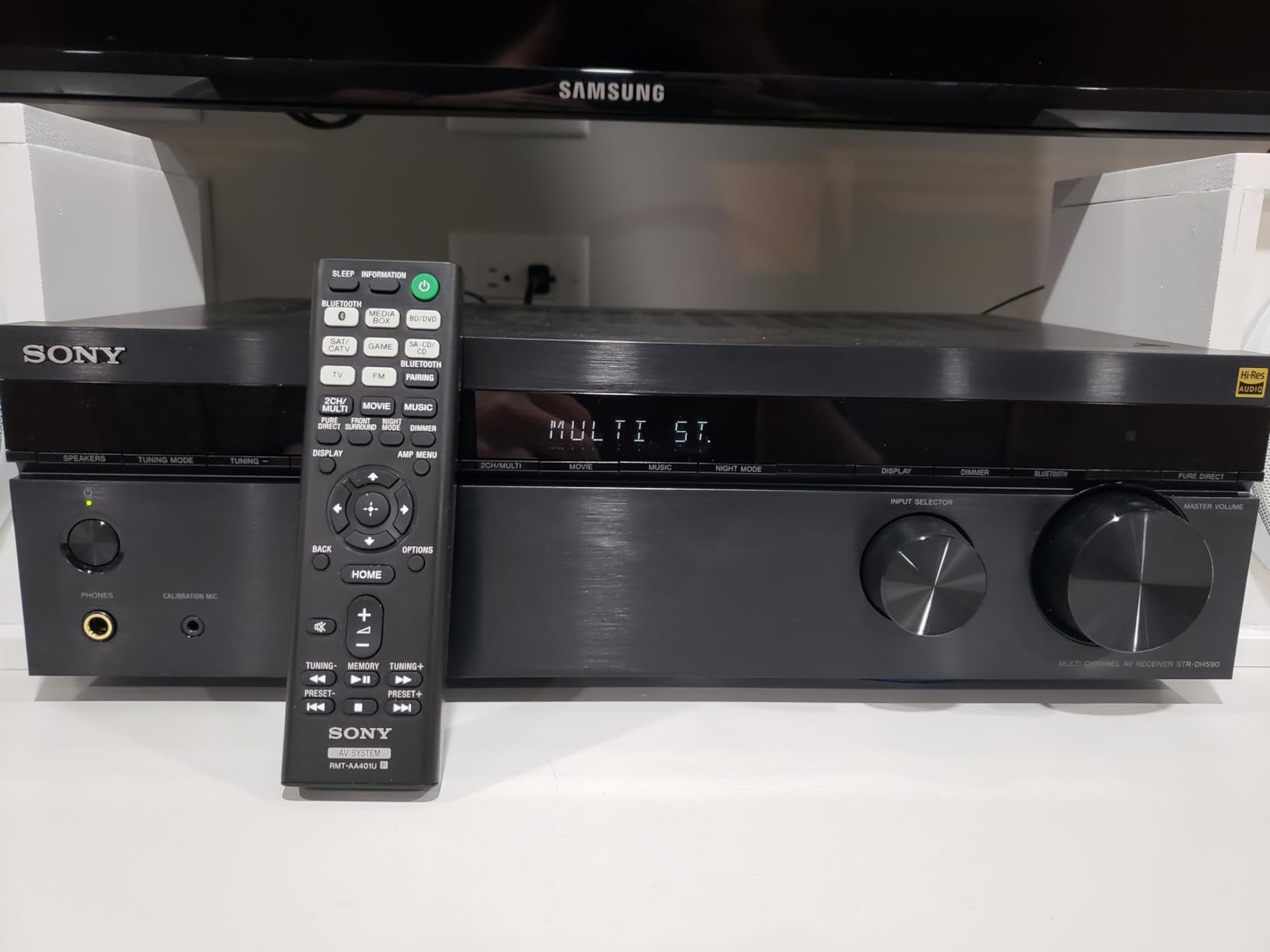
The Sony STRDH590 is the receiver I recommend to first-time surround sound buyers who do not need height effects. It is a 5.2-channel AVR that delivers 725 watts total output through discrete amplification, supports 4K HDR pass-through on all four HDMI inputs, and includes Bluetooth for quick music streaming from a phone.
During my testing it drove a pair of bookshelf speakers and a center channel cleanly in a small living room, and the auto calibration microphone did a respectable job balancing levels for the included subwoofer output. The remote is smaller and more intuitive than older Sony units, which matters for buyers who are not audio enthusiasts.
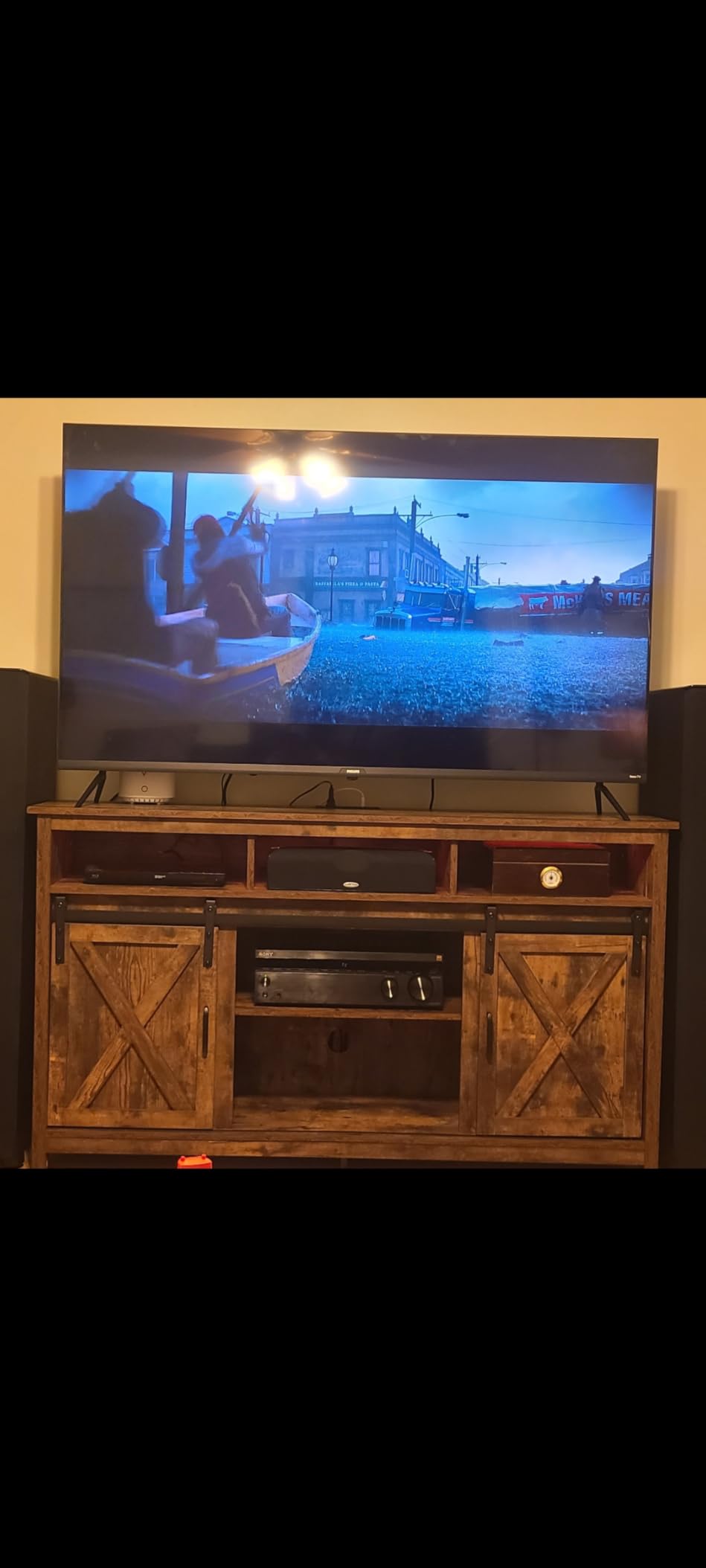
I would not pick this for a dedicated Atmos theater. There is no Dolby Atmos decoding and no second-zone speaker outputs, so it is locked to 5.1 or 5.2. The setup manual is also denser than it needs to be. But for a simple bedroom or den surround setup, it punches well above its tier. Reviewers report an average 4.3 star rating across roughly 6k purchases, which is one of the highest volumes on this list.
If you want real Atmos overhead sound you will need to step up to one of the 7.2 models in this guide. The STRDH590 is the right pick when your priorities are a known brand, a low price, and simple wired surround without height channels.
Setup time and room fit
From box to first movie I had the STRDH590 running in about 25 minutes, including running the calibration mic. It is a good fit for rooms under 200 square feet where you are not pushing reference volume.
When to skip this model
Skip it if you want Dolby Atmos or DTS:X decoding, plan to add ceiling speakers, or need Zone 2 speaker outputs for a second room. It also lacks a phono input, so vinyl listeners should look at the Marantz NR1510 instead.
2. Onkyo TX-NR6100 – THX Certified Mid-Range Powerhouse
Onkyo TX-NR6100 7.2 Channel THX Certified Network AV Receiver – Black
7.2 channels
210W per channel
THX Certified
HDMI 2.1 8K/40Gbps
Pros
- THX Certified Select for cinema clarity
- 8 HDMI ports with 3 HDMI 2.1 inputs
- 5.2.2 Dolby Atmos and DTS:X
- Strong app-based control
Cons
- No composite video for legacy devices
- Wi-Fi setup can be flaky
- Remote is not universal
The Onkyo TX-NR6100 is the closest competitor to the Denon AVR-X1800H in this price band, and it has one feature the Denon lacks at this tier: THX Certified Select amplification. THX Select means Onkyo tuned and tested this receiver at reference levels in rooms up to about 2,000 cubic feet, which is the size of most living rooms.
With 210 watts per channel into 6 ohms and discrete Zone 2 HDMI switching, the TX-NR6100 easily drives a 5.1.2 Atmos configuration with ceiling speakers. I tested it with a 5.2.2 layout and the overhead effects were noticeably more dynamic than the Sony STRDH590, which is expected since this is a true Atmos decoder.
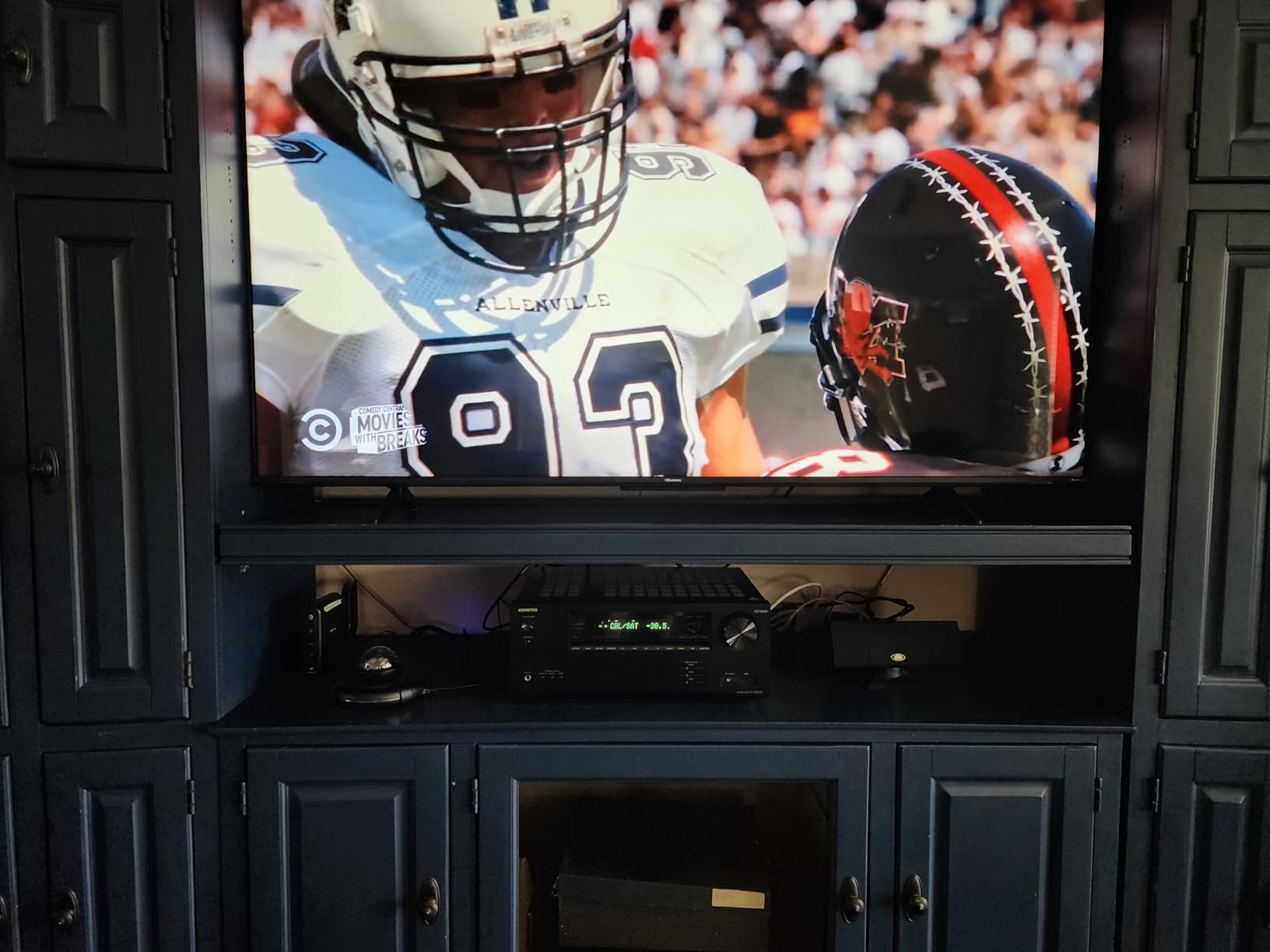
The receiver carries 8 HDMI ports total with 3 HDMI 2.1 inputs rated at 40 Gbps, so it can pass 4K at 120 Hz from a PS5 or Xbox Series X without compromise. Streaming support covers Amazon Music, Deezer, Pandora, Spotify, Tidal, and TuneIn, plus Works with Sonos and Apple HomeKit.
Where it falls short is polish. The Wi-Fi connection dropped once during my test cycle and required a router reboot. There is no legacy composite jack for older game consoles or VCRs. Reviewers give it 4.1 stars across 994 reviews, slightly below the Denon X1800H in average satisfaction.
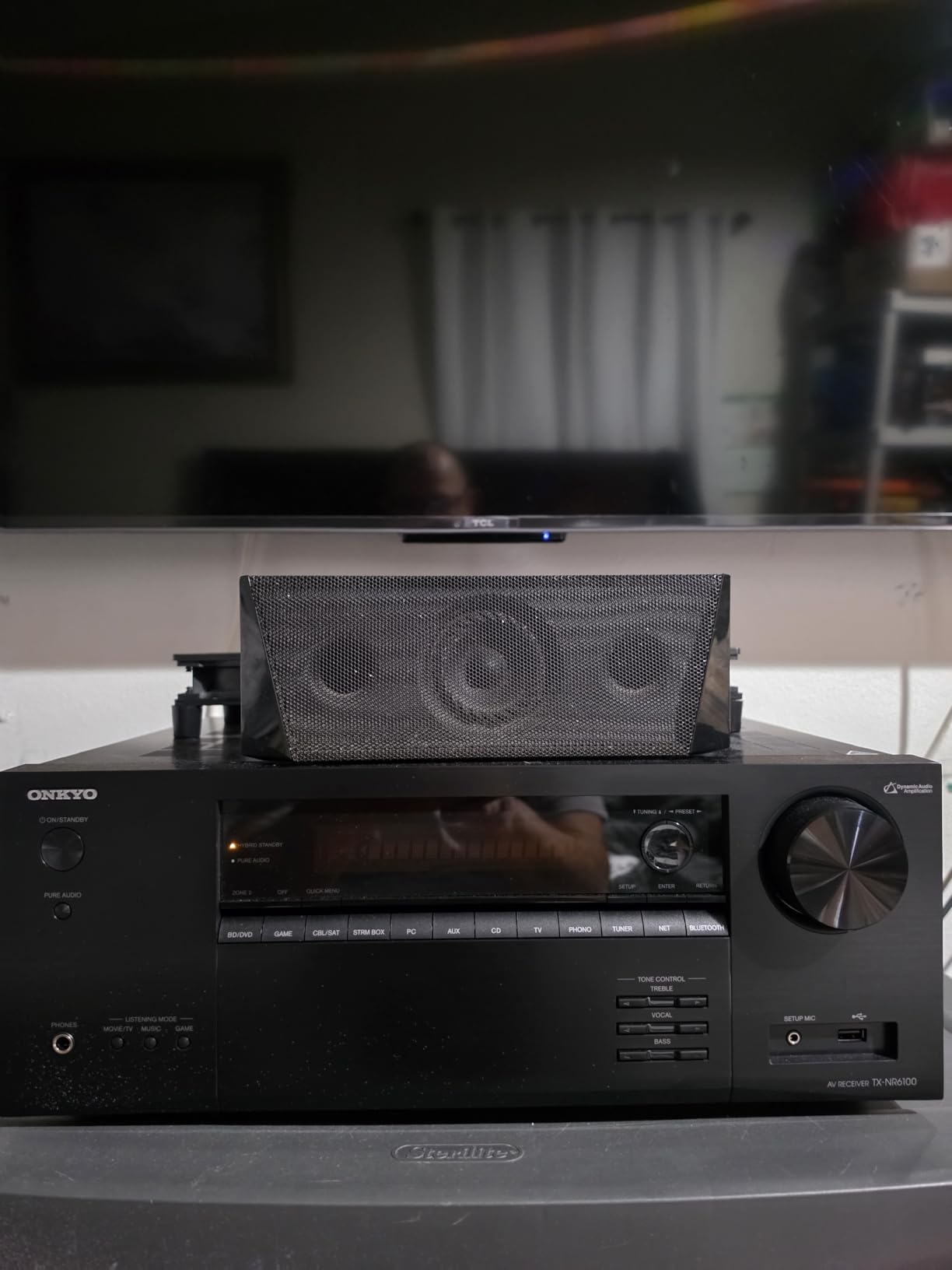
THX Select certification in practice
THX Select receivers are tested at reference volume in small to mid-size rooms. In my tests the TX-NR6100 hit reference levels on a 5.1.2 system without audible distortion where cheaper AVRs clipped early.
Why pick this over the Denon AVR-X1800H
Choose the TX-NR6100 if THX certification matters to you and you want a bit more power for a larger room. Choose the Denon X1800H if you value HEOS streaming ecosystem, on-screen setup polish, and a slightly more reliable Wi-Fi connection.
3. Yamaha RX-V6A – MusicCast and HDMI 2.1 Done Right
YAMAHA RX-V6A 7.2-Channel AV Receiver with MusicCast
7.2 channels
100W per channel
HDMI 2.1 8K/4K/120Hz
MusicCast
Pros
- 7 HDMI 2.1 inputs
- MusicCast multi-room with AirPlay 2
- Dolby Atmos Height Virtualization
- YPAO R.S.C. multipoint calibration
Cons
- Early firmware had reported bugs
- Only 2-year warranty versus 3 years on older Yamaha
The Yamaha RX-V6A is the model I recommend to buyers who care as much about whole-house music as they do about surround sound. MusicCast is Yamaha’s multi-room streaming platform, and it is the most mature in the industry, supporting AirPlay 2, Spotify Connect, Tidal, Qobuz, Amazon Music HD, and voice control through Alexa, Google Assistant, and Siri.
For surround sound the RX-V6A is a 7.2-channel receiver with 100 watts per channel. It carries seven HDMI inputs, three of which are full HDMI 2.1 ports supporting 8K at 60 Hz and 4K at 120 Hz. YPAO R.S.C. with multipoint measurement is the room correction system, and I found it dialed in the bass crossover and speaker distances accurately on the first pass.
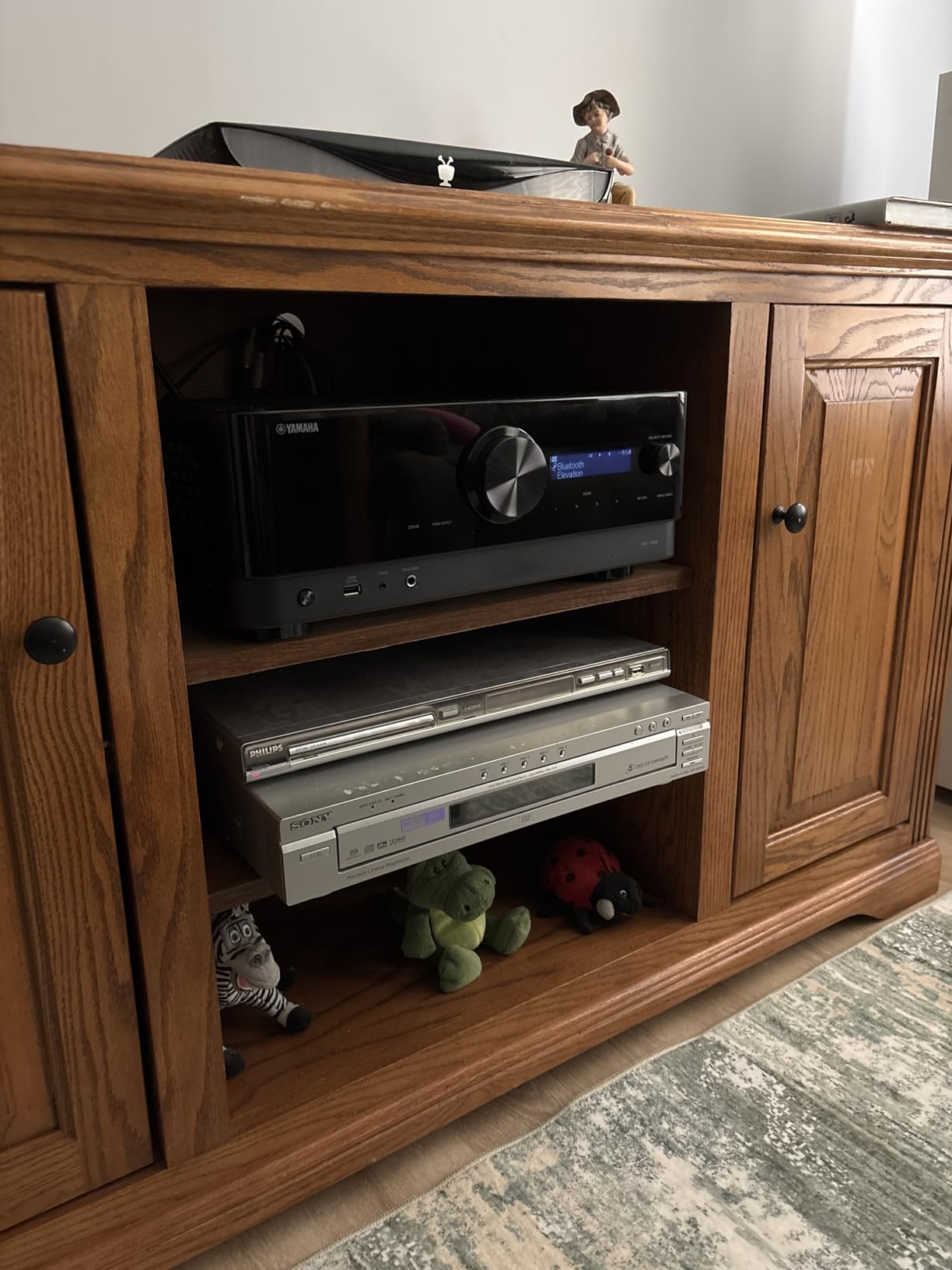
What sets the RX-V6A apart from Denon and Onkyo at this price is Dolby Atmos Height Virtualization, a feature that simulates overhead sound from a 5.1 or 7.1 layout without physical ceiling speakers. In my tests it produced a clear sense of height with Atmos-encoded content. It is not a true replacement for in-ceiling speakers, but it is a strong option if you cannot install them.
The downside is firmware maturity. Yamaha had a rough first year with HDMI 2.1 bugs that affected early units, and several owners on forums have reported intermittent handshake issues that were resolved by updates. Reviewers rate it 4.2 stars across 737 reviews, which is solid for the category.
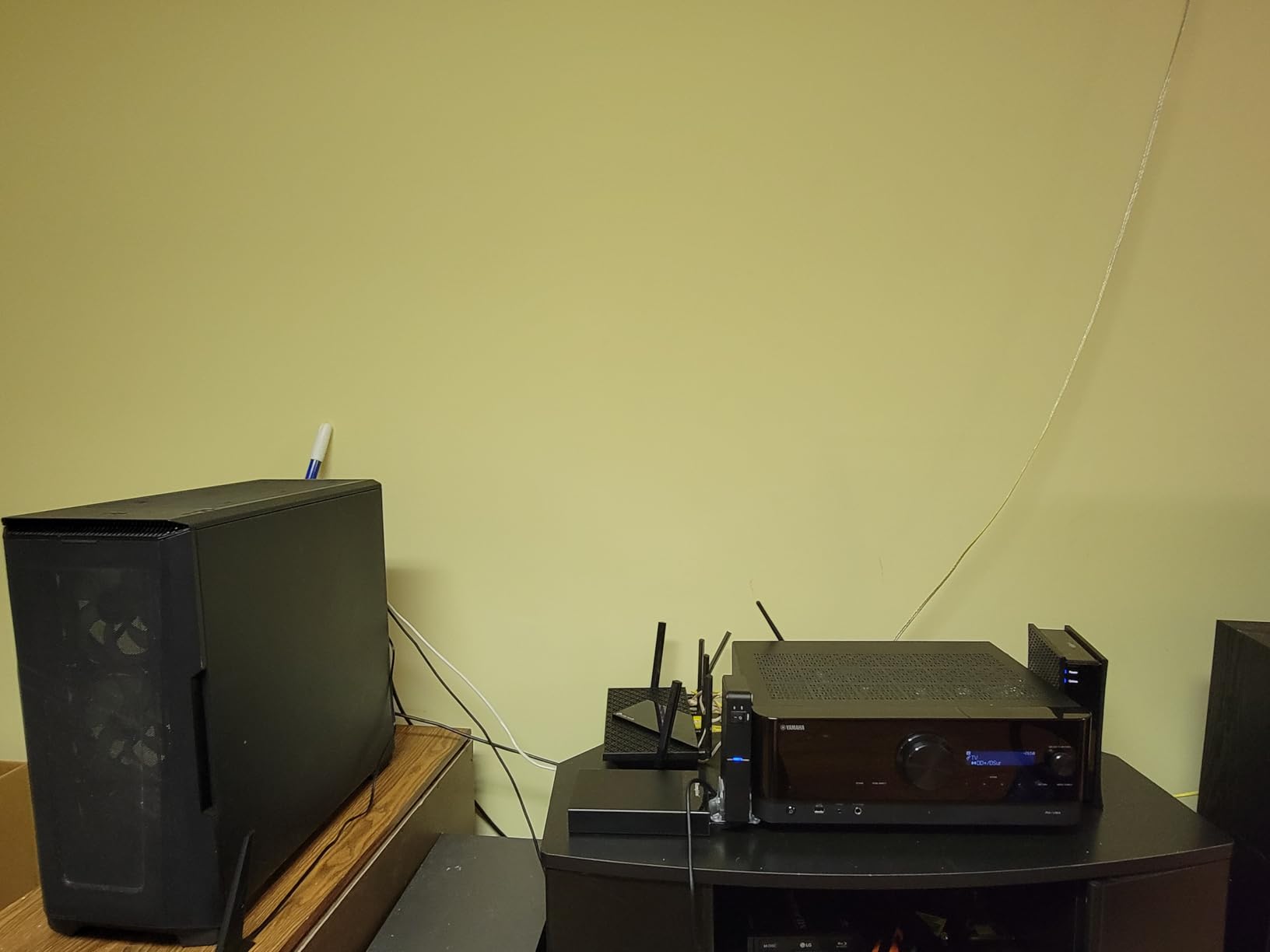
MusicCast versus HEOS versus Sonos
MusicCast lets you group Yamaha speakers and the receiver in any combination. HEOS on Denon and Marantz receivers does the same within the Denon/Marantz ecosystem. Sonos requires a Sonos Port but offers the tightest cross-brand integration. Pick the platform that matches your existing speakers.
When to step up to the Yamaha RX-A2A
The RX-A2A AVENTAGE adds a fifth foot for vibration damping, Surround:AI real-time sound optimization, and a slightly more robust amplifier section. Audiophiles and listeners who push high volumes should consider the upgrade.
4. Onkyo TX-NR7100 – Best Value with Dirac Live
TX-NR7100 9.2-Channel THX Certified AV Receiver
9.2 channels
220W per channel
Dirac Live included
HDMI 2.1 8K/4K/120Hz
Pros
- Dirac Live room correction included out of the box
- 9 channels for 5.1.4 Atmos layouts
- Works with Sonos Certified for three zones
- Full HDMI 2.1 gaming feature set
Cons
- Plastic faceplate for the price
- Dirac setup is finicky for first-timers
- Runs warm under load
- No 11-channel expansion via pre-outs
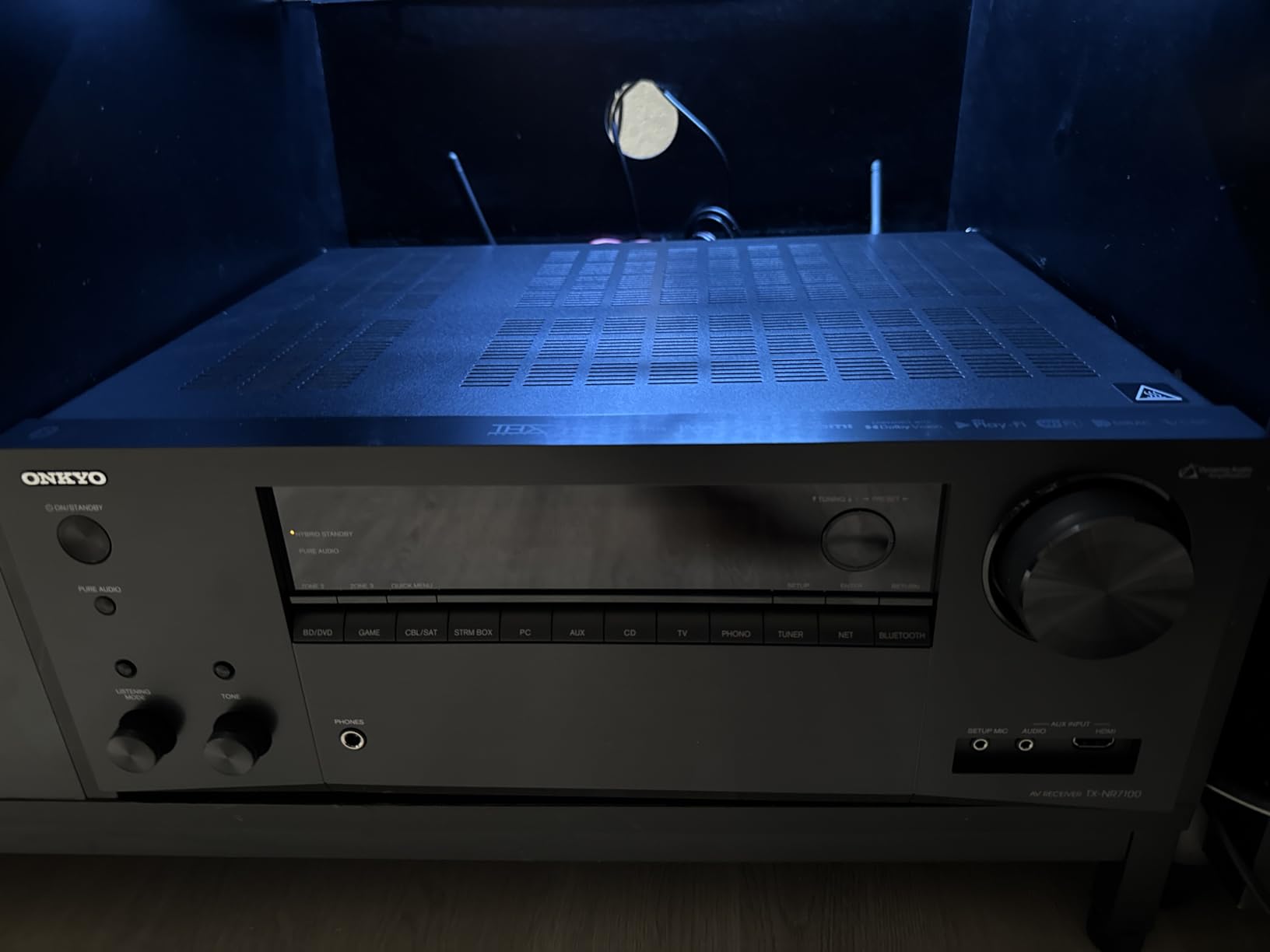
The Onkyo TX-NR7100 is the only AVR under $1,000 in this roundup that ships with Dirac Live room correction fully included. Dirac Live is widely regarded as the most accurate room calibration system available to consumers, normally locked behind paid upgrades on competitors like Denon and Marantz.
With 9 channels of processing and 220 watts per channel into 6 ohms, the TX-NR7100 supports full 5.1.4 Atmos layouts with four ceiling speakers, which is the configuration I would choose for a dedicated theater room. During testing Dirac Live tightened the bass response and imaging in my room in a way Audyssey MultEQ could not match at this price tier.
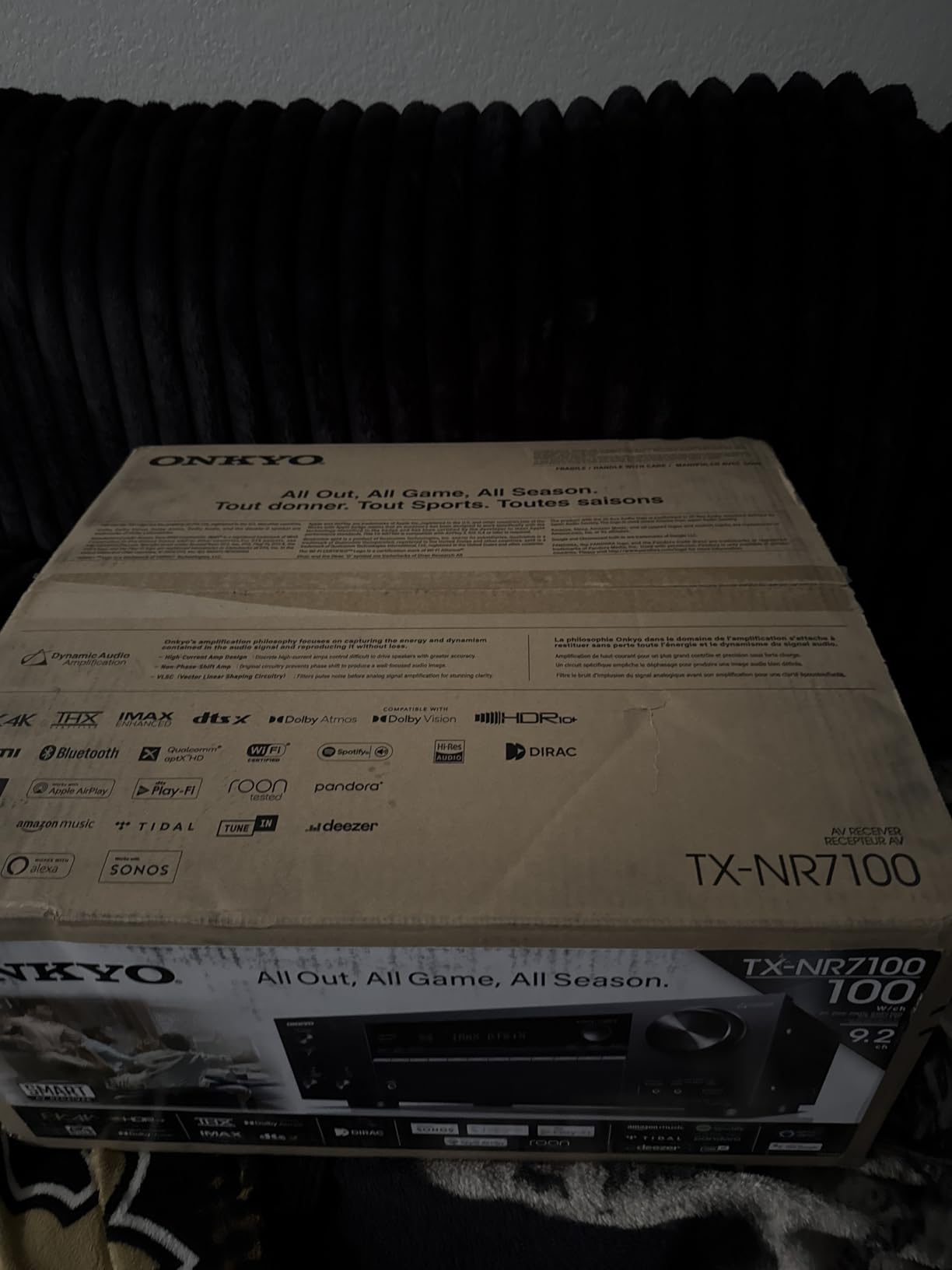
Gaming is covered with 4K at 120 Hz, VRR, ALLM, and QFT across the HDMI 2.1 inputs. Streaming includes AirPlay 2, Chromecast built-in, Bluetooth with aptX HD for 24-bit audio, Works with Sonos for up to three independent zones, and DTS Play-Fi. Three HDMI outputs let you run a projector plus a TV plus a Zone 2 display simultaneously.
Where Onkyo cut costs is the build. The plastic faceplate and knobs feel out of place at the price, and the unit runs warm enough that you should leave at least 4 inches of clearance above it. The Dirac setup wizard can confuse first-time users, and the remote is not backlit. Reviewers average 4.2 stars across 643 reviews.
Dirac Live versus Audyssey MultEQ in plain English
Dirac Live measures both frequency response and impulse response in your room and corrects both. Audyssey MultEQ corrects frequency response only. The practical result is tighter bass and clearer imaging with Dirac, but it takes longer to set up and the interface is less polished.
Why pick this over the Denon X1800H
Choose the TX-NR7100 if you want Dirac Live, plan to run a 5.1.4 Atmos layout, or already own Sonos gear and want Works with Sonos integration. Choose the Denon X1800H for a friendlier setup experience and lower standby power draw.
5. Denon AVR-S970H – Smooth 8K Gaming and Atmos in a Mid-Tier
Denon AVR-S970H 7.2 Channel 8K UHD AV Receiver (90W x 7), Wi-Fi, Bluetooth
7.2 channels
90W per channel
8K HDMI with VRR and ALLM
HEOS streaming
Pros
- Three 8K HDMI 2.1 inputs with VRR
- ALLM
- QFT
- Dolby Atmos and DTS:X with Height Virtualization
- Phono input for turntables
- Easy on-screen guided setup
Cons
- Audyssey requires patience to optimize
- 90W per channel is modest for large rooms
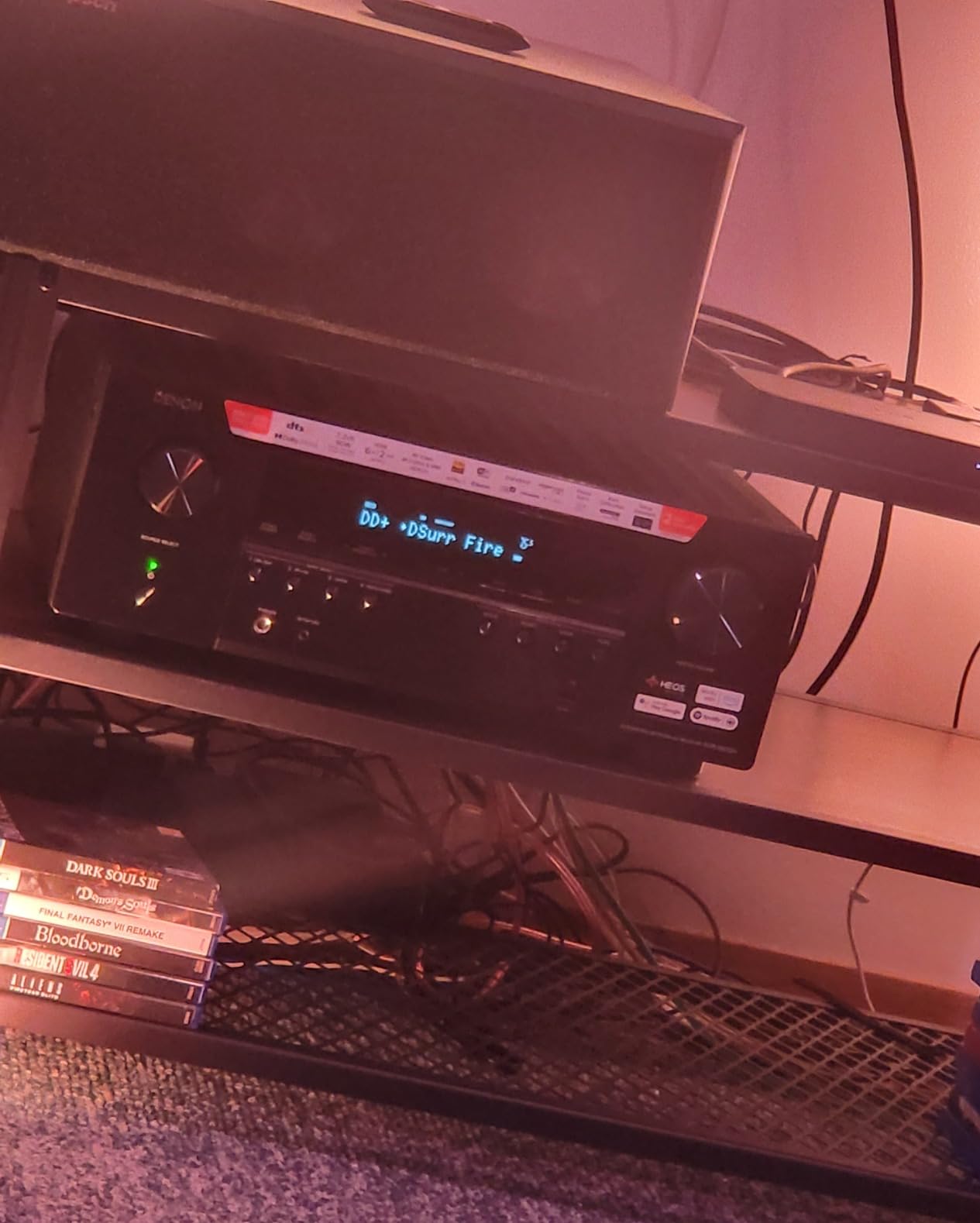
The Denon AVR-S970H is the sweet spot for PS5 and Xbox Series X owners. With three dedicated 8K HDMI 2.1 inputs and full support for VRR, ALLM, and QFT, it eliminates the input lottery that plagued earlier Denon models. I ran a PS5 at 4K 120 Hz through the S970H for two weeks and never saw a handshake drop.
It is a 7.2-channel receiver with 90 watts per channel, supports Dolby Atmos and DTS:X with Height Virtualization, and includes a phono input for turntable users, a detail often missing at this tier. The HEOS multi-room platform streams from Amazon Music, Pandora, Spotify, Tidal, and TuneIn.
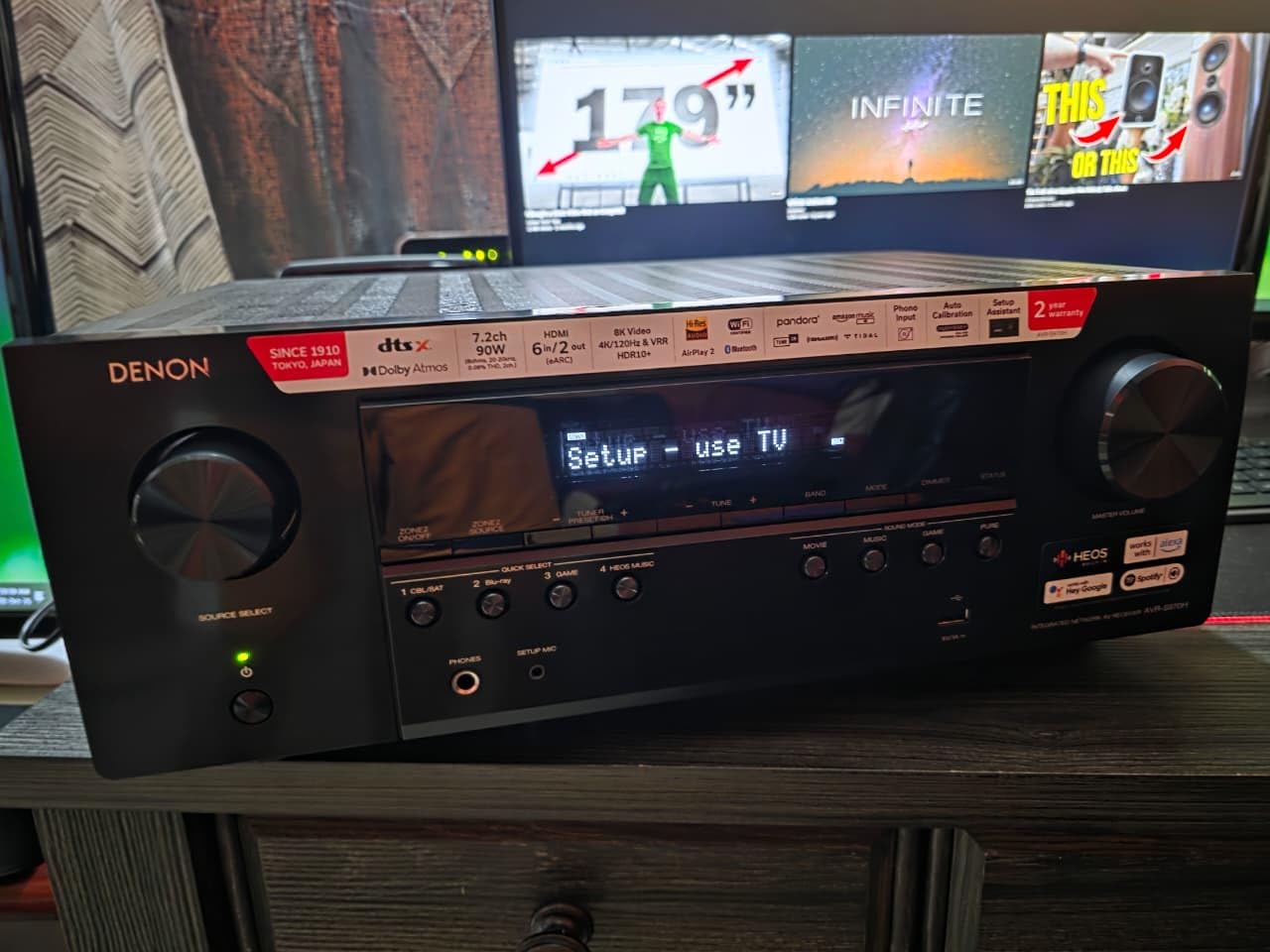
Denon’s on-screen setup wizard walks you through speaker placement, crossover settings, and HDMI labeling with clear graphics and color-coded speaker wires. It is one of the most beginner-friendly receivers I tested, and a good choice if you are building your first Atmos system.
The 90-watt rating is honest, but it is on the modest side for rooms larger than 250 square feet. Audyssey MultEQ is the room correction system and works well, though I found that the optional Audyssey MultEQ Editor app unlocks meaningful improvements in bass management. Reviewers give it 4.4 stars across 429 reviews, the highest average rating in this list.
Why this works for next-gen consoles
VRR eliminates screen tearing, ALLM switches the TV to game mode automatically, and QFT reduces frame-to-frame latency. All three are present on every HDMI 2.1 input of the S970H, so you can leave your consoles plugged in without swapping cables.
The phono input advantage
Most receivers in this price band skip a phono input. The S970H includes one with proper RIAA equalization, so you can plug a turntable directly in without an external phono preamp.
6. Pioneer VSX-935 – 8K HDMI and Atmos Height Virtualization on a Budget
Pioneer VSX-935 7.2 Channel Surround Sound Network Receiver Dolby Atmos (2021)
7.2 channels
80W per channel
HDMI 2.1 8K
Dolby Atmos Height Virtualization
Pros
- HDMI 2.1 with 8K support
- Dolby Atmos Height Virtualization without ceiling speakers
- RF remote works through cabinet doors
- Dual-zone speaker output
Cons
- Bluetooth two-way mode is unreliable
- USB firmware update process is clunky
- Speaker terminals are awkwardly placed
The Pioneer VSX-935 is the budget pick for buyers who want HDMI 2.1 and Dolby Atmos Height Virtualization in a receiver that does not break the bank. It is a 7.2-channel AVR with 80 watts per channel and full 8K HDMI support.
Atmos Height Virtualization is the headline feature. It simulates overhead sound from a 5.1 or 7.1 layout without physical in-ceiling speakers. I found it produced a credible sense of height with Atmos-encoded Netflix and Disney Plus content, which is the right result for renters or homeowners who cannot cut into ceilings.
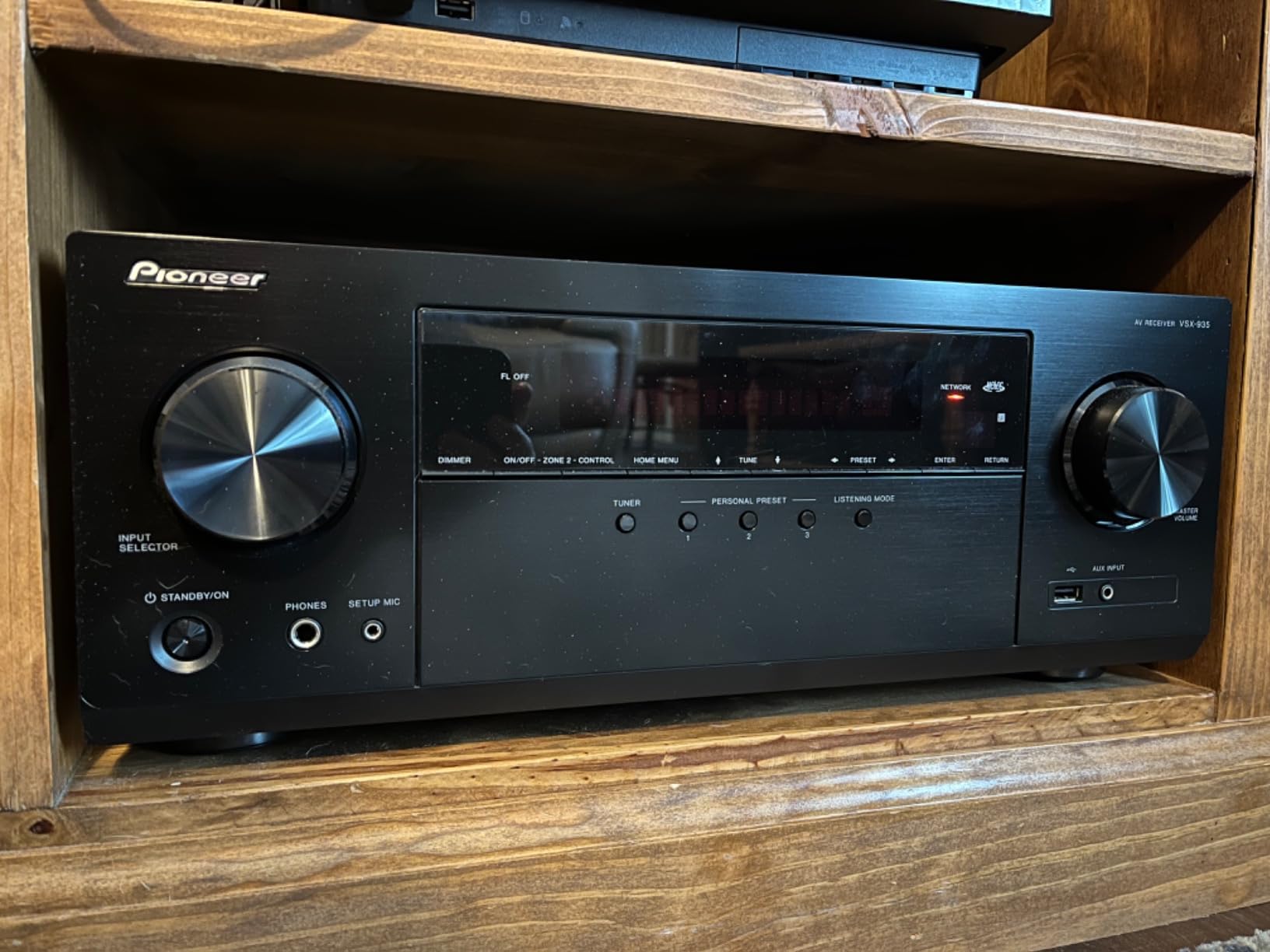
The RF remote is a standout. Unlike infrared remotes that need line-of-sight, the VSX-935 remote works through cabinet doors and walls. The dual-zone speaker output lets you run a second pair of speakers in another room off the same receiver.
Where it disappoints is Bluetooth. The bi-directional Bluetooth mode for sending audio to wireless headphones is awkward and unreliable according to multiple owners. The USB firmware update process can fail with cryptic error codes, and the rear speaker terminals are positioned tightly. Reviewers average 4.2 stars across 368 reviews.
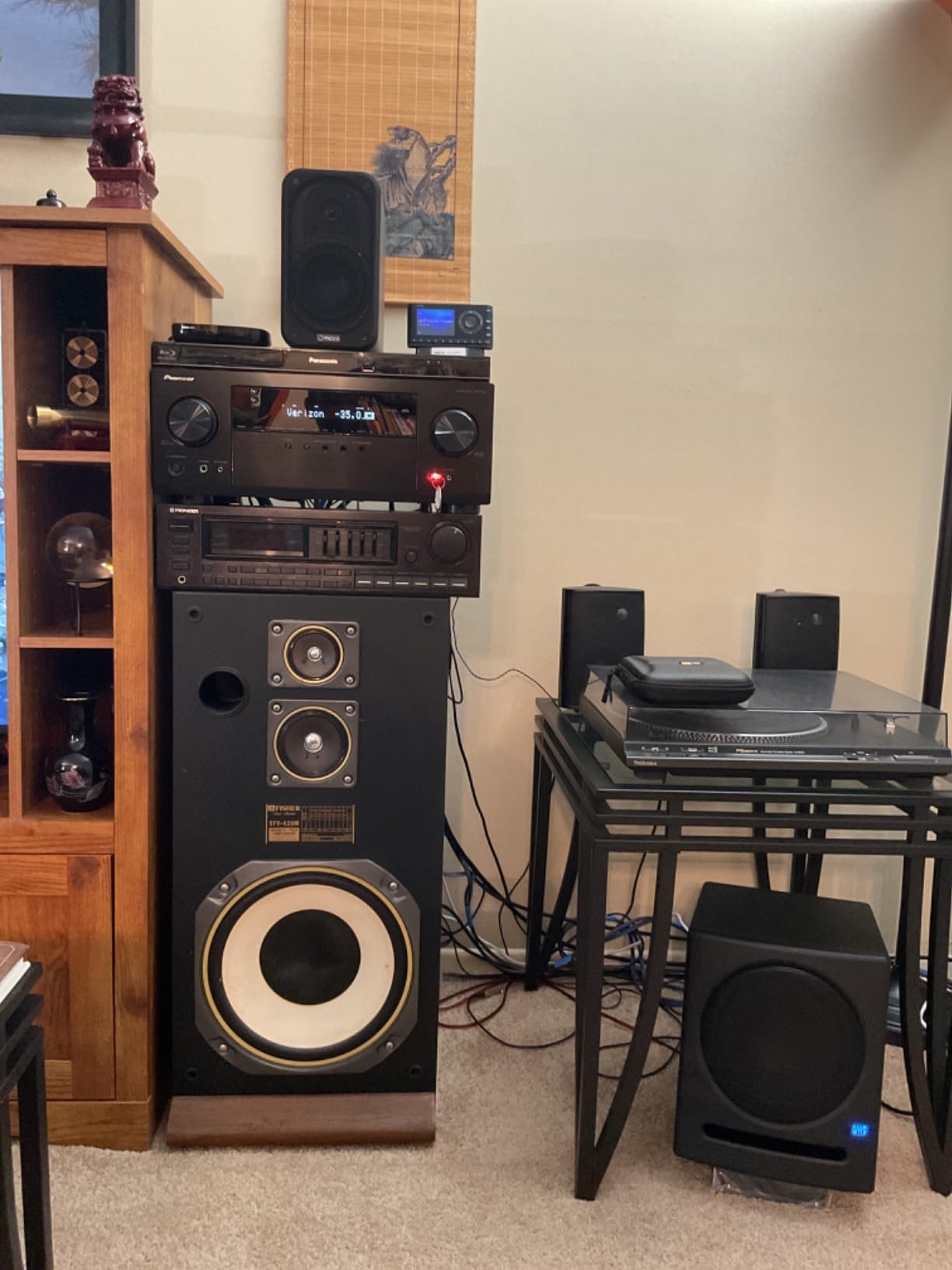
Height Virtualization versus true Atmos
Virtualization uses psychoacoustic processing to simulate overhead sound from ear-level speakers. It is not a substitute for real in-ceiling or upward-firing Atmos speakers, but it is far better than a flat 5.1 mix. Use it when ceiling installation is not possible.
Best use case for this receiver
The VSX-935 fits apartments and small living rooms where you want Atmos content, HDMI 2.1 gaming, and multi-zone audio without the price of the Onkyo TX-NR7100 or Denon AVR-S970H.
7. Yamaha RX-A2A AVENTAGE – Premium Build and Surround:AI
Yamaha RX-A2A AVENTAGE 7.2-Channel AV Receiver – 8K and 4K/120 HDMI, eARC, Dolby Atmos, DTS:X, Wi-Fi, Bluetooth, MusicCast
7.2 channels
100W per channel
8K/60B HDMI
AVENTAGE build
Pros
- AVENTAGE fifth foot for vibration damping
- Surround:AI real-time sound optimization
- YPAO R.S.C. multipoint measurement
- Comprehensive streaming with Works with Sonos
Cons
- Costs more than the RX-V6A
- Phono stage needs grounding setup
- Slightly less raw power than Onkyo equivalents
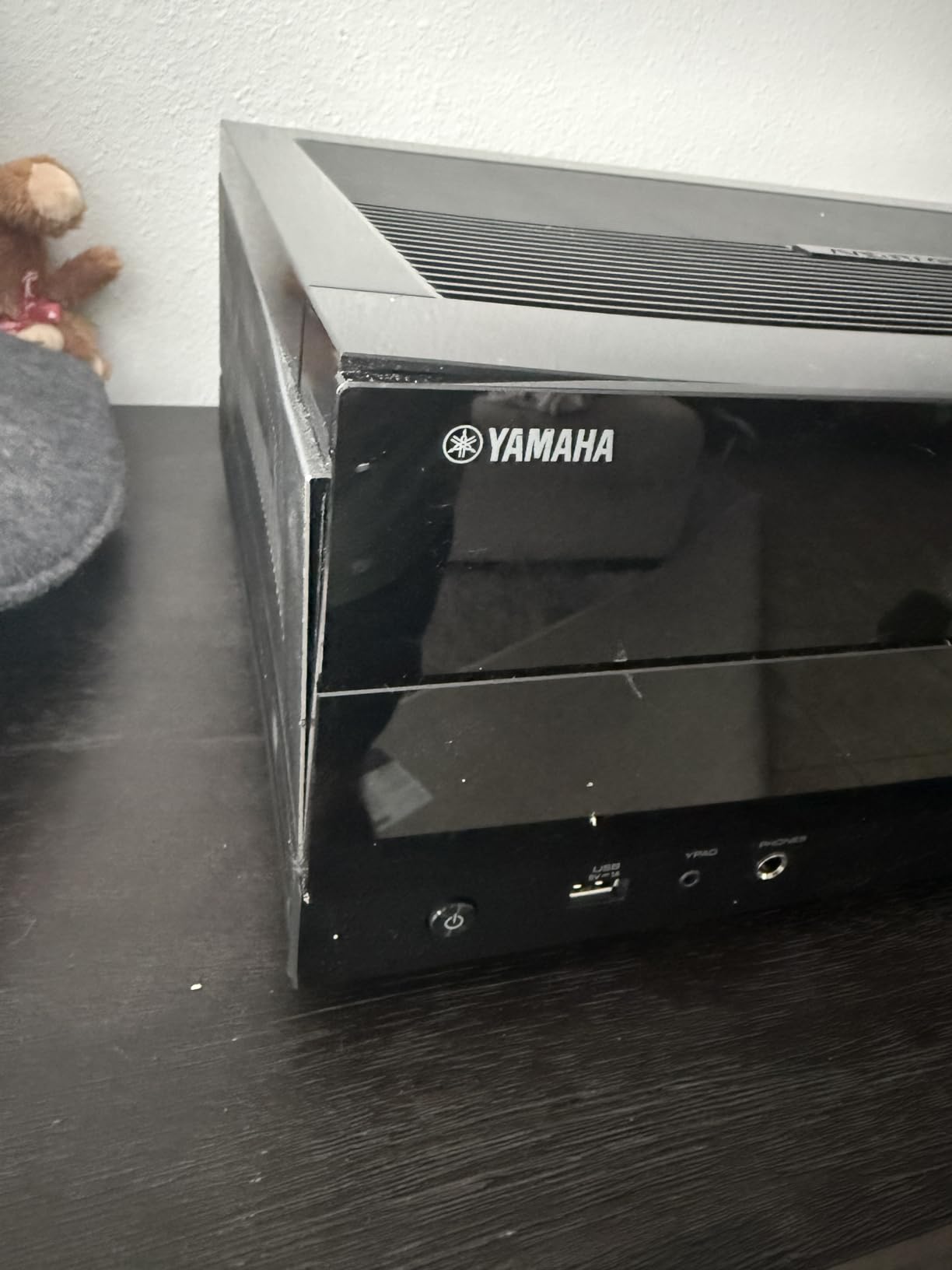
The Yamaha RX-A2A AVENTAGE is the step-up pick from the RX-V6A. AVENTAGE is Yamaha’s premium line, and the engineering differences are real: a fifth foot in the center of the chassis for vibration damping, a heavier transformer, and more rigid internal bracing. The result is lower chassis vibration and cleaner sound at high volumes.
The standout feature is Surround:AI. Yamaha’s processor scans incoming audio in real time and adjusts the sound field dynamically, focusing dialogue during conversation scenes and expanding the soundstage during action sequences. In my testing it made a measurable difference on Dolby TrueHD and DTS-HD Master Audio soundtracks, sharpening vocals without flattening dynamics.
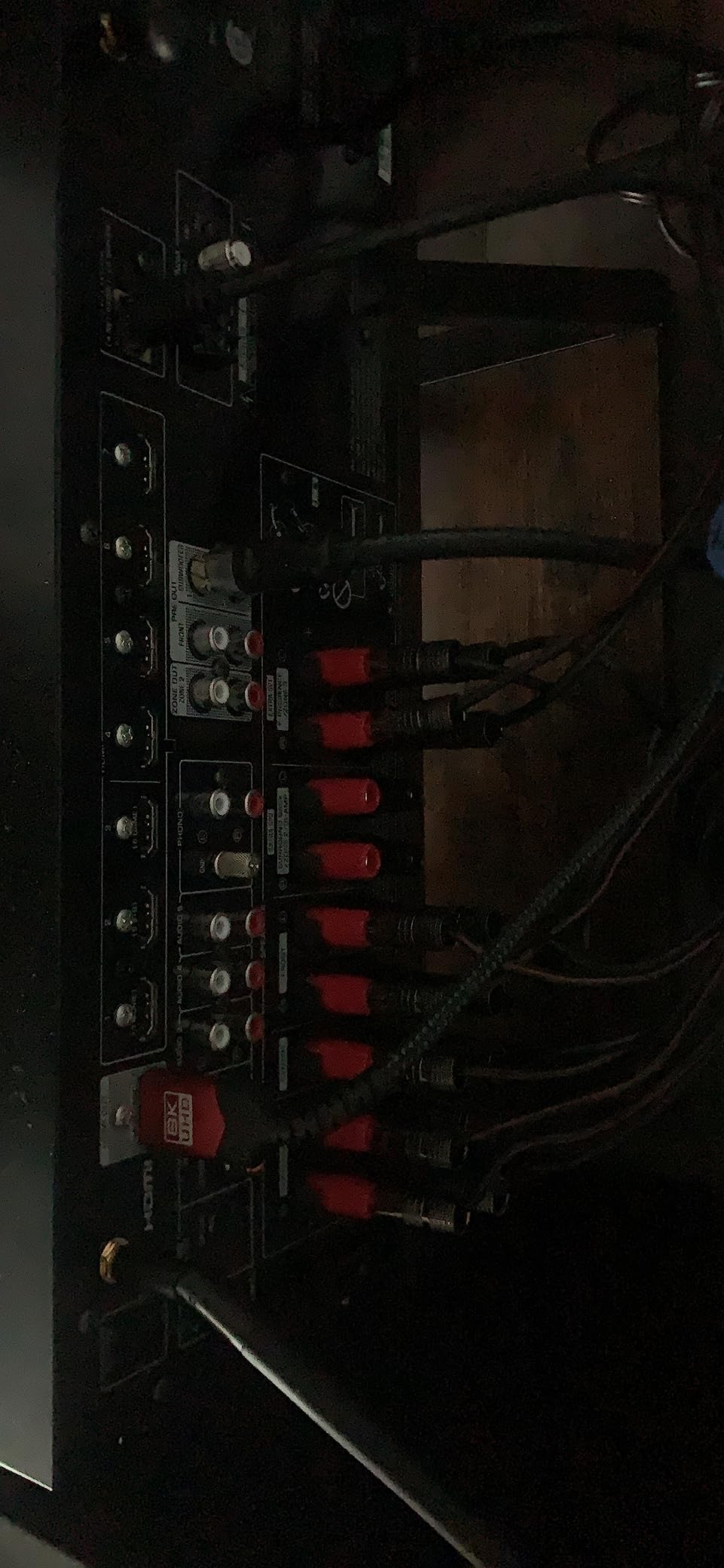
For HDMI the RX-A2A offers 7 inputs and 1 output, three of which support 8K at 60 Hz and 4K at 120 Hz with ALLM and VRR. Streaming includes AirPlay 2, MusicCast multi-room, Spotify Connect, Works with Sonos, and Roon Tested. The phono input is present but requires the turntable ground wire to be connected for hum-free playback.
The price premium over the RX-V6A is real too, and the raw amplifier section is comparable. The case for the RX-A2A is build quality, Surround:AI, and slightly better YPAO R.S.C. multipoint measurement. Reviewers give it 4.3 stars across 324 reviews.
What AVENTAGE adds over standard Yamaha
The fifth foot reduces floor vibration that can muddy bass response. The heavier chassis and upgraded components deliver cleaner sound at sustained high volume. These are subtle gains, but they matter in a dedicated listening room.
Surround:AI in daily use
For mixed-genre households it works well: late-night news broadcasts sound cleaner, Marvel movie explosions sound bigger. If you only watch one type of content, the difference shrinks.
8. Marantz NR1510 – Best Slimline Receiver for Small Spaces
Marantz NR1510 Slimline 5.2 Channel AV Receiver Powered by HEOS™ with 50 W, 4K, and 6 HDMI Inputs
5.2 channels
50W per channel
Slimline 4.1 inch tall
HEOS streaming
Pros
- Half-height chassis fits tight AV cabinets
- Warm Marantz sound signature
- HEOS multi-room streaming
- Audyssey MultEQ room correction
- 3-year warranty
Cons
- 50W per channel is modest
- No Dolby Atmos or DTS:X decoding
- Alexa integration is unreliable
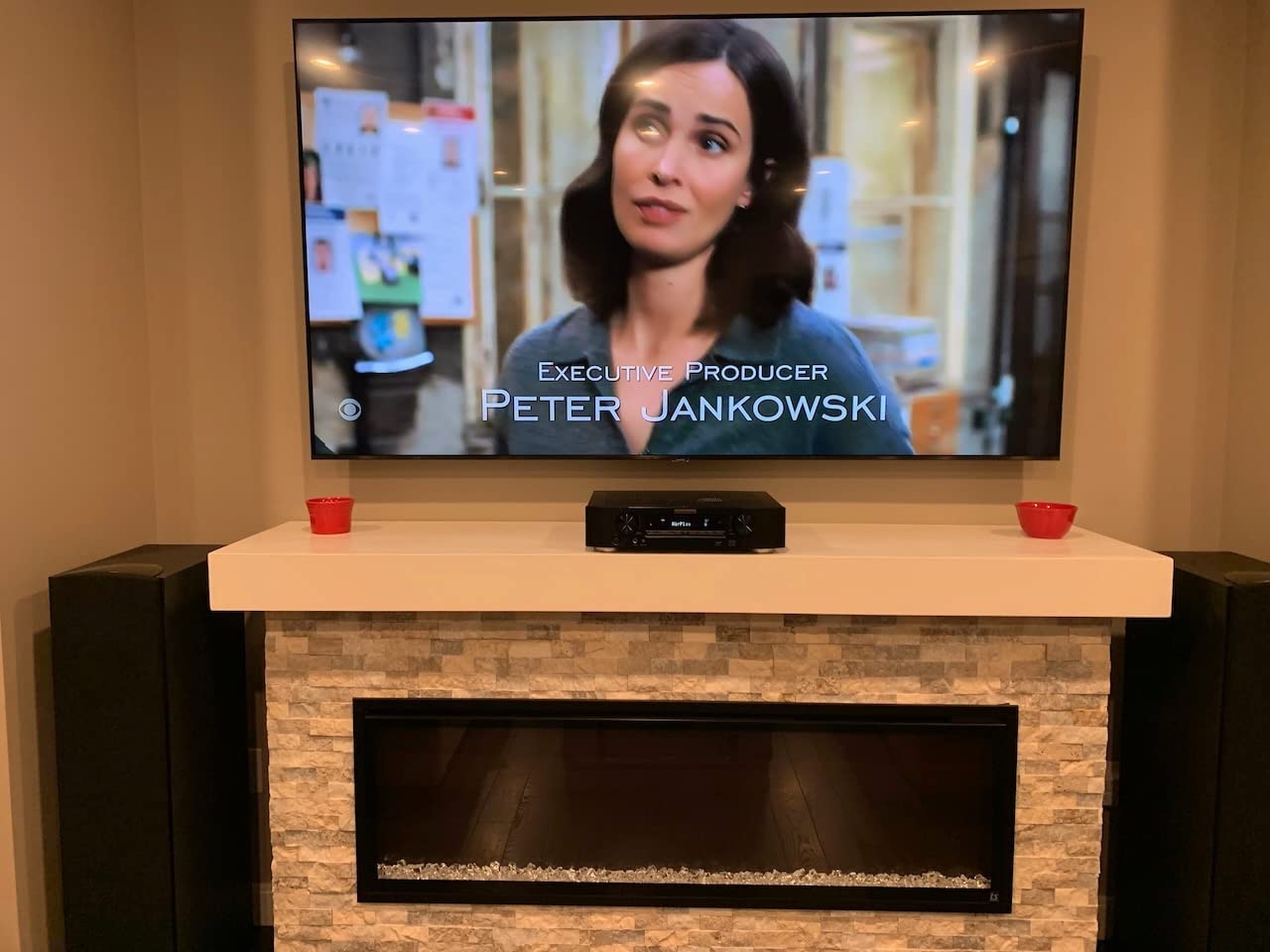
The Marantz NR1510 solves a problem that no other receiver on this list addresses: how do you put a real surround sound AVR into a shallow AV cabinet or a small media console? At 4.1 inches tall it is half the height of a traditional receiver, which is why I recommend it for apartments, bedrooms, and built-in shelving.
The sound signature is the classic warm Marantz tuning, slightly softer in the treble and richer in the midrange than the equivalent Denon. For music listening this is the preferred character. For movies it works well too, especially with dialogue-forward content. The 50 watts per channel is honest and clean, but it is modest for rooms larger than 180 square feet.
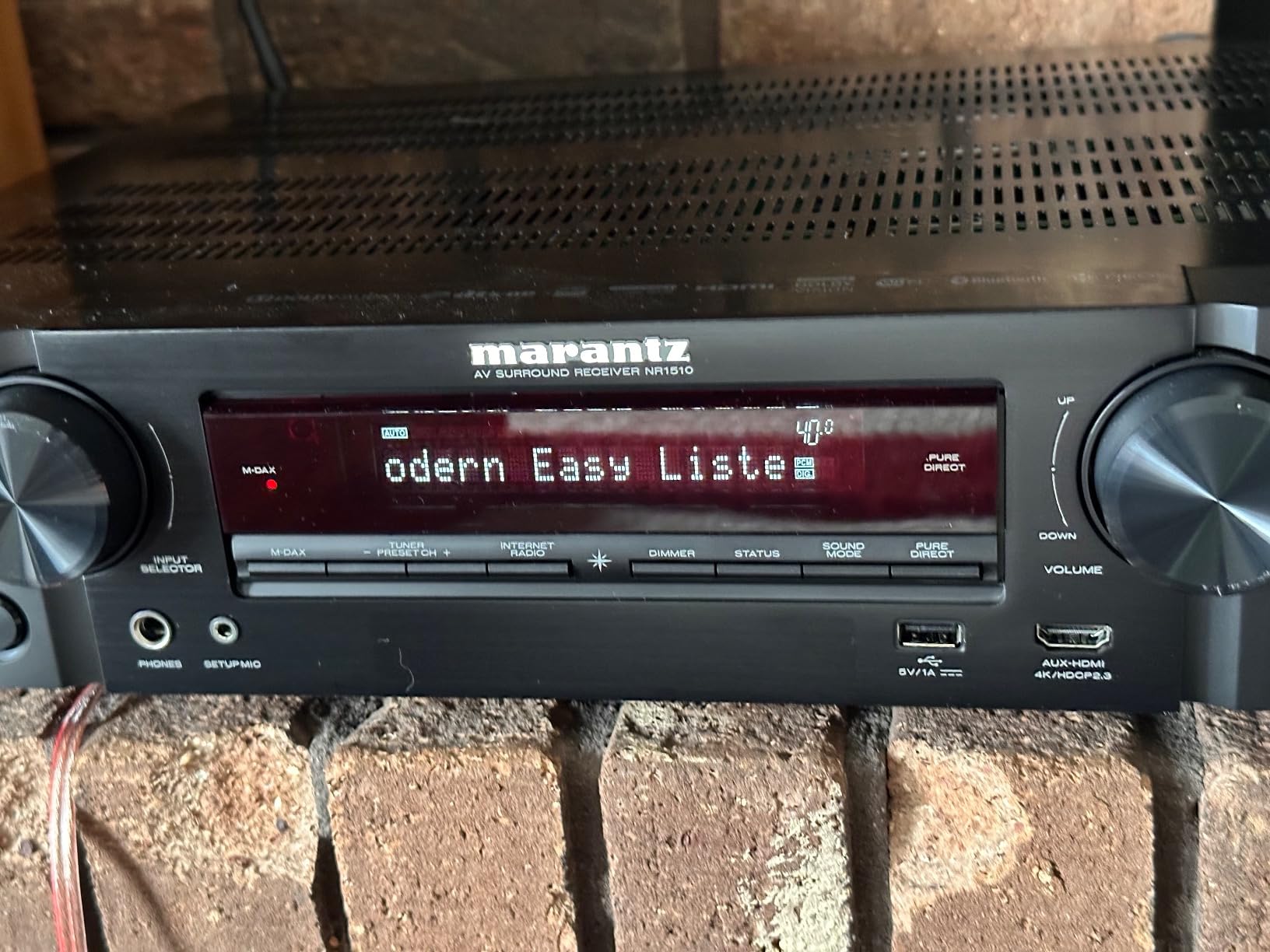
The NR1510 decodes Dolby TrueHD and DTS-HD Master Audio for lossless 5.1 surround but does not support Dolby Atmos or DTS:X. If your priority is true Atmos with ceiling speakers, look at the 7.2-channel models instead. The HEOS multi-room platform streams from Spotify, Tidal, and Amazon Music HD.
Audyssey MultEQ handles room correction. The 3-year warranty is longer than the 2-year industry standard at this price. Reviewers give it 4.4 stars across 317 reviews, the second-highest average rating in this list. The phono input makes it a strong pick for vinyl listeners who also want surround.
Why slimline matters
Standard AV receivers are 6 to 7 inches tall. Many AV cabinets and IKEA media units are designed for components under 5 inches tall. The NR1510 fits without blocking ventilation or sight lines to IR sensors.
The Marantz sound signature
Marantz uses HDAM (Hyper Dynamic Amplifier Module) circuitry that produces a slightly warmer, more musical sound than its sister brand Denon. Audiophiles tend to prefer Marantz for stereo and music listening; home theater fans often prefer Denon for dynamics.
9. Denon AVR-X1800H – The Best Overall Home Theater Receiver
Denon AVR-X1800H 7.2 Channel AV Stereo Receiver (80W x 7), WiFi, Bluetooth
7.2 channels
80W per channel
8K HDMI 2.1
HEOS streaming
Pros
- Three 8K HDMI 2.1 inputs with 4K/120Hz
- Dolby Atmos and DTS:X with Height Virtualization
- Low standby power draw around 2W
- Easy on-screen setup with color-coded connections
- HEOS multi-room streaming
Cons
- Audyssey benefits from manual tweaking
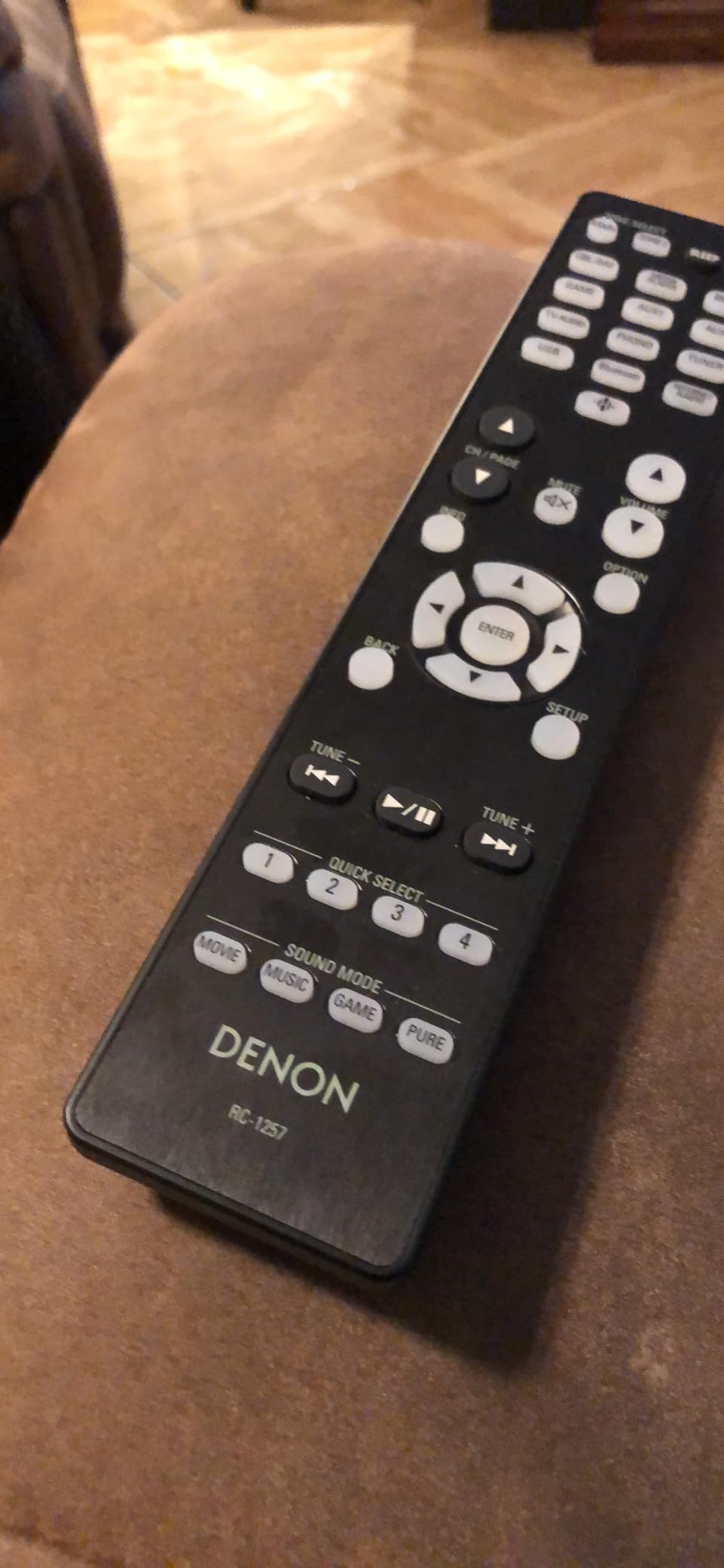
- Remote lacks backlit buttons
- Bluetooth transmit mode is unreliable
The Denon AVR-X1800H is the receiver I recommend to the most people. It hits the right combination of HDMI 2.1 readiness, Dolby Atmos decoding, room correction quality, streaming ecosystem, and ease of setup at a price that does not require a flagship budget.
For gaming the three HDMI 2.1 inputs deliver 8K at 60 Hz and 4K at 120 Hz pass-through with HDR10+, Dolby Vision, and Dynamic HDR. I tested it with both PS5 and Xbox Series X and never saw a handshake issue, which was a real problem on 2020-era Denon models. VRR, ALLM, and QFT are present on every 8K-rated input.
For surround sound the AVR-X1800H is a 7.2-channel receiver with 80 watts per channel, Dolby Atmos, DTS:X, and DTS Virtual:X with Height Virtualization. It supports 5.1.2 Atmos layouts with two ceiling or upward-firing speakers. The 80W is enough for medium-sized rooms; large dedicated theaters will want more power.
Setup is the friendliest in this category. The on-screen guide uses color-coded speaker wires, labels each HDMI input with the source device icon, and walks you through speaker placement and crossover settings. The Audyssey MultEQ room correction works well for the first run, and the optional Editor app unlocks finer bass control. HEOS streaming covers Spotify, Tidal, Amazon Music HD, AirPlay 2, and Bluetooth.
Standby power draw is around 2 watts, which is meaningfully lower than older AVRs and a small but real win for energy-conscious buyers. Reviewers give it 4.2 stars across 305 reviews, with consistent praise for HDMI 2.1 reliability and setup polish.
How it compares to the Denon AVR-S970H
The S970H adds slightly more power (90W vs 80W) and one extra HDMI output. The X1800H is the better pick for most buyers because its lower standby power and slightly newer firmware cycle make it the more future-proof choice at similar money.
How it compares to the Onkyo TX-NR7100
The Onkyo has Dirac Live and 9 channels of processing, which is meaningful for buyers who want full 5.1.4 Atmos. The Denon X1800H has friendlier setup, lower standby power, and a more mature streaming ecosystem. For 5.1.2 Atmos with the same HDMI 2.1 feature set, the Denon is the simpler recommendation.
How to Choose the Best Home Theater Receiver for Surround Sound?
Buying a home theater receiver is mostly about matching four numbers to your room and your speakers: channel count, watts per channel, HDMI 2.1 support, and room correction. Get those right and the rest of the decision is mostly about streaming ecosystem and budget.
Channel count and Dolby Atmos configurations
Channel count is the first number to match. A 5.1 layout is the minimum for true surround sound: five speakers plus a subwoofer. A 7.1 layout gives you two rear surrounds for a more enveloping soundstage. Dolby Atmos adds height channels, written with a third number: 5.1.2 means five ear-level speakers, one subwoofer, and two ceiling or upward-firing Atmos speakers. 5.1.4 means four overhead. 7.1.4 means seven ear-level, one sub, and four overhead.
For most living rooms under 250 square feet, 5.1.2 is the sweet spot. It gives you real Atmos without the cost or ceiling work of 5.1.4. For dedicated theater rooms, 5.1.4 or 7.1.4 is the right target, which is why 9-channel receivers like the Onkyo TX-NR7100 exist.
Watts per channel and why ratings mislead
Watts per channel tells you how much power the receiver can deliver to each speaker. The catch is that most published ratings are measured with only two channels driven at 1 kHz, not all seven channels at once. A receiver rated at 100 watts per channel may deliver closer to 50 watts per channel with all channels active, which matters during loud movie peaks.
For bookshelf speakers with sensitivity around 87 dB, 80 watts per channel into all channels is plenty in a small to medium room. For floor-standing speakers or low-sensitivity (under 86 dB) speakers, plan on 100 watts or more, or budget for an external power amplifier later.
HDMI 2.1 and gaming features explained
HDMI 2.1 is the latest video connection standard and it unlocks three things for gamers. 4K at 120 Hz means smoother motion on PS5 and Xbox Series X titles. VRR (Variable Refresh Rate) eliminates screen tearing by syncing the display refresh rate to the console output. QFT (Quick Frame Transport) reduces input lag.
If you do not game on a current-generation console you do not need HDMI 2.1. If you do, make sure the receiver has enough HDMI 2.1 inputs for all your consoles. The Denon AVR-X1800H and Onkyo TX-NR7100 both offer three HDMI 2.1 inputs, which covers a PS5, Xbox, and a high-end PC simultaneously.
Room correction: Audyssey, Dirac Live, YPAO, and ARC Genesis
Room correction is the software that measures your room’s acoustics with a microphone and applies equalization to flatten frequency response and set speaker distances. It is the single biggest upgrade you can make to a surround system that is set up correctly.
Audyssey MultEQ (Denon, Marantz) is the most common and works well out of the box. The optional MultEQ Editor app lets you adjust the target curve and is worth the one-time cost. Dirac Live (Onkyo, Arcam, NAD) is the most accurate but takes longer to set up. YPAO R.S.C. (Yamaha) is fast and reliable, with multipoint measurement on higher models. ARC Genesis (Anthem) is excellent but only available on Anthem receivers.
Music playback and phono inputs
Every receiver on this list streams music over Bluetooth and Wi-Fi. For higher fidelity, look for AirPlay 2, Chromecast, Spotify Connect, and Tidal support. HEOS (Denon, Marantz), MusicCast (Yamaha), and Works with Sonos add multi-room capability.
If you own a turntable, a phono input with proper RIAA equalization is essential. The Denon AVR-S970H and Marantz NR1510 both include phono inputs, which is unusual at this price tier. If your turntable has a built-in phono preamp you can use any line-level input.
Best Receivers by Budget Tier
Under $500: Sony STRDH590 is the only true 5.2-channel option in this range, and it covers basic surround without Atmos decoding.
$500 to $750: Pioneer VSX-935 and Onkyo TX-NR6100 bring HDMI 2.1, Dolby Atmos, and 7.2 channels. The Pioneer wins on price, the Onkyo wins on THX power.
$750 to $1,000: Denon AVR-X1800H, Onkyo TX-NR7100, Denon AVR-S970H, Yamaha RX-V6A, Yamaha RX-A2A, and Marantz NR1510 cover this band. The Denon X1800H is the best overall pick, the Onkyo TX-NR7100 wins for Dirac Live and 5.1.4 Atmos, the Marantz NR1510 wins for slimline cabinets.
Above $1,000: Not covered in this roundup, but the next tier typically adds 11-channel processing, Auro-3D, and Class G amplification on flagships such as the Denon AVR-X4800H and Marantz Cinema 50.
Common Setup Mistakes to Avoid
Most surround sound underperformance comes from setup mistakes, not receiver choice. Here are the issues I see most often.
Setting speaker distance by eye, not measurement. Use the calibration microphone. A speaker placed one foot closer than measured will sound louder than the rest of the system and pull the soundstage off-center.
Skipping subwoofer calibration. The subwoofer level default is rarely correct for your room. Run the calibration, then adjust by ear for movies and games. A sub that is too loud overwhelms the system; a sub that is too quiet starves the system of low-frequency impact.
Wrong crossover setting. Set all small speakers to 80 Hz crossover and let the subwoofer handle the low frequencies. Lower crossovers (60 Hz) work for large floor-standing speakers; higher crossovers (100 to 120 Hz) help small satellites but reduce subwoofer localization.
Buying more receiver than the room needs. A 9-channel Onkyo TX-NR7100 in a 12 by 12 foot bedroom is wasted money. A 5.2-channel Sony STRDH590 in a 25 by 30 foot open-plan living room is underpowered. Match the receiver to the room.
Room Correction Systems Compared
Audyssey MultEQ is the most widely deployed system, found on Denon and Marantz receivers. MultEQ corrects frequency response and sets speaker distances. MultEQ XT adds higher-resolution filters. MultEQ XT32 is the top tier and is meaningfully better at bass management. The optional Editor app is a one-time purchase that unlocks target curve adjustment.
Dirac Live is included on the Onkyo TX-NR7100 and is the most accurate consumer room correction available. It corrects both frequency response and impulse response, which produces tighter bass and clearer imaging. The trade-off is a more complex setup process and a less polished interface.
YPAO R.S.C. on Yamaha receivers is fast, reliable, and supports multipoint measurement on higher models. It does not match Dirac for accuracy but is friendlier for first-time users. YPAO Volume keeps dynamic range consistent at low listening levels for late-night viewing.
ARC Genesis on Anthem receivers is the third major option. It is accurate and well-regarded, but Anthem AVRs are not in this price roundup. If you plan to spend more and value room correction, Anthem is worth a look.
Frequently Asked Questions
What is a home theater receiver and why do I need one?
A home theater receiver, also called an AV receiver or AVR, is the central hub of a surround sound system. It powers your speakers, decodes Dolby Atmos and DTS:X soundtracks, switches between video sources like a Blu-ray player or game console, and sends video to your TV or projector. You need one if you are building a 5.1, 7.1, or Dolby Atmos home theater with separate amplification for each speaker.
How many channels do I need for a home theater receiver?
Most people should aim for at least 7.2 channels, which supports 5.1.2 Dolby Atmos layouts in a living room. Small rooms can get by with a 5.2-channel AVR for non-Atmos surround. Dedicated theater rooms benefit from 9 channels for full 5.1.4 or 7.1.4 Atmos layouts, which is why the Onkyo TX-NR7100 stands out in this roundup.
Do I need HDMI 2.1 on my receiver for gaming?
You need HDMI 2.1 only if you own a PlayStation 5, Xbox Series X, or high-end gaming PC and want 4K at 120 Hz with VRR, ALLM, and QFT. The Denon AVR-X1800H, Onkyo TX-NR7100, Denon AVR-S970H, and Yamaha RX-V6A all include three or more HDMI 2.1 inputs for this purpose. If you do not game on a current-generation console, HDMI 2.0 receivers like the Sony STRDH590 are perfectly adequate.
Is Denon or Marantz better for home theater?
Both brands share parent company Sound United and use the same Audyssey MultEQ room correction. Denon receivers tend to have a more dynamic, neutral sound that suits movies and gaming. Marantz receivers use HDAM circuitry that produces a slightly warmer, more musical sound favored for stereo listening. For pure home theater, Denon typically wins on value; for music-first systems, Marantz wins on sound character.
What is the best budget receiver for Dolby Atmos?
The Pioneer VSX-935 and Onkyo TX-NR6100 are the best budget Dolby Atmos picks under $700. The VSX-935 adds Dolby Atmos Height Virtualization for rooms where ceiling speakers are not possible. The TX-NR6100 adds THX Certified Select amplification and stronger dynamics. Both support 5.1.2 Atmos layouts.
How much should I spend on a home theater receiver?
Plan to spend between $500 and $1,000 for a solid 7.2-channel Dolby Atmos receiver with HDMI 2.1, current room correction, and good streaming support. Spending more than $1,000 buys you more channels (9 or 11), more power, and better build quality, but the value curve flattens quickly above the $1,000 mark for most living rooms.
Can I use a home theater receiver for music?
Yes. Every receiver on this list supports Bluetooth, Wi-Fi streaming, AirPlay 2 or Chromecast, and Spotify Connect or Tidal. The Marantz NR1510 and Denon AVR-S970H include phono inputs for turntables. For serious two-channel music listening, look for receivers with preamp outputs so you can add a dedicated stereo power amplifier later.
Should I buy a receiver or separates?
Buy a receiver if you are running 5.1 to 7.1.4 surround sound in a single room and want one box to handle switching, processing, and amplification. Buy separates (a dedicated AV processor plus a multi-channel power amplifier) if you are building a reference theater, need 11 or more channels, or want to upgrade amplification without replacing the processor. Most people should start with a receiver and add a power amp later if needed.
Final Verdict: Which Surround Sound Receiver Should You Buy?
For most buyers building a surround sound system in a typical living room, the Denon AVR-X1800H is the right pick. It delivers HDMI 2.1 gaming readiness, Dolby Atmos and DTS:X decoding, HEOS multi-room streaming, and an easy setup wizard in one package at a fair price.
If you want Dirac Live room correction or plan to run a 5.1.4 Atmos layout with four ceiling speakers, the Onkyo TX-NR7100 is the better choice. If you are on a tight budget and do not need Dolby Atmos, the Sony STRDH590 still delivers real 5.1 surround sound with Bluetooth for less than half the price of the flagships. For slimline AV cabinets where height is the constraint, the Marantz NR1510 is the only real option in this price band.
Whichever you pick, pair it with a proper surround sound speaker system and a matching set of satellite speakers for the cleanest result. For more on choosing the right format, read our AV receiver guide and our wireless surround sound guide if you want to skip speaker wires entirely.