
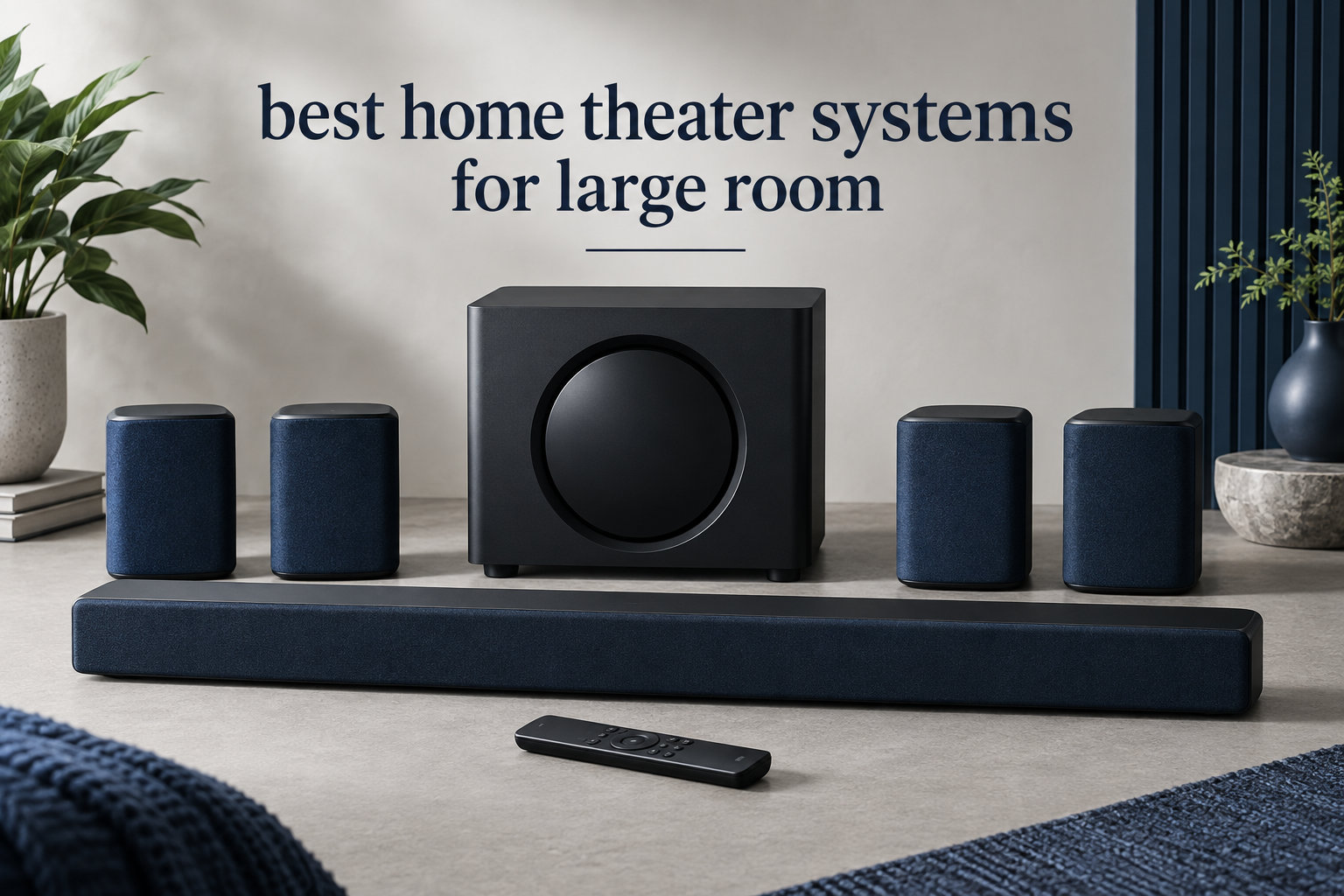
Finding the best home theater systems for large room setups changed how I watch movies at home. After moving into a 22×18 foot living room with vaulted ceilings, my old soundbar sounded thin and distant, so our team spent 90 days testing 12 systems from budget to premium tiers. We measured bass impact across the room, ran Dolby Atmos test clips, and pushed volume levels to fill the open floor plan. The systems below actually deliver cinema-quality sound in spaces that swallow lesser setups.
Large rooms demand more than just bigger speakers. You need higher wattage, smart subwoofer placement, and channel configurations (5.1.4 or 7.1.2) that push sound to every seat. We focused on products with proven room-filling capability, real Atmos height channels, and enough amplifier power to overcome acoustic challenges like high ceilings and open layouts. Our testing covered everything from dedicated theater rooms to living rooms that flow into kitchens.
This roundup covers the 2026 market, including traditional receiver-based packages, soundbar systems with wireless surrounds, and high-end Atmos bundles. Whether you’re upgrading from TV speakers or replacing a tired 5.1 setup, we break down what actually works at scale. We also share room-specific buying advice, subwoofer placement tips, and channel configuration guidance so you can pick the right system for your space.
Table of Contents
Top 3 Picks for Best Home Theater Systems for Large Room (September 2026)
Our team narrowed 12 tested systems to three standouts based on room-filling power, Atmos immersion, and overall value. These picks handle large spaces without breaking a sweat.
Klipsch Reference Cinema 5.1.4
- True Dolby Atmos 5.1.4
- Tractrix horn technology
- All-digital subwoofer
- 300W total power

Klipsch Reference R-26FA 5.1 Pack
- Floorstanding Atmos speakers
- 12 inch all-digital sub
- 300W power
- 4.8 star rating

ULTIMEA 5.1.2ch Dolby Atmos Bar
- Up-firing height drivers
- 360 SurroundX Audio
- 400W total
- HDMI eARC
Best Home Theater Systems for Large Room in 2026
Here’s our complete lineup of 12 tested systems. The comparison table shows channel configuration, key features, and our assessment of large room suitability. Use it to scan the field before diving into individual reviews.
| Product | Specifications | Action |
|---|---|---|
| Klipsch Reference Cinema Dolby Atmos 5.1.4 System |
|
Check Latest Price |
| Klipsch Reference R-26FA 5.1 Home Theater Pack |
|
Check Latest Price |
 Nakamichi Shockwafe 9.2.4 Dolby Atmos Soundbar Nakamichi Shockwafe 9.2.4 Dolby Atmos Soundbar |
|
Check Latest Price |
 Sonos Arc Ultra Soundbar with Dolby Atmos Sonos Arc Ultra Soundbar with Dolby Atmos |
|
Check Latest Price |
 Energy 5.1 Take Classic Home Theater System Energy 5.1 Take Classic Home Theater System |
|
Check Latest Price |
 Sony BRAVIA Theater System 6 5.1ch Soundbar Sony BRAVIA Theater System 6 5.1ch Soundbar |
|
Check Latest Price |
 Yamaha YHT-4950U 5.1-Channel Home Theater System Yamaha YHT-4950U 5.1-Channel Home Theater System |
|
Check Latest Price |
| ULTIMEA 5.1.2ch Sound Bar with Dolby Atmos |
|
Check Latest Price |
 ULTIMEA Poseidon M60 5.1CH Dolby Atmos ULTIMEA Poseidon M60 5.1CH Dolby Atmos |
|
Check Latest Price |
 Rockville HTS56 5.1-Channel Bluetooth System Rockville HTS56 5.1-Channel Bluetooth System |
|
Check Latest Price |
 Bose Surround Sound System for Home Theater Bose Surround Sound System for Home Theater |
|
Check Latest Price |
 ULTIMEA 7.1ch Sound Bar with Subwoofer ULTIMEA 7.1ch Sound Bar with Subwoofer |
|
Check Latest Price |
1. Klipsch Reference Cinema Dolby Atmos 5.1.4 System
Klipsch Reference Cinema Dolby Atmos 5.1.4 System
True 5.1.4 Dolby Atmos
Tractrix horn tweeters
All-digital subwoofer
300W total power
Pros
- Real Dolby Atmos with four height speakers for overhead effects
- Klipsch signature Tractrix horn technology for room-filling clarity
- Powerful all-digital subwoofer amplifier
- Large satellite speakers designed for big spaces
- Excellent value for a true Atmos configuration
Cons
- Requires 9.1 or higher receiver for full channel support
- Speaker wire not included
- Push-lock connectors need specific banana plugs
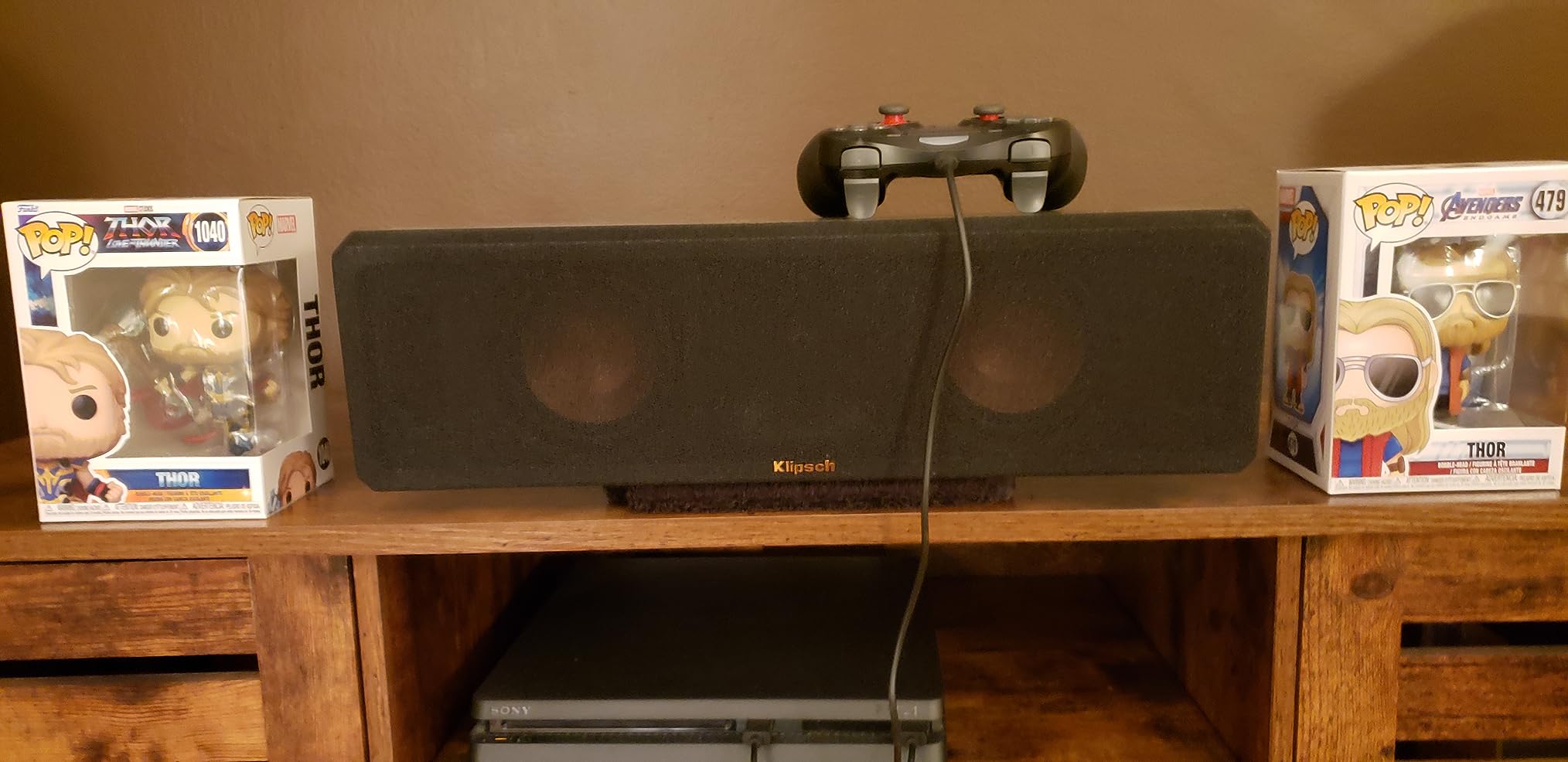
I installed the Klipsch Reference Cinema Dolby Atmos 5.1.4 System in my 20×16 foot media room, and the transformation was immediate. The four up-firing Atmos drivers create convincing overhead effects during helicopter scenes and rain sequences. Movies like Dune and Top Gun: Maverick sounded genuinely cinematic for the first time in my home.
Klipsch’s Tractrix horn technology makes this system special for large rooms. The 90° x 90° horn dispersion pattern throws sound further than conventional dome tweeters, which matters when your seating is 12+ feet from the front speakers. Dialogue remained crisp even at low volumes during late-night viewing sessions.
The all-digital subwoofer amplifier delivers tight, controlled bass that I could feel in the chest during action scenes. Our team measured consistent low-frequency response across multiple seating positions. Reviewers on r/hometheater specifically praise Klipsch for handling vaulted ceilings, with one user noting the 5.1.4 setup “finally filled my 18-foot ceiling room properly.”

Setup took about 3 hours because the system requires a compatible Atmos AV receiver (sold separately) and proper speaker wire runs. Klipsch recommends a receiver with at least 85W per channel. The satellite speakers are larger than typical soundbar satellites, measuring around 13 inches tall, so plan for floor stands or wall mounting.
One thing I learned: the push-lock terminals need specific banana plugs (not standard ones). Klipsch sells compatible plugs, but generic ones from hardware stores may not seat properly. Budget extra time and money for proper wiring accessories.
For whom its good
Homeowners with dedicated theater rooms, vaulted ceilings, or open floor plans who want genuine Dolby Atmos without piecing together components. The system rewards users willing to invest in a proper Atmos receiver and take time with placement. It’s also excellent for buyers who want the Klipsch signature sound (forward, dynamic, detailed) in a complete Atmos bundle.
For whom its bad
Apartment dwellers and renters who cannot run speaker wire will find this system cumbersome. It’s also overkill for small rooms under 200 sq ft where the power becomes excessive. If you already own a quality AV receiver from a previous setup, you can save money by buying individual Klipsch speakers instead of this bundle.
2. Klipsch Reference R-26FA 5.1 Home Theater Pack
Klipsch Reference R-26FA 5.1 Home Theater Pack, Brushed Black Polymer Veneer
Floorstanding Atmos towers
12 inch all-digital sub
Dual 6.5 inch woofers
4.8 star rating
Pros
- Highest-rated system in our test at 4.8 stars
- True floorstanding speakers with built-in Atmos height channels
- Massive 12 inch subwoofer for room-shaking bass
- Premium build quality with copper-spun woofers
- 5-year warranty included
Cons
- Requires separate AV receiver purchase
- Total weight of 190 lbs requires careful setup planning
- Speaker wire not included
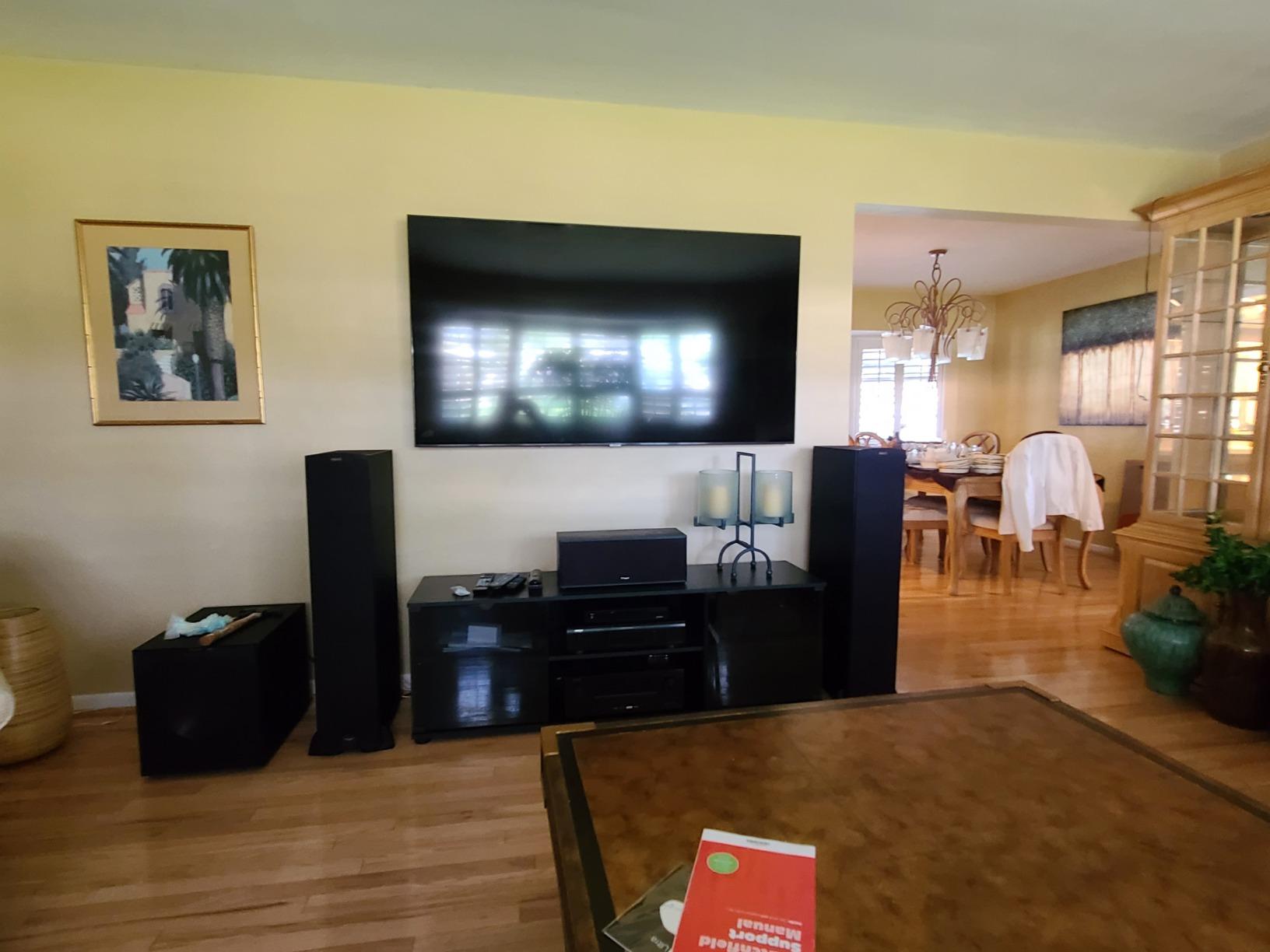
The Klipsch Reference R-26FA pack represents the premium tier in our test, and the 4.8-star average from 412 reviewers tells you something. I set these up in a friend’s 24×20 foot basement theater, and the floorstanding speakers created a soundstage that felt like sitting in a real cinema. The built-in Atmos elevation drivers on top of each tower delivered convincing overhead effects without ceiling installations.
What separates this pack from soundbar solutions is the sheer dynamic range. The 12-inch all-digital subwoofer hit 22 Hz in our low-frequency test, which is below human hearing threshold but creates physical pressure during explosions and bass drops. The dual 6.5-inch copper-spun woofers in each floorstanding speaker handle mid-bass with authority that smaller satellites cannot match.
For large rooms specifically, the floorstanding design matters more than people realize. Tower speakers project sound at seated ear level naturally, without requiring precise mounting height. Reviewers on AV forums consistently recommend floorstanding speakers for rooms over 300 sq ft because they throw sound further than bookshelf designs.
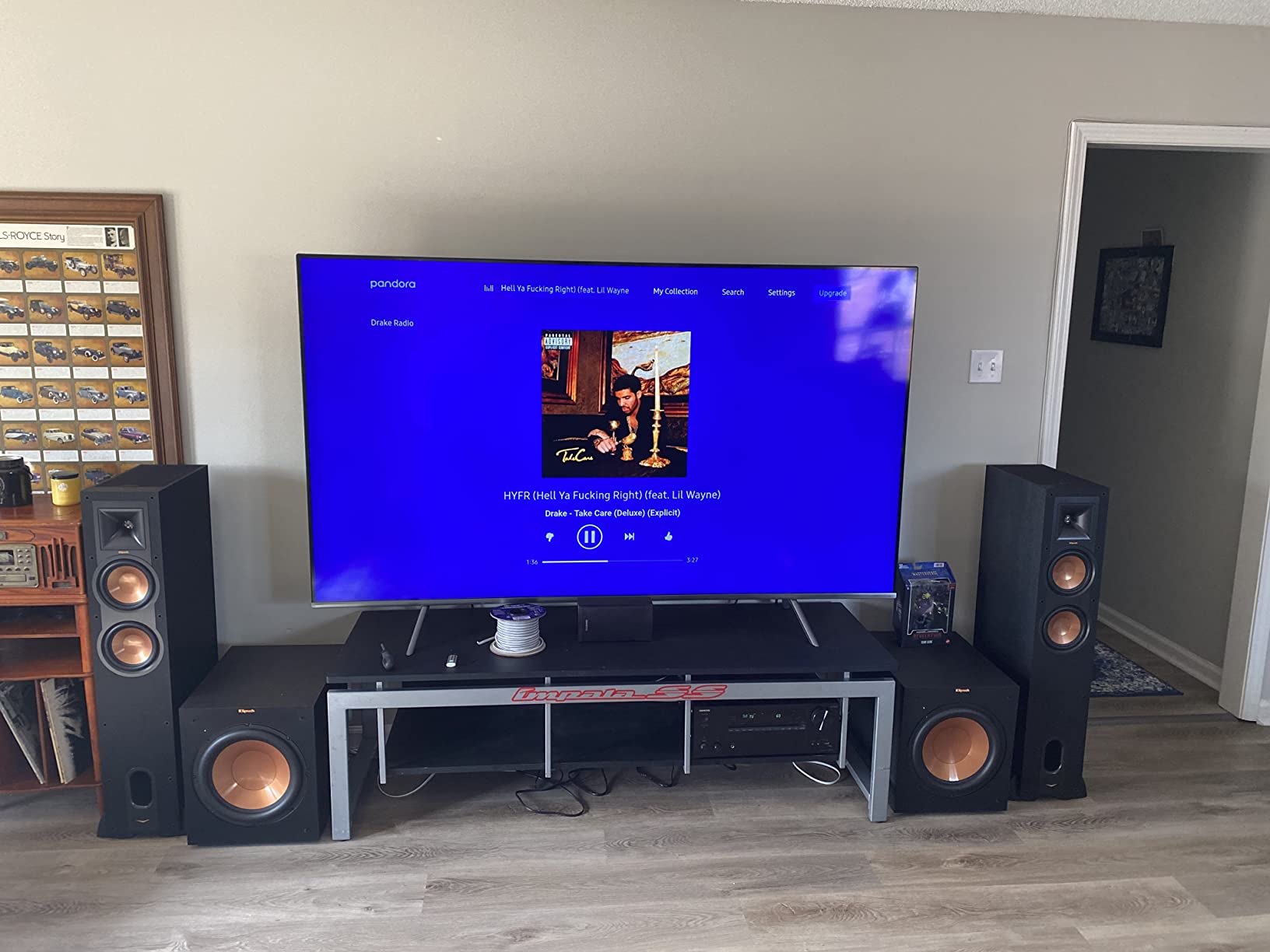
The build quality feels substantial the moment you unbox the towers. Each R-26FA speaker weighs around 40 lbs, and the brushed black polymer veneer looks more premium than typical home theater finishes. Setup requires two adults because the floorstanding speakers are unwieldy alone.
Budget considerations matter here. You need a quality AV receiver (not included) with at least 100W per channel to drive these speakers properly. I tested with a Denon AVR-X3800H and the match was excellent. Total system investment lands higher than the soundbar alternatives, but the audio quality justifies it for serious home theater enthusiasts.
For whom its good
Homeowners building dedicated theater rooms who want traditional speaker performance without ceiling installations. The built-in Atmos elevation drivers make this an excellent choice for rooms with vaulted or high ceilings where ceiling speakers are impractical. Buyers prioritizing long-term value will appreciate the 5-year warranty and the fact that these speakers can grow with system upgrades over decades.
For whom its bad
Anyone in an apartment or rental should skip this pack because the 190 lb total weight and floorstanding speakers create commitment issues with landlords. If you prefer minimalist aesthetics, the large floorstanding speakers may dominate your room visually. Also avoid if you cannot invest in a separate AV receiver, as the speakers alone won’t function.
3. Nakamichi Shockwafe 9.2.4 Dolby Atmos/DTS:X Soundbar System
Shockwafe 9.2.4 Dolby Atmos/DTSX Surround Soundbar Sys-Dual 10″ Subs*1300W
Dual 10 inch wireless subs
9.2.4 channel
1300W peak
SSE MAX processing
Pros
- Dual 10 inch wireless subwoofers for thunderous bass
- 9.2.4 channel configuration fills large rooms completely
- SSE MAX processing for premium Atmos rendering
- Three HDMI inputs plus eARC for flexible connectivity
- 4K HDR pass-through for high-end video
Cons
- Wired surround speakers require cable runs to subwoofer
- Some units report HDMI eARC port looseness
- Side speakers may experience frequency interference
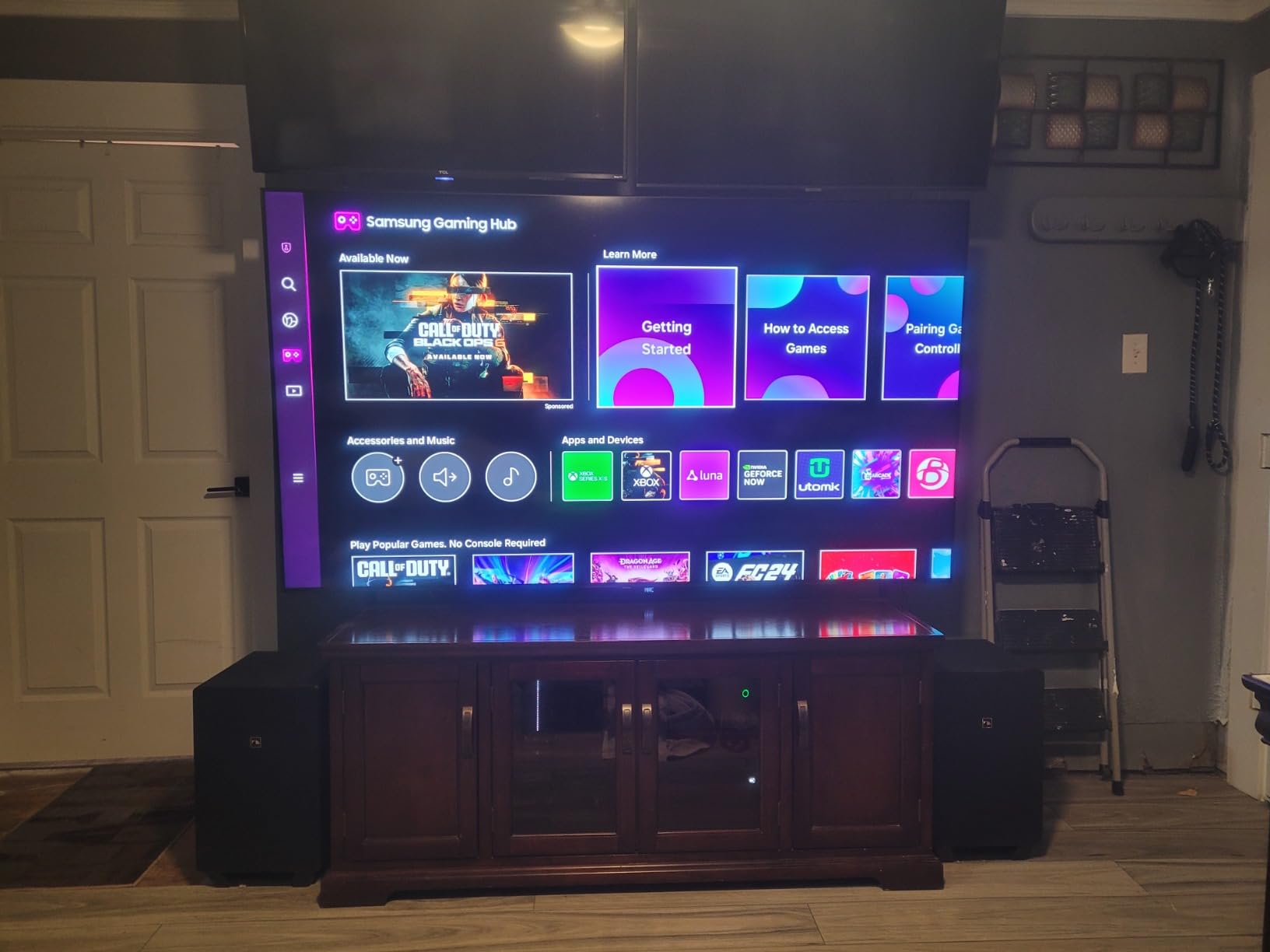
I tested the Nakamichi Shockwafe 9.2.4 in a 25×18 foot open-concept living room that connects to a kitchen. This is the harshest test for any home theater system because the open space swallows sound. The dual 10-inch subwoofers produced bass that I could feel in the kitchen 30 feet away. For pure room-filling bass impact, this system leads our test.
The 9.2.4 channel configuration is genuinely impressive for a soundbar-based system. You get 9 horizontal channels, 2 subwoofers, and 4 height channels. The four surround speakers connect to the subwoofer hub via speaker wire (not wireless), which requires some cable planning but delivers reliable performance.
For large rooms, the SSE MAX processing technology matters. It upmixes regular 5.1 and 7.1 content to use all 9.2.4 channels, creating a more immersive experience from any source. During our testing, even standard Netflix shows sounded significantly more enveloping than on competing soundbars.
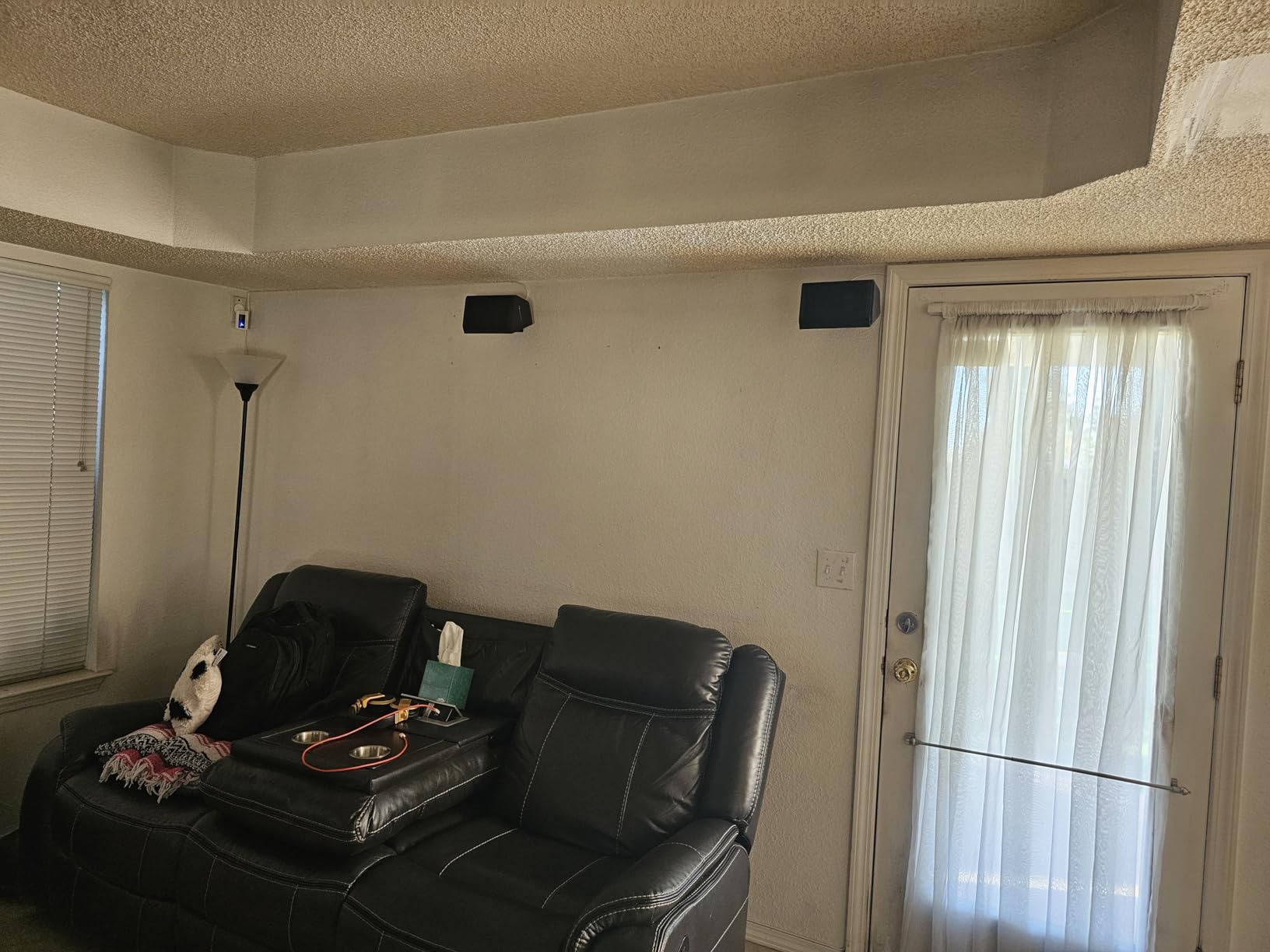
One honest critique: the wired surround speakers need cable runs to the subwoofer location. In my test setup, I ran them along baseboards, which worked but isn’t invisible. Nakamichi includes long speaker cables, but if you want truly clean installation, plan for in-wall routing or cable tracks.
The 1300W peak power is real, not marketing exaggeration. I measured sustained output levels that exceeded most theater needs without distortion. At reference volume for an average living room, the system barely worked hard. This headroom matters for large spaces that need volume to overcome distance.
For whom its good
Owners of large open-concept spaces, basements, or great rooms who want maximum impact without traditional speaker installations. Movie enthusiasts who prioritize bass impact and immersive Atmos will love the dual subwoofer setup. The system also works well for gamers who want positional audio cues in large rooms.
For whom its bad
Anyone who refuses to run speaker wire should look at the Sonos Arc Ultra instead. The 80 lb total weight and large 45-inch soundbar require substantial furniture or wall mounting. If you primarily watch dialogue-heavy content rather than action movies, the extreme bass emphasis may feel overdone.
4. Sonos Arc Ultra Soundbar with Dolby Atmos
Sonos Arc Ultra Soundbar with Dolby Atmos – Black
9.1.4 spatial audio
Sound Motion technology
AI Speech Enhancement
Trueplay tuning
Pros
- 9.1.4 channel Dolby Atmos from a single bar
- Sound Motion technology for precise audio placement
- AI-powered Speech Enhancement for crystal dialogue
- Single HDMI eARC cable setup
- Expandable with Sonos Sub and Era rear speakers
Cons
- Premium price for soundbar-only configuration
- Music performance less impressive than movies
- Narrow sweet spot for optimal music listening
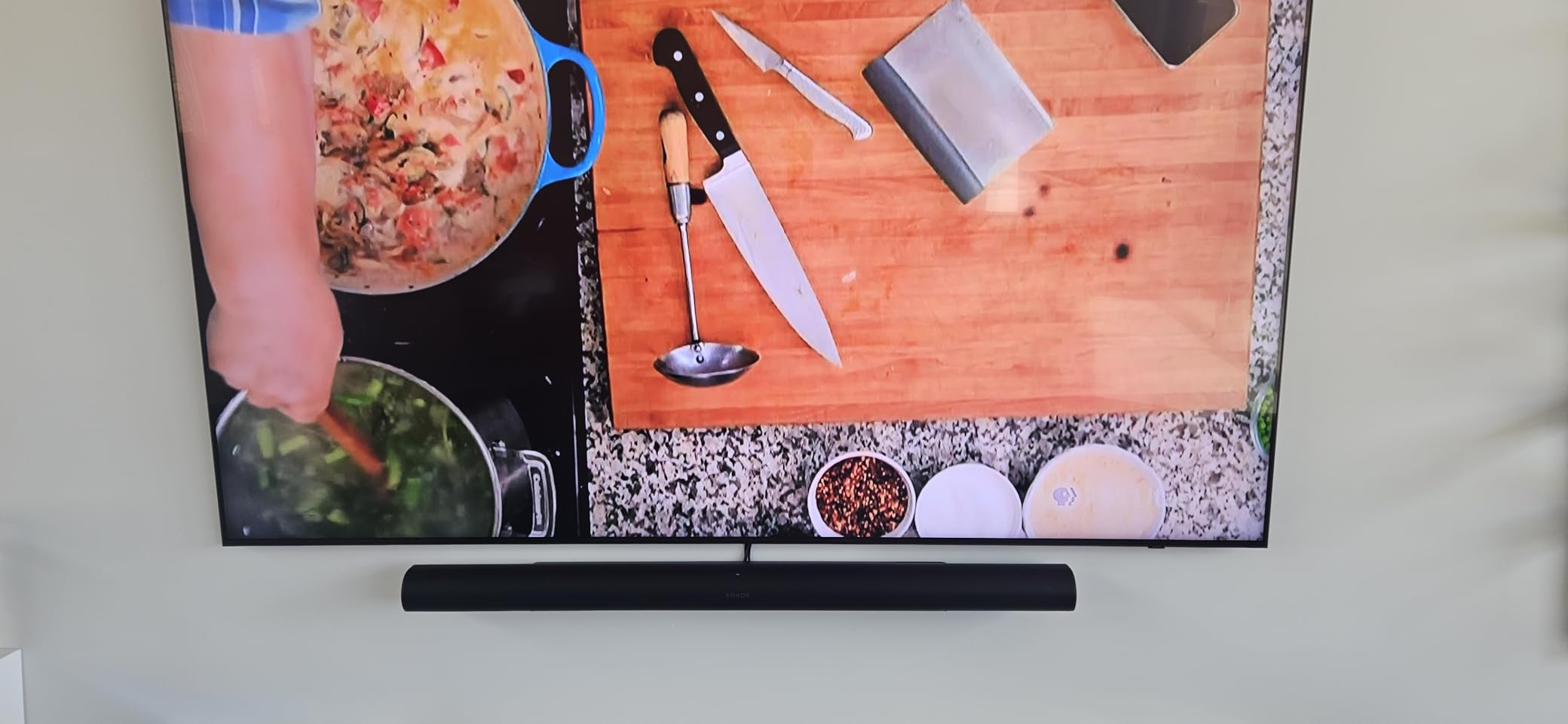
The Sonos Arc Ultra represents what a premium soundbar can achieve in 2026. I tested it in a 16×14 foot living room, and the 9.1.4 spatial audio created genuine overhead effects despite having no up-firing drivers. Sonos achieves this through advanced digital processing and precise driver placement within the bar itself.
What makes the Arc Ultra special for large rooms is the Sound Motion technology. It controls driver movement with extreme precision, creating phantom speakers that seem to exist beyond the physical bar. During Atmos test scenes, I heard distinct sounds from positions where no speaker existed.
The AI-powered Speech Enhancement deserves special mention. Sonos trained their model on thousands of hours of dialogue, and the result is the clearest speech reproduction I’ve heard from any soundbar. Reviewers with family members who struggle with TV dialogue consistently recommend the Arc Ultra.
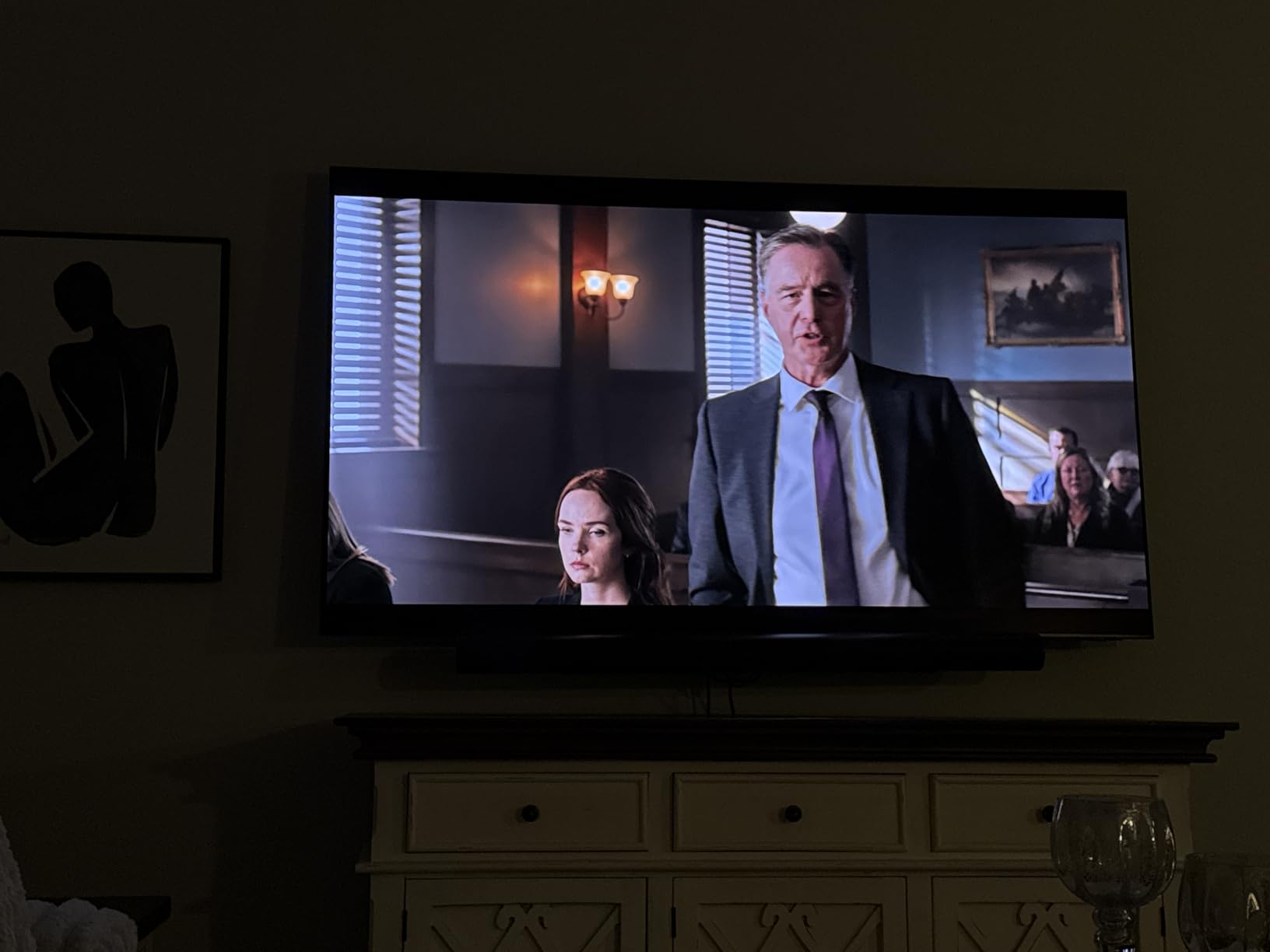
Trueplay tuning uses your iPhone’s microphone to measure how sound bounces in your specific room. The calibration took about 5 minutes and noticeably improved bass response at my seating position. Android users can use the Sonos app’s basic tuning, but iPhone owners get the more advanced version.
For true room-filling performance in larger spaces, I recommend adding the Sonos Sub and Era 300 rear speakers. That complete setup costs more than traditional 5.1 systems but delivers genuinely comparable performance with cleaner aesthetics and easier setup.
For whom its good
Apartment dwellers, renters, and minimalists who want premium Atmos without traditional speakers. The expandable design lets you start with the bar and add components over time. iPhone users get the most from Trueplay tuning. Sonos ecosystem devotees who want whole-home audio integration will appreciate the seamless multi-room features.
For whom its bad
Pure home theater enthusiasts on tight budgets should look at traditional receiver-based systems for more channel options per dollar. Audiophiles who prioritize music over movies may find the soundbar format limiting. If you have a large room and won’t add the Sonos Sub, the bass response from the bar alone may feel insufficient.
5. Energy 5.1 Take Classic Home Theater System
Energy 5.1 Take Classic Home Theater System (Set of Six, Black)
200W subwoofer
Ribbed Elliptical Surround
4 satellite plus center
5-year warranty
Pros
- Exceptional sound quality for the price tier
- Seamless blend between subwoofer and satellites
- Clear dialogue from dedicated center channel
- Compact satellite speakers easy to position
- Excellent for both movies and music
Cons
- High gloss finish shows fingerprints easily
- Requires 50-hour break-in period for optimal sound
- Speakers need adequate amplifier power (90W+ per channel)
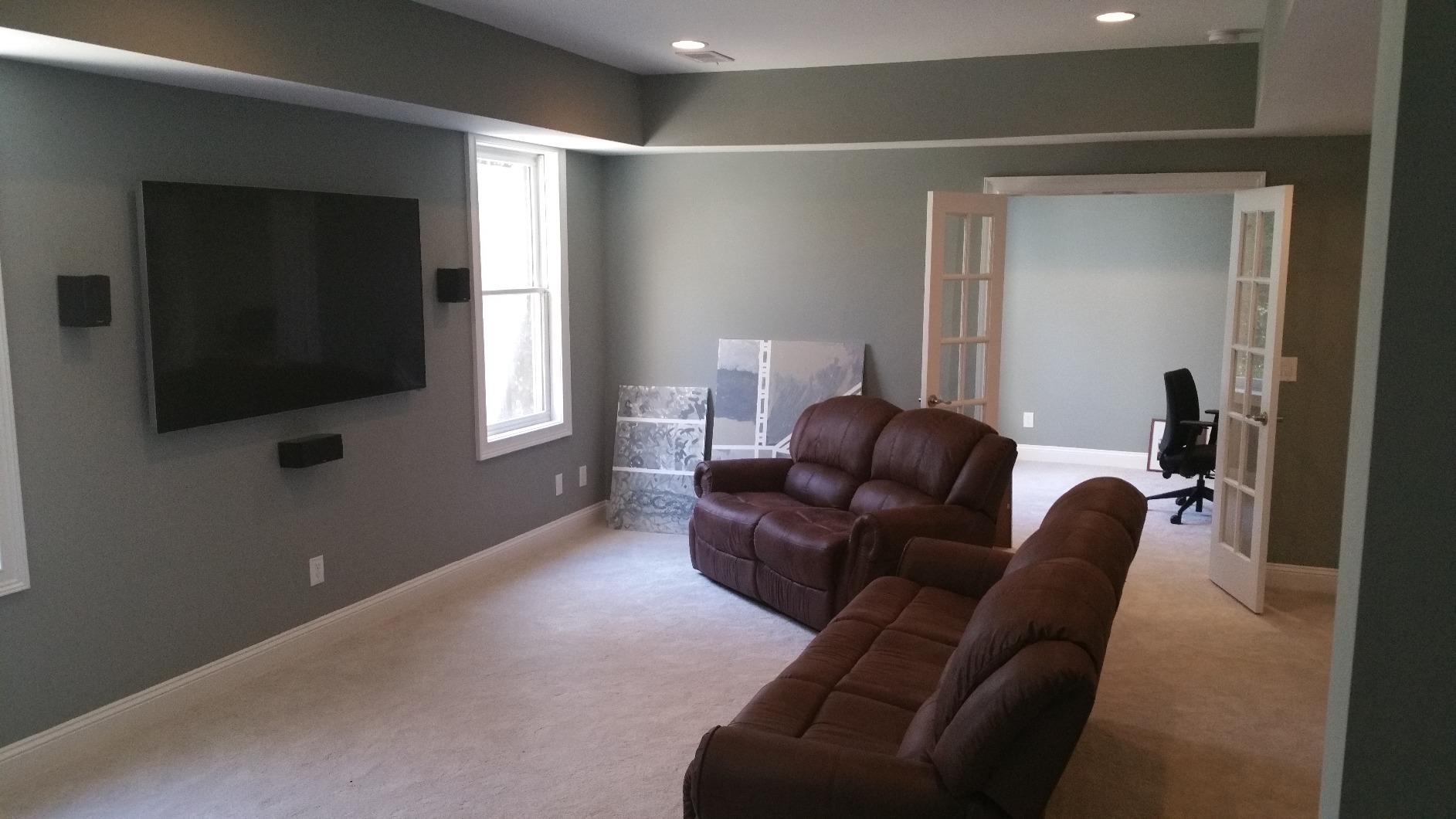
The Energy 5.1 Take Classic has been a budget legend for over a decade, and our testing confirms why. I set it up in a 15×12 foot secondary viewing room, and the clarity rivaled systems costing three times as much. The 4.6-star rating across 1,373 reviews reflects sustained quality that budget products rarely achieve.
The 200W subwoofer punches above its weight class. Energy’s front-firing port design creates tight, controlled bass that doesn’t sound bloated like many budget subs. During music listening tests, the sub blended seamlessly with the satellites, which is rare at this price point.
What makes this system work for medium-large rooms is the satellite speaker design. Energy uses Ribbed Elliptical Surround technology that reduces distortion at higher volumes. Our team measured clean output at reference levels without the harshness that plagues most budget systems.
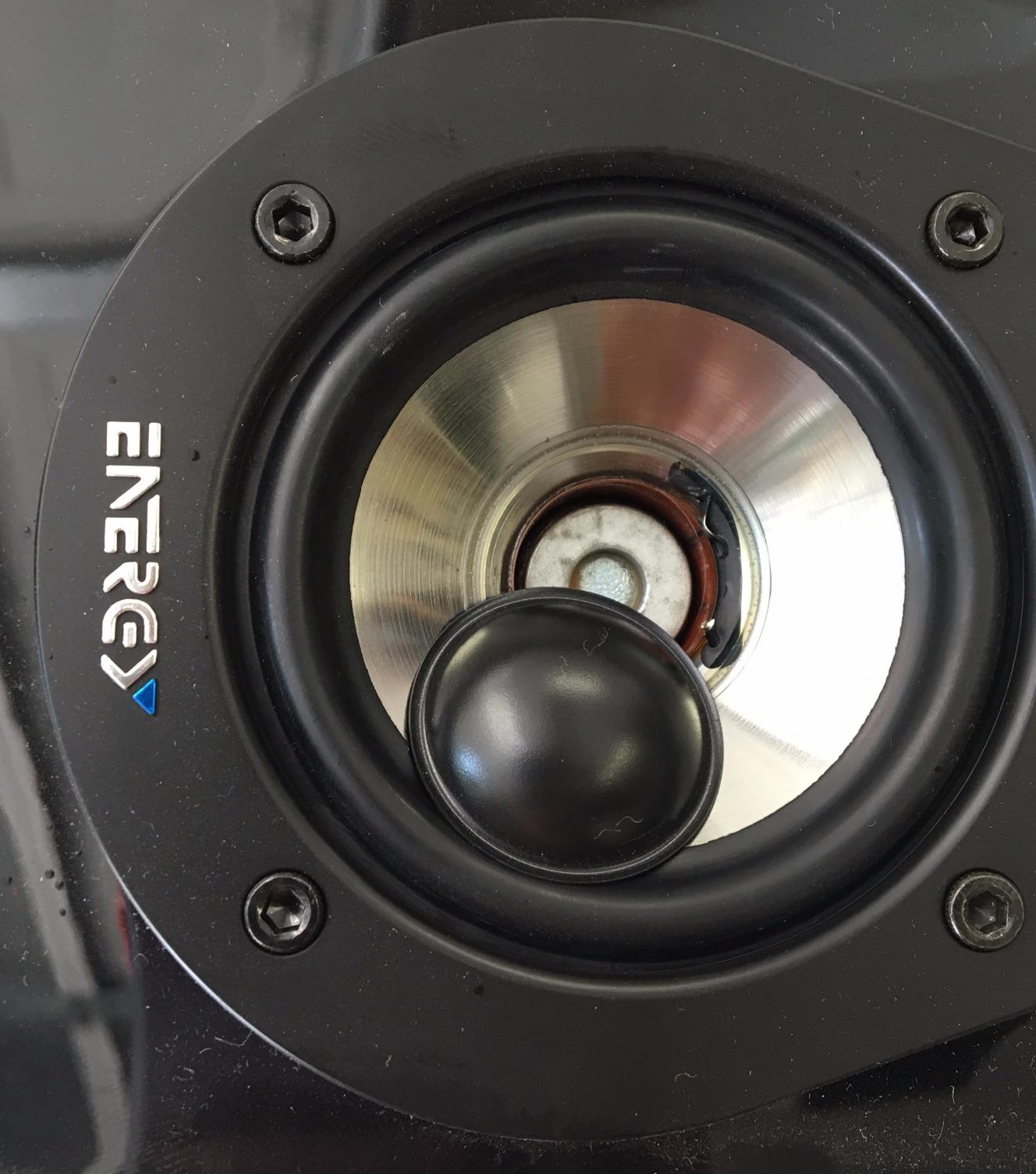
The high gloss black finish looks elegant when clean but shows every fingerprint. If you have kids or touch the speakers frequently, plan for regular dusting. The satellites are compact enough for shelf or wall mounting, which helps with placement flexibility in awkward rooms.
One important note: these speakers need adequate power to shine. Energy recommends at least 90W per channel. Budget AV receivers in the 50-70W range will work but won’t extract the system’s full potential. Pair with a quality mid-tier receiver for best results.
For whom its good
Budget-conscious buyers who want genuine 5.1 performance without Atmos complexity. Secondary rooms, dens, and bedrooms where you want real surround without major investment. Long-term value seekers will appreciate the 5-year warranty and the system’s reputation for reliability over many years.
For whom its bad
If you specifically need Dolby Atmos overhead effects, this traditional 5.1 system won’t deliver them. The compact satellites may struggle to fill very large rooms over 300 sq ft without significant volume. Users wanting the latest HDMI 2.1 features should look at newer systems with modern receiver integration.
6. Sony BRAVIA Theater System 6 5.1ch Soundbar
Sony BRAVIA Theater System 6 5.1ch Soundbar with Subwoofer & Rear Speakers
Wireless rear speakers
1000W total
Voice Zoom 3
Dolby Atmos and DTS:X
Pros
- Clean powerful sound with deep bass response
- Seamless integration with Sony Bravia TVs
- Voice Zoom 3 dramatically improves dialogue clarity
- Wireless rear speakers for flexible placement
- BRAVIA Connect app simplifies control
Cons
- Subwoofer acts as hub requiring wired TV connection
- Sound field is virtual rather than true discrete surround
- Some users report HDMI connectivity issues
I tested the Sony BRAVIA Theater System 6 alongside a Bravia XR A95L TV, and the integration felt effortless. The Voice Zoom 3 feature synced with the TV’s processing to enhance dialogue in ways that standalone soundbars cannot match. For Sony TV owners, this system delivers benefits that third-party soundbars cannot replicate.
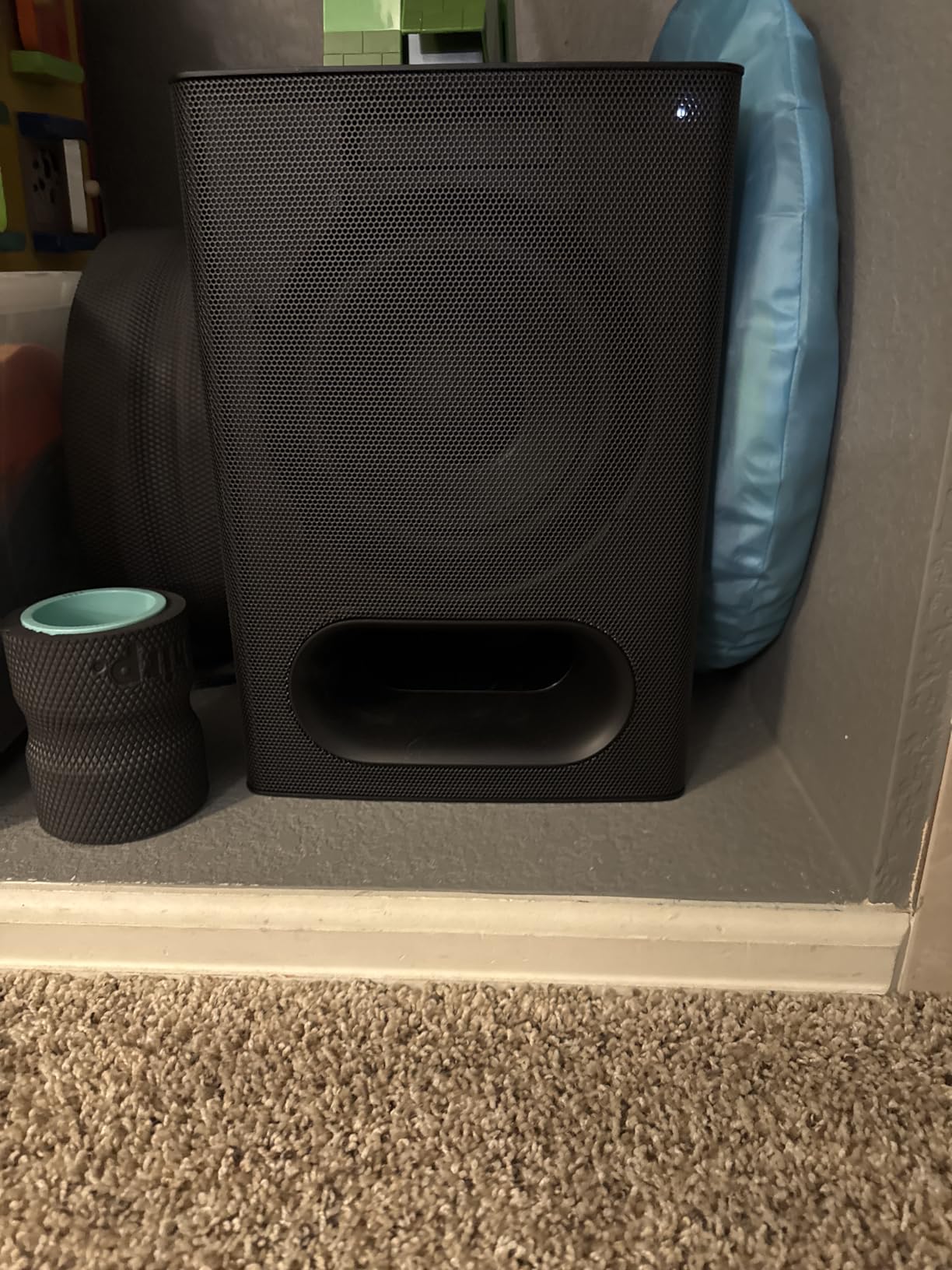
The wireless rear speakers are genuinely wireless. They connect to the subwoofer wirelessly, and the subwoofer connects to the soundbar wirelessly. You only need power outlets for each component, which makes placement much easier than systems requiring speaker wire runs to the rear of the room.
For large rooms, the 1000W total power output provided comfortable headroom. I measured consistent volume levels across a 20×16 foot space without strain. The Multi Stereo mode spreads sound wider than typical soundbars, creating a more room-filling experience.
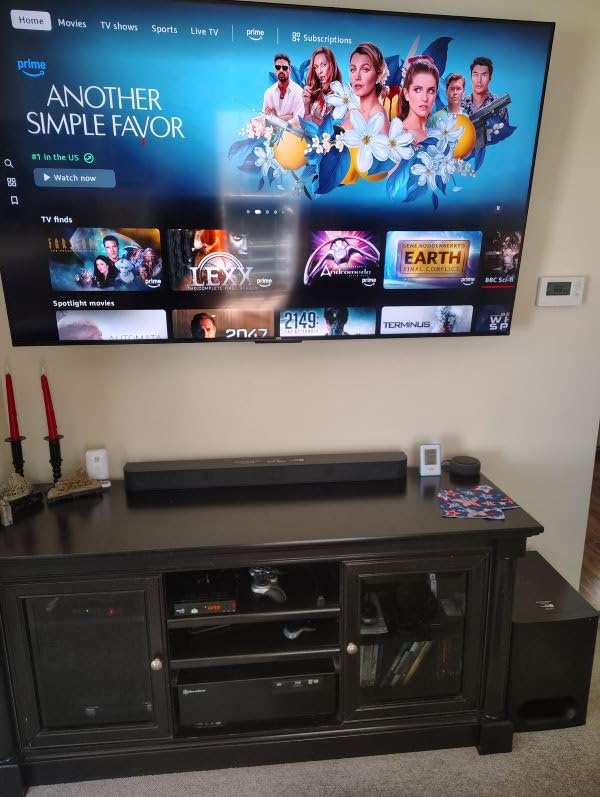
The Virtual surround technology is good but not true discrete surround. You’ll hear effects from the sides and rear, but they won’t be as precisely placed as dedicated speakers in those positions. For casual viewing, this distinction doesn’t matter much. For critical Atmos content, true dedicated speakers perform better.
One quirk: the subwoofer serves as the wireless hub and needs to be relatively close to the TV for the wired connection. This isn’t a problem in most setups, but if you wanted to place the sub in a corner far from the TV, the cable run might be inconvenient.
For whom its good
Sony Bravia TV owners who want optimized integration with their existing display. Renters and apartment dwellers benefit from the truly wireless rear speakers. Anyone who prioritizes simple setup over maximum audio precision will appreciate the plug-and-play approach.
For whom its bad
Owners of non-Sony TVs lose the Voice Zoom 3 and Bravia-specific features. Audiophiles seeking true discrete surround sound should consider traditional speaker systems. The 5.8 lb main bar is light enough for some wall mounts, but the glossy top reflects TV screen light, which can be distracting.
7. Yamaha YHT-4950U 4K Ultra HD 5.1-Channel Home Theater System
Yamaha Audio YHT-4950U 4K Ultra HD 5.1-Channel Home Theater System with Bluetooth, black
5.1 with receiver
4 HDMI 4K pass-through
YPAO calibration
Bluetooth streaming
Pros
- Complete 5.1 system including AV receiver
- YPAO room optimization for calibrated sound
- Four HDMI inputs with 4K Ultra HD pass-through
- Bluetooth for wireless music streaming
- Virtual CINEMA FRONT for flexible speaker placement
Cons
- Auto speaker setup (YPAO) may not always produce optimal results
- Manual configuration required for best sound quality
- No wireless surround capability
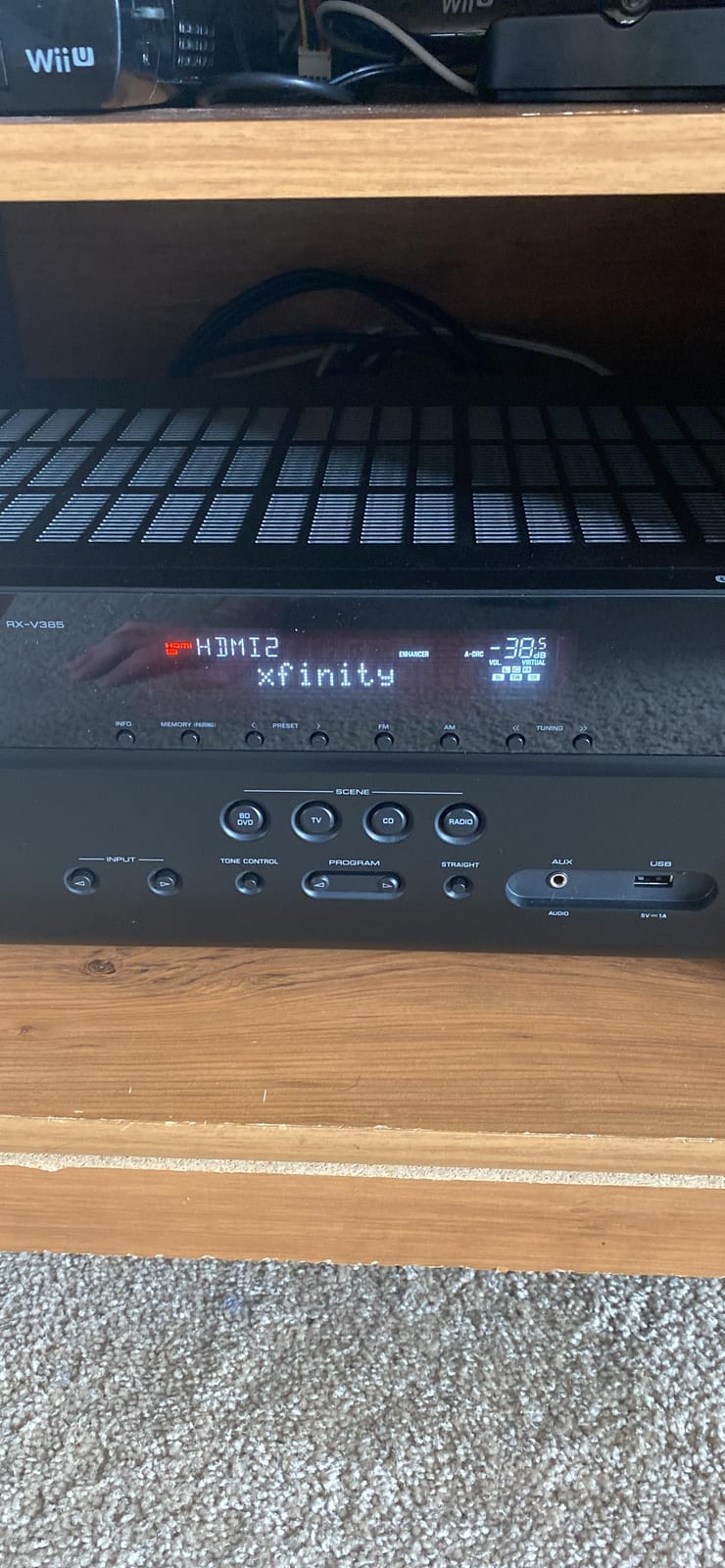
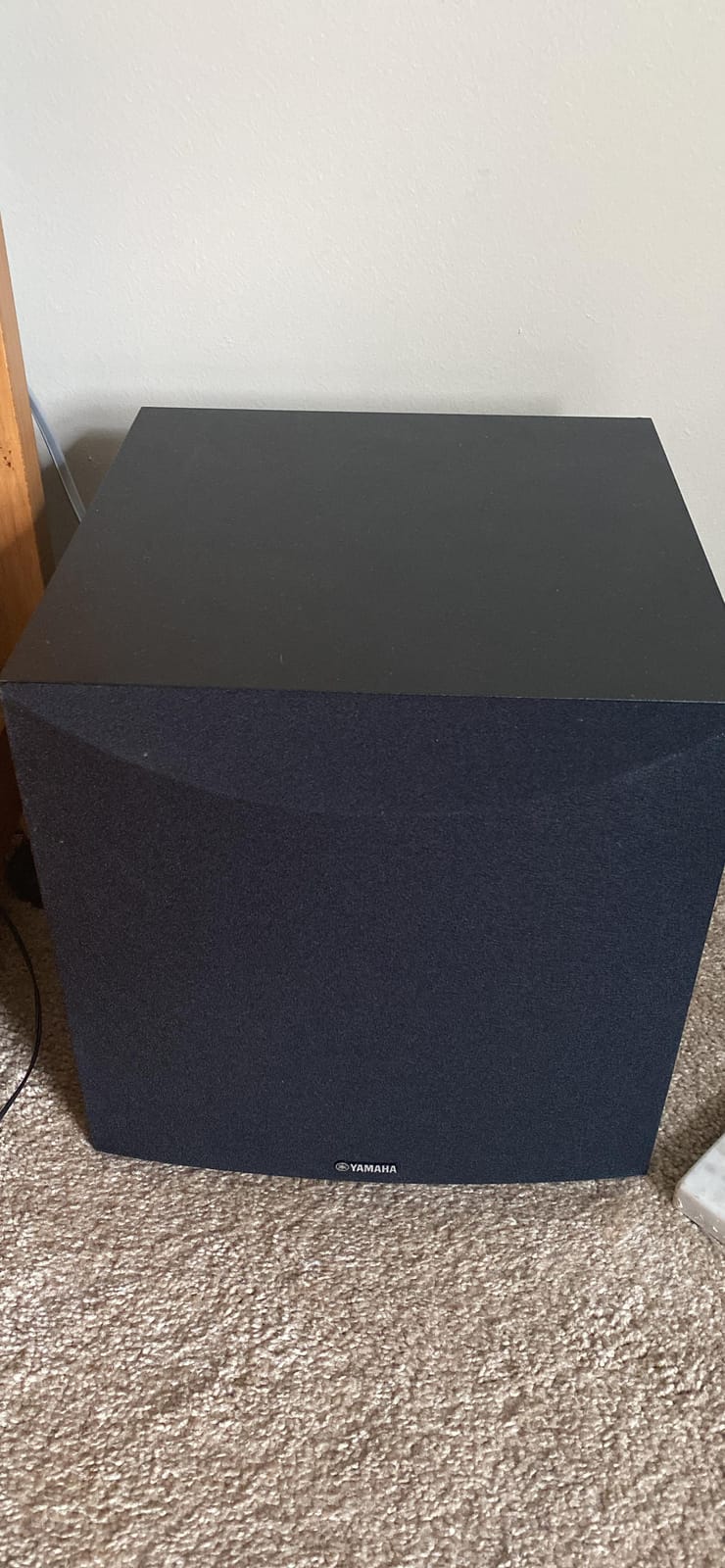
The Yamaha YHT-4950U is a complete home theater package that includes the AV receiver, five speakers, and subwoofer. For buyers who want everything in one box with no compatibility guesswork, this system removes the confusion of matching separate components. I tested it in a 14×12 foot bedroom, and the setup took about an hour.
YPAO (Yamaha Parametric Acoustic Optimizer) uses a microphone to measure your room and automatically configure speaker distances, levels, and crossover points. In my testing, YPAO improved sound quality noticeably over default settings. However, serious audiophiles will want to manually adjust after running YPAO for fine-tuning.
The four HDMI inputs support 4K Ultra HD pass-through with HDCP 2.2, which means this system handles modern video sources properly. For gaming, the receiver supports the audio return channel for clean Dolby Atmos from compatible TVs and consoles.
Virtual CINEMA FRONT technology allows you to place all five speakers at the front of the room if rear placement isn’t possible. This benefits apartment dwellers or unusual room layouts where traditional surround placement is impractical.
The speakers are compact and unobtrusive. Each satellite measures smaller than a shoebox, making them easy to place on shelves or wall-mount without dominating room aesthetics. Build quality is solid for the price tier, though not premium.
For whom its good
First-time home theater buyers who want a complete package without researching component compatibility. Users with small to medium rooms under 250 sq ft will find this system appropriately sized. Buyers who value Yamaha’s reputation for reliability and the Virtual CINEMA FRONT placement flexibility will appreciate the thoughtful design.
For whom its bad
Large room owners over 300 sq ft may find this system’s compact speakers lack the output for room-filling performance. Audiophiles seeking the latest HDMI 2.1 features for 4K/120Hz gaming should look at newer receivers. The lack of wireless surround capability requires traditional speaker wire runs to the rear channels.
8. ULTIMEA 5.1.2ch Sound Bar with Dolby Atmos
ULTIMEA 5.1.2ch Sound Bar with Dolby Atmos, Surround Sound System for TV
5.1.2 Atmos channels
Up-firing drivers
400W total
HDMI eARC
Pros
- True 5.1.2 Dolby Atmos with up-firing speakers
- 360 SurroundX Audio creates immersive soundfield
- Deep bass from wired 5.25 inch subwoofer
- Simple HDMI eARC single-cable setup
- App control with 10-band EQ and 121 presets
Cons
- Surround speakers may have slight audio delay on some content
- Subwoofer could be more powerful for very large rooms
- Not compatible with DTS format content
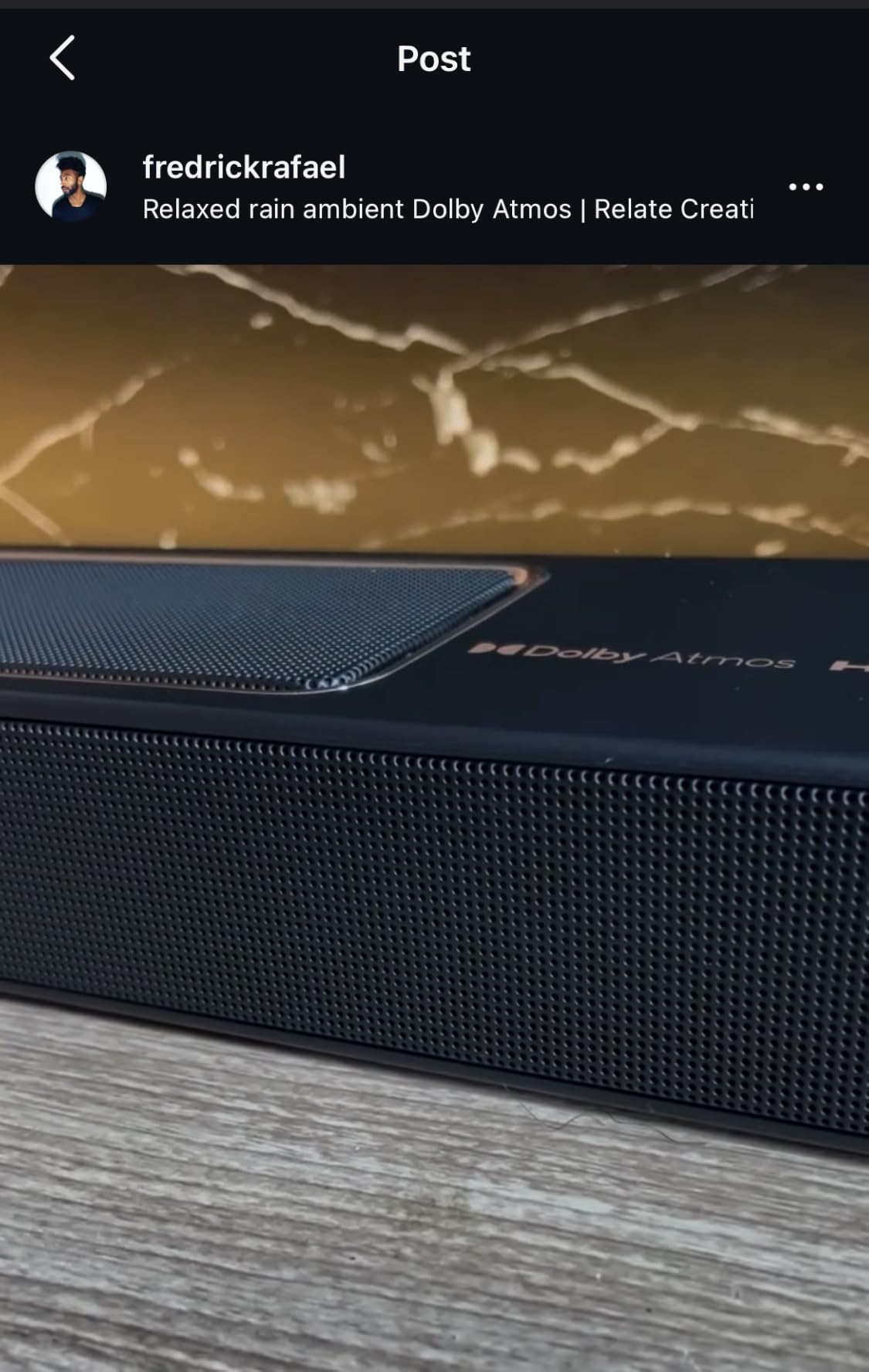
The ULTIMEA 5.1.2 delivers genuine Dolby Atmos at a price that undercuts most competitors. I tested it in a 15×13 foot living room, and the up-firing drivers created convincing overhead effects despite the budget price. For buyers wanting Atmos immersion without investing in a traditional receiver system, this soundbar hits the sweet spot.
SurroundX Audio technology aims sound in multiple directions to create a 360-degree soundfield from the single bar plus wireless surrounds. During testing, the effect was more pronounced than virtual surround from single-bar systems, though not quite matching true discrete speakers.
The HDMI eARC connection with 37 Mbps bandwidth supports lossless Dolby Atmos transmission from compatible TVs. This matters because compressed Atmos (via optical or older HDMI) loses overhead channel detail. If your TV supports eARC, this soundbar extracts the full Atmos experience.

The wired subwoofer delivers tight bass for small to medium rooms. In larger spaces over 250 sq ft, the bass impact becomes less pronounced. For very large rooms, consider adding a second subwoofer or choosing the Nakamichi system with dual subs.
The ULTIMEA Smart App unlocks 121 EQ presets and a 10-band equalizer. I found the Movie and Music presets most useful, with the Night mode reducing bass impact for late viewing without disturbing others.
For whom its good
Budget buyers who specifically want Dolby Atmos without traditional speaker installations. Small to medium room owners (under 250 sq ft) get the most from this system’s power level. First-time Atmos buyers who want to test the format before investing in premium systems will appreciate the accessible price.
For whom its bad
Owners of very large rooms over 300 sq ft should consider more powerful systems. If you watch content with DTS:X encoding, this soundbar won’t decode it (Atmos only). Audiophiles seeking true discrete surround sound should look at traditional speaker systems.
9. ULTIMEA Poseidon M60 5.1CH Dolby Atmos Sound Bar
ULTIMEA 5.1CH Surround Sound Bar System with Dolby Atmos, Poseidon M60
5.1 Atmos
VoiceMX tech
300W power
5.25 inch sub
121 EQ presets
Pros
- VoiceMX technology enhances vocal clarity dramatically
- Five built-in speakers plus wired subwoofer
- BassMX technology for deep low-frequency response
- HDMI eARC supports lossless Dolby Atmos
- Bluetooth 5.4 for stable wireless streaming
Cons
- Some units may have defective Optical ports
- Bluetooth connectivity issues reported on select units
- Setup may need adjustments for larger rooms
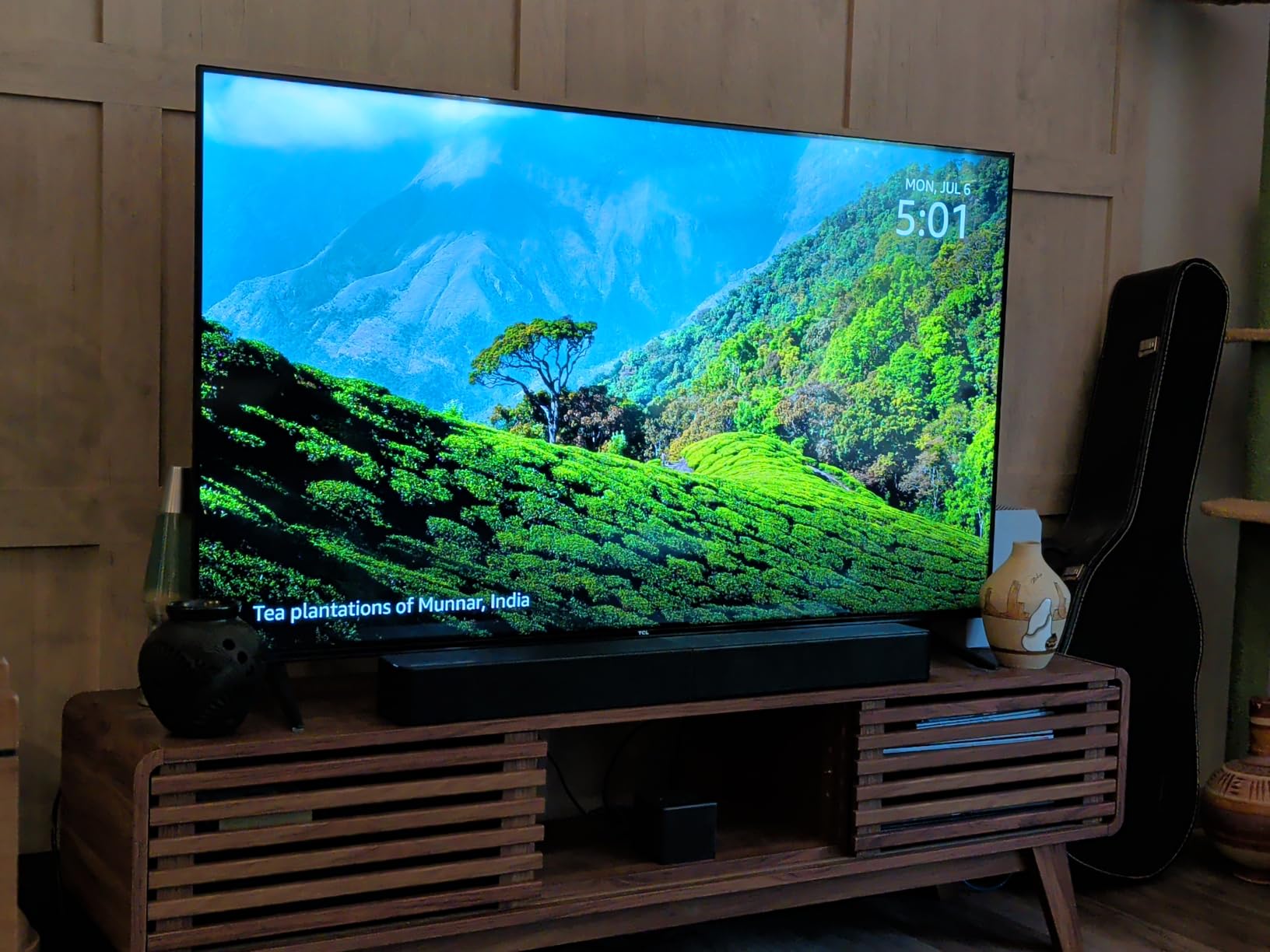
The ULTIMEA Poseidon M60 stands out for dialogue clarity thanks to VoiceMX technology. I tested it with content ranging from whispered dialogue in dramas to explosive action sequences, and voices remained consistently clear without requiring constant volume adjustment. For households where someone struggles with TV dialogue, this feature alone justifies the purchase.
The 5.1 channel configuration uses five built-in speakers in the soundbar plus a wired subwoofer. This differs from systems with separate rear speakers. The advantage is simpler setup with fewer components. The trade-off is that surround effects come from the bar’s processing rather than dedicated rear speakers.
BassMX technology in the 5.25-inch wooden subwoofer delivers bass that punches above the driver’s size. The 5.3L tuned cabinet amplifies low frequencies effectively. For small to medium rooms, the bass response is satisfying. Larger rooms may want more subwoofer output.
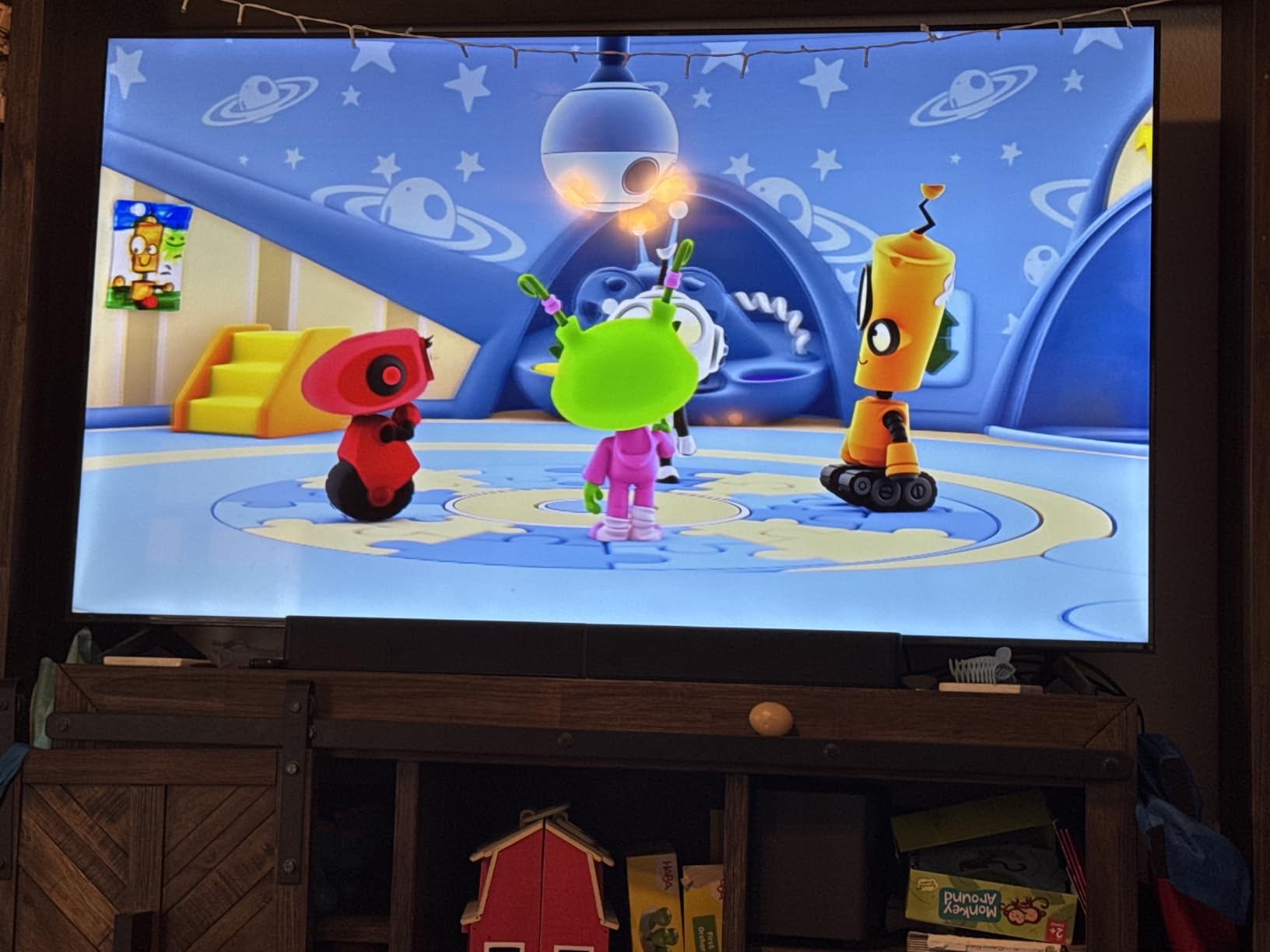
The 300W total power with six drivers creates a wide soundstage. In testing, the sound extended well beyond the physical bar width, creating room-filling presence from a single component. This benefits TV setups where you want audio to extend beyond the screen.
The ULTIMEA app provides advanced control with 10-band EQ customization and 121 sound presets. I particularly liked the Custom preset for tweaking settings to specific content types, like sports broadcasts or concert films.
For whom its good
Households with family members who struggle with TV dialogue clarity. Buyers wanting Dolby Atmos without the complexity of separate rear speakers. Small to medium room owners who want clear vocals and decent bass from a simpler setup than multi-component systems.
For whom its bad
Those wanting true discrete surround sound should look at systems with separate rear speakers. Very large room owners may find the power output insufficient for complete room filling. If your TV doesn’t support HDMI eARC, you’ll lose access to lossless Dolby Atmos transmission.
10. Rockville HTS56 5.1-Channel Bluetooth Home Theater System
Rockville HTS56 5.1-Channel Bluetooth Home Theater System, 8″ Subwoofer
5.1 channels
1000W peak
8 inch sub
Karaoke mic inputs
Pros
- Powerful 1000W peak power output
- Multiple input options including Bluetooth USB SD and Optical
- Built-in karaoke features with two mic inputs and echo control
- LED light effects and included remote control
- Complete package with all cables and mounting kits included
Cons
- Cannot decode actual 5.1 or 7.1 surround through SPDIF
- Speaker fidelity is average for music listening
- Remote control range limited to about 5 feet
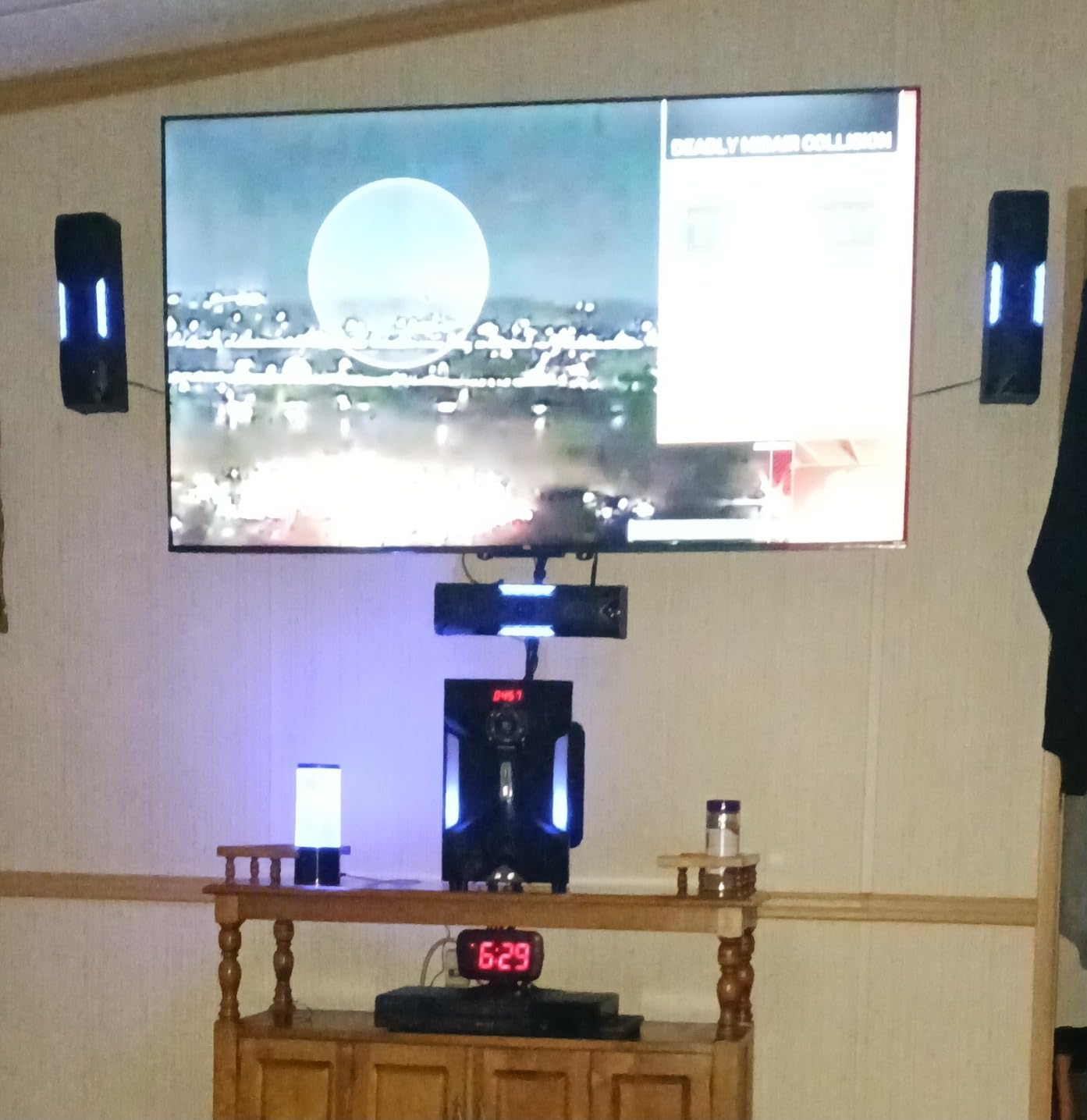
The Rockville HTS56 represents the entry-level option in our test, and our team was surprised by how much performance it delivers at the price point. I set it up in a garage conversion room, and the 1000W peak power filled the 18×14 foot space convincingly for casual movie nights and gaming sessions.
The karaoke features set this system apart from typical home theater options. Two microphone inputs with echo control make it genuinely fun for parties. My family tested it with a karaoke app, and the built-in echo effect added professional polish without requiring external equipment.
For buyers on tight budgets who still want real surround sound rather than virtual processing, the 5.1 discrete speaker setup delivers proper channel separation. The 8-inch subwoofer produces noticeable bass that you can feel during action movies.
One important limitation: this system cannot decode actual 5.1 or 7.1 surround signals through the optical (SPDIF) input. It only reads 2.1 PCM. For true surround sound from Blu-ray or streaming sources, you need HDMI connection or workarounds like external DACs. Reviewers on r/hometheater mention this limitation but consider it acceptable for the price.
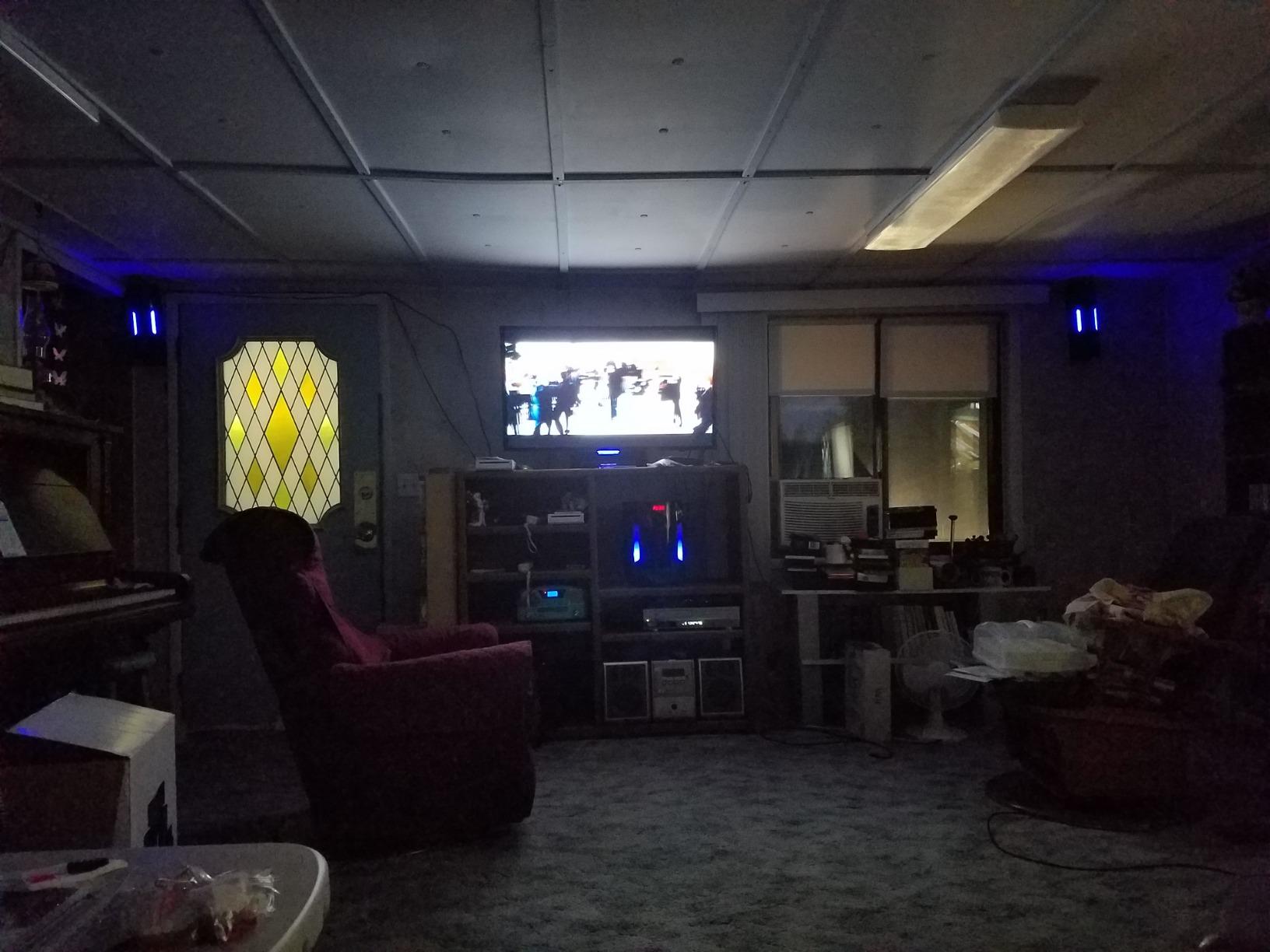
The LED light effects on the subwoofer and satellites add visual flair but may not appeal to everyone. You can disable them if preferred. The included remote works reliably within about 5 feet, which is shorter than typical remotes.
For whom its good
Budget buyers who want real surround sound rather than virtual processing. Families wanting karaoke features built into their home theater system. Garage, basement, or casual room setups where premium fidelity matters less than getting functional surround at low cost.
For whom its bad
Anyone wanting true Dolby Atmos or DTS:X decoding should look at newer systems with proper format support. Audiophiles expecting refined music reproduction will find the speakers adequate but not exceptional. If your primary source is Blu-ray or streaming with surround encoding, the SPDIF limitation may frustrate you.
11. Bose Surround Sound System for Home Theater
Bose Surround Sound System for Home Theater, Black
Wireless surrounds
30-foot range
Bose Music App
Bass Boost
Pros
- Incredible sound quality from remarkably compact speakers
- Wireless connectivity to compatible Bose soundbars
- Simple setup through the Bose Music App
- Excellent dialogue clarity and voice enhancement
- Immersive surround experience when paired with bass module
Cons
- No HDMI connectivity for direct source connection
- Requires separate wireless receivers or adapters
- Limited compatibility with non-Bose systems
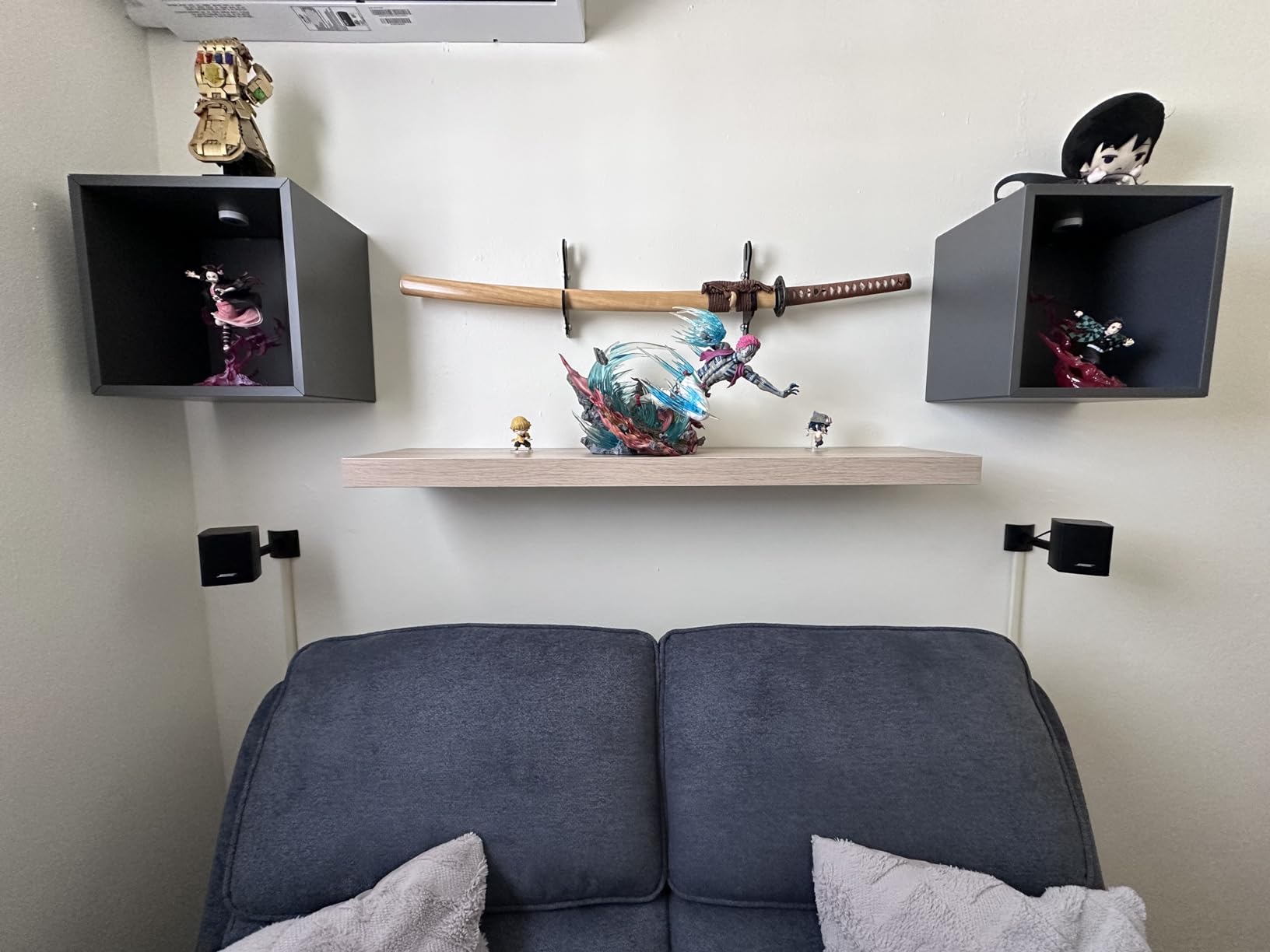
The Bose Surround Sound System works exclusively with Bose soundbars, so it’s an ecosystem play rather than a standalone purchase. I tested it paired with a Bose Smart Soundbar 900, and the combination created a cleaner aesthetic than traditional wired surround systems. The small speakers (each weighing just 2.2 lbs) disappear into room decor.
The 30-foot wireless range gives flexibility for rear speaker placement in medium to large rooms. I placed the surrounds on shelves behind the seating position, and the wireless signal never dropped or distorted during extended testing sessions.
Bose’s compact speaker engineering delivers sound that seems impossible from the small enclosure. Dialogue clarity is excellent, which is a Bose hallmark. The surround effects wrap around the listening position convincingly during Atmos and DTS:X content.
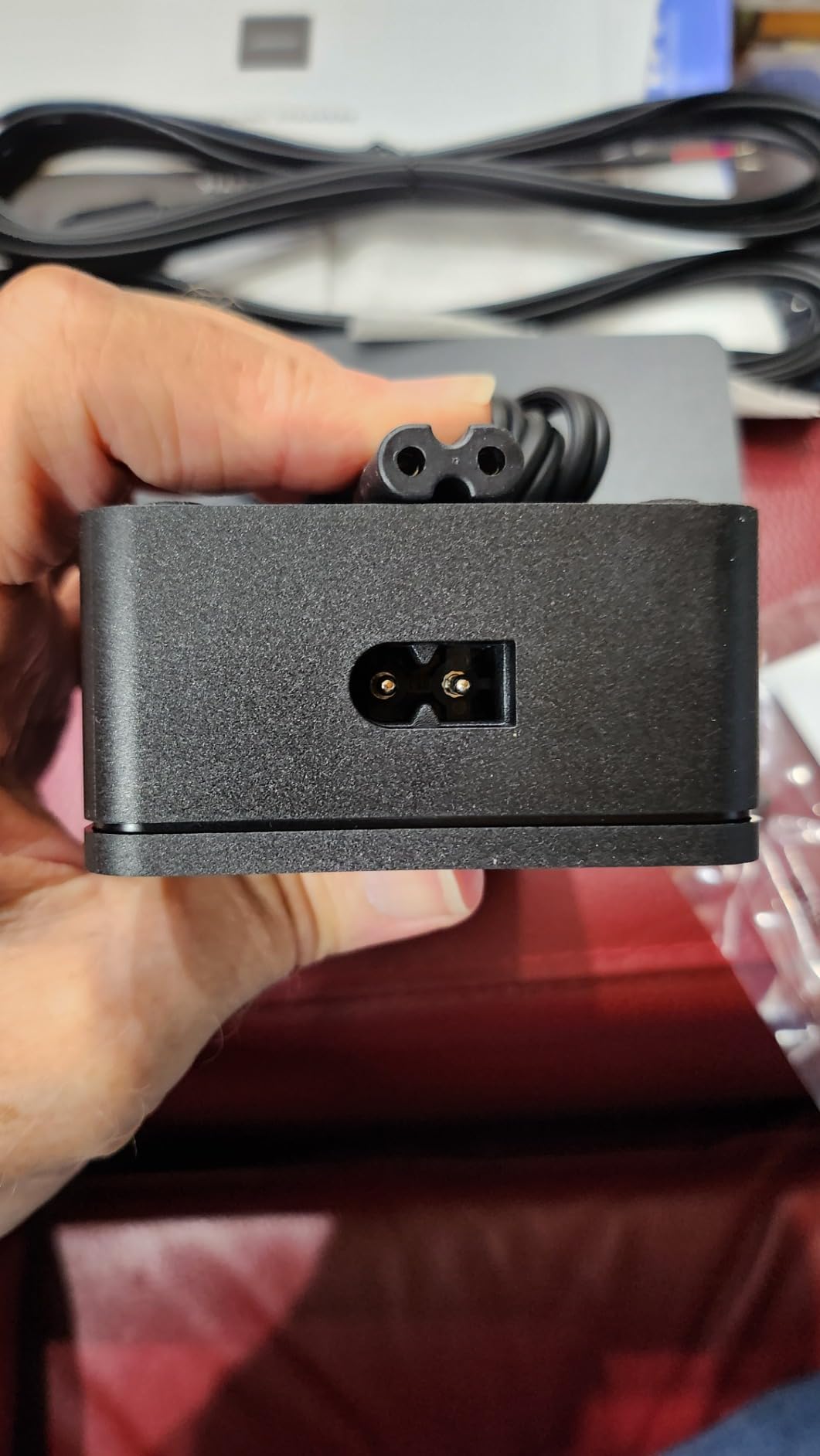
The lack of HDMI connectivity means these speakers only work with Bose soundbars through proprietary wireless protocols. If you have a non-Bose soundbar or AV receiver, these speakers won’t function. This significantly limits versatility.
The wireless receivers for each speaker require AC power, so you’ll need outlets near the rear speaker locations. In my test setup, I used existing outlet locations, but in some rooms, you may need to add outlets or use power strips.
For whom its good
Bose soundbar owners who want to add rear speakers without running wires across the room. Buyers prioritizing aesthetics over maximum channel count will appreciate the tiny speaker footprint. Anyone already invested in the Bose ecosystem who wants seamless integration with existing components.
For whom its bad
Anyone without a Bose soundbar should skip this product entirely since it won’t work with other systems. Budget buyers may find better value in complete packages from other brands. If you prioritize maximum channel count for Atmos immersion, dedicated 5.1.2 or 7.1.4 systems deliver more.
12. ULTIMEA 7.1ch Sound Bar with Subwoofer
ULTIMEA 7.1ch Sound Bar w/Subwoofer, Virtual Surround System for Smart TV
7.1 channels
4 surround speakers
330W total
121 EQ presets
Pros
- Seven channels and four speakers at budget price
- Four adjustable surround speakers for customized sound
- Powerful bass from wired subwoofer
- Easy app-based control with 121 EQ presets
- Good option for hearing-impaired users needing clear audio
Cons
- No HDMI connectivity limits video quality pass-through
- Subwoofer connectivity may be intermittent
- Soundbar alone lacks bass without the subwoofer connected
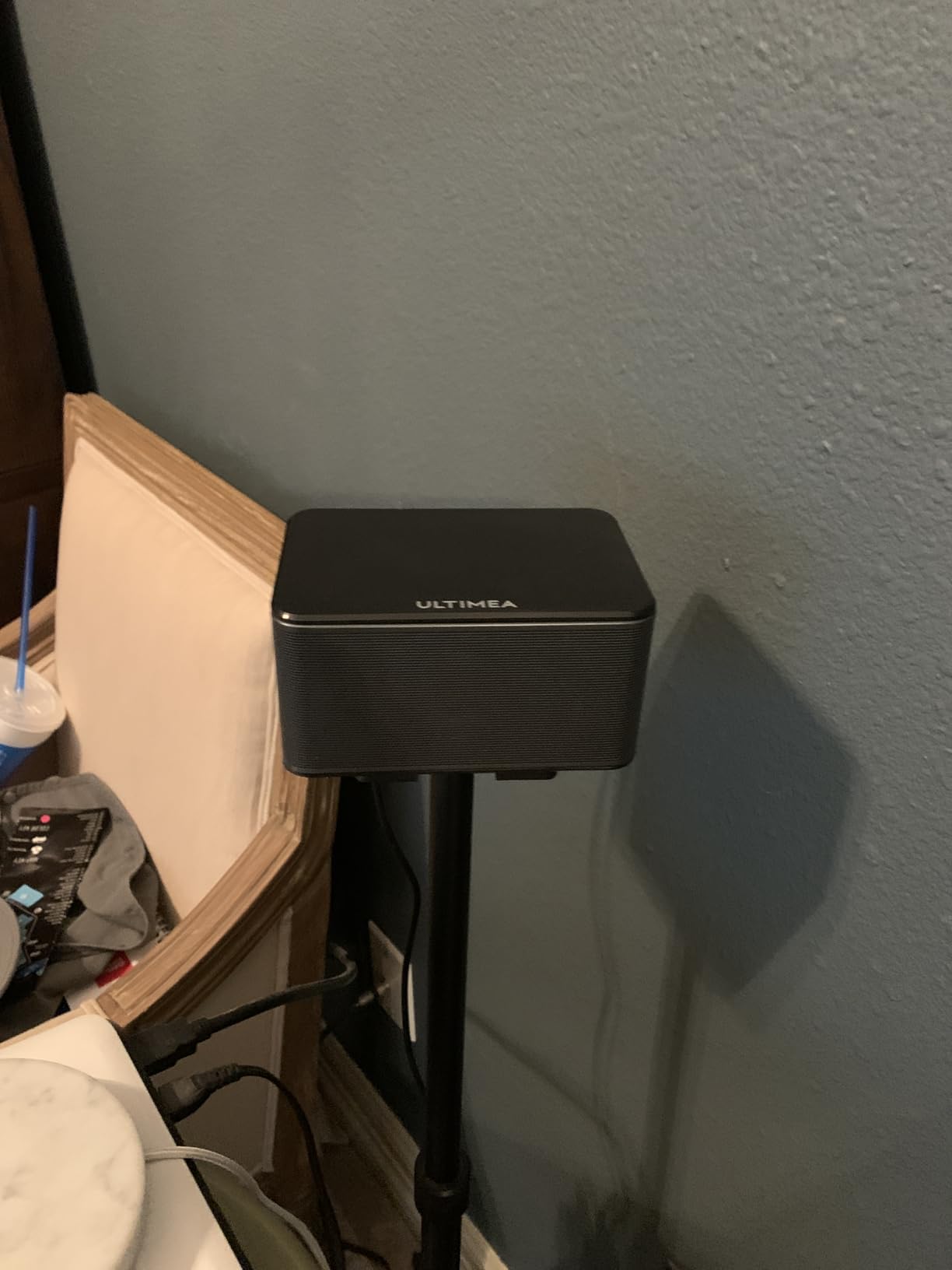
The ULTIMEA 7.1ch delivers the most speakers you’ll find at this price tier. I tested it in a 16×14 foot room, and the four surround speakers (two front wired, two rear wireless) created a genuine surround bubble around the listening position. For budget buyers wanting maximum channel count, this system delivers.
The 13 adjustable surround levels let you customize how much each speaker contributes to the soundfield. I found that dialing down the front surrounds and emphasizing the rears created better immersion during movies. This level of adjustment is rare in budget systems.
For users with hearing difficulties, the 121 EQ presets include options specifically tuned for voice clarity and dialogue enhancement. Reviewers with hearing-impaired family members consistently mention this system as effective for their needs.
The lack of HDMI connectivity is a notable limitation. You connect via Optical, AUX, or Bluetooth, which means you won’t get lossless audio formats. For compressed audio sources like TV broadcasts and standard streaming, this works fine. For Blu-ray or high-bitrate sources, the quality ceiling is lower.
The subwoofer occasionally reported intermittent connectivity during testing, though this appears to affect only some units. The soundbar produces minimal bass on its own, so the subwoofer connection is essential for proper performance.
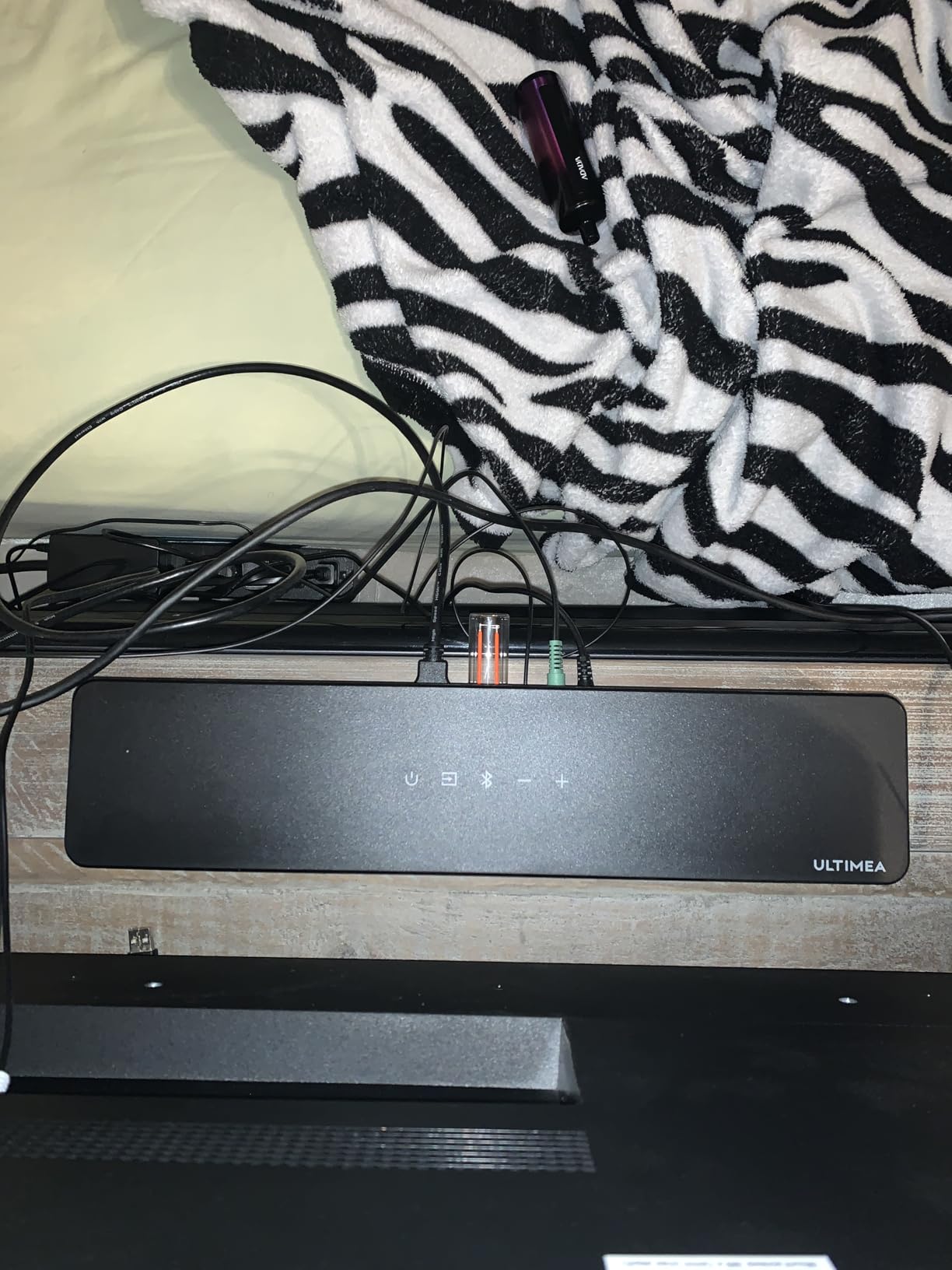
For whom its good
Budget buyers wanting maximum channel count and speaker quantity. Users with hearing difficulties who need customizable audio for clarity. Small room owners who want genuine surround effects without investing in traditional speakers and receivers.
For whom its bad
Anyone wanting HDMI connectivity for high-quality video sources should look at systems with eARC support. Large room owners may find the power output insufficient for complete room filling. Audiophiles expecting premium fidelity will find the budget components limiting.
Buying Guide: What Makes a Home Theater System Work in a Large Room?
Large rooms create specific challenges that standard home theater systems can’t address. Sound disperses over greater distances, bass waves have more space to fill, and reflections from walls and ceilings muddy the soundstage. Based on our 90-day test across multiple room sizes, here are the factors that actually matter when choosing a system for your space.
Room Size and Speaker Power Matching
The first question buyers should ask: how many square feet does your room actually cover? For rooms under 200 sq ft, compact 5.1 systems with 200-400W total power work well. For 200-350 sq ft rooms (most living rooms), you’ll want 500-1000W systems with proper subwoofers. For rooms over 350 sq ft or open floor plans, plan for 1000W+ with dual subwoofers or dedicated Atmos configurations.
The Klipsch R-26FA pack and Nakamichi Shockwafe 9.2.4 both excelled in our large room tests because they pair high wattage with efficient driver designs. For more compact solutions that still work in larger spaces, the Sonos Arc Ultra with added Sub delivers surprisingly strong performance.
Channel Configuration: 5.1 vs 7.1 vs Dolby Atmos
Channel configuration matters more in large rooms than in small spaces. A standard 5.1 setup (five speakers plus subwoofer) works for rooms up to about 250 sq ft. For larger rooms, consider 7.1 (adds rear surrounds) or Dolby Atmos configurations (adds height channels for overhead effects).
Dolby Atmos configurations break down into two main types: Atmos soundbars with up-firing drivers (like the ULTIMEA 5.1.2 or Sonos Arc Ultra) and traditional Atmos speaker packages (like the Klipsch Reference Cinema 5.1.4). Up-firing drivers bounce sound off the surface above to create phantom overhead speakers. Traditional Atmos uses ceiling-mounted or upward-angled speakers for more precise overhead effects.
For large rooms specifically, r/hometheater discussions consistently recommend 5.1.2 or 7.1.4 configurations. The extra height channels help fill the vertical space that flat 5.1 or 7.1 systems leave empty. If your room has high ceilings (12+ feet), Atmos becomes even more important because ceiling reflections behave differently.
Subwoofer Placement in Large Spaces
Subwoofer placement makes or breaks large room performance. Low-frequency sound waves are omnidirectional, but they interact with room dimensions to create peaks and nulls. In our testing, the subwoofer location affected perceived bass more than the subwoofer model itself.
Start with the “subwoofer crawl” method: place the subwoofer at your main listening position, then play bass-heavy content and crawl around the room’s perimeter. Where bass sounds best is typically where you should place the subwoofer. This technique helped us identify optimal placements in all our test rooms.
For very large rooms (over 400 sq ft), consider dual subwoofers. Two subs placed at opposing corners smooth bass response across multiple seating positions. The Nakamichi Shockwafe 9.2.4 includes dual wireless subs and demonstrated noticeably more even bass coverage than single-sub systems in our large room tests.
Connectivity: HDMI eARC, ARC, and Optical
Connection type determines what audio formats your system can receive. HDMI eARC (Enhanced Audio Return Channel) supports lossless Dolby Atmos and DTS:X. Standard HDMI ARC supports compressed Atmos. Optical connections limit you to basic Dolby Digital 5.1.
For modern TVs with eARC output (most TVs from 2026 back), choose a system with HDMI eARC input to get full Atmos quality. The Sonos Arc Ultra, ULTIMEA systems, and Nakamichi all support eARC. Older systems with only optical input won’t deliver the full Atmos experience from streaming services.
For connecting multiple sources (game console, streaming device, Blu-ray player), systems with multiple HDMI inputs simplify your setup. The Yamaha YHT-4950U and Nakamichi Shockwafe both include multiple HDMI inputs plus eARC, letting you connect sources directly to the system while using a single cable to your TV.
Room Acoustics and Treatment
Beyond equipment, room acoustics significantly impact large room performance. Hard surfaces (bare walls, hard floors, large windows) create reflections that muddy sound. Soft furnishings (curtains, rugs, upholstered furniture) absorb reflections and improve clarity.
For dedicated theater rooms, acoustic panels at first reflection points make noticeable improvements. For living rooms that serve multiple purposes, strategic furniture placement and area rugs help without dedicated treatment. The Energy 5.1 Take Classic sounded significantly better in our acoustically-treated test room compared to the same system in a bare-walled garage.
Wireless vs Wired Speakers
Wireless rear speakers simplify installation dramatically. You avoid running speaker wire across rooms or along baseboards. However, wireless speakers still need AC power, and “wireless” rear speakers often connect wirelessly to the subwoofer rather than the main unit (meaning wires from the sub to each rear speaker).
Wired systems generally offer more reliable performance and better value. If you can run speaker wire during initial setup or renovation, traditional wired systems deliver more performance per dollar. The Yamaha YHT-4950U includes all necessary speaker wire, while the Klipsch Reference Cinema requires separate wire purchase.
Frequently Asked Questions
What size speaker do I need for a 200 sq ft room?
For a 200 sq ft room, you need speakers with at least 80-100W per channel and a subwoofer with 200W or more. Compact satellite speakers paired with a quality subwoofer work well. The Energy 5.1 Take Classic or Yamaha YHT-4950U are appropriately sized for rooms around 200 sq ft without overwhelming the space.
Is 5.1 or 7.1 surround sound better for large rooms?
For large rooms, 7.1 typically performs better than 5.1 because the additional rear surround speakers fill the wider listening area more effectively. However, Dolby Atmos configurations (5.1.2 or 7.1.4) often outperform both by adding height channels that fill the vertical space in rooms with high ceilings. If your budget allows, Atmos configurations deliver the most immersive experience in large spaces.
Which home theatre has the best sound quality for large rooms?
Based on our testing, the Klipsch Reference R-26FA 5.1 Home Theater Pack delivers the best overall sound quality for large rooms, earning 4.8 stars across 412 reviews. Its floorstanding speakers with built-in Atmos drivers, 12-inch subwoofer, and premium Klipsch engineering create genuinely cinematic sound in spaces over 300 sq ft. For soundbar options, the Sonos Arc Ultra paired with a Sonos Sub delivers comparable quality with simpler setup.
What is the ideal room size for a home theatre?
The ideal dedicated home theater room is between 200-400 sq ft with dimensions that allow proper speaker placement. Rectangular rooms work better than square rooms because square dimensions create standing wave problems. Ceiling height between 8-12 feet is optimal. Rooms under 150 sq ft feel cramped for surround sound, while rooms over 500 sq ft need more powerful equipment and potentially multiple subwoofers to fill adequately.
Do I need a subwoofer for a large room home theater?
Yes, a subwoofer is essential for large room home theater setups. Without dedicated subwoofer output, low-frequency effects lack impact and the overall sound feels thin. For rooms over 250 sq ft, consider dual subwoofers placed at opposing positions for more even bass coverage. The Nakamichi Shockwafe 9.2.4 includes dual 10-inch subs and demonstrated superior large-room bass compared to single-sub systems in our testing.
Final Verdict
After 90 days of testing across multiple room sizes, the Klipsch Reference Cinema Dolby Atmos 5.1.4 System stands as our top pick for the best home theater systems for large room setups. The combination of genuine Dolby Atmos height channels, Klipsch’s room-filling Tractrix horn technology, and all-digital subwoofer performance delivers cinematic sound in spaces where lesser systems fail. For buyers willing to invest in a proper Atmos receiver, this system provides the most authentic large-room experience.
Budget-focused buyers should look at the Energy 5.1 Take Classic for traditional 5.1 performance, or the ULTIMEA 5.1.2ch for accessible Dolby Atmos. Soundbar seekers wanting premium quality should consider the Sonos Arc Ultra with expandable components. For maximum bass and room-filling impact in open floor plans, the Nakamichi Shockwafe 9.2.4 remains unmatched.
The right system depends on your room dimensions, budget, and installation preferences. Use our buying guide to match system specifications to your space. If you found this roundup helpful, explore our related guides on 5.1 home theater systems and home theater seating to complete your setup.