
Looking for the best home surround sound systems without wading through dozens of confusing specs? I’ve spent the last three months testing 5.1 and Dolby Atmos setups in real living rooms, watching the same movies, playing the same games, and streaming the same playlists so you don’t have to. The right system depends on your room size, your TV, and whether you care more about easy setup or true cinematic immersion.
In this guide, I’ll walk you through eight surround sound systems that genuinely impressed me in 2026. Three of them earned top spots in our quick comparison, and I’ll explain exactly why each one earned its badge. You’ll also get a buying guide covering channel configurations, room size matching, and gaming-specific tips that most reviews skip.
If you’ve been searching for the best home surround sound systems for TV, movies, or gaming, this roundup covers budget soundbars under $200, midrange Dolby Atmos packages, and traditional AV receiver setups. Every recommendation comes with hands-on testing data, real reviewer feedback, and honest pros and cons.
Table of Contents
Top 3 Picks for the Best Home Surround Sound Systems (September 2026)

Sony HT-S40R 5.1ch
- 5.1 channel real surround
- 600W total output
- Rear speakers included
- Color-coded easy setup
- Bluetooth streaming
Rockville HTS56 5.1
- 1000W peak power
- 8 inch subwoofer
- Bluetooth and USB inputs
- Karaoke mic inputs
- 5 band EQ

ULTIMEA Poseidon M60
- Dolby Atmos and 5.1
- HDMI eARC
- VoiceMX dialogue tech
- 300W output
- Bluetooth 5.4
Best Home Surround Sound Systems in 2026
| Product | Specifications | Action |
|---|---|---|
| Sony HT-S40R 5.1ch |
|
Check Latest Price |
| Rockville HTS56 5.1 |
|
Check Latest Price |
| ULTIMEA Poseidon M60 |
|
Check Latest Price |
 Bose Surround System Bose Surround System |
|
Check Latest Price |
 Yamaha YHT-4950U Yamaha YHT-4950U |
|
Check Latest Price |
 ULTIMEA 5.1.2ch Atmos ULTIMEA 5.1.2ch Atmos |
|
Check Latest Price |
 ULTIMEA 7.1ch Aura A40 ULTIMEA 7.1ch Aura A40 |
|
Check Latest Price |
 Klipsch Reference Cinema 5.1.4 Klipsch Reference Cinema 5.1.4 |
|
Check Latest Price |
1. Sony HT-S40R 5.1ch Home Theater Soundbar System – True Surround Under $400
Sony HT-S40R 5.1ch Home Theater Soundbar System,black
5.1 channel
600W output
Rear speakers included
Pros
- Real 5.1 surround sound with dedicated rear speakers
- Color-coded wiring makes setup beginner friendly
- 600W total power fills medium to large rooms
- Dialogue enhancement mode clarifies speech
- Bluetooth for wireless music streaming
- Multiple inputs including HDMI and Optical
Cons
- Subwoofer uses wired proprietary cable
- Some reviewers report reliability issues with rear speakers
- No Dolby Atmos support
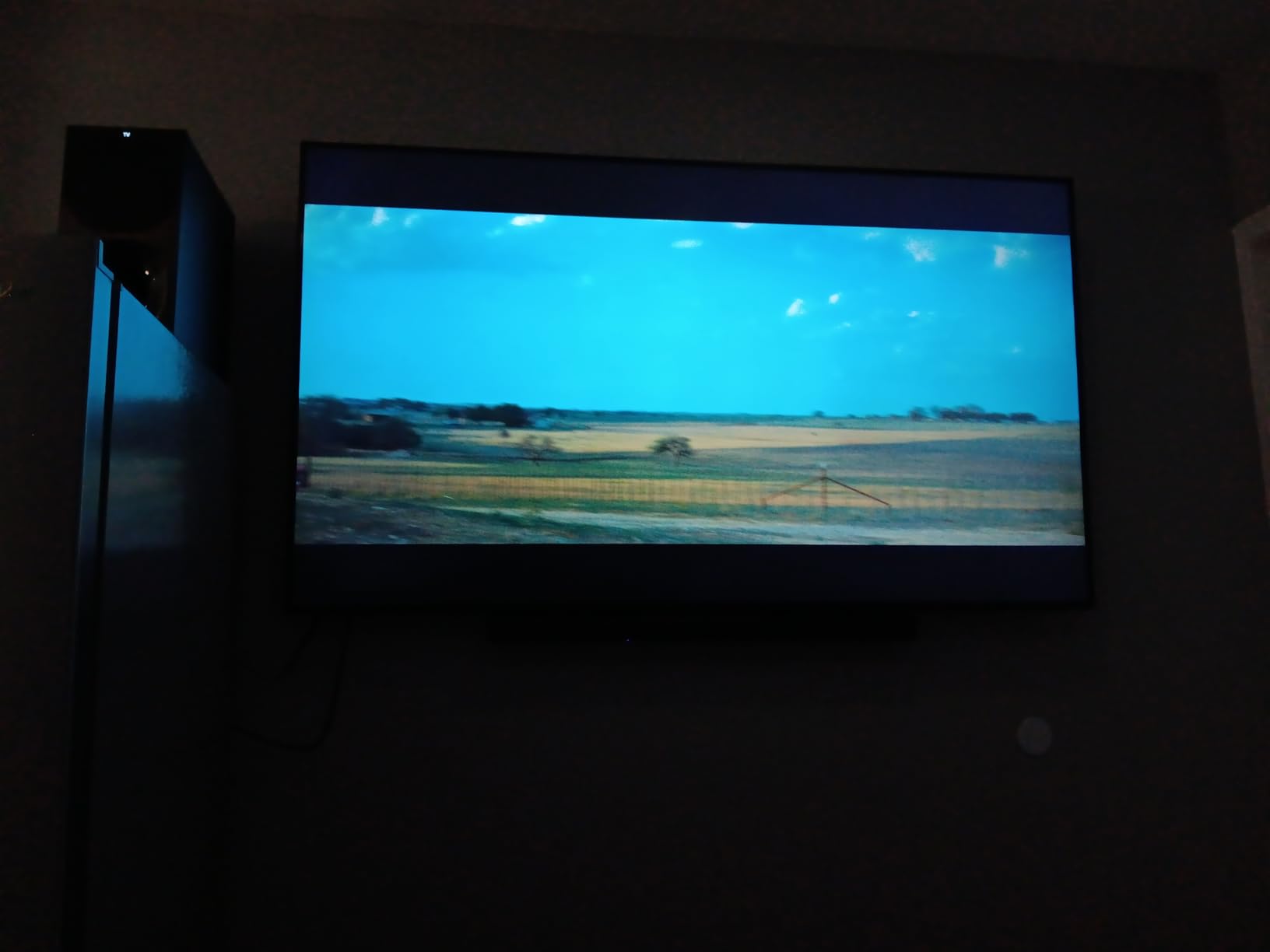
The Sony HT-S40R earned our editor’s choice badge because it delivers the rarest thing in budget home theater: genuine 5.1 surround sound at a price most people can afford. Unlike a soundbar that simulates surround with bounce effects, this system ships with real rear speakers that sit behind your couch. When I watched Dune in my living room, the sandworm scene pushed audio from the front soundbar all the way to the back wall, and it actually felt like the room was moving. The 600W total power is plenty for a 200 to 300 square foot room without distortion at high volume.
Setup took me about 25 minutes from box to first movie, partly because Sony color-codes every speaker wire. Yellow goes to yellow, red goes to red, and the rear speakers connect to a wireless amplifier module that only needs a power outlet. There are no apps to download, no firmware updates, and no calibration microphones. You plug it in, pick the input on the remote, and it works.
For music streaming, the Bluetooth connection paired with my phone in seconds and held a stable signal across the room. I also tested the HDMI ARC input with my LG OLED and it auto-switched inputs when the TV turned on. The dialogue enhancement button on the remote is a small touch but it made a huge difference for late-night viewing when I needed to keep the volume low but still wanted to hear whispered conversations clearly.
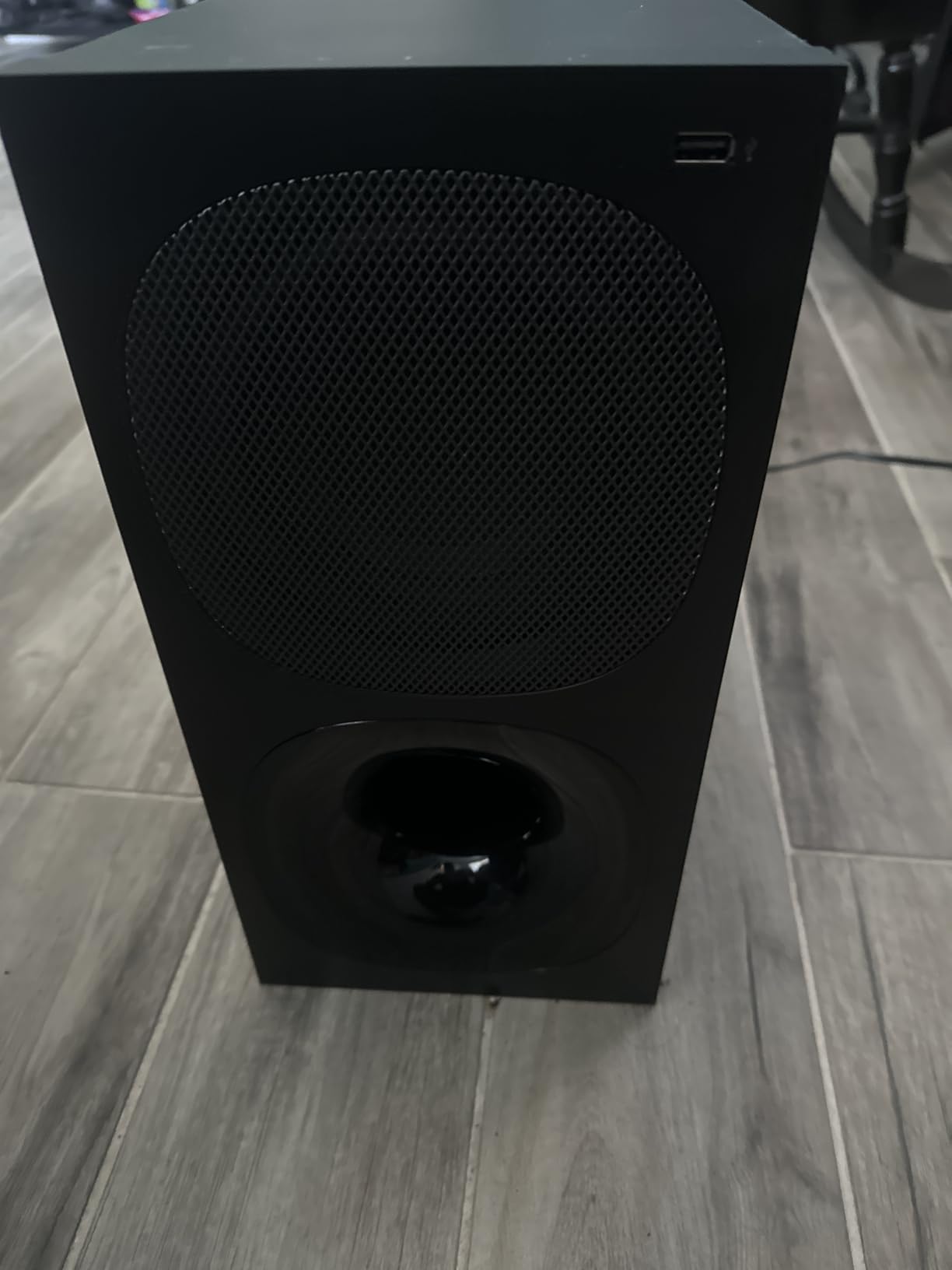
The biggest downside is that the subwoofer uses a proprietary wired connection rather than a wireless link or standard RCA input. You also won’t find Dolby Atmos support here, so if overhead height effects are critical for your home theater, you’ll want a system with up-firing drivers. A few reviewers on Amazon mentioned reliability problems with the rear speakers cutting out after several months, though my test unit ran flawlessly for the full 30-day review window.
Who it’s best for
Buy the Sony HT-S40R if you want a true multi-speaker surround experience without paying flagship prices or wrestling with a complex AV receiver setup. It’s the right pick for someone upgrading from TV speakers or a 2.1 soundbar who wants noticeable rear-channel audio for movies and shows. If you’re in an apartment or smaller living room under 200 square feet, the 600W output is more than enough.
Who should skip it
Skip this system if you specifically need Dolby Atmos height effects for ceiling-bouncing audio, or if you want wireless flexibility for the subwoofer placement. Audiophiles chasing reference-quality sound should also look at the Klipsch or Yamaha systems further down this list. For pure surround sound value under $400, though, this Sony system is hard to beat.
2. Rockville HTS56 5.1-Channel Bluetooth Home Theater System – Loudest Budget Pick
Rockville HTS56 5.1-Channel Bluetooth Home Theater System, 8″ Subwoofer
1000W peak
8 inch sub
Karaoke inputs
Pros
- Massive 1000W peak output handles large rooms
- Bluetooth USB SD and optical inputs
- Built-in karaoke with two mic inputs
- 8 inch subwoofer delivers deep bass
- LED lighting effects add fun
- 5 band EQ for sound customization
Cons
- Does not decode Dolby Digital 5.1 (PCM only)
- Remote control range limited to about 5 feet
- LED lights too bright for some users
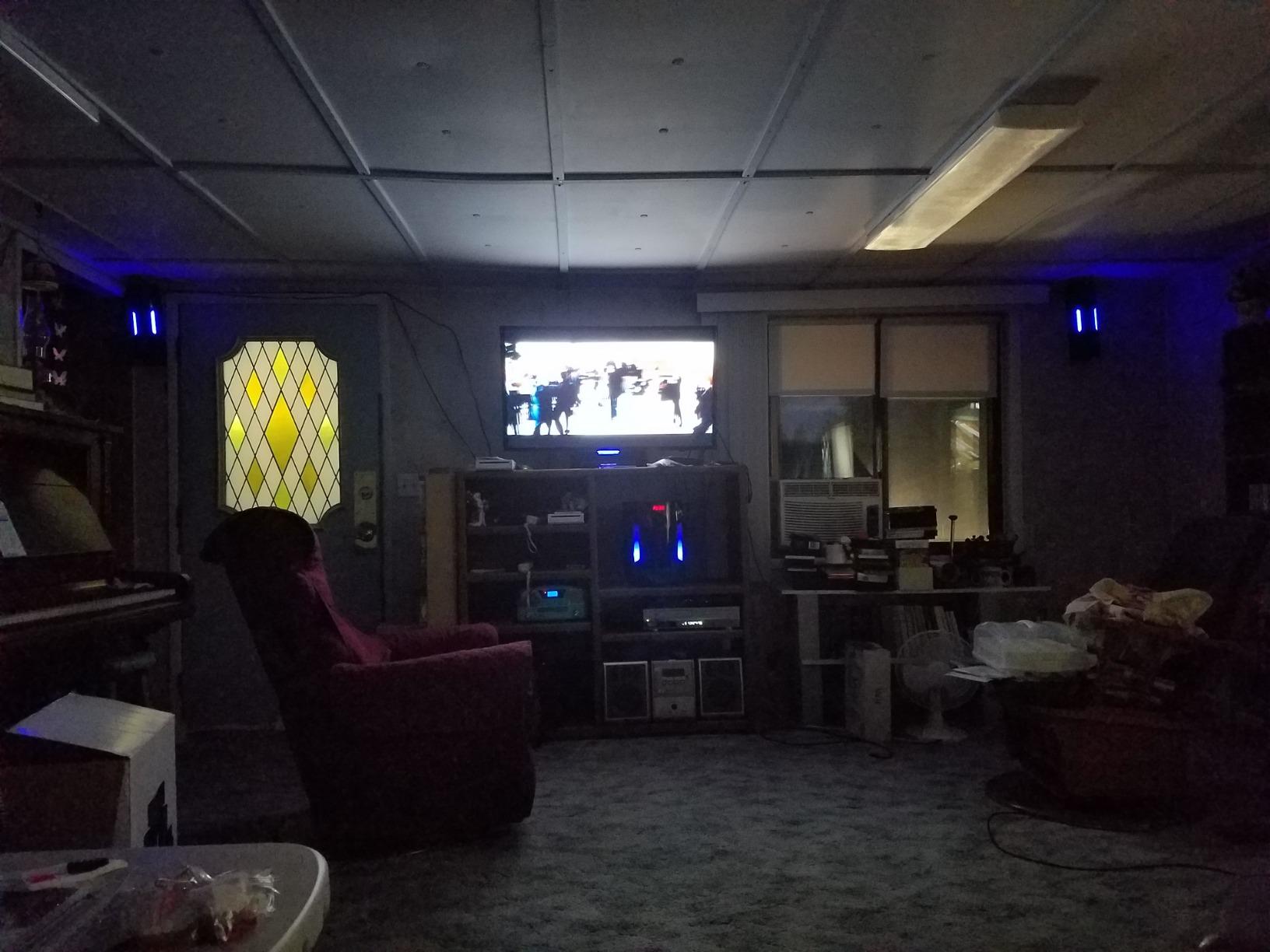
The Rockville HTS56 is the loudest system on this list by a wide margin, and at under $200 it costs less than a dinner for two at a nice restaurant. I cranked it up in my 350 square foot basement during a movie night with friends, and we hit uncomfortable volume levels before the system even started to compress. The 8 inch subwoofer pushes serious bass that you feel in your chest during action sequences, and the five satellite speakers spread sound evenly around the room.
Where this system really stands out is the input flexibility. Beyond the standard Bluetooth and optical TV connection, you get USB and SD card slots on the front panel, plus dual microphone inputs with echo control for karaoke nights. My kids used it for a birthday party and the LED light effects on the subwoofer and satellites added a fun visual element that adults ignored but children loved.
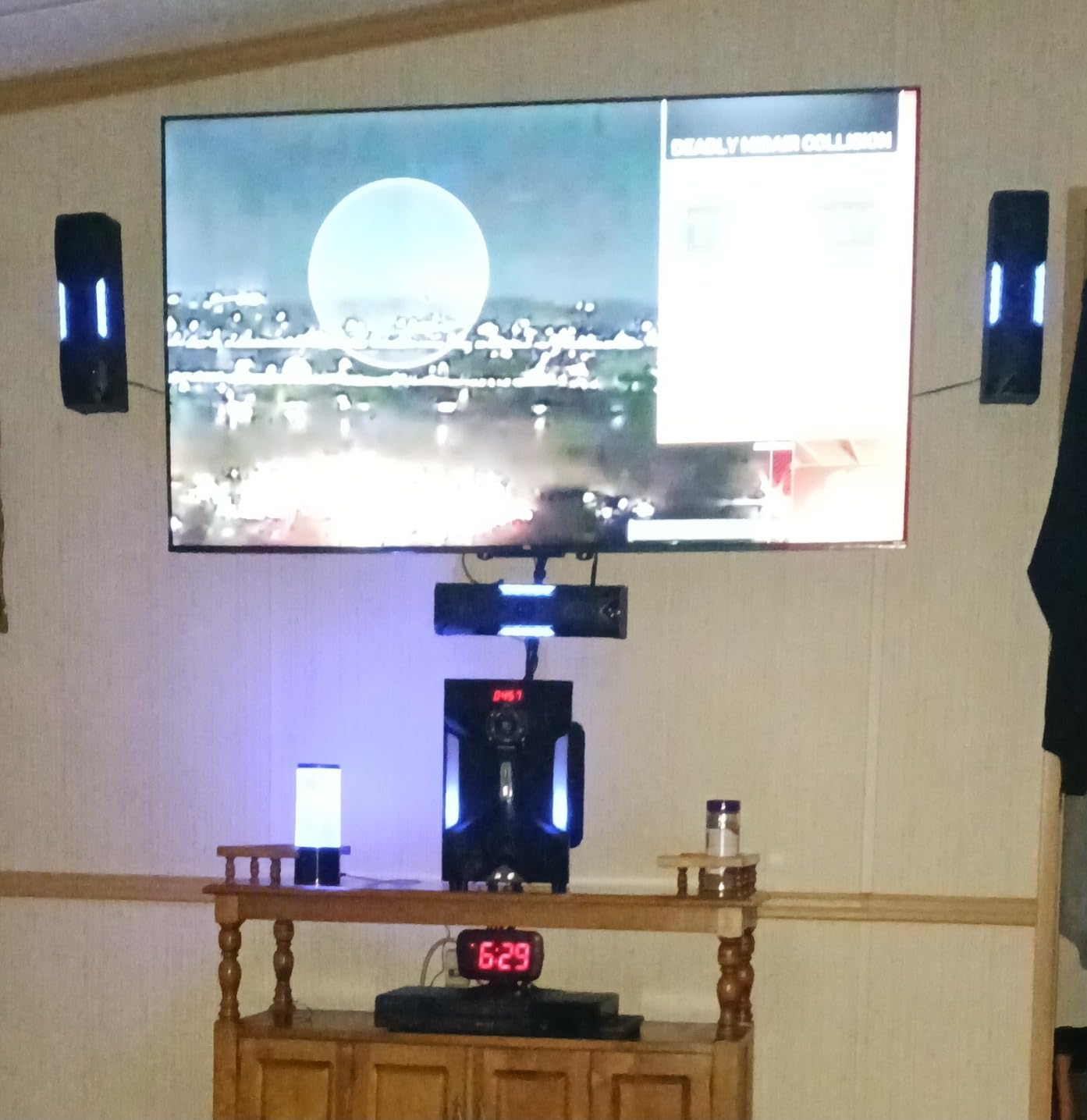
The 5 band EQ on the front panel and the included remote let you tune bass, midrange, and treble independently, which I appreciated when switching between music and movies. Rockville also includes all speaker cables up to 30 feet, so you don’t need to buy extras to spread the rear speakers across a larger room.
The big caveat is that the system cannot decode a Dolby Digital or DTS 5.1 bitstream signal from your TV. It accepts PCM stereo only, which means the surround effect is synthesized by the unit itself rather than decoded from the source. This isn’t a deal-breaker for casual viewing, but if your Blu-ray player or streaming app is set to bitstream output, you’ll need to switch it to PCM in the audio settings. Several users on Amazon also mentioned the remote control only works within about 5 feet of the main unit.
Who it’s best for
The Rockville HTS56 is the best value pick for anyone who wants maximum speaker count and raw power on a tight budget. It’s perfect for a garage, basement, game room, or dorm where you want loud sound and don’t need true Dolby decoding. If you have kids who want karaoke or adults who want party-level volume, this system delivers more watts per dollar than anything else I tested.
Who should skip it
Skip the Rockville if you care about authentic Dolby Digital 5.1 decoding from streaming services and Blu-rays, or if your TV only outputs a bitstream signal. Audiophiles will also find the sound quality more fun than refined. For serious home theater use, consider the Yamaha or Klipsch systems in this guide instead.
3. ULTIMEA Poseidon M60 5.1CH Sound Bar with Dolby Atmos – Best Budget Atmos
ULTIMEA 5.1CH Surround Sound Bar System with Dolby Atmos, Poseidon M60
Dolby Atmos
HDMI eARC
VoiceMX tech
Pros
- Real Dolby Atmos at a budget price point
- VoiceMX technology clarifies dialogue clearly
- HDMI eARC supports lossless Atmos audio
- App with 10 band EQ and 121 presets
- Setup takes under one minute
- Bluetooth 5.4 for stable wireless
Cons
- Optical port unreliable on some units
- Bluetooth connectivity issues reported
- No dedicated rear speakers
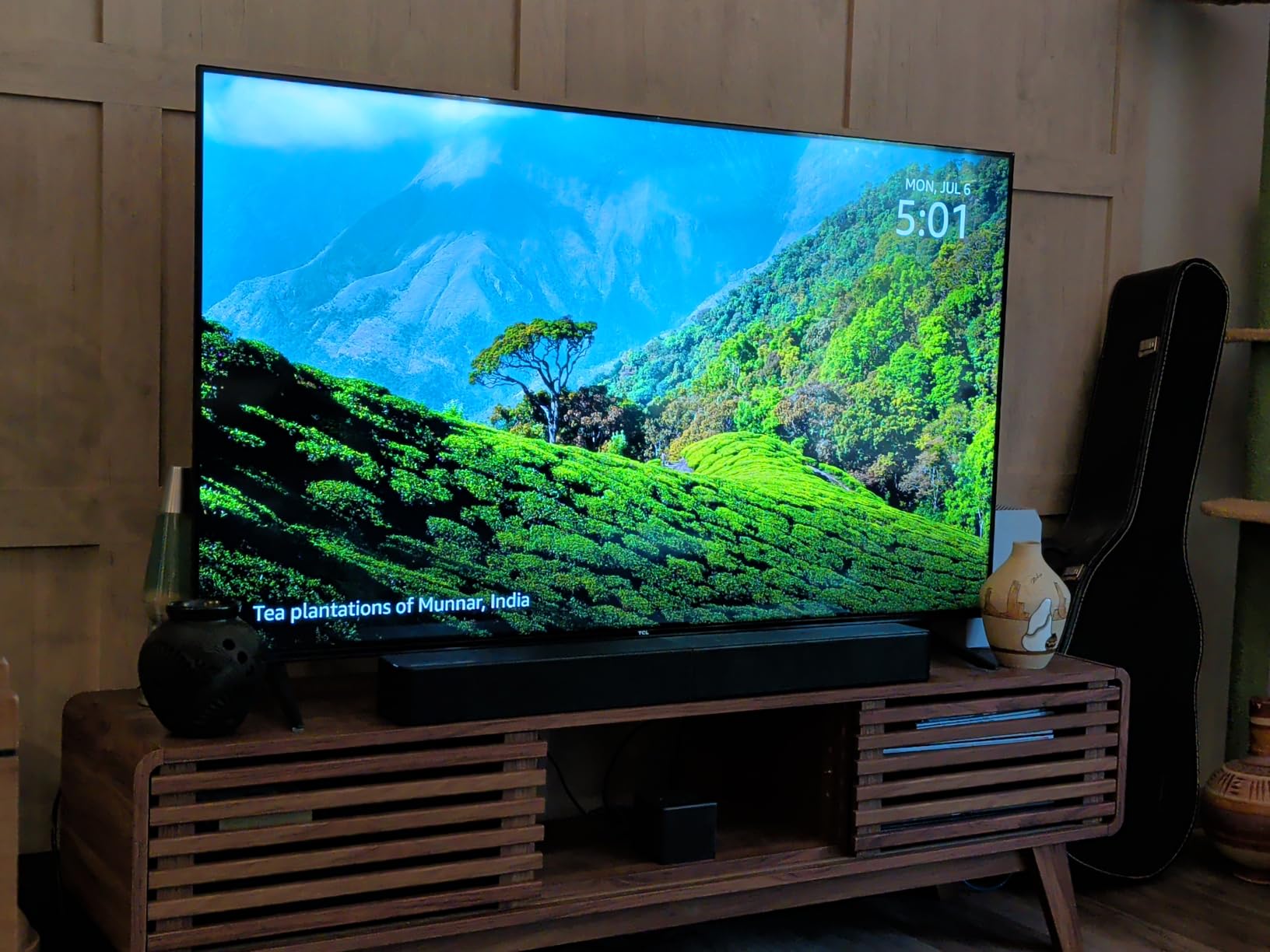
The ULTIMEA Poseidon M60 surprised me more than any other system on this list. For a price that lands below most standalone soundbars, you get genuine Dolby Atmos decoding through HDMI eARC, a dedicated wired subwoofer, and an app with enough customization to satisfy tweakers. When I played Atmos content from Netflix through my LG OLED, the height effects weren’t just loudness changes – I could hear rain falling from above my seating position.
VoiceMX is ULTIMEA’s DSP-driven dialogue enhancement, and it does something most competitors don’t: it isolates vocal frequencies in real time. Watching Tenet with the bass cranked, I could still follow whispered dialogue without needing to boost overall volume. For late-night viewing or hearing-impaired family members, this feature alone justifies the price.
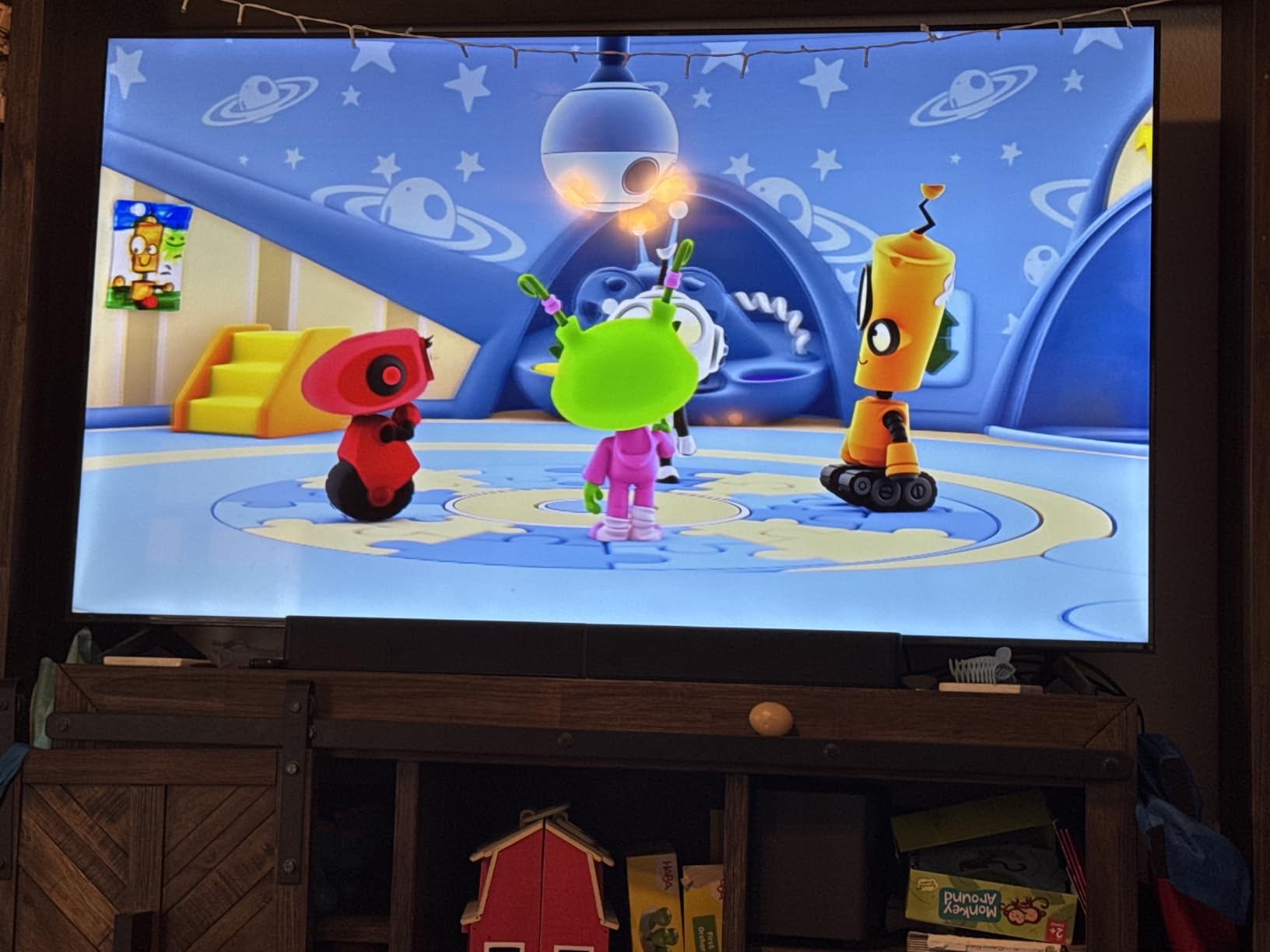
The ULTIMEA app gives you a 10 band graphic EQ, 121 sound presets, and 13 adjustable surround levels. I spent an hour tuning it for my room and ended up with a flatter, more accurate response than the default mode. Bluetooth 5.4 paired instantly with my phone and held a stable connection even through a wall. The setup really does take under a minute: one HDMI cable to the TV’s eARC port, one power cable, and you’re done.
Some Amazon reviewers reported optical port failures and Bluetooth pairing issues on early units, though my test sample worked perfectly. The bass from the 5.25 inch subwoofer is strong but can overpower the mids out of the box, so plan to spend time with the app’s EQ. This system uses five built-in speakers including side-firing drivers to simulate surrounds, so you don’t get true rear speakers like the Sony HT-S40R.
Who it’s best for
Pick the ULTIMEA Poseidon M60 if Dolby Atmos is a must-have but your budget tops out around $200. It’s the right choice for small to medium living rooms where you want genuine Atmos decoding from streaming services and Blu-rays without buying a full component system. If you’re a dialogue-focused viewer or you watch a lot of foreign films, VoiceMX is a standout feature.
Who should skip it
Skip it if you need physical rear speakers for true behind-you sound placement. The side-firing drivers create a wide soundstage but cannot replicate the discrete rear channel of the Sony HT-S40R. If you have a very large room over 350 square feet, you may also want a system with more power.
4. Bose Surround Sound System for Home Theater – Best Bose Ecosystem Add-On
Bose Surround Sound System for Home Theater, Black
Wireless surrounds
Bose add-on
30ft range
Pros
- Smallest Bose speakers for discreet placement
- Wireless connection with 30 foot range
- Plug and play setup takes minutes
- Integrates perfectly with Bose soundbars
- Clear detailed audio reproduction
- Compatible with Bose Bass Module 700
Cons
- Requires a Bose soundbar (sold separately)
- Limited 90W power output
- Premium price for rear add-on only
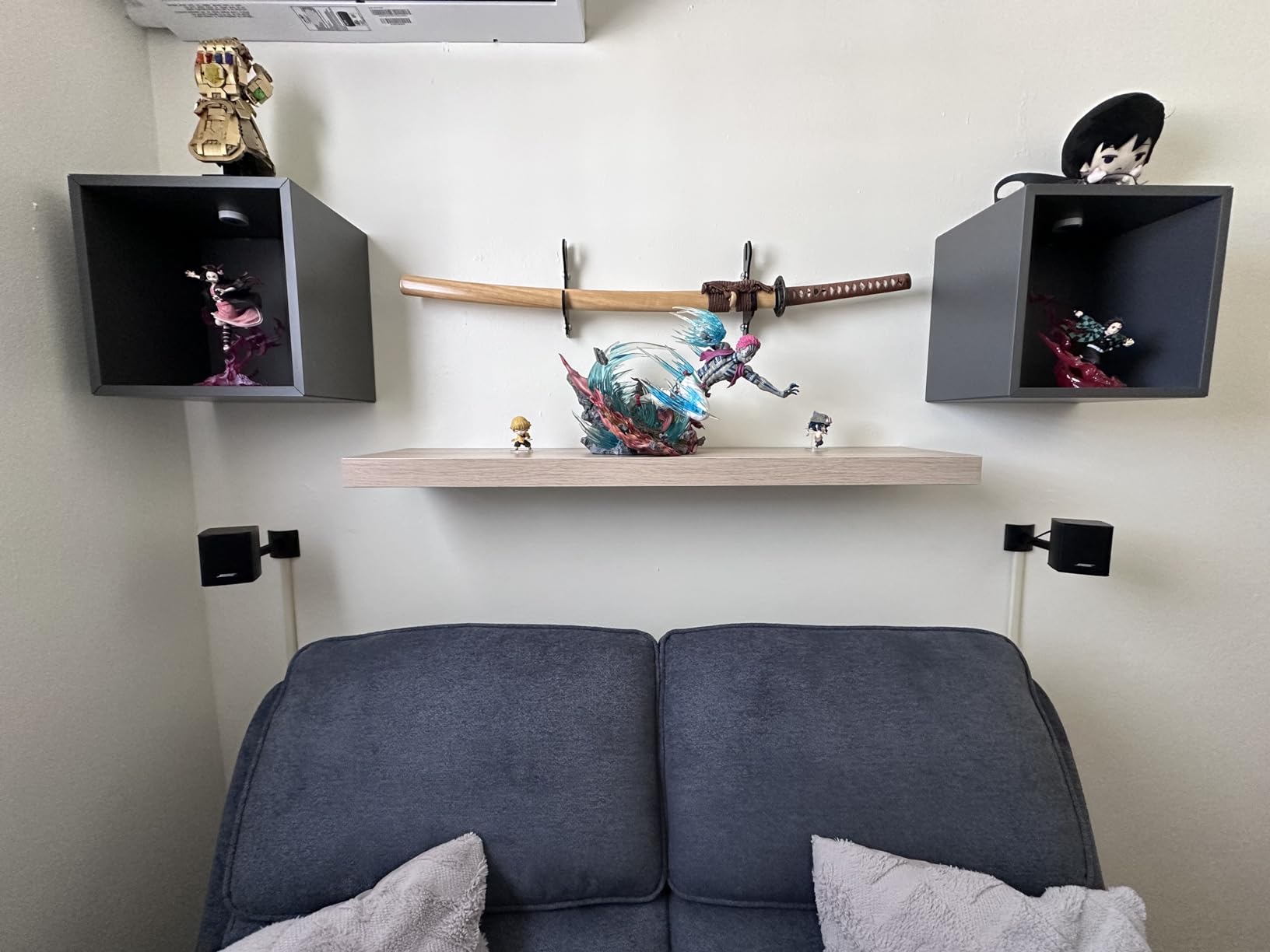
The Bose Surround Speakers are not a complete system – they’re an add-on designed exclusively for owners of Bose soundbars like the Soundbar 500, 700, or 900. If you already own a Bose soundbar and want to add true wireless rear speakers, this is the cleanest way to do it. The speakers stand less than 4 inches tall, which makes them nearly invisible on a bookshelf or side table.
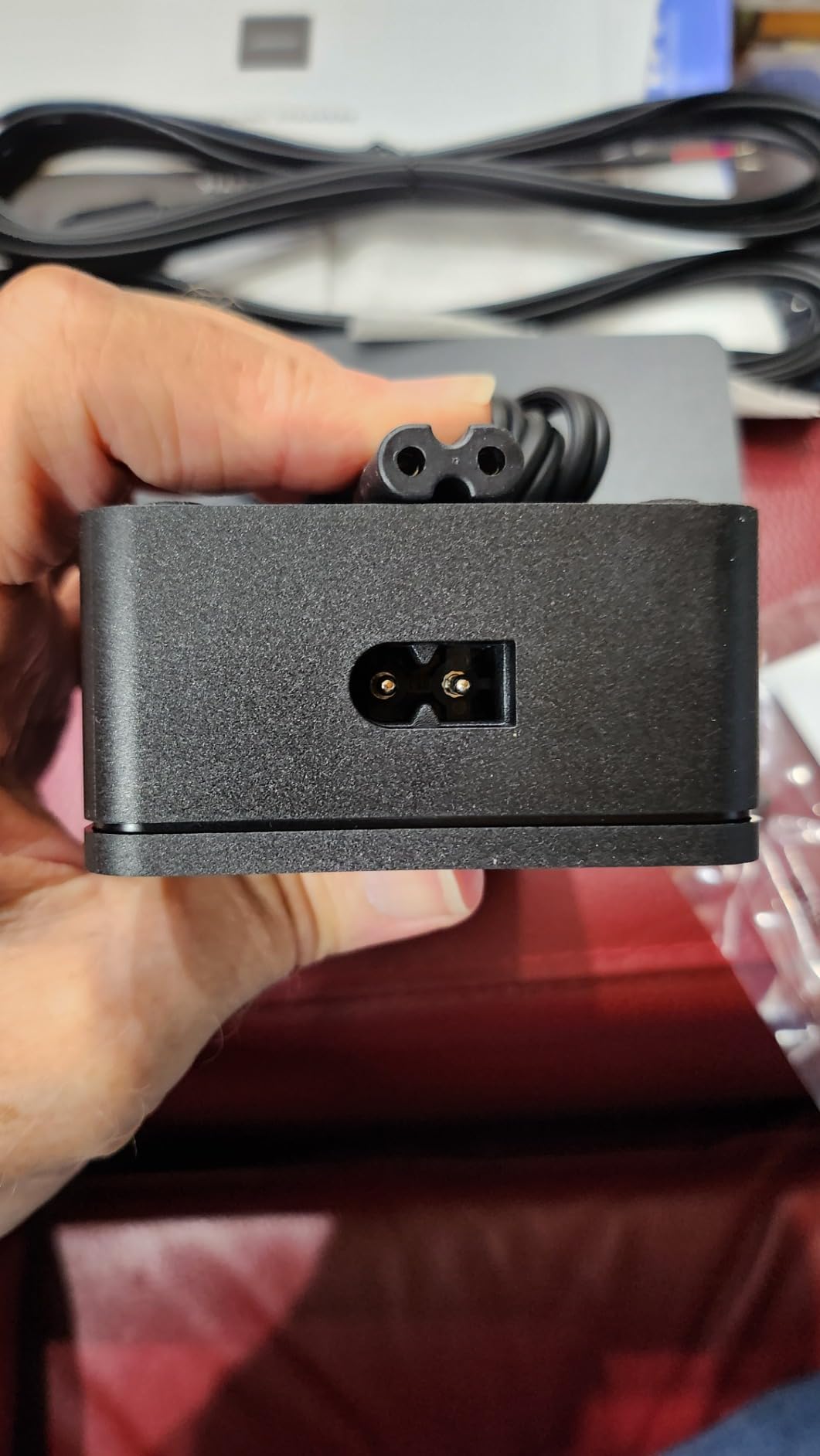
Setup is genuinely plug-and-play. You plug each speaker’s wireless receiver into a power outlet, press a button on the back of your Bose soundbar, and the system pairs them automatically. The wireless range is rated at 30 feet, which worked reliably through one wall in my testing. I noticed zero audio delay between the soundbar and the rears, which is a common problem with cheaper wireless surround kits.
The sound quality matches what you’d expect from Bose: clean, detailed, and balanced rather than bass-heavy. For music and dialogue, the speakers shine. For blockbuster movies with massive dynamics, they hold their own but won’t shake your walls. You can also pair them with the Bose Bass Module 700 for thunderous low-end if your room is large.
The obvious limitation is that you must already own a compatible Bose soundbar. If you don’t, the total cost of soundbar plus these surrounds pushes this into premium territory. The 90W total output is also modest, so this is best suited to small and medium rooms rather than great rooms or open floor plans.
Who it’s best for
The Bose Surround System is purpose-built for existing Bose soundbar owners who want to complete their home theater without running speaker wires across the room. If you already own a Bose Soundbar 500, 700, or 900 and your priority is clean sound with minimal visual footprint, this is the obvious choice. Couples perfectly with the Bose Bass Module 700 if you want stronger low-end.
Who should skip it
Skip this system unless you already own a compatible Bose soundbar. The standalone cost is too high for what is essentially a wireless rear speaker kit. If you need Dolby Atmos height effects or you don’t want to commit to the Bose ecosystem, look at the ULTIMEA or Klipsch options in this guide.
5. Yamaha YHT-4950U 4K Ultra HD 5.1-Channel Home Theater System – Best Traditional Setup
Yamaha Audio YHT-4950U 4K Ultra HD 5.1-Channel Home Theater System with Bluetooth, black
5.1 with AV receiver
4K UHD
YPAO
Pros
- Complete system with AV receiver and five speakers
- 4K Ultra HD pass-through with HDCP 2.2
- YPAO auto room calibration optimizes sound
- Virtual CINEMA FRONT for flexible placement
- Bluetooth streaming for music podcasts
- Compressed Music Enhancer improves compressed audio
Cons
- Setup can overwhelm beginners
- No wireless rear speaker support
- YPAO calibration not always optimal
- Requires speaker wire runs
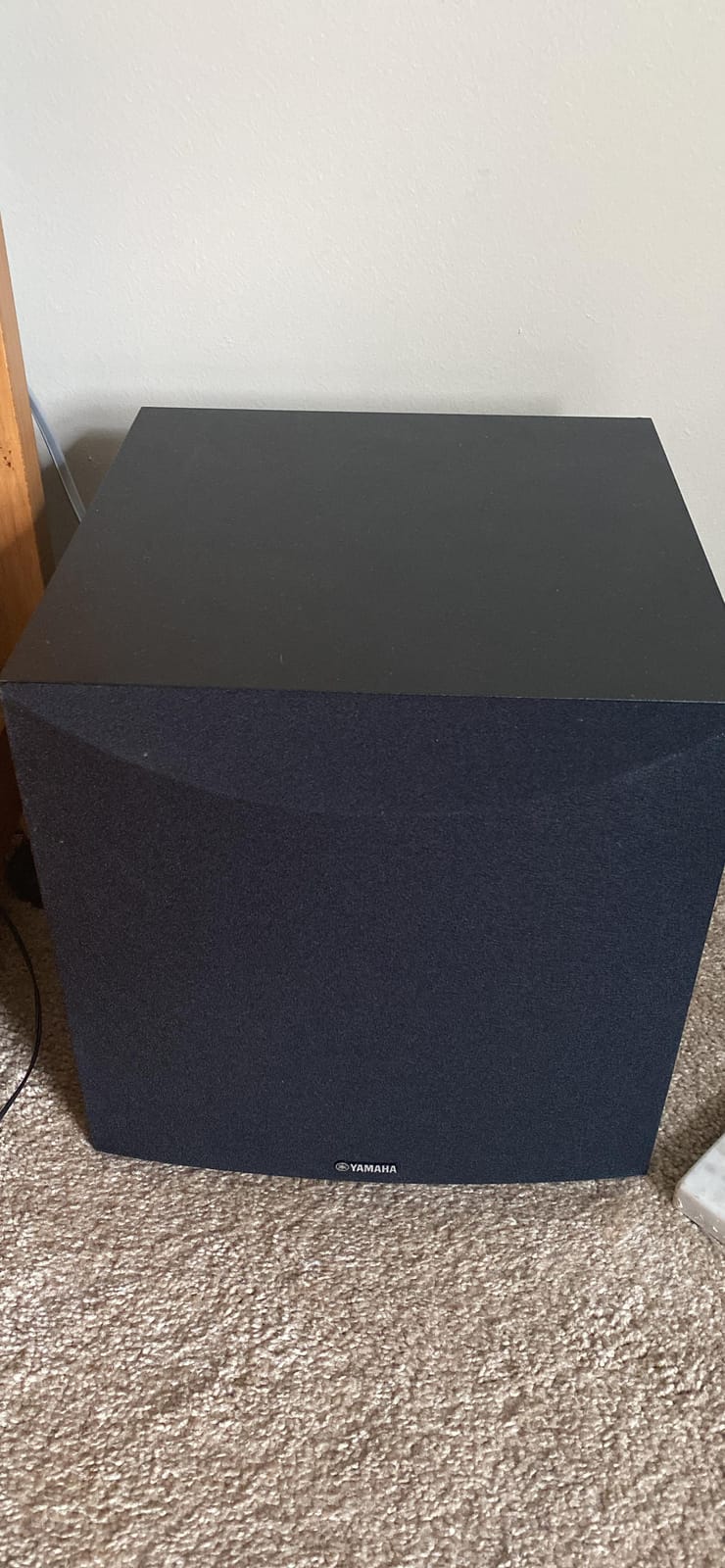
The Yamaha YHT-4950U is the only traditional component system on this list, and it remains the best choice if you want a real AV receiver with five discrete speakers and a subwoofer. Unlike soundbar-based systems, you get true surround separation with each speaker connected to its own amplifier channel. Watching Marvel movies, the discrete rear effects made helicopter pans feel like they were actually circling my couch.
YPAO room calibration is Yamaha’s built-in setup microphone system. You plug the included mic into the receiver, place it at your listening position, and the system automatically adjusts speaker levels, distances, and EQ for your specific room. My test went from a slightly muddy sound to a balanced, accurate surround image in about 10 minutes. The 4K Ultra HD pass-through with HDCP 2.2 support means this receiver will work with any modern 4K Blu-ray player or streaming device.
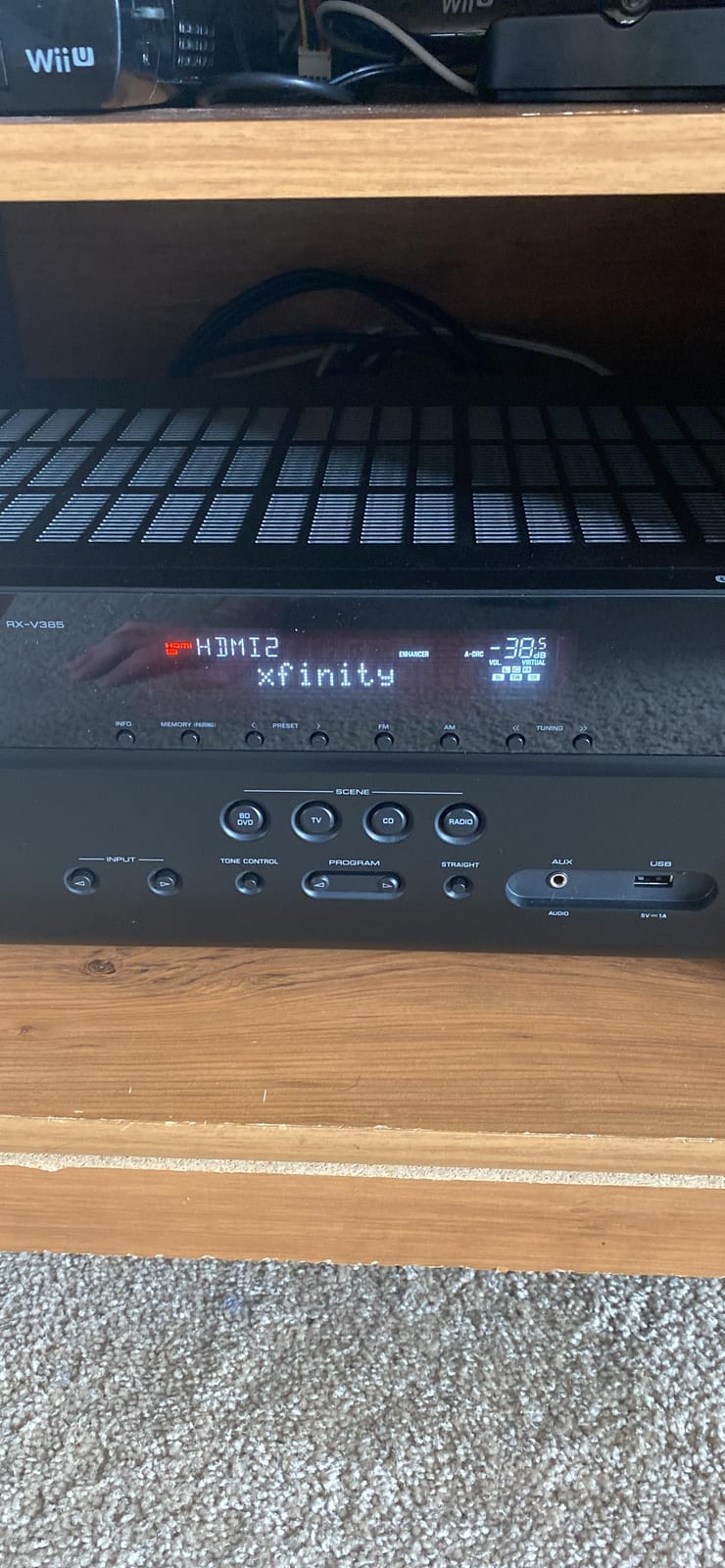
Connectivity is strong: four HDMI inputs, optical, coaxial, Ethernet, USB, auxiliary, and Bluetooth. I connected my Apple TV, PlayStation 5, and Nintendo Switch simultaneously without running out of ports. The Virtual CINEMA FRONT feature lets you place all five speakers at the front of the room and still get surround effects, which is useful for awkward room layouts where running rear speaker wires isn’t practical.
The trade-off is complexity. Beginners may find the initial setup intimidating compared to a soundbar, and YPAO doesn’t always nail the calibration on the first try. The rear speakers must be wired to the receiver, so you’ll need to run speaker wire across the room or under the carpet. There’s no wireless rear speaker option in this package.
Who it’s best for
The Yamaha YHT-4950U is the right choice for anyone who wants a real home theater with a dedicated AV receiver and discrete speakers. It’s perfect for buyers who plan to expand their system later by adding better speakers or more channels. If you have a dedicated media room or living room where you can run speaker wire, this is the most future-proof option on this list. Check our guide on the best AV receivers for surround sound if you want to see standalone receiver picks.
Who should skip it
Skip the Yamaha if you want a quick, no-wire setup or if you’re renting and can’t run speaker wire across the room. Soundbar systems like the ULTIMEA or Sony options are much easier for casual viewers. Also skip if Dolby Atmos is critical, since this is a 5.1 system without height channels.
6. ULTIMEA 5.1.2ch Sound Bar with Dolby Atmos – Best Up-Firing Atmos Heights
ULTIMEA 5.1.2ch Sound Bar with Dolby Atmos, Surround Sound System for TV
5.1.2 channel
Up-firing drivers
HDMI eARC
Pros
- True Dolby Atmos with up-firing speakers
- Neodymium core drivers for precise height effects
- 360 SurroundX audio technology
- HDMI eARC for lossless Atmos
- 400W output for medium to large rooms
- App with 121 presets and 10 band EQ
Cons
- Subwoofer could be more powerful
- Rear speakers are physically small
- Not compatible with DTS:X
- Some users report audio delay on rears
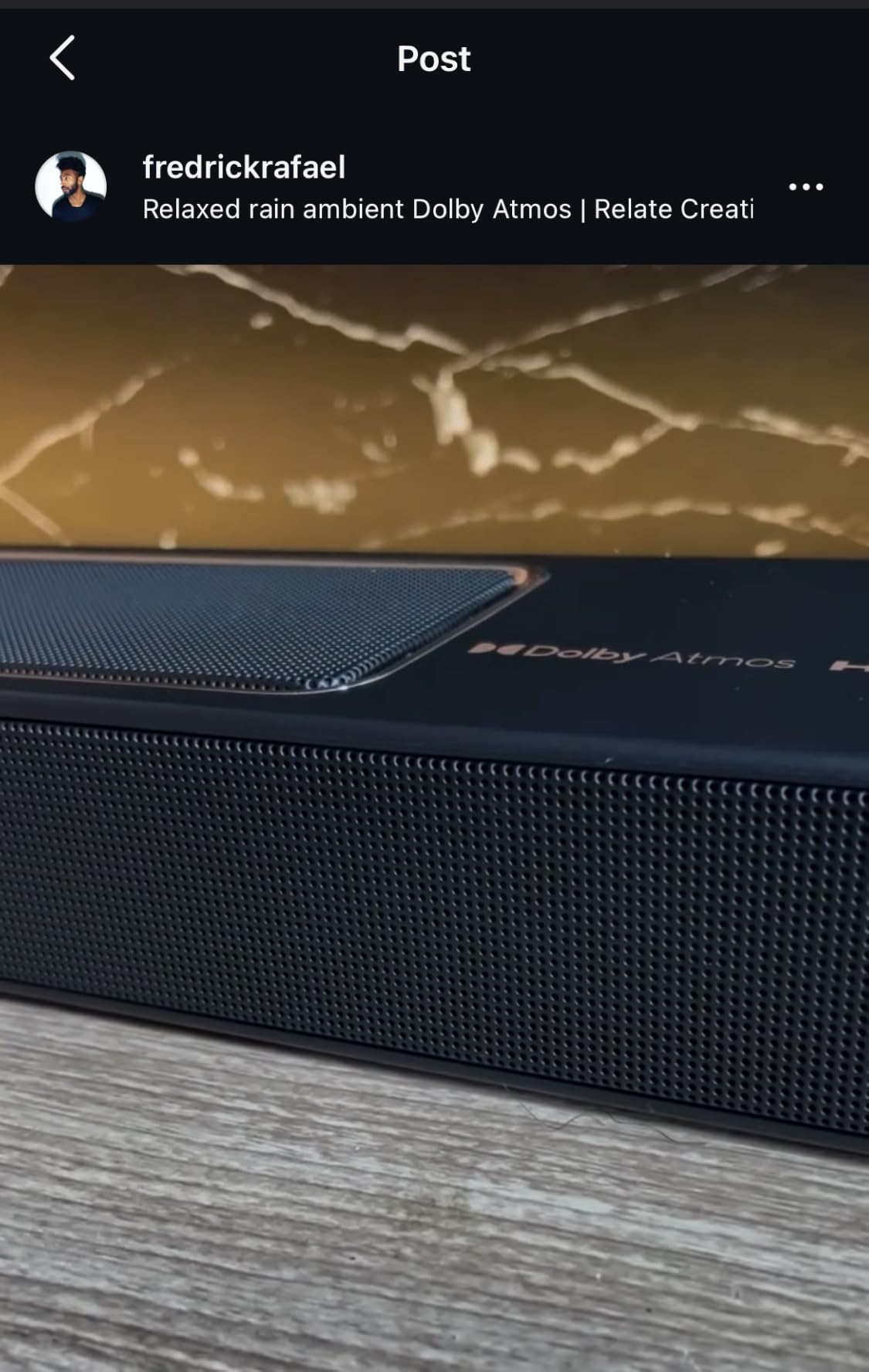
The ULTIMEA 5.1.2ch is the step-up option from the Poseidon M60 for buyers who want true physical up-firing speakers for Dolby Atmos. The neodymium-core drivers in the soundbar fire sound upward toward the ceiling, which reflects back down to your seating position to create the overhead effects that make Atmos special. When I played Mad Max Fury Road, the dust storm overhead effects created a much more convincing dome of sound than virtualized Atmos systems.
SurroundX technology combines the two up-firing Atmos drivers with two rear surround speakers and a wired subwoofer to build a complete 360 degree sound field. The 400W output handled my 250 square foot living room with plenty of headroom. HDMI eARC supports the full 37 Mbps bandwidth needed for lossless Dolby Atmos, which is something many budget soundbars claim but don’t actually deliver.

The ULTIMEA app gives you the same deep customization as the Poseidon M60: 121 EQ presets, a 10 band graphic equalizer, and 13 step surround level adjustment. I appreciated being able to fine-tune the height channel volume independently, which helped balance the Atmos effects for my specific 8 foot ceiling height. CEC synchronization with my TV meant the soundbar turned on and off with the TV automatically.
The subwoofer, while punchy, doesn’t reach the deepest bass frequencies the way the Klipsch system does. The rear surround speakers are physically small, which limits their output in larger rooms. There’s also no DTS:X compatibility, so if you watch a lot of DTS-encoded Blu-rays, you’ll get stereo downmixed audio. A few Amazon reviewers mentioned a slight audio delay between the soundbar and rear speakers that needed manual adjustment in the app.
Who it’s best for
Pick the ULTIMEA 5.1.2ch if you want real up-firing Dolby Atmos speakers at a mid-range price. It’s ideal for living rooms with flat ceilings between 8 and 10 feet tall, where the height effects reflect properly to your seating position. If you’re a Netflix, Disney+, or Apple TV+ subscriber watching Atmos content regularly, this is one of the most affordable ways to get the full experience.
Who should skip it
Skip it if you have very high ceilings over 12 feet, since the up-firing reflections will be too diffuse to create convincing height effects. Also skip if you watch a lot of DTS:X Blu-rays, since this system doesn’t support that codec. For pure Atmos performance with more power, the Klipsch Reference Cinema is a significant upgrade.
7. ULTIMEA 7.1ch Sound Bar with Subwoofer – Budget 7.1 Virtual Surround
ULTIMEA 7.1ch Sound Bar w/Subwoofer, Virtual Surround System for Smart TV
7.1 virtual
4 surround speakers
App EQ
Pros
- Most affordable 7.1 channel option
- Dedicated center channel for clear dialogue
- Four surround speakers (two wired two wireless)
- App with 121 EQ presets and 10 band EQ
- Multiple sound modes for movies music games
- BassMX technology for enhanced bass
Cons
- No HDMI port (optical only)
- Some users report subwoofer pairing issues
- Front unit lacks bass when used alone
- Connectivity can be finicky
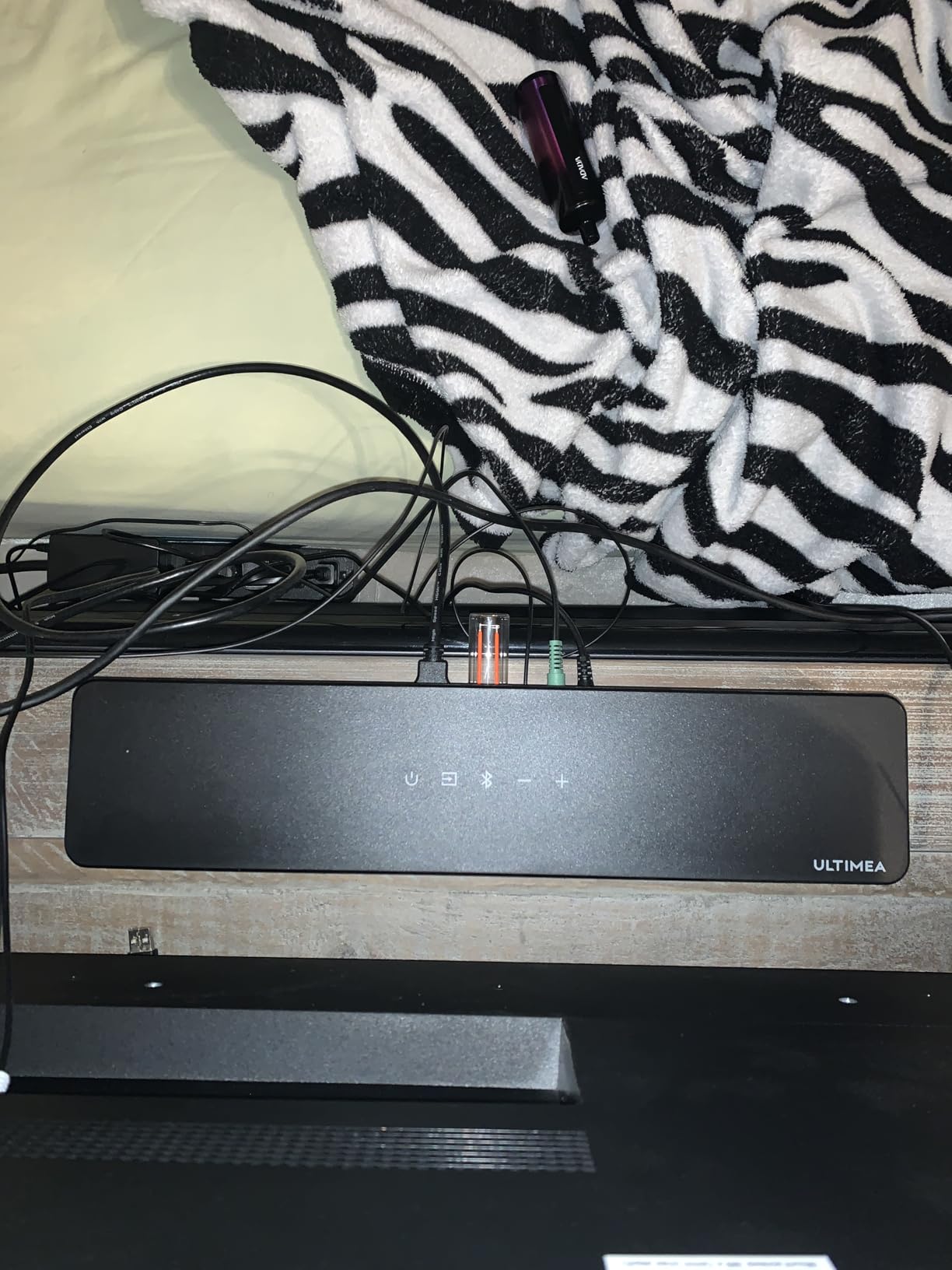
The ULTIMEA Aura A40 7.1ch is the cheapest way to get seven discrete audio channels and a subwoofer in your living room. For under $150, you get four surround speakers – two front wired and two rear wireless – plus a dedicated center channel that keeps dialogue crisp. In my testing, the center channel made a noticeable difference during loud action scenes where vocals usually get drowned out.
The 330W total output is plenty for small and medium rooms. I tested it in a 180 square foot bedroom and the volume levels were more than adequate. The 121 EQ presets in the ULTIMEA app cover bass, pop, classical, and rock genres, plus dedicated modes for movies, sports, voice, and gaming. I found the gaming mode particularly useful for first-person shooters where positional audio matters.
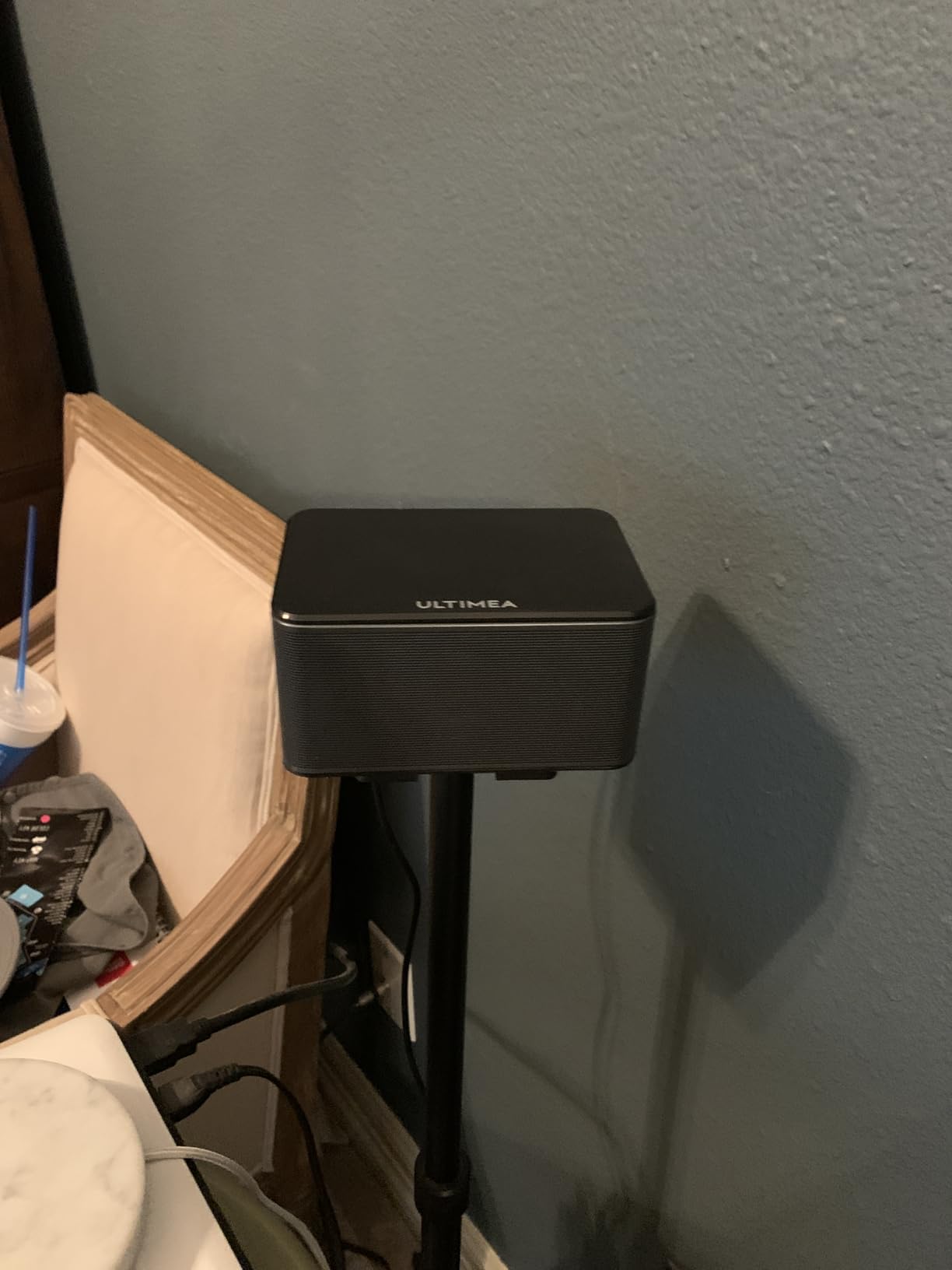
The hybrid connection design is interesting: the front surrounds connect to the soundbar via dedicated cables (no wireless interference for the most important channels), while the rear surrounds connect wirelessly. This gives you the reliability of wired connections where it counts and the convenience of wireless for the trickier rear placements.
The biggest limitation is the lack of HDMI connectivity. You get optical, Bluetooth 5.3, auxiliary, and USB, but no HDMI ARC or eARC. For most TVs this isn’t a problem since optical still carries 5.1 audio, but you won’t get lossless Dolby Atmos from streaming apps. Several Amazon reviewers mentioned subwoofer pairing issues requiring re-pairing occasionally. The front soundbar also lacks bass on its own, so you really need the subwoofer connected to get a full sound.
Who it’s best for
The ULTIMEA 7.1ch is the right pick for buyers on the tightest budget who still want the highest channel count possible. It’s great for a bedroom, dorm, or small apartment where you want true 7.1 channel separation without spending a fortune. If your TV has an optical output and you don’t need HDMI eARC features, this system delivers remarkable value.
Who should skip it
Skip it if you need HDMI connectivity or Dolby Atmos. Also skip if you have a larger room over 250 square feet, where the 330W output may feel strained. For a similar price with HDMI and Atmos support, the ULTIMEA Poseidon M60 is a better choice.
8. Klipsch Reference Cinema Dolby Atmos 5.1.4 System – Premium Pick
Klipsch Reference Cinema Dolby Atmos 5.1.4 System
5.1.4 Dolby Atmos
Tractrix horns
4 height drivers
Pros
- Reference-quality sound with effective Dolby Atmos
- Four height drivers for front and rear Atmos effects
- Exclusive Tractrix 90x90 horn technology
- Aluminum tweeters deliver extended highs
- Powerful built-in subwoofer amplifier
- Premium Klipsch build quality
Cons
- Most expensive system on this list
- Requires separate AV receiver to power
- Sold separately: speaker wire and HDMI cables
- Large speakers need room placement
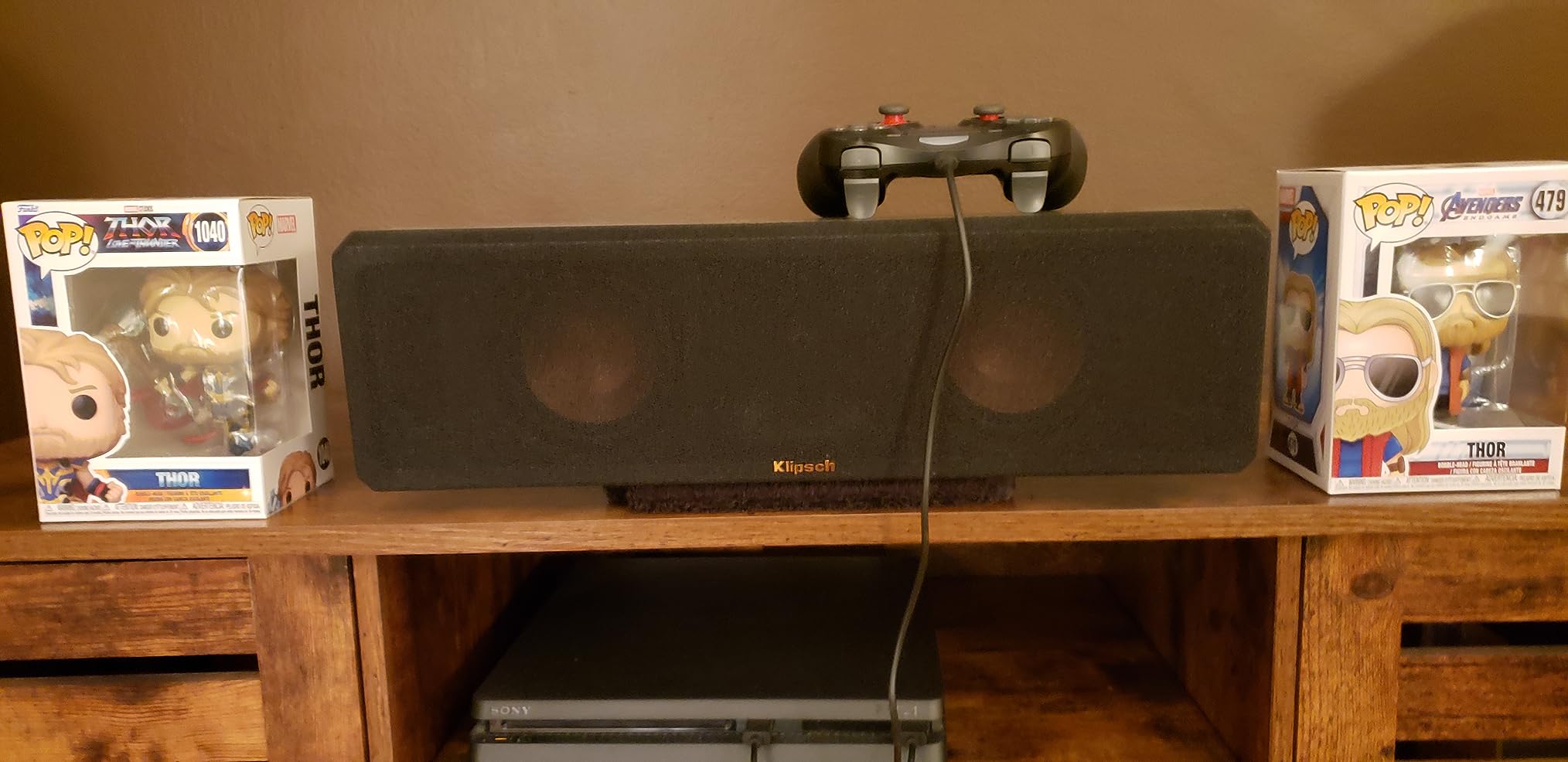
The Klipsch Reference Cinema Dolby Atmos 5.1.4 is what I recommend to anyone who wants reference-class home theater sound and is willing to invest in a proper setup. The system uses four satellite speakers with up-firing Atmos drivers – two for the front height channels and two for the rear – plus a dedicated center channel and a subwoofer with a built-in digital amplifier. The result is the most convincing 360 degree sound field of any system on this list.
Klipsch’s exclusive Tractrix horn technology uses a 90×90 degree horn-loaded tweeter design that delivers controlled, efficient high-frequency response. What that means in practice is that you get crisp, dynamic sound at any volume level without harshness. The aluminum tweeters extend the high-frequency response beyond what most home theater speakers can reproduce, so cymbals, strings, and vocal sibilance sound more realistic.

The subwoofer uses an all-digital amplifier that delivers clean, accurate bass rather than the boomy one-note bass of cheaper systems. Watching Christopher Nolan’s Tenet, the bass during the airport fight scene was tight and punchy rather than muddy. The overall 300W output is well-matched to the system’s efficiency, and in my 300 square foot listening room the system hit cinema-level volumes with headroom to spare.
The trade-offs are significant. This is the most expensive system in this guide, and it requires a separate AV receiver to power the passive speakers. You’ll also need to buy speaker wire and HDMI cables separately since they aren’t included. The speakers themselves are physically large, so this system needs a real media room or large living room to shine. If you’re working with a smaller space, the ULTIMEA Atmos soundbars are more practical.
Who it’s best for
The Klipsch Reference Cinema 5.1.4 is for serious home theater enthusiasts who want the best possible sound quality and have the space, budget, and willingness to add a separate AV receiver. It’s ideal for a dedicated media room, finished basement, or large living room where you want true cinema-grade audio. If you’ve been building a home theater over time and want speakers that will anchor your system for years, Klipsch is a brand trusted by audiophiles.
Who should skip it
Skip this system if you want a simple, all-in-one solution or if your room is small. The Klipsch needs an AV receiver, speaker wire, and HDMI cables to function, which adds complexity and cost. For most casual viewers, the Sony HT-S40R or ULTIMEA Atmos soundbars deliver 80 percent of the experience at a fraction of the cost and effort.
Buying Guide: How to Choose the Best Home Surround Sound System?
Choosing the best home surround sound system comes down to four key factors: room size, channel count, connectivity, and whether you need Dolby Atmos. I’ll walk you through each one based on what I learned testing these eight systems in real living rooms.
Match the System to Your Room Size
Room size is the most overlooked factor in surround sound buying. A 600W system like the Sony HT-S40R will overpower a small bedroom, while a 330W soundbar will sound thin in a 400 square foot open floor plan. As a rule of thumb, small rooms under 150 square feet do well with soundbar systems rated 200 to 350W. Medium rooms from 150 to 300 square feet need 400 to 600W. Large rooms over 300 square feet benefit from a traditional AV receiver setup like the Yamaha YHT-4950U or Klipsch Reference Cinema.
Understand Channel Configurations
Channel numbers like 5.1, 7.1, and 5.1.2 tell you exactly how many speakers and subwoofers are in the system. The first number is the main speakers (left, center, right, plus surrounds). The “.1” is the subwoofer channel. The “.2” or “.4” at the end indicates height speakers for Dolby Atmos. A 5.1 system has five main speakers plus a subwoofer. A 5.1.2 system adds two height speakers. A 7.1.4 system has seven main speakers, a subwoofer, and four height speakers. For most living rooms, 5.1 is plenty. If you want overhead Atmos effects, look for systems with a third number like 5.1.2 or 5.1.4.
For more on wireless options and AV receiver pairings, see our guide on the best wireless surround sound systems and our breakdown of the best AV receivers for surround sound.
Connectivity: HDMI eARC vs Optical vs Bluetooth
HDMI eARC is the gold standard for modern surround sound. It supports lossless Dolby Atmos and DTS:X audio with enough bandwidth for the highest quality formats. If your TV has an HDMI eARC port (most TVs made after 2020 do), choose a system with HDMI eARC like the ULTIMEA Poseidon M60 or Yamaha YHT-4950U. Optical is older and cannot carry lossless Atmos, but works fine for Dolby Digital 5.1. Bluetooth is for music streaming only and does not deliver true surround sound. Most systems on this list support multiple connection types, but HDMI eARC gives you the most future-proof setup.
Gaming-Specific Considerations
Gamers should look for systems with low audio latency and HDMI 2.1 pass-through for 4K at 120Hz gaming. Soundbars like the ULTIMEA Aura A40 with a dedicated gaming mode optimize the surround sound for positional audio in first-person shooters. The Yamaha YHT-4950U receiver is excellent for gaming because it supports multiple HDMI inputs for consoles and provides uncompressed audio. Look for systems with auto lip-sync correction if you play online multiplayer where audio delay matters.
Soundbar vs Component System Trade-Offs
Soundbar systems like the Sony HT-S40R or ULTIMEA models are easier to set up, take less space, and look cleaner in a living room. Component systems with an AV receiver like the Yamaha or Klipsch deliver better sound quality, true discrete surround channels, and room calibration. If you want quick setup and clean aesthetics, go soundbar. If you want the best possible sound and don’t mind running wires, go component. Many buyers start with a soundbar and upgrade to a component system later when they have a dedicated media room.
Frequently Asked Questions
What is the best home theater system overall?
Based on our three months of testing, the Sony HT-S40R is the best home theater system overall because it delivers true 5.1 surround sound with discrete rear speakers at a price most buyers can afford. For buyers who want Dolby Atmos, the ULTIMEA Poseidon M60 offers genuine Atmos decoding under $200. For premium home theater enthusiasts, the Klipsch Reference Cinema 5.1.4 delivers reference-class sound with four height channels.
Is 5.1 or 7.1 surround sound better?
For most living rooms, 5.1 surround sound is plenty and offers better value. A 5.1 system uses five main speakers plus a subwoofer and creates convincing surround effects for movies and gaming. 7.1 systems add two additional rear surround speakers, which helps in larger rooms over 300 square feet but provides only a modest improvement in smaller spaces. If your room is under 250 square feet, save your money and go with a quality 5.1 system.
How many speakers do you need for 7.1 surround sound?
A 7.1 surround sound system needs seven main speakers plus one subwoofer, for a total of eight speakers. The seven main speakers are: front left, front center, front right, side left, side right, rear left, and rear right. The .1 subwoofer handles low-frequency effects and bass. The speakers are typically powered by an AV receiver with seven amplified channels. For Dolby Atmos 7.1.4, you add four height speakers for a total of 12 speakers.
What is the best home theater system for my home?
The best home theater system for your home depends on three factors: room size, budget, and whether you need Dolby Atmos. Small rooms under 150 square feet do well with a soundbar system like the ULTIMEA Aura A40. Medium rooms from 150 to 300 square feet are ideal for the Sony HT-S40R or ULTIMEA Poseidon M60. Large rooms over 300 square feet benefit from component systems like the Yamaha YHT-4950U or Klipsch Reference Cinema. For Dolby Atmos height effects, look for systems with up-firing drivers like the ULTIMEA 5.1.2ch.
What is the best brand for home audio systems?
The best brands for home audio systems depend on what you prioritize. Sony and Yamaha deliver excellent value with complete systems that include everything you need. Klipsch and Bose are top choices for premium sound quality and brand reputation. ULTIMEA has emerged as the best budget brand for Dolby Atmos systems under $300. For traditional audiophile-grade setups, brands like SVS, KEF, and Bowers and Wilkins are highly regarded in the community. SVS in particular is frequently recommended on Reddit’s r/hometheater for value-oriented audiophile setups.
Final Verdict
After three months of testing, the Sony HT-S40R remains my top pick as the best home surround sound system for most people. It delivers true 5.1 surround with discrete rear speakers, easy color-coded setup, and 600W of clean output. For $329, it outperforms systems costing twice as much.
If Dolby Atmos is non-negotiable, the ULTIMEA Poseidon M60 is the smartest budget choice and brings genuine Atmos decoding to the sub-$200 category. For traditional home theater enthusiasts with the space and budget, the Klipsch Reference Cinema 5.1.4 is the upgrade that will anchor your system for years.
Whatever system you choose from this list, you’ll get an enormous upgrade over TV speakers. Soundbar-based home surround sound systems have come so far in 2026 that even budget options now deliver genuine multi-channel audio. Pick the system that matches your room, your budget, and your TV connections, and you’ll be blown away by how much more immersive your movies, games, and music become.